



Very long hair looks gorgeous until it starts behaving like a second person. It catches on chair backs, slips off clips, and turns a neat style into something lopsided if the structure is weak. The good hairstyles for very long hair work with the weight instead of pretending the weight is not there.
That part matters more than people admit. A style that looks tidy on shoulder-length hair can fall apart once there are 28 inches of length tugging at the base, and tiny elastics or flimsy pins usually lose that fight. The trick is to choose shapes that either spread the weight out, hold it close to the scalp, or let the length hang on purpose.
I’ve always thought long hair looks best when it has a shape. Not “done to death,” not stiff, just shaped. A clean ponytail, a braid with a little grip, a bun that sits where the neck curves — those choices make the length look deliberate instead of accidental.
Some of the styles below are practical, some are polished, and some are the kind you wear because you want the hair out of the way without hiding it. That’s the sweet spot with long hair. You want control, but you also want to keep the drama.
1. Sleek Low Ponytail for Very Long Hair
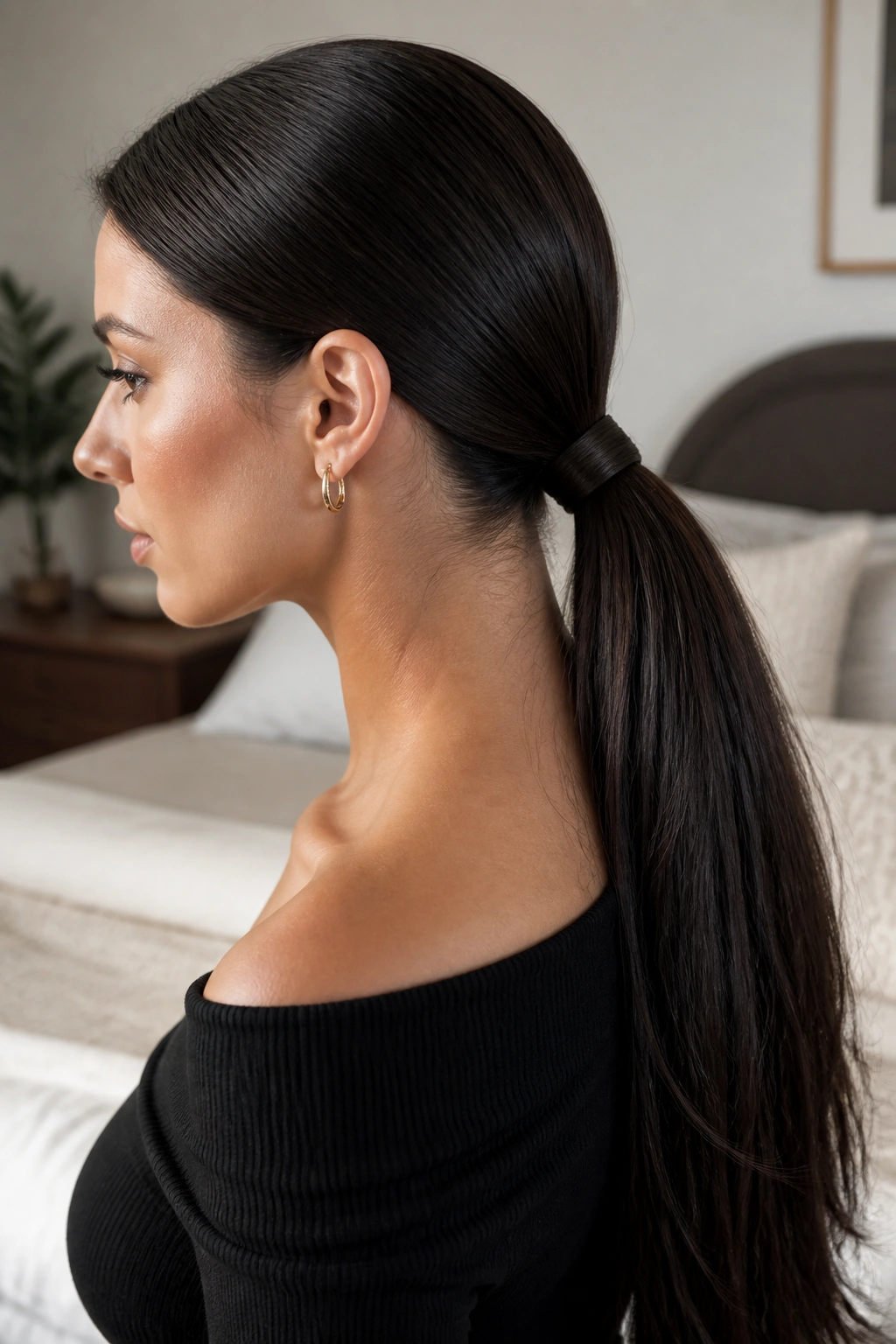
A sleek low ponytail is the fastest way to make very long hair look sharp without asking it to do gymnastics. When the tail is thick and glossy, it reads clean and expensive in the plainest sense of the word: tidy, controlled, and a little bit grown-up.
What makes it work on long hair is the anchor point. Set the elastic right at the nape, not halfway up the back of the head, and smooth the top with a brush rather than your hands. Hands leave bumps. A boar-bristle brush or a dense paddle brush gives you a flatter finish, and a pea-sized amount of smoothing cream on the top layer keeps the flyaways from poking up like little antennas.
If your hair is heavy, use two elastics spaced about 1 inch apart instead of one. That tiny change saves the ponytail from sliding down by lunchtime. I also like wrapping a 1-inch strand of hair around the base and pinning it underneath with a single bobby pin. It looks cleaner than a visible elastic, and it keeps the style from looking like an afterthought.
Very long hair gives this ponytail a nice line down the back. Simple. Strong. Hard to mess up.
2. Half-Up Top Knot That Keeps the Length Visible
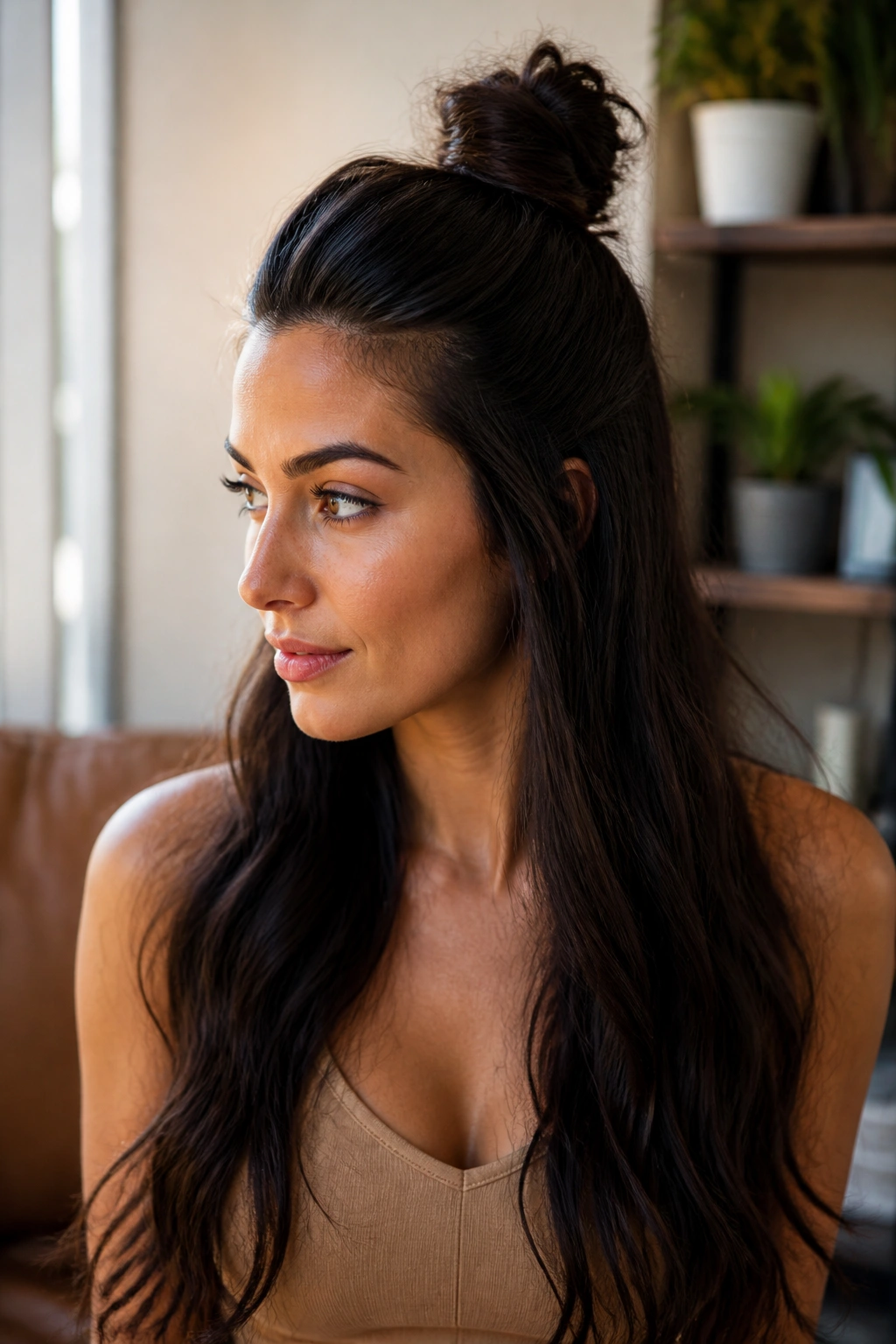
You know those days when your hair is in your way, but you do not want to lose the whole point of having long hair? The half-up top knot is the fix. It clears the face, keeps the crown under control, and leaves the rest of the length hanging where it can still do its job.
Why It Works on Heavy Hair
The style takes pressure off the front and top, which is where long hair usually starts feeling annoying first. Pulling up just the top third — not the whole head — reduces the weight enough to make the style feel light, but the bottom section still gives you movement. That balance is the reason it works so well.
The Shape to Aim For
- Take hair from temple to temple and include the crown only.
- Twist or loop the section once or twice before wrapping it into a knot.
- Secure it with a small elastic first, then add 2 or 3 bobby pins if the hair is dense.
- Leave the bottom layer brushed straight, waved, or lightly bent at the ends.
Pro tip: if the knot feels bulky, flatten it slightly with your palm before pinning. A flatter knot sits better and looks more intentional.
This one is great when you want the length to stay visible. It does not try to hide anything.
3. Classic Three-Strand Braid for Very Long Hair
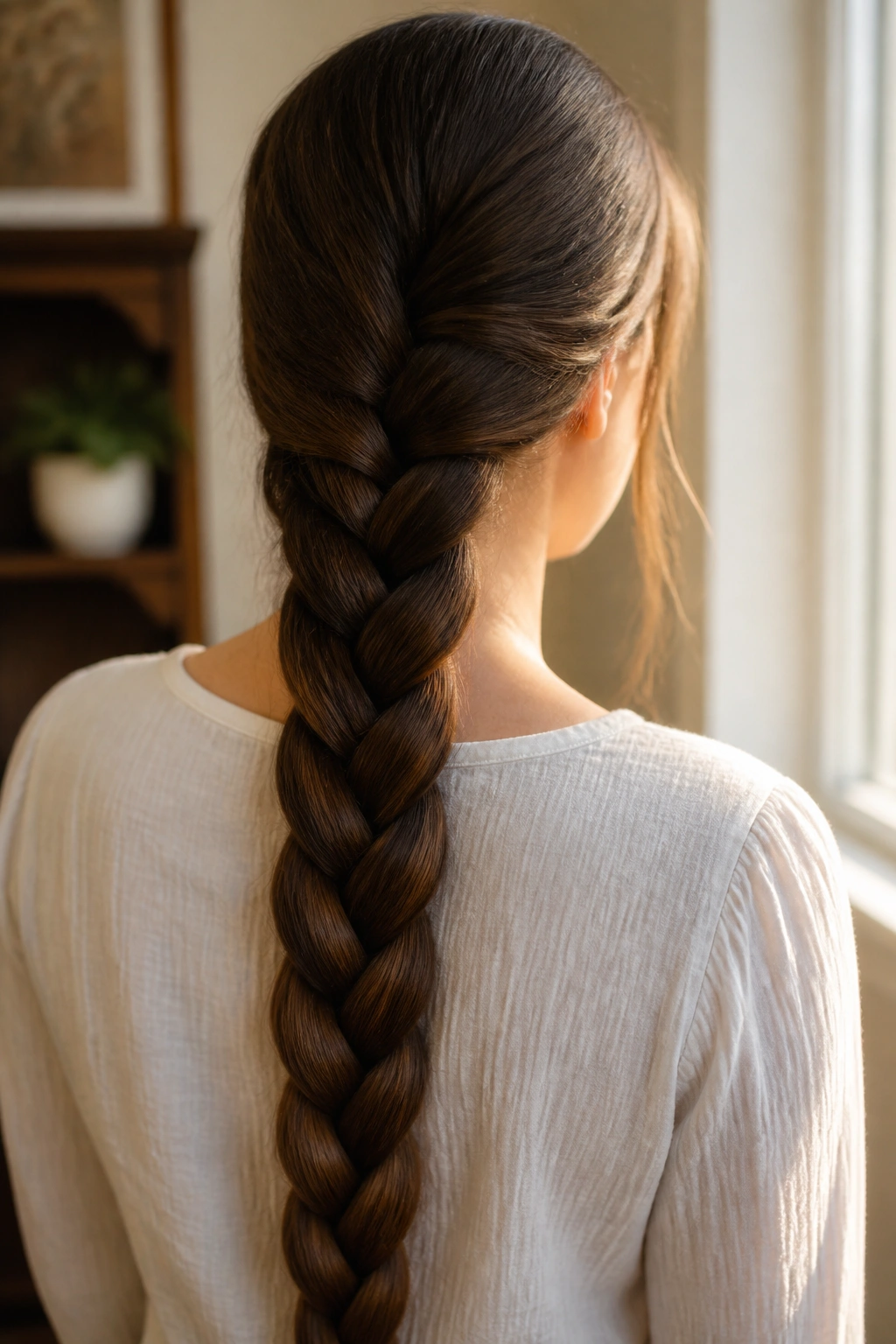
A classic braid sounds basic until you remember how good it looks when there’s a lot of hair in it. The extra length gives each crossover more shape, so the braid feels full instead of skinny. On very long hair, a simple three-strand braid can look almost theatrical if you keep the tension even.
Why It Holds So Well
Long hair gives a braid more structure, but it also gives you more chances to tangle the sections if you rush. Start with brushed hair, divide it into three equal sections, and keep your hands close to the ends as you weave. Pulling too far from the head creates loose loops up top and a braid that sags before the midpoint.
I like this style best on hair that is slightly dirty — day-two hair tends to grip better. Freshly washed hair can still work, but a mist of texturizing spray or a bit of mousse near the roots gives the braid something to cling to. Without that, very silky hair can slip apart.
Quick Facts That Matter
- Use a clear elastic if you want the braid to disappear.
- Use a covered elastic if the ends are fragile.
- Keep the sections even, or the braid will lean.
- Pancake the braid gently by tugging the outer loops if you want it wider.
Do not braid too loosely at the start. The top needs to be firm, or the whole shape will wobble.
4. High Wrapped Ponytail That Shows Off the Length
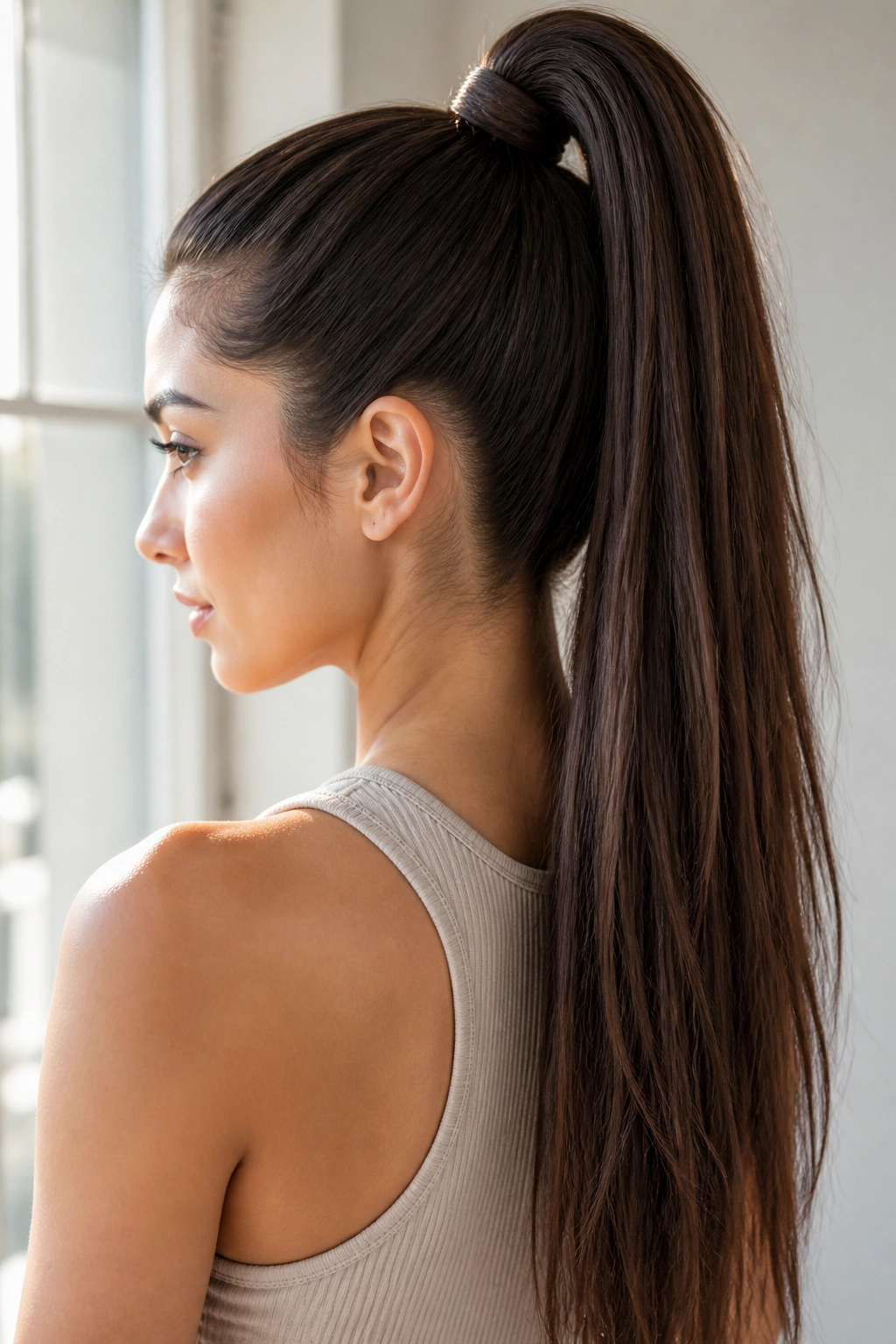
Compared with a low ponytail, a high wrapped ponytail gives very long hair more swing and a little more attitude. It sits at the crown, so the length cascades down the back instead of being tucked close to the neck. If you like styles that feel energetic, this is the one.
The only catch is weight. Long hair can drag a high ponytail down fast if you use a weak elastic or try to gather everything in one motion. I usually suggest flipping the head upside down, brushing the hair toward the crown, and securing it with one elastic first. Then add a second elastic 1 inch below the first if the tail feels heavy. That extra anchor makes a huge difference.
Once the base is secure, take a thin strand from the ponytail and wrap it around the elastic. Pin the end underneath with a bobby pin. It sounds small, but that little wrap keeps the style from looking gym-basic and gives the base a smoother finish.
This works especially well on thick, straight, or blown-out hair. The tail gets lift. The length stays on display. Nice trade.
5. Fishtail Braid That Makes Long Hair Look Even Longer
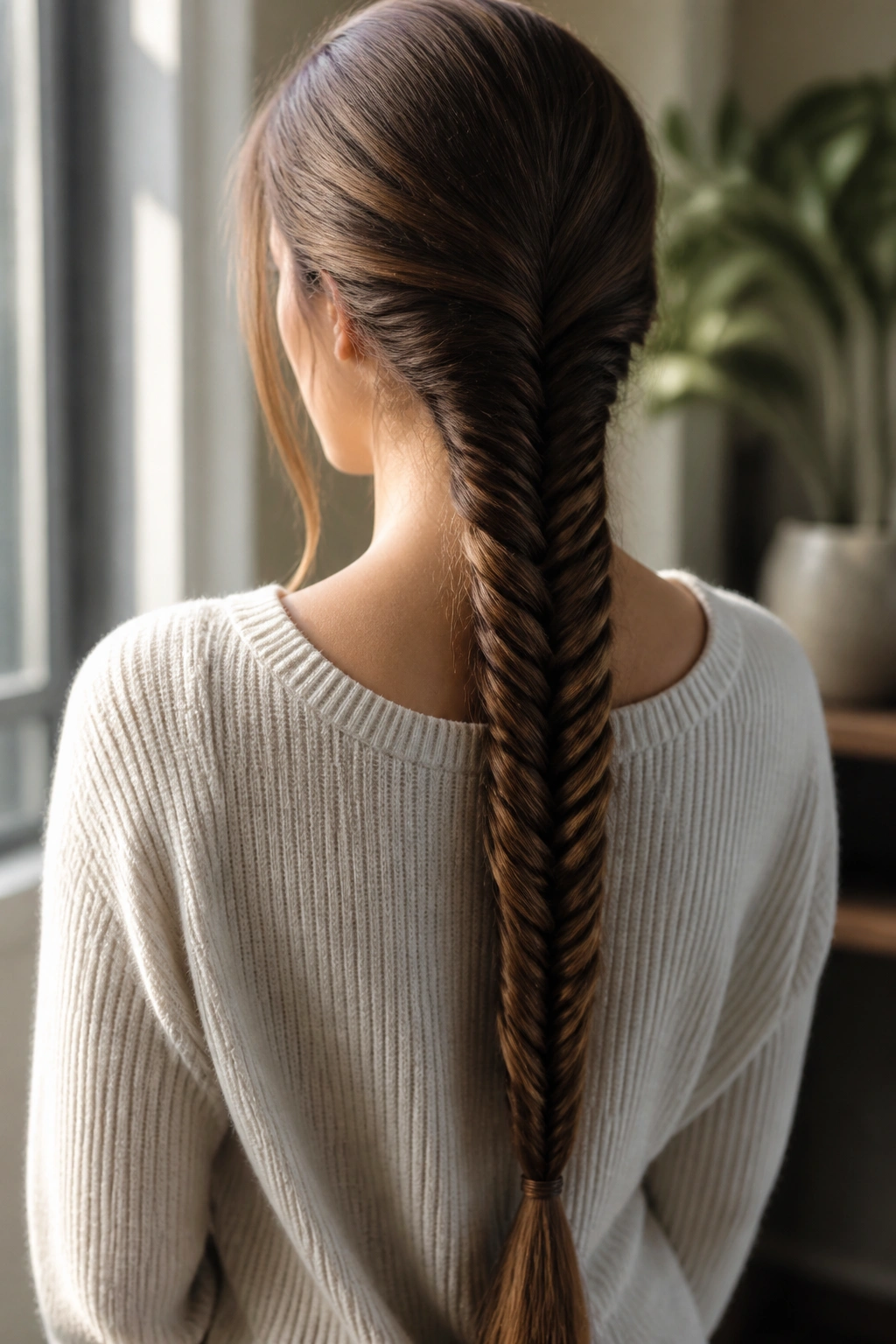
Why does a fishtail braid look so much more involved than a regular braid? Because it uses tiny pieces, and those tiny pieces create a tighter, more detailed pattern across a long canvas. Very long hair gives the braid room to show off.
How It Uses the Hair
Split the hair into two sections instead of three. From the outside of the left section, take a half-inch piece and cross it over to the right. Then do the same on the other side. Keep going. That’s the entire trick, but the look is much finer and more textured than a standard braid.
The important part is size. If the pieces are too thick, the pattern gets chunky and loses its shape. Half-inch sections are usually the sweet spot for long hair. On very dense hair, I go a little smaller near the top and slightly bigger through the ends so the braid does not turn into a brick.
How to Wear It
- Wear it tight for a polished, secure style.
- Wear it loose and pulled apart for a softer look.
- Start it high for a more dramatic line.
- Start it low if you want the braid to rest over one shoulder.
A fishtail braid rewards patience. It is not fast, but it looks like you put in more effort than you did.
6. Soft Heatless Waves With Natural Movement
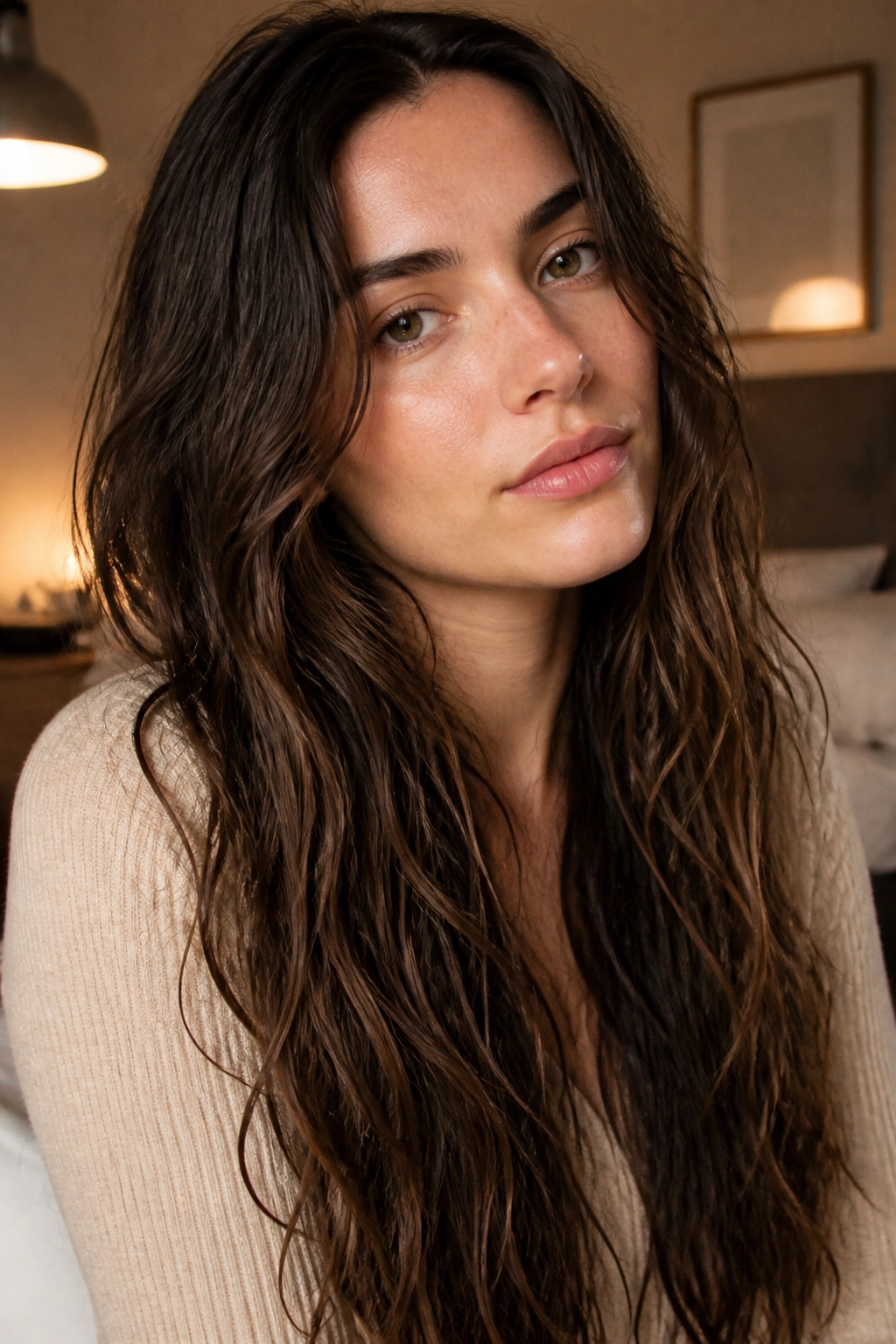
Soft heatless waves have a different feel from hot-tool curls. They look less crisp, more touchable, and a bit more relaxed, which is often exactly what very long hair needs. If your length gets weighed down by curling iron rings that drop too fast, heatless shaping can be a better bet.
I like starting on hair that is barely damp, not wet. Damp hair holds the bend without staying soggy overnight, and that matters more than most people think. Two loose braids, a silk ribbon wrap, or a foam rod set can all work. The real rule is to keep the sections even and avoid twisting the hair into strange angles that leave dents.
There’s a sweet spot between too tight and too loose. Too tight, and the waves come out frizzy or zigzagged. Too loose, and the hair dries almost straight. I usually wrap sections about 1 inch thick if I’m using a ribbon or rod, then leave the ends tucked smoothly so they do not kink.
When you take the set out, separate the waves with dry hands first. Not a brush. A brush blows them apart. A little lightweight oil on the ends can calm any roughness, but use a small amount. Very long hair absorbs product differently, and heavy oil near the roots can make the whole look collapse.
7. Bubble Ponytail That Breaks Up All That Length
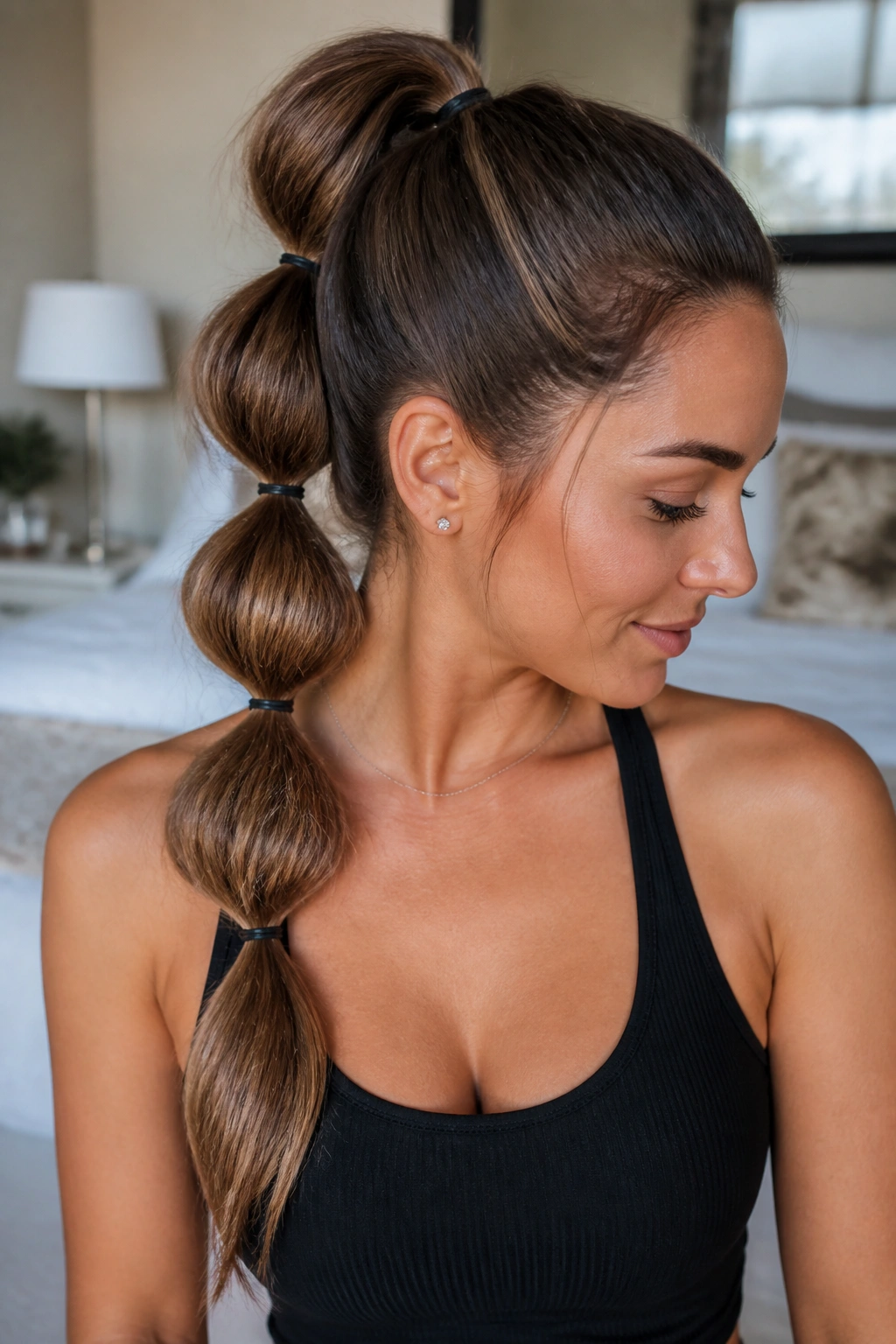
I keep coming back to the bubble ponytail when a regular ponytail feels too plain and a braid feels like too much work. It turns one long tail into a series of rounded sections, which looks playful, structured, and surprisingly neat when the spacing is right.
The style depends on elastic placement. Start with one ponytail at the height you want, then add small elastics every 2 to 3 inches down the tail. After each one, gently tug the hair between the bands to puff out a bubble. That’s the part people rush, and it shows. A soft pinch is enough. You are not trying to create a balloon animal.
It works beautifully on long hair because the length gives each bubble room to breathe. Shorter hair can look stubby in this style. Long hair gets drama. If the tail is very thick, you may want to split the ponytail into two sections before shaping the bubbles, then smooth them back together with the elastic spacing. That prevents the base from looking like a rope.
A ribbon over the first elastic or a pair of matching scrunchies can make the whole thing feel more finished. Casual, yes. Messy, no.
8. Crown Braid That Uses the Full Length as a Frame
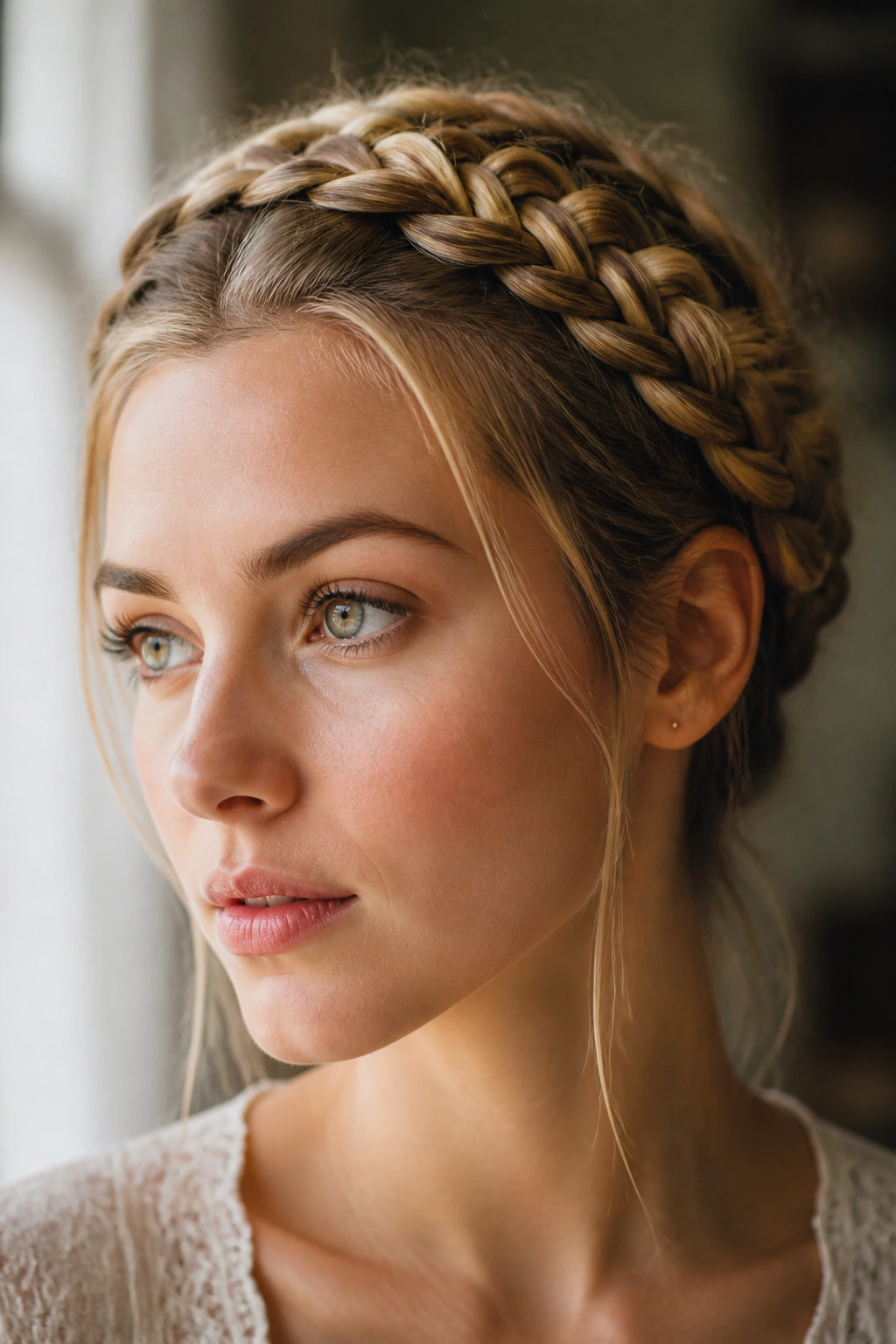
A crown braid can make very long hair look deliberate instead of simply long. That’s why I like it for weddings, dinners, and any event where you want the hair to feel like part of the outfit rather than a separate thing you have to manage.
The style usually works best with two braids wrapped around the head, though one thick braid can also do the job if your hair is dense enough. Start behind one ear, braid along the hairline, and pin the braid across the crown. Repeat on the other side if you want a full halo. The visual line matters. Keep the braids close to the scalp so they actually read as a crown and not two random ropes floating around the head.
What Makes It Stay Put
Day-old hair gives the braid grip. A little dry shampoo at the roots helps too, especially if your hair is slippery. Use pins that match your hair color and slide them in crosswise so they catch more hair. A single straight pin often slips. Two pins in an X shape hold better.
This style is not the fastest, and I would not recommend it if you are in a hurry. But it looks composed, and long hair gives it enough material to feel rich instead of skimpy.
9. Double Dutch Braids for Control and Grip
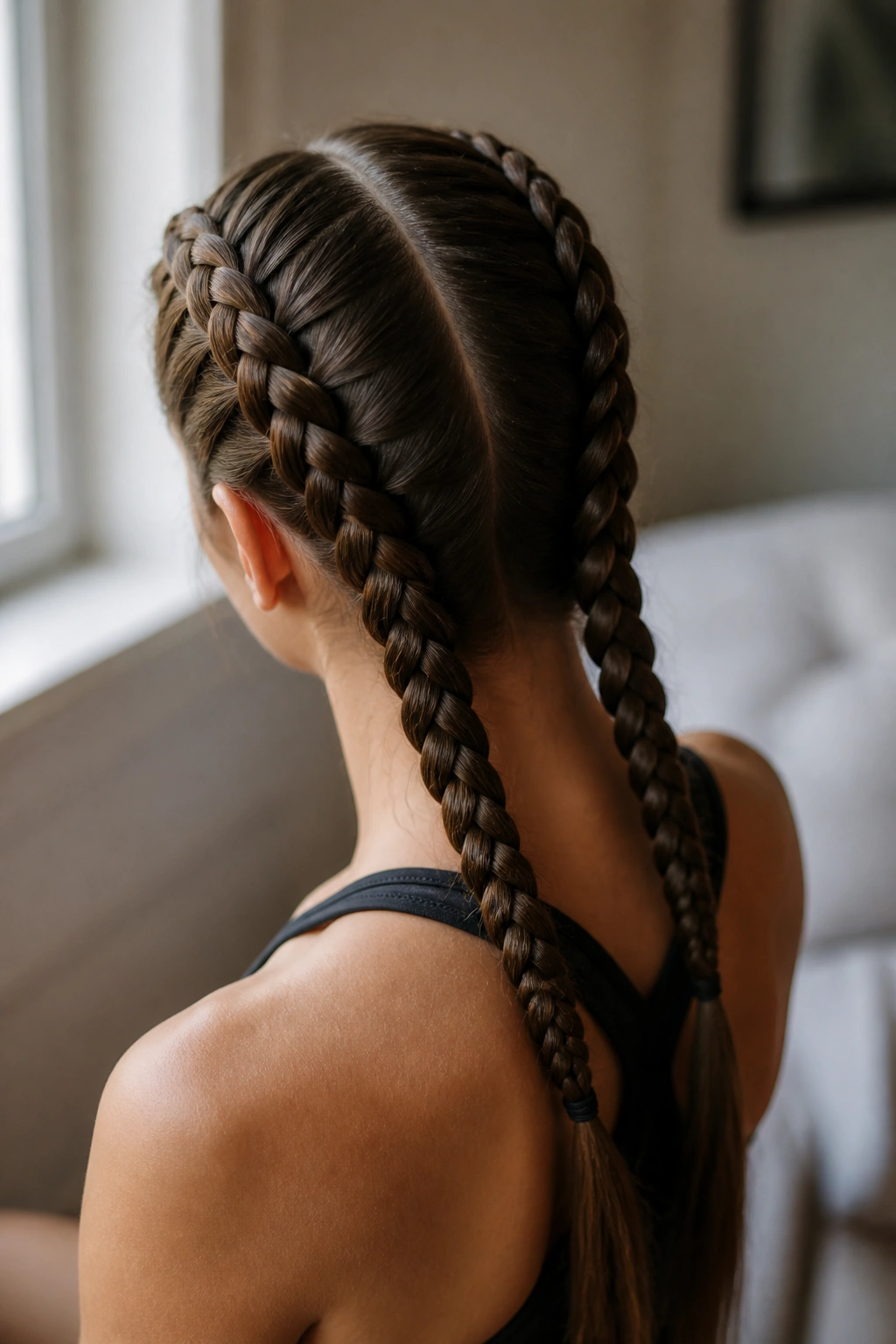
Double Dutch braids do more than look sporty. They hold the hair close to the scalp, split the weight evenly, and stop very long strands from swinging all over the place. That makes them one of the smartest hairstyles for very long hair when you need real control.
Unlike a regular braid that sits on top, Dutch braids are built by crossing pieces under the center section. That simple change makes the braid pop up from the scalp and keeps it visible. It also grips better. If your hair is thick, sectioning matters even more here. Make the parts clean down the middle and keep each side clipped while you work.
I like this style for travel, workouts, and sleep. It keeps the ends from tangling, which is a small mercy when you have long hair. For extra hold, add a touch of mousse or styling cream before braiding, but do not overload the roots. Too much product turns the hair gummy and makes the braids look dull.
If you want a softer finish, pull the outer loops apart a little once the braids are secured. If you want them more secure, leave them tight. No drama. No sliding.
10. Low Chignon That Handles a Lot of Hair
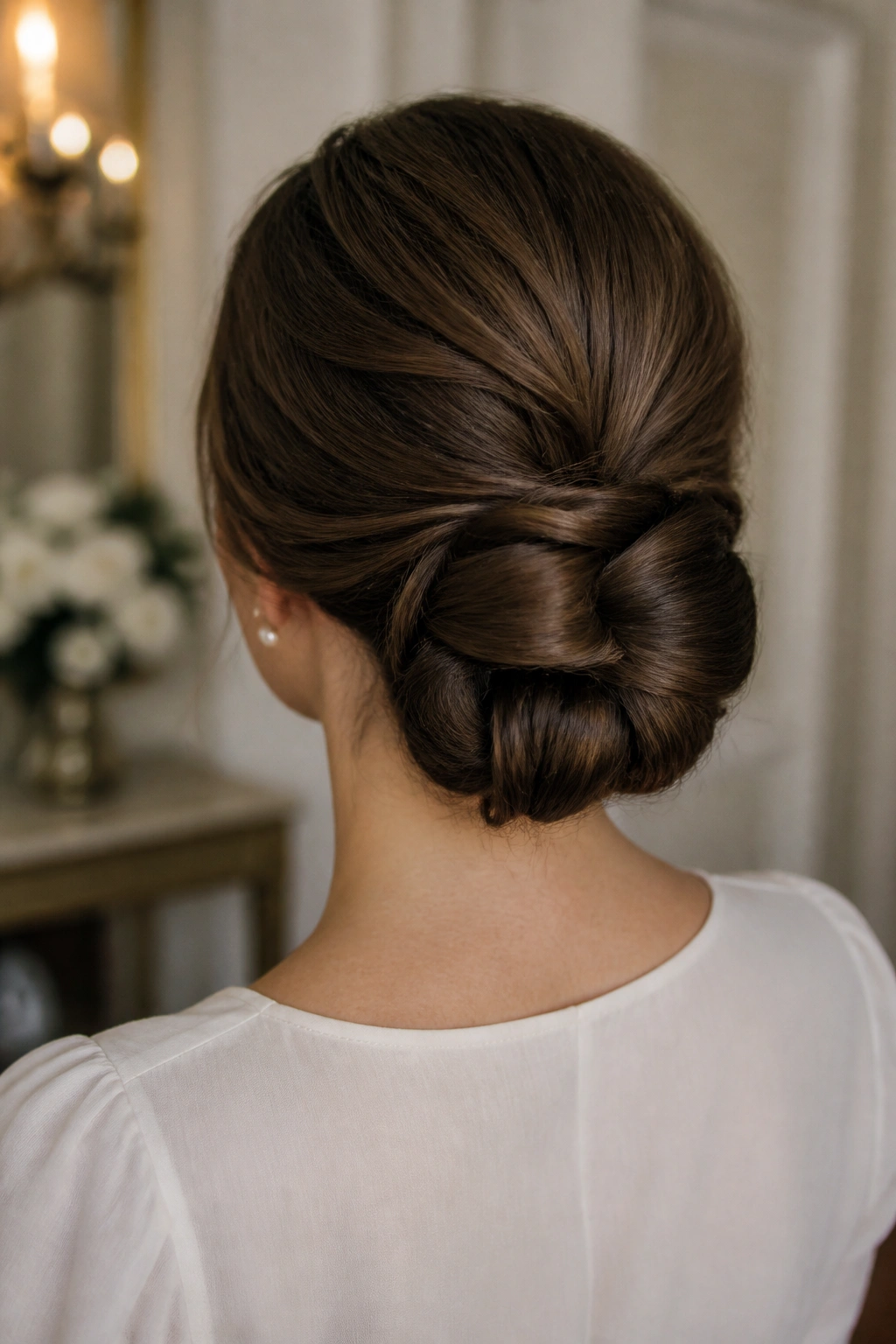
A low chignon is the answer when the dress code wants polish but the hair wants to sprawl. It sits at the nape, which is the most forgiving place for very long hair because the neck supports part of the weight and the shape stays compact.
The Shape You Need
Start with a low ponytail first. That step matters. Trying to twist all the hair directly into a bun usually creates a lumpy mess, especially if the length is heavy or layered. Once the ponytail is secure, twist it loosely and coil it around the base. Pin the coil from the inside out so the pins catch both the bun and the hair underneath.
Small Details That Save It
- Use 6 to 10 bobby pins if the hair is dense.
- Swap a few of those for U-pins if the bun is large.
- Tuck the ends under, not over the top.
- Aim the bun slightly off-center if your nape is short or your hair is thick.
Pin through the middle of the bun, not just the outer shell. Surface pins slide. Deep pins bite.
This style is elegant, but it also has a practical side. Once it is secure, you barely notice the hair. That is rare with very long lengths.
11. Side-Swept Braid That Feels Softer Than a Center Style
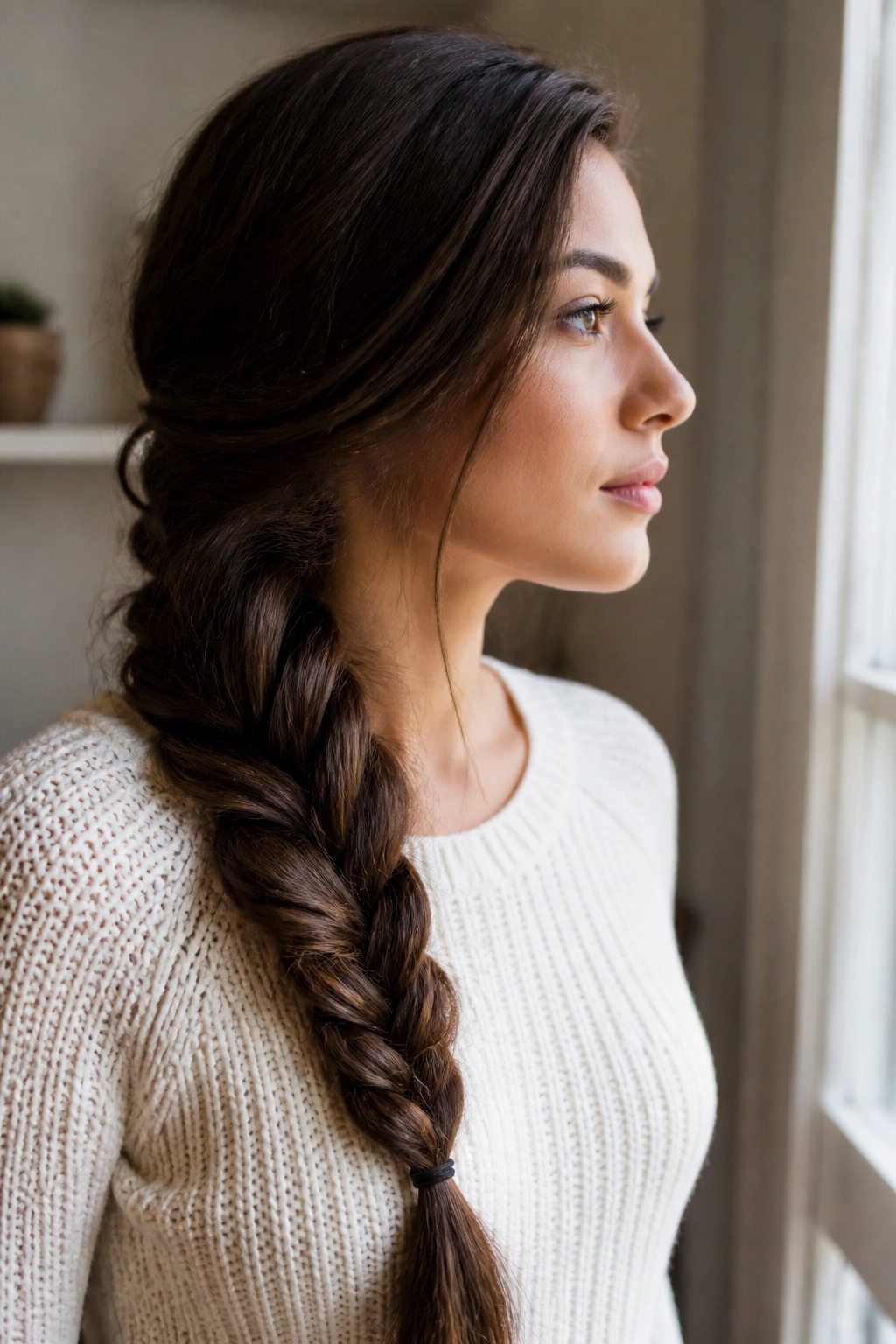
A side-swept braid is one of those styles that looks calmer than a centered braid and usually behaves better with collars, earrings, and scarves. Pulling the hair to one side gives the braid a softer line and lets the length fall over the shoulder where you can actually see it.
I like this when the hair is a little textured already. Freshly washed hair can slip, but day-old hair holds the side shape more cleanly. Brush everything toward the same shoulder, then braid just behind the ear or lower, depending on how much face-framing you want to keep out. If you have long layers, it helps to smooth the top with a tiny bit of cream before you start. Loose shorter pieces around the face make the style look less stiff.
A side braid works especially well with sweaters, boat necks, and anything that crowds the neck. The braid keeps the hair from tangling under fabric. It also lays flatter than you’d expect, which matters if you’re going to be sitting in it all day.
Tug the braid a bit at the outer loops if you want more width. Leave it tight if you want the shape to stay neat.
12. Twisted Half-Up Crown for Quick Polish
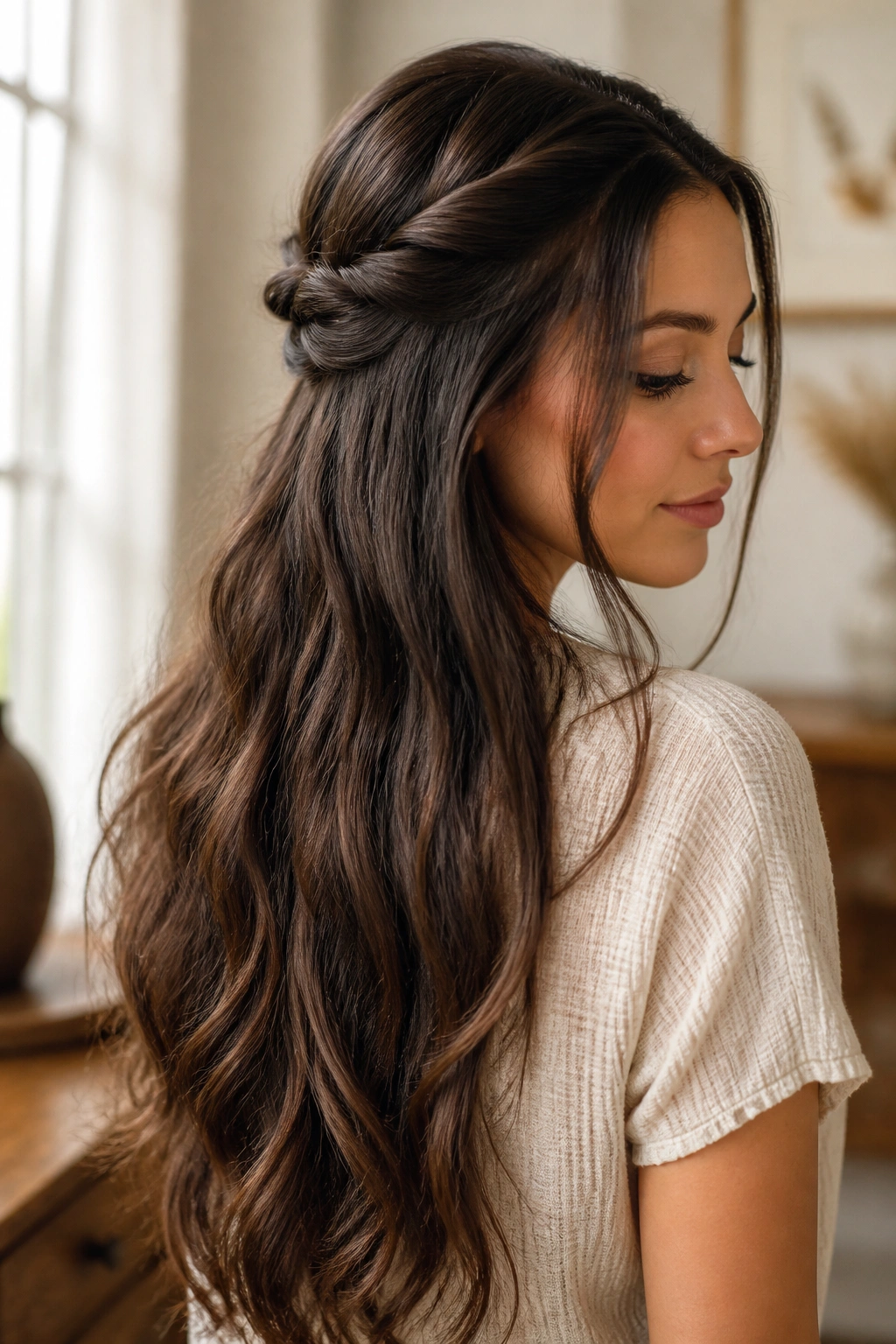
Want a style that pulls the top away from your face but leaves the rest of your hair visible? The twisted half-up crown does that without asking for a full braid or a full updo. It’s one of the better hairstyles for very long hair when you want polish in under ten minutes.
Take a section from each temple, twist each side back toward the crown, and cross them in the middle. Secure them with two bobby pins in an X, or tuck them under a small barrette if you want a cleaner finish. The twists should sit flat against the head. If they stand up, they look fussy.
The style works because the twisted sections add a bit of structure near the face while the rest of the hair stays loose. That means your length still shows, but it no longer feels like it is falling forward every time you turn your head. If your hair is silky, a little dry shampoo at the roots helps the twists stay in place. If it is textured, you may not need much at all.
Keep the twists slightly loose for a softer line, or wind them tighter if you want the crown area to feel more controlled. Both versions work. The mood changes faster than the method.
13. Waterfall Braid With Loose Length Underneath
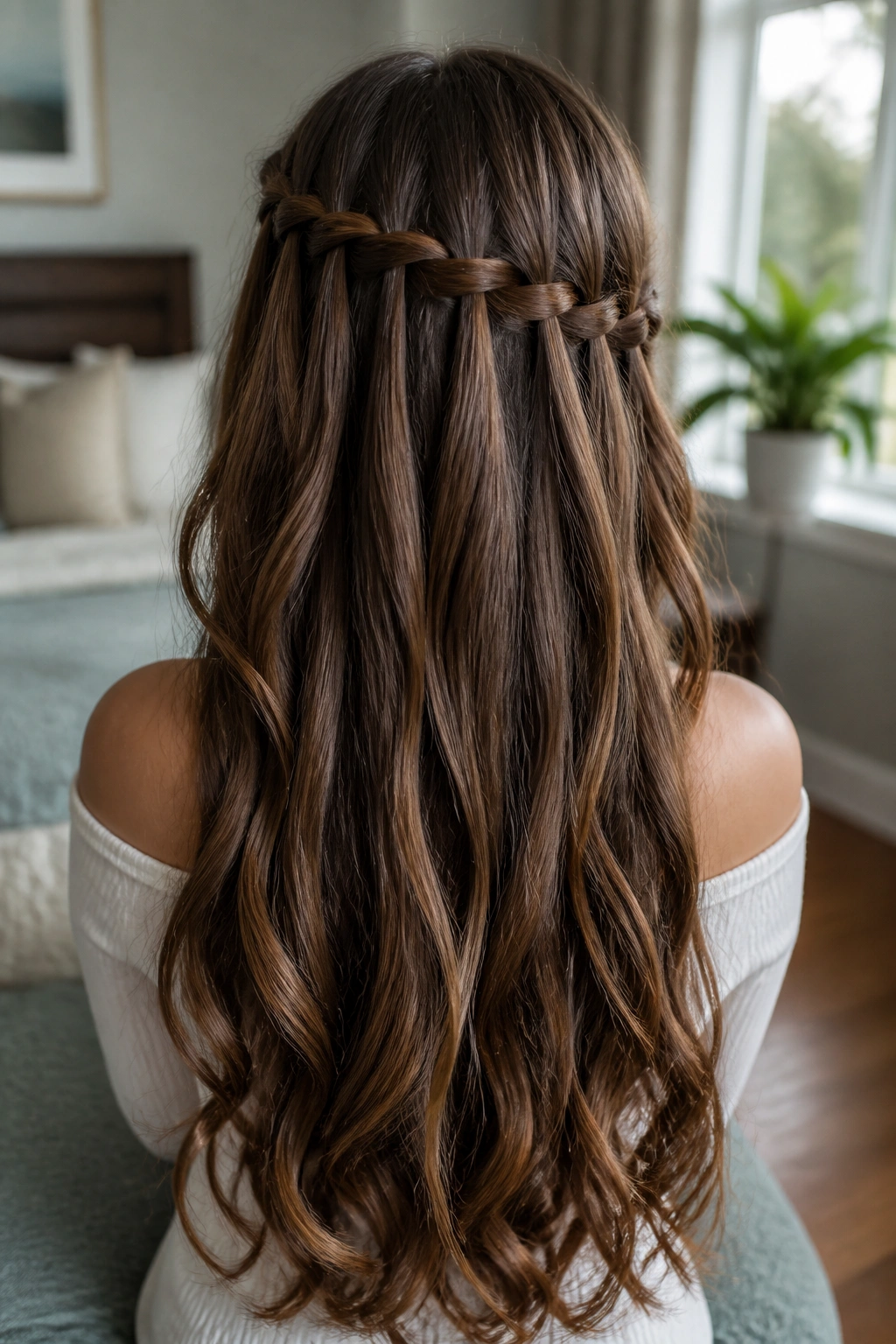
A waterfall braid gives you the nicest part of a braid and the nicest part of loose hair at the same time. For very long hair, that mix is hard to beat. The dropped strands create a little movement across the back, and the rest of the length stays free.
The Mechanism
Instead of feeding every strand into the braid, you drop one section each time and replace it with a fresh piece from the hairline. That creates the cascade effect. On long hair, those dropped pieces can actually be seen, which is why the style looks more dramatic than it does on shorter lengths.
What to Watch For
- Keep the braid close to the head so the pattern shows.
- Use smaller sections if your hair is thick.
- Clip the loose lengths out of the way while you work.
- Finish with a clear elastic tucked under a pin if needed.
This style is a little fussy at first. That’s fair. Once you’ve done it a few times, the motion becomes easy, and the payoff is a braid that looks more detailed than a standard half-up style without swallowing the whole head of hair.
If you want a softer finish, curl the loose ends lightly with a large iron. If you want it cleaner, leave the length straight.
14. Rope Braid Ponytail With a Clean Twist
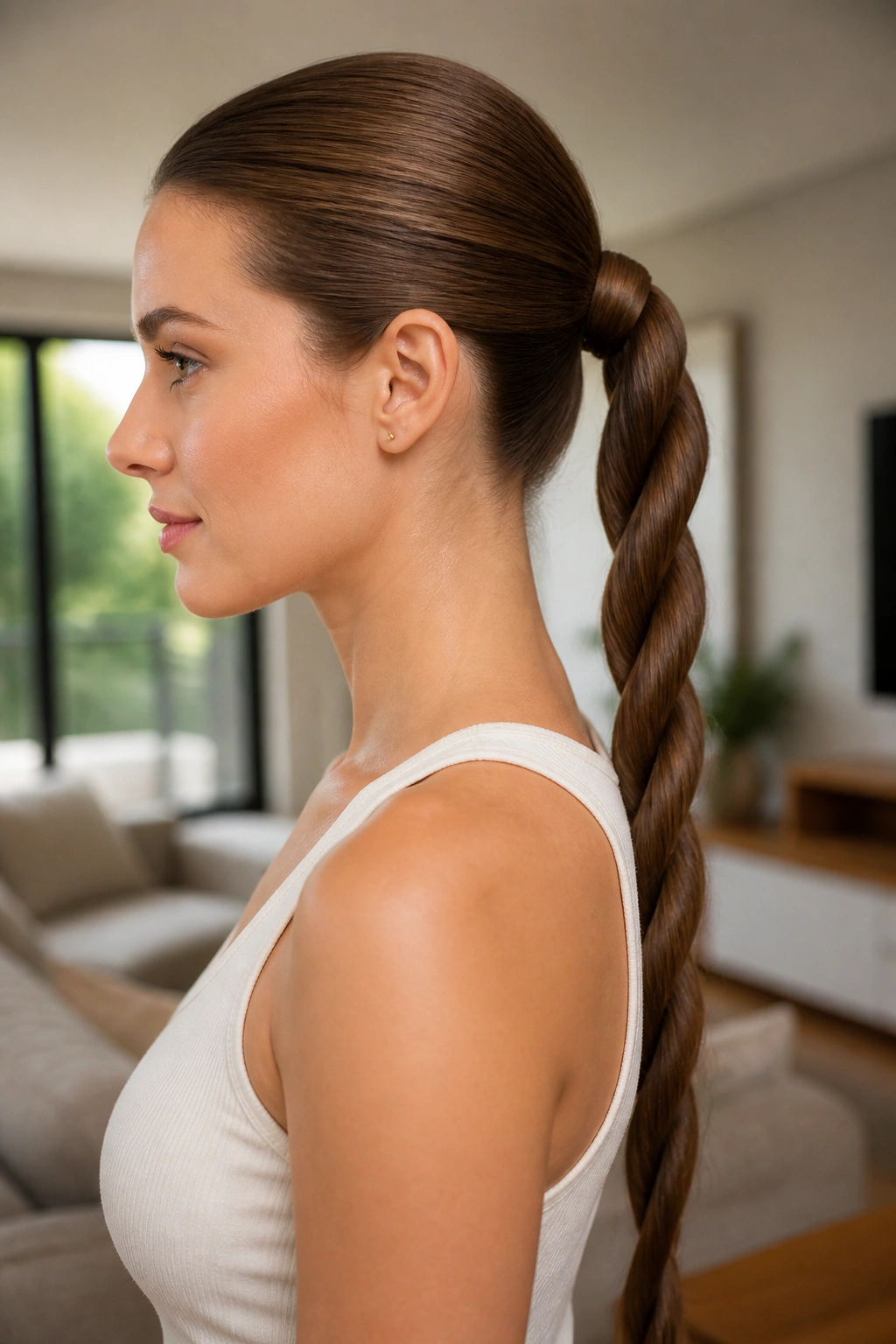
A rope braid ponytail has a sharper twist than a standard braid and a smoother look if you start with sleek hair. It is built from two sections twisted in the same direction, then wrapped around each other in the opposite direction. That reverse motion is what keeps it from unraveling too quickly.
For very long hair, the rope braid feels especially nice because the spiral shows off the length in a different way. It is less about woven pattern and more about line. If your hair is shiny, the twist catches that shine all the way down. If your hair is coarse, a little smoothing cream on the lengths keeps the ends from puffing out.
I recommend starting with a ponytail first, then dividing the tail into two equal sections. Twist each section clockwise, then cross them counterclockwise. Keep the tension even and stop before the ends start to kink. That part can happen fast if you twist too hard.
The rope braid is good when you want something between “plain ponytail” and “full braid.” It looks neat. It holds. It does not take forever.
15. Space Buns With Long Ends for a Playful Shape
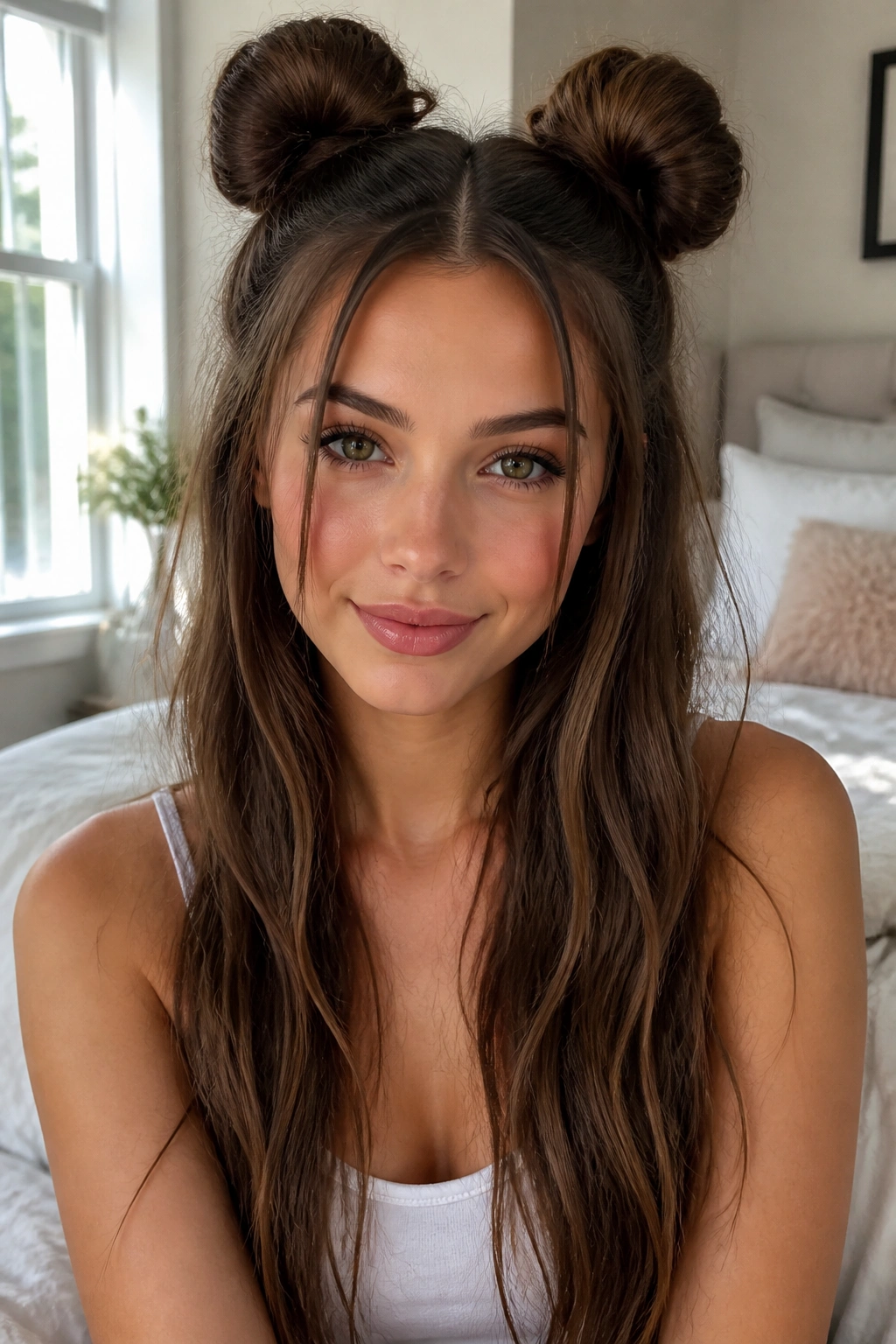
Space buns can look playful or surprisingly sharp, depending on how tight the center part is and how much length you leave hanging. Very long hair gives this style a built-in contrast: compact buns up top, long tails or loose ends below.
How to Keep Them from Looking Juvenile
The fix is balance. Keep the buns smaller than you think and let the length do the talking. If you stuff every strand into the buns, the style gets bulky fast. A cleaner version starts with a straight middle part, two high ponytails, and a wrap around each base only once or twice. Leave the rest of the ends out, or tuck them halfway through so they drape a little.
This style works well when you want your hair off your neck but still want a visible shape. It also feels lighter than a full updo, which is a relief on dense hair. Use a few pins under each bun if the hair is long enough to drag the elastic downward. Long hair will do that. It is persistent.
A light spray of texture mist can help the buns hold without turning crunchy. Skip the heavy gel unless you want a very slick finish. That one can go from polished to helmet fast.
16. French Twist That Uses Length More Than People Expect
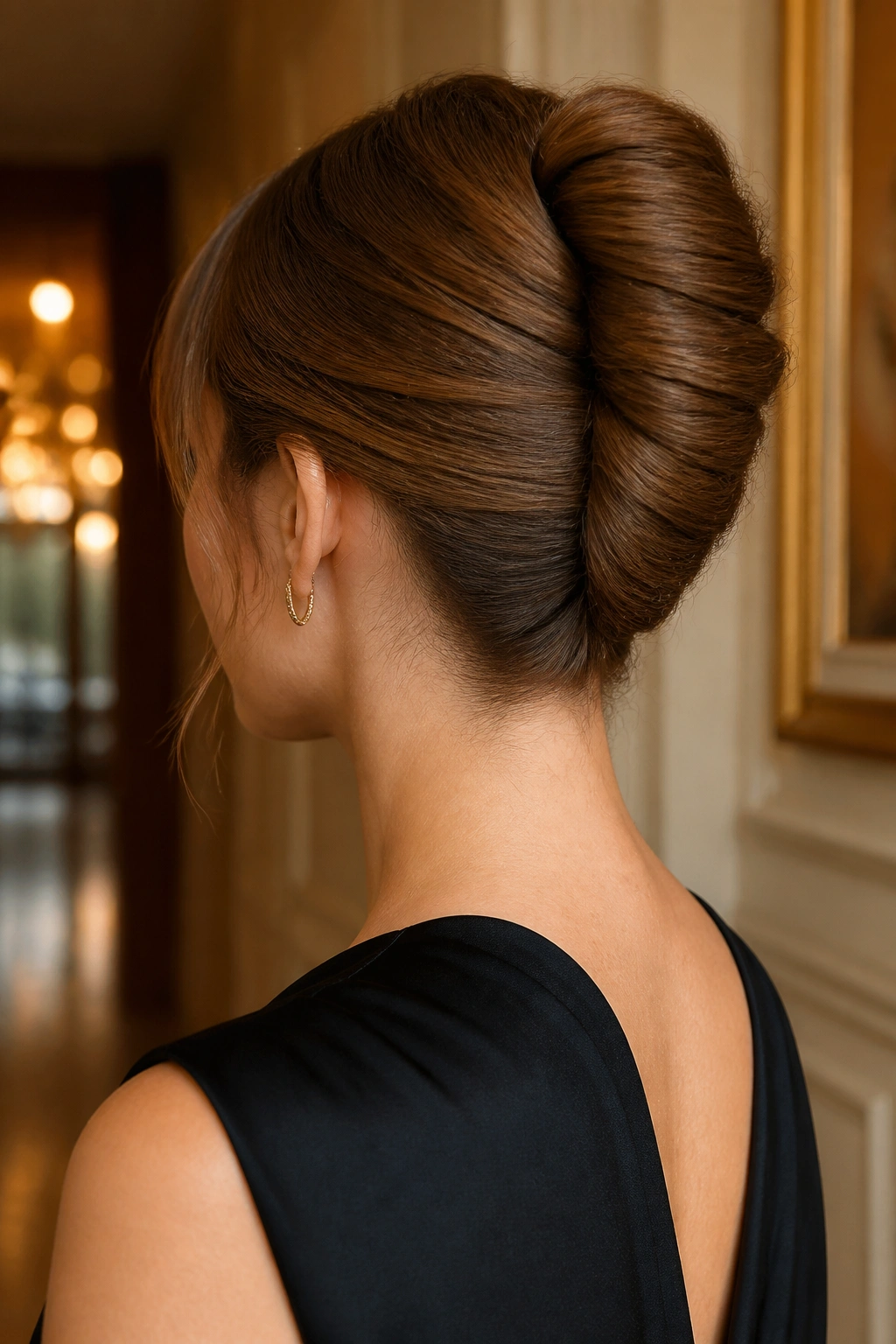
A French twist can handle more hair than people give it credit for, especially when the length is folded in a narrow line instead of rolled into a thick coil. That makes it useful for very long hair that needs to stay tucked close to the head.
Unlike a low chignon, the French twist pulls the hair upward before folding it in. That creates a vertical line, which is part of why it feels dressier. The clean seam down the back gives the style shape, and the tucked ends disappear into the fold instead of hanging loose. If your hair is too heavy for one set of pins, start with a low ponytail, twist the tail upward, and pin the fold in layers. Don’t try to force the whole thing into place at once.
I like this style for formal settings because it looks orderly without being fussy. The best version is not over-sprayed. You want it secure, not shellacked. A little shine serum on the top and a few hidden pins in the seam do more than a mountain of product.
Long hair can make the twist look richer, but it also means you need patience while pinning. Rush it, and the shape opens. Take two extra minutes, and it stays.
17. Claw-Clip Twist That Actually Holds Long Hair
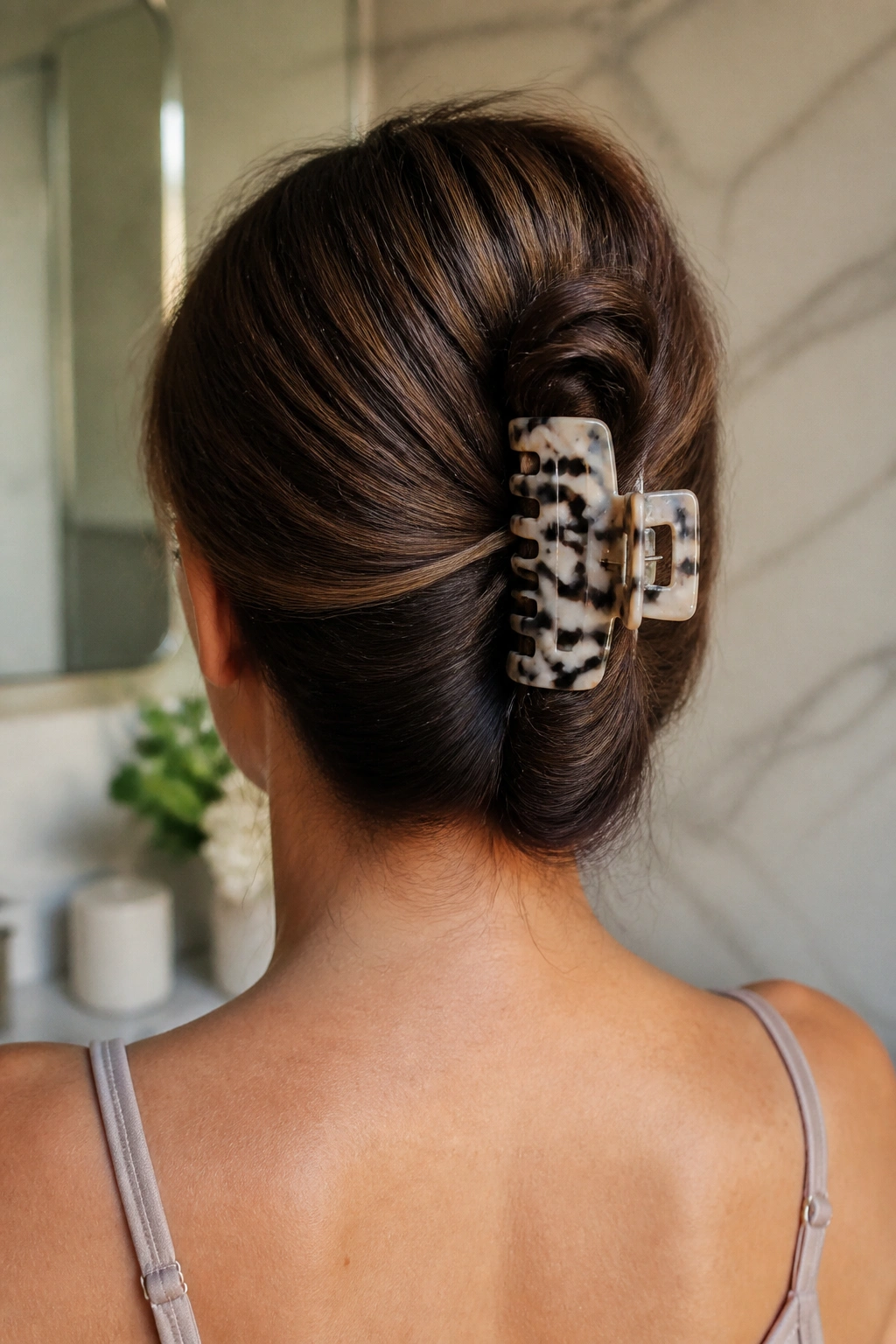
Can a claw clip actually hold very long hair without slipping after twenty minutes? Yes, if the twist is low, the clip is big enough, and you stop trying to cram all the hair into the clip teeth. That’s the part most people get wrong.
The best version starts with gathering the hair at the nape, twisting it upward once, then folding the length back down so the ends tuck into the twist. The clip should catch both the base and part of the folded tail. If the clip only grabs the surface, it will slide. Use an XL clip — something around 4 to 5 inches long — and choose one with strong teeth, not a flimsy decorative shell.
This is the quick style I reach for when I want the hair off my shoulders but do not want a ponytail dent. It feels relaxed, but it can still look neat if the twist is centered. A few face-framing pieces keep it from looking severe, though you can also slick the front back if you want a cleaner line.
If your hair is very thick, two smaller clips can hold better than one oversized one. One on each side. Simple and annoyingly effective.
18. Braided Ponytail for a Clean, Long Line
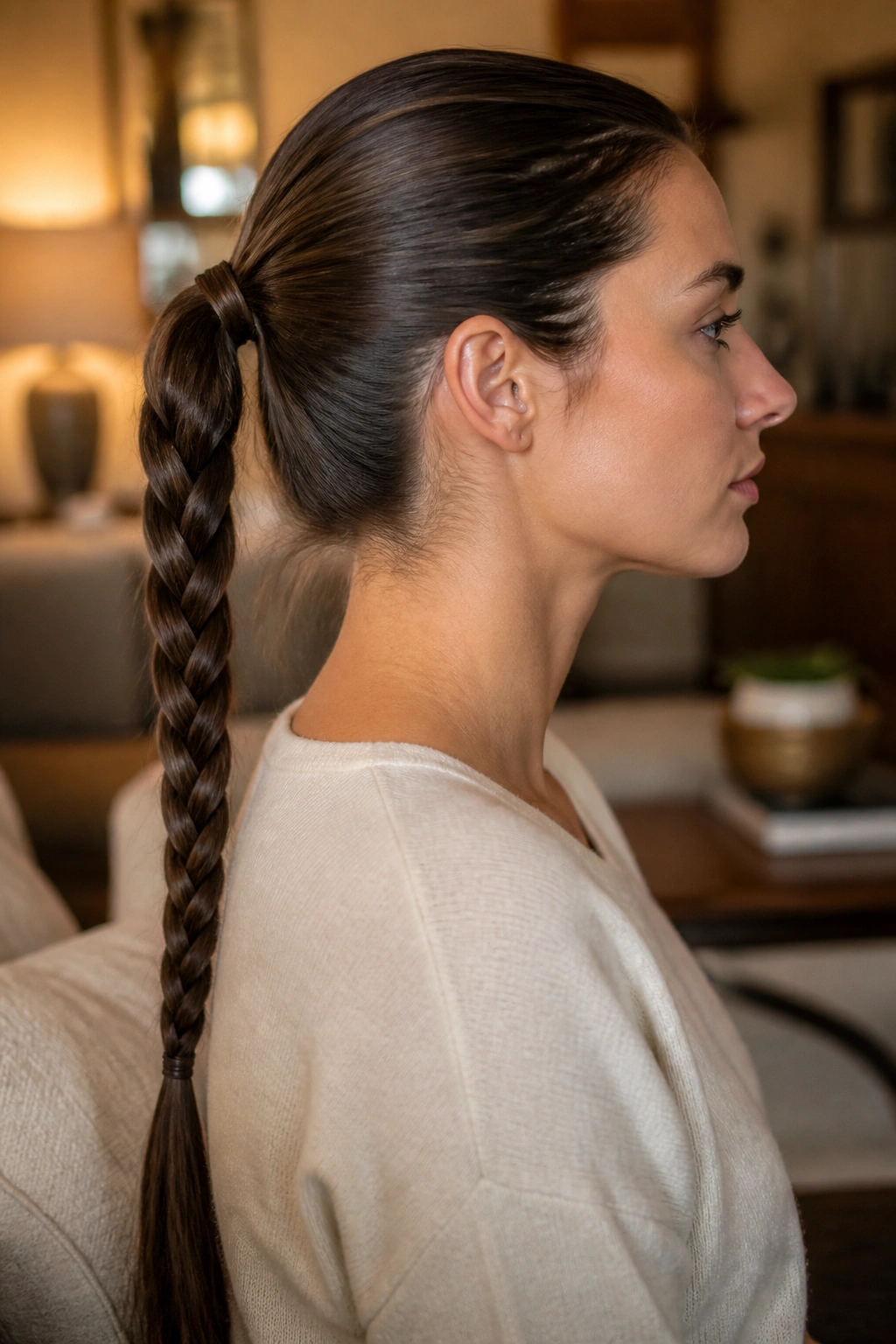
A braided ponytail is one of the few styles that looks finished even when you skip heat and heavy product. It starts like a regular ponytail, then turns into a braid down the back so the length stays visible but controlled. That makes it a strong everyday choice for very long hair.
The part I like most is how flexible it is. A low braided ponytail can feel understated, while a high one reads more sporty or dressed up. Either way, the style keeps the length in one place instead of letting it spread across your shoulders and get caught in everything. If your hair is layered, the braid can look a little fuzzy at the bottom, so start with a smoothing cream on the mid-lengths and ends before you gather it.
A silk scrunchie at the base keeps dents down and is gentler than a tight elastic. For the braid itself, keep the three sections even and pull the plait snugly through the first few inches. That part matters. If the top is loose, the whole ponytail will look tired fast.
Very long hair makes this style look full without much effort. That’s the appeal. It is practical, but not boring.
19. Classic Volume Blowout That Lets the Length Move
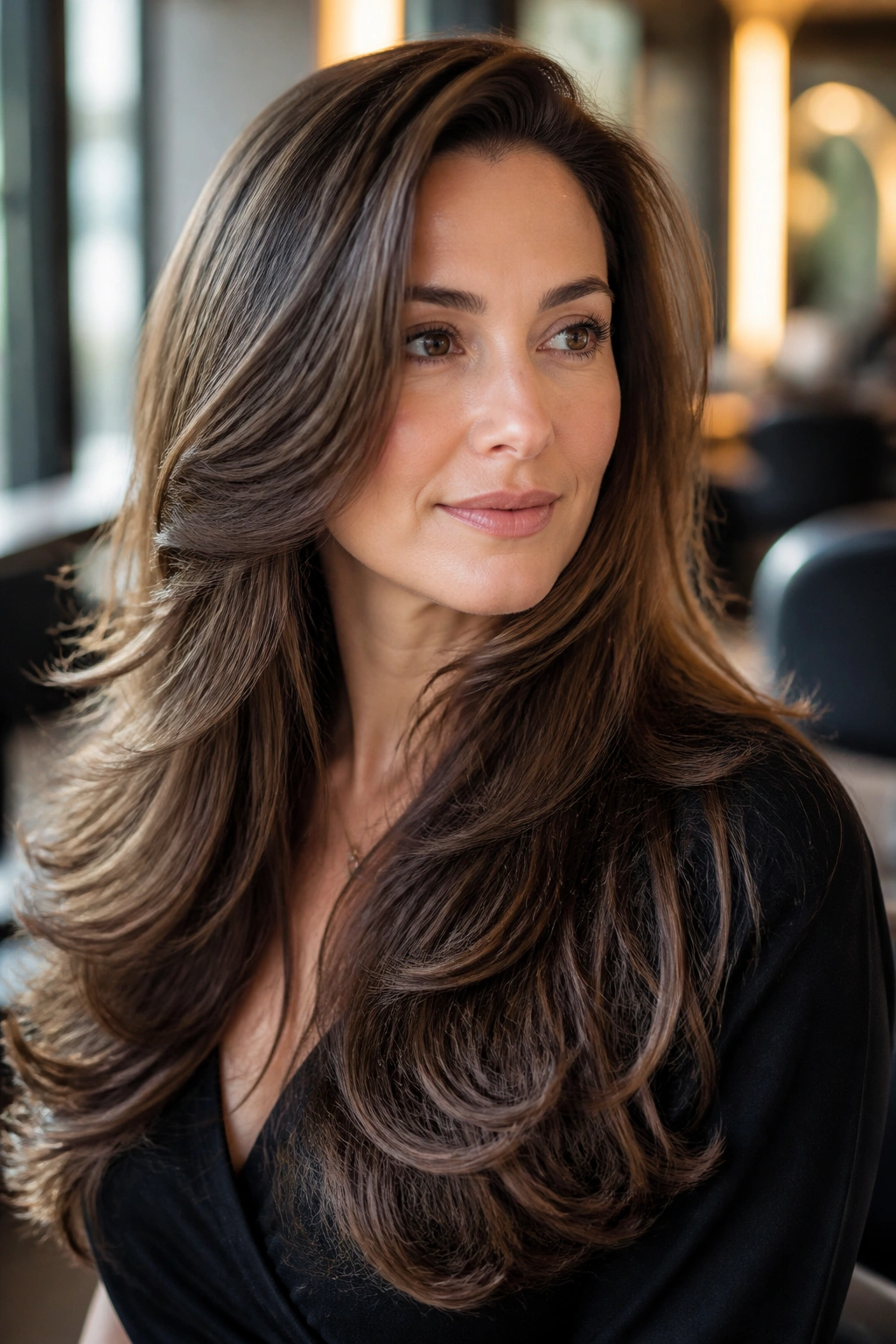
A polished blowout on very long hair is part brushwork, part patience, and part knowing when to stop touching it. The goal is not stiff curls. The goal is movement, shine, and a shape that keeps the ends from collapsing into one flat sheet.
Start with a heat protectant on damp hair, then rough-dry until the roots are about 80 percent dry. After that, work in medium sections with a round brush or a large-barrel brush attachment. Pull each section taut, roll the ends under slightly, and let the hair cool on the brush for a few seconds before releasing it. That cooling bit matters more than people realize. It helps the shape last instead of falling out the moment the brush leaves.
Small Choices That Change the Finish
- Use 1.5-inch sections for smoother tension.
- Clip the top layers away while you dry the lower half.
- Aim the nozzle down the shaft to keep frizz down.
- Leave the ends softly curved, not frozen.
A blowout on very long hair looks best when it has room to move. Over-brushing kills that. So does too much spray at the end. A light mist is enough. The hair should swing, not squeak.
20. Overnight Heatless Curls That Keep Their Shape Longer
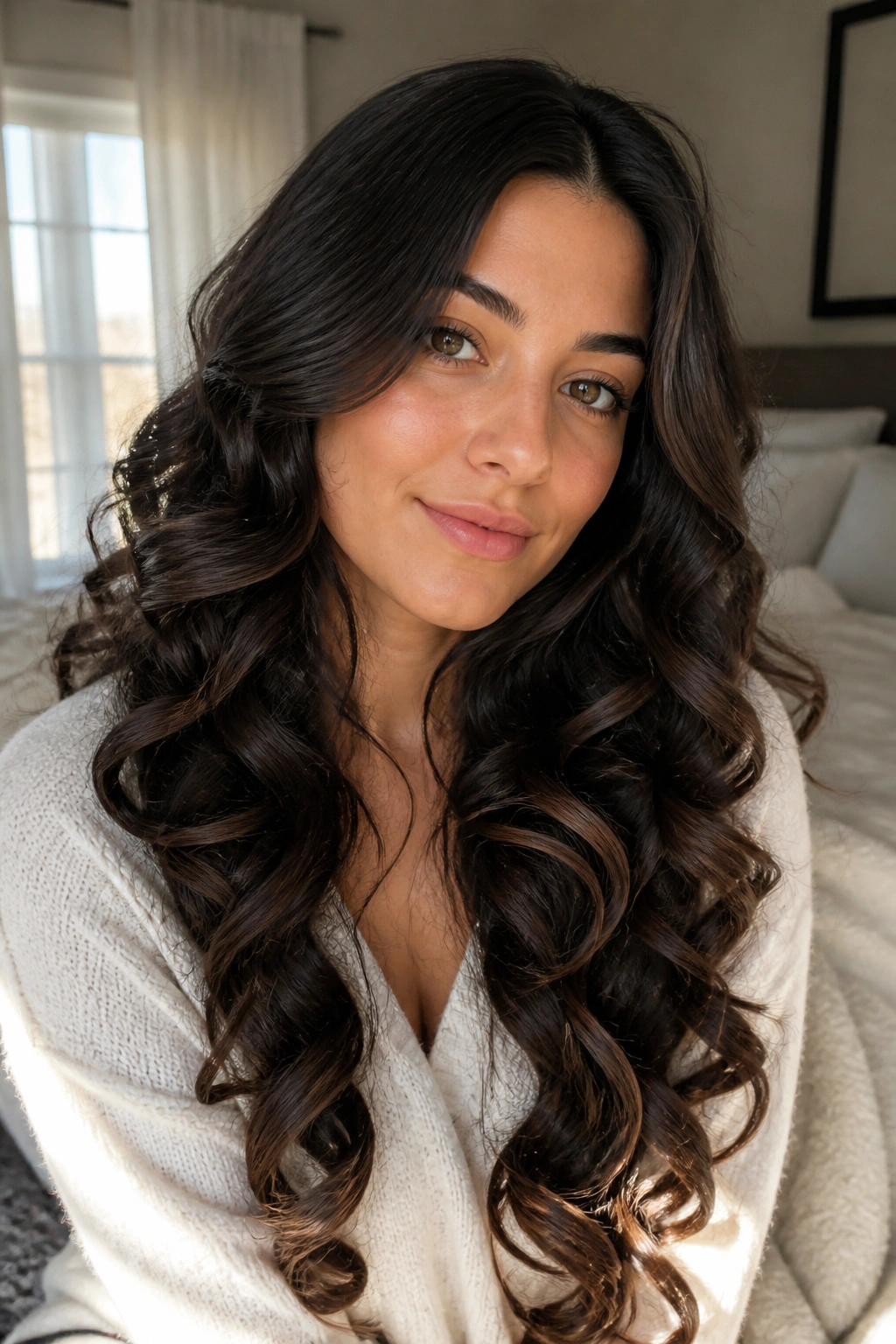
If your hair falls flat the minute you curl it, overnight heatless curls are often the least annoying way to get shape that lasts. The reason is simple: the hair sets while it cools and dries around a form, so the bend is gentler and usually holds better than a hot curl that gets brushed out too hard.
You can use a silk rod, a flexible foam curler, or even two loose braids if that’s what your texture likes. I’d start with hair that is slightly damp, never soaked. Too much water means the center of the section stays wet for hours, and then you wake up with shape at the top and limp ends below. No thanks.
Work in sections that are about 1 inch wide if you want tighter curls, or 2 inches wide if you want loose waves. Keep the wrapping smooth from root to tip, and do not yank the ends so hard that they kink. In the morning, separate the curls with your fingers first. A wide-tooth comb can work too, but only if you want them softer and a little bigger.
Long hair gives these curls a lot of room to fall into shape, which is the point. You get volume without heat damage, and the style can shift from romantic to casual depending on how much you separate it. Some days you want a braid. Some days you want a twist. And some days you want hair that lands in soft, full bends down your back and stays there long enough to matter.
