



Flat brown is where good hair color goes to die. The best dark brunette hair colors never look like one flat pigment; they look layered, glossy, and a little different every time the light moves.
That matters because brown hair can turn muddy fast. A level 3 espresso, a level 4 chocolate, and a level 5 mocha all live in the brunette family, but the undertone does the real work — cool ash knocks out brass, warm chestnut adds glow, and red-violet tones keep the color from going dead around the face. The difference is rarely dramatic on paper. On your head, it is huge.
One clean gloss can do more than a full color overhaul if the base is already healthy. That is the part people miss.
These 20 shades range from inky espresso to smoky cherry-brown, with a few balayage-friendly picks in between. The point is not to go lighter. The point is to make brunette hair look richer, shinier, and more intentional without losing the depth that makes dark hair so good in the first place.
1. Espresso Brown

Espresso brown is the shade I recommend when someone wants their hair to look dense, shiny, and expensive without drifting into black. It sits at the deepest end of the brunette range, usually around a level 3, and it works best when the finish stays glossy rather than matte.
Why It Works
Deep brown looks clean when the undertone stays neutral. If your natural hair already runs dark, espresso can make the whole head read fuller because the color is uniform from root to ends.
That uniformity is the trick. Too many brunette refreshes are packed with warmth, and then the hair starts flashing red in daylight and flat brown in shade. Espresso avoids that if your colorist keeps the deposit neutral and skips chunky contrast.
- Ask for a level 3 or 4 brown, not jet black.
- Pair it with a clear gloss every 6 to 8 weeks.
- It suits blunt cuts, glassy blowouts, and long layers that need visual weight.
My favorite move: leave the root a touch deeper than the mids so the color feels rich instead of painted on.
2. Mocha Melt

Why does mocha brown look softer than espresso even when the depth is close? Because mocha carries a milk-chocolate undertone that catches light across the mids instead of disappearing into one dark block.
That makes it a smart choice if you want brunette hair color with movement but do not want obvious highlights. On waves and curls, the soft contrast keeps the texture visible. On straight hair, the color looks plush, almost velvety, which is a nice way to avoid that harsh, one-note brown some box dyes leave behind.
A mocha melt works especially well when the root stays a shade deeper than the lengths. The blend is subtle enough to grow out well, and that matters more than people admit. Nobody wants a color that looks great for ten days and then turns into a maintenance job.
If your hair tends to feel heavy, this shade lifts the whole look without crossing into caramel territory. It is brown, still brown, but the edges are gentler.
3. Chocolate Cherry Brown

I keep seeing this shade on people who swear they never want red hair. Then the light hits the hair indoors, and the cherry tone wakes up in the mids. That is the whole appeal.
Chocolate cherry brown starts with a deep brunette base and folds in a red-violet sheen that stays quiet until it moves. It is not loud. It is not copper. It has more of a wine-dark finish, which is why it flatters olive skin, neutral undertones, and anyone who wants dimension without obvious streaks.
What to Ask For
- A chocolate brown base at level 4 or 5.
- A red-violet gloss, not a bright auburn overlay.
- Fine face-framing pieces if you want the cherry tone to show first around the cheekbones.
- Soft waves if you want the reflect to read clearly.
Small warning: this shade fades faster than neutral brown, so a color-depositing conditioner in a burgundy or red-brown family helps keep the tone from going flat.
4. Ash Cocoa Brown

Ash cocoa brown is the fix for hair that keeps pulling orange no matter what the toner says. If your brunette has gone too warm, this shade pulls the color back into cooler territory without making it look dull.
The beauty of ash cocoa is that it does not scream cool brown. It looks like a deep, creamy brunette that happens to have smoke threaded through it. That makes it useful on medium to dark brown hair that needs correction after lightening, especially when the mids have picked up copper or gold in a way you never asked for.
A blue-based gloss can calm orange. A violet toner can help, too, depending on how much warmth is sitting in the hair. The goal is a brown that reads soft, not dusty.
This is one of the most useful dark brunette hair colors for anyone who hates red tones. It can make your hair look more polished in one appointment than months of trimming.
5. Chestnut Brunette

Chestnut brunette lives warmer than ash cocoa, but it stops before full copper. That middle ground is exactly why so many people love it. The brown stays rich, and the red-gold reflection only shows when the hair moves.
It is a strong pick if your natural color already has some warmth and you do not want to fight it. Adding chestnut depth usually looks more believable than trying to force a cool tone onto warm hair. The result is cozy without drifting into orange, and that line matters.
Chestnut tends to flatter hazel eyes, green eyes, and skin with peach or golden undertones. It also looks good on shoulder-length cuts, where the color can shift a little between the ends and the crown. Long, thick hair can take it too, but the shine has to be there. Dull chestnut looks tired. Glossy chestnut looks expensive.
If you want brunette hair with a touch of red but no full auburn commitment, this is the shade to ask for.
6. Mushroom Brown

Mushroom brown looks like cool taupe sitting under soft light — muted, earthy, and a little smoky. It is one of the more interesting brunette shades because it refuses to be too warm or too shiny. That restraint is the point.
What to Ask For
- A neutral-to-cool brown base around level 4 or 5.
- Beige and ash lowlights instead of gold ribbons.
- A matte-leaning gloss if your hair already reflects too much warmth.
- Very soft contrast near the face so the color does not go flat.
Mushroom brown works best on people who want depth without gloss-heavy warmth. It is especially good if your hair has been lightened before and keeps exposing orange at the ends. The cooler brown tones calm that down, and the taupe finish keeps the whole look from feeling harsh.
I like this shade on wavy hair because the bends in the strands show off the tonal change. Straight hair can wear it too, but the cut needs shape. A blunt, heavy length with mushroom brown can start to feel a little lifeless if the colorist does not add enough movement.
7. Cinnamon Brunette

Cinnamon brunette is the shade that wakes brown hair up. It is warmer than chestnut, but not so red that it becomes copper, and that makes it a very good choice when a brunette refresh needs some heat.
The trick is placement. Cinnamon looks best when it sits around the face, through the top layers, or in a soft gloss over a darker base. A full head of cinnamon-brown can be too much if your skin already runs warm. A few face-framing pieces, though, can make the whole haircut feel brighter.
Not everyone wants that much warmth. Fair enough. If you prefer cooler hair, skip this one and keep scrolling.
For people with neutral or golden undertones, cinnamon brown can bring out the eyes and make the skin look less washed out. It is also one of the easier brunette shades to wear on layered cuts, since the color changes a little as the hair moves. That movement keeps it from looking like a block of red-brown.
8. Walnut Brown

Walnut brown is the shade you choose when you want dark brunette hair to look natural, not dyed to death. It sits in that sweet spot between deep neutral brown and soft warm brown, and it grows out better than most statement shades.
I have always liked walnut on hair that needs dimension but not drama. It does not shout for attention. It just makes the hair look healthier, denser, and more expensive in a low-key way. That is a useful thing when you wear your hair in ponytails, claws clips, or simple blowouts most days.
- Best when the base level stays around 4 or 5.
- Works well with subtle lowlights instead of full highlights.
- Needs less frequent toning than ash or cherry shades.
- Looks good on fine hair because it gives the illusion of thickness.
My take: walnut is a sleeper shade. It rarely photographs as dramatically as cherry or caramel, but in real life it often looks the most believable.
9. Truffle Brown
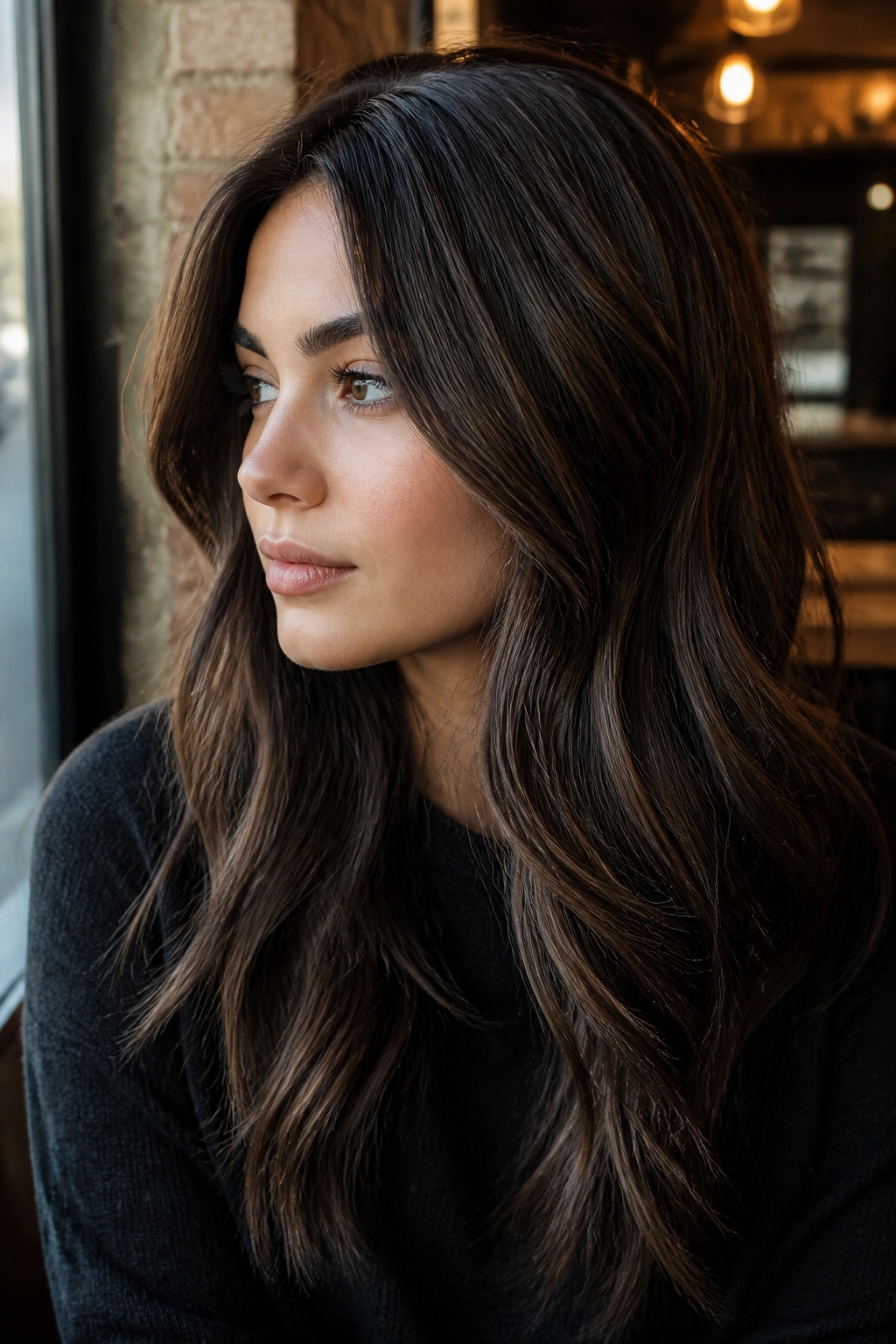
Truffle brown is what happens when chocolate brown gets a little cooler, a little deeper, and a lot more refined. It is not flat, and it is not golden. It has a layered, slightly muted finish that makes the hair look polished without looking overworked.
What Makes It Different
Compared with mocha, truffle is less milky. Compared with espresso, it has more visible depth across the mids. That balance is why it works on thick hair, long layers, and curls that need shadow as much as shine.
People often ask for “rich brown” and end up with something too warm. Truffle avoids that mistake. The tone sits near neutral, with just enough coolness to keep the shade from turning orange at the ends.
It is also one of the easier dark brunette hair colors to wear if you like an expensive, low-sheen finish. The color reads soft and dense rather than glossy and bright. Some people hate that. I love it on textured cuts, where the movement does the talking.
10. Soft Black-Brown

Soft black-brown is for anyone who wants drama without jumping straight to black dye. It sits so close to black that it can look nearly inky indoors, but the brown base keeps it warmer and easier to wear.
This shade is a good call if your hair is naturally very dark and you want to deepen it without losing the brown family. It can make the eyes stand out and sharpen the outline of a haircut, which is why it looks so strong on bobs, lobs, and blunt fringes. Long, layered hair can wear it too, though the cut needs enough shape to avoid looking like one solid curtain.
The risk is flatness. A soft black-brown that gets too dense at the ends can swallow texture. A gloss helps. So does a tiny bit of variation through the mids, even if the contrast is almost invisible.
If you like a darker, sleeker mood, this shade has real presence.
11. Caramel Ribbon Brunette

Why do caramel ribbons look so good on dark brunettes? Because they give the eye something to follow without forcing the whole head lighter. A brunette base with thin caramel pieces can still read deep, but the movement comes alive when the hair bends or catches daylight.
How to Wear the Ribbons
- Keep the ribbons fine, not chunky.
- Place them around the face and through the top layers first.
- Ask for a soft balayage so the grow-out stays gentle.
- Keep the caramel one or two levels lighter than the base, not five.
The best caramel ribbon brunette keeps the contrast controlled. Thick stripes can date the look fast. Thin, airy placement looks modern and lets the darker base do its job.
This shade is especially good on medium-length cuts and waves. The ribbons bend with the hair instead of sitting on top of it, which makes the whole color look blended. If you like brunette balayage but hate anything too obvious, this is the version that tends to feel easiest to wear.
12. Toffee Brunette

Toffee brunette sits warmer than walnut and deeper than honey. That middle point is why it works so well when you want glow without losing brunette depth. It reads rich, not pale.
The finish matters here. A toffee brunette that is too matte starts to look dull. A light-reflecting gloss keeps the warmth soft and creamy instead of brassy. On shoulder-length cuts, the color can make the ends feel fuller, which is handy if your hair thins out a little at the bottom.
I like this shade on people who wear curtain bangs or face-framing layers. The toffee tone brightens the front pieces first, and that gives the haircut a more lifted shape. It is less high-contrast than caramel ribbons, so it can feel calmer if you want warmth without obvious streaks.
If your natural brown sits in the level 4 to 5 range and you want it to look a little sweeter, toffee is a good place to land.
13. Bronze Brunette

Bronze brunette is the shade for hair that needs light without becoming blonde. It has a warm metallic cast, but it stays rooted in brown, which keeps it from getting flashy. On curls, it can look almost molten. On straight hair, it reads sleek and reflective.
I’ve seen bronze brunettes work best when the colorist keeps the shine high and the contrast soft. Too much warmth and the hair turns orange. Too little and the bronze disappears. The sweet spot is a brown base with golden-brown reflections threaded through the mids and ends.
Quick Fit Check
- Good on warm or neutral skin.
- Strong on medium to dark brown bases.
- Better with loose waves than pin-straight styles.
- Needs a gloss that preserves shine rather than cooling it down.
Bronze is one of those shades that can rescue dull brown hair fast. It gives depth, but it also gives motion. That combination matters more than people think.
14. Maple Brown

Maple brown sits between chestnut and auburn, but it keeps more earth in the mix. That is what separates it from redder brunette shades. The warmth is there, yet it feels grounded rather than fiery.
If you want brown hair color that looks alive in daylight and still deep in the shade, maple brown does that job well. It can flatter hair with natural warmth and skin with peach, olive, or golden undertones. On darker complexions, it often shows up as a soft, glowing brown instead of a copper shade, which is a nice shift.
The risk is overdoing the red. Maple should stay brown first. If the formula leans too far into auburn, the whole look changes direction fast. A restrained gloss keeps it in the brunette lane.
I prefer maple on medium to thick hair because the warmth can get lost on very fine hair unless the cut has movement. A layered cut or soft waves help the color show up in the right places.
15. Smoked Pecan

Smoked pecan is what I think of when someone wants brunette hair with a roasted, slightly hazy finish. It is warmer than ash cocoa, but the smoky edge keeps it from reading sweet. That gives the shade a nice grown-up feel.
The Mechanism
The color works because the base stays deep while the lighter pieces are muted down. Instead of obvious gold or caramel, you get a brown that looks toasted at the edges. That makes the shade good for hair that already has dimension and just needs tightening up.
What to Ask For
- A medium-dark brown base.
- Soft beige-brown lowlights.
- No chunky gold highlights.
- A gloss that mutes warmth a touch, not a full cool toner.
Smoked pecan looks especially good on layered cuts because the different lengths catch the color in different ways. If your hair is long and heavy, the smoked finish can keep it from looking too flat around the ends.
16. Cool Cocoa

If you hate seeing orange in your hair, cool cocoa is the brunette to ask for first. It keeps the depth of chocolate brown, but the undertone is quieter and cooler, which makes the whole shade feel more controlled.
The color is useful after lightening because it can settle brass without turning the hair muddy. That balance is harder than it sounds. Too much ash and the hair looks dusty. Too much warmth and it slides into chestnut. Cool cocoa stays in the middle if the formula is handled well.
It also pairs nicely with shine. A glossy finish keeps the coolness from feeling flat, and a light curl or bend in the hair helps the brown show different shades instead of reading as one dark sheet. That is especially helpful on medium-length cuts.
For anyone building a brunette refresh from a faded balayage, cool cocoa is a practical choice. It fixes tone, keeps depth, and does not demand constant toner appointments.
17. Black Cherry Brown

Black cherry brown looks almost like a deep neutral brunette until the light shifts and the plum tone wakes up. That little flash of cherry is the whole appeal. It gives dark hair a moody edge without turning it red-red.
What It Feels Like in Real Life
Under indoor light, the shade can look nearly espresso-dark. Step near a window, and the red-violet note comes through around the face and at the ends. That shift is subtle enough for work, but it still feels personal.
A black cherry brown works well if you like dark hair with personality. It is especially nice on straight, glossy cuts because the reflect shows the color off cleanly. Waves soften it. Curls make it look richer.
My honest opinion: this is one of the most flattering brunette refreshes for people who get bored fast. It changes with the light, so it does not feel static.
What to Ask For
- A deep brown base with red-violet undertones.
- A demi-permanent gloss for shine.
- Slightly brighter face-framing pieces if you want the cherry note to show sooner.
18. Sable Brown

Sable brown is the shade you choose when espresso feels too hard and mocha feels too soft. It lives in the middle, with a dark brown base and a satin finish that feels smooth rather than shiny or warm.
That makes it a strong option for people who want brunette hair to look elegant without looking obvious. Sable is not flashy. It is not trying to be a color trend. It just makes hair look expensive in a quiet, believable way, which is often harder to pull off than a dramatic shade.
It suits medium to deep skin, but the real win is how well it frames the face. A sable brunette can sharpen a cut, especially if the hair has a strong part or blunt ends. On layered hair, it gives enough depth that the texture still reads clearly.
If you want dark brunette hair colors that feel clean and low-fuss, sable deserves a spot near the top.
19. Coffee Bean Brown

Coffee bean brown is for people who want their hair to look roasted, dense, and deep without landing in black. It is richer than walnut and a touch cooler than chestnut, which makes it feel grounded and serious in the best way.
I like this shade when the goal is dimension without obvious highlight lines. A colorist can build it with lowlights and a dark gloss so the hair gets movement from tone, not from big color shifts. That usually ages better than heavy contrast, especially on long hair.
Key Details
- Best on level 3 to 4 bases.
- Works well with subtle lowlights through the mids.
- Needs shine to keep the depth from swallowing the texture.
- Looks strong on thick hair and textured cuts.
Coffee bean brown is one of those shades that can make a simple haircut look more deliberate. It does not need much styling to look finished. That is a good thing on busy mornings.
20. Dark Mahogany Brunette
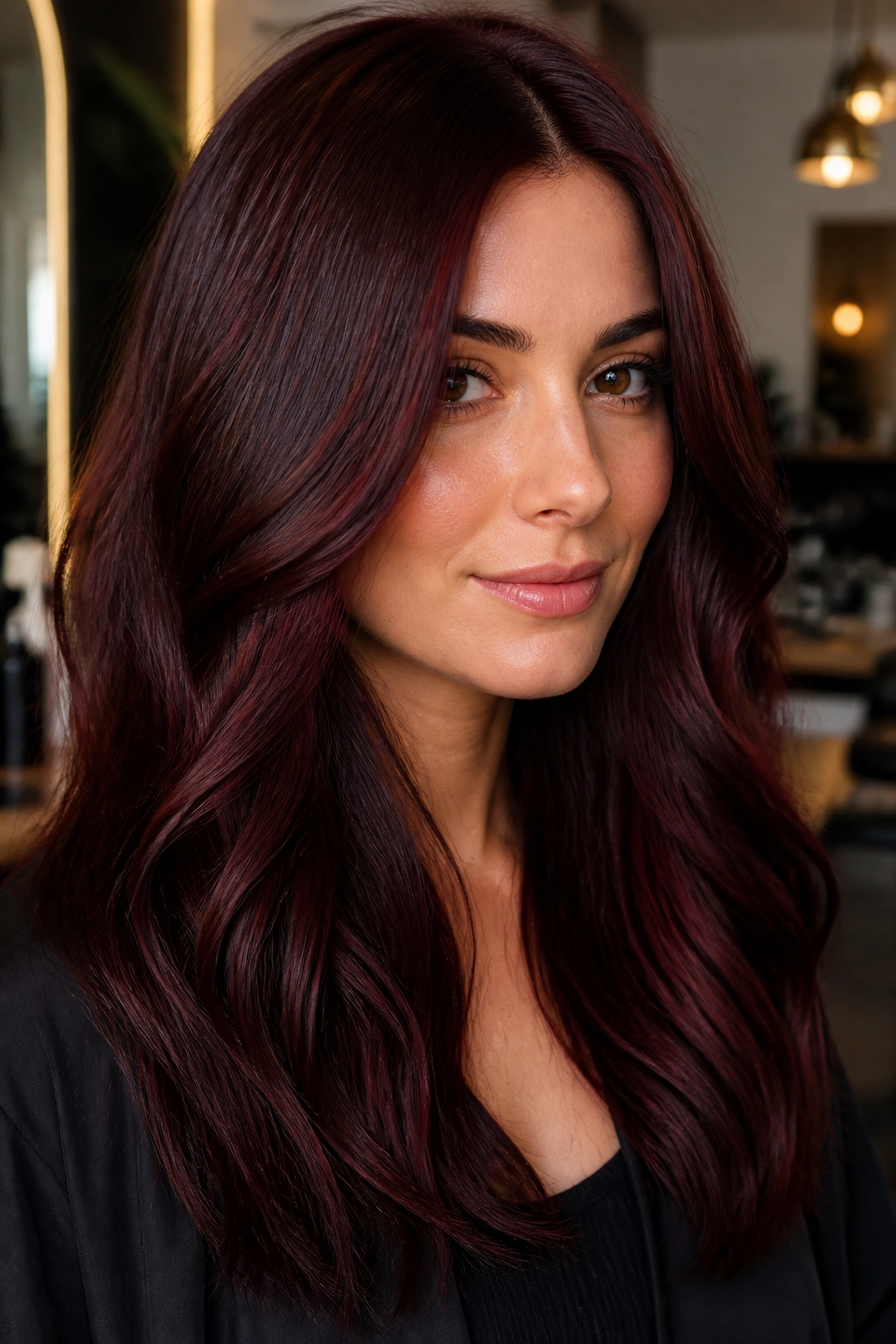
Dark mahogany brunette is the richest of the warm dark browns. It starts with deep brunette depth and then folds in a red-brown cast that can make the color look almost velvet-like when it moves. If you want warmth and drama at the same time, this is the shade.
The best mahogany brunette never turns orange. That is the line to protect. The red should feel deep and slightly wine-toned, not bright. A gloss with red-brown pigment keeps the shade honest, and it helps the color hold its tone better between salon visits.
This shade looks especially good on long hair, where the red-brown undertone can shift from root to end. It also flatters fuller cuts because the depth makes the shape look richer. On very fine hair, a soft layered cut keeps the color from feeling too heavy.
If cherry brown is moody, mahogany is richer. It is a little more formal, a little more dramatic, and very good when you want brunette hair that does not fade into the background.
Final Thoughts
The smartest brunette refresh usually comes down to undertone, not how much lighter you go. Espresso, sable, and cool cocoa keep things clean; mocha, chestnut, and toffee add softness; cherry and mahogany bring personality without losing depth.
Bring photos that show the shade in indoor light and daylight. Brown hair changes more than people expect, and the version you love in a mirror under warm bulbs can look very different near a window.
If your hair already has a decent base, a gloss and a few well-placed lowlights can do more work than a full color shift. Dark brunette hair does not need to shout to look good. It just needs the right tone and enough dimension to keep it moving.
