



Orange-heavy red can look loud on cool skin. The better move is usually the one that leans berry, wine, or cherry instead of copper.
Blue-based red tones are the quiet heroes here.
If silver jewelry looks sharper on you than gold, that clue matters. So does the way your skin reacts to warm hair color: a shade with too much orange can make the face look flushed or a little tired, while a red with violet or blue reflect tends to sit more cleanly against pink, rosy, or blue undertones. That is why the same red can look rich on one person and strangely off on another.
Colorists use words like cherry, cassis, merlot, garnet, and black cherry for a reason. Those names point to where the pigment sits on the warm-to-cool scale, and once you start thinking that way, the options get much easier to sort. A flattering red should look deep, polished, and deliberate — not like the hair color is wearing you.
1. Cherry Cola Waves
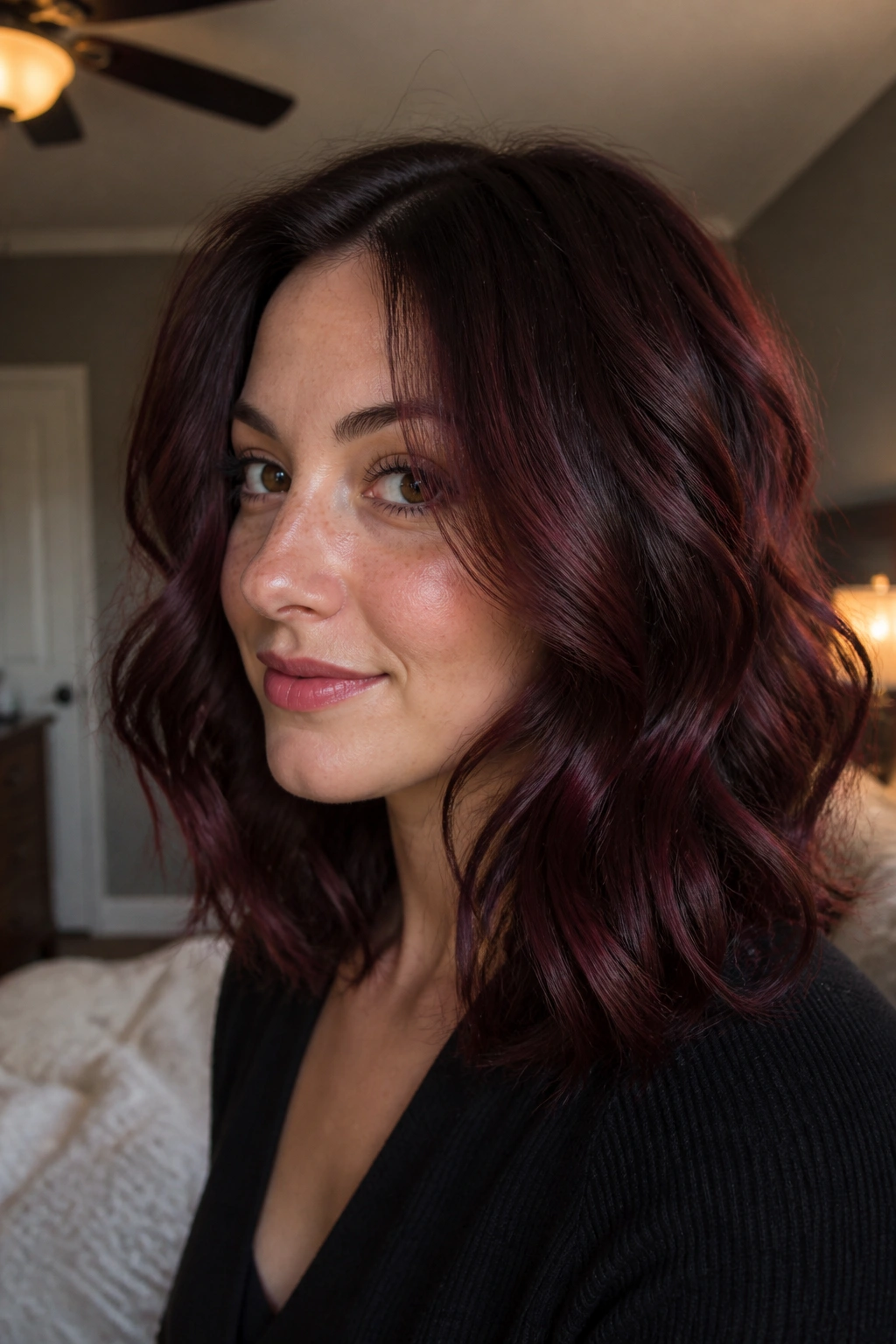
Cherry cola is the shade I keep coming back to for cool skin because it does two things at once: it keeps a brunette base in place, and it flashes red only when the light hits it. That makes it easier to wear than a bright crimson, especially if you like soft waves and lived-in movement.
Why It Works
The brown base acts like a filter. It keeps the red from turning neon, which is exactly where a lot of cool undertones start to look unhappy.
Loose waves help, too. Every bend in the hair catches a slightly different note — some brown, some cherry, some plum — and the whole effect reads richer than a flat single-process color.
- Ask for a level 4 or 5 brown base with a cherry overlay, not a vivid red from root to end.
- This look flatters fair, medium, and deep cool complexions because the red stays in the same family as berry lipstick.
- It wears well on shoulder-length cuts and long layers; the motion makes the color look expensive without trying.
- A gloss every 4 to 6 weeks keeps the cherry note from drifting into dull brown.
Tip: keep the roots a touch deeper than the mids. That little shadow makes the red look clean instead of loud.
2. Black Cherry Lob
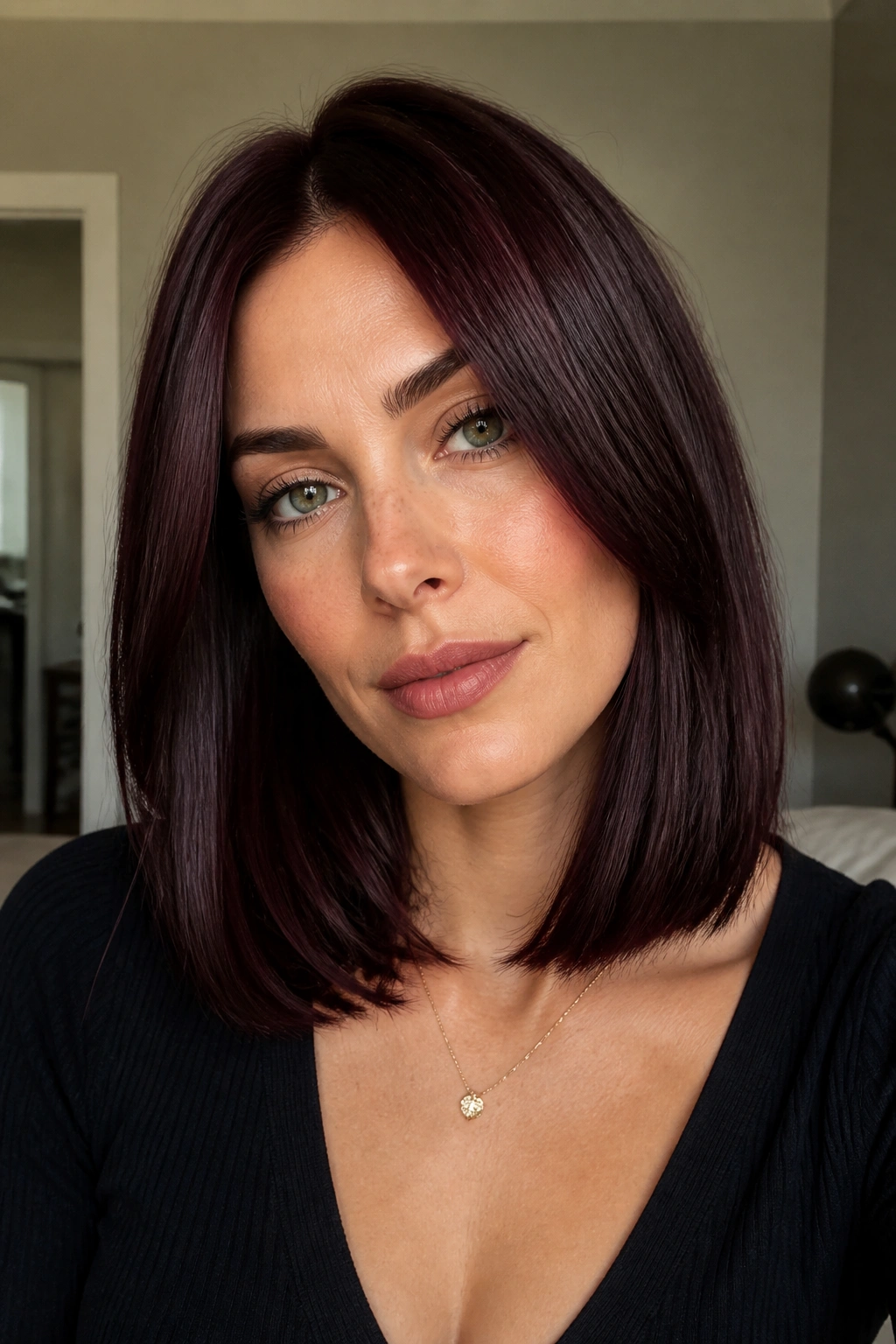
Black cherry lob is the look that says you want red hair without shouting it from across the room.
That blunt length matters more than people think. A lob has enough shape to feel modern, but not so much layering that the color starts breaking up into random patches of tone. The result is dense, shiny, and a little mysterious — which is a good thing when your skin leans cool.
The best versions sit right around the collarbone and use a dark cherry-brown base with almost-black edges. Under indoor light, it can read nearly brunette. Outside, the berry tone comes forward and gives the hair that deep wine look that works so well with cool undertones.
If your hair is fine, this is one of the smarter choices. A blunt lob creates the illusion of thickness, and thick-looking hair makes deep red shades look more polished. Too many wispy layers can make the color feel airy in a bad way.
A clean blow-dry or a flat iron pass on the ends is enough. You do not need big curls here. The whole point is control.
3. Burgundy Balayage
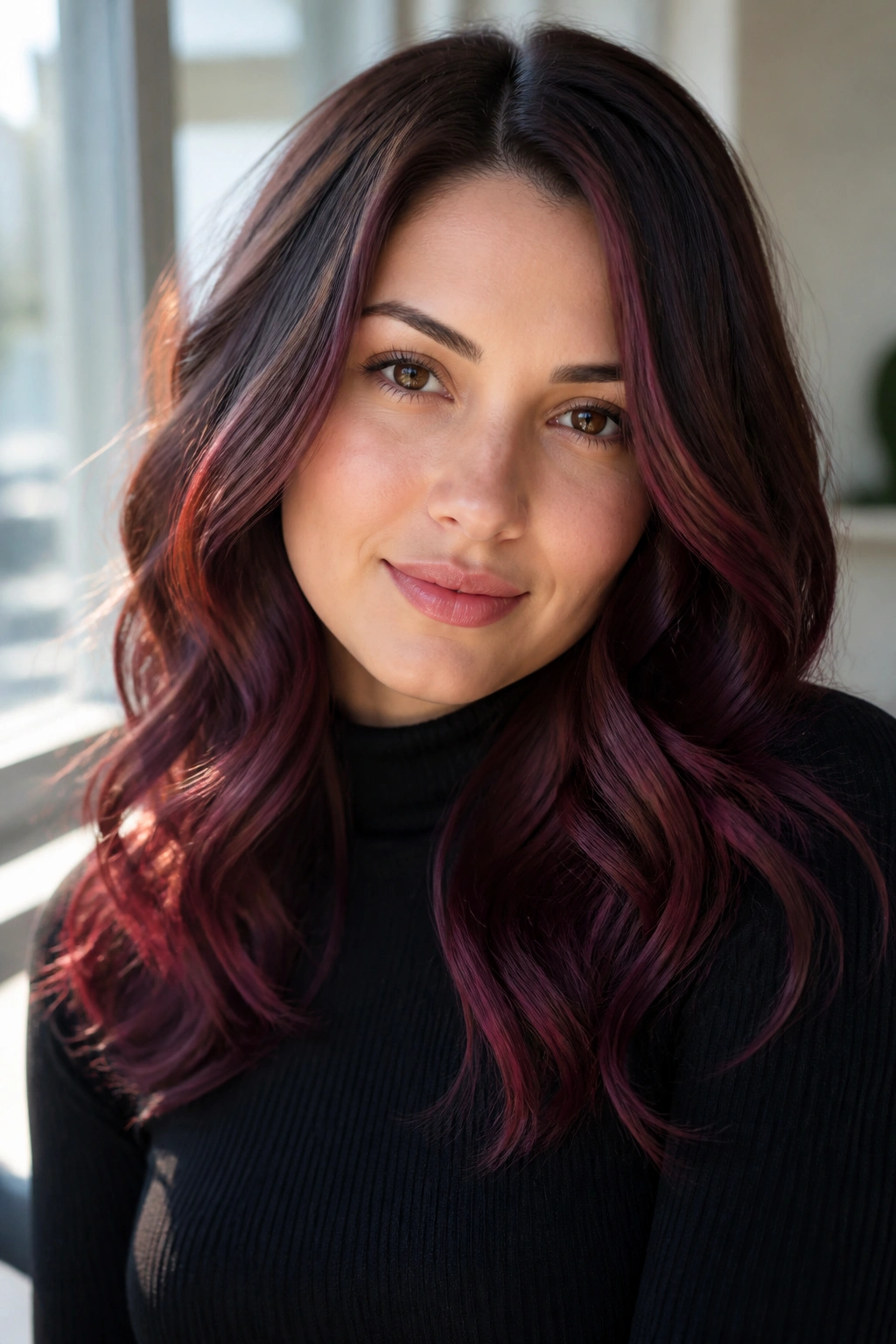
Why does burgundy balayage look so easy on cool undertones? Because it gives you red without forcing it to cover every inch of the hair.
Balayage keeps the base darker and paints the burgundy where the eye naturally goes — mids, ends, and the pieces around the face. That matters. A cool-toned face can get overwhelmed by a full head of warm red, but burgundy ribbons over brown hair feel softer and more wearable.
The shade itself should lean wine, not brick. I like burgundy balayage best when it has a violet cast that shows up most clearly in curls or brushed-out waves. On straight hair, the color can look subtle. On texture, it starts to glow.
How to Wear It
- Choose soft curls or a round-brush blowout so the burgundy pieces separate a little.
- Ask for the lightest ribbons near the face and under the top layer, not chunky streaks on the surface.
- Keep the finish glossy; a dull burgundy can look flat fast.
If you want red hair that still leaves room for black clothes, silver hoops, and a cool makeup palette, this one is hard to beat.
4. Merlot Root Melt
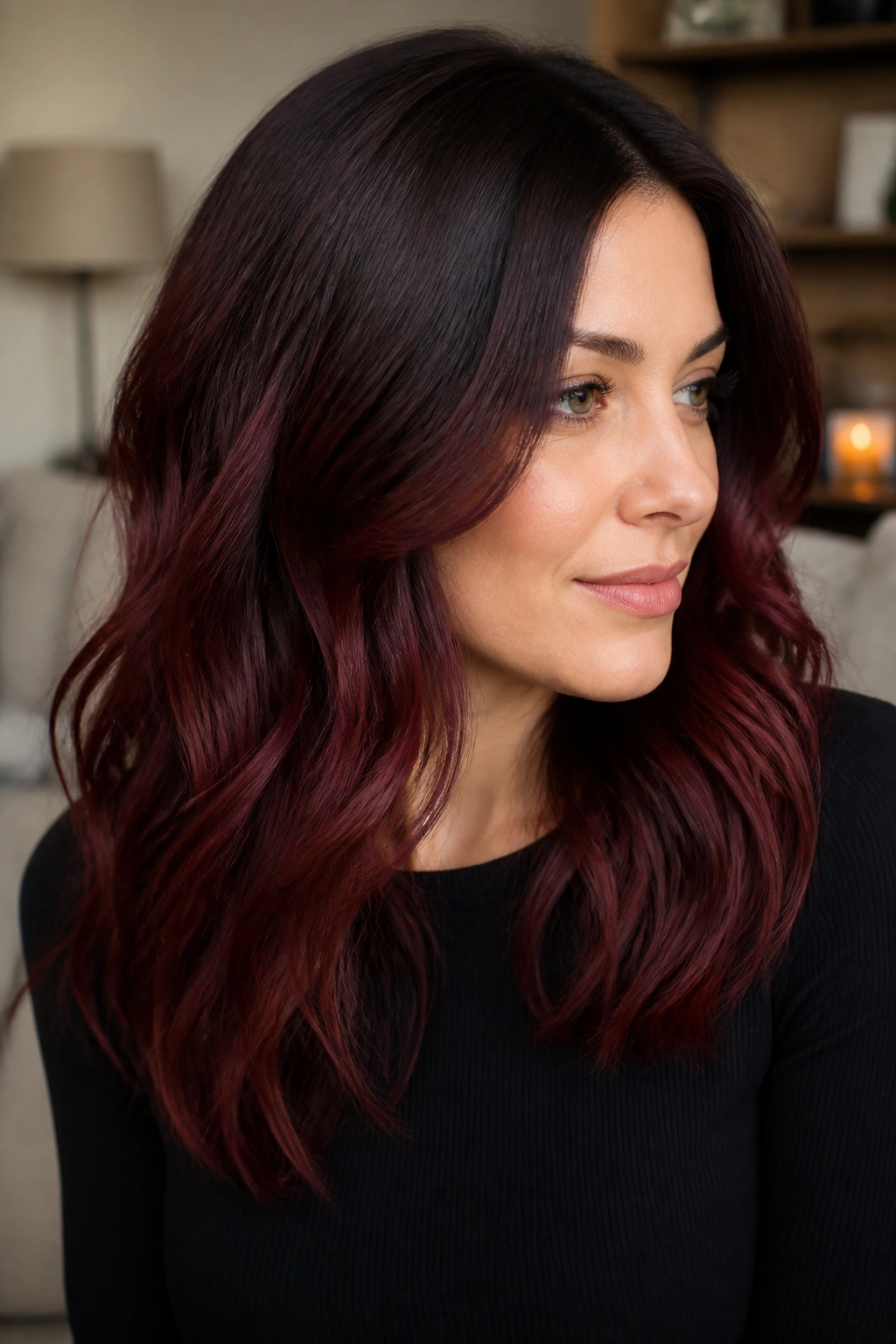
If your closet is full of black knits and charcoal coats, merlot root melt will probably make sense to you right away. It starts deep at the roots, then slides into a red-wine length that looks expensive in the simplest possible way.
The melt is what makes it work. There is no harsh line, no obvious demarcation, no “I colored my hair yesterday” feeling. The red simply grows out of the brown, and that softness is especially kind to cool skin because it keeps the color from sitting too hot against the face.
A good merlot melt should have enough depth that it almost reads plum in shade. That little shift matters. When red gets too orange, it starts fighting cool undertones; when it stays wine-like, it looks intentional.
- Best on medium to long hair with some bend or wave.
- Ask for deep brown roots and a merlot mid-length formula that stays violet-leaning.
- Works well if you hate frequent maintenance, since the dark root hides regrowth.
- Looks sharper with berry blush and mauve lipstick than with peach makeup.
Merlot is the color you choose when you want drama, but you still want it to feel calm.
5. Plum Silk Straight
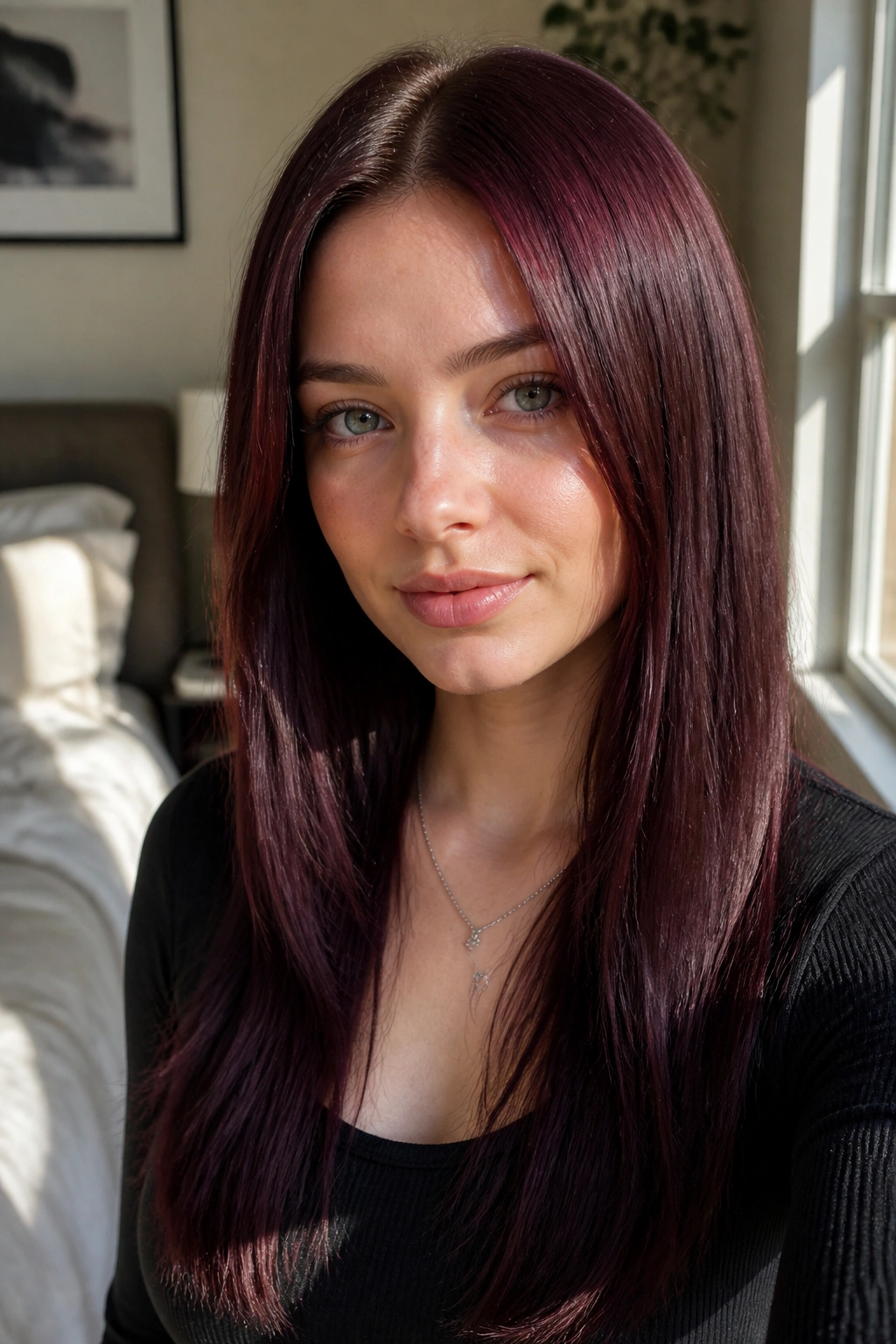
Straight hair shows everything.
That is the whole reason plum silk works so well. There is nowhere for the color to hide, so every strand has to carry the shade cleanly, and plum does that beautifully when the finish is glossy and the base is neutral brown. The red note stays cool, the violet note keeps the whole thing from drifting warm, and the result feels sleek rather than loud.
I like this look on hair that falls past the shoulders because the length gives the color room to shift. Up close, it looks like deep plum. In daylight, a red sheen appears around the edges. That change is what makes the style interesting — not a high-contrast stripe, but a slow reveal.
A straight style also makes maintenance easier to judge. If the ends look dry, you see it right away. If the color starts fading, the loss of shine gives it away. A good leave-in and a heat protectant are not optional here; they are the difference between polished plum and tired purple-brown.
This is one of the cleaner red hair looks for women with cool undertones because it never asks the skin to compete with it.
6. Garnet Curls
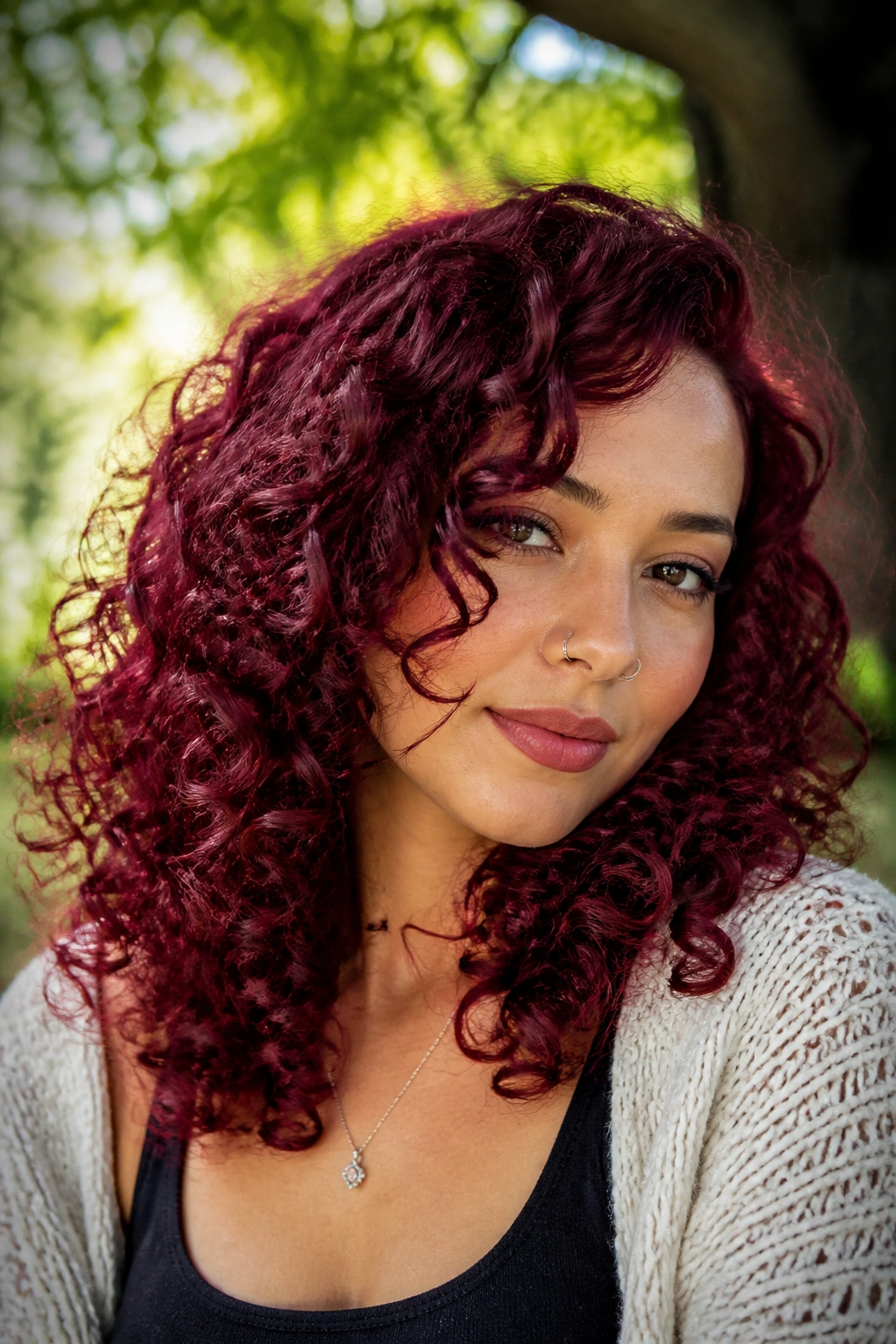
Garnet is deeper than crimson, darker than cherry, and far more forgiving.
That is why it flatters cool skin so well. A garnet shade carries that jewel-box richness that looks especially good on curls, because the bends in the hair create tiny shifts in tone all on their own. You get red, brown, and a hint of violet all at once.
Unlike a bright scarlet, garnet does not depend on perfection. Curls bring their own texture, so the color can be slightly uneven in the best way. One coil catches more red, the next looks almost black, and the whole head ends up looking dimensional instead of painted.
This shade suits medium and deep cool undertones especially well, but it can work on fair skin too if the red is kept dark and glossy. Think wine-stained velvet, not candy apple.
Use a diffuser on low heat if your curls need help holding shape. Too much heat strips the shine, and garnet without shine loses half its charm.
If you want a red that feels rich but not precious, this is a strong place to start.
7. Rosewood Bob
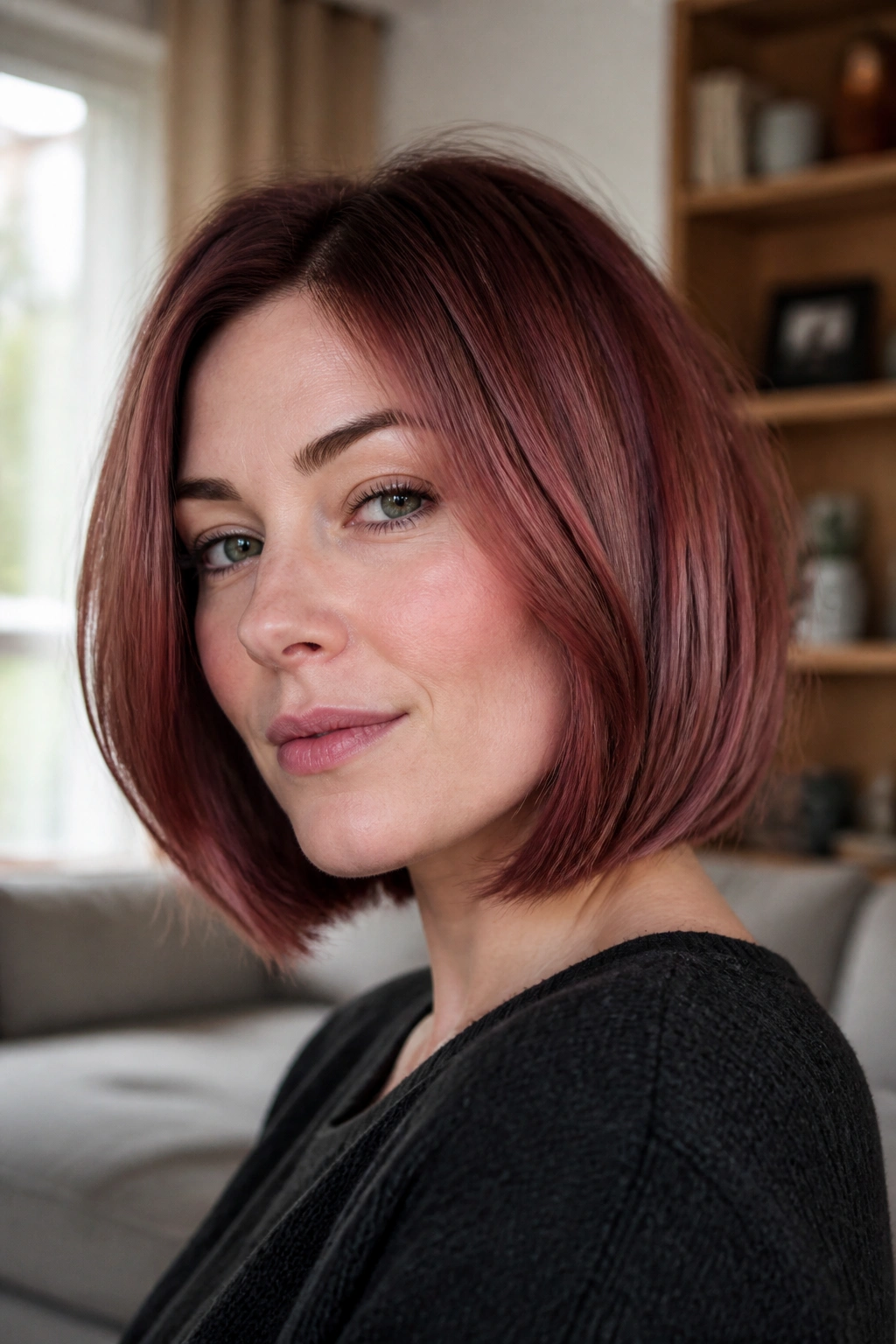
Rosewood is the shade people mistake for brown until they catch the red in daylight.
That is the appeal. A bob gives the hair a clean outline, and rosewood sneaks a muted red tone through the cut without turning the whole style into a statement piece. On cool undertones, the slight pink-brown cast makes the face look fresher than a coppery bob would.
What Makes It Different
The red in rosewood is softer and dustier. It has less fire, more shadow.
That matters if you like makeup with mauve, dusty rose, or cool beige tones. The hair and the face speak the same language, so nothing feels off.
- Best for chin-length or jaw-length bobs with a blunt perimeter.
- Works well on fine to medium hair because the shape gives it structure.
- Ask for a brown-red glaze rather than a bright red dye.
- Add a subtle side part if you want the color to show more around the face.
Pro tip: keep the ends crisp. Rosewood gets muddy if the cut is fuzzy or over-layered.
8. Raspberry Brunette
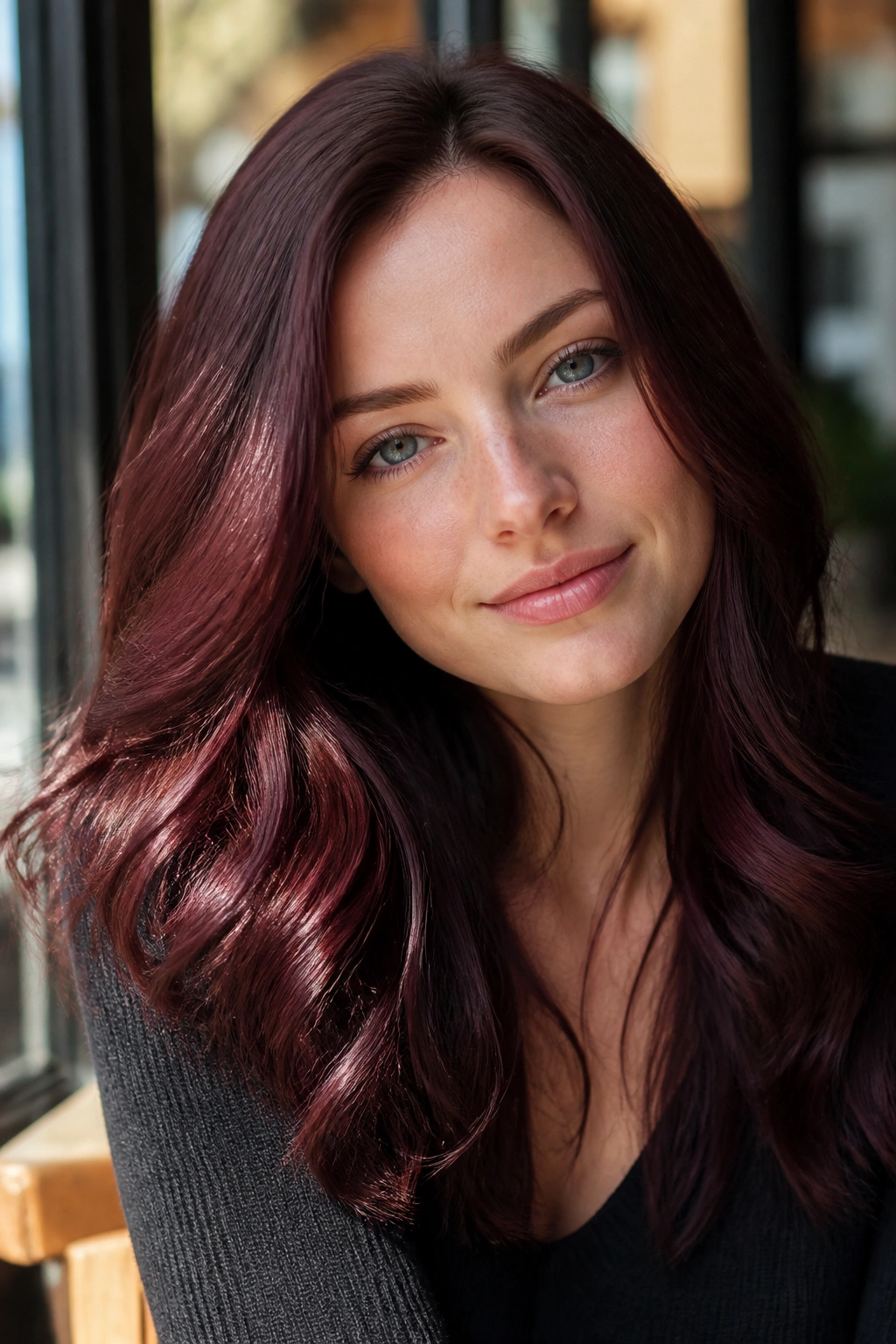
A brunette with raspberry sheen is easier to live with than full red, and that is exactly why it deserves more attention.
You keep the dark base. You keep the softness. But there is enough red-violet in the finish to make the hair look alive instead of flat. On cool undertones, that little raspberry note acts like a filter over the whole face — not enough to overwhelm, just enough to make the skin look brighter.
This is the shade for someone who wants a red family color but does not want to babysit it every week. A demi-permanent gloss, or a brunette base with raspberry reflections painted through the mids, gives you that effect without a hard line at the roots. The grow-out is gentle. So is the styling.
It looks especially good with loose bends, half-up clips, or a messy low bun, because the different textures catch the color in different ways. The red never looks identical from root to tip, which is the whole point.
If your hair is naturally dark and you are nervous about a full shift, raspberry brunette is a smart first move.
9. Sangria Face Frame
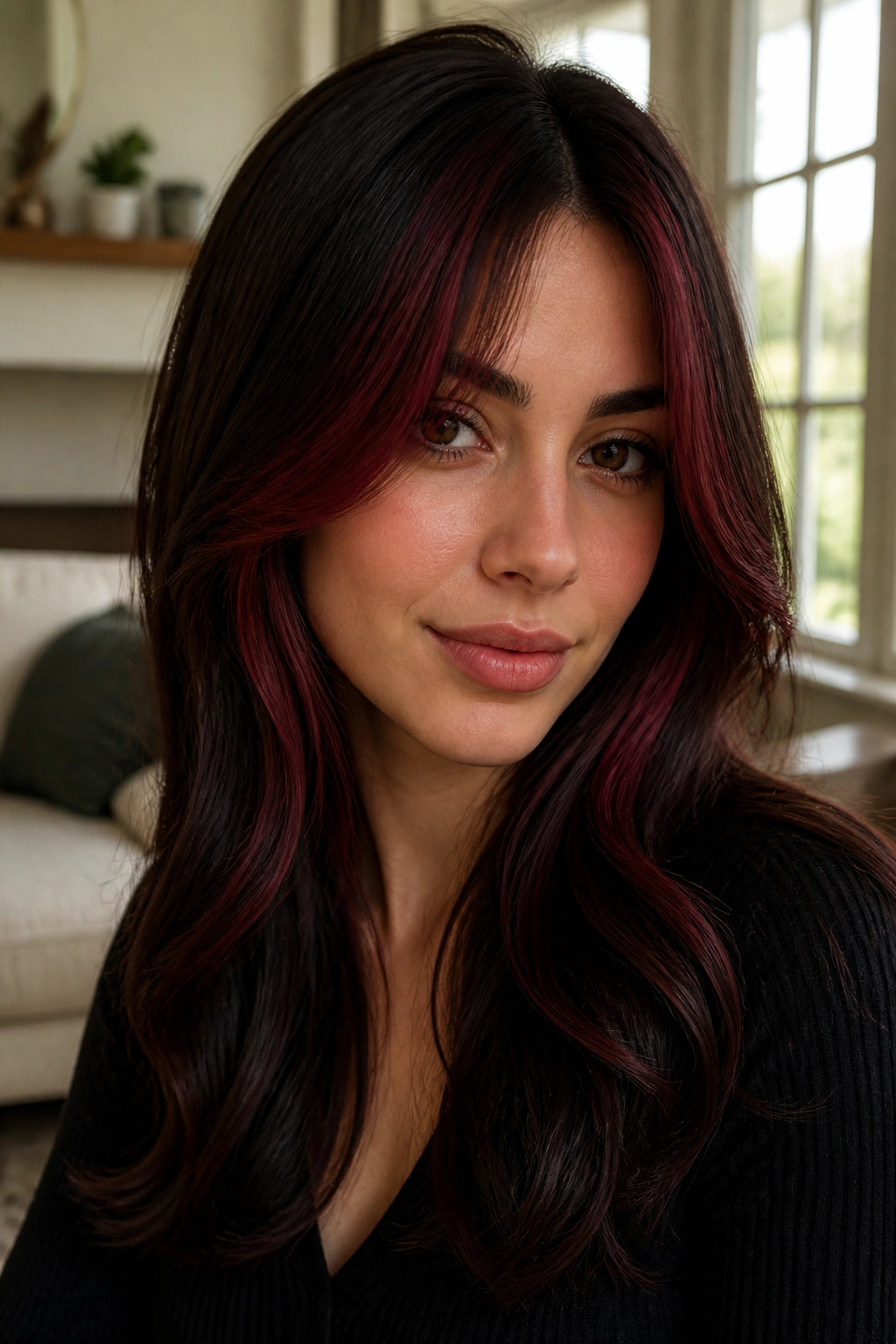
What if you only want the red near your face? Sangria face frame is the answer.
This look keeps most of the hair deep brown or brunette, then places wine-red or berry-red pieces right around the hairline, bangs, and cheekbone area. It is a clever move for cool undertones because the color does the flattering work exactly where you need it, then leaves the rest of the hair alone.
The sangria note should stay deep. Think crushed berry, not fire engine. The front pieces can be a shade brighter than the interior if you want them to pop in photos, but the overall effect still needs to feel grounded.
How to Wear It
- Pair it with curtain bangs, soft layers, or a center part.
- Keep the back and underlayer darker for contrast.
- Style the front pieces with a round brush or a 1-inch iron so they sit softly against the face.
- Refresh the money pieces more often than the rest of the hair, since they take the most heat and washing.
This is one of those styles that looks subtle until you turn your head. Then it gets good.
10. Mahogany Shag
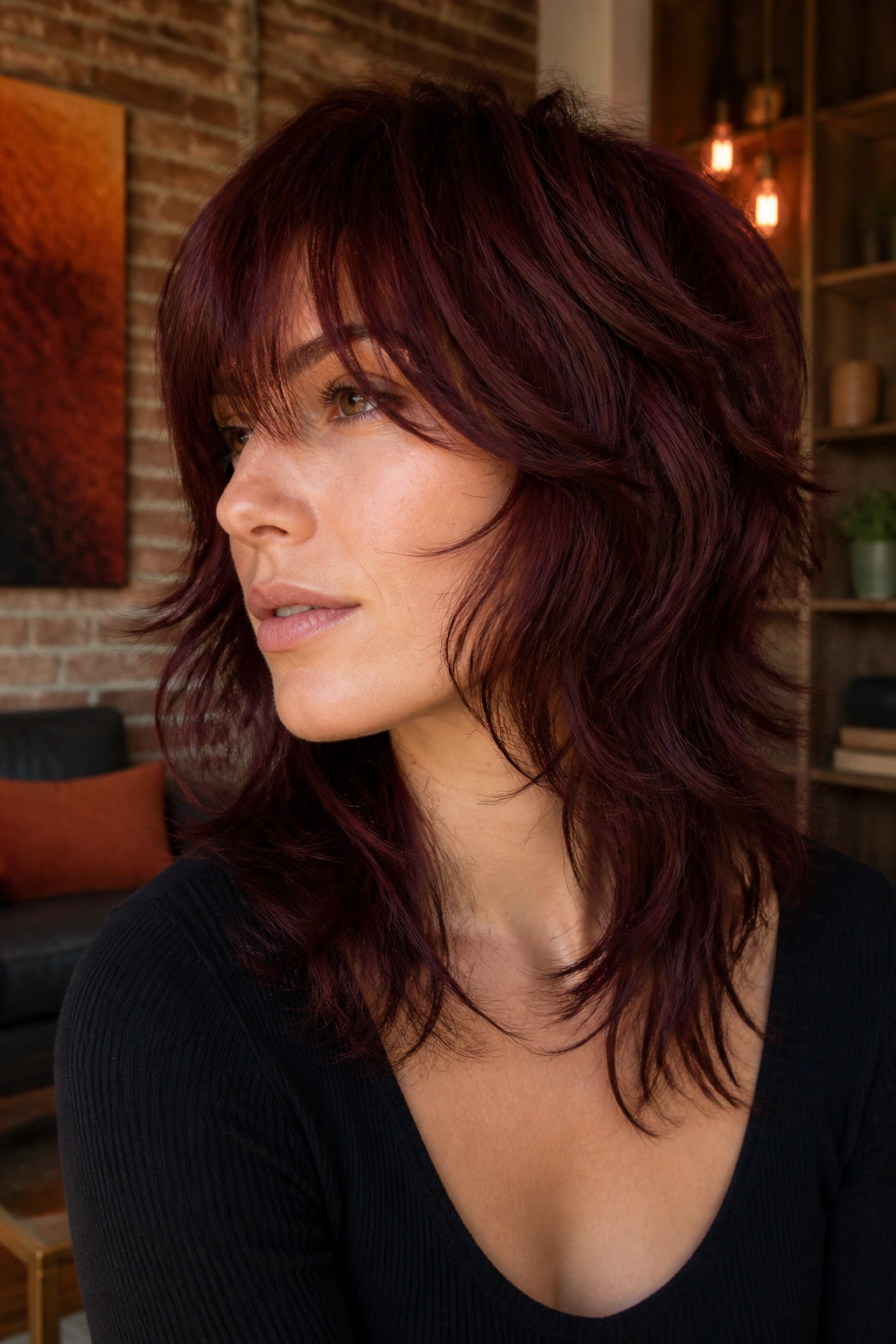
Mahogany shag is the haircut version of a great worn-in jacket — a little rough around the edges, but in a deliberate way.
The shag works because it adds movement to a color that could otherwise sit too heavy. Mahogany already has a brown-red base that behaves well on cool skin, and the layers stop it from feeling dense. On thick hair, especially, the cut helps the color breathe.
A good mahogany shag should have face-framing layers that start around the cheekbone, plus shorter crown layers if the hair has a lot of weight. That shape gives the red somewhere to move, and movement is what keeps the shade alive.
- Best for wavy, thick, or medium-textured hair.
- Ask for soft, broken layers rather than razor-choppy ends.
- A matte finish will flatten the red; use a light shine cream instead.
- Looks good air-dried when you want the color to feel relaxed and a little undone.
The shag does not make mahogany louder. It just keeps it from going sleepy.
11. Ruby Red Pixie
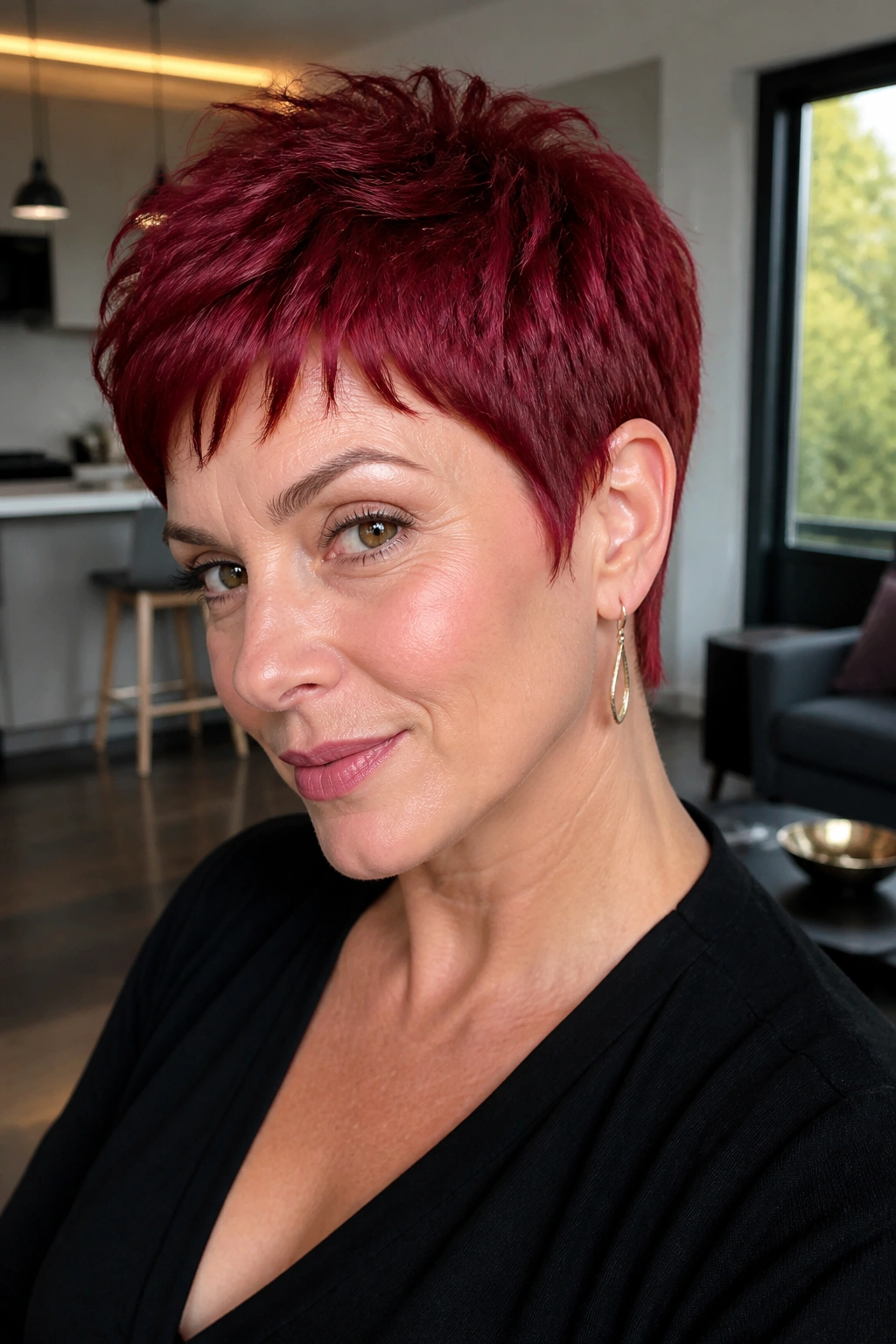
Short hair does not hide bad color. That is why ruby red on a pixie has to be done with intent.
The payoff is worth it. A pixie cut gives ruby red sharp edges, and the color bounces around the crown, temples, and fringe in a way long hair cannot match. On cool undertones, the jewel tone reads crisp and clean, not sugary or warm.
I like this look when the cut has enough texture to show the color from different angles. A little piecing at the top helps, but too much mess will blur the shape. A pixie needs clean lines around the ears and nape; otherwise the red can look fuzzy instead of polished.
The maintenance is real. Short cuts need trims, and vivid red shades fade faster on the top layers because they see the most sun and heat. Still, there is something sharp about it that makes the extra upkeep easier to forgive.
Ruby red works especially well if you wear berry lipstick, bold earrings, or a simple black wardrobe. The hair gets the job done on its own.
12. Velvet Auburn Blowout
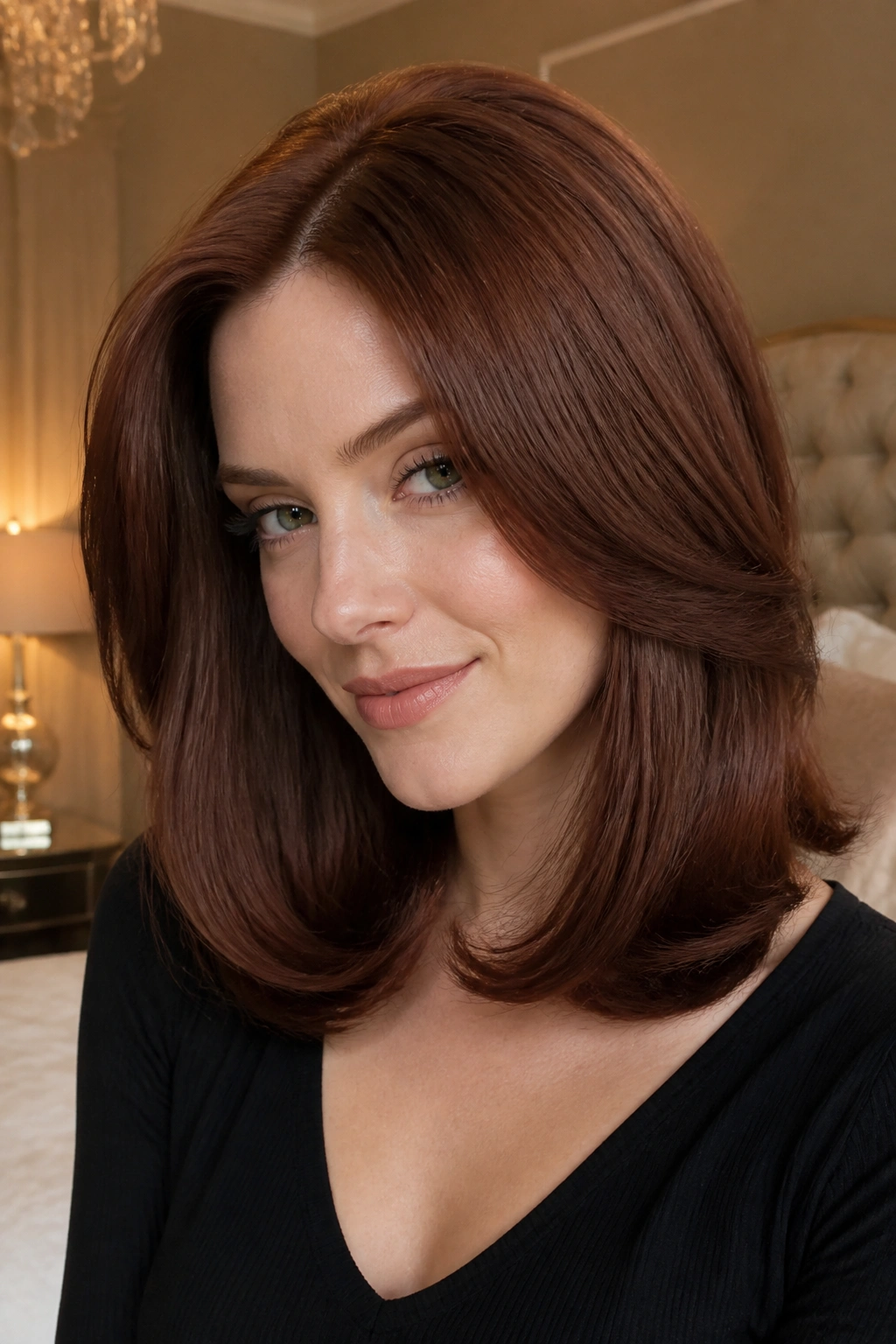
Velvet auburn is not copper, and that distinction matters more than people think.
Copper shouts orange first. Velvet auburn whispers brown-red first, then lets the warmth show up only after the light moves across it. On cool undertones, that difference keeps the hair from looking brassy or too bright. The shade sits in a softer lane, which makes it much easier to wear with navy, gray, black, and jewel tones.
A blowout is the right finish because it gives the color a smooth surface. The round brush pulls a little sheen into the hair, and the auburn reads plush rather than dry. Even a simple shoulder-length cut can look expensive when this color is styled with a bend at the ends.
If your hair is naturally brown and you want to tip into red without a dramatic jump, this is a strong choice. It looks controlled, which I mean as a compliment. Not every red needs to be the loudest thing in the room.
Best For
Women who want soft depth, easy grow-out, and a color that won’t fight cool-toned makeup.
13. Mulled Berry Ombré
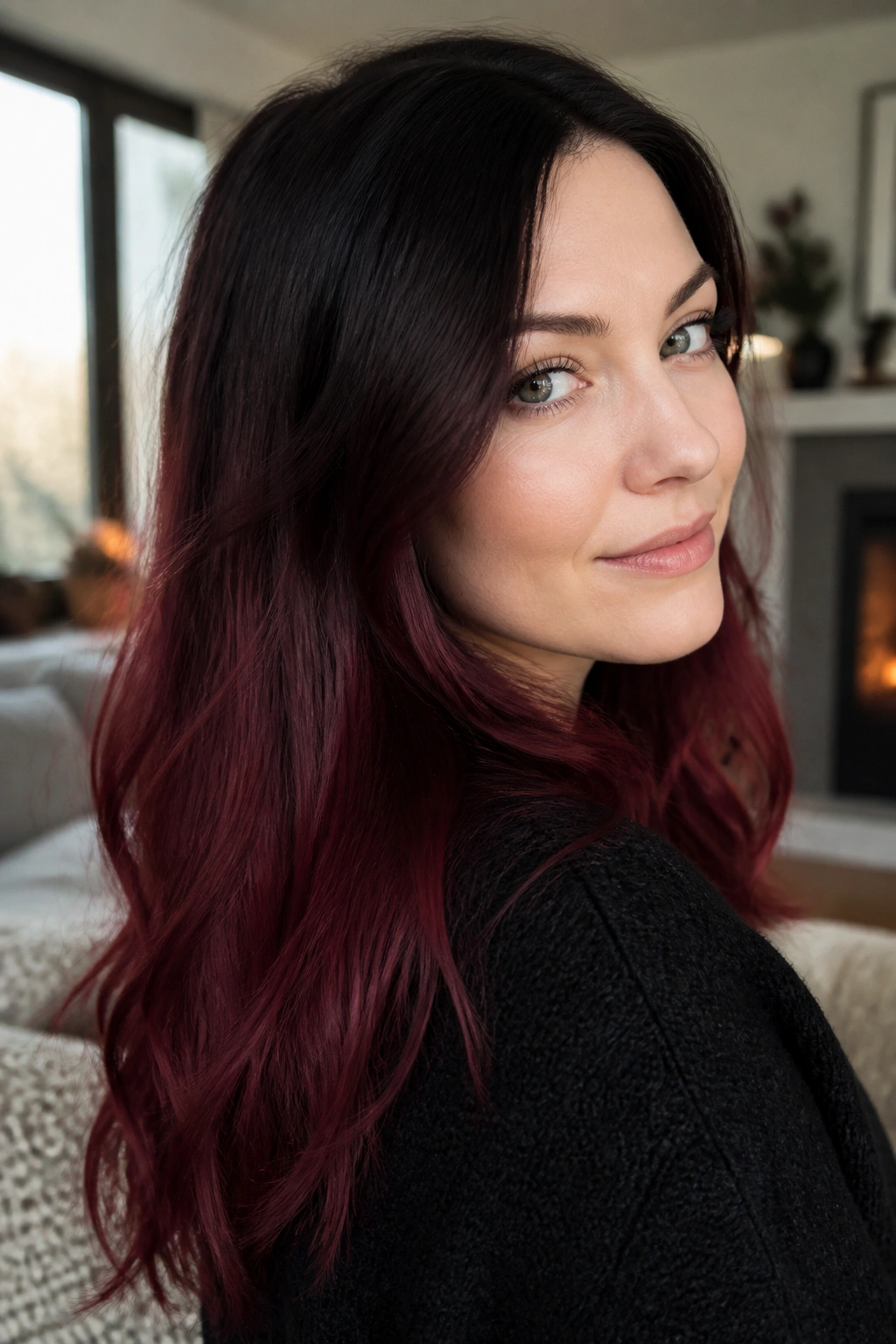
Mulled berry ombré is the easiest way to get movement without committing to a solid red from roots to ends.
The darker root keeps the style wearable. The berry ends carry the color story. Somewhere in the middle, the two meet and give you that moody red effect that sits nicely with cool undertones because it never fully breaks into orange. The ombré also buys you time between salon visits, which is no small thing if you like color but dislike constant maintenance.
Why It Works
The eye reads the hair as soft and intentional because the transition is gradual.
The red sits where it has room to show off — the ends, the bends, the layers around the shoulders — and the darker crown keeps your complexion from getting overwhelmed.
- Works best on long bobs, layered mids, and long hair with some texture.
- Ask for a berry tone that leans wine or plum, not coral.
- A curling wand or soft braid-out helps the ends show the color shift.
- Keep the root area neutral, not too warm, so the whole style stays cool.
Tip: if you are nervous, start with a demi-permanent berry gloss on the ends. It fades softer and gives you room to adjust.
14. Blackberry Ringlets
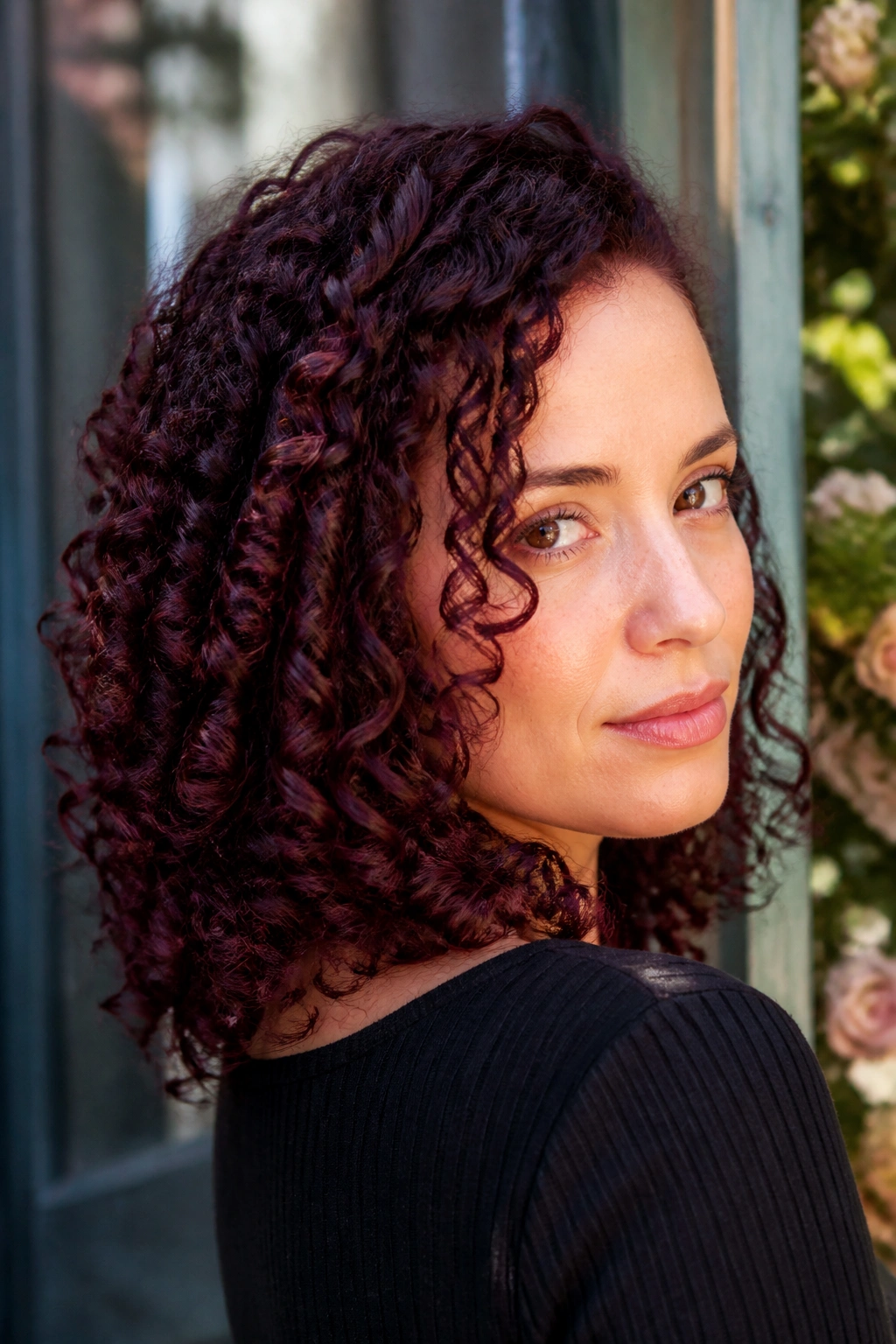
Blackberry ringlets are for the woman who wants depth first and red second.
That makes them quietly gorgeous on cool undertones. On tight curls or coils, the color does not need to be bright to be noticed. It shows up as sheen, reflection, and shape. Blackberry gives you that deep purple-red cast that appears almost black in shade and turns berry in direct light.
The real trick is not to over-process the curls. Ringlets already have a built-in pattern, and too much bleaching or lifting can weaken the spring. A rich blackberry tone placed over a dark base usually gives enough payoff without making the hair fragile. If you want a little more visibility, ask for a few brighter berries around the front.
Product matters here. A curl cream with slip, a wide-tooth comb, and a diffuser on low heat will help the color stay visible because healthy curls reflect light better than dry ones. That sounds obvious, but it is where a lot of dark red colors go wrong — they look good on day one and flat by week two.
Blackberry is moody in the best way. If you like depth, this one has it.
15. Cool Copper With Violet Glaze
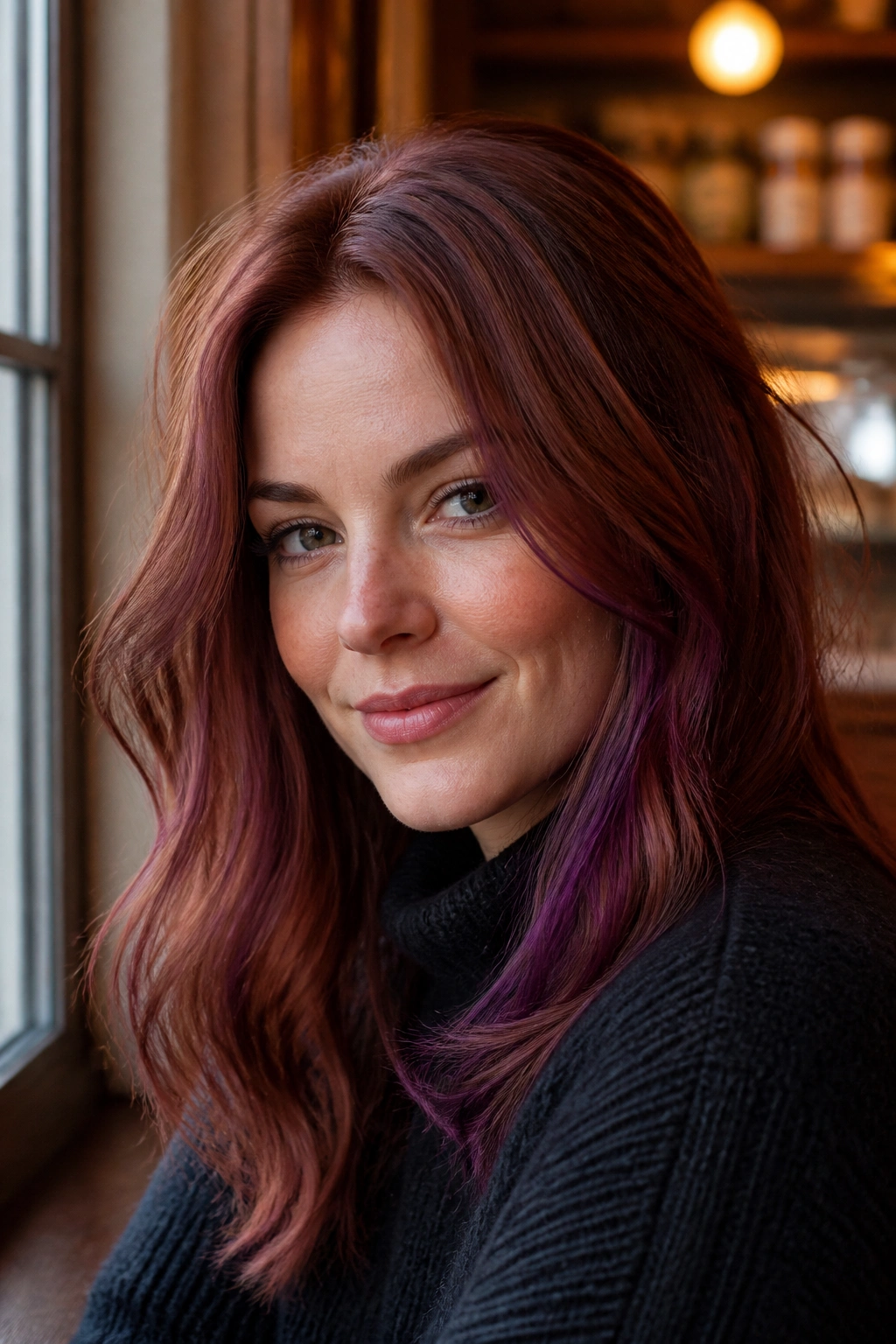
Can copper work on cool undertones? Yes — if the copper is muted and the glaze pulls it back toward violet.
That is the line people miss. A true orange copper can clash with pink or blue skin, but a softer copper-brown base with a violet or rose glaze can land in a more flattering place. The color still feels warm, but the warmth is restrained, almost smoky. The finish matters more than the name.
This look works best when the copper is not sitting alone. It needs shadow at the roots, a brown backbone, and a gloss that cools down the orange enough to keep the skin looking calm. On a bob or soft waves, the glaze can make the hair look like it has depth rather than heat.
How to Wear It
Try it if you like the idea of copper but usually find it too bright on your face. Keep the makeup side cooler — rose blush, muted lip, maybe a berry liner — and let the hair be the warmest thing in the room. That balance helps a lot.
If you want to stay safe, ask your colorist to keep the copper closer to chestnut with red reflect instead of straight orange.
16. Deep Auburn Shadow Root
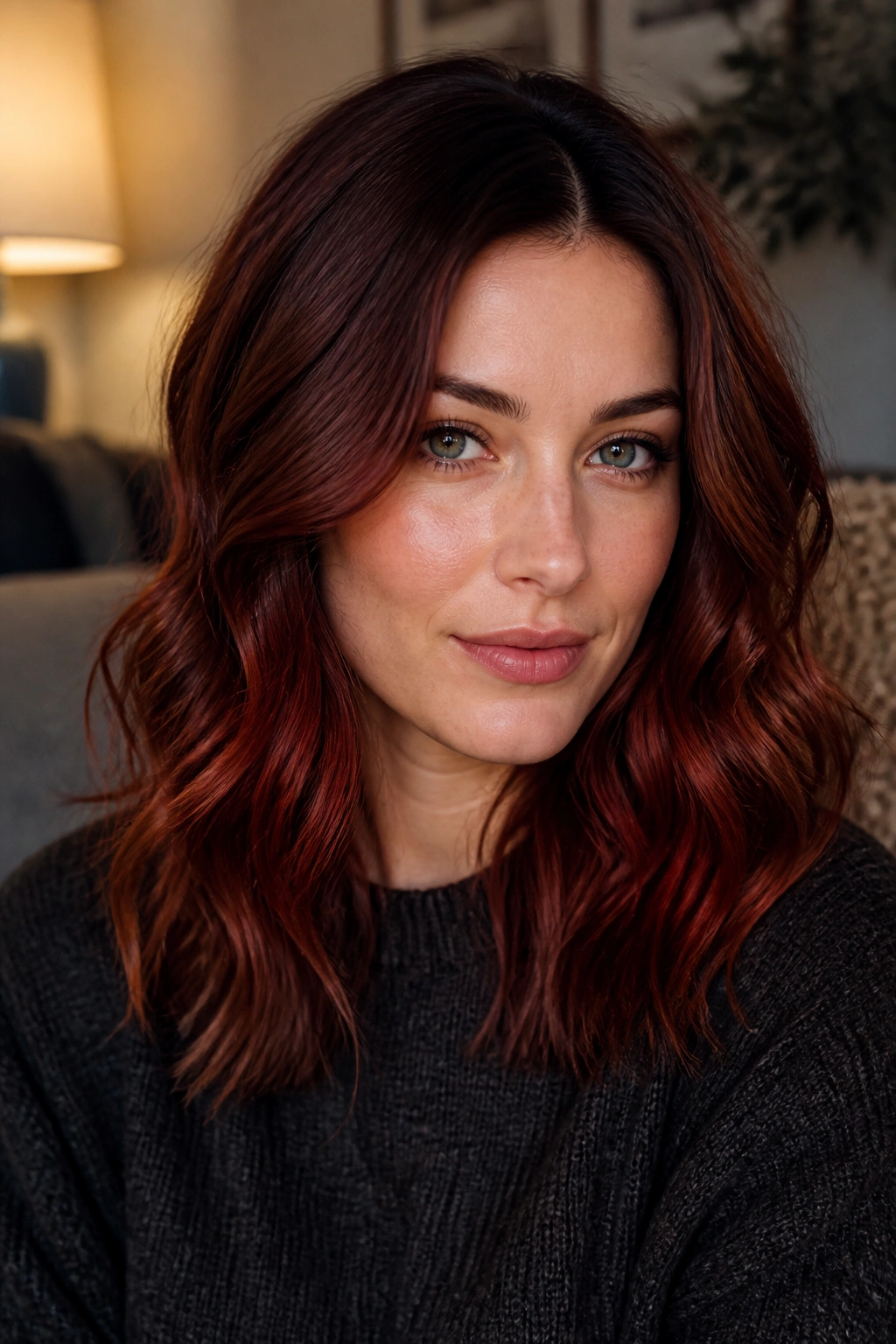
Deep auburn shadow root is the version people choose when they want red hair and a sane grow-out.
The shadow root is doing real work here. It lets the top of the head stay dark, which makes the auburn mids and ends look richer and keeps the color from slamming too hard against cool skin. That’s especially useful if your natural hair is already brown and you do not want to bleach much.
The best versions keep the red in the auburn family — brown-red, wine-red, a little spice, not pumpkin. The contrast should be soft, with just enough lift around the face to brighten things up. Too much contrast can feel stripey.
- Great if you want fewer salon visits.
- Works on straight, wavy, and loose curly hair.
- Ask for a shadow root one to two shades deeper than the auburn lengths.
- Pair it with a gloss refresh when the mids start to look flat.
A deep auburn shadow root is the kind of color that grows out without looking abandoned, and that alone makes it worth a look.
17. Red Velvet Balayage
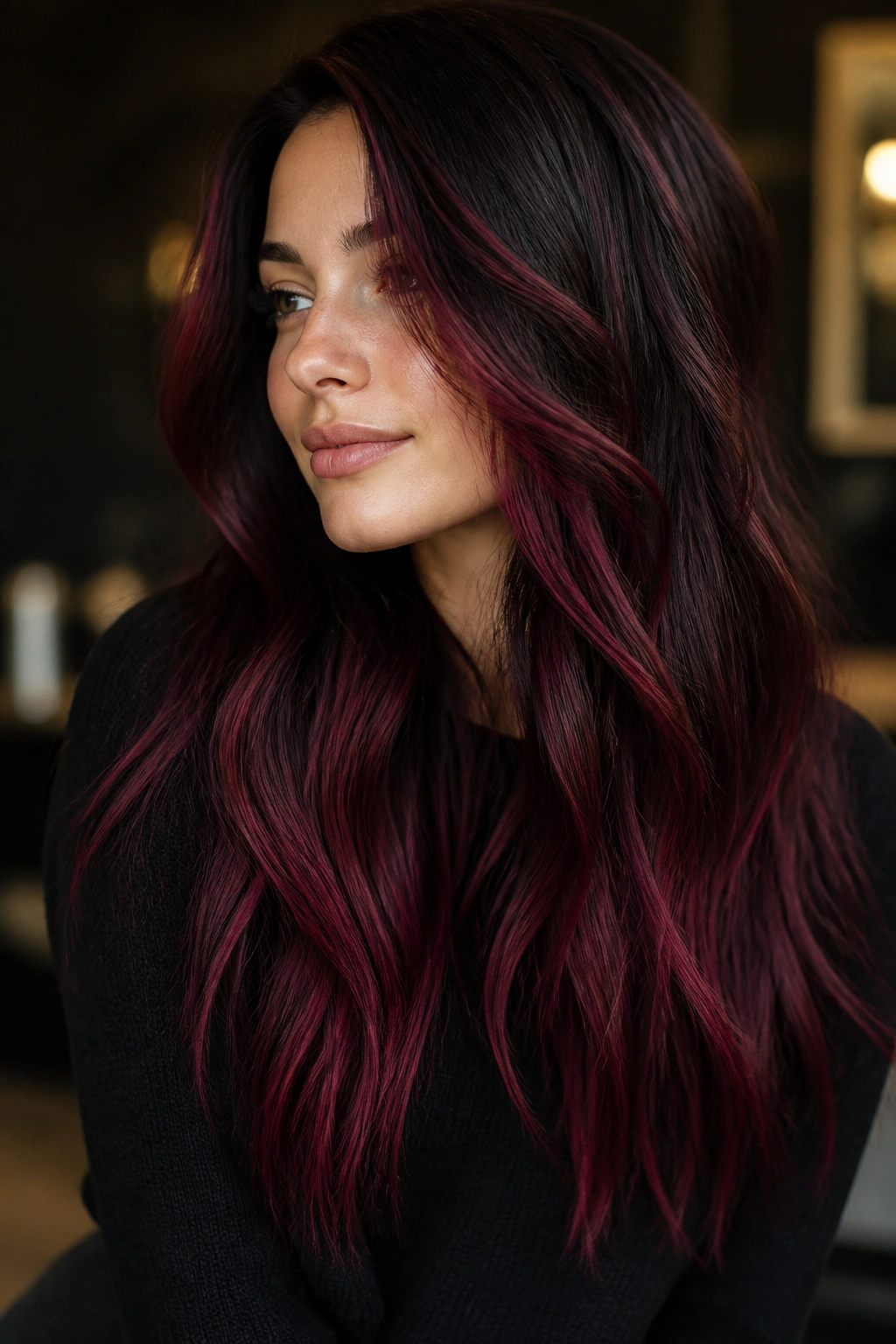
Red velvet balayage lives between brunette and berry, and that middle ground is exactly why it flatters cool undertones so well.
The base usually stays dark — cocoa, espresso, or soft brown — while the red velvet pieces are hand-painted through the mids and ends. That keeps the look dimensional. A full red can feel intense fast; a balayage version lets the red show up in layers, which is easier on the face and easier on your wardrobe.
I like this style on medium to long hair with loose waves because the painted pieces separate just enough to show depth. If you use a 1.25-inch curling iron and alternate the direction of the curls, the red catches in flashes instead of forming one flat block. That small detail makes a big difference.
The color should feel plush, almost like crushed velvet in low light. If it starts to look orange, the formula is off. Red velvet should stay in the wineberry lane.
This is one of the more versatile red hair looks if you want something rich but not obvious at ten feet.
18. Cassis Curtain Bangs
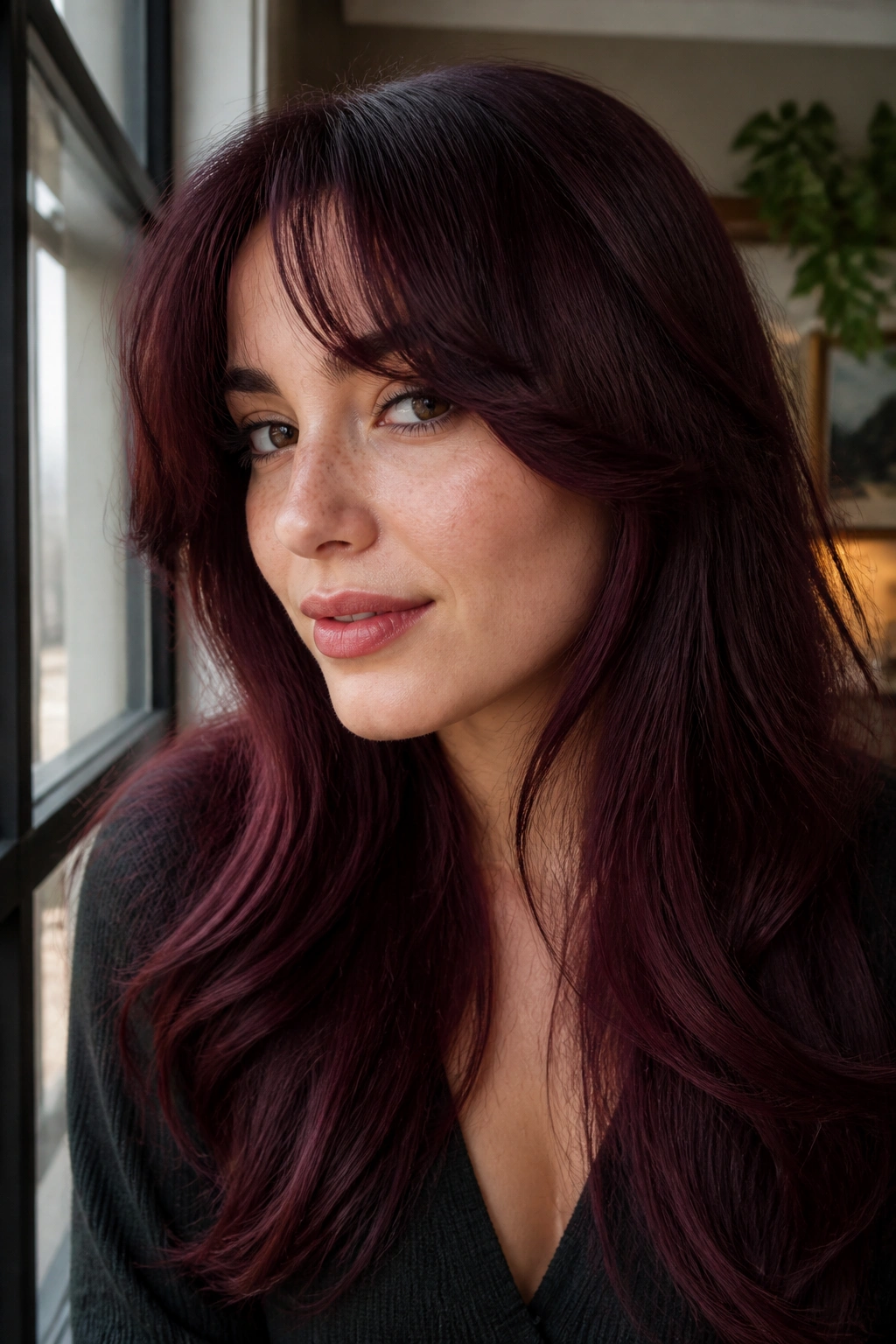
Cassis curtain bangs put the drama right where your face needs it.
Unlike one-tone color across the whole head, this look lets the bangs and front layers carry the red-violet tone while the rest of the hair stays deeper and quieter. That makes it a smart choice for cool undertones because the color frames the face instead of flooding it. You get the impact, but not the overload.
Cassis sits between plum and red currant. It has that dark berry character that reads cool even when the lighting shifts. On curtain bangs, it moves well because the shape already opens and closes around the face. Every time the bangs split, the color shows a little differently.
Who It Suits
Best for medium-length cuts, layered lobs, and anyone who wants a color refresh without full commitment.
Curtain bangs do need trimming, though. If they grow too long, the face-framing effect disappears and the red pieces start to look like leftover color instead of a design choice.
A good cassis fringe looks soft at the cheekbone and a touch darker near the root. That little fade keeps it wearable.
19. Black Currant Gloss
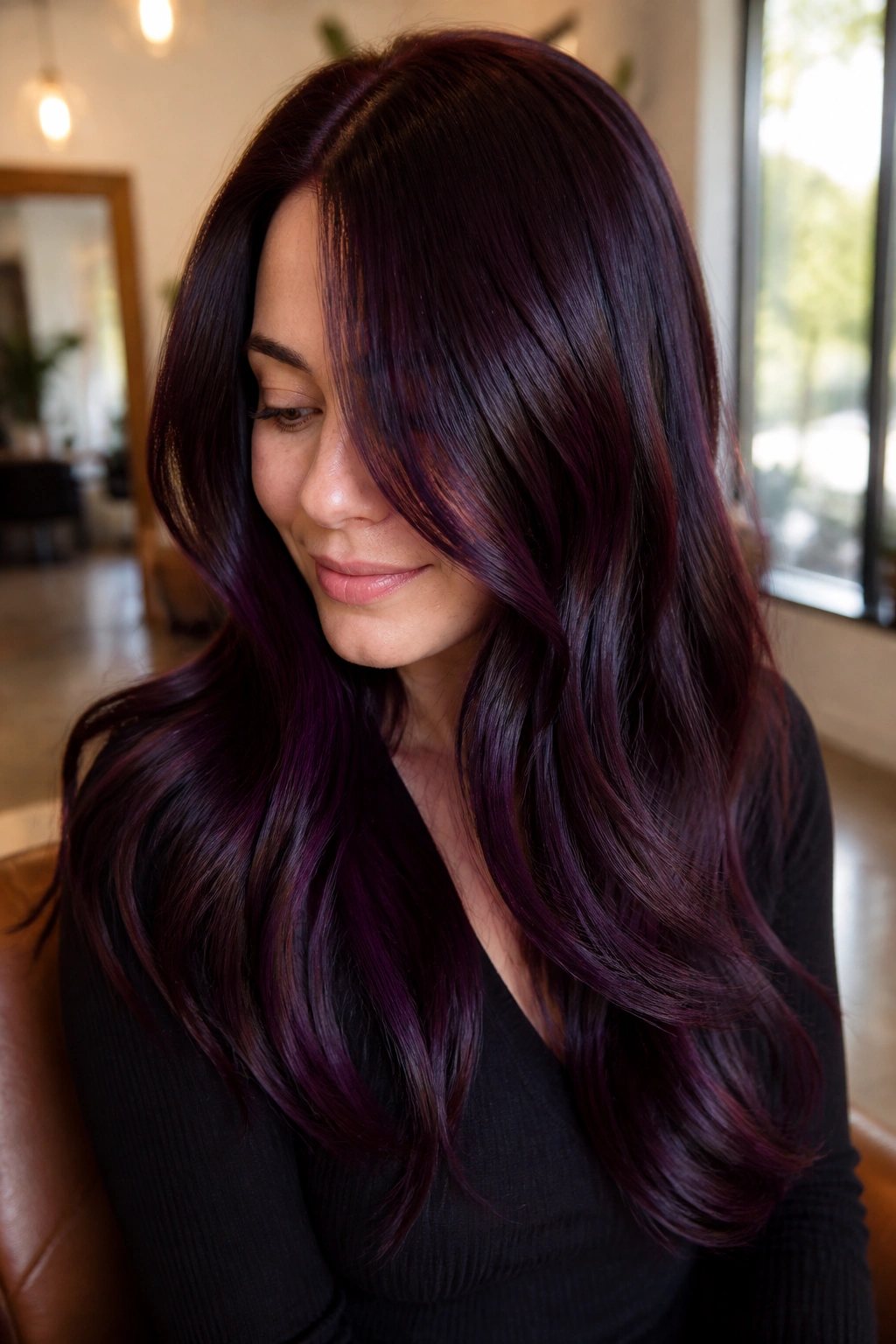
Black currant gloss is the shade for someone who wants to look like she has dark hair until the light catches the purple-red underneath.
That is a sneaky good match for cool undertones. The color lives close to black, but it is not flat. There is enough berry and violet in it to keep the hair from feeling heavy, and enough depth to make it work on almost any cut. If you like understated color with a little attitude, this sits in a nice spot.
Why It Works
The gloss finish gives black currant its whole personality. Without shine, it can read as plain dark brown. With shine, the purple-red edge appears.
- Good for fine hair because the dark shade creates the look of density.
- Looks sharp on sleek blowouts, blunt bobs, and long layers.
- Ask for a dark brunette base with black currant reflect, not a flat violet.
- A cool-toned shampoo between salon visits can help the berry cast stay clean.
Tip: keep makeup cool and clean — taupe eyes, berry lips, soft blush. The hair does enough already.
20. Cherry Mocha Lob
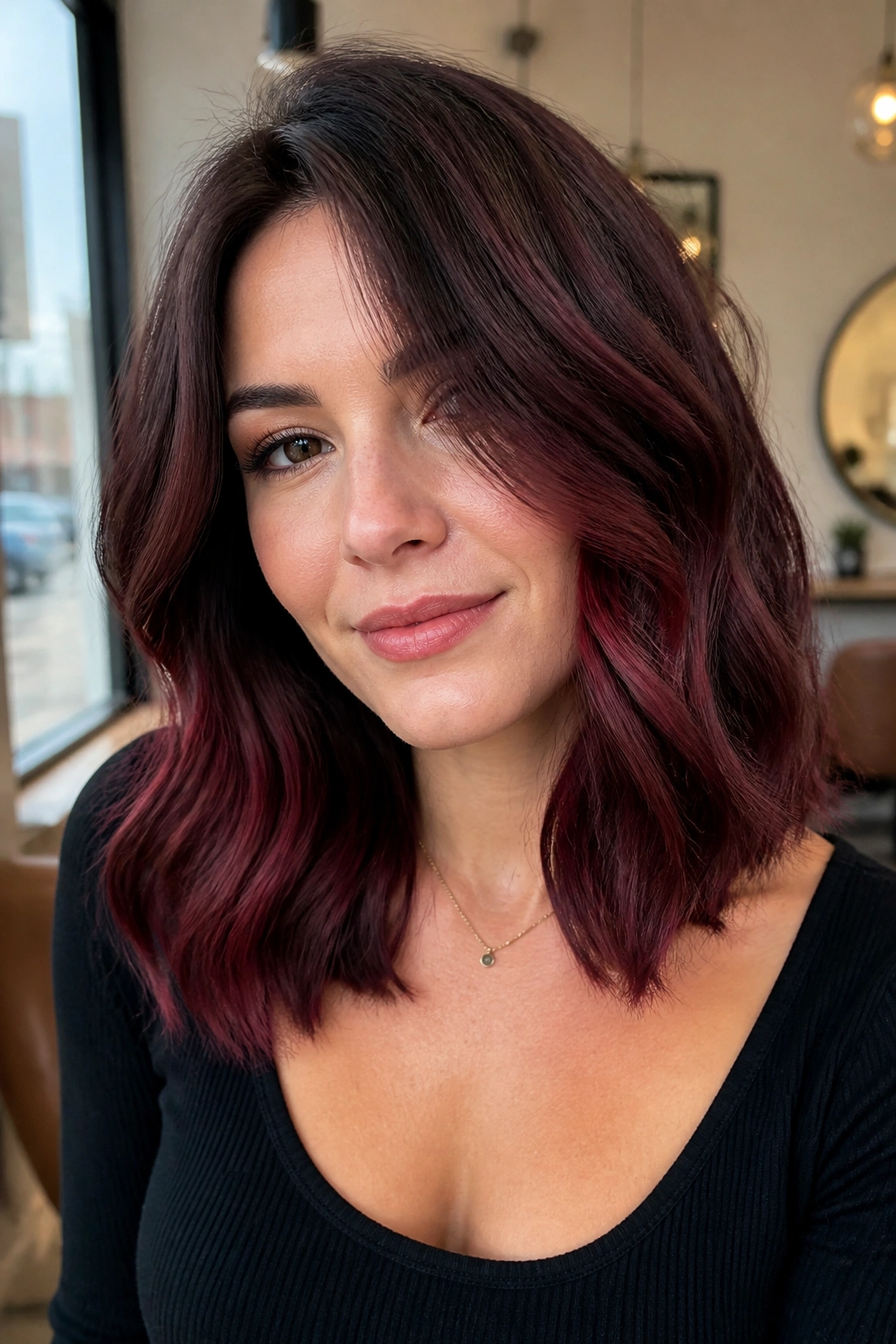
Cherry mocha lob is the one I’d hand to a cautious red-hair client first.
It gives you the comfort of a brunette base and the lift of cherry-red reflect, all in a length that is easy to style, easy to grow out, and easy to live with. On cool undertones, the mocha keeps the shade grounded while the cherry keeps it from going flat. That balance is the whole reason it works.
The lob shape matters because it shows off the color without demanding much from you. A soft bend, a tucked-behind-the-ear moment, or a gentle wave is enough. The red appears in movement, not in heavy blocks. That makes the style feel polished on workdays and a little more playful when you curl the ends.
If you are choosing between going fully red or staying brunette, this is the compromise that does not feel like a compromise. Ask for a mocha brown base with cherry glaze through the mids and ends, and keep the finish shiny. Too matte, and the color loses its charm.
Cherry mocha is calm, flattering, and not hard to wear. That combination is rarer than it should be.
Final Thoughts
The red shades that flatter cool undertones best usually have one thing in common: they stay away from bright orange and lean into berry, wine, plum, or blue-red reflect. That does not mean every cool-toned woman needs the same shade. It means the color should feel balanced against your skin, not louder than it.
If you are nervous, start with a gloss, a root melt, or a face-framing panel before you commit to a full head of color. Those softer entries tell you a lot fast. You will know within one or two mirror checks whether the red is working for you.
Bring inspiration photos, sure, but bring the right words too — cherry, merlot, cassis, black cherry, garnet. Those names help a stylist keep the formula in the cool lane.
When the shade makes your skin look calmer instead of pinker, you have probably found the right one.
