



Wispy bang styles sit in a sweet spot that blunt bangs miss entirely. They can soften a face, take the edge off a heavy haircut, and still leave room for your brows, your forehead, and a little air.
That matters more than people think. A fringe can change the mood of a cut fast — and when it goes wrong, it does not fail quietly. It looks heavy, stringy, too short, too wide, or like it belongs to a different haircut altogether. The good versions move. They break up a strong line. They sit lightly against the skin instead of stamping a shape onto your face.
The trick is not “getting bangs.” It’s getting the right kind of softness for your hair texture, face shape, and maintenance tolerance. A wispy fringe cut on fine hair behaves nothing like the same idea on thick waves or tight curls. And if you’ve ever watched someone’s bangs split in the middle by noon, you already know how much placement and density matter.
Some of the best soft face-framing cuts are barely noticeable at first glance. That’s the point. They make your features feel less boxed in, which is why the right fringe can look expensive even when the cut itself is simple. The details below are where the good stuff lives.
1. Brow-Grazing Feathered Fringe

This is the entry point for a lot of people who want wispy bang styles without a dramatic commitment. The shortest pieces skim the brows, while the ends are point-cut so they don’t sit in one solid line. It feels light, a little airy, and far easier to live with than a blunt fringe.
Why it softens the face
A brow-grazing fringe pulls attention toward the eyes without boxing in the forehead. That’s useful if your features feel sharp or your haircut has a lot of weight around the jaw. The soft ends keep it from looking severe. The whole thing moves instead of sitting like a shelf.
Ask for the center to land just above the brows, then let the sides angle down by about 1 to 1.5 inches. That small shift matters. It gives the fringe a gentle curve, which reads as face-framing rather than helmet-like.
- Works well with straight, slightly wavy, or air-dried hair
- Needs a trim every 4 to 6 weeks if you want the brow-skimming shape to stay crisp
- Plays nicely with a middle part or a soft off-center part
- Looks better with point-cut ends than with a blunt edge
Tip: Tell your stylist you want the bangs to feel light, not sparse. Those are not the same thing.
2. Curtain Bangs With a Soft Center Split

Why do curtain bangs keep showing up in soft face-framing conversations? Because they do one thing blunt bangs often refuse to do: they move away from the face instead of pinning it down. The center split opens the forehead a little, and the longer side pieces sweep into the cheekbones.
That shape works especially well if you want room for a ponytail, clips, or a messy blowout. It also grows out with less drama than shorter bangs. The key is keeping the center shorter than the sides, usually by 2 to 3 inches, so the fringe has that draped look instead of turning into a flat curtain.
How to wear it
Blow-dry the center forward for a few seconds, then sweep both sides away from the face with a round brush or your fingers. A touch of bend at the ends is enough. You do not need a perfect curl.
Curtain bangs are the kind of style that can look lazy in a good way — but only if the cut has enough shape. If the layers are too long, they disappear. If they’re too short, you lose the whole softening effect.
3. Side-Swept Wispy Bangs

A side-swept fringe is still one of the easiest ways to soften a face without making your haircut feel busy. It creates a diagonal line, and diagonals are friendly. They break up width at the forehead and cheekbones in a way that straight-across bangs never quite do.
Picture one side tucked behind the ear while the other falls across the temple and cheek. That tiny asymmetry gives the cut movement. It also helps if you wear glasses, because the bangs don’t crowd the frames the way a dense front fringe can.
- Best for square or heart-shaped faces
- Nice with medium-density hair that needs a little direction
- Easier to grow out than a full fringe
- Needs a light hand with styling cream; too much product makes it droop
A side-swept bang can look a little old-school if the cut is too polished. Keep the ends feathered and let a few pieces break apart. That messiness is the whole reason it works.
4. Bottleneck Bangs With Airy Ends
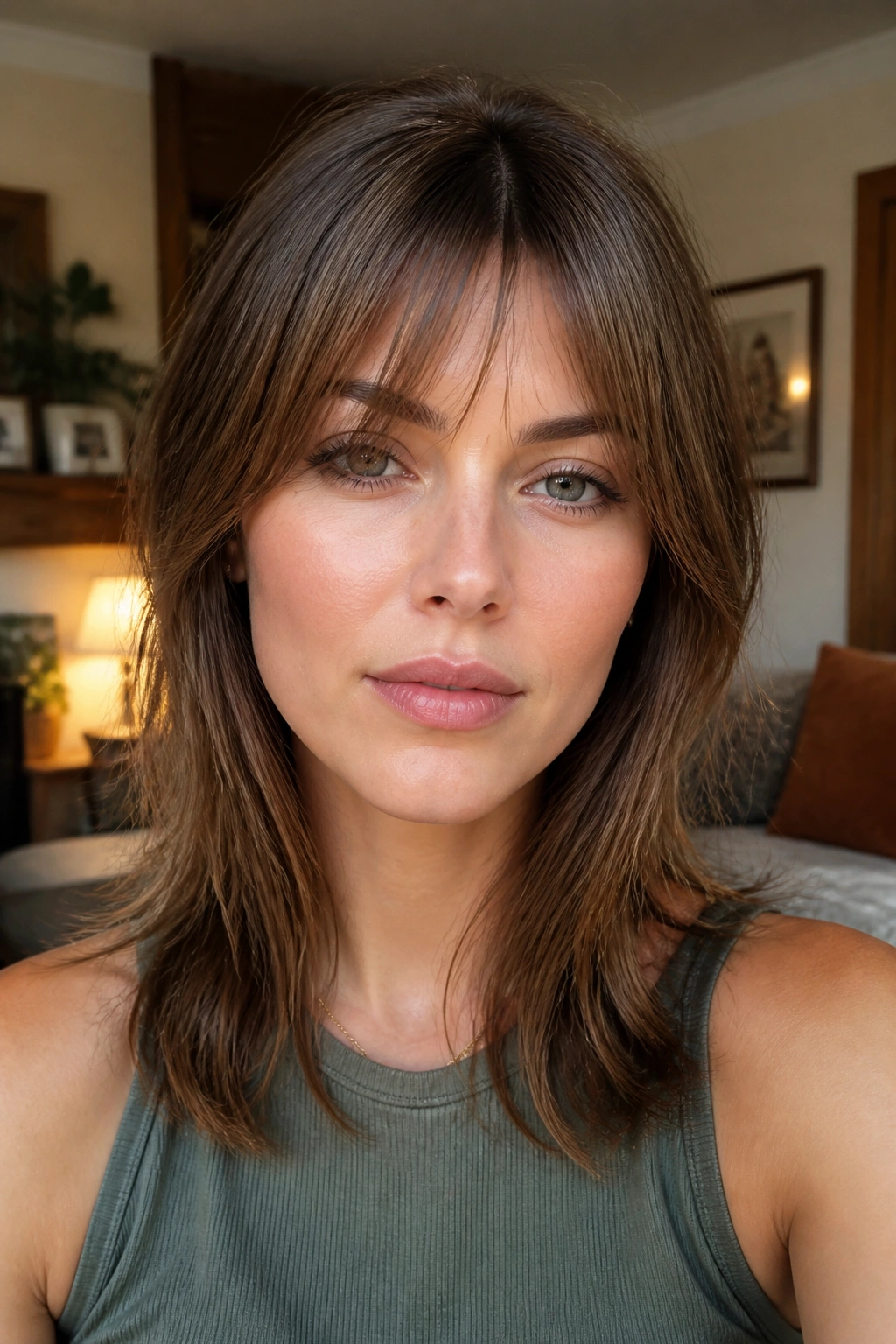
Bottleneck bangs are one of those cuts that sound technical but make immediate visual sense. The center is a little shorter, the sides drift longer, and the overall shape narrows at the top before opening out near the cheekbones. That “pinched then relaxed” shape is what makes them flattering.
They’re especially useful if you want softness around the face but don’t want bangs sitting flat across the forehead all day. The bottleneck shape gives you breathing room at the center. It also works well on hair that has some bend, because the fringe follows natural movement instead of fighting it.
What makes them different
Unlike curtain bangs, bottleneck bangs usually start a touch tighter in the middle. That keeps the face open without making the fringe vanish into the rest of the hair. The longer sides blend into layers around the jaw and temple, which is why they suit people who like shape but not heaviness.
Ask your stylist for a center that lands around the top of the brow, then let the side pieces drop to cheekbone level. That’s the sweet spot. Too short, and they lose the soft effect. Too long, and the bottleneck shape flattens out.
5. Piecey Micro-Wispy Bangs

Micro bangs usually get all the attention, but the softer version is far more wearable. You still get that short, edgy feel, only the ends are broken up and separated instead of cut into one hard line. The result is less severe and a lot more forgiving.
This style works best when you want the eyes to stay open and the forehead to stay visible. It is not a heavy curtain. It is a little flick of fringe, almost like a sketch line rather than a block of color. That’s what keeps it from overpowering the face.
The downside? You need confidence and a decent stylist. If the bangs are cut too bluntly, the whole thing looks aggressive. If they’re too thin, they can read as accidental. The sweet spot is short, piecey, and deliberately irregular.
A good version pairs well with cropped cuts, shaggy pixies, or a textured bob. It’s not the most low-maintenance choice, but it can be very chic when the rest of the haircut has enough movement to match.
6. Long Wispy Bangs That Sweep Into the Cheekbones
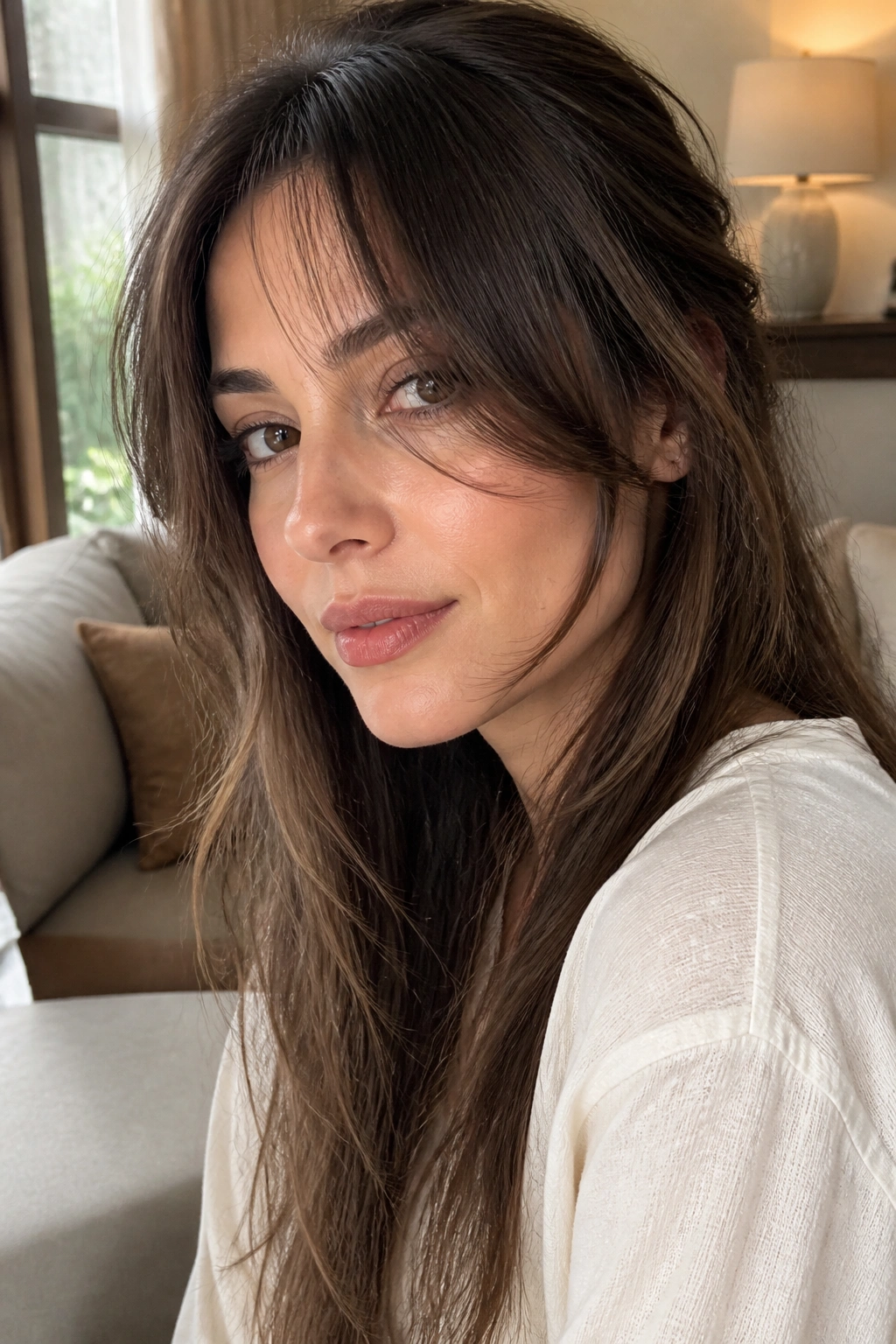
Long wispy bangs are the ones people often end up loving after they thought they wanted something shorter. They start around brow level, then slide into the cheekbones and even the jaw, depending on how much length you keep. That extra reach gives the face a soft diagonal frame.
The nicest thing about this style is how much it can blend. You can tuck part of it back, wear it forward, or separate it with your fingers for a looser look. It feels intentional without being stiff. And because the ends are feathered, it does not get that thick, sheet-like look that heavy fringe sometimes has.
How to get the most from it
Dry the bangs forward first, then curve the sides away from the face with a small round brush or a flat brush and a slight wrist turn. You want bend, not curl. A 1-inch brush is usually enough if your hair is straight or lightly wavy.
This style is a good pick if you hate frequent trims. The grow-out is forgiving. That matters. Nobody wants to sit through awkward middle phases every three weeks.
7. Shaggy Wispy Bangs With Layered Texture

Shag haircuts and wispy bangs are old friends. The layers give the fringe a place to land, and the fringe keeps the haircut from feeling too mullet-ish or too heavy on top. It’s a clean balance, and it usually looks better a little messy.
What makes this shape work is the broken texture through the front. The bangs should not sit like a separate unit. They need to melt into the top layers, which is why stylists often cut shags with a lot of internal movement around the crown and temple. A razor can help here, though not every hair type likes it.
What to watch for
- Great with air-dried waves and natural bends
- Less flattering if the fringe is too dense at the center
- Needs a light styling paste or cream, not a heavy oil
- Looks better when the ends flick in different directions
This is one of those cuts that can look cool in the chair and awkward at home if you over-style it. Don’t fight the texture. Let the layers do the work.
8. Thick-Hair Wispy Bangs That Remove Bulk

Thick hair can wear bangs beautifully, but only if the weight is controlled. If the front section is cut too solid, you get a shelf. That is the exact thing you do not want when the goal is soft face framing.
The fix is internal weight removal. A stylist can use point-cutting, slide cutting, or a careful razor technique to thin out the bang line without making it see-through. The best version still looks full enough to matter, but the front edge moves instead of sitting like a block.
A few details matter a lot
- Ask for density to be removed in the middle, not just at the ends
- Keep the longest side pieces around cheekbone level
- Avoid heavy creams that clump thick strands together
- Blow-dry the fringe in the direction it naturally wants to go
Thick hair often pushes bangs apart during the day. That is not a flaw, exactly. It just means the cut needs some room to breathe. A little separation can look better than forcing the hair into one solid curtain.
9. Wispy Bangs for Curly Hair

Curly hair changes the whole conversation. A soft fringe on curls needs to be cut with shrinkage in mind, which means the shape should be planned dry or almost dry. Wet curls lie. They always do. If a stylist cuts them as if they’ll stay the same length, the bangs can spring up much shorter than intended.
The best curly wispy fringe is longer than you think it needs to be. That gives the curl room to bounce without sitting mid-forehead unless that’s the look you want. And yes, curl pattern matters. Loose waves, spirals, and tighter coils all behave differently.
How to wear it
Use a diffuser on low heat, or let the bangs air-dry and then shape the front with your fingers. A pea-sized amount of curl cream is usually enough. Too much product makes the fringe clump and lose that airy feel.
If you wear curls, the softening effect comes from shape, not from trying to make the fringe flat. A curved, broken-up curl line around the forehead can be gorgeous. It just has to be cut with patience.
10. Razor-Soft Wispy Bangs on Straight Hair

Straight hair can make a fringe look too neat, which is why a razor-soft finish helps. Instead of a hard edge, the cut leaves tiny variations in length. Those small changes keep the bangs from looking stiff under bright light or flat in a photo.
This style suits hair that falls easily and doesn’t hold a heavy bend. The fringe can sit just above the brows or a little longer, depending on how much forehead you want to show. It has a cleaner feel than shag bangs, but it still avoids the blunt wall effect.
A razor cut is not for everyone. Fine, fragile hair can get wispy in the wrong way if too much is removed. But on straight hair with enough density, it gives a crisp, airy look that can be tucked, brushed, or parted slightly off-center without a fight.
If your hair tends to look too perfect, this is the fringe that fixes it. Not with drama. With texture.
11. Fine-Hair Wispy Bangs With Controlled See-Through Texture
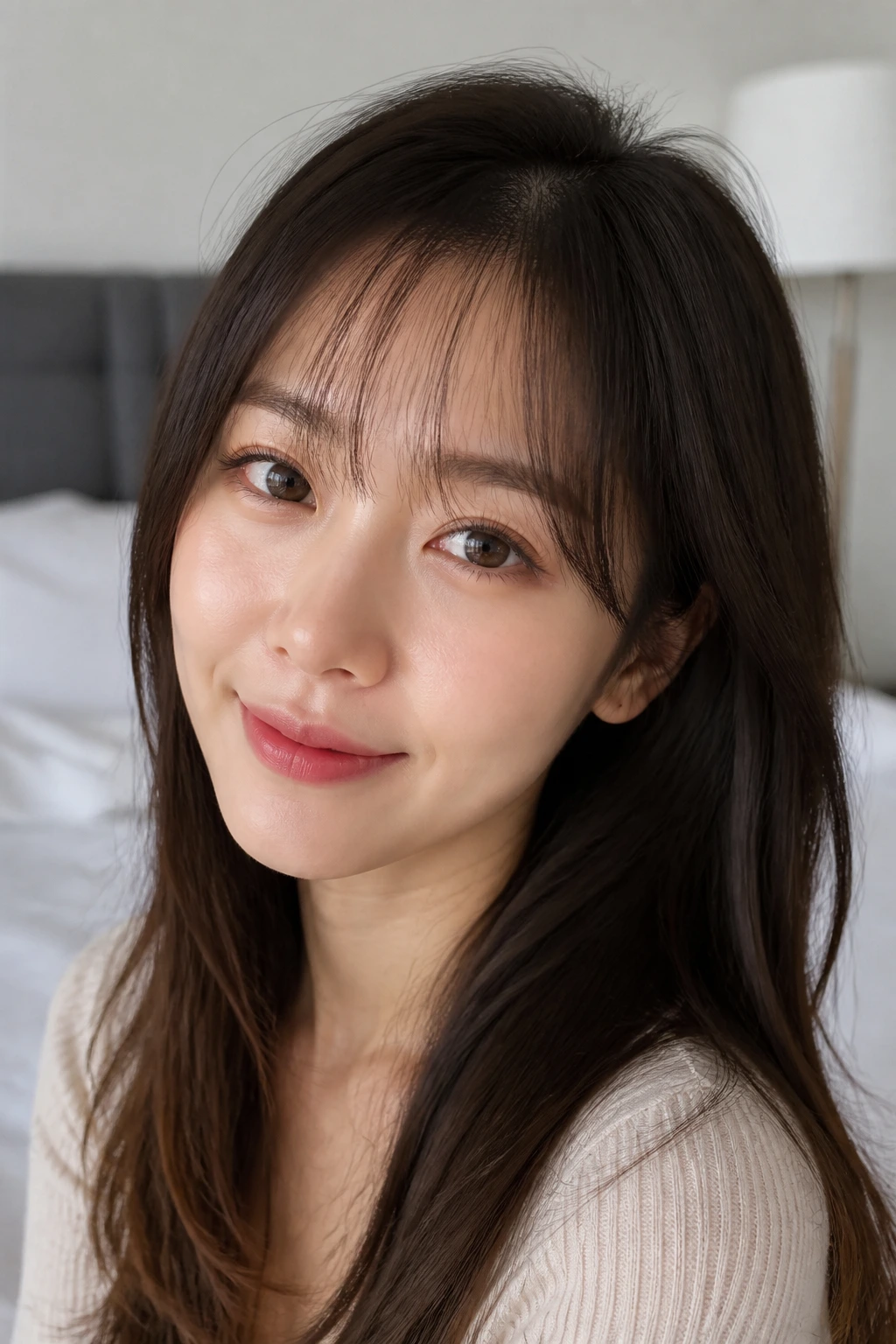
Fine hair can wear bangs. That myth needs to go away. The real issue is density management, because fine hair can look too sparse if the section is taken too wide or cut too short.
The best version is a narrow fringe section, often starting closer to the temples than people expect. That keeps the bangs compact enough to hold a shape. The ends should stay feathered, but not shredded. Shredded is where things go wrong fast.
What works best here
A tiny bit of root-lifting spray at the front can help, but don’t pile on dry shampoo on day one. That makes the hair look dusty and even thinner. A round brush, a soft bend, and a careful trim every few weeks usually do more than heavy product ever will.
This style is especially good if you want the idea of bangs without losing forehead brightness. It frames the face lightly and avoids swallowing the features. That makes it a smart pick for people who like low visual weight around the eyes.
12. Face-Framing Wispy Bangs With Layered Sides
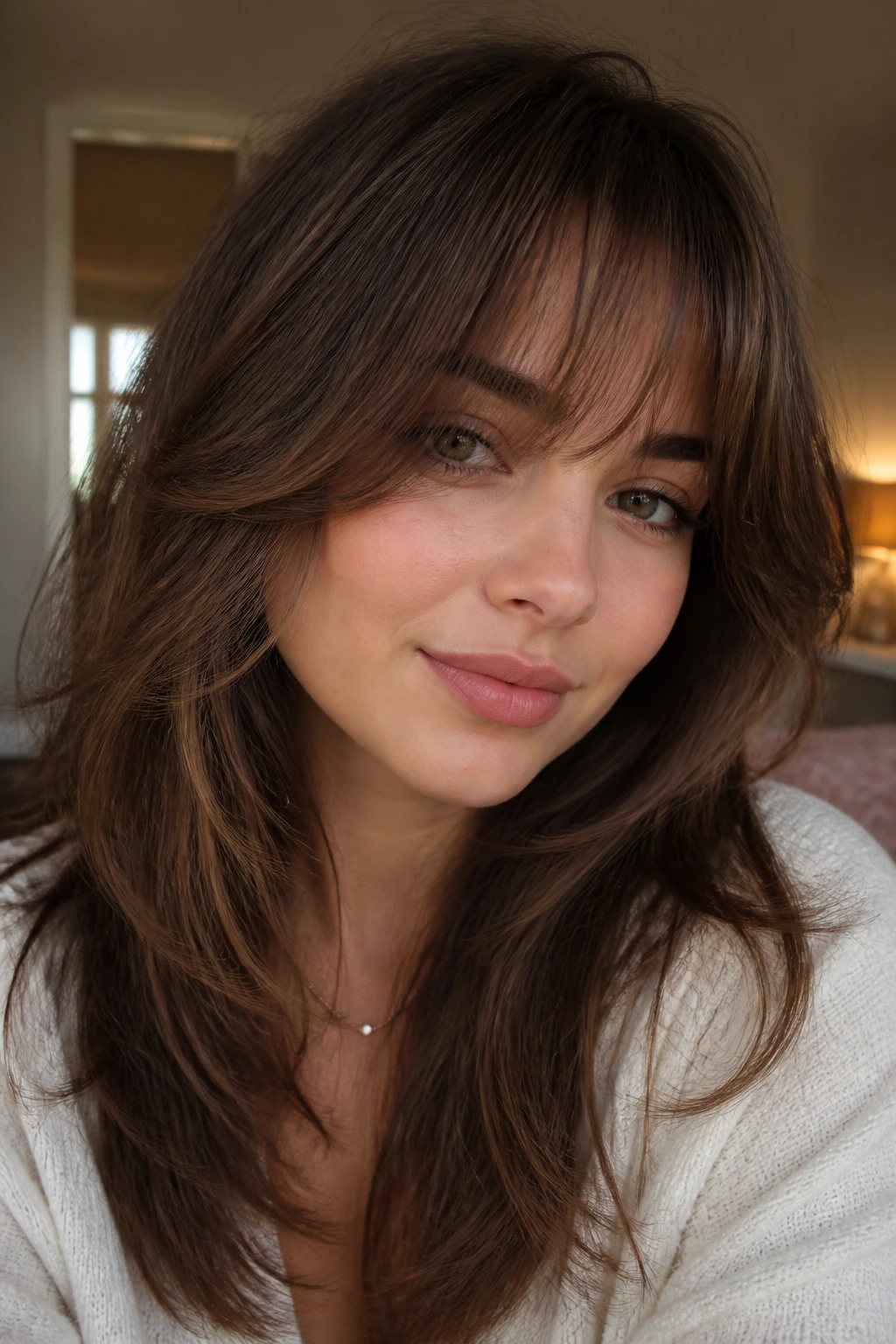
This is the version I’d point to if someone says they want bangs but also doesn’t want to feel trapped by them. The fringe is short enough to matter, while the side layers continue the line down past the cheeks and into the jaw.
Unlike a single fringe section, this cut behaves like a front frame. The bangs and the side pieces are part of the same shape. That matters because the eye sees one movement instead of two separate ideas fighting each other.
What makes it work
- Keep the shortest center pieces near the brow line
- Let the side layers start around the cheekbone
- Use the same cutting style through the fringe and front layers
- Blow-dry away from the face so the shape opens up
This is a nice choice for round faces, fuller cheeks, or anyone who wants a little narrowing through the front. It also grows out into layers that still look deliberate. That’s a useful thing to have.
13. Wispy Bangs With a Chin-Length Bob

A bob with wispy bangs has a clean, sharp outline — then the fringe softens the whole thing. That contrast is the charm. Without the fringe, some bobs can feel too tidy or too geometric. With it, the cut gets movement around the eyes and forehead.
The trick is not to make both the bob and the bangs heavy. If the bob is blunt and the fringe is dense, the haircut starts to feel boxy. Better to keep the edges light and slightly broken up. That gives the hair somewhere to move.
A chin-length bob with wispy bangs works especially well when the front pieces are a little longer than the rest of the fringe. They can skim the cheekbones and point toward the jaw, which helps the face feel more open. It’s a small detail, but it changes the whole read of the cut.
If you like polished hair but hate feeling severe, this is a strong middle ground. Clean, not stiff.
14. Wavy Lob With a Soft Fringe

A wavy lob and a soft fringe are a natural pair. The length around the shoulders gives the bangs room to breathe, and the bangs keep the lob from looking like one big block of movement. The whole thing feels relaxed, which is probably why it’s such an easy everyday cut.
The best wispy fringe for a lob tends to be a little longer at the corners. That lets the front pieces meet the waves around the cheek and chin. If the fringe is too short, the top of the haircut can feel disconnected from the rest.
A simple styling routine works here:
- Rough-dry the bangs first.
- Bend the ends forward with a medium round brush or your fingers.
- Leave the waves a little undone.
- Don’t over-spray the front.
That last part matters. Too much hairspray at the bangs makes the front stick together, and then the softness disappears. A light mist, if any, is enough.
15. Wispy Bangs for a Pixie Grow-Out

Growing out a pixie can be annoying. There’s no elegant way to say it. The front gets awkward, the sides start doing their own thing, and one day you realize you need a plan instead of a hope.
Wispy bangs are often the plan. They give the shorter haircut a forward shape while the rest of the lengths catch up. A soft fringe can also hide a few uneven spots, which is helpful when the top layers are in that strange halfway stage between cropped and bobbed.
The useful part
- Keep the bangs long enough to sweep sideways
- Let the edges stay irregular so they blend into the grow-out
- Avoid a heavy center chunk that will need constant trimming
- Use a small flat iron bend if the front flips in the wrong direction
This is not the most glamorous stage of a haircut. It is practical. But a good wispy fringe can make the transition look deliberate instead of accidental, and that’s worth a lot when you’re tired of pinning your hair back every morning.
16. Arched Wispy Bangs

Arched bangs follow the curve of the forehead and brows instead of fighting them. The center sits a touch shorter, then the edges rise and fall in a soft arc. That shape can make the front of the haircut feel more open, which is useful if you want the face framed without losing visible skin.
The arch works well on people who like a little structure but do not want a hard edge. It can also be flattering with glasses, because the curve of the fringe doesn’t crash into the frame line. There’s less visual clutter around the eyes, which keeps everything cleaner.
The real skill here is restraint. If the arch is too dramatic, the bang starts looking theatrical. Keep it subtle. The cut should hint at a shape, not announce it.
A light blow-dry with a small brush usually does the job. If you need more control, a tiny bend at the sides helps the fringe sit where it belongs.
17. Long Wispy Bangs That Melt Into Long Layers
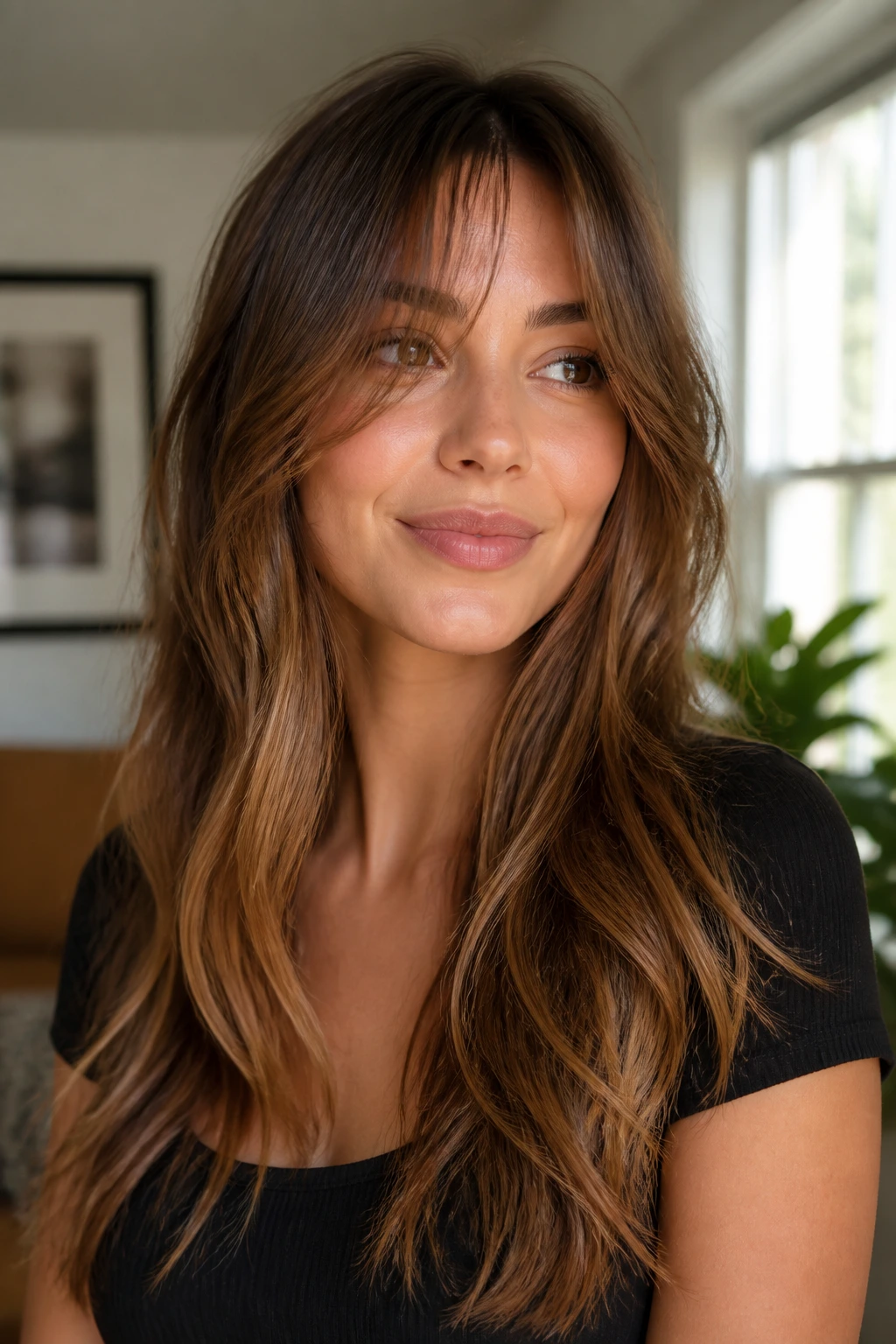
This is the quietest version of the bunch, and I mean that as a compliment. Long wispy bangs can sit almost like front layers, especially on hair that falls past the shoulders. They create softness around the face without looking like a separate haircut decision.
The shape is useful if you want movement but dislike obvious bangs. It also works well when you wear your hair in loose waves, because the fringe can disappear into the rest of the shape and then reappear when you tuck one side back.
Compared with shorter curtain bangs, this version asks for less daily styling. You can part it a little off-center, brush it back, or let it live in the same wave pattern as the rest of the hair. The style still gives face framing, only in a quieter way.
If you’ve been nervous about bangs because of maintenance, this is one of the gentlest places to start. It still changes the face. It just doesn’t shout about it.
18. The Softest Long Fringe
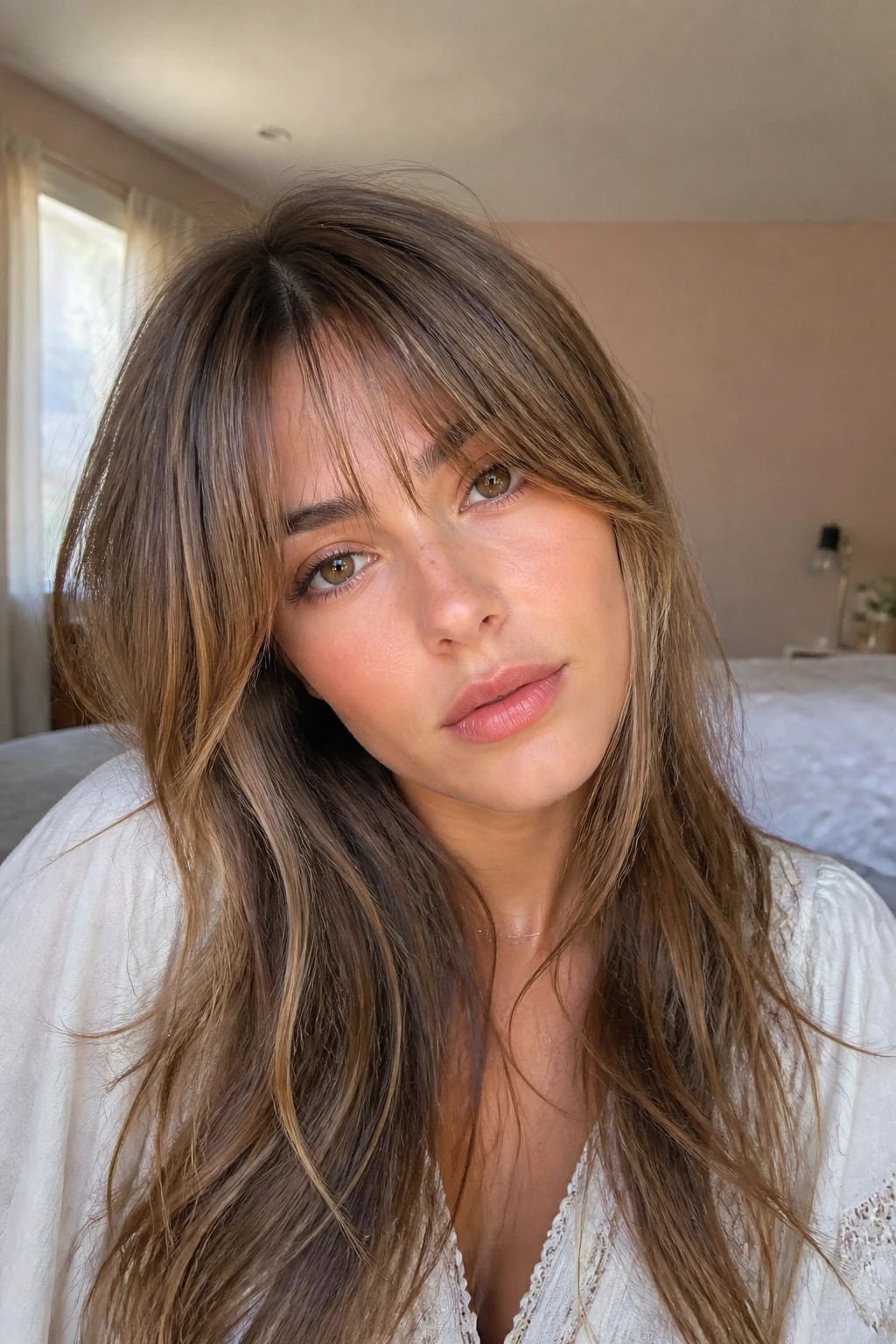
Some people want bangs that feel like a change. Others want bangs that feel like a whisper. The softest long fringe is for the second group. It sits low enough to frame the eyes and high cheekbones, but long enough to tuck away, pin back, or let grow out without a panic.
The cut is all about lightness. The ends should be feathered, the center should not be too thick, and the sides should melt into the front lengths. If the fringe starts to look blocky, the softness is gone. That is the line to watch.
This style is especially useful if you like a low-commitment front shape. It can live with waves, straight hair, or a bend from a flat iron. It also works when your hair is pulled half up, because the fringe still gives shape around the face while the rest of the hair moves out of the way.
A fringe like this does not need to dominate the cut. It just needs to be well placed. And honestly, that’s often the part that matters most.
Every good wispy fringe has the same basic goal: soften the face without flattening the haircut. The trick is choosing where you want the lightness to sit — brows, cheekbones, jaw, or all three.
If you’re sitting on the fence, start with a longer version. It’s easier to shorten a fringe later than it is to wait for a too-short cut to grow out. That small bit of restraint saves a lot of regret.
