



Chunky highlights are one of those hair looks that never really disappears — they just change shape. Sometimes they show up as bright, face-framing streaks. Sometimes they look like wide ribbons through a bob, or thick panels tucked under curls, or a single bold money piece that makes a haircut feel sharper in five minutes flat. The charm is in the contrast. You see the color. You feel the attitude.
I like chunky highlights when they’re done with intent, not as an accident. A good colorist knows the difference between a stripe that flatters your cut and one that sits there like a warning label. The width of the foil, the tone of the blonde or copper, and where the lightest pieces land matter just as much as the shade itself.
That’s why the best chunky highlights ideas aren’t all the same thing with a different dye formula. Some are soft enough for everyday wear. Some are loud in the best way. Some make curly hair look richer, some make a blunt bob look cleaner, and some only work if you’re willing to keep up with toner and trims. Worth it, though.
1. Honey Blonde Chunky Highlights on Deep Brunette Hair
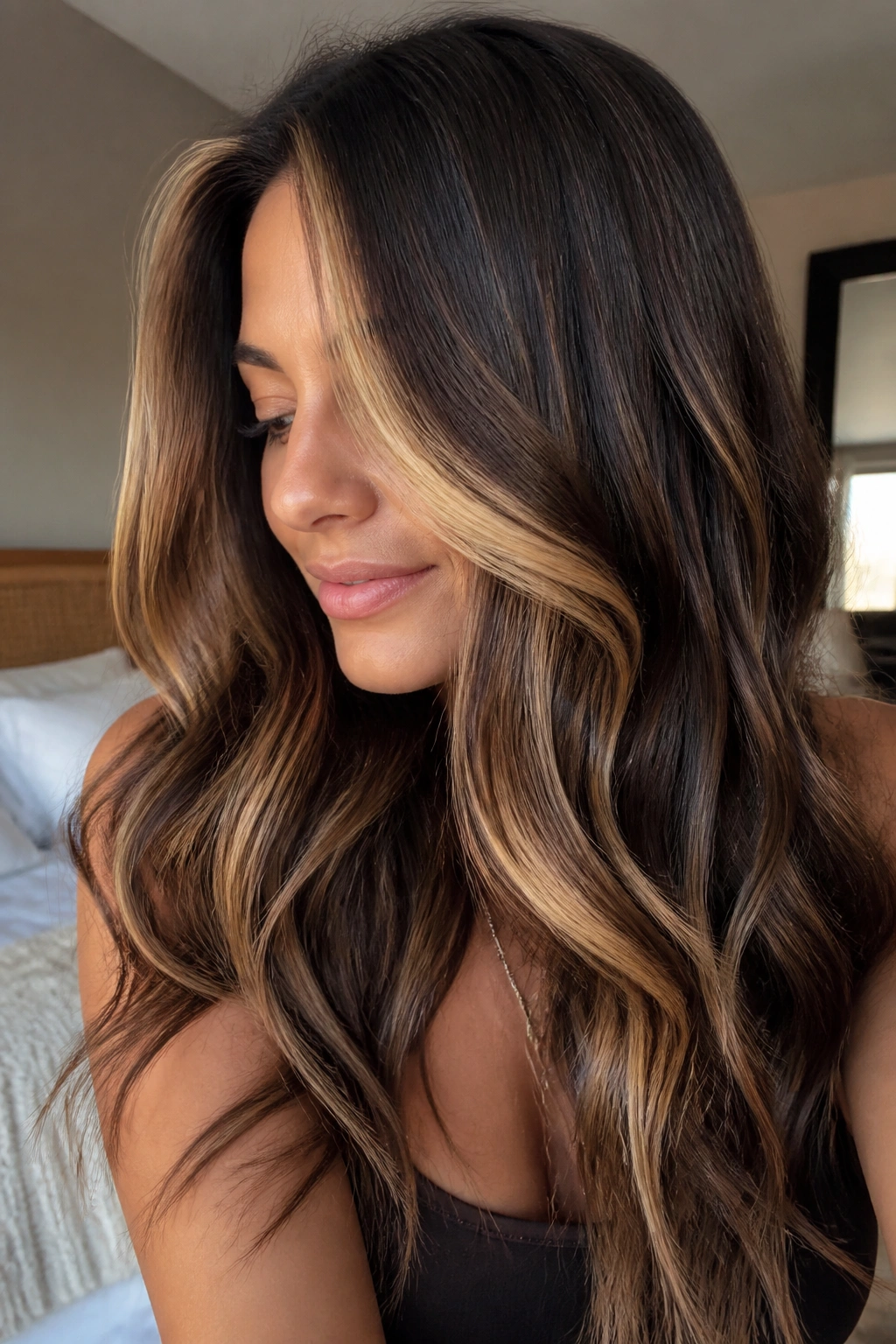
Honey blonde is the move when you want visible contrast without harshness. On deep brunette hair, those wide, warm ribbons read like sunlight instead of stripes, which is exactly why they flatter so many people.
Why It Works
The warmth keeps the look from feeling cold or metallic. That matters more than people think. If the base is dark brown or espresso, ask for chunky panels that start a little below the root so the grow-out doesn’t look like a hard line two weeks later.
A good version of this look usually has one brighter money piece at the front and a few wider slices through the top layers. That gives you brightness where the eye lands first, then keeps the rest of the hair rich and grounded.
- Ask for a level 7 to 8 honey blonde finish, not pale yellow.
- Keep the front pieces around 1 to 1.5 inches wide.
- Leave a soft root shadow if you want easier upkeep.
- Style with a round brush or loose wave so the ribbons separate.
Pro tip: If your hair tends to pull orange, ask for a beige-honey toner, not a gold one. That tiny choice saves a lot of brass later.
2. Caramel Ribbon Highlights Through Chestnut Layers
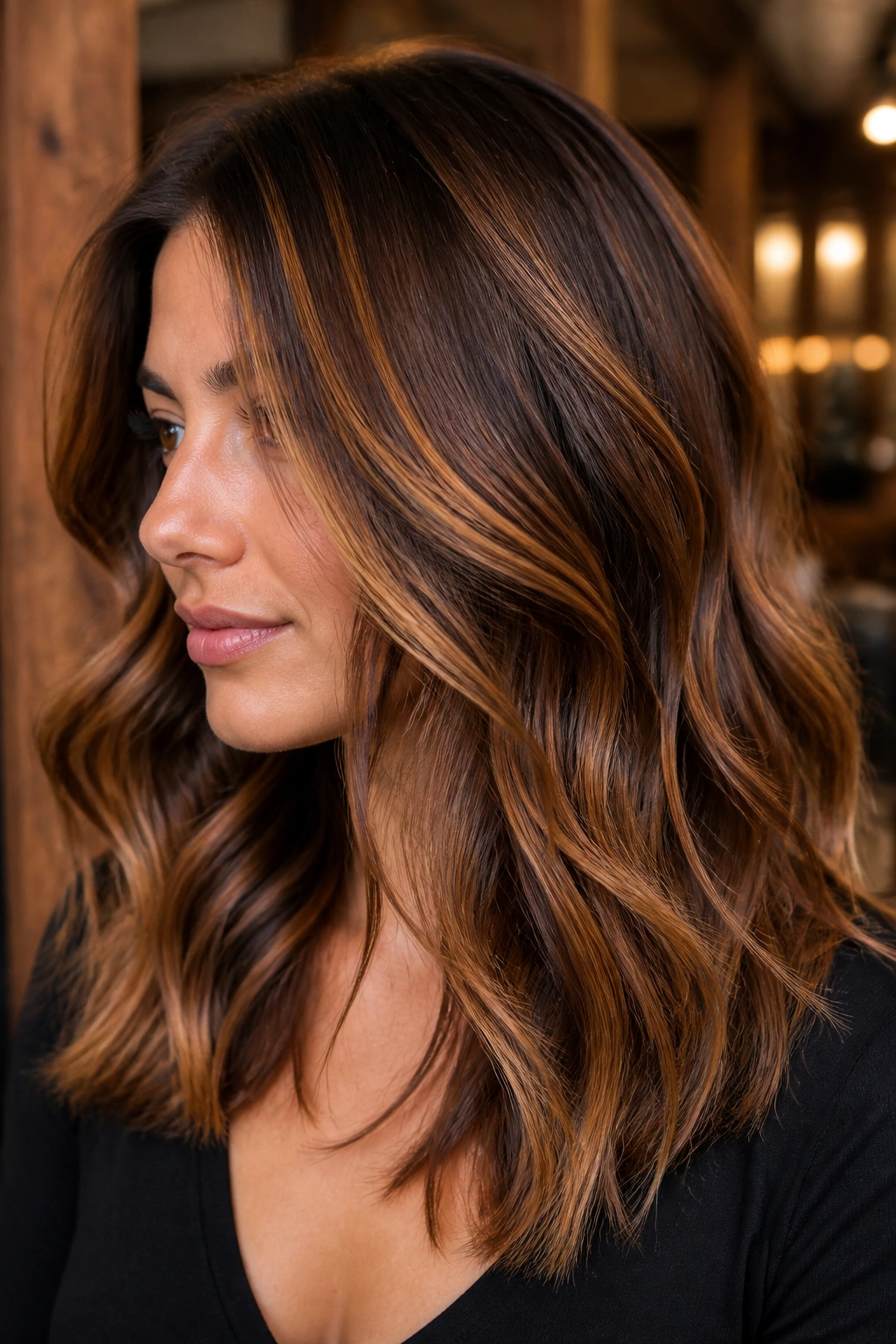
Why do caramel ribbons look so good on chestnut hair? Because they sit in the sweet spot between light and dark. You get dimension, but you do not lose the depth that makes brown hair look expensive in the first place.
This version works best when the highlights are placed in wide, slightly irregular ribbons through the midlengths. Chestnut already has warmth, so the colorist does not need to push the lightness too far. A couple of foils that peek through the ends are often enough.
The trick is to avoid filling every layer with the same amount of color. Too uniform, and the hair starts to look blocky in a boring way. Too fine, and you lose the chunky effect. A good caramel panel should catch the eye when the hair moves. When it’s still, it should still look intentional.
If you wear your hair straight, ask for a little more spacing. If you wear waves, the panels can sit closer together. That part matters.
3. Platinum Slices on a Blunt Bob
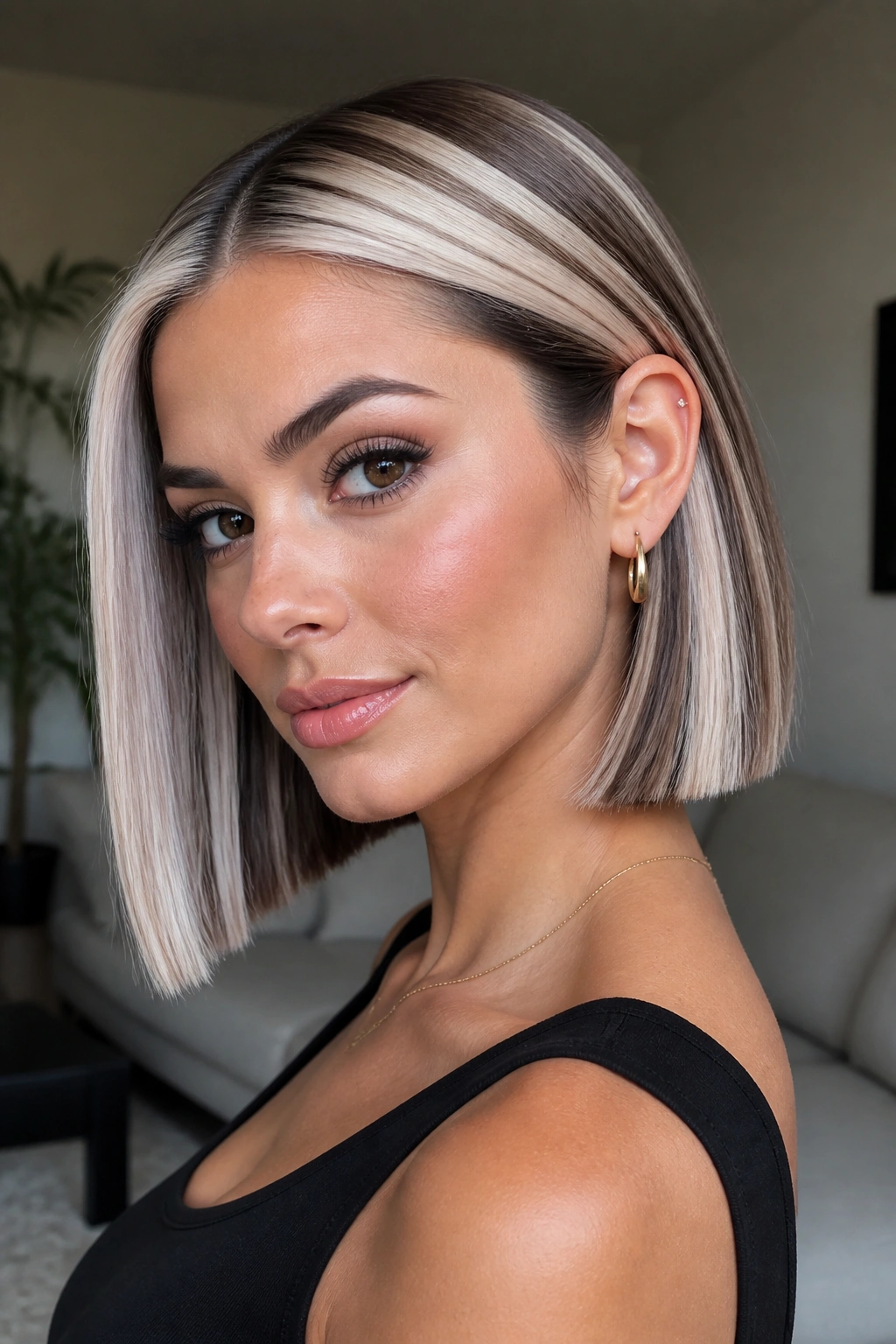
A blunt bob does not need soft, whispery color. Sometimes it wants a hard line to match the cut, and platinum slices do that beautifully.
The clean edge of a bob makes wide, icy pieces look sharp instead of messy. That is the whole appeal. A few bold front pieces, a couple of panels through the crown, and the haircut suddenly feels more editorial without losing its shape.
What to Tell Your Colorist
- Request platinum slices, not a full blonde weave.
- Keep the panels around ½ to 1 inch wide.
- Ask for a clean toner so the blonde lands in the icy-beige to silver zone.
- Leave enough depth at the roots so the bob still looks defined.
Platinum is unforgiving, though. It shows every dry end and every uneven tone. Use a heat protectant, and don’t fry the hair with a flat iron every day. That would be a shame.
I like this look best on a bob that’s worn sleek or tucked behind the ears. It makes the contrast feel deliberate, not busy.
4. Copper Panels on Dark Auburn Hair
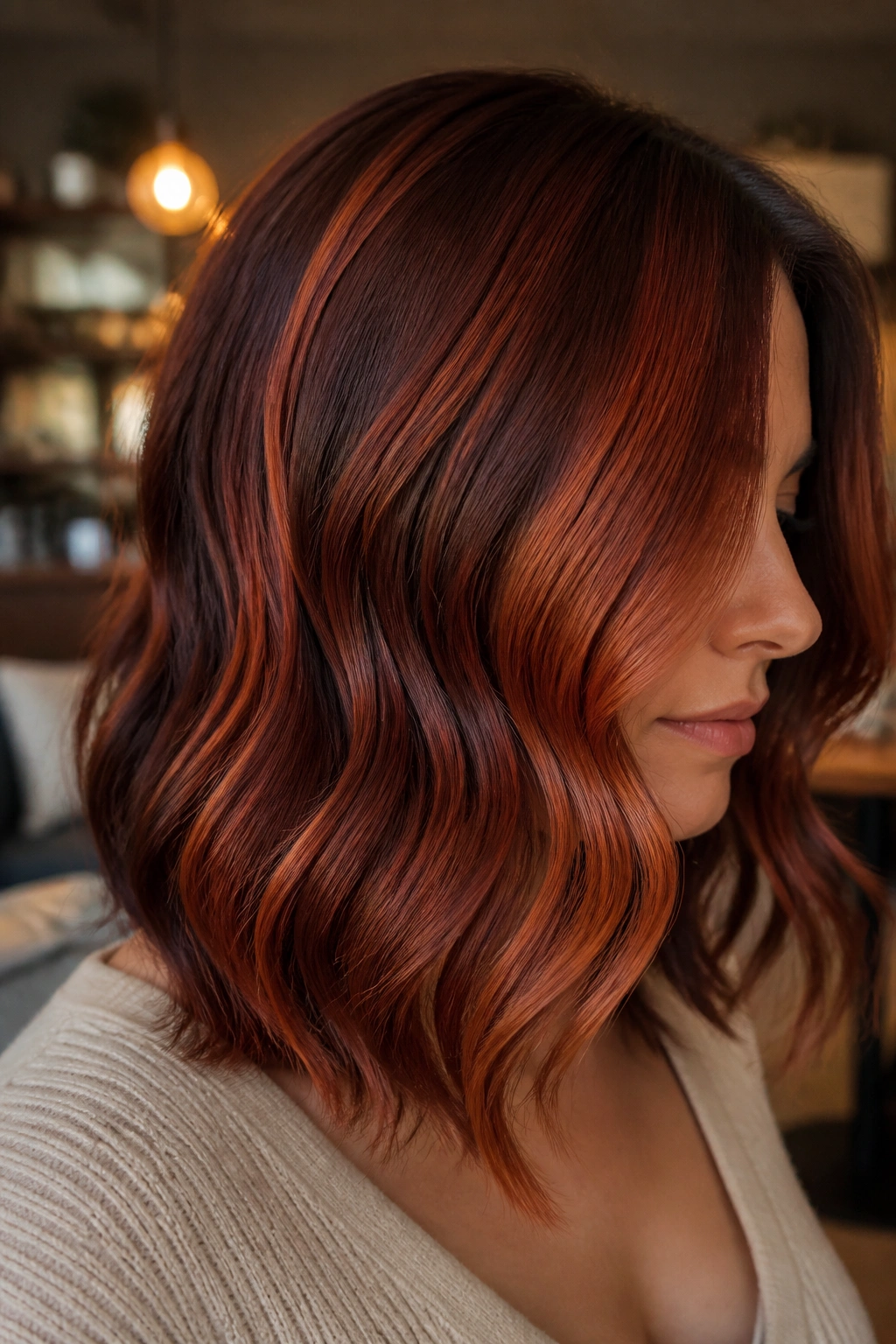
Picture a shoulder-length cut with copper catching the light in broad panels. It feels warm, a little fiery, and somehow more wearable than a full copper makeover. That is the sweet spot.
Dark auburn hair already has red in the base, so adding chunky copper highlights creates movement without stripping away the richness. The look gets its best payoff on waves, where the lighter panels bend and flash as the hair moves.
A good copper placement usually keeps the brightest pieces around the face and the top layers. The rest can stay darker. That contrast is what gives the style its punch. If everything gets lifted too evenly, the hair can turn flat and orange in the same breath, which nobody wants.
One thing to watch: copper fades fast if you wash with hot water and harsh shampoo. A color-safe cleanser and a warm gloss every few weeks keep the tone alive.
5. Beige Blonde Blocks on Mushroom Brown Hair
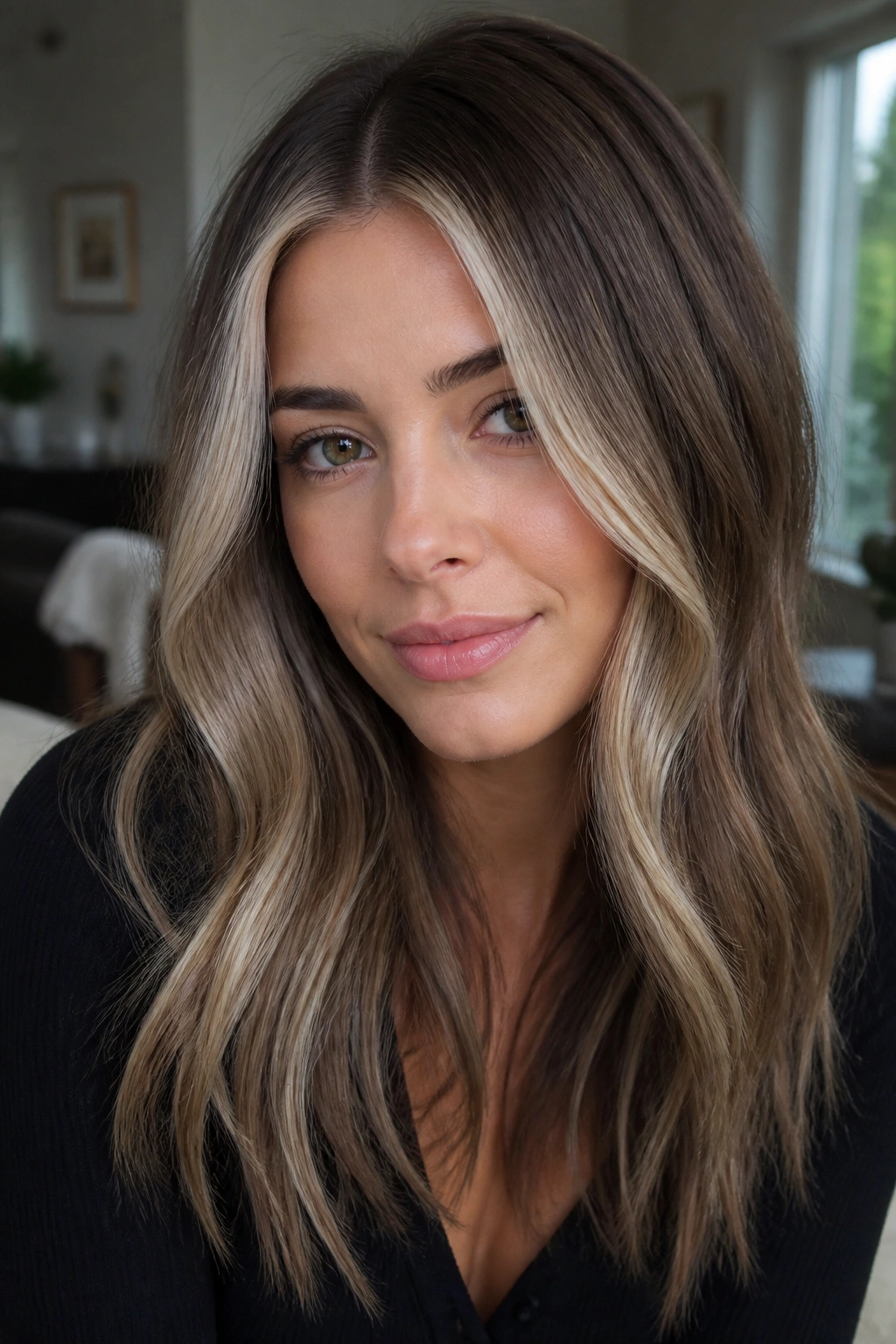
Beige blonde against mushroom brown looks like sand over wet stone — soft, cool, and a little smoky. It’s a quieter take on chunky highlights, but quieter does not mean boring. It just means the contrast comes from tone as much as from brightness.
This look works because mushroom brown already has that taupe-gray base. Add wide beige blocks, and the hair starts to look layered even when it’s cut simply. I’ve always thought this is one of the smartest choices for people who want something modern but not loud enough to announce itself before they walk into a room.
The biggest mistake is leaning too yellow. Beige should stay neutral, almost creamy, with a tiny bit of ash. If the blonde gets too gold, it fights the mushroom base and turns muddy. Keep the root area soft, too. A hard root on a cool brunette can look harsh fast.
A center part looks polished here. Side parts work too, but the balance shifts. That’s half the fun.
6. Cherry Cola Streaks on Black Hair
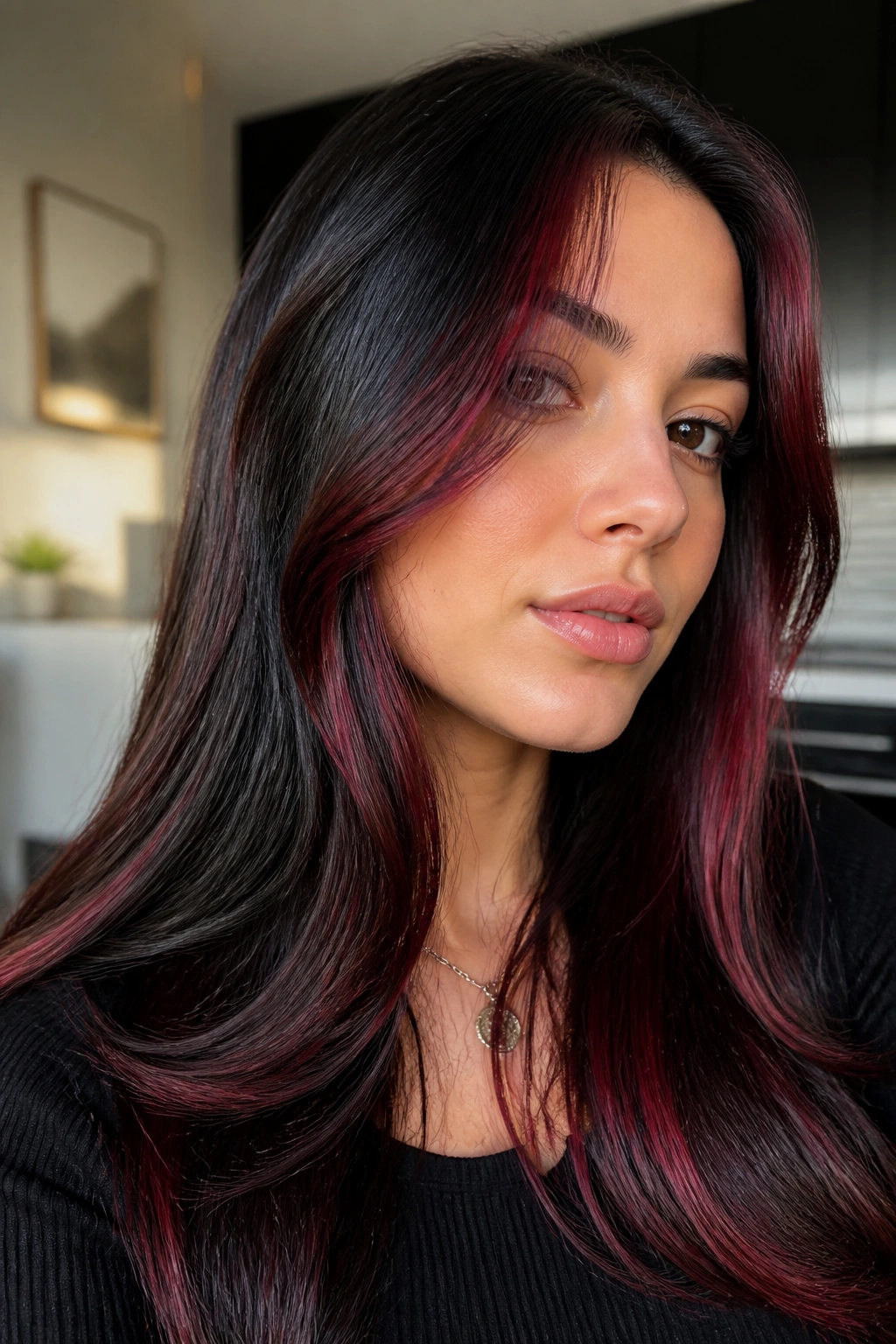
Unlike copper, cherry cola pulls red-violet, and that single detail changes the whole mood. It reads richer, darker, and more sultry against black hair than a standard red ever could.
This is one of my favorite choices for people who want something dramatic but still wearable in normal light. The streaks can be wide enough to notice immediately, yet the dark base keeps them grounded. Straight hair shows the slices best, but loose bends make the red look deeper, almost wine-colored.
Keeping the Red Rich
- Use cooler water when you shampoo.
- Pick a sulfate-free cleanser so the color doesn’t strip out too fast.
- Refresh the tone with a red-violet gloss when the shine starts to fade.
- Avoid baking the hair with too much heat, because heat dulls red faster than most shades.
The best version of cherry cola highlights does not look neon. It looks like dark fruit under the sun. That’s the lane.
7. Rose Gold Face Framing on Medium Brown Hair
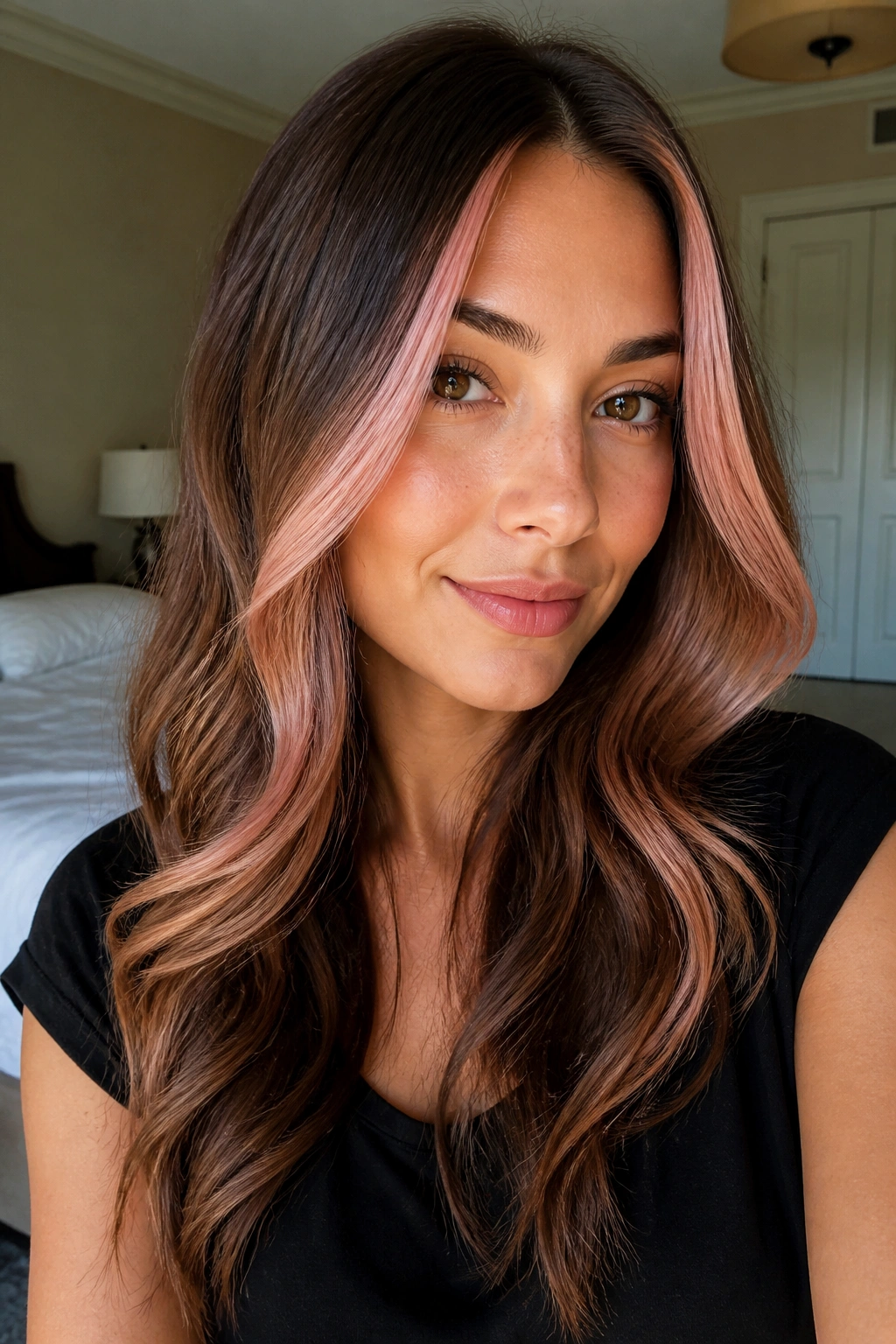
Rose gold is the rare pastel that can still look grown-up on medium brown hair. The trick is keeping it warm enough to flatter the base but muted enough that it doesn’t drift into bubblegum territory.
A few wide face-framing pieces are usually enough. Put the color near the cheeks, blend it through the first layer or two, and let the rest of the hair stay medium brown or chestnut. That contrast makes the rose gold feel fresh instead of sugary.
Where to Place It
- Concentrate the lightest pieces around the front hairline.
- Keep the panels wider near the face and softer through the sides.
- Choose a rose tone with a little peach and beige, not too much pink.
- Style with a loose bend so the color looks dimensional.
This one works especially well when the hair has some texture. Pin-straight hair can flatten the rose tone. Soft waves give it life. And yes, it fades faster than brown or blonde, so that part is the price of admission.
8. Ash Blonde Wide Slices on Cool Brunette Hair
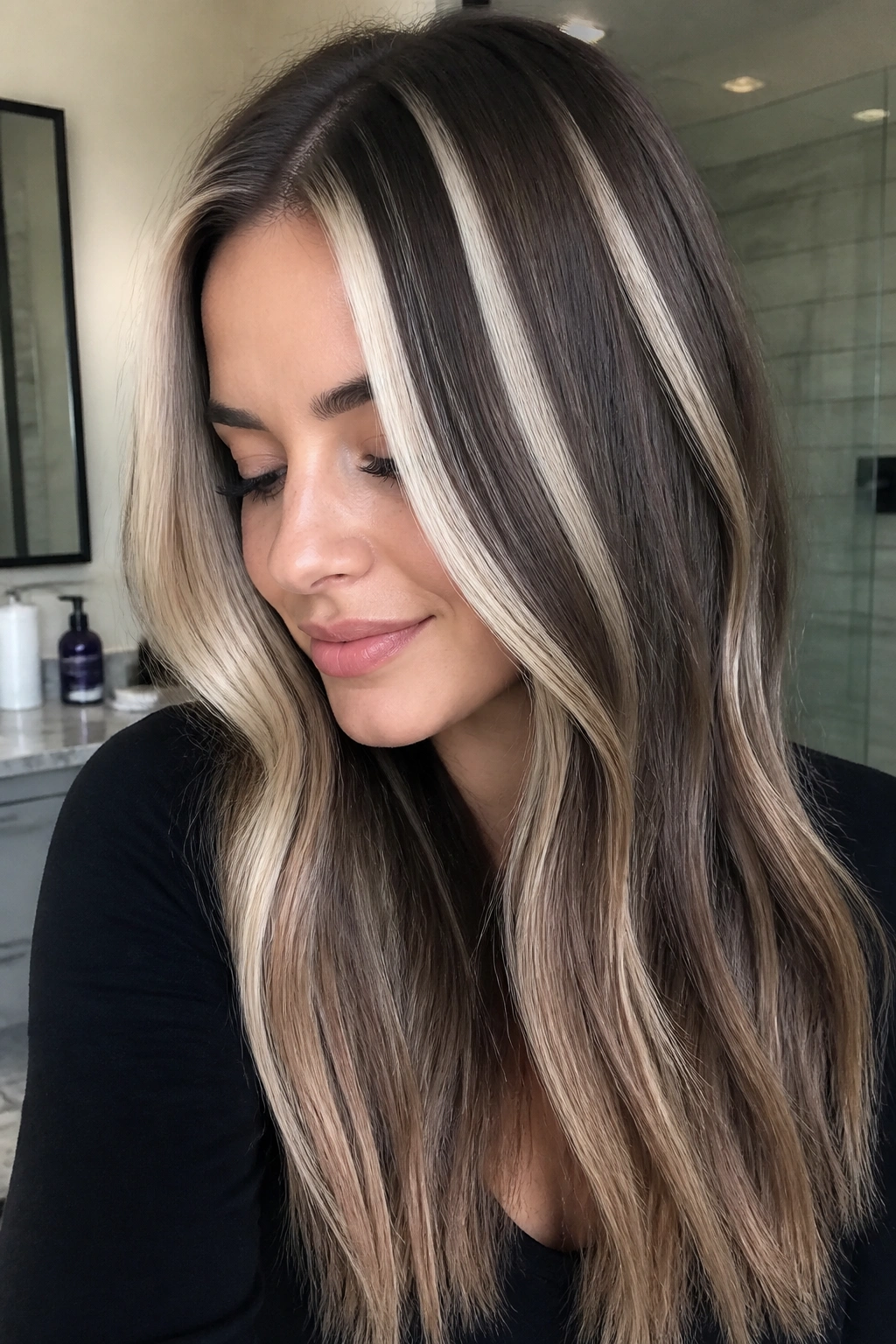
Want high-contrast highlights without warmth? Ash blonde wide slices are the answer, but only if your base can handle it. On a cool brunette, they look crisp and expensive. On the wrong skin tone or with too much toner, they can turn flat fast.
The best approach is to keep the slices wide and placed with purpose. Not every section needs to be light. A few panels around the part line and temple area usually do more than a full head of delicate foils ever could. The result is stronger, cleaner, and much easier to style.
What to Ask For
- Request level 8 to 9 ash blonde pieces.
- Keep the slices around 1 inch wide for a bold look.
- Ask for a soft beige base, not a chalky silver.
- Use a purple shampoo sparingly; too much makes ash hair look dull.
This style loves a sleek blowout. It also likes a deep side part. The drama is half the appeal.
9. Teal Peekaboo Chunks Under Dark Layers
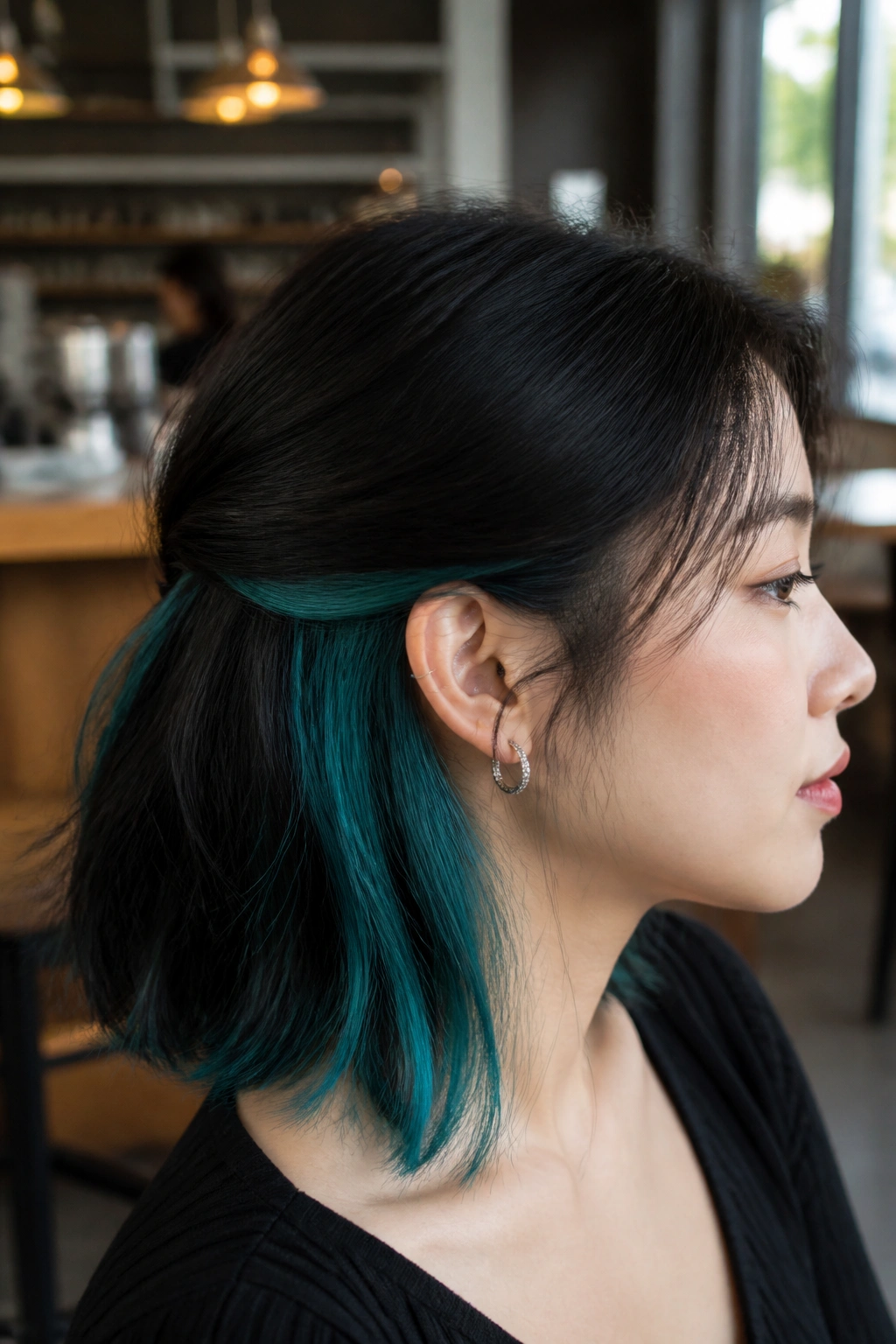
The fun is in the reveal. Teal peekaboo chunks hide under darker layers, then show up when you tuck your hair behind your ear, twist it into a clip, or wear a half-up style.
That hidden placement makes the color feel playful without forcing it into every part of your day. The top layer can stay dark brown, black, or even deep mocha, which helps the teal pop harder when it appears. It’s a smart choice if you want something bold but still office-friendly in a loose sense of the word.
A colorist will usually need to lift the hidden sections to a pale yellow first, then deposit the teal over that base. If the lightening is uneven, the teal can patch out. That is why sectioning matters so much here.
- Keep the teal under the crown and around the nape.
- Pair it with straight styles, braids, or pinned-back looks.
- Refresh with a color-depositing conditioner when the blue starts to wash out.
- Avoid over-washing if you want the color to stay saturated.
10. Strawberry Blonde Panels Around a Warm Face Frame
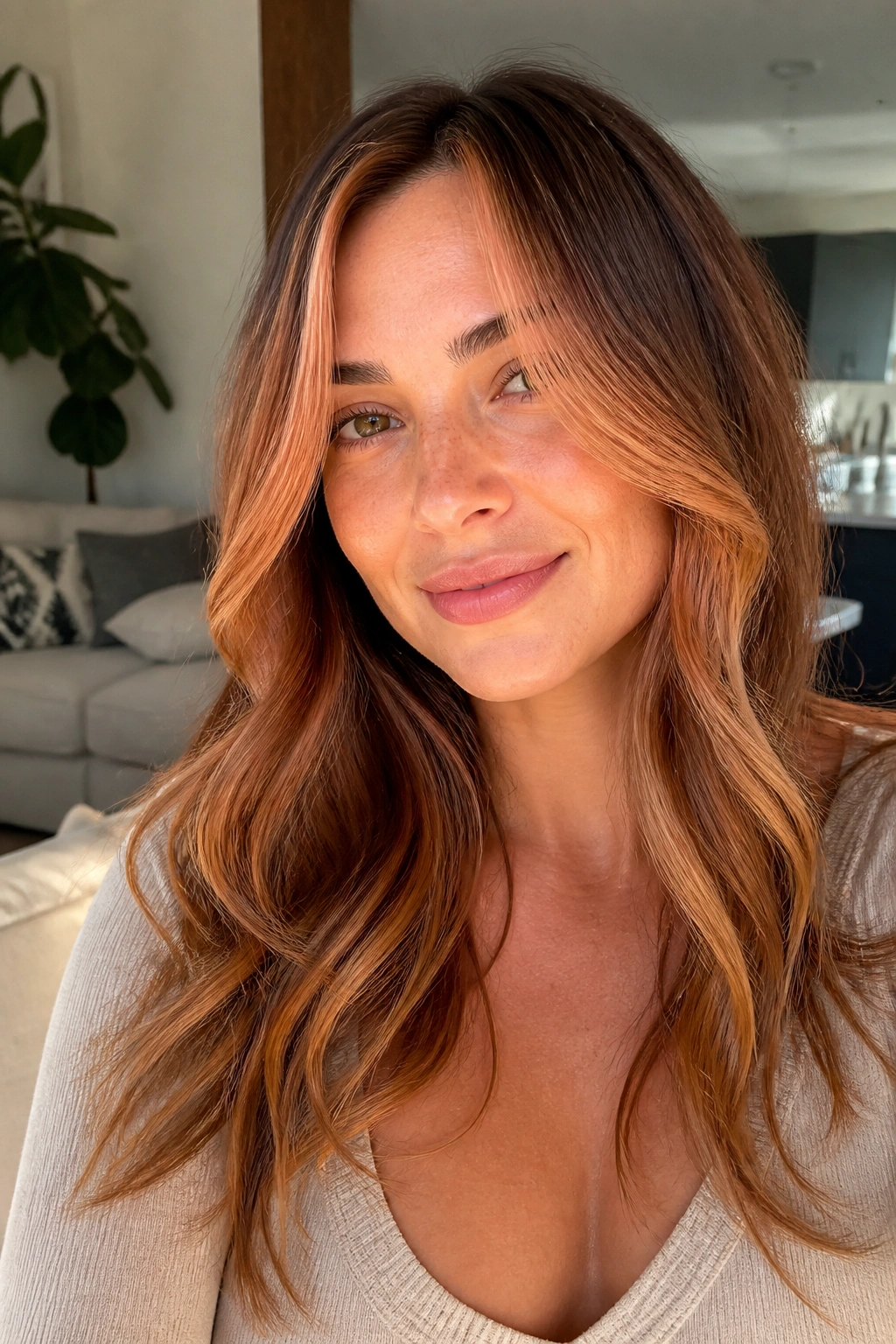
Not every strawberry tone reads childish. On the right base, strawberry blonde panels look lively, flattering, and a little glossy in a way that straight blonde never quite matches.
Warm brunettes and dark blondes wear this especially well because the red-gold mix blends into the base instead of fighting it. I like this look when the lightest pieces sit around the face and then soften through the front layers. It gives brightness where you need it and keeps the rest of the hair looking rich.
The trick is not to overdo the orange. Strawberry blonde should feel like a soft fruit tone, not a copper blaze. Keep the root zone a shade deeper, too. That small shadow makes the color look more natural as it grows out.
If your hair is wavy, the strawberry pieces will catch light better. Straight hair can still wear it, but the effect becomes cleaner and more graphic. Both work. They just read differently.
11. Tiger Eye Caramel-and-Bronze Highlights
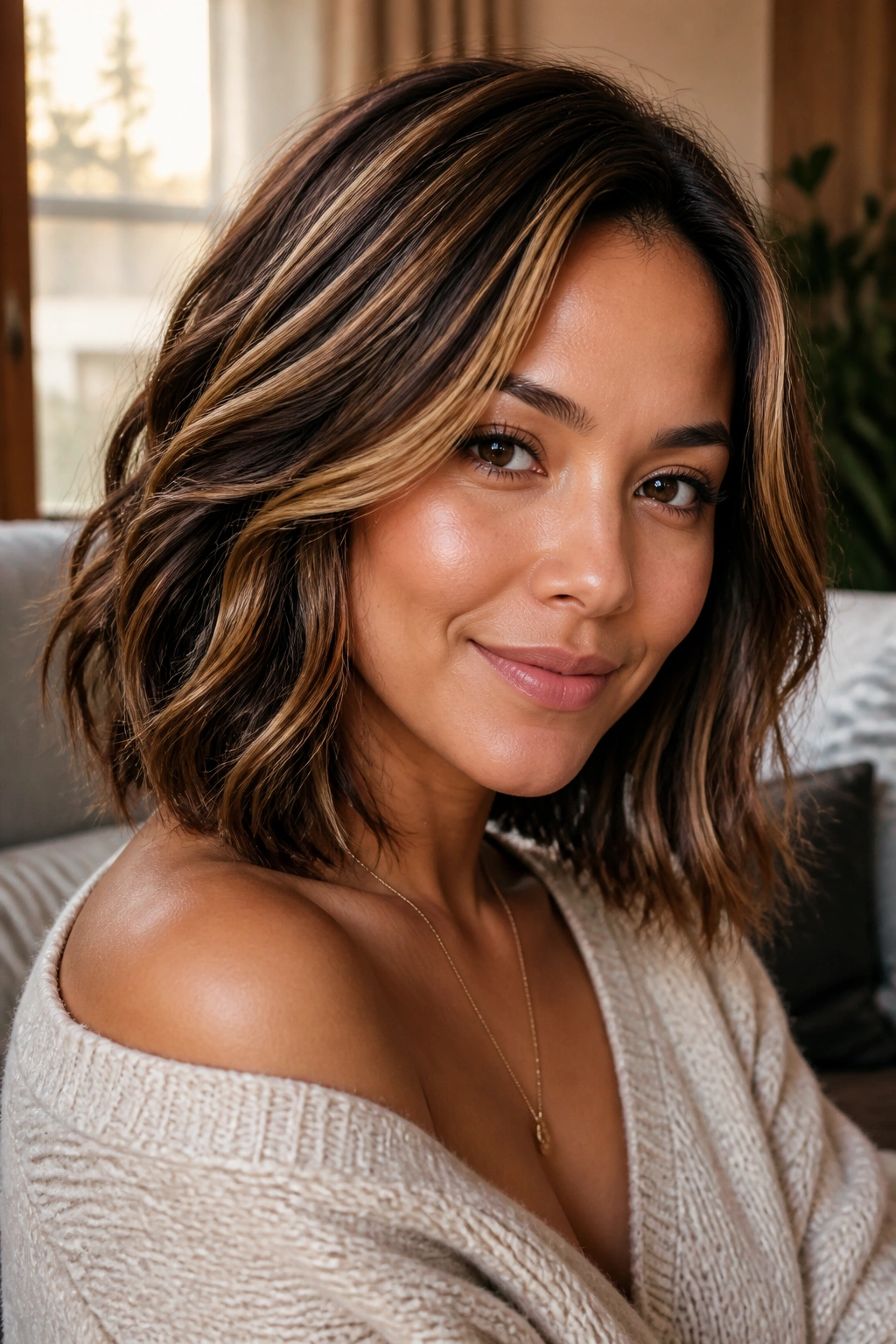
Tiger eye sits between balayage and the old-school stripey look. It blends honey, bronze, and amber in a way that feels rich rather than flat, and that’s why it has staying power.
Why the Mix Works
The color story matters here. Bronze gives depth, caramel adds warmth, and the lighter amber pieces create the flash. Together, they make dark brown or chestnut hair look like it has more layers than it really does.
This style is especially good if you want visible color but don’t want a single-note blonde effect. Wide ribbons through the sides and a few brighter pieces around the crown keep it from looking too tidy. Slight messiness helps.
Best For
- Medium to dark brunettes
- Shoulder-length cuts and longer layers
- Hair that gets styled with loose waves
- People who want shine first and drama second
My favorite part is how forgiving it is. You can let tiger eye grow a little and it still looks intentional. That’s a relief if you dislike constant touch-ups.
12. Silver Streaks on Charcoal Black Hair
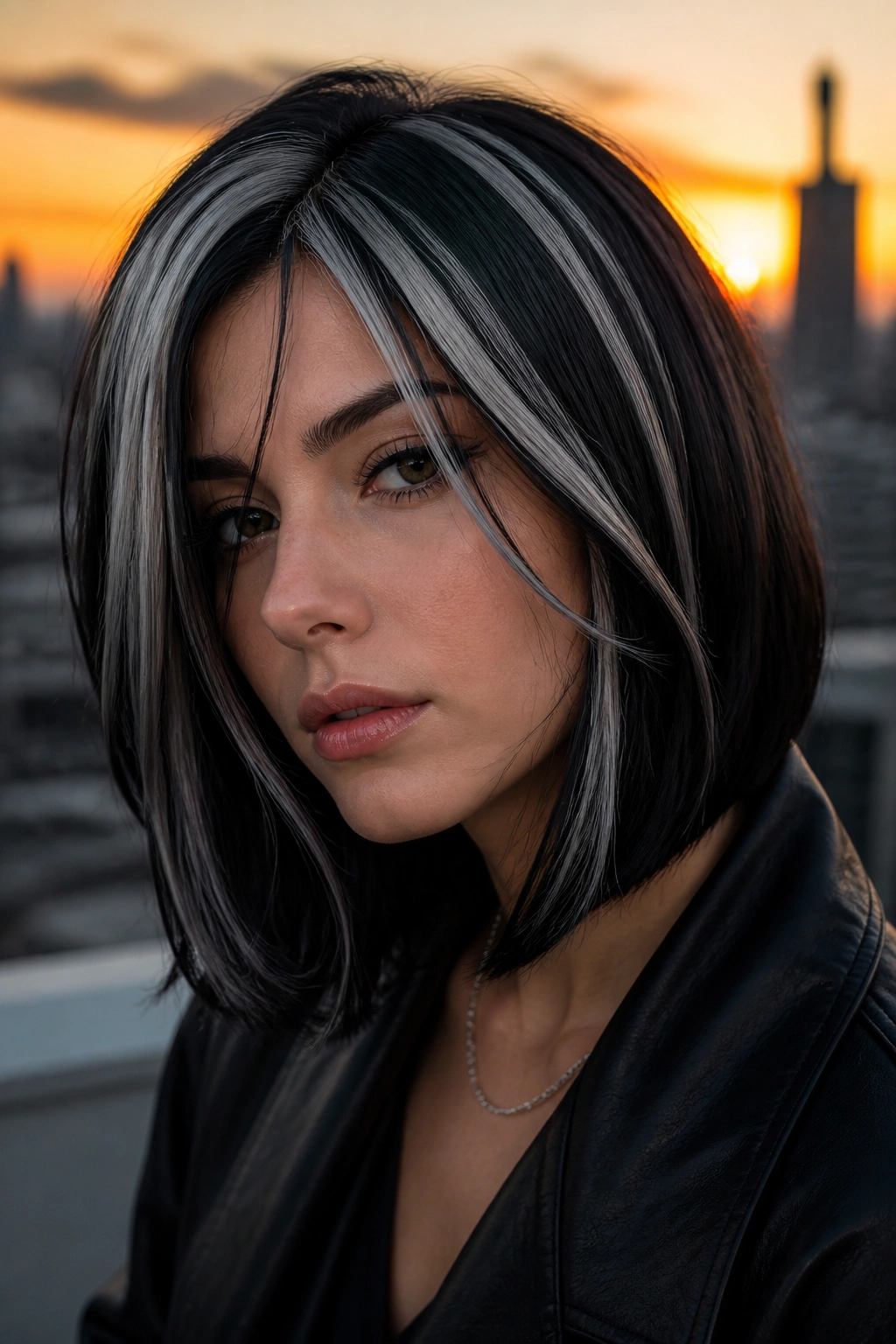
Silver chunky highlights are not quiet, and that is the point. On charcoal black hair, they read crisp, cool, and a little futuristic without needing a full head of lightness.
This look depends on contrast. The silver has to be bright enough to register, but not so white that it looks frosty and dry. The best version usually keeps a dark root and places the silver in wide slices through the top and front sections. That way the color looks dramatic, not scattered.
Hair health matters here more than with warmer shades. To get silver to show, the hair usually needs a strong lift first, and that can be rough on ends that are already dry. Trim them before the color service if they’re fragile. You’ll thank yourself later.
Sleek styling makes the silver feel sharper. Waves make it look softer. Both are good, just different. And yes, the grow-out line can be striking. That’s part of the look, not a flaw.
13. Butter Blonde Panels on a Shag Cut

Why does a shag make chunky blonde feel so alive? Because the cut already has movement, and those layers keep breaking up the color as the hair moves. A blunt cut can look graphic. A shag looks playful.
Butter blonde is warmer and creamier than icy blonde, which helps it sit nicely on layered hair without going brassy. The highlights should land on the fringe, the temple pieces, and the top layers where the cut has the most texture. Underlayers usually need less color. Flooding everything just wastes the effect.
Placement That Works
- Put the lightest pieces around the fringe and cheekbones.
- Keep the slices wide enough to read as ribbons.
- Leave some darker pieces between the blonde sections.
- Ask for a buttery toner, not a stark white one.
This is one of those styles that looks better a little lived-in. Too perfect, and it loses its charm. A shag should move. The color should move with it.
14. Toffee Highlights on Curly Hair
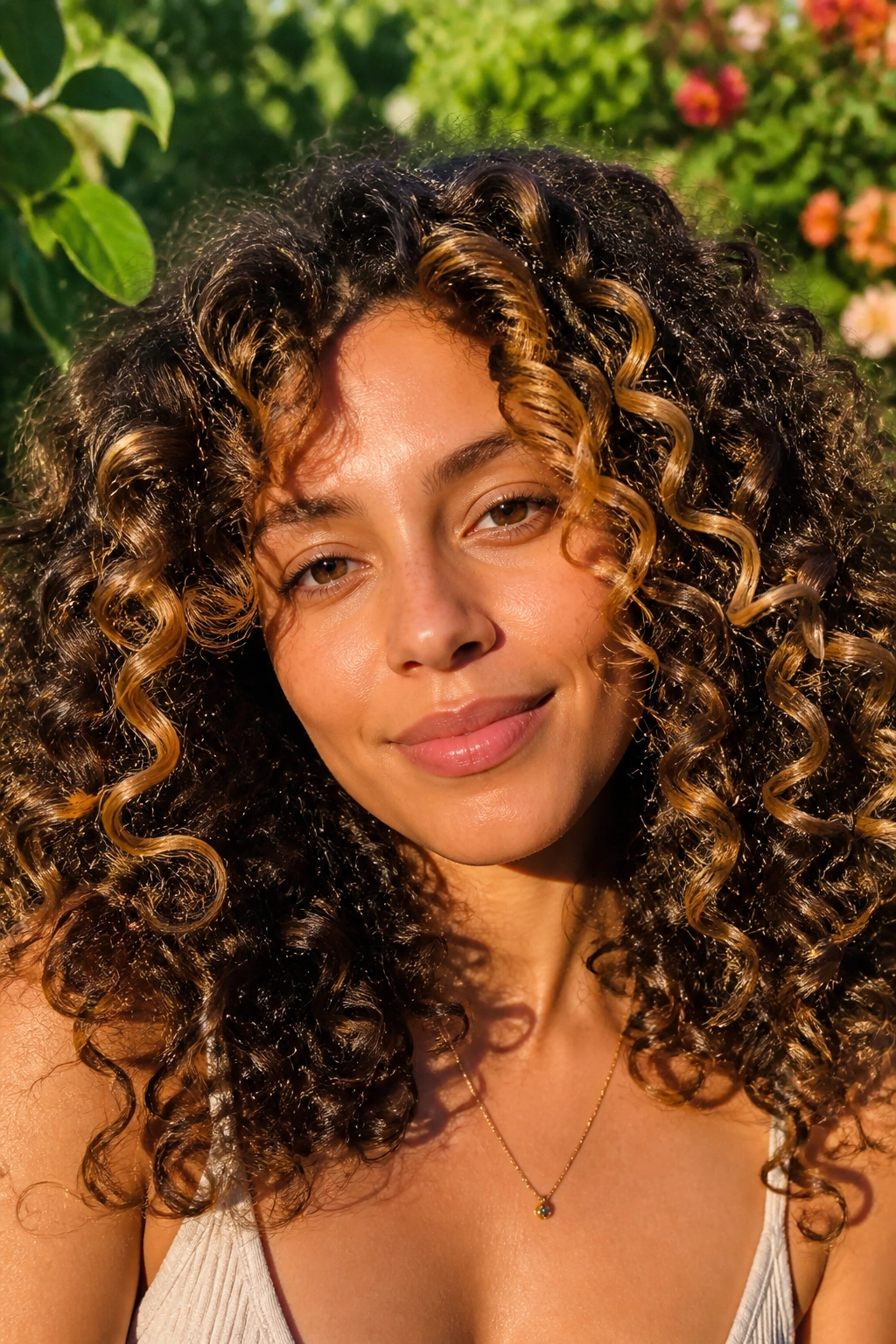
Curly hair and chunky toffee highlights can look rich instead of streaky if the sections follow the curl pattern. That part is everything. Color on curls behaves differently than color on straight hair, because the shape changes where the light lands.
The best toffee pieces tend to be a bit wider, but they should still respect the curl groupings. If the foils are cut against the natural pattern, the highlights can break up in awkward places when the curls shrink up. Nobody wants that. A smart colorist paints or foils with the curl in mind, then checks the pattern when the hair dries.
I also like this look on medium to dark bases because the warmth gives curls a glossy, nutty depth. Too much lightness can make curls look frizzy, especially if the ends are porous.
- Ask for color that follows the curl clumps.
- Dry the hair a little before judging placement.
- Use a diffuser or air-dry to show the pattern.
- Trim before coloring if the ends are weak.
Curly hair likes dimension. Toffee gives it that.
15. Violet Peekaboo Panels on Dark Hair
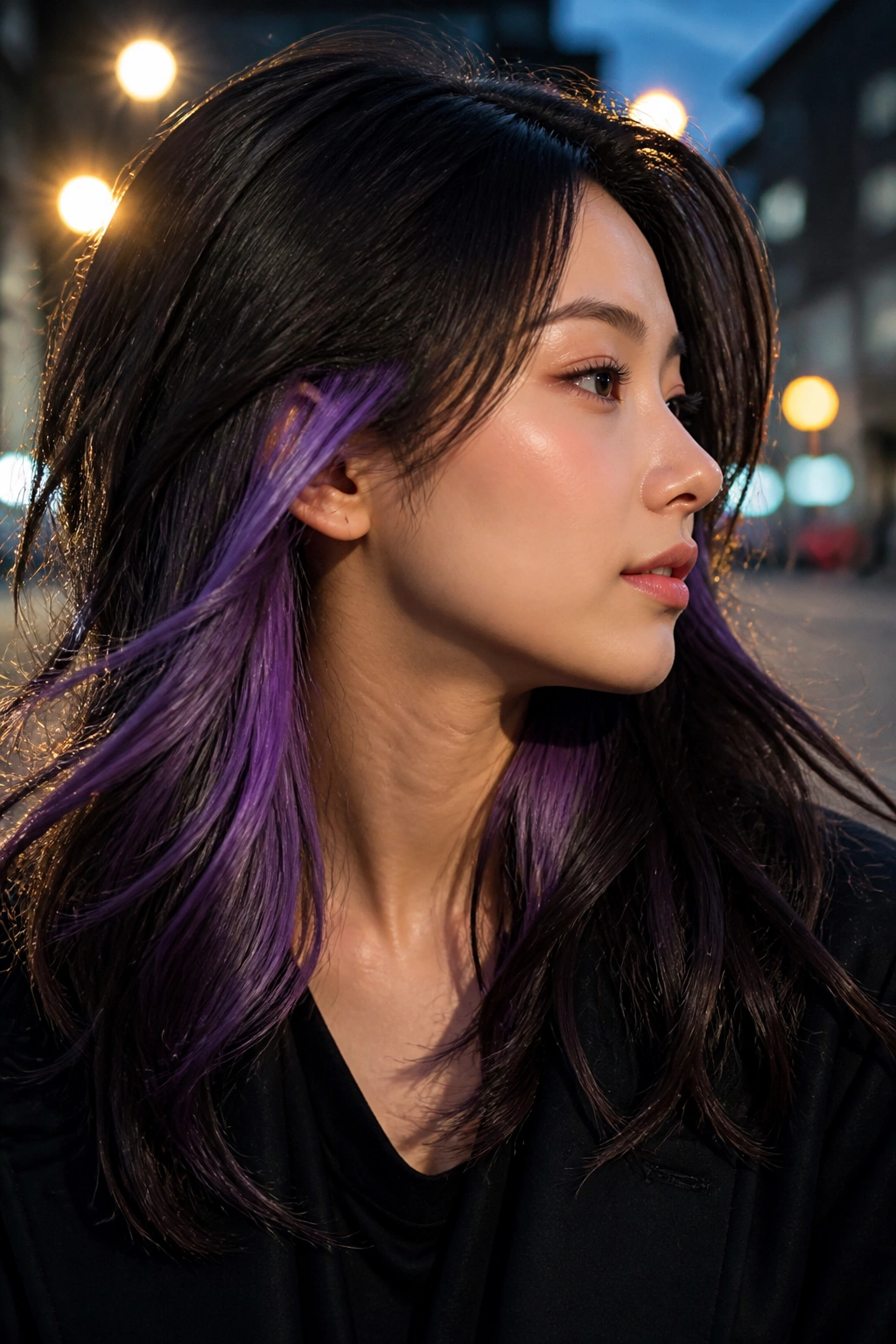
Violet on dark hair shows up like crushed plum under a coat sleeve — a surprise, not a shout. That hidden quality is what makes it so good.
This look works best when the violet sits beneath the top layer or peeks out around the temples and behind the ears. You get flashes of color when the hair moves, but the whole head doesn’t need to go vivid. If you like braids, buns, or clipped-back styles, the color becomes part of the shape instead of just decoration.
The base shade matters. Dark brown and black both work, but the violet looks cleaner if the hair has been lifted to a pale yellow first. A deeper violet reads more jewel-like, while a brighter purple veers punkier. Choose based on your wardrobe and how much contrast you want.
One nice thing about violet is that it fades in a way that still looks decent. It can soften into lavender-gray rather than turning awkwardly muddy. Not every bold color does that.
16. Champagne Blonde on Dark Chocolate Curls
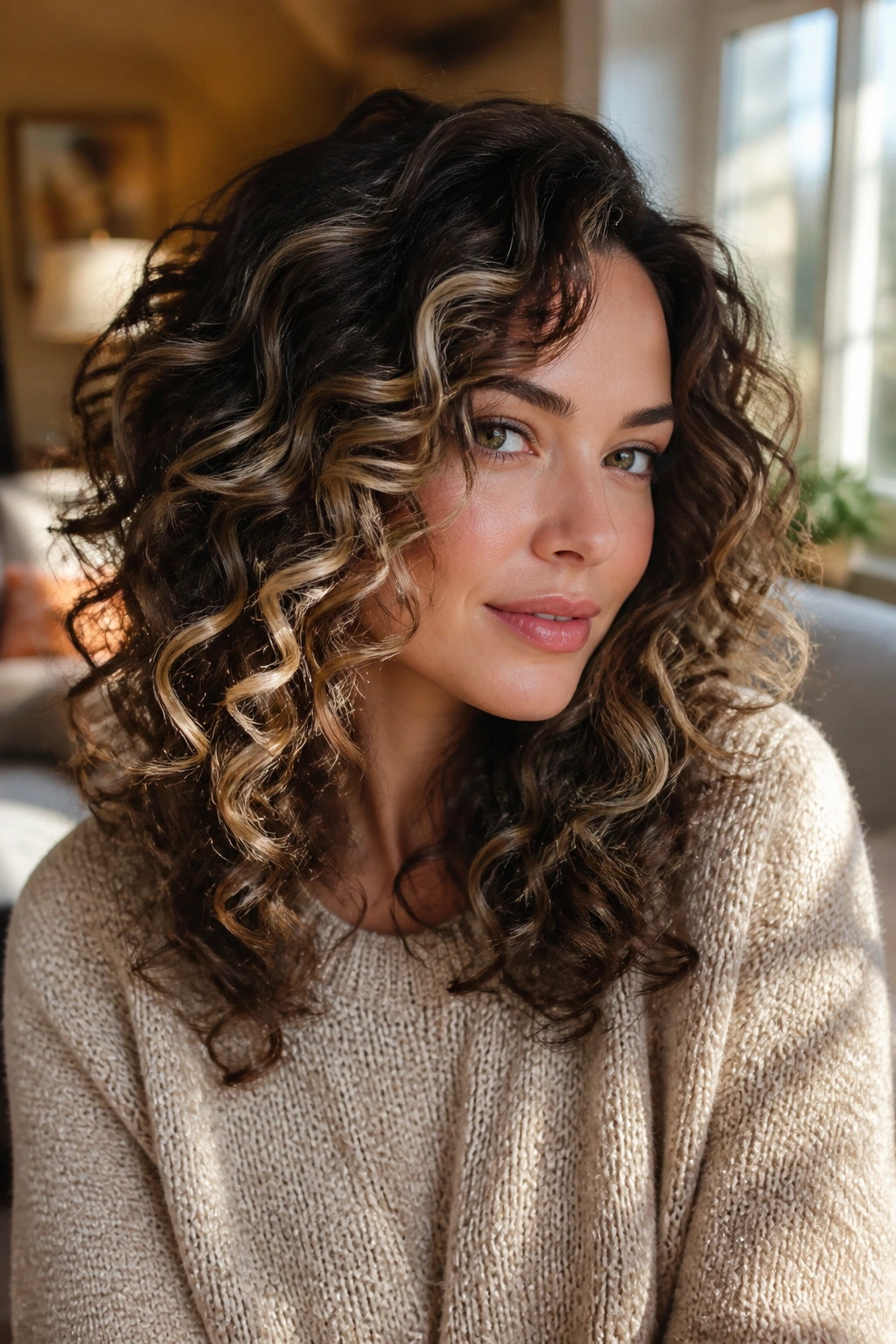
Champagne is softer than platinum and brighter than beige. That middle ground makes it one of the easiest chunky highlight shades to wear on dark chocolate curls.
Because curls already create movement, the champagne pieces do not need to be everywhere. A few wider ribbons around the front, some through the upper mids, and a little brightness near the crown can make the whole head look fuller. The light bends across the curl pattern and gives the color extra life.
I prefer champagne when the tone stays warm-neutral. Too much ash can make the curls look drained. Too much gold can push it into brass. The right finish lands somewhere creamy, almost sparkling without being shiny in a fake way.
This is also one of the better choices for people who want a blondish feel without the maintenance of full blonde. It still needs care, sure, but the grow-out tends to be gentler than a pure icy look.
17. Peach Highlights on Copper Hair
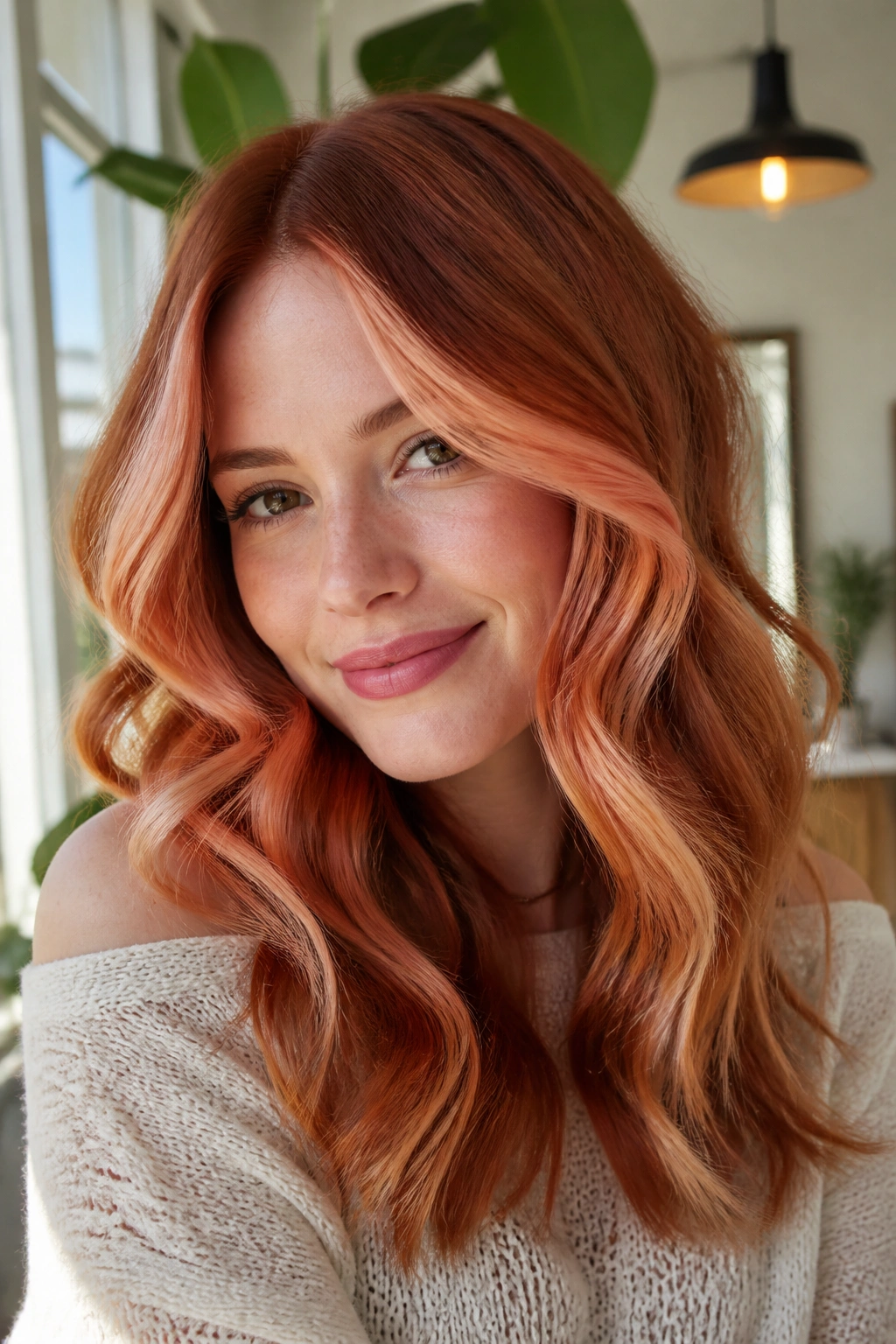
Peach on copper can look playful without turning cartoonish. That’s the sweet spot. The base already has warmth, so the lighter peach pieces read like a softer echo instead of a sharp jump.
The best version uses thin-to-medium chunky slices rather than tiny foils. That keeps the peach visible. If the pieces are too narrow, they disappear into the copper base and the whole point is lost. Put more of the lighter tone around the face and crown so the color has places to catch light.
Peach fades fast, but it fades in a way that can still look pretty if the underlying copper is healthy. A gloss helps. So does not over-washing the hair. That sounds boring, maybe, but boring habits are usually the reason bright color lasts at all.
This look loves loose bends and soft curls. Straight hair can wear it too, but the color shows better when the hair has a little bend in it. Flat iron it stick-straight, and you lose some of the fun.
18. Smoke Gray Slices on a Brunette Lob
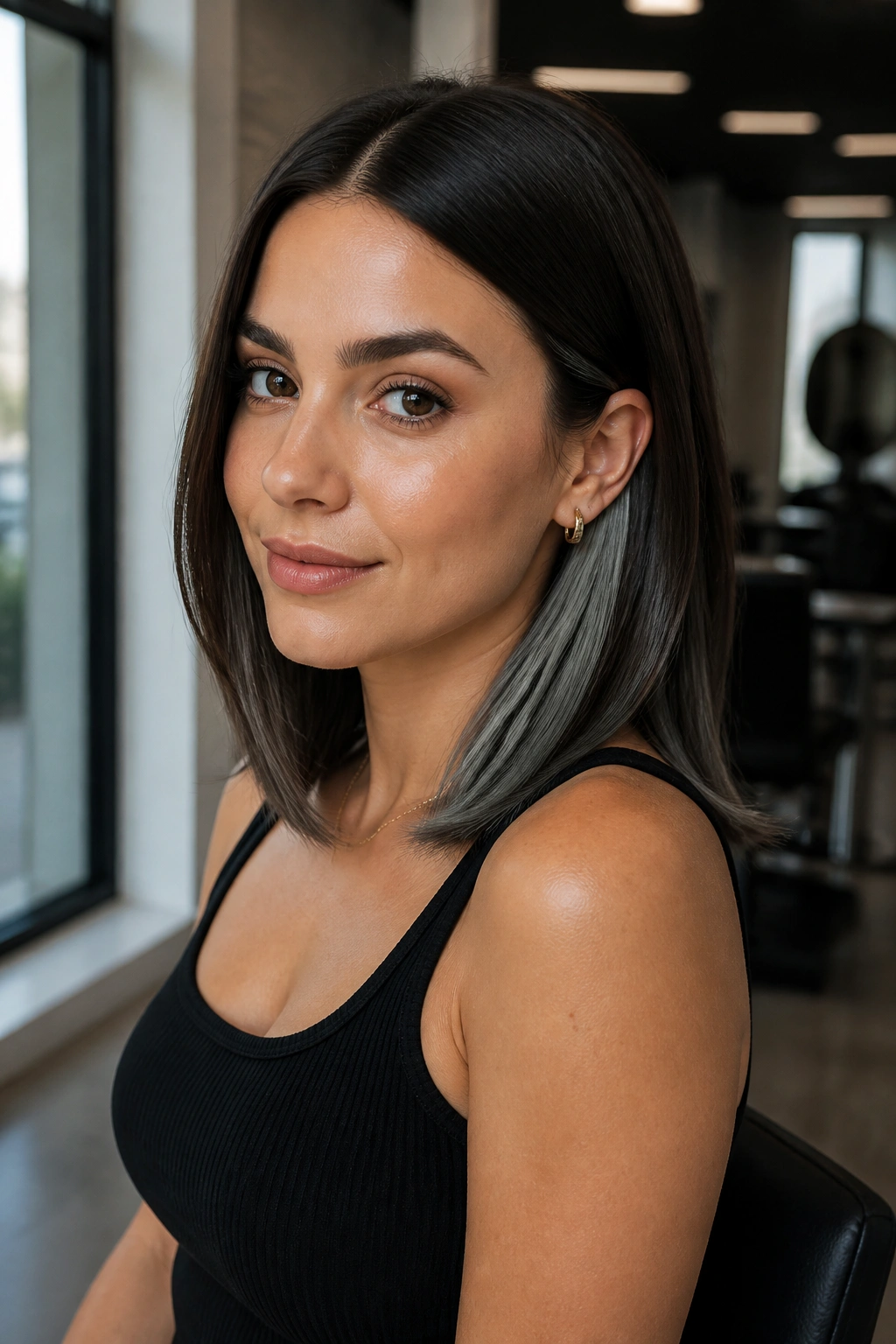
A lob with smoke gray slices looks sharp when the ends swing at the collarbone. The cut does half the work. The color just sharpens the edges.
Smoke gray sits between silver and ash, which makes it a little softer than full metallic gray but still very cool. On a brunette base, it gives the hair a moody, polished feel. I like it most when the slices are wide enough to show but not so many that the hair turns striped in a loud way.
The lob is a good match because the length gives the gray room to move. Tucked behind the ear, it looks sleek. Worn with a bend, it feels slightly undone. Both versions work.
A Few Practical Notes
- Keep the brunette base cool or neutral, not orange.
- Ask for smoky gray rather than bright silver.
- Style the ends smooth so the slices read cleanly.
- Use a shine spray if the finish looks matte after toning.
It is a colder look, yes. That is the appeal.
19. High-Contrast Skunk Stripe Money Piece
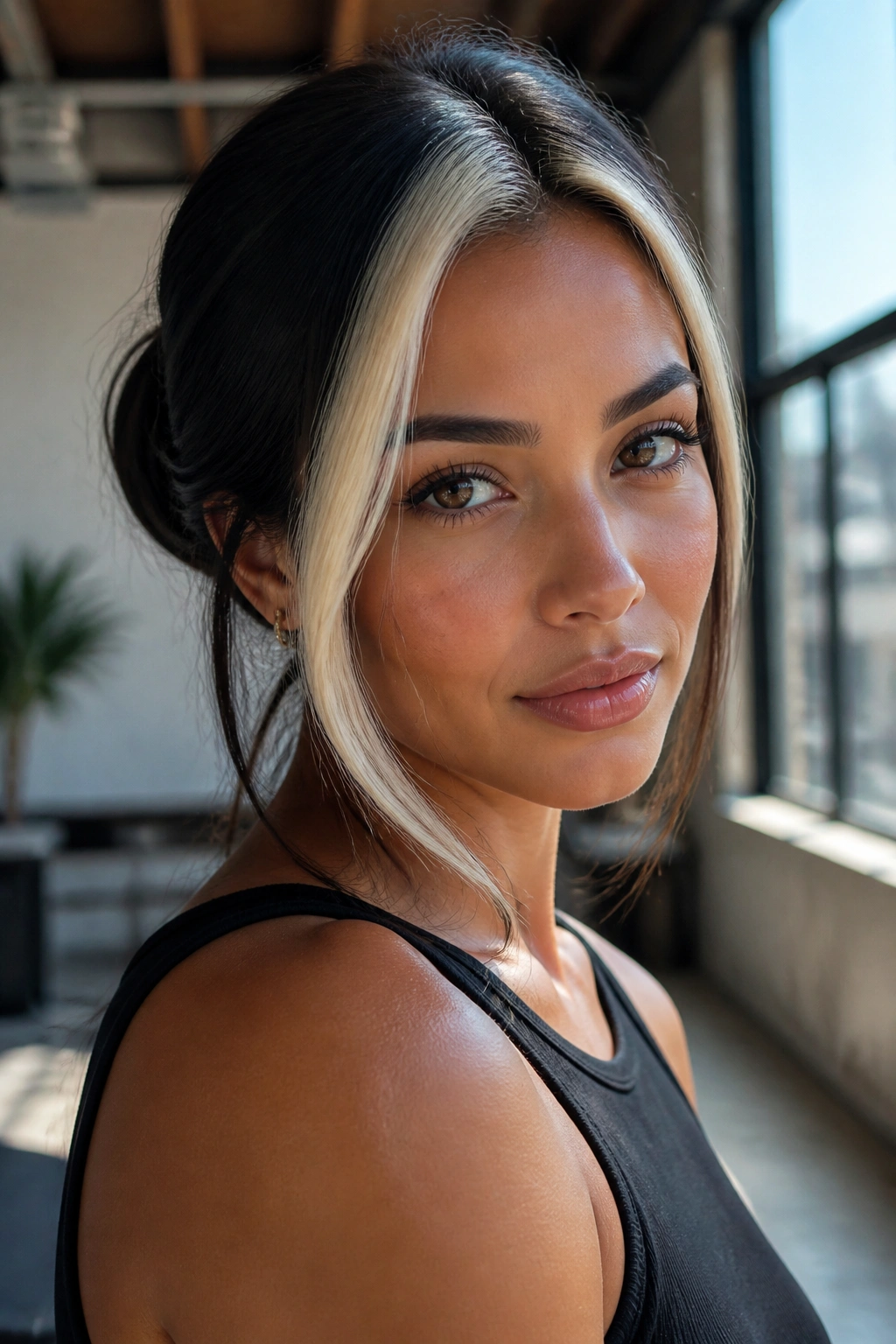
The skunk stripe got a bad reputation from clumsy placement. Fair enough. But when the front panel is done cleanly, a bright money piece on dark hair can look fashion-forward instead of chaotic.
What makes this work is restraint elsewhere. One strong front stripe, perhaps a matching side piece, and then the rest of the hair stays dark and rich. If you add too many extra lights, the whole thing loses shape and starts looking accidental. Keep the stripe about 1 to 2 inches wide, and let the rest of the color do its job quietly.
How to Keep It Polished
- Balance the front stripe with a deep root or dark crown.
- Wear sleek styles, clipped-back waves, or a clean middle part.
- Tone the light piece to a neutral blonde, not a yellow one.
- Trim the front regularly so the money piece doesn’t drag the cut down.
This one is bold. It should be. But bold does not have to mean messy.
20. Soft Beige Chunky Highlights for an Easy Grow-Out
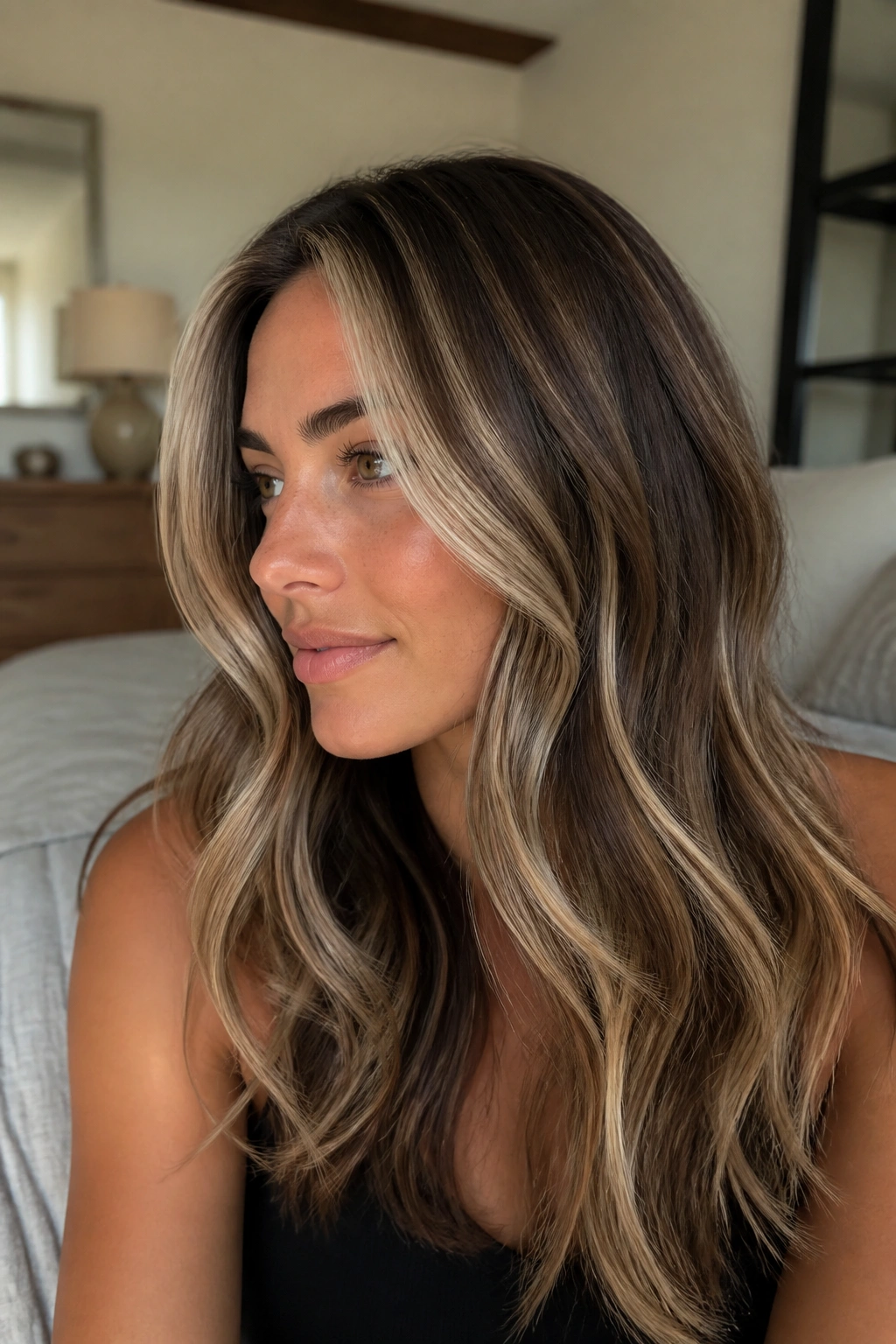
If you want the look of chunky highlights without a harsh line at the root, soft beige is the smartest bet. It gives brightness, but the tone stays close enough to brunette and dark blonde bases that the grow-out feels forgiving.
The nice thing about beige is that it can read clean, creamy, and modern without getting too warm or too icy. That makes it a useful choice for people who want contrast but do not want to babysit toner every other week. Wider ribbons through the face frame and top layers are enough. You do not need to bleach the entire head to get the effect.
I’d call this the practical version of the trend. It still looks current. It just behaves better.
If you want the cleanest salon ask, bring two reference photos: one for placement and one for tone. That saves a lot of back-and-forth at the chair. And if you are torn between loud and subtle, this is the middle path that usually feels right when you leave the salon and, more important, three weeks later when the roots are starting to show.
