



A wedding hairstyle has one job: stay put. The best wedding hairstyles don’t just look pretty in the mirror; they handle hugs, wind, heat from the dance floor, and the long stretch between the first photo and the last slice of cake. If a style collapses after the ceremony, it wasn’t the right style.
The smartest bridal hairstyles are the ones that fit the dress, the veil, and the person wearing them. A low bun can feel polished and calm. Soft waves can make a simple gown look far more expensive than it is. A braid can keep thick hair under control without making it feel stiff or dated. Hair texture matters too. So does hair length. So does how much you want to touch it during the day.
I keep coming back to one rule: the hairstyle should work with the wedding, not fight it. A style that needs constant fixing is not worth the stress, no matter how good it looked in the styling chair. The good ones hold shape, photograph cleanly from the back, and still look like hair, not helmet. That balance is where the real magic is, and it starts with the classics.
1. Classic Low Chignon
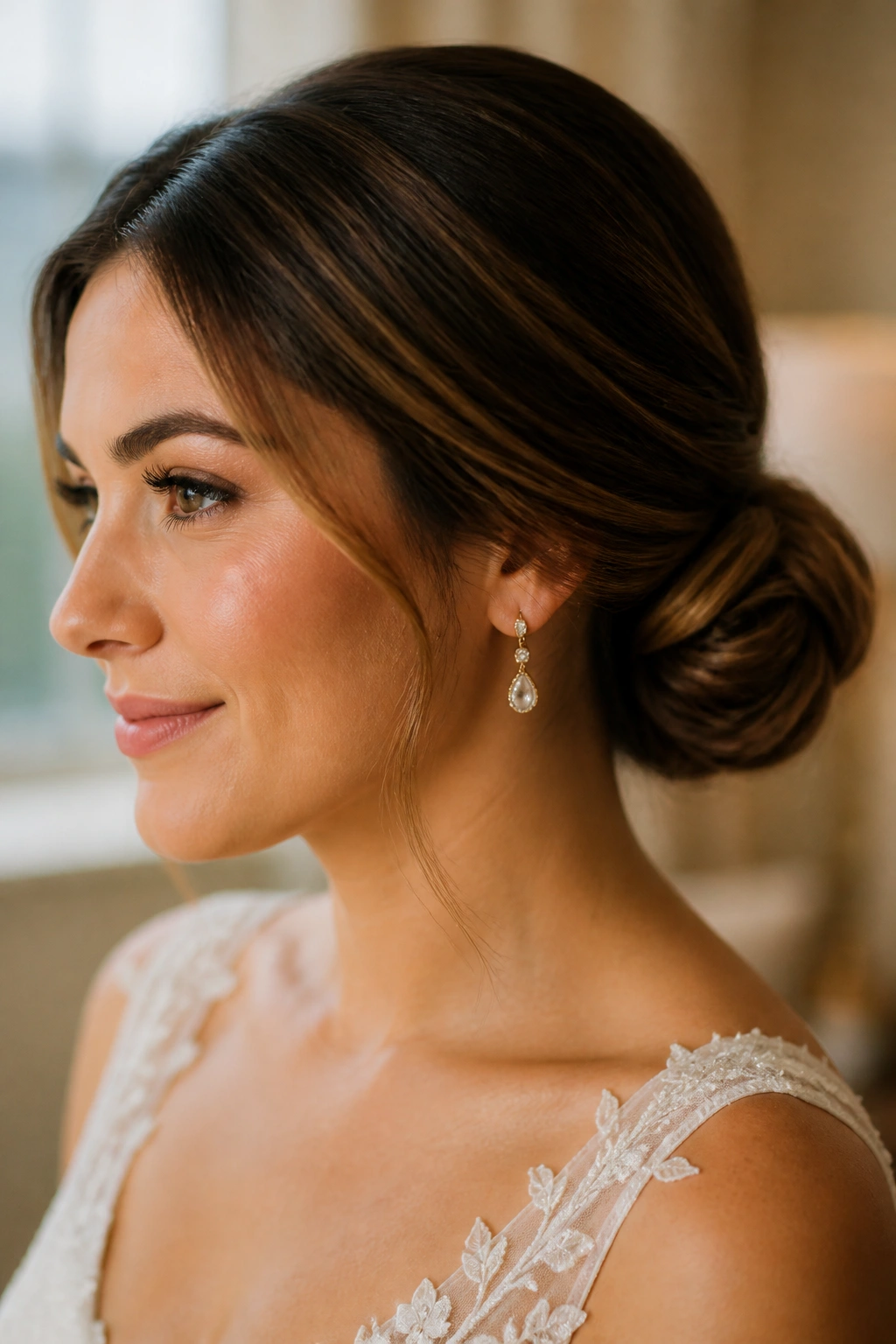
The low chignon is the steady, dependable choice that never feels try-hard. It sits at the nape of the neck, which makes it elegant without looking severe, and it works especially well with gowns that have open backs, high necklines, or lace that deserves a clean frame.
Why It Works
A chignon keeps the silhouette neat, which matters more than people think in wedding photos. It gives the face room, shows off earrings, and stays comfortable for hours because the weight is low instead of piled on top of your head. That matters on a long day.
- Best on medium to long hair.
- Works with straight, wavy, or lightly curled texture.
- Holds a veil or comb without much fuss.
- Looks polished with a center part or a soft side part.
Pro tip: leave a few fine pieces around the ears if you want the style to feel softer. Too much spray at the front can make it look stiff fast.
2. Romantic Half-Up Twist
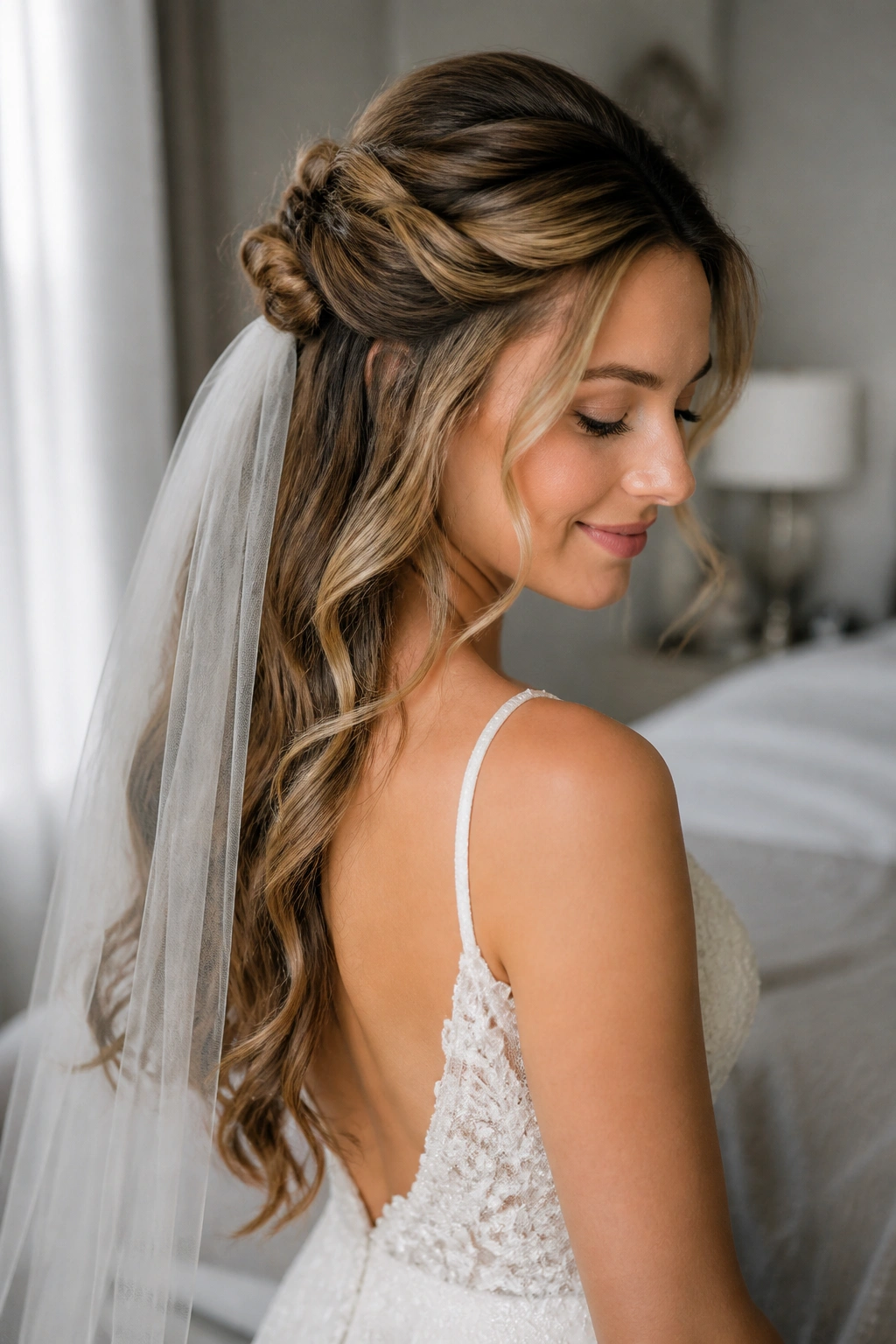
A half-up twist is one of those wedding hairstyles that reads graceful from every angle. It gives you the lift and polish of an updo while still letting the length fall softly down your back, which is why it flatters dresses that need a little movement.
The twist itself does a lot of the work. Instead of pulling all the hair away from the face, you keep the crown controlled and let the rest move. That gives a nicer shape than a plain half-up clip, and it feels less formal than a full bun. I like this one for brides who want softness but do not want to fuss with loose hair all afternoon.
A few loose curls in the lower section help the style keep its shape. If the ends are left too straight, the whole look can feel unfinished. If you’re wearing a veil, place it below the twist so the top stays visible in photos.
3. Old Hollywood Waves

Why do these waves still work so well? Because they do one thing better than almost any other bridal style: they make the hair look expensive. The sculpted wave pattern, especially on a deep side part, gives off polish without needing a complicated shape.
The trick is in the finish. Old Hollywood waves are smooth near the roots and strong through the curves, so they need setting and direction, not random curling. A 1-inch iron or a hot tool with a similar barrel size usually gives the cleanest bend. Brush the curls out only after they cool fully. That part matters. If you rush it, the wave pattern gets fuzzy and the style loses its shape.
How to Wear It
A side part gives this style drama, while a center part makes it feel cleaner and more modern. It’s gorgeous with long earrings, a strapless gown, or a dress with a simple neckline. It can also be pinned on one side with a comb if you want a little extra sparkle.
4. Braided Crown
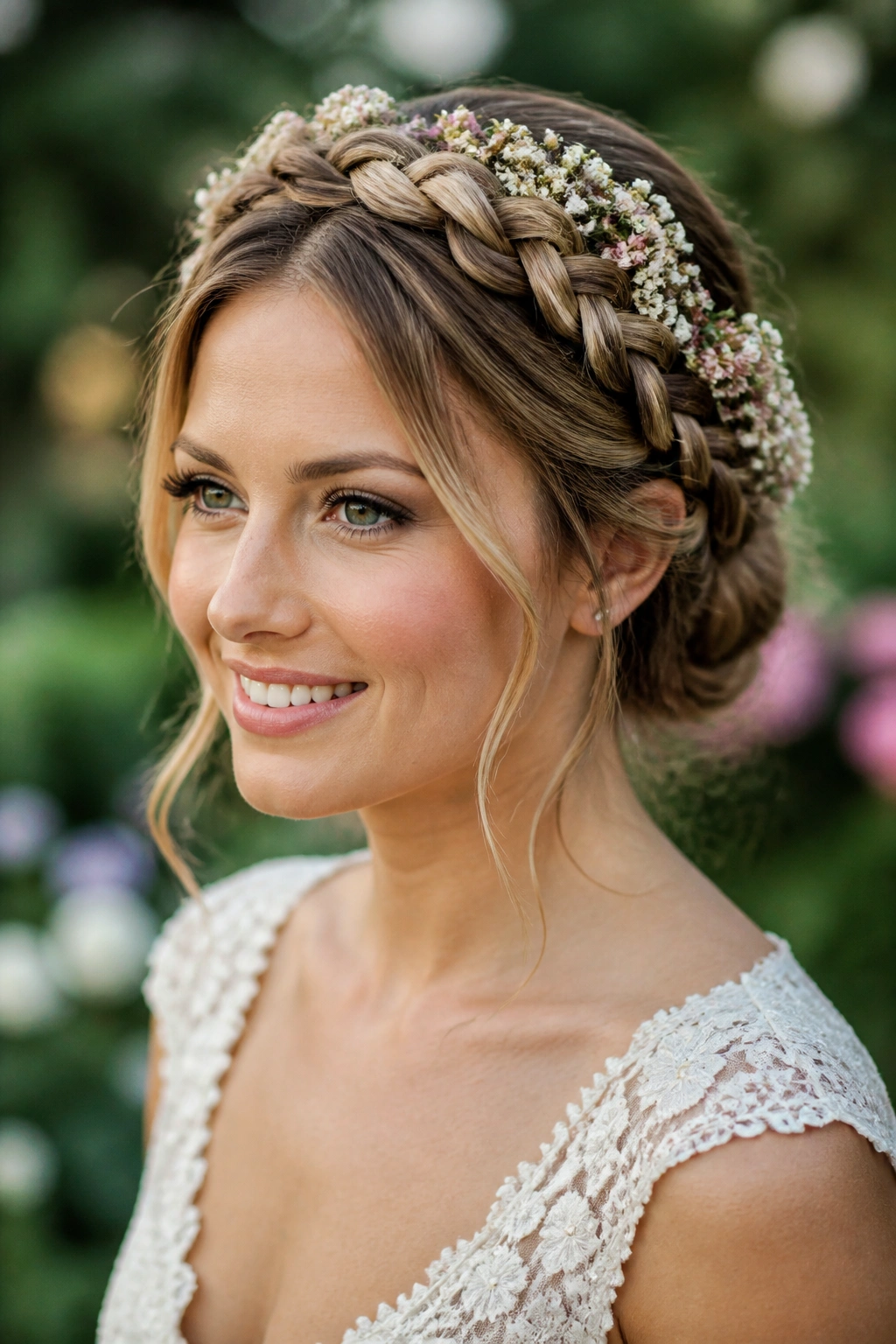
A braided crown feels like the right answer for anyone who wants hair off the face without losing softness. It wraps around the head and creates shape from the braid itself, which is handy when you want something secure that still feels decorative.
I’ve always liked this style for outdoor ceremonies, especially when there’s a breeze or a long gap before the reception. The braid acts like built-in structure. It also hides grow-out and gives shorter layers somewhere to live, which saves a lot of panic when the front pieces refuse to cooperate.
- Good for medium and long hair.
- Works well on second-day hair with a little texture spray.
- Pairs nicely with small flowers or a slim veil.
- Keeps the sides controlled without needing a hard slick-back.
One thing to watch: if the braid is pulled too tight, the whole style can start to look harsh. Keep the crown snug, not strained.
5. Sleek Center-Part Bun

The sleek center-part bun is the one I reach for when the dress has strong lines and the jewelry is doing the talking. It’s sharp, modern, and very clean around the face, which makes it a good match for structured satin, square necklines, and minimalist gowns that would drown in too much hair.
The beauty of this style is its restraint. You smooth the front, split the hair neatly down the middle, and pull everything into a bun that sits low or mid-low on the head. No flyaway chaos. No overworked curls. Just a tidy shape and a glossy finish. That’s the appeal.
It does ask for prep. A smoothing cream, a fine-tooth comb, and a few strong pins go a long way. If the hair is frizzy or layered heavily, it helps to blow-dry it smooth first, then wrap the bun in sections so the base looks full and even. This is not the place to rush.
6. Soft Textured Updo
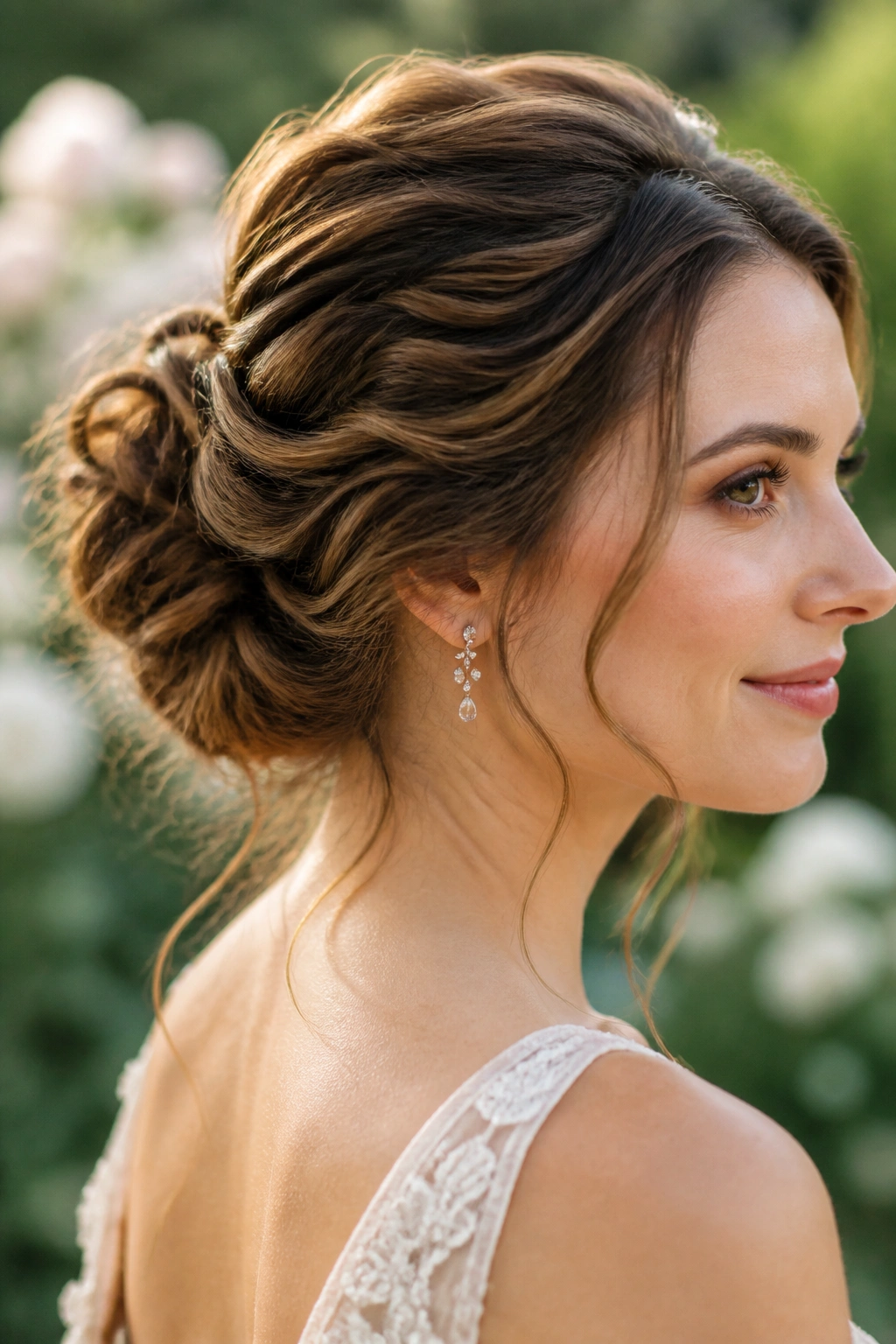
Compared with the sleek bun, a soft textured updo feels more relaxed and a little less formal. It still lifts the hair away from the neck, but the pieces are looser, the shape is gentler, and the overall effect is easier on softer dresses or outdoor settings.
That’s why I usually suggest it to people who want movement. The style can be built from twists, pins, and loose loops, with just enough structure to hold the shape. You get volume at the crown and softness around the ears and nape. It does not need to look perfect to look good, which is part of the charm.
This one suits layered hair especially well because the shorter pieces can be pinned into the texture instead of slipping out of a tight bun. If your hair is thick, ask for a lower, wider shape so the updo doesn’t end up looking too round. Tiny profile changes like that matter more than most people realize.
7. Low Twisted Knot
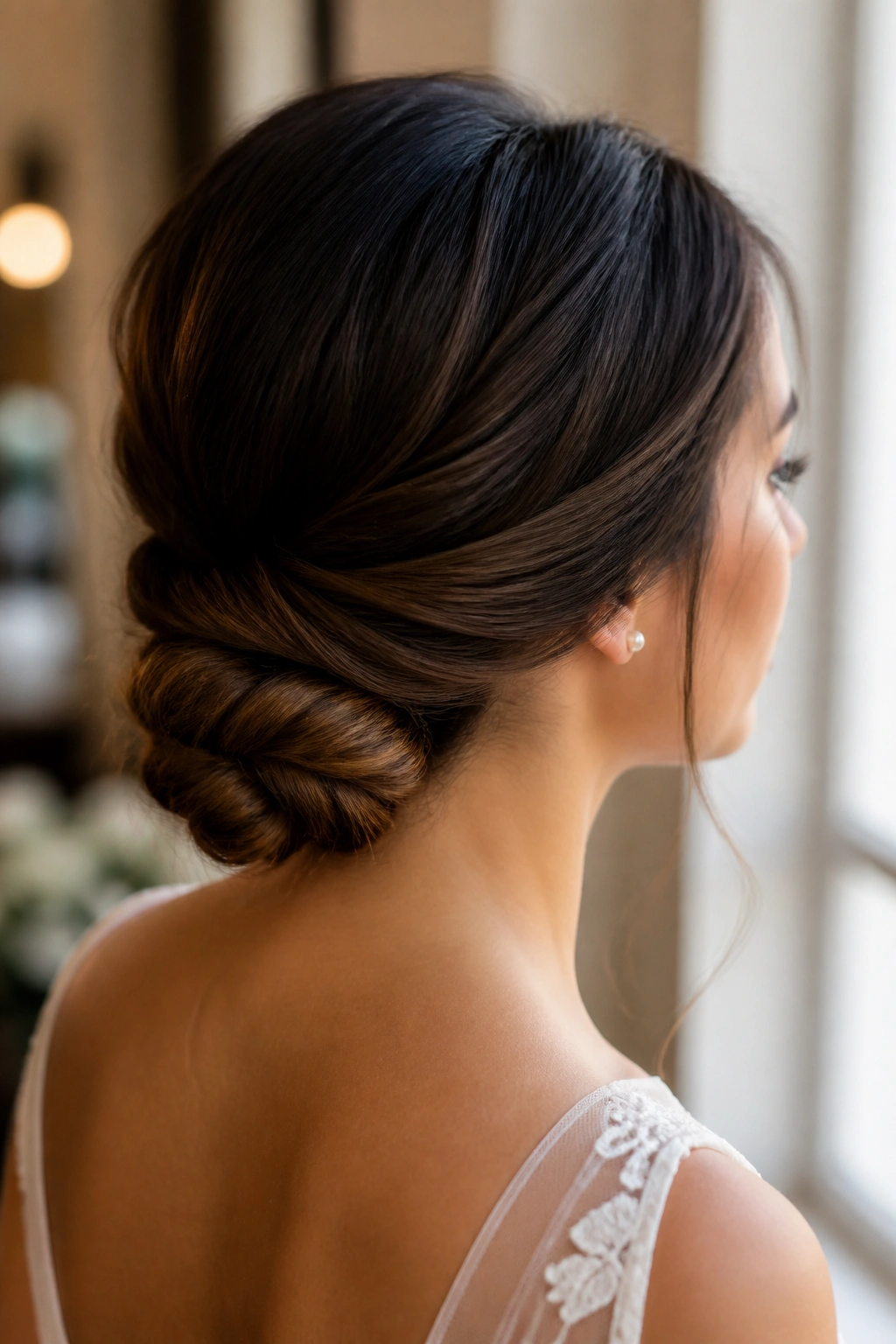
Need something that sits between a bun and a chignon? The low twisted knot is a smart middle ground. It has the neatness of an updo but keeps a little more visible texture, which makes it feel less severe than a polished knot.
The style starts with two or more sections twisted back toward the nape, then wrapped and pinned into a knot that looks fuller than a standard bun. I like it for dresses with clean backs because the shape adds interest without stealing attention from the gown. It also handles medium-density hair well, since the twist gives the illusion of more volume.
If your hair is slippery, prep with a bit of dry texture spray first. If it’s very coarse, a light smoothing serum can help the twists lie flat without puffing out. Keep the knot low and slightly off-center if you want it to feel softer. Straight in the middle can look a little too formal.
8. Cascading Curls with a Hair Vine
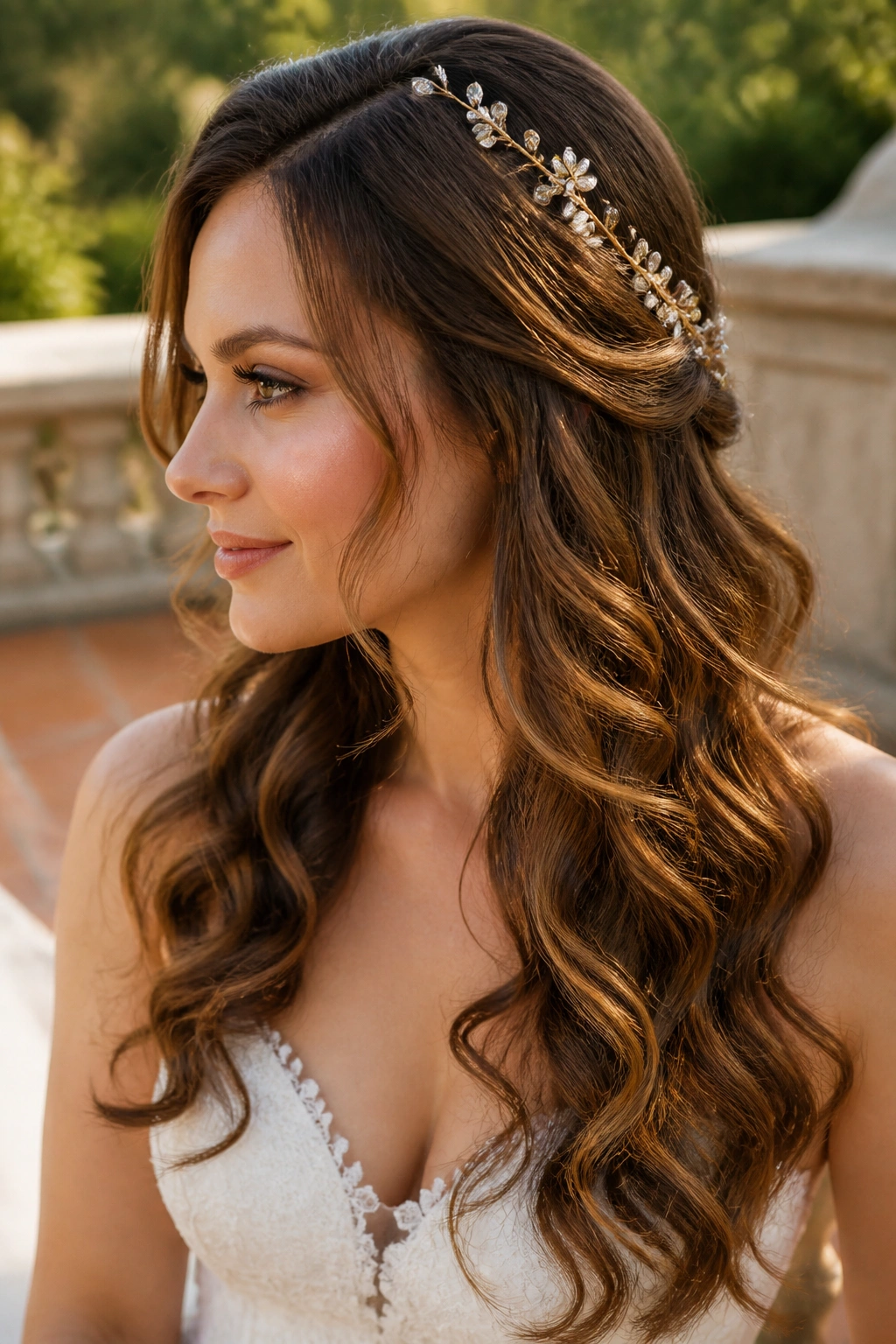
Cascading curls are the obvious choice for brides who want hair down, but the right accessory makes them feel wedding-ready instead of ordinary. A slim hair vine tucked into one side or across the crown changes the whole mood. Suddenly the style feels planned.
The curls should be soft, not ringlets. Large barrel curls or brushed-out waves give the hair more movement and help it blend with the vine. I’d skip tiny, springy curls unless the dress and the overall look are very romantic, because they can read dated fast. The vine should sit where the eye can catch it as the hair moves, not buried under the top layer.
This style is especially nice when you want photos with hair down but still need some face framing. Keep a few front pieces loose, curl them away from the face, and pin the rest of the vine with hidden bobby pins. That tiny extra step keeps it from sliding around.
9. Side-Swept Waves
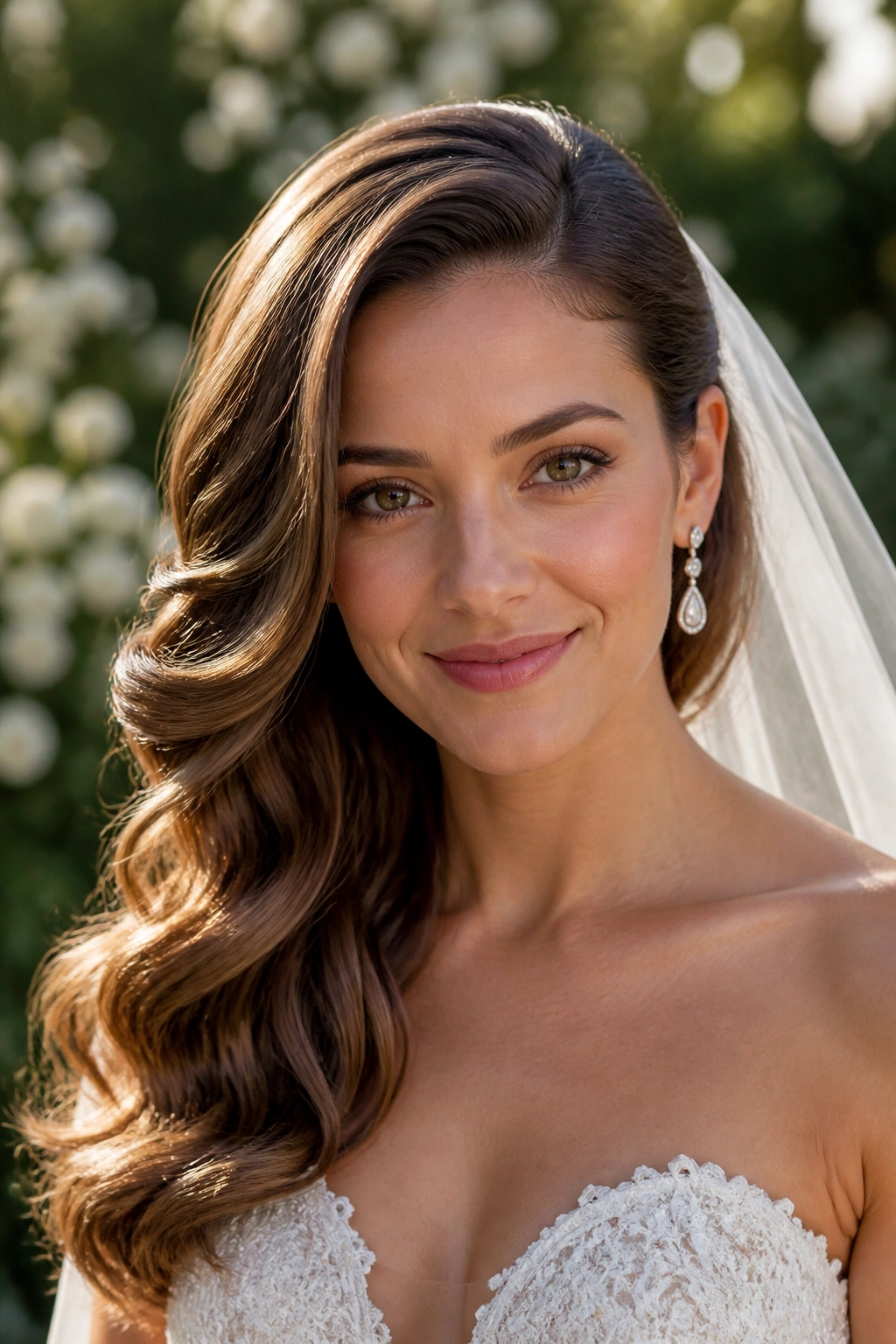
Side-swept waves have a quiet drama that works beautifully with one-shoulder gowns and dresses with asymmetrical details. One side stays tucked back while the other falls in a soft line, and that off-balance shape makes the whole look feel intentional.
What I like most is how forgiving it is. The style can be soft and loose for a garden ceremony or more glossy and molded for an evening celebration. It also gives you a chance to show off earrings on one side without making the front feel bare. If your hair is fine, a little root lift at the crown helps the style hold its shape instead of collapsing flat.
The key is secure pinning under the top layer. You want the sweep to look fluid, but it still needs a base. If the hair keeps falling forward, add one hidden pin at the temple and another behind the ear. Small fixes. Big difference.
10. Bubble Ponytail
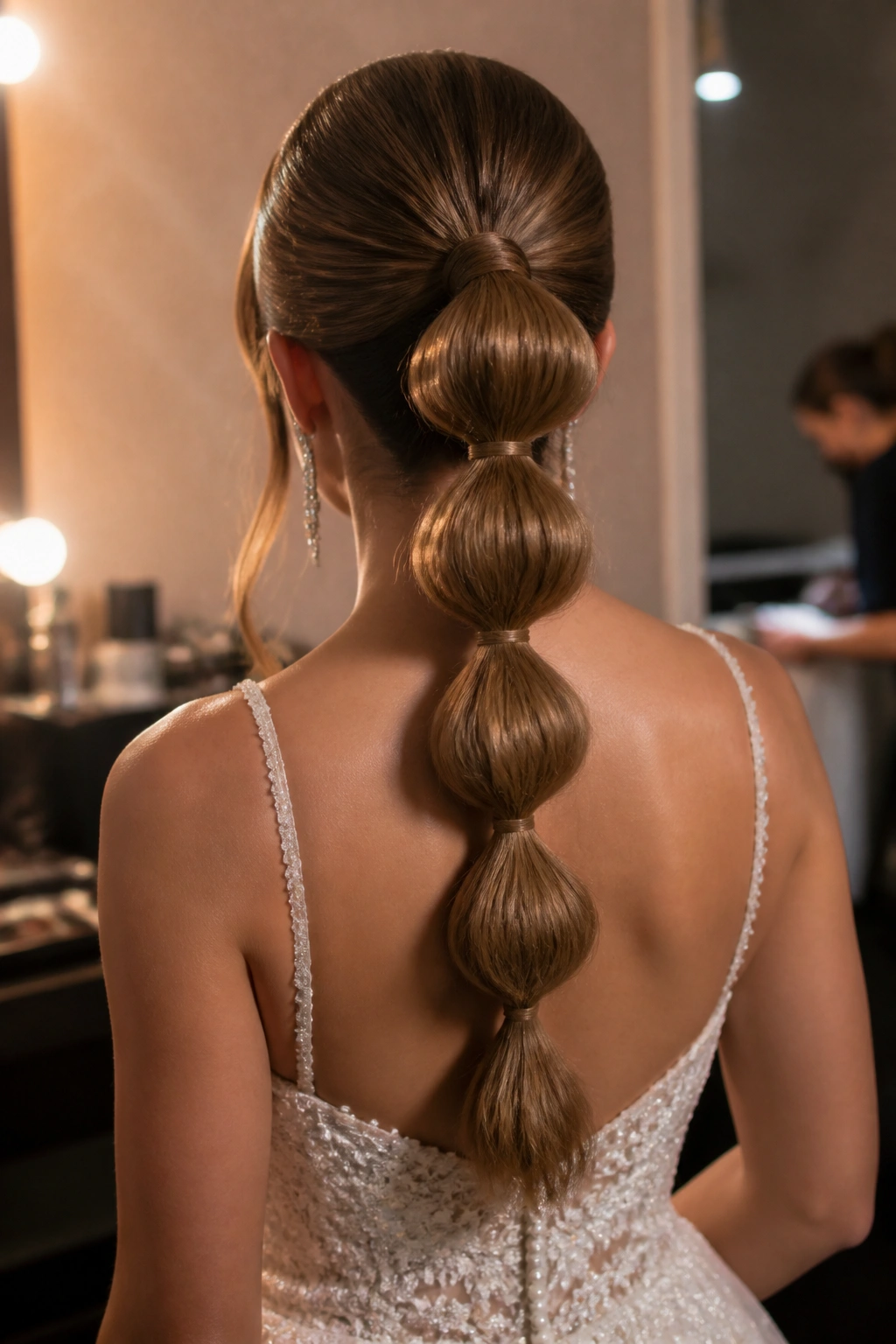
A bubble ponytail sounds playful, but done well, it can look surprisingly formal. The trick is keeping the sections neat, the bubbles evenly spaced, and the base sleek enough to feel polished instead of casual.
Why It Feels More Formal Than a Regular Ponytail
A plain ponytail can read like a gym solution if it’s not dressed up. A bubble ponytail has shape. Each tied section creates a clean rhythm down the length of the hair, which is why it photographs so well from the back. It also works nicely with long veils, sparkly hair cuffs, or a ribbon that runs through the base.
- Best on long hair.
- Needs clear elastic bands spaced about 2 to 3 inches apart.
- Works better with smooth hair than with heavy frizz.
- Can be worn high for drama or low for a softer finish.
My take: this is a strong pick for bridesmaids and guests too, especially if the dress is simple and the neckline needs something sharp.
11. Fishtail Braid

Why do fishtail braids keep showing up in bridal styling? Because they give texture without looking bulky. The pattern is fine and detailed, so even a braid down the back can feel delicate enough for a wedding.
It’s a nice choice when you want your hair controlled but not overly formal. A loose fishtail with a little pull-apart volume works well for rustic venues, outdoor ceremonies, and dresses with soft fabrics. The braid can start at the crown, lower at the nape, or even slide over one shoulder if you want the front to stay open.
Where to Place the Braid
A side placement feels more relaxed. A center placement reads cleaner and shows the braid pattern more clearly from the back. If you’re adding flowers, tuck them where the braid starts so they don’t scatter the eye. Keep the braid a little fuller at the top and tighter at the bottom. That shape is what keeps it from looking flat.
12. French Twist
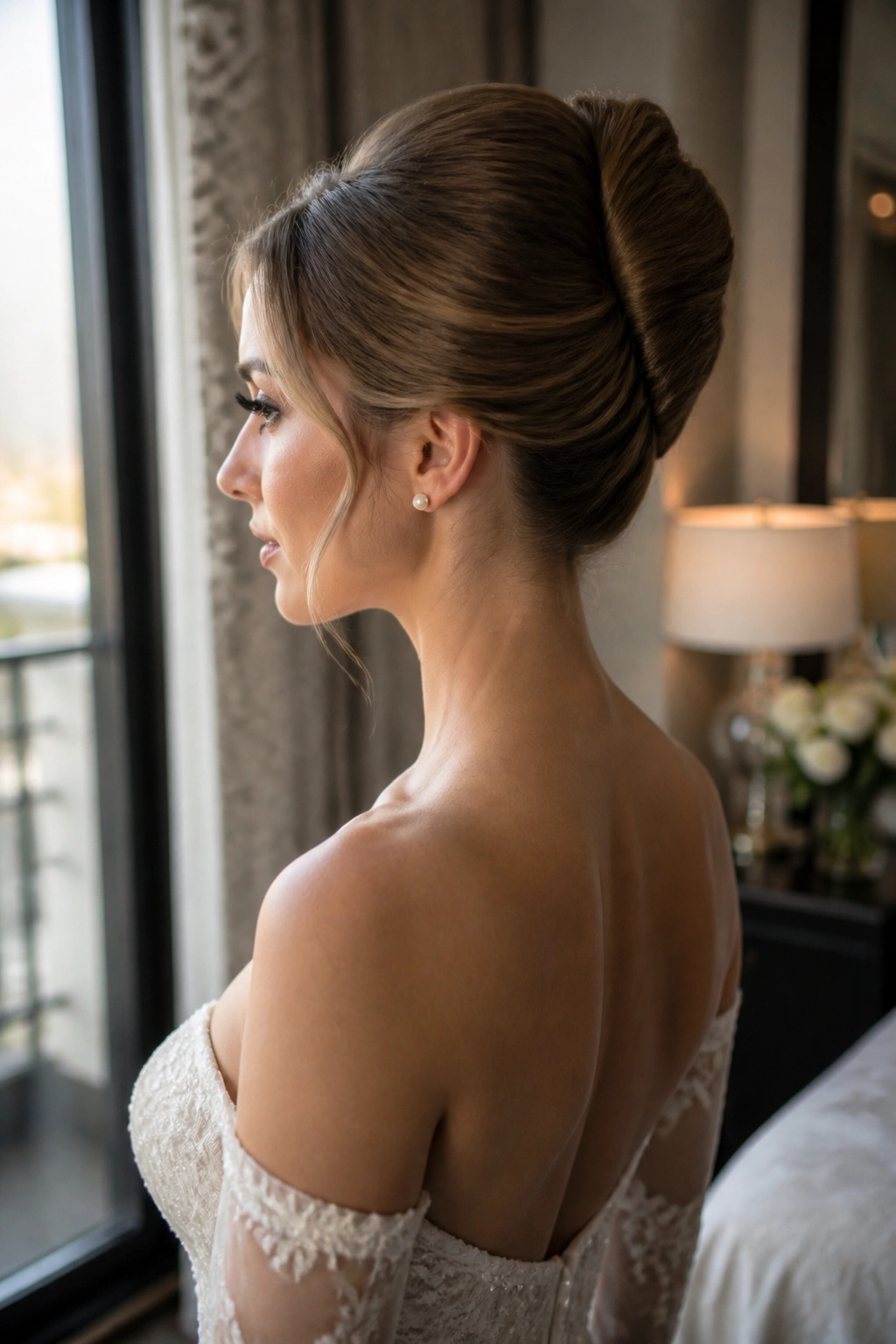
The French twist is what happens when you want a classic wedding updo with a bit more attitude. It’s slimmer than a chignon, more vertical, and often feels a touch more refined on the neckline because the hair is gathered upward instead of spreading low.
I prefer it on dresses with clean shoulders or a nice collarbone line. It gives the neck a long, elegant look and keeps all the attention on the face and outfit. Unlike very soft updos, a French twist holds its shape through the day without looking fluffy or fussy. It does need good pinning and a smooth base, though. If the hair is too slippery, the roll can sag at the seam.
A side-swept bang or a few loose front pieces can soften it if you’re worried it feels too severe. The best version still looks like hair, not a shell. That’s the part people sometimes miss.
13. Loose Boho Updo

A loose boho updo is for the bride who wants texture, movement, and a little imperfection on purpose. It is softer than a formal bun, less neat than a French twist, and a lot easier to wear if you hate the feeling of hair pulled tight.
This style thrives on bends and pieces. Waves are usually pinned loosely at the back, with a few face-framing strands left out. Tiny braids can be woven into the shape, but they should feel like part of the hairstyle, not decoration pasted on top. It’s one of those looks that can take flowers or pins well, but it doesn’t need them to make sense.
The danger is overloosening. If every pin is hidden too casually, the style can start to droop by the middle of the reception. The fix is simple: build a firm base underneath, then soften only the top layer. Soft on the outside. Solid underneath.
14. Polished High Bun

A polished high bun brings clean lines and serious lift. It can make the face look open and the neck look long, which is why it works so well with high necks, statement earrings, and gowns that already have a lot happening near the shoulders.
This is not a casual bun. It needs smooth roots, a centered base, and enough structure to keep the bun from spreading out too wide. When it’s done well, it feels sleek and deliberate. When it’s done badly, it starts to look like a rehearsal-dinner style that got tired halfway through the day. The difference comes down to balance and pinning.
I usually like this one best when the dress is simple or very sculptural. The bun should finish the look, not compete with it. If you have fine hair, a padded bun form can help add shape without making it look bulky. Keep the edges clean and the finish glossy.
15. Half-Up Bouffant
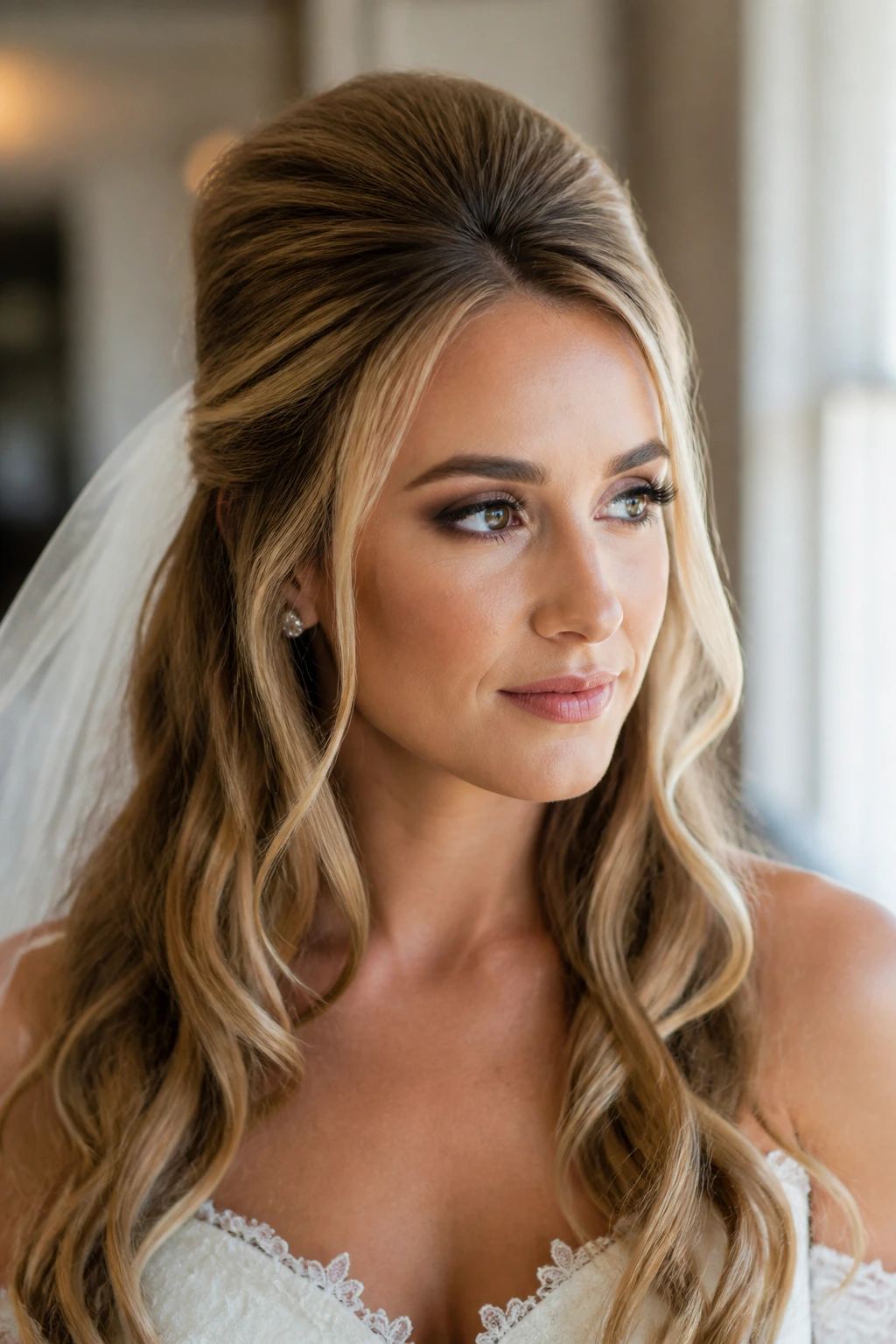
The half-up bouffant gives you crown volume without losing the length, and that’s a useful mix when you want a little vintage lift. It brings the hair up at the top, then lets the rest fall in waves or curls, which creates a very flattering line in profile.
What Makes It Different
The volume is concentrated at the crown, not all over. That makes the style easier to wear than a full retro set, but still dramatic enough for a wedding dress that needs a bit of personality. It suits long faces especially well, because the lifted crown balances the shape.
- Best with medium to long hair.
- Holds well when the crown is lightly backcombed and smoothed.
- Works with curled ends or brushed-out waves.
- Looks especially good with a veil placed lower at the back.
A small warning: don’t build the bouffant too high unless the dress can handle it. Too much lift can start to feel costume-like, and that is not the mood.
16. Pearl-Studded Ponytail
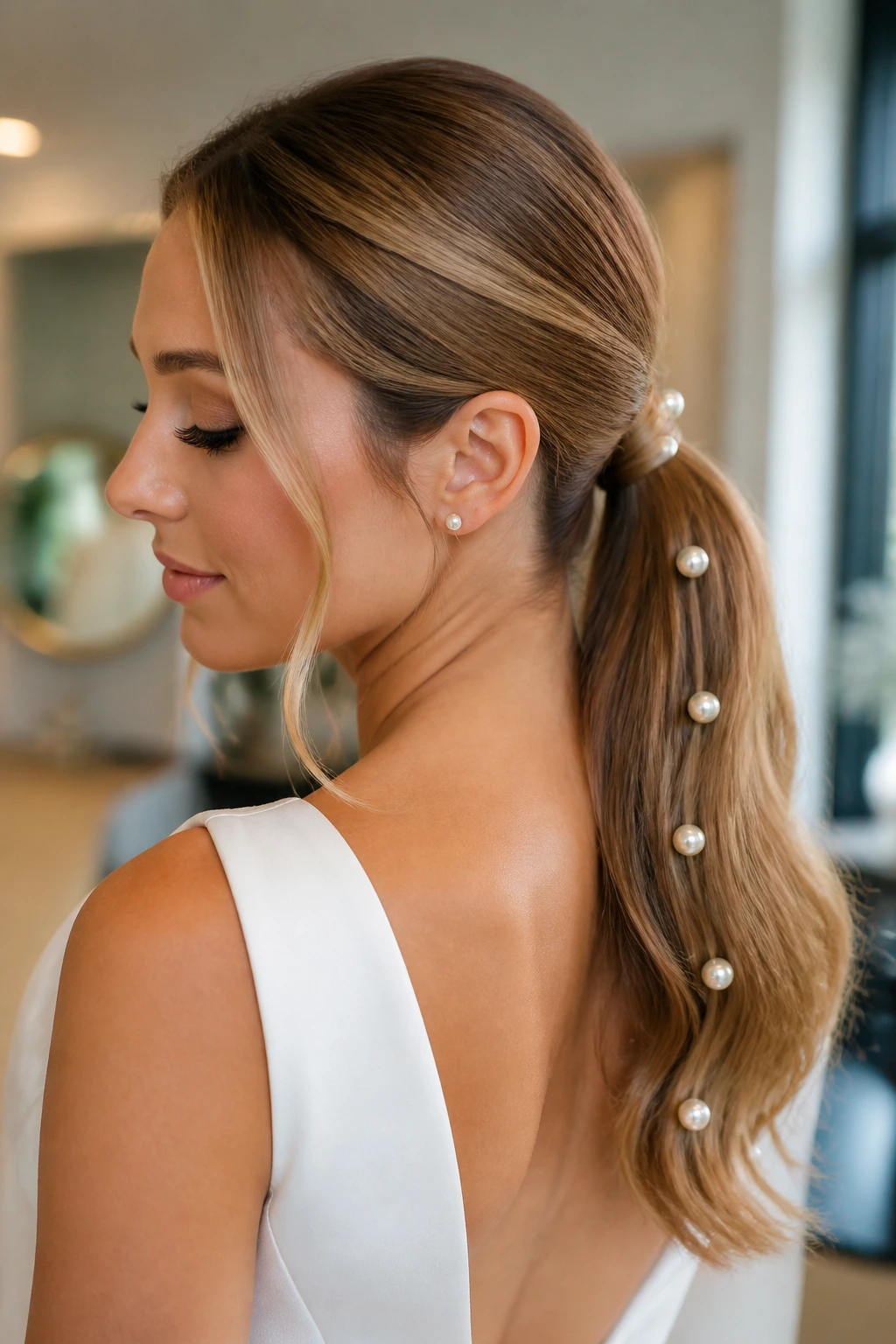
Could a ponytail feel bridal? Absolutely, if the shape is clean and the accessories are chosen with care. A pearl-studded ponytail takes a simple base and turns it into something sharper, softer, and a lot more event-ready.
The pearls work best when they’re spaced along the length of the ponytail rather than packed near the top. That spacing keeps the eye moving and stops the style from looking heavy. I like this look for sleek dresses, modern suits, and reception changes when the bride wants to swap from a formal ceremony style into something easier to dance in.
The ponytail itself can be low or mid-height. Low feels more refined. Mid-height feels a little livelier. Curl the tail gently or keep it straight and glossy depending on the rest of the outfit. Either way, the base needs to be smooth. A choppy ponytail fights the pearls, and the pearls always lose.
17. Twisted Halo

The twisted halo is one of those styles that looks more complicated than it really is. Two sections are twisted back from the front and wrapped around the head, creating a soft halo effect that keeps hair off the face without making it look severe.
I like this style for brides who want a romantic frame around the face and a tidy neckline. It also gives a little coverage at the sides, which helps if the dress has detailed straps or if you want the veil to sit neatly under the twists. The shape is kinder to curls than a tight braid can be, so natural texture tends to work well here.
- Good for medium-length hair and longer.
- Works well with soft curls or stretched natural texture.
- Can be finished with pins, tiny flowers, or a slim comb.
- Needs a few hidden anchors at the back to hold the twist in place.
Tip: keep the front sections loose enough to move a little. If the halo is too tight, it loses the softness that makes it pretty.
18. Short Hair Finger Waves
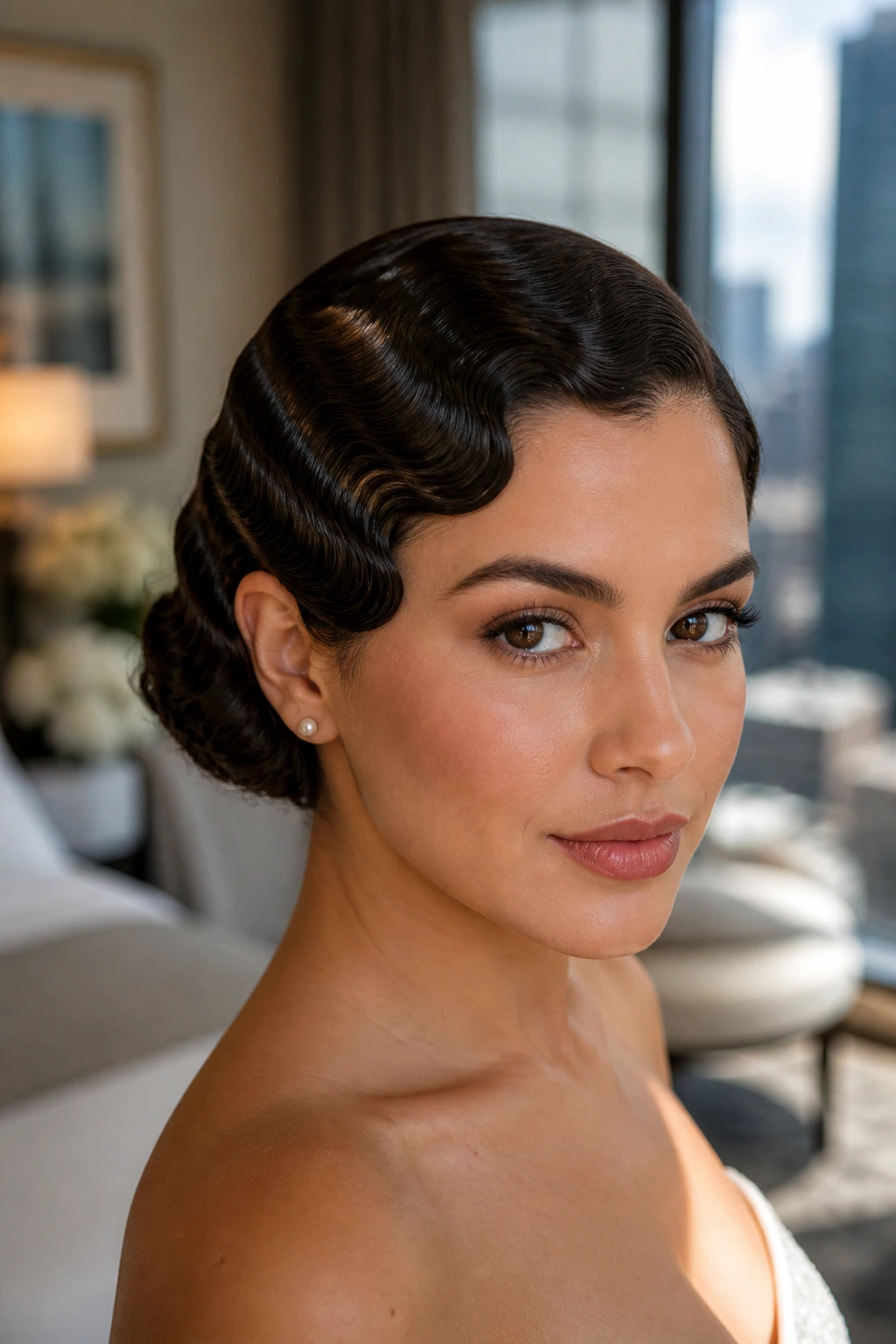
Short hair does not need to hide at a wedding. Finger waves bring shape, shine, and a little old-school glamour that feels perfect for bobs, lobs, and cropped cuts that need something more than a curl at the end.
The wave pattern is the whole point here. It creates movement close to the scalp, which makes short hair look styled on purpose rather than simply left alone. This style works especially well with side parts, satin dresses, and strong lipstick. It is not fluffy, and that’s a good thing. The shine and sculpted lines do the heavy lifting.
If the hair is very layered, the waves may need extra pinning or a stronger setting product so the ridges stay visible. A glossy finish helps. So does patience. Finger waves are one of those styles that reward careful placement, and shortcuts usually show.
19. Slicked-Back Bun

A slicked-back bun is for the bride who wants clean, modern, and unfussy. The hair is combed straight back from the face, which creates a strong line and makes the bun itself the star. It’s a bold choice, and I mean that in a good way.
Compared with softer updos, this one has attitude. It works beautifully with dramatic earrings, architectural gowns, and makeup that needs room to breathe. The hairline stays visible, which gives the style a crisp finish. A little shine serum or gel at the roots can help tame flyaways, but the goal is not to make it look wet. Smooth. Controlled. That’s enough.
If your hair is very fine, ask for a bun that sits a little fuller so the back doesn’t disappear in photos. If your hair is very thick, the base may need extra pins to keep the bun compact. Clean lines matter here more than volume.
20. Floral Half-Up Style
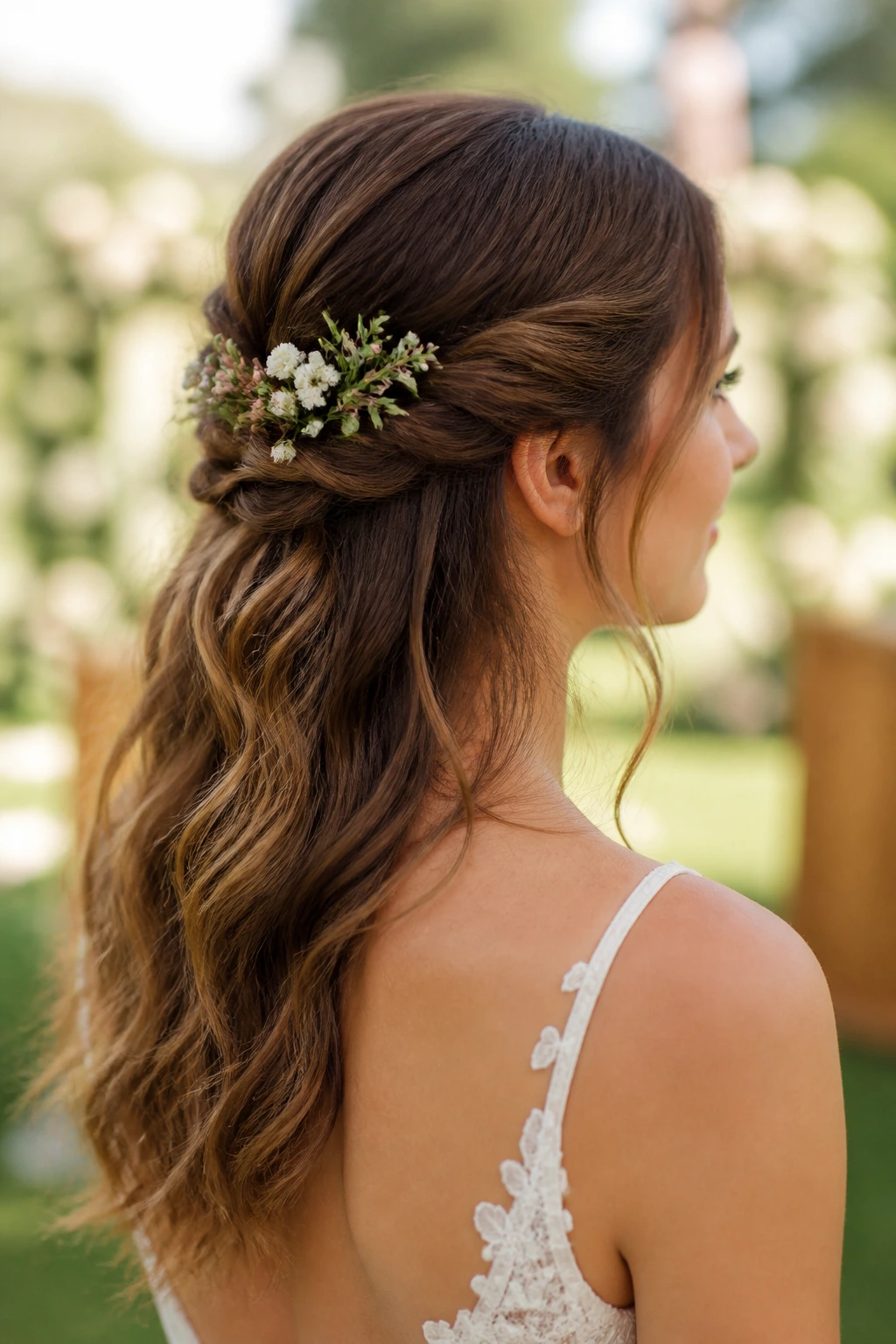
The floral half-up style is charming without going sugary, provided the flowers are chosen well. Small blooms, sprigs of greenery, or a few tiny blossoms tucked into a twisted half-up base can make the whole look feel fresh and personal.
This style works best when the flowers echo the bouquet instead of fighting it. A handful of small stems usually reads better than a big cluster. The half-up structure keeps the face open while letting the length stay soft, which is a nice balance for outdoor ceremonies and garden settings. I’d keep the lower hair lightly waved so the flowers have some texture to sit against.
The practical part matters here too. Fresh flowers should be pinned securely and kept hydrated until the last possible moment. If that sounds fussy, it is. But the payoff is worth it when the blooms look like they belong in the hair instead of floating on top of it.
21. Veil-Friendly Low Twist
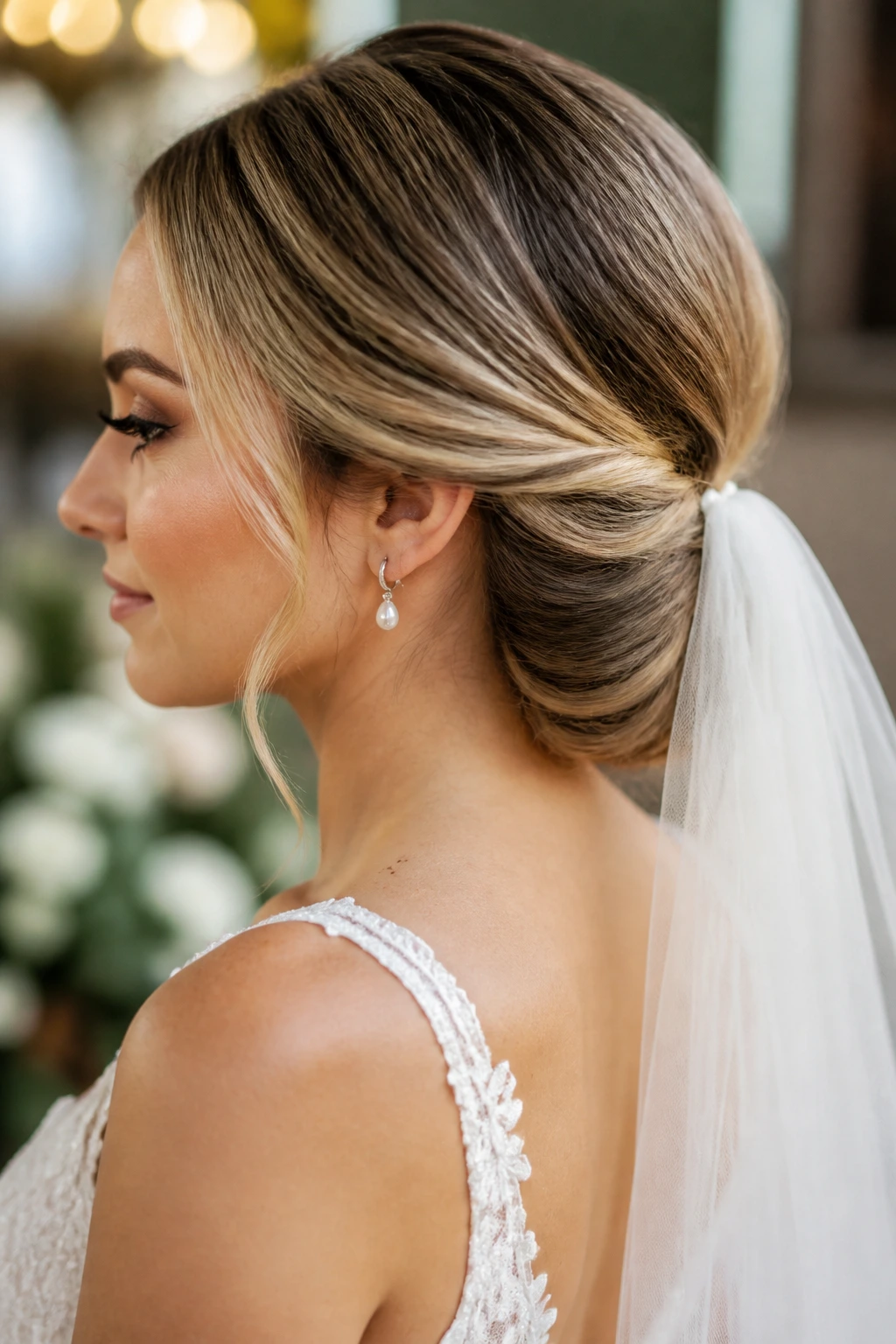
A veil-friendly low twist is one of the safest, smartest wedding hairstyles around. It gives the veil a stable anchor, keeps the back smooth, and still leaves enough shape to look finished once the veil comes off.
Why Brides Keep Choosing It
The twist sits low, which means the comb or veil base can slide in without fighting bulky volume. That makes transitions easier during the day. Ceremony with veil. Reception without it. The hairstyle still works in both settings. I’m a fan of that, because nobody wants a style that only makes sense for fifteen minutes.
- Best for veils with combs or light attachments.
- Works on straight, wavy, or softly curled hair.
- Can be made tighter for a polished look or softer for a romantic one.
- Pairs well with a middle part, a side part, or a few face-framing pieces.
Small detail, big payoff: ask your stylist to test the veil placement before the final spray. A style can look perfect until the comb changes the balance.
22. Soft Glam Waves
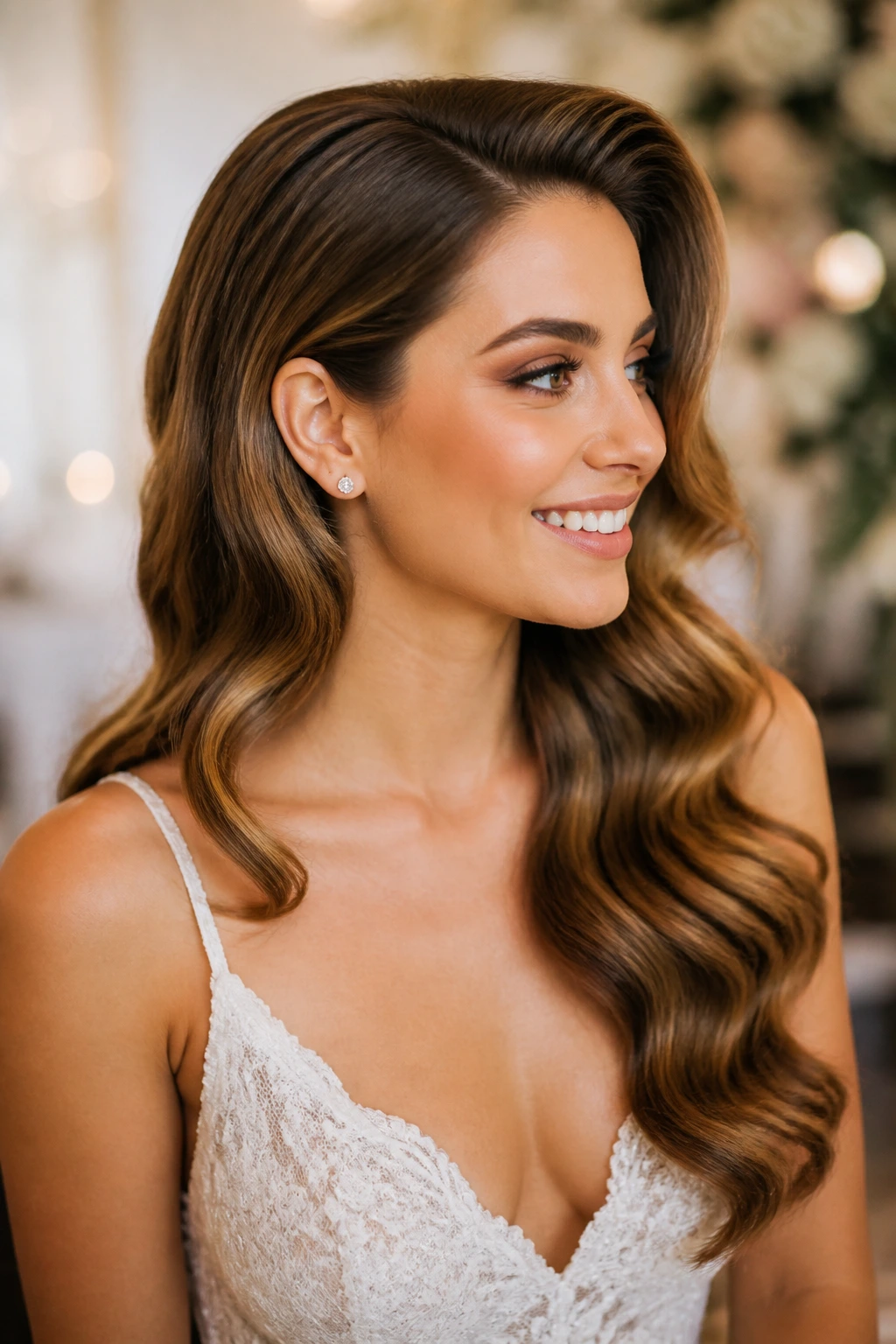
Soft glam waves are the style I’d hand to someone who wants a little of everything: movement, shine, and enough structure to survive a long day without looking frozen. They sit between old Hollywood polish and loose, modern softness, which makes them easier to pair with almost any dress.
The best version uses medium-to-large curls brushed into smooth waves, with the front section directed away from the face. That gives the hair a rich, flowing shape rather than separate curls that fall apart too quickly. A side part can make the style feel more romantic, while a center part keeps it cleaner and more current. Neither choice is wrong. It depends on the neckline and the veil.
If you want one bridal style that can move from ceremony to reception without looking out of place, this is a strong place to start. It holds photos well, it flatters most face shapes, and it does not demand a heavy hand with accessories. Sometimes that’s the smartest move.
A good wedding hairstyle should feel like part of the whole look, not a separate event. When the shape, texture, and accessories line up, the hair stops being something you worry about and starts doing its job quietly in the background. That’s the sweet spot.
