



Straight hair can be the easiest thing in the room — or the hardest. On a wedding day, it shows every line, every pin, every part. That can be gorgeous. It can also look flat if the shape is lazy.
The good news is that wedding hairstyles for straight hair give you a clean canvas. Sleek buns look sharper. Ponytails look more deliberate. Half-up styles hold their shape better because the hair doesn’t keep springing back into a curl pattern you didn’t ask for. The catch is that straight hair also reveals shortcuts fast. If the crown is limp, you’ll see it. If the ends were left hanging with no plan, that shows too.
No fluff. That’s the point.
The styles that work best usually do one of three things: they anchor the front so the face looks framed, they build a clear shape at the back, or they add one detail — a braid, ribbon, pearl pin, or veil placement — and stop there. Straight hair rarely needs a lot of decoration. It needs intention. Shape first. Ornament second.
1. Sleek Center-Part Low Bun

A sleek center-part low bun is the style I’d reach for when the dress, earrings, or veil need to carry most of the visual weight. Straight hair makes the part line crisp, and the bun sits close to the nape without fighting texture. That clean shape looks especially good with satin gowns, square necklines, and long veils.
Why It Works on Straight Hair
The hair lies flat, so the bun reads as deliberate instead of puffy. A small amount of smoothing cream at the crown and a fine-tooth comb do more here than a mountain of hairspray. Keep the bun compact, not bulky, and leave just enough texture at the nape for the pins to grip.
- Best on fine to medium straight hair
- Strong choice for cathedral or fingertip veils
- Looks sharp with a clean middle part
Tip: twist the bun a little tighter than you think you need to. It loosens over the day.
2. Glass-Hair Straight Down with a Middle Part

This is the style for brides who want to look polished without looking busy. Glass-hair straight down with a middle part can feel severe in the wrong hands, but when the ends are blunt and the shine is even, it looks expensive in the plainest sense of the word. No teasing. No random pieces. Just smooth lengths that fall exactly where they should.
I like this most on long, healthy hair with a blunt cut or very light face framing. Run a flat iron in thin sections, then finish with a light shine spray on the mid-lengths and ends. One side tucked behind the ear changes the whole feel — a small move, but it keeps the style from reading too symmetrical.
3. Half-Up Twist with Soft Crown Volume
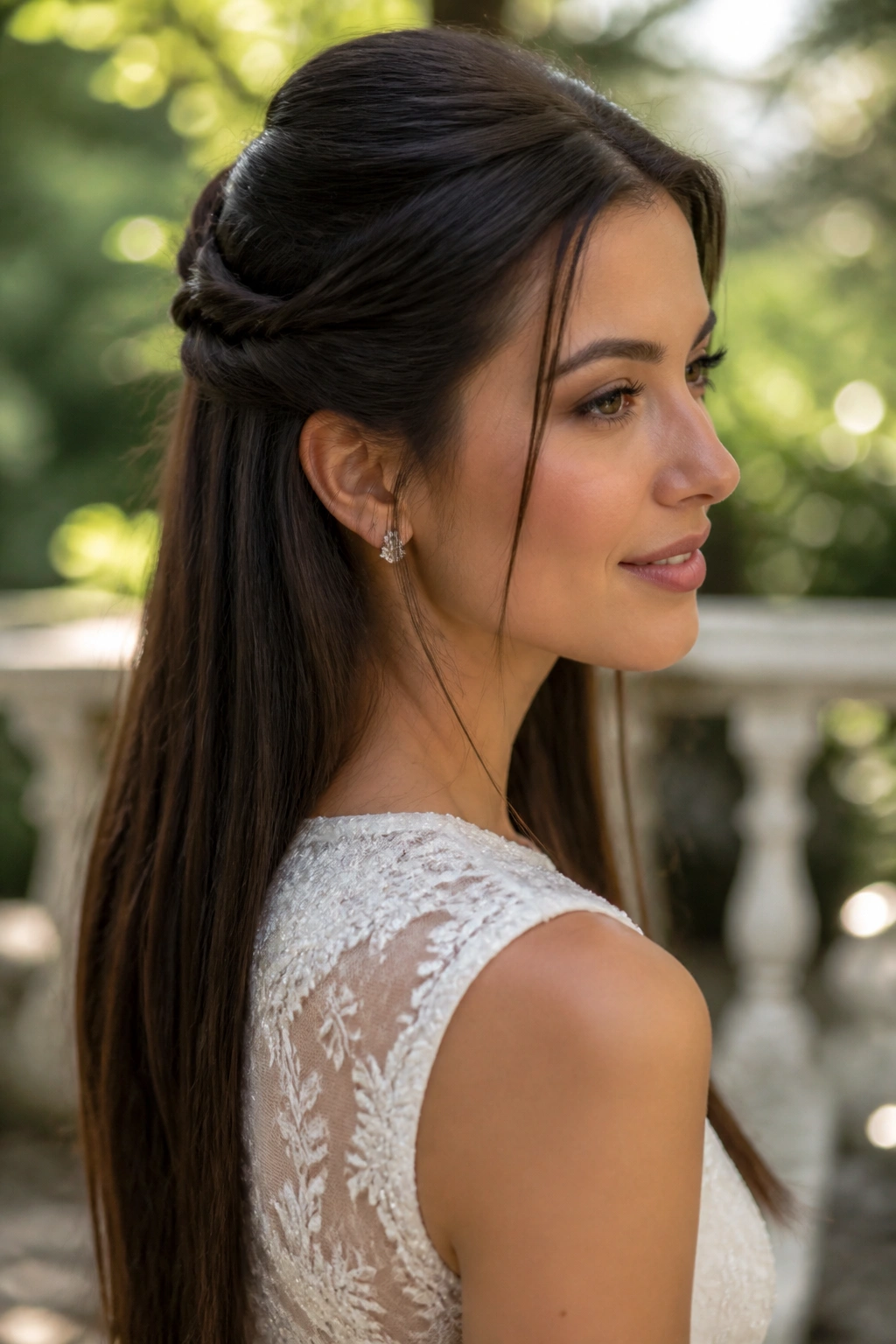
Why does a half-up twist work so well on straight hair? Because it gives the top section some shape without asking the rest of the hair to do too much. The crown gets a little lift, the sides stay neat, and the length still shows.
How to Wear It
Take two sections from the temples, twist them back, and pin them under a small top section that has been lightly lifted at the roots. A rat-tail comb and one or two hidden pins are enough. Don’t pile the twist high; that’s where the style starts to look stiff. Keep the twist low and soft, then let the straight lengths fall cleanly down the back.
4. Low Knot with Face-Framing Pieces
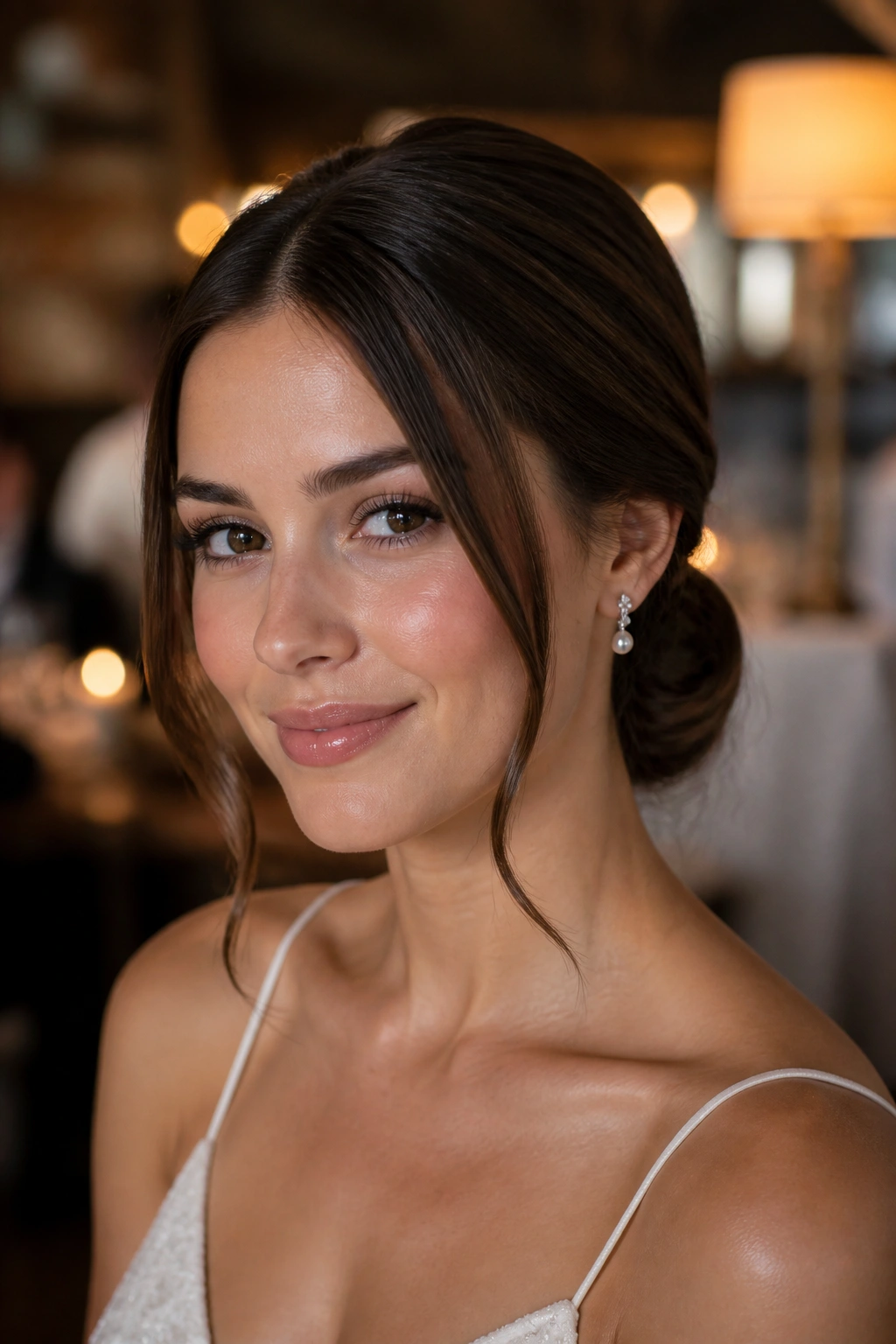
At a reception, this is the style that survives hugging, dancing, and a few too many turns toward the camera. A low knot sits quietly at the base of the neck, while two slim face-framing pieces keep the look from feeling severe. Straight hair is good at this shape because it doesn’t fight the knot’s outline.
- Keep the face-framing pieces narrow, about ½ inch wide
- Bend the front pieces slightly with a flat iron, not a full curl
- Place the knot just off-center if the neckline is busy
- Use U-pins, not only bobby pins, for stronger hold
Small detail, big difference: let the knot sit low enough that the hairline stays smooth above it.
5. Polished Ponytail with a Wrapped Base
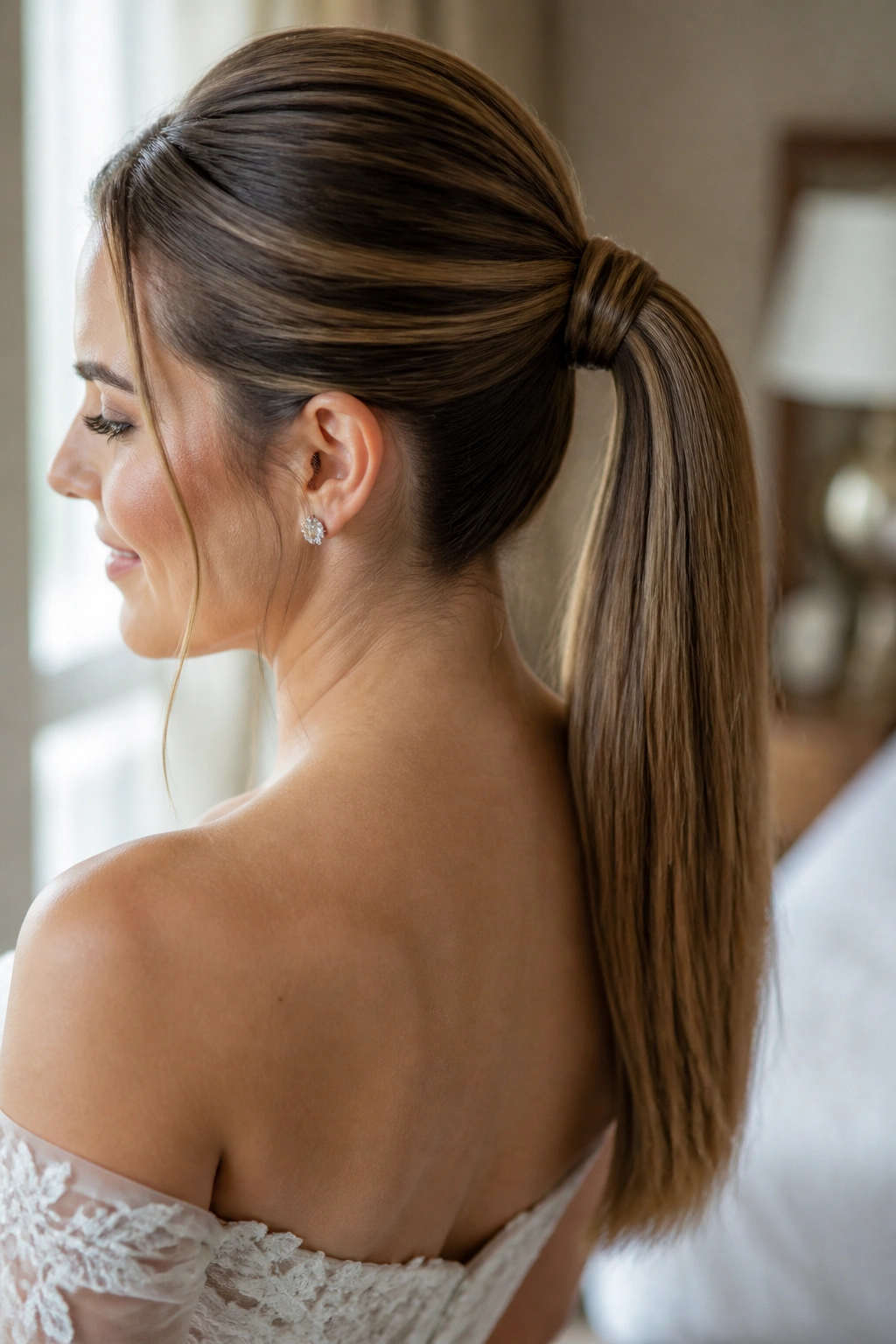
A polished ponytail is not a backup plan. Done well, it looks clean, modern, and a little expensive in the best way. Straight hair gives the ponytail a crisp line, and that line is what makes the style work. The wrapped base hides the elastic, which matters more than people admit.
The trick is balance. Keep the crown smooth, but do not flatten it so much that the head looks stuck on. A touch of lift at the roots and a narrow strand wrapped around the elastic make the ponytail feel finished. Leave the tail straight, or bend the ends just once with a flat iron if the cut is very blunt.
6. Braided Crown with Straight Lengths
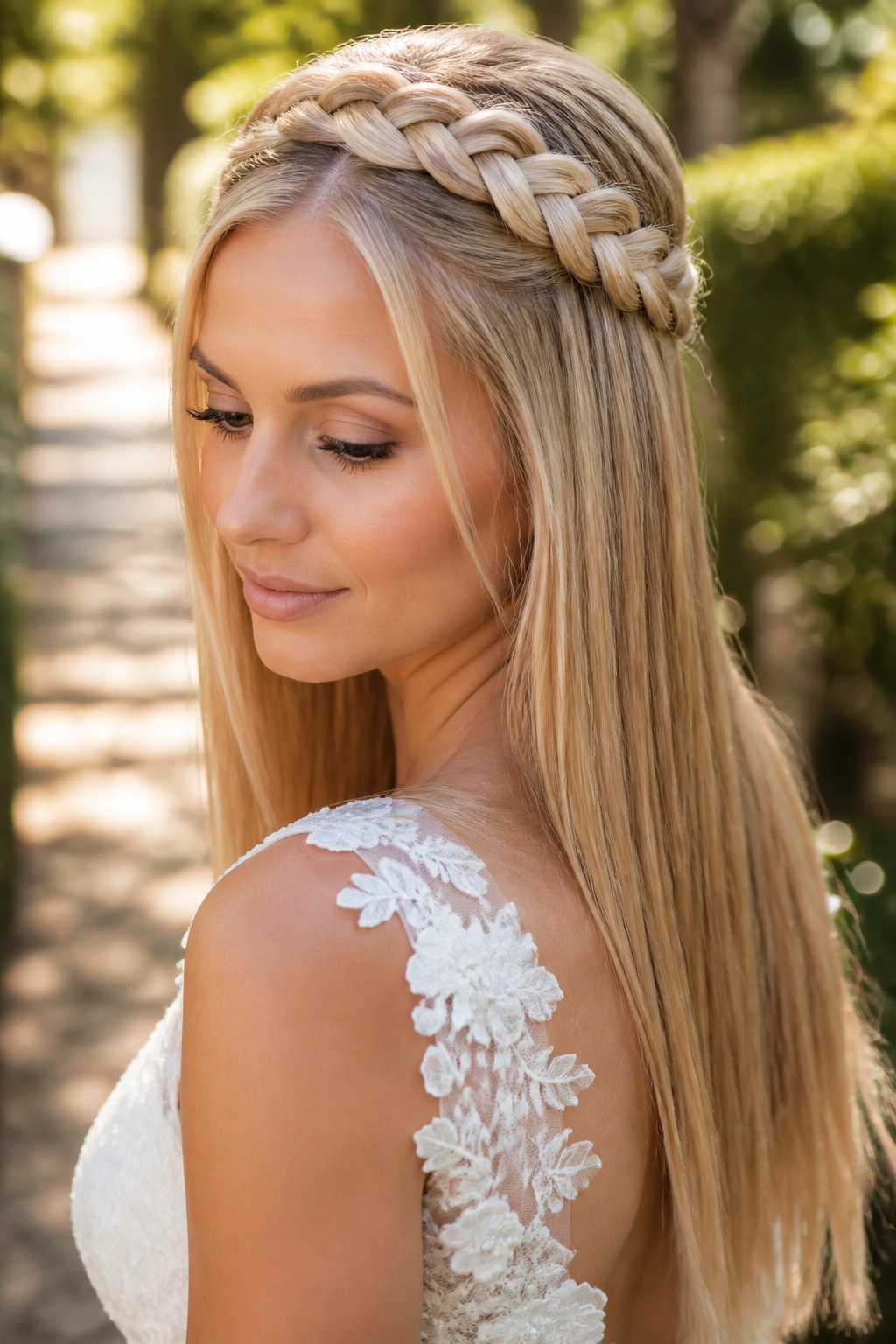
Unlike a full braided updo, a braided crown with straight lengths keeps the braid as the detail instead of the whole story. That makes it a smart choice when you want something softer than a bun but more dressed up than wearing the hair down. The braid runs across the top or one side, while the rest of the hair stays sleek and visible.
It’s especially good for long straight hair that can handle a little weight without slipping. I’d call it a strong pick for outdoor ceremonies, garden settings, or dresses with simple lines. If the braid is tight and the lengths are glossy, the whole style feels intentional. If the braid is loose and messy, it can start to look like an afterthought. Tightness matters here.
7. Side-Parted Blowout with Tucked Ear Side

A side part changes straight hair fast. It gives the face more shape, creates a little height on one side, and makes the style feel less formal than a center part without turning it casual. Add a soft blowout through the mid-lengths and a tuck behind one ear, and you’ve got a look that works with almost any neckline.
This one is good for brides who want movement but not curls. The ends can have a slight bend — just enough to keep the hair from hanging dead straight in photos. A slim pin or a single gem clip at the tucked side keeps the style from sliding. One little piece of jewelry for the hair is often enough.
8. Pearl-Pinned Half-Tuck
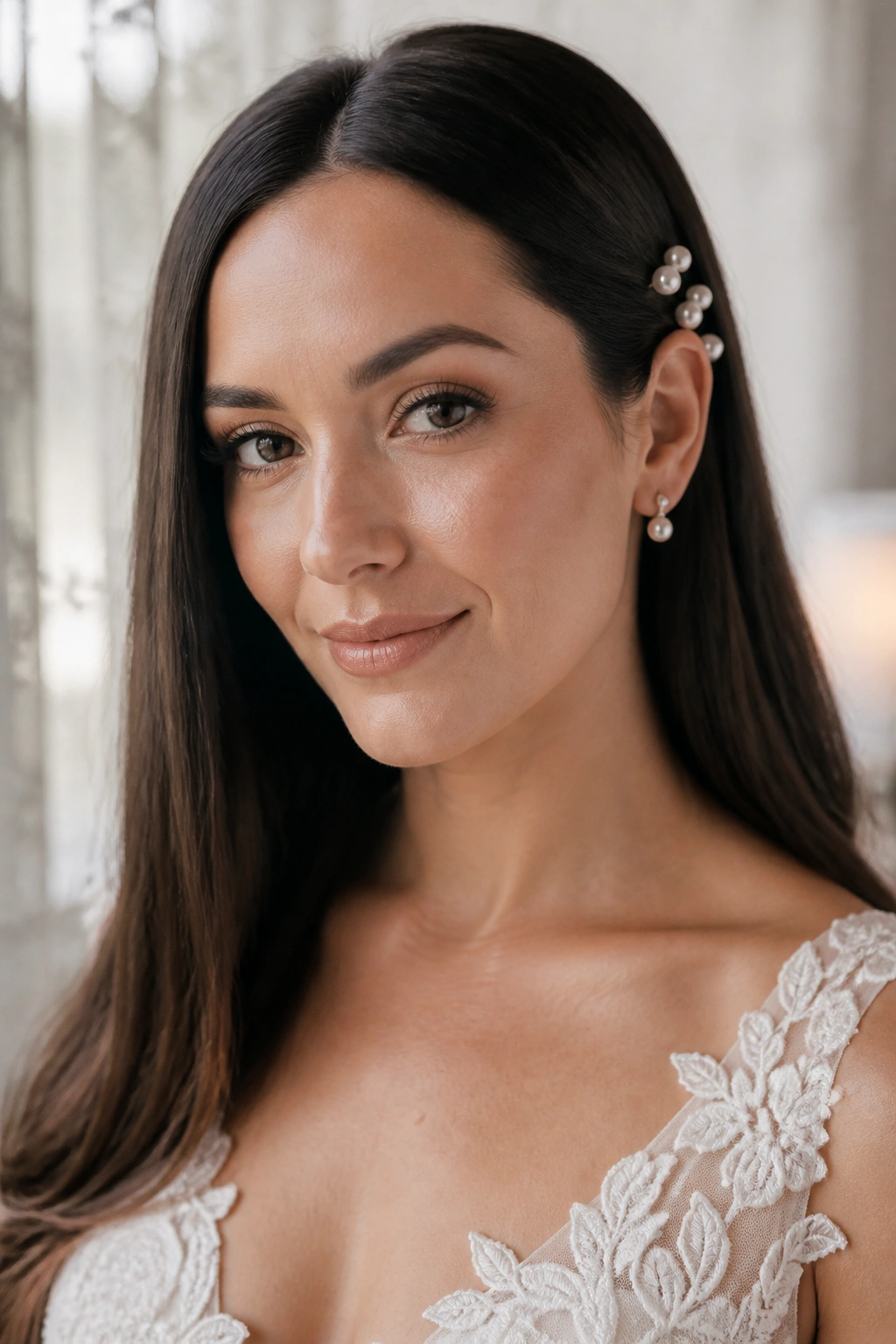
Pearl pins are doing a lot of work in wedding hair, and I’m not complaining. On straight hair, they stand out cleanly because the surface is smooth and the pin placement is easy to see. A half-tuck with three pearl pins on one side looks tidy, feminine, and much less fussy than a full braid or heavy accessory.
The style works best when the hair is tucked just behind the ear and the pins are staggered in a small cluster. Not a line. Not a fan shape. A little unevenness helps it feel natural. This is a strong choice for shoulder-length or mid-back hair, especially when the dress already has lace or beadwork and you don’t want competition.
9. Ribbon Half-Up Bow
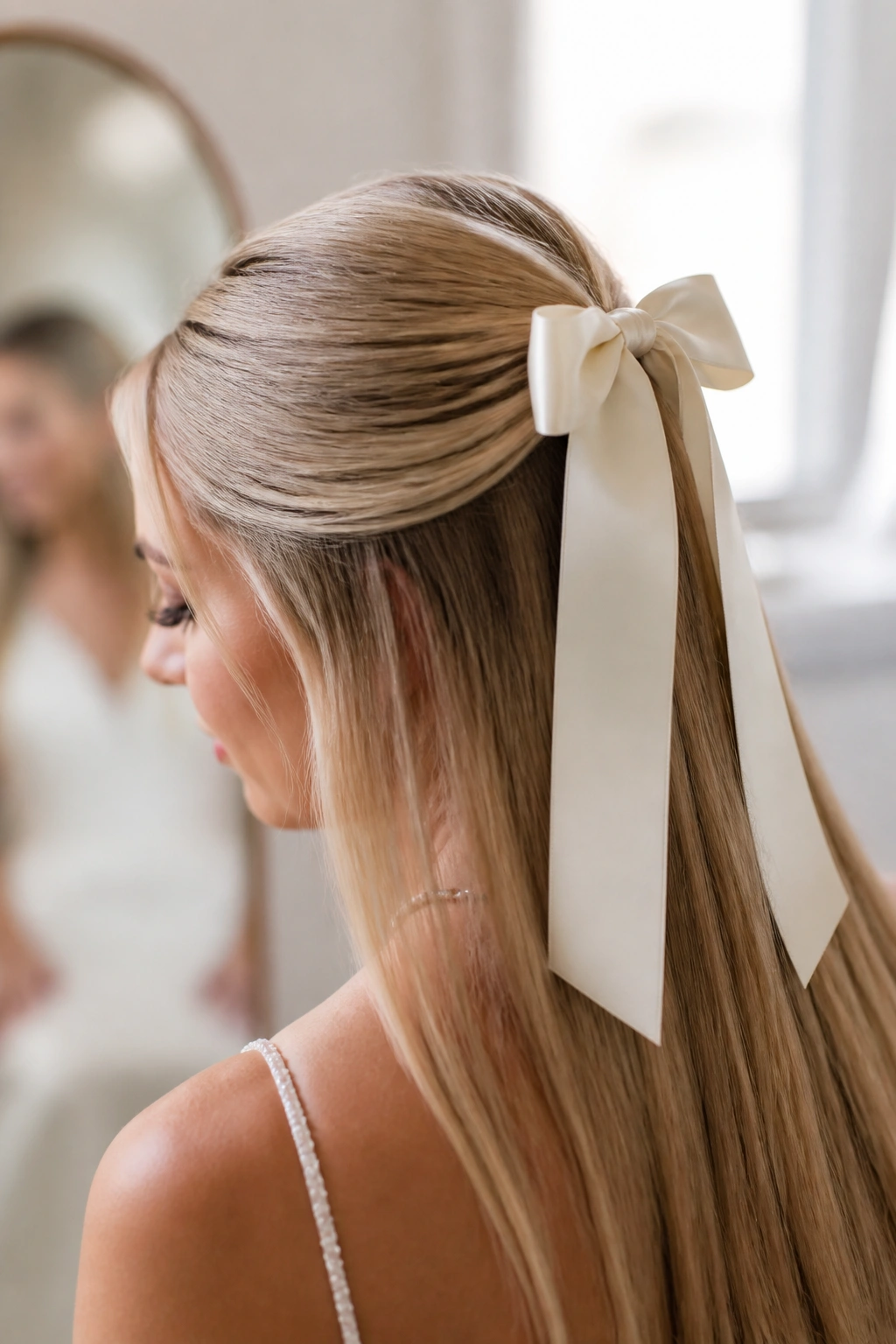
Can a ribbon feel grown-up at a wedding? Absolutely — if the width and fabric are right. A satin ribbon in ivory, blush, or soft champagne gives straight hair a clean finish because the bow shape stays visible. Curly hair can swallow a ribbon. Straight hair lets it sit on top of the style like it belongs there.
How to Use It Well
Tie the ribbon around a half-up section low at the back of the head, not high like a child’s school bow. Keep the tails long enough to move, but not so long they look trailing and awkward. A ½-inch to 1-inch ribbon is usually enough. Velvet works for cooler months. Satin feels softer and lighter. Skip stiff grosgrain if the dress is formal; it can look too casual.
10. French Twist with Straight Hair

A French twist has a reputation for being fussy, but straight hair actually makes the shape easier to control. The surface is smooth, the twist lays flat, and the finished look stays neat if the pins are placed properly. It’s a style with bones. That’s why it works.
This is one of those looks that gets better with a bit of day-old texture rather than freshly washed silk. Too-clean hair can slide. A light mist of texture spray at the roots helps. Secure it with crossed bobby pins or one long hairpin, then tuck the ends into the seam of the twist. If the back feels too polished, leave a few fine pieces at the temples. Just a few.
11. Sleek Chignon with Veil Placement
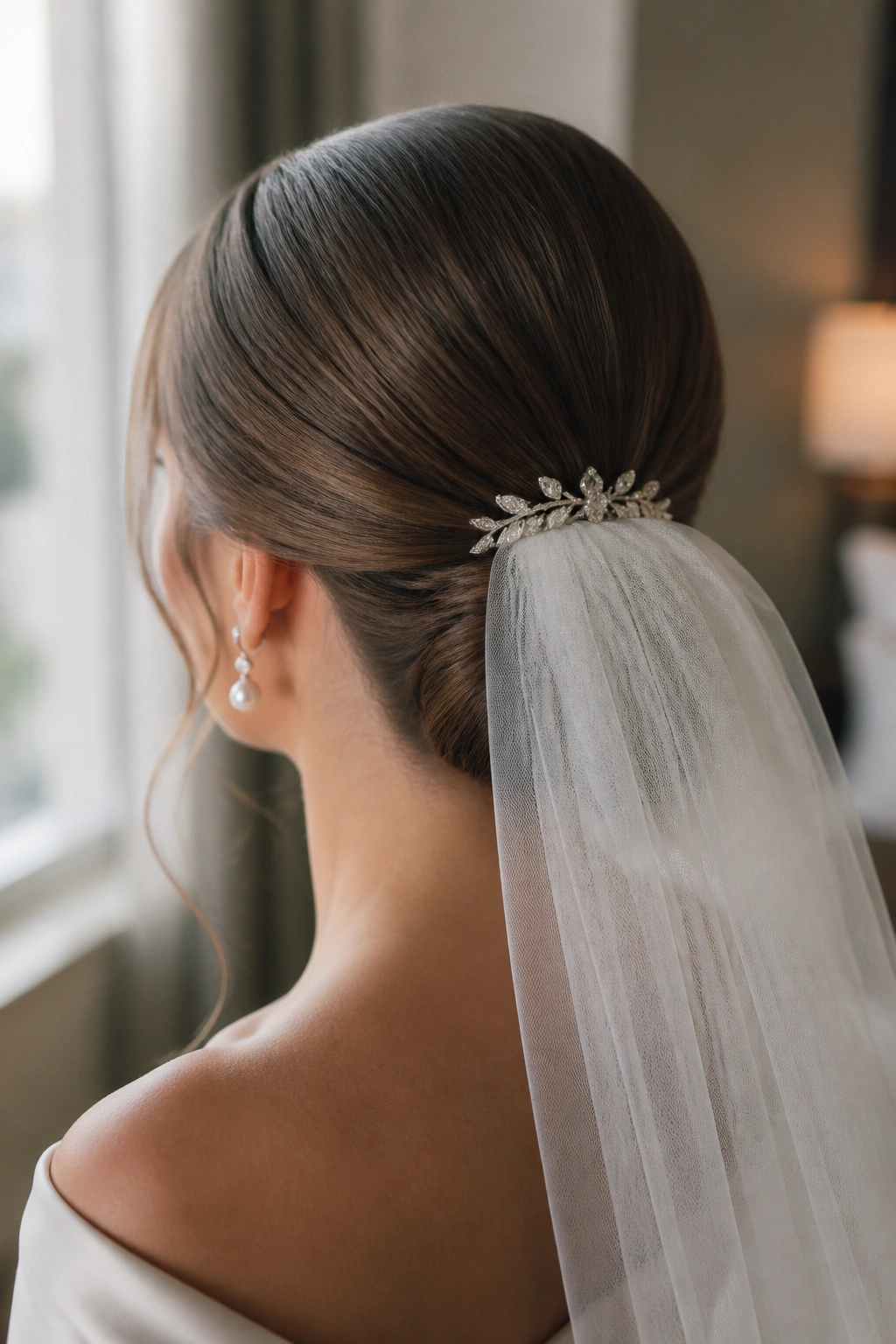
A low chignon and a veil should not fight each other. The chignon sits close to the neck, the veil comb goes slightly above it, and the whole thing feels balanced. Straight hair is ideal here because it lets the chignon look smooth instead of fuzzy.
This style is especially good when the dress has a strong back detail. Lace, buttons, or an open keyhole all get room to show. The chignon itself can be tight and compact, or slightly folded over for a softer shape. What matters is that the veil anchor stays stable. If the comb is too low, the veil can drag on the bun. If it’s too high, the proportions get strange fast. Middle ground wins.
12. Bubble Ponytail
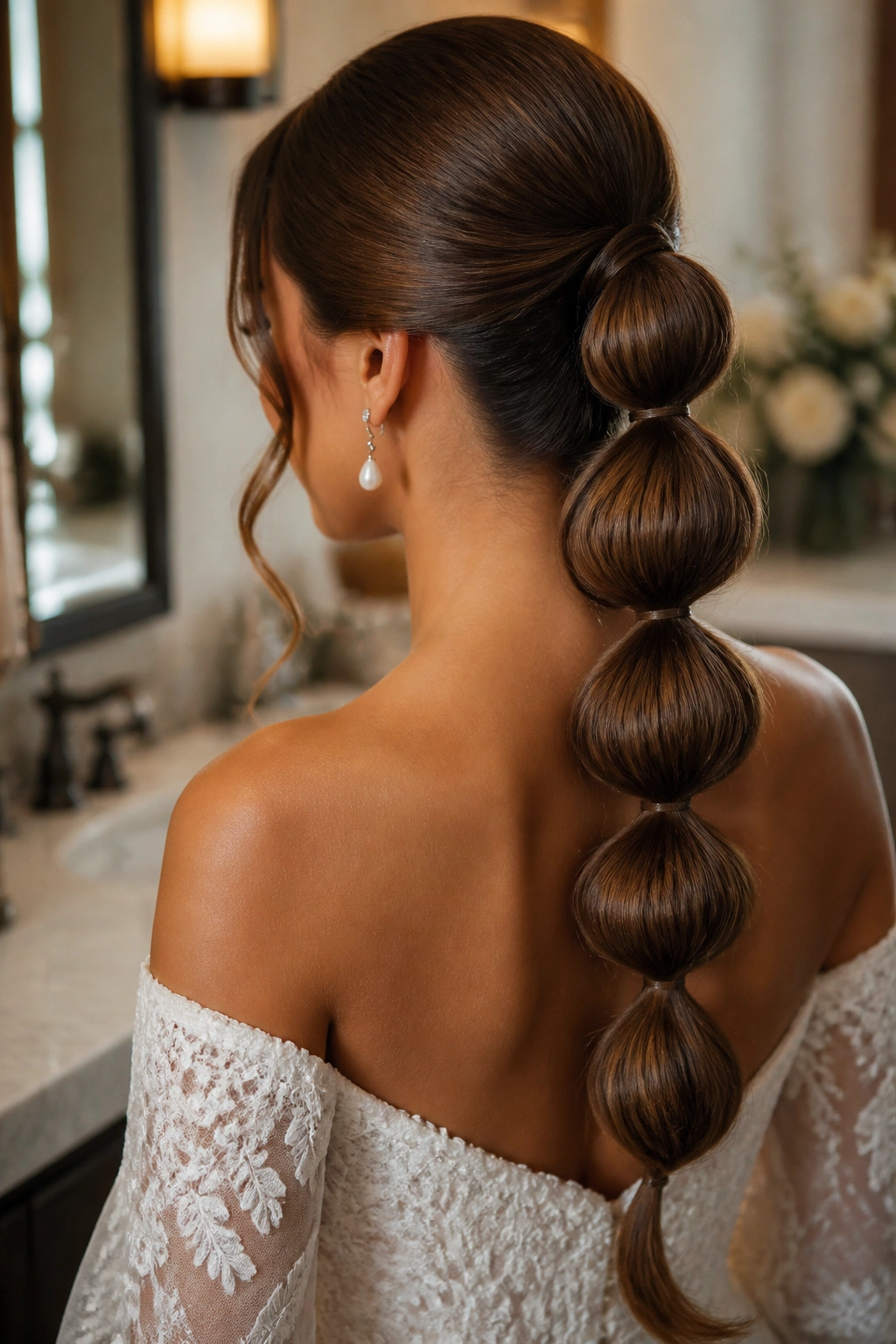
A bubble ponytail sounds playful, and it can be, but on straight hair it also reads neat and graphic. The key is keeping the bubbles narrow and the elastics hidden. This is a smart choice when you want a ponytail with a little more structure than a standard tie-back.
Section the tail with clear elastics every 2 to 3 inches, then gently tug each section outward until it rounds into a bubble. Don’t pull too hard or the shape collapses into a mess. A dab of smoothing cream on the crown keeps the top controlled, and a few pins around the base can help the whole style stay centered. It’s a good one for modern dresses, reception looks, or bridesmaids who want something sharper than loose hair.
13. Soft S-Shape Ends with Blunt Lengths

Why does this style look better than a full wave on some straight-haired brides? Because it keeps the clean line of the cut while adding enough bend to stop the hair from hanging flat. The movement stays mostly at the ends, where the eye naturally lands.
How to Keep It Wedding-Ready
Use a 1 to 1¼-inch curling iron or a flat iron to make an S-shape through the lower half of the hair. Stop a few inches below the roots so the crown stays smooth. The trick is not to curl every strand the same way. Alternate the bend direction and brush it out lightly so the finish feels soft, not curled. If the hair is blunt at the bottom, this style looks especially crisp.
14. Claw-Clip Twist for a Reception Change
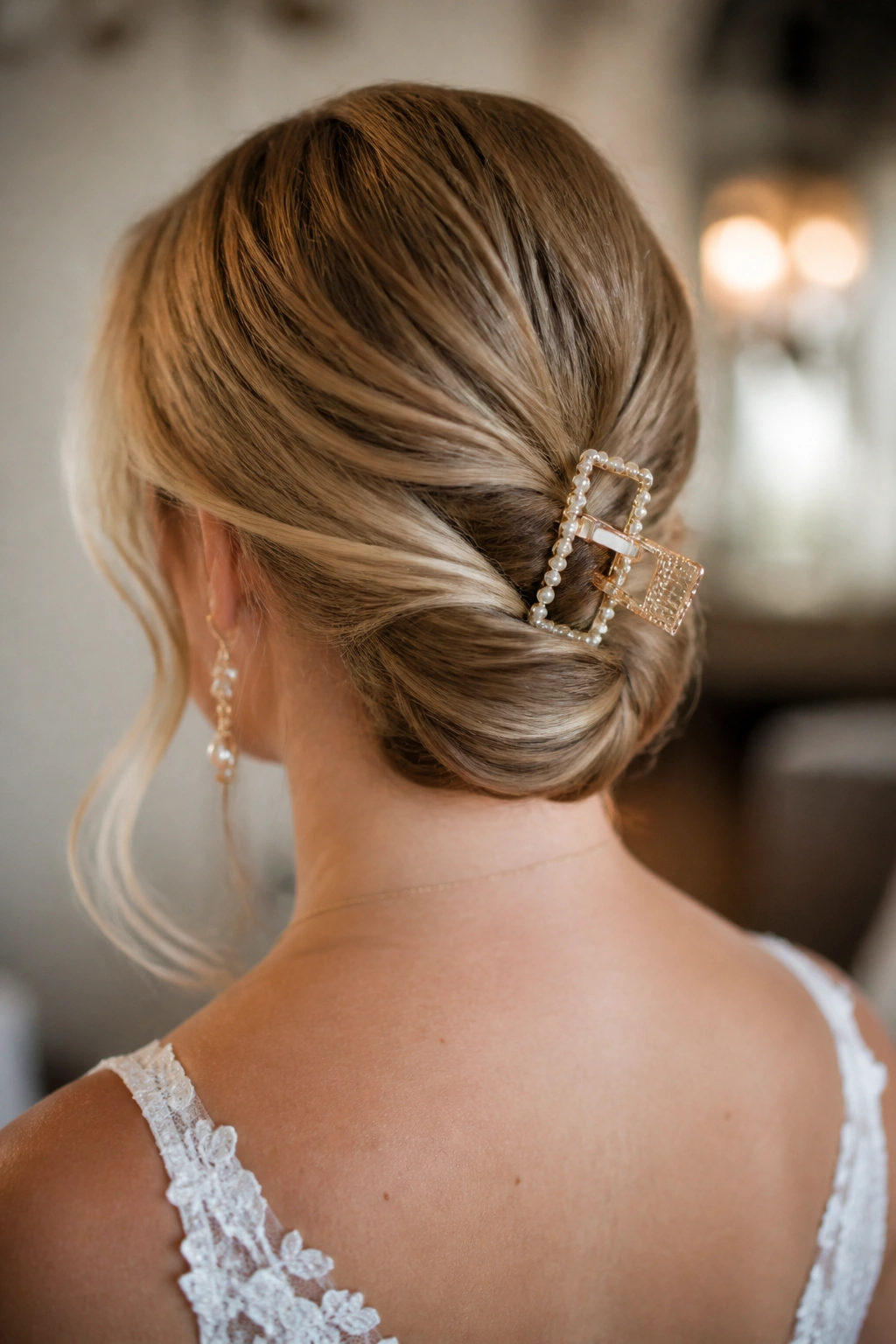
A decorative claw clip can save the second half of a wedding day. If you start with a veil and an updo for the ceremony, a low twist caught with a gold, pearl, or crystal clip feels easier for the reception. Straight hair likes this because the twist stays visible under the clip instead of puffing out.
Keep the twist low and slightly loose. That gives the clip something to hold onto without making the shape bulky. This is not the place for a plastic office clip. The clip should look like part of the outfit. If the dress has a satin finish or a simpler cut, the clip can be the one shinier thing in the whole look. That restraint is what makes it work.
15. Low Ponytail with a Hair Cuff
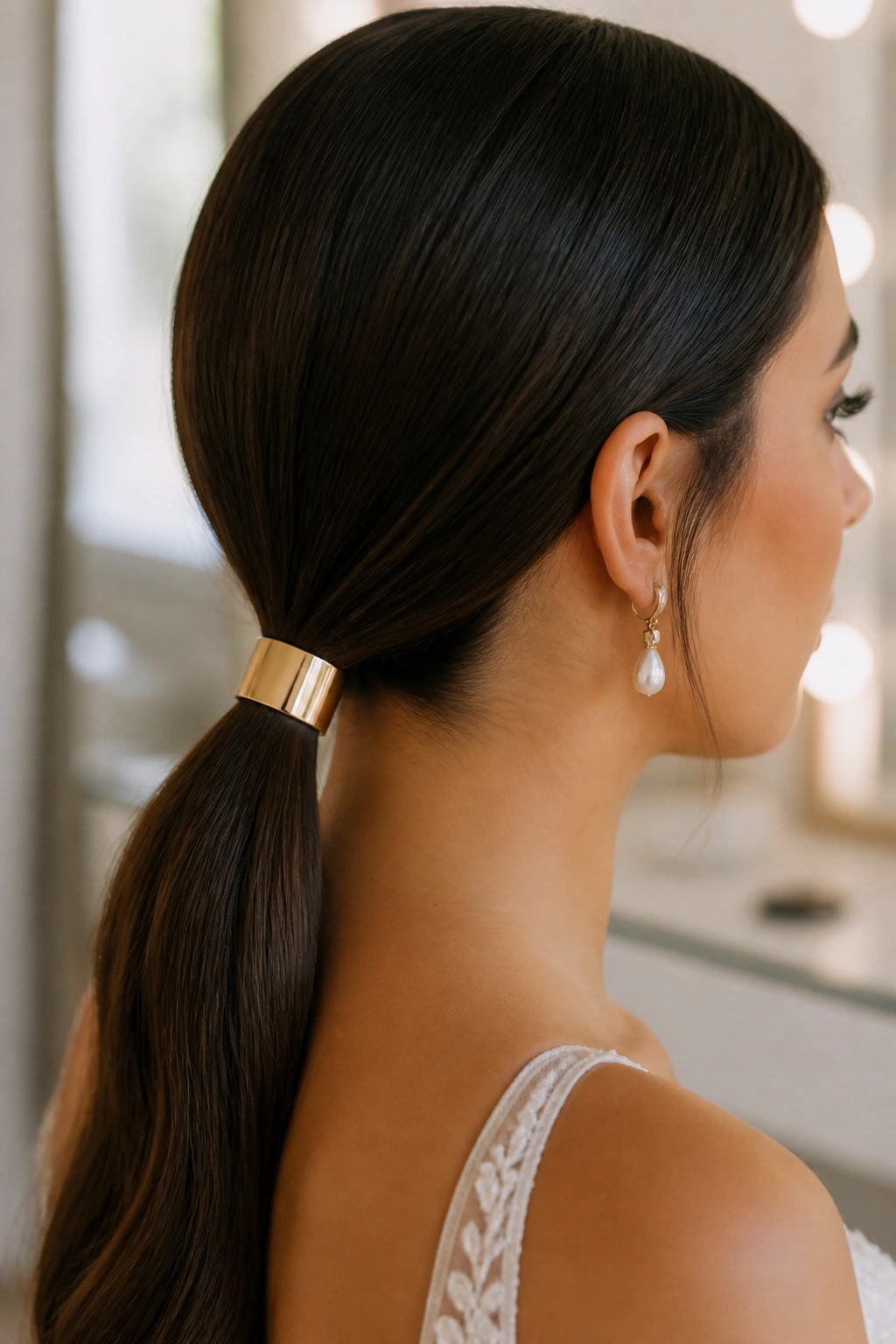
A low ponytail with a hair cuff feels cleaner than a wrapped strand and a touch more modern than a bare elastic. The cuff sits at the base of the ponytail like jewelry, which is exactly why it suits straight hair so well. There’s nowhere for the shine to hide.
This is one of the better choices for minimalist gowns or tailored wedding outfits. Center part, smooth crown, ponytail at the nape, cuff on top. Done. If the tail is very long, let it hang straight. If it stops around the shoulder blades, add a tiny bend at the ends so it doesn’t look abrupt. The cuff should be snug, not squeezed — too tight and it can look forced.
16. Waterfall Braid Accent
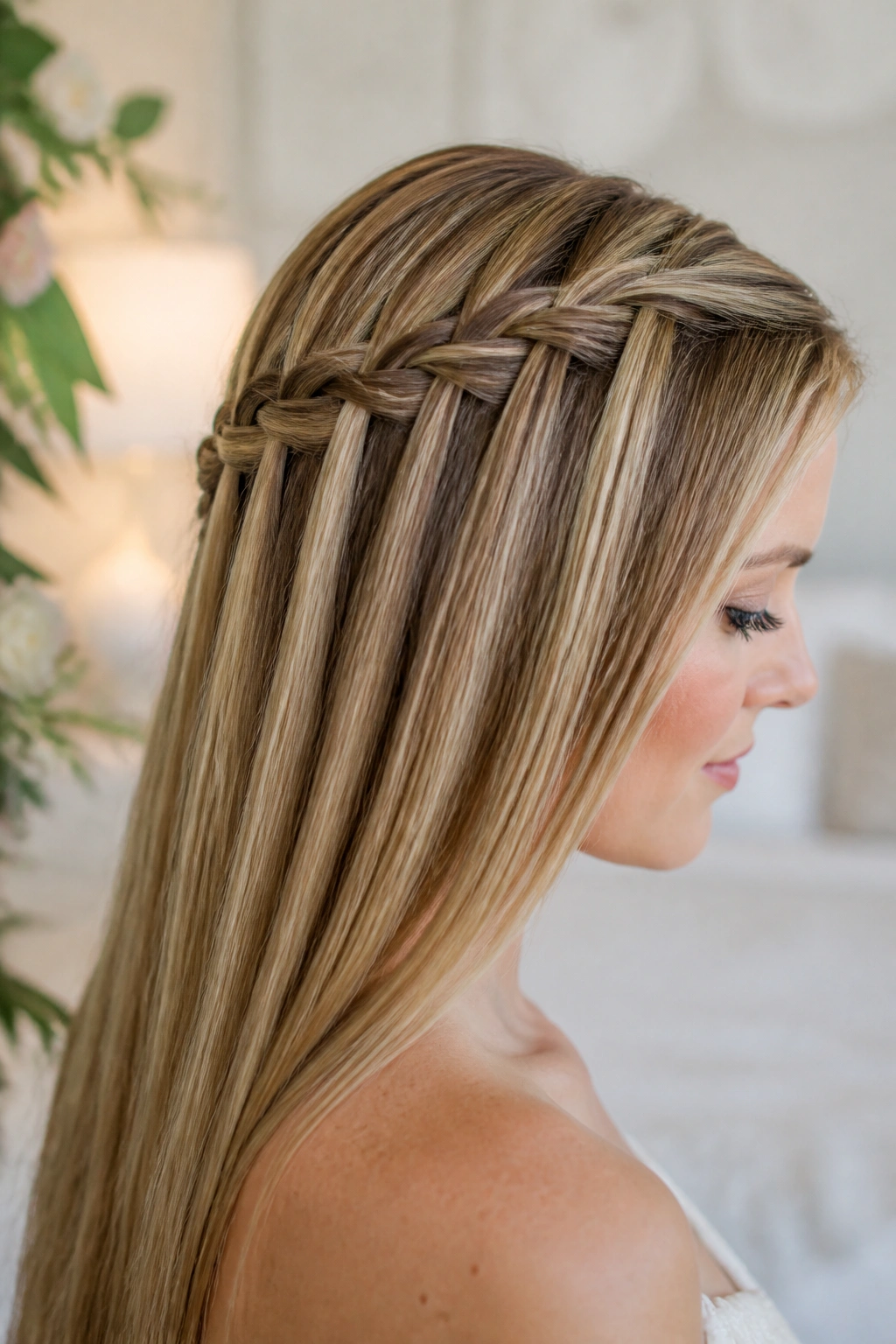
A waterfall braid is one of the few braid styles that still feels light on straight hair. Instead of taking over the whole head, it uses one side as a frame and leaves the rest free. The result is detail without clutter.
I like this most for long straight hair with a side part. The braid runs from the temple back toward the crown, dropping small sections as it goes. The released lengths stay straight, which keeps the style from getting too sweet. It’s a good match for soft florals, chiffon, or a dress that needs a little texture near the face but not a full updo.
17. Minimalist Half-Up with Two Slim Twists

This is the style for someone who hates fuss. Two narrow twisted sections from the temples, pinned together at the back, can be enough. Straight hair makes the twist look neat and helps the hair lay flat instead of ballooning.
Because the look is so spare, the details matter. Use small clear elastics or tiny pins that disappear into the hair. Keep the twists even in width, but not identical in tension — that little irregularity keeps them from looking machine-made. It’s a strong choice for fine hair, since too much backcombing can make the crown look dry and overworked. A little lift, then stop.
18. Deep Side-Part Low Bun
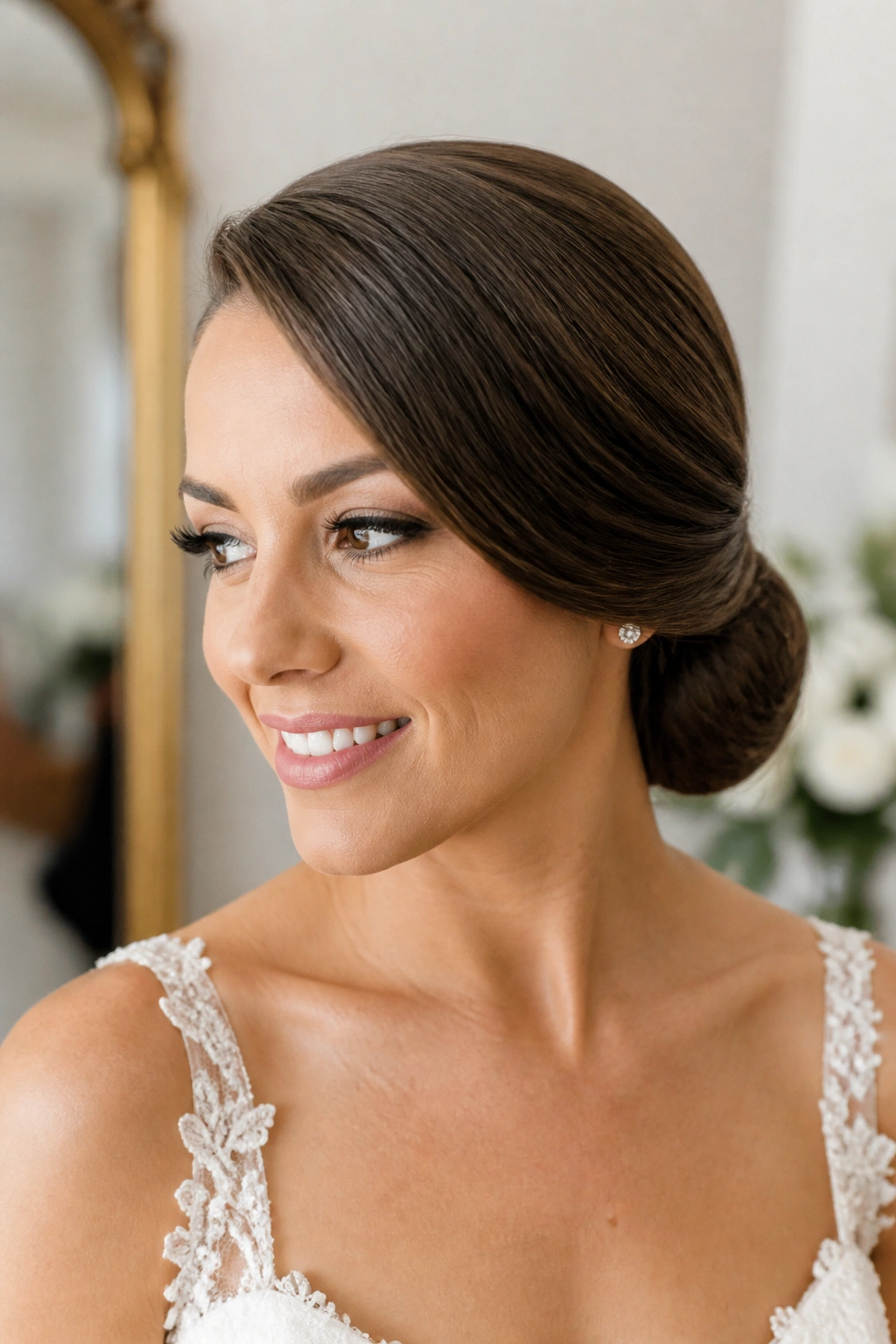
A deep side part changes the mood of a low bun fast. A center-part bun can feel sleek and modern. A side-part bun feels softer, a little more old-Hollywood, and better suited to one-shoulder dresses or statement earrings. Straight hair helps the part hold its line.
The bun itself can stay simple. The drama comes from the front: more sweep on one side, a flatter tuck on the other, and a smoother transition into the bun. If you want a little volume, build it at the crown on the heavier side only. That keeps the style from becoming lopsided in a bad way. It’s subtle, but the face reads differently because of it.
19. Straight Lob with Crystal Barrettes
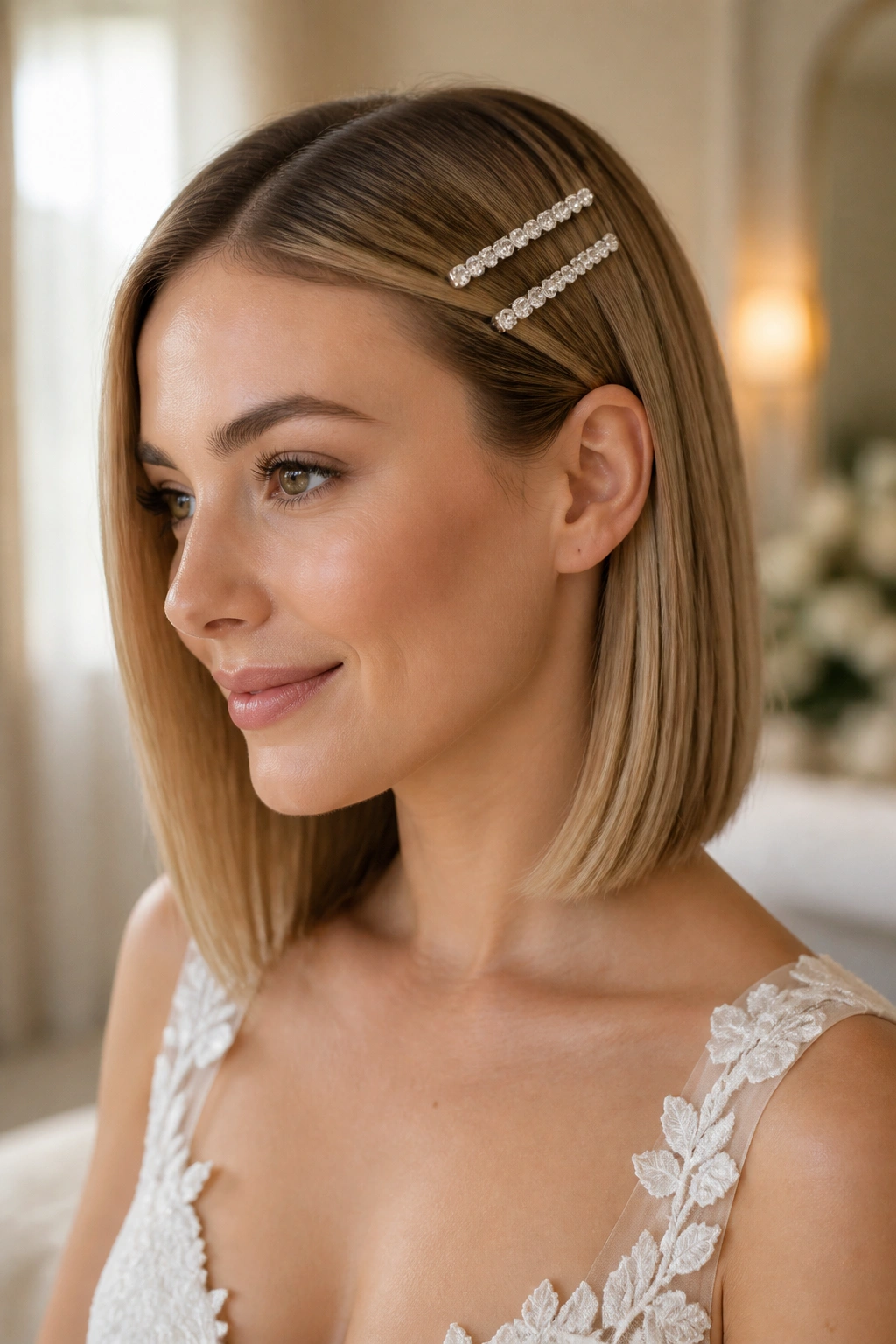
A lob does not need to be forced into an updo to feel wedding-ready. With straight hair, the cut itself can carry the look if the finish is sharp and the accessories are chosen with care. Two crystal barrettes stacked above one ear can do more than a complicated braid.
This is a particularly nice option for guests or bridal-party members with chin-length to shoulder-length hair. Keep the ends sleek, maybe with a slight inward bend, then tuck one side and pin the other with the barrettes. If the hair is blunt, the style feels graphic. If there’s a little face framing, it turns softer. Either way, it looks like a decision, not a compromise.
20. High Ponytail with a Wrapped Strand
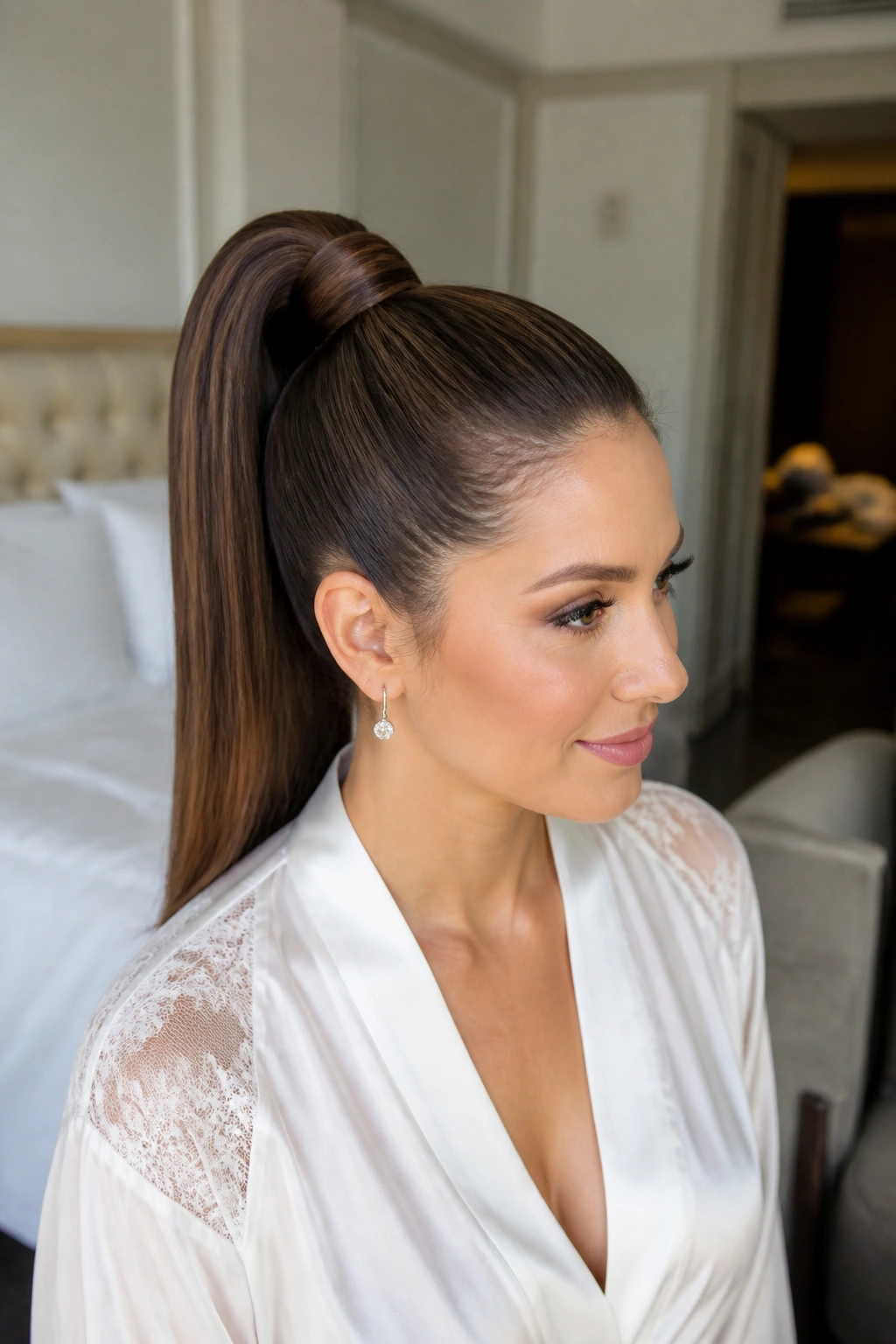
A high ponytail is bold, clean, and a little athletic in the best sense. Straight hair gives it height because the strands don’t keep springing off in every direction. That makes the shape easier to control, especially when you want the face lifted and the neckline open.
The wrapped strand at the base keeps it from looking too casual. Pull the ponytail high enough that it clears the crown, then smooth the front back with a brush and a touch of gel or cream. Leave the tail straight for a sharp finish, or curl only the ends if the hair is very long. I would skip this one for a heavy veil. It wants earrings and a confident neckline instead.
21. Twisted Crown Bun
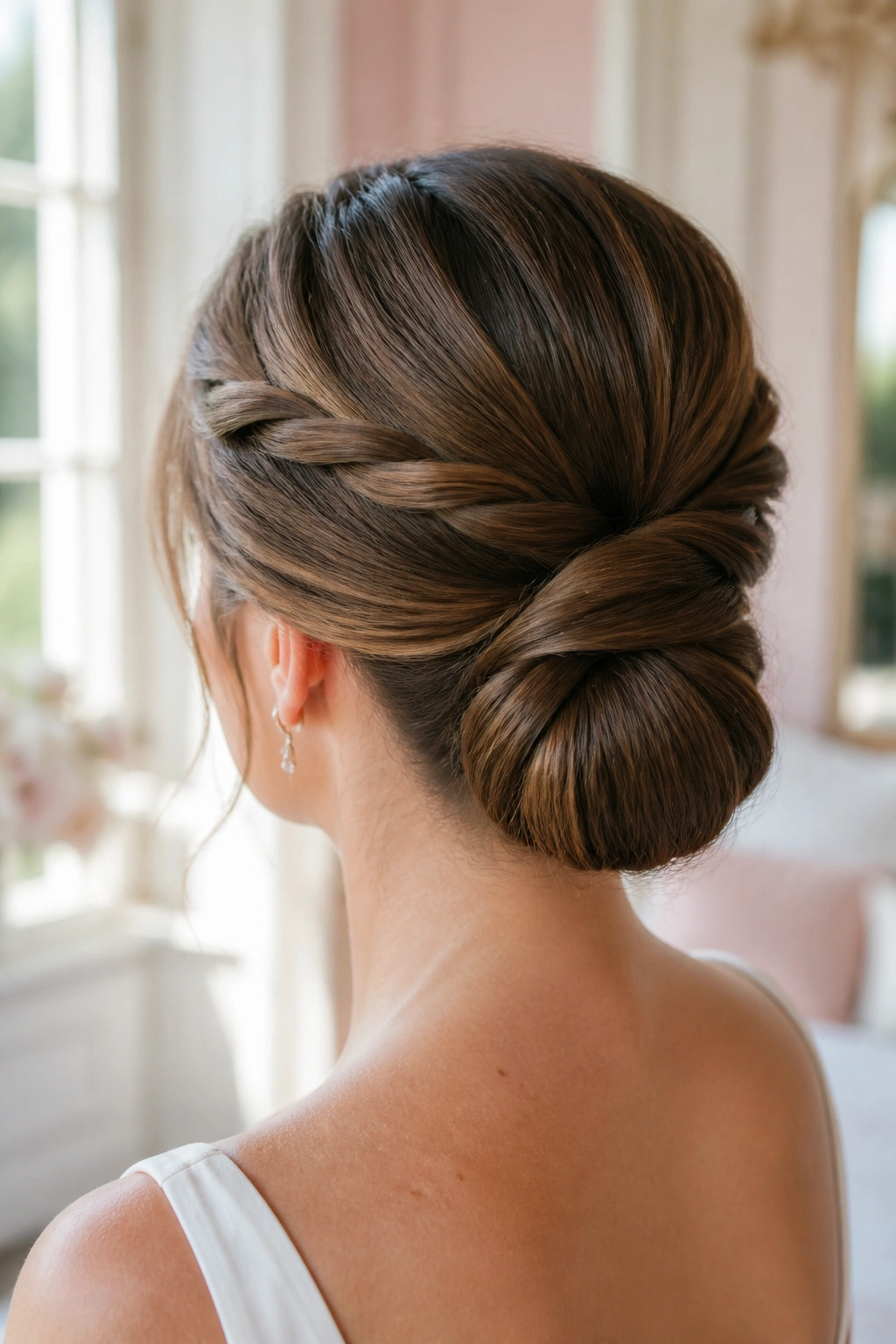
Why does a twisted crown bun look richer than a plain bun? Because the twists give the eye something to follow. Straight hair is good at showing those lines. Two side sections twist back toward a low bun, and the shape feels deliberate without needing a full braid or a lot of texture.
How to Build It
Start with a clean part, then take small sections from each side and twist them toward the nape. Pin them into a compact bun or folded knot. Keep the crown smooth, but not flat like paper. A tiny bit of lift at the roots helps the twists sit above the head instead of hugging it too hard. This style is useful when you want the front hair off the face but still want detail near the ears.
22. Floral Comb on Straight Hair

Straight hair gives floral accessories a quiet backdrop, which is exactly why they look so good together. A floral comb — fresh blooms, silk flowers, or a mixed metal-and-petal piece — sits best when the hair around it is smooth and tucked.
The placement matters more than the size. One comb above the ear, angled slightly back, usually feels cleaner than trying to scatter flowers all over the head. If you’re using fresh flowers, ask for something light. Heavy blooms can pull the comb down by the second hour, and that is no fun at all. This look works especially well with outdoor ceremonies, garden settings, or dresses that already have a soft, romantic shape.
23. Half-Up Braided Halo

A half-up braided halo gives you the detail of a crown braid without closing off the hair completely. Straight hair is a good canvas for it because the braid lines stay crisp, and the loose lengths underneath still look smooth. The style feels formal, but not sealed shut.
This is one of the better choices for long hair when you want movement at the back. The braid can run from one temple to the other, then disappear into a pinned section at the crown. A veil can sit above or below it, depending on the shape of the comb. If the braid is too thick, it starts to dominate the whole head. Keep it slim. Let the rest breathe.
24. Tucked Bob with a Side Sweep
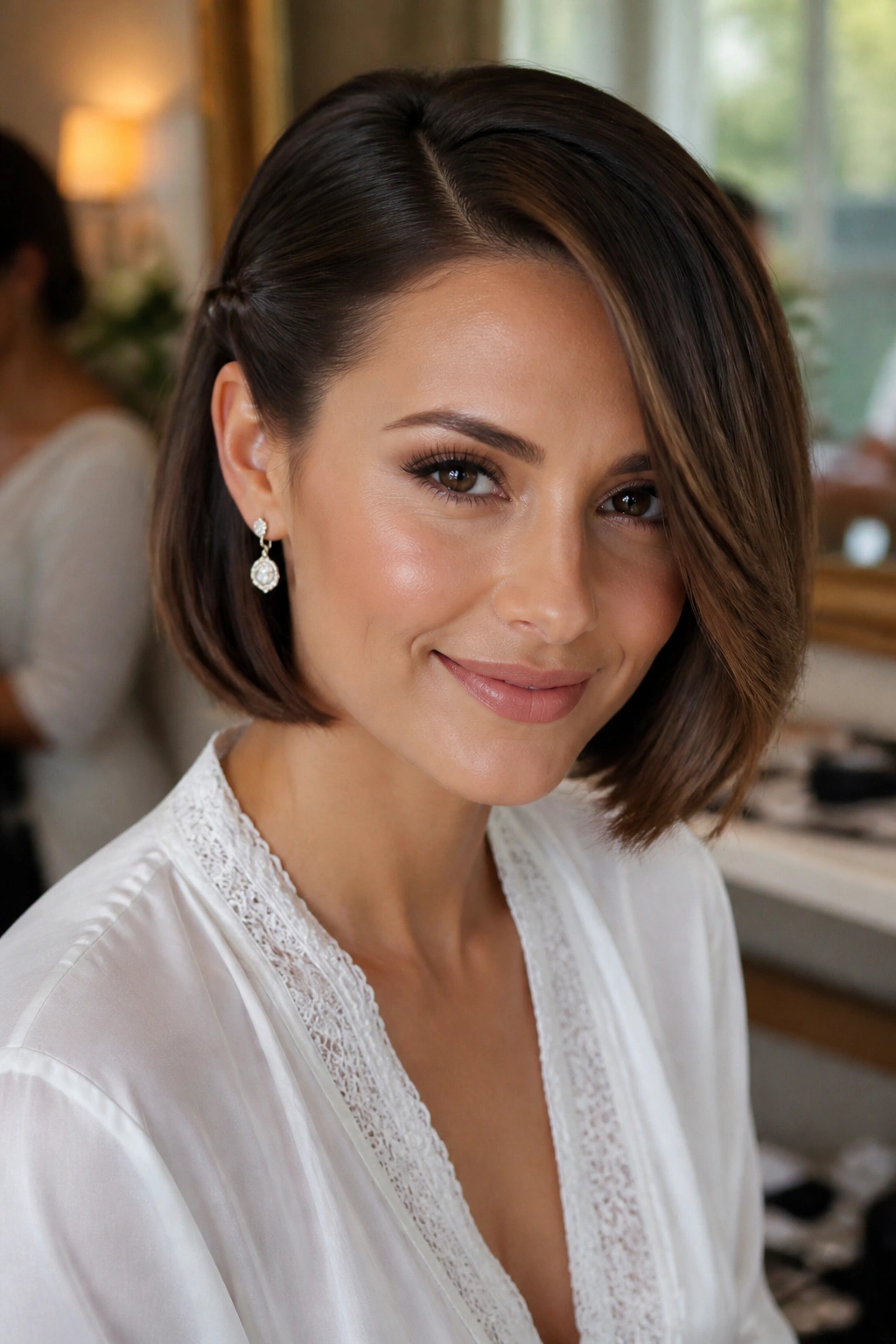
A bob can absolutely be wedding hair. In fact, a good bob often looks more stylish than long hair because the shape is already doing work. With straight hair, a tucked side and a clean sweep across the forehead give the cut a formal edge without trying to turn it into something it isn’t.
This is a smart pick for chin-length and shoulder-length cuts, especially with a birdcage veil or a single statement earring. Keep one side tucked behind the ear and pin it discreetly underneath. The other side can sweep softly across the cheekbone. A little shine serum at the ends keeps the outline sharp. I prefer this to over-styling a bob with too much curling. The cut should stay visible.
25. Curtain Bangs with a Seamless Blowout
If you already have curtain bangs, use them. Don’t fight them into a shape they never wanted. Straight hair makes curtain bangs easy to control because the curve can stay smooth instead of fluffy. The rest of the hair can hang straight or take a soft bend through the ends.
How to Make Them Sit Right
Blow the bangs forward first, then sweep them away from the face with a round brush so they curve at the cheekbones. Keep the center part open. That keeps the style from swallowing the forehead. The lengths behind the bangs should stay clean and smooth so the fringe doesn’t feel disconnected from the rest of the hair. This is a good choice for brides who want movement near the face without a full fringe.
26. Retro Flip Ends
A retro flip is one of those styles that can look costume-y or polished, depending on the finish. On straight hair, it usually lands on the polished side if the flip is small and the roots stay smooth. Think 1960s shape, not cartoon hair.
The ends can turn outward with a round brush or a flat iron, just enough to create lift at the bottom inch or two. That little bend keeps the silhouette lively. It works well with tea-length dresses, reception outfits, or brides who want something different from the usual soft wave. Add a slim barrette or a side pin if the neckline needs a little extra interest. The trick is restraint. A small flip goes a long way.
27. Asymmetrical Side Sweep with Pins
Want drama without a long styling session? Sweep the hair to one side, secure it low and hidden, then pin the upper side back in a neat line. Straight hair makes the asymmetry sharp, and sharp is good here. The whole look depends on the contrast between the open side and the pinned side.
This style shines with statement earrings and dresses that leave one shoulder open. Use 4 to 6 bobby pins in the same finish as the hair color so the hold disappears. If the hair is extra smooth, rough up the underside a little before pinning. Not much. Just enough for grip. I’d choose this over heavy braiding when the dress already has enough detail and the hair should step back a little.
28. Slicked-Back Bun with Dramatic Earrings
A slicked-back bun is the strongest option in the group if you want the face, neck, and earrings to take center stage. Straight hair gives the bun its clean edge, and the slicked-back crown makes the whole look feel controlled from every angle. There’s no hiding place, which is why it works.
This style loves a bold earring and an open neckline. Use a firm brush, a little gel at the hairline, and a low bun placed right at the nape or slightly above it. Keep the surface smooth, but don’t make it look wet unless that is the point of the dress. The best version of this style feels deliberate, spare, and a touch severe. That may sound harsh. It isn’t. On the right gown, it is exactly the right kind of clean.
Straight hair does not need to be rescued on a wedding day. It needs a shape that respects what it already does well: clean lines, shine, and a neat finish that holds under pressure. That’s a strong starting point.
Pick one idea and commit to it. A simple bun with a good part will beat a crowded style with too many extras nearly every time.
