



Medium-length hair can be awkward at a wedding. It is long enough to twist, pin, and braid, but not long enough to hide clumsy pin work, so the prettiest bridesmaid updos for medium length hair depend on shape, texture, and a few well-placed bobby pins.
That awkward length is also a gift. You can build softness at the front, keep the nape clean, and still avoid the heavy, overbuilt look that sometimes happens with very long hair. A 1-inch curling iron, a little mousse at the roots, and a box of pins that match the hair color will do more for the final result than a giant cloud of hairspray.
A bridesmaid style has to do a few jobs at once. It needs to sit under a veil if one is involved, survive hugs, stand up to dancing, and still look tidy after an hour in warm rooms and another hour in a photo line. The styles that hold up best on shoulder-length hair and collarbone-grazing cuts use the hair’s own movement instead of fighting it.
Some of the looks below are sleek. Some are softer and a little undone. All of them work because they respect the length you actually have — not the length a mood board wishes you had.
1. Sleek Low Chignon with a Soft Side Part
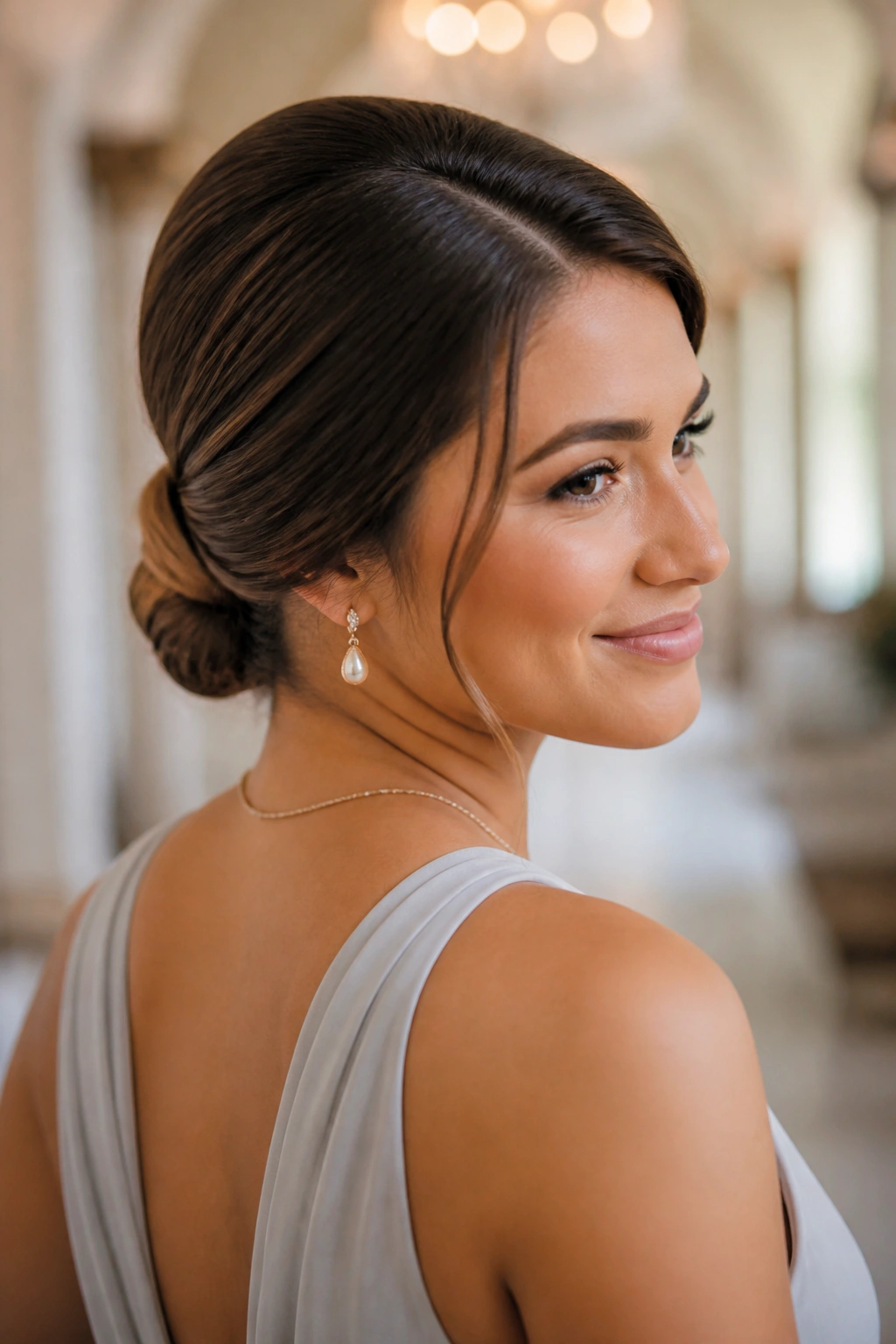
A clean chignon is the first style I’d pick when the dress already has a lot going on. Think beaded bodice, high neckline, or sleeves that deserve some attention. On medium-length hair, the win is in the shape: a tight fold at the nape, a smooth side part, and just enough softness around the face to keep it from looking severe.
Why It Works on Shoulder-Length Hair
Medium hair does not need to make a giant loop to look polished. It needs a neat tuck, then another layer of pins hidden under the first one. That’s the whole game.
A small amount of smoothing cream at the top helps the part stay clean, and a pea-sized bit of shine serum on the ends keeps the finish from looking dry in photos. If the hair is layered, the stylist may need to pin the shorter pieces in two directions. That sounds fussy. It is. But it keeps the chignon from sagging by the second toast.
- Blow-dry smooth, then bend the mid-lengths slightly with a 1-inch iron.
- Place 6 to 8 bobby pins in an X pattern to lock the roll.
- Leave one thin front piece a little lower for a softer line.
- Finish with a light mist of flexible spray, not a helmet.
Best detail: tuck the pins under the twist, not beside it. Side pins show. Hidden pins look expensive.
2. Twisted Crown Bun
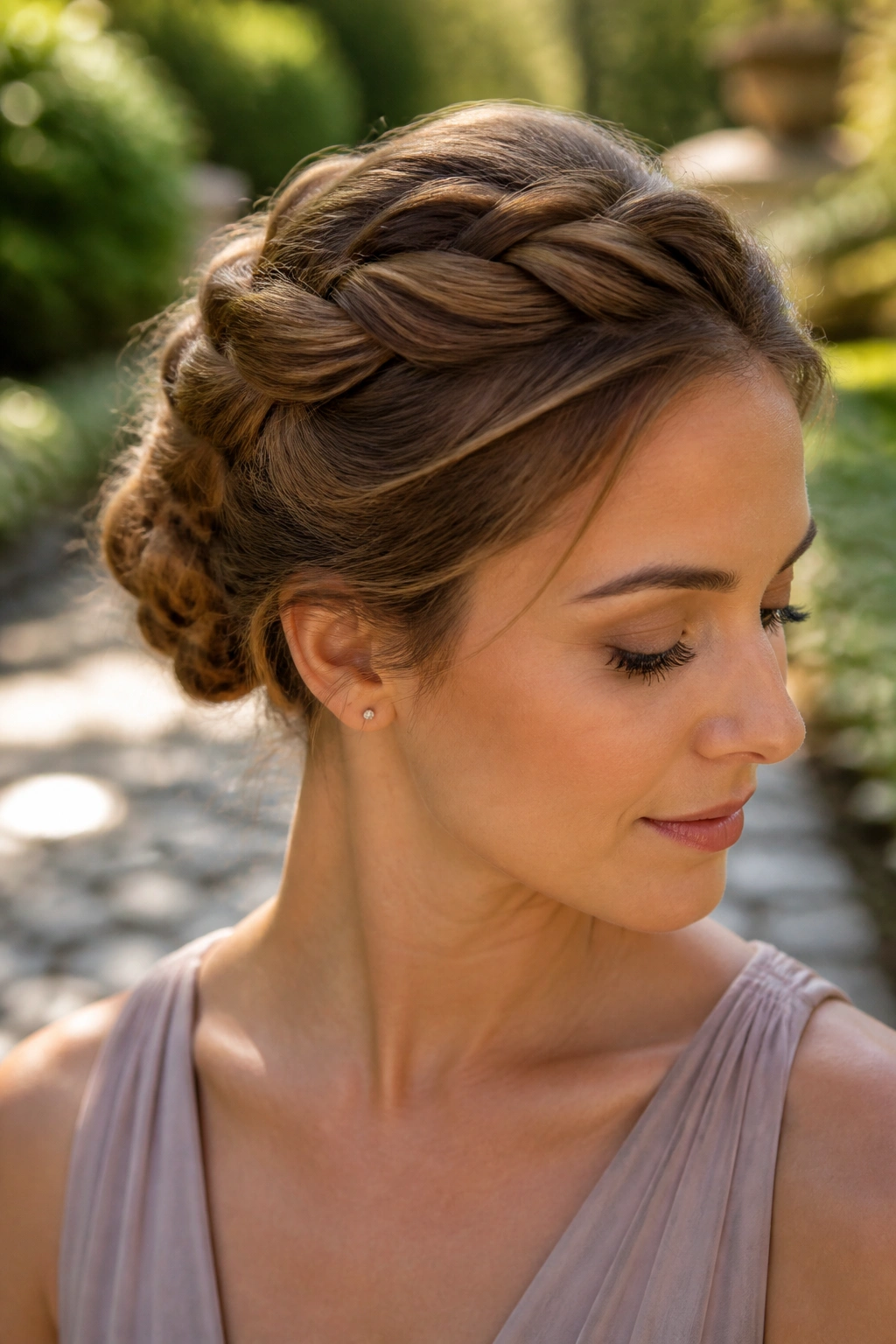
What makes a crown bun work on medium-length hair? The answer is not bulk. It is placement. When the twist starts high at the temples and settles into a small bun just above the nape, the whole style reads fuller than it is.
The hair wraps back from both sides, almost like a halo that has been gently pulled inward. That shape flatters medium hair because it gives the illusion of length without asking for extra inches that simply are not there. If the hair is fine, a little dry texture spray at the roots keeps the twists from slipping.
This one has a nice balance for bridesmaid duty. It feels polished enough for a formal ceremony, but it does not look so rigid that it clashes with soft chiffon or draped satin. And if the dress has a low back, the bun sits neatly enough to show it off.
A narrow satin ribbon or a tiny pearl pin can work here, but keep it restrained. The twist itself should stay in charge.
3. Braided Low Bun with Loose Face Framing

A bridesmaid with medium-length hair and a square neckline needs something that keeps the back neat but softens the front. That is where a braided low bun earns its place.
The style starts with a braid or two from the sides, then gathers into a low bun right at the nape. It has enough detail to feel special, but it doesn’t need a lot of length to succeed. The braid adds texture, which is useful when the ends are only just long enough to coil.
The face-framing pieces matter. Keep them slim, not chunky, and let them bend once or twice with a curling iron so they do not hang like limp curtains. A lot of people overdo this part. Don’t. Two soft tendrils are plenty.
- Braid from the temples back, not straight down.
- Tie the gathered hair into a low ponytail first.
- Coil the ponytail into a bun and pin underneath.
- Pull 2 or 3 small face pieces loose at the end.
That final step is what keeps the style from feeling too neat.
4. Half-Up Rope Twist with Hidden Pins
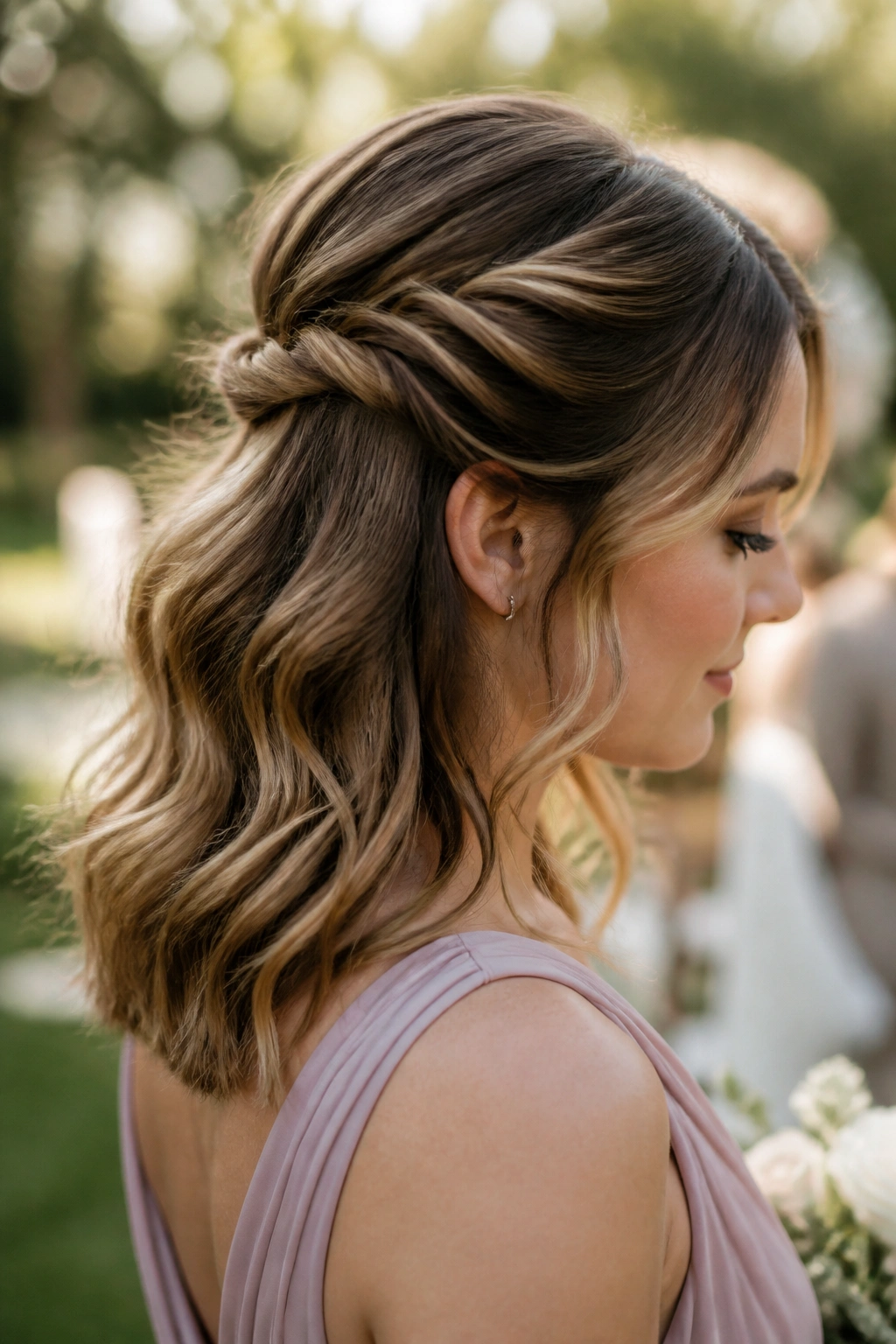
Unlike a full bun, this one leaves the ends visible, which is handy when the hair sits right at the shoulders. Medium-length hair often looks best when you let some of it stay down instead of trying to hide every inch.
The rope twist starts near the temples and works back toward the crown. Each section is twisted in the same direction, then crossed over the center and pinned flat. The lower hair stays loose, usually with a soft wave or a polished bend at the ends. That mix of control and movement is why it works so well with bridesmaid dresses that have open necklines.
If the gown is heavily structured, this style gives a little relief. If the gown is airy and romantic, it keeps the look from tipping into too much sweetness. One small comb at the back can secure the twist without making it look pinned down.
Best of all, it is forgiving. If the braid or twist loosens a bit over the evening, the style still looks intentional. A slick bun does not always have that grace.
5. Soft French Twist for Medium-Length Hair
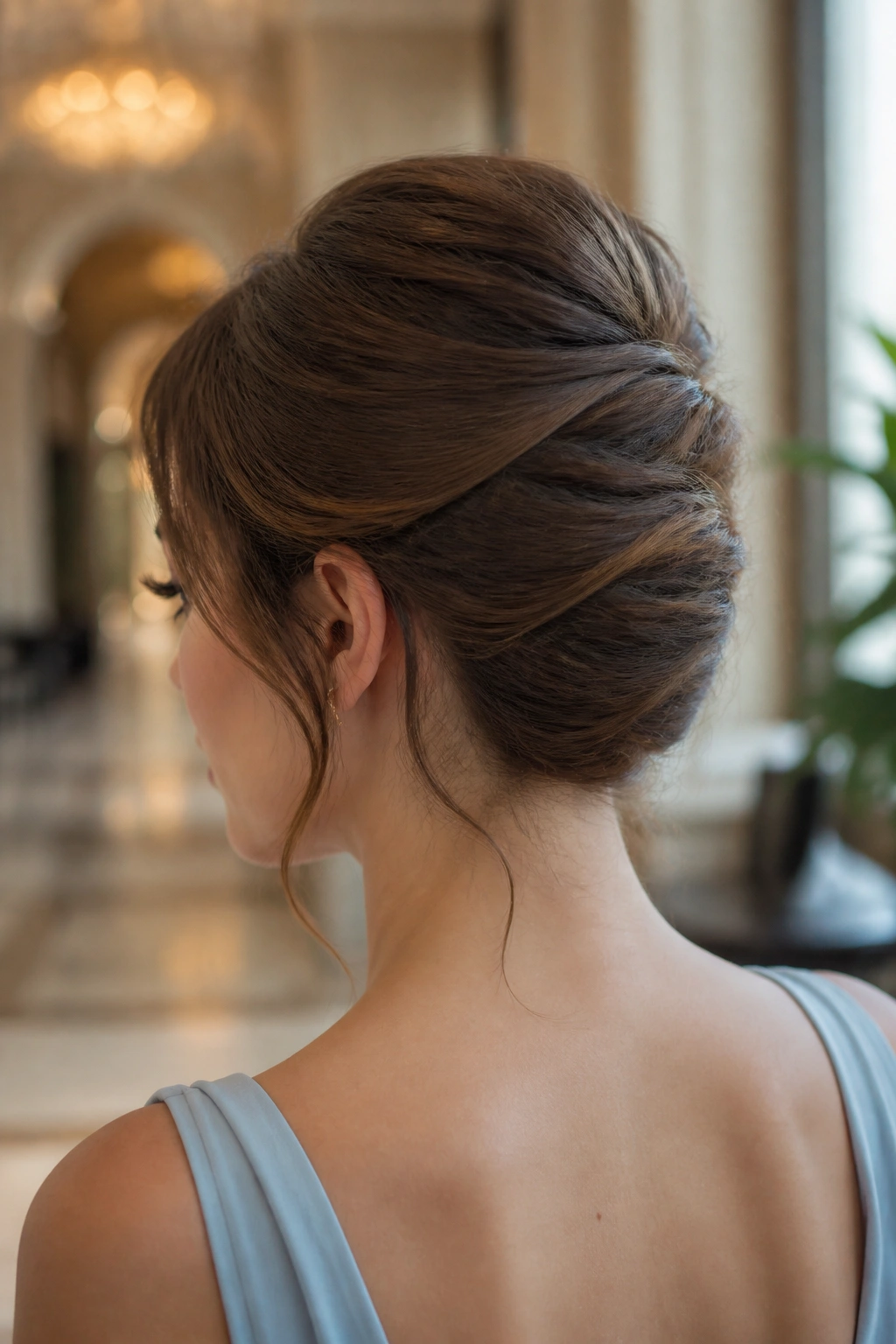
A French twist is not just for long hair. On medium-length cuts, it can look even cleaner because there is less excess to tuck, fold, and force into place. The result is a vertical shape that feels elegant without looking bulky.
The Part That Makes It Hold
The secret is the base. The hair at the crown needs a little lift, but not a giant bump. A light tease at the roots gives the twist something to grip, then the rest of the hair gets folded inward and pinned from the center line outward. If the hair is blunt at the ends, this style is neat. If it has layers, the shorter pieces need extra pinning close to the spine of the twist.
What to Ask the Stylist for
- A smooth crown with a soft, not sky-high, lift.
- One or two hidden combs down the center.
- Ends tucked straight in, not fanned out.
- A few airy pieces near the ears if the dress is plain.
The best French twists on medium hair feel secure when you shake your head lightly. If it shifts, it is not pinned enough. Simple as that.
6. Textured Messy Bun with Tendrils
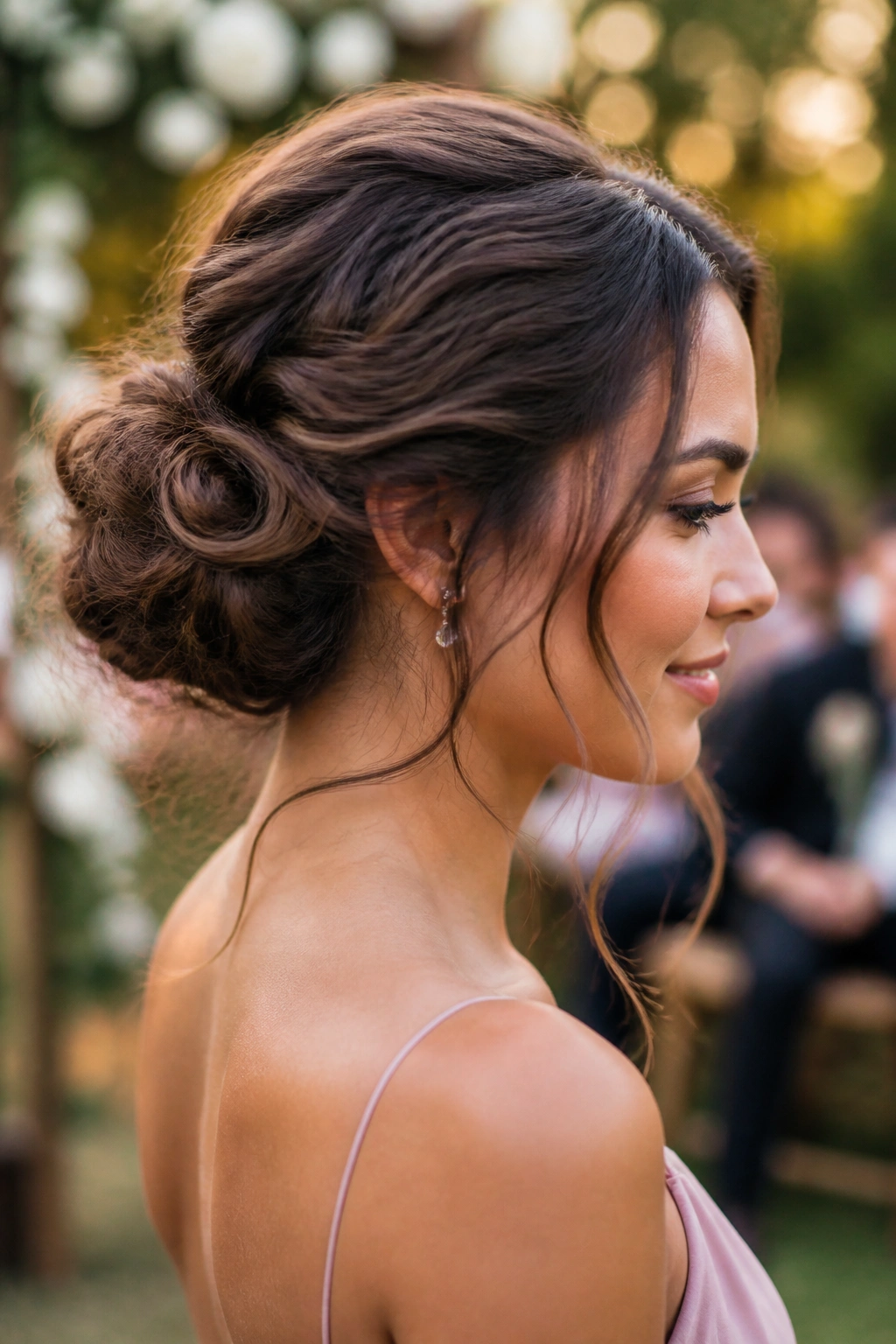
Messy does not mean sloppy. That distinction matters, because a bridesmaid bun that looks accidental in the mirror will look worse in a row of matching dresses.
The textured bun works on medium-length hair because the length is enough to build a rounded knot at the back, but not so much that the bun becomes heavy. A little wave through the mid-lengths gives the hair something to grip, and a few loose tendrils at the temples soften the face without making the style lose its shape.
This is the look I’d pick for a garden ceremony, a dress with a flutter sleeve, or a bridesmaid who hates feeling too “done.” It has movement. It has air. It still needs structure, though, so the bun should sit low and feel anchored rather than fluffy.
One useful detail: pinch the bun lightly after pinning to widen it by half an inch. That tiny bit of expansion makes the style feel fuller without turning it into a puffball.
7. Bubble Ponytail Wrapped Into a Tucked Finish
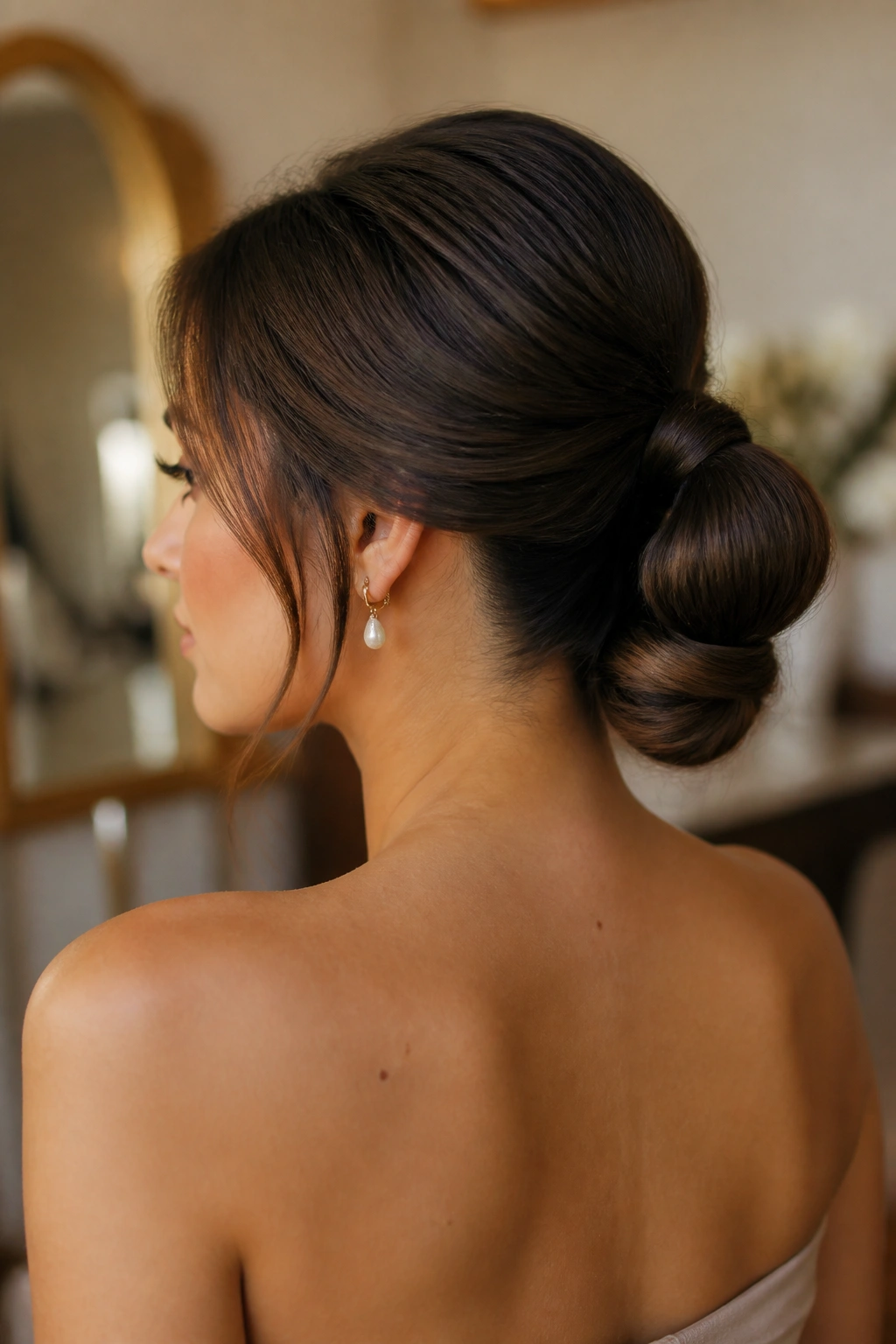
Need something playful that still looks formal? The bubble ponytail is the answer, and it works better on medium hair than people expect.
The trick is to build the bubbles first, then hide the tail at the end. Start with a low or mid ponytail, add small elastics every 2 to 3 inches, then gently tug each section until it forms a rounded bubble. After that, fold the tail upward and pin it under the base so the pony reads like a stylized updo instead of a school-day ponytail.
How to Make the Bubbles Look Clean
Use clear elastics or ones that match the hair color. That matters more than most people admit. A mismatched elastic pulls the eye right to the wrong spot.
A light mist of shine spray on the finished bubbles keeps the sections from looking fuzzy. If the hair is layered, backcomb just the underside of each bubble before tugging; that gives the shape a little body without making it stiff.
This style feels a bit modern, a bit fashion-y, and it photographs nicely from the side. It’s especially good with minimalist dresses, where the hairstyle can do a little visual work.
8. Double Braid Into a Low Knot

A double braid gives medium-length hair a lot more structure than a single braid ever will. That is why this style is so useful for bridesmaid looks that need to survive a long day without falling apart.
The idea is simple. Braid one section from each side, bring both braids to the back, then knot or coil the ends together at the nape. The braids create texture, while the knot keeps the finish low and tidy. It reads romantic without wandering into fussy territory.
If the hair is thick, this style gives shape without fighting volume. If the hair is finer, the two braids help create a fuller-looking base than a plain bun would. A tiny clear elastic at the end of each braid keeps the ends from fraying before you pin them in place.
The best version keeps the braids slightly imperfect. Tight braids can look harsh in wedding photos. A bit of looseness through the edges makes the knot softer and more flattering.
9. Side-Swept Rolled Updo

If the dress has asymmetry, let the hair echo it. A side-swept rolled updo feels considered without looking stiff, and it gives medium-length hair a graceful line that opens up one side of the face.
Instead of pulling everything straight back, the stylist rolls the hair across the back of the head and tucks the ends to one side. The visual effect is old-school in the best way. Think polished, but not icy.
This is one of the better choices for statement earrings because one ear stays visible while the roll gives the other side a bit of cover. It also works nicely when the bridesmaid dress has a one-shoulder neckline or a draped sleeve. The hairstyle does not compete. It complements.
A tiny bit of height near the crown helps the roll sit smoothly. Don’t build it too high. The goal is an elegant slope, not a retro tower.
10. Gibson Tuck with Volume at the Crown
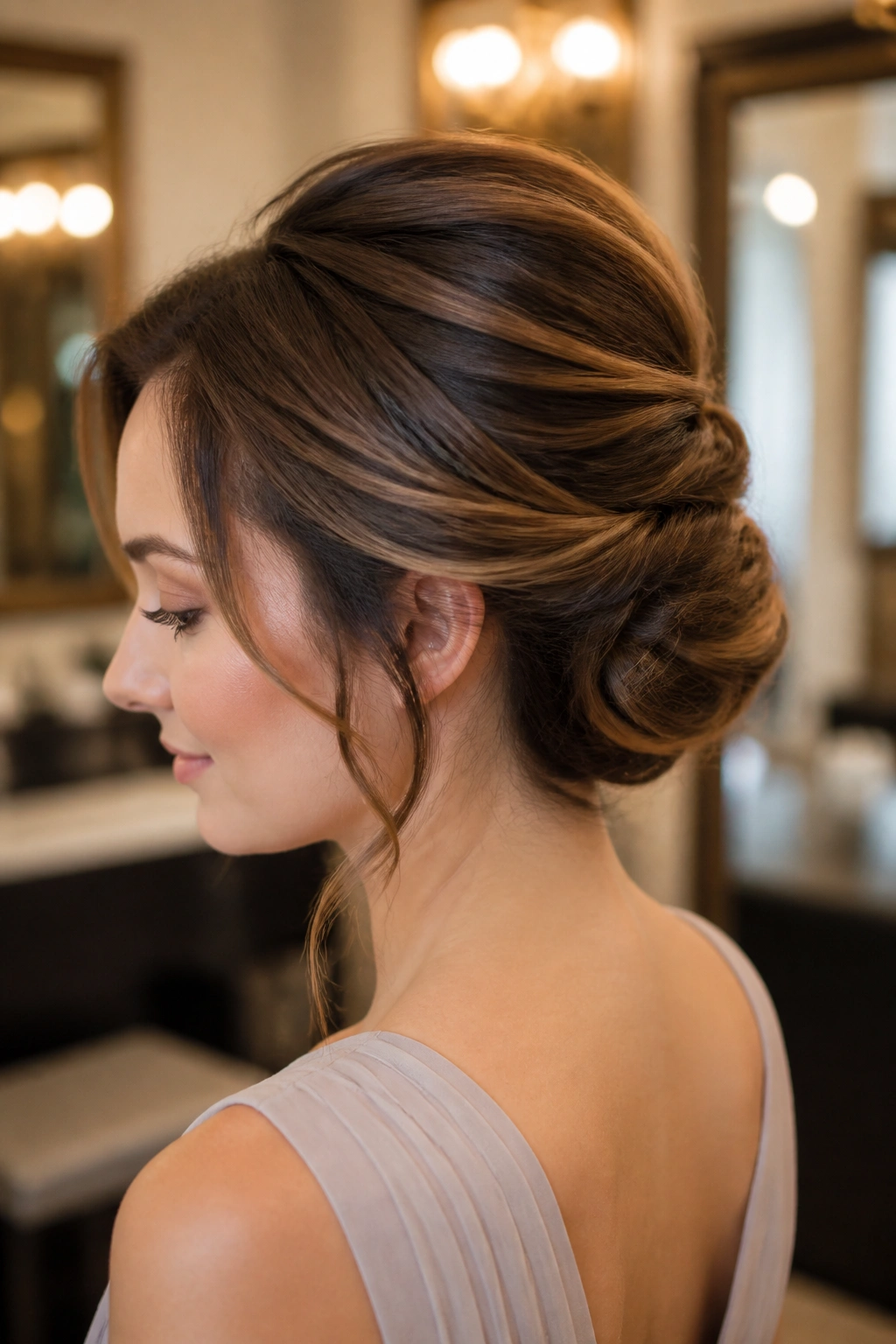
The Gibson tuck looks delicate, but it is sturdier than it appears. On medium-length hair, it works because the ends tuck inward cleanly instead of hanging around and making the shape messy.
Why It Stays Put
The style begins with a bit of lift at the crown, then the hair is folded into itself at the back. That inward fold gives the look its rounded shape. Once the ends are tucked, a row of pins closes the opening, and the whole thing sits close to the head.
What to Tell Your Stylist
- Keep the crown soft, not too high.
- Leave the front smooth enough to show the part.
- Tuck the ends fully inside the roll.
- Use pins that match the hair color, because this style exposes more of the back than people think.
Small Details That Matter
The Gibson tuck looks best when the hair has a little bend through the mid-lengths. Straight, slippery hair can slide out unless it is prepped with mousse or texturizing spray. If the hair is freshly washed and too smooth, that can be a problem.
It is one of those styles that looks more complicated than it is. I like that in a bridesmaid look. A lot.
11. Braided Halo with Low Nape Finish
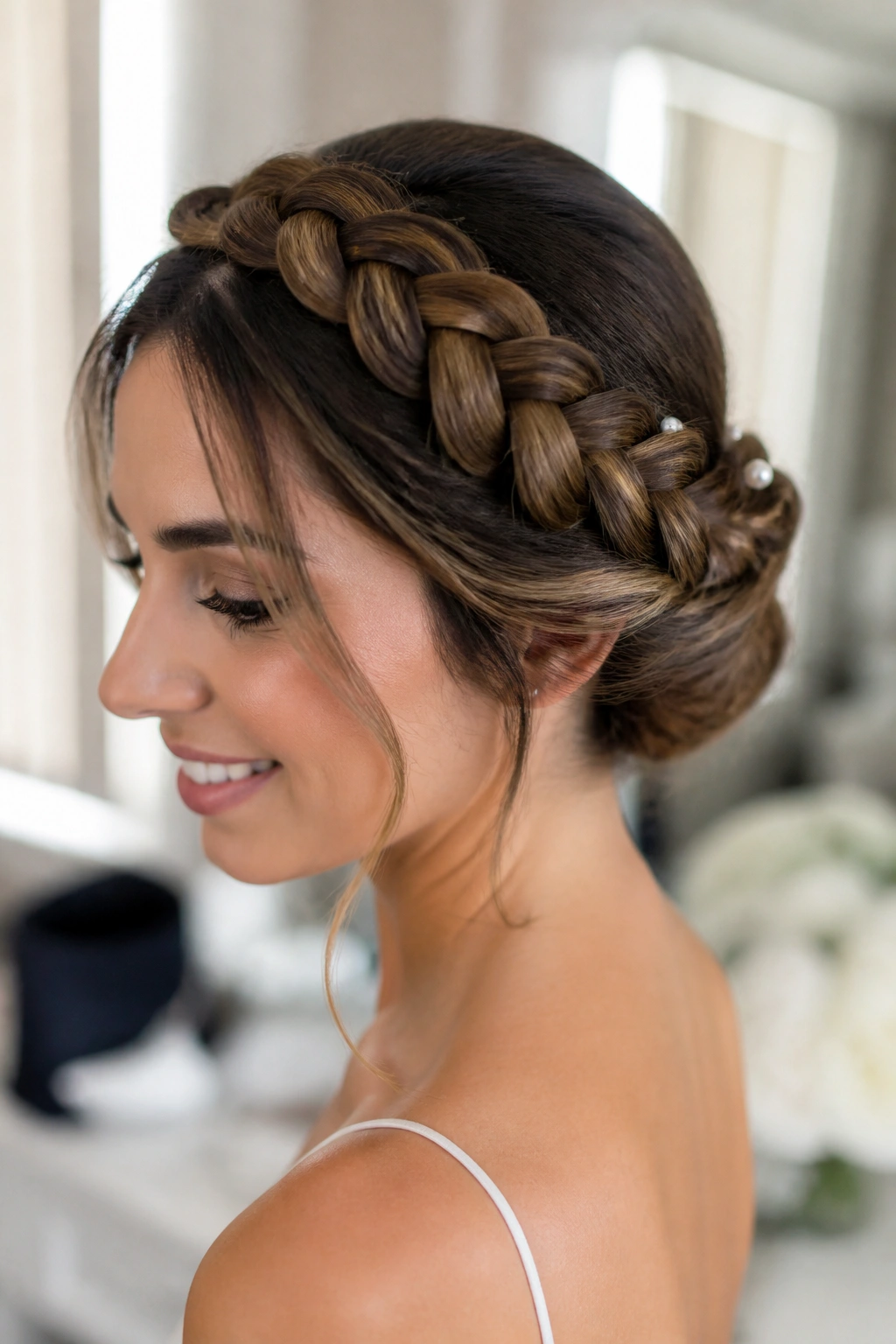
A halo braid can look too youthful if it is done carelessly. Done well, though, it is one of the neatest bridesmaid styles for medium-length hair because it keeps the front clean and the back secure.
The braid starts near one temple, travels around the head, and finishes in a tucked knot or flat pinning at the nape. Medium-length hair gives enough material for the braid to feel substantial without turning the whole thing into a heavy crown. That balance is why it works so well.
Keep the braid close to the head, but not tight enough to pull at the scalp. A halo that feels strained will show it in the face within an hour. A little softness at the edges lets the braid widen naturally and look richer than it really is.
This style loves pearl pins, especially if the dress is simple. Just don’t scatter them everywhere. One small cluster near the tuck is enough.
12. Knotted Half-Up Bun

A knotted half-up bun is the bridesmaid style I pull out when the bridal party has mixed hair textures and nobody wants to spend the whole morning fighting their own hair.
Half the hair stays down, which means the style still keeps some softness and movement. The top section gets tied or knotted at the back, then pinned into a small bun-like shape that sits above the loose lengths. On medium hair, that knot can look full without swallowing the rest of the style.
This one is useful when the dress neckline is simple and the hair needs to do a little more visual work. It also behaves nicely with natural waves, since the lower section can stay loose while the top section creates structure.
The knot should sit centered and secure. If it leans too far to one side, the whole thing starts looking accidental. A small, balanced knot is the whole point here.
13. Faux Bob with Smooth Ends

A fake bob is the quietest little cheat in bridal hair, and I mean that as praise. It gives medium-length hair a vintage shape without needing a permanent haircut or a mountain of styling.
The ends are curled inward, then tucked under and pinned so the hair sits at chin or jaw level. The surface should be smooth, not flat, with just enough bend to suggest softness. That tucked-under shape makes the style feel tailored, which is why it plays nicely with satin, lace, and structured necklines.
Unlike a true short cut, the faux bob can be adjusted to the face. If the jawline is sharp, a slightly looser tuck helps. If the dress is romantic, a softer wave through the front keeps the look from turning severe.
It’s a good choice for bridesmaids who want something memorable but not loud. And yes, it needs a rehearsal. Ends that are too short or too slippery will escape.
14. Waterfall Braid Into a Pinched Bun

Why does this work so well on medium-length hair? Because the waterfall braid gives you movement up top, while the pinched bun keeps the back from feeling tiny.
The braid starts at one side and lets a few strands drop through each pass, which creates that stepped, flowing line. The remaining hair gathers at the back and gets pinched into a soft bun with visible texture. The result feels romantic without being sugary.
How to Keep the Shape Balanced
The braid should stay loose enough to show the pattern, but not so loose that the dropped pieces frizz out. A light mist of flexible spray before braiding helps the sections hold their shape. After the bun is pinned, gently pull a few edges of the braid to widen it by a small amount.
That little stretch changes everything. Too tight and the style looks severe. Too loose and it falls flat.
This is one of my favorites for bridesmaid dresses with lace or chiffon because the hairstyle has the same kind of movement. Nothing fights. Nothing shouts.
15. Low Ponytail Wrapped Into a Coil

A wrapped low ponytail earns its keep because it looks neat from every angle and does not require a huge amount of length. Medium hair can coil around its own base without much fuss, which is exactly why this style works.
Start with a low ponytail, then wrap the tail around the elastic in a flat coil or a slightly twisted spiral. Pin the ends underneath, not at the surface. A small section of hair can also be wrapped around the elastic to hide it completely, which is worth doing if the dress is formal or the accessories are minimal.
- Use a firm elastic at the base.
- Curl the tail lightly before coiling if the hair is too straight.
- Pin the wrapped section with 3 to 5 hidden pins.
- Leave the crown smooth and the nape tidy.
If the hair is fine, a small hair pad underneath the ponytail gives the coil more body. That one extra piece can save the whole style from looking thin.
16. Tucked-In Side Bun
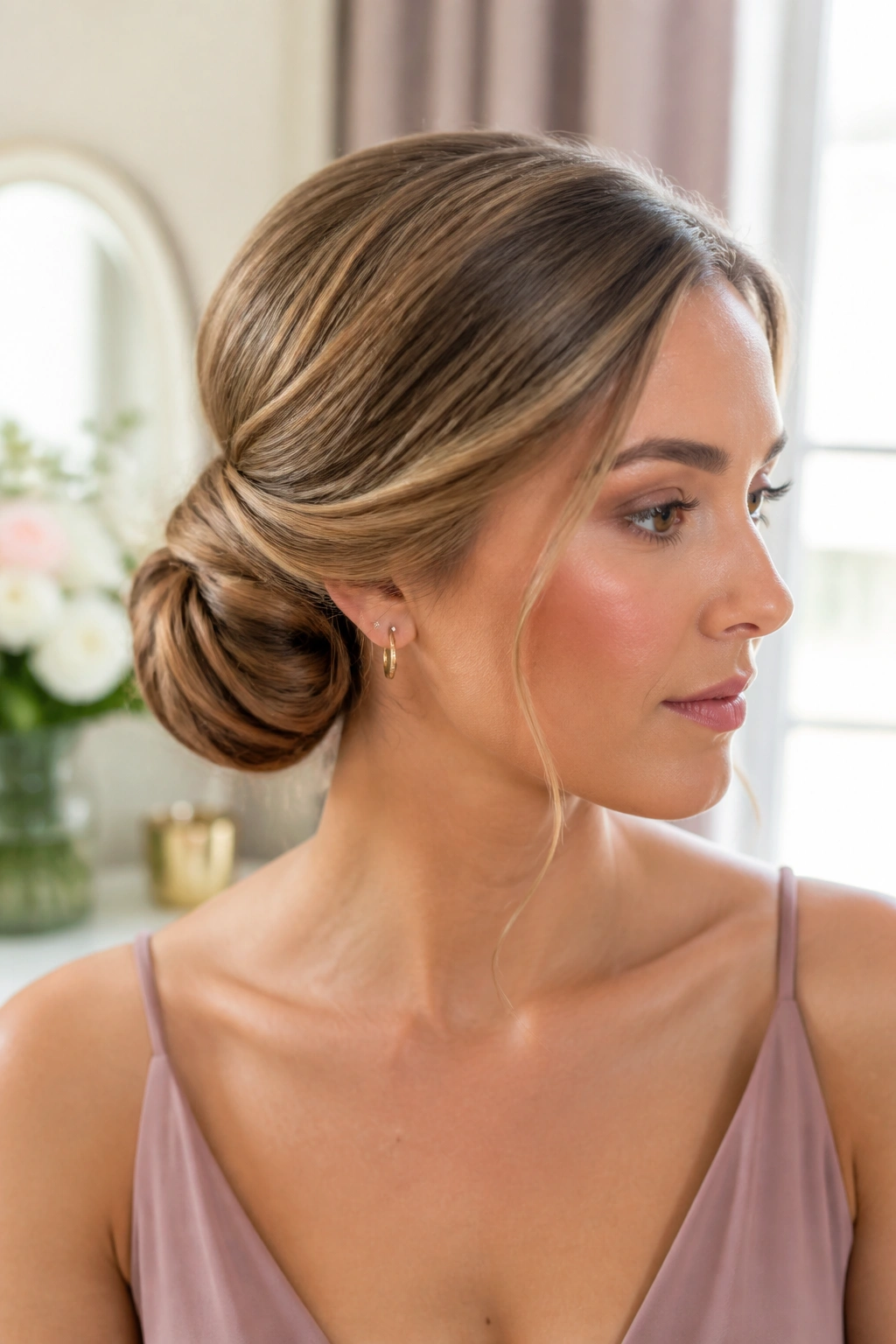
A side bun can look fussy if it is built too big, but a tucked-in version has a cleaner shape and works better for medium-length hair. The weight sits low and to one side, which makes it a nice match for one-shoulder gowns or dresses with diagonal seams.
The braid or twist begins at the side part, moves toward the ear, then tucks inward into a compact bun just behind the jaw. The angle matters. If the bun sits too far back, the style loses its charm. Too far forward, and it starts to crowd the face.
Wind and humidity tend to expose weak side buns fast, so this is a style that needs firm pinning under the surface. Don’t trust one pin job and walk away. Two layers of pins, crossing in different directions, keep the shape from drifting.
One thin piece near the cheek can soften the outline. More than that starts to look undone in the wrong way.
17. Crown Braid with a Polished Base
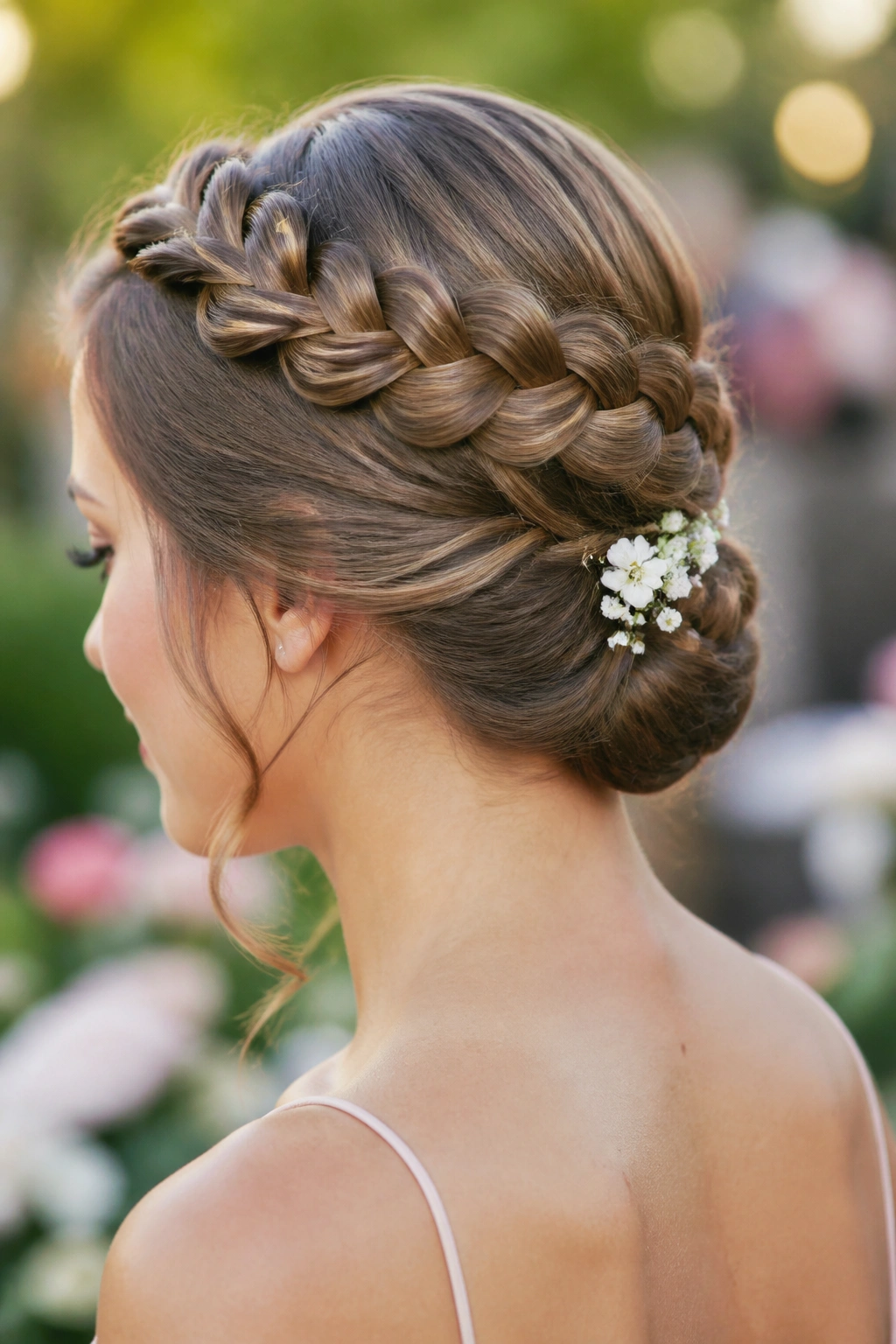
A crown braid on medium-length hair looks better when the base is smooth and the braid itself is the star. That contrast keeps the style from feeling busy.
Where the Braid Should Start
Start the braid near the part or just above the temple, then keep it close to the head as it wraps around. If the braid begins too low, the whole look shrinks. If it begins too high, it can feel too young or too playful for a formal wedding party.
How to Keep the Base Smooth
Brush the hair flat at the roots first, then add a small amount of smoothing cream or light gel. The crown area should look clean before the braid even starts. That is where the polish comes from.
What Makes It Bridesmaid-Ready
- A tucked finish at the nape keeps the braid secure.
- Small flowers or pearl pins work well near the tuck.
- Medium hair holds the braid without making it too thick.
- A few tiny face pieces can soften the hairline if the dress is severe.
This style is one of those quiet winners. It does a lot without looking busy.
18. Rosette Bun Made from Twists
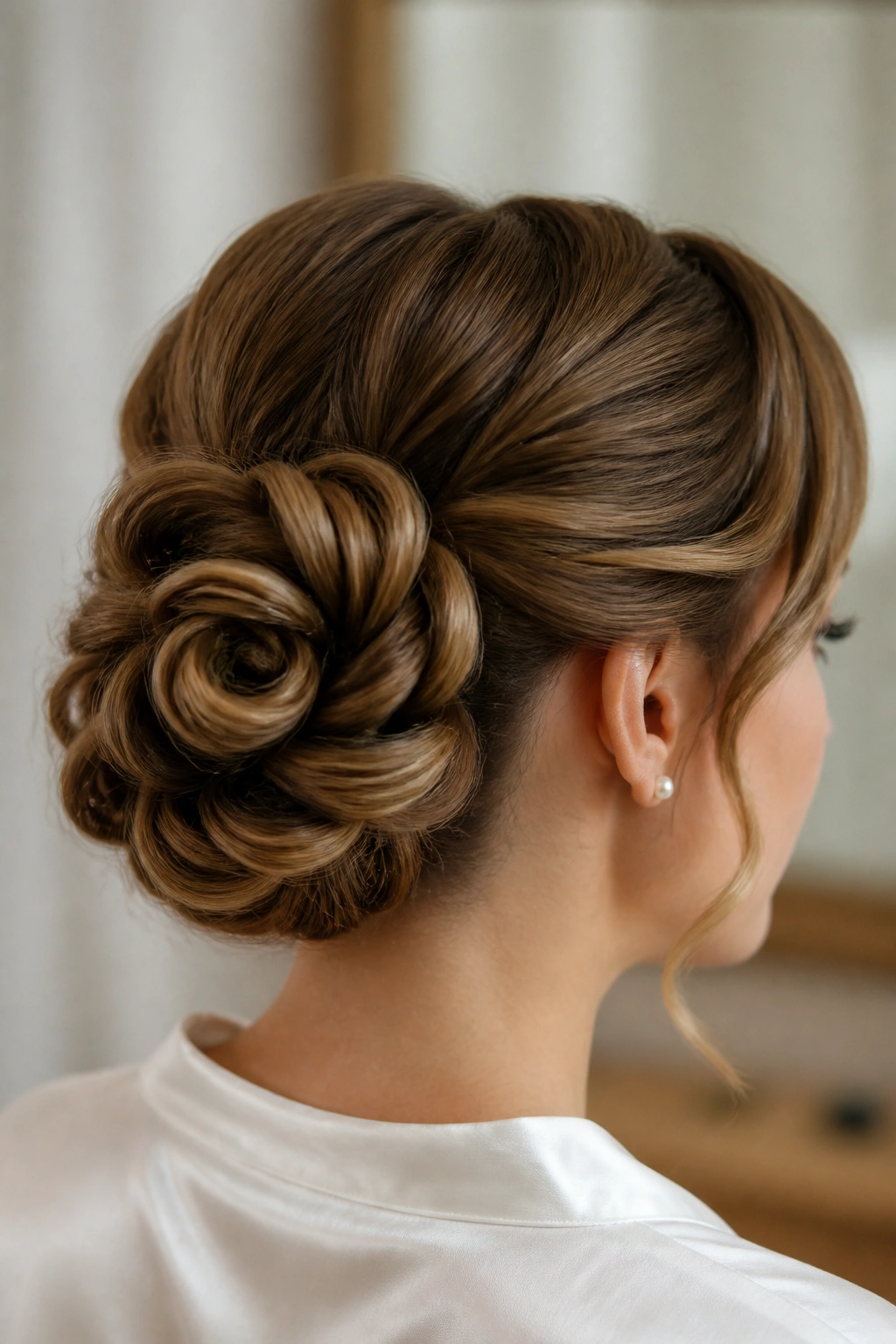
A rosette bun is one of the prettiest ways to use medium-length hair because the shape is compact and deliberate. The hair gets twisted into small loops that sit around a center point, almost like petals around the middle of a flower.
That shape suits medium hair because the shorter length keeps the rosette tight. Very long hair can make it too wide and heavy. Medium length keeps the flower defined.
You do need good pin placement. Each twist should be anchored at the base, then pinned again at the outer edge so the loops do not collapse. A little texture spray before styling helps the hair hold the petal shapes instead of slipping into one flat mass.
This is a style for dresses with simple necklines or clean satin fabrics. The bun becomes the detail. If there is already a lot going on in the dress, the rosette may feel crowded.
19. Soft Pouf Updo with Waved Ends
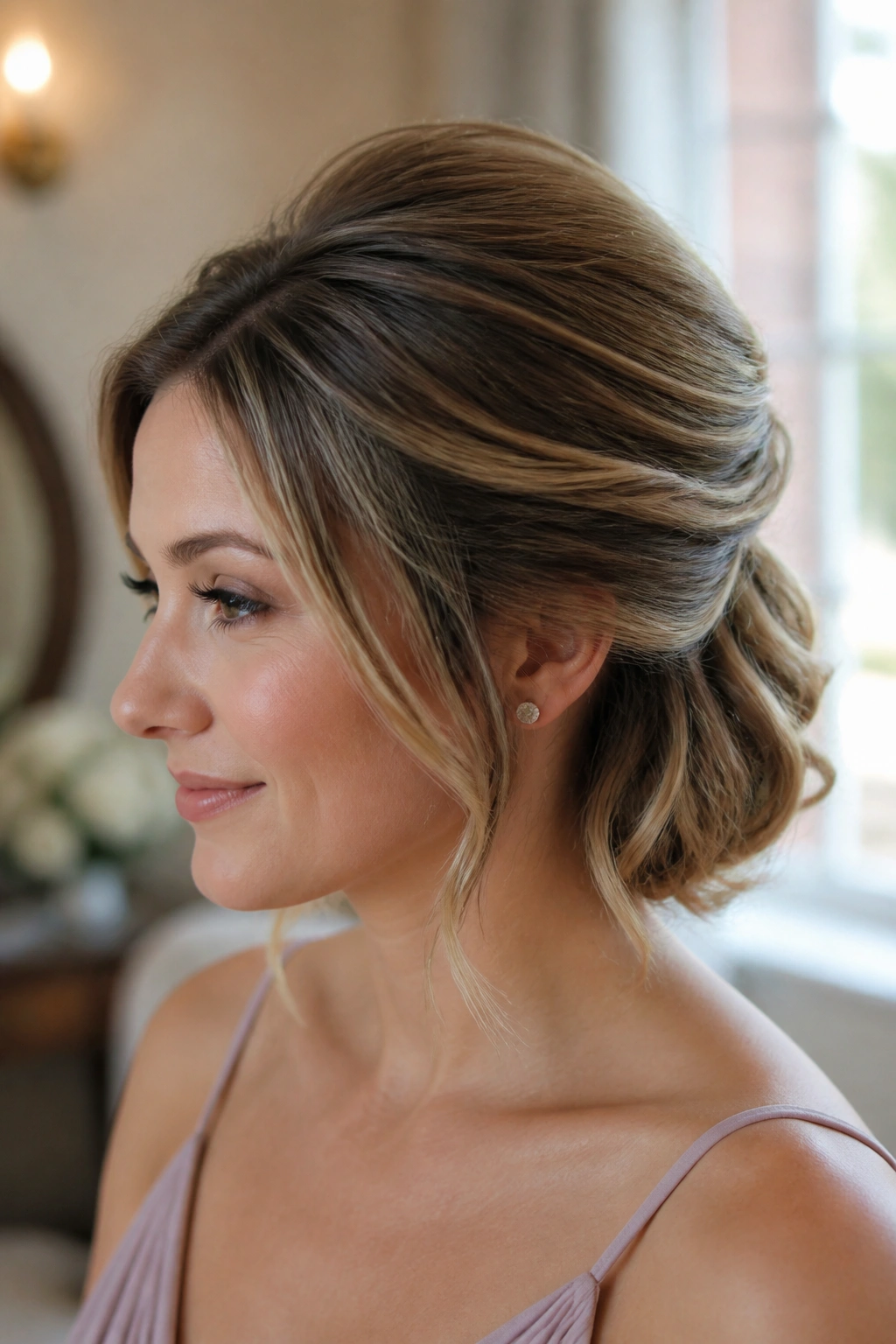
A pouf at the crown can go wrong fast if it gets too tall or too stiff. Keep it modest, and it becomes a very flattering bridesmaid updo for medium length hair.
The front section gets lifted just an inch or so at the crown, then smoothed back into a low pinned shape while the ends are waved and tucked underneath. That slight height gives the face some space, which is useful if the dress has a high neckline or the bridesmaid wants a little lift around the forehead.
Too much teasing makes the style feel dated. That is the trap. A small amount is enough, then the outer layer gets brushed smooth so the finished surface still looks clean. A boar-bristle brush works better here than a plastic one because it smooths without shredding the volume you just built.
This style pairs nicely with earrings that deserve room. The hair lifts, the neckline stays visible, and the overall shape feels calm.
20. Polished Twisted Chignon with Face-Framing Pieces

A polished twisted chignon is the style I trust when the bridesmaid dress needs the hair to behave without looking severe. Medium-length hair gives enough material for a proper twist, but not so much that the shape turns bulky, which is exactly what makes this one so dependable.
The hair is split into sections, twisted back toward the nape, and folded into a compact chignon that sits low and neat. Two thin front pieces can stay out if the dress is soft or the face needs a little movement. Keep those pieces narrow. Thick chunks can drag the whole look down.
What I like here is the balance. It feels formal, but not frozen. It looks deliberate from the front and tidy from the side, which matters in group photos where everybody turns their head at once and the back of the hairstyle gets its own moment.
If you want one practical rule for bridesmaid updos for medium length hair, it is this: build the shape where the hair wants to fold naturally. Fighting the length creates bulk and loose ends. Working with it gives you something clean, secure, and pretty from the first toast to the last dance.
