



A formal dinner party hair choice has a funny way of exposing bad decisions. The style that looked fine in the mirror can collapse after a coat check, a long greeting line, and one too many head turns across the table.
The best hairstyles for a formal dinner party do not need to shout. They need to stay put while you sit, laugh, lean in, and move through the evening without looking stiff. A low chignon can make a sharp dress feel calmer. Hollywood waves can soften a tailored jacket. A sleek ponytail can look far more expensive than a fussy updo when the finish is clean.
That middle ground matters. Too much hair and the whole look starts to crowd the neckline. Too little shape and the outfit can feel unfinished. Hair, clothes, and jewelry should all be talking to each other. If one of them is shouting, the whole thing gets awkward fast.
Temperature, texture, and length matter more than most people want to admit. Fine hair needs grip. Thick hair needs control. Curly hair needs a shape that respects the curl pattern instead of trying to flatten it into something it is not. Start with the styles that work with the hair you already have, then decide whether you want shine, height, softness, or all three.
1. Sleek Low Chignon

A sleek low chignon is the quiet overachiever of formal dinner hair. It sits low at the nape, keeps the neck open, and makes earrings look more deliberate than they really are.
Why It Works So Well
The shape is simple, but the effect is clean. A low chignon gives you that neat, expensive look without making your face feel boxed in. It also plays nicely with almost every neckline: strapless, halter, bateau, square, you name it.
The trick is not to make it too tight. Smooth the hair with a light cream or serum, gather it just below the nape, and twist it under itself once or twice before pinning. Three to five bobby pins are usually enough if you cross them in an X pattern. More pins than that and the bun starts to feel armored.
Quick Styling Notes
- Best for medium to long hair
- Looks strongest with a center part or a soft side part
- Works well with drop earrings or a bare collarbone
- A small amount of shine spray gives the surface a polished finish
Tip: Leave the bun a finger-width off the exact center of the nape if your face is narrow. That tiny shift keeps the shape from looking too severe.
2. French Twist
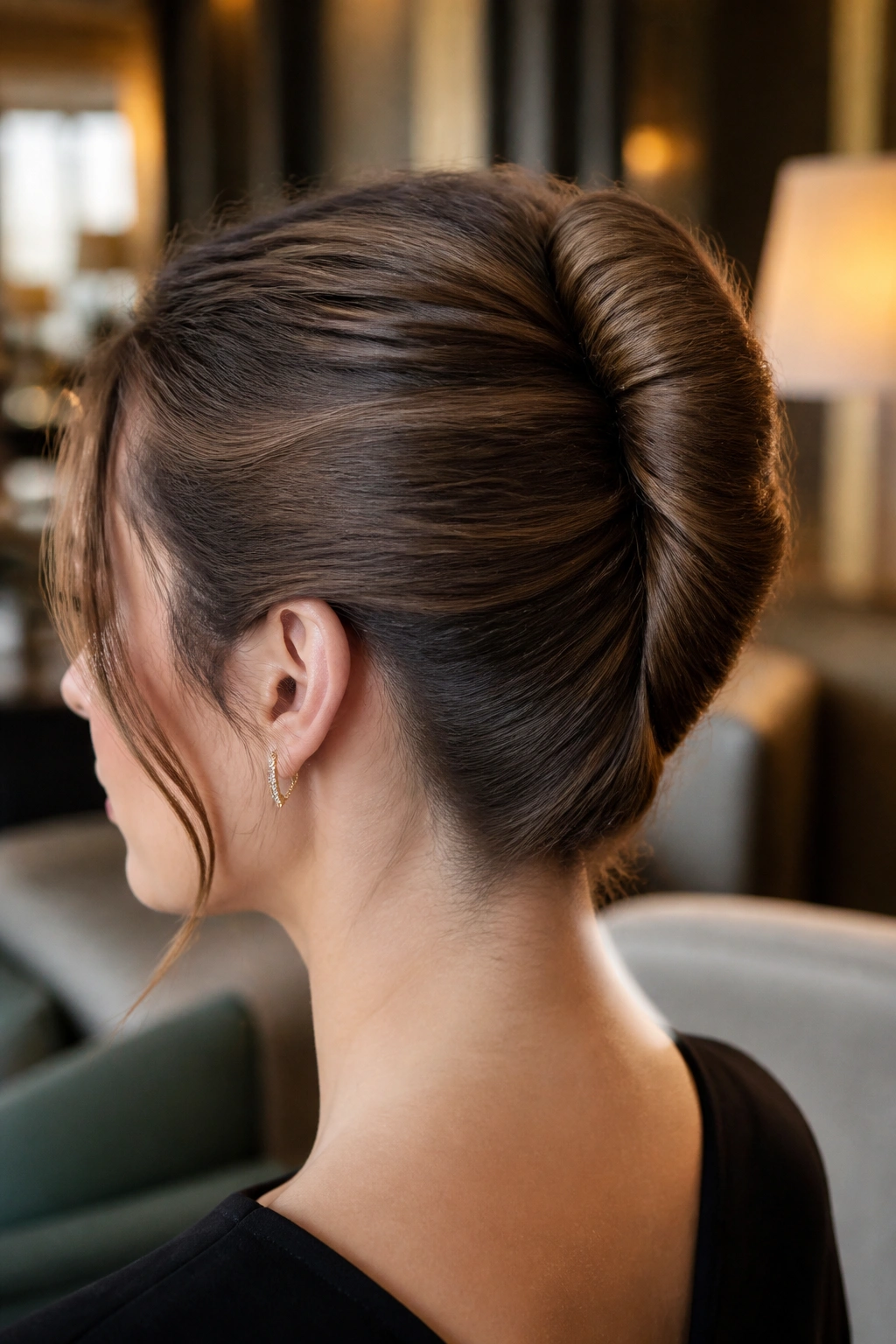
A French twist reads formal the second it goes up. There is no pretending here. It has posture, and that is exactly why it works for a dinner party.
The style is especially good when the outfit already has structure. A fitted blazer, a high-neck dress, or a top with sharp shoulder lines all pair well with the vertical line of a twist. The hair is pulled back, folded upward, and tucked into itself so the finished shape looks smooth from the side and neat from the back.
The biggest mistake is over-smoothing the front. If every strand is pinned flat, the whole thing can look stern. Leave a little softness near the temples and around the ears. Not mess. Just breath. A tiny bit of movement keeps the style from feeling like a courtroom hearing.
A French twist also loves a good pin. U-pins hold the shell of the twist better than a pile of short bobby pins. If your hair is slippery, rough it up first with dry shampoo or texture spray. Clean hair can work, but it needs help.
3. Old Hollywood Waves

Why do old Hollywood waves keep showing up at formal dinners? Because they sit right between glamorous and controlled. They frame the face, show off the shoulder line, and still look calm enough for a long meal.
The style starts with a deep side part and a curling iron, usually 1 to 1¼ inches in barrel size depending on hair length. Curl every section in the same direction, pin each curl while it cools, and do not brush them out too soon. That cooling step is what keeps the wave shape from collapsing into soft fuzz. Once the curls are set, brush them out with a boar-bristle brush or a wide paddle brush until the shape becomes smooth and glossy.
How to Wear It
Old Hollywood waves look especially strong with one-shoulder dresses, satin necklines, or anything that already has a little drama. The waves can sit all on one side, or they can sweep over both shoulders if the dress is simpler. A side part tends to give the most polished finish.
A light mist of flexible hairspray is enough. Heavy spray kills the movement, and that is the whole point of the style. Shine matters here, but stiffness does not.
4. Side-Swept Curls

A one-shoulder dress can make plain hair look accidental. Side-swept curls solve that problem fast.
The style works because it commits to the asymmetry. Curl the hair away from the face with a 1¼-inch iron, then sweep the fuller side over one shoulder and pin the opposite side just behind the ear. That keeps the eye moving in the right direction instead of making the hair fight the neckline. A small clip hidden under the top layer can hold the sweep without showing in photos.
What To Pay Attention To
- Build the part a little deeper than usual
- Keep the top smooth so the sweep looks deliberate
- Leave one soft front piece if your face needs balance
- Use a bit of shine serum on the ends, not the roots
If the curls are too uniform, the style starts to look pageant-y in the wrong way. Loosen a few strands with your fingers after they cool. Not all of them. Just enough to keep the movement soft around the shoulder.
This is one of the easiest styles that still feels dressed up. That matters when you do not want to spend forty minutes wrestling with pins.
5. Braided Crown Updo
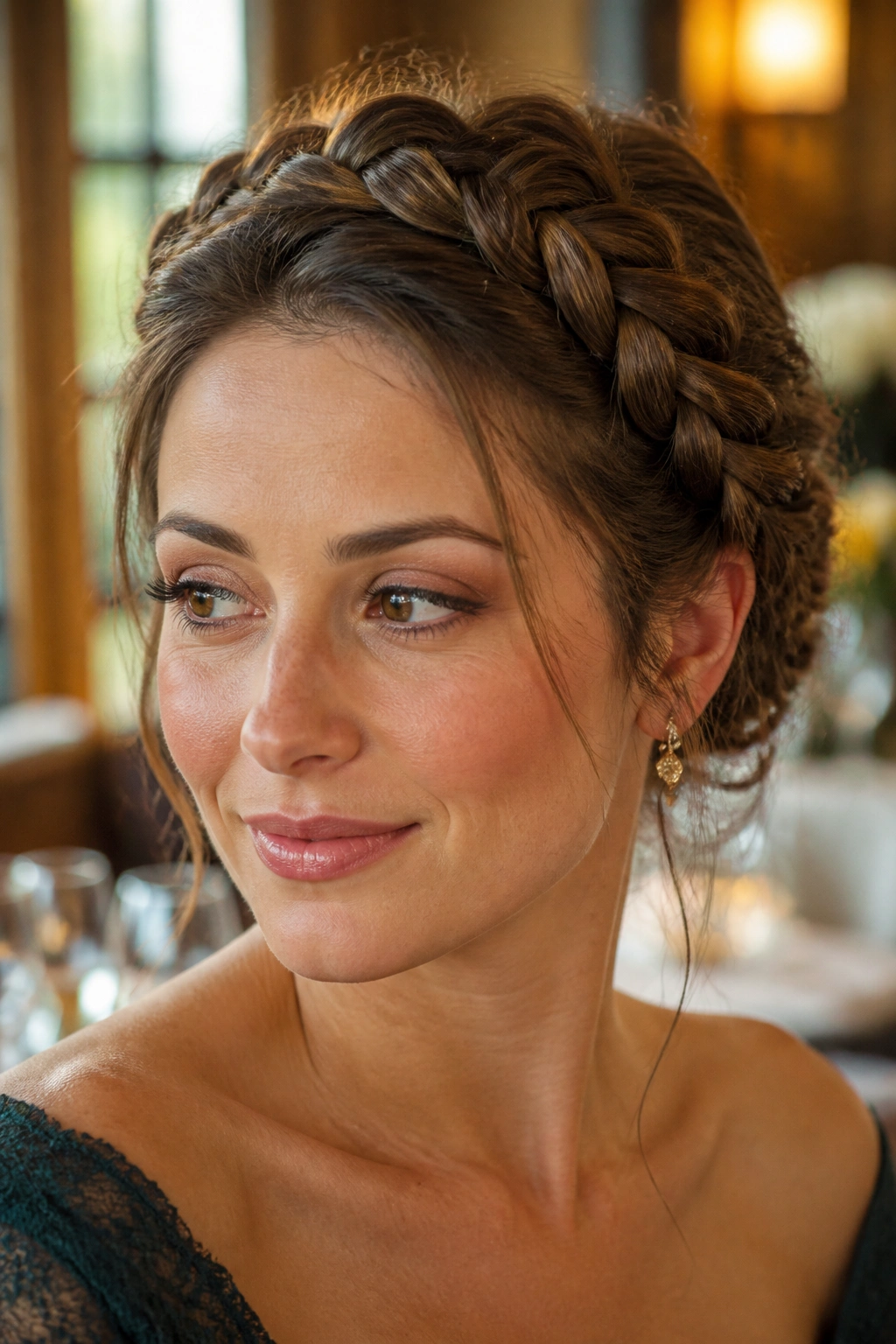
Braided crowns bring a softer mood to formal dinner hair, but they are not soft in a lazy way. They look thoughtful, which is a different thing entirely.
The braid runs along the hairline or across the top of the head and then folds into a tucked-up shape at the back. It has a little romance, sure, but the useful part is structure. The braid gives the style grip, and grip matters if your hair tends to slip out of pins by dessert.
Clean, silky hair is the enemy here. Second-day hair usually behaves better because it has a little texture. If your hair is freshly washed, a touch of dry shampoo at the roots will help the braid stay put. Keep the braid slightly loose around the crown so it does not look like it was pulled with pliers.
The best versions do not hide every strand. A few tiny pieces around the temples soften the look, especially if the dress is very tailored. That slight looseness makes the whole thing feel less like a school recital and more like a dinner party where someone actually knows what they are doing.
6. Polished High Bun
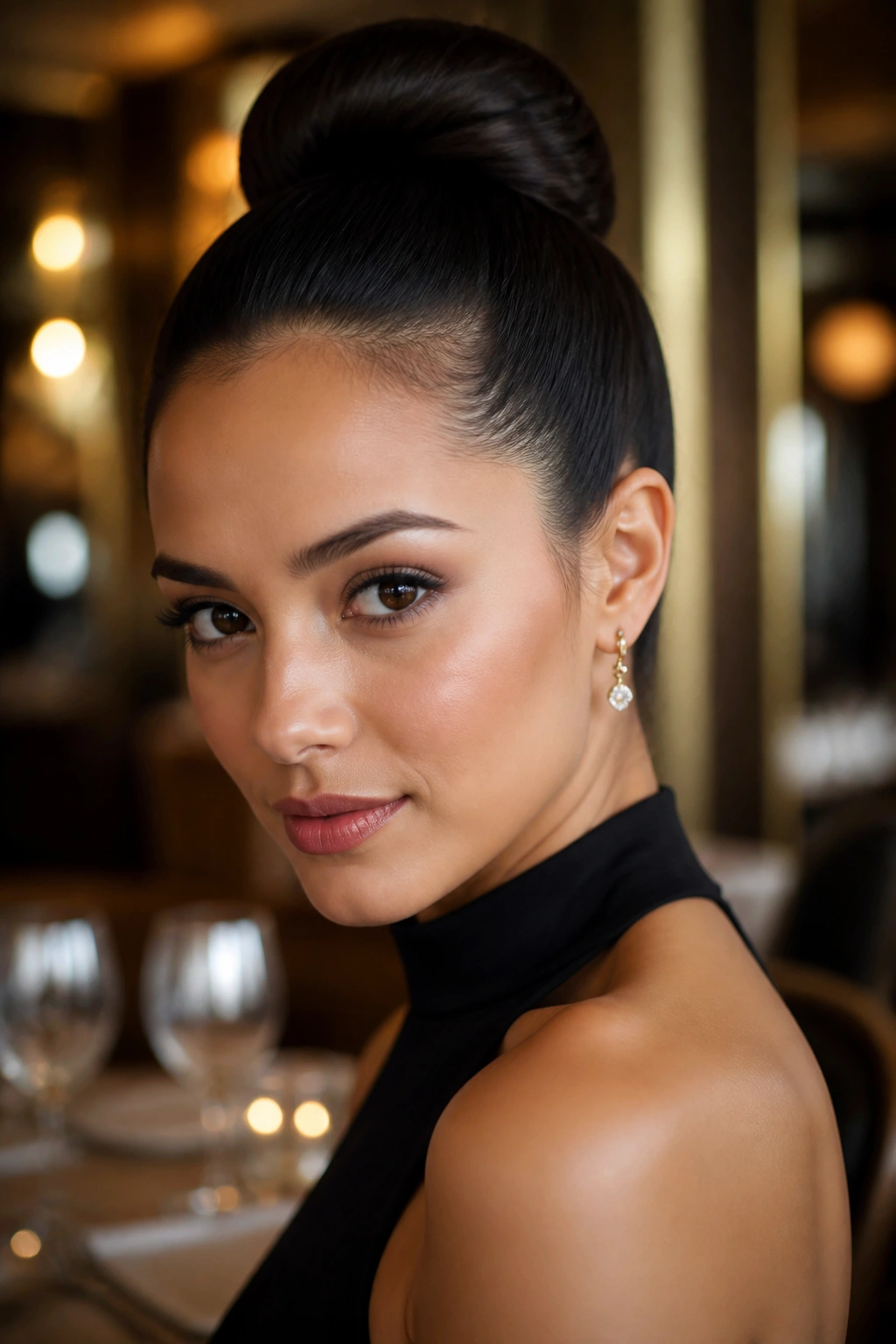
Low buns are easy. High buns are more decisive.
A polished high bun opens the face, shows off the neck, and gives the outfit a little lift. It works best with higher necklines, dramatic earrings, and dresses that already have detail near the shoulders. A high bun keeps all of that visible instead of competing with it. If the bun sits too high and too tight, though, it starts to look severe. That is the line to watch.
A tiny cushion or donut can help if your hair is fine, but do not build a giant sphere for no reason. A formal dinner party is not the place for a bun that looks like it is trying out for a ballet role. Keep the surface smooth, wrap the ends neatly, and pin the base until it feels firm.
When It Helps Most
The style is especially useful if your hair falls flat by the end of the day. Up top, it has a better chance of surviving. It also works well when you want the earrings and makeup to do more of the talking. The bun should support the look, not steal the scene.
If your face is long, leave a little width at the bun’s base. A narrow topknot can stretch the face more than you want.
7. Wrapped Low Ponytail

A low ponytail is only casual when the elastic shows and the ends hang limp. Wrap the base, clean up the finish, and it becomes dinner-party hair without much fuss.
Why the Wrapped Base Matters
The wrapped section makes the style look finished. Take a 1-inch strand from under the ponytail, wrap it around the elastic, and pin it underneath so the band disappears. That one move changes everything. The rest of the ponytail can stay sleek, slightly bent at the ends, or softly waved if your hair likes movement.
A low ponytail looks best when the crown is smooth but not flat. A little lift at the top keeps it from reading as office hair. If your hair is thick, use a strong elastic and two hidden pins under the base. If it is fine, a tiny bit of teasing at the crown gives the ponytail more body without making it puffy.
Small Details That Help
- Curl the ends under slightly for a cleaner line
- Keep the part straight or softly off-center
- Use shine spray from mid-length to ends
- Hide the elastic completely if the dress is formal
One good ponytail is usually better than three overworked styling ideas. That is the honest truth.
8. Half-Up Twist with Volume

Can a half-up style count as formal? Absolutely, if the crown has enough shape and the bottom half has enough movement.
The style works because it gives you the lift of an updo without forcing all the hair off the face. Twist or pin back the sections from the temples, then smooth them into a soft anchor at the crown. The bottom can stay in loose curls, bends, or a brushed-out wave. That contrast is what makes it feel finished instead of casual.
How to Keep the Crown Lifted
Start with a little root spray at the crown and blow-dry that area upward, not flat. A teasing comb helps, but use it lightly. You want support, not a nest. Once the top has height, smooth only the outer layer so the surface looks neat while the underside keeps the volume.
This style is smart for long hair that you do not want to pin completely away from the neck. It is also a good answer when you like seeing some movement around the shoulders. A tiny barrette can work, but a pair of hidden pins usually looks better for dinner.
The hair should feel soft when you touch it. If it feels crunchy, there is too much product.
9. Gibson Tuck

The Gibson tuck looks like it belongs next to linen napkins and a candlelit table. That is not a bad thing. It has a vintage shape, but it reads as elegant rather than costume-y when the finish is clean.
The basic idea is simple: gather the hair low, create a small pocket or roll above the nape, and tuck the ends inward until they disappear. It works best on shoulder-length hair or longer, especially if the ends have a slight wave. Straight, slippery hair can still do it, but a little texture helps the tuck hold its shape.
What To Watch For
- Use 4 to 6 pins to secure the roll
- Keep the tuck low enough to show the neck
- Leave the surface smooth, not glossy to the point of looking wet
- A side part softens the look if you want less symmetry
The best Gibson tucks do not scream for attention. They just sit there looking composed. If your dress has embroidery, lace, or a dramatic back, this is one of the easiest ways to keep the hair from competing with the clothing.
10. Glassy Center-Part Straight Hair

Straight hair does not have to mean plain hair. When the line is sharp and the finish is glossy, it can look more formal than a style with twice the pins.
A center part gives the hair a clean frame, and the straight length makes a strong visual line down the body. That line is flattering with minimalist dresses, tailored suits, or anything with a very modern shape. The key is not volume. The key is condition. Split ends and dry ends show up fast when the hair is sleek, so this style works best when the cut is tidy and the shine is real.
Run a heat protectant through the hair first, then flat iron in small, 1-inch sections so the result stays smooth from root to end. One pass is usually enough if the iron is hot enough and the section is small. After that, press a tiny bit of serum through the mid-lengths and ends only. Do not load the roots with product unless you want them to look greasy in the first hour.
Tucking the front pieces behind the ears can make the style feel more formal. A single earring gets its moment, and the whole shape looks deliberate.
11. Voluminous Blowout
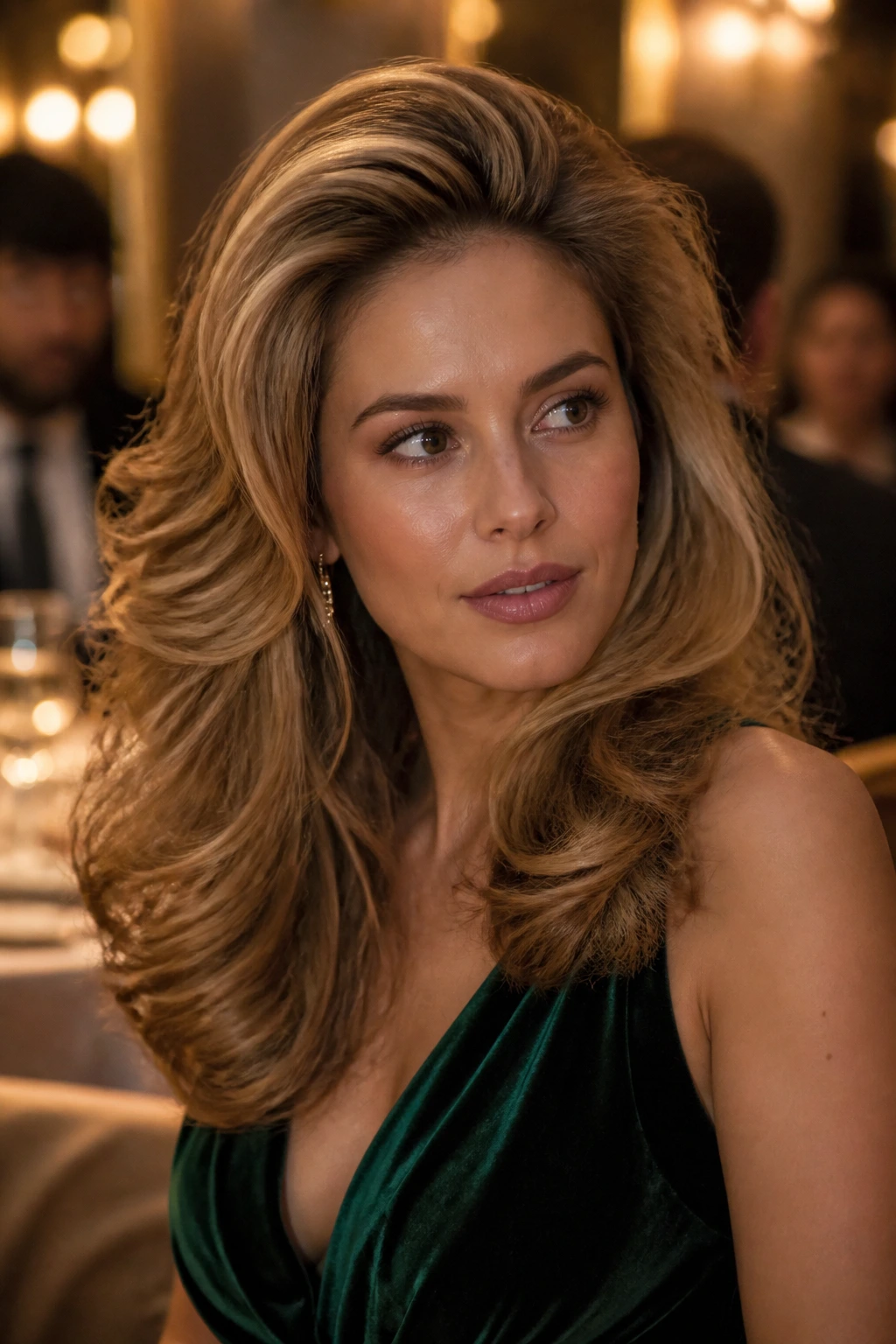
A blowout is the least fussy style that still feels fully dressed. It does not try too hard, and that is exactly why it often wins.
The shape depends on lift at the roots and movement through the ends. A round brush, a dryer with a nozzle, and a bit of root-lift spray do most of the work. Blow each section away from the face, then roll the brush under at the ends for a soft curve. If you have long hair, a 2-inch round brush gives a smooth finish without too much curl. Shorter layers may need a smaller brush near the crown.
A good blowout is not one flat shape from top to bottom. The crown should have a little body, the sides should curve cleanly, and the ends should sit with movement rather than flipping wildly in every direction. A cool shot at the end helps lock the shape. So does letting the hair cool in large rollers for a few minutes if you have the time.
This style is especially good when the dress already carries a lot of visual weight. Beading, sequins, big sleeves, sculptural fabric — all of that pairs well with hair that looks soft and expensive, not overbuilt. It is polished without acting precious about it.
12. Curly Pinned Updo
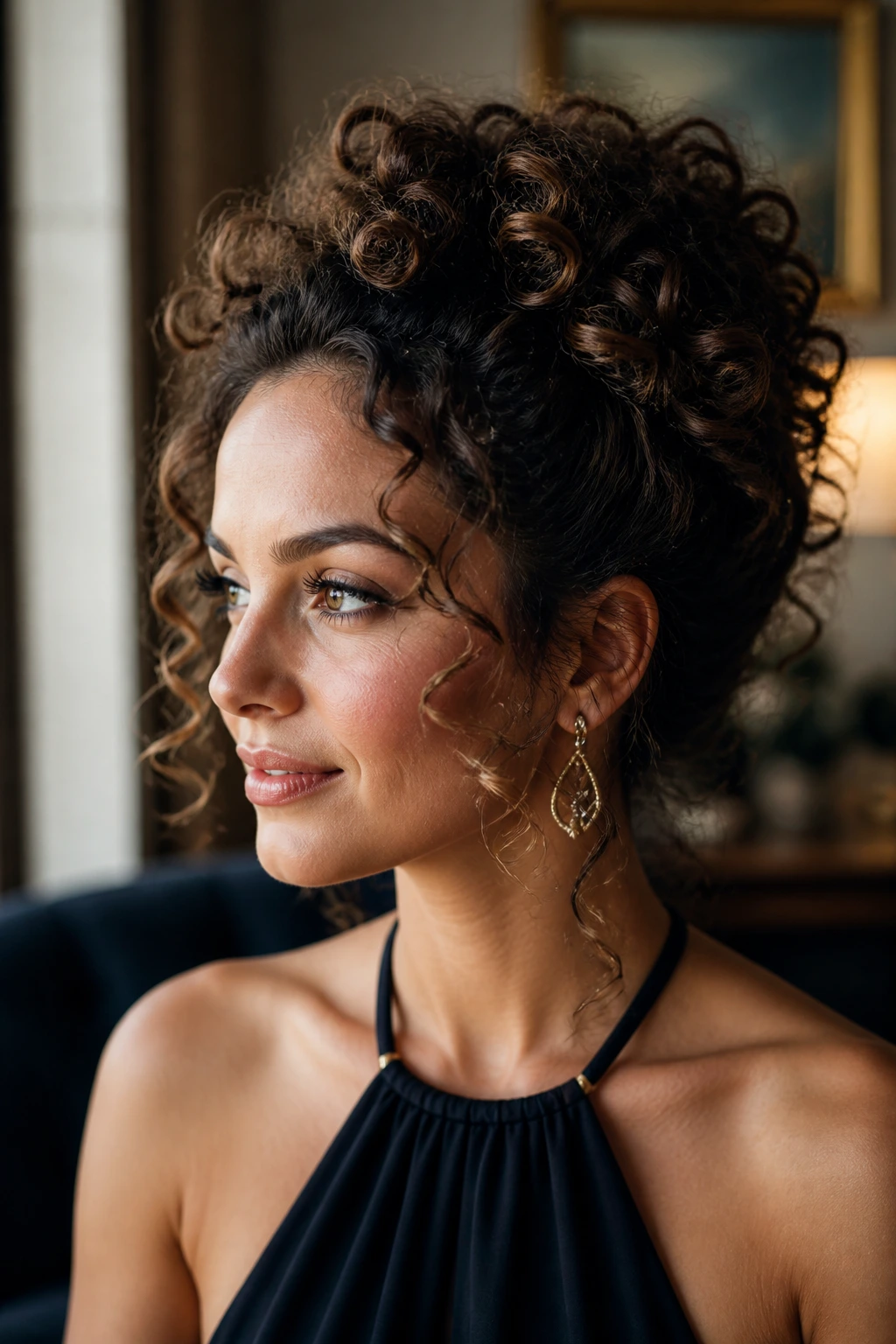
Unlike a sleek bun, this style keeps your curl pattern visible. That makes a huge difference, especially when you want the hair to feel like yours and not like it was ironed into submission.
The shape starts with curls that are set, dry, and separated enough to move. Pin them upward in sections, letting each curl cluster keep its own identity instead of crushing everything into one flat roll. A few pins hidden under the curl mass are enough. Too many pins start to flatten the shape and create a hard edge around the head.
How To Pin Without Flattening It
Use the pins to support, not squeeze. Slide them underneath the curl bundle and catch only the base of the section. Leave one or two curls loose at the temple or around the neck if you want softness. A satin scarf while the curls cool can help preserve the pattern before you pin.
This is a strong choice for natural curls, coils, or a set that already has shape. It also works nicely with statement earrings because the curls frame the face without covering the whole ear. A decorative comb can help, but the style does not need much ornament if the curl pattern is healthy and defined.
A formal dinner does not require you to hide texture. Sometimes the texture is the best part.
13. Rope-Braid Bun
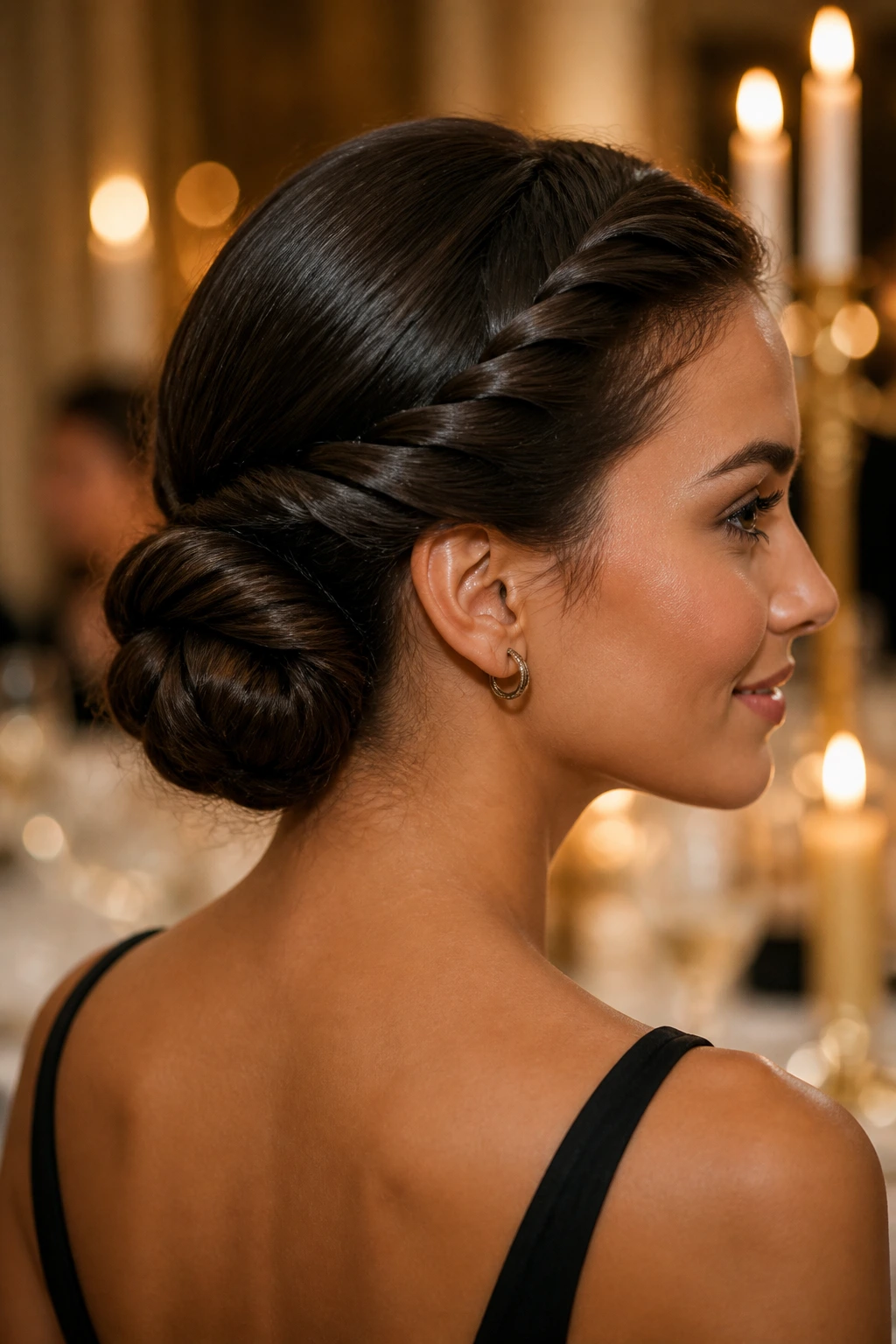
Rope braids look intricate, but the technique is almost laughably simple. Twist, twist, wrap, pin. That is the whole deal.
The reason it works so well for formal hair is the texture. A rope braid has a tighter, smoother surface than a loose plait, so the finished bun feels clean and a little sculpted. It is especially useful on thick hair because the twist controls bulk without making the style feel heavy.
How To Build It
- Split the ponytail into two equal sections
- Twist each section in the same direction
- Wrap them around each other in the opposite direction
- Coil the rope into a bun at the nape
- Pin the shape with U-pins or long bobby pins
The style can sit low for a quieter look or slightly off-center if you want a little edge. If your hair is slippery, a touch of texturizing spray before you twist helps the braid hold its shape. If you have layers, tuck the shorter pieces under the bun instead of trying to force them into the rope itself.
A rope-braid bun is a good choice when you want something neat but not severe. It has texture, which keeps it from looking flat under evening lighting.
14. Faux Bob for Short Hair

Can short hair feel formal without extensions? Yes. A faux bob is one of the smartest tricks in the book, and it works even better when the hair already has a bit of bend.
The point is to tuck the length under so the ends sit at the nape or just under the jawline, creating the illusion of a shorter, more sculpted shape. It is especially handy for lob-length hair that reaches the collarbone. Curl the ends inward first, then pin the lower layers under themselves in small sections. A few invisible pins along the nape do the heavy lifting.
How To Make the Tuck Hold
A little texture helps a lot. Freshly washed hair can slip, so a light mist of dry shampoo or texture spray gives the pins something to grip. If the hair is straight, bend the ends with a flat iron before tucking them. That keeps the line from looking blunt in a bad way.
This style pairs well with dramatic earrings and a dress that already has strong shape around the shoulders. It also works when you want the neck to look longer without committing to a full updo. Short hair does not need to be boring to be formal.
A side part can make the faux bob feel softer, while a center part gives it more of a fashion edge.
15. Sculpted Asymmetrical Knot

Centering everything is not always the smartest move. A sculpted asymmetrical knot gives the face a little drama and makes the whole look feel more current without becoming fussy.
The knot sits low and off to one side, usually tucked just behind one ear or near the nape on the heavier side of a deep part. The opposite side stays smooth and close to the head, which gives the style its shape. That contrast is the whole point. It works well with dresses that already have one strong detail — a statement sleeve, a beaded shoulder, a bold earring, a sharp neckline.
This is not a style for volume everywhere. Keep one side sleek, fold the knot neatly, and secure it with pins that disappear into the hair. A small comb or a single decorative pin can look lovely here, but the shape itself should do the work. If the hair is too loose, the asymmetry starts to read like indecision. If it is too tight, the style loses its ease.
A sculpted knot is the sort of hair that lets the outfit stay in the lead while still looking intentional. Good dinner-party hair knows when to step back.
