



Square faces wear structure well. The jaw looks strong, the forehead and cheekbones tend to line up, and a bad haircut can make all of that feel harder-edged than it needs to.
Side-swept hair changes the whole mood.
That’s the real trick here. A deep part, a soft bend, a fringe that falls diagonally, or an updo that sits a little off-center breaks up the straight lines around the face and gives the eye somewhere else to go. It doesn’t hide your features. It works with them.
The styles below stay useful because they play that same game in different ways. Some are polished, some are loose, some take five minutes and a dry shampoo can, and some need a curling iron and a couple of bobby pins. All of them are built to soften a square jaw without making the face look lost in hair.
1. Deep Side Part with Soft Waves
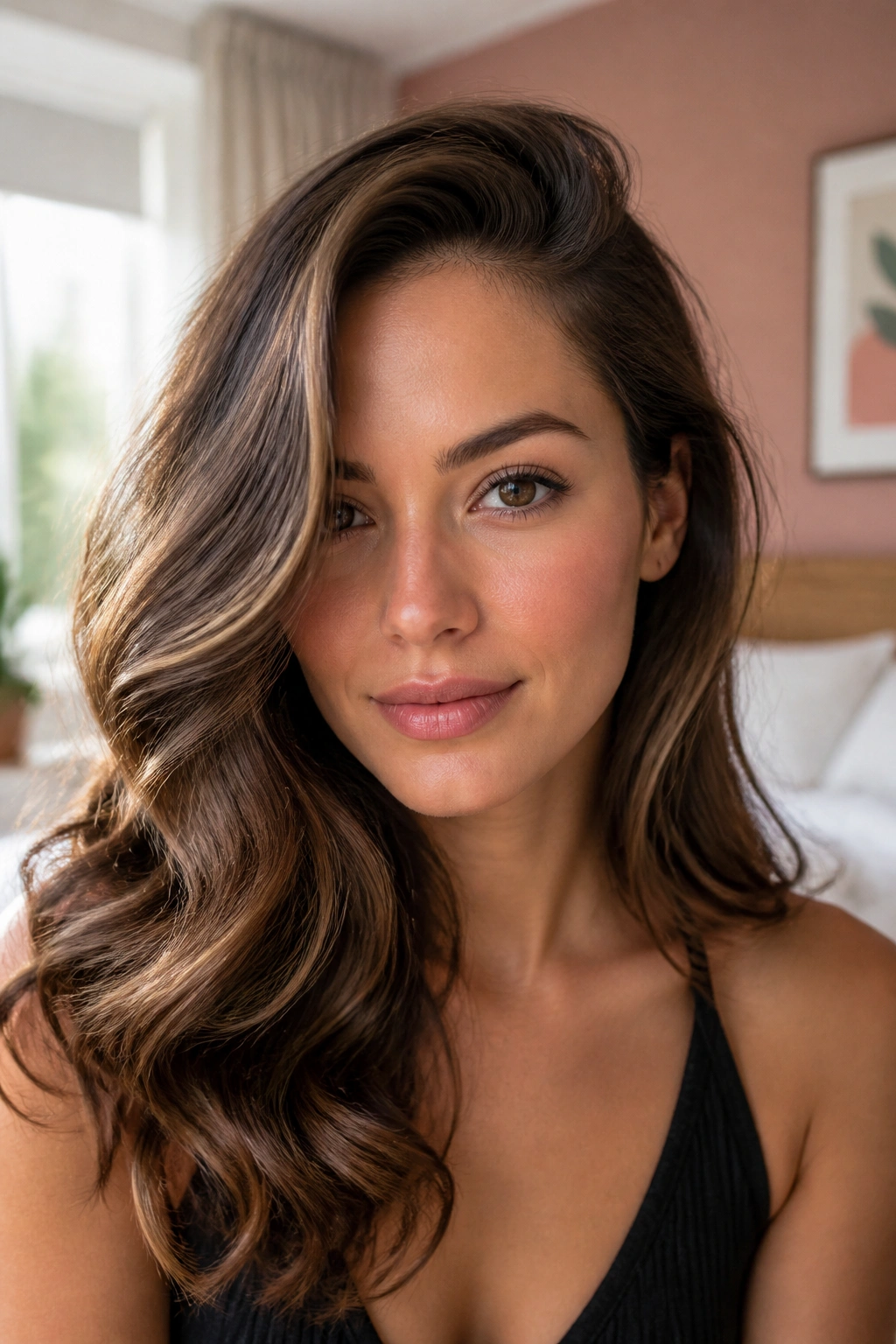
A deep side part is the fastest way to change how hair sits on a square face. Move the part about 2 to 3 inches off center, and you get an instant diagonal line that breaks up the width of the forehead and jaw.
Why It Works
Soft waves do the rest of the work. Curl the hair away from the face on the heavier side, then brush it out so the bend looks loose instead of crispy. The goal is movement, not helmet hair.
- Start the part at the arch of one eyebrow.
- Use a 1-inch or 1.25-inch curling iron.
- Leave the ends a little straighter for a softer finish.
- Tuck the smaller side behind one ear if you want the cheekbone to show.
Small detail, big change: keep the wave highest around the cheekbone, not right at the jaw. That keeps the face looking longer.
2. Shoulder-Length Lob with a Swooped Front Piece
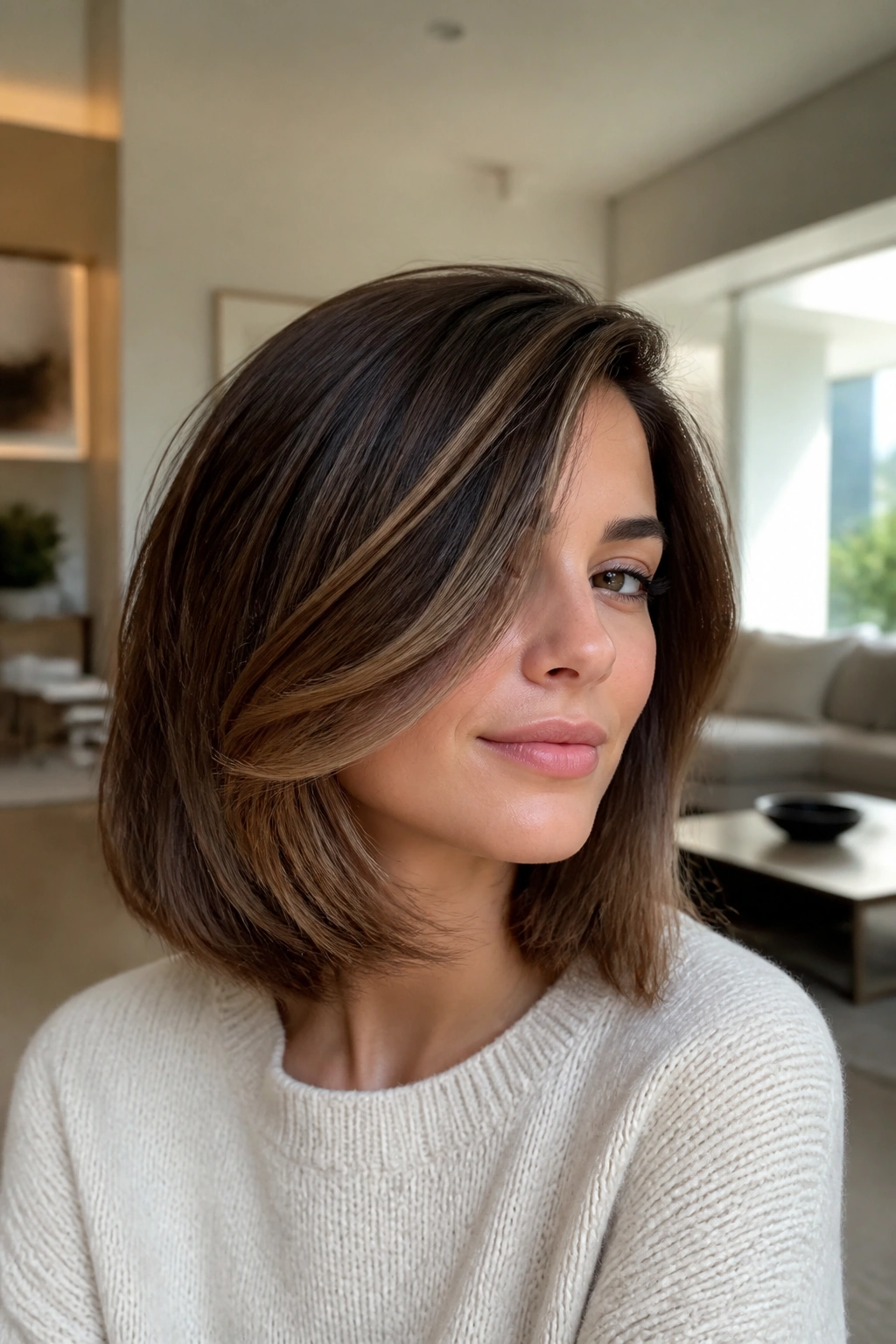
A lob sits in that sweet spot where the hair has enough length to soften the face but not so much that it drags everything down. On square faces, the best version is the one with a front piece that sweeps across the cheek and curves away at the end.
The shape matters more than the length here. If the front falls straight, it can echo the jaw. If it bends, it softens it. That little swoop near the mouth or chin is doing quiet work most people never notice.
This style is especially good if your hair is straight or lightly wavy and you do not want to spend twenty minutes styling every morning. Blow-dry the front section over a round brush, then pinch the ends with a bit of cream or serum so they stay curved instead of flipping out wildly. Clean. Easy. Useful.
3. Long Layers and Side-Swept Bangs
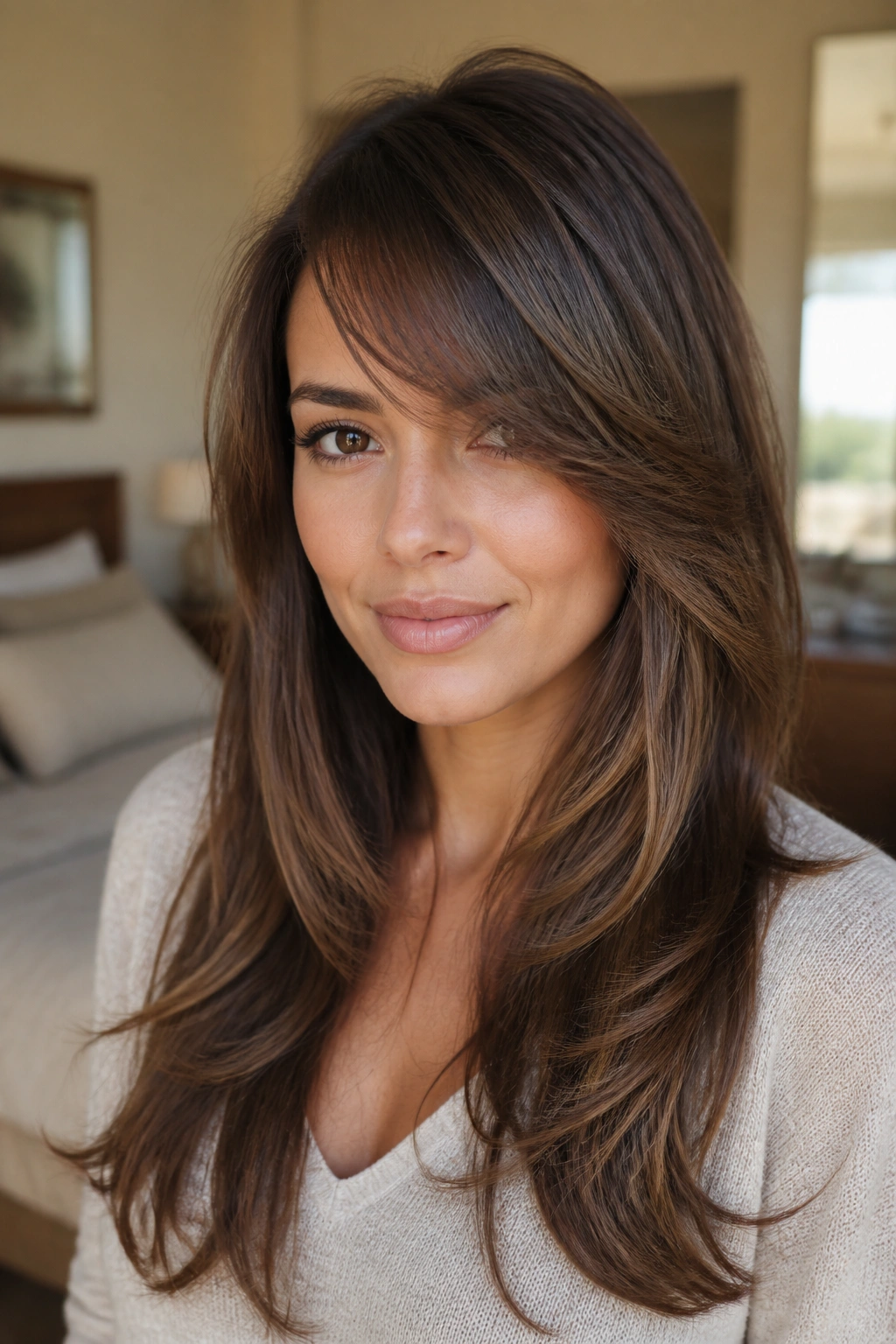
Why do side-swept bangs work so well on square faces? They cut across the forehead on a diagonal, which makes the face feel a little longer and a little less boxy. Straight-across bangs can look severe on this face shape. Side-swept ones almost never do.
The layers need to stay long enough to move. If they start too high, the hair can puff out around the jaw and make the face look wider. A better cut starts the layers around the collarbone or just below it, then keeps the front pieces soft and feathered.
How to Style It
Blow-dry the bang section in the direction you want it to fall, but don’t flatten it to the scalp. A round brush with a medium barrel gives enough bend without turning the fringe into a corkscrew. Finish with a cool shot, then use a light mist of flexible hairspray.
One quick note: if your hair is thick, ask for bangs that are slightly longer at the outer edge. That keeps the sweep from looking choppy.
4. Side-Swept Pixie with Tapered Sides
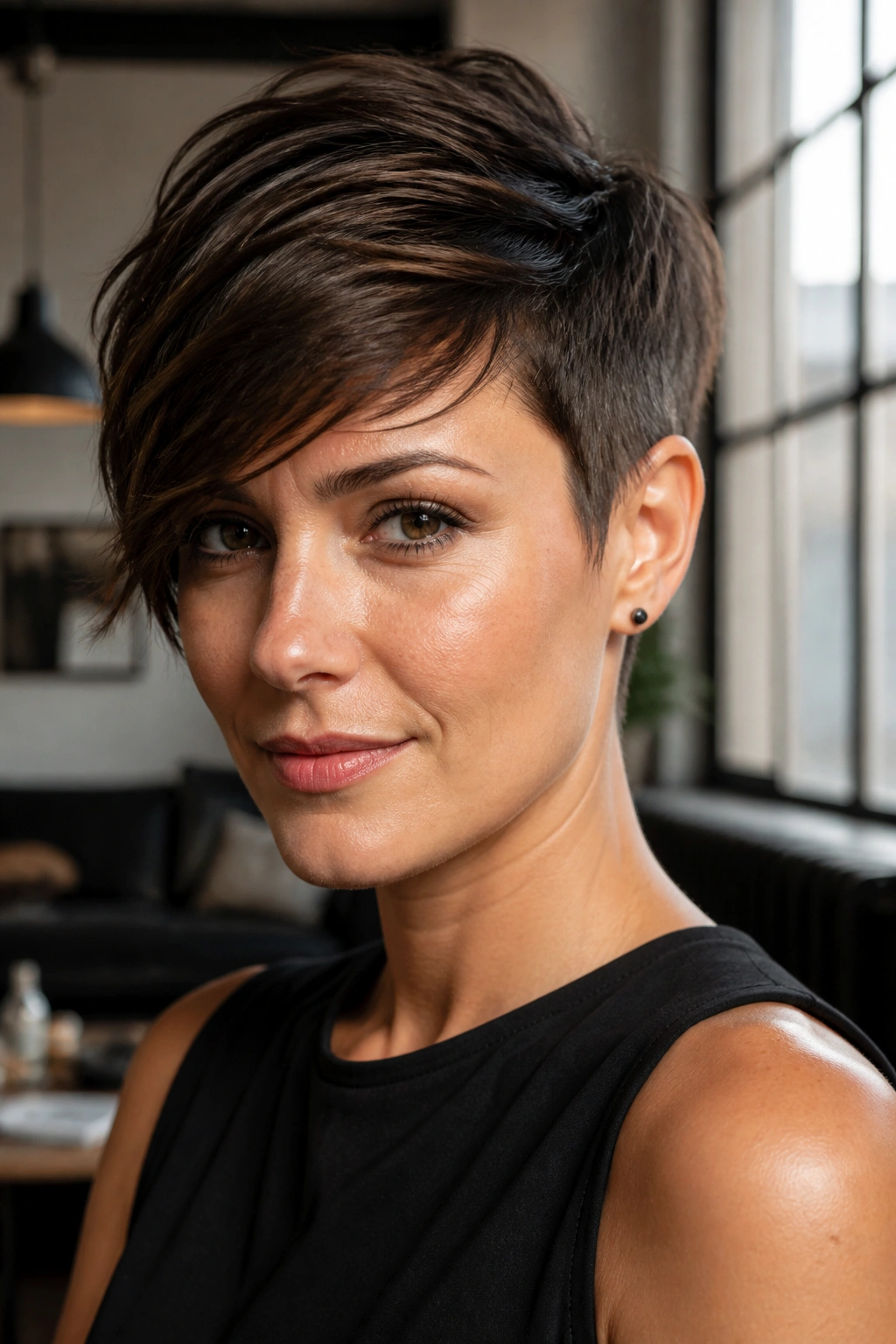
Short hair can be great on square faces. The catch is that it needs softness on top, not a stiff, square shape around the temples.
What Makes It Different
A side-swept pixie keeps the sides tapered and the top longer, usually with 2 to 4 inches of length at the fringe. That longer front section bends across the forehead and takes attention away from the jawline, which is exactly what you want.
- Ask for a longer fringe that reaches the eyebrow or cheekbone.
- Keep the sides close to the head so they don’t add width.
- Use matte paste for piecey texture.
- Sweep the top in one direction, then separate the ends with your fingers.
Best for: straight, wavy, and slightly thick hair that can hold a shape without puffing up.
5. Sleek Low Bun with a Deep Side Part
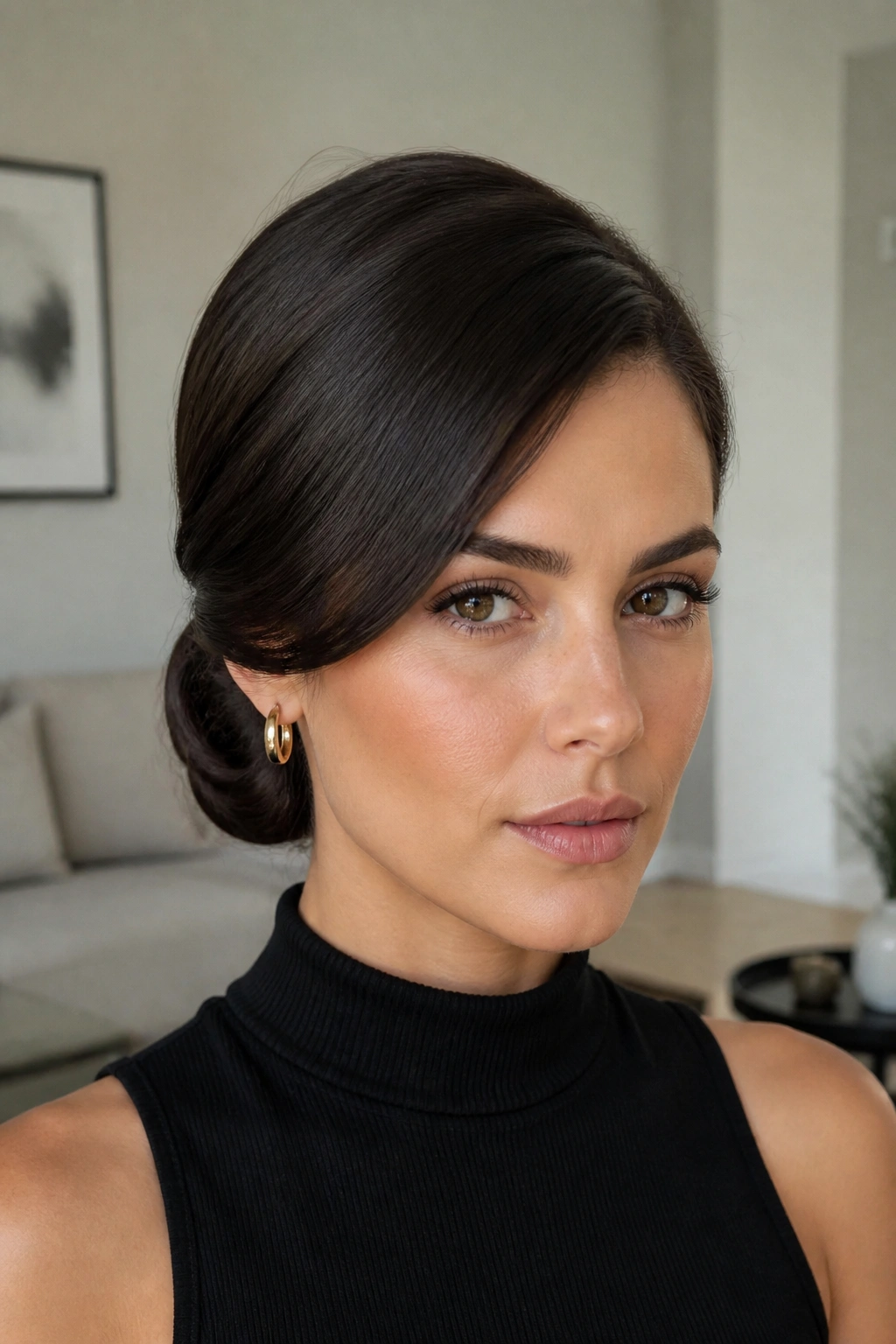
A low bun does not need to be severe. In fact, on square faces, the softer it looks, the better. A deep side part gives the style a little movement before the hair even gets pinned, and that keeps the whole shape from feeling too rigid.
The bun should sit low at the nape, slightly behind one ear instead of dead center. That offset placement matters. It lets the face breathe on one side while still keeping the neck open and clean. Leave one fine strand loose near the temple if you want the edges of the face to look less sharp.
This is one of those styles that looks expensive even when it’s not. A smoothing cream, a brush, and six to eight bobby pins are enough if the hair is cooperative. If your hair slips, mist the roots with dry texture spray before you gather it. That grip saves the whole look.
6. Old-Hollywood Side-Swept Waves
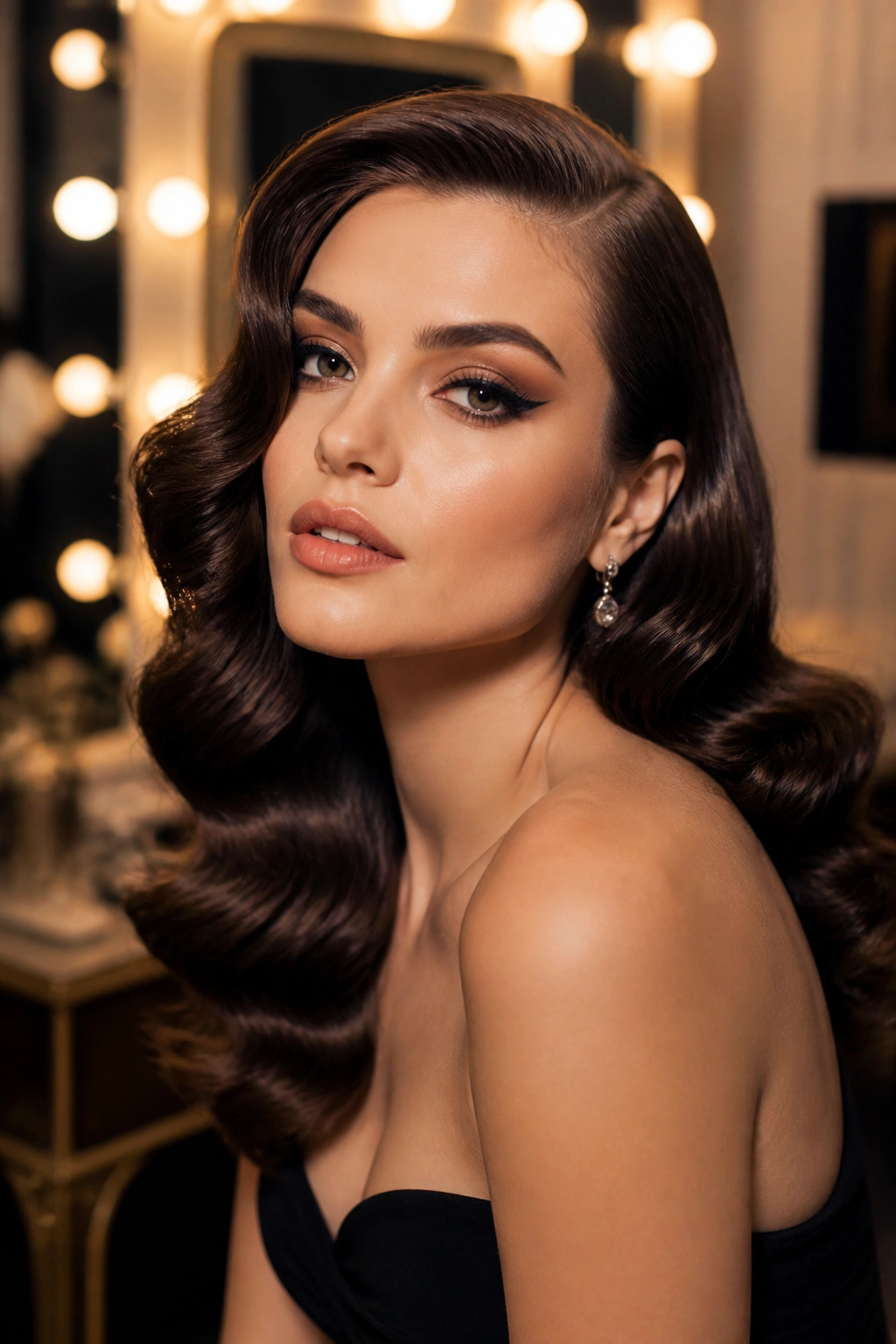
A square face and old-Hollywood waves get along because the style bends in one direction and stays glossy, which softens all the straight lines around the jaw. Unlike beach waves, this look is more sculpted. It has a clear shape.
Use a 1.25-inch iron and curl each section away from the face. Pin the curls while they cool if you want them to hold that smooth arc. Then brush them out with a paddle brush until the wave becomes one continuous line over the shoulder.
What to Watch For
The volume should sit high enough to lift the face, but not so high that it turns into a 1980s blowout. That’s the line. Keep the front brushed over one eye, and let the ends curve toward the collarbone.
This style loves a side part, a little shine spray, and hair that has been prepped with heat protectant from roots to ends.
7. Half-Up Ponytail with a Side Sweep
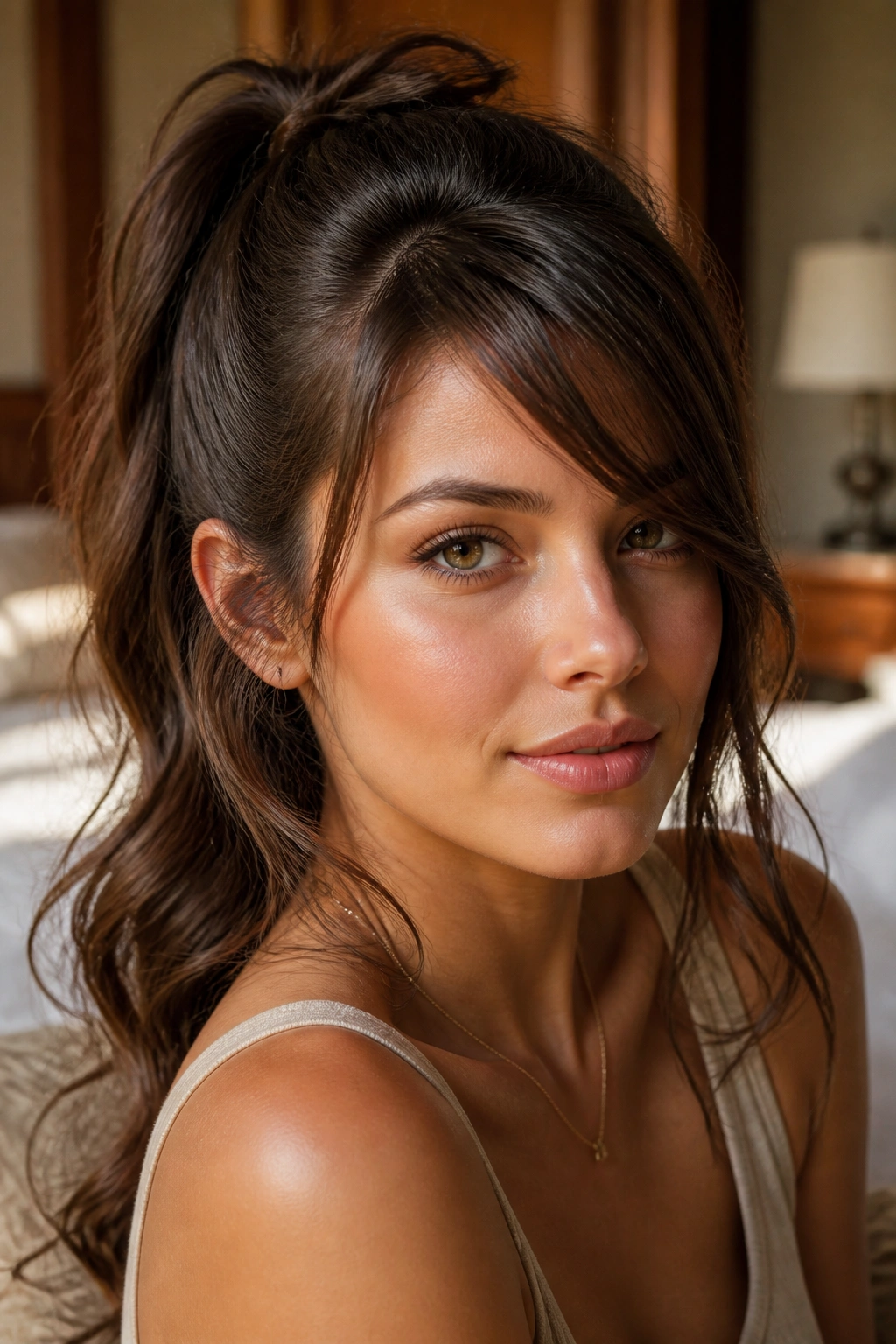
Some days you want hair off your face, but not all the way back. That’s where the side-swept half-up ponytail earns its keep. It pulls attention upward, keeps the crown lifted, and leaves enough softness around the cheeks to flatter a square face.
How to Style It
Gather the top half of the hair from temple to temple, then secure it a little off-center rather than right at the crown. Sweep the front sections across one side before tying anything down. That single move changes the shape from sporty to softer.
- Tease the crown lightly for height.
- Leave two thin pieces near the face.
- Wrap a strand of hair around the elastic.
- Curl the loose ends with a 1-inch iron if the hair needs movement.
Use this when: your hair is second-day, the roots need a lift, or you want something quick that still looks thought out.
8. Layered Lob with a Soft Off-Center Part
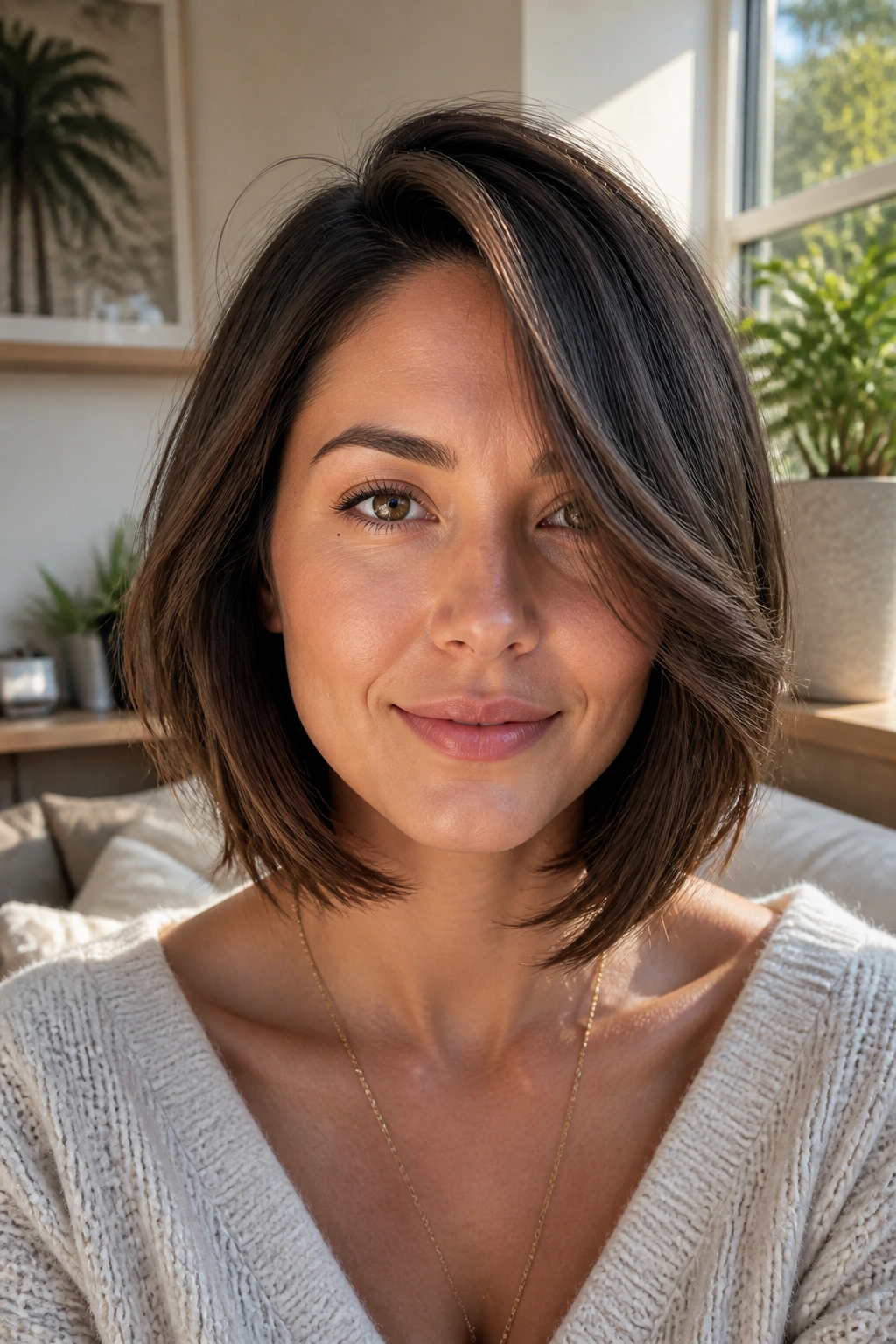
A lob does not need dramatic waves to flatter square faces. Sometimes the part does most of the work. Shift it just an inch or two off center, and the whole shape stops reading as straight and blocky.
The layers should be gentle, not choppy. Think movement at the ends rather than heavy slicing all through the sides. A soft bend at the bottom helps the hair skim the jaw instead of sitting on it like a line. That’s a small distinction, but it changes the face shape a lot in real life.
This cut is good for people who want low-maintenance hair that still looks deliberate. Air-dry it with a little curl cream, or blow-dry the ends under with a round brush if you prefer polish. Either way, don’t flatten the roots too much. A little lift keeps the face from looking wider.
9. Braided Crown Swept to One Side
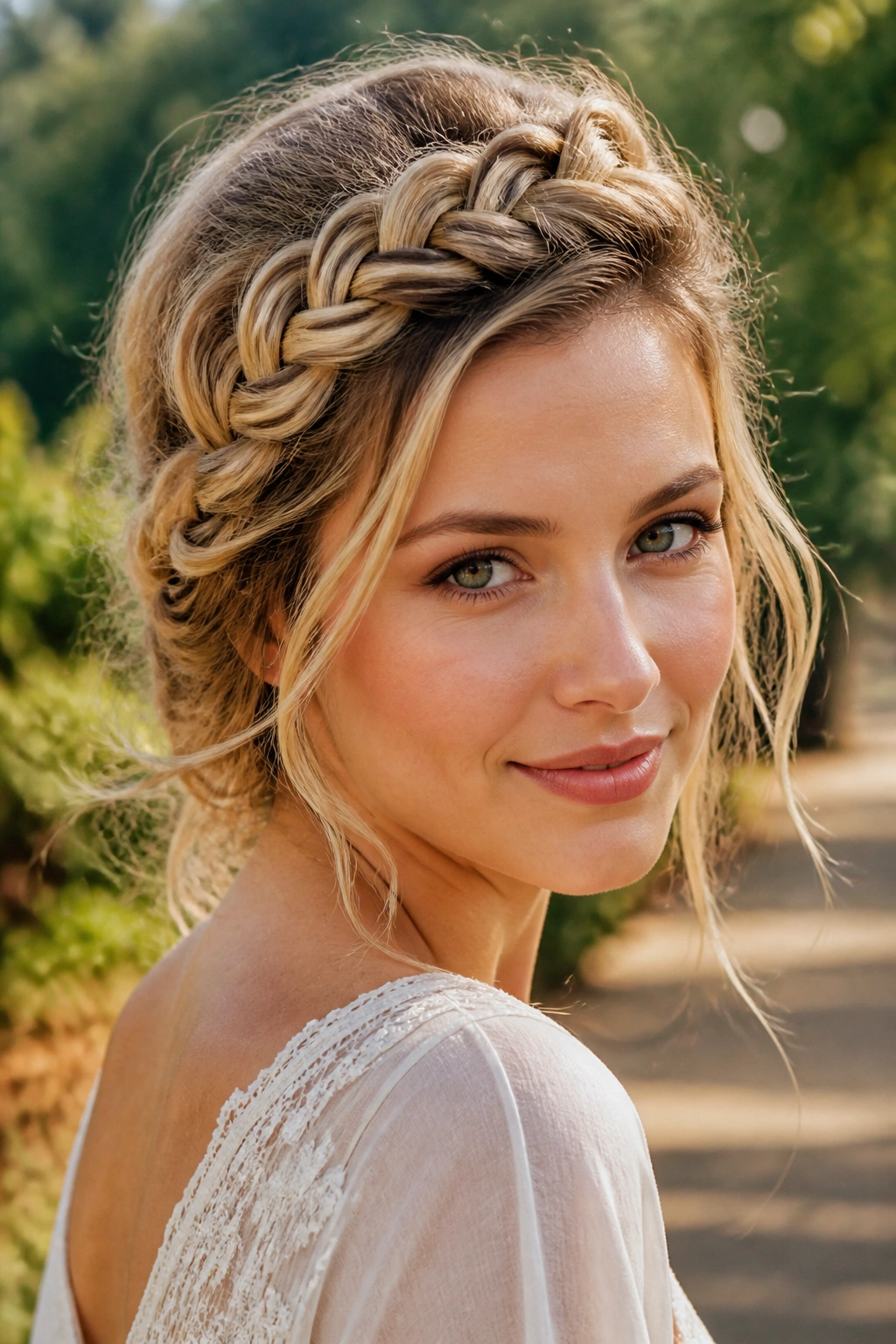
Can braids work on square faces? Absolutely, if the braid moves diagonally instead of sitting straight across the head. A braid that starts near one temple and sweeps back to the opposite side creates a long line that softens the face without hiding it.
The best version is loose, not tight. A sleek, tight braid can make the angles feel sharper. A braid with a bit of width and a few wispy pieces around the hairline looks friendlier and more balanced. Dutch braids, French braids, and rope braids all work if you keep the finish soft.
How to Get the Most From It
Pull the braid slightly apart once it’s secured. People call this pancake-ing, and yes, the name is odd, but the result is useful. The braid looks fuller, the face looks a touch narrower, and the hairline doesn’t feel boxed in.
10. Messy Low Side Ponytail
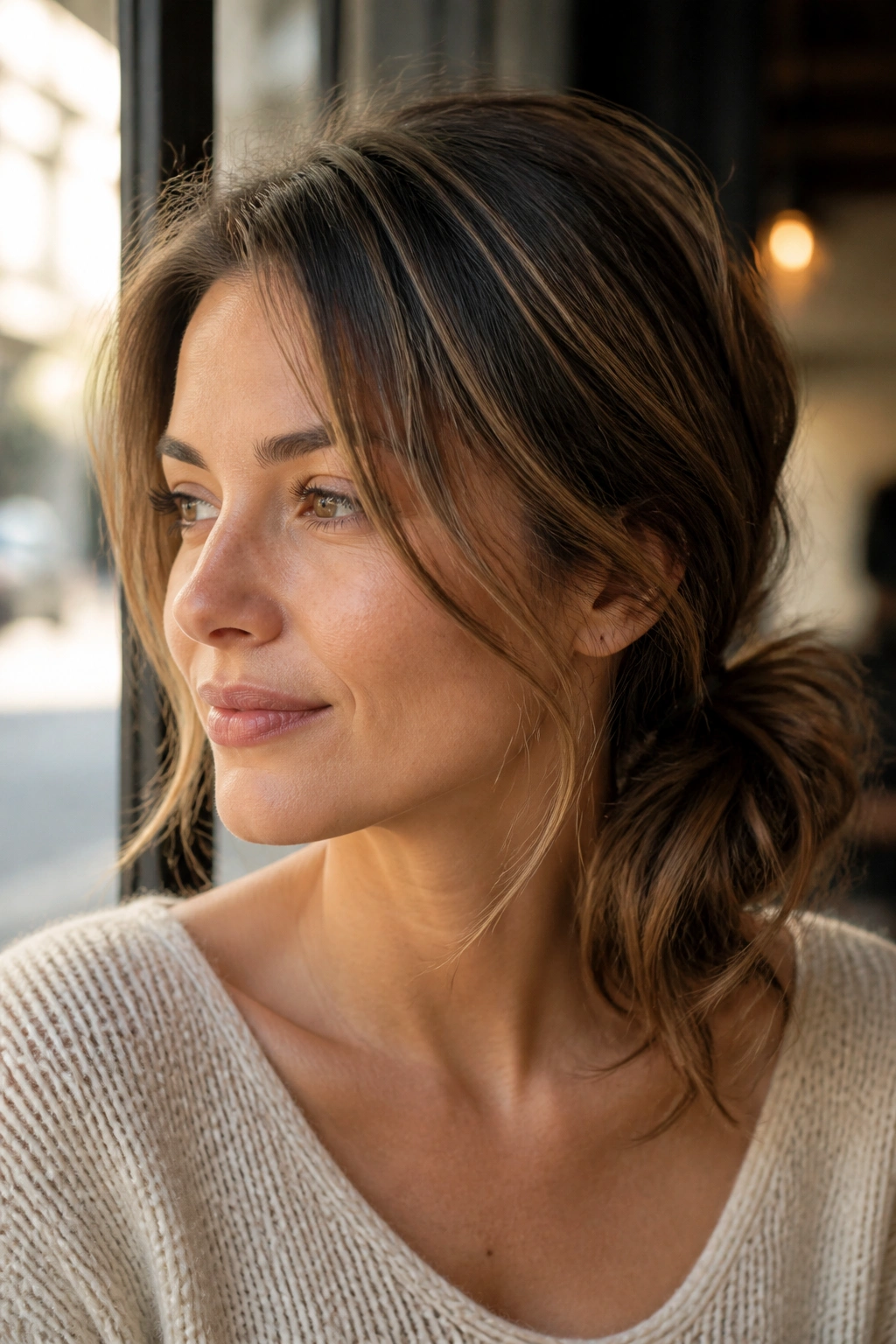
A low side ponytail is underrated because it’s fast, but it also does something useful for square faces: it shifts the visual weight away from the center of the face and toward one shoulder. That diagonal line softens the jaw almost by accident.
It works best when the ponytail sits at the nape under one ear, not too high and not too tight. A little looseness at the crown helps too. If the top is slicked flat, the style starts to feel severe. If it has some lift and a few loose strands, it looks easy in the right way.
- Leave the front pieces curved.
- Pull the elastic low and slightly to one side.
- Wrap a strand around the base.
- Mist the ends with texture spray for a softer finish.
Good match for: medium to long hair, especially when you want something casual that still feels styled.
11. Straight Hair with a Deep Side Part and Tucked Ends
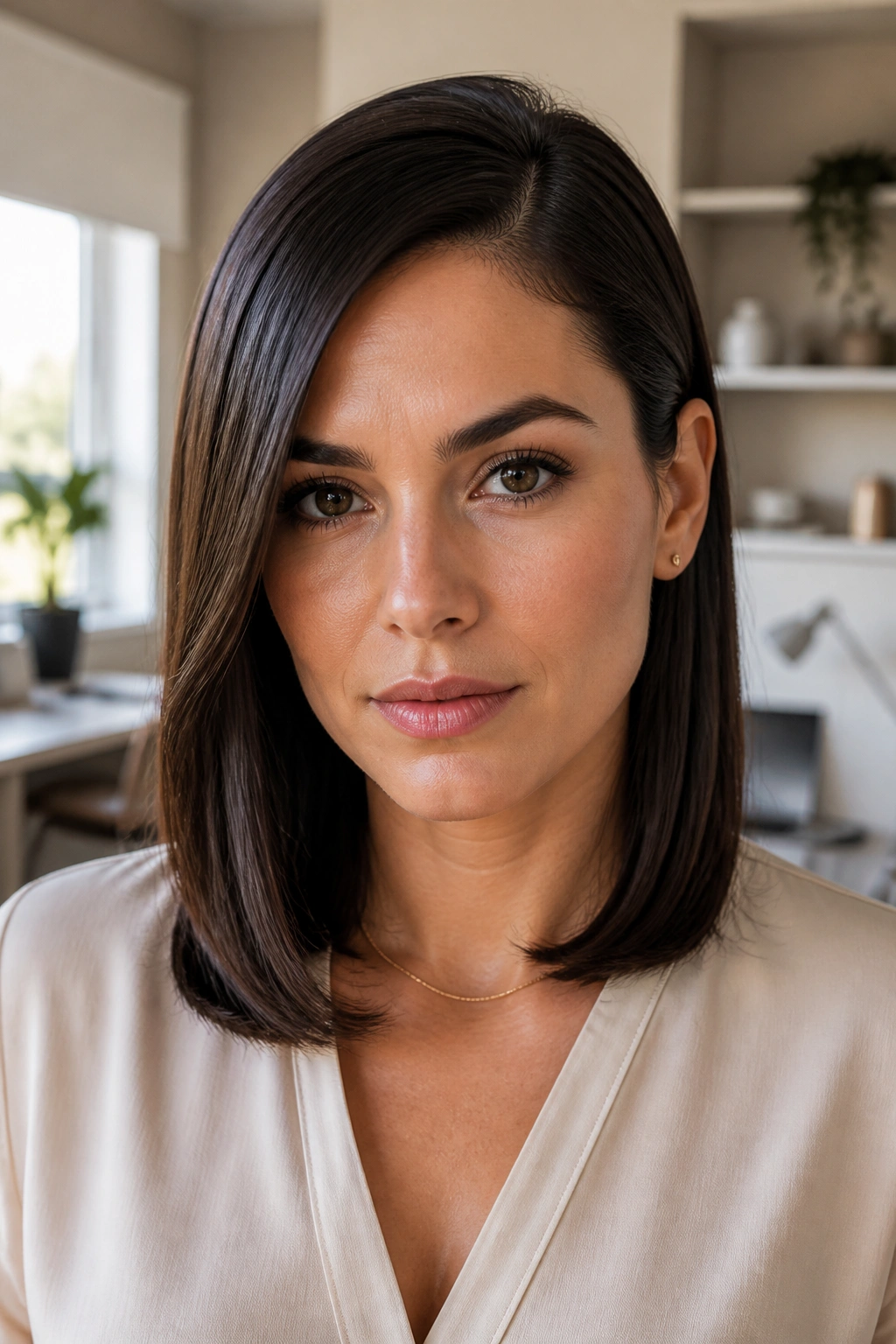
Straight hair can be gorgeous on square faces when it is handled with a little care. The problem is that pin-straight hair can emphasize every angle if it falls in one blunt curtain. A deep side part fixes that first, then a tucked side opens the face up.
Keep the ends slightly beveled, not razor-flat. A tiny bend inward or outward keeps the length from looking heavy at the jaw. If the hair is very fine, a drop of shine serum at the mid-lengths is enough. Too much product will make it collapse, and that’s never the look.
The tucked side is the part people remember. It shows one cheekbone, keeps hair out of the eyes, and makes the overall shape feel lighter. That’s why this style works for work, dinner, or just one of those mornings when you need a calm, clean line.
12. Curtain Bangs Pushed to One Side
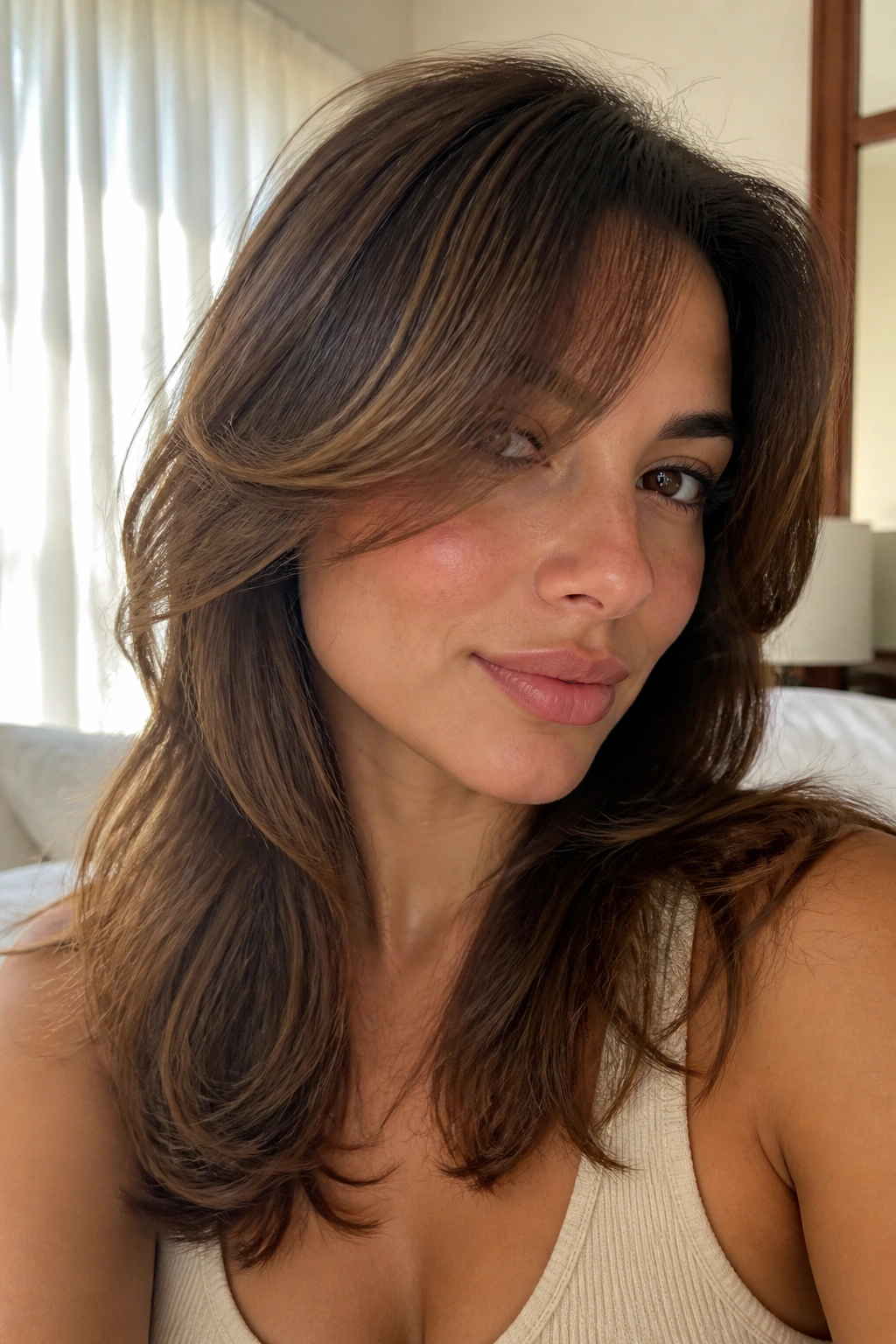
Curtain bangs and side sweeps are close cousins, but they behave a little differently on square faces. Curtain bangs open from the center and frame both sides of the face; pushing them to one side turns that softness into a diagonal shape that makes the jaw feel less square.
This works especially well if you want bangs without the bluntness of a full fringe. The outer edges of the bangs should blend into the cheekbones, not stop above them. If the shortest pieces are too short, the effect gets choppy. Longer, cheek-skimming pieces look calmer and more flattering.
Blow-dry them with a medium round brush, directing the hair away from the face first and then over to one side. That little bit of direction matters. Bangs that are allowed to dry wherever they want usually end up fighting the rest of the haircut.
13. Voluminous Blowout with a Side Flip
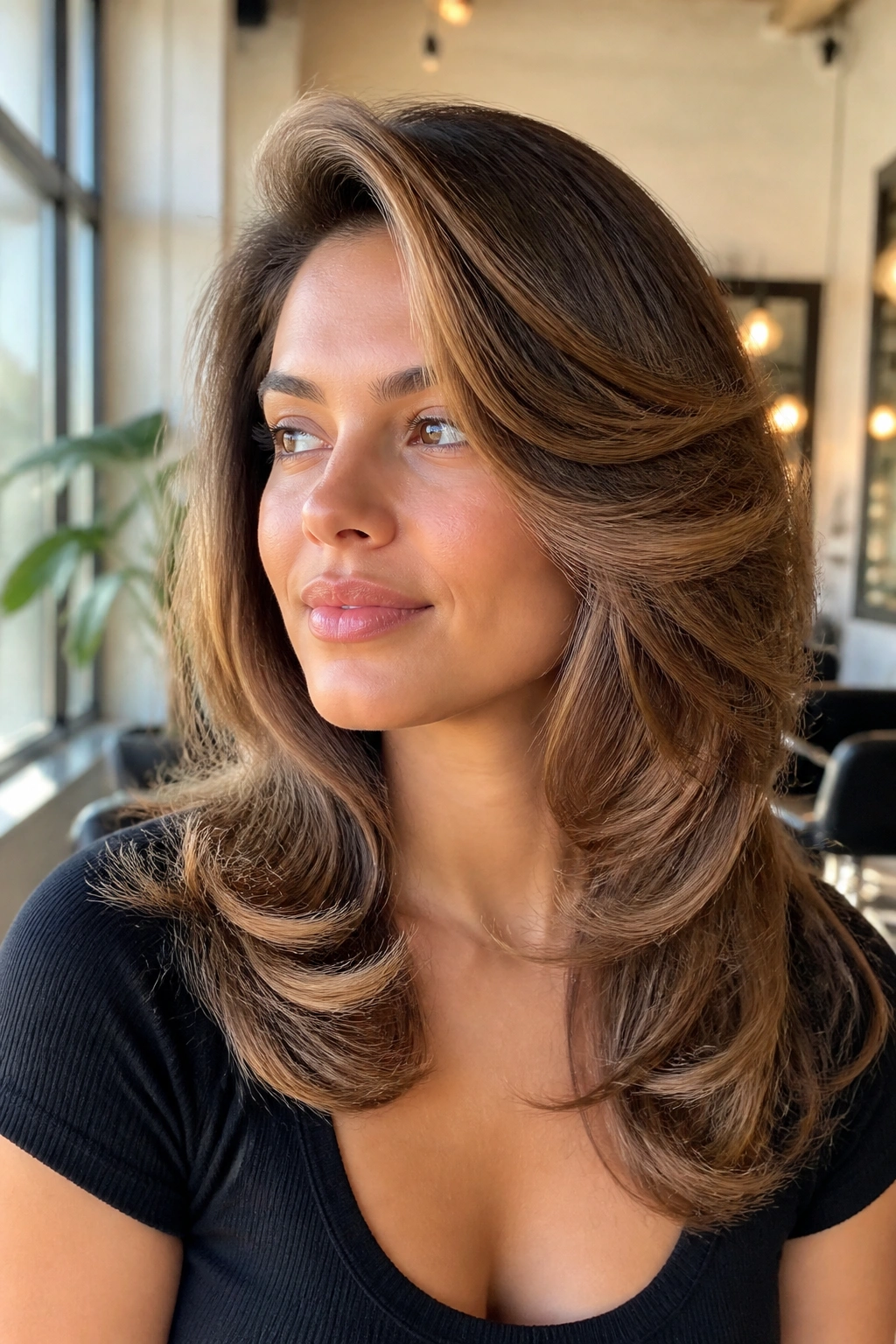
A blowout with a side flip is one of the easiest ways to make a square face look softer without changing the cut at all. The lift at the roots stretches the face visually, and the flip at the ends draws the eye diagonally instead of straight across.
The Styling Details That Matter
Use a round brush large enough to create bend, not curls. A 2-inch barrel is often enough for shoulder-length hair, while longer hair may need a slightly larger brush. Lift the roots at the crown, then curve the front sections away from the face and over to one side.
- Work in 2-inch sections.
- Aim the dryer downward on the last pass.
- Flip the front away from the jaw.
- Finish with a light hairspray, not a hard shell.
That side flip is the whole point. Without it, the blowout can look round in the wrong places.
14. Low Side Chignon
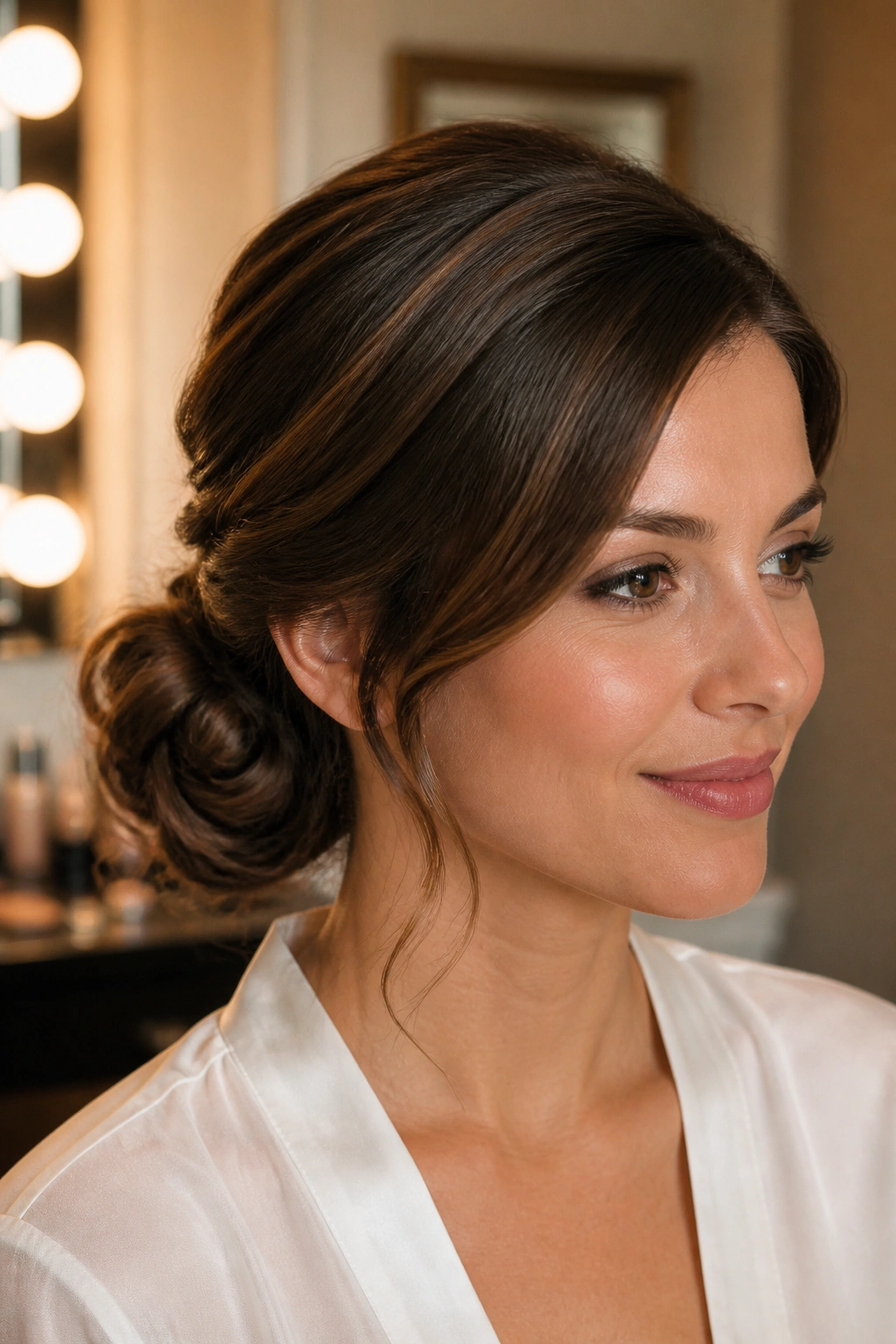
A low side chignon gives square faces a softer frame than a centered knot ever could. The off-center placement changes the line of the whole hairstyle, and that matters more than people think. Hair that sits directly behind the head can feel formal in a stiff way. Hair that sits just behind one ear feels gentler.
Leave the chignon low, close to the nape, and keep it a little loose around the edges. A few tucked wisps near the temples or neck stop the style from looking too polished. If your hair is thick, build the bun in two twists first, then pin them into a round shape. If it is fine, a texturizing spray at the roots gives the pins something to hold.
This is one of my favorite event styles because it looks neat from the front and softer from the side. That balance is hard to fake.
15. Fishtail Braid Draped Over One Shoulder
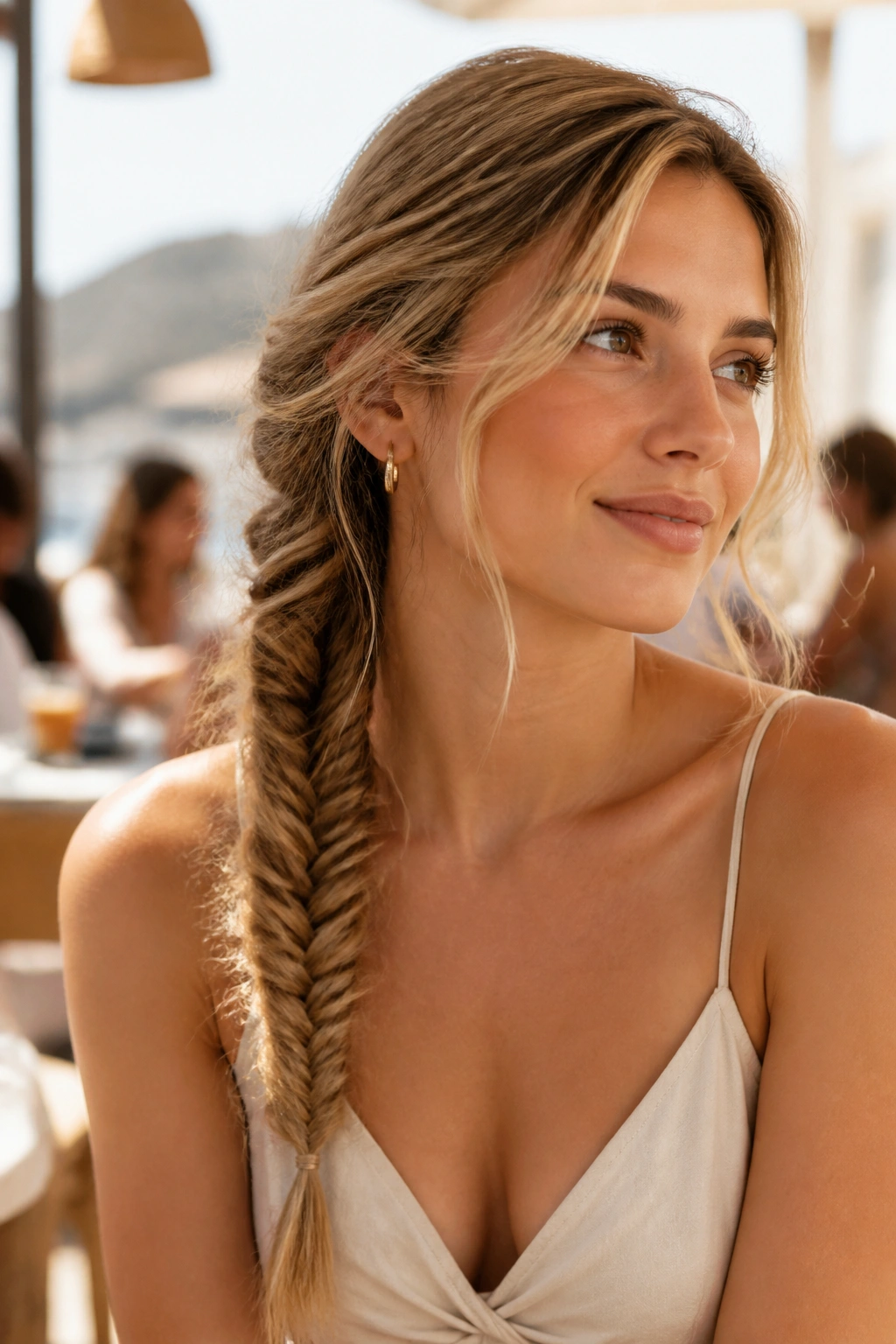
Why does a fishtail braid flatter square faces so well? Because it creates a long, narrow line that runs diagonally down the body. That line pulls the eye away from the width of the jaw and toward the shoulder.
The braid itself should not be too tight. A polished fishtail can look a little severe if every section is pulled flat, so loosen it after you secure the end. Start at the nape or slightly off to one side, then bring the braid over the shoulder where it can soften the neckline. Hair with some texture holds this look better than hair that is freshly washed and slippery.
How to Use It
Work in a dab of styling cream before braiding so the strands stay controlled. Once the braid is done, gently widen the outer edges with your fingers. Keep the top a little lifted, and let a few small pieces fall free near the temples if the face needs more softness.
16. Shag Cut with a Side Sweep
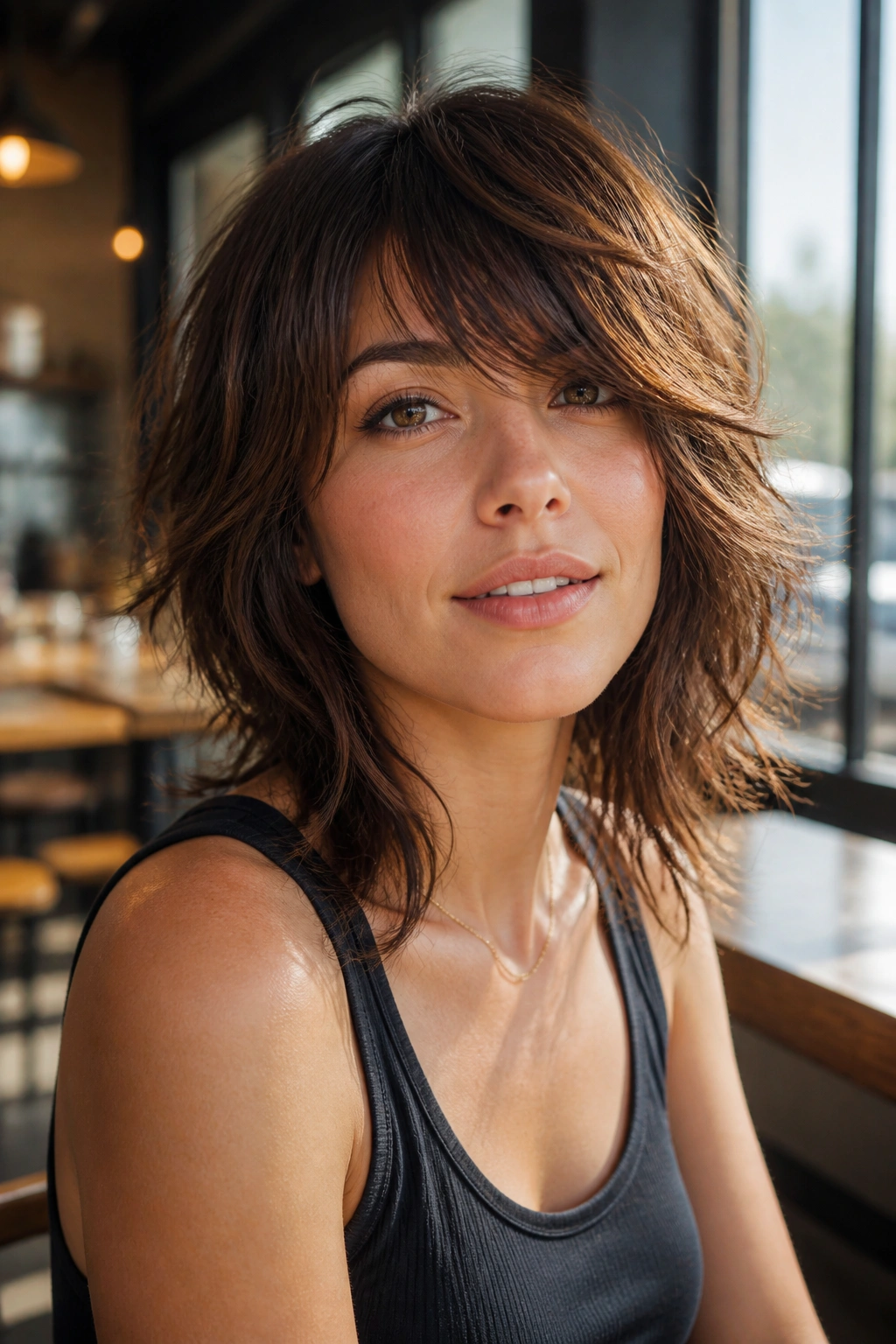
A shag cut gives square faces movement where they need it most: around the cheeks, the temples, and the jaw. The layers break up any heavy line, and the side sweep keeps the face from looking boxed in.
The important thing is texture, not fluff. A good shag has piecey layers that move, not a fuzzy halo that hides the cut. If your hair is wavy, this shape is easy to live with. If it is straight, you’ll probably want a sea-salt spray or a bit of mousse to keep the layers from falling flat.
This style works because it looks slightly undone on purpose. The side-swept fringe cuts across the forehead, while the longer layers fall around the jaw and neck instead of sitting on the sides of the face. It is relaxed, but not lazy. There’s a difference.
17. Twisted Side Updo
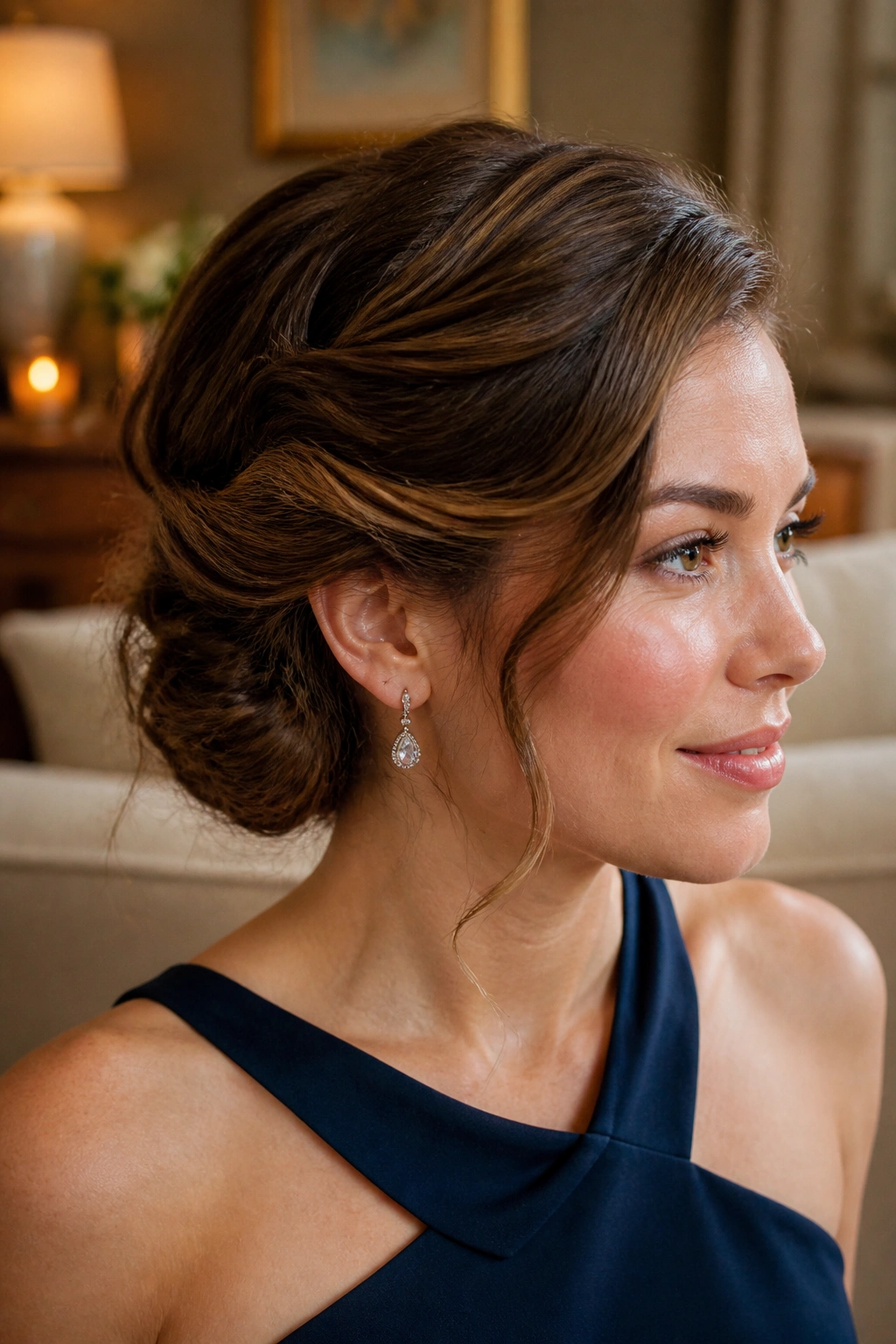
A twisted side updo gives you the softness of loose hair and the control of an updo. It works well on square faces because the twists create curves, and curves soften angles.
Take sections from one side of the head, twist them back, and pin them low toward one ear or just behind it. Leave the crown a little loose so the head keeps some height. If everything is pulled flat, the style loses that gentle shape and starts to look too strict.
Quick Styling Notes
- Use 3 to 5 medium bobby pins, hidden under each twist.
- Add texture spray before twisting for grip.
- Leave one small piece near the cheekbone loose.
- Finish with flexible hairspray so the twists stay soft.
This is a good one for medium-length hair that won’t stay in a full bun but also doesn’t need to hang loose.
18. Asymmetrical Bob with a Soft Bend
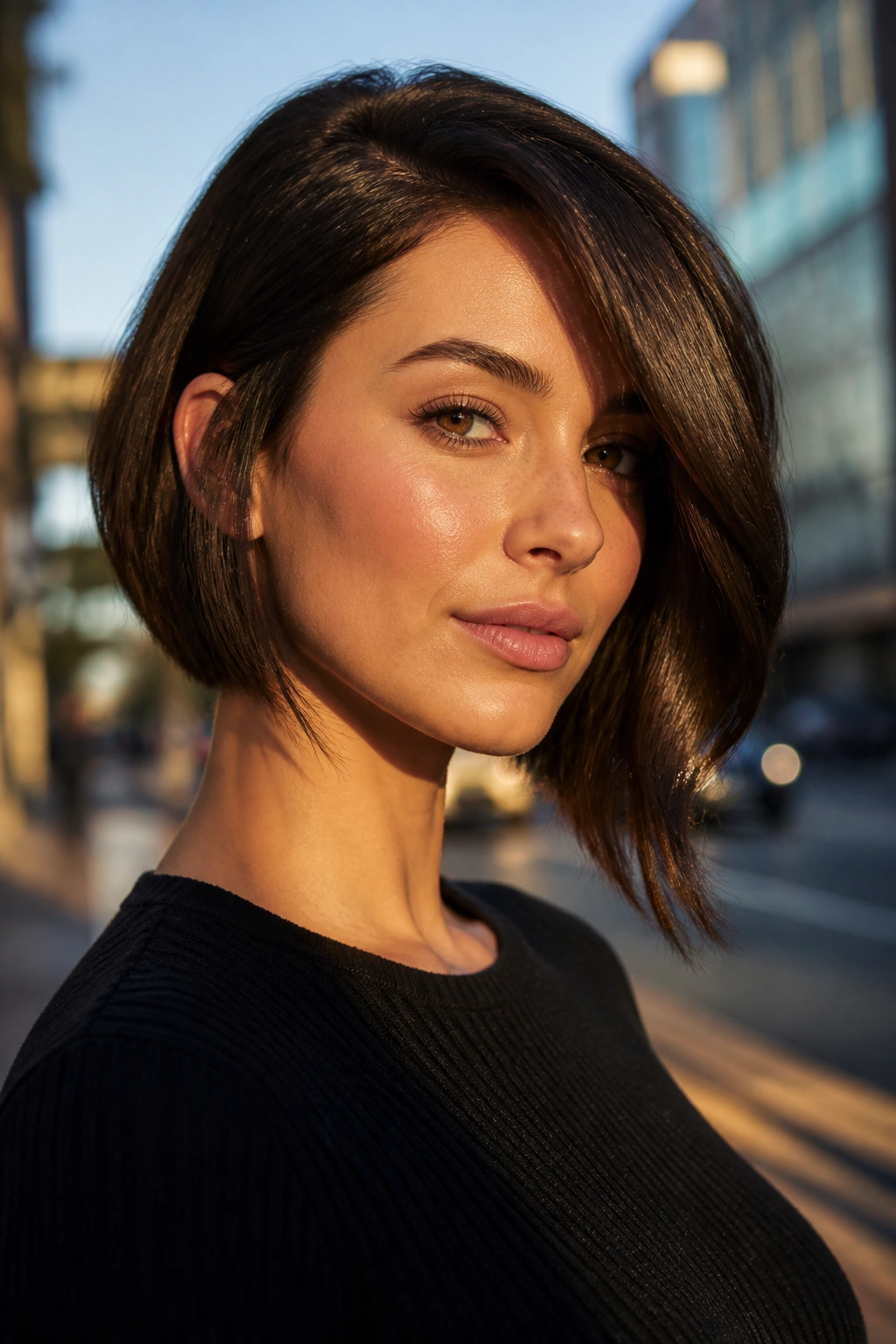
An asymmetrical bob works because the eye has somewhere to travel. One side is a little longer, one side sits a little higher, and that uneven line keeps the face from looking too boxed in. A square face usually likes that movement.
The bend should be soft, not sharp. If the ends curve under too tightly, the bob starts to look helmet-like. If they’re too flat, the jaw can look wider. A gentle bevel is the middle ground. It makes the cut feel intentional without looking stiff.
This is a strong choice for straight hair or hair with a tiny bit of wave. It’s also one of the few shorter cuts that can make a square face look less angular without hiding the jaw altogether. That’s a useful trick.
19. Side-Swept Curls for Natural Texture
Natural curls, coils, and waves do a lot of work here already. The side sweep just helps direct that texture in a way that flatters the face instead of widening it. On square faces, the goal is usually to soften the edge of the jaw and let the curl pattern create the shape.
A deep side part lets one side rise a little at the crown while the other side falls into the cheek and neck area. That asymmetry is useful. It keeps the look from reading as a symmetrical box of curls, which can happen when the hair is parted straight down the middle.
Use your usual curl cream or leave-in, then diffuse on low heat or air-dry with the part set early. If one side needs extra control, pin a front curl back for an hour or so while it dries. That creates a soft sweep without flattening the whole head.
20. Top Knot with Face-Framing Pieces Swept Aside
A top knot can work on square faces if it stays soft around the front. Pulling every strand straight back exposes the jaw too much. Leaving a few side pieces out changes the balance immediately.
The knot should sit high enough to lift the face, but not so high that it turns cartoonish. Mid-high is often the sweet spot. Before you tie it off, rake the front sections toward one side so the hair has a diagonal path around the face. Then let a couple of thin pieces stay loose near the temples or cheekbones.
Best Details to Keep in Mind
- Backcomb the crown lightly for height.
- Don’t twist the bun too tight.
- Leave the ends a little messy.
- Use pins instead of one tight elastic if your hair slips.
It’s casual, sure, but it can still look polished if the front stays soft.
21. Pinned Glam Waves
Need something more dressed up than loose waves? Pinned glam waves do the job. The style keeps one side of the hair sculpted back while the other side falls in a soft sweep, which gives square faces a nice diagonal shape and keeps the cheekbones in focus.
A side part works better than a center part here, especially if the hair is medium to long. Curl the hair in one direction, brush it into smooth waves, then pin one side behind the ear or at the nape where the pins disappear. The open side balances the face and keeps the style from feeling heavy.
This is a good choice when you want your hair to stay put through a long event without looking stiff. The wave pattern still moves, but the pinned side keeps the shape clean. A tiny bit of shine spray at the end helps the whole style look finished.
22. Textured Side Ponytail with Crown Lift
A side ponytail gets overlooked because it feels simple, but on square faces it does something smart. The crown lift adds height, and the side placement creates an angle that softens the jaw. That combination is hard to beat for everyday wear.
Keep the ponytail low or mid-height and a little loose. Tease the crown lightly, then gather the hair to one side without flattening the top. The face-framing pieces should stay curved, not straight. If the hair is long, wrap a strand around the elastic so the base looks cleaner. If it’s medium-length, a few bent ends are enough.
Small difference. Big payoff.
Final Thoughts
Square faces do not need hair that hides the jaw. They need hair that interrupts the straight lines around it. Side parts, soft sweeps, loose bends, and off-center updos all work because they change the direction of the eye.
If you only remember one thing, make it this: diagonal shapes soften square faces faster than perfectly centered ones. That might mean a fringe pushed to the side, a ponytail worn low and off to one shoulder, or a bun that sits a little loose near one ear.
Pick the version that fits your hair texture and your patience level. Then look at the front in a mirror, step back a foot or two, and check the outline around the jaw. That’s where the answer usually shows up.
