



Beach hair has a short memory. One minute it looks soft and wind-touched, and the next it’s knotted around your sunglasses, your neck is sweating, and a cheap elastic is doing all the work.
The best simple ponytails for lazy beach days are the styles that can survive salt air, a little sweat, and a towel tossed over one shoulder. They don’t need hot tools. They don’t even need a mirror most of the time. That matters when your hands are sandy and the nearest “styling station” is the back seat of a car.
A good beach ponytail is less about polish and more about placement. Move the elastic an inch higher or lower, leave a few face-framing pieces loose, or twist the tail before you secure it, and suddenly the whole thing looks deliberate instead of rushed. A flat ponytail can make fine hair look thinner, while a little bend at the crown gives you lift without turning the style fussy.
These 12 looks keep things easy and keep your hair off your neck. Some are neat enough for lunch after the swim; others look better the messier they get. Start with the version that matches your hair texture, not the version that looks prettiest in a vacuum.
1. Low Rope-Twist Ponytail for Lazy Beach Days
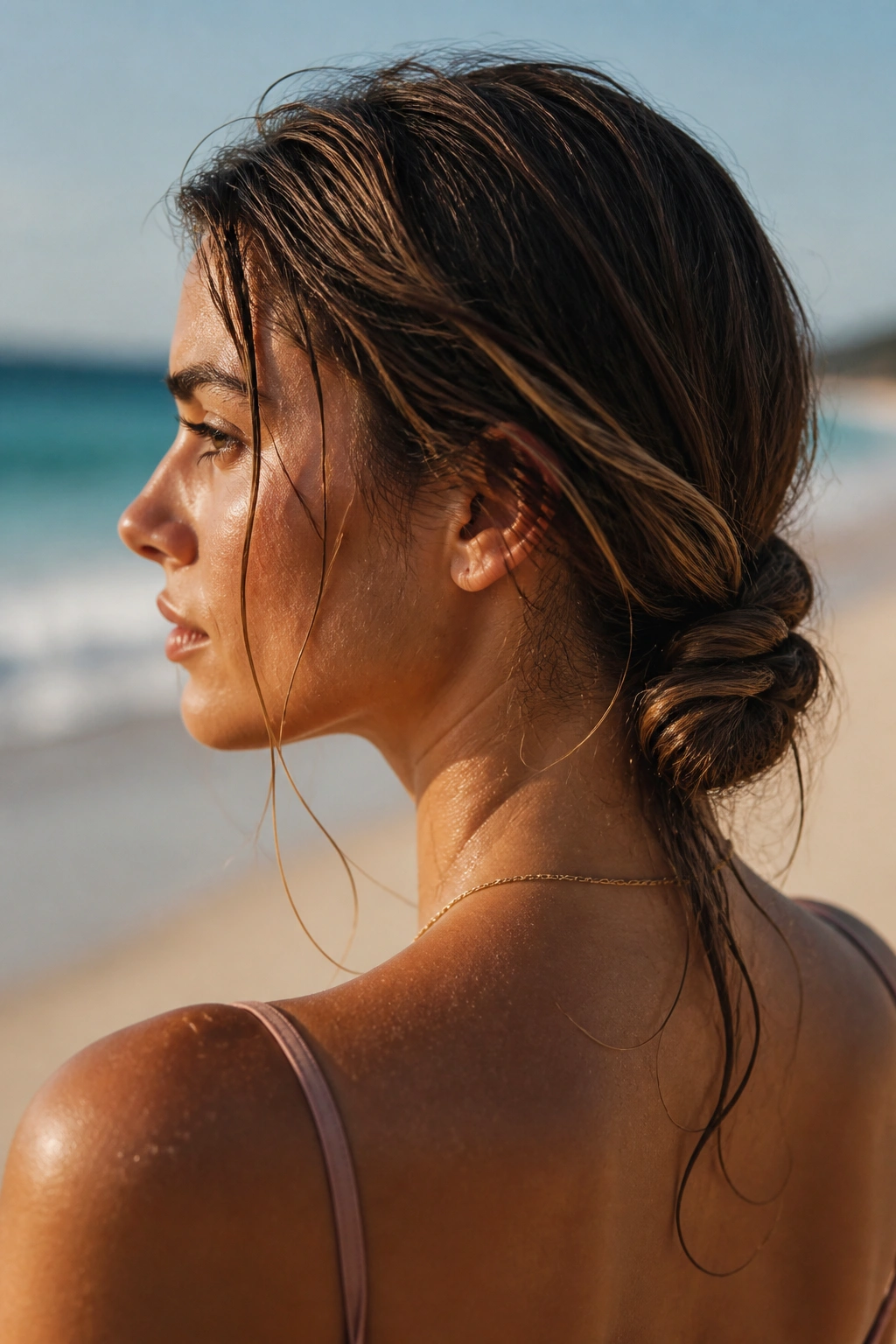
A low rope-twist ponytail is the move when you want your hair pinned down without making a big production out of it. It sits close to the nape, so it won’t slap around in the wind, and the twist gives it a little more shape than a plain elastic ever will.
Why It Holds Up
The trick is simple: split the hair into two sections, twist each one in the same direction, then wrap them around each other once before tying them off. That rope shape grips better than loose hair because the strands are already locked together. It also looks better when the texture gets a little rough from salt water.
I like this on hair that’s been air-drying for 20 minutes and is still slightly damp. It takes three minutes, maybe four if you pause to dig a scrunchie out of your bag. If your hair is layered, leave the shortest pieces around the face out on purpose. Don’t fight them.
- Best for: medium to long hair
- Tools: 2 small elastics, a wide-tooth comb, optional leave-in cream
- Placement: low at the nape, or just above it if you want more movement
- Good for: straight, wavy, and slightly curly hair
Bold tip: Keep the crown soft. If you pull the top too tight, the style stops looking beachy and starts looking severe.
2. High Messy Ponytail That Survives Beach Wind
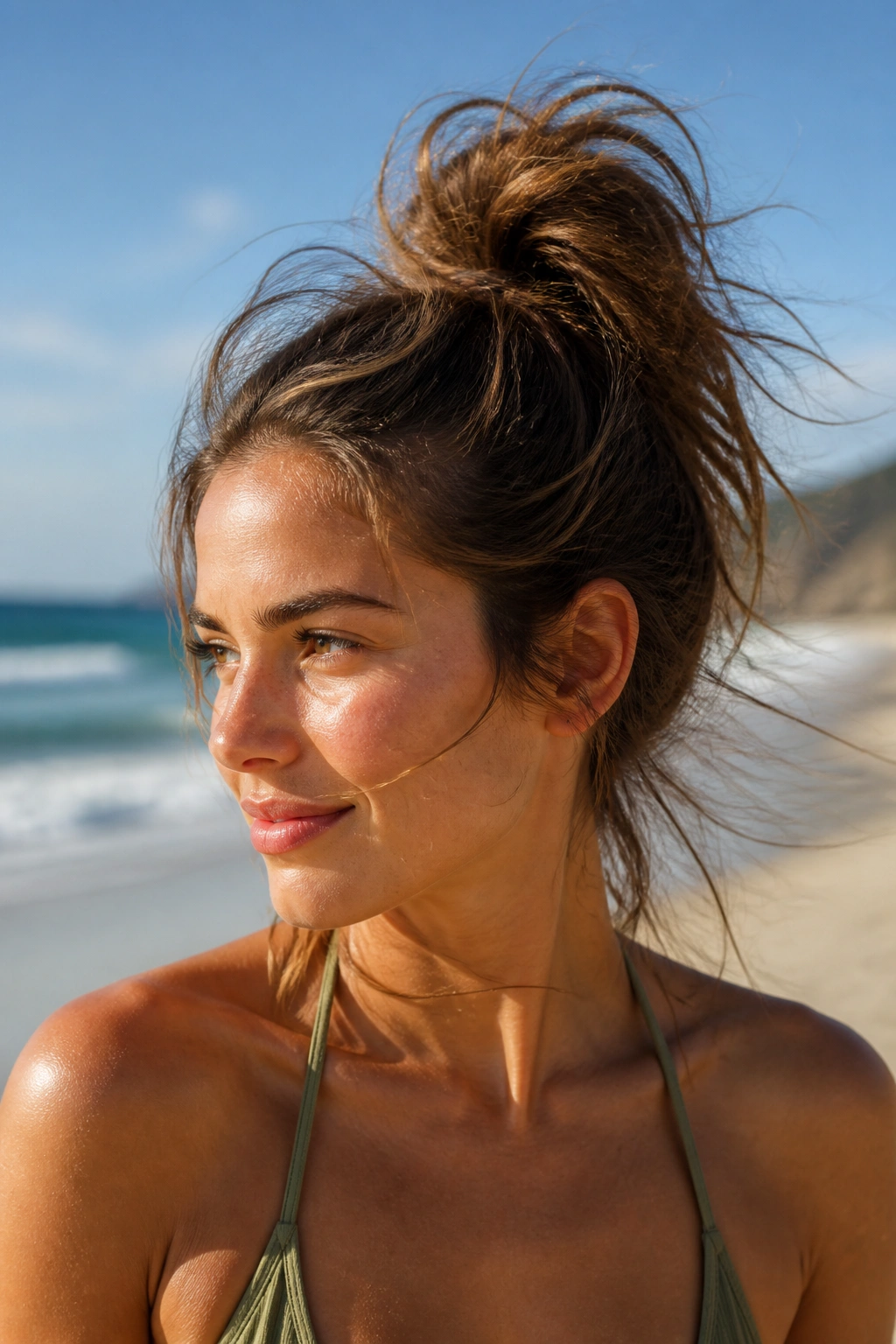
A high messy ponytail wins the second the wind starts pushing at your face. It gets hair off your neck, lifts everything away from sunscreen-covered skin, and keeps the whole style from collapsing when you toss a hat on and off.
The secret is not brushing it too much. Use your fingers, gather the hair at the crown, and let the top stay a little loose before you secure it. That softness matters. A tight, smooth high ponytail can feel a bit harsh on a beach day, while a slightly lifted one looks casual in the good way.
I usually pull out one thin piece at each temple and one piece at the nape, especially if the rest of the hair is too clean or too flat. That tiny messiness makes the ponytail look like a choice, not a panic move. If your hair is fine, a little texturizing spray at the roots helps. If it’s thick, use a strong elastic and wrap it twice more than you think you need.
This is the one I reach for when I know I’ll be walking, swimming, and sitting around long enough for hair to get annoying. It holds up. It also looks better after an hour of wind.
3. Side-Swept Ponytail for Windy Walks
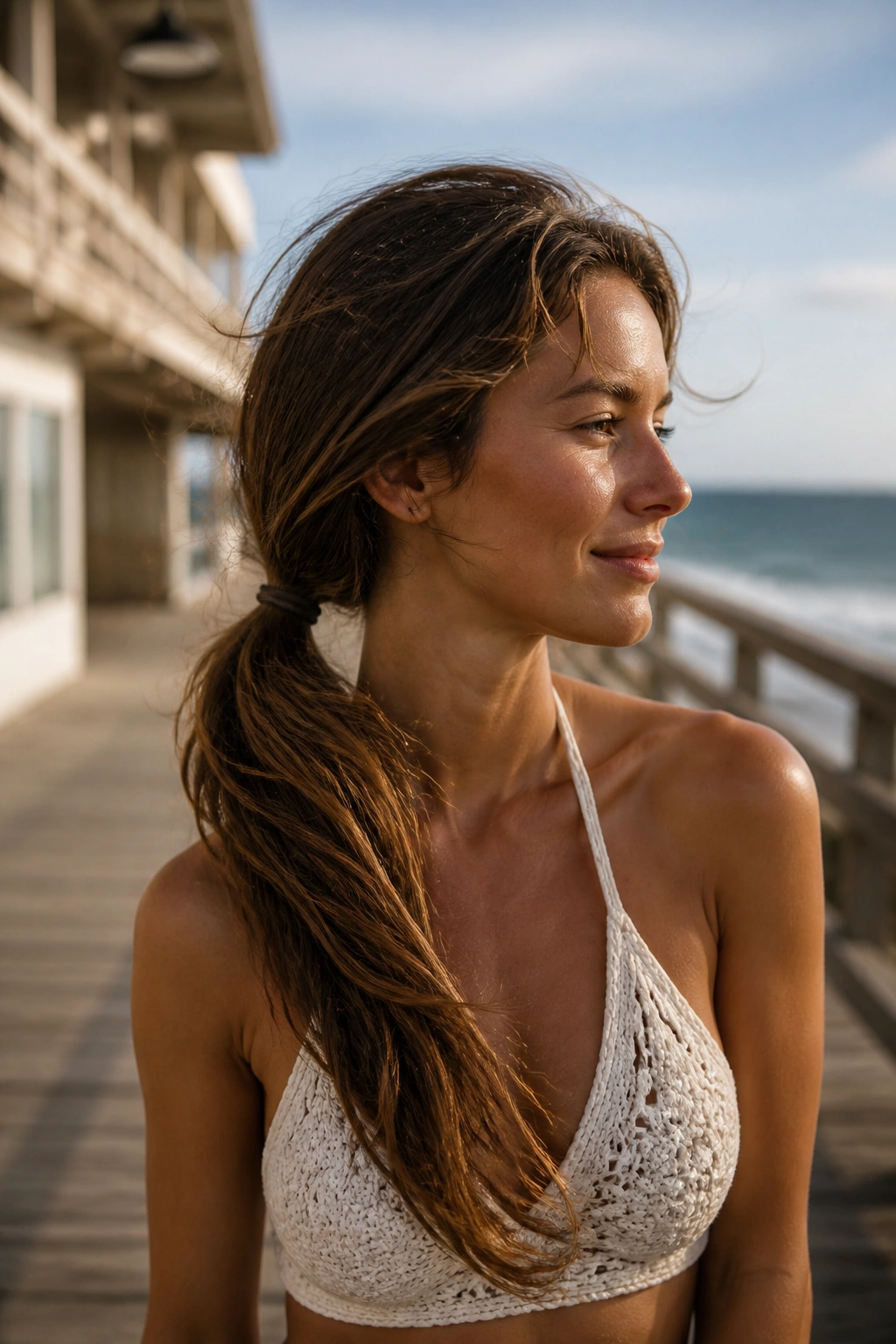
Why does a side-swept ponytail look better on a beach day than it does anywhere else? Because the beach already gives you movement, and side placement makes that movement look on purpose.
Part your hair a little off center, then gather the ponytail just behind the heavier side of the part. Let it sit low enough to rest on one shoulder, but not so low that it disappears into your shirt or towel. The angle does most of the work. You do not need a perfect finish here.
How to Wear It
If your hair is slippery, pinch the base with one hand while you secure the elastic with the other. That keeps the ponytail from sliding back toward the middle of your head. A small bobby pin tucked above the ear can help too, especially with fine hair that tends to drift.
This style is good for sunglasses, because the elastic usually sits away from the arms of the frames. It also works well if you have a strong cowlick or a part that never stays where you want it. Let the wind do half the styling. Seriously.
A side-swept ponytail is one of those easy beach hairstyles that looks a little more considered than it is. That’s the whole appeal.
4. Bubble Ponytail With Soft Elastics
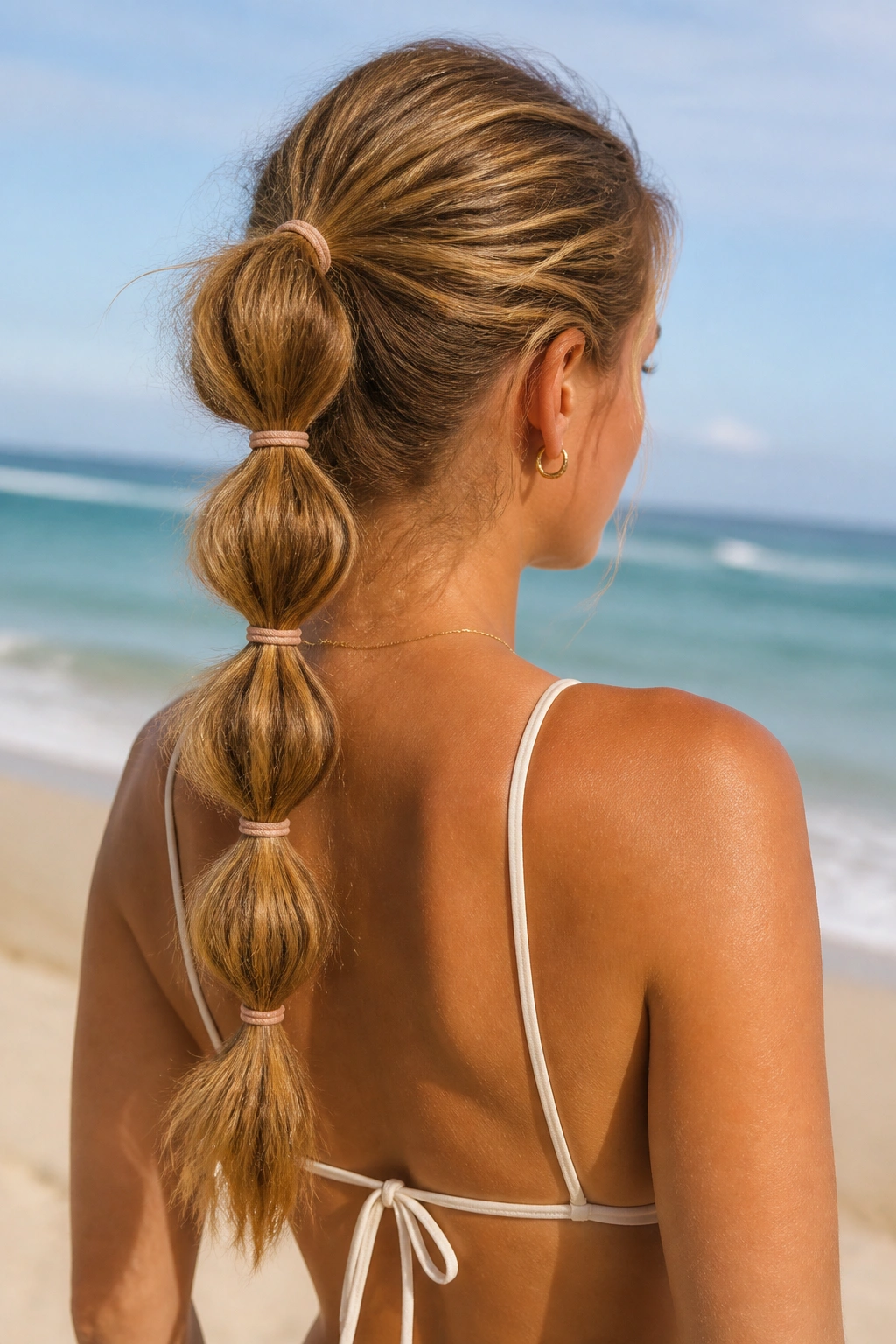
I keep coming back to the bubble ponytail on beach days when my hair has lost all interest in behaving. It looks playful, it keeps the length contained, and it hides the fact that the ends are probably tangled from the saltwater already.
The structure is what makes it work. Instead of leaving one long tail to whip around in the wind, you break the ponytail into small sections with mini elastics. Then you gently tug each section so it forms a rounded “bubble.” The style has shape even when the hair itself is a little frizzy or uneven.
- Use 4 to 6 mini elastics on shoulder-length hair, or more if your hair is long
- Space each elastic 2 to 3 inches apart for a softer look
- Pull each bubble gently, not hard, so the section stays round
- Leave the top slightly loose if you want it to feel less polished
The nice thing is that bubble ponytails are forgiving. If one section gets puffy, it just looks fuller. If the beach wind roughs up the texture, the whole style still reads clearly from a distance. That matters more than perfect neatness.
The only real mistake is making every bubble the same size. Tiny variation looks better. Human, even.
5. Braided Ponytail That Keeps Ends Tidy
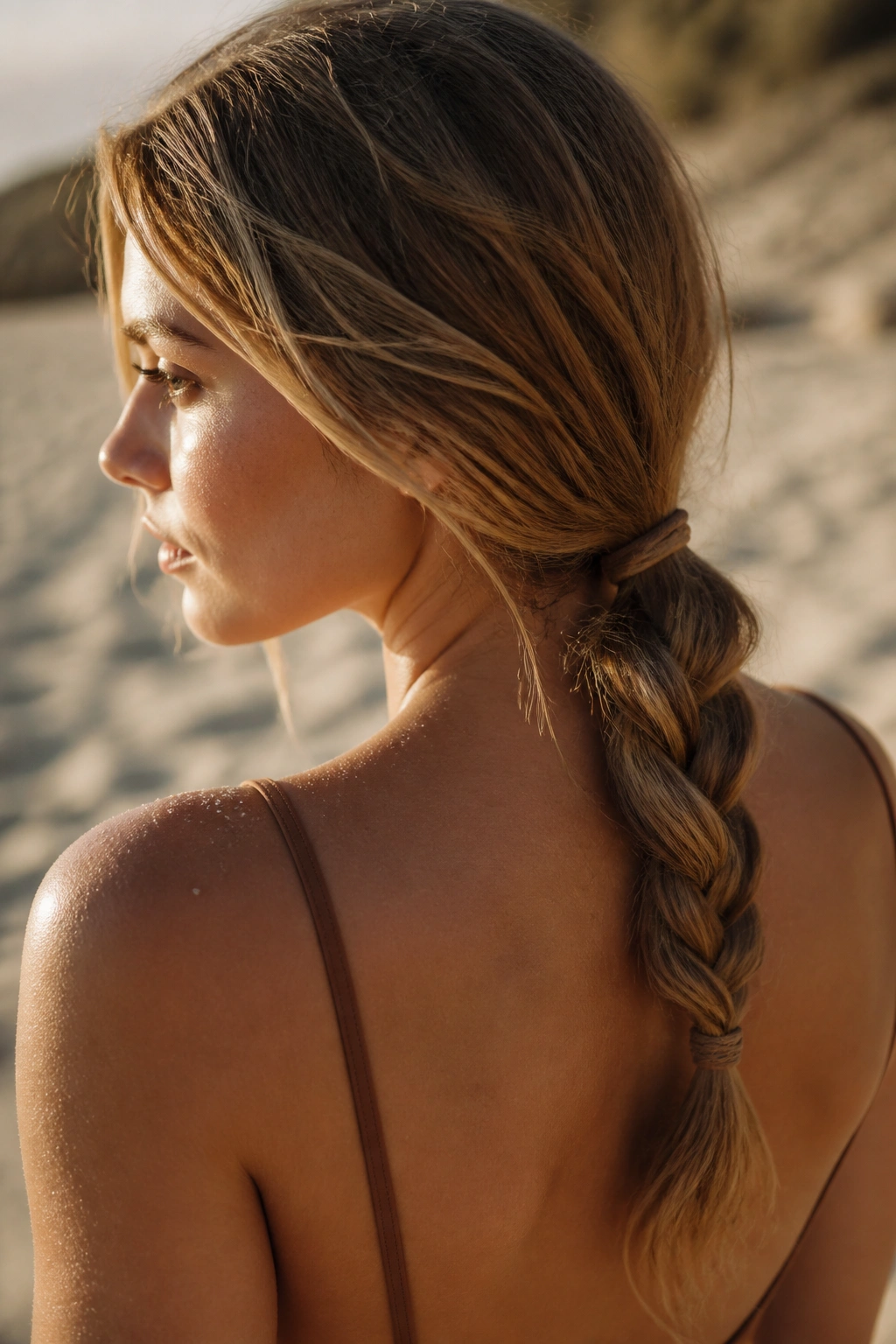
A braid at the tail is useful in a way plain hair isn’t. The ends stay together, the ponytail feels lighter, and you do not have to spend the afternoon untangling strands from your shoulder straps.
The easiest version is a standard low ponytail with a three-strand braid from the elastic down. That’s enough. You don’t need a fishtail unless you actually enjoy that kind of thing, and beach days are not the place for extra work unless you’re in the mood. A loose braid also moves better in salt air because it has space to breathe.
I like this one when hair is dry at the roots but a little damp at the ends. The braid stops the bottom half from puffing out, which is handy if your hair tends to frizz in humidity. If your texture is very smooth, mist the lengths with a small amount of texturizing spray first so the braid has grip. If your hair is thick, braid it loosely and stop before the very end so the tail still swings.
It’s a good choice when you want something that can go from beach to dinner without a full reset. You shake it out once, maybe twice, and it still looks like you planned the whole thing.
6. Scarf-Wrapped Ponytail for a Long Beach Afternoon
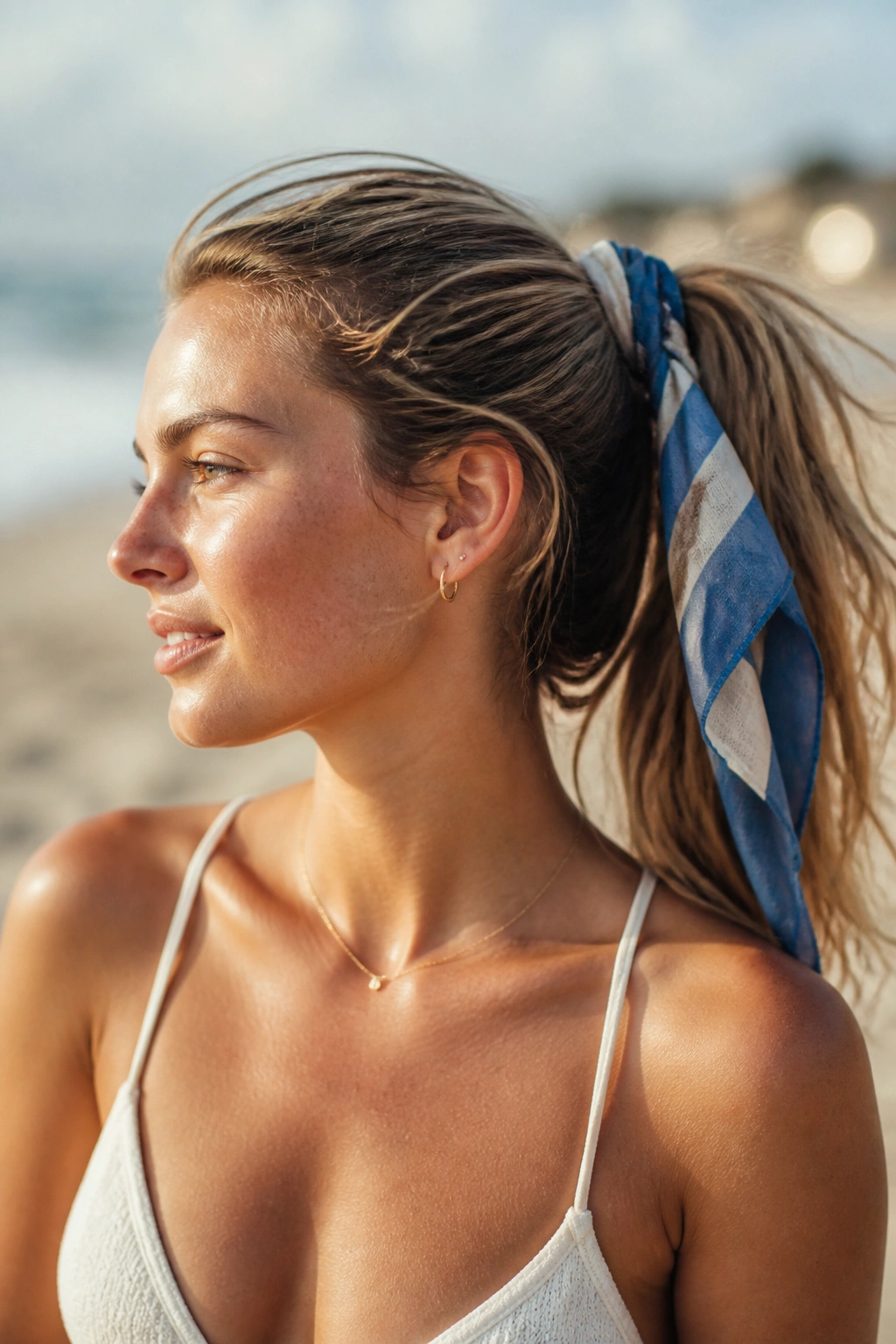
Unlike a bare elastic, a scarf-wrapped ponytail does a little camouflage work. It hides the part that usually looks tired first, and it adds color without asking for much effort.
A square scarf in cotton or rayon works best because it holds a knot and doesn’t slide around the way silky fabric sometimes does. I’d keep it around 20 x 20 inches for a ponytail; anything larger starts to feel bulky fast. Tie the scarf around the base of the ponytail, then knot it underneath or to the side so the tail pieces hang cleanly.
This style is especially good if your hair is two days past a wash and the roots need a little help. The scarf draws the eye to the base instead of the frizz. It also saves the elastic from rubbing directly against salty, damp hair, which is one of those tiny things that makes a difference by the end of the day.
If your hair is very fine, skip a heavy scarf and use a lighter one. If it’s thick, pull the ponytail through the scarf knot and tighten it twice. No need to overthink the rest. The scarf already does the interesting part.
7. Sleek Low Ponytail With a Clean Center Part
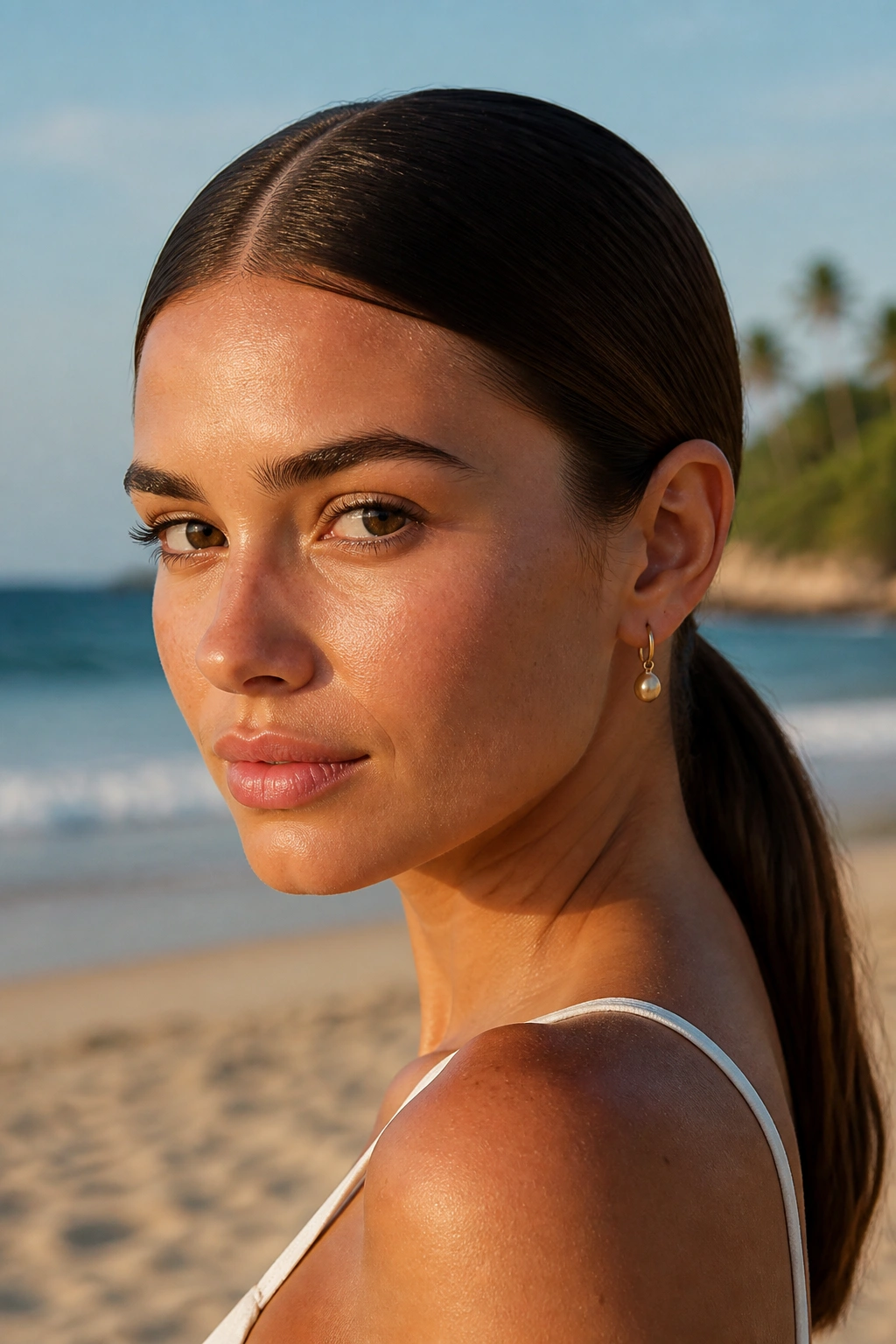
Some beach days call for clean lines, not cute chaos. A sleek low ponytail gives you that without turning your hair into a helmet.
Start with a center part or a slight off-center part, then smooth the hair back with your fingers and a brush if you have one nearby. A touch of leave-in cream on the mid-lengths and ends keeps the style from looking dry, but don’t load up the roots. That’s where beach humidity can turn shine into flatness.
The ponytail should sit right at the nape, low enough to feel cool but high enough that it doesn’t get crushed when you lean back on a towel. If you want a cleaner finish, take a tiny amount of styling cream or hand lotion and rub it over the flyaways around the hairline. A little goes a long way. Too much, and the whole thing looks greasy by noon.
This is the ponytail I pick when I want a button-down shirt, big sunglasses, and zero fuss. It also works well if you have a strong jawline or earrings you actually want to show off. Very little gets in the way.
8. Half-Up Ponytail for Hair That Fights the Wind
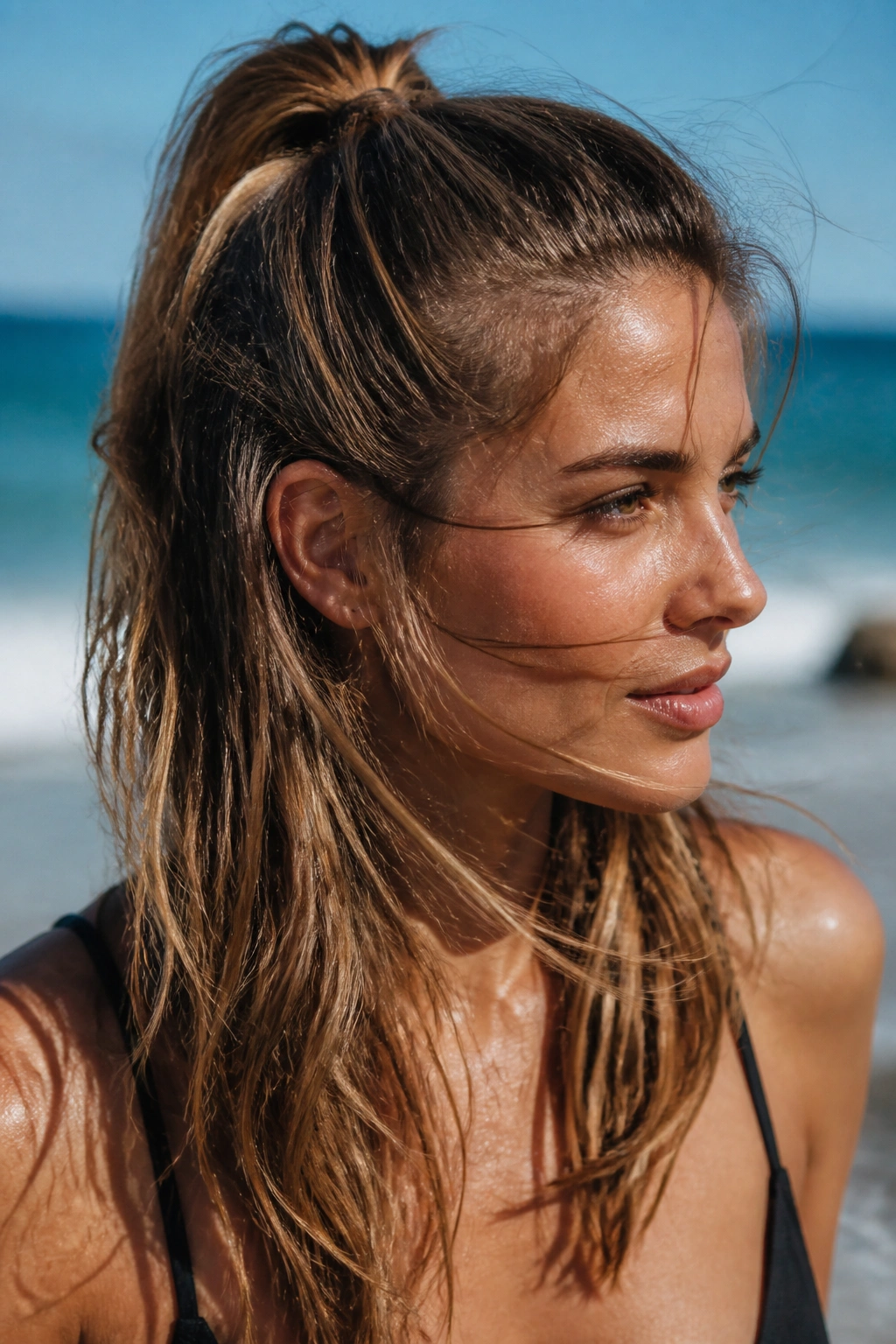
Want your hair off your face without committing to a full ponytail? The half-up ponytail is the easy answer, and it’s especially useful when the wind keeps grabbing the front sections.
Take the top half of your hair from temple to temple, or a little higher if your hair is thick. Secure it with a small elastic two inches above the ears, then leave the bottom half loose. That loose length is what keeps the style from feeling stiff. It also lets curls, waves, or natural texture keep their shape instead of being forced into one big pullback.
I like this for hair that’s too short for a real ponytail or too textured to look neat when it’s all pulled back. It keeps sunscreen and wind off your forehead while still letting the rest of your hair move. If you have layers, twist the top section once before you tie it. That keeps the shorter pieces from slipping out right away.
A half-up ponytail is also one of the easiest beach hairstyles to redo with wet hands. No mirror needed. Just gather, tie, and move on.
9. Knotted Ponytail for Hair That Needs No Heat
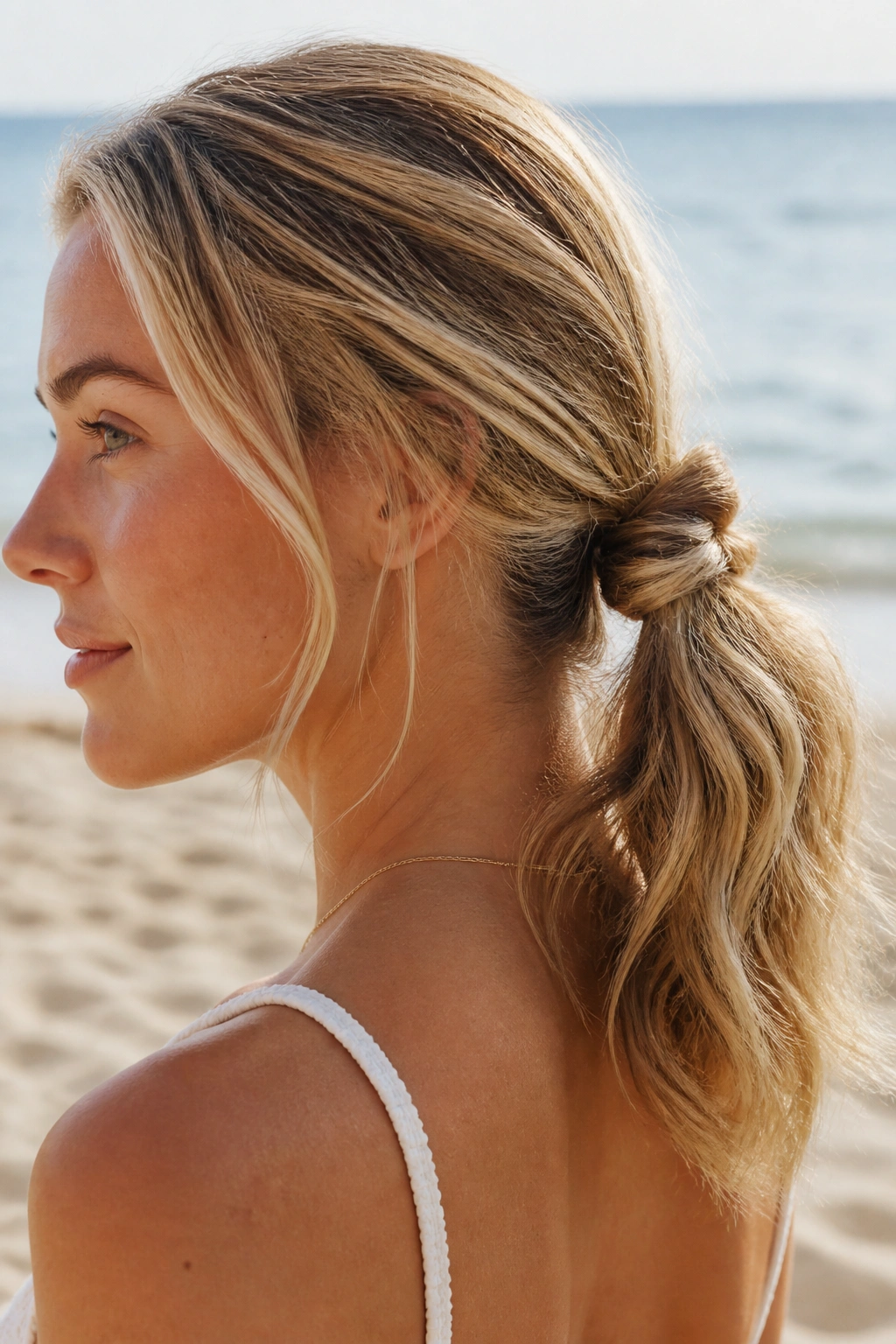
The knot ponytail is what I do when a braid feels like too much effort and a twist feels too small. It looks a little unexpected, but it takes almost no time, which is exactly the point.
Gather your hair into a low ponytail first. Then split the hair just above the elastic into two sections, cross them over once like a simple knot, and pull the ends snug without yanking. Secure the tail with a second small elastic about 2 inches below the knot. The shape should look relaxed, not cinched hard.
Best on Medium-Length Hair
This style is easiest on shoulder-length hair through mid-back length. Very short layers can pop out too fast, and very long hair can get heavy at the knot. If your hair is slippery, use matte elastics. Shiny ones tend to slide.
- Keep the knot loose so it does not crease the hair
- Use one bobby pin underneath if the knot wants to shift
- Leave the ends textured instead of brushing them perfectly smooth
- Works well with second-day hair because the strands grip each other better
There’s something nice about a style that looks more complicated than it is. The knot ponytail gives you that without asking for patience you probably do not have at the beach.
10. Wet-Look Ponytail After a Swim
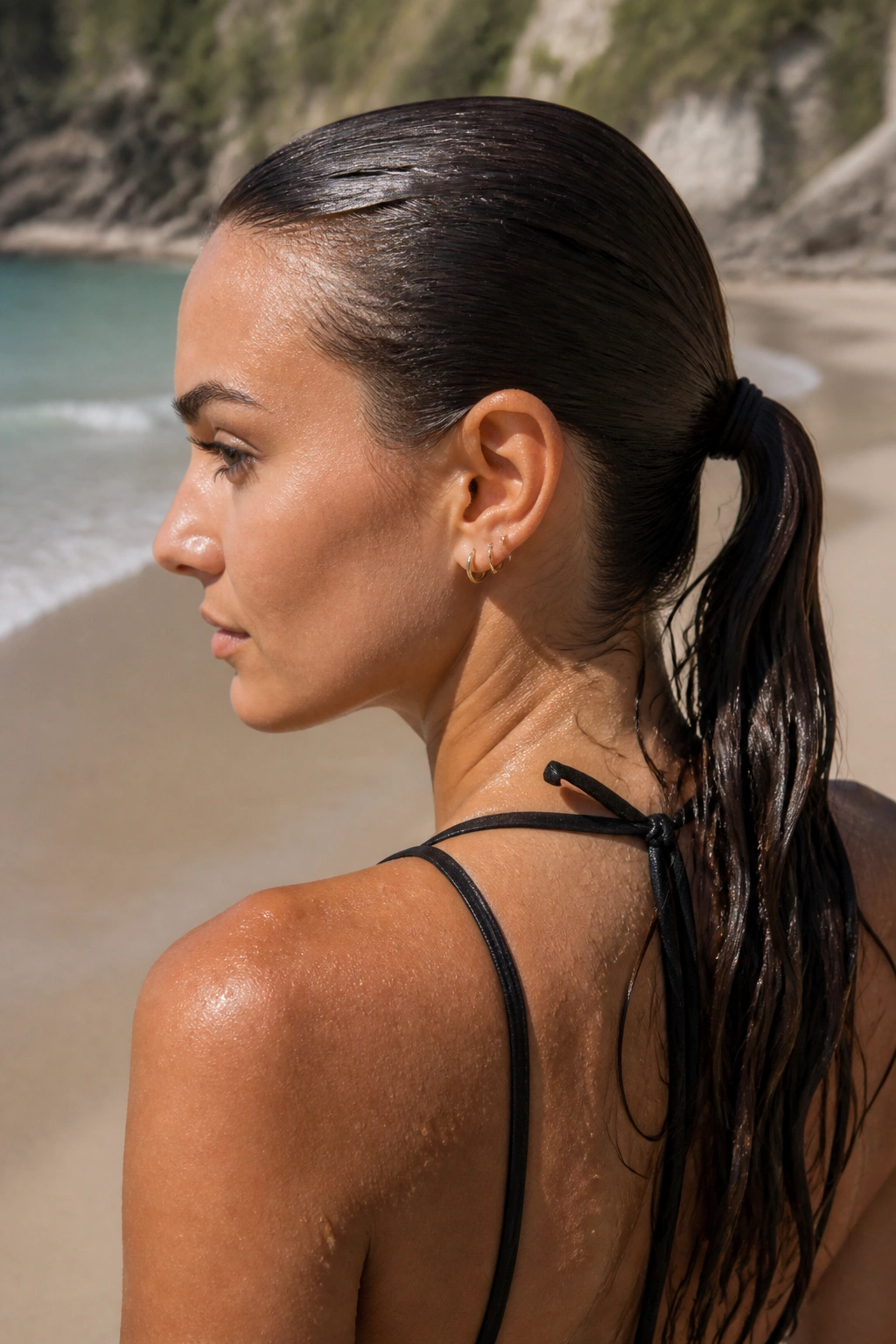
Can wet hair look intentional, or does it just look like you forgot to dry it? It can look intentional, but only if you keep the shape clean and the product light.
This ponytail works best when your hair is already damp from the ocean or a shower. Use a wide-tooth comb, smooth a small amount of leave-in conditioner or light gel through the top half, and gather everything into a low or mid ponytail. The finish should look slick, not crunchy. That line is thinner than people think.
The biggest mistake is piling on too much product. Wet hair grabs everything — sand, lint, sunscreen residue, and too much styling cream all at once. A pea-sized amount of gel on short hair or a nickel-sized amount on longer hair is enough. If the hair starts to feel coated before you’ve tied it back, wipe your hands and stop adding more.
I also like this look because it solves a real beach problem: once the hair is wet, you’re already halfway there. No blow-dryer. No battle. Just a tight shape that reads polished while the rest of the day stays easy.
11. Wrapped Ponytail With One Hidden Strand
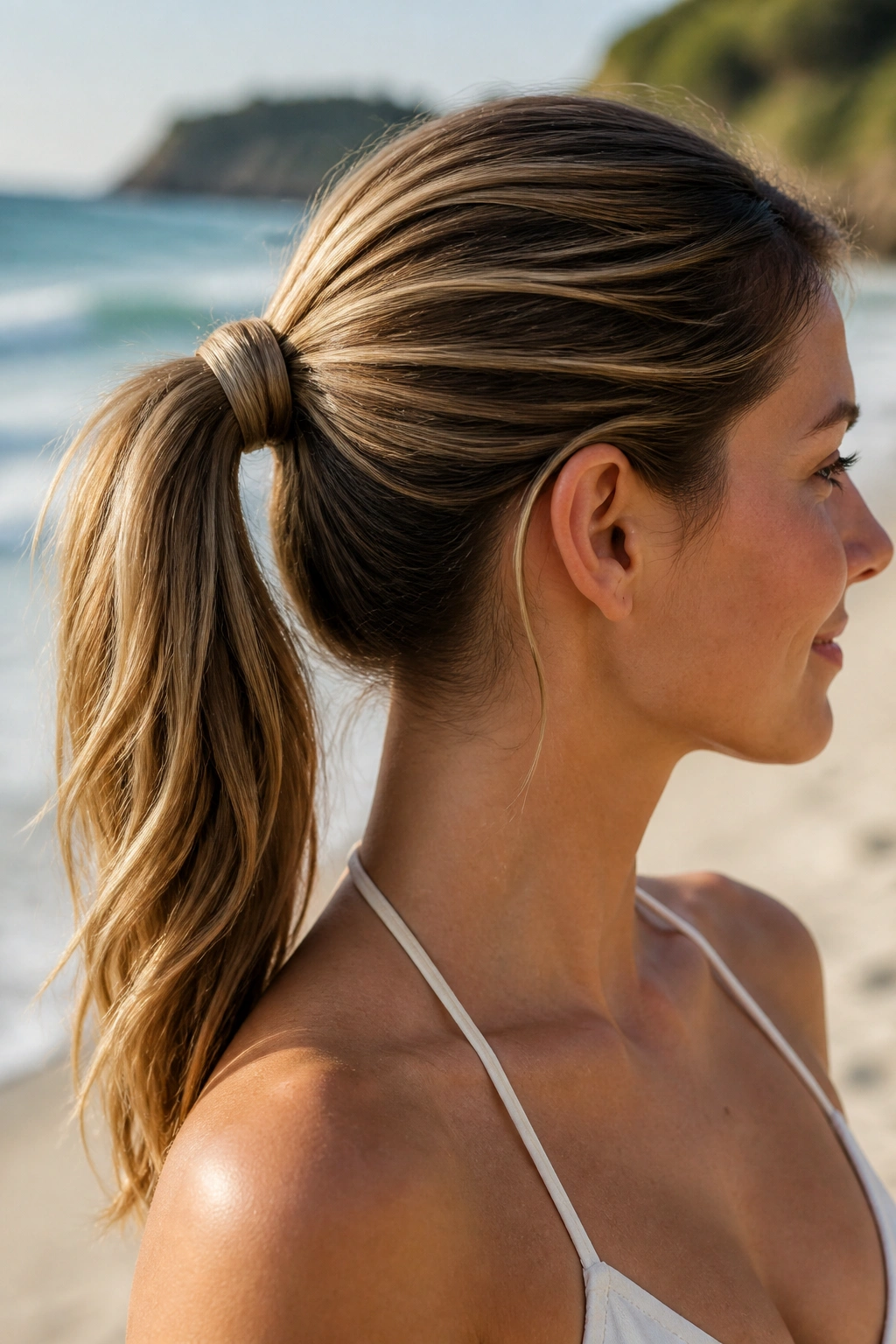
Wrapping one strand around the elastic is the fastest way to make a basic ponytail look finished. It’s one of those tiny details that changes the whole read of the style.
Make any ponytail you like — high, low, or mid-height — then take a 1/2-inch section from underneath the tail. Wrap it around the base once or twice so the elastic disappears, then tuck the end underneath with a bobby pin. If your hair is very fine, use two pins crossed in an X so the wrap stays put.
This trick matters on beach days because elastic bands get ugly fast. Salt, sweat, and sun all make them stand out more than they would indoors. Hiding the band gives the style a cleaner finish without turning it formal. It also keeps hair from snagging on rough elastic edges when you pull the ponytail in and out.
I like this style for the hour between the beach and wherever you’re going next. It feels grown-up without trying too hard. And it takes under a minute, which is about all I’m willing to give a ponytail after a swim.
12. Double Ponytail for Fine Hair and Extra Beach Volume
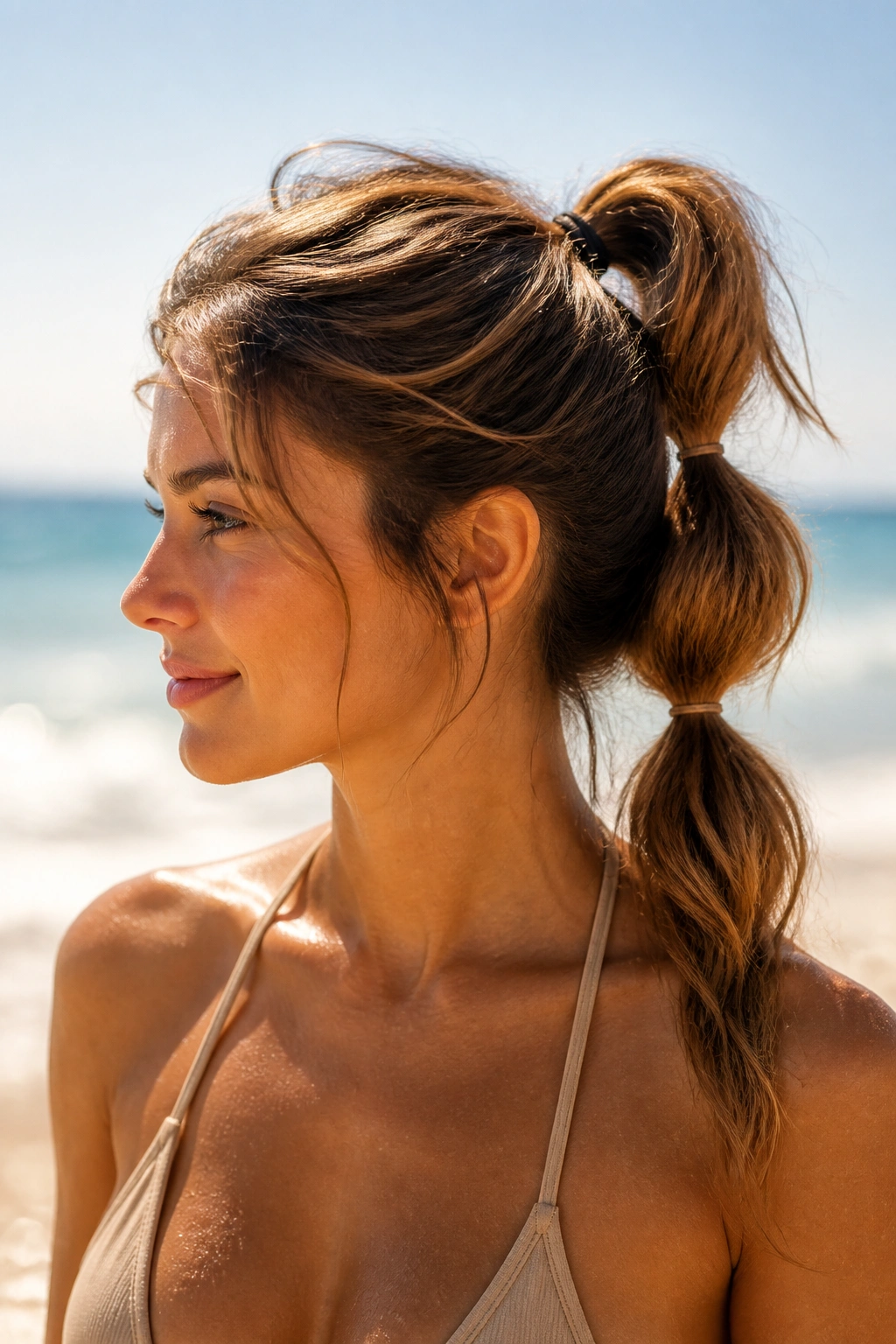
Fine hair at the beach can collapse fast, especially after a few salty gusts. A double ponytail fixes that without heat, teasing, or a lot of products.
Start by making a small ponytail at the crown or upper back of the head. Then gather the remaining hair into a second ponytail about 2 inches below the first one. The top ponytail hides the base of the bottom ponytail, which makes the whole style look fuller from the side. It’s a neat trick, and honestly, it works.
The best part is the lift. Because the top section sits above the lower one, the hair has more support and doesn’t sag as quickly as a single ponytail can. That makes it a smart option for shoulder-length hair or longer hair that feels flat after a swim. If you want more movement, loosen the top elastic just a touch and let a few strands fall around the crown.
This is not a fussy style. It’s a useful one. You get more shape, more volume, and less of that sad, droopy ponytail effect that beach wind can create by lunch.
Final Thoughts
Beach days are not the place to fight your hair into submission. They’re the place to pick a ponytail that can take a swim, a snack break, and a little wind without needing constant babysitting.
The styles that work best here all have one thing in common: they look better when they loosen up a little. That’s the sweet spot. Not sloppy, not stiff — just easy enough that you stop thinking about your hair after the first ten minutes.
If a ponytail slips, let it. If a few pieces fall out around your face, leave them there. That loose, slightly undone finish belongs at the beach more than a perfect mirror-finished style ever will.
