



Short wavy hairstyles are the sweet spot on easy days. You get shape without having to force it, movement without needing a full blowout, and just enough personality that your hair still looks like your hair. The catch is that waves can turn on you fast. Brush them the wrong way and they puff. Load them with cream and they slump. Ignore the roots and the whole style can feel flat by lunch.
That’s why short wavy hair tends to look best when the styling stays light and the cut does most of the work. A clean part, a few smart layers, a clip in the right place, or a bend around the face can change everything. No drama. No marathon styling session. Just a shape that sits well and moves a little when you do.
I’ve always thought waves are most interesting when they’re not trying too hard. A short bob with a side part can look sharper than a fancy curl set. A pixie with a messy top can feel more polished than a heavily styled cut. And a clipped-back wave? It can save a bad hair morning in under two minutes if you know where to pin.
The 22 styles below lean into that easy, lived-in feeling. Some are clean and neat. Some are a little undone on purpose. A few need a tiny bit of product, and a few need almost none at all. All of them are made for the kind of day when you want your hair to behave without becoming the main event.
1. Air-Dried Side-Part Bob
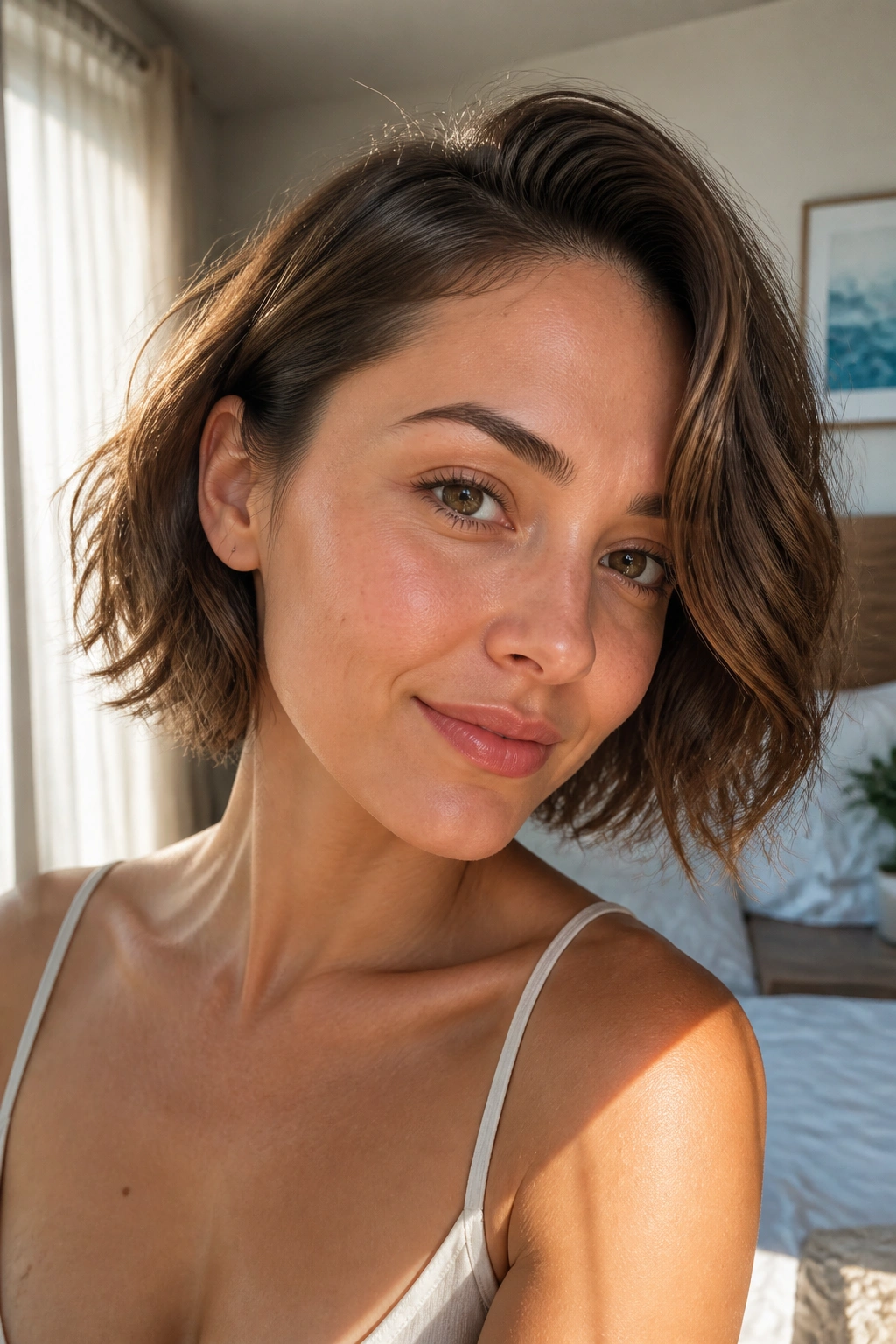
A side-part bob is one of those short wavy hairstyles that looks better the less you fuss with it. The off-center part gives the roots an instant lift, and the wave pattern gets to fall where it wants instead of being pressed into a flat shape.
Why It Works
Short waves need structure somewhere, and the part line gives it to you without heat. If your hair tends to collapse at the crown, shifting the part just a little farther over can make the whole cut feel fuller. The length stays easy, the texture stays visible, and the finish feels relaxed rather than polished to death.
A pea-size scoop of mousse or light curl cream is usually enough. Work it through damp hair with your fingers, then scrunch the ends once or twice and leave the rest alone. If the front section falls too soft, clip the heavier side up for ten minutes while it dries. That tiny trick makes more difference than people expect.
- Best on fine to medium waves that need a little lift.
- Keeps the face open without pulling every strand back.
- Looks good with a chin-length or jaw-skimming bob.
- Needs only a wide-tooth comb, fingers, and a light hold product.
Pro tip: if your roots go limp fast, flip your part while the hair is still damp, then set it with a duckbill clip for a few minutes.
2. Soft Curtain-Bang Shag

The shag is the cut that makes short wavy hair look like it has more shape, more volume, and more attitude than it actually does. Add curtain bangs and the whole thing softens up around the face instead of sitting in a heavy block.
What I like about this one is that it does not ask for perfect styling. The layers do the visual work. The bangs fall away from the center, the crown gets a little lift, and the ends break up just enough to keep the wave pattern from looking stiff. If your hair puffs at the sides, ask for softer internal layers rather than a razor-heavy finish. Too much thinning can make the ends feel wispy and weird.
A little texturizing spray at the mid-lengths helps, but keep it away from the roots unless you want that gritty, dry feeling. Let the bangs dry with a slight bend, then split them with your fingers instead of combing them flat. That small bit of mess is the whole point.
If you want short wavy hair that looks cool on its own, not styled into submission, this is a strong one.
3. Tucked-Behind-Ear Wavy Lob
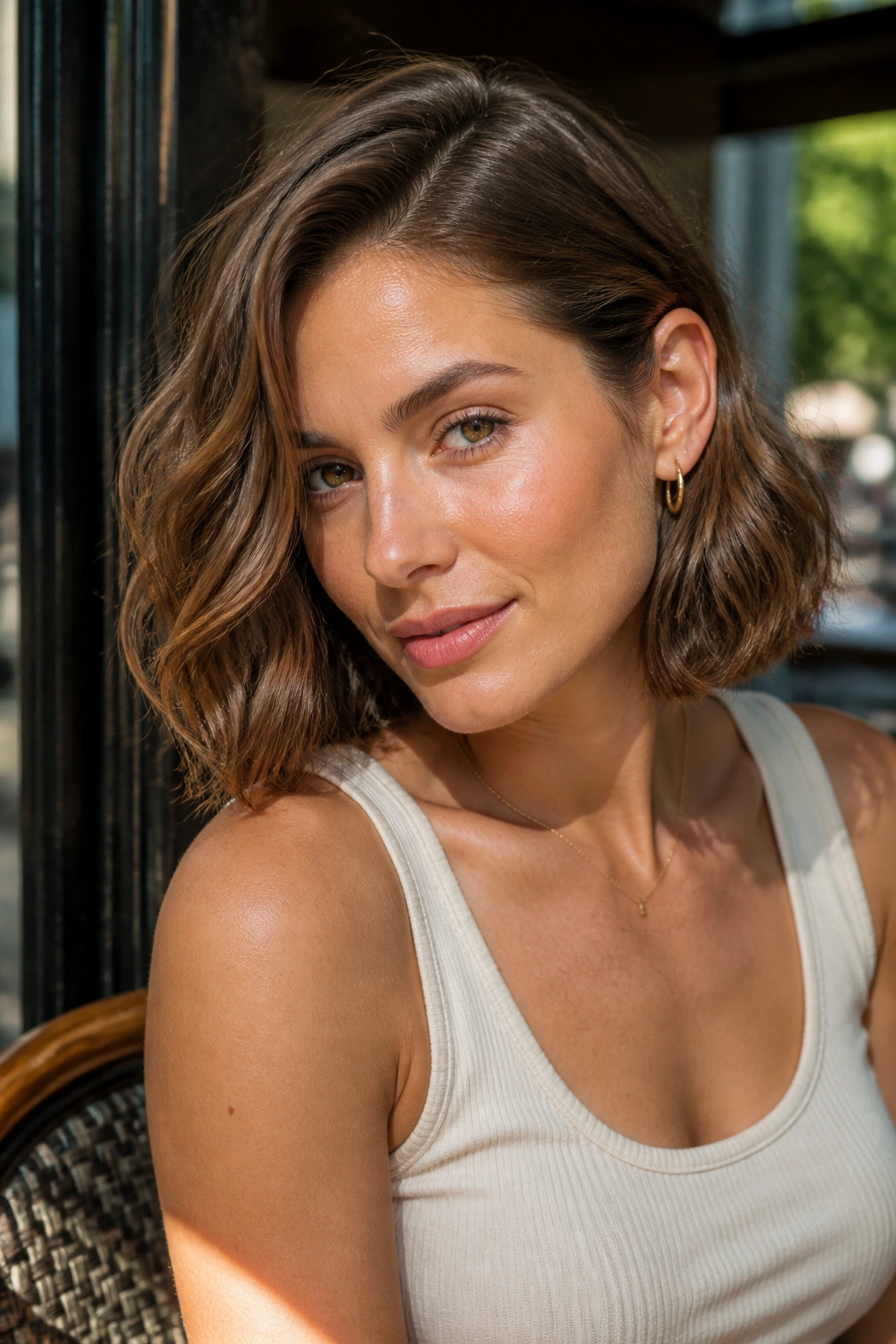
Why does tucking one side behind the ear make a lob feel instantly more finished? Because it gives the eye a place to rest. The wave pattern still shows, but now there’s a little contrast between the loose side and the tucked side, which makes even simple hair look intentional.
This style is especially good when your waves are somewhere between soft and stubborn. Leave the front pieces loose, tuck one side back, and let the other side hang forward with a little bend near the cheekbone. The asymmetry is what gives it life. If the tuck keeps slipping, use one discreet bobby pin under the top layer instead of trying to force the hair behind the ear all day.
How to Wear It
A lob that hits right at the collarbone or just above it gives this look the most movement. Shorter than that, and the tuck can feel too tight. Longer than that, and the shape starts to lean into a regular medium-length cut.
A small dab of cream on the ends keeps them from fraying out. Keep the product off the tucked side’s roots if you want the hair to stay light and airy. That’s the whole trick. Light, loose, and a little uneven.
4. Textured Pixie With Long Top Layers
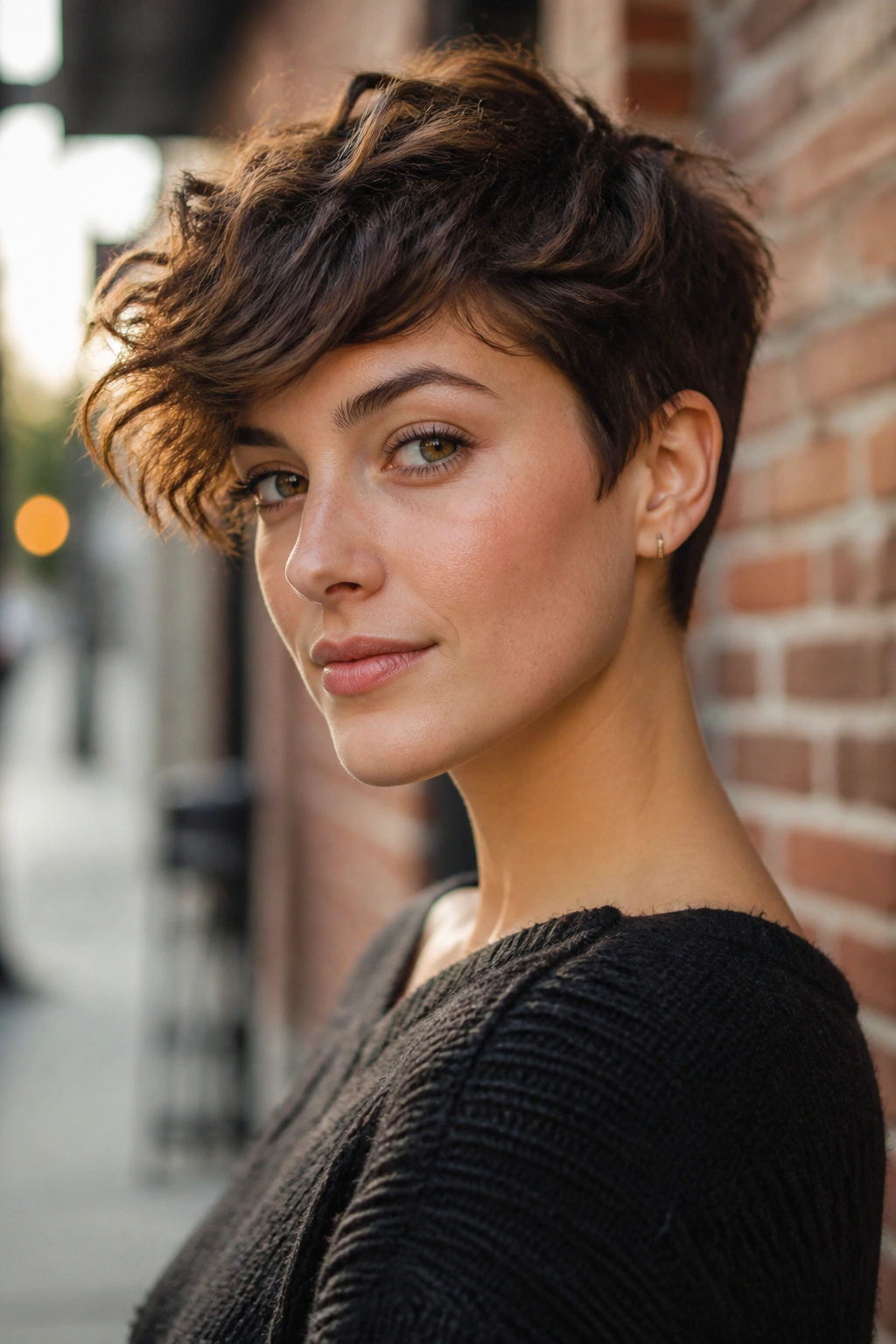
I’ve seen this cut rescue more than one rough hair day. A pixie with longer top layers gives short waves room to show off, but it keeps the sides neat enough that you don’t spend forever taming them.
The long top is the part that matters. It lets the wave bend forward, side to side, or slightly up, depending on how you finger-style it. The shorter sides keep the shape from turning bulky. If your hair has a stubborn cowlick, this cut can actually help because you’re working with a small amount of hair instead of trying to control a whole heavy bob.
- Keep the top around 2 to 4 inches if you want movement.
- Ask for soft tapering at the sides, not a hard line.
- Use a matte cream or light paste on dry or nearly dry hair.
- Push the top forward, then break it up with your fingertips.
A pixie like this feels featherlight in a way that a longer cut can’t. It’s quick, it dries fast, and it still has enough texture to look deliberate.
5. Half-Up Mini Knot

A half-up mini knot is the hairstyle you reach for when the bottom half of your hair still looks decent, but the front keeps falling into your eyes. It takes maybe two minutes, and it gives short wavy hair that small lifted shape people usually spend way more time chasing.
The best version is loose. Gather only the top third of your hair, twist it once, and secure it with a tiny elastic or a small clip. Don’t pull it tight enough to flatten the crown. Let a few front pieces stay out around the cheeks. Those stray bits make the style feel softer and keep it from looking like you tried too hard.
This one is great on second-day waves because the texture has a little grit already. If the ends are too smooth, mist them lightly with water before you twist. That keeps the knot from sliding. And if your hair is chin-length or shorter, make the knot tiny on purpose. A huge bun on short hair usually looks awkward. A small one looks cute and practical.
It’s the sort of style that works when you need to look awake before your coffee kicks in.
6. Deep Side-Part Bob
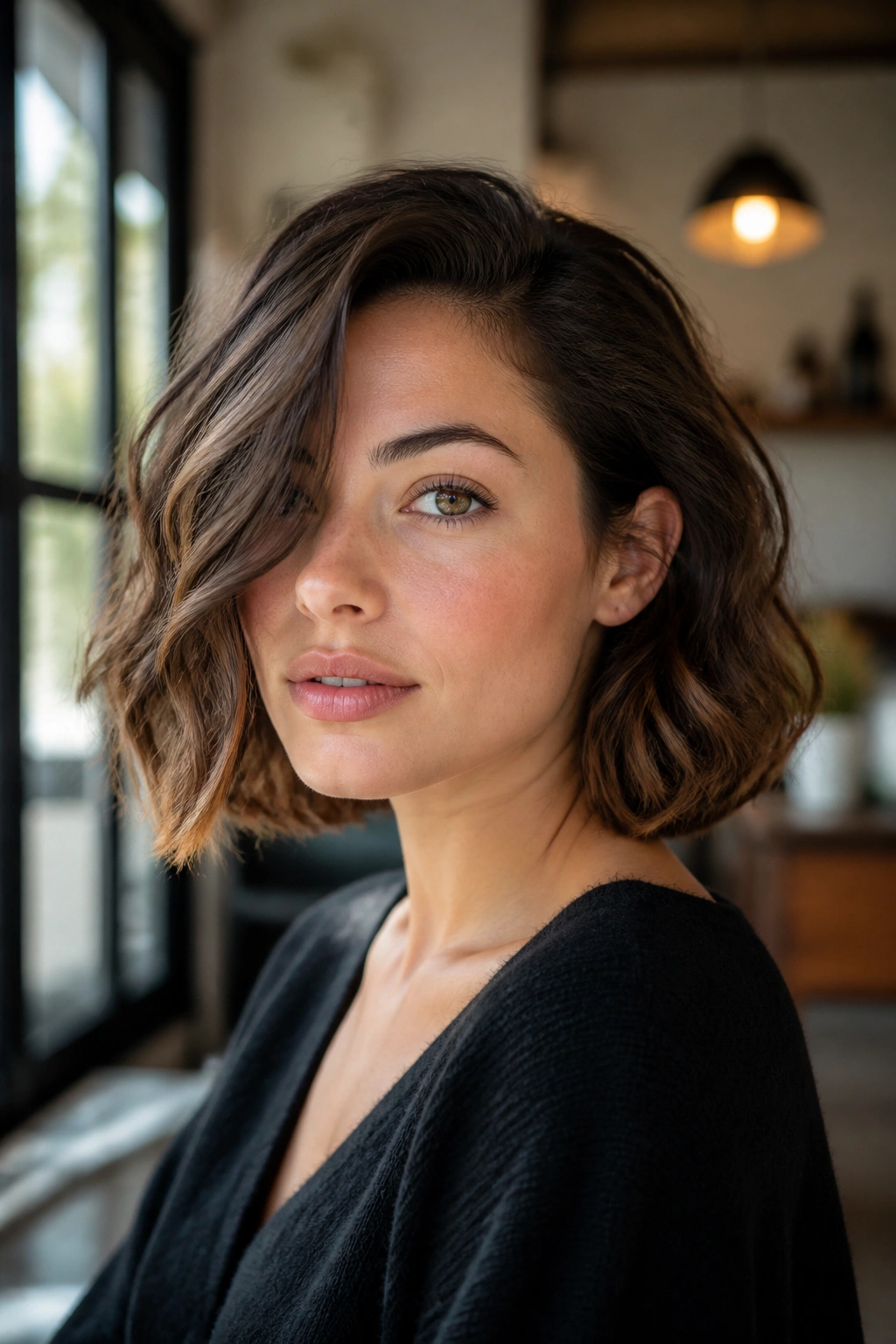
A deep side part changes the whole mood of a bob. The center part gives symmetry. The deep side part gives lift, softness, and a little bit of edge without needing extra length.
This shape is especially good if your waves sit flatter on top or if one side of your hair has more bend than the other. Pushing the heavier section over lets the lighter side breathe, and that contrast can make the cut look fuller at the roots. It also helps round faces and soft jawlines because the hair falls in a more angled line across the forehead.
Unlike a center-part bob, which tends to read neat and balanced, this one feels looser and more relaxed. It’s also forgiving on days when your waves are not cooperating. A quick blast of root spray at the part, plus a few scrunches at the ends, is usually enough.
If you want a bob that looks styled without much effort, this is one of the easier paths. Set the part while the hair is damp, let it dry there, and do not keep touching it. Hair hates being fussed with after it starts to set.
7. Claw-Clip Twist Back
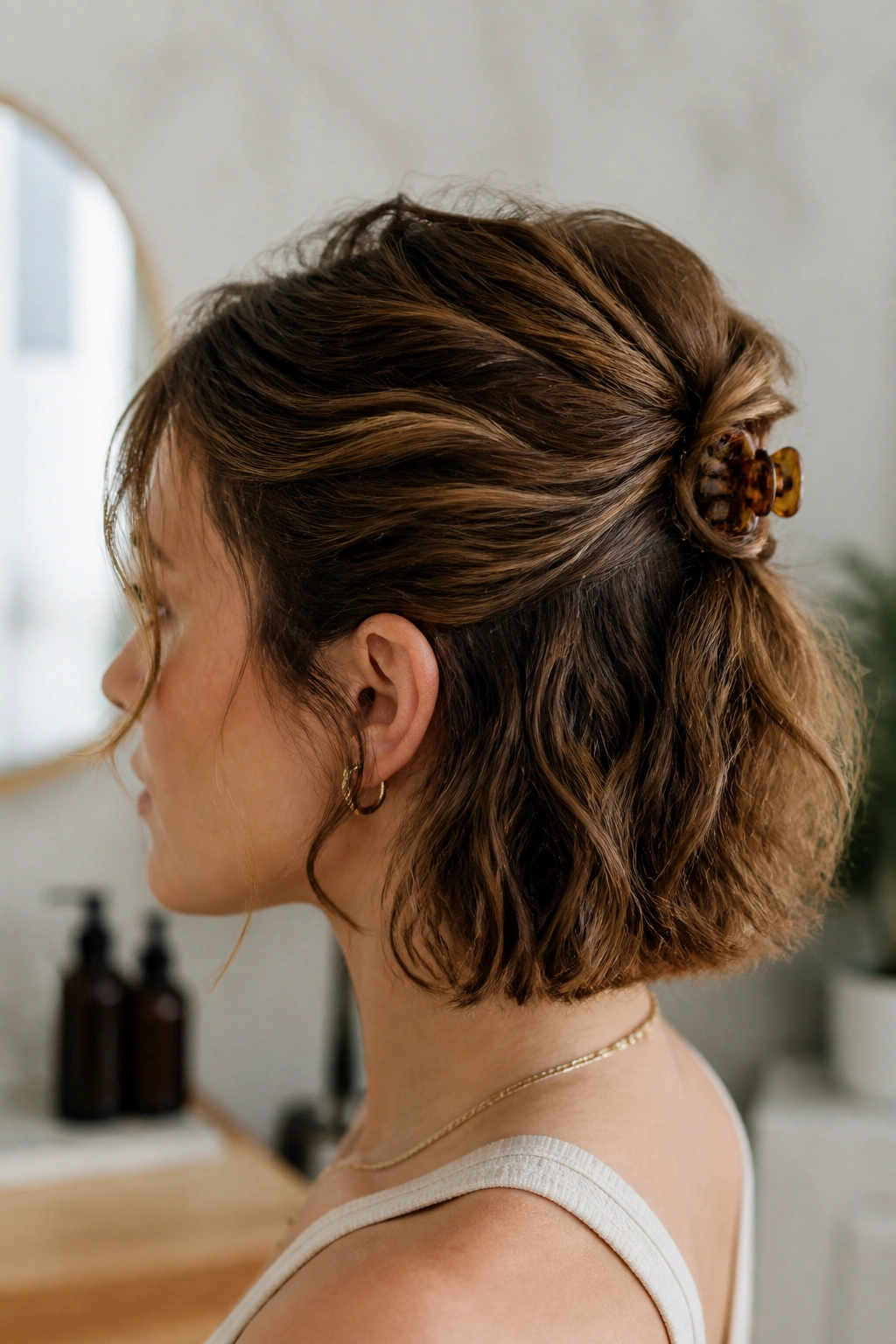
Some mornings, a good clip is the hairstyle. That’s the whole story.
A claw-clip twist back is one of the fastest ways to tame short wavy hair without hiding the texture. Twist the top half or top two-thirds of your hair loosely toward the back of your head, then secure it with a small or medium claw clip. Leave the ends slightly loose so the wave pattern still shows at the sides and nape.
Why It Saves the Day
The clip gives you shape at the crown and keeps the front out of your face, but it does not flatten the hair the way a tight ponytail can. That matters on short waves, where every inch counts. If the clip is too large, the style slides. If it’s too small, it pinches and pops open. The sweet spot is a clip that grabs the twist without crushing it.
- Use a small clip for chin-length hair.
- Use a medium clip for a short lob.
- Twist once, not twice.
- Leave the ends soft and messy.
A matte clip usually holds better than a slick, shiny one. And yes, that matters. Slip is annoying.
8. Tousled Blunt Bob
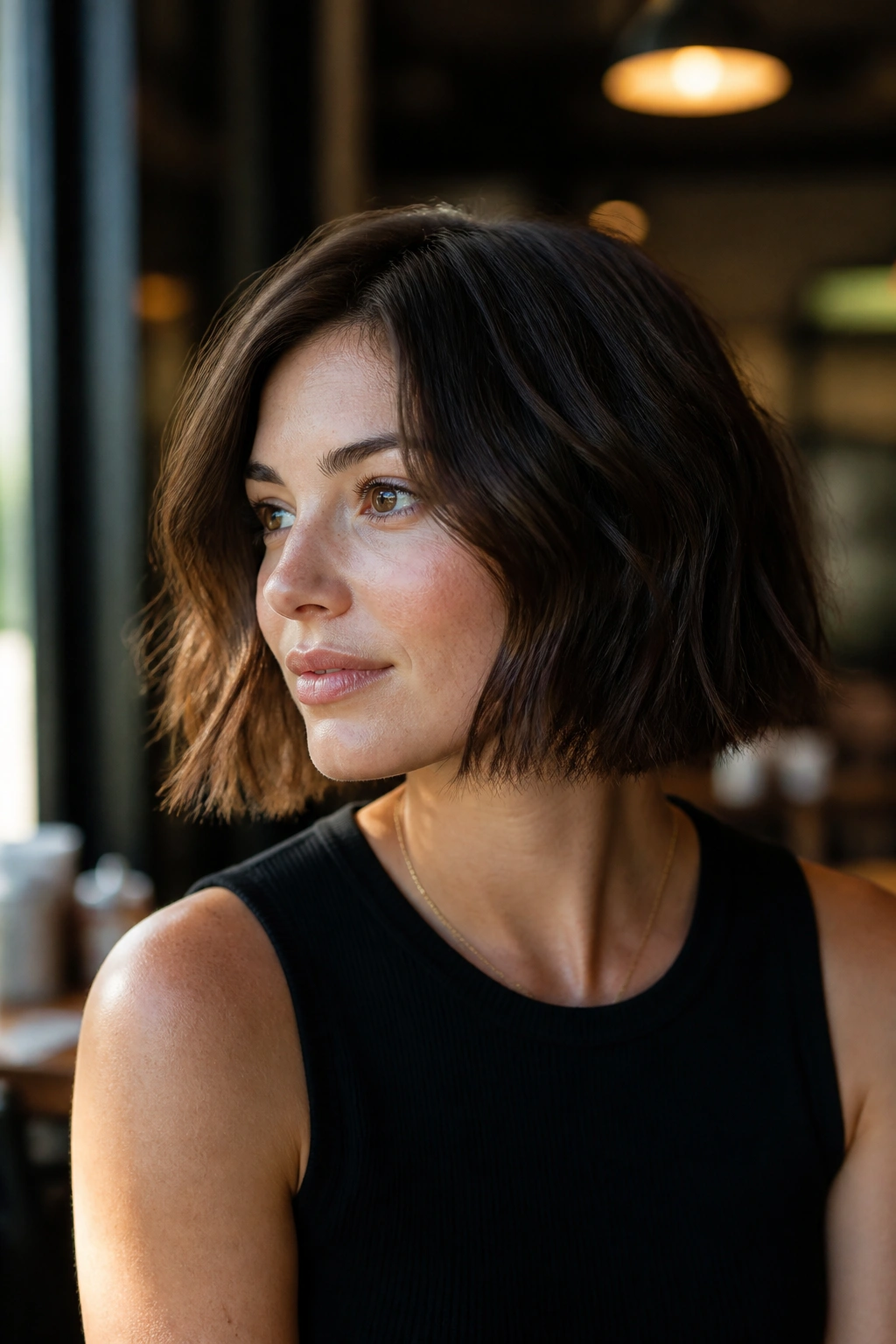
A blunt bob with waves is one of my favorite contradictions. The cut line is clean. The finish is not.
That contrast is what makes it work. The straight perimeter gives short hair a solid frame, while the waves keep it from looking boxy or severe. If your hair is thick, this shape can be a relief because the blunt edge removes some of that floaty, over-layered bulk that makes short waves puff out at the sides.
The trick is to keep the texture concentrated in the mids and ends. Scrunch a little sea salt spray or texturizing mist through the lower half of the hair, then let the top stay smoother. You want the shape to feel crisp at the edge and soft through the body. If one side flips out more than the other, leave it. That unevenness usually looks better than forcing everything into place.
This cut is especially good when you like short hair but don’t want it to look too cute or too airy. It has a bit of backbone. A little attitude, too.
9. Face-Framing Wave Flip
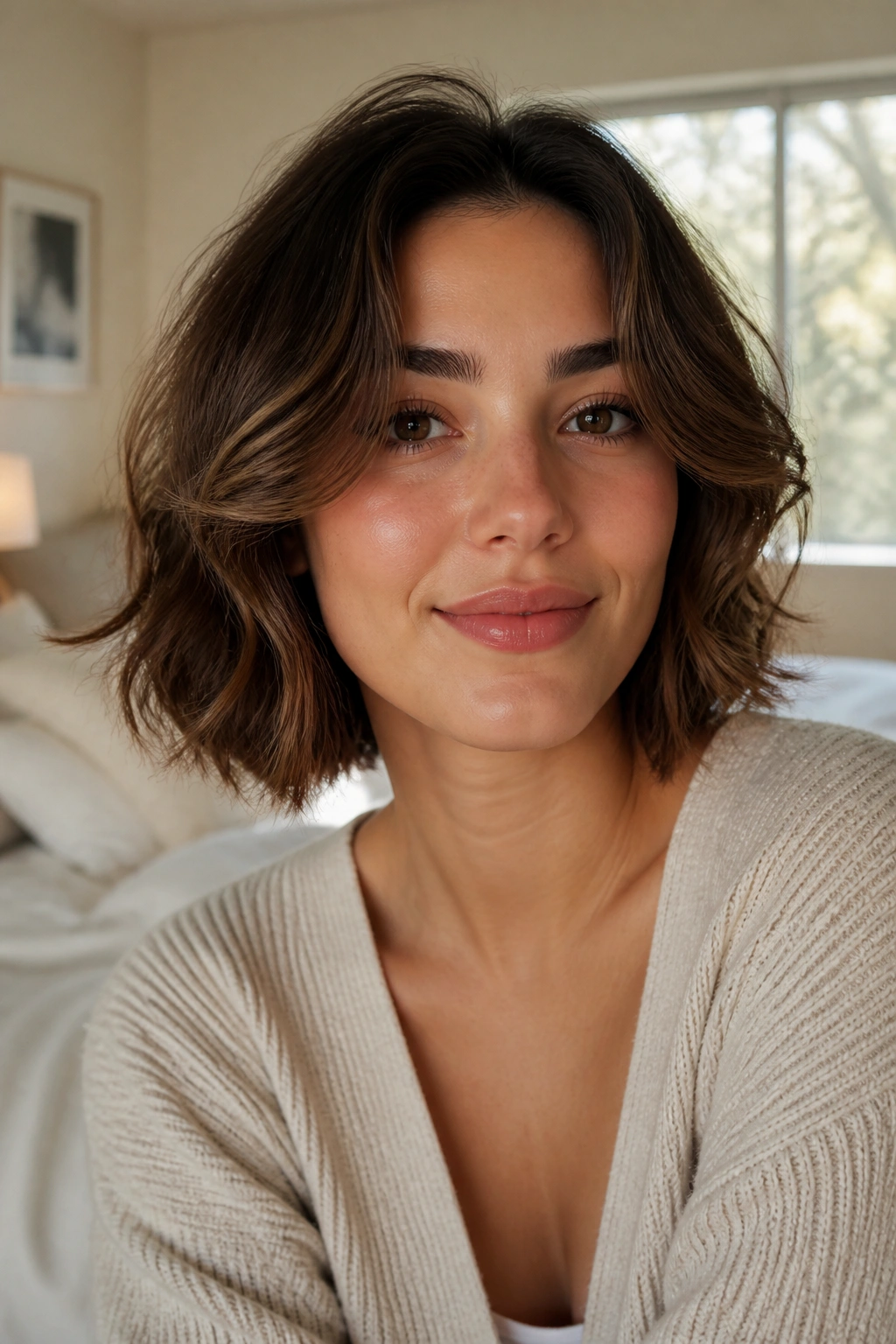
What if you want volume without turning your hair into a full-blown style project? A face-framing wave flip is the answer I keep coming back to.
The move is simple. Push or flip the front sections away from your face so they bend outward at the cheekbone or jaw, then leave the rest of the hair loose. That one detail opens up the face and gives short waves a more lifted shape around the front. It’s especially handy when the back already looks fine and only the front feels too flat or too clingy.
How to Get the Flip
Use a round brush if you want a cleaner bend, or just use your fingers if you want it rougher and faster. A tiny bit of mousse at the roots helps the front sections hold their shape once they cool. If you have a fringe or short layers, separate the front into two pieces and direct them away from each other while drying.
The nice thing is that you do not have to style every strand. Just the front. That keeps the whole look easy, which is kind of the point here.
10. Scrunched Collarbone Lob
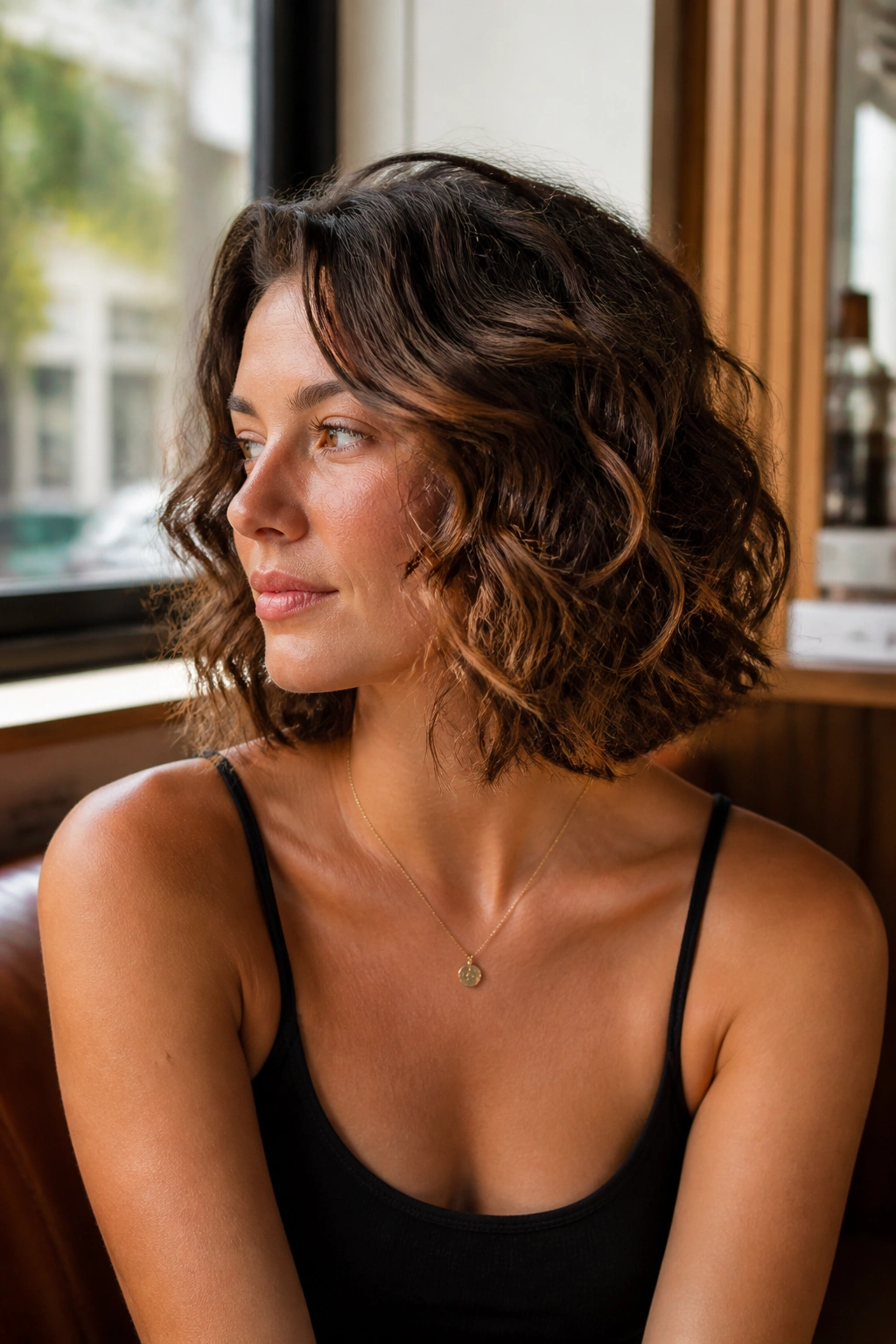
A collarbone lob is one of those lengths that feels easy the second you stop trying to control it. It has enough weight to settle, but not so much that the wave gets dragged out. That balance is gold.
Scrunching is the move that gives this cut its shape. Start with damp hair, work in a light mousse or curl foam, and cup the ends upward toward the scalp. Don’t rub. Rubbing is how you get frizz and weird separation. Scrunch, release, scrunch again, then leave it alone while it dries.
This style does not need a perfect finish. A few bent ends and a little crown lift are enough. If the top dries too flat, clip the roots for ten minutes while they cool. If the lower half feels too puffy, smooth a whisper of cream over the outer layer once it’s dry. Whisper. Not scoop.
A collarbone lob is one of the easiest short wavy hairstyles for people who want movement but not too much fuss. It can look fresh with almost no effort, and that’s hard to beat.
11. Short Wolf Cut

A short wolf cut has a bit of bite to it, and that’s why it works so well with waves. The shorter top layers create lift, the longer pieces around the perimeter keep the shape from ballooning, and the whole cut lands somewhere between shaggy and sharp.
This is not a cut for someone who wants every hair in place. It’s for someone who likes a little roughness. Natural waves fit right in because the cut expects uneven movement. It wants pieces to fall a little differently from each other. That’s the charm.
One thing I like about this shape is the grow-out. It tends to soften into a decent-looking cut instead of turning into a helmet. If your hair is fine, ask for softer layers and keep the bottom line a bit fuller. Too much thinning can leave the ends looking sparse, and sparse ends are a pain to style.
Use a light mousse at the roots and a touch of cream on the mids. Then stop touching it. Seriously. The less you fight a wolf cut, the better it behaves.
12. Braided Crown Accent

A braided crown accent gives you the look of effort with a fraction of the work. Unlike a full crown braid, this version only pulls in a small section near the temple or hairline, so it keeps short waves loose and visible.
That matters because full braids can swallow short hair fast. A small braid does not. It adds detail without stealing the whole show. The wave pattern still moves underneath, and the braid gives you a neat little line across the front or side. It’s a nice move for second-day hair, or for the day when your bangs won’t sit right and you need them out of the way.
You only need a 1-inch section, a small elastic, and two pins if the braid wants to slip. Pull the braid edges apart a little so it doesn’t look tight and tiny. That tiny bit of widening makes it read softer and more relaxed.
Best on short bobs, grown-out pixies, and wavy cuts with enough front length to grip. If the front is too short, pin the braid only at the side and let the rest stay loose. That often looks better anyway.
13. Side-Swept Pixie Bob
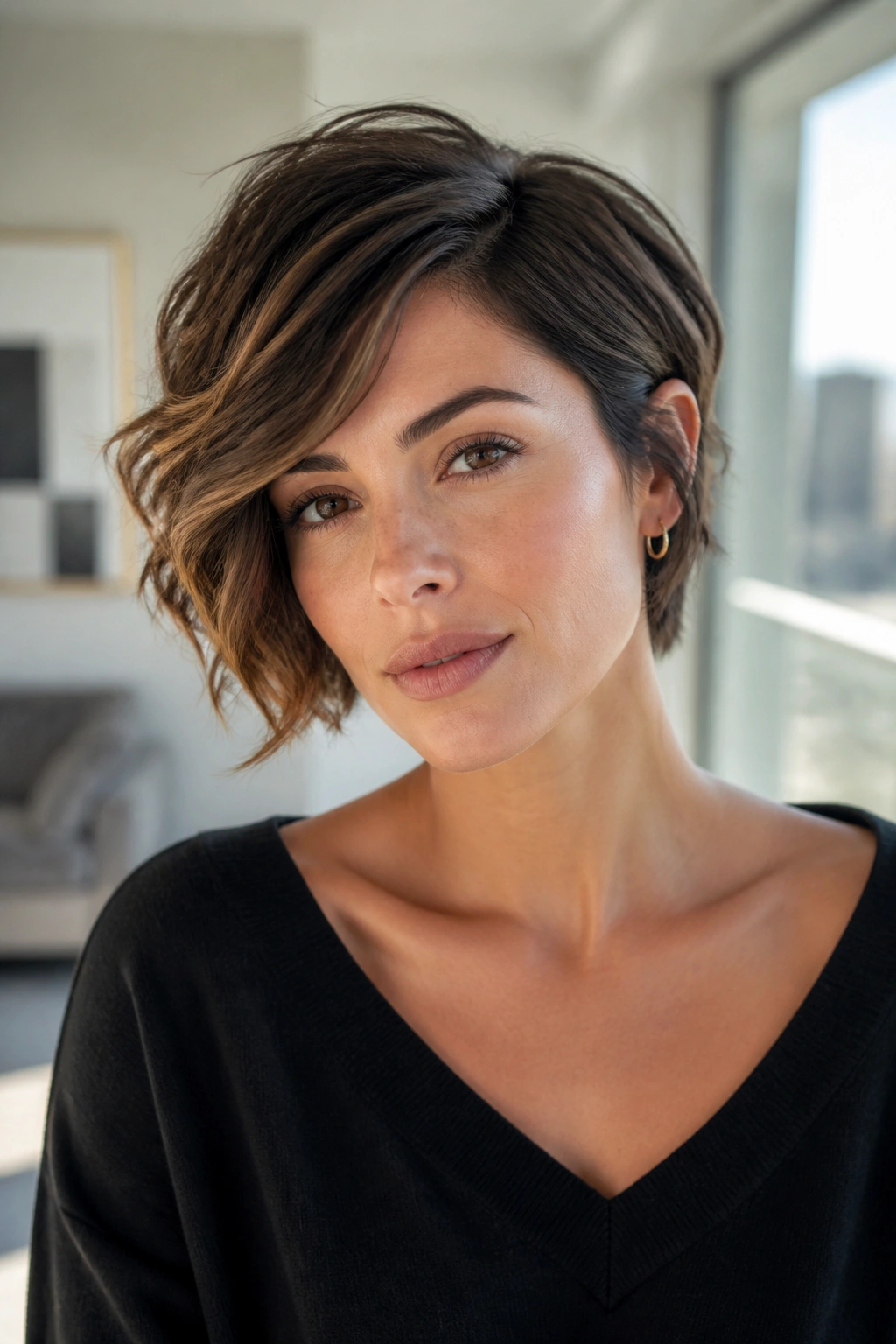
A side-swept pixie bob sits in that sweet middle ground between cropped and grown-out, which is why it’s so easy to wear. It gives you the lightness of a pixie and the softness of a bob, without committing to either extreme.
Why It Works
The side sweep creates a visible line across the forehead and cheek, and that line makes the style feel intentional even when the texture is messy. If your waves are a little unpredictable, the longer side can hold the shape together while the shorter side keeps the cut from feeling heavy.
- Keep one side slightly longer so it can fall diagonally.
- Use a pea-size amount of paste for the ends.
- Set the part while the hair is still damp.
- Tuck the short side behind the ear if you want more lift on top.
This cut is great for people who want a fast style but still want some drama around the face. Not loud drama. Just enough to make the shape feel finished. And if the top starts to split apart during the day, a little water on your fingertips is usually enough to wake it back up.
14. Wet-Look Tucked Waves
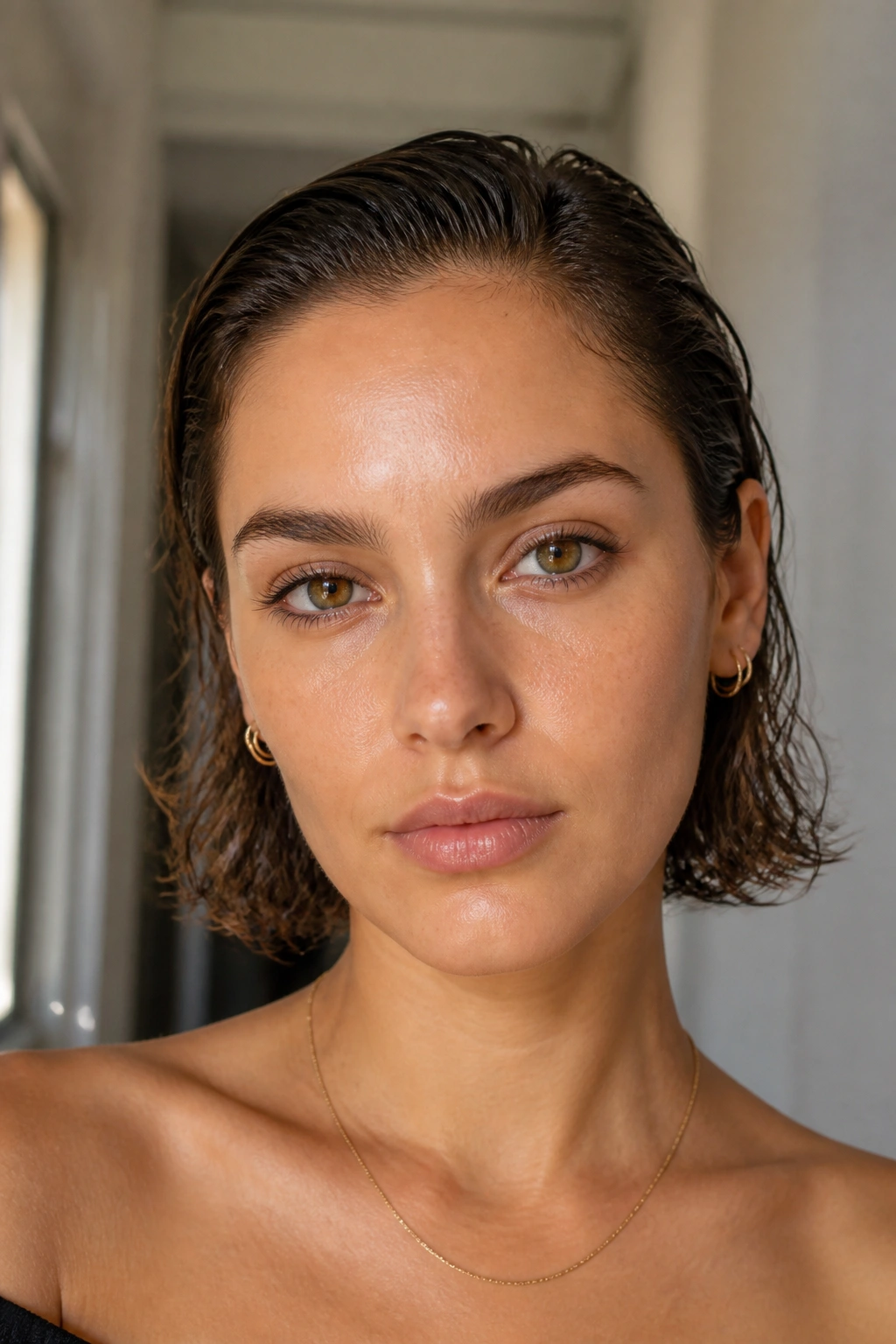
A wet-look tucked style is the cleanest low-effort option when frizz is being annoying and you don’t want to wrestle with it. You work with it. That’s the move.
Start on damp hair and smooth a small amount of gel through the top and sides, then comb everything back loosely and tuck the front behind the ears. Keep the ends softer so the wave pattern still shows at the bottom. The finish should look sleek at the roots and a little bendy through the length, not stiff from root to tip.
The mistake people make is using too much product. Then the hair goes stringy and hard in all the wrong places. A thin layer is enough. If you want a little shine, tap a drop of serum over the surface once the gel has started to set.
This style looks especially good on short waves that naturally bend back from the face. It also holds up well when the hair is freshly washed but not fully settled yet. Clean lines, soft ends. That’s the balance.
15. Choppy French Bob
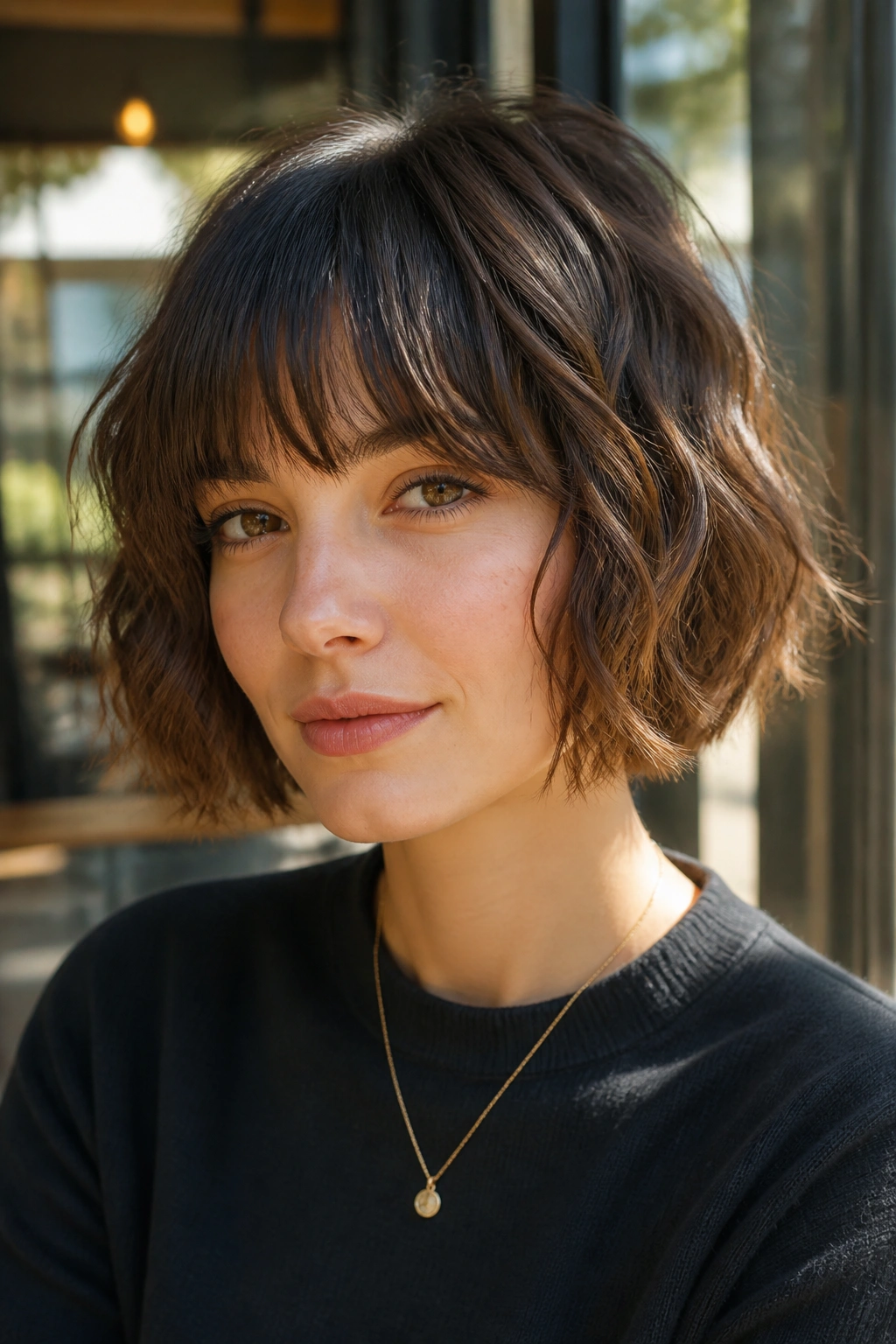
Why do French bobs keep coming back? Because a jaw-skimming shape with broken-up ends makes short wavy hair look deliberate without making it feel dressed up.
The cut usually lands around the jaw and often has some kind of soft fringe or face-framing piece. What makes it different from a regular bob is the way the ends are softened. They are not blunt. They are not heavily layered either. They’re just a little uneven in a good way, which lets the wave pattern move through the shape instead of sitting on top of it.
What to Ask For
- A length that hits right around the jaw or a touch below.
- Soft, broken ends instead of a hard edge.
- A fringe or front piece that can split naturally.
- Interior weight removal only if the hair is dense.
This cut suits people who like hair that feels slightly undone but still neat enough for real life. If you add a side tuck or a tiny wave flip in the front, it gets even better. The charm is in the restraint. Don’t over-style it.
16. Ribbon-Back Wavy Bob
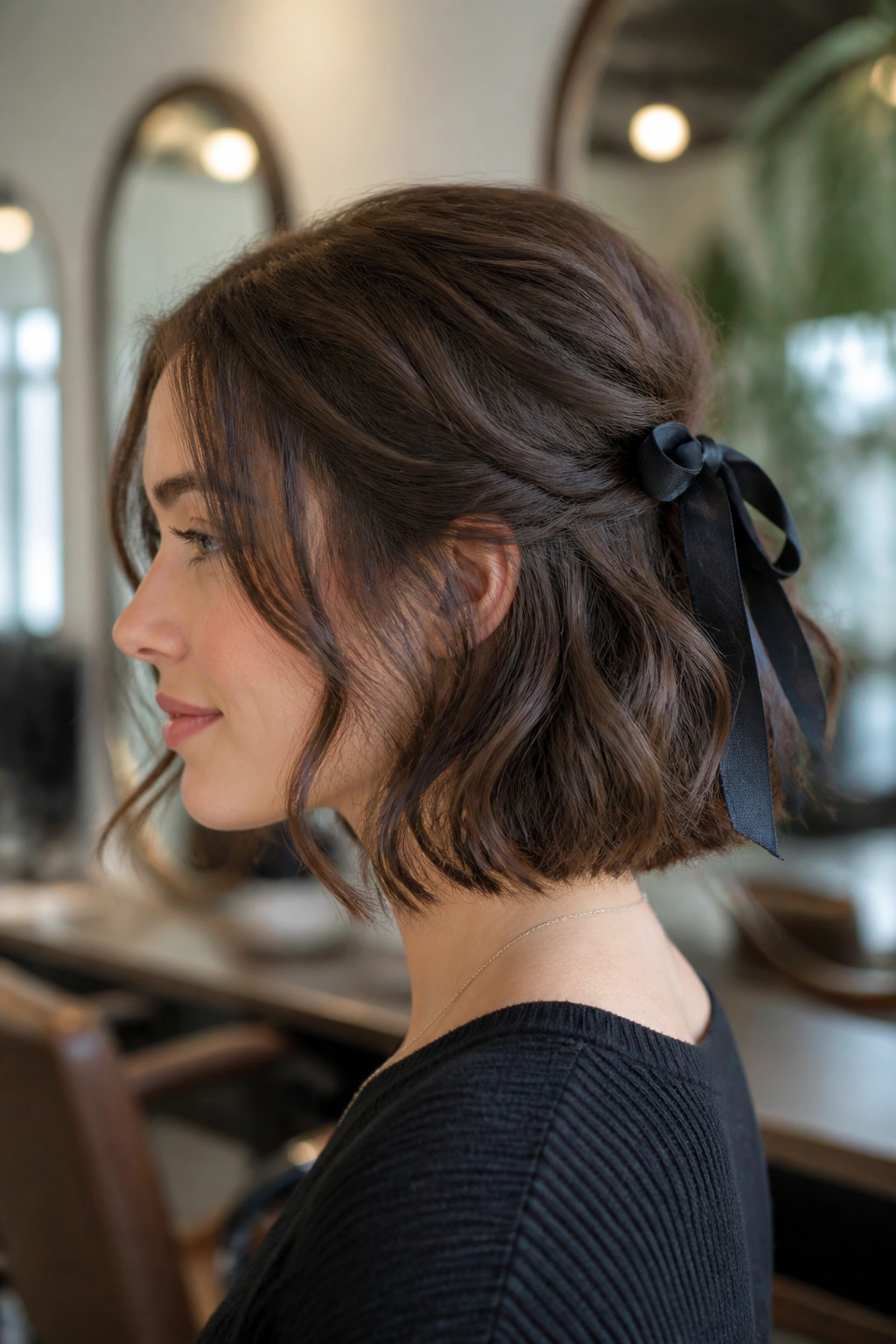
A ribbon at the back sounds almost too simple, but on short wavy hair it can be a smart little fix. It keeps the front clear, gives the style one focal point, and lets the wave texture stay loose everywhere else.
Instead of trying to turn the whole bob into an updo, gather the front sections gently toward the back and tie a narrow ribbon around them or underneath a small section of hair. The ribbon should hold the shape without flattening the body of the bob. Matte fabric usually looks softer than shiny satin, especially with a wavy texture that already has enough movement.
This style is handy when the hair is clean but not fully cooperating. It also works when the ends are too short for a true ponytail and too long to leave completely loose. That awkward middle length can be annoying. The ribbon gives it a job.
Keep the side pieces soft. Leave a few bends around the face. If you pull everything too tight, the style loses what makes it good in the first place.
17. Diffused Rounded Crop
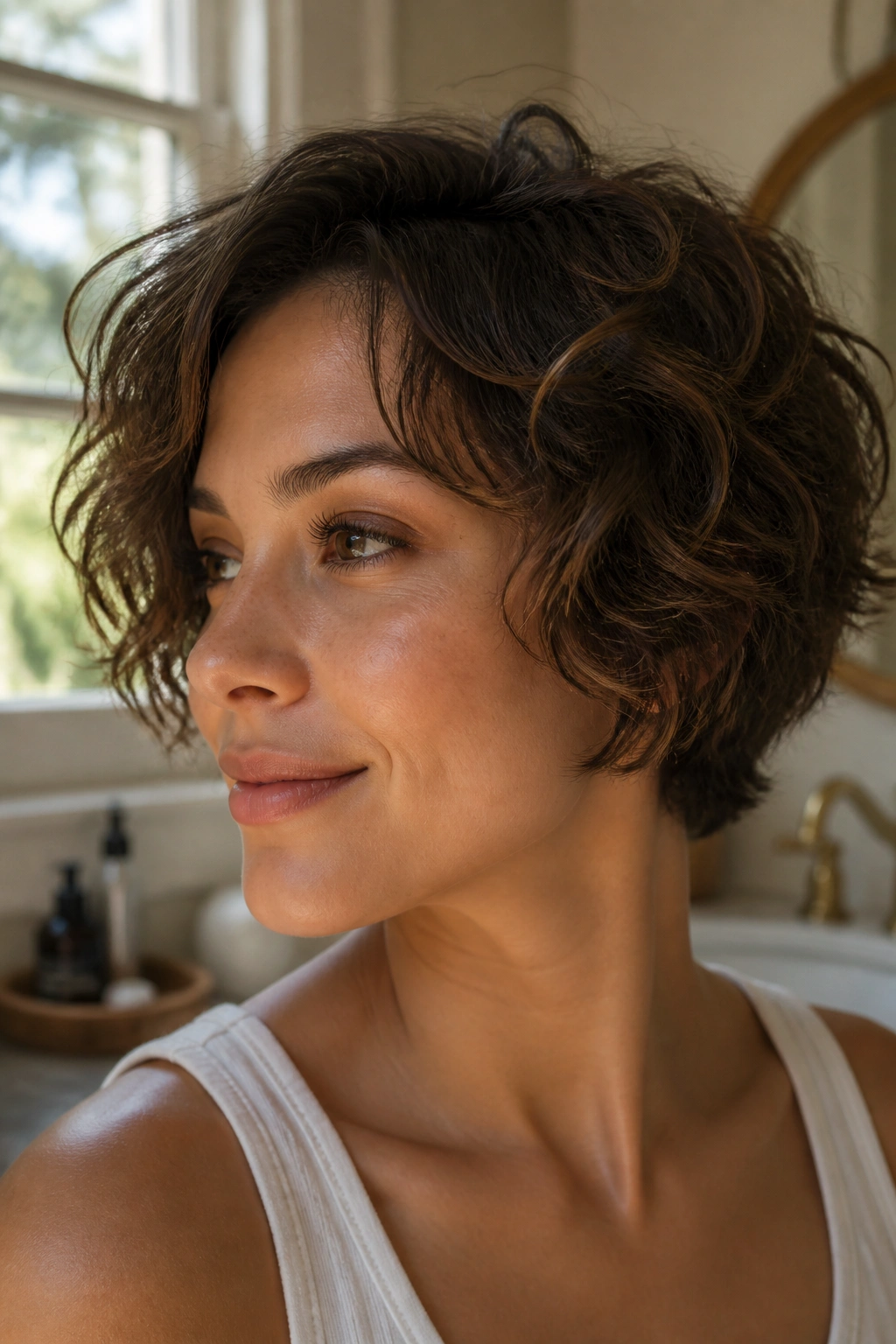
A rounded crop can be a lifesaver if your short waves tend to balloon sideways. The shape keeps the width controlled, which matters more than people think when the hair is short enough to spring out in every direction.
The diffuser is the tool that helps here. Use low heat, cup sections into the bowl, and lift the hair toward the scalp instead of blasting it around. Stop before it’s bone dry, then let the last bit air-dry. That helps the wave keep its shape without turning crunchy. If the crown wants extra lift, clip the roots while the hair is cooling. Little things. Big payoff.
What you want is a soft round silhouette, not a triangle. That distinction sounds tiny until you see it in the mirror. A triangle shape means the bottom has all the weight and the top feels flat. A rounded crop looks balanced from every angle.
This cut suits short wavy hair that gets frizzy when left entirely alone. A diffuser gives you a little control without flattening the bend. That’s the sweet spot.
18. Flat-Clip Half Back Style

Unlike a full half-up style, this one only lifts the top layer and leaves the back loose. That makes it easier on short waves that already have enough volume and don’t need more hair piled on top.
A flat clip works well here because it sits close to the head and doesn’t create a bump where the hair folds over itself. Gather the top section from temple to temple, twist it once, and secure it low and flat at the back. Leave the rest of the waves hanging free. The result is clean, but not severe.
This is a good choice if your hair is thick, because thick waves can get bulky fast when you pile them up. A regular pony can feel heavy. A flat clip keeps the shape lighter and easier to wear. If the clip is too high, the crown can puff awkwardly. Keep it low. That matters more than you’d think.
A little tuck near the ears finishes it off. Nothing fancy. Just enough control to keep the style from drifting into chaos.
19. Zigzag Part Waves
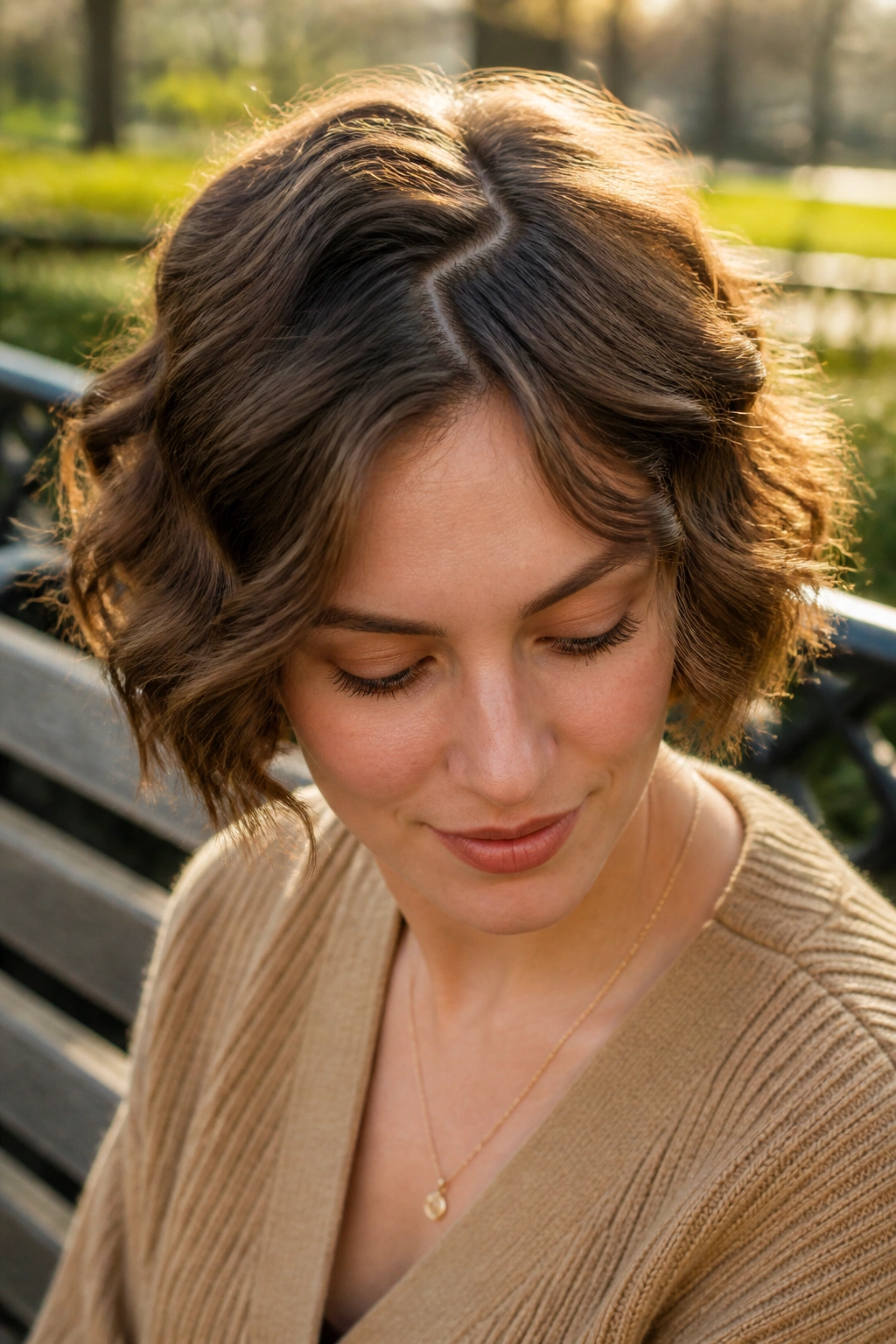
A zigzag part gives short wavy hair a tiny hit of interest without changing the cut at all. That’s why I like it so much. It’s a small move that changes the whole read.
Why It Works
A straight part can flatten a wave pattern if the hair always falls the same way. A zigzag part breaks that line up and lets the roots sit with a little lift. It also hides the fact that the hair might not be perfectly even on both sides, which is useful on days when the bend is more stubborn on one half than the other.
Use the tail of a comb to draw the part while the hair is damp. Make small alternating shifts, not giant spikes. Think soft zigzags, not lightning bolts. Then let the hair dry without combing it back into a straight line. If you want even more texture, pinch a little cream into the front pieces once they’re dry.
- Works well on short bobs and lobs.
- Good if your roots go flat along a single straight part.
- Needs only a comb, a light product, and 30 seconds.
- Looks best when the rest of the hair stays loose.
It’s subtle, but subtle is often the point.
20. Pin-Curled Short Waves
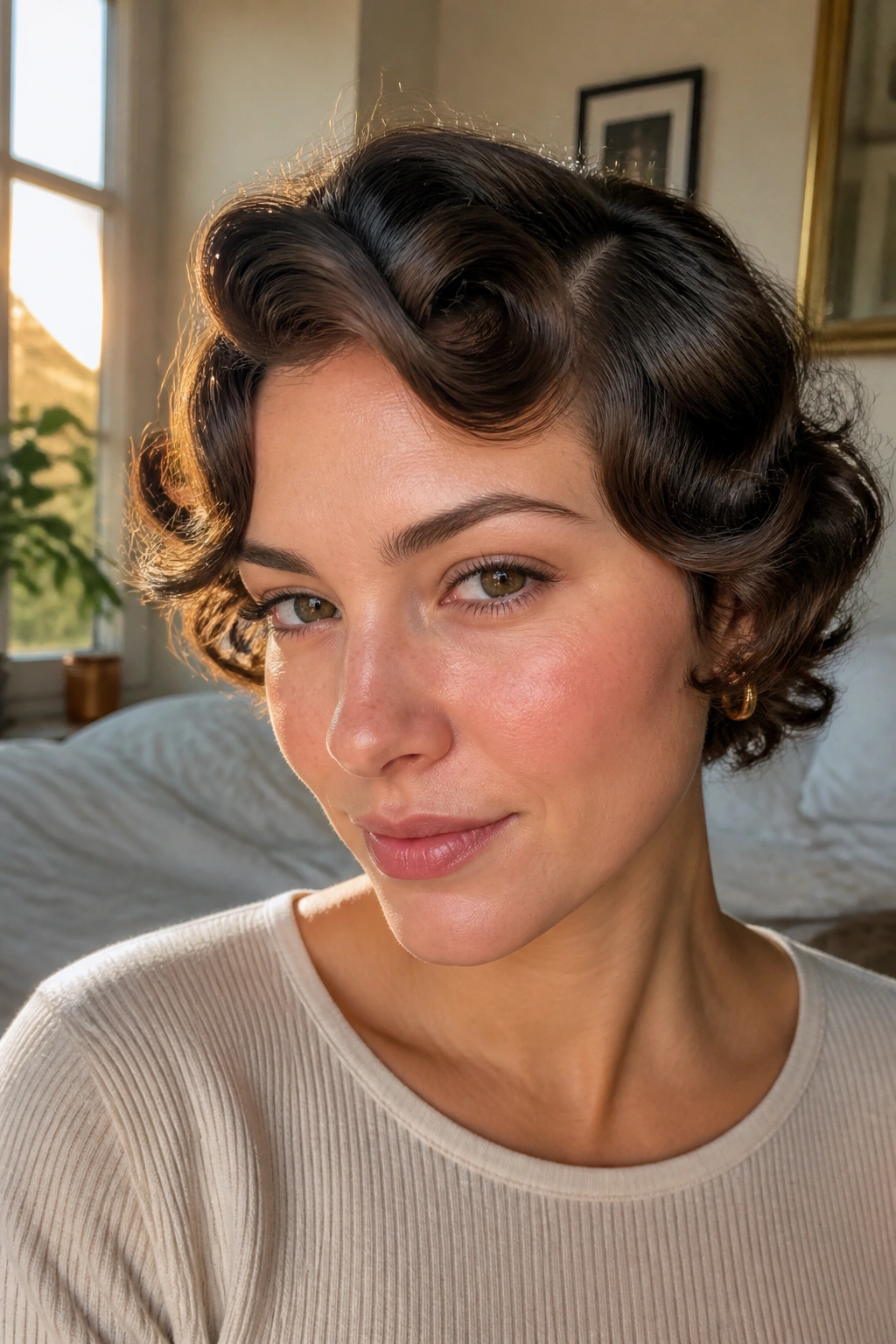
Pin curls sound fussy until you realize they can be one of the easiest ways to shape short waves without heat. A handful of curls, pinned flat while they dry, can make the bend look smoother and more defined.
You do not need a whole head full of them. A few large sections around the front and crown are usually enough. Wrap each section around two fingers, coil it toward the scalp, pin it flat, and let it set. Once the hair is cool and dry, release the pins and separate the waves with your fingertips. Don’t brush them out. That’s how you lose the shape.
This style is especially handy if your natural waves tend to break apart at the ends or go fuzzy at the top. The pin curls create a cleaner line first, then you loosen them afterward. It’s a little bit retro, sure, but it works because it gives short hair a shape before gravity has a chance to mess with it.
If you want your waves to look a touch more polished without using a curling iron, this is a smart move. Quietly smart. Not showy.
21. Messy Side Bun for Short Waves

A messy side bun is not really a bun in the strict sense. On short wavy hair, it’s more like a loose twist that happens to sit low and off to one side. And that’s why it works.
Gather the hair near the nape, sweep it toward one side, and twist the ends under just enough to tuck them in. Use two or three bobby pins to hold the shape. Leave the front pieces soft, and let a few shorter waves fall free around the face. If you try to smooth every strand into the twist, the whole thing gets too tight and starts looking like you ran out of hair halfway through.
How to Wear It
A side bun like this is useful on days when the ends feel a little rough but the crown still looks decent. It also helps if your haircut is too short for a real bun but long enough to pin. That in-between length can be annoying. This style gives it a job.
A matte pomade on the palms before pinning can help the loose ends stay put. Use very little. Too much and the hair gets sticky. You want soft hold, not shellacked hair.
22. The Five-Minute Tousled Crop

When nothing else sounds worth the trouble, this is the one I reach for. The five-minute tousled crop is basically the natural wave pattern, cleaned up just enough to look like a choice instead of a mood.
Start with dry or nearly dry hair. Rub a tiny bit of curl cream or light styling balm between your palms, then press it into the ends and the pieces around your face. Use your fingers to separate any clumps that feel too heavy, and leave the crown alone unless it’s standing up in a way you hate. If it is, smooth it once and stop there.
This style is good because it lets short wavy hair be short wavy hair. No pretending. No over-shaping. Just enough definition to keep the pieces from blurring together. If the front needs a small lift, bend one section back behind the ear or clip it with a tiny barrette. That single move can turn “I gave up” hair into “I meant to do this.”
It’s the simplest style here, and honestly, one of the most useful. Some days, that’s the entire game.
