



Curly layered cuts with curtain bangs can look casual in the best way, but only when the cut is doing the real work. Otherwise you end up with a heavy triangle, bangs that split in odd places, or face-framing pieces that vanish into the rest of the curl pattern.
Bad curly layering is brutal. One blunt shelf in the wrong spot can make the whole head puff outward.
What usually works better is shape. A good curl cut respects shrinkage, keeps the bangs long enough to sweep instead of sit, and places weight where the hair can still move. That means different things for loose waves, springy ringlets, thick coils, and everything in between.
Curtain bangs on curly hair are not just straight bangs with a middle part. They need room to bend. They need a softer start, a longer first cut, and a stylist who knows when to stop taking hair off. The styles below handle that problem in fifteen different ways, and some of them are a lot smarter than they sound at first glance.
1. Shoulder-Length Curly Layers With Cheekbone Curtain Bangs
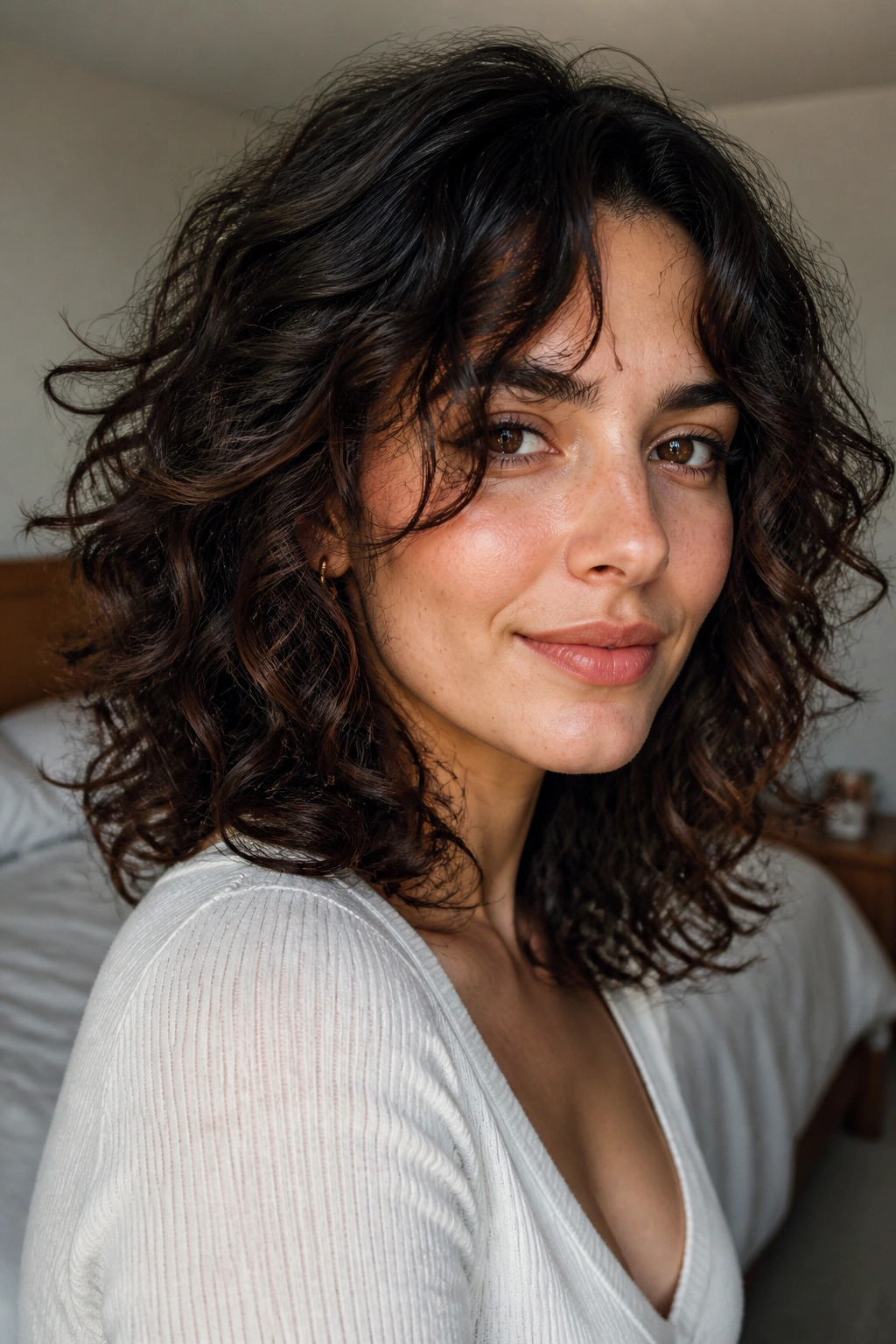
Shoulder-length curly layers are the cut I recommend to people who want shape without losing too much hair. The length gives curls enough weight to hang, while the layers stop the ends from feeling like a blunt mop. Add curtain bangs that start around the cheekbones, and the whole cut opens up fast.
This works especially well if your curls are medium density and you like a shape that can air-dry without a lot of rescue work. The bangs should be cut long enough that they can sweep away from the face instead of sitting on the forehead like a hard line. For most curl patterns, that means the shortest pieces need to look longer than you think when the hair is wet.
A few things to ask for:
- A dry cut, or at least a final dry refinement, so the stylist can see the real spring.
- Long face-framing layers that blend into the rest of the cut, not a separate fringe floating on top.
- Minimal thinning near the crown if your hair already goes flat easily.
Best for: curls that want movement, not extreme volume.
Skip the over-layering. Shoulder-length curls can lose their shape fast if the stylist gets too eager with the scissors.
2. Rounded Curly Shag With Airy Curtain Bangs
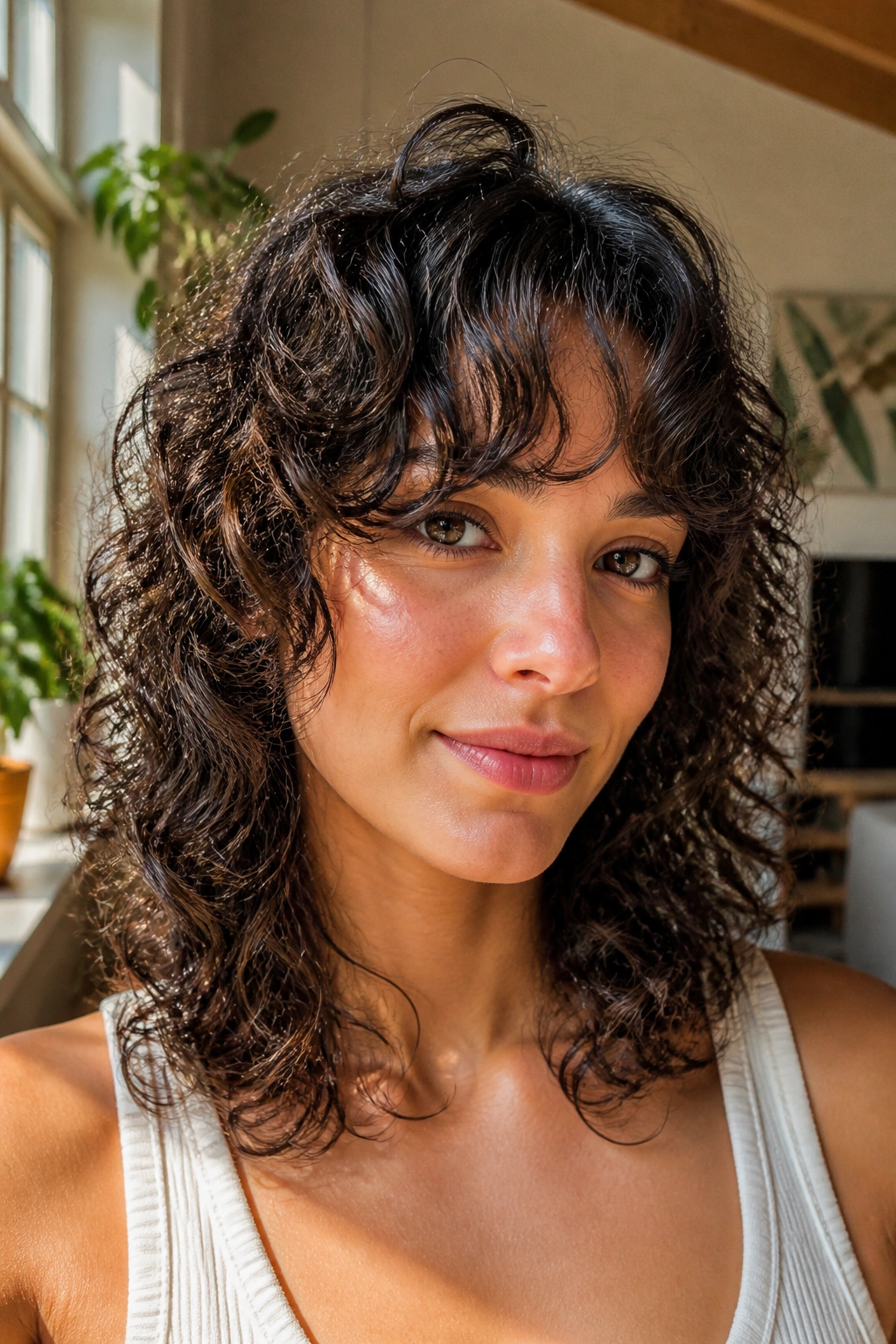
A rounded curly shag has attitude, but not the messy kind people used to mean when they said “shag.” The good version is sculpted. The crown gets lift, the sides stay soft, and the curtain bangs fall in two loose arcs that blend into the cheekbones.
It’s a strong choice if your curls start to collapse near the roots. The shorter internal layers help the top of the hair stand away from the scalp, which gives the whole style a little air. That round shape also keeps thick curls from ballooning into a triangle. Nice trade.
The bangs matter here. They should not be chopped blunt across the center. They need to split naturally, with the shortest pieces sitting just below the eyebrow line when dry, then tapering down into the rest of the cut. If they’re cut too high, the whole thing can feel sharp and fussy.
Why It Works
A rounded shag spreads weight around instead of dumping it at the bottom. That gives curls more bounce near the crown and less heaviness at the ends. It’s one of the few cuts that can make dense hair feel lighter without making it look thin.
This shape also forgives a rough styling day. If one section frizzes, the layers hide the problem better than a blunt cut would. And that matters more than people admit.
Style it with: a light curl cream on damp hair, then a gel over the top if you need hold.
3. Long Ringlet Layers With Split Curtain Bangs

Do your curls clump into ringlets? Then long layers can be a gift, not a compromise. They keep the length you like, but they stop the bottom half from turning into one heavy block. The curtain bangs should be split in the middle and tapered into the temples so they frame the face without stealing the show.
What Makes This Shape Flatting for Ringlets
Ringlets need room to spiral. If the layers are too short, the curl pattern can spring up unevenly and create little shelves that stick out in the wrong places. Longer layers solve that by letting the curl form clean loops while still giving the hair a curved outline.
Ask for the shortest face-framing pieces to land near the cheekbone or just below it when dry. On curly hair, that tiny difference matters. One inch too short and the bang can jump straight up into an odd little curl nub. No one wants that.
- Best with 3A to 3B curls that form clear spirals.
- Looks especially good on center-parted styles.
- Needs regular shaping if the bangs grow fast around the eyes.
How to wear it: let the front pieces fall where they want after diffusing, then separate only the curls that sit too far into the eyes.
4. Loose Wolf Cut With Soft Curtain Bangs

I like a curly wolf cut when somebody wants edge but not chaos. The shape is a little more dramatic at the crown and a little lighter at the ends, which gives loose curls a lived-in look that still reads intentional. Pair that with soft curtain bangs, and the whole cut feels modern without trying too hard.
Picture hair that has been dry-cut with a lighter hand at the top and just enough length left in front to sweep. That’s the lane here. It’s especially good for wavy-curly textures that can look flat in the morning and puffy by lunch. The wolf cut’s layered structure gives those waves somewhere to land.
A warning, though: this cut gets messy fast if your stylist takes too much from the sides. The “wolf” part should come from shape, not from random choppiness. The curtain bangs should connect to the side pieces, not sit like a separate fringe.
What to keep in mind:
- It works best when the crown needs lift.
- It can make fine curls look fuller.
- It is not the best choice if you want very polished, even lines.
My take: this is a cut for people who like texture first and neatness second.
5. Dense Spiral Layers That Remove Bulk Without Losing Shape

Dense curls need discipline. Not aggression. There’s a difference, and stylists who work with thick hair know it well. The goal is to remove bulk in the places that puff out, while keeping enough weight in the lower lengths so the cut doesn’t explode sideways.
That’s why this layered shape with curtain bangs works. The bangs soften the front, but the real magic is in the internal layering. Done right, it lets spirals stack without sitting on top of each other like a helmet. Done wrong, it turns into frizz with a haircut attached.
I’d ask for strategic debulking, not heavy thinning shears near the ends. Thinning can make dense curls frizzy if it’s overdone, and the damage shows up when the hair dries. Better to keep the outer line strong and let the inside move.
Best For Thick Curl Patterns
This cut suits hair that feels heavy even when it’s freshly washed. If your curls pull down at the sides or lose shape by the second day, the layers should be designed to let air in. The curtain bangs help balance the top, which is useful when the rest of the hair has a lot of mass.
Good signs in the chair:
- The stylist is cutting with curl clumps in mind.
- The bangs are blended, not isolated.
- The outline still looks full after a rough shake.
6. Fine Curly Layers With A Fuller Curtain Fringe
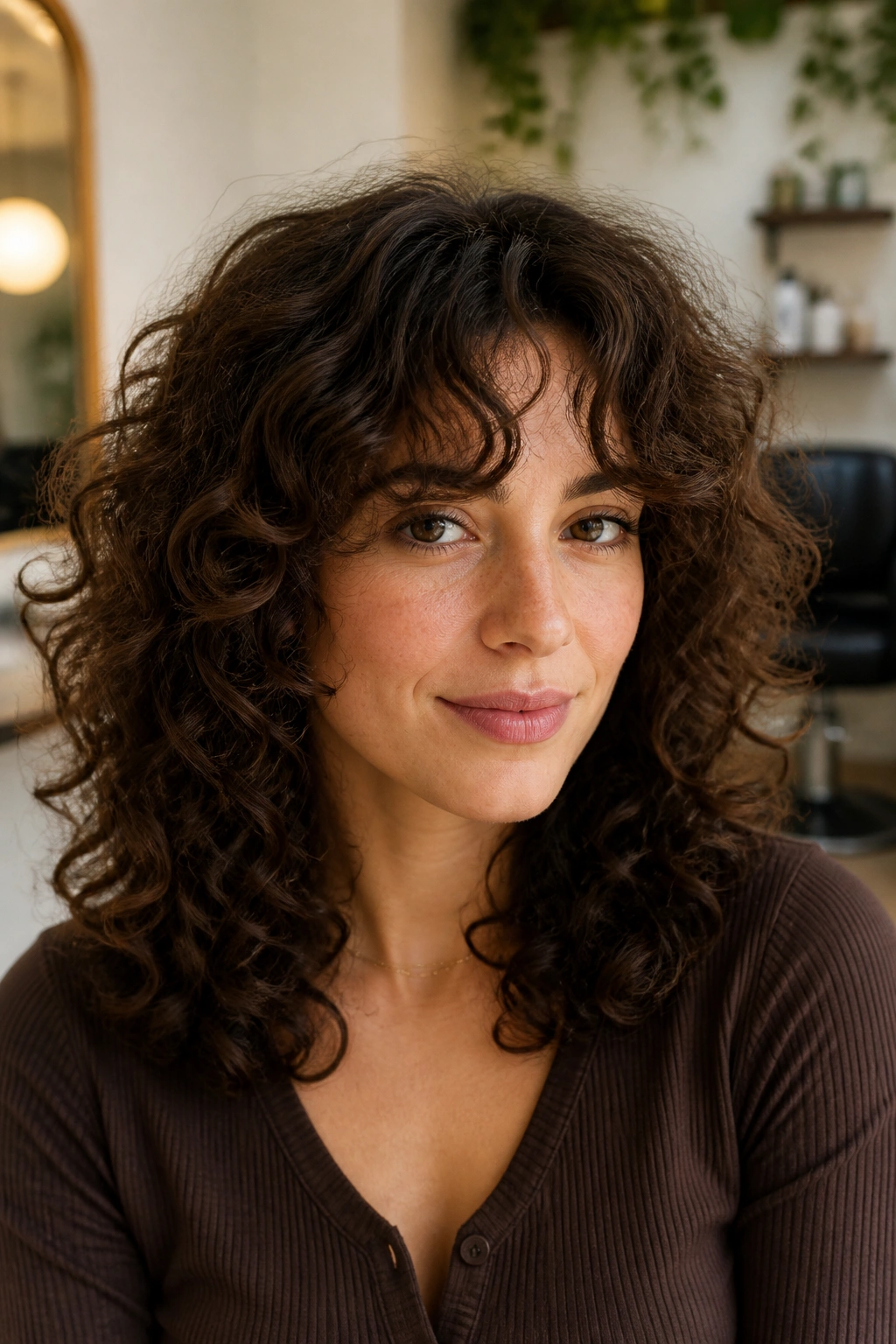
Fine curly hair scares people into leaving too much length on it. That’s a mistake. Fine curls often need more structure than bulk, and a well-placed layered cut can make the hair look fuller because each curl has more space to show up.
A fuller curtain fringe helps here because it gives the front a little visual weight. Not blunt weight. Just enough. If the bangs are left wispy to the point of disappearing, the face can look open in a flat way. A fuller fringe brings the eye in and makes the front of the cut feel finished.
What To Ask For
Ask your stylist to keep the layers soft but defined, with the shortest pieces hitting around the eyebrow or slightly below when dry. Fine curls usually do better when the bangs are cut a touch longer than the final goal. That gives you room to trim later if the curl pattern jumps.
Also, ask them not to strip too much from the ends. Fine hair can look sparse fast. You want lift, yes, but not see-through edges.
Best styling move: mousse at the roots, then a light gel through the front pieces so the curtain fringe keeps its shape.
7. Curly Lob With A Soft Center Part
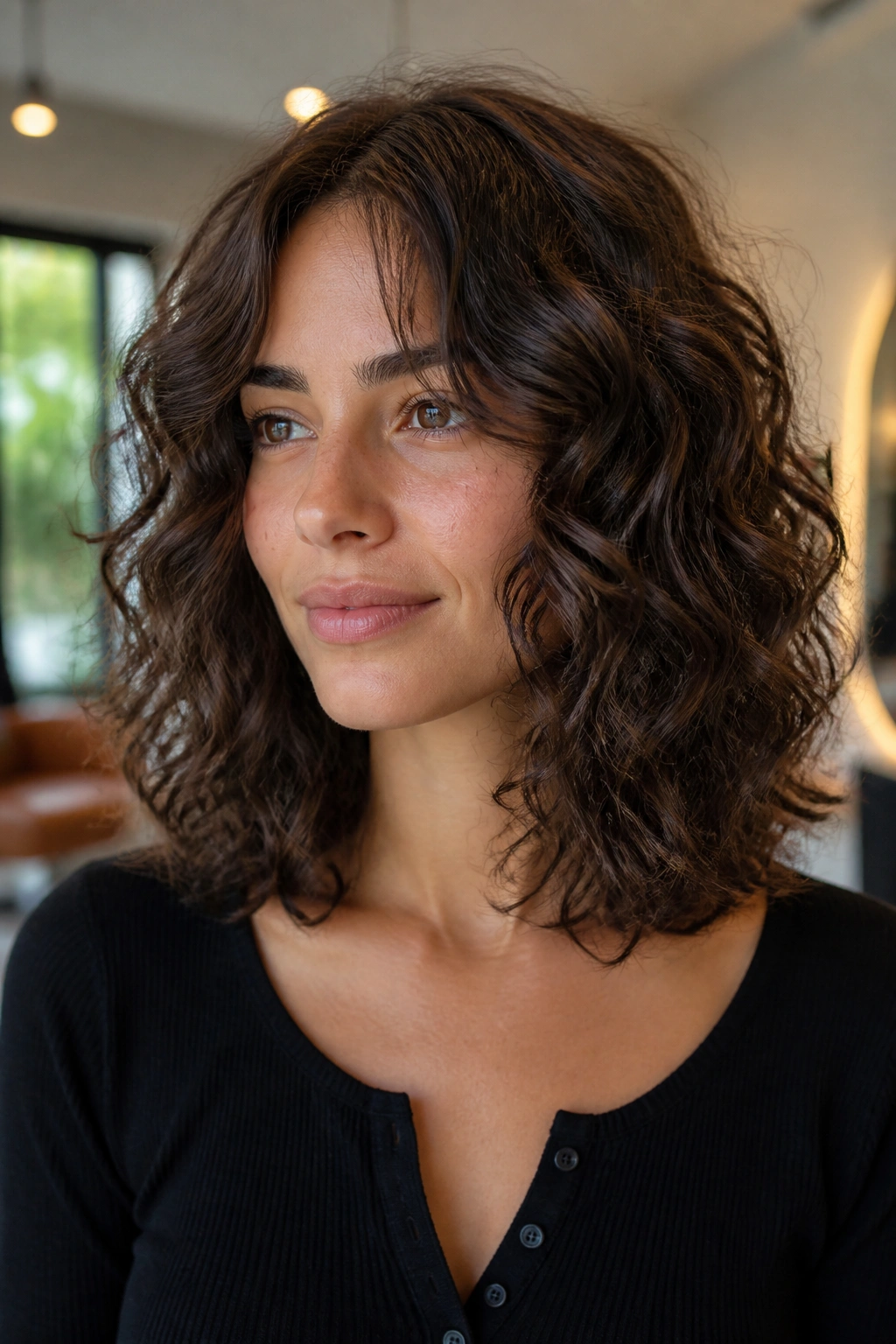
The curly lob is one of those cuts people keep coming back to because it’s easy to live with. It sits around the collarbone or a little above it, which gives curls enough length to behave but keeps the whole shape from getting dragged down. Add a soft center part and curtain bangs, and it becomes more flattering than plain shoulder-length hair without getting fussy.
What I like about this one is the balance. The lob keeps the perimeter clean, while the layers and bangs bring in movement. If your curls are a mix of loose and tighter pieces, the length gives them room to settle together instead of fighting each other.
It’s also a smart choice if you want a cut that still looks decent on day three. Shorter curly hair can get big fast. Longer curls can get weighed down. The lob sits in that middle zone where both problems are easier to handle.
The bangs should be soft enough to blend, not so short that they interrupt the cut. Think face-framing, not forehead-framing.
8. Tapered Coily Layers With Longer Curtain Bangs
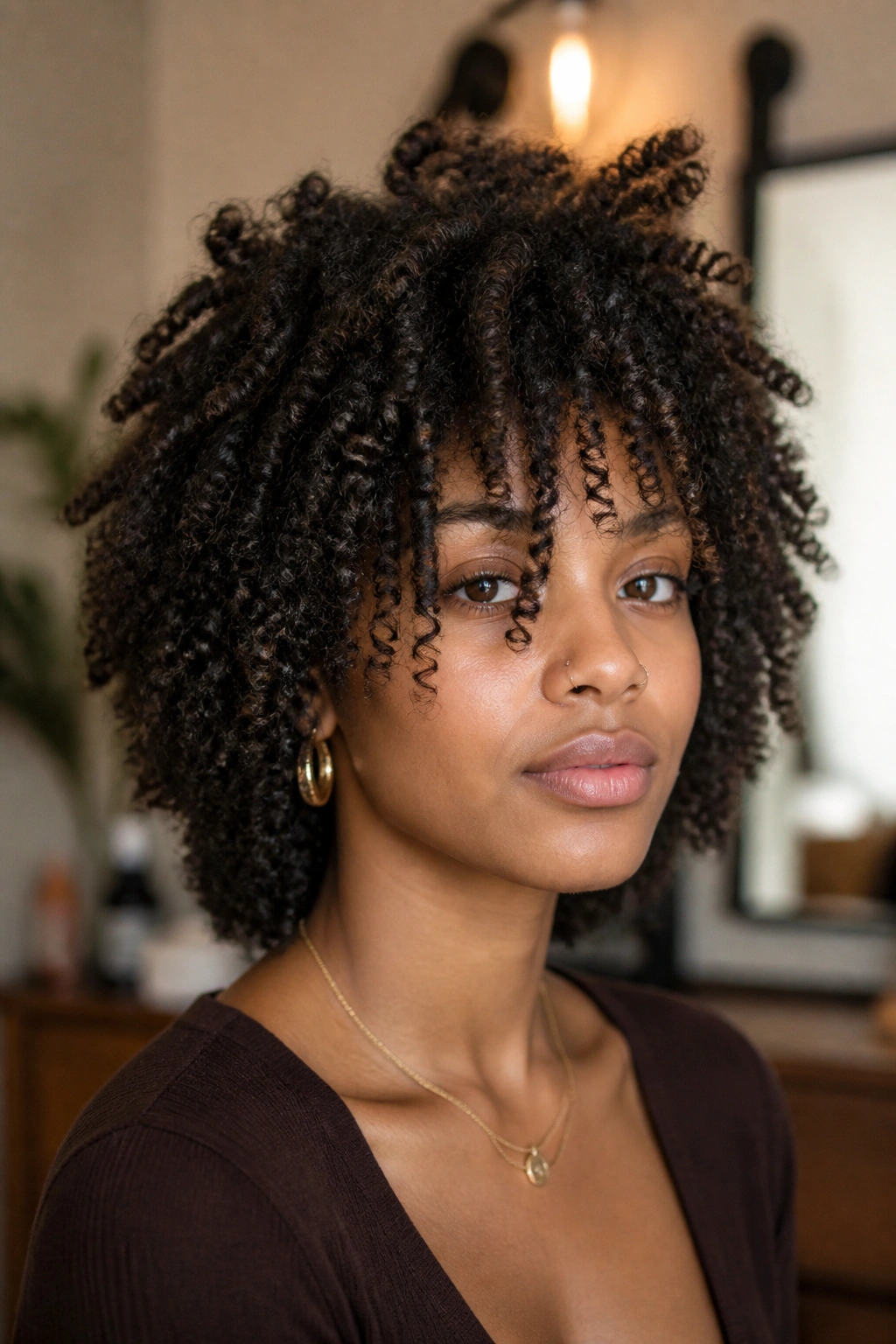
Coily hair needs a different kind of planning. The cut has to respect shrinkage, density, and the way coils stack on each other once they dry. A tapered layered shape can be a smart answer, especially when you add longer curtain bangs that graze the face instead of stopping short.
When this cut is done well, the silhouette looks controlled but not stiff. The sides can be shaped a bit closer in, the crown stays lifted, and the bangs fall in a soft arc that opens the face. The length in front matters a lot here. Too short, and the bang disappears into the coil pattern. Too long, and it can hang in the eyes.
The texture should feel springy, not crunchy or overworked. That usually means cutting in a way that preserves curl clumps rather than breaking them apart into random pieces. Coily hair looks best when the shape is clean enough to read at a glance.
A small but useful detail: ask for the bangs to be checked dry, not just wet. Coils can shrink more than expected, and the front is where that surprise shows up first.
9. Butterfly Layers For Curly Hair With Curtain Bangs
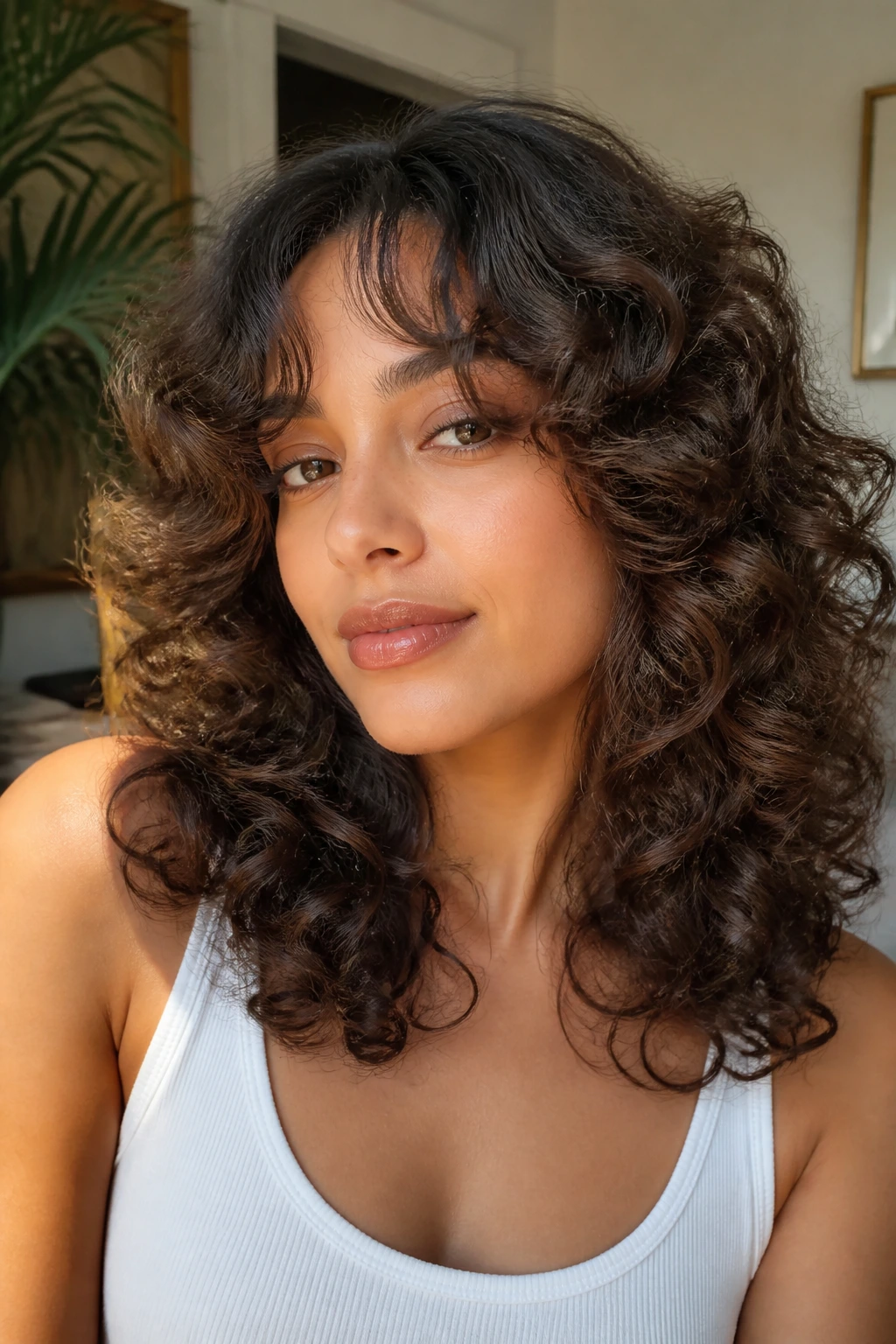
Butterfly layers give curly hair a soft, floating shape. The shorter top layers create lift around the crown, while the longer bottom layers keep enough length to show off the curl pattern. Add curtain bangs, and you get a face frame that feels light without looking undercut.
This style is useful if you like movement around the face but don’t want a shag that feels too broken up. The butterfly shape keeps the outer line more graceful. It’s a little less edgy than a wolf cut and less heavy than a single-length curly cut. Good middle ground. Strong middle ground.
Who It Suits
- Curls that flatten at the crown.
- Long hair that looks better with visible layers.
- People who want front pieces that grow out gracefully.
The reason this cut works is simple: the shorter top layers remove weight where it usually presses hair down, while the length underneath keeps the shape from puffing out into a puffball. Curtain bangs finish the front by giving the eyes a path into the rest of the cut.
Best styling trick: diffuse until the roots are about 80% dry, then stop touching the crown. Too much fuss there ruins the lift.
10. Chin-Length Curly Layers With Soft Curtain Bangs

Short curly cuts are nerve-racking for a reason. They show everything. Every line. Every missed section. Every bit of shrinkage that nobody predicted in the chair. But when they’re done with care, chin-length layers with curtain bangs can look sharp, fresh, and surprisingly easy to wear.
The trick is keeping the front pieces long enough to frame the face without bouncing straight up above the cheekbones. The layers should build shape around the jaw and temples, not pile up in a round helmet shape. On curls, that means the shortest layers often still need to look longer than a straight-hair bob would.
What Makes This Cut Work
A chin-length cut brings the curl pattern into view. It also makes the bangs part cleanly, because the front no longer has a lot of extra length weighing it down. That can be a blessing if your curls are springy and tend to lose their shape under longer hair.
You do need a stylist who understands shrinkage. Short curly cuts are not the place for guesswork. If the dry shape is not checked before the final snip, the bangs can jump too high and the whole cut can feel lopsided.
Best for: curl types that hold a defined bend and don’t need long length for weight.
11. Boho Long Layers With Barely-There Curtain Bangs

Long curly layers can go one of two ways: elegant and airy, or dragged-down and heavy. The boho version lands on the airy side because the layers are spaced to keep movement through the mid-lengths. The curtain bangs are softer here, almost whisper-light, and they blend into the front pieces instead of making a loud statement.
That “barely-there” quality is the point. The bangs should frame the face when the hair moves, not demand attention when the hair is still. This works best if you like a softer, romantic look and you do not want to lose much length.
The downside is maintenance. Long layers can turn flat at the crown if the cut is too cautious, and too many front pieces can create frizz if your hair is humid-prone. So the shape needs restraint. The stylist should keep the lower lengths full enough that the hair still looks rich from the back.
A few good signs: the part line looks clean, the bangs split naturally, and the ends don’t feel stringy after diffusing.
12. Dry-Cut Layers With A Defined Curtain Fringe

Why do dry cuts matter so much for curly hair? Because curls lie. Wet hair stretches, and some patterns stretch a lot. If you cut only by wet length, the finished shape can land inches shorter than expected and the bangs can jump straight into the eyebrow zone.
A dry-cut layered shape gives the stylist a real read on how each curl sits next to the others. That means better face-framing, better balance, and fewer weird gaps. It’s especially helpful for curtain bangs, because the front is the part people see first and the part most likely to go sideways.
How To Use This Approach
Ask the stylist to build the cut while the hair is in its natural state, then refine the bangs at the end once the curl clumps settle. The first pass should be about shape. The last pass is about detail. That order matters.
This method works across curl types, but it shines on hair with mixed textures. If one section bends differently from the rest, dry cutting makes that obvious before the scissors go too far. It also keeps the curtain fringe from being cut into a shape that only looks right when wet.
Small warning: dry cutting takes patience. A rushed version is worse than a wet cut.
13. Mid-Length Curly Layers That Sit Nicely Around The Jaw

Mid-length curly layers are underrated. People often chase either very short or very long hair, but a cut that lands somewhere around the jaw and shoulders can be one of the easiest to live with. The curtain bangs help the front feel intentional, while the layers keep the curve of the cut from becoming boxy.
This length is especially good if your curls need a little help staying defined. Hair that is too long can pull curl pattern down. Hair that is too short can puff out. Mid-length sits in that useful pocket where the curls still stack nicely, but the shape doesn’t lose all its spring.
I also like this cut for people who don’t want styling to take over their day. It can be air-dried, diffused, clipped at the roots, or left a little imperfect. The front still reads as styled because the curtain bangs do the face-framing work.
A jaw-skimming layer near the front can soften stronger jawlines, but the real effect is movement. The hair swings better. That sounds simple because it is.
14. Airy Shoulder Layers With A Light Flipped Curtain Bang
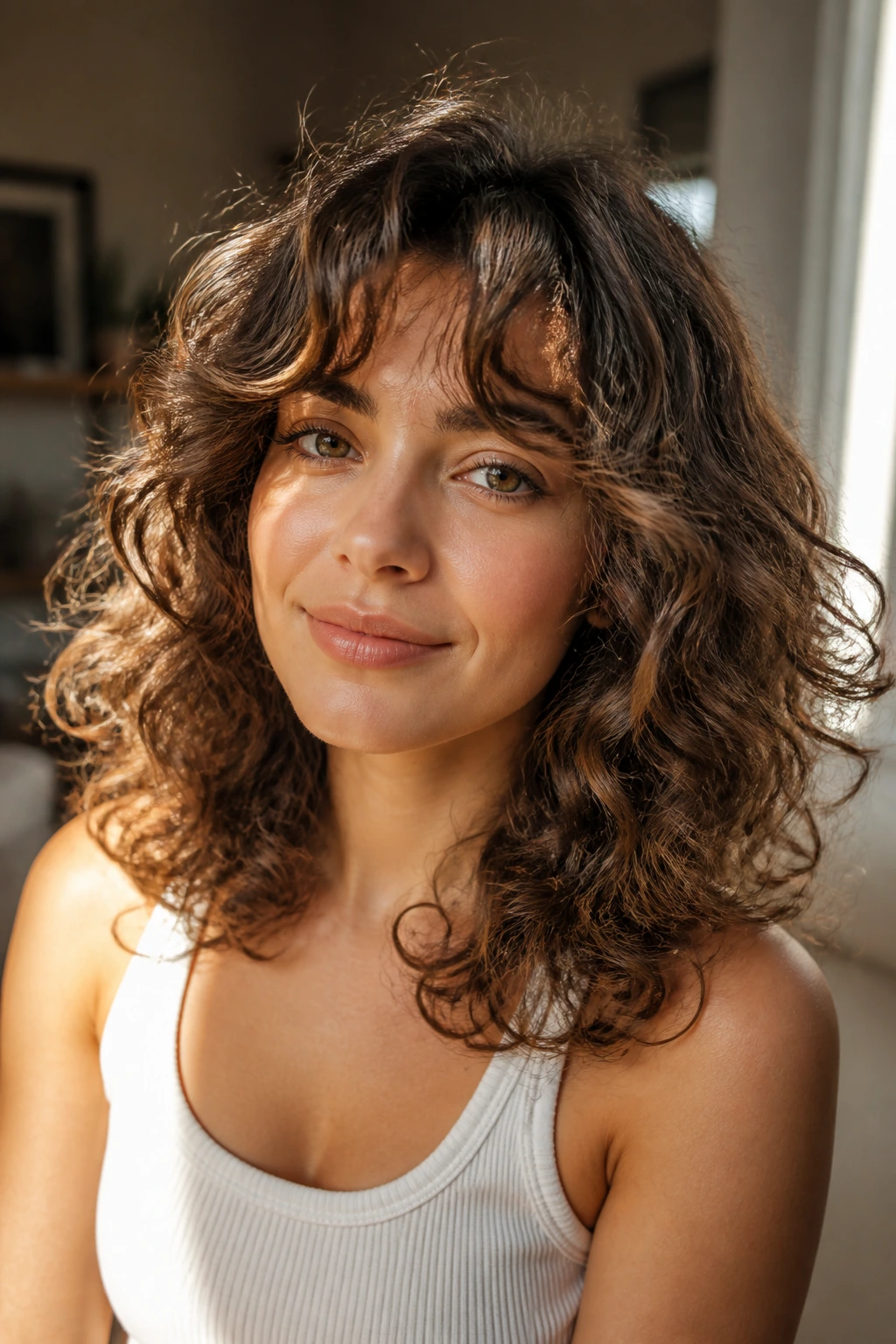
Some curly cuts need lift more than length changes. That’s where airy shoulder layers come in. The shape keeps the mass off the bottom, gives the crown a little breathing room, and lets the curtain bangs flip away from the face instead of hanging flat across it.
This cut is useful if your curls tend to clump heavily near the shoulders. Shoulder length can be awkward when the ends all sit in one line, so the layers need to break that up. The front pieces should be long enough to tuck behind the cheekbones, with a soft bend that moves when you shake the hair out.
What To Ask Your Stylist For
- Light internal layers near the top, not aggressive chopping through the ends.
- Curtain bangs that can be tucked, swept, or left loose.
- A shape check after the hair dries, because curl bounce changes the whole front.
The “flipped” part of the bang matters. It gives the face some movement and keeps the front from dropping into a flat curtain. If your curls are loose or medium, this can be a sweet spot.
If they’re tighter, the bang needs a bit more length. Short and curly front pieces can get stubborn fast.
15. Waist-Length Layers With Curtain Bangs That Blend Cleanly
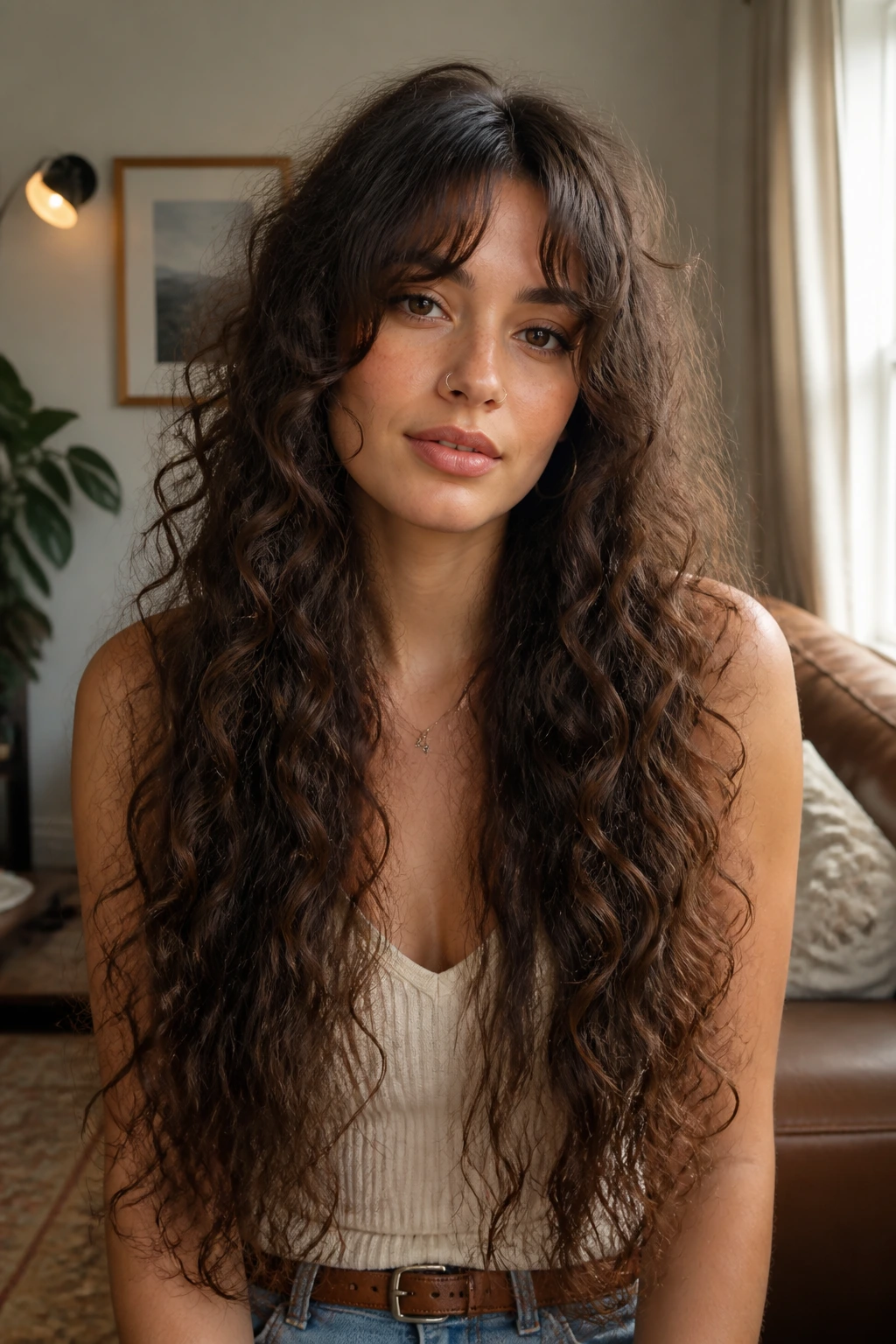
Long curly hair with curtain bangs is a balancing act. Keep too much weight, and the hair drags. Remove too much, and it frizzes into a halo with no shape. Waist-length layers solve that by letting the bottom stay lush while the upper sections move more freely.
This cut is for someone who likes length and wants the face to feel lighter. The curtain bangs are the piece that makes it work. They pull the eye upward, soften the center part, and stop all that length from feeling heavy around the face. The best versions blend so cleanly that the bangs look like they belong there from the start.
It does take commitment. Long curly layers need trims before the ends get wispy, and the front usually needs small cleanups so the bangs don’t split awkwardly. Still, if you want the kind of curl pattern that spills over the shoulders and still has some shape near the face, this is hard to beat.
And yes, the cut can grow out nicely. That matters. A lot. Long curly hair that starts with good face-framing usually keeps its shape longer than people expect, which is one reason I’d rather see careful layers than dramatic ones.
If you’re choosing between a few of these styles, pick the one that matches your curl density first and your length second. That order saves more bad haircuts than any trend ever will.
