



Subtle color is harder than loud color. A chunky stripe can hide a lot of mistakes; a soft highlight has to sit in the right place, stay near the right tone, and melt into the haircut until the light catches it. That’s what makes the best hair highlight ideas for a subtle glow so satisfying when they work.
A highlight that sits only 1 to 2 levels lighter than the base, with fine weaves and a good gloss, usually reads softer than a bright ribbon that shouts from across the room. Placement matters just as much as tone. So does the haircut underneath it. A blunt bob, a layered shag, and a long one-length cut all take light differently, and that changes everything.
The nice part is that subtle does not mean boring. A few well-placed pieces can make flat roots look lifted, soften a heavy outline, or give curls a little shimmer without turning the whole head into maintenance. It is the kind of color work people notice without being able to name right away, which is often the point.
These 22 ideas stay in that quieter lane. Some are almost invisible until you step into daylight. Some lean warm, some cool, and some do their job through placement more than brightness. Pick the one that fits your base color, your cut, and how often you want to sit under a toner bowl.
1. Hair Highlight Idea: Baby Lights Around the Hairline
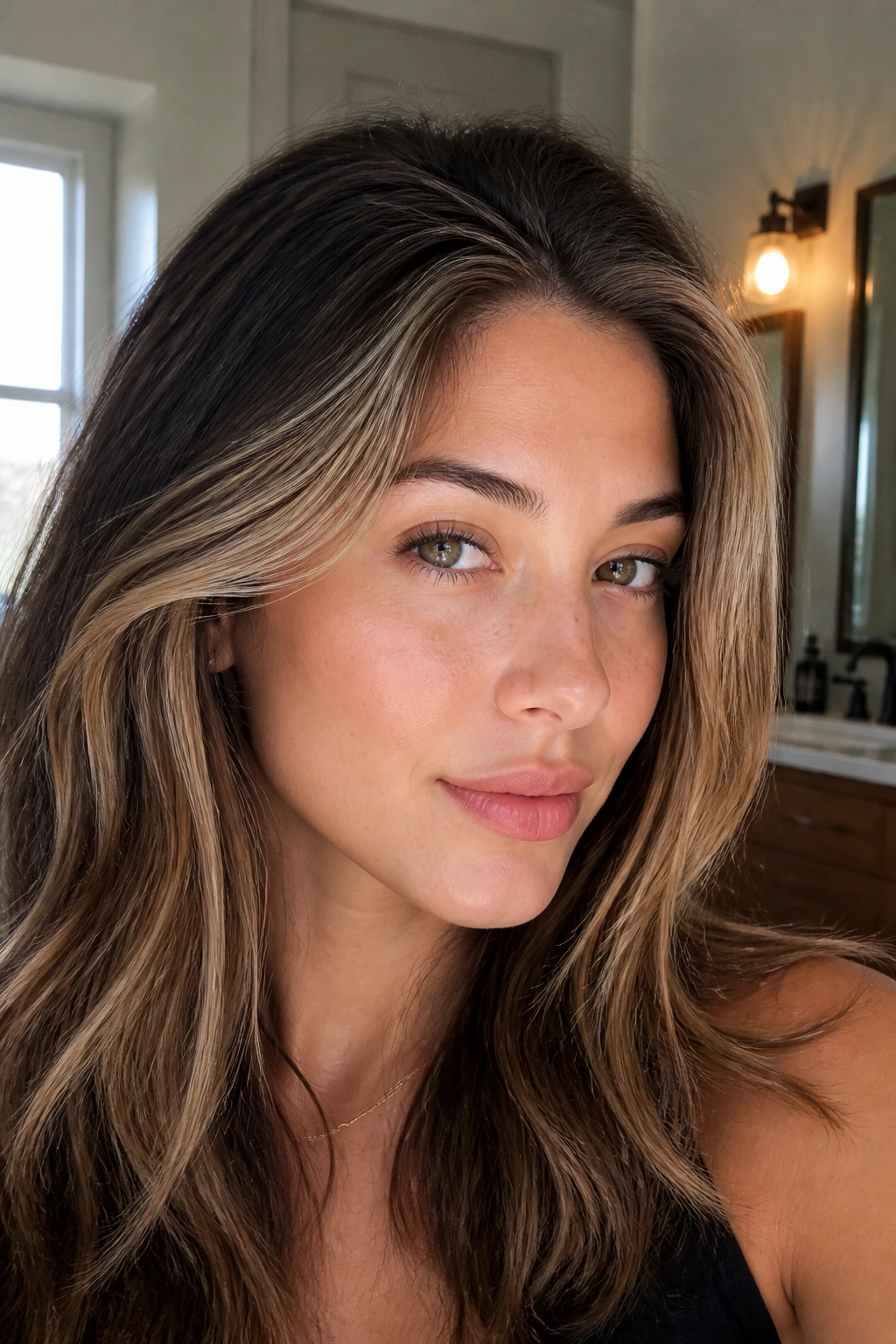
Tiny foils around the hairline do a lot of quiet work. They brighten the face first, which makes the whole style feel fresher even when the rest of the color stays close to the base. If you want a subtle glow without a big change, this is one of the smartest places to start.
Why It Works
Babylights use very fine sections, often woven almost thread-thin, so the finished result looks soft instead of striped. Around the temples, part line, and top front hairline, that softness matters more than anywhere else. The eye goes there first.
Ask for 1/16-inch weaves and a color that is only 1 to 2 levels lighter than your natural shade. A beige blonde on dark blonde hair, or a warm beige on medium brown hair, usually looks prettier than something icy and high contrast. Finished with a light gloss, the whole thing reads polished but not loud.
What to Ask For
- Fine babylights concentrated around the face and part.
- A soft beige, honey-beige, or neutral blonde tone.
- A root area left almost untouched for a gentle grow-out.
- A gloss finish so the lightness doesn’t look chalky.
Tip: If your hair is fine, babylights can make it look denser because the color breaks up flatness without creating thick streaks.
2. Champagne Beige Balayage for a Subtle Glow
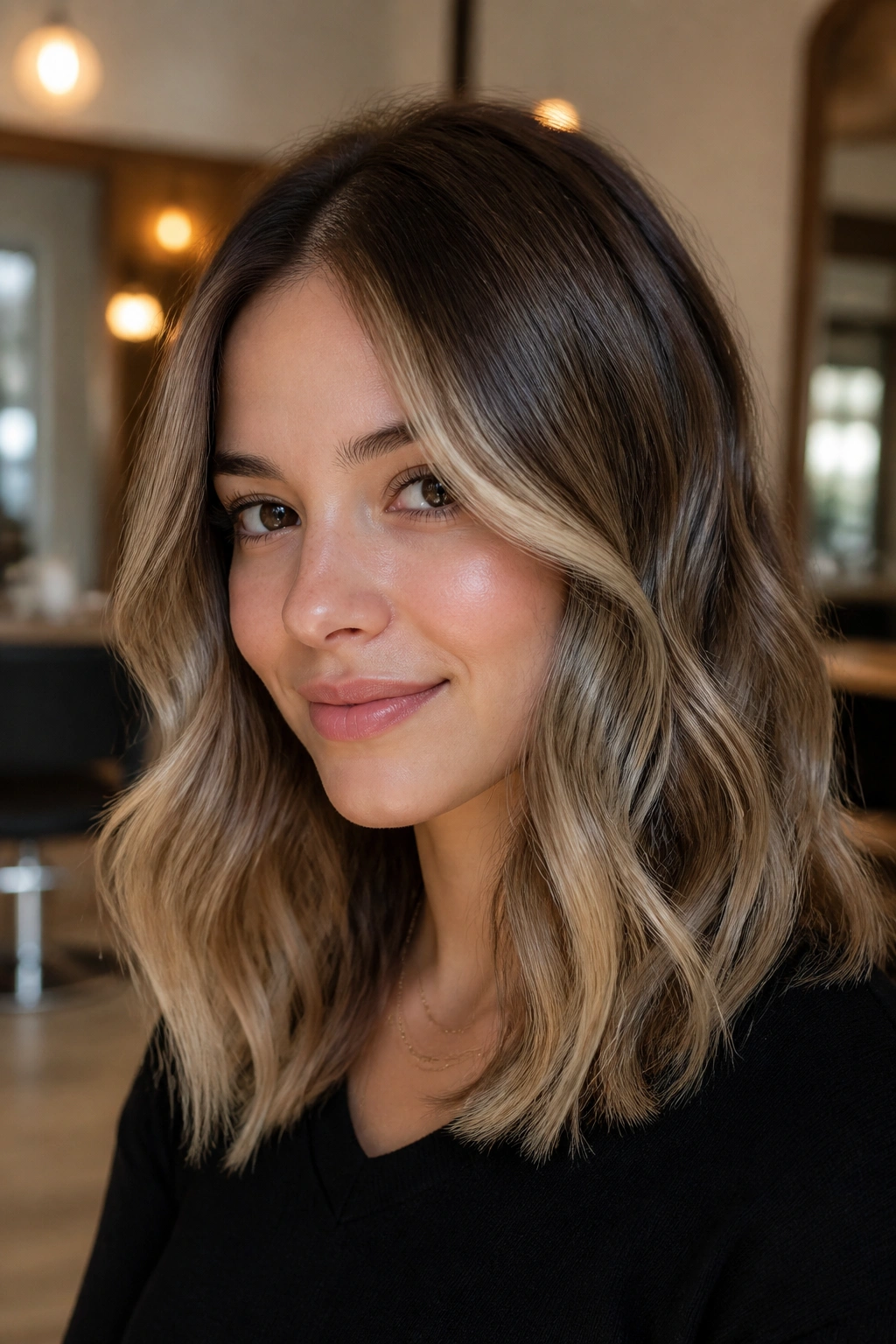
Champagne beige is one of those shades that never yells for attention, and that is exactly why it works. It has enough warmth to keep the hair from looking dull, but the beige keeps it from going brassy or yellow. On brunette and dark blonde bases, it gives that soft-lit finish people keep trying to describe in salon photos.
Balayage suits this tone because the hand-painted placement lets the lightness sit where the hair naturally catches it — mid-lengths, outer curves, and a few pieces near the face. You do not need a blanket of brightness. A couple of gentle sweeps are usually enough.
I like this option on medium-density hair, especially when the cut has movement. Straight hair can look a little too tidy with it unless the stylist softens the edges. Wavy hair is easier. The bend shows off the color, and the beige tone keeps the wave pattern looking clean instead of streaky.
3. Face-Framing Ribbons That Brighten Without Taking Over
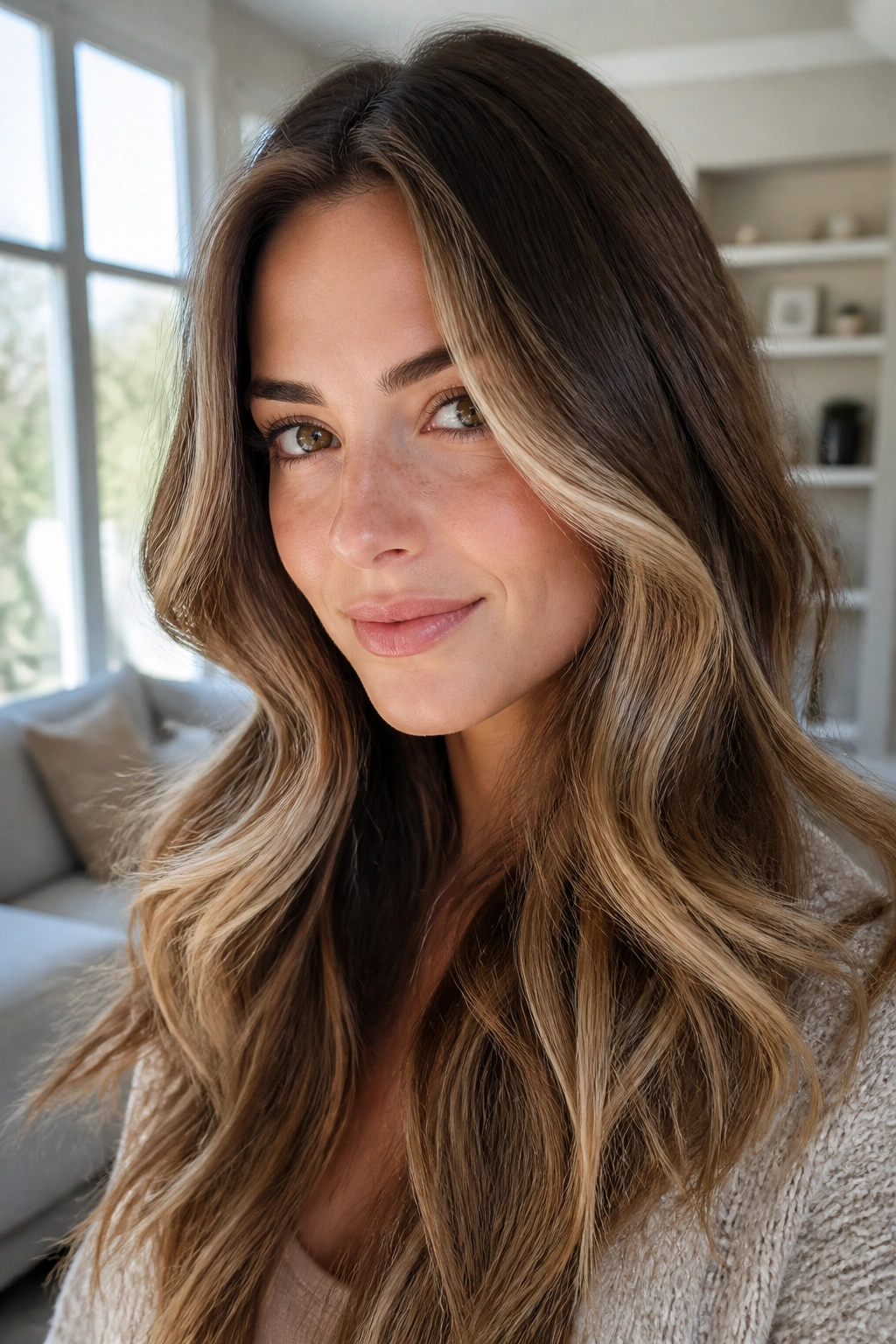
Why do face-framing ribbons keep showing up in good color work? Because they change the way the whole haircut reads without forcing you into full-head lightening. A soft panel near the cheekbone can wake up the face faster than ten foils hidden at the back.
How to Wear It
Keep the ribbons one shade brighter than you think you need. That sounds backwards, but subtle face-framing color often disappears faster than people expect once it mixes with layers and movement. A slightly lighter panel around the front gives the eye something to land on.
If you wear a middle part, ask for both sides to be softened evenly. If you usually wear a side part, one side can carry a little more brightness. That tiny imbalance often looks more natural than perfect symmetry. It also gives you room to tuck the hair behind one ear without losing the effect.
The trick is to keep the ribbons soft at the root and fuller through the mid-lengths. Harsh start lines are what make this look feel dated. Soft edges keep it current.
4. Micro Highlights Through the Crown

A flat crown can make even nice hair look tired. Micro highlights fix that by breaking up the solid color at the top without turning the whole head lighter. The effect is subtle from a few feet away, but under overhead light the hair suddenly has texture.
I like this on fine hair especially, because too much contrast can make fine strands look sparse. Micro-weaves keep the top area airy. The result is closer to a fabric with a tiny woven pattern than a painted stripe. Quiet, but better.
Key Details
- Ask for micro-fine sections through the crown and top layer.
- Keep the lightness close to the base shade, not several levels brighter.
- Pair the service with a soft root smudge so the crown doesn’t look patchy.
- Finish with a clear or beige gloss to avoid a dry, overprocessed look.
Small note: If your hair parts in the same place every day, this is where the color should be most careful. That line is where obvious highlights show first.
5. Honey Glaze on Brunette Ends
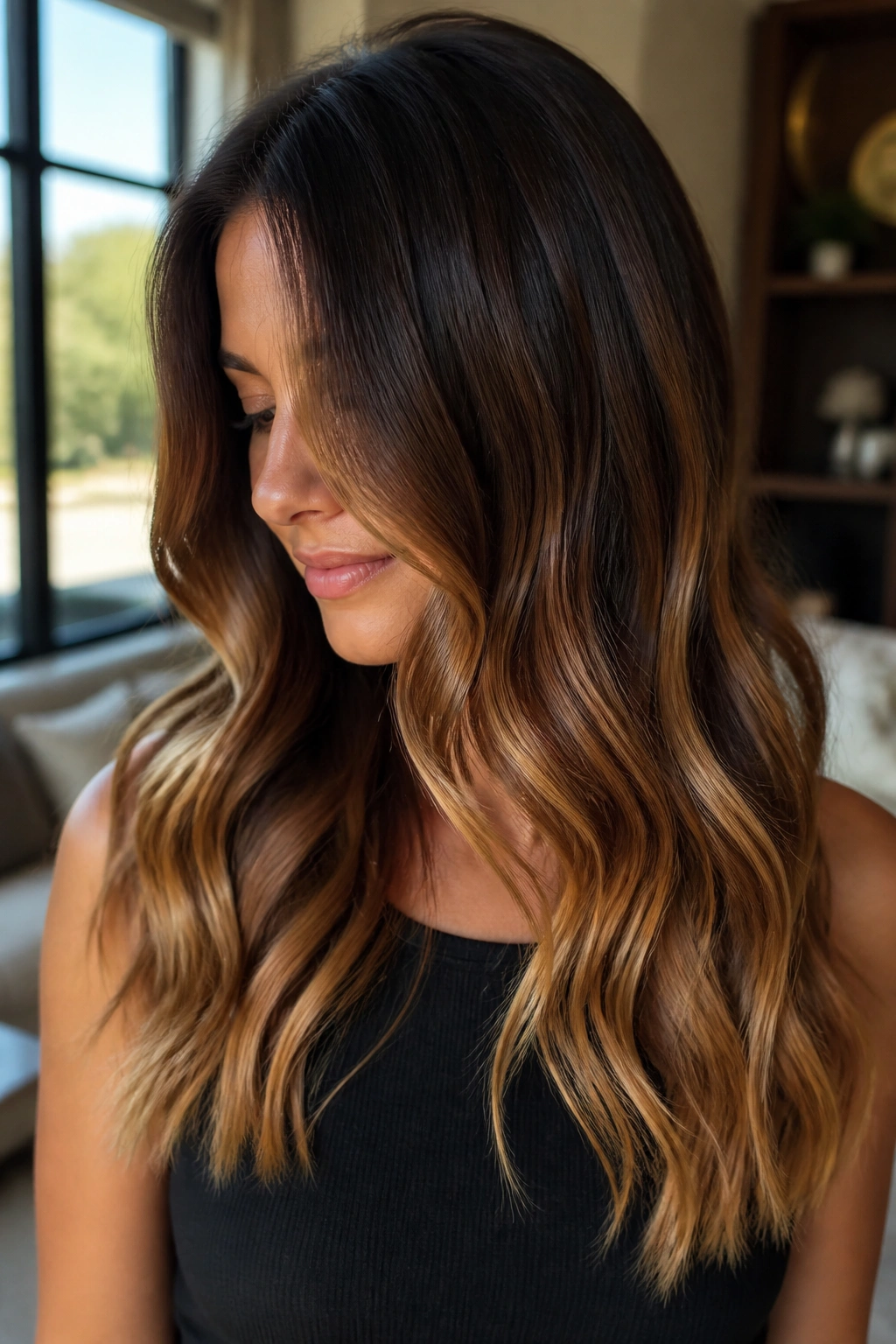
Honey on brunette hair is a nicer word than “light brown,” honestly. Honey has movement in it. It can feel warm and shiny without tipping into orange, and when it sits mostly on the ends, it gives the whole cut a richer finish.
The safest way to wear this is with a brunette base left intact at the roots and a honey glaze placed through the lower half. That keeps the color from spreading too high and flattening the depth at the top. On layered hair, the ends catch light as the layers move, which gives the color a little flicker instead of one flat band.
This idea works especially well if your hair has been colored before and feels a touch dull. A gloss with a golden-beige tone can soften that deadened look fast. Not bright. Just alive.
A good honey glaze should look edible from six inches away and believable from six feet. That is the balance.
6. Mushroom Brown Fine Highlights
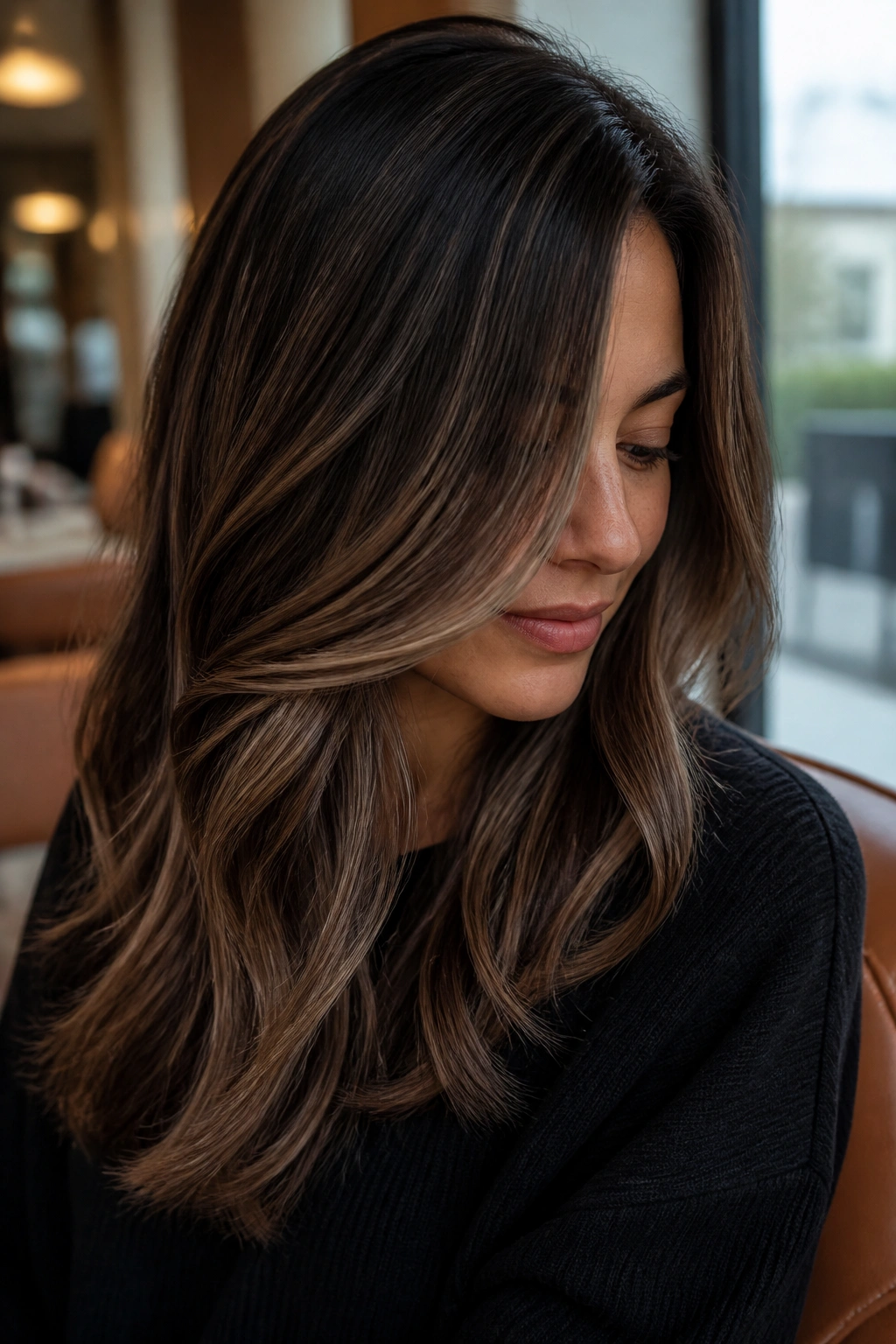
Mushroom brown sits in that cool, smoky space that looks expensive without trying too hard. Unlike caramel, it does not push warmth. Unlike ash blonde, it does not shout coolness. The tone lives somewhere between taupe, beige, and soft brown, and it works beautifully when the goal is a subtle glow that stays believable.
This is one of my favorite choices for brunettes who hate obvious highlights. You keep the base deep, then thread in a few lighter mushroom-toned pieces through the mids and ends. The effect is more “better hair” than “new hair.” That matters.
It also helps when your natural color runs red. Too much warmth on a red-leaning brunette can turn muddy or brassy fast. Mushroom brown gives you lightness without fighting the undertone already living in the hair.
If you want something calm, polished, and not remotely stripey, this is a strong pick.
7. Ribbon Lights on Curls
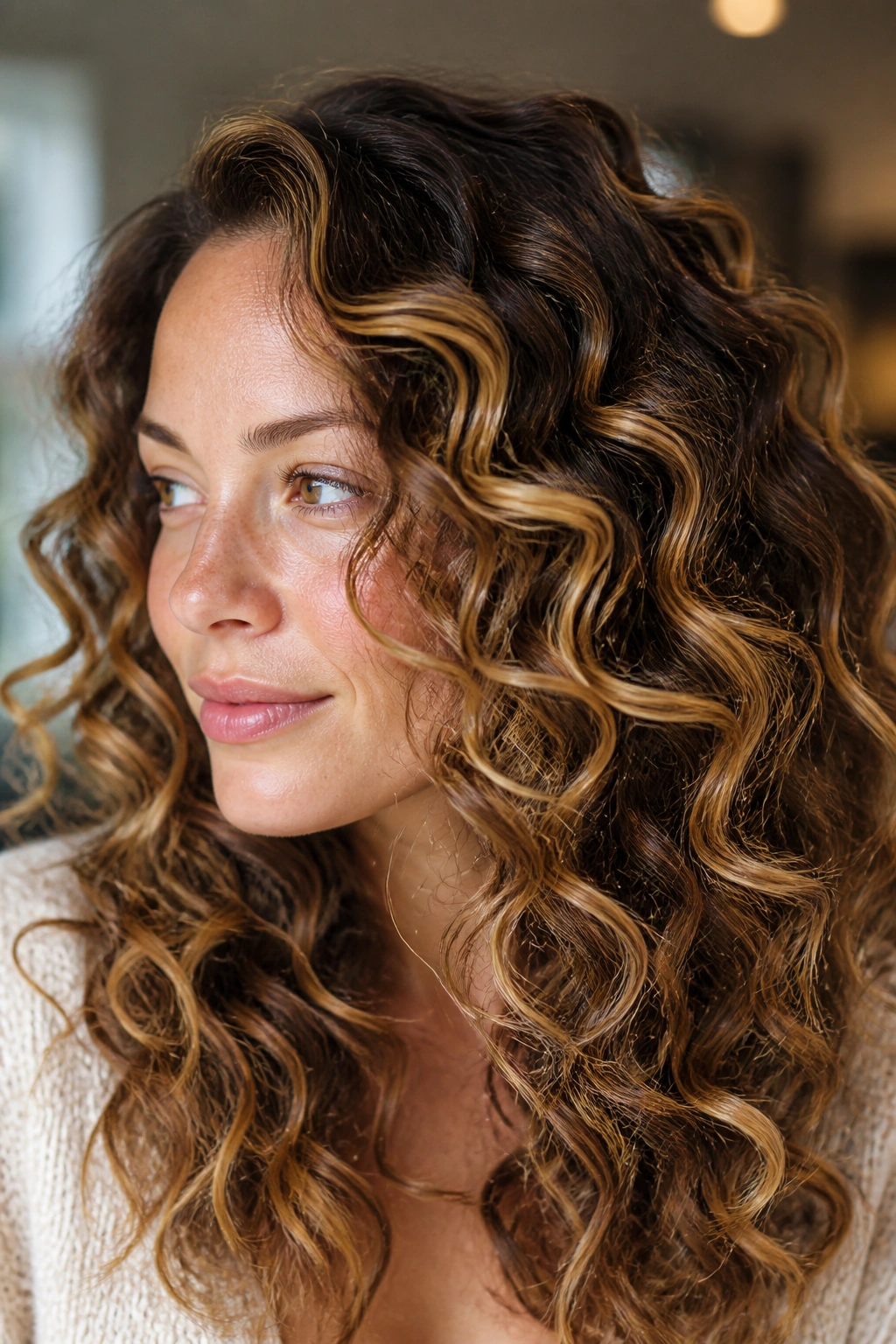
Curls do not need a lot of brightness to look dimensional. They need placement. Ribbon lights work because the light follows the curve of the curl instead of sitting in a hard line, so the color moves with the shape rather than against it.
What Makes It Different
The highlight should weave through the curl pattern, not be dropped randomly into the hair. On a loose curl, that means placing lighter ribbons where the curl bends outward. On a tighter pattern, it usually means a few strategically open pieces rather than many little foils everywhere. Too much light on curls can make them look frizzy and busy.
A good curl highlight plan also keeps some deeper pieces intact. Those shadows help the curl clump stay defined. Without them, everything blurs together and the color loses shape.
What to Watch For
- Ask for ribbons that follow the curl direction.
- Keep the front pieces softer than the crown if your hair is high density.
- Choose beige, caramel, or honey tones instead of stark blonde.
- Finish with a gloss so the curls reflect light instead of looking dry.
My take: curls almost always look better with fewer, better-placed highlights than with more color.
8. Sun-Kissed Caramel for Dark Hair
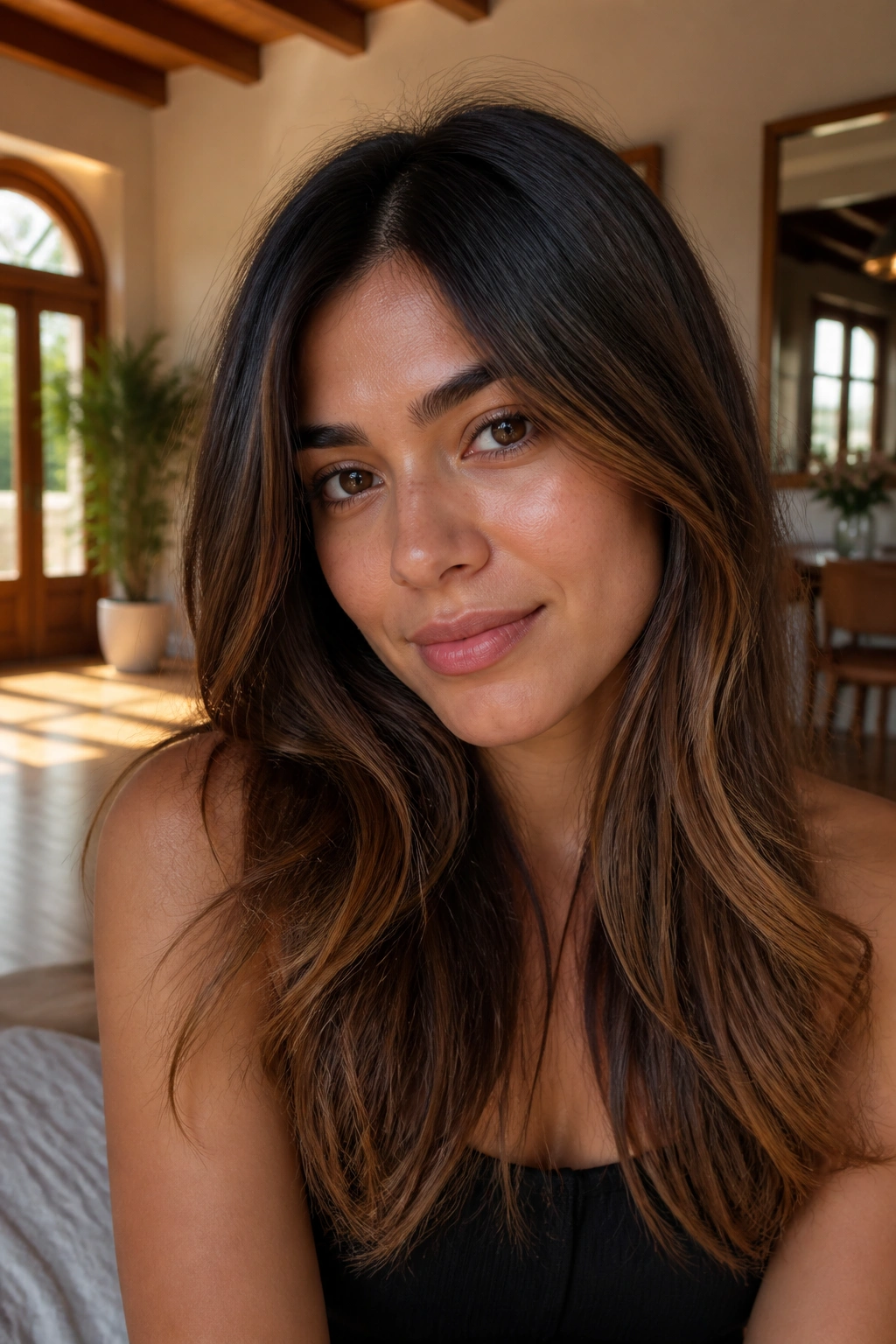
This one works because caramel gives dark hair a lift without asking it to become blonde. On deep brown and black-brown bases, a few thin caramel pieces can catch light in the same way a satin fabric does — not flashy, just enough to shift the surface.
The placement matters more than the shade. If the caramel starts too high or covers too much of the head, the contrast can feel obvious. Keep it on the outer layers, around the face, and through the ends where the hair naturally lightens first. That makes the result look intentional without looking overworked.
Caramel also softens hard-looking cuts. A blunt medium-length cut can feel heavier than it should, and a few warm ribbons help the edges move. I would choose this for someone who wants a visible change but does not want to lose depth.
Dark hair with a little caramel is one of those pairings that stays flattering even as it grows out. The roots still make sense. That saves a lot of salon stress.
9. Ash Beige on Brunette Hair for a Softer Glow
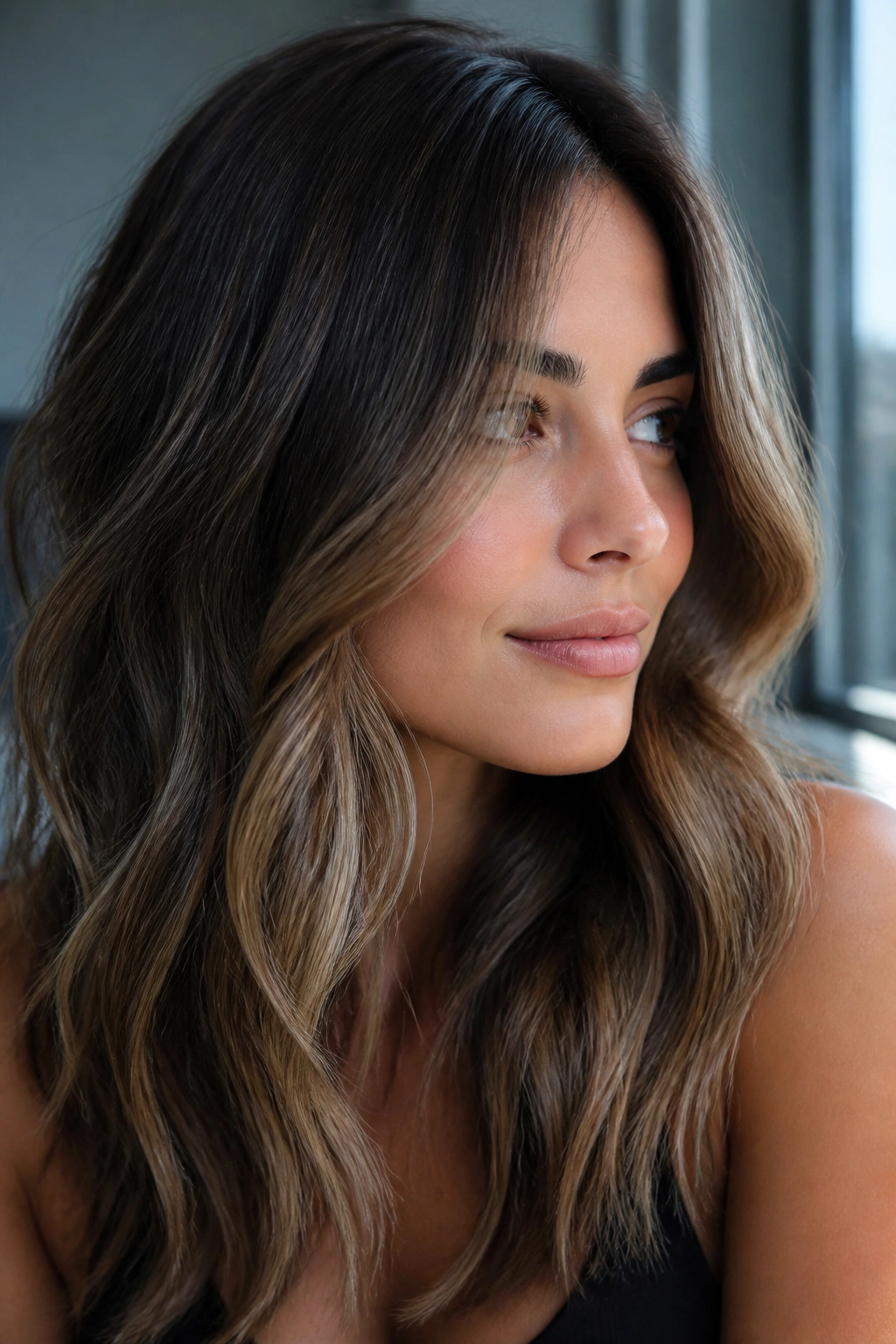
Why does ash beige look so good on brunette hair? Because it cools the color just enough to stop it from reading red or orange, but it does not go as pale as a classic beige blonde. The result is a softer glow, not a bright lift.
This works best when the brunette base is neutral or slightly cool to begin with. If the hair runs very warm, too much ash can turn the tone flat or muddy. That is where a colorist’s tone control matters. You want beige first, ash second.
How to Keep It Clean
Use a blue or blue-violet shampoo sparingly if the warmth starts pushing through. Too much can make the hair look dull. A light gloss every so often does a better job of keeping the shade smooth.
The nice part of ash beige is that it plays well with layered cuts and shoulder-length shapes. It gives movement without screaming “highlighted.” That is a useful middle ground when you want freshness but not brightness.
10. Copper Whisper Highlights
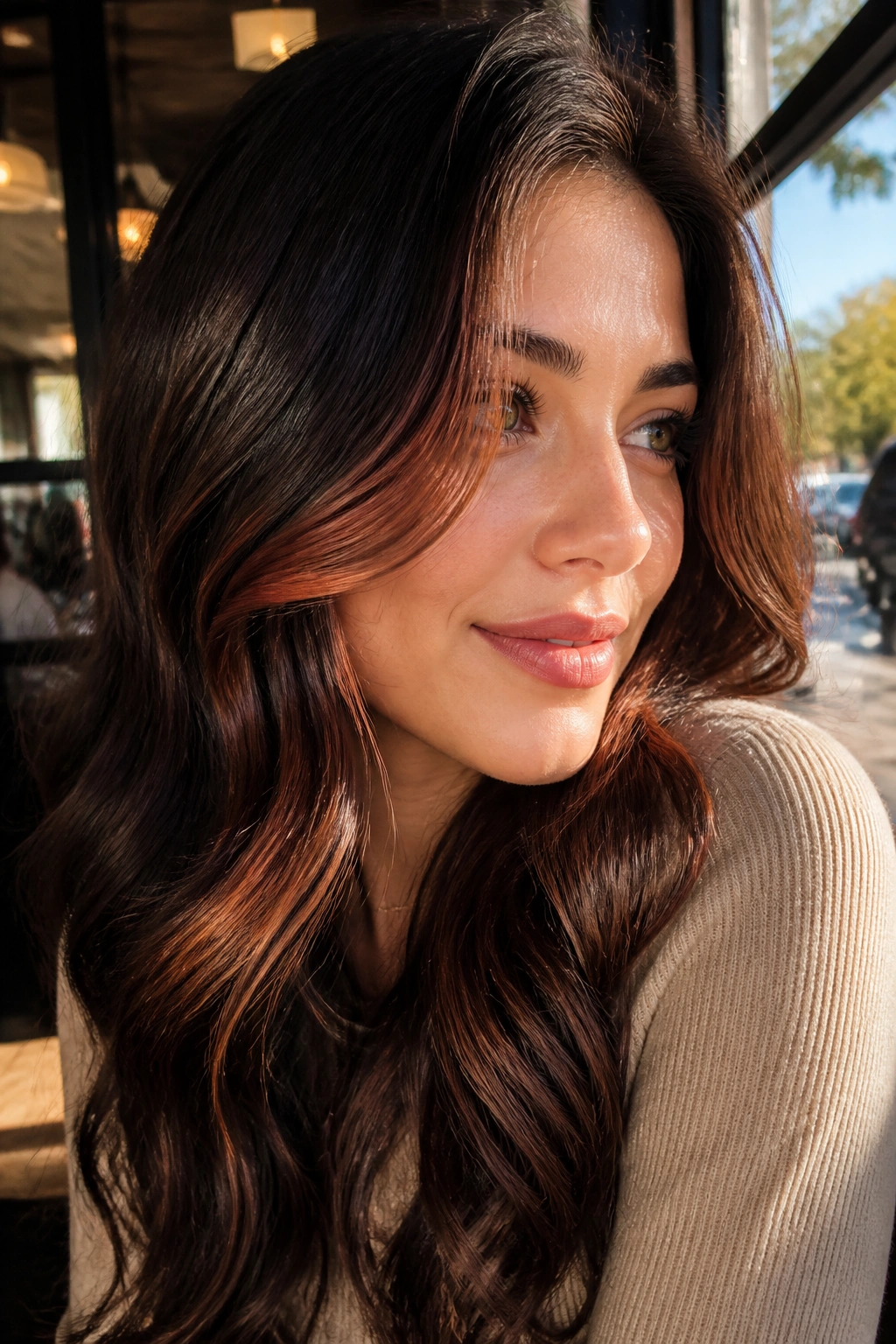
A whisper of copper can change the whole mood of brunette hair. Not orange. Not pumpkin. Copper. Thin, warm strands placed with a light hand give the hair a glow that feels alive in daylight and rich indoors.
This idea is especially nice on dark auburn, chestnut, and warm brown bases. The copper pieces do not need to be many. In fact, too much copper can read heavy fast. A few thin touches through the face frame and upper layers are enough to make the base color look deeper by comparison.
The key is keeping the copper translucent. A thick copper ribbon can look bold. A diluted copper glaze over fine highlights looks soft and expensive in the plainest sense of the word — clean, warm, and easy on the eye.
Tiny amount. Big change.
11. Mink Blonde Low-Contrast
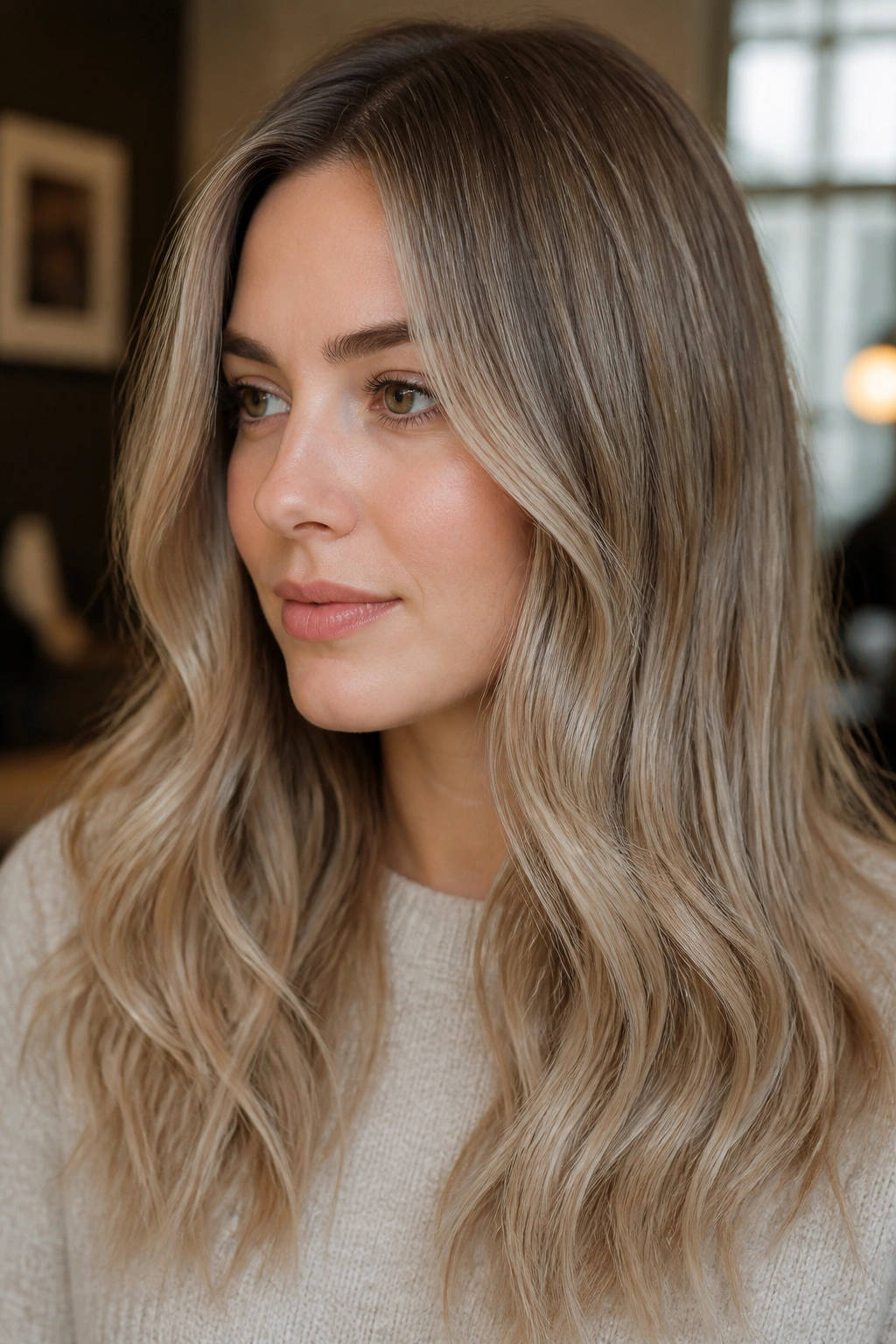
Mink blonde has a soft, smoky feel that sits between beige blonde and light brown. It is lighter than brunette, but not so bright that it starts running the room. That low contrast is what gives it its charm.
I like this on medium-length cuts with a bit of movement. The shade has enough warmth to keep the hair from looking gray, but enough coolness to stop it from sliding yellow. It also blends well if your natural root is darker, because the grow-out line stays gentle.
A color like this needs a little shadow at the root. Without that, it can look flat. With it, the highlights feel woven into the hair instead of painted on top of it. The whole effect is soft, believable, and easier to live with than high-contrast blonde.
If you want brightness that still feels like your own hair, just better, mink blonde is worth a serious look.
12. Strawberry Blonde Kiss
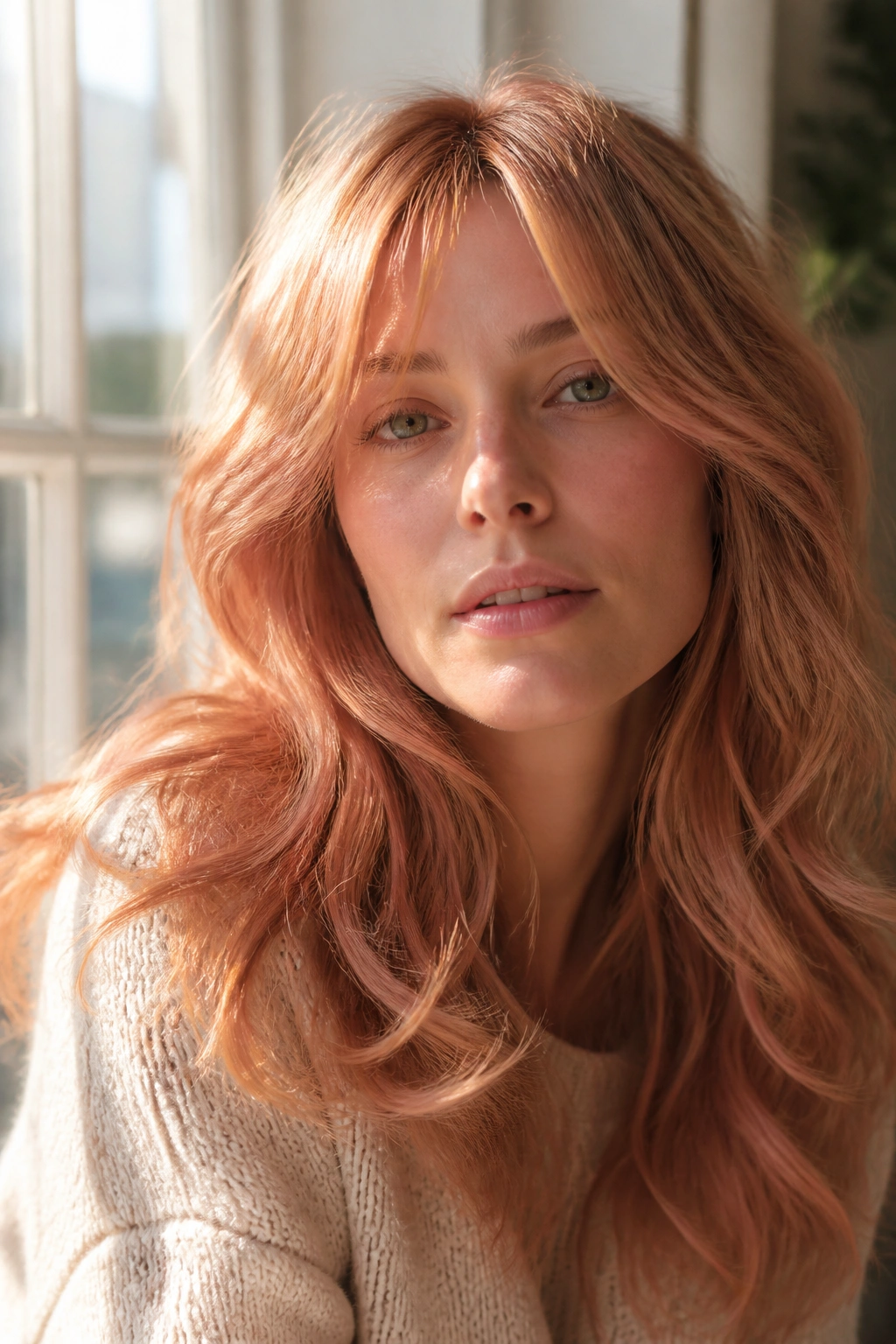
A full strawberry blonde change can be a lot. A strawberry blonde kiss is different. It’s a barely-there wash of pink-gold warmth through light brunette or natural red hair, and it usually feels more flattering because it doesn’t fight the hair’s own tone.
This idea works best when the base already has some warmth. On cooler hair, strawberry can turn odd fast. On warm hair, it looks like the sun moved through it for a few hours and left behind a glow. That’s the whole appeal.
The service is usually more about tone than heavy lightening. A colorist might use a soft glaze, a few fine highlights, or a demi-permanent toner that leans copper-gold. Keep the finish sheer. If the shade gets too opaque, you lose the softness.
It is a nice choice if you want your hair to look playful without feeling dyed-to-death. A little warmth goes a long way here.
13. Hidden Underlights
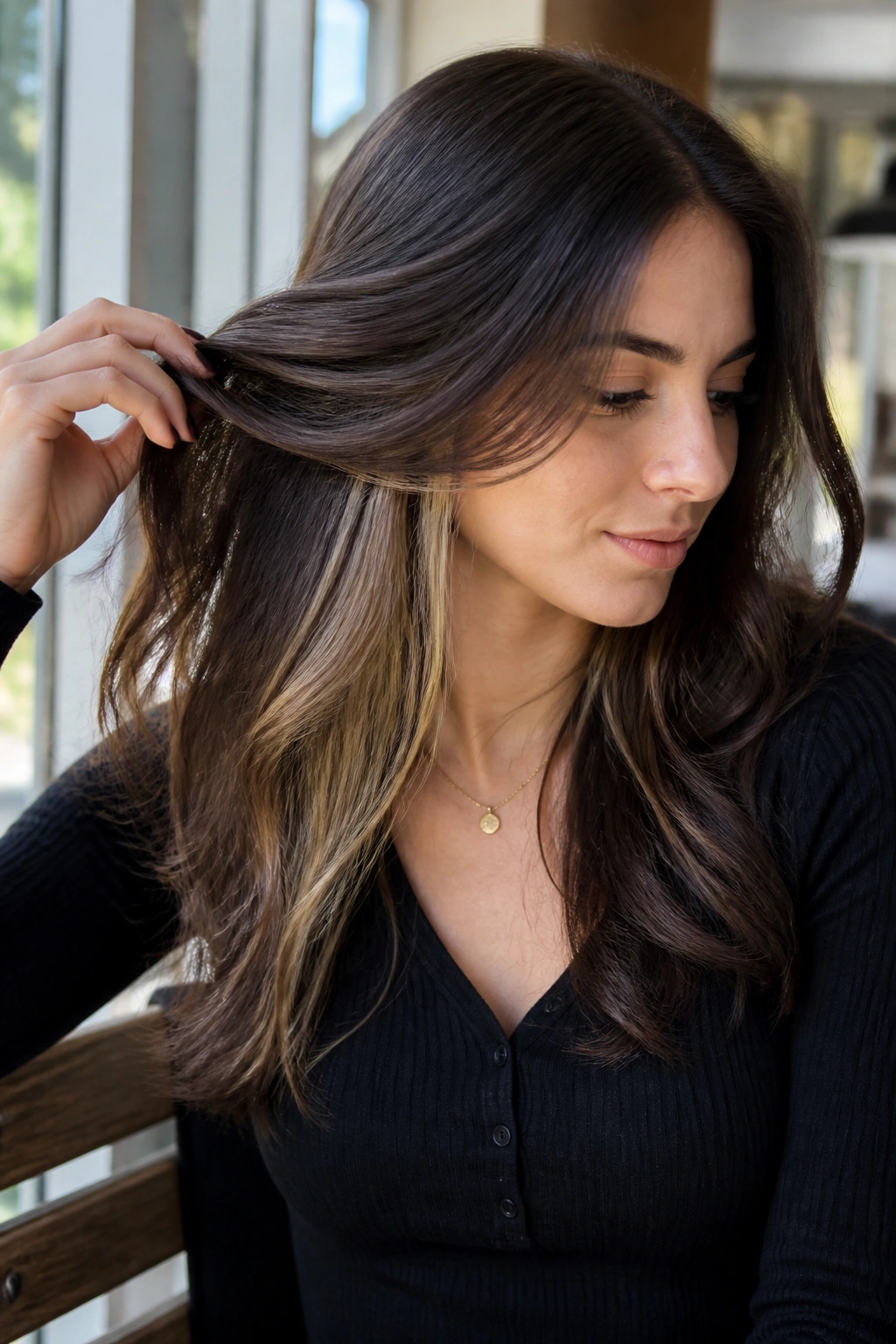
Hidden underlights are underrated because they do their best work only when the hair moves. The top layer stays close to your base color, while the underside carries a few brighter or richer strands that flash when you tuck, flip, or pin your hair back.
Why It Works
This is a smart pick if you want color that feels personal instead of obvious. Underlights can be blonde on brunette hair, copper on red hair, or even a deeper mocha on lighter hair. The trick is contrast that lives underneath, not on top.
If you wear ponytails, half-up styles, or clips a lot, underlights pay off fast. They give you a second color story without forcing the whole head to change. That makes them useful for people who like variety but hate maintenance.
Ask For This
- Keep the top layer close to your natural shade.
- Place the underlights below the crown and through the lower sections.
- Choose a tone that is only slightly brighter or deeper than your base.
- Add a gloss so the hidden pieces still look polished when they show.
Best part: they feel like a small secret, and I mean that in the nicest way.
14. Mocha-to-Espresso Dimension
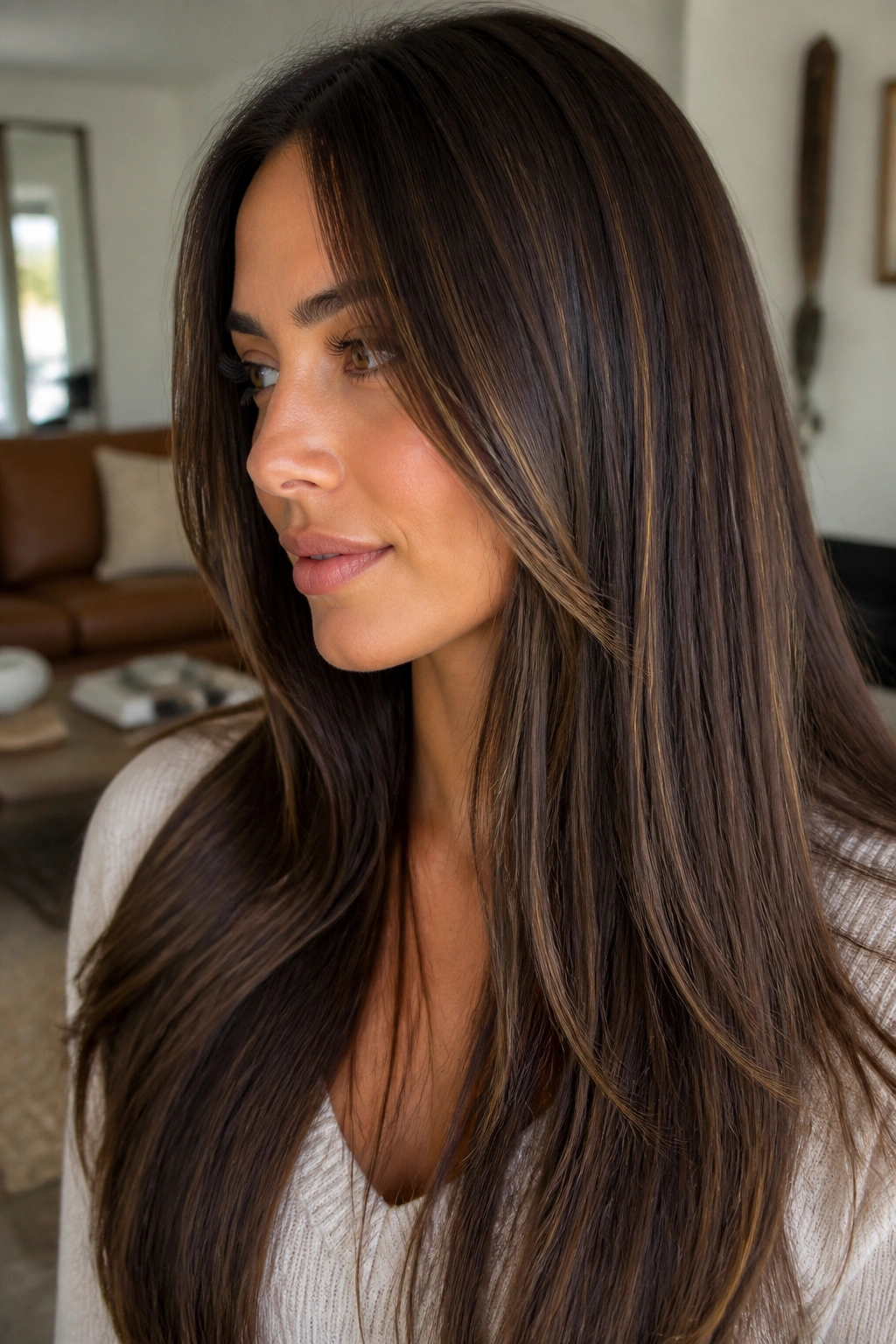
Not every glow has to come from lightening. Sometimes the prettiest result comes from staying inside the brown family and letting the shades talk to each other. Mocha-to-espresso dimension does exactly that.
A slightly lighter mocha thread against an espresso base can create the feeling of movement without any obvious highlight line. This is useful for hair that already has depth but needs more shape. The hair stops looking like one flat block and starts looking woven.
I like this especially on straight hair and long layers, where you can lose detail if the color is too uniform. The subtle difference between the shades becomes visible when the hair shifts in the light or moves across the shoulders.
A lot of people assume “highlight” means lighter. Not always. Low-contrast dimension can make the hair look fuller, and sometimes that’s the prettier answer.
15. Pearl Blonde Gloss Over Fine Foils
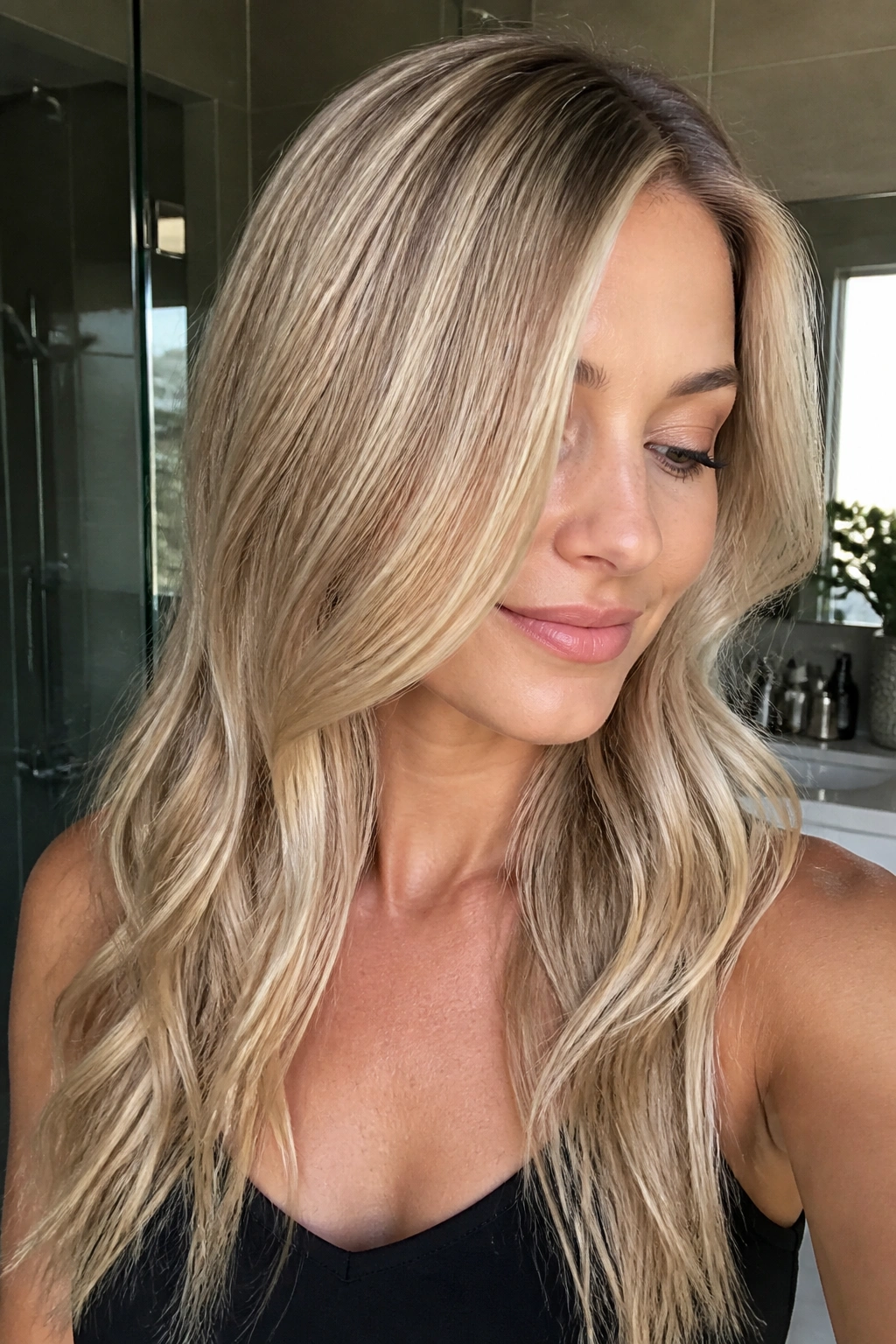
Why does pearl blonde look so soft? Because it is not trying to be icy, and it is not trying to be beige either. It sits in the middle with a creamy, shell-like finish that reflects light without throwing it back too hard.
How to Wear It
Pearl blonde works best over very fine foils. Chunky pieces make it lose that translucent feel. The base can stay slightly darker, especially near the root, so the pearl tone reads as a glow rather than a bleach job.
It suits light brunettes and dark blondes who want something lighter but still delicate. On a blunt cut, pearl blonde can feel polished. On waves, it looks even softer because the bends create little flashes of brightness.
A good pearl finish should look smooth, not silvery-chalky. If the toner pulls too cool, the hair can start looking flat. The point is softness, not frost.
16. Toasted Almond Highlights on a Bob
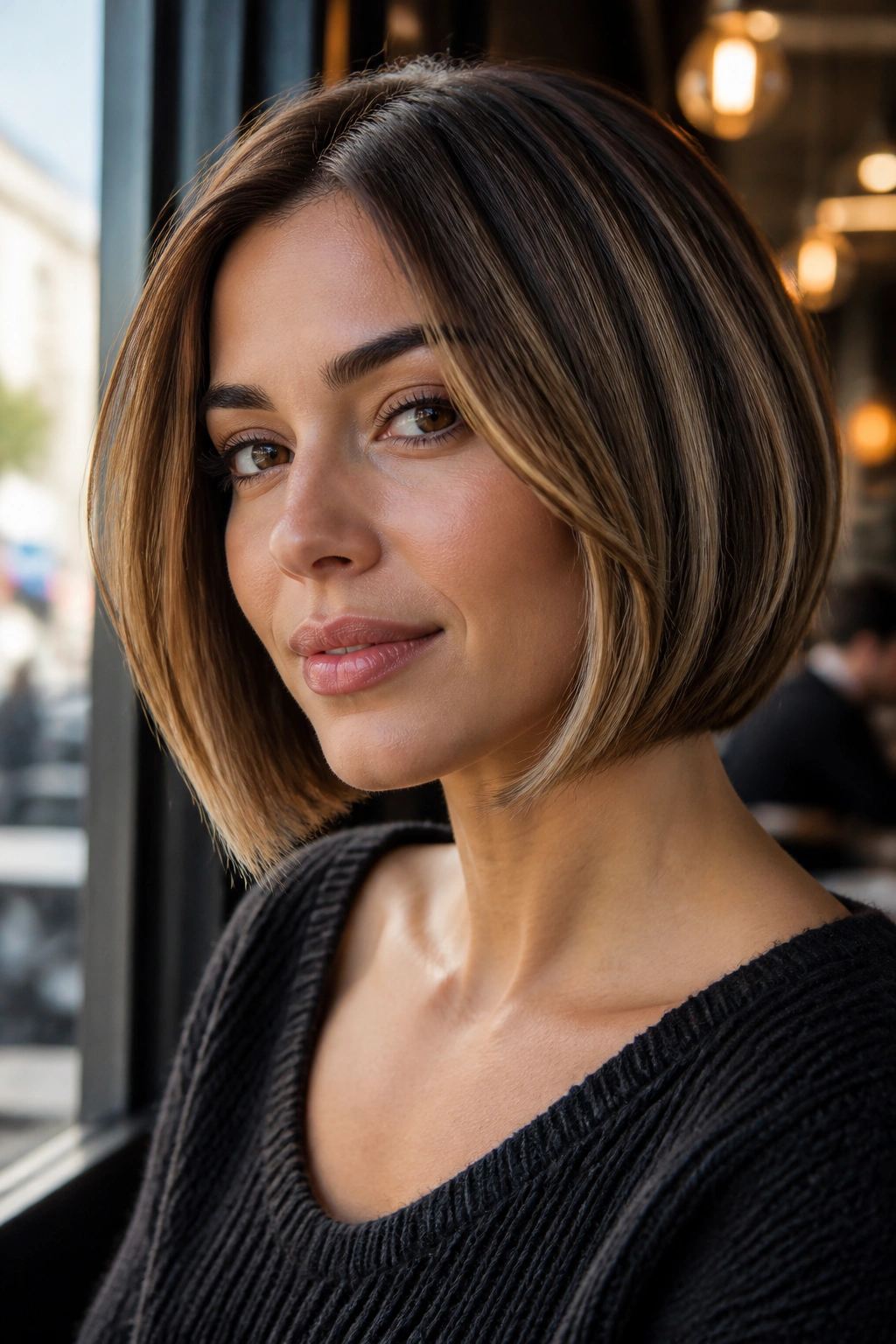
A bob does not need a lot of help to look sharp. It needs the right help. Toasted almond highlights give the shape just enough lift to show off the line of the cut without taking away its clean edge.
Think in terms of thin slivers around the ends, the jawline, and a few pieces near the part. Because bobs are shorter, every foil matters more. Too many highlights and the haircut starts to lose its shape. Too few and the color can disappear into one flat block.
What to Keep in Mind
- Choose a warm beige or almond tone, not a bright yellow blonde.
- Concentrate brightness around the perimeter of the cut.
- Keep the crown softer so the bob does not get puffy-looking.
- Finish with a light gloss to keep the ends shiny and smooth.
That last part matters. Bobs show dryness fast. A good gloss makes the whole cut look cared for, even when the color itself stays subtle.
17. Root-Shadowed Bronde
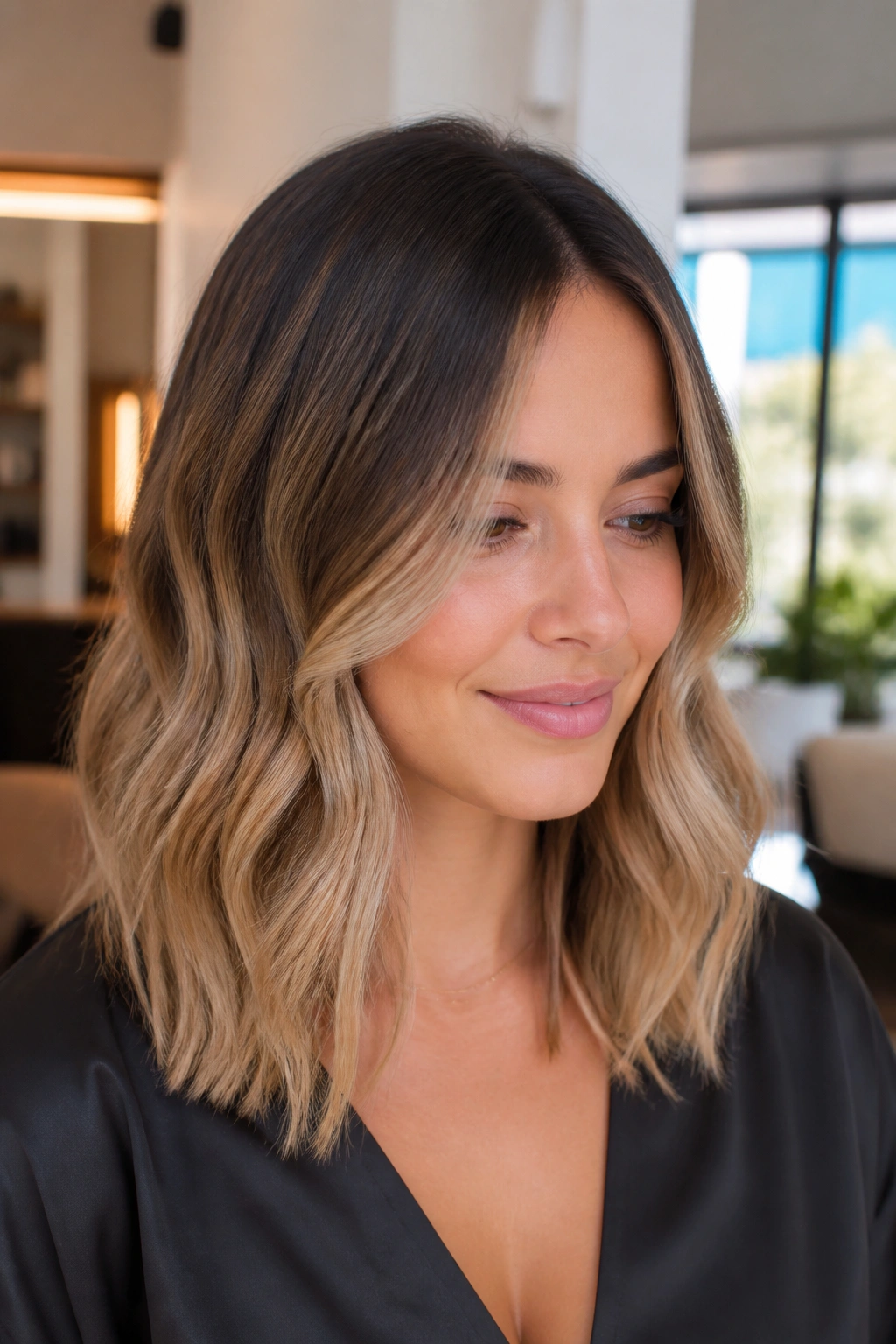
Root-shadowed bronde is one of the easiest ways to get a subtle glow that also behaves well as it grows out. The root stays a shade or two deeper, the mids live in that brown-blonde middle ground, and the ends pick up a little more light.
The balance is what makes it work. Too much blonde and it stops reading soft. Too much brown and the light disappears. Bronde sits right in the middle, which is useful if you want your hair to look brighter without giving up depth at the crown.
Shoulder-length cuts and long layers love this look. The darker root keeps the top from looking thin, while the lighter ends keep the silhouette from feeling heavy. It also makes waves look fuller because the eye sees more than one shade moving at once.
If you want low-fuss color that still looks done, this is one of the easiest places to land. It grows out in a forgiving way, which is a pretty nice thing to say about any color service.
18. Contour Highlights for Fringe
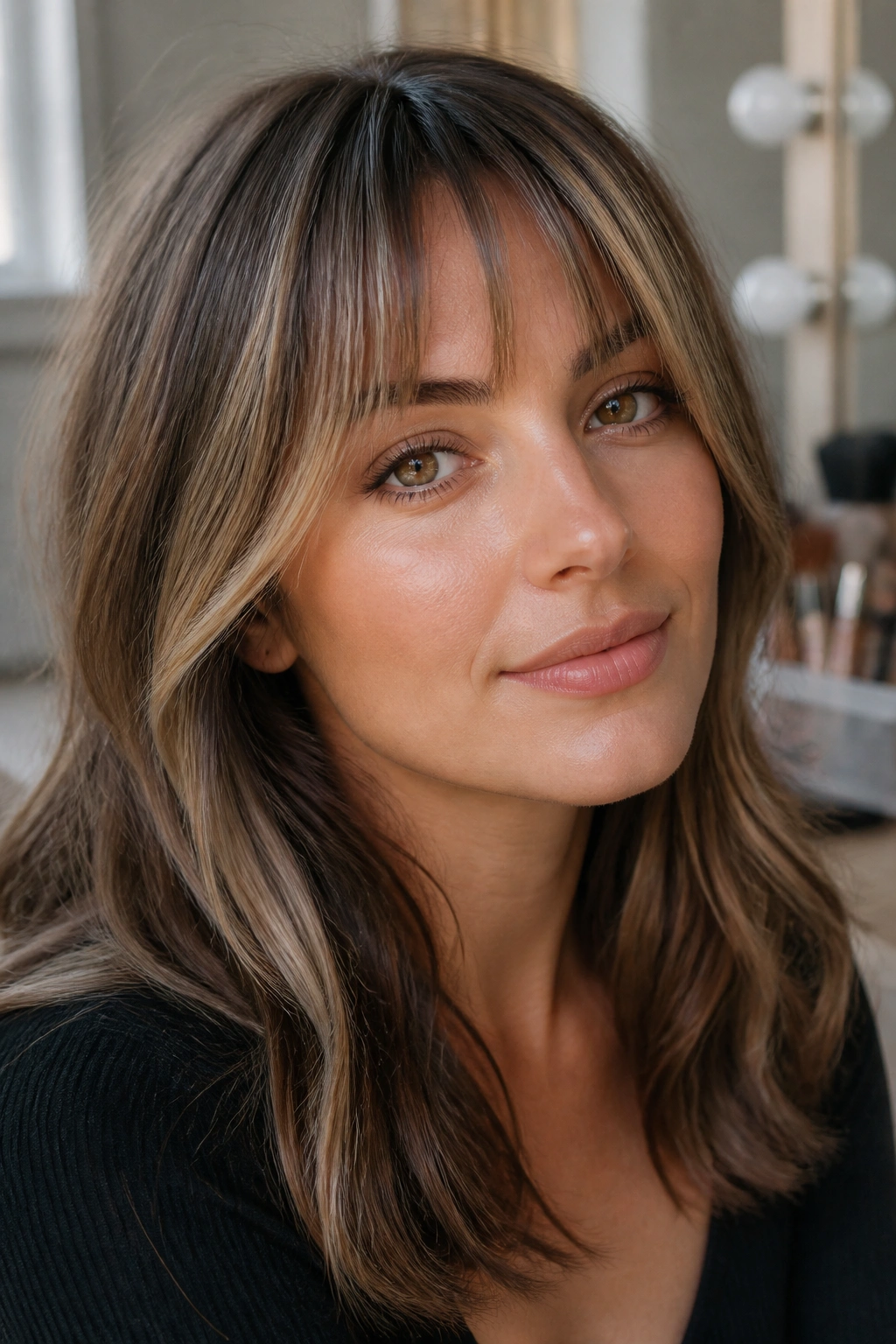
Contouring is not only for makeup. In hair color, it means placing brightness where it changes the shape of the face and the haircut most. With fringe, that often means a few lighter pieces near the temples, brow line, and the soft edges around the bangs.
Unlike all-over lightness, contour highlights push attention toward the eyes and cheekbones. That can be useful if you have curtain bangs, a soft fringe, or even a blunt bang that needs a little lift on the sides. The color helps the fringe sit with the haircut instead of looking like a separate piece dropped on top.
I usually think of this as a detail service. It doesn’t need to be dramatic. It needs to be placed well. A small amount of brightness around the fringe can change the mood of the whole cut.
If you wear your bangs every day, this is money better spent than a bunch of hidden foils under the back layer.
19. Silver Beige Blending Grays
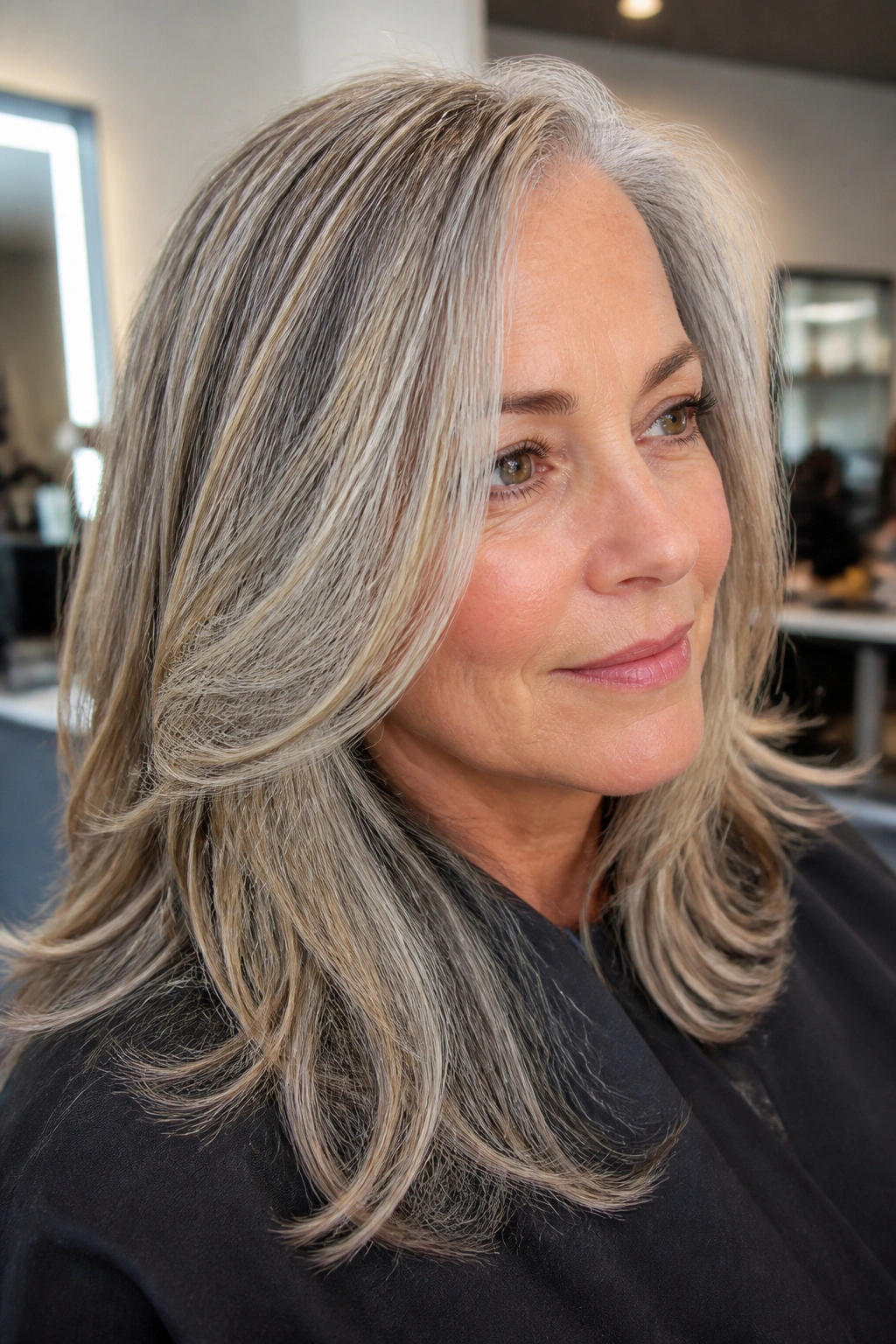
Silver beige is one of the better ways to deal with incoming gray if you want softness instead of a hard cover-up. It does not erase the gray. It blends it, which is often the prettier answer.
What Makes It Look Soft
Fine highlights and a cool-beige toner help the silver pieces sit inside the rest of the hair instead of standing out as isolated white strands. That matters most around the temples and hairline, where grays often show first. A clean tonal match can make the grow-out feel much less obvious.
This approach works well when the natural color is salt-and-pepper or peppered with some lighter strands already. The goal is not a flat silver sheet. The goal is a mixed look with enough beige warmth that the hair still feels human, not metallic.
The Best Part
- Gray regrowth looks softer between salon visits.
- The shade reads polished without looking harsh.
- It works with both short crops and shoulder-length hair.
- A gloss keeps the silver from turning dull.
That last part matters more than people think. Silver beige needs shine, or it loses the whole point.
20. Cinnamon Lights on Black Hair
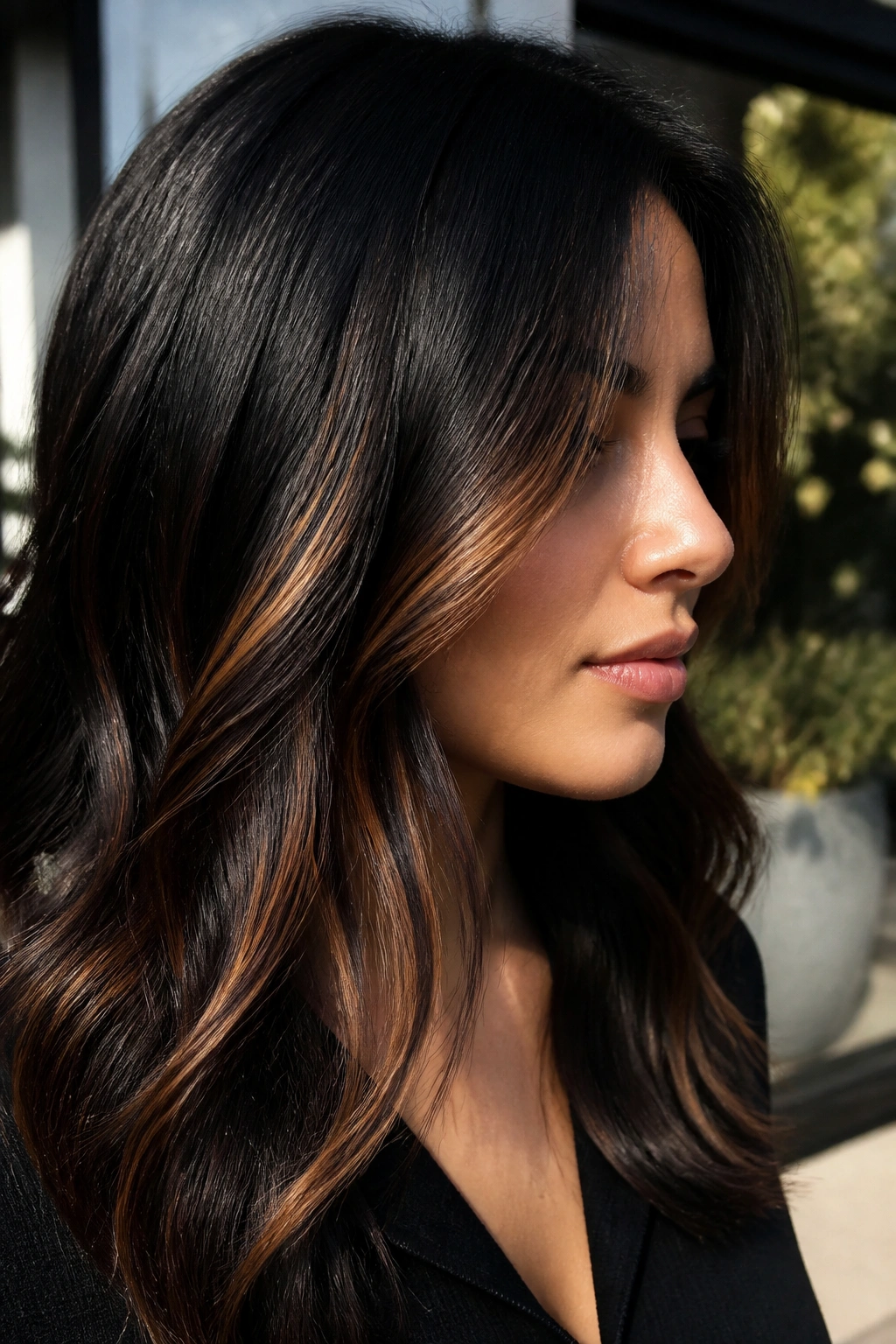
Cinnamon lights on black hair are proof that subtle does not have to mean pale. The warmth shows up as a deep red-brown shimmer rather than a blonde streak, and that makes the contrast softer than most people expect.
This look works because cinnamon stays close to the darkness of the base. The hair still looks black or near-black in low light. In sun or under bright indoor light, the color shifts. That movement gives the glow.
Placement should stay strategic. A few thin panels around the face and through the top layers usually do more than a full scattering would. Black hair can swallow tiny color changes if they are hidden too deeply, so the visible layers matter.
I like this on straight hair and loose waves alike, but it is especially pretty when the hair has a smooth finish. The shine helps the cinnamon show up without needing a heavy contrast.
21. Dusting of Gold on Red Hair
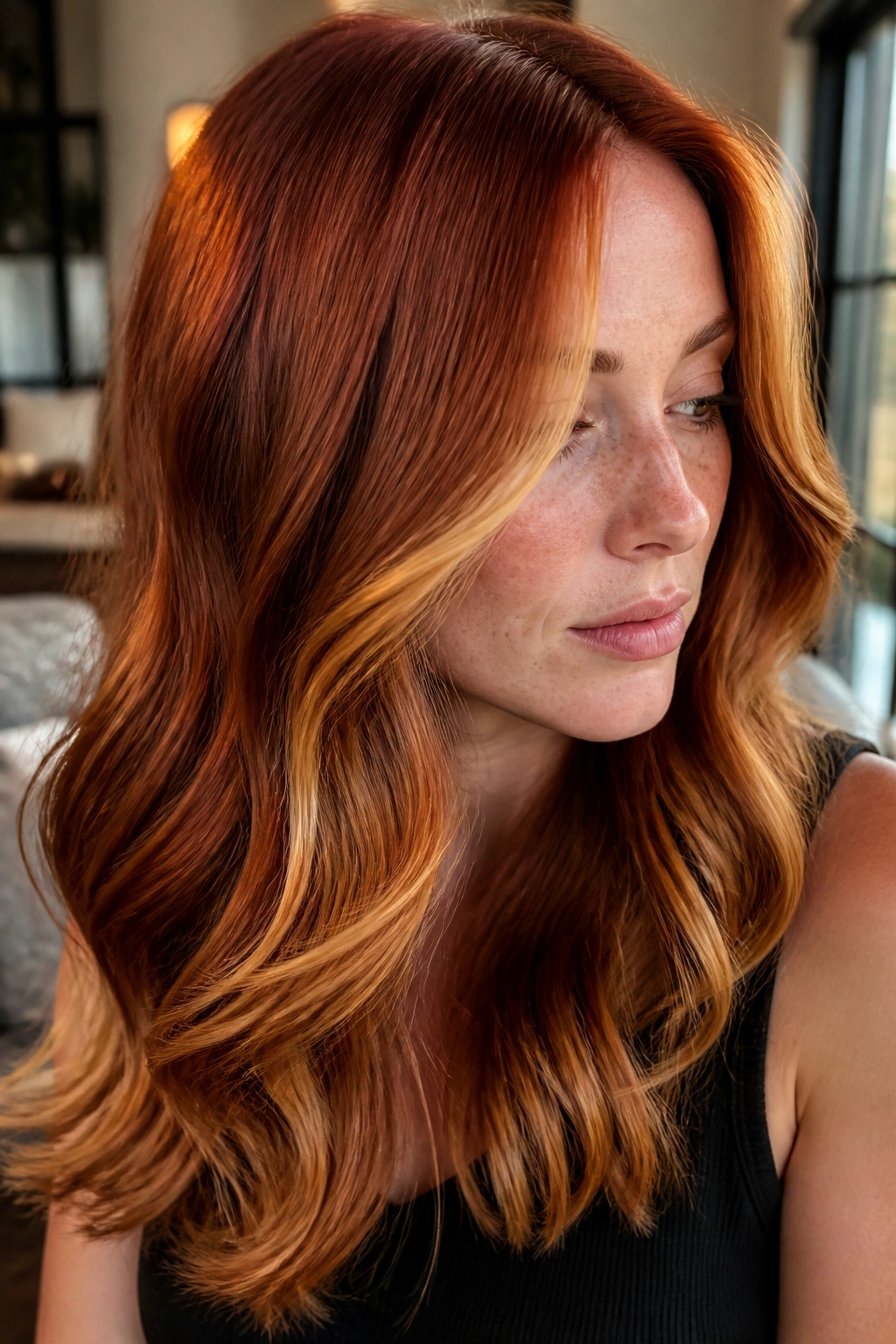
Why add gold to red hair? Because gold makes red look lit from inside instead of just dyed. A little warmth can sharpen the tone and keep it from feeling flat, especially when natural red starts to fade toward copper or rust.
How to Keep It Natural
The trick is to keep the gold sheer. You want a soft glaze or a few fine foils, not a bright yellow stripe. On copper-red hair, the gold should warm the ends and face frame. On deeper auburn, it can sit just enough lighter to make the base gleam.
Red hair already has a lot of personality, so the highlight should support it, not compete with it. A colorist who understands that will usually keep the lightness very close to the base and lean on gloss more than lift.
A subtle gold dusting can make red hair look fresh again without changing its character. That is the whole appeal. Respect the red, then brighten it by a notch.
22. Soft Halo Money Piece for a Subtle Glow
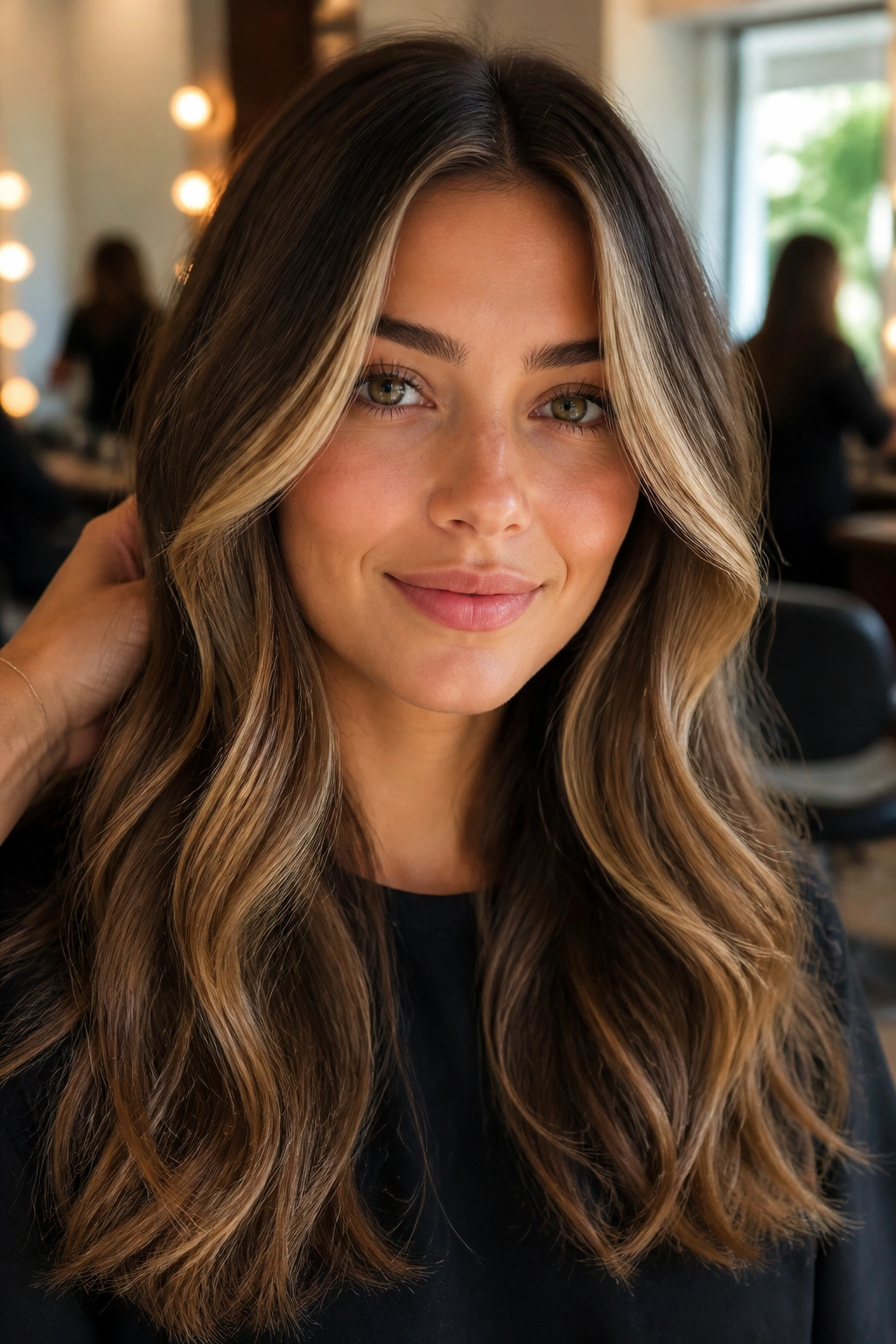
A halo money piece is the cleanest way to make a haircut look brighter without asking the whole head to change. Instead of a stark front stripe, the light is diffused around the part line and temples, so the face gets a soft ring of brightness.
This works best when the money piece is only 1 to 2 shades lighter than the base and the edges are blurred. Hard lines are the enemy here. A soft halo should feel like the color opened up near the face, not like a block of blonde was placed there on purpose.
It is a nice choice if you want a noticeable upgrade with less commitment than full highlights. Short hair, long layers, waves, and straight styles all handle it differently, but the idea holds up in each one. The front lifts, the haircut looks cleaner, and the rest of the color can stay calm.
If you want the least risky place to start, start here. One diffused halo around the face, a soft root, and a gloss can do more than people expect.
