



Flat color can make a sharp haircut look tired.
Dimensional hair color fixes that by mixing depth and brightness in a way that still looks believable when it grows out a little. A level 4 brunette with caramel ribbons will move differently from a solid chestnut. So will a blonde with babylights and a shadow root. The point is not to chase light for its own sake; it is to build contrast that makes the hair look thicker, shinier, and more alive.
Roots are not the enemy.
The best dimensional color ideas work because they respect undertone, placement, and haircut shape. Straight hair shows clean ribbons and money pieces. Wavy hair loves painted ends and softer mids. Curly hair needs light placed where the curl opens, not blasted all the way through to the scalp. That part matters more than people think. A shade can look flat on one head and gorgeous on another for that exact reason.
And that’s why the ideas below are not just “lighter” or “darker.” They’re combinations of tone, depth, and placement that give the hair shape before you even touch a brush.
1. Caramel Ribbons on Deep Brunette Hair
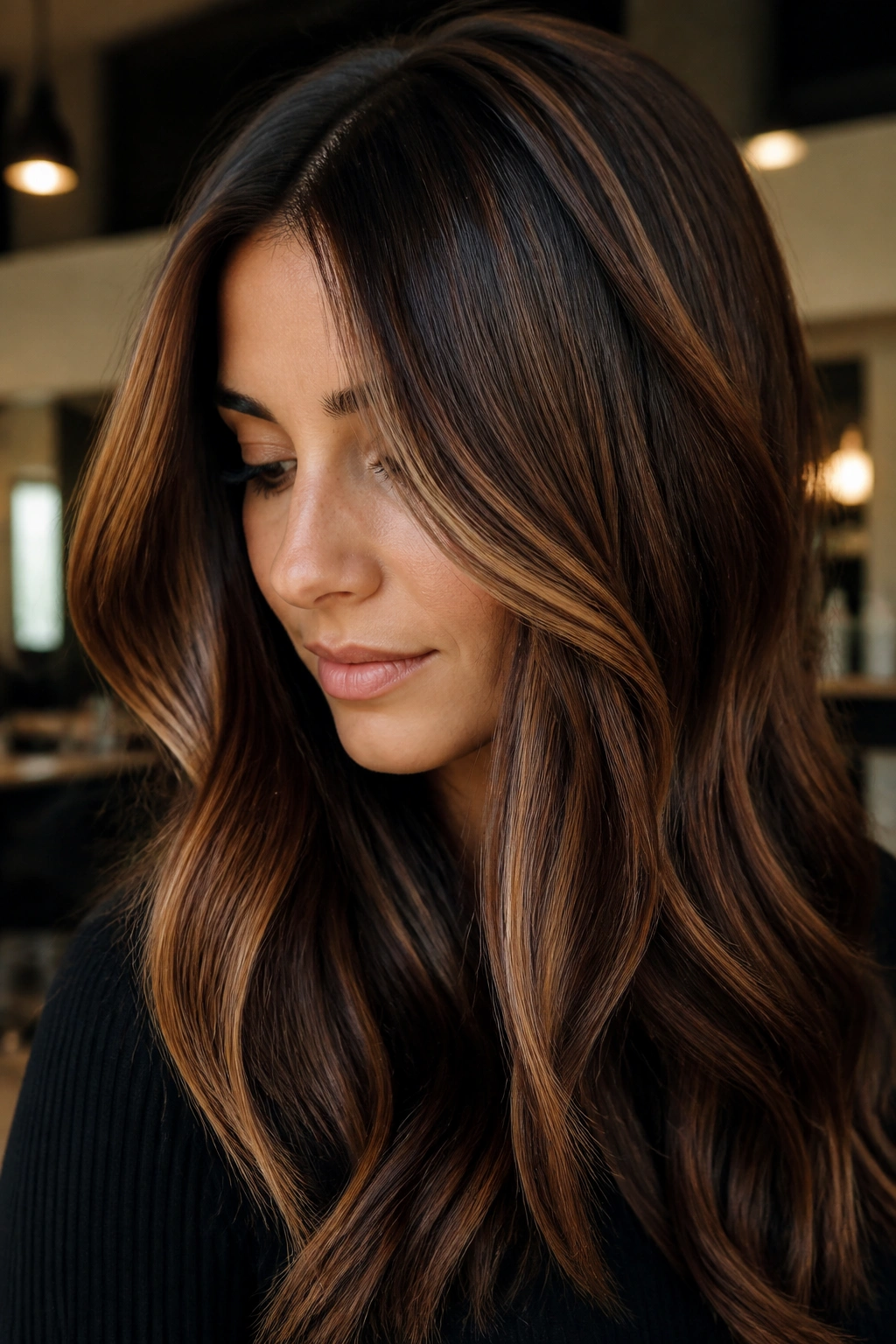
Caramel ribbons are the easiest way to wake up deep brunette hair without pushing it into full blonde territory. The contrast is strong enough to show movement, but soft enough that the grow-out doesn’t scream for attention.
Why It Works
The trick is to keep the ribbons a little thicker than babylights and place them where the hair naturally bends — around the face, through the crown, and along the top layer. That keeps the color from looking striped. It also gives the illusion of density, which is a nice side effect if your hair feels fine or gets weighed down at the ends.
- Best on level 3 to level 5 brunettes
- Ask for ribbons that are about 1/4 to 1/2 inch wide
- Choose a neutral-caramel tone instead of a yellow gold if your skin runs cool
- Keep the bottom layer deeper so the brightness has something to sit against
My favorite part: this one looks polished even in messy waves, which is why it works for people who do not want to spend 20 minutes styling every morning.
2. Chestnut Balayage with Cinnamon Ends

Chestnut and cinnamon is warmer than it sounds. The color starts rich at the roots, then melts into a spiced red-brown that gets softer toward the ends, which gives long hair a nice sense of movement.
The balayage placement matters here. A hand-painted sweep from mid-length to ends keeps the color airy, while the chestnut base holds the whole thing together. If the cinnamon is packed too high, the result can turn noisy. If it starts too low, the whole look loses the gradient that makes it interesting.
I like this on shoulder-length cuts and longer layers because the ends have room to show the fade. On blunt cuts, it can still work, but you need more softness around the perimeter so the line of the haircut does not fight the color.
One more thing: if your hair leans very red already, ask for cinnamon with a brown base, not a bright copper. That small adjustment keeps the look rich instead of loud.
3. Mushroom Brown with a Beige Money Piece

Can cool brown still feel warm enough to wear? Absolutely — if the beige is placed where the eye lands first.
Mushroom brown is one of those shades that looks understated in a good way. It mixes ash, taupe, and soft brown so the overall color stays cool without going flat. Add a beige money piece around the face, and suddenly the whole style has a point of focus. The face frame catches light, while the deeper brunette lengths keep the shape grounded.
How to Ask for It
Tell your colorist you want a cool brunette base with smoky, beige face-framing pieces. That phrase helps avoid an orange result. If your hair lifts warm, the toner choice matters even more; a beige-beige result is better than a pale yellow one.
- Works well on olive, neutral, and fair skin
- Ask for the money piece to stay slightly brighter at the front than at the temples
- Keep the mids soft, not streaky
- Leave the ends a shade deeper if you want extra depth
This is the kind of color that looks expensive in a quiet way. Not flashy. Just smart.
4. Honey Blonde with a Soft Shadow Root

If blonde usually goes brassy on you, a shadow root is the difference between “freshly done” and “why does this need a tone already?” The darker root gives the blonde a place to start, and the honey through the mids keeps the color warm instead of icy.
The best version of this look has brightness through the face and the top layer, then a gentle fade into a root that is only one to two levels deeper. That little shift does a lot. It makes the grow-out softer, and it keeps the color from looking like a helmet of light on top of the head.
- Ask for a root smudge, not a harsh line
- Keep the root about 1 to 2 levels deeper than the lightest blonde
- Choose golden-honey tones rather than yellow if you want warmth with some depth
- Let the ends stay slightly brighter than the mids
This one suits people who like blonde hair but do not want to be in the salon every few weeks.
5. Copper Gloss Over Auburn Hair

Copper gloss is one of my favorite tricks when hair already has red in it. You are not forcing a full color change; you are layering shine and warmth over the existing auburn base so the whole head looks richer.
A gloss is thinner than a permanent color, which is exactly why it works here. It coats the hair enough to refresh tone, but it does not shove the result into a hard, opaque block. The auburn underneath still shows through, and that is what gives the color depth instead of flatness. On layered cuts, the effect is especially nice because the light catches the different lengths in different ways.
If your auburn has gone dull, a copper-gold gloss can bring it back without making it orange. If it already leans red, keep the copper soft and a little brown. Too much brightness in the red family can turn the whole thing loud fast.
This is a good pick for anyone who wants shine first and drama second.
6. Espresso Brown with Mocha Lowlights

Unlike all-over dark brown, espresso with mocha lowlights keeps the hair from reading like one solid block. The darker base gives you richness, and the lowlights carve out movement where the light would otherwise flatten everything.
That matters a lot on thick hair. The added shadows make layers look more defined, and curls get a better shape because the contrast shows off the bend. Even straight hair benefits, though. A few mocha strands tucked under the top layer make the surface look less heavy, which is especially useful if your hair tends to go matte at the ends.
I would ask for lowlights that are only one shade deeper than the base if you want a soft result. Go two shades deeper if your hair is dense and you want more contrast. Any darker and you start losing that mocha softness.
This is the shade I’d choose for someone who says, “I want my hair to look fuller, but I don’t want obvious highlights.”
7. Bronde Babylights Around the Part and Hairline
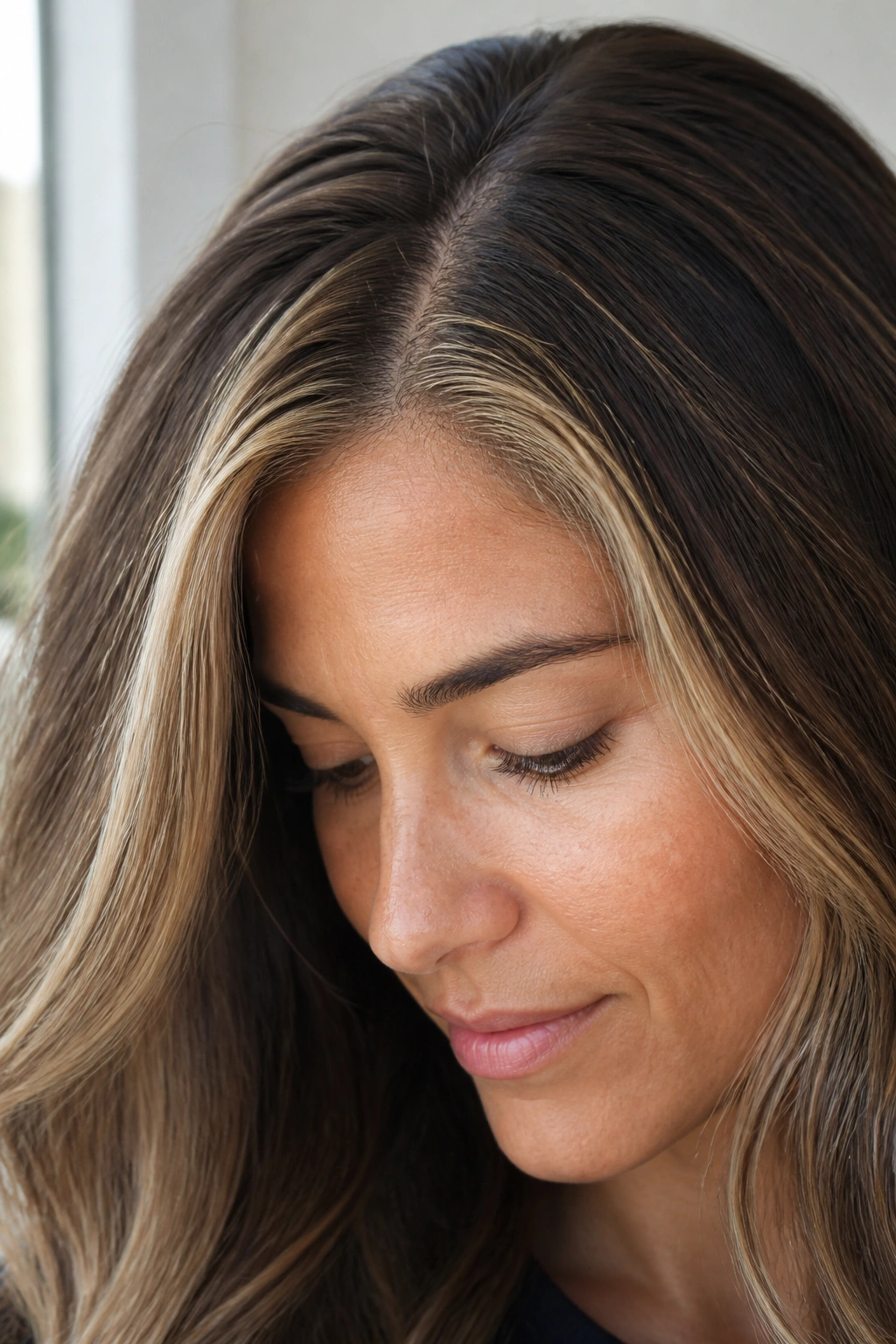
A lot of people think blonde dimension means scattering light pieces everywhere. It doesn’t. Sometimes the smartest move is to keep the brightness concentrated where the eye actually sees it first — the part, the hairline, and the temples.
Where the Light Belongs
Babylights are tiny, fine highlights that mimic natural sun-lightening. On a bronde base, they create a soft haze of brightness instead of blunt streaks. The result feels expensive because it doesn’t shout. It just shifts when the hair moves.
- Place the finest lights right along the part
- Keep a few brighter pieces at the temples and cheekbone area
- Leave the underlayer a shade deeper for contrast
- Use a toner in the beige-beige range, not white blonde
What I like most here is how forgiving it is. If you pull the hair back, the brightness still reads. If you wear it down, the color looks soft and blended. That balance is hard to fake with chunky highlights.
8. Black Cherry with Plum Panels
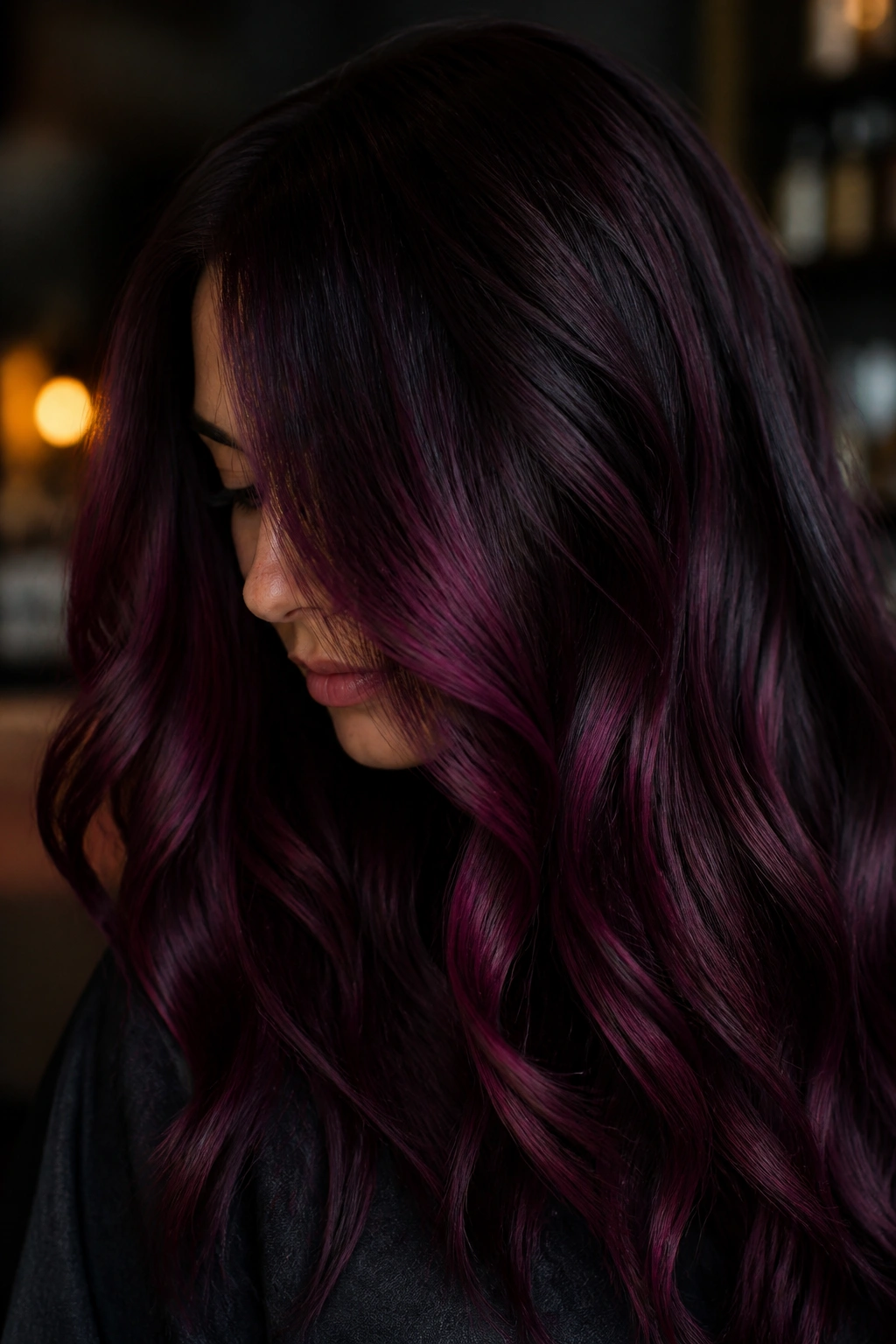
Black cherry looks dramatic, but the real magic comes from the plum panels hidden inside the darker base. They flash in the light instead of sitting there all the time, which keeps the shade from feeling one-note.
Movement matters here.
When the hair swings, the plum peeks through the cherry base and you get that layered color effect people try to describe with words like “rich” and “deep” when they could just say the hair looks alive. It does, though. On waves, the contrast is more obvious. On straight hair, it’s subtler and a little more moody.
This is a smart option if you like dark hair but want more than plain black or plain red. The plum keeps the look interesting without making it look like fashion color. A colorist can tuck the lighter panels under the top layer so the dimension shows in motion, not in a flat mirror selfie.
If you want drama with some restraint, this is a good place to land.
9. Sandy Blonde with Pearl Toner

Can a blonde look soft and cool at the same time? Yes, but only if the toner is doing the right job. Sandy blonde gives you warmth through the base, and pearl toner nudges the brass down without stripping all the life out of the shade.
The danger with this color is overcorrecting. Too much violet or ash and the hair can go chalky. Too little and it drifts yellow. Pearl sits in that middle lane. It softens the warmth while keeping a little glow, which is exactly why the finish reads calm instead of flat.
How to Ask for It
Tell your stylist you want a sandy base with a pearl-beige finish. If your hair lifts very warm, ask for a toner that can neutralize yellow without pushing blue-gray. That keeps the result gentle.
- Best for hair that wants a soft, beachy blonde
- Works well when the ends are slightly brighter than the mids
- Looks best with loose waves or air-dried texture
- Needs toning maintenance, but not aggressive lightening every time
This shade has a quiet kind of polish that suits people who get tired of overly icy blonde fast.
10. Auburn Hair with Copper Ribbons

Auburn hair gets better when you stop trying to flatten it into one exact red. Copper ribbons keep the base lively and give the hair that warm, lit-from-within look that sits somewhere between classic and a little playful.
The placement should follow the wave pattern, not fight it. Put the brightest pieces through the outer bends and around the front, then leave some deeper auburn underneath so the copper has contrast. If every strand is equally bright, the whole thing goes soft in a bad way. You lose the shape.
This is a good color for textured hair because the copper catches light on the surface while the auburn keeps the body of the color grounded. On straight hair, it reads cleaner and more elegant. On curls, it looks richer and more dimensional, especially when the hair is moved by hand rather than smoothed into a rigid shape.
One practical note: copper ribbons are happiest when the red tone is supported with gloss, not dragged into a flat permanent overlay.
11. Beige Blonde with an Icy Money Piece
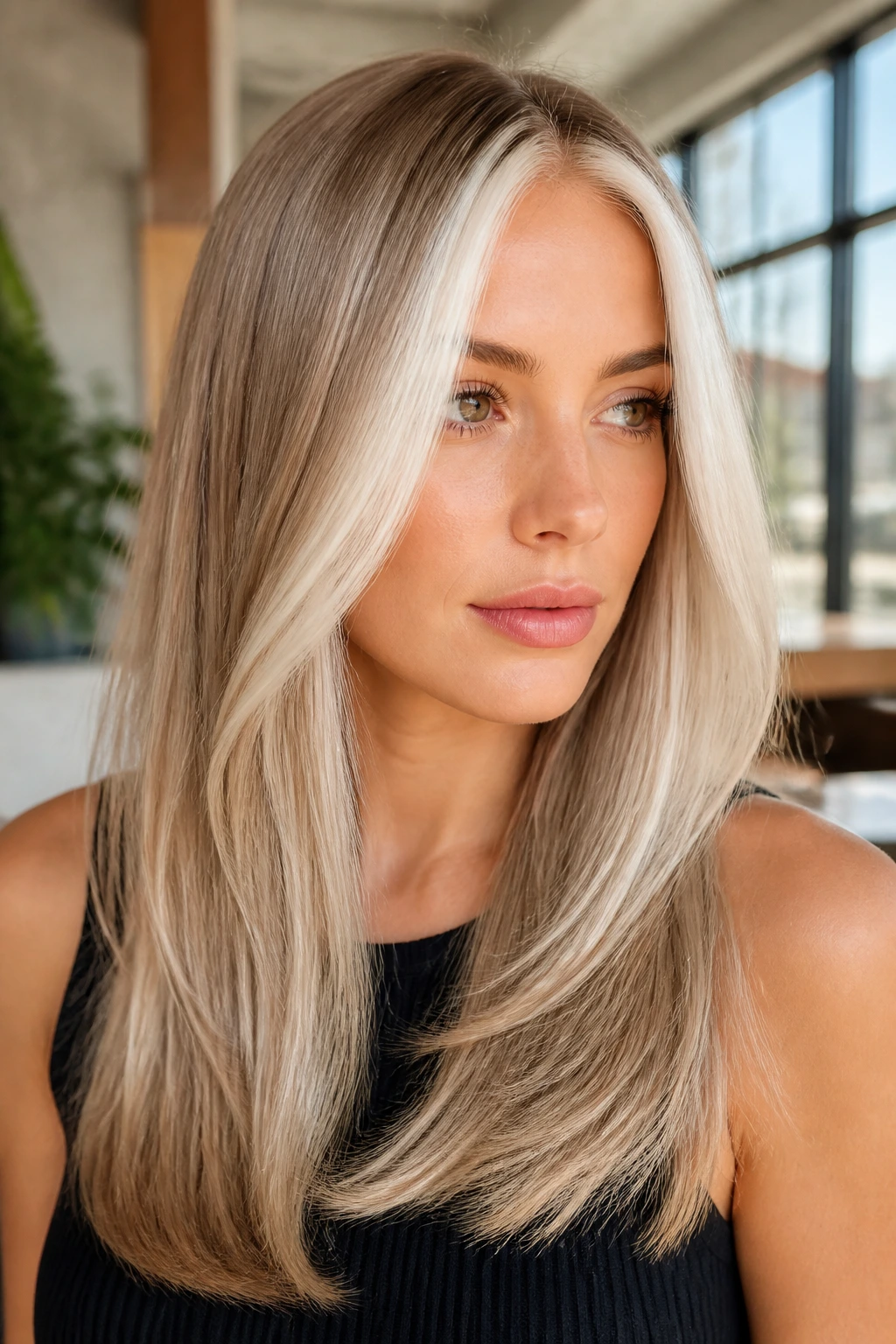
A beige blonde base with an icy money piece gives you contrast without turning the whole head into a frost warning. The front pieces do the bright work, while the rest of the hair stays soft enough to wear easily.
That contrast does something useful for the face. It pulls light forward, which can sharpen a cut, open up the cheek area, and keep long hair from swallowing your features. If the money piece is too wide, though, the effect gets loud fast. Narrower pieces look more expensive on fine hair. A slightly thicker section can work better if you have a strong jawline or a larger forehead and want balance.
The beige base matters as much as the icy front. If the rest of the blonde leans yellow, the front pieces will look disconnected. If the base is too ash, the face frame can feel severe. Beige sits right in the middle, which is why this combo stays wearable.
I’d choose this for someone who wants brightness but still wants the rest of the hair to look soft in daylight.
12. Soft Black with Blue-Black Gloss and Hidden Teal

Soft black and jet black are not the same thing. Soft black has depth and a little reflection in it; blue-black gloss pushes that shine cooler, while hidden teal panels give the color a second life when the hair moves.
That hidden color matters. Under indoor light, the teal may stay quiet. Outside, or when the hair flips over the shoulder, it shows up as a deep jewel tone rather than a full-on fantasy color. I like that balance. It lets you keep a dark, sleek base without losing personality.
This is a strong pick for blunt cuts, long bobs, or smooth styles where shine is part of the look. On very layered hair, the teal can peek through too often and start to feel busier than intended. If you want the color to stay mostly subtle, keep the panels under the top third of the hair.
Pairing the black gloss with a cool-toned finish keeps the result sleek. Pairing it with true green-teal can get loud fast, so stay in the blue-green range if you want something elegant.
13. Golden Brunette with Toffee Ends

Golden brunette with toffee ends is one of those color ideas that looks easy from a distance and a lot more thoughtful up close. The root area stays brunette, the mid-lengths carry warmth, and the ends pick up a toasted toffee shade that makes layers show up better.
Why It Feels Different
The key is that the toffee does not start too high. If the lighter tone begins around the cheek or chin, the whole color gets a softer fade and the hair keeps its body. That works especially well on long layers because the lighter ends catch movement without making the roots feel heavy.
- Ask for a golden brunette base
- Keep the toffee about 2 to 4 inches from the ends
- Let a few face-framing pieces stay brighter
- Avoid orange-gold if your hair lifts fast
What to Watch For
The biggest mistake is making the toffee too pale. Then it stops looking rich and starts looking stripped. A deeper toffee tone keeps the finish flattering on more skin tones, and it grows out in a way that still makes sense.
I reach for this idea when someone wants warmth, but not the obvious red-copper route.
14. Curly Hair with Painted Surface Lights
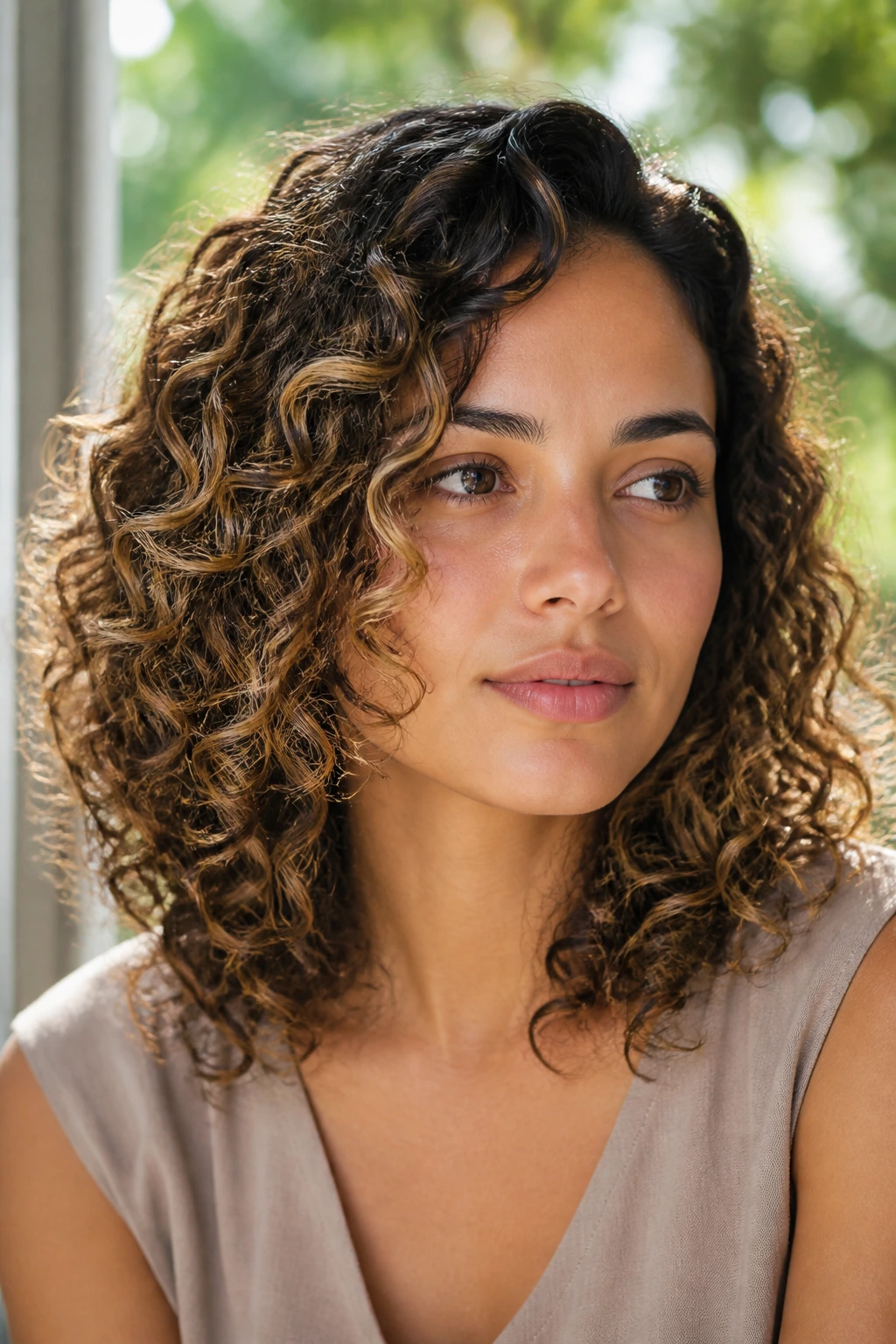
Curly hair does not need highlights everywhere. It needs the right highlights on the outside of the curl pattern, where the light naturally lands.
That is why painted surface lights work so well. Instead of foiling every section from root to tip, the colorist paints the outer curve of the curl and leaves the inside of the shape darker. The result is a curl that looks defined, not bleached out. You still get brightness, but the coil keeps its body.
This matters even more with tighter curls. If the light is too evenly spread, the pattern can lose the shadow that gives it shape. A few well-placed lights around the face and across the top layer are often enough. More than that can start to flatten the texture.
Ask for ribbons that follow the curl group rather than fighting it. The best version of this look makes the hair look springy and dimensional when it dries naturally. That’s the goal. Not uniformity.
15. Rose Brown with a Muted Pink Glaze
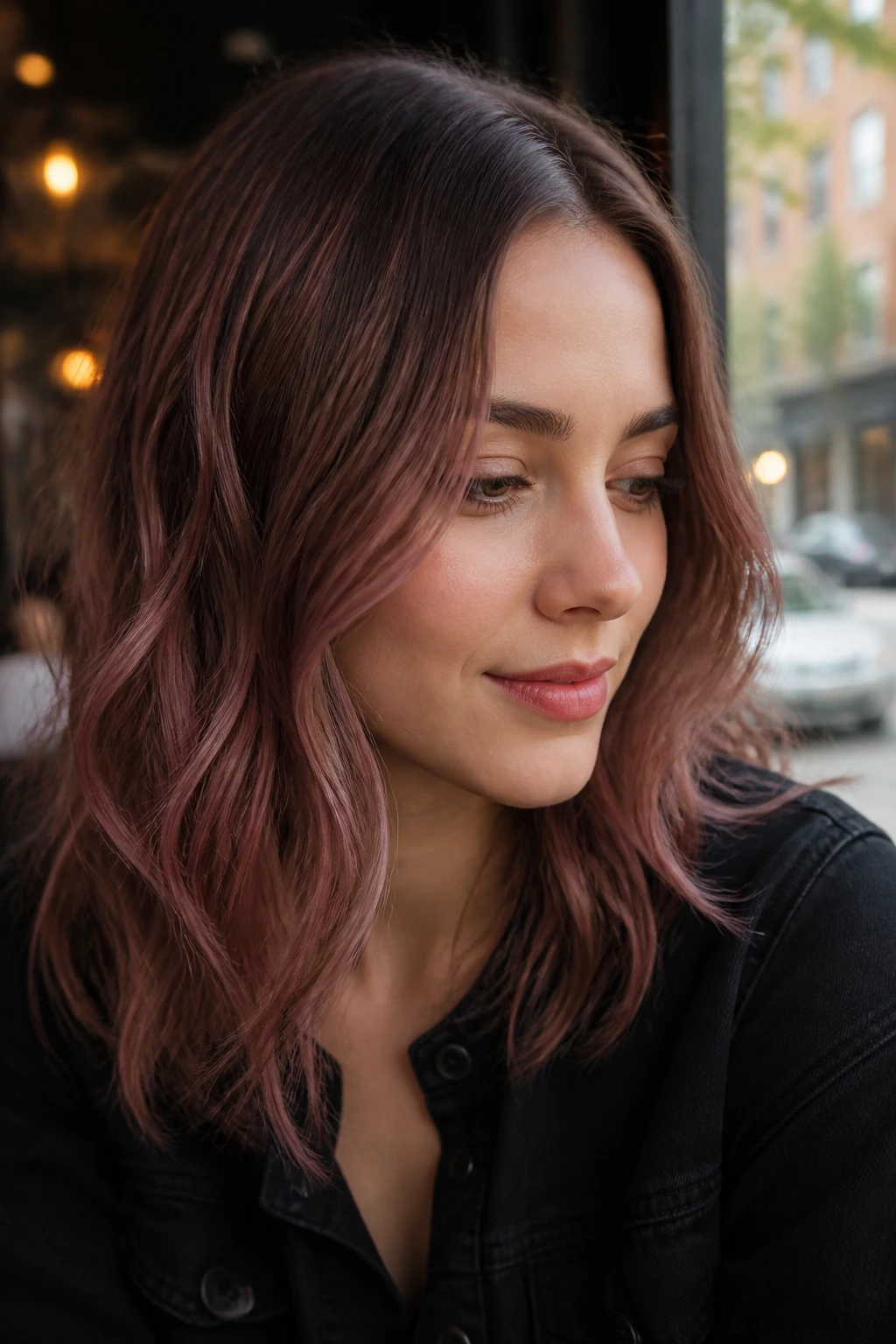
Can pink hair be grown-up? Sure — if the pink is muted and sitting on a brown base that does some of the heavy lifting.
Rose brown is a soft blend of brown, beige, and a whisper of pink. The glaze gives the color a flushed, romantic tone without turning it into candy color. That’s the difference between something you can wear every day and something that only works in a photo booth.
When It Fades
A muted pink glaze fades more softly than a permanent red. It usually drifts toward beige-brown, which is part of the charm. The color never has to stay identical; it just needs to leave the hair looking nice on the way out.
- Works best on pre-lightened or naturally light brown hair
- Keep the pink in the dusty rose range, not bubblegum
- Ask for a glaze if you want a softer grow-out
- Add a few beige pieces around the face if you want more contrast
I like this choice for someone who wants a little fashion color but does not want to spend the whole month maintaining it. It’s playful, but not precious.
16. Sandy Brunette with Ash Lowlights

If your hair has been lightened too many times and started to feel thin or washed out, ash lowlights are the fastest way to give it structure back. Sandy brunette stays soft, while the lowlights bring the shadows back into the hair.
The effect is subtle, and that’s the point. You are not going darker everywhere. You are just dropping a few cooler pieces under the top layer so the color has a place to rest. On over-highlighted hair, this can be the difference between “flat blonde-brown” and “oh, that looks like actual hair again.”
I especially like this on long hair that has lost shape at the ends. Lowlights in the lower half make the cut feel fuller. They also calm brass without forcing another round of bleach. That’s a win if the hair is already fragile.
Ask for ash lowlights that are one to two levels deeper than your base. Any darker and you can create hard contrast that feels patchy instead of soft.
17. Beige Copper with Gold-Beige Depth
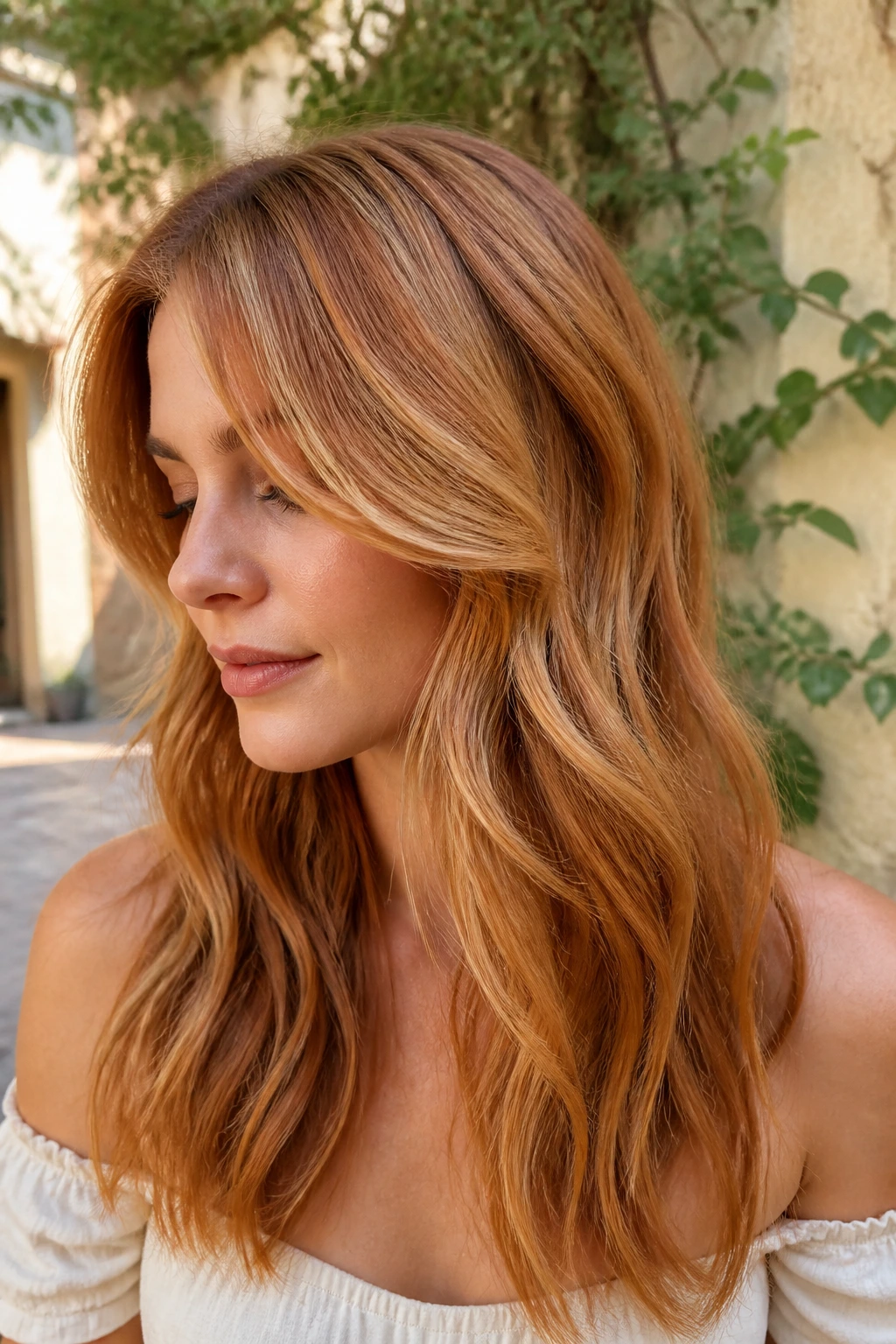
Beige copper sits in a sweet spot that a lot of people miss. It has enough warmth to feel alive, enough beige to avoid orange, and enough depth to keep the color from reading like a flat apricot.
The nicest versions of this shade usually mix three tones: a soft copper, a gold-beige midtone, and a deeper neutral base. That blend gives the hair movement when it catches light, but it also looks calm when the hair is dry and untouched. On blowouts, it glows. On air-dried waves, it looks softer and more natural.
This is a good match for people who are tired of choosing between “too blonde” and “too red.” The beige in the middle takes the edge off both. It also works well on layered hair because the tones separate a little as the hair moves, which is exactly what makes dimension feel real.
If you want the color to stay wearable, ask for copper with beige support, not a straight warm red. That one detail changes the whole result.
18. Smoky Brunette with Micro-Lights
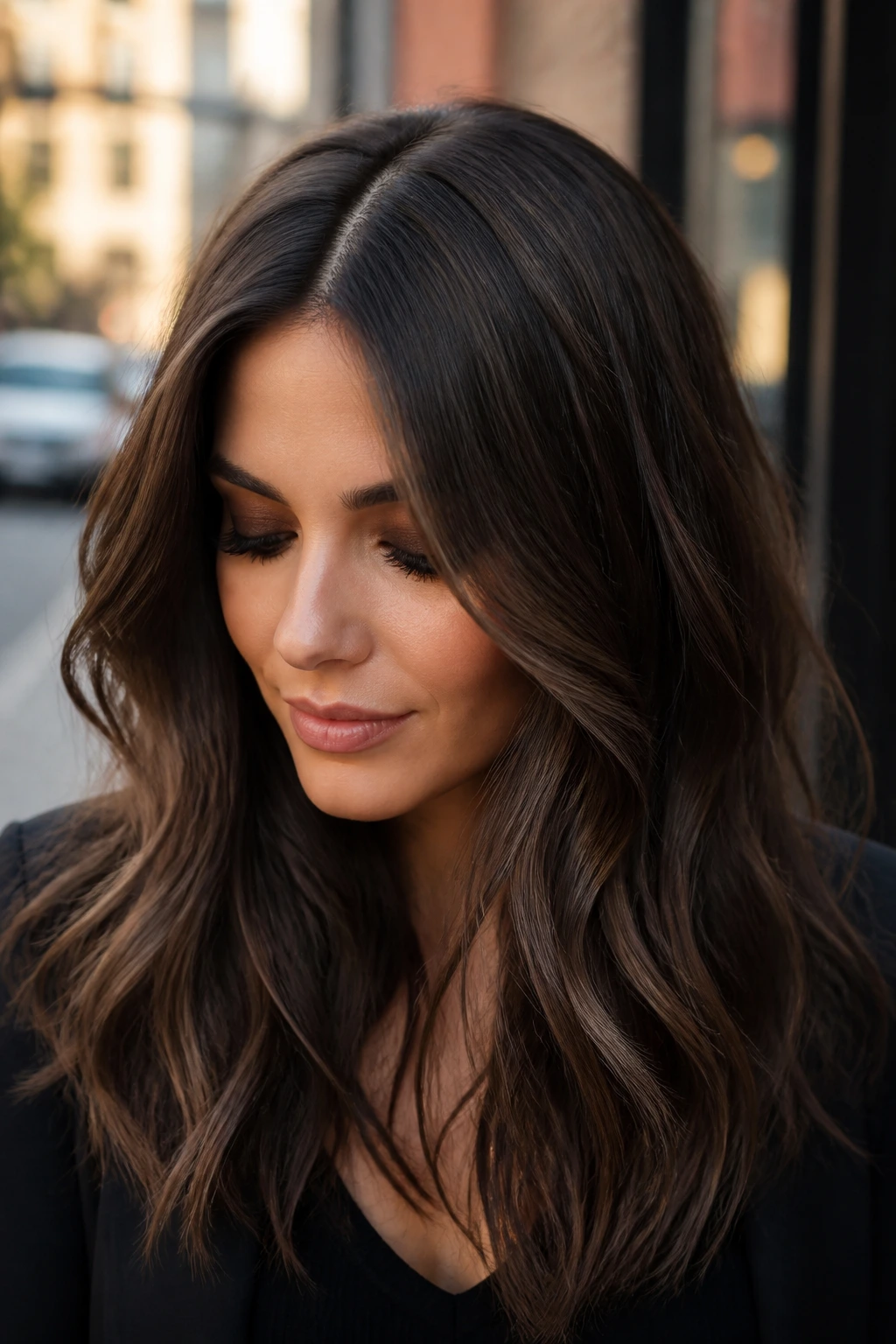
Smoky brunette with micro-lights is the shade I’d recommend to anyone who wants dimension but hates obvious highlights. The lights are so fine they almost disappear until the hair shifts.
Unlike ribbon highlights, micro-lights don’t announce themselves. They create a soft shimmer across the surface, which is especially useful on fine hair because they add visual texture without carving big light patches into the head. The hair looks deeper, but not heavy. That’s a rare balance.
This is also a smart first step if you’ve never had color before and don’t want to make a dramatic jump. The result looks like your hair, only better lit. A little more expensive. A little more deliberate.
I’d ask for a smoky brunette base with barely-there lighter threads two shades above your natural color. Keep the lights scattered through the top and around the part, not all the way under the neck. That gives you movement without losing the dark richness that makes the color feel grounded.
19. Strawberry Blonde with Peach Ribbons
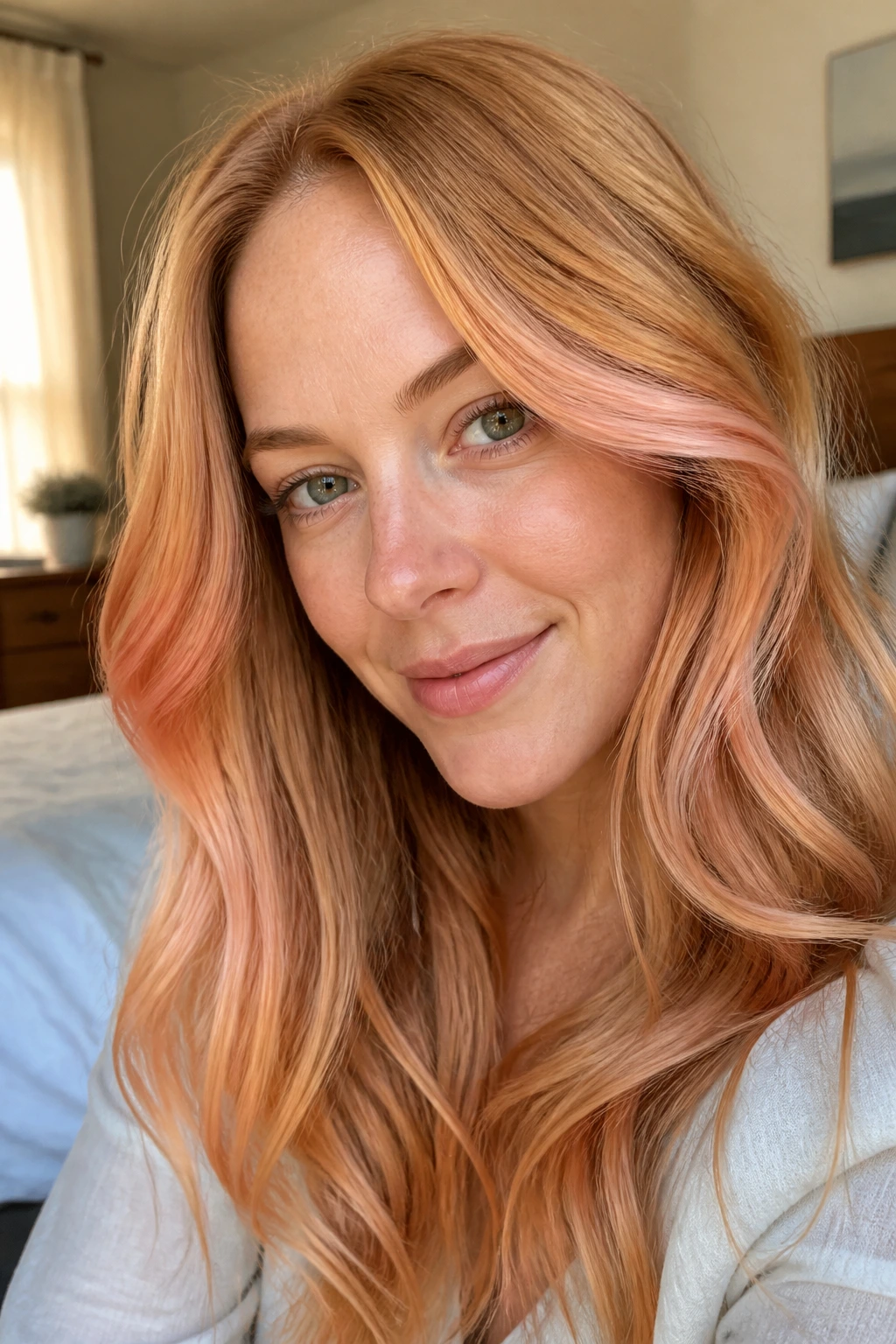
Strawberry blonde gets prettier when the peach is handled with a soft hand. Too much red and it turns copper. Too much gold and it turns flat. Peach ribbons split the difference and give the color a bright, fresh lift.
Why It Works
This idea is especially nice on light natural bases because the peach reads as a tint instead of a full color block. The ribbons can sit through the front sections and the upper layers, where they catch light and keep the shade from looking washed out.
- Best on level 7 to level 9 blonde or light red bases
- Keep the peach soft and sheer, not opaque
- Add a tiny bit of gold if the hair needs warmth
- Leave some strawberry depth underneath so the color has a base
A Small Warning
If the peach is too saturated, the whole look can tilt cartoonish fast. The softer version ages better, grows out more gently, and gives the hair that warm glow people usually try to fake with filters.
This is one of those shades that looks best when the hair has a little bend in it. Straight and flat, it loses some charm.
20. Brunette-to-Blonde Melt with Ribboned Ends

A brunette-to-blonde melt can look dated when the transition is too obvious. It can also look gorgeous when the fade is soft, the ribbons are staggered, and the ends still have depth instead of looking bleached into nothing.
The idea here is simple: keep the root rich, let the mid-lengths shift gradually, and build ribboned blonde pieces through the ends so the lightness feels layered rather than painted on. That keeps the lower half of the hair from looking thin. It also makes the grow-out easier, which is a big deal if you like a lived-in finish and do not want a hard line every six weeks.
I like this most on longer hair, where the blend has room to travel. On shorter cuts, the same concept can feel compressed. The melt needs space. Without it, you end up with a color block instead of a gradient.
If you want one dimensional hair color idea that buys you time and still looks styled, this is the one I’d keep on the shortlist.
The Bottom Line
The strongest dimensional hair color is not always the brightest one. It is the one that gives your haircut shape, makes your texture look fuller, and leaves a little depth in the places your eye needs to rest.
That is why the smartest picks here all rely on contrast with restraint. A good color should move when you move. It should show a little more in sunlight, a little less under soft indoor light, and still feel like it belongs to your hair instead of sitting on top of it.
If you are stuck between two shades, choose the one with better placement, not just better intensity. That tiny difference usually decides whether the hair looks flat or dimensional.
