



Medium hair is the sweet spot for ombre. A collarbone cut gives the fade enough room to show, but not so much length that the lighter ends start looking stretched thin or stringy.
The strongest ombre hair ideas for medium hair do one thing well: they make the cut look fuller, softer, and a little more expensive without forcing you into a harsh root line. That matters. On shoulder-length hair, a bad blend shows fast. Too much contrast and it goes stripey. Too little and the whole thing disappears in daylight.
I care more about undertone than the name on the shade card. Caramel can go orange, ash can go muddy, and blonde can turn chalky if the toner is off by even a small step. Medium hair is forgiving in some ways, but it also gives you less room to hide sloppy placement, so the melt has to be intentional from root to end.
These 30 ombre hair ideas for medium hair cover soft brunettes, cool blondes, reds, pastels, and a few bolder shades that still make sense on a lob or shoulder-length cut. Some are low-key. Some have edge. All of them look better when the fade is tailored to the haircut instead of copied from a long-hair photo.
1. Caramel Mocha Ombre
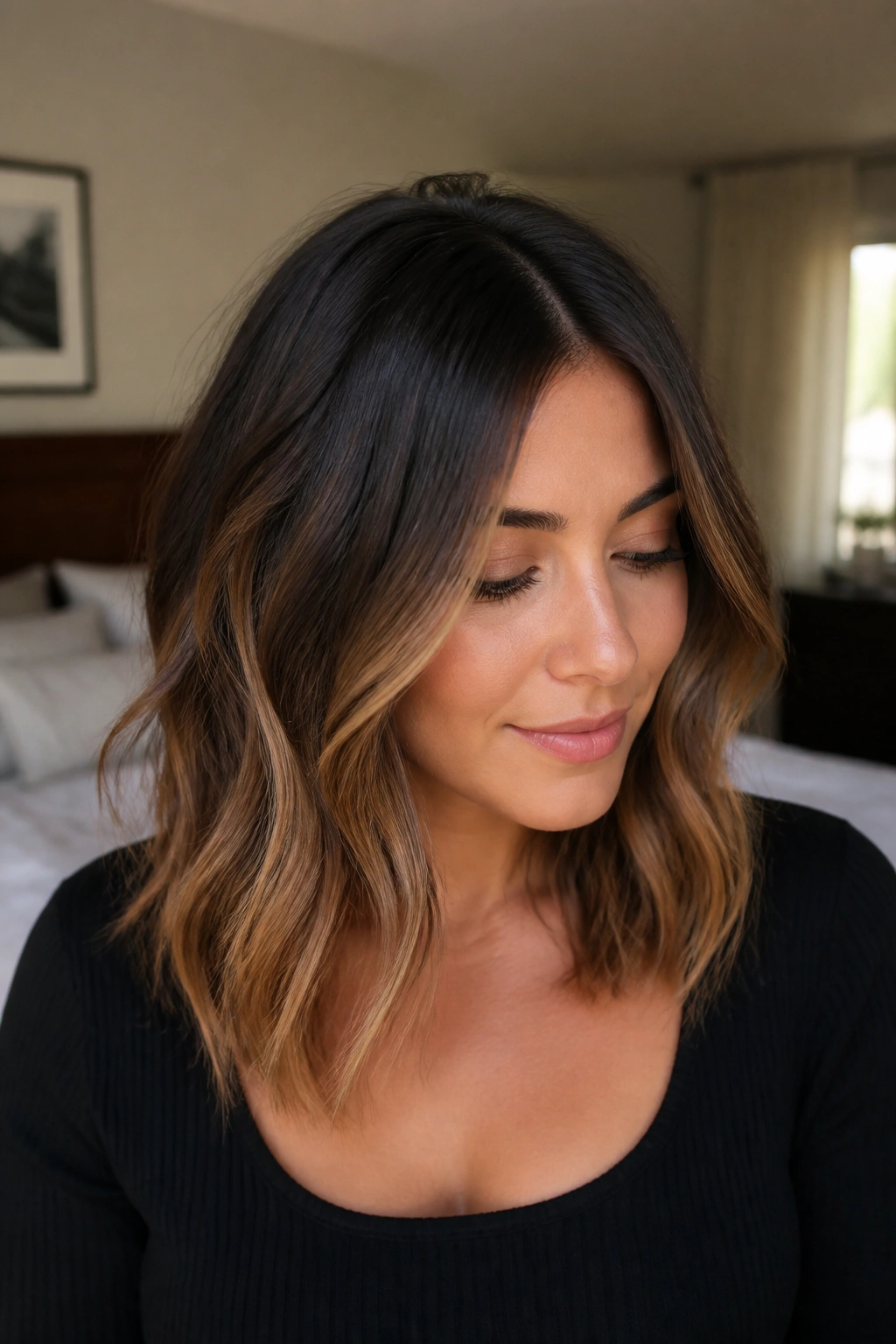
Caramel mocha is the shade I hand to brunettes who want warmth without drifting into copper. On medium hair, the darker root keeps the cut grounded while the caramel ends soften the line around the shoulders.
Why it works on medium hair
The color change has enough distance to read as a fade, not a dip-dye stripe. If your hair hits the collarbone or sits just above it, the lighter ends move around when you do, which keeps the whole look from feeling flat.
- Ask for the lightest caramel to start around the mid-lengths, not at the roots.
- Keep the root one to two levels deeper than the ends.
- A gloss with beige-gold undertones helps the caramel stay soft.
- Layered cuts show this blend best.
My favorite tip: keep the last inch slightly deeper than the rest. That little bit of mocha at the bottom makes the caramel look richer.
2. Dark Brunette to Honey Blonde

This is the most flattering high-contrast ombre for medium hair when you want brightness without a full blonding job. The dark brunette root keeps regrowth calm, and honey blonde through the lower half gives enough lift to make the ends look thicker.
Medium length helps here because the fade does not have to travel very far before it reaches the bright zone. That makes the shift look intentional instead of stretched. On a blunt lob, the blonde ends read sharper; on soft layers, they look more sun-touched.
Tell your colorist to keep the honey in the beige range if your skin leans cool or neutral. Warm undertones can handle a little gold. If the blonde goes too pale, the contrast can get loud fast. This one should feel polished, not blinding.
3. Ash Brown to Mushroom Blonde

Why does ash brown into mushroom blonde work so well on medium hair? Because the length is long enough to show the cool shift, but short enough that the smoky tones stay clean.
What to ask for at the salon
Mushroom blonde sits between beige, taupe, and soft ash. That middle ground is the whole point. It keeps the ombre from turning yellow, and it gives medium hair a muted finish that looks expensive in a quiet way.
- Start with a cool ash brown base.
- Blend into a beige-taupe midsection.
- Keep the lightest ends smoky, not silver.
- Use a purple or blue shampoo only when brass starts showing.
Watch out for this: if your base is warm, mushroom blonde can look flat. A tiny bit of dimension near the face fixes that fast.
4. Chestnut to Cinnamon Melt
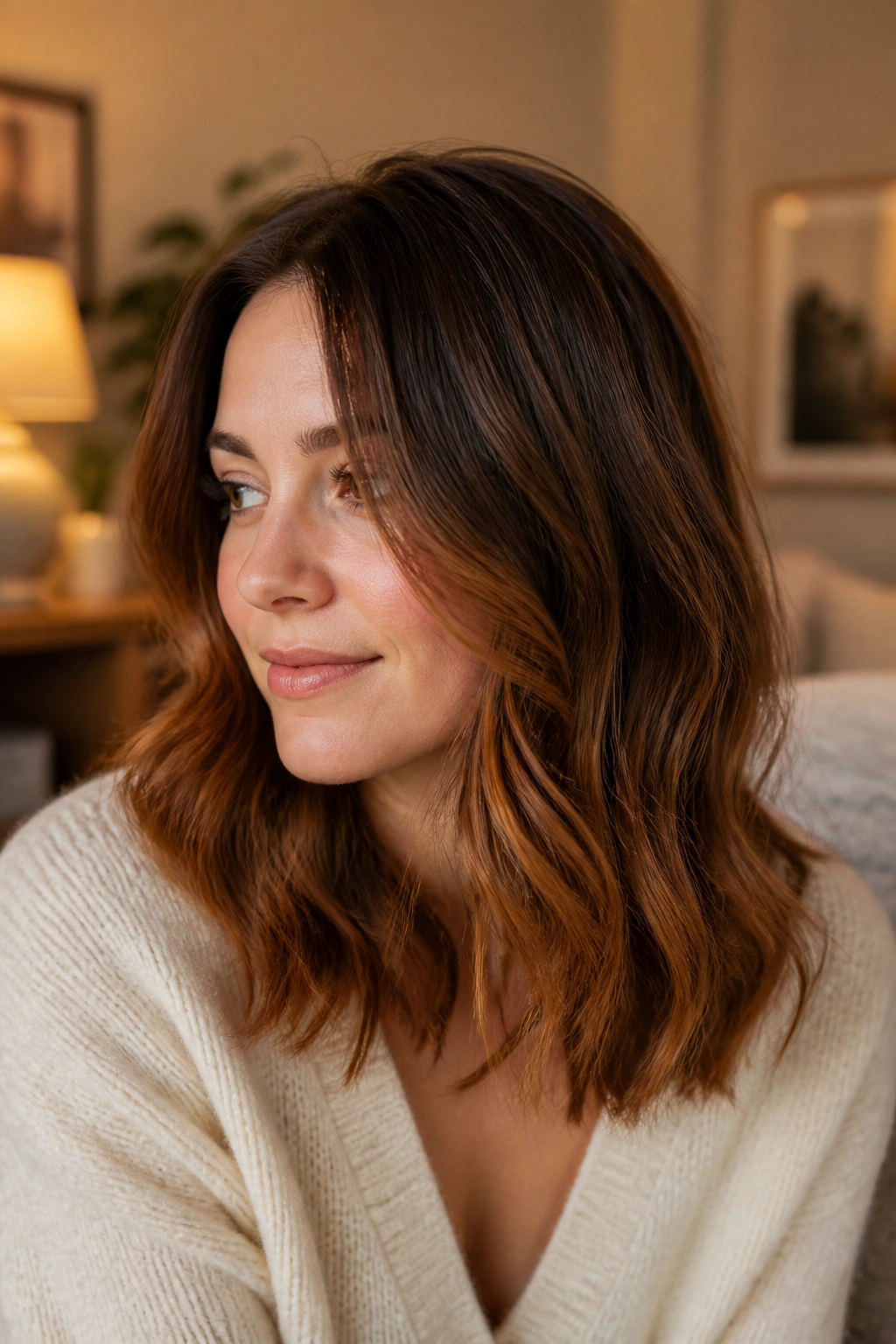
Picture chestnut roots, a soft cinnamon ribbon through the middle, and ends that look like they were warmed by a candle. That is the charm of this ombre on medium hair. It feels cozy without going orange.
The trick is placement. Cinnamon should not start at the scalp; it belongs in the lower mid-lengths, where medium hair can show the shift without losing depth. A soft wave helps the color read, because the warm tones catch on the bends instead of sitting in one flat sheet.
- Keep the chestnut base rich and glossy.
- Let cinnamon live mostly in the bottom half.
- Choose a gloss rather than a heavy lift if your hair is already warm.
- Loose curls make the melt look more blended than a straight blow-dry.
A little warmth goes a long way here. Too much, and it stops being chic.
5. Chocolate to Copper Ends

Chocolate to copper is for anyone who wants warmth with a pulse. On medium hair, the darker top half keeps the color wearable, while the copper ends give you that flicker of red that shows up every time you move.
It also photographs well in ordinary light, which matters more than people admit. Indoor light softens copper; daylight wakes it up. That shift is part of the appeal. The hair looks different without looking fussy.
The one thing I would not skip is shine. Copper can look dull if the ends are dry, so a clear gloss or a lightweight oil on the last two inches helps a lot. Keep the copper in the burnt-orange family if you want depth. Neon copper is a different conversation entirely.
6. Black to Espresso and Taupe
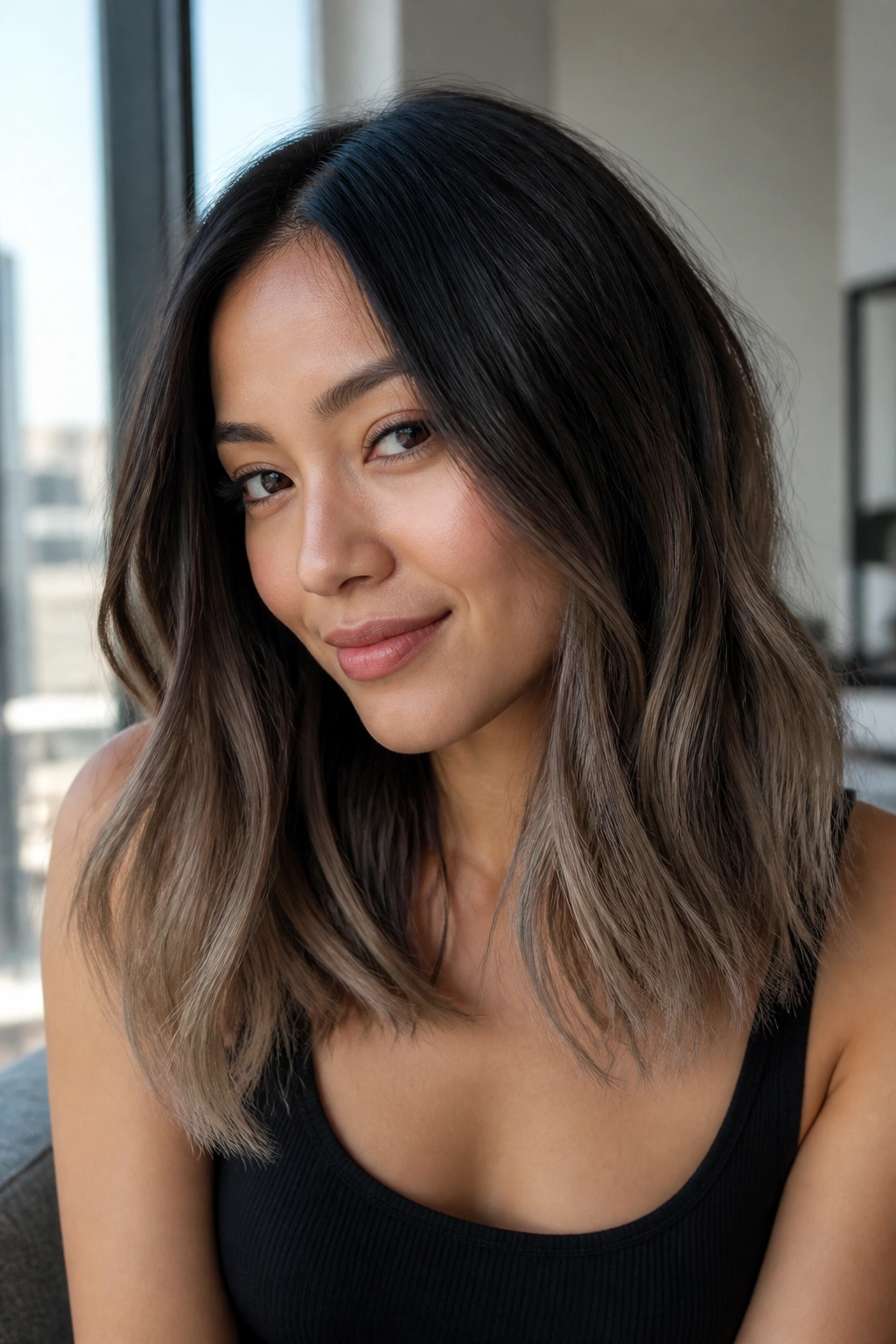
Unlike a straight jump from black to blonde, this version stays inside the brunette family and still gives you movement. That makes it a smarter ombre for medium hair if you want edge without bleaching the ends to death.
Espresso through the mid-lengths, then taupe at the bottom, creates a smoky fade that looks deliberate on a shoulder-length cut. The taupe keeps the ends lighter, but not loud. That matters on medium hair because the contrast shows fast, especially at the ends where the cut naturally narrows.
This shade works best if you wear dark clothes, silver jewelry, or cooler makeup. The taupe repeats those tones instead of fighting them. If you want something subtle but not boring, this is one of the cleanest answers.
7. Bronde with Face-Framing Glow

Bronde is the easy win. Not lazy. Easy. It gives you brown depth at the crown, blonde softness at the ends, and enough face-framing brightness to pull the whole look forward.
Where the lightest pieces should sit
On medium hair, the best glow starts around the cheekbone and drops toward the collarbone. That placement opens up the face without making the top look overworked. If your haircut has layers, the brighter pieces can ride along those layers and look even softer.
- Keep the root shadow close to your natural brown.
- Put the brightest pieces around the front, not all over.
- Ask for beige blonde, not icy blonde, if you want the look to stay easy.
- A loose wave shows the dimension better than pin-straight hair.
Tiny detail that matters: the front pieces should be a half-shade lighter than the back. That keeps the face bright and the grow-out calm.
8. Mocha to Rose Gold
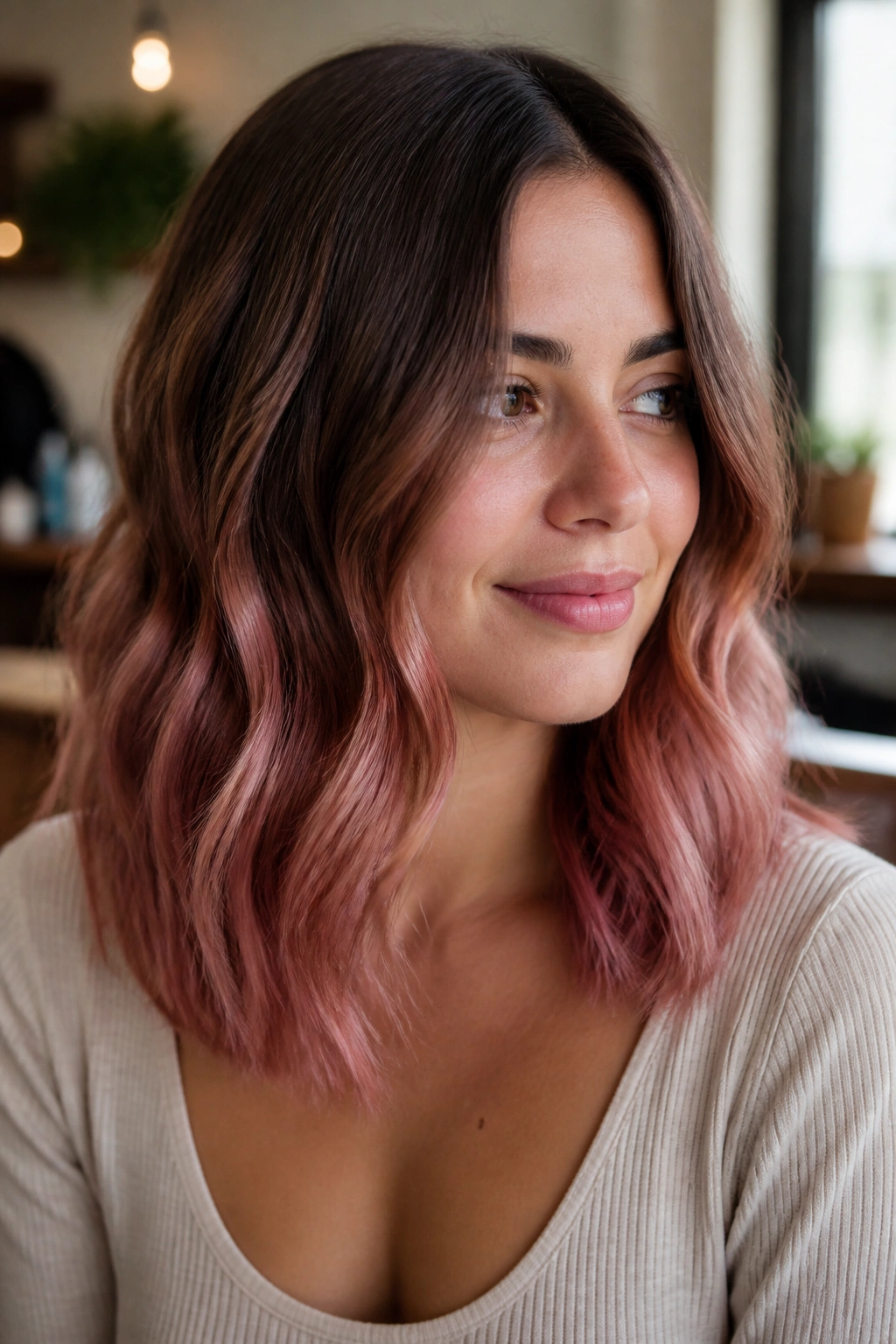
Mocha to rose gold is the prettiest soft-color ombre for medium hair when you want something playful but not childish. The mocha base keeps it grounded, and the rose gold ends add a blushy shine that feels warmer than pink and less sweet than peach.
Medium hair gives the rose gold enough space to show its shift. On longer hair, this color can start to drift soft and vague. On a lob, it stays visible. That is the difference.
If your base is dark brown, the rose gold will read more like a copper-pink gloss. If your base is lighter, it can go a little champagne-pink. Either way, ask for a gentle hand with the lightener. Rose gold looks better when the ends still have some warmth underneath.
9. Beige Blonde with Soft Root Shadow

Can blonde ombre look expensive on medium hair without a harsh line? Yes. The answer is a soft root shadow, and beige blonde is the shade that makes it work.
How to keep the fade soft
The root shadow should not look painted on. It should melt into the mid-lengths like the color was always meant to be there. That is what keeps medium hair from looking choppy at the part line.
A beige blonde finish is cleaner than a flat yellow blonde, and it buys you extra time between appointments. The darker root also gives the haircut more shape, which is useful if your hair is one length or only lightly layered. Keep the blonde beige, not white, unless you want a brighter, more high-maintenance result.
I like this on shoulder-length cuts with a middle part. It reads calm. A little luxe. Not loud.
10. Silver Ash Ombre on Cool Brunette
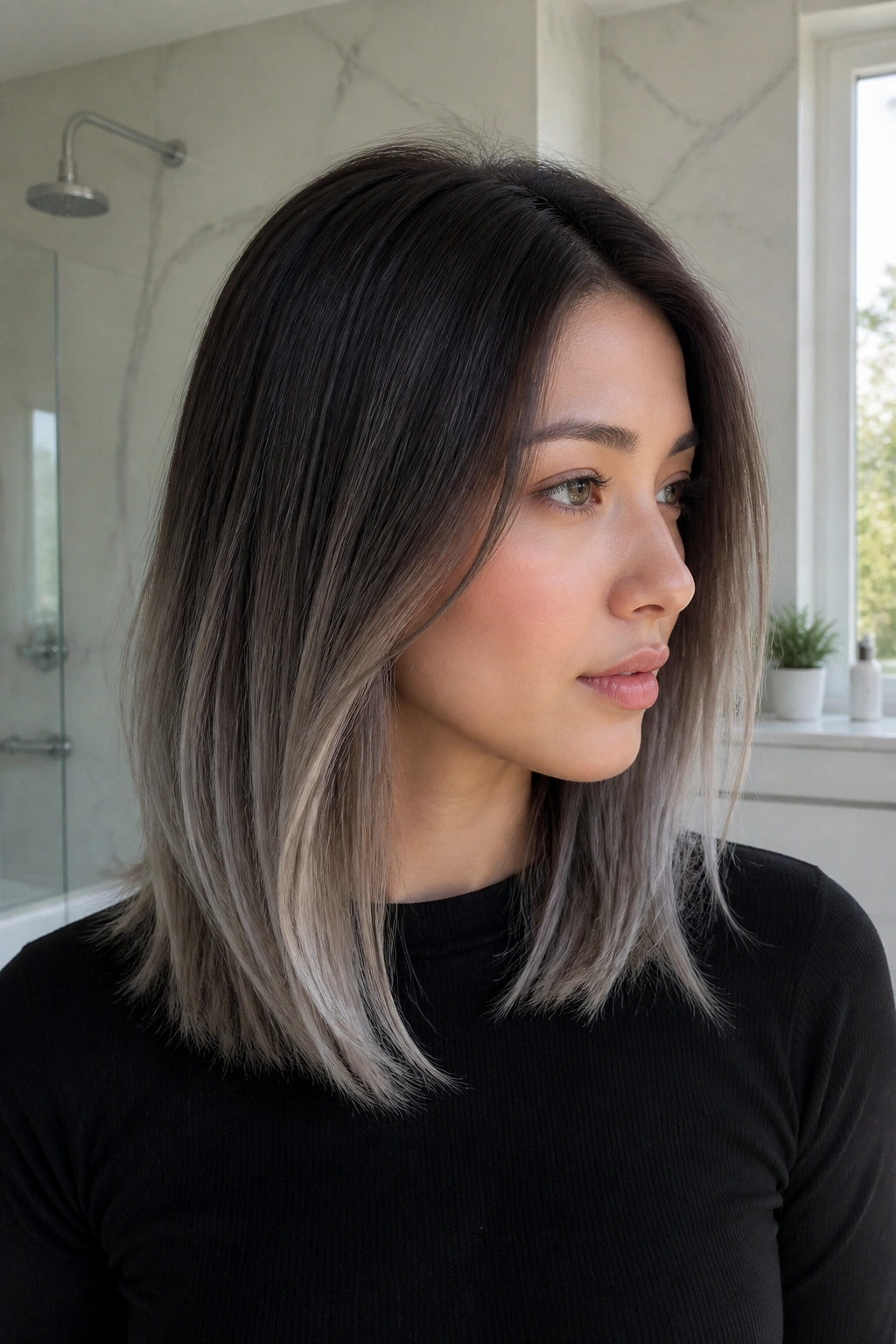
Stand in a bright bathroom mirror and this shade makes sense immediately. Silver ash shows every cool undertone, so it looks sharp on a brunette base that already leans smoky or neutral.
A medium-length cut is important here because the silver needs enough room to show the shift from dark brown to muted metallic. Too short, and it can look abrupt. Too long, and the silver can start to lose its crisp edge. Medium hair lands in the middle, which is where it shines.
- Keep the root cool, not black.
- Let the silver live in the last third of the hair.
- Use a toning mask every few washes if brass creeps in.
- Straight styles make the gradient look sharper.
One caution: silver ash is picky. If your base is warm, this needs a stronger neutralization step or it can go muddy.
11. Red Velvet to Auburn Fade
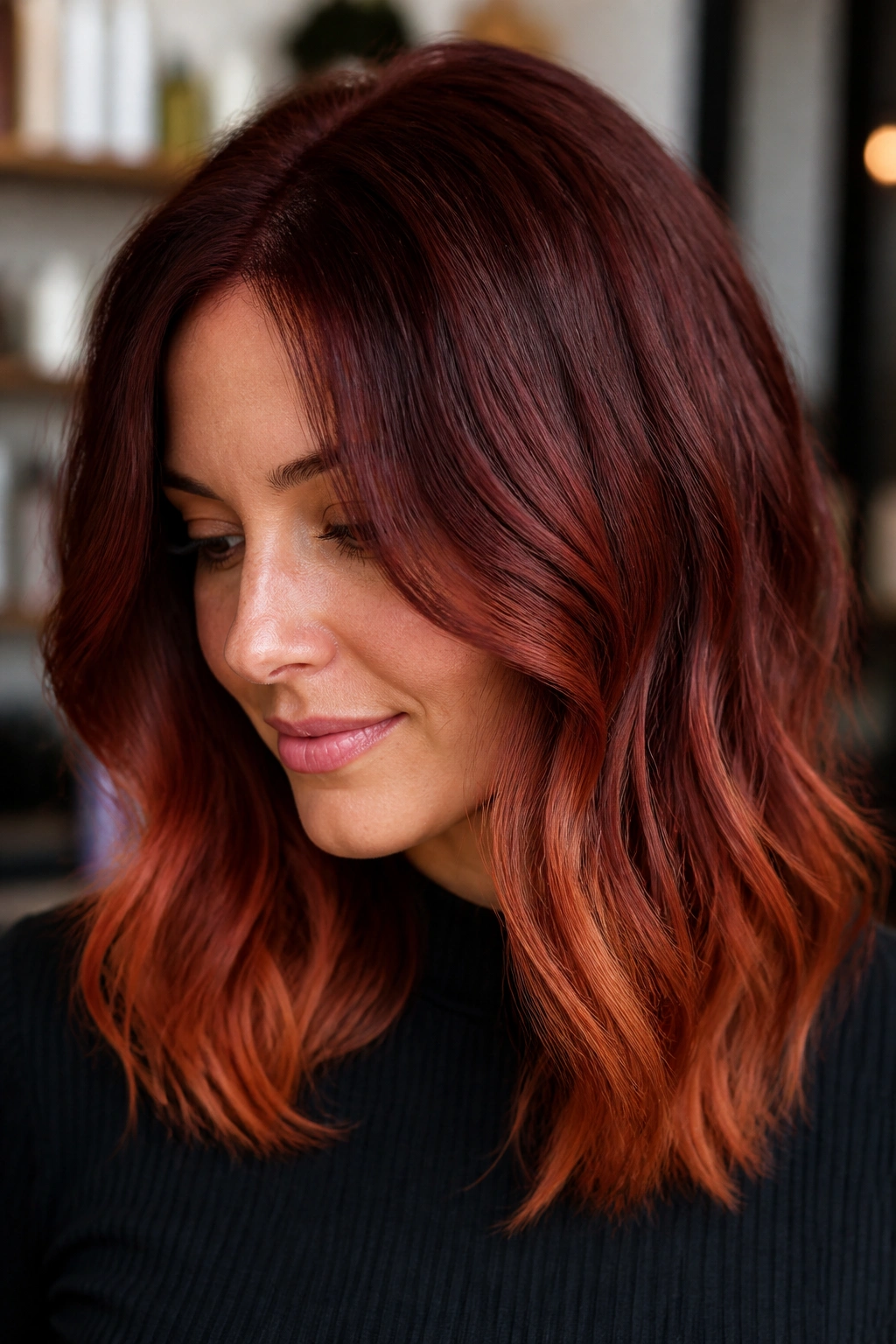
Red velvet into auburn has a plush, almost fabric-like feel on medium hair. The darker red at the top gives depth, and the auburn ends catch light without sliding into neon territory.
It is one of the few red ombres that looks rich even when the hair is not freshly styled. That is because the auburn keeps the ends warm enough to reflect light, but not so bright that every imperfection shows. Medium hair helps the transition feel smooth, especially if the cut has soft layers near the jaw.
Reds fade faster than browns, and there is no getting around that. Color-safe shampoo helps, yes, but the real trick is cooler water, fewer washes, and a gloss refresh when the shine starts to flatten. Skip this shade if you do not want to babysit it a bit.
12. Smoky Beige Balayage Ombre
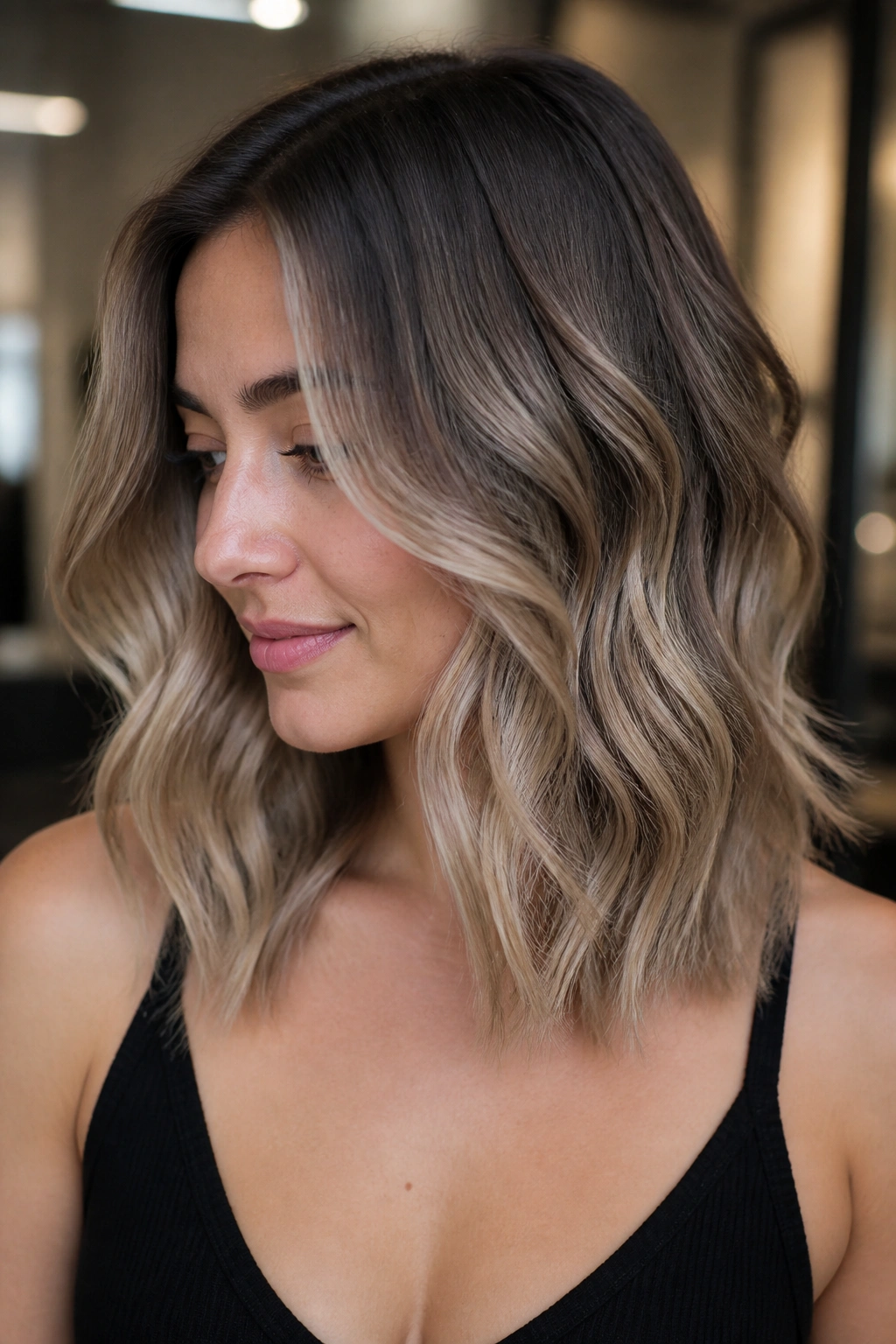
This one is for the person who likes dimension more than drama. Smoky beige balayage ombre sits between brunette and blonde without making you choose sides.
It works better than a flat beige dye job because the hand-painted ribbons keep the medium-length cut moving. On a lob, that motion matters. The light catches the ends, then slips back into the smoky root, so the color never feels stuck in one note.
This is also a nice fix if you want a softer grow-out. Ask for beige ribbons starting around the cheekbone area and keep the bottom third a touch lighter. If the colorist puts too much beige at the scalp, you lose the depth that makes this shade look good in the first place.
13. Rooted Platinum on Medium Hair
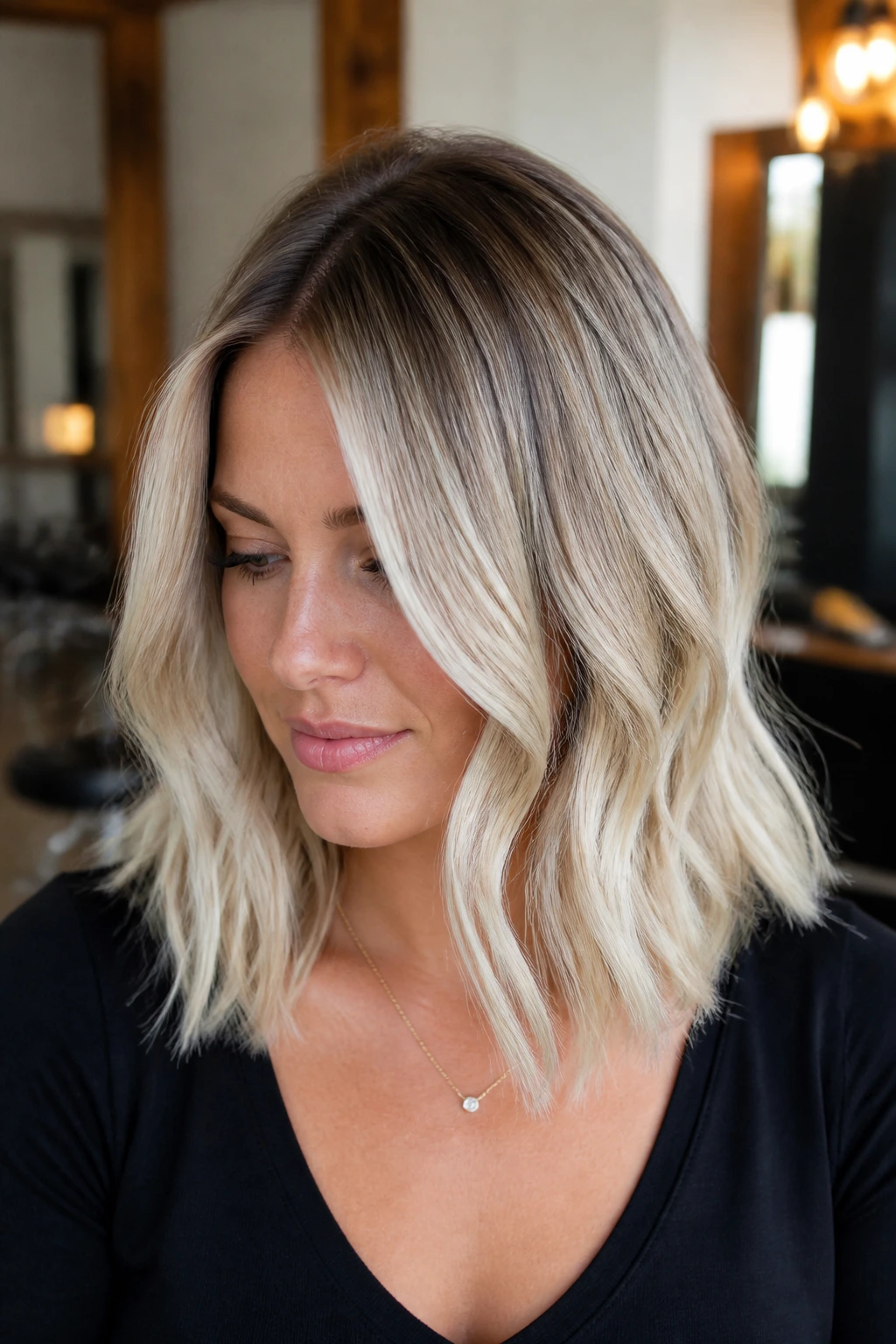
Rooted platinum is the blonde version that doesn’t look like you fought a bottle of bleach and lost. The darker root is the safety valve. It gives medium hair a place to rest while the platinum ends do the flashy part.
Why the root matters
A root shadow that is one to two levels deeper than the platinum keeps the grow-out from looking harsh. It also makes the face look less washed out, which people notice more than they expect.
- Keep the platinum through the lower half, not all the way to the scalp.
- Ask for a soft smudge at the root line.
- Use a bond-building treatment if your hair feels stretched after lightening.
- Pair it with waves if you want the dimension to read better.
This is not a low-effort color. It is a strong look, and it asks for care. But on medium hair, it avoids the stretched, dry look that platinum can get on longer lengths.
14. Toffee Ribbon Ombre
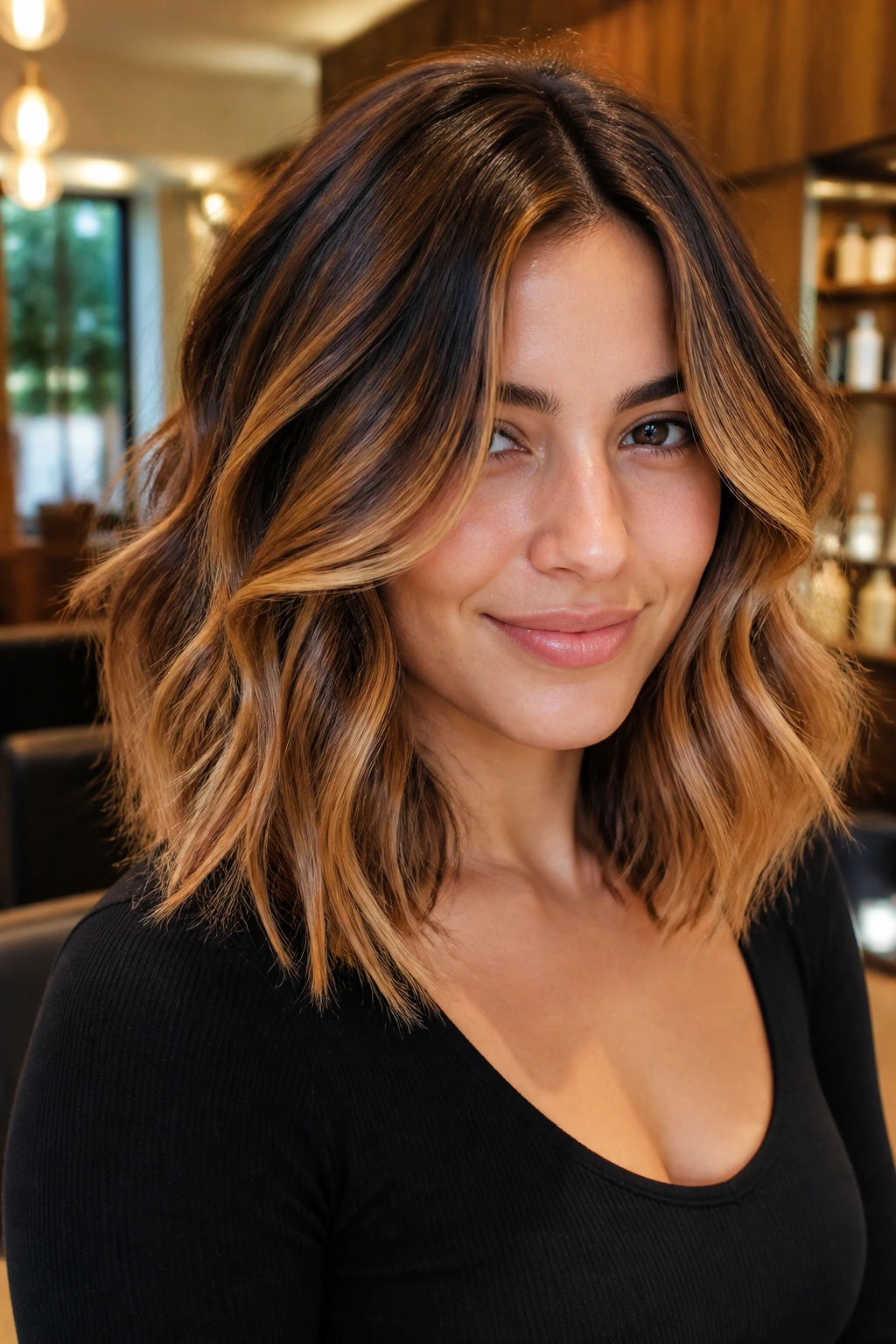
Toffee ribbon ombre is what happens when you want warmth, shine, and movement in one pass. The ribbons thread through medium hair instead of sitting in one heavy block, which keeps the fade airy.
That ribboning is the point. Toffee is lighter than caramel and deeper than honey, so it gives you a middle lane that flatters most brunette bases. On medium hair, the color looks especially good with soft bends rather than tight curls. The ribbons fall into the wave pattern and make the hair look thicker.
If your cut is blunt at the bottom, ask for a few brighter ribbons around the front so the ends do not look too heavy. If your hair is layered, the toffee can spread more naturally through the shape. Either way, it is one of those shades that looks polished without acting like it tried too hard.
15. Espresso to Golden Bronze

Why does espresso to golden bronze work so well on a shoulder-length cut? Because the bronze has enough warmth to show, but the espresso root keeps the whole thing from turning overly sunny.
How to wear it
Golden bronze is prettier when the ends still hold some brown in them. That brown is what keeps the color from going flat. On medium hair, the shift usually starts around the mid-lengths and finishes with a warm metallic glow at the bottom.
A slight wave makes the bronze catch light in a broken pattern, which is far nicer than one solid stripe of color. If your hair is thick, this shade can look rich and expensive. If your hair is fine, the bronze adds the illusion of density near the ends.
I’d choose this over a brighter blonde if you want warmth that feels grown-up. There is less bleach, less glare, and more depth.
16. Plum to Berry Ombré

Plum into berry is a deep, moody ombre that feels almost plush on medium hair. The plum root keeps it grounded, while the berry ends add a sharper, fruitier hit of color.
The best part is the way it changes in different light. Indoors, it reads like a dark wine shade. Outside, the berry flashes more clearly. Medium hair makes that shift easy to see without requiring a long curtain of hair to carry it.
- Keep the plum at the crown rich and low-gloss.
- Let the berry brighten from the ear level down.
- A violet gloss helps the red tones stay clean.
- Loose texture shows the color changes better than a sleek straight finish.
This is a strong choice if you like color that feels a little mysterious. It is not shy.
17. Sand Blonde on a Dark Blonde Base
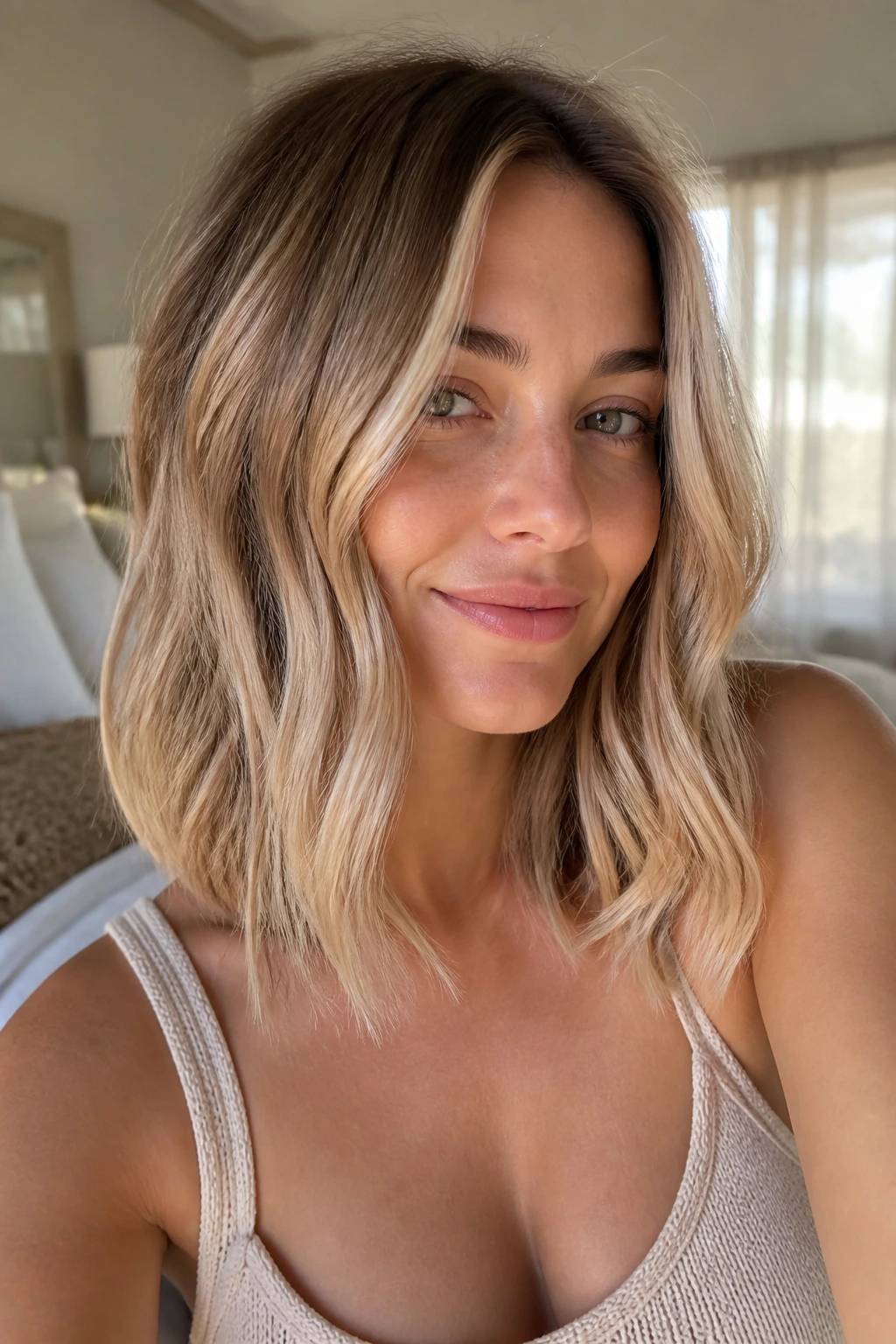
Sand blonde is the quiet one in the room, and that is exactly why it works. On a dark blonde base, the shift is gentle enough to feel natural, but still obvious enough to make medium hair look lighter at the ends.
The tone sits between beige and pale gold, which keeps it from turning chalky. That matters. Sand blonde can go flat if it gets too cool, so a touch of warmth at the very ends keeps the color alive. Medium hair handles this beautifully because the shorter length prevents the blonde from looking stringy.
I like this on people who already have a soft natural wave. The movement gives the blend shape. Straight hair can wear it too, but the color reads softer when the cut has a little bend.
18. Smoky Beige with Curtain Bangs

Compared with a blunt fringe, curtain bangs soften the whole ombre immediately. That is why smoky beige and curtain bangs make such a good pair on medium hair. The bangs pull the eye upward, then the beige fade drifts down the sides.
This is one of the more flattering choices if you want your hair color to look expensive without a lot of contrast. The smoky beige stays muted, which lets the bangs do the framing instead of fighting for attention. Ask for brighter pieces just beside the bangs and keep the rest of the fade lower and calmer.
Medium-length cuts with curtain bangs can look very polished, but only if the ombre does not start too high. If the lightening begins too close to the roots, the bangs lose their soft shape. Give the color room.
19. Soft Peach Ombre
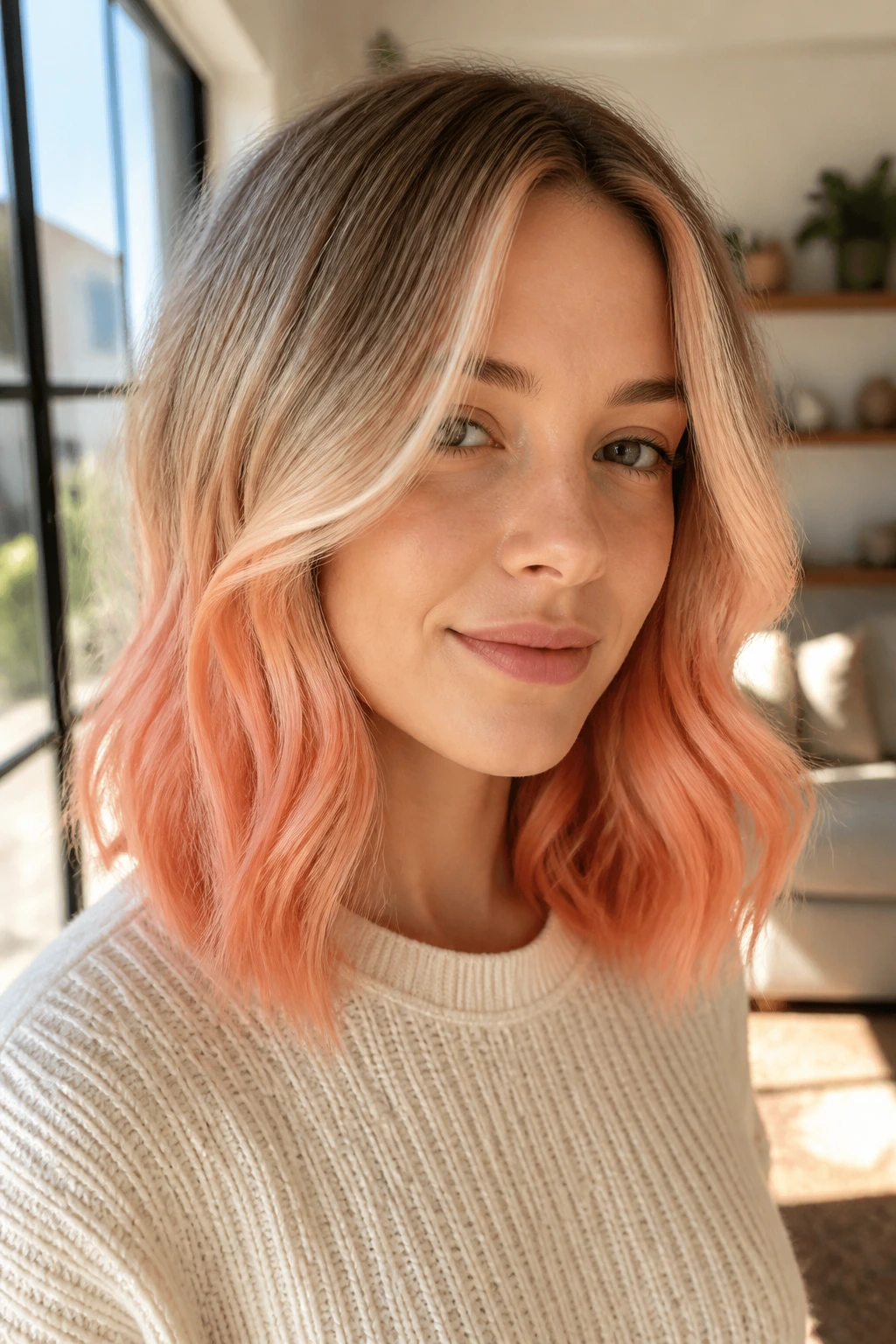
Soft peach is the pastel shade for people who usually say they do not wear pastel shades. On medium hair, it looks playful but not sugary, especially if the base stays beige blonde or light brown.
The trick is the undertone
Peach needs warmth under it. If the base is too pale and cool, the color can turn washed out fast. A slightly creamy root keeps the peach looking full and juicy instead of dusty.
- Start the peach through the lower mid-lengths.
- Keep the top section soft and neutral.
- Use a color-depositing conditioner if the peach fades fast.
- Loose waves help the color look more blended.
This shade is a little more high-maintenance than brown ombre, but it pays off in personality. It looks bright without feeling neon. That balance is rare.
20. Reverse Ombre with Dark Ends
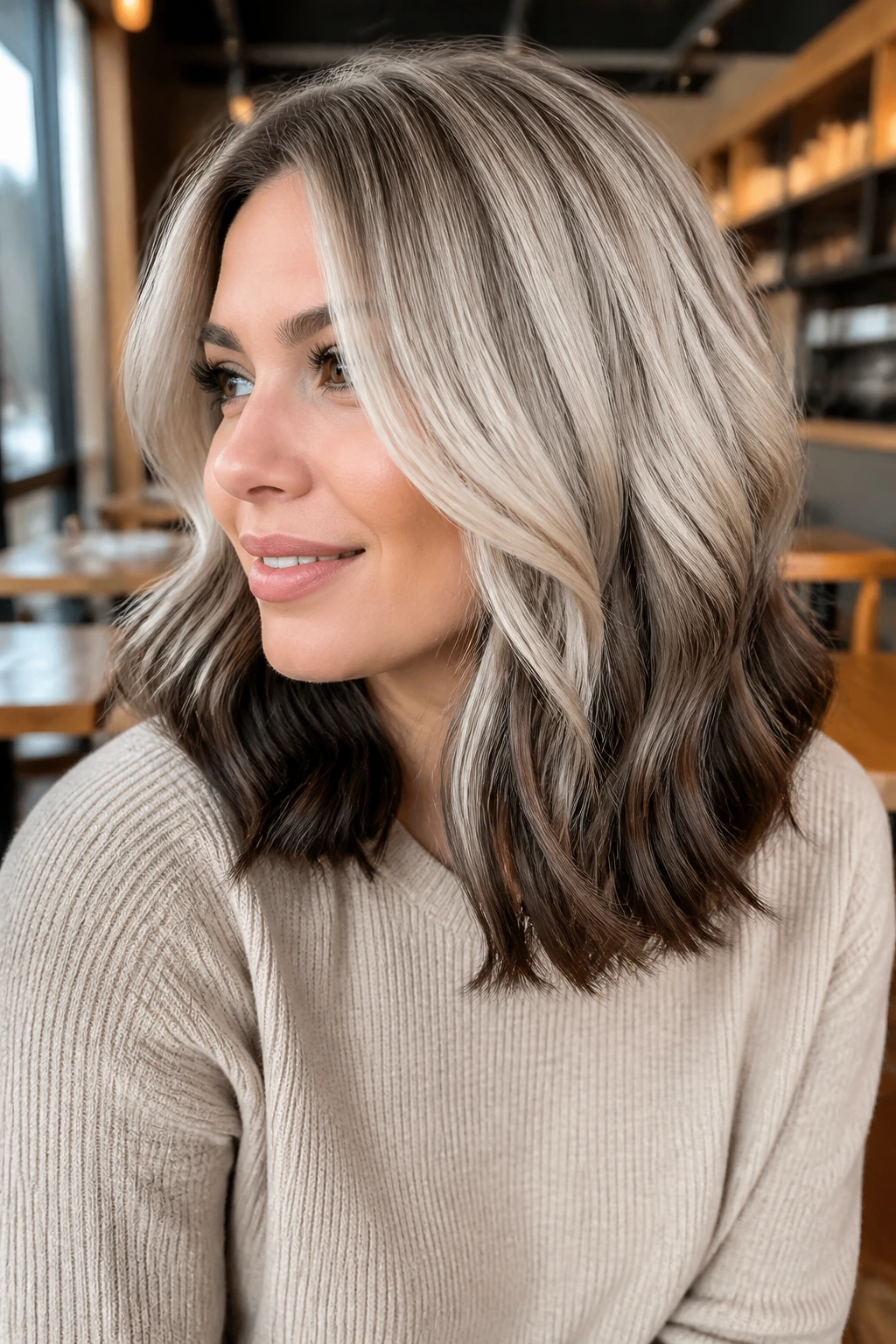
Most ombre ideas brighten the ends. This one flips the script. A reverse ombre with dark ends gives medium hair a stronger shape, especially if you want the top brighter and the bottom a little heavier.
It works because medium length can hold contrast without getting tangled in itself. Light roots and a deeper lower half create an unusual, graphic look that still feels wearable if the transition is soft. The cut needs movement, though. One-length hair can make it look blocky.
This is the kind of color that suits people who like a little edge but do not want fantasy color screaming from every angle. It also looks good with tucked-behind-the-ear styling, because the darker ends frame the jaw in a neat way. A gloss matters here. Without it, the bottom can look dry.
21. Mushroom Brown with Dimensional Ends
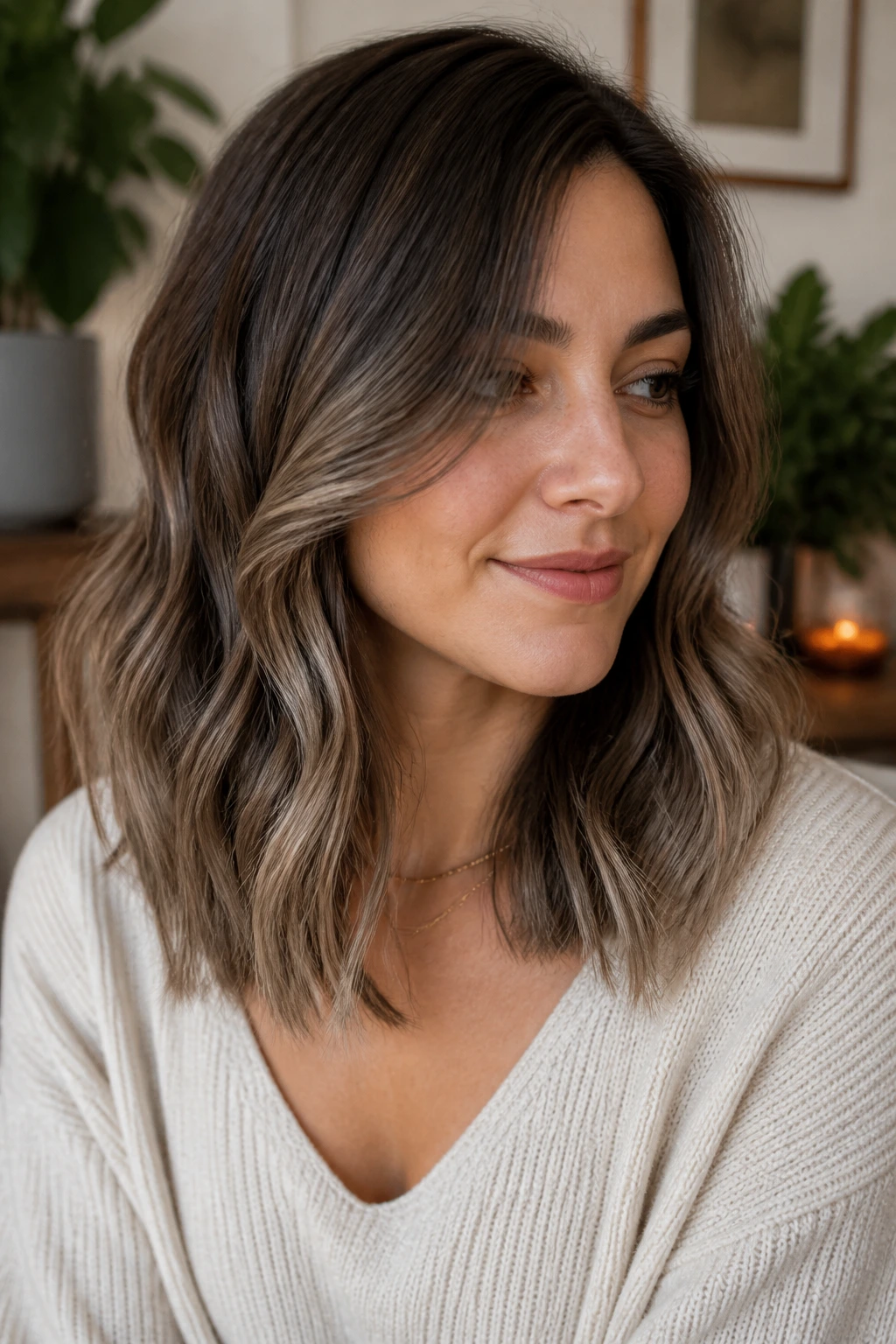
Why do mushroom browns look so good on medium hair? Because the cool taupe-brown base gives the cut depth, and the dimensional ends keep it from looking like one flat block of beige.
What makes it different
Mushroom brown sits in a gray-brown zone that is easy to wear and surprisingly forgiving. On medium hair, the color shift is subtle enough for everyday life, but the lighter ends still catch enough light to show movement.
Ask for soft micro-lights at the ends rather than big sections of blonde. That keeps the effect airy. If your hair is thick, the dimension prevents the lower half from feeling heavy. If your hair is finer, it adds a little visual weight without making the color loud.
I like this shade because it looks thoughtful without looking precious. That is a better compliment than it sounds.
22. Latte Ombre with Money Piece
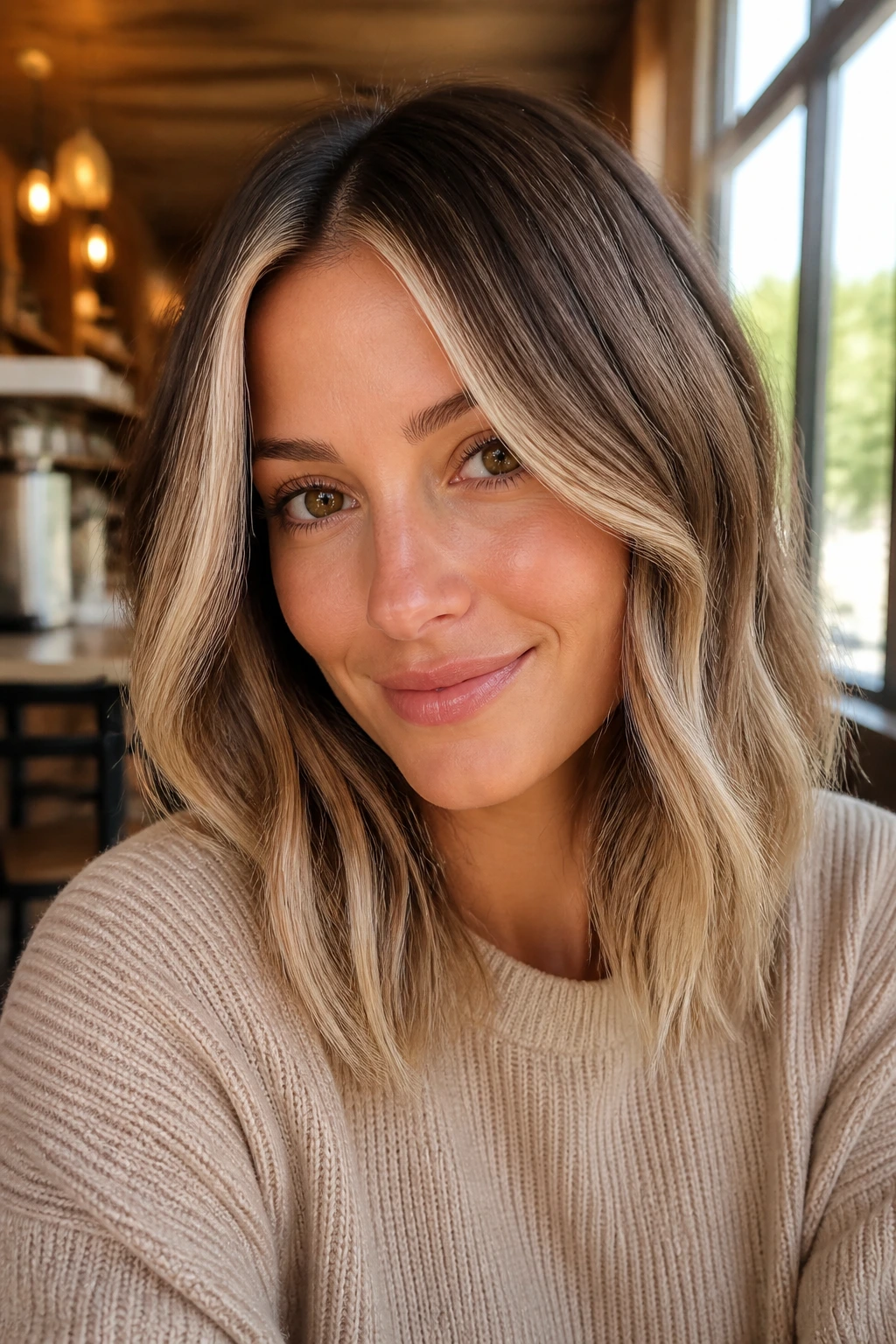
A latte ombre with a money piece is the shortcut to brightness around the face without bleaching every strand. The latte base stays creamy and soft, and the front pieces get a little more lift so the whole style wakes up.
The money piece should not be too wide. On medium hair, a skinny bright section around the cheekbone and temple is enough. Too much and the contrast starts to fight the rest of the fade. Keep the lower half latte-beige, not yellow, and the color will feel smooth.
- Ask for a brighter front frame and softer ends.
- Keep the back a shade deeper for balance.
- Use a round brush or blowout to show the face-framing lift.
- A center part gives the cleanest line, but a side part adds more drama.
This is a strong salon choice if you want visible change without going full blonde.
23. Cherry Cola Ombre
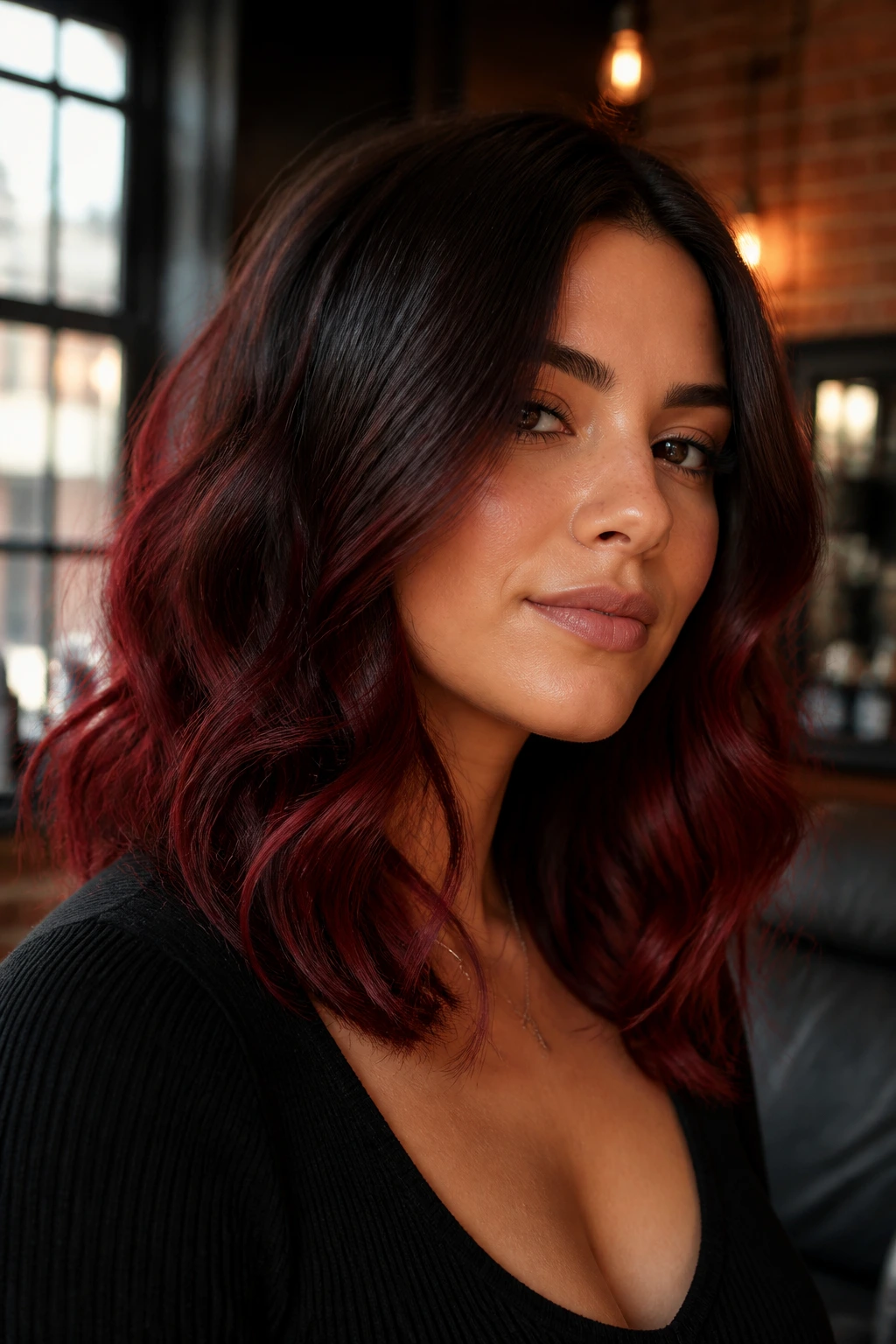
Cherry cola has depth, shine, and a little attitude. On medium hair, the dark brunette base keeps it grounded while the cherry-red ends give the color a syrupy glow that looks rich in low light.
It is not a shy red. That is the point. The cola-brown undertone keeps the red from looking cartoonish, so the shade feels adult even when it is bold. Medium hair gives the color enough surface area to show, but not so much that it becomes heavy.
It looks plush. That is the word I keep coming back to. A smooth blowout makes the cherry tone feel extra glossy, while a wave gives it more depth. If you like red but hate loud neon tones, cherry cola is worth a serious look.
24. Pearl Blonde on Medium Brown Hair
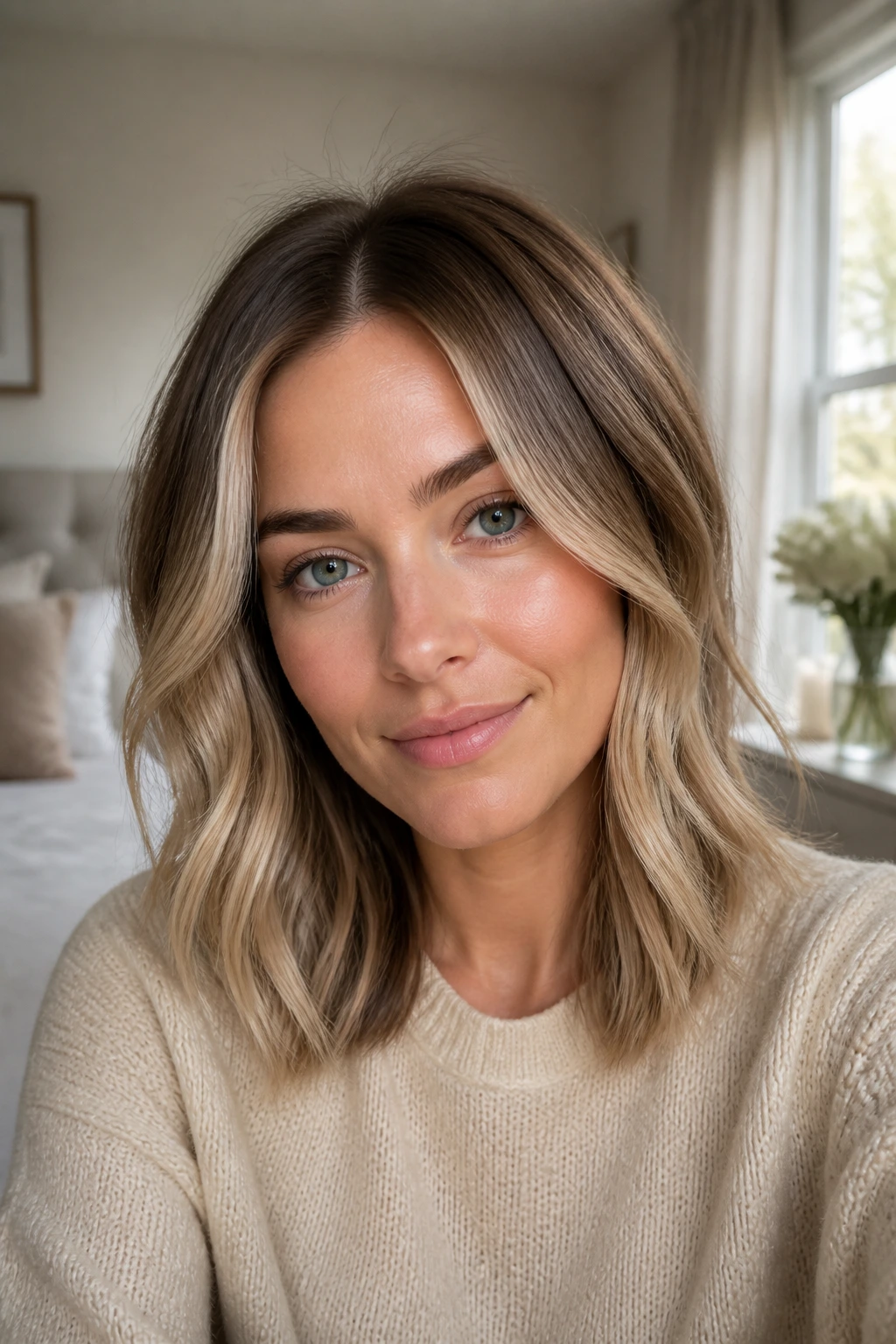
Compared with icy platinum, pearl blonde is softer, creamier, and easier to live with on medium hair. It keeps the brightness, but swaps the blinding finish for a pale shimmer that works with a medium brown base.
That difference matters. Pearl blonde catches light in a smoother way, so the fade looks elegant instead of brittle. It is also kinder to shoulder-length cuts because the lower half of the hair still needs some body. When the ends are too white, they can look thin. Pearl keeps some fullness in view.
This is a good pick if you wear jewelry in silver, white gold, or mixed metals. The cooler finish lines up with those tones nicely. It can go flat if the toner gets too ashy, though, so a beige-soft glaze now and then keeps it from turning dull.
25. Golden Peach Balayage Ombre

Golden peach balayage ombre sits in a sweet middle ground. It has more warmth than beige blonde, but it is softer than copper. On medium hair, that makes it easy to wear and hard to mess up.
Placement makes the color
The peach should live in the hand-painted pieces, not blanket the whole lower half. That keeps the look airy. A few brighter slices around the front, then softer golden peach through the rest, will make the hair read dimensional instead of painted.
- Keep the root soft brown or dark blonde.
- Let the peach brighten near the front.
- Ask for a warm glaze if the color leans too pale.
- Waves or a loose blowout help the peach show through.
I like this for anyone who wants something cheerful without going into full pastel mode. It has lift. It has shine. It does not shout.
26. Smoky Sapphire Ombre
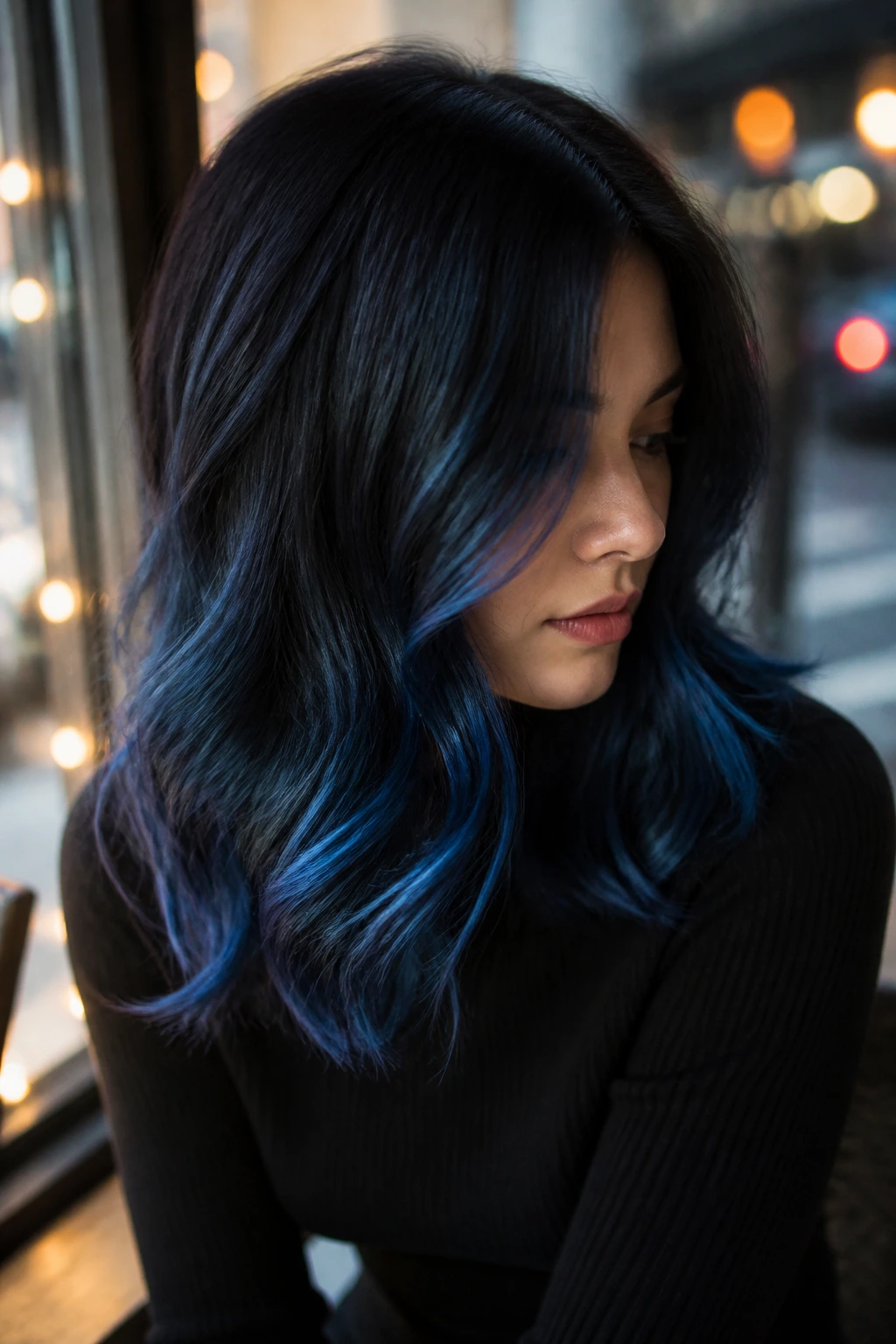
Smoky sapphire is the boldest choice here, and that is exactly why it looks so good on medium hair. The dark blue-black top melts into a muted sapphire finish at the ends, so the color feels moody instead of costume-like.
Medium length is the right canvas for it because the change happens fast enough to stay visible. On very long hair, blue ombre can start to sprawl. On medium hair, the sapphire lands right where the eye wants it: around the mid-lengths and bottom edge.
This shade works best if you like cool makeup, black eyeliner, silver hoops, or dark denim. It leans editorial without needing a full fantasy-color commitment. Keep the shine high. Matte blue can look flat, while a glossy finish makes the sapphire look deep and dense.
27. Milk Tea Ombre
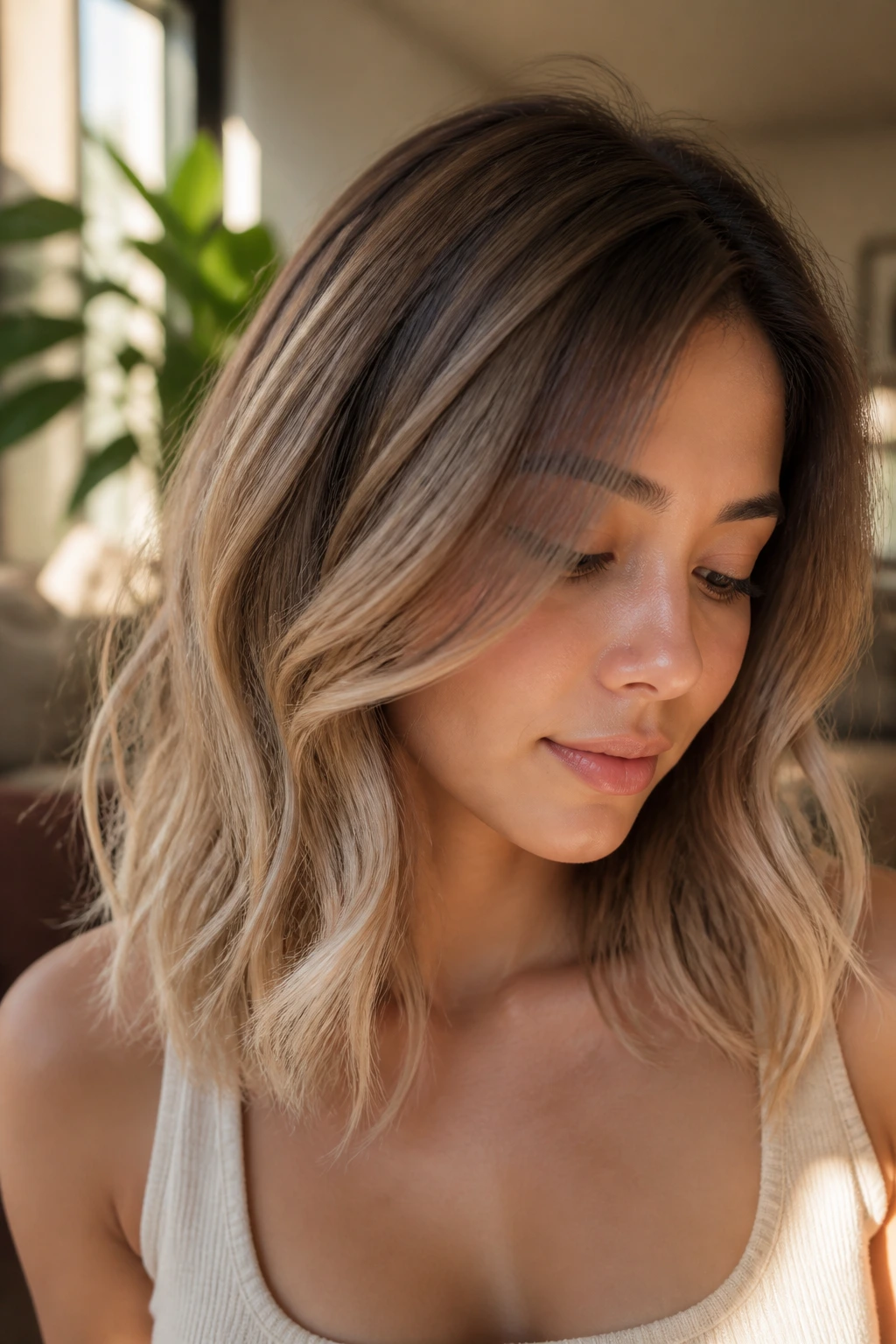
Why is milk tea such a good ombre shade for medium hair? Because it gives you warmth, beige softness, and a little lightness without pushing into obvious blonde. That makes the grow-out calmer and the overall look easier to wear.
Best way to wear it
Milk tea is usually a creamy brown-beige blend, so the color needs to stay soft at the root and slightly lighter through the ends. On a shoulder-length cut, that balance helps the hair look smooth and plush.
If your natural color is medium brown, milk tea is a nice way to lift the whole look without making the ends fragile. If your hair is already light brown, the result can feel almost satin-like. A subtle wave shows the dimension better than stick-straight hair, which can flatten the beige tones.
This is the shade for people who want quiet color that still feels finished. It does the job without making a scene.
28. Warm Brown to Butterscotch
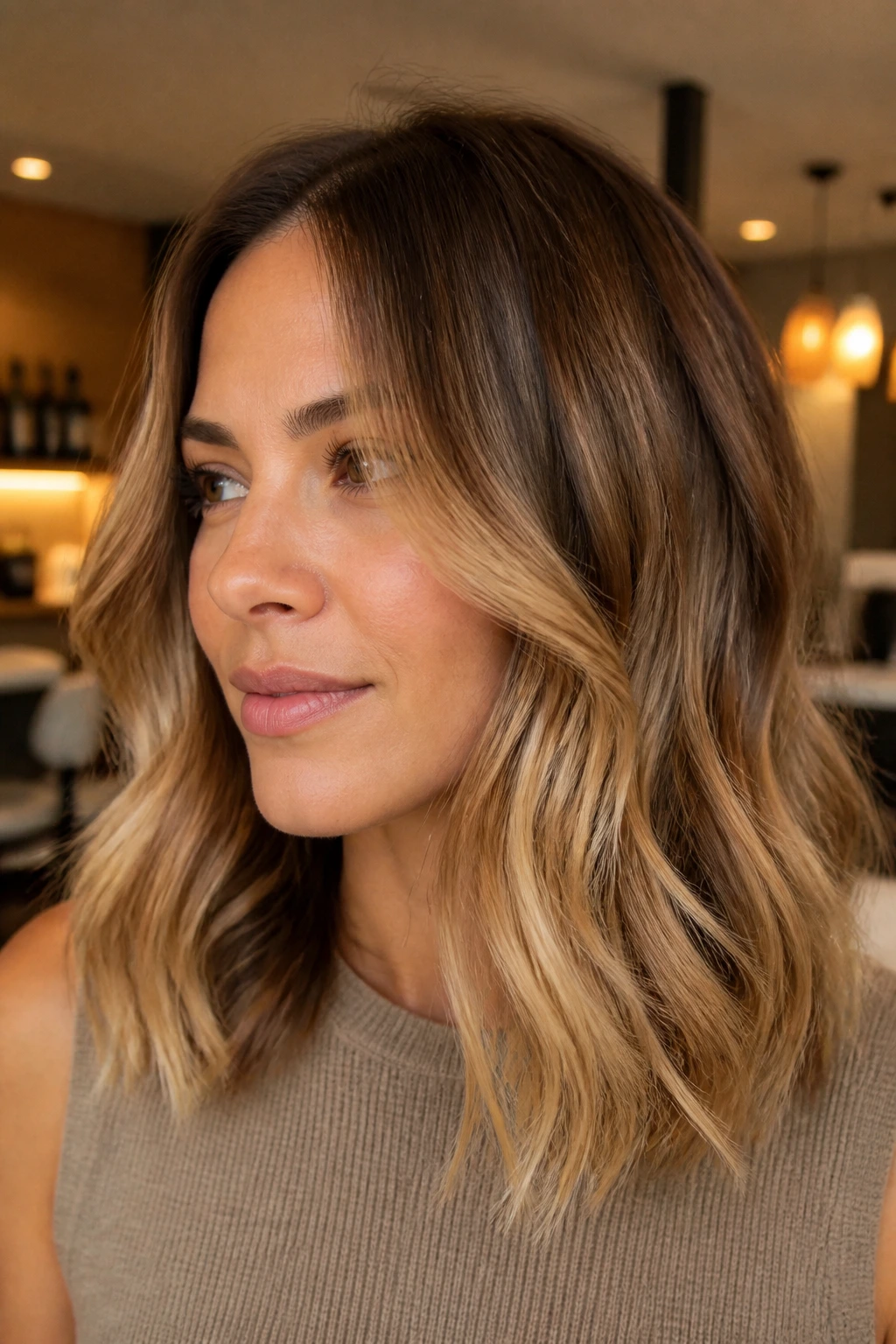
A warm brown-to-butterscotch ombre has one job: make medium hair look soft, glossy, and touchable. The brown gives the top half structure, and the butterscotch ends bring a richer gold that feels warmer than blonde.
The key is not to over-lighten the bottom. Butterscotch should stay creamy, almost dessert-like, not yellow. That keeps the color looking luxurious instead of brassy. Medium hair is ideal because the ends are visible enough for the warm tone to matter, but the cut is not so long that the lightness starts to look thin.
- Keep the transition around the jaw-to-collarbone zone.
- Ask for a creamy gold toner, not a pale ash toner.
- Use soft layers if you want the butterscotch to move more.
- A blowout makes this color look especially rich.
This one has a friendly, polished feel. It is warm without being loud.
29. Midnight Blue Ombre
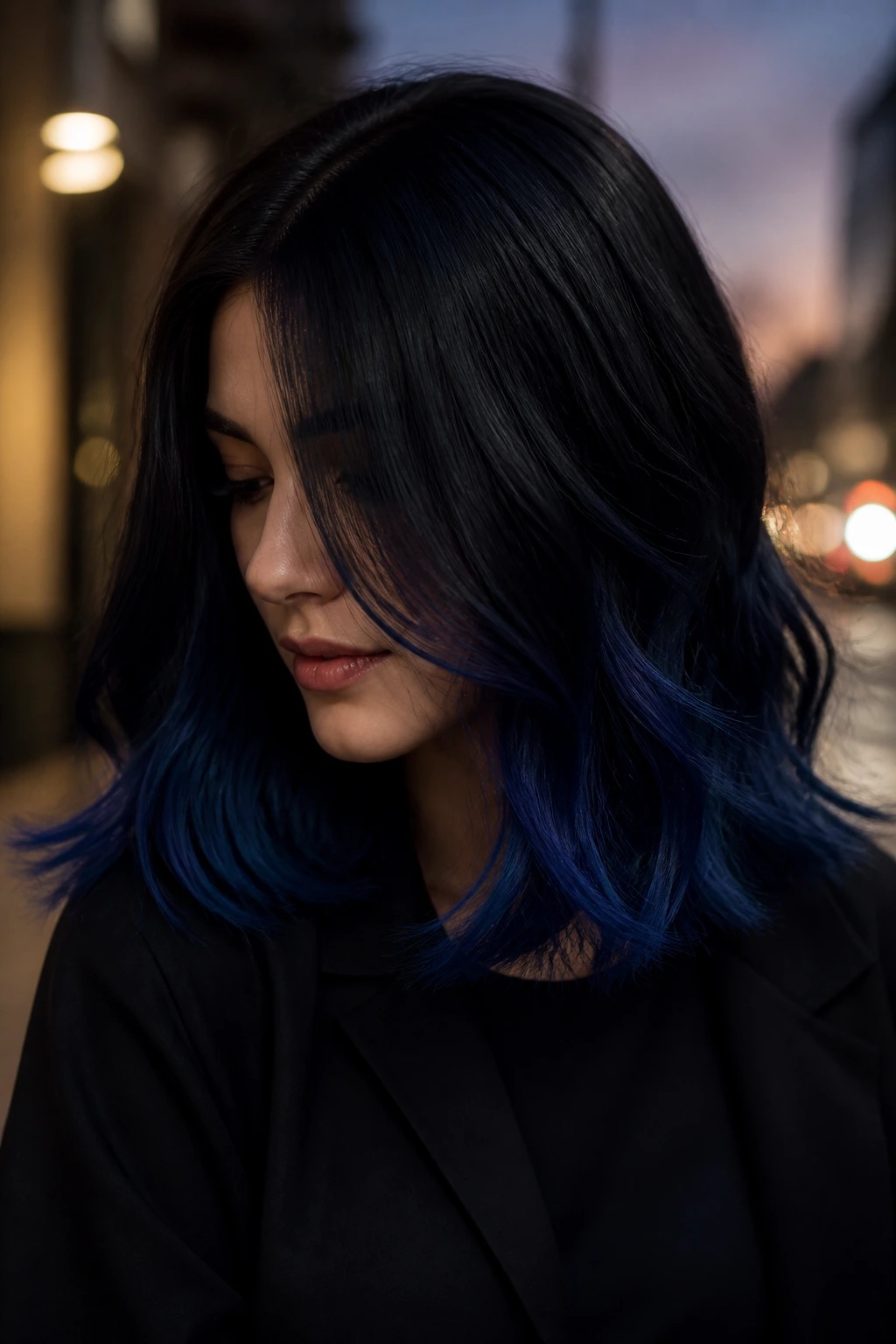
Midnight blue is for people who want dark hair with a hidden edge. On medium hair, the near-black root makes the blue ends feel richer, because the contrast shows up fast enough to matter but not so fast that it feels harsh.
The shade works best when the blue is deep and almost navy. Bright cobalt can take over. Midnight blue keeps the color moody, which means it plays nicely with shoulder-length cuts and straight, sleek styling. A soft bend at the ends can reveal the blue more clearly, while a blunt finish makes it look almost black until the light hits it.
This is one of those colors that looks different every time you turn your head. In daylight, the blue shows. Indoors, it pulls back. That little shift is half the appeal.
30. Grown-Out Beige Blonde Ombre
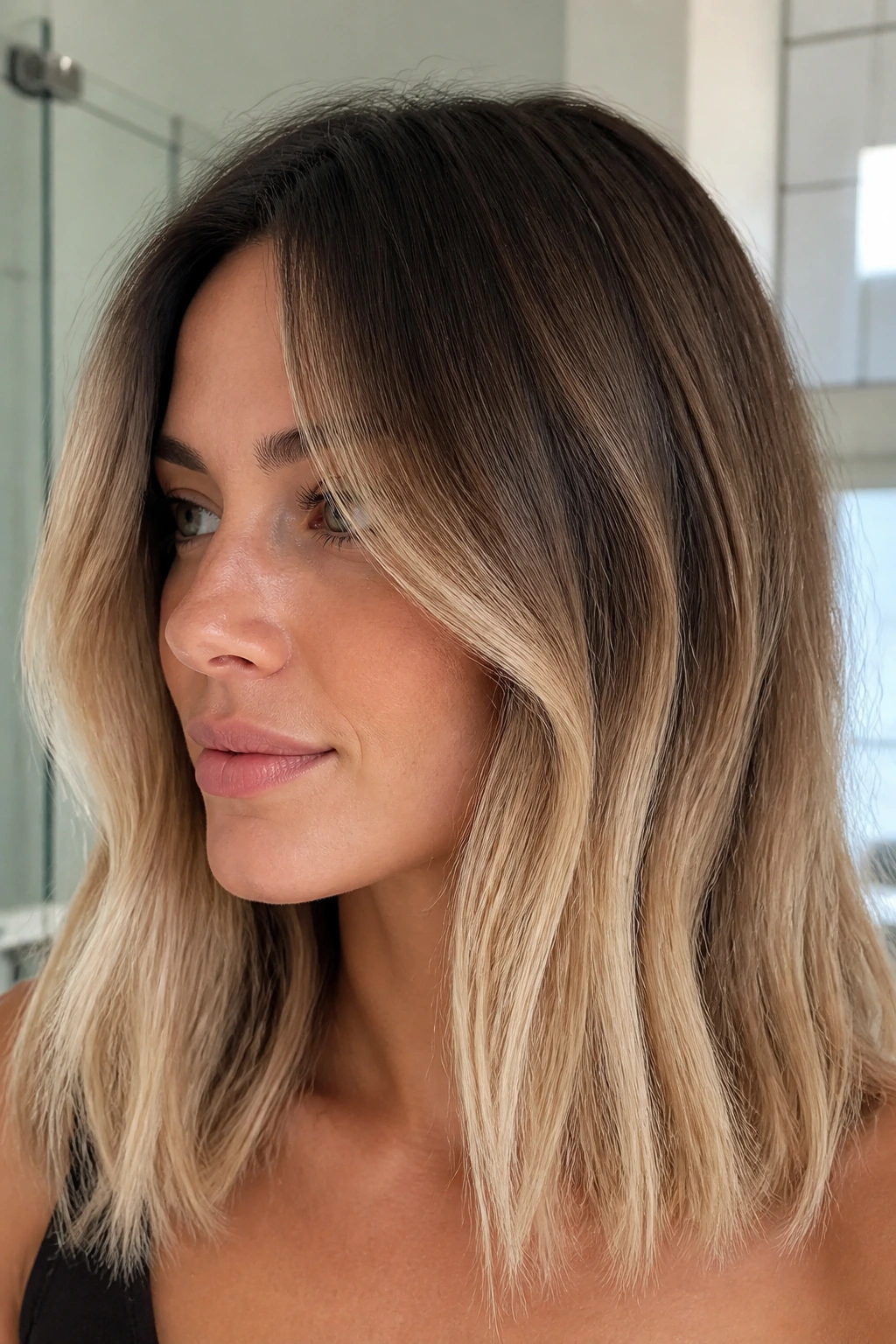
A grown-out beige blonde ombre is the low-maintenance finish I keep coming back to. It gives medium hair brightness where it matters, but the root stays soft enough that the grow-out looks like part of the plan.
The beige tone is what saves it. Pure blonde can look harsh as it fades, while beige keeps the whole thing calm for longer. On medium hair, that matters because the cut already has less length to carry a dramatic shift. The result should feel airy at the ends and shadowed at the crown.
If you want color that still looks decent several weeks after the salon, this is the one I’d circle first. It is not the flashiest idea here. It may be the smartest.
