



Chunky blonde highlights on dark hair are not subtle, and that is the point. When the blonde is wide enough to read from across the room, the haircut gets more shape, the waves look fuller, and even a plain T-shirt starts feeling deliberate.
Dark bases also make the contrast do a lot of heavy lifting. A few chunky foils can wake up flat brunette hair in a way that a scatter of tiny lights never quite manages. The catch is simple: dark hair reveals warmth fast. If the lift stops too early, you get orange or yellow in all the wrong places, and the whole thing can start looking muddy instead of clean.
That is why placement matters just as much as tone. A wide money piece near the face, a couple of panels through the crown, or a hidden blonde slice underneath can each create a totally different mood, even when the same color is used. I love that part of this look. It gives you room to be loud, but also room to be selective.
The strongest versions of chunky blonde highlights on dark hair usually have one thing in common: they look planned. Not scattered. Not overworked. Planned.
1. Thick Money Piece That Frames the Face

A thick money piece is the fastest way to make dark hair look brighter without committing to a full head of highlights. Two bold blonde sections at the front can change the whole face shape, especially when the rest of the hair stays deep and glossy.
This version works because the eye goes straight to the brightest area first. That means the blonde does not have to be pale platinum to do its job. A beige blonde, neutral blonde, or soft pearl tone can still pop hard against espresso or dark brown hair if the front sections are wide enough. I’d rather see one clean, confident money piece than six skinny streaks trying to act busy.
Placement makes or breaks it. If the front pieces start too high, the color can look harsh at the scalp. If they start too low, the effect disappears once the hair is styled. The sweet spot is usually around the temple and cheekbone area, where the blonde can fold into waves or a blowout and still feel intentional.
A good version of this style looks especially nice with loose bends, a deep side part, or a blow-dried swoop away from the face. It has that bright, edited look people ask about at first glance.
2. Wide Platinum Ribbons Through Long Layers

Platinum ribbons on dark hair are not for the shy, and I mean that in a good way. When long layers carry wide blonde panels from root to mid-length, the hair stops reading as one block of color and starts looking carved out by light.
Why the Width Matters
Skinny highlights can disappear inside dense dark hair. Wide sections do the opposite. They create visible stripes of brightness that hold up when the hair moves, which is exactly why they work so well on longer layers.
This style usually looks strongest when the blonde is kept cool or neutral after lifting. Platinum can go icy if the toner is too strong, but a clean beige-platinum finish stays sharper against dark brunette hair. It is a high-contrast look, so the haircut matters too. Layers give the blonde somewhere to live.
What to Ask For
- Foils or slices that are roughly 1/2 inch to 1 inch wide.
- Bright pieces placed through the front, crown, and upper sides.
- A toner that keeps the blonde cool enough to look clean, not chalky.
- Longer dark sections left in between so the contrast stays obvious.
This is not the look for someone who wants low drama. It is big, graphic, and built to be seen. On long hair, though, it can look expensive in a very blunt, very satisfying way.
3. Beige Panels on a Shoulder-Length Bob
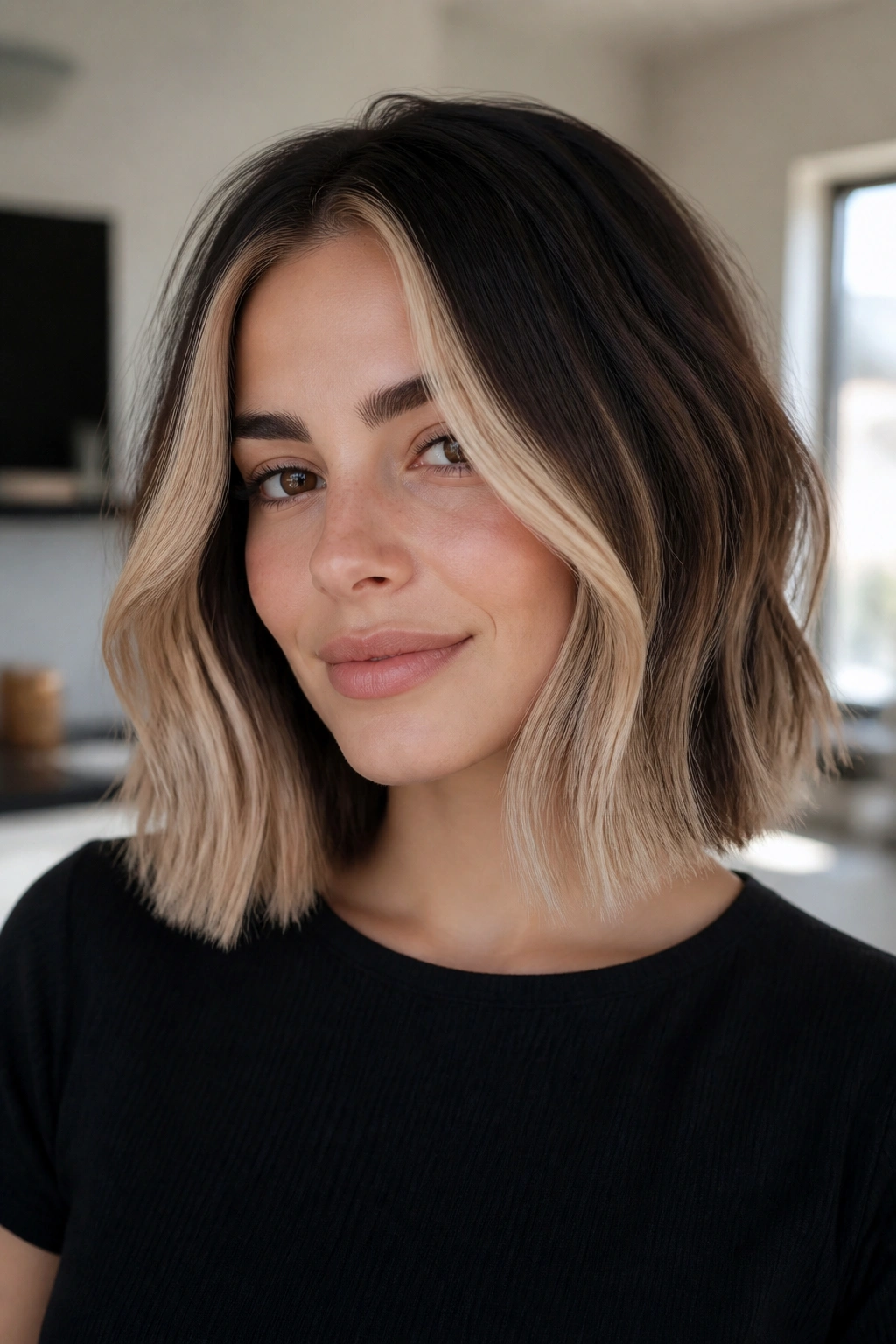
Can a bob handle chunky blonde highlights? Absolutely. In fact, a bob sometimes wears them better than longer hair because there is less length for the color to get lost in.
A shoulder-length cut with beige blonde panels feels crisp, especially if the ends are blunt or only slightly beveled. The bigger the chop, the more useful wide placement becomes. Too many tiny highlights can make a bob look busy. Larger sections keep the shape clean and give the haircut some structure.
Placement That Keeps a Bob Clean
The front pieces should sit close to the face, where they can show when you tuck hair behind your ears. A couple of broader panels through the top layers give the crown lift. One or two pieces in the back keep the color from looking front-loaded.
Beige blonde is the smart tone here because it softens the contrast without dulling it. If the base is deep brown or near-black, beige still reads bright. It just looks a little more wearable than straight-up platinum.
A bob with chunky blonde highlights looks especially good with a sharp middle part and smooth ends. It also works with a loose wave, but the wave should be loose. Tight curls can make the lighter pieces feel jumpy, and that is not the effect most people are after here.
4. Rooty Blonde Stripes With a Soft Shadow Root

If you hate a hard grow-out line, this is the one to copy. A shadow root lets the dark base stay visible near the scalp while the blonde starts a little lower, which keeps chunky highlights from screaming at you every time your hair grows an inch.
The look still feels bold. It is just less brittle. That little bit of darkness at the root makes the blonde panels look more expensive, and it gives the colorist room to keep the ends lighter without turning the scalp area into a stripey mess.
What to Tell Your Colorist
- Keep 1/2 inch to 1 inch of natural root.
- Blend the root into the first blonde section instead of drawing a hard line.
- Aim for medium blonde to beige blonde through the mids.
- Leave some dark space between the foils so the panels stay chunky.
This style works well on people who wear their hair up a lot. Ponytails, clips, and messy buns all look better when the root melts softly into the highlight. It is one of those practical choices that still looks stylish on day one.
And yes, it grows out more gracefully. That matters more than most people admit.
5. Blonde Peekaboo Pieces Under a Dark Top Layer

Unlike full-head highlights, peekaboo blonde hides the drama until the hair moves. That makes it a smart choice for anyone who wants contrast but does not want the whole top layer to turn bright.
The trick is simple: keep the surface hair dark and place the blonde underneath, usually around the nape, lower sides, or inside the crown layers. When the hair swings, twists, or gets pinned back, the blonde flashes through. When it sits still, the look stays calmer.
It’s sneaky.
This style feels especially good on straight hair, layered waves, and half-up styles. Braids also pull it out in a nice way, because the hidden blonde threads through the darker surface and gives the plait more depth. On dark hair, peekaboo pieces can be chunky without looking loud all the time, which is a rare win.
I like this option for people who work in conservative spaces, or for anyone who gets bored fast. The top layer can stay polished and dark, while the blonde gives you a little surprise when you want it. There is no point pretending this is the quietest look here, but it is one of the smartest.
6. Chunky Blonde Highlights for Curly Hair

Curly hair changes the whole game. A highlight that looks wide and bold on straight hair can disappear once curls shrink up, while a section that seems almost too big in the salon can look perfectly balanced after it dries.
The mistake I see most often is random placement. Curly hair wants highlights that follow the curl family, not little streaks scattered like confetti. When the blonde lands where the curls naturally clump, the color looks richer and more dimensional. When it cuts across the curl pattern, the result can look choppy in the wrong way.
A good chunky blonde placement on curls usually uses broader painted sections or foils that sit where the curl ring will open and close. That gives you bright spots without destroying the shape. The blonde does not need to be ice white either. A warm beige or soft gold can look gorgeous if the curl pattern is strong enough to do some of the visual work.
Moisture matters here. A leave-in conditioner, a diffuser on low heat, and a gentle curl cream will keep the lighter pieces from looking dry and frizzy. Skip the heavy purple shampoo every wash. It can flatten the curl texture and leave the hair looking dull.
Random streaks fight the curl pattern.
7. Front-Heavy Blonde Panels With Curtain Bangs
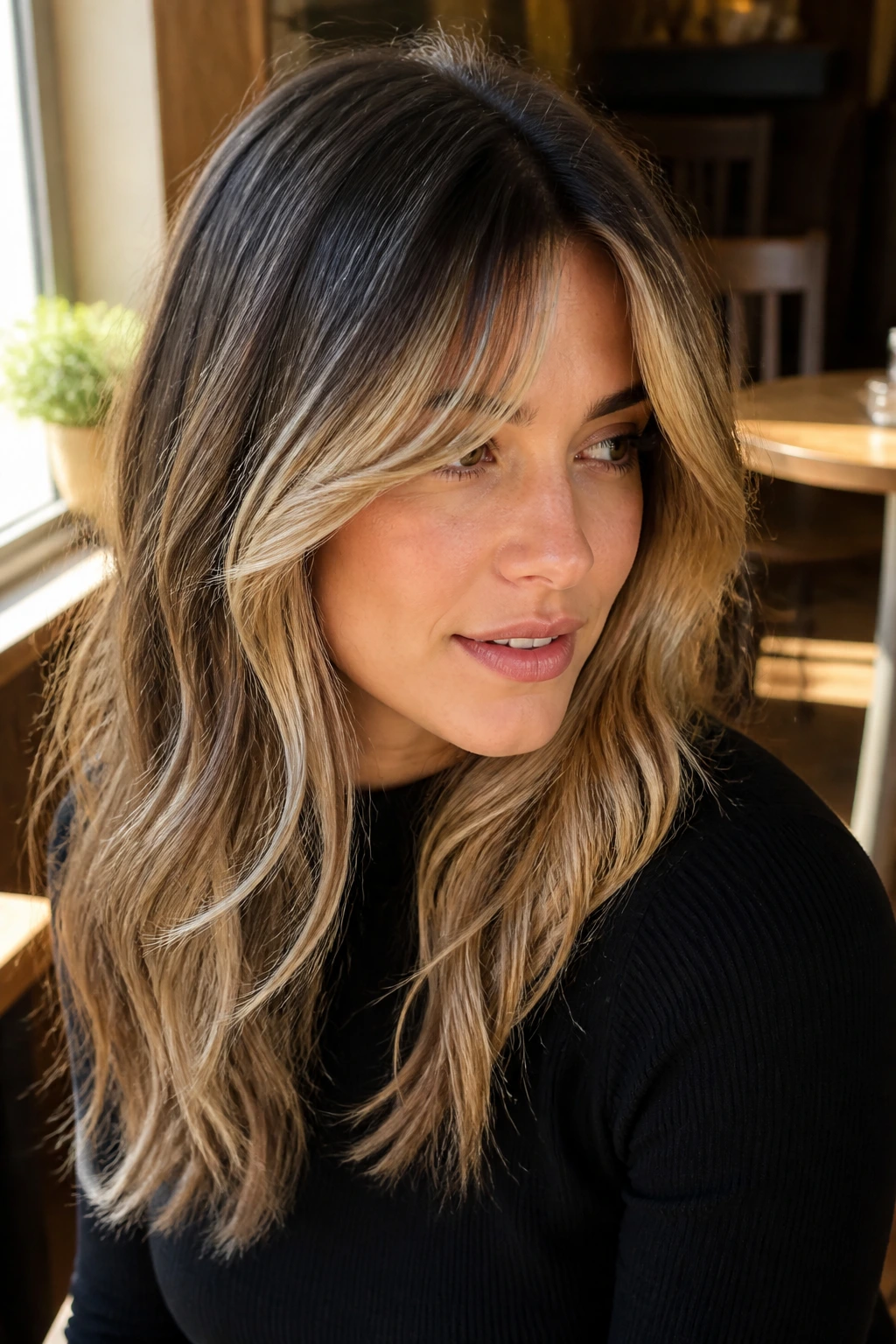
Curtain bangs and chunky blonde panels are a very good match, mostly because both pieces of the haircut are already doing work near the face. Put the brightness there, and the whole cut starts to open up.
The strongest version of this look keeps the crown darker and concentrates the blonde around the bangs, temples, and first layer on each side of the face. That gives the bangs movement without turning the top of the head into one bright helmet. Nobody wants that. The contrast should feel placed, not sprayed on.
A front-heavy placement also makes styling easier. Blow the bangs away from the center with a round brush or a flat brush, and the lighter ribbons will bend with the shape of the fringe. Loose bends through the front layers make the blonde feel softer. Straight, blunt bangs can make the contrast feel harsher, so the cut really does matter here.
I like this style on shoulder-length hair and longer cuts with some lift around the cheekbones. It has an old-school glamour feel, but it still reads modern when the blonde is toned cleanly. If the face frame is the star, the rest of the hair can stay quieter.
8. Ash Blonde Ribbons on Espresso Hair

Ash blonde on espresso hair is a colder, sharper choice, and that can be a blessing if you are tired of warm highlights. The cool tone cuts through dark hair with a kind of silver-beige edge that looks clean instead of sunny.
Why Ash Beats Gold Here
On very dark hair, warm blonde can drift into orange if the lift is not pushed far enough. Ash helps cover that warmth after lightening, so the final result looks more controlled. It is a good match for people who wear black clothing, silver jewelry, or makeup with cooler undertones.
The contrast is not soft. That is the point. Ash ribbons look crisp around the face, strong through the crown, and sleek when the hair is straightened. They also hold up well in layered cuts where the sections can show through one another.
Best Styling Pairings
- A smooth blowout with a center part.
- Soft bends from a 1.25-inch curling iron.
- A blunt lob or long layers with clean ends.
- Matte or satin-finish styling products, not heavy shine cream.
If you like your blonde a little moody, this is the lane to stay in. It feels cool, polished, and a touch sharp in a way that never gets boring.
9. Honey Blonde Streaks That Warm Up Dark Hair

What if you do not want icy contrast? Honey blonde is the answer most people overlook. It is warm, golden, and flattering on dark hair when you want the brightness to feel soft instead of stark.
Honey blonde chunky highlights work because the warmth blends with the natural richness of brunette hair instead of fighting it. On dark brown bases, the color can look almost buttery. On deeper black-brown hair, it may read more caramel unless the lift is pushed high enough, which is fine if you want a gentler result.
This version looks especially good with waves, blowouts, and layered shags. The golden tones catch the bends in the hair and make the movement visible. It also plays nicely with warm makeup, peach blush, and gold jewelry, which sounds small but matters once you see the whole look together.
Honey highlights are a good middle ground for anyone who finds platinum too sharp and ash too cold. They still give you chunky contrast. They just do it with a softer hand.
10. Champagne Blonde Pieces on a Wavy Lob

Champagne blonde sits in a sweet spot that a lot of people miss. It is lighter than beige, calmer than platinum, and less yellow than gold, which makes it a solid pick for dark hair that needs brightness without harshness.
A wavy lob gives champagne pieces enough movement to shine. The waves break up the color, so the blonde reads as ribbons instead of blocks, even when the sections are wide. That is why this style feels more refined than noisy. The contrast is there, but the texture keeps it wearable.
I like champagne blonde on medium-dark bases because it can be toned in a way that still shows shine. If the hair is too dark and the lift is too shallow, it can go a little flat. But when the lift is clean, champagne looks polished in a very easy way. It does not scream for attention. It just keeps catching your eye.
A side part makes this style feel even softer, while a middle part gives it a more graphic edge. Either way, the wide ribbons should stay obvious. A lob with chunky champagne highlights does not need extra layers of noise. It already has enough to say.
11. Ultra-Wide Foiled Highlights on Black Hair
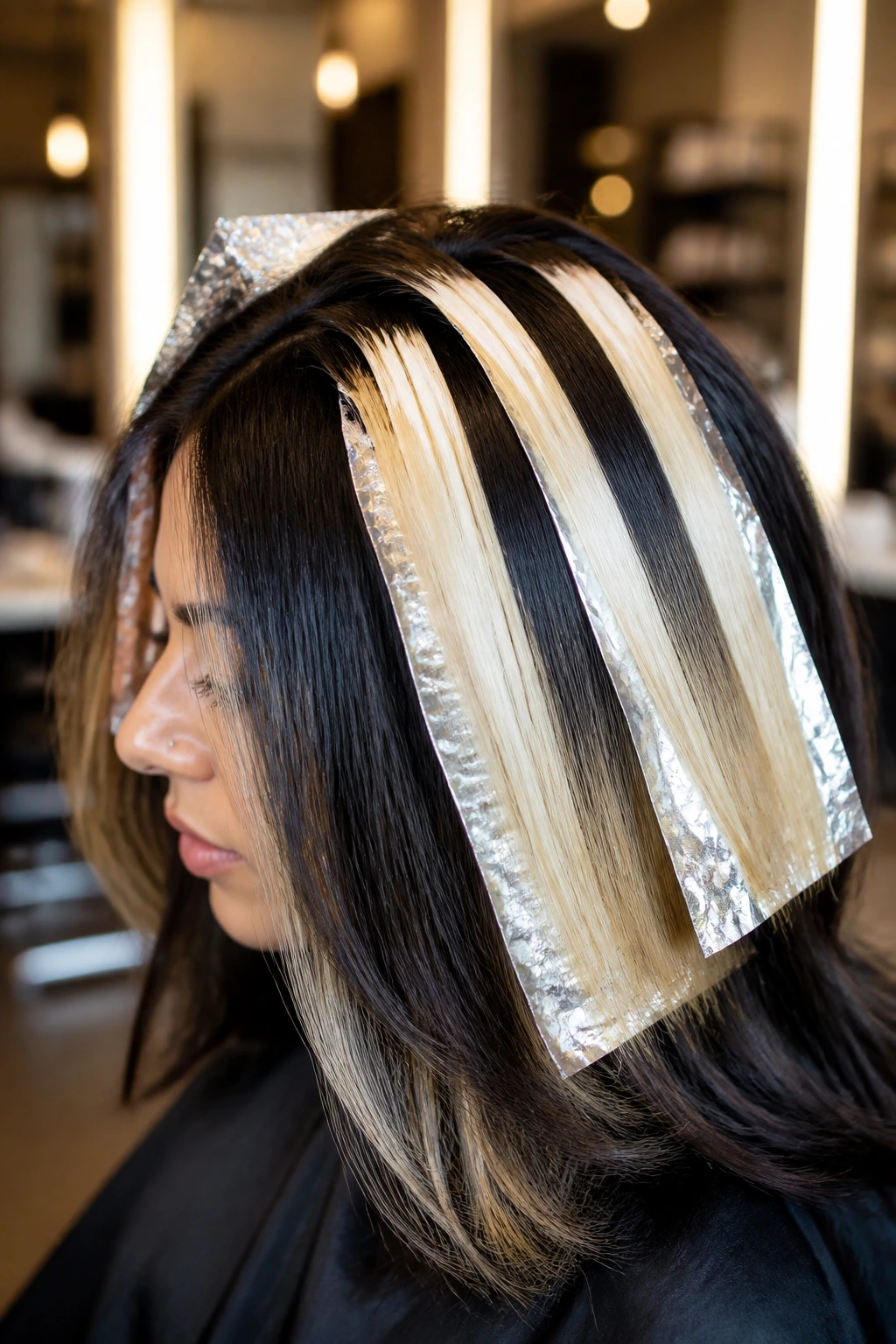
Black hair can wear chunky blonde highlights, but the route there matters more than people think. Ultra-wide foils on a deep base need care, patience, and a little honesty about what the hair can handle.
If the goal is a bright blonde stripe, the lift often has to happen in stages. Dark hair carries a lot of pigment, and that pigment shows warmth first. Orange, then yellow, then pale yellow if the hair can safely get there. Rushing the process is where damage starts, and damaged blonde on black hair usually looks rough before it looks light.
A better plan is often a strong but controlled lift, followed by a toner that keeps the blonde from going brassy. Even a warm beige result can look striking if the foils are wide enough. The width does a lot of the visual work here.
A strand test is not optional with this one. If the hair has old color, previous box dye, or feels fragile at the ends, the result may need to stop short of pale blonde. That is not failure. That is common sense.
On black hair, wide blonde foils can look dramatic in the best possible way. They just need respect.
12. Mixed Blonde Bands for a Shaggy Cut

A shag cut and chunky blonde highlights make sense together because both are built on movement, not polish. The cut already has pieces that kick out, flip in, and fall unevenly. The blonde bands amplify that texture instead of fighting it.
The Cut Changes Everything
When the ends are razored or heavily layered, wider blonde pieces look more intentional. You see the slices of light, then the dark gaps between them, and the whole thing feels energetic. Tiny highlights would disappear in all that texture. Bigger bands keep up.
That is also why styling products matter here. A dry texture spray, a light wax, or a pea-sized bit of styling cream on the ends can bring out the separation without making the hair greasy. The goal is not shine at every point. The goal is shape.
What Works Best
- Medium-width foils through the crown and sides.
- A brighter front section to keep the cut from feeling heavy.
- Neutral or beige blonde if the base is already very dark.
- A rough-dry finish with fingers, not a brushed-out perfection.
This style feels a little rebellious, but not messy. There is a difference. The blonde should look carved into the haircut, not pasted on top of it.
13. Face-Frame and Crown Highlights for a Blowout Look

A proper blowout can make chunky blonde highlights look three times more expensive than they did air-dried. The trick is placement around the face and crown, where the brush can lift the lighter sections and show off their width.
I like this version because it flatters the whole head, not just the front. The face-frame pulls attention upward, while the crown pieces add lift at the roots. On dark hair, that combination keeps the style from looking heavy. It also gives you the kind of movement that reads clean in photos and in person, which is not always the same thing.
A round brush or a hot brush brings the blonde into view by bending the hair away from the scalp. Velcro rollers can help too if you want a little more root volume. The color needs that space. If the hair lies flat, the chunky sections can look broader than intended, and the crown can start feeling crowded.
One-sentence truth: flat iron hair hides a lot.
This is one of the better choices for medium to long dark hair with layers. The blown-out shape gives the blonde room to breathe, and the placement keeps the look bright without turning every strand light.
14. Dimensional Blonde Strips on a Braided Style

Braids are sneaky. They can make chunky highlights look louder than they do when the hair is loose, because every turn in the braid shows a different side of the color.
That is why dimensional blonde strips work so well here. Wide ribbons placed through the lengths of dark hair create a clear contrast once the hair is woven into a braid, twist, or half-up plait. A single pale strip can disappear in a loose style and then jump out when it crosses over a darker section in the braid. The effect is almost architectural.
Why Braids Make the Color Pop
- The braid compresses the hair and stacks light against dark.
- Wider blonde pieces show each turn of the weave.
- A few strategically placed ribbons can look more dramatic than full-head highlights.
- The style works on long hair, medium hair, and layered lengths that can still be braided cleanly.
This look is especially good if you wear braids often or like half-up styles that show both the top and the underside of the hair. It is also useful if you want the blonde to feel more playful than polished. A braid can soften a strong highlight pattern without hiding it.
I’d keep the blonde warm-neutral here rather than ultra-icy. Braids already add enough texture. The color should support that, not compete with it.
15. Soft Chunky Blonde Highlights That Grow Out Gracefully

Not every chunky highlight has to feel loud on day one. The most wearable versions on dark hair often use broad blonde sections with a blurred root and slightly softer edges, so the style keeps its shape even after the first inch of regrowth shows up.
This approach works for people who like contrast but do not want constant salon upkeep. The blonde starts with a little breathing room away from the scalp, then shifts into a beige, honey, or neutral finish through the lengths. That keeps the effect chunky without making the regrowth line feel abrupt.
It also plays well with nearly every haircut. Long waves, a blunt bob, layers, curtain bangs, shags — all of them can wear a softer chunky highlight if the placement is balanced. The main thing to avoid is over-filling the head with too many light pieces. Once that happens, the boldness turns noisy and the dark hair loses its power.
If you remember one thing, make it this: width first, shade second, root last. Get those three pieces right and the rest tends to fall into place. A good chunky blonde on dark hair should look like a choice, not a compromise.
