



The best simple wedding hairstyles for brides usually look like they took far more effort than they did. That is the sweet spot. You want hair that feels polished in the ceremony photos, stays put through hugs and dancing, and still looks like you when the veil comes off and the party gets louder.
A lot of brides get stuck between two bad options: too stiff, or too loose. Stiff hair can feel helmet-like by the time you reach the vows. Too loose can fall flat, frizz at the temple, or drop a curl before the cake is cut. The trick is not complexity. It’s shape, pin placement, and a little restraint.
Simple wedding hairstyles for brides do their best work when the hair has one clear idea. A clean bun. A soft twist. A wave with one good barrette. No confusion. No overstuffed texture. Just enough detail to look intentional from the back, the side, and in close-up photos.
1. The Low Chignon with Soft Face-Framing Pieces

A low chignon is one of those bridal hairstyles that never seems to age out of style. It sits low at the nape, keeps the neck open, and works with a veil, a hair vine, or nothing at all. The soft pieces around the face stop it from feeling too severe.
Why It Works
The shape is compact, which means it holds up well once it’s pinned properly. A chignon also lets the neckline of the dress breathe, which matters more than people think. If your gown has lace, buttons, or an open back, this style gives those details room to show.
Tiny Details That Matter
- Part the hair slightly off-center before gathering it.
- Leave two small face-framing pieces, not big curtain sections.
- Use 6 to 10 bobby pins, crossed in different directions.
- Mist the finished shape with flexible hairspray, not a crunchy shell.
Best move: add the face pieces after the bun is pinned. If you leave them too early, they often get pulled into the twist and disappear.
2. The Sleek Low Bun with a Side Part
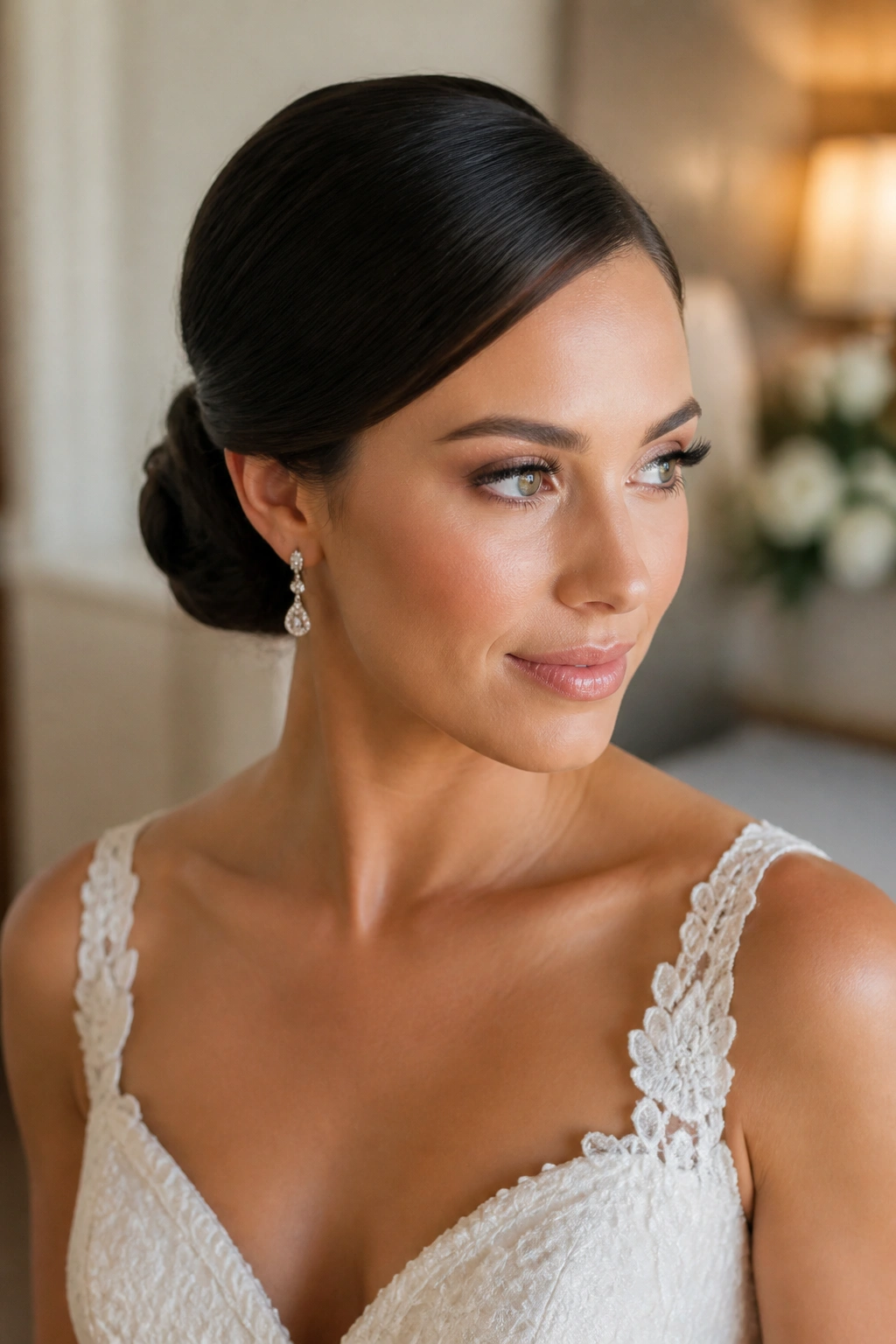
This one is for brides who like a cleaner finish. A sleek low bun looks crisp from the front and calm from the back, which sounds simple until you see it done well. Done badly, it can look flat. Done well, it looks expensive without trying to be loud.
The side part gives the whole style a little movement before the hair is swept down and tucked into a smooth bun. That small shift matters. A center part can feel formal and sharp; a side part softens the face and works especially well with drop earrings or a dress that already has strong structure.
I like this style for indoor weddings, polished venues, and brides who hate flyaways on their face. It also photographs cleanly from every angle. No loose ends to chase. No puff at the crown.
A smoothing cream or light gel at the roots helps, but do not drown the hair in product. You want control, not wet-looking hair that never quite dries.
3. Half-Up Twist with Loose Waves

Why does this style show up so often at weddings? Because it solves a real problem. You get some lift at the crown, some hair off the face, and enough length left down to keep the style soft and easy.
What Makes the Twist Sit So Nicely
The twist adds shape without needing a full braid or a complex updo. A pair of small sections from each temple is usually enough. Pull them back, twist them once or twice, and pin them in place just above the back of the head. Let the rest fall in loose waves or a gentle bend through the ends.
That combination works especially well if your dress is simple and you want the hair to bring a little romance without taking over. It also helps with fine hair, because the half-up section can make the crown look fuller than it really is.
How to Wear It Well
- Curl the hair in 1-inch sections for a soft, not tight, wave.
- Let the front pieces stay slightly shorter than the rest.
- Hide the pins under a small knot, comb-over, or pearl clip.
- Keep the ends loose; a stiff finish ruins the point.
4. The Wrapped Ponytail with Soft Volume

A bridal ponytail can look far more refined than people expect. The trick is the base. If it’s too tight and too shiny, it can feel like gym hair with jewelry. If it has a little lift at the crown and the elastic is wrapped with a strand of hair, it becomes elegant fast.
Picture this at the end of a long ceremony: the hair is off the neck, the shape is still neat, and the whole style can survive a full night of talking, dancing, and stepping outside for photos. That is the real appeal.
A wrapped ponytail works best when the hair has some bend, not poker-straight stiffness. A soft wave through the lengths helps the ponytail move instead of hanging like a rope. If your hair is very silky, a small hidden elastic under the wrapped section gives it grip.
One thing I like here: it’s easy to turn into a second look later. Take out a few pins, loosen the crown, and it becomes more relaxed without falling apart.
5. The Braided Crown with Tucked Ends
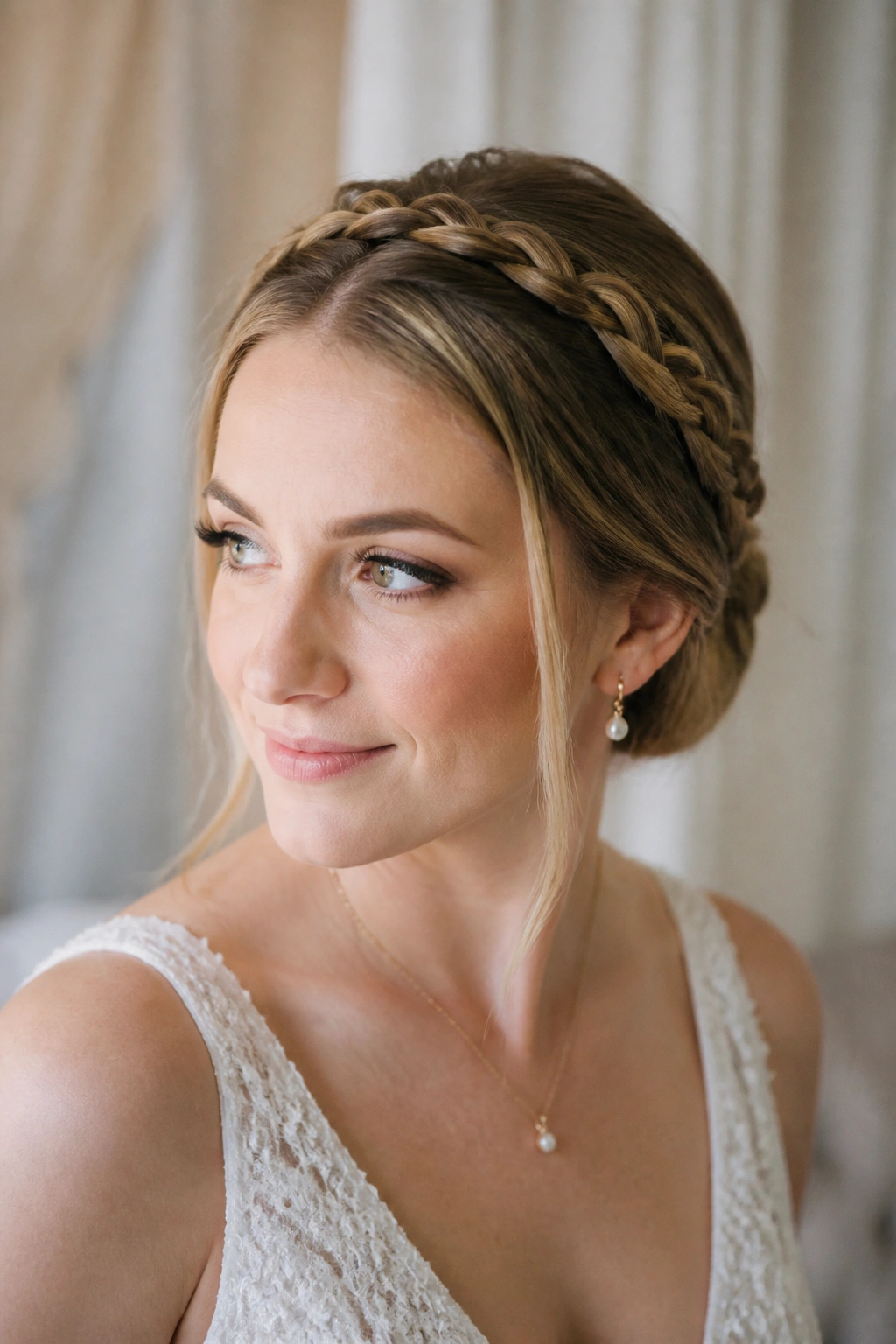
A braided crown has a little old-world charm, but it does not need to look costume-like. Keep the braid slim, close to the head, and neat enough that it reads as deliberate, not busy. Then tuck the ends into the back and pin them flat.
This style is useful when you want texture near the face but still need the hair controlled. It’s also a good answer for brides who are nervous about curls dropping. A braid holds shape better than a curl in humid air, and the crown placement gives a pretty outline from every side.
The best version starts with hair that has a bit of grit. Second-day hair works well. So does dry shampoo at the roots. If the hair is freshly washed and slippery, the braid can slip and puff in odd places.
A small warning: if the braid is too thick, it can overpower petite features or a delicate dress. Keep it slim and soft. That is where the charm sits.
6. Side-Swept Waves with a Single Barrette

Not every bridal hairstyle needs to gather the hair away from the shoulders. Side-swept waves let the hair stay down while still giving it a clear shape, and a single barrette keeps the style from drifting into ordinary evening hair.
This works especially well when the dress has one shoulder, an asymmetric neckline, or beading that you want to show off. Pulling the waves to one side opens the neckline and gives the face a flattering frame. The barrette does the quiet work of holding everything in place.
I prefer a barrette with a little weight to it. Tiny clips can disappear in thick hair. A piece with pearls, crystals, or brushed metal tends to stay visible in photos without shouting for attention.
The side sweep should feel relaxed, not pinned flat against the head. Leave the hair with enough movement that it still shifts when you turn. Brides often worry about hair getting in the way. A single secure side pin solves that without turning the whole style into a helmet.
7. The Twisted Half-Up Bun
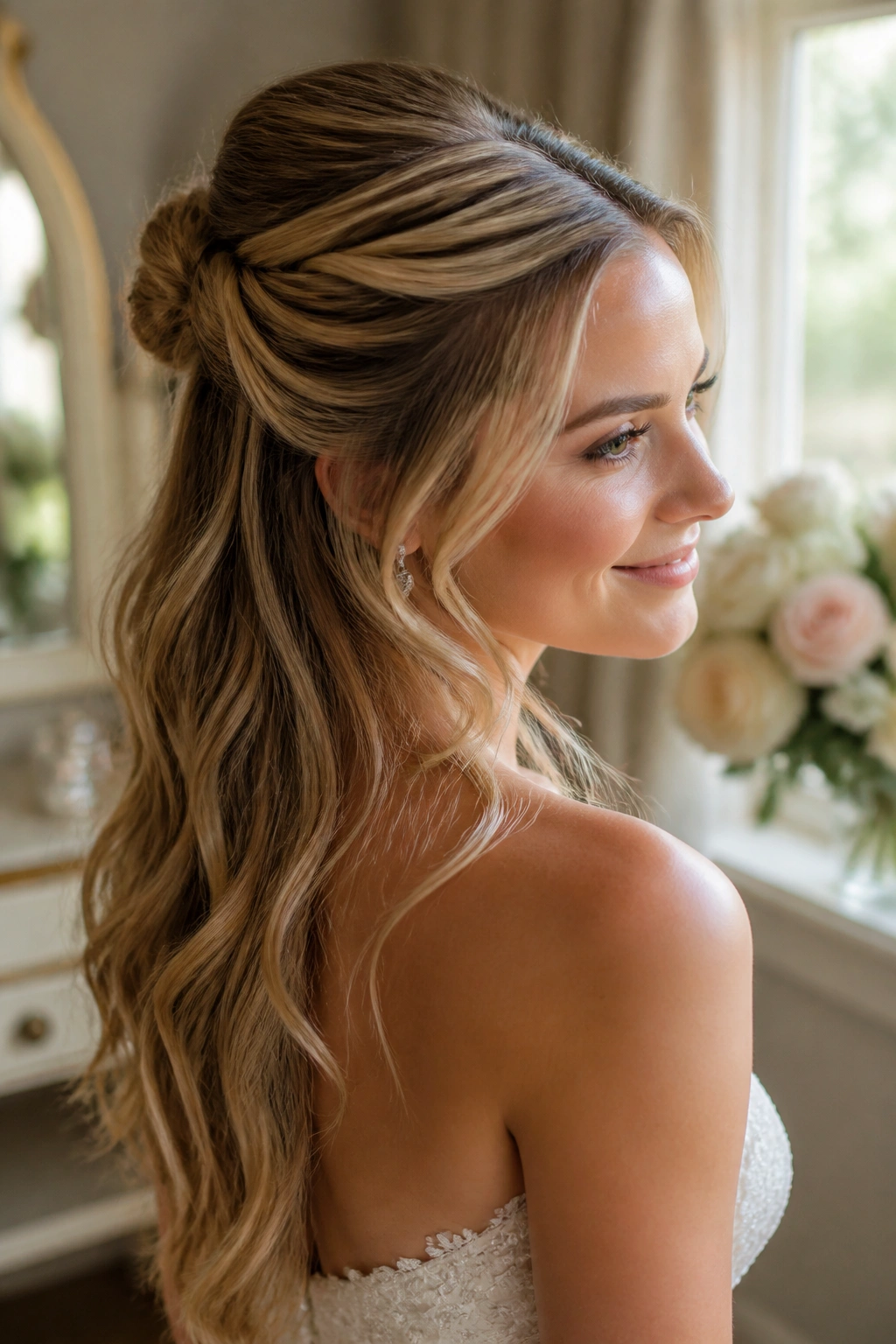
This one sits in a nice middle ground. You get the lift of an updo at the crown, but the lower lengths stay loose, so it does not feel too formal. The half-up bun is simple, yet it looks finished when the twist is tight enough and the bun sits high enough to be seen in profile.
Why It Feels Easy
The style starts with two sections from the temples or a slightly wider slice from the top layers. Twist them back, join them at the crown, and coil the ends into a small bun. Pin the bun close to the head so it does not wobble.
The lower hair can be straight, waved, or softly curled. I like a loose wave here because it gives the bun a softer base. Straight lengths can work too, especially if the dress has cleaner lines.
What to Watch For
- Keep the bun small.
- Pin underneath the twist, not just on top.
- Use texture spray before you gather the hair.
- Leave the front softly lifted, not puffed up.
This style is especially good for brides who want something youthful without being casual.
8. The French Twist with Soft Edges
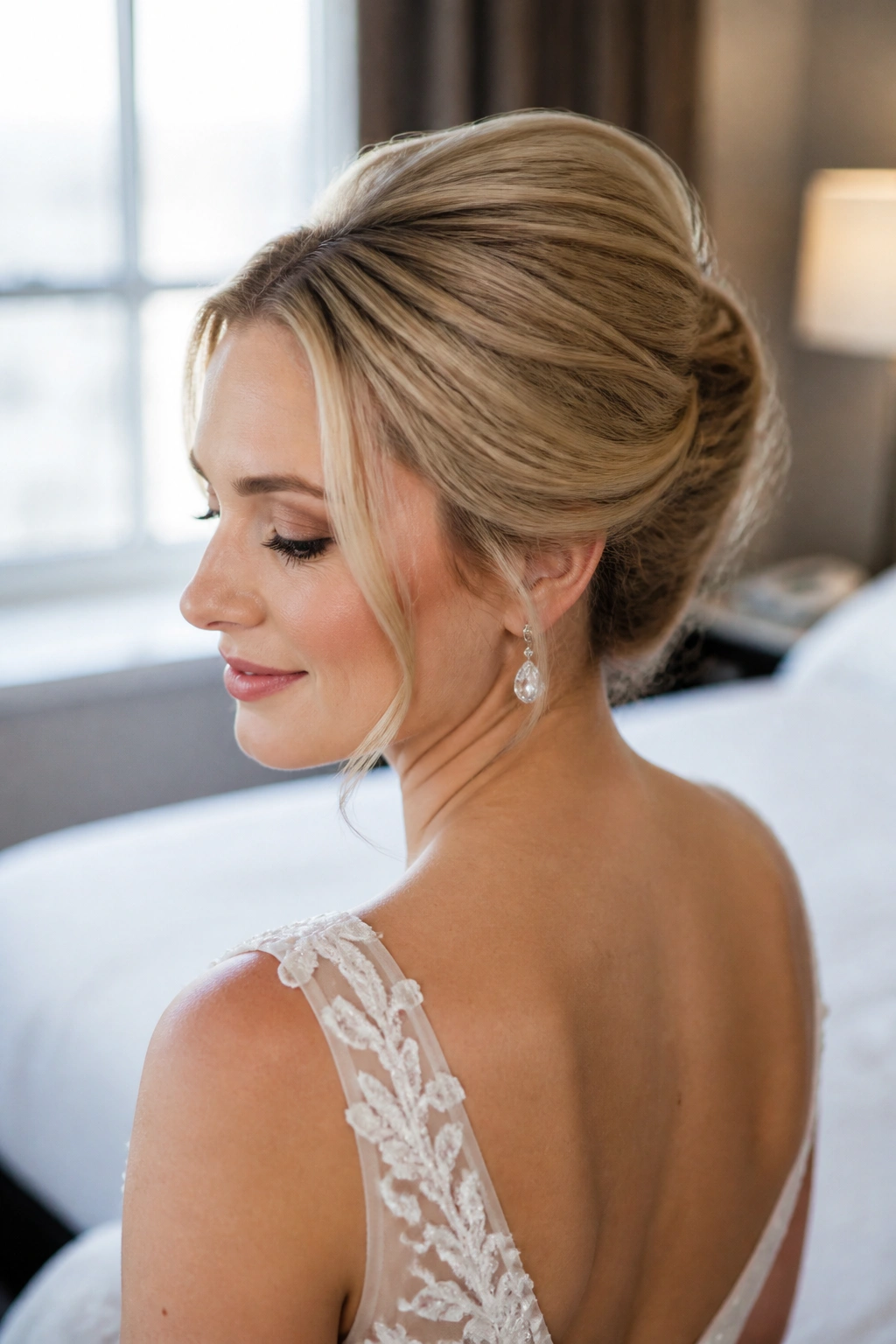
A French twist has a reputation for being formal, maybe even a little severe, but that depends entirely on how it is done. When the edges are softened and the front is loosened just a bit, it becomes graceful instead of strict.
The best part is the silhouette. It pulls the hair up and inward, which makes the neckline and earrings stand out. It also gives the back of the head a long, elegant line. That line is what photographers love.
You do need enough length to create a secure roll. Shoulder-length hair can work if the layers are not too short, but very short layers may slip out unless the stylist uses hidden pins and a strong base. The finish should look smooth but not shellacked. A little movement near the temples keeps it human.
A French twist is the kind of style that suits a bride who wants tradition without fuss. Clean. Calm. No extra noise.
9. The Low Knot with a Center Part

A center part can sharpen the face in a good way, especially when the rest of the style stays soft. A low knot balances that symmetry by keeping the shape grounded at the nape.
This hairstyle is one of my favorites for minimalist dresses. If the gown is plain silk, satin, or crepe, a low knot with a center part gives you structure without crowding the look. It also works well with long veils because the knot sits low enough to let the veil anchor cleanly above it.
The key is not making the knot too perfect. A tight, polished knot can look rigid if the hair is very fine or flat. A slightly looped knot with a few loose strands tucked in feels more forgiving. You want to see the shape of the knot without staring at every pin.
A middle part also puts the face at the center of the frame. That can be lovely, but only if the brows, makeup, and skin prep are all in place. It is a look that shows everything.
10. The Simple Three-Strand Braid Down the Back
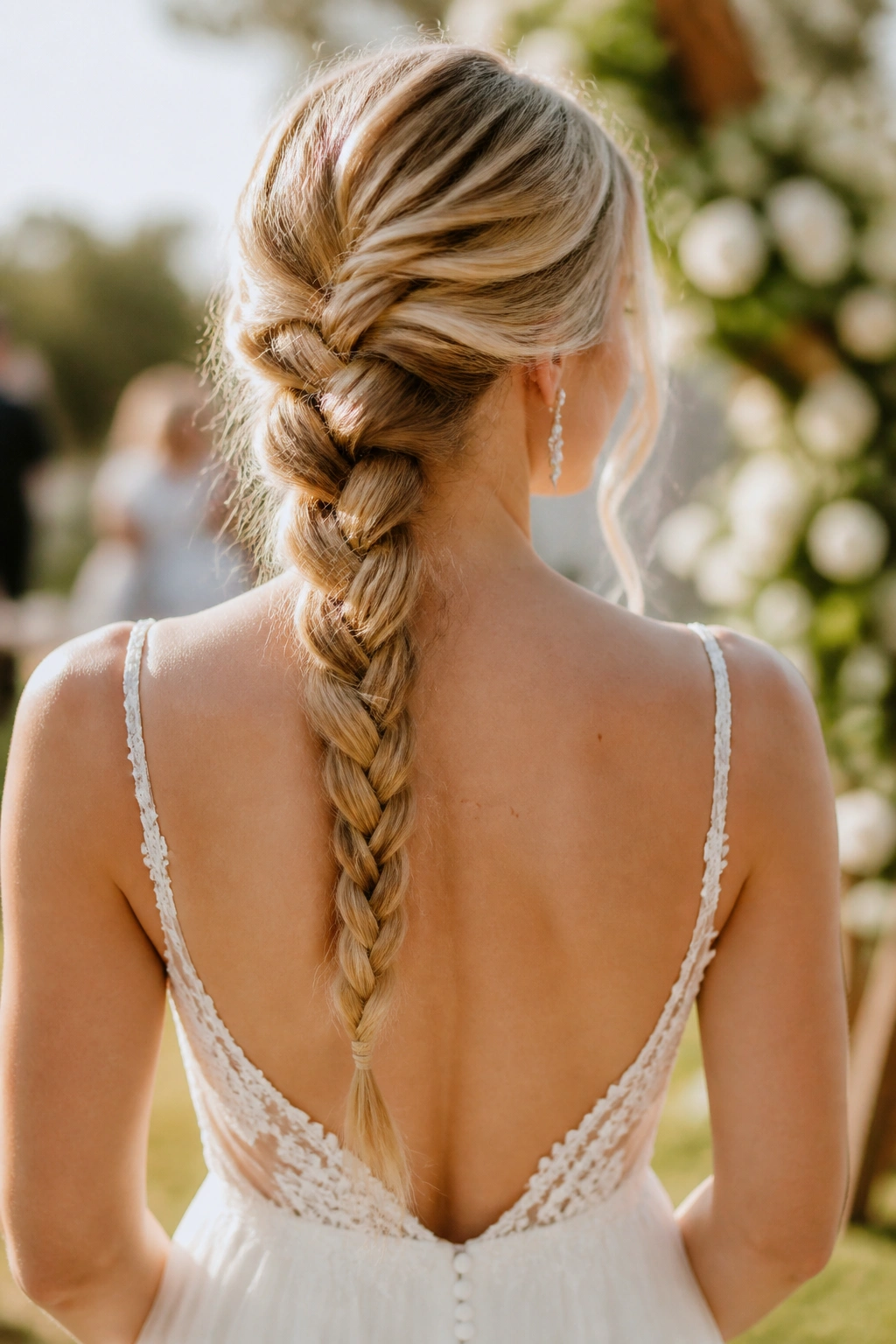
A basic braid sounds almost too plain for a wedding, and that is exactly why it works when the dress and accessories are doing enough already. One clean braid down the back keeps hair controlled, shows length, and has a quiet kind of confidence.
The best version starts just below the crown or at the nape, depending on how much lift you want at the top. Loosen the braid gently with your fingers after it’s tied off. Not too much. Just enough to make the pattern fuller and less school-uniform.
I have always liked this for outdoor ceremonies. Wind does less damage to a braid than to loose curls, and the style stays neat even after a long aisle walk. If the ends are smooth, wrap a small piece of hair around the elastic to finish it off.
A Small Styling Trick
- Curl the ends before braiding if you want a softer finish.
- Pull one tiny section at the crown for lift.
- Keep the braid centered on the back of the head.
- Add a slim ribbon or a few pins if the dress is simple.
11. The Side Bun with a Deep Part
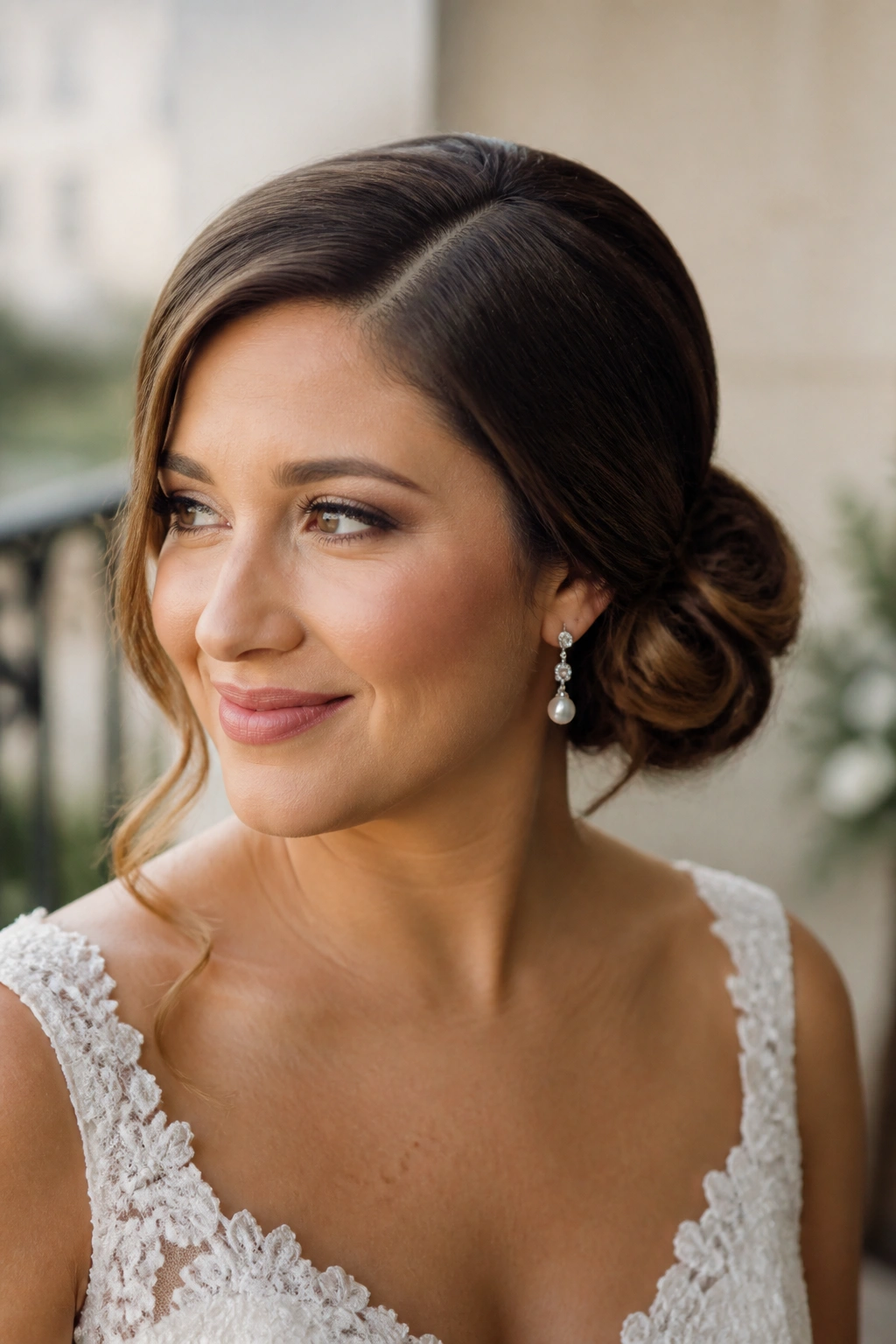
A side bun adds a little drama without becoming complicated. The deep part gives the face a clear angle, and the bun sits just behind one ear or low along the side of the neck. It feels a touch more romantic than a centered bun.
Why does the deep part matter so much? Because it changes the balance of the whole style. A simple side bun without a good part can look accidental. A deep side part gives it direction. The eye knows where to land.
This hairstyle works especially well if you want to show off one earring more than the other, or if the dress has a shoulder detail on one side. It also plays nicely with soft curls at the front. Keep those front pieces loose enough to move, but not so loose that they fall into the mouth during vows. That sounds obvious, until you have lived through a windy ceremony.
Use a few pins along the underside of the bun. If they sit only on top, the bun can tip to one side as the day goes on.
12. The Bubble Ponytail for Long Hair

A bubble ponytail looks playful, but it can be bridal if you keep the bubbles smooth and the spacing even. It is a good choice for long hair that needs structure without a full updo. The style has shape from a distance and detail up close.
Why Brides Like It
The bubbles create visual rhythm, which helps a long ponytail feel intentional instead of heavy. Each section is secured with a small elastic, then gently puffed outward between ties. If the hair is very thick, the bubbles can look plush and sculpted. If it is fine, a little teasing inside each section helps.
How to Keep It Bridal
- Use clear elastics or wrap each tie with hair.
- Leave the top crown smooth.
- Space the ties evenly, about 2 to 3 inches apart.
- Finish with a soft shine spray, not a wet gloss.
This style is especially good for a reception look when you want something secure enough for movement but a little less formal than a bun. It has personality. A lot of ponytails do not.
13. The Tucked-In Roll for Short Hair or a Lob

Short hair can be tricky for wedding styling because people often assume it has fewer options. That is wrong. A tucked-in roll, especially on a lob or a collarbone-length cut, gives you a neat silhouette without pretending the hair is longer than it is.
The style works by rolling the lower section inward and pinning it flat at the nape. The front layers can stay side-parted or softly swept back. If the cut has layers that want to slip out, a little styling paste at the ends helps them behave.
What I like most here is the honesty of it. It does not fight the haircut. It works with the shape you already have. That makes it feel modern in a quiet way.
Best for:
- Brides with a bob, lob, or blunt shoulder-length cut.
- Dresses with clean necklines.
- Veils that need a secure anchor point near the nape.
- Anyone who hates the feeling of a heavy updo.
A tucked roll can be dressed up with a comb, pearl pins, or one strong clip.
14. The Old-Hollywood Waves

Old-Hollywood waves are polished, but they do not have to feel overdone. The key is smooth ridges, soft ends, and a side part that lets the hair cascade in one elegant direction. Think glossy, not stiff. Structured, not crunchy.
This style does ask for good prep. The hair should be smooth before the waves go in. A hot tool with a barrel that matches the length of the hair helps, and each curl should cool fully before brushing. If you rush that part, the wave will collapse into random bends that look unfinished.
The reason brides keep coming back to this look is simple: it frames the face and shoulders in a very flattering way. It also pairs well with lip color and earrings, which sounds small but matters in photos. The hair becomes part of the whole picture instead of fighting it.
I would skip this style if the venue is very humid and there is no room for touch-ups. Waves can last, but they do ask for a little care.
15. The Textured Bun with a Veil Anchor
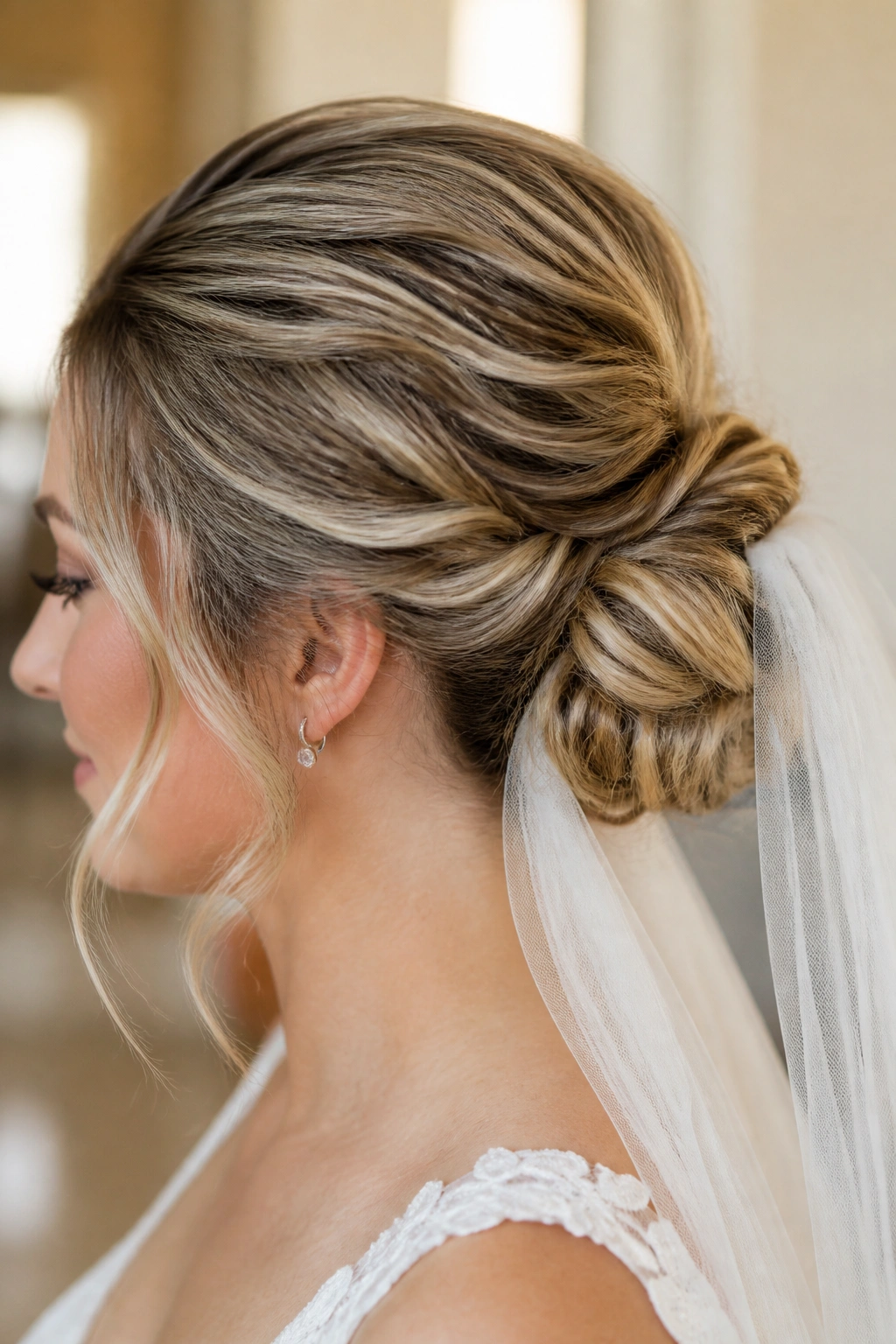
A textured bun is the bride’s friend when you want a style that can hold a veil securely and still feel soft. It is less rigid than a sleek bun, but more controlled than a loose knot. That middle lane is where it shines.
How the Shape Comes Together
Start with lightly waved hair or hair that has been prepped with texture spray. Gather it low, twist it into a bun, and leave a few wisps at the temples and nape. Then pin the bun in a shape that feels full, not flat. The extra texture helps the pins catch, which is part of why this style stays put.
What to Pay Attention To
- Place the veil comb just above the bun.
- Keep the bun wide rather than tall.
- Don’t over-pull the surface.
- Use pins that match the hair color, or close to it.
This is one of those styles that looks easy from the outside and then surprises you with how much technique sits underneath. The good part is that it wears well. The less glamorous part is all the pinning. Worth it.
16. The Rope-Braid Half-Up

A rope braid looks a little different from a standard braid because the hair twists around itself instead of crossing over in three strands. That gives the half-up section a neat spiral effect, and it works beautifully for brides who want texture without too much volume.
This style starts with two sections on each side of the head. Twist each one in the same direction, then wrap them together in the opposite direction. That reverse motion is what locks the braid in place. It sounds fussy. It is not, once your hands get used to it.
The rope braid feels clean and modern, especially with loose waves under it. It also tends to hold its shape a little better than some softer braids, which matters if the day runs long. Use small pins where the braid meets at the back so it doesn’t slide.
One good detail: tuck the ends under the braid instead of leaving them hanging. That tiny choice makes the whole style look more finished.
17. The Low Ponytail with Crown Lift
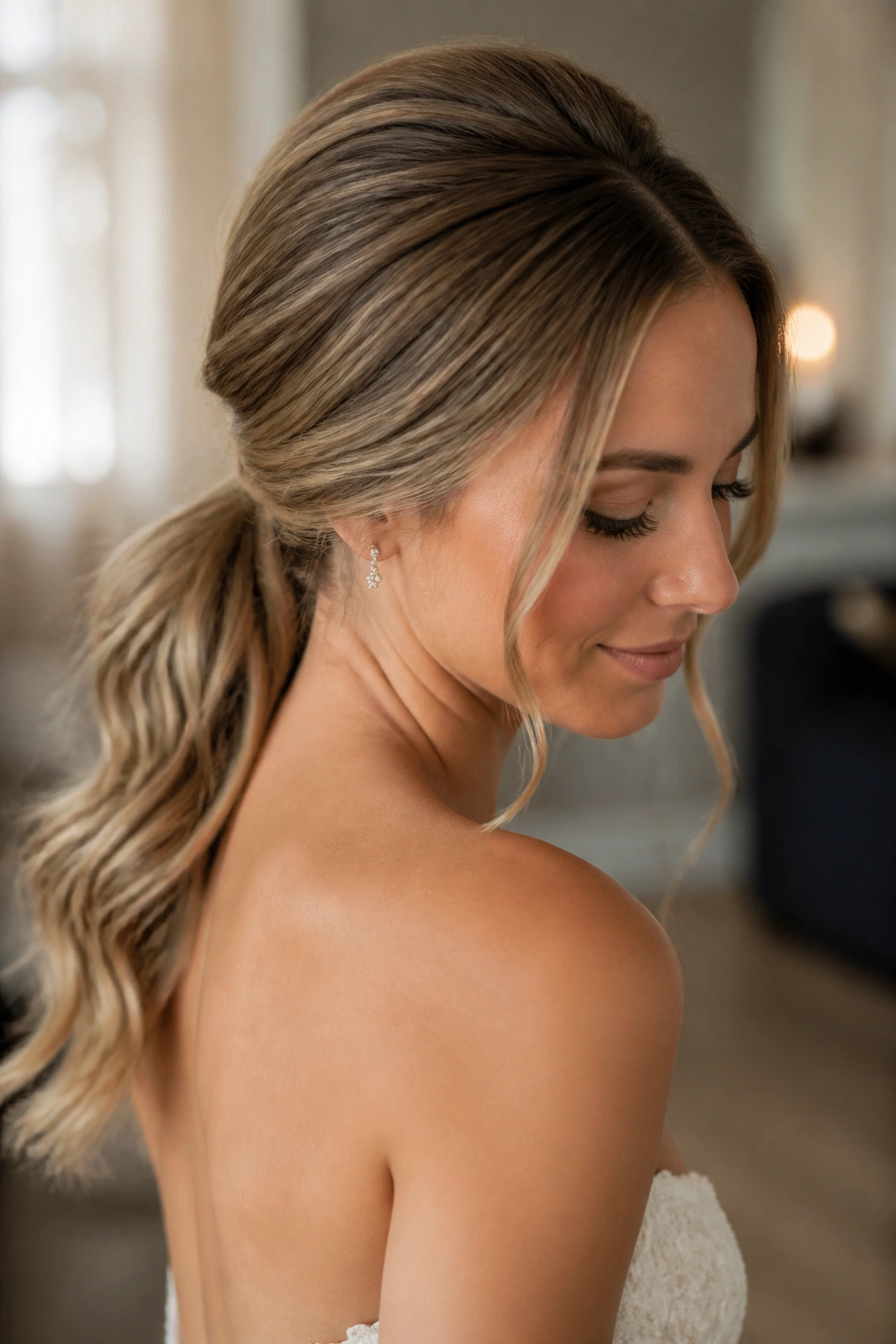
A low ponytail can look bridal if the crown has height and the base is wrapped neatly. Without those two things, it can fall into plain territory fast. With them, it becomes sleek, wearable, and not at all boring.
The crown lift is the part that does the heavy lifting. A little backcombing at the roots, hidden under a smooth top layer, gives the ponytail some body. Then the lengths can stay straight, waved, or softly curled. I prefer a loose wave in the tail because it keeps the look from feeling too sharp.
Quick Styling Notes
- Set the ponytail at the nape or just above it.
- Wrap a strand of hair around the elastic.
- Keep the crown smooth but not tight.
- Use a light mist of hairspray on the top only.
This is a smart choice for brides who want to feel free on the dance floor. It is also one of the easiest styles to refresh later in the day. A little shake at the crown, a touch of shine spray, and it looks alive again.
18. The Loose Waves on a Bob or Lob

Shorter hair does not need to pretend to be longer. Loose waves on a bob or lob can look elegant, fresh, and completely appropriate for a wedding. The shape comes from movement, not length.
I like this style because it lets the haircut do the work. A blunt bob with soft bends at the ends has a modern feel. A lob with gentle waves looks a bit more romantic. In both cases, the hair should move around the jaw and cheekbones instead of sitting as one flat block.
The finish matters a lot. The ends need to be polished, or the style can drift into ordinary day hair. A touch of shine cream through the mid-lengths keeps everything from looking dry in photos. If you have a side part, tuck one side behind the ear and add a small pin or earring moment on that side.
Short hair at a wedding is not a compromise. It is a choice. A good one.
19. The Crown Twist with Pins and Pearls

A crown twist gives you that half-up feeling with a little more decoration built in. Small sections from each side are twisted back toward the center and pinned, then softened with a few pearl pins or a slim decorative comb. It looks delicate, but the structure underneath is sound.
The style works especially well when you want the front of the hair controlled but do not want a full bun. It keeps volume at the back while opening the face. The pearls are not required, but I like them here because they catch the eye in a quiet, close-up way. Not loud. Just enough.
One nice thing about this look is how forgiving it is with texture. Straight hair, loose waves, or a light bend all work. The twists should lie flat against the head, though. If they start to puff upward, the style loses its clean line.
This is a good option for brides who want their hair to feel soft at the front and tidy at the back. That combination is harder to get than it sounds.
20. The Minimalist Middle-Part Bun

A minimalist middle-part bun is probably the calmest style in this whole list, and that is why it earns its place. It has no extra frills, no elaborate twist, and no need for a lot of ornament. The middle part creates balance. The bun keeps the shape grounded. Done well, it looks deliberate in a way that reads as confident rather than plain.
This style is especially good when the dress has strong lines or when the bride wants the face to stay open. It also gives earrings room to show and makes the veil sit neatly if one is being used. A low bun can feel softer, but the middle part adds a tiny bit of edge that keeps the style from slipping into generic territory.
What makes it work is precision. The part needs to be clean. The bun needs to sit low and smooth. The top should be polished without looking pulled tight enough to complain about. A light mist of hairspray and a toothbrush or tail comb can clean up the part line fast.
That’s the charm of simple bridal hair. Nothing wasted. Nothing fighting the dress. Just a shape that stays put, looks good from the side, and holds its own in every photo people will keep forever.
