



Three shades usually do more work than one dramatic stripe. Tri color hair highlights create movement because the eye keeps catching different tones as the hair bends, swings, and shifts in the light.
That matters more than people think. A single highlight shade can flatten out fast, especially on long hair, dense curls, or blunt cuts where color sits on the surface instead of weaving through the shape.
The trick is not piling on random dye. One shade should ground the look, one should lift it, and one should flash in the places that move most — around the face, through the mid-lengths, or tucked underneath where it shows when you turn your head.
Good tri-color work looks layered, not striped. The best versions have a base tone, a bridge tone, and a brighter accent, so the whole thing reads as depth instead of fuss. That’s the difference between “nice highlights” and hair that looks like it has actual dimension.
1. Espresso, Chestnut, and Caramel Tri-Color Ribbons
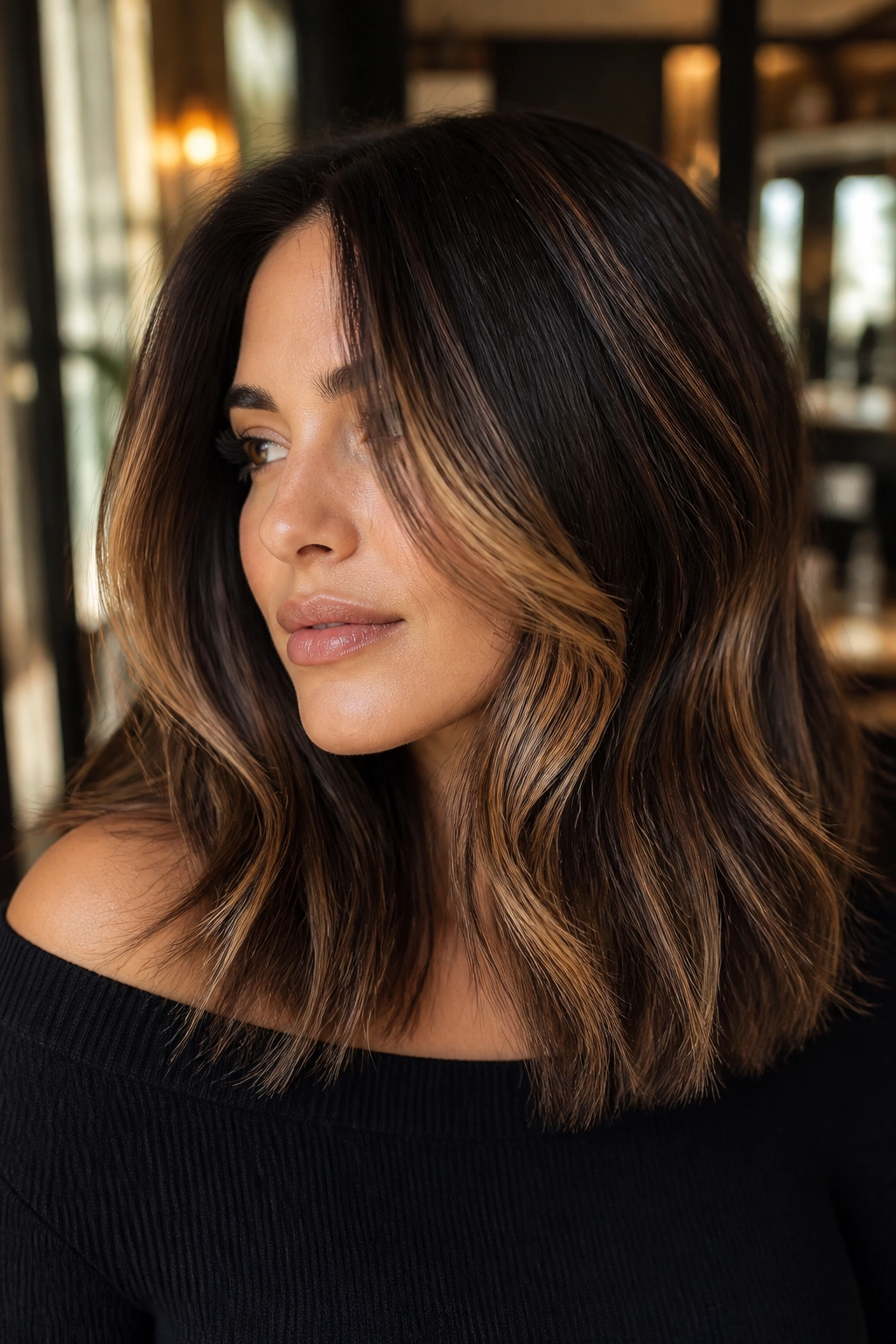
Dark brunette hair loves movement, but it does not always need a dramatic jump to blonde. Espresso, chestnut, and caramel give you contrast without blowing out the depth that makes brunette hair look rich in the first place.
Why it works
Think of this as a three-step ladder. Espresso keeps the base grounded, chestnut softens the middle, and caramel gives you those brighter ribbons that catch the eye near the cheekbones and ends. On a level 4 or 5 brunette, that usually reads as expensive-looking depth rather than a loud color strip.
- Best on shoulder-length cuts and long layers
- Ask for fine ribbons, not thick blocks
- Keep caramel around 2 to 3 levels lighter than your base
- Add a gloss so the chestnut stays shiny instead of muddy
My favorite part: this palette still looks good when the hair is tied up. The darker pieces hold the shape, and the caramel shows up right where you want it.
2. Mushroom Brown, Beige, and Soft Cocoa Veils
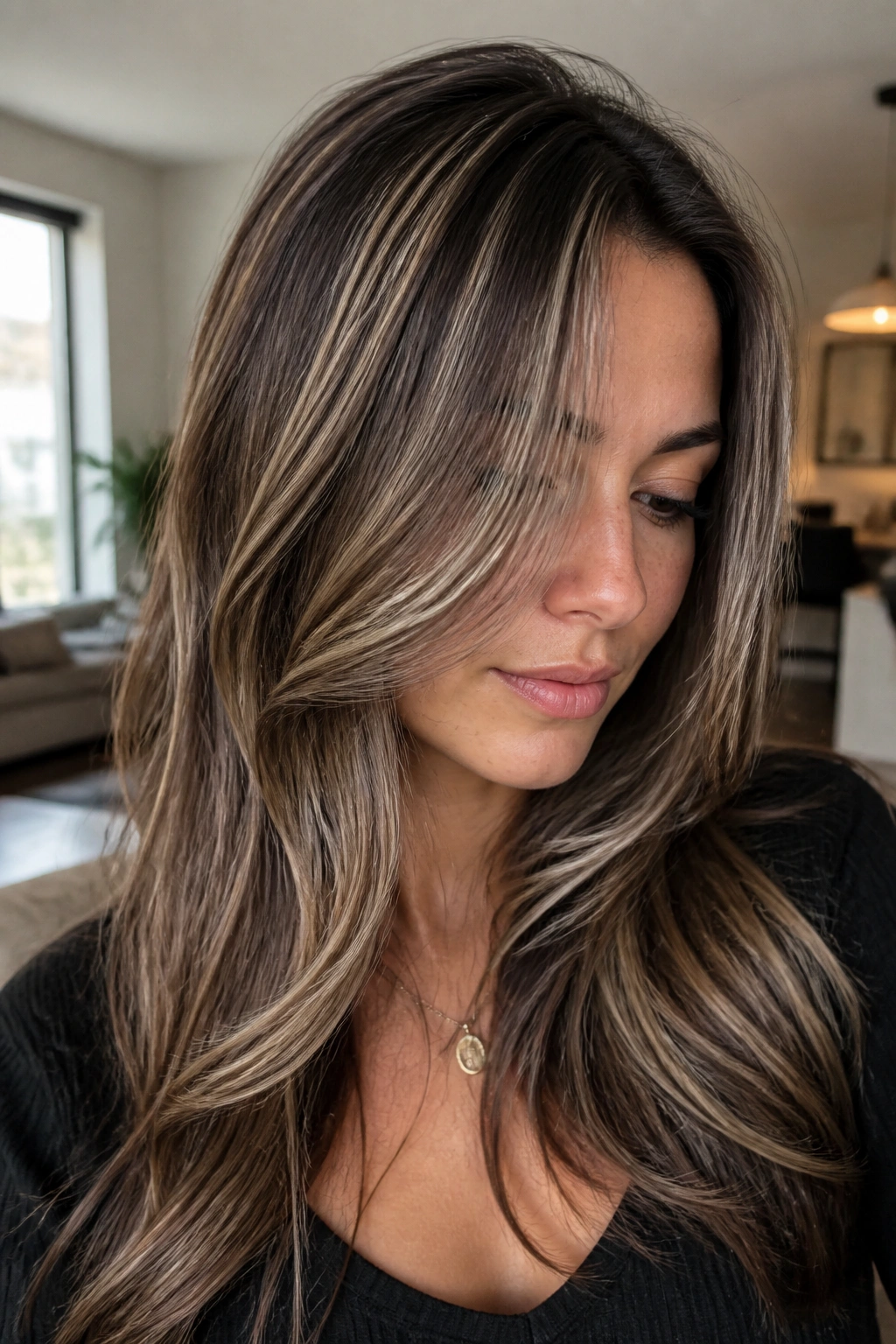
Cool brunettes look expensive when they stay soft. Mushroom brown gives the hair that smoky, slightly earthy base, beige brings the lightness forward, and soft cocoa keeps the whole thing from floating too pale.
This trio works especially well if warm highlights make your hair go orange fast. Mushroom brown has enough gray-brown in it to calm down brass, while beige lifts the look without going yellow. Soft cocoa is the quiet piece that keeps everything connected.
It’s a good match for straight hair, blunt lobs, and fine to medium textures. The color reads smooth and polished, not stripey, which is exactly why it works. If you want dimension that still looks office-friendly, this is one of the safer bets.
3. Black Cherry, Auburn, and Copper Threads
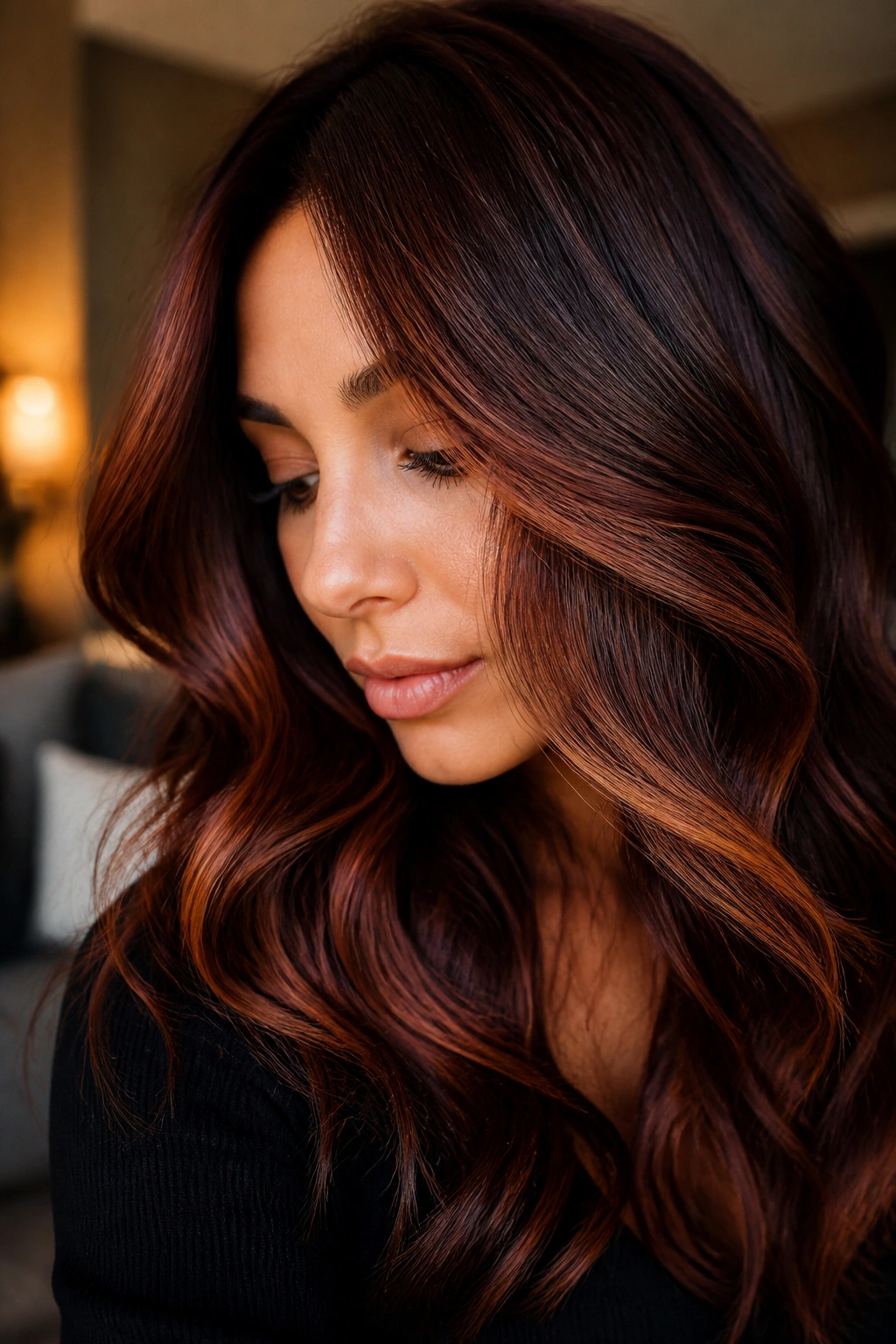
Want red without going full red? This is the sweet spot. Black cherry, auburn, and copper give dark hair warmth, shine, and a little drama without making the whole head look like one flat wine shade.
How to wear it
Black cherry sits closest to the base, auburn bridges the middle, and copper gets painted in where the light hits first — around the front hairline, the top layers, and the ends of waves. That mix keeps the red from looking one-note, which is the trap a lot of red color falls into.
A foil-weave plus a soft gloss usually gives the cleanest result. If the copper is too bright and the auburn is too deep, the whole thing loses balance fast.
- Best on medium to dark brunettes
- Gorgeous on wavy and layered cuts
- Keep the copper to smaller pieces if you want less upkeep
- Ask for a warm red gloss between salon visits
The main thing: this palette loves movement. Hair that sways a little is where it really comes alive.
4. Blue-Black, Plum, and Indigo Peekaboo Panels
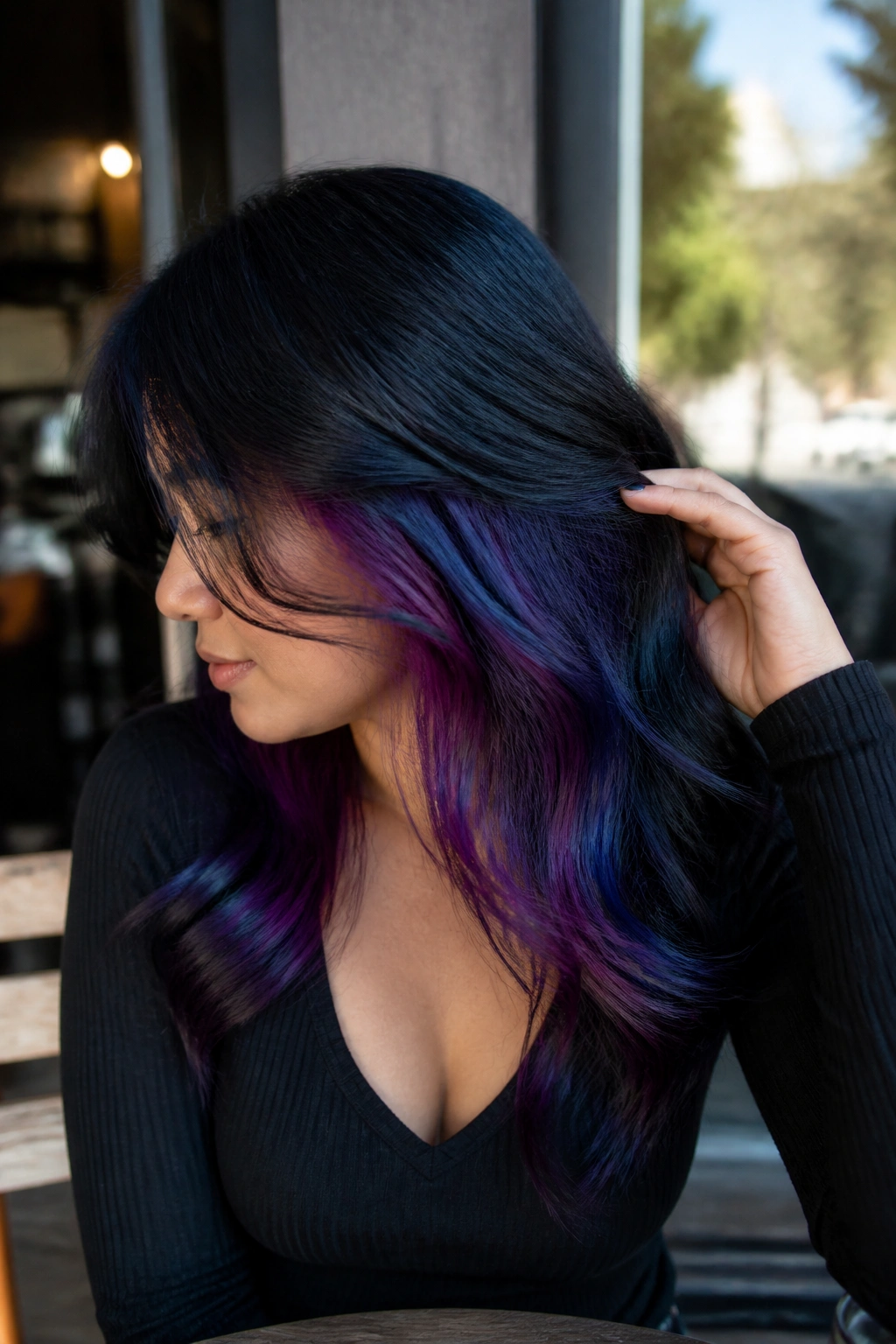
If your hair lives in a ponytail, claw clip, or half-up twist half the week, peekaboo panels are smart. Blue-black, plum, and indigo sit underneath the surface, so the color feels hidden until the hair moves.
The effect is dramatic in the best way. Blue-black gives the deepest base, plum adds a purple flash that keeps the look from going flat, and indigo brings a cool shine that shows through in layers. On straight or slightly wavy hair, the contrast looks sleek. On curls, it turns into pockets of color that appear and disappear.
- Put the brightest panels under the crown and around the nape
- Keep the top layers darker for a cleaner reveal
- Use cool shampoo if the plum fades too quickly
- Ask for panels, not all-over saturation
That little hidden reveal is the whole point. It feels a bit secretive, and honestly, that’s what makes it fun.
5. Dark Brunette, Bronze, and Honey Money Piece
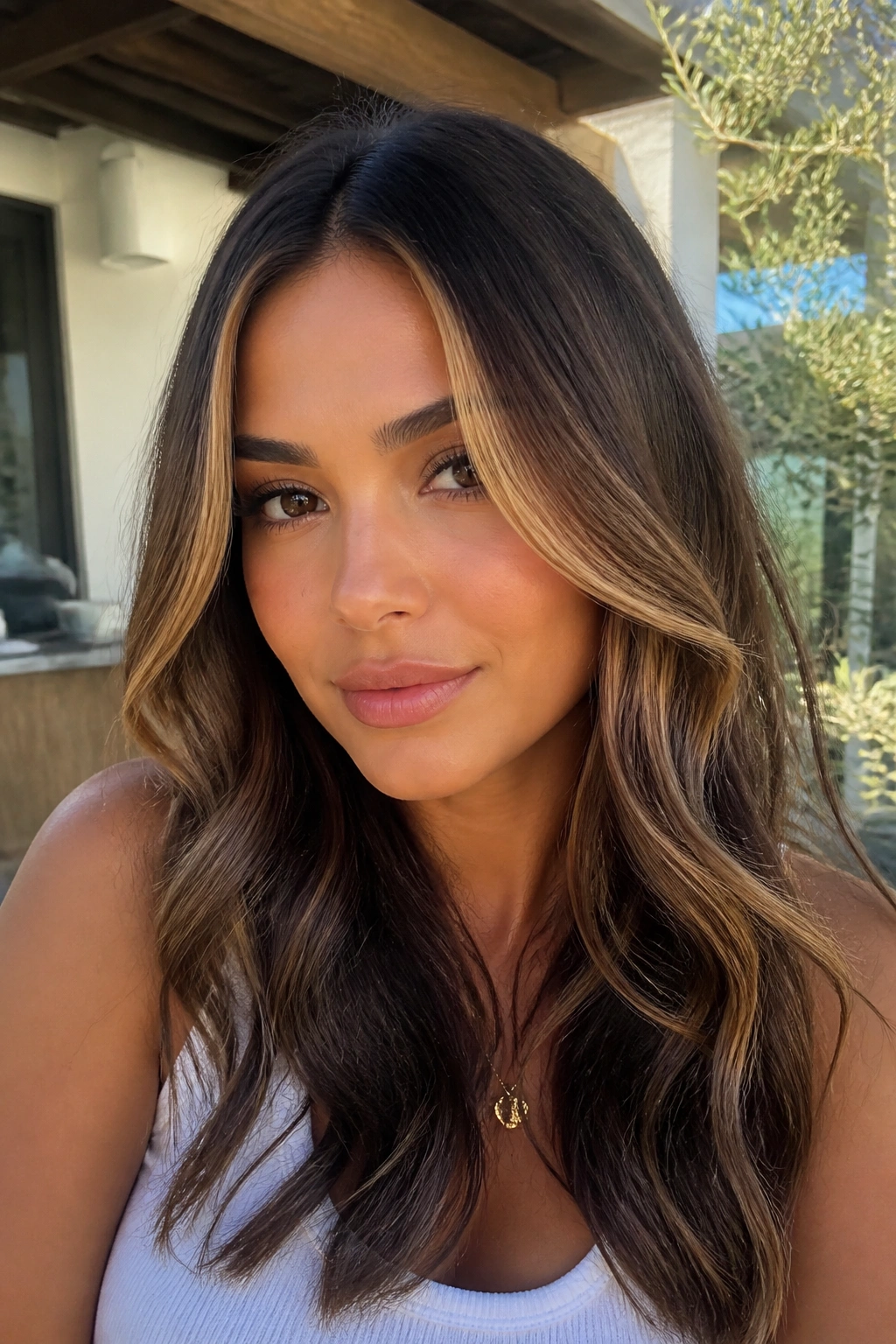
A bright money piece can carry an entire haircut. When the rest of the hair stays dark brunette, bronze and honey at the front give instant lift without needing a full head of light color.
The bronze works as the bridge shade. Honey is the brighter accent that lights up the face, especially around the cheekbones and temples. If you have long layers or a blowout style, this combo looks even stronger because the front pieces move apart and show the color change.
One good move is to keep the money piece only one to two shades lighter than the ends at first. That stops the front from looking disconnected. Add a soft root shadow, and the grow-out stays calmer too.
This is the kind of color that looks polished in daylight and even better indoors, where the warm tones pick up a little shine.
6. Mocha, Toffee, and Champagne Balayage
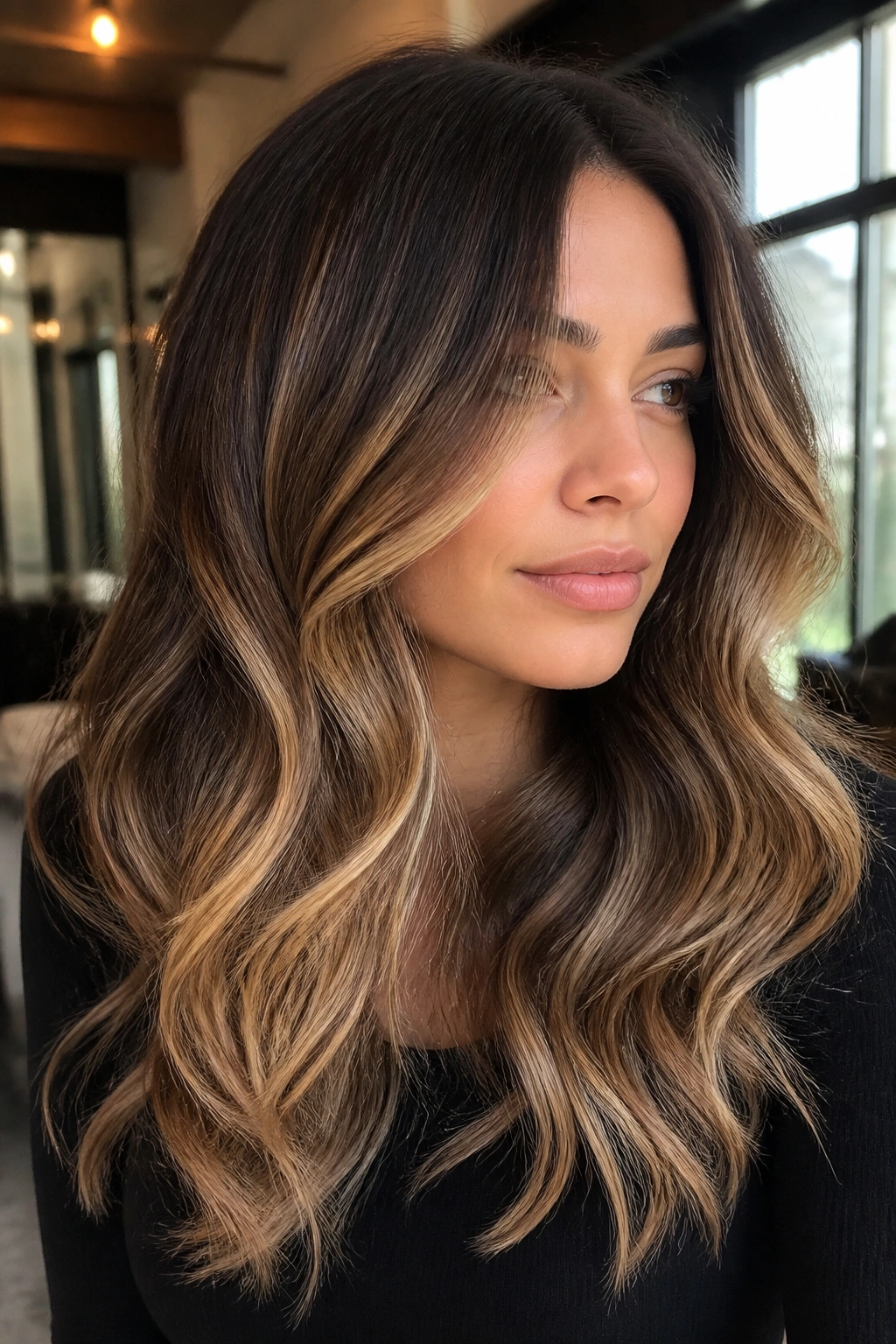
Unlike chunky highlights, this version stays soft from root to ends. Mocha gives the base weight, toffee brings in warmth, and champagne adds a brighter finish that never feels too frosty.
What makes this trio work is the slope between tones. Mocha sits close to brunette, toffee lifts the mid-lengths, and champagne lands on the tips or face-framing layers so the eye has a clear path to follow. That’s what gives the hair a sense of motion.
What to ask for
Ask for a balayage with a soft root melt and a toner that keeps the champagne from going yellow. If your hair is fine, keep the champagne pieces sparse. If it’s thick, you can handle more of them without the look getting busy.
This palette flatters loose waves especially well. It also grows out nicely, which is part of why people keep coming back to it.
7. Ash Brown, Sand, and Pearl Babylights
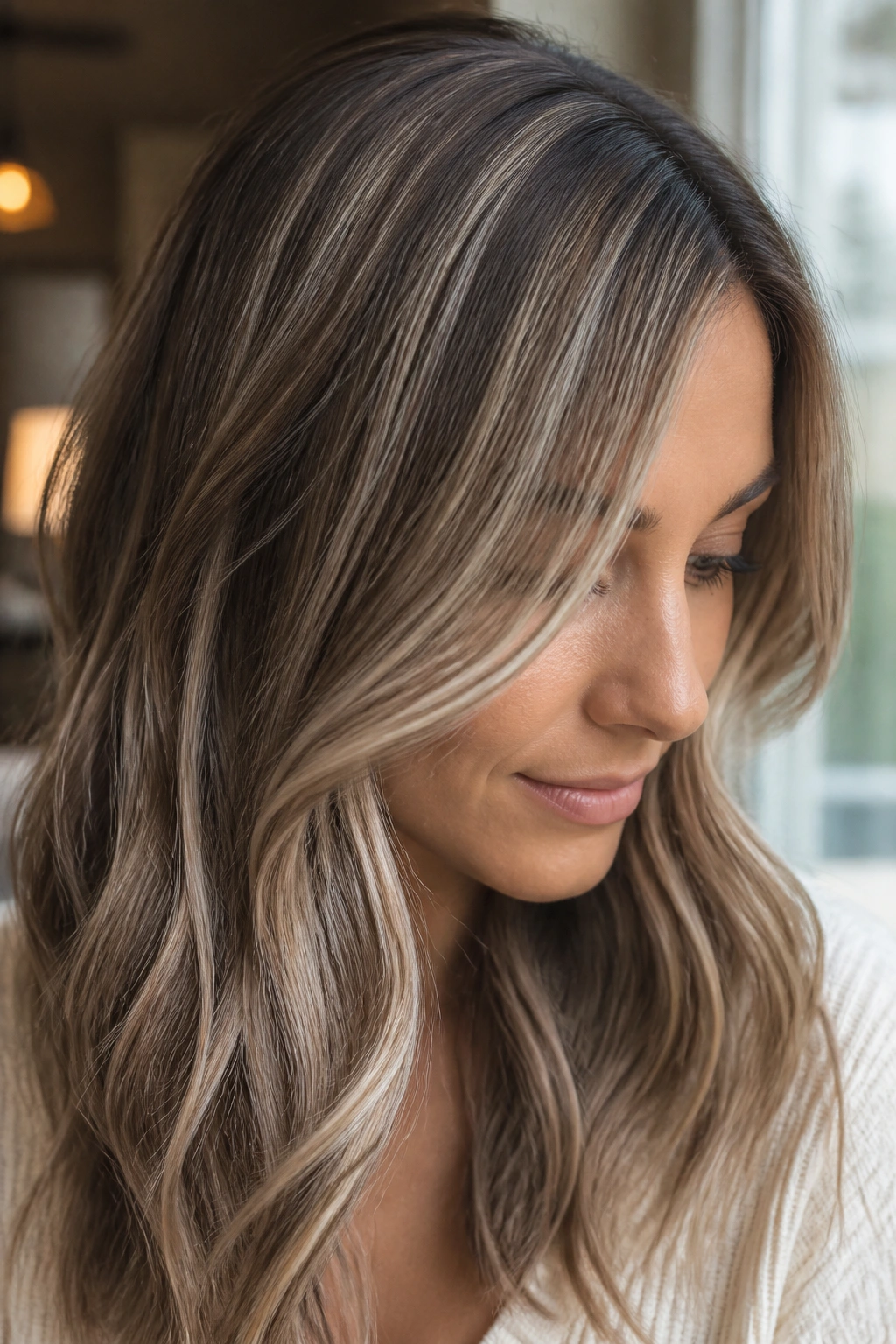
Fine hair can look thicker when the highlights are tiny. Ash brown, sand, and pearl babylights create a soft, airy weave that reads like texture instead of obvious color blocks.
Babylights are the key here. The sections stay narrow — often around 1/16 to 1/8 inch — so the color slips through the hair instead of sitting on top of it. Ash brown keeps the base cool, sand adds a muted lift, and pearl gives just enough brightness to make the surface shimmer.
- Best for fine hair and short layers
- Good if you want low contrast
- Ask for very thin foils around the part line
- Keep the pearl pieces sparse near the roots
Small detail, big payoff: this look can make straight hair seem fuller because the color breaks up the surface so cleanly.
8. Walnut, Almond, and Vanilla Bronde
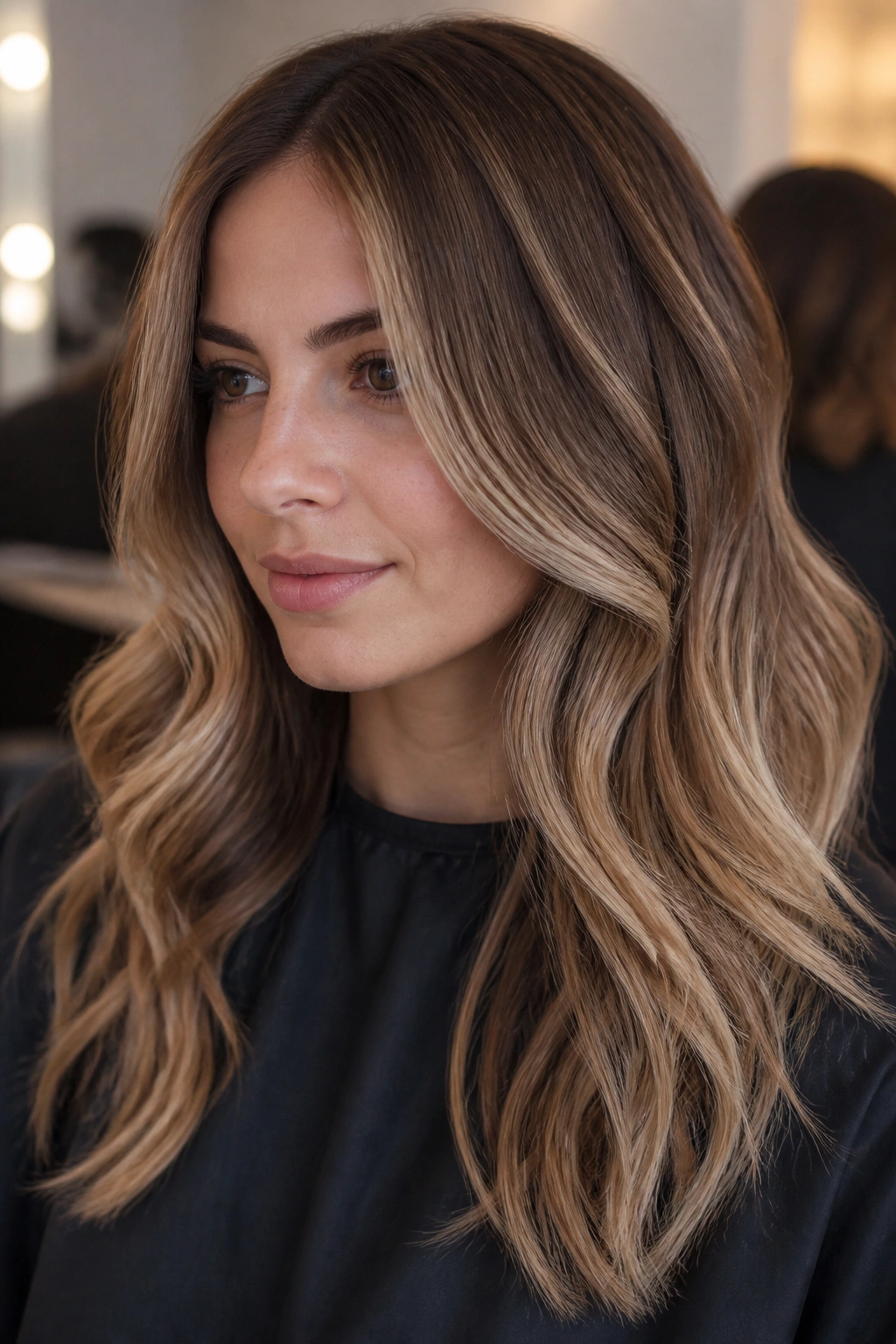
Bronde works because it doesn’t pick sides. Walnut keeps the brunette side of the story intact, almond softens the middle, and vanilla gives you that lighter finish without turning the whole head blonde.
This mix is nice on medium-length cuts, especially when the layers are subtle. The walnut pieces hold depth near the roots, almond gives a sweet neutral bridge, and vanilla lands where the sun would naturally hit. The result feels calm, not flashy.
If you’ve ever loved caramel but wanted something a little less warm, this is the better lane. It still has warmth, but the tone stays more neutral. That matters if your skin gets overwhelmed by strong gold.
I’d pick this for someone who wants soft brightness and doesn’t want to babysit high-contrast color every few weeks.
9. Ginger, Copper Penny, and Apricot Ends
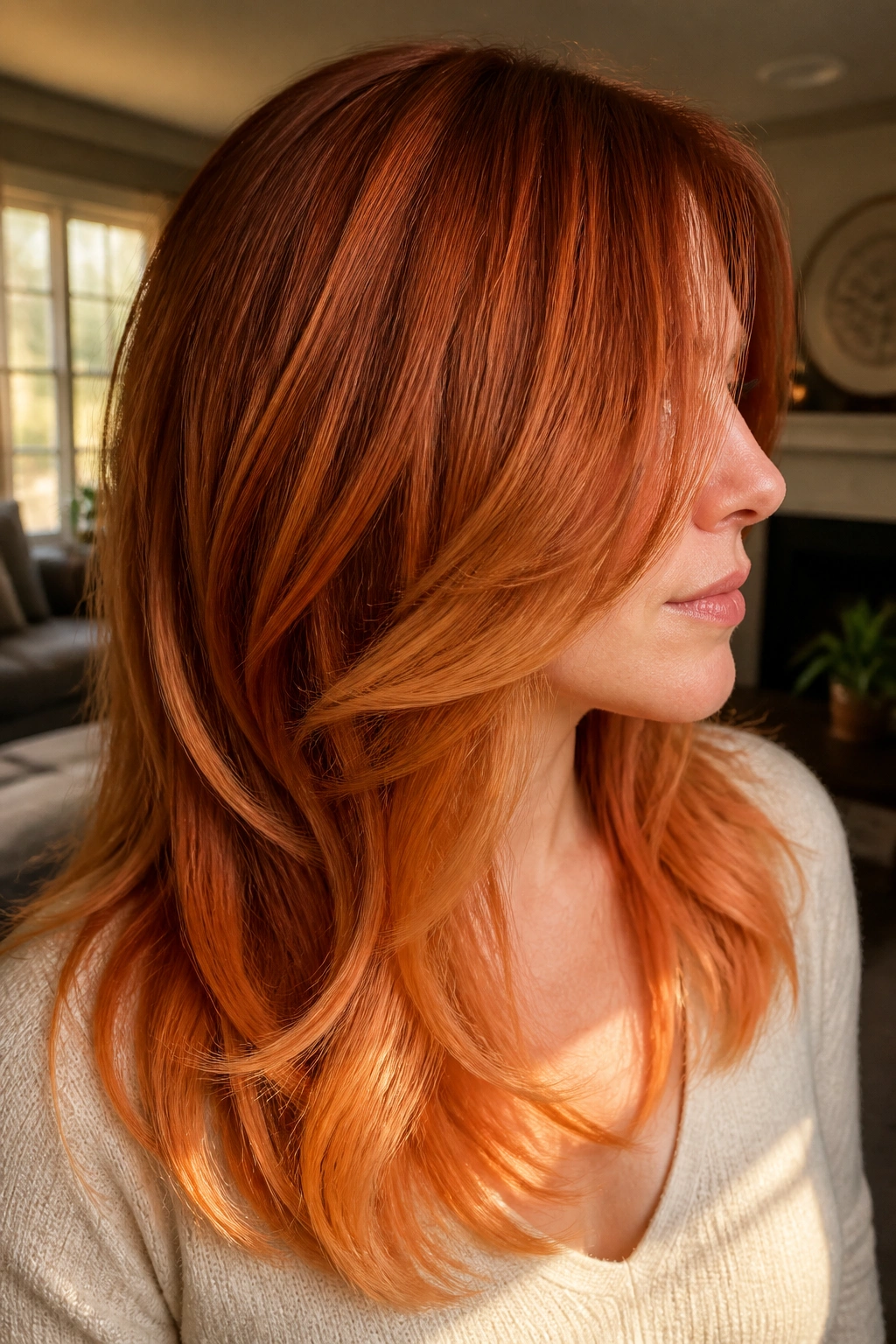
Can one red palette feel bright without going neon? Absolutely. Ginger, copper penny, and apricot give red hair dimension by moving from earthy warmth to lighter, fruitier ends.
How to keep it wearable
Ginger should sit closest to the base or natural shade. Copper penny gives the richer midtone, and apricot belongs at the ends or on a few face-framing pieces where you want the color to pop. That sequence keeps the look from feeling too flat or too bright all at once.
This trio works best when the cut has some swing. A blunt, one-length finish can still handle it, but layers make the apricot show up in a nicer way. The biggest risk is fading, because apricot can slip out fast if the hair is porous.
- Use color-safe shampoo and cooler water
- Refresh with a copper or strawberry gloss
- Keep apricot concentrated on the top layers if you want easier upkeep
The whole look is warmer and friendlier than a sharp red. That’s the charm.
10. Mahogany, Cinnamon, and Gold Dimension
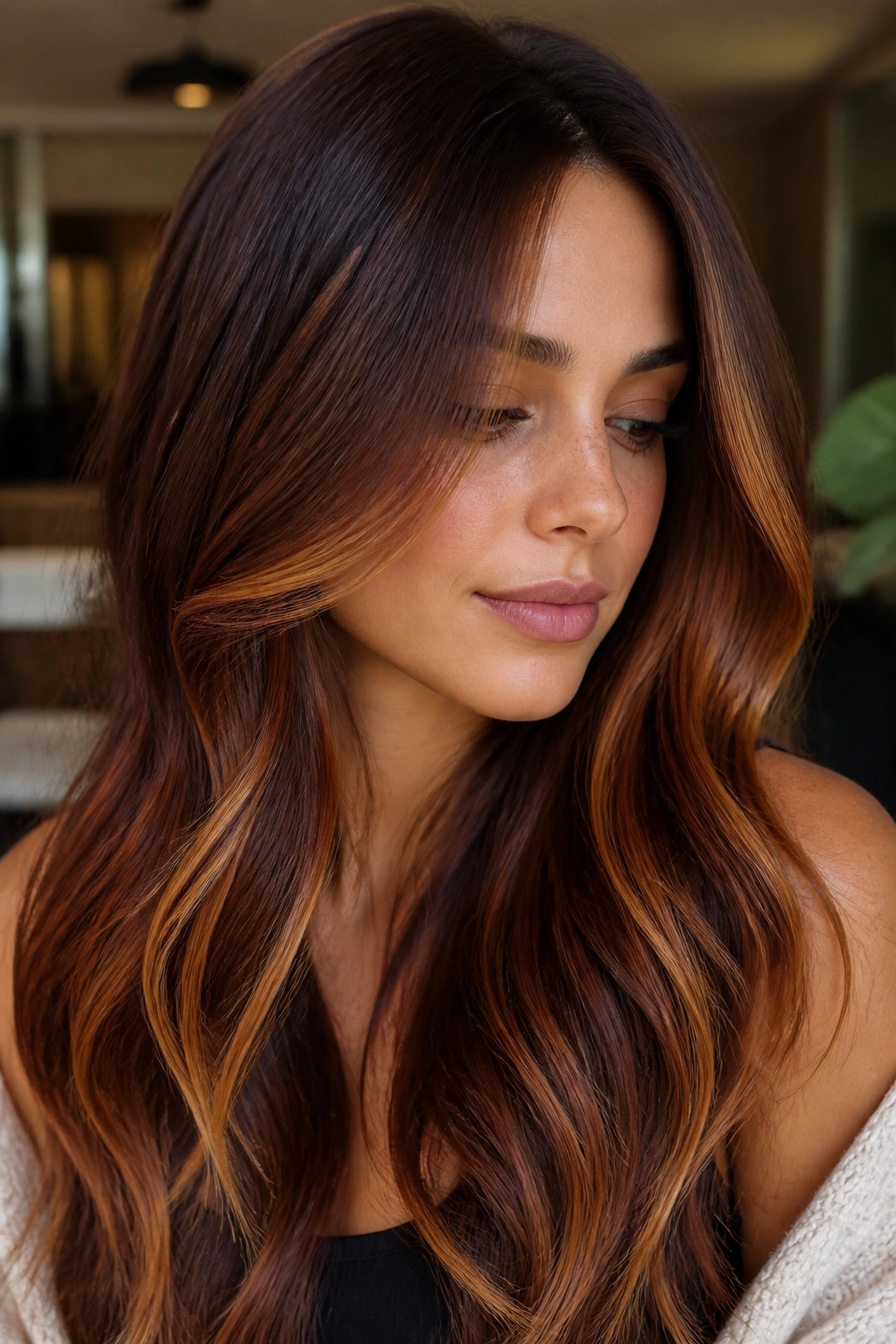
This is the color you notice at dinner, not just under bathroom lights. Mahogany, cinnamon, and gold create a rich, glowing brunette-red mix that feels deep at the root and lively through the ends.
Mahogany gives the hair a wine-dark base. Cinnamon adds warmth and a little spice through the mid-lengths. Gold is the bright thread that keeps the whole thing from sinking into one dark block. On curls, the tones separate beautifully. On straight hair, they look sleek and glossy.
A lot of people worry gold will look brassy here. It won’t, if it’s placed as a small accent instead of a full bright sheet. You want flashes, not floodlights.
- Strong on medium-to-thick hair
- Looks especially good with soft layers
- Ask for a warm gloss, not a yellow toner
- Best when the gold sits around the front and lower layers
The finish is rich, a little moody, and not boring for a second.
11. Rose Brown, Mauve, and Soft Beige Melt
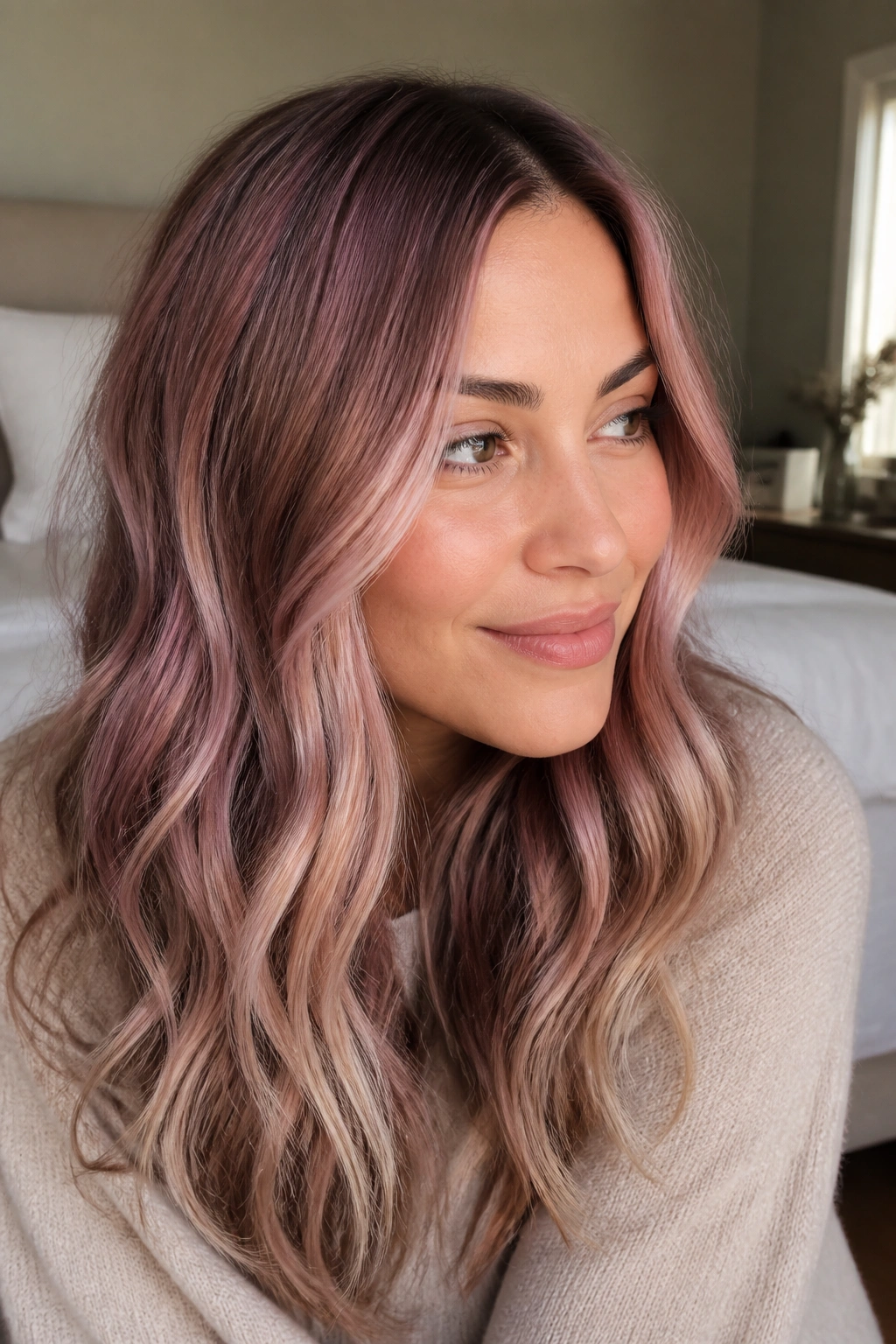
Can pink hair still feel calm? Yes, if you mute it the right way. Rose brown gives the base a dusty blush, mauve adds a cooler pink-lavender note, and soft beige keeps the whole melt wearable.
This trio is one of the nicer ways to play with fashion color without going loud. Rose brown is the anchor, mauve gives the tint, and beige lightens the edge so it doesn’t look too heavy. On pre-lightened hair, the colors blend into each other in a way that feels polished, not candy-colored.
The best version uses a gentle root shadow and a glossy finish. That helps the rose and mauve stay soft instead of chalky. If your hair tends to be porous, the beige can overtake the pink faster than you’d expect, so placement matters.
It’s a good option if you want something unusual but still grown-up enough to wear every day.
12. Icy Blonde, Silver, and Cream Lowlights
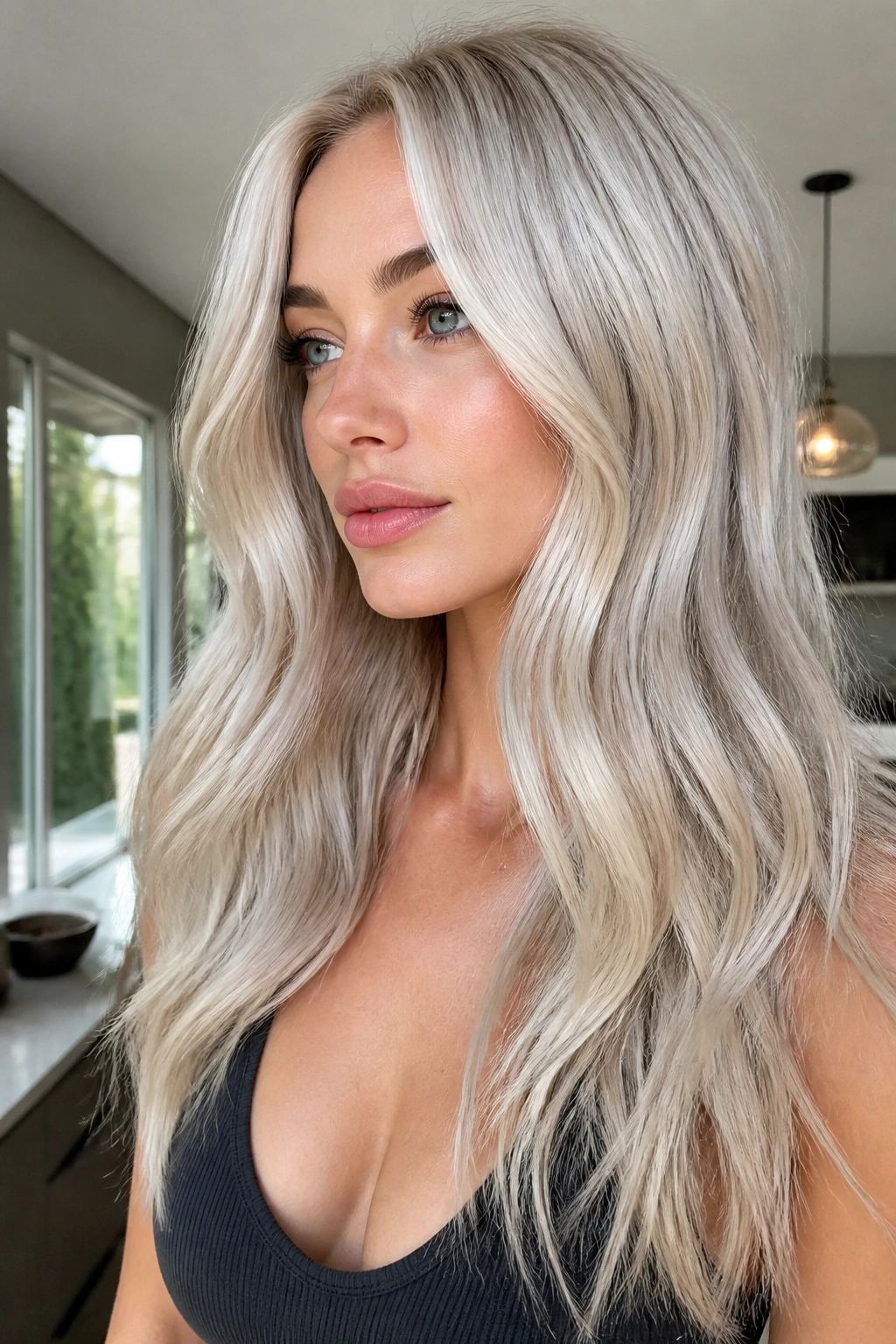
A flat platinum blonde can look sharp in photos and a little dead in person. Icy blonde, silver, and cream lowlights fix that by giving the hair more places to bend visually.
Silver acts as the cool bridge. Icy blonde provides the brightness, and cream lowlights keep the look from turning into one harsh white sheet. That lowlight step is the part people skip, then wonder why their blonde feels flat. Depth matters, even in pale color.
Why it works
The contrast is subtle, not loud. Tiny shifts between silver and cream create movement across the surface, which makes the blonde look fuller and cleaner. It also softens regrowth a bit, because the cream pieces stop the root line from shouting.
- Best on cool skin tones or neutral undertones
- Works well with blunt bobs and polished waves
- Ask for a violet or blue-based toner if the blonde pulls yellow
- Keep the cream pieces around the interior, not only the top layer
This is the blonde for someone who likes crisp color but still wants a little depth.
13. Honey Blonde, Buttercream, and Champagne Ribbons
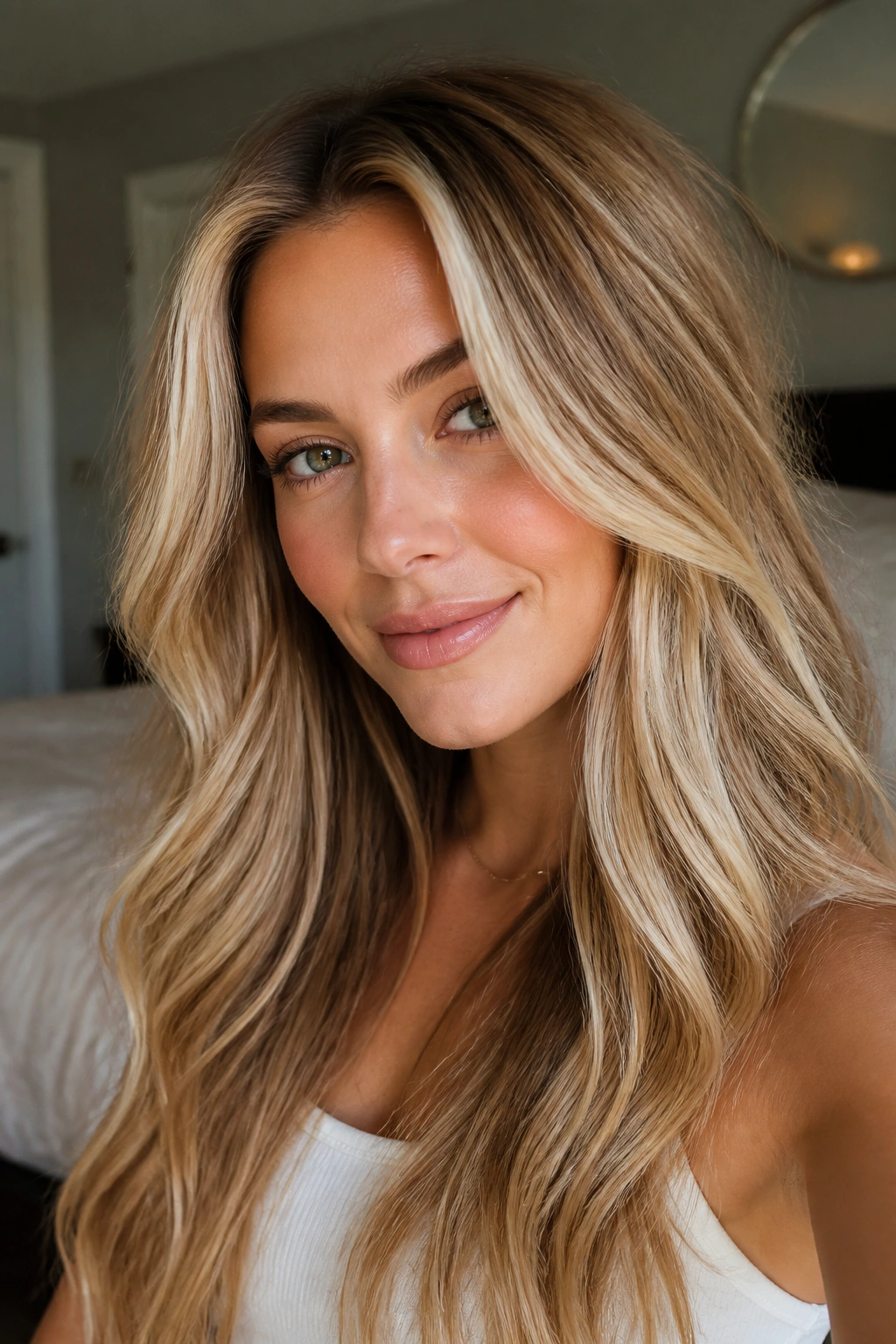
Warm blonde gets a lot easier to wear when the tones are not identical. Honey blonde brings the depth, buttercream lightens the middle, and champagne gives the brighter ribbons that make the style feel lifted.
Why it works
The trio has a clear temperature shift without a hard break. Honey is warm and rich. Buttercream softens that warmth. Champagne adds a cleaner shine near the face and on the top layers, especially if the haircut has movement.
- Good for layered cuts and blowouts
- Ask for soft ribbons, not heavy foils
- Keep the champagne near the front and crown
- Use a gloss that protects the warm tone from turning flat
This palette is especially kind to hair that lifts gold easily. Instead of fighting the warmth, it uses it and keeps it polished. The result looks sunny without turning striped.
My take: it’s one of the easiest tri-color blonde ideas to live with if you like warmth and hate harsh grow-out.
14. Cocoa, Maple, and Gold Curls
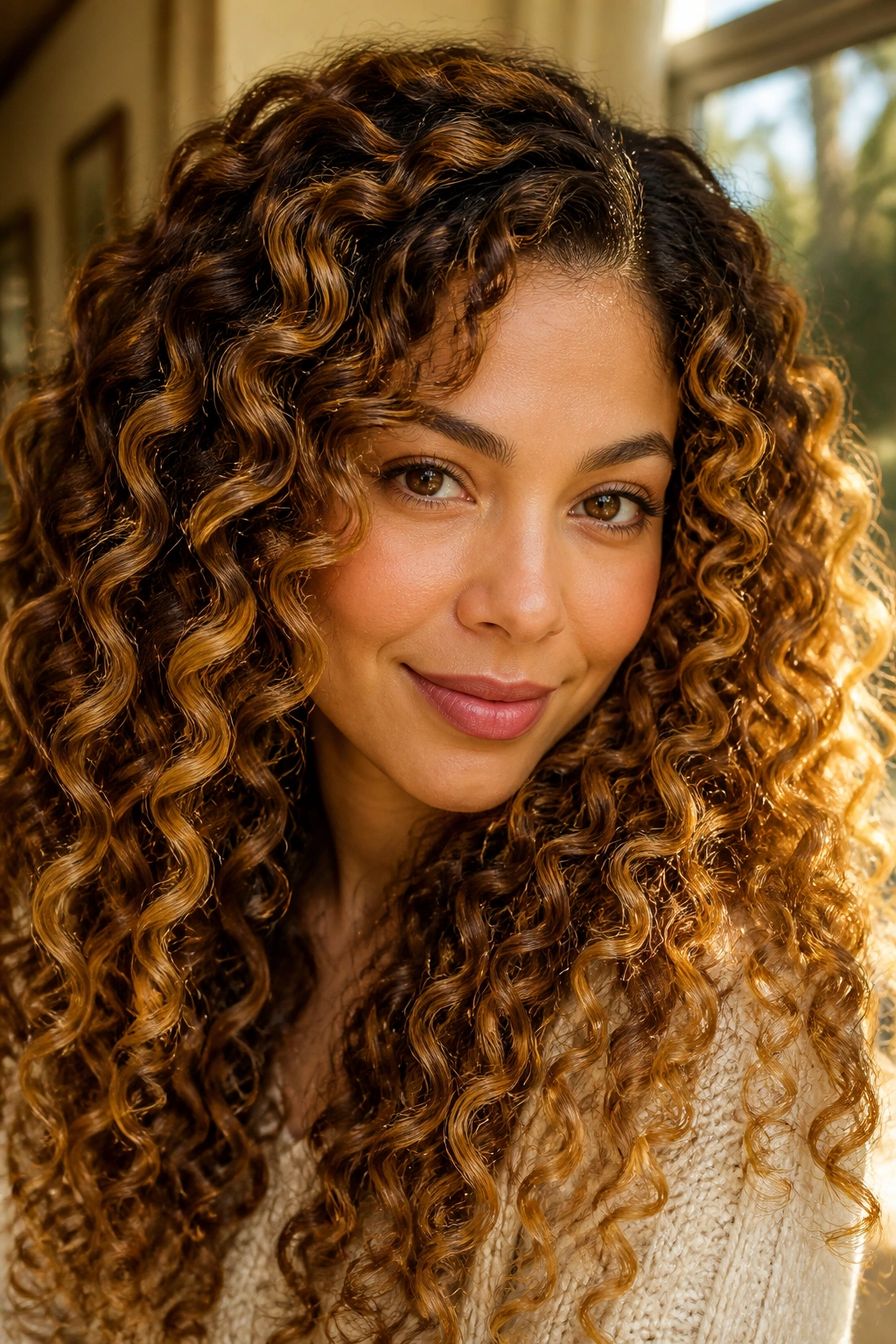
Curly hair needs color in bands, not stripes. Cocoa, maple, and gold follow the curl pattern instead of fighting it, so each coil catches light in its own way.
Cocoa stays closest to the base and holds the shadow in the denser parts of the curl. Maple brings a warm middle tone through the springiest sections. Gold gets painted on the outer ring of curls and the face-framing layers, where it flashes when the hair moves. That placement matters more on curls than almost anywhere else.
If the gold gets painted too evenly, curly hair can look fuzzy instead of dimensional. Better to leave some darker pockets. Those shadows give shape.
- Use hand-painted sections, not rigid stripes
- Focus brighter pieces on the outside of the curl pattern
- Great for medium to thick textures
- Ask for a curl-by-curl gloss after lifting
The best curly color does not hide the pattern. It makes the pattern easier to see.
15. Espresso, Caramel, and Cream Face Frame
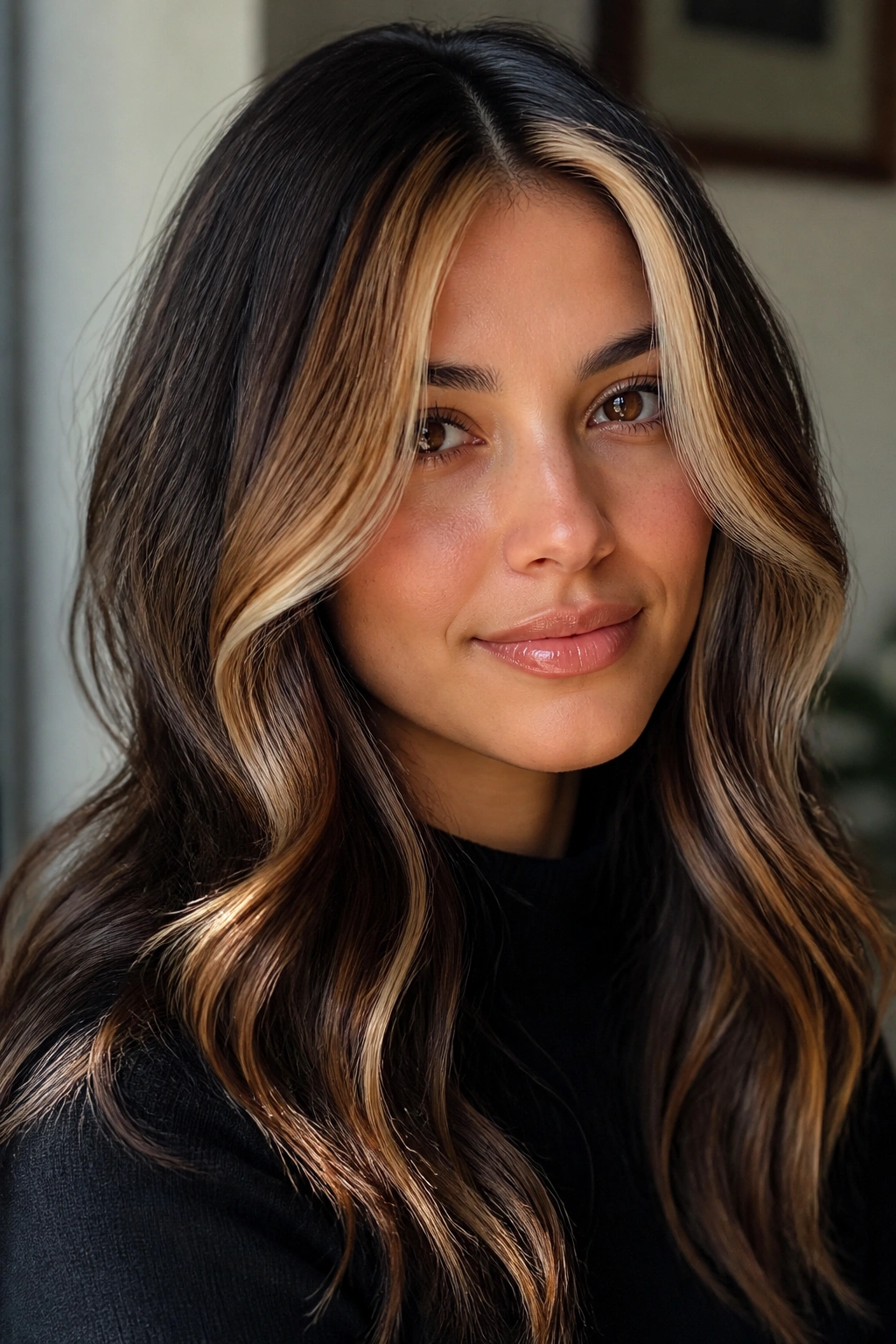
Do you want brightness without losing depth? Espresso, caramel, and cream make that trade easy, especially when the cream stays near the face and the caramel runs through the front layers.
Espresso keeps the roots and lower lengths grounded. Caramel bridges the move to lighter pieces. Cream goes where the eye lands first — temples, cheekbone area, and the top sections around the part. That face-frame effect does more than brighten. It can make a cut look fresher without touching the whole head.
How to wear it
This works well on long layers, lobs, and curtain bangs. If the cream is too chunky, it starts to look disconnected. If it’s too thin, it disappears. The sweet spot is a few clear pieces that still feel soft.
- Ask for a strong face-framing money piece
- Keep the interior caramel pieces lighter than the base, but not blonded out
- Add a neutral gloss so the cream stays clean
- Great when you want visible change without full-head maintenance
It’s a practical color move. You see the change right away, and the grow-out stays calmer than you’d expect.
16. Smoky Brunette, Ash, and Mushroom Dimension
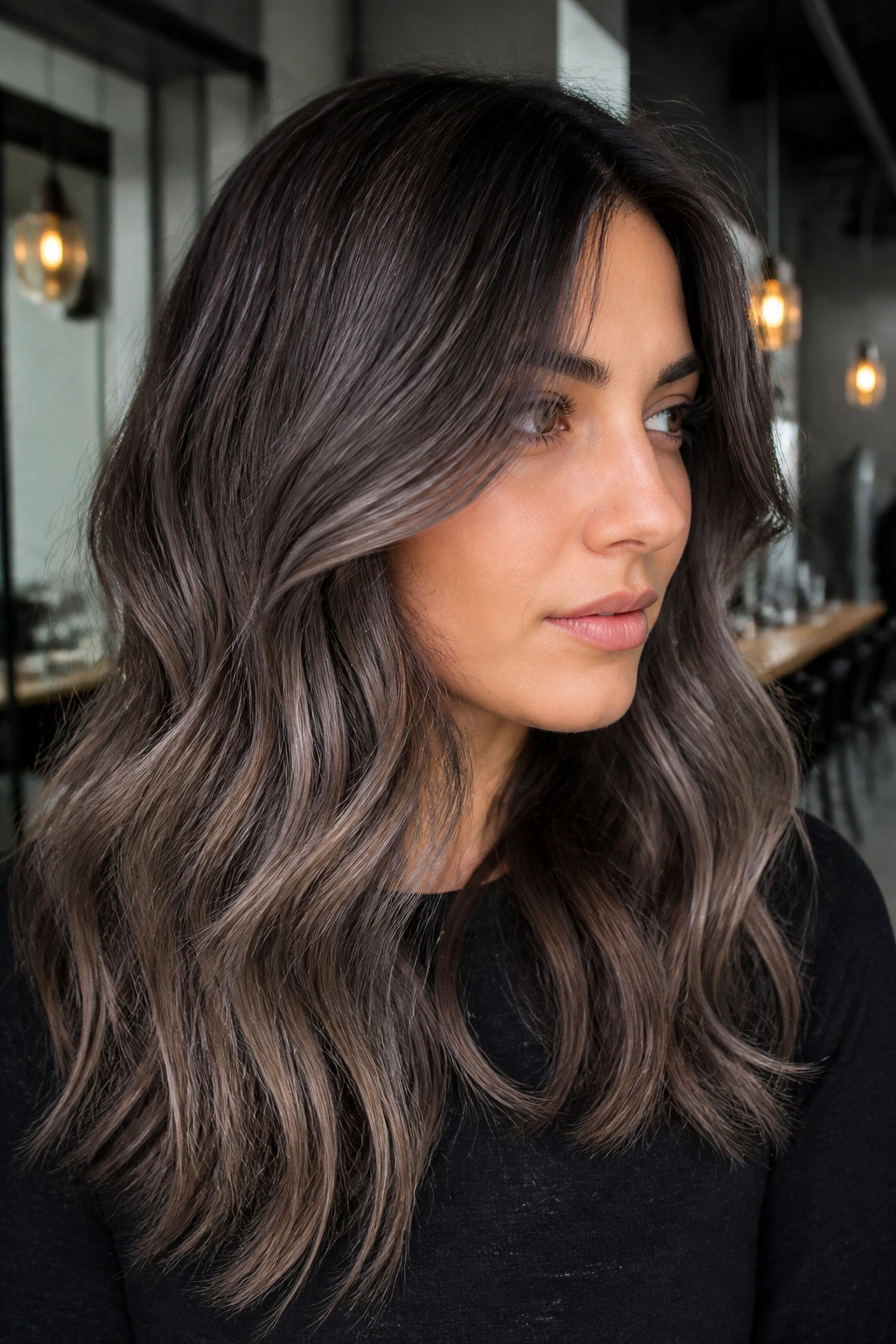
Cool brunette color can look very modern when it stays quiet. Smoky brunette gives the base, ash softens the mid-tones, and mushroom brings the ends into that muted brown-gray space people love on straight hair and loose waves.
Unlike warmer balayage, this palette does not chase gold. It leans cool, slightly matte, and a touch editorial. That makes it a strong choice if orange tones bother you or if your natural hair already pulls warm when lightened.
The secret is keeping the ash pieces thin enough that they read as depth, not streaks. Mushroom should live through the lower lengths, where it can dull the brightness a little and make the brunette look plush instead of loud.
- Best for medium to dark bases
- Good on blunt cuts and mid-length layers
- Ask for cool toner maintenance every few weeks
- Avoid over-lightening the ash pieces, or they can go dull fast
The look is understated, but not boring. There’s a difference.
17. Merlot, Auburn, and Copper Ribbon Lights
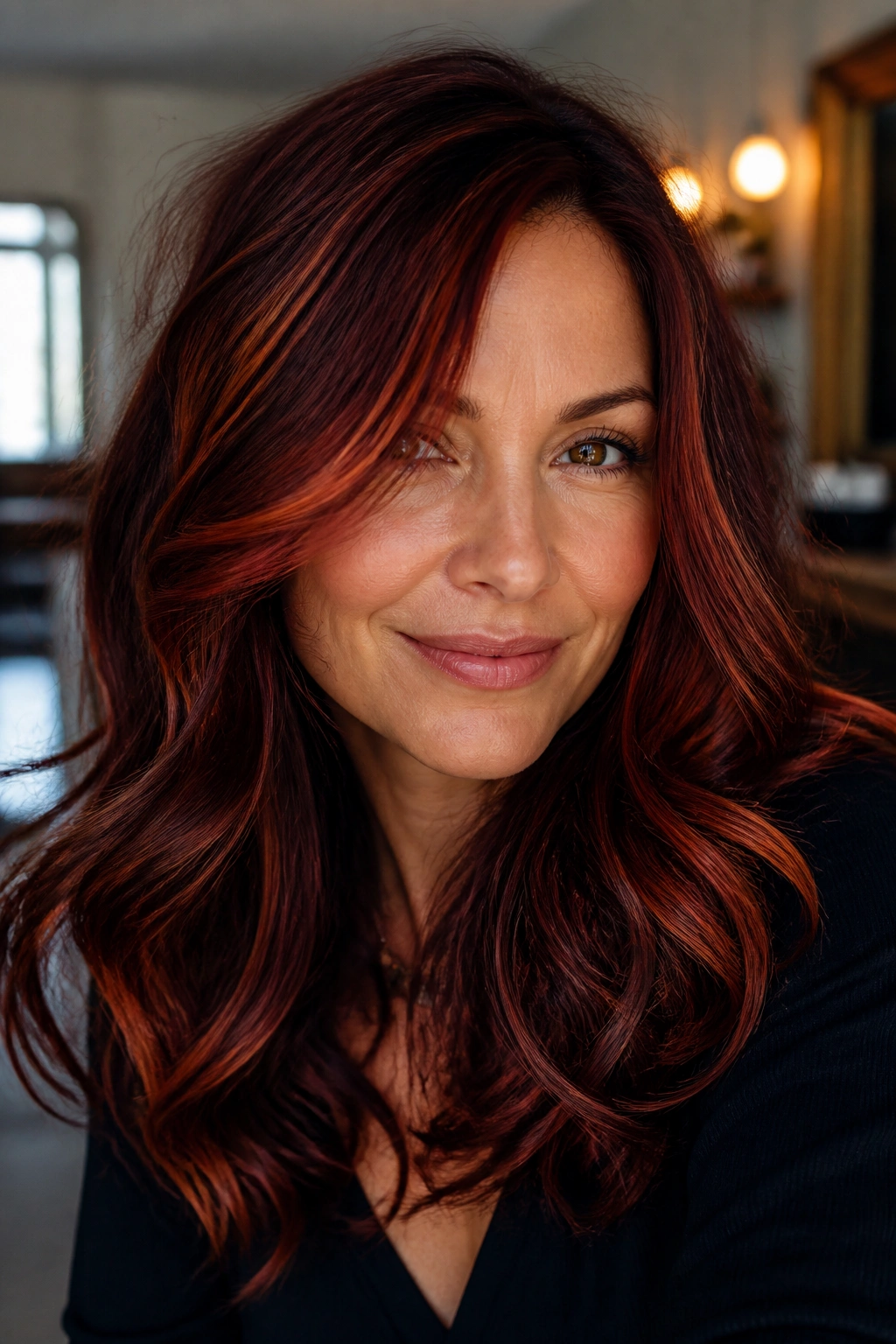
Merlot hair has a deeper, wine-dark feel than cherry red, and that makes it a nice base for tri-color highlights. Merlot, auburn, and copper give the color a slow fade from deep to bright.
Merlot holds the shadow. Auburn warms the middle. Copper brings the shine through the top layers and around the front. On glossy hair, the result shifts beautifully as you move from indoor light to daylight. It never sits still for long, which is half the fun.
This trio looks best when the copper is not overdone. A few brighter ribbons go a long way, especially if the base is already rich. Too much copper and you lose the merlot depth that makes the whole thing feel grown and dimensional.
A good gloss keeps the red family connected. Without it, the auburn and copper can start looking separate, and that’s when the color loses its polish.
18. Dusty Rose Blonde, Peach, and Rose Gold
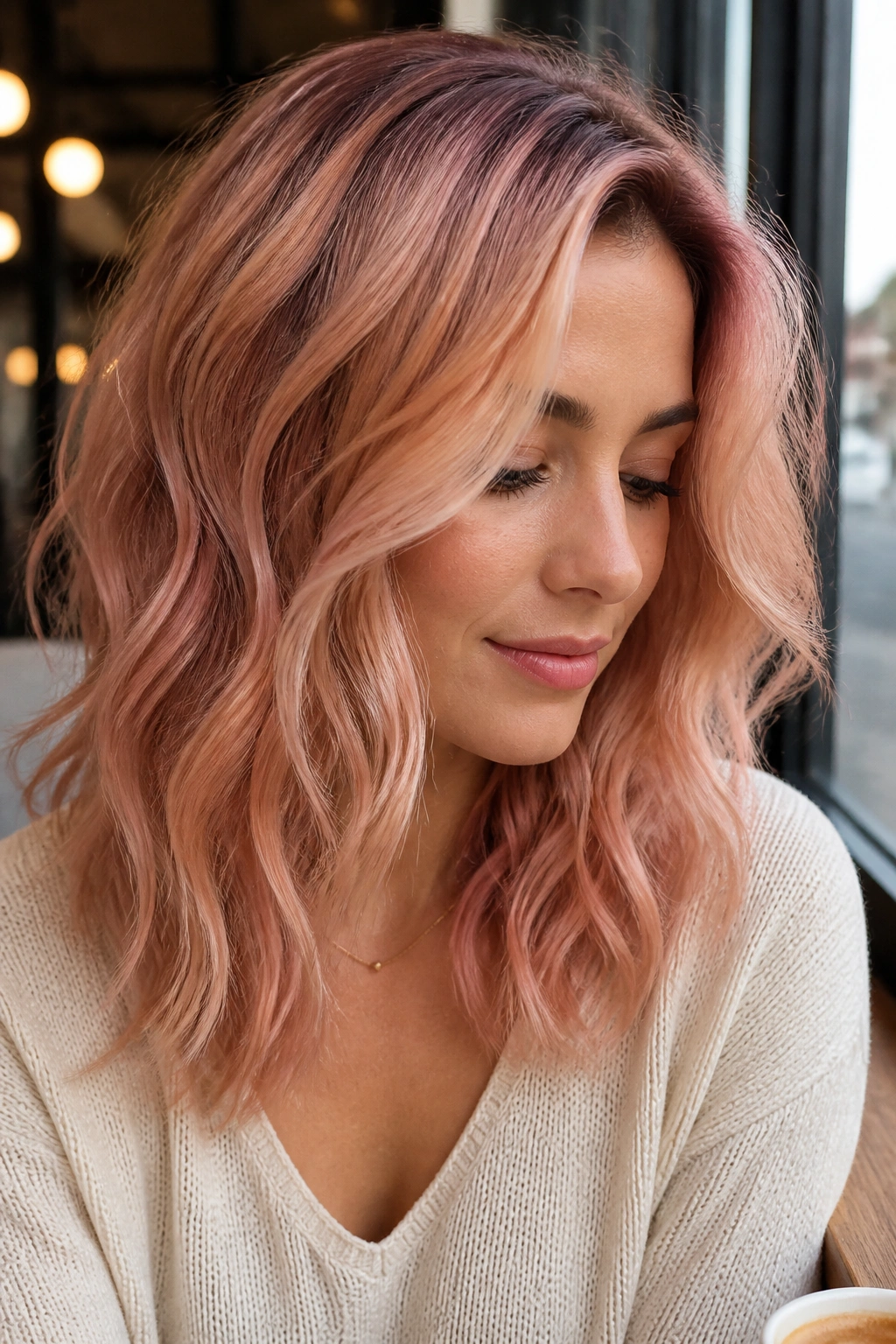
Soft pink hair looks better when the tones are mixed like makeup, not paint. Dusty rose blonde gives you the base, peach adds warmth, and rose gold brings the gleam.
The dusty rose keeps the overall effect muted. Peach stops it from going too cool or too gray. Rose gold catches the light on the top layers and ends, so the hair still feels bright. On soft waves, this combination looks especially nice because each bend in the hair picks up a slightly different tone.
This idea works best on pre-lightened hair that can hold pastel shades. Porous hair can grab the peach faster than you’d expect, so the application needs to be even. A pastel gloss can help the colors stay linked instead of patchy.
- Great for shoulder-length cuts and textured bobs
- Refreshes well with a tinted conditioner
- Keep the rose gold lighter around the face
- Best if you like color that feels gentle, not loud
It’s sweet, but not sugary. That balance is the whole point.
19. Charcoal, Silver, and Slate Gray Blend
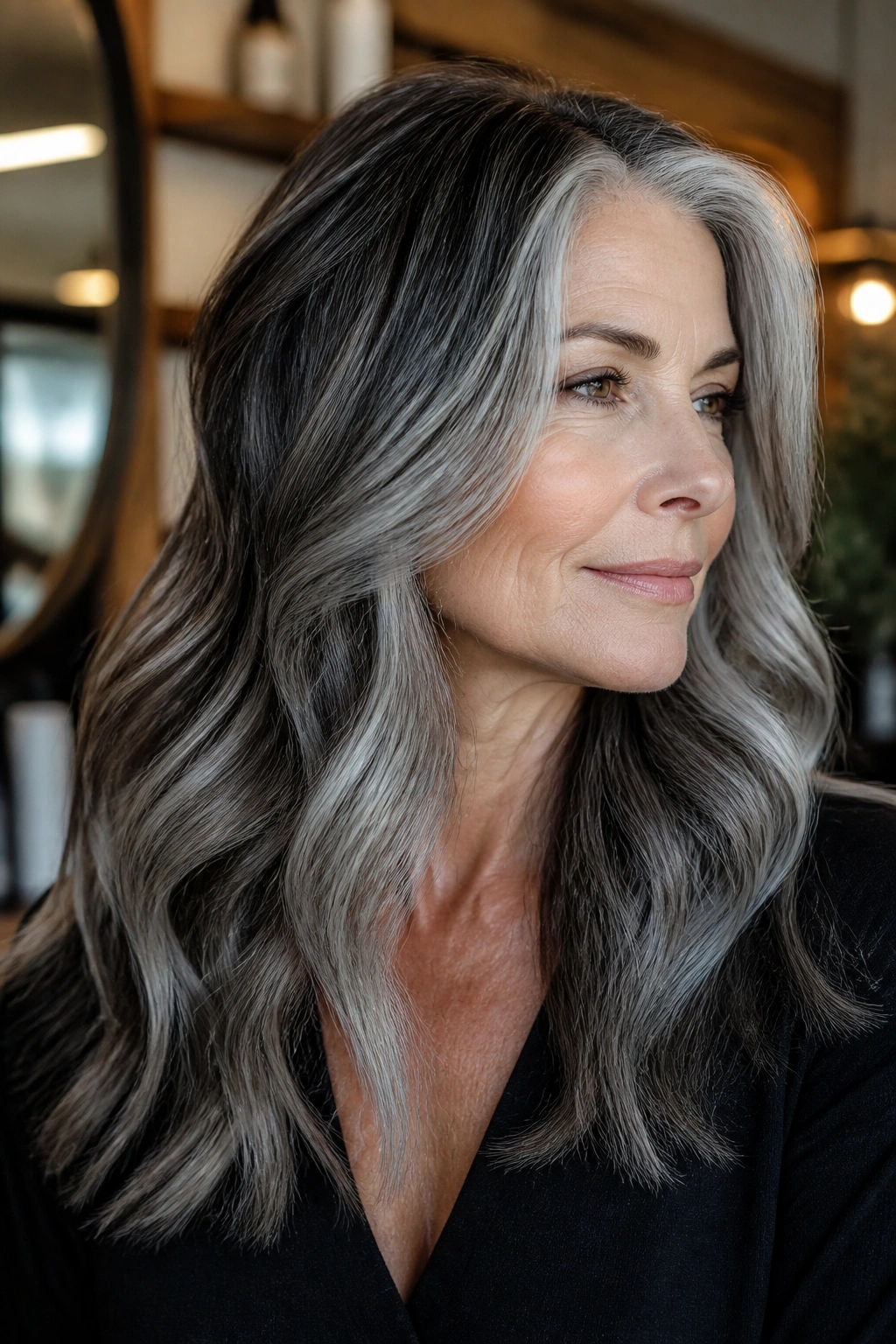
Gray blending does not have to hide the gray. Charcoal, silver, and slate can work with natural grays instead of fighting them, and the result looks sharper than flat dye.
Charcoal anchors the darker pieces near the roots and underneath layers. Silver lifts the visible strands and gives them shine. Slate sits in the middle so the contrast stays soft. On hair that’s starting to silver naturally, this trio can make the transition look intentional without demanding full coverage.
What to watch for
The big mistake is making the silver too bright and the charcoal too dense. Then the hair reads harsh. Keep the slate pieces woven through the mid-lengths, and the whole thing looks smoother.
- Great for transition clients
- Works on bob lengths and longer gray-blend cuts
- Ask for low-maintenance placement around the temples and part
- Use a cool gloss to keep the silver crisp
This is one of the few color ideas that gets better as it grows out. The lines soften, and the blend gets even more believable.
20. Walnut, Wheat, and Pale Gold Lob Lights
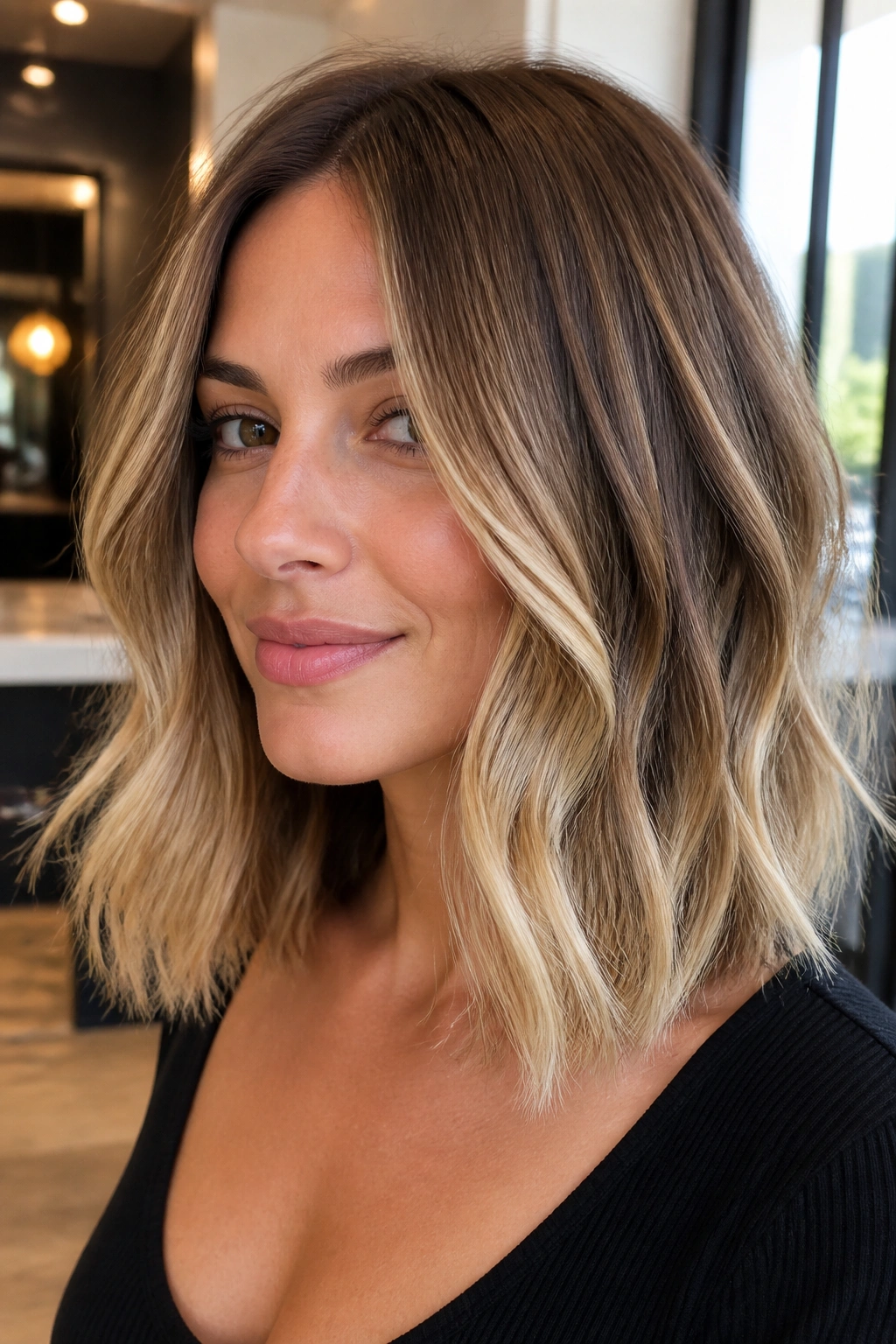
A lob does not need much to look dimensional. Walnut, wheat, and pale gold can make a shorter cut feel layered and expensive without dumping a lot of color into it.
Walnut keeps the base grounded, especially if the haircut sits around the shoulders or collarbone. Wheat adds a soft neutral lift through the middle. Pale gold lands on the outer layers, where the light hits first and where movement shows fastest. Because the cut is shorter, each highlight has more visual weight — there is less hair to hide behind.
This trio works nicely with a slight bend, a round brush blowout, or soft waves. The highlights do not need to be loud. In a lob, even small shifts in tone show up quickly, which is why the color can stay tasteful and still read clearly.
If you want one line to take to the salon, make it this: keep the walnut at the root, float the wheat through the middle, and let the pale gold kiss the ends and face frame. That’s enough. More than enough.
