



Pool days are hard on hair in a way that surprises people the first few times. Water makes strands slippery, sunscreen leaves the hairline slick, wind finds every loose piece, and a towel rubbing against damp hair can undo a style in minutes. Pool day hairstyles that stay in place usually have one thing in common: they’re anchored close to the scalp, reinforced with the right pins or elastics, and kept simple enough that they don’t have much room to fall apart.
That’s the part many people miss. A cute clip can finish a look, but it can’t hold a heavy, wet section of hair by itself. If you actually plan to swim, the styles that last are the ones that use tension in a smart way — braids, twists, low buns, and ponytails that are secured at more than one point. Wet hair has weight. Dry hair does not act like wet hair. That difference matters more than most styling advice admits.
I’ve always liked styles that look intentional even after a splash. A neat braid that stays smooth, a low bun that doesn’t sag down your neck, a bubble ponytail that still looks finished after a few cannonballs — those are the winners. And yes, there’s a little trial and error here, because hair length, texture, and density all change the result.
Start with the styles that match how much swimming you plan to do. A look that works for lounging beside the water may not survive laps, diving, or an afternoon of being chased by wind and humidity. The good part is that you have options, and quite a few of them are easier than they look.
1. Double Dutch Braids
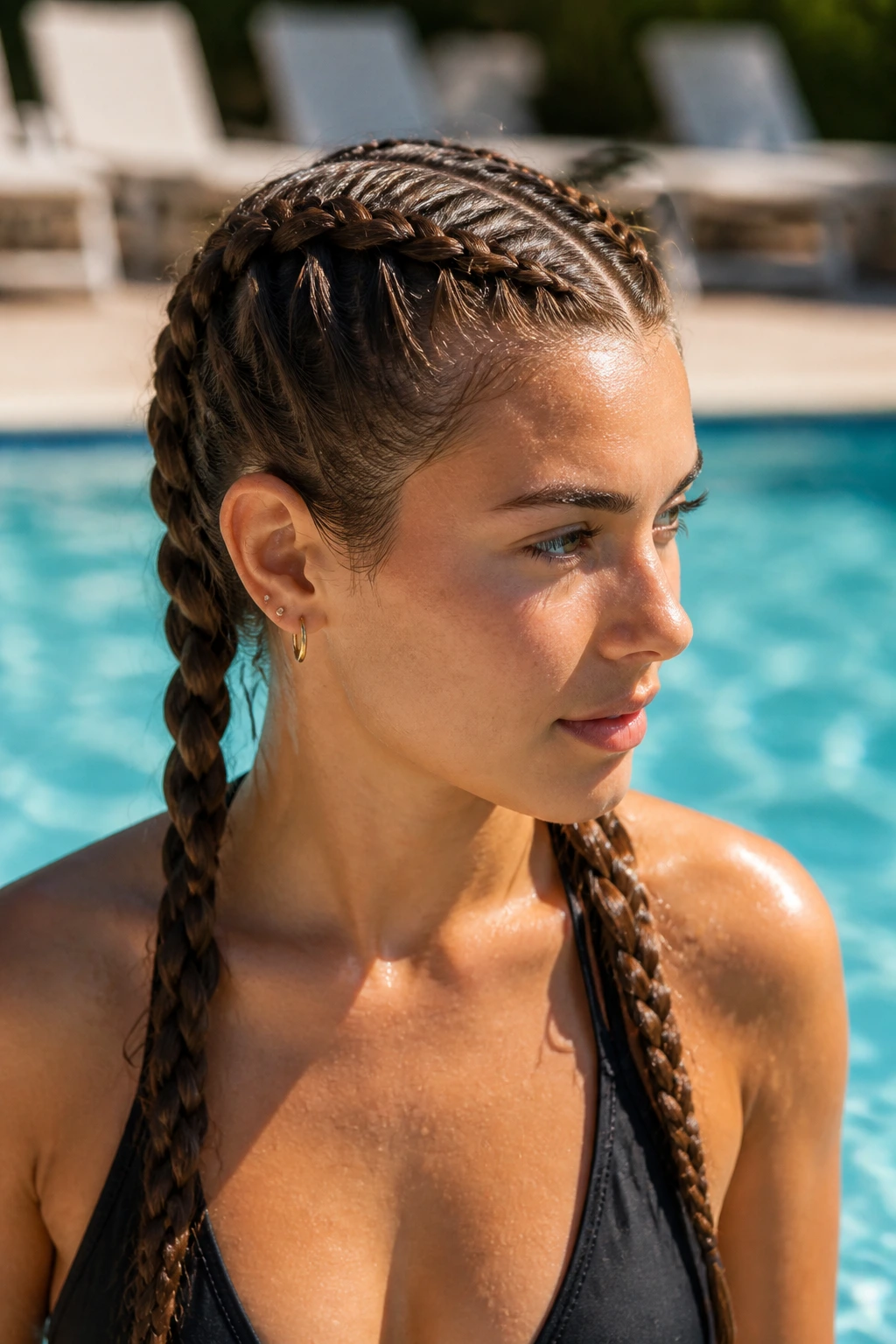
If you want one style that rarely complains at the pool, start here. Double Dutch braids sit close to the scalp, keep the hair divided into two secure lanes, and don’t leave much loose length to whip around once the water hits.
Why They Hold So Well
The braid pattern matters. Dutch braids tuck the strands under instead of over, which gives the braid a bit of height and a firmer feel at the root. That extra grip helps when your hair is damp or slippery.
They also spread the weight across two sides of the head. No heavy ponytail swinging from the crown. No single braid sliding down your back and loosening at the ends. Just a tidy, balanced hold that behaves.
A tiny bit of gel or styling cream at the part line helps a lot. So does starting on hair that has a little texture, not freshly washed silk.
Best for: medium to long hair, straight through coily textures, and anyone who wants a style that can handle a swim without much drama.
Quick tip: Seal the ends with small elastics, then tuck the tails into a low bun if the length is still getting in your way.
2. Sleek Low Bun
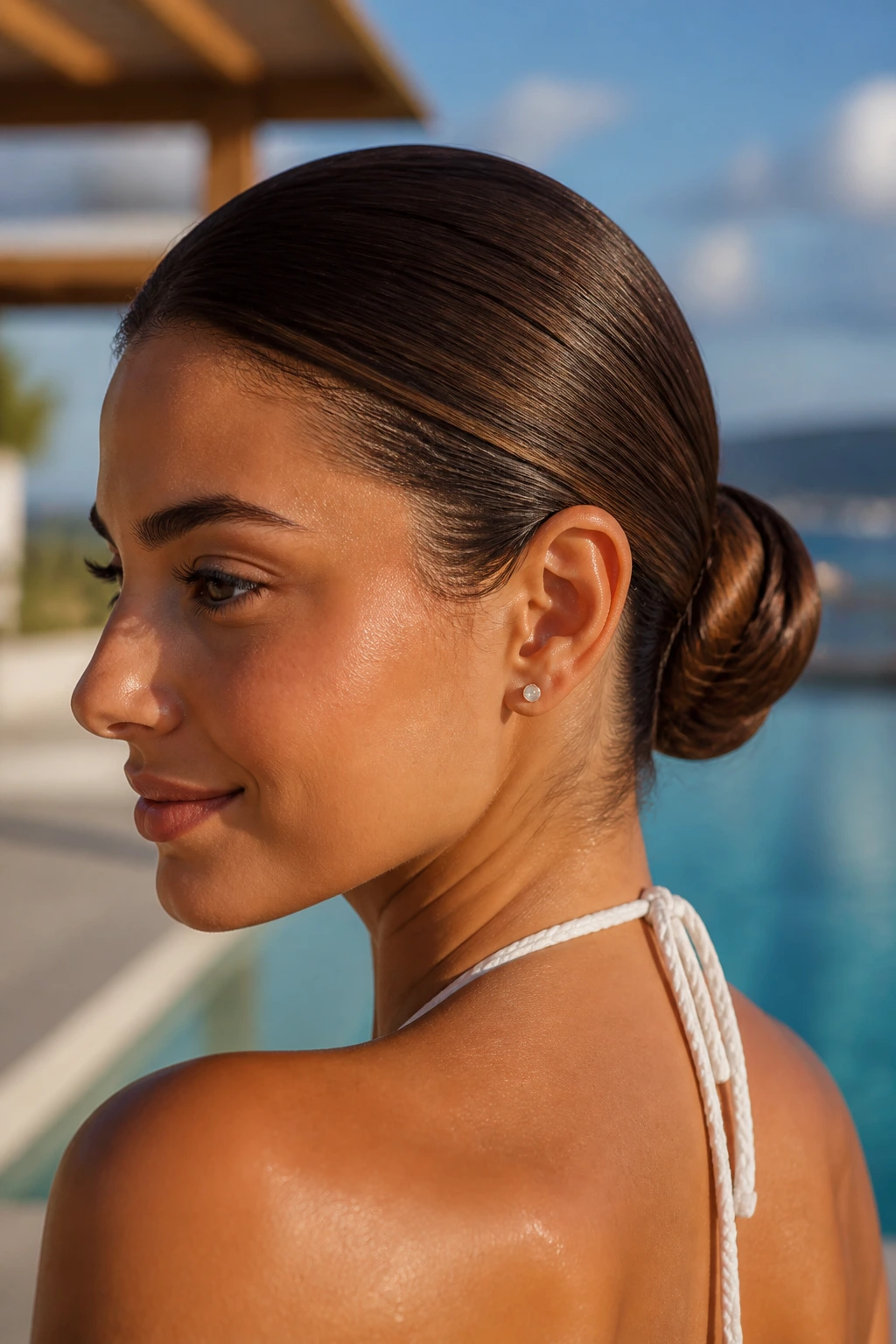
A sleek low bun is the hairstyle version of a calm voice in a loud room. It stays put because it’s low, compact, and hard to knock loose once it’s pinned properly.
What makes it work is the center of gravity. When the bun sits at the nape, it doesn’t bounce as much when you move, and it doesn’t catch the wind the way a high style does. That alone makes a big difference.
Use a brush, a fine-tooth comb, and one strong elastic. Gather the hair tightly at the nape, twist it until the length coils on itself, then wrap it into a bun and pin the outer edge with bobby pins placed in opposite directions. Crossing the pins keeps them from sliding out as fast.
This is one of those styles that can look polished or casual depending on how smooth you make it. A little gel on the hairline gives you a cleaner finish. A few soft flyaways are fine if you want it to feel less severe.
3. Boxer Braids Into Low Pigtails

Boxer braids are already known for staying tight, but finishing them into low pigtails makes the style even easier to manage around water. The braids keep the crown locked down, and the low tails give the ends somewhere neat to live.
What Makes This Setup Strong
The braid starts right at the scalp, so there’s little room for the top section to lift. That matters when you dip your head under, come up fast, or spend half the afternoon adjusting sunglasses and towels.
At the nape, you can either tie the braids off as pigtails or fold each one into a small loop and secure it with a pin. I prefer the loop if the hair is long. It keeps the ends from dragging.
- Use two snag-free elastics at the bottom of each braid if your hair is thick.
- Keep the parting clean and even so the braids sit flat.
- Add a tiny bit of edge gel along the hairline if you want less frizz.
- If the braids feel too tight at the start, they’re too tight. Fix that before you leave the house.
This style is practical first. Cute is a bonus.
4. Bubble Ponytail
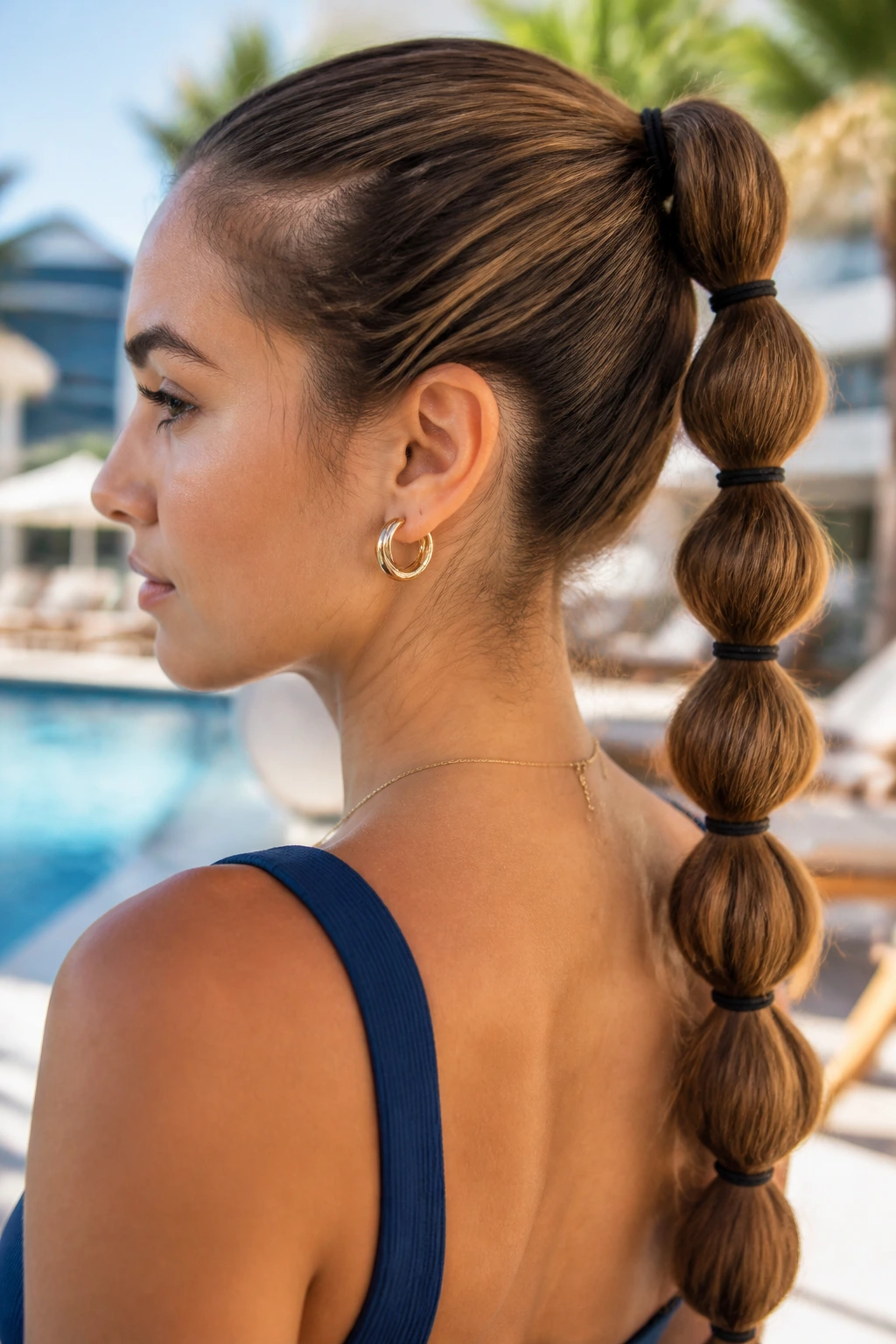
A bubble ponytail looks playful, but the reason it works at the pool is almost boring: the hair is split into smaller sections, and each section is pinned by its own elastic. That means less swinging, less tangling, and fewer chances for the whole ponytail to slide loose.
The spacing matters. Put clear or hair-colored elastics about 1½ to 2 inches apart, then gently tug each section outward until it puffs into a bubble. Don’t yank. You want the shape, not a frayed mess.
I like this style on straight and wavy hair because it keeps the length controlled without forcing it into a full braid. On very thick hair, the bubbles look chunky and secure. On fine hair, they read a little softer and still hold up well if the base ponytail is tight.
One small warning: if the hair is extremely slippery, add a touch of styling cream before you tie it back. Otherwise the bubbles can collapse before you reach the pool ladder.
5. Crown Braid

A crown braid is one of those styles that saves the front of your hair from the whole pool-day battle. It wraps around the hairline, keeps pieces off your face, and does a decent job of staying put even when the back gets damp.
Where It Works Best
The braid can start on one side and travel around the head like a halo, or it can be built as two braids that meet at the back. I usually prefer the first version for medium-length hair because it feels cleaner and uses fewer pins.
The magic is in the anchoring. Pin the braid every few inches, not just at the end. If you wait until the last second, the whole thing can loosen at the temples first, and that’s the part people notice most.
- Start with a little texture spray or light mousse if your hair is very smooth.
- Keep the braid snug, especially near the ears.
- Hide the tail under the braid instead of letting it hang.
- Use flat pins that match your hair color if you want a cleaner finish.
This one is calm, neat, and better than it sounds.
6. Wet-Look Ponytail with Gel
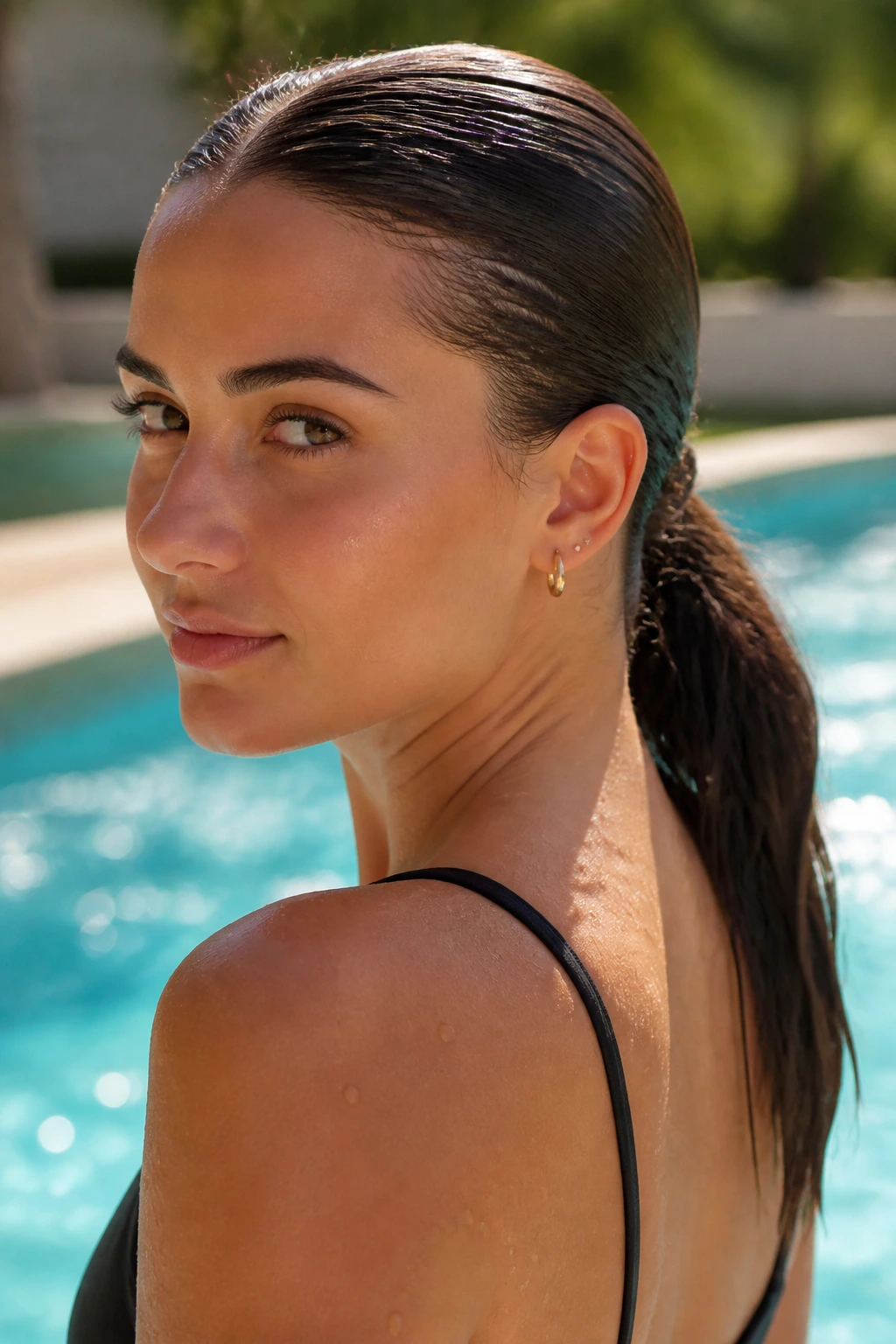
A wet-look ponytail is one of the few pool hairstyles that gets away with looking better after it gets damp. That sounds backward, but it’s true. The style already leans into a slick finish, so a little water doesn’t ruin the look the way it does with softer styles.
The key is to smooth the front tightly with gel and a brush before you tie it back. I like a low or mid-height ponytail for this because it sits flatter against the head and doesn’t swing as much. Wrap a small strand around the elastic if you want the base to look finished.
Too much gel is the mistake here. A pea-sized amount at the temples and hairline usually does the job. More than that can turn crunchy and flake once it dries, which is not a cute pool-chair moment.
This style works especially well if you’re going straight from shower to pool. Damp hair plus gel gives you a clean, intentional look that holds without much effort.
7. French Braid with Tucked Ends
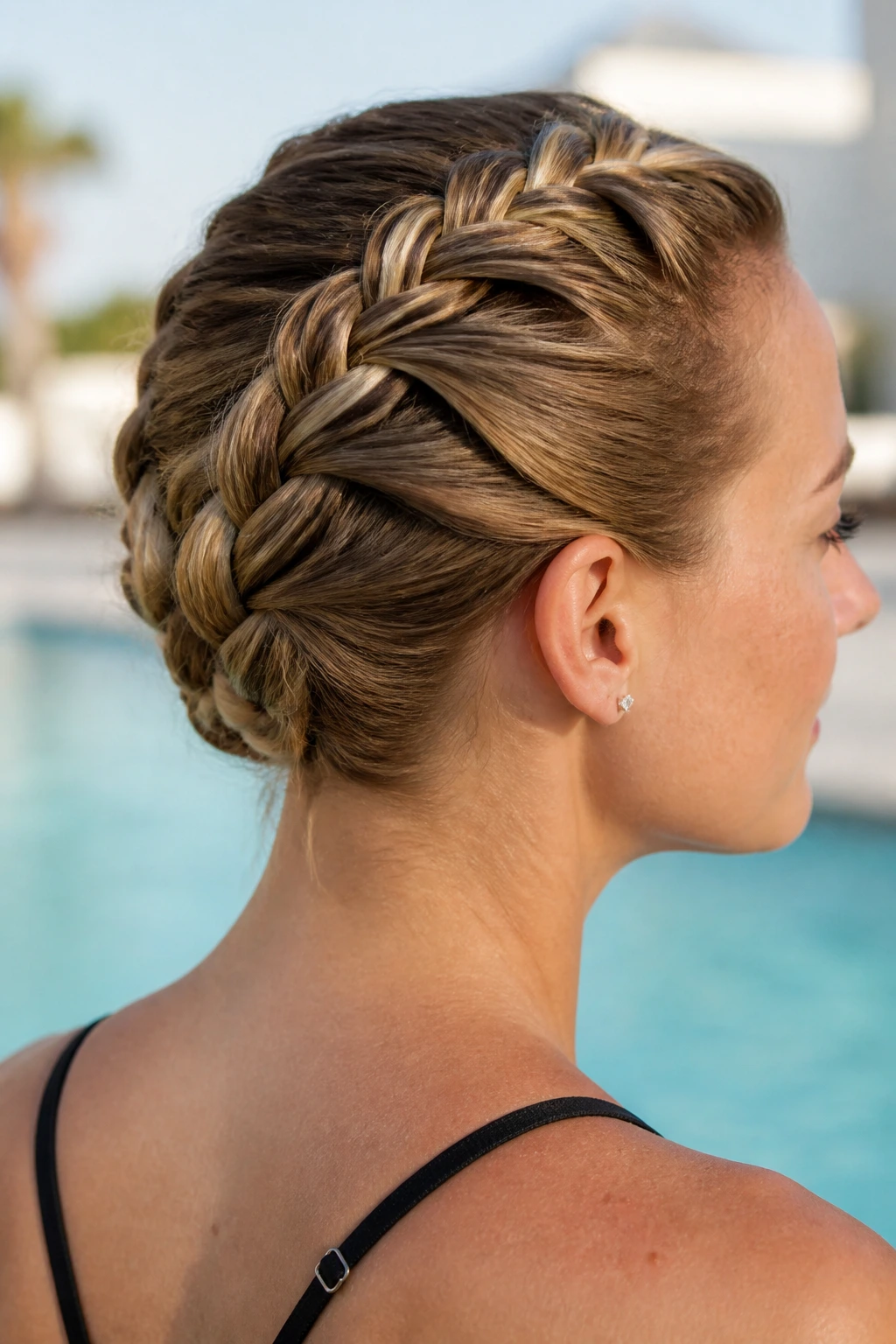
A French braid with tucked ends is a smart choice when you want everything secured but don’t want a heavy bun at the base of your neck. The braid does the work, and the tucked finish keeps the tail from drifting around once you swim.
Why not just leave the end hanging? Because wet ends are the first thing to tangle. They soak up water, twist around straps, and stick to your back the second you sit down. Tucking them solves that problem fast.
Start the braid at the crown or slightly off-center, depending on where you want the weight. Finish the braid low at the nape, coil the remaining length under itself, and pin it flat. Two or three pins usually do it if the braid is tight enough.
A light leave-in cream helps if your hair is dry or layered. It gives the braid a little more grip and keeps the shorter pieces from poking out by the ears.
8. Claw-Clip Twist Bun
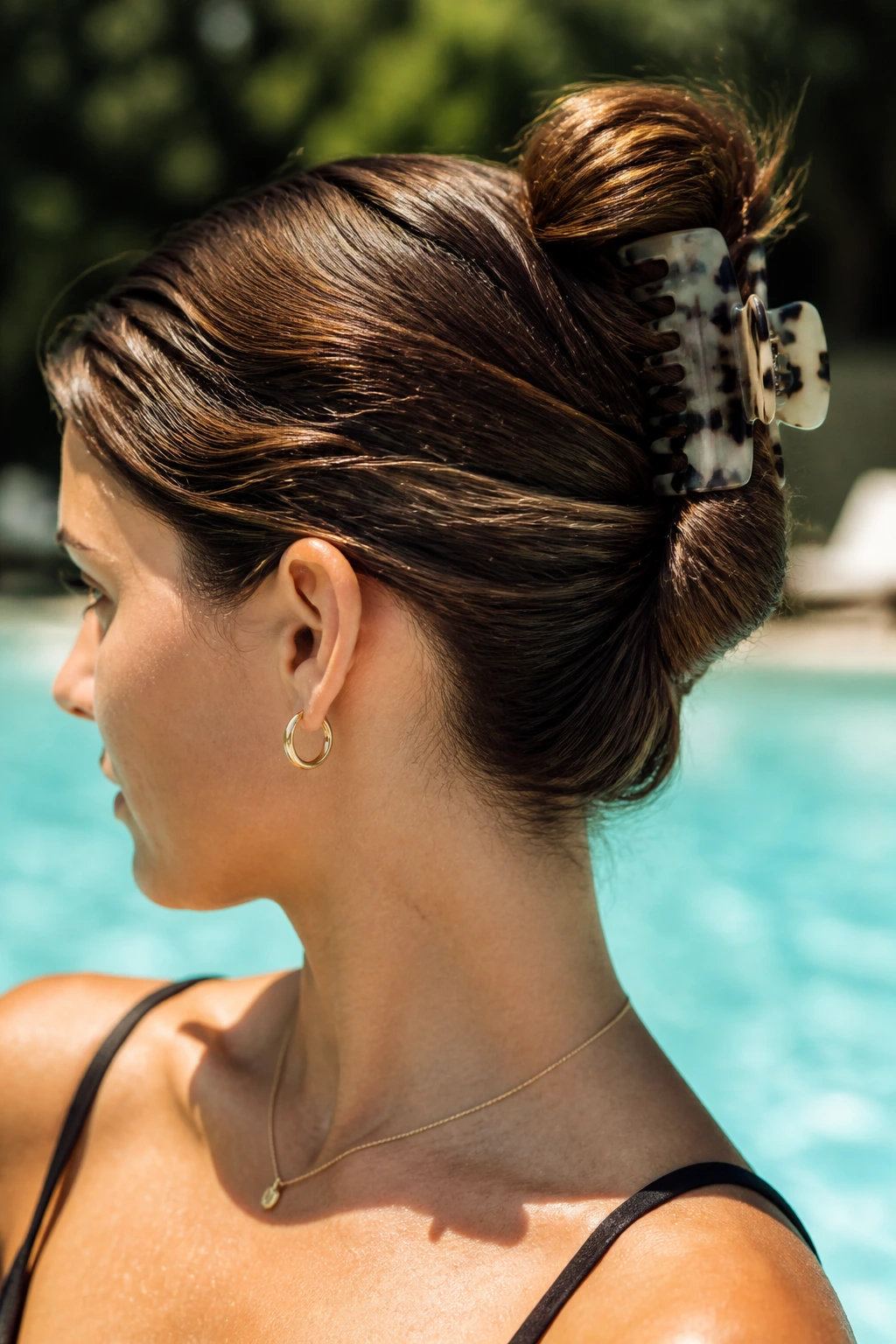
A claw-clip twist bun is quick, but only if the clip has enough bite. Tiny decorative clips look cute and fail fast. You want a clip with a strong spring and teeth that actually grab the hair.
Twist the hair upward first, then fold the length into a compact bun before clipping it in place. If the twist is too loose, the whole thing slides. If the bun is too wide, the clip won’t close properly. Tight and compact is the sweet spot.
This is a good style for medium-density hair and shoulder-length cuts that need a fast fix. Thick hair can work too, but the clip has to be deep enough to hold the full twist. One of those giant jaw clips is usually safer than a small one.
A few face-framing pieces can stay out if you like them, though they’ll be the first bits to move around in the wind. For actual swimming, I’d keep more of the hair up and clipped back.
9. Fishtail Braid

A fishtail braid feels a little fancier than a regular three-strand braid, but the real reason it earns a place on pool day is the way the sections lock together. Small pieces from each side keep crossing over, which gives the braid a dense, tight look.
It’s a good style when you want the length controlled without turning the whole head into a helmet of braids. Wear it down your back, over one shoulder, or even folded into a bun at the end if your hair is long enough.
The braid works best when the sections are kept even and small. That takes a minute longer than a standard braid, but the finish is worth it. On very fine hair, a little texture spray first helps the sections grip each other. On thick hair, the pattern shows off beautifully without much help at all.
Do not pancake it too much before you swim. Pulling the braid wide can make it prettier, sure, but it also softens the structure. Save the loosened look for after the pool.
10. Cornrows Into a Nape Bun

When you want the most secure hold possible, cornrows into a nape bun are hard to beat. The braids sit flat against the head, the movement is minimal, and the bun at the back keeps the length from hanging loose.
Why This Style Feels So Secure
Cornrows work by keeping each section anchored very close to the scalp. There’s less sliding, less puffing, and less chance of the style changing shape after a swim. A low bun at the nape finishes the job without adding bulk.
If you’re doing this yourself, keep the sections even and the tension steady. Not tight. Steady. That difference matters for your edges and for comfort later in the day.
- Use a moisturizing product before sectioning if your hair needs slip.
- Braid in the direction that feels natural for your head shape.
- Tie the ends with small elastics before folding them into the bun.
- Keep the bun low and flat so it doesn’t dig into the back of your head.
This is one of the strongest choices for textured hair, especially if you want a style that can stay neat for more than one swim.
11. Space Buns
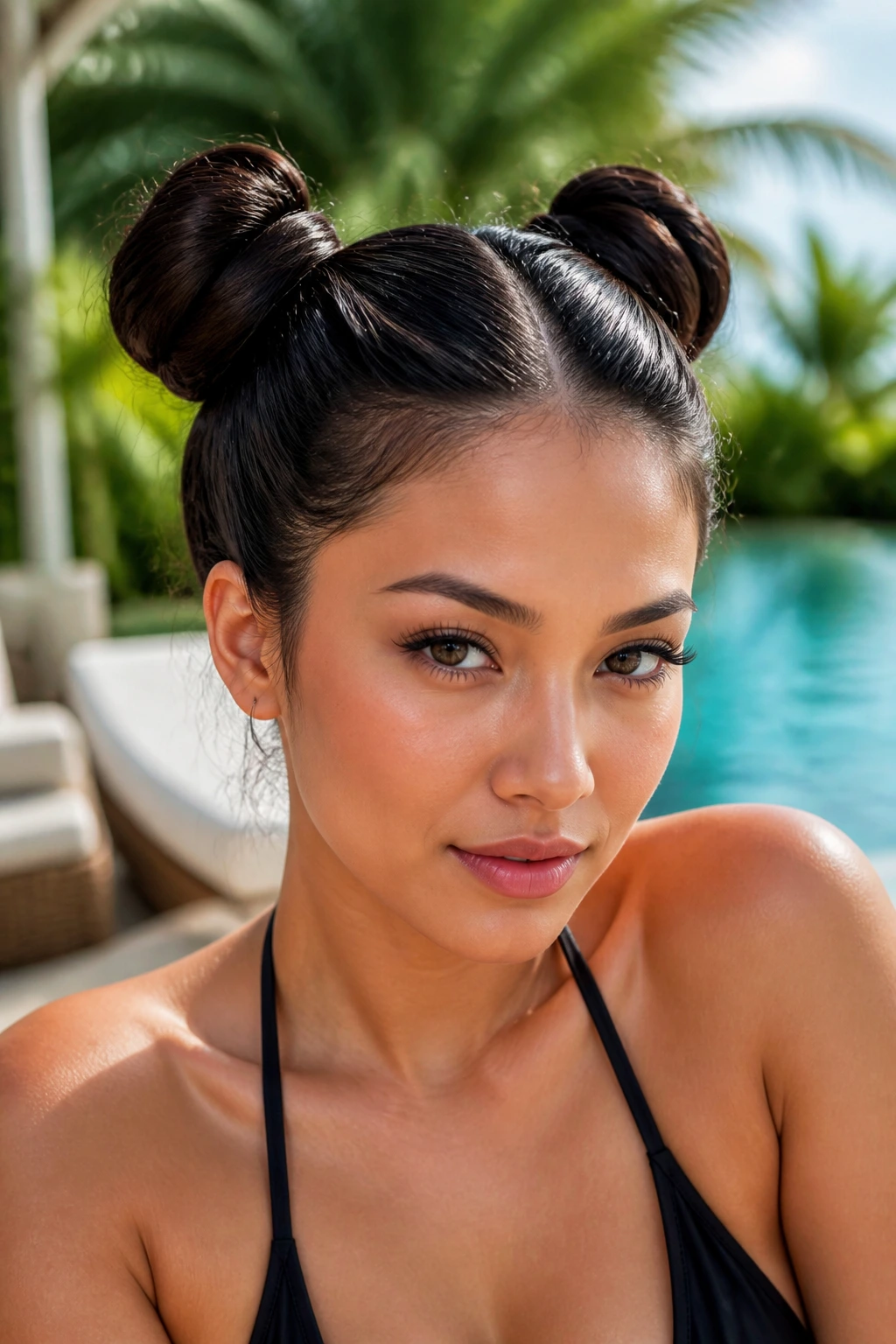
Space buns are useful because they split the hair’s weight instead of putting it all in one place. That makes the style feel lighter and less likely to sag by the end of the day.
They can sit high for a playful look or lower for something more controlled. High buns are fun, but low space buns often stay neater if you’re actually getting in the water. Make two clean sections, secure each side with an elastic, twist, coil, and pin.
A few tiny braids feeding into each bun can make the style last longer. So can a little gel at the roots. The buns themselves should be small and compact; giant fluffy buns look cute for photos and get messy faster once they’re damp.
- Center part first.
- Tie each side tightly before you twist.
- Use extra pins if the hair is layered.
- Keep the buns close to the head if you plan to swim hard.
This is one of the few styles that can be practical and playful at the same time.
12. Rope Braid Low Ponytail

Why does a rope braid low ponytail hold so well? Because the two twisted sections keep pressing against each other, and that makes the braid resist unraveling better than a loose ponytail would.
It starts with a low tail at the nape. Split it into two sections, twist each one in the same direction, then wrap them around each other in the opposite direction. That counter-spin is what gives the style its grip. Finish with a small elastic at the end.
This braid is especially good for long straight hair that tends to slip out of everything else. It also looks tidy after a swim because the pattern stays visible even when it gets slightly damp.
A tiny amount of cream or serum on the ends helps if your hair is dry and frizzy. If it’s very fine, keep the twists tight and avoid over-handling the sections after the braid is done. The more you fuss with it, the faster it loosens.
Simple style. Good hold. That’s the appeal.
13. Flat Twists Into a Bun
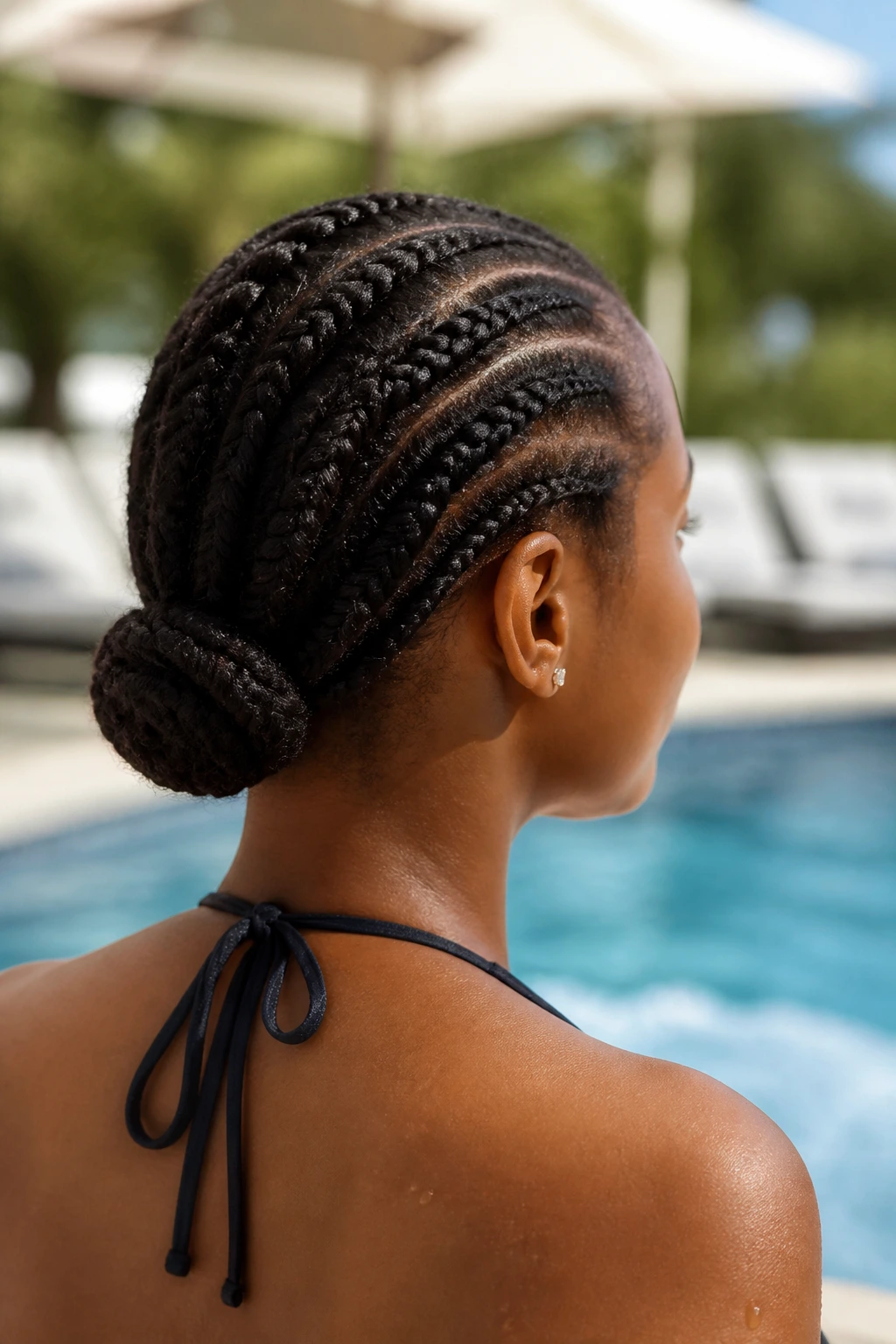
Flat twists into a bun are one of my favorite pool-day looks for textured hair because they stay close to the head and don’t demand much reshaping once they’re in place.
Why They Hold Without Fighting You
Flat twists are gentler than a lot of tight styles, especially when the sections are sized evenly and the tension stays calm near the hairline. They give you a clean base, then a low bun keeps the ends tucked away.
You can do two flat twists, four, or more depending on the look you want. I like two twists pulled back into a bun when I want something simple. More twists create a tighter pattern and a more polished finish.
- Moisturize first if the hair feels dry.
- Use a styling gel or cream that gives slip but not flake.
- Keep the parts straight if you want a crisp look.
- Pin the bun low and flat so it doesn’t bump up at the back.
If your hair likes to puff at the edges, smooth those areas before you twist. Once the style is in, leave it alone. That’s usually the difference between a neat bun and one that starts unraveling in the heat.
14. Side Braid Under a Headscarf
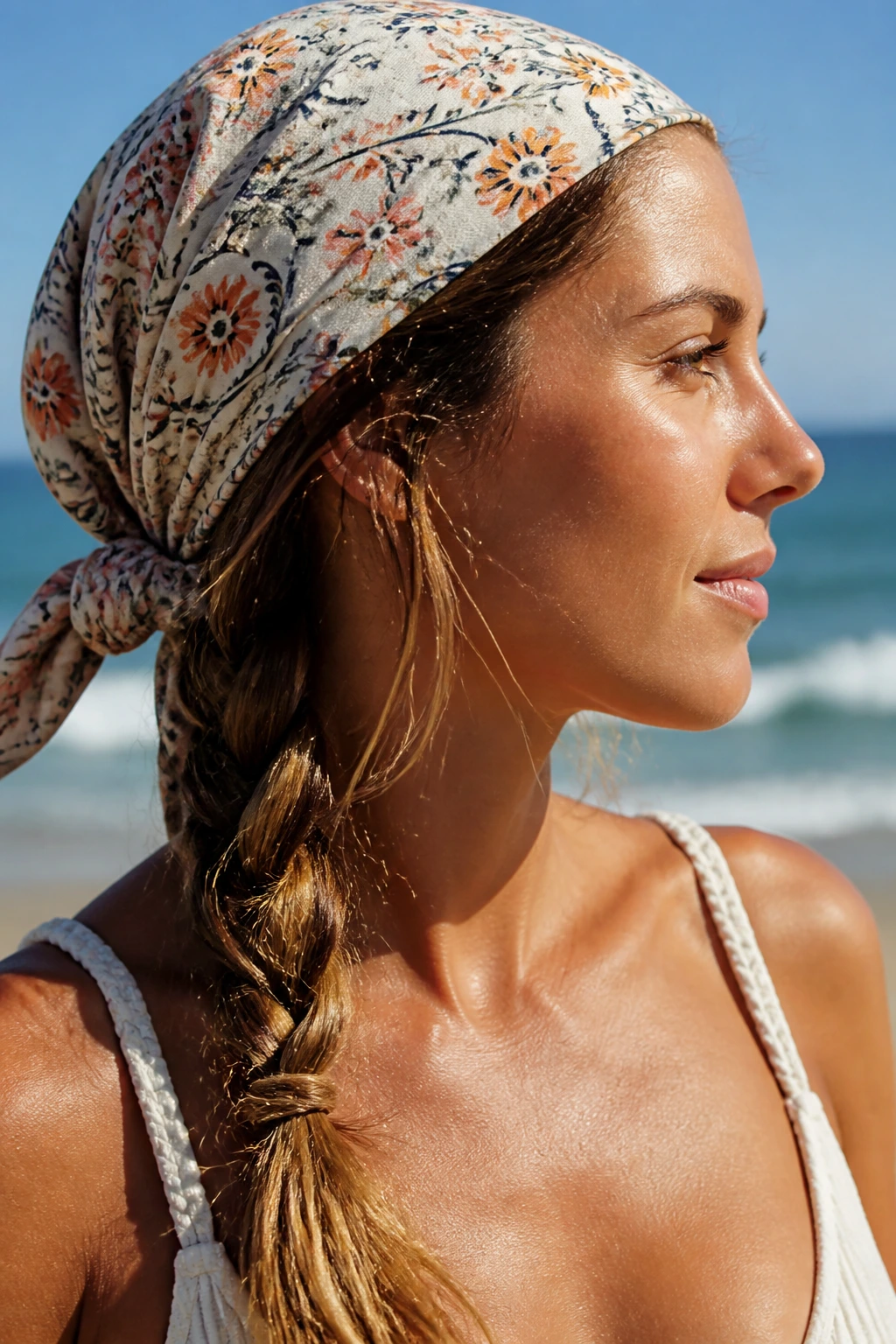
On days when the wind won’t quit and the sun feels harsh, a side braid under a headscarf is one of those styles that makes sense fast. It keeps the hair controlled, puts less pressure on the scalp, and gives you a little protection around the part line.
The braid itself can be loose or tight, depending on how much you want to keep in place. Then a wide bandana or scarf goes over the crown and ties low at the back or just behind one ear. The scarf isn’t doing all the work — the braid and pins are. The scarf is the extra layer that keeps smaller pieces from escaping.
Use a fabric with enough grip. A slippery silk scarf can slide around on damp hair. Cotton or a sports scarf usually behaves better if you’re actually spending time near water.
One honest note: if you’re planning repeated full dips into the pool, this is more of a lounging style than a heavy-duty swim style. It looks great. It just isn’t built for diving, resurfacing, and diving again.
15. Braided Top Knot

A braided top knot is the kind of style that seems plain until you realize how well it stays together. Braiding the ponytail before coiling it keeps the length from loosening inside the knot, which is exactly where a lot of top knots fail.
The Base Makes the Difference
Start with a high ponytail and secure it tightly. Then braid the tail all the way down, tie off the end, and wrap the braid around the base into a knot. Use pins around the outer edge of the bun, not just at the center. That helps the knot stay fixed against the head.
- Use two elastics if your hair is heavy.
- Keep the ponytail tight before you braid.
- Pin in the direction the braid naturally wants to turn.
- Tuck the last inch of the tail under the bun so it doesn’t poke out.
This style works especially well for long hair that would otherwise fall out of a plain top knot by lunch. It also keeps the neck clear, which is the main reason people keep reaching for it in hot weather.
16. Mini Braids with a Secure Clip
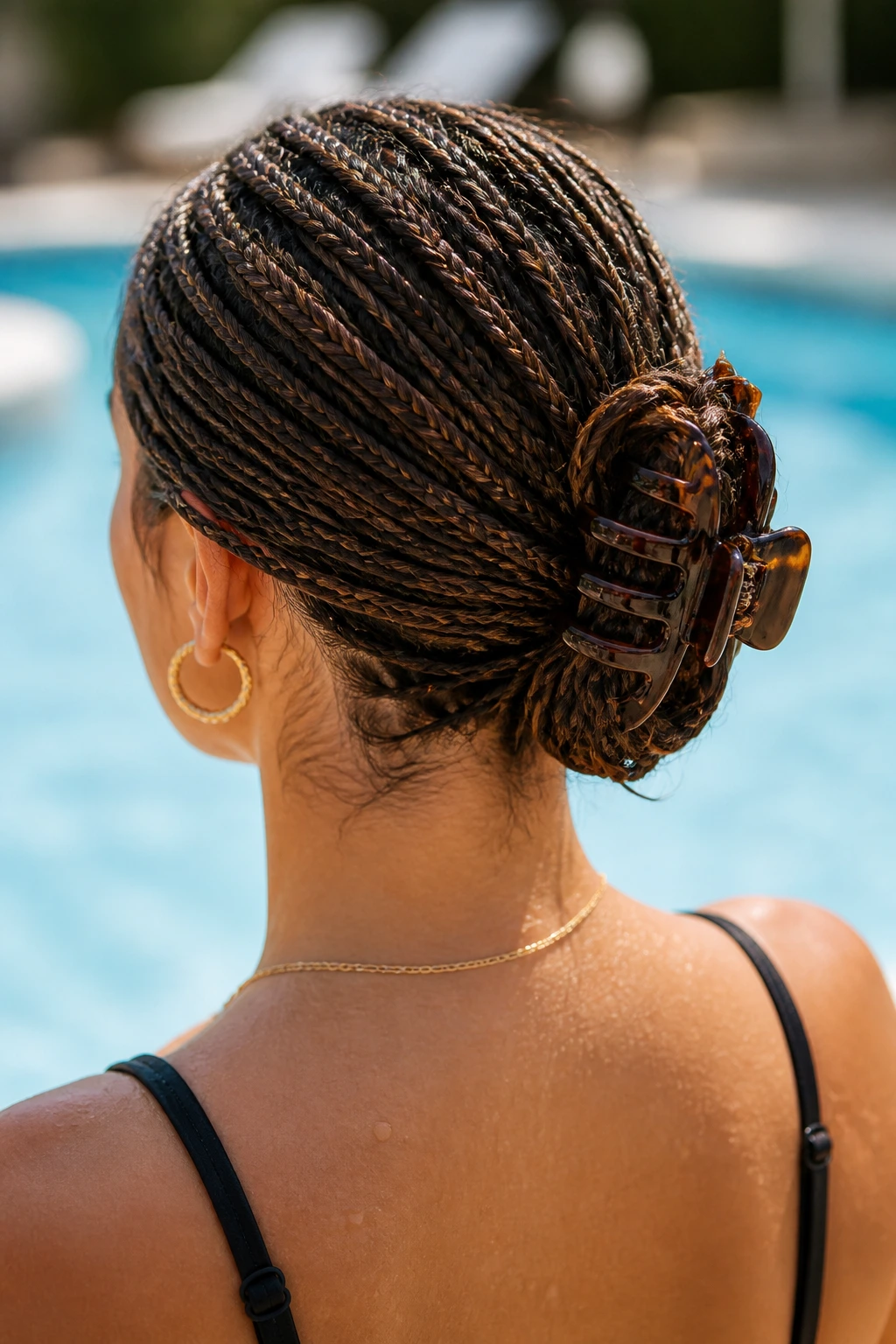
What if your hair is too short, too layered, or too slippery for one big braid? Mini braids with a secure clip solve that problem without asking the hair to do too much at once.
Split the hair into four, six, or even eight narrow sections. Braid each one lightly, then gather the braids at the back and clip them together with a strong claw clip or secure barrette. The small braids hug the head, and the clip keeps the ends from swinging around.
Why Mini Braids Help
Smaller braids are easier to control on shorter cuts. They also hold shape better when the hair has different lengths in it, which is common around the face and neckline.
A few things make this cleaner:
- Start each braid close to the scalp.
- Keep the sections narrow and even.
- Use pins in addition to the clip if the hair is thick.
- Choose one large clip instead of two tiny ones that fight each other.
This style is low-key, practical, and easy to adjust. It’s one of the better choices when you want the hair out of the face without forcing it into a shape it doesn’t want.
17. Twisted Half-Up Bun
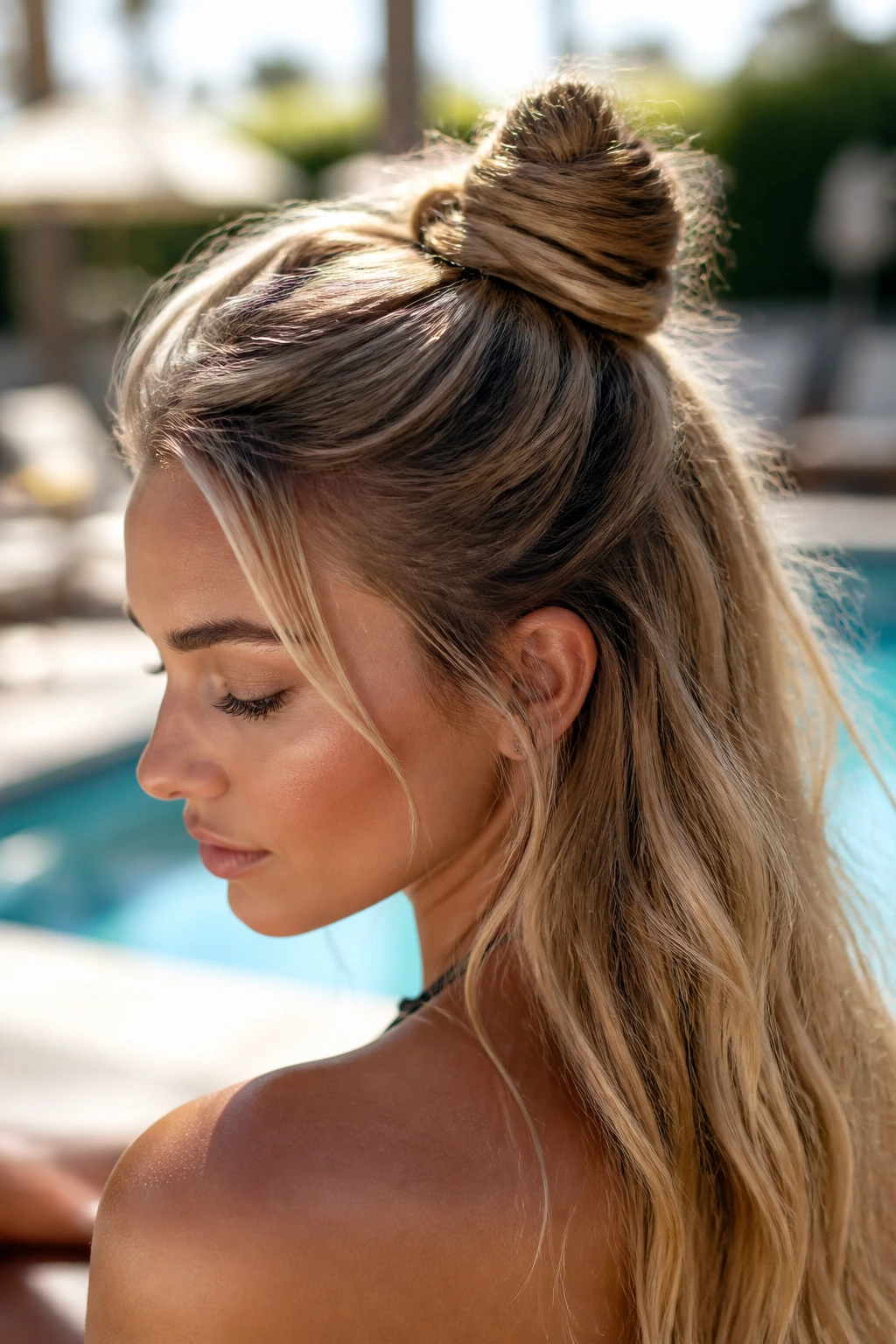
A twisted half-up bun is not the first thing I’d grab for lap swimming, and I’m not going to pretend it is. But for poolside hangs, snack breaks, and lounging with your hair mostly dry, it can stay in place nicely if the top section is twisted before it’s pinned.
The twist matters because it gives the style a better anchor than a simple half-up ponytail. Gather the top half of the hair from the temples back, twist it tightly, and coil it into a small bun or knot. Pin it down firmly. Leave the rest loose if you want movement.
This is a style for people who want some hair up, not all of it. That means it works best when you’re not planning to fully dunk your head every ten minutes. A quick splash or a little humidity? Fine. A full swim session? Probably not the right match.
It’s cute, easy, and surprisingly steady if you keep the twist compact. Loose half-up styles fail because they have too much free movement. This one cuts that down.
18. Low Chignon with Hidden Pins
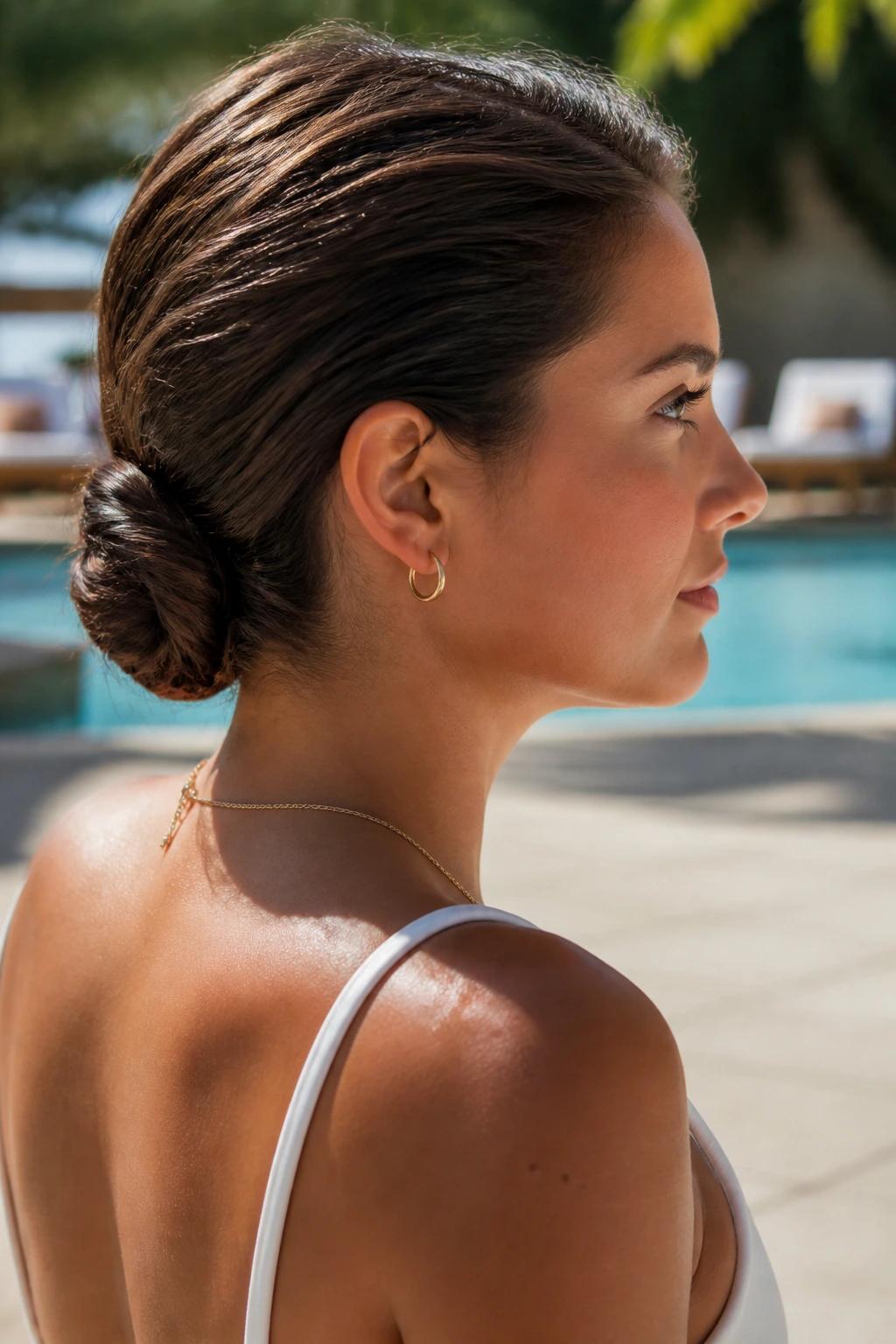
A low chignon with hidden pins looks polished, but the hold comes from smart pin placement, not magic. The bun sits low, the ends fold underneath, and the pins disappear into the overlap where the hair naturally catches itself.
How the Pins Disappear
Make a low ponytail first. Then fold the length upward and roll it into a flat chignon. Insert bobby pins from the outside edge toward the center so they grip both layers of hair. Two crossed pins at the base usually hold better than four random ones scattered around.
- Keep the bun close to the neck.
- Use pins that match your hair color.
- Slide each pin under a section, not through open air.
- Press the bun flat after pinning so it sits tight against the head.
This style is a little more refined than a basic bun, which makes it nice for pool parties where you want the hair to look finished without being fussy. It also tends to stay neater than a loose knot because the shape is more compact.
19. Pinned-Back Natural Curls

Fresh curls around a pool have opinions. They swell, shrink, frizz, and do their own thing the second humidity shows up. A pinned-back natural curls style works because it respects that instead of fighting it.
The goal is not to flatten the curls. The goal is to keep the front and sides under control so the style stays tidy while the rest of the hair does what it wants. Use a little gel or curl cream at the hairline, then pin back the front sections with flat clips or small bobby pins.
This looks best when the pins are placed where the curl naturally wants to fall. Fight the curl pattern and you’ll spend the whole day redoing it. Work with it and the result looks easy.
A wide headband can help, too, but choose one that grips well. Slippery fabric slides around once the hair gets damp. Matte clips, satin-lined bands, and a few well-placed pins usually last longer.
For curly and coily hair, this is one of the smartest pool styles because it gives shape without wrecking texture.
20. Scarf-Wrapped High Ponytail
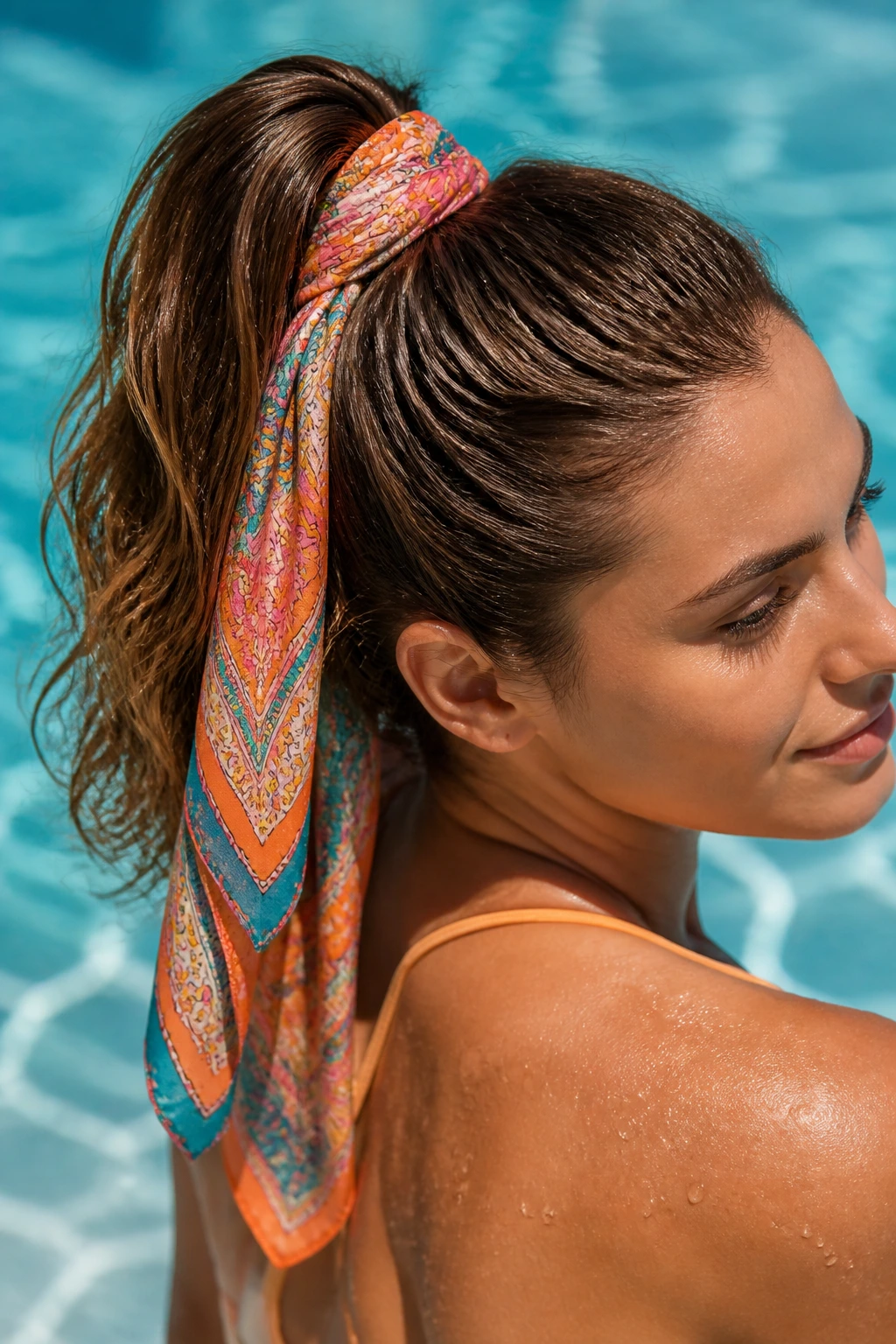
A scarf-wrapped high ponytail pulls the whole idea together: secure the ponytail first, then add the scarf as both support and finish. It’s a good choice when you want height, a little color, and a style that still behaves once the day gets busy.
Start with two elastics if the hair is long or heavy. That keeps the base from sliding. If the ponytail is very long, braid it before wrapping the scarf so the length has less swing and less chance of tangling. Then tie the scarf around the base and let the ends hang or tuck them in, depending on how much movement you want.
This one works best when the scarf is tied snugly but not so tight that it pulls at the scalp. The scarf should support the base, not pinch it. If you’re using it around actual swimming, keep the rest of the ponytail controlled rather than loose.
Pool hair does not need to be perfect. It needs to stay where you put it.
