



A pixie cut can be one of the sharpest, most flattering short shapes for plus size women — when the cut has movement. The wrong version can go stiff fast: sides shaved too close, crown flattened, fringe cut blunt, and suddenly the whole head looks boxed in. The right version does the opposite. It opens the face, gives the eyes somewhere to land, and makes the haircut feel light instead of heavy.
That balance matters more than dress size. A great pixie is about proportion, texture, and where the eye moves first. A little height at the crown can lengthen the profile. A side-swept fringe can soften a forehead or cheek line. A tapered nape can clean up the neck area without making the cut feel severe. Tiny details. Big difference.
I’ve always liked pixies that look intentional but not overworked. You know the type: soft enough to wear with a T-shirt, polished enough to wear with earrings and lipstick, and flexible enough that you are not fighting your hair every morning. That is the sweet spot for pixie cuts for plus size women — not hiding anything, not shouting either, just making the shape work with your features.
So the smart move is to choose the version that fits your texture, your face, and how much time you want to spend in front of a mirror. Start soft if you’re cautious. Go bolder if you like edge. There’s a lot of room here, and the best cuts are more varied than people expect.
1. Soft Side-Swept Pixie
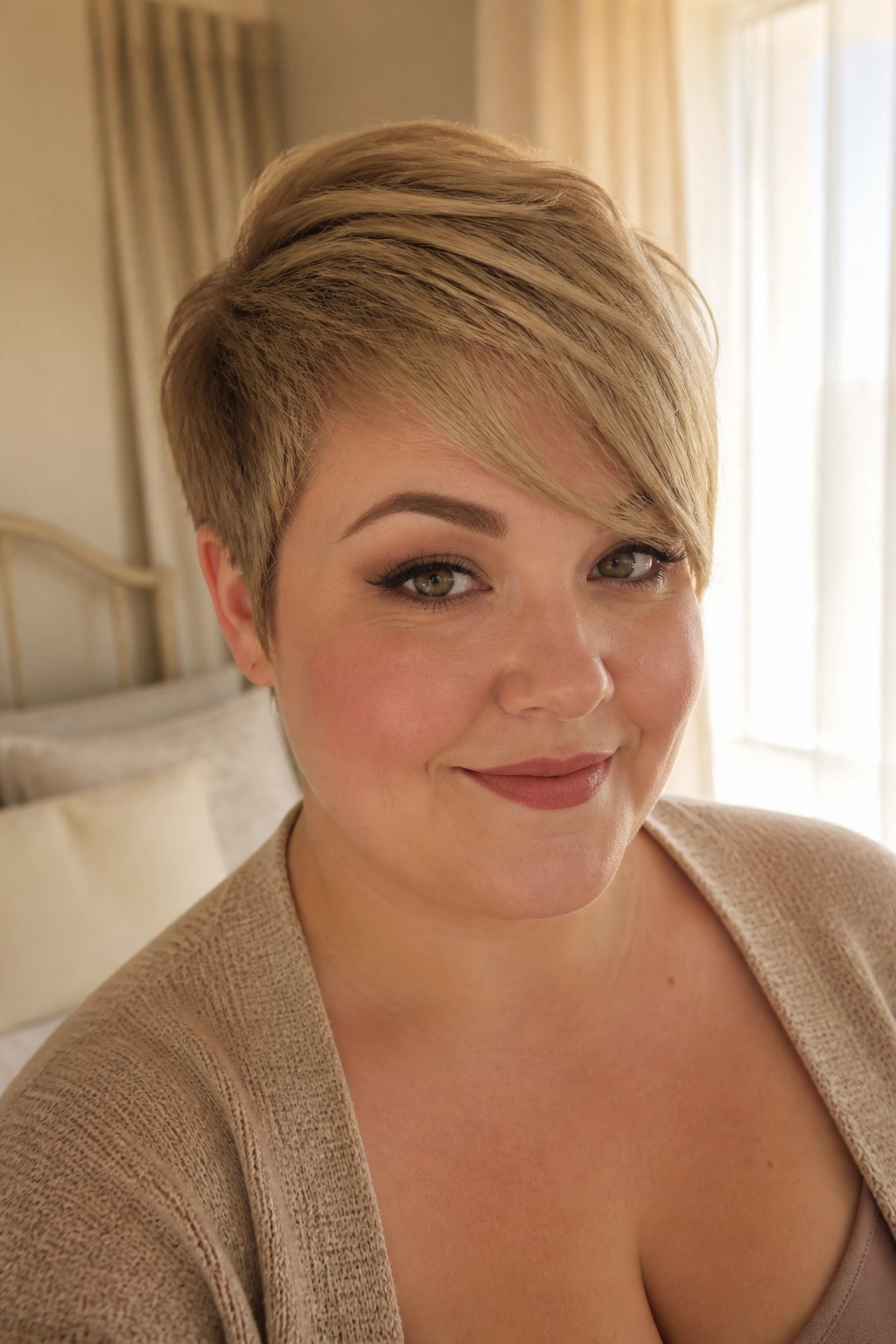
A soft side-swept pixie is the haircut I reach for when someone wants short hair but does not want a hard line near the face. The side sweep gives the cut motion, and motion is what keeps a pixie from looking too severe. For plus size women, that diagonal fringe can be a nice way to break up width across the forehead or cheeks without hiding the face.
Why the Side Sweep Works
A deep side part pulls the eye across the face instead of straight down it. That makes the style feel a little longer and less boxy. Keep the fringe around 2 to 3 inches so it can fall softly, not sit like a shelf.
- Best for rounder cheeks, broad foreheads, or glasses.
- Ask for longer layers at the front and a soft taper around the ears.
- Style with a pea-size amount of matte cream so the fringe bends, not flakes.
Best tip: blow-dry the fringe in the opposite direction first, then sweep it over. It gives you lift at the root without making the style puffy.
2. Textured Crop Pixie
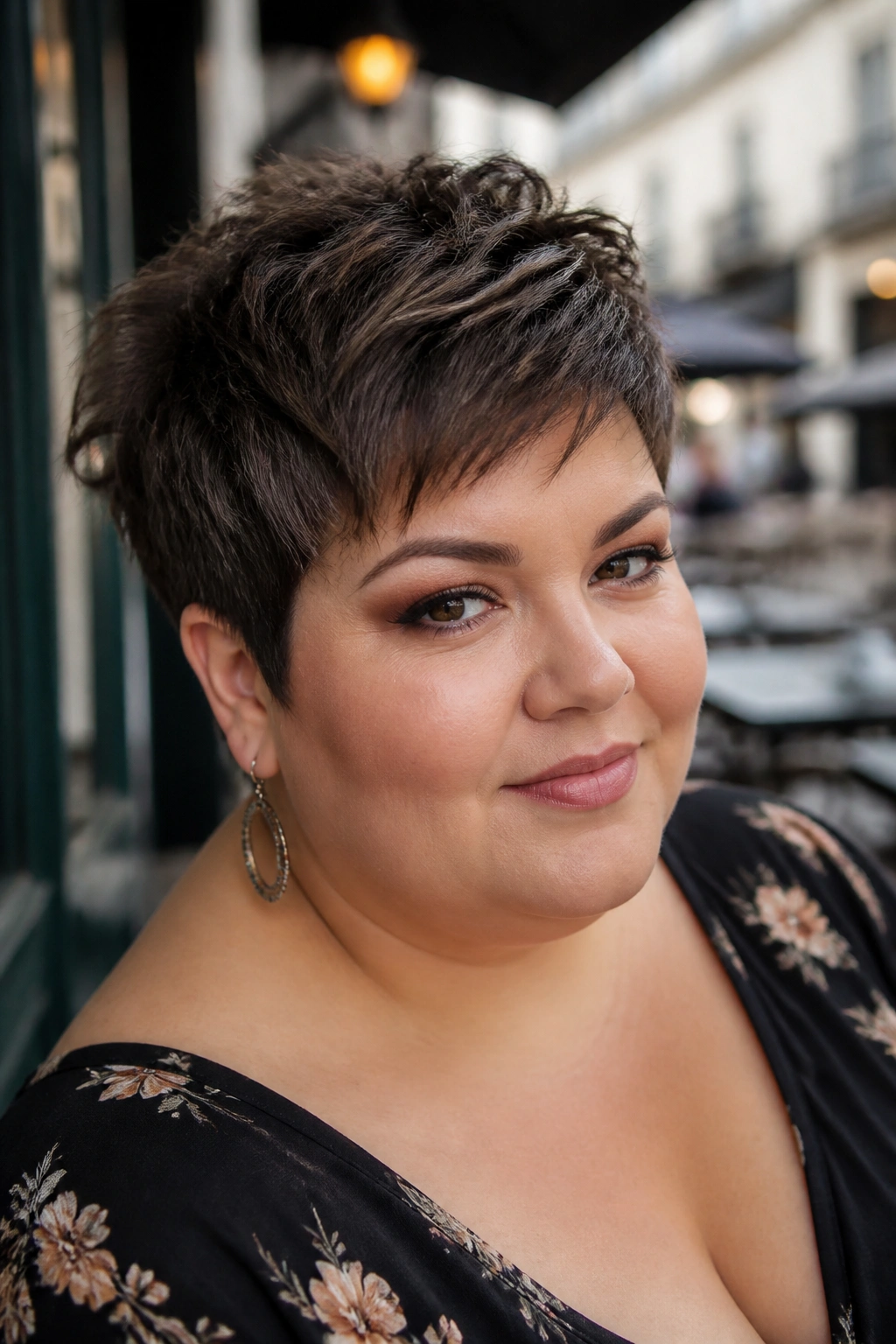
This is the easiest pixie to keep from looking flat. A textured crop works because the layers are cut to live on top of each other in a messy, piecey way, not in one smooth shell. That little bit of separation is what gives the haircut attitude.
The biggest mistake with a crop is over-blending. If every strand disappears into the next one, you lose the shape. A better version uses point-cutting or razor-soft ends so the top breaks up a little. On fine hair, that movement makes the hair look fuller. On thicker hair, it stops the style from feeling bulky.
You do not need much product here. A tiny bit of styling paste, rubbed between the palms and pressed into dry hair, is enough. Work mostly through the crown and front. Leave the ends a little undone. That is the whole point.
For plus size women, this cut is a good match when you want something modern but not fussy. It looks good with bold brows, hoop earrings, and a plain black top. Simple outfit. Sharp hair.
3. Long Layered Pixie with Crown Lift
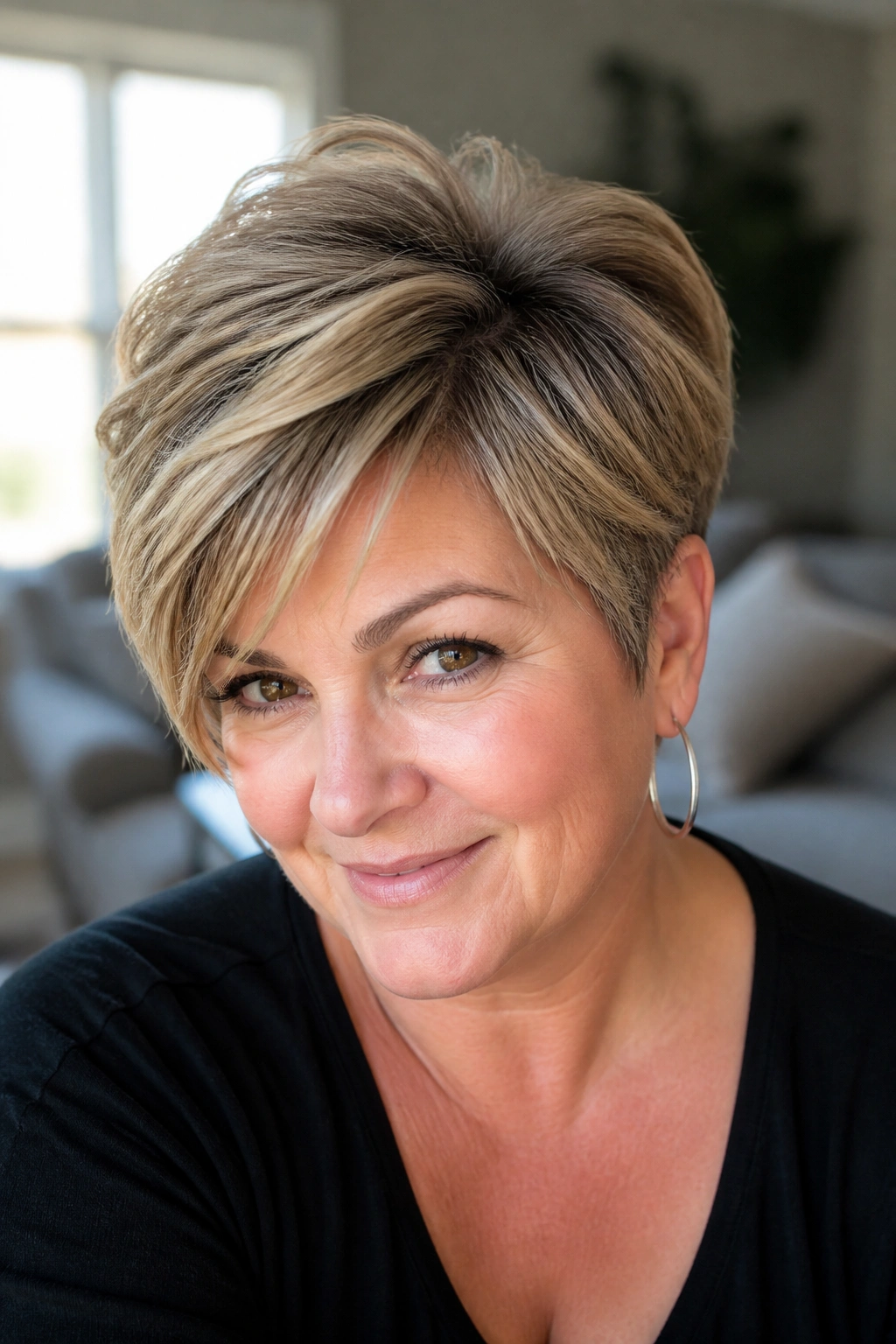
Why does a little extra length on top matter so much? Because a long layered pixie gives you options. You can push it forward, sweep it aside, tuck it behind one ear, or let it flop a little and still have shape. That flexibility is a big deal if you are nervous about going too short.
Keep the top around 3 to 4 inches, with the front fringe slightly longer than the crown. That lets the style move instead of sitting rigidly in place. If your hair is thick, ask for internal removal so the top does not balloon out. If your hair is fine, keep the ends blunt enough to hold their outline.
How to Style It
A round brush around 1 inch to 1.5 inches works well for a soft lift at the roots. Blow-dry the hair forward first, then back, then set the front in your chosen direction. That little back-and-forth is annoying, yes, but it gives real lift.
This is a smart pick if you want a pixie that can grow out gracefully. It does not turn into a disaster at week six. It just gets a bit softer.
4. Tapered Nape Pixie
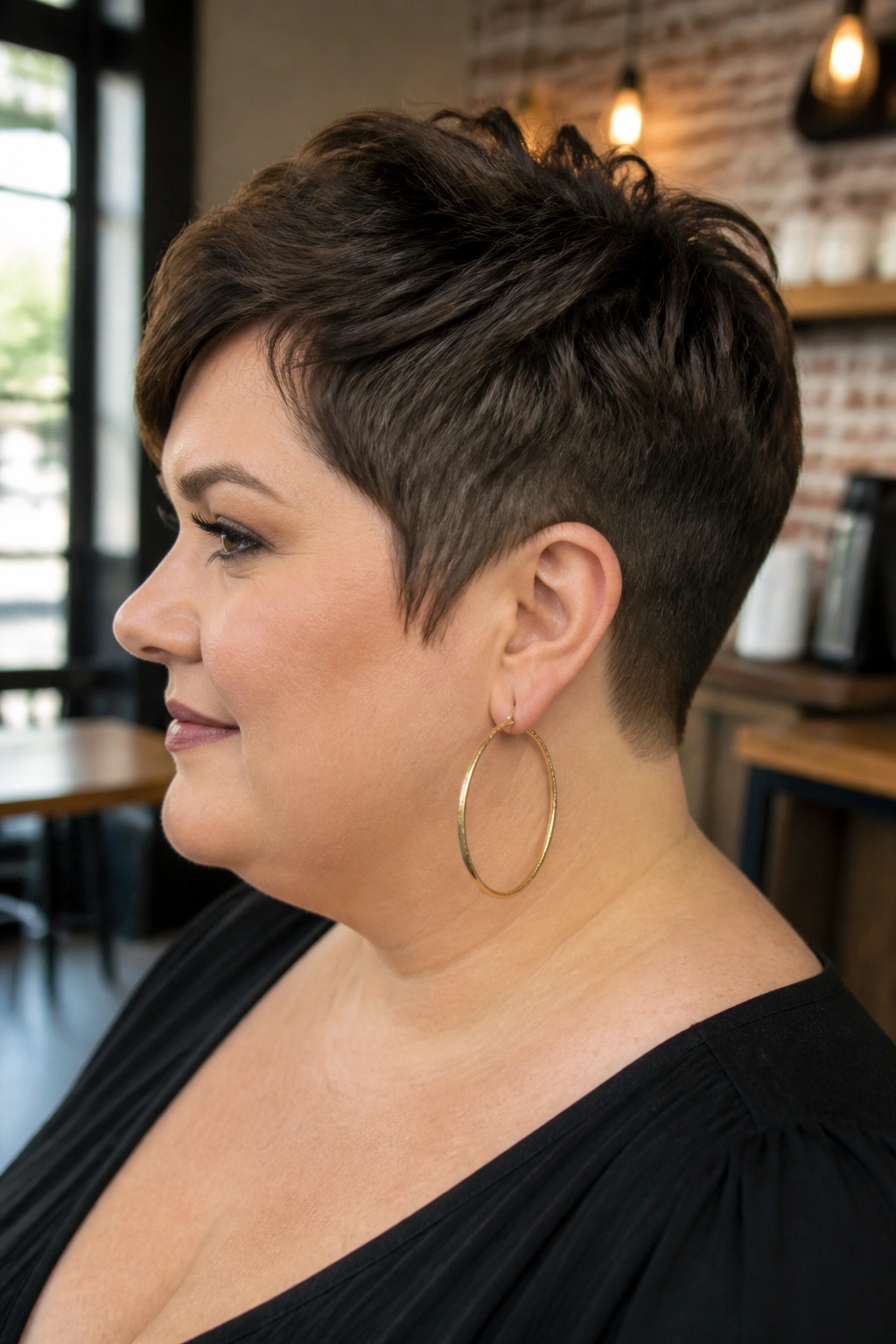
Picture a short cut that clears the collar, shows the neck, and still feels soft around the face. That is the tapered nape pixie. It is especially good if you wear earrings, collared shirts, or anything with a high neckline, because the back of the haircut stays neat instead of puffing out against fabric.
The nape taper is the part that does the quiet work. A clean neckline makes the whole head look more lifted. On fuller faces, that can add a nice vertical line without making the rest of the cut too short. It’s not flashy. It just works.
- Ask for a gradual taper at the nape, not a harsh clipper line.
- Keep the top between 2.5 and 3.5 inches for balance.
- Use a light cream or spray wax so the back stays smooth and the top stays touchable.
There’s a real difference between “clean” and “stripped.” Choose clean. A tapered nape should feel polished, not shaved down to the bone.
5. Curly Pixie with Crown Height
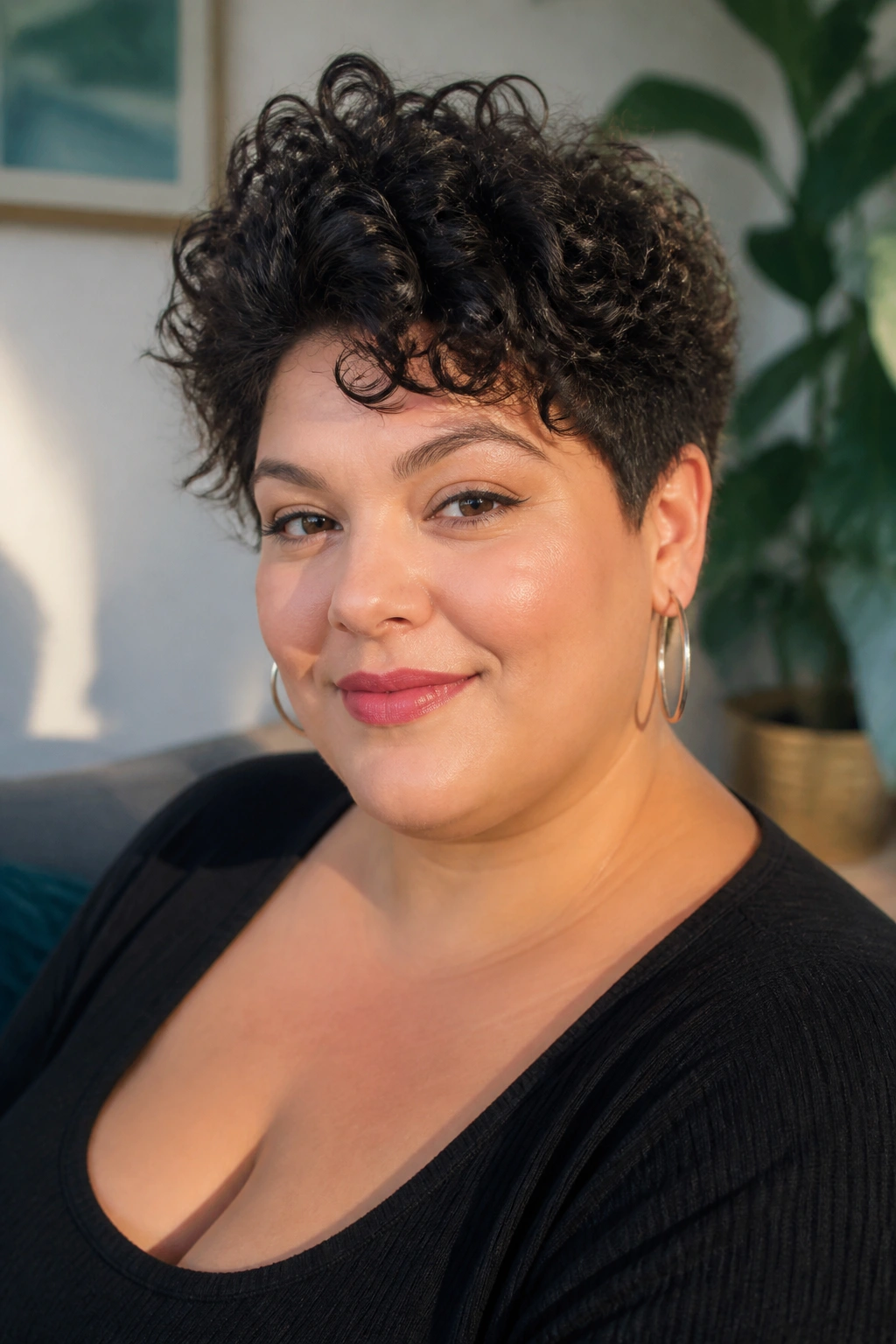
Curly hair changes the whole pixie conversation. The cut cannot be planned only on wet hair, because curls spring up, bend sideways, and shrink in their own way. A good curly pixie respects that. It leaves enough length through the crown and front so the curl pattern can actually show itself.
The best versions are usually cut with the natural curl in mind, not against it. That often means shaping the hair when it is dry or mostly dry, especially if the curls are tight or uneven. You want the sides close enough to feel tidy, but not so tight that the haircut turns into a triangle. Been there. It is not a cute shape.
A bit of height at the crown helps a lot. It keeps the silhouette from widening at the cheek line, and it makes the curls look lively instead of squashed. The key is balance: a little lift on top, a little softness at the temples, and enough length for the curl to form a loop.
If you have 3A to 3C curls, this is one of the most forgiving pixie cuts for plus size women because the texture does so much of the work. You are not fighting for shape. You are guiding it.
6. Asymmetrical Pixie with Long Fringe

Unlike a symmetrical pixie, this one gives you a built-in point of interest. One side is a little longer, the fringe falls diagonally, and the whole cut feels more directional. That can be a very good thing if you want a short style with some drama, but not the full commitment of a razor-sharp edge.
The difference does not have to be extreme. A side that is 1 to 2 inches longer than the other is enough to create asymmetry without making the cut feel gimmicky. Keep the longer side near the cheekbone and let the shorter side stay tucked in closer to the ear.
This style tends to flatter women who like strong earrings, glasses, or a strong lip color. The asymmetry gives the face a frame, and the longer fringe softens the front without hiding it. That’s the sweet spot. Strong line, soft movement.
I’d recommend this to anyone who wants a pixie that looks styled even on a messy morning. The shape does a lot of the work for you.
7. Feathered Pixie with Wispy Ends
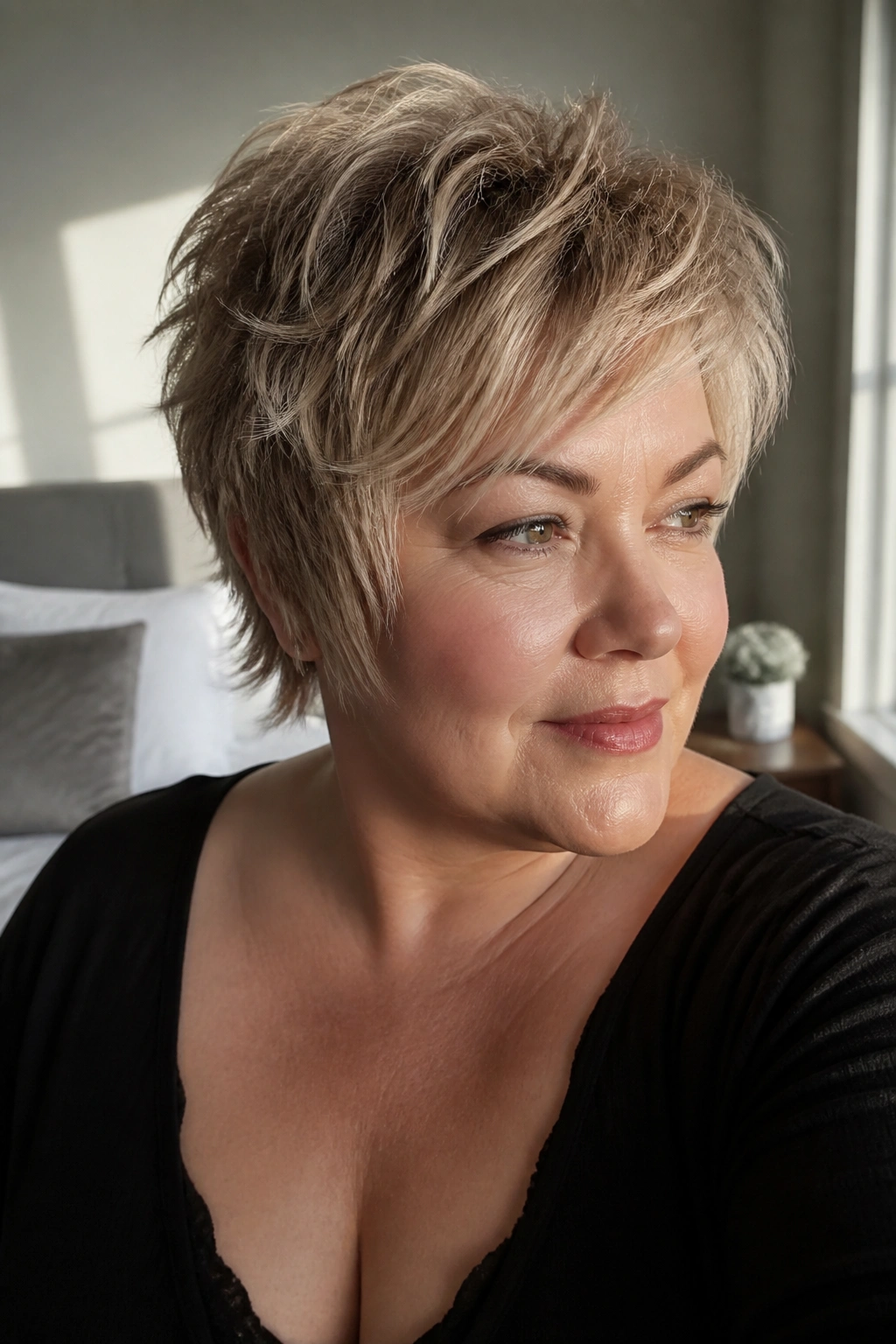
A feathered pixie feels lighter the second you see it. The ends are softened, the layers break apart gently, and the haircut never looks like it was carved out with a ruler. That softness matters if you want short hair without a hard edge at the jaw or temples.
What Makes It Different
Feathering keeps the outline airy. The cut works especially well around the temples and sides, where too much bulk can make a pixie feel heavy. Ask for soft slicing at the ends rather than blunt snips. On coarse hair, that can remove weight without making the hair frizzy.
- Best for hair that puffs up easily.
- Nice with side-swept bangs or a loose fringe.
- Looks good with a little texture spray at the crown.
Practical tip: use a small round brush only at the front. Leave the rest a little imperfect. If every strand is polished, you lose the point of the style.
This is one of those cuts that looks almost effortless when it is done well. Almost. It still takes a good shape underneath.
8. Undercut Pixie with Soft Top
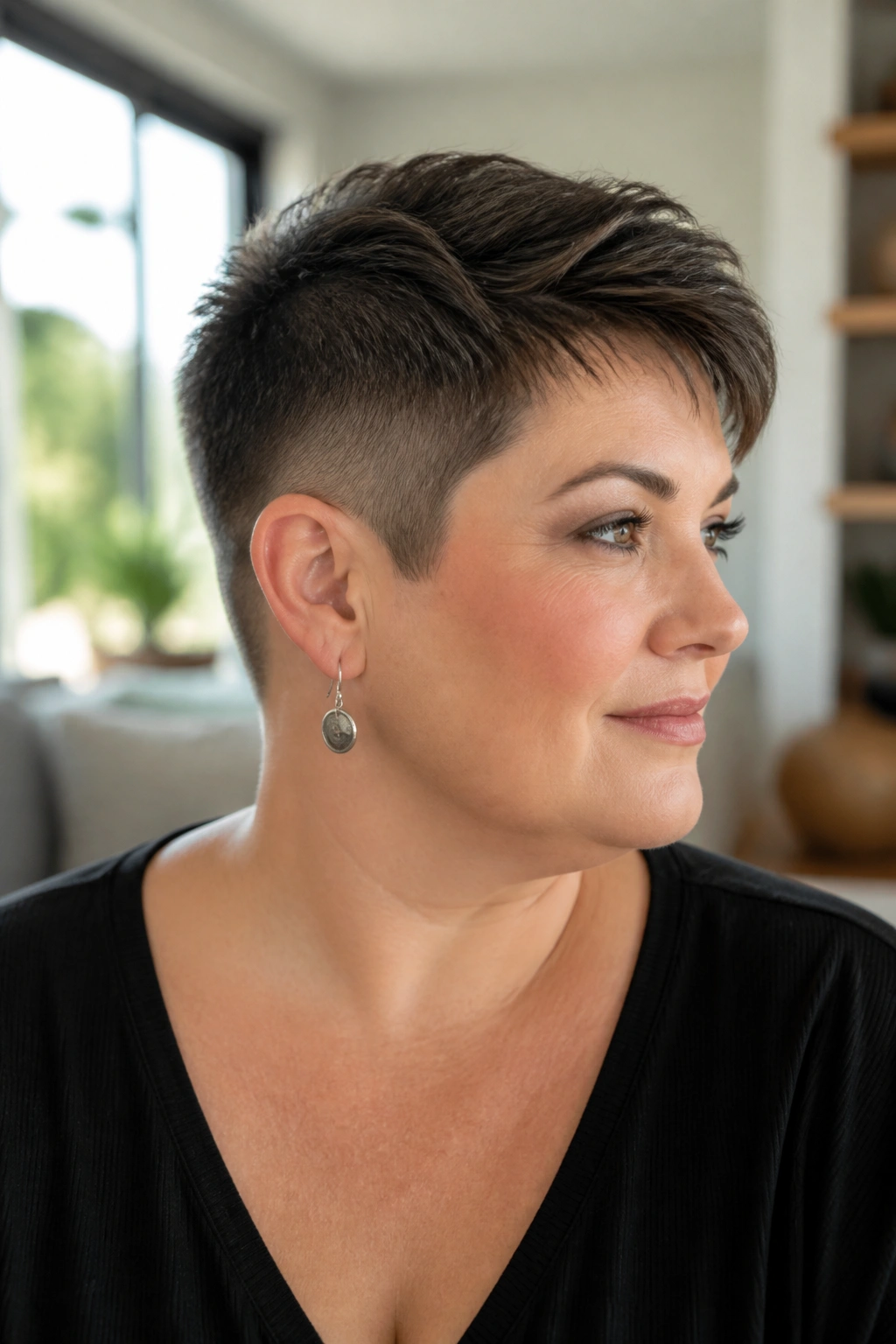
A pixie with an undercut can be a relief if your hair is thick, hot, or stubborn around the sides. The undercut removes bulk where you do not need it and leaves the top free to move. That combination keeps the haircut from swelling out around the ears or neck.
The important part is not to make the whole thing too severe. Leave the top soft and touchable, around 3 to 4 inches, so the cut still feels feminine if that is the direction you want. A clipper guard of 1/2 inch or shorter on the undercut is common, but a scissor-cut removal can look gentler if you want less contrast.
What I like here is the honesty of the shape. It doesn’t pretend to be soft all over. It says, “We’re taking weight out where it matters.” That can be a huge help for fuller faces, because the top gets the room it needs to lift while the sides stay tidy.
If you are nervous, hide the undercut under a longer top layer. You get the function without advertising the sharpness.
9. Choppy Pixie with Micro Bangs
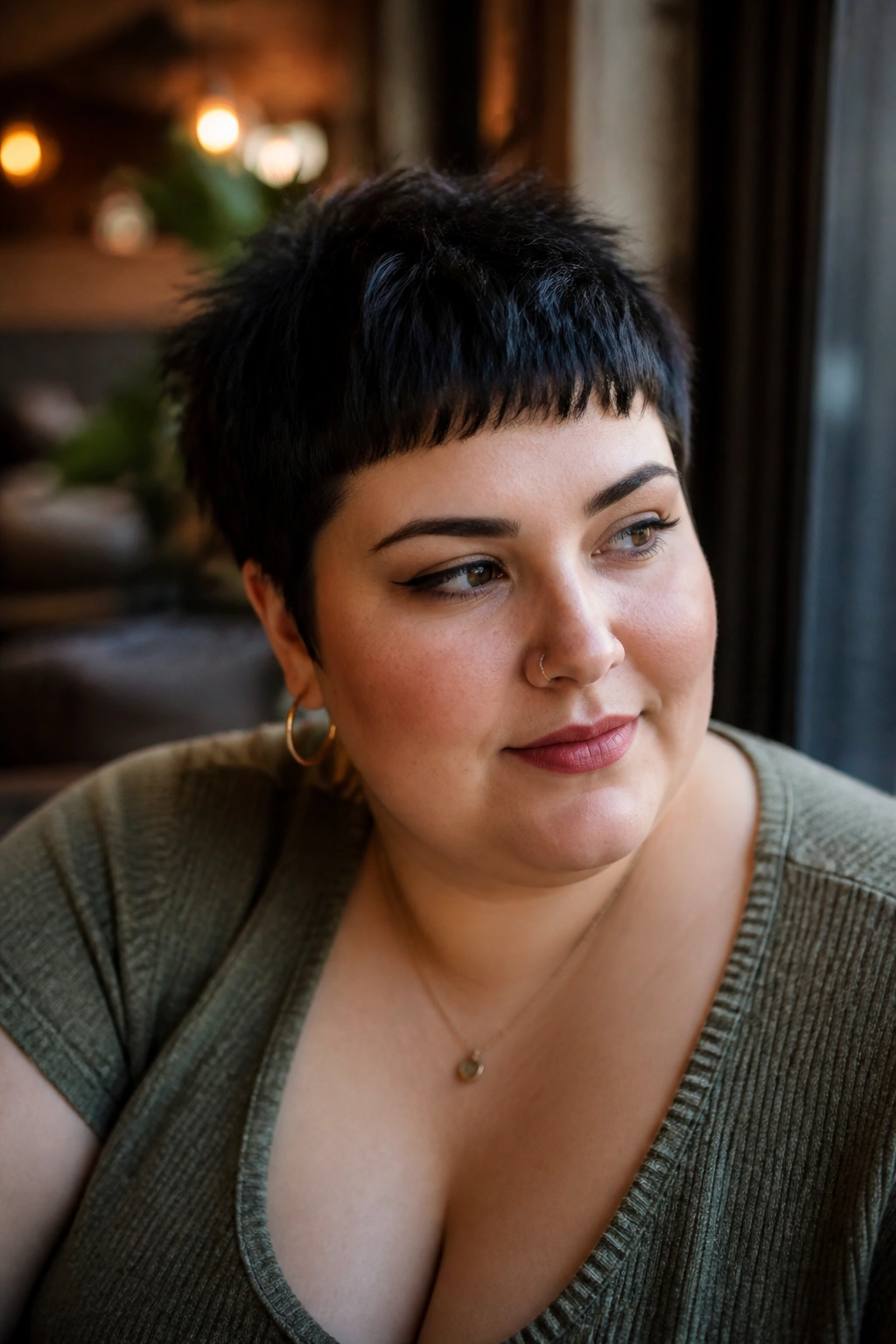
Can micro bangs work on a plus-size face? Yes, but only when the rest of the cut has enough softness to balance them. Tiny bangs can go edgy very fast. The trick is not to make the whole haircut look tiny and sharp at once.
A choppy pixie gives the bangs a place to live. The layers around the crown and sides should stay broken up, not smooth, so the short fringe does not become the only thing people notice. Keep the bangs blunt enough to read as intentional, but not so short that they sit way above the brow with no context.
How to Wear It Without Going Severe
The best version usually has a little bend at the front and movement through the top. That keeps the face open. If the hair is fine, a dry texture spray at the roots can help the bangs sit forward without lying flat. If the hair is thick, point-cutting the fringe softens the edge without losing the shape.
This cut suits someone who likes a little attitude and does not mind a haircut that has a point of view. It is not shy. Neither are you, presumably.
10. Volumized Crown Pixie
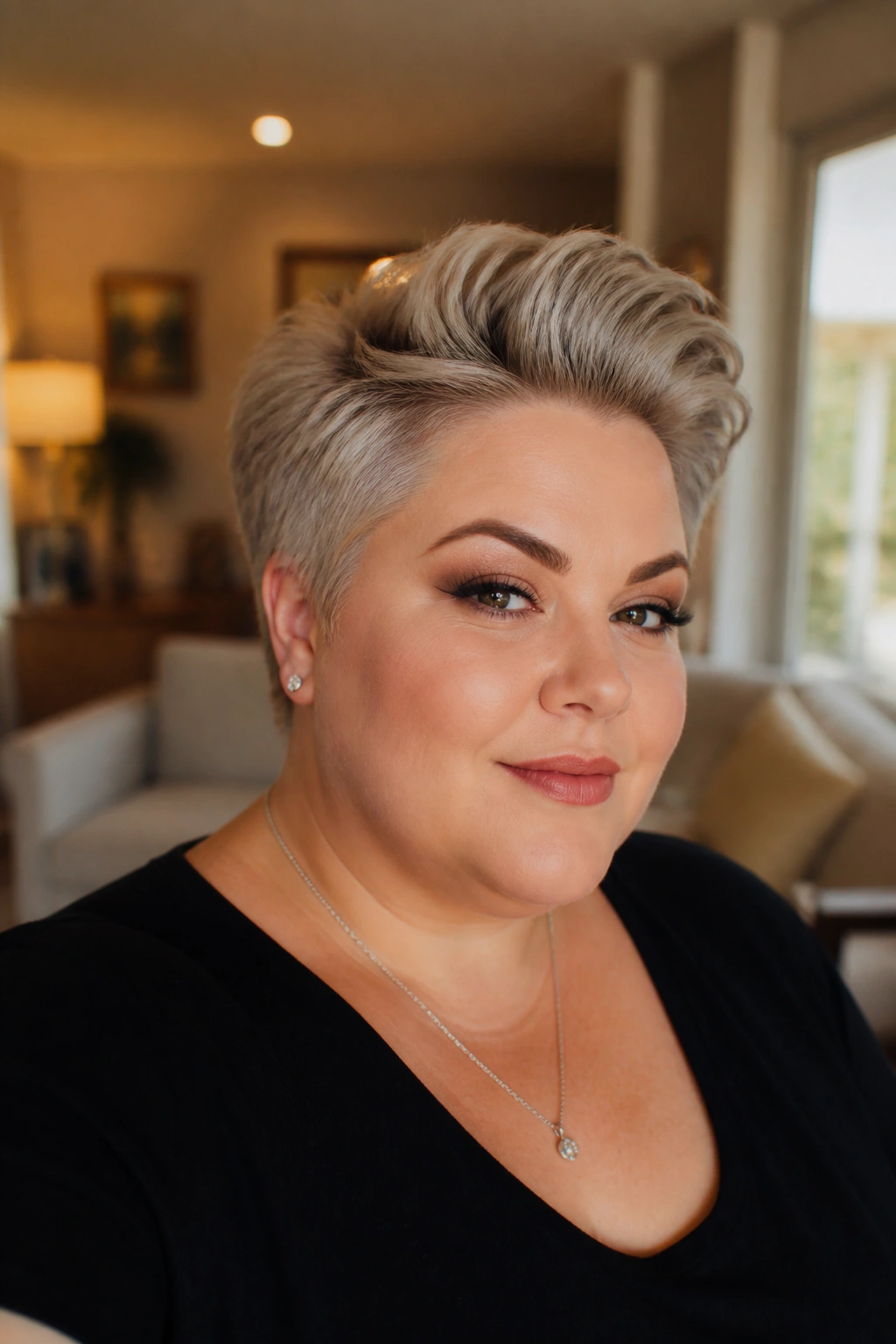
A flat crown can make a short haircut feel smaller than it is. The fix is volume concentrated in the right place, not all over the head. A volumized crown pixie keeps the sides neat and gives the top enough lift to lengthen the silhouette.
Think of it like building a small roof instead of a helmet. The crown should rise a little, then taper naturally toward the fringe and sides. Too much teasing will just make the hair look dry and puffy, so keep the lift controlled. A root-lifting mousse at the base and a round brush with medium tension are usually enough.
- Use a walnut-size amount of mousse on damp hair.
- Blow-dry the crown straight up and slightly back.
- Finish with a cool shot to lock the lift.
This is one of the best pixie cuts for plus size women who want a little height without obvious fuss. It helps the face read longer and gives the haircut some air. The difference between “volume” and “too much volume” is about an inch. Maybe less.
11. Side-Parted Classic Pixie
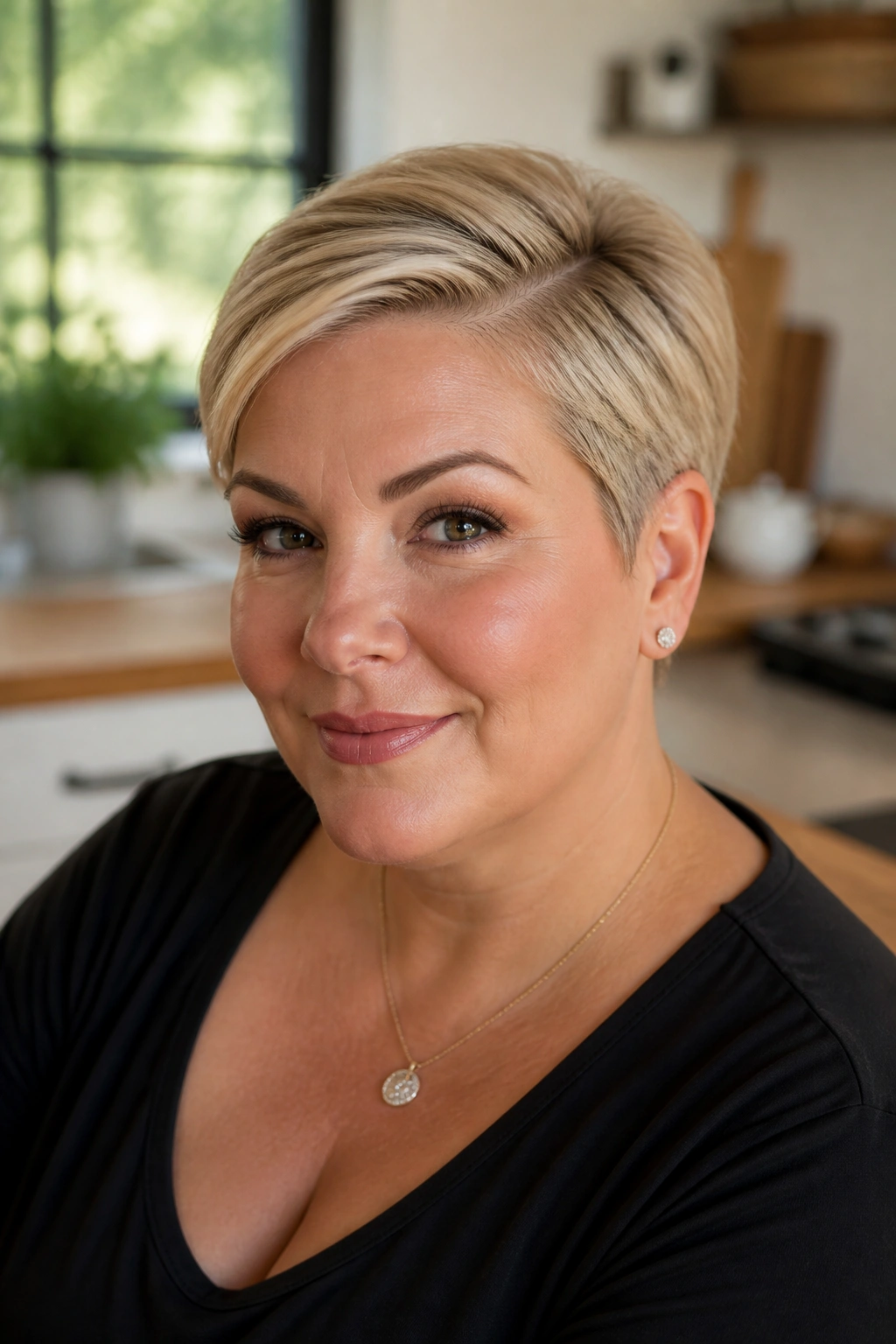
A side-parted classic pixie is the quiet workhorse of the whole category. It does not scream for attention, and that is part of its appeal. The side part gives the haircut shape right away, while the neat sides keep the style clean around the ears and jaw.
I like this cut because it looks expensive without trying to look expensive. There is nothing fussy about it. The front is usually left a touch longer, the sides are close but not severe, and the whole cut follows the head shape in a way that feels easy to live with. If you wear glasses, this style is especially good because it does not compete with the frames.
It also grows out nicely. That matters more than people admit. A pixie that still looks decent after several weeks is worth more than a dramatic cut that collapses the second the salon blowout is gone.
If your taste leans polished, this is the one to keep on your list. It works with straight hair, slightly wavy hair, and even soft curls if the ends are shaped well.
12. Faux Hawk Pixie
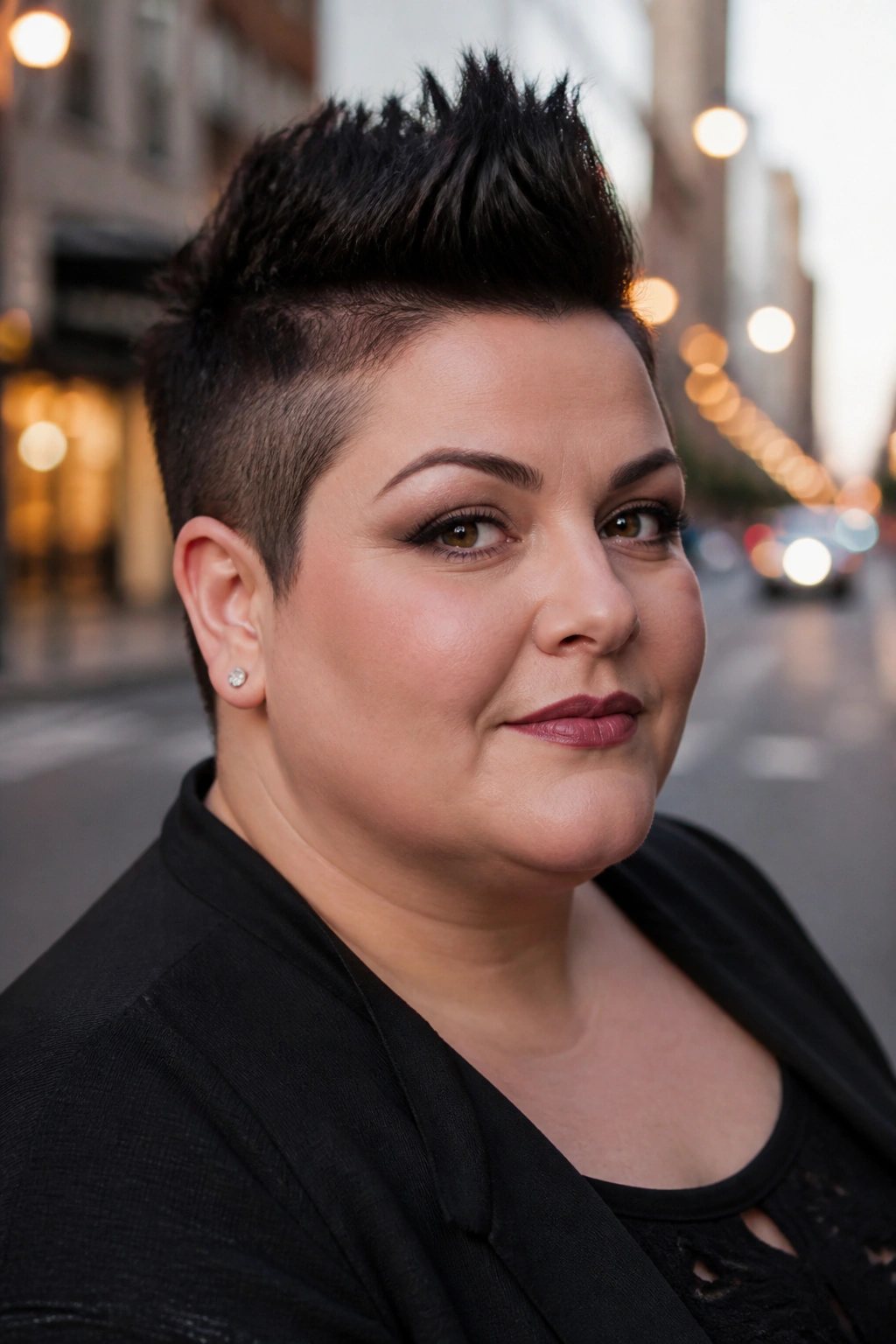
Unlike a full mohawk, the faux hawk pixie keeps the sides wearable. The middle section rises a little higher, the edges stay trimmed down, and the whole cut gets energy without turning into a costume. That is why it can be such a good fit for women who want edge but not shock value.
The shape is all about the center ridge. Leave the top with enough length to push upward or forward — usually 3 to 4 inches — and keep the sides shorter so the eye travels to the middle. The result is a vertical line through the haircut, which can be very flattering on fuller faces if you want a lengthening effect.
Best of all, it works with a few different moods. Push it tall with mousse and a blow dryer. Or keep it lower and piecey with a bit of paste. Same haircut, different attitude.
I’d recommend this style for anyone who likes their short hair to feel a little rebellious but still easy to wear at work or out for dinner. It has range. Good range.
13. Pixie Bob Hybrid

A pixie bob hybrid sits between two worlds, and that is exactly why so many people like it. It gives you the short, lifted feel of a pixie with a bit more length around the jaw and ears. That extra length softens the face without tipping into full bob territory.
Where the Length Should Sit
The sweet spot is usually just below the ear and around the jawline, with the back cut shorter and the front left slightly longer. That forward weight helps the cut feel less abrupt, which is useful if you want a shorter style but do not want your neck and cheeks exposed all at once.
- Ask for the front to stay around 4 to 5 inches.
- Keep the nape shorter so the silhouette still reads as a pixie.
- Avoid a blunt bottom edge; it can look heavy fast.
This is one of my favorite transitional cuts. If you are growing out a bob, or you are curious about short hair but not ready for something super cropped, it gives you room. It also tends to flatter fuller features because the longer front pieces break up the shape around the lower face.
14. Wash-and-Go Curly Pixie

A wash-and-go curly pixie is not lazy hair. It is smart hair. The shape has to be cut well enough that the curls land in the right place with only a little product and finger shaping. If the cut is off, no cream in the world will save it.
The best version depends on curl pattern and density, but the goal is always the same: let the curl clump, then stop messing with it. After washing, work in a leave-in conditioner and a light gel while the hair is still damp. Scrunch gently. Do not rake through it six different times and wonder why the curl looks fuzzy.
This style is especially good for women who prefer a shorter routine and do not want to spend twenty minutes styling a pixie every day. If the haircut is shaped well, the curls carry the whole look. That is the beauty of it.
A good curly pixie can feel airy around the face and neck while still giving enough shape on top to avoid that tiny, helmet-like look. It is one of the most forgiving pixie cuts for plus size women when texture is the star.
15. Silver Pixie with Soft Layers
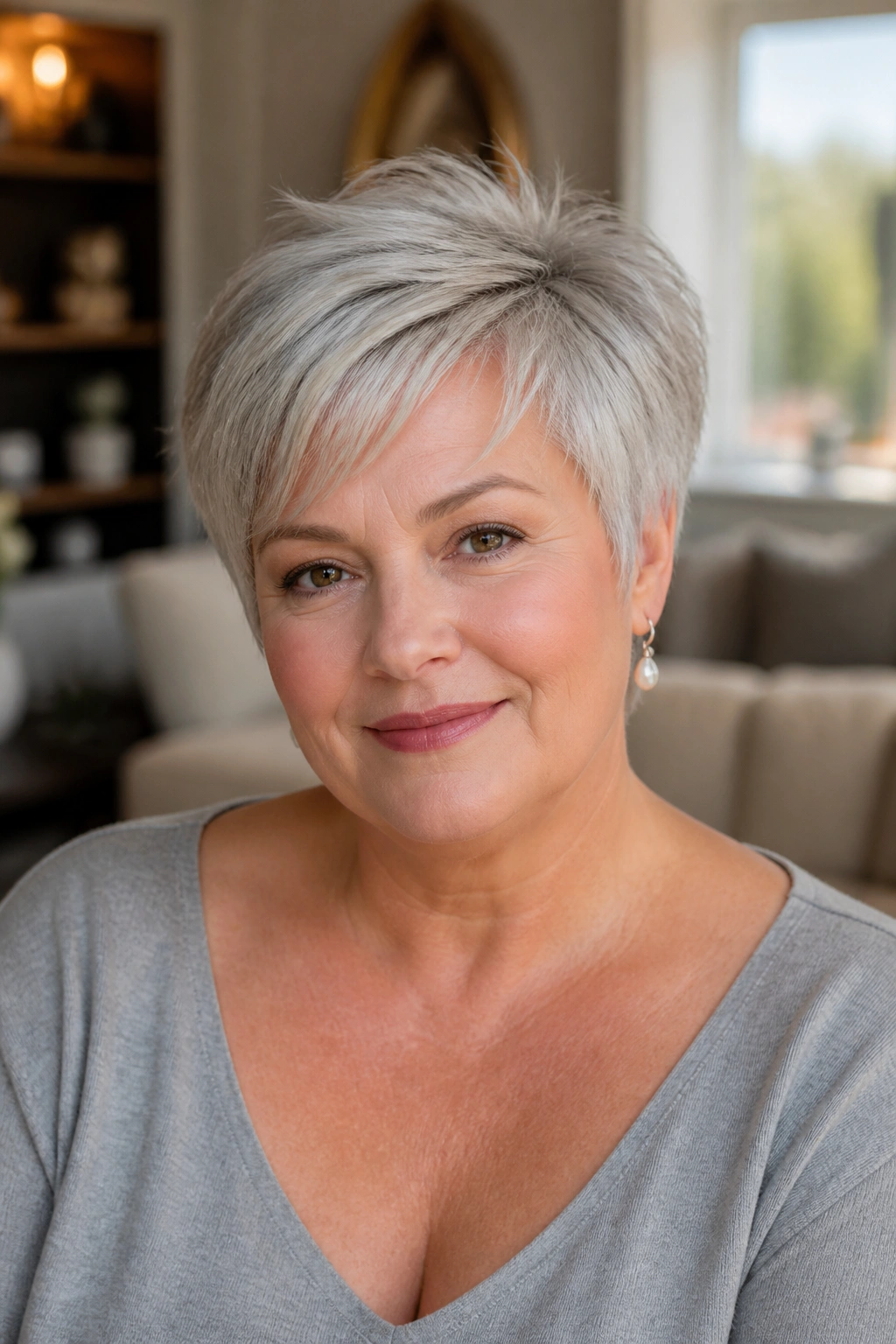
Silver hair changes the mood of a pixie immediately. It can look crisp, elegant, and clean, but it can also look harsh if the cut is too blunt or the layers are too severe. Soft layers keep the color from taking over the whole conversation.
Why does that matter? Because silver reflects light differently from darker shades. Sharp lines show faster. A little movement around the crown and fringe helps the haircut feel softer and more wearable, especially if your skin tone is warm or neutral and you do not want the hair to feel icy.
How to Keep Silver Hair Looking Clean
The practical part is not complicated. A violet-toned shampoo once every 7 to 10 days can help with yellowing, and a lightweight leave-in cream keeps the ends from looking dry. If your silver is natural, even better — you still want to protect the hair shaft, because short cuts show dryness quickly.
I like a side part or gentle fringe with silver pixie cuts because the shape keeps the color from feeling flat. The hair becomes the statement. The cut just gives it a good frame.
16. Warm Auburn Pixie

Warm auburn does something useful on a pixie cut: it softens the edges without making the style disappear. On fuller faces, that can be a nice middle ground if you want short hair with some warmth and dimension instead of a stark, high-contrast finish.
The trick is to keep the color rich, not muddy. Auburn works best when the haircut has enough layer separation for light to move through it. A flat cut can make the color look one-note. A bit of texture around the temple and crown keeps it alive.
- Ask for copper-brown or warm red-brown tones instead of a flat dark brown.
- Keep the layers around the front soft so the color can break up the outline.
- Style with a glossing cream if the ends need shine.
This is a good option if you want something that feels feminine without being sugary. Auburn on a pixie looks grounded. It has personality, but it does not need to shout.
17. Platinum Pixie with Shadow Roots

Platinum pixie cuts are not for the faint of heart, mostly because platinum shows everything. Dry ends, uneven layers, over-shaved sides — all of it. That is why a shadow root can be your friend. It gives the color a little depth at the base and stops the cut from looking like one bright block.
The shape underneath should stay clean. Platinum already brings a lot of attention, so the haircut does not need extra confusion. Keep the sides smooth, the crown controlled, and the fringe a little softer than you think you need. A hard platinum fringe can look frozen in place.
The maintenance is part of the deal. Toning, conditioning, and keeping the ends trimmed every few weeks matter because short blonde hair can go scruffy faster than people expect. The upside is that when it’s done well, it looks deliberate in the best way.
If you want a high-contrast style that still feels polished, this is a strong one. The shadow root does not hide the platinum. It just makes the whole thing more wearable.
18. Tousled Piecey Pixie
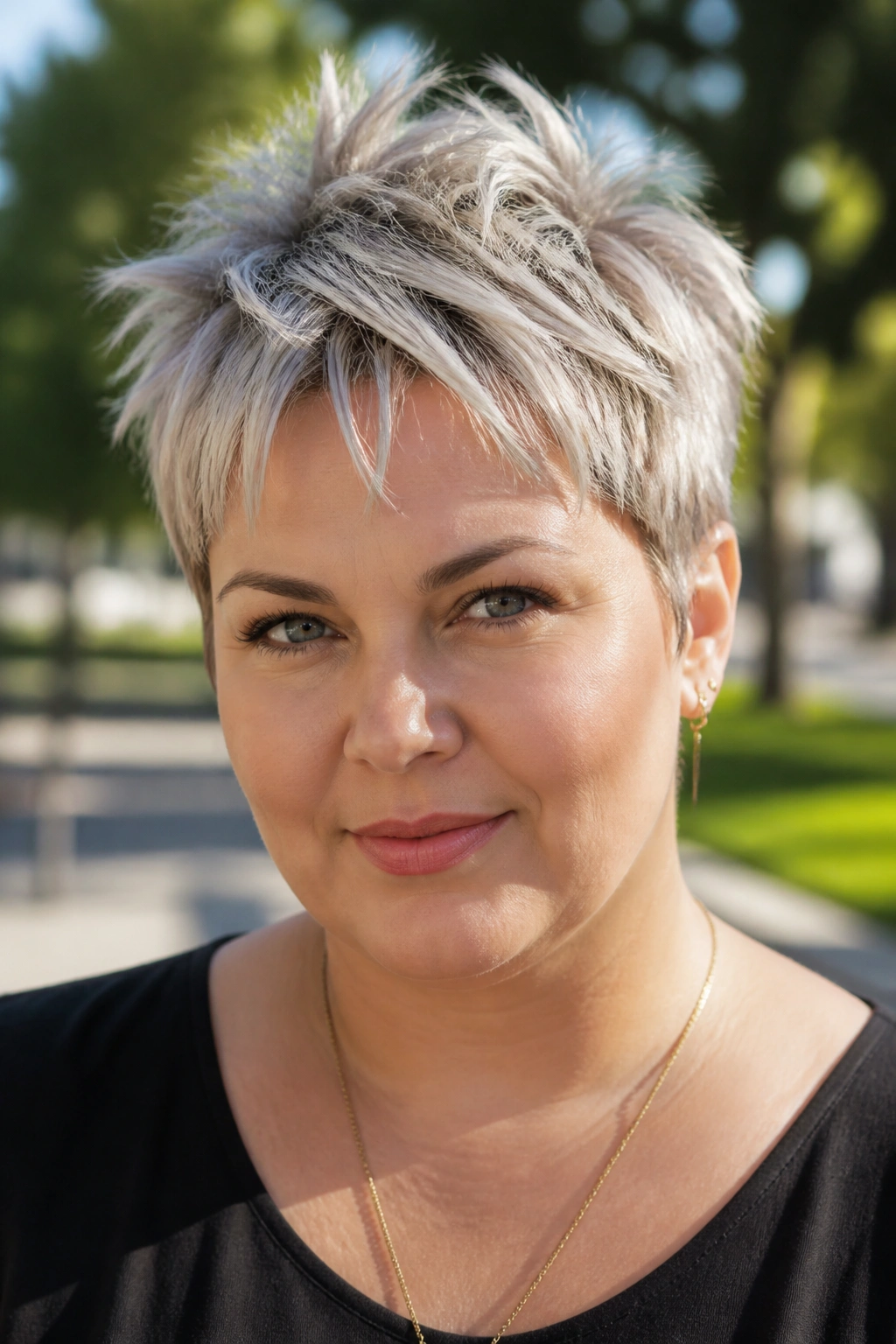
A tousled piecey pixie thrives on separation. Unlike a sleek pixie, it does not need every strand to lie flat. It wants little bits of texture, some lift, a few ends that point in different directions. That slightly undone finish is what keeps the haircut from looking precious.
This is a good style if you hate spending ages with a brush. A little texture powder at the roots and a pea-size dab of paste at the ends can be enough. Work it in with your fingertips, then stop. If you keep touching it, you will flatten the whole point of the cut.
It is especially kind to fine hair because the separation gives the illusion of density. On thicker hair, the same texture helps the style feel lighter and less helmet-like. That balance makes it a useful everyday pixie, not just a photo haircut.
For plus size women, this style reads relaxed but still shaped. It gives the face softness and movement without collapsing into a messy bob. That part matters.
19. Sleek Satin Pixie
A sleek satin pixie has a different mood altogether. It is smoother, more polished, and a little more precise around the edges. The finish is the whole story here. If the texture is rough, the haircut loses its point.
Why the Finish Matters
On a short cut, smoothness makes the lines look intentional. A satin finish reflects light without going greasy, which is hard to get right but worth the effort. Use a light serum only on the ends and a blow dryer with a narrow nozzle so the hair lays in the direction you want.
- Best on straight hair or softly waved hair that can be smoothed easily.
- Ask for a soft taper at the temples to keep the cut from looking boxy.
- Keep the product light; too much shine makes the hair collapse.
This style looks especially good when you want the haircut to feel refined with minimal fuss. It works with tailored jackets, bold lips, and earrings that do a little work on their own. Clean. Sharp. No extra noise.
20. Bold Color Pixie with a Clean Shape
A bold color pixie works best when the cut itself stays simple. If the color is doing the shouting — electric copper, berry, violet, blue-black, even a sharp coral — the shape should stay neat enough to let the shade read clearly. Too much layering can make a vivid color look busy.
That is especially true for plus size women who want the haircut to feel confident rather than costume-like. A clean outline around the ears and nape gives the color a frame. Then a little lift on top keeps the shape from feeling heavy. The haircut becomes a backdrop, not a competition.
If you go this route, ask your stylist to think about contrast. A deep color can handle more texture. A bright one usually looks better with a simpler silhouette. Either way, the cut should be tidy enough that the eye sees the color first and the shape second.
I like this option for women who already know they enjoy attention. It is direct. It does not whisper.
Final Thoughts
The best pixie cut is the one that still looks good after the first salon blowout is gone. That is the part people forget. A good short haircut should grow out with some grace, keep its shape for weeks, and still feel like you after a messy morning and a bad scarf.
If you are unsure, ask for a little more length than you think you need. You can always go shorter next time. Growing out a cut you hate takes longer than trimming a cut that feels almost right. Annoying, yes. True, too.
Bring photos, but bring a few. One photo for the fringe. One for the nape. One for the top. Stylists read details faster when they can see them separately, and pixies live or die by details.
