



The undercut is one of those haircuts that looks simple until you sit in the chair and have to choose how hard the contrast should be. A clean top-and-sides cut can read sharp, flat, edgy, polished, or a little rough around the edges, depending on the length on top and the way the sides are taken down.
That flexibility is why modern undercut styles for men keep showing up in barbershops. The basic shape is old news; the details are what change the whole mood. A skin-tight side with four inches on top feels nothing like a soft undercut with a textured fringe, and both can work on the same head of hair.
What trips people up is not the cut itself. It’s the balance. Go too blunt and the haircut can start to feel heavy. Go too soft and you lose the clean line that makes an undercut look like an undercut in the first place.
A good version should match your hair texture, your face shape, and how much time you’ll spend styling it before coffee. That part matters more than whatever photo you saved to your phone.
1. Classic Disconnected Undercut
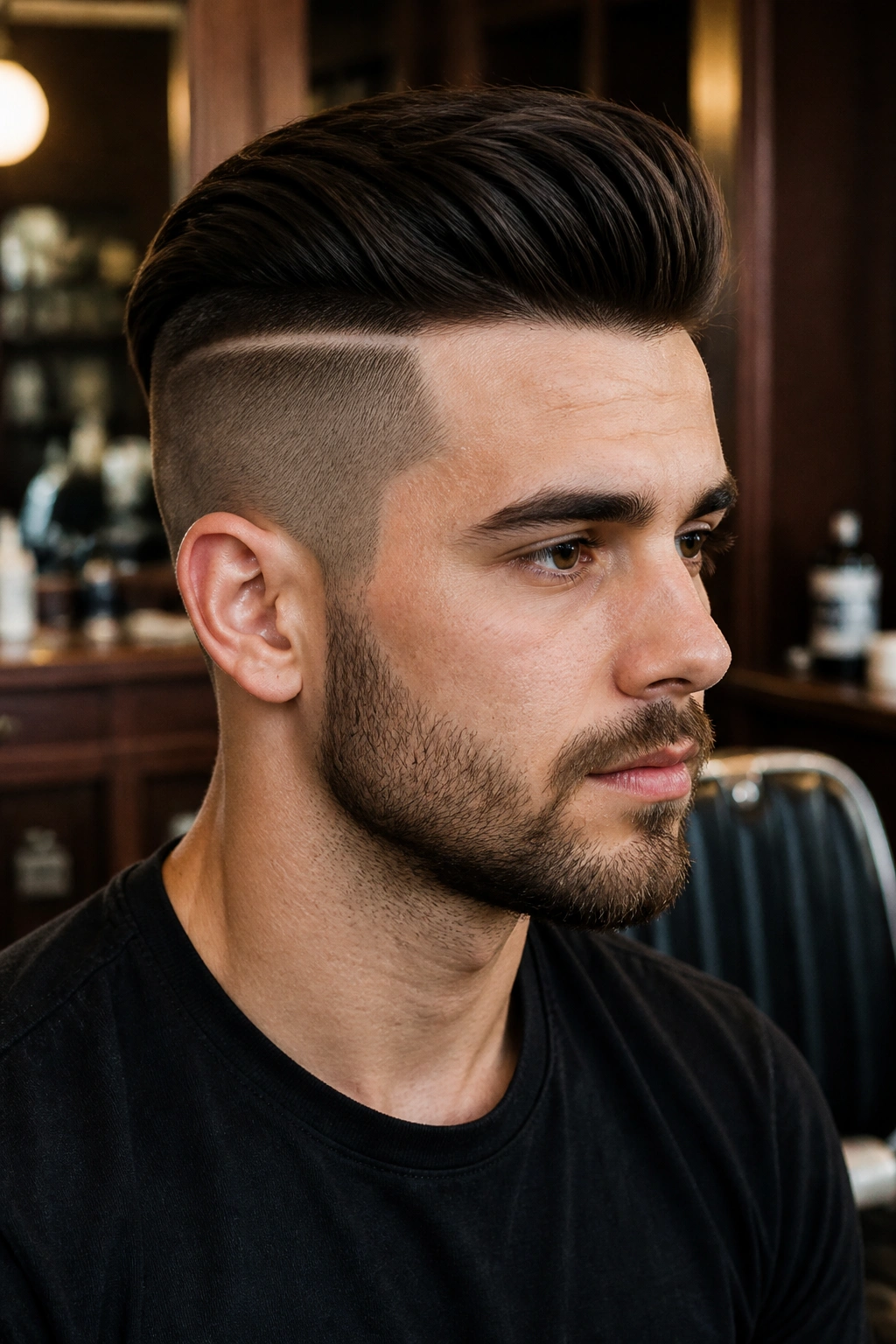
The classic disconnected undercut is the cut that made the whole shape famous, and it still works because it has a built-in attitude. The sides are clipped short, the top stays long, and there’s a visible break between the two. No soft fade. No polite blending. Just a clean split.
That hard line is the whole point. It gives straight hair more presence and makes thick hair sit in a way that feels deliberate instead of bulky. Ask your barber for a tight clipper cut on the sides, then leave at least 3 to 5 inches on top if you want real styling room.
How to wear it
- Comb it back with a matte pomade if you want a cleaner finish.
- Finger-style it with a small amount of clay if you want movement.
- Keep the sides fresh every 2 to 3 weeks, because the shape loses its edge fast.
Best for: men who want a bold cut without loading the top with too much product.
If you like a haircut that looks clear from across the room, this is the one. It does not whisper. It states the case and moves on.
2. Slicked-Back Undercut

Why does the slicked-back undercut keep coming back? Because it solves a real problem: how to make medium-length hair look tidy without making it boring. The top is long enough to sweep backward, and the sides stay tight so the hair doesn’t puff out at the temples.
The trick is control, not shine. A lot of people drown this style in glossy gel and end up with hair that looks wet for the wrong reason. A light cream or medium-hold pomade usually works better, especially if your hair has some thickness and wants to fight you.
What to ask your barber
- Keep the top around 4 to 6 inches.
- Take the sides down short, but leave enough room so the contrast still feels intentional.
- Blend the back carefully so the crown doesn’t stick out in a weird hump.
This style suits men who want a clean shape for work and still want their hair to feel a bit dressed up after hours. It looks best when the front has a little lift, not when it’s pasted flat to the scalp.
3. Side-Part Undercut
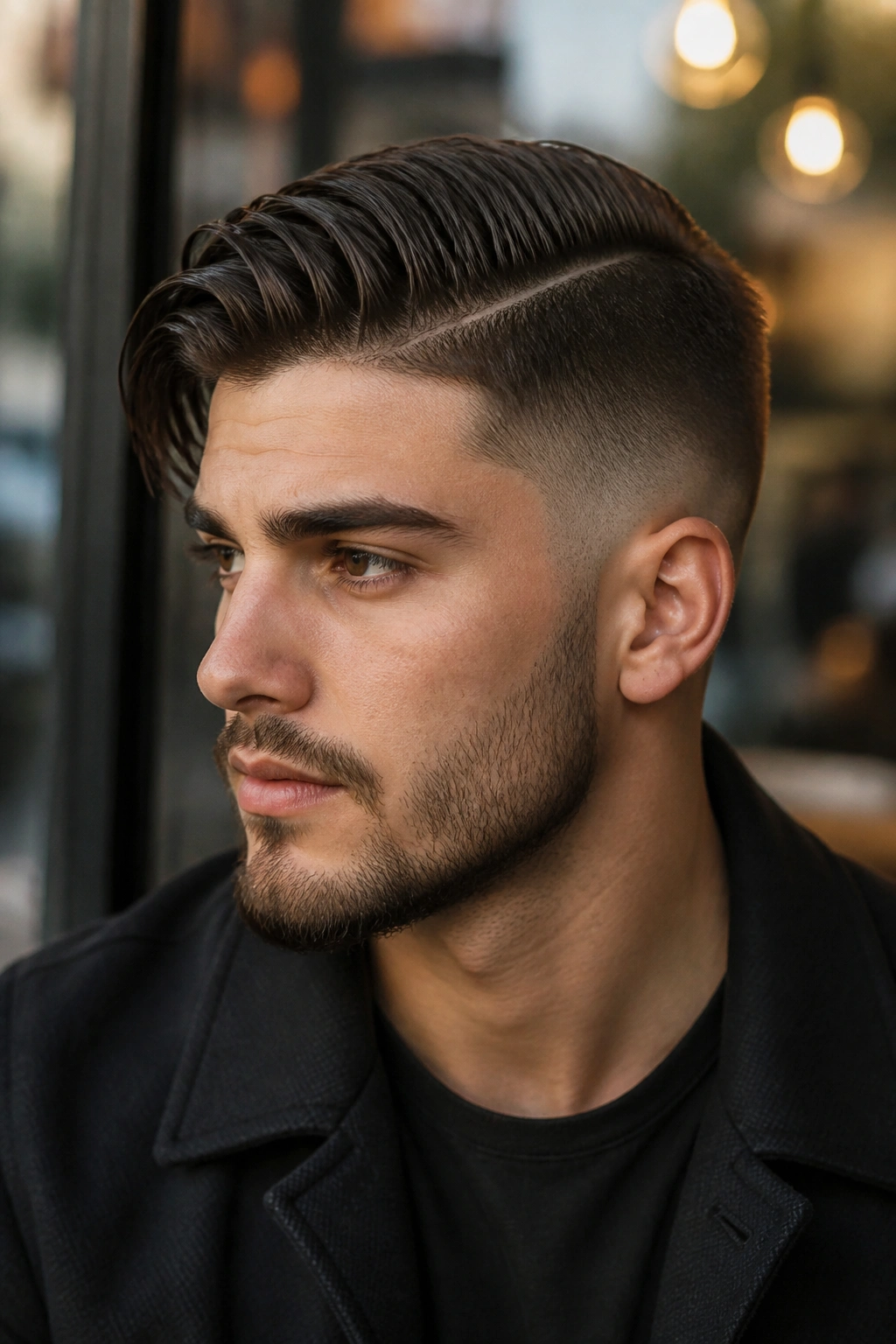
A side-part undercut is one of the easiest ways to make a sharp haircut feel less aggressive. The part gives the eye a place to land, and that matters when the sides are short and the top has real length. Without the part, the same cut can feel a little severe.
This is a smart choice if your hair naturally wants to split anyway. You’re not fighting the growth pattern. You’re using it. Ask for enough length on top to sweep across, then keep the sides tight enough that the part line reads clean instead of fuzzy.
Why it works so well
- It adds structure without needing a lot of styling time.
- It suits straight and slightly wavy hair especially well.
- It softens a strong jaw or a long face by putting more shape near the top.
A side-part undercut also ages well. Not in the dull sense. In the practical sense. It still looks put together when it grows out a little, which is more than I can say for some more dramatic cuts.
4. Textured Crop Undercut

Walk out of the barbershop with the top chopped to about 1.5 to 3 inches and the front left slightly piecey, and you get a textured crop undercut that feels modern without trying too hard. It’s shorter, choppier, and less precious than a slick style. That matters if your hair is thick or if you hate spending 10 minutes wrestling a comb.
The texture is what makes it work. Blunt, heavy top hair can make an undercut look boxy. Broken-up ends, on the other hand, keep the style light and give it movement even when you only use a tiny bit of matte paste.
What to watch for
- The fringe should be uneven, not jagged for the sake of it.
- The sides need to be tight enough to support the crop.
- A dry finish usually looks better than shine here.
If your hair gets fluffy in humidity, this cut is a solid answer. It looks intentional on rough days, which is half the battle.
5. Pompadour Undercut

The pompadour undercut is not subtle. That’s fine. It was never supposed to be. The front has height, the crown stays controlled, and the sides drop away so the shape has room to breathe. When it’s done well, the whole cut has a clean vertical line that looks expensive without being fussy.
This one needs more length on top than most undercuts, usually around 5 inches or more in the front. You also need a product that gives lift without turning the hair into a helmet. A blow dryer helps a lot here. So does a round brush, though plenty of men skip it and wonder why the front falls flat by lunch.
What makes it different
- It puts the visual weight at the front.
- It works best with thick hair that can hold shape.
- It needs regular trimming to keep the silhouette from collapsing.
The pompadour undercut suits men who like a strong, styled look and do not mind a little maintenance. If you want easy, this is probably not your cut. If you want presence, it absolutely has that.
6. Quiff Undercut
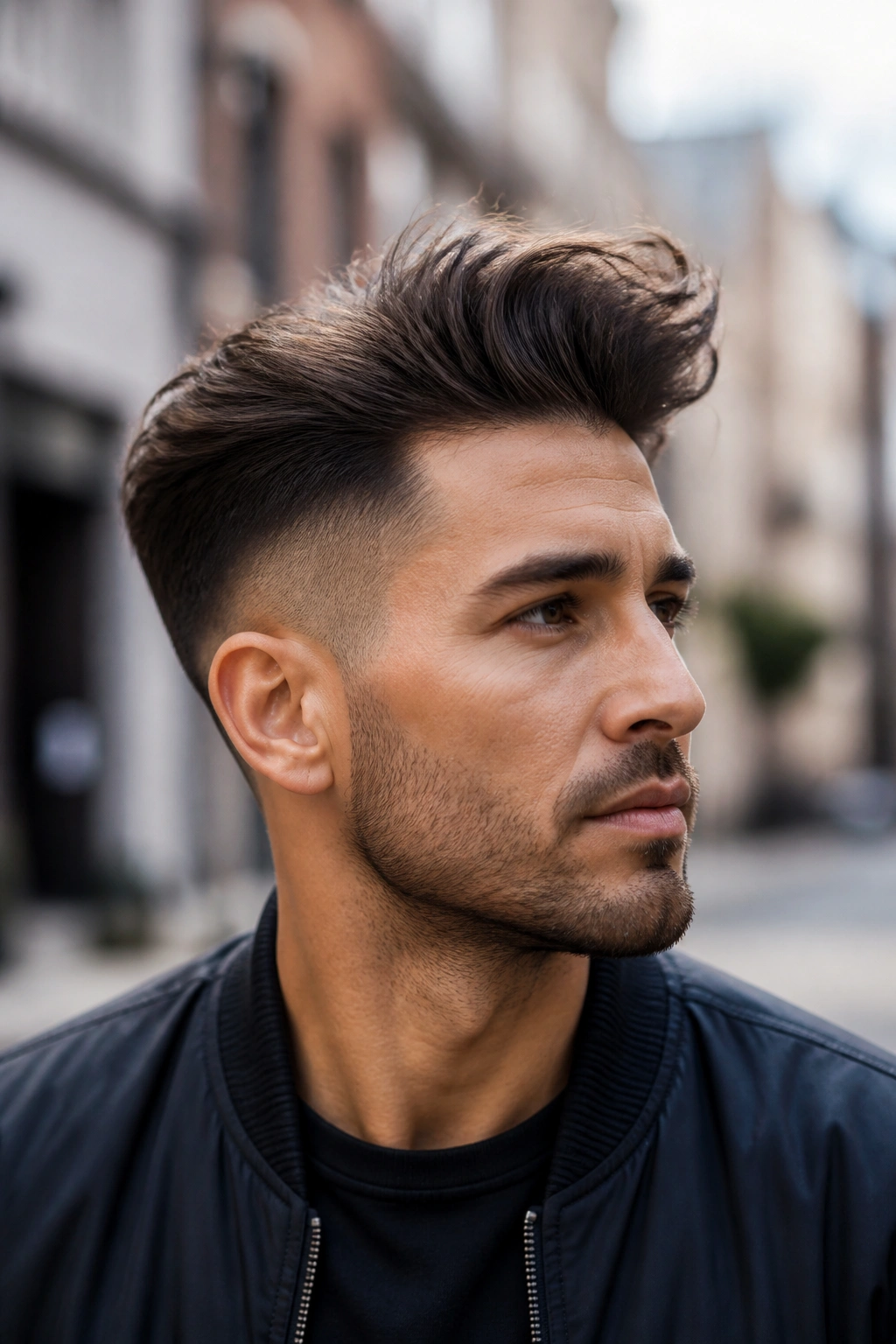
Unlike the pompadour, the quiff undercut does not need the front section to stand at attention. It’s looser. A little less formal. The hair lifts up and back, but it keeps some air in it, which makes the whole cut feel less rigid.
That looseness is the selling point. You can wear it with a matte clay for a rougher finish or a cream if your hair is finer and needs more help staying up. The sides can be disconnected or softly faded, depending on how sharp you want the contrast to read.
A quiff undercut works well if your hair has a natural bend or if it tends to fall forward. The front can be pushed up with a blow dryer in under 3 minutes once you get the hang of it. And no, it does not have to be huge. A modest quiff often looks better than the skyscraper version.
It’s the cut I’d point to if you want some lift without looking like you’re trying to win a contest.
7. Curly Undercut

Curly hair and an undercut can look razor-sharp when the sides are kept tight and the top is left with enough room to spring up. The curl pattern does half the work for you. That’s the nice part. The annoying part is that curls expand, so the top needs a shape that keeps them from looking like a round puff.
Why curl pattern matters
When curls are cut too short on top, they can stick out in awkward little springs. Leave enough length for the curls to stack, though, and the style starts to look rich and full. I usually think in terms of 3 to 5 inches on top for tighter curls, a bit more if the curl is looser.
A light cream or curl paste helps. Heavy wax usually makes curly hair look greasy at the roots and dry at the ends. Not a good look.
- Ask for clean sides and a shaped top.
- Keep the neckline neat, because curls can make the back look messy faster than you expect.
- Use a wide-tooth comb or your fingers, not a fine comb that pulls the curls apart.
This cut is strong when it’s allowed to look like hair, not like a sculpture.
8. Wavy Undercut
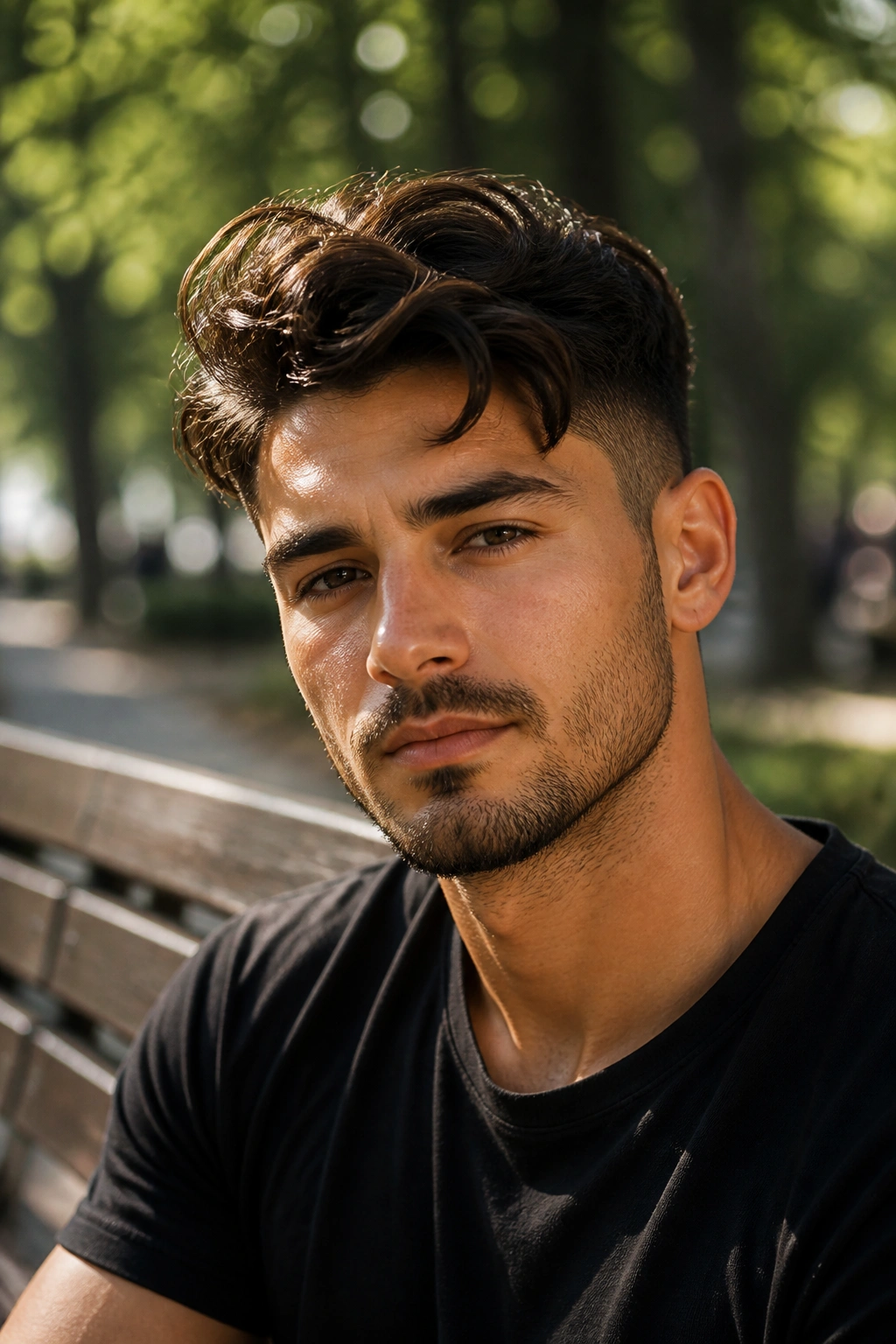
A wave that falls forward every morning can be maddening, until it becomes the whole point of the haircut. The wavy undercut uses that movement instead of trying to flatten it. The sides stay short, the top keeps its bend, and the style ends up looking relaxed in a way straight hair often has to fake.
The best version keeps enough length on top for the wave to show, usually around 3 to 5 inches. Too short, and you lose the pattern. Too long, and it starts to droop unless you’re willing to spend more time styling it.
A matte cream usually beats a heavy pomade here. You want the wave to move. You do not want it glued in place. Blow-dry with your fingers, then let the front fall where it wants to after a quick push back or sideways.
This is a good cut for men who want shape without stiffness. It looks easy because, honestly, it is.
9. Long Hair Undercut
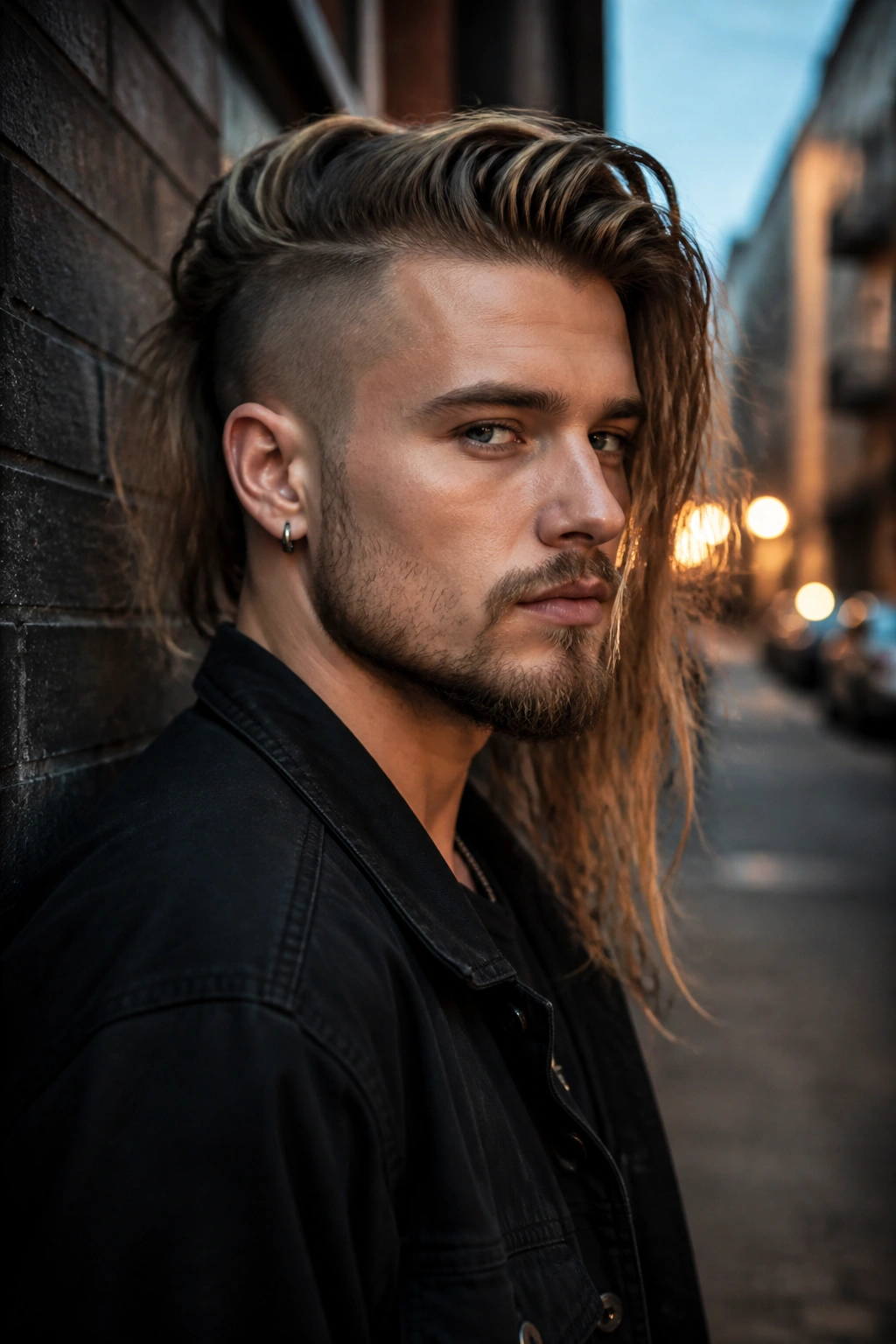
Long hair with an undercut has a strong split personality in the best possible way. The sides disappear, the top stays long, and the length becomes the feature instead of the problem. It can be worn loose, tucked back, half tied, or left messy, which is why it suits men who like options and hate feeling locked into one look.
The barber part matters more here than people think. If the undercut line sits too high, the hair on top can look like it’s floating. Too low, and the whole cut loses the contrast that makes it interesting. The sweet spot depends on head shape, but most men look better with the shorter section sitting around the temple and above the ear.
You also need to care about bulk. Long hair on top can puff out at the crown if the layering is wrong, and that can make the style feel heavy instead of relaxed. A little internal layering keeps the weight under control.
This is the style for men who want the undercut shape without giving up length. It has range. It also has opinions.
10. Man Bun Undercut

Can you tie it back without looking like you tried too hard? Yes, if the cut underneath is clean enough. The man bun undercut works because the sides and back remove the extra bulk that usually makes tied hair look sloppy or shapeless. When the hair is gathered at the crown, the contrast is sharp and the whole style feels planned.
Best hair length for the bun
- You usually need at least 6 inches on top, and more if your hair is very thick.
- The sides should stay tight enough that loose pieces do not fan out.
- A slightly lower bun looks softer; a higher one reads more severe.
This cut is handy on busy days, but it does have a catch. If the bun lives too high and too tight, the front hairline can start to look stressed. Give your scalp a break. Wear it down sometimes.
A man bun undercut fits men who want versatility without a lot of styling work in the morning. It looks strongest when the bun is neat and the fade or disconnect underneath is crisp.
11. Fringe Undercut
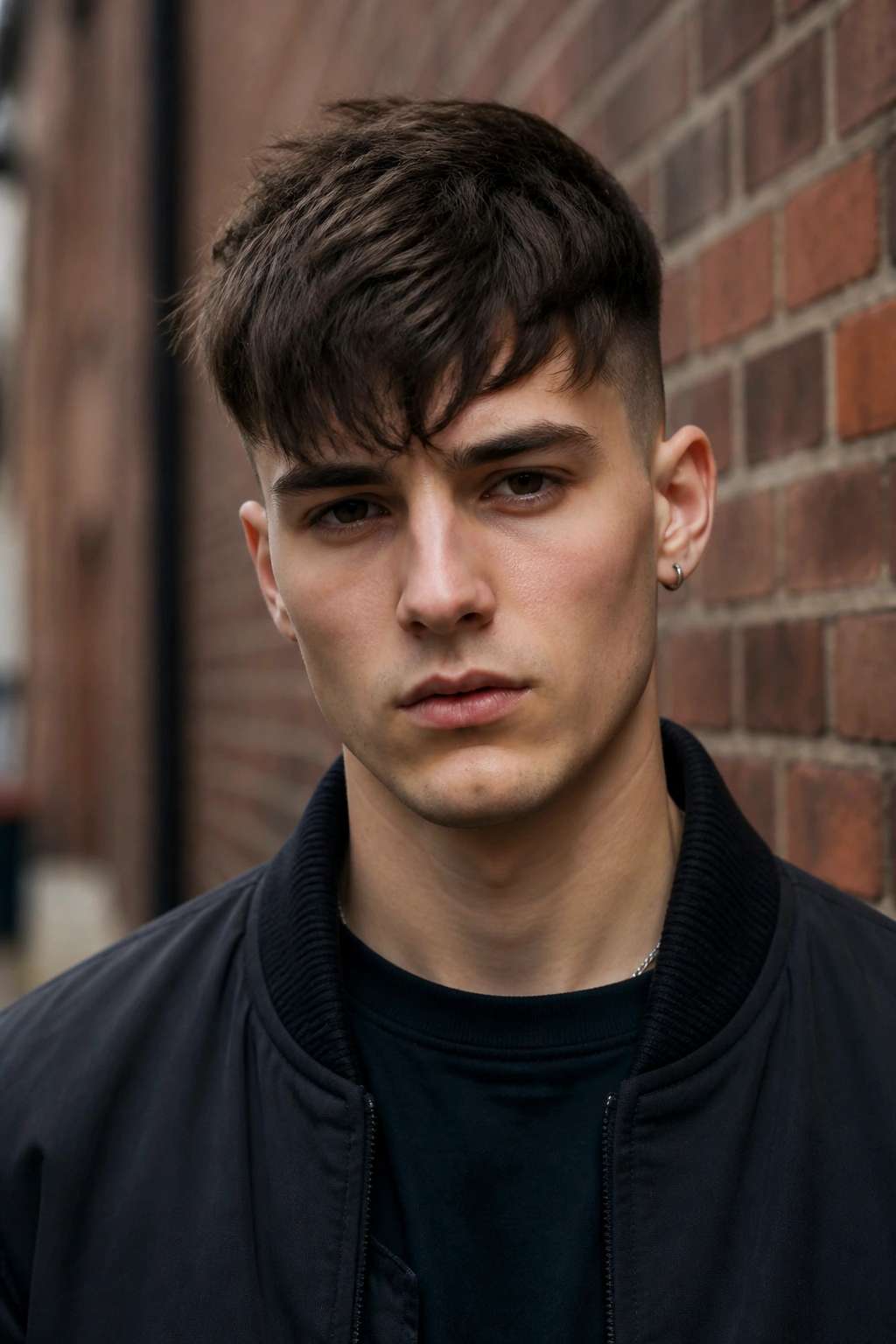
The fringe undercut is not a shy haircut. It hides the forehead, puts motion in the front, and gives the face a more casual frame than a slicked-back style ever will. That makes it a nice choice if you want the undercut shape but don’t love the feeling of hair pushed away from your face all day.
The fringe itself can be straight, choppy, or slightly angled. The important part is that it lands with purpose. A dead-straight heavy fringe can make the cut feel blocky, while a textured one keeps it lighter and easier to wear. If your hair is thick, ask for point cutting at the ends. That little bit of texture helps more than most people expect.
This style suits men with longer faces, sharper foreheads, or hair that naturally wants to fall forward. It can also be a good fix for a crown that doesn’t cooperate. Keep the sides tight, though. A loose fringe with heavy sides tends to look accidental.
12. Hard Part Undercut

A hard part is one of those details that changes the whole haircut without adding much length. The barber shaves a visible line into the part, and suddenly the undercut feels cleaner, more deliberate, and a little more tailored. It is a small move with a loud result.
The catch is upkeep. That line fades fast as the hair grows, so this is not the cut for a man who wants to disappear from the barbershop for two months. The rest of the style can be simple — side-swept, brushed back, or lightly textured — because the hard part already does some of the talking.
Use it when you want the haircut to read as precise from a distance. It pairs well with medium-length tops and tighter sides. If your hair is very curly, the line can still work, but the contrast will soften sooner and may need more frequent trimming.
I like this style because it looks exact without needing much else. Clean. Sharp. Done.
13. Fade Undercut
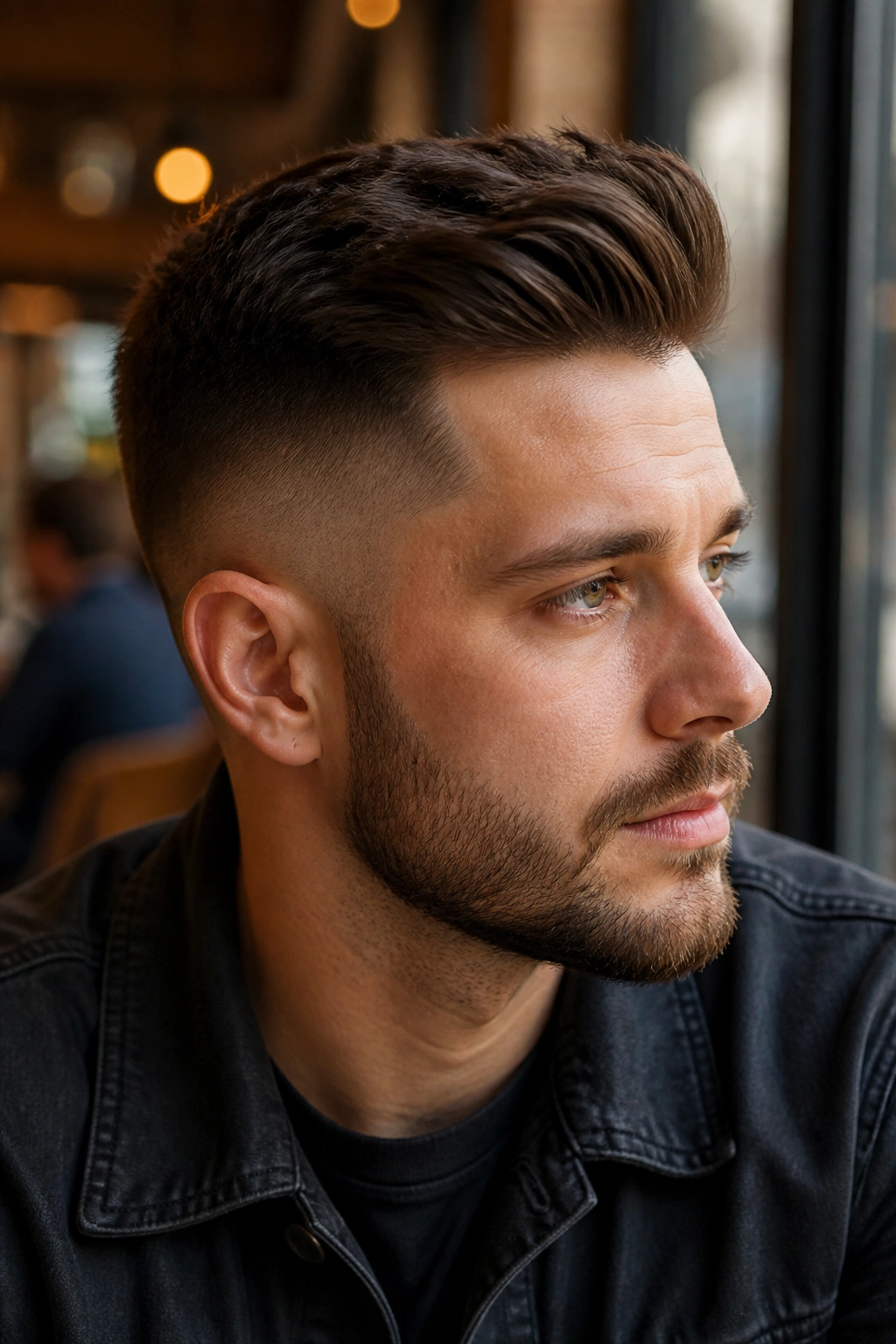
If a disconnected undercut feels too blunt, a fade version softens the sides without giving up the shape. That’s the real value here. You still get the short sides and longer top, but the transition is gradual, so the haircut feels easier to wear in everyday life.
What the fade changes
- A low fade keeps the contrast near the ears and neck.
- A mid fade puts more focus on the top.
- A high fade makes the top look taller and the whole cut feel louder.
Ask your barber how much skin you want to show. A zero fade exposes more scalp and looks sharper for longer. A longer fade grows out more gently. That detail matters if you hate frequent touch-ups.
This version is especially good for men who want an undercut but do not want the sides to look too severe. It works with comb-overs, crops, quiffs, and slicked-back tops. In other words, it’s one of the easiest ways to make the undercut shape feel current without chasing drama.
14. Skin Fade Undercut
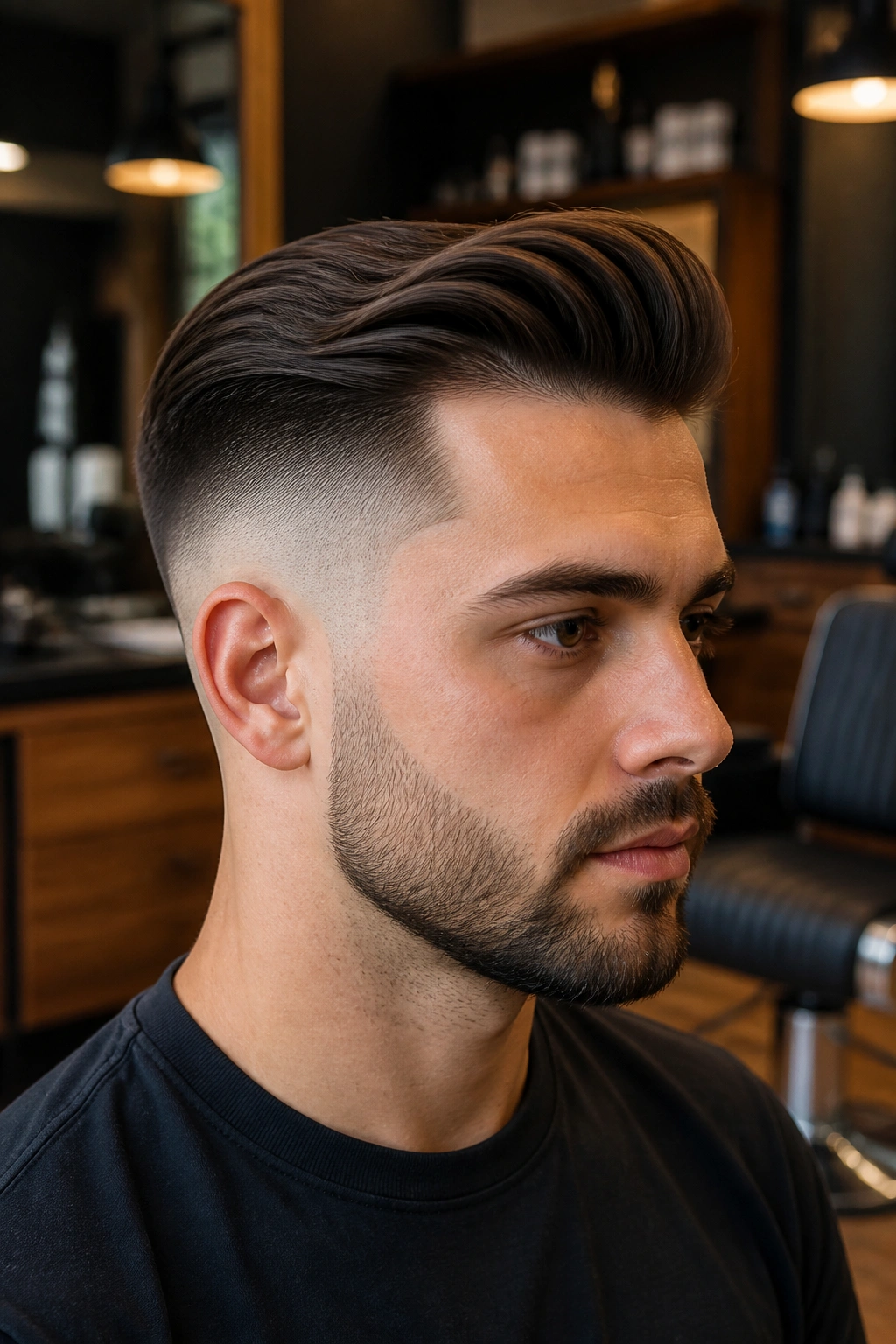
A skin fade undercut is built on precision. The sides go all the way down to bare skin at the bottom, then rise cleanly into longer hair above. When it’s fresh, the line between skin and hair looks almost painted on. That crispness is the appeal.
It also asks a little more from your barber. The fade has to be even, and the top has to be balanced so the cut does not look top-heavy. Short to medium tops usually work best. If the top is too long and heavy, the whole style can feel disconnected in the wrong way.
This cut suits strong jawlines and men who like a sharp outline around the ears and neckline. It can be unforgiving on a patchy scalp or a cowlick near the temple, so speak up if either one tends to give you trouble. A good barber can adjust the fade height and leave a touch more weight where the hair needs it.
15. Spiky Undercut

Spiky hair only works when it still looks like hair. That’s the rule people forget. The spiky undercut uses short-to-medium length on top and enough texture to push the hair up in pieces, not into one crunchy helmet. Keep the sides tight and the top broken up, and the style feels playful instead of frozen.
A matte product is usually the smart move. Rub a small amount between your palms, work it into damp or dry hair, then pinch sections upward with your fingers. Do not drag a comb through it unless you want the spikes to collapse into a single clump. That mistake happens all the time.
What to use
- Matte clay for rougher, drier texture.
- Fiber if your hair is fine and needs hold.
- A tiny bit of pre-styler if your hair falls flat fast.
This haircut suits short mornings and short attention spans. It also grows out in a forgiving way, which is nice. The shape still works even when it’s not freshly cut.
16. Messy Undercut
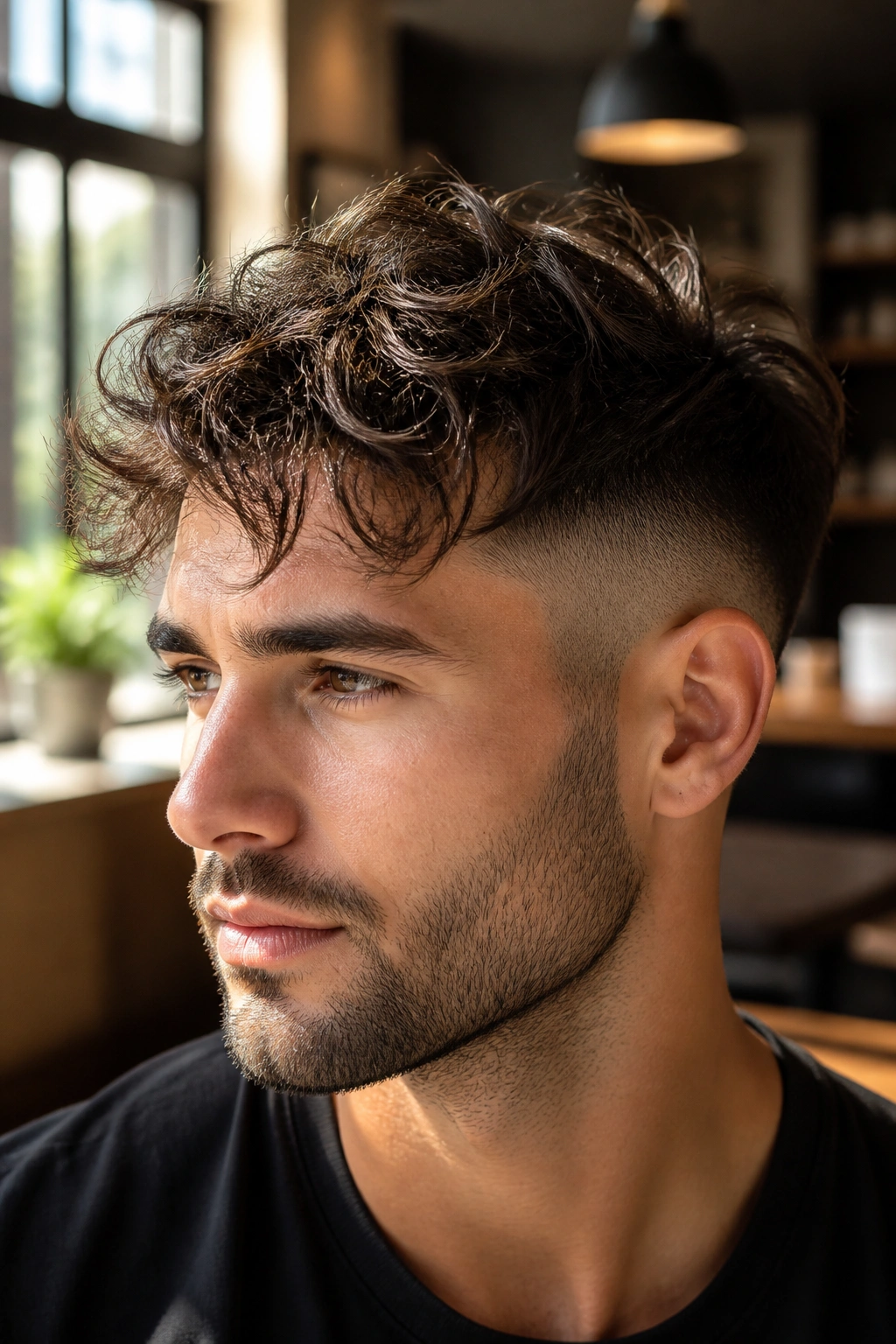
A messy undercut is for the man who wants texture without looking over-styled. The sides stay neat, but the top is left loose enough that you can rough it up with your fingers and walk out the door. It sounds easy because it is easy, provided the haircut is cut with the right amount of texture.
The barber should remove some weight from the top without shredding it into nothing. That balance matters. Too much thinning and the hair can go wispy. Too little and the messy look turns into a helmet that refuses to move. You want separation, not chaos.
This cut works best with medium-thick hair and a little natural bend. It is also a good choice if you want a style that looks better the second day, when the product has settled and the shape has loosened a bit.
Messy does not mean careless. It means the cut gives you room to be casual without losing the outline.
17. Comb-Over Undercut

A comb-over undercut is not your uncle’s comb-over. Different thing. This version uses the longer top to sweep across the head while the sides stay tight enough to make the direction obvious. The result is clean, modern, and much less fussy than people expect.
The style works especially well when the top has a little length at the front and the back is kept controlled. A side part can help, but it does not have to be dramatic. The main idea is movement from one side to the other, with enough contrast that the sweep reads immediately.
How to keep it modern
- Avoid too much shine.
- Keep the sweep soft, not pinned in place.
- Leave some texture on the top so the hair does not look flat.
This is a good choice if your hairline is changing and you want a style that follows the hair instead of fighting it. It can look sharp and practical at the same time, which is a harder balance than people think.
18. Undercut With Beard

Does an undercut look better with a beard? Often, yes — if the lengths are balanced. The hair on top adds height, the sides bring in clean structure, and the beard gives the lower half of the face some weight so the whole look doesn’t feel top-heavy.
The biggest mistake is letting the beard and the haircut grow in different directions. A sharp skin fade with a wild, overgrown beard can look disconnected in a bad way. A fuller beard with a softer fade can work beautifully, though, because the two pieces feel like they belong to the same head. Funny how that works.
Keep the cheek line and neck line neat. That alone changes the whole cut. Even a short beard benefits from a clean edge where it meets the jaw, especially if the undercut itself is crisp. If you want the style to look intentional, the beard has to be treated like part of the haircut, not an afterthought.
This pairing is strong for men with square faces, strong chins, or thicker facial hair that already wants structure.
19. Undercut With Shaved Design
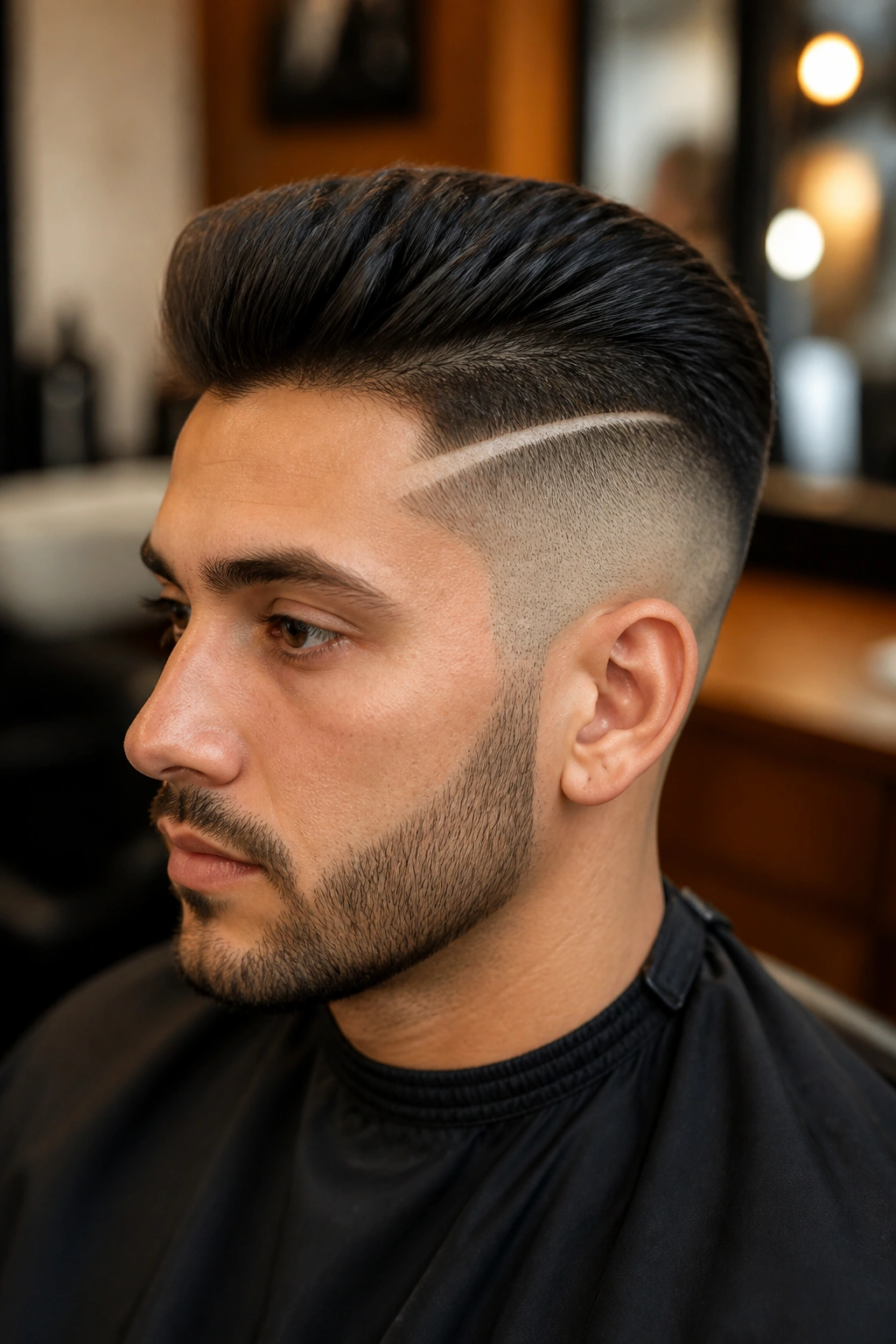
A shaved design can look sharp, but only when the cut around it is boringly clean. That sounds backwards, and it is. The design is the accent. The undercut is the frame. If the fade is sloppy or the top is uneven, the line work underneath will not save it.
Keep the design simple unless you’re prepared for upkeep. One clean line, a double line, or a small geometric break near the temple usually ages better than a busy pattern that needs redrawing every week. The more crowded the design gets, the easier it is for the whole look to slide into novelty territory.
Good design choices
- A single side line for a small detail.
- Two parallel lines for a stronger edge.
- A temple curve that follows the head shape.
This style works best when you want personality in the haircut without changing the whole silhouette. It is a small statement, but it still needs discipline. That’s the part people miss.
20. Low-Maintenance Buzzed Undercut
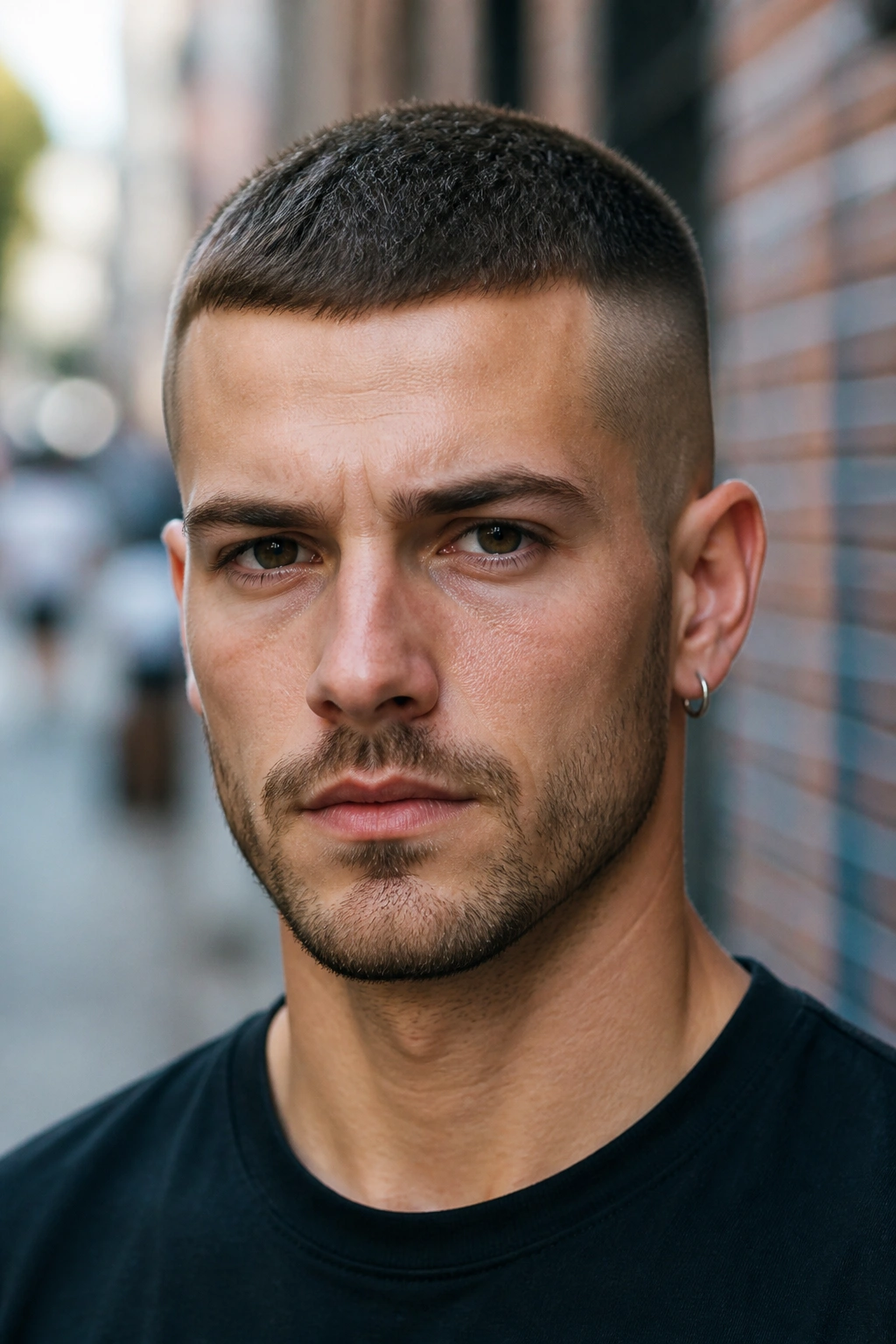
Want the cleanest version with the least mirror time? This is the one I’d send most men toward first. The low-maintenance buzzed undercut keeps the top short enough to style fast, sometimes with barely any product, while the sides stay clipped down for a crisp outline. It still reads as an undercut. It just doesn’t demand your morning.
Who it suits best
- Men with busy schedules.
- Guys with thick hair that gets puffy.
- Anyone who likes a sharp shape without daily styling.
The top usually sits somewhere between a buzz and a short crop, which means you can brush it forward, push it to the side, or leave it natural. That range is the selling point. It grows out well, too, which matters more than people admit.
This version is also forgiving if your hairline is a little uneven or your crown has a stubborn swirl. The short length takes the drama out of both. If you want an undercut that looks deliberate, stays neat, and does not eat your morning, this is the one that keeps making sense.
