



Gray hair ideas for women over 50 get talked about as if they’re a single category, and that’s always felt lazy to me. Silver strands can look sharp, soft, airy, glossy, or full of edge, depending on where the cut lands and how much movement you leave around the face.
Hair changes with age, sure. It can feel drier, a little wirier, sometimes flatter at the crown and puffier at the ends — a weird little mix that makes one-size-fits-all styling advice fall apart fast. That’s why the best gray hair looks are rarely about chasing youth. They’re about shape, balance, and knowing when to let the color do the work.
A clean cut can make gray hair look deliberate in a way that heavy styling never quite manages. A bad cut, though, will show on silver hair immediately. The reflective strands don’t hide much.
So the smartest move is to choose a style that fits your texture, your daily routine, and the way you actually wear your hair. Some of these ideas are short and crisp. Some are soft and a little undone. A few are for the days you want your silver to look polished with almost no fuss.
1. Soft Silver Pixie With a Tapered Nape
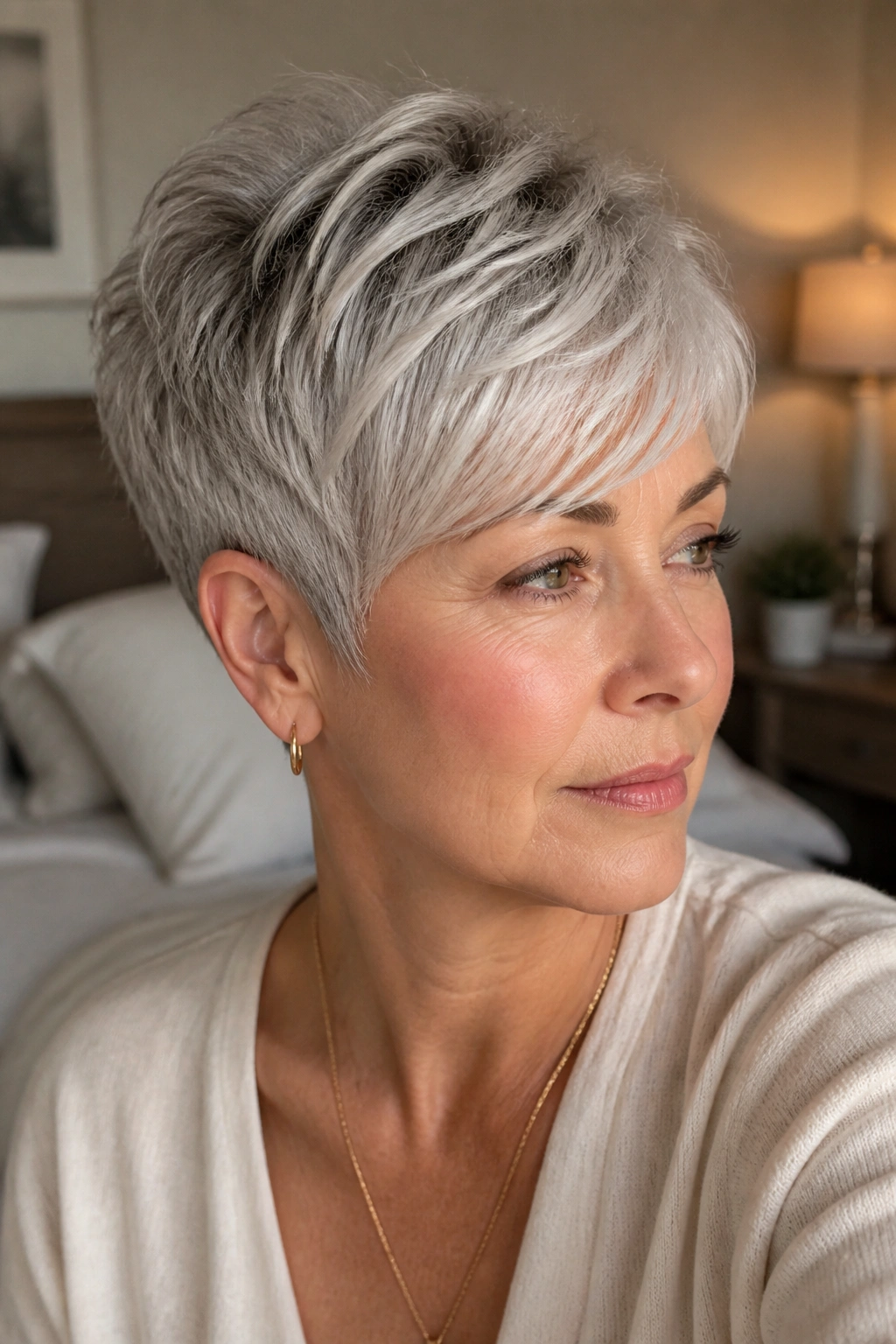
A pixie is one of those gray hair ideas for women over 50 that keeps proving it can look fresh without trying too hard. The trick is in the shape: a slightly longer top, a neat taper at the nape, and soft sides that don’t hug the head too tightly. That mix keeps the cut from feeling severe.
Why It Works on Gray Hair
Gray hair often has more lift than dyed hair, which helps a pixie sit up instead of collapsing. A top section that’s left at about 2 to 3 inches gives you room to push it forward, sweep it back, or just let it fall naturally. The tapered nape keeps the back clean, which matters more than people think when silver hair starts to grow in around the neckline.
A tiny amount of styling cream is usually enough. Too much product makes the hair piecey in the wrong way, and that’s a fast route to helmet head. Ask for a soft texture at the crown if your hair is fine, and keep the trim schedule tight — every 4 to 6 weeks, or the shape starts to blur.
- Best for fine to medium hair
- Works well with glasses and earrings
- Easy to style with a pea-size amount of cream
- Looks best when the sides stay soft, not choppy
Pro tip: Skip heavy oil at the roots. It flattens the lift you paid for.
2. Chin-Length Blunt Bob
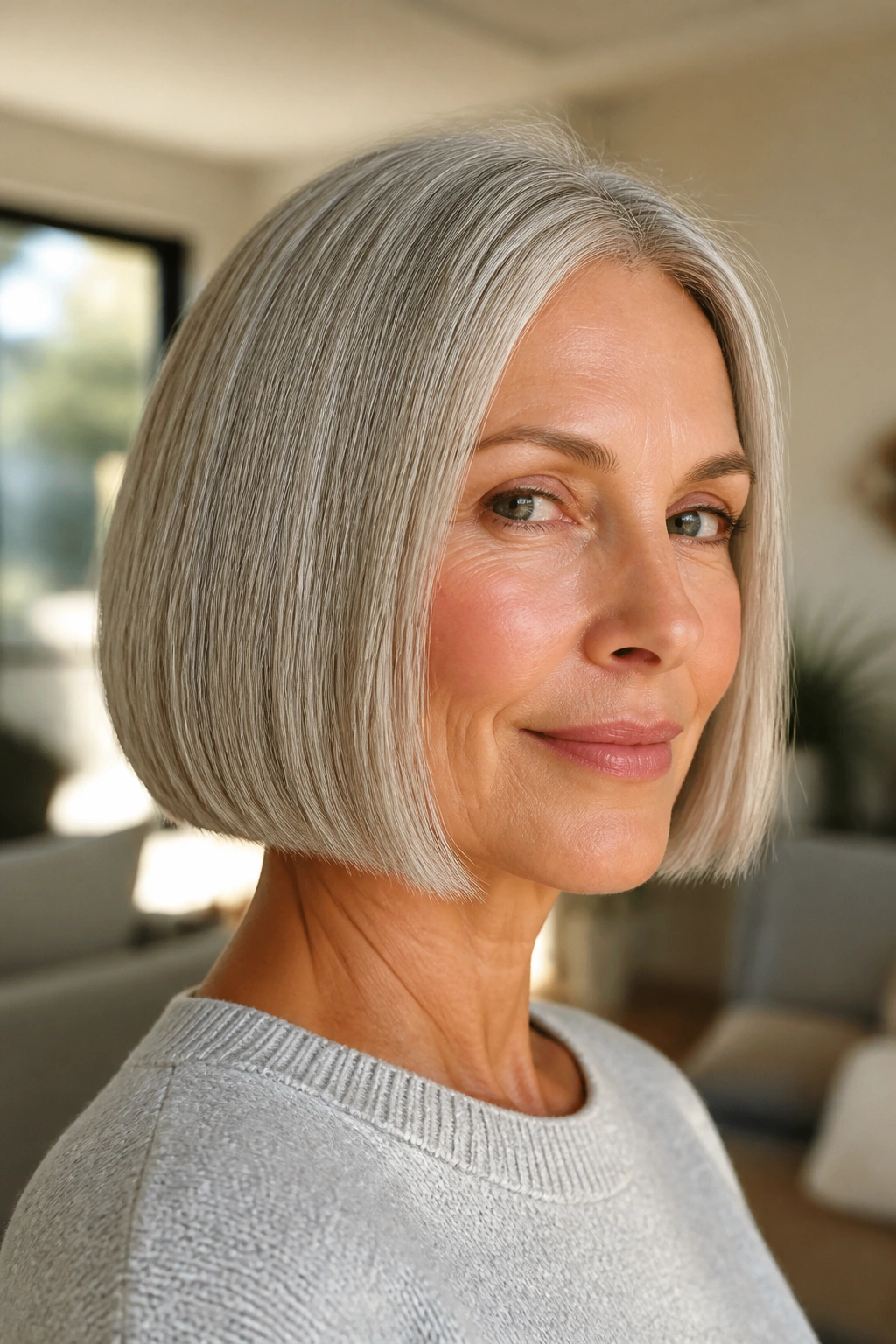
A blunt bob is the haircut that stops gray hair from looking wispy. That’s the whole point. A straight line at the chin or just below it gives silver strands a clean edge, and the result reads crisp rather than fragile.
The best version keeps the ends thick and even, not feathered. If your hair is fine, that blunt edge can make it look fuller right away. If your hair is dense, your stylist may need to remove a little interior weight so the shape doesn’t kick out at the bottom and make your head look wider than it is.
This cut does especially well with a smooth side tuck or one ear left visible. A center part works too, but only if your hair falls evenly on both sides. Blow-dry with a paddle brush, then finish with a flat brush and a tiny bit of smoothing cream through the mid-lengths. The ends should look sharp, not stiff. That’s the difference between a bob that flatters and one that feels dated.
3. Shoulder-Length Lob With Face-Framing Layers
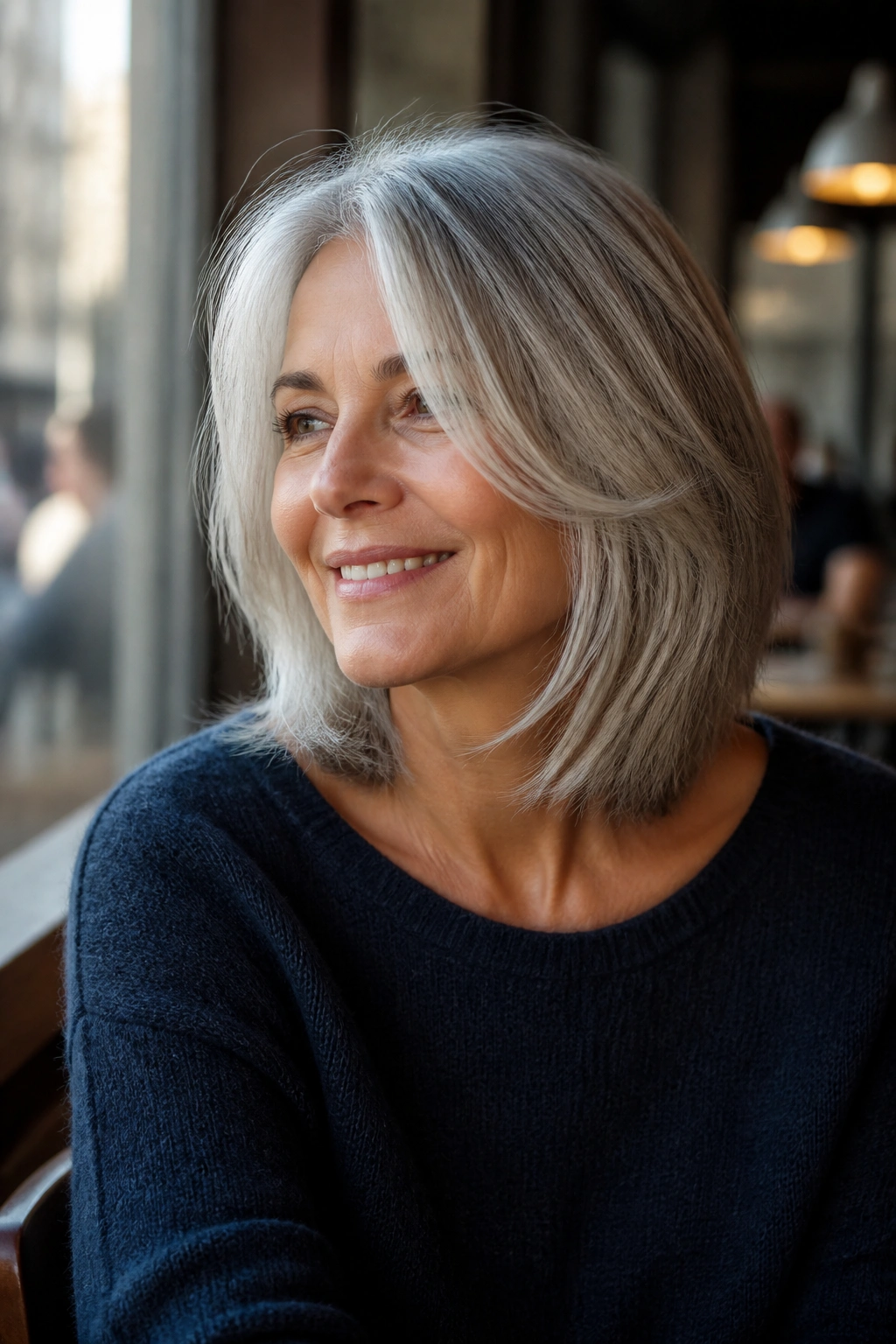
Want hair that still swings a little when you walk? A lob gives you that movement without asking you to manage long hair every day. Sitting somewhere between the collarbone and the top of the chest, it gives gray hair a shape that feels easy, not heavy.
How to Keep the Front From Sagging
Face-framing layers are what make this cut work. Start them around the chin so the front doesn’t hang in one flat curtain. If the layers begin too high, the cut can get fluffy; too low, and the shape loses its lift.
A 1.5-inch round brush is the sweet spot for blow-drying this length. Wrap the front sections away from your face, then let them cool before touching them. That cooling step matters. Hair sets while it cools, and skipping it is how you end up restyling the same section three times.
- Good for straight, wavy, or slightly coarse hair
- Easy to wear tucked behind one ear
- Leaves enough length for clips, low ponytails, and soft waves
- Works well if you want a cut that grows out without looking messy
Best move: Use a light mousse at the roots and keep the ends soft.
4. Feathered Shag With Wispy Bangs
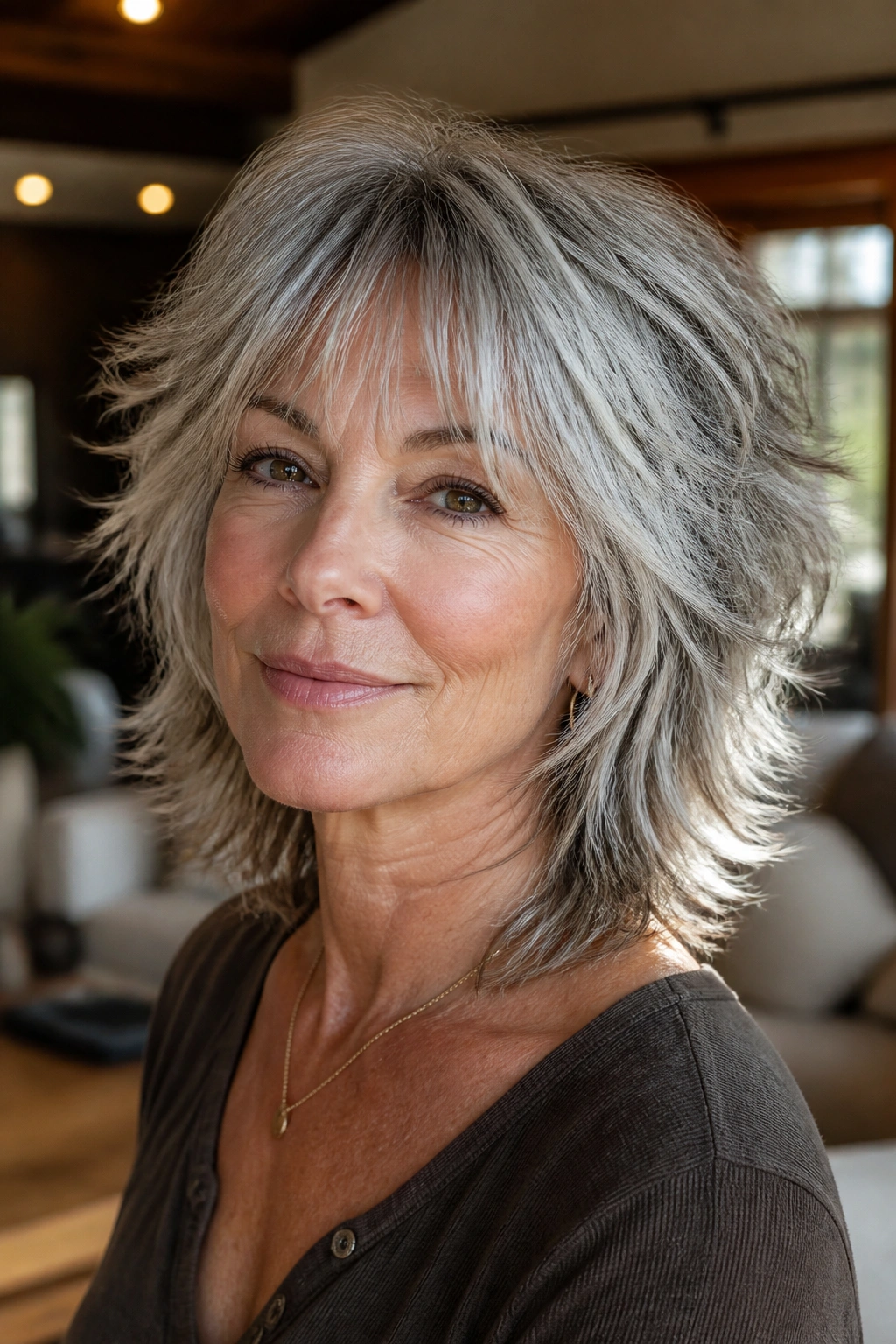
If your crown has started doing its own thing, the feathered shag may be the most forgiving haircut in the bunch. It takes bulk out where hair wants to puff and leaves enough texture to keep silver strands from lying flat against the head.
The bangs matter here, but they should stay light. Wispy fringe softens the forehead without turning into a heavy curtain. That’s useful on gray hair, which can look great with some skin visible around the face. The whole point is to create air between the layers, not pile everything into one dense shape.
This style especially suits wavy hair, but straight hair can wear it too if the layers are cut well. You’ll usually want a bit of grit in the finish — a lightweight texturizing spray, a rough dry, maybe a quick bend with a small iron on the front pieces. It should look a little lived-in.
- Better for medium to thick hair
- Helps if your hair swells at the sides
- Needs a trim about every 6 to 8 weeks
- Looks strongest when the ends move, not when they sit still
The shag can be messy. That’s the charm.
5. Curly Gray Crop
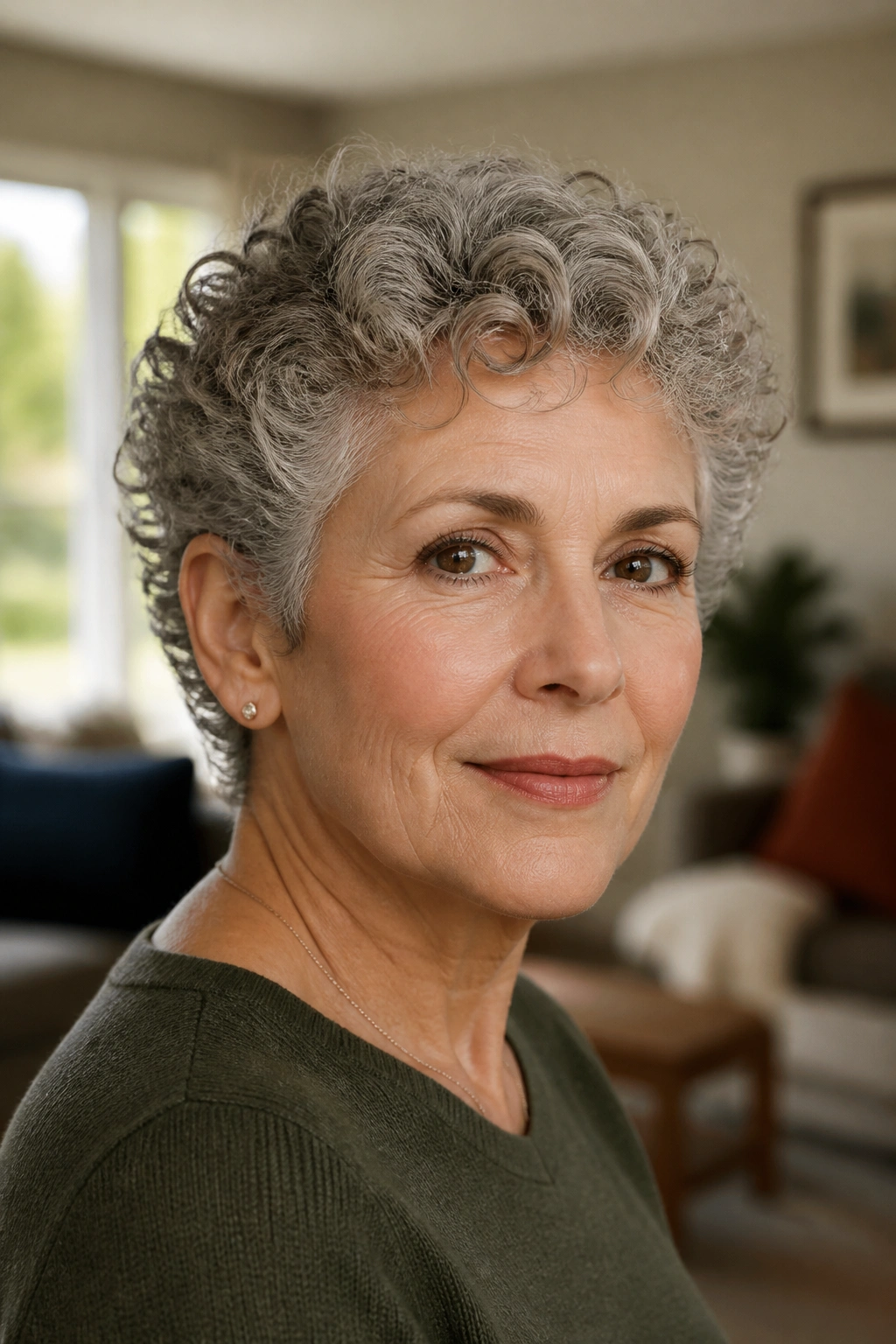
Curly gray hair likes shape more than length. Once curls start to lose pigment, they often also lose a touch of softness, so a crop that keeps the curl pattern compact can look sharper than long layers that drag the whole shape down. A cut that sits around the ears and neckline keeps the curls springy.
One thing I like about a short curl cut is how honest it is. There’s nowhere for the shape to hide. If the cut is right, the curl sits on itself and looks full without looking puffy. If the cut is wrong, you feel it immediately, which is annoying but useful.
Dry curls hate rough hands.
Use a curl cream or gel on soaking-wet hair, then scrunch gently and diffuse on low heat until the outside is dry but the inside still feels a little cool. That last bit is a small detail, but it keeps you from breaking up the curl too early. Leave the top a touch longer if you want more height at the crown. A skilled stylist can shape a crop curl by curl, and that makes a bigger difference on gray hair than people expect.
6. Sleek Center-Part Bob
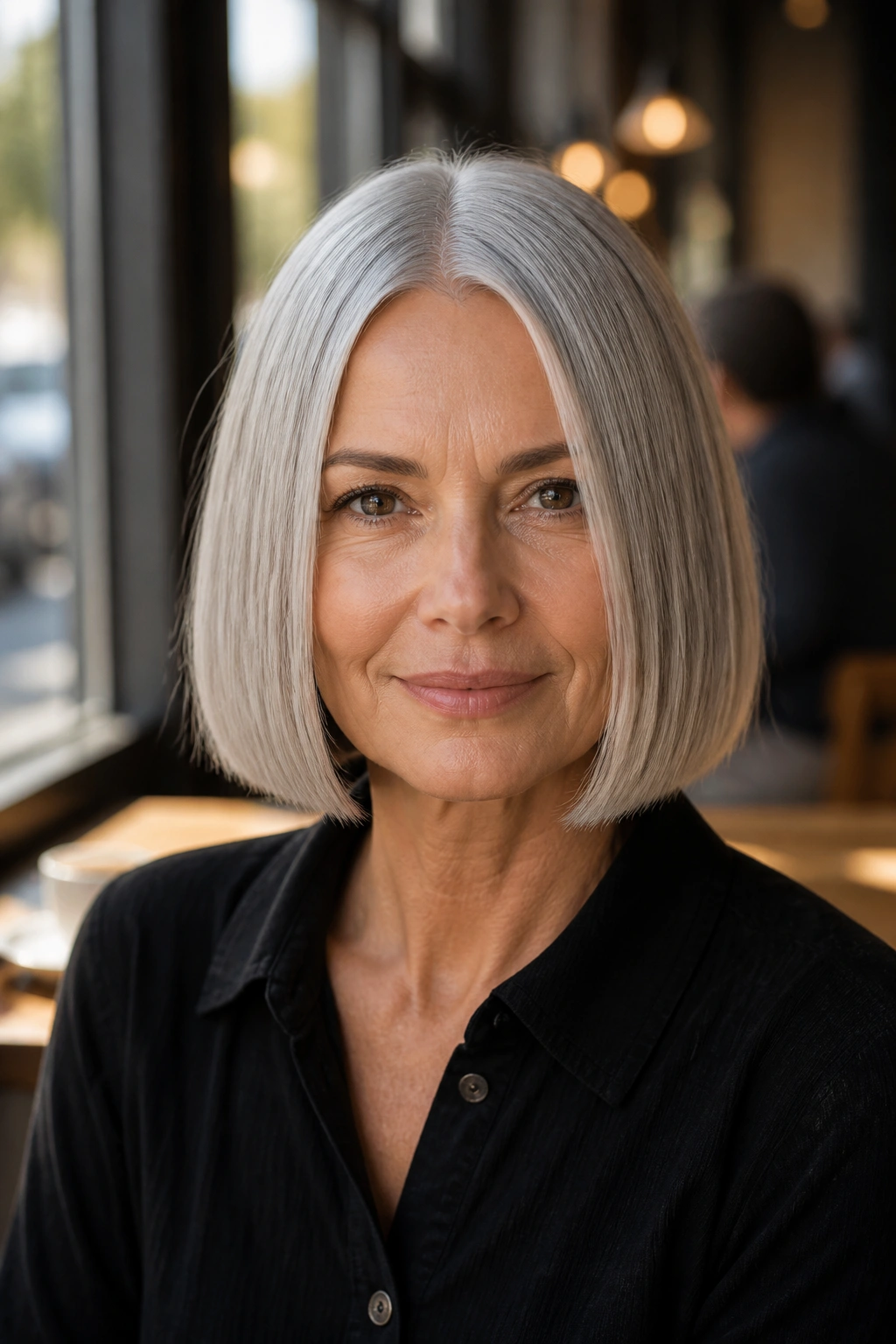
A center-part bob is not shy. It puts the hair and the face right out there, which is exactly why it looks so good on silver strands when the cut is clean. Unlike softer layered cuts, this one leans into symmetry and shine.
The best version hits at the jaw or slightly below, with ends that fall straight and a middle part that lands where your face already feels balanced. If your hair wants to split unevenly, shift the part a finger-width to one side. That small adjustment saves you from fighting the mirror every morning.
This style suits straight or lightly wavy hair most. A smoothing balm through damp hair, followed by a blow-dry with a flat brush, is often enough. The finish should look polished but not lacquered. I’d avoid over-flattening the roots; a little body at the crown keeps the look modern. It’s also a good cut if you like statement earrings, because the open face lets them do their job.
7. French Bob With Eyebrow-Skimming Fringe
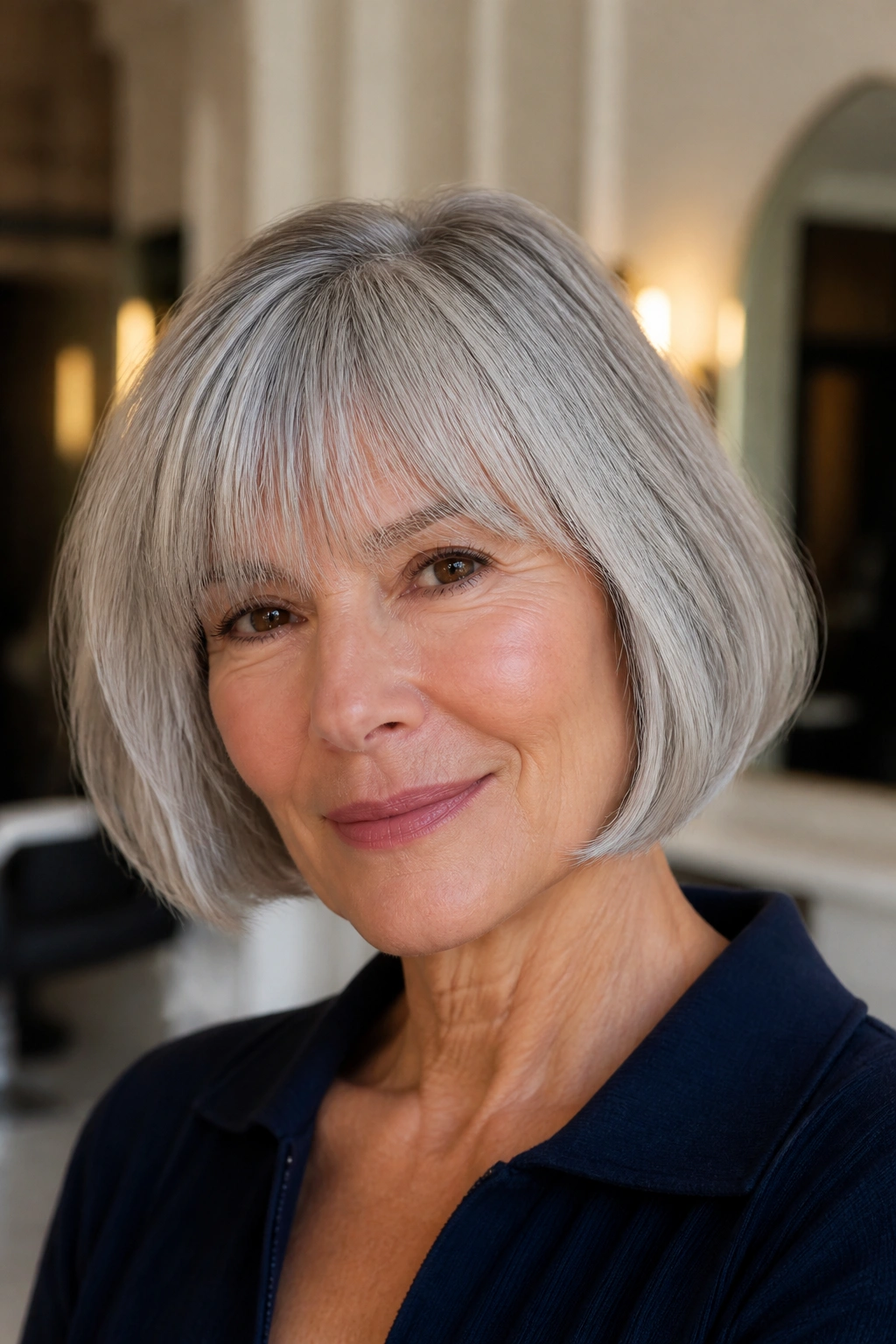
A French bob makes gray hair look intentional in about five seconds. There’s a reason the shape keeps coming back: it feels casual and neat at the same time, which is a rare combination in hair.
What Makes It Different
The cut usually sits at or just under the jaw, with a fringe that grazes the brows instead of burying them. On silver hair, that short length shows off shine right away. The fringe softens the forehead and keeps the cut from feeling too blunt, especially if your features have sharpened a bit over time.
This bob works best when the ends have a little bend rather than a stiff blowout. Air-dry it most of the way, then use a 1-inch iron on the front pieces only if they need shaping. You do not need every strand to behave. In fact, the slight mess is what gives the style its charm.
- Best for straight to wavy hair
- Looks good with a little natural texture
- Needs frequent bang trims if you keep the fringe short
- Feels lighter than a classic bob with no fringe
If you like hair that looks styled without looking overworked, this one is worth a serious look.
8. Grown-Out Pixie-Bob Hybrid
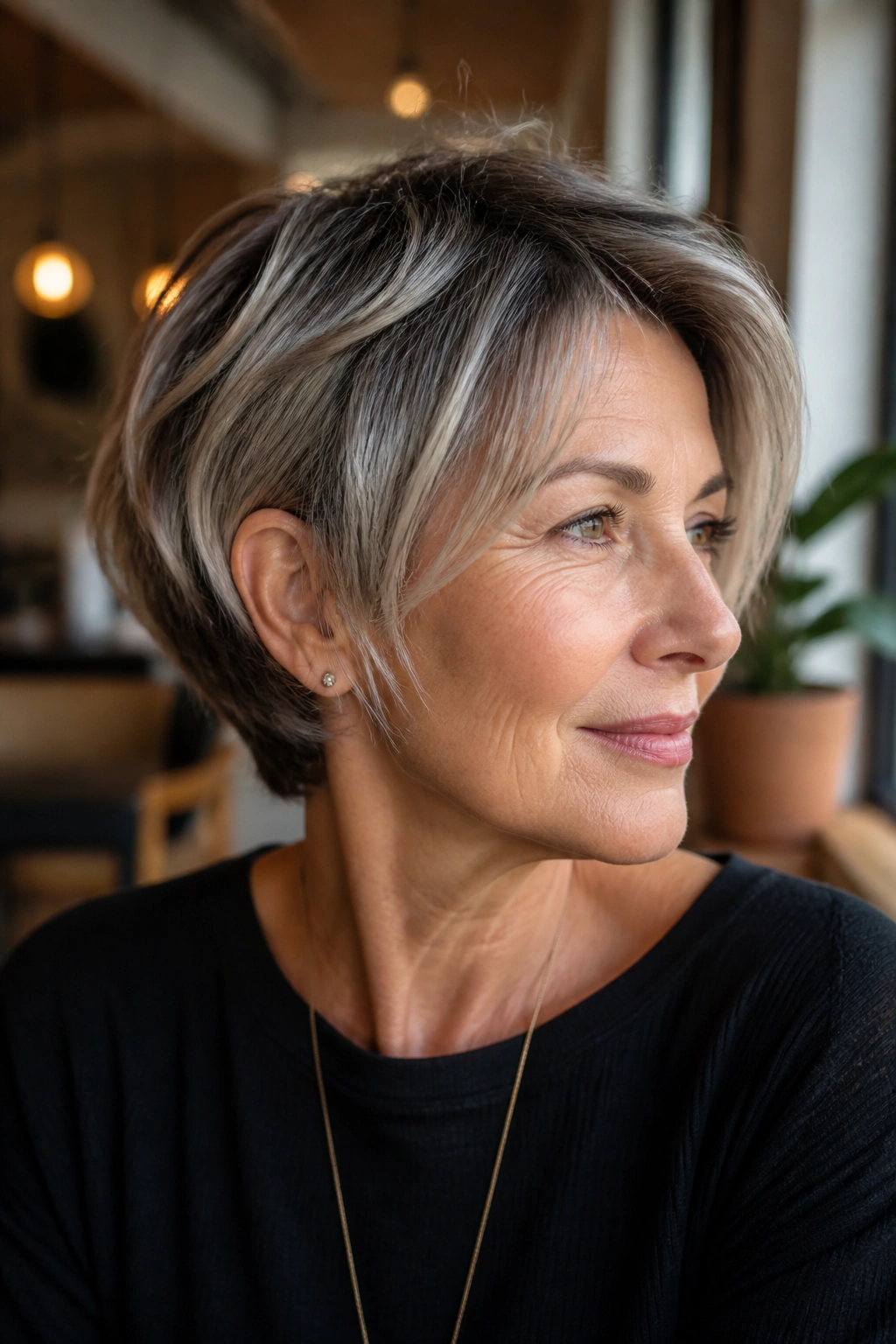
Not ready for a full pixie, but done with shoulder-length maintenance? The pixie-bob hybrid sits in that very practical middle space. It keeps the back cropped enough to stay easy, while the top and sides stay long enough to tuck, sweep, or bend around the face.
What I like here is the flexibility. Gray hair can go a little fluffy when it grows out, and this cut turns that growth pattern into part of the design. The top might sit at 4 or 5 inches, the nape at 1 or 2, and the front pieces just long enough to brush the cheekbone. That unevenness is deliberate.
It suits women who want something lighter than a bob but less exposed than a classic pixie. Styling takes almost nothing — a bit of paste or lightweight cream worked through the ends, then fingers only. If your hair grows fast, this is one of those cuts that still looks decent between trims. It ages well because it never tries to look frozen in place.
9. Layered Shoulder Cut for Wavy Hair
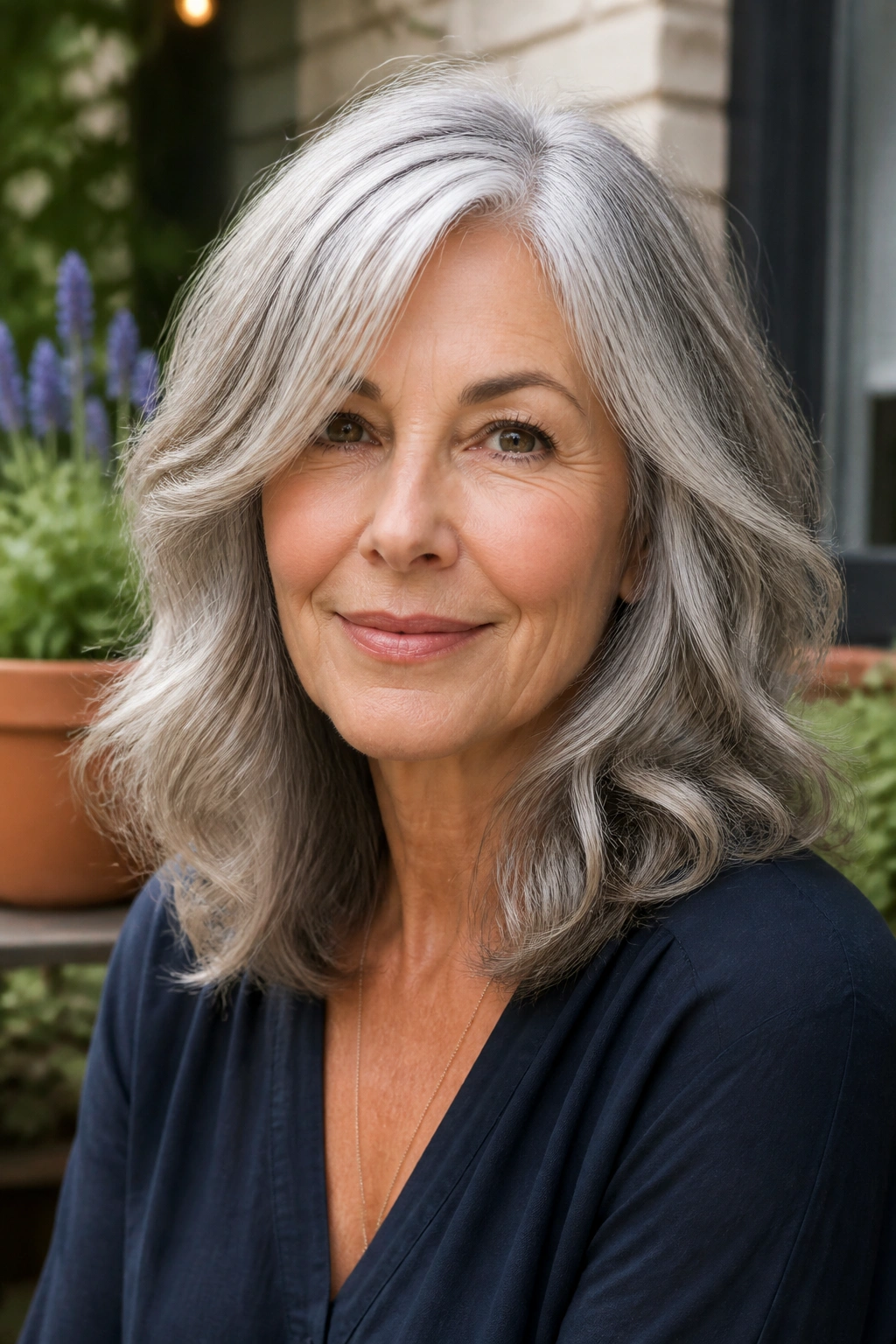
Wavy gray hair often does best when it’s allowed to breathe. A layered shoulder cut gives the wave room to move without dragging the style into triangle territory, which is the shape nobody wants and everyone has fought at some point.
How to Style It
The cut should land just below the shoulders, with layers starting below the cheekbones so the wave keeps its body. Shorter layers near the chin can work, but only if your hair is thick enough to handle them. On finer wave patterns, those same layers can go frizzy.
A little leave-in conditioner through the ends, a dab of curl cream, and a soft scrunch are usually enough. If you use a diffuser, keep the heat low and stop when the roots are about 80 percent dry. Over-diffusing often makes gray waves look dry at the crown.
- Good for naturally wavy or loose-curled hair
- Gives you enough length for a claw clip or low knot
- Helps the front fall away from the face
- Looks best with a center or off-center part
This is one of the easiest gray hair ideas for women over 50 if you want movement without a lot of styling drama.
10. Long Silver Layers With Movement
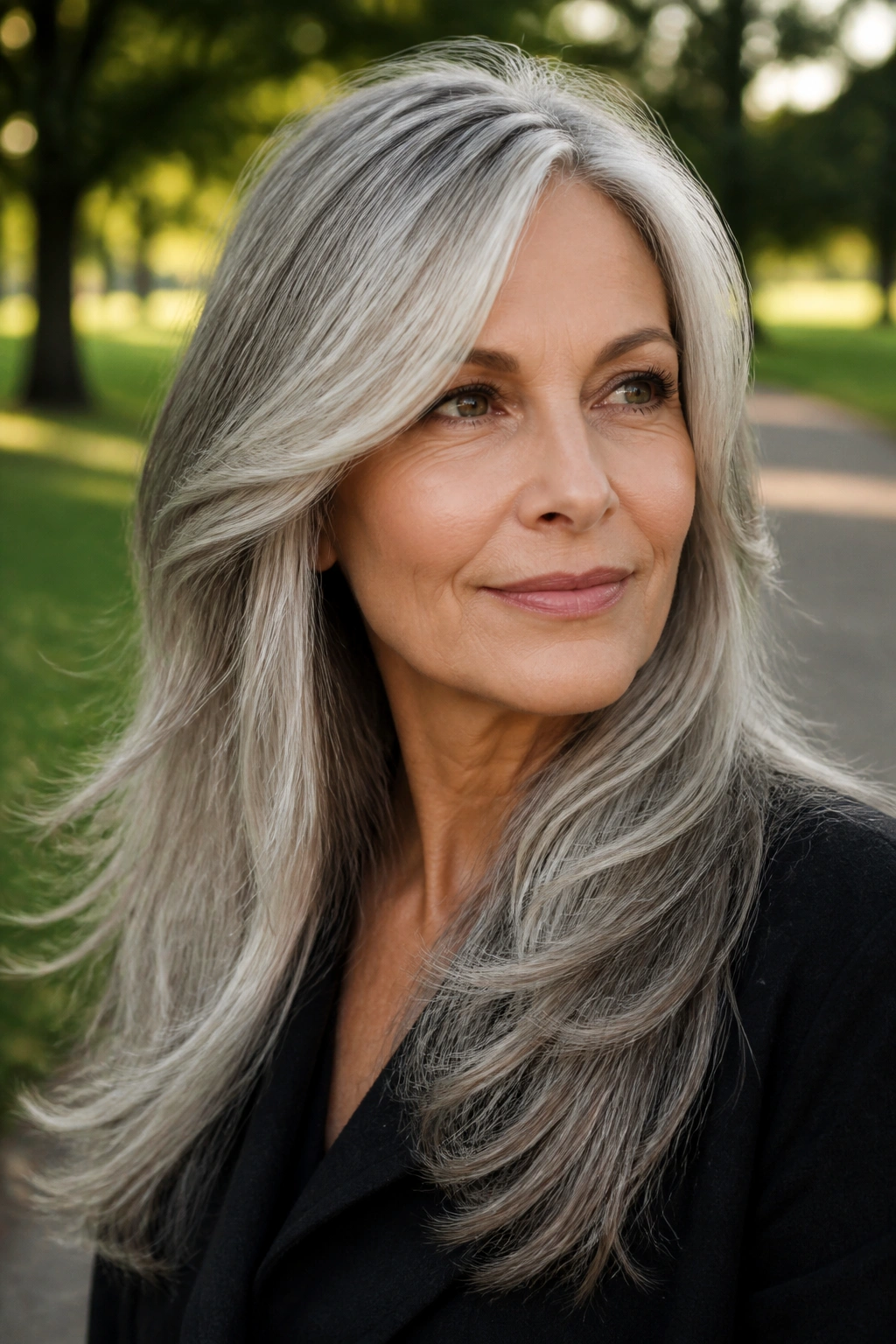
Long gray hair can be gorgeous when it’s cut with restraint. The problem is usually not the length itself — it’s the dead weight at the ends. When layers are placed properly, long silver hair can look fluid instead of dragged down.
The secret is keeping the shape alive around the face and through the lower half of the length. Layers that start near the chin or collarbone can stop the hair from hanging like one solid sheet. That matters even more once the color turns fully silver, because the shine draws the eye straight to the outline of the cut.
A soft dusting every 8 to 10 weeks keeps the ends from splitting or looking see-through. For daily styling, a leave-in conditioner from mid-length to end is usually enough. If the hair is very straight, a loose bend with a 1.25-inch iron can stop it from looking too flat. If it’s wavy, a braid at night can give it texture by morning. Long gray hair asks for care, but not the fussy kind.
- Best for dense hair or hair with natural wave
- Needs regular end trims to stay full
- Looks strong with a side part or center part
- Works well if you like pulling hair back part of the week
11. Tapered Natural Cut
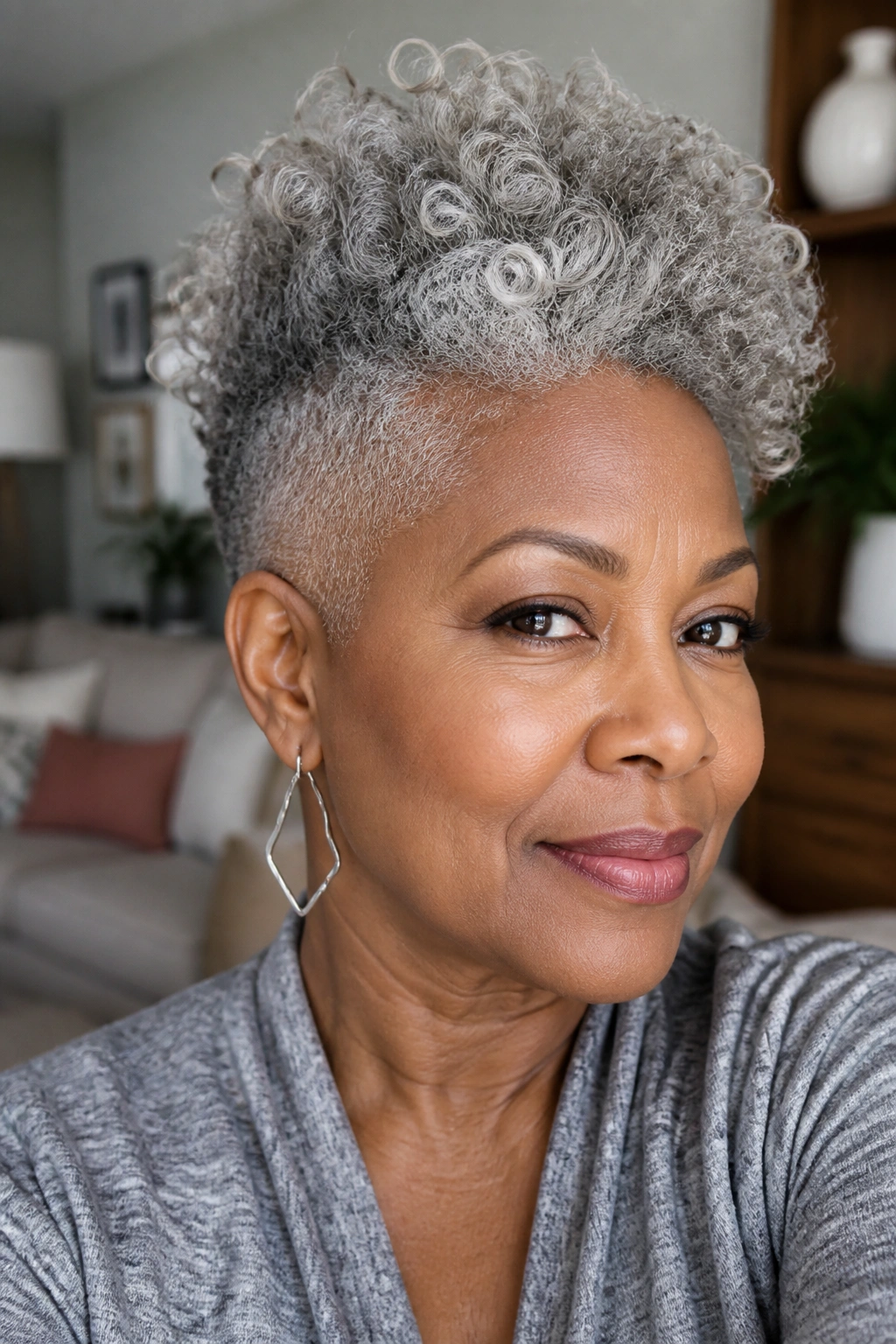
For coily or tightly curled hair, a tapered natural cut is one of the smartest shapes around. The sides and nape stay close to the head, while the top is left fuller so the curl can build height and personality where it belongs.
Gray coils often change texture as they grow in. Some areas get softer, some get wirier, and a tapered shape keeps the whole head from puffing out in random places. A good cut respects the curl pattern instead of fighting it. That alone can make the difference between a shape that looks balanced and one that feels like a fight with your own hair.
This style needs moisture, plain and simple. A rich leave-in, a curl cream, and a little oil on the ends are enough for many textures. If you like a twist-out, this cut gives you a clean base for it. If you wear it wash-and-go, a properly shaped taper helps the curls stack instead of spread.
One sentence says enough here: shape beats length every time.
12. Side-Swept Crop With Crown Volume
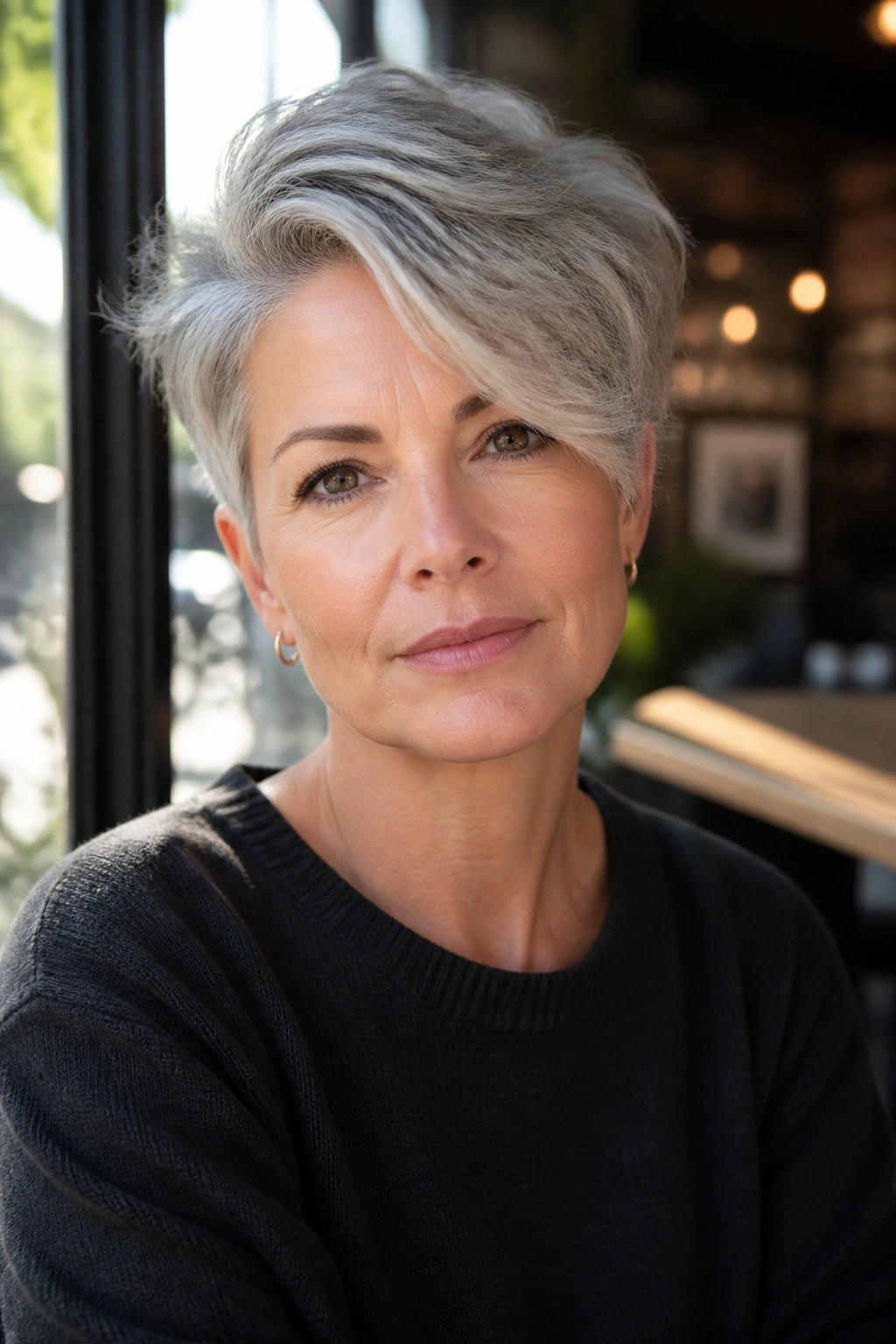
A side-swept crop is the answer when you want lift at the top and softness around the face. It’s a little more flattering than a flat center part for many women, especially if the hairline has thinned a bit or the crown needs help staying full.
What makes this cut work is the parting and the volume at the root. The top stays long enough to sweep to one side, while the sides stay neat and close. That slight height at the crown gives the face room, and the off-center line draws the eye diagonally instead of straight across.
How to Get the Most From It
Use a root-lifting spray on damp hair, then blow-dry the top section in the opposite direction of the part for a minute or two. Switch the part back only after the hair has cooled. That little trick gives the roots a more natural push-up.
- Good for fine or medium hair
- Softer than a strict pixie
- Works nicely with round or heart-shaped faces
- Easy to refresh with a small round brush the next morning
It’s a neat, low-drama cut that still feels a bit lifted.
13. Classic Pageboy With Soft Edges
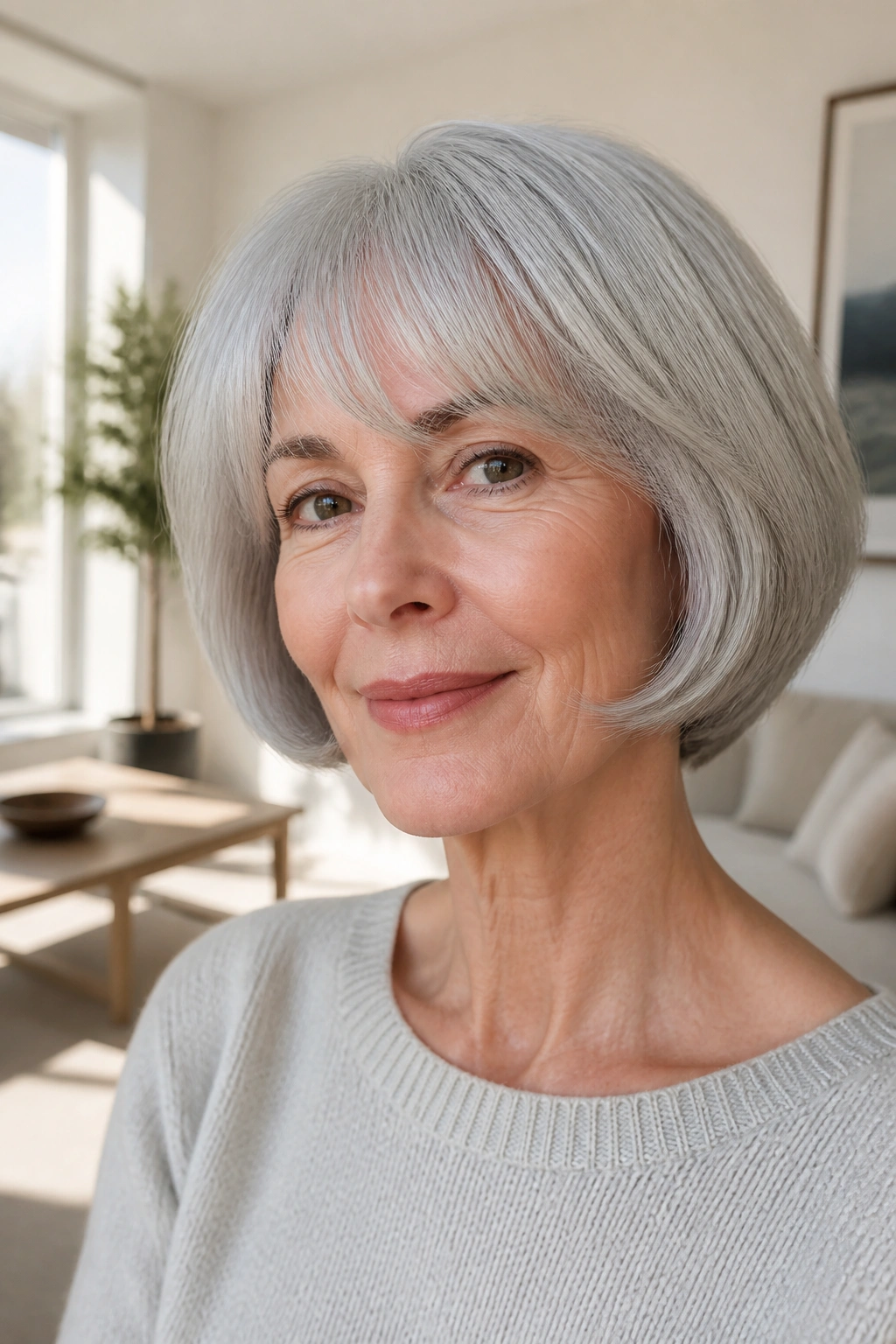
The pageboy sounds retro because it is, and that’s part of the appeal. But the softer version feels far less stiff than the old-school helmet shape people imagine. On gray hair, the rounded outline can look polished and calm in a way a lot of flashier cuts don’t.
The shape usually sits at the jaw or just under it, with the ends curved under and the nape kept tidy. What saves it from looking dated is softness at the edges. No hard shell. No blocky line. A little movement at the front and a gentle bend at the bottom make all the difference.
What to Ask For
- A rounded perimeter, not a sharp box
- Slight stacking at the back if your hair is thick
- Soft, face-skimming sides
- Ends that tuck under with a brush, not a heavy iron
This is one of those cuts that works especially well with glasses, because the clean line keeps the face from getting crowded. A 1.25-inch round brush is plenty for styling. If the hair is very straight, a light smoothing cream is enough; if it’s wavy, a touch of blow-dry lotion keeps the bend in place.
14. Air-Dried Wavy Lob
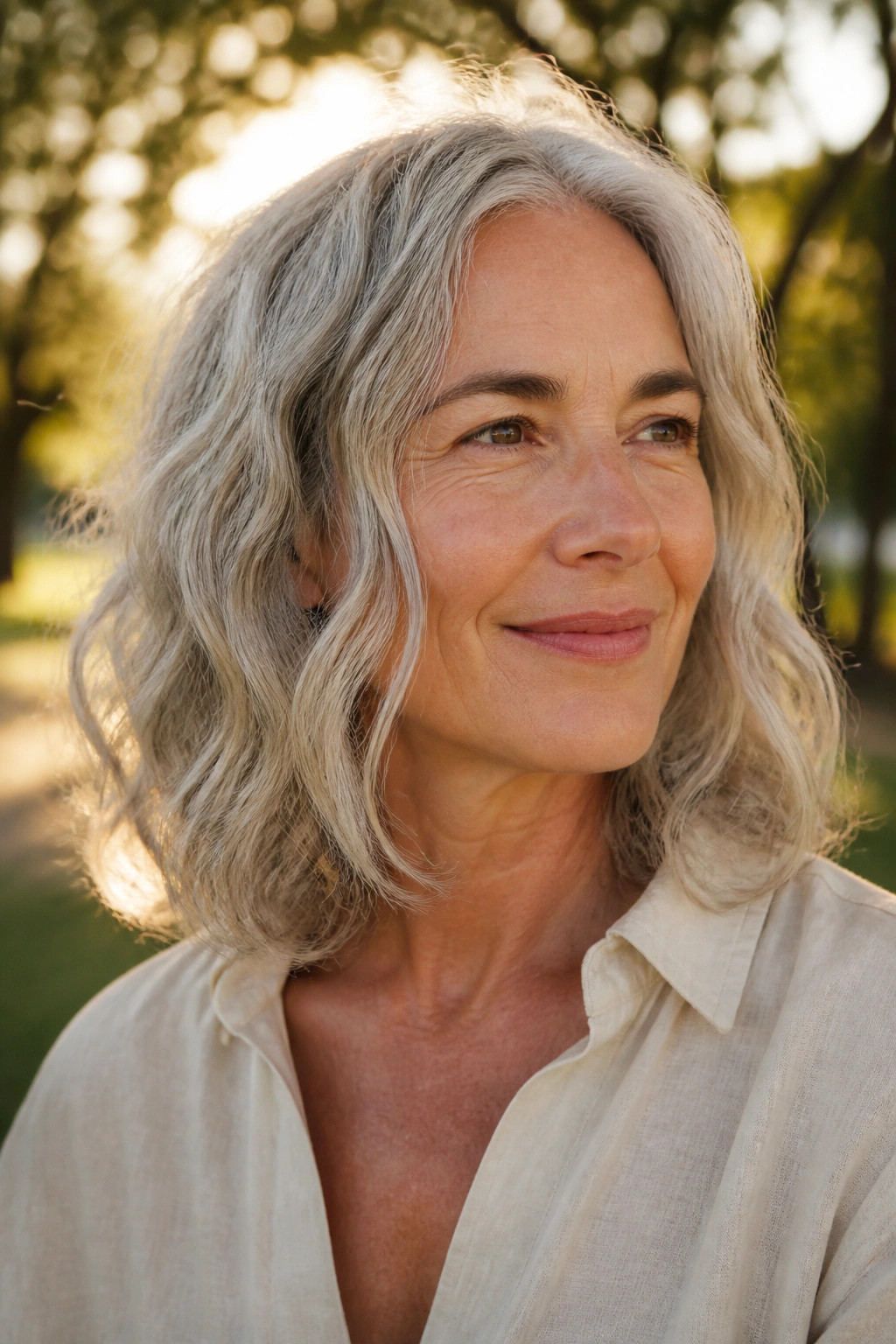
Air drying can look polished if the haircut is built for it. That’s the part people skip. Gray wavy hair doesn’t need to be forced into a full blowout every time, but it does need a cut that knows where the wave lives.
A lob that lands at the collarbone gives you enough length to keep movement, while layers placed lightly through the lower half stop the ends from turning into a blunt shelf. That shape lets the wave form naturally and keeps the style from puffing out in humid air. The hair should bend, not expand.
Apply a lightweight cream to damp hair, twist 3 or 4 large sections, and let them dry without touching them. Once dry, separate the twists with a drop of serum on your palms. That’s it. No need to keep combing your way back into frizz.
A good air-dried lob is for the person who wants to look put together with about 10 minutes of actual effort. Honest, that’s most people.
15. Brush-Back Crop for Glasses Wearers
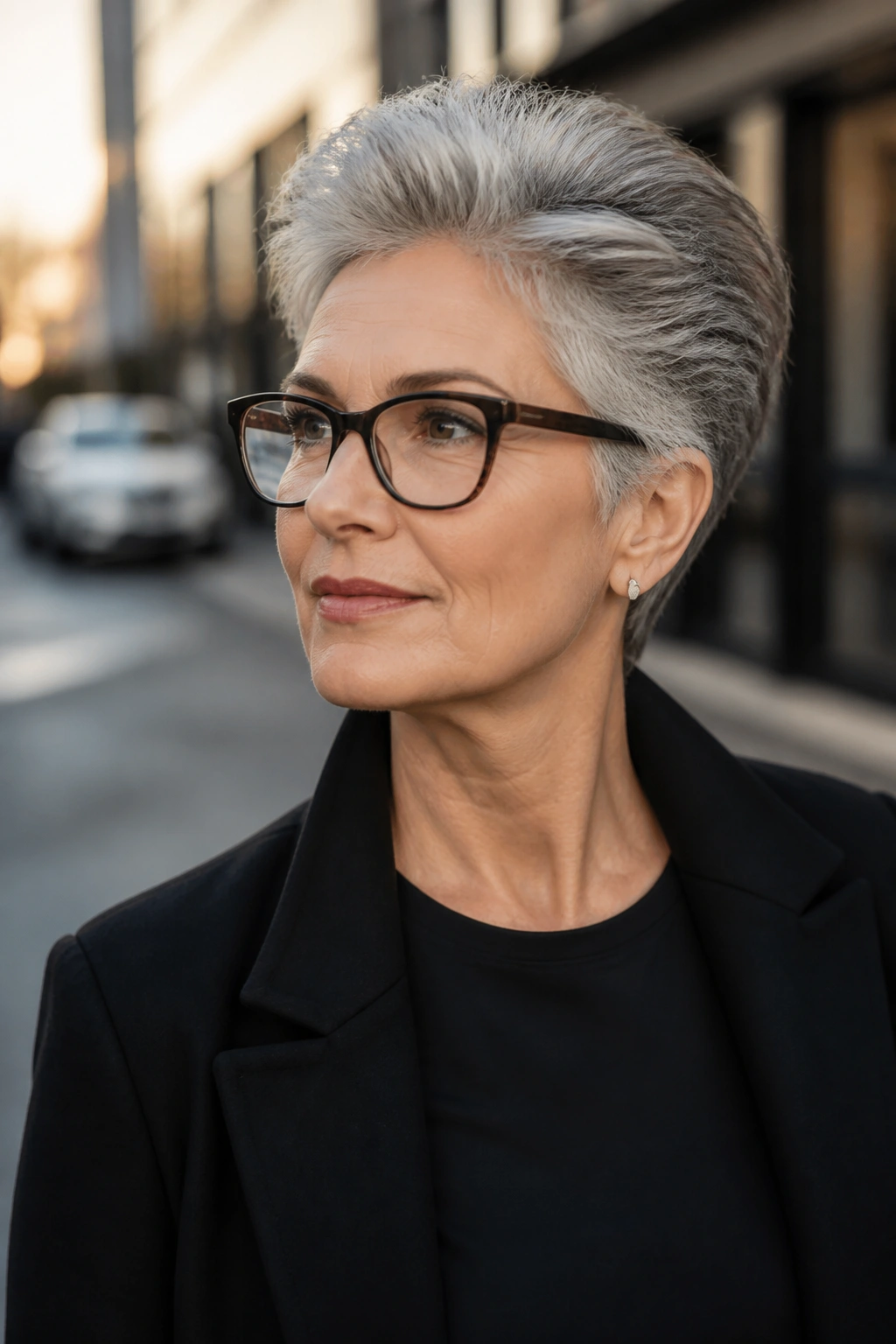
Do your glasses keep fighting your hair? Then a brush-back crop is worth a look. Short sides, a little height on top, and enough length in front to move the hair off the face — that combination keeps frames visible and stops the temples from getting tangled in your bangs.
The crown should stay long enough to lift, usually around 2 to 3 inches, while the sides stay neat so the whole shape doesn’t puff out around the ears. The brushed-back finish gives silver hair a little drama, but it’s the easy kind. Nothing severe. Nothing fixed.
How to Wear It
A matte paste or light pomade on the fingertips is usually enough. Work it through dry hair from front to back, then pinch the top into place instead of smoothing every strand flat. You want a little separation. That keeps the style from turning shiny and helmet-like.
- Nice with oval, square, and heart-shaped faces
- Keeps weight away from the temples
- Works well when you want your glasses to be the focal point
- Easy to refresh without rewetting the whole head
If you hate hair falling into your eyes, this one solves a real problem.
16. Low Chignon With Loose Silver Pieces
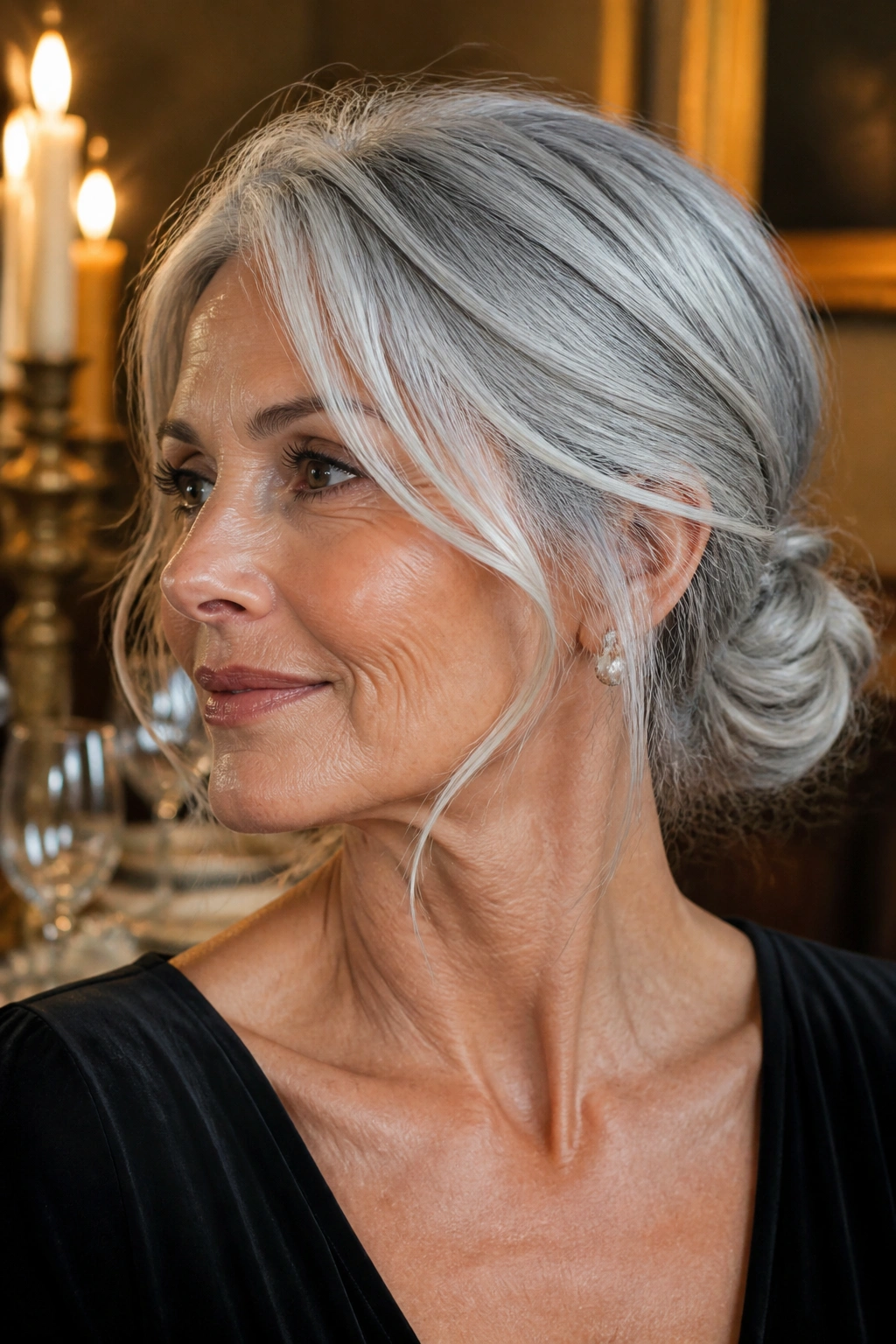
A low chignon is one of the few updos that still feels graceful when the hair is fully gray. The trick is not to pin everything tight. Leave a little softness around the face, and the style stops looking formal in the wrong way.
Start with a low side part or a centered part, gather the hair at the nape, and twist it into a soft knot rather than a hard coil. Two or three face-framing pieces are enough. They should sit around the cheekbone or jaw, not flop into your mouth. If the hair is very straight, a little texturizing spray before pinning helps the style hold.
This works beautifully for dinners, weddings, or any day when you want your neck clear and your hair still visible. It also shows off silver shine in a way that loose hair sometimes hides. The whole shape reads calm, not fussy. That’s rare.
17. Half-Up Twist for Everyday Wear
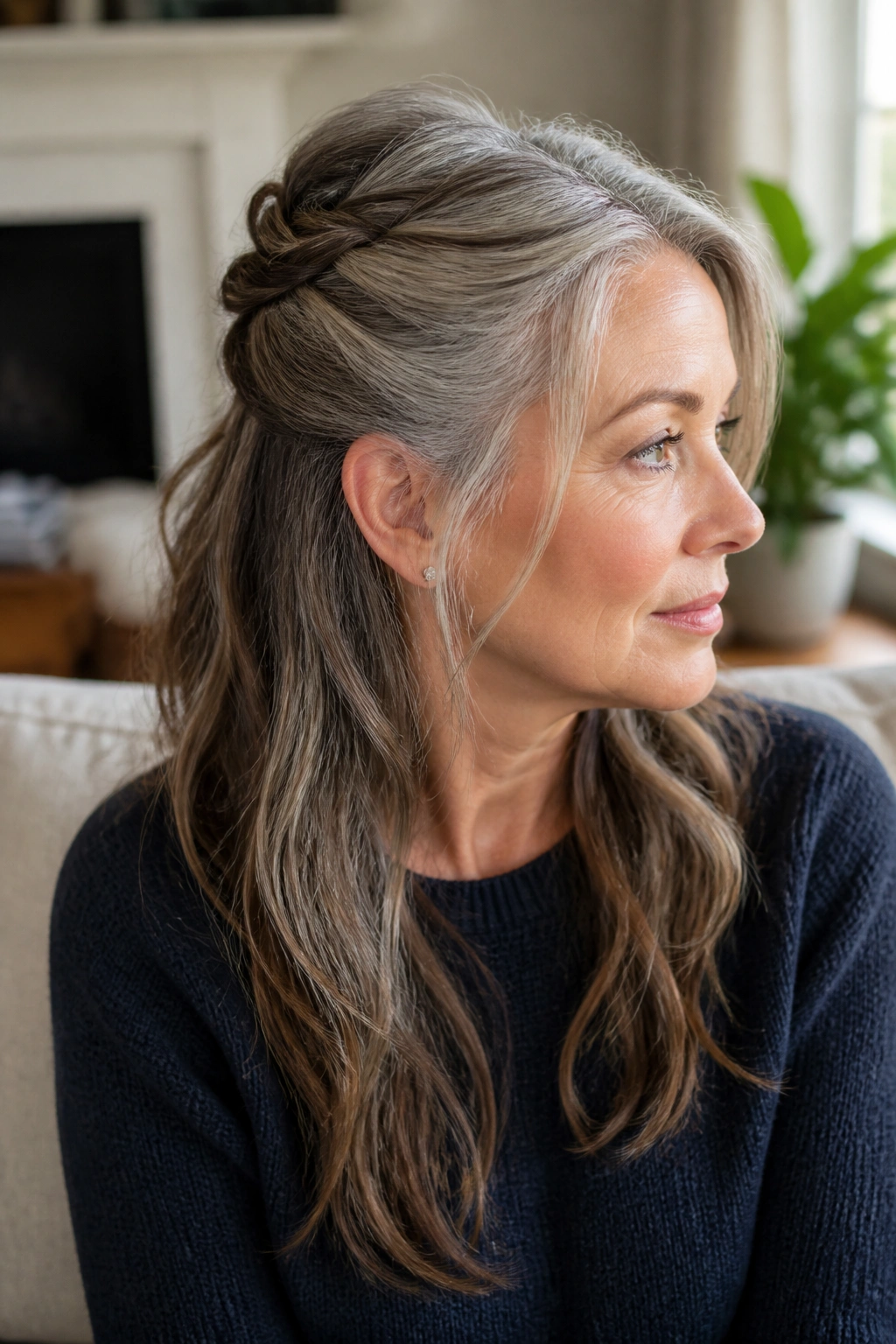
A half-up twist is one of those styles that solves a lot of small annoyances at once. It keeps hair out of your face, shows off the silver underneath, and still leaves enough length down to feel like you kept your hair, not hid it.
Twist the hair from both temples back toward the crown, pin it, and let the lower half fall loose. That gives the top some shape and lifts the front without asking for a full updo. On gray hair with streaks or a mix of silver and darker strands, the twist shows the color contrast in a way that a ponytail often doesn’t.
It works on straight, wavy, or curled hair. If your hair has second-day texture, even better. A small claw clip can replace pins on rushed mornings. A little curl at the ends makes the style feel softer, but it is not required. The whole point is ease. Nothing precious.
Sometimes the best gray hair ideas are the ones you can do while talking on the phone.
18. Braided Crown for Thick Gray Hair
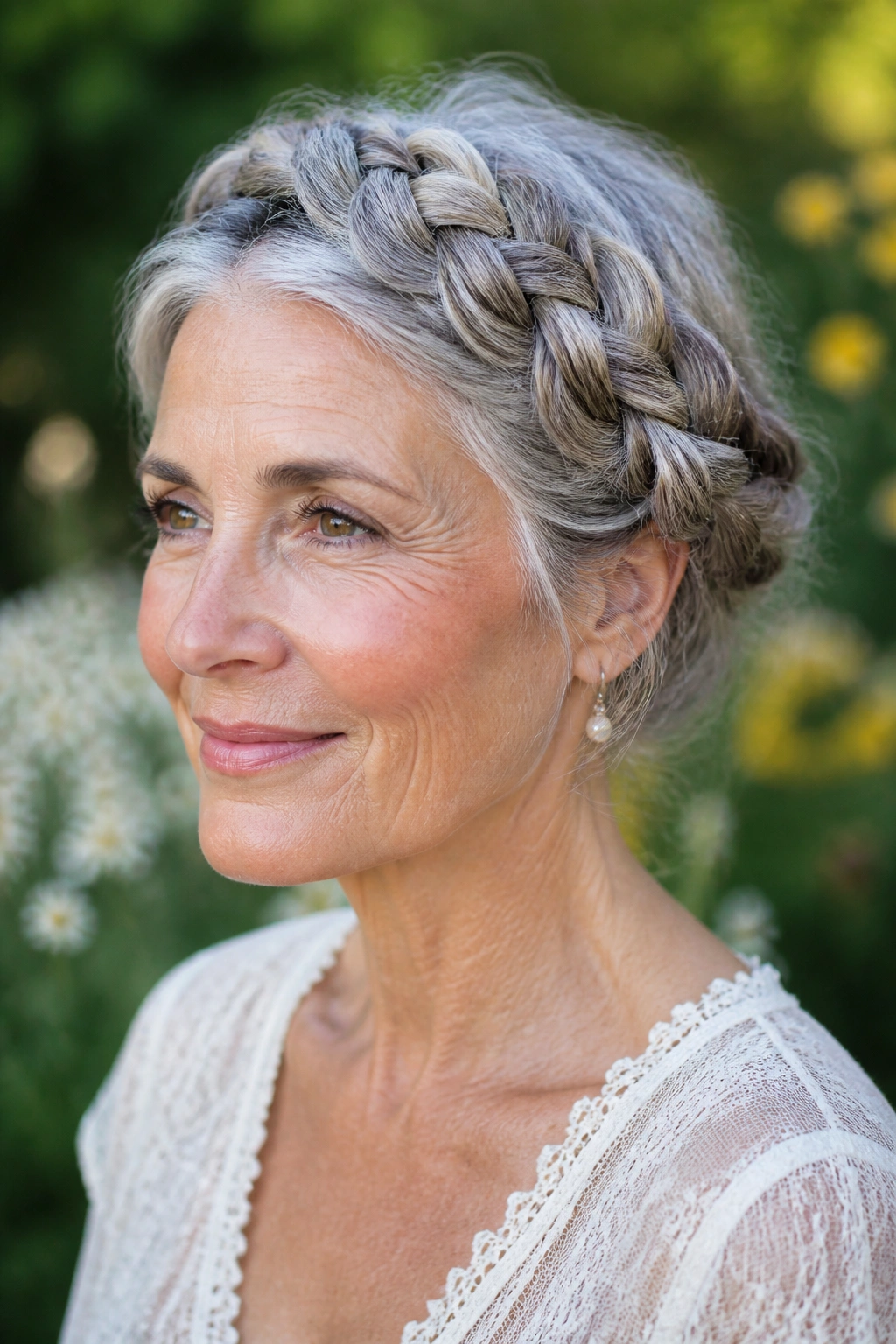
A braided crown is better than a single long braid when you have thick gray hair that wants to bulk up fast. Instead of dragging everything down the back, the braid travels around the head and keeps the weight distributed in a way that feels lighter on the neck.
The style can be done as a full halo braid or as two braids pinned across the top. Either way, the key is tension control. Pull too tight, and the hairline looks harsh. Too loose, and the shape falls apart before lunch. Thick silver hair often has enough texture to hold the braid well, which is a nice change from having to beg the style to stay put.
- Great for humid days
- Keeps ends protected
- Works with long or medium-long hair
- Holds up best when the braid is secured with 6 to 8 bobby pins
This style is practical, but it doesn’t feel plain. There’s a little romance to it, and gray hair shows that braid pattern in a really pretty way.
19. Sleek Low Ponytail With a Deep Side Part
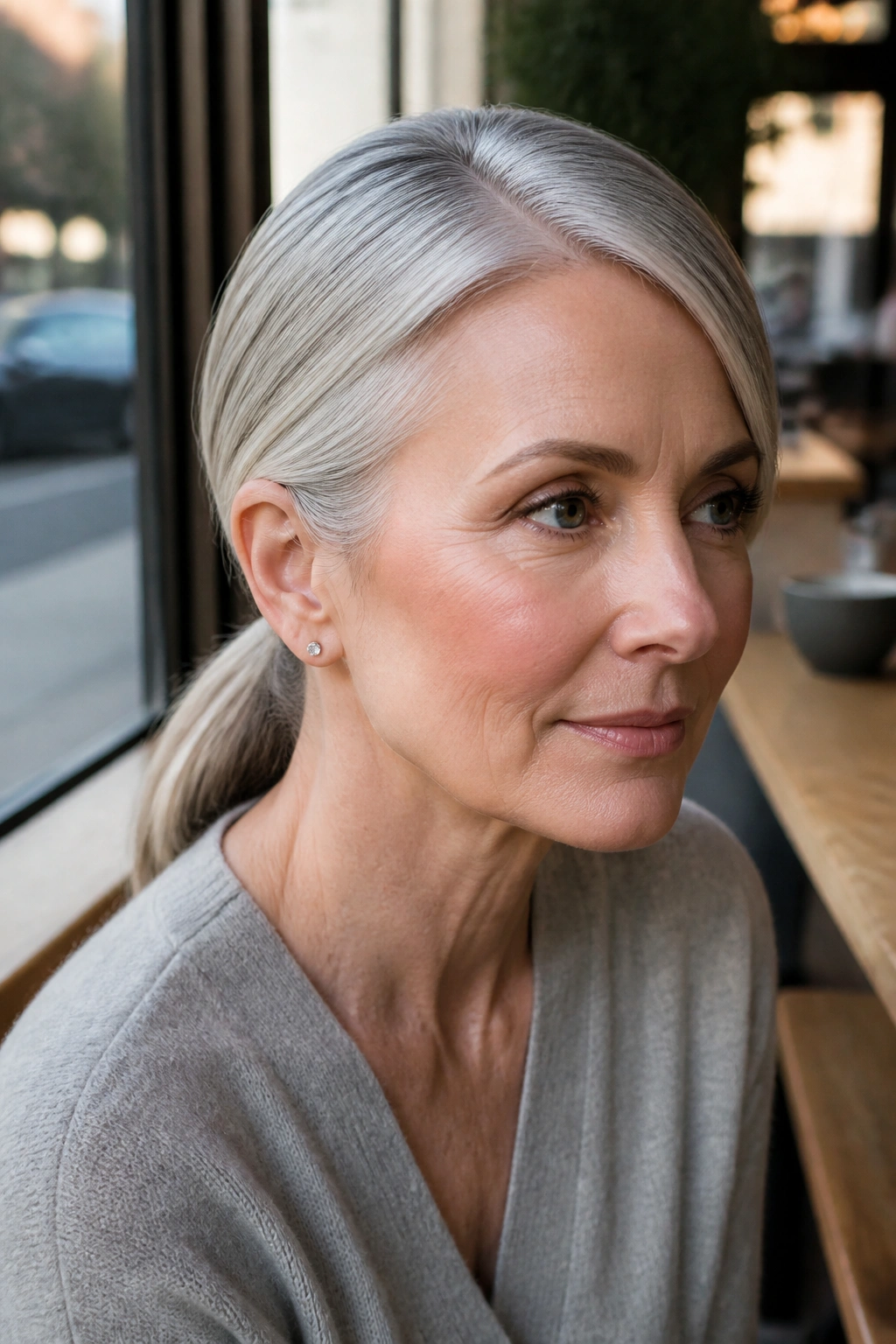
A low ponytail can look polished, not boring, if the part and finish are handled with care. On silver hair, the shine at the crown and the clean line of the ponytail can look surprisingly sharp.
Why It Feels More Polished Than a Basic Ponytail
A deep side part gives the front a little lift and keeps the style from reading flat. The ponytail itself should sit low at the nape, with the hair smoothed back using a boar-bristle brush and a small amount of cream or serum. Wrap one 1-inch section of hair around the elastic, pin it underneath, and the whole thing immediately looks more finished.
This is a good choice when your hair is a little tired, but you still want it to look neat. It also works well with collars, turtlenecks, and structured jackets because it keeps the neck line clean.
- Best for straight or lightly wavy hair
- Takes less than 10 minutes once you know the routine
- Keeps frizz under control at the hairline
- Feels dressy without needing heat tools
A low ponytail is not a backup plan. On gray hair, it can be the point.
20. Soft Silver Updo With Loose Face-Framing Pieces
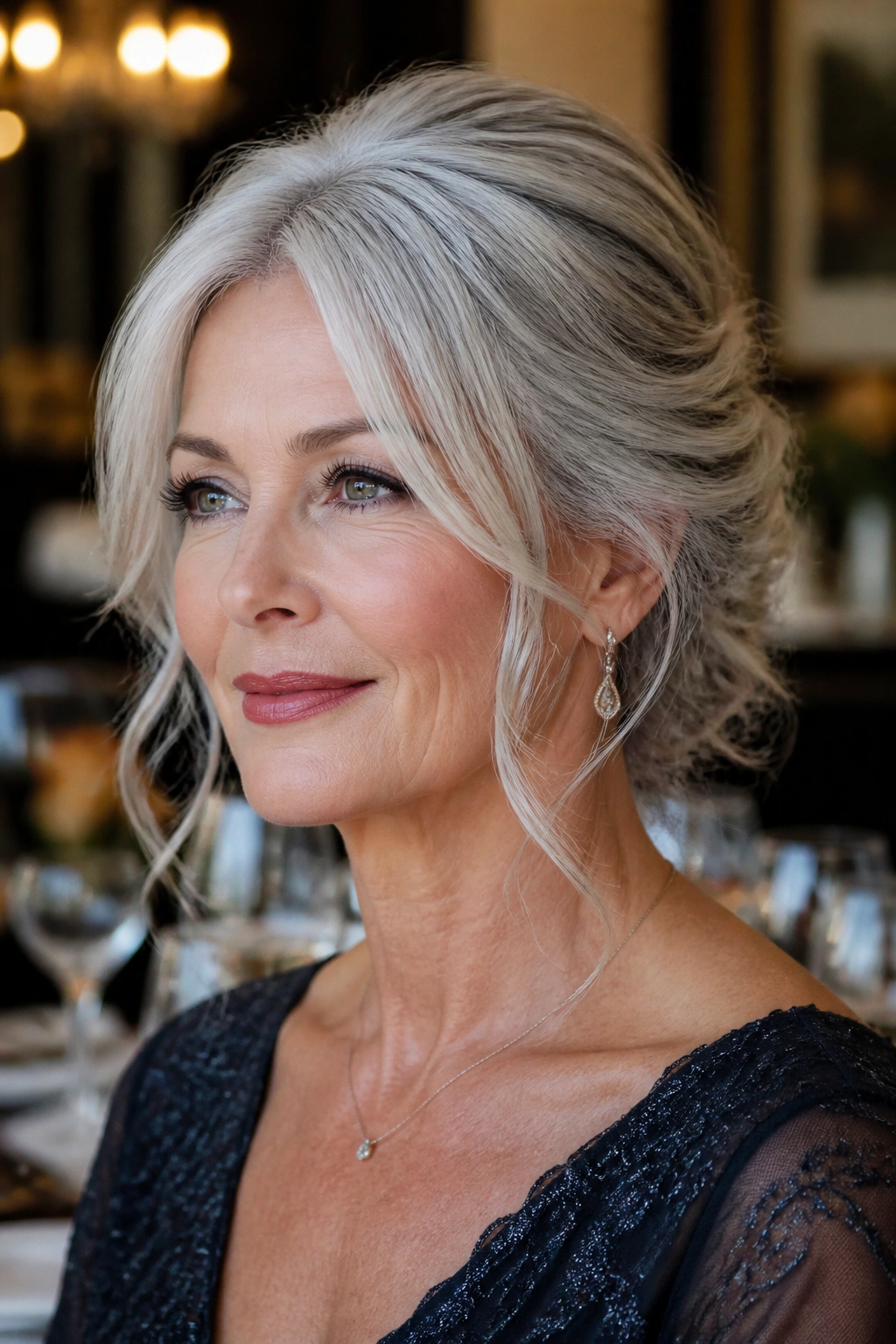
A soft updo is what I’d choose when gray hair needs to look special but not stiff. The best version keeps the back twisted or pinned low, while a few loose pieces stay around the face and temples to soften the whole thing.
This style is less about perfection and more about balance. Pull the hair back loosely, twist it into sections, and pin them into place with 4 to 6 bobby pins hidden underneath. Curl the front pieces with a 1-inch iron if they need a gentle bend. The finish should move when you turn your head. If it feels shellacked, you went too far.
That softness is what makes silver hair glow here. Every strand catches the eye, so you do not need a lot of structure to make the style work. A flexible-hold spray is usually enough to keep everything in place without freezing the shape. It’s the kind of updo that works for a dinner, a wedding, or any moment when you want to look put together and still feel like yourself.
