



Grey roots are rarely the real problem. The line they draw is.
A color can look rich in the bowl and still fail the second it meets a part line, a temple, or that stubborn little frame of hair around the face that shows everything. If your hair is straight or worn in the same part every day, even a few millimeters of regrowth can look louder than half an inch hidden in curls. That is why the smartest hair color ideas that cover grey roots are not always the darkest ones.
Some shades hide the root line. Some blur it. A few do something even better: they make the grey look intentional, which is often the least fussy way to live with it.
The trick is knowing which camp you’re in. A person with scattered silver at the temples needs something very different from someone with a solid white regrowth band, and a fine-haired blonde plays by different rules than a thick brunette. The good news is that there are plenty of workable paths, and the better ones tend to be the ones that respect your natural base instead of fighting it.
1. Soft Chocolate Brown with a Shadow Root for Grey Roots
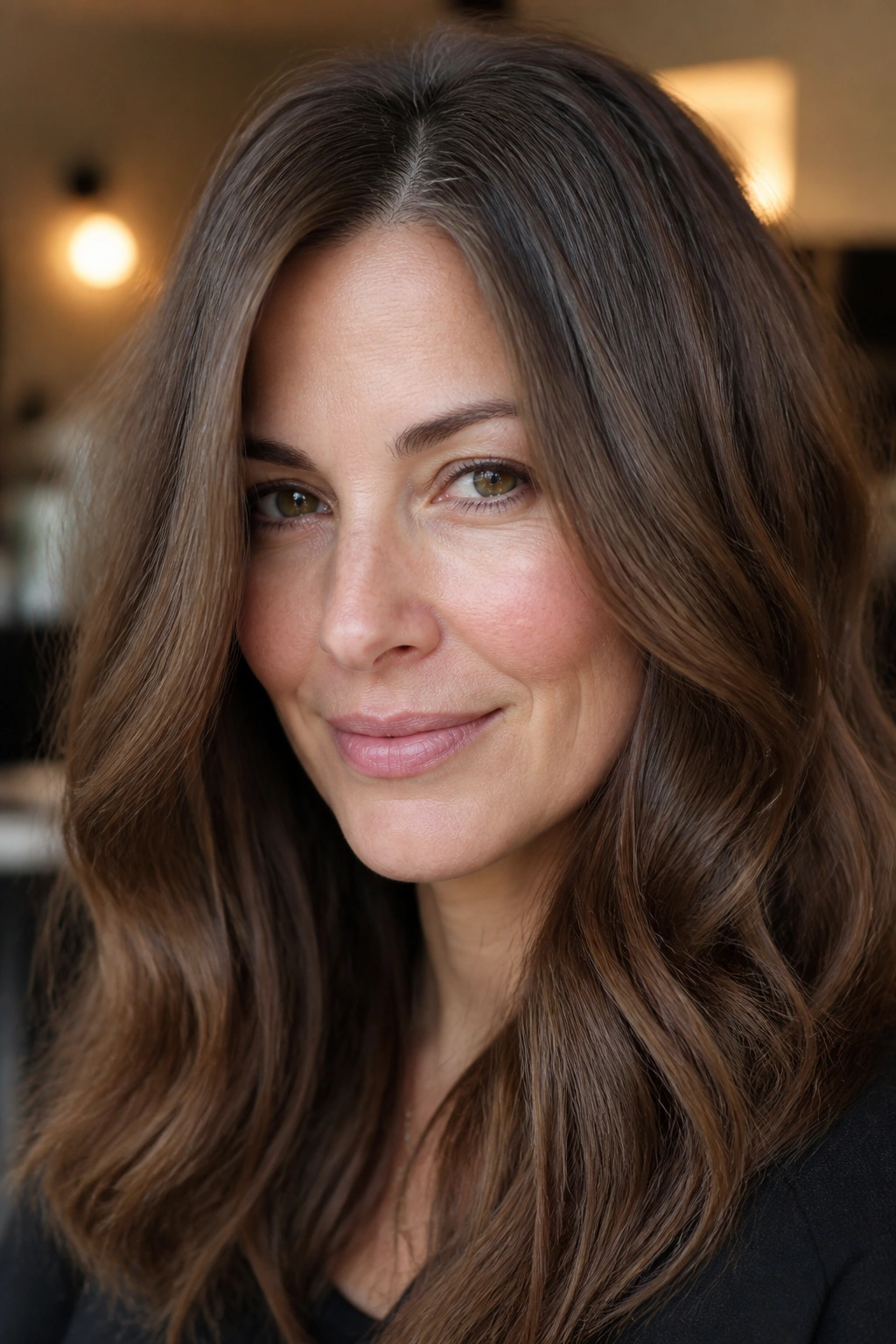
This is the shade I reach for first when someone wants clean coverage without that obvious helmet-dark finish. Soft chocolate brown sits in that sweet spot where grey disappears, but the hair still looks like hair, not paint.
The shadow root matters here. A root that is one step deeper than the mids creates a softer edge, so fresh regrowth does not announce itself the second it appears. That little bit of depth at the scalp also gives the color a more expensive look, which sounds fussy, but it really just means the tone has room to breathe.
Why It Works So Well
A level 4 or 5 brown with a neutral-cool bend usually covers grey root coverage better than a flat warm brown. Warm shades can turn orange on some hair; chocolate tones tend to stay richer and less brassy. If your grey is stubborn at the hairline, permanent color at the root zone is the part that earns its keep.
- Best for: medium to high grey coverage, especially on brunettes
- Ask for: a level 4–5 chocolate base with a soft shadow root
- Maintenance: about every 6 to 8 weeks
- Watch out for: too much warmth, which can make greys pop instead of blend
My one hard rule: keep the root deeper, not harsher. That difference matters more than people think.
2. Mushroom Brown with Beige Ends
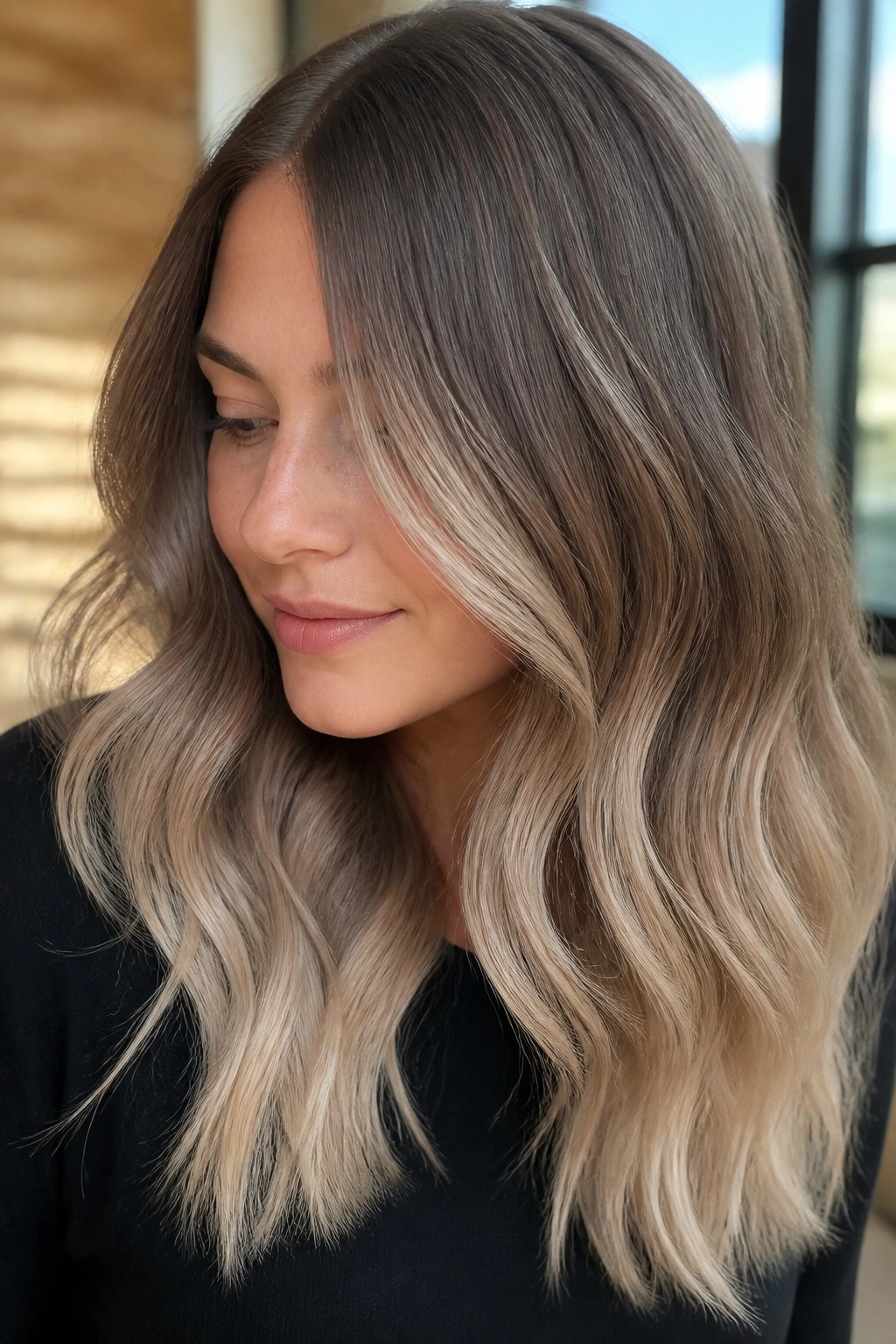
Why does mushroom brown work so well on grey roots? Because it doesn’t fight the silver tone; it borrows from it.
Mushroom brown sits in that cool, taupe-heavy family that looks calm instead of red or orange. When grey starts showing through, the transition feels less like a line and more like part of the shade story. Beige ends keep the whole thing from looking muddy, which is the trap people fall into when they ask for “ashy brown” and get flat, dull hair instead.
A mushroom brunette also behaves nicely when the roots grow. You get a soft blur instead of a high-contrast stripe. That’s especially handy if your hair is shoulder length or longer, because the eye sees the whole shape before it clocks the regrowth.
What to Tell Your Colorist
Ask for a cool brunette base with beige, not gold, through the mids and ends. If your hair tends to pull orange, a gloss with a smoky finish can calm it down after the main color goes on. A little root tap goes a long way.
And if you have very warm skin, don’t panic. Mushroom brown can still work, but it usually needs a touch more beige so your face does not go washed out.
3. Deep Espresso Brown
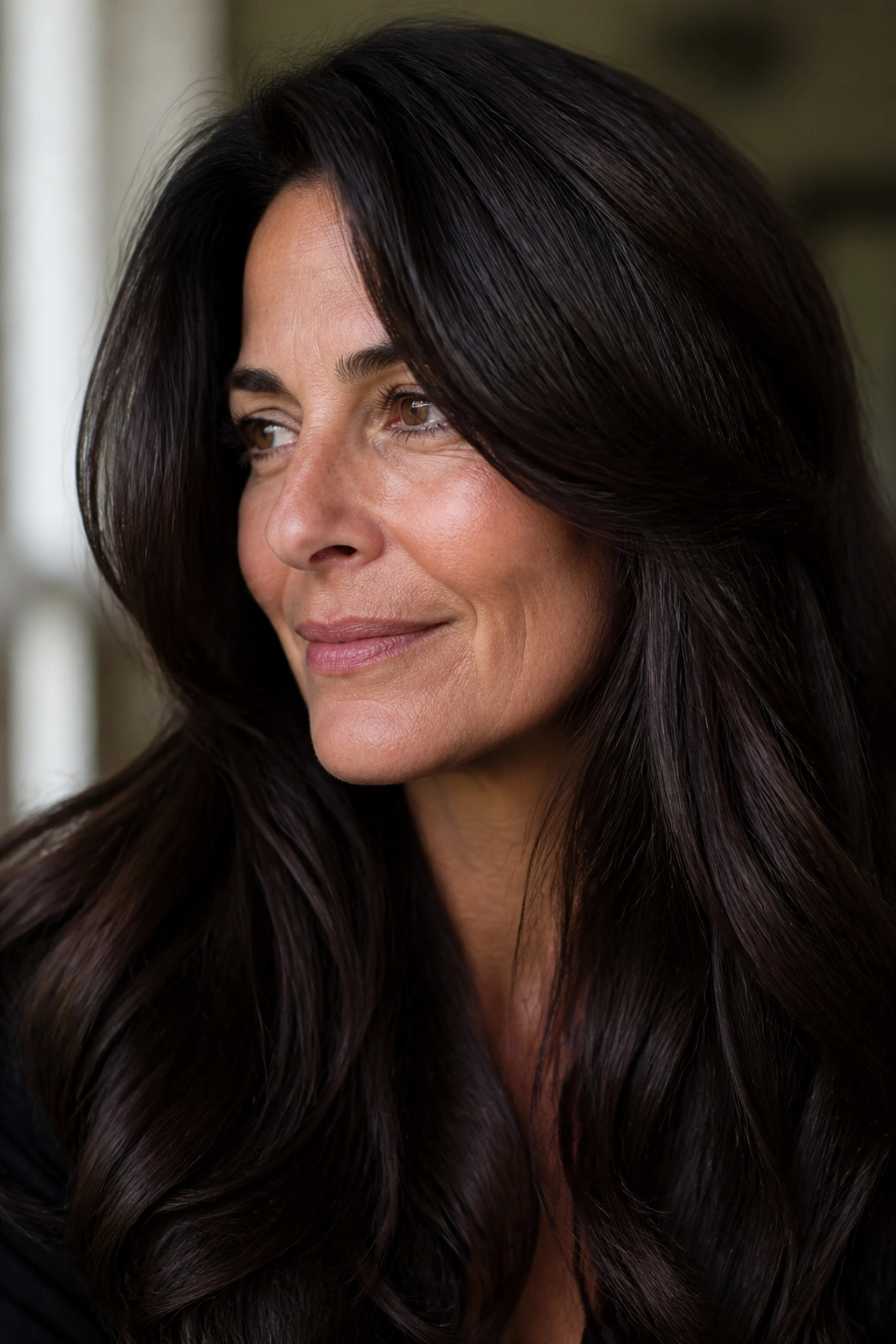
Deep espresso brown is blunt. It covers grey roots with almost no debate. If you want your hair to look dark, rich, and polished, this is the straightforward answer.
The reason it works is simple: there is enough pigment in espresso to bury resistant greys, especially around the temples and crown where white strands can be slick and shiny. On coarse hair, that matters a lot. A softer brunette can look pretty for a week and then start flashing silver. Espresso stays quieter.
There is a catch, though. Dark hair shows everything if the finish is dry, so the shine has to be there. A good gloss, a silkier blow-dry, and a trim that keeps the ends tidy make this color look intentional instead of severe.
This shade is especially good if you wear your hair short, bobbed, or pulled back often. A dark, even root line looks neat on those cuts. On very long hair, it can start to feel heavy if the ends are neglected.
Use this when you want strong coverage and you do not mind returning to the chair more often. The grow-out line is softer than black, but it still shows up.
4. Dark Blonde with a Root Smudge for Grey Roots
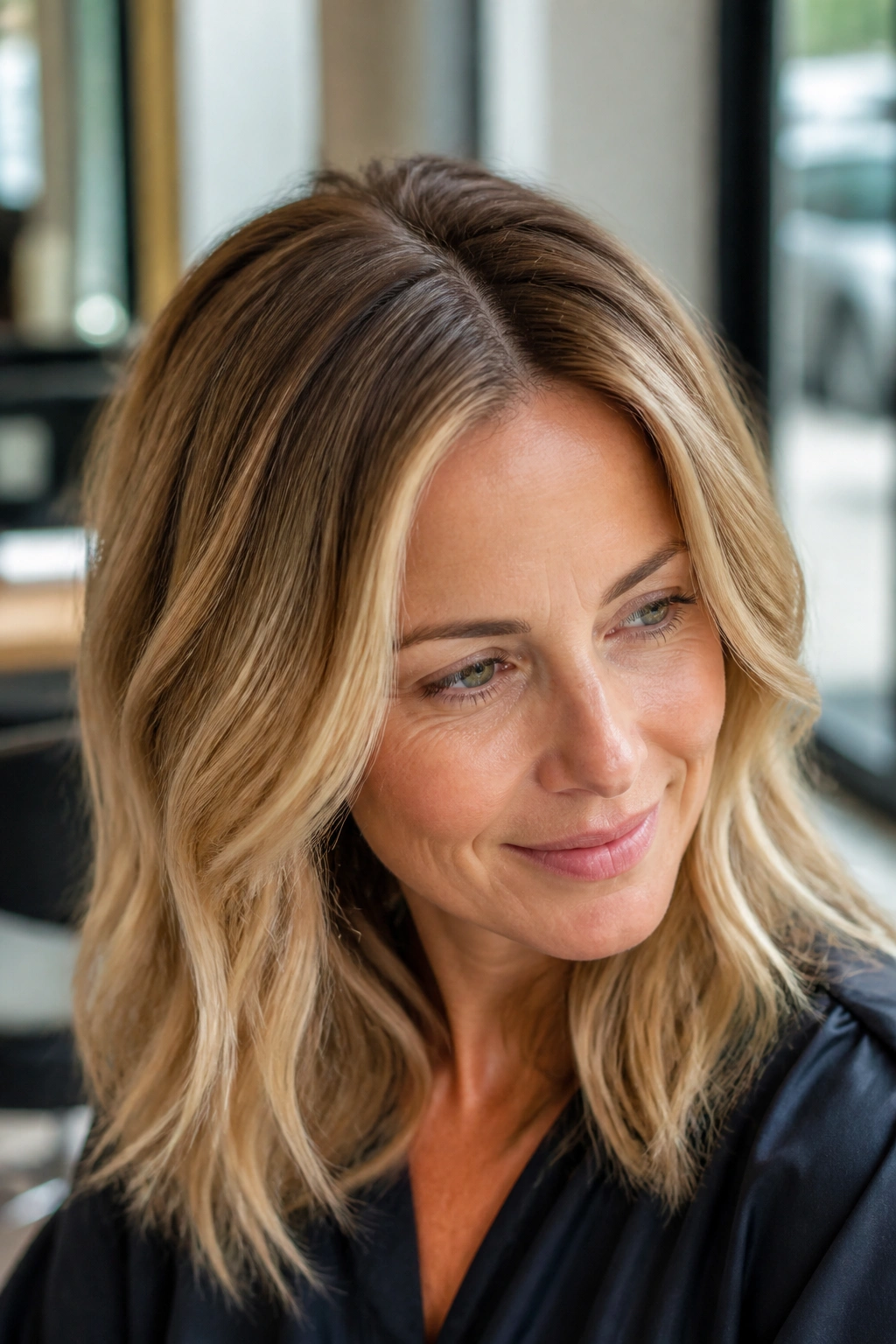
A dark blonde root smudge is the move for anyone who hates the harsh look of full coverage. It gives you enough depth at the scalp to hide grey roots, but not so much darkness that the hair turns one flat block.
The trick is that the root area stays one to two shades deeper than the lengths. That difference softens the regrowth line and keeps the hair looking airy. It is especially useful on fine hair, where very dark color can make the strands look thinner instead of fuller.
Who It Suits
- People with a natural level 6 to 8 base
- Anyone with scattered grey rather than a solid white band
- Blondes who want softer grow-out between appointments
- Hair that gets brassier when colored too warm
A demi-permanent formula at the root zone is often enough if the grey is light or patchy. If the silver is resistant, the root area may need permanent color first, then a softer gloss through the rest. That combo is practical and, frankly, easier to live with than chasing a single shade all over the head.
If you wear a center part, ask for the smudge to be feathered a little wider right there. That tiny detail keeps the part from looking painted on.
5. Caramel Balayage on Brunette Hair
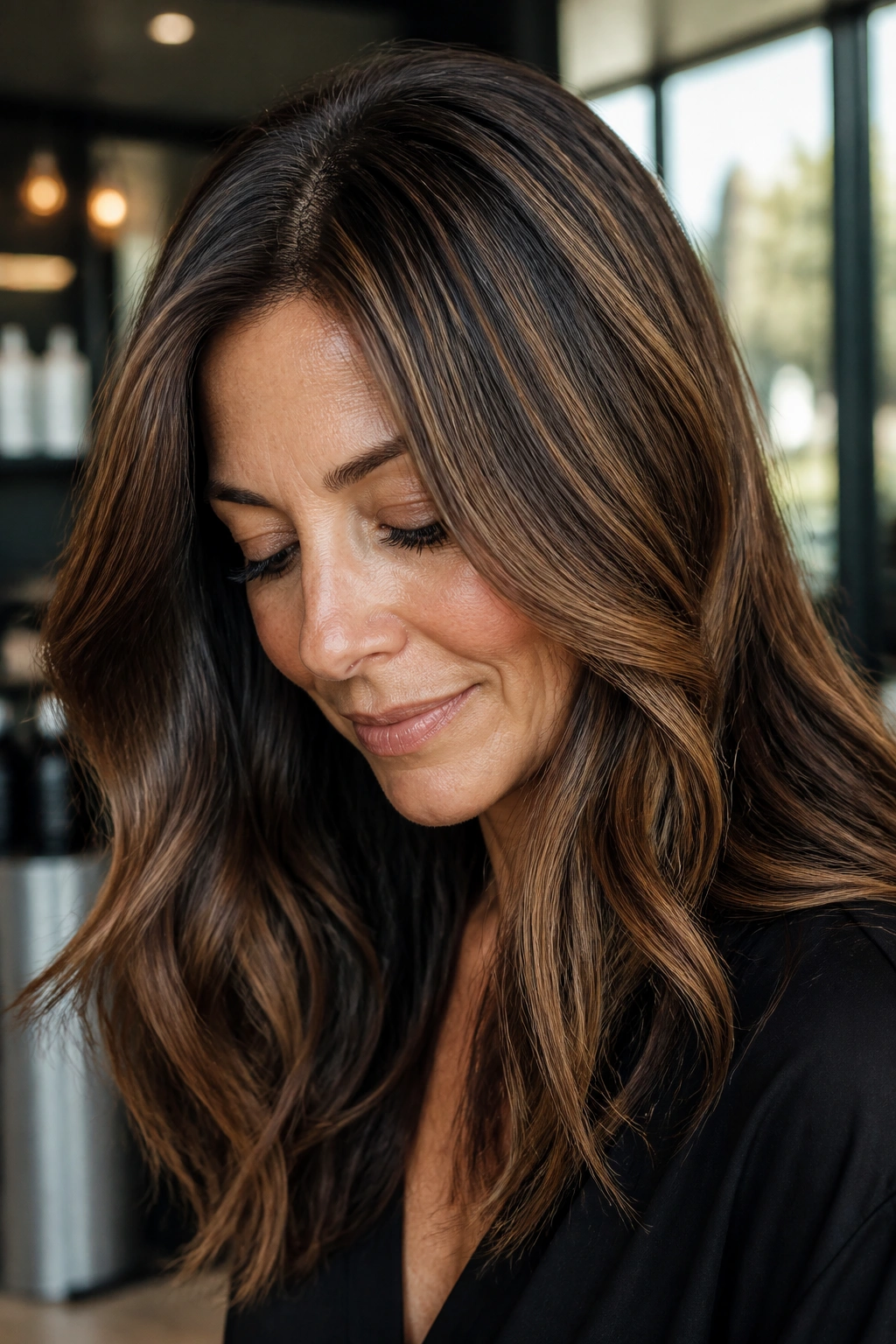
Picture a brunette with a few silver threads at the crown and a streak of grey by one temple. Caramel balayage is made for that kind of hair.
It does not erase every white strand. That is not the point. It breaks up the field so your eye sees movement, warmth, and dimension before it notices the regrowth. The lighter ribbons take attention away from the root line, and the brunette base keeps enough depth to anchor the whole look.
What Makes It Different
Balayage is painted by hand, so the placement matters more than the exact formula. A good colorist will keep the lightest pieces away from the root in the topmost layers, then add a few brighter notes around the face. That leaves the grey roots less exposed while still giving you that sunlit feel.
How to Ask for It
- Brunette base with caramel ribbons
- Root shadow at the part line
- Softer, thinner pieces near the temples
- No chunky contrast around the crown
This works especially well if your greys are scattered rather than dense. It is also one of the easier looks to grow out, which is useful if you do not want a hard appointment schedule.
6. Warm Chestnut with Fine Lowlights
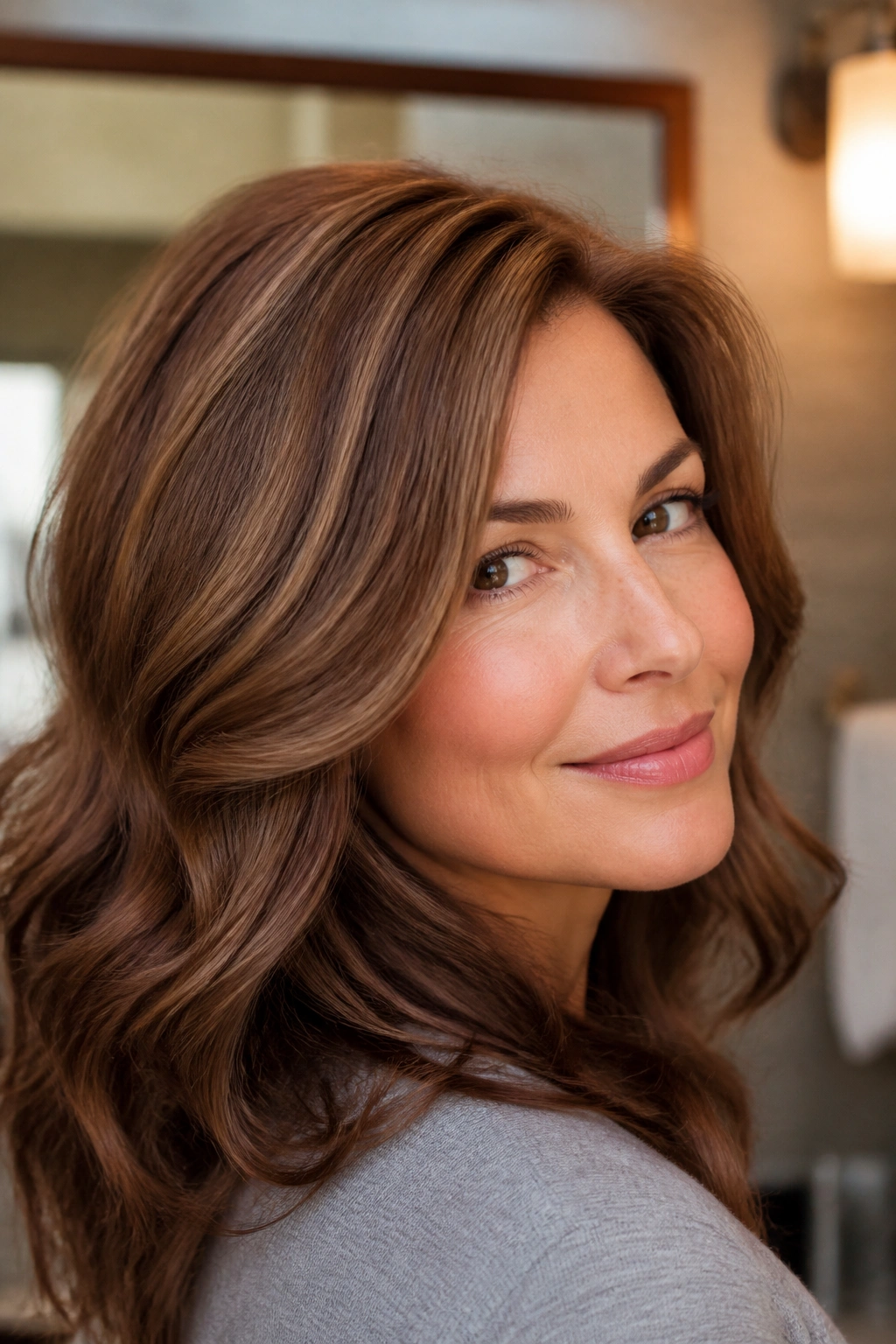
Warm chestnut looks rich in a way that flat brown never does. It has enough red and gold in it to keep the color alive, but not so much that it shouts.
That warmth helps grey strands blend because silver sitting inside a chestnut base looks softer than silver against ink-dark brown. Fine lowlights deepen the hair in tiny pockets, so the eye reads a mix of tones rather than a stark root line. On wavy or curly hair, the effect is even better because the texture already breaks up the regrowth.
This is one of my favorite choices for people who feel “brunette but dull” after repeated root touch-ups. Chestnut brings the whole head back to life without asking you to go copper or red.
It also plays nicely with mid-tone skin. Too cool and the face can look flat; too warm and the roots can turn brassy. Chestnut tends to sit between those extremes.
If your grey is concentrated at the front, ask for the warmest tone there and a slightly deeper chestnut in the back. That small adjustment makes the front look intentional and keeps the rest of the head from feeling heavy.
7. Copper Brown with a Gloss
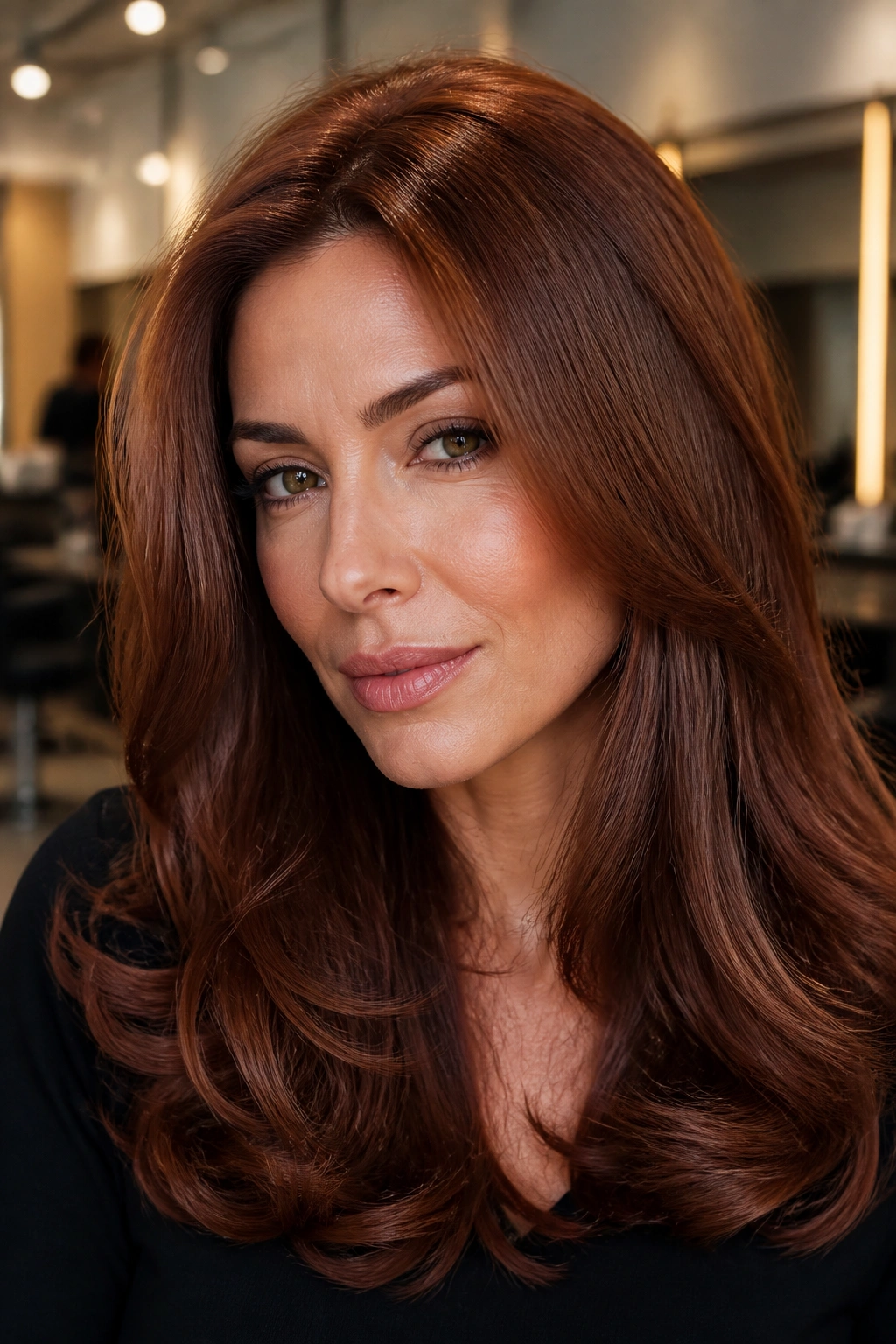
Copper brown is one of those shades people underestimate until they see it cover grey roots in daylight. Then it makes sense.
Red-based color grabs onto silver in a way that brown sometimes cannot. The grey becomes part of the copper story instead of sitting on top of it like static. A gloss matters here because copper fades fast and can lose its shine before it loses its pigment. Without that reflection, the color goes flat. No one wants that.
The Catch With Copper
Copper is lively, but it is also honest. If your ends are porous, they can drink up too much pigment and swing too orange. A gloss or toner after the main color keeps the result closer to auburn than to traffic cone.
What Helps It Last
- Use sulfate-free shampoo
- Rinse with lukewarm water
- Refresh the tone with a glaze between color visits
- Keep heat styling moderate, not blistering hot
This color suits people who like warmth in their hair and do not mind a little maintenance. Red tones are pretty, but they are not lazy. They need attention. Still, when copper brown is done well, the regrowth line softens faster than most people expect.
8. Champagne Blonde with Tiny Babylights
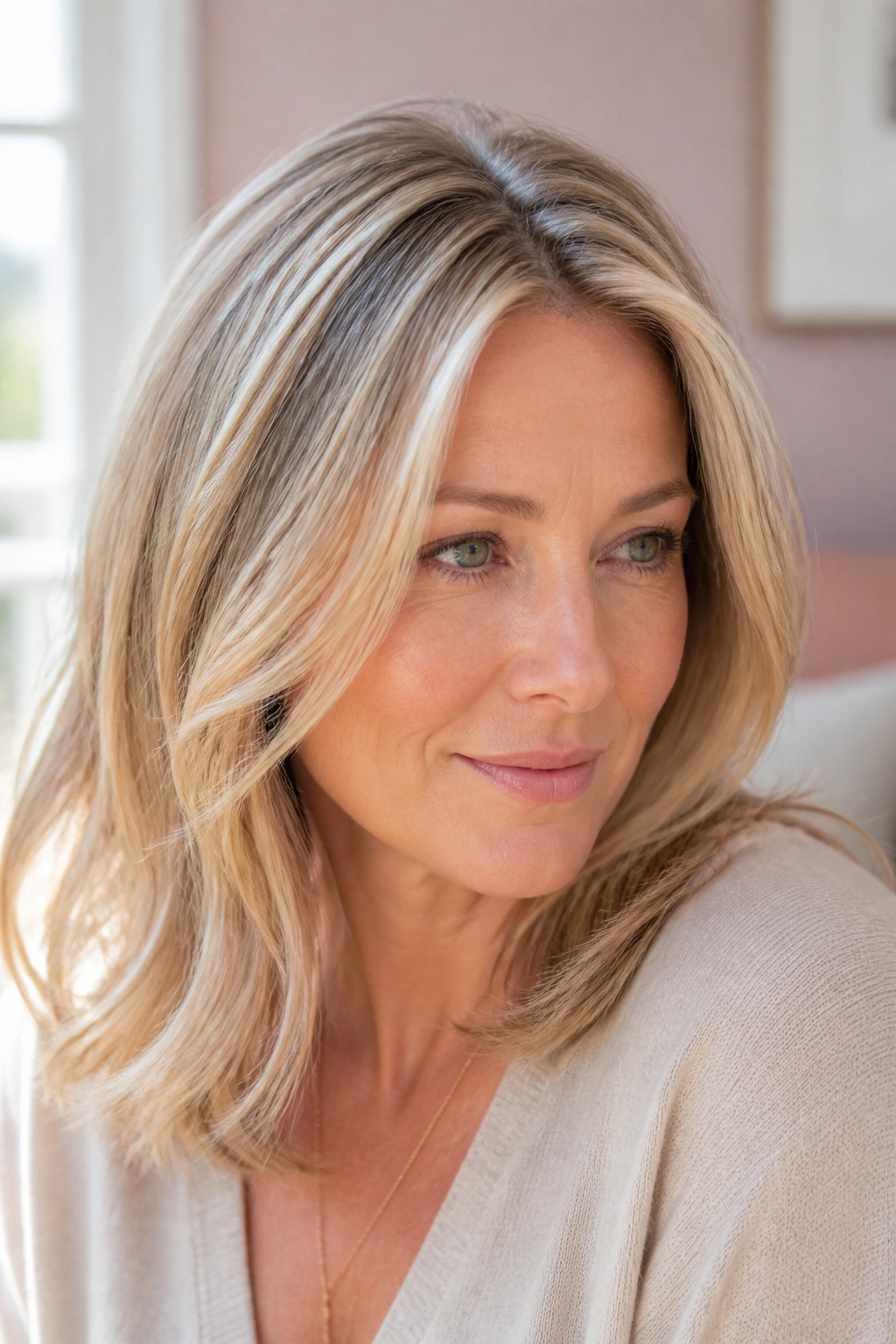
Can blonde cover grey roots? Absolutely, if the blonde is soft and the highlights are tiny.
Champagne blonde works because it lives in that pale beige range where grey strands do not scream for attention. Babylights, which are those super-fine woven highlights, break up the root area and make the hairline look lighter and less blocky. The whole effect is delicate, not stripy. That matters.
This is a smart choice for natural blondes, light brunettes, and anyone with a fair amount of silver near the front. The root zone does not need to be pushed as light as the mids. In fact, a slightly darker root tap can make the blonde look more expensive and give the grow-out a softer edge.
Quick Reality Check
- Best on hair that lifts easily
- Needs toner refreshes when brass creeps in
- Works better with beige or pearl tones than icy white
- Looks nicest when the highlights are very fine near the part
The downside is upkeep. Blonde coverage asks for toner, not just color, and toner fades. Still, if you like a bright result and do not want dark regrowth to define the whole style, champagne blonde is a smart compromise.
9. Salt-and-Pepper Blending with Cool Ash Tones

Sometimes the cleanest fix is not hiding the grey at all. It is blending it so the silver and the darker strands look like they belong together.
Salt-and-pepper blending uses cool ash tones, soft lowlights, and a careful gloss to make grey roots read as part of the pattern. This is a strong move for people with a high percentage of silver who are tired of fighting every new bit of regrowth. The hair can look sharper, cleaner, and less high-maintenance almost immediately.
The key is contrast control. If the dark pieces are too dark, the grey looks patchy. If the silver is too bright, the roots can turn wiry. Ash tones calm both sides down.
Who This Is Good For
- People with 50% or more grey
- Short haircuts, bobs, and layered crops
- Anyone stepping away from constant root touch-ups
- Hair that already has a cool or neutral undertone
You do need a skilled hand here. The color should look like a plan, not an accident. But when it works, it buys you freedom. A lot of freedom. And that is sometimes worth more than total coverage.
10. Smoky Brunette Melt
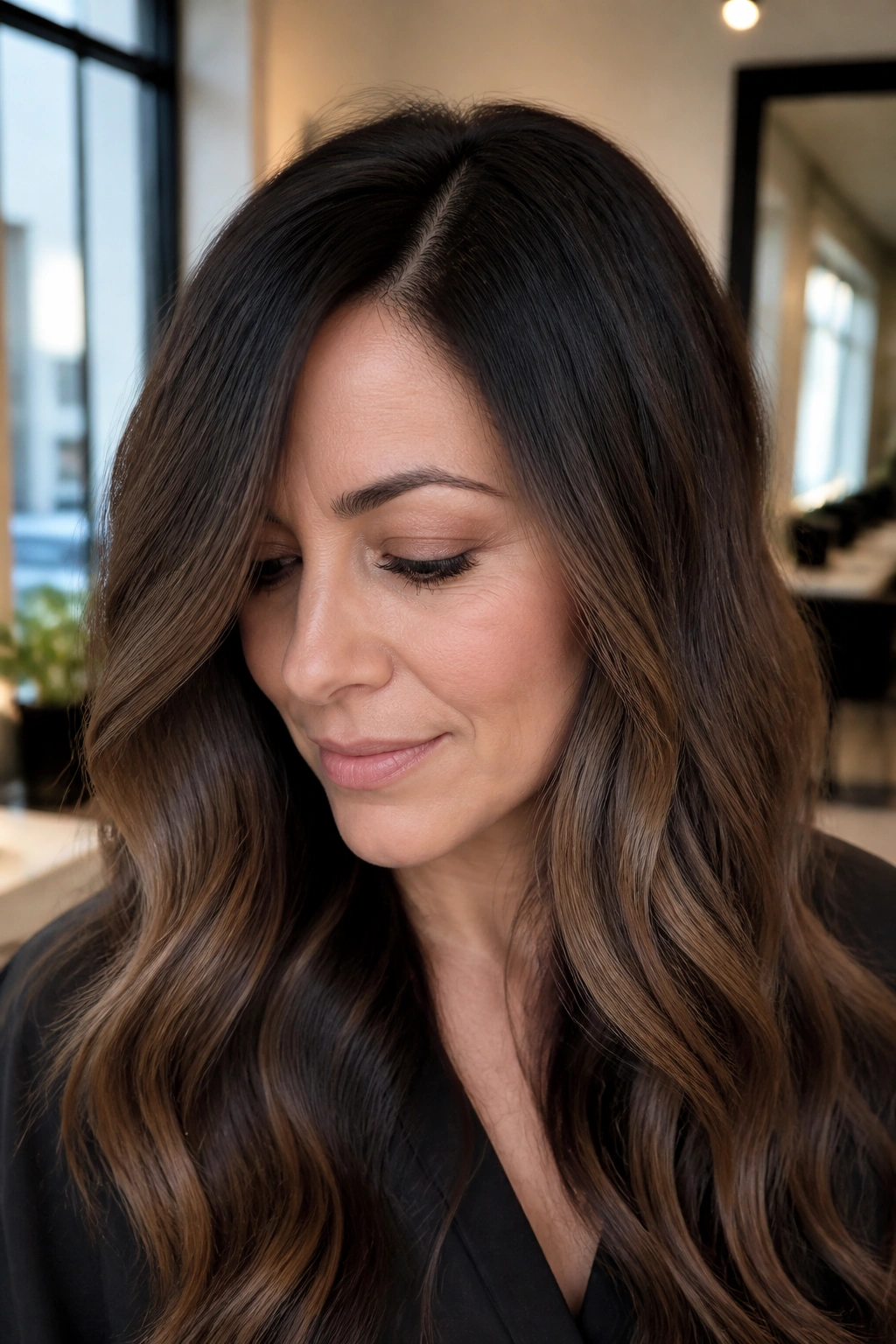
A smoky brunette melt is built for people who want the roots to disappear into the rest of the hair.
The idea is simple: deepen the root area, then let the tone soften gradually through the mids and ends. No hard line. No chunky contrast. Just a slow shift from darker at the scalp to softer brown through the length. That gradient is excellent at hiding grey roots because the eye never lands on a single stopping point.
This look is especially good on long hair, because the color has room to move. On shoulder-length cuts, it still works, but the transition has to be placed carefully so it does not look banded. That is where a good colorist earns their money.
A smoky brunette melt also suits people who like a more polished finish than balayage. Balayage can feel airy and bright. This feels deeper, smoother, and a little more dressed up.
If your grey comes in fast at the temples, ask for the darkest point right there and a softer fade toward the crown. That small trick keeps the front neat even when the rest of the hair has started to grow out.
11. Golden Honey Highlights Around the Face
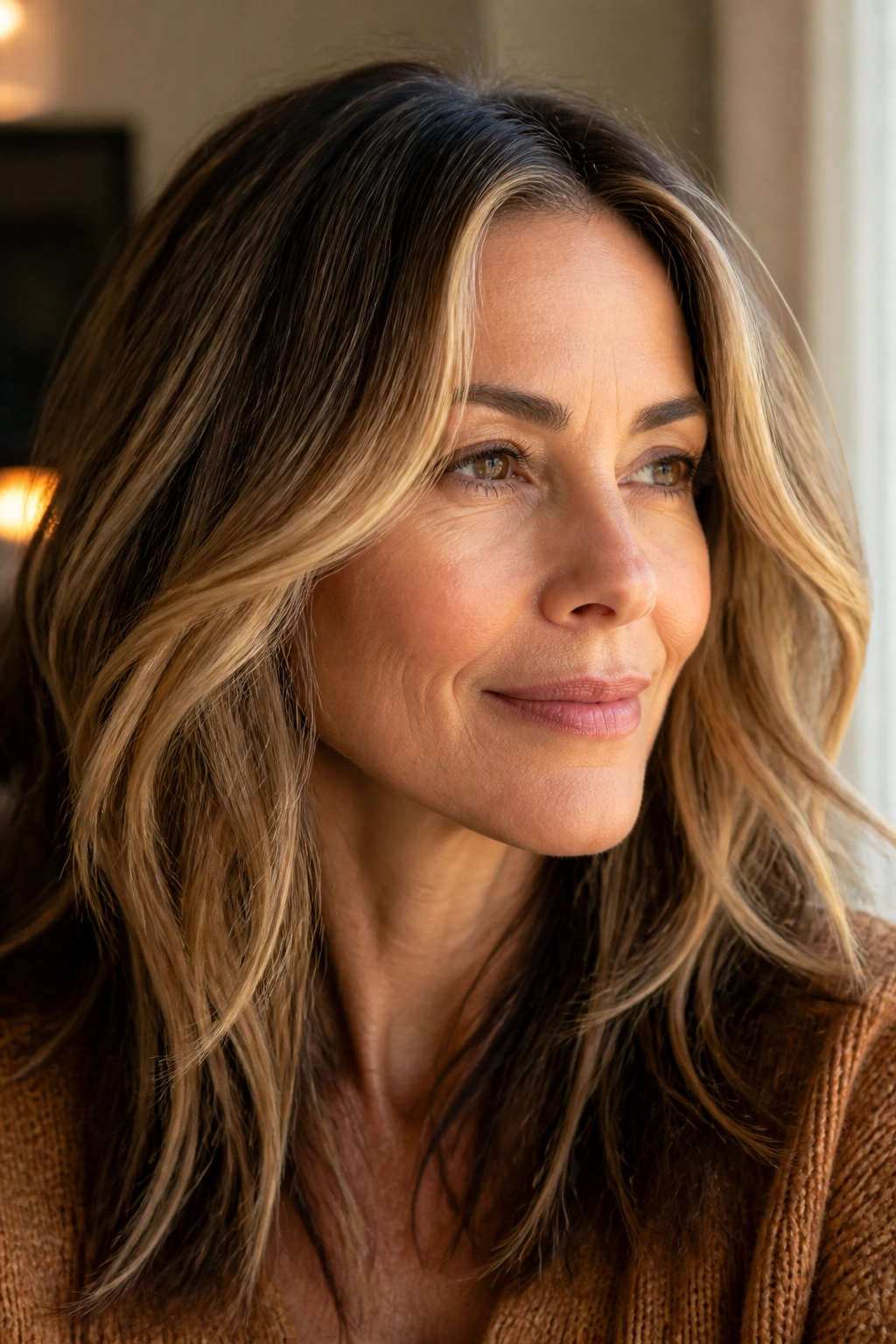
A friend with a few stubborn silver strands at the front once said she did not want her hair to “look like it was apologizing.” I thought that was fair.
Golden honey highlights around the face can do a lot for grey roots because they pull the eye forward. The lighter pieces sit where people look first — around the cheeks, the fringe, and the temples — so the regrowth line becomes less central. It is not full coverage. It is distraction with a purpose.
This works especially well if the grey is most visible at the hairline or part and the rest of the head is still fairly pigmented. A few honey ribbons can warm the whole face and soften the contrast without forcing a total color change.
Where to Place the Light Pieces
- Around the temples
- Along the fringe or curtain bangs
- Just off the part line
- On the top layer near the face
Keep the honey tone warm, but not orange. If it gets too gold, the root area can look yellow next to any cool grey. The prettiest version is soft, creamy, and a little sunlit. Not syrupy. Not striped.
If you like low-maintenance color but still want your face to glow, this is a very good compromise.
12. Auburn with Soft Dimension
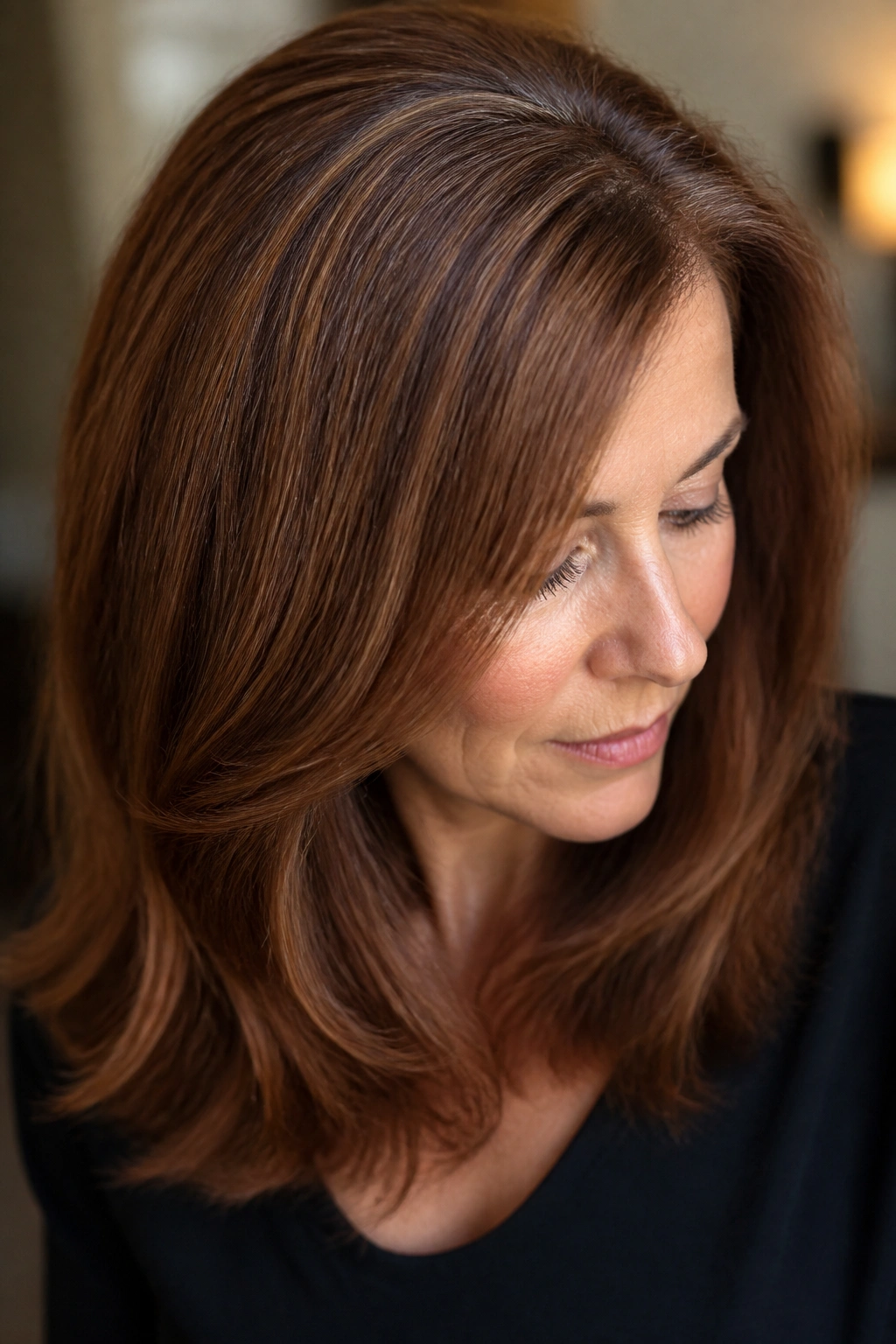
Auburn has a way of making grey roots look less stark because the red-brown base gives the silver something to blend into.
The mistake people make with auburn is going too bright. You do not need fire-engine red to get coverage. A deep cinnamon or cherry-brown version is usually more flattering and easier to wear every day. The soft dimension comes from layering tones, not from turning the whole head one loud color.
This shade is especially kind to naturally warm skin and to people whose hair used to be brunette but has started going silver in uneven patches. The red in the formula can make the grey look pearly instead of flat. That can be a lovely effect when the hair is curled or worn with movement.
One thing to know: red tones fade faster than brown. They lose punch first at the ends and around the hairline, which is exactly where you notice them most. A color-safe shampoo and an occasional gloss help keep the richness up.
Auburn is not subtle. It does not try to be. But if you want grey roots to look blended and alive, it has a lot going for it.
13. Jet Black with a Soft Sheen
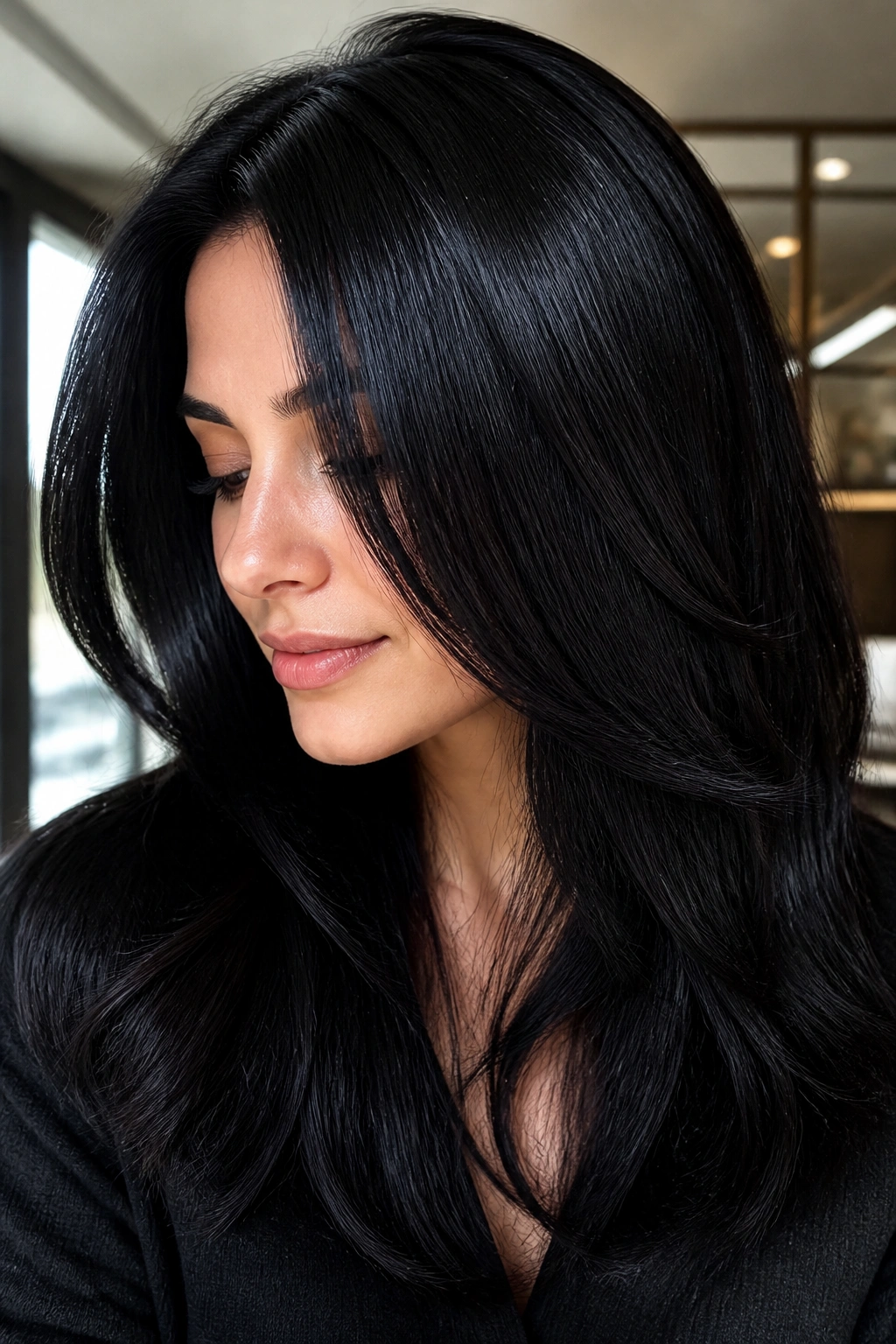
Jet black covers grey roots with almost rude efficiency. If your hair is naturally dark and you want the most dramatic coverage, it does the job.
The thing people forget is that black is unforgiving. It shows every dry end, every blunt line, and every uneven patch of growth. So the finish has to be glossy, and the cut has to hold its shape. On short styles, that crispness can look sharp and modern. On long, rough-textured hair, it can veer harsh fast.
This shade tends to work best when the grey is thick and resistant, especially on coarse hair that refuses softer brown formulas. In those cases, black can look cleaner than trying to fake a medium brunette that never quite covers.
Use It If You Want
- Strong root coverage
- A high-contrast, polished look
- Short haircuts or sleek styles
- Low tolerance for warm undertones
I would not push this color on someone with very fair skin unless they like a hard-edged look. It can be stunning, but it is not gentle. The upside is that the regrowth line is obvious in the best possible way — neat, intentional, and clean rather than patchy.
14. Beige Bronde with a Soft Root Tap for Grey Roots
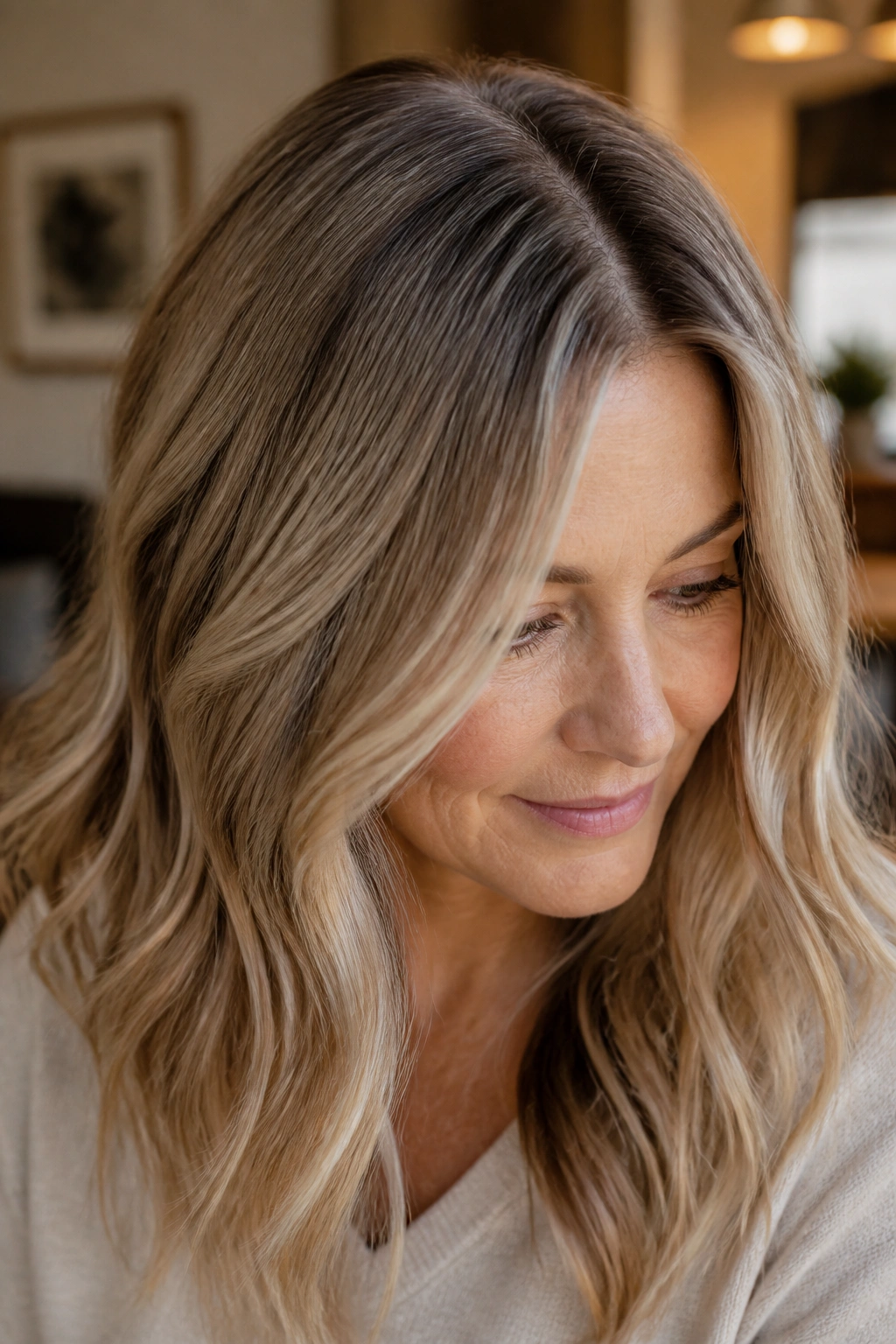
Bronde is one of those hair colors that sounds trendy and wears like common sense.
A beige bronde base sits between brown and blonde, which gives grey roots a softer place to land. The root tap keeps the scalp a touch deeper, then the mids and ends stay beige and light enough to feel airy. That balance is the whole point. You get coverage without the shock of going dark.
Why It’s Easier to Live With
- The root line grows out gently
- Beige tones keep the hair from going muddy
- It suits both straight and wavy textures
- It works well when your grey is starting to spread but not yet fully dense
This is one of the nicer options for people who are done with harsh contrasts but are not ready to commit to all-over silver blending. It also works if you change your part often, because the deeper root tap keeps the part from flashing white under strong light.
A touch of brightness around the face helps the style feel fresh. Too much beige, and the hair can look tired. Too little, and the bronde loses the softness that makes it so useful in the first place.
15. Dimensional Grey Blending with Silver Streaks
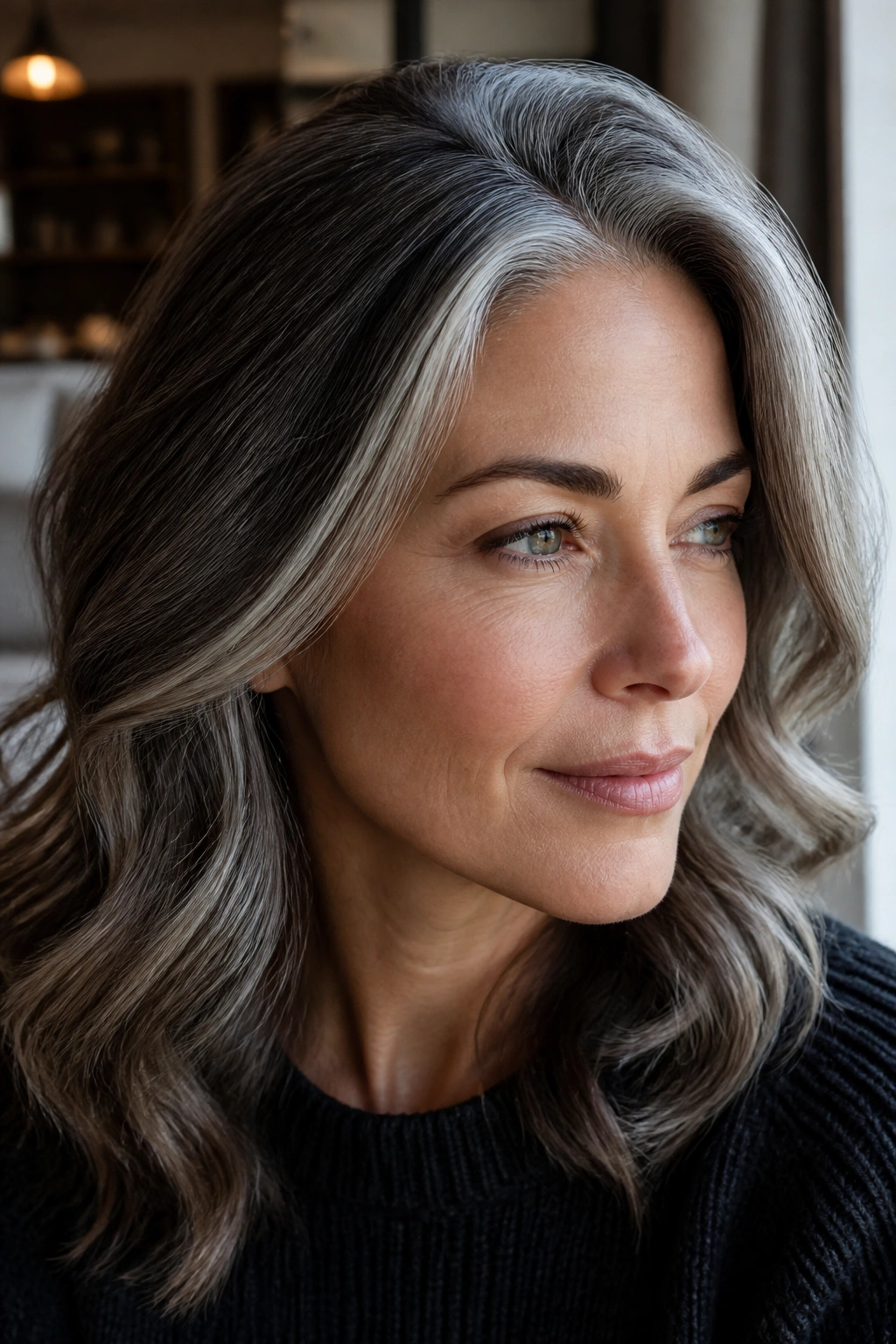
If your grey percentage is high, there is a point where trying to erase every silver strand turns into a losing battle. Dimensional blending gives the hair a better answer.
Silver streaks paired with smoked lowlights can make grey roots look deliberate instead of unfinished. The darker pieces add shape. The silver pieces add movement. A gloss pulls the whole thing together so the roots do not look choppy. This is one of the few looks that can actually improve as it grows, because the new silver simply becomes part of the design.
How to Keep It From Looking Patchy
- Keep the lowlights cool, not muddy
- Place silver pieces near the top layer, not only underneath
- Use a gloss to unify the tones
- Trim the ends often so the contrast stays crisp
This is a strong option for people who are tired of constant cover-ups and want something that looks styled, not surrendered. It can feel bold at first if you have spent years chasing full coverage. Then it starts to feel practical. And maybe a little liberating.
The best part is that this approach usually buys you more time between appointments than solid root color does. That alone is worth something.
Final Thoughts
The prettiest answer for grey roots is not always the darkest one. Sometimes it is the shade that blurs the line, softens the part, and lets the regrowth behave like part of the design.
If I had to boil the whole thing down, I’d say this: match the color to the way your grey shows up. Scattered silver wants dimension. A solid root band wants stronger pigment. Hair that grows fast wants softer edges, not a blunt line every three weeks.
And yes, the hairline matters more than people think. If the temples and part look good, the rest of the style can be a little looser and still read as polished. That is where the smartest color work usually lives — right in the place you notice first.
