



Formal hairstyles for long hair have a funny problem: the heavier the length, the easier it is for a pretty style to collapse after a few hugs, a few photos, and one too many head turns on the dance floor. That’s why the styles that actually work for weddings, galas, proms, and dressy dinners usually have a little structure hiding underneath the beauty.
Long hair gives you options most people would envy. It can be glossy and loose, tucked into a knot, braided into shape, or pinned into something that looks far more complicated than it really is. The trick is knowing which styles read elegant in real life, not just in a still photo.
I’ve always thought the best formal hair has two jobs at once. It needs to look intentional from the front, and it needs to stay calm from the back when the night gets long. A dab of mousse, a good brush-out, a few strategic pins, and the right parting can change everything. The styles below lean on those details, because glamour that falls apart before dessert is not much use to anyone.
1. Sleek Low Chignon

A sleek low chignon is the sort of style that makes long hair look expensive without trying too hard. It sits low at the nape, which keeps the silhouette clean, and it works especially well with high necklines, backless dresses, and statement earrings.
The reason this style keeps showing up at formal events is simple: it controls the bulk. Long hair can look lush, but it can also get wide and busy if you leave too much movement near the crown. A low chignon pulls everything into one neat point, then softens the shape with a wrapped bun or tucked coil.
The finish matters more than the shape. Smooth the top with a light serum or cream, then brush the hair back with a boar-bristle brush so the crown lies flat without looking greasy. Pin the bun in crossed sections, not one pin at a time. That tiny difference keeps it from loosening halfway through the evening.
It’s polished. It stays put. And it never looks like you spent the whole afternoon fighting with it.
2. Soft Hollywood Waves

Why it Reads Formal
Soft Hollywood waves are a classic because they strike that rare balance between movement and control. The curls are broad, brushed out, and shaped into long S-waves instead of tight spirals, so the hair still moves when you walk.
A 1.25-inch curling iron usually gives the right bend for long hair. Anything smaller can make the ends look springy in a way that feels too casual. Curl away from the face on both sides if you want the old movie-star look, then let the hair cool completely before brushing it out.
The Small Details That Matter
- Pin each curl flat for 10 to 15 minutes before brushing.
- Use a flexible-hold hairspray, not a hard shell.
- Create a deep side part for a more formal feel.
- Finish with a light shine spray on the mid-lengths and ends.
Best tip: brush the waves with a paddle brush, not a fine comb. The result is softer and far more expensive-looking.
3. Braided Crown Updo

Need your hair off your neck but still want something that feels romantic? A braided crown updo is one of the safest bets. It wraps the braid along the hairline or around the head, then tucks the rest into a low bun or hidden coil.
This style is especially useful for thick long hair, because braiding helps manage all that weight. It also works when you want the front to stay tidy while the back has a little softness. I like it for outdoor weddings and long receptions, mostly because it does not fall flat the minute humidity shows up.
How to Keep It from Looking Too Sweet
The braid should be a little full, not tiny and tight. Pancake the braid gently by tugging at the edges with your fingertips after it’s secured; that makes it look richer and less childlike. If you have layers that slip free, mist them with texture spray before braiding.
A few discreet U-pins at the crossing points help more than a mountain of bobby pins. That’s the part people often miss.
4. Twisted Half-Up Half-Down

I once saw this style save a friend who had shoulder-skimming straps, long hair, and zero patience for a full updo. The twisted half-up half-down style keeps the front away from the face, but leaves the length visible, which is a nice compromise when you want softness without hair in your lipstick.
The twists can be simple or elaborate. Start with two sections at the temples, twist them back toward the center, and pin them where they meet. Leave the rest of the hair in loose curls, brushed waves, or even a polished blowout.
A few small additions make it feel dressier:
- Use pearl pins or a crystal comb where the twists meet.
- Curl the ends away from the face for a cleaner line.
- Leave a narrow center part if you want symmetry.
- Backcomb the crown just a touch for lift.
It’s a good pick when you want movement, but not chaos. That’s the whole game here.
5. Wrapped Low Ponytail

A wrapped low ponytail can look more formal than a bun if the finish is clean enough. That surprises people, but it shouldn’t. A ponytail at the nape gives you a long vertical line, and long hair can look striking when it hangs sleek and controlled instead of pinned into a knot.
The trick is hiding the elastic with a section of hair wrapped around the base. That one move turns a regular ponytail into something that feels deliberate. If the ends are straight, the look reads modern and sharp. If you curl just the last four inches, it feels softer and better for satin dresses or draped gowns.
This style is especially flattering when the dress already has drama. A sculpted neckline, a bold shoulder, or a lot of fabric near the bodice can get lost under a bulky updo. A low ponytail keeps the face open and the outfit visible.
Use a smoothing brush, a touch of pomade on flyaways, and a strong elastic. Weak ties are the enemy here. They stretch, sag, and ruin the line.
6. Side-Swept Old Hollywood Curls

Center parts get a lot of love, but a side-swept wave pattern still has serious formal power. It gives long hair a little theater, especially when one side is tucked behind the ear and the other side falls in a glossy curve over the shoulder.
The reason this works so well is that it changes the silhouette without making the style complicated. The deep side part adds instant shape at the top, and the waves create a heavy, luxurious line through the length. You get drama, but it feels restrained.
Unlike loose curls that fall evenly on both sides, side-swept curls make the face look more open and the neckline look longer. That can be a nice move with one-shoulder dresses or gowns with a strong asymmetrical detail. The style also photographs well from the profile, which matters more than people admit.
If your hair is fine, set the front sections with a larger iron and pin them while they cool. If it’s thick, brush the wave pattern out more gently so it doesn’t go puffy at the ends. The shape should glide, not frizz out.
7. Textured French Twist

The Difference Between Crisp and Soft
A French twist does not have to look severe. The version I like for long hair has a little texture at the crown and a smoother shell through the back, so it feels formal without looking stiff.
Long hair gives this style extra body, which is good, but it also means you need to tame the weight before you start rolling. Light teasing at the crown helps. So does dry shampoo or texture spray on hair that’s too silky to hold. If the surface is too slick, the twist slides.
Where It Works Best
- Great for black-tie events.
- Strong with boat necks and high collars.
- Good for thick hair that needs shape.
- Useful when you want the back of the dress visible.
The modern French twist is less about perfection and more about clean control. A few loose pieces can soften it, but the base should feel secure. If the twist is wobbling while you’re still in the mirror, it will not improve later.
8. Bubble Ponytail

A bubble ponytail sounds playful, but done neatly, it looks sharp enough for a formal setting. The style depends on sectioning the length into rounded “bubbles” using small elastics spaced along the tail, usually every 2 to 3 inches.
That spacing matters. Too close together, and the shape looks cramped. Too far apart, and the bubbles slump instead of staying rounded. Wrap a tiny strand of hair around each elastic if you want a cleaner finish, especially for weddings or dressier evening events.
This one works best when the crown is polished and the ponytail itself has some fullness. Smooth the top with a brush and use a tiny bit of serum along the part line. After that, gently pull each section outward until it puffs into shape. Not much. Just enough to create those rounded bends.
It’s a nice choice if you want something a little modern. The style has movement, but it still feels controlled, and long hair makes the shape more dramatic than medium-length hair ever could.
9. Waterfall Braid with Loose Waves
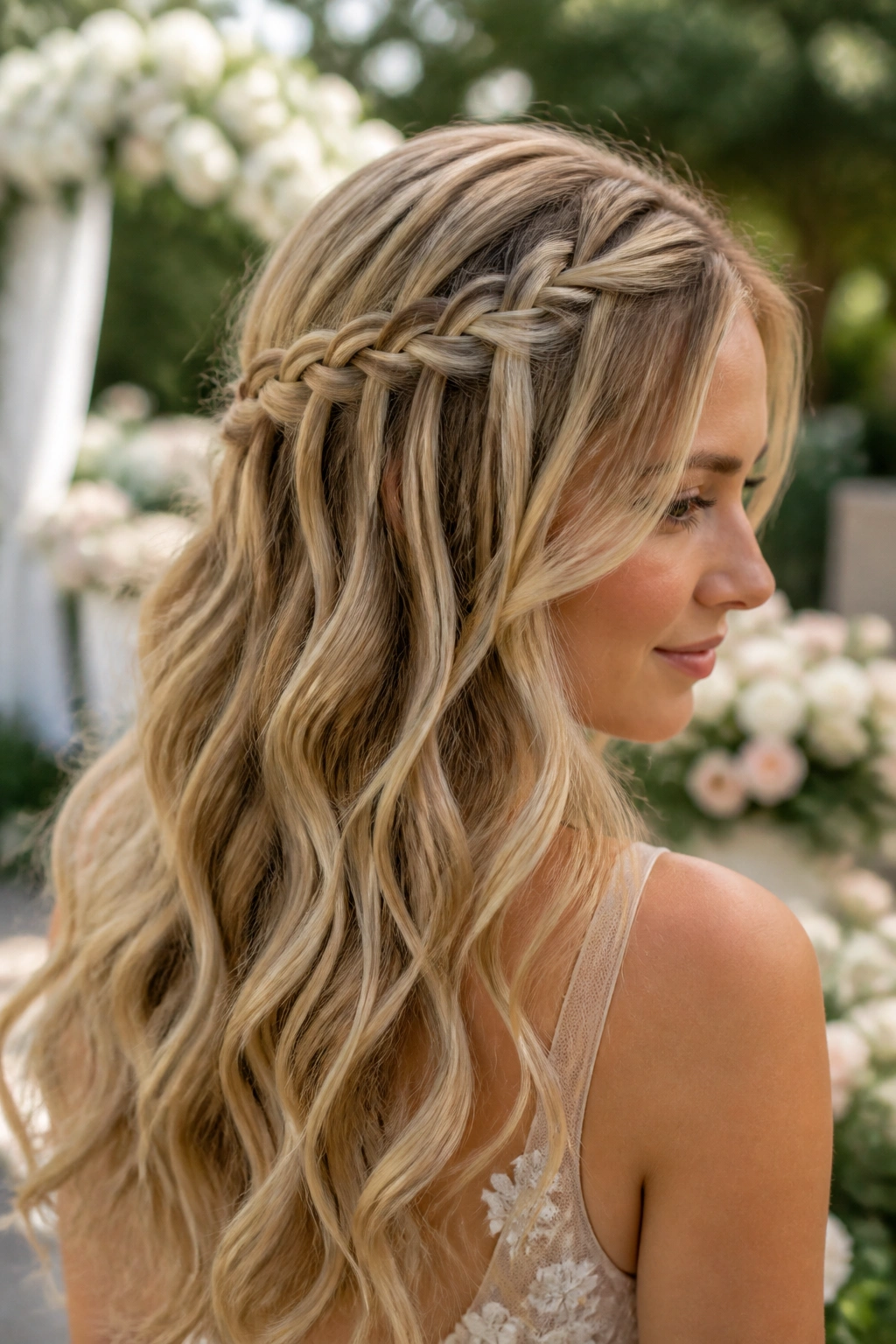
A waterfall braid is one of those styles that looks delicate from a distance and more technical up close. For long hair, that’s a gift. The braid only travels across part of the head, while the loose pieces fall through like ribbons, leaving the rest of the hair in waves.
The effect is soft, but not sleepy. You still get structure at the top, which is what keeps it formal. The braid also keeps the front sections in place, so it’s useful if your hair has layers that usually escape anything less secure.
If your hair is slick, prep it with texture spray before braiding. If it’s very thick, keep the braid a little looser so the style doesn’t start to feel heavy near one temple. The loose waves underneath should be brushed enough to blend, but not so much that they lose shape.
This style works especially well for garden weddings, bridesmaids, and anyone who wants something romantic without going full updo. It has a quiet kind of polish.
10. Knotted Half-Up Style

Why does a simple knot look so good on long hair? Because the length gives the knot a real shape. Shorter hair can’t always hold the same visual weight, but long hair creates a thicker twist at the back that reads intentional and a little sculptural.
The knot itself can be made from two front sections pulled back and tied once or twice before being pinned flat. Keep the crown smooth and leave the ends below it either straight or softly curled. That contrast is what makes the style feel finished.
How to Keep the Knot Tight
Use a texturizing powder or spray at the roots before you tie anything back. It helps the knot hold without slipping. Then secure the center with two crossed bobby pins hidden under the knot rather than one pin sitting on top.
This is a good style when you want easy elegance. It is not fussy, and that’s part of the appeal. A crystal clip or pearl barrette can dress it up fast.
11. Glossy Straight Hair with a Statement Clip

Straight hair gets overlooked in formal styling, which is a shame, because long glossy lengths can look incredibly sharp when they’re treated well. The key is to make the straightness look finished, not flat. That means a clean center part, smooth ends, and a single accessory that carries the outfit.
A statement clip placed just above the ear can do more than a whole row of small pins. It gives the style a focal point and keeps one side tucked back so the face stays open. Choose a clip with enough size to balance long hair; tiny clips tend to disappear.
The finish should feel sleek from root to tip. Blow-dry with a paddle brush, straighten in slow passes, and run a serum lightly over the mid-lengths. The shine is the point here. If the hair looks matte or dry, the whole style loses its edge.
This is a strong choice for modern gowns, minimalist dresses, or any formal event where you want the clothes to do some of the talking.
12. Gibson Tuck

The Gibson tuck has an old-fashioned charm that still feels relevant because it creates a soft rolled shape at the nape without becoming stiff. Long hair helps a lot here. There is enough length to tuck cleanly, which means the style can look full instead of flimsy.
Why Long Hair Makes It Easier
The extra length gives you more material to roll under, and that makes the tuck hold better. It also helps hide pins, which is always a plus. If your hair has layers, leave the shortest pieces loose around the face and smooth the rest back before rolling it in.
What to Watch For
- Secure the base with a clear elastic first.
- Roll the hair upward, not outward.
- Pin the tuck along the curve, not just at the ends.
- Leave the surface slightly soft so it does not look helmet-like.
The Gibson tuck sits somewhere between a low bun and a roll, which makes it useful for semi-formal and formal events alike. It feels neat, graceful, and a little more interesting than the usual chignon.
13. Dutch Braid Bun

The Dutch braid bun is one of the few styles that can handle truly heavy long hair and still look neat at the end of a long night. Because the braid is woven under rather than over, it pops up from the scalp and gives the style a strong, visible texture right away.
It holds. That’s the big advantage.
The braid can start at the hairline and travel straight back, or you can split it into two Dutch braids and gather them into one bun. Either version works best when the hair is prepped with a bit of grip. Too-silky hair can slide, especially at the crown, so a dry texturizer or mousse helps.
I like this style for thick hair because it turns all that weight into part of the design. Instead of fighting volume, it uses it. The bun at the base keeps everything compact, while the braid gives the front of the style enough detail to feel formal.
If you want something secure, this is one of the strongest options on the list.
14. Voluminous Blowout with Face-Framing Layers

A polished blowout can be every bit as formal as an updo if the shape is right. The goal is lift at the roots, smoothness through the mid-lengths, and movement at the ends, with a few face-framing layers swept away from the cheeks.
Round-brush styling works best here. Lift the roots as you dry, then bend the ends under or away from the face depending on the shape you want. A large barrel brush or Velcro rollers around the crown can help the top stay elevated for longer.
What Gives It That Dressy Feel
- A clean side or center part.
- Soft bend at the ends, not loose frizz.
- Shine spray only on the lower half.
- Face-framing pieces that fall in a controlled curve.
This is a smart pick when you want your long hair to look full and healthy without being pinned up. It suits many necklines, and it feels especially good with open shoulders or layered gowns. There’s movement, but the hair still looks dressed.
15. Halo Braid Updo
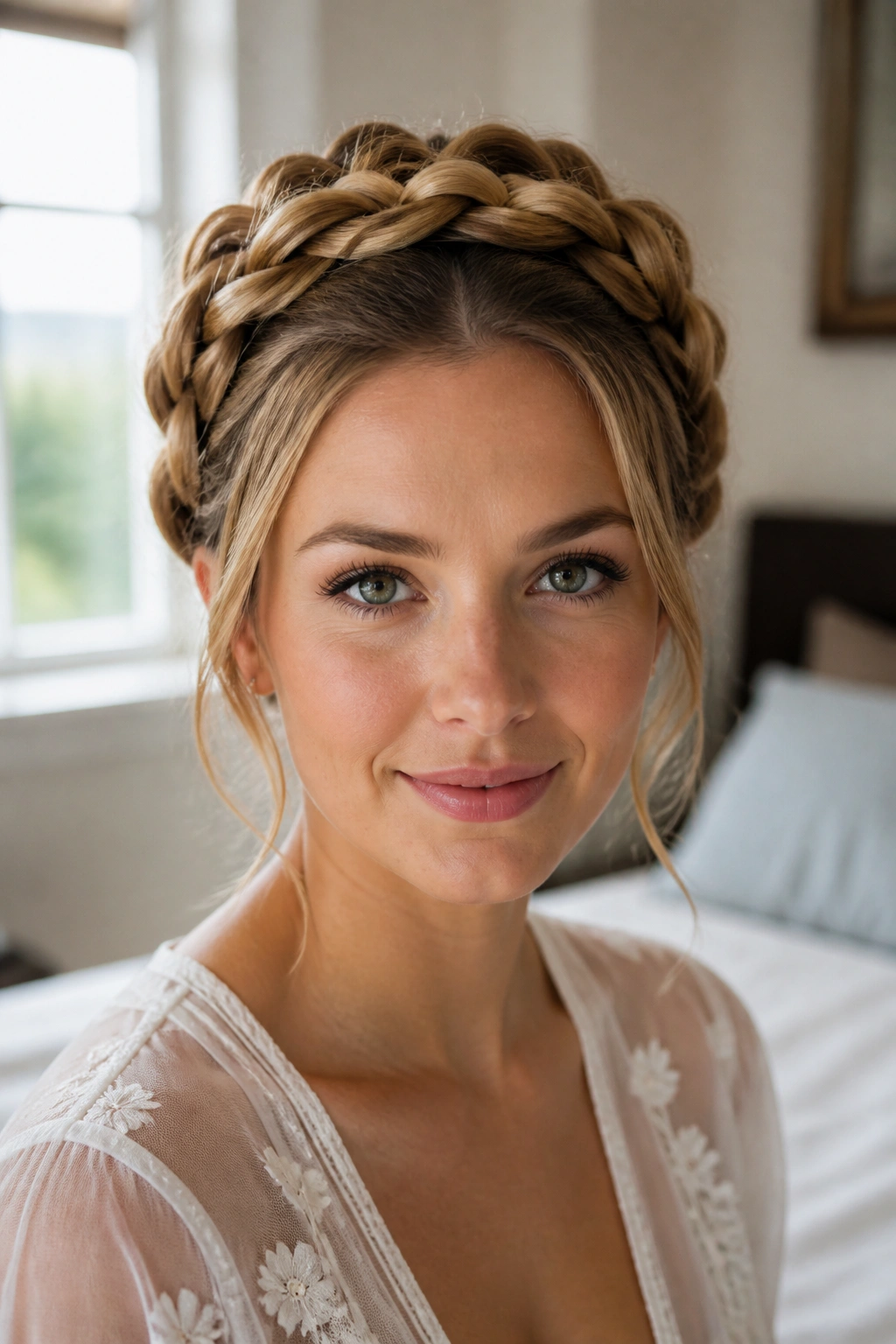
A halo braid has a way of making long hair look calm and intentional. The braid travels around the head, usually near the hairline, and creates a circular frame that feels formal without needing much extra decoration.
Why It Reads So Clean
Because the braid wraps the perimeter, it keeps the eye moving around the face instead of down the length. That can be useful if your hair is very long and tends to dominate a look. The style also frees the neck completely, which is a nice bonus for warm indoor events and higher collars.
A halo braid works best when the parting is precise and the braid tension stays even. If one side is tighter than the other, the shape starts to wander. Small pins placed under the braid help anchor it without making the finish bulky. If there are shorter layers at the nape, tuck them in with a little styling wax.
The result is graceful, but not fragile. That’s why it keeps showing up for brides and formal guests alike.
16. Low Side Bun with Soft Tendrils

A low side bun has a romance to it that never feels forced. It shifts the bun off-center, which softens the profile and gives long hair a more relaxed line than the standard centered chignon. If you want something formal but not severe, this is one of the nicest answers.
I like this style when a dress has a single shoulder, a draped neckline, or a lot of detail around the collarbone. The side placement leaves space for the outfit to breathe. A few tendrils around the temple and near the ear keep it from looking too rigid.
The bun itself can be smooth or lightly textured. Smooth feels cleaner for black-tie settings. Textured feels a little softer and more suitable for outdoor events or dresses with a lighter fabric. Either way, the bun should sit low enough that the silhouette stays elegant rather than bulky.
This one has range. It can be bridal, guest-friendly, or just plain pretty without trying to steal the room.
17. Rope-Braid Ponytail

Compared with a regular three-strand braid, a rope-braid ponytail has a sleeker, more graphic look. Two sections twist around each other instead of crossing over in a standard pattern, and that creates a smooth spiral down the back.
For long hair, the effect is especially strong because the length shows off the twist. The braid can hang straight and polished, or you can pull the sections gently apart for a fuller, more relaxed shape. A wrapped base keeps the elastic hidden, and a smooth crown prevents the style from looking too casual.
What Makes It Different
- Faster to build than a full braid.
- Looks cleaner on very long hair.
- Holds well when the ends are heavy.
- Works with both straight and softly curled ponytails.
This is a good option if you want something a little modern and a little low-maintenance, but still formal enough for a dressy event. It pairs well with sleek makeup and sharp accessories, which suits the structure of the braid itself.
18. Textured Top Knot
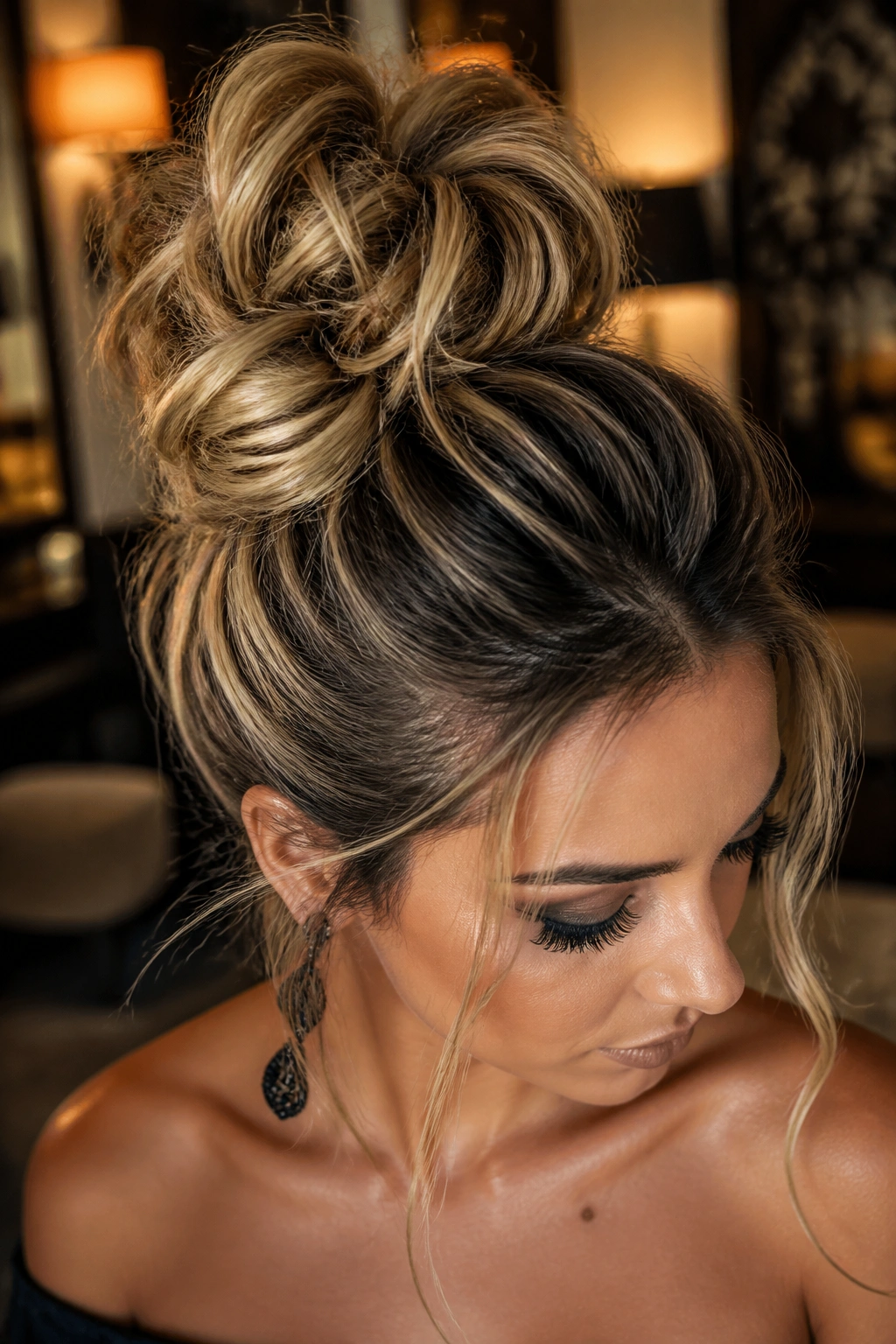
A textured top knot is not the same thing as a rushed bun piled on top of the head. Done well, it creates lift, opens the face, and gives long hair a bit of attitude while still looking polished enough for an evening out.
Why It Works for Long Hair
Long hair gives the knot more size and more shape, which means you can build something with real height instead of a tiny ball sitting on the crown. That extra volume makes it useful for events where you want your neck and shoulders visible. It also keeps long hair from overwhelming a dress with a high collar or strong sleeve.
The best version starts with slight texture in the roots and a loose twist through the ends. Pull a few pieces free around the temples if you want softness, but keep the bun itself tidy. A messy top knot can look fine for brunch. For a formal setting, it needs a cleaner outline.
- Use a strong elastic.
- Pin the bun from underneath.
- Keep the crown lifted.
- Smooth flyaways with a small amount of styling cream.
19. Mermaid Waves with a Deep Side Part

Mermaid waves have more bend than a standard curl and less stiffness than a glam wave, which is why they look so good on long hair. The pattern usually starts around the mid-lengths and continues down in soft, glossy bends that feel rich without looking overworked.
The deep side part gives the style a formal edge. It adds asymmetry at the top, then lets the waves fall in a heavier line over one shoulder. If you want long hair to feel luxurious and a little dramatic, this is one of the easiest ways to get there.
The texture should feel smooth to the touch, not crunchy. Use a large iron or a waving tool, then brush the hair just enough to merge the sections. If you overbrush, the pattern disappears; if you underbrush, the waves can look too separated and costume-like. There’s a narrow middle ground, and that’s where the style lives.
It suits dresses with movement, open backs, or detailed earrings. The hair does not need much else.
20. Sculpted Rolled Updo

A sculpted rolled updo is the kind of hairstyle that looks carefully built, because it is. Long hair gives you enough material to create a series of rolled sections, tucked folds, or overlapping loops at the back of the head, which makes this one feel especially formal.
The shape can stay tight and sleek or lean softer with a few visible curves. I prefer the version that shows the rolled structure a little, because it gives the style depth. A completely flat roll can end up looking severe, while a slightly dimensional one feels richer and more wearable.
This style shines at black-tie events, weddings, and formal evenings where the dress has a dramatic back or neckline. It keeps the hair off the shoulders, which lets the clothing do more work, and it usually lasts well if you anchor each roll with pins placed parallel to the curve.
A final mist of hairspray, held at a distance of about 10 inches, keeps the finish controlled without turning it stiff. That matters more than people think. A formal style should hold its shape, not look frozen.
