



The search for wedding hairstyles for long hair usually starts with a dreamy photo and ends with a much less dreamy question: will it still look good after hugs, dancing, and a veil being pinned somewhere it was never meant to go?
Long hair is a gift on a wedding day, but it is also a lot of weight to manage. Loose curls can fall faster than people expect, braids can puff up, and sleek buns need a base that does not slide around under the comb of a veil. A style that looks soft in a mirror has to survive heat, wind, tears, and a five-minute photo sprint.
That part matters.
The best bridal styles for long hair are the ones that look finished from every angle, hold their shape without feeling stiff, and match the neckline, earrings, and veil instead of fighting them. Some are romantic and loose. Some are sharp and polished. A few sit in that nice middle ground where you can breathe, smile, and still look put together after midnight.
The first style I reach for when a bride wants polish without helmet hair is soft Hollywood waves.
1. Soft Hollywood Waves

Soft Hollywood waves are the reliable crowd-pleaser of bridal hair. They give long hair shape, shine, and movement without dragging the whole look into something too casual.
Why they work so well on long hair is simple: the length keeps the wave pattern from collapsing into mush. A shoulder-length bob can lose its shape fast, but long hair lets the wave fall in those wide, glossy bends people usually want for portraits, aisle shots, and close-up photos. I also like this style with satin dresses, strapless gowns, and clean necklines because the hair adds softness without clutter.
What to ask for at the trial
- 1.25-inch to 1.5-inch iron waves with a brushed-out finish, not tight curls.
- A deep or soft side part if you want a little old-school drama.
- Face-framing pieces cut at the cheekbone or jawline so the front does not feel heavy.
- A light mist of flexible-hold spray instead of crunchy lacquer.
- A smooth crown with enough lift to keep the style from looking flat in profile.
My favorite detail: tuck one side behind the ear and leave the other side fuller. It looks deliberate, not fussy.
2. Low Chignon with Face-Framing Pieces

A low chignon is not the boring option people think it is. It is the style that quietly makes everything else on the bride look more expensive — the dress, the earrings, the veil, the posture, all of it.
What makes it work is placement. A chignon sitting right at the nape feels calm and balanced, and long hair gives the stylist enough length to create a smooth coil with real volume inside it. The face-framing pieces soften the whole thing, which matters if you do not want your features swallowed by a strict bun.
At a trial, I always look at the side view first. If the bun sits too high, it starts to compete with the neckline. If it sits too low, it can disappear into the dress. The sweet spot is usually right where the head curves into the neck.
One quiet trick: ask for a few hidden pins crossed in an X pattern under the bun. That tiny detail helps the shape stay put when you are moving around a lot. No drama. Just structure.
3. Braided Crown Updo
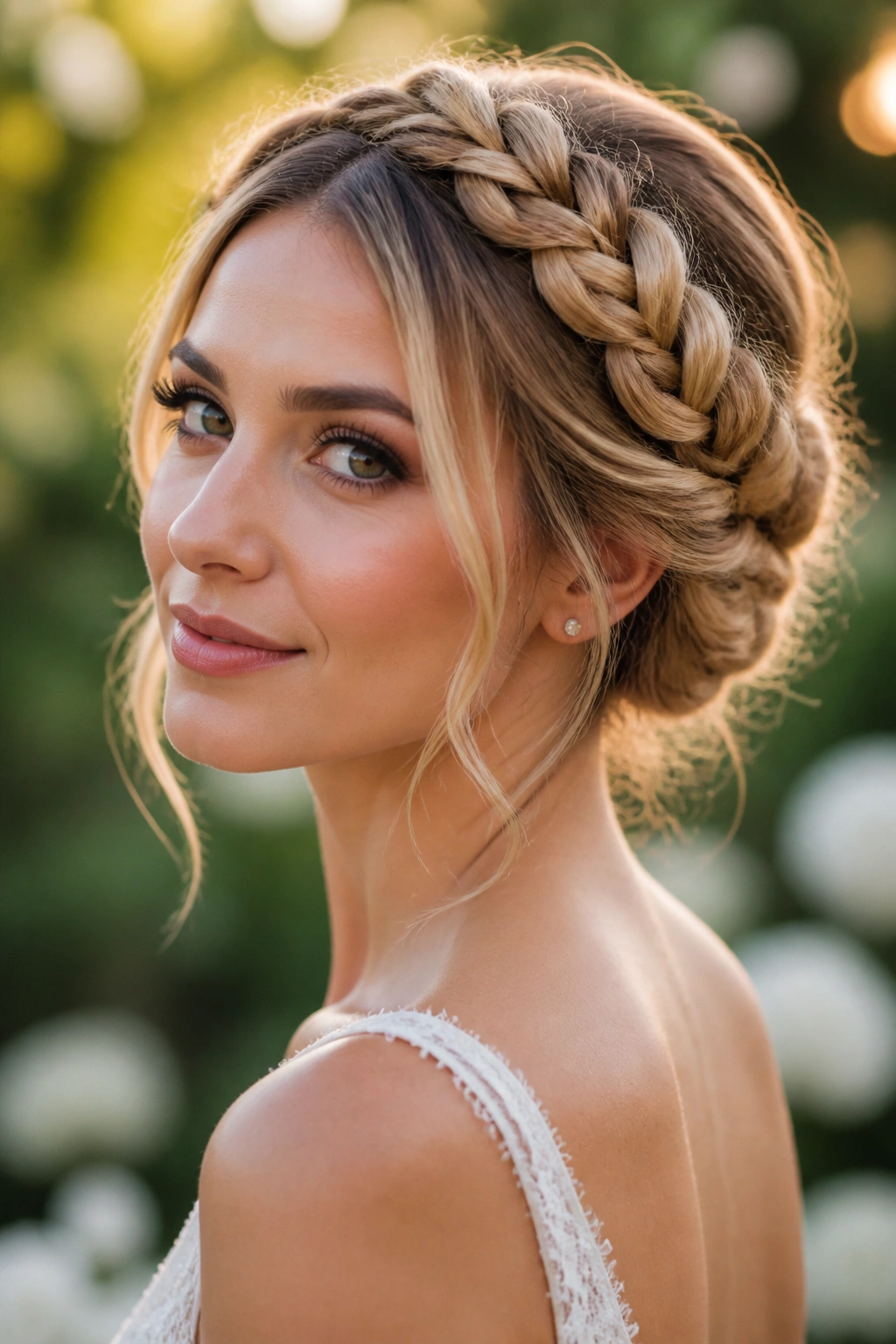
Why does a braided crown hold up so well on a wedding day? Because the braid itself becomes the frame. Instead of asking loose hair to behave all afternoon, you are building a shape that sits around the head and anchors the rest of the style in place.
This one is especially nice if you want hair completely off your neck but still want something softer than a plain bun. Long hair gives the braid enough length to wrap fully, and the extra thickness makes the crown look full instead of skinny. If the hair is naturally silky, a little texture spray before braiding saves you from the dreaded slippery braid that loosens in ten minutes.
How to keep it from looking hard
Start by braiding a little looser than you think you should. Then gently widen the braid with your fingers — not by yanking, just by pressing and easing the sections outward. That softens the shape and gives the crown a fuller, more romantic edge.
Small face pieces help too. Two thin strands are enough. Any more and the whole thing starts to feel messy in a way that looks accidental rather than styled.
This is one of the best choices for outdoor vows, garden settings, and any dress with detailed shoulders, because the braid keeps the hair up without making the head look bare.
4. Half-Up Twists with Loose Curls
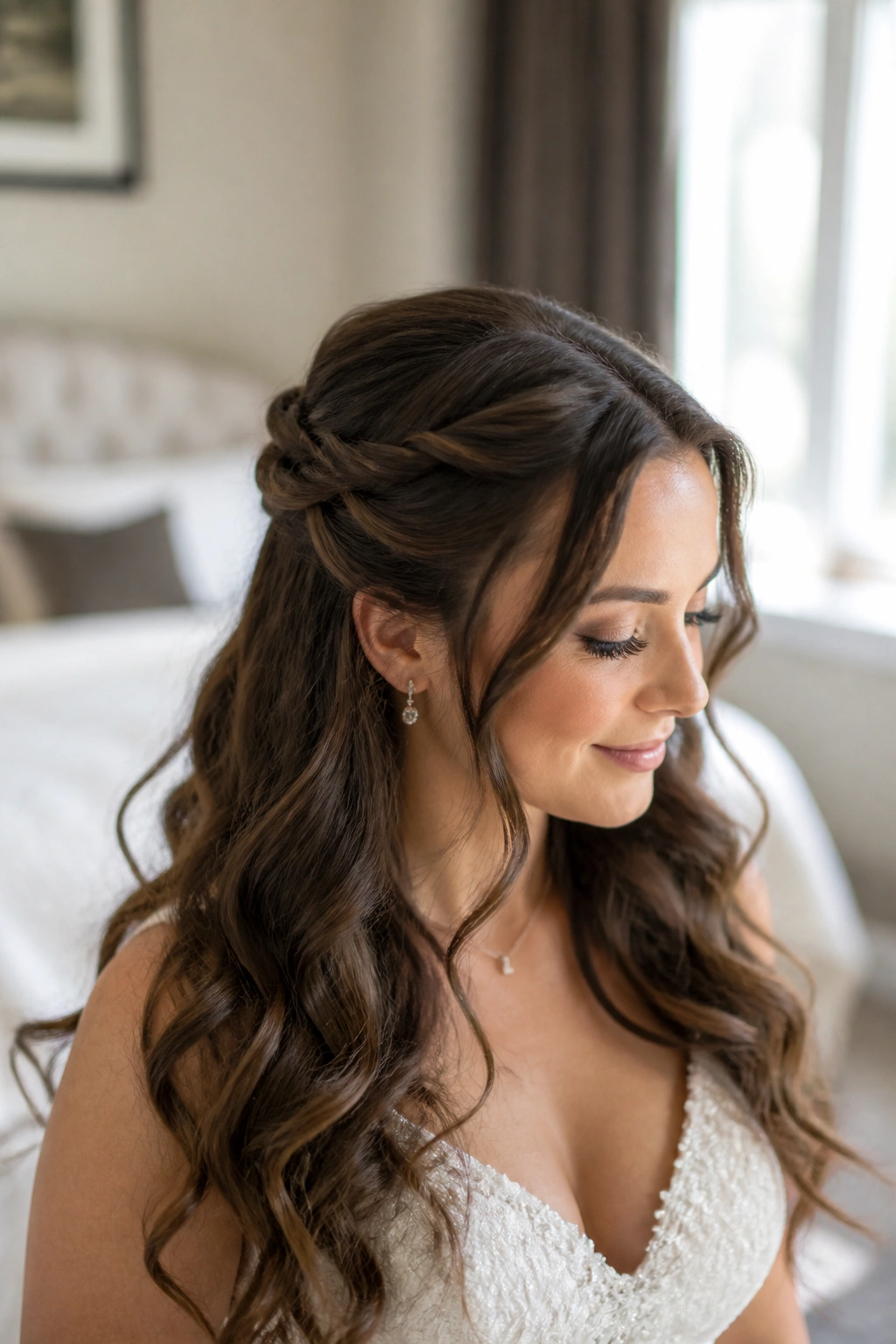
Picture someone who wants the comfort of wearing hair down, but not the annoyance of hair in the lipstick, the lashes, or the back of the neck. That is where the half-up twist earns its place.
The front sections get pulled back and twisted, then pinned just above the ears or slightly higher at the crown. The rest of the hair stays down in loose curls, which keeps the style soft and easy to move in. Long hair gives the lower half plenty of length, so the curls can fall in a real cascade instead of stopping awkwardly at the shoulders.
- Twist two-inch sections from each side, then pin them with crossed bobby pins.
- Curl the loose hair away from the face so the front stays open.
- Set the twists one inch above the ear if you want more lift.
- Leave the ends a little imperfect. That keeps the style from looking too prom-night.
- Add a small comb or pin where the twists meet if the dress needs a little sparkle.
This style is generous. It lets the hair move, but it still gives the face shape. That balance is the whole reason it keeps showing up in bridal work.
5. Sleek Low Bun with a Center Part
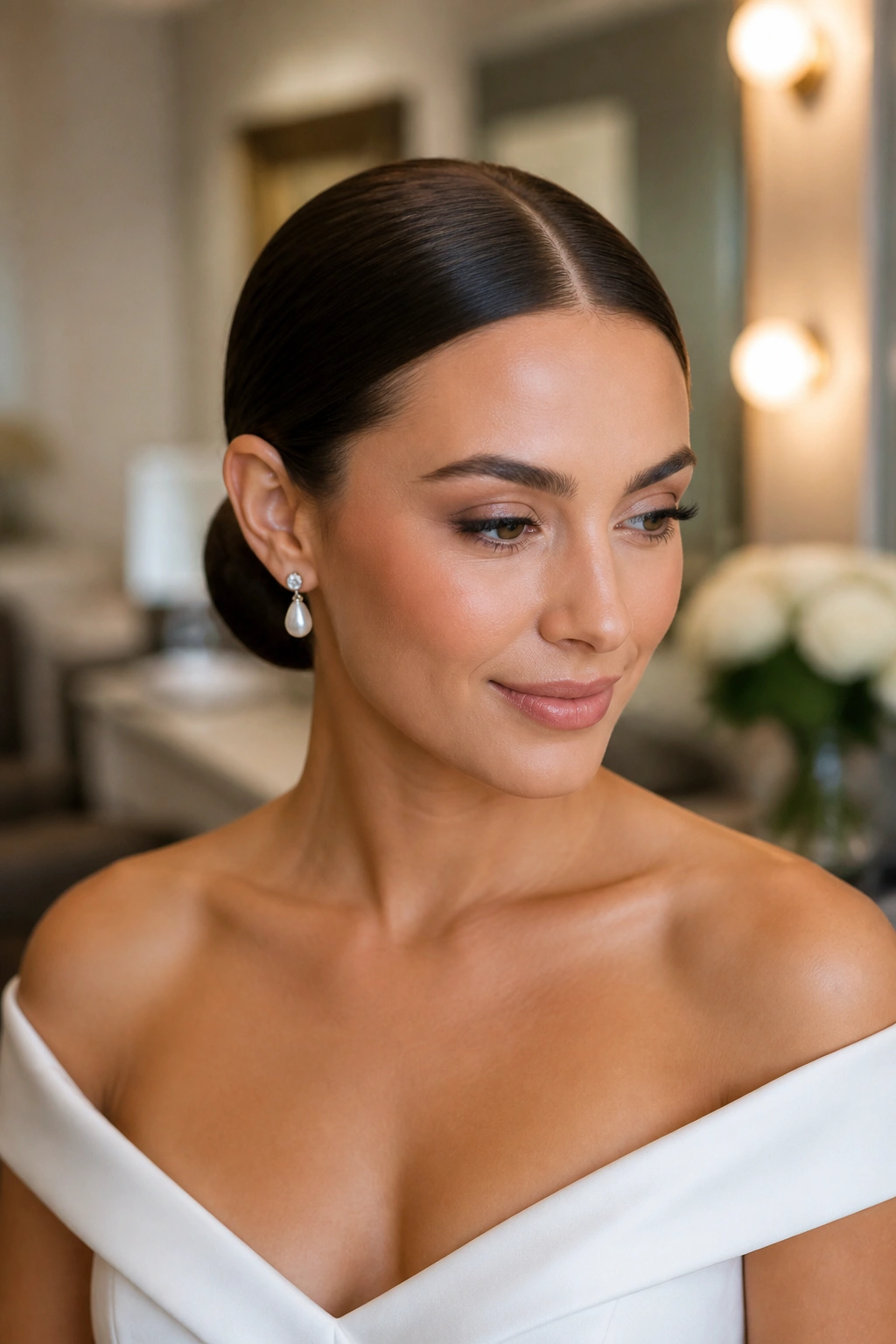
Sleek does not mean flat.
A well-done low bun with a center part can look sharp, clean, and expensive in the best possible way. The trick is to make the crown smooth without stripping all the life out of the hair. Long hair helps here because there is enough length to create a full bun at the nape, not a tiny knot that disappears as soon as you turn your head.
I like this style with modern dresses, structured silk, minimalist satin, and big earrings. It gives the face room. It also photographs cleanly from the side, which matters more than people think. A style that looks pretty head-on but collapses from profile is a bad trade.
Use a small amount of smoothing cream through the top, then brush it flat with a boar-bristle brush. Not too much product. Too much makes the hair look greasy under flash. The bun itself should feel secure but not tight enough to give you a headache by dessert.
A tiny bit of shine spray at the end is enough. No helmet shine. Just enough gloss to catch the light.
6. Fishtail Braid for a Boho Ceremony

Unlike a standard three-strand braid, a fishtail braid gives you texture that reads intricate without needing a ton of ornament. It looks like work, even when the actual braid is more about patience than technique.
Long hair is a strong match for this style because the braid needs length to show off its pattern. On shorter hair, a fishtail can feel stubby. On long hair, it becomes a full statement piece that can sit down the back, sweep over one shoulder, or fold into a low knot at the end. I like it when the bride wants something relaxed but still carefully made.
What to watch for
- Start with dry shampoo or texture spray if the hair is too slippery.
- Keep the braid slightly loose so the pattern stays visible.
- Pull out a few fine pieces near the hairline if the dress is soft and romantic.
- Use small clear elastics and hide them under a wrapped section of hair.
- If the hair has highlights or balayage, the braid shows off the color shifts in a way plain waves do not.
This is not the style for someone who wants razor-clean lines. It has a little give. That is the charm.
7. Side-Swept Curls with a Statement Pin

I keep coming back to side-swept curls for one-shoulder gowns because the hair and the dress stop fighting each other. The whole look turns in the same direction, which sounds obvious until you see how often people ignore it.
The curls are gathered loosely to one side and pinned low, usually behind one ear or just under it. A statement pin, comb, or crystal clip sits where the hair sweeps over. Long hair gives the style enough weight to stay draped instead of springing back out. That’s the part that makes it feel finished.
A few practical details make a big difference:
- Pin the hair low and slightly behind the ear, not right on top of it.
- Leave the opposite side softer so the look does not feel lopsided in a bad way.
- Use a clip with a strong grip if the hair is very fine.
- Match the pin to the dress hardware when you can. Gold with gold. Pearls with pearls. Easy win.
This style is flattering when you want to show the shoulder line, the necklace, or a dramatic earring. It has movement, but it also has direction. That matters.
8. Bubble Ponytail with Soft Volume

Yes, a ponytail can be bridal.
And not in a last-minute, rushed kind of way. A bubble ponytail with soft volume is polished, playful, and far more secure than people expect. Long hair gives the bubbles room to show, which is half the reason this style works better on length than on medium hair.
The base should sit either at mid-height or low at the nape, depending on the dress. Then the ponytail gets tied with clear elastics every few inches, and each section is gently pulled outward until it forms that rounded bubble shape. A strand of hair wrapped around the base finishes the look and hides the elastic.
What keeps it from looking casual?
The top has to be smooth enough to feel intentional. A soft crown lift helps, but the hairline should stay neat. A few delicate face pieces can soften the front, yet the ponytail itself needs to stay tidy or the whole style slips into gym-hair territory. That is the line.
I like this for brides who want to dance, move, and avoid constant touch-ups. It also works well with modern gowns and cleaner makeup, because the ponytail brings energy without stealing attention from the dress.
9. Double Braids into a Low Bun

If the hair is thick enough to swallow pins, double braids are your friend. They create structure before the bun even starts, which means the final shape holds better and feels less bulky under a veil.
The style usually begins with two braids, one on each side of the head, often French or Dutch braids depending on how much texture you want. Those braids are pulled toward the nape and tucked into a low bun. The result is tidy but not stiff. Long hair makes the whole thing richer because there is more braid to work with, and more braid means more visual texture.
- Use a little mousse on damp hair before blow-drying for grip.
- Braid the sections close to the scalp so the top stays secure.
- Pin the bun with long U-pins if the hair is heavy.
- Add a few pearl pins if the dress is simple and needs a touch of detail.
- Keep the bun low enough that the veil comb can sit above it cleanly.
This is one of those styles that looks almost too easy in photos. In person, it has more depth. That usually wins.
10. Woven French Twist for Long Hair
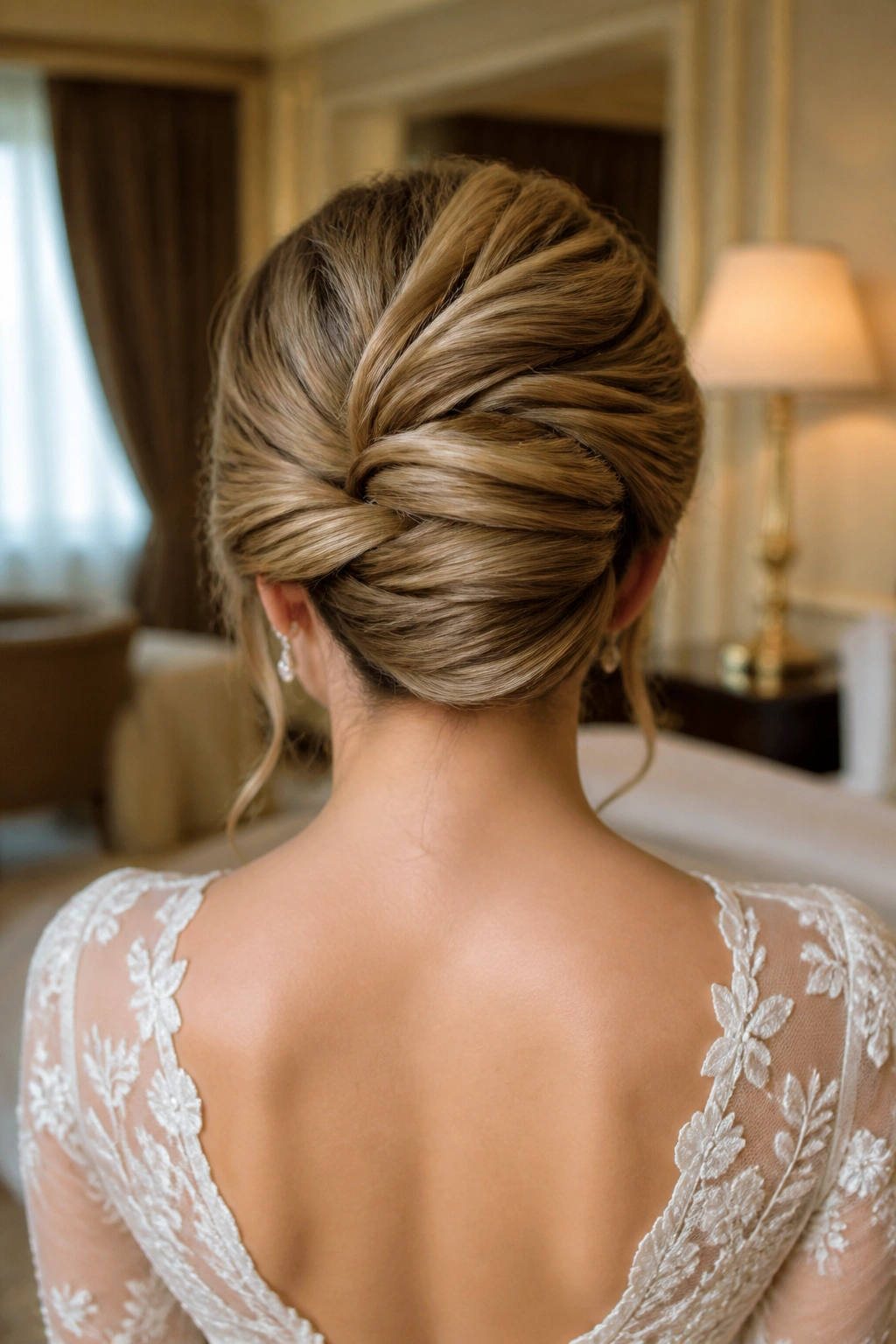
Can long hair really fit into a French twist without puffing out or slipping down? Yes — if the twist is built with enough base and the ends are tucked with purpose.
A woven French twist takes the classic shape and gives it more texture. Instead of one smooth roll, the hair gets folded and crossed in layers, which helps long lengths disappear into a compact, elegant finish. It looks formal without feeling severe, and it has just enough visual complexity to stand up to a detailed dress.
What makes it different from a basic twist
A standard French twist can feel sleek and narrow. A woven version has more depth, because the sections are shaped into each other instead of being pressed into one flat line. That matters when you want the style to look expensive from the back, not just neat from the front.
This is a smart pick for black-tie weddings, city halls, and dresses with high necklines or long sleeves. It also handles veils well, provided the stylist builds a strong anchor near the center of the twist. If the hair is very fine, a little padding underneath can save the shape. If it is thick, patience and plenty of pins are the name of the game.
11. Floral-Accent Half-Up Style

Flowers are lovely when they are edited, not piled on.
A floral-accent half-up style uses a few blooms or a floral comb to finish a half-up shape, usually over loose curls, soft waves, or a small twisted crown. Long hair gives the flowers a fuller backdrop, which helps the accents read as part of the hairstyle instead of a separate decoration stuck on top.
I prefer this look when the bouquet, dress, and hair all share the same soft mood. That does not mean everything has to match exactly. It does mean the flowers should feel chosen, not random. Tiny roses, garden-style blooms, baby’s breath, or silk florals with a good stem wrap all work if the palette stays tight.
How to keep it from looking overloaded
Use fewer blooms than your first instinct suggests. Three to five small flowers often look better than a giant cluster, especially with long hair, because the hair already brings a lot of visual weight. Place the flowers near the twist, braid, or pin area so they look anchored. And if you are using fresh flowers, keep them cool and hydrated until the last possible moment.
This style has a softer, more handmade feel than a crystal comb. I like that. It feels alive, not staged.
12. High Ponytail with Polished Waves

A high ponytail changes the whole mood fast. The face looks lifted, the neck looks longer, and long hair suddenly becomes the main event instead of something that has to be controlled.
The key is to keep the crown sleek while letting the tail hold soft waves through the length. If the top is too loose, the style loses shape. If the tail is too stiff, it looks severe. The good version sits right in the middle, with a smooth wrap at the base and a ponytail that falls in clean, controlled bends.
This style is a strong choice when the dress is simple and the earrings are doing some of the talking. It also holds up well for receptions because the high placement keeps the hair off the shoulders and away from the face. That is a practical win, not just a style one.
One line matters here: the elastic has to be hidden. Wrap a small section of hair around the base and pin it underneath. That one move keeps the ponytail from looking everyday.
13. Waterfall Braid with Loose Length

The waterfall braid is the pretty one people think is hard.
It isn’t, not really. It just asks for a steadier hand than a basic braid. Sections are dropped through the braid as you move across the head, which leaves strands hanging down in a soft pattern that looks almost ribbon-like. Long hair is the ideal canvas because those dropped pieces have enough length to fall cleanly instead of looking chopped.
How to keep the loose pieces smooth
Start with hair that has already been lightly curled or at least smoothed. A waterfall braid over frizzy, untreated hair can look fuzzy by the time the ceremony starts. I also like to keep the braid slightly above the ear line so it stays visible once the rest of the hair moves around.
- Curl the remaining length before braiding if you want softer movement.
- Use a small amount of lightweight serum on the loose pieces.
- Pin the braid at the back with bobby pins that match the hair color.
- Leave the ends of the hanging strands a little undone for a softer finish.
- Finish with a flexible spray, not a hard shell.
This is one of those styles that feels intricate when people see it, but it still lets the hair fall open. That balance is the appeal.
14. Textured Side Bun for Curved Necklines

What do you do when the dress already has the drama? You move the hair out of the center and let the neckline breathe.
A textured side bun is a smart answer for curved necklines, off-the-shoulder dresses, and gowns with one strong focal point at the top. Long hair gives the bun enough body to sit to one side without collapsing. The texture keeps it from looking too formal, which is important if the dress already has lace, draping, or beading doing the heavy lifting.
Ask for these three details at the trial
- A deep side part that feeds into the bun.
- A little volume at the crown so the head does not look flattened from the front.
- A few soft tendrils around the face and neck, but not so many that the bun loses shape.
The side placement changes the silhouette in a way a center bun cannot. It makes room for a necklace, a shoulder detail, or a bold earring on the open side. If the stylist keeps the bun low and slightly loose, the look stays graceful instead of severe.
This one is quietly powerful. Nothing screams. Everything sits where it should.
15. Loose Romantic Updo with Tucked Ends

A loose romantic updo is what I recommend when the bride wants movement and control at once. It has the softness of a down style, but the practicality of an updo, which is a rare and useful combination.
The hair is usually curled first, then pinned up in sections so the ends disappear into the shape rather than hanging out in a neat little bundle. That tucked finish matters. Long hair can create a bulky knot if it is shoved upward without a plan, and this style avoids that by folding the lengths into each other instead of stacking them all in one place.
There is a reason stylists reach for this shape so often. It gives the face room, keeps the neck open, and still looks relaxed enough for a bride who does not want to feel overdone. A few face-framing pieces soften the edges, and a little lift at the crown keeps the profile pretty from every angle.
If you are deciding between several wedding hairstyles for long hair, this is the one I would mark as the safest all-day bet. It plays nicely with veils, it survives dancing better than loose curls, and it does not fight a dress with detail at the shoulders or bodice. The style can be dressed up with pins, pearls, or flowers, or kept plain if the gown already has enough going on.
The best part is that it still looks like hair, not armor. That matters more than people admit.
Some styles are louder. This one lasts.
