



There is a distinct, rhythmic sound to a fresh set of box braids—a soft, whispering clack as they settle against the collarbone. For many, a braided bob is more than just a protective style; it is a total reset. You shed the weight of longer extensions and reclaim a silhouette that is sharp, deliberate, and undeniably chic. Whether you are looking for something that hits perfectly at the jawline or a slightly longer, shoulder-skimming look, the versatility of this style is unmatched.
It is rare to find a hairstyle that manages to be both incredibly low-maintenance and high-impact. A box braid bob doesn’t just frame your face; it directs attention toward your eyes and cheekbones in a way that longer, flowing styles often obscure. The key to pulling this off isn’t just the installation itself, but the cut, the parting, and the specific texture you choose for the ends. When done correctly, it is a look that transitions seamlessly from professional settings to weekend errands without needing a single touch-up for weeks.
Stepping into the world of braided bobs requires a bit of planning. You aren’t just choosing a length; you are choosing an aesthetic statement. Before you sit in the stylist’s chair, think about the weight. Shorter extensions are lighter, which is a massive relief for your hairline, but they require a skilled hand to ensure the ends don’t unravel. We are moving past the one-size-fits-all approach and looking at styles that genuinely enhance your features.
Preparing Your Hair for a Box Braid Bob
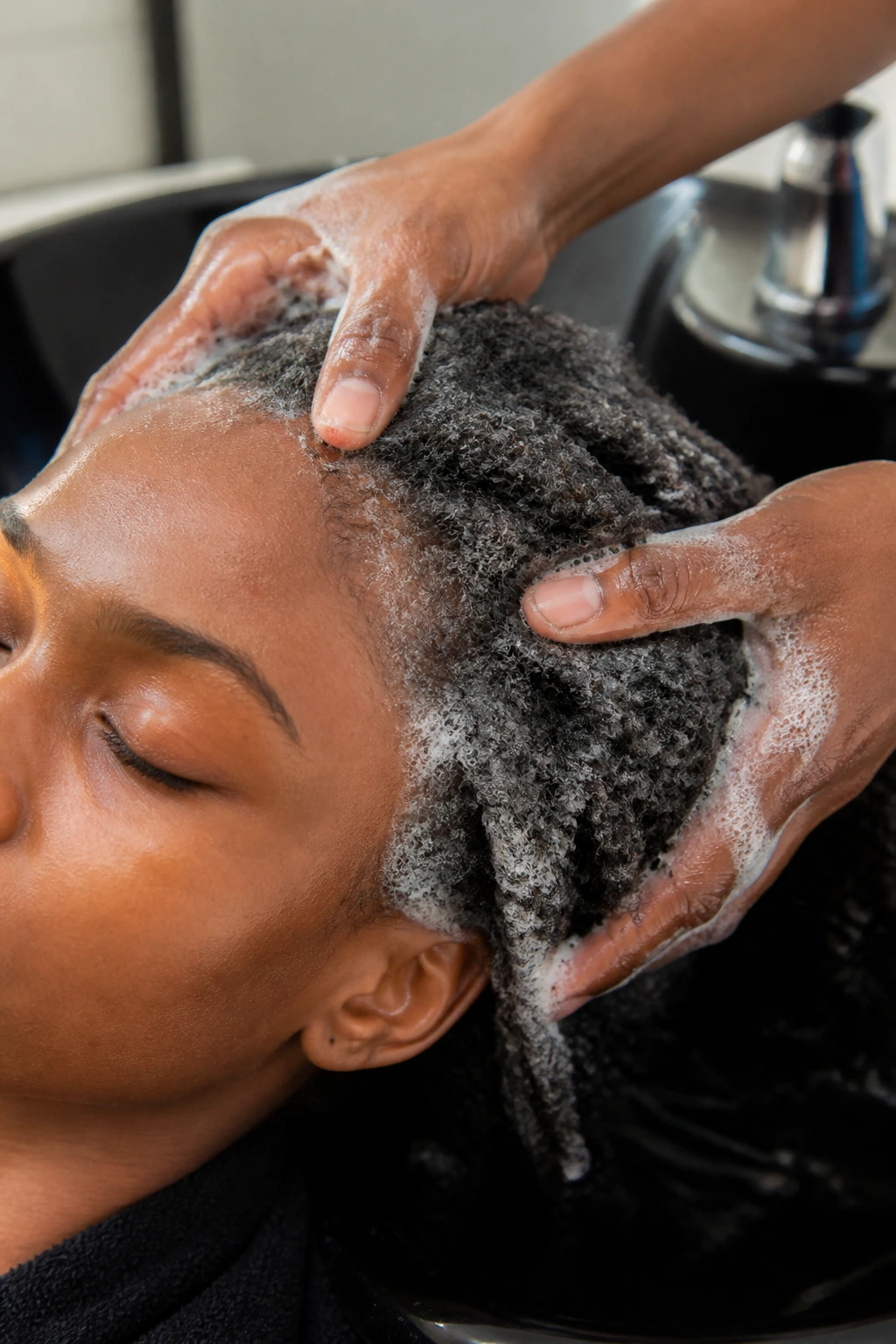
Before you select your specific bob style, the foundation determines the longevity. Most people rush the prep stage, but your hair needs a clean slate. Start with a clarifying shampoo to remove product buildup from your scalp. If your scalp is congested, no amount of styling will prevent itching after the first week. Follow this with a deep conditioning treatment to ensure your natural hair is hydrated and strong enough to support the weight of the extensions.
The Importance of Tension Control
You have to talk to your stylist about tension. A bob is naturally lighter than waist-length braids, but the tension at the root remains the primary culprit for hair thinning. Request a “knotless” base if your hair is fine or sensitive. Knotless braids distribute the tension across the scalp rather than anchoring it to a single, tight knot at the root. It creates a flatter, more natural-looking base that mimics hair growing directly from your scalp.
Choosing Your Synthetic Fiber
Not all braiding hair is created equal. Pre-stretched braiding hair is essentially the standard for bobs because it creates a soft, tapered end that doesn’t need to be burned or cut extensively. If you are going for a blunt cut, you will need hair that can hold a firm line. Synthetic fibers that are too silky will slip out of a blunt cut; look for textured, matte-finish hair that grips itself. This small detail ensures your bob doesn’t look ragged after the first wash.
1. Classic Blunt Cut Box Braid Bob
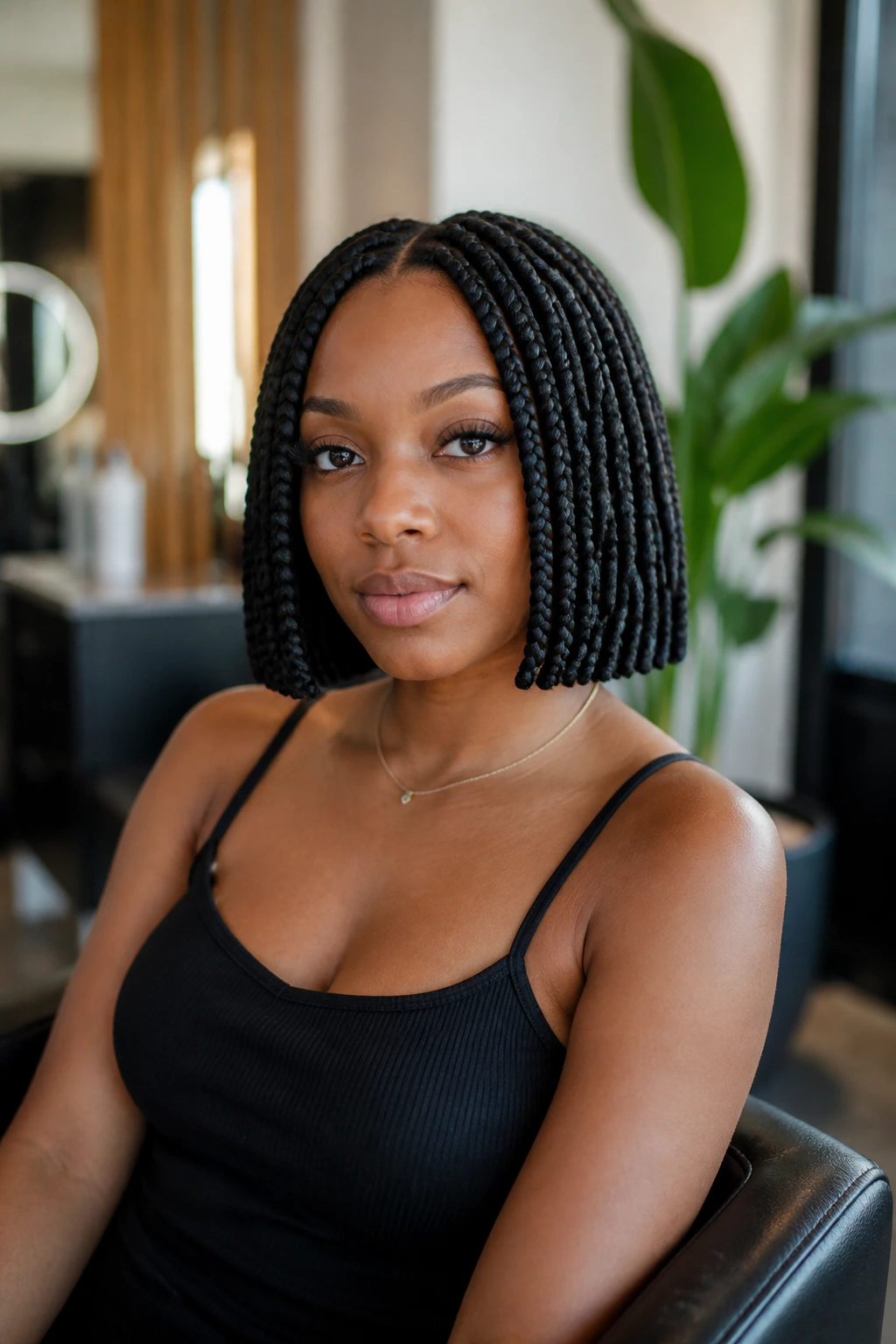
This is the quintessential look—the one that started the braided bob movement. It features a razor-sharp, horizontal line that hits right at the jaw or just below. It is incredibly structured and mimics the look of a traditional bob haircut rather than braids.
Why This Style Endures
The power of this style lies in its geometry. When you have a perfectly straight line, it frames the face with mathematical precision. It creates an aura of authority and polish. Unlike layered styles that can sometimes look “messy,” the blunt cut says you have your life together. It is professional, clean, and requires almost zero styling time in the morning.
The Technical Secret
The secret to the blunt cut is the final trim. After the braids are installed, the stylist must go in with sharp shears and cut the extensions to create that uniform line. Do not try to achieve the blunt look by burning the ends—the heat ruins the texture and creates a bulky, melted appearance. A manual trim with scissors is the only way to get those clean, crisp edges that distinguish this style from a standard mid-back braid look.
2. Deep Side-Parted Braided Bob

If you want to add an immediate element of drama to your bob, a deep side part is the way to go. By shifting the bulk of your hair to one side, you create an asymmetrical silhouette that covers one eye slightly, providing an instant mysterious and sultry vibe.
Creating the Illusion of Volume
When you push the hair to one side, the other side naturally appears flatter. This is not a mistake; it is part of the design. You can lean into this by keeping the shorter side tucked behind your ear. This visual contrast draws attention to your jawline and elongates the neck. It is a fantastic option for round or square face shapes that benefit from the vertical lines created by the deep part.
Styling Tip for Longevity
The hardest part about a side part with braids is keeping the parting space looking fresh. Because synthetic hair is stiffer than natural hair, it has a tendency to migrate back to the center. To combat this, use a tiny amount of edge control on the part itself and set it with a silk scarf for ten minutes while you finish your makeup. That short “set” time locks the position in place for the day.
3. Curly End Box Braid Bob
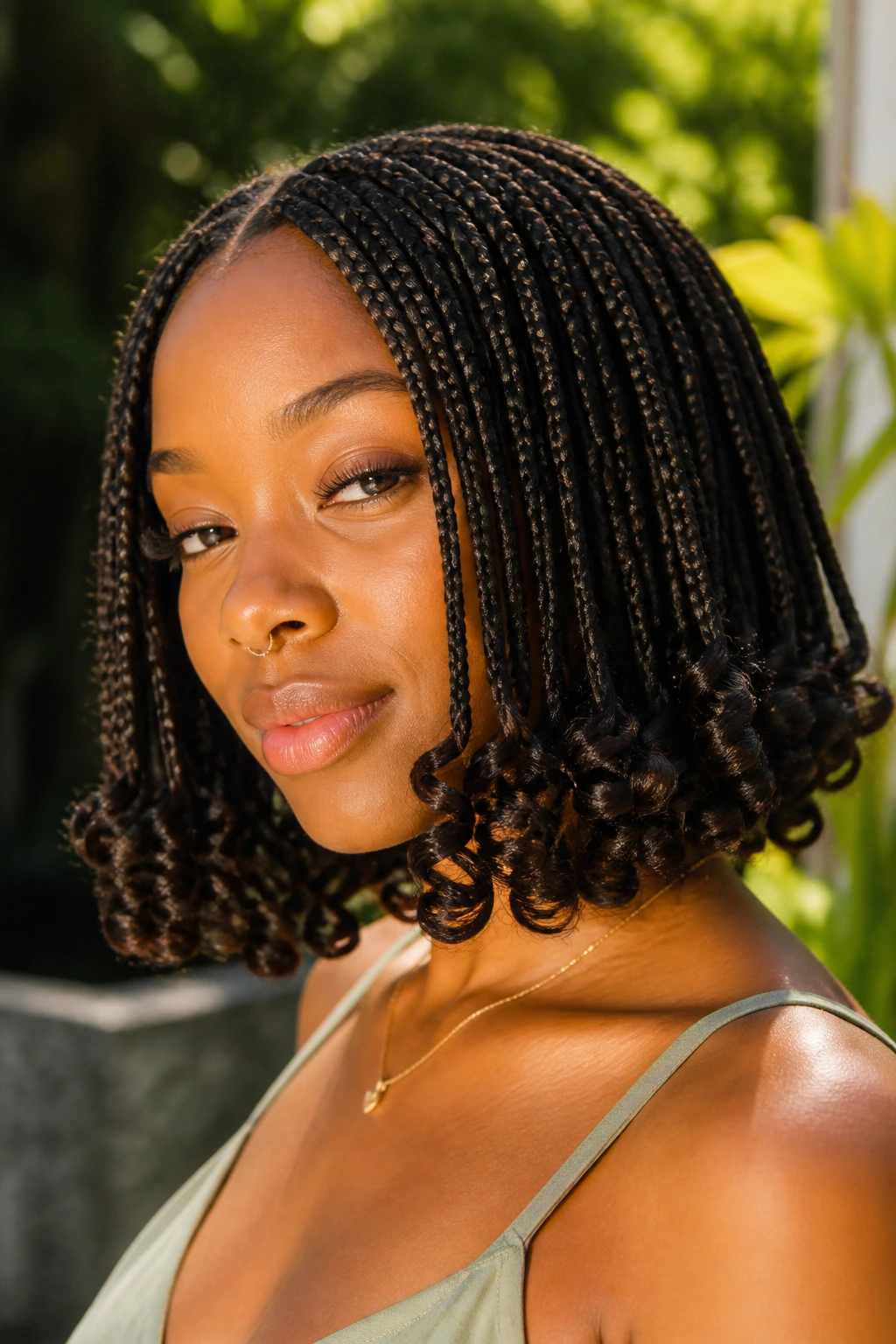
Sometimes, a box braid bob can feel too rigid. If you prefer a softer, more feminine aesthetic, curling the ends of your braids changes the entire energy of the look. This style uses synthetic hair that can be dipped in hot water, allowing you to create bouncy, spiral curls at the bottom two inches of each braid.
The Textural Balance
You get the neat, clean look of box braids at the root, combined with the whimsical, soft movement of curls at the bottom. It is a best-of-both-worlds scenario. This style is particularly effective if you are using a lighter hair color, as the curls highlight the dimension and depth of the shade.
Maintenance Considerations
Remember that curls require a bit more upkeep than straight ends. When you sleep, you must wrap the ends carefully, or the curls will frizz and lose their bounce. Use a silk or satin bonnet, and if you notice the curls drooping after a few weeks, you can re-dip the ends in hot water to “reset” the curl pattern. It is a simple trick that keeps the bob looking brand new until your next appointment.
4. Shoulder-Grazing Bohemian Braided Bob

This style, often called “Boho” or “Goddess” braids, incorporates loose, wavy strands throughout the length of the braid. The bob-length version of this is incredibly popular because it looks effortless and lived-in. It feels like you just came back from a beach vacation.
The Art of the Loose Strand
The key here is not to overdo it. If you add too many loose curls, the style can become heavy and prone to tangling. The best bohemian bobs are subtle, with just a few wisps of curly synthetic hair poking out from the length of the braids. It adds texture and movement without the high maintenance of a full-head curly style.
Who This Suits Best
If you have a more relaxed personal style, this is your go-to. It pairs perfectly with casual wear, oversized sweaters, or simple summer dresses. It takes the “stiffness” out of a traditional braided bob and makes it feel like an extension of your own natural texture.
5. Asymmetrical Box Braid Bob

The asymmetrical bob is a bold, artistic statement. This style features one side cut slightly shorter—usually at the chin—while the other side drops down to the collarbone or slightly lower. It is dynamic, edgy, and impossible to ignore.
Why It Works for Diverse Face Shapes
Asymmetry is a secret weapon for balancing facial features. If you feel like your face is perfectly symmetrical and you want to add some interest, this cut provides it. If you have an asymmetrical face, the cut can actually balance things out by drawing the eye to the longer, more prominent side. It is a haircut that feels “designed” rather than just “installed.”
Maintaining the Cut
Because this style relies on the specific difference in length between the two sides, you have to be careful with how you sleep. If you lay on the longer side too heavily, you can accidentally bend the braids, which ruins the dramatic line of the cut. Always use a high-quality silk pillowcase to allow your hair to glide rather than get caught in the fabric.
6. Colored Ombré Braided Bob
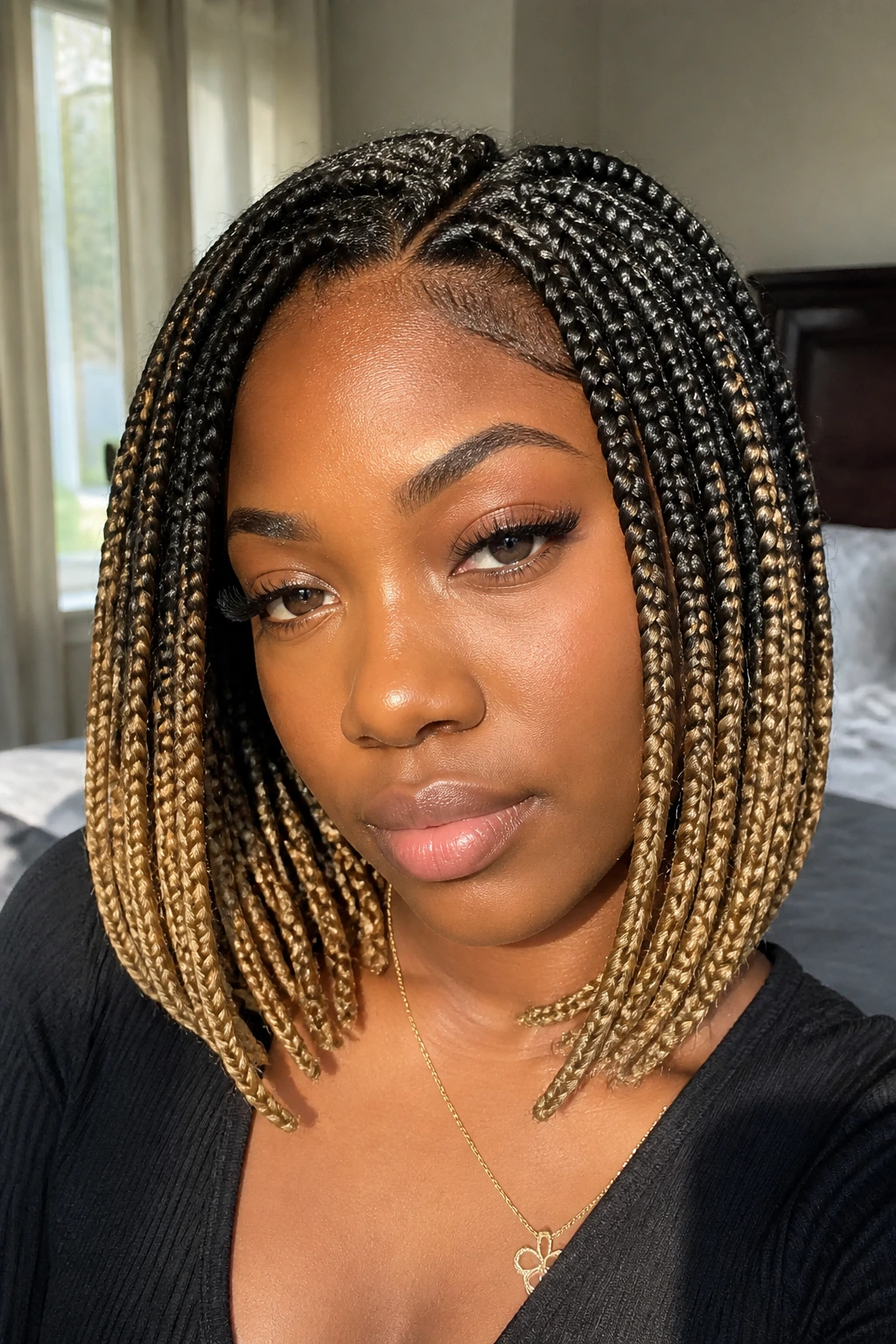
A bob is a smaller canvas, which makes it the perfect place to experiment with color. An ombré effect—where the hair transitions from a dark root to a lighter color at the tips—looks spectacular in a bob cut. It adds depth and creates a visual focus point at the bottom of the style.
Choosing Your Palette
For a sophisticated look, stick to two complementary tones. Think of a deep espresso root fading into a honey blonde or a muted burgundy. If you want something more experimental, you can play with high-contrast colors, but remember that the lighter the ends are, the more they will show wear and tear as the days go by.
The Impact of Color
Color changes how the cut is perceived. A black blunt bob looks very intense and architectural. A honey-blonde ombré bob looks softer, more playful, and often more voluminous. If you have been hesitant to try color, a bob is the lowest-risk way to do it because you are using less hair and you can trim the color off whenever you choose.
7. High-Volume Layered Braided Bob
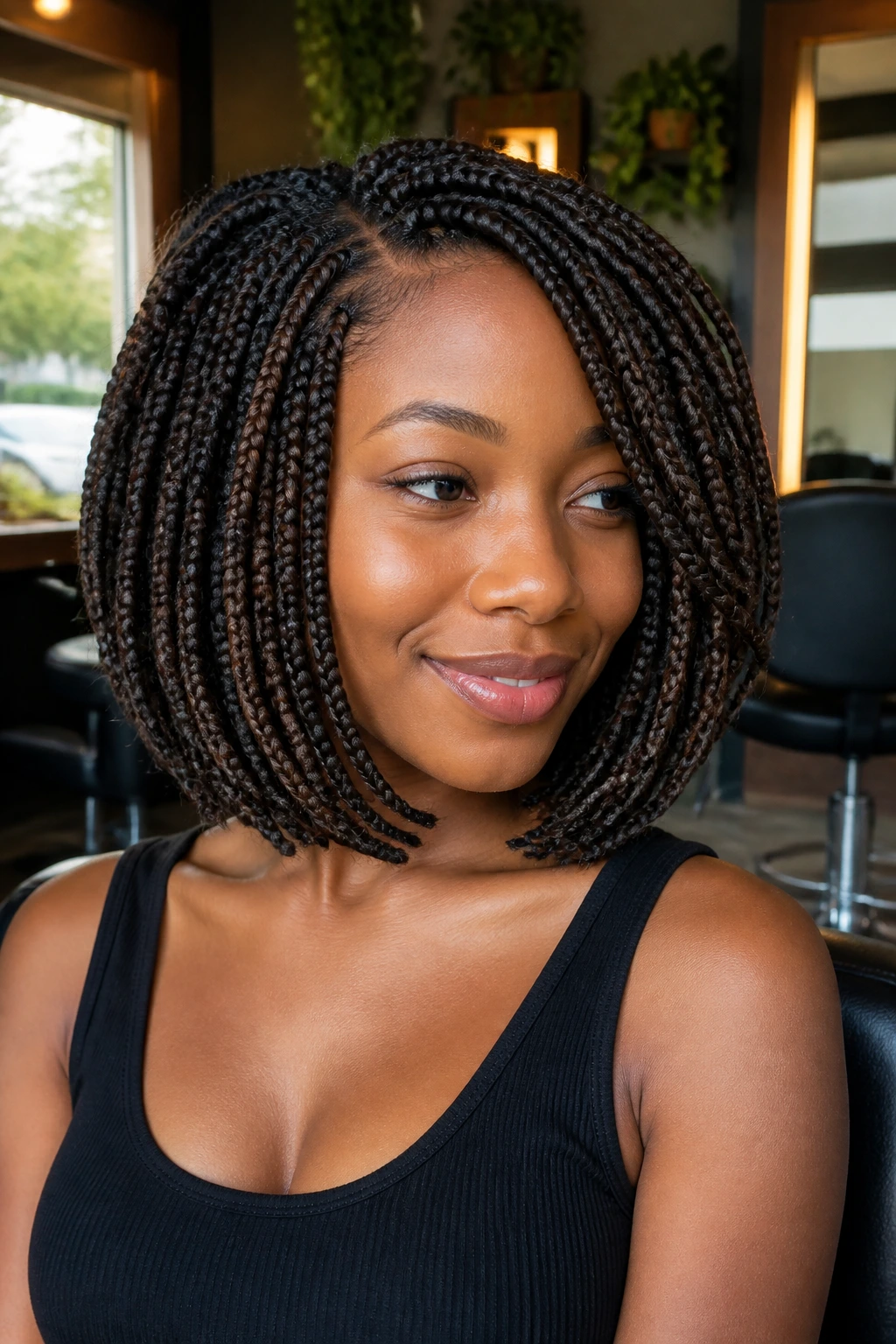
Not all bobs have to be thin and sleek. A layered braided bob uses varying lengths of hair extensions to create a shape that is rounded and voluminous. It mimics the look of a traditional layered haircut, giving you that “bouncy” effect that is often missing from braided styles.
The Technique
To achieve this, your stylist needs to layer the braids during the installation process rather than just cutting them all to the same length. This is a more complex install because the parts must be carefully placed to ensure the layers fall correctly. It is not just a “cut and go” style; it is a “braid and shape” style.
Why You’ll Love the Shape
This style is incredible for adding frame to the face. The layers naturally curve inward toward your jawline, which can soften features and make the style feel more “hair-like” and less like “extensions.” It is a sophisticated, mature look that feels very put-together.
8. Accessorized Gold-Cuff Braided Bob

Sometimes the braid itself isn’t the star—the accessories are. Adding gold or silver cuffs, beads, or decorative string to a box braid bob can transform a simple look into a piece of jewelry. This is the easiest way to elevate your style for a special occasion or just to change up the vibe halfway through your wear time.
Strategic Placement
Do not clutter every braid. The best look is selective. Add cuffs to the braids that frame your face, or create a pattern of beads on just one side. This keeps the look intentional and stylish rather than overwhelming. Think of it as wearing earrings, but for your hair.
The “Less Is More” Approach
If you are going to use cuffs, make sure they are real metal rather than cheap plastic. Plastic cuffs will lose their finish within a few days, whereas high-quality metal cuffs will stay shiny for the duration of the style. This small investment makes a huge difference in how expensive the overall look feels.
9. Center-Parted Sleek Braided Bob
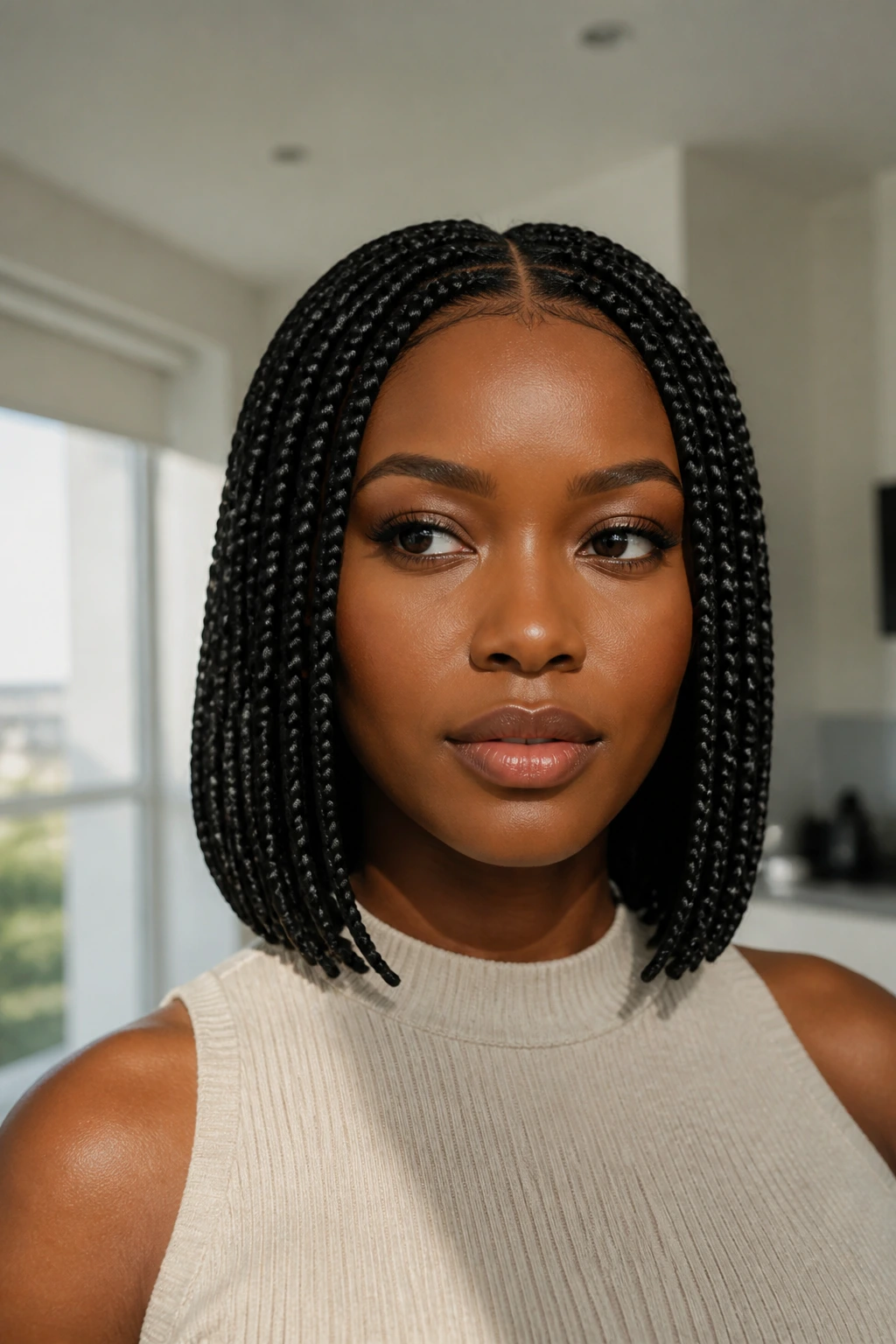
The center part is back, and it is here to stay. A center-parted braided bob is all about symmetry. It is minimalist, modern, and very chic. This style is best executed with knotless braids to ensure the part looks clean and the transition from scalp to extension is seamless.
Balancing Facial Symmetry
If you have a round face, a center part can help elongate your features. If you have a longer face, it draws the eye to the center, creating a very balanced, classic appearance. It is a style that works with everything from professional blazers to casual loungewear.
Maintenance of the Part
Because the center part is so exposed, you must keep your scalp moisturized and clean. A dry, flaky scalp is very noticeable when you have a sharp center part. Use a light scalp oil applied with a cotton swab every few days to keep the skin hydrated without causing buildup on the extensions.
10. Shaved-Side Braided Bob
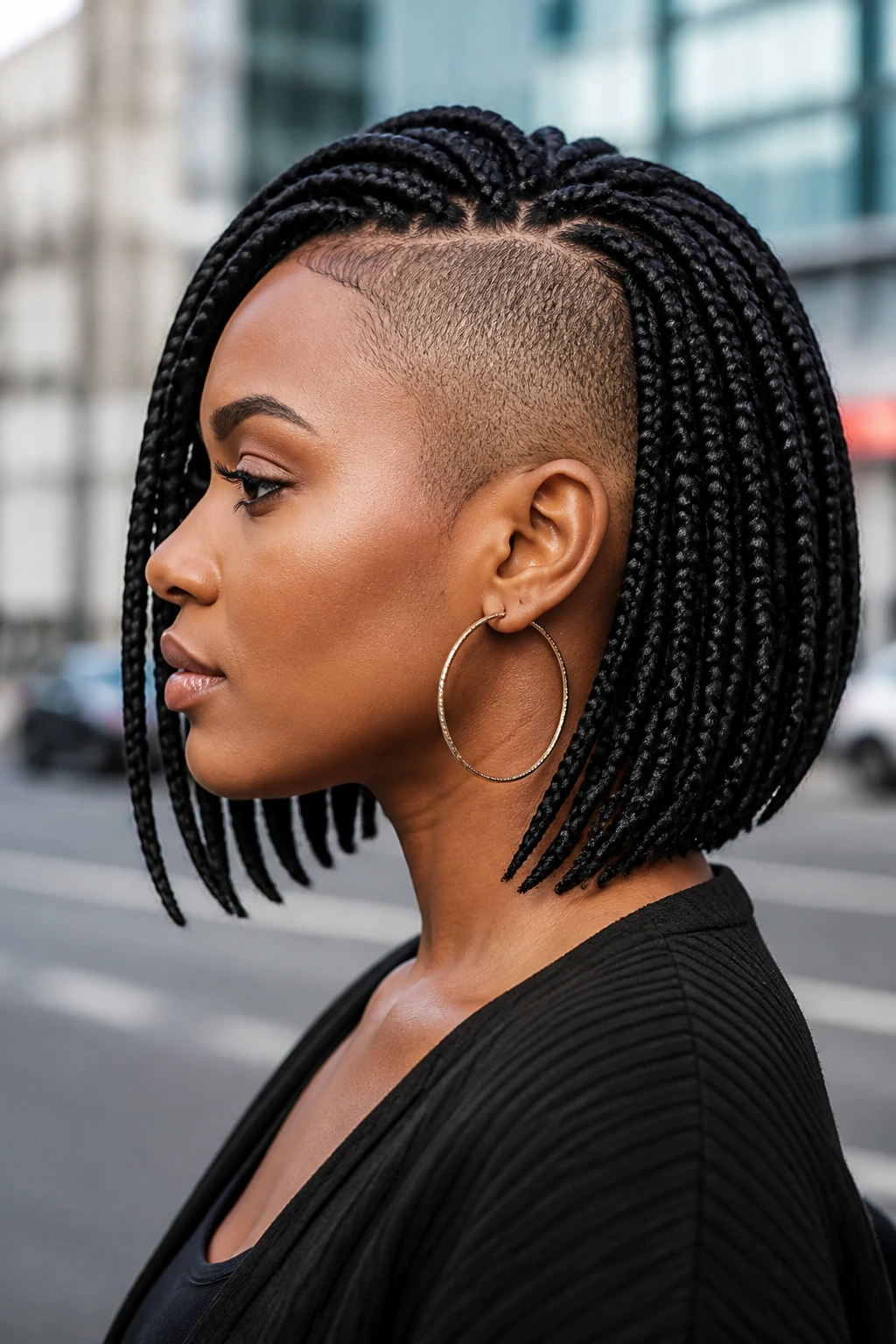
For those who want to push boundaries, the shaved-side (or “undercut”) braided bob is a powerful choice. This style features braids on top of the head, falling into a bob length, with one or both sides of the head shaved down to the scalp. It is rebellious, cool, and incredibly lightweight.
The Aesthetic Contrast
The contrast between the soft movement of the braids and the clean, shorn skin of the undercut is visually stunning. It is a low-maintenance dream because you have less hair to manage, wash, and style. It also keeps your head much cooler during the warmer months.
Committing to the Look
This is a more permanent decision than other styles. If you are not ready to shave your hair, you can mimic the effect with “feed-in” cornrows on the side of your head that travel back toward the nape of your neck, creating a faux-undercut look. It gives you the same silhouette without the need for clippers.
11. Thin Micro-Braid Bob
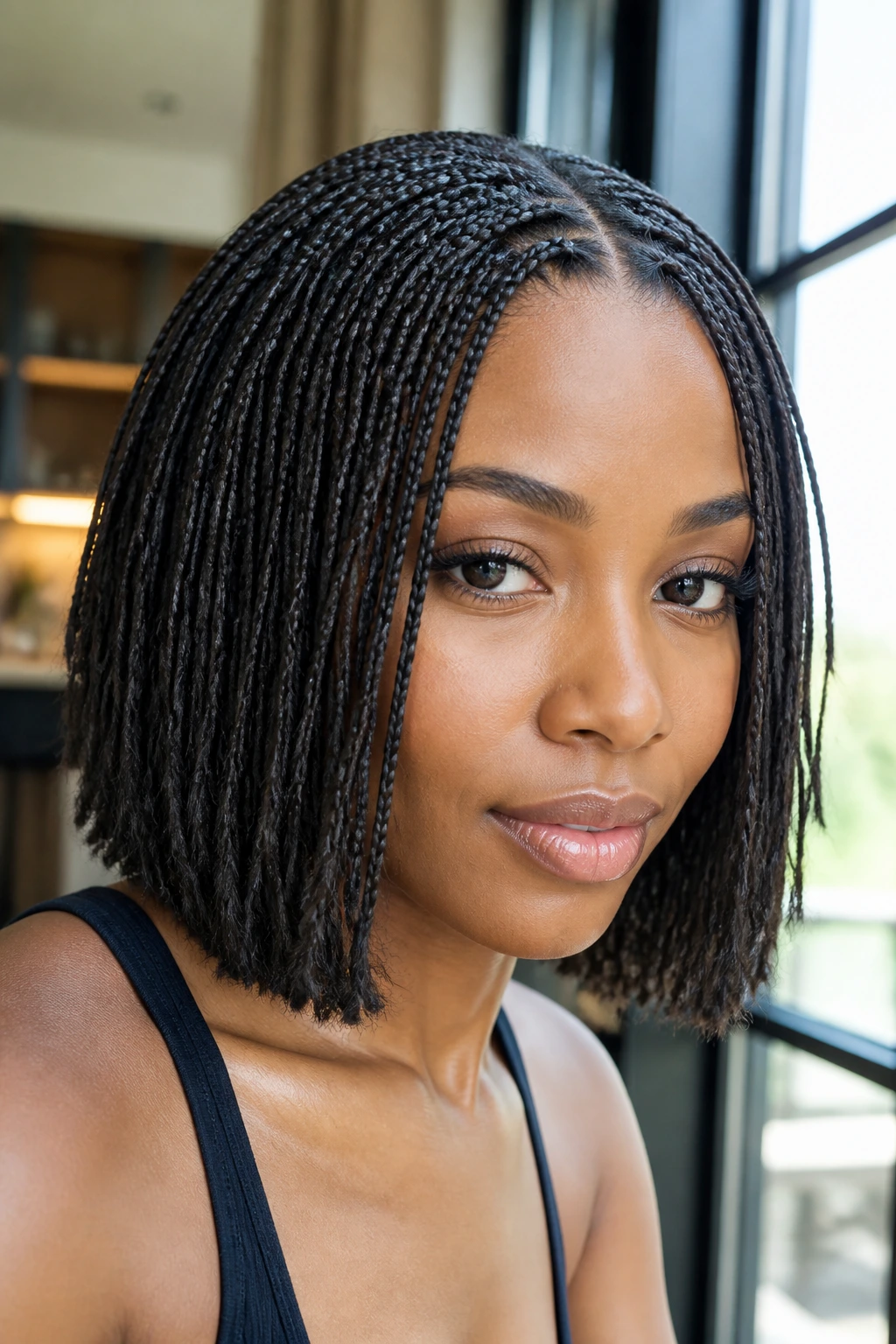
If you prefer a more intricate, detailed look, micro-braids in a bob cut are the way to go. These are much smaller than traditional box braids, creating a texture that looks almost like real, dense hair.
The Texture Advantage
Because the braids are so small, they move fluidly. They don’t have that stiff, “plastic” feel that thicker braids sometimes have. You can run your fingers through them much easier, and they drape against the head in a very natural way.
The Trade-Off
The main downside here is time. Installing micro-braids takes significantly longer than standard box braids. You are looking at a much longer session in the chair. However, the result is a style that looks more like a natural haircut and less like a protective style, which is often exactly what people are looking for.
12. Chunky Knotless Box Braid Bob
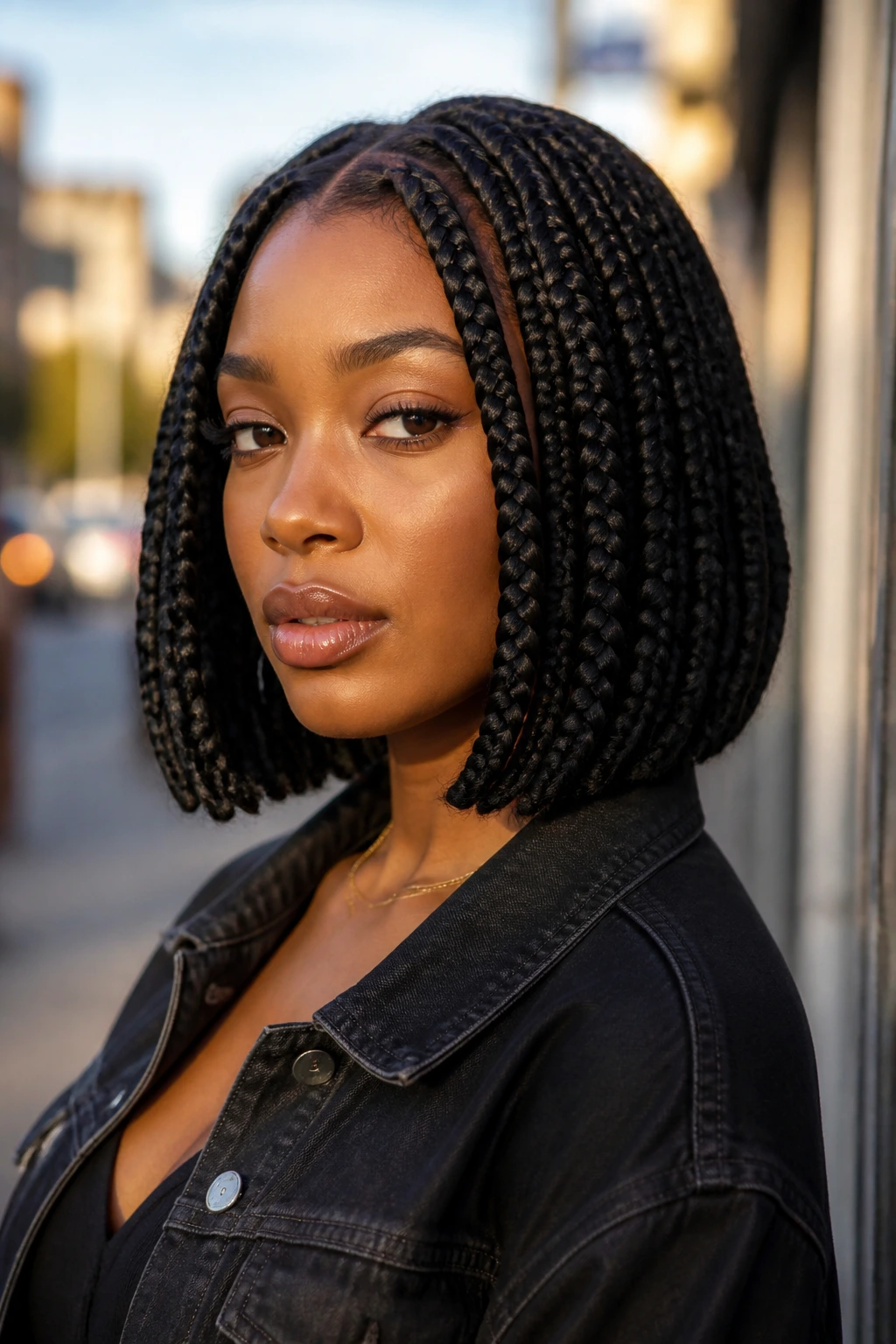
On the opposite end of the spectrum are chunky box braids. These are wider, bolder, and much faster to install. A chunky bob has a very modern, “cool girl” aesthetic that feels youthful and trendy.
Why Chunky Braid Bobs Work
They have a graphic quality to them. Because there are fewer braids, each one stands out as a distinct element. If you have a very expressive personal style, these oversized braids frame your face in a bold, unapologetic way.
Weight Considerations
Even though the braids are thick, they are usually lighter than you expect because there is simply less hair on your head. This makes them a great option if you have a sensitive scalp and can’t handle the density of a full head of micro-braids.
13. Face-Framing Curled Braided Bob
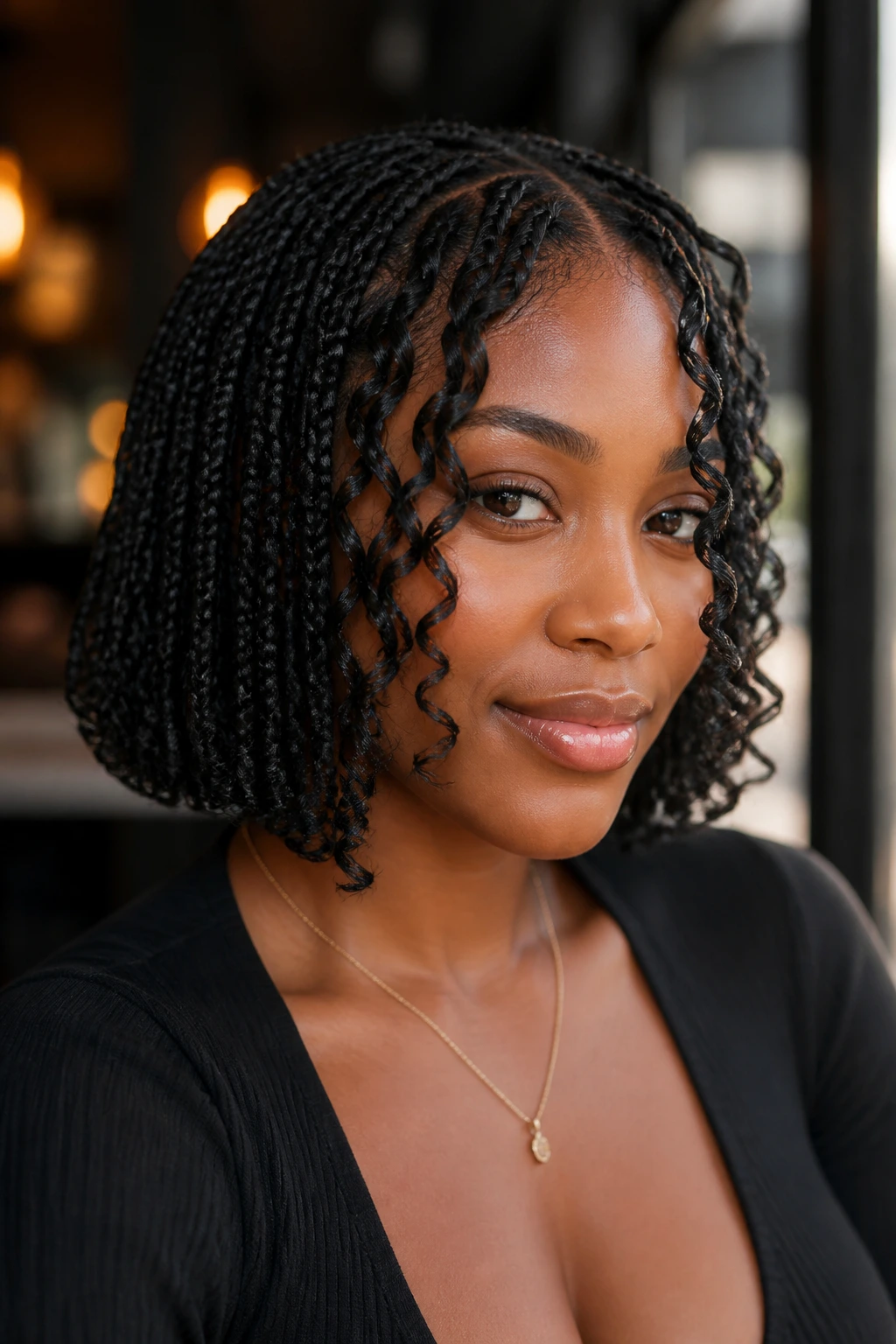
This style focuses specifically on the braids that touch your face. The braids in the front are curled or accessorized, while the back braids are kept simple and sleek. It is a way to customize the bob to draw attention to your specific features.
The “Custom Fit”
You can use pipe cleaners or perm rods on just the front braids to get a tight, spiral curl. This softens the look instantly. If you have a very strong jawline, these soft curls can provide a nice contrast.
Why This Is Practical
You don’t have to worry about curling your whole head. It saves you time during the installation process, and it keeps the back of your hair (the part that rubs against your collar and shoulders) sleek, which prevents frizz and tangling over time.
14. Burgundy or Wine-Toned Braided Bob
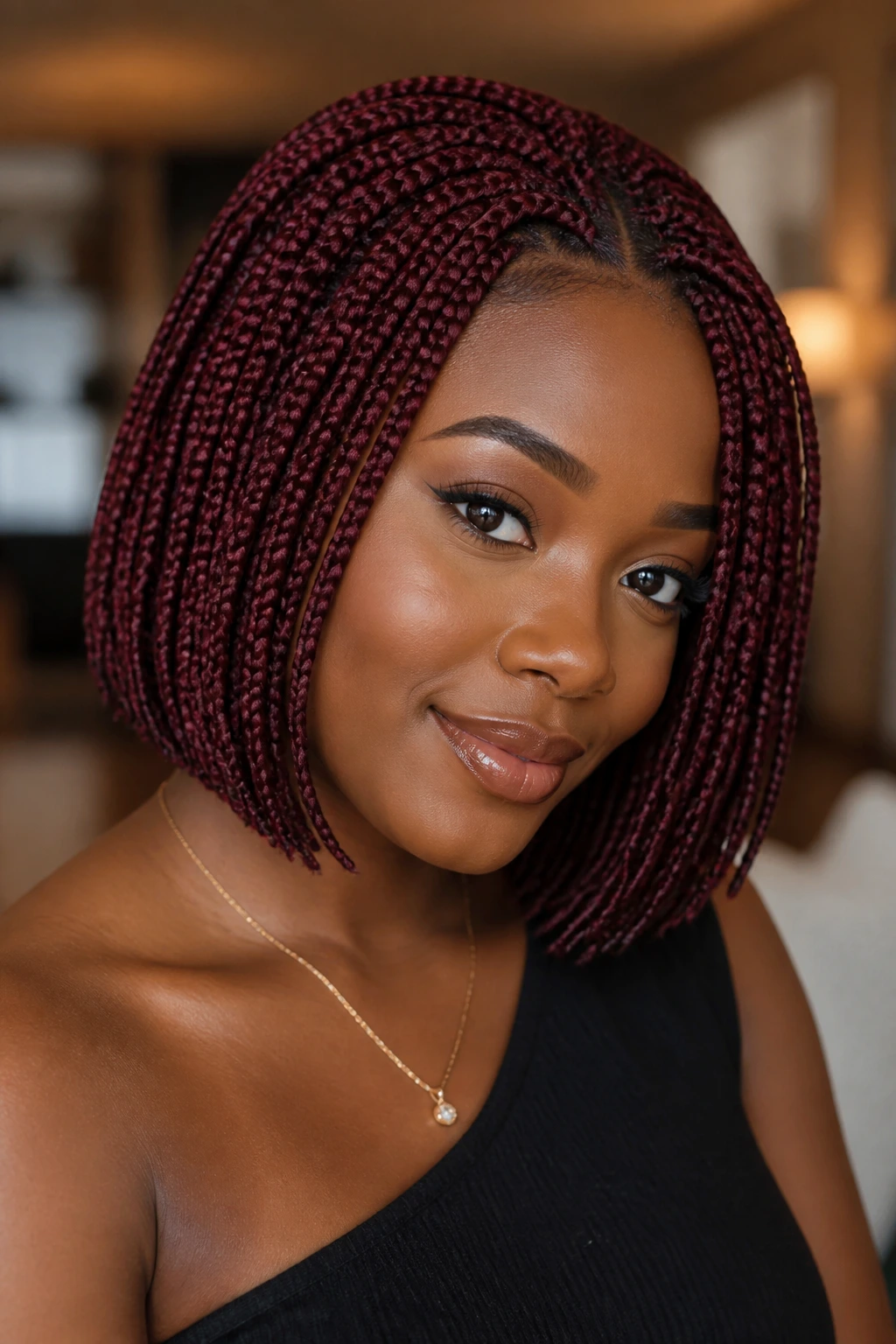
Color is a mood, and burgundy is a mood that never goes out of style. A deep wine or dark cherry red braided bob is sophisticated and looks incredible against almost every skin tone.
The Subtlety of Wine Tones
Unlike bright cherry red or fire engine red, wine tones are muted and professional. They look rich and expensive. When the light hits these braids, you get a subtle shimmer that is much more interesting than a standard black or dark brown.
Why It’s a Classic
This color feels like a permanent accessory. It doesn’t clash with your wardrobe; in fact, it acts as a neutral. It adds warmth to your complexion and makes your eyes pop. If you want to change your look without going for a neon color, this is the most elegant path.
15. The “Bob-Lob” Medium Length Braid
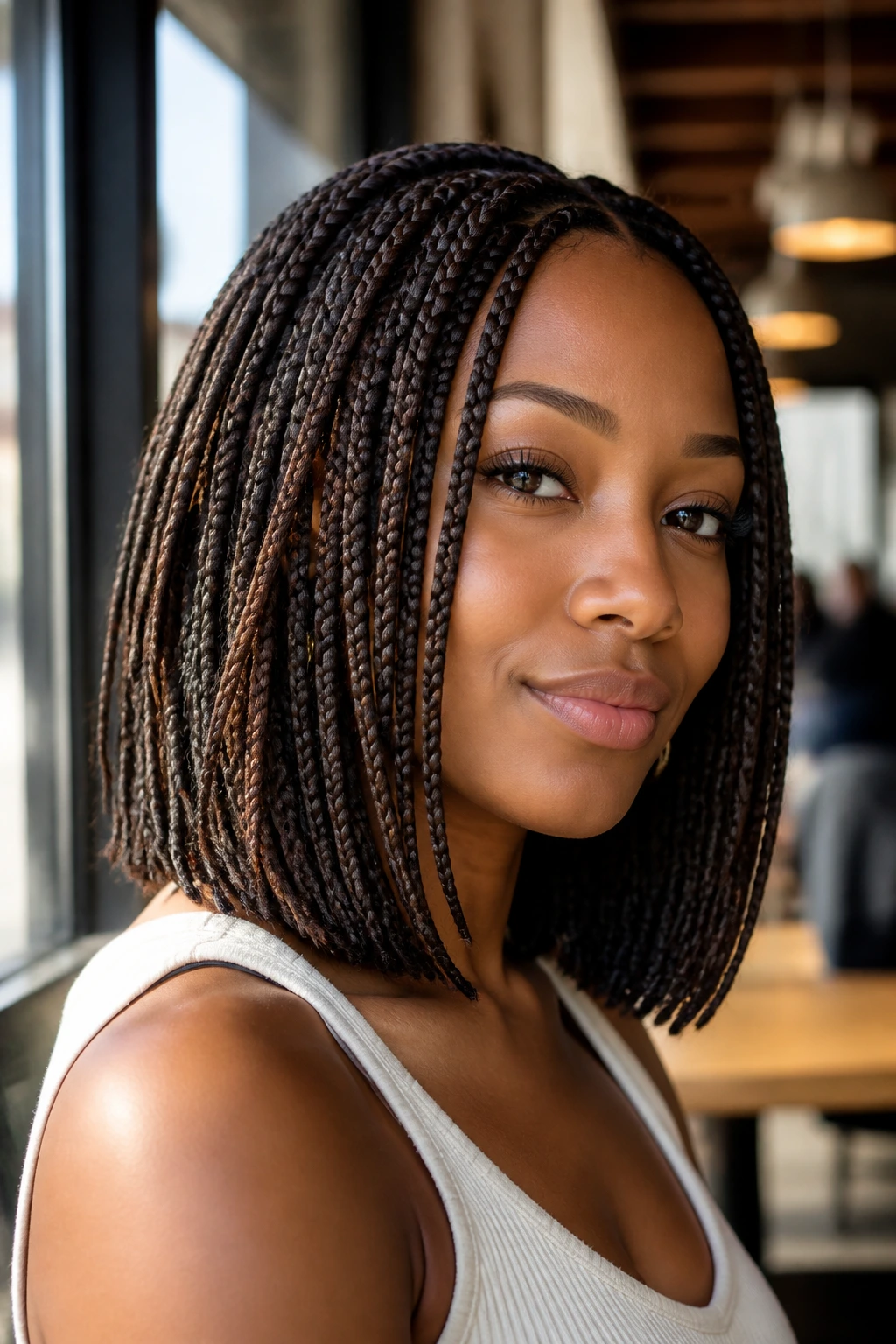
If you aren’t ready to commit to a true, jaw-grazing bob, the “lob” (long bob) is your perfect middle ground. This style hits right at the collarbone or slightly below. It is the perfect transition length.
Versatility in Styling
The bob-lob is long enough to pull back into a small ponytail, but short enough to still give you the neat, tidy vibe of a bob. It is the ultimate low-risk style. If you are worried that a shorter cut will make your face look too round, this length provides just enough verticality to feel safe.
The Styling Edge
You can still experiment with layers and side parts at this length. It is the most forgiving of all the bob lengths. If you are doing your own hair for the first time, start with a bob-lob—it is easier to manage than a shorter cut.
16. Pastel-Tone Braided Bob
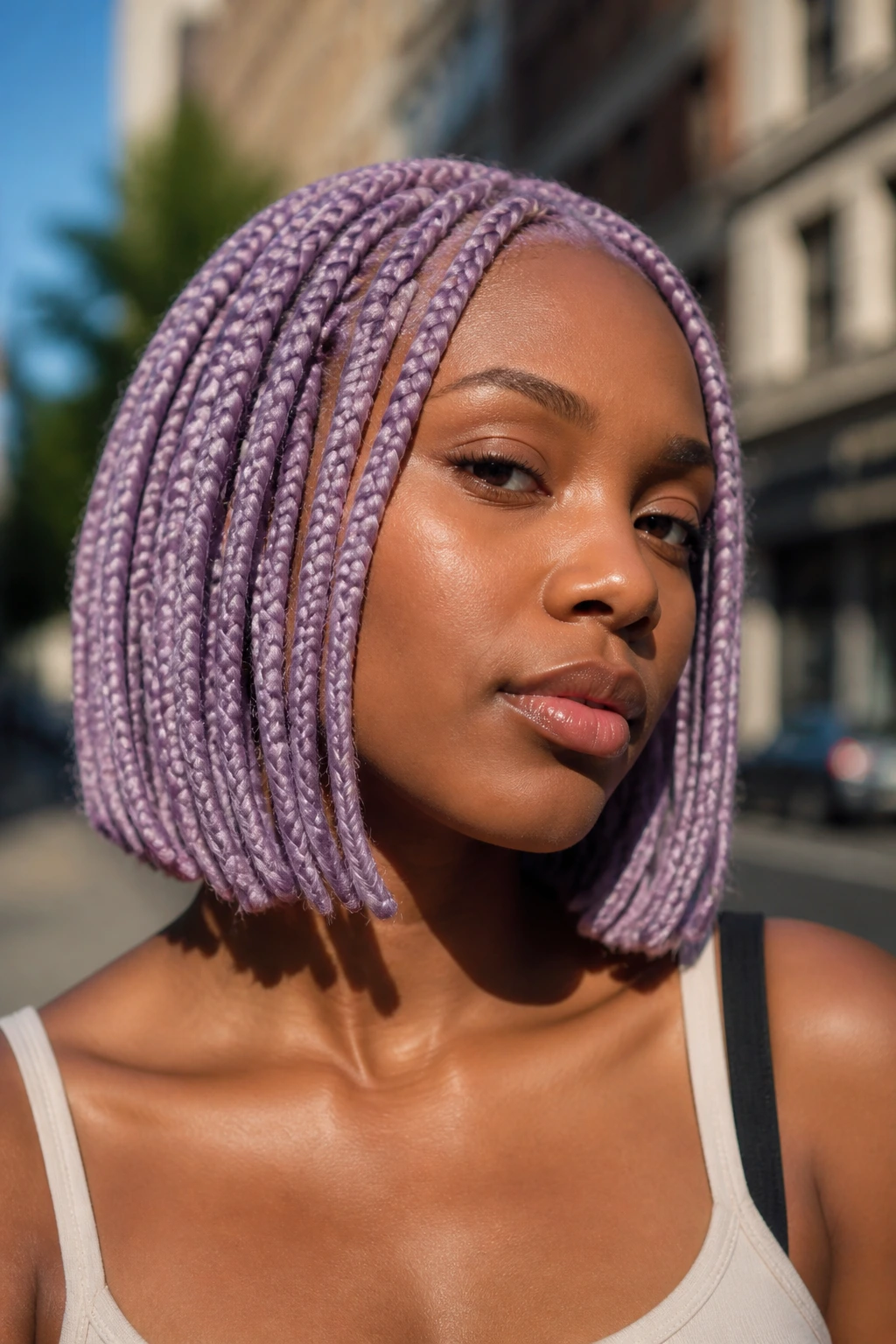
If you are feeling adventurous and want to lean into a fun, whimsical aesthetic, pastel colors like lavender, mint, or baby pink are the way to go. These colors are incredibly popular because they feel light and airy—perfect for the shorter length of a bob.
Managing the Lightness
Pastel hair can look “dirty” quickly if it isn’t maintained. You have to be very careful with product use. Do not use heavy oils or edge controls that have a dark residue. Keep your hair clean, and always wear a silk bonnet when you are at home to avoid transferring oils from your skin onto the light-colored extensions.
The Vibe
These colors are soft and gentle. They don’t have the harshness of high-contrast colors. They make a statement, but it is a statement of playfulness and creativity. It is a fantastic summer look that brings a breath of fresh air to your overall aesthetic.
17. Curly-Top Textured Braided Bob

This style introduces texture not just at the ends, but at the roots and through the length, sometimes using “kinky” or “afro-textured” braiding hair rather than the standard silky synthetic. The result is a bob that has incredible volume and a natural, coiled appearance.
Why This Stands Out
It looks like a natural, blown-out Afro-textured bob, but with the structure of braids underneath. It is voluminous, soft, and feels very authentic. If you want to rock a style that feels close to your natural hair’s texture while still enjoying the convenience of braids, this is the winner.
The Maintenance Factor
This style is prone to frizz. That is simply the nature of textured hair. You have to embrace the frizz as part of the look rather than fighting it. If you try to keep it perfectly sleek, you will be disappointed. It is meant to be big, bold, and slightly wild.
18. Wrapped-End Braided Bob
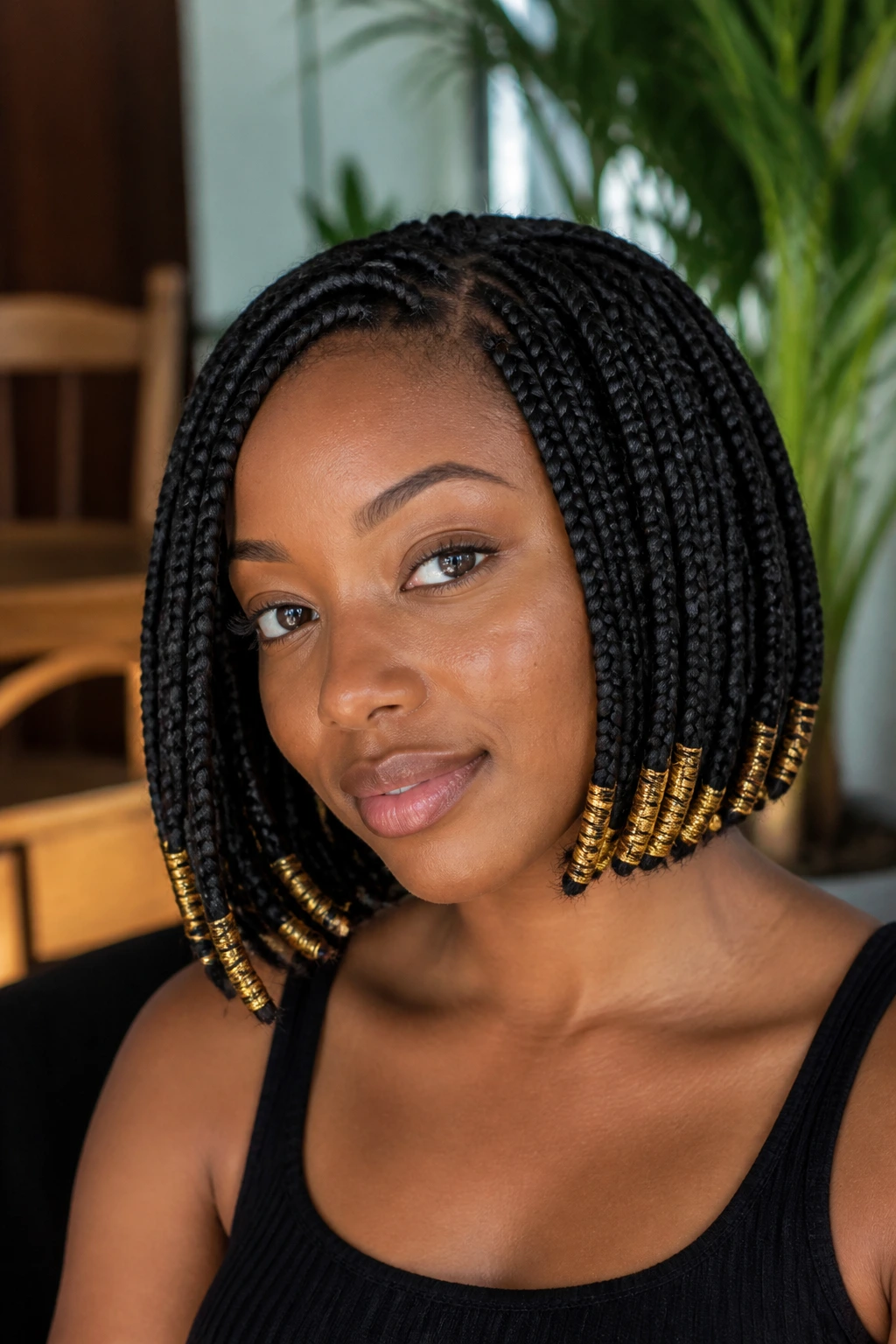
This final style involves wrapping the ends of each braid with a colored thread or a contrasting piece of hair, creating a “dipped” look. It provides a clean, finished appearance without the need for hot water or curling.
The Protection Benefit
Wrapping the ends actually protects them from unraveling. It seals the braid completely, making this one of the most long-lasting styles on the list. If you are hard on your hair or you know you will be wearing your braids for six to eight weeks, this is the most secure option.
Aesthetic Appeal
It gives a very polished, deliberate feel to the braids. You can choose a metallic thread for a bit of shimmer, or a matte thread that matches your hair color for a seamless look. It is a small detail that elevates the entire bob.
Caring for Your Braided Bob
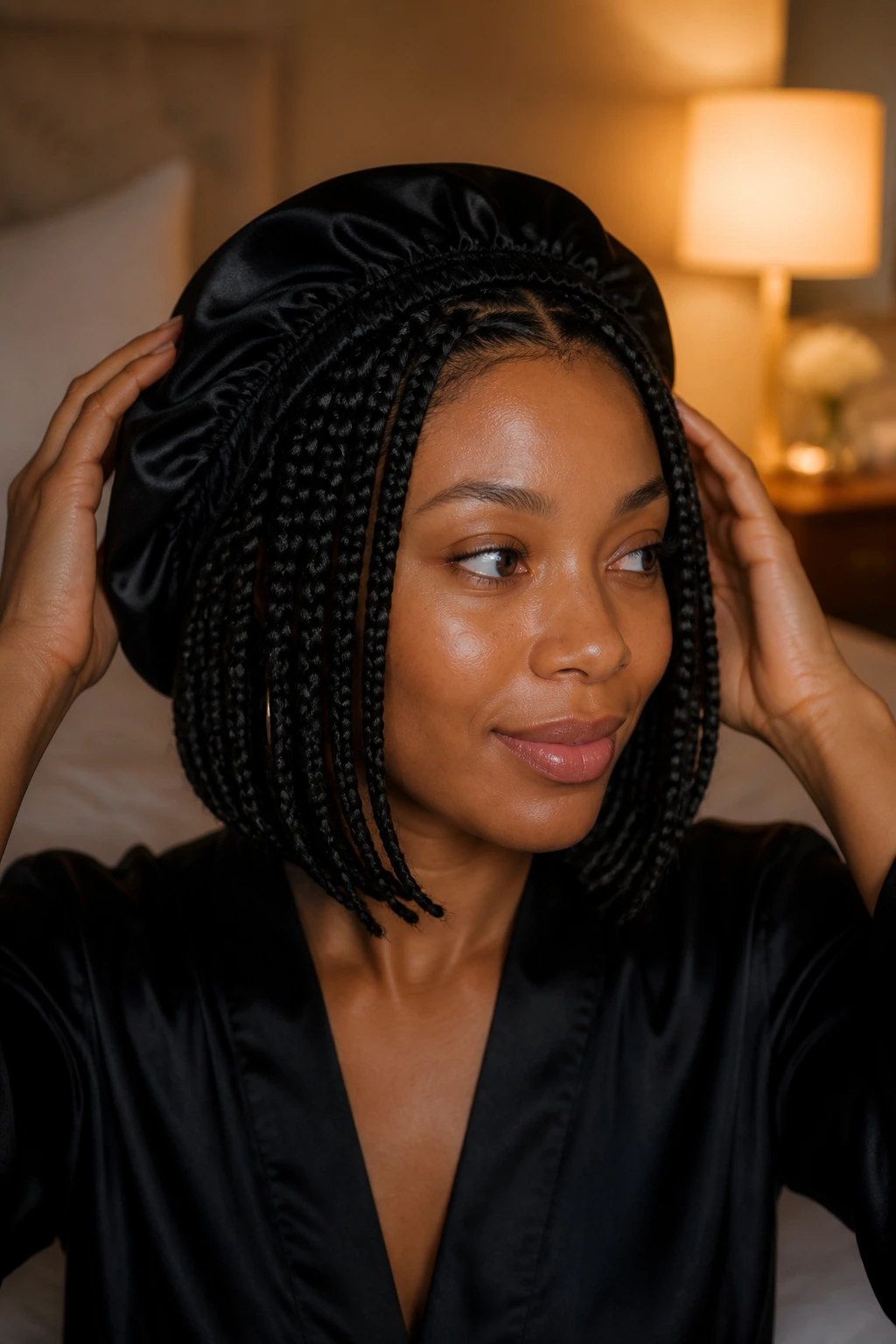
Now that you have your perfect style, keeping it fresh is all about the routine. The biggest mistake people make with braided bobs is assuming they are “set it and forget it.” Even the best installation will look tired after two weeks if you don’t treat it right.
Start with your nighttime routine. This is non-negotiable. You must wear a large satin or silk bonnet every single night. Cotton pillowcases are the enemy—they absorb the moisture from your hair and cause the extensions to fuzz up. If you feel like your braids are getting “fuzzy” or “hairy,” it is likely friction from your pillowcase.
When it comes to washing, use a foaming dry shampoo or a scalp-cleansing spray rather than fully submerging your hair in the shower. A full wash is stressful for the braids and often leads to unraveling if not dried completely. Focus on cleaning your scalp, not the synthetic hair itself. If the extensions get dusty or lose their shine, a light mist of water mixed with a leave-in conditioner is usually enough to revitalize them.
Finally, manage your edges. Bobs can be heavy if they are installed with too much hair. If you feel tension, don’t wait for your scalp to get irritated. Use a warm, damp cloth to massage the roots—this helps relax the synthetic hair and ease the tension. If the tension is extreme, do not hesitate to remove the perimeter braids. Your hairline is far more valuable than the style.
Final Thoughts
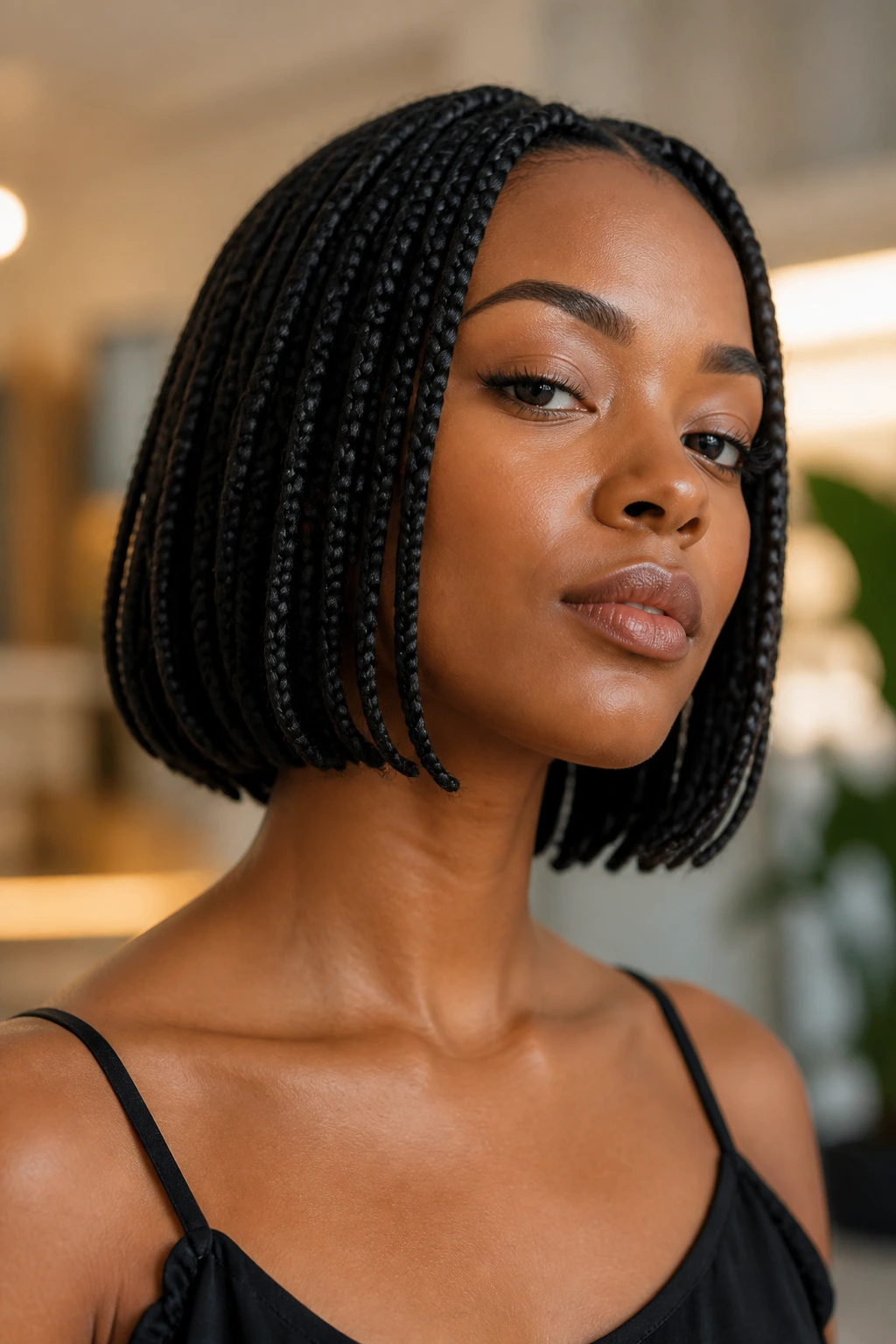
A box braid bob is not just a protective style; it is an expression of confidence. It requires a certain audacity to crop your hair short, and that boldness shows. Whether you choose a classic blunt cut or a vibrant, colorful bob, the key is to own the look.
Find a stylist who understands that a bob isn’t just a shorter version of a long style—it requires a different technique to balance the weight and the shape. Ask questions about the braiding hair, the part, and the tension. And remember, the most important part of the style is how you feel when you look in the mirror. When you walk out of the salon with that crisp, clean line hitting your jaw, you aren’t just wearing hair—you are wearing a statement.
