



Subtle brown highlights can do more for Asian hairstyles than louder color ever will. On dark, glossy hair, a few fine brown ribbons can soften a blunt edge, bring out movement, and keep the whole style from looking one-note.
That’s the part people miss. With Asian hair, especially when it’s naturally black or deep brown, heavy lightening can turn the look stripy fast. Soft mocha, chestnut, mushroom brown, and caramel-brown tones stay closer to the base color, so the finish reads polished instead of harsh.
Placement matters just as much as shade. Face-framing pieces, lower layers, underlayers, and the ends all behave differently once the hair moves, and the same brown formula can look romantic, sharp, or barely there depending on where it lands. Fine babylights or a gentle balayage sweep usually make more sense here than thick foils.
Some styles practically beg for this kind of color. Others need a lighter hand. Start with the cut you already wear, then let the brown do the quiet work.
1. Long Straight Layers With Subtle Brown Highlights
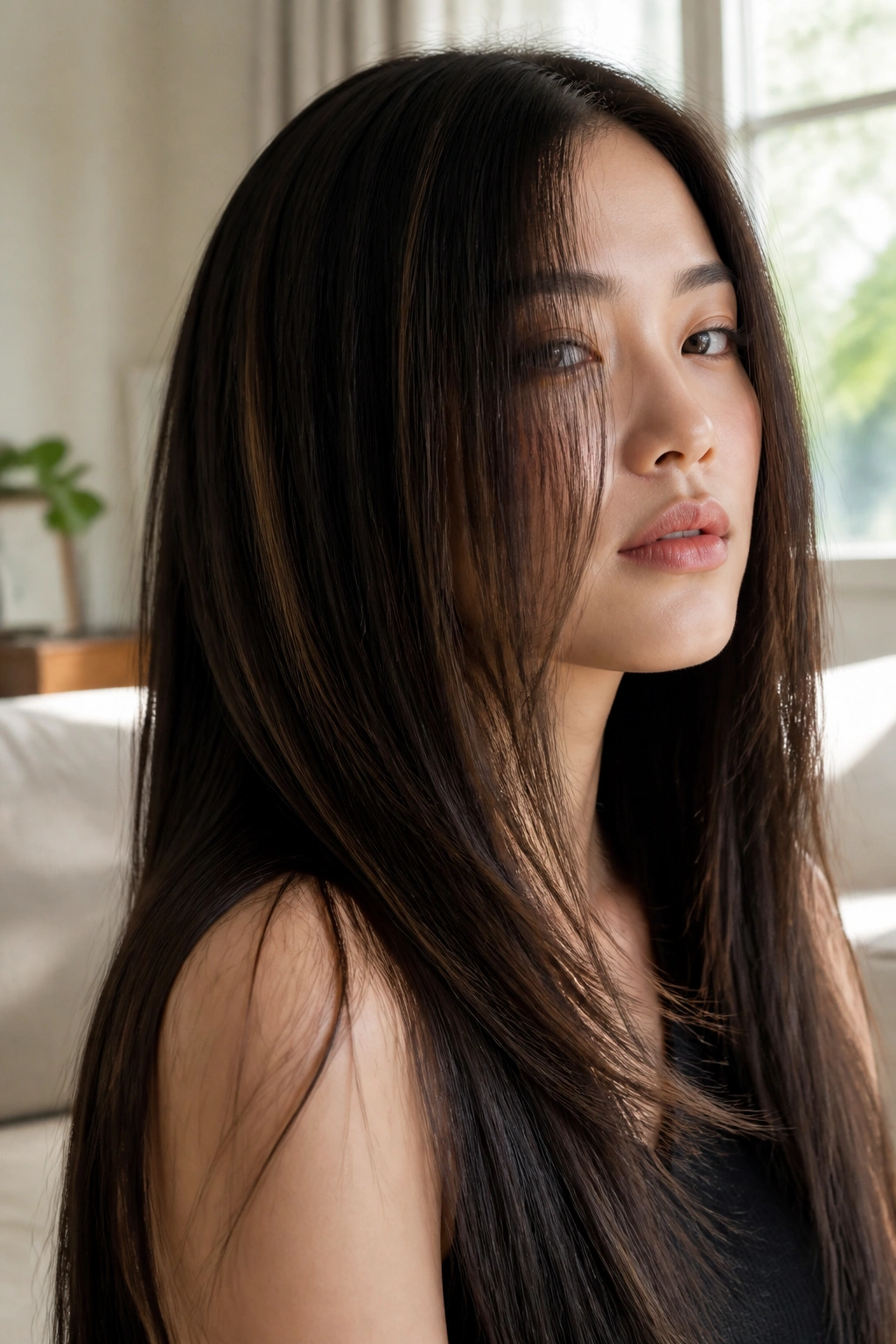
Long, straight hair can go flat in a hurry. A few mocha ribbons through the mid-lengths and ends change that without making the style look busy.
What I like here is the restraint. The top layer stays deep and glossy, while the lighter strands sit underneath and peek through when the hair shifts. On very straight hair, that little bit of hidden contrast is enough.
Why the placement matters
If the highlights start too close to the roots, the whole look can turn busy. Keep the first lightened pieces around the cheekbone or just below it, then let the brown drift into the lower half of the length. The result feels cleaner.
- Ask for micro-babylights or a soft balayage, not wide stripes.
- Keep the crown mostly dark so the style still looks rich.
- Choose a level 4 or 5 brown if your base is black or very dark brown.
- Style with a 1.25-inch round brush or blowout brush to show movement in the layers.
Best tip: if the sections are too wide, the style loses that polished, glassy look. Thin ribbons win here.
2. Soft C-Curl Lob With Chestnut Highlights

A lob can look expensive without trying very hard. Add a gentle C-curl at the ends and chestnut highlights along the outer curve, and the whole cut suddenly has shape.
The reason this works is simple: a blunt shoulder-length cut wants a little bend. When the ends curl under by half an inch to an inch, the brown catches the eye right where the hair turns. That tiny shift keeps the cut from reading as a heavy block.
I’d keep the highlight placement tighter on the surface and a touch softer underneath. The front pieces can be a shade lighter than the rest, but the back should stay close to the base. That way the lob still feels sleek, not streaky.
If you style with a flat iron, bend the ends inward only once or twice. Too much curl and the brown gets lost in the texture. Too little and the cut can look unfinished. The sweet spot sits right in the middle.
3. Curtain Bangs and Face-Framing Brown Streaks

Why do curtain bangs and face-framing brown streaks work so well together?
Because both are doing the same job from different angles. The bangs open the face, and the lighter pieces beside them keep that opening from looking blunt or heavy. On dark Asian hair, that soft brown frame can make the whole cut feel lighter without taking away density.
The key is to keep the front sections fine. You want the brown to sit like a veil, not a stripe. If the pieces are too thick, the bangs start competing with the color, and the result gets loud in a way that subtle highlights should never be.
How to style it
- Blow-dry the bangs away from the face with a small round brush.
- Add a gentle bend to the face-framing pieces with a 1-inch iron.
- Keep the highlight brightness just one or two levels lighter than the base.
- Finish with a light serum on the ends, not the roots.
That little bit of shine matters. Curtain bangs already do a lot visually, so the color should whisper, not shout.
4. Butterfly Layers With Caramel Ends
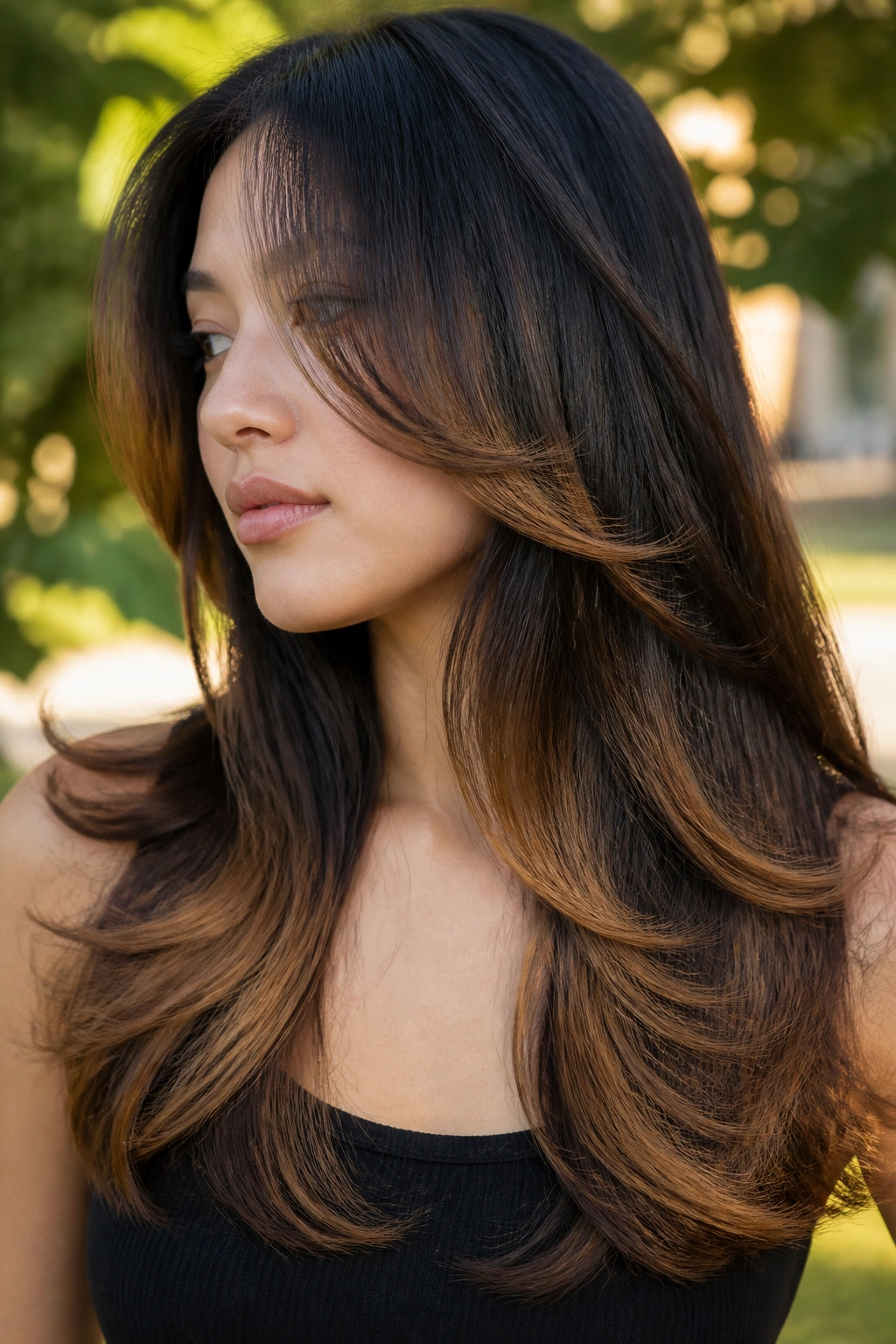
If your hair falls past the chest, butterfly layers are hard to beat. The shape creates movement at the top and weight at the bottom, which means caramel ends have room to show up without taking over.
Picture this: the shorter face frame lifts around the cheekbones, then the longer lengths swing softly below. When the lower pieces are kissed with brown, each flip in the layer catches a bit of light. The haircut looks airy, but it still has length.
I’d keep the darker base at the roots and mid-shaft, then concentrate the lighter brown from the last third of the hair downward. That keeps the style from looking overprocessed. It also gives the ends a little more life, which butterfly layers need.
- Ask for long internal layers rather than choppy ones.
- Keep the caramel on the bottom wing layers.
- Use a large barrel curling iron or blowout brush for soft movement.
- Skip chunky money pieces unless you want a stronger contrast.
Butterfly layers are all about motion. Put the color where the motion lives.
5. Sleek Mid-Length Cut With Subtle Brown Highlights
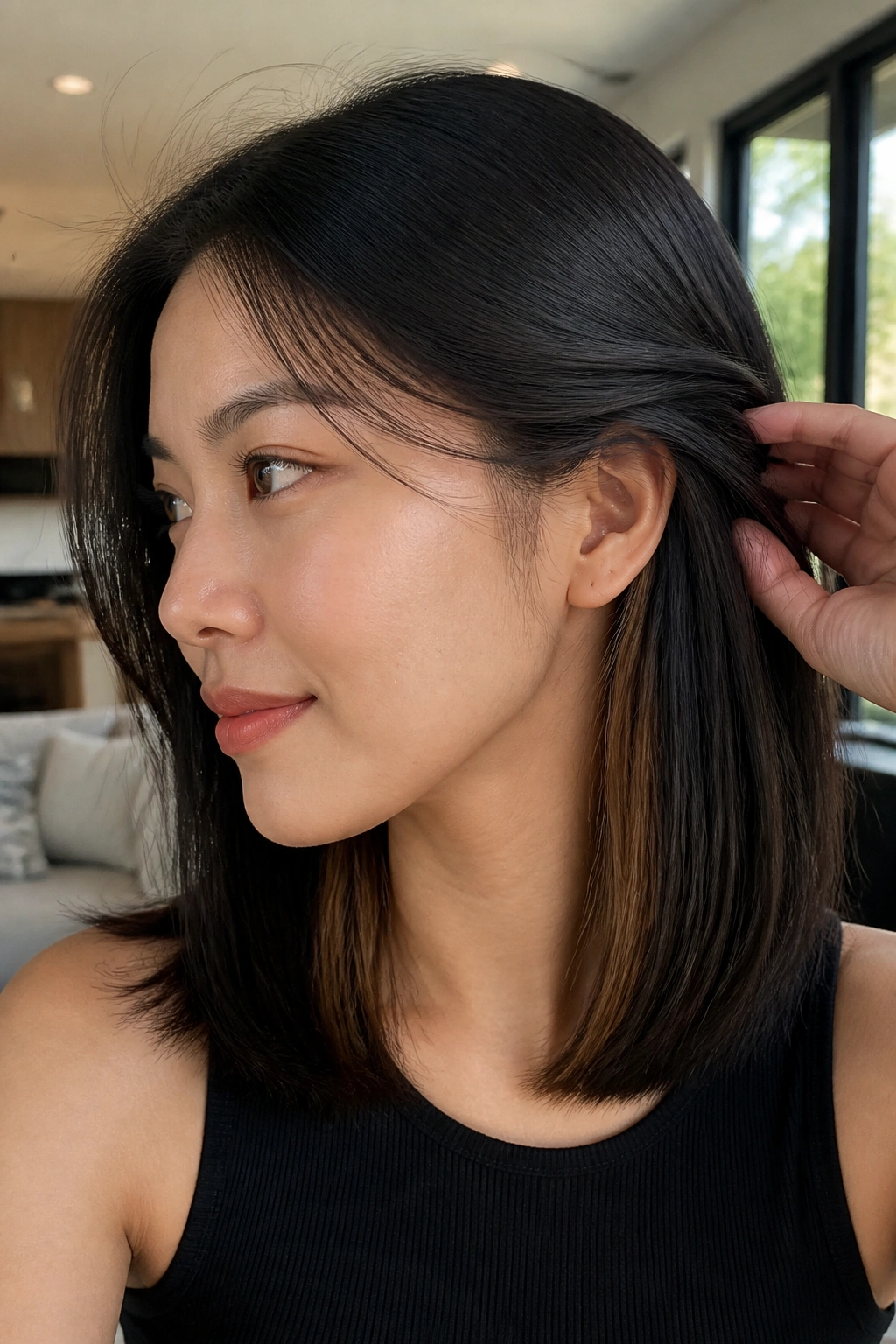
A sleek mid-length cut is the kind of style that can either look sharp or look plain, and the difference usually comes down to color. A thin veil of brown through the interior gives the cut depth without breaking its clean line.
I like this style on hair that lands somewhere between the collarbone and the shoulders. It keeps enough weight to look healthy, but the subtle brown highlights stop it from reading like a single flat sheet. On straight Asian hair, that matters more than people think. Shine is lovely, but shine without dimension can feel a little severe.
The best version of this look uses hidden lightness. The top layer stays dark and smooth. Underneath, the brown pieces sit just off-center, so they flicker when you tuck hair behind the ear or pull it over one shoulder. That little surprise keeps the cut alive.
A gloss finish helps a lot here. Not a dramatic one. Just enough to keep the brown soft and prevent it from going orange or muddy.
6. Textured Wolf Cut With Warm Espresso Ribbons
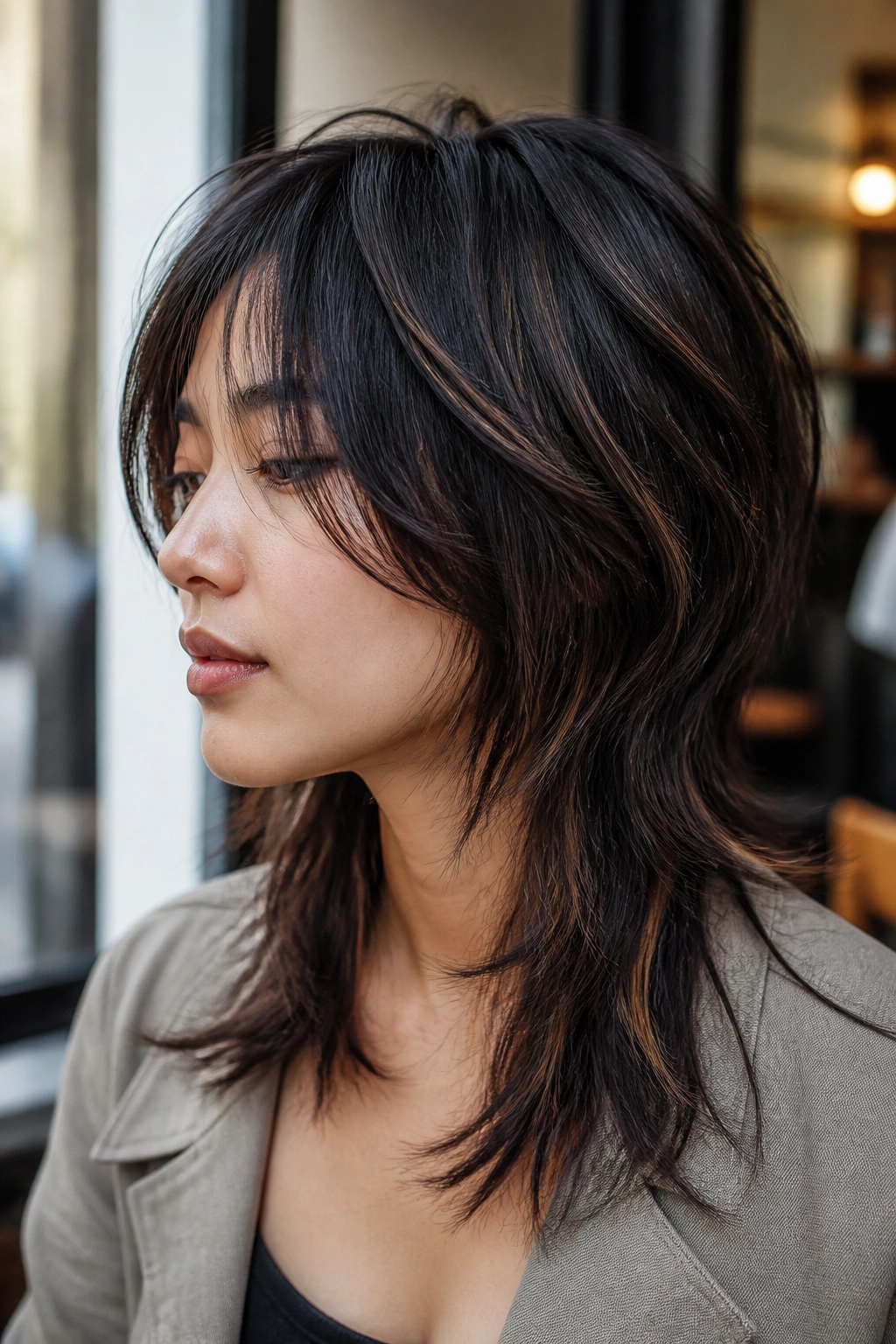
Unlike a tidy layered cut, the wolf cut likes a little grit. Warm espresso ribbons give it shape without making the style look overdone.
This is the cut for people who want movement first and polish second. The shaggy crown, longer tail, and broken ends already create visual noise, so the color should work with that texture, not fight it. Espresso brown is a smart choice because it feels deeper than caramel and less warm than honey.
I’d keep the roots darker and let the brown live in the mid-lengths and ends. That keeps the wolf cut from turning into a striped mess. It also helps the face frame stand out, especially if you wear the front pieces a little piecey.
Best for hair that already has some natural body. If your hair is pin-straight and you never style it, this look can feel like a lot of work. But if you like a quick scrunch with texture spray and a loose bend at the ends, it’s one of the easiest ways to wear brown dimension.
7. Low Ponytail With Hidden Brown Balayage

A low ponytail is one of those styles people ignore until they see it done right. Hidden brown balayage turns it from practical to quietly elegant.
What the color is doing
The ponytail opens up the nape and the sides of the head, which means the underlayers suddenly matter. Brown balayage tucked into those lower sections shows when the tail swings, but disappears when the hair is worn down. That makes it a smart choice if you want dimension without a full-time commitment.
The best part? You don’t need a dramatic color job to make it work. A few soft lighter strands near the ears and through the lower half of the ponytail are enough. The contrast should feel like a shadow shift, not a highlight strip.
How to wear it
- Tie the ponytail 2 to 3 inches above the nape for a soft line.
- Leave a thin face-framing piece on each side if the hair is long enough.
- Wrap a small section of hair around the elastic for a cleaner finish.
- Add a loose wave to the tail so the brown pieces can separate.
Small warning: if the ponytail is pulled too tight, the color disappears and the style looks severe.
8. Half-Up Claw Clip With Honey Brown Lift
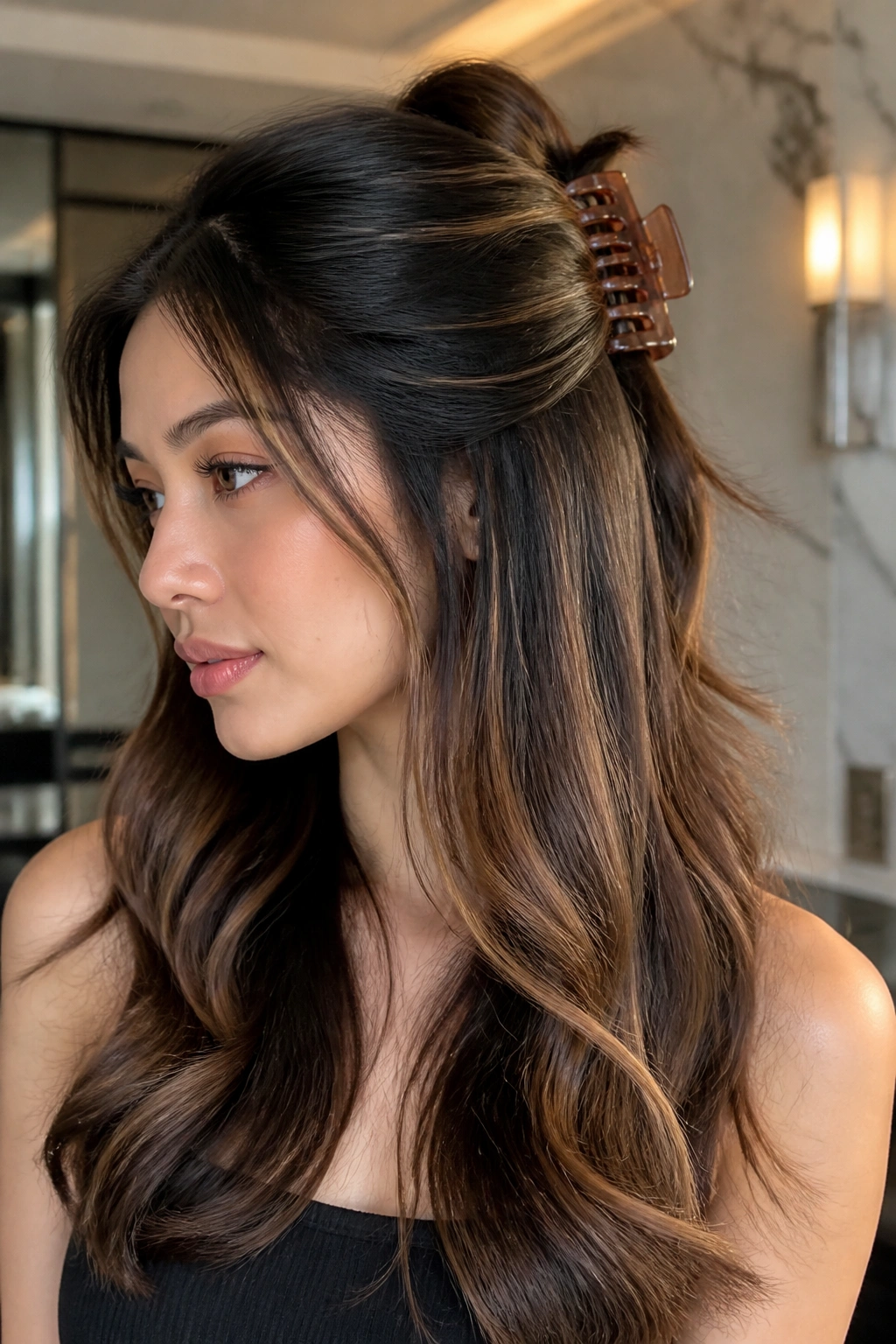
A claw clip is more flattering than people give it credit for. Pulling the top half of the hair back exposes the lighter pieces underneath, which is exactly where subtle brown highlights can look expensive.
This style works because it creates two zones. The top section stays neat and lifted, while the lower hair falls freely and shows off the dimension. Honey brown, in particular, can warm up dark Asian hair without making it look coppery. It’s a nice choice when you want softness around the face and a little brightness near the crown.
I’d keep the clip a touch oversized if the hair is thick. Small clips tend to pinch and flatten the shape, which makes the style feel fussy. The goal is ease, not effort.
A tiny bend in the loose ends helps too. Straight ends can make the whole look seem harsh, especially if the brown is very fine. A few loose curves soften that line and let the highlights breathe.
9. Korean-Style Airy Perm With Soft Brown Dimension

Why does an airy perm look so good with soft brown dimension?
Because the bend in the hair creates natural shadow lines. Every wave gives the brown something to sit on, and every curve catches light in a slightly different place. On dark hair, that means you get movement without needing a dramatic color shift.
The best version of this style uses loose S-waves rather than tight curls. Tight curls can make brown highlights look fragmented. Soft waves let the color flow through the hair in long ribbons, which is much easier on the eyes.
How to keep it soft
- Ask for mushroom brown or a neutral beige-brown tone.
- Keep the highlights fine through the outer layers.
- Use a lightweight mousse and scrunch the hair while it dries.
- Refresh the shape with a 26- to 32-mm curling iron if the waves fall flat.
This is a good choice if you want a style that feels airy and feminine without going too light. It does need some styling, though. No pretending otherwise.
10. Chin-Length Bob With Cinnamon Veils
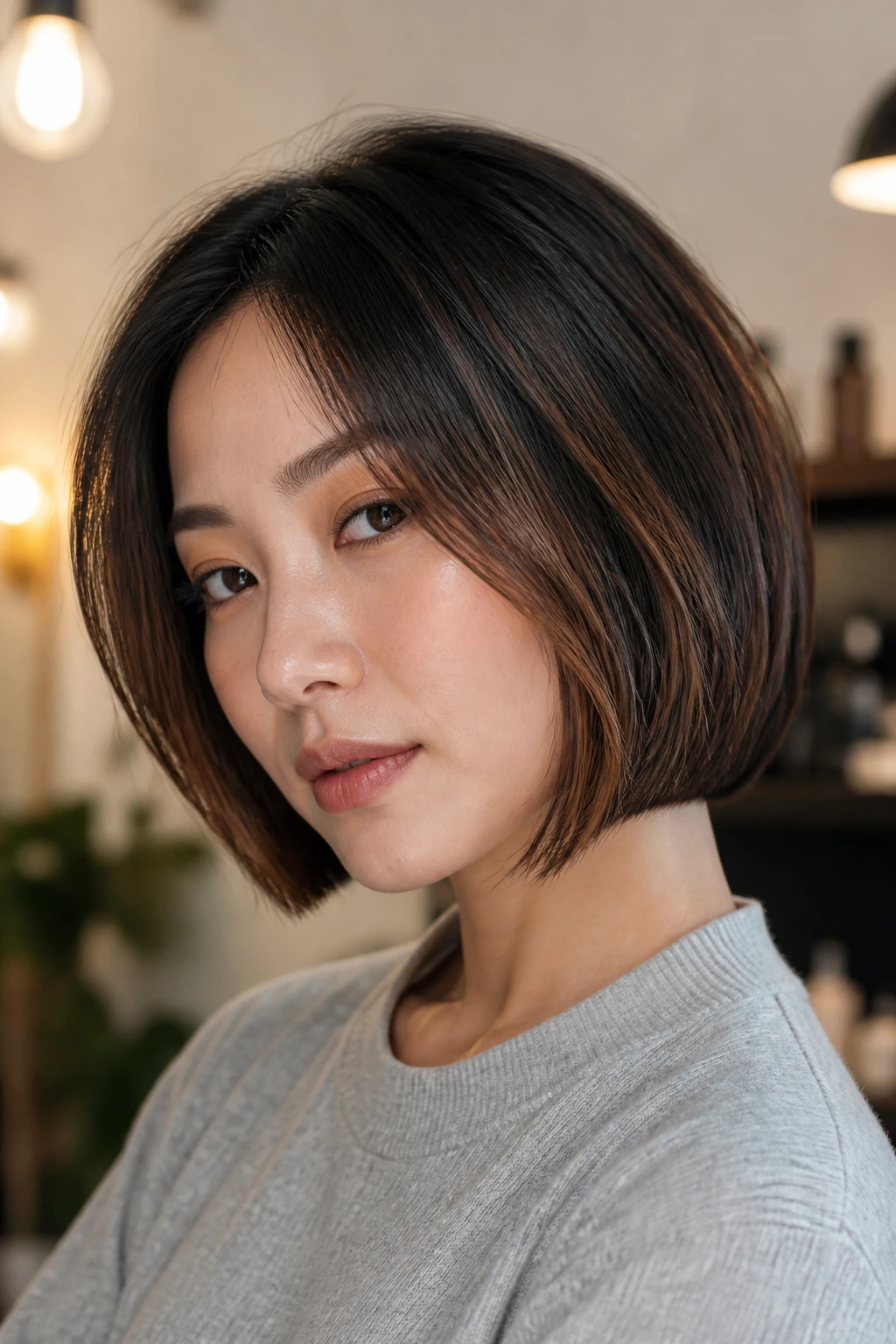
A chin-length bob can turn boxy fast, especially on thick hair. Cinnamon veils placed through the top layer soften that edge and make the cut feel less rigid.
Think of the brown as a blur rather than a stripe. The goal is not to change the whole bob. The goal is to break up the line so the jaw-level cut doesn’t sit there like a helmet. Very fine ribbons around the temples and upper cheek area do most of the work.
A side part helps here. So does tucking one side behind the ear. Both tricks show the contrast without needing more color. The bob stays sharp, but it doesn’t feel stiff.
- Keep the interior of the bob darker.
- Concentrate the cinnamon pieces near the surface.
- Use a flat brush blow-dry for a clean edge.
- Avoid over-layering if you want the line to stay strong.
This is one of my favorite short cuts for subtle brown color. It looks deliberate, not decorative.
11. Long Waves With Mushroom Brown Dimension

Mushroom brown is one of those shades that looks calm in the best way. It sits in that cool, smoky zone between brown and beige, which makes it a smart match for long Asian hair with loose waves.
Long waves need room to move. A single flat color can make them look heavy, especially when the base is dark. Mushroom brown gives the hair some visual breathing space. It softens the contrast without turning the style warm or brassy.
I like this look on hair that already has a smooth shine. The cooler brown tones make the waves feel more layered, almost like the color is shifting as the light changes. And because the shade is subtle, the grow-out stays gentler than with brighter caramel or golden tones.
If your hair tends to pick up red or orange warmth, ask for a neutral gloss on top of the highlights. That keeps the mushroom tone intact. Without that little adjustment, the brown can drift warmer than you intended, and the whole style changes character.
A loose wave pattern is enough. You do not need a barrel curl on every piece. Let some strands stay straighter. That unevenness is what makes the color feel natural.
12. Braided Half-Up Style With Caramel Threads

Unlike a loose style, a braid compresses the hair and makes every thin ribbon of color easier to see. That is why caramel threads look so good woven into a half-up braid on dark Asian hair.
The braid acts like a frame. The lighter pieces catch between the plaits, and suddenly a tiny bit of color reads as texture. You do not need big sections to make an impact here. In fact, thick highlights can make the braid look busy.
This is a good choice for weddings, casual dates, or any day when you want your hair out of your face but still want some shape around the top. A loose three-strand braid is the easiest version. A fishtail braid shows off the color even more, though it takes a little more patience.
If your highlights are very subtle, braid them away from the face first, then loosen the edges with your fingers. That gives the caramel pieces a chance to peek through. Pull too hard and the whole thing flattens.
I’d keep the ends waved rather than pin-straight. Braids and straight ends can look too tidy together.
13. Shaggy Medium Cut With Coffee-Tone Panels
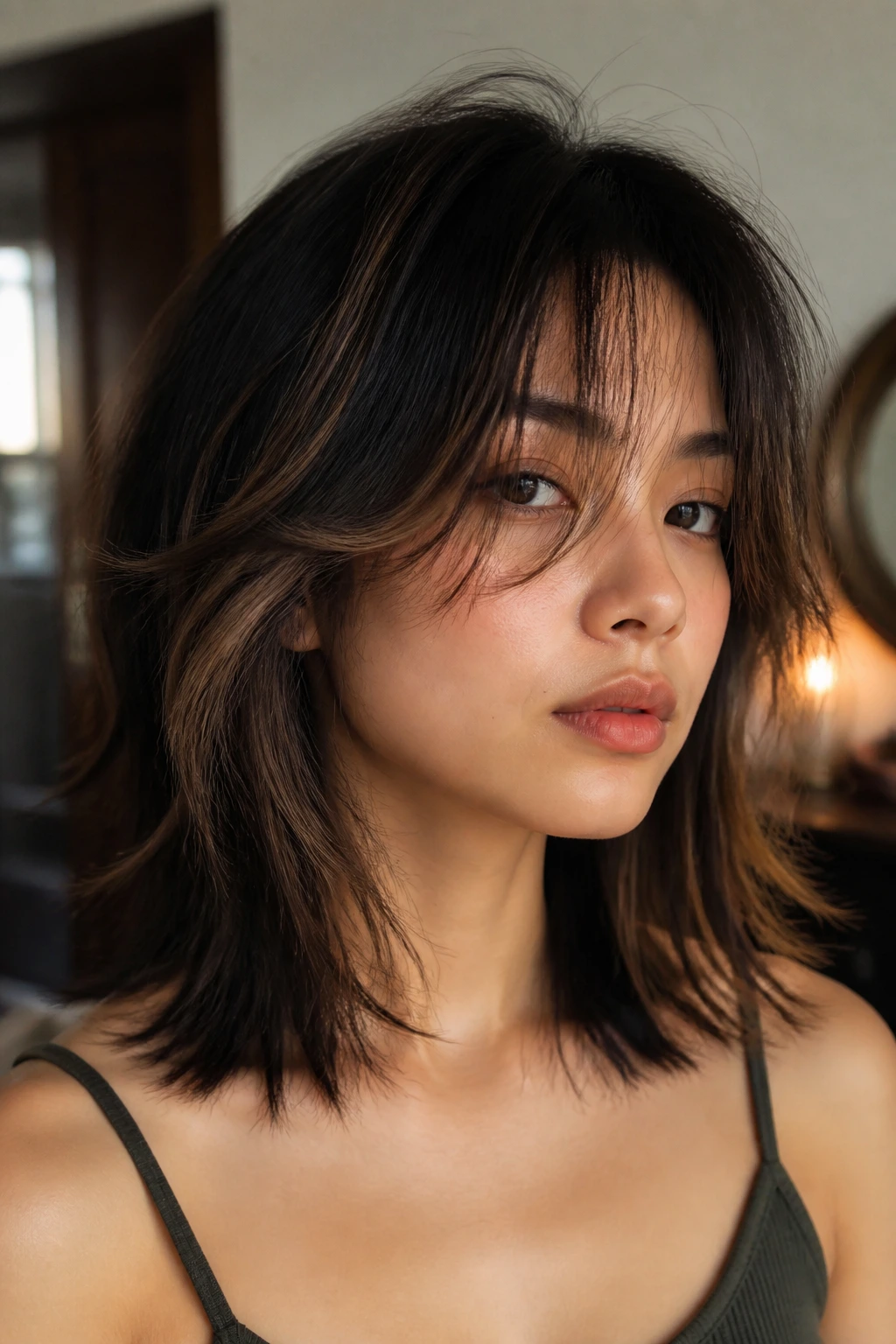
A shag needs broken color. Coffee-tone panels give the layers a sense of depth without making the cut look stripy.
Why the placement matters
The shag is built on uneven lengths, so color should follow that same logic. Coffee-brown pieces tucked into the mid-layers help the cut look more lived-in, which is the whole point. If every highlight sits only on the outer surface, the style can feel too neat.
I like this cut on medium-length Asian hair that has some natural thickness. The texture gives the layers enough body to move, and the brown panels break up the weight. A center part works, but a slight off-center part can make the color feel more relaxed.
What to ask for
- Fine panels through the cheekbone and jawline layers.
- A darker root area for easy grow-out.
- A matte texturizing spray instead of heavy cream.
- A light bend at the ends so the layers separate.
My take: this is one of the easiest ways to make brown highlights look cool without making them loud. The shag does half the work for you.
14. Messy Bun With Peekaboo Brown Underlayers

This is the easiest way to wear subtle color if you live in buns and clips. Peekaboo brown underlayers stay hidden most of the time, then show up when the bun loosens around the nape and temples.
The beauty of this style is that it doesn’t need perfect hair. A little frizz is fine. A few loose pieces are fine too. In fact, the color looks better when the bun has a soft, unfinished feel. That lets the lighter underlayer peek through instead of getting buried under a tight knot.
Keep the bun low or mid-height if you want the underlayers to show. A top knot hides too much of the dimension. A lower bun also feels softer around the neck, which suits the quiet look of brown highlights better.
I’d keep the visible face-framing strands a touch lighter than the hidden underlayer pieces. That creates a small shift in tone without making the color obvious. It’s a nice trick when you want interest, not drama.
15. Pixie Cut With Soft Brown Feathering
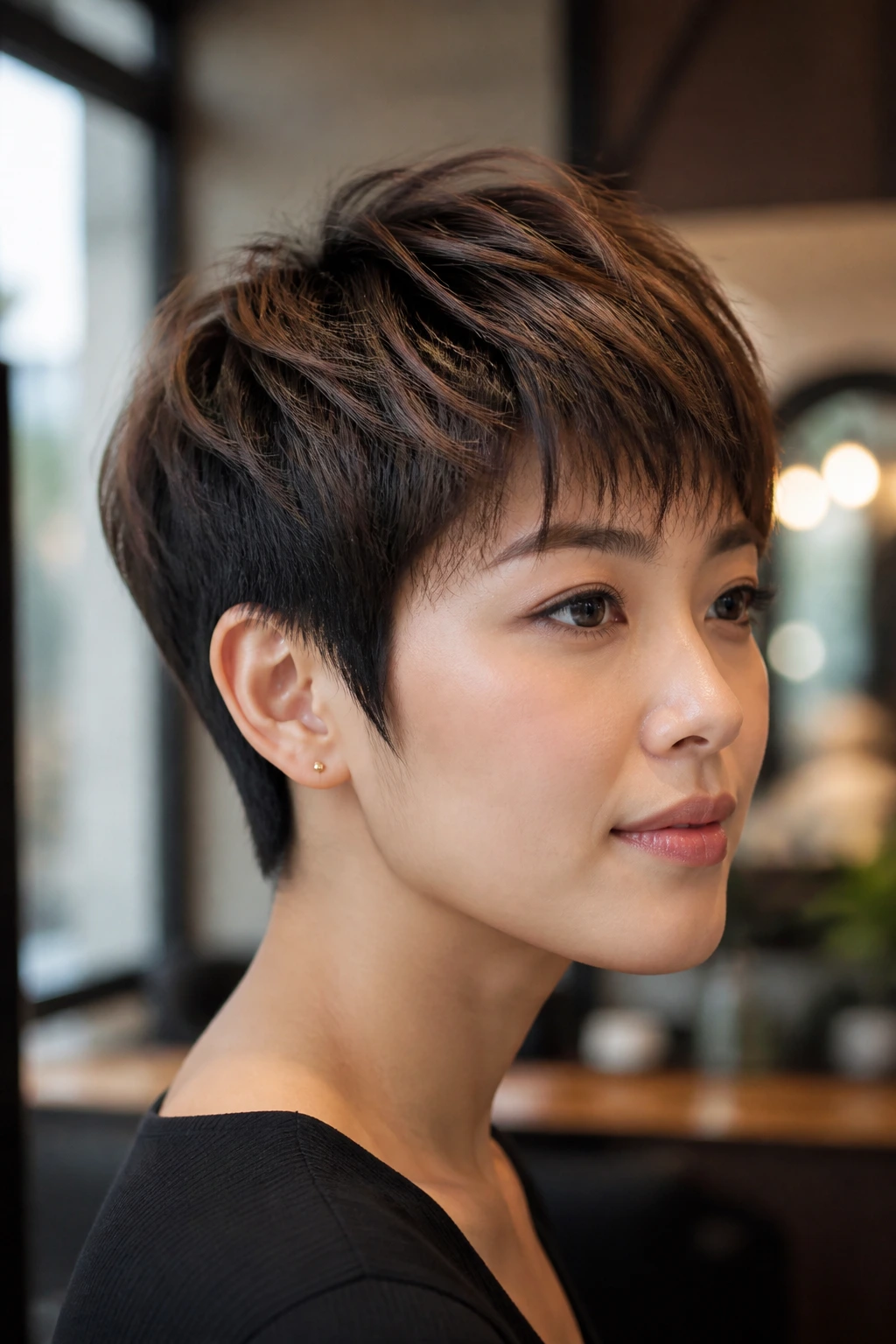
Why does a pixie cut need brown feathering?
Because short hair shows every edge. When the sides are close and the top is layered, a little brown softness keeps the cut from looking harsh or helmet-like. On Asian hair that’s naturally dense or very dark, that matters even more.
The best version keeps the sides darker and uses feathered brown pieces only where the top layer moves. Think fringe, crown, and the longest bits around the temples. Those are the spots that catch light first, and they are the ones that make the cut feel airy instead of flat.
What to ask for
- Fine highlights that sit one shade lighter than the base, not three.
- A soft fringe or side-swept front if you want a gentler line.
- A matte paste or lightweight wax for separation.
- A quick gloss every so often to keep the brown from going muddy.
A pixie does not need louder color. It needs cleaner color. And when the cut is short, a whisper of brown can do more than a whole head of bright streaks ever could.
