



Winter hair colors for brunettes have one job: keep brown hair from looking flat, muddy, or thirsty under cold daylight and dry indoor heat. The second the air turns crisp, hair color stops playing nice. What looked rich and glossy in softer weather can suddenly seem dull, especially if the ends are porous or the toner has faded warm.
Brown hair is a gift, though. It takes tone beautifully. A small shift in warmth, depth, or reflect can change the whole mood of the hair without a full-color overhaul, and that is where the smart winter choices live. I’m always more interested in shades that add shine and dimension than in anything that tries too hard to be dramatic.
That does not mean brown hair has to stay safe. Far from it. Some of the prettiest winter brunette shades are deep and moody, while others bring in spice, wine, bronze, or pale beige ribbons that wake up the base without making it look striped.
The shades below work because they respect the brunette foundation instead of fighting it. Some are subtle enough to stretch through months of hat weather. Others have a little more attitude. All of them can make brown hair look intentional, which matters more than people admit.
1. Espresso Gloss
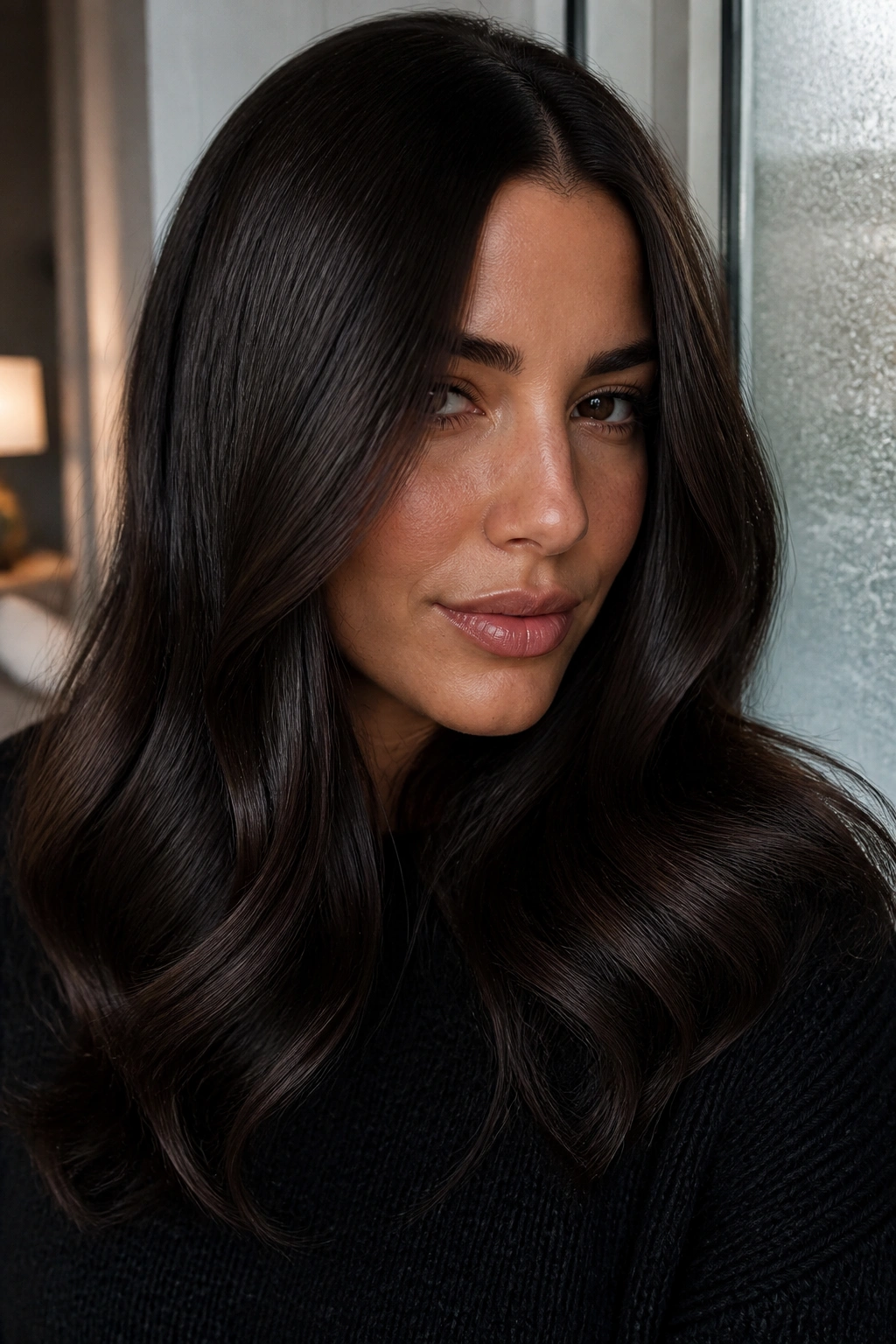
Espresso gloss is one of the easiest ways to make brunette hair look polished without changing the base color much. It gives brown hair that deep, reflective finish you notice under indoor light, where so many shades either turn red or go flat.
Why It Works on Brown Hair
The magic here is tone, not lift. Espresso gloss usually sits in the deepest brown range with a neutral-to-cool edge, so it can cover warmth that has crept into faded color while also making the hair look fuller at the ends. On a brunette base, that kind of gloss reads sleek instead of severe.
It also works well if your hair is a little dry. Gloss reflects light better than dull color, and winter light loves a reflective surface. If your hair is level 4 or 5 brown, this is one of those shades that makes people think you changed more than you did.
- Best for natural brunettes who want a darker, cleaner finish.
- Ask for a semi-permanent gloss or glaze, not a permanent black-brown dye.
- Keep it near the neutral side if your skin runs warm; too much ash can look murky.
- Plan on refreshing every 4 to 6 weeks if you want that mirror-like finish to stay sharp.
Tip: If your ends are faded, have them trimmed before the gloss appointment. Shiny color makes damage more obvious, not less.
2. Dark Chocolate Brown
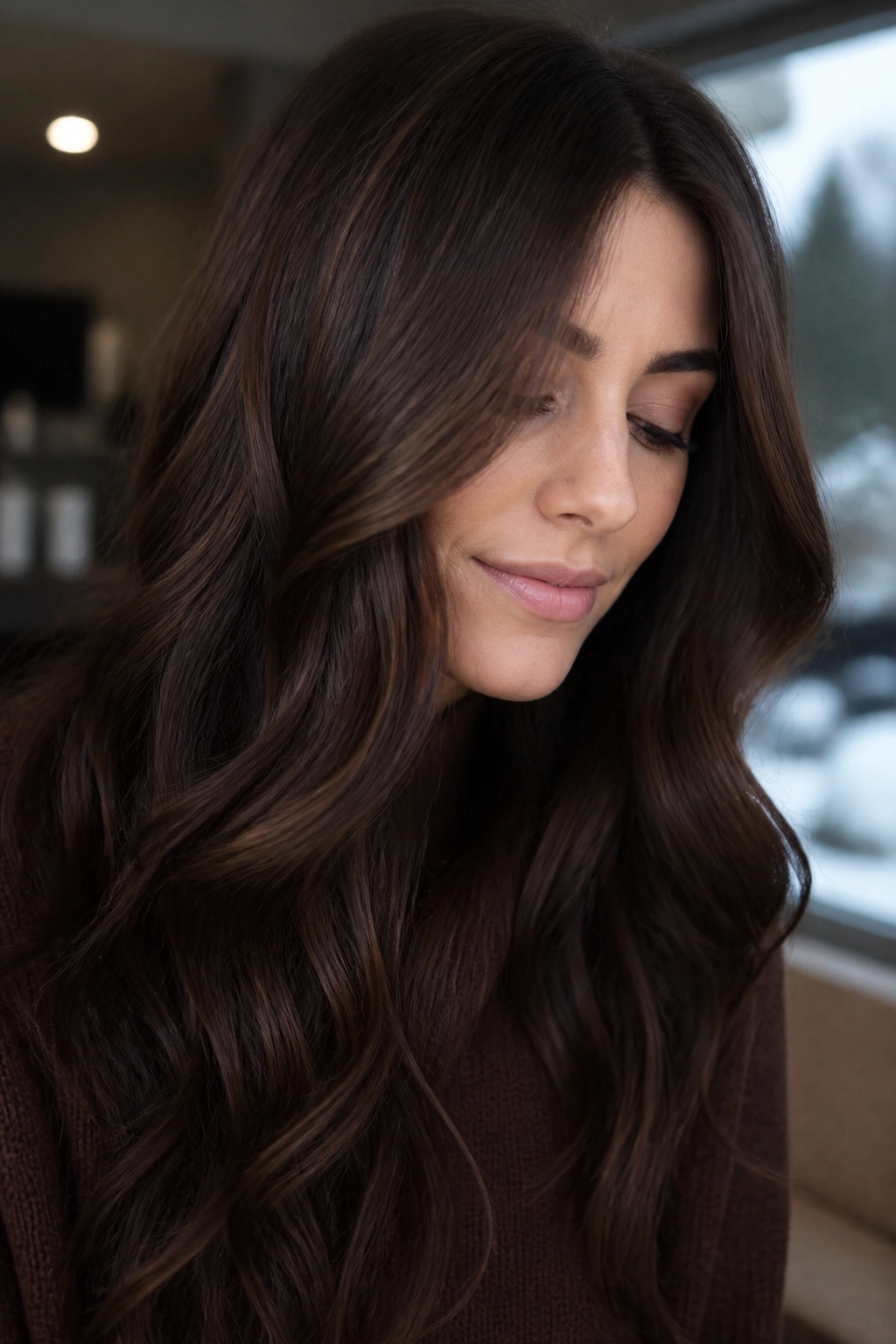
Dark chocolate brown has a smoother, softer feel than black and a richer look than plain brown. It is one of those shades that can quietly make a haircut look better, which sounds boring until you see it in real life. Then it makes perfect sense.
The reason it works is balance. A good dark chocolate shade has enough depth to look luxurious, but it still carries a hint of warmth so it does not go inky or hard. I like it on brunettes who want depth with a little softness around the face — especially if the hair is layered and needs the color to show movement.
A flat dark brown is not the goal. You want dimension hiding inside the darkness. Ask for a brown that is one to two levels deeper than your natural shade, with the mids kept slightly softer than the root. That keeps the color from reading like one heavy block.
One sentence matters here: chocolate should look edible, not painted on. If it has no reflect, it can look old fast.
3. Chestnut Brown
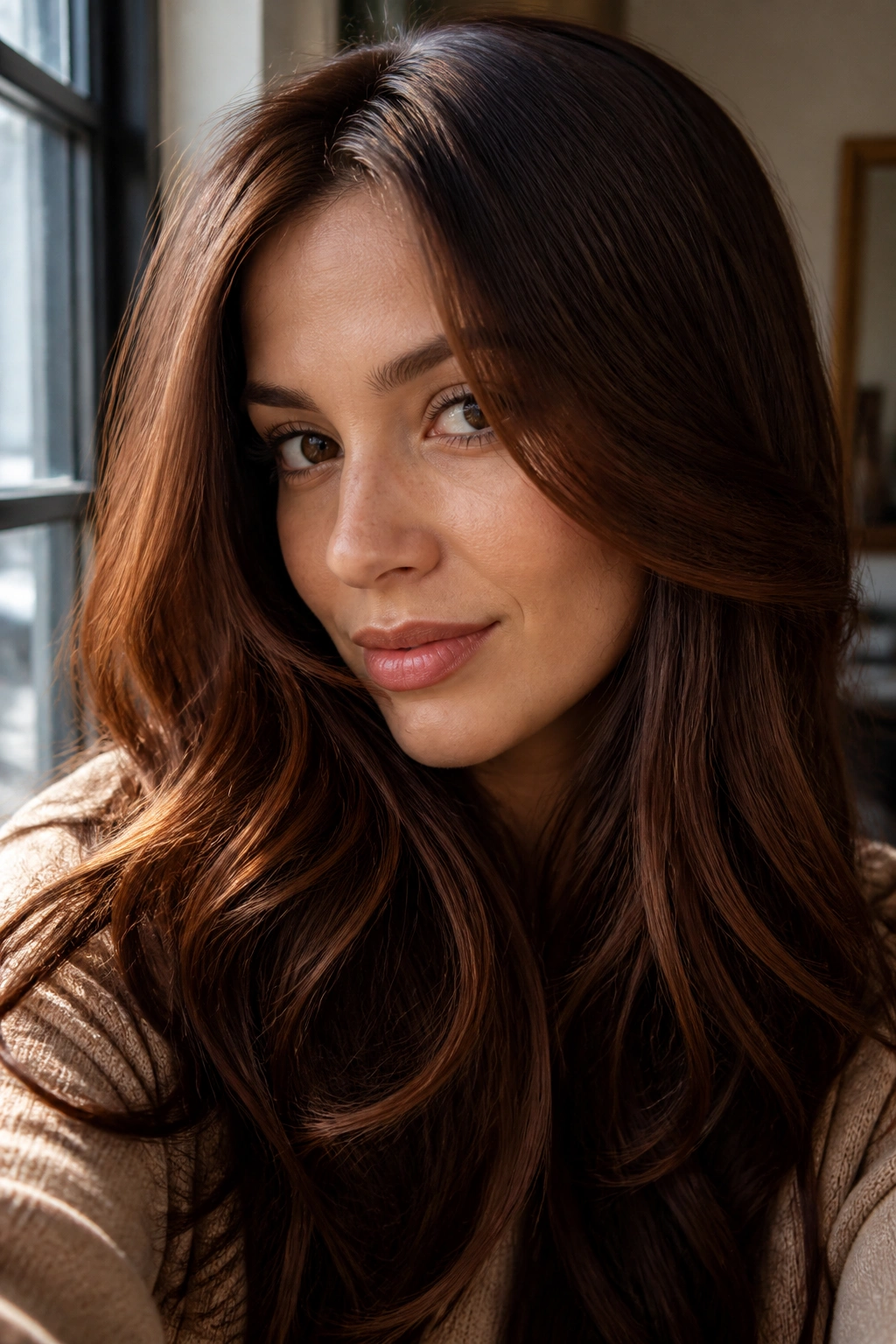
Chestnut brown is the shade I reach for when a brunette wants warmth without going copper. It has that soft red-brown glow that shows up most clearly when light hits the hair from the side, which is exactly why it feels right for colder months.
What makes chestnut work is the mix of tones. There is usually enough brown to keep it grounded, enough red to give life, and a little gold to stop the color from looking flat. On medium brunettes, chestnut can make the whole head look healthier, almost as if the hair itself had better circulation.
If your natural brown tends to go dull in winter, chestnut is a smart fix. It does not shout. It warms the face and makes the eyes look brighter, especially when the color is kept around level 5 or 6.
- Works best on neutral, golden, or olive undertones.
- Reads richer on layered cuts than on one-length hair.
- Fades gracefully if you choose a demi-permanent formula.
- Can lean orange if the red is too strong, so keep the copper light.
Pro tip: Chestnut looks best when the roots stay a touch deeper than the ends. That tiny shift gives the color more body.
4. Cinnamon Brunette
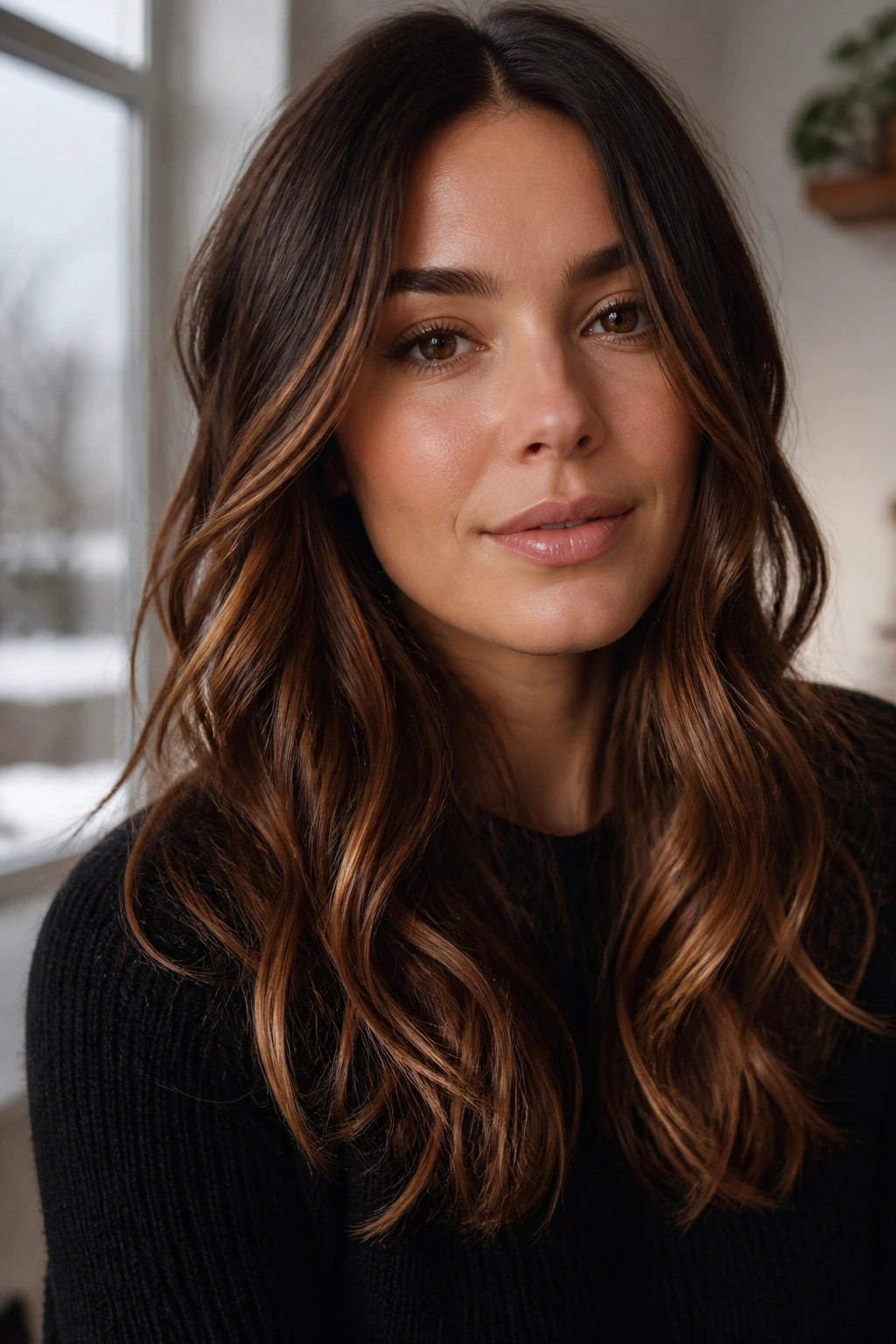
Why does cinnamon brunette keep showing up in winter? Because it gives brown hair a warm edge without turning it orange. The shade sits in that sweet spot where the hair still looks brunette, but there is enough spice in it to keep the whole look alive.
This color usually works through fine ribbons or a warm glaze rather than a full-on color shift. That is the part I like. Cinnamon can be loud if it is pushed too hard, but a soft hand gives you dimension that looks better on day three, not just the day you leave the salon.
How to Wear It
The best version of cinnamon brunette tends to show up around the face, through the top layers, and at the ends where winter dryness can steal brightness. If you have long hair, it keeps the length from feeling heavy. If you have a bob or a lob, it makes the cut feel more textured.
Ask for warm brown with a cinnamon cast, not copper highlight stripes. There is a difference, and it’s a big one.
A nice cinnamon brunette can also work if you are growing out lighter color. The warmth helps blend old pieces into the base instead of making them look stale. That softness is the whole reason people come back to this shade.
5. Mushroom Brown
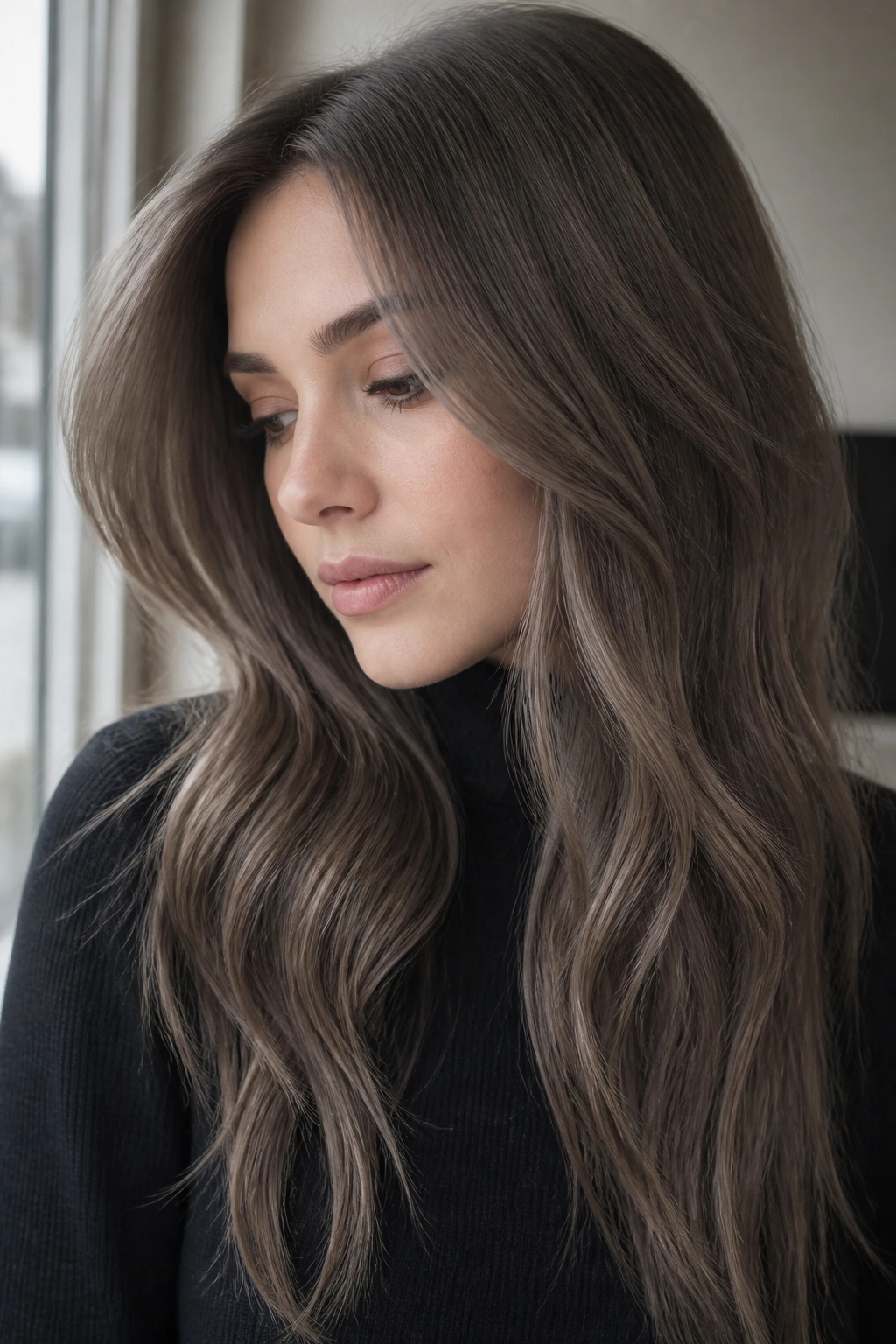
Mushroom brown is the cool brunette answer to winter color. It leans taupe, beige, and ash rather than red or gold, which gives it a smoky, expensive-looking softness that works especially well on cooler skin tones.
Unlike warmer browns, mushroom brown does not try to glow. It sits back a little. That is why it looks so good with structured cuts, blunt ends, and sleek styling. The shade has enough muted depth to stay brunette, but the cool reflect keeps it from getting brassy when the weather dries everything out.
I like mushroom brown on people who usually hate warmth in their hair. If gold highlights make you feel like your color turned too sunny, this is a calmer choice. It also photographs well under gray winter skies, where red-based colors can sometimes become too loud.
You will want to keep the tone controlled. Ashy shades can look flat if they are pushed too far, so the best mushroom brown still has a little softness in the middle. Think taupe, not mud.
6. Smoky Brunette
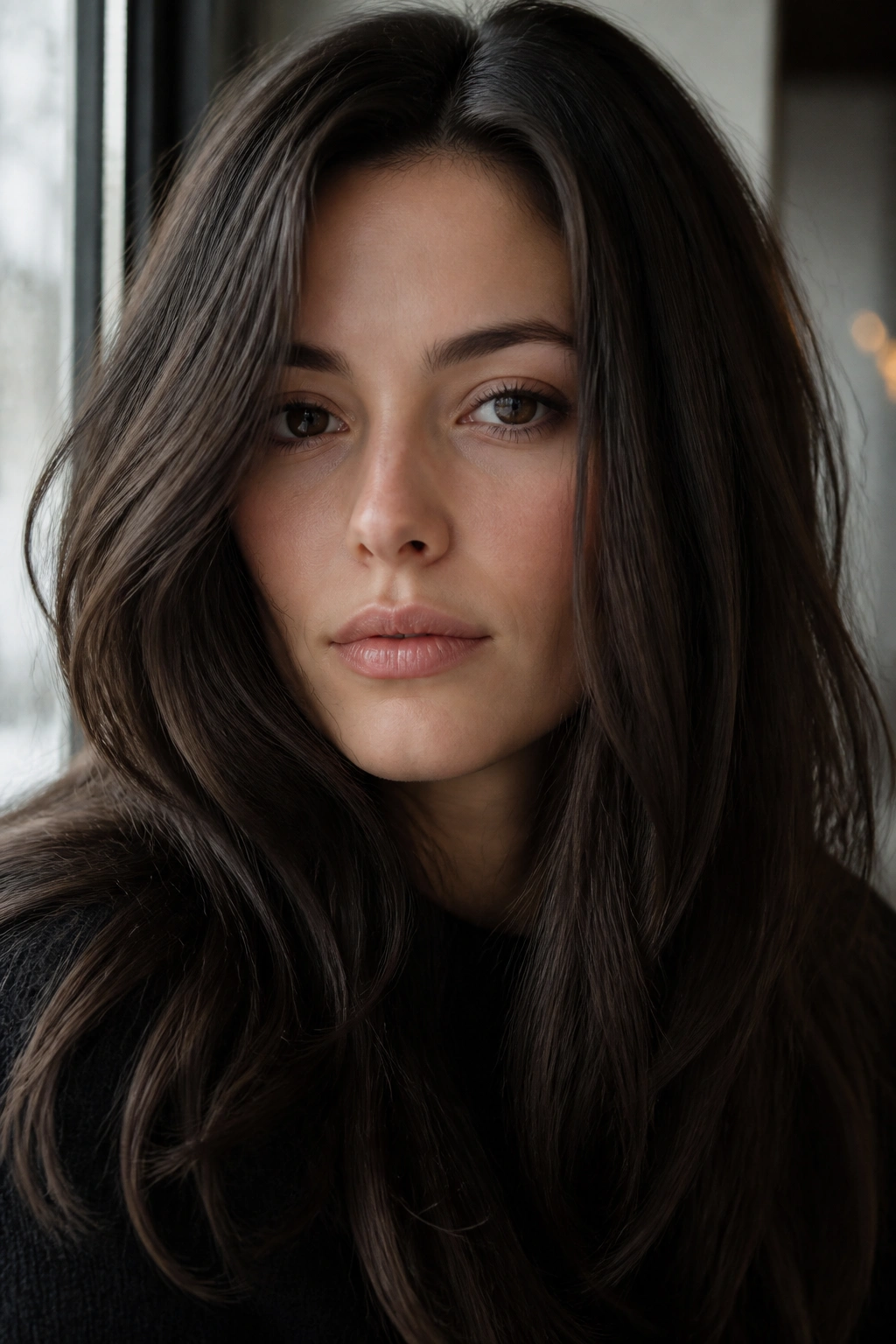
Smoky brunette is for anyone who wants depth with a cooler edge and no obvious red tones. It feels moodier than chocolate, but it is not as harsh as jet black. That middle ground is exactly why it works in winter.
The shade usually comes from a mix of deep brown and cool-toned glossing, which gives the hair a misty finish rather than a glossy warm one. I like it on medium-to-dark brunettes who want their color to look modern without turning the whole head dark enough to lose movement. The hair still moves. It just looks more restrained about it.
This is one of those shades that can rescue faded balayage. If your highlights have gone too gold, a smoky glaze can pull the whole look back into balance. And if your hair is naturally dark, it can make the base look denser, which is handy when winter air makes hair puff up and lose shape.
One caution: smoky brunette needs shine to stay pretty. If the cuticle is rough, the color can go a bit dull. A light smoothing cream or glossing treatment makes a real difference.
7. Soft Caramel Ribbons
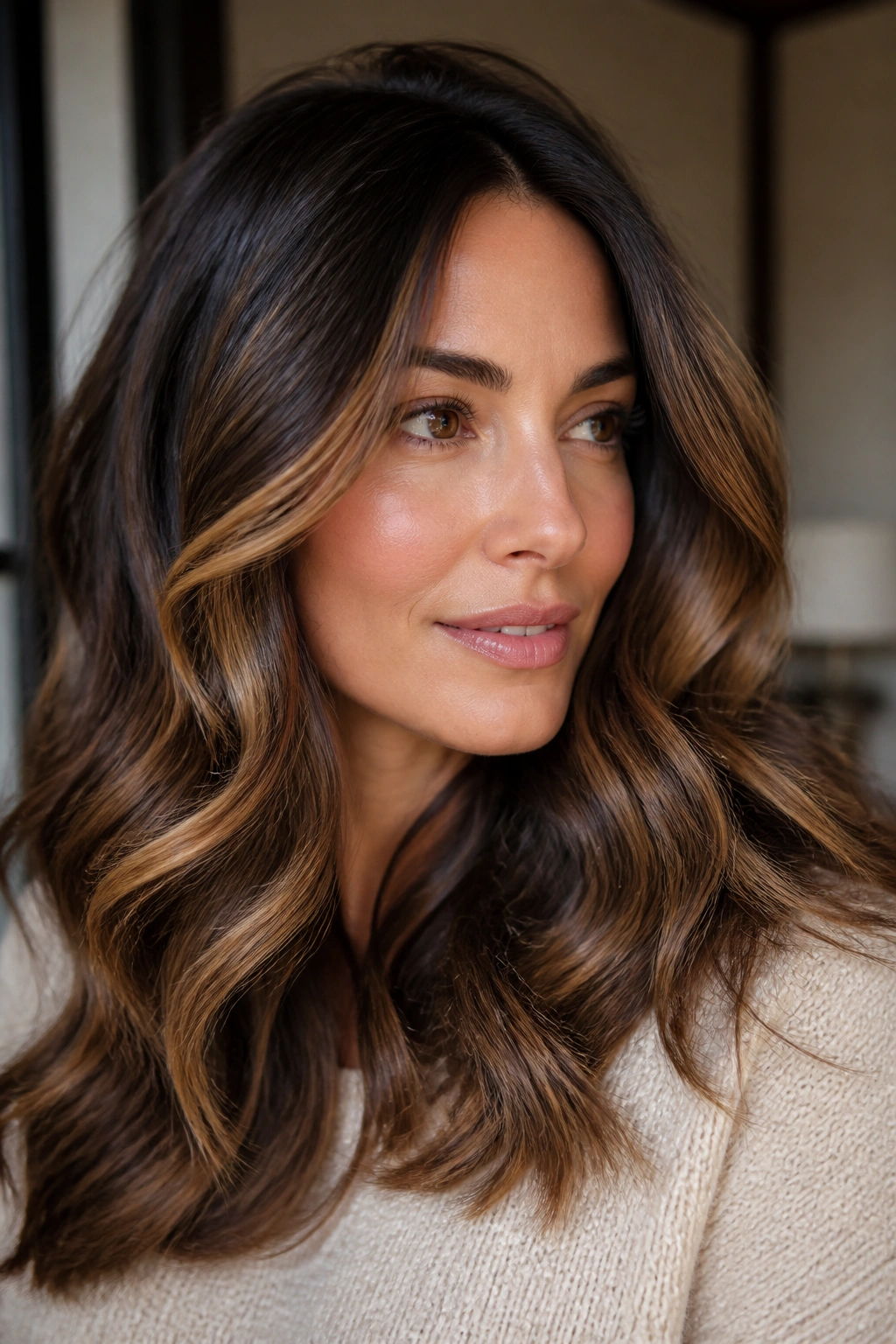
Soft caramel ribbons are the brunette-friendly version of brightness. They lift the hair just enough to catch winter light, but they stay woven into the base so the overall look still reads brown.
The best thing about this shade is placement. A few caramel pieces around the face can make the skin look warmer and the eyes look brighter without turning the whole head lighter. That’s the trick. You want ribbons, not stripes. You want movement, not contrast for its own sake.
Where to Place Them
- Keep the brightest pieces around the face and the top layers.
- Let the lower lengths stay deeper so the hair keeps visual weight.
- Ask for a caramel tone that sits between gold and beige, not orange.
- Use fine foils or hand-painted pieces for a softer grow-out.
This is one of my favorite winter brunettes for people who wear a lot of black, gray, camel, or cream. The color wakes up neutral clothes without screaming for attention.
Tip: If your hair is fine, keep the caramel pieces delicate. Too much brightness can make the hair look thinner, not fuller.
8. Mocha Balayage
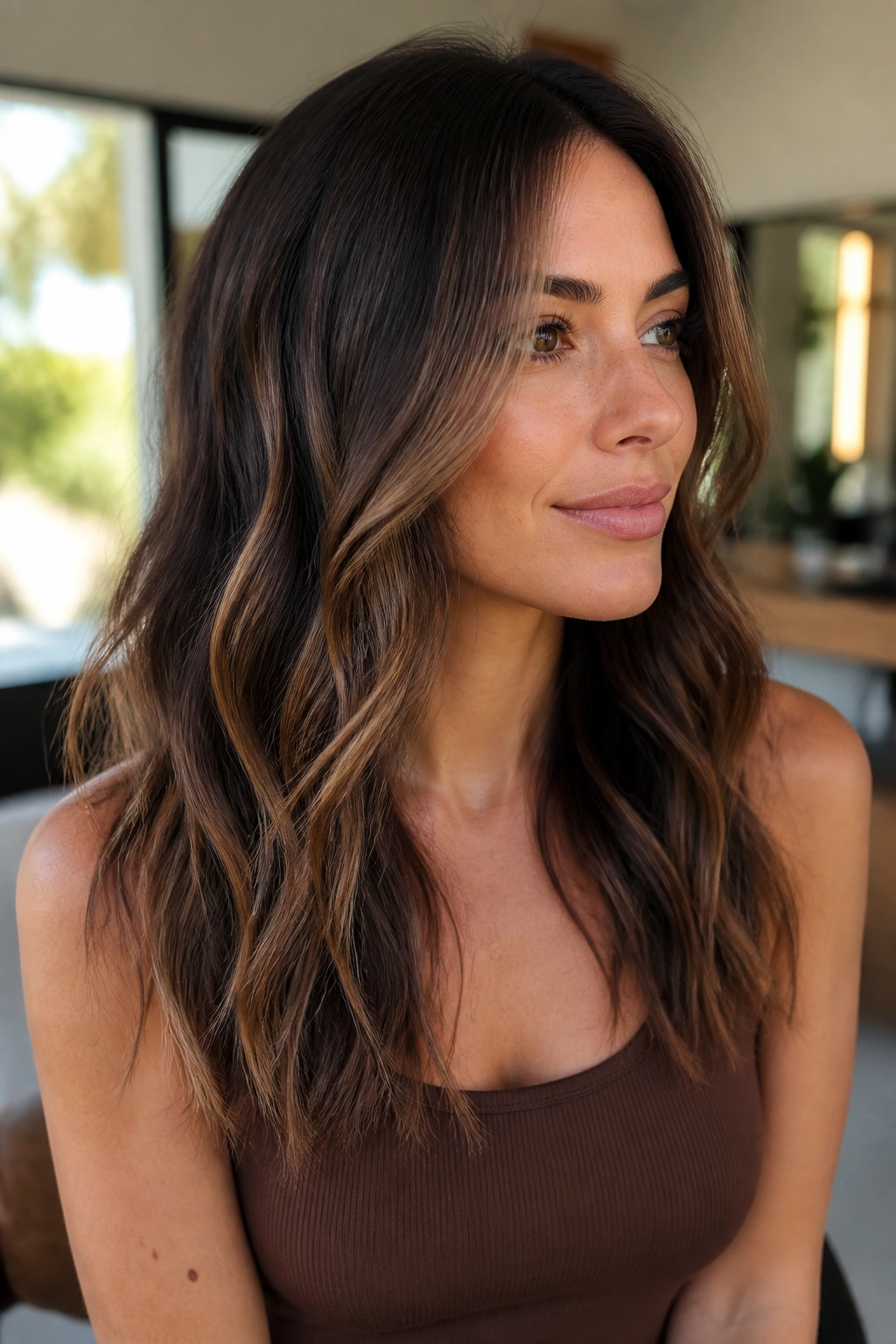
What makes mocha balayage different from ordinary highlights? It keeps the whole head in the coffee family. The lighter pieces are there, yes, but they are blended so the result feels soft and grown-in rather than striped or high-contrast.
Mocha balayage is a strong winter choice because it adds shape. Brown hair in colder months often loses that sense of movement, especially if the roots and ends are almost the same color. A mocha ribbon here, a lighter brown sweep there — suddenly the cut has depth again. It is especially good on long layers, where the hand-painted pieces can follow the shape of the haircut.
What to Ask For
Request a darker mocha base with lighter brown ribbons that stay within two shades of your natural color. That keeps the look believable. If the contrast gets too large, the color stops feeling winter-friendly and starts leaning summer-blonde.
Mocha balayage also grows out well if your schedule is not built around salon visits. The root shadow helps the color stay soft, and the mixed tones keep regrowth from looking blunt.
If you want one brunette option that feels easy but not boring, this is it.
9. Cherry Cola Brown
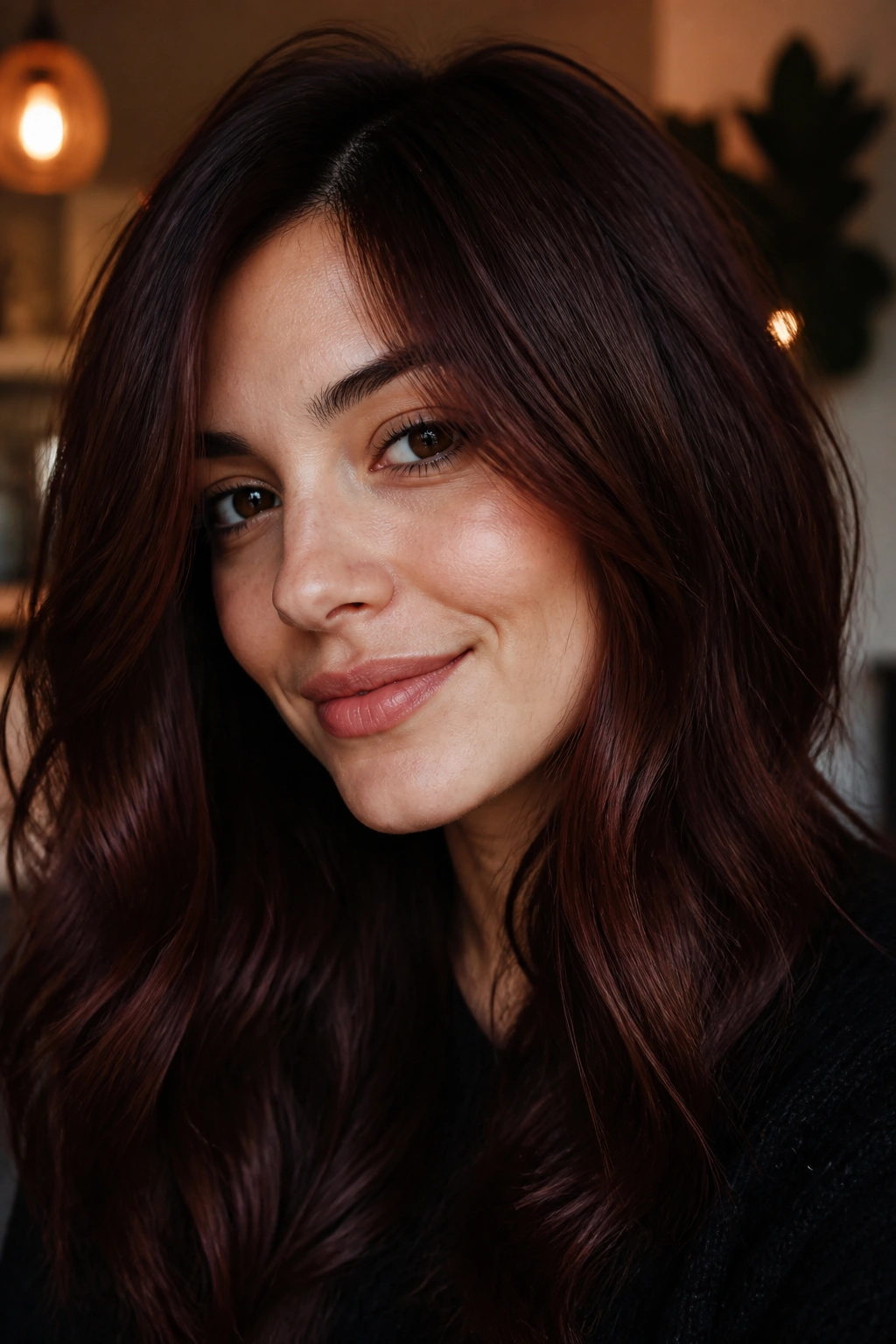
Cherry cola brown brings a little drama, but not the costume-y kind. It is rich brown with a burgundy-red cast that shows up most clearly in low light, under lamps, or in the glow from a warm room. The shade has a good sense of humor, which is rare in hair color.
The cool thing about cherry cola is that it changes by setting. In daylight, it can read like a deep brunette with a red sheen. Indoors, it turns moodier and a bit more wine-like. That shift is part of the appeal. You get more than one look from the same color.
It works especially well on medium brunettes who want a color that feels seasonal without going too bright. If you have green or hazel eyes, the red undertone can make them stand out fast. The shade also flatters layered cuts because the color moves when the hair swings.
A good cherry cola brunette should never look purple-heavy unless that is your goal. The brown needs to stay visible, or the whole thing tips into fashion-color territory.
10. Auburn Brown
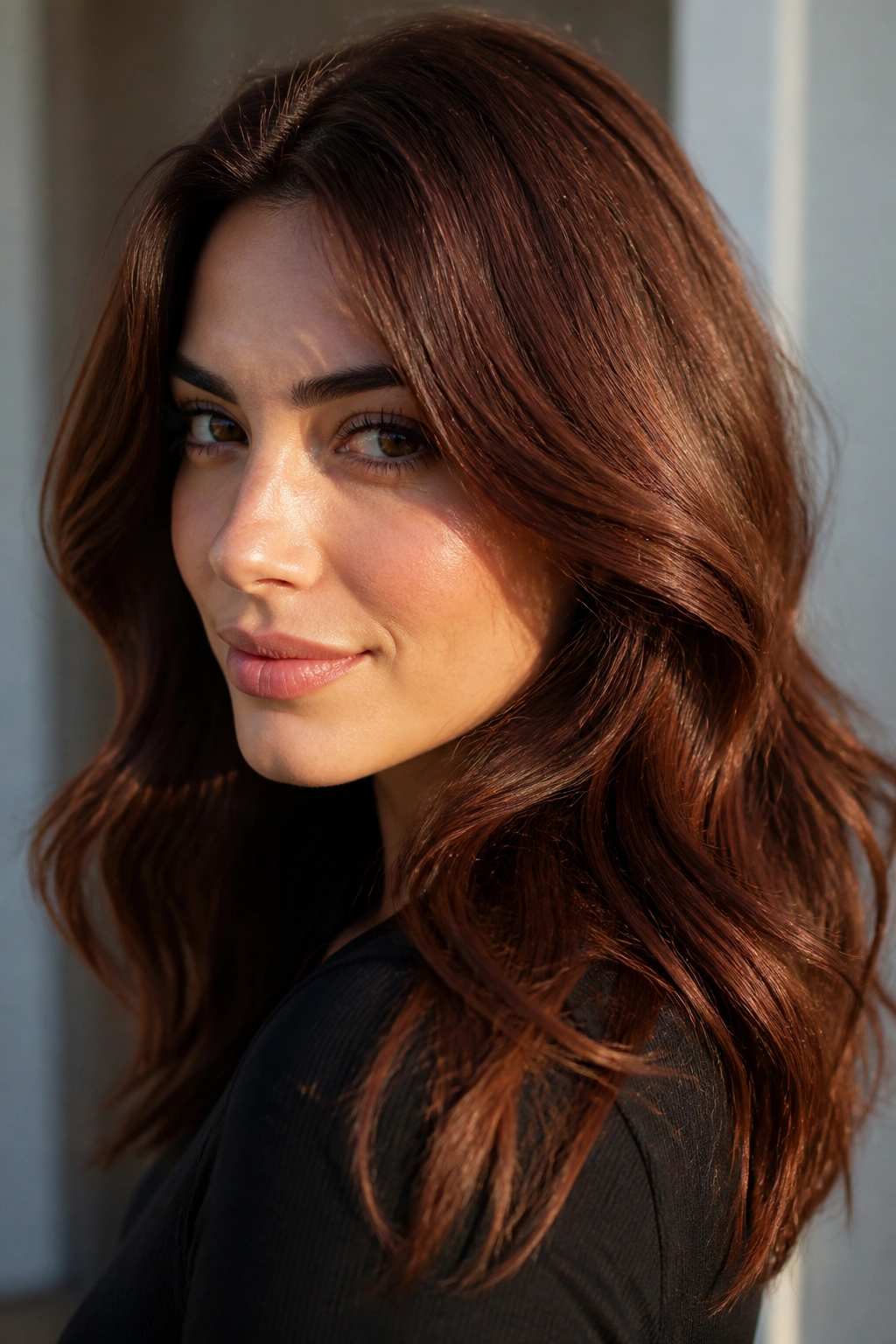
Auburn brown is the shade for brunettes who want warmth with a little more fire. It sits between brown and red, and when it is done well, it can look rich rather than loud. That line matters.
The best auburn brunettes still read as brown from a distance. Up close, the red-brown glow appears in the light and gives the hair a softer, more alive finish. If your natural color is medium brown and tends to go flat in winter, auburn can bring it back to life without needing a major lightening service.
I like auburn on haircuts with some shape. Blunt cuts can make the shade feel heavier, while layers or curls break up the color and let the warm tones move. It also works well if your skin has peach, golden, or neutral warmth.
There is a catch. Too much red and the color gets louder than most people want for everyday wear. Keep the base brown strong, and let the auburn live in the reflect. That keeps the shade wearable through the whole season.
11. Toffee Brunette
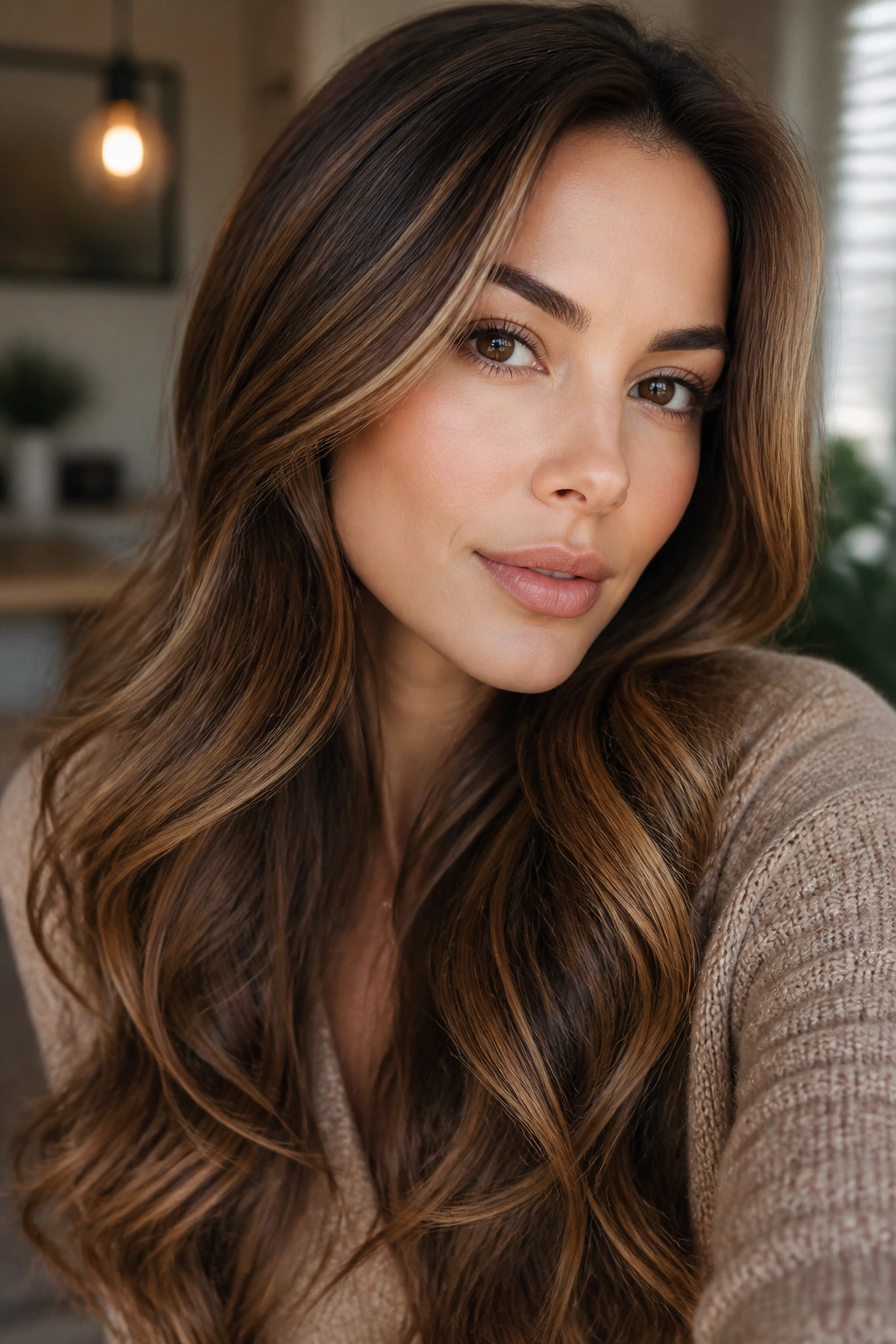
Toffee brunette is softer than caramel and creamier than chestnut. It has that gentle, buttery warmth that looks especially good when brown hair needs light without going near blonde territory.
Unlike brighter golds, toffee stays grounded. The color usually appears as a warm brown base with pale amber pieces or a gentle golden glaze, which gives it a smooth finish. It is one of those shades that flatters without demanding too much maintenance. The warmth hides a bit of fade, and the overall tone stays friendly as it grows out.
This is a smart choice if your natural brunette base is medium or light brown and you want a slight lift. It keeps the hair looking soft around the face while still leaving enough depth in the length. If you wear makeup, toffee works especially well with peach blush, terracotta lips, and anything creamy on the eyes.
I would pick toffee over brighter caramel if you want something calmer. It has less contrast, which makes it feel more winter-appropriate.
12. Honey Bronze
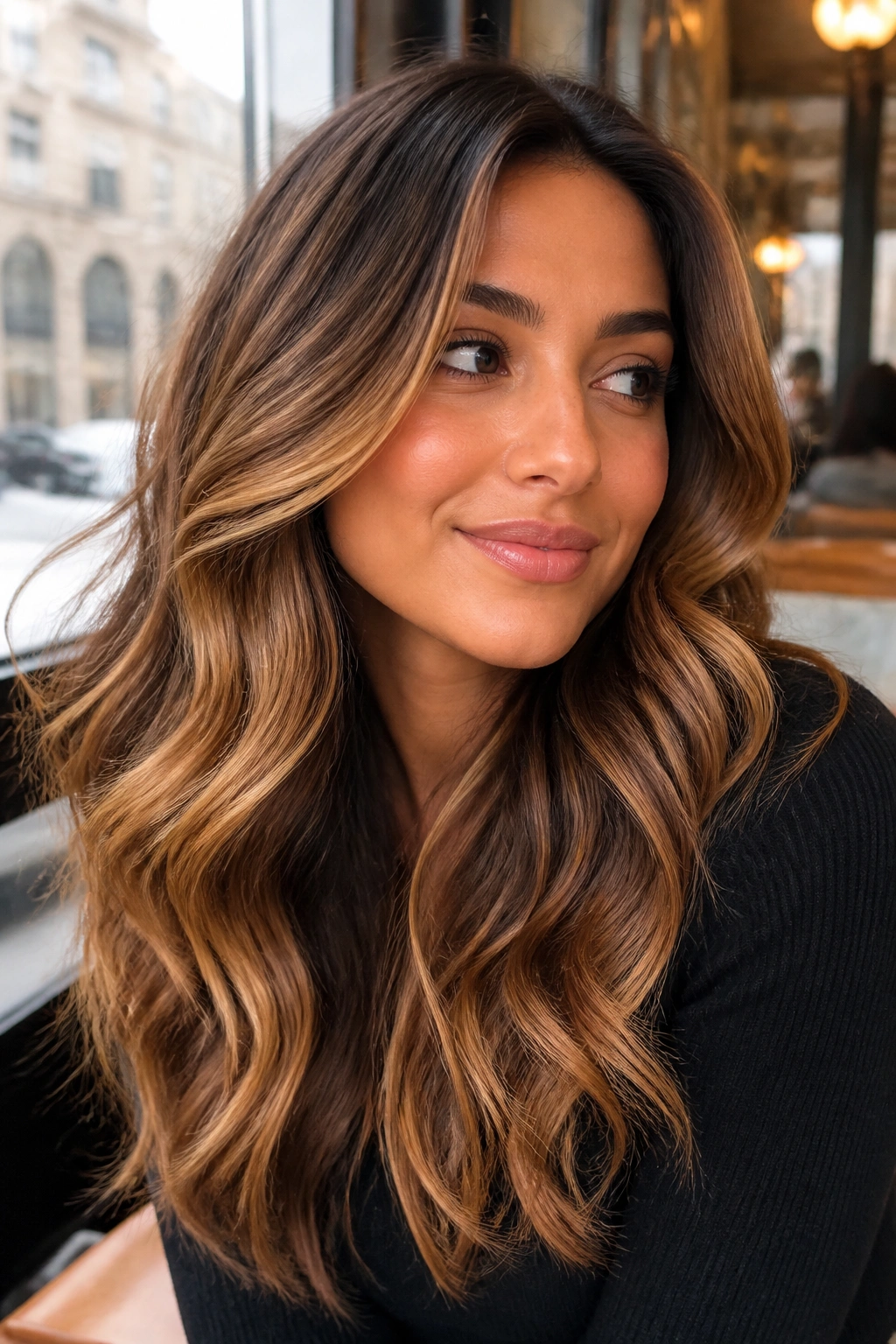
Honey bronze is for brunettes who want light, but not the kind that turns them blonde by accident. The shade mixes warm honey with a bronzed brown base, and the result is brighter than chestnut while still feeling rooted.
The color really comes alive in the front sections. A little honey around the face catches winter daylight and makes the complexion look less washed out, which is handy when skin goes pale in colder months. Bronze through the mids keeps the shade from looking sugary or too yellow.
It works best when the hair still has depth underneath. If the base is too light, honey bronze can flatten out. If the base stays deeper, the lighter reflect has room to show off. That contrast is what gives the shade shape.
One neat thing about honey bronze is how forgiving it can be on wavy hair. The bends in the hair catch the color and make the bronze pieces look more expensive than they are. Straight hair can wear it too, but the shine has to be there.
13. Black Cherry Glaze
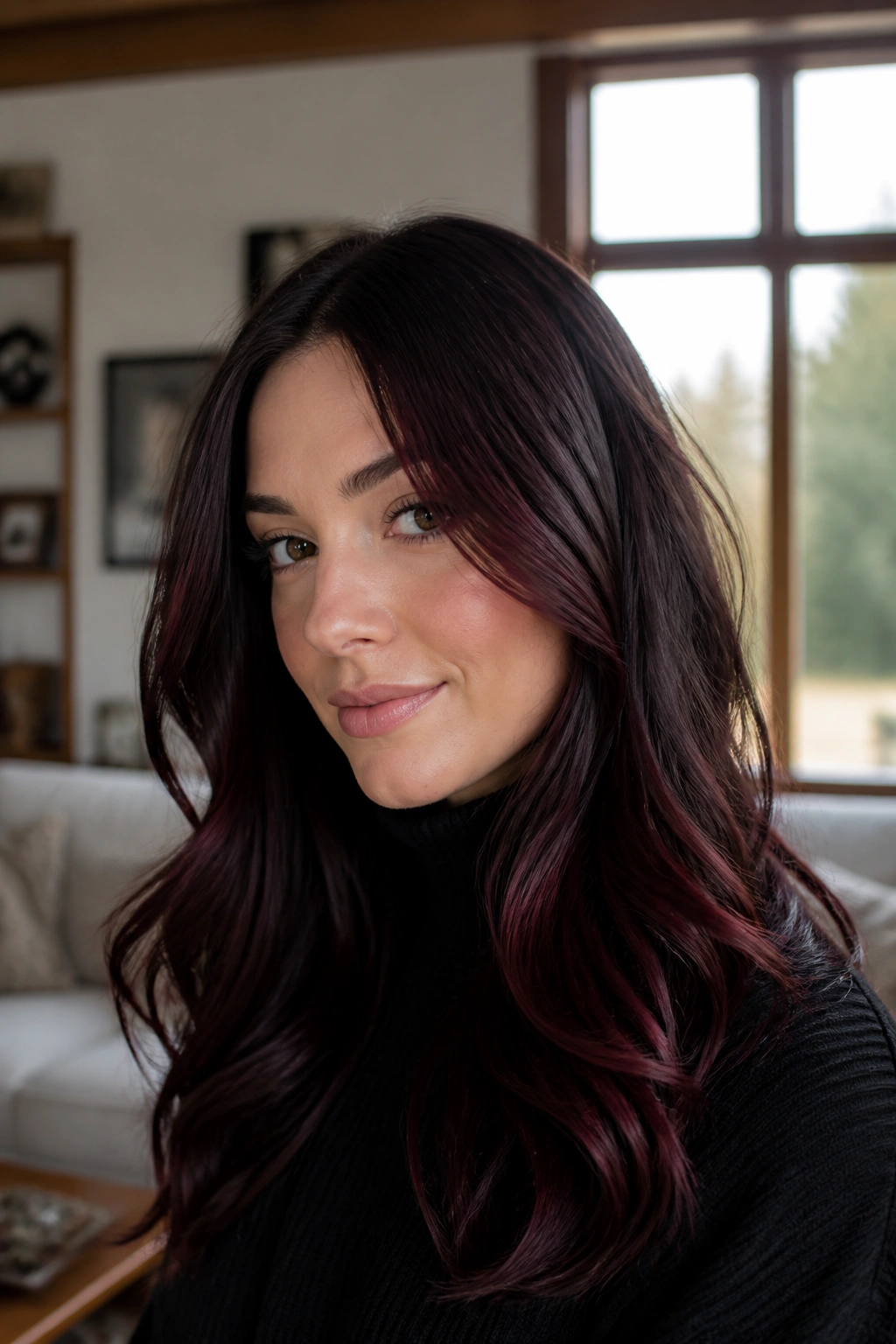
Black cherry glaze is darker and moodier than cherry cola, with a richer finish that leans toward deep burgundy. It is not a loud red. It is a shadowy red that appears when the light hits at the right angle.
That makes it a strong choice for brunettes who want visible color without a huge leap. On dark brown hair, the glaze can look almost black indoors and then flash cherry at the ends or around the crown. The effect is subtle until it is not, which is half the fun.
How It Reads on Different Bases
On level 3 or 4 brunettes, black cherry looks deep and plush. On level 5 or 6 hair, the red can show a little faster, so the color feels more obvious. That is useful if you want a seasonal change that people notice but cannot quite name.
If you want the shade to stay elegant, keep the burgundy base deep and let the cherry appear only in reflect. Too much red can make it feel louder than the name suggests. A glaze works better than a permanent high-lift formula here.
This shade is not for someone who wants low-maintenance neutrality. It is for someone who likes a little attitude in the hair.
14. Ash Brown
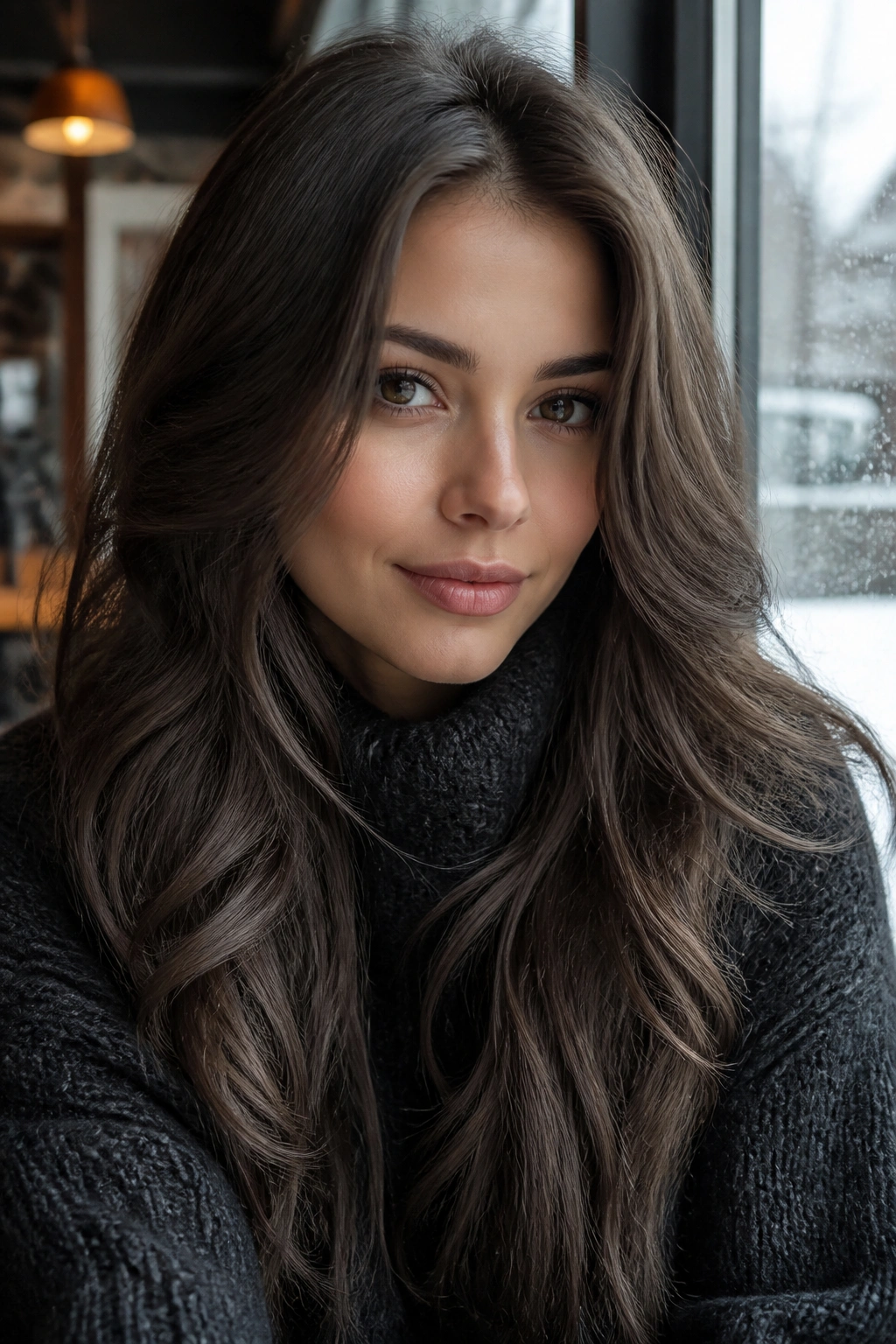
Ash brown is the color I recommend when brunette hair keeps turning orange in winter. It tones out warmth and replaces it with a cool, clean brown that feels crisp against cold-weather clothes.
The shade can look very modern, but it needs a careful hand. Too much ash and the hair starts to look dusty. Too little and the orange warmth wins back the fight. The best ash brown sits in a middle zone where the reflect is cool, not dead. That is why it is so useful on color-treated brunettes with brassiness at the mids or ends.
What to Watch For
- Ask for ash over a brown base, not ash alone.
- Keep the formula slightly softer on porous ends.
- Use a blue-toning shampoo only when warmth starts showing through.
- Avoid over-toning; muddy hair is hard to fix.
Ash brown also pairs well with blunt cuts and polished styling. The cool tone and clean shape work together. If your hair is naturally warm and you like that warmth, this is probably too cool for you. If you want a sharper, quieter brunette, though, it’s a solid winter move.
15. Bronde with Winter Lowlights
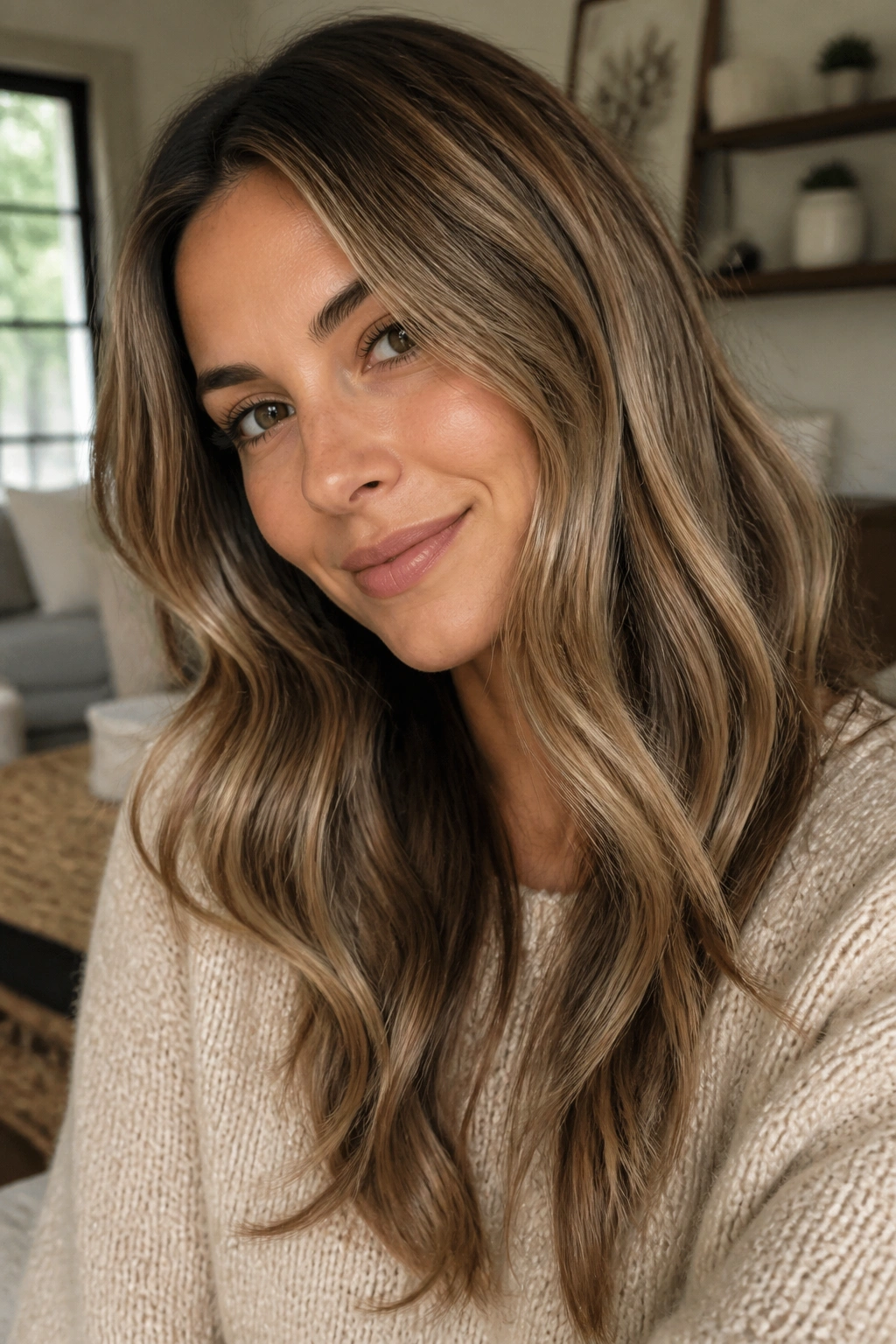
Of all winter hair colors for brunettes, bronde with winter lowlights might be the most useful. It keeps some brightness from earlier lighter pieces, then adds darker strands back in so the whole head feels grounded again.
That extra depth matters. Blonde-heavy brown hair can start to feel a little floating or disconnected when the weather turns cold. Lowlights fix that by putting shadow back into the hair, which makes the highlights look more expensive and less scattered. The result is softer, denser, and far easier to wear with sweaters, coats, and scarves.
I like this shade for anyone growing out lighter summer color. The lowlights bridge the gap between your natural brown and the lighter pieces, so the grow-out does not look accidental. You can keep the face frame brighter while deepening the interior sections, which is a smart way to stretch time between full color appointments.
A good bronde with lowlights should feel deliberate. Not stripey. Not overdone. Just balanced.
16. Maple Brown
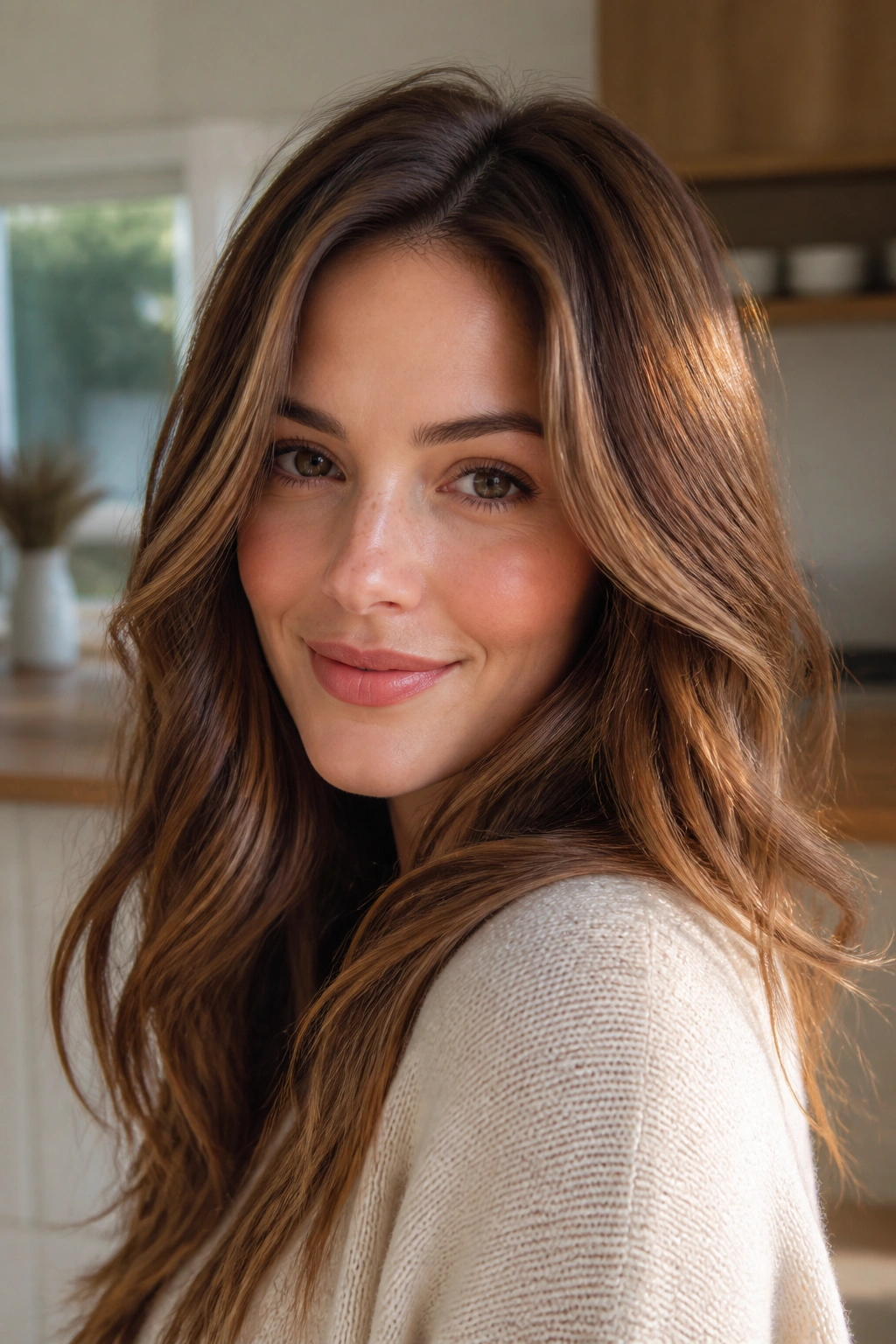
Maple brown has a warm, syrupy richness that feels cozy without looking flat. It sits between golden brown and light auburn, but the best versions stay brown first and warm second.
Unlike chestnut, which has a softer red-brown vibe, maple brown tends to read a little brighter and more golden. That is useful if your complexion needs warmth but you do not want the hair to wander into copper. Maple brown can make the face look a little softer and more awake, especially when the weather has washed everything else out.
This shade shines on medium brunettes and on anyone with a warm undertone in the skin. It also works nicely with waves, because the warm reflect shows up more at the bends. If your hair is straight, the color still works, but the shine has to be healthy.
I would call maple brown a friendly winter brown. It is warm enough to feel seasonal, but it does not cross the line into orange if the tone is handled well.
17. Walnut Brown
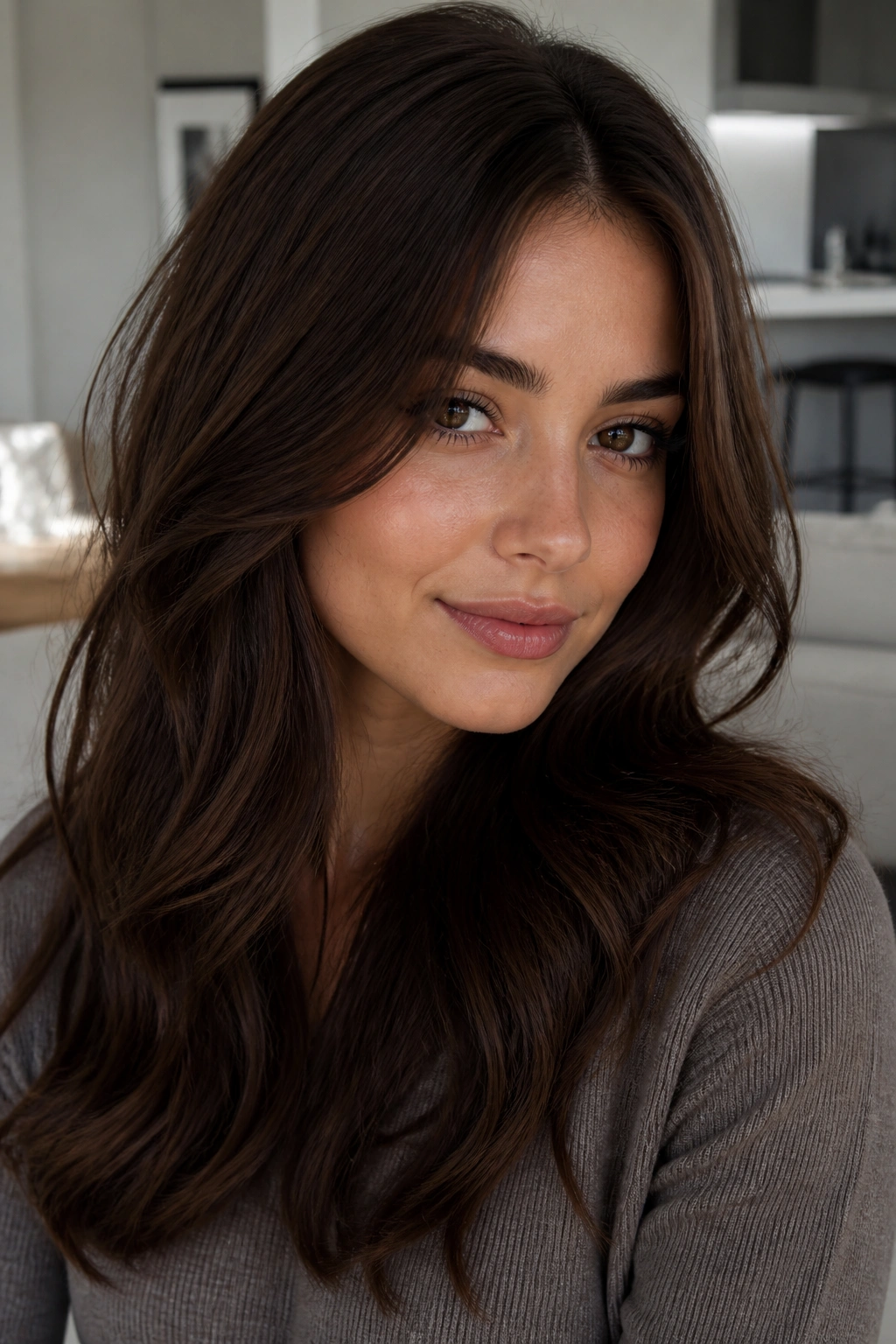
Walnut brown is the quiet one in the room. Deep, neutral, and just cool enough to look clean, it gives brunette hair a dense, expensive-looking finish without forcing the color into pure black.
That neutrality is the appeal. Walnut brown lets the haircut do the talking. It also hides regrowth better than some warmer shades because the tone stays close to a natural brunette range. If you are tired of maintaining a very warm gloss that fades fast, walnut can feel like a relief.
The color looks especially good on thick hair, where the depth makes the hair look glossy and full. On fine hair, it can add the illusion of thickness if the ends are kept neat. The shade is less forgiving if the hair is very damaged, though — dark neutral colors show rough texture fast, so this is not the best choice if the ends are fried.
One-sentence verdict: walnut brown is for people who want their hair to look calm, not trendy. That is not a dig. It is a strength.
18. Merlot Brunette
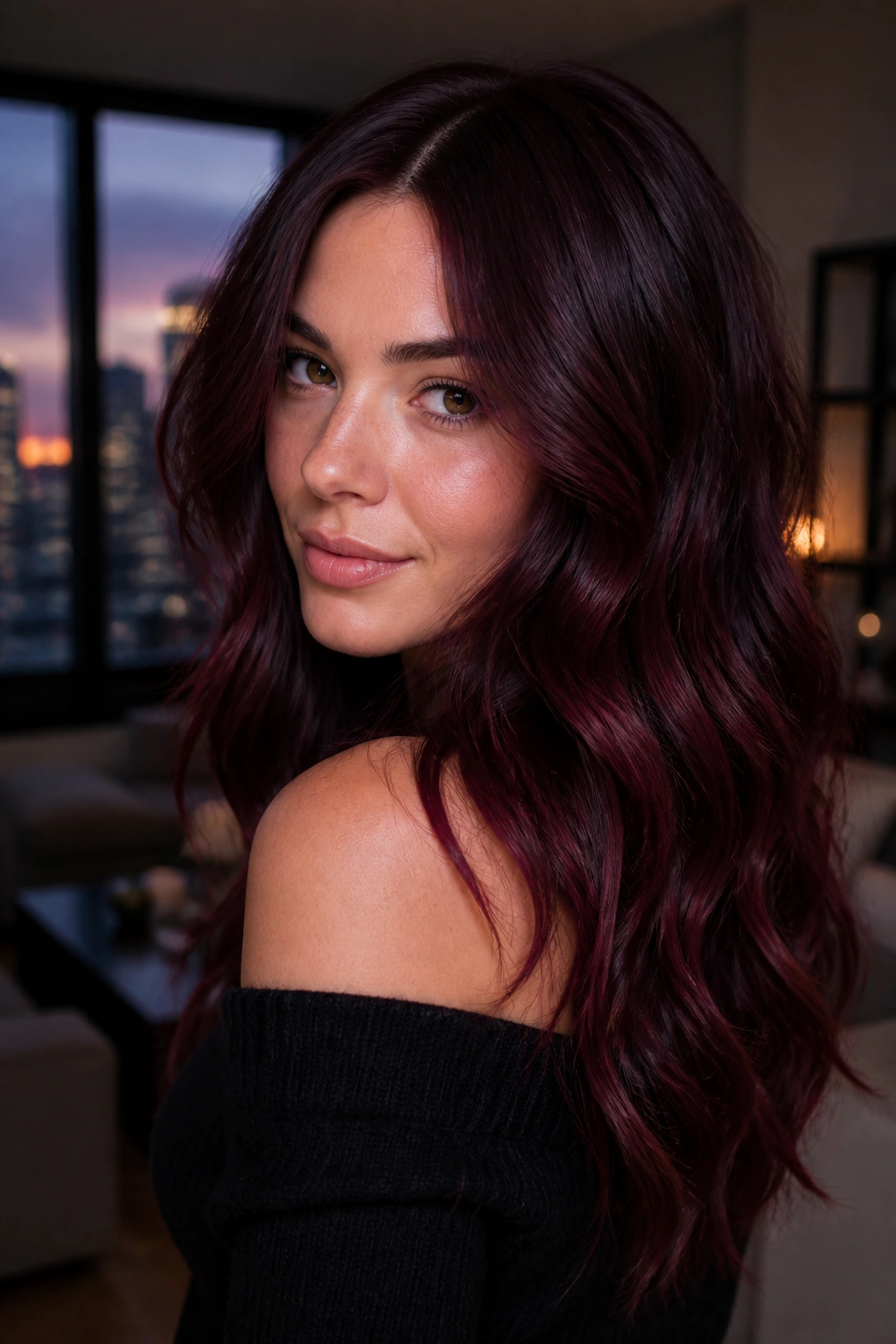
Merlot brunette has depth, warmth, and a little dark fruitiness that makes it feel richer than a standard red-brown. It is one of the few wine-toned colors that can still look understated on a brunette base.
The trick is keeping the red deep. Merlot should look like a shadow with color in it, not a bright burgundy overlay. On dark brown hair, the shade can appear almost black until the light catches it, then the plum-red reflect shows up and changes the whole mood. That shift makes the hair feel more alive in winter, especially when the rest of the outfit is built on black, navy, or charcoal.
This shade tends to flatter cool or neutral skin, though warmer complexions can wear it too if the red is kept soft. It looks nice on medium-length cuts and long layers because the color moves as the hair moves. Straight, glossy hair shows it in a sleek way. Waves make it look more dimensional.
If you like darker hair with a little personality, merlot brunette gives you that without shouting.
19. Copper-Kissed Brunette
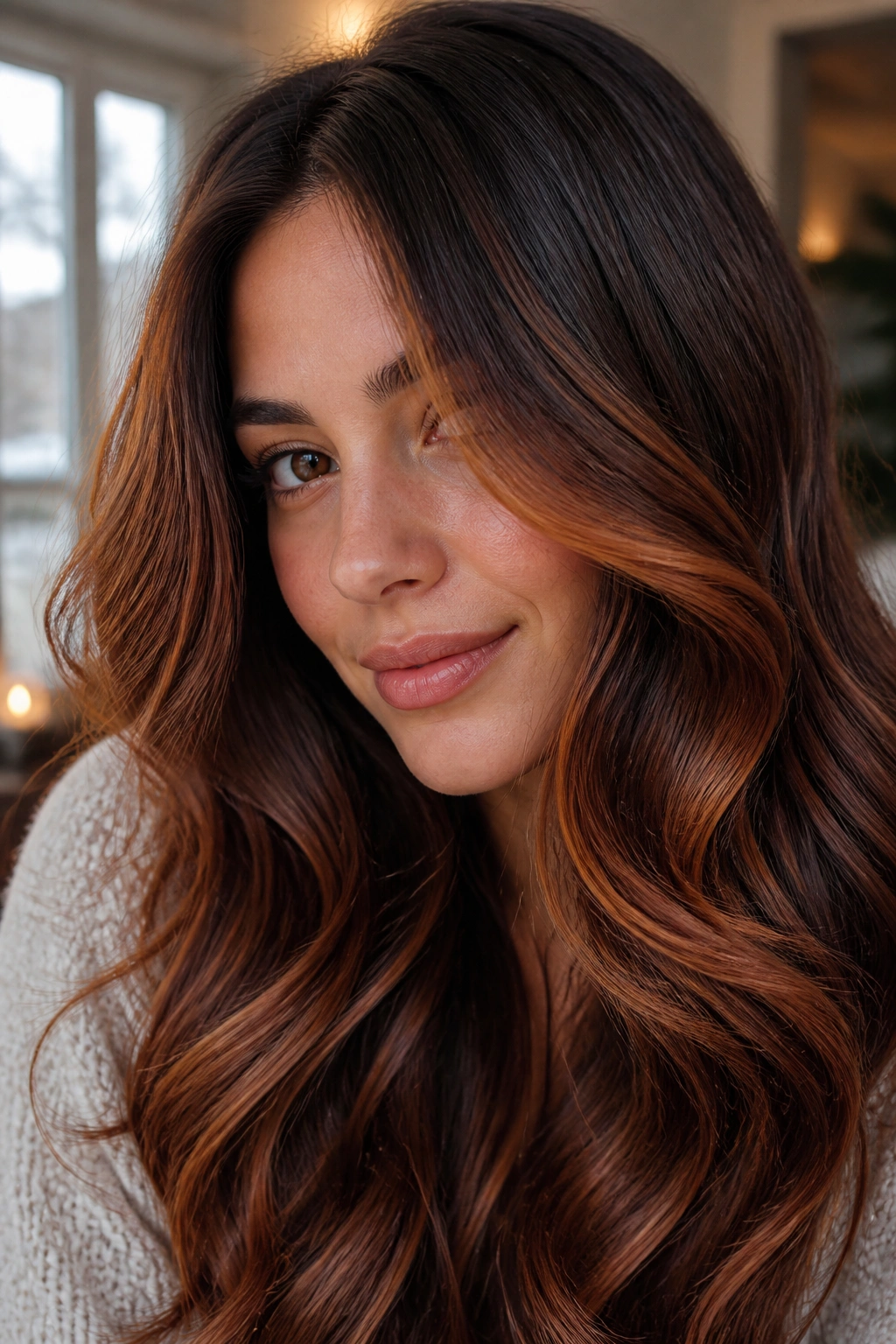
Copper-kissed brunette is warmer and brighter than auburn, but it does not need to take over the whole head. The best versions use copper like seasoning — a little on the surface, a little around the face, and enough through the mids to catch light.
That placement matters. A full copper shift can be a lot for winter, and it fades faster than most people expect. A brunette base with copper-kissed ribbons, though, can look fresh for weeks because the darker hair underneath keeps the color anchored. I especially like it on layered cuts where the light pieces can break up the shape.
Quick Notes
- Best when copper stays soft and mixed with brown, not orange.
- A face-frame piece or two can be enough.
- Works well with curls and waves because they show the warm reflect.
- Needs glossing sooner than deeper brunette shades.
This is a good choice if you want your hair to feel brighter without crossing into full red. It has enough warmth to wake up winter skin, and enough brown to keep it wearable.
20. Cocoa with Cashmere Highlights
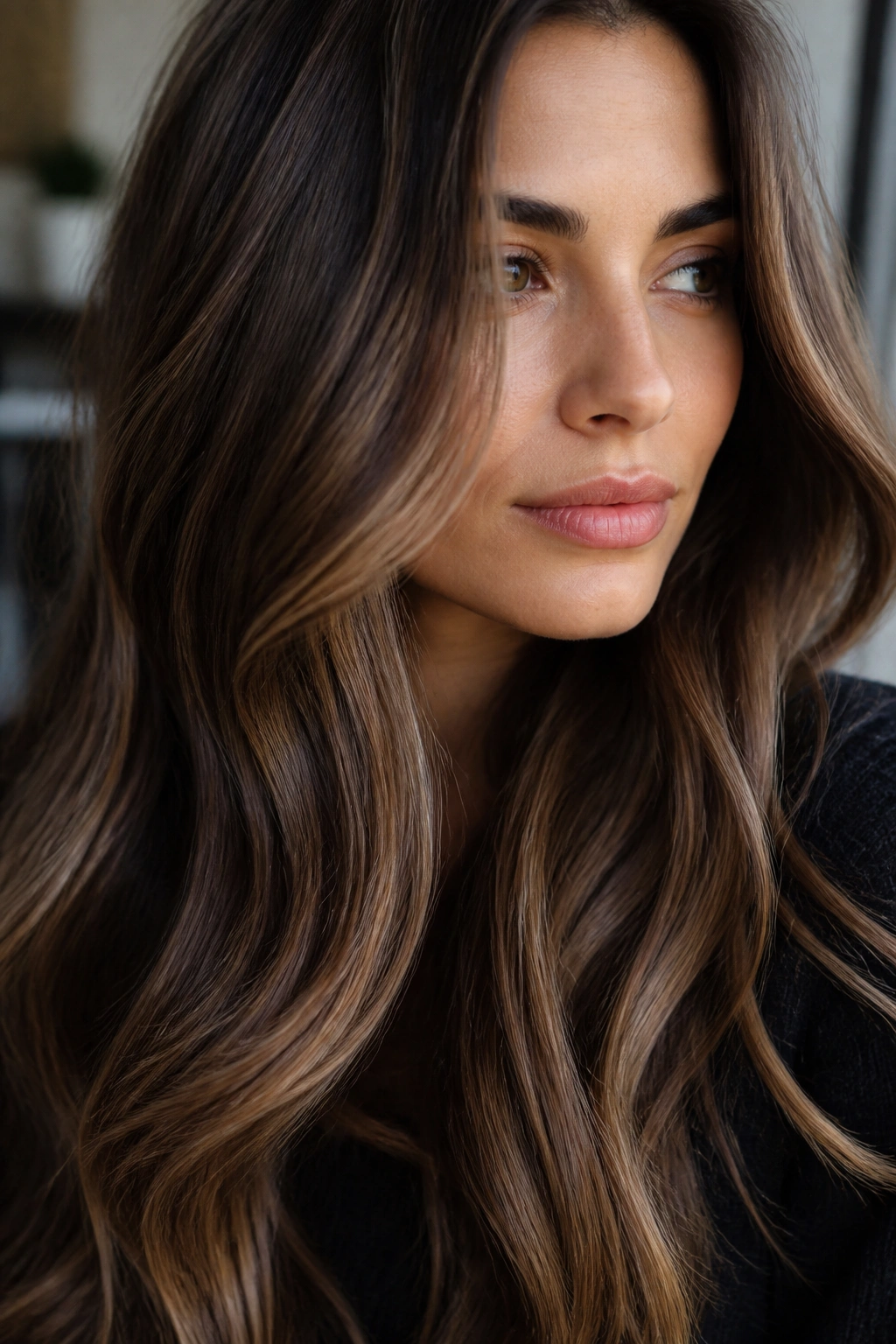
Cocoa with cashmere highlights is the kind of brunette color that looks soft from across the room and expensive up close. The cocoa base keeps the hair grounded, while the cashmere pieces — fine, pale beige ribbons — add light in a way that feels controlled rather than loud.
I like this shade because it respects the brown base. Too many brunettes try to go lighter for winter and end up with high-contrast stripes that need constant toning. Cashmere highlights are different. They are fine, airy, and close enough in tone to blend naturally with the brunette underneath. The result feels polished without trying to be blonde.
This shade is especially nice on medium-to-long hair, where the highlights can move through the length instead of sitting on top of it. It also plays well with loose waves, which soften the contrast even more. If your hair is straight, ask for very fine placement so the light pieces do not look too obvious.
For anyone who wants a brighter brunette that still looks brown first, this is a very safe bet.
21. Cool Beige Brunette
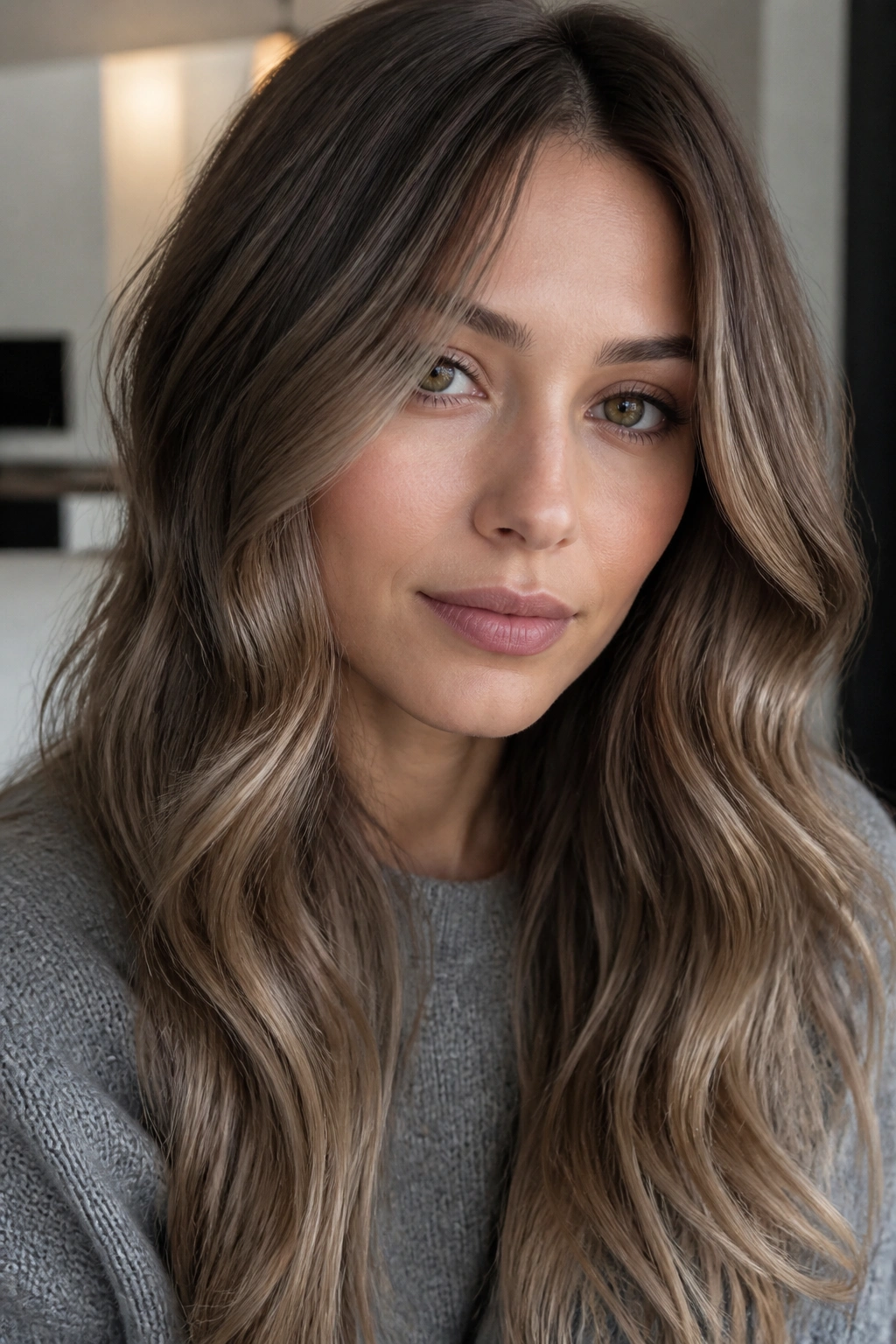
Cool beige brunette is one of the smartest winter brunette shades if you like softness over warmth. It has a pale, muted tone that lands between ash and neutral beige, which keeps the color looking light-reflective without turning golden.
The beige part matters. Pure ash can look too flat, and warm brown can turn brassy fast. Cool beige sits right in the middle and gives the hair a soft satin finish that works well in dry, low-light months. If your skin is neutral or cool, the shade can make your face look clearer and less flushed.
This color is also useful if you want your brunette to feel lighter without going full highlight. Ask for a beige gloss over a brown base, or soft beige ribbons through the front and top layers. The contrast should stay mild. If it gets too bright, the whole look loses its calm.
Among winter hair colors for brunettes, this is one of the easiest to wear with minimal fuss. It is not flashy. It just looks composed.
22. Midnight Brunette
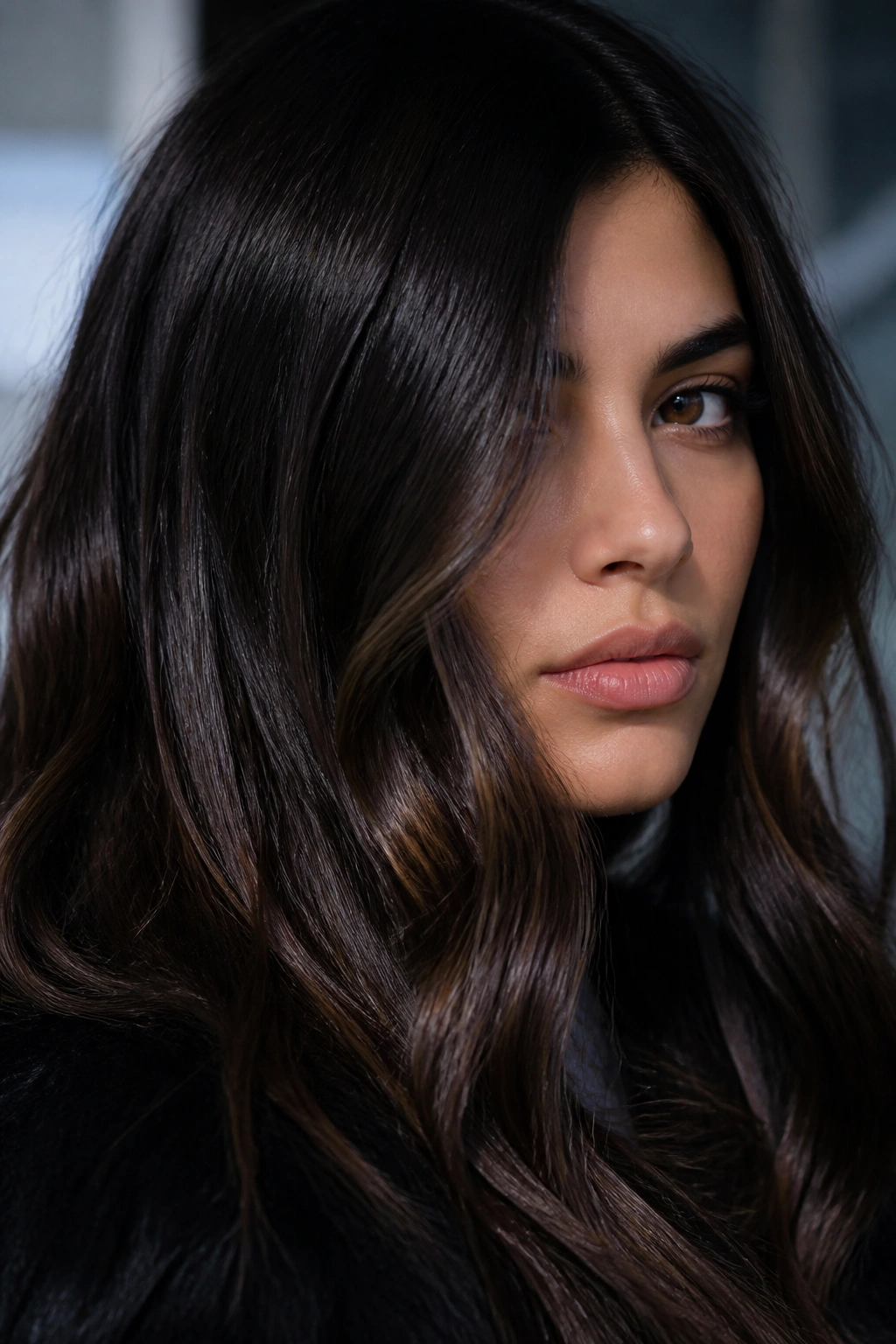
Midnight brunette is almost black, but not quite, and that small difference changes everything. The brown undertone keeps it softer than true black, while the depth gives the hair a striking, glossy finish that feels right for colder months.
This shade is a good move if you want drama without bleach, lightener, or a complicated upkeep plan. Darker brunettes often look sharper in winter because the contrast with pale skin, dark coats, and low light is so strong. Midnight brunette leans into that. It makes strong features look stronger and can give thin hair a denser look if the cut is clean.
There is a catch. Dark shades show shine — or the lack of it. If the hair is dull, midnight brunette can look flat in a hurry. A smoothing cream, a regular gloss, and a trim schedule matter more here than they do with softer browns.
If you want a brunette color that feels bold but not flashy, this is the one that delivers the most edge with the least fuss.
Final Thoughts
The best winter brunette shades do not fight the season. They work with it. Deep glosses, soft warmth, cool beige tones, and controlled ribbons all make brown hair look fuller and more deliberate when the air gets dry and the light gets harsher.
If you are stuck between two colors, pick the one that looks better in ordinary light, not just in a salon mirror. That is where brunette color earns its keep. A shade that still looks rich under a cloudy sky and under indoor bulbs will serve you a lot better than one that only behaves for ten minutes after a blowout.
And if your hair is already feeling a little tired, start with gloss or lowlights before you jump to a major change. Brown hair usually looks best when the color respects the base first.
