



White hair ideas for short hair work best when the cut earns the color. A sharp white on a limp shape can look flat in a hurry. Give that same tone a clean line, a bit of movement, or a little root shadow, and it suddenly feels deliberate.
Short hair is unforgiving in the best possible way. Every edge shows. Every tone shift shows. Even the way the light hits the crown matters, which is why a white pixie can look gorgeous one day and a little chalky the next if the shape is off by half an inch.
That is the real trick with white hair: the color is only half the story. The other half is texture, density, and how much contrast you want near the scalp. Some people look best in a pearl bob that skims the jaw. Others need a rougher crop, some dark root at the base, or a fringe that keeps the whole thing from feeling too severe.
The styles below move through crisp, soft, edgy, and easygoing versions of white short hair, because there is no single “right” way to wear it. There is only the version that makes your hair look intentional when you walk out the door.
1. Icy Pixie Crop
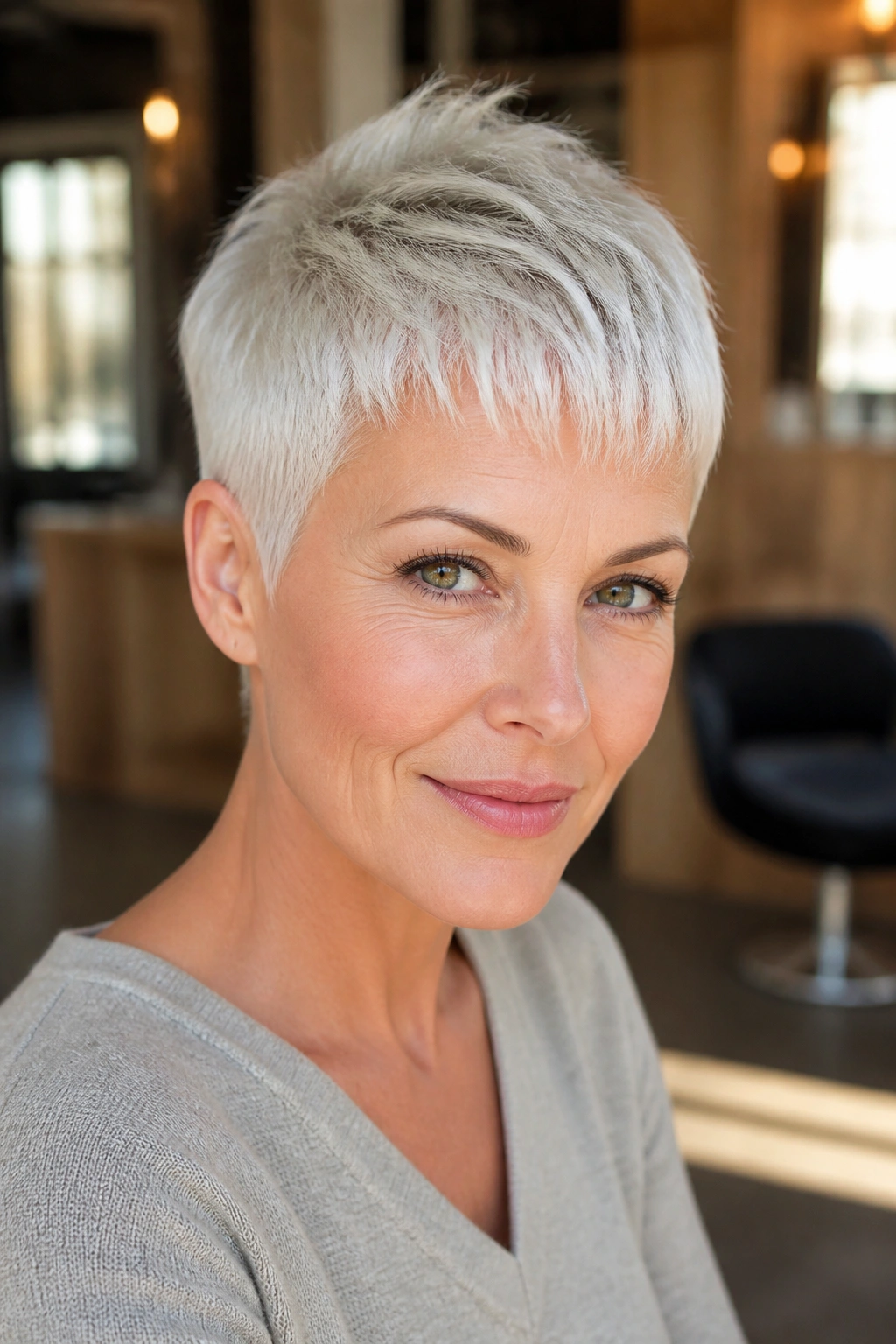
An icy pixie crop is the cleanest place to start if you want white hair that feels sharp rather than fluffy. The short sides keep the color from spreading out too much, so the tone reads bright and polished instead of washed out.
I like this shape when the top has just enough length to bend forward with a little paste. Too much height makes white hair look airy in the wrong way. A thumb-sized dab of matte cream is usually enough to break up the top and keep the crown from lying flat.
The best part is how little space the color has to hide. You see the cool tone right away. If you want the cut to feel slightly softer, ask for a narrow fringe that falls just above the brows. It keeps the look modern without turning it severe.
2. Pearl French Bob
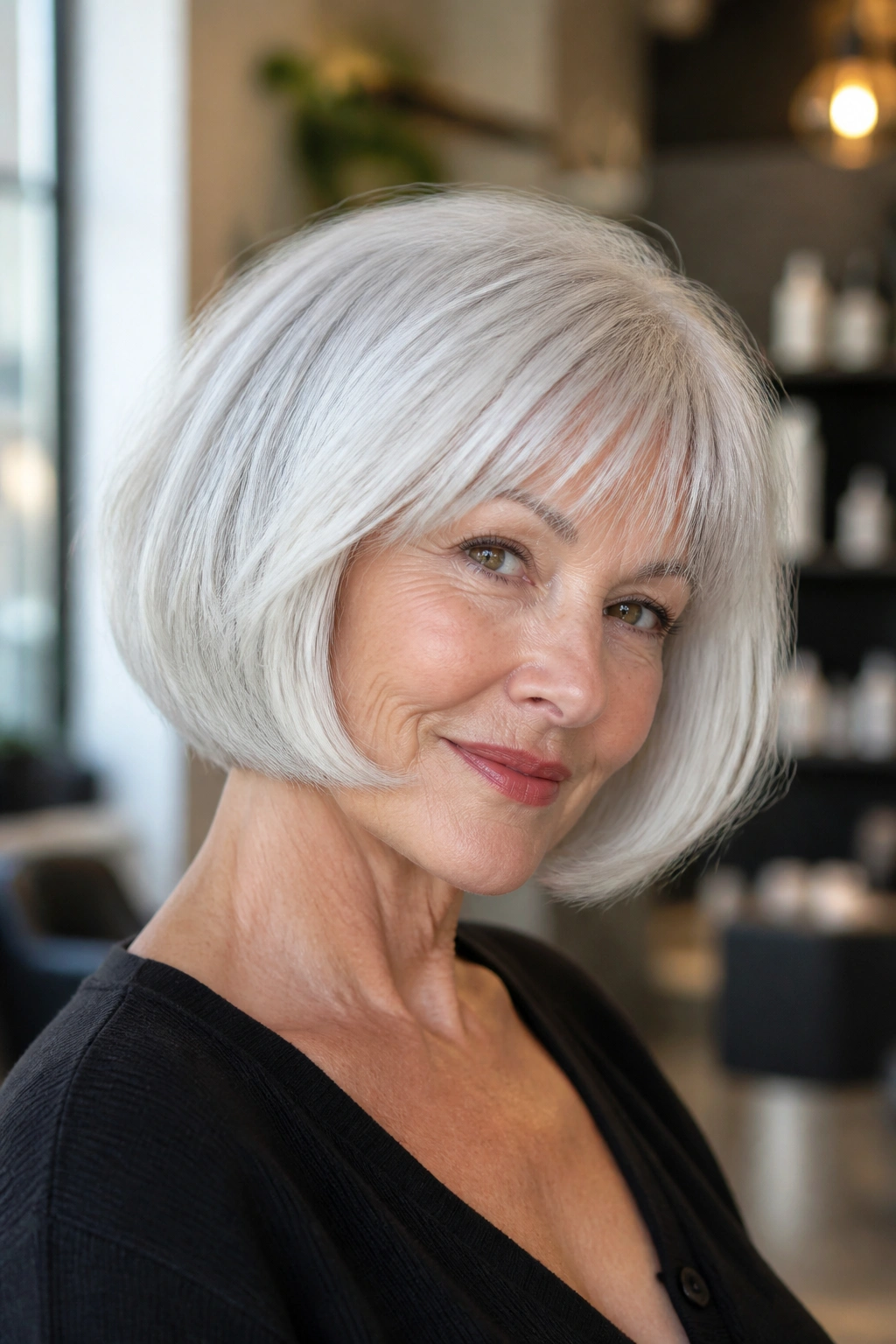
The pearl French bob has a softer edge than a strict blunt bob, which is exactly why it works so well in white. The rounded ends and chin-grazing length make the tone feel creamy instead of icy.
Why It Flatters
This shape gives white hair a bit of movement right where the face needs it. A flat, razor-straight bob can make pale color look stark. A French bob with a slight inward bend feels more lived-in, and that tiny curve matters more than people expect.
Styling Notes
- Blow-dry with a 1.5-inch round brush for a gentle curve at the ends.
- Use a light violet shampoo once every 5 to 7 washes if brass starts peeking through.
- Keep the fringe a little wispy so the line at the forehead does not feel too hard.
- Finish with a drop of shine cream on the ends, not the roots.
Best for fine to medium hair that needs shape without bulk.
3. Silver-White Bixie
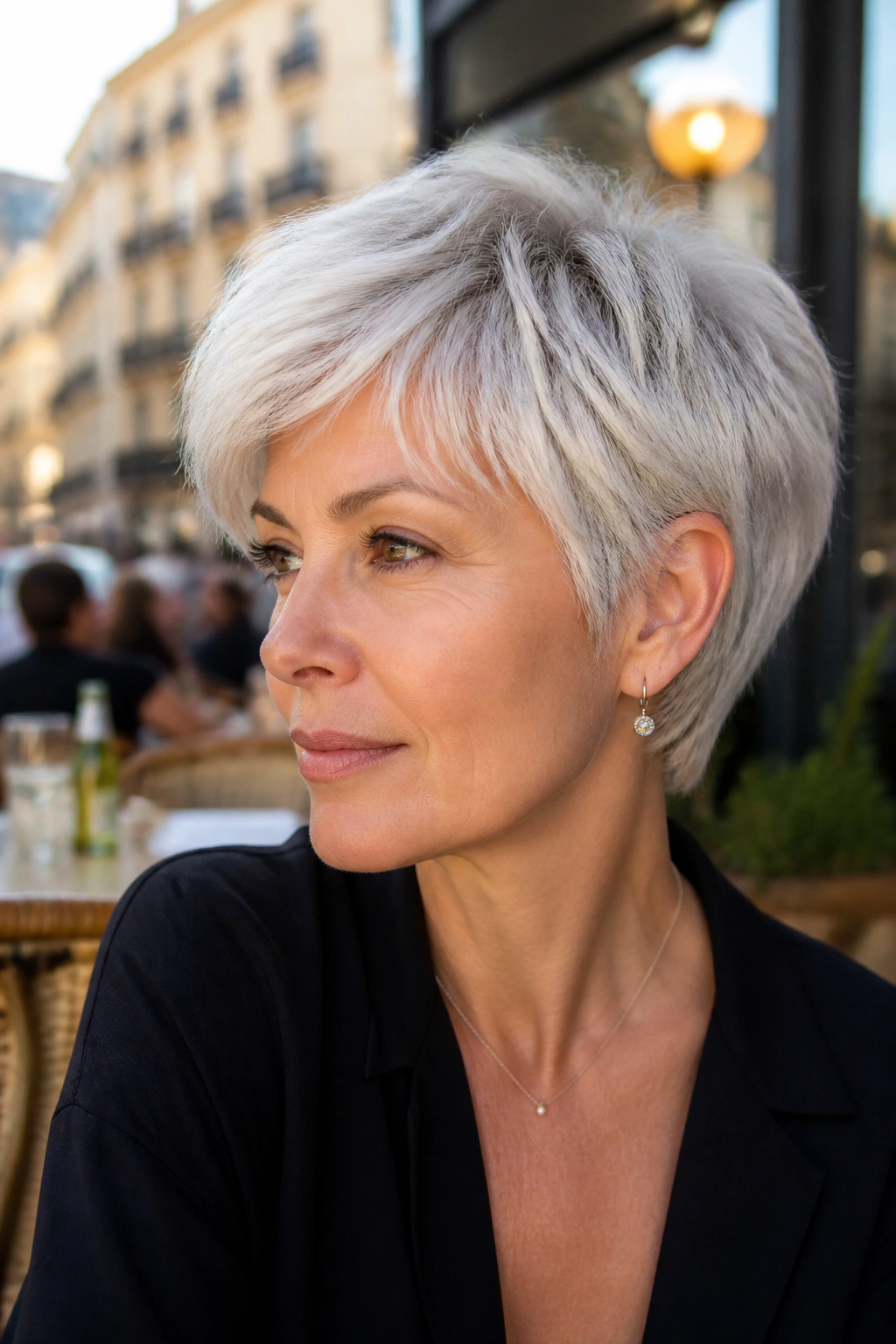
A bixie sits between a bob and a pixie, and that middle ground is where white color starts to look expensive instead of flat. The cut has enough length to move, but not so much that it drags the face down.
What I like here is the balance. The layers around the ears stop the color from becoming one big block, while the top keeps enough softness to flick around with your fingers. It’s one of those styles that works whether you air-dry or rough-dry with a diffuser.
How to style it
Use mousse at the roots, then scrunch a small amount of styling cream through the top. Let the ends dry a little piecey. They should not look perfectly arranged. That slight mess is what gives the silver-white tone dimension.
4. White Shag with Fringe

A white shag with fringe has personality built in. The choppy layers keep the cut from looking like a helmet, and the fringe softens a bright white tone that might otherwise feel a little too crisp.
Picture hair that moves when you turn your head. That is the point. The layers around the cheekbones break up the shape, which helps white hair read textured rather than heavy. On short hair, this matters a lot because the color has nowhere to disappear.
A salt spray at the roots and a quick blast with a diffuser is enough for most people. If you prefer a rougher finish, twist a few ends around your fingers while the hair is still damp. Don’t overwork it. White hair gets dull fast if you keep smoothing it down.
5. Rooted White Crop
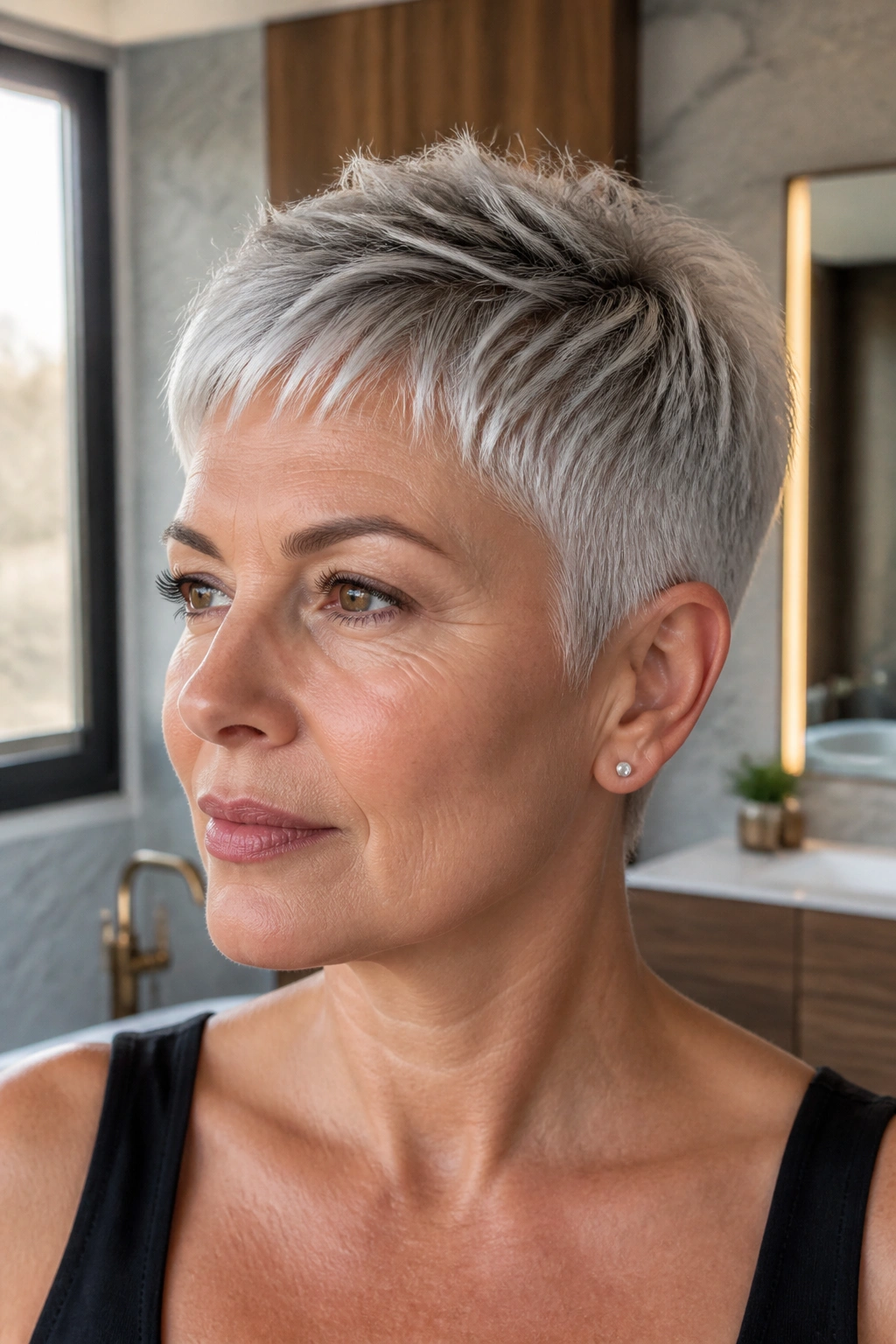
A rooted white crop is the version I recommend to people who want white hair but do not want constant salon pressure. The darker root adds depth at the scalp and makes the white mids and ends look brighter by comparison.
This look is smarter than it sounds. A soft root shadow can make a short cut appear thicker, especially if your hair is fine or naturally sparse around the part. The contrast at the base keeps the color from turning flat under indoor light.
It also grows out better. That matters. A full white crop can show every little regrowth line, while a rooted version lets you stretch the time between color appointments without the shape looking sloppy.
6. White Curly Bob

A white curly bob is one of those styles people underestimate until they see it moving. Curls scatter the light, and white hair loves that. The color gains dimension the second the hair has bend in it.
The trick is keeping the cut rounded enough that the curls do not balloon. A bob that lands between the jaw and the collarbone usually gives enough room for bounce without turning into a triangle. Use a curl cream on soaking-wet hair, then scrunch with a microfiber towel. That tiny bit of care keeps the curl pattern defined.
What to Watch For
If your hair is bleached white, go easier on the purple shampoo. Too much can make curls look dry and dull. A moisturizing mask every week helps more than people think. White curls need slip. They need softness.
7. Asymmetrical White Bob
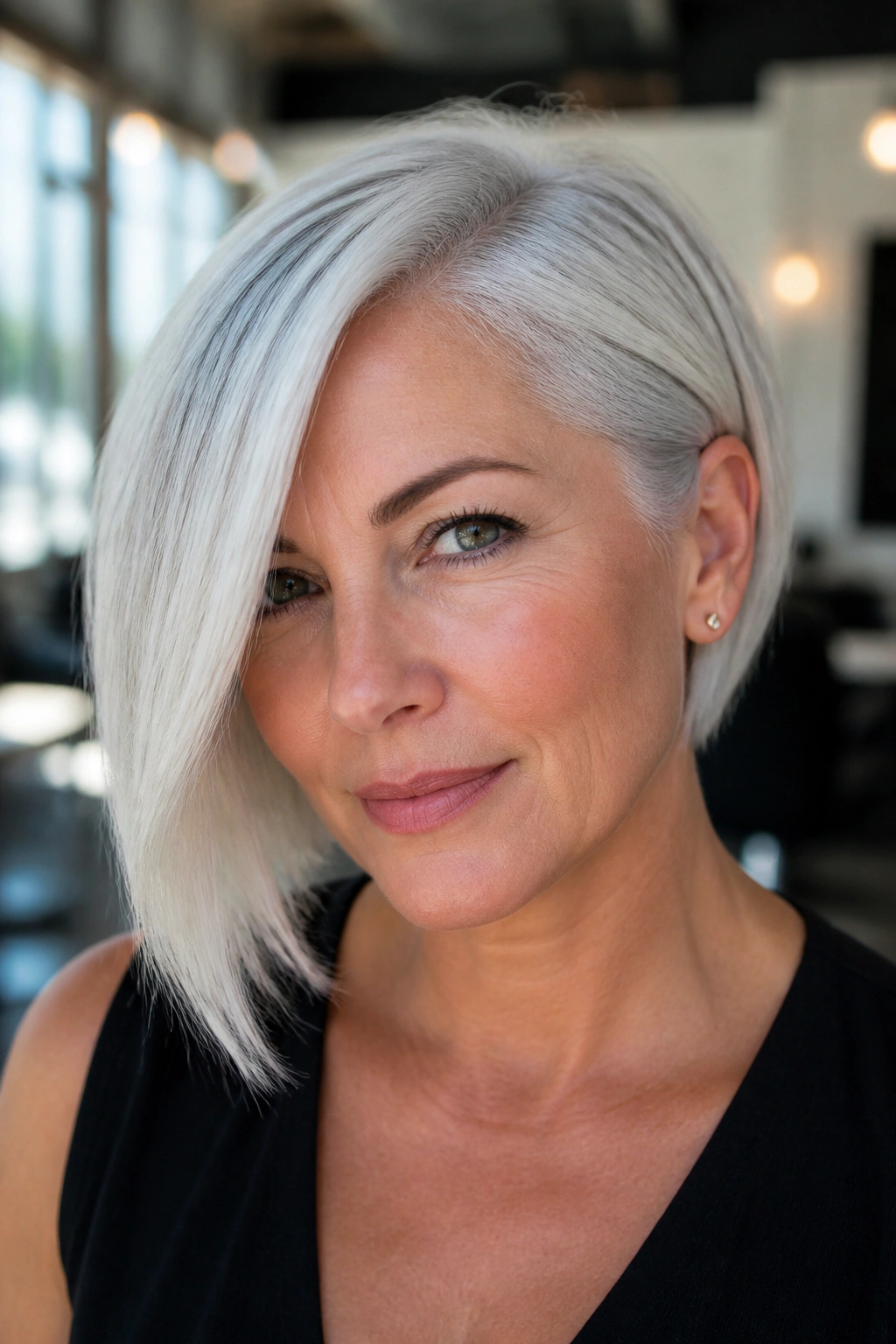
An asymmetrical white bob brings a little tension to the color, and that tension is what keeps the look interesting. One side sits slightly longer, so the white tone does not land all at once across the jaw.
That uneven line creates motion even when the hair is still. It also gives the face a bit of lift, which can be useful if you want a short style that feels bold without being spiky. I like this shape on straight hair because the edge stays clean. On wavy hair, the difference in length shows even more.
If you want the asymmetry to stand out, tuck the shorter side behind one ear and leave the longer side loose. Simple. The cut does the work.
8. Feathered White Crop
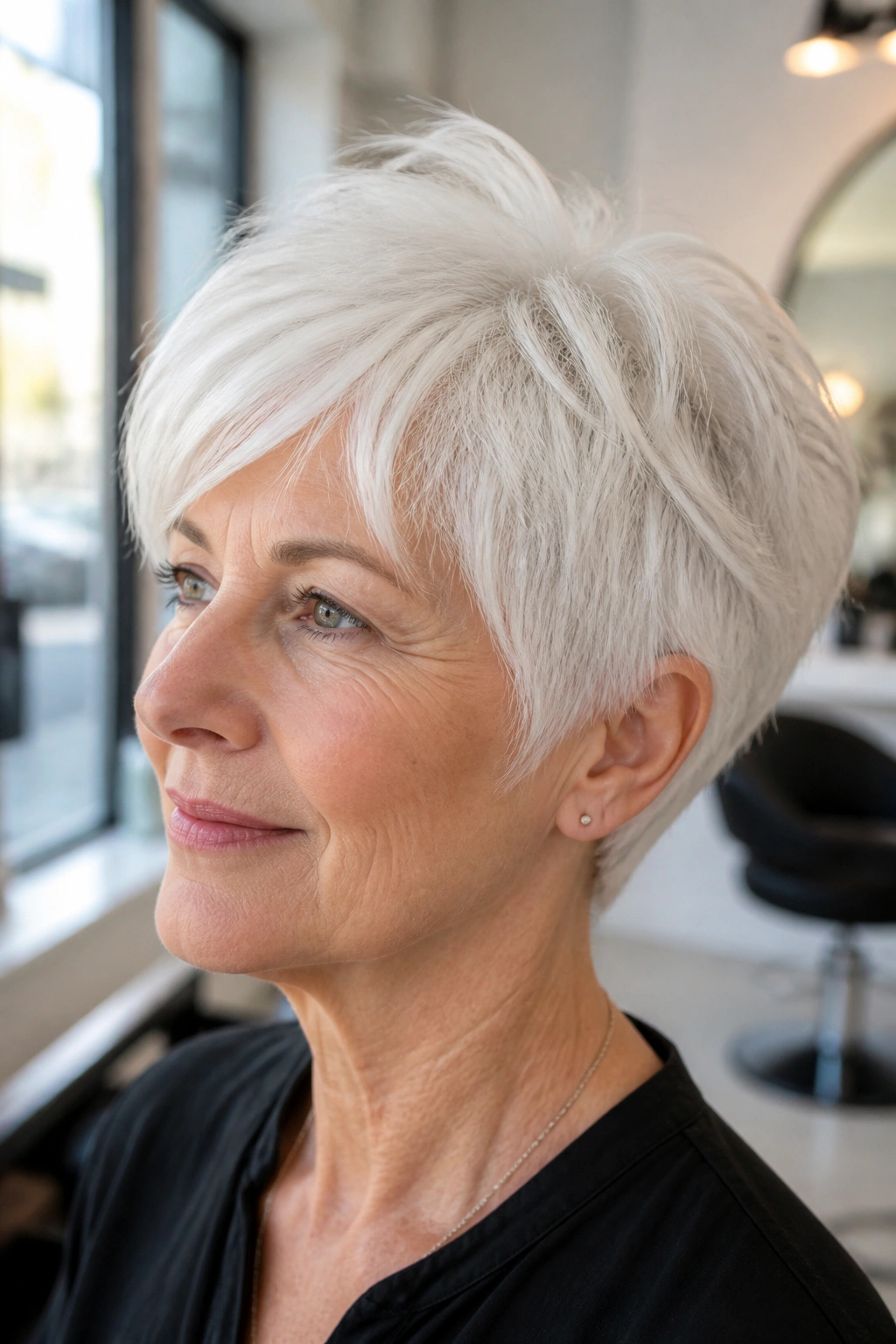
Feathering is one of those old-school techniques that keeps coming back because it works. On white hair, feathered layers make the whole cut feel lighter, especially if your hair has some natural bulk around the crown.
Why the Feathering Matters
A feathered crop lifts the top without building a hard silhouette. That means the white reads airy instead of dense, and the shape stays friendly around the temples. If your hair is thick, this is one of the best ways to stop the color from looking like a solid block.
Styling It Well
- Blow-dry the crown upward with a vent brush.
- Use a pea-sized amount of lightweight mousse at the roots.
- Keep the ends soft with a tiny touch of serum.
- Ask for layers that taper into the neckline, not blunt shelves.
It’s a practical cut, and I mean that in the nicest way.
9. White Buzz Cut
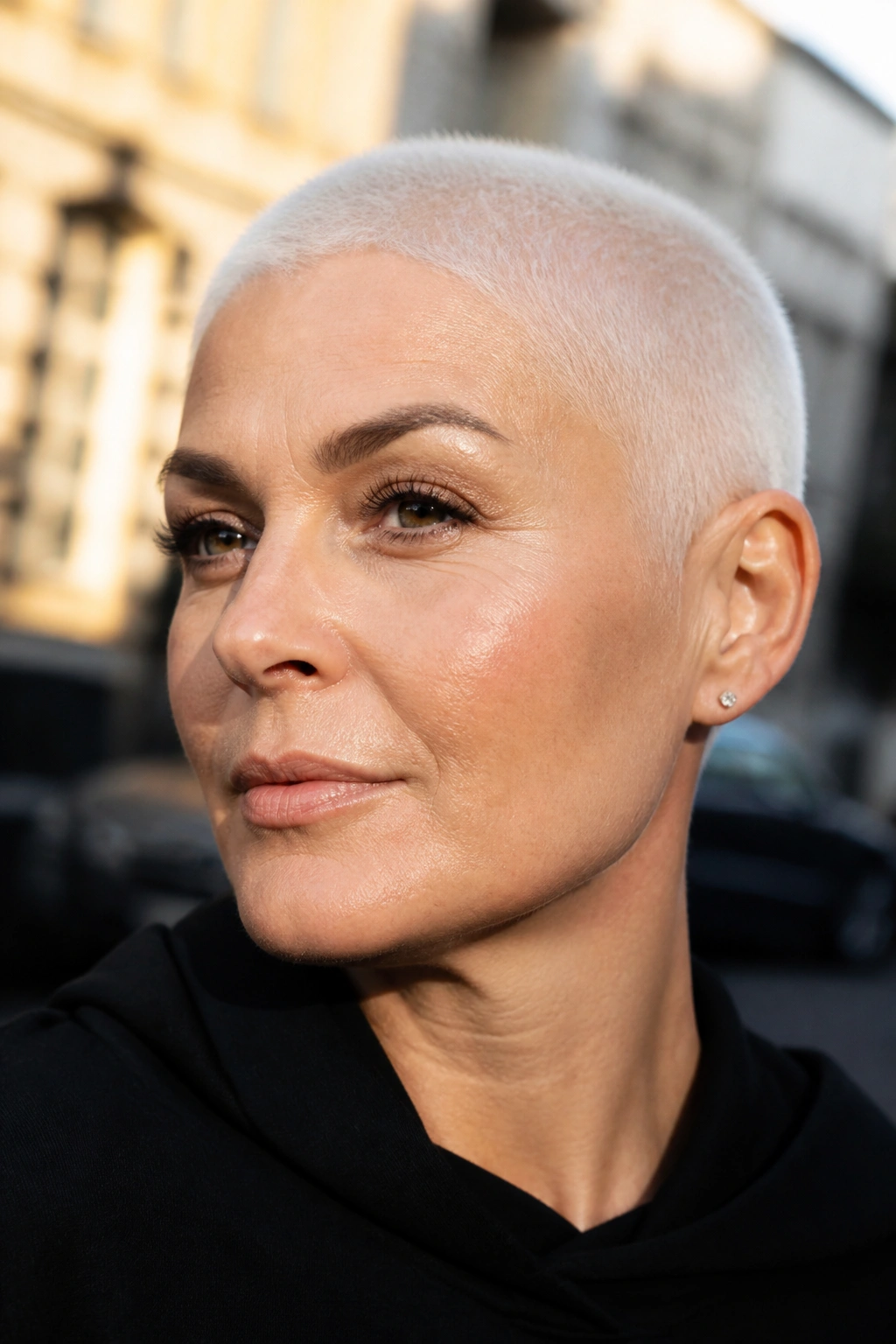
A white buzz cut is blunt, honest, and hard to fake. There is no room for hiding here, which is exactly why the color looks so striking on it.
Does it need much styling? Not really. That’s the beauty of it. The shape itself becomes the point, and the white tone turns the scalp and the hairline into part of the design. A guard length between 1/8 and 1/4 inch usually gives enough coverage to keep the head from looking bare while still reading crisp.
One thing people forget: the scalp matters more with this cut. A lightweight scalp lotion and regular sunscreen on exposed areas make the style look cared for, not accidental. The color is sharp. The upkeep should be too.
10. White Wedge Bob
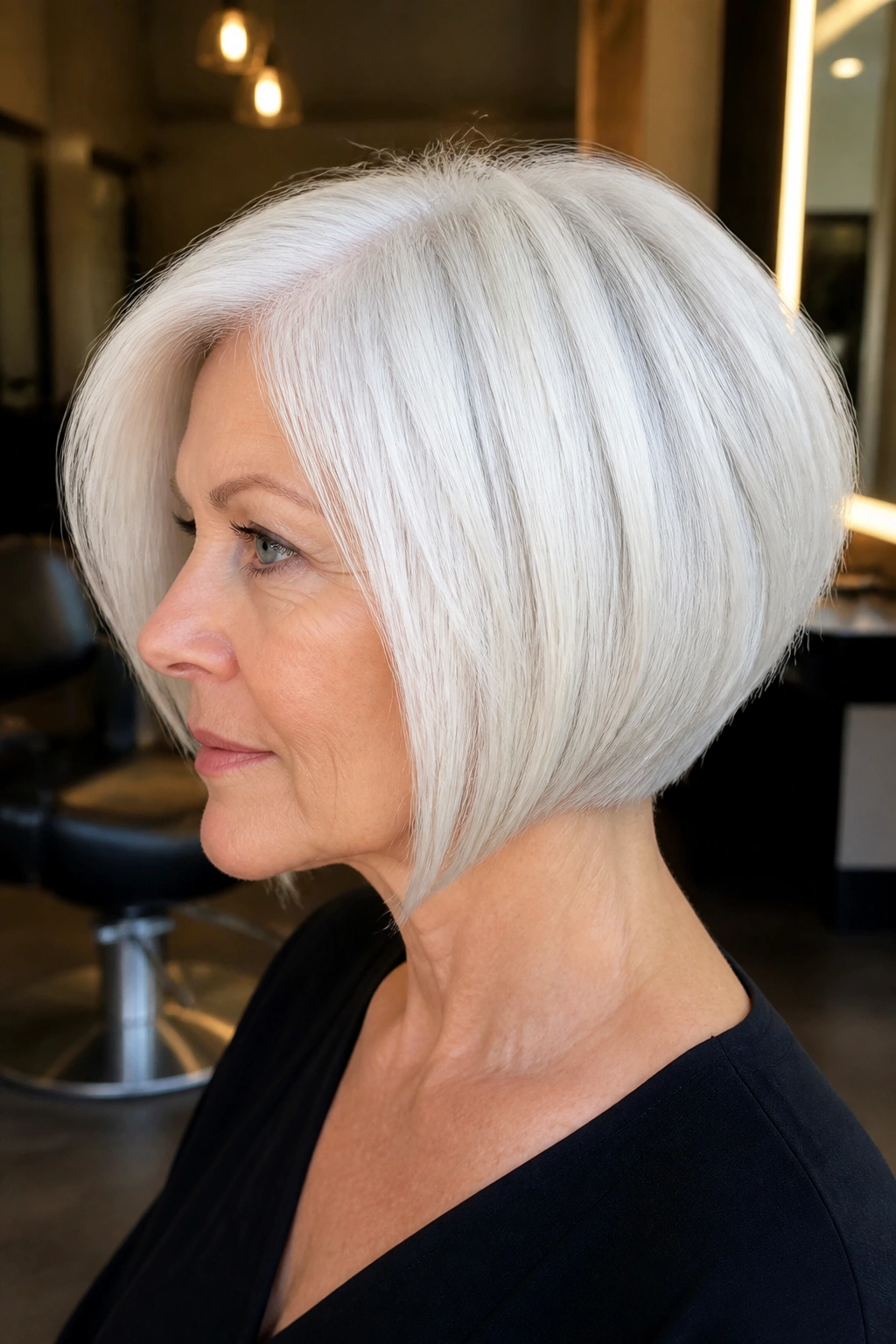
The wedge bob gives white hair a built-in angle. Shorter in the back, fuller through the crown, and clean through the sides, it has that slightly architectural feel that works especially well with pale tones.
This cut is a nice choice if you want white hair that looks polished without a lot of day-to-day fuss. The stacked back gives volume where shorter hair often goes flat, and the longer front pieces make the face look narrower. That combination is useful if your hair is fine and needs a little structure to wake it up.
A round brush and a smooth blowout make the shape sing. If you let it air-dry, the angle can disappear a little, so this is one cut that likes a bit of effort.
11. White Undercut Pixie
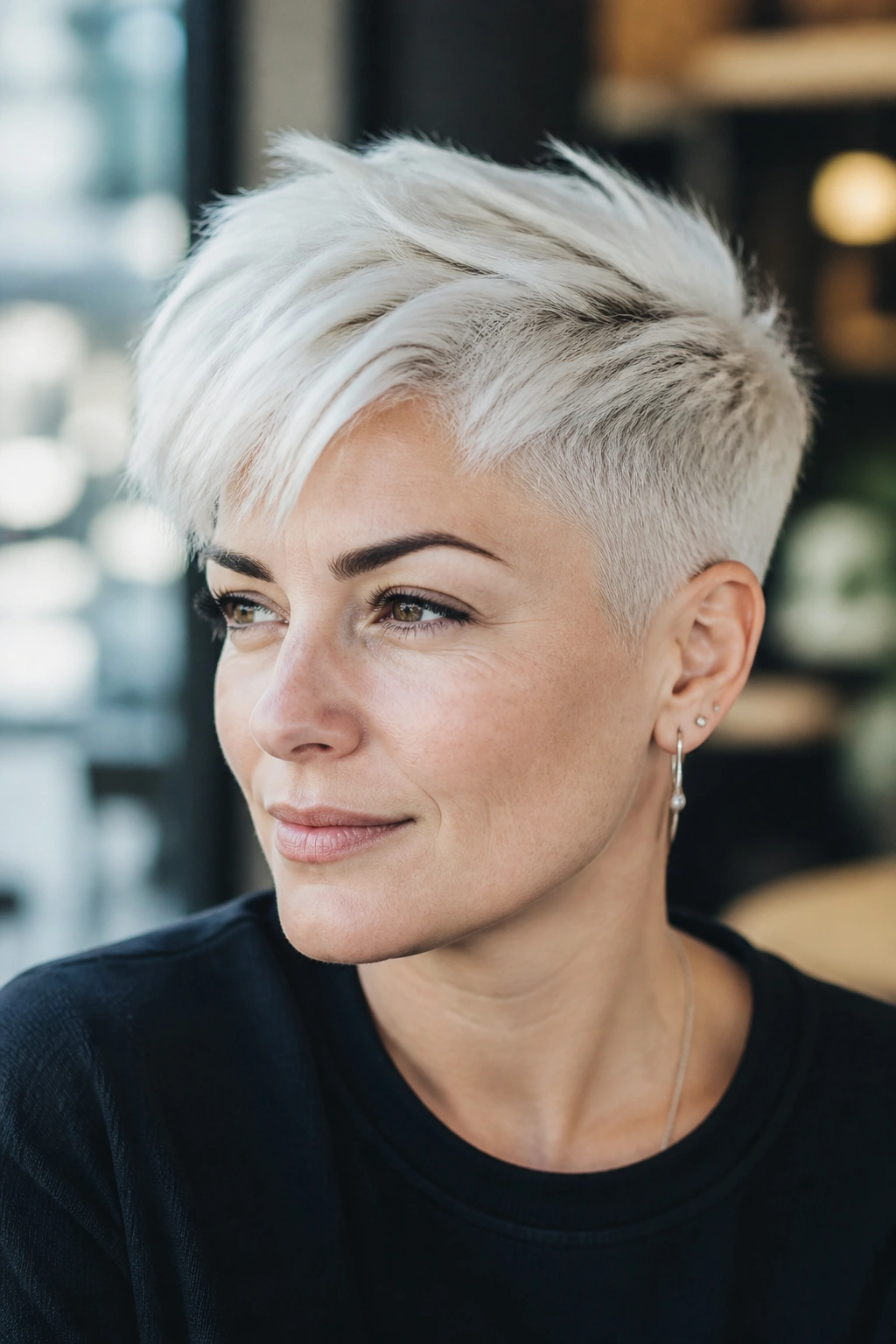
A white undercut pixie is for people who want contrast, and lots of it. The shaved or closely clipped sides keep bulk away, while the longer top gives you enough length to sweep, spike, or tuck.
Compared with a classic pixie, this version feels sharper. The undercut lets the white color sit on top like a bright panel, which looks especially good if your hair is thick around the nape or behind the ears. It also cuts drying time way down. That is not a small thing.
If you want the style to stay wearable rather than costume-like, keep the top soft. A rough finish is better than a hard, gelled point. White hair already has presence. You don’t need to shout.
12. Creamy White Pageboy
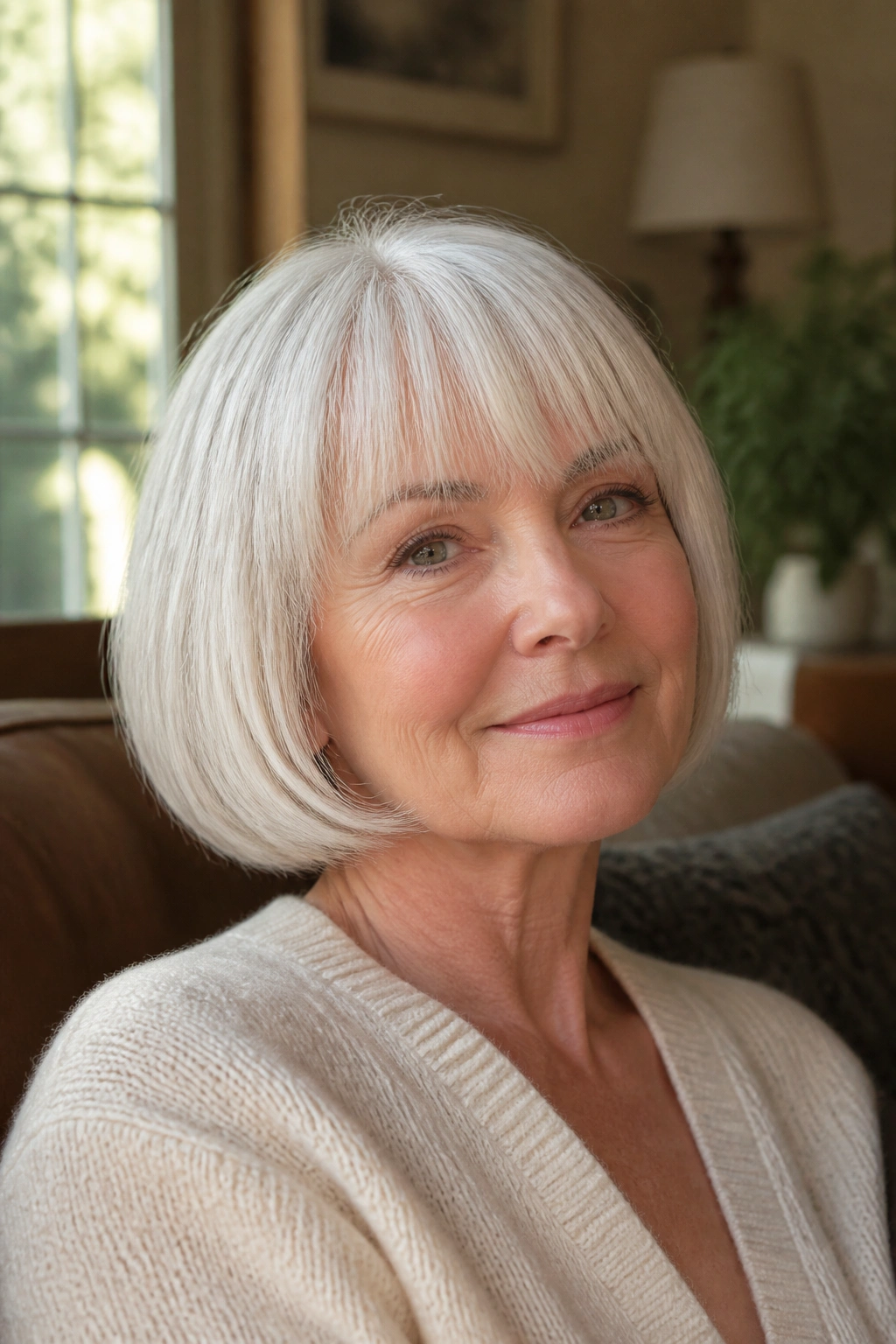
A creamy white pageboy has a nostalgic feel, but it works because the shape is so specific. The curved ends hug the jaw, and the full fringe keeps the color from looking too stark around the forehead.
This is one of the few short white styles that can read warm instead of icy. A creamier tone softens the whole face, especially if you prefer makeup that stays gentle rather than graphic. The roundness of the cut matters more here than the exact shade. If the line is too severe, the style can feel old-fashioned in the wrong way.
Keep the ends tucked under with a brush and dryer set on medium heat. It’s a little polished. That’s the point.
13. White Taper Fade
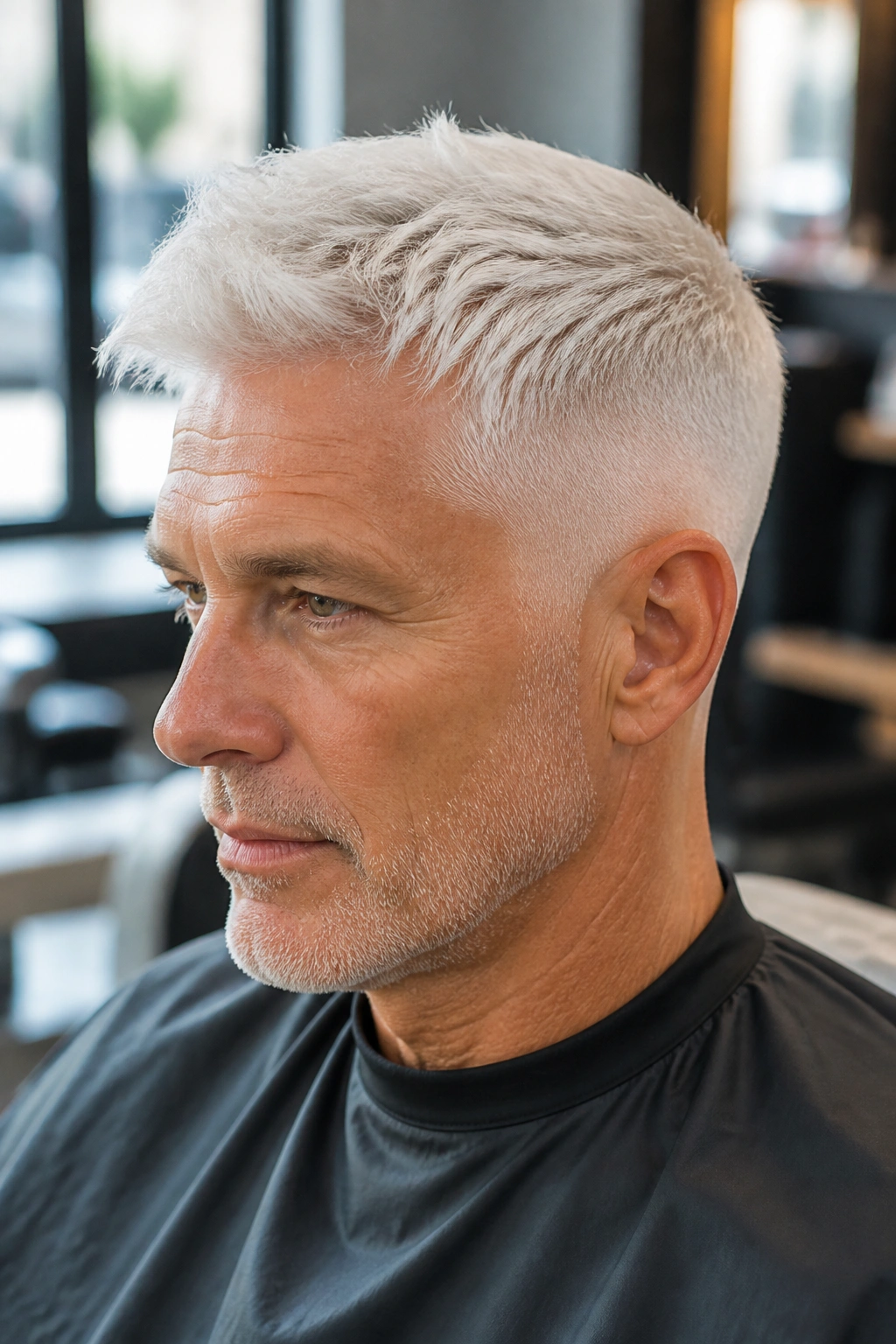
A white taper fade is one of the cleanest short-hair choices you can make if you like sharp edges and tidy sides. The fade keeps the shape close to the head, while the white tone gives it a bright, almost brushed-metal look.
What makes this different from a standard cropped cut is the transition at the sides. That gradual shift creates depth, which white hair needs because flat white can look one-dimensional very quickly. A taper also grows out more gracefully than a hard line.
I’d pair this with a matte texture on top, not shine. Glossy styling products can make the scalp reflect too much light. A small amount of dry paste keeps the finish controlled and modern.
14. White Razor Crop
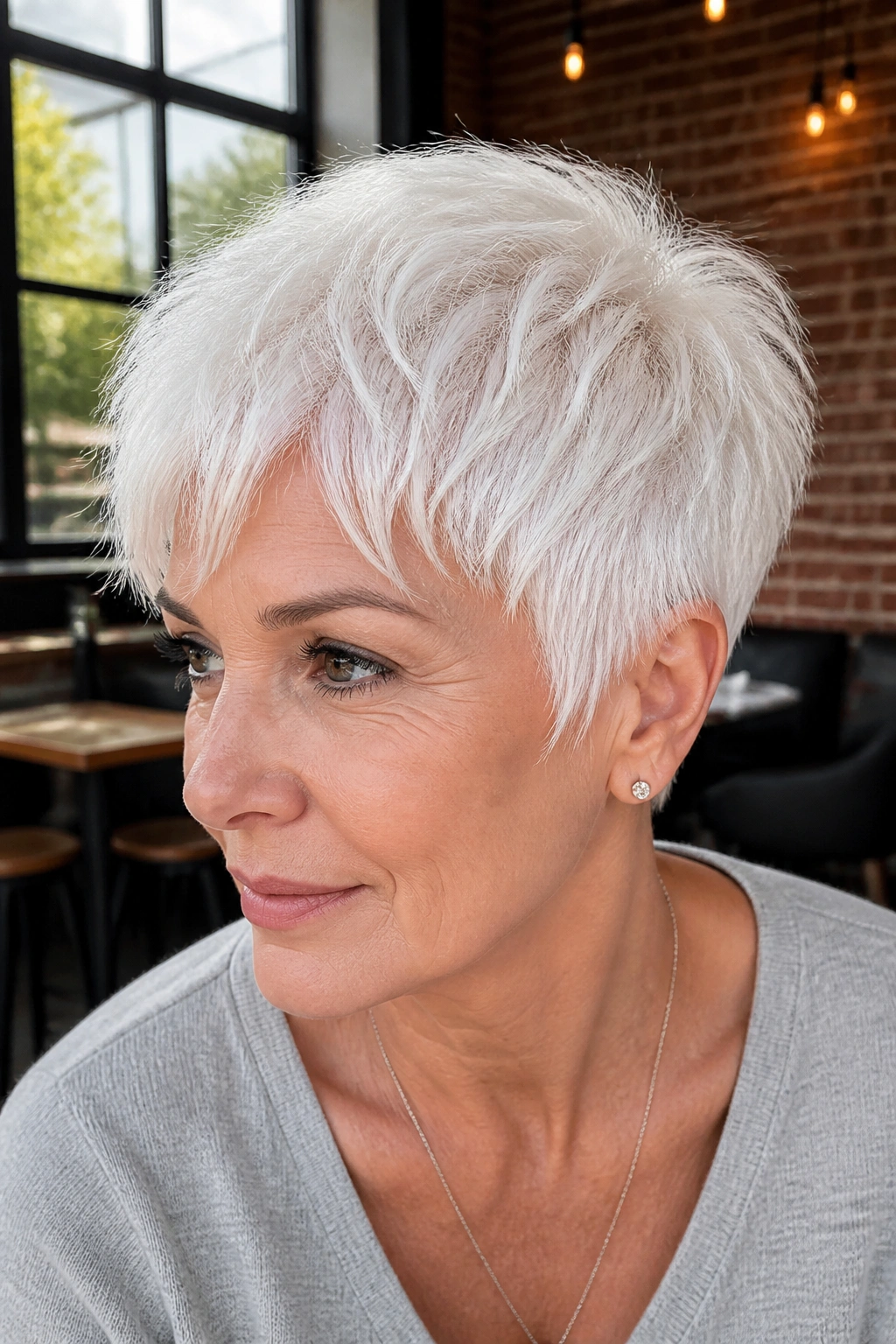
A razor crop gives white hair a broken edge, and that broken edge is useful. The razor-cut ends move instead of sitting in a solid line, so the tone feels softer and less blocky.
Is it the right pick for everyone? No. Thick hair usually loves it; very fine hair sometimes loses too much weight and starts to look sparse. But when it works, it really works. The white color catches on the uneven ends and makes the whole cut feel lighter around the face.
How to Wear It
Use a little texture cream on damp hair, then let it dry with your fingers instead of a brush. If the ends start to flip in odd directions, leave them. That piecey finish is the point of the cut.
15. Champagne White Bob
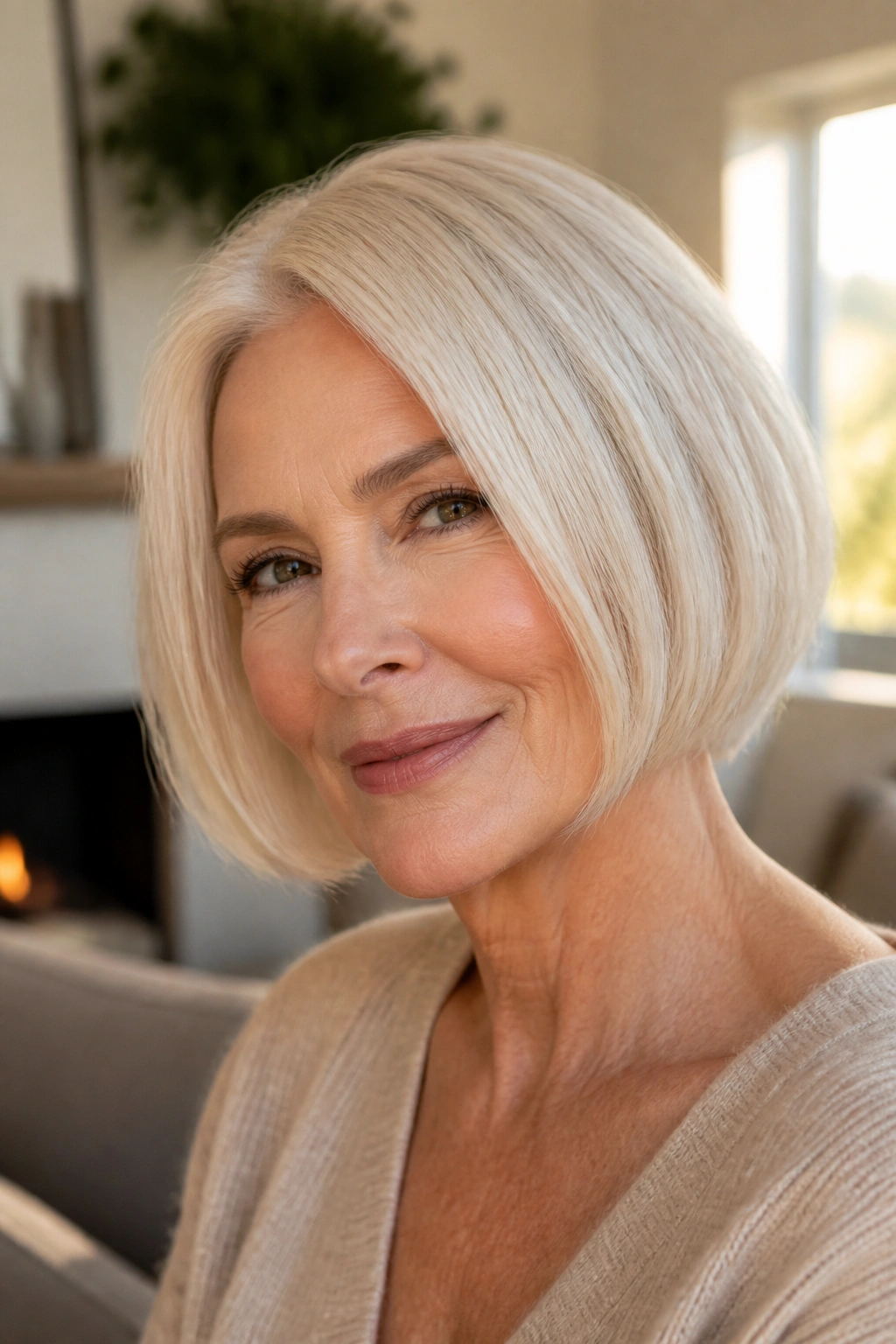
Champagne white sits somewhere between cool white and a soft beige gloss, and that tiny shift changes the mood completely. If pure white feels too stark for your skin tone, this is the gentler answer.
The bob shape keeps the color from spreading out too far, so the warmer white still looks crisp. I like it especially on jaw-length cuts because the shade catches just enough warmth to keep the face from looking washed out. It’s a subtle difference, but subtle is often smarter than dramatic.
Ask for a gloss with a beige-pearl finish rather than a stark silver toner. The result should read luminous, not brassy. There’s a big difference.
16. White Piecey Crop
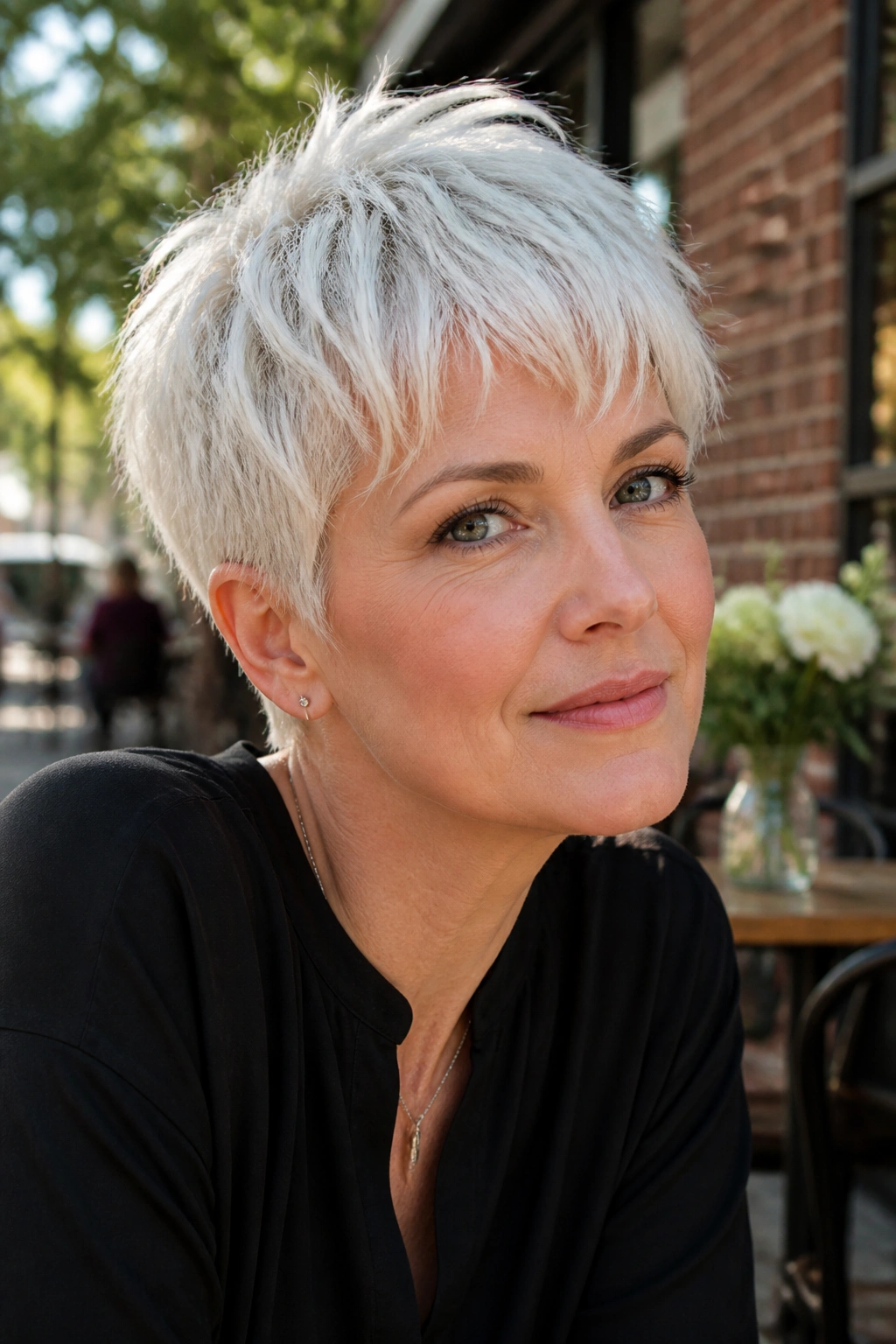
A piecey crop is one of the easiest ways to keep white hair from looking too fixed in place. The strands stay separated, which gives the color room to move and keeps the cut from turning into one single pale mass.
How to Get the Most From It
- Start with texture spray at the roots.
- Work a tiny amount of wax through the ends.
- Use your fingertips, not a brush, to separate the top.
- Leave a few front pieces slightly longer so they fall across the cheekbones.
The key is restraint. If you overload the hair with product, the white takes on a dull, sticky finish. A piecey crop should look light, not pasted together.
17. White Mullet Lite
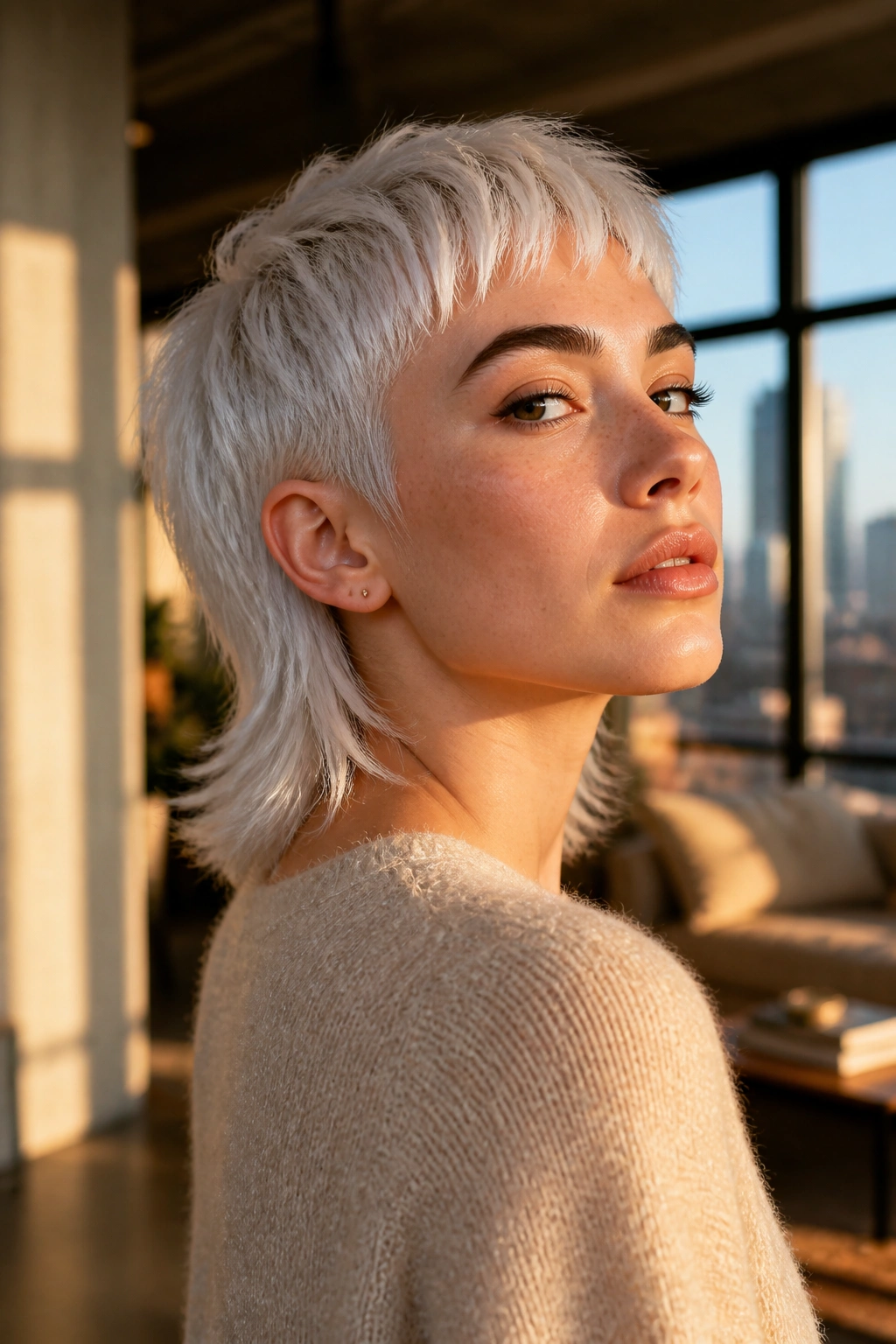
A white mullet lite is softer than the name suggests. It keeps the short front and side balance of a cropped cut, but the nape stays longer for movement. On white hair, that longer back section adds a bit of drama without making the style feel heavy.
This is a good choice if you want something a little off-center. The shape looks especially nice when the fringe is wispy and the top has a rough finish. White hair can make this cut look sharper than it does in darker shades, so the texture matters. A gentle bend in the back keeps it from feeling too severe.
If your taste runs a little punk but you still want something wearable, this is a strong middle path.
18. White Side-Part Pixie
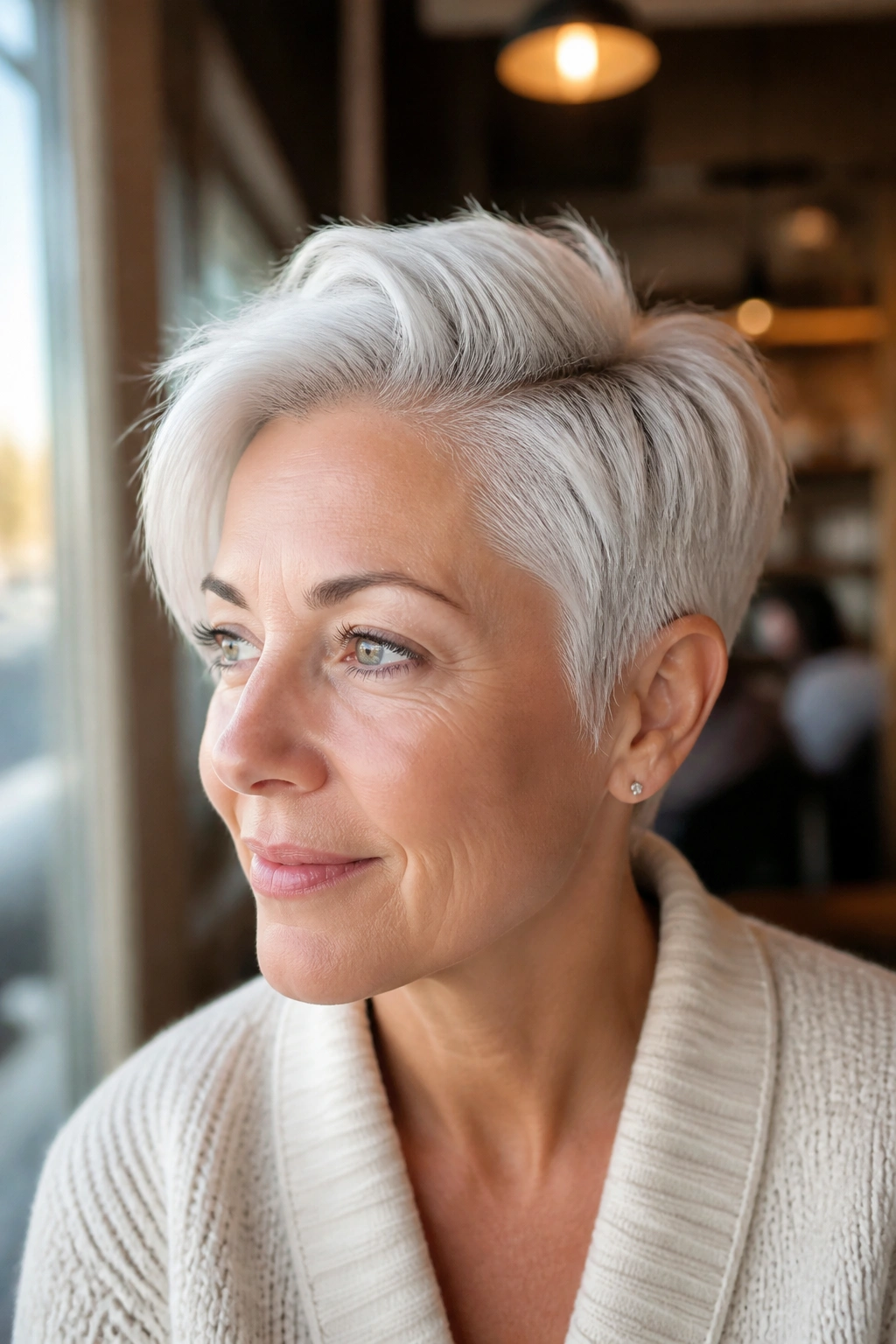
The side-part pixie is underrated. It gives white hair a natural sweep, and that sweep softens the brightness around the forehead.
A deep part also helps if one side of your hair falls flatter than the other. You get lift right away, and the color looks richer because the shadow from the part breaks up the white. That small contrast keeps the look from becoming one flat note.
I like this style on round and heart-shaped faces because the diagonal line pulls the eye across the face instead of straight down. Add a little root lift spray, then blow-dry the front away from the part. Easy. Done.
19. White Shattered Bob
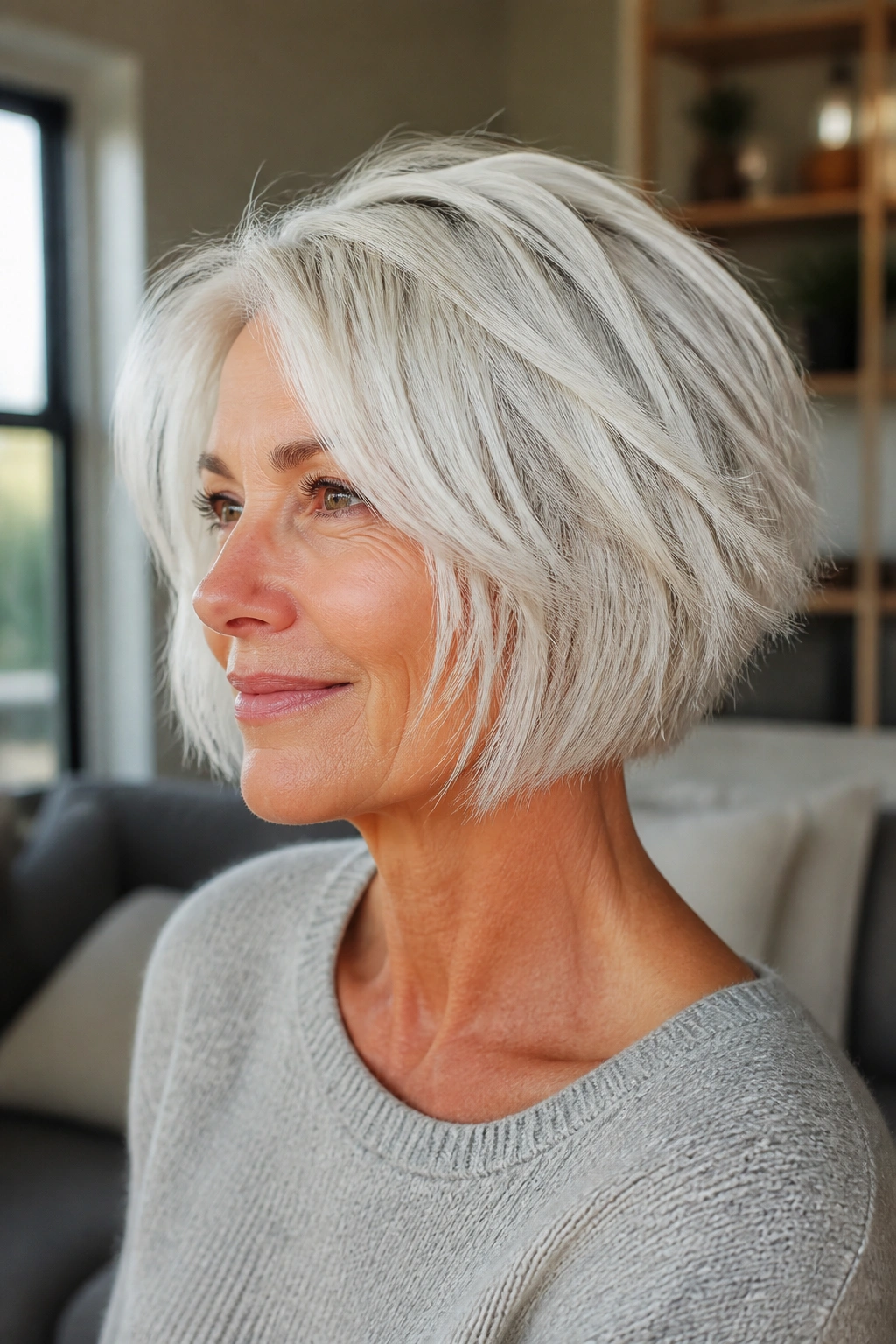
A shattered bob is what you want when a blunt bob feels too neat. The internal layers are broken up, which gives white hair depth without sacrificing the clean bob shape.
Why does that matter? Because white color needs texture to stay interesting. On a shattered bob, the ends move a little differently from the middle, so the hair catches light in patches instead of all at once. That stops the style from looking like a sheet.
This cut works especially well on thick or straight hair that tends to fall heavy. If you want the finish to stay airy, rough-dry it first, then go back with a flat iron only on the front pieces. Leave the rest imperfect.
20. White Bowl Cut
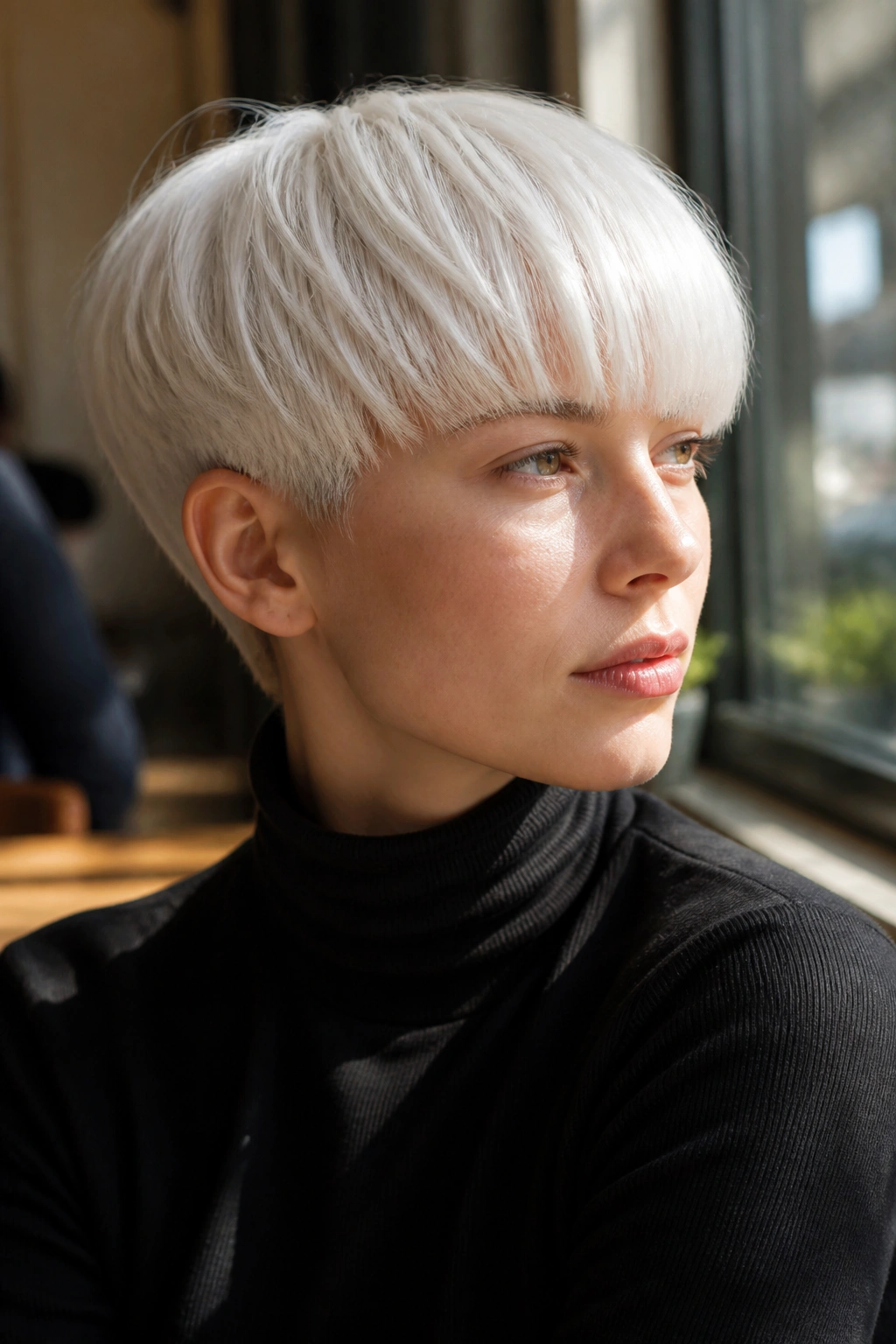
A modern bowl cut in white hair can be unexpectedly chic. The shape is bold, yes, but the right version has softness around the edges and a fringe that curves rather than chops.
The reason it works is simple: white color makes the silhouette look sculpted. A strong line at the top and a clean neckline create a shape that feels deliberate, almost graphic. If the cut is too round or too heavy, though, it can tip into costume territory fast. The balance has to be exact.
Keep the perimeter soft and the nape neat. That contrast is what keeps the style grounded. It’s not a joke cut. It’s a shape cut.
21. White Sculpted Crop with Nape Taper
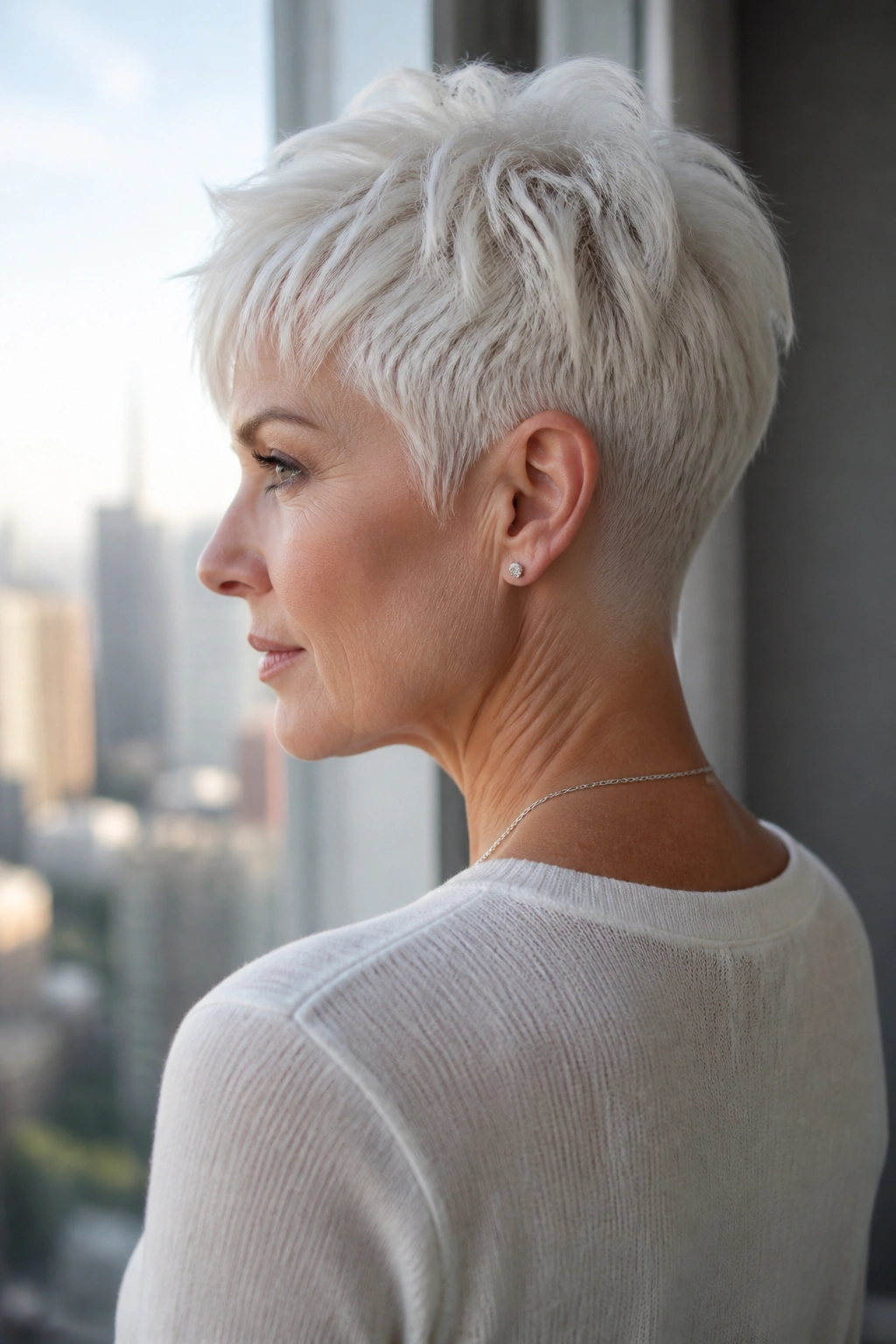
A sculpted crop with a nape taper gives white hair a crisp finish around the neckline, and that small detail changes the whole look. The taper makes the back feel clean, while the top stays a little fuller for shape.
This is a smart option if you wear glasses or have a strong jawline, because the neat nape keeps the style from crowding the face. The white color reads sharper when the neckline is tidy. Messy edges can make the tone feel less intentional.
Ask your stylist to keep the crown slightly lifted and the sides close. A tiny amount of styling cream through the top is enough. You want controlled movement, not shellacked hair.
22. White Curled-Under Bob
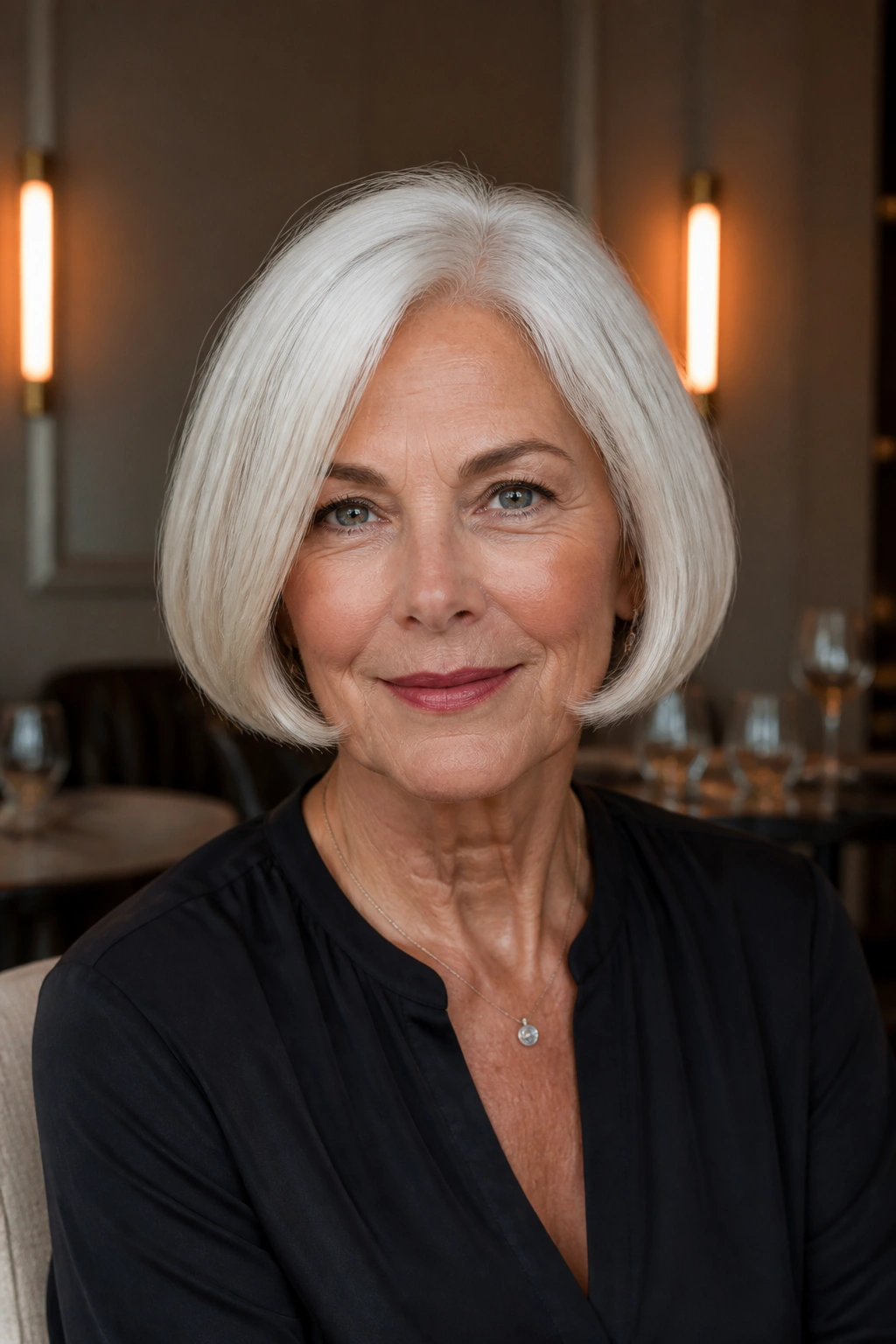
There is something pleasingly old-school about a curled-under bob in white. The ends turn in just enough to create a smooth line, and the pale color makes that line stand out even more.
I’ve always liked this shape for people who want short hair that still feels polished. It’s neat without being stiff. The trick is to keep the ends soft, not rolled into a hard curl. A round brush or a one-inch brush roller set for a few minutes is enough to shape it. Too much heat makes the white look dry.
It’s a good dinner-out haircut. It’s also one of those styles that can make a plain black sweater look intentional.
23. White Baby Bangs Crop
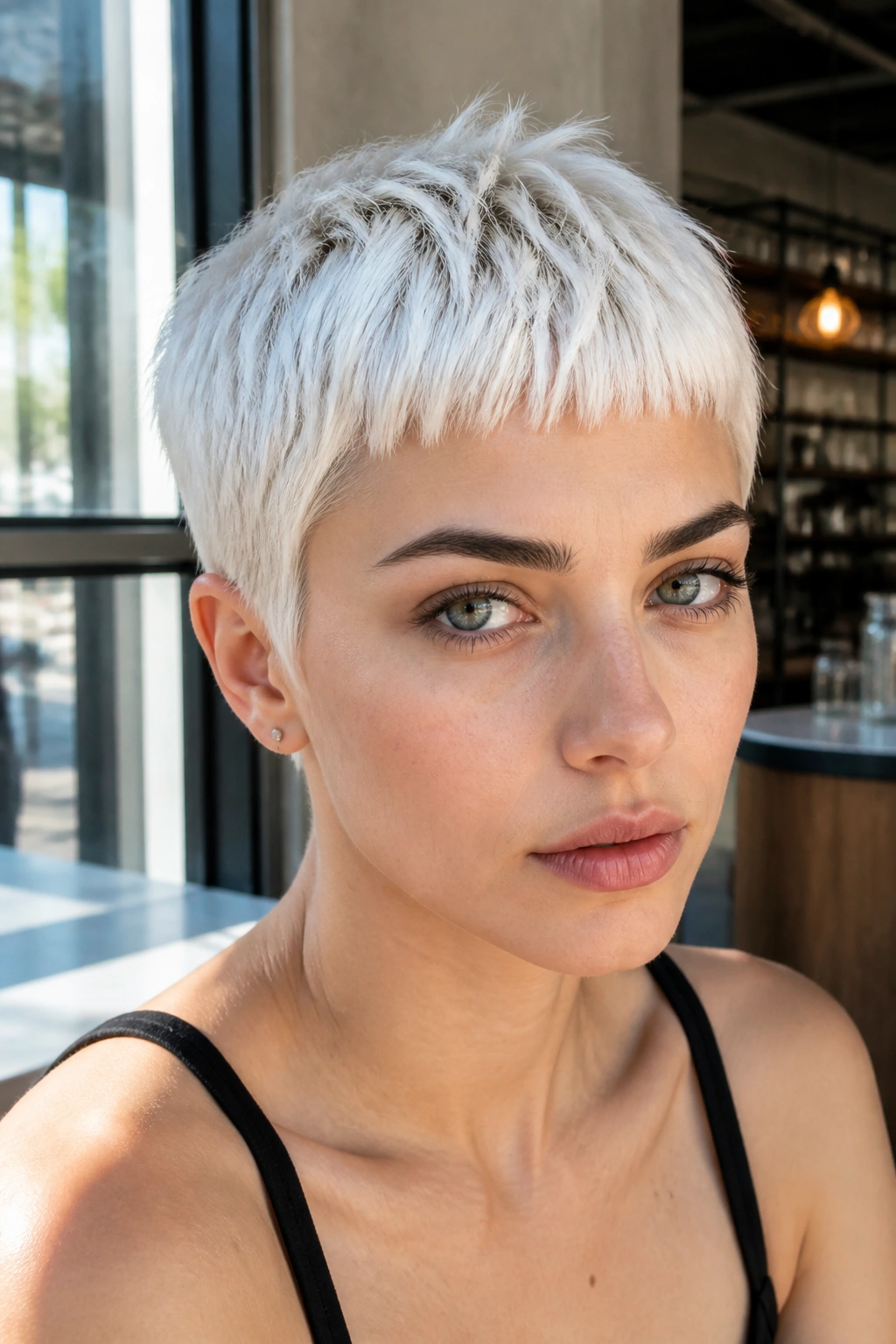
Baby bangs and white hair are not for the timid. The fringe sits high, so the eye goes straight to the face, and the color makes that effect even stronger.
That can be wonderful if you want a bold, editorial look. It can also be unforgiving if your hairline is uneven or your forehead is very short. I like baby bangs best when the rest of the crop stays soft and the fringe is slightly textured, not cut like a ruler. Sharp fringe plus stark white is a lot of information.
Keep the top a touch choppy and the sides close. Then the bangs become the accent instead of the whole story. That is the safer way to wear them.
24. White Soft Perm Crop

A soft perm crop gives white hair cloud-like movement, and the curls change how the color reads. Instead of a single bright block, you get tiny shifts of light across every bend.
Why the Texture Changes the Shade
Curls make white hair look fuller because they separate the strands. That separation matters on short hair, where density can disappear fast. A soft perm adds body near the crown and sides, which helps the color feel alive rather than static.
Keep It Looking Smooth
- Use a leave-in conditioner on damp hair.
- Diffuse on low heat until the curls are about 80% dry.
- Scrunch in a small amount of curl cream, not a heavy butter.
- Sleep on a satin pillowcase so the shape does not frizz up overnight.
If your hair is already porous from bleaching, go easy on heat. That part is non-negotiable.
25. White Angled Bob with Shadow Root
An angled bob with a shadow root gives white hair a built-in contour. The front pieces sit a little longer than the back, so the shape points forward and frames the face.
The shadow root keeps the look from becoming too stark at the scalp. That matters more on an angled bob because the line is already strong. Without the root depth, the cut can look almost too crisp, like paper. With it, the shape feels expensive and dimensional.
This is a lovely option if you want something neat but not severe. Use a flat brush for the top and bend the ends under slightly. The angle should be visible, not exaggerated.
26. White Disconnected Pixie
A disconnected pixie is a good choice when you want the white tone to feel a little dramatic. The top stays longer and the sides stay shorter, so the cut looks intentionally separated rather than softly blended.
That separation gives the color more attitude. White hair on a disconnected cut has edge, and edge is what keeps short pale hair from drifting into “nice but boring” territory. I’d choose this if you like strong earrings, bold brows, or a wardrobe with clean lines.
A little pomade on the top pieces is enough to define the disconnect. Don’t smooth everything together. The contrast is the point.
27. White Airy Shag Crop
The airy shag crop is one of the most forgiving white hair ideas for short hair, especially if your hair has a natural wave. The layers are light, the fringe is broken up, and the whole shape feels relaxed instead of rigid.
It works because the color has room to move through the cut. White on a layered shag looks softer than white on a flat crop, and the texture stops the style from reading too bright in one spot. I’d call this the low-friction option for people who don’t want to fight their hair every morning.
- Use a diffuser on medium heat.
- Add texture spray near the crown.
- Let the fringe fall a little unevenly.
- Trim every 6 weeks to keep the layers from collapsing.
28. White Tucked Bob
A tucked bob has a quiet kind of confidence. The hair sits close to the jaw, and when you tuck one side behind the ear, the white color draws a clean line around the face.
That tucked shape is especially nice if you wear earrings or glasses, because the ear line becomes part of the style. It’s simple, but not plain. White hair loves this kind of minimal styling because it gives the color room to breathe.
Keep the ends blunt enough to feel intentional, then smooth the front with a small round brush. If the bob gets too fluffy, the effect disappears. A polished tuck needs edges.
29. White Mohawk Pixie
A white mohawk pixie sounds louder than it usually looks. The center strip stays longer, the sides are short or faded, and the white tone makes the whole shape look clean rather than chaotic.
This style works because the strip of height creates a line through the head. That line keeps the white from spreading into a wide, featureless shape. If you want something bold but still controlled, this is a strong pick. It also photographs well from the side, though that is not the main reason to wear it.
Keep the center soft and touchable. If it gets too stiff, the whole cut loses its charm. White hair with a mohawk shape should feel sleek, not glued.
30. White Blunt Bob with Metallic Lowlights
A blunt bob with metallic lowlights is one of my favorite ways to keep white hair from looking flat. The lowlights add faint silver-gray shadows underneath the bright white, and that tiny shift gives the cut depth.
This is especially useful on straight hair. A blunt line can look heavy if the color is all one tone, but a few smoky lowlights break up the surface and make the ends look denser. The result is crisp without being one-note.
Ask for lowlights that stay cool, not muddy. Dark beige or warm ash will fight the white. A polished flat iron finish works well here, but the hair should still move when you turn your head.
31. White Grown-Out Pixie
A grown-out pixie is a relief if you like short hair but hate living by the trim schedule. The top stays soft and a little longer, the sides blur out gradually, and the white color makes the shape look intentional even as it grows.
Why does this work so well? Because white hair can make a bit of extra length look chic rather than messy. The root area also becomes less obvious if your natural color is silver, gray, or dark blonde. You get a softer grow-out line, which buys you time between salon visits.
A small amount of styling cream at the crown is enough. Let the front pieces fall where they want. That loose finish is part of the appeal.
32. White Face-Framing Bob
A face-framing bob in white can brighten the whole face without asking for much length. The front pieces hit at the cheekbone or just below the chin, which gives the color a place to shine near the skin.
I like this cut when the hair around the face is a little lighter than the back. That gentle contrast keeps the bob from looking too solid. It also works with a slight bend at the ends, because the curve opens up the jaw and stops the white from sitting as a hard line.
If your features are delicate, keep the frame soft. If your face is stronger, a blunt front can look cleaner. Either way, the framing pieces do a lot of the visual work.
33. White Tapered Crop with Long Crown
A tapered crop with a long crown gives white hair lift without the fluff. The sides and back stay close, while the top keeps enough length to brush back, spike slightly, or sweep to one side.
That contrast is the whole reason it works. White color can flatten out if the cut is too even, but a longer crown creates a visible shape from every angle. It’s especially good for angular faces because the height balances strong cheekbones and jawlines.
Keep the crown textured, not too neat. A little separation at the top looks better than a glossy helmet finish. Use a dry paste and your fingers. Brushes tend to over-control this kind of cut.
34. White Frosted Micro Bob
A frosted micro bob sits right between a bob and a crop, and the shorter length makes the white color feel crisp and tidy. The frosted tone at the ends can be a cool, silvery white, while the base stays slightly softer.
Quick Shape Notes
- The hemline should sit between the ear and the jaw.
- Ends can be slightly beveled or blunt, depending on how neat you want it.
- A shine spray works better than heavy oil.
- Frequent trims, around every 4 to 6 weeks, keep the line sharp.
This is a tidy cut. That’s what makes it good. It doesn’t wander. The white stays front and center, and the shape gives it a clean border.
35. White Polished Pixie with Dark Root Melt
A polished pixie with a dark root melt is the most forgiving version of white hair on short hair, and I think that is why so many people end up loving it. The darker root softens grow-out, while the bright white through the lengths keeps the whole cut lively.
The polish matters here. This is not the place for a messy, over-textured finish. Smooth the top, keep the sides neat, and let the root melt do its quiet work underneath. It gives the color depth without stealing attention from the cut.
If you want white hair that still looks good when you skip a salon visit by a couple of weeks, this is the one I would keep in my pocket. It’s crisp, practical, and a little more relaxed than it first appears.
