



Chocolate brown hair can go flat fast. A strip of silver cuts through all that depth and gives the color a shape your eye can actually follow.
That contrast is the whole appeal. On a deep brunette base, silver can look smoky, icy, pearly, or almost graphite depending on where it lands and how much warmth is left in the hair. The placement matters as much as the shade. Hard silver at the root feels sharp; soft silver around the face feels cleaner; a few hidden panels can look cooler than a whole head of bright streaks.
There’s also a practical side people skip over. Silver on chocolate brown hair is not a one-note look. It can be subtle enough for work, dramatic enough for a blunt bob, or broken up into ribbons so the grow-out doesn’t scream at you after four washes. If your hair is warm-chocolate rather than cool-espresso, that changes the whole finish, too.
The trick is picking the kind of silver that matches your cut, your maintenance tolerance, and how much contrast you actually want. Some ideas are soft and wearable. Some are bold on purpose. All of them can look good on brown hair when the tone and placement are doing the real work.
1. Soft Silver Money Pieces Around the Face
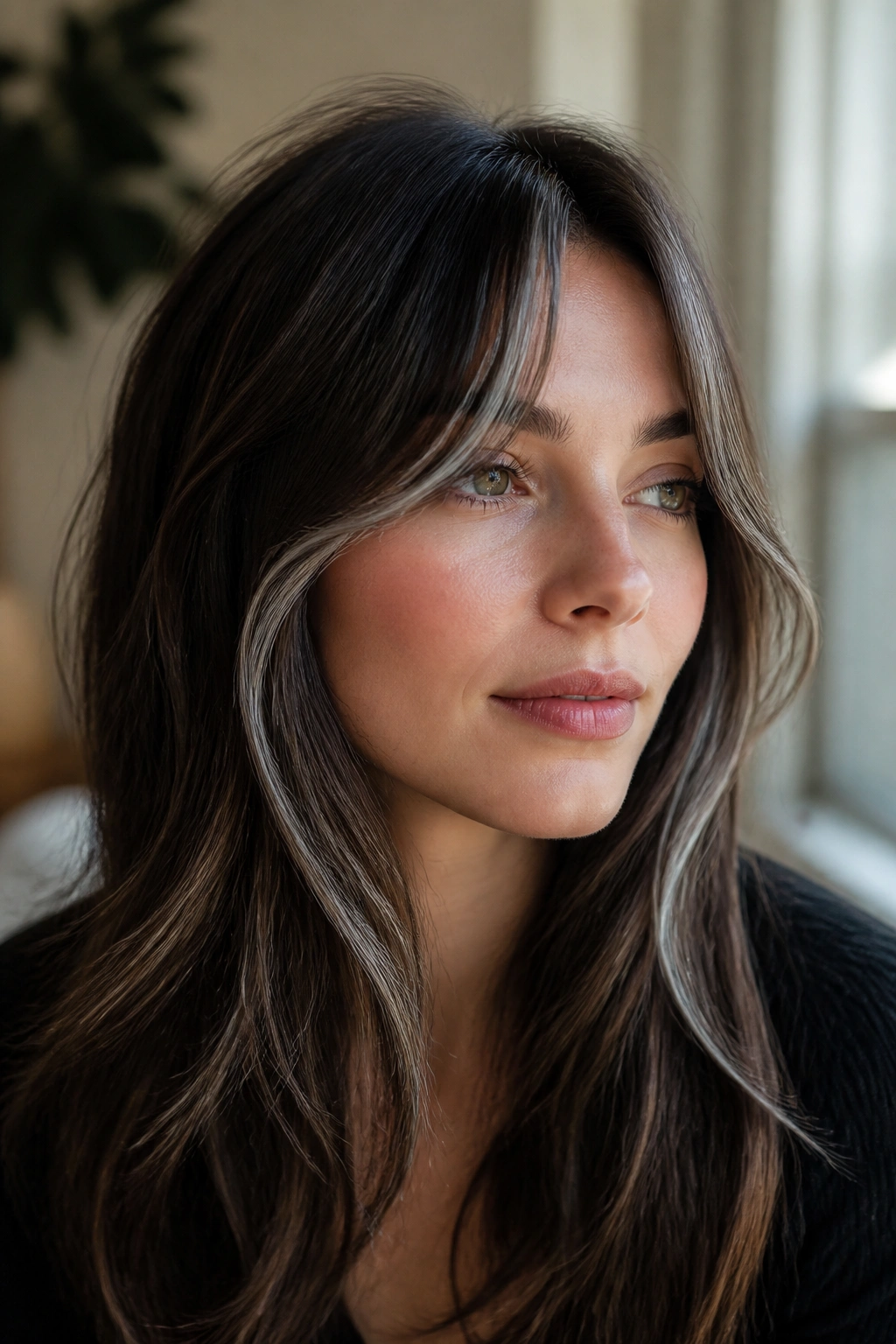
This is the easiest silver idea to love if you want brightness without committing to a full head of lightened hair. A pair of soft silver money pieces in the front can wake up chocolate brown hair in about two seconds, especially if your haircut already has layers or curtain bangs. They pull the eye upward and make the face look more open.
Why it works on chocolate brown hair
The front sections are where contrast matters most. Even a narrow panel, maybe ½ inch to 1 inch wide on each side, can change the whole mood of the cut. On a warm chocolate base, silver in the front reads crisp. On a cooler brown, it looks softer and more misty.
The best version keeps the root a touch deeper. That little shadow stops the silver from looking pasted on, which is a mistake I see all the time when people try to make the front pieces too bright too fast.
Best for: layered cuts, curtain bangs, long bobs, and anyone who wants a visible change without a full-color overhaul.
Ask for: face-framing foils, a cool silver toner, and a soft root blur.
Maintenance: plan on toning every 4 to 6 weeks if you want the silver to stay clean.
One small tip: keep the pieces thin near the hairline and a little wider at the cheekbone. The shape matters.
2. Smoky Silver Balayage Through the Mid-Lengths
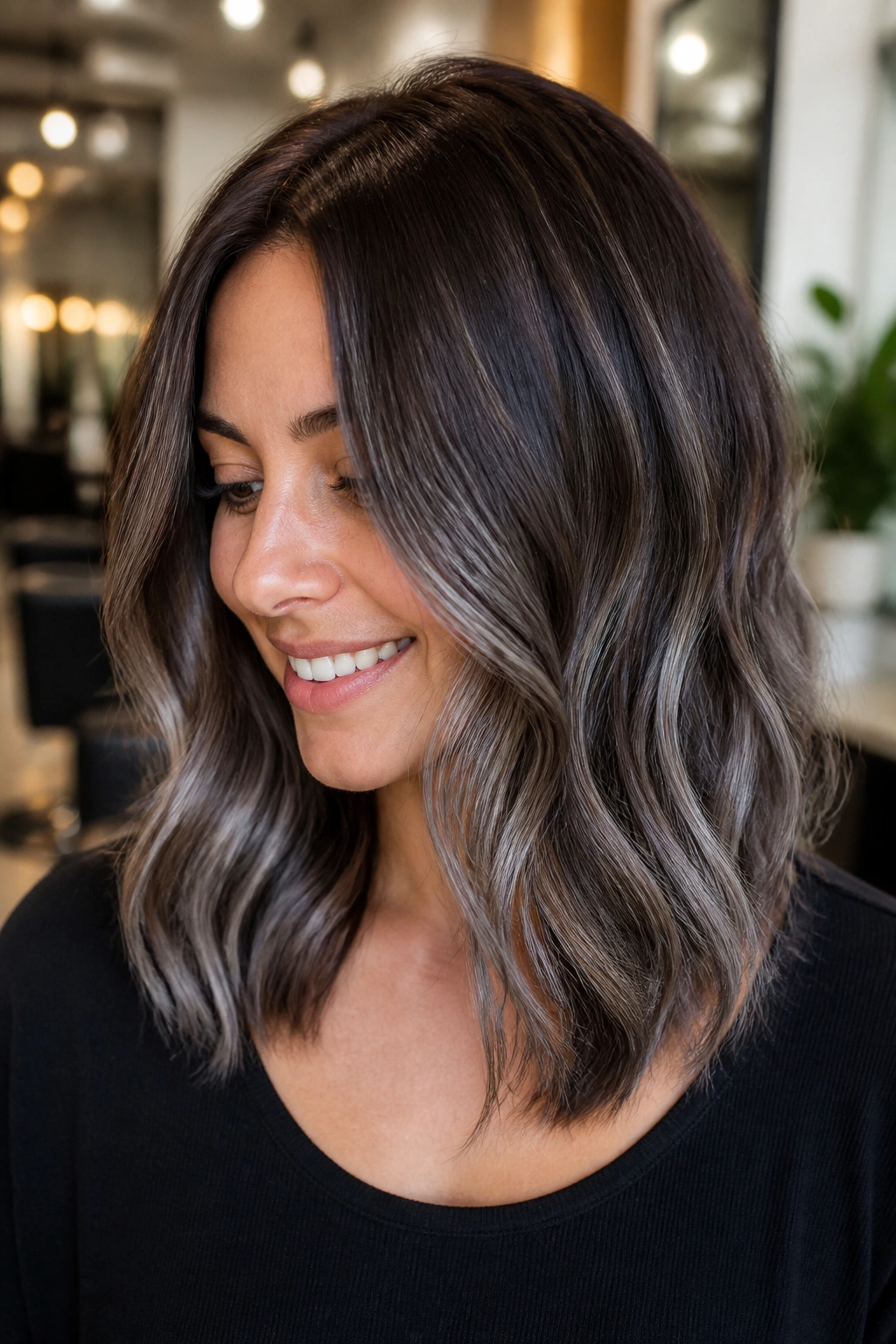
A smoky silver balayage is the grown-up version of silver highlights for chocolate brown hair. It is not shouty. It looks hand-painted, soft at the roots, and a little more expensive than stripey foils, which is why I keep coming back to it when someone wants silver but hates the salon-maintenance trap.
Balayage works because the silver is scattered through the mid-lengths and ends instead of sitting in one obvious line. That gives the brown base room to breathe. You still get brightness, but the eye reads movement first.
If your hair is shoulder length or longer, this is one of the cleanest ways to wear silver. The lighter pieces can be concentrated around the outer layer, then tucked deeper into the interior so the color shifts as your hair moves. On waves, it looks even better. The bends catch the silver and make it feel woven in rather than painted on.
A good colorist will usually keep the silver smoky instead of pure icy white. That little bit of gray-beige makes the grow-out easier and saves you from that harsh, chalky look that can happen when silver is pushed too far on brunette hair.
3. Hidden Peekaboo Silver Panels Under Chocolate Brown

Want silver without announcing it from across the room? Hide it.
Peekaboo silver panels sit underneath the top layer of chocolate brown hair, so they show only when the hair swings, gets tucked behind an ear, or goes up in a half-up style. The effect is a little secretive, and honestly, that is part of the charm. You get drama without living in drama.
How to wear it
This idea works especially well on straight or softly waved hair because movement reveals the color in flashes. On a blunt cut, the contrast feels sharp and modern. On a shag, it gets a little edgier, because the layers expose the silver in uneven pieces.
A clean peekaboo panel is usually one larger section rather than scattered tiny highlights. Think underlayer at the temple, behind the ears, or through the lower back section of the head. You can keep it silver-gray for a darker, more wearable effect, or go brighter if you want the reveal to pop.
I like this option for someone who needs their hair to look conservative at work but still wants something fun when they wear it loose. It also buys you time between salon visits, because the silver is not the first thing anyone sees when the roots start coming in.
4. Silver Ribbon Highlights in Loose Waves
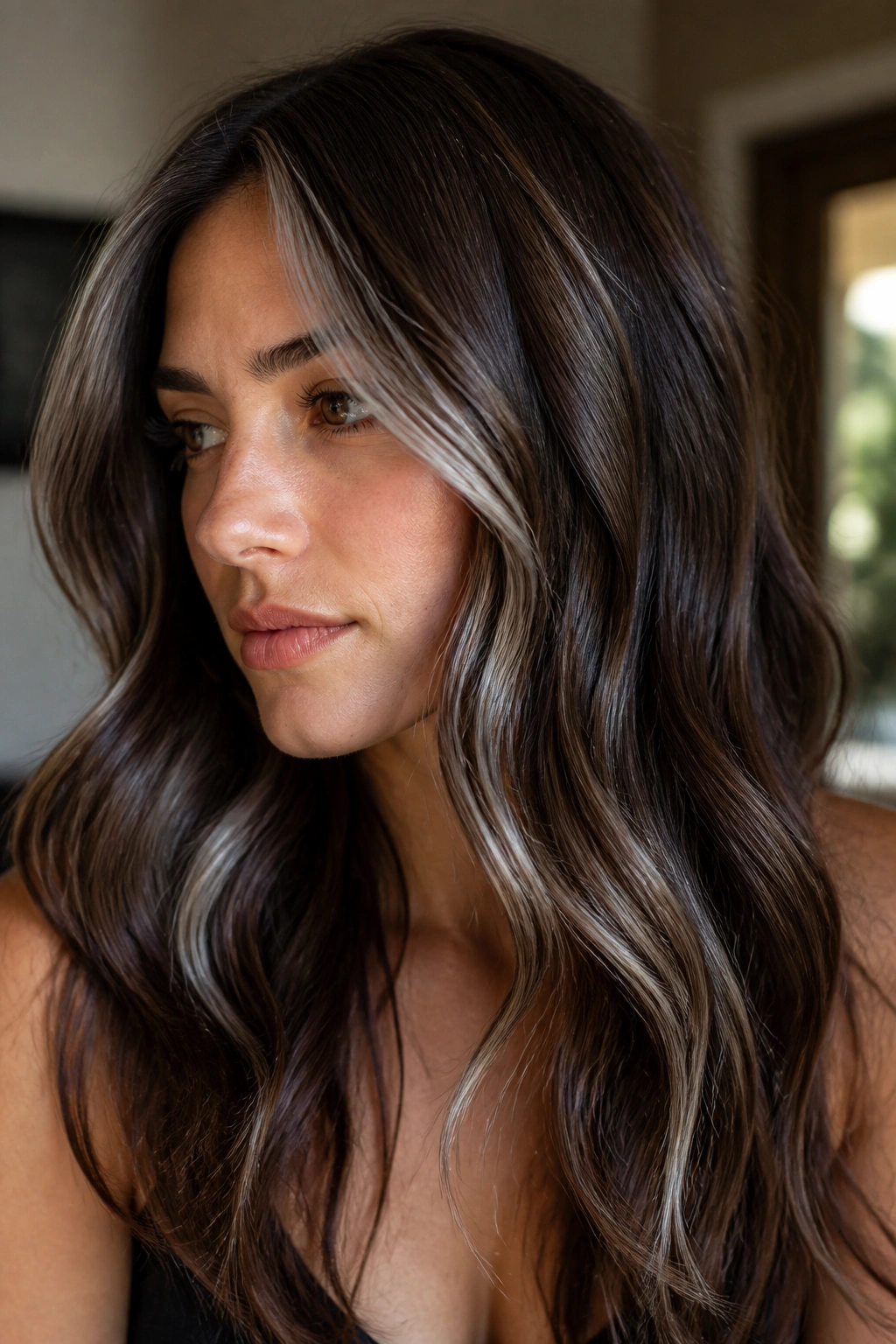
Picture a chestnut-chocolate wave with thin silver ribbons running through it. Not thick streaks. Ribbons. That little difference changes everything.
Silver ribbon highlights work because they follow the curve of the hair instead of sitting on top of it like paint. You get a soft, fluid finish that looks best when the hair is curled or bent with a flat iron. The silver flashes at different points along the wave, so the color seems deeper than it actually is.
- Ask for hand-painted ribbons, not chunky foils.
- Keep the silver slightly smoky so it does not turn stark white.
- Place the brightest pieces around the face and the top layer.
- Use larger waves, not tight curls, if you want the ribbons to stay visible.
The best part is that this style gives chocolate brown hair real movement. It is one of those looks that can make a simple haircut feel more deliberate. And if you wear your hair straight one day and wavy the next, the color reads differently each time, which is nice when you get bored easily.
5. Mushroom Brown Blends with Silver Babylights
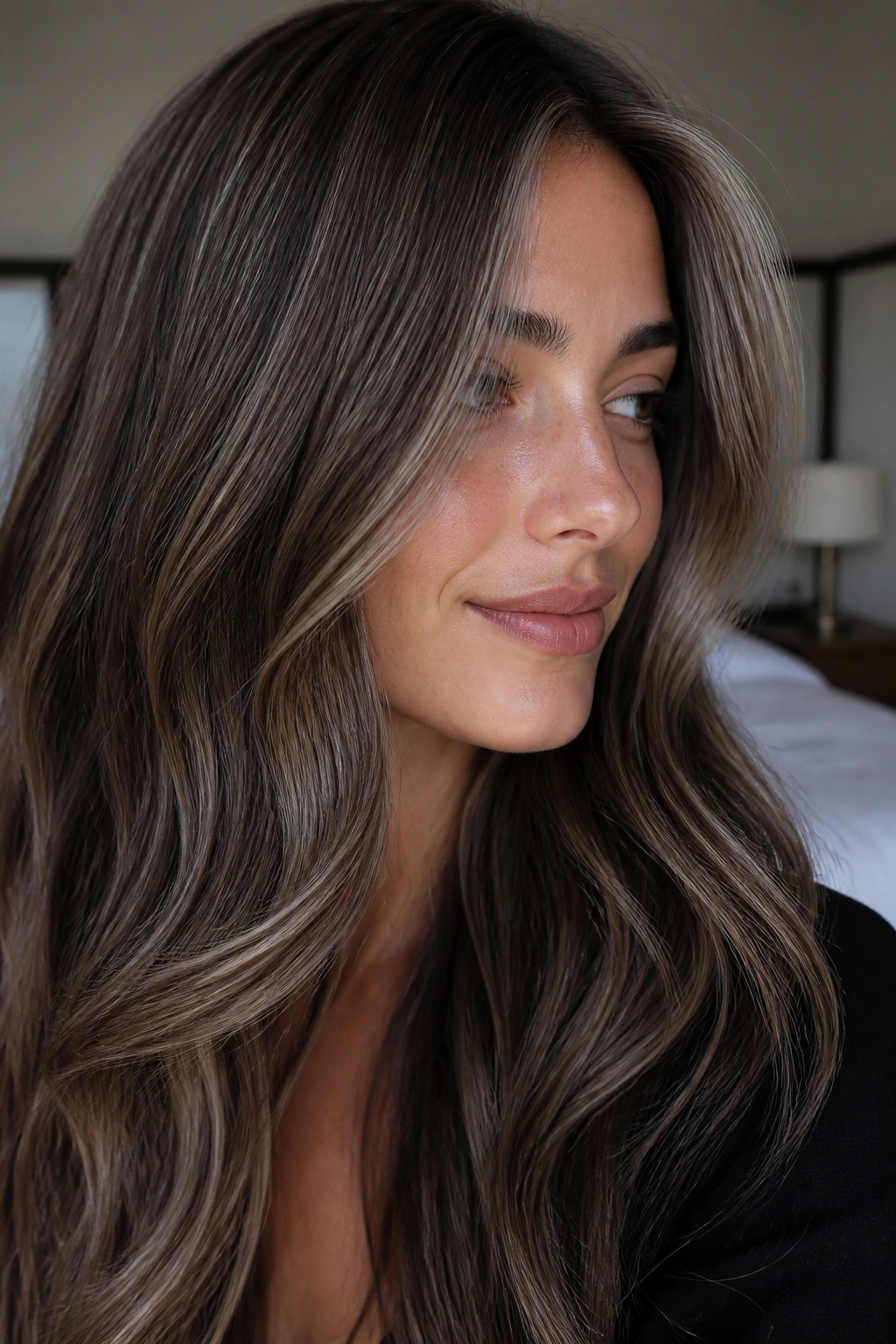
This is the softest idea on the list, and I have a real soft spot for it because it solves a common problem: some people want silver, but they do not want their hair to look bleached within an inch of its life. Mushroom brown with silver babylights gives you cool depth first, brightness second.
The babylights are tiny. Really tiny. They mimic the way sunlight would hit naturally lighter strands, only here the tone stays ashier and a little more metallic. On chocolate brown hair, that means the finish stays believable instead of turning cartoon-bright. It is especially nice if your brown has a neutral or cool base already.
There’s a catch, though. If your hair leans copper or red, the silver can look muddy unless the toner is dialed in carefully. That is not a flaw in the idea. It just means the color needs a cleaner canvas.
I like this one for long hair, bob cuts, and anyone who wants an understated finish that still looks expensive in a mirror. It grows out quietly, which counts for a lot. So does the fact that you can add more silver later without having to redo the whole head.
6. Chunky Silver Streaks for a Graphic Finish
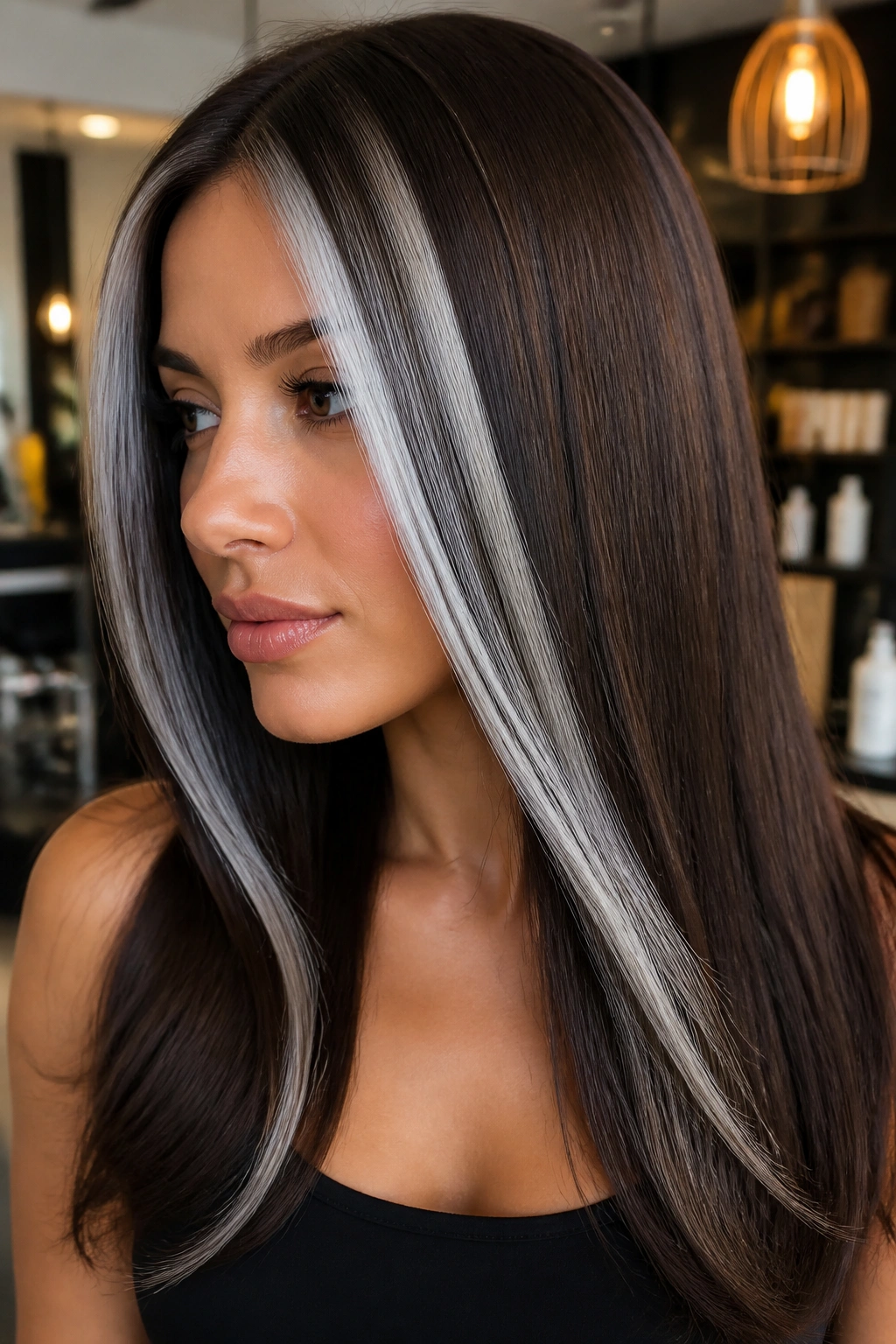
Chunky silver streaks are not shy. They sit in contrast to the brown instead of blending into it, and that is exactly why some people love them. On a sleek bob, they feel sharp. On a shag, they feel a little punk. On very long hair, they can look bold in a way that reads deliberate rather than dated — if the placement is clean.
The key is restraint. One or two wider silver streaks can look fresh; too many can tip into costume territory fast. I usually like this idea best when the streaks are placed near the front and through one side of the head, not scattered everywhere. That gives the hair a point of focus.
This style suits straight textures more than fluffy ones. You want the streaks to hold their shape and stay readable. If the hair is heavily layered, the contrast gets broken up and loses some of the punch that makes this idea work in the first place.
Use this one when you want the silver to say something. It is not trying to be soft. It is trying to be seen.
7. Silver Ombré Ends That Fade from Brown to Ice
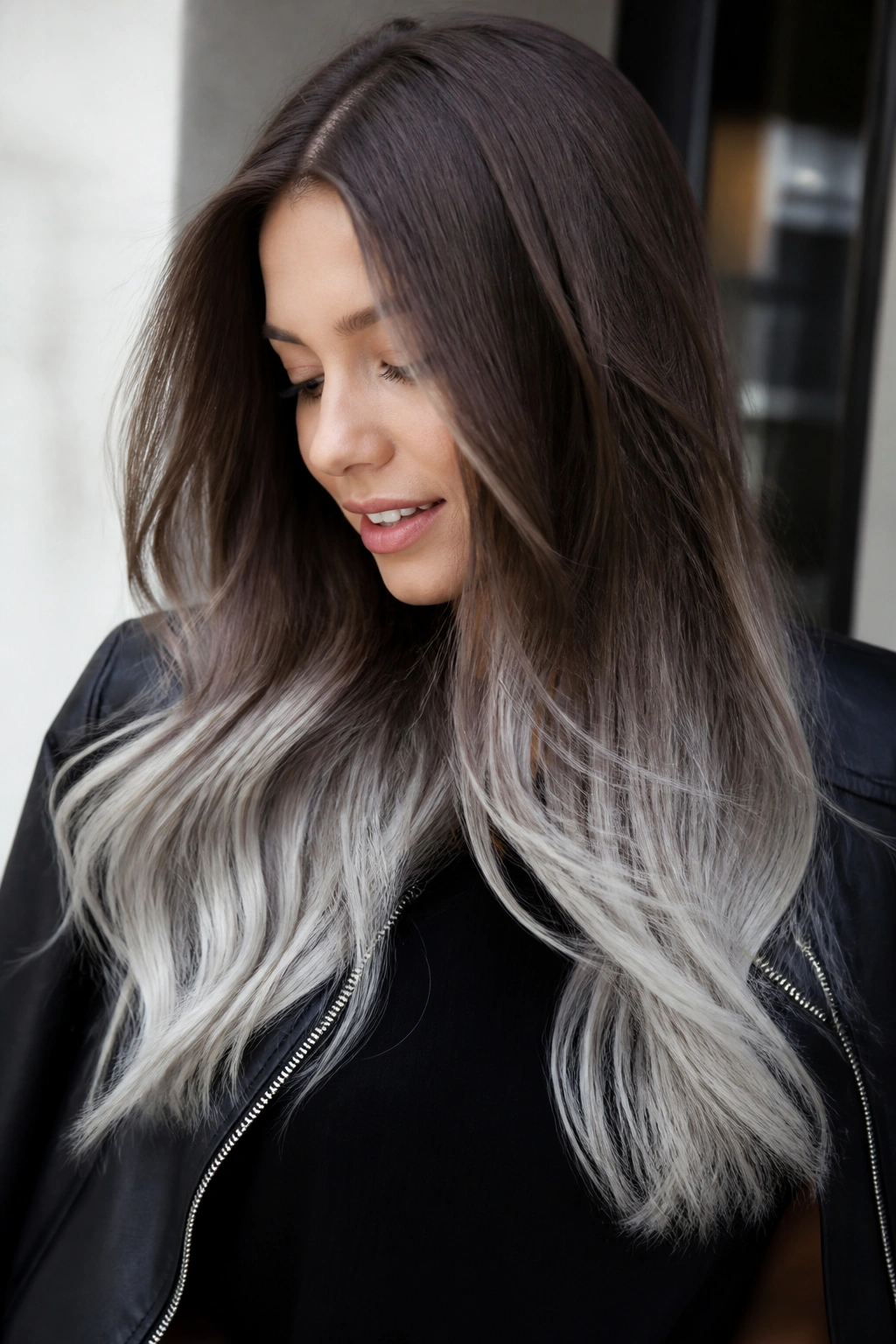
A silver ombré is one of the cleanest ways to wear lighter color on dark hair because the transition does the hard work for you. The brown stays where it belongs at the top, then slowly gives way to cool silver at the ends. No abrupt line. No hard stripe. Just a gradual shift that makes the whole head feel longer and sleeker.
The strongest version starts with chocolate brown near the roots and mid-lengths, then fades into pewter, then silver, then an almost icy end. That staged transition is what keeps it from looking choppy. If the fade is rushed, the whole thing feels off. If it is slow, it looks polished in a very straightforward way.
This is a smart choice for long layered cuts, especially if you like wearing your hair loose. The ends catch light first, so the silver shows even when the top is covered by a sweater or coat collar. You also get a little more time between salon visits because the root line is built into the design.
It does need upkeep. Silver ends fade faster than darker brown roots, and the line can turn warm if the toner is neglected. Still, when it is done well, this is one of the easiest silver ideas to live with.
8. Frosted Crown Highlights for a Halo Effect
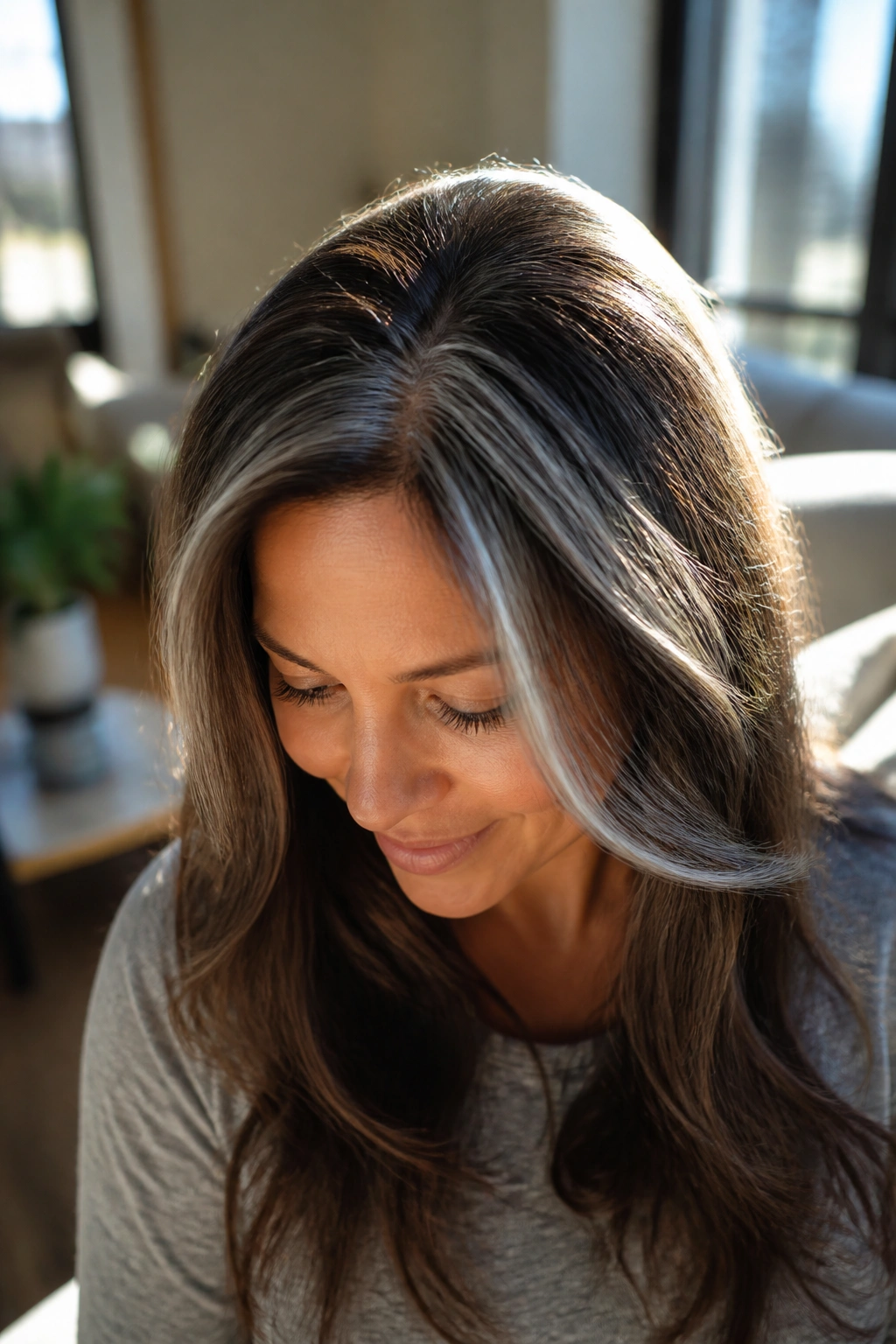
Silver at the crown changes the whole read of the hair. Instead of light just living at the front or ends, you get a frosted top layer that makes the hair look fuller from above.
What makes it different
The crown is where people notice flatness first. Adding silver there breaks up a heavy chocolate brown cap and gives the haircut a bit of lift. The trick is not to bleach the entire top layer too light. You want scattered silver highlights, plus a few softer pieces that keep the crown from looking patchy.
This idea works especially well on wavy bobs, long layers, and curly textures because the top pieces separate naturally. The silver appears and disappears as the hair moves, which keeps it from feeling too fixed in place.
A little root shadow helps here. A tiny bit of depth at the scalp makes the frosted effect look more natural and saves the crown from turning harsh. If the hair is very dark, this may need a few foil sessions to get clean silver instead of yellow-gray, and that patience pays off.
Best for: people whose hair feels heavy on top and needs shape.
Watch for: over-lightening the crown, which can flatten the cut rather than lift it.
Salon note: ask for scattered foils rather than a solid block of lightness.
9. Dimensional Silver Highlights with Dark Chocolate Lowlights
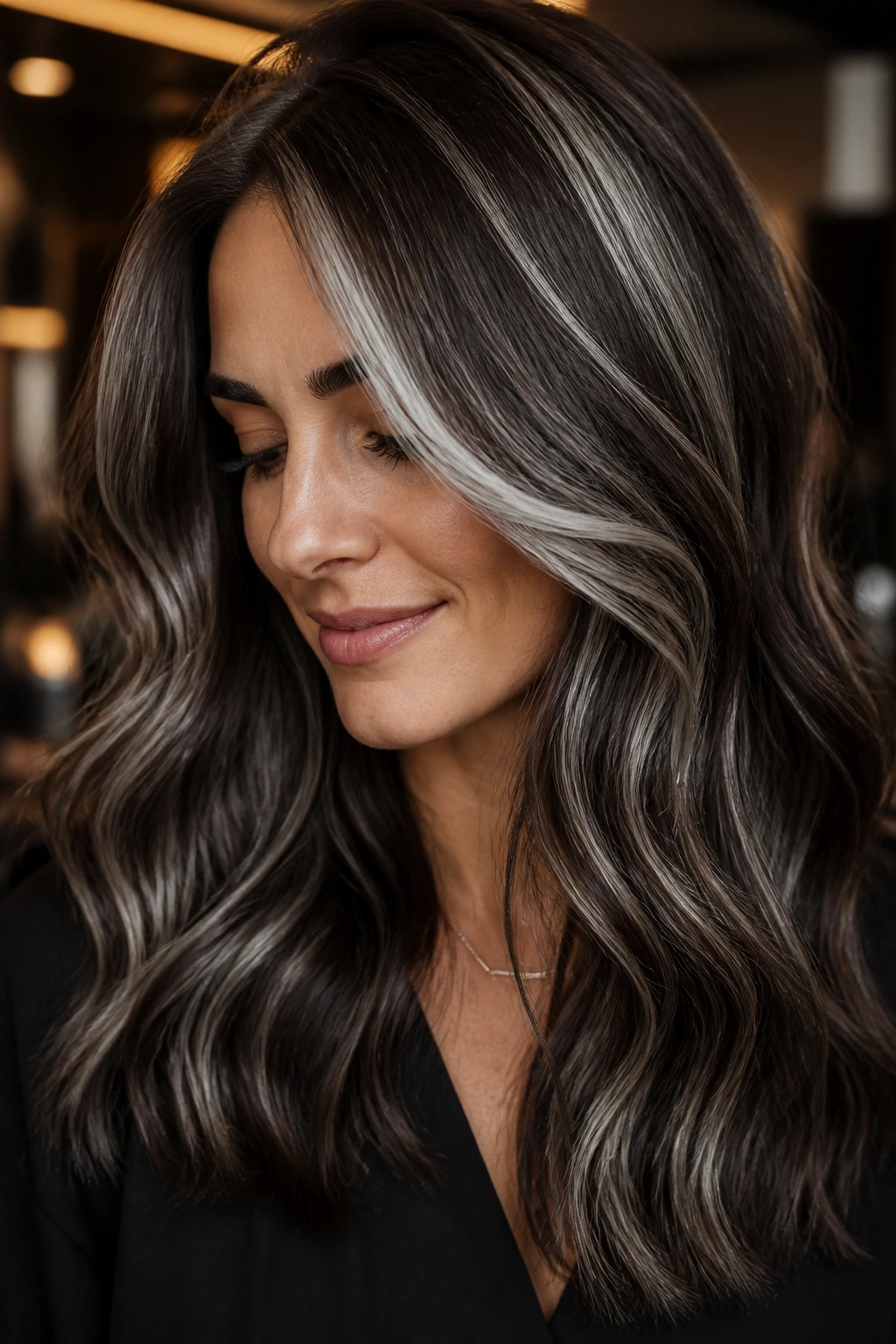
Here’s the contrarian take: sometimes the answer is not more silver. It is better contrast around the silver.
Dark chocolate lowlights can sit beside silver highlights and make the light pieces look sharper, deeper, and more expensive-looking. On a brown base that already has warmth, this mix gives you shadow and brightness at the same time. The hair stops looking one-dimensional, which is the main reason a lot of silver jobs fall flat.
This idea is good when the hair has been lightened before and needs structure put back into it. The lowlights create anchors. The silver becomes the accent, not the whole story. That balance keeps the color from drifting too pale or washed out.
It also works on thicker hair, where a few stronger shadow sections can stop the finish from reading puffy. I like the look around the lower sides and underneath the top layer. That keeps the contrast where it can be seen without making every inch of the head busy.
If your current brown is too uniform, this is the fix I’d reach for first. A flat brown-and-silver combo can look dull. A little shadow gives it shape.
10. Platinum-Silver Contour Highlights Through the Front

Why do some silver highlights make a face look brighter, while others just sit there? Placement. The best contour highlights follow the same logic as makeup: they frame what you want to bring forward and leave the rest quieter.
Platinum-silver contour pieces usually sit around the temples, cheekbones, and the front half of the part line. On chocolate brown hair, that can look especially sharp because the contrast is strongest right where the eye lands first. The rest of the hair can stay deeper, which keeps the look from turning over-light.
What to ask your colorist
Ask for bright silver contour pieces that stay denser near the face and taper back through the sides. That taper matters. Without it, the color can look like two bright curtains hanging in front of the hair.
You can keep the overall finish cooler with a blue-violet toner, or soften it with a smoky pearl toner if you do not want the silver to go white. The exact mix depends on how much warmth is left in your brown base.
This look is best if you wear your hair down often. It loses some of its punch in a ponytail, but that is part of the charm — the face-framing effect feels intentional when the hair is loose and polished.
11. Silver Underlayer at the Nape

A silver underlayer at the nape is one of my favorite sleeper ideas. People call it subtle, but it is not boring. It just saves the payoff for movement.
The top layer stays chocolate brown, which keeps the style grounded and easy to wear. Underneath, the silver flashes when you tie the hair up, tuck it into a coat, or let layers swing around your neck. That hidden reveal can feel sharper than visible highlights because it changes how the haircut moves.
This works especially well on medium-length hair and layered cuts with enough separation for the underlayer to show through. If the haircut is too blunt and dense, the silver can stay buried. In that case, ask for a wider section near the nape so there is enough lightness to notice.
The maintenance is nice, too. Since the silver is tucked away, regrowth is less obvious. You can stretch salon visits a bit longer without the whole look falling apart. That is not a small thing if you like color but dislike babysitting it.
If you want a silver idea that feels a little cooler and more private, this is the one I’d pick.
12. Frosted Tips on a Lob or Shag
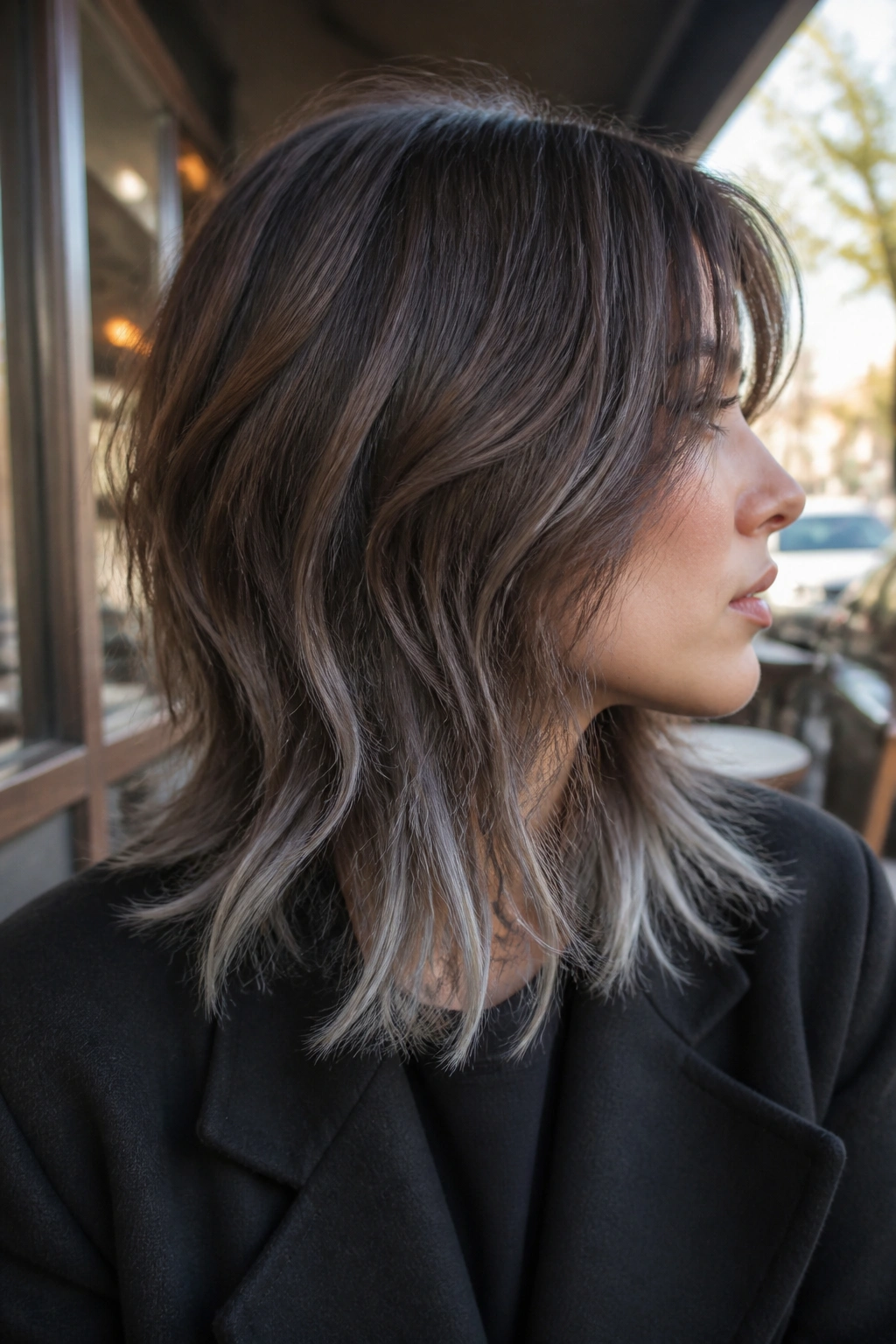
Frosted tips are back in a smarter form. On a lob or shag, they no longer read as a throwback joke; they read as texture.
The point is to lighten only the ends of the cut so the silver sits where the shape already wants movement. On a lob, that can mean crisp silver edges and softened interiors. On a shag, it can mean piecey ends that pick up the silver in broken, uneven flashes. Either way, the haircut does half the styling for you.
- Keep the tips narrow on fine hair so they do not look stringy.
- Go a bit wider on thick hair so the silver is visible from more than one angle.
- Ask for a soft toner, not a bright white finish.
- Style with a bend, not a perfect curl, so the tips feel lived-in.
I like this one because it respects the haircut. Too many color jobs fight the cut. Frosted tips follow the shape that is already there, which is why they tend to look better than people expect. If you want a silver accent that feels energetic but not high maintenance, this is a smart move.
13. Sheer Silver Gloss Over Existing Highlights
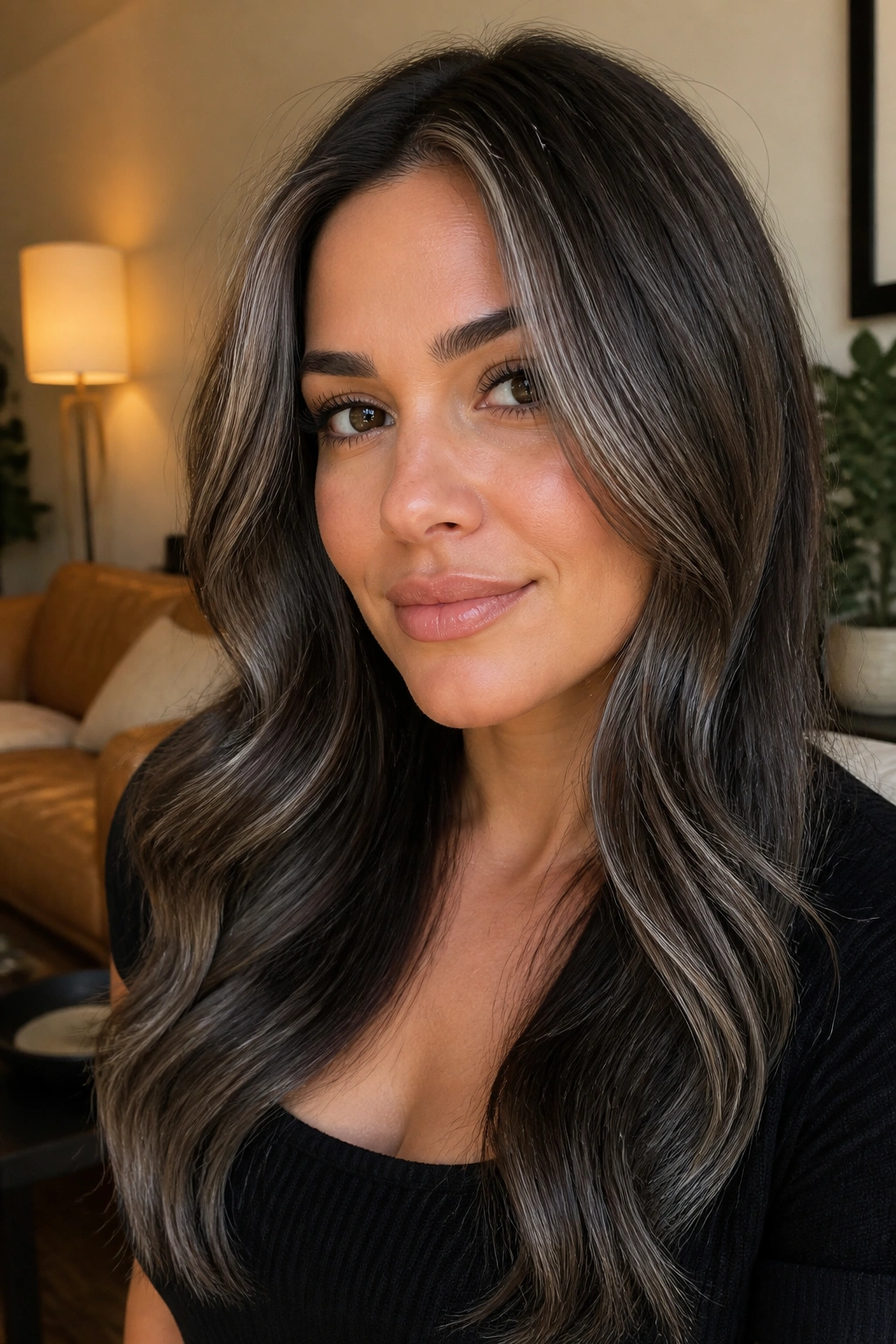
Already have light pieces in your brown hair? You might not need new highlights at all. A sheer silver gloss can shift warm blonde highlights into a cooler, more metallic place without changing the whole head.
Why gloss matters
Gloss is the part people underestimate. It does not add heavy lightness, but it changes the tone so the hair stops reading yellow or beige and starts reading silver-tinted and smoother. On chocolate brown hair with older highlights, that can be enough to make the whole color feel new again.
The best part is speed. A gloss usually takes less time and less commitment than a full lightening service, and it can be adjusted between appointments. If the silver starts to fade too warm, another gloss pulls it back into line.
Where it falls short
Gloss won’t create bright silver from dark brown hair. It only works if there is already some level of lift underneath. That is the catch. If the base is still too dark, all you’ll get is a cooler brown, which can still be nice, just not the same effect.
Best timing
Use this when your highlights are looking tired or yellow. It’s a cleanup move, not a transformation move. Still useful. Maybe more useful than people think.
14. Ashy Silver Melt on Dark Chocolate Hair
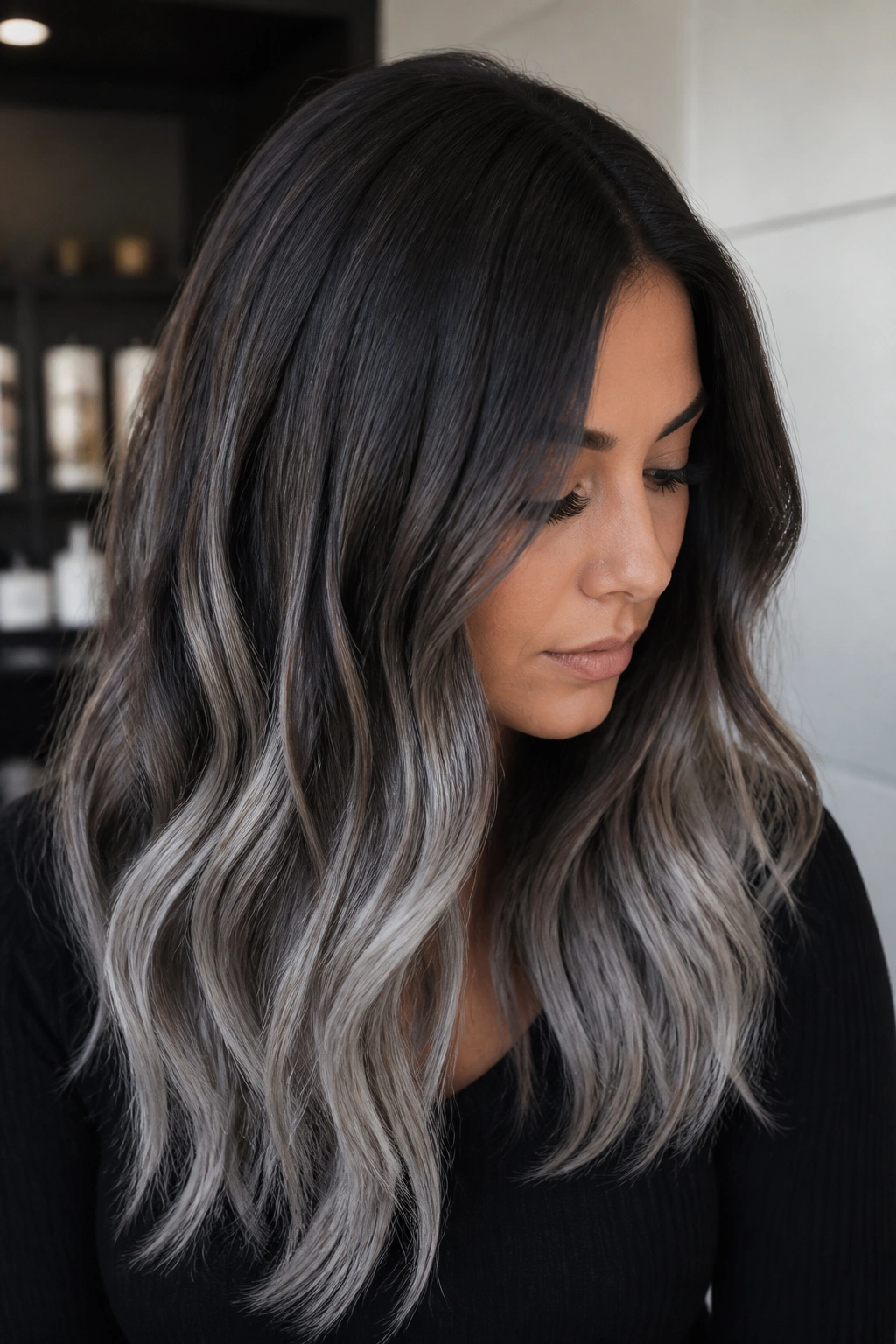
A silver melt is softer than a silver ombré and less obvious than bold streaks. The color shifts gradually from dark chocolate brown at the roots into smoky ash, then into silver through the mid-lengths and ends. No hard break. No obvious placement line. Just a slow fade that feels deliberate.
This is the version I would recommend to someone who likes dark hair first and silver second. The brown stays dominant, which keeps the look grounded. The silver shows up like a cool sheen instead of a full spotlight. That matters if you want the color to feel wearable day after day.
It’s also a good match for wavy or curly hair because the texture helps blur the transition. On straight hair, the melt can read more precise and sleek. On curls, it looks softer, almost like the silver lives inside the shape rather than sitting on top of it.
Compared with chunky silver streaks, this idea is calmer. Compared with babylights, it is bolder. That middle ground is why it works so well on chocolate brown hair. If you want silver without losing the richness of brunette, this is probably the safest strong choice.
15. Micro-Silver Accents for a Soft Finish
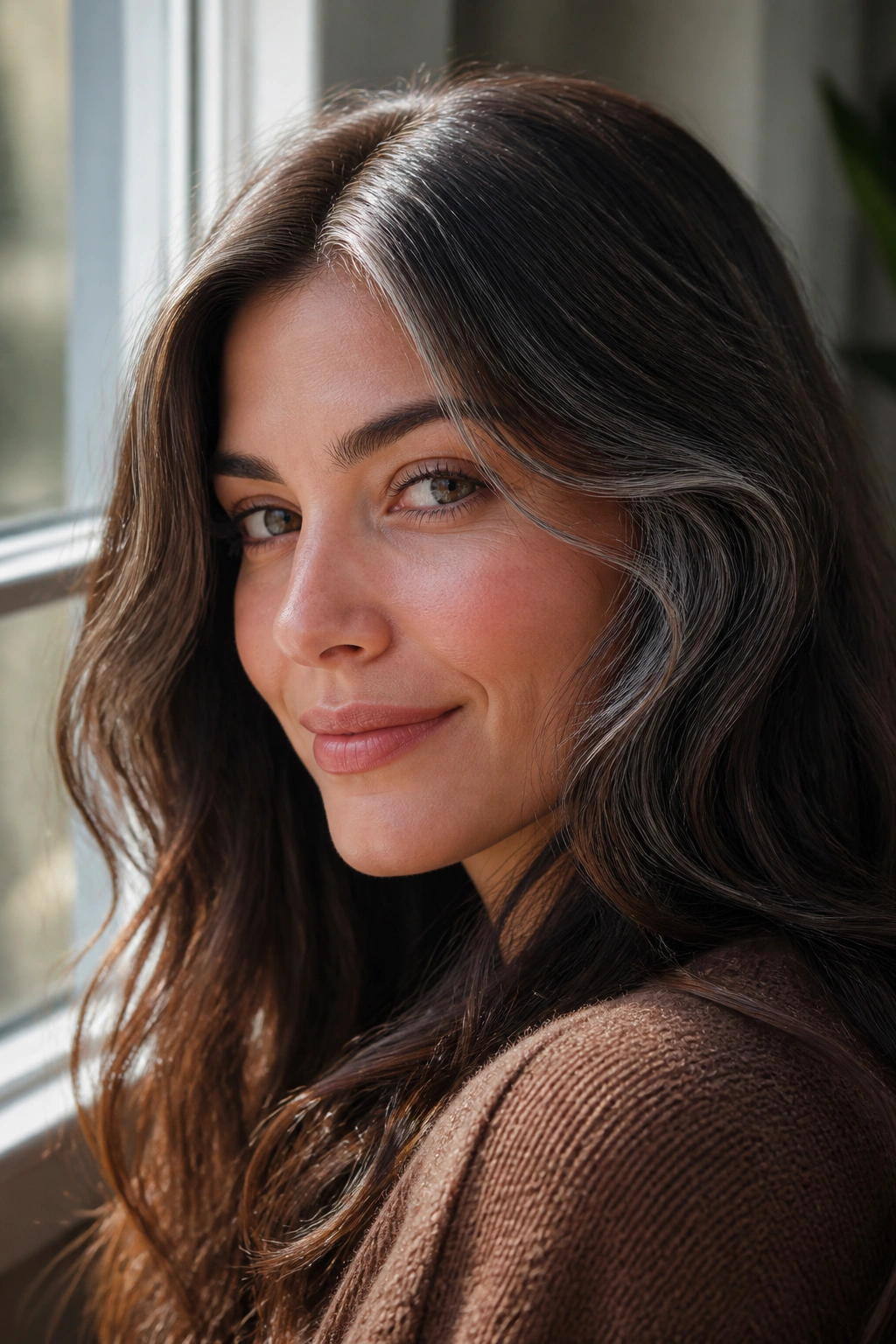
Sometimes the best silver idea is the one people notice only after a second look. Micro-silver accents are tiny, scattered pieces placed through the top layer or around the face so the chocolate brown still does most of the talking.
This is a good place to be if you are silver-curious but cautious. You get the cool tone, the reflection, and the texture change without opening the door to heavy maintenance. The accents can be placed at the temples, through a part line, or in a few face-framing slivers that break up the brown just enough.
The payoff is subtle, but not weak. On healthy chocolate brown hair, a few micro-silver strands can make the whole color look sharper and cleaner. They also grow out more gracefully than larger highlighted sections because the change is small enough to blend as the roots come in.
Ask for fine foils or baby-fine painted pieces, plus a cool toner that stays smoky instead of bright white. If you want the silver to feel soft rather than flashy, keep the placement irregular. Tiny clusters look better than evenly spaced stripes. That little bit of mess keeps the color from looking too engineered, which is often the difference between a nice idea and a hair color you actually keep wearing.
