



A good ponytail hairstyle for daily wear does not need curling tools, a drawer full of clips, or twenty minutes in front of the mirror.
The styles that earn a place in a normal week are the ones that stay put, flatter the face, and survive a backpack strap, a scarf, or a long car ride. They also have a sneaky advantage: when the base is clean and the tie is hidden, even the simplest ponytail looks deliberate.
That part matters more than people think. A ponytail can look sloppy in about three seconds if the hair is pulled too tight at the temples or the elastic sits in the wrong place. Move the base half an inch, smooth the crown, and wrap a small strand around the tie, and the whole thing changes.
I like ponytails for the same reason I like good jeans: they solve a problem without asking for applause. Some days call for polish. Some days call for speed. These 15 simple ponytail hairstyles for daily wear cover both, and they do it without getting precious about it.
1. Low Sleek Ponytail for Daily Wear
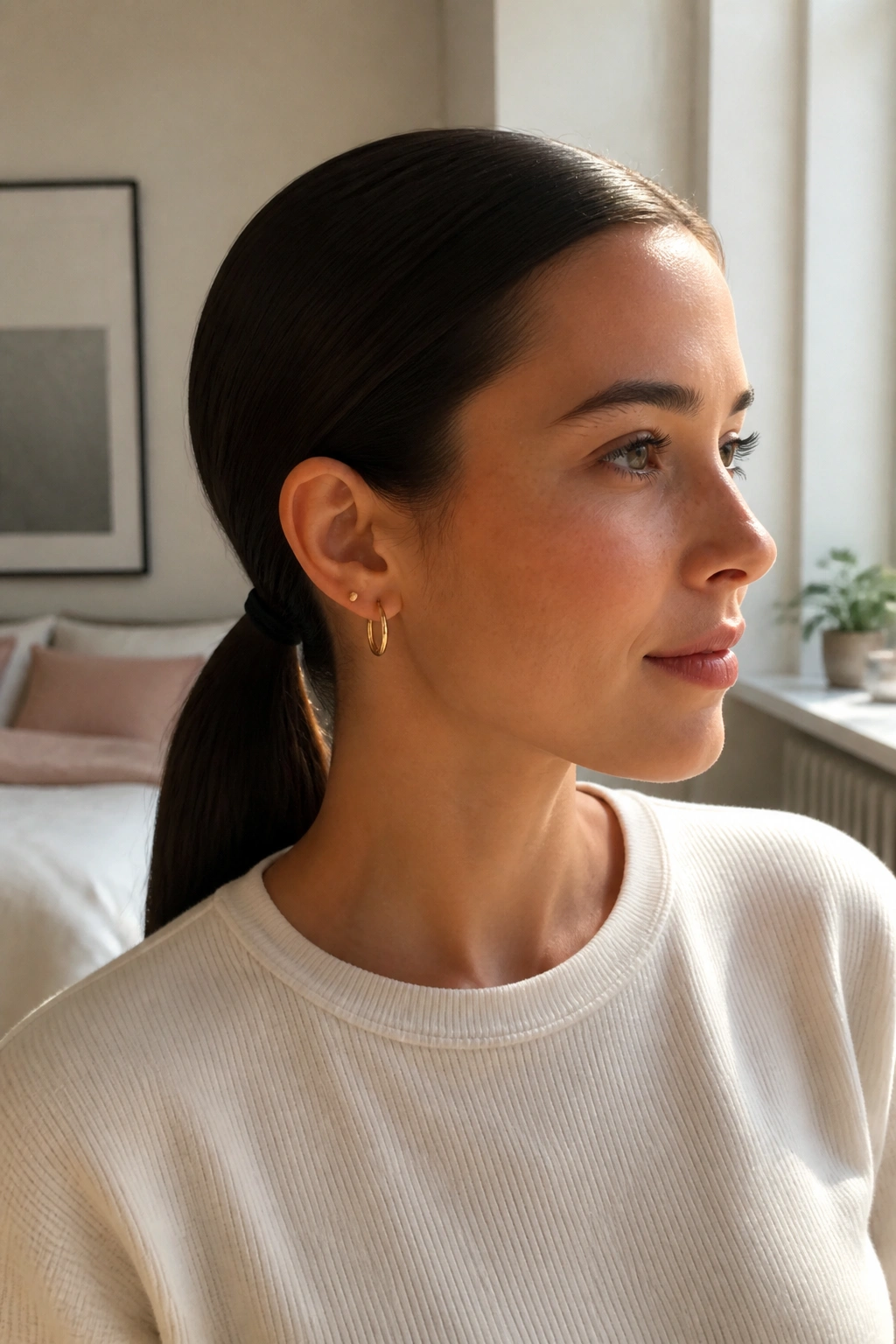
A low sleek ponytail is the quiet workhorse of the bunch. It looks clean, keeps hair off your face, and doesn’t fight with collars, scarves, or glasses.
Why It Stays Neat
The trick is placement. Set the ponytail at the nape of the neck, not halfway up the back of the head, and the whole style feels calmer and more grown-up. A soft bristle brush or a fine-tooth comb helps smooth the crown, but don’t drag the hair so hard that the front goes flat and lifeless.
A tiny amount of smoothing cream or light serum goes a long way here. Focus it on the top layer and the ends, then brush everything back in one direction. That little move keeps flyaways down without making the hair look greasy by noon.
- Use a hair tie with no metal join so it doesn’t snag.
- Wrap a 1-inch strand of hair around the elastic for a cleaner finish.
- Keep the ponytail low enough that it won’t rub against jacket collars.
- If your hair is layered, leave the shortest front pieces alone instead of forcing them into the tie.
Clean, not stiff.
2. Mid-Height Classic Ponytail for Daily Wear
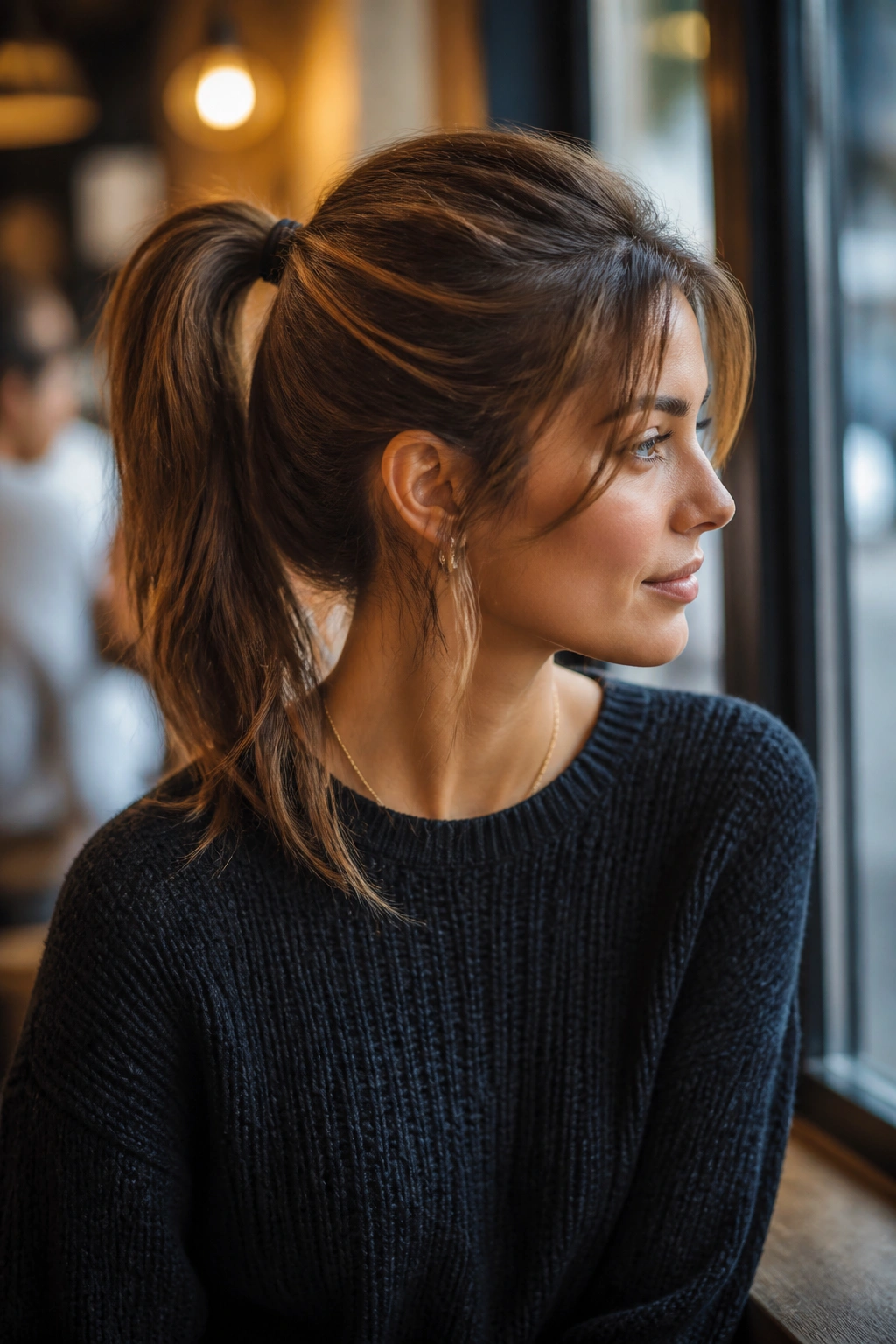
Why does the mid-height ponytail work so well? Because it lands in the one spot that rarely looks wrong. It gives a little lift at the crown, but it doesn’t pull the face back the way a very high ponytail can.
This is the style I reach for when I want hair off my neck but still want movement. It works on straight, wavy, and curly hair, and it behaves nicely when the day is long. Set it between the crown and the nape, then loosen the top with a fingertip so the front doesn’t look tugged.
The base should sit where the head begins to round toward the back. Too high and it starts to feel sporty; too low and it can collapse into something dull. Middle ground is the sweet spot here, and there’s nothing boring about that when you need a style that can handle errands, a desk chair, and dinner out.
If your hair is very fine, this is also one of the easiest ponytail hairstyles for daily wear to fake a little volume. Lift the section above the tie by a quarter inch before you secure it. Small move. Big difference.
3. High Ponytail with a Wrapped Base
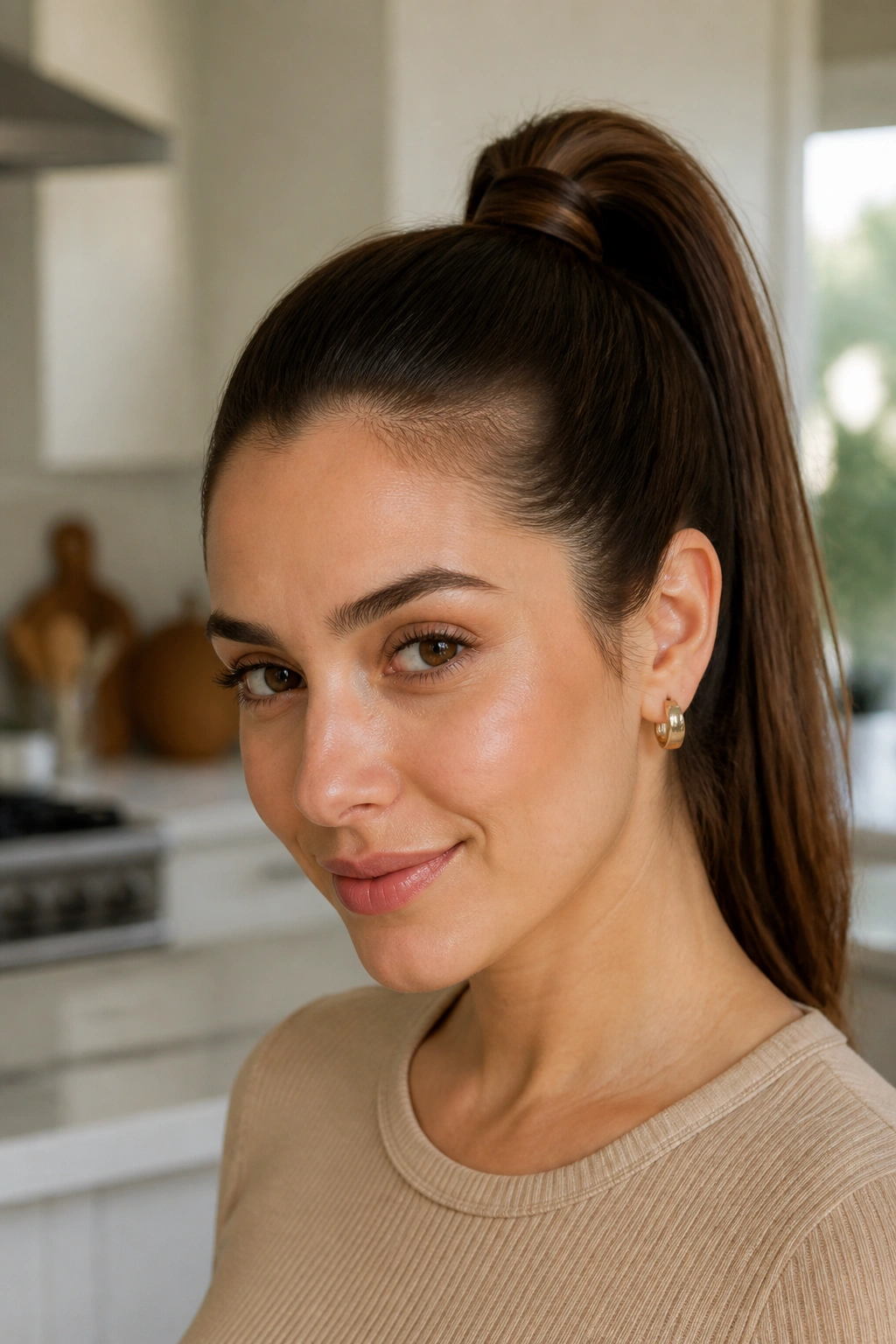
A high ponytail can look sharp without looking severe, and the wrapped base is what keeps it from feeling like a rushed gym tie. It’s the style I’d pick when I need the face lifted a little and the rest of the hair completely out of the way.
Picture this: you’re late, your roots need help, and your hair is not cooperating. Pull it up to the crown, smooth the sides with your hands, and secure it with a strong elastic. Then take a thin strand from underneath the ponytail, wind it around the base, and tuck the end under the tie or pin it flat with one bobby pin.
That tiny wrap does more than hide the elastic. It makes the whole ponytail look more finished and slightly taller at the same time.
A few things that help:
- Tilt the ponytail upward a little before tightening the elastic.
- Keep the side sections smooth, but not painfully flat.
- Use a second elastic if your hair is heavy and tends to slip.
- Leave the ends straight or lightly bent; both work.
That little wrap matters.
4. Bubble Ponytail for a Quick Twist
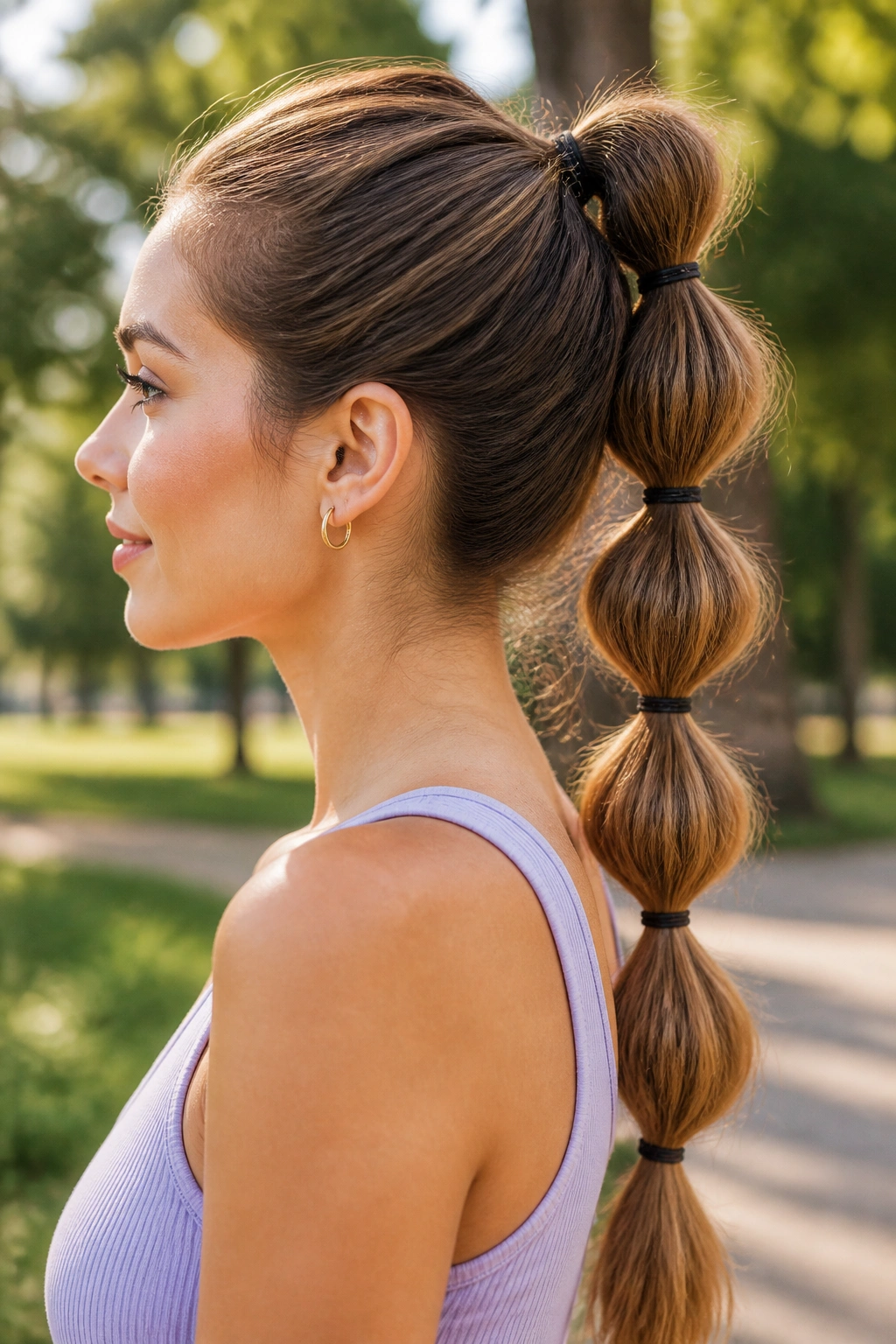
A bubble ponytail looks more complicated than it is, which is exactly why people keep coming back to it. You can make it with three or four small elastics and a couple of minutes, and it still feels different from the same old ponytail.
How the Bubbles Hold Their Shape
The first elastic sets the base, usually at mid-height or low. Then you add another elastic every 2 to 3 inches down the tail, depending on how long your hair is. Once the sections are tied off, pinch each one outward with your fingers until it puffs into a rounded shape.
The better the grip on the elastics, the cleaner the bubbles look. Tiny clear elastics are handy, but soft snag-free ties work too if your hair is thick. Don’t overdo hairspray at the end; a light mist is enough, because the style needs a little movement to keep the bubbles from looking stiff.
- Best on medium to long hair.
- Works well when ends are a little uneven.
- Looks especially good with straight or loosely waved hair.
- Use this when you want interest without braiding.
It’s playful, but not childish.
5. Side Ponytail with a Soft Bend
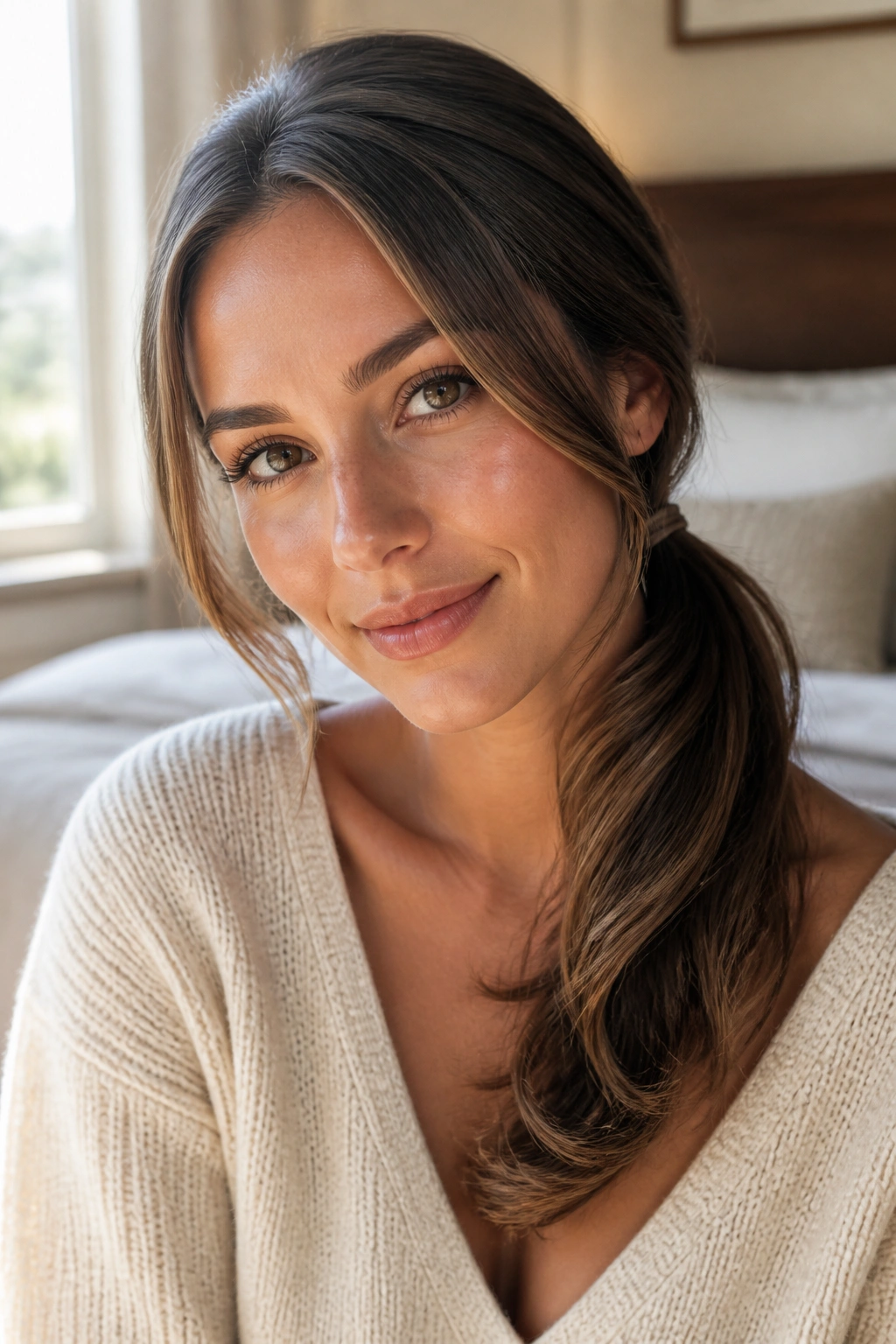
There’s something easy about a side ponytail that sits against one shoulder and moves when you move. It softens the face, especially if your jawline feels a little sharp in a tight center-part style.
I like this one when the hair has a slight bend already, because you’re not trying to force it into a formal shape. Sweep the ponytail behind one ear or just under it, secure it low and off-center, then leave the ends loose with a soft wave or a quick bend from a curling iron.
The side placement changes the mood more than the styling itself. The hair feels looser, the neck looks longer, and the whole thing reads less severe than a centered low ponytail. If your hair is layered, this is a forgiving style, because the shorter pieces can fall naturally instead of being trapped in the tie.
A little face-framing strand near the temple helps here, but keep it light. Too many loose pieces and the ponytail starts looking accidental. One or two is enough.
6. Textured Low Ponytail That Looks Intentional
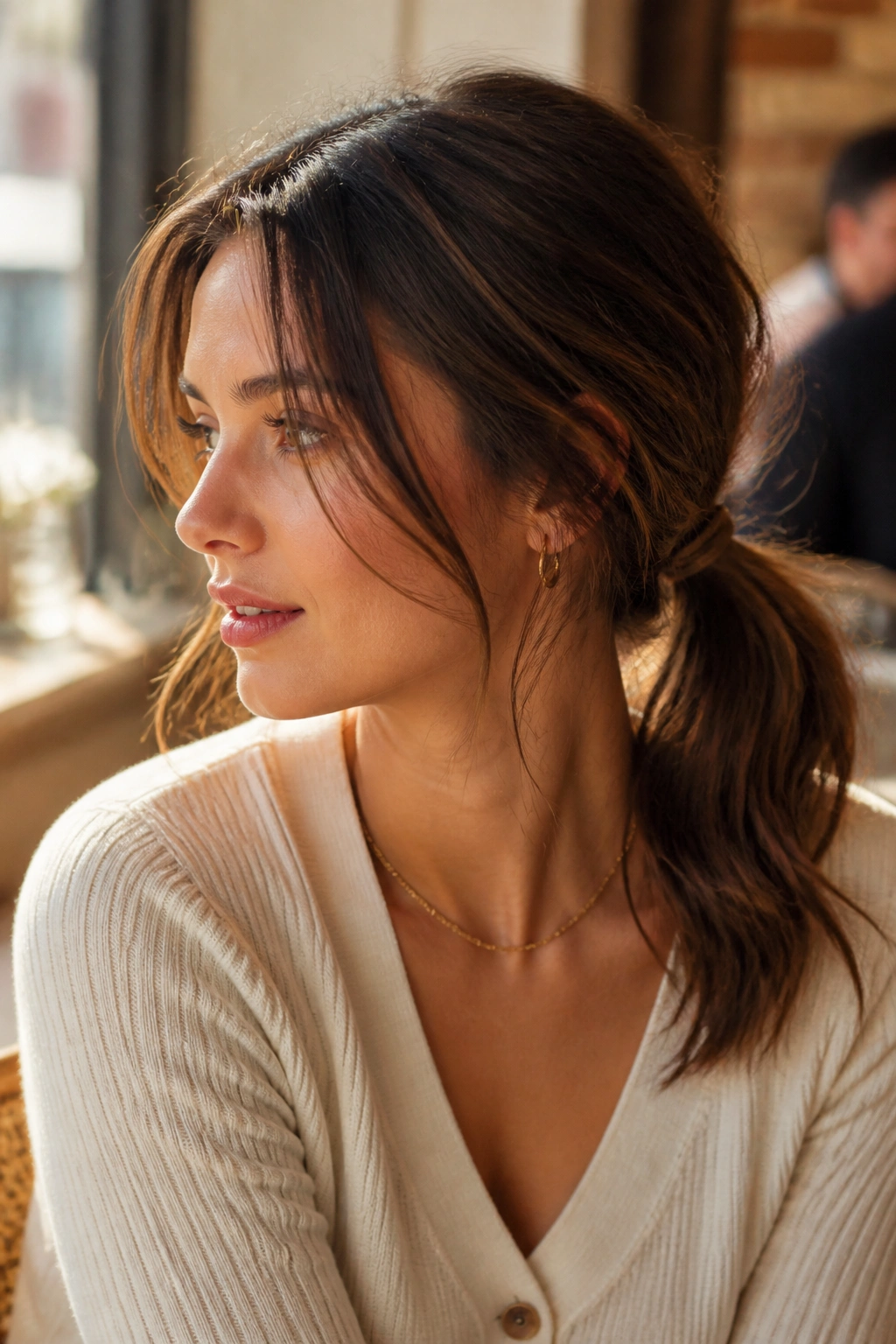
A textured low ponytail is the answer to second-day hair that needs a job. It works because it doesn’t fight a little grit. In fact, the grit helps.
Start by rough-drying the roots or adding a bit of dry shampoo near the crown. Then run your fingers through the top section instead of brushing every strand flat. Pull the hair back low, secure it, and tug at the crown in tiny increments so the shape has a little lift.
Best for Slightly Dirty Hair
That sounds blunt, but it’s true. Hair that’s on day two or three usually has enough natural texture to hold this style better than freshly washed hair. Freshly washed hair can slip, especially if it’s fine or silky, so a little texture spray near the mid-lengths often helps.
If the ends look too plain, twist the tail once before securing it with a second small elastic. Or leave the tail as-is and let the texture do the work. I prefer that version. It looks less forced.
The beauty of this ponytail is that it never asks to be perfect. It only needs shape.
7. Rope-Twist Ponytail
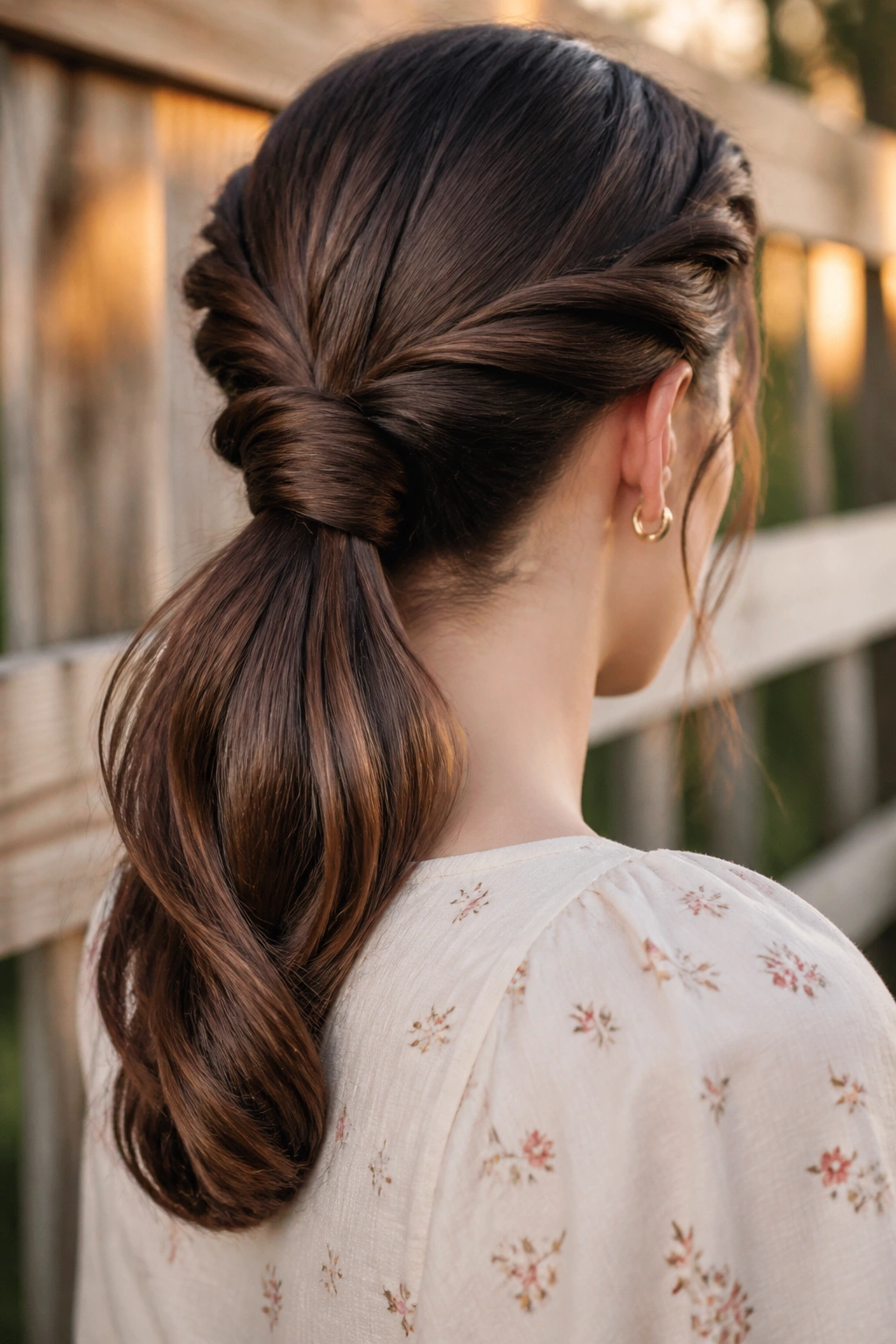
When braiding feels like too much effort, a rope-twist ponytail gives you the same sense of control with half the fuss. It has a tidy look, but it’s quicker than a three-strand braid and easier to do when your hands are still half asleep.
Pull the hair into a ponytail first, then split the tail into two equal sections. Twist each section in the same direction, usually away from your face, then wrap the two twisted pieces around each other in the opposite direction. That reverse motion helps the twist stay tight instead of unraveling in a few minutes.
A rope twist works especially well on medium-length hair that falls apart in traditional braids. The shape looks neat from the back, and the texture shows up more clearly than you’d expect. If the ends slip, secure them with a clear elastic and smooth the last inch with a tiny drop of serum.
This is one of those ponytail hairstyles for daily wear that looks like you spent more time on it than you did. Which is pleasant. A small fraud, but a useful one.
8. Braided Accent Ponytail
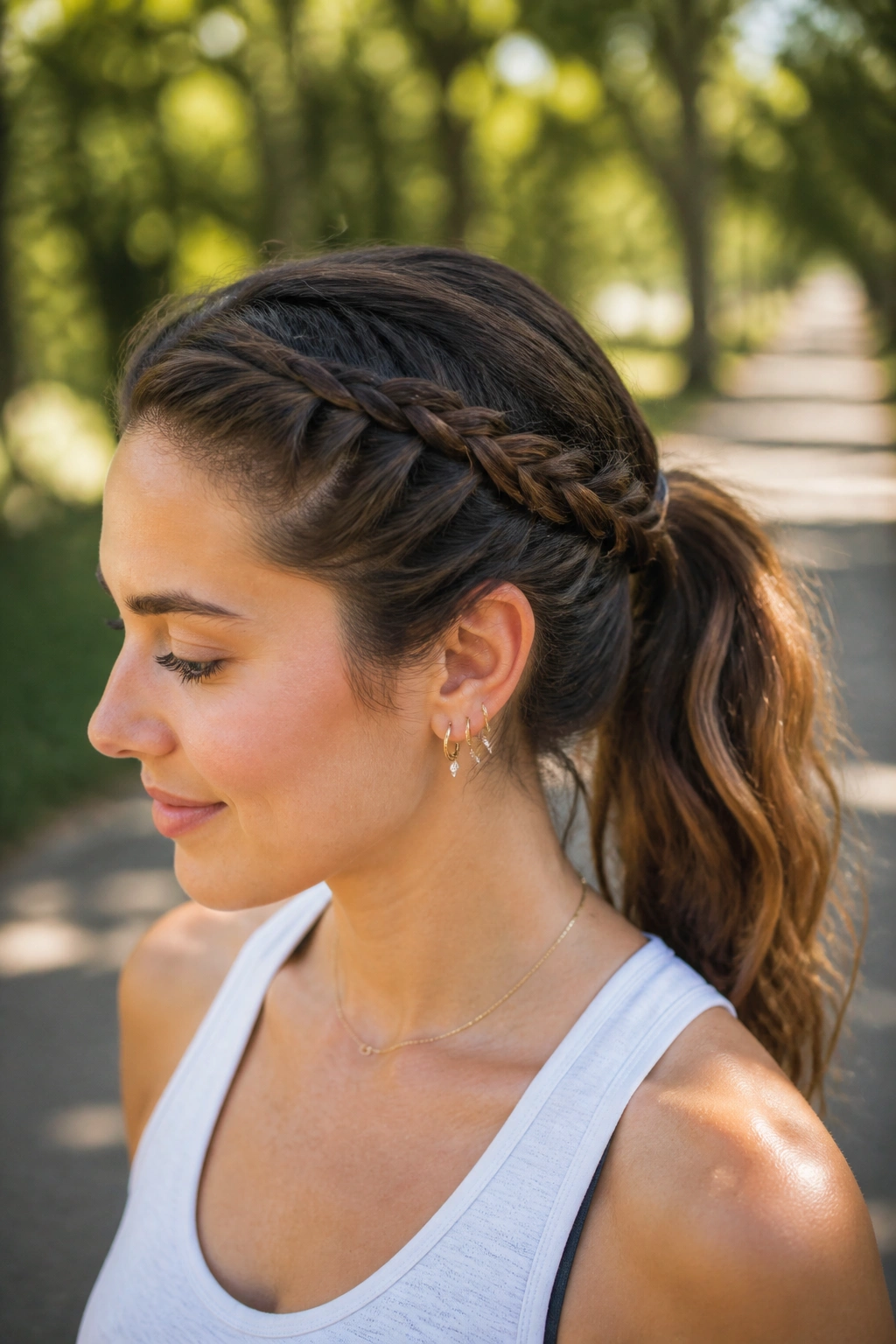
A single braid can rescue a ponytail that’s leaning plain. Not a full head of braids. Just one slim section woven in where the eye will notice it.
Where the Braid Should Go
The easiest version starts at the temple. Take a one-inch section, braid it tightly back toward the ear, then gather it with the rest of the hair into a low or mid-height ponytail. Another option is to braid a small piece from just above the ear and pin it under the ponytail, which gives the front a neat line without making the style look busy.
This is the style I recommend when the hair has no shape and you need a little structure fast. The braid adds texture right where the eye lands first, which is usually enough. You do not need to braid the whole tail unless you want to.
- Keep the braid narrow so it doesn’t dominate the style.
- Use a small clear elastic at the end of the braid.
- Pull the braid slightly wider if you want it to look softer.
- Leave the ponytail itself simple.
One braid. That’s enough.
9. Inside-Out Ponytail
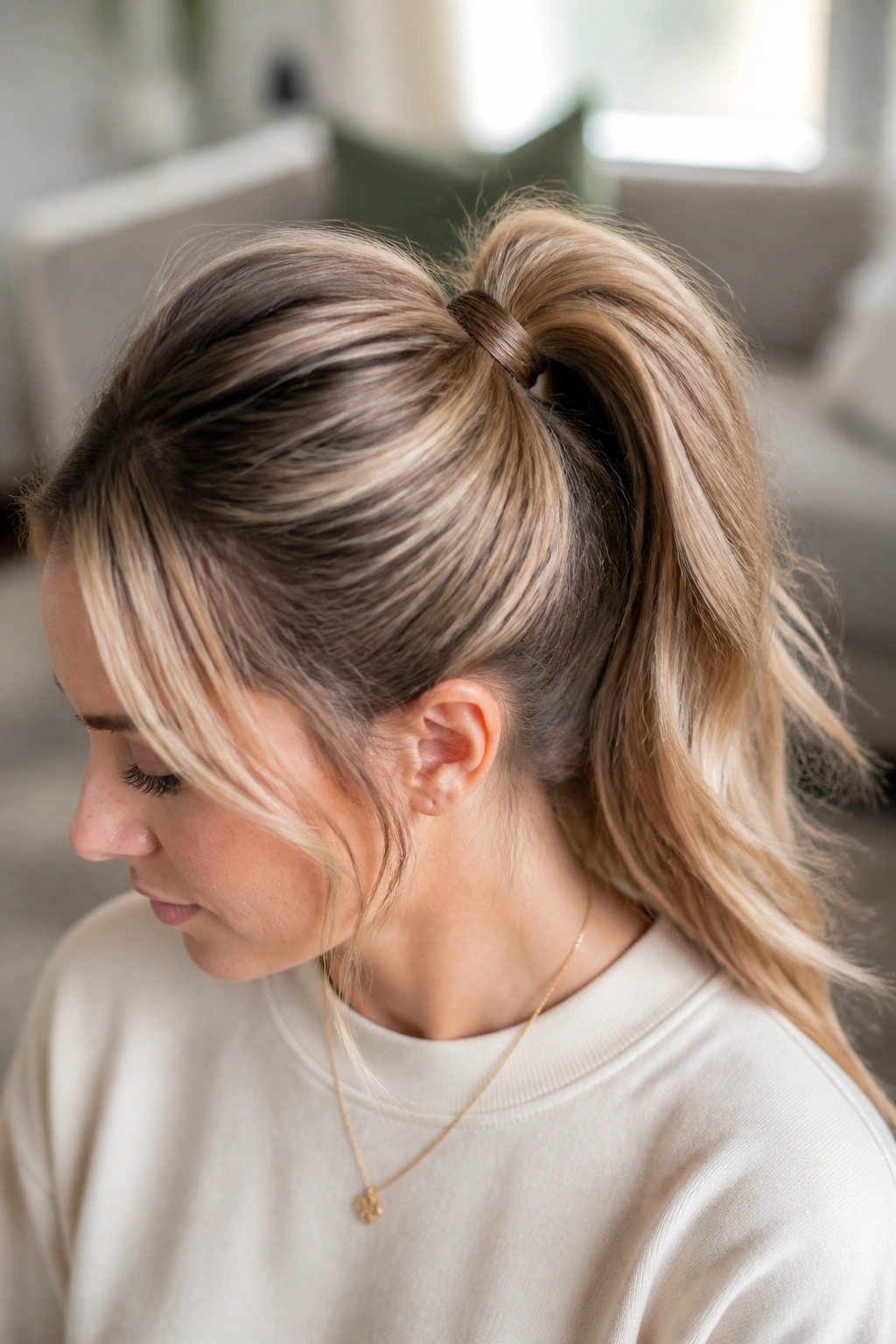
Why does flipping a ponytail through itself change the whole look? Because that small twist adds lift at the crown and a cleaner bend at the base, all without extra heat or teasing.
This is the old topsy-tail trick, and it still works because it solves a real problem: flat roots. Make a small opening above the elastic, split the hair above the tie, and pull the tail through the opening. The ponytail folds inward, the top gets a little raised, and the base looks more polished.
It’s a nice fix for fine hair, since teasing often leaves it fuzzy by lunchtime. It also helps with slightly layered hair, because the twist gives the tail more visual shape. If you want a softer version, loosen the twist with your fingers after you flip it through. If you want a cleaner version, leave it tight.
The whole thing takes less time than hunting for a second hair tie.
How to Use It
- Make the ponytail first at low or mid height.
- Split the hair above the elastic into two sections.
- Pull the tail through the opening once.
- Smooth the sides lightly and stop there.
That’s the whole trick.
10. Ribbon-Tied Ponytail
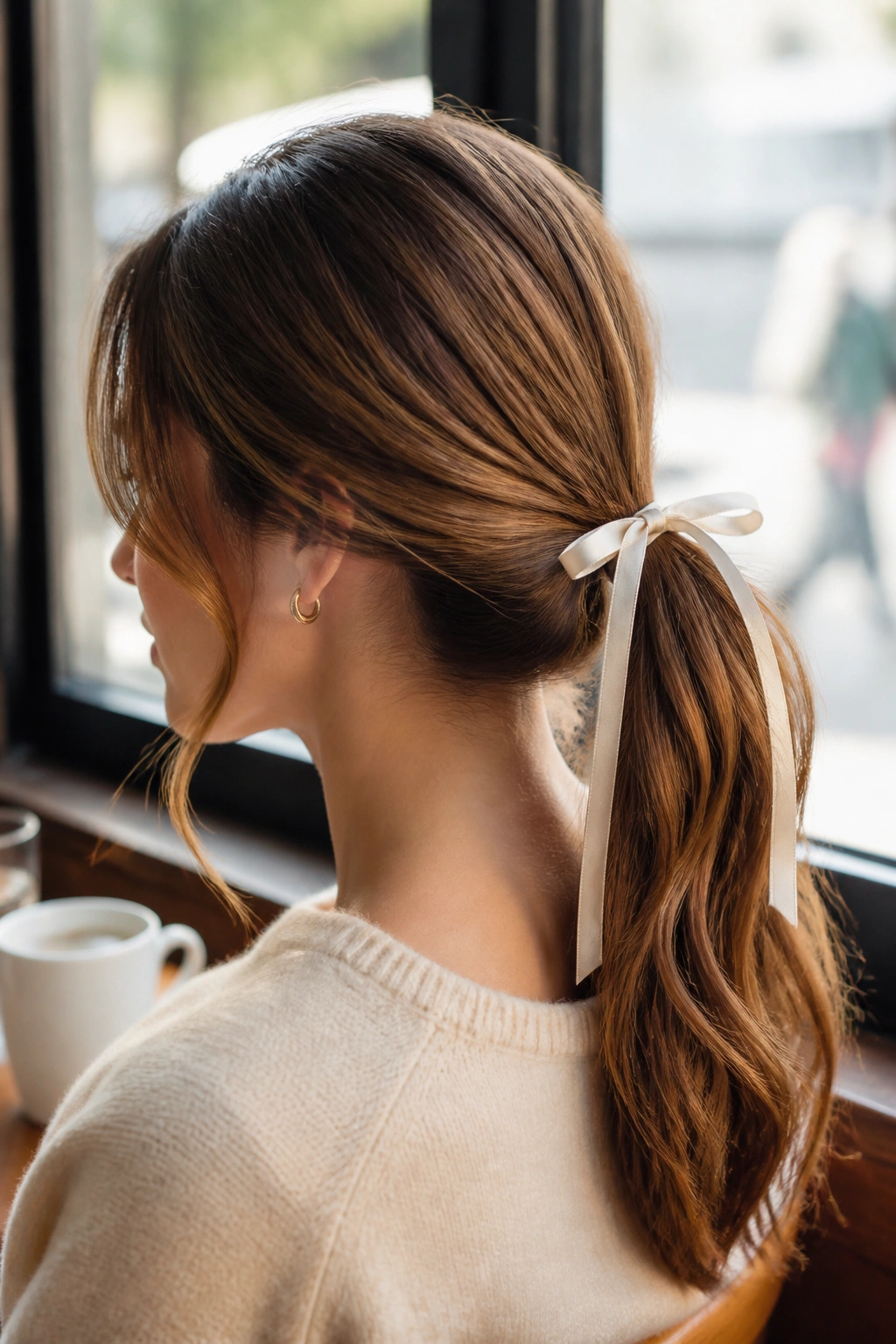
A ribbon changes the mood of a ponytail fast. Not in a fussy way. In a neat, quiet way that makes the style feel considered without becoming precious.
This works best on a low or mid-height ponytail, where the ribbon can sit near the base and still hang a little at the back. Use a ribbon about 1/2 inch to 1 inch wide if you want it to look clean and not bulky. Grosgrain holds its shape better, while satin looks softer and slides more, which can be a problem on very smooth hair.
I like ribbon when the ponytail itself is plain and I want one small thing to do the talking. Tie the ribbon over the elastic, knot it once, and let the ends fall even or slightly uneven if you want a looser feel. If your hair is very thick, secure the ponytail first with a strong elastic and use the ribbon as a cover, not the only support.
A narrow black ribbon gives a sharper feel. Cream, navy, and deep green are easier to wear than bright shades, at least if you want the style to work with most clothes.
11. Scarf-Wrapped Ponytail
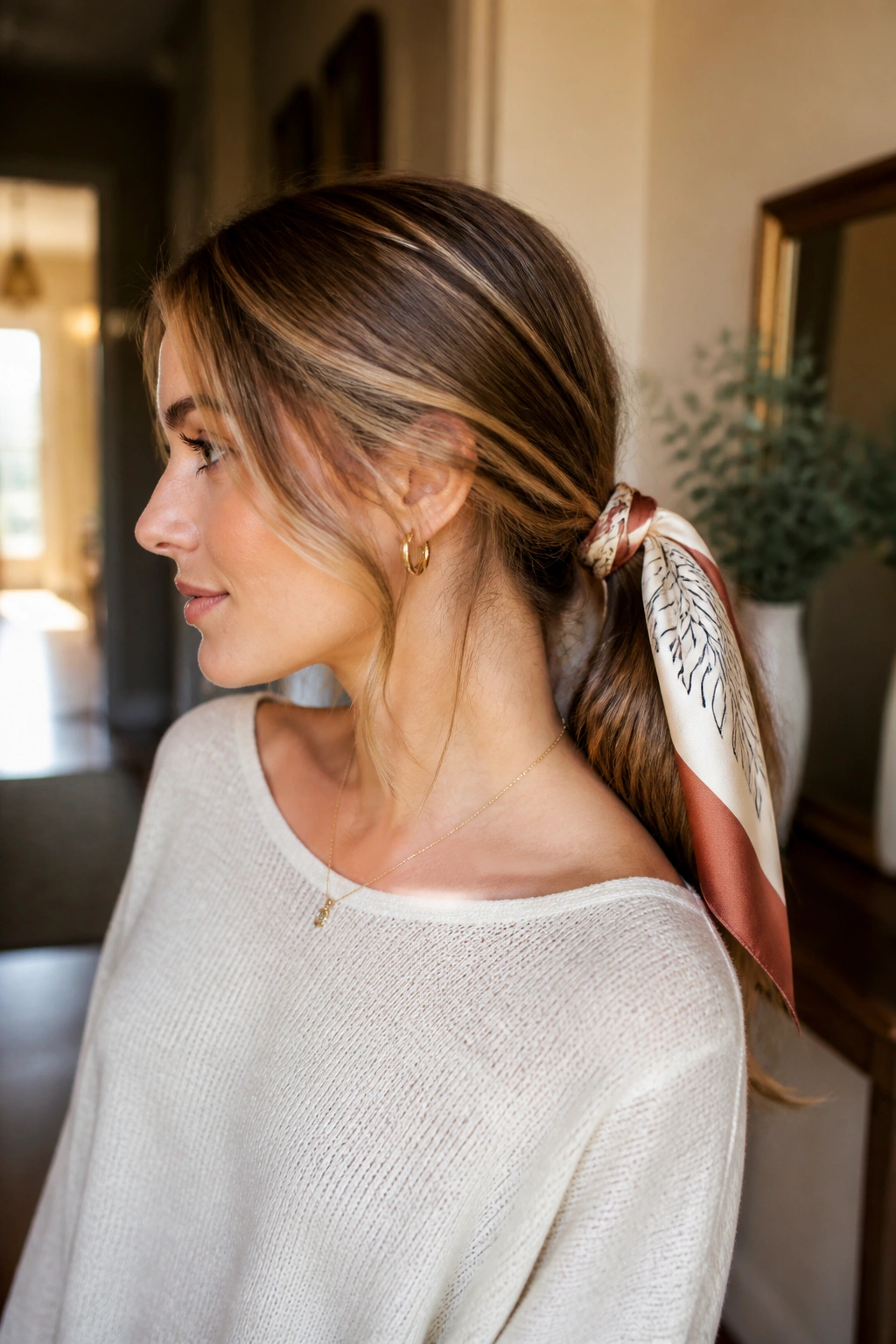
A scarf-wrapped ponytail is one of those styles that looks like a style choice and a practical fix at the same time. Frizz? Covered. Limp roots? Hidden. Boring elastic? Gone.
Use a square scarf about 20 inches across, fold it into a long band, and tie it around a low or mid-height ponytail. You can keep the knot at the base, let the ends trail to one side, or wrap the scarf once around the elastic before tying it off. The first version feels casual. The second looks tidier. Pick the one that matches the day.
Fabric matters here more than people think. A slippery scarf can slide on very fine hair, especially if the ponytail is high. A cotton or silk-cotton blend has more grip and usually stays put better. If your hair tends to puff up at the nape, this style is nice because it covers the exact spot where frizz likes to gather.
One sentence worth remembering: the scarf should support the ponytail, not fight it.
12. Face-Framing Ponytail with Loose Front Pieces
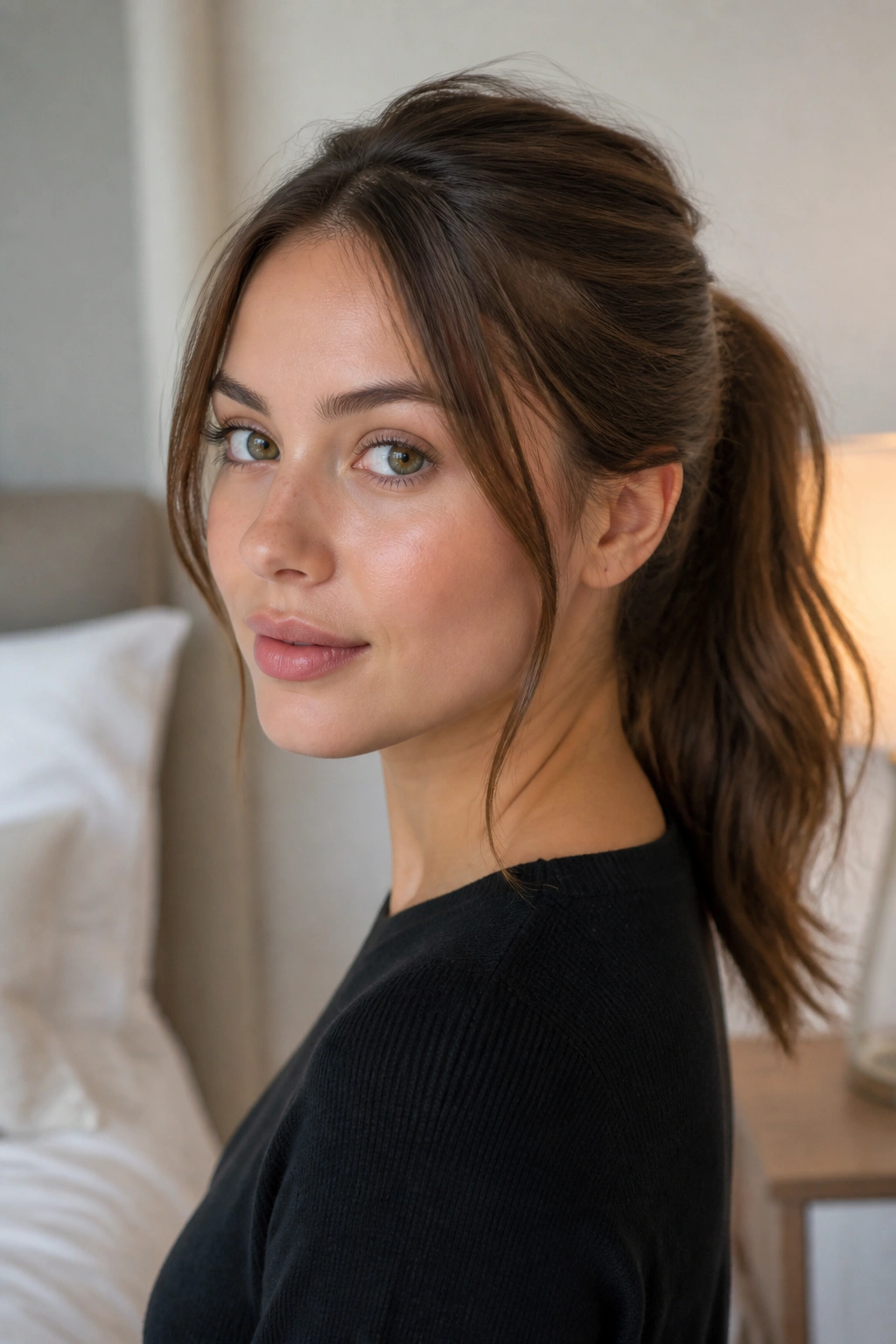
A few loose strands near the cheeks can turn a basic ponytail into something softer in seconds. The hair stays back. The face stays visible. No one gets the feeling that you fought your own mirror.
This works especially well when the front layers are shorter than the rest of the hair. Pull the ponytail back, then leave out two thin pieces near the temples or cheekbones before you secure the elastic. If those pieces are too blunt, bend them slightly with a curling iron or a flat iron so they don’t stick straight down. A tiny bend is enough.
The key is restraint. Too many face-framing pieces make the style look unfinished, while one piece on each side can look intentional and relaxed. I tend to keep them thin, because thick side pieces can dominate the whole face and make the ponytail feel too dated.
A face-framing ponytail is useful on days when a tight pullback feels harsh. It takes the edge off the style without making it messy. Softness counts. Sometimes that’s the whole point.
13. Stacked Ponytail for Thin Hair
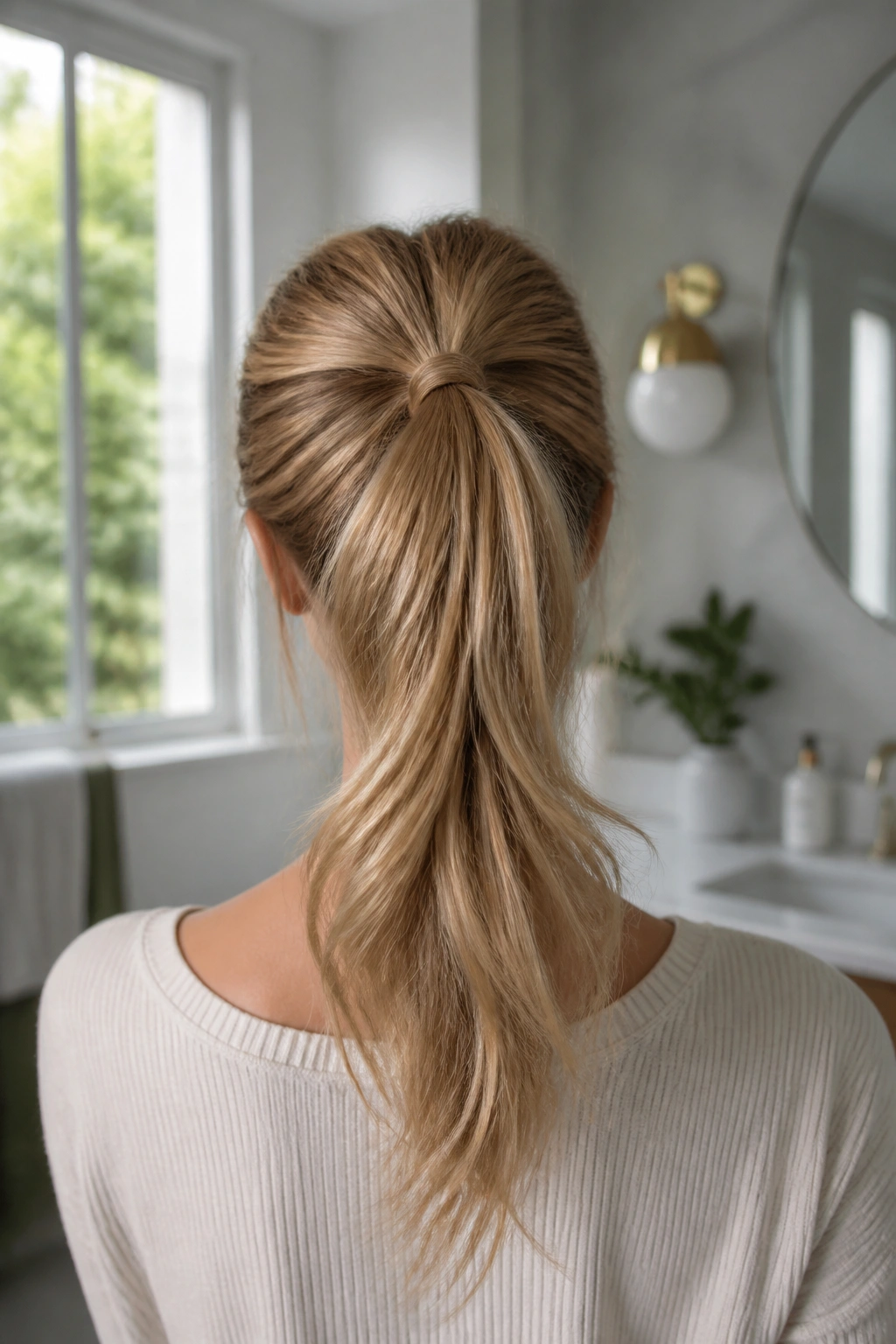
A stacked ponytail is the easiest way I know to fake fullness without backcombing the living daylights out of your hair. It uses two ponytails, one sitting above the other, and the upper one hides the lower one from the front.
Here’s why it works: the top section creates lift at the crown, while the lower section adds volume and weight where the eye expects to see a full tail. The result is fuller-looking hair with less teasing and fewer tangles. If your hair is fine, this is gold.
Start by sectioning off the top half of your hair and securing it first. Then gather the rest of the hair directly underneath it and make a second ponytail. Let the top ponytail fall over the second one so the lower tie disappears from view. A quick pull on the sides of the top section helps the whole shape breathe.
It sounds a little fussy written out, but it’s fast in practice. And unlike heavy teasing, it doesn’t leave your roots rough by the end of the day.
14. Curled-Ends Ponytail
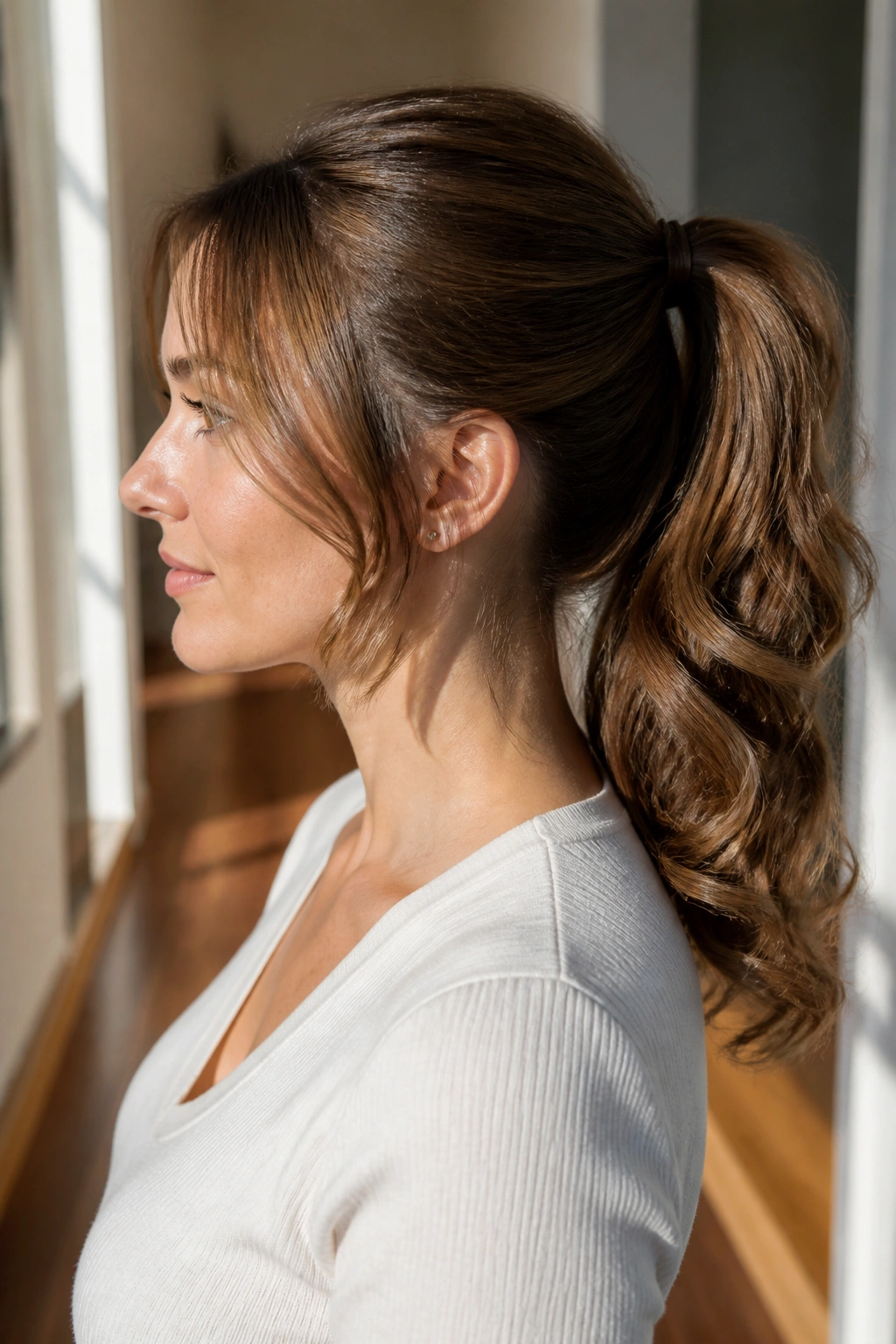
A ponytail with curled ends can look polished even when the base is nothing fancy. That’s the part people miss. You do not need a full blowout to make the tail look finished.
This style works best when the ponytail itself is low or mid-height and the ends have enough length to show a bend. Use a 1-inch curling iron or a flat iron to add a soft curl just to the last few inches of hair. Hold each section for 5 to 8 seconds, depending on hair thickness, then let it cool in your hand before touching it again. That pause matters; it keeps the bend from falling flat too fast.
If your hair is naturally straight, a single bend inward is enough. If it has some wave, let the ends curve in different directions for a looser look. A drop of serum on the last inch of hair helps the ends look smooth instead of fried.
This is one of my favorite small-payoff styles. The base can stay plain, and the ends do the heavy lifting.
15. Clean Low Ponytail with a Deep Side Part
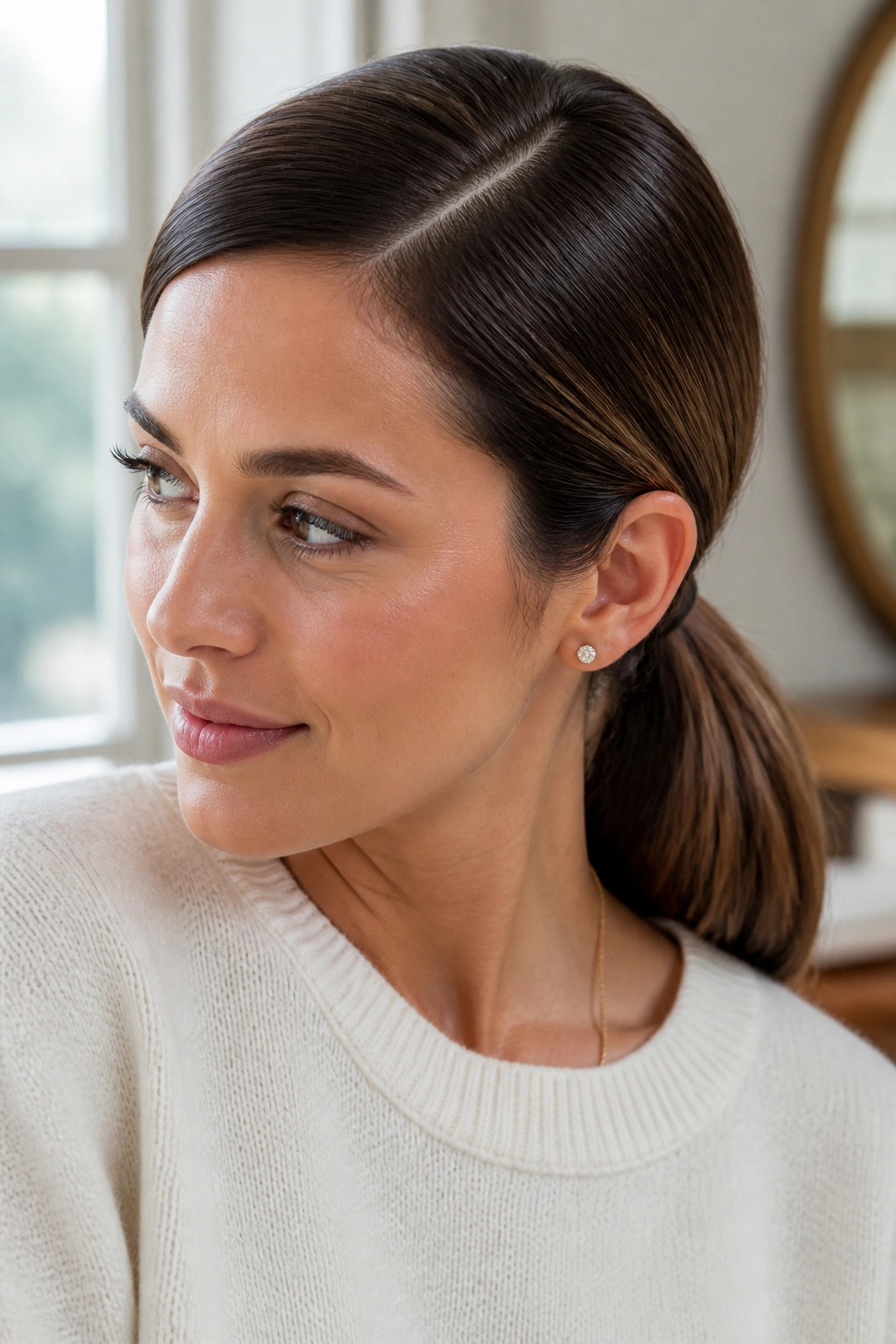
If you only keep one ponytail in rotation, make it this one. A deep side part with a clean low ponytail looks calm, sharp, and a little more deliberate than the standard center part version.
The side part shifts the weight of the style, which changes the whole face line. It can soften a high forehead, bring attention to the eyes, and make the crown look fuller without any teasing at all. Gather the hair low at the nape, smooth the front in the direction of the part, and let the tail fall straight or with a soft wave. If you want a little more polish, wrap a thin strand around the elastic and pin it underneath.
This style is also forgiving on days when the hair has texture but not shape. You are not forcing every strand to behave. You are giving the hair a clear line and letting the rest of it settle where it wants to.
Best moments for this style:
- office mornings when you need clean lines fast
- dinner plans after a long day
- rainy weather, when loose styles turn puffy
- days when you want a ponytail that feels a little more finished than usual
Simple wins. Especially here.
A good ponytail does not need to shout. It needs to sit well, hold steady, and make the rest of the day easier. That is the real test, and honestly, it is a generous one.
