



Short hair can be stubborn about special-occasion styling. The ends stick out, the layers slip free, and every elegant idea seems to require three more inches you do not have. That’s exactly why low updo hairstyles for short hair matter so much: they work with the cut instead of pretending it’s longer than it is.
Freshly washed hair is slippery. That’s the part people skip over, and then they blame the style when the real issue is grip. A little texture at the roots, a few smart pins, and a shape that sits close to the nape can change everything.
I’ve always thought short hair looks best when it’s styled with a clear plan. Not overworked. Just intentional. The cleanest low updos lean on twists, tucks, tiny braids, and clever pin placement, which is why they can look polished on a bob, a lob, or a layered cut that refuses to sit still.
The styles below are the ones I’d trust when you want short hair off your neck, out of your face, and still looking like you meant to do something with it. Some are sleek. Some are a little undone. A few need patience. All of them can work if you know where to pin first.
1. Sleek Twisted Chignon
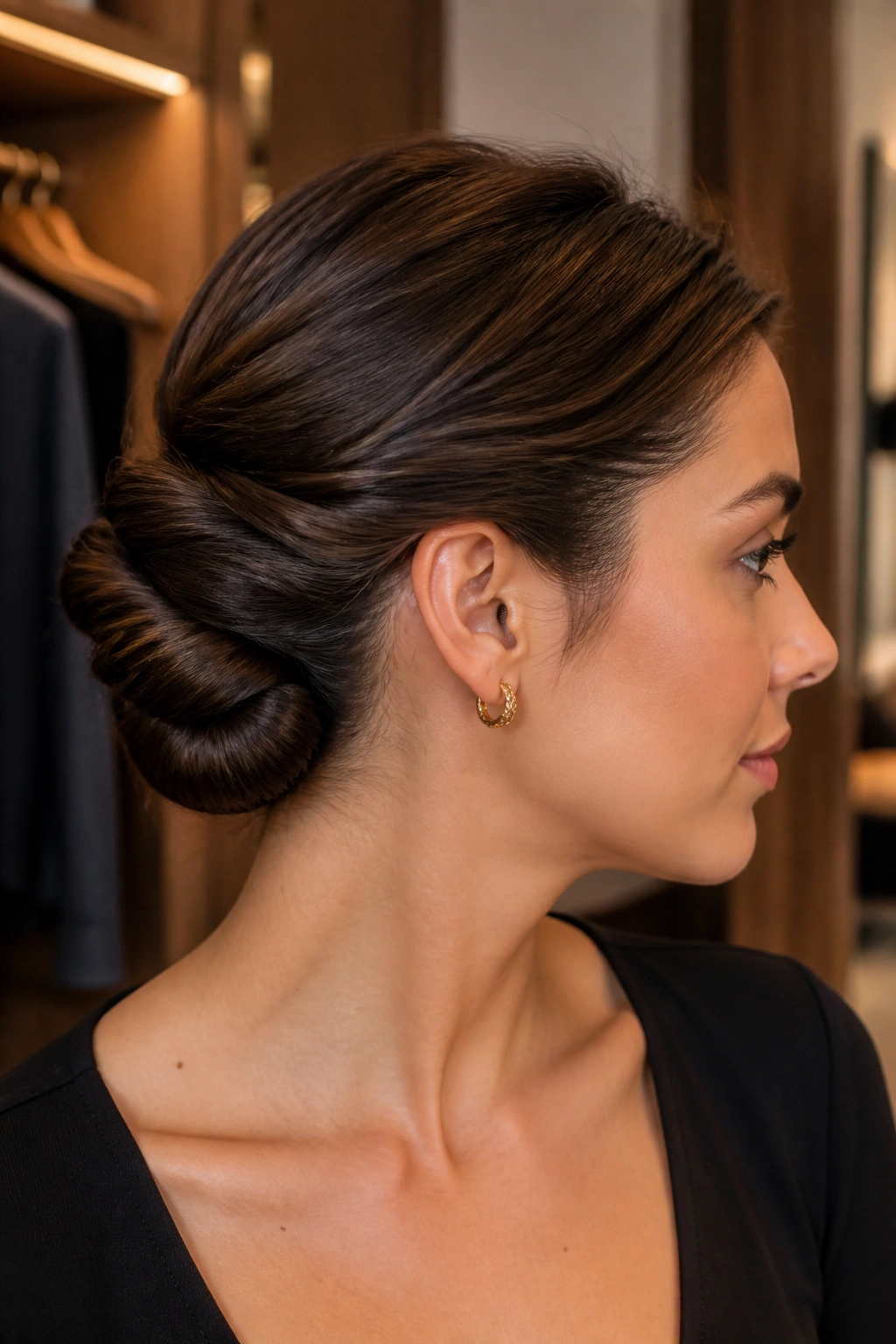
A sleek twisted chignon is the kind of style that makes short hair look organized in a good way. It sits low, stays close to the head, and hides the awkward little ends that often stick out from a bob or lob.
Why It Stays Put
The trick is the twist. Instead of trying to gather every strand into one bulky knot, you split the hair into two or three sections, twist each one toward the nape, and pin them into a compact fold. That gives short hair something to grip onto.
It works best on chin-length cuts through collarbone-length hair, especially if the ends are blunt. Add a pea-size dab of smoothing cream first, then press the hair down with your hands before you start twisting. Keep the twist tight at the base and looser at the fold. That shape holds better than a soft, fluffy twist that starts drifting by dinner.
- Best for straight or lightly wavy hair
- Use 4 to 8 bobby pins, crossed in an X when you need extra hold
- A deep side part makes the twist look cleaner
- A light mist of texturizing spray helps the pins stay hidden
Pro tip: Pin into the twist, not just through the edges. That’s where the style gets its backbone.
2. Mini French Twist
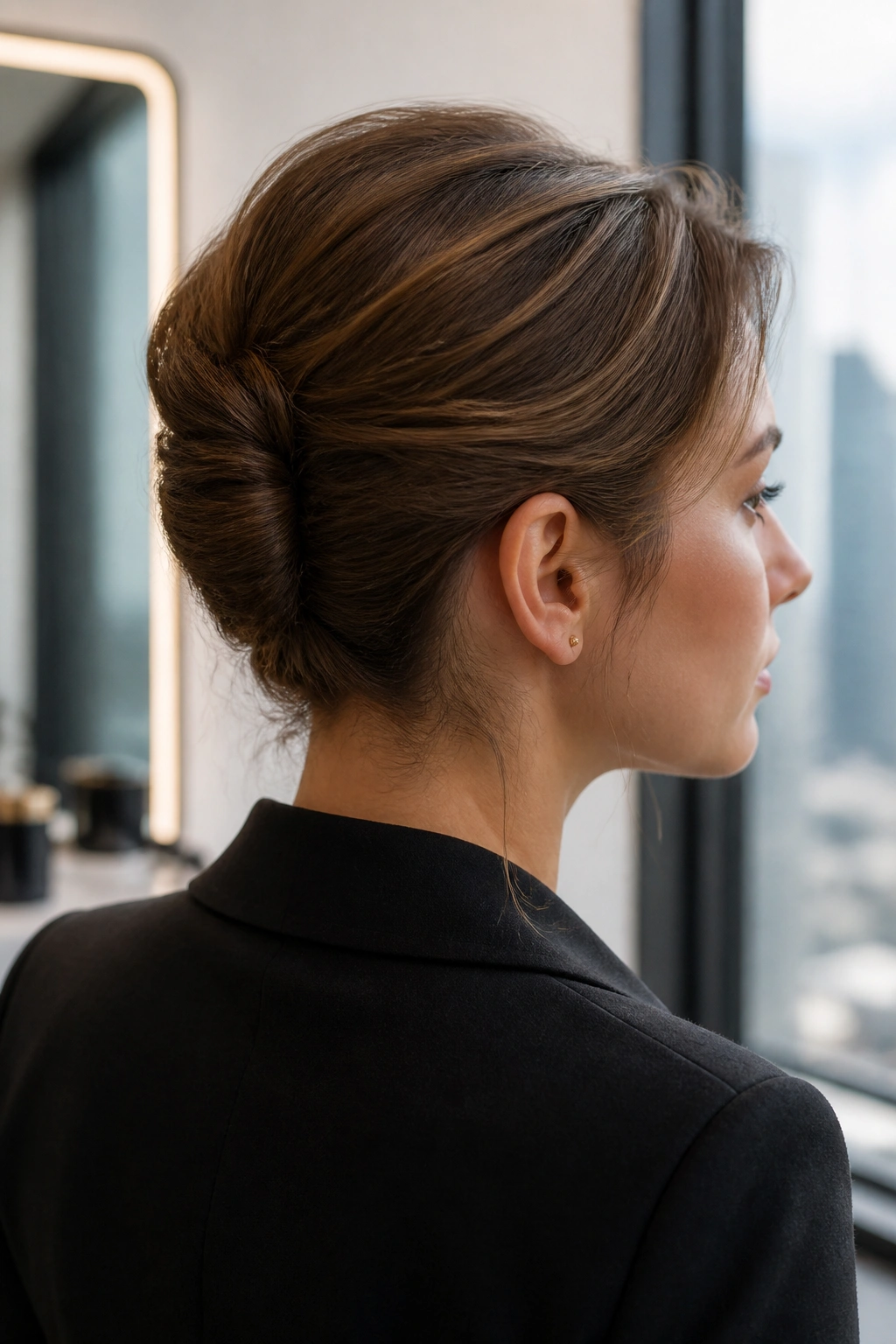
A mini French twist is not a watered-down version of the real thing. It’s its own thing, and on short hair, that’s a good thing. A full French twist can feel too tall or too formal when your hair barely reaches your shoulders, while the mini version sits lower and looks more natural.
Unlike the classic long-hair version, this one leans on width more than height. You gather the hair at the back, roll it upward just a few inches, and tuck the ends under the fold. That shorter roll is easier to control, and it gives a bob a neat, vertical line without asking for a lot of length.
It’s one of the better choices for straight hair that tends to fall flat. Use a tail comb to smooth the surface, then set a line of pins up the back seam. The seam is the whole style. If that line is neat, the rest can be slightly imperfect and still look elegant.
This is the one I’d wear with a sharp collar, a satin top, or any outfit that needs the hair to behave and not compete.
3. Loose Low Knot with Face-Framing Pieces
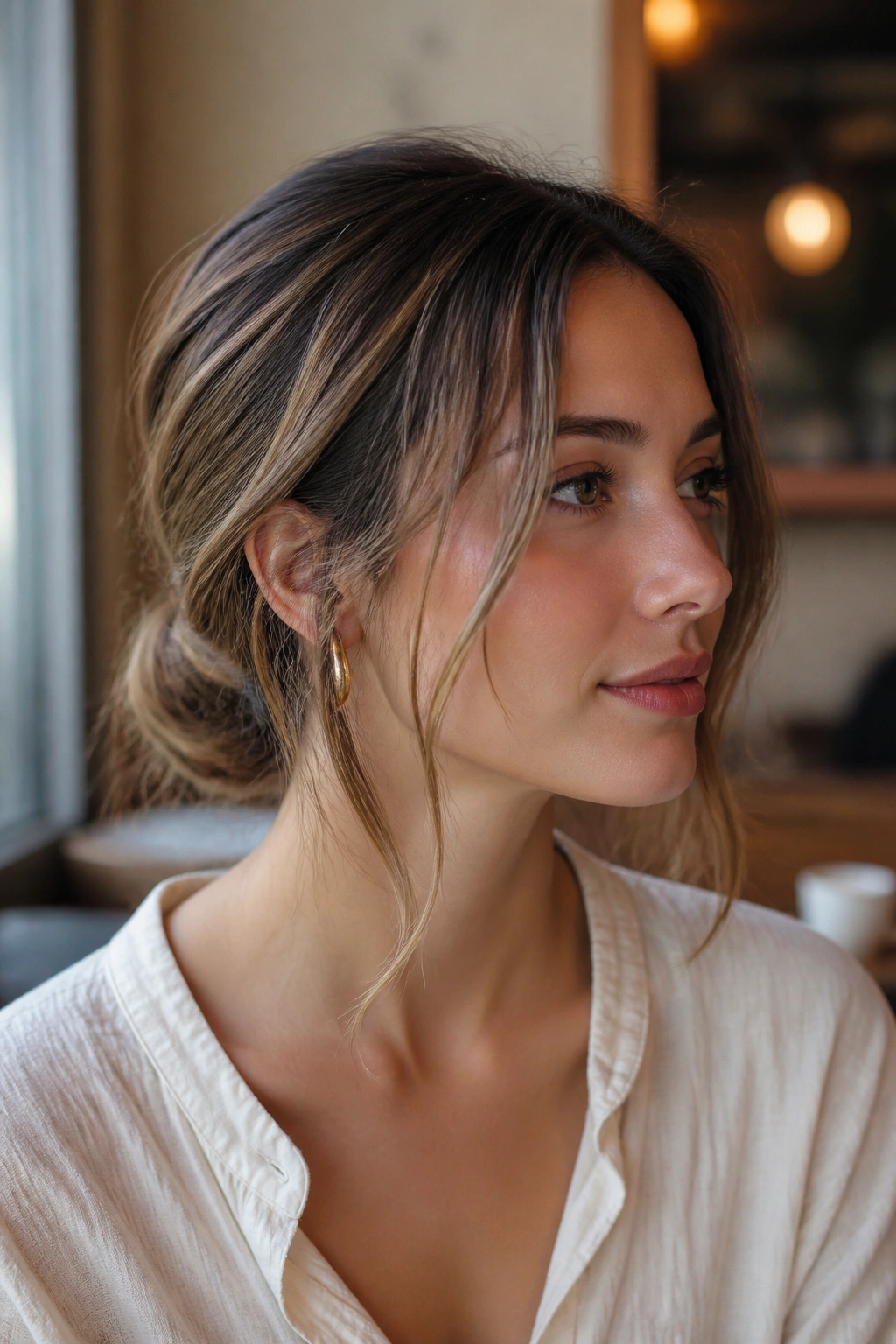
Why does a loose knot often look better on short hair than a tight one? Because the looseness hides the fact that the hair is short in the first place. A compact knot can expose every uneven end, while a softer knot gives the eye somewhere else to go.
How to Wear It
Start with a low ponytail, then twist the length into a knot right at the nape. Leave two small front pieces out before you begin — one on each side of the face, or just one if your cut already has strong layers. Those pieces soften the shape and stop the style from feeling boxy.
A curling iron can help here, but only on the face-framing strands. Wrap them once, not three times. You want a bend, not a pageant curl. For the knot itself, don’t chase perfection. Pin the ends under the twist and let a few little pieces escape. That’s part of the appeal.
This style is one of the easiest low updo hairstyles for short hair when you’re short on time. It looks deliberate, it forgives uneven layers, and it works for a lunch date or a low-key event without looking fussy.
4. Braided Low Bun with Hidden Ends
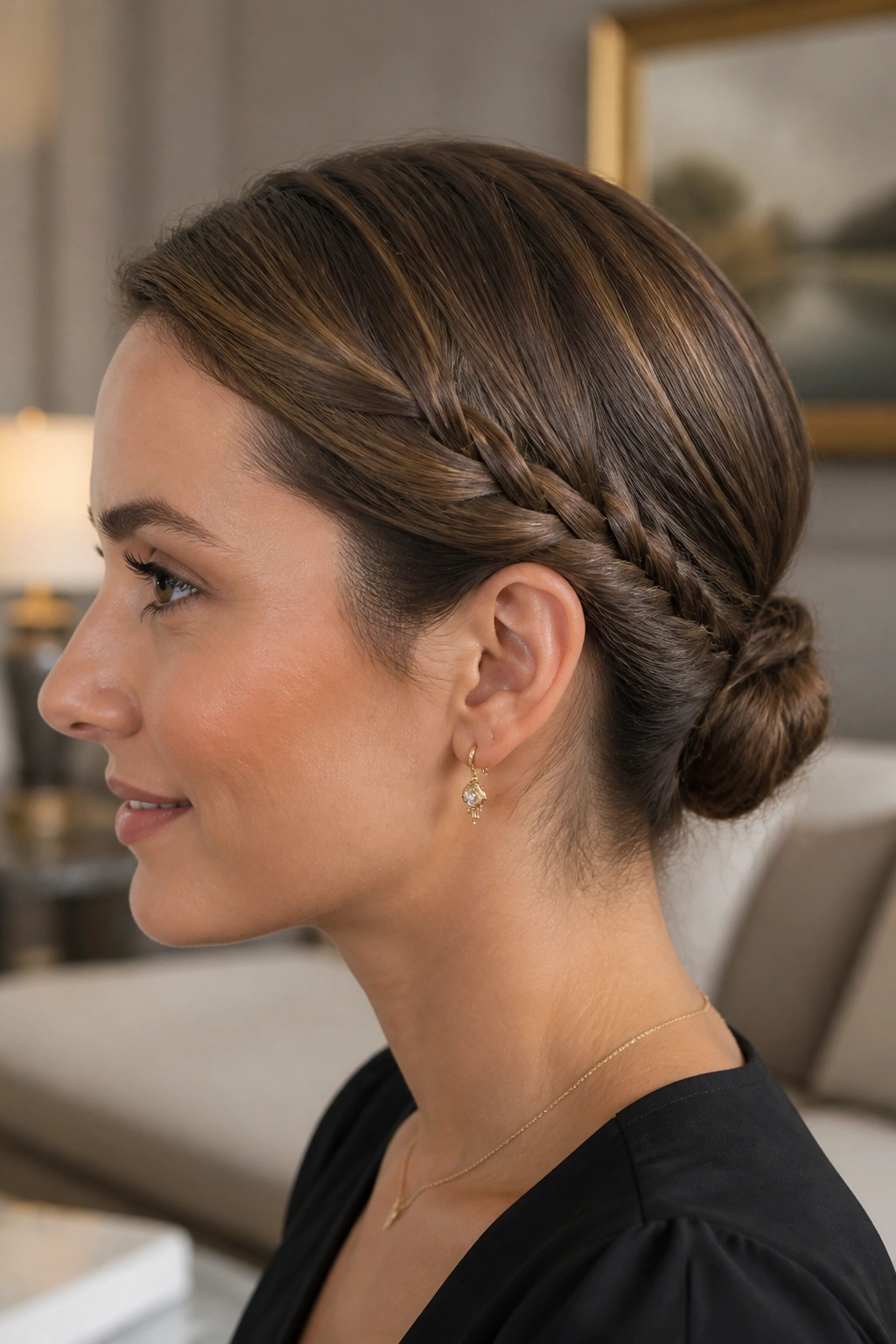
If your bob keeps slipping apart by noon, a braid at the base can save you. I like this one for blunt cuts, because the braid gives the short ends a place to land before they disappear into the bun.
Picture a tiny braid starting behind one ear or straight across the nape. That braid becomes the anchor. Once it’s secure, you coil the rest into a small bun and pin the ends underneath. It sounds fussy, but it’s not. It’s just a better way to corral short pieces that would otherwise poke out like little antennas.
- Best for layered bobs and lobs
- Works well with second-day hair
- Try a three-strand braid no wider than 1 inch
- Secure the braid before you shape the bun
- Finish with a few pins tucked low and flat
What to watch for: If the braid is too thick, the bun gets bulky fast. Keep it narrow. That’s the difference between elegant and lopsided.
This style also takes accessories well. A thin satin ribbon or a single jeweled pin can sit right where the braid meets the bun, and that little detail makes the whole thing look finished.
5. Rope-Twist Nape Roll
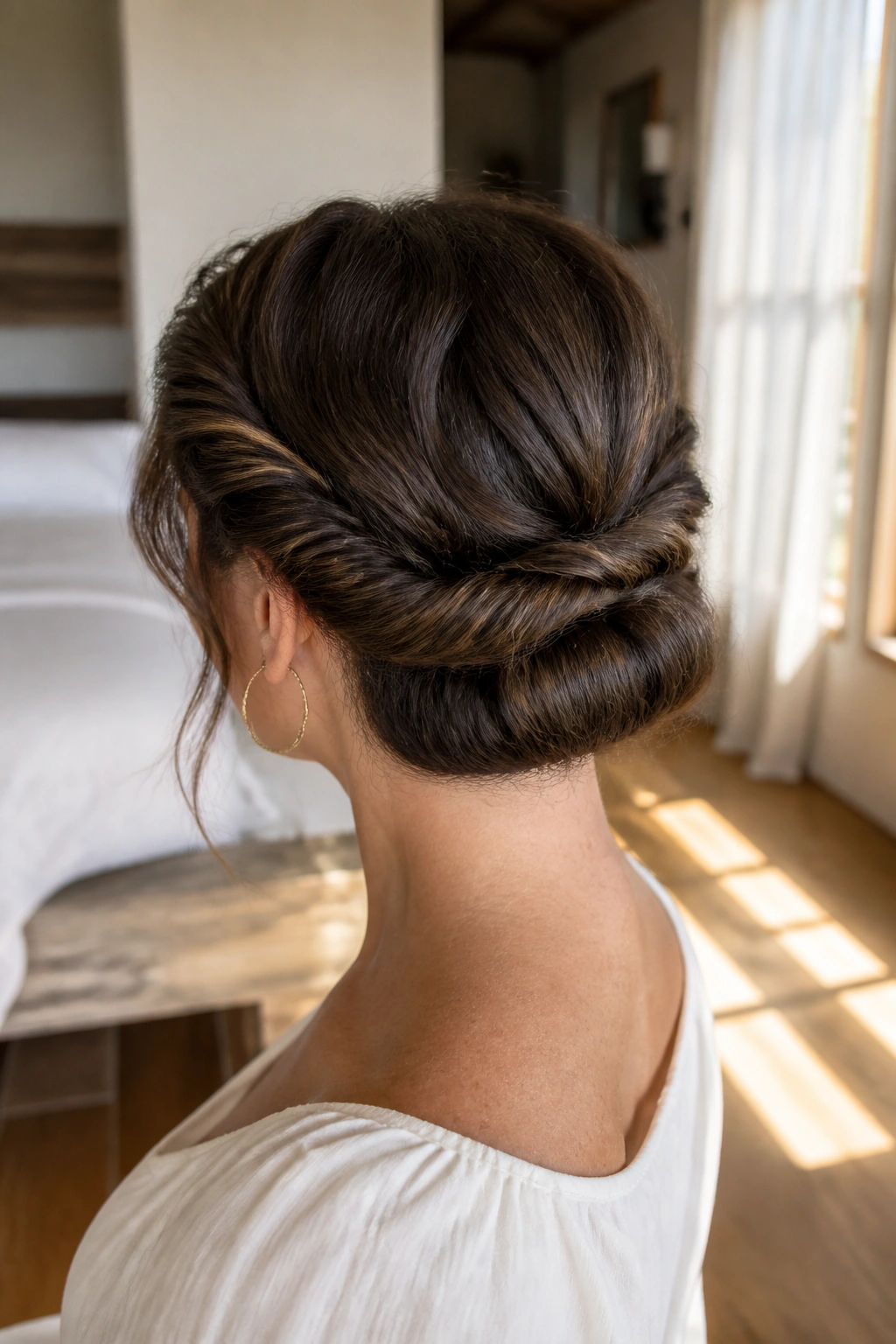
A rope-twist nape roll has a softer, less obvious look than a braid, which is why I reach for it when I want short hair to look styled but not stiff. Two rope twists meet at the nape, then fold into a low roll that hugs the head.
The reason this works on short hair is simple: rope twists need less length than a full braid. You only need enough hair to twist two small sections together, and short layers usually cooperate better with twisting than with weaving. The result has a clean line, but not the heavy, pinned-down feel of a shellacked bun.
I like this style on hair that has a little natural texture. A touch of wave keeps the twists from unraveling and gives the roll more grip. If your hair is very smooth, rub a bit of styling cream between your palms first, then twist while the product is still tacky. That tiny bit of friction helps.
It’s one of those styles that looks calm from the outside and a little messy underneath. Which is fine. Underneath is where the pins live.
6. Side-Parted Low Bun with a Clean Sweep
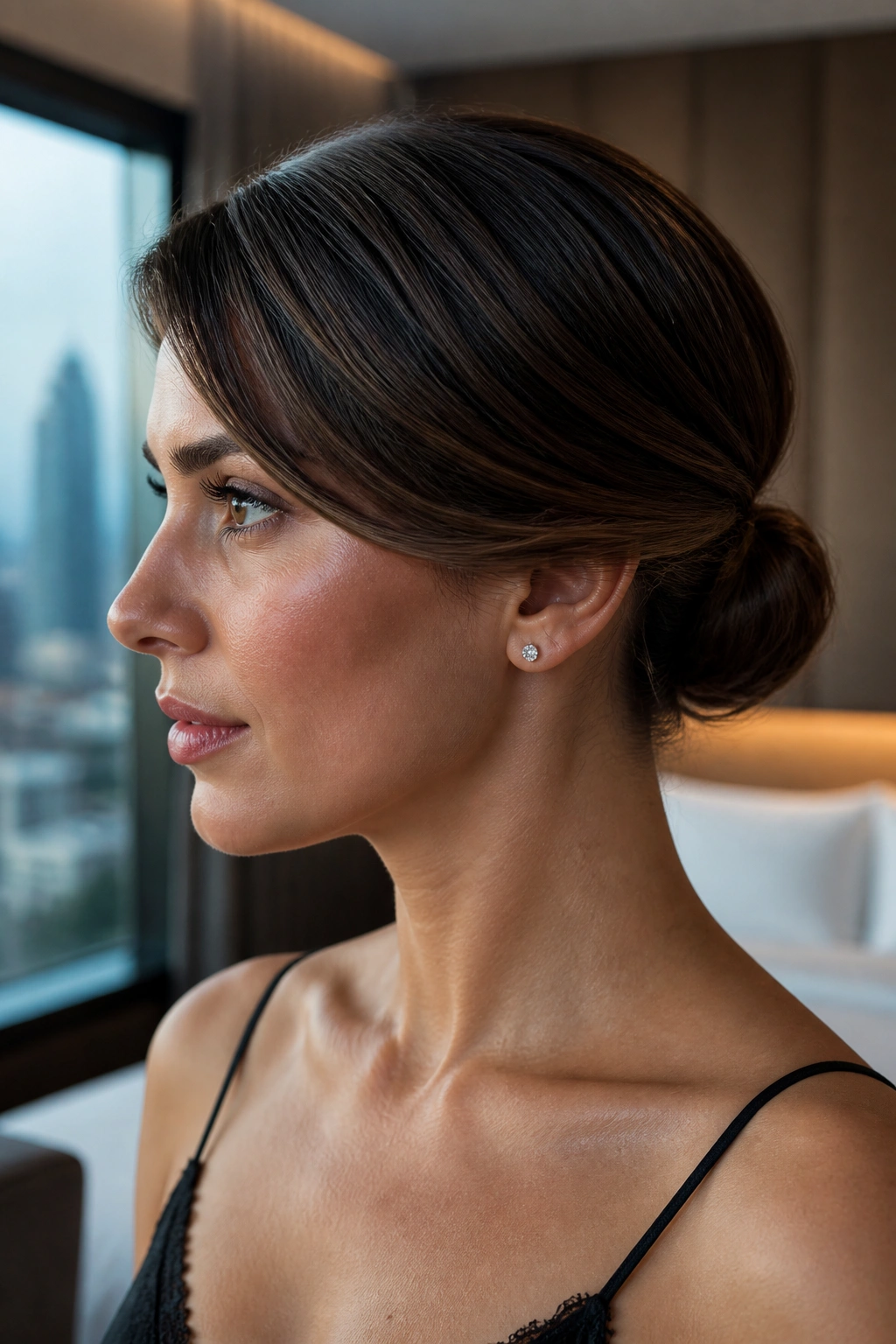
This is the easiest evening low updo for short hair, and I mean that without caveats. A deep side part gives the style direction, the front section sweeps cleanly across the forehead, and the bun stays low enough that short layers don’t have to stretch.
Start by parting the hair far to one side. Then smooth the heavier side across the crown and tuck it into the nape area, where the bun sits. The sweep at the front does half the work for you; it hides uneven growth and makes the style look intentional, even if the back is a little compact.
Use a light gel or edge cream at the hairline if you want a tighter finish. For a softer version, skip the gel and let the front fall with a little bend. Either way, the bun itself should stay small and close to the neck. Big buns and short hair are a bad match. A neat, low shape works much better.
This one is especially nice for fine hair, since the side part creates the illusion of fullness without needing a lot of length.
7. Soft Low Chignon with Pinned Texture
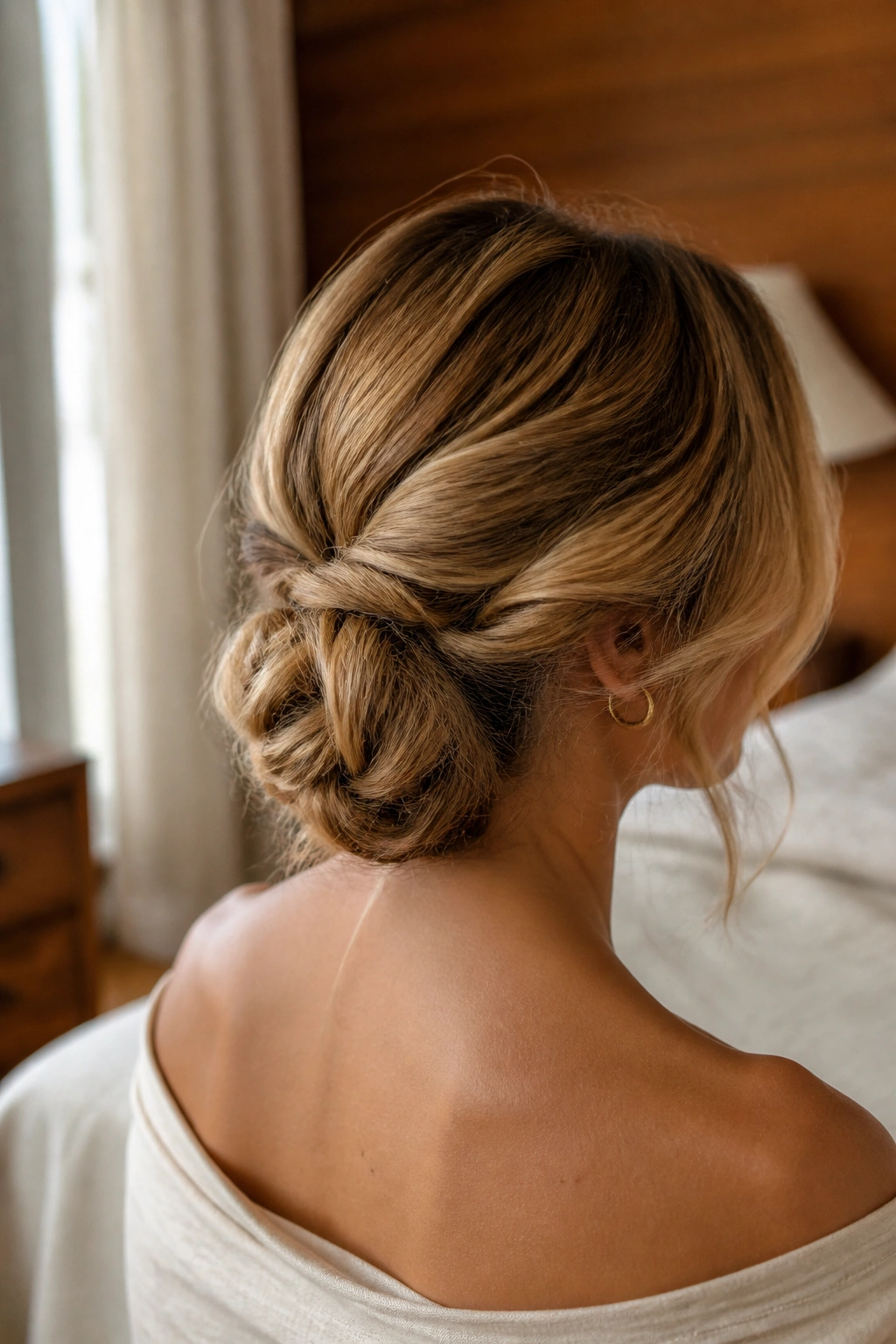
A soft low chignon gives short hair room to breathe. It doesn’t ask for a glassy finish or a perfect circle. It just needs a little texture, a couple of hidden pins, and a shape that sits just above the collar line.
What Gives It Softness
The texture comes first. Dry shampoo or a texturizing mist at the roots keeps the hair from sliding apart, and a small amount through the lengths makes the ends easier to tuck. Then you twist the back section upward, fold the ends under, and pin them in a loose oval at the nape.
- Best for shoulder-grazing bobs
- Works with slight wave or bend
- Pin from the underside so the top layer stays smooth
- Leave the ends a little piecey instead of forcing them flat
I like this one because it tolerates imperfections. A layer that slips out by half an inch can look soft, not wrong. The style has enough structure to hold, but it doesn’t punish you if your hair is cut unevenly.
If you want a small upgrade, add a matte barrette just above the chignon. Nothing shiny and oversized. Just one clean piece that sits there and says the hair was handled on purpose.
8. Double Twist Bun for Layered Bobs
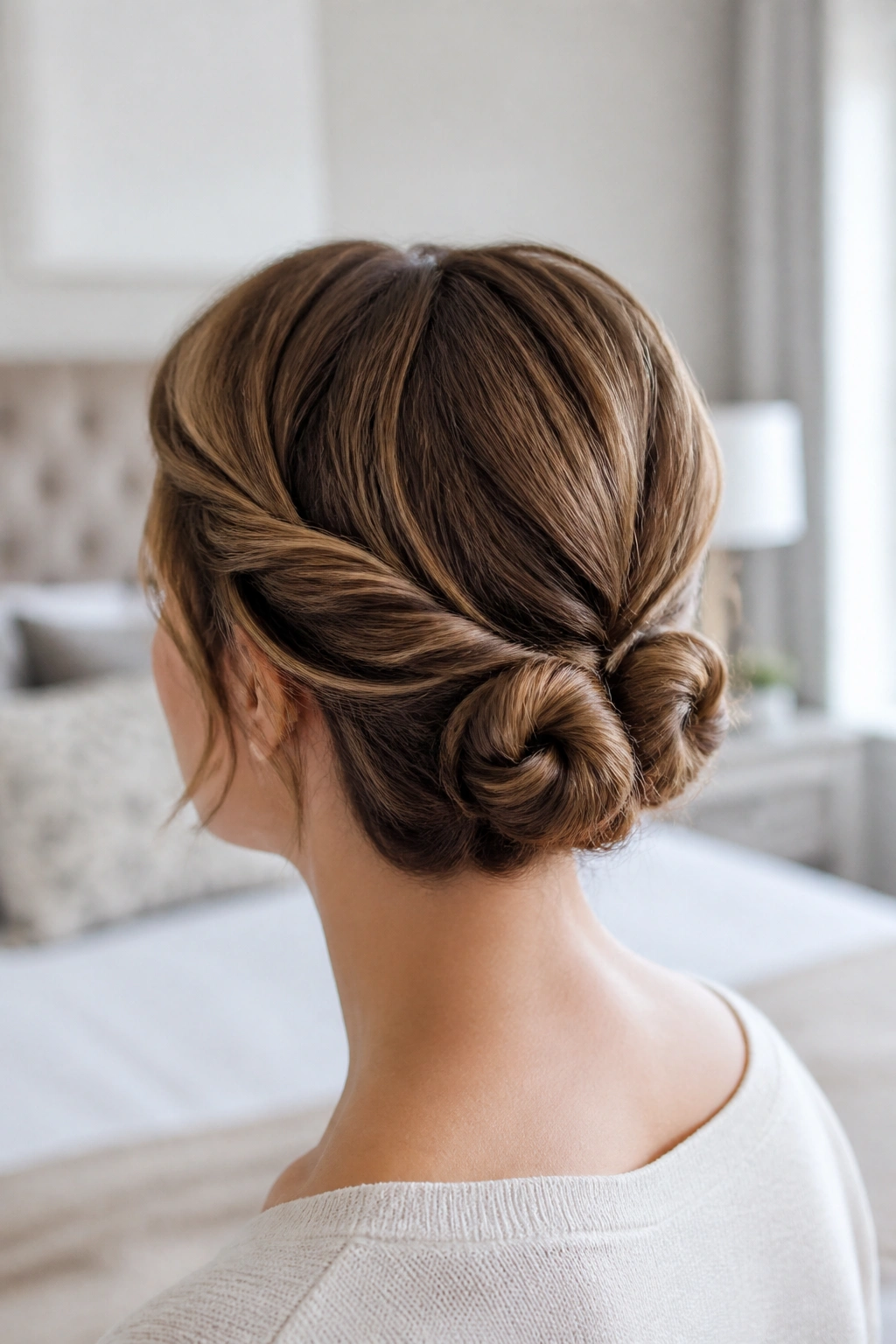
A single twist can fall apart when your layers are too short. Two twists solve that. You split the hair into left and right sections, twist each one toward the center, and meet them at the nape in one small bun.
Compared with a one-piece chignon, this style gives short layers more control. The shorter pieces on each side are easier to manage in smaller sections, and the middle join creates a stronger anchor. That matters if your haircut has a lot of movement around the jaw or cheekbones.
This is a smart choice for people who hate the feeling of hair pulled too tightly. Each twist can be adjusted on its own, so the pressure spreads out instead of stacking all the tension in one spot. That means less slipping and less of that sore feeling at the back of the head after a long day.
Best for layered bobs. Best for hair that has a little grit. Best for the kind of morning when you want the mirror to stop being difficult.
9. The Gibson Tuck for Short Hair
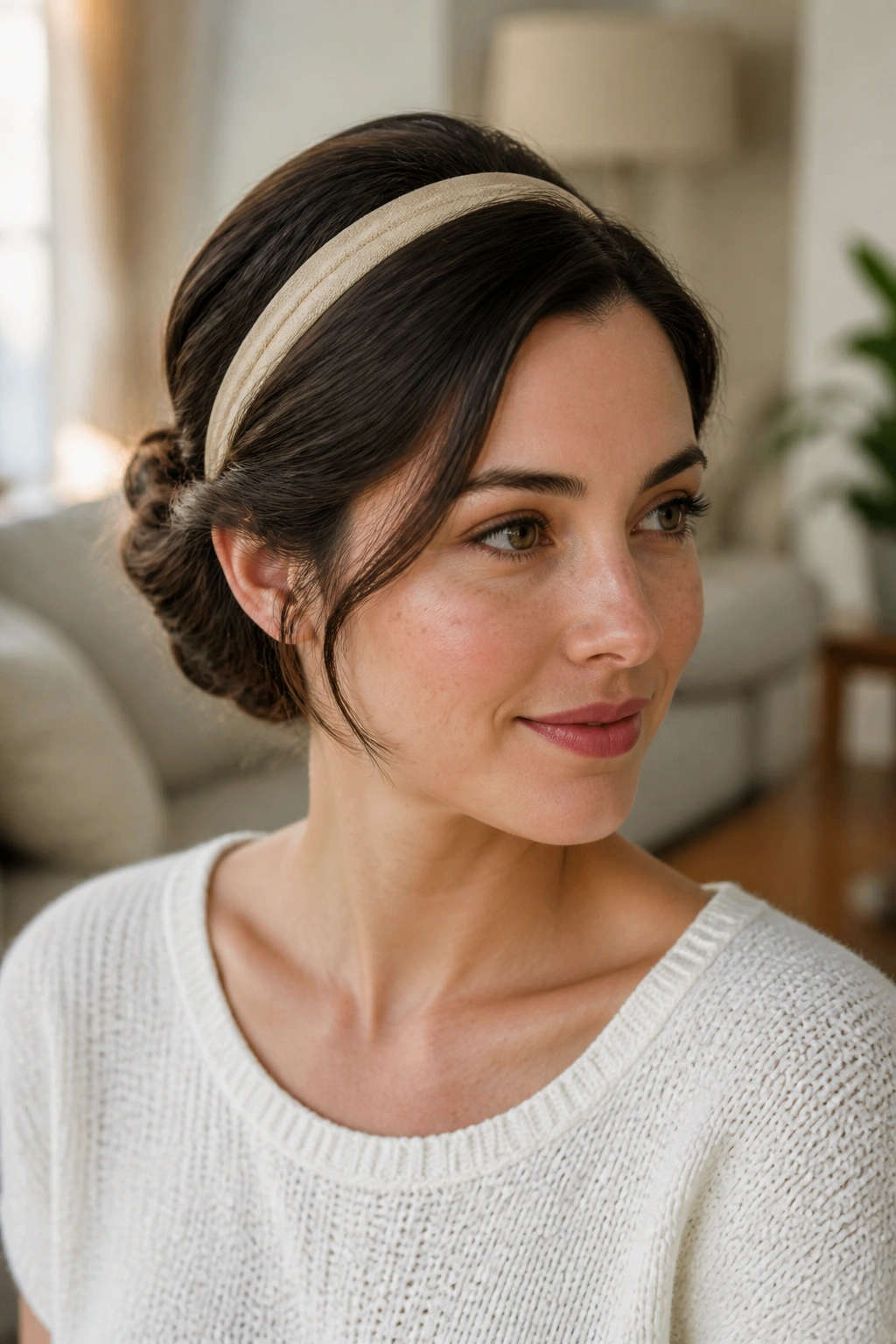
Can a Gibson tuck work on short hair? Yes, if the length reaches the nape and the sides are long enough to fold inward. A fabric headband or slim elastic band does most of the heavy lifting, which is why this old-fashioned style is easier than it looks.
How to Get It to Stay
Place the band over the hair like a crown, then tuck the ends up and under the band in small sections. Do not try to feed in too much hair at once. That’s how the tuck gets lumpy and the band starts sliding.
The style is especially useful when you want the hair off your neck but do not want a rigid bun. It gives a soft rolled shape at the back, with enough control to keep short pieces hidden. If you have layers around the face, let a few of them fall loose. That keeps the whole thing from feeling heavy.
A tortoiseshell or satin band changes the mood fast. A plain elastic keeps it casual. Either way, the tuck sits low and neat, which is exactly what short hair needs when you want it to look polished without looking overworked.
10. Curled Pin-Up Roll at the Nape
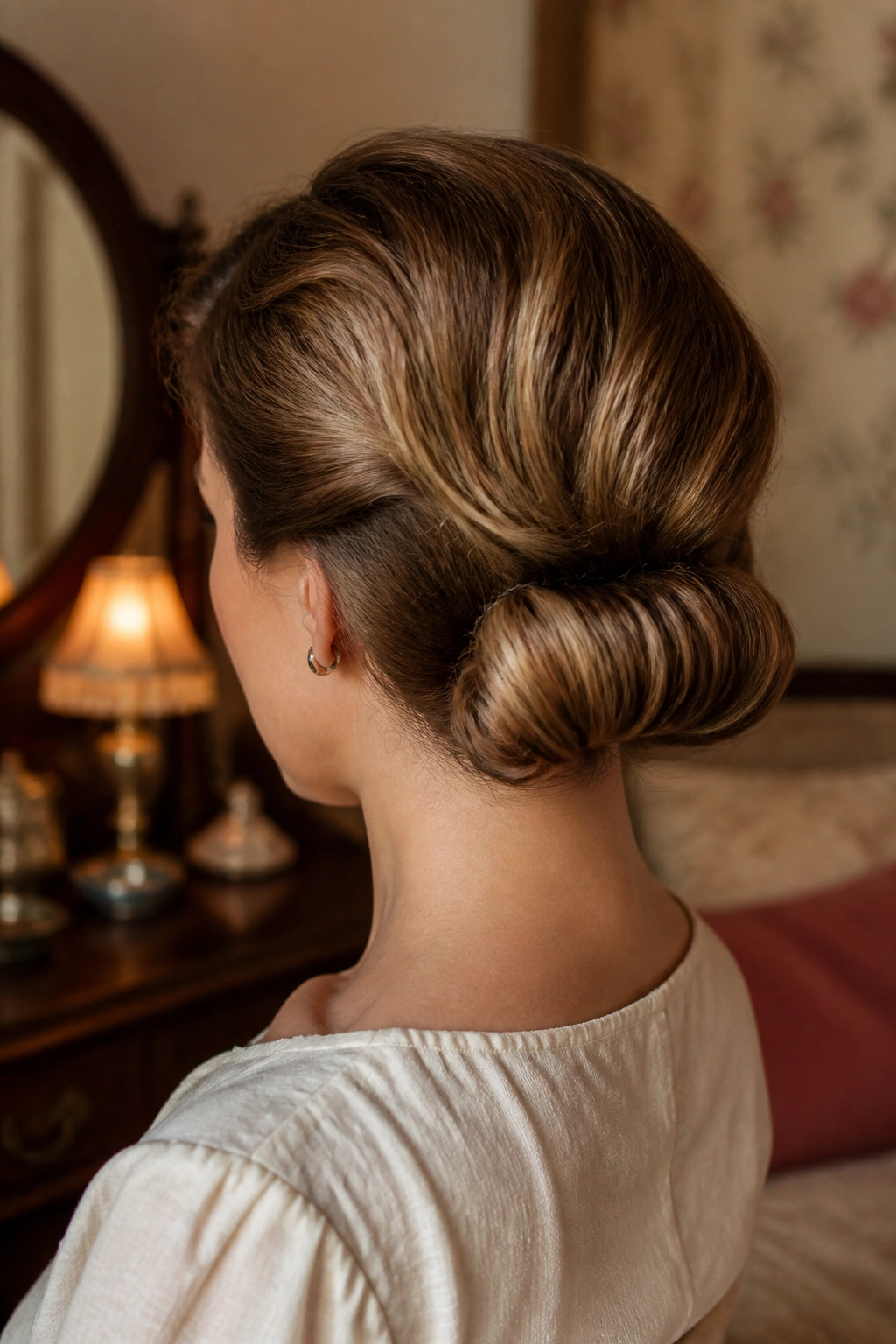
A curled pin-up roll at the nape has a little vintage drama, and short hair can pull it off better than most people expect. The curl creates body, the roll creates shape, and the pins do the quiet work of holding it all together.
This style starts with a one-inch curling iron or a set of hot rollers. You only need to bend the ends and give the middle sections some memory. Then you brush very lightly, enough to blur the curls but not enough to erase them completely. That soft texture lets the roll stay full instead of collapsing into a flat strip.
- Best for chin-length hair with some layering
- Use a curling iron on the ends only, not the whole head
- Pin the roll from underneath, then cross two pins at the center
- A side part adds a little old-school shape
The point is not perfection. The point is lift. If the top looks a little looser than the bottom, that’s fine. The roll should feel soft at the edges and secure at the nape.
11. Wrapped Ponytail Low Bun
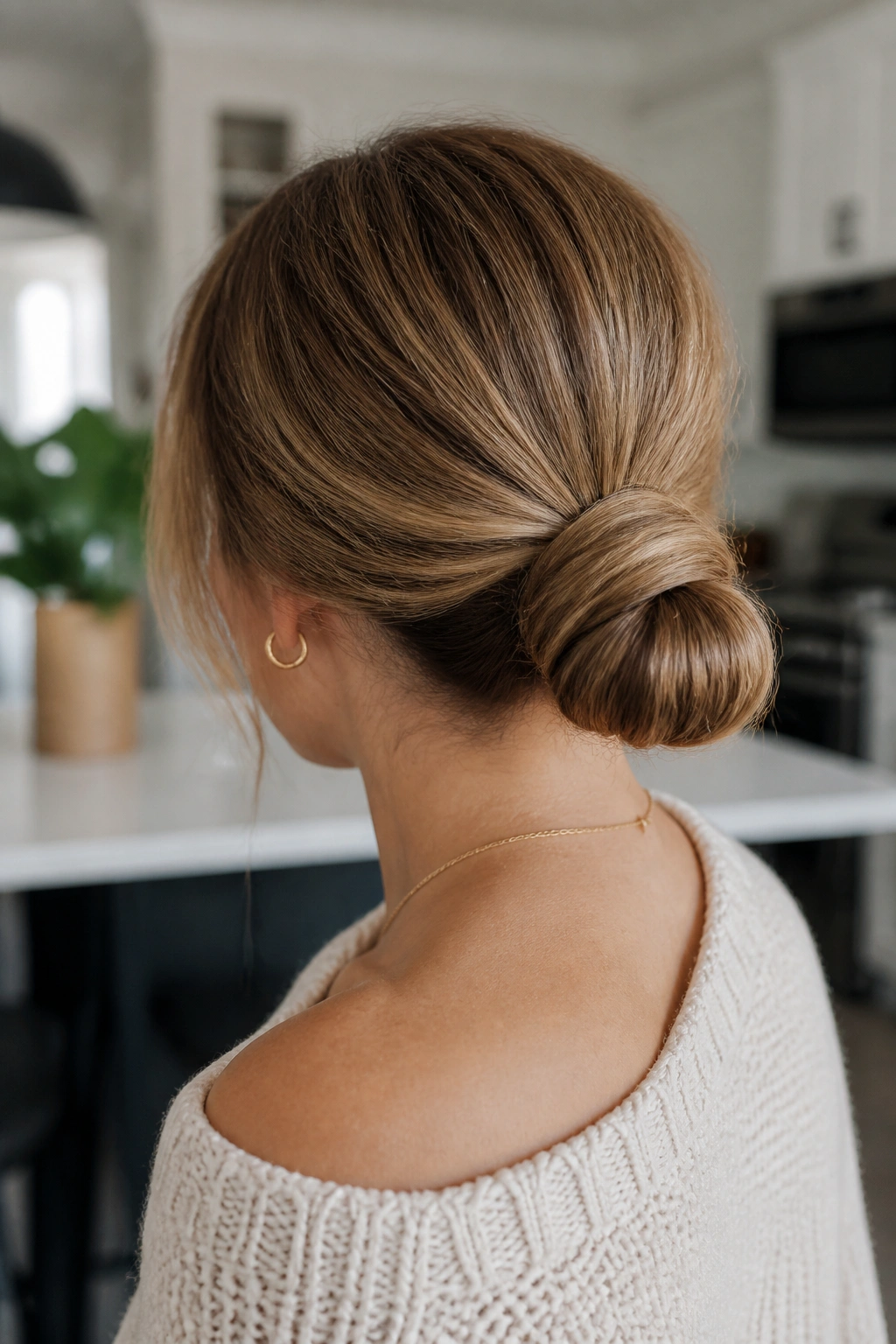
A wrapped ponytail low bun is one of those styles that sounds ordinary until you see how neat it can look on short hair. Start with a low ponytail, then wrap the length around the base and pin it down into a compact bun. The wrapping hides the elastic and makes the whole thing look cleaner.
I prefer this style when the hair is long enough to gather but not long enough for a full bun without help. It’s practical, plain and simple. The ponytail gives you control, the wrap hides the hardware, and the bun sits low enough that short layers don’t have to reach too far.
A tail comb helps smooth the top before you gather it. If the hairline is frizzy, tame it with a tiny bit of gel on a toothbrush or spoolie. That little detail matters more than most people think. The difference between “quick bun” and “finished bun” is often just the top surface.
This style works for work, weddings, and everything in between. It doesn’t try too hard.
12. Sleek Low Bun with Gel and a Deep Side Part
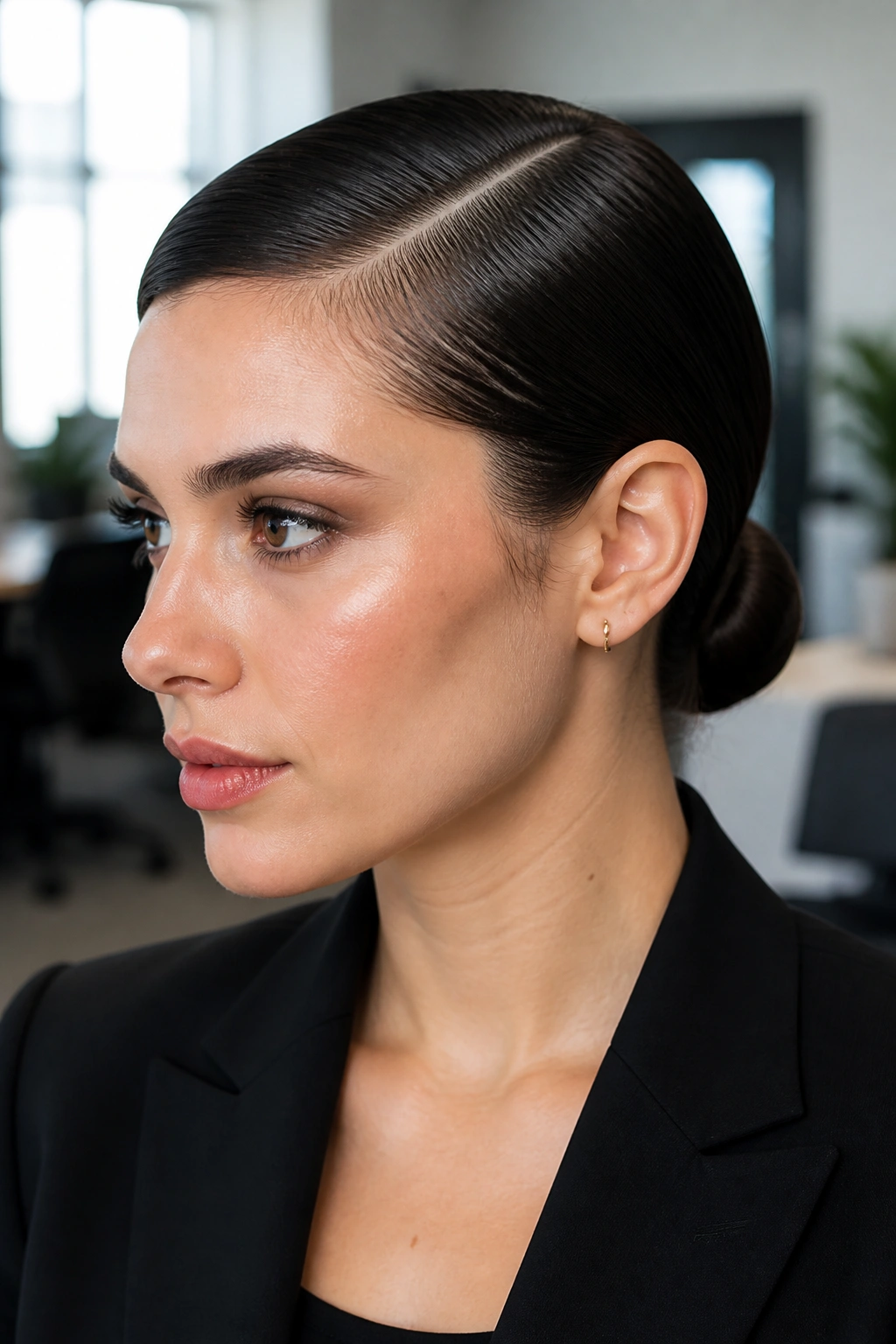
This is the cleanest low updo for short hair when you want a sharper look. A deep side part gives the style direction, and a little gel along the crown makes the hair lie flat enough to tuck into a polished bun at the nape.
The reason I like this one is that it makes short hair look intentional from the front. You can have a blunt bob, a grown-out pixie, or chunky layers, and the side part will still create a strong line. Then the bun stays small and low, which keeps the whole style from puffing up at the back.
Use a fine-tooth comb to smooth the top, then gather the hair low and twist the ends under. If the front pieces keep escaping, pin them down at an angle rather than straight back. That tiny angle helps the pins grip the scalp instead of slipping out.
This one is for people who like a crisp finish. No fluff. No loose texture. Just clean edges and a low knot that knows exactly where it belongs.
13. Twisted Halo into a Nape Knot
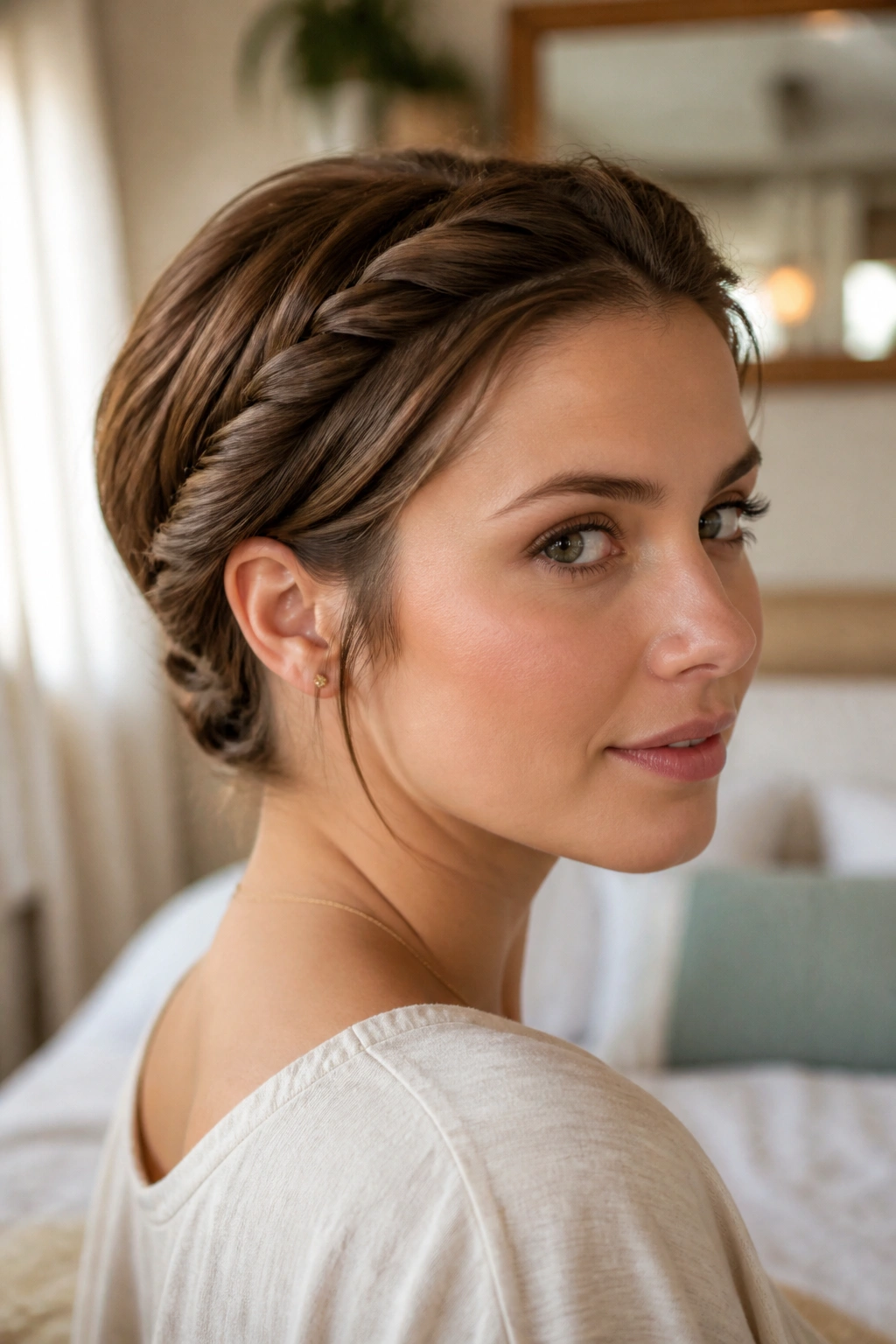
A twisted halo into a nape knot gives short hair a little more presence around the hairline, which is useful when your cut has grown-out bangs or shorter front layers that never want to cooperate. The twists frame the face, then meet at the back in a small knot.
Where the Halo Ends and the Knot Begins
Start by taking two narrow sections from the front, one on each side. Twist each section along the hairline, moving toward the back of the head. You do not need a thick twist. Thin sections stay neater and hold better on short hair.
Once the twists meet, join them at the nape and tuck the remaining hair into a tiny knot or fold. Use pins where the twists cross the back of the head. That crossing point is the anchor.
- Best for hair with bangs or short face-framing layers
- Works well on wavy hair
- Keep the twists flat to the head
- Add a comb or clip right where the twists meet for extra hold
This style has a softer outline than a strict bun, which makes it useful when you want the hair to look styled but not severe.
14. Bubble-Twist Low Updo
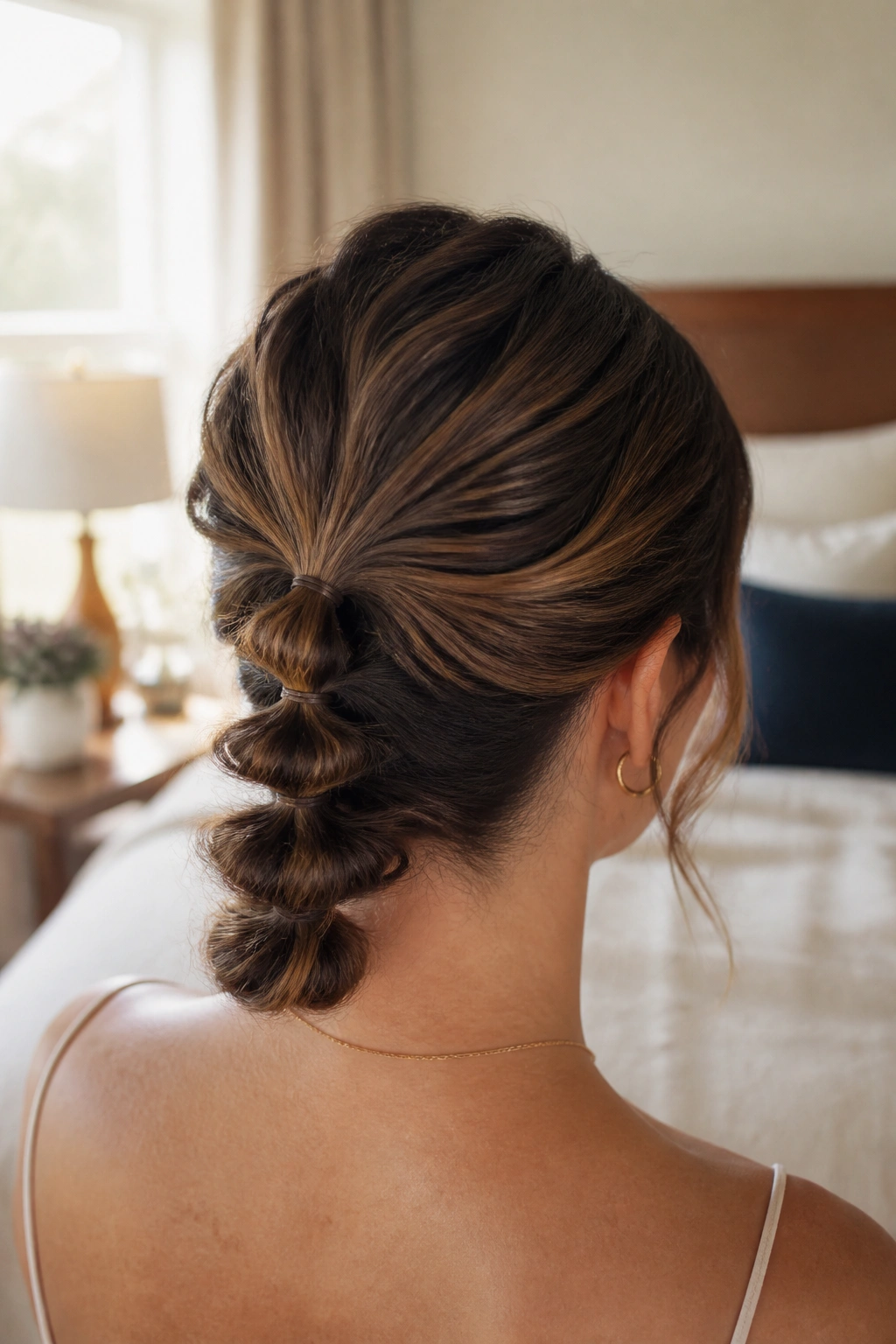
A bubble-twist low updo is a smart trick when your hair is too short for a long braid but long enough for a few small elastics. You section the hair into little “bubbles” down the back, then tuck or twist the ends into a low finish.
Compared with braiding, this style takes less hand coordination and gives short layers more room to behave. Each bubble adds a tiny pocket of volume, and that helps disguise uneven lengths. It also works well if your hair has natural wave, because the texture keeps the bubbles from looking flat.
Use clear elastics spaced about 1½ inches apart, then gently tug each section wider with your fingers. Not too much. You want shape, not a frayed mess. The final tuck at the nape can be a pin-secured fold or a miniature bun, depending on how much length you have left.
This is a good option for people who want something a little different without needing a salon set of hands. It looks more complicated than it is.
15. Side Roll with Hidden Bobby Pins
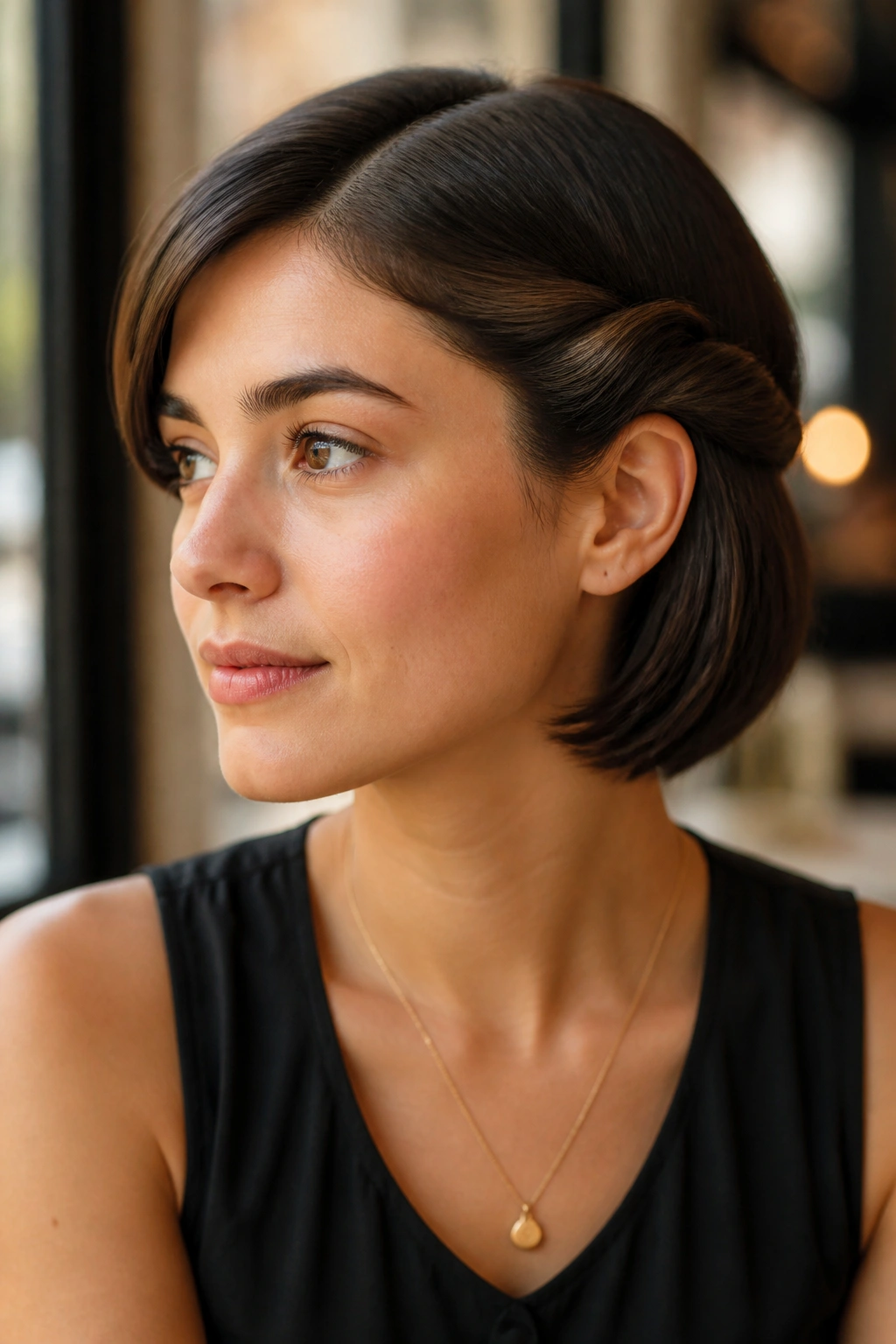
Can a bob really do a side roll? Yes, if you stop trying to roll the entire head and focus on one clean side section instead. That’s the whole secret here.
How to Place the Pins
Take the heavier side of the part, smooth it back, and roll it inward toward the nape. The roll should stay low and narrow, almost like a folded ribbon. Then pin it from the underside so the pins disappear into the fold.
What makes this style work is the diagonal pin placement. Straight pins tend to slide out of short hair. Diagonal pins catch more hair and hold the roll against the scalp, which is what you want.
- Good for blunt bobs
- Best on day-two hair
- Use 4 to 6 pins, depending on thickness
- A small side-swept front piece softens the look
The finish is part retro, part modern. It has shape, but it does not look precious. And that’s the sweet spot for short hair, honestly — structured enough to read as an updo, loose enough to avoid looking forced.
16. Accessory-First Low Bun
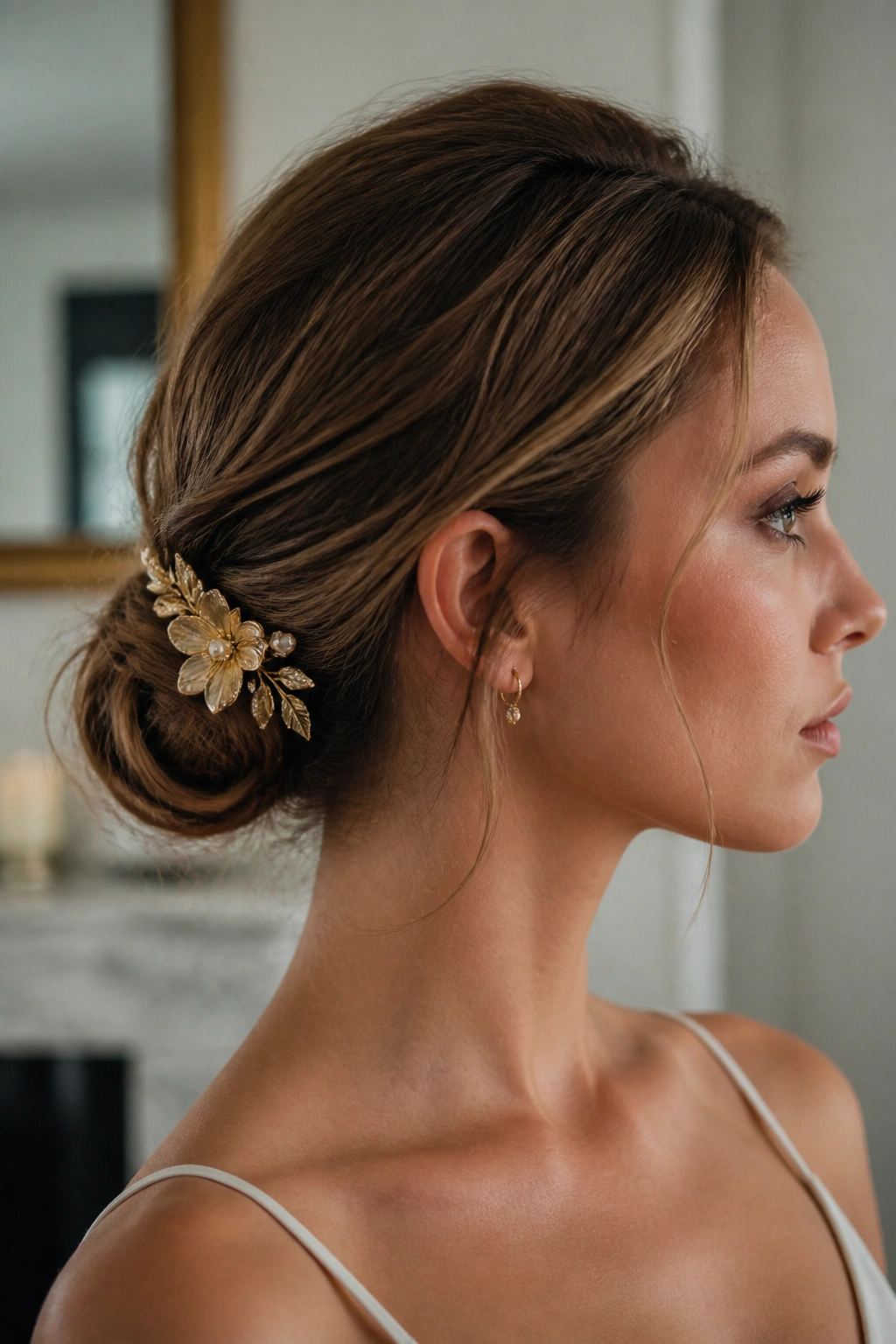
Some mornings the hair is not cooperating, and that’s when an accessory-first low bun saves the day. Start with the simplest low knot you can make, then let a decorative comb, pearl pin, or slim clip do the visible work.
The trick is to stop treating the accessory like an afterthought. Place it where the bun already has structure — usually at one side of the nape or just above the fold of the twist. If the accessory sits too high, it can feel floaty. If it sits too low, it disappears into the hair.
This is one of the fastest low updo hairstyles for short hair because the accessory helps disguise any imperfect ends. A metal clip can hide a section that refuses to tuck. A cluster of pins can turn a small bun into a finished look. Even a plain tortoiseshell barrette can make short hair feel deliberate when the shape underneath is simple.
I use this one when I want the result to look smarter than the effort it took. There’s nothing wrong with that.
17. Undone Low Bun with Airy Ends
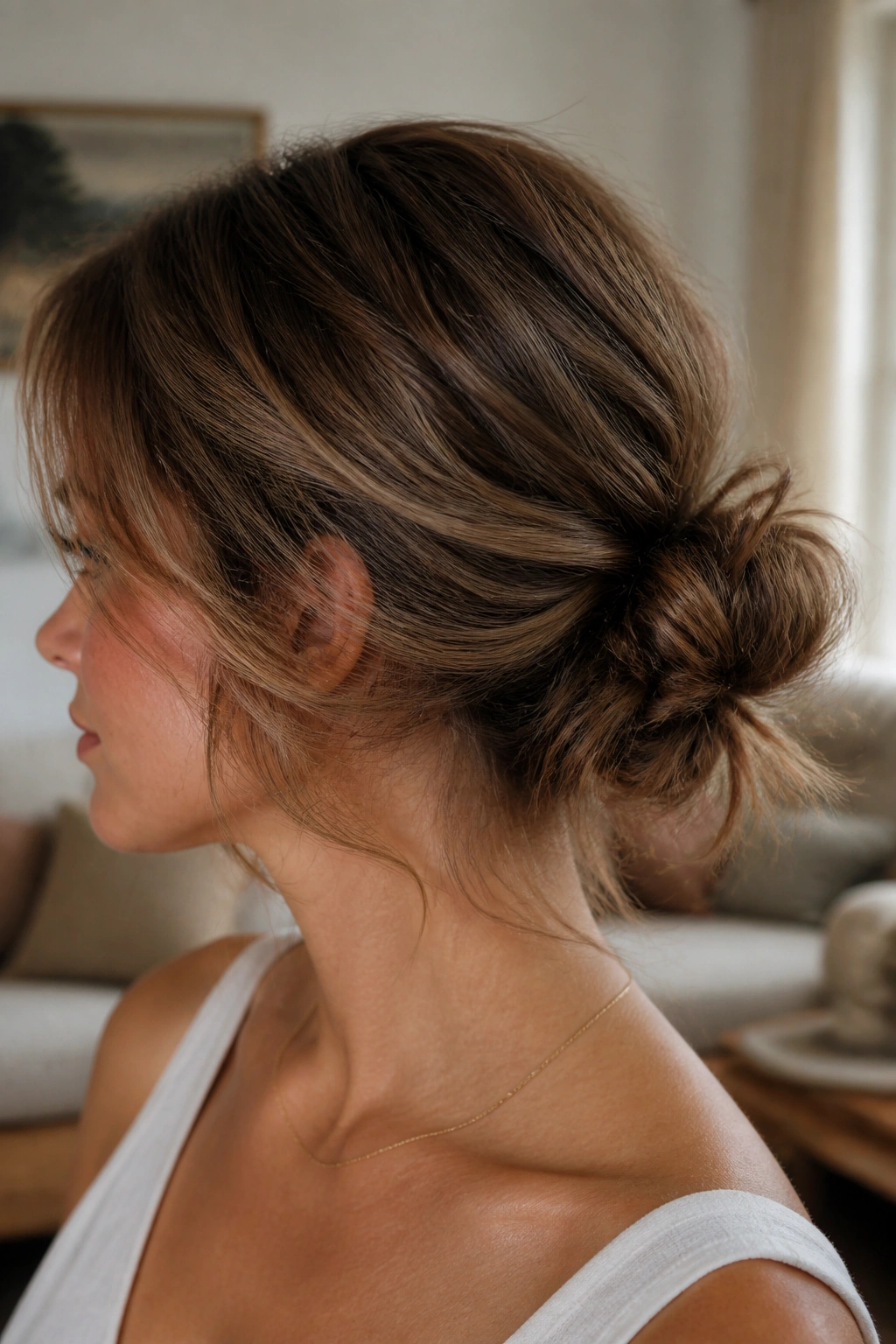
An undone low bun is the style I trust when short hair is behaving like short hair and refusing to lie flat. Instead of fighting the texture, you let it stay a little rough around the edges and build the bun from that.
This works especially well on wavy or curly hair, because the natural bend gives the bun extra body. On straight hair, a little dry shampoo or texturizing spray adds the same effect. You gather the hair low, twist it loosely, and pin the ends so a few soft pieces can escape around the neck.
The key is restraint. If you pull too tightly, the style loses the relaxed shape. If you leave too much loose, it stops reading as an updo at all. You want the middle ground: controlled, but not stiff.
A few airy ends are fine. A little frizz is fine too. Short hair often looks better when the finish feels lived-in rather than sealed up. That’s the whole charm of this one.
18. Clipped Nape Sweep with Decorative Pins
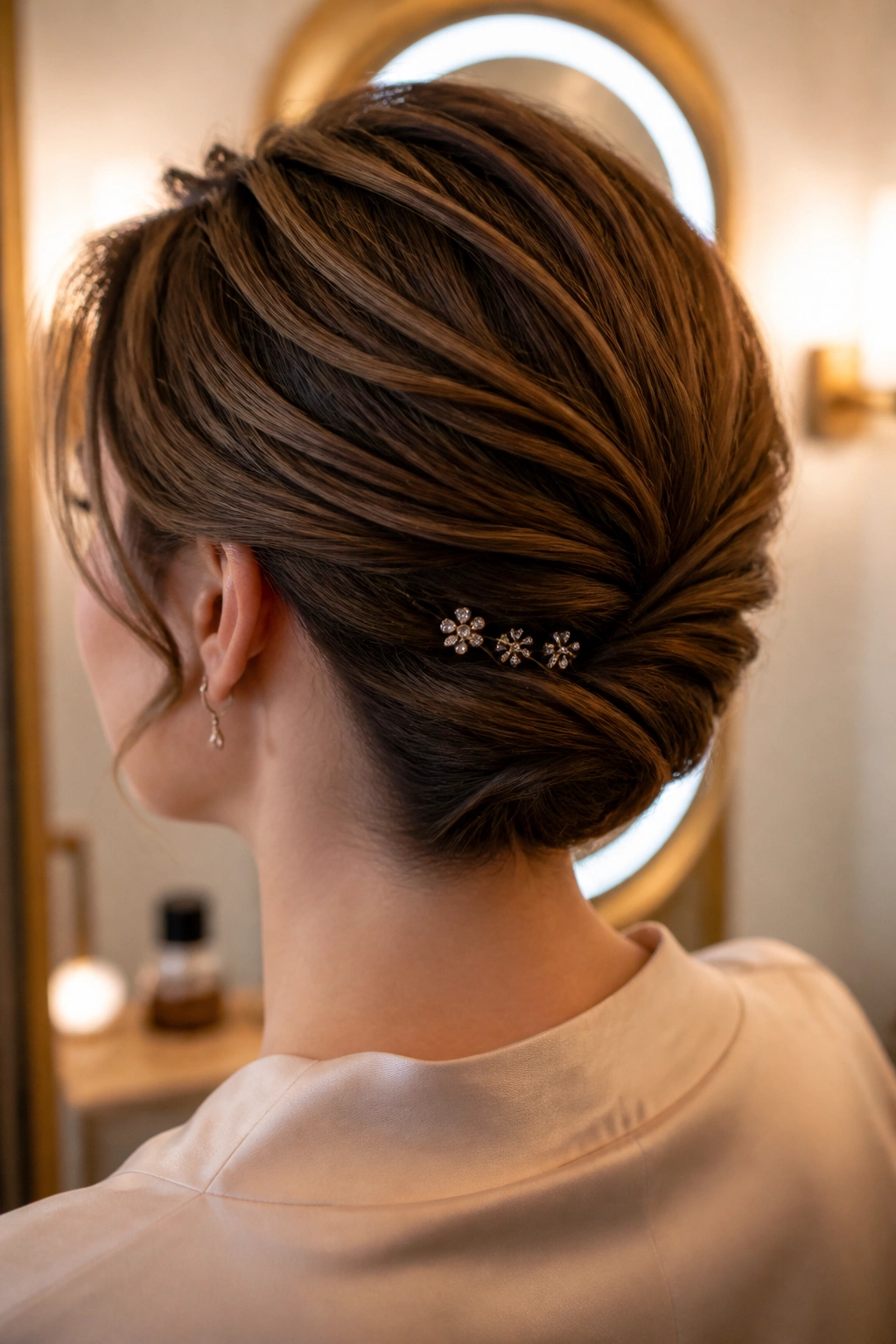
This is the rescue style. The one you use when your hair is too short for a real bun and too stubborn for anything else. Sweep everything to the nape, fold the ends under, and hold the shape with decorative pins instead of pretending you have more length than you do.
The beauty of this style is that it accepts the haircut as it is. A bob that stops at the jaw can still look elegant if the back is tucked close and the front has a clean sweep. A set of two matching pins or one small comb can finish the look without making it heavy.
I like this style because it never tries to be bigger than the hair. That’s where a lot of short-hair updos go wrong. They chase volume when what the cut really needs is structure. Keep the sweep low, keep the folds tight, and let the accessory show.
When the hair is too short to fake a full chignon, this is the one that still looks intentional.
