



Dimensional hair color is the fastest way to stop hair from looking flat, and I mean that in the plainest possible sense. One shade from root to end can be clean, sure, but it often reads like a helmet once the light hits it.
Flat color ages fast. Depth does not.
The trick is usually not “make it lighter everywhere.” That’s where a lot of home inspiration boards go wrong. The smartest color work uses contrast: darker pieces tucked underneath, brighter pieces where hair bends, a soft root shadow so the grow-out doesn’t announce itself, and a gloss that makes the whole thing look expensive instead of fried. A good colorist thinks about movement, not just pigment.
What people call shine is often a mix of tone and placement. Hair that’s been lightened too aggressively can look bright for a week and then start to look chalky, while hair with carefully placed lowlights and a smooth finish keeps its depth. That’s why the best dimensional hair color ideas don’t just change the shade — they change how the hair catches light when you turn your head.
1. Caramel Balayage for Dimensional Chestnut Brown
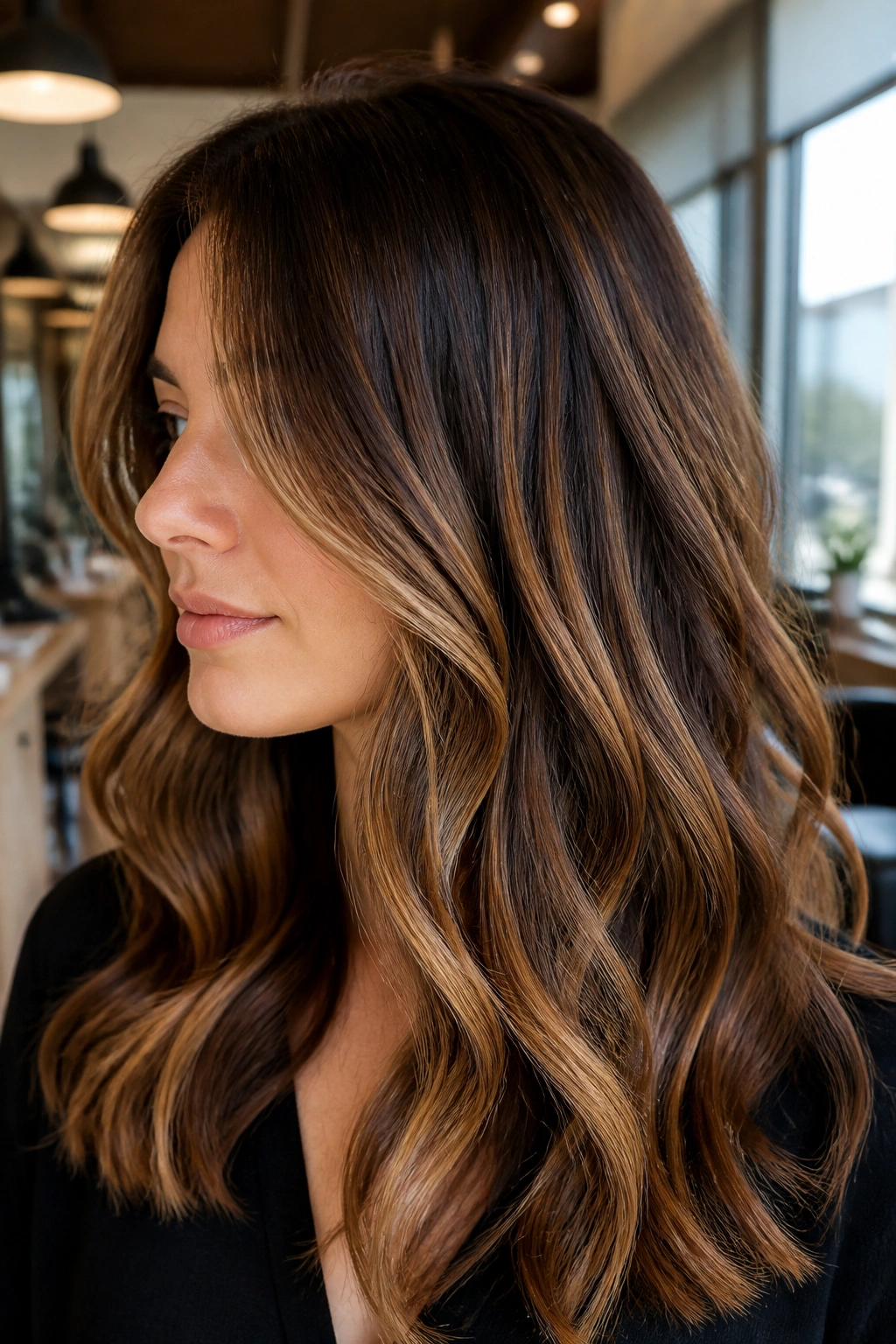
Caramel balayage is the shade I reach for when someone wants a noticeable change without giving up the brunette base. Chestnut brown can be gorgeous on its own, but once you weave in soft caramel ribbons, the hair stops reading as one block and starts moving. It feels warmer, friendlier, and a little more alive.
Why It Works
Balayage lets the lighter pieces sit where they make sense: around the face, over the mids, and through the ends where the hair naturally bends. The caramel tone should live a shade or two lighter than the base, not five shades lighter. That’s the difference between rich and striped.
A glossy caramel finish also flatters waves and curls better than a stark blonde. The light lands on the curve of the hair, then falls into the deeper brown underneath. You get the shine without losing the brunette depth that makes the whole look feel grounded.
- Best on base levels 4–6 with warm or neutral undertones.
- Ask for painted mids and ends, not heavy foil brightness at the root.
- A golden-caramel gloss keeps the tone soft instead of orange.
- Works especially well on long layers, loose waves, and big blowouts.
Tip: leave a little more depth at the crown than you think you need. The root shadow is what keeps caramel balayage from looking flat two weeks later.
2. Mushroom Brown with Smoky Lowlights
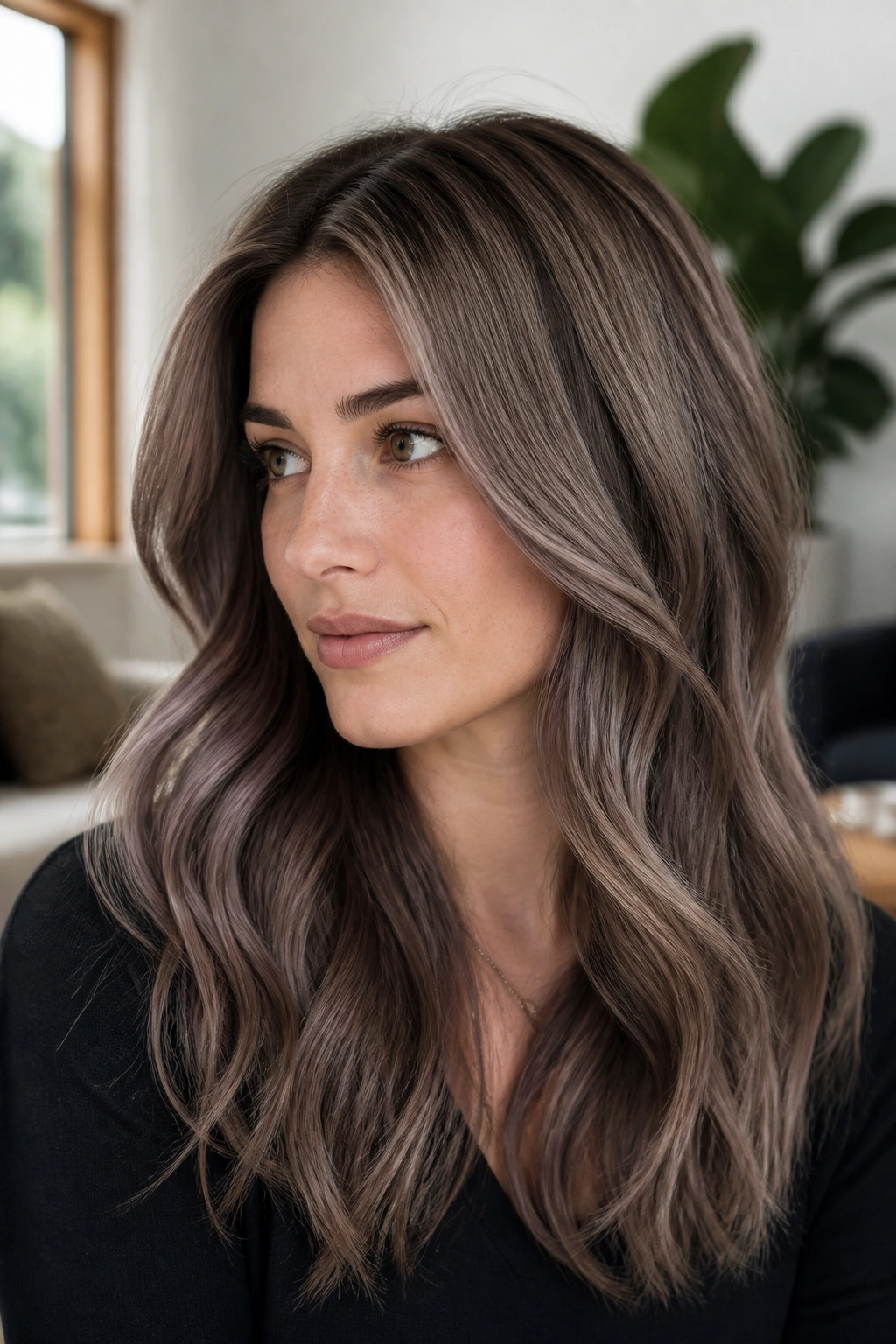
Mushroom brown looks expensive because it refuses to shout. It sits in that cool taupe-brown space that can make hair look denser and smoother, especially when the base color has gone a little too warm or red from past coloring. The magic is in the smoky lowlights, which stop the shade from turning muddy.
If your hair pulls orange every time someone lifts it, mushroom brown is a smart correction. The tone should feel earthy, not gray. That distinction matters. Gray can make the hair look dusty if it’s overdone; taupe and beige keep it modern and wearable.
The nicest versions of this shade are built in layers. A neutral brown base, a few cooler lowlights through the interior, and a gloss that takes the brass down just enough. The result is soft, muted depth that looks especially good on straight hair because every strand has somewhere to go visually.
A lot of people think cool brown means “boring.” Not even close. When the tone is right, mushroom brown has a velvet quality that warm brown often lacks.
3. Espresso Hair with Ribbon Highlights
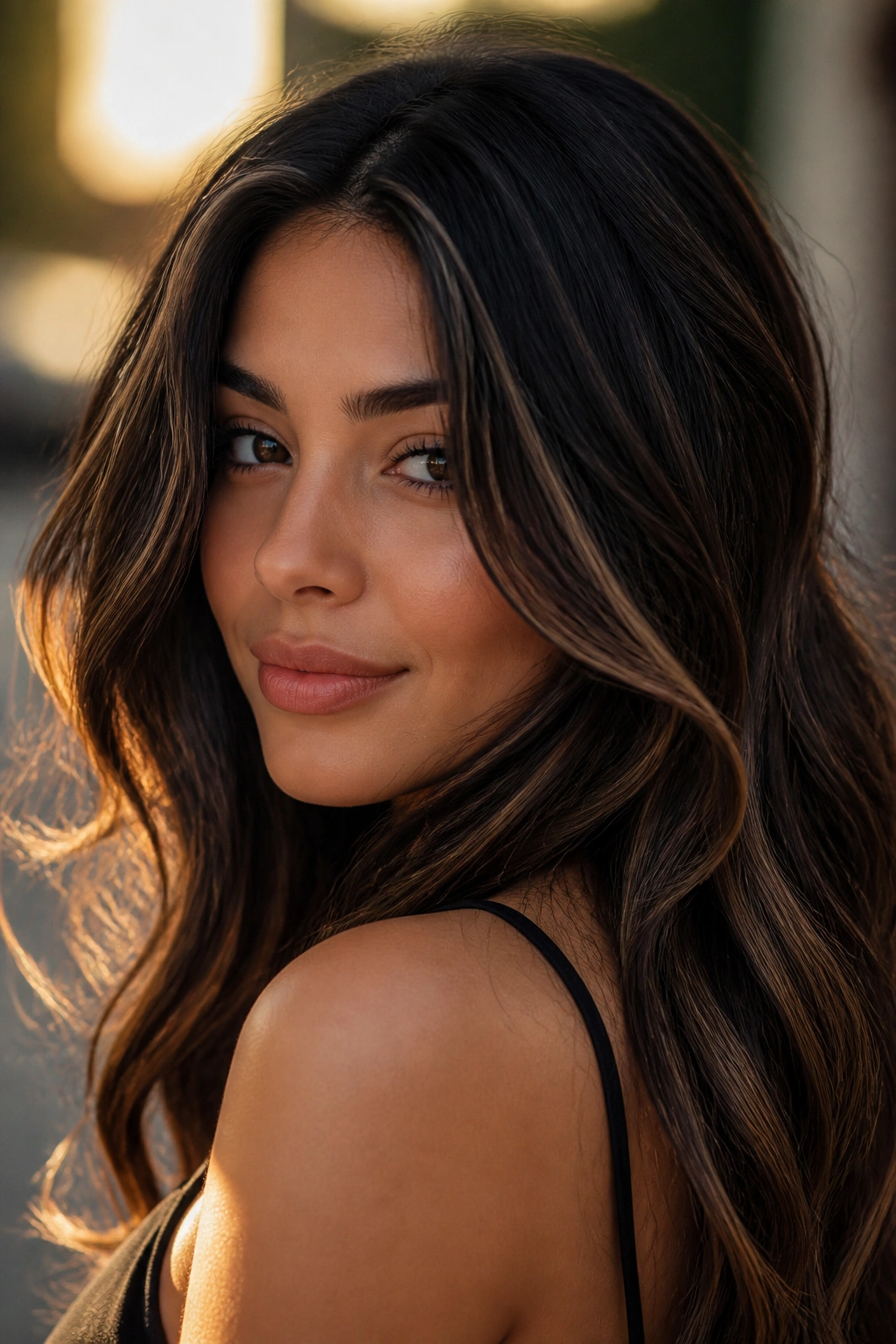
Why do ribbon highlights look richer than chunky streaks? Because they move like fabric instead of flashing like tape. On espresso hair, that softer contrast is the whole point. You keep the depth of a near-black brunette base, then thread in narrow, glossy lighter pieces that show up when the hair swings.
What Makes It Different
Ribbon highlights are thinner and longer than old-school stripey foils. They trace the shape of the haircut, which means the color feels built into the hair rather than sitting on top of it. On wavy or blow-dried hair, they can make the ends look fuller without needing a dramatic lift.
How to Ask for It
- Ask for thin, elongated highlights through the top and face frame.
- Keep the lightness around 2–3 levels above the base.
- Avoid overly golden tones if your espresso base is cool.
- Request a soft gloss after toning so the contrast stays shiny, not harsh.
Espresso hair can look heavy if every strand is the same shade. Ribbon highlights fix that with just enough brightness to catch the eye, then they disappear back into the dark base. That’s the part I like most — the color has movement without looking busy.
4. Copper Auburn with a Soft Shadow Root
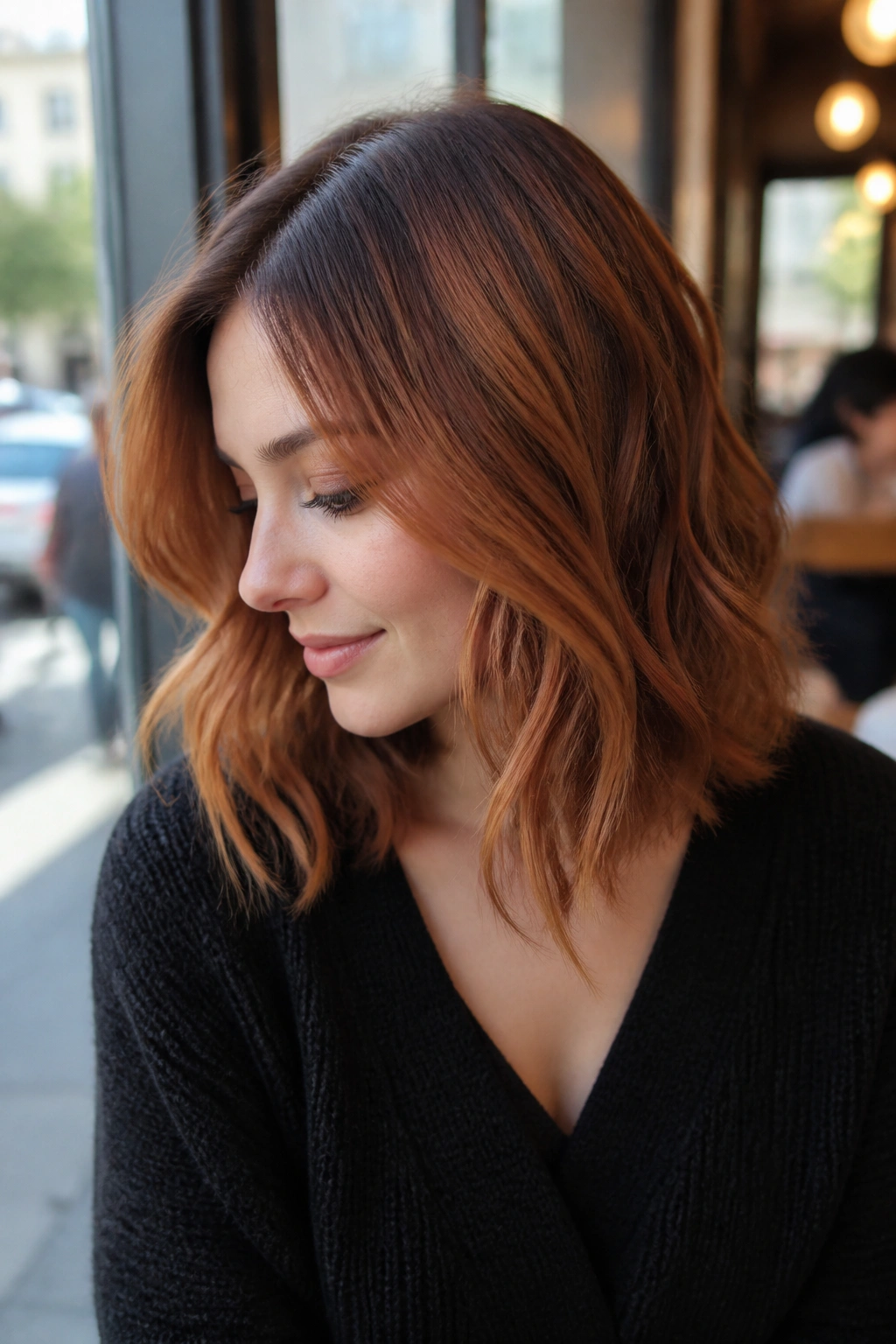
Picture a client who loves red but does not want to sit in a salon every three weeks. A copper auburn shadow root is usually the answer. The root stays a shade deeper, the mids carry the copper, and the ends hold a richer auburn tone so the whole thing glows without looking like a loud block of color.
The shadow root matters more than people expect. It softens the grow-out line and keeps the brighter copper from starting right at the scalp, where it can look harsh under bright light. Red shades fade fast anyway; a deeper root gives the color somewhere to drift without falling apart.
Copper also needs shape. On one-length hair, it can look a little heavy. Add loose layers or a bend from a round brush, and the different reds start to show themselves.
- Use a deeper root by one to two levels.
- Keep the copper on the mids, with auburn toward the ends.
- Ask for a warm gloss, not a flat orange deposit.
- Best on medium brunettes and naturally warm bases.
The one caution: if the copper is pushed too bright, the shine can turn into glare. A softer version usually looks better, and it stays prettier longer.
5. Beige Blonde Babylights with Soft Dimension
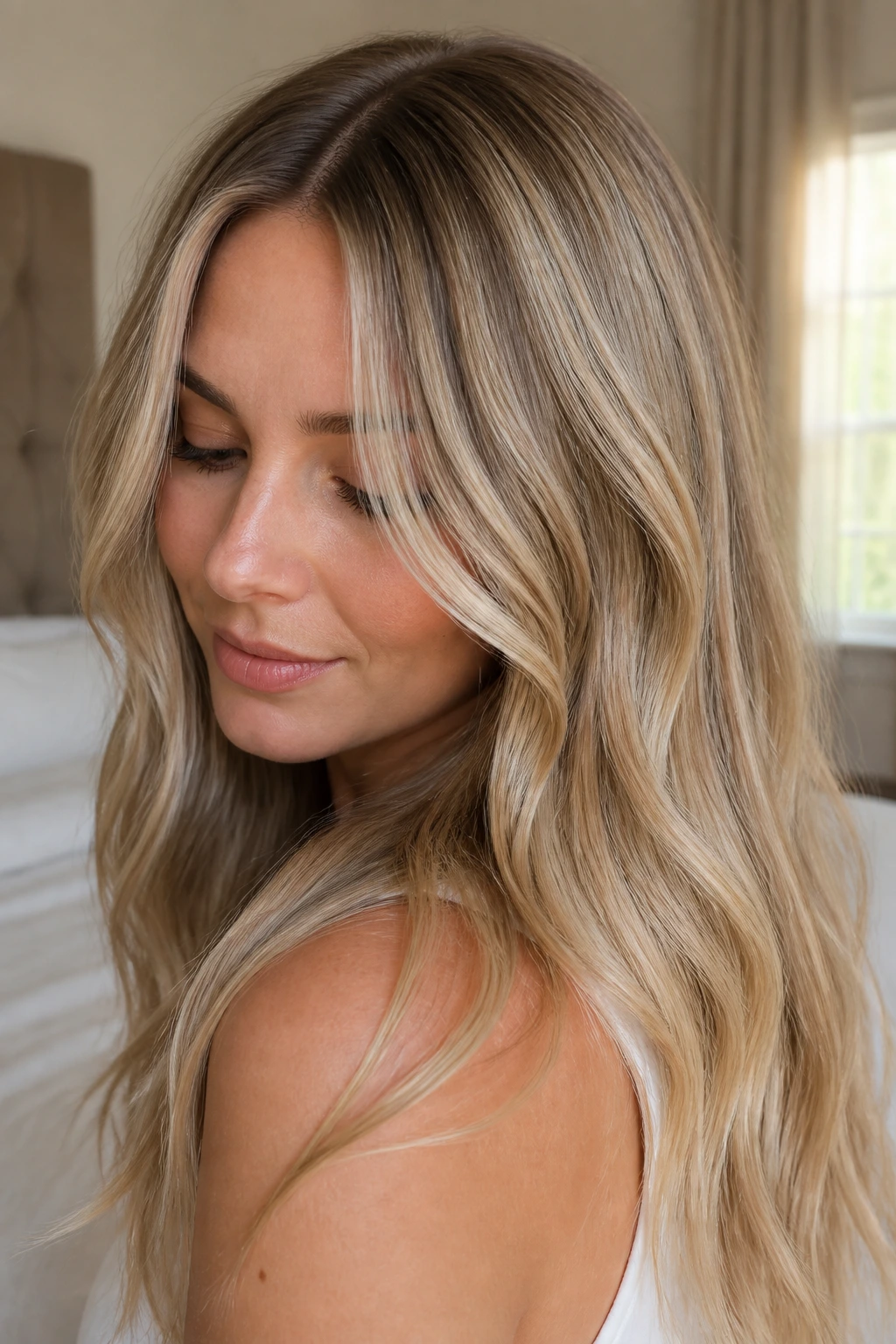
Beige blonde is the shade that keeps blonde hair from looking brittle. It has enough warmth to feel soft, but not so much warmth that it tips into yellow. Add babylights — those tiny, delicate sections that are thinner than the usual highlight — and the whole head starts to look fuller, smoother, and more expensive.
Babylights work because they imitate the kind of random lightening hair gets naturally. Not dramatic. Not stripy. Just a lot of small shifts that break up the surface. On fine hair, that can create the illusion of density. On thick hair, it stops the color from turning into broad flat panels.
The beige tone is the quiet part of the equation. It’s creamy, not white. That means it reflects light without screaming for attention, which is exactly what most blondes need if they want shine instead of brittleness. A pale gloss can help, but the color itself has to be built with restraint.
This is one of those shades that looks better when the hair is healthy enough to hold a smooth finish. If the ends are rough, beige blonde loses its charm quickly. A trim and a good conditioning routine matter here more than people want to admit.
6. Bronde with Face-Framing Money Pieces
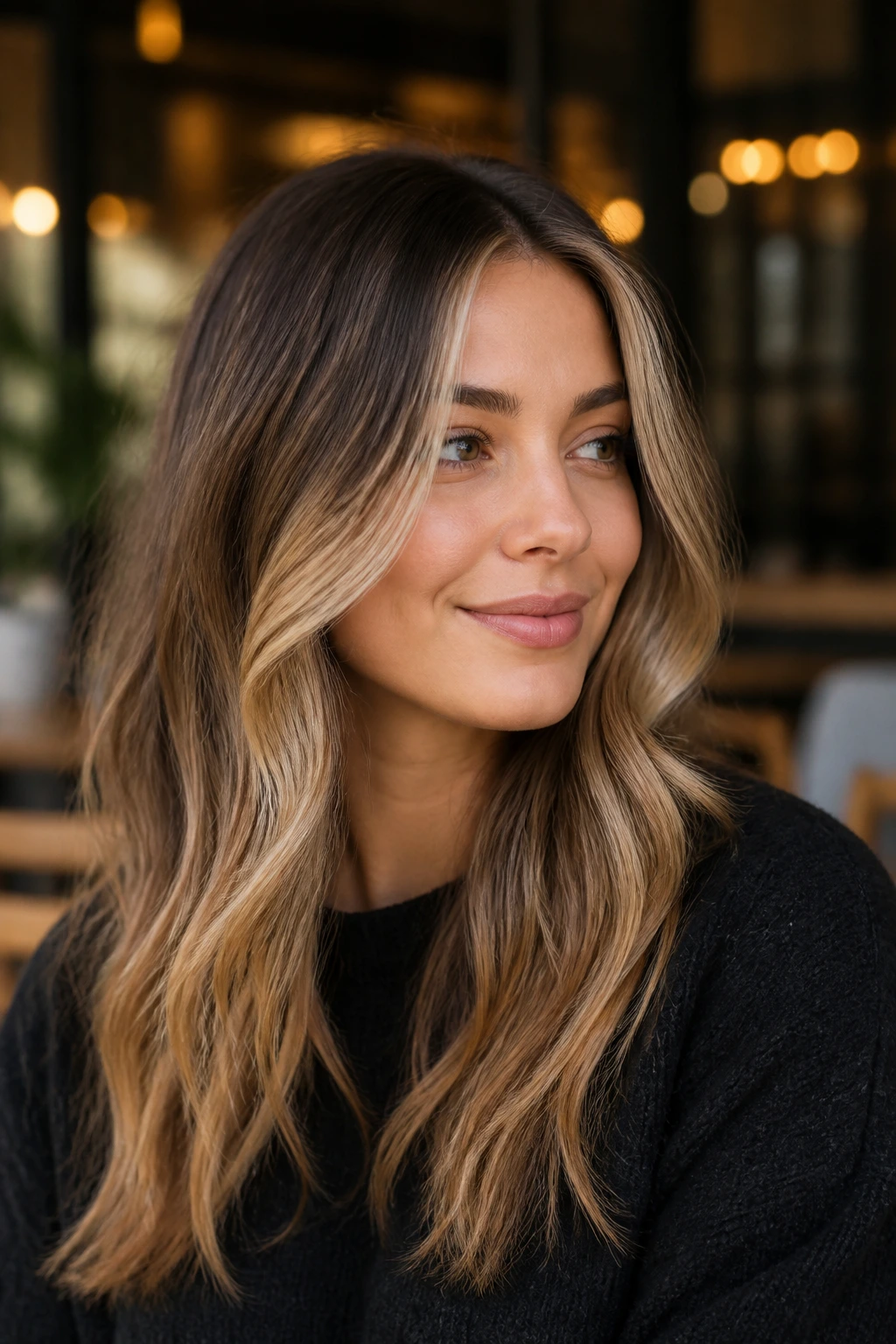
Compared with a full head of highlights, bronde with money pieces is the smarter move if you want brightness around the face and depth everywhere else. The back can stay rooted and brunette, while the front lifts a little higher so your skin looks more awake and the haircut gets a clear outline.
That contrast is what sells the look. A lot of color work fails because it brightens too much, too evenly. Bronde does the opposite. It lets the darkest part of the hair stay in place under the top layer, and then it puts the lightest energy right where people notice first — along the cheekbones, near the part, and around the ends that frame the face.
Money pieces don’t need to be platinum to work. Two shades lighter than the base often does more for the overall look than a harsh blonde stripe ever will. The point is to create a bright edge, not a spotlight.
This idea is especially good if you like to wear your hair down most of the time. The face frame does the heavy lifting, and the rest of the color can stay low-maintenance. It’s a practical kind of pretty, which is rare enough that I always pay attention to it.
7. Chocolate Cherry Brunette
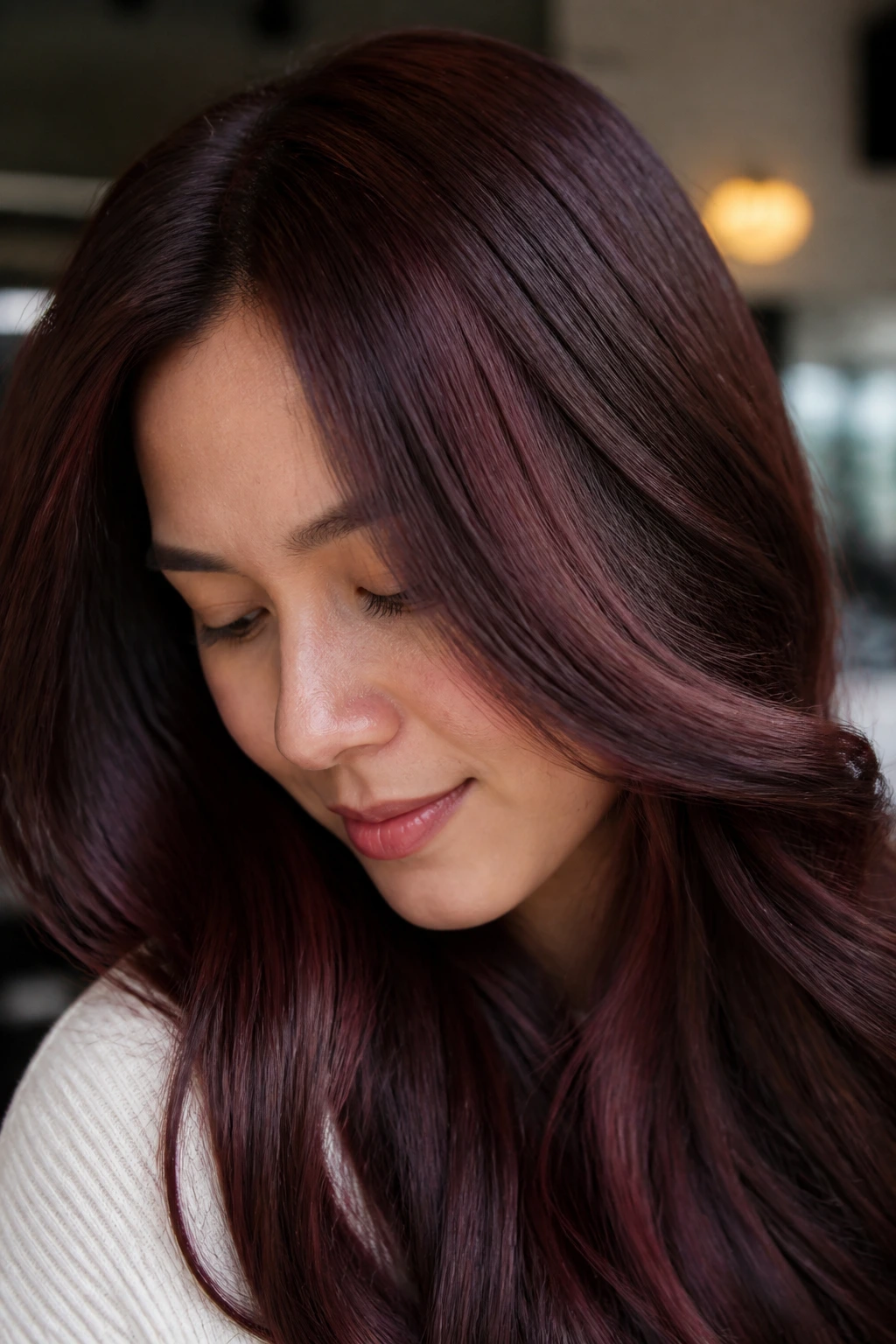
Chocolate cherry brunette gives dark hair a hint of red without turning it into a full redhead situation. That’s why I like it. It keeps the brunette base rich and uses the cherry tone like a sheen — something you notice when the light shifts, not a color that jumps out from across the room.
The Sweet Spot
The best version sits between burgundy and warm brown. Too much violet, and it can look wine-dark. Too much copper, and it loses the chocolate depth that makes it wearable. A colorist can build it with a demi-permanent glaze or a few strategically placed panels so the red lives inside the brown rather than on top of it.
What to Watch For
- Works well on base levels 4–6.
- Needs a red-brown gloss to keep the shine fresh.
- Looks strongest in indoor light and softer sunlight.
- Flatters layered cuts because the red catches on movement.
If you want a brunette color that feels a little more dressed up, chocolate cherry is a strong pick. It has enough drama to matter, but it does not demand the maintenance of a full copper or ruby shade. That matters more than people think once the novelty wears off.
8. Golden Honey Ombré on Dark Hair
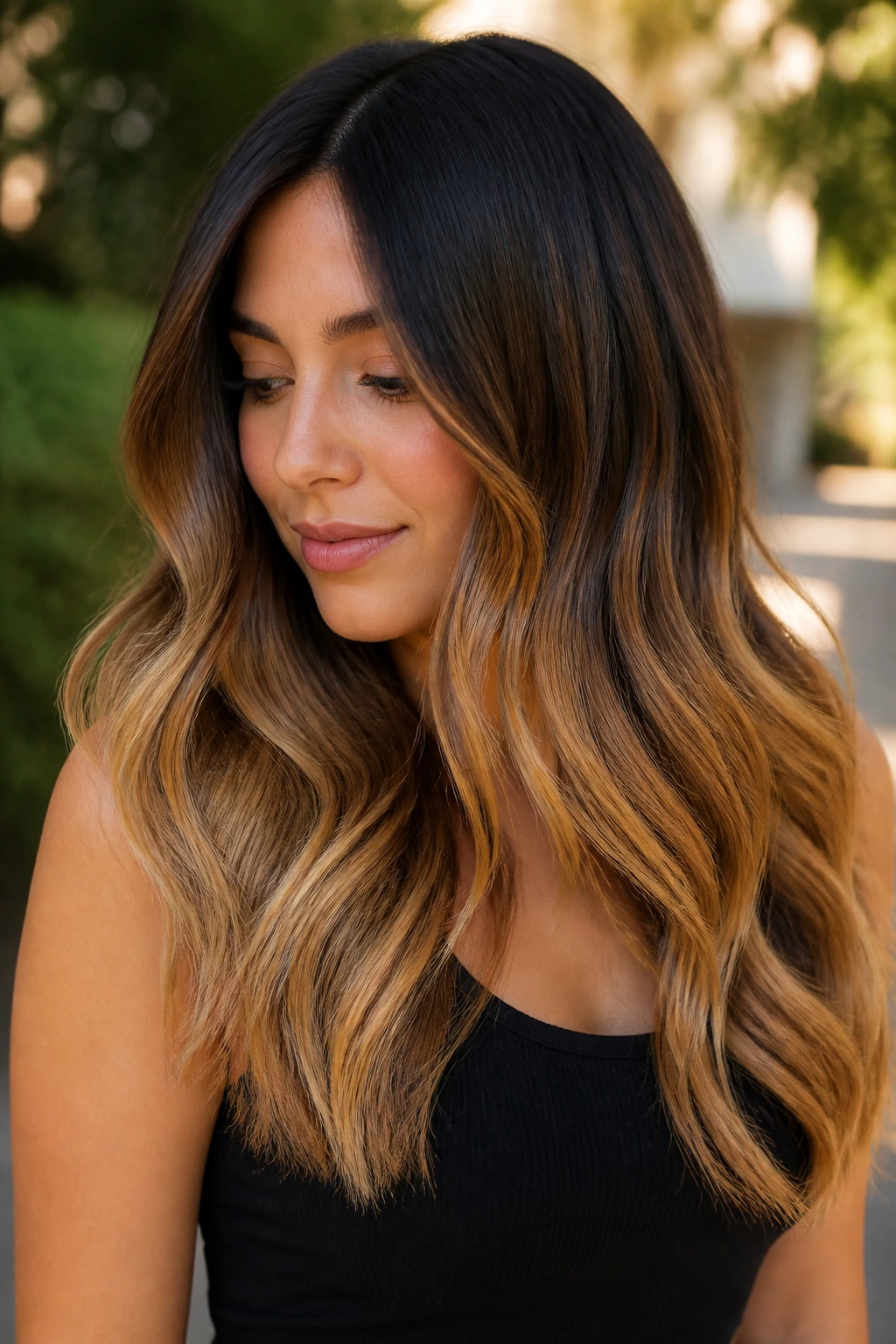
A dark base fading into golden honey ombré is one of the easiest ways to get depth and shine at the same time. The roots stay dark, which keeps maintenance sane, and the ends glow with a warmer, lighter tone that makes the whole style feel sunlit.
The transition should be soft. Not a hard line. Not a dip-dye block. A good ombré moves gradually from deep brown or black at the top into honeyed ends that look like they’ve been lightened by time and movement. That gradual shift is what makes the shine read as natural.
This is a strong choice if you like your hair long, because long lengths give the fade room to breathe. On shorter cuts, ombré can feel abrupt. On a lob, waves, or layered mid-length hair, it looks fluid and easy.
Honey is also kinder than ash on dark hair. Ash can sometimes look cool to the point of dullness if the lift isn’t clean. Honey keeps the warmth. It gives the light something to sit in, which is half the battle when dark hair gets lightened.
9. Sand Beige Root Melt
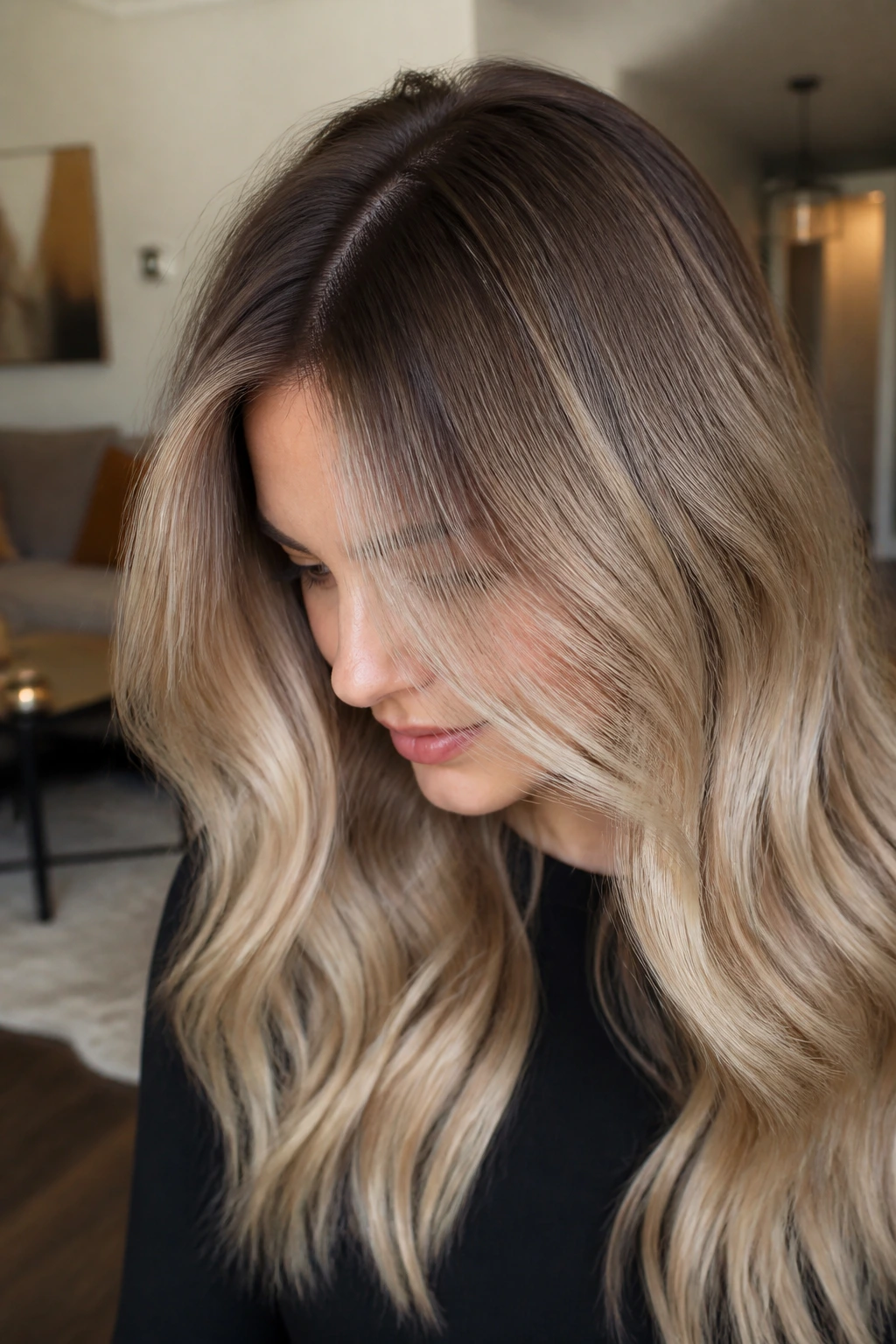
Can blonde look soft instead of loud? It can, if the root melt does the heavy lifting. Sand beige is one of those shades that seems simple until you see it in motion. The root melts into the mids so smoothly that the blonde looks grown-in on purpose, not grown-out by accident.
Why the Melt Matters
The best root melt isn’t dark for the sake of contrast. It’s a slightly deeper beige or soft taupe at the scalp, then a lighter sand tone through the lengths, with the brightest pieces saved for the ends. That stacked gradient keeps the eye moving instead of landing in one hard line.
How to Wear It
- Ask for a smudged root about one level deeper than the mids.
- Keep the blonde in the beige family, not icy white.
- Use a cool-but-not-gray gloss so the finish stays creamy.
- Let the face frame be a touch brighter if you want more lift.
Sand beige works especially well on people who like blonde hair but hate obvious maintenance. The grow-out is softer, and the color keeps its shine because the tones are close enough to blend. It’s the kind of shade that looks calm from every angle.
10. Strawberry Blonde with Peach Tones
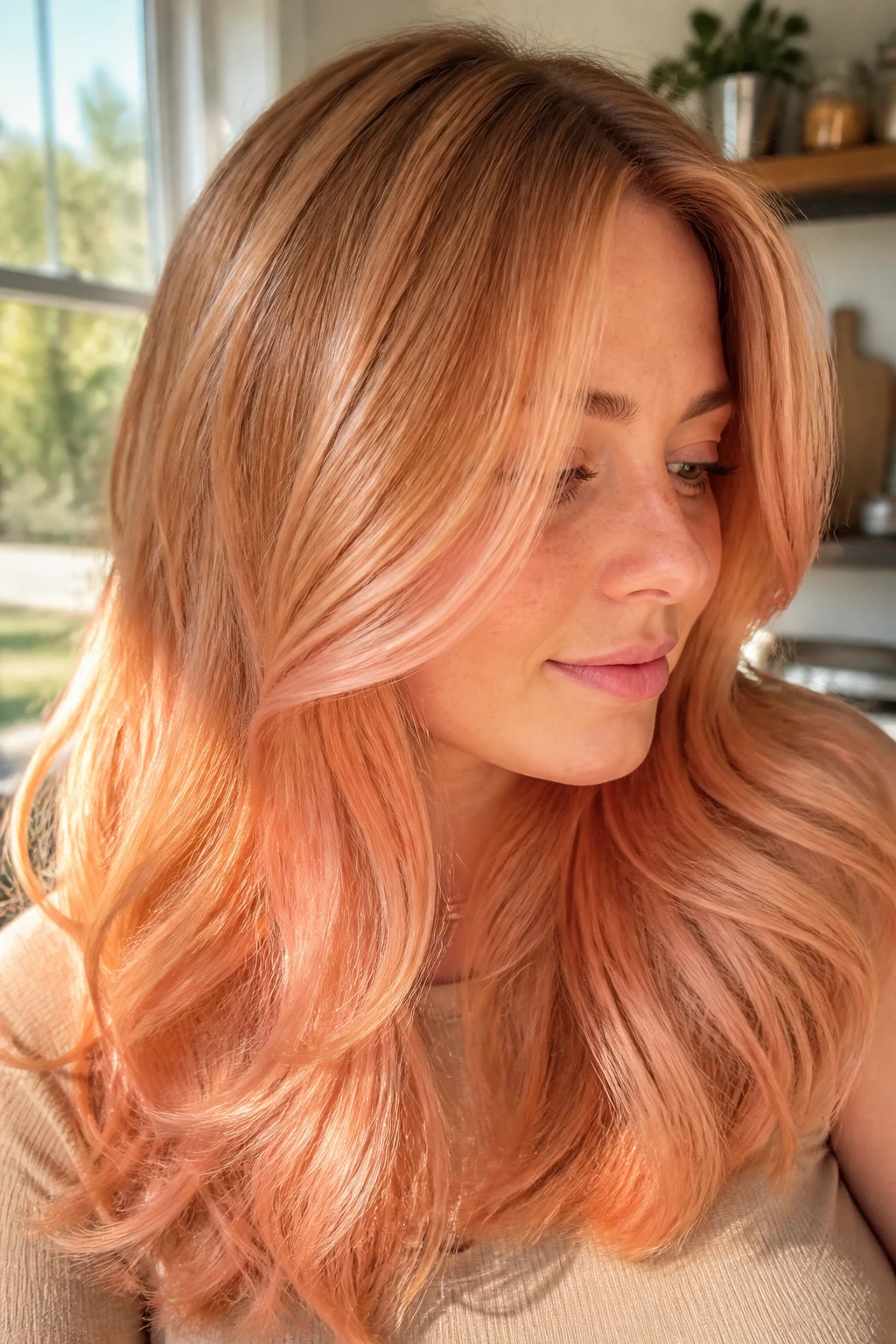
Strawberry blonde gets a lot better when the peach sits underneath it. Without that little bit of peach warmth, the color can drift too pale and lose the glossy red-blonde balance that makes it feel rich. With peach in the mix, it looks fresher and more human.
This shade is not about neon red. It’s about a warm blush tone that makes the blonde feel lit from inside. On a pale base, that can read soft and delicate. On a darker blonde, it brings the red side forward without making the hair look coppery.
A good strawberry blonde usually has variation. Maybe a slightly deeper root. Maybe peachy ends. Maybe a few lighter ribbons around the face. Flat strawberry tones can look washed out fast, and that’s the trap. You want the warmth to move.
A gloss is your friend here. Not because it changes everything, but because peach tones can fade quickly and leave the hair looking a little tired. A quick refresh keeps the shade sweet instead of dull. Small difference. Big payoff.
11. Ash Brown with Subtle Cool Lowlights
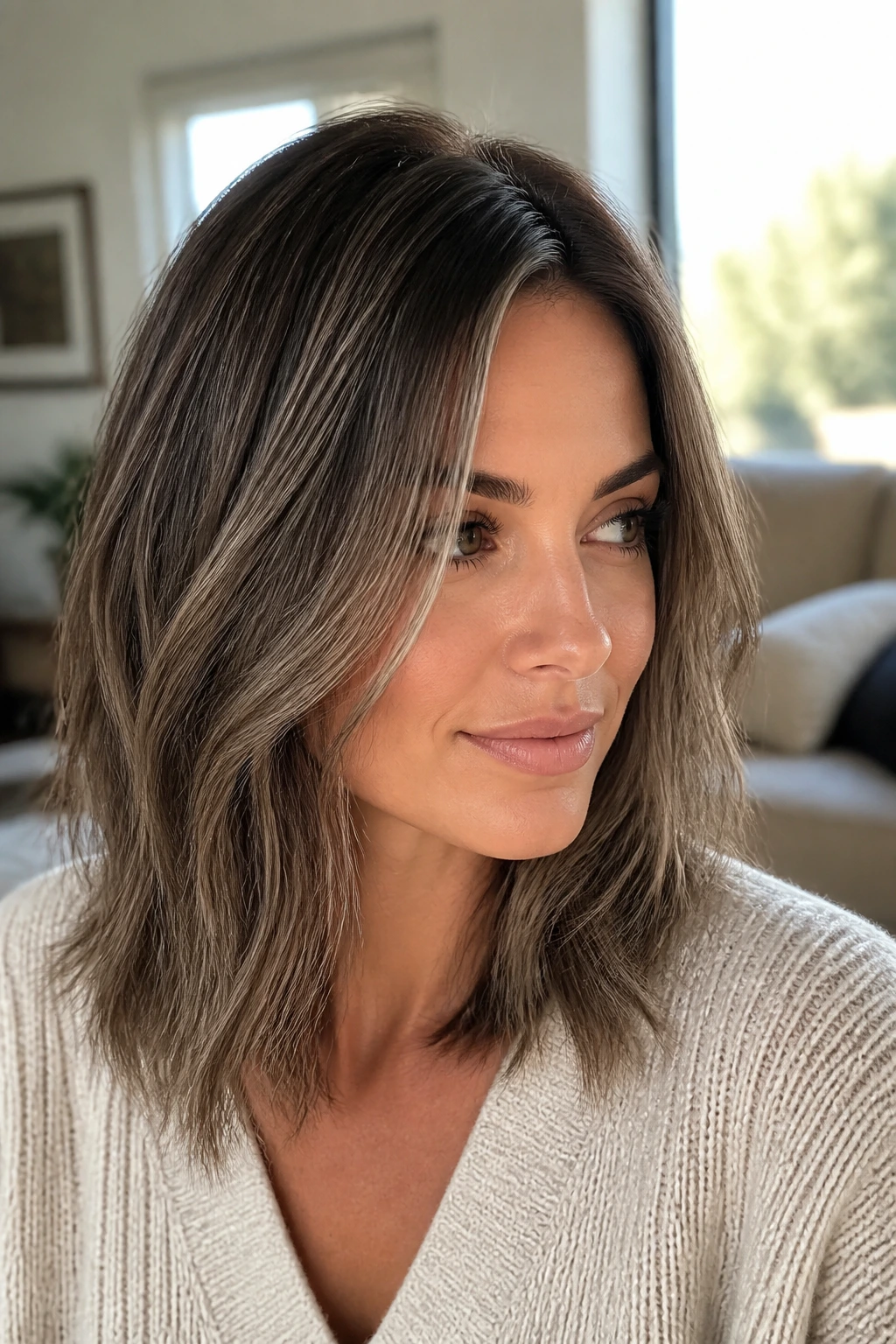
Cool brown hair has a clean, velvety look when the lowlights stay thin and well placed. Heavy ash can flatten everything. Thin cool lowlights do the opposite — they build depth inside the brown so the color looks layered rather than one-note.
This is a smart move for hair that pulls red or orange too easily. A few smoky pieces beneath the surface can calm the warmth without turning the whole head gray. That matters, because gray on the wrong base can make the hair look tired instead of polished.
It also works well for thicker hair. Dense hair can hold a lot of color, and if every strand is the same tone, the result can feel heavy. Cool lowlights break that up. They give the surface a little movement, even when the cut is blunt.
I like this idea most on shoulder-length or longer brunettes who want something understated. It’s not flashy. It doesn’t need to be. The shine comes from the contrast between the cooler pieces and the darker brown around them.
12. Toffee Curls with Luminous Dimension
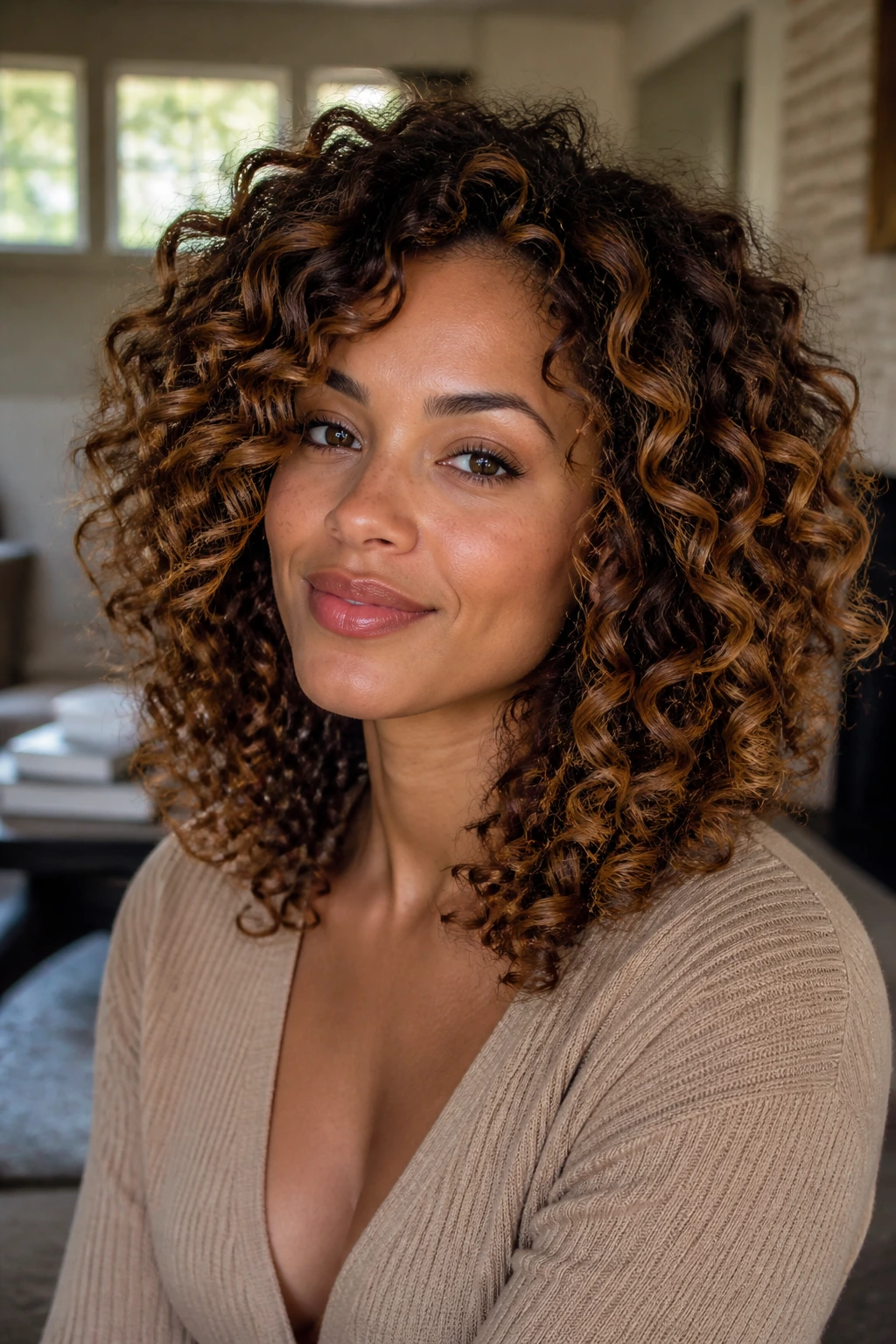
Unlike a single-process brown, toffee curls need both color and placement. Curly hair already creates its own texture, so the color has to work with that shape instead of fighting it. Toffee ribbons, painted where the curl opens, make each coil look clearer and fuller.
The trick is to avoid coloring the hair as if it were straight. Curly patterns hide light in some spots and throw it forward in others. That means the brighter pieces should sit on the outer curve of the curl, while a few deeper lowlights stay tucked inside the curl cluster. The result is depth you can see from across the room.
A toffee tone also sits nicely between blonde and brown. It’s warm, but not brassy. Sweet, but not sticky-looking. The shade has enough color to show up on dark curls and enough lightness to give the ringlets definition.
- Best with layered cuts that let curls separate.
- Ask for painted ribbons, not uniform foils.
- Keep some deeper brown panels underneath.
- Finish with a light gloss so the curls reflect light instead of drying out.
If you wear your curls natural, this kind of placement can do more for shine than another round of lightening ever will.
13. Black Hair with Blue-Black Shine Panels
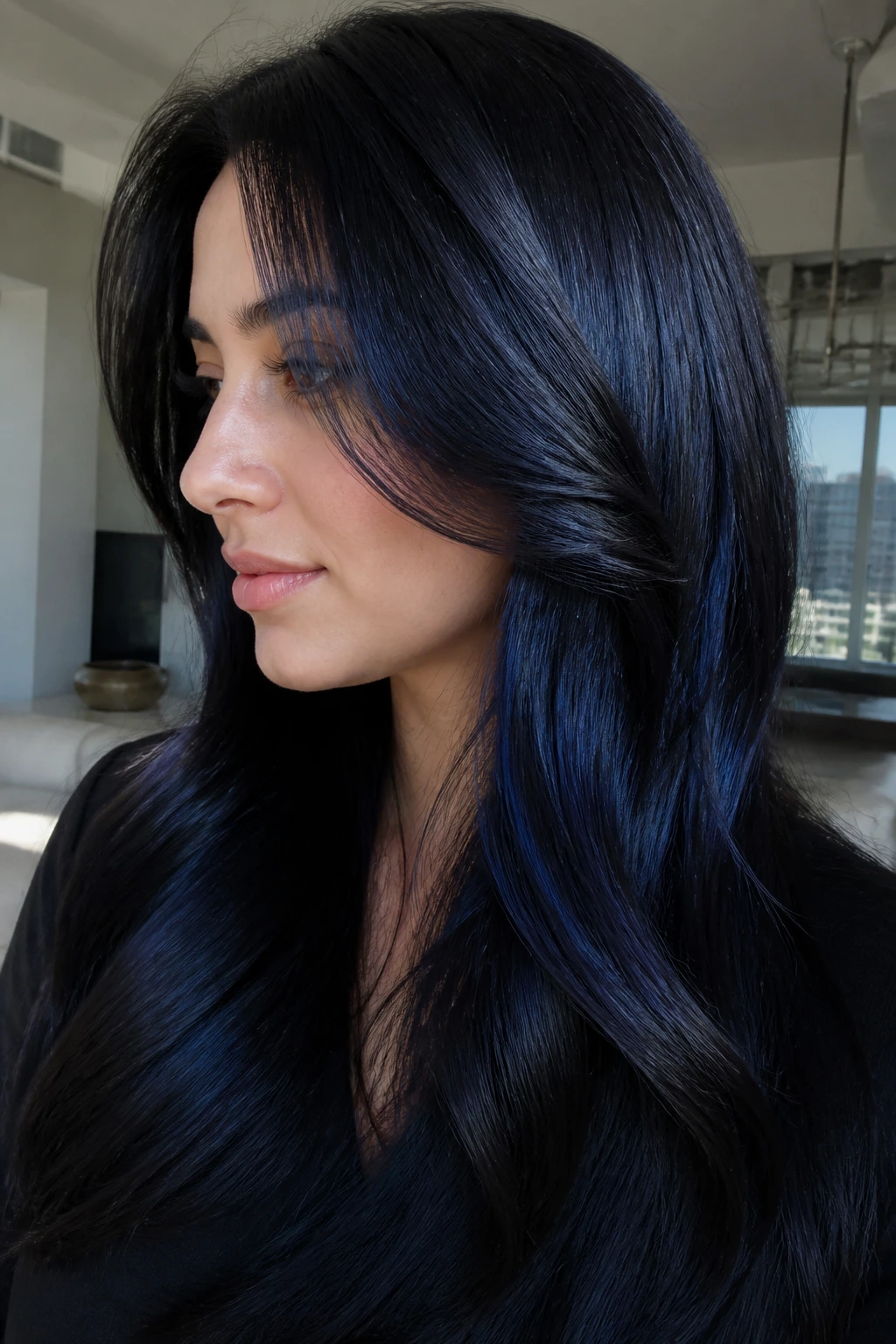
Black hair doesn’t need to be lighter to look dimensional. Sometimes the smartest move is to stay dark and change the reflection instead. Blue-black shine panels do that beautifully. They add an inky, almost reflective shift inside the black base so the hair looks deep instead of flat.
The color should not read navy from every angle. That’s the trap. You want the blue-black tone to appear only when the light hits it — on a turn of the head, in a ponytail swing, along the curve of a smooth blowout. Done well, it looks sleek and expensive, not theatrical.
This shade is especially strong on straight or lightly waved hair because the reflection stays clean. On very porous hair, the blue can go muddy if the base is uneven, so the hair has to be in decent shape before you start. A clear gloss on top helps the finish look wet, almost glassy.
Who It Suits
- People who like dark, polished color with a little edge.
- Hair that’s naturally black or very deep brown.
- Cuts with clean lines — bobs, lobs, blunt ends, smooth layers.
If you want shine more than brightness, this is one of the strongest options on the list. It is subtle. It is sharp. And it holds its shape.
14. Rose Gold Melt on Lighter Bases
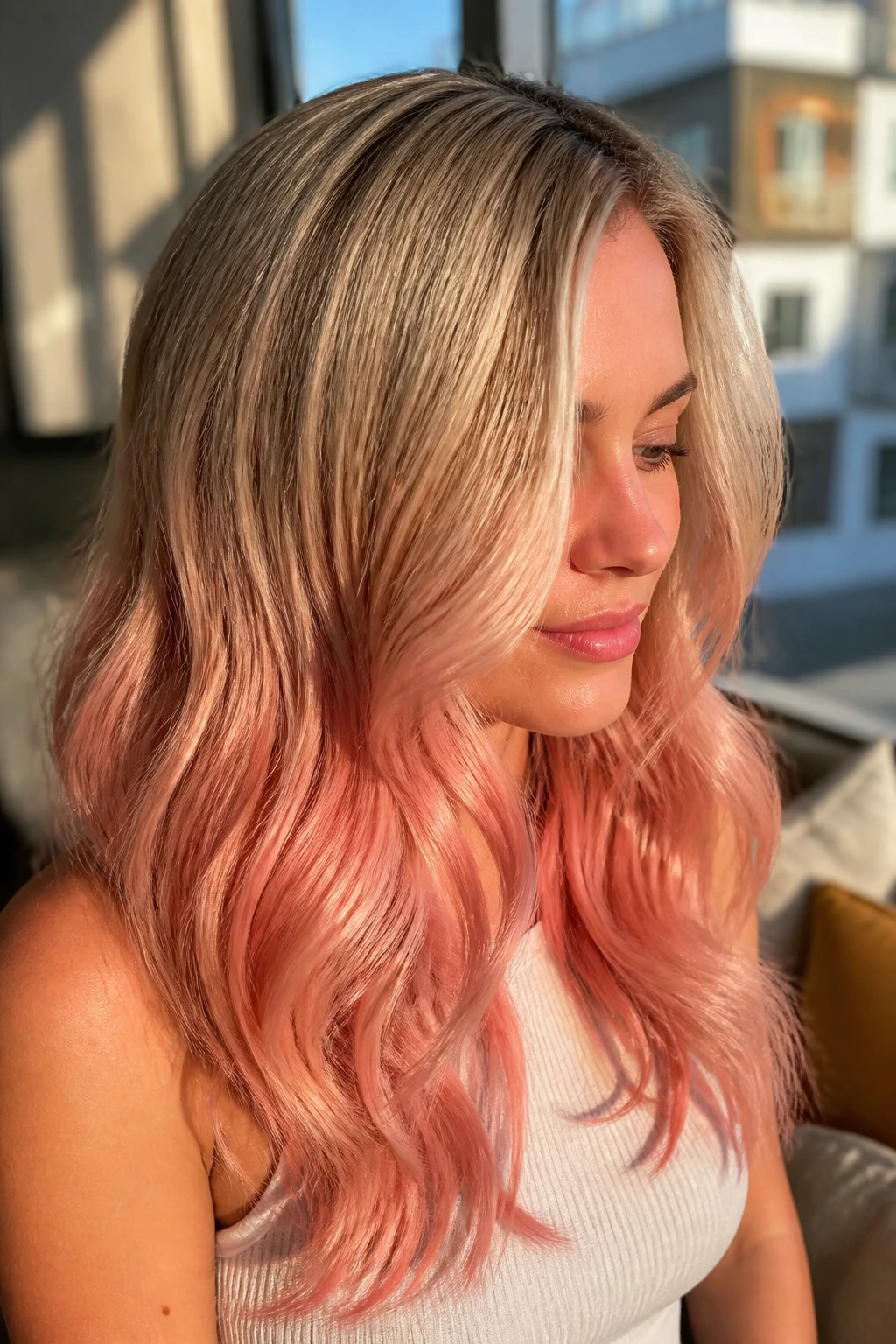
Why does rose gold feel softer than pink streaks? Because it sits between copper and blush, and that middle ground keeps it from looking costume-like. A rose gold melt is all about that slow shift from a warm root into a light, rosy blonde through the lengths.
The base matters here. On a pale blonde canvas, rose gold reads airy and metallic. On a more beige base, it feels warmer and a little richer. Either way, the melt should be gradual, with no hard line where one shade stops and another starts. That softness is what makes the shine look expensive.
I like rose gold best when the hair already has enough lift to hold the tone cleanly. If the base is too dark, it turns muddy fast. If the hair is too damaged, the pink fades unevenly and you’re left chasing the color with conditioner after conditioner.
How to Keep It Pretty
- Ask for a rose-beige gloss, not a bright pink toner.
- Keep the root slightly deeper for wearable contrast.
- Refresh with a color-depositing mask when the blush starts to fade.
- Use gentle heat, because high heat chews through pastel tones quickly.
Rose gold is for someone who wants something playful but not loud. It has enough personality to be interesting, then it settles back into shine.
15. Soft Mocha Gloss with Hidden Dimension
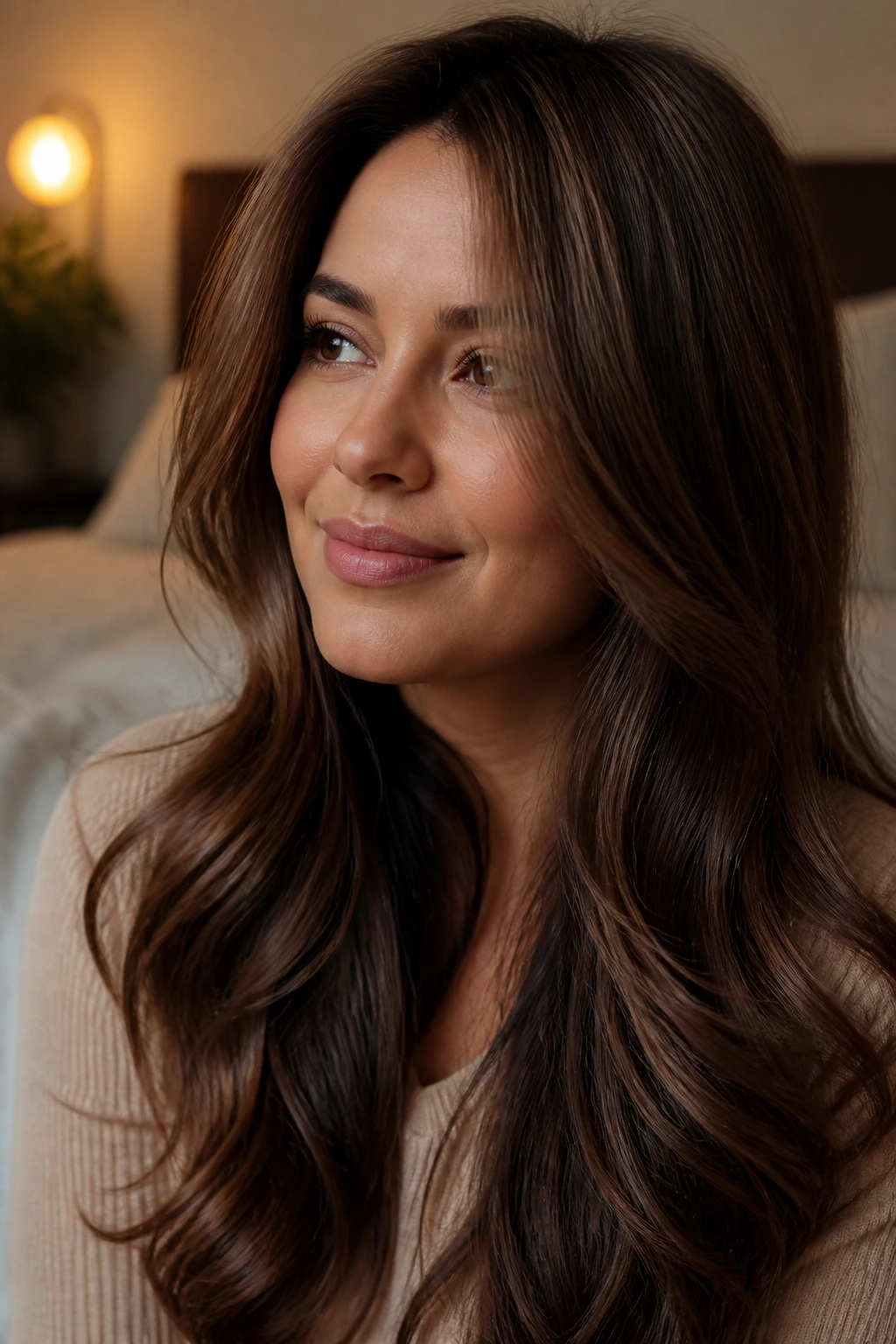
Soft mocha gloss is the shade I recommend when hair needs shine more than drama. It sounds simple, and that’s the point. A demi-permanent mocha glaze over brunette or dark blonde hair can make the whole head look smoother, richer, and more polished without obvious streaks.
What makes it dimensional is the hidden part. Tiny lowlights through the interior, a touch of warmth near the ends, maybe a slightly deeper root in the crown area. None of it needs to announce itself. The color only wakes up when the hair moves, which is exactly why it works so well on people who don’t want their hair to wear them.
A mocha gloss is also one of the easiest shades to live with. The grow-out stays soft. The tone fades more gracefully than high-contrast color. And if the haircut has good layers, the movement shows up without needing a lot of maintenance from the color itself.
If you’re torn between two shades, pick the one that leaves more of your natural depth intact. That’s usually where the shine lives. Strong color can be fun. Depth is what makes the hair look expensive two weeks later, when the mirror is less forgiving and the light is doing its usual nonsense.
