



Lilac grey hair color has a funny habit of looking sweet in theory and far sharper in real life. The grey keeps it from tipping sugary; the lilac keeps it from going flat.
That balance is the whole trick.
A blunt bob, waist-length waves, and a cropped pixie all need a different mix of smoke, silver, and violet. The same bottle job can look washed out on one haircut and striking on another, which is why this shade lives or dies on placement, not just pigment. If the hair is too warm underneath, the lilac can slide muddy. If the base is pale enough, though, the color gets that soft, cool sheen that makes people do a double take.
The smartest way to choose a lilac grey look is to match it to the cut, the amount of upkeep you can live with, and how much of the color you want strangers to notice at first glance. A little root shadow can make the shade feel expensive. A hard platinum canvas can make it look icy. Somewhere in between is where most people end up happiest.
A blunt bob is where this shade starts to make sense.
1. Smoky Lilac Grey Bob
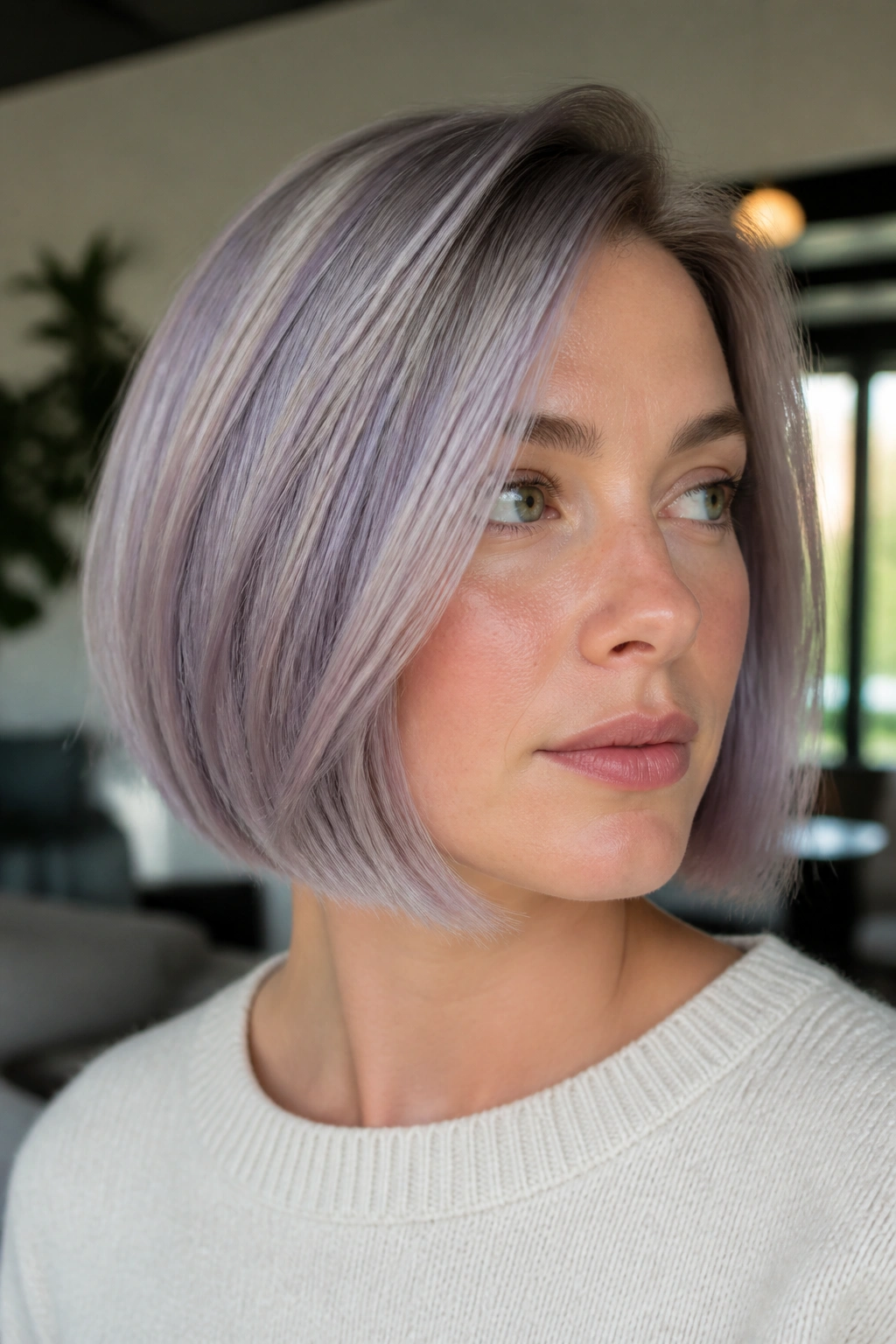
A blunt bob and smoky lilac grey do each other a favor. The cut is neat and architectural; the color softens the edges without making the shape disappear. That contrast is the reason this look feels so clean on straight hair and so lively on a slight bend.
The best version starts with hair lifted to a pale blonde base, then toned with a smoky violet-grey glaze rather than a bright pastel. You want the lilac to sit under the grey, not shout over it. If the blonde underneath is too yellow, the whole thing turns cloudy fast.
Why the shape matters
A bob gives the color a frame. Every half-inch of movement shows, which is useful when the shade itself is quiet and muted.
- Best on jaw-length or chin-length cuts where the line is crisp.
- Looks sharper with a center part and tucked-behind-the-ear styling.
- Needs trims every 6 to 8 weeks so the ends don’t start looking scraggly.
- Flatters fine hair because the color adds dimension without extra bulk.
Tip: Ask for a slightly deeper root shadow if your hair is thin; it keeps the bob from looking like it vanished under the light.
2. Silver Lilac Balayage
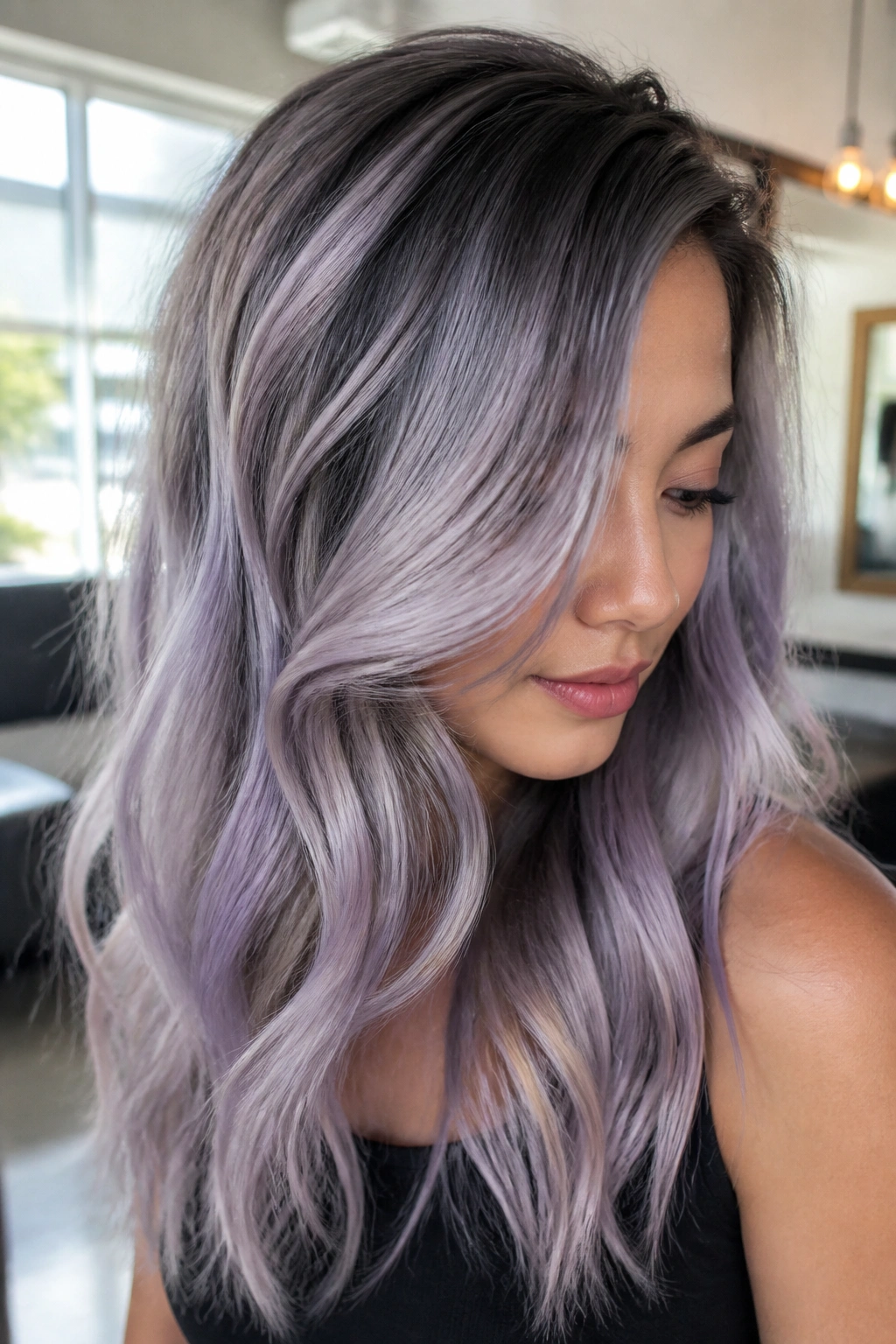
Can lilac grey look soft enough for someone who hates obvious regrowth? Absolutely, if the color lives in hand-painted silver ribbons instead of sitting as one flat block. Balayage gives you that floated, sun-struck look even when the shade itself is cool and a little moody.
The thing I like about silver lilac balayage is that it changes as the hair moves. On a loose wave, the silver usually reads first, then the lilac flashes when the light shifts. On straight hair, the effect is quieter and more polished. Same color. Different personality.
How the ribbons move
Balayage works because the lighter pieces don’t start at exactly the same point. That staggered placement keeps the ends from looking striped.
A good colorist will paint more saturation around the surface and leave some deeper depth underneath. That gives the hair a little shadow, which is what keeps pale lilac from looking chalky. It also means you can grow it out without staring at a harsh line every time you look in the mirror.
The nicest thing about this version is that it doesn’t need to be loud to be visible. It just needs movement.
3. Rooted Lilac Grey Lob
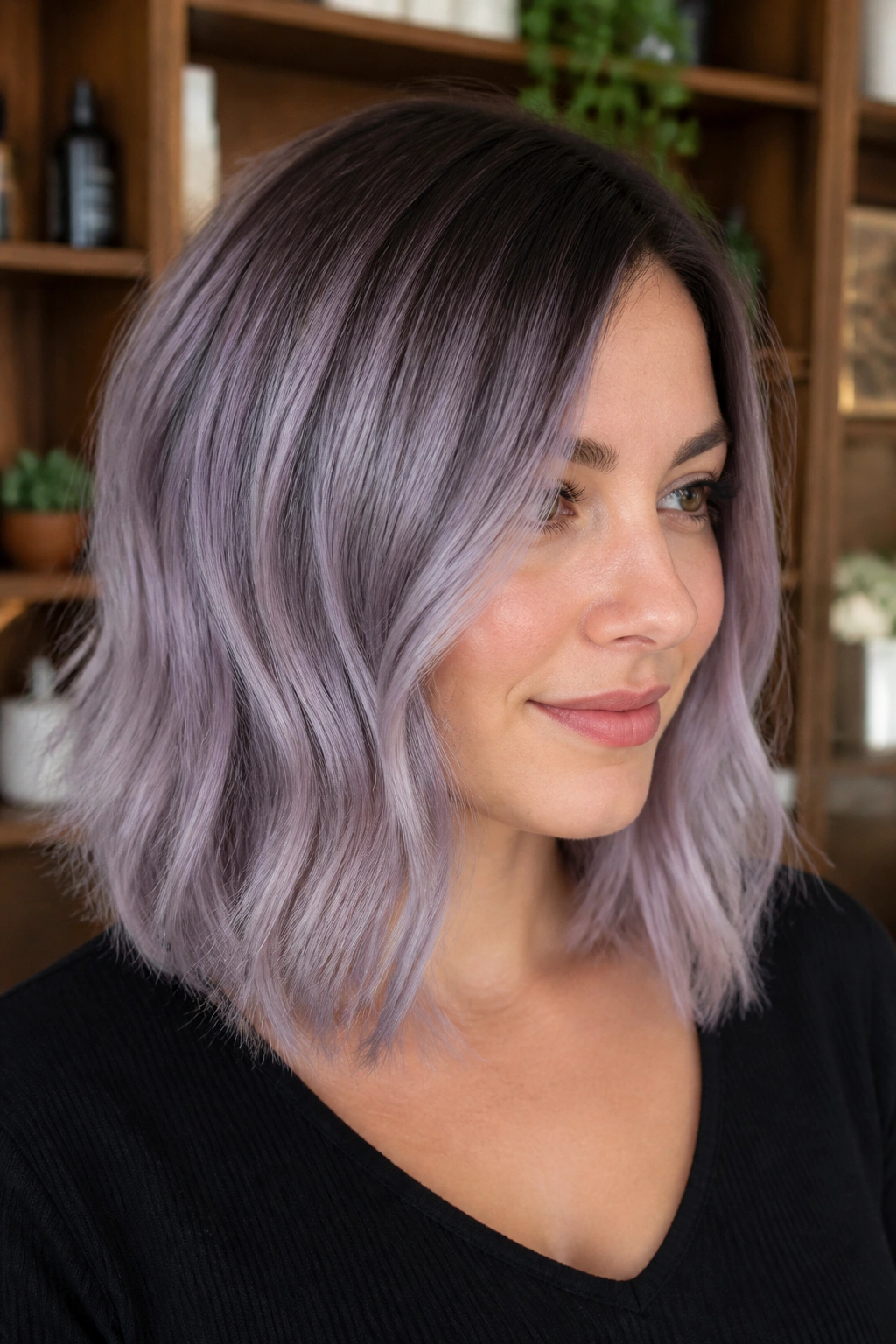
If you are not interested in sitting in a chair every four weeks, the rooted lilac grey lob is the sane choice. The root stays a little deeper, the lengths get all the cool color, and the cut itself sits right at that collarbone zone that flatters almost everybody.
This is the look I’d point to for someone who wants a fashion color without the drama of constant upkeep. The shadow root buys you time. It also makes the lilac feel less like a costume and more like part of the haircut.
What makes this one easy to live with
- The regrowth is softer because the root is intentionally darker.
- The lob length gives you room for a gradient without making it feel overdone.
- It works with waves, bends, and sleek blowouts without needing a different color formula every day.
- It’s friendly to busy schedules because a toner refresh does most of the work.
The only catch is that the root has to be placed on purpose. If the shadow is too thick, the color looks heavy. If it is too narrow, you lose the whole point. Nail that middle ground, and the result feels relaxed in the best way.
4. Dusty Lavender Melt
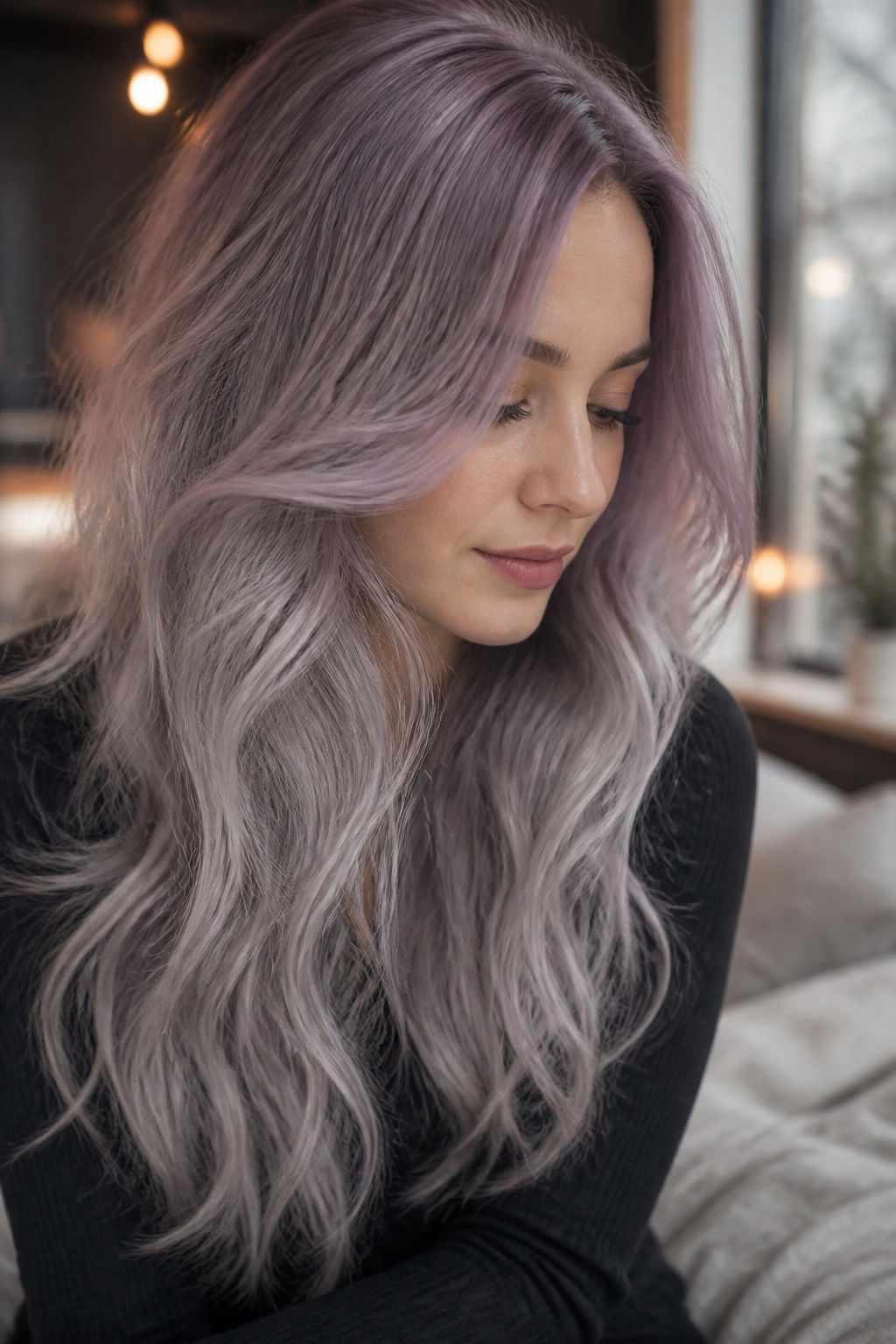
This is the version I reach for when someone wants softness rather than an icy look. A dusty lavender melt starts with a muted lilac near the crown and slides into grey through the mid-lengths and ends, with no obvious line between the two.
The melt matters because it hides the hard work. You do not see separate sections; you see one color changing temperature as it moves down the hair. That matters a lot on long hair, where stripes or bands can ruin the mood fast.
The color recipe behind the melt
A strong melt usually has three parts: a root shadow, a diluted lavender mid-tone, and a cooler grey finish on the ends.
If the transition is done well, the hair looks almost misty. That is a better word than pastel, honestly. Pastel can sound sweet and flat. Misty suggests movement, depth, and a little edge.
This one shines on thicker hair because the length has enough weight to show the transition. On very fine hair, the melt can disappear unless the stylist keeps enough contrast between the top and bottom sections. It is a small detail, but it changes everything.
5. Lilac Grey Money Piece
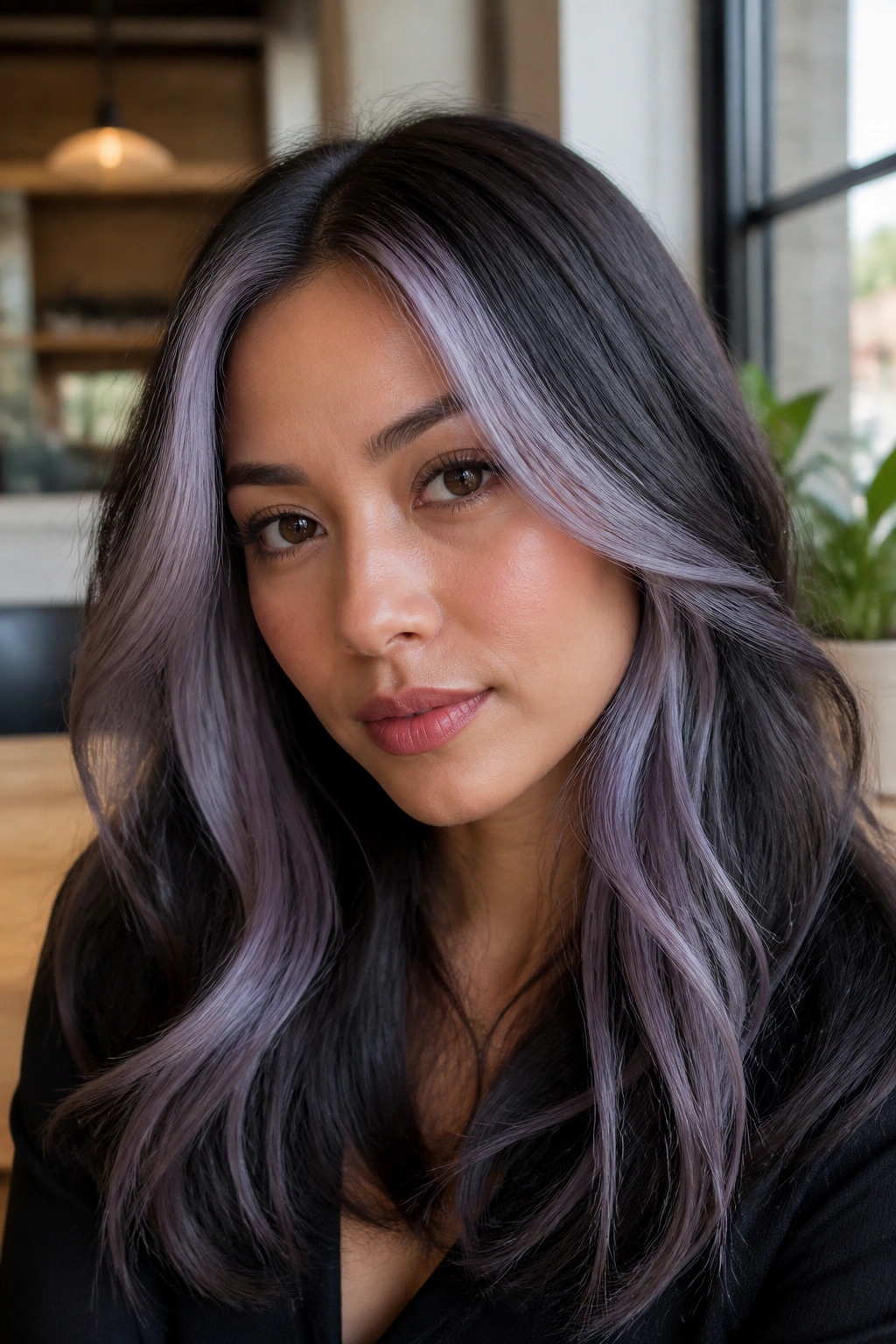
Not every lilac grey idea needs the whole head. Sometimes two front sections are enough to change the whole mood, and that is where the money piece earns its keep. A cool lilac grey frame around the face can make a darker base look deliberate instead of plain.
This is the easiest place to test the color if you are nervous about commitment. You get the hit of lilac right where people look first, and the rest of the hair can stay brunette, dark blonde, or softly highlighted. It also makes a basic ponytail look more interesting, which is a small win but a real one.
Why this beats full-head color for some people
- Less bleach work than an all-over pastel shade.
- Faster to refresh because only the front pieces show the most fade.
- Easy to pair with curtain bangs or long layers.
- More forgiving on darker hair since the contrast does the heavy lifting.
My take: if you like changing your hair mood every few months, start here. It gives you the lilac-grey hit without locking you into a full color routine.
6. Platinum to Lilac Grey Ombre
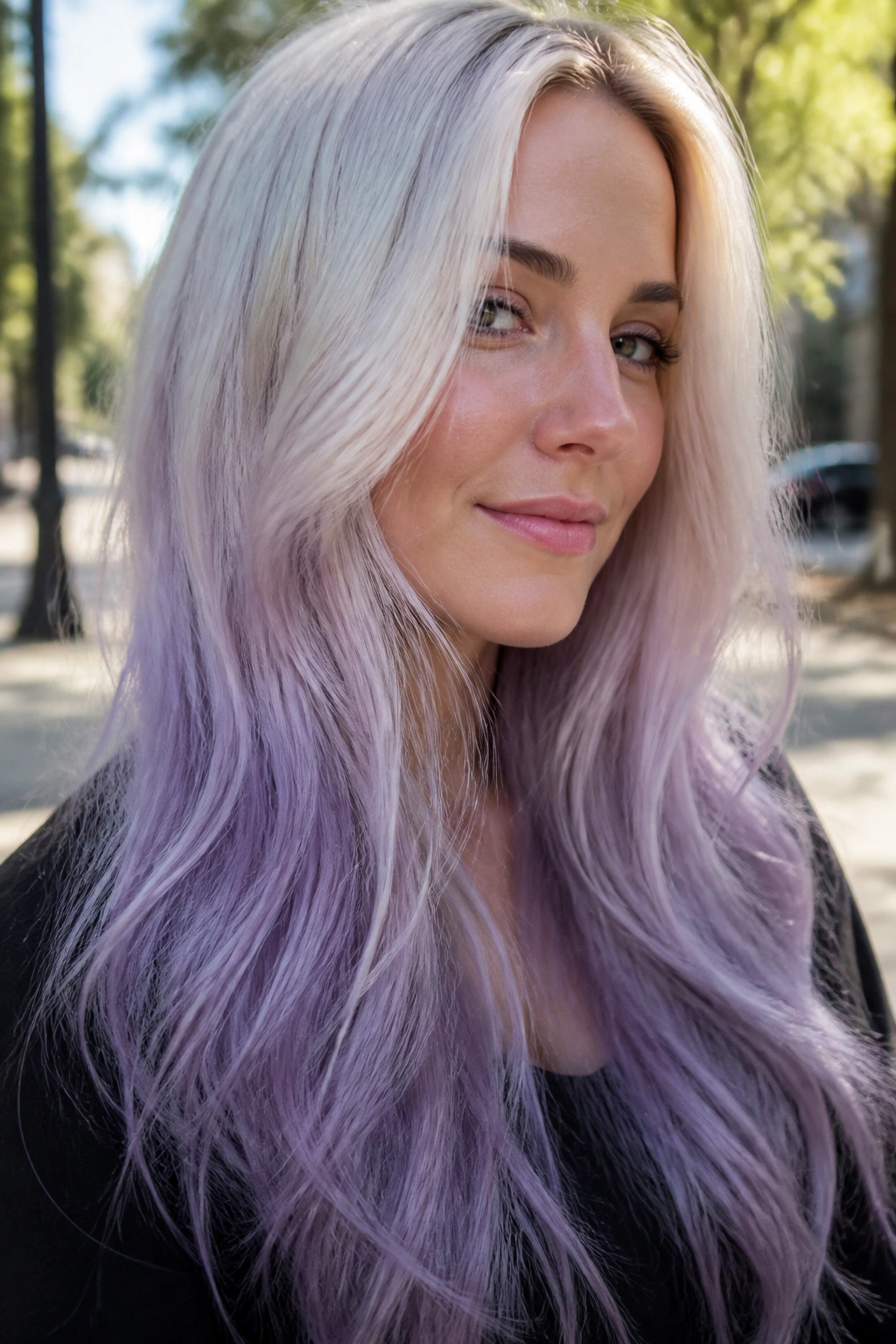
Platinum at the top, lilac grey at the ends, and a fade so soft you do not see where one color stops. That is the appeal here. It feels airy, almost frosted, but the lilac keeps it from sliding into plain silver.
The ombre version works best when the hair already lives in that very light blonde range. If the base is yellow, the grey can turn flat and the lavender can lose its clean edge. You need enough lift for the colors to sit on top of each other without fighting.
That is why long hair makes this look sing. There is space for the transition to breathe. On curls, the fade gets even prettier, because each bend catches a slightly different point in the gradient.
One thing people miss: the ends need less saturation than you think. Too much pigment there and the whole ombre stops looking airy. Keep the lilac dusty, keep the grey cool, and the finish stays elegant without getting stiff. It sounds fussy. It is fussy. But it pays off.
7. Mushroom Lilac Grey Brunette Blend
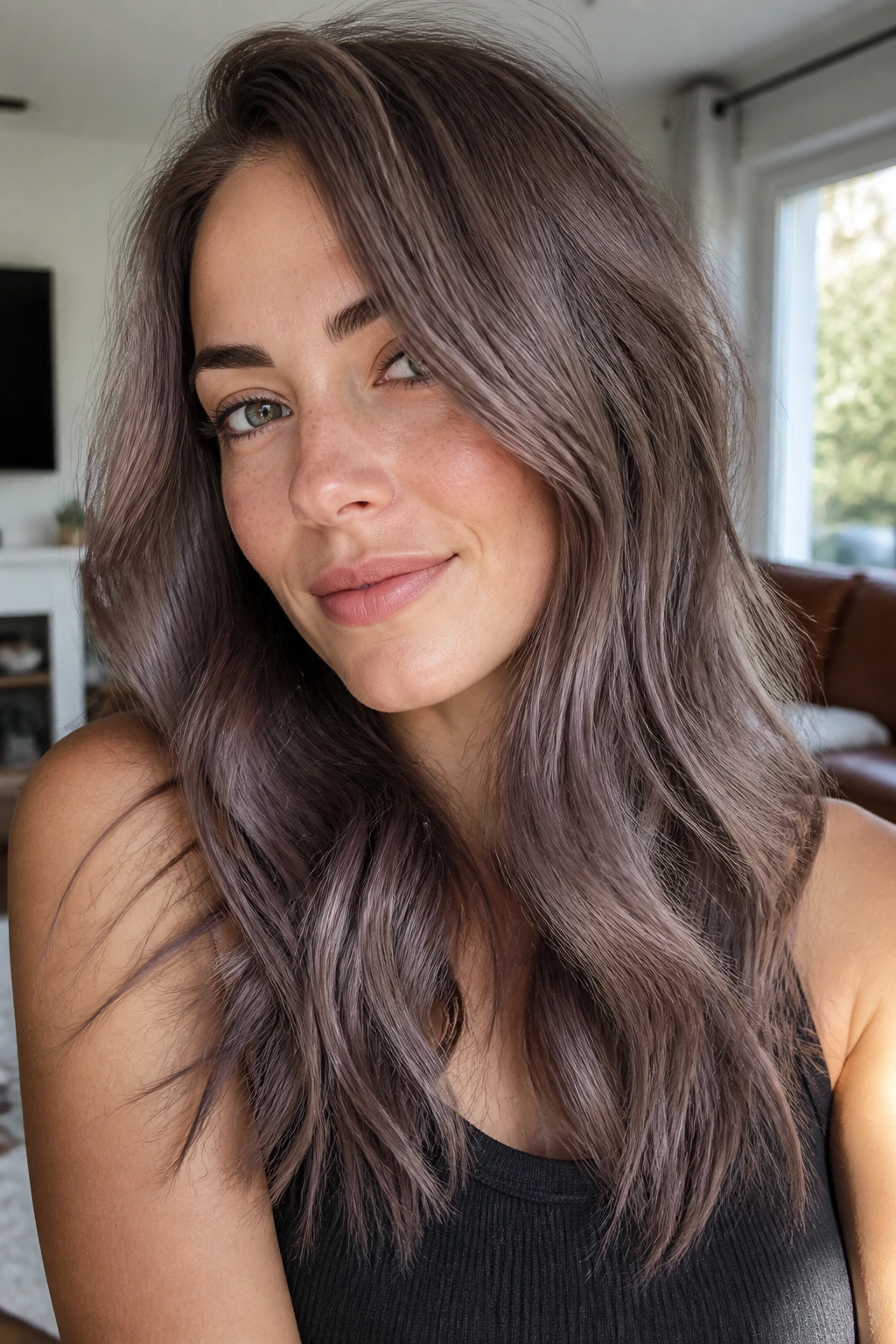
Unlike the icy versions that demand a nearly white base, this one keeps a brown tone in the mix. Mushroom lilac grey is a brunette-friendly blend with ash, taupe, and a whisper of violet layered over a deeper root or lowlight base.
That makes it easier to wear if you do not want to bleach every inch of your head. The lilac sits inside the brown rather than on top of it. The result is quieter, and frankly, a little smarter-looking in daylight because the color shifts instead of sitting still.
Why brunettes wear it well
The brown keeps the shade grounded. The lilac keeps the brown from feeling flat.
- Good for medium to dark brunettes who want a cooler tone without full platinum lift.
- Looks best with loose waves where the taupe and violet can separate.
- Needs a demi-permanent gloss more than a harsh permanent dye job.
- Fades into a smoky beige-grey instead of a harsh yellow if cared for well.
If you want a color that reads expensive rather than obvious, this is one of the strongest picks on the list. It has restraint. That matters.
8. Curly Lilac Grey Ribbon Highlights
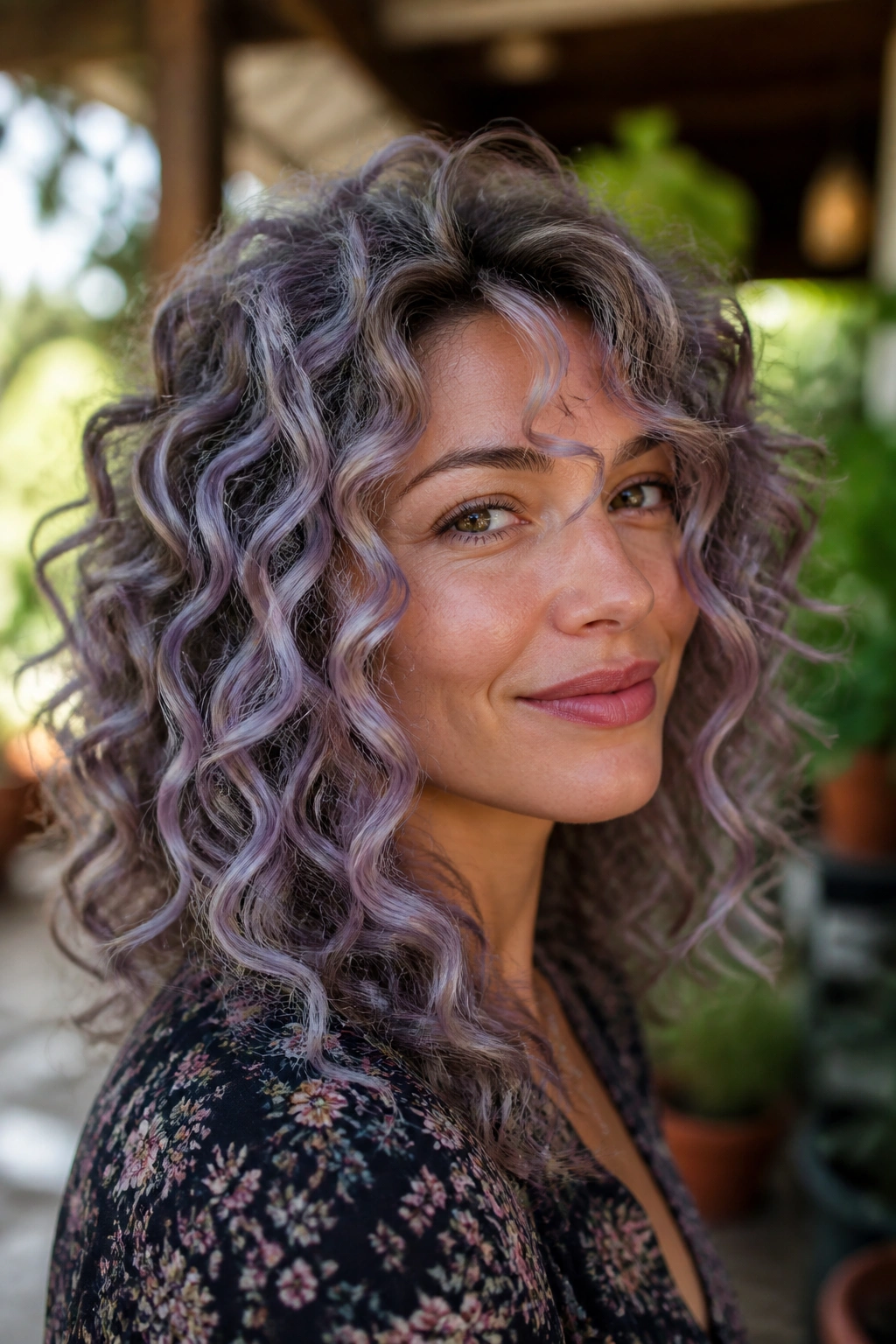
I like this shade best when curls are doing the talking. Ribbon highlights let the lilac grey travel through the spiral instead of sitting on top of it, which gives the whole look more lift and less helmet effect.
The trick is placement. You want the lighter ribbons to catch the outer curve of the curl, then leave enough depth underneath so the style still has shadow. If you bleach every curl the same way, the pattern gets noisy fast. A few deliberate pieces go farther.
A few things that matter with curls
- Place the lightest ribbons near the face so the color opens up the haircut.
- Leave deeper interior sections so the curl pattern doesn’t flatten.
- Use curl cream, not heavy oil if you want the grey tones to stay visible.
- Ask for painting, not foil stripes if you want a softer result.
Curly hair makes lilac grey feel less precious and more alive. The movement does half the work. You just have to leave enough depth for the shape to show through.
9. Lilac Grey Pixie Cut
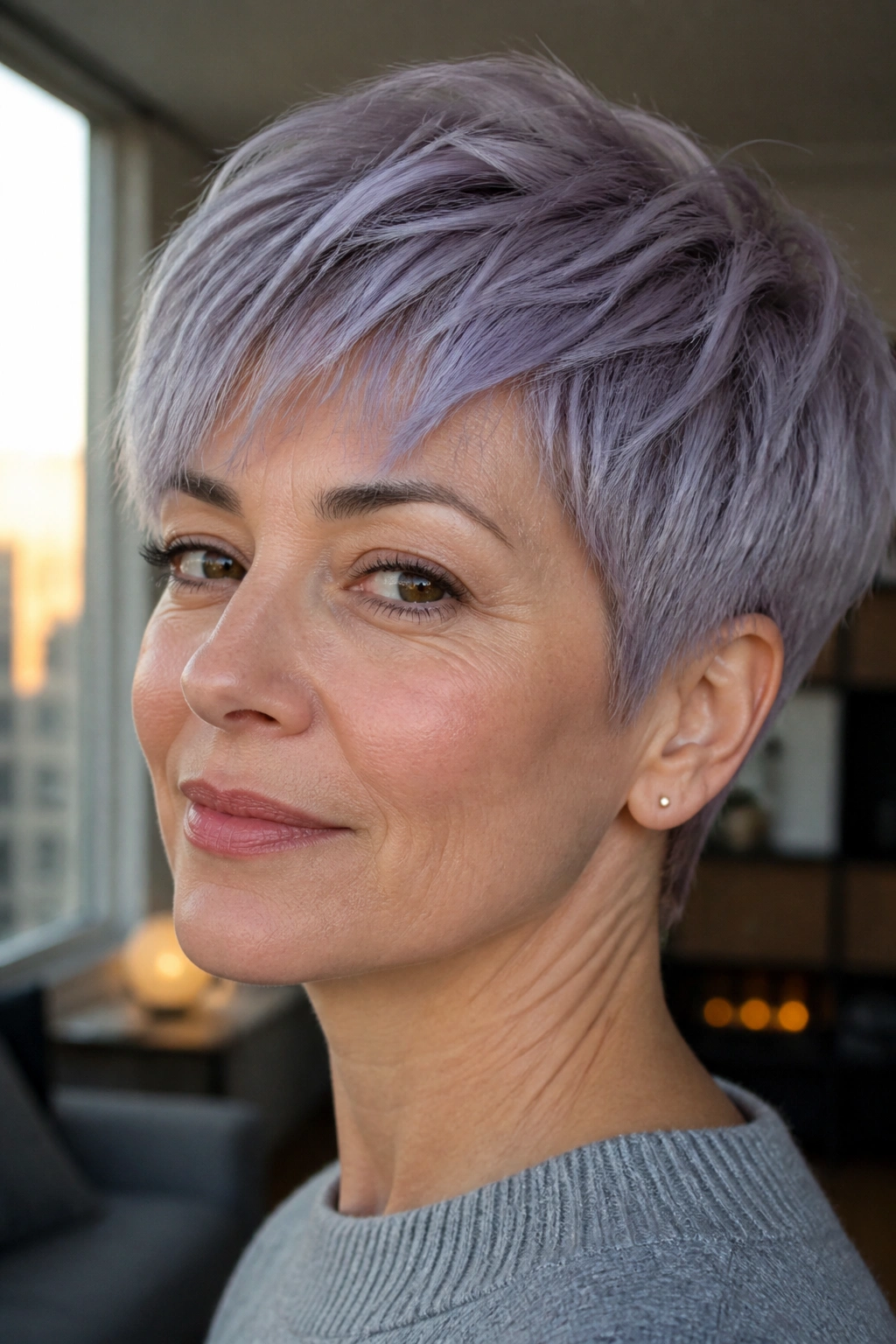
Short hair does not make lilac grey tame. It makes every stroke of color matter more.
A pixie cut with lilac grey pigment can look sharp, almost metallic, when the sides are neatly tapered and the top is softly textured. Because there is less hair to cover, the shade reads faster. You notice the nape. You notice the fringe. You notice the little shifts in tone around the temple.
That is the fun part.
It also means the cut has to stay tidy. A grown-out pixie can swallow a pastel tone whole, especially if the top loses its shape. The color is strongest when the haircut is clean enough to let the grey-violet surface do its job.
If you want a bolder version, keep the top a touch lighter and let the sides sit in a cooler grey. That split makes the texture pop. It is a small move, but it gives the style more bite without turning it neon.
10. Steel Grey with Violet Sheen
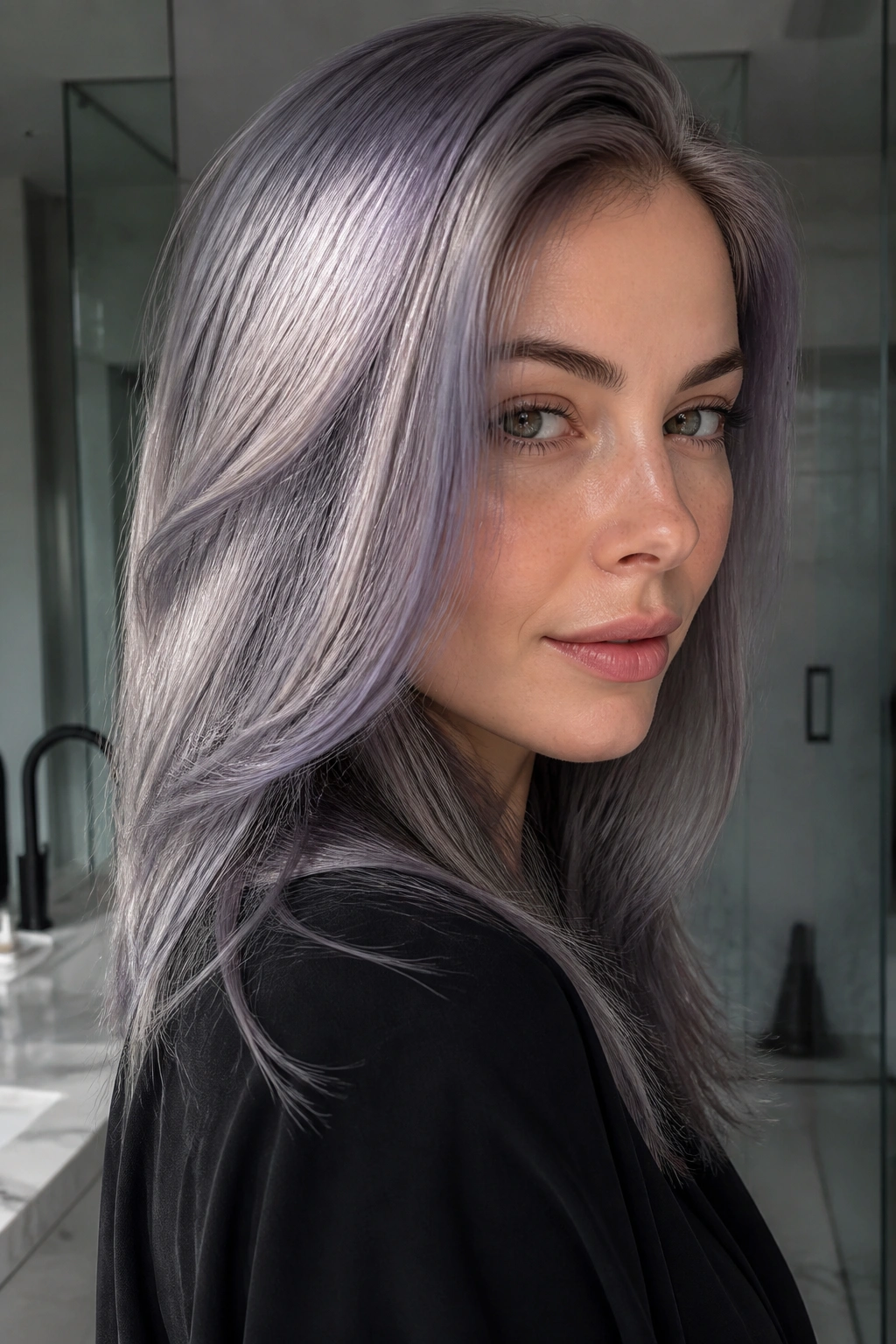
Think brushed metal with a faint lavender wash over it. That is steel grey with a violet sheen, and it is one of the easiest lilac grey hair color ideas to wear if you want something cool without leaning sugary.
The base is mostly grey, not lavender. The violet shows up as a sheen, especially when the hair moves or when you use a sleek blowout. From a distance, it can look almost like a neutral silver. Up close, the soft purple gives the color life.
How to style it
A smooth finish makes this shade look expensive. A frizzy one hides the detail.
- Works well on blunt cuts because the shine shows the line.
- Looks clean in a low bun or tucked style where the top surface can catch light.
- Needs a heat protectant if you are using a flat iron; lightened hair does not enjoy extra abuse.
- Benefits from a violet-silver gloss every so often to keep the sheen from turning dull.
This is the shade for someone who likes a cooler, sleeker finish and does not want the lilac to be the first thing people notice. It feels restrained. Not boring. Restraint is harder to pull off than drama, and this version knows it.
11. Pastel Lilac Grey Shag
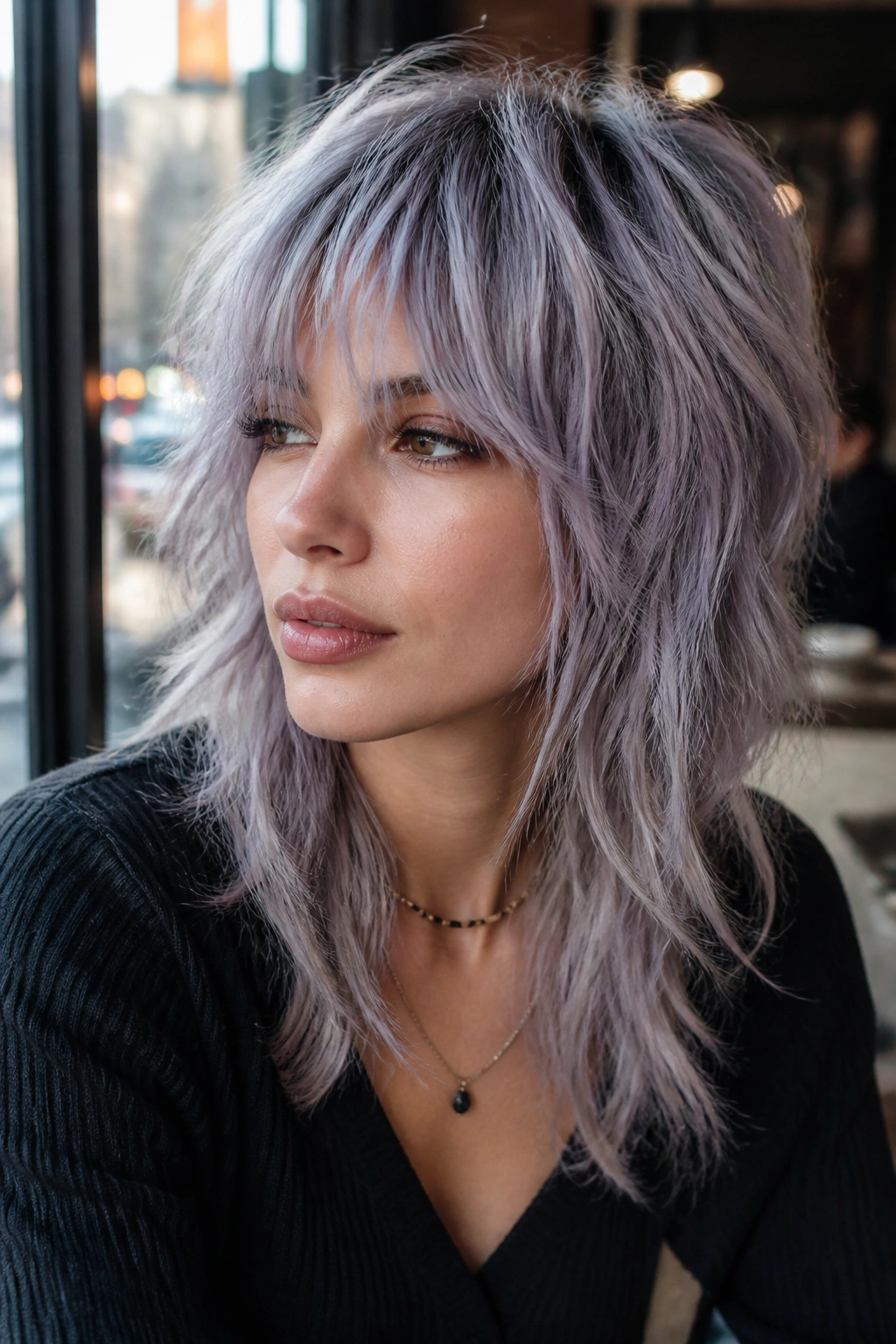
What happens when you put pastel grey on a shag cut? The texture takes over, and that is exactly why the pairing works. The layers break the color into pieces, so the pastel never has to carry the whole show by itself.
A shag gives lilac grey room to look lived-in. The choppy layers, curtain bangs, and soft fringe keep the cut from feeling too neat. On wavy hair, the ends flick in different directions and each bend catches a slightly different amount of lilac or silver.
That matters because pastel shades can go flat fast on a uniform cut. The shag avoids that. Every layer adds another little shift, and the whole thing feels less like one color and more like a moving surface.
This version needs texture product more than heavy shine. A bit of mousse at the roots, a diffuser, and a light mist of spray are usually enough. Too much oil can darken the ends and blur the grey. Keep the finish airy, and the pastel stays visible.
12. Face-Framing Lilac Grey Layers
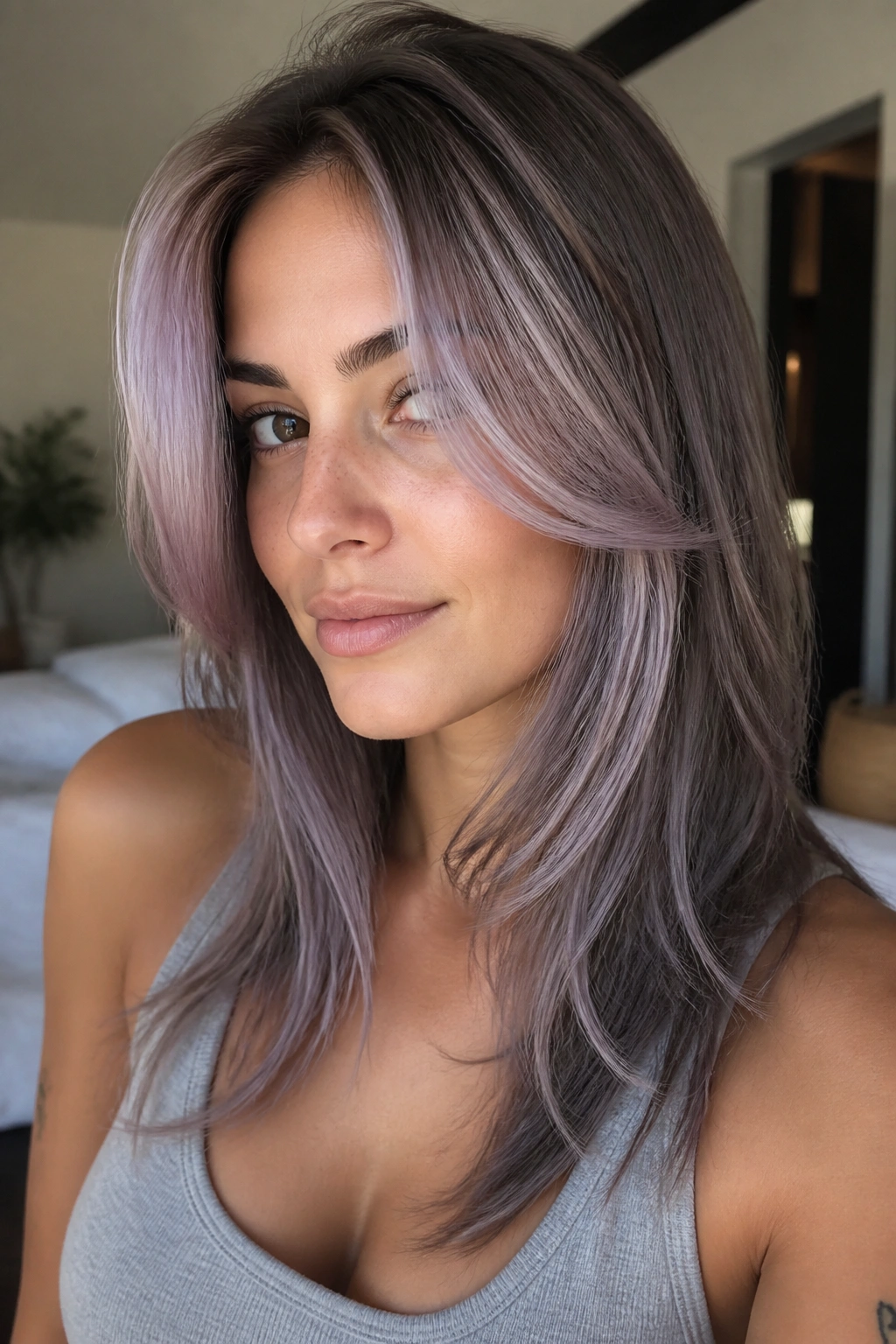
A few lighter panels around the face can change the whole haircut before you touch the back. That is the appeal of face-framing lilac grey layers: the color sits where it matters most, then trails into the rest of the cut in a softer way.
This is a smart move if you like highlights but do not want a full head of bright color. The front pieces can be placed right around the cheekbones or jaw, then feathered into longer layers so the shade looks part of the cut, not pasted on.
Where to place the light pieces
- At the part line if you want the color to show right away.
- Around the cheekbone if you want a softer face-lightening effect.
- Through curtain bangs if you want the lilac to flash when the hair moves.
- Along the first two layers if you want the ends to stay deeper.
The nice thing here is how easy it is to refresh. A gloss on the front pieces can wake the whole style back up. And because the back stays quieter, the grow-out does not feel as blunt as it would with a full-head pastel.
13. Deep Violet to Grey Fade
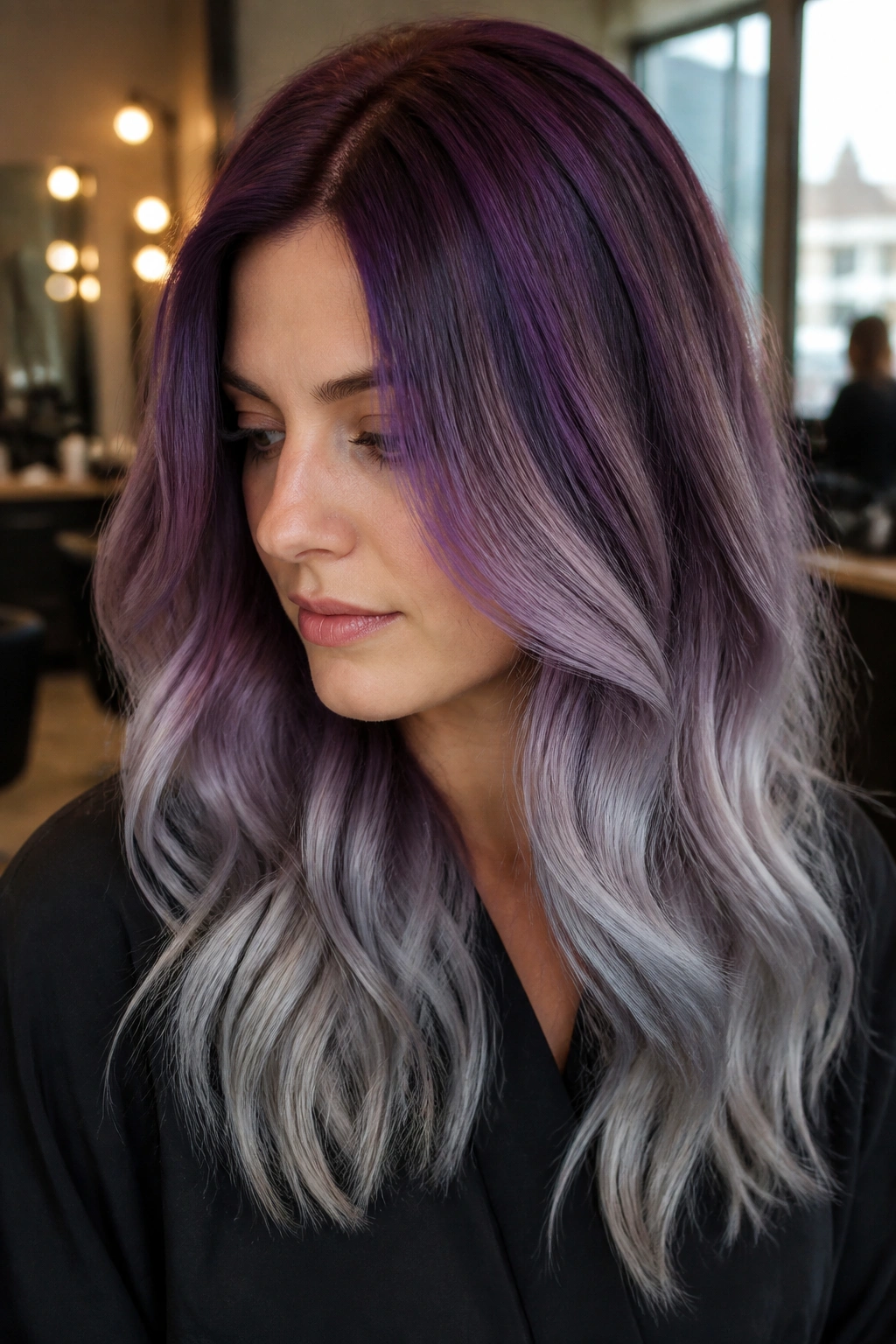
If pastel lavender feels flimsy, go darker. A deep violet to grey fade gives you the same cool-family mood, but with more depth at the roots and more contrast through the ends.
This one looks stronger on thick hair because there is enough surface area for the fade to show. The roots can sit in a plum or smoky violet, the middle can soften into slate, and the ends can finish in a cool silver-grey. It is a richer look than the soft lilac versions, and it keeps its edge longer between appointments.
The fade has to be done with a light hand. If the violet is too heavy, the whole thing turns purple. If the grey is too pale too soon, the gradient gets broken. You want a slow drop from one tone to the next. No hard lines. No chunky bands.
This is also a good choice if your wardrobe leans black, denim, charcoal, or cream. The hair color has enough depth to stand next to simple clothes without fighting them. That can be a relief. Not everything has to be shouting.
14. Soft Lilac Grey Peekaboo Panels
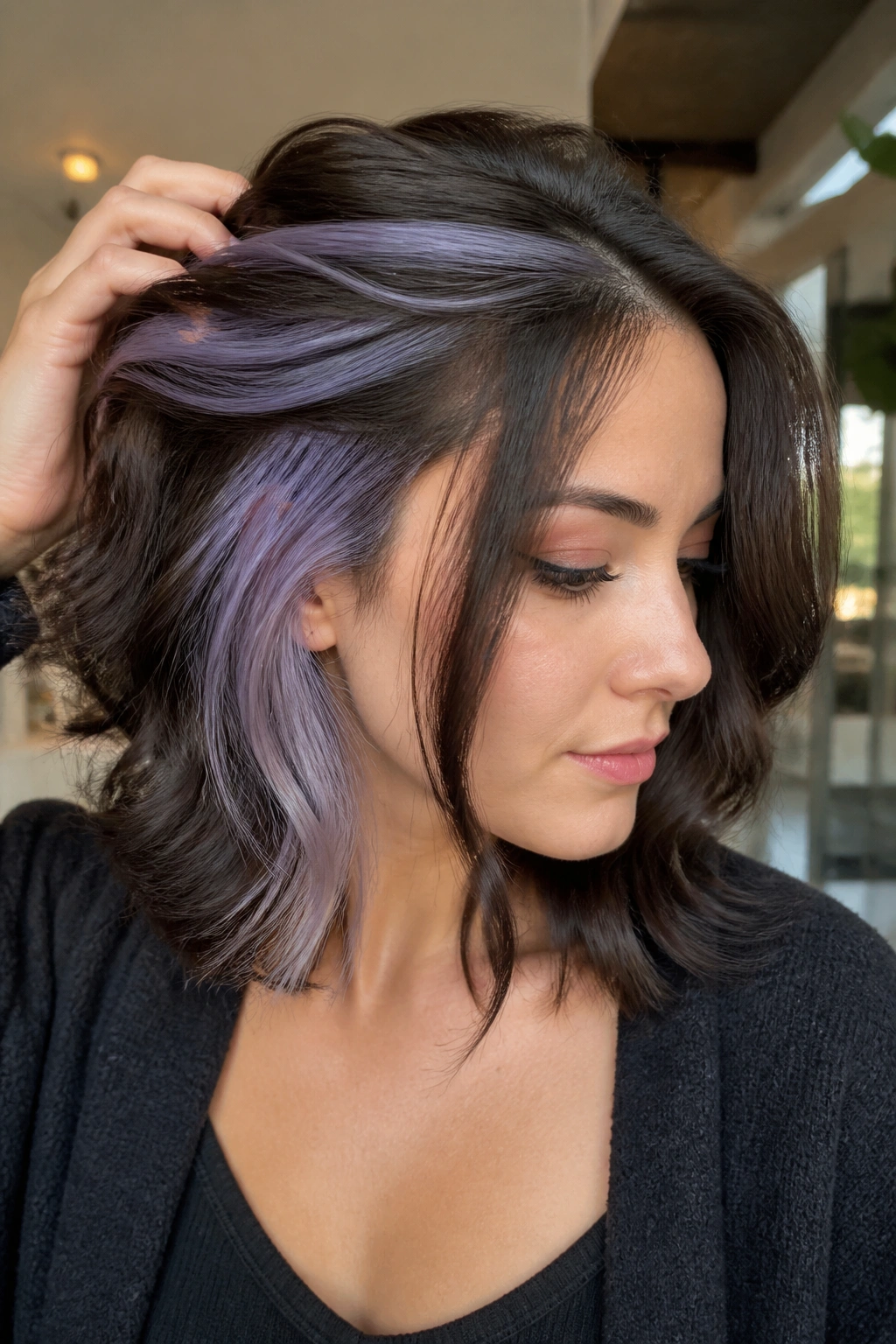
The fun of peekaboo color is the reveal. You see the soft lilac grey only when the hair moves, gets pinned up, or swings away from the face. That makes it one of the easiest ways to wear the shade if you need a quieter workday look.
Peekaboo panels live under the top layer, so the surface can stay natural or softly toned while the hidden sections carry the color. It is a nice compromise for anyone who wants something playful but does not want the whole head to read fashion-forward all the time.
Where the panels hide best
- Under the crown so they flash when hair is lifted.
- Through the lower layers for a soft surprise effect.
- Behind the ears if you wear half-up styles a lot.
- Near the nape for the most discreet placement.
This one ages well too. Because the color is partially covered, it can fade a little without ruining the whole look. If you like the idea of lilac grey but want the smallest possible commitment, this is a smart lane.
15. All-Over Lilac Grey Gloss
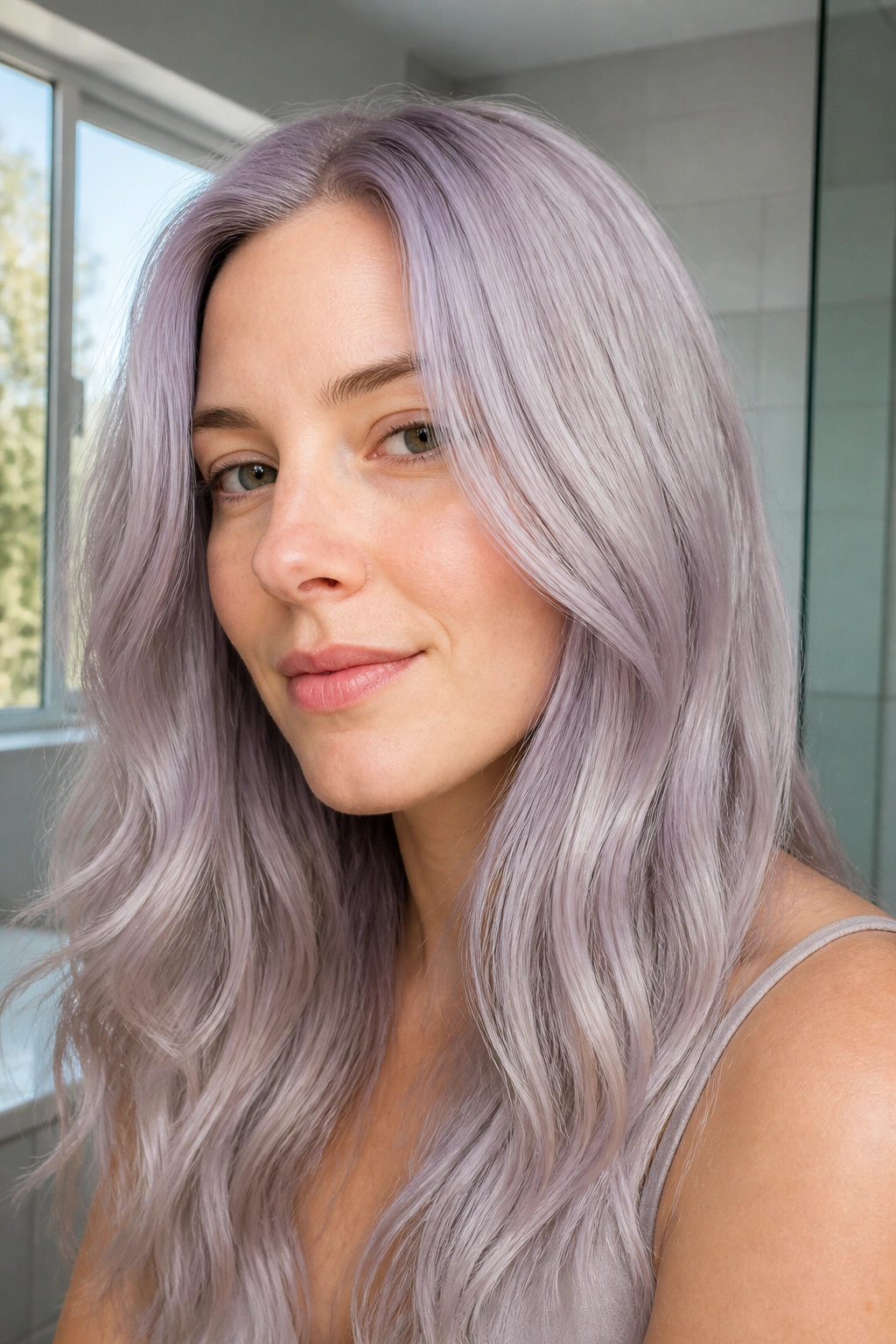
If the hair is already pale enough, sometimes the smartest move is the simplest one: a full-head gloss. An all-over lilac grey gloss pulls the whole color story together, cools down leftover warmth, and gives lightened hair that soft silver-lavender finish that looks polished rather than patchy.
This works especially well after highlights or a prior bleach session, when the canvas is already light but needs tone. A gloss is gentler than a permanent color service, and it fades in a softer way. That makes it useful for anyone who likes to test a shade without locking into a rigid maintenance cycle.
The shine matters here. A gloss can make porous hair look smoother and less thirsty, which is part of why the shade reads so clean. It does not need to be blindingly shiny. It just needs to be even.
One small warning: if your hair is unevenly lifted, an all-over gloss will show it. Brighter pieces may grab more lilac than the darker ones. That is not always a bad thing, but it does mean the color will have more personality than a flat pastel. Which, honestly, is usually the better outcome.
Final Thoughts
Lilac grey is not one look. It shifts depending on where the grey sits, how much violet stays in the mix, and what kind of haircut is carrying it. A bob makes it neat. A shag makes it loose. A rooted lob makes it easy to live with.
The best version is the one that fits the shape you already wear and the upkeep you can tolerate without grumbling about it every three weeks. That sounds plain, but hair color is full of people chasing the wrong version because they fell for a photo and ignored the cut underneath.
If you are taking one practical thing from this, make it this: bring photos that show the shade in daylight, indoors, and in motion. Lilac grey changes fast under different light, and the difference between smoky, silver, and dusty can be bigger than it looks on a screen. A good version still looks like itself after a messy ponytail. That is the test I trust most.
