



Elegant short hair ideas for special days usually work best when they stop trying to imitate long hair. A cropped pixie, a bob that skims the jaw, and a grown-out lob all want different lines, different pins, and a different amount of shine. One clean part or one smart clip can do more than a whole cloud of curls.
Short hair is honest. If the shape is off, you see it right away; if the finish is sloppy, there’s nowhere for it to hide. That’s why the strongest formal hairstyles for short hair focus on architecture first — the part, the tuck, the crown, the neckline — and only then on decoration.
Short hair can still feel ceremonial.
The styles that work best tend to do one job well. A deep side sweep makes a bob look deliberate; finger waves turn a plain cut into a vintage set; a single barrette can carry more weight than three crowded accessories. Keep one eye on the dress or neckline, one eye on the earrings, and one eye on how much movement you want when you turn your head — that last part gets ignored all the time.
1. Elegant Side Part with Soft Volume

A deep side part does more work than most people expect. It gives short hair a clear direction, builds a little lift at the crown, and makes the whole style feel planned instead of accidental.
Why It Works
The side part changes the balance of the face right away. On a bob or lob, it creates a longer line through the top, and that line matters when you want a polished look without piling on accessories. It also gives you one clean side to tuck, clip, or leave bare, which is useful when the outfit already has a lot going on.
I like this style because it doesn’t fight the haircut. A blunt bob looks sharper with it. A layered crop looks neater. Even a fine-haired cut gets a touch more body at the roots if you blow-dry against the part for a minute or two before settling it back into place.
How to Style It
- Blow-dry the roots on the heavier side first, lifting the hair up and away from the scalp for 20 to 30 seconds.
- Use a pea-sized amount of lightweight serum on the ends only. Keep it off the roots or the volume will collapse.
- Slide one hidden bobby pin under the fuller side if the part keeps shifting.
- Finish with flexible-hold hairspray from about 10 inches away so the hair stays touchable.
My favorite trick: tuck the smaller side behind the ear and leave the ear itself visible. It makes short hair feel deliberate, not like it’s simply out of the way.
2. Soft Finger Waves for a Short Bob
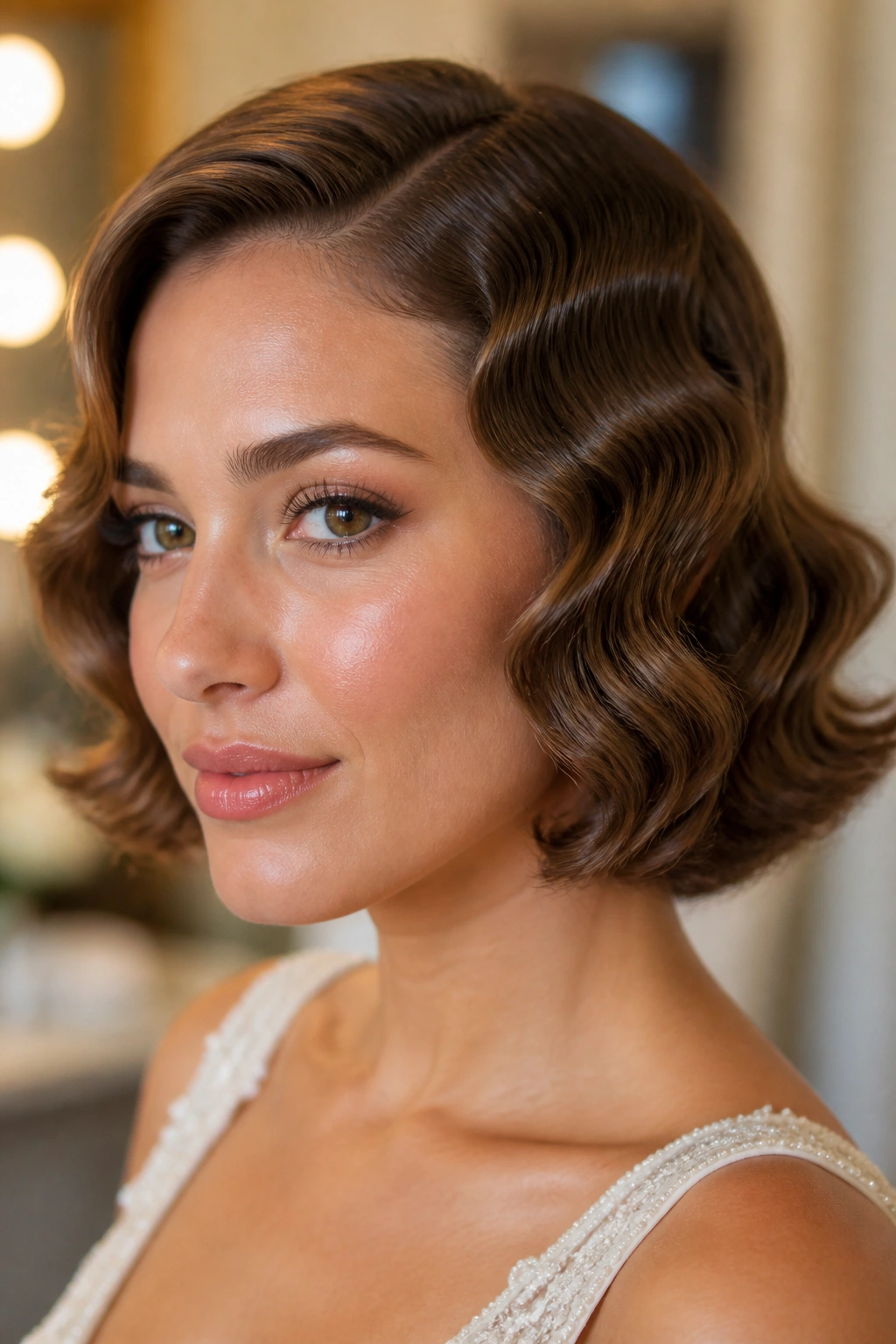
Want a formal style that feels polished without looking stiff? Finger waves are one of the best answers, especially on a chin-length bob or a short cut with enough top length to mold.
The shape is what sells it. Those soft S-curves hug the head, so the style looks tailored rather than puffy. On very short hair, finger waves can feel almost jewel-like; on a bob, they read as old Hollywood without drifting into costume territory. The key is restraint. Big waves turn mushy fast. Smaller, closer waves stay clean.
A good wave set starts with damp hair and the right amount of slip. A setting lotion or mousse with hold gives the comb something to work with, and a wave comb helps press the ridges into place. Skip heavy oils. They make the hair slide around too much, which is the last thing you want when the style depends on crisp curves.
The part matters, too. A side part usually feels richer, but a centered wave set can look striking if your dress is simple and the neckline is strong. Let the waves dry fully before touching them. That part is boring. It matters anyway.
3. Mini French Twist at the Nape
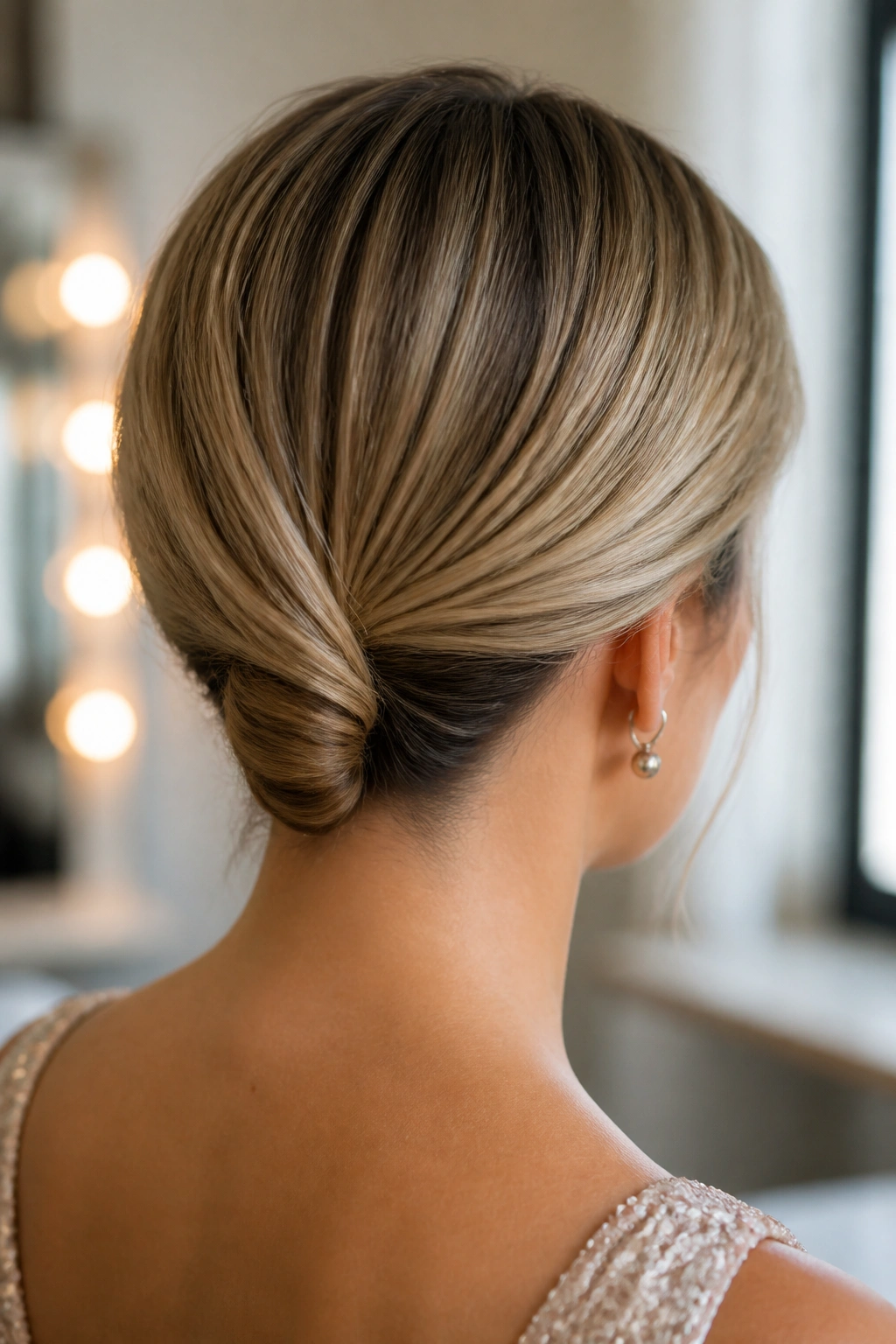
Yes, a short bob can still twist up.
How to Use It
The trick is to keep the twist tiny and low. Sweep the hair toward the nape, gather the ends, and roll them inward as if you’re hiding the length rather than showing it off. Use 4 to 6 bobby pins in a crisscross pattern so the fold stays flat against the head instead of bulging out like a pillow.
This works especially well if the front sections are sleek and the back does the hiding. A little bend at the ends helps, but you do not need a full blowout. In fact, hair that’s slightly textured tends to grip better and stay put longer. A fine mist of texturizing spray before pinning gives the twist some friction, which is what keeps it from sliding loose after an hour.
What Makes It Feel Formal
Keep the crown smooth. That’s the whole game. If the top looks too busy, the twist loses its clean shape and starts reading like a rushed lunch-break pin-up. Pair it with a low back dress or a sharp collar and the whole thing looks much more considered.
If your hair is too short to fold cleanly, cheat with a low side roll and tuck the ends under the twist. Nobody sees the trick from the front, and the profile still looks neat.
4. Tucked Bob with Statement Clips

If your bob keeps brushing your lipstick or slipping into your face, this is the fix. Tucking one side back and anchoring it with a single strong clip turns an ordinary haircut into something much more intentional.
The best part is how little it takes. You do not need a big blowout or a mountain of product. Smooth the hair with a touch of serum, make the tuck crisp behind one ear, and let the clip do the talking. One medium barrette often looks better than a cluster of tiny ones because it creates one clear line instead of a scatter of shiny bits.
Quick Things to Keep in Mind
- Place the clip about 1 inch above the earlobe so it doesn’t crowd the jaw.
- Choose one bold barrette instead of several small ones.
- Keep the tucked side sleek with a fingertip amount of cream or serum.
- Wear this with asymmetrical earrings or a one-shoulder dress if you want the shape to feel balanced.
A tucked bob can look almost severe in the best way. Clean. Sharp. Finished. And if you want a little softness, leave a thin face-framing strand loose on the opposite side — one strand, not five.
5. Braided Crown on a Pixie Cut
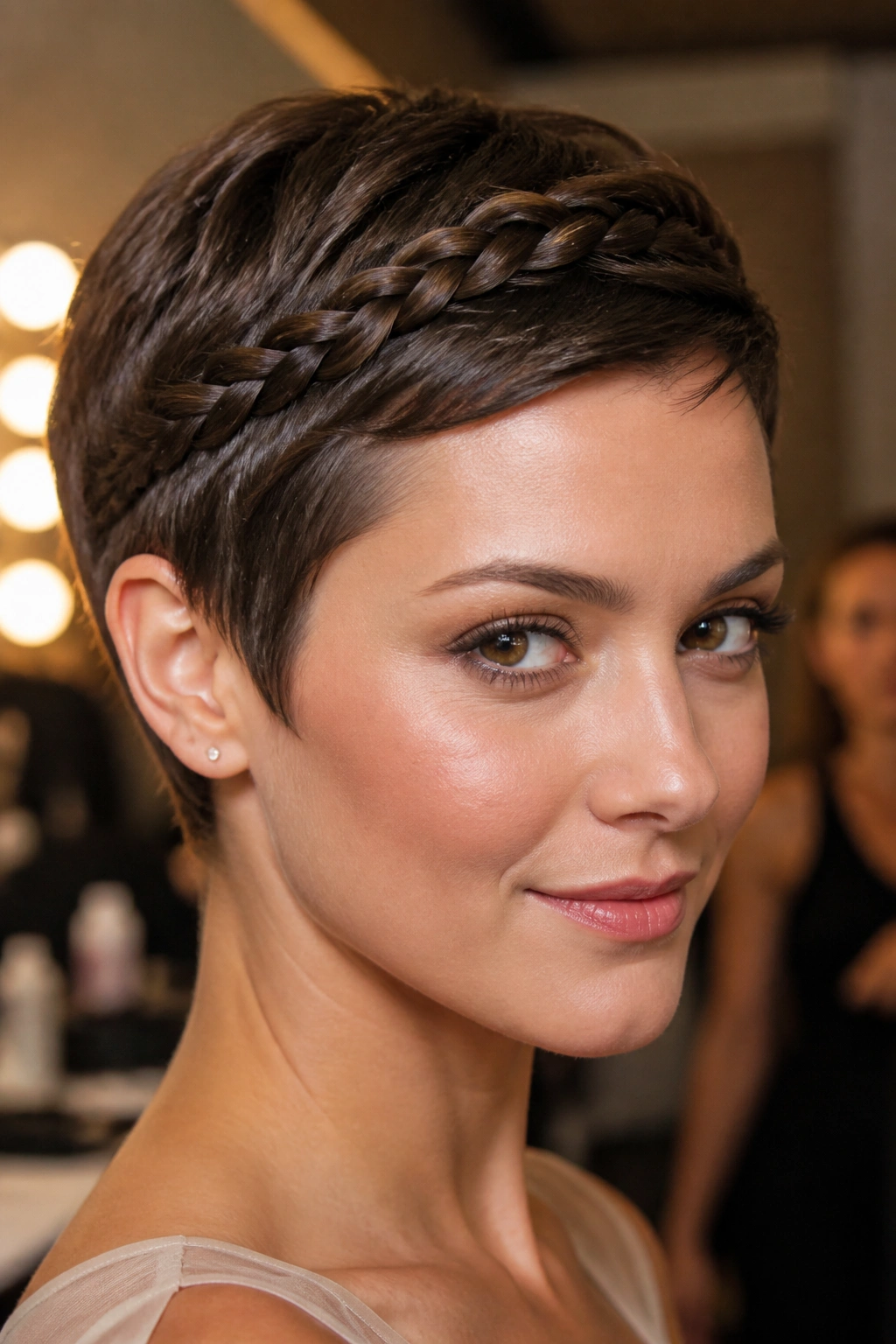
Braids are not only for long hair, and I say that as someone who has watched plenty of overcomplicated updos fall apart on short cuts. A braided crown on a pixie uses the length you do have, especially around the hairline, and turns it into something tidy and detailed.
The braid does not need to be thick. That’s the mistake people make. On short hair, a slim braid or rope twist can look cleaner than a chunky one because it follows the shape of the head instead of sitting on top of it. If your layers are too short to braid all the way across, braid from temple to temple and hide the ends under a pin or behind the ear. That still gives you the crown effect.
A bit of grip helps a lot. Texture spray or a dry paste at the roots keeps the strands from slipping while you work. If your hair is silky, braid smaller sections and pull the edges a little tighter. If your hair already has texture, you can keep it looser and let the natural grip do some of the work.
This style shines when the dress has structure at the shoulders or neckline. The braid adds line. The haircut stays lean. That contrast is what makes it look dressed up instead of busy.
6. Half-Up Twist with Pearl Pins
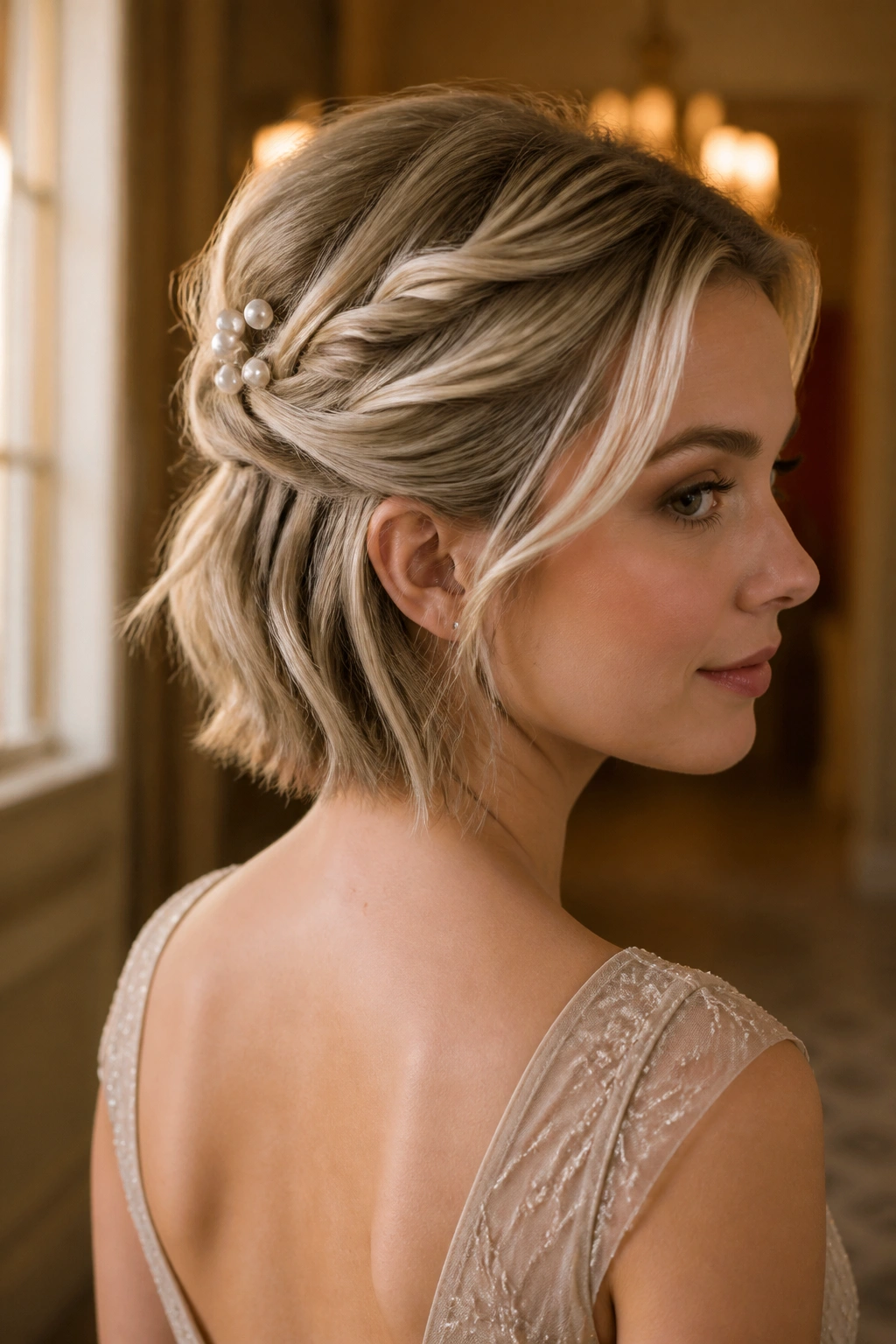
A half-up twist keeps the back from feeling heavy. That’s the whole appeal. You get the lift and polish of an updo, but the ends still move, which makes the style easier to wear for several hours without feeling pinned in place.
Unlike a full twist, this one leaves the lower layers free. That matters on a bob or lob, because short hair can start to look stiff if you pull everything up. The top half gets the structure; the bottom half keeps the softness. Pearl pins or tiny pearl combs make that balance feel formal without screaming for attention.
This is the style I’d pick for a dress with delicate straps or a higher neckline. The pinning sits high enough to show shape, but low enough that it doesn’t fight the outfit. If your hair is fine, use two small twists from each temple and secure them under the back section. If your hair is thicker, twist the upper sides a little more firmly and pin them with hidden grips first, then place the pearls on top.
Keep the pearls modest. Large clusters can overwhelm a short cut fast. A line of 4 to 8 small pins usually looks cleaner than one oversized piece.
7. Old-Hollywood Side Sweep
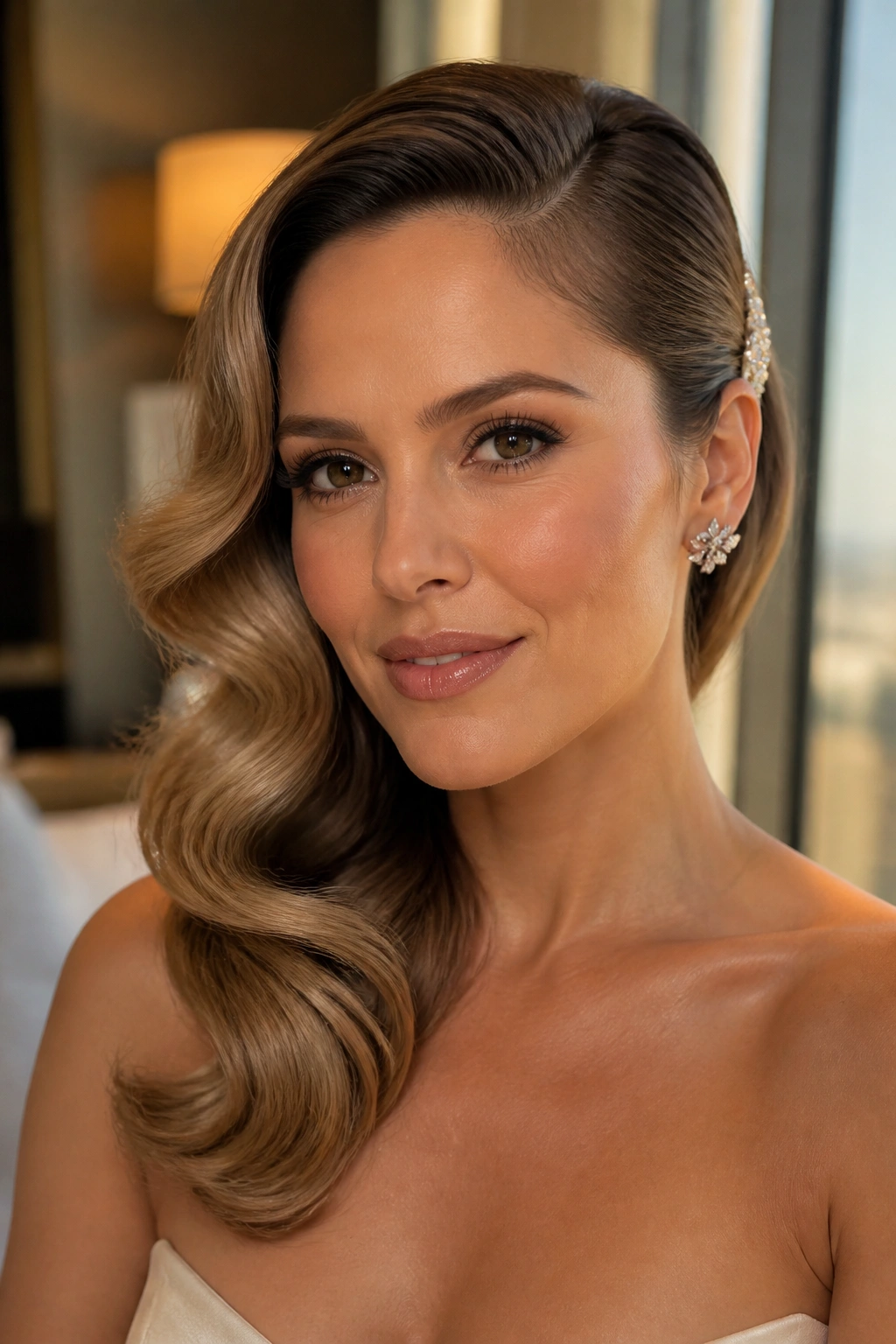
The first thing you notice is the shine. Then the curve. Then the way the hair drops over one side like it was made for a red carpet, even if you’re wearing a much simpler dress.
The Shape to Ask For
This style starts with a strong side part and one large wave or curl set toward the front. The hair on the smaller side gets pinned flat, while the fuller side sweeps across the cheekbone and into the shoulder. On a bob, that sweep can be as dramatic as you want; on a shorter cut, it reads cleaner and a little more modern.
Use a 1-inch curling iron or wand, but don’t curl every piece the same direction. Alternate a few sections so the wave has body, then brush them together with a boar-bristle brush or wide paddle brush once they cool. That brushing step is what turns separate curls into one smooth sweep.
What Makes It Stand Out
A shine spray is better here than a heavy oil. Oil can make the hair look flat around the part, and the point of this style is controlled sheen, not grease. Pin the back side low and invisible, then let the front wave sit where the eye catches it first.
It’s a strong choice for one-shoulder dresses, satin fabrics, or any outfit with a clean neckline. The hair becomes part of the line of the dress, which is why it feels so finished.
8. Textured Pompadour for Short Cuts
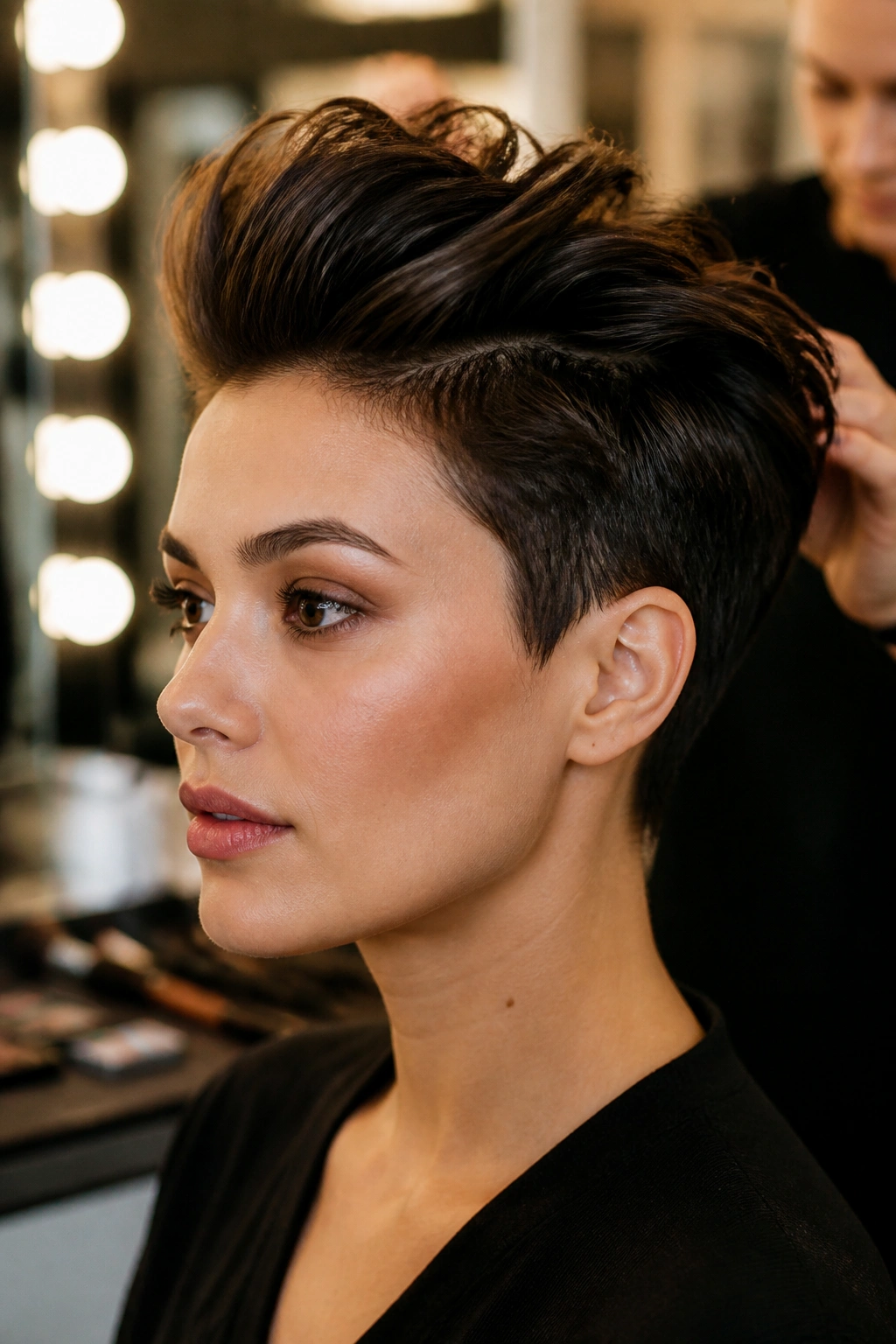
A little height changes the entire face line.
Short hair doesn’t need length to feel special. It needs shape. A textured pompadour lifts the front and crown just enough to give a cropped cut some attitude, and the result feels sharp rather than fussy. I prefer this on pixies and tapered cuts because the shorter sides keep the height from getting silly.
Start with mousse at the roots and blow-dry the front upward using your fingers or a vent brush. Once the hair is dry, backcomb only the top inch or so at the crown — no need to tease the whole head into a nest. Then smooth the outer layer over the lift so it looks clean from the outside. A little dry shampoo or volume powder at the root makes the shape stay put without turning crunchy.
One thing people miss: the height doesn’t need to be huge. An extra 1 to 1.5 inches at the front is enough to make the style feel formal. More than that starts to look costume-like unless the outfit is equally dramatic.
This is a good pick when you want strong earrings, a bold lip, or a neckline that needs space. The hair moves up and away from the face, which gives everything else room to breathe.
9. Curled Ends with a Velvet Headband
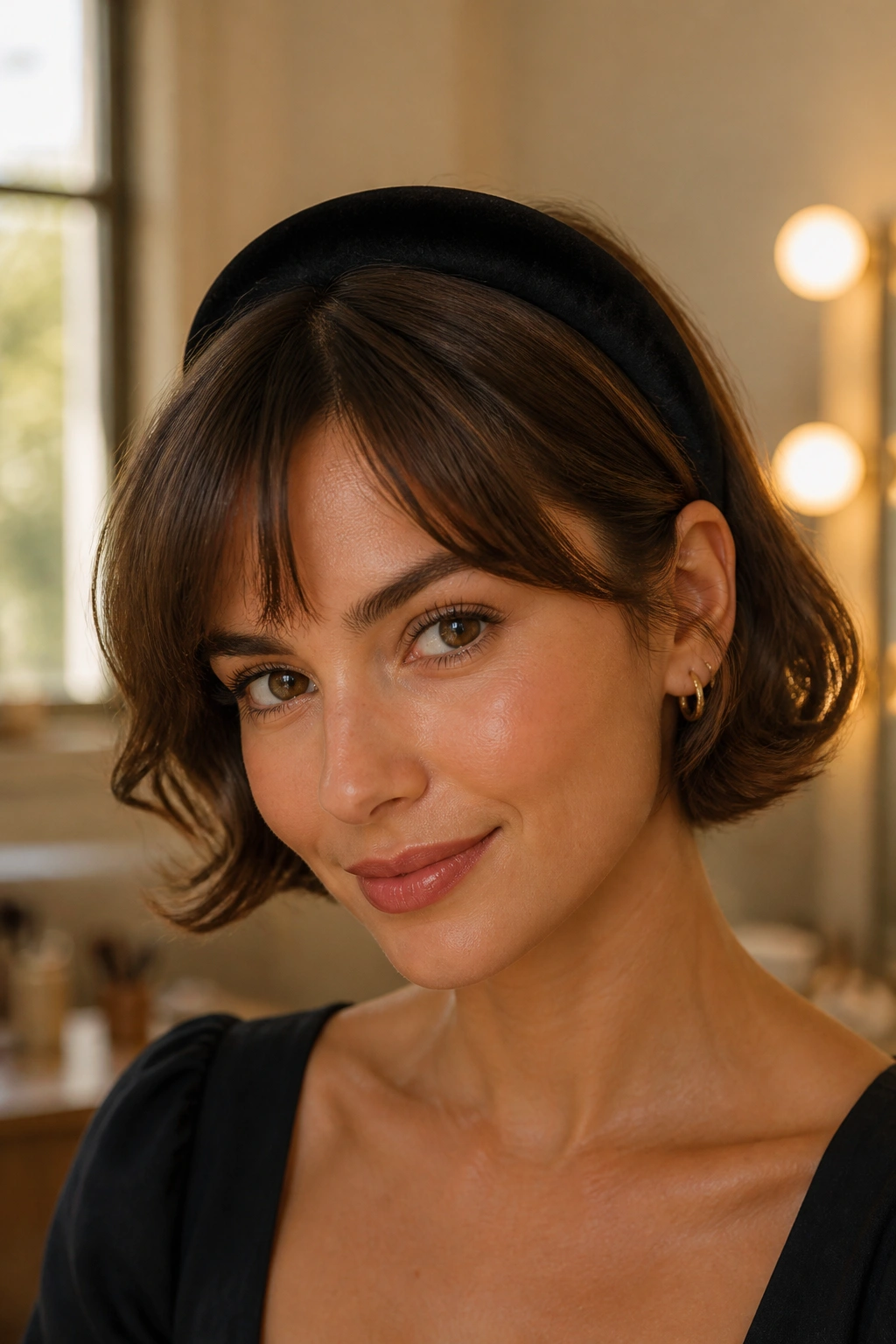
Need something easy that still looks planned? This is one of the best answers. Curling just the ends and finishing with a velvet headband gives short hair a polished frame without turning it into a project.
How to Wear It
Leave the roots smooth and curl only the last 1 to 2 inches of the hair with a 1-inch iron. That small bend keeps the style from going too fluffy. Then slide a padded velvet headband about 1 inch behind the hairline so it sits securely without squeezing the sides flat.
Velvet works better than satin when you want the accessory to stay put. It grips the hair a bit more, and it hides tiny flyaways that would show on smoother fabrics. If you have bangs, let them fall just off center rather than forcing them straight back. The softer line feels less rigid.
This style is good when the dress already has detail and the hair needs to stay calm. Think lace, sequins, strong color, or a neckline that already does enough. The headband frames the face; the curled ends keep the cut from feeling blunt. That’s the whole point.
If your hair is layered, curl the outer layers more gently than the top so the shape stays round rather than frayed. Small difference. Big payoff.
10. Faux Bob with Hidden Pins
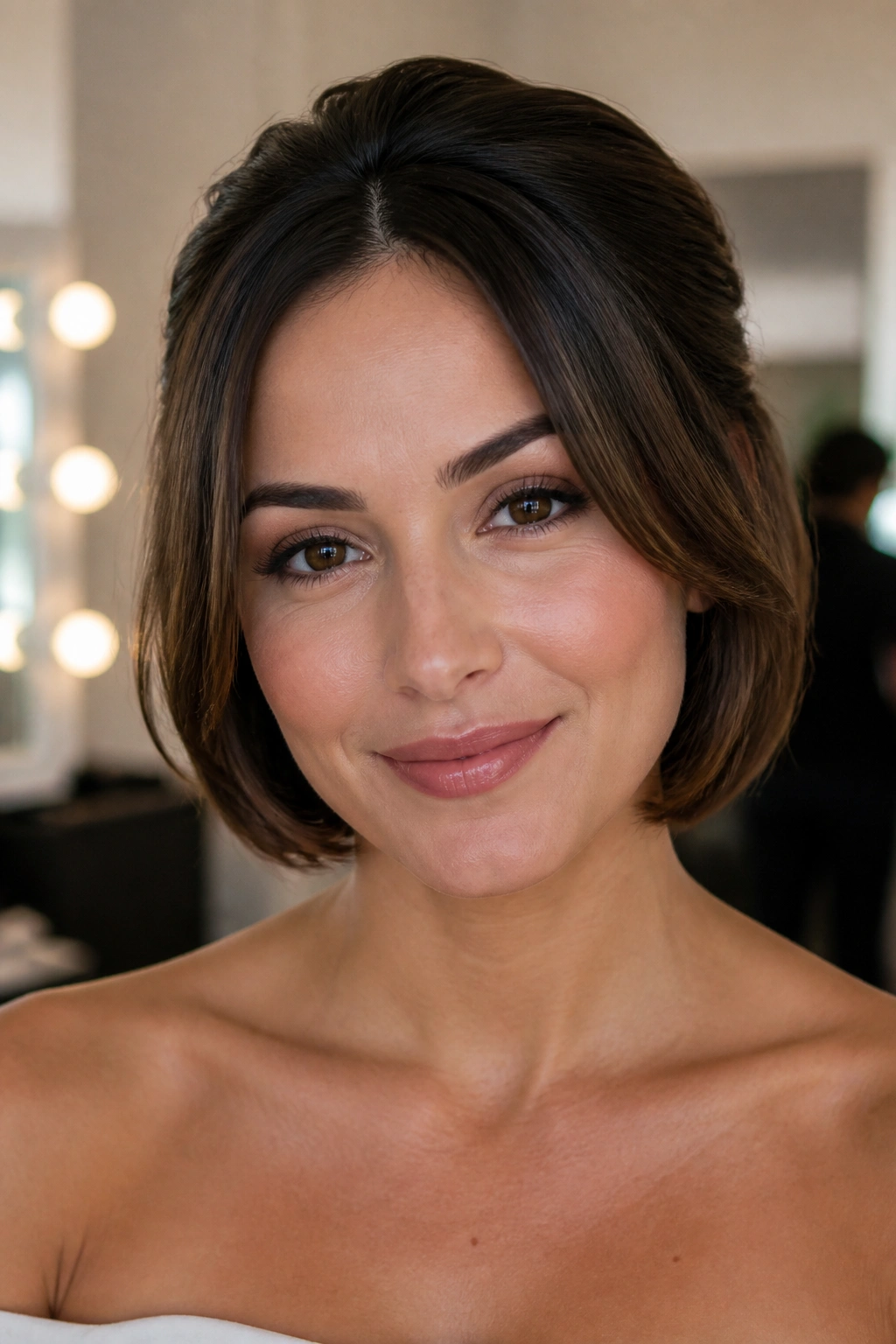
This is the style for anyone growing out a lob and refusing to buy a whole new haircut for one event. A faux bob gives you the shape of a shorter cut while keeping your real length tucked out of sight.
The trick is in the pinning, not the curling. Curl or bend the ends first so they’re easier to fold under, then tuck them inward at the nape and secure them with hidden bobby pins or U-pins. The outer layer should sit smooth over the tucked section. From the front, it should look like a neat bob with a clean bottom edge. From the side, the hidden roll keeps the style compact.
Key Details That Matter
- Best on hair that reaches the collarbone or just above.
- Use 6 to 10 pins depending on thickness.
- Mist the hair lightly with spray before pinning so the tuck holds.
- Keep the crown smooth rather than puffy.
The style works because it gives you a sharp silhouette without making the hair look overworked. That’s rare. Most faux styles tip into obvious trickery, but this one can stay convincingly simple if the tuck is tight and the top is calm.
If you wear this with a lower neckline, the shape looks especially neat because the fake bob sits right where the dress opens.
11. Pin-Curled Vintage Set
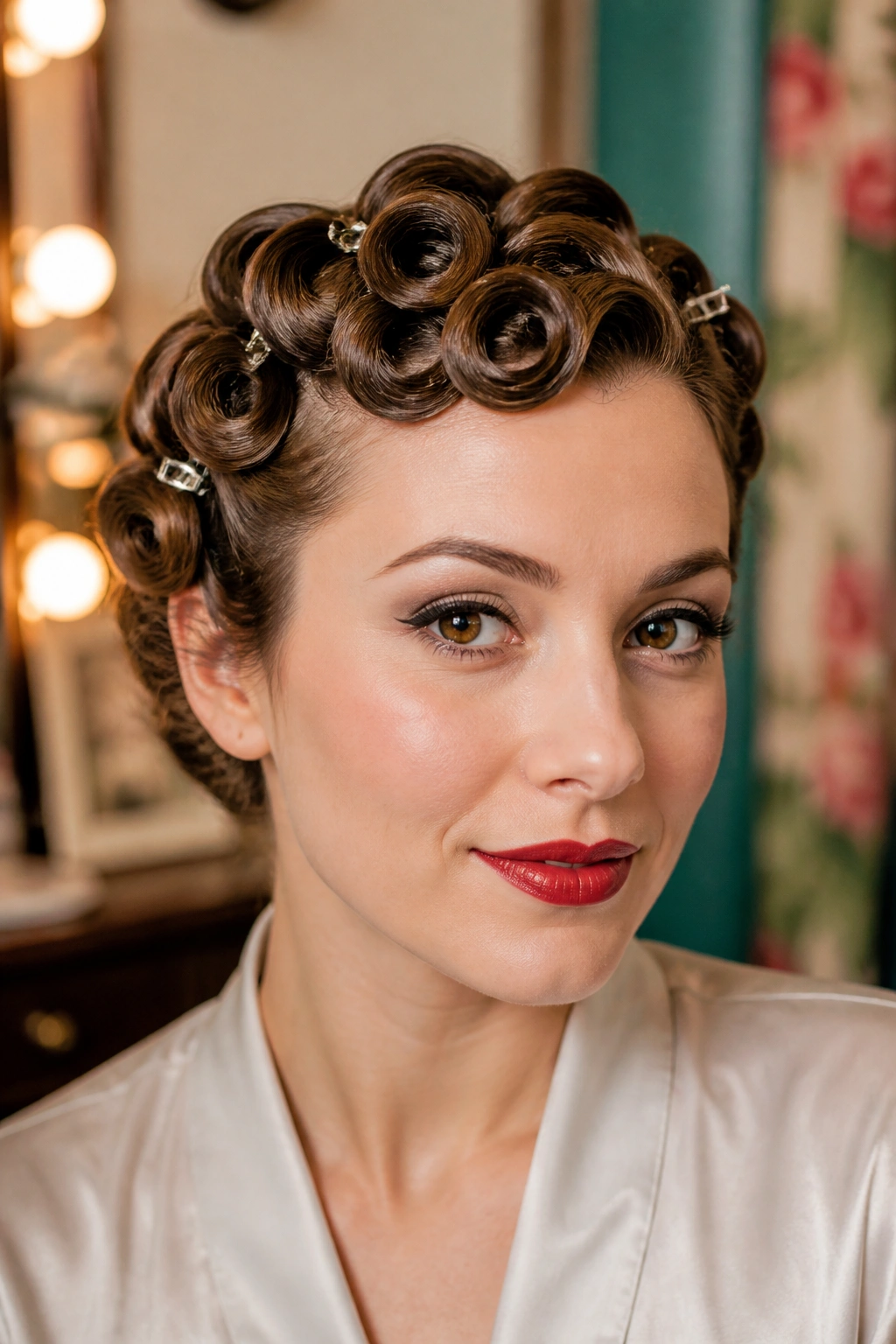
This is the one I’d pick when the outfit is doing most of the talking. Pin curls have that old-fashioned precision that makes short hair look carefully set, not merely styled, and the finish can last much longer than loose curls if you give the set enough time.
The method is old for a reason. You work with small sections — about 1 inch wide — and curl each piece flat against the head, then pin it in place until it cools completely. That cooling stage is not optional. If the curls are still warm when you unpin them, they lose half their shape before the evening even starts. Setting lotion helps, but the real structure comes from the curl pattern itself.
Once the curls are dry, brush them out gently or separate them with your fingers, depending on how soft you want the finish. A brush gives you smoother waves. Fingers give you more definition. Both can work, but the move has to be controlled. If you rough it up too much, the set turns frizzy around the edges, and short hair shows that mistake faster than long hair does.
I like this style for formal dinners, ceremony outfits, or anything with a retro neckline. It feels careful. That’s the point.
12. Minimalist Slick Crop with One Metal Barrette

Unlike ornate styling, this one gets its power from restraint. A slick crop with one metal barrette is sharp, modern, and unbothered by extra decoration.
The shape is simple: smooth the sides back with gel or a light styling cream, keep the crown close to the head, and let one accessory sit where the eye lands first. A straight metal barrette, a slim curved clip, or a tiny architectural pin all work better than a crowded cluster of decorations. The clean line is what gives the style its edge.
This is a strong match for a pixie, a close crop, or a short layered cut that already has a little attitude. It also plays well with bold makeup or a strong neckline because the hair doesn’t compete with either one. If your dress has a dramatic collar or a lot of texture, this style gives you a clean space around the face.
What Makes It Different
- Use one focal accessory instead of several.
- Place the barrette 1 to 2 inches above the ear or just behind the temple.
- Smooth the roots with gel and keep the ends tidy, not stiff.
- If your hair is curly, define the texture but keep the front neat.
There’s no need to overbuild this one. The line, the shine, the single clip — that’s the whole story.
13. Loose Twisted Halo
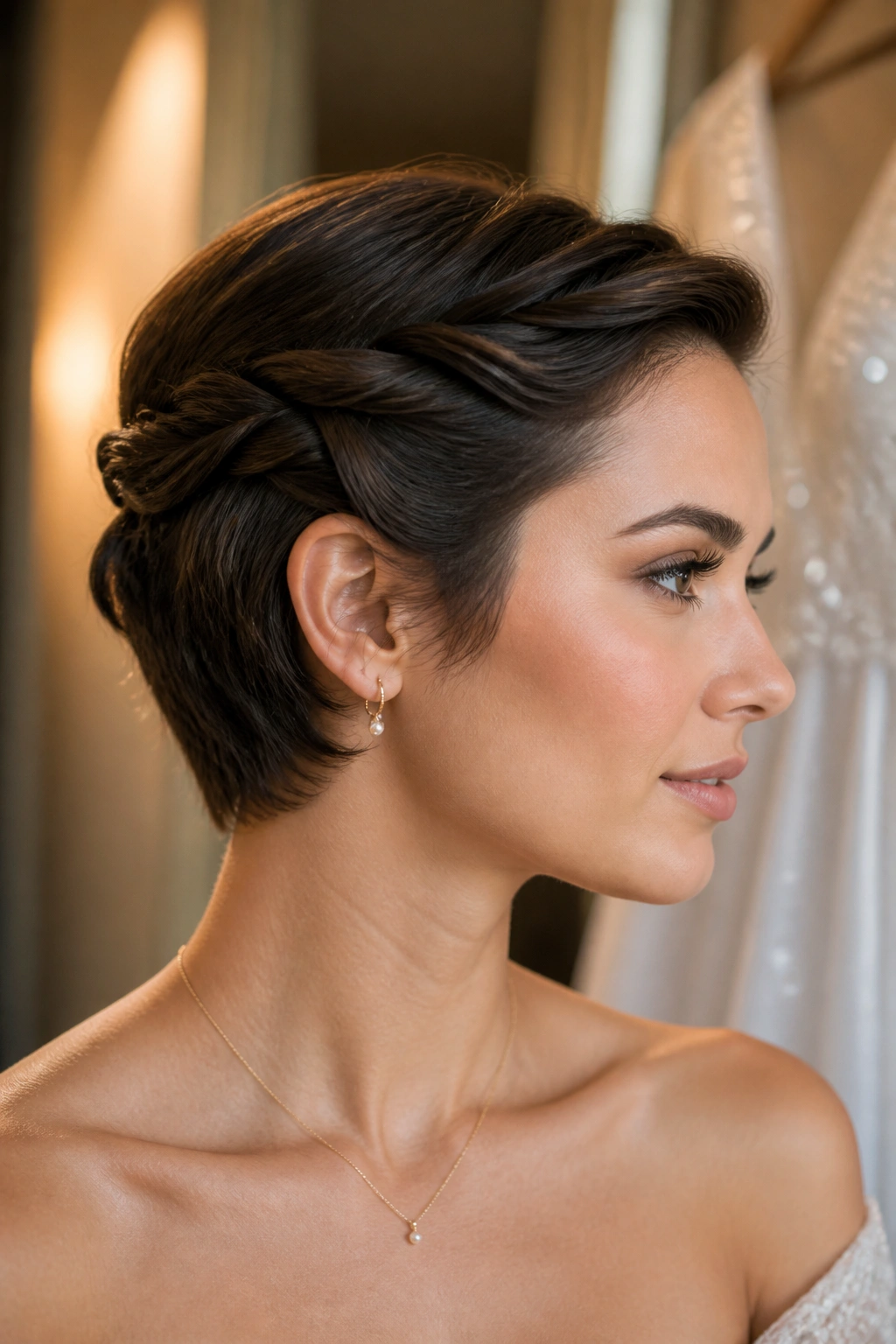
There’s a sweet spot between too bare and too busy, and a loose twisted halo lands right there. It wraps short hair in a soft frame without asking the style to do more than the cut can comfortably give.
Why It Flatters a Short Cut
Two slim twists from the front sections are enough. Bring them back toward the crown, cross them, and pin them flat so the ends disappear into the rest of the hair. On a bob or long pixie, this creates a halo effect that feels delicate but still holds structure. It works because the twist follows the shape of the head instead of floating above it.
A little texture spray makes the pieces easier to grab. If your hair is slick, you’ll need the grip. If it’s already textured, the twists will stay calmer and look a little softer, which can be nicer with a dress that has beading or lace. Keep the nape loose. That unfinished softness is part of the charm.
How to Keep It Secure
- Twist small front sections, not wide ones.
- Cross the pins in an X so the halo doesn’t slide.
- Use short pins close to the scalp.
- Leave a few fine pieces near the ears if you want the style to feel softer.
The halo is good for people who want detail without tightness. It looks gentle, but it doesn’t fall apart if the pinning is done well.
14. Soft Waved Bob with a Tiny Comb
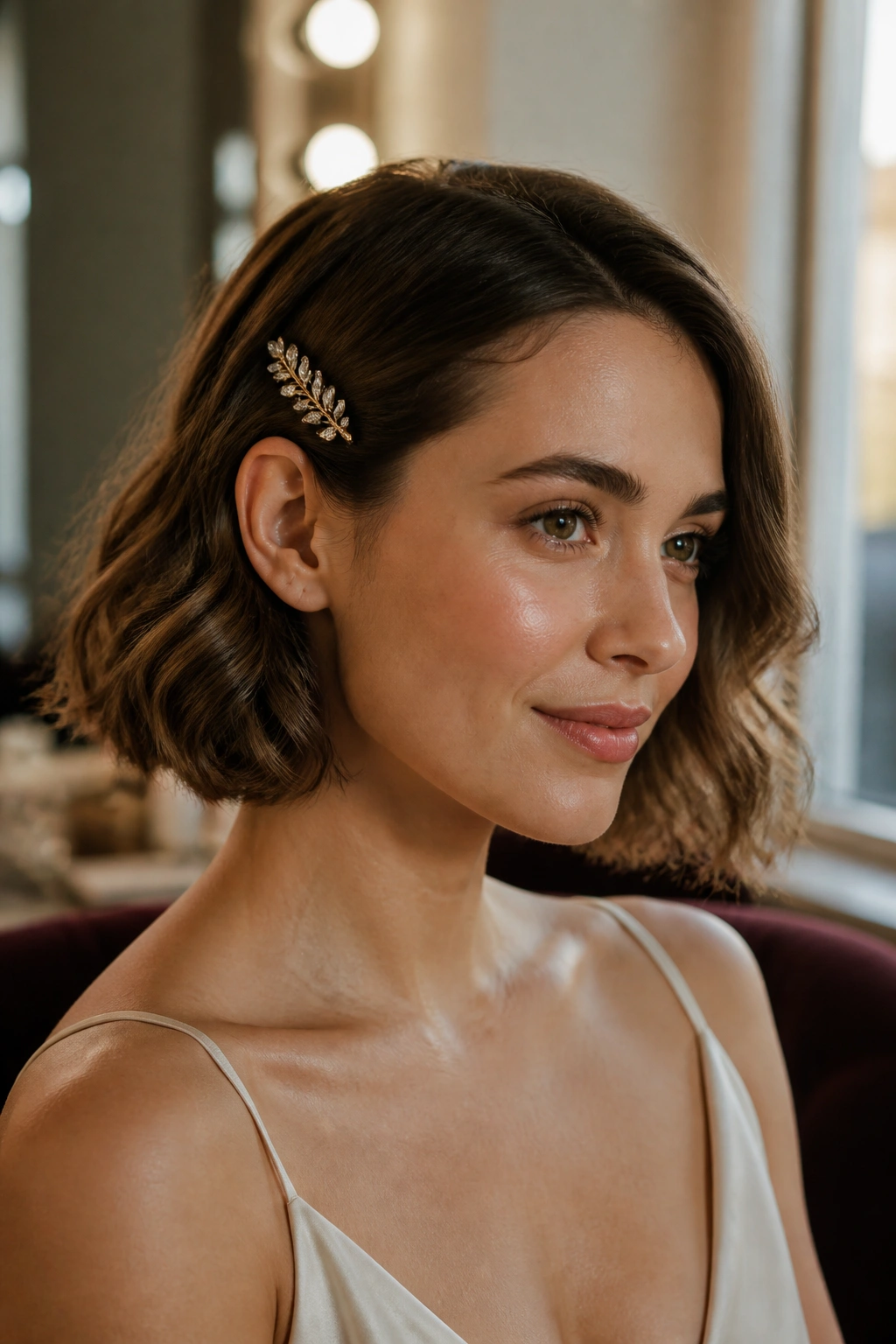
A bob does not need tight curls to feel formal.
That’s the mistake people make when they try to dress up short hair. They pile on more heat, more curl, more spray, and end up with a shape that looks puffy by the second hour. Soft waves are cleaner. They give movement without stealing the outline of the cut, and the smaller wave pattern makes room for a tiny comb or pin to do its job.
I like a 1-inch curling iron for this because it leaves enough bend without turning the ends into springs. Alternate the direction of the curls, then brush once with a wide-tooth comb or your fingers after they cool. If the bob is layered, keep the top pieces softer than the bottom so the whole shape doesn’t fray at the edges. That detail matters more than people think.
A tiny comb with seed pearls, crystals, or a slim metal line works well tucked just above one ear. Place it about 2 inches above the ear so it sits in the wave rather than floating on top of it. Bigger combs can swallow the haircut. Smaller ones look cleaner.
This style is one of the safest bets for formal evenings because it feels dressed up without looking frozen.
15. Sleek Pixie with a Jeweled Accent

Can a cut this short feel formal? Absolutely. When the shape is crisp, a pixie can look more elegant than a much longer style that’s been overworked.
How to Use It
The job here is to make every line clean. Smooth the sides with a small amount of gel or cream, keep the crown close to the head, and define one side part or a soft diagonal sweep across the forehead. Then add one jeweled accent — a pin, a clip, or a tiny comb — and stop there. More decoration usually weakens the cut instead of helping it.
This works best when the accessory is placed slightly off-center rather than dead in the middle. The off-center placement gives the eye somewhere to go, and it keeps the style from feeling overly symmetrical. If your hair is very short, the accessory should be slim. If the cut has a little length on top, you can choose a piece with more sparkle, but the rest of the hair should stay neat.
The Small Details That Help
- Choose one focal point and keep everything else quiet.
- Use a fine-tooth comb to direct the front before applying product.
- Place the jeweled pin above the temple or just behind the part.
- Match the shine level to the outfit: matte hair with bright jewelry, or glossy hair with a softer accessory.
A sleek pixie like this works especially well when the neckline is strong and the earrings are doing some of the talking. The haircut holds its own. That’s the appeal.
Final Thoughts
The strongest short-hair styles for formal events do not try to become something else. They work with the cut that’s already there, which is why they feel cleaner and usually last longer.
Pick one focal point. Maybe that’s a deep part, maybe it’s a braid, maybe it’s a single jeweled clip. Once you choose that one thing, let the rest stay calm. Busy hair looks tired by the end of the night.
That last test matters.
Before you leave, take a look from the side and the back, not just straight on. If the shape still looks neat when you turn your head, you’ve probably chosen the right style.
