



A fresh cut does not have to mean chopping everything off. The best youthful hair ideas usually have less to do with chasing a younger face and more to do with movement, lift, and a shape that stops sitting so heavily around the jaw.
That’s the part people miss. Hair can make a face look tired when it hangs too flat, sits too bluntly, or gets pulled back so tightly that every line gets exaggerated. A little softness around the front changes the mood fast. So does shine. So does a part that isn’t fighting your natural growth pattern.
Softness wins.
And not the fluffy, overdone kind. I mean believable softness — the sort that looks like you slept well, drank water, and had enough time to run a brush through your hair without turning it into a project. A good cut or style should make your features look awake, not buried. A tiny shift in length, fringe, or texture can do that faster than a dramatic color change ever will.
1. Soft Collarbone Layers, a Youthful Hair Idea That Keeps Movement
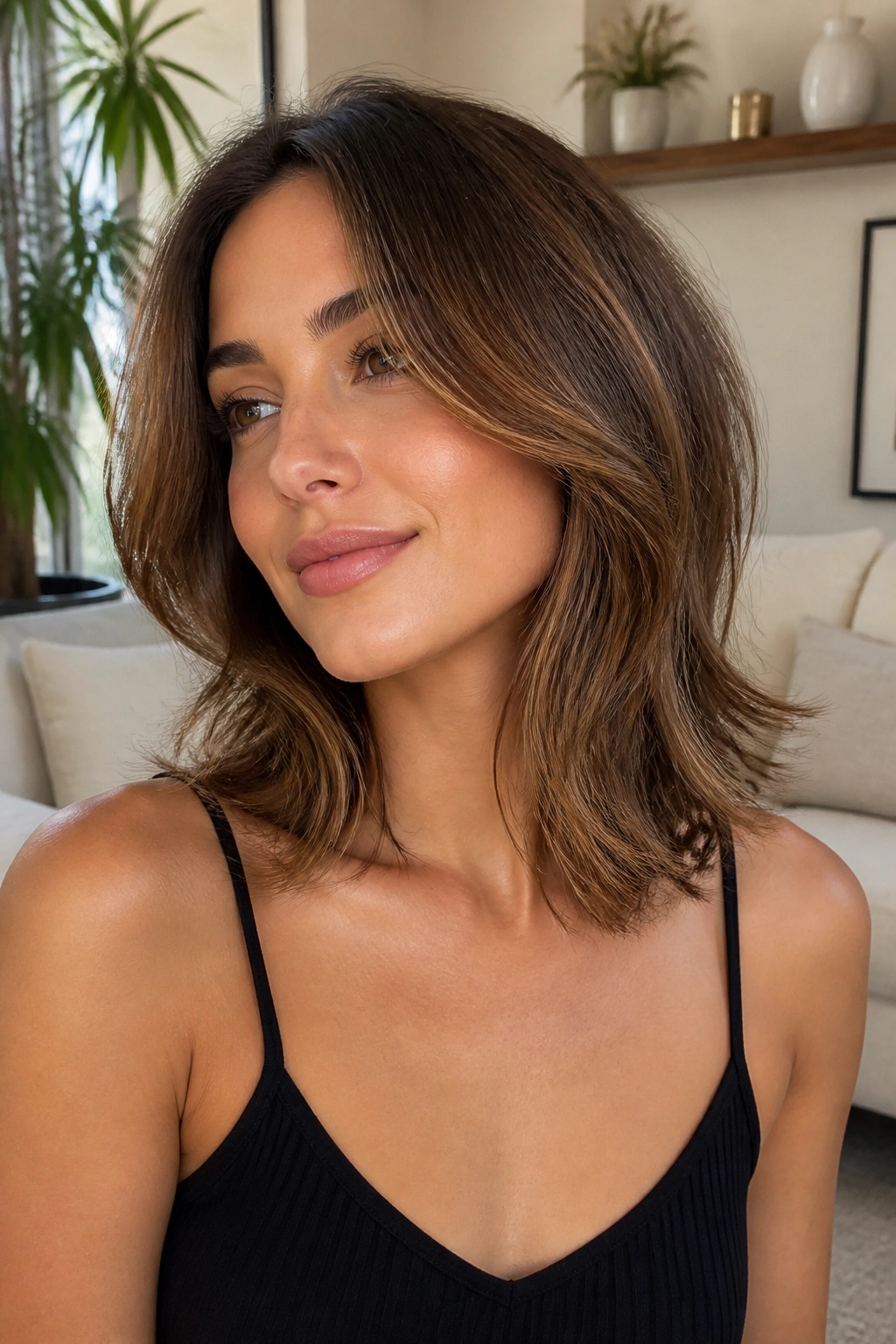
Collarbone-length layers are one of those cuts I keep coming back to because they sit in that sweet spot between polished and easy. Hair that lands right around the collarbone tends to swing when you move, which keeps it from looking stiff or weighed down. It also avoids the harsh line that sometimes happens when hair lands right at the widest part of the jaw.
Why It Works
Ask for layers that start below the cheekbone, not high up near the ear. That gives the cut a light bend instead of a choppy shelf, and the difference matters more than most people think. A little bevel at the ends makes the whole shape feel cleaner.
- Best for medium-density hair that needs movement without losing too much body.
- Works well with a center part or a soft off-center part.
- Needs only a 1- to 1.25-inch round brush, a blow dryer, and a light smoothing cream.
- Looks especially good when the ends are kept blunt enough to feel full.
My blunt opinion: if your hair is fine, don’t let anyone shred the ends too much. You’ll end up chasing volume that never shows up.
One more thing: this length is forgiving. You can wear it tucked behind one ear, clipped half back, or blown out with a loose bend and it still looks finished.
2. Curtain Bangs With Loose Length
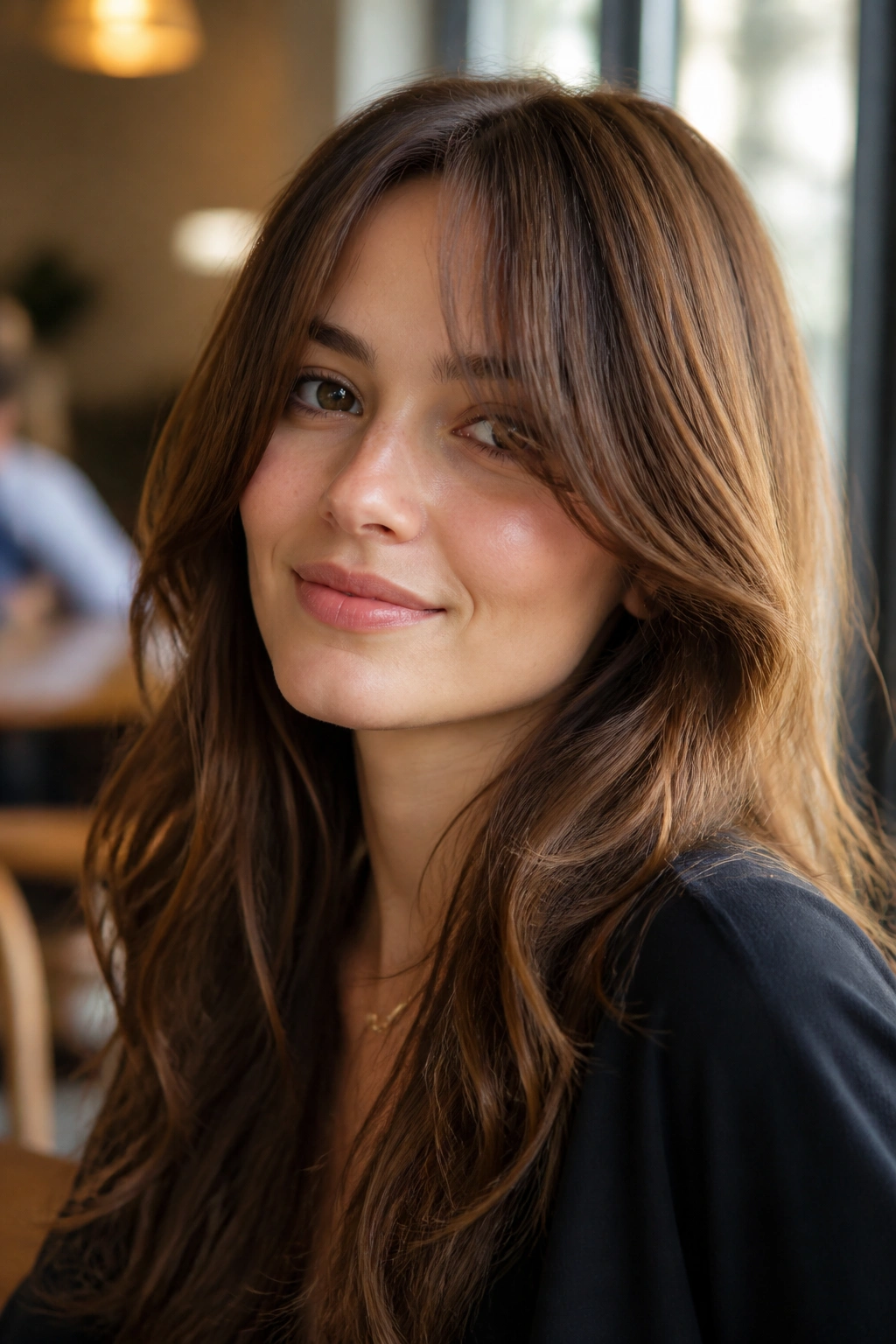
Curtain bangs can change a face faster than a full haircut. That sounds dramatic, but it’s true. A good curtain fringe opens the front of the face, puts emphasis on the eyes and cheekbones, and keeps the whole style from feeling severe.
The trick is in the length. Too short and the bang feels fussy. Too long and it disappears into the rest of the hair. The best version usually hits somewhere between the brow and the cheekbone, then graduates into longer face-framing pieces that blend into the rest of the cut. That shape gives you softness without losing structure.
For styling, I like the simple version: blow-dry the fringe forward first, then sweep each side away from the face with a small round brush. Let it cool in that shape before touching it again. If you keep fiddling while it’s still warm, the bend collapses and you end up with something flat and awkward.
Curtain bangs also buy you some flexibility on lazy days. Pull the rest of the hair into a low bun or ponytail, and the fringe still does the work.
The maintenance is the catch. Bangs need trims more often than people expect, and if your hair grows fast, the center pieces can start poking into your eyes in a hurry. Still, if you want a fresh look without sacrificing length, this is one of the strongest moves on the board.
3. The French Bob With Airy Ends

Why does a bob feel younger when it isn’t perfectly blunt? Because a little air at the ends keeps it from looking boxed in. The French bob sits around the jaw or just below it, but the modern version is softer than the heavy, helmet-like bobs people used to get stuck with.
The best French bob has movement at the perimeter and a tiny bit of lift at the crown. Not a lot. Just enough to stop the head shape from looking flat. If your hair is straight, a quick bend at the ends with a round brush is usually enough. If it’s wavy, a tiny bit of mousse and some scrunching can make the shape fall into place without much work.
How to Style It
- Blow-dry the top with a small round brush to create lift at the roots.
- Curve the ends under or slightly outward, depending on how soft you want it.
- Use a pea-sized amount of styling cream, not a heavy paste.
- Keep the line around the neck and jaw neat so the cut stays intentional.
There’s a reason this cut shows up again and again in salons. It frames the face, it looks deliberate, and it doesn’t need a complicated routine.
4. Shoulder-Length Waves With a Deep Side Part

A deep side part can make shoulder-length hair feel instantly more awake. That asymmetry gives you lift at the root on one side and a little sweep across the forehead on the other, which is a very easy way to keep a style from feeling too symmetrical or flat. Flat hair ages. Hair with some movement feels fresher.
Picture hair that’s been worn straight down the middle for months. Now shift the part two or three inches over, add a loose wave through the mid-lengths, and pin one side back with a small clip. Different mood. Same haircut.
This works especially well when the wave starts below the cheekbone, not from the root all the way down. You want bend, not pageant curls. A large curling iron or flat iron can do it, but the whole point is to keep the finish loose enough that the style still feels casual.
- Best on hair that falls between the shoulders and the collarbone.
- Looks good with a side-tucked front section.
- Gives fine hair a little root lift without teasing.
- Needs a mist of flexible hairspray so the bend holds without turning crunchy.
I’d take this over a perfectly straight middle-part blowout on most days. It has more life in it.
5. Sleek Low Bun With Face-Framing Pieces
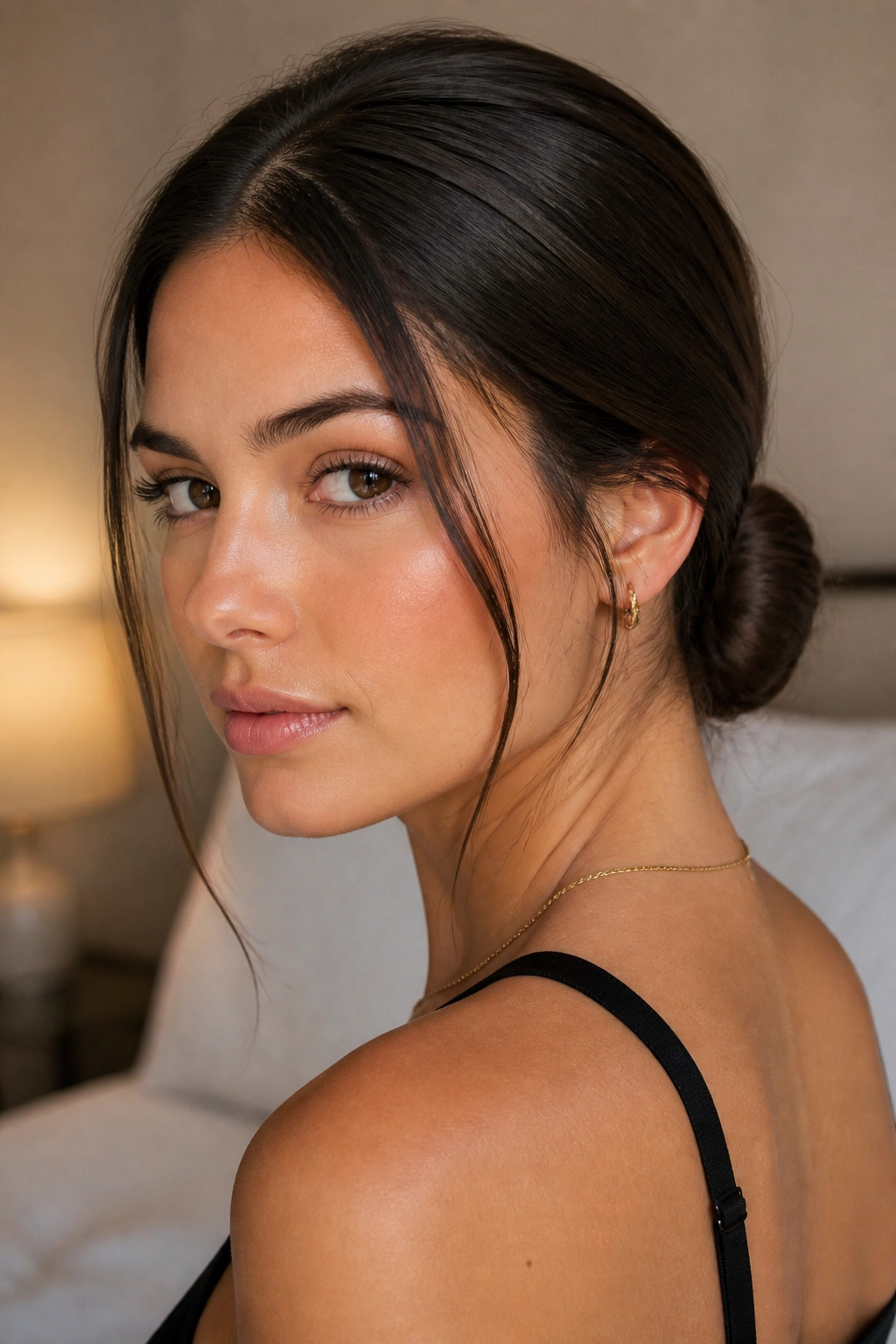
A low bun can look severe if you pull every strand tight and smooth every bump away. It can also look expensive in the best sense of the word — clean, soft, and confident — when you leave a few pieces around the face and keep the bun low at the nape instead of high and tight.
That’s the move here. The face-framing pieces do not need to be dramatic. A couple of strands near the temples, maybe one soft curve near the jaw, and suddenly the whole style stops reading as rigid. A little texture around the hairline makes the face look less boxed in.
Use a smoothing cream or a touch of lightweight gel on the top section, then brush the hair back with a bristle brush or your hands. Twist the bun low and secure it with pins rather than stacking it too high. The bun should feel anchored, not engineered.
I also like this style because it works on second-day hair. Hair with a bit of grip is easier to shape, and the bun tends to hold better when it’s not freshly washed and slippery. Clean hair is fine, but a day-old texture usually makes the result easier to control.
If you want a fresh look on a day when your hair is behaving badly, this is one of the most dependable answers.
6. Textured Pixie With a Longer Fringe
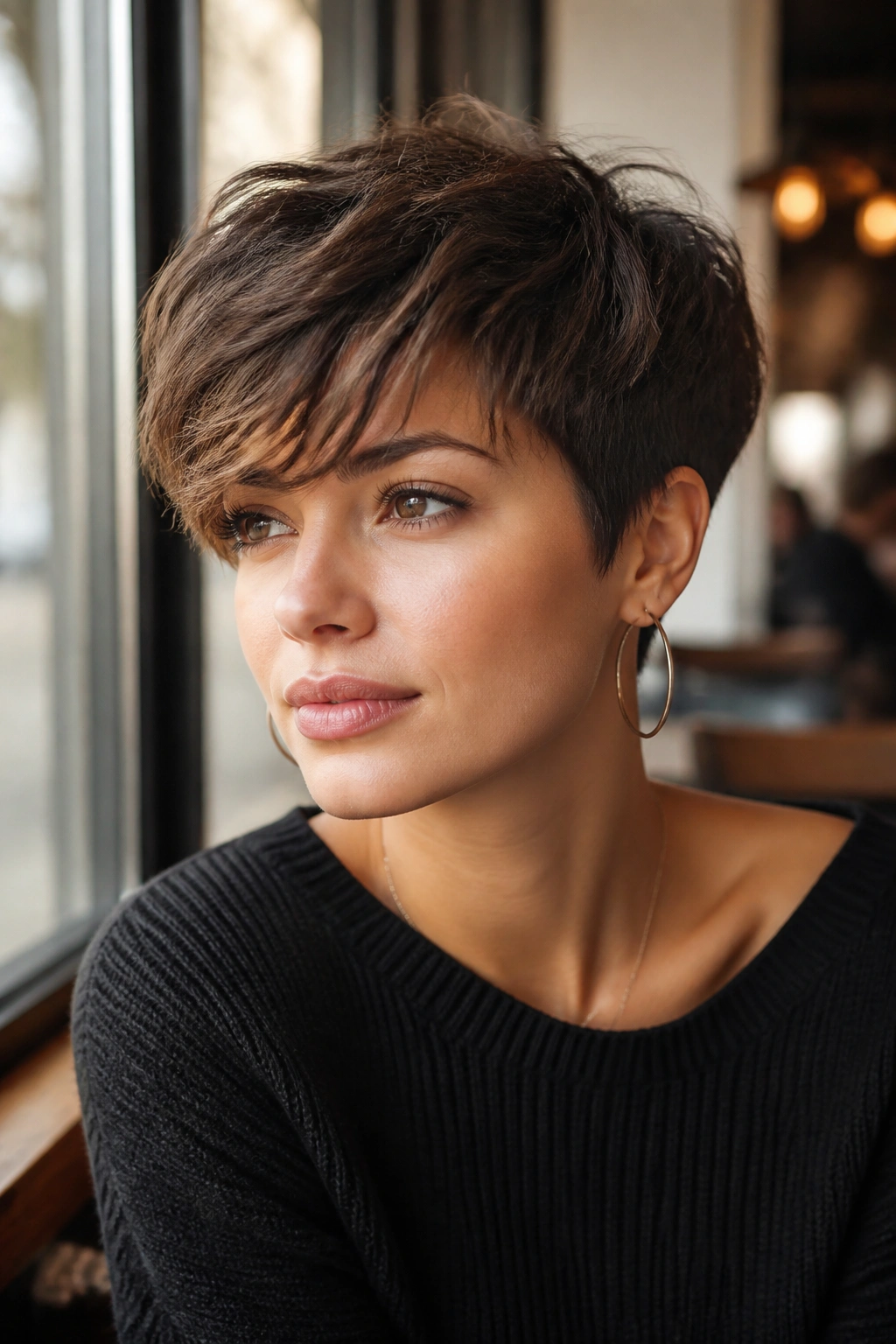
A pixie haircut can look sharp or soft depending on where you keep the length. A longer fringe changes everything. It gives the cut some swing, lets you brush the front to one side, and keeps the overall shape from feeling too cropped or too strict.
That extra length in front is the difference between a pixie that feels edgy and one that feels easy to wear. Short sides and a tapered back keep the shape neat, while the front pieces can be pushed forward, swept over, or broken up with a bit of matte paste. The result is a cut that has edge without looking hard.
This is the cut I’d point someone toward if they want low styling time but still want hair that feels intentional. You can work it with fingers, which is half the charm. A tiny bit of texturizing cream on damp hair is often enough. Blow-dry the fringe in the direction you want it to live, then separate it with your hands.
Best for People Who Want Shape Without Fuss
- Works well if you like short hair but want softness around the eyes.
- Needs trimming every 4 to 6 weeks to keep the outline crisp.
- Looks better with a little piecey texture than with heavy product.
- Can be brushed flat for a neat look or pushed up for more lift.
Not everyone wants a pixie. Fair enough. But if you do, the longer fringe is the part that keeps it from feeling severe.
7. Butterfly Layers, a Youthful Hair Idea That Lifts the Face
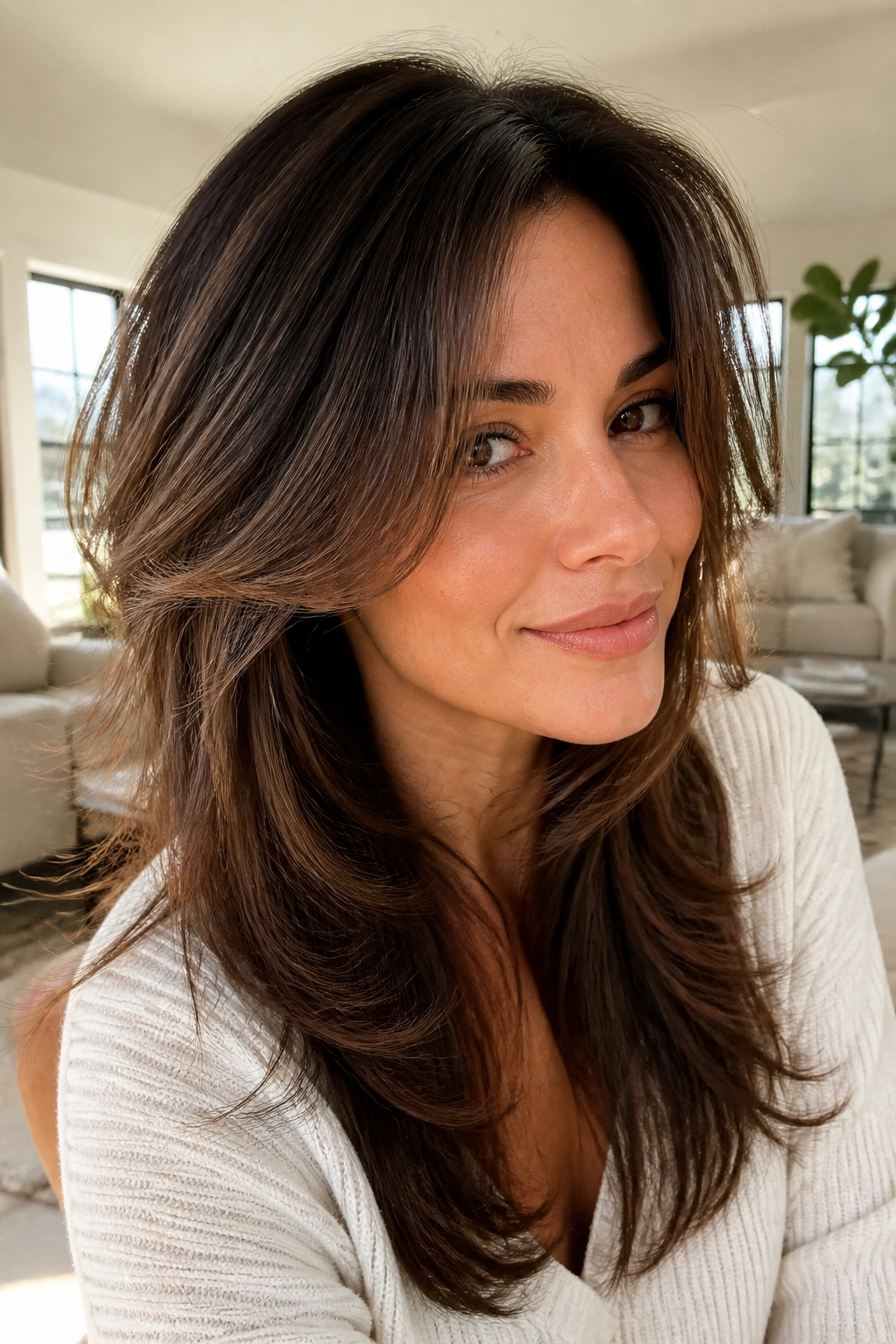
Butterfly layers are a smart choice when you want movement without giving up length. The cut keeps the longer bottom section, then adds shorter layers around the crown and face so the hair can swing and float a little more. That lift around the front is what gives the style its freshness.
The cut is built for people who like blowouts. If you give the top section a little round-brush work, those shorter layers flip away from the face and create shape where you need it most. The longer underneath section keeps the hair feeling full, which matters if you dislike the thin, wispy look that some layered cuts create.
Where to Ask the Layers to Start
Start the shorter layers around the cheekbone or just below it. That keeps the front pieces soft instead of choppy. If the layers begin too high, the shape can look dated fast. If they begin too low, you lose the face-framing effect that makes the style work.
- Good for medium to thick hair that needs shape.
- Needs a blow-dry to show the layer pattern.
- Works with curtain bangs or a center part.
- Benefits from a light volumizing mousse at the roots.
Pro tip: keep the ends clean. Too much razor texturing on the bottom can make the whole style look thin and tired.
This cut has a little drama, but not in a loud way. That’s why it reads fresh.
8. Claw-Clip Twist With Loose Ends
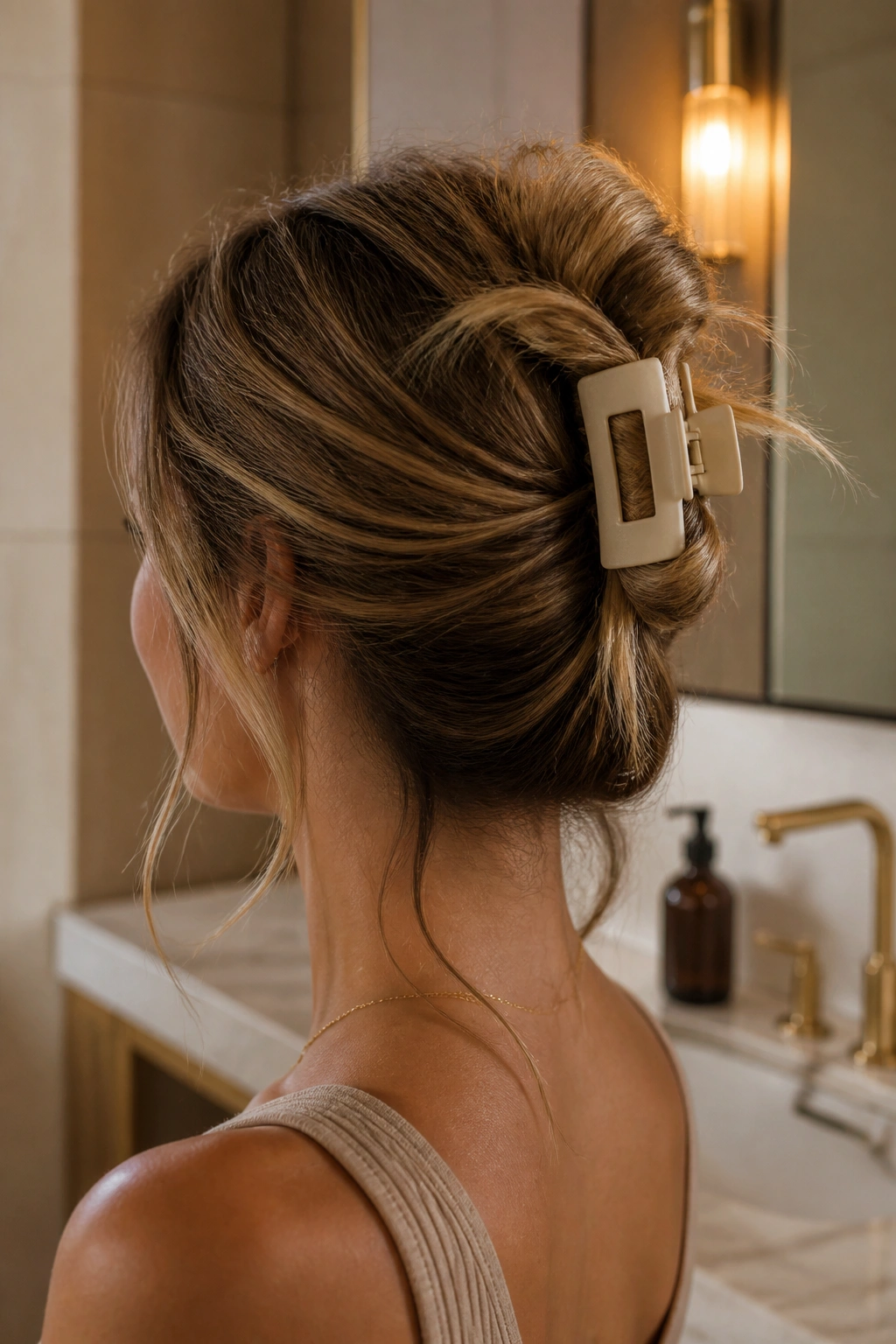
A claw-clip twist can look like a rushed cleanup job, or it can look sharp and relaxed at the same time. The difference is in the finish. Leave the ends out on purpose, keep the crown a little lifted, and don’t crush the shape flat against your head.
I like this style because it gives instant polish without stealing all your time. Twist the hair once or twice at the back, fold it upward, and clip it loosely. Then pull out a few pieces around the temples or the nape so the result feels a little softer. If every strand is pinned down, the style can read older and too formal.
The claw clip itself matters more than people admit. One that’s too small makes the twist slip. One that’s too heavy drags the whole thing downward. Pick a clip that actually fits the thickness of your hair so the hold feels secure but not strained.
And yes, the loose ends are the point. They keep the shape from looking severe, which is exactly what makes this such a good freshening-up style for everyday life.
It’s a strong pick when you want your hair up, but not done in a stiff way.
9. The Blunt Lob With Rounded Ends
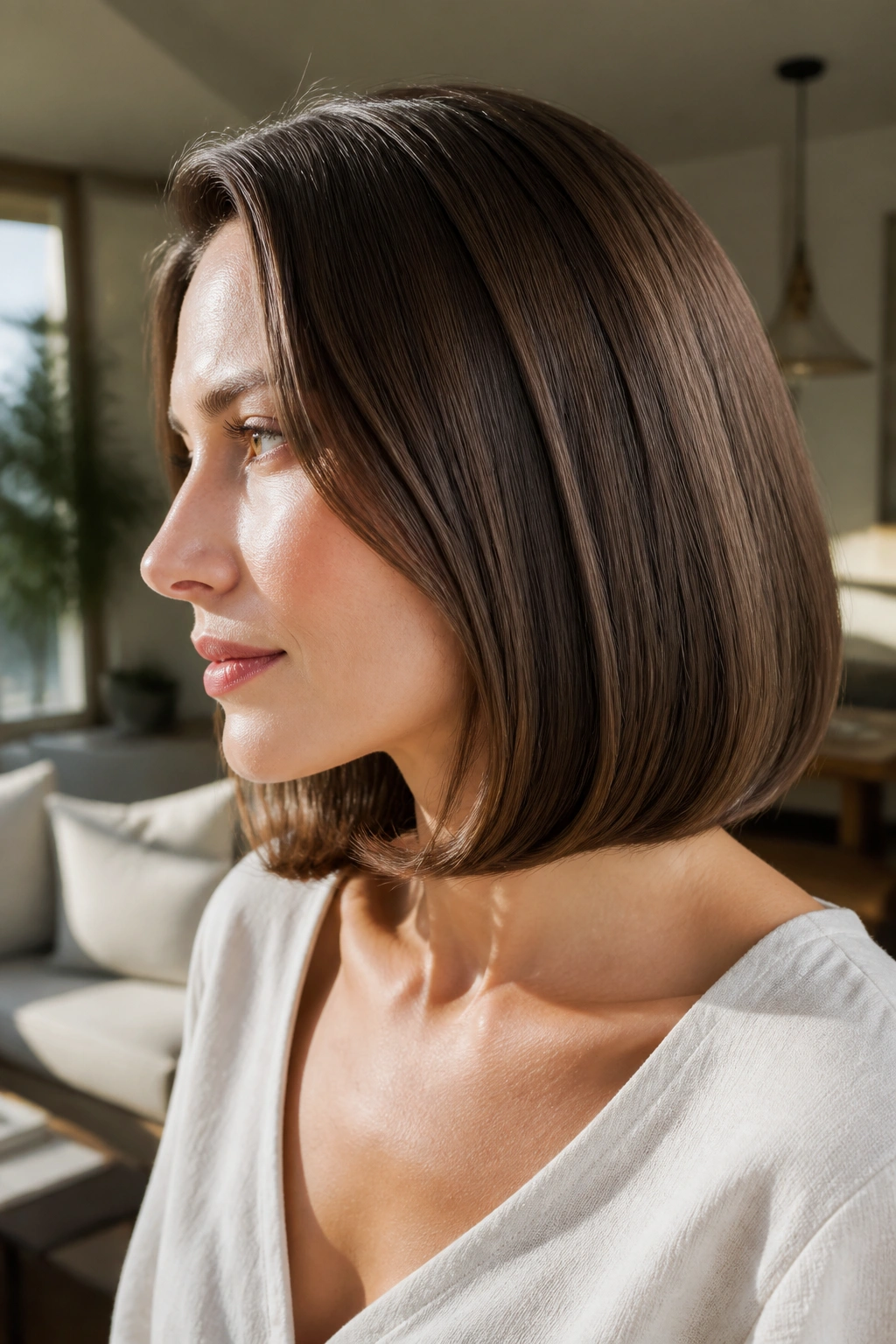
Can a blunt cut still feel soft? Absolutely. The blunt lob is proof. A lob that sits around the collarbone or just above it gives you fullness and shape, while a slight roundness at the ends keeps the line from feeling harsh.
The blunt edge helps fine hair look denser. That’s the upside people love. The rounded finish is what keeps it from looking boxy. If you tuck the ends under with a round brush or a flat iron pass at the very bottom, the cut gets a little curve that reads cleaner on the face.
How to Keep It From Feeling Hard
- Ask for a blunt perimeter with minimal layers inside the cut.
- Blow-dry with the ends slightly curved inward.
- Use a heat protectant before any hot tool touch-up.
- Finish with a drop of serum on the last inch only.
A lob is one of those cuts that can be dressed up or down without much effort. It looks neat at work, a little more relaxed with a side tuck, and more modern when the part sits slightly off center.
If you like shape more than texture, this one is worth paying attention to. It does not try too hard. That’s the appeal.
10. Soft Shag With Micro-Volume
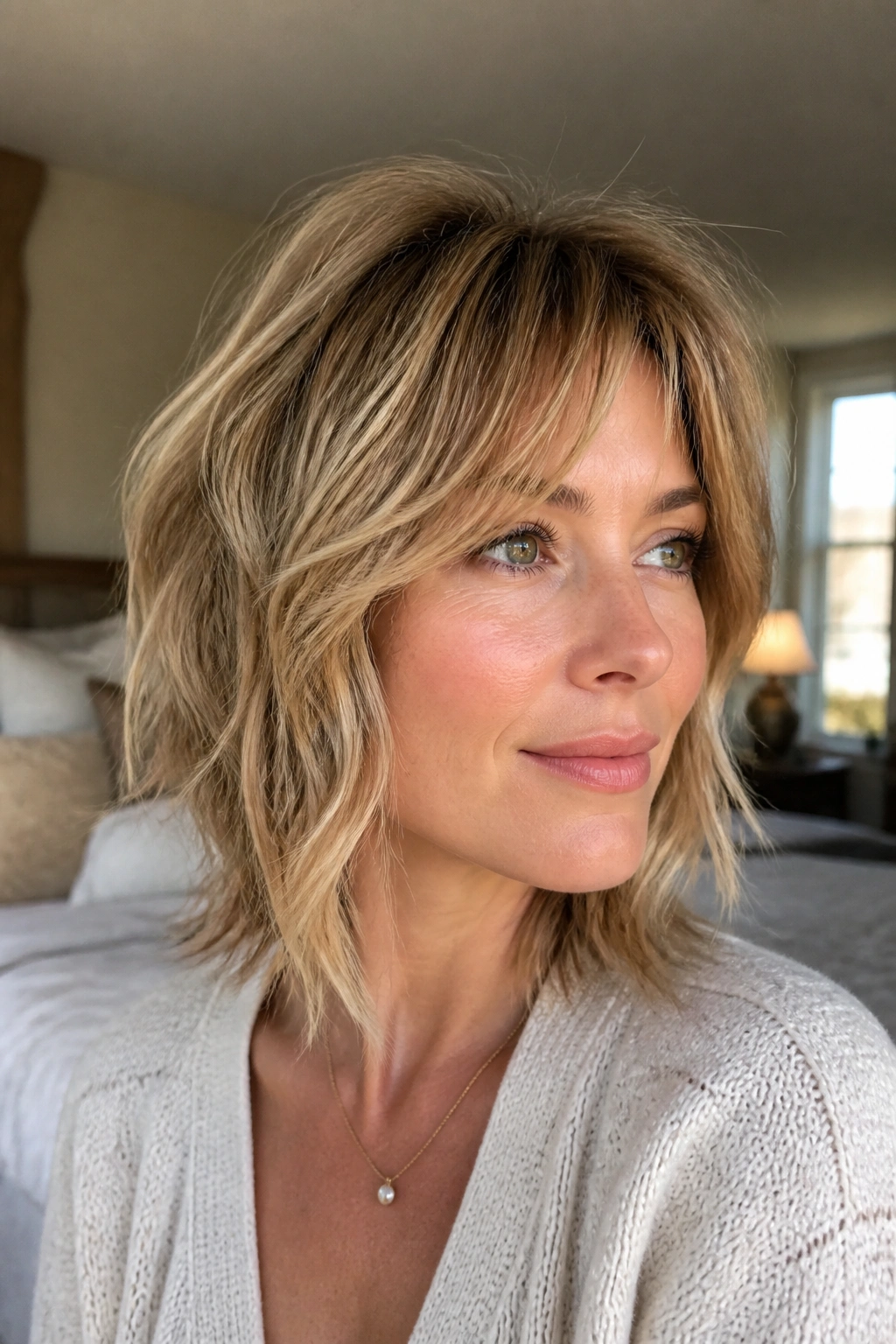
The old shag could get wild fast. Too many short pieces, too much thinning, too much rock-and-roll energy when all you wanted was hair that moved. A soft shag is the calmer version. It keeps the airy layers and face-framing shape, but it stops before the haircut starts eating itself.
This style works best when the volume sits at the crown and around the cheekbones, not all over the head. That gives lift without turning the silhouette fuzzy. A tiny fringe or a few shorter front pieces can soften the face and make the overall cut feel lighter.
If your hair is wavy, this is a very happy place to land. Scrunch in a light curl cream, rough-dry halfway, then let the waves finish in their natural pattern. If your hair is straight, use a bit of texturizing spray and a bent section here and there so the layers do not collapse into one flat sheet.
- Best for hair that needs air and movement.
- Keep the top layers soft, not shredded.
- Diffuse on low heat if your hair is wavy or curly.
- Avoid heavy oils near the roots.
I love this cut when the goal is freshness without polish that feels too strict. It has energy.
11. Bubble Braid With Soft Pull-Outs
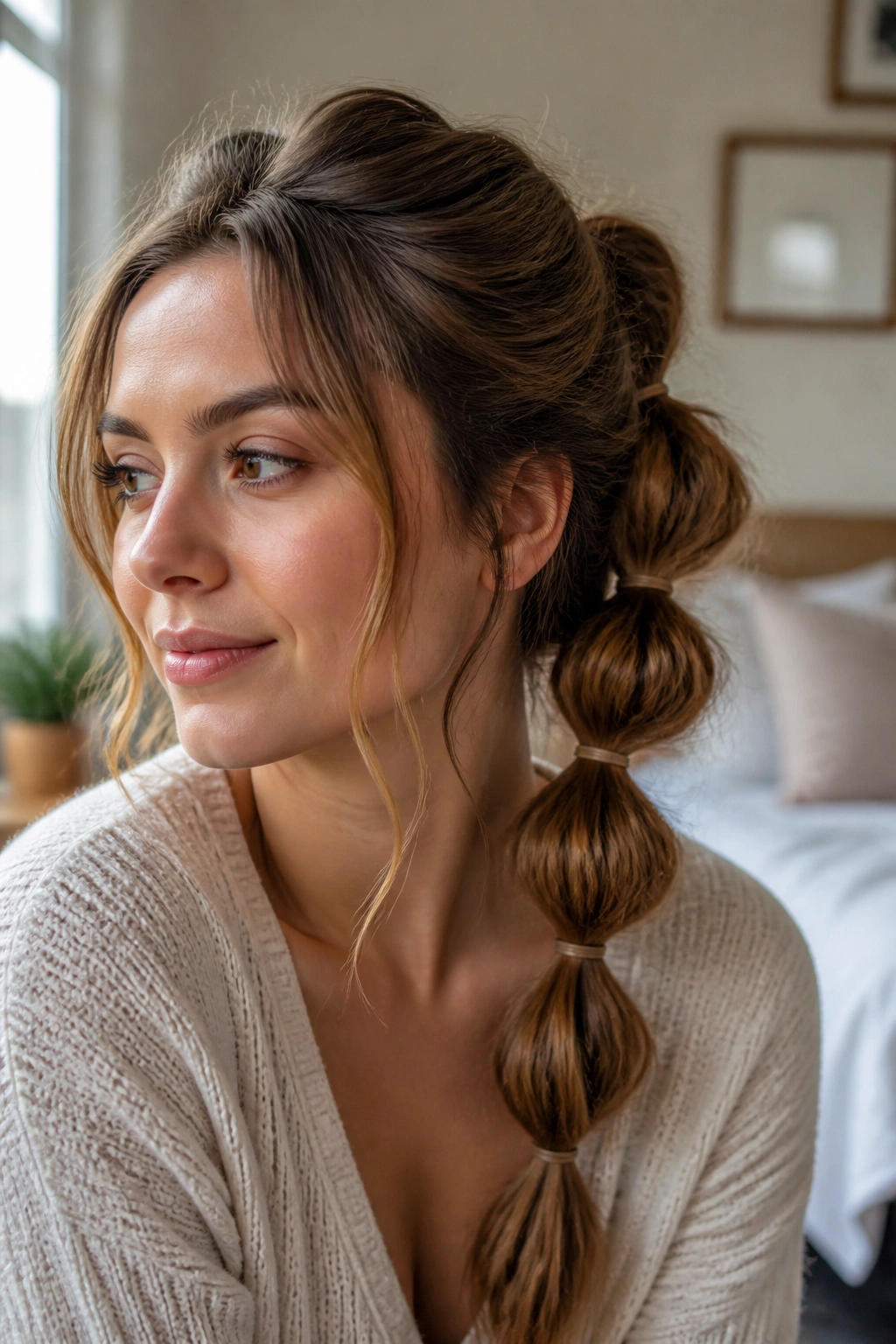
A bubble braid works because it looks structured without being fussy. The braid itself is simple — ponytail sections spaced out with small elastics — but once you tug each section gently, the style gets a round, playful shape that feels modern and easy.
The softness is the part that keeps it youthful. A few pull-out pieces around the front, a little volume at the crown, and a braid that isn’t pulled so tight it looks glued to the head. That balance matters. Without it, the style can feel too finished and a little stiff.
This is also one of the best options for long hair that’s gone flat. If the length is there but the shape is boring, a bubble braid changes the silhouette without requiring a cut. You can wear it high, low, or off to one side, and it still reads as deliberate.
Use clear elastics spaced about 2 to 3 inches apart, depending on hair length. Tug each section after securing it so the bubbles look rounded, not pinched. A fine mist of hairspray helps if your hair is slippery, though too much product can make the braid look dusty.
It’s a playful style, but not childish. There’s a difference.
12. Chin-Length Curly Crop

Curly hair looks fresher when it has room to spring. That’s the simple truth. A chin-length crop gives curls space to form their shape instead of dragging them down past the shoulders, where they can lose bounce and start to look weighed down.
The best part of this cut is the outline. When curls land around the chin, the face gets a soft frame that feels open and lively. It can brighten the whole look without touching color or adding a pile of product. For tighter curls, the shape should be cut dry or at least with the curl pattern respected so shrinkage does not throw off the final line.
How to Shape It
Cut or trim curls when they’re in their natural state, then style with a curl cream and a little gel for hold. Diffuse on low heat, and stop touching the hair once the curl pattern starts to set. Too much hands-on fussing breaks the clumps apart and leaves frizz behind.
- Great for curls that need bounce more than length.
- Works with a side part or a center part.
- Needs moisture, but not a heavy butter on top of everything.
- Usually looks best with a soft edge around the face rather than a harsh geometric line.
This is not a low-maintenance haircut in the lazy sense. It is a low-drama haircut, and those are different things.
13. Half-Up Knot With Loose Waves
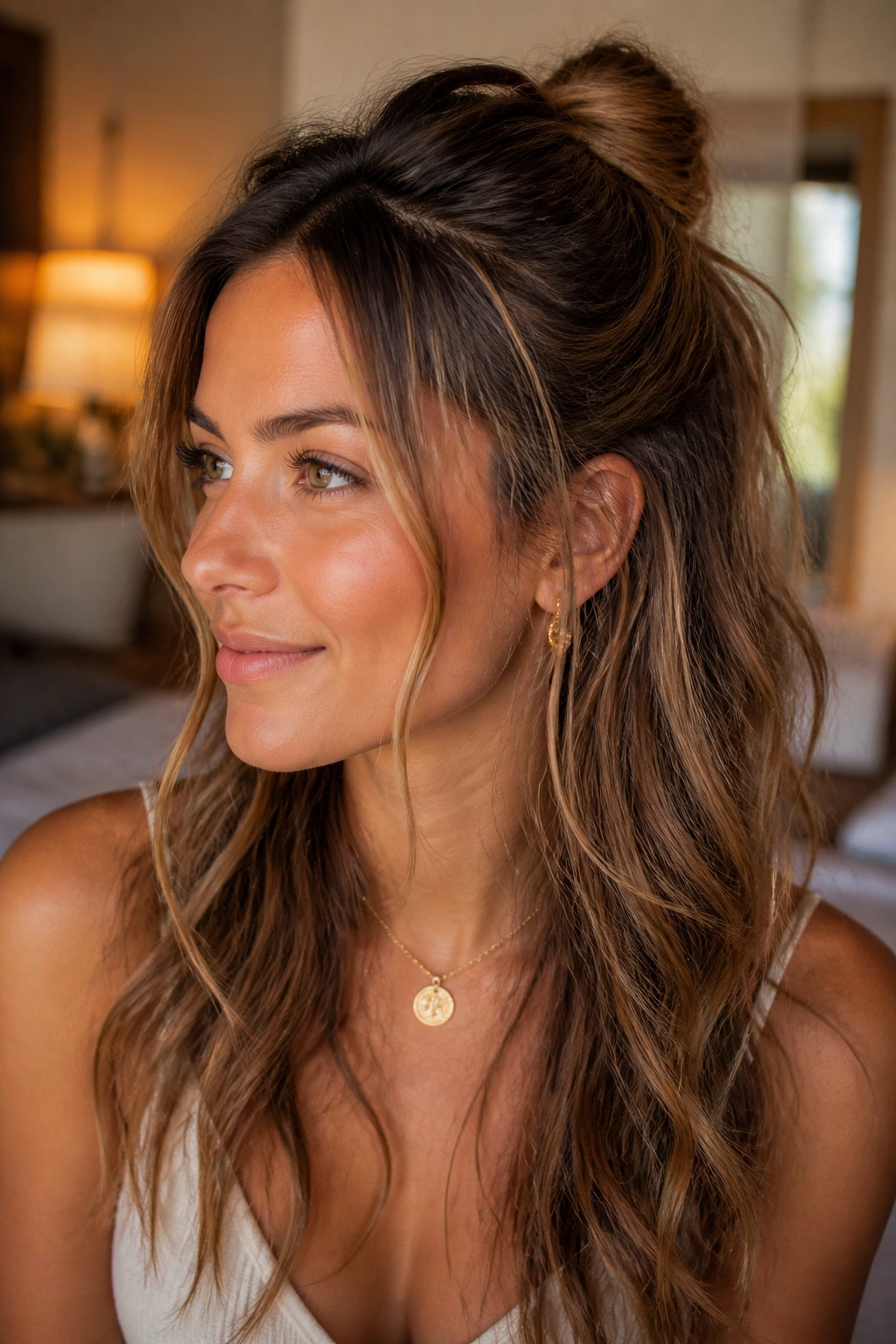
A half-up knot is one of the easiest ways to make long hair feel fresh without losing the length you like. It gives you lift at the crown, keeps hair out of the face, and still lets the ends move freely, which is a big part of why it reads younger and less severe.
The trick is to keep the knot loose. If you pull everything back tightly and wrap the top section too neatly, the style can feel stiff. Leave a little fullness at the crown, twist the knot by hand, and let a few front pieces drop around the face. Those loose strands soften the hairline and stop the style from looking too school-run practical.
I also like this on hair that has a bit of natural wave. The contrast between the controlled top section and the loose ends gives the whole thing shape. Straight hair can work too, but it helps to add a little bend to the mid-lengths first so the style has more life.
One small thing: secure the knot with pins rather than stuffing it under a heavy elastic. It sits better, and the shape lasts longer.
It’s a fast fix, sure. But it does not have to look rushed.
14. Tucked-Behind-Ears Bob With a Glossy Finish
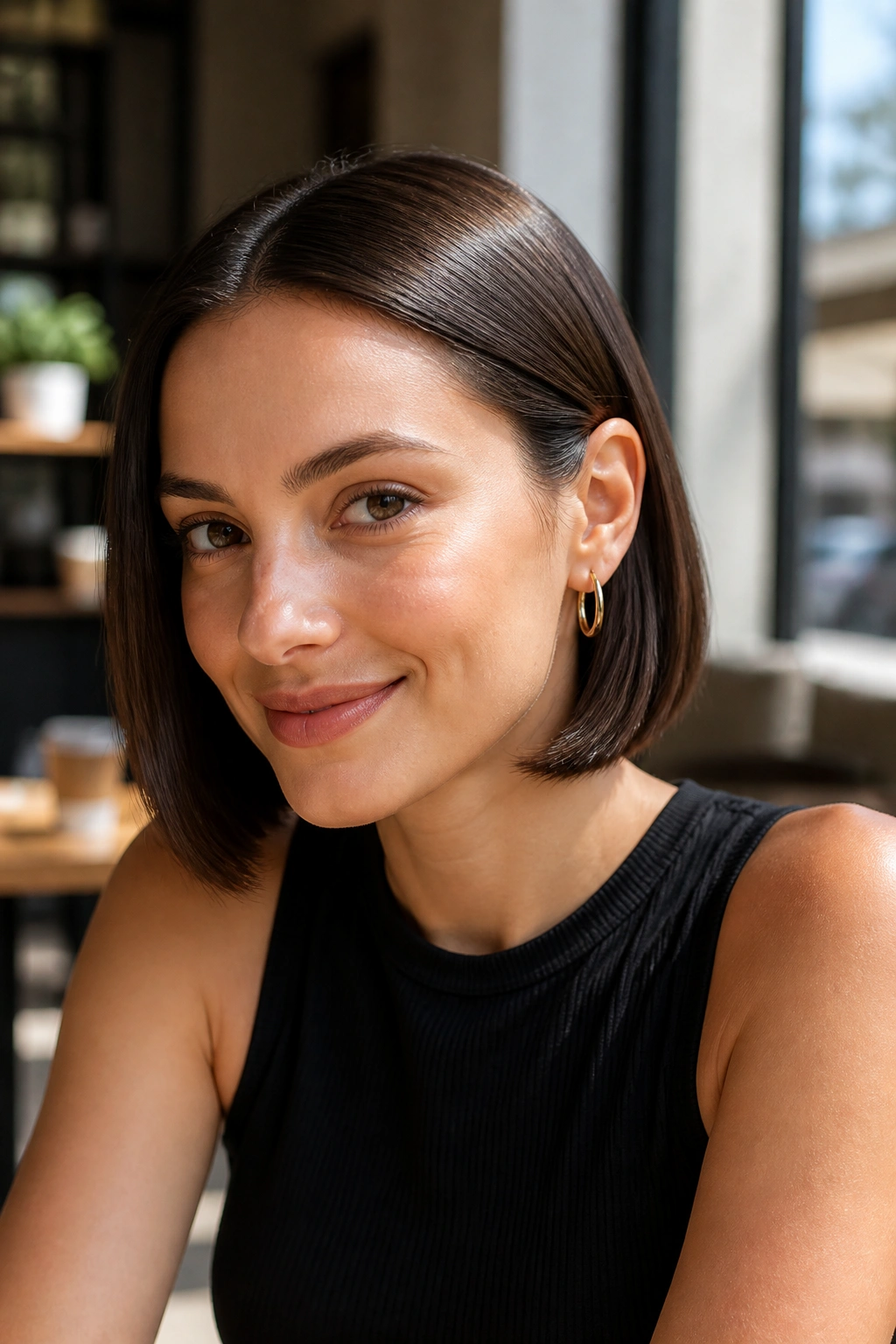
Tucking a bob behind the ears sounds almost too simple to matter. It matters. The move opens up the cheekbones, shows the jawline, and lets the haircut feel intentional instead of heavy. Add a glossy finish and the whole style looks cleaner, sharper, and more awake.
This is one of my favorite freshening tricks for shorter hair because it relies on shape, not length. If the ends are polished and the front sits smoothly behind the ears, the haircut starts to look edited in a good way. The face gets more room, the hairline feels tidy, and the shine makes the style read healthy instead of dull.
What Makes the Finish Work
- Use a light serum on the mids and ends, not the roots.
- Keep the top smooth with a soft brush or comb.
- Tuck the front pieces behind the ears while the hair is still warm from styling.
- If needed, bend the ends under by half an inch so the line stays neat.
This style is especially good when you want to wear earrings or a strong lip color. It frames both without stealing the show.
No drama. Just good shape.
15. Long Layers With a Face-Framing Blowout, a Youthful Hair Idea That Ages Well

Long hair can look tired when it hangs in one heavy curtain. Long layers fix that. They take away the dead weight, bring movement back to the front, and let the hair catch a little lift where it matters most — around the eyes, cheeks, and jaw.
A face-framing blowout gives the style its freshness. The front pieces should curve away from the face, not cling to it. The rest of the length can stay sleek and smooth, but the front needs a bit of bounce so the whole cut feels alive. That’s where the youthfulness comes from, if you want to call it that. Not from trying to look younger. From looking lighter.
I like this option because it works on a huge range of hair types. Fine hair gets more shape. Thick hair gets movement. Wavy hair gets a cleaner outline. Even a simple round-brush pass at the front can change the mood more than people expect. A large brush, a heat protectant, and a little patience around the crown are enough most days.
There is also a nice honesty to this style. It still looks like long hair, which matters for anyone who does not want a dramatic chop. But it doesn’t sit there like a curtain. It moves. It swings. It looks cared for without shouting about it.
If you want one fresh look that stays useful across workdays, weekends, and everything in between, this is the one I’d reach for first.
