



Long hair can make curtain bangs look either expensive or awkward, and the difference usually comes down to where the shortest piece lands. Too short, and the fringe sits there like it belongs to a different haircut. Too long, and it disappears into the rest of the length before it does anything useful.
Curtain bangs for long hair work best when they’re cut with a real plan. The center needs enough space to part cleanly, the sides need a soft drop toward the cheekbones or jaw, and the finish has to move when you do. That movement matters. Without it, the shape feels heavy and oddly stiff, which is the opposite of what most people want when they ask for bangs that “grow out nicely.”
The nice thing about this style is that it can be tuned a dozen different ways. You can make it airy, thick, shaggy, sleek, curly, low-maintenance, dramatic, or barely there. The right version depends on your density, your texture, and how much time you want to spend with a round brush in the morning. Honestly, that last part matters more than most salon photos admit.
1. Classic Cheekbone Curtain Bangs

Classic cheekbone-length curtain bangs are the safest starting point, and that is not a bad thing. The shortest pieces skim the cheekbone, then taper longer as they swing toward the jaw, which gives long hair a soft frame without stealing the whole show.
Why This Cut Works So Well
The shape sits in that useful middle zone: short enough to open the face, long enough to tuck behind the ear or grow out without drama. If you have long hair that tends to fall flat around the front, this cut adds a little lift right where people look first.
Ask for the shortest point to hit around the top of the cheekbone, with the outer pieces blending toward the lip or chin. That range keeps the bang from getting too choppy. Too much layering at the center will make the split look thin, so keep the middle fuller than you think.
- Best for medium to thick hair
- Looks easiest with a round brush and a quick bend at the ends
- Plays nicely with straight, wavy, or blown-out lengths
Tip: Dry the fringe first, not last. Bangs left to air-dry under the rest of the hair usually end up bent in odd directions.
2. Bottleneck Curtain Bangs with a Narrow Center
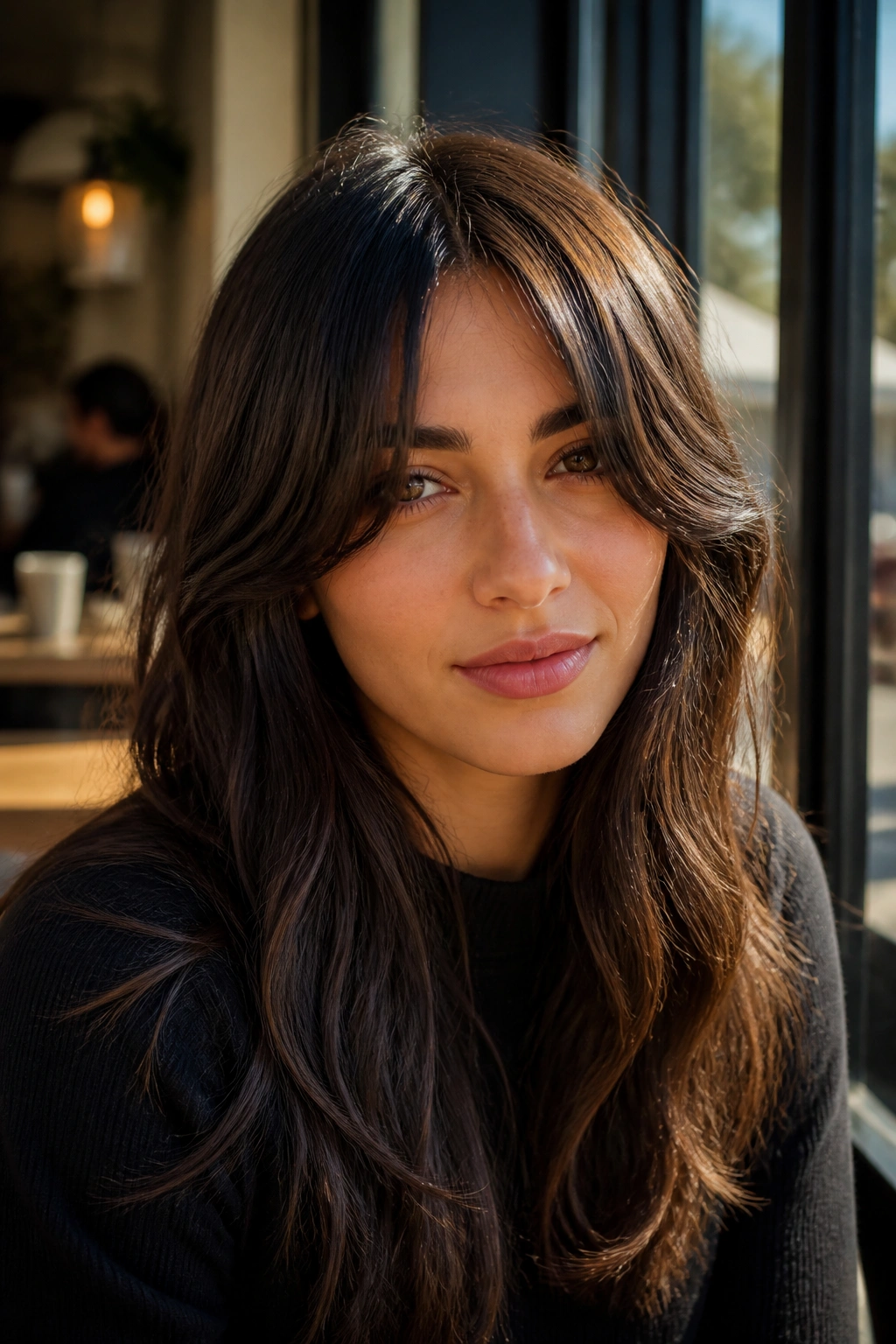
Bottleneck curtain bangs start narrow at the center and open out like a soft funnel, which is why they look sharper than a standard curtain fringe. The center piece stays a little slimmer, then the sides widen just enough to graze the temples and cheekbones.
That tiny difference changes the whole mood. The style keeps the forehead open, but it gives the front of long hair more shape than a loose, airy bang would. I like this version on people who want a cleaner line without the bluntness of a straight fringe.
It also helps if your hair grows forward around the hairline or tends to split in odd places. The narrower center gives the part a home. If your bangs keep collapsing into your eyes, this shape is worth trying.
Use a small round brush or a blow-dry brush and direct the center straight down for a second before flicking the sides away from the face. That little pause helps the shape settle instead of puffing out too high at the root.
3. Soft Shag Curtain Bangs on Wavy Lengths

Why do shaggy curtain bangs look so good on long, wavy hair? Because the texture does half the work. The bangs do not need to be perfect; they need to sit in the same loose rhythm as the rest of the cut.
The shag keeps the front pieces light and broken up, so the bangs can split naturally instead of fighting for control. That makes this a smart choice if your hair has a little bend already and you do not want to spend ten minutes every morning forcing symmetry.
How to Style It
Scrunch in a light mousse before drying, then use your fingers to separate the front sections while they’re still warm. A diffuser can help, but I honestly think a fast air-dry with a bit of touch-up around the face often looks better.
A few pieces will fall forward. Good. That’s the point.
- Best with shoulder-blade-length hair and longer
- Works especially well on wavy or loose-curly textures
- Needs only a small trim every few months to keep the front from dropping too low
Keep the crown a little fluffy and the ends a little rough. That imbalance is what makes the whole thing feel lived-in instead of staged.
4. Wispy Curtain Bangs That Barely Skim the Eyes

Picture someone who wants bangs but is nervous about bangs. Wispy curtain bangs are usually the answer. They sit light on the face, skim the eyes, and leave enough skin showing that the haircut still feels like long hair first, fringe second.
The trick is density. You want a narrow section from the front hairline, then soft graduation out toward the temples. If the section is too wide, the bangs stop being wispy and start looking sparse. That is a bad trade.
What Makes Them Different
The ends should look slightly translucent, not stringy. There’s a difference. Stringy means too thin or too dry. Translucent means light but intentional, with enough movement that the fringe breaks apart when you sweep it aside.
A wispy fringe is also kinder to strong cowlicks than a heavy one, because there’s less hair fighting for position. It grows out easily, too, which matters if you know you won’t touch up every six weeks.
Best pairing: long layers, loose waves, and a tiny bit of dry texture spray at the roots.
If you have fine hair, keep the longest pieces around the cheekbone or just below it. That gives the fringe enough shape to hang properly without looking see-through in a bad way.
5. Full Curtain Bangs with a Clean Middle Part

A fuller curtain bang changes the mood fast. It gives long hair a little more presence around the face, and it works especially well if your hair is dense enough to support that weight without going limp by noon.
This version is not airy. It is plush. The split in the middle still opens the face, but each side holds enough hair to make the front feel substantial. That’s useful if your forehead is longer or if you want the bangs to stand up to a strong blowout.
The main mistake here is thinning too aggressively. People get scared of bulk and over-texturize the fringe, then wonder why it looks weak. Leave enough heft in the center so the part doesn’t collapse.
I’d ask for a clean middle split, a soft drop from the brow to the cheekbone, and no razor-thin ends unless your hair is very thick. You want movement, not fraying.
This is one of those styles that looks best when the hair is fully dry and brushed through once. Wet styling rarely shows the real shape.
6. Curly Curtain Bangs That Bounce Off the Cheeks
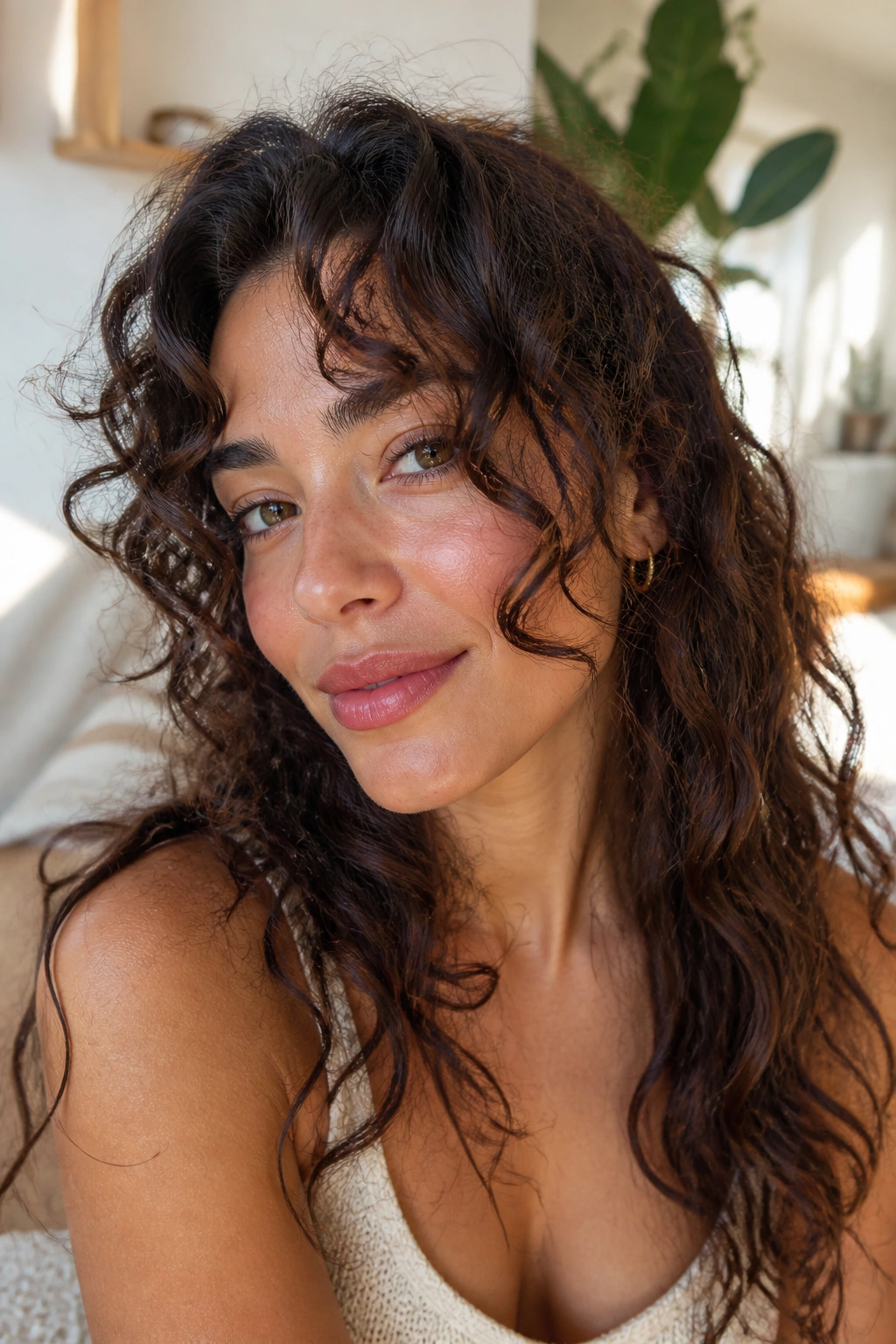
Curly curtain bangs are not just a straight-hair style translated into curls. They need room for shrinkage, and they need enough length to spring back without ending up too short. That’s the part people often miss.
If your curl pattern tightens as it dries, the shortest pieces should probably land lower than you think. Curls climb. They always do. Cut them too short and you get a little puffy triangle instead of a curtain shape.
What Makes It Different
The goal is not a sharp split. It is two curved pieces that open and fall away from the face while still keeping their spring. On looser curls, that might mean cheekbone length. On tighter curls, it can mean much longer.
A curl-friendly curtain bang usually works best when it’s cut with the hair dry or stretched to a natural state, because wet curls hide their true length. That one detail saves a lot of regret.
- Use a curl cream with slip, not a heavy butter
- Diffuse on low heat or air-dry with clips at the root
- Leave a little extra length at first; you can always trim later
The nicest thing about curly curtain bangs is the softness. They don’t scream “I have bangs.” They just make the front of the haircut feel finished.
7. Rounded Blowout Curtain Bangs
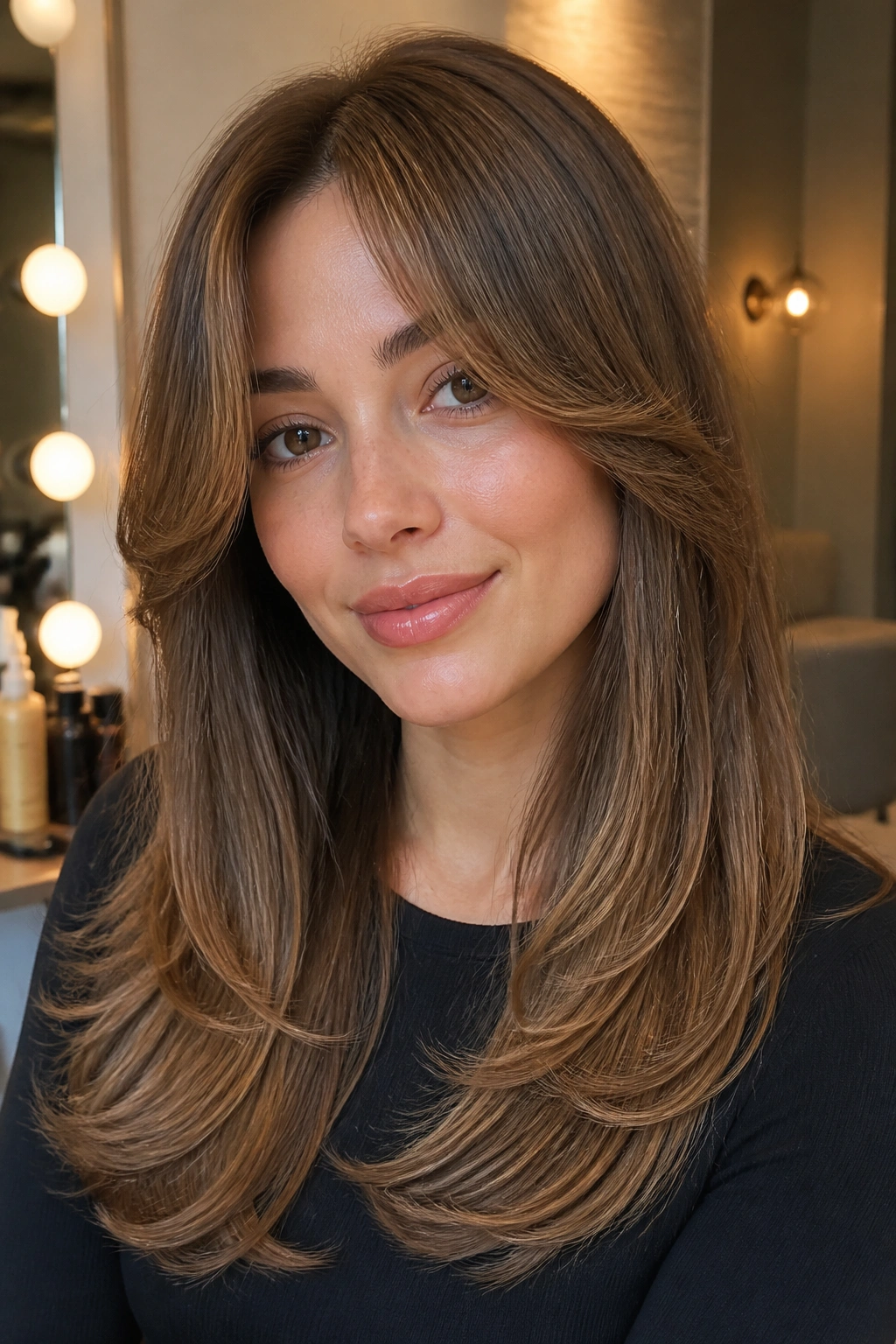
Rounded blowout curtain bangs are for people who like a little polish without going full pageant hair. The front lifts at the root, curves away from the cheeks, and settles into that smooth, brushed shape that looks especially good with long layers.
Why It Works
The round brush creates tension, and that tension is what gives the fringe its arc. If you simply blast the front with a dryer, it usually dries flat or flips in weird directions. A brush fixes that by directing the hair where you want it to go.
Use a heat protectant, a medium round brush, and medium heat. Pull each side of the fringe up and then away from the face, rolling slightly at the ends. Let the hair cool on the brush for a second before releasing it. That cooling step matters more than people think.
This style pairs well with glossy long hair, loose curls, or a smooth blowout through the lengths. It does need a little morning work, though. Not loads. Just enough to make the bend hold.
If you hate spending time on bangs, skip this one. If you like a little ritual with your hair dryer, this is a good fit.
8. Face-Framing Curtain Bangs with Long Layers

What makes this version so useful is that the bangs don’t stop at the front. They flow into longer layers that start around the chin or collarbone, which makes the whole cut feel connected.
The face frame can be subtle or pronounced, but the point is the same: the curtain fringe should not look cut off from the rest of the hair. On long hair, that seamless drop gives the front pieces a lot more purpose.
I like this shape for anyone who wants movement but hates the “two separate haircuts” problem. You know the one. Bangs up front, long hair everywhere else, and nothing in between. This avoids that.
How to Ask for It
Ask for your shortest front pieces around the cheekbone, then ask for layers that keep going down the front of the hair in long, soft steps. No hard shelf at the jaw. That’s the wrong look here.
This cut is flattering because it draws the eye down the face in a gentle line. It also grows out cleanly, which makes the maintenance easier than it looks.
9. Butterfly Cut Curtain Bangs
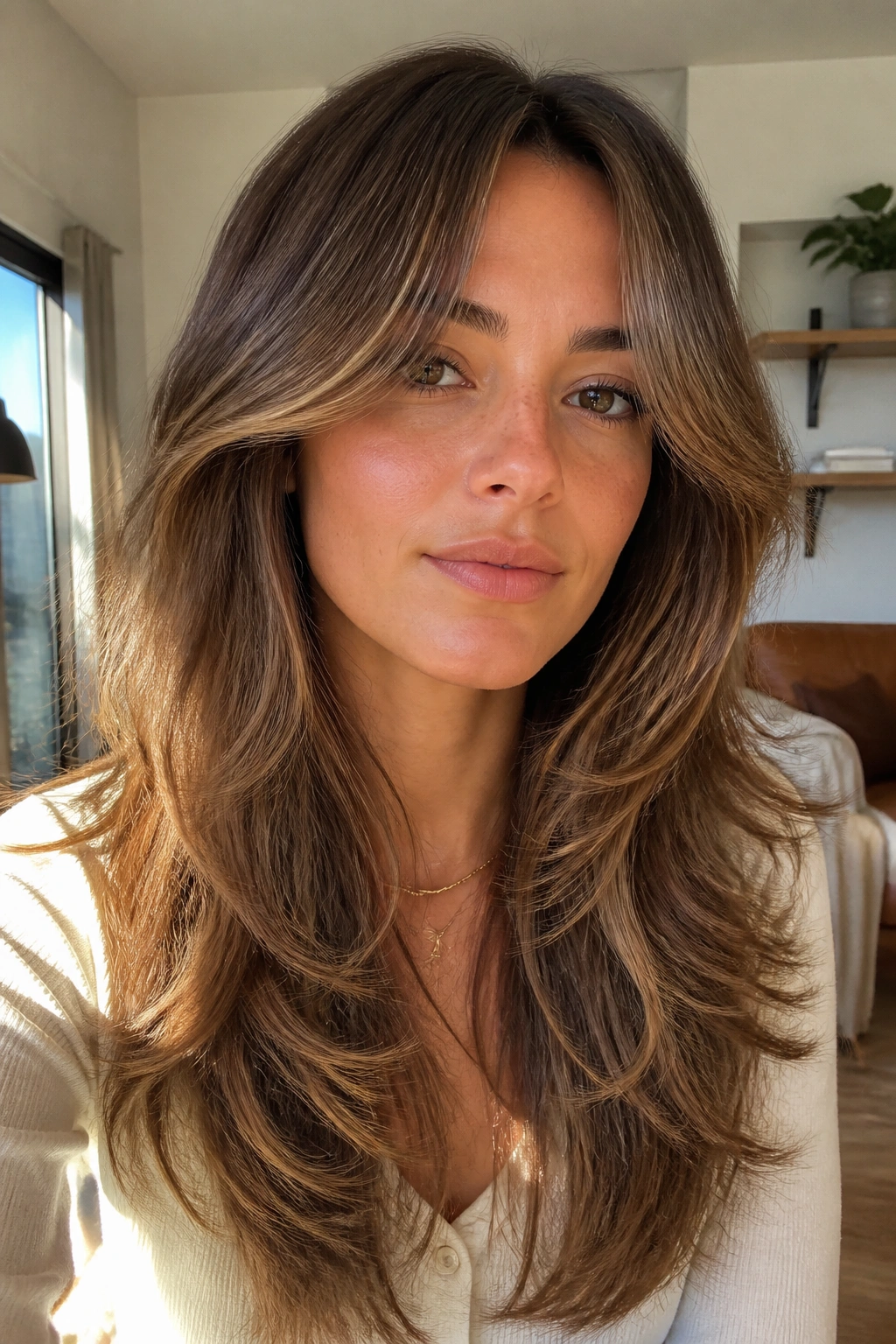
The butterfly cut and curtain bangs are basically cousins that get along too well to ignore. The front pieces are shorter and more lifted, while the longer layers keep the length dramatic. On long hair, that combo gives you movement without sacrificing the sense of length.
Why does it work so well? Because the front layers are designed to “float” around the face while the back stays long. The bang becomes part of a larger shape instead of a little add-on. That matters if you want your hair to look full when it’s down and airy when it’s styled.
How to Use It
Blow-dry the front away from the face, then clip the top section up for a few minutes while it cools. That small trick helps the layers hold their bend. A large Velcro roller can do the same job if you’re patient enough.
This is a strong choice if your hair is thick, layered, or already cut with lots of movement. On very fine hair, the shape can look a little too separated unless the cut is handled carefully.
Best for: big blowouts, loose curls, and people who like their hair to feel full at the crown.
10. Feathered Curtain Bangs with Airy Ends

Feathered curtain bangs are all about the finish. The ends are soft, broken up, and light enough that they don’t sit in one heavy line across the forehead. That feathering makes long hair feel less solid around the front.
A lot of people use the word “wispy” for this, but feathered is different. Wispy can mean thin. Feathered means the hair has been shaped so the ends taper and move. It has softness, but it still holds form.
If your hair is thick or coarse, this approach can take some weight out of the front without making the bang too sparse. Ask your stylist not to over-thin the middle. You want the fringe to open, not fray.
A flat brush or a paddle brush can work here if you want less curve than a round brush gives. You’ll get a smoother fall, which is nice if your long hair is mostly straight.
This is one of my favorites for people who want a fringe that feels light even on humid days. It tends to behave.
11. Thick Curtain Bangs for Dense Hair
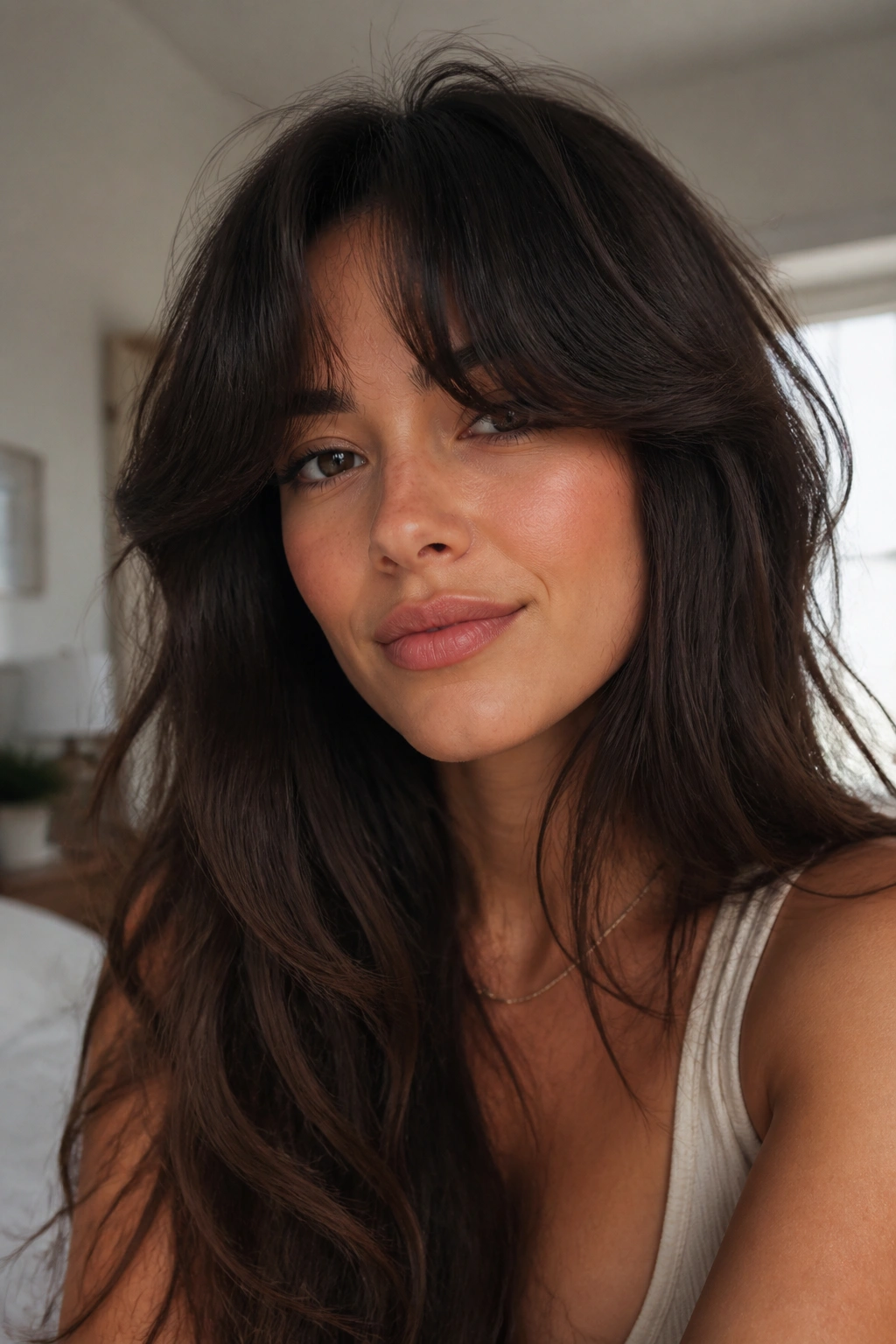
Dense hair can carry a heavier curtain bang better than fine hair can, and that opens up some options. You can keep the front fuller, let the split sit more dramatically, and still have enough movement for the shape to read clearly.
The mistake people make with thick hair is removing too much bulk near the center. Then the fringe splits open, but the sides still feel heavy. The fix is balance, not aggressive thinning. The center needs room, and the sides need gradual blending.
What to Watch For
If your hair is dense at the roots, the bang may puff when it’s freshly blown dry. That’s normal. Smooth the root with a brush, then let the ends swing out once the hair cools.
- Use a root-lift spray only at the scalp
- Keep a light touch with texturizing shears
- Ask for internal removal, not choppy surface thinning
A thick curtain bang looks especially good on long, dark, or glossy hair because the shape reads clearly from across the room. It’s a bolder version of the style, and I mean that in a good way.
12. Curtain Bangs with a Slight Side Drift
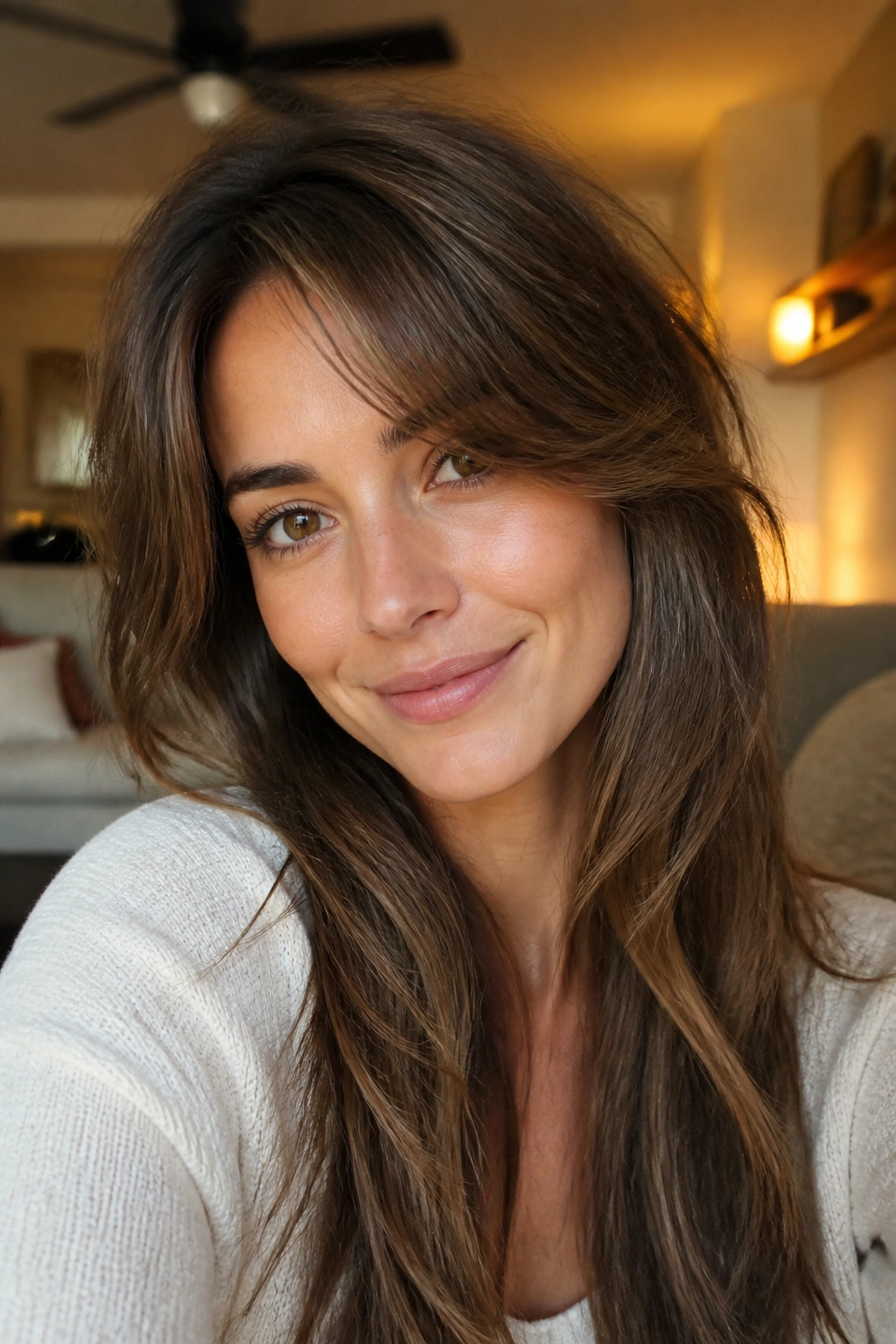
Not everyone wants a perfect center part. A slight side drift softens the curtain bang just enough to feel relaxed, which can be a relief if your natural part never sits dead center anyway.
This version keeps the basic split, but one side falls a touch deeper than the other. That tiny asymmetry can make the front look more natural, especially if you have a cowlick or a strong growth pattern near the hairline.
The nice part is that it still reads as a curtain fringe. You’re not abandoning the idea. You’re just making it fit your face instead of forcing your face to fit the idea.
I’d choose this if a strict middle part makes your forehead feel too exposed or if one side of your face tends to carry more volume than the other. Hair is rarely symmetrical in real life. Trying to make it behave that way can look stiff.
A quick side bend with a brush, then a finger-comb through the center, usually does the trick.
13. Sleek Straight Hair with Soft Curtain Bangs
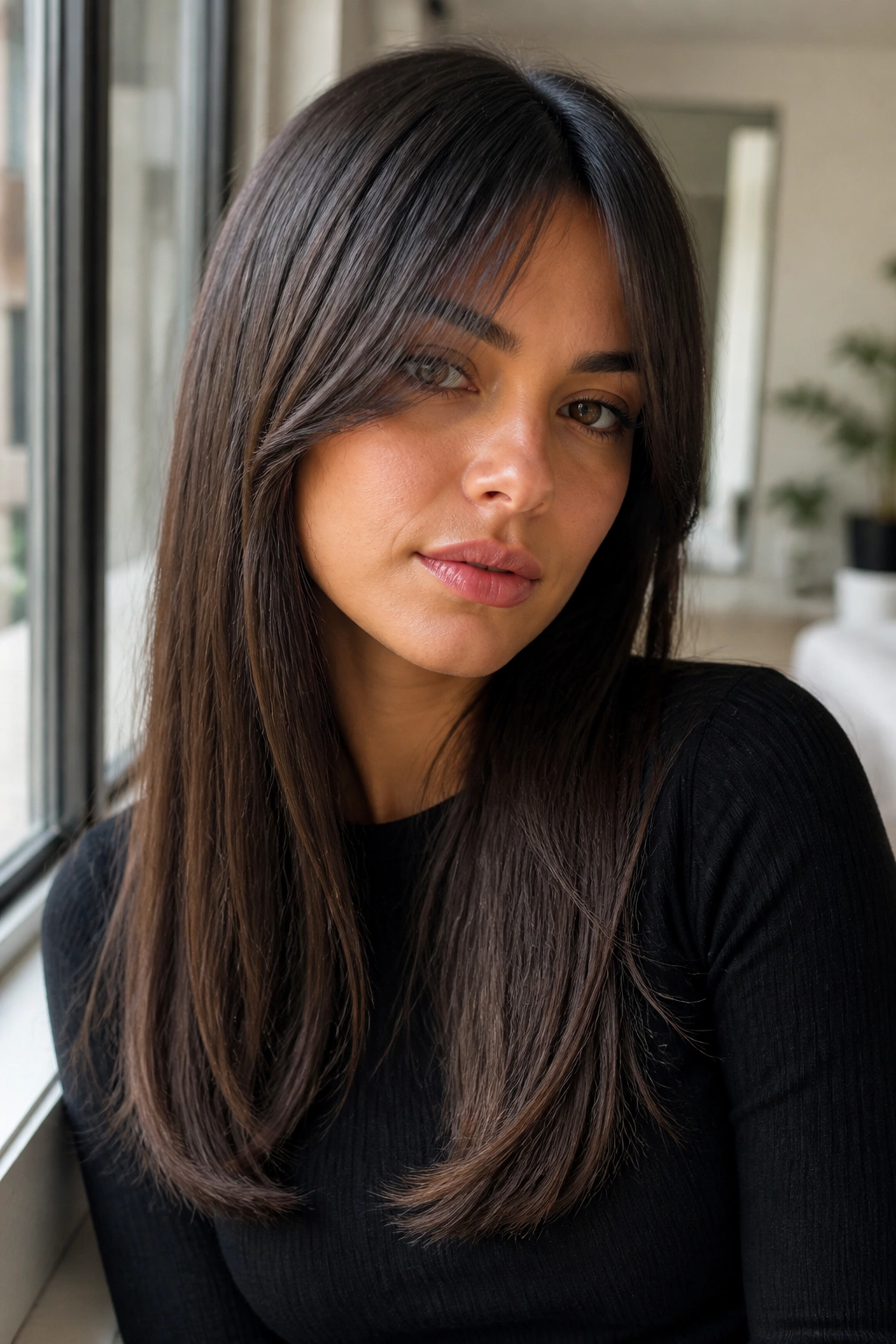
Does straight hair make curtain bangs harder? Not really. It just makes every line more visible, which means the cut has to be clean. When it’s done well, the result is sharp in a quiet way.
With straight long hair, the fringe should be soft enough to avoid looking severe, but not so layered that it loses its shape. A little bend at the ends helps. So does a light serum on the mids and ends of the fringe, not the roots.
How to Style It
Use a flat brush or a small round brush to direct the bangs away from the face, then smooth the outer pieces so they sit in line with the lengths. If your hair is pin-straight, a tiny bevel at the ends keeps the fringe from looking pasted on.
This style is good for people who like clean parting lines and low-fuss styling. It can be worn tucked, clipped, or left loose. It also shows off shine, which long straight hair usually has plenty of when it’s healthy.
The only catch: split ends show fast. Keep the front pieces trimmed before they start brushing past the collarbone in a way that makes the shape disappear.
14. Curtain Bangs and Collarbone Layers
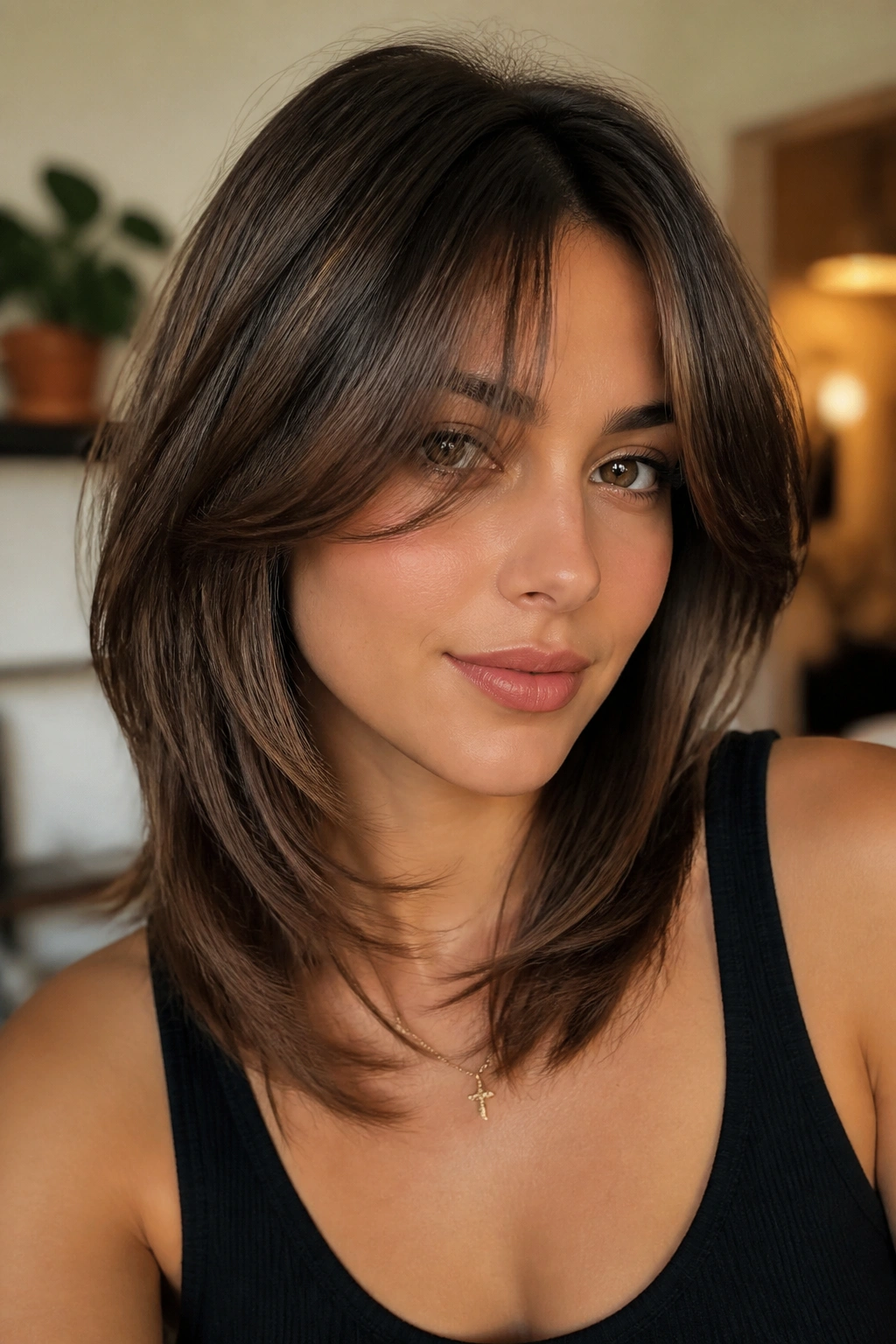
Collarbone layers give curtain bangs a place to land. That’s the simplest way I can put it. The bangs fall, the layers follow, and the whole front of the haircut feels deliberate instead of improvised.
This combo is useful if you’re growing out a shorter cut or if you want your long hair to move more without losing length. The layers start low enough to keep the ends looking full, but they still let the face frame travel down the front.
The shape works especially well if your hair tends to puff around the shoulders. A collarbone layer breaks that weight up and keeps the haircut from feeling bottom-heavy.
Ask for the shortest curtain pieces around the cheekbone, then ask the longer layers to begin where the collarbone sits on your body. That placement sounds small. It isn’t. It changes how the whole haircut hangs.
I like this one on people who wear sweaters, jackets, and high-neck tops a lot. The fringe keeps the face open when clothes add bulk around the neck.
15. 90s Blowout Curtain Bangs
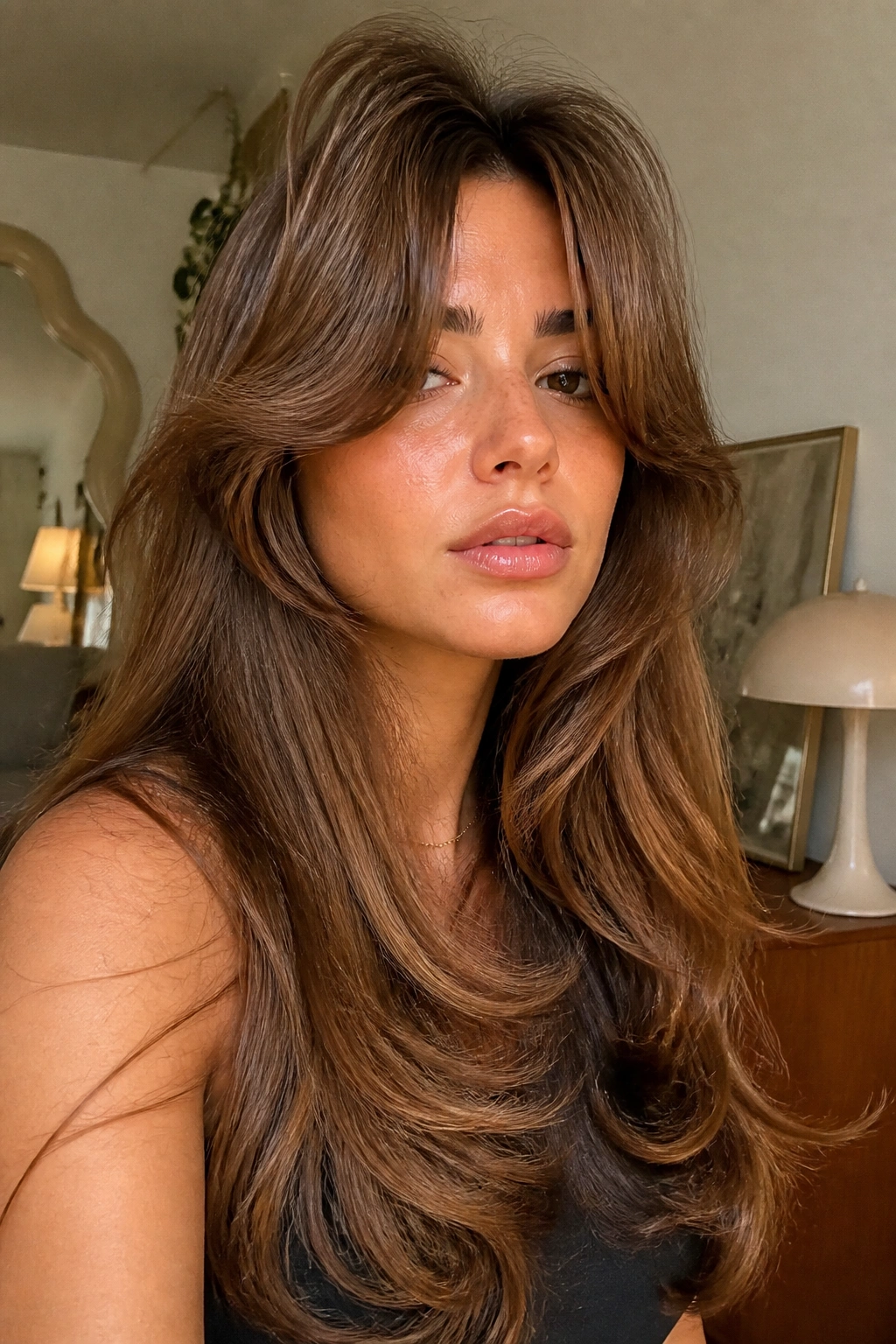
Big volume makes this style. Not tiny, airy volume. Proper, round-brushed lift at the root, with the bangs flipping away from the face in a soft, glossy curve.
Why does it work with long hair? Because the length gives the blowout something to balance against. The fringe can be full and bouncy without feeling too short or too modern in a slick way. It has a little glamour, but not the stiff kind.
How to Get the Shape
Set the front with a large round brush or a medium Velcro roller. Pull the bangs up at the root, then away from the face, and let them cool before brushing through. A soft-hold hairspray helps, but don’t drench it. You want movement.
This version looks especially good when the ends of the long hair are flipped under or given a loose curve. It likes shine. It likes body. It does not like limp roots.
Good for: thicker hair, layered cuts, and anyone who enjoys a bit of styling time.
If your hair is fine and flat, you can still wear it, but you’ll need root clips or a little mousse at the crown to keep the lift alive.
16. Barely-There Curtain Bangs for Low Drama
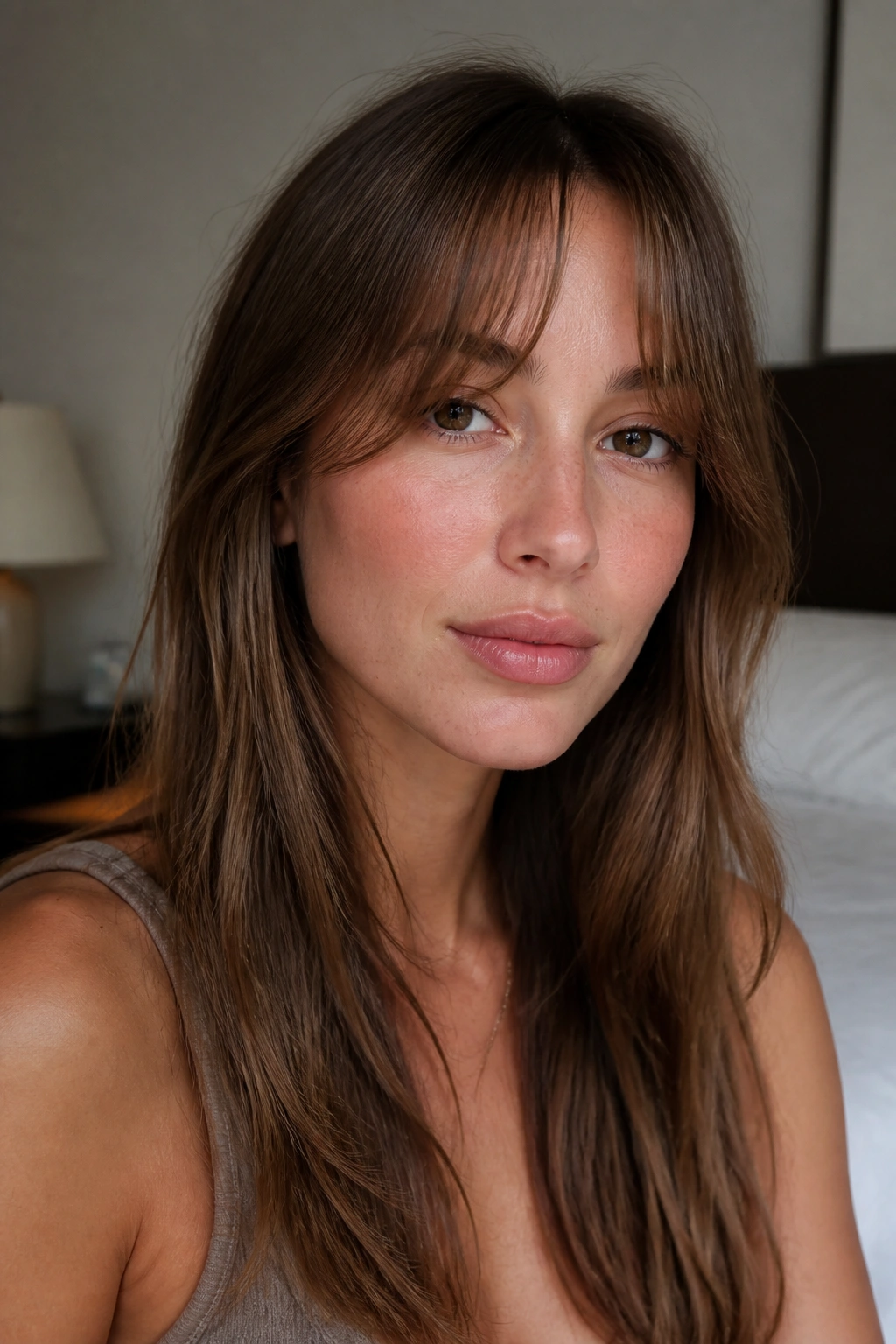
Barely-there curtain bangs are the quiet version of this whole haircut. They sit long, light, and loose, so the eye reads them as a face frame before it reads them as bangs.
This is a smart move if you’re hesitant or if your lifestyle doesn’t leave much room for styling tools. The fringe should merge into the front lengths fast. No hard line. No heavy split. Just enough shaping to show there was a haircut there.
A lot of people overlook this version because it sounds too subtle, but subtle is useful. It lets you test the waters without committing to a strong shape that needs maintenance every few weeks.
The key is not to cut the front too close to the eyes. Keep the shortest bits around the cheekbone or even slightly below, then let the sides drop into the rest of the hair.
Best if you wear your hair up a lot. These bangs still look good when the rest goes into a clip or ponytail, which is one of the reasons I keep recommending them.
17. Fine-Hair Curtain Bangs with a Light Bend

Fine hair needs a lighter hand. A curtain bang that’s too thick can go flat, and one that’s too thin can disappear. The sweet spot sits in the middle: enough hair to show shape, not so much that it drags down the front.
A light bend helps here. You don’t need a big blowout or a heavy brush. You need a little curve away from the face and a soft taper into the longer lengths. That keeps the front looking awake.
What Makes It Different
Instead of carving out a big section, the cut should feel almost delicate. The texture at the ends matters more than the bulk. If the ends are too blunt, the fringe sits like a shelf. If they’re too shredded, the hair starts looking see-through.
- Choose a small section at the front hairline
- Keep the longest pieces around cheek to jaw length
- Use a lightweight mousse or root spray, not creamy products that collapse fine hair
A lot of fine-haired readers think bangs are off-limits. They are not. They just need a softer touch and less hair than dense textures do.
18. U-Shaped Long Hair with Curtain Bangs

A U-shaped cut and curtain bangs make sense together because both shapes soften the outline. The lengths curve gently at the back, and the bangs echo that curve at the front. The whole haircut feels rounded without looking fluffy.
This is a nice option if you want long hair to keep its fullness through the ends. A blunt hemline can feel heavy. A U-shape gives the hair more swing. Add curtain bangs, and the front gets the same easy movement.
You’ll usually see this shape on hair that’s been layered just enough to avoid a blocky finish. That is the point. The bangs should blend into a cut that already has a little curve built in.
The styling is straightforward. Blow-dry the front away from the face, then smooth the ends of the long layers under or slightly outward depending on your texture. The two shapes should feel related, not identical.
If your hair is naturally thick, the U-cut can stop it from looking bottom-heavy. If it’s finer, it can help keep the length from looking thin at the ends.
19. Wavy Curtain Bangs That Blend Into the Length

Wavy hair is made for curtain bangs when the cut respects the wave pattern. The bangs don’t need to be pinned into a perfect split every day. They need to fall into the wave and keep moving with it.
The best thing about this look is how little it fights your texture. The front pieces can curl a touch, bend a touch, and still frame the face. That gives the haircut a loose, effortless feel without pretending it takes no work at all.
How to Style It
Use a light wave cream or mousse on damp hair, then twist the front sections away from the face before diffusing or air-drying. Once dry, separate the pieces with your fingers and leave a few flyaways alone. They belong there.
A wavy curtain bang can get too puffy if it’s cut too short, so leave a little extra length at first. Better to trim later than to wait months for it to grow out of the eyes.
- Keep the shortest point around the cheekbone
- Avoid heavy oils at the root
- Refresh with water and a pea-sized amount of leave-in between washes
This one is easy to live with. That’s a real selling point.
20. Razor-Cut Curtain Bangs with Texture

A razor-cut fringe is not for every head of hair, but when it works, it gives curtain bangs a broken, airy texture that scissors alone sometimes can’t create. The line looks softer, and the ends move more freely.
The catch is that razor work needs the right hair type. On very fragile or overly dry hair, a razor can rough up the ends and make them frizz. On thick, healthy hair, though, it can make the fringe lie closer to the face and lose some of that blunt, heavy feel.
I’d choose this version if your hair has a bit of natural grit or if you want the front to look piecey rather than smooth. It pairs well with undone waves, rough blow-dries, and layered lengths that already have some texture.
Don’t over-style it. That’s the whole point. A razor-cut bang usually looks better with fingers than with a brush. Brush too much and you flatten the edge that makes it interesting.
Ask for soft shaping, not a shredded finish. There’s a difference, and it matters.
21. Chin-Skimming Curtain Bangs

Chin-skimming curtain bangs make a bigger statement than cheekbone-length ones. They swing lower, brush the jaw, and give long hair a more dramatic front frame without becoming full blunt bangs.
This length is useful if you want your bangs to be part of the hairstyle rather than a small accent. They hold their own next to very long lengths and can be tucked behind the ear when you want them out of the way.
Why Choose This Length
The chin line is a strong place for bangs to land because it creates a visible frame around the face. It can soften a sharper jaw, narrow a wider forehead visually, or just give straight long hair more shape near the front.
The downside is maintenance. Longer bangs still need shaping, especially if your hair grows quickly around the temple area. If you wait too long, they drift into the rest of the cut and stop reading as bangs.
This is a good choice for people who like a slightly dramatic swing when they turn their head. The movement is the point.
22. Root-Lifted Curtain Bangs with Big Volume

Some bangs lie flat. These don’t. Root-lifted curtain bangs are built for people who want the front to stand up a little, separate cleanly in the middle, and keep its shape through a long day.
The look starts at the scalp. If the root is flat, the whole bang collapses. If the root lifts, the rest of the fringe follows. That’s why this version benefits from a small setting clip, a root spray, or a round brush that actually pulls the hair up before it goes back.
The best part is how alive the front looks. It doesn’t sit on the face. It floats.
A little backcombing at the crown can help, but keep it light. You’re not building a beehive. You’re just nudging the hair off the scalp so the split has room to breathe.
This style suits long hair that already has body, or hair that takes a blow-dry well and holds shape without turning stiff.
23. Grow-Out Friendly Curtain Bangs

A grow-out friendly fringe is one of the smartest bangs you can ask for, and curtain bangs do this better than most shapes. The sides keep length, the middle stays open, and the whole thing shifts into face-framing layers before it becomes awkward.
That is why people like this version when they are unsure about bangs. You get the change without locking yourself into a hard maintenance cycle. The cut is forgiving, which is a rare thing in fringe land.
How It Grows Out
As the shortest pieces get longer, they slide into the rest of the front layers instead of forming a blunt line. That means you can stretch trims longer than you can with a straight fringe. The front still looks intentional even when it’s past its first shape.
- Let the shortest point stay below the eyebrow line
- Keep the sides long enough to tuck
- Trim only the center and temples when needed
This is also the version I’d point to if you wear your hair in different parts, change your styling often, or hate the idea of a fringe that demands constant attention.
24. Curtain Bangs for Braids, Buns, and Half-Up Styles

Curtain bangs earn their keep when the rest of the hair goes up. A braid, bun, or half-up style can feel a little severe on long hair; the front pieces soften the whole thing and keep it from looking pulled back too tightly.
That versatility is the real draw here. You can wear the bangs loose, pin them off to the side, or let them fall around the face while the rest of the hair is clipped away. It gives you options on days when you want your length off your neck but still want some shape in front.
What to Ask For
Keep the shortest pieces long enough to sit beside the eye, not above it. That way they can tuck into a braid or sweep into a twist without sticking out in odd little spikes.
- Works well with claw clips
- Good for gym hair, work hair, and weekend hair
- Needs a trim before it grows into the mouth/chin zone and gets in the way
If you live in updos, this is one of the most practical curtain bang ideas on the list. It earns its place because it keeps looking useful no matter what you do with the rest of your hair.
25. Tailored Curtain Bangs for Your Face Shape
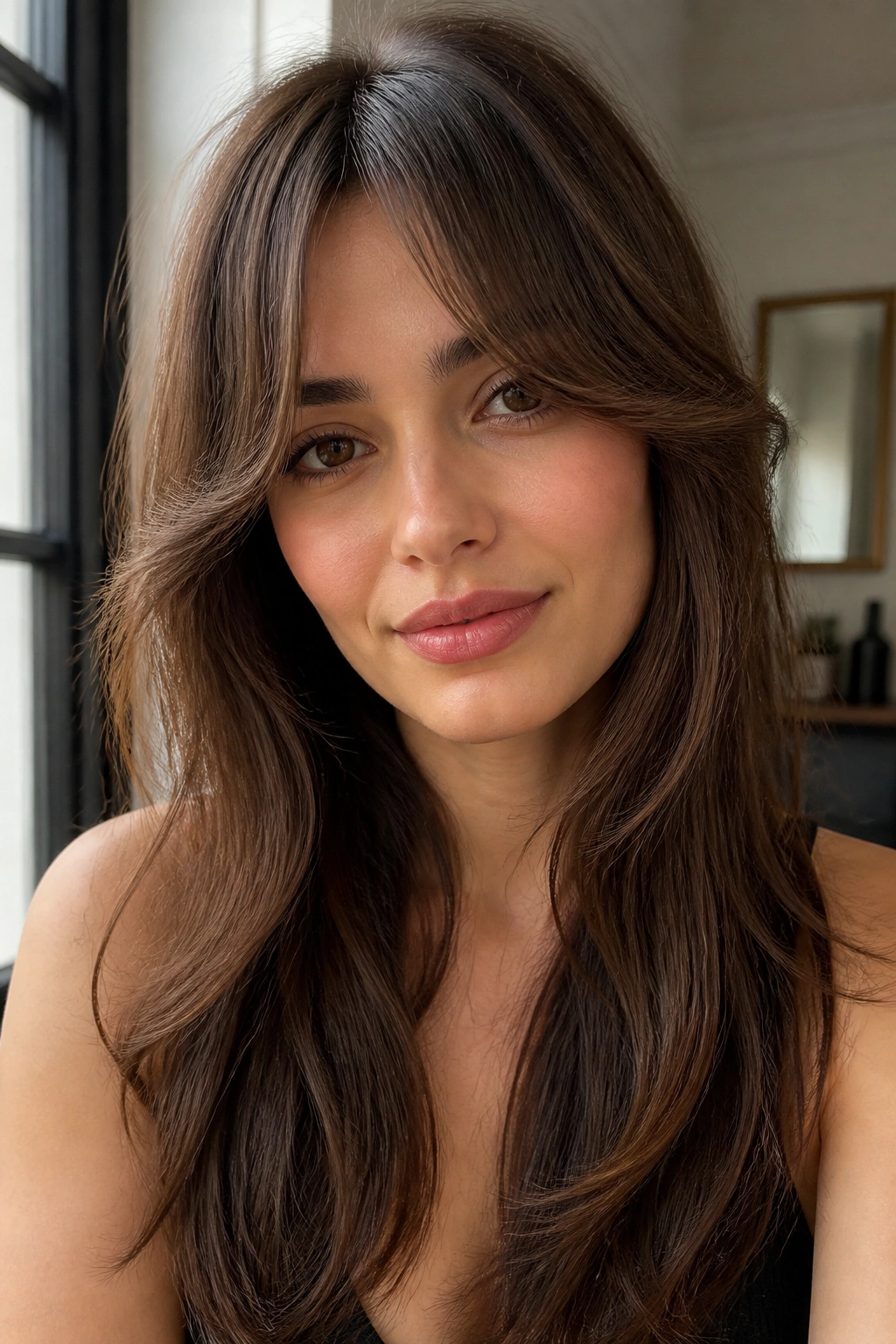
The most flattering curtain bangs are usually the ones that look like they were cut with your exact face in mind. Not a magazine model. Not a trend chart. Your forehead, your cheekbones, your jaw, your cowlicks, your parting habits. All of it.
A tailored version can be cheekbone length on one person and closer to the lips on another. The real question is where the hair should land to give balance without hiding your features. Longer faces often like a bit more width at the sides. Rounder faces usually benefit from a longer drop that narrows the front. Strong cowlicks may need a deeper center section and a little extra length near the part.
How to Think About the Shape
Stand in front of the mirror with your hair dry and pushed apart where it naturally falls. Then notice where the front hair wants to sit without force. That’s usually the right place to start.
The best curtain bangs do not fight your hairline. They work with it, then clean it up a little.
If you want a safer path, ask for the first cut to be longer than you think you need. Long hair gives you room to refine the shape later. Bangs that are too short announce themselves loudly. Bangs that are slightly long can be nudged, brushed, clipped, or trimmed into something better. That flexibility is the whole reason curtain bangs on long hair stay popular with people who like options.
