



Brown hair can look flat fast when every strand sits in the same shade. Subtle highlights for brown hair fix that without forcing you into streaks that shout across the room.
The trick is placement, not brightness.
The best versions do not announce themselves from across the room. They look like sunlight, caramel, ash, or soft copper landed in the right places, with just enough lift to wake up the cut and keep the base shade doing most of the work.
And that is where people go wrong. They chase contrast instead of movement, then wonder why the result looks striped on day one and brassy a few washes later. Start with the softest ribbons first; they’re usually the easiest place to get this right.
1. Caramel Ribbons Through Chocolate Brown
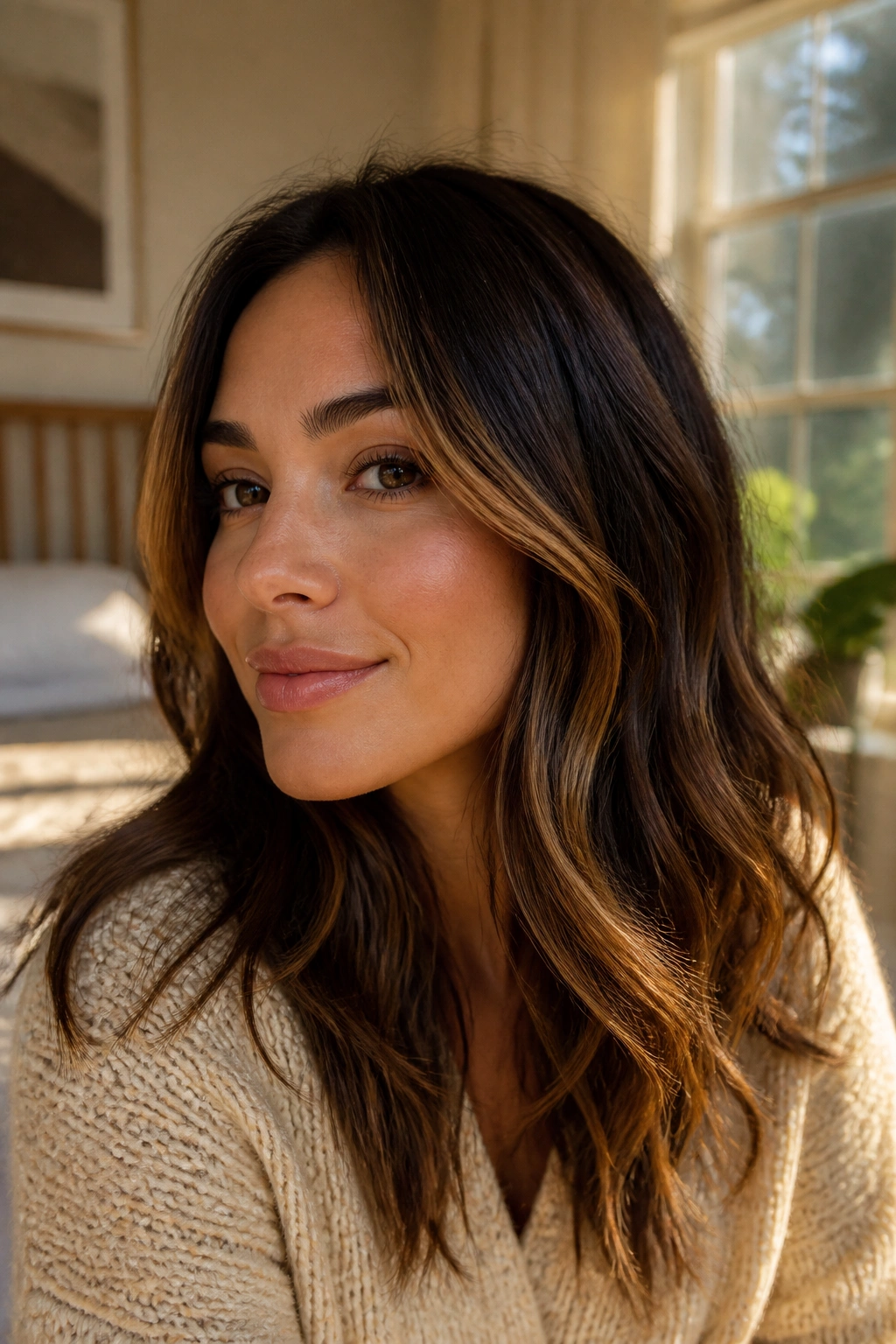
Some highlight ideas are loud. This one isn’t.
Caramel ribbons threaded through chocolate brown hair give you warmth without breaking the base shade into stripes. Ask for ribbons that sit one to two levels lighter than your natural brown, and keep the lightest pieces below the root so the grow-out stays soft. If your hair sits around a level 4 or 5, this is usually the first color move I’d pick.
A few narrow pieces near the face do more work than a whole head of brightness. They wake up tired brunette hair, especially on a blunt cut or long layers where the ends can start to look heavy. The best caramel reads creamy, not orange.
What to Ask For
- Fine hand-painted ribbons through the mid-lengths
- A neutral-warm toner, not a yellow one
- A light face frame that starts lower than the root
- A gloss refresh every 6 to 8 weeks
Best with: loose waves, a silk press, or any cut that needs a little movement.
2. Honey Babylights for Brown Hair
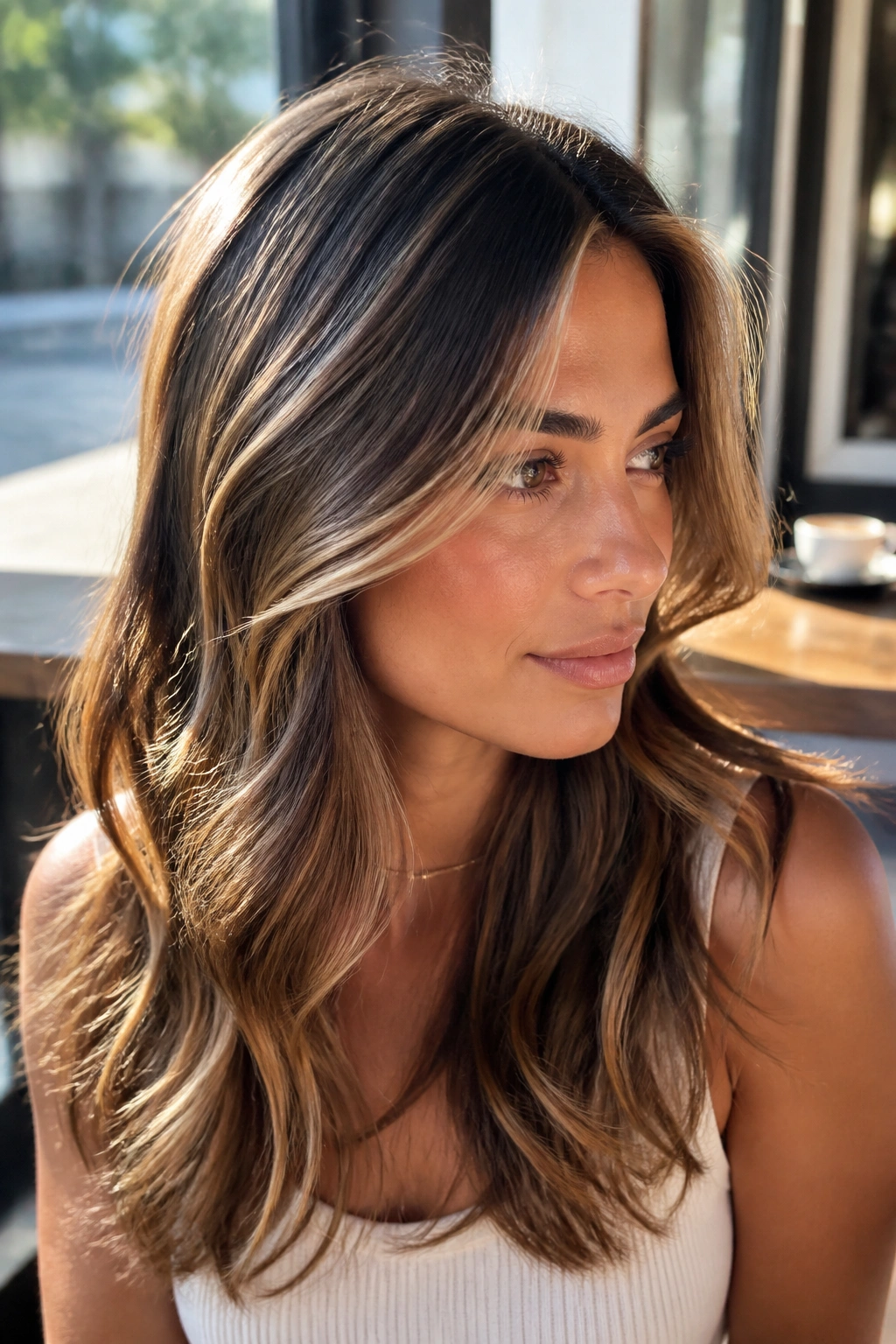
Want the smallest change that still wakes up brown hair? Honey babylights do that.
These are ultra-fine lightened strands, often sliced so thin they disappear until the hair moves. Around the crown and parting, they mimic the way sunlight naturally lands on hair, and that is why they look soft instead of streaky. If your hair is medium brown or dark blonde-brown, ask for honey instead of bright gold; it stays warmer and less stark.
Why They Stay So Quiet
- Use 1/8-inch to 1/4-inch sections.
- Concentrate them at the top layer and hairline.
- Keep the lift only 1 to 1.5 levels lighter than the base.
- Finish with a beige or honey gloss.
A lot of people assume babylights are boring. They are not. They’re the reason a plain bob suddenly starts moving again.
Best for: anyone who wants dimension without obvious color stripes.
3. Chestnut Lowlights That Add Depth
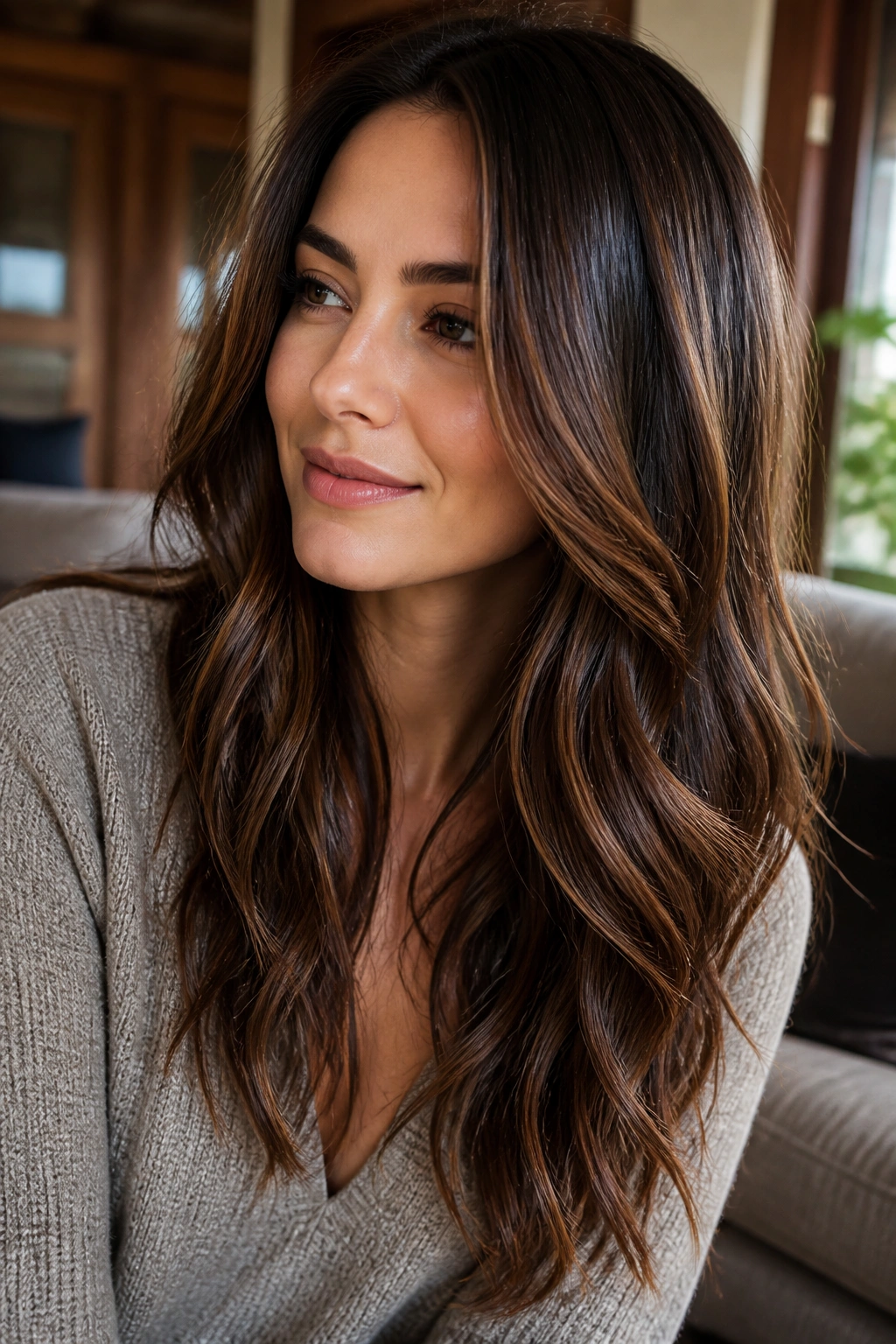
Darkening a few pieces is sometimes smarter than lightening everything.
Chestnut lowlights give brown hair a fuller, richer look by dropping a few deeper strands back into faded or overlightened sections. That sounds simple, and it is. On hair that has gone too warm at the ends, chestnut can pull the color back into line without making the whole head darker. On thin hair, the effect is even better because the extra contrast makes the cut look denser.
The sweet spot is usually a demi-permanent shade one level deeper than your base, not a heavy espresso block. You want shadow, not a helmet. That small difference matters when the hair falls around the face or is worn straight, because lowlights can look muddy if they are packed too tightly.
If your brown hair has lost its shape, this is a quiet fix that works fast. It is not flashy. It’s useful.
4. Mushroom Brown Dimension for Cooler Brunettes
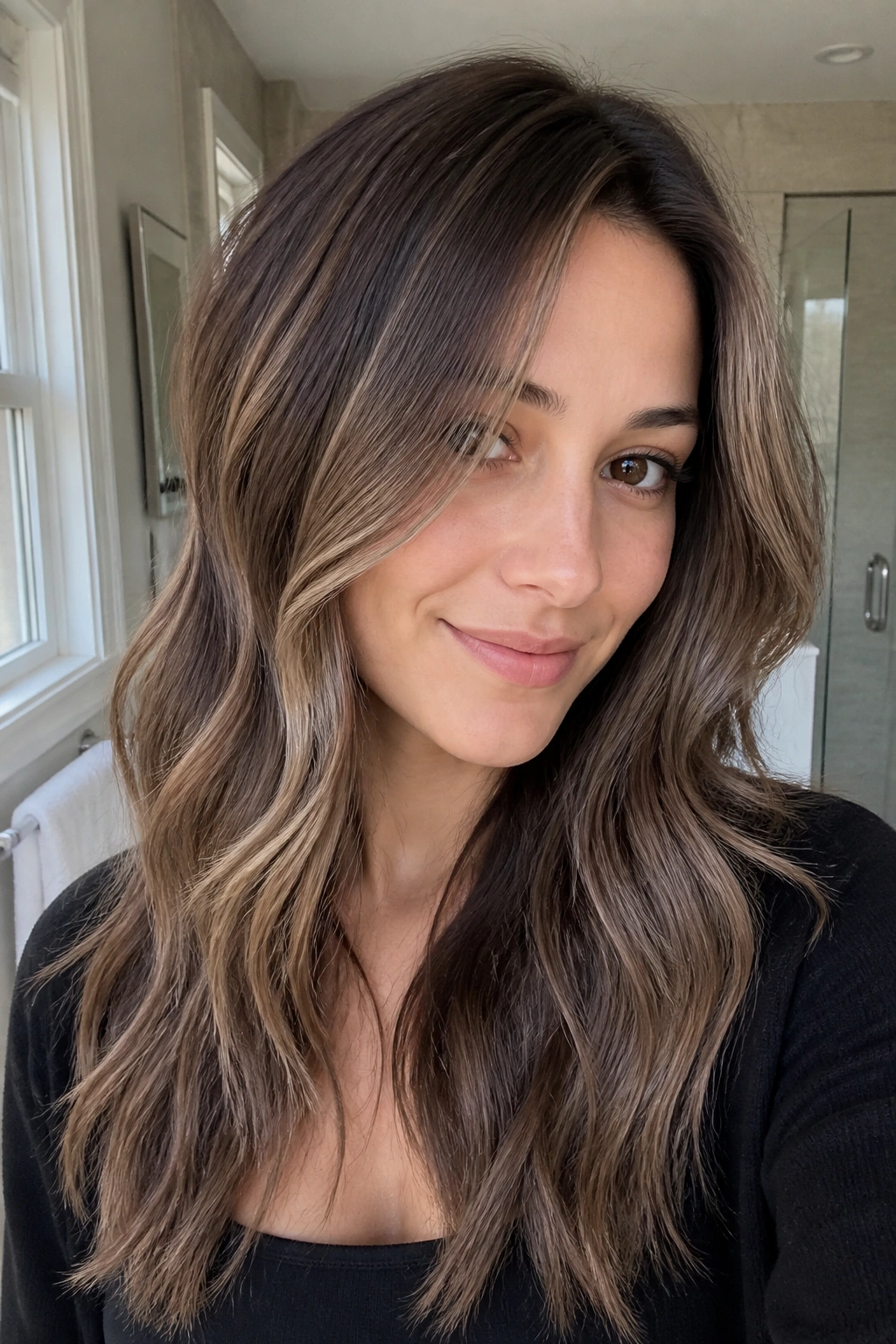
If your brown hair turns orange the minute bleach touches it, mushroom brown dimension may feel like relief.
This look leans cool: taupe, ash-beige, muted sand, and a little smoky brown through the top layer. It is especially nice on brunettes who want to move away from red and copper without going all the way blond. The result should feel earthy, not dull. There is a difference, and it’s a big one.
What to Watch For
- Ask for ash-beige ribbons, not blue-black pieces.
- Keep the lightening subtle, usually no more than 2 levels.
- Balance the cool tone with a soft gloss so it does not look green.
- Use a purple or blue shampoo only when brass starts to show.
Mushroom brown works best when the colorist leaves some warmth in the base. If everything goes flat and gray, the whole head can look tired. The goal is cool depth, not ashy sludge.
5. Bronde Face-Framing Pieces for Brown Hair
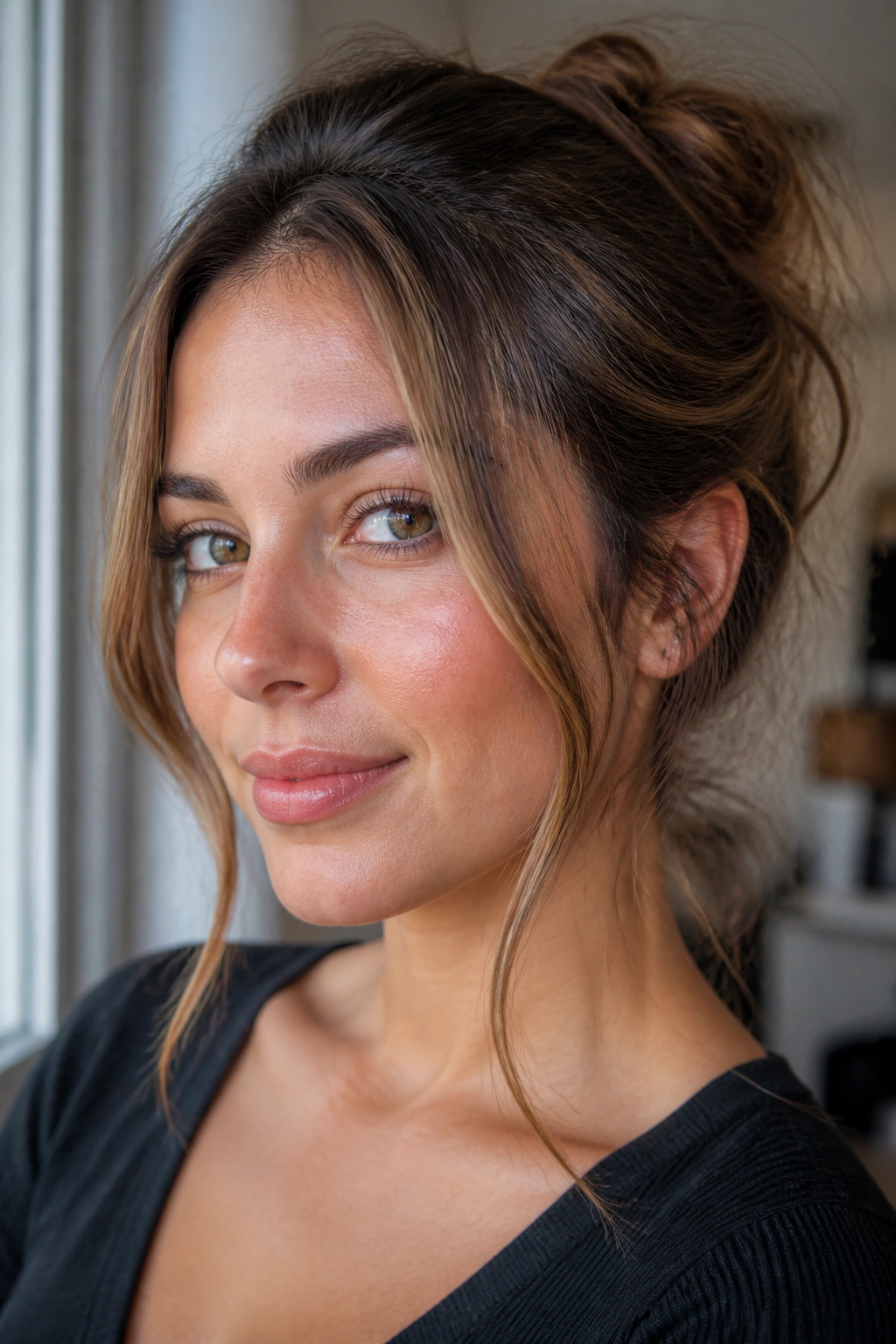
Tie your hair up, and suddenly the front pieces are the only thing that matters.
That’s why bronde face-framing strands work so well. They sit in the in-between zone—lighter than brown, darker than blonde—and they brighten the face without changing the whole head. I like this look on people who wear ponytails, claws clips, or half-up styles a lot, because the front stays visible even when the rest of the hair disappears.
The strongest version is not a huge money piece. It’s a soft set of two or three pieces on each side, blended back into the top layers so the contrast never feels abrupt. If you can see the color before you move, it’s probably too much.
A lot of stylists overdo the front and leave the rest of the hair untouched. That creates a hard stop. Better to echo the front tone a few inches back into the crown, even if it’s faint. The eye reads that as natural, and natural is what keeps this look useful instead of loud.
6. Toffee Balayage From Mid-Lengths Down
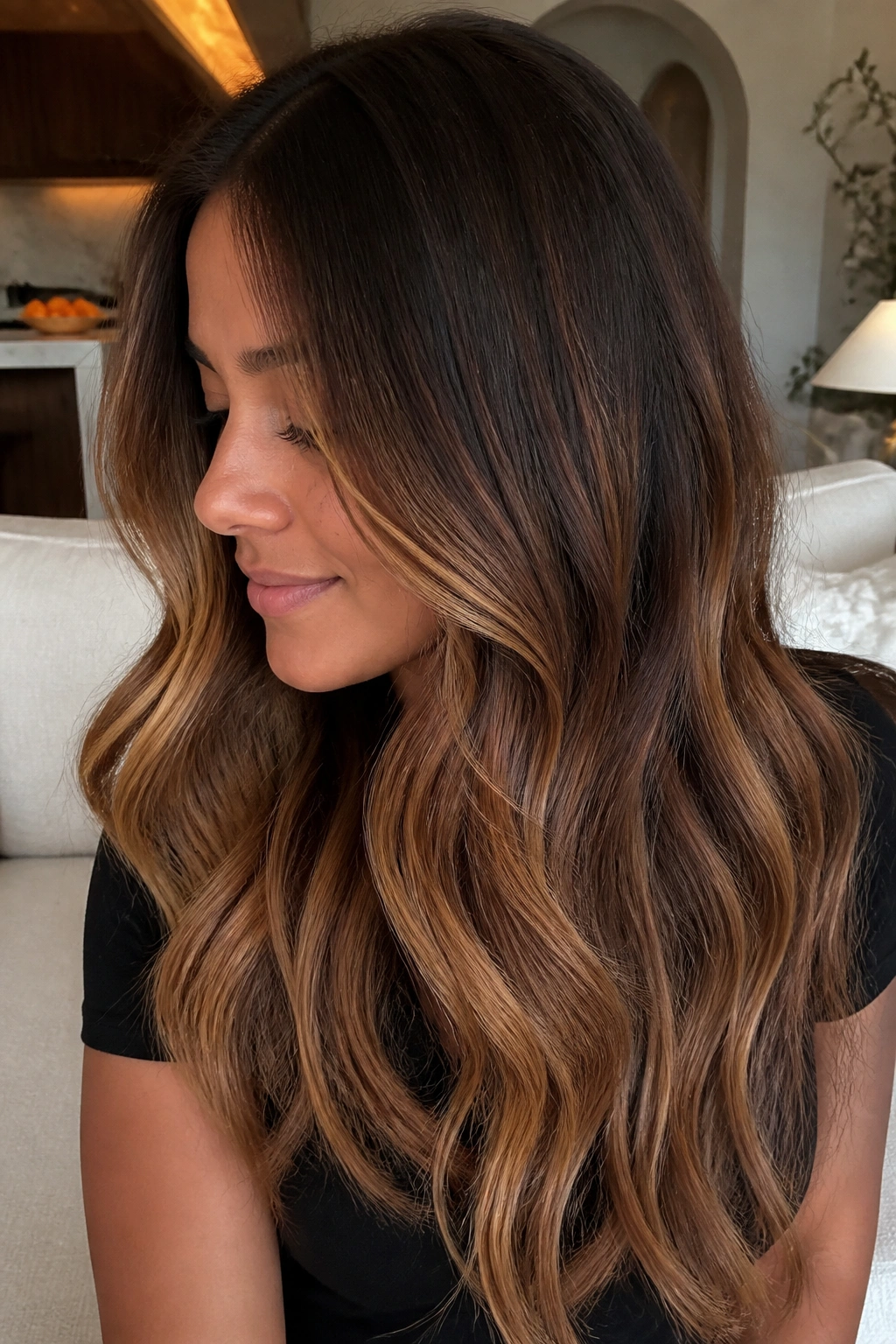
Want brightness that shows most when the hair swings? Toffee balayage is a solid pick.
This version keeps the roots rich and brown, then threads soft toffee through the mid-lengths and ends where the hair picks up movement. The lightening is painted open-air, which helps the transition stay feathered instead of blocky. On layered hair, that can look almost invisible when it’s still, then change a little with every turn of the head.
How to Keep the Ends Soft
Ask for the lightest pieces to stop before the last inch if your ends are dry. That keeps the bottom from looking see-through. A tiny gloss after the lift helps too, because toffee can go too gold if the toner is skipped.
This is a good choice if you want brown hair highlights that show up in waves but do not look harsh on straight hair. It’s also one of the easier looks to grow out. The root stays your own color, and that buys you time.
7. Cinnamon Glaze Over Warm Brown
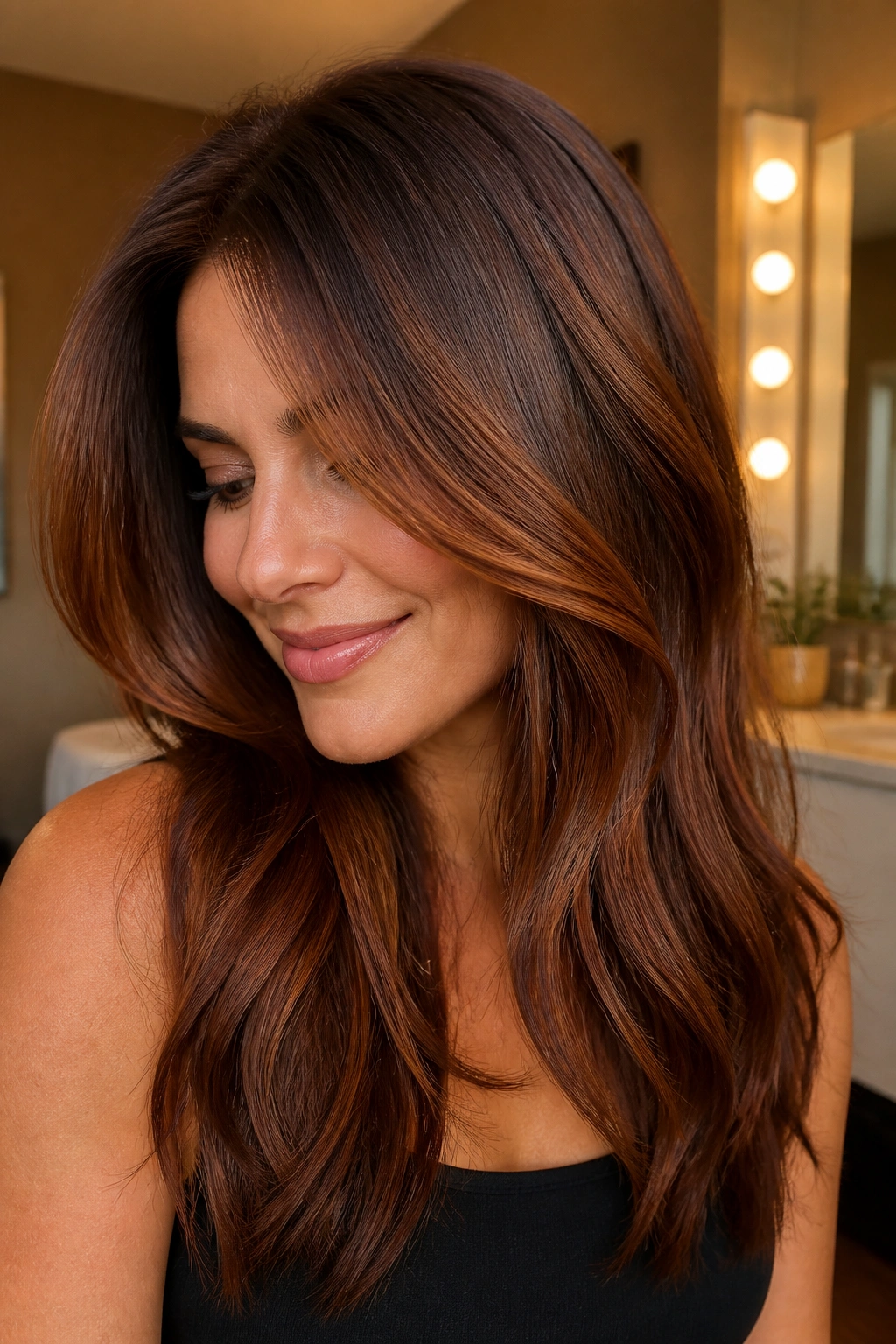
Cinnamon glaze is for people who want warmth more than lift.
Unlike a traditional highlight service, this one is mostly about tone. A demi-permanent glaze or gloss with soft cinnamon and copper notes can shift brown hair from flat to lively without making the hair lighter in a dramatic way. That means less stress on the strands, less upkeep, and a finish that looks shiny even under indoor light.
A good cinnamon glaze should read like a warm filter, not a red dye job. If the result looks too orange in the bowl, it will look louder on the head. Muted is the whole point. The color should live just above chestnut and just below auburn, which is a tricky zone, but a very good one when you want softness.
This works especially well on medium brown bases that already have a little warmth in them. It is also handy after summer sun or chlorine has knocked the shine out of your hair. Sometimes you do not need more light. You need better tone.
8. Beige Blonde Micro-Highlights
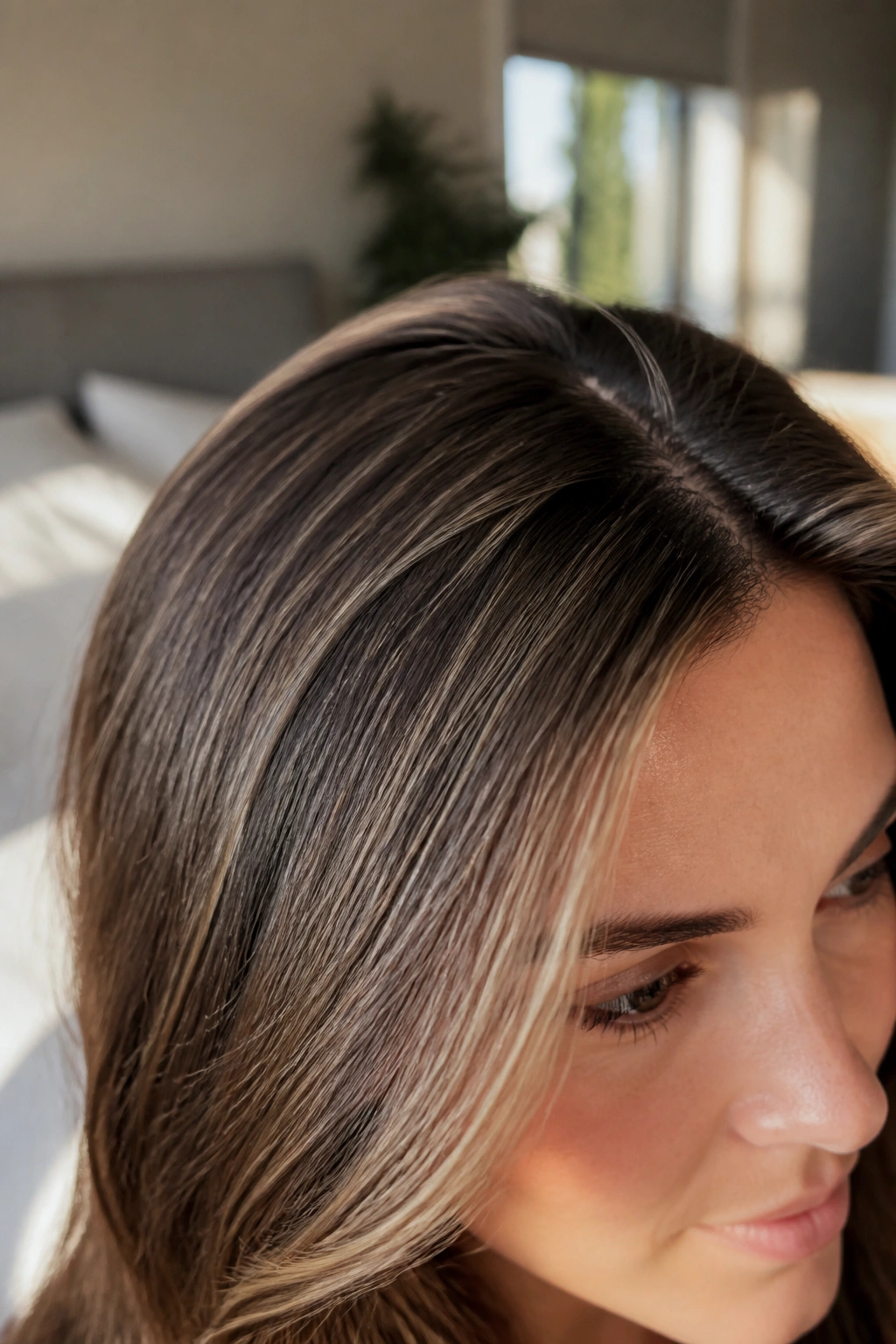
The smallest strands can do the most surprising work.
Beige blonde micro-highlights are incredibly fine, scattered lightly through the top layers, and they’re meant to show up as texture rather than streaks. They’re a smart move for brunettes who want to look brighter at the part line and around the temples but do not want a big color shift. On shoulder-length hair, the effect can be almost misty.
Skip thick foils. Micro-highlights should disappear until the light hits them or the hair separates. That is what makes them feel expensive in the everyday sense of the word—not showy, just well done. Keep the lift soft and the tone beige, because white-blonde pieces on brown hair can turn into a harsh checkerboard very fast.
These are excellent if your hair is fine or medium density and you want a softer finish than balayage. They also work well when you already have a good haircut and just want the shape to show more clearly.
9. Mocha-and-Espresso Ribboning
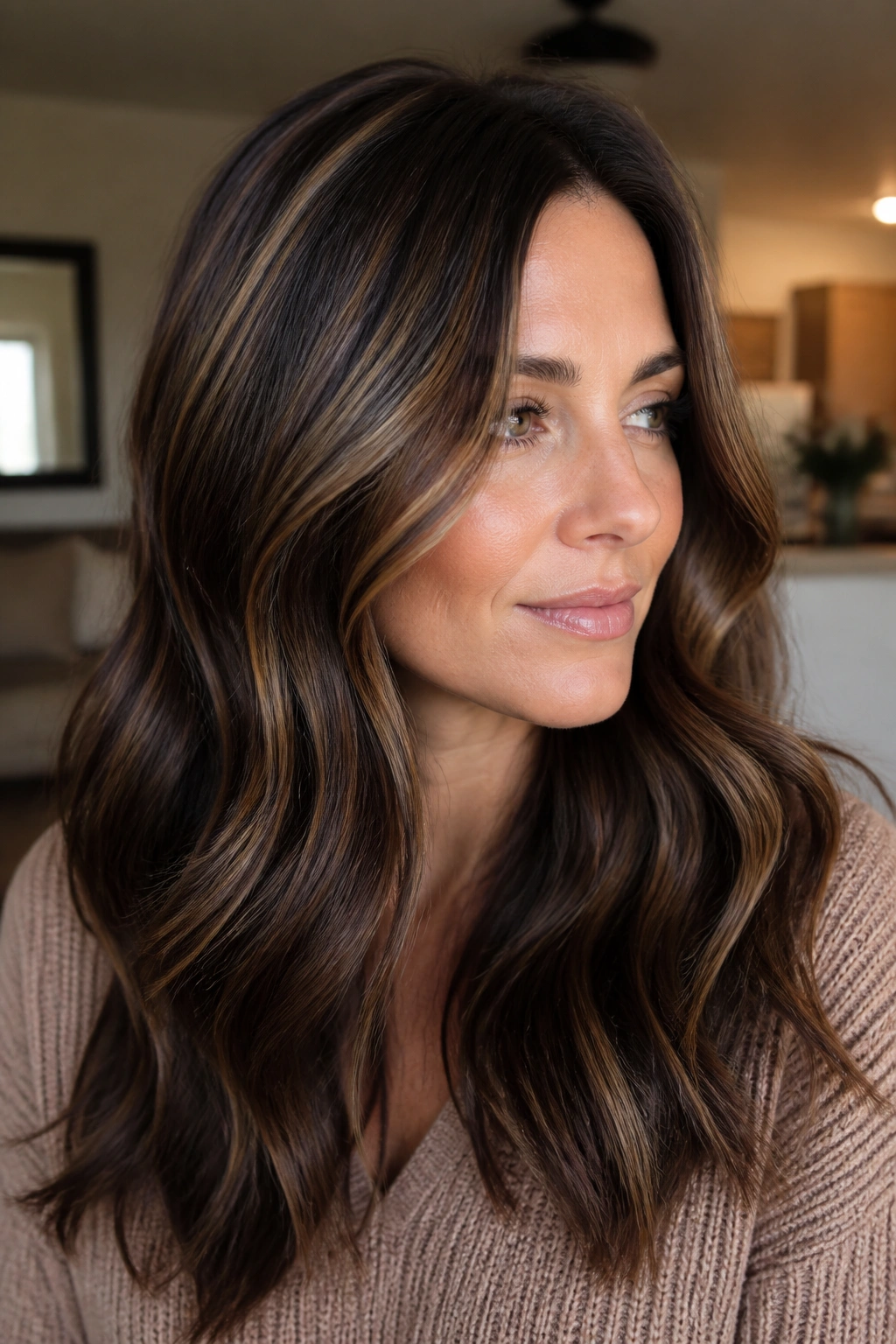
Brown hair does not need to get lighter to get more interesting.
Mocha-and-espresso ribboning uses both lighter and deeper brown strands to build movement, which is useful on thick hair that tends to look like one solid block. The lighter mocha pieces lift the shape. The deeper espresso pieces keep the roots and underlayers from going hollow. Together, they give you contrast without forcing the whole look toward blonde.
Where the Contrast Lives
- Mocha ribbons near the surface
- Espresso panels underneath
- Soft placement around the crown, not all over
- A neutral gloss to keep both tones connected
This kind of color is underrated because people hear “highlights” and think only in terms of lightening. But darker panels matter just as much. They give the eye a place to rest, and that is what makes the lighter pieces look intentional rather than random.
If your hair is long, dense, or naturally heavy at the ends, this is one of the best choices on the list.
10. Copper Whisper Highlights
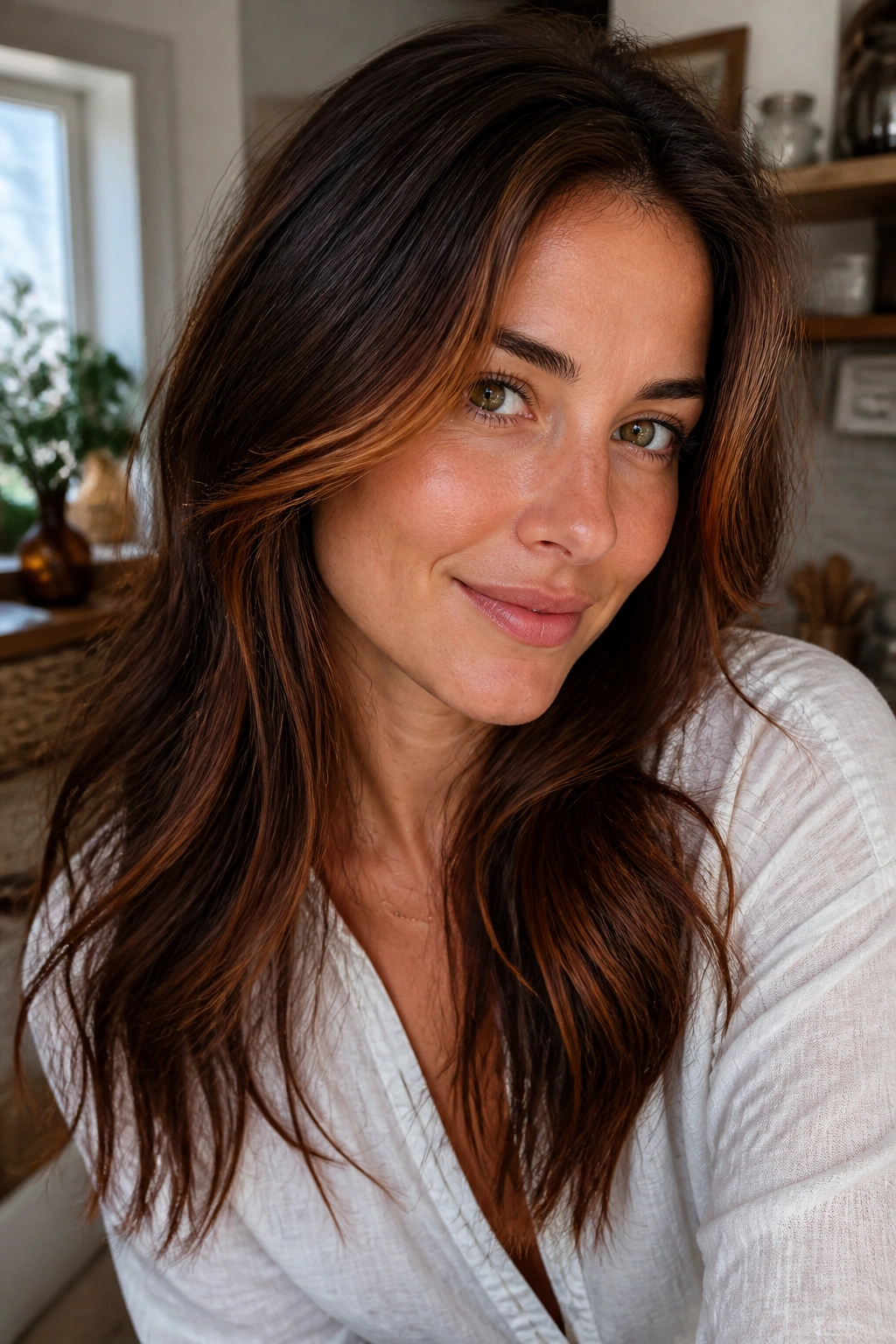
Copper does not have to be loud.
A whisper of copper through brown hair can look surprisingly subtle when it’s muted and placed with restraint. The trick is keeping the copper brown-leaning, not bright red. A few pieces around the perimeter, the front layers, and the ends of a few wave sections are usually enough. You do not need an allover copper shift to get the effect.
Best Placement for Copper
- Around the hairline and temple area
- On the upper surface of layered cuts
- Through the bottom third of curls and waves
- Mixed with a neutral brown base, not over a light base
Copper works especially well if your skin has olive or golden undertones, but that is not a rule carved in stone. The real question is whether you want warmth that feels obvious or warmth that only shows when the light moves across it. This version stays in the second camp.
If your brown hair tends to look flat in winter or indoors, copper whispering through the top layer can solve that without pushing you into full red territory.
11. Almond Money Piece With a Soft Blend
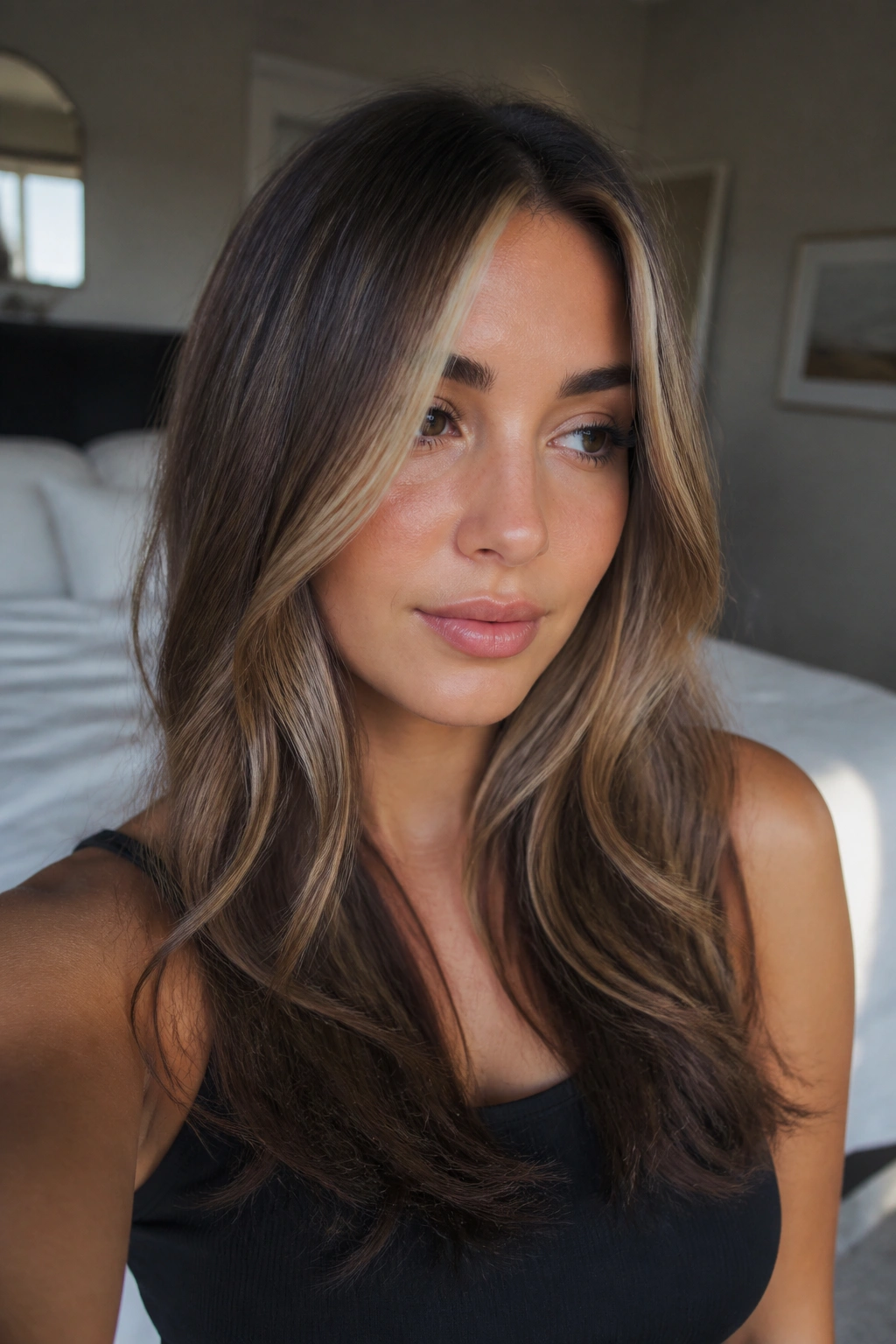
A bright money piece can be fun. It can also be a lot.
An almond money piece gives you the front-framing effect without the harsh stripe that makes some brunettes feel overexposed. Keep the front pieces only one to two levels lighter than the base, and ask for a soft root shadow so the grow-out stays blurred. That little detail matters more than people think.
The best almond version is creamy and neutral, with just enough beige to separate it from the brown base. If the front pieces are too gold, the whole thing can look heavier than you wanted. Soft blend first, brightness second. That order saves a lot of regret.
This is a strong option if you like wearing your hair down and want the face to look a touch brighter in photos or under harsh light. It also works on lob cuts, where the front pieces sit close to the jaw and can change the whole feel of the cut.
12. Toasted Hazelnut Ends
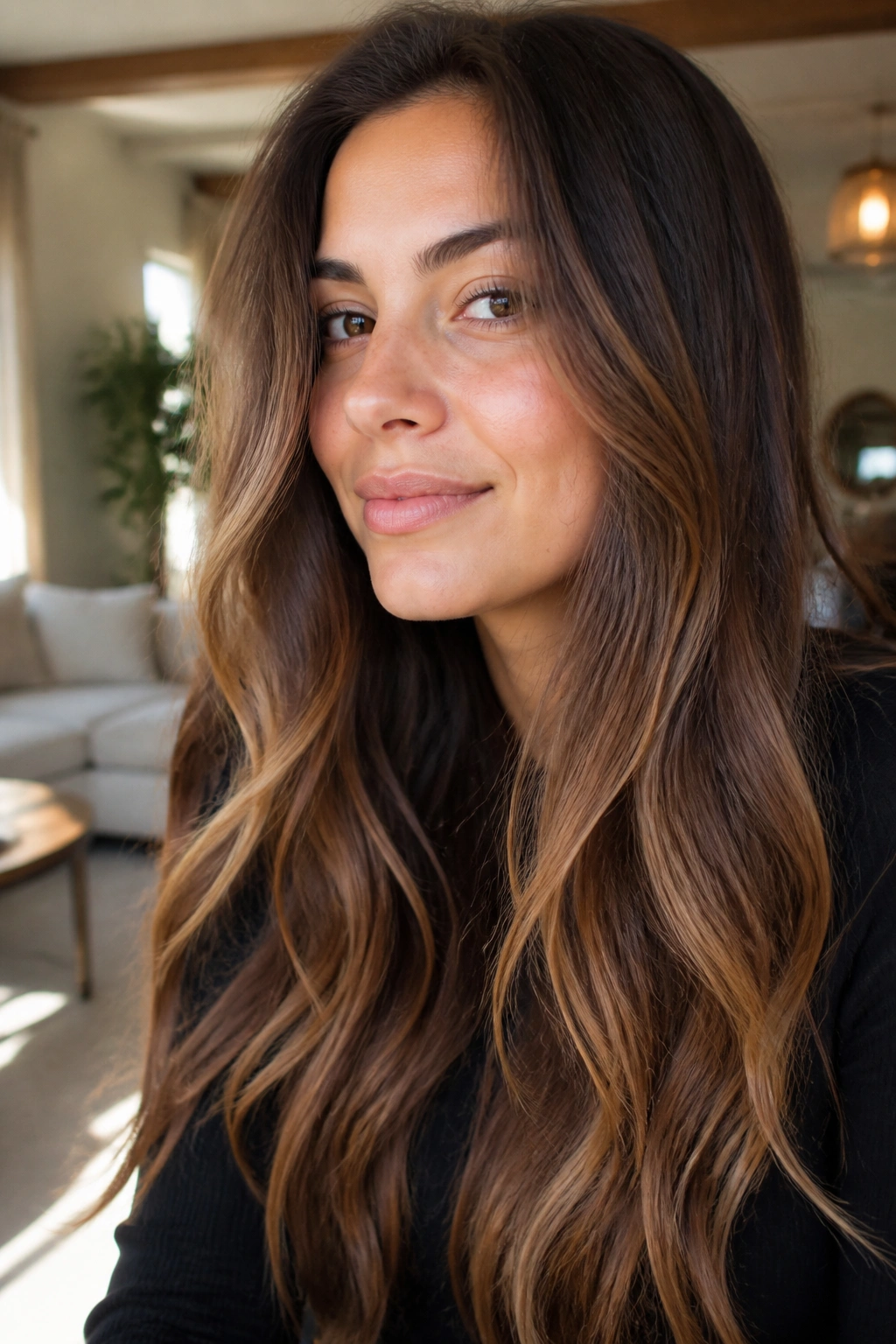
Long brown hair often goes dull at the bottom. Toasted hazelnut ends fix that.
Instead of coloring the whole head, this idea keeps the roots and mid-lengths close to the natural brunette base while painting the last few inches with a soft hazelnut tone. The result is lighter at the ends, but not so light that the hair loses its weight. On layered cuts, the color can make the movement easier to see; on straighter cuts, it keeps the finish from feeling heavy.
A few rules help here:
- Keep the lightening soft, usually not more than 2 levels
- Blend the transition with hand-painting, not a hard foil line
- Use a gloss that stays beige or nutty, not gold
- Trim dry ends before coloring if the bottom is already rough
This is one of those styles that looks better when the hair is healthy. Dry ends absorb tone unevenly and can go stringy. Freshly trimmed ends take the color more cleanly and move better.
13. Golden Bronze Underlayers for a Hidden Lift
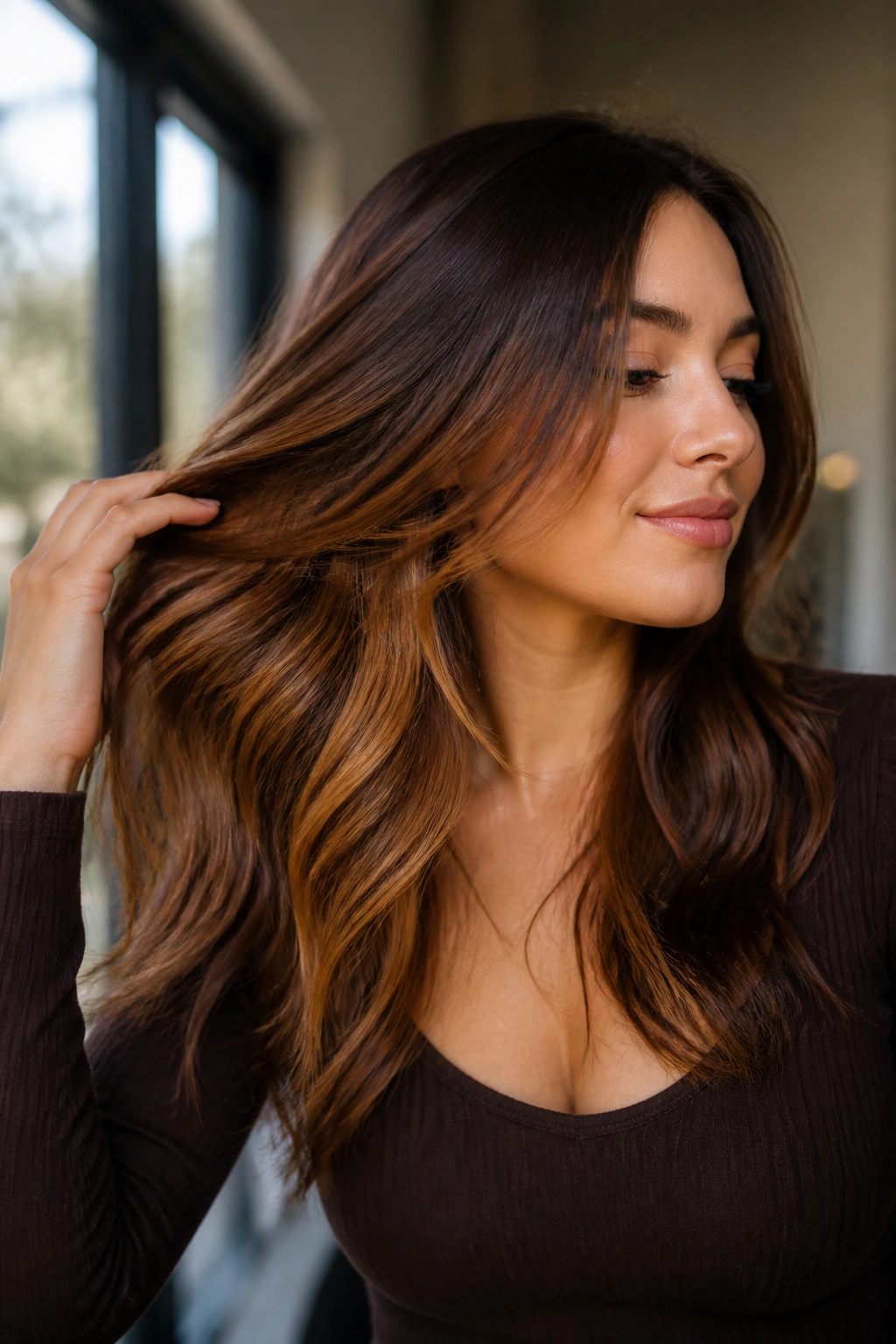
Some color works best when it hides a little.
Golden bronze underlayers sit underneath the top brown section, so you only catch them when the hair moves, lifts, or gets tied back. They are ideal if you want your hair to feel brighter without making every angle obvious. Braids, ponytails, and half-up styles show them off nicely.
They also solve a common problem. Brown hair can look great from the front and flat from the back. Underlayers add warmth where the eye does not expect it, which makes the shape feel fuller. Sneaky is the point here.
If your job or lifestyle calls for a quieter look, this is a smart lane. You still get the pleasure of seeing color, but the overall effect stays calm. A good colorist will keep the bronze close to caramel rather than pushing it too yellow. That keeps it wearable.
14. Mushroom-to-Cocoa Melt
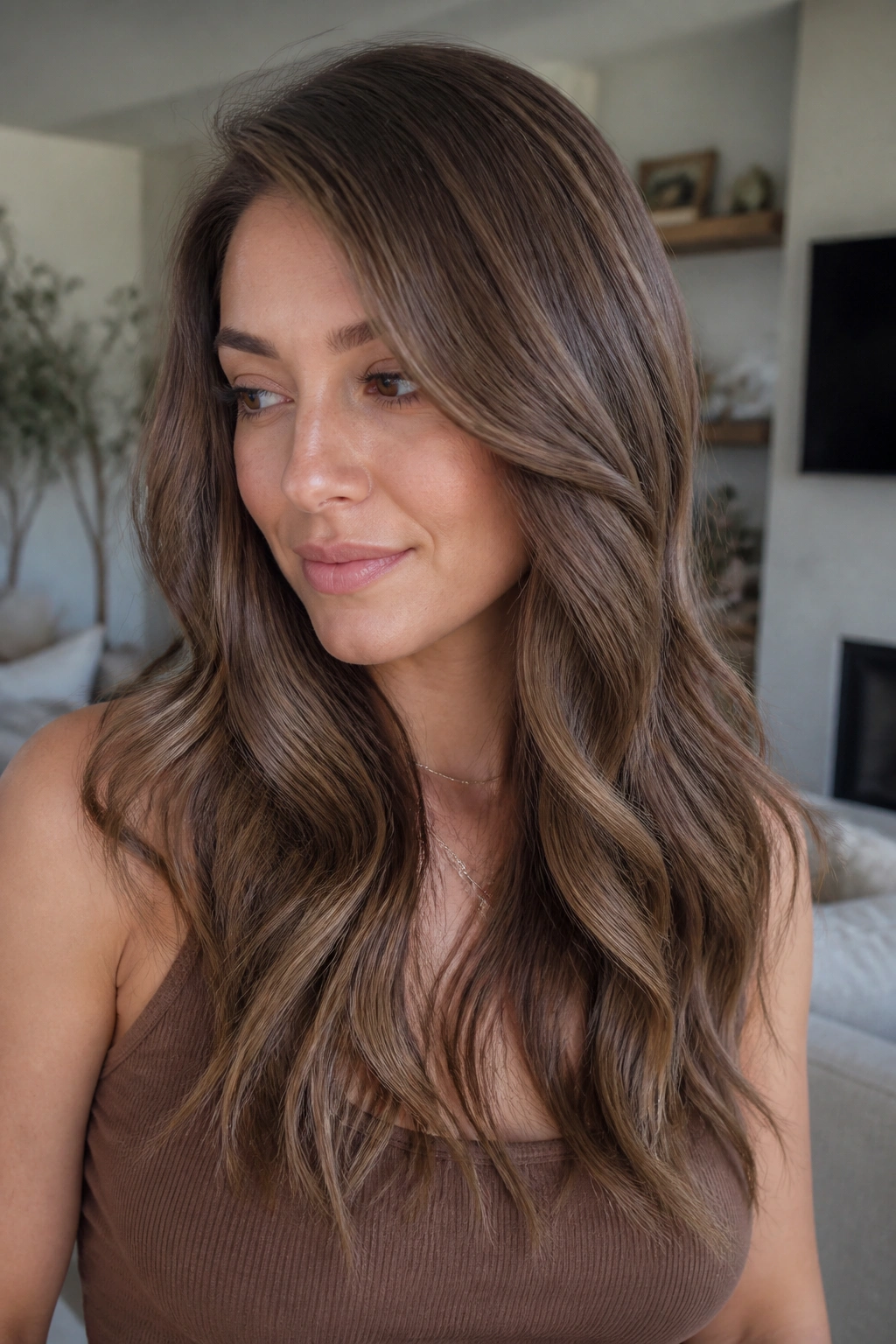
What happens when you want cool, but not gray?
You get a mushroom-to-cocoa melt, which is basically a soft shift from cooler brown at the roots into a richer cocoa through the mid-lengths, with no sharp line between them. It is a lovely answer for people whose hair has been overlightened before and now needs a gentler story. The color feels blended from root to tip instead of painted in bands.
How to Ask for the Blend
- Keep the root cool and soft, not dark and solid
- Let the mid-lengths carry the cocoa tone
- Avoid a hard break between tones
- Finish with a cool beige gloss, not a silvery toner
This kind of melt works best when the hair already has layers or texture, because the color shifts can show at different points as the hair moves. On very straight hair, the blend needs to be precise. On wavy hair, it reads softer and more natural.
If you want subtle highlights for brown hair but hate obvious striping, this is one of the best options in the whole bunch.
15. Soft Auburn Peekaboo Panels
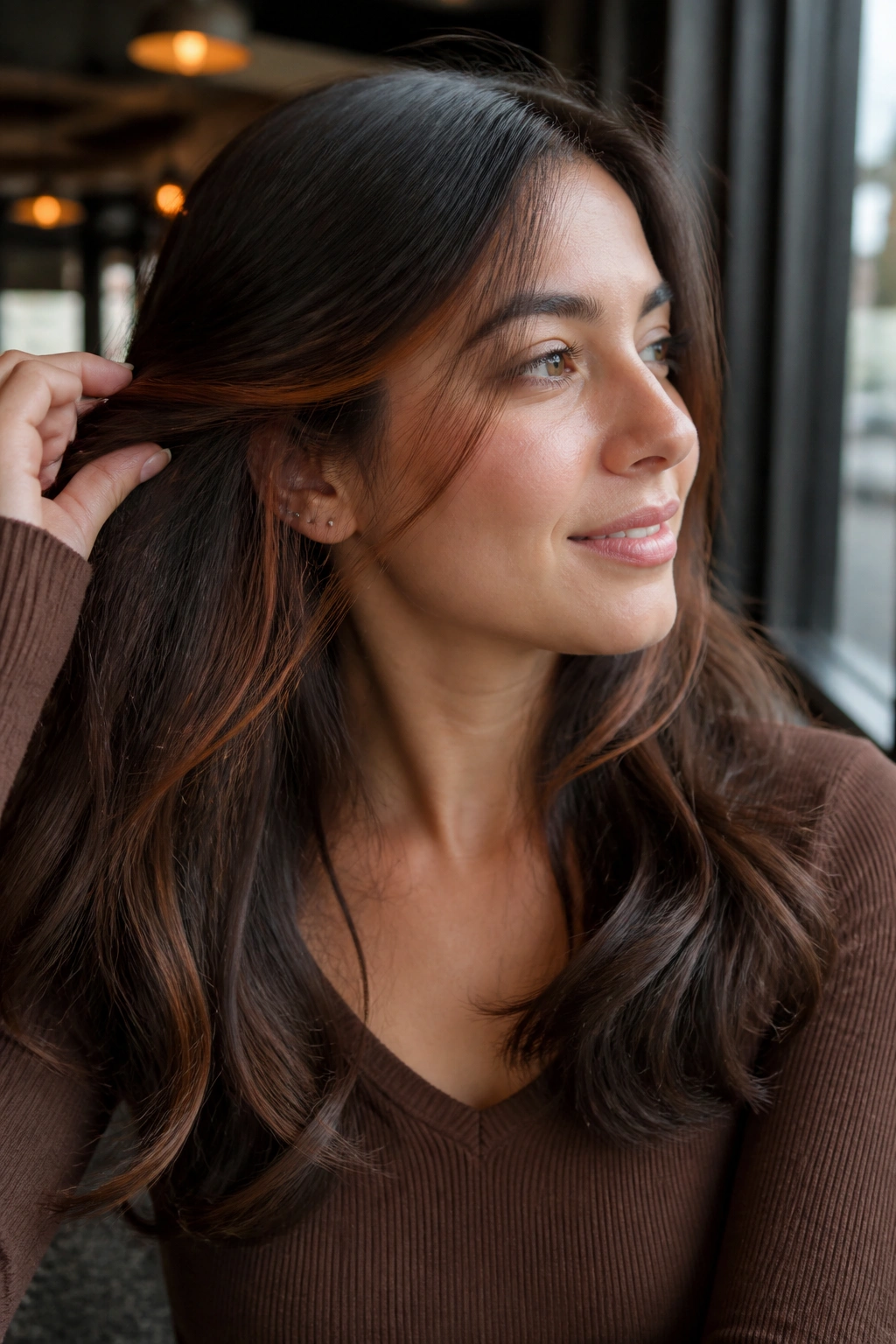
Auburn can be gorgeous. It can also take over a room.
Soft peekaboo panels keep that warmth tucked underneath the top layer so it flashes in motion instead of sitting on top of everything. The result is quieter than full auburn, and frankly, easier to live with. On bobs, lobs, and layered long hair, the color shows most in bends, curls, and half-up styles.
That hidden placement matters. It means the brunette base still gets to do most of the work, while the auburn only appears when the hair separates or shifts. That little flash is enough. You do not need a full red transformation to make brown hair feel warmer and less one-note.
This is a strong choice if you’re flirting with red tones but do not want to commit to them all over. Ask for the auburn to stay soft and brown-leaning, not orange. The softer it is in the bowl, the better it will age over the weeks.
16. Sand Beige Contour Highlights
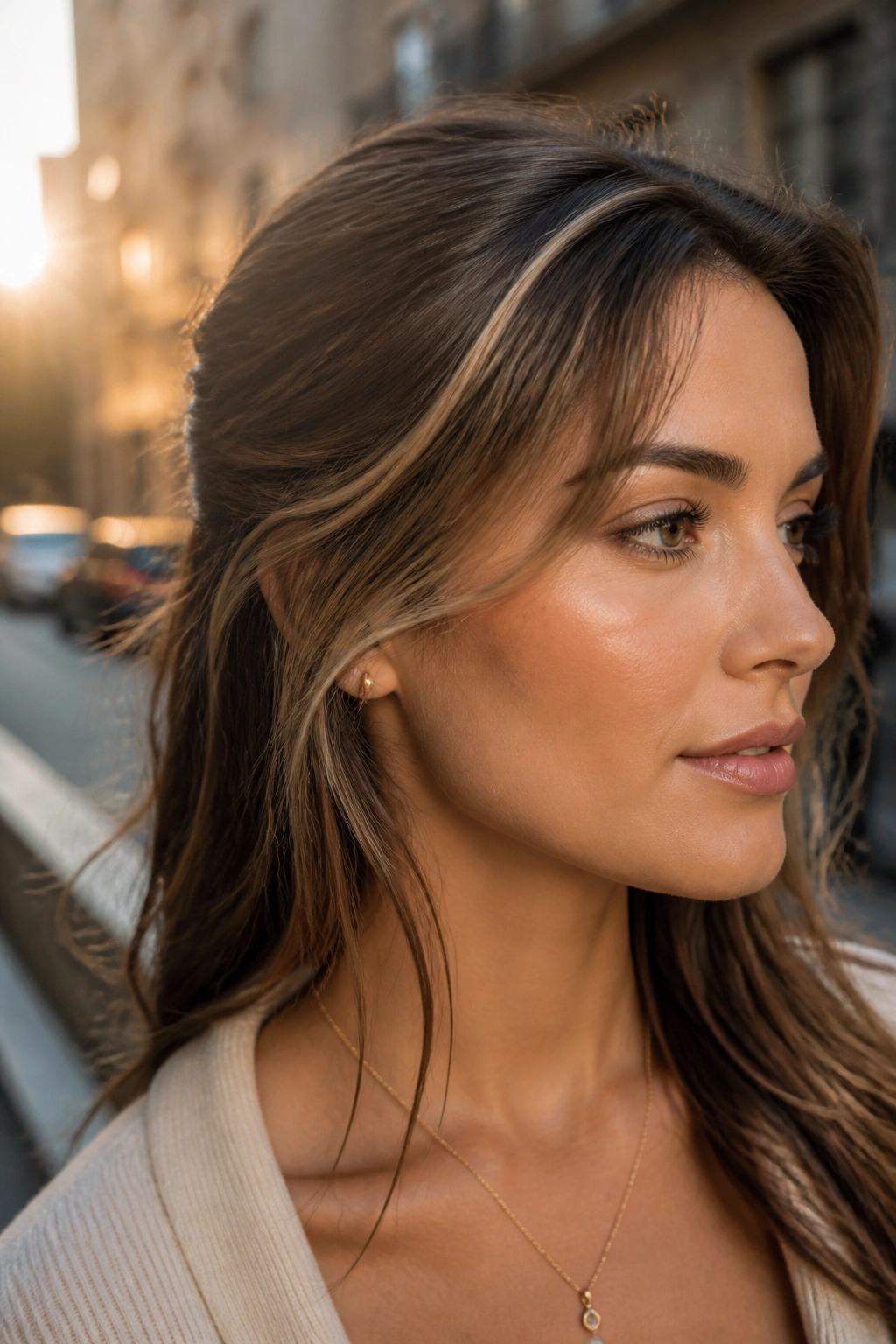
Some of the best highlight placement happens where the face wants light.
Sand beige contour highlights are painted around the temples, hairline, and upper cheekbone area of the hair, then faded back into the brunette base. Think of them as a softer cousin of a money piece. They brighten the edges without making the front look blocky, which is useful if you want polish without drama.
Straight hair needs thinner slices here. Curly hair can take broader painted bands because the curl pattern softens the edges on its own. Either way, the beige tone should stay muted. If it turns too white, the contour effect disappears and you’re left with contrast that feels hard.
This approach works especially well on medium brown hair because the beige reads intentional and clean. It also keeps the rest of the color palette calm, which matters if you prefer your hair to look understated rather than obviously colored. Sometimes the most flattering change is the one that only appears when your hair is tucked behind your ear.
17. Maple-Toned Strand Painting
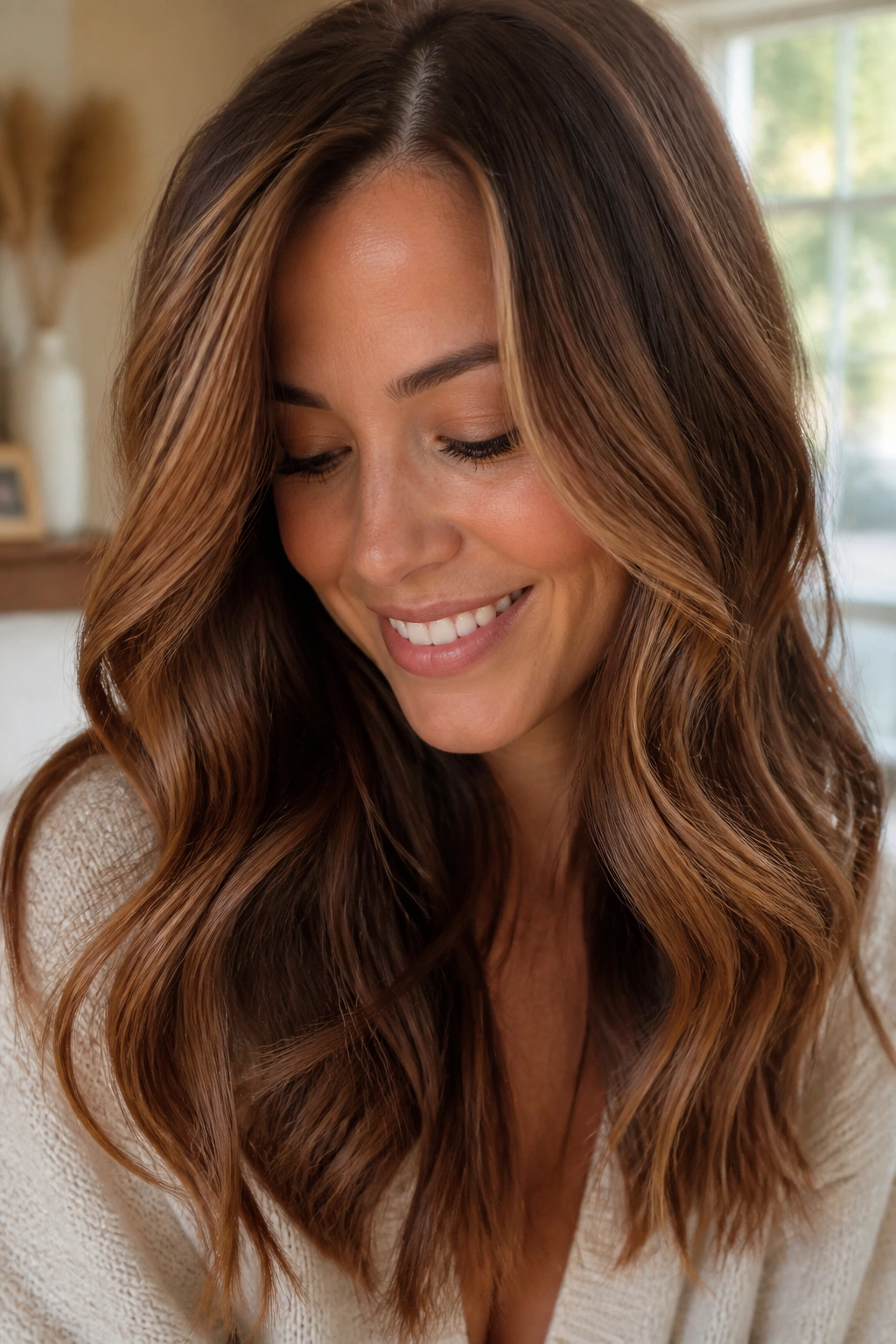
Maple sits in a nice middle lane.
It has enough warmth to feel alive, but not so much that it tips into bright gold or red. On brown hair, maple-toned strand painting gives you a soft amber-brown effect that looks richer than caramel and less orange than copper. It is a good choice when your hair base already leans chestnut or medium brown.
If your color tends to go pumpkin when lifted, maple is calmer. That makes it easier to wear over time, because the tone stays close to the brown family even as it lightens. I like it on wavy hair and layered cuts, where the strands break up just enough to show the variation.
What Makes Maple Different
- Warmer than beige
- Less red than auburn
- Softer than copper
- Easier to grow out than high-contrast blonde streaks
Maple is also a nice bridge shade if you are not ready for true blonde but want more warmth than ash tones can give you.
18. Smoky Taupe Gloss Lights for Brown Hair
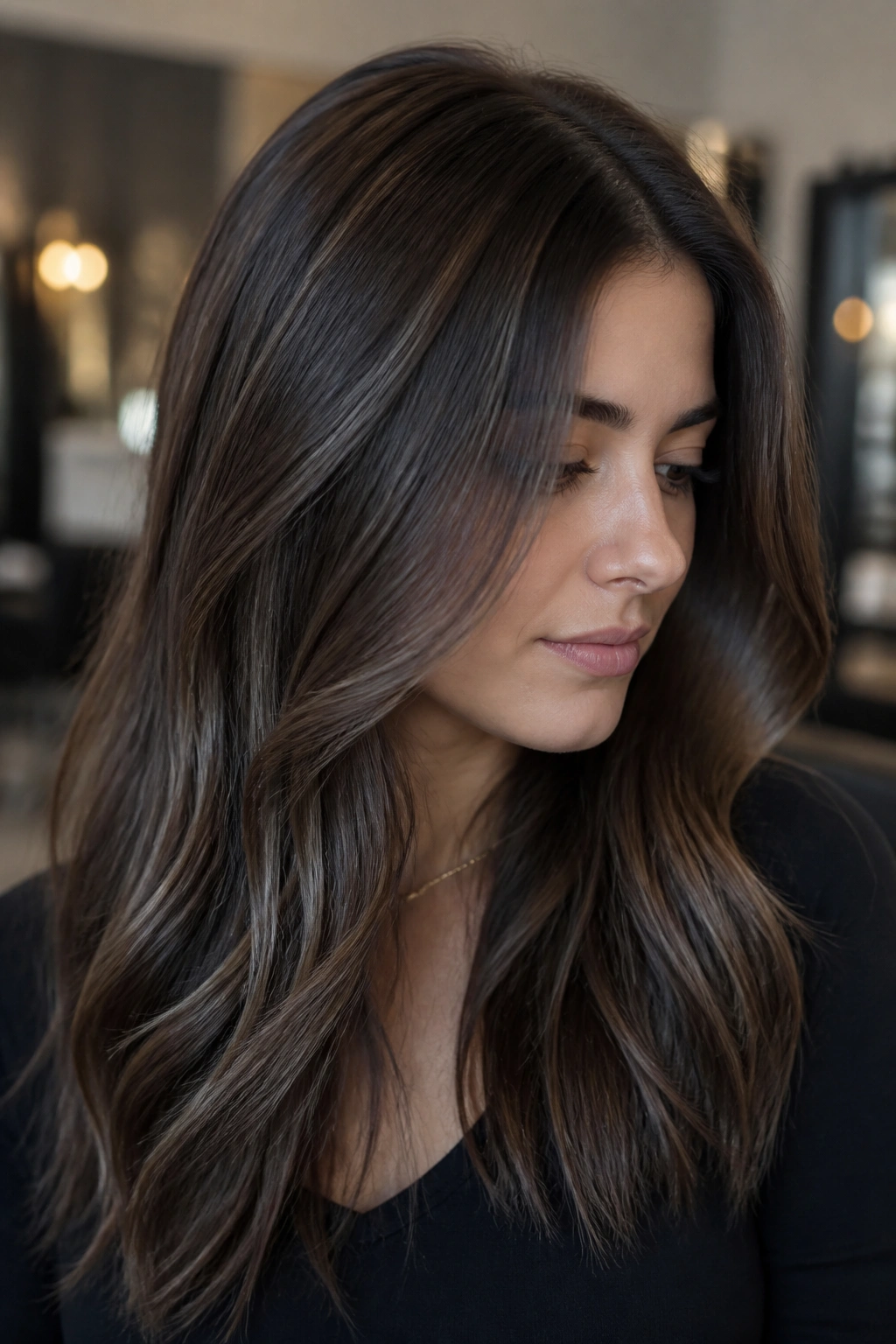
If orange is your enemy, smoky taupe deserves a look.
This is one of the coolest, softest highlight ideas for brown hair because it keeps the lightened pieces muted with a taupe or smoky-beige gloss. The effect is gentle, almost dusty, and it works especially well on brunettes who want dimension without any warmth fighting back. On straight hair, it can look refined and clean. On waves, it gives the hair a foggier, more textured feel.
The placement matters too. Keep the lightened pieces fine and scattered through the top layer, then use the gloss to blur the line between your natural brown and the softer strands. If the lift is too strong, the smoky finish won’t save it. This is a tone-first look.
I like this option for people who have spent years being pushed toward caramel when what they really wanted was a cooler brunette. It’s quieter. It lasts well if you stay on top of toner refreshes, and it keeps the whole style from drifting brassy after a few washes.
Final Thoughts
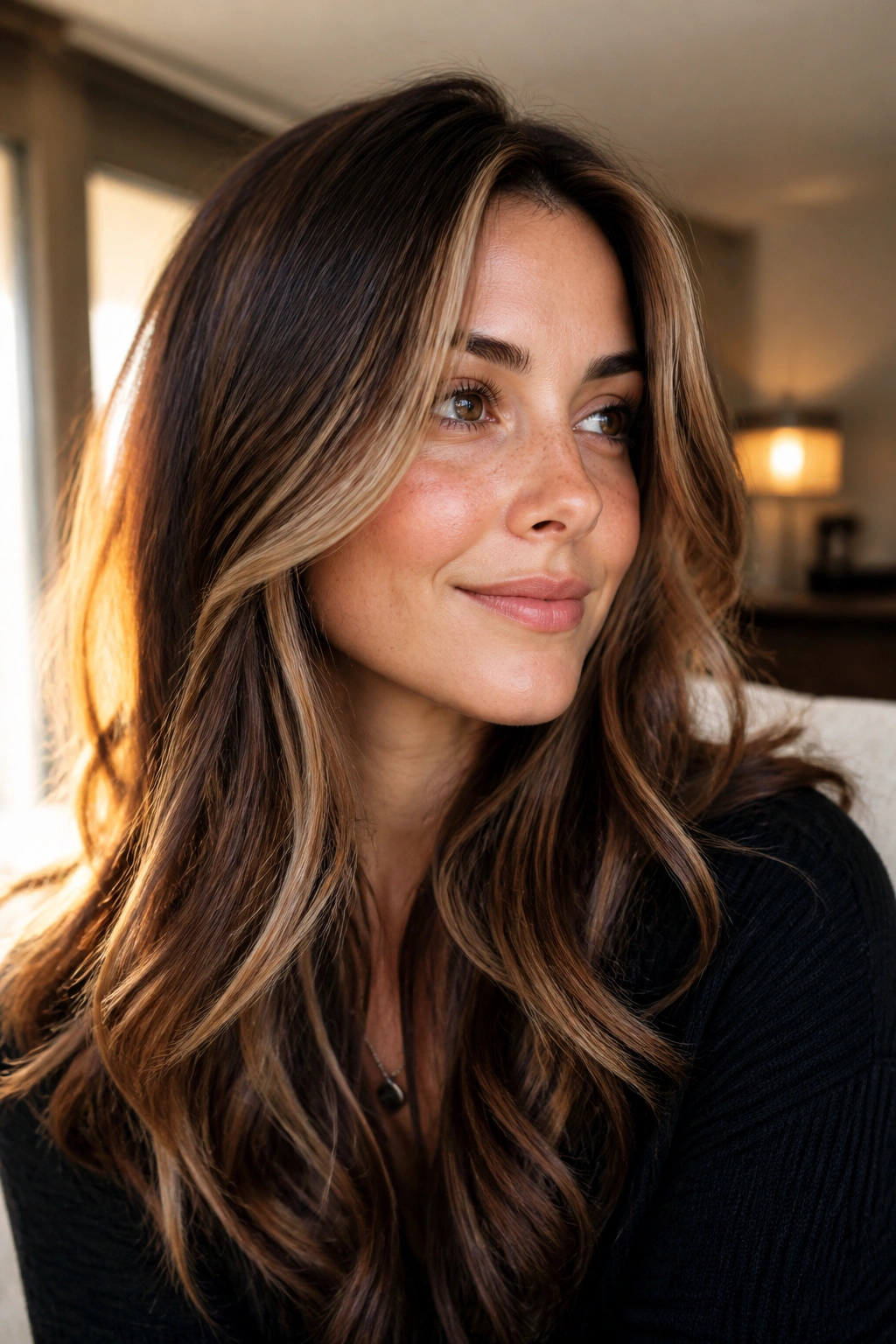
Brown hair does not need a huge color change to feel new. A few well-placed ribbons, a softer toner, or one smart face-framing zone can change the whole mood of the cut without making upkeep miserable.
If you want the safest places to start, caramel ribbons, honey babylights, and soft bronde framing are the easiest to wear. They blend in fast, grow out cleanly, and let your natural brown stay in charge.
Cooler brunettes should look hard at mushroom tones, smoky taupe, and beige micro-highlights. Warm brunettes usually do better with toffee, maple, or a muted copper glaze. Pick one lane first. That is usually where the best hair color lives.
