



A wolf cut can look surprisingly formal when the shape is handled with care. Leave it too shaggy and it feels like a day-after blowout. Smooth the crown, control the face-framing pieces, and the same cut suddenly reads as sharp enough for a ceremony, a reception, and a very full dance floor.
That’s the part people miss. A wolf cut does not need to be “fixed” for a wedding look; it needs to be directed. The layers already bring movement, which means you’re starting with hair that has energy in it. Your job is to decide where that energy goes — into a soft wave, a tucked chignon, a polished ponytail, or a half-up shape that keeps the cut from getting too wild.
And yes, this works for brides, bridesmaids, and guests. It works for short wolf cuts, shoulder-length versions, and the longer shaggy cuts that sit somewhere between glam and cool-girl messy. The trick is keeping the texture intentional, not accidental. A few well-placed pins do more than a mountain of hairspray ever will.
1. Soft Bridal Waves With a Center Part

Soft waves are the easiest way to make a wolf cut feel wedding-ready without sanding off its personality. The center part keeps the look calm, while the bends through the mid-lengths keep the cut from going flat. It’s polished, but not stiff.
Why This One Works
A wolf cut already has movement built in, so a loose wave just gives that movement a cleaner shape. The ends stay airy, the crown stays lifted, and the whole style feels like it was meant to be worn with a satin dress or a silk blouse. That balance between loose and controlled is what makes it work.
I like this choice for guests who want something reliable. It’s the kind of style that still looks good after hugging, dancing, and sitting through the ceremony without touching it every five minutes. If your hair tends to fall flat, ask for a little root lift at the crown before curling. If it’s thick, keep the waves loose so the layers don’t turn into a triangle.
- Use a 1-inch curling iron or wand.
- Curl sections away from the face, then alternate directions through the back.
- Leave the last 1 to 2 inches of the ends out for that airy wolf-cut finish.
- Brush through the curls once they cool so the shape softens.
Pro tip: Mist the crown with a light volumizing spray before curling. It gives the style a little lift without making the roots crunchy.
2. Low Half-Up Twist With Face-Framing Pieces
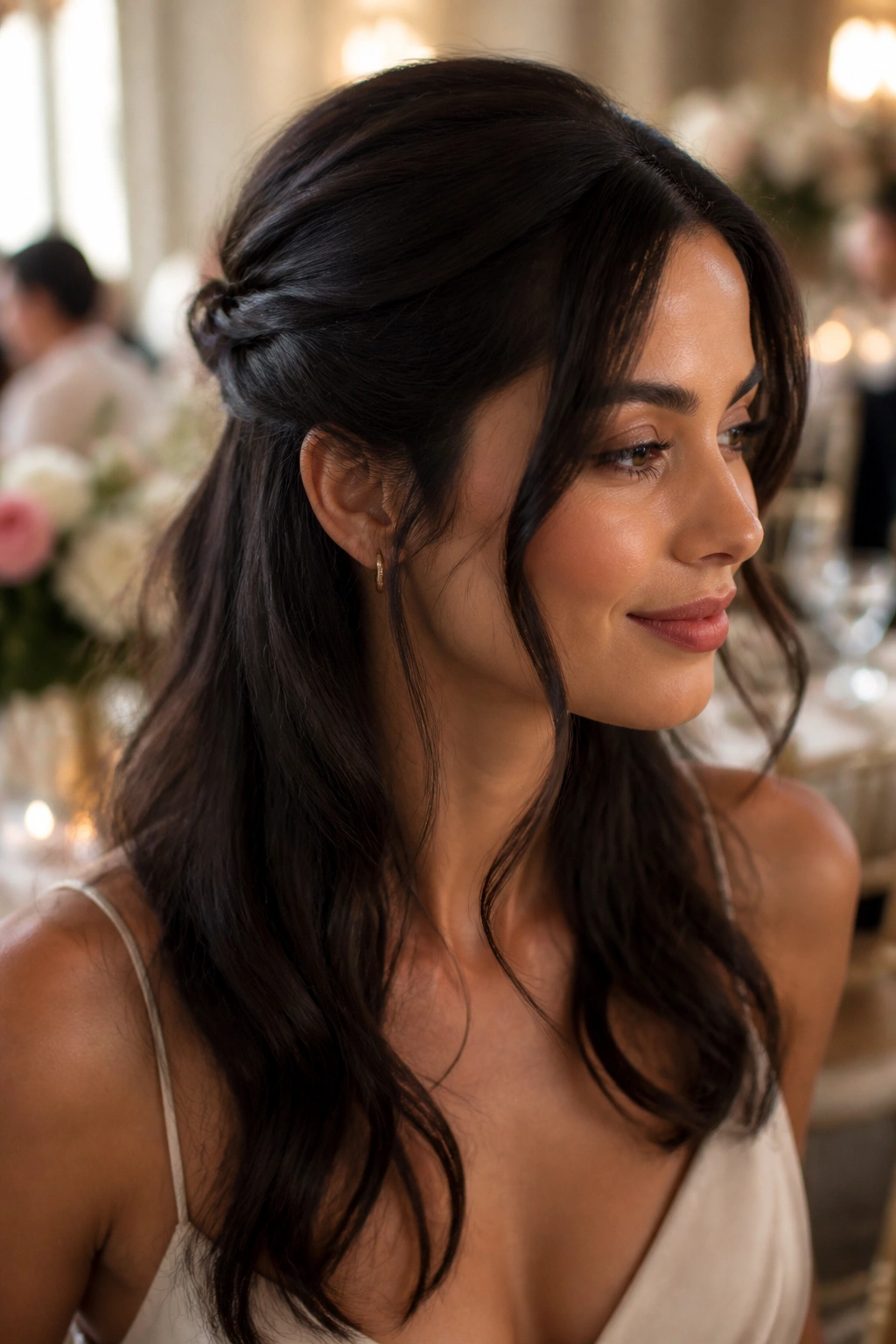
A half-up twist is probably the easiest way to make a wolf cut look intentional at a wedding. It keeps the top neat, shows off the layers, and leaves enough movement around the face to keep the cut looking like itself. No battle with the haircut. Just smarter styling.
You start by taking the top section from temple to temple and twisting it back loosely at the crown. Pin it low enough that the twist sits flat, but not so low that the style loses shape. The front pieces should stay soft and a little separated — those little tendrils matter. They keep the style from looking severe, and they also help if your wolf cut has shorter layers that want to escape.
A clean half-up like this is especially good if you’re wearing earrings or a dress with detail at the neckline. It clears the sides of the face, but it doesn’t pull everything back the way a tighter updo does. That’s the real win here: structure without losing motion.
A tiny amount of smoothing cream on the top layer goes a long way. Don’t overload the ends. They should still look touchable, not shellacked.
3. Low Chignon With Loose Layers
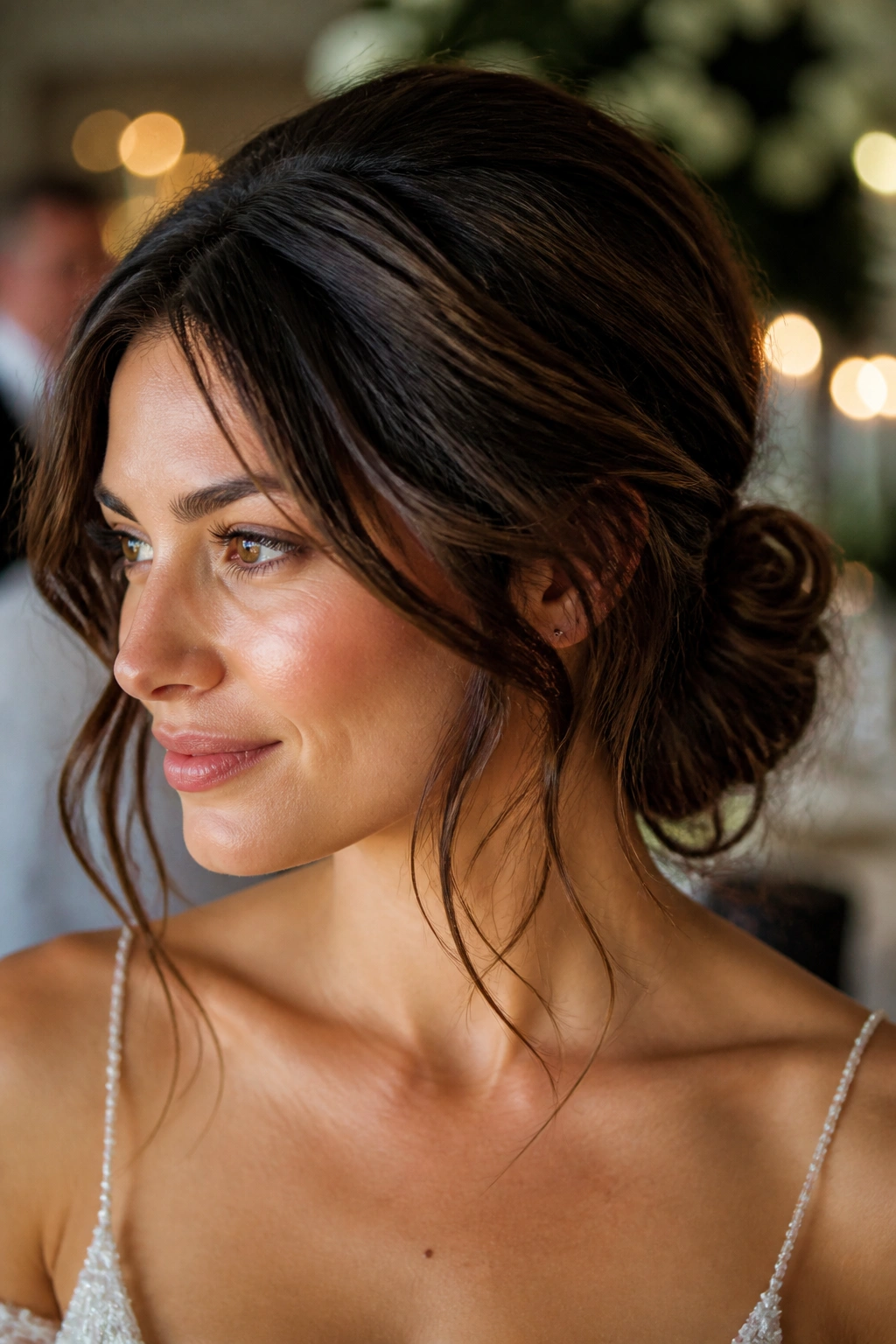
Why does a low chignon look better on a wolf cut than a tight knot? Because the cut wants a little softness around the edges. If you pull every layer flat, the whole thing can look overworked. If you leave a few pieces free, the bun suddenly feels elegant instead of severe.
This style starts with a low ponytail at the nape, secured with a clear elastic. Tease the crown just a little — about half an inch of lift is enough — and then twist the ponytail into a loose chignon. Pin it in place with bobby pins that match your hair color. Don’t try to hide every shorter layer. Let a few pieces sit around the jawline and ears. They make the chignon look lived-in in the best way.
How to Style It
- Smooth the top with a small drop of serum.
- Gather hair at the nape with your fingers, not a brush, if you want a softer finish.
- Wrap the lengths around the base in one direction so the bun looks clean.
- Pin the shortest layers under the bun instead of forcing them into it.
A low chignon works well with lace, pearl details, and open backs. It also stays put, which matters if the schedule is long and the dance floor is not optional. Quiet. Clean. Reliable.
4. Side-Swept Glam With a Deep Part
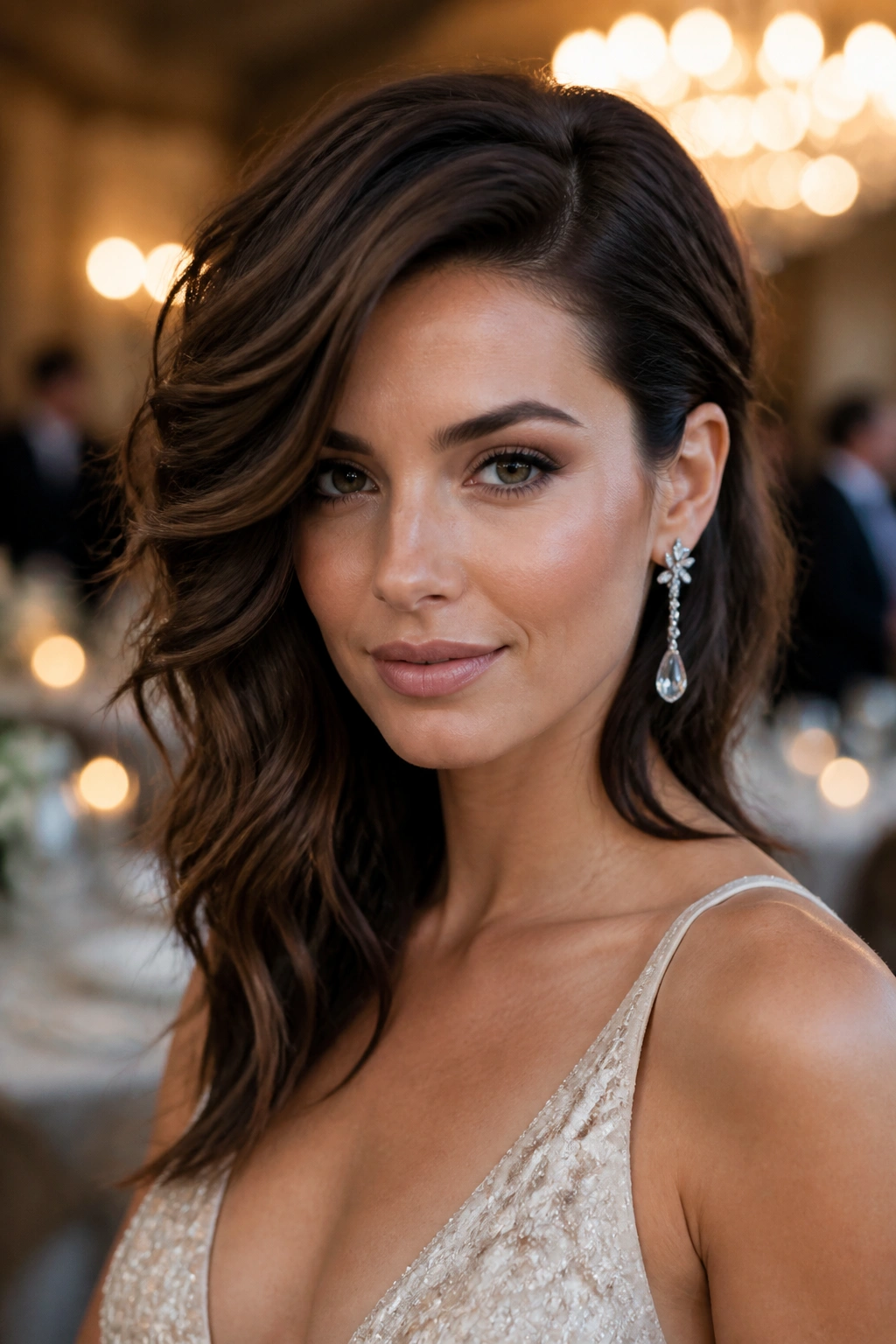
A deep side part can make a wolf cut feel much more dressed up than people expect. Pair it with soft bends and one tucked side, and the whole cut starts acting like formal hair instead of weekend hair. It’s a good move for one-shoulder dresses, asymmetric necklines, or anyone who wants a little old-school drama.
I’ve seen this look save hair that felt too fluffy or too layered to cooperate. The deep part gives the style direction right away. Then the wave pattern does the rest. Curl the heavier side away from the face, keep the lighter side smoother, and pin just behind the ear with a small crystal clip or a plain metal barrette if you want the outfit to do the talking.
The side-swept shape also helps if your wolf cut has bangs that are growing out. They blend into the longer side much more naturally than they do in a center part. That makes the style forgiving, which is rare for formal hair.
If you want a little extra polish, tuck the hair on the smaller side behind the ear and mist the top with a flexible hold spray. That’s enough. Too much product kills the motion, and this look lives on movement.
- Best for: medium to long wolf cuts
- Best pairing: one-shoulder gowns, halter necks, or statement earrings
- Finish: soft, glossy, and slightly brushed out
5. Braided Crown With Soft Texture

A braided crown gives a wolf cut a ceremonial feel without making it look prim. That matters. The cut already has a bit of edge, so a crown braid should soften the mood, not erase it. When done right, it keeps the upper layers controlled and lets the lower lengths fall with that easy, slightly shaggy motion the cut is known for.
This is one of those styles that looks more complicated than it is. Take a braid from one temple across the head, or do two braids and meet them at the back. Leave the braid a little loose so it doesn’t sit like a helmet. The wolf cut needs air in it. Pulling the braid too tight can make the rest of the hair look disconnected, and then the whole style starts fighting itself.
A texture spray at the roots helps a lot here, especially if the hair is fine. The braid gets grip, the crown stays lifted, and the rest of the hair still drops in soft pieces instead of collapsing. For thicker hair, a light smoothing cream on the ends keeps the lower layers from puffing out.
The style is lovely with garden weddings, rustic venues, and anything where the dress has some lace or embroidery. It’s formal without being precious. A braid can do that.
6. Sleek Blowout With Flicked Ends

Unlike a pin-straight finish, a sleek blowout leaves the wolf cut’s shape alive. That’s why I like it for a wedding look. You get polish at the crown, smoothness through the sides, and just enough flip at the ends to remind people that this is still a layered cut, not a blunt one.
Use a round brush and dry the hair in sections, lifting at the root and turning the brush slightly under or away at the ends. The point is not to flatten everything. You want the top to look smooth and the layers to move when you turn your head. A flat iron can work too, but I’d keep it for touch-ups only. Too much heat and the wolf cut starts looking thin at the perimeter.
This style is especially good for shorter wolf cuts or shoulder-length versions that need a more finished edge. It also plays nicely with pearl earrings, a structured dress, or a simple neckline that needs the hair to feel sharp rather than soft.
A tiny bit of shine spray on the mid-lengths is enough. Not the roots. Not the bangs. Just the middle and lower section, where the light hits when you move. That’s the spot that matters.
7. Pearl-Pinned Half-Up Wedding Guest Style

Pearl pins are one of those accessories that can rescue a wolf cut in ten seconds flat. They add formality without making the hair look overdone, and they work especially well in a half-up shape where the layers around the face still get to breathe. The result feels guest-ready, bridesmaid-ready, and even bride-adjacent if the dress is simple.
The trick is placement. Don’t scatter the pins everywhere. Put three to five pearl pins in a small cluster near the twist or along one side of the crown. That concentrated placement looks cleaner than a random trail of embellishment. Keep the rest of the hair in soft bends, not tight curls, so the pearls stay the focal point.
A wolf cut can handle embellishment better than a lot of people think because the texture keeps the accessory from looking too rigid. Pearls soften the edge. The layers keep it from getting sugary. That contrast is the whole point.
If your hair is very dark, off-white pearls stand out beautifully. If it’s lighter, cream or champagne-toned pins blend in more quietly. Either way, keep the rest of the styling simple. Too many accessories and the cut starts competing with itself.
8. Modern Ponytail With Crown Volume
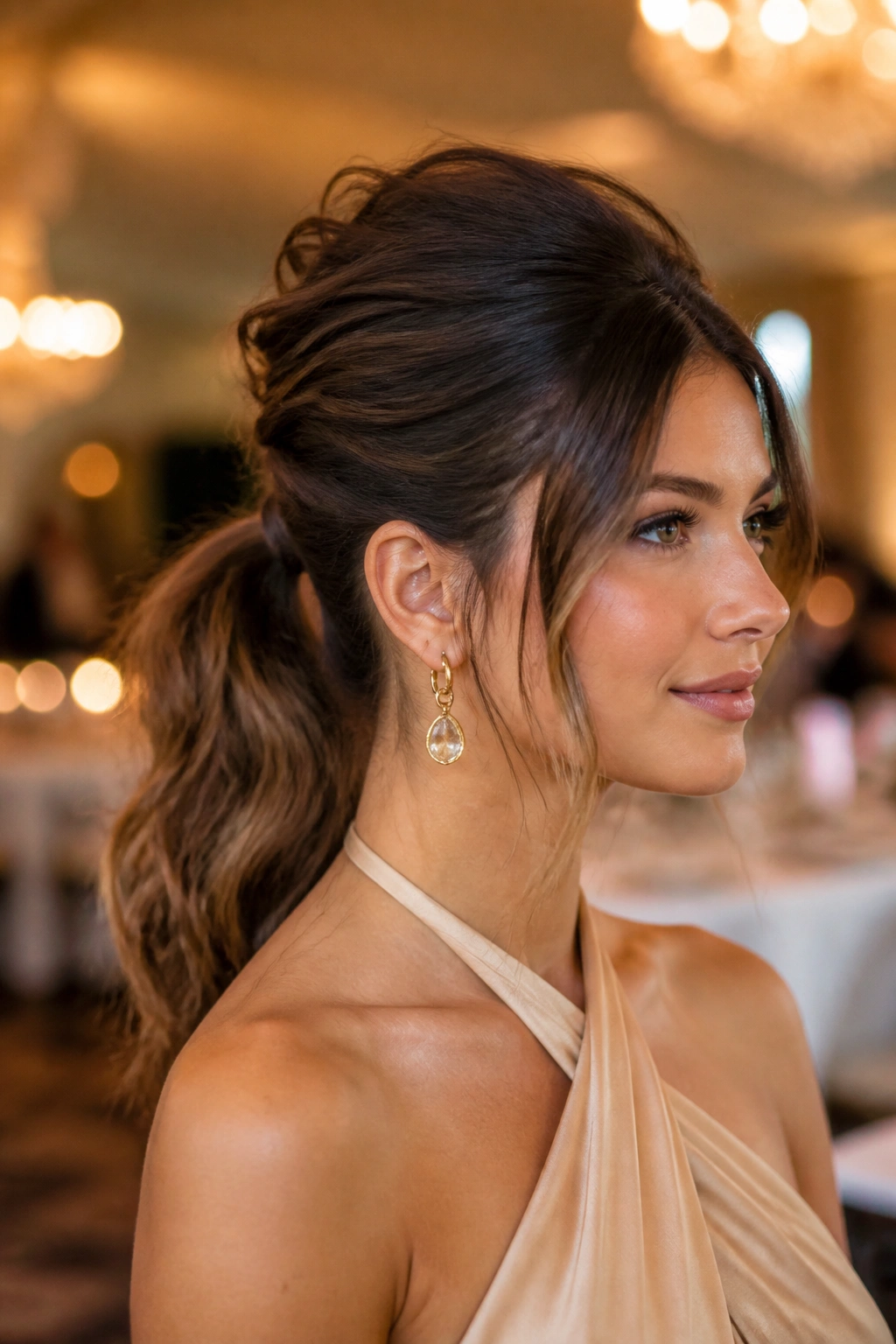
A ponytail can absolutely look formal on a wolf cut — if the crown is handled right. Skip the flat, tight version that sits like gym hair. That’s not what we want here. Build a little lift at the roots, keep the sides smooth, and let the layers fall into the tail with some movement still visible.
Start by teasing the crown lightly or blowing it up with a round brush. Gather the hair at mid-height or low at the nape, depending on the neckline of the outfit. A mid-height ponytail reads more youthful and clean. A low one feels more elegant. Both work, but the low version tends to suit a wedding look better because it gives the layers a chance to sit neatly instead of jutting out.
Wrap a small strand around the elastic. Always. It takes five extra seconds and makes the style look finished. Then leave a few face-framing pieces out, especially if the wolf cut has shorter front layers. They keep the shape from feeling too severe.
This is a smart choice for long receptions. It stays put, it doesn’t get in the way, and it still has enough body to look intentional from every angle. Easy. Not boring.
9. Soft Curls for an Outdoor Ceremony

What if the weather has opinions? Then you want a wolf cut that still looks soft when the air gets a little damp or a little windy. Loose curls are the answer. They hold the shape of the cut, but they don’t rely on absolute perfection, which is exactly why they suit an outdoor wedding look.
Use a curling iron with a barrel between 1 and 1.25 inches, and curl large sections away from the face. Don’t over-separate the curls before they cool. Let them set for at least 10 minutes, then break them up with your fingers instead of a brush. That keeps the style from exploding into fuzz. A light-hold spray helps, but don’t drown the hair in it. You want movement, not stiffness.
How to Keep It Soft
- Use heat protectant on every section.
- Curl the front pieces away from the face for a cleaner frame.
- Let the ends keep a slight bend instead of curling them all the way through.
- Finish with a flexible spray, then touch only the top layer if needed.
This style works especially well for wolf cuts with natural wave. It doesn’t ask the hair to be something it isn’t. It just refines what’s already there. And on a breezy day, that matters more than perfect symmetry ever will.
10. Mini Braids and Floral Clips
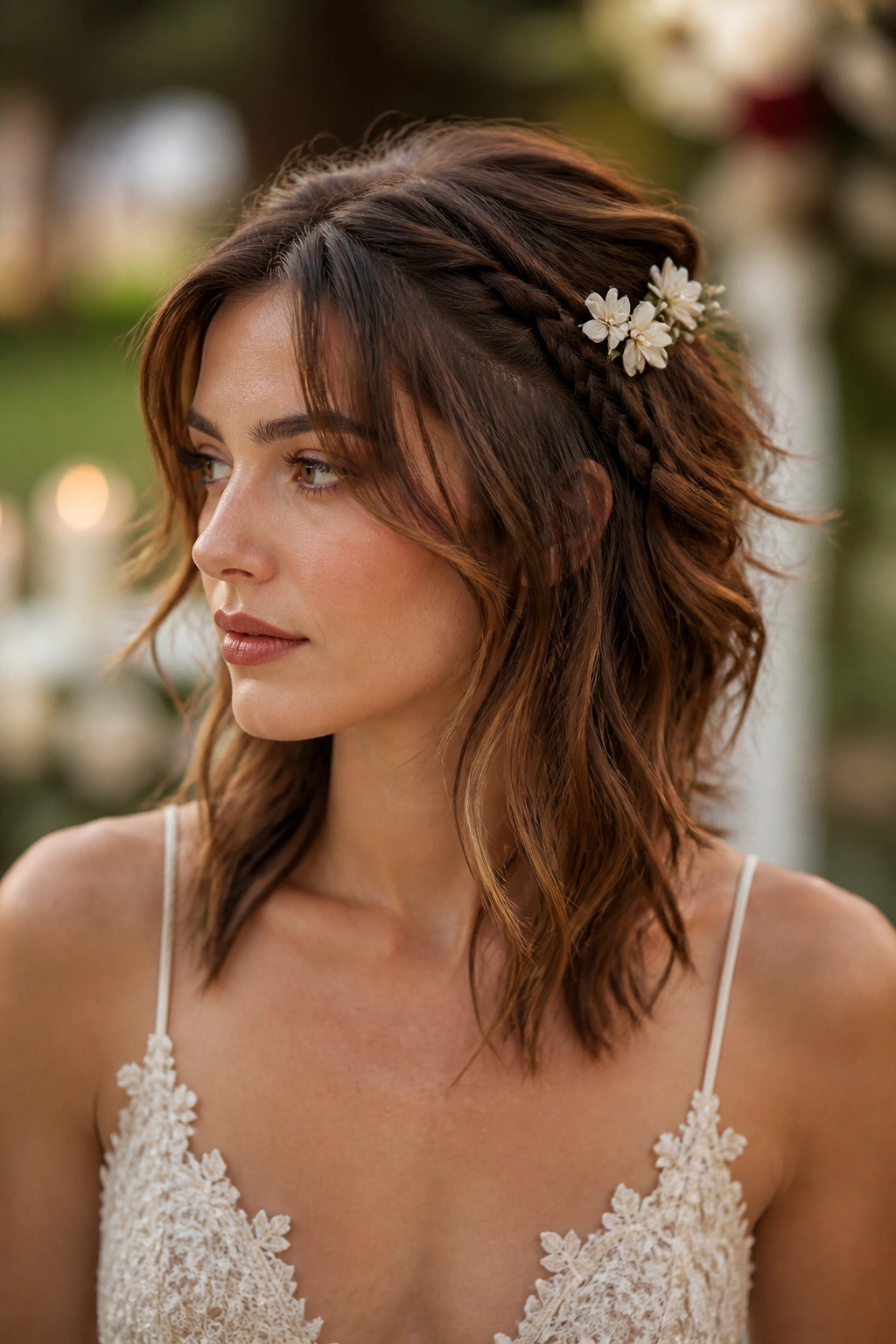
Mini braids are a clever way to tame the shorter layers in a wolf cut while still keeping the style playful. A full braid can make the look too busy. A few tiny ones, though, bring structure to the crown and give floral clips something to anchor against. That’s a neat little trick, and it works.
You can braid a narrow section at each temple and pin them back, or tuck one braid into the side of the hair and leave the other side loose. The point is to create a detail that looks intentional without turning the whole style into a craft project. Add one or two small floral clips near the braid, not all over the head. Too many and the look gets fussy fast.
This is a lovely choice if the outfit has a softer or more romantic feel. Think chiffon, lace, satin with a little sheen. It also suits wolf cuts with bangs because the braids can sit behind the fringe and keep the front from looking heavy.
The nice thing about this style is that it works on hair that is not perfectly cooperative. Good. It should. A wolf cut has layers by design, and tiny braids use those layers instead of fighting them.
11. Veil-Friendly Wolf Cut With Tucked Sides
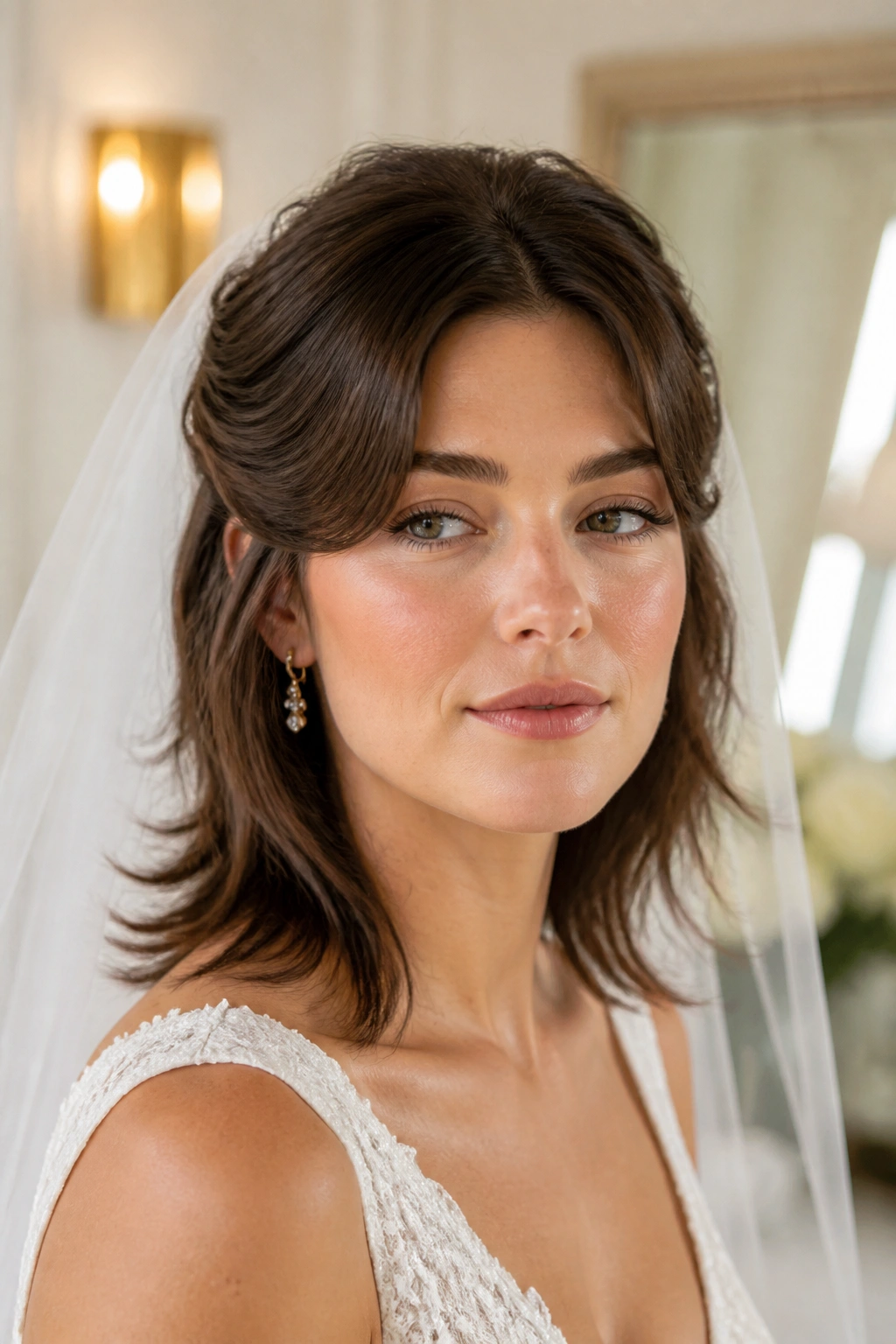
A veil and a wolf cut can get along beautifully, but the placement has to be thought through. If the sides are too bulky, the veil sits awkwardly. If everything is pulled too tight, the cut loses the softness that makes it interesting in the first place. The answer is to tuck, not flatten.
Keep the crown smooth and let the veil comb sit just above the area where the back of the head starts to round. Pin the sides back loosely, especially the pieces near the temples and above the ears. That opens up the face and gives the veil a clean base. Leave the shortest layers around the jawline or neck if they want to fall there. Those pieces help the cut keep its shape under the veil.
This is one of those styles you should test before the event, not the morning of. Put the veil in, turn your head, and check whether the layers snag, puff, or slip. A few extra bobby pins placed horizontally can solve most of the problem. Don’t overpin the whole thing. The goal is support, not armor.
Once the veil comes off, the haircut should still look like a real style, not a flattened afterthought. That is harder than it sounds, and worth getting right.
12. Old-Hollywood Gloss on a Wolf Cut Wedding Hairstyle
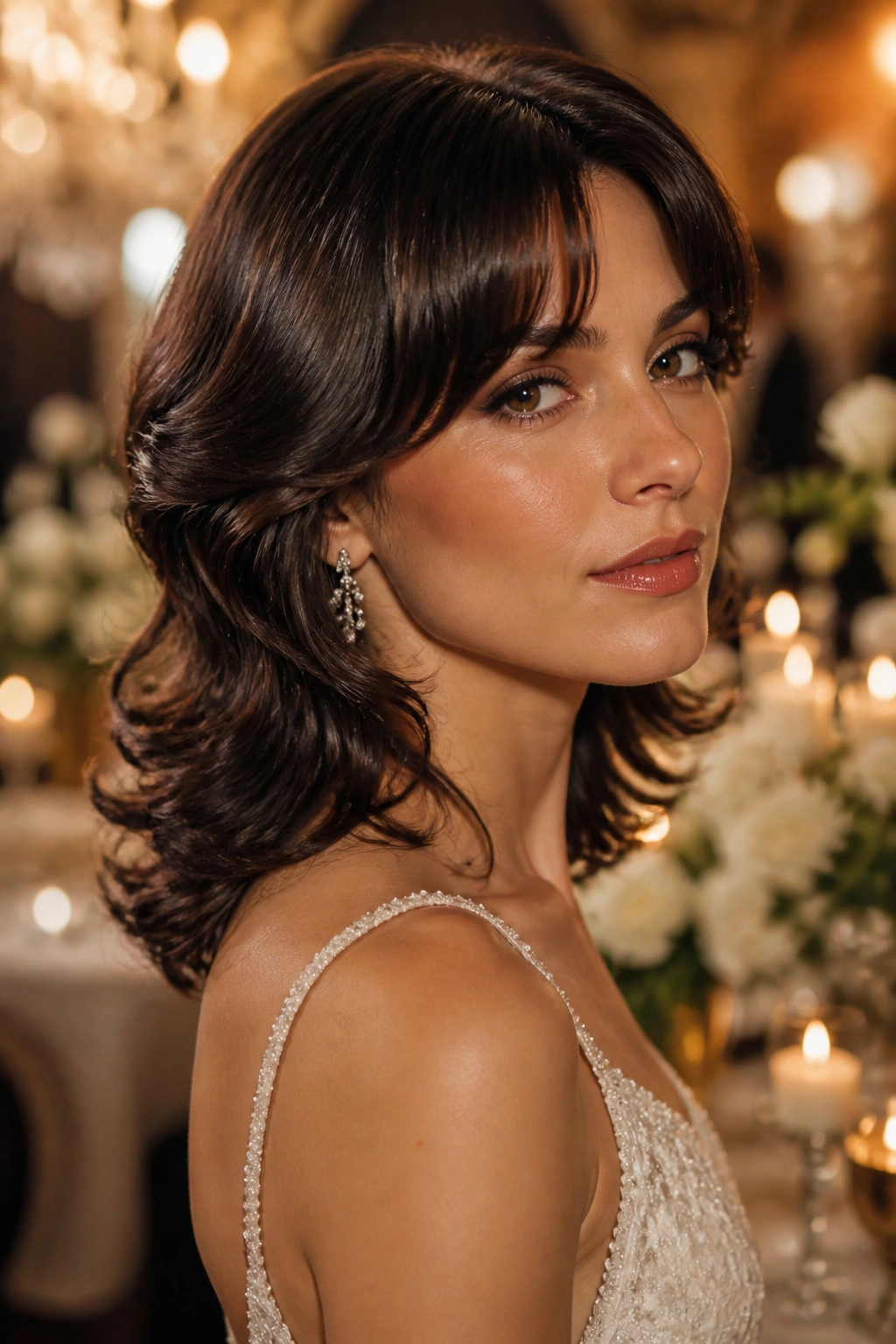
Old-Hollywood glamour sounds like it belongs to a different haircut, but it works on a wolf cut better than people expect. The trick is to set the wave pattern with a clear direction, then brush it out until the finish feels expensive and smooth. The layers stay present, but they get wrapped in gloss and shape.
Use a 1.25-inch iron if the hair is medium to long, and curl every section in the same direction for a more uniform wave. Pin the curls while they cool if the hair is hard to hold. Then brush them out carefully with a soft bristle brush. The result should feel polished, but not frozen. Think soft ridges, shiny ends, and enough movement that the style still looks modern when the head turns.
This is the best choice for evening weddings, dramatic dresses, or anyone who wants the wolf cut to read as formal first and edgy second. It also flatters statement earrings because the hair sits close enough to the head to leave the face and neckline open. That shape does a lot of work on its own.
Finish with a shine spray, not a heavy oil. Oil can collapse the wave pattern if you use too much. Shine spray gives you that glossy surface without turning the hair greasy. It’s a small difference, and on this kind of style, small differences are the whole story.
A wolf cut does not have to be casual. It just has to be styled with a point of view.
