



Red hair color ideas are tricky in the best way: the wrong red can look loud and flat, while the right one makes skin look brighter, eyes look clearer, and makeup suddenly feel easier. The shade matters more than the category. Copper, auburn, cherry, merlot — they all sit in the red family, but they behave very differently on the face.
That’s why a red that flatters porcelain skin can look chalky on deep skin, and a wine shade that feels rich on cool undertones can go muddy on warm ones.
Hair colorists think about three things first: depth, warmth, and reflect. Depth is how dark the color sits. Warmth is whether it leans copper, gold, orange, or pink. Reflect is the little flash you see when the light hits it, and that flash can make the whole color feel soft or sharp.
Red also asks for a little more care than brown. Hot water, rough shampooing, and constant UV exposure pull pigment out faster, so the smartest shades are the ones that fit both your face and your routine. The list ahead moves from soft, wearable reds to bolder shades, and each one solves a different problem — too pale, too warm, too deep, too flat, too high-maintenance.
1. Copper Penny Red
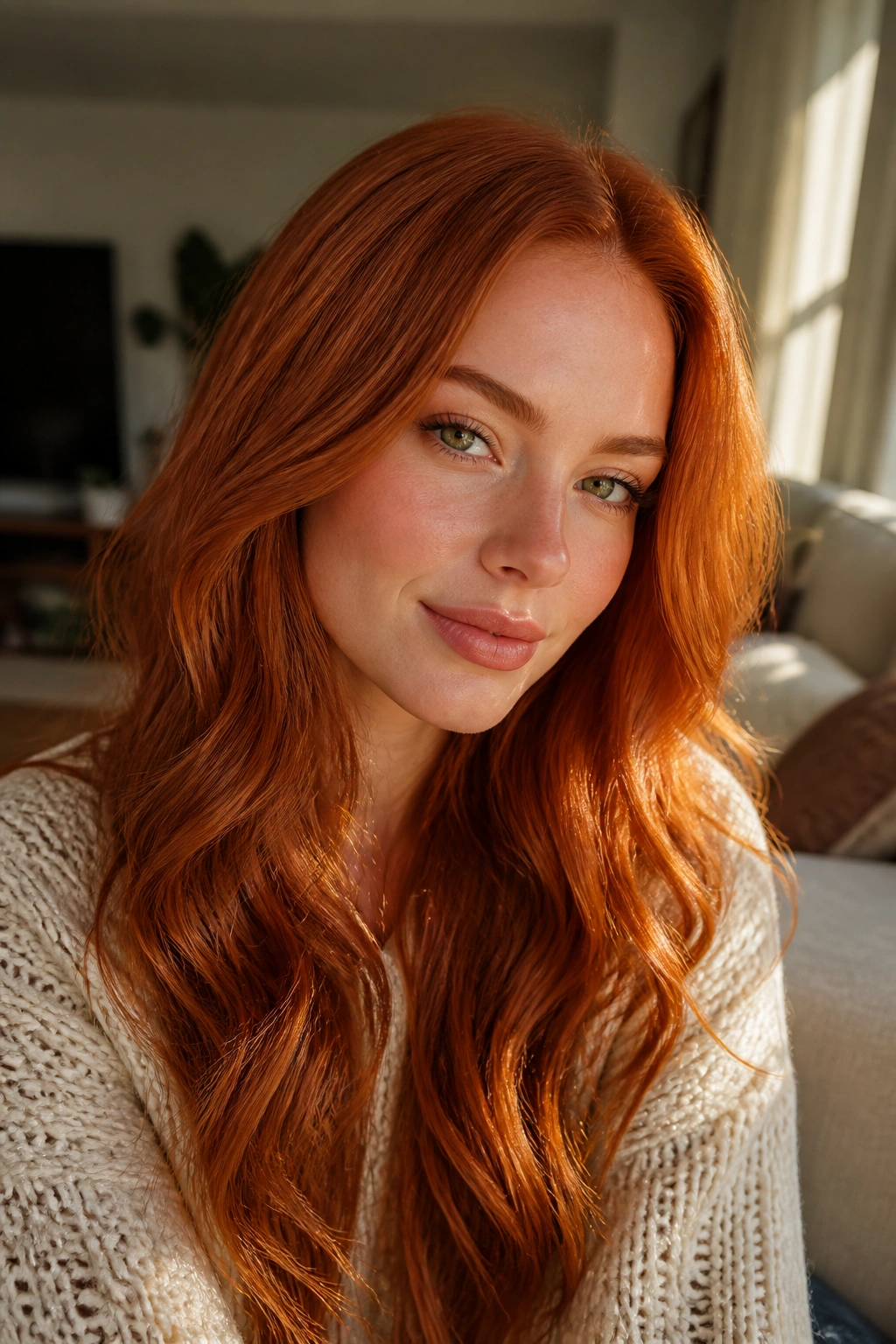
Copper Penny Red has that bright, coin-shine look that wakes up the face fast. It’s warm, energetic, and a little unapologetic, which is exactly why it flatters fair skin with peach or golden undertones so well.
Why it works
The gold in this shade keeps it from turning harsh. On light skin, that warmth stops the color from looking pasted on. On olive or medium skin, it brings out freckles, green eyes, and any natural flush in the cheeks.
Ask for a copper base with a soft gold reflect, not a pure orange. That small shift keeps it expensive-looking instead of neon.
- Best on: fair warm skin, peach skin, light olive
- Nice match for: green, hazel, and amber eyes
- Ask for: a level 7 to 8 copper gloss
Tip: If your skin leans cool, keep the copper a shade deeper so it does not fight your undertone.
2. Strawberry Blonde
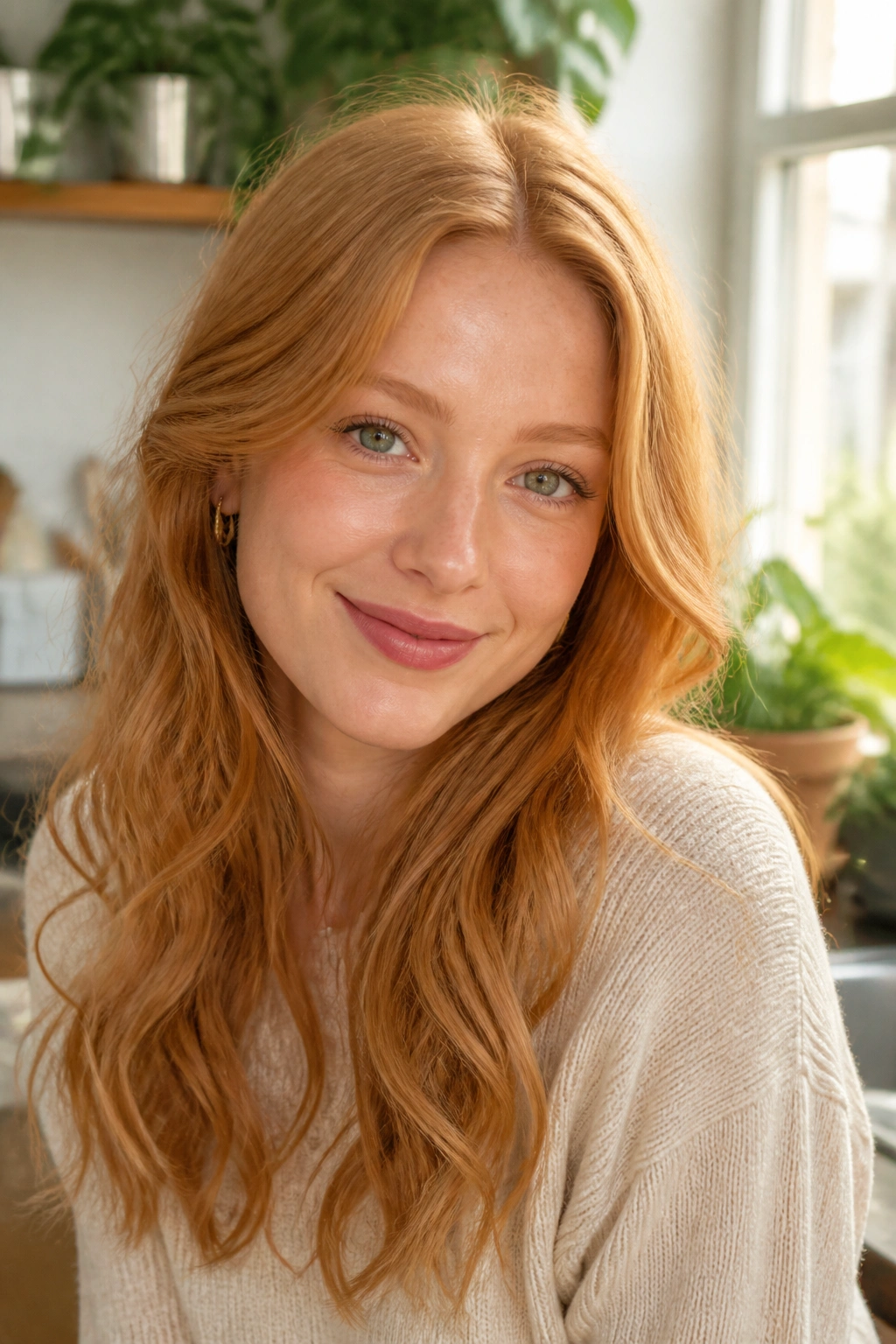
Strawberry Blonde is the shy cousin of copper, and I mean that in a good way. It gives a whisper of red without making the whole head feel dramatic, which is why it suits very fair skin, neutral skin, and anyone who likes a soft, airy look.
This shade is useful when you want warmth near the face but do not want a full red transformation. It also plays nicely with fine hair because the lightness keeps strands looking airy, not heavy.
A gloss version is the sweet spot here. It gives you the strawberry tone without the maintenance of permanent red.
3. Ginger Spice
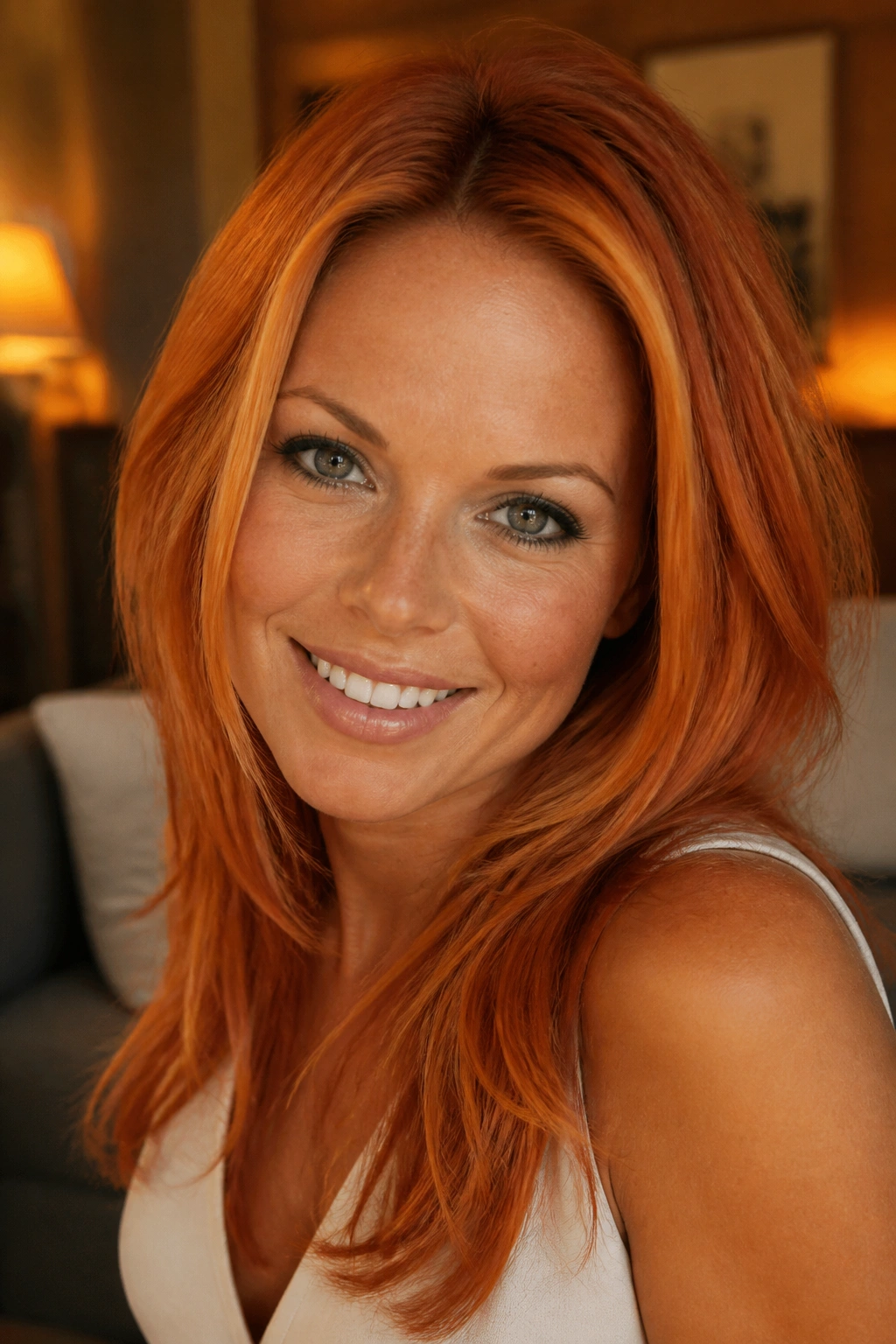
Ginger Spice has more bite than strawberry blonde and more brightness than auburn. It suits warm medium skin, olive skin, and fair skin with freckles, especially when you want the hair to feel alive without going into full fashion-red territory.
How to get the most from it
This shade looks best when the orange note is clean and the brown note is kept light. Too much brown and you lose the glow. Too much orange and it starts to look brassy.
It also does a nice job with curls and waves because the movement catches the copper-red reflect. Straight hair can wear it, sure, but texture makes it sing.
4. Classic Auburn
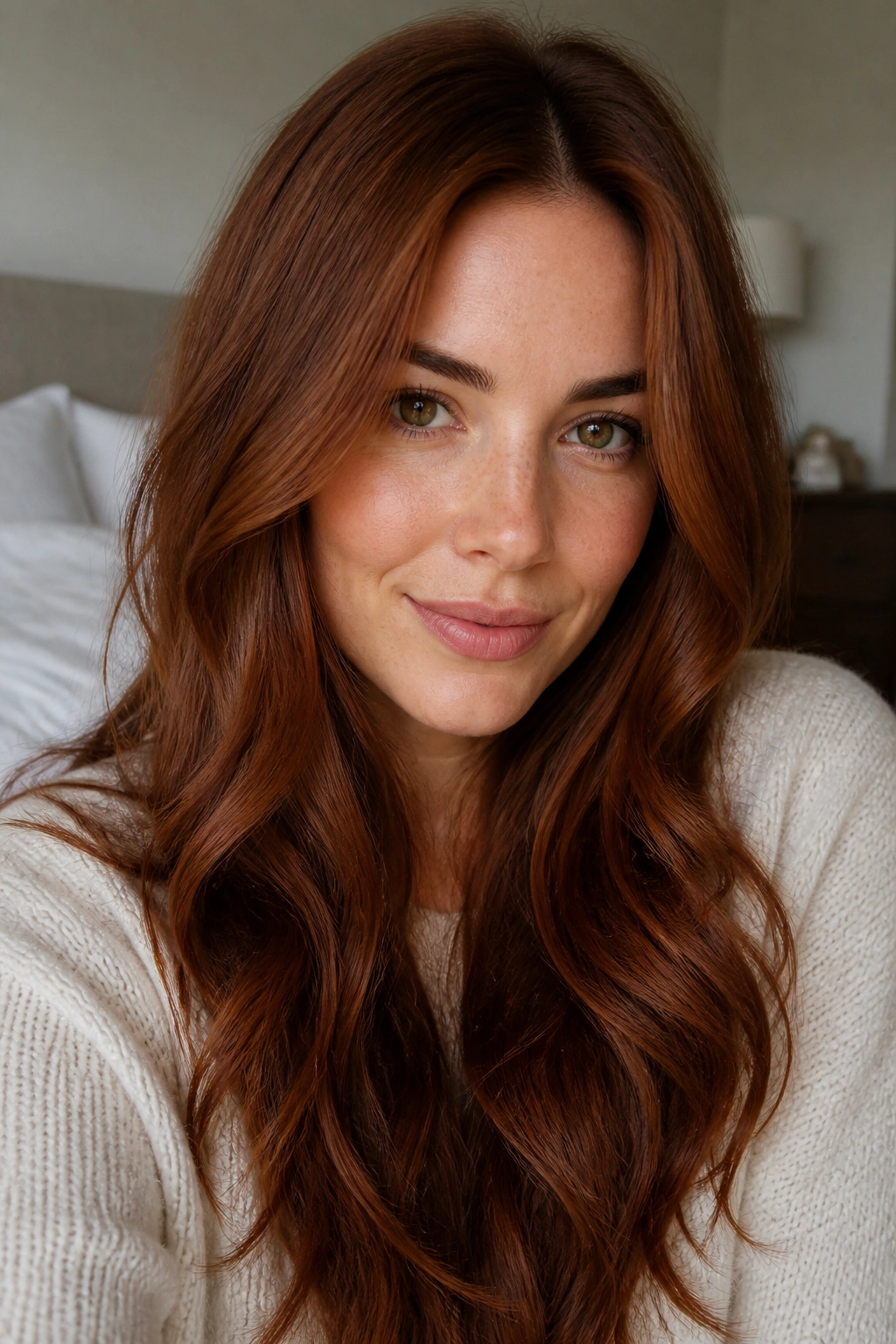
Classic Auburn is the shade I recommend most often when someone says, “I want red, but I still need it to be easy to wear.” It’s a brown-red with enough warmth to show up, and enough depth to suit fair, medium, olive, and deep skin tones.
That range is what makes it so useful. Auburn does not depend on one perfect complexion. On lighter skin, it reads rich and polished. On deeper skin, it can look velvety and grounded instead of bright in a jarring way.
Ask for a brown base with soft red reflect, not a full copper overlay. That gives you the red effect without the constant upkeep.
5. Cherry Cola
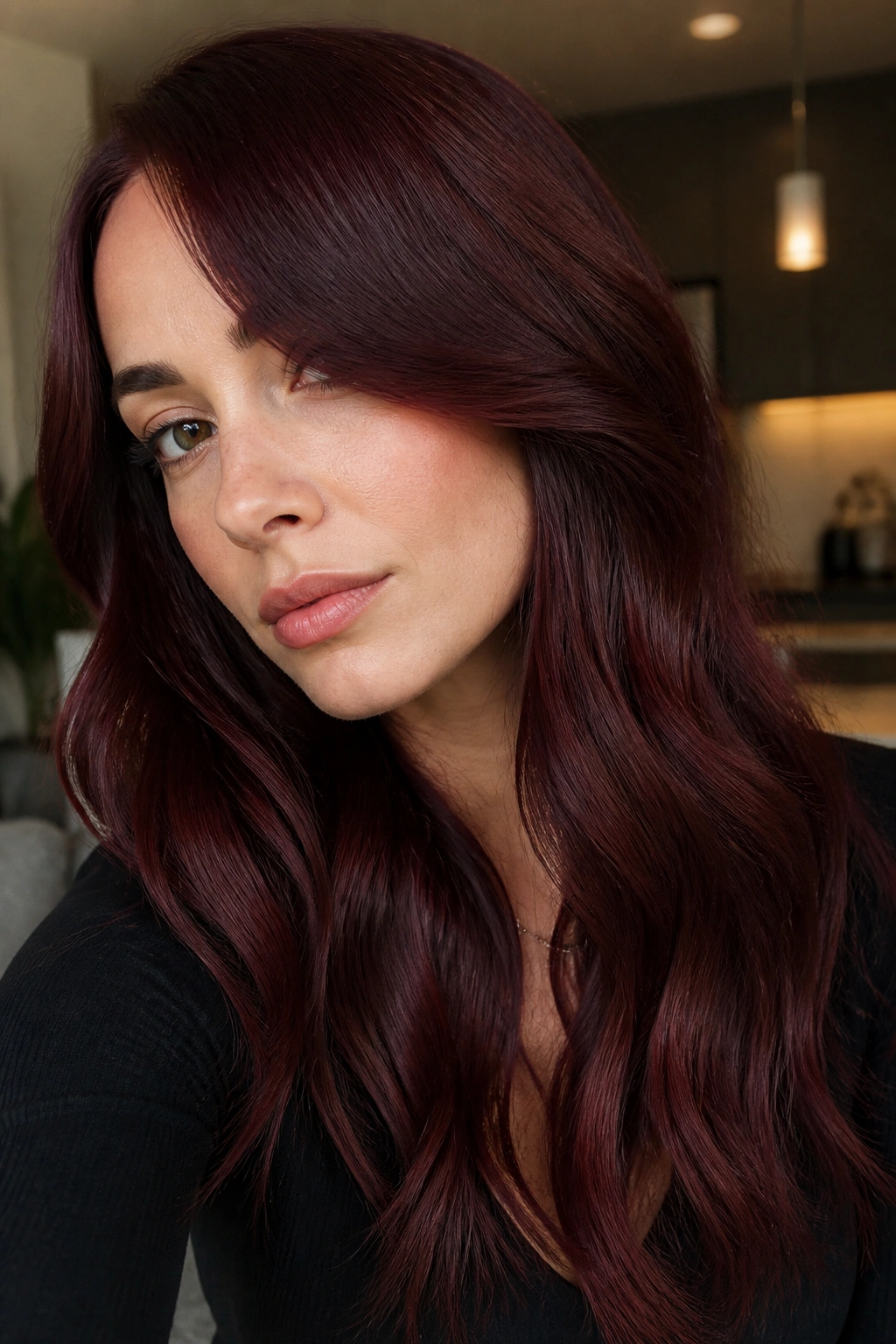
Cherry Cola is dark, glossy, and a little mysterious. It suits cool undertones, deep skin, and porcelain skin because the berry note sits inside a brunette base instead of sitting on top of it.
The appeal is contrast. In daylight, you see cherry. Indoors, it reads almost like a deep brown with a red shine at the ends. That makes it far less intimidating than a bright red, and honestly, it’s one of the easiest ways to wear red if you love dark hair.
What makes it different
Cherry Cola is best when the red is hidden in the layers, not painted all over like a flat block. A gloss or demi-permanent formula gives you that shine and keeps the fade softer.
6. Ruby Red Gloss
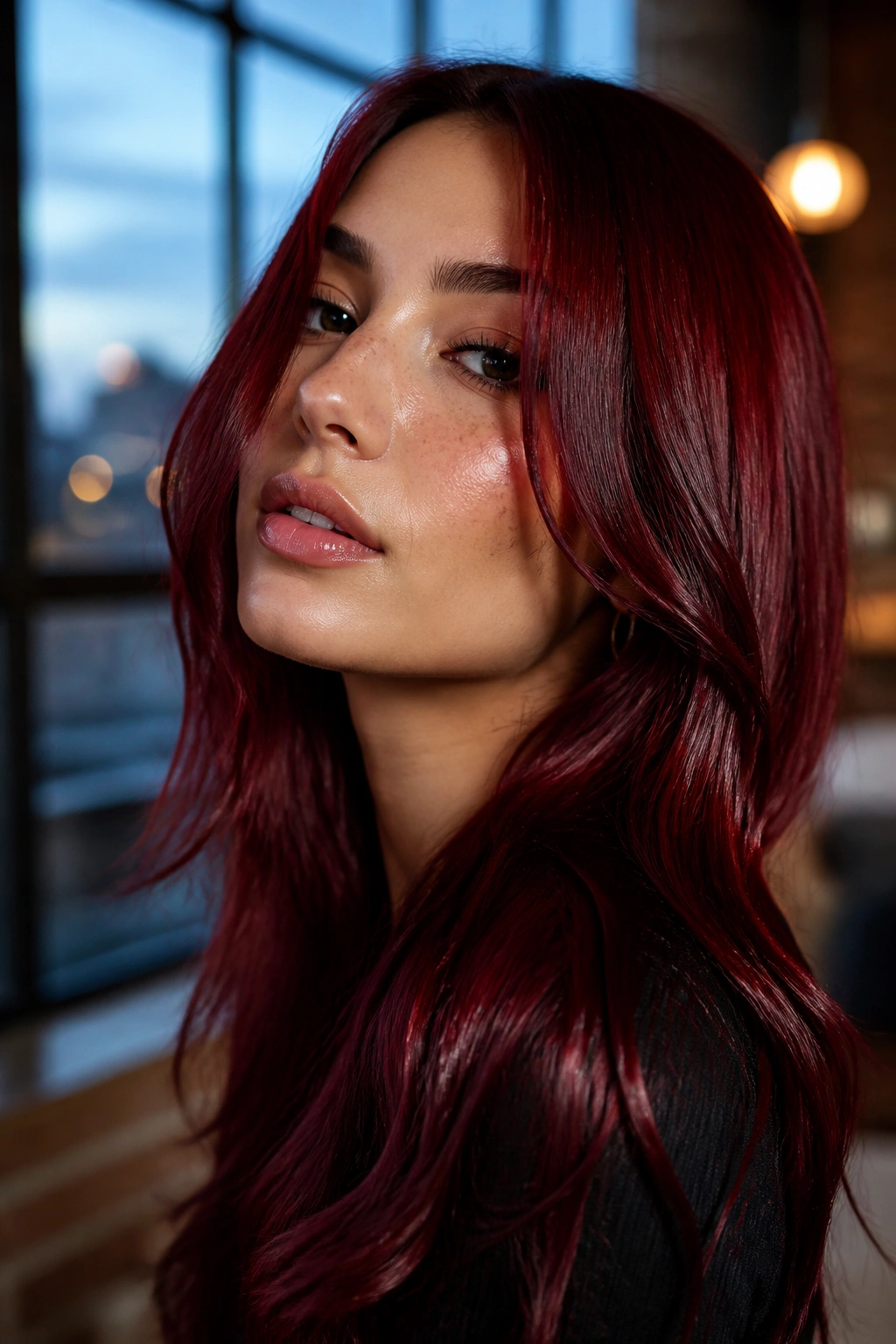
Ruby Red Gloss is jewel-toned and crisp, with a blue-red cast that flatters cool skin, neutral skin, and deeper complexions. It has a cleaner look than orange reds, which is why it can make pale skin look fresh instead of washed out.
This is a smart choice if you like red but hate brassiness. The blue base keeps the color sharp, and the gloss finish gives it that wet, polished look people always notice.
- Best on: cool undertones, neutral undertones, deep skin
- Works well with: dark brows and cool-toned makeup
- Maintenance note: fades to pinker tones if you wash hot
Tip: Pair it with a root shadow if your natural hair is brown. The grow-out looks calmer.
7. Mahogany Red
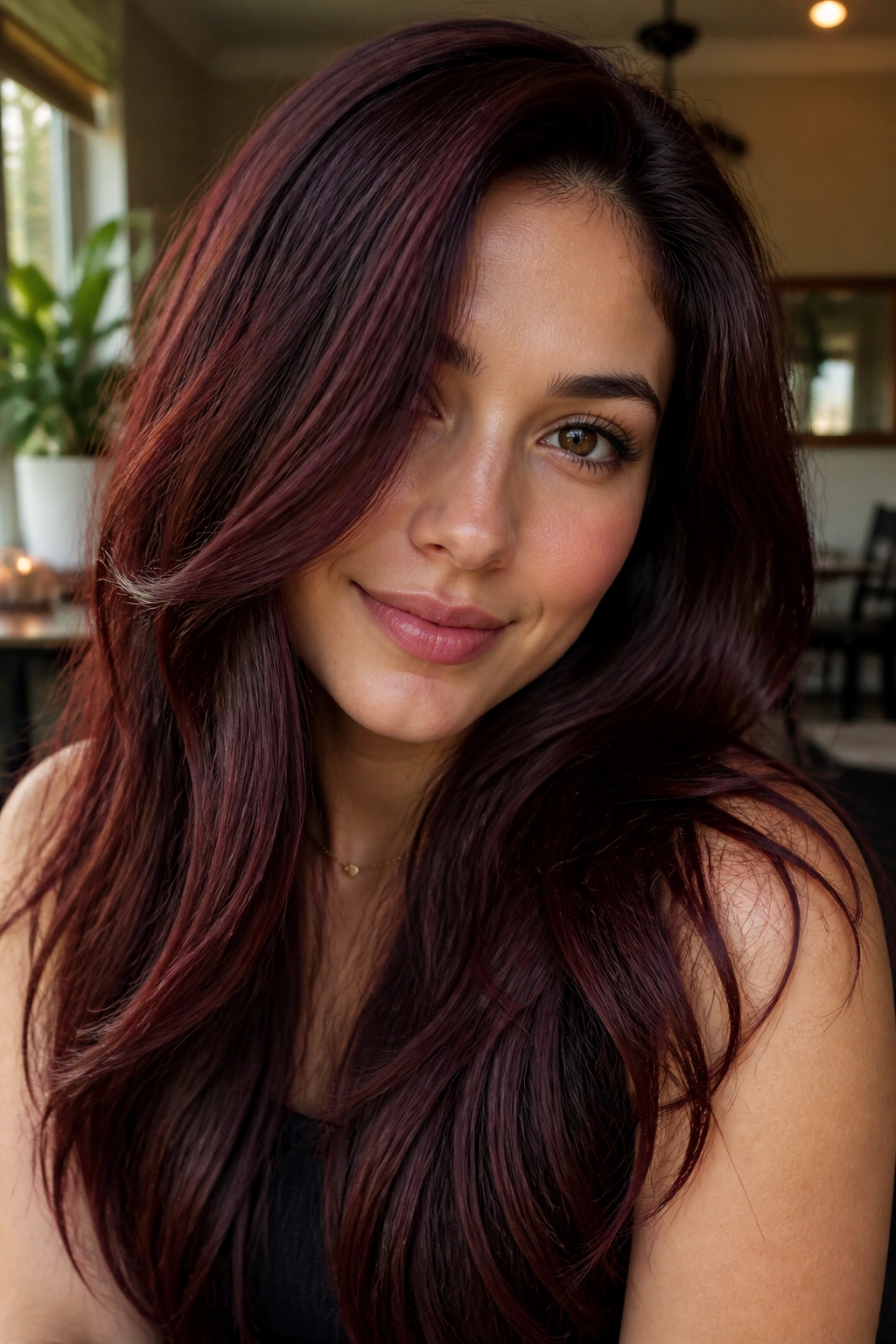
Mahogany Red is the shade for people who want red without anyone shouting “red hair” from across the room. It leans brown, plum, and red at the same time, which makes it flattering on olive skin, medium skin, and deep skin.
I like this shade because it behaves like a good blazer. It adds structure. On cooler skin, the plum note keeps it from turning orange. On warmer skin, the brown base keeps it grounded.
Ask your colorist for a mahogany brunette with red-violet reflect. That wording matters more than people think.
8. Cinnamon Copper
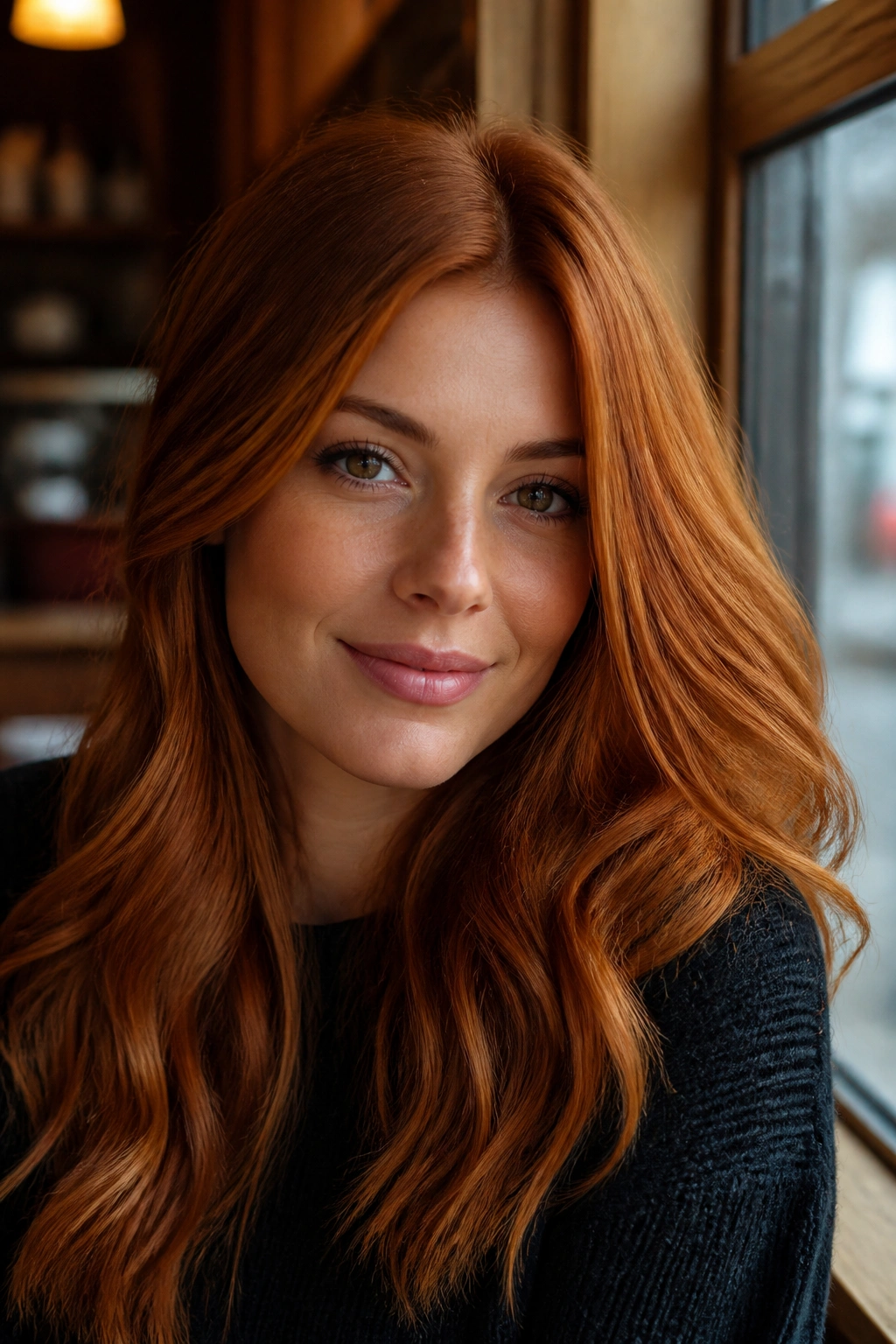
Cinnamon Copper sits between soft spice and warm metal. It suits golden skin, tan skin, and neutral undertones because the brown-red base keeps the copper from getting too loud.
This is the shade I’d pick for someone who wants movement and warmth but still needs to show up at work without feeling overdone. It’s also friendly to layered cuts because the cinnamon tone changes a bit in every slice of hair.
Why it flatters
The brown in this shade creates a buffer between the copper and the face. That makes the red feel wearable even if you’re not used to bright shades. If your hair pulls very dark, ask for a lift to a warm level 6 or 7 first.
9. Black Cherry
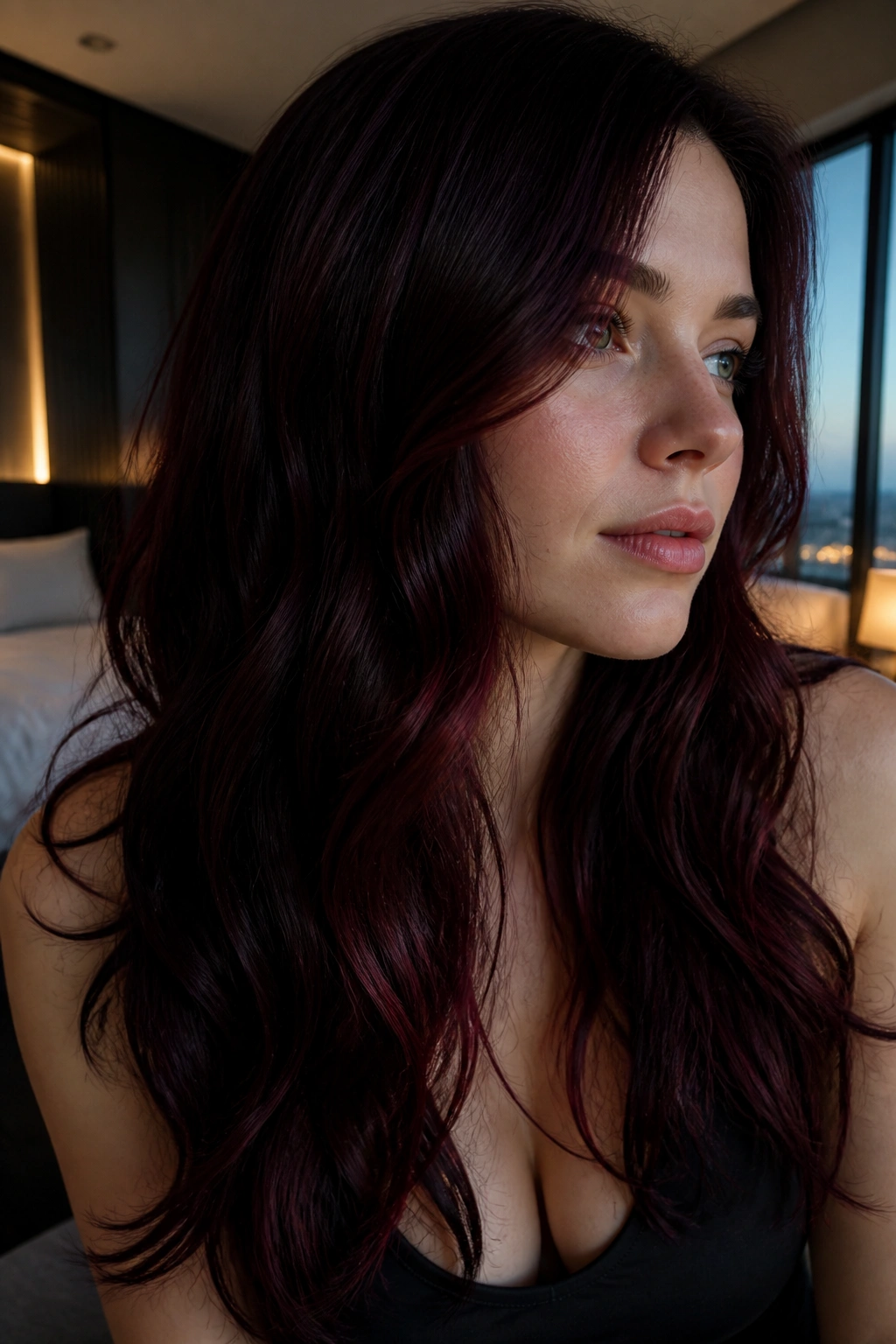
Black Cherry is nearly black at first glance, then turns red-purple when light hits it. That’s why it suits deep skin, cool skin, and even very fair skin when you want contrast instead of softness.
It’s a strong shade, but not a loud one. The dark base makes it feel rich, and the cherry reflect gives it life. On deeper complexions, that contrast can be stunning. On pale skin, it looks dramatic in a cleaner way than bright scarlet.
If you want low-drama color with high impact, this is one of the smarter choices.
10. Rust Brown Red
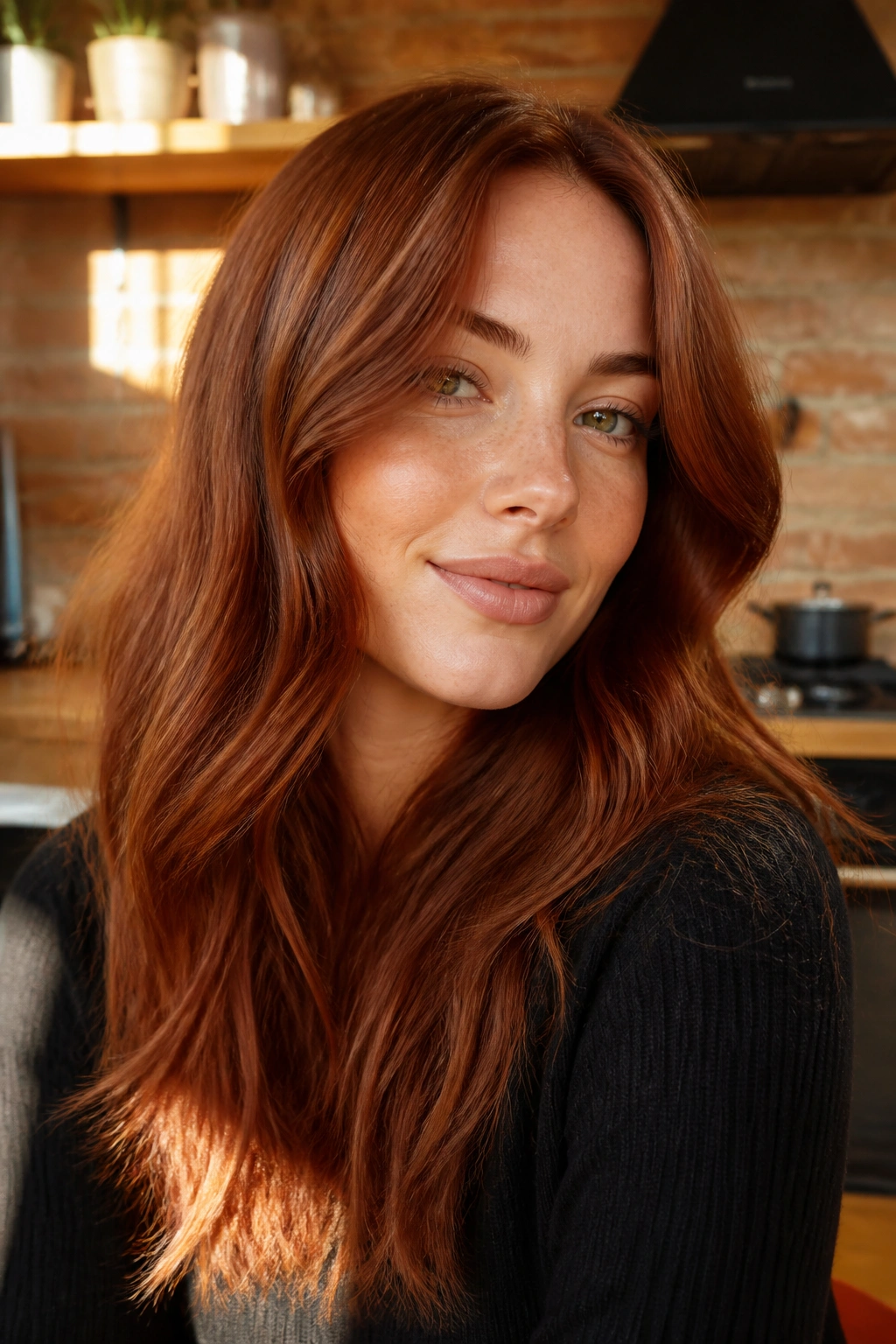
Rust Brown Red is earthy, dusty, and grounded. It flatters warm medium skin, olive skin, and tan skin because it leans into the natural warmth already present in the face.
This shade is less shiny than copper and less dark than auburn. That middle ground matters. Rust gives you red hair without making your features fight for attention. It also grows out in a forgiving way, which is handy if you dislike sharp roots.
Quick take
- Ask for a muted copper-brown with rust reflect
- Skip heavy violet toner; it can dull the warmth
- Best on wavy and textured hair
11. Brick Red

Brick Red has a muted, clay-like quality that feels modern without trying too hard. It suits medium skin, olive skin, and neutral skin because it has enough warmth to brighten the face but enough depth to stay balanced.
This shade often works better than people expect on darker eyebrows. The red sits in the hair, not on top of the face, so it does not clash with strong brows the way a brighter orange might.
I’d call this a quiet favorite. Not flashy. Just good.
12. Merlot Red
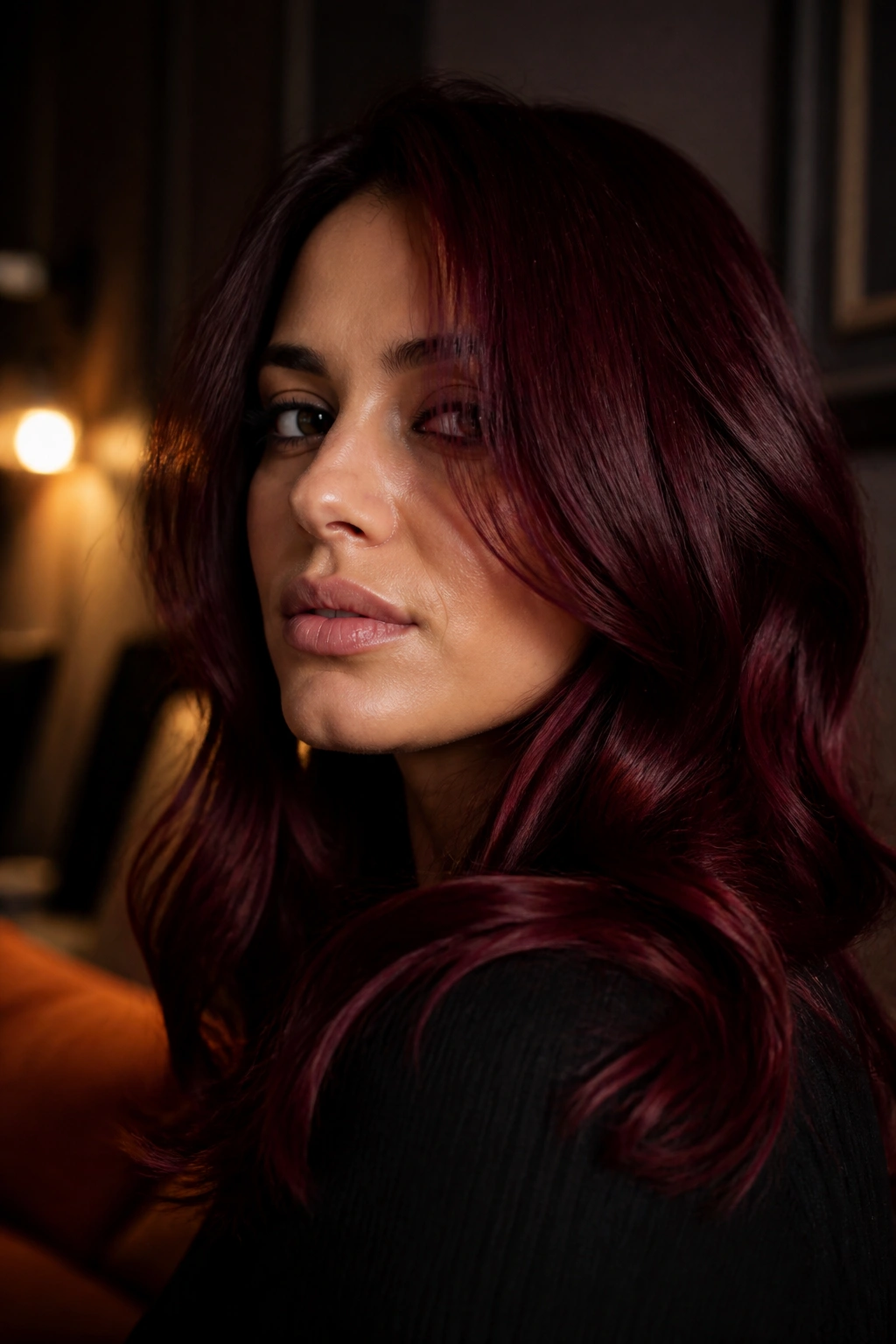
Merlot Red is a wine shade with depth, and depth is its whole trick. It flatters cool undertones, deep skin, and neutral complexions because the blue-red base keeps the color rich instead of muddy.
This is the kind of red that looks expensive in low light and even better in a glossy finish. It suits straight hair, curls, and sleek bobs alike because the tone itself does most of the work.
What to ask for
Tell your colorist you want a merlot brunette or burgundy-red blend, not a bright cherry. That keeps the result sophisticated and easier to wear every day.
13. Rose Gold Red
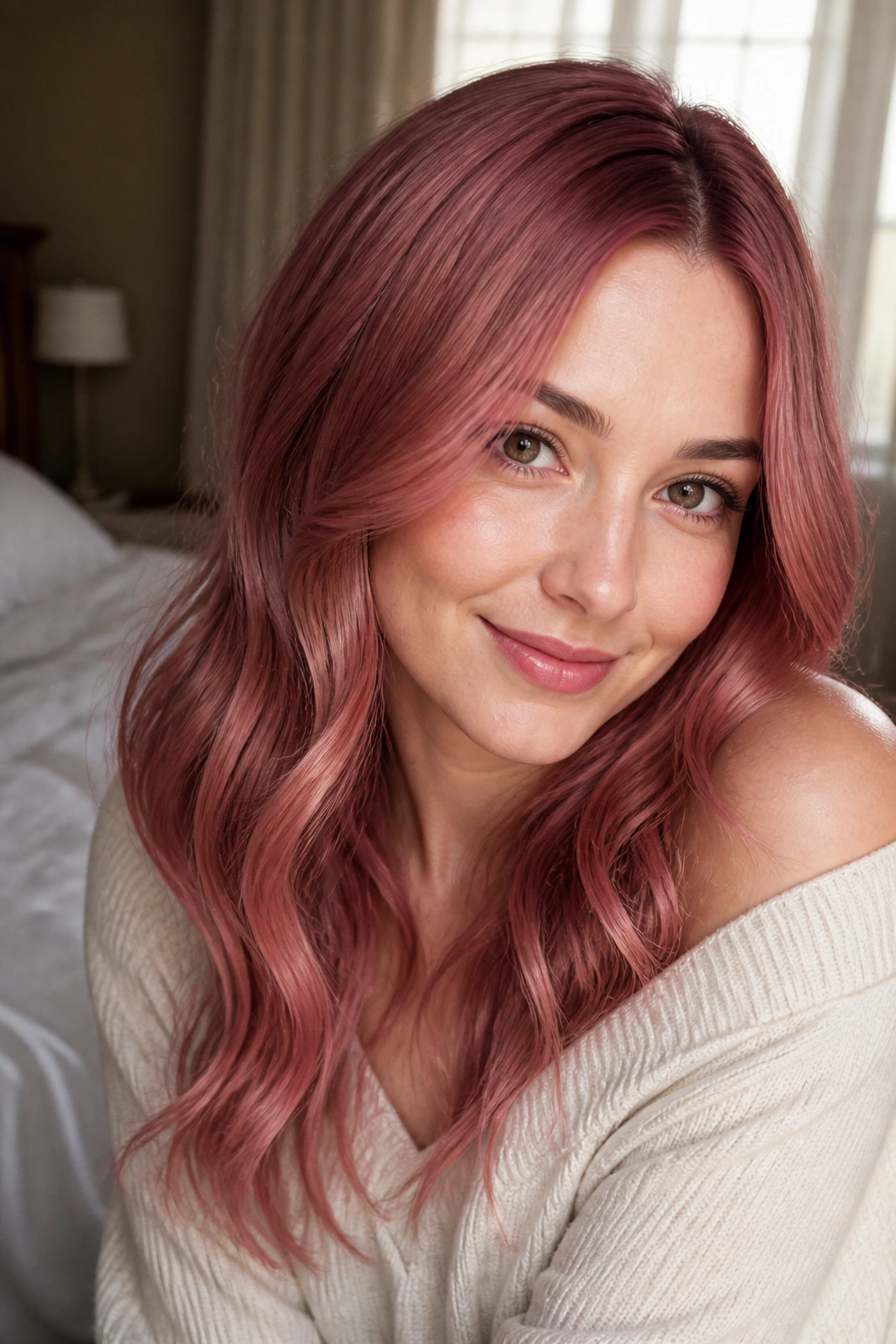
Rose Gold Red is soft, blushy, and lighter than people expect. It flatters fair skin, light neutral skin, and soft olive undertones because the pink-red reflect adds warmth without hard edges.
This one is lovely if you like delicate color. It does not shout. It shimmers. On short hair, it feels playful. On long waves, it can look almost creamy. The catch is maintenance: pale red-pink tones fade fast, so a gloss refresh matters.
A small warning: if your hair is yellow at the base, rose gold can tip peachy. That is not always bad, but it changes the mood.
14. Burnt Orange Red
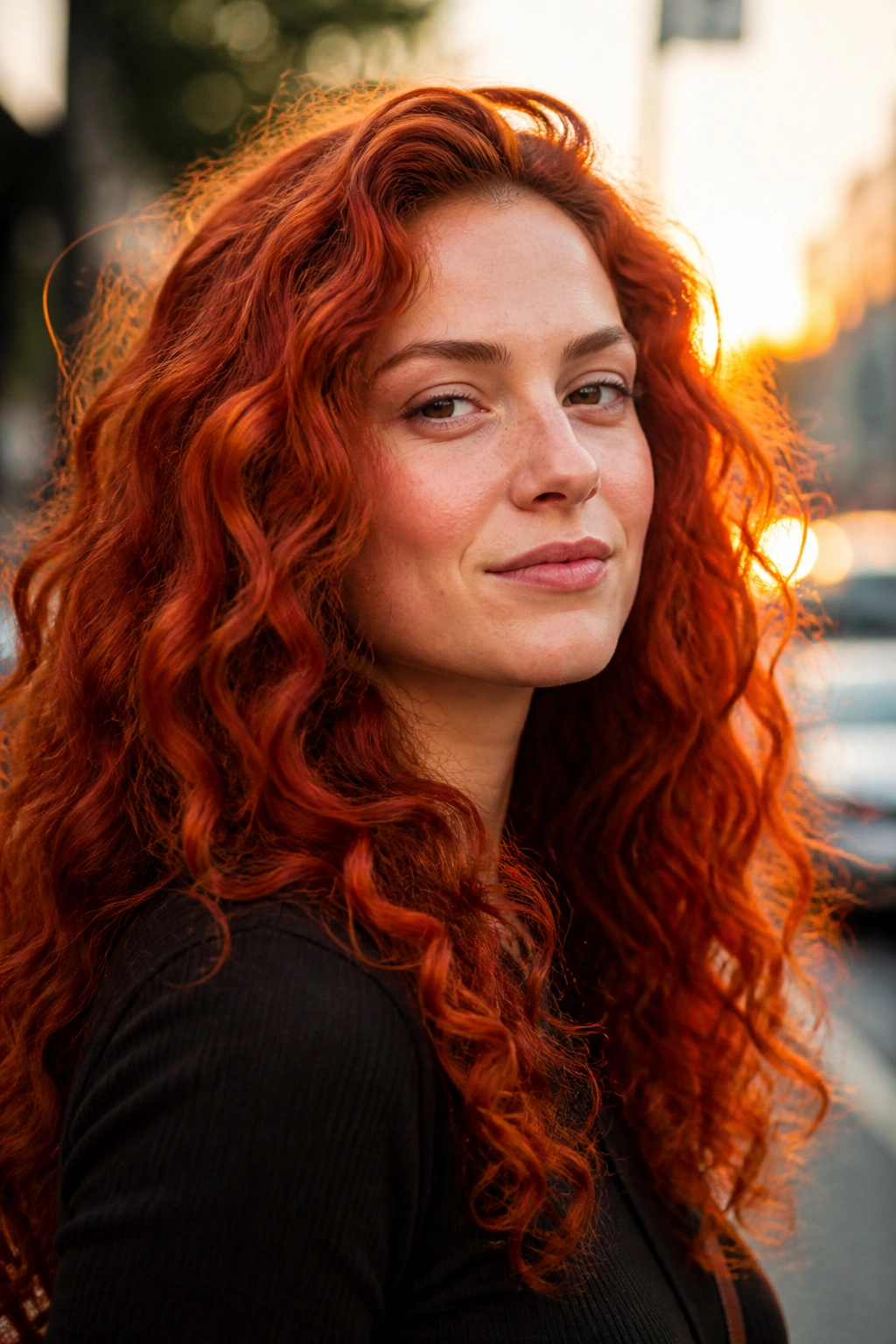
Burnt Orange Red is bold, hot, and full of attitude. It suits warm fair skin, freckled skin, tan skin, and olive undertones because the orange-red reflect echoes natural warmth instead of fighting it.
This shade is not for someone who wants to disappear. It’s for the person who likes being noticed. The best versions have a little brown underneath so they don’t read like costume color. On curly hair, it can look especially alive because every bend catches the light.
If you want fire without neon, this is the lane.
15. Cranberry Red
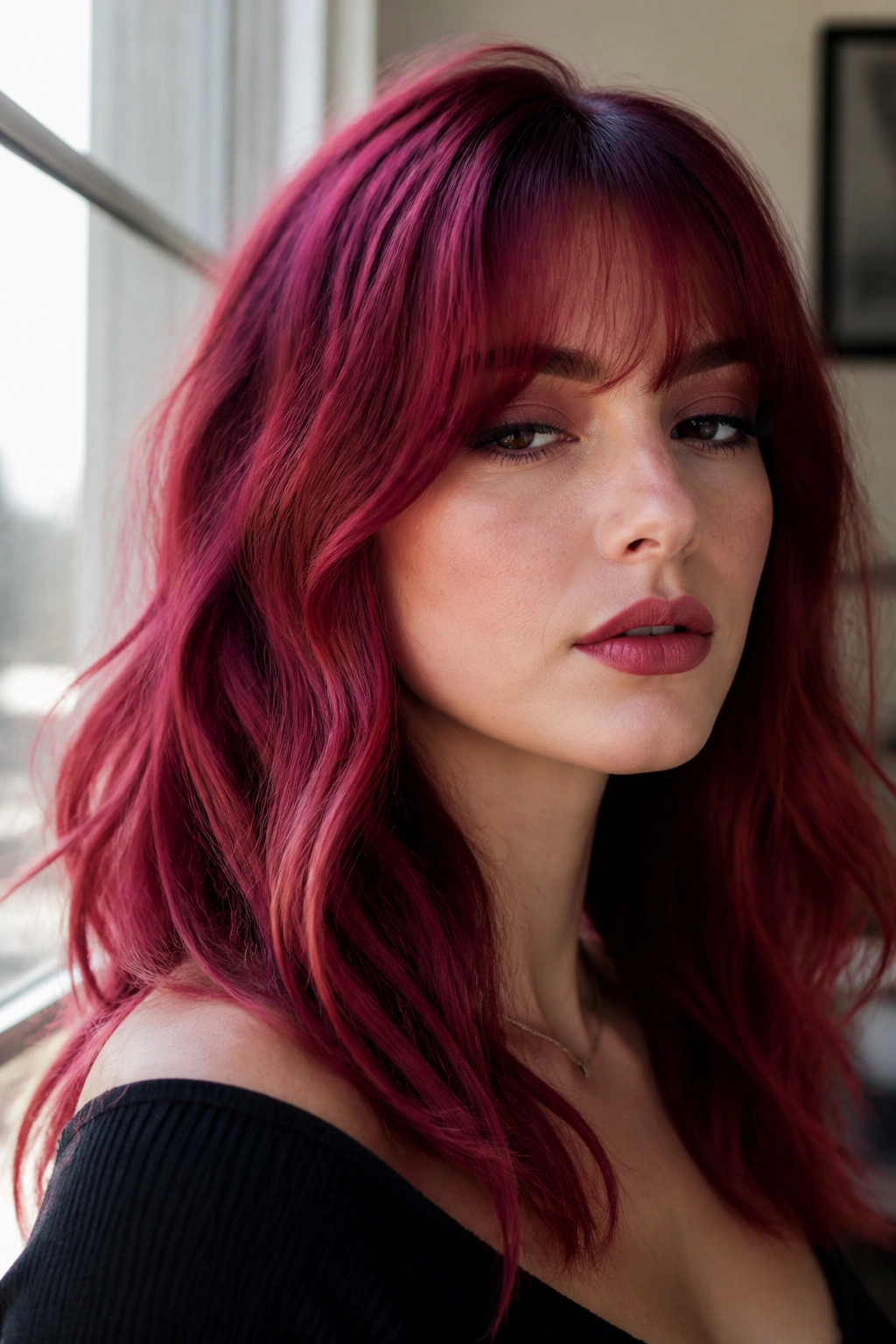
Cranberry Red leans cooler and brighter, with a pink-red edge that flatters cool skin, rosy skin, and high-contrast features. It can also work on deep skin when the formula is saturated enough to show up cleanly.
The pink note is what separates it from cherry cola and ruby red. Cranberry feels fresher, sharper, and a bit more playful. On pale skin, it can make the complexion look less flat. On dark skin, it can pop in a really satisfying way.
How to wear it
Ask for a true red with berry undertone and avoid too much orange in the mix. That keeps the shade crisp instead of muddy.
16. Venetian Red
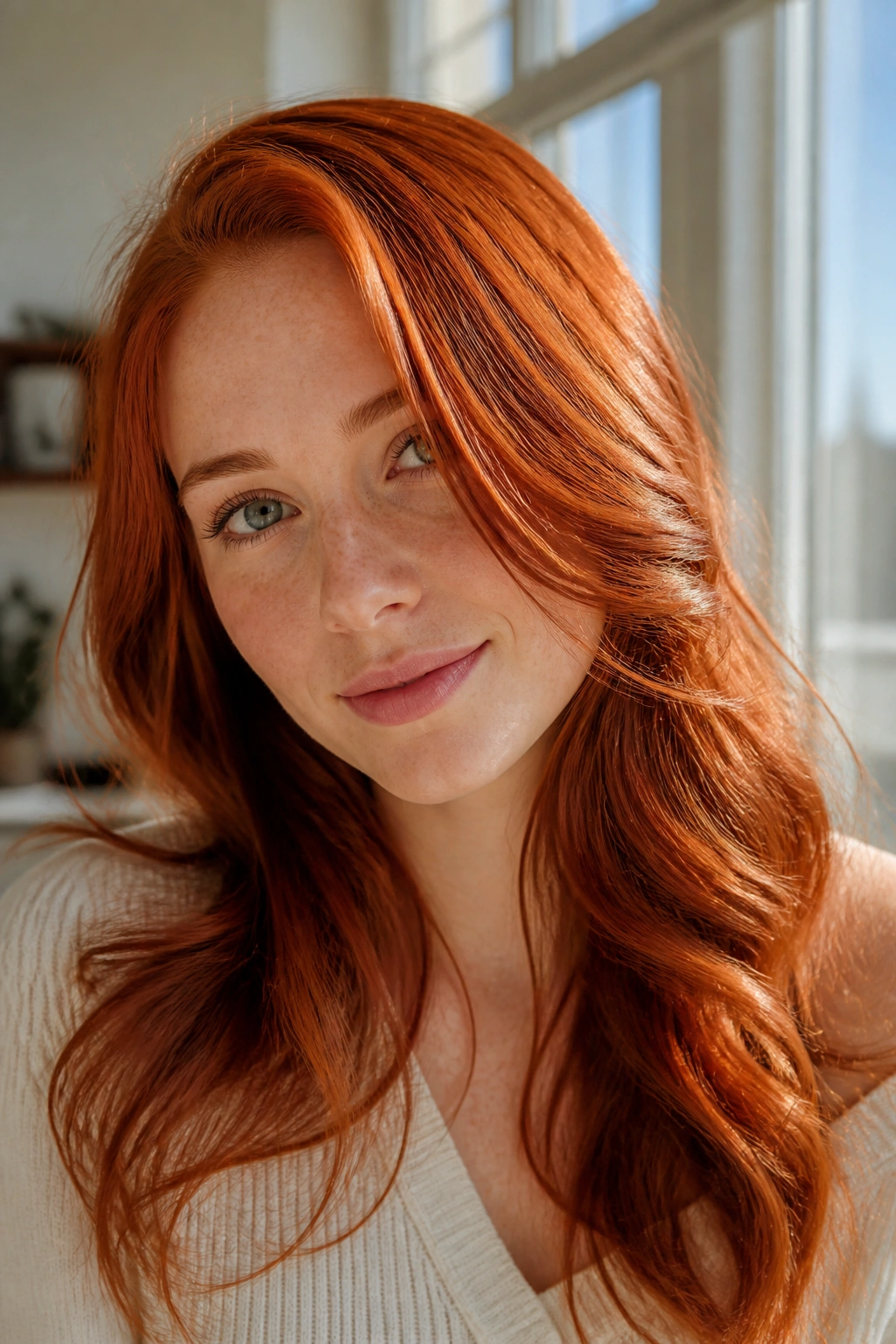
Venetian Red is old-school in the best sense. It’s a clear copper-red that flatters pale skin, peach skin, and warm neutral undertones. If you’ve ever wanted a red that feels classic instead of trendy, this is the one.
The reason it works is simple: it gives enough brightness to lift the face without becoming neon. Freckles look sharper. Light eyes look brighter. Skin with a little pink can actually benefit too, as long as the copper is softened with a gloss.
I’d keep this one around a level 7 or 8 so it stays airy.
17. Chestnut Auburn

Chestnut Auburn is one of those shades that saves people from bad red hair decisions. It’s brown first, red second, and that balance flatters almost every skin tone, especially if you want red that does not demand constant attention.
This shade is safe without being boring. On fair skin, it adds warmth. On medium skin, it looks polished. On deep skin, it turns rich and smooth. The red reflect stays subtle, which means the grow-out is easier and the color feels wearable for longer.
Why people keep coming back to it
You get the red mood without the maintenance burden of a vivid copper. That alone is worth a lot.
18. Copper Melt Balayage
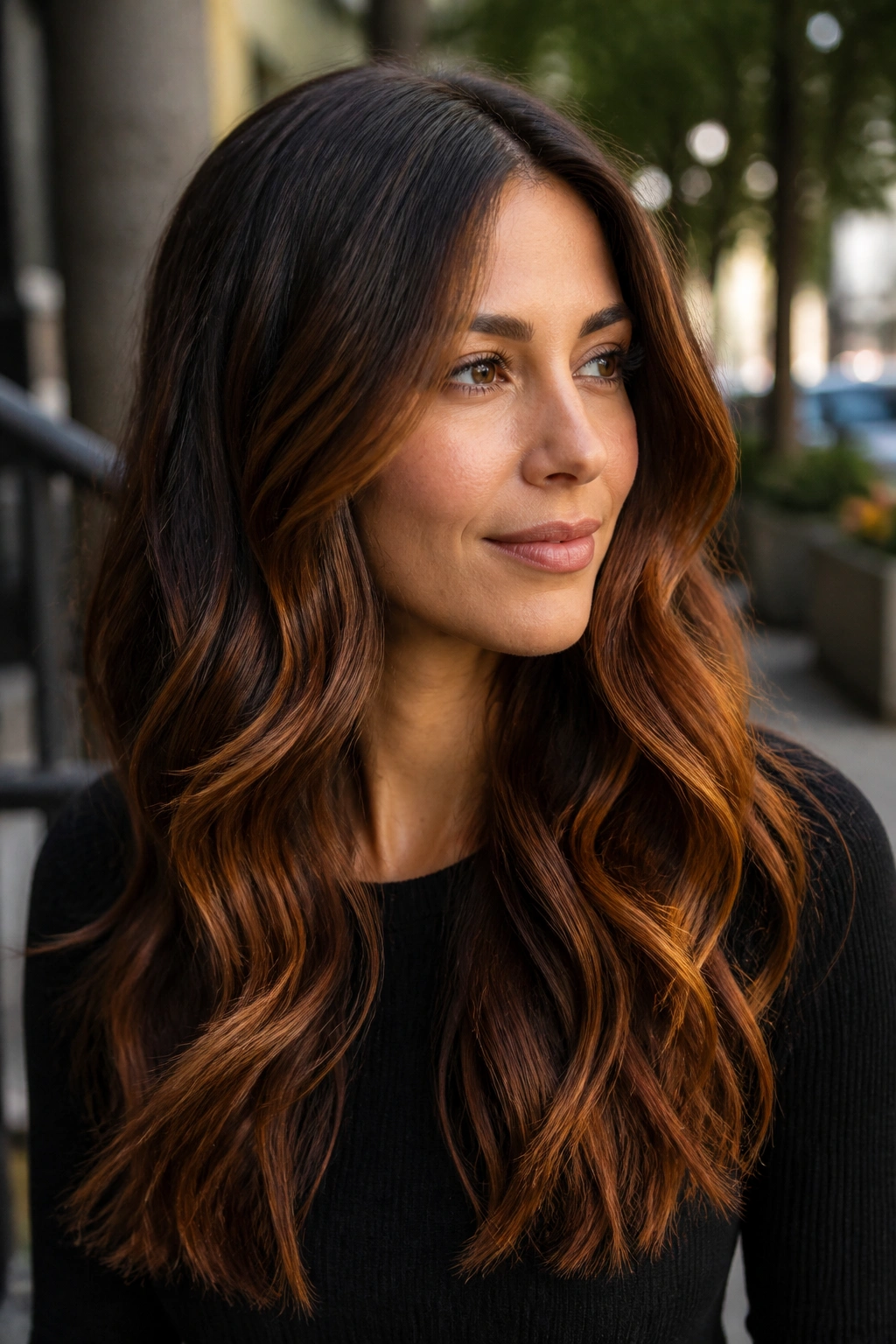
Copper Melt Balayage is a dimensional choice for brunettes who want red without a full color overhaul. It suits medium skin, deep skin, and olive undertones especially well because the copper pieces sit through the lengths and brighten the face in motion.
This is one of my favorite ways to wear red on darker hair. The root stays deeper, the mids carry the warmth, and the ends catch the copper. It grows out softly, which makes it far easier than an all-over red.
- Best ask: brunette base with hand-painted copper ribbons
- Good for: layered cuts and long waves
- Maintenance: gloss every 6 to 8 weeks
19. Dark Cherry Brown
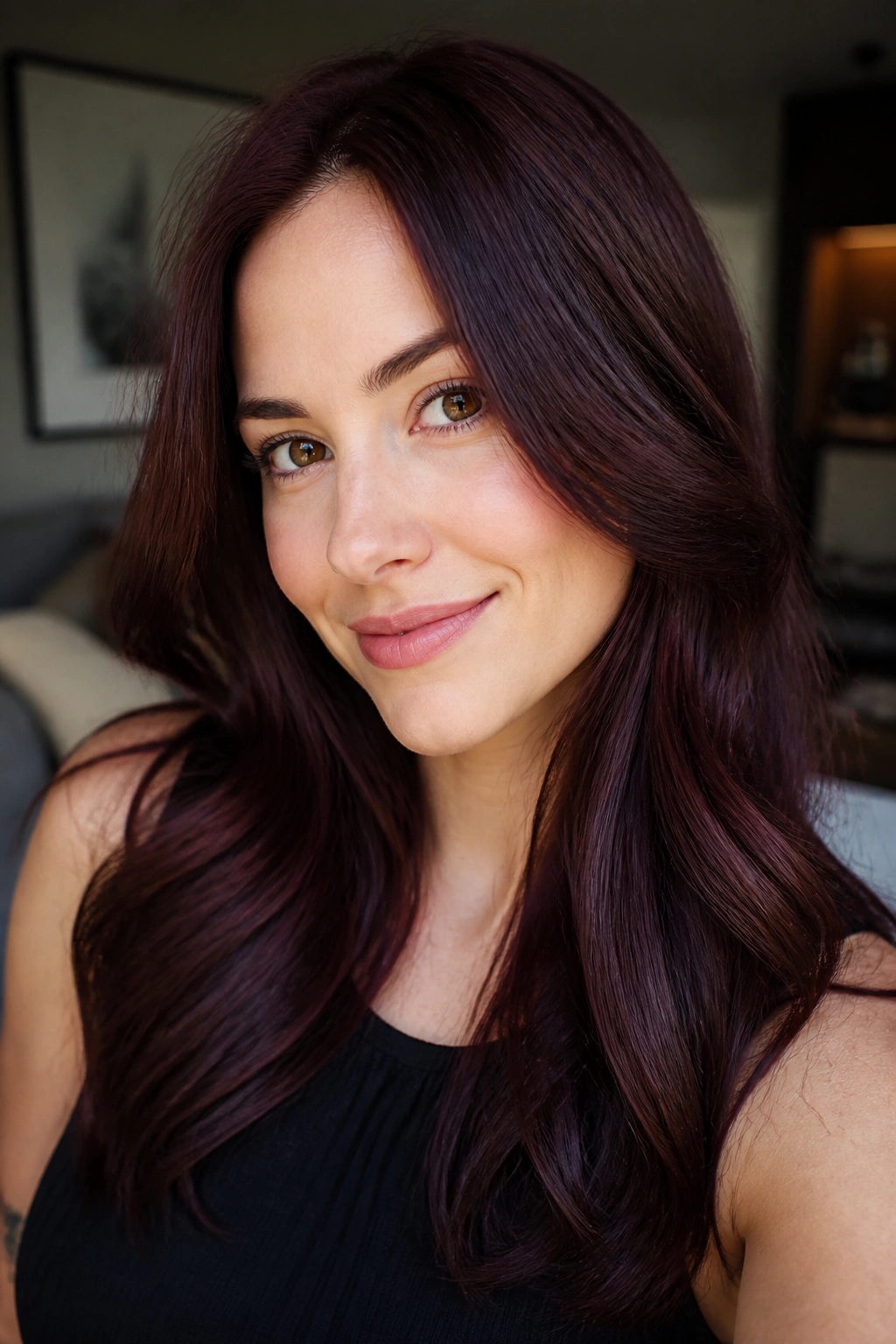
Dark Cherry Brown gives you red in a very controlled way. It flatters cool skin, deep skin, and neutral undertones because the brown base keeps the cherry from becoming too bright.
This shade feels clean on straight hair and rich on curls. If your job, wardrobe, or makeup style leans understated, this is a smart compromise. It still gives that red-girl energy, just in a quieter register.
It also hides fade better than bright reds. That matters. A lot.
20. Scarlet Red
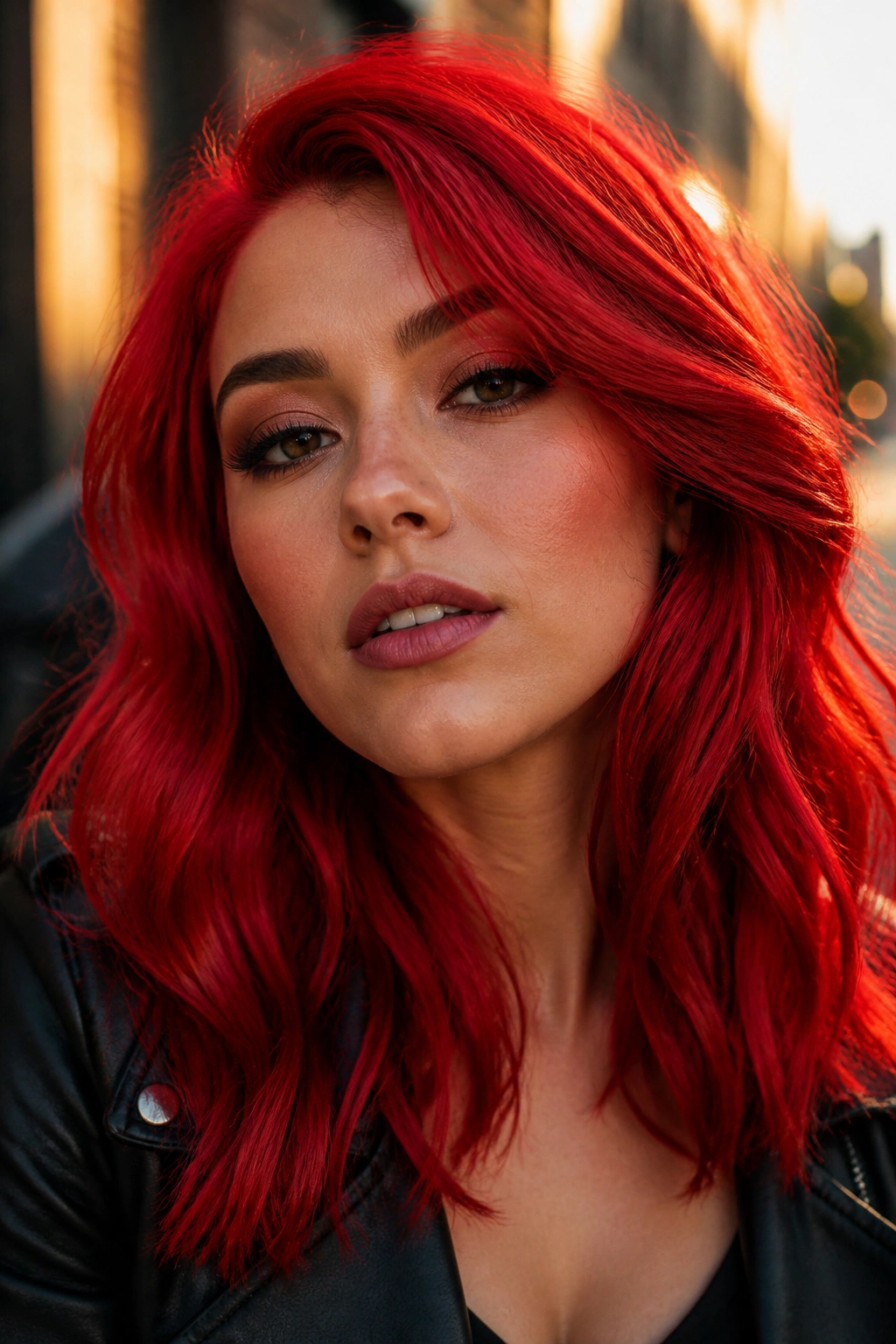
Scarlet Red is the loudest shade in the group, and I mean that as praise. It suits fair neutral skin, warm beige skin, and deep skin when you want a true statement red rather than a softened copper or brown-red.
The key is saturation. Scarlet needs to be rich enough to look intentional. On very fair skin, a cooler scarlet can keep it from turning clownish. On deeper skin, a bright scarlet can be electric, especially around the face.
How to keep it wearable
Strong brows and a clean haircut help. So does a root shadow if you want the red to feel balanced instead of flat.
21. Peach Copper
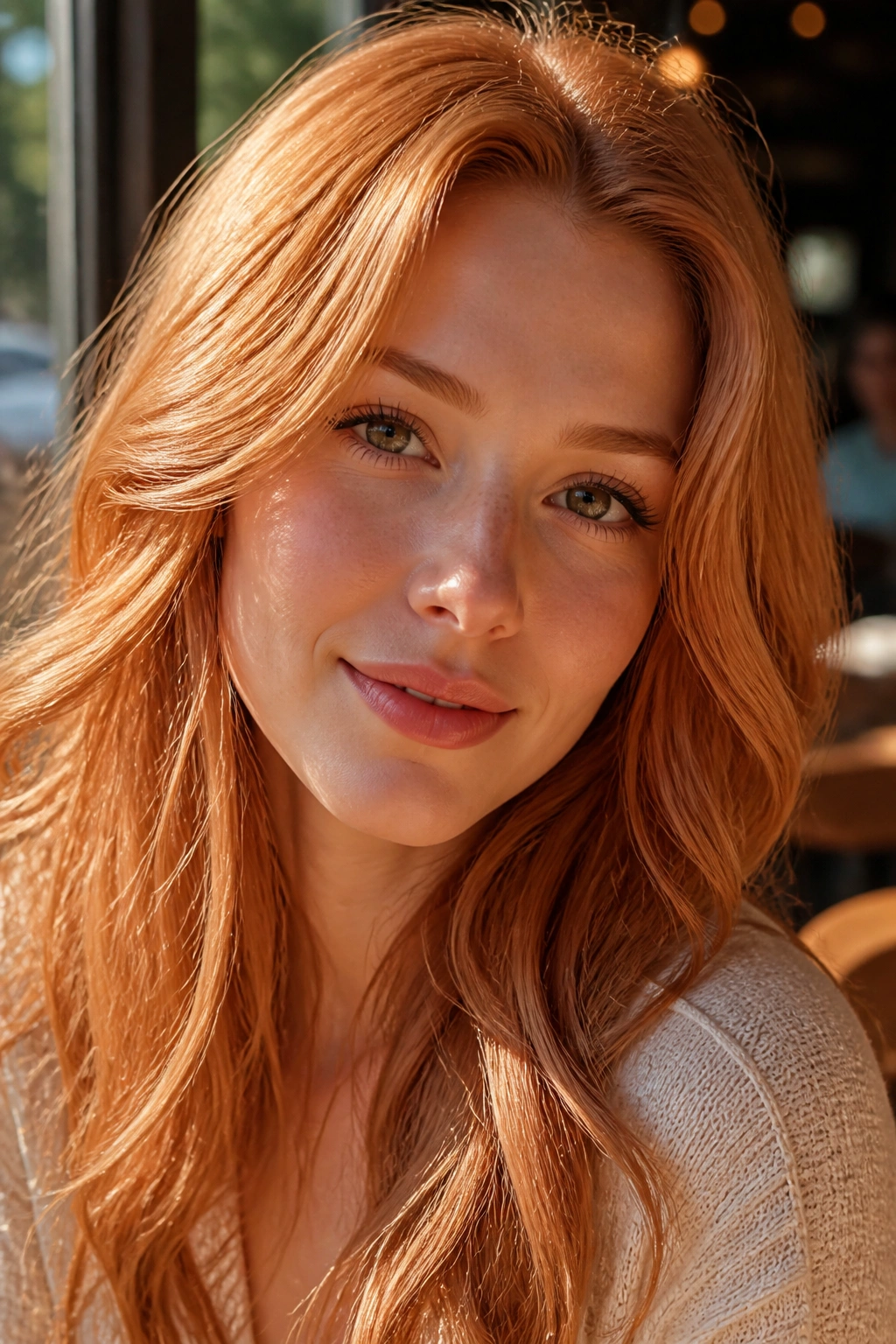
Peach Copper is lighter, softer, and more playful than classic ginger. It flatters light warm skin, fair neutral skin, and soft peach undertones because it brings a gentle glow instead of a hard hit of color.
This shade is lovely on shorter haircuts and airy layers. It looks especially nice when the finish is glossy, not matte. The peach note gives it a softer edge than orange-red, which is why it suits people who want warmth but not intensity.
If you’ve been scared of red, this is a very friendly first step.
22. Bordeaux Red
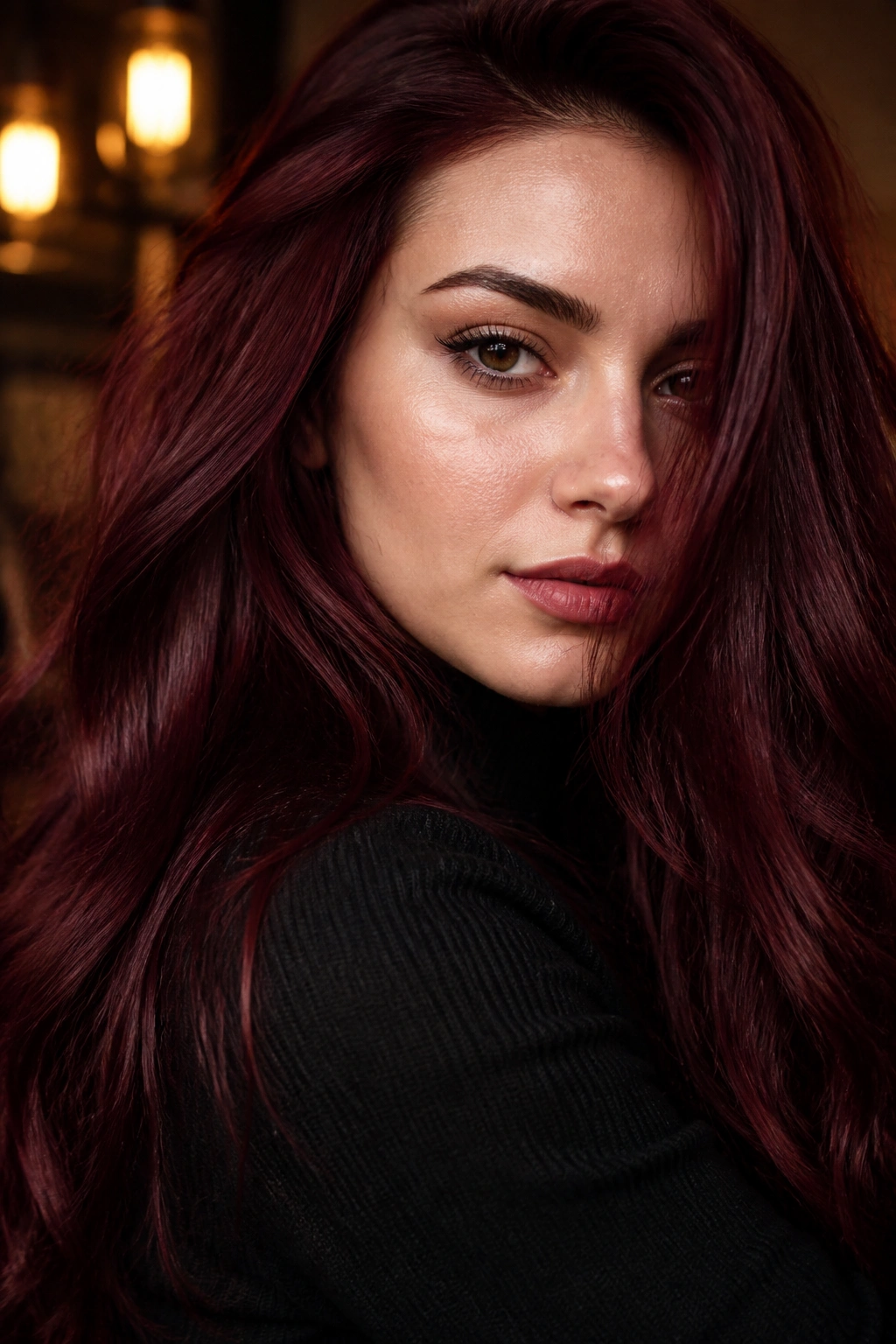
Bordeaux Red is deep, cool, and polished. It suits cool undertones, olive skin, and deep skin because the burgundy base holds its shape even when the hair gets a little sun-faded.
There’s a reason people keep choosing wine reds. They feel stable. Bordeaux does not flip brassy as fast as copper, and it pairs well with strong makeup or bare skin. On longer hair, the color can look almost velvet-like.
I’d choose this over bright red if you want elegance more than heat.
23. Maple Spice Red
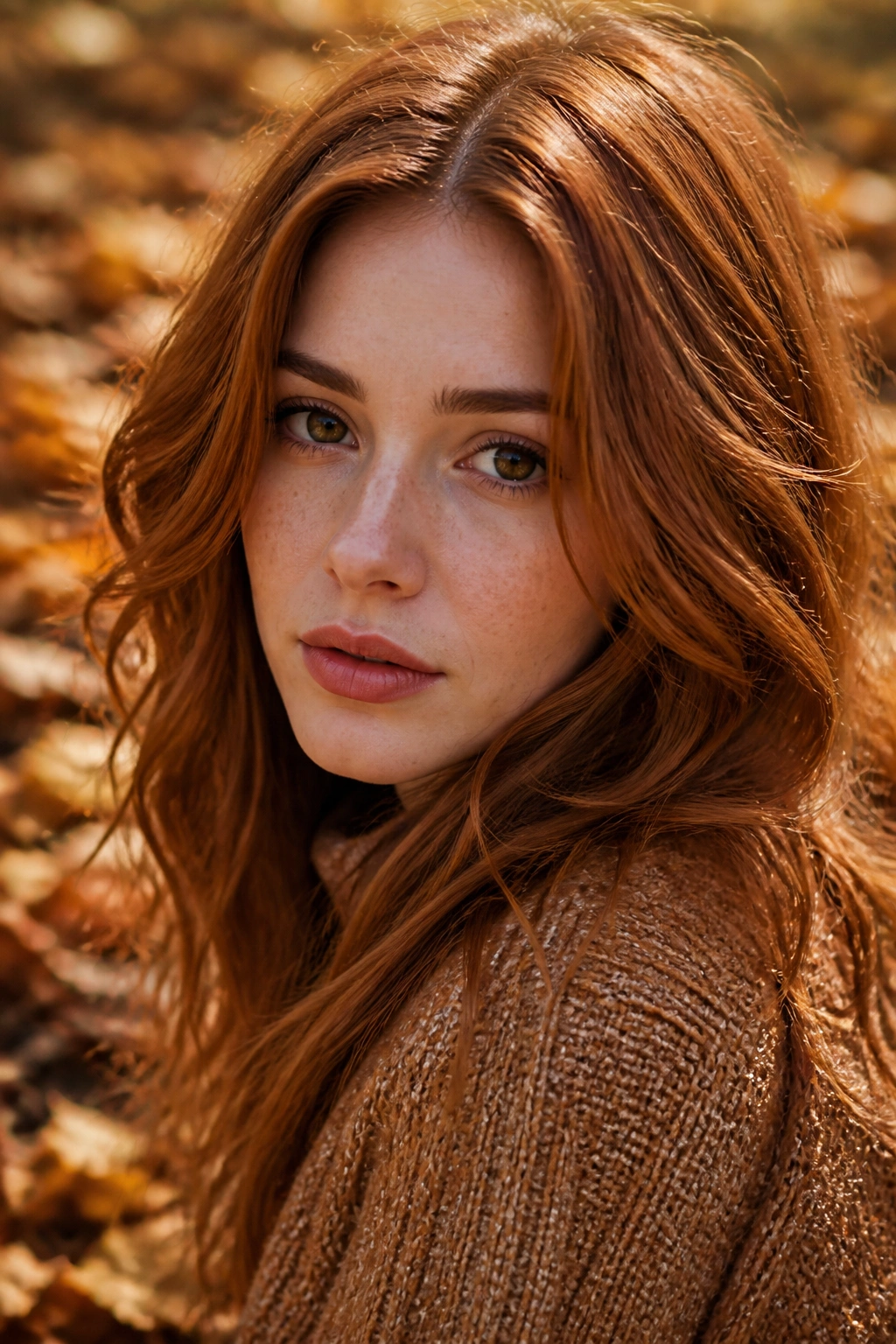
Maple Spice Red lands between amber, brown, and red. It flatters warm medium skin, tan skin, and neutral undertones because the maple tone echoes skin warmth without making the whole look too orange.
This is a cozy shade, if that makes sense. Not boring. Cozy. It has the feel of autumn leaves without tipping into costume color. That makes it a strong pick for anyone who wants red but still wants the color to feel natural-ish.
How to use it
Ask for an amber-brown base with red copper reflect. That blend gives the shade its soft depth.
24. Fire Engine Red
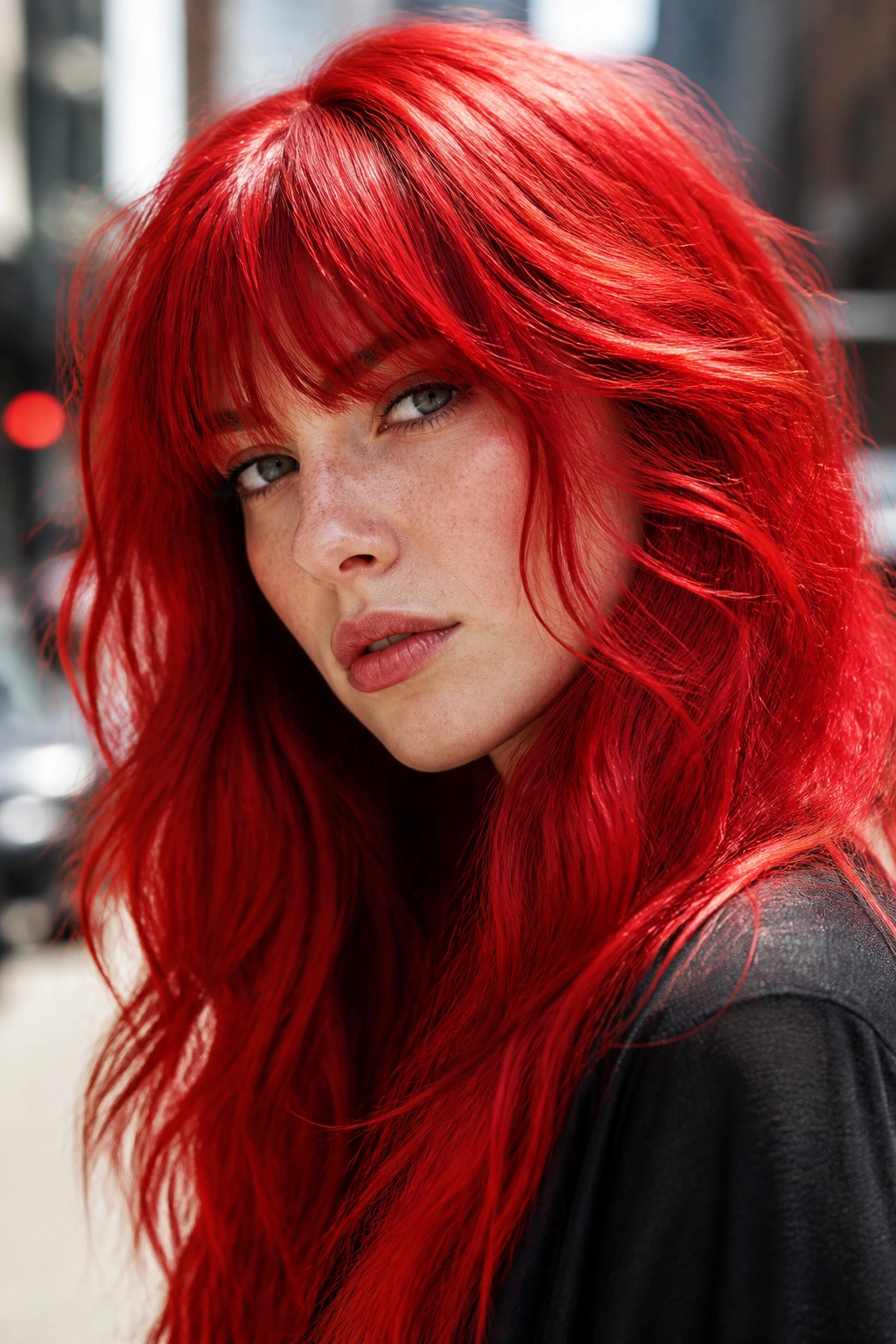
Fire Engine Red is the fearless choice. It suits fair cool skin, neutral skin, and deep skin when the formula is saturated enough to hold its brightness.
This shade can look amazing, but it does ask for commitment. It needs regular glosses and a haircut that can handle the attention. The upside is obvious: nothing else in the room looks quite the same. If your style is simple clothing, strong lipstick, and clean lines, the hair does the heavy lifting.
No half-measures here.
25. Rosewood Red
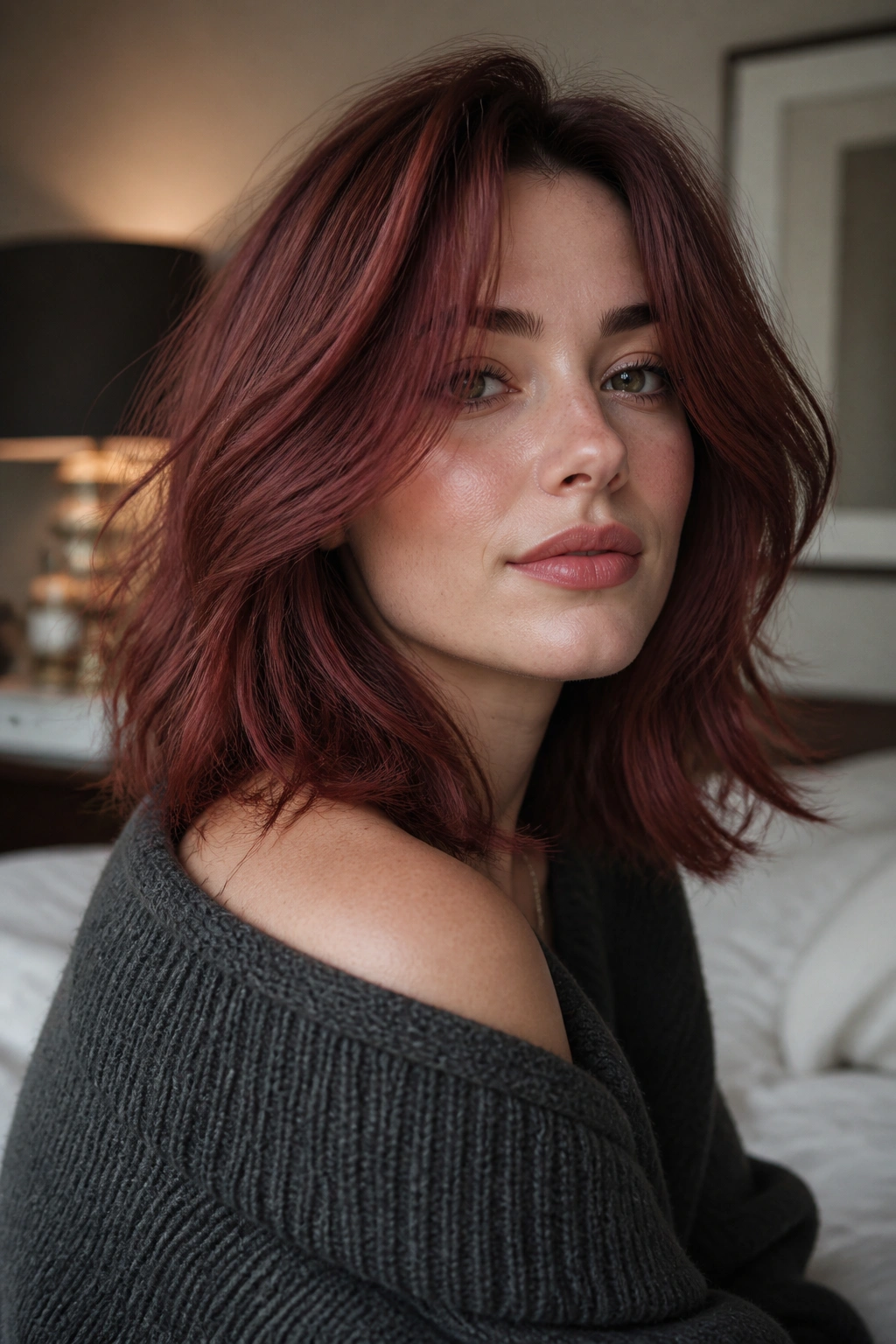
Rosewood Red is dusty, muted, and a little romantic. It suits cool neutral skin, mature skin, and fair skin because the soft red-brown tone is forgiving around the face.
This shade is a good answer for anyone who wants red but not a bright red. The rose note adds softness, while the wood note keeps it grounded. It looks especially nice with layered bobs and shoulder-length cuts where the color can move without feeling flat.
I like this one for people who say they “can’t pull off red.” They often can.
26. Terracotta Red
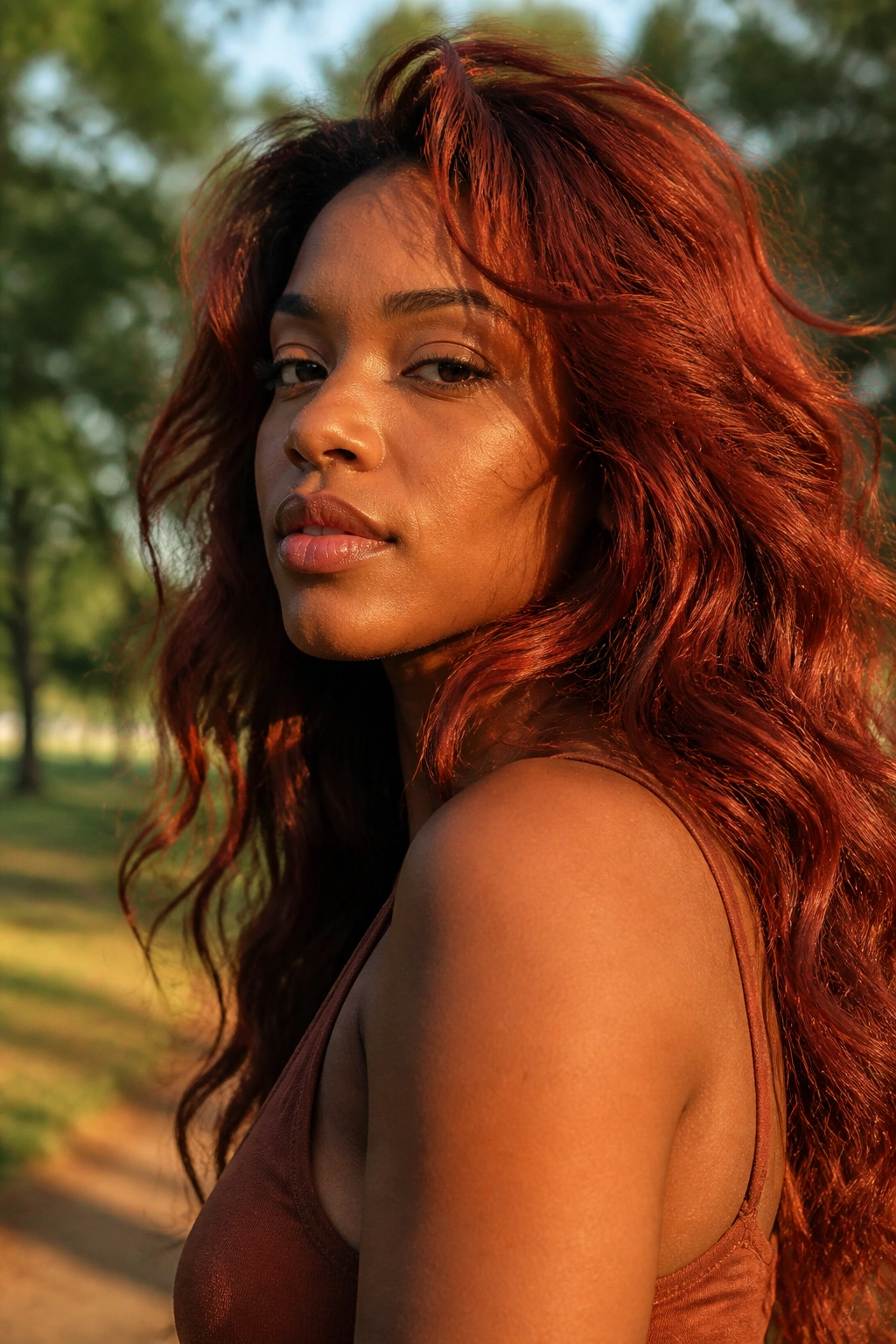
Terracotta Red is clay-inspired and warm in a very natural way. It flatters olive skin, tan skin, and deep warm skin because the earthy orange-red base mirrors real skin warmth rather than sitting apart from it.
This is one of those shades that looks better when it is a little imperfect. A bit of depth at the roots, a bit of brightness at the ends — that unevenness keeps terracotta from feeling flat. It works especially well on textured hair, where the color can catch in sections.
Best fit
- Strong on warm undertones
- Nice with freckles and bronzed makeup
- Softer than pure orange-red
27. Sienna Red
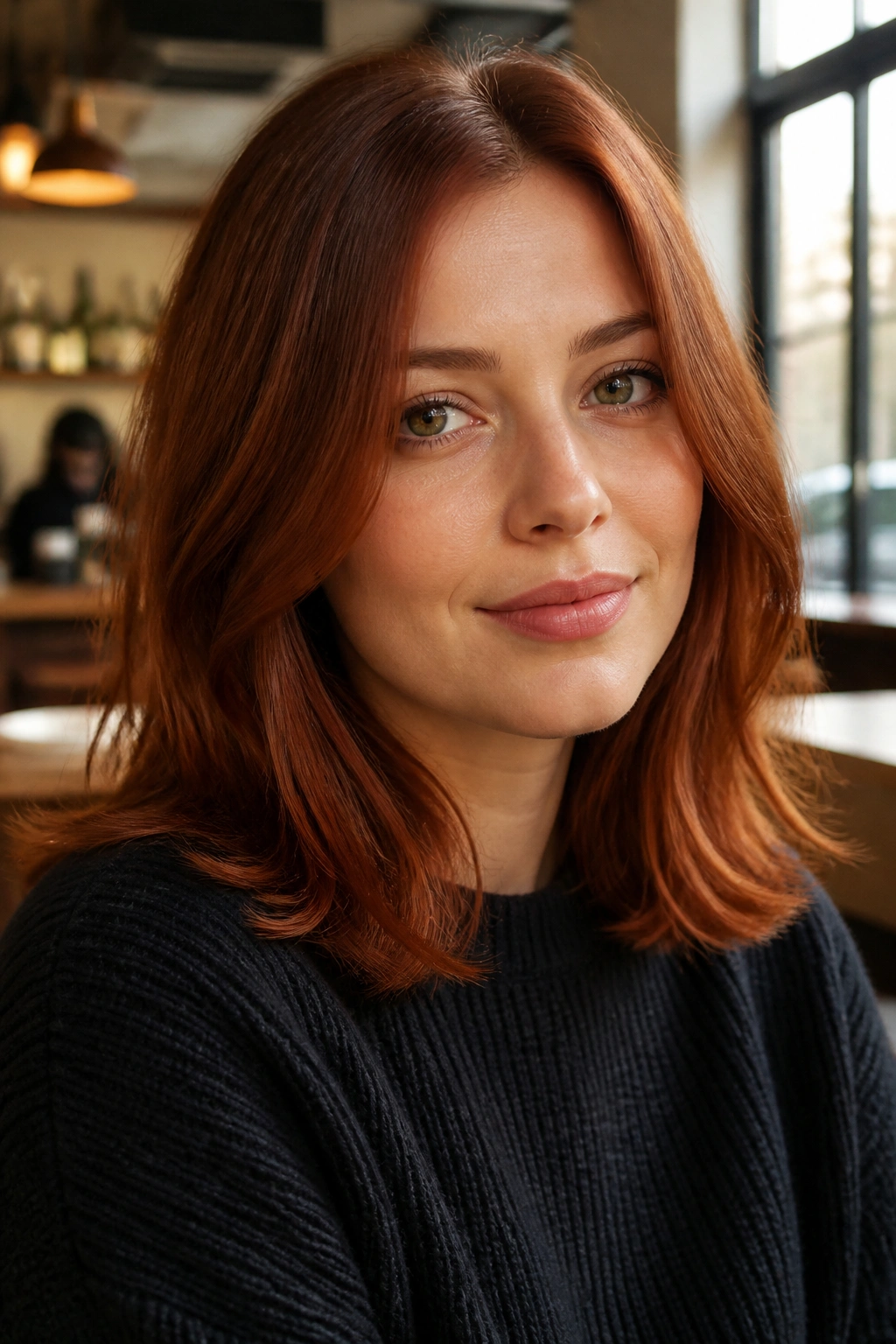
Sienna Red sits in a lovely middle zone: brown, red, and orange all at once. It suits warm skin, neutral skin, and olive undertones because the shade borrows from each of those color families without leaning too far.
This is a practical red. Not flashy. Not dull. Practical reds age well on the head and usually age well in photos too. If you want something that feels grounded but still clearly red, this is an easy yes.
It also flatters medium-length haircuts because the tone shows up without needing huge movement.
28. Plum Red
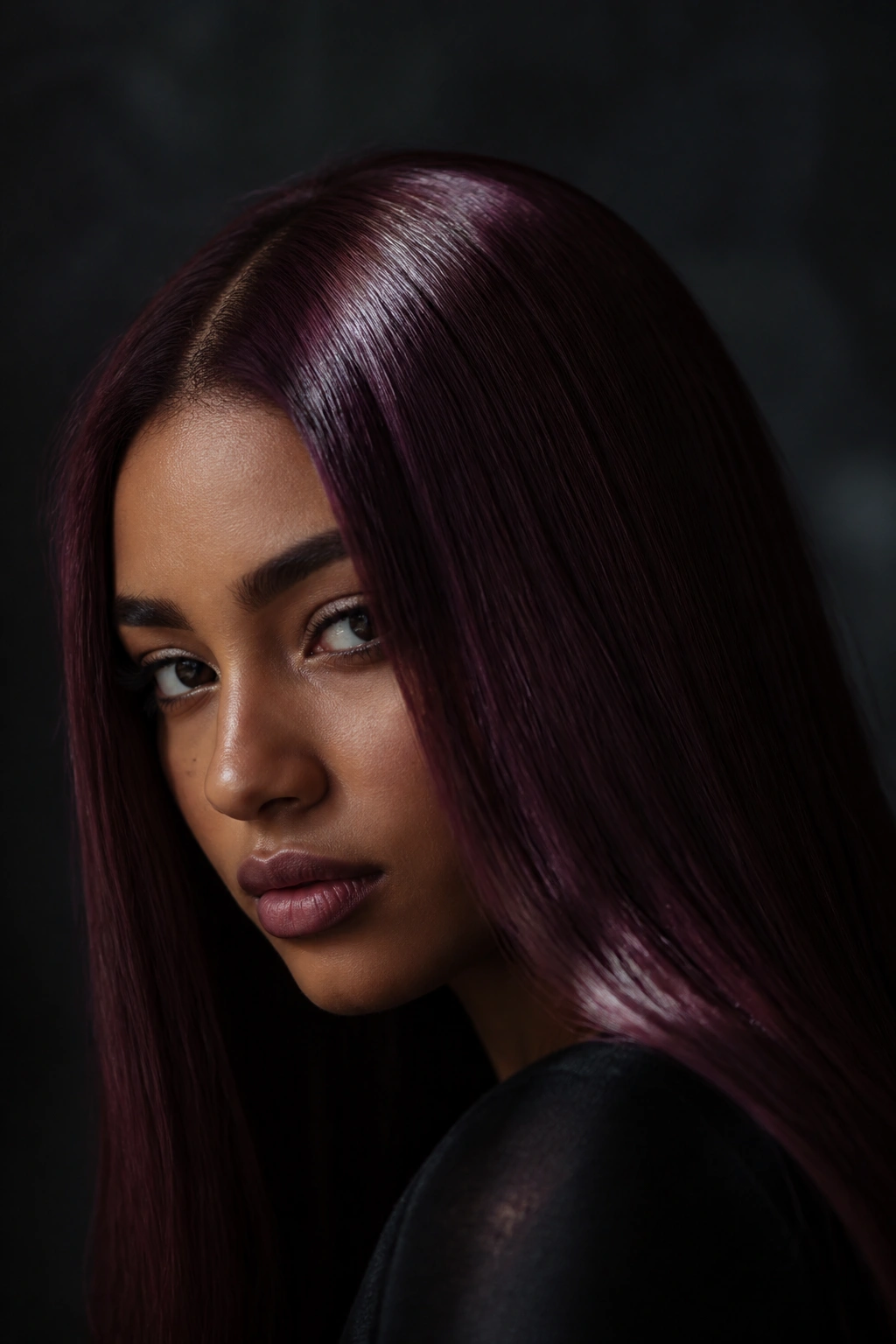
Plum Red leans cool and dramatic, which is why it suits cool undertones, deep skin, and dark eyes so well. The purple-red reflect keeps the color rich and moody rather than bright and sunny.
This is not a sunlit copper. It’s more like a velvet curtain. That makes it ideal if your wardrobe already includes black, navy, charcoal, or jewel tones. Plum red can look especially good on straight, glossy hair because the color reads clean.
If orange reds have never felt right on you, start here.
29. Cinnamon Rose
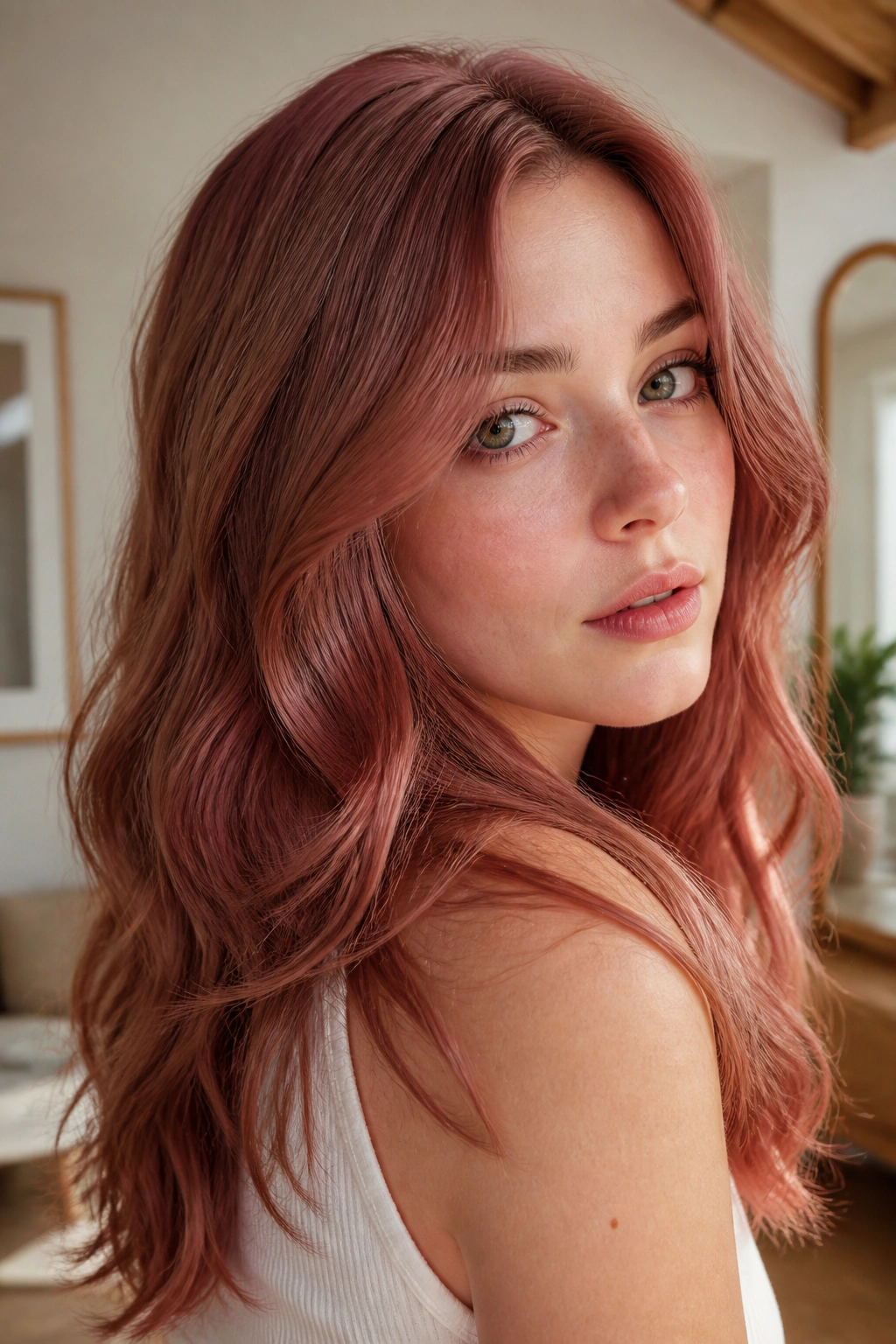
Cinnamon Rose mixes warmth with a soft rosy note. It flatters fair neutral skin, rosy skin, and light olive undertones because it gives warmth without looking too orange.
The rose piece is the magic. It softens the cinnamon enough to keep the shade feminine and easy on the face. On wavy hair, it can look luminous without trying. On straight hair, it looks tidy and polished.
A useful note
Keep the formula muted. Too much red pigment and you lose the soft rose effect that makes this shade special.
30. Garnet Red
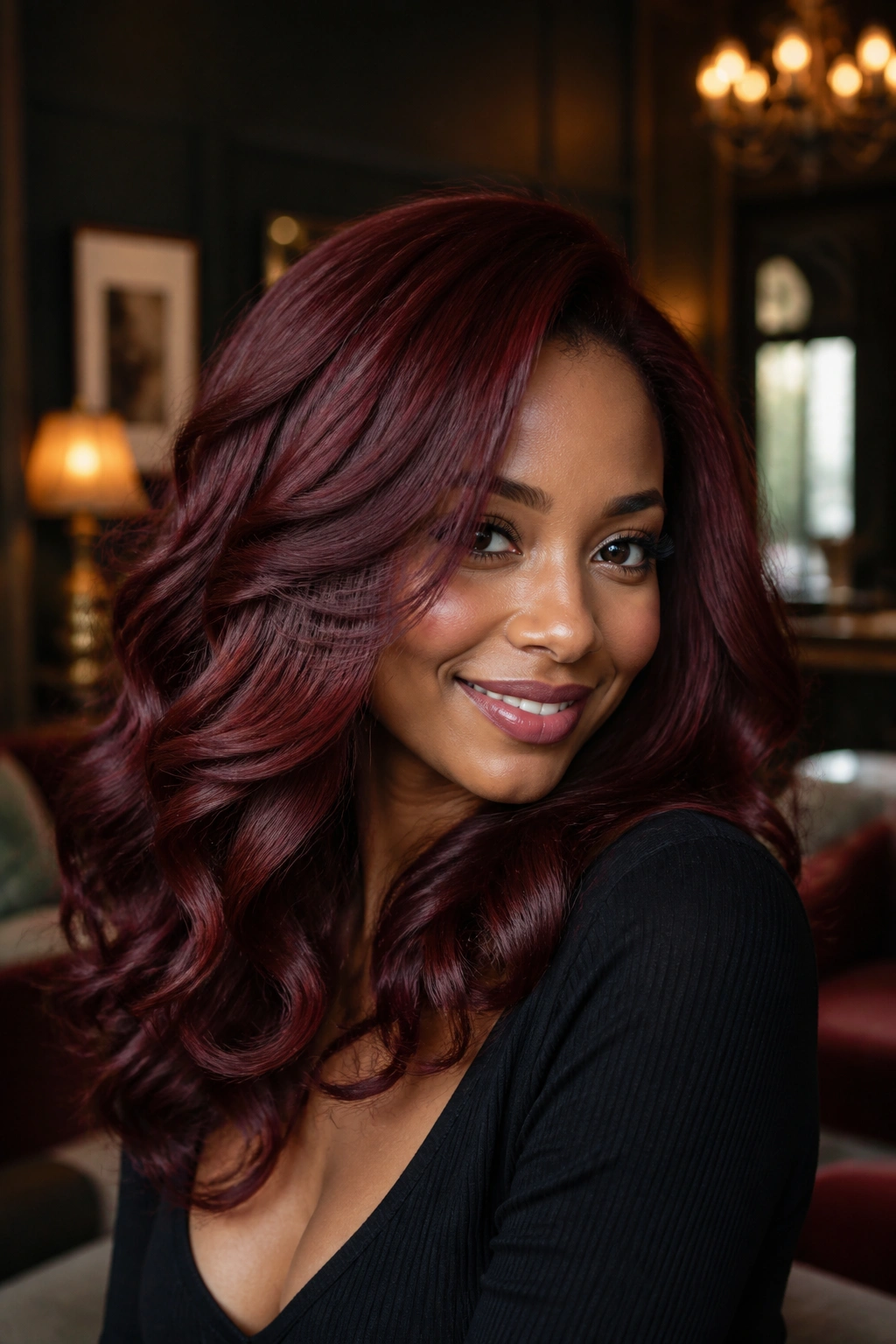
Garnet Red is deep, jewel-like, and elegant without being boring. It suits deep skin, cool skin, and neutral skin because the blue-red depth keeps it from turning coppery.
This is a good choice if you want the richness of burgundy but a little more sparkle. It looks beautiful in layers, where the darker sections stay moody and the brighter sections flash red. It also pairs well with stronger brow shades, which is handy.
I’d choose garnet over bright scarlet if you want red that feels grown-up.
31. Desert Copper
Desert Copper is muted, sandy, and easier to wear than most bright reds. It suits olive skin, medium skin, and warm beige undertones because the color has enough softness to feel natural.
The desert part matters. This is not shiny penny copper. It’s toned down, almost dusty, which makes it useful for people who want a red family color that works in plain daylight and under office lights. It also softens a strong jawline nicely, if that’s a look you want.
Why I like it
It gives warmth without screaming for attention. That’s a rare thing in red hair.
32. Toffee Auburn
Toffee Auburn is one of the easiest reds to wear across many complexions. It flatters fair skin, medium skin, deep skin, and neutral undertones because it sits in the brunette-red zone and never gets too bright.
There’s a cozy quality here. The toffee note keeps it soft, while the auburn note keeps it from going flat. It’s especially good if your natural color is brown and you want a change that still feels believable.
What to ask for
Tell the colorist you want a warm brunette with red-brown reflect. That gives you the richness without making the ends look orange.
33. Vibrant Copper
Vibrant Copper is unapologetically bright. It suits warm fair skin, freckled skin, and medium skin because the brightness echoes natural warmth and gives the complexion a lively edge.
This shade looks best when the copper is clean, not muddy. That means a good lift underneath and a gloss that keeps the shine sharp. It can look especially good on shag cuts, long waves, and curls because all that texture breaks up the brightness.
If you like being noticed at first glance, this is your shade.
34. Soft Red Velvet
Soft Red Velvet is deep, plush, and dimmed just enough to feel wearable. It suits deep skin, cool undertones, and anyone who finds bright red too harsh.
The velvet effect comes from lower brightness and a smoother finish. Think red with the volume turned down a bit. It looks elegant on straight hair, but it really comes into its own on thick waves or blowouts where the color looks layered.
This is a good pick if you want red that reads rich, not loud.
35. Amber Red
Amber Red is warm, honeyed, and slightly golden. It flatters warm skin, peach skin, and light eyes because the amber tone reflects the warmth already in the face.
This shade has a sunny quality without becoming orange. That makes it a nice middle path for people who want red but are nervous about copper. It also looks friendly on shorter haircuts, where the warm reflect can show up fast.
Quick note
If your skin leans cool, ask for a little more red and a little less gold so the amber does not drift too yellow.
36. Mulled Wine Red
Mulled Wine Red is spiced, dark, and rich. It suits cool skin, deep skin, and olive undertones because the berry base stays deep while the red reflect keeps it from becoming flat brown.
This shade has seasonal energy without being tied to a season, which is nice. It looks expensive on long hair, but it can also make a short cut feel sharper. If you want a color that carries depth and personality at once, this one does the job.
I’d keep the finish glossy. Matte mulled wine can go dull fast.
37. Coral Red
Coral Red is brighter, lighter, and a little playful. It flatters peachy skin, light warm skin, and lighter complexions because the coral note brings out natural warmth without the weight of a deep red.
This is the shade for someone who wants something cheerful. Not childish. Cheerful. On soft layers or a textured bob, coral red can look fresh and modern. It does need attention, though, because coral pigments fade faster than deeper browns and wines.
If you dislike heavy hair color, this stays airy.
38. Mahogany Balayage
Mahogany Balayage is a smart choice for anyone who wants red dimension without full commitment. It suits most skin tones, especially medium, olive, and deep complexions, because the red is woven through a brunette base instead of sitting as one flat block.
This technique matters as much as the shade. Balayage keeps the regrowth soft, and the mahogany pieces move through the hair in a way that feels natural. It’s also easier to keep up than all-over red, which can be a relief if your schedule is full.
- Ask for painted mahogany ribbons
- Keep the base one to two shades deeper
- Gloss between appointments for shine
39. Russet Red
Russet Red is earthy, autumnal, and quietly strong. It suits neutral skin, warm skin, and olive undertones because the red-brown mix looks grounded instead of theatrical.
This is the kind of shade that sneaks up on you. It may not look dramatic on the hanger, so to speak, but once it’s on the head, it has real depth. Russet is especially good if you want red that feels believable with denim, simple makeup, and everyday clothes.
It’s not trying to be the star. That’s the point.
40. Soft Strawberry Copper
Soft Strawberry Copper combines the delicacy of strawberry blonde with a little more copper warmth. It flatters fair skin, neutral skin, and light warm undertones because it adds glow without swallowing the face.
This is a gentle way to land on red if you want something pretty and low-contrast. It works well with fine hair, face-framing layers, and soft makeup. The color looks sweet in daylight and still holds shape indoors, which is harder to do than people think.
If you want the red family without the drama, this is a very good final stop.
Final Thoughts
Red hair works best when it matches the face instead of fighting it. That sounds obvious, but people still pick red by mood alone and then wonder why the result feels off. The smarter move is to choose the red that matches your undertone, your depth, and how much upkeep you can live with.
Bright copper, berry burgundy, dusty auburn, and deep cherry all tell different stories. Some wake up pale skin. Some make olive skin glow. Some give deep skin that glossy, velvet finish that looks expensive even without styling.
A softer red you can maintain will beat a dramatic shade that turns dull after two washes. Every time.
