



Brown hair gets ignored too often, which is a shame, because brunettes have the widest color range to play with. A good brunette color can look soft, expensive, edgy, glossy, or sunlit without ever losing the richness that makes brown hair feel so good in the first place.
The trick is not chasing the lightest blonde possible. The smartest brunette hair color ideas work with depth, then add contrast where it matters: around the face, through the mid-lengths, at the ends, or in a hidden panel that only shows when the hair moves. That is why brown hair can wear caramel, ash, copper, plum, cherry, blue-black, and even teal without turning into a one-note dye job.
A lot of color mistakes happen when the whole head gets lifted too evenly. The result can look flat, brassy, or oddly busy. Better brunette color usually keeps the base strong and lets the lighter or richer tones do the talking.
1. Caramel Balayage for Brunettes
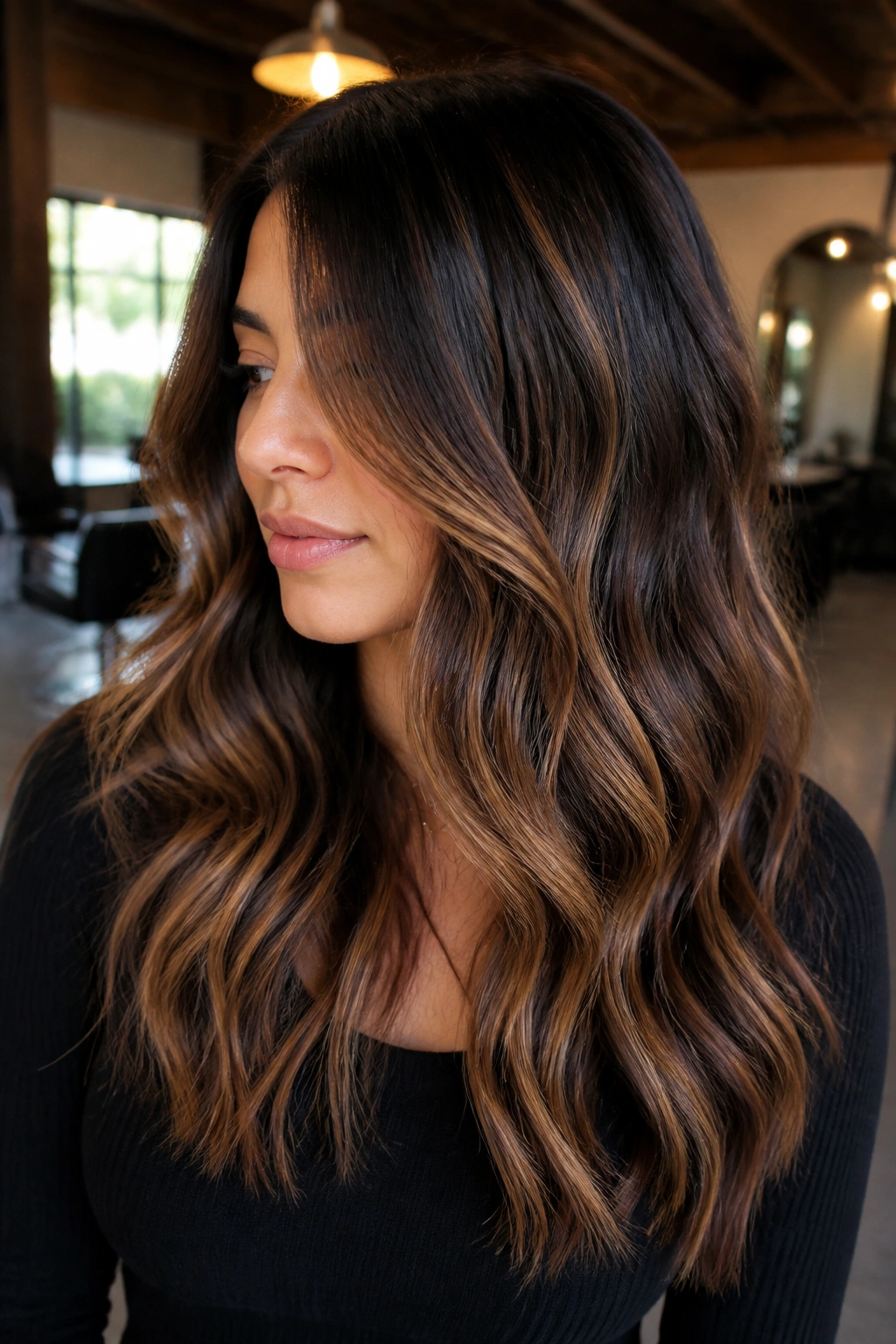
Caramel balayage is the brunette crowd-pleaser for a reason: it brightens dark hair without sanding off the depth. The color sits between gold and brown, so it reads warm and soft instead of stripey. On a medium or deep brunette base, those painted ribbons can make a blunt cut look more expensive in one salon visit.
Why It Works on Brown Hair
The best caramel balayage is never placed evenly from root to end. It starts a few inches below the scalp, then gets a little heavier around the face and the lower third of the hair, where movement shows off the color.
- Ask for ribbons that are 1 to 2 shades lighter than your base, not a jump to blonde.
- Keep the root area deeper so the grow-out stays soft.
- Style with loose bends or waves; straight hair can hide the color unless the weave is fine.
A narrow face frame and softer ends usually beat chunky streaks. If you want the color to look natural, ask for hand-painted pieces, not heavy foil blocks.
2. Mushroom Brown with Ash Ribbons
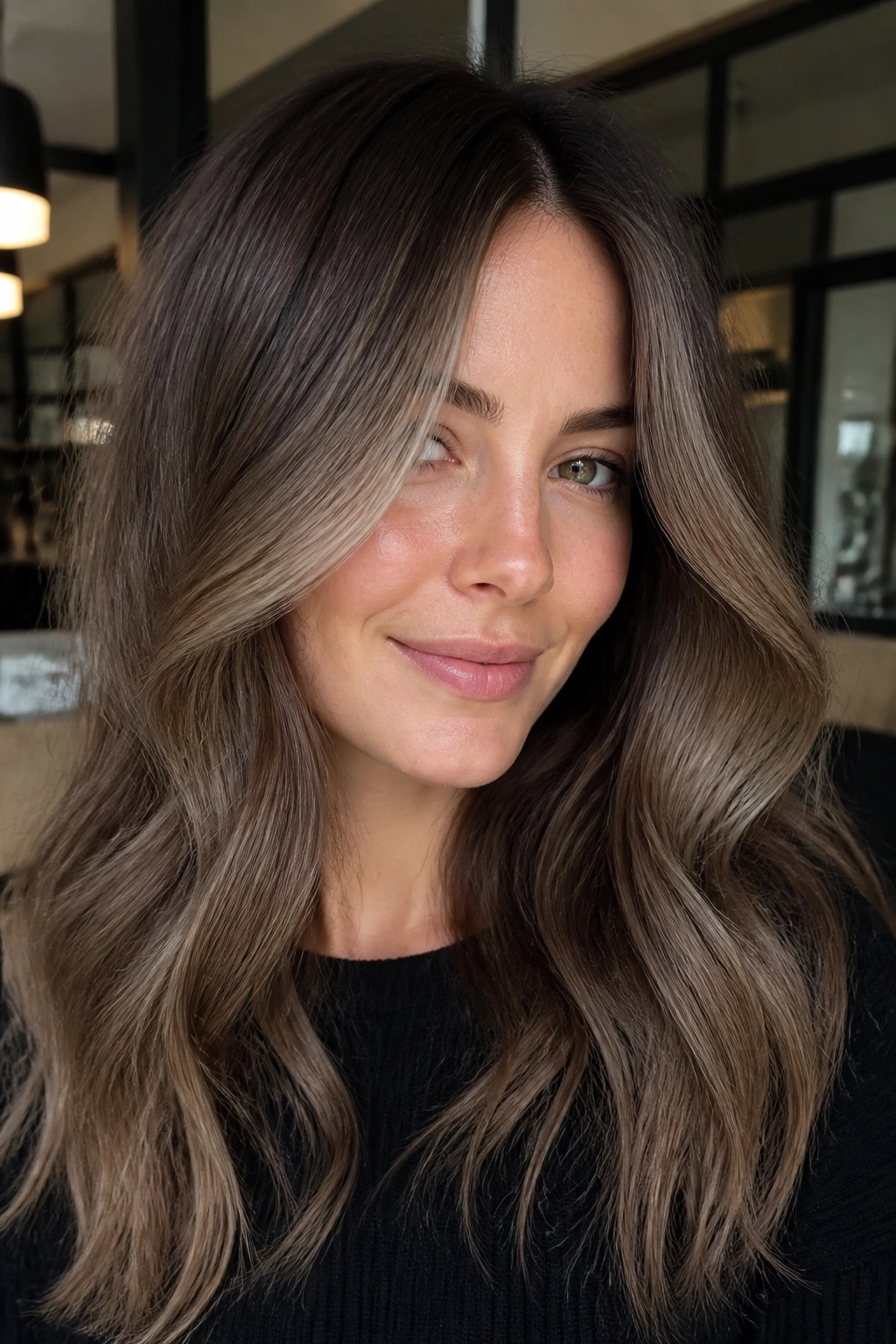
If your brunette hair pulls orange every time it gets lightened, mushroom brown is the cooler correction you probably wanted months ago. It lives in that gray-beige-taupe zone that makes brown hair look more modern without going icy. On the right skin tone, it has a soft, smoky edge that feels calm rather than flat.
Mushroom brown works best when the base stays neutral or cool and the lighter pieces lean ash, not gold. That means the colorist should avoid pushing too much warmth into the formula. A demi-permanent gloss usually gives the nicest finish, because it lays a cool veil over the hair instead of staining it too dark.
This is a smart choice if you wear sleek bobs, shoulder-length cuts, or anything with blunt ends. The color needs clean lines to show its texture. Too much layering can make the cool tones disappear in the movement, so keep the cut tidy and let the color do the work.
3. Copper Cinnamon Glaze
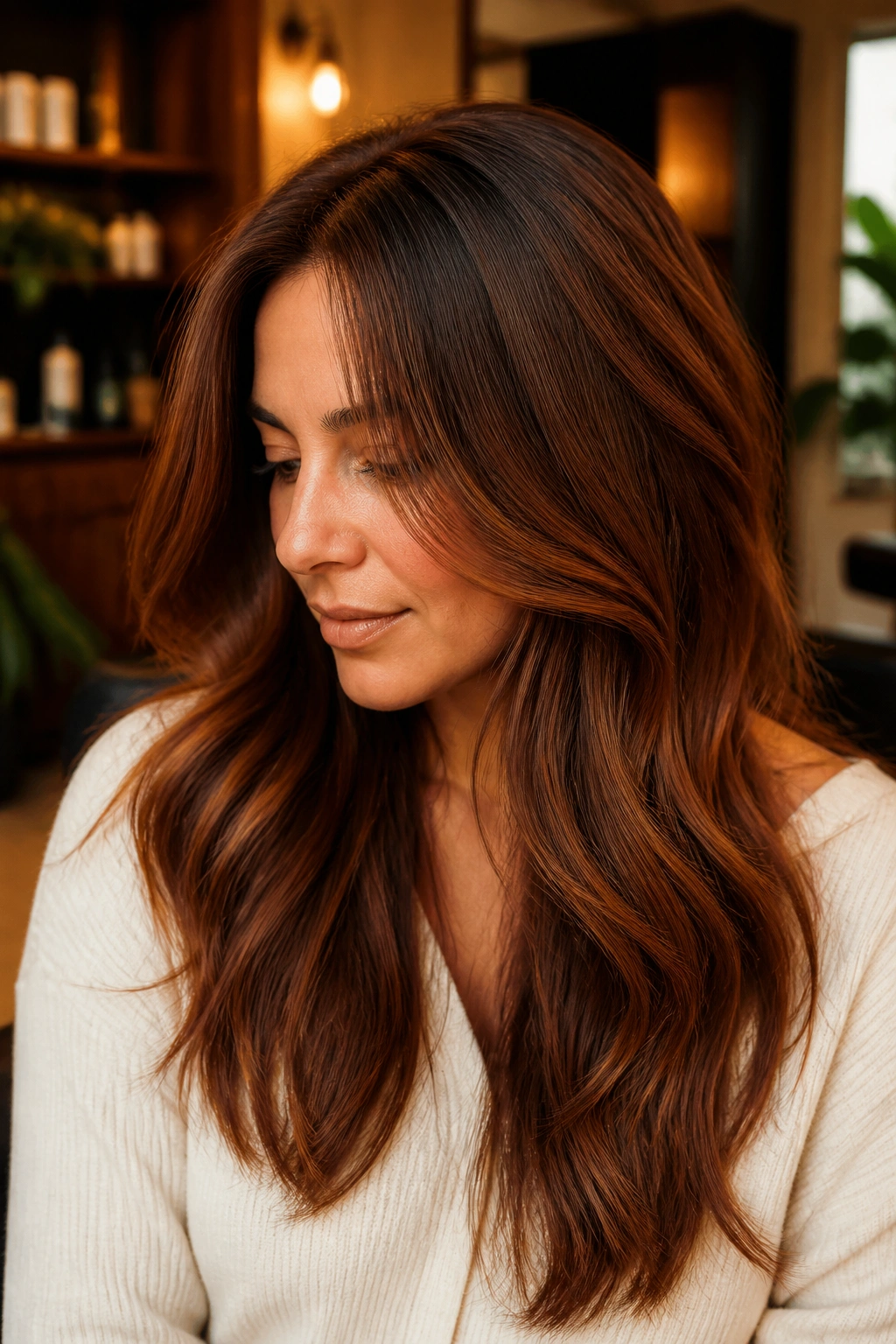
Want warmth without going full red? Copper cinnamon sits right in the middle. It has that spicy, burnished look that flat brown hair rarely has on its own, and it’s softer than a classic copper because the brown base still shows through.
How to Wear It
A glaze works better than a full permanent color here. It gives the hair a translucent copper-brown sheen, which is the whole point. If your brunette base is around level 4 or 5, you can usually stay in a subtle range and still get enough warmth to notice.
- Ask for a demi-permanent copper glaze instead of a vivid all-over red.
- Keep the roots slightly deeper for a dimensional finish.
- Refresh every 4 to 6 weeks if you want the copper to stay readable.
Copper cinnamon looks especially good on warm and olive undertones. It brings life back to dull brown hair without making the whole head read red from across the room.
4. Chestnut Gloss with Soft Shine
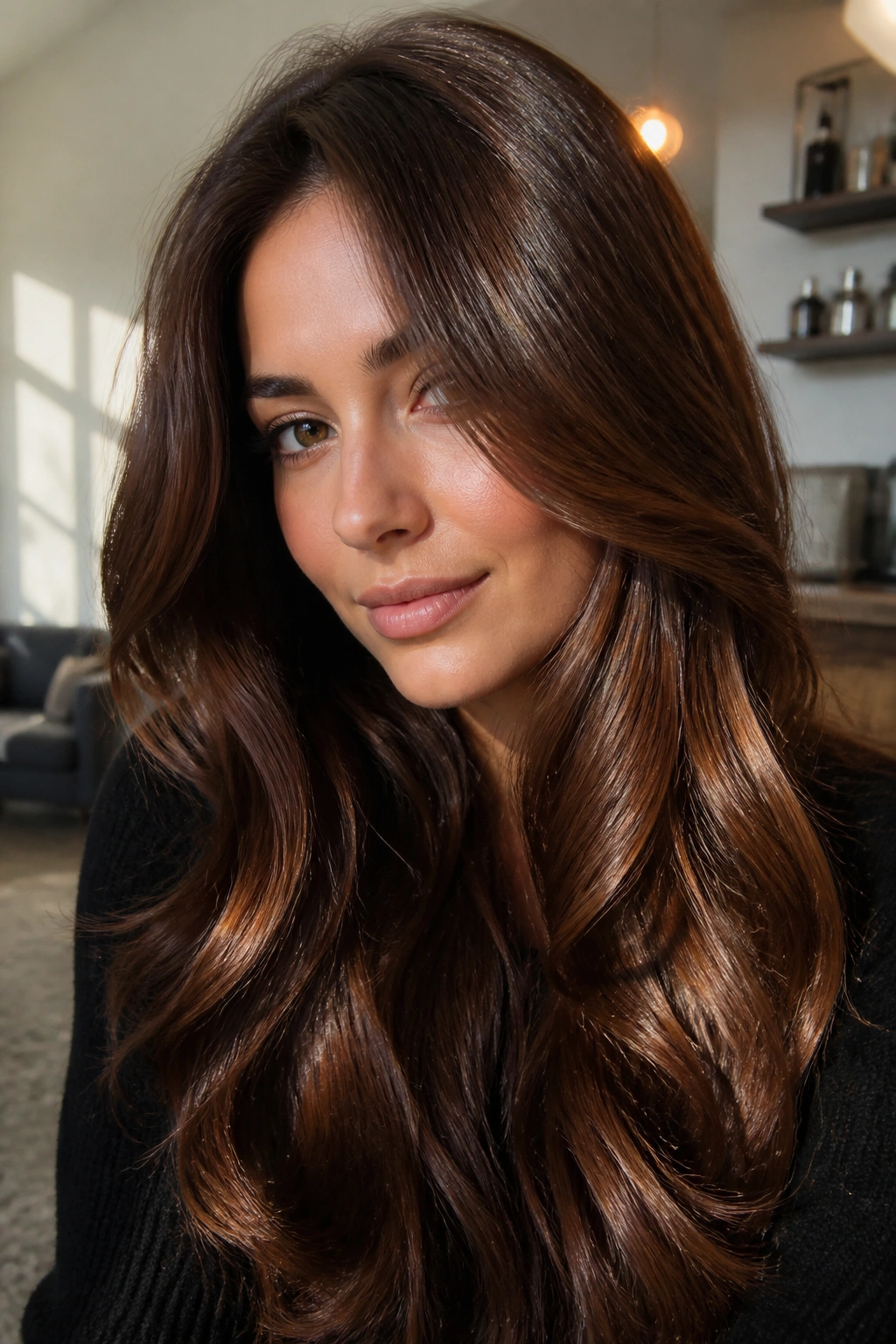
A chestnut gloss is the color version of a well-lit window seat. It doesn’t scream for attention; it makes the hair look healthier, richer, and smoother than it did ten minutes ago. Chestnut sits in that brown-red-gold lane that flatters a lot of brunette bases because it adds shine before it adds drama.
The nice thing about chestnut is that it can be as subtle or as noticeable as you want. On darker brown hair, it reads as a warm sheen. On medium brown hair, it starts looking like a deep auburn-brown reflection when the light hits it. A gloss is the right move if your hair is already in decent shape and you mainly want tone, not a big color change.
This is a strong pick for layered cuts and blowouts. The shine catches the movement, and the warm tones keep the hair from looking muddy at the ends. If your hair is porous, ask for a gentler formula so the red doesn’t grab too hard.
5. Honey Money Piece Around the Face
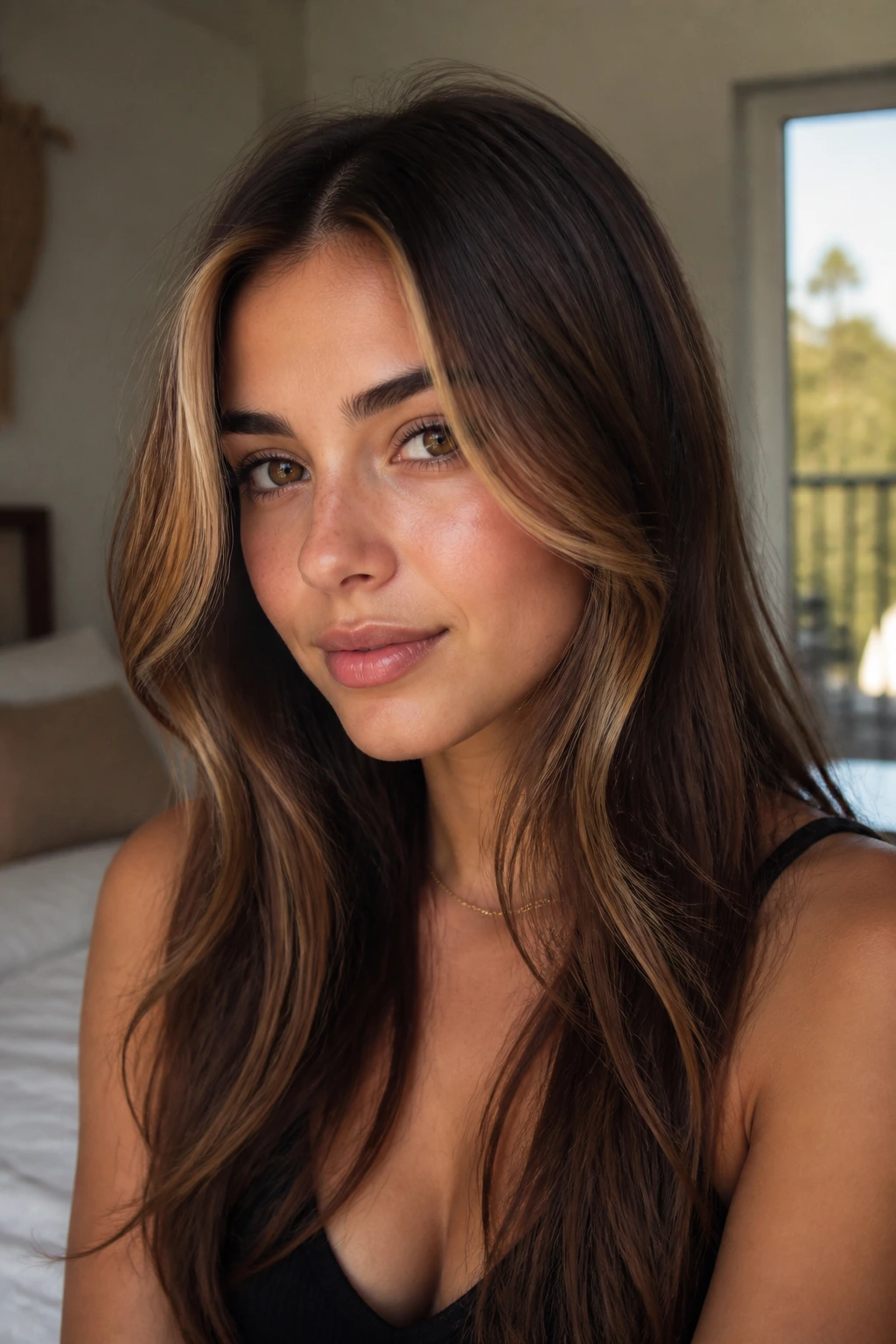
A honey money piece is one of those brunette upgrades that looks simple until you see it in motion. Two slim face-framing panels in a warm honey tone can change the whole mood of brown hair without forcing you into a full highlight session. The color sits right near the eyes and cheekbones, so it does a lot of visual work fast.
The width matters. Ask for pieces that are about 1 to 1.5 inches wide, not thick streaks that start at the temples and take over the front. A good money piece should brighten the face, then melt back into the brunette base so the rest of the hair still feels grounded. If you wear your hair up a lot, keep the placement soft and fine; thick front pieces can look harsh in a ponytail.
Honey works best on medium and dark brunettes who want brightness with low upkeep. It’s a small change that photographs well in real life, not only in salon lighting. That’s the kind of color I keep recommending when someone wants a noticeable shift without a full-color commitment.
6. Espresso Black with Blue Sheen
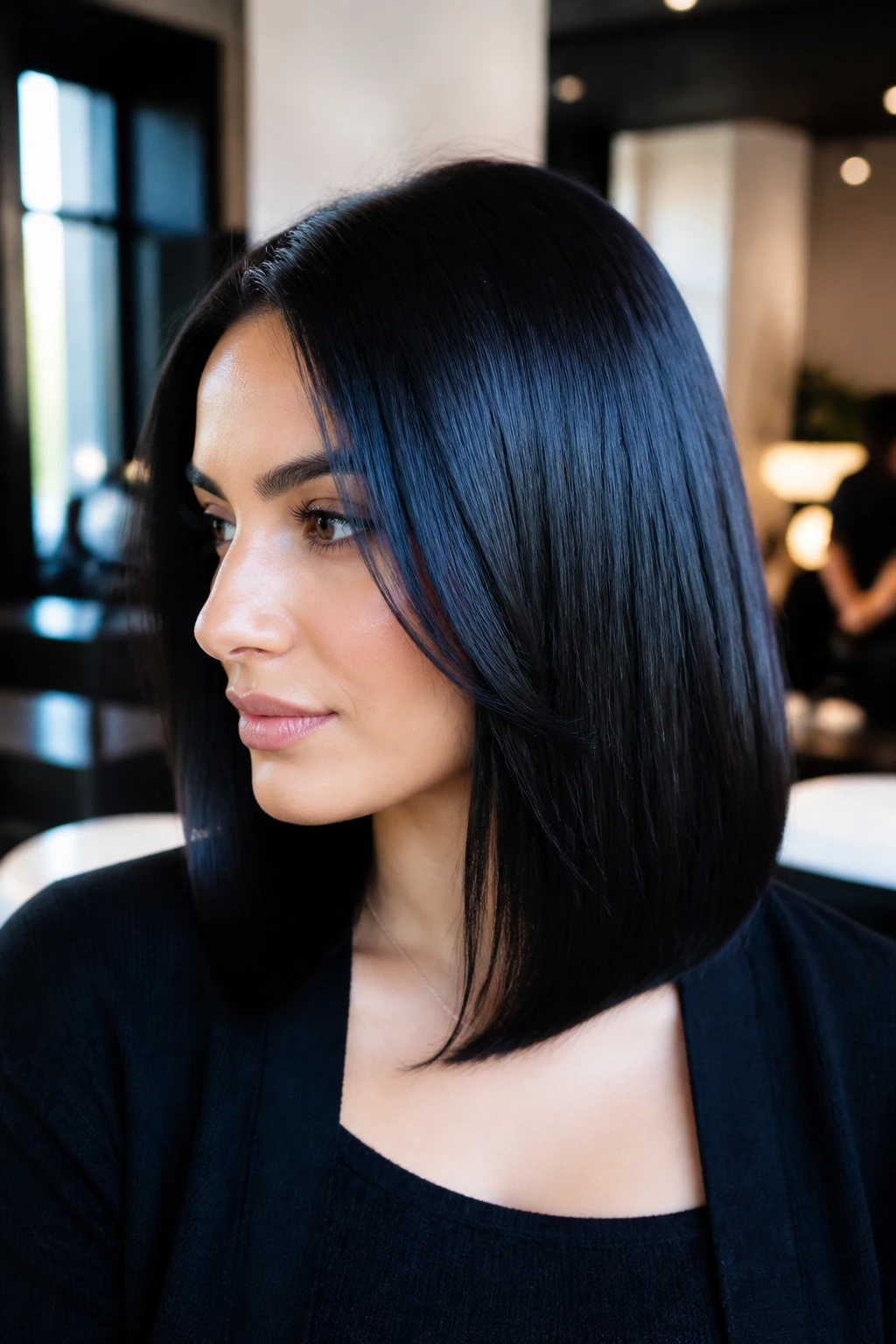
Flat black can look harsh. Espresso black does not make that mistake. It keeps a whisper of brown in the base, which means the hair still reflects light instead of swallowing it. Add a blue-black sheen, and the whole look turns sleek, sharp, and a little moody in the best way.
This color is especially strong on straight hair, blunt lobs, and layered cuts with glossy ends. The depth gives the shape more edge, and the cool sheen keeps the black from looking dusty. If your features are soft and you want a stronger frame around the face, this is a good move. If you already have a very high-contrast look, it can feel intense, so I would not push it too far without seeing swatches first.
Ask for a gloss or toner with blue-black reflect rather than a dead, opaque black. Shine is the whole story here. When this color is healthy, it looks like polished glass.
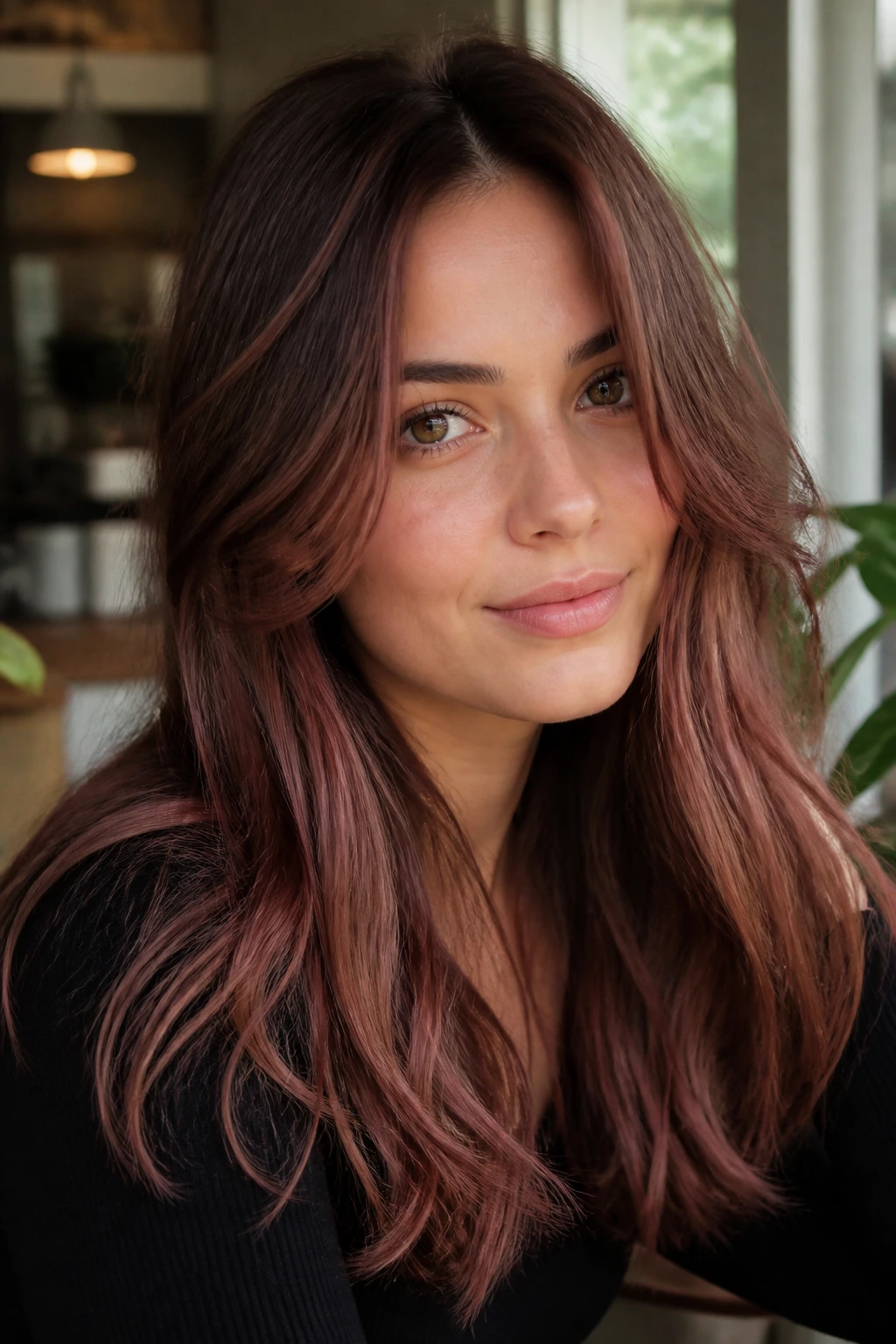
7. Rose Brown on Medium Brunettes
Rose brown is what happens when brunette meets a muted berry tone and nobody gets too loud about it. The result is soft, feminine, and a little unexpected. It is not pink hair. It is brown hair with a rose reflection that shows up in daylight and in warm indoor light.
Why It Works
The best part about rose brown is that it fades into a softer beige-brown instead of turning orange. That makes it a forgiving choice if you want a fashion color with a gentler exit. It also suits medium brunettes who want to keep their base depth but still change the mood of the hair.
- Best on hair that sits around level 5 or 6.
- Ask for a demi-permanent rose glaze rather than a bright pink formula.
- Keep the lift subtle so the brown stays visible.
Rose brown is prettier when it looks a little dusty, not neon. If the tone is too saturated, it can fight with your skin tone. Keep it sheer and let the brown do most of the talking.
8. Toffee Ombré on Long Layers
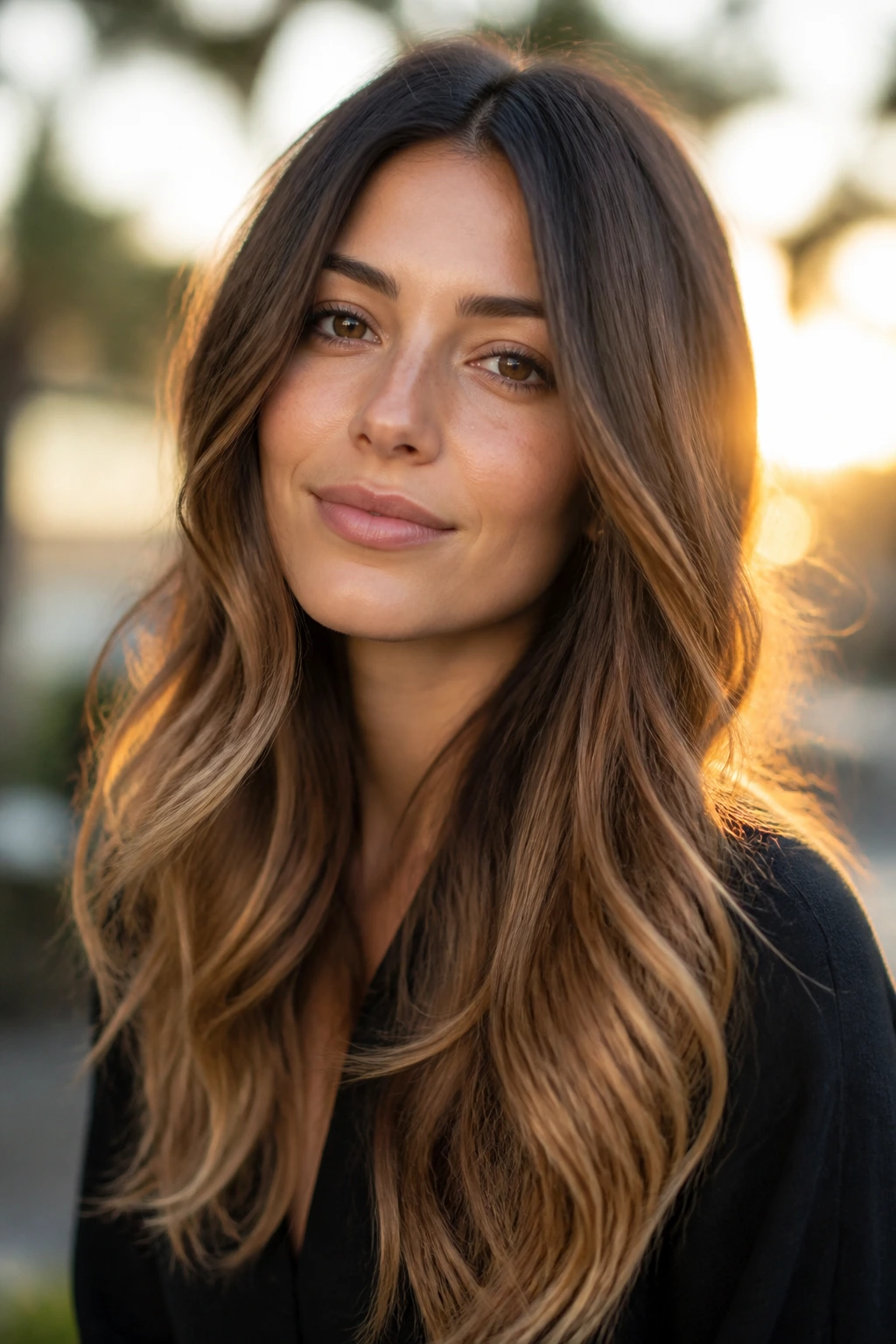
Long hair gives ombré room to breathe, which is why toffee ombré still earns its place on brunette heads. The gradient from deeper roots to warm toffee ends looks especially good when the hair has layers that move. Without that space, ombré can fall flat or look too obvious.
The transition should start low enough that the grow-out doesn’t look chopped. On shoulder-length hair, I like the shift to begin below the cheekbone area. On longer hair, it can sit a little lower and feel even softer. The ends should not jump straight to blonde. They need that brown-gold toffee middle step, or the whole style starts feeling disconnected.
Loose waves make this color make sense. Straight hair can still wear it, but the movement sells the blend. If your hair is one length, ask for some face-framing layers so the ends don’t look like they belong to a different head.
9. Mahogany Lowlights Through Dark Brown Hair
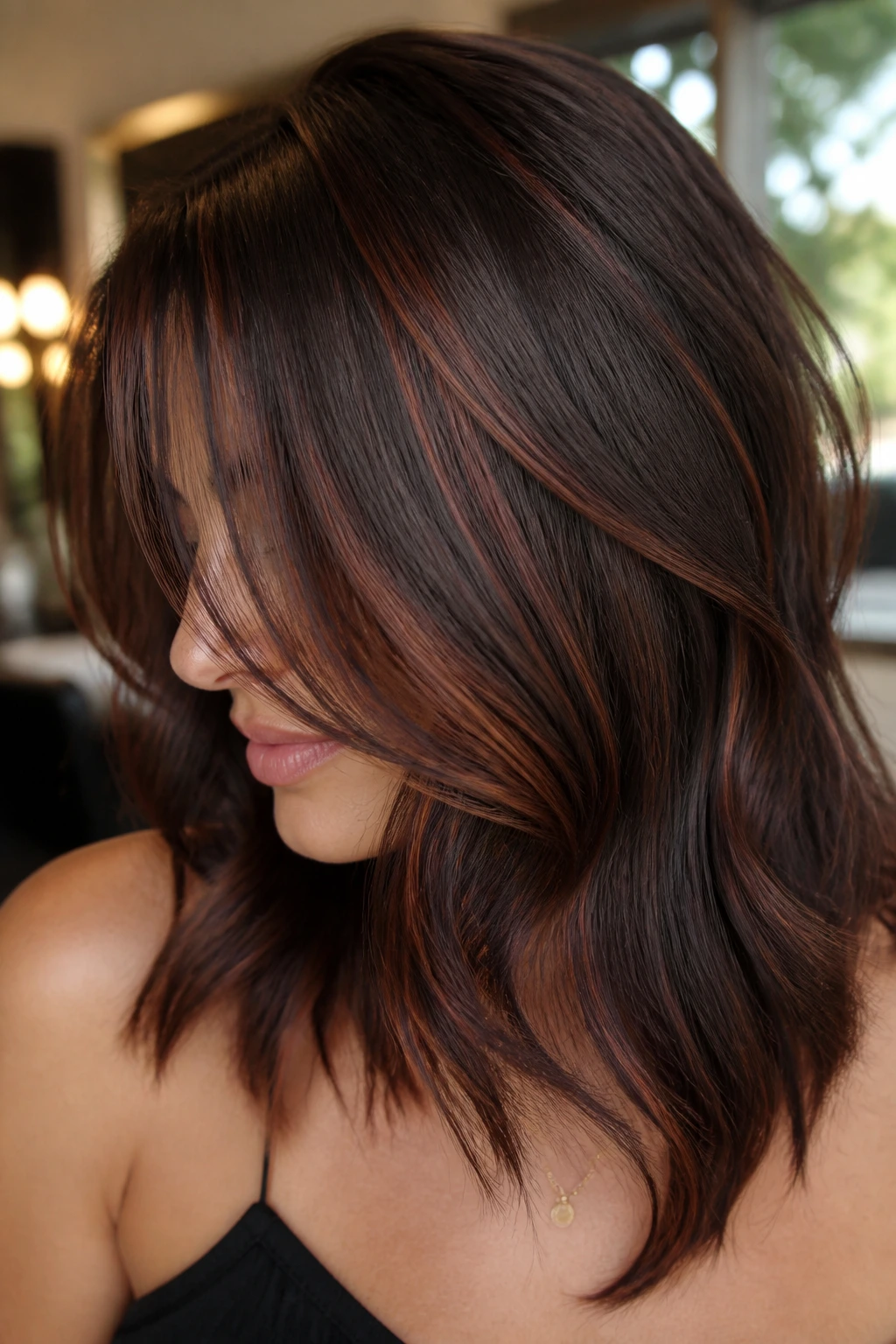
Why do lowlights matter when so many brunette color ideas focus on highlights? Because depth makes hair look thicker. Mahogany lowlights are one of the easiest ways to add body to dark brown hair that feels a little too one-note or a little too light from previous color.
The trick is to place the lowlights under the surface and through the interior, not all over the top. That keeps the hair from looking striped and gives the style a richer core. Mahogany is a strong choice because it brings a red-brown warmth that still sits in brunette territory. It reads as depth first, color second.
How to Use It
Ask for lowlights 1 to 2 shades deeper than your base. That is enough to create contrast without making the hair look patchy. If you already have highlights, mahogany can tuck between them and make everything look fuller.
This is one of the better fixes for fine hair that needs more visual weight. The color is quiet, but the effect is not.
10. Smoky Brunette with Cool Taupe Ends
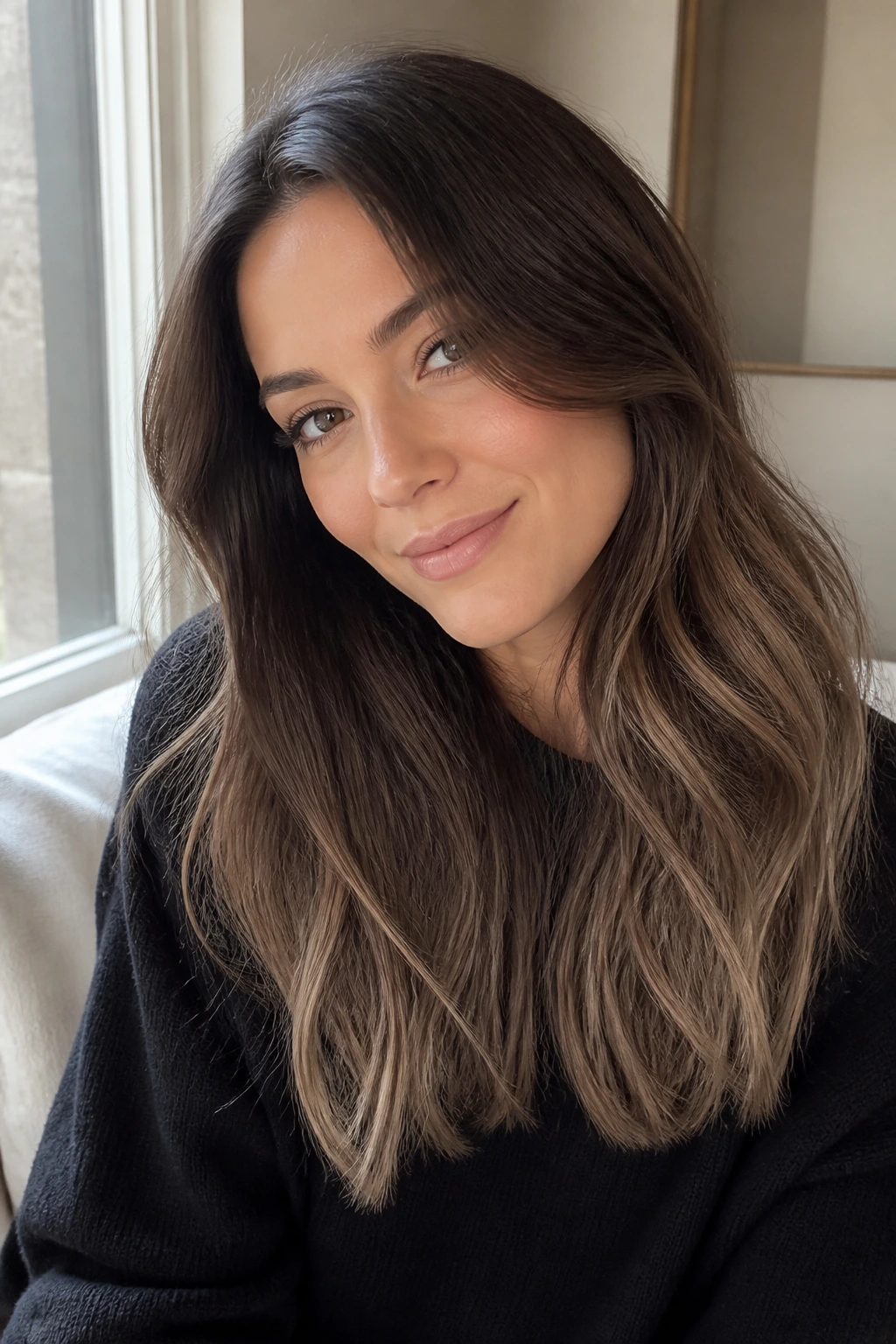
There’s a certain brunette tone that looks better once the warmth is turned down. Smoky taupe ends give brown hair that softer, cooler finish without pushing it into full ash territory. It feels controlled, modern, and a little expensive.
The best version starts with a neutral brown base and then lets the ends drift into taupe, smoke, or beige-gray. The color should look translucent, not painted on. That means the lighter ends still need a bit of brown underneath them so the whole style doesn’t look chalky. It works especially well on mid-length cuts and long bobs, where the ends are visible enough to matter.
A translucent toner is usually the right tool here. Opaque color tends to flatten the look. If you want the smoky tone to stay soft, keep the transition gentle and skip any harsh lightening at the bottom.
11. Bronze Babylights Across Mid-Lengths
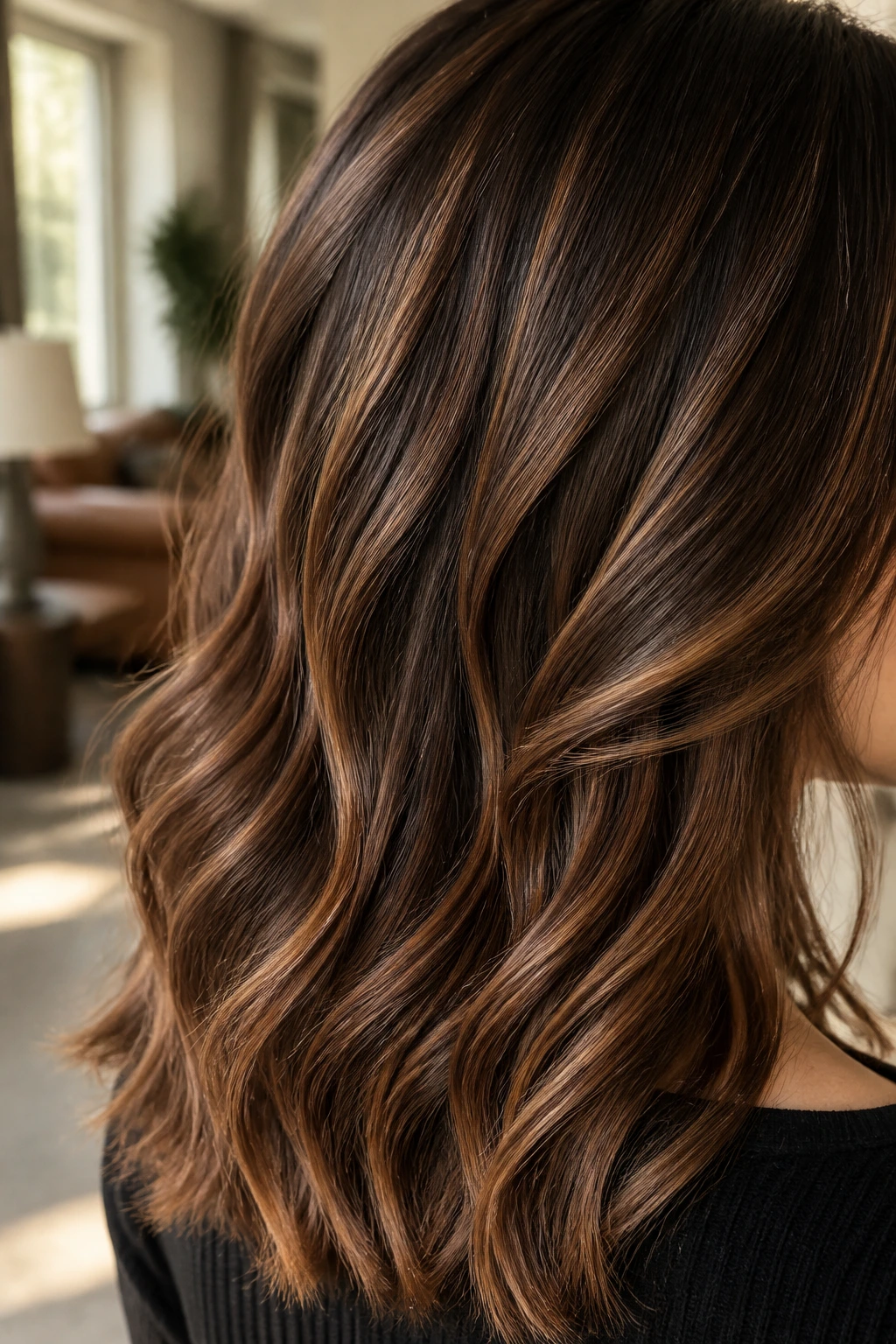
Bronze babylights are tiny, finely woven highlights that sit somewhere between sun-kissed and polished. They are subtle until the hair moves, and then they wake up. That is why they work so well on brunette bases that need dimension without a dramatic color shift.
The placement matters more than the shade. Babylights should be placed in very thin sections, often around 1/16 inch wide, through the mid-lengths and around the face. If the highlights are too chunky, the bronze turns into stripes. If they stay too close to the roots, the grow-out gets loud. Spread through the middle of the hair, bronze gives a soft glow that makes waves, curls, and bends look more defined.
This is a strong option if your brunette hair feels heavy or matte. Bronze adds light, but it also adds shape. A quick gloss afterward helps the bronze stay warm instead of drifting brassy.
12. Auburn Peekaboo Panels
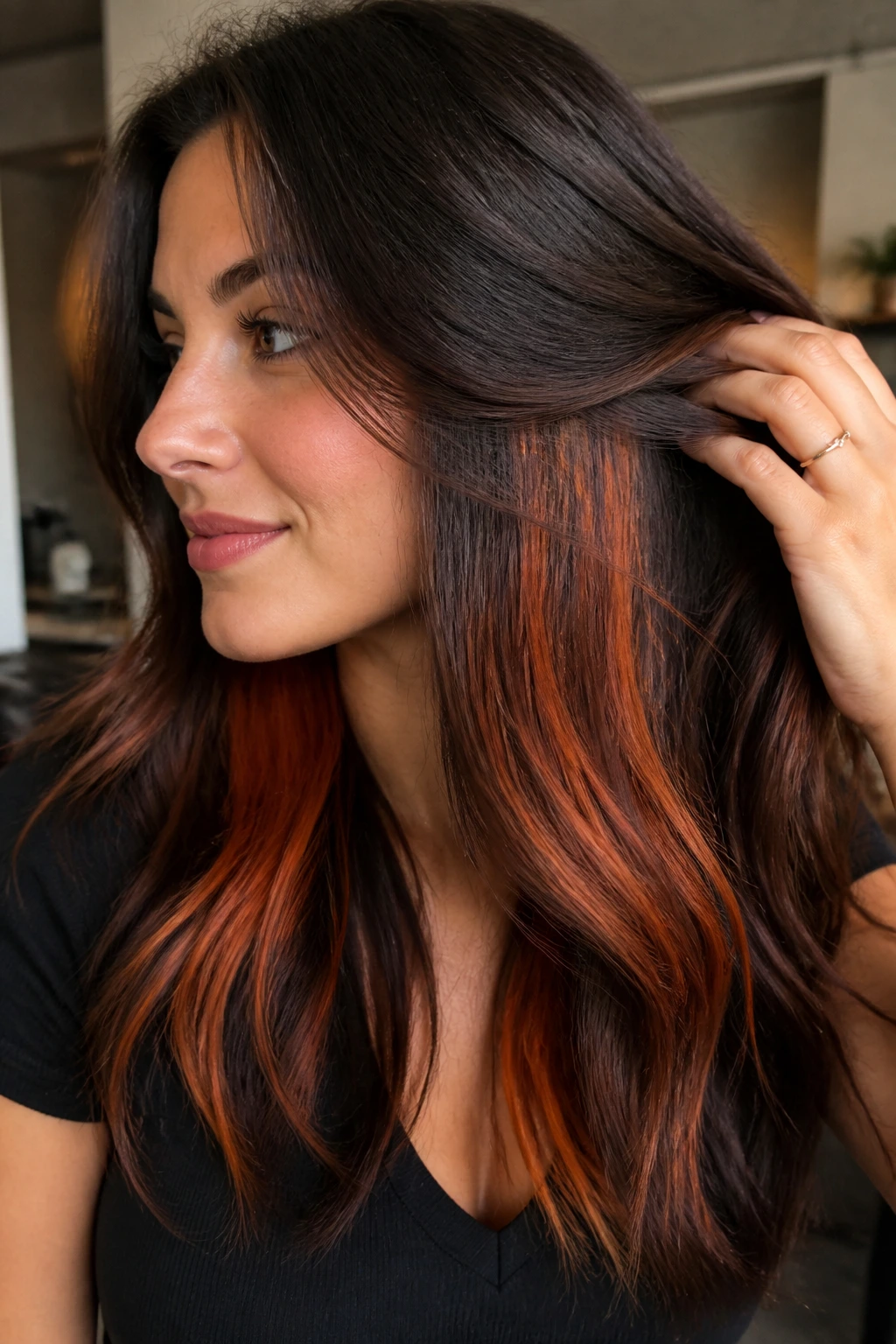
Auburn peekaboo panels are the color equivalent of a private joke. Only the people who see your hair move get the full effect. That makes them a smart choice for anyone who wants red tones without committing to a full auburn head.
Unlike all-over auburn, peekaboo panels hide under the top layer, usually near the nape or just under the side sections. You can keep the top brunette and let the auburn flash out when you curl your hair, braid it, or put it half up. It’s playful, but not loud.
This idea works especially well if you like color but need to keep a conservative look during the day. Two to four panels are enough in most cases. Ask for the auburn to be brighter through the mid-lengths and softer on the ends so it looks intentional when it peeks through.
13. Mocha Melt with a Shadow Root
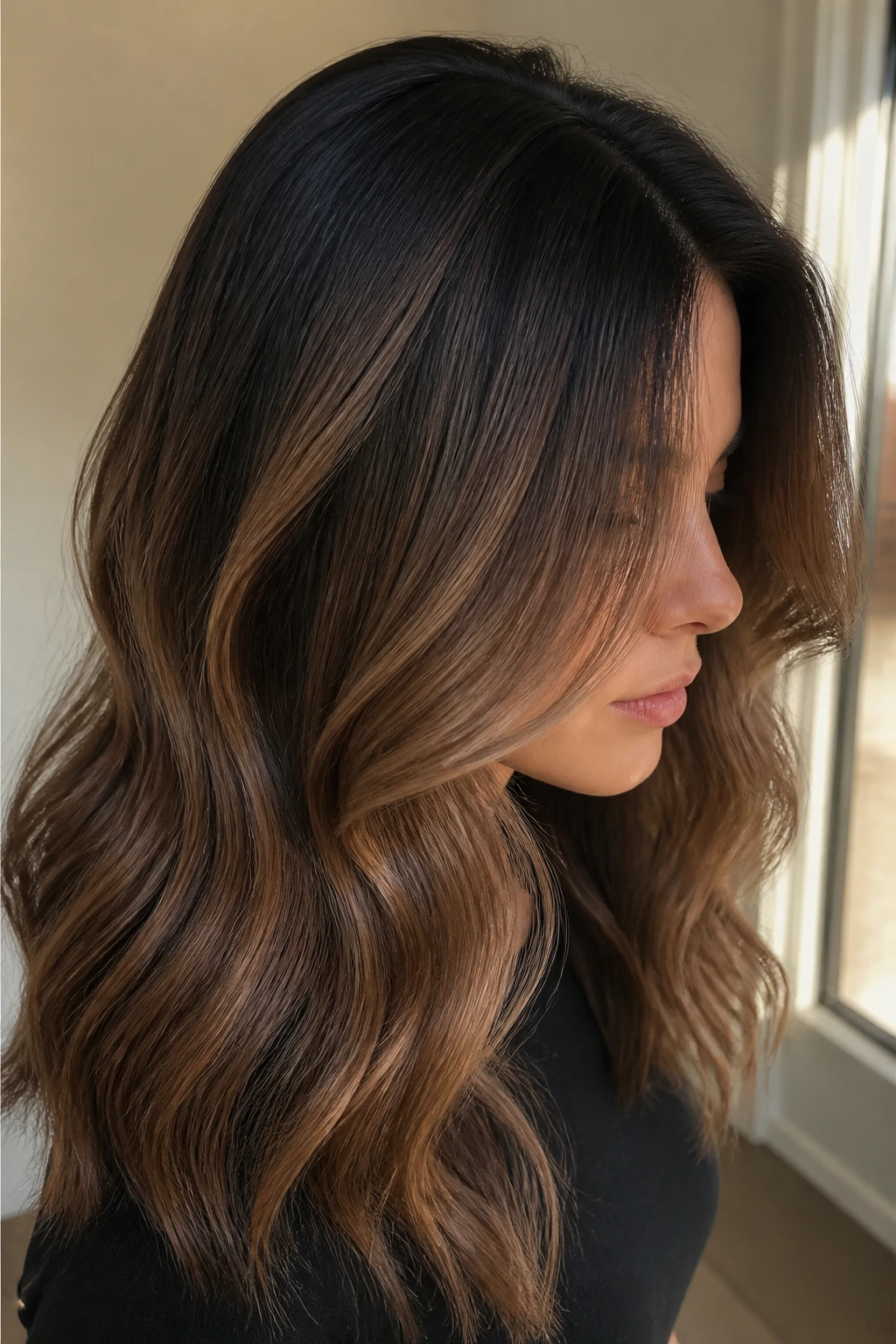
A mocha melt is for brunettes who want depth at the root and a softer, creamier look through the lengths. The color moves like coffee with a splash of milk, but in a very controlled way. The shadow root keeps the grow-out easy, while the mocha tones keep the hair from looking overly dark or flat.
Why It Keeps Grow-Out Soft
A shadow root should usually sit one shade deeper than the rest of the hair, not three. That small shift is enough to blur the line between regrowth and color. The melt itself should begin a couple of inches from the scalp and fade gradually into the lighter mocha pieces.
- Best for clients who like a 6 to 8 week maintenance window.
- Ask for the blend to be soft enough that it looks good in a ponytail.
- Style with bends or a round brush to show the gradient.
A good mocha melt disappears a little at the root and then wakes up through the ends. That is what makes it feel polished instead of streaky.
14. Cinnamon Spice with Warm Dimension
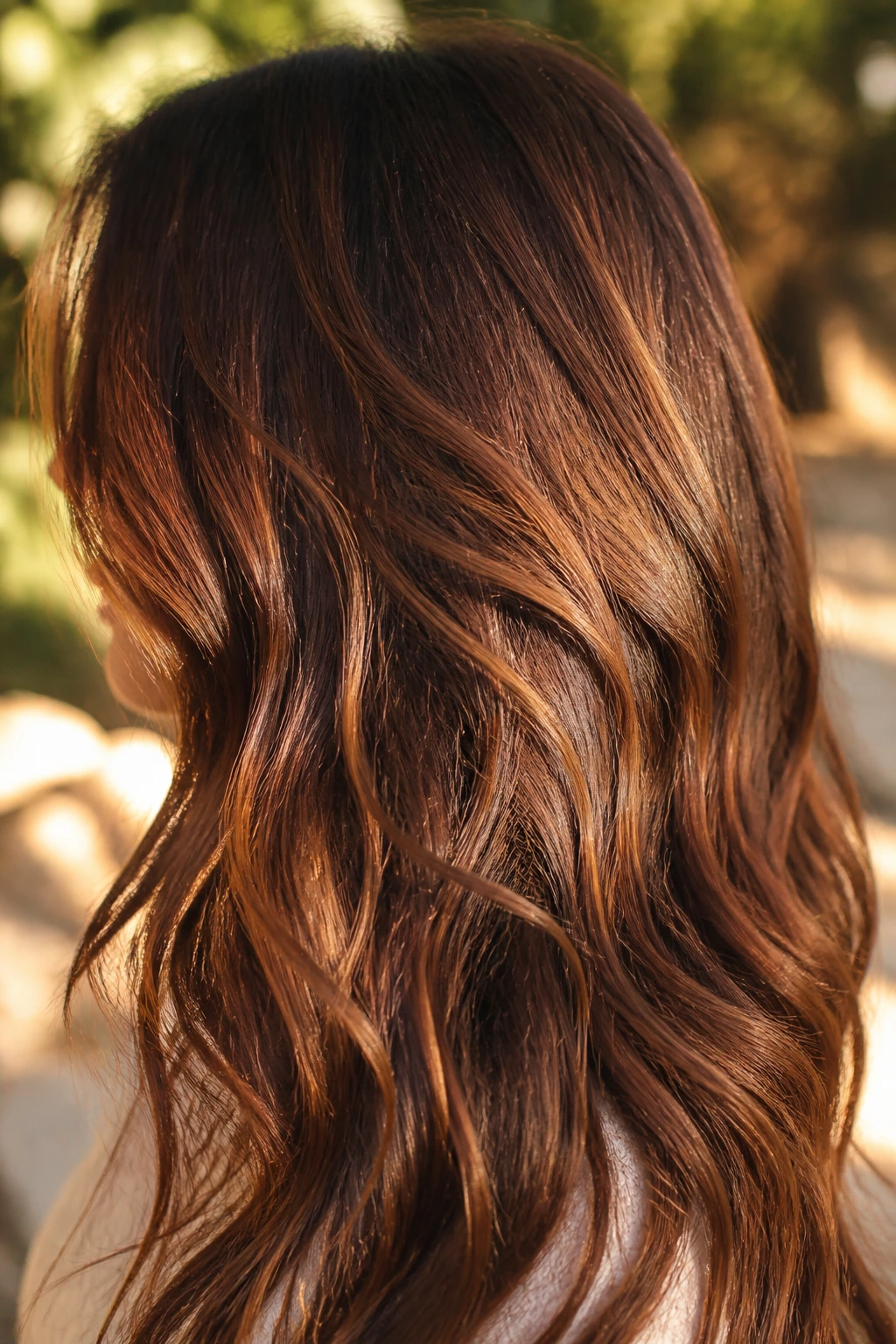
Cinnamon spice is the brunette color that makes plain brown hair look richer without shouting about it. It’s warm, but not flat; spicy, but not red-heavy. That balance matters. Too much orange and you lose the brunette base. Too much brown and the whole thing reads like a gloss with no personality.
The best cinnamon color uses fine slices of warmth through the part, the mid-lengths, and the ends. You do not need a bright all-over lift. A warm glaze can do most of the work, especially on medium brunettes who want their hair to look alive in indoor light and softer sun. On olive skin, cinnamon often reads especially well because it picks up the same warm notes.
This color looks best when the light hits it from above. That is why a smooth blowout or loose wave usually makes more sense than a tight curl. You want the warm dimension to show, not the technique.
15. Cherry Cola Brunette
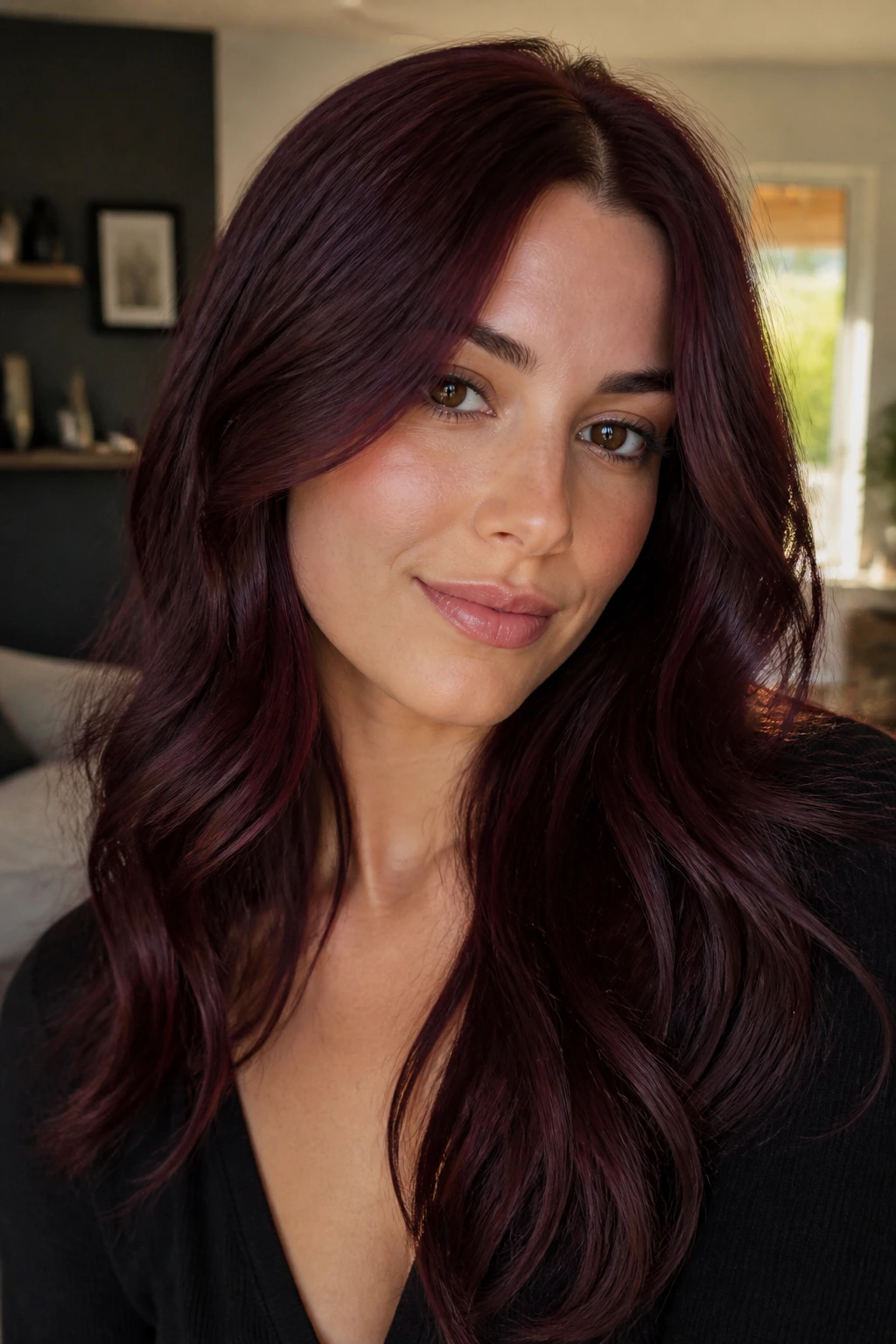
Why does cherry cola look so good under indoor light? Because the red-violet lives under the brown instead of fighting it. That gives the hair a dark, juicy tone that shifts from brunette to berry depending on the room. It’s dramatic, but still wearable.
The best cherry cola color is not bright burgundy. It’s deeper and more blended, with a brown base that keeps the look grounded. On curls, the shade can look richer because every bend catches a slightly different reflection. On straight hair, it feels sleeker and more obvious.
How to Keep It Readable
Ask for a cherry gloss or demi-permanent color that stays one notch darker than a classic red. If it goes too bright, the brunette base disappears. If it’s too dark, the cherry detail vanishes completely.
This is a good choice if you want red tones without the maintenance of a vivid copper. It fades in a flattering way, and that matters more than people think.
16. Beige Bronde on Lighter Brunettes
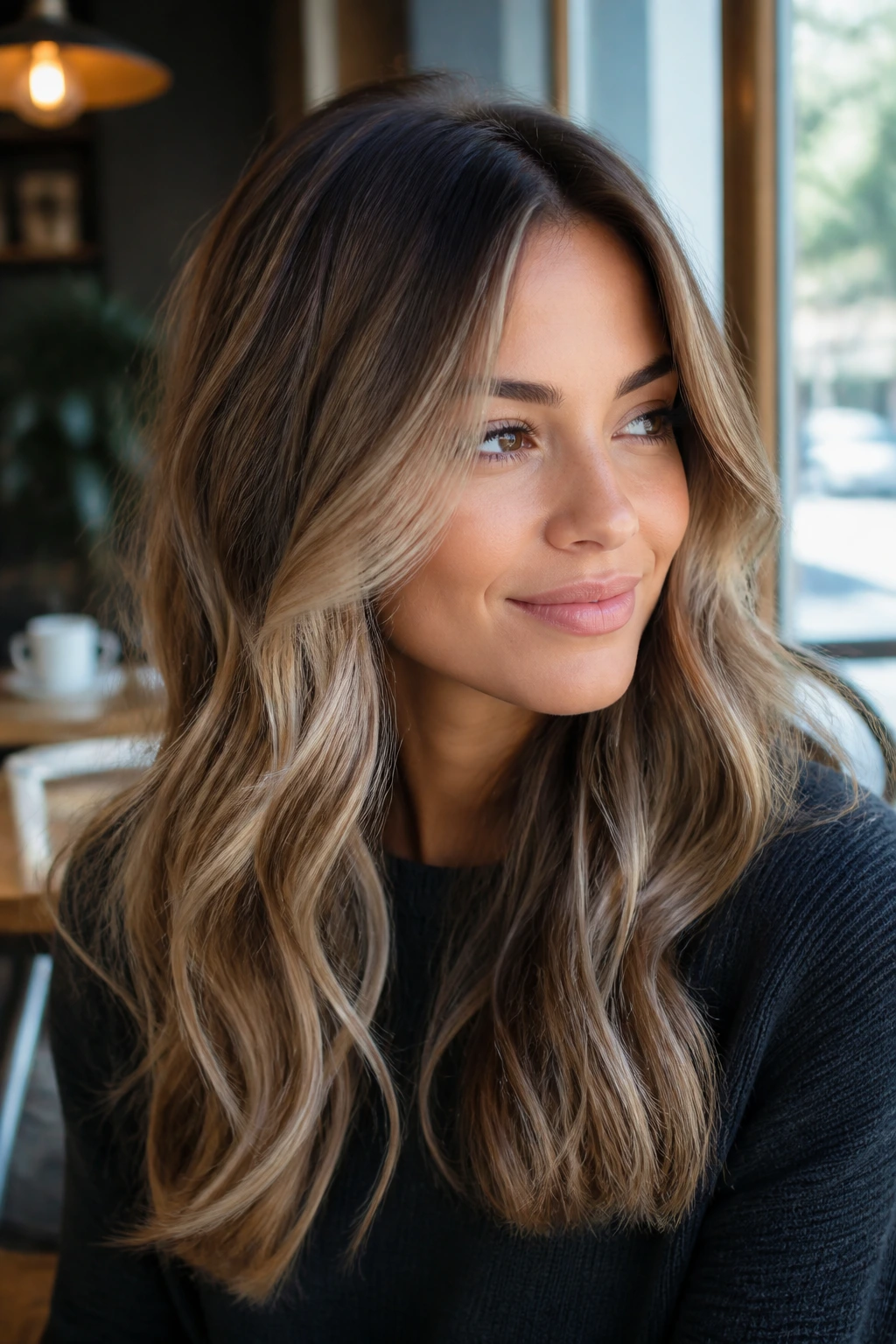
A lot of brunettes want to go lighter without looking blond-blond. Beige bronde sits right in the middle. It keeps enough brown to feel believable, but the beige pieces catch light in a way that makes the hair look softer and more expensive than a heavy highlight job.
This is especially good on level 6 or 7 brunettes who want brightness around the face and through the top layers. Ask for beige-toned pieces, not yellow blonde. The root should stay shadowed enough that the grow-out does not turn choppy. The nicest version has a creamy, almost linen-like tone that feels calm instead of golden.
Soft bends help here more than beachy curls. Too much texture can make the beige read streaky. If the hair is fine, keep the highlights airy and slightly scattered; if it is thick, you can carry a little more brightness through the mid-lengths.
17. Walnut Lowlights for Extra Depth
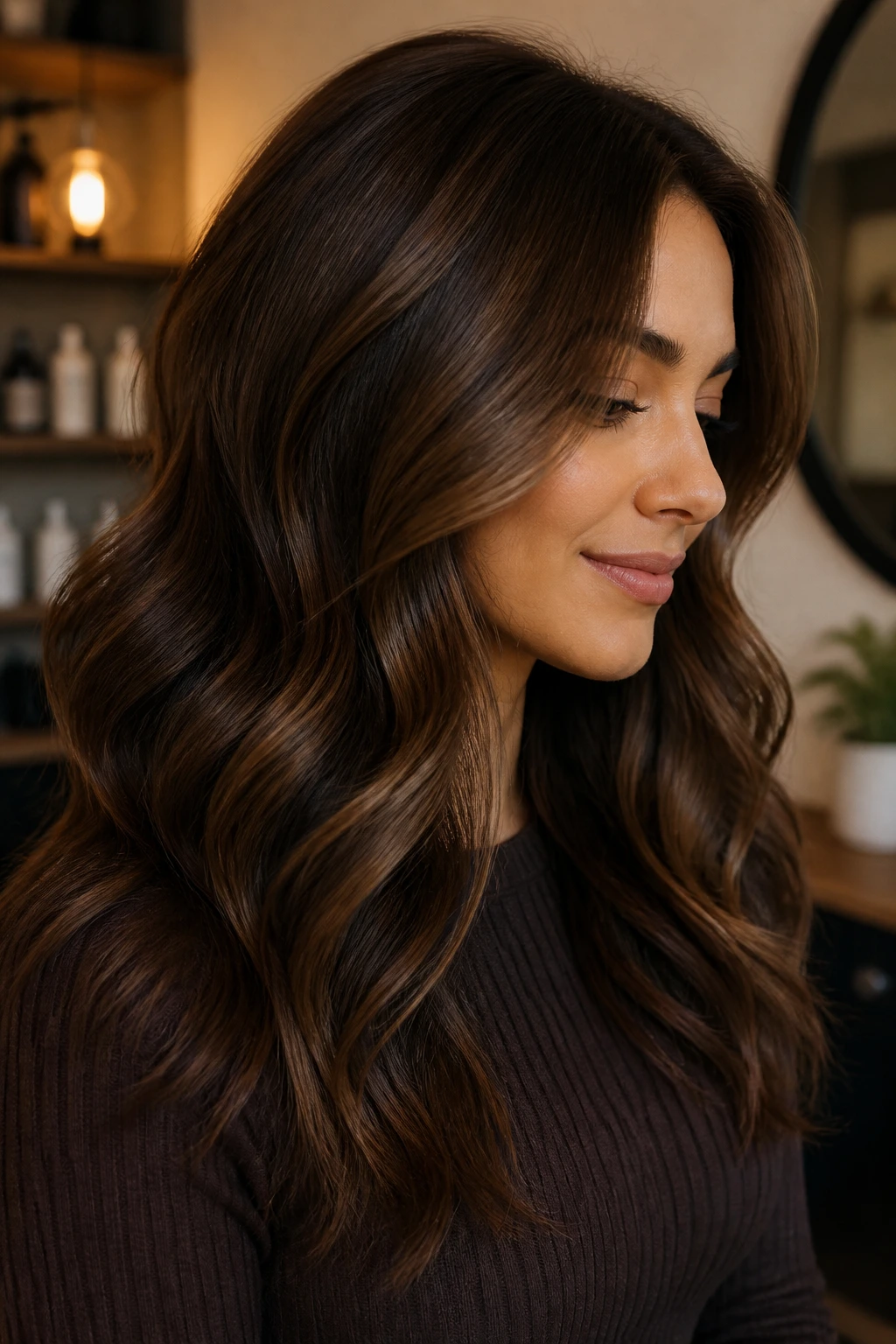
Walnut lowlights are the color equivalent of adding structure back into the hair. They make over-lightened or flat brown hair look fuller almost immediately. The tone sits in a deep earthy brown zone, so it does not fight the base. It just gives the hair more shape.
This is the move for brunettes whose hair started feeling washed out after too many light pieces. A few darker strands around the crown, under the part, and through the interior can change how the whole head reads. It is a quiet service, but it does a lot. Coarse hair especially benefits because the extra depth makes the shape look more defined.
Keep the lowlights a shade or two deeper than your natural brunette, not near-black. Too much contrast can make the color look patchy once it starts to grow. Walnut works because it fills in, rather than taking over.
18. Ginger-Kissed Ends
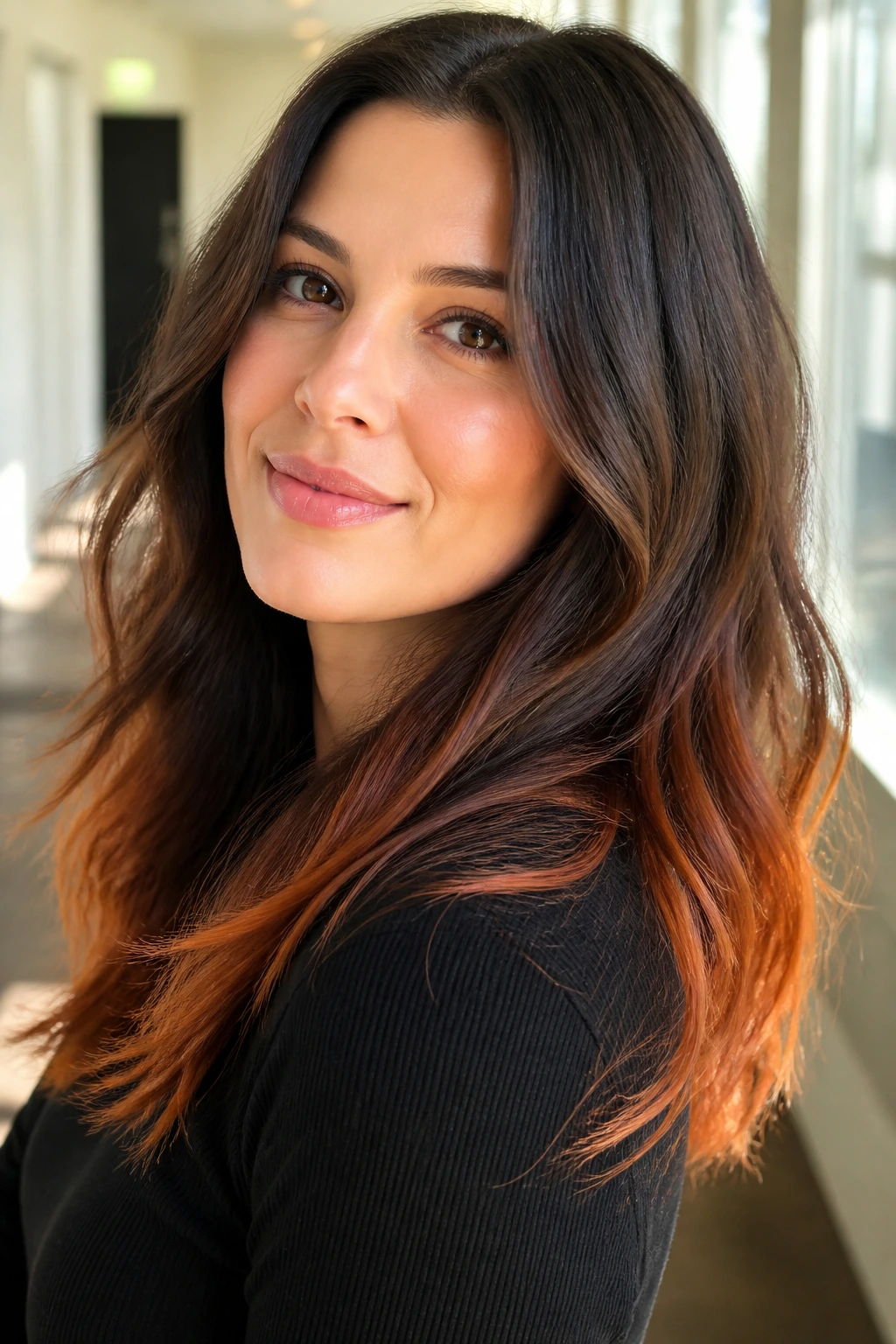
Ginger-kissed ends are a nice compromise for anyone who likes warmth but does not want a full ginger transformation. The color lives on the last 2 to 3 inches of the hair, so it feels playful without taking over the root and mid-lengths. That makes the idea work especially well on long bobs and layered cuts.
Unlike all-over ginger, this version keeps the base brown and lets the ends carry the warmth. It looks sharp when the cut has movement, because the lighter tips flick out and catch light. On straight cuts, it can feel more graphic; on waves, it softens into a little copper haze.
Ask for a translucent warm glaze at the ends, not a dense orange block. The goal is a whisper, not a traffic cone. If your hair is dry on the ends, keep the ginger a little deeper so it looks shiny instead of thirsty.
19. Plum Undertone Through Deep Brown Hair
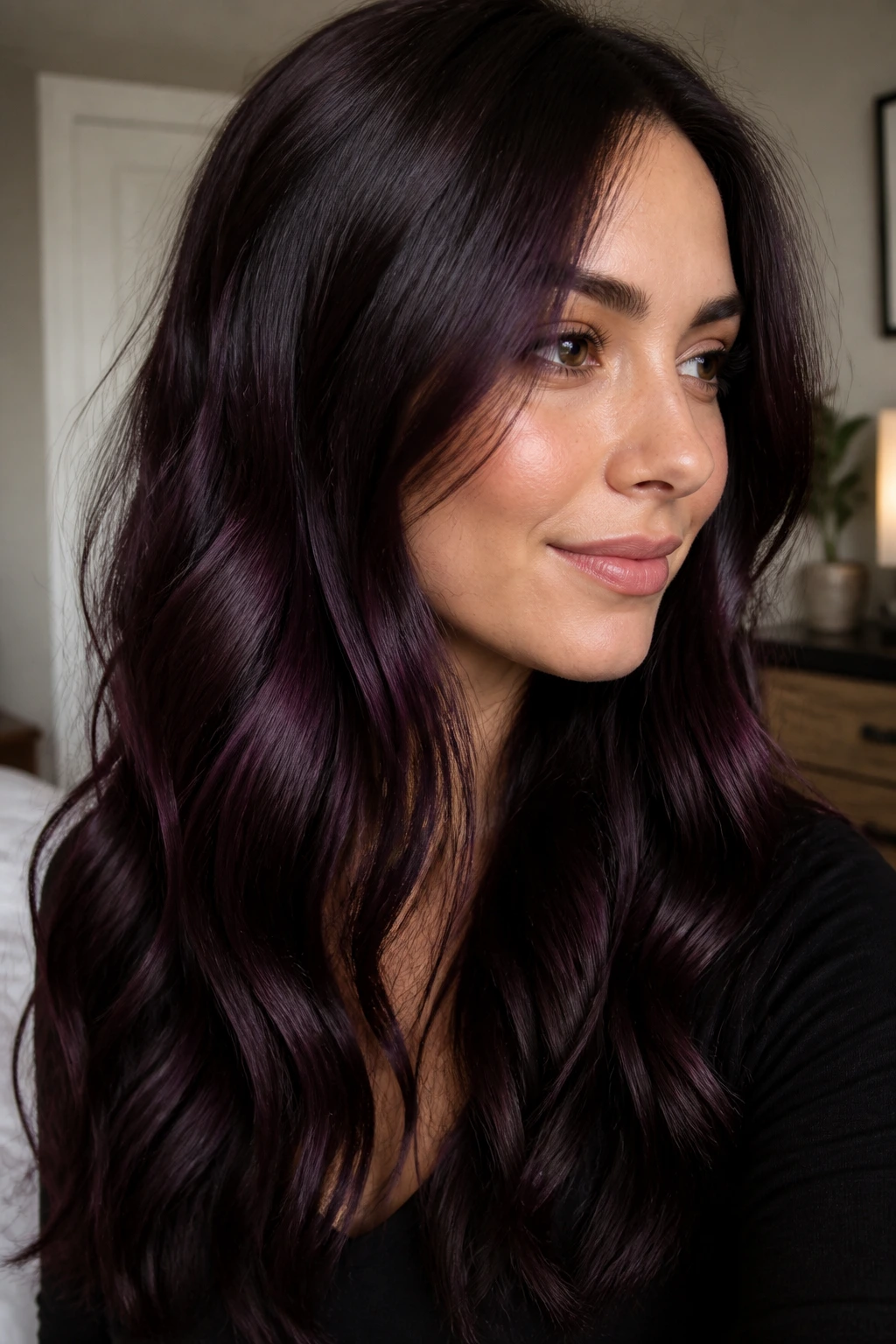
Plum undertones are one of the smartest ways to make deep brown hair feel richer without making it look red. The color sits in that cool berry zone that shows up as sheen first and color second. That makes it especially good for brunettes who want something moody and a little luxe.
Why Plum Is Underrated
Plum works because it changes the light, not only the hue. Under daylight, the hair can look like a deep chocolate brown with a violet edge. In softer indoor light, the plum gets a bit stronger and gives the hair a velvet look.
- Best for dark brown to near-black bases.
- Ask for a plum-brown gloss, not a bright violet dye.
- Keep the finish sheer so the brunette stays visible.
This is one of the rare bold colors that can still look polished when it fades. The plum softens into a smoky brown instead of turning messy, which makes the grow-out less annoying.
20. Sandy Caramel Ribbons on Curls
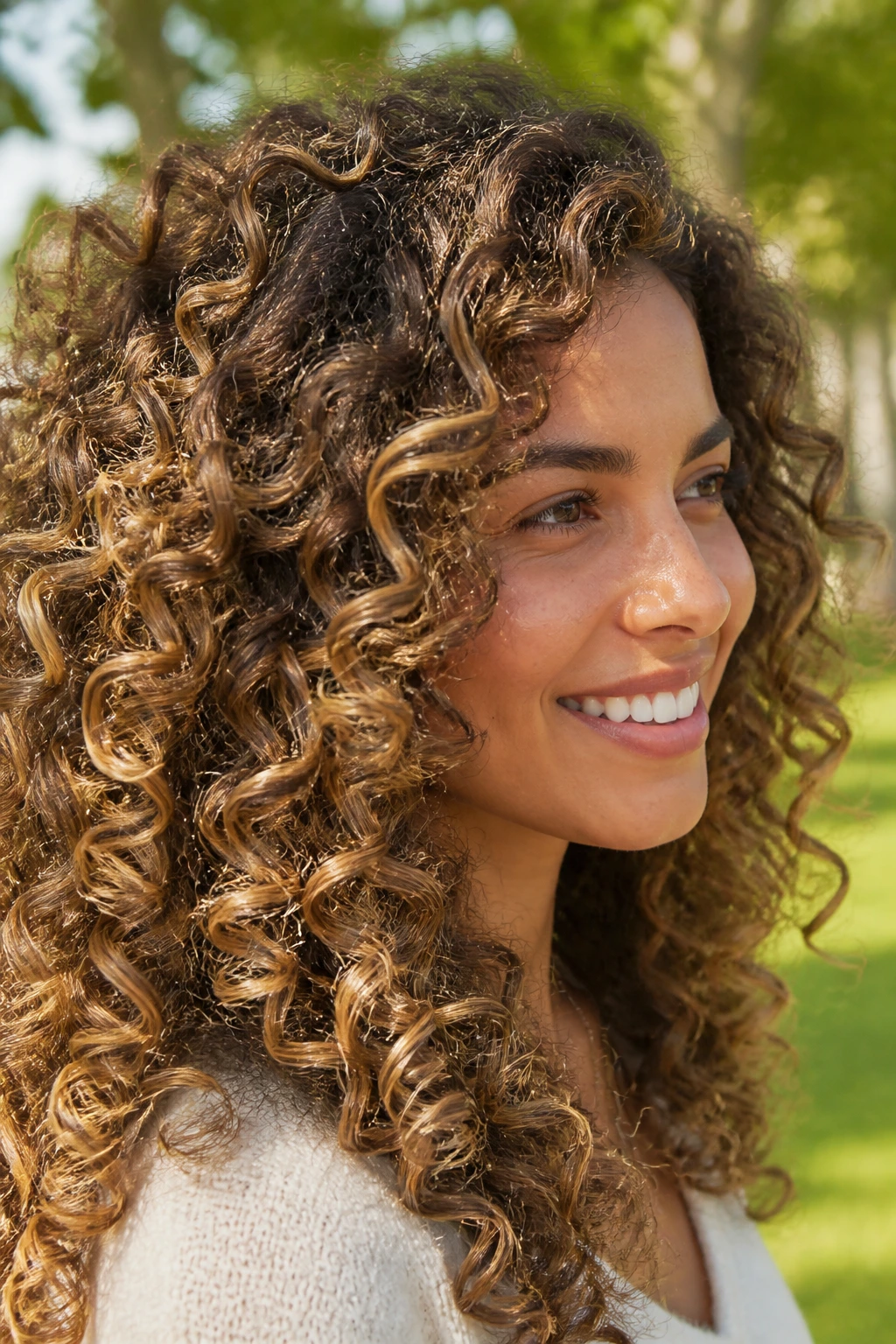
Curly hair loves ribbon placement because curls already do half the design work. Sandy caramel ribbons give each curl clump its own little spotlight without turning the whole head into a highlight map. That is why this look feels alive rather than striped.
The trick is to paint with the curl pattern, not against it. Colorists often place lighter ribbons where the curls naturally separate, then leave some underneath sections darker so the shape keeps its bounce. On tight curls, the ribbons should be wider and softer. On loose curls, they can be more delicate and closer together.
This color works best when the caramel stays sandy, not gold-heavy. Too much warmth can make the curls look brassy fast. A soft glaze afterward helps the ribbons settle into the brunette base and keeps the finish from looking crunchy or overdone.
21. Smoky Lilac Gloss Over Dark Brunette
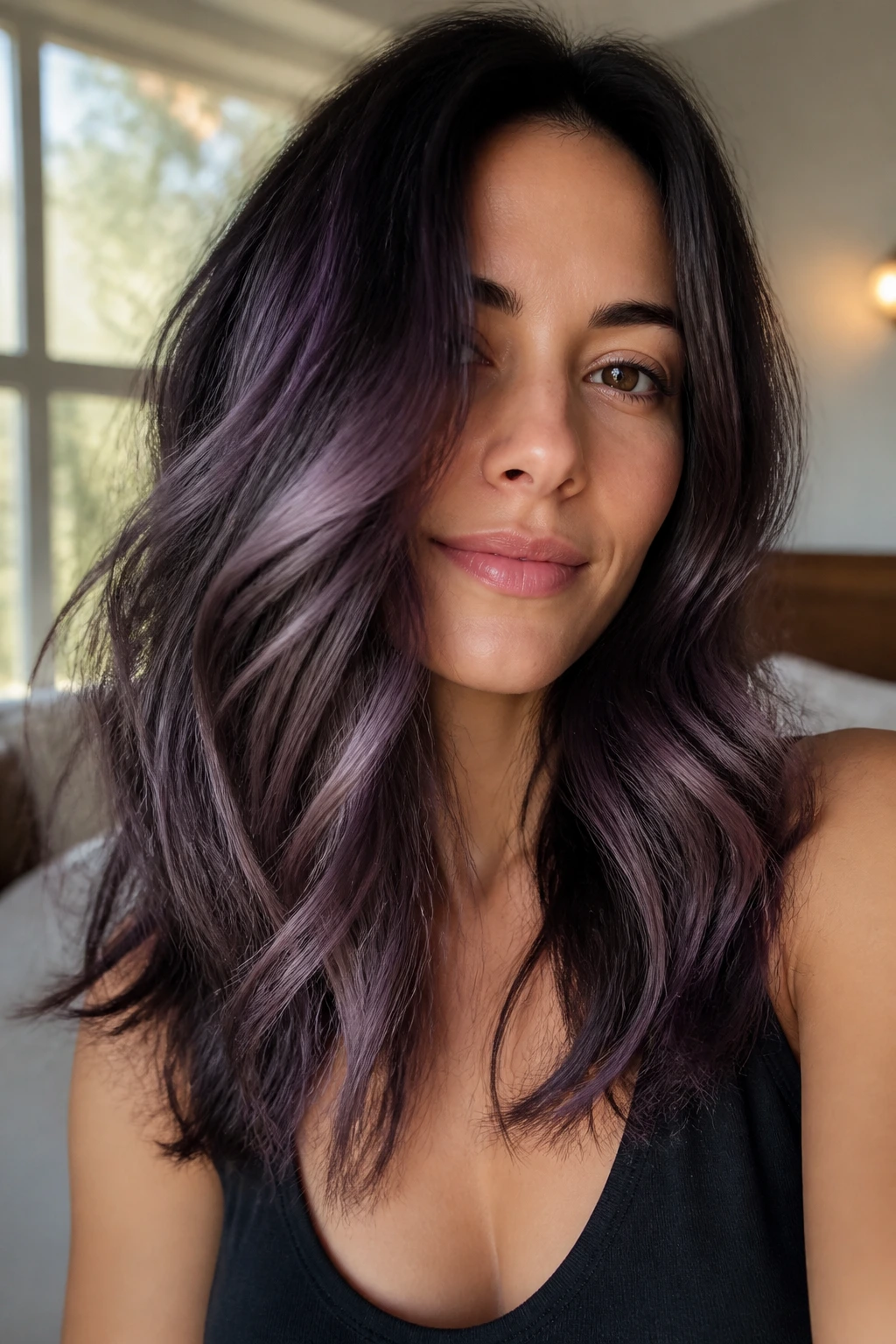
Can brunettes wear pastel without bleaching the life out of their hair? Yes, if the lilac stays smoky and sheer. A smoky lilac gloss on pre-lightened pieces or hidden panels gives dark brunette hair a cool, unexpected cast without turning it into full fantasy color.
The important part is honesty about the base. Dark brown hair will not suddenly look pastel lavender on its own. It needs some lift, even if that lift is just on a few panels. Once those pieces exist, a smoky lilac glaze can turn them into a silver-violet haze that shows in motion and in bright light. It is subtle, but it has personality.
This works well for people who want something fashion-forward but not permanent-feeling. If you want the color to read, keep the rest of the hair deep and glossy. The contrast is what makes the lilac visible.
22. Copper Penny Face Frame
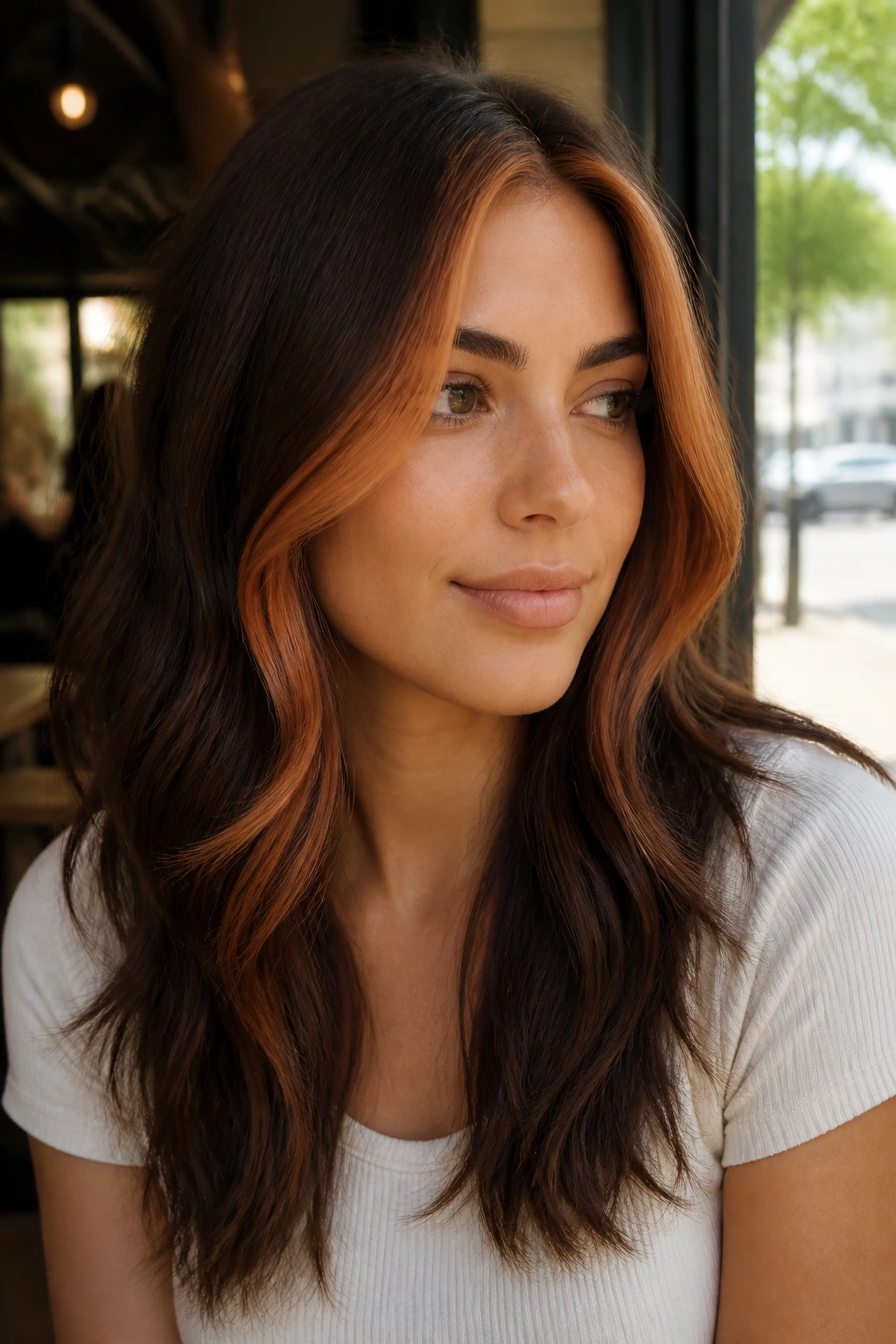
Sometimes one bright panel is enough. Copper penny around the face can wake up brunette hair faster than a full head of highlights. The shade is bolder than honey and more orange than cinnamon, which gives it that shiny, newly minted feel near the hairline.
The best version stays narrow. A 1-inch face frame is often enough if the goal is brightness, not drama. Keep the pieces soft near the roots and slightly stronger through the mid-lengths so they do not look like hard bars. On layered cuts, this shade can move beautifully because the front pieces catch light every time the hair shifts.
It is a smart choice if you wear your hair up a lot. The color still shows in a bun, braid, or clipped style. If your hair texture is frizzy, keep the copper a little deeper. Bright copper can spotlight texture faster than people expect.
23. Chocolate Cherry Melt
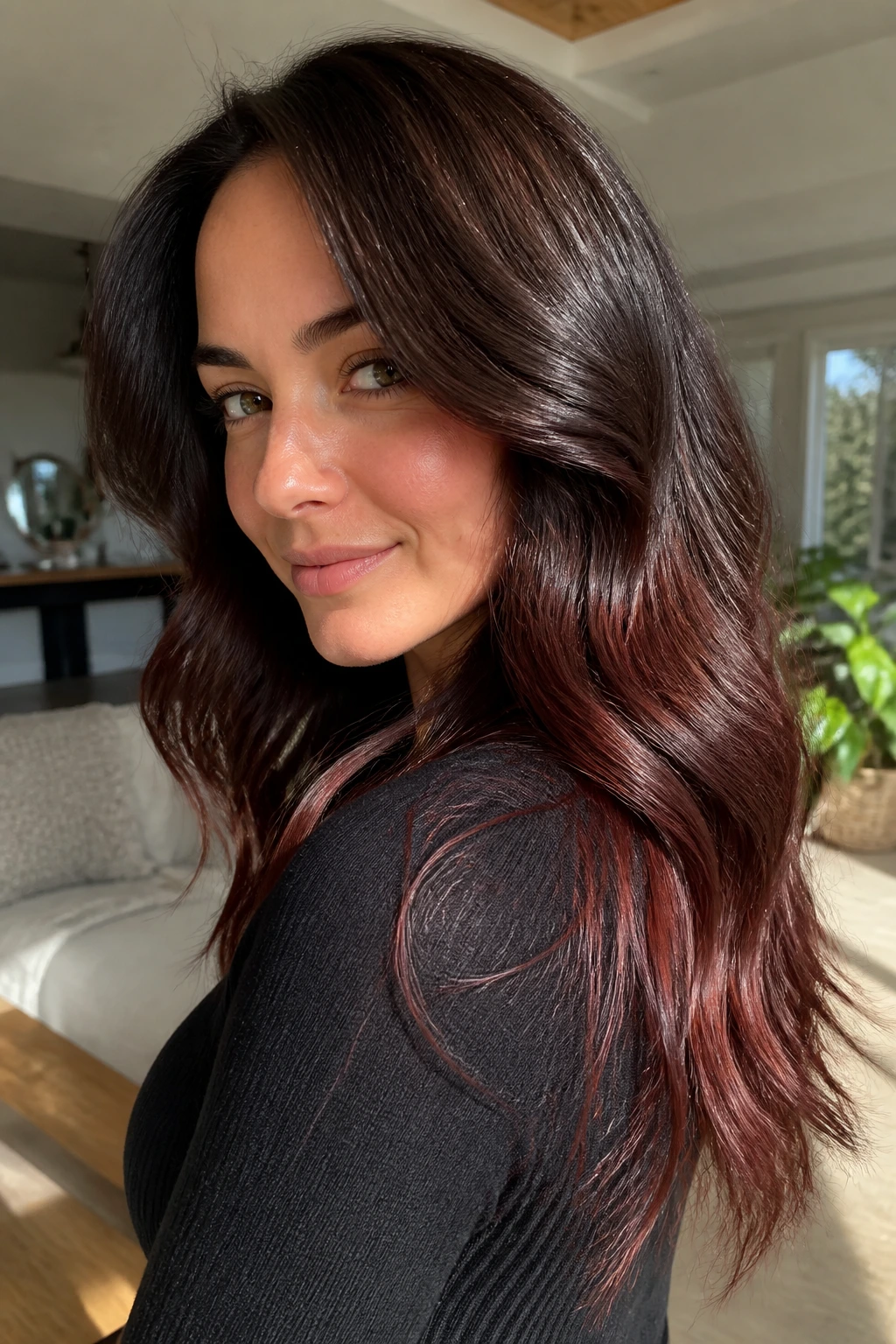
Chocolate cherry is for brunettes who want depth first and color second. The base stays rich and brown, but a cherry tone sneaks through the mid-lengths and ends. It feels lush, not loud, which is why it’s one of the easiest ways to try red without committing to obvious red.
The melt should be smooth enough that the cherry shows more in movement than in a static mirror. That means the colorist should avoid harsh bands and keep the transition soft. On wavy or curly hair, this tone looks especially good because the red reflect catches the bends. On straight hair, it reads sleek and glossy, almost like dark wine under a top layer of chocolate.
This color ages well if the formula is balanced. As the cherry softens, it usually settles back into a rich brown rather than a strange orange-red. That makes it easier to live with than brighter reds.
24. Teal Underlights Beneath Dark Brunette
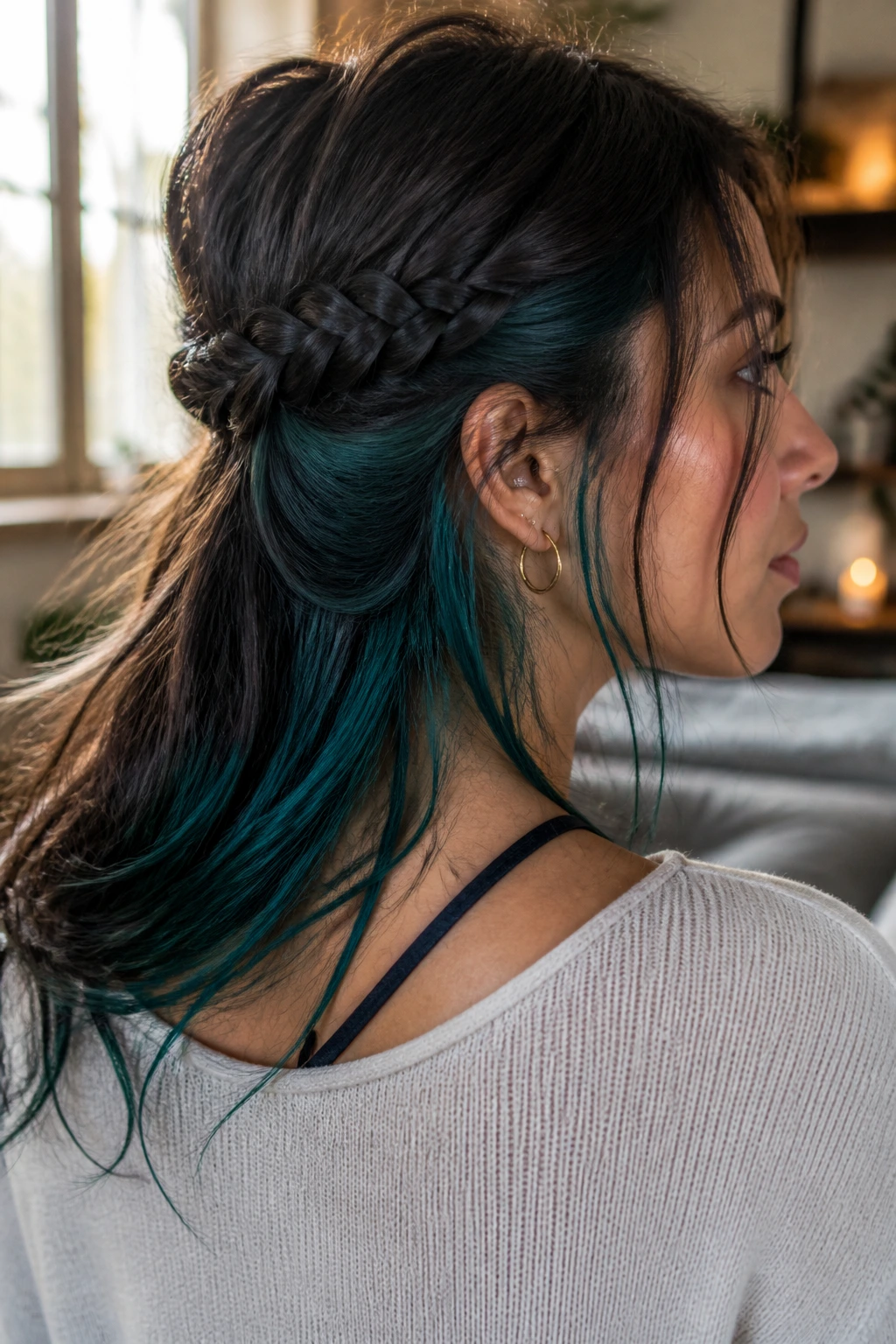
Teal underlights are proof that brunette hair does not have to stay safe to look good. Because the color sits underneath the top layer, it shows up only when the hair moves. That makes it a strong option for anyone who wants a bold detail without wearing a bright statement color every hour of the day.
The placement matters more than the shade. Keep the teal near the nape, under the top curtain of hair, and along a few interior panels so it flashes through braids, half-up styles, and curls. A darker jewel-toned teal usually works better than a neon blue-green. It reads richer and looks less like costume color.
This idea loves layered cuts. The movement creates the reveal. If you are nervous about commitment, ask for only a few hidden panels first; it gives you the color payoff without turning the whole head into a fantasy shade.
25. Blue-Black Mirror Gloss
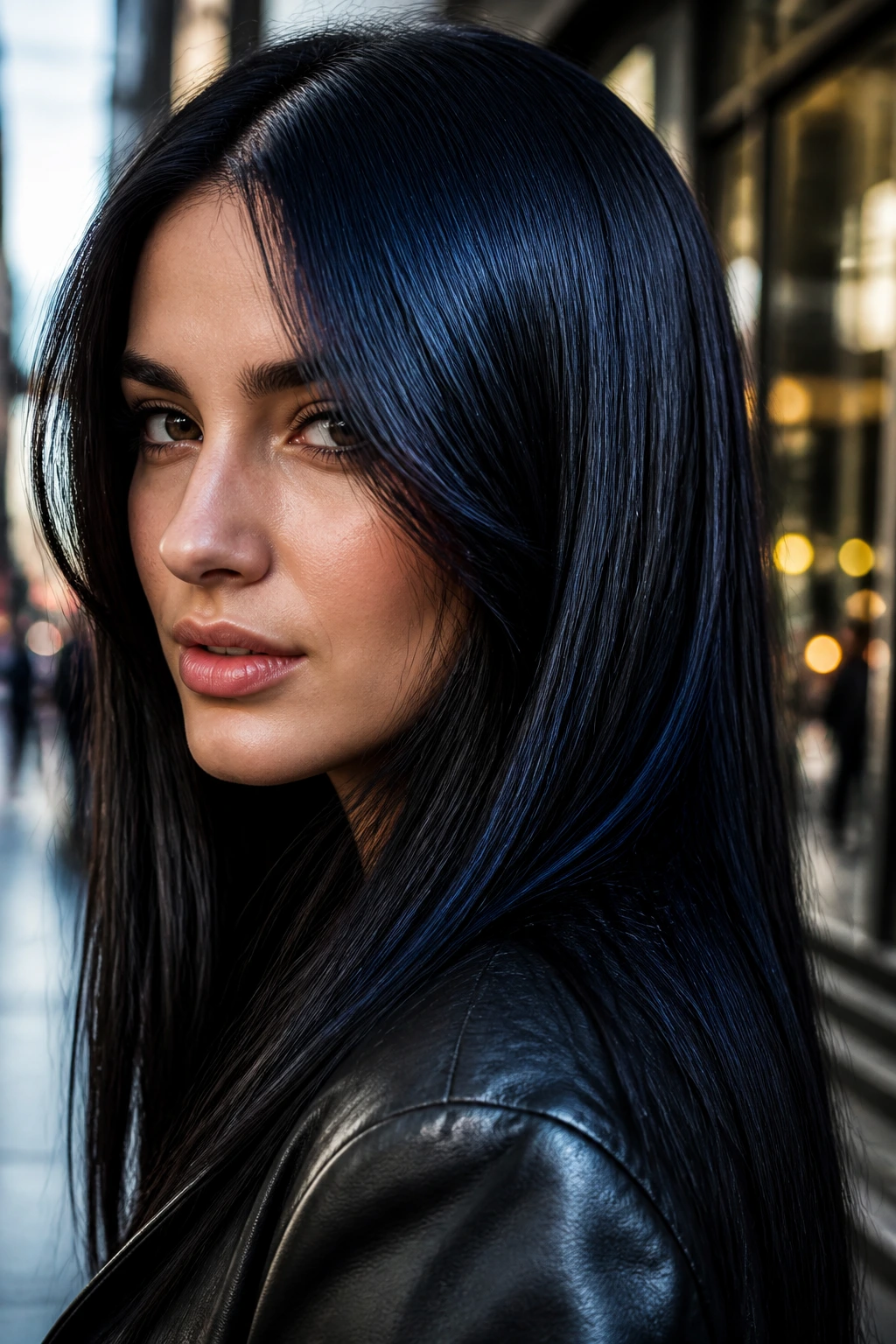
Blue-black is not flat black, and that difference matters. Blue-black mirror gloss keeps the hair deep while adding a cool reflect that makes the surface look sleek and polished. It is one of the best choices for brunettes who want drama without losing shine.
The gloss finish is the key. Without shine, blue-black can go dull fast and start reading dusty instead of glossy. On healthy hair, though, it looks sharp and expensive, especially on straight styles, sharp cuts, and long hair with clean ends. The blue reflect also helps soften the harshness that plain black can have around the face.
If you like low-maintenance color with strong visual impact, this is a top-tier brunette move. Ask for gloss refreshes every 4 to 6 weeks if you want the blue reflect to stay visible. Let it fade too far and it loses the whole point.
Final Thoughts
The strongest brunette colors usually do one thing well: they keep the brown hair believable. Even the bold options work because they respect the base instead of fighting it. That is why caramel, mahogany, cherry, plum, and blue-black all have staying power. They do not erase the brunette; they sharpen it.
If you are choosing between shades, think about maintenance first and fantasy second. A money piece or gloss is easier to live with than a full color shift. A peekaboo panel gives you fun without a weekly commitment. A dimensional balayage gives you movement even when your hair is tied back.
The best brunette color is the one that still looks good after a long day, a messy bun, and a little root regrowth. That is the version people keep asking about, because it looks like your hair, only better lit.
