



A blunt face frame on curly hair can go wrong fast. On straight hair, a bright front panel sits there and behaves. On curls, it bends, stretches, and disappears into the pattern unless the color is placed with the curl shape in mind. That’s why the best face framing highlights for curly hair don’t start and stop at the part line; they follow the way the curl falls around the cheek, the temple, and the jaw.
That detail matters more than most people think. Curly hair catches light on the outside of each bend, so a few thin ribbons can read brighter than a full block of blonde on straight hair. On the flip side, heavy chunks can swallow the curl pattern and look stripy once the hair dries. The sweet spot is a mix of placement, tone, and depth — bright enough to open the face, soft enough to grow out without a hard edge.
Color choice matters too. Caramel reads warm and easy. Copper wakes up dark curls without the brass fight. Beige and champagne keep fine curls from looking flat. And when the curl pattern is tight, the lightest pieces usually look best a little lower than you expect, because shrinkage moves everything up.
That balance is where the good stuff lives. Some of these ideas are subtle, some are loud, and a few are for the person who wants a front section that announces itself from across the room. The right one depends on your curl type, your base color, and how much maintenance you’re willing to live with.
1. Soft Caramel Money Piece for Loose Ringlets
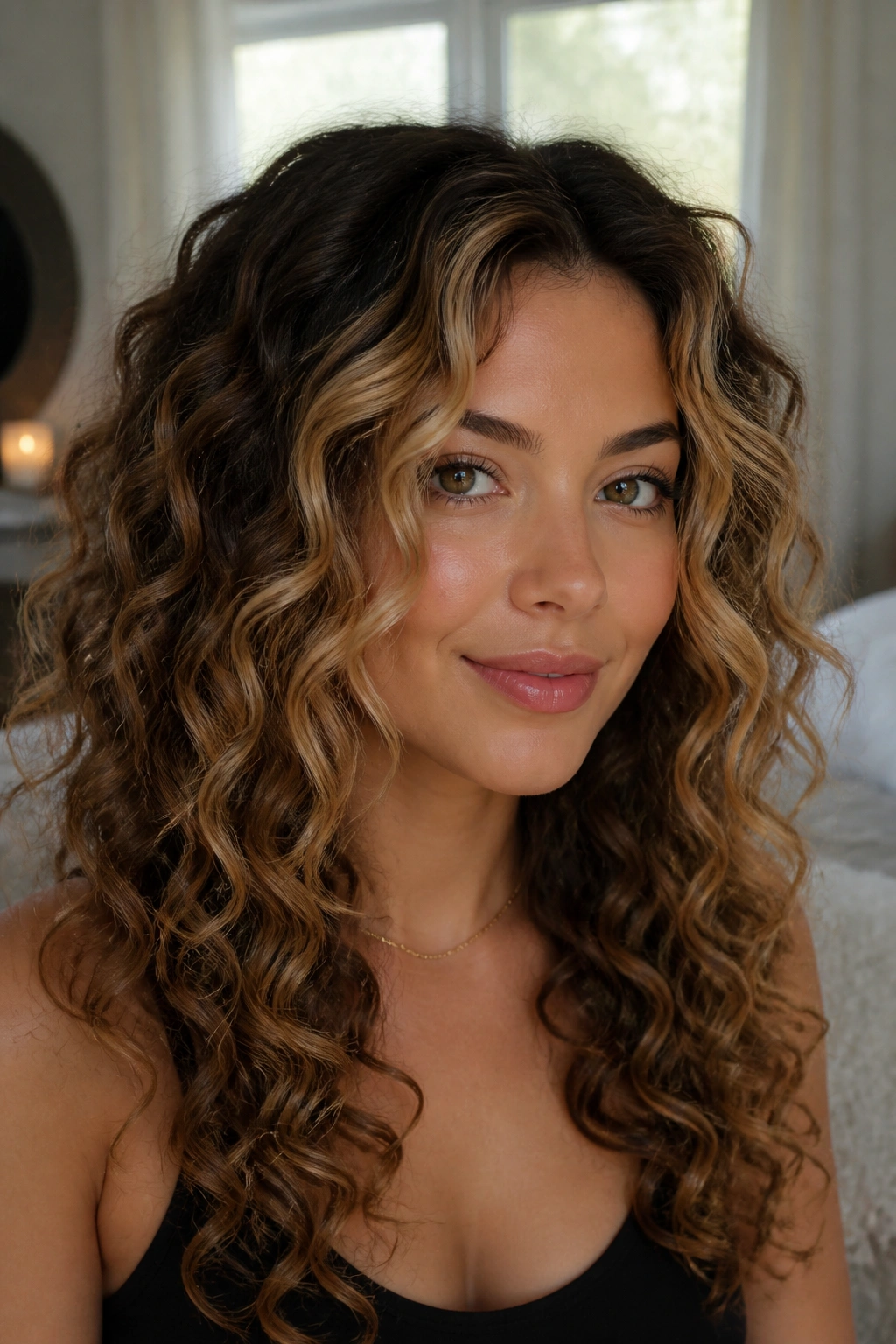
A soft caramel money piece is the easiest way to make loose ringlets look fuller without turning the front of your hair into a stripe. It gives the face a warm frame, but the tone stays gentle enough that the curl pattern still reads as the main event.
Why It Works on Curly Hair
Caramel sits in that forgiving middle ground between blonde and brown. On a level 4 to 6 base, it usually needs less lift, which matters when you want shine instead of fried ends. Around the face, it brightens the cheekbones and makes the curls in front separate a little more cleanly.
- Best for curl types that form open spirals or soft corkscrews
- Looks strongest when the lightest ribbon sits near the cheek, not right on the root
- Grows out softly if the color melts back into the mids
Pro tip: ask for thin, painted panels rather than one thick front stripe. It reads richer and far less dated.
2. Honey Beige Ribbons on Shoulder-Length Curls
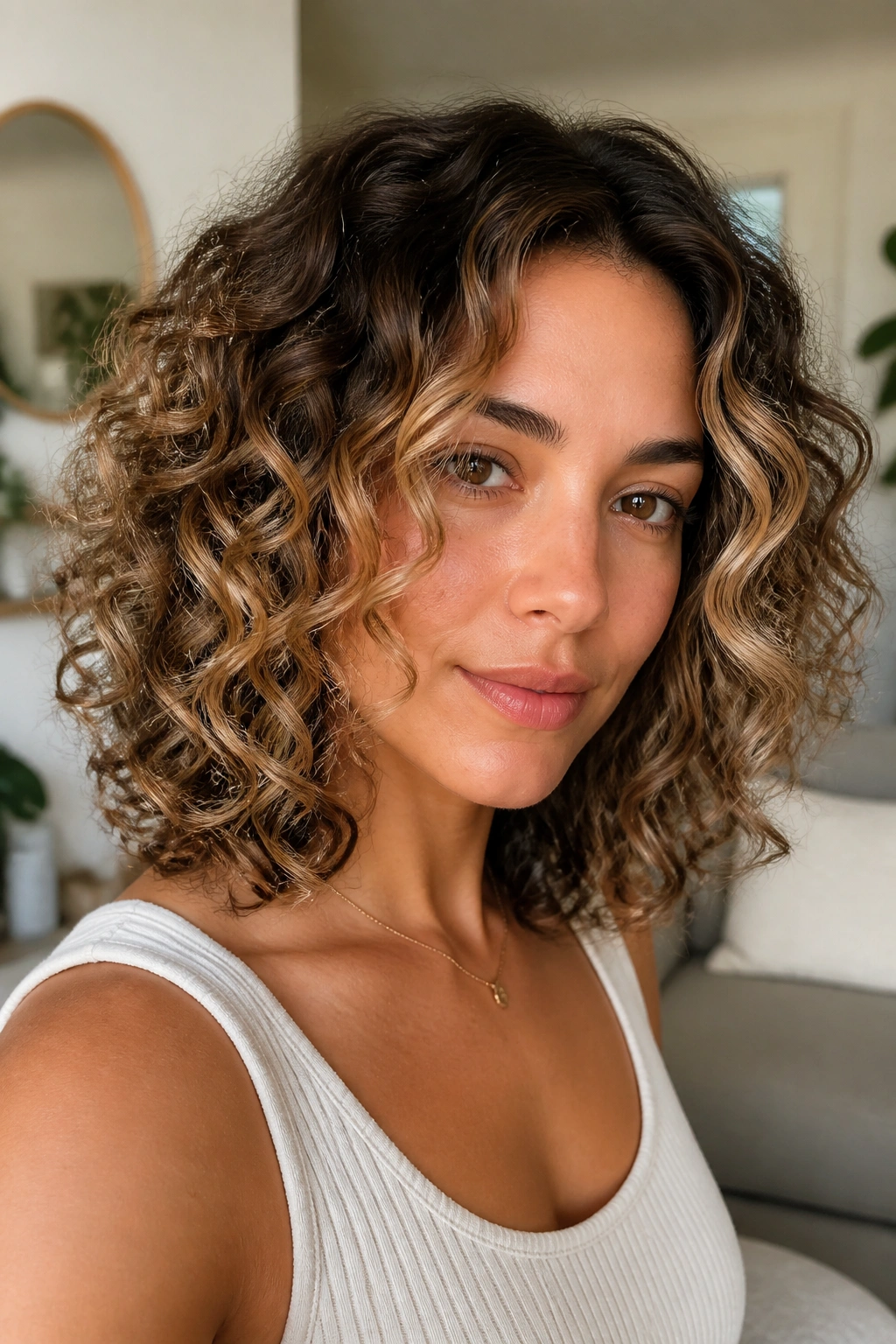
Want brightness without that loud salon-blonde moment? Honey beige ribbons do the job. They sit between warm and cool, which makes them easy to wear on hair that already has a lot of movement.
The trick is placement. On shoulder-length curls, the front layer usually brushes the collarbone and flips around the face, so the light pieces should be painted where the curl opens, not where it disappears into the neck. That keeps the highlights visible when the hair moves.
How to Get the Most From It
Ask for a soft root shadow and a beige toner, not a bright white finish. Beige keeps the color creamy, while the shadow stops the front from looking too harsh as it grows out. This is one of those looks that feels expensive because it does not shout.
3. Copper Face Frame for Deep Brunette Curls
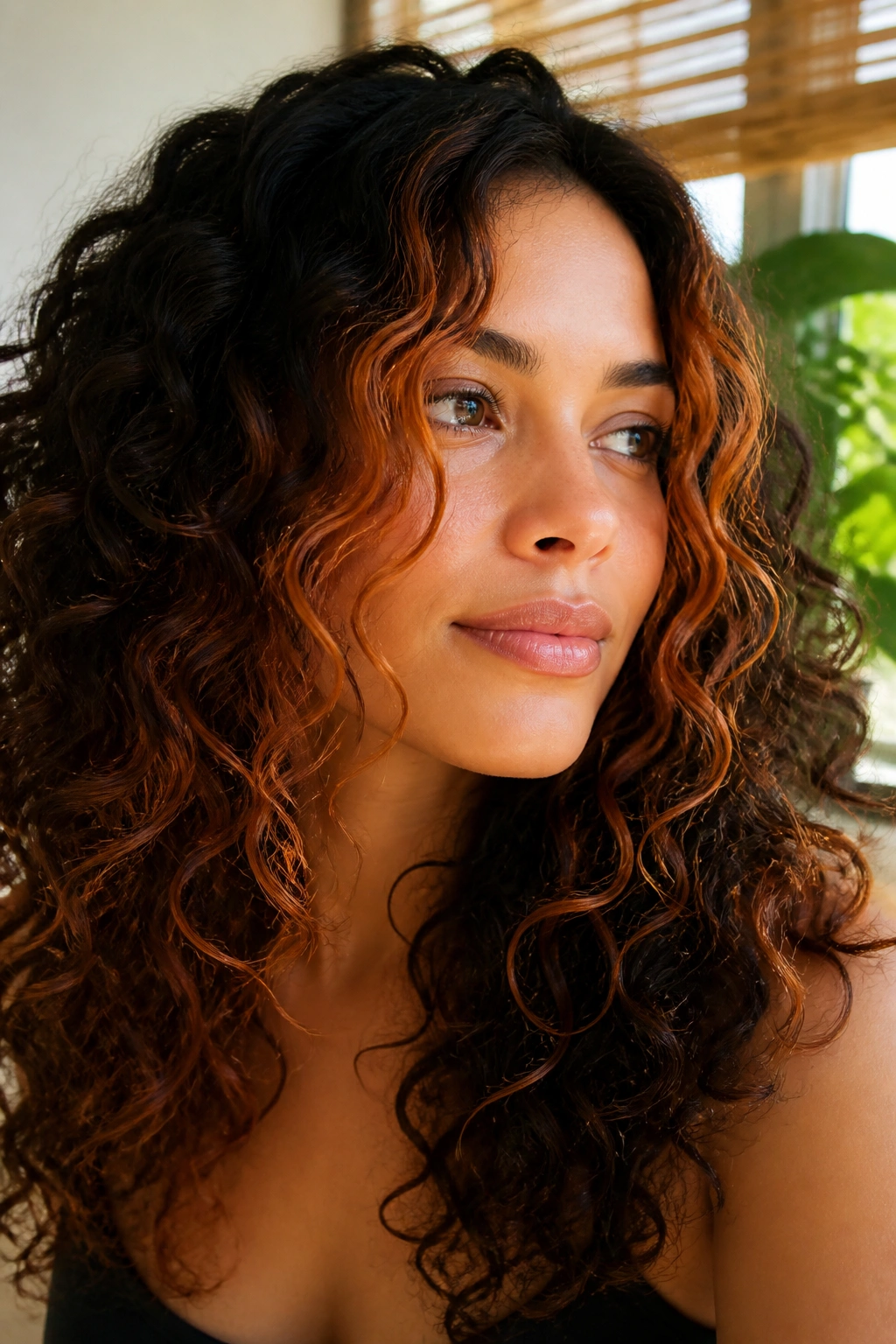
Copper on deep brunette curls has attitude. It brings heat to the front section and makes dark spirals look glossy instead of flat, especially when the base color leans espresso or chocolate.
How to Ask for It
Say you want the front to look lit from within, not painted with a neon marker. That matters. Copper can go orange fast if the underlying lift is too strong, so most colorists will use a controlled lightener, then tone it back to a rich copper-gold.
What to Watch For
- Porous curls can grab copper too hard, so a gloss is worth it
- The color looks best when the front curls are layered enough to show movement
- If your skin has warm or olive undertones, this one is easy to wear
A good copper frame should look like sun on dark hair. Not fire engine red. Not pumpkin. Just warm, shiny, and deliberate.
4. Subtle Chestnut Babylights for Type 3 Curls
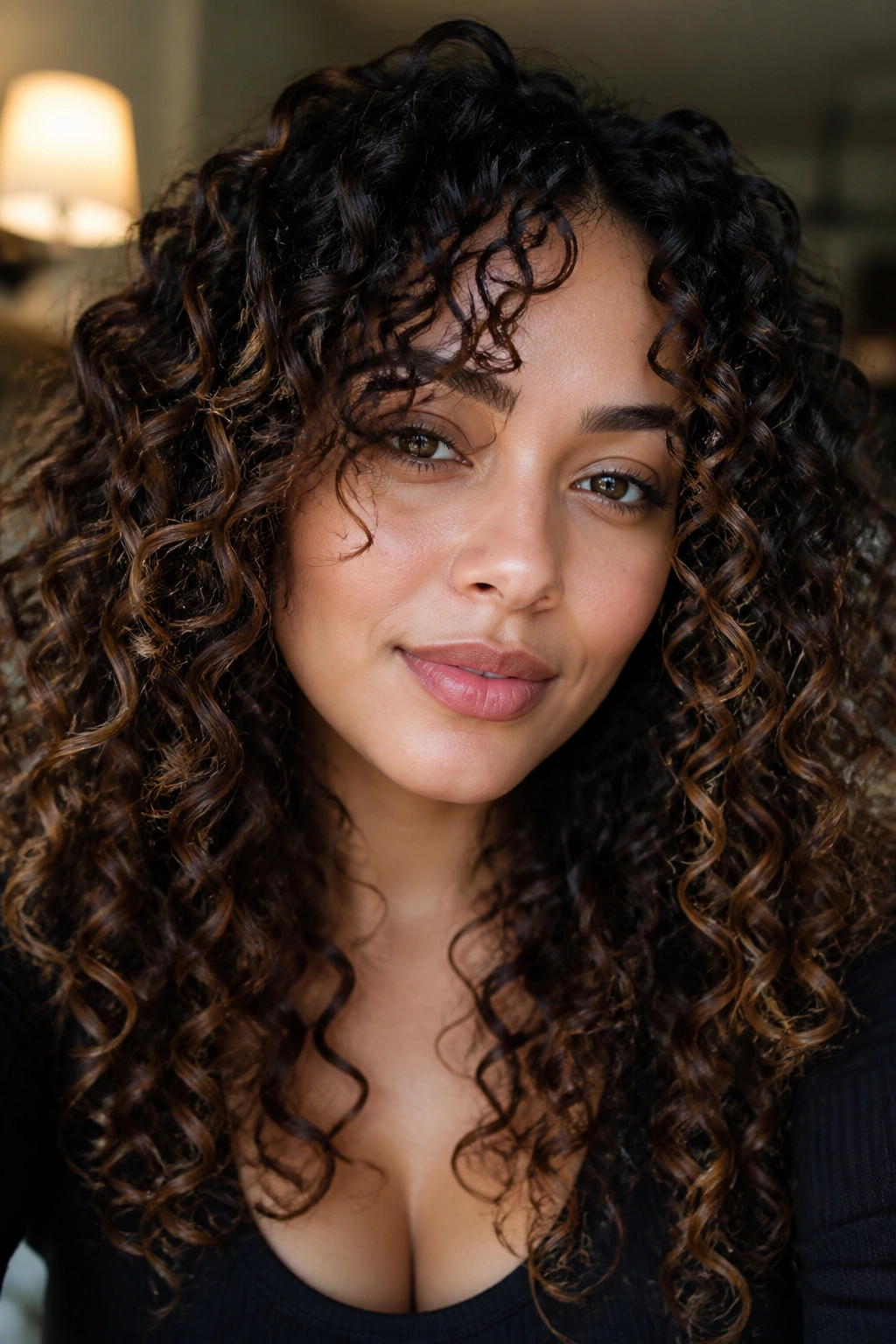
Subtle chestnut babylights are for the person who wants a little more shape around the face and does not want anyone to know she colored her hair. That’s the whole appeal.
Babylights are tiny. Thin enough that they blur together, but not so fine that they vanish. Around curly hair, they make the face frame look soft because every curl catches a different sliver of chestnut as it shifts. The effect is especially nice on dense type 3 curls that can look heavy at the sides.
Why This One Stays Elegant
Chestnut has enough brown in it to blend with natural bases, yet enough warmth to keep the front from looking flat in indoor light. If your curls frizz a bit at the crown, this color also forgives that texture better than a stark blonde panel.
5. Bright Blonde Front Pieces on Dark Curls
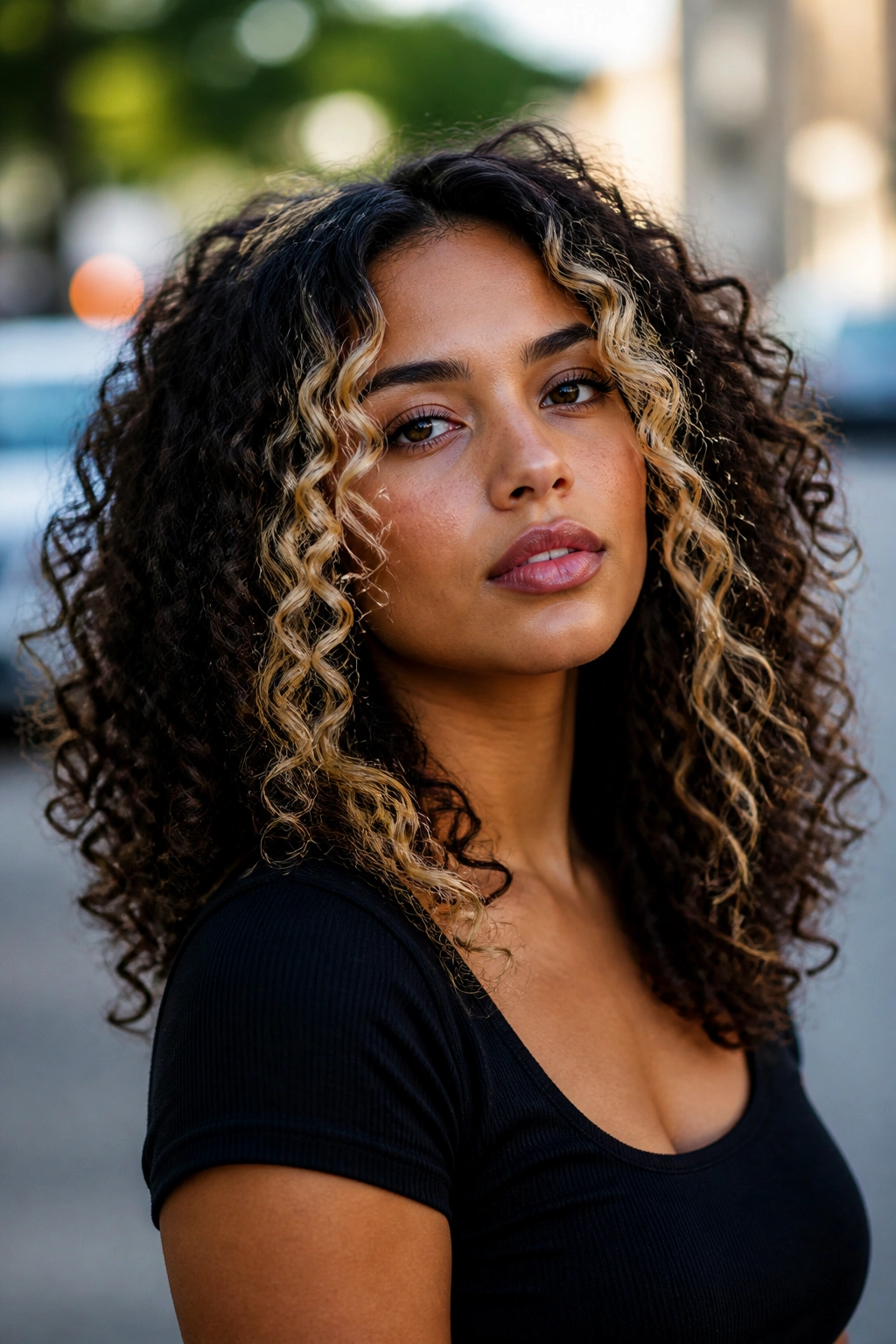
Bright blonde front pieces are not for the shy. They are for the person who likes contrast and wants her curls to frame the face with real drama.
The best version is not a chunky streak from the root to the ends. That looks stiff on curly hair. Better is a bright band that starts a little lower, then feathers into the surrounding curls so the front still bends naturally. The contrast against dark brown or black hair gives serious pop, especially when the curls are defined.
A good colorist will also think about how much shrinkage your hair has. Tight curls bounce upward, so the brightest pieces often need to be placed lower than they would on waves. Otherwise, they end up parked on top of the head when dry.
Worth knowing: this one needs maintenance. Fast.
6. Auburn Halo Around a Curly Shag
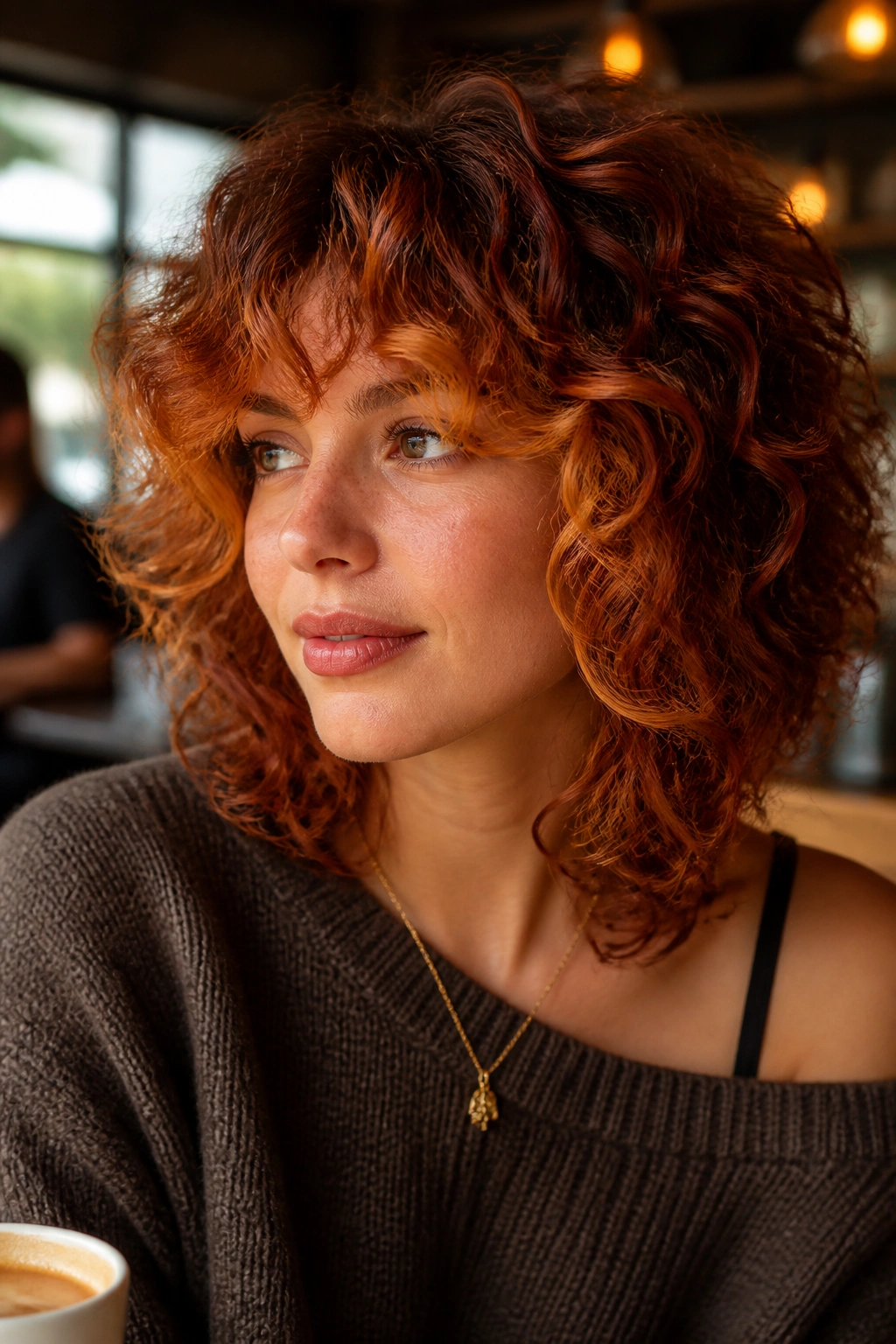
An auburn halo is what I reach for when the haircut already has movement and the color should match that energy. On a curly shag, the face frame can sit higher and lighter near the temples, then melt into deeper auburn through the sides.
The result is less “highlight strip” and more ring of warmth. It looks especially good when the haircut has short layers that kick away from the face, because the color catches those bends and makes the whole shape feel fuller.
What Makes It Different
Unlike a single money piece, an auburn halo spreads the brightness around the head. That means the front still gets attention, but the color does not stop dead at the cheekbones. If your curls are thick and you like that slightly wild, lived-in look, this is a smart one.
7. Cinnamon Ribbon Highlights Through Medium Brown Spirals
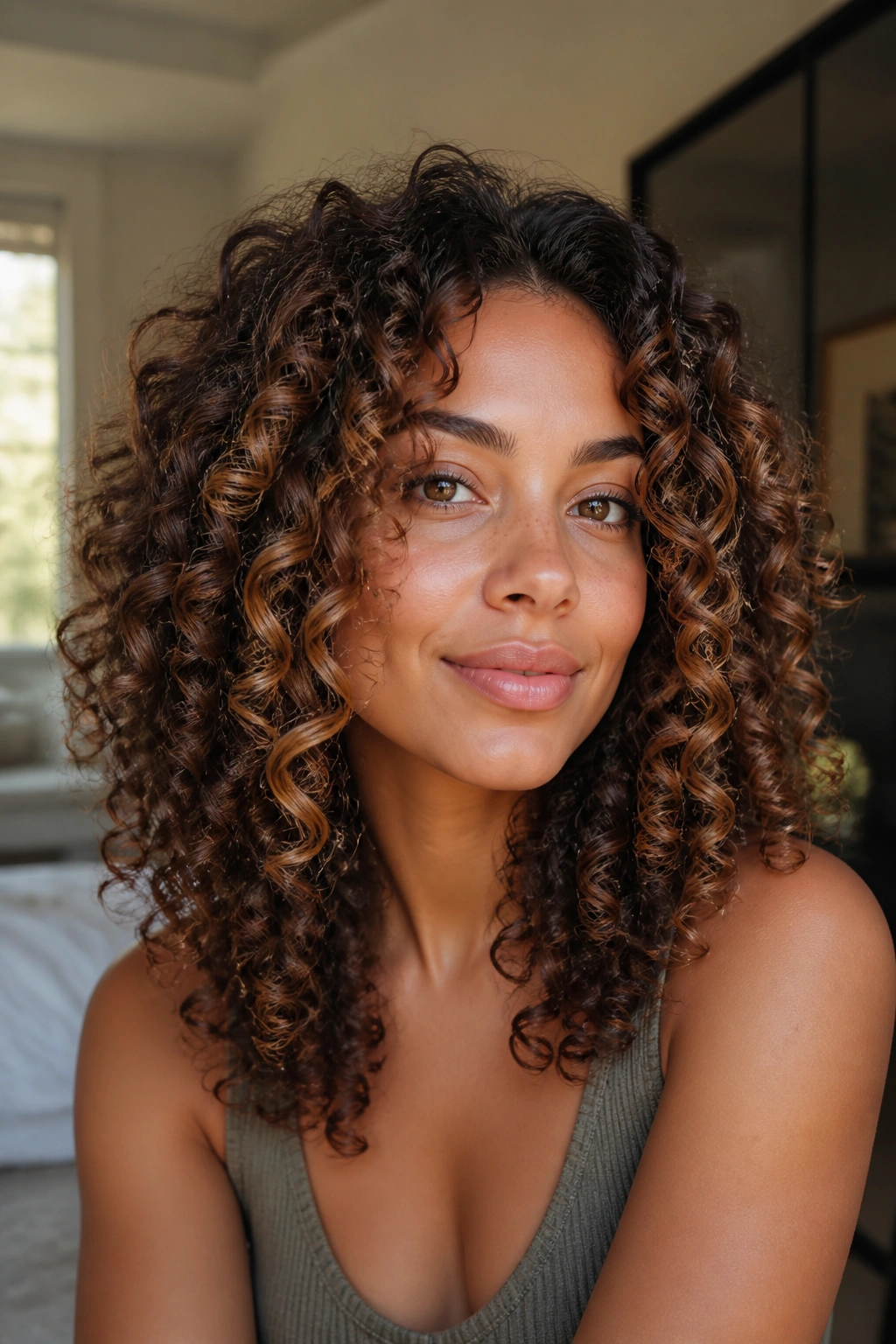
Cinnamon ribbon highlights are one of those colors that looks like a small change on the swatch wheel and a big change on the head. The tone adds warmth, but because it stays in the brown-red family, it blends into medium brown curls instead of screaming for attention.
Quick Notes
- Works well on medium brown hair that needs depth and warmth
- Keeps the face frame soft if the pieces are painted in narrow ribbons
- Needs less toner correction than pale blonde on many brunettes
The prettiest cinnamon frame sits on the outermost curls, where the light hits first. That way the front looks dimensional from the side, not only straight on. It’s a quiet choice, but not a boring one.
My take: if you want something cozy rather than bright, this color has a lot more range than people give it credit for.
8. Sandy Beige Curtain Brightening
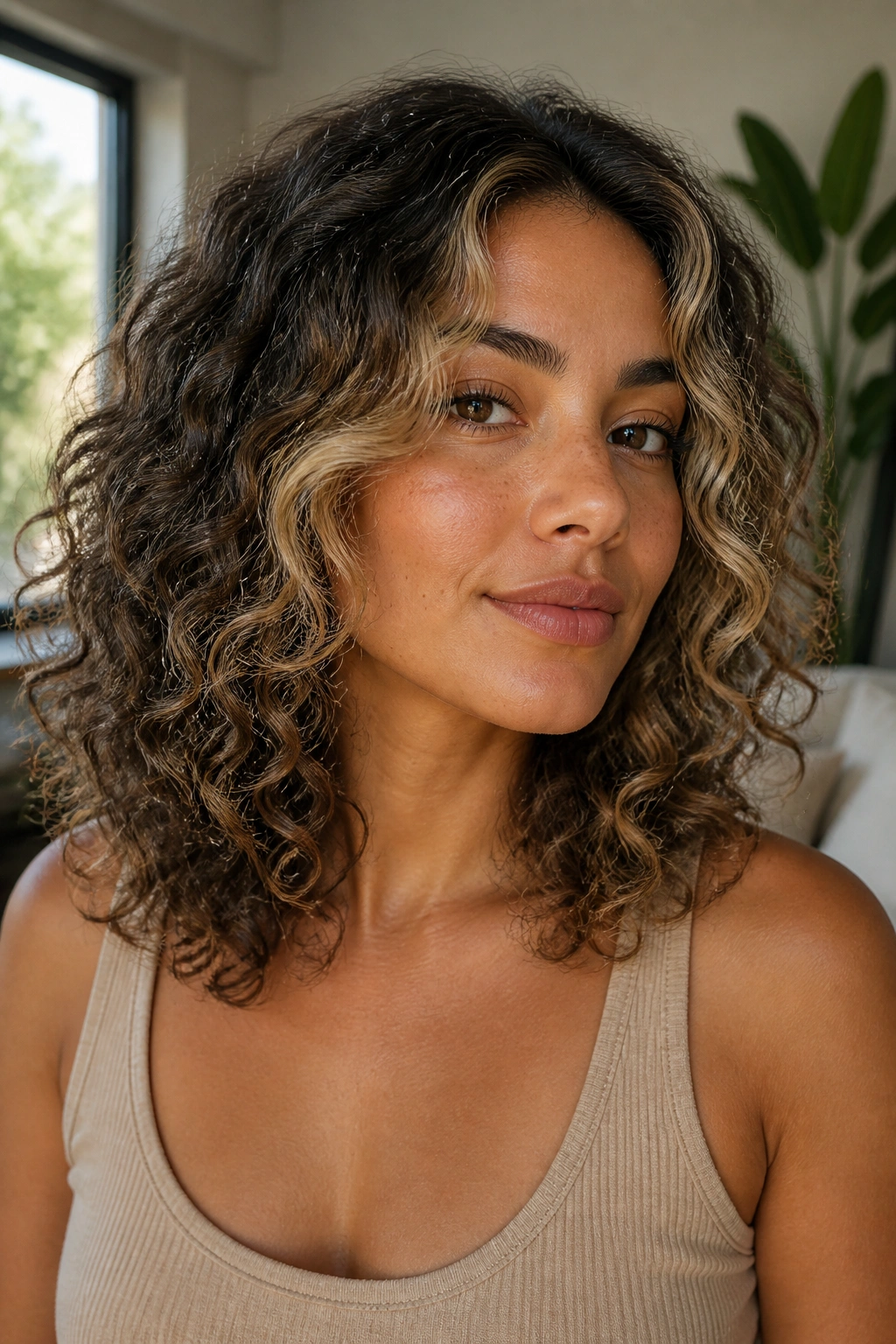
A sandy beige frame is the answer when you want your curls to look lighter without tipping into yellow blonde. It has that dry, sun-washed feel that flatters loose curls and curtain bangs especially well.
The nice thing about sandy beige is that it doesn’t fight the natural shape. The pieces can be placed like curtains around the face, then left a little softer through the ends. On curly hair, that keeps the highlight from looking too neat, which is usually where these looks lose their charm.
Placement Notes
Put the brightest part around the cheekbone and temple. Leave the root blur soft. If you pull the light all the way to the hairline, the grow-out can look too sharp for curls, and the front starts to dominate in a bad way.
9. Rose Gold Face Frame on Soft Waves and Curls
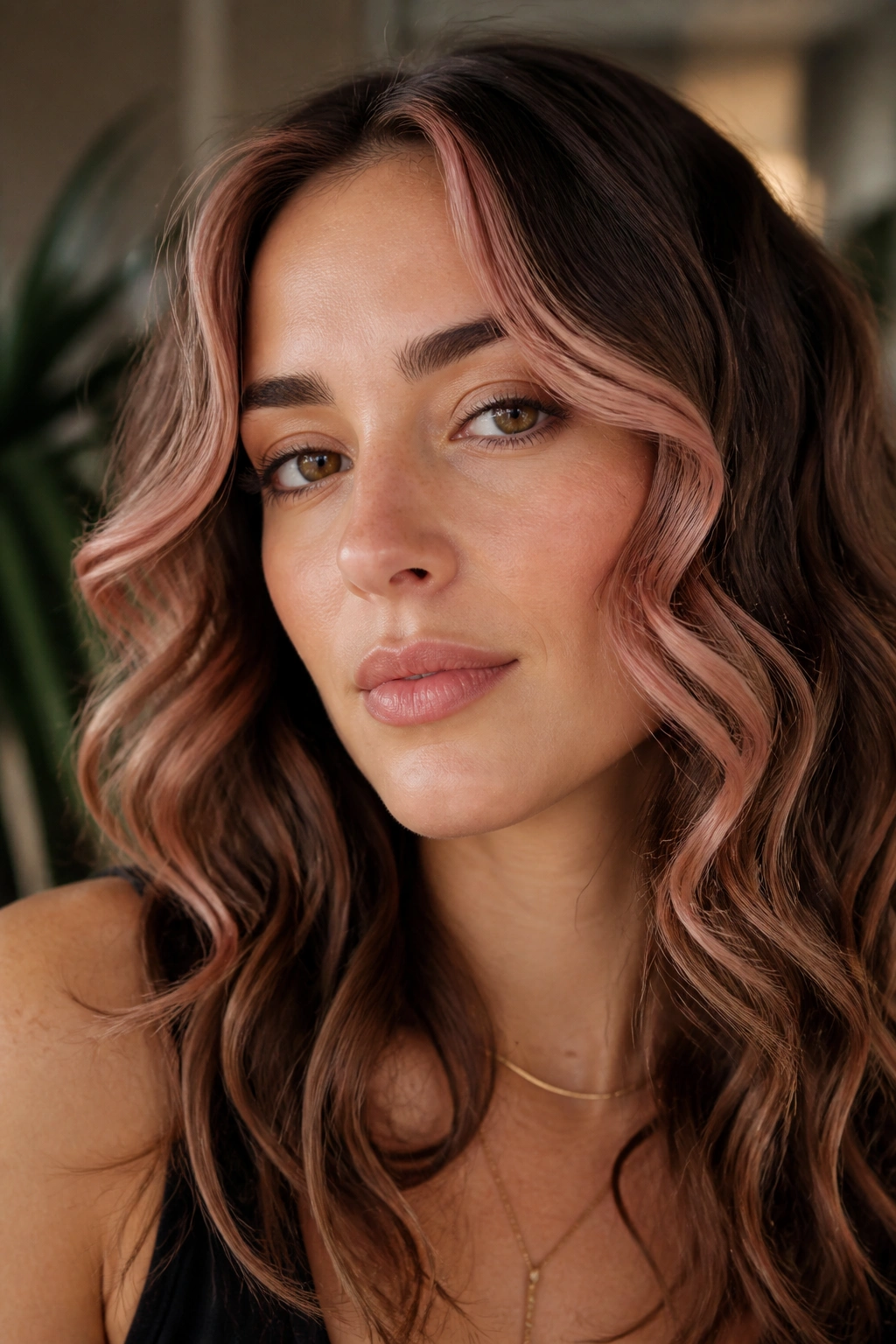
Rose gold is for the person who likes color with a little mood. It is warm, a little metallic, and more interesting than a plain blonde front piece. On soft waves and looser curls, it gives the face a flushed, luminous edge that feels polished without being stiff.
The catch is that rose gold needs clean pre-lightening if the base is dark. If the lift is uneven, the color can go peach in one curl and pink in the next. That can be fun on social media and less fun in daylight. A careful toner keeps it balanced.
This look suits people who don’t mind a bit of upkeep and want a front frame that looks intentional at every angle. It is also one of the better choices if you like warm makeup tones — blush, bronze, terracotta — because the hair and face end up speaking the same language.
10. Rooted Platinum Pop for Bold Contrast
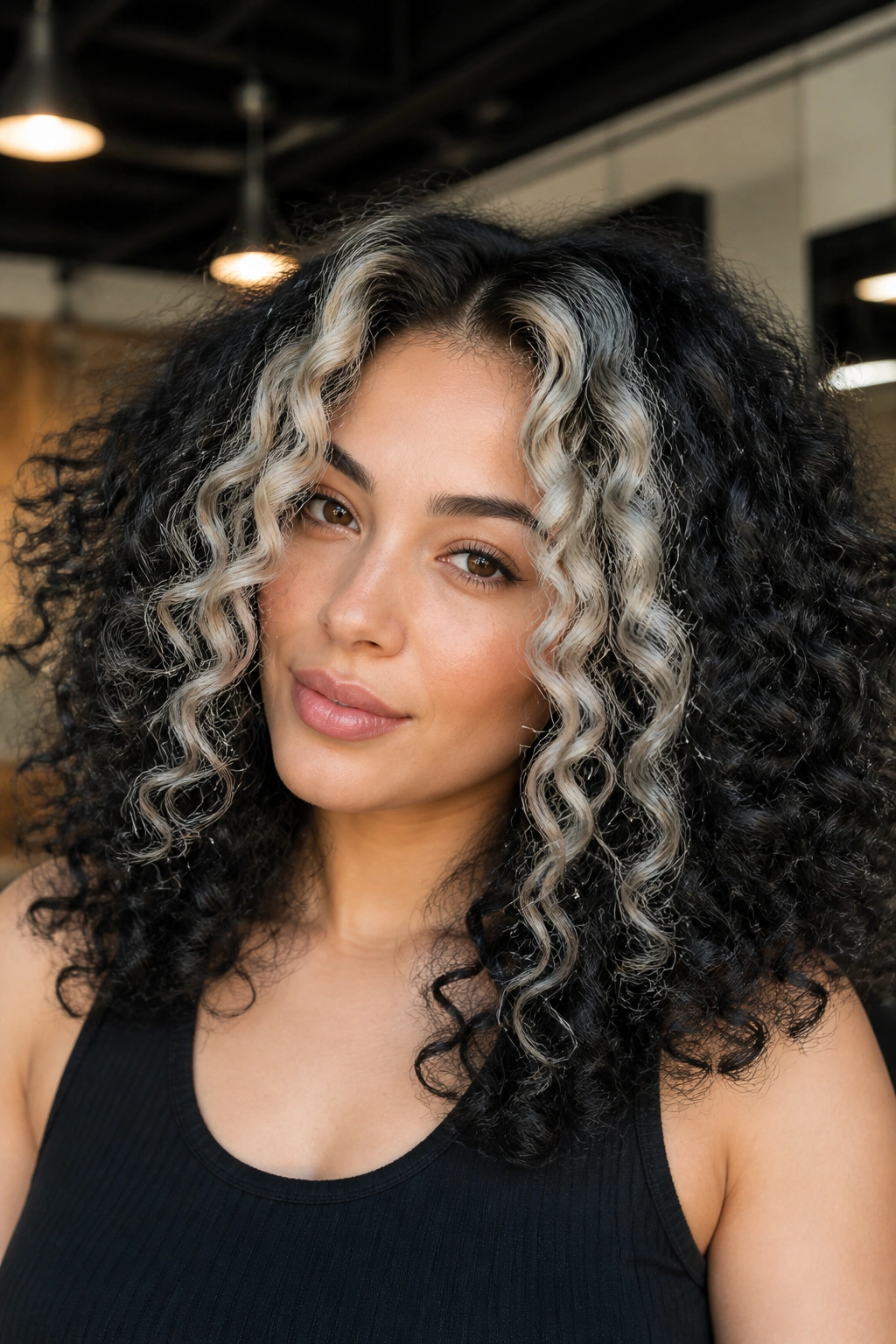
Rooted platinum front pieces are the loudest kind of curly face frame, and I mean that in a good way. The dark root keeps the color from feeling flat, while the platinum ends flash against the curl pattern.
The Upkeep Reality
This look is not low-effort. Platinum on curls needs careful lifting, toning, and moisture work because the front pieces usually get the most heat styling and the most sun. If your hair is already fragile, this is the one to think about twice.
Best For
- Dark bases that can handle strong contrast
- People who like a sharp, modern frame
- Curly cuts with enough shape to keep the platinum pieces from disappearing
The rooted version makes a lot more sense than all-over platinum on curly hair. It gives you the drama without turning every grow-out stage into a problem.
11. Toffee Balayage Around Cheekbone Curls
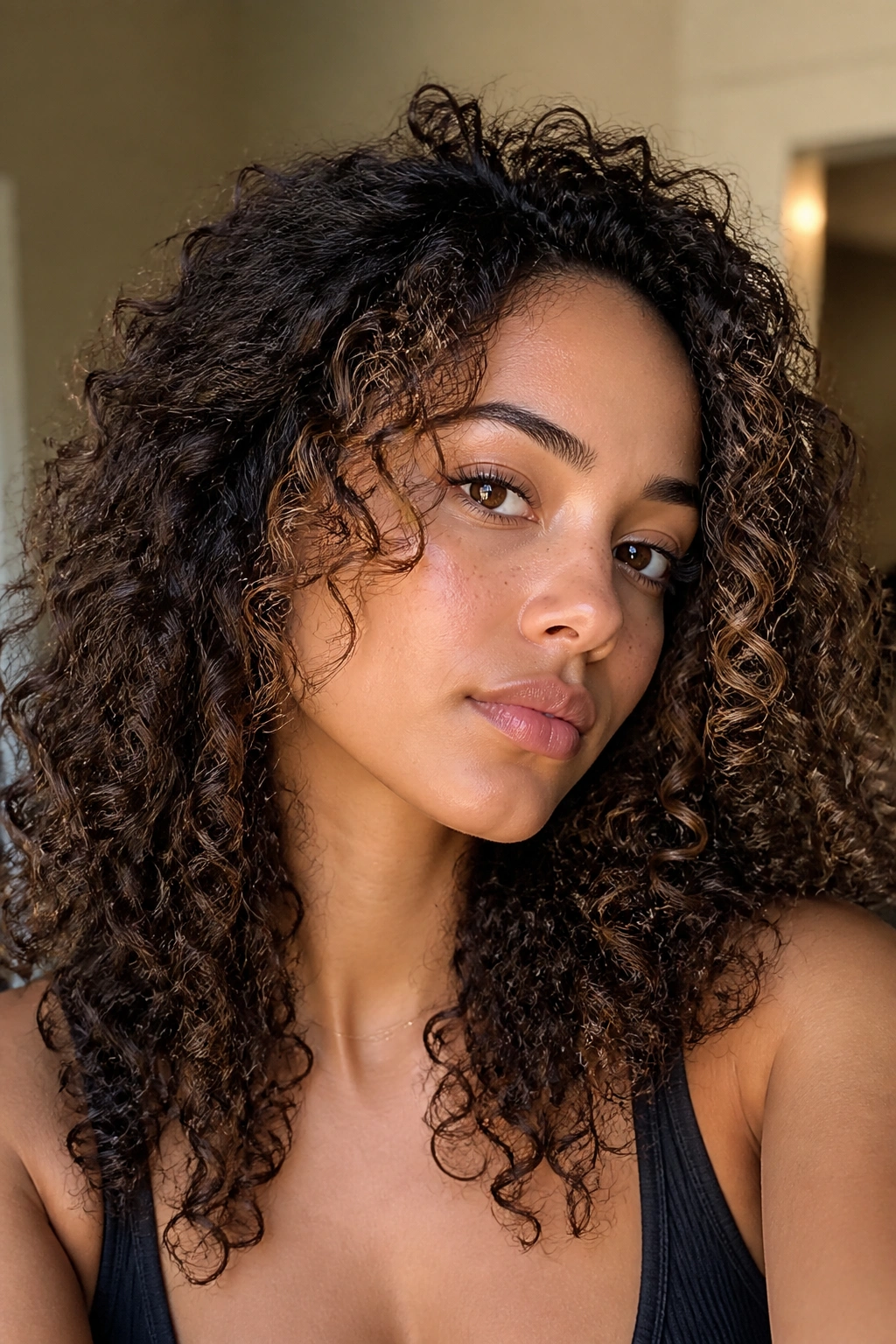
Toffee balayage around the cheekbone is one of the most flattering placements for medium curls. The color sits right where the eye lands first, so the face looks brighter even when the rest of the hair stays deep and dimensional.
What I like about toffee is that it has enough brown in it to stay grounded. It doesn’t look like you tried to become blonde. It looks like your curls spent time in good light.
This is a strong option if you want the front to open up your features without making your hair feel lighter all over. The balayage approach also keeps the lines soft, which matters because curly hair can expose a hard foil line faster than straight hair ever will.
12. Espresso and Mocha Lowlights With Light Front Pieces
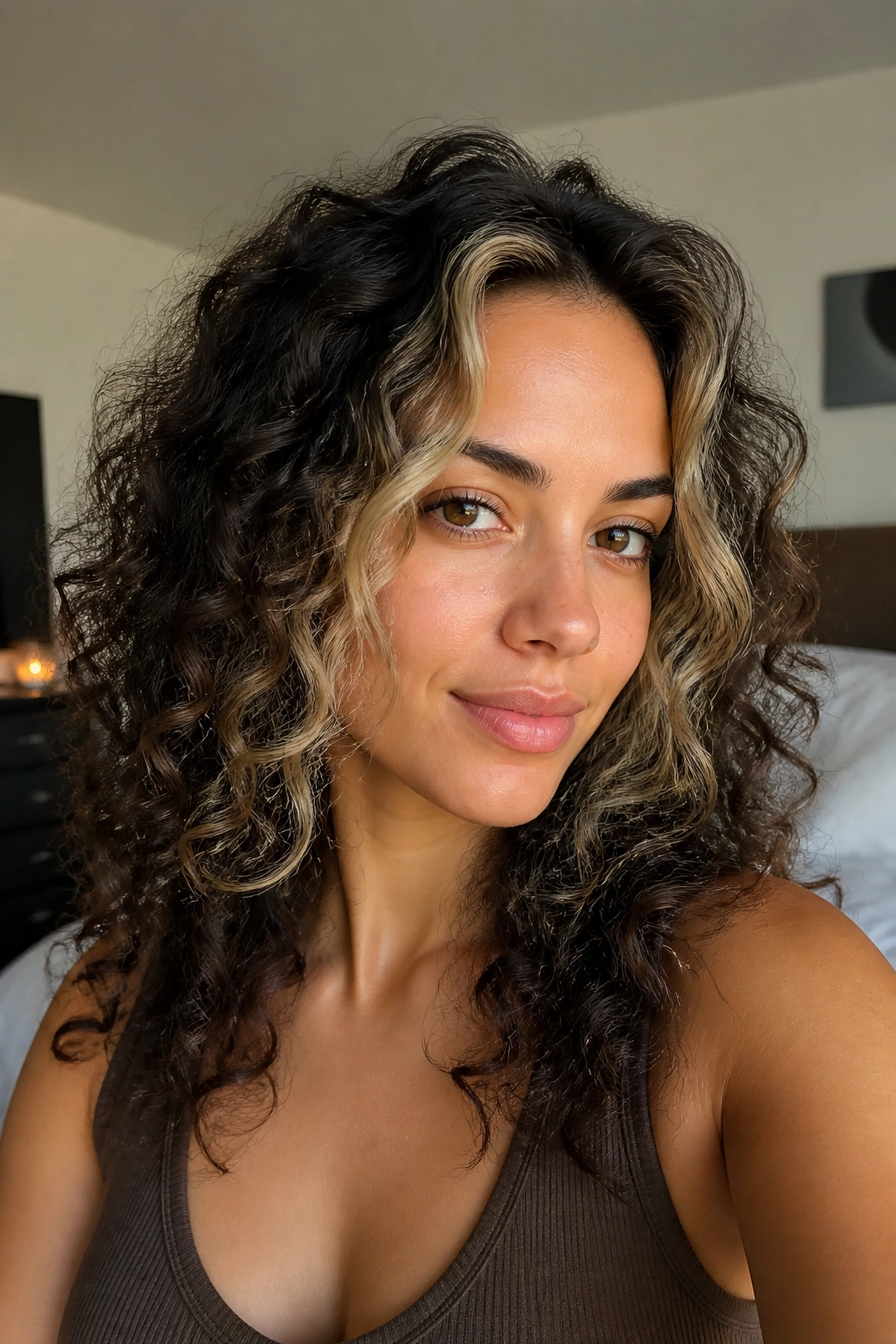
A lot of people focus on making the front lighter and forget the shadow behind it. That’s a mistake. Espresso and mocha lowlights give the curls around the face somewhere to fall, so the bright front pieces look richer instead of floating alone.
Why Shadows Matter
Curly hair needs contrast to show shape. Without darker pieces, light highlights can wash out the pattern, especially on thick hair. A few mocha panels behind the face frame make the brighter curls look brighter.
The best version of this look has a soft front pop and deep side shading. It’s especially good on dense curls that need a little contouring around the cheeks and jaw. Think of it as hair contour, but less gimmicky and more useful.
13. Strawberry Blonde Face Frame for Warm Brunettes
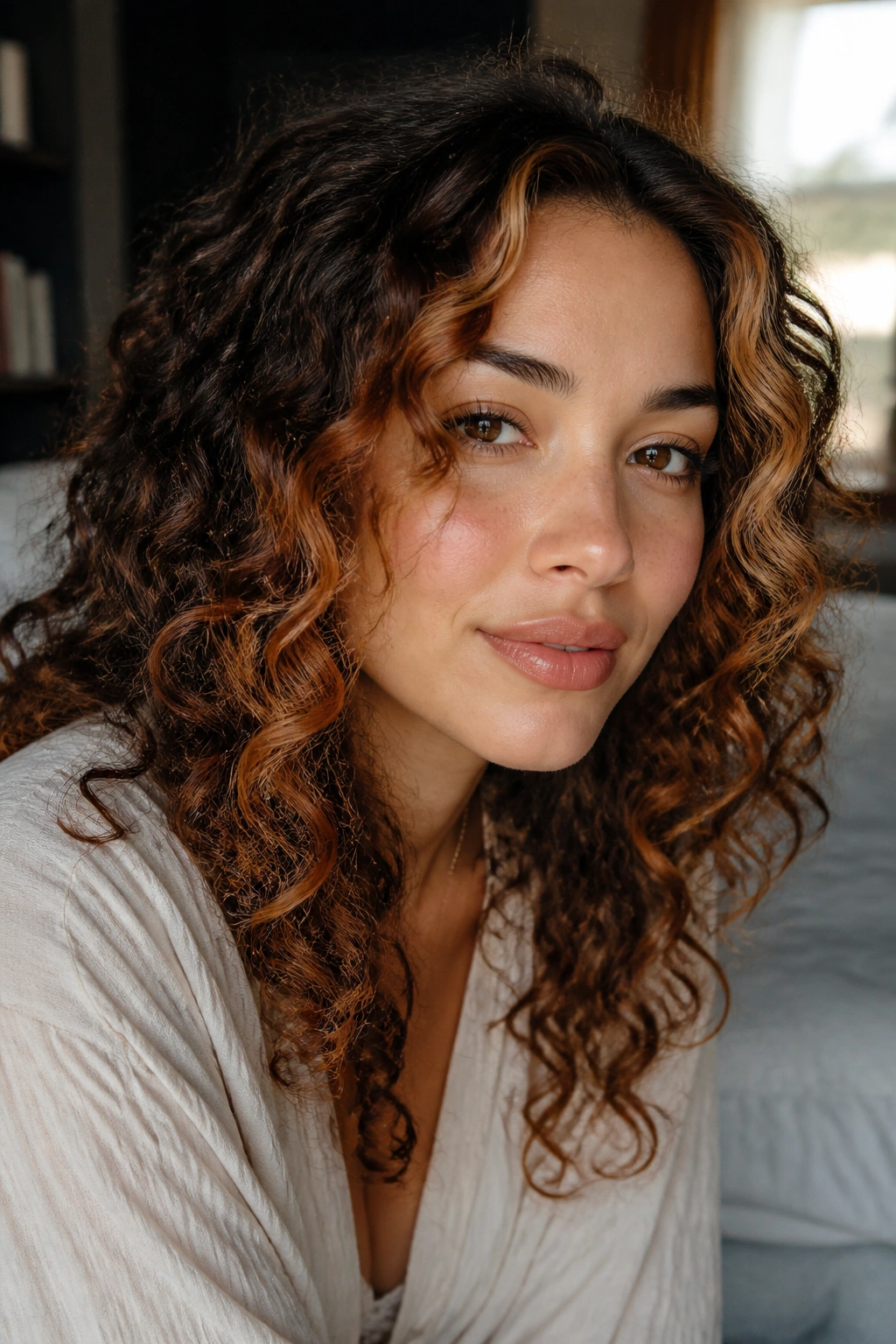
Can strawberry blonde work on brunette curls? Absolutely, if the lift is done carefully and the finish stays soft. The result is warm, bright, and a little romantic — especially around the front where curly hair can use that extra glow.
How to Ask for It
Tell your colorist you want strawberry to read as a warm blonde with a hint of copper, not a pure red. That keeps it wearable. If the tone goes too red, it can fight with natural brunette depth instead of blending with it.
This frame is a smart pick for warm skin and anyone who likes peachy makeup, gold jewelry, or rich lip colors. The front curls end up looking lit, but not bleached to death. That part matters.
14. Golden Peach Glow for Mid-Depth Curls
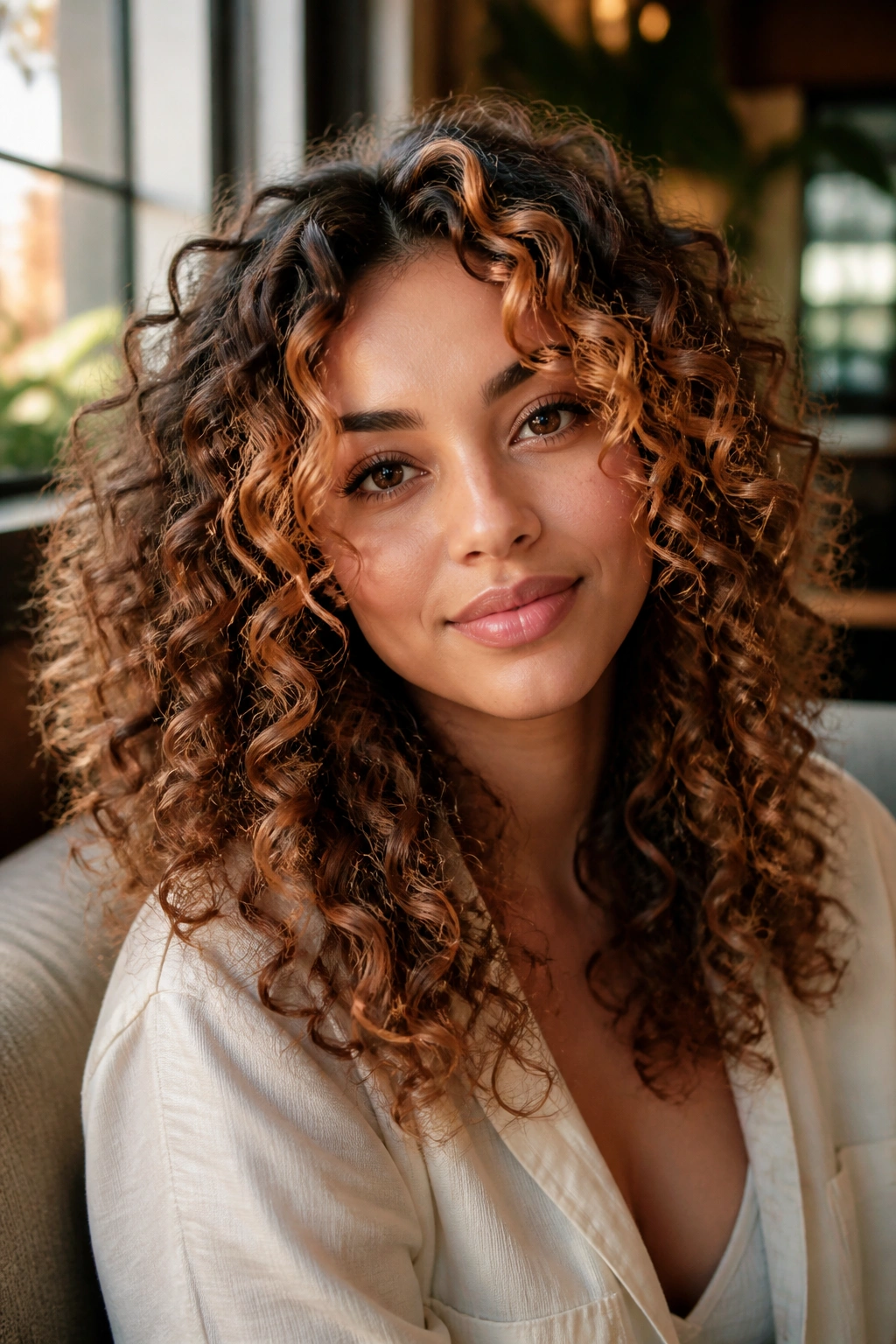
Golden peach on mid-depth curls has a softness that feels almost expensive. It warms the face without going all the way to copper, and it keeps the hair looking lively when sunlight hits the front curls.
The color works best when the base is somewhere in the middle — not too dark, not too light. On that kind of hair, peachy gold adds lift around the face and gives the curls a fuller, rounder look. A lot of stylists like to keep the tone a touch warmer than the rest of the head so the face frame does its job without looking disconnected.
This is the sort of highlight choice that grows with you. It can start subtle, then get a little brighter after a gloss refresh, which is nice if you hate the look of hard regrowth lines.
15. Reverse Money Piece With Shadowed Roots
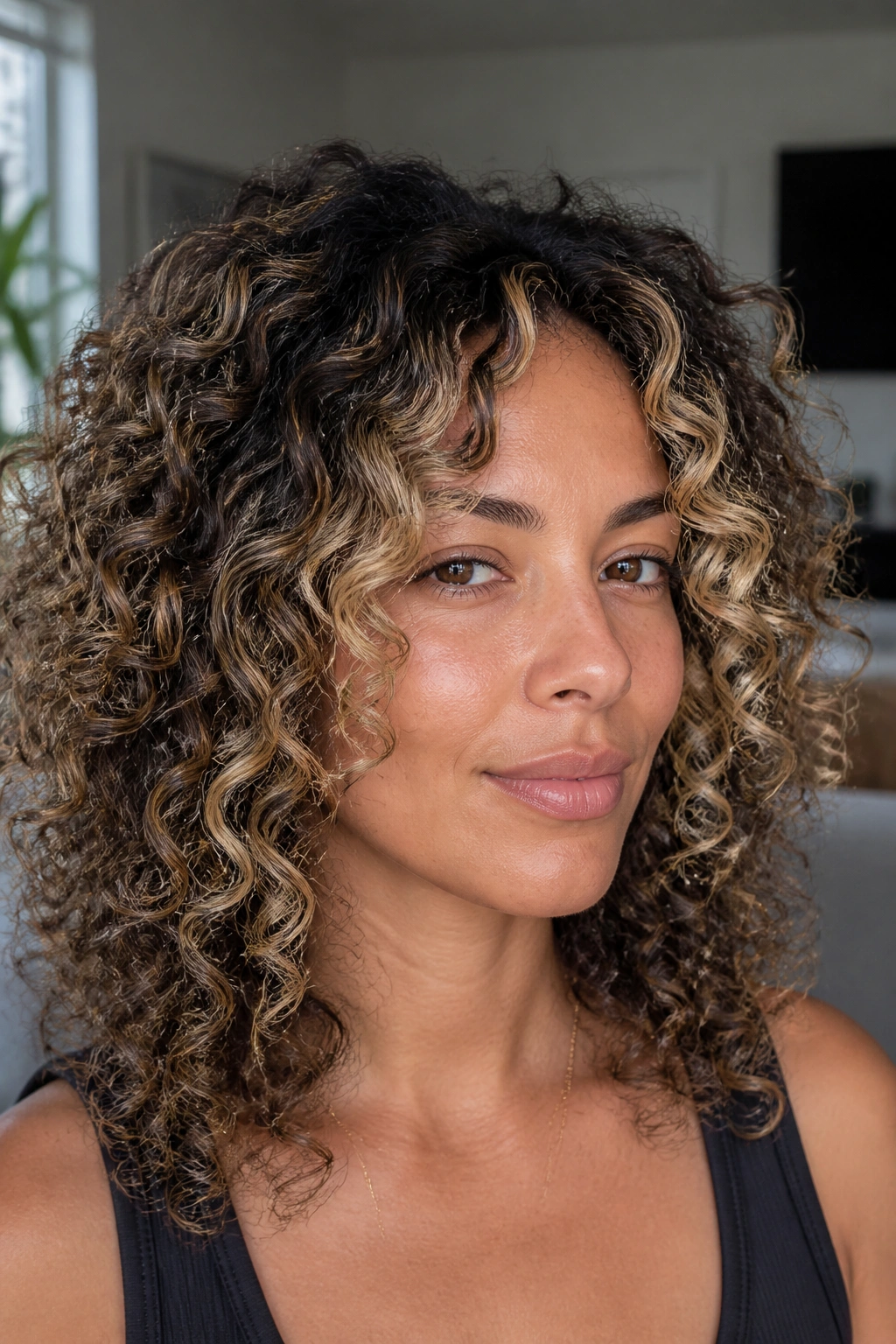
A reverse money piece sounds backward because it is. Instead of the lightest color sitting right at the root, the shadow stays up top and the brightness shows more through the mid-lengths and ends near the face. That makes the color feel softer and more lived-in.
Where the Light Should Land
The goal is to avoid a hard line at the hairline. On curly hair, that line can look thicker once the curls expand, so keeping the root darker gives the color room to breathe. The brightest section should appear where the curls bend outward, usually from the cheekbone down to the jaw.
This version is good if you want face-framing highlights but hate constant touch-ups. It also works beautifully on people who wear their curls in an air-dried, slightly messy way. The grow-out is part of the look, not a problem to hide.
16. Champagne Babylights for Fine Curly Hair
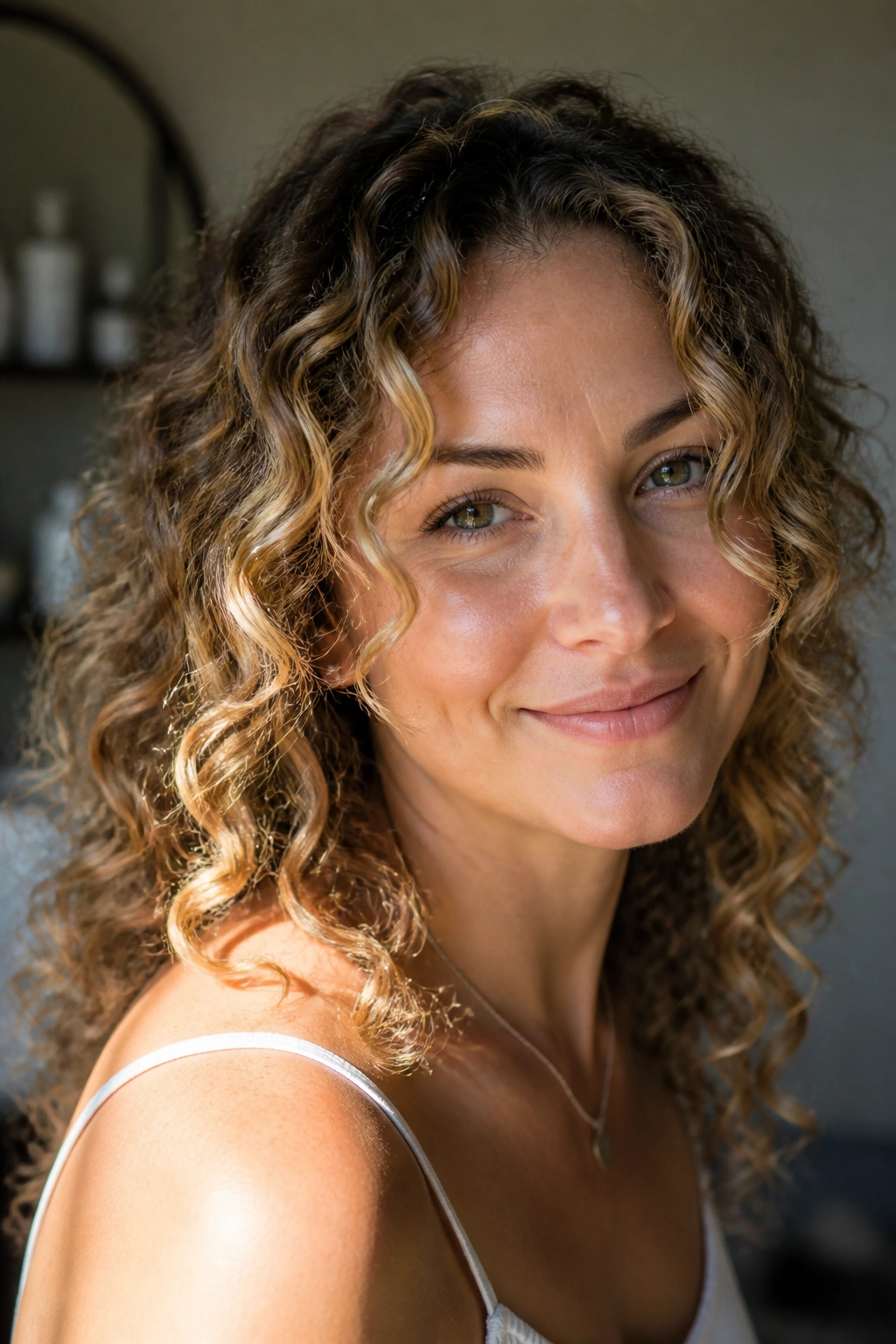
Champagne babylights are one of the safest ways to brighten fine curls around the face without making the hair look see-through. The color is pale, but not icy, and the tiny placement keeps the curl pattern intact.
Why It Works
Fine curly hair can get overwhelmed fast. Wide light pieces can make the front look thin, especially if the ends are already delicate. Babylights solve that by adding sparkle instead of bulk, so the hair still looks like hair, not strips of color.
- Best on curl patterns that clump softly
- Easy to soften with a beige or pearl toner
- Makes fringe and face layers look airy
This is the color choice I’d hand to someone who wants brightness but dislikes high-contrast streaks. It gives polish without stealing attention from the curl shape itself.
17. Mushroom Brown Frame for Cool-Toned Curls
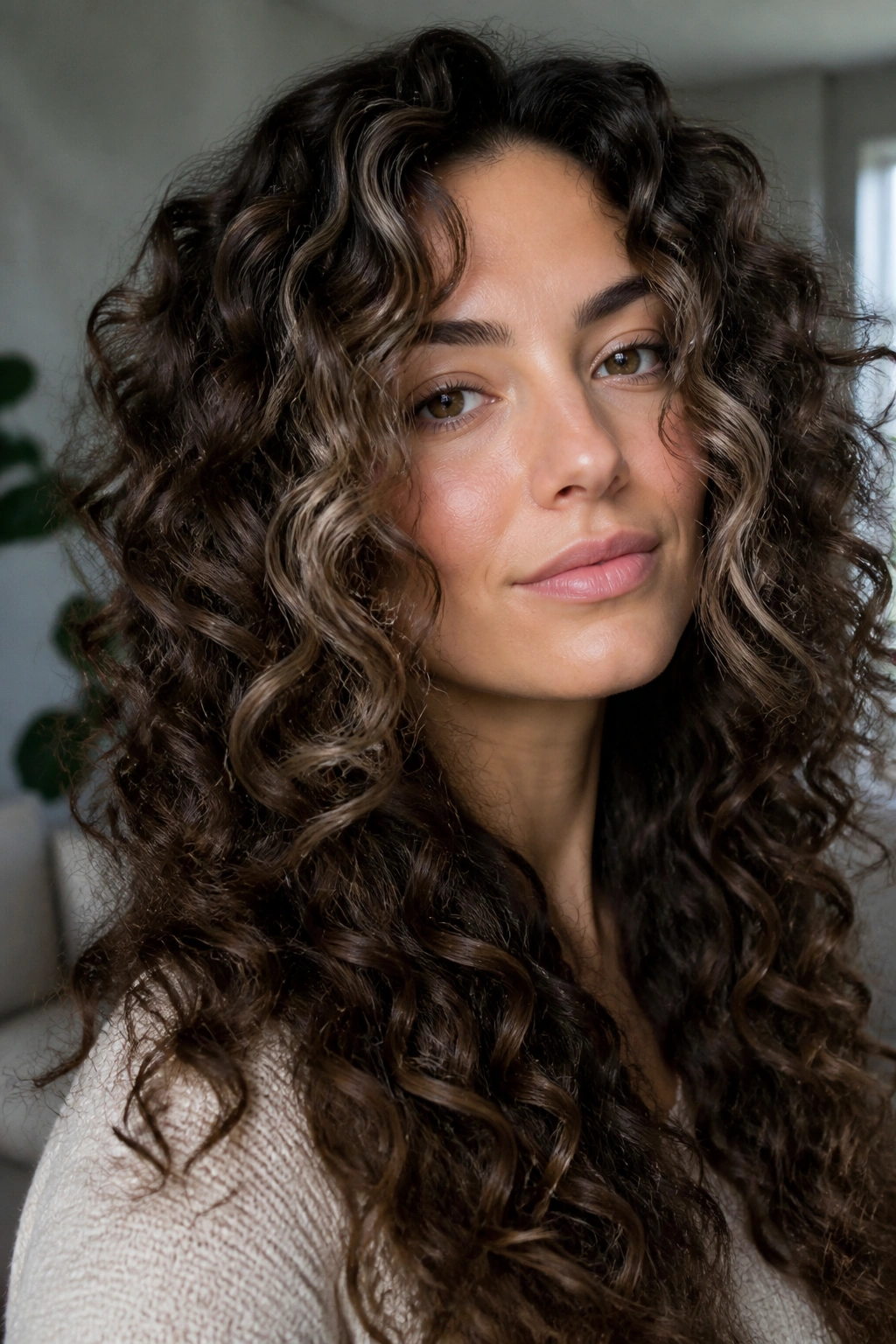
Mushroom brown is not the first color people think of for face framing, which is exactly why it works. It has a cool, earthy feel that sits nicely next to natural brunette curls and keeps the front from warming up too much.
On cool-toned curls, mushroom brown can brighten the face by contrast alone. You do not need a blonde ribbon to get a lift. A lighter mushroom panel near the cheekbone can be enough if the rest of the hair has enough depth.
This look is especially good for anyone who wears silver jewelry, gray makeup tones, or cool lipstick shades. The hair and styling end up feeling coordinated without looking matchy. And if you hate brass, this color is a calm little refuge.
18. Mahogany Glow on Tight Coils
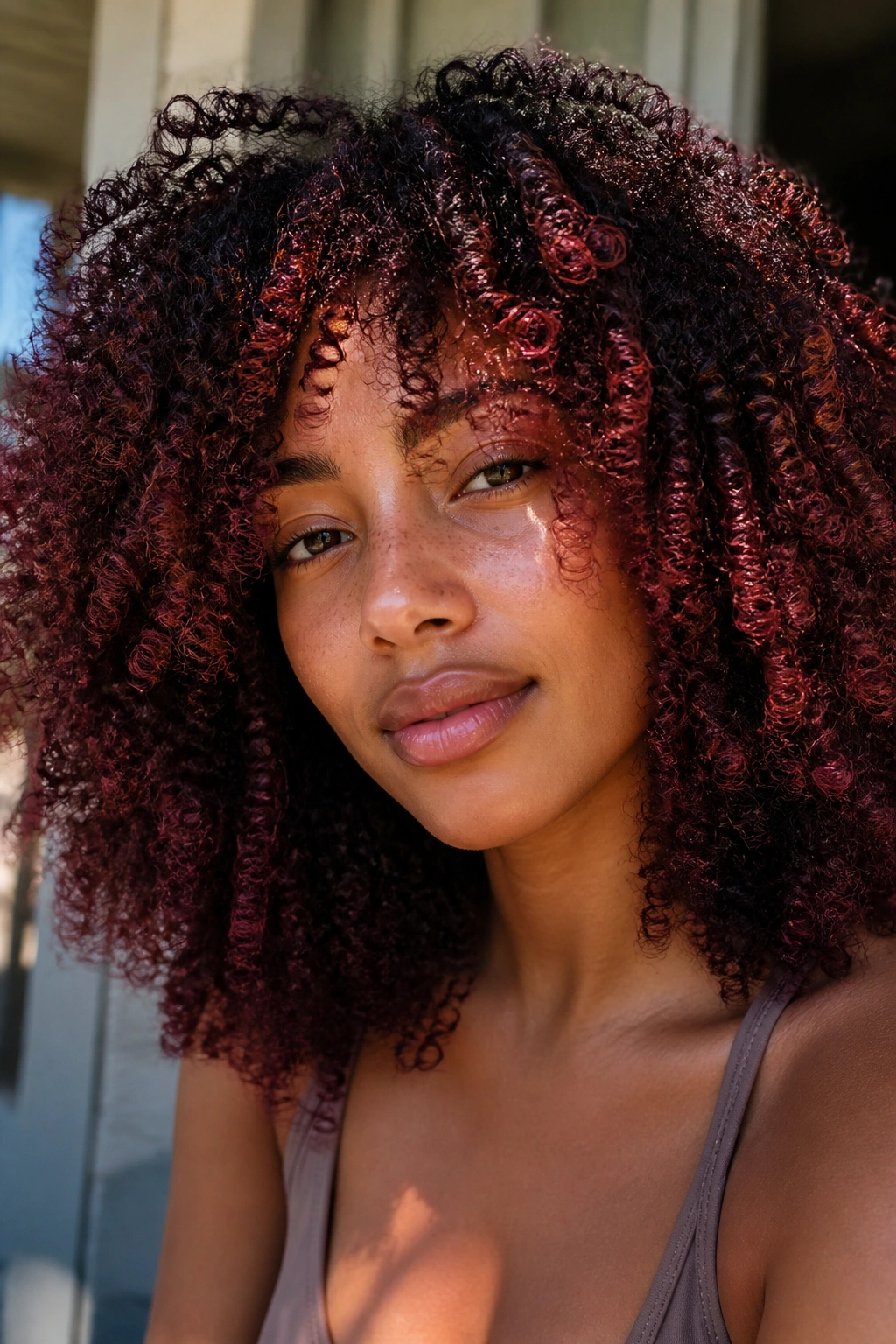
Mahogany on tight coils is rich in a way that feels almost textile-like. It picks up red, brown, and wine tones all at once, and the curl pattern makes the color look deeper than it would on straight hair.
A Small but Important Detail
Tight coils do not need the lightest possible frame to make an impact. They need contrast that respects shrinkage. Mahogany does that well because it adds glow without demanding an aggressive lift.
If your coils are dense, this color can be painted in a slightly wider halo around the face so the brightness is visible when the hair contracts. That avoids the common problem of front highlights hiding once the hair dries. It’s a small placement trick, but it changes everything.
19. Sun-Kissed Bronze Ribbons on Long Curls
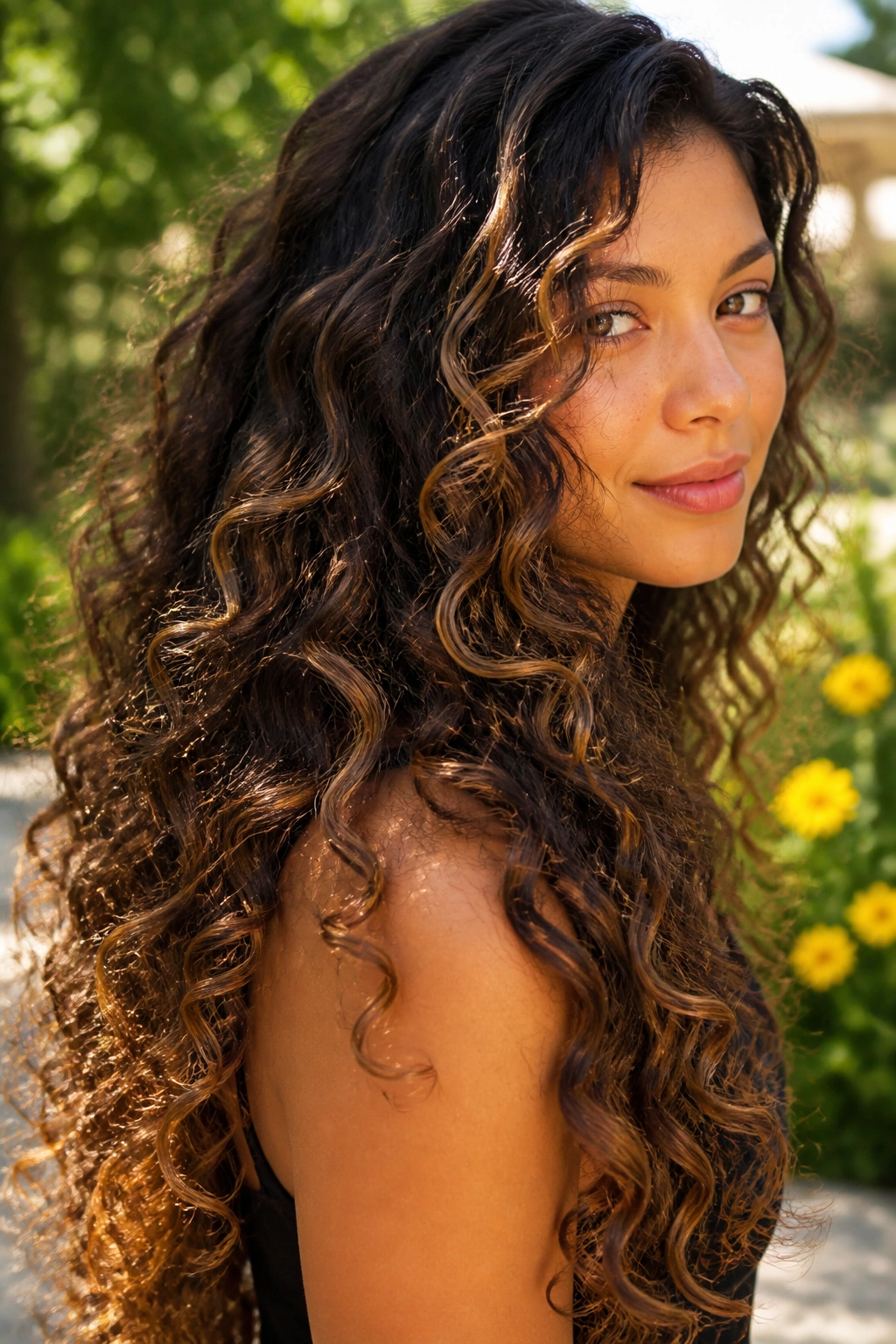
Long curls and bronze ribbons are a good match because the length gives the color room to move. Bronze keeps the front bright enough to matter, but the warmth stops it from looking flat or metallic.
The best bronze frames are painted like thin rays rather than one solid panel. That keeps the highlight alive when the curls are stacked over one another. If the hair is long and heavy, a single chunk can disappear underneath the top layer. Thin ribbons don’t have that problem.
This is a strong summer-like look without tying it to a season. It feels casual, polished, and easy to wear with tan, olive, or neutral skin tones. And it photographs nicely because bronze picks up light without turning white.
20. Chunky Highlight Panels for Retro Curly Volume
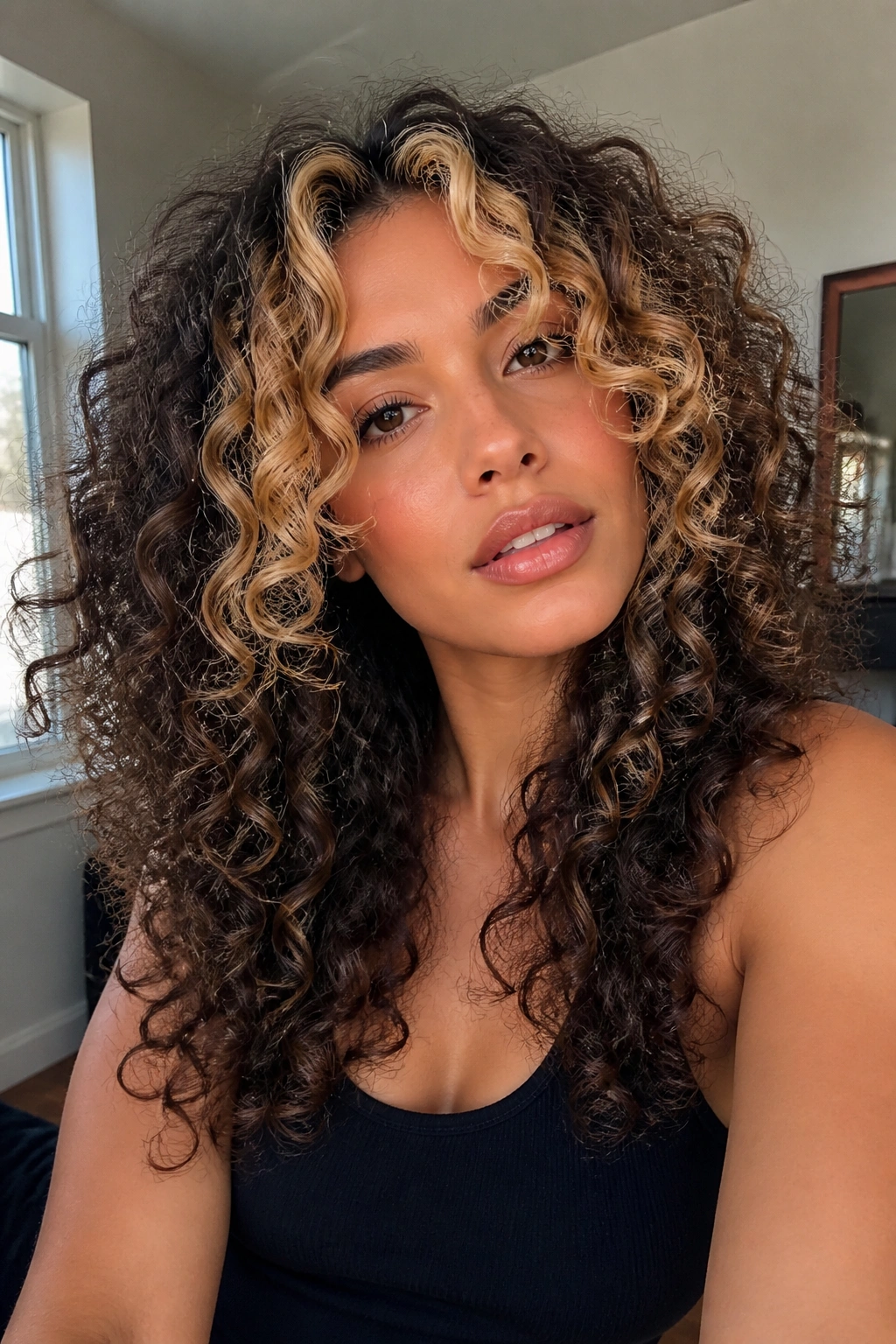
Chunky front panels are making a case for themselves again, especially on big curly cuts that already have volume to spare. This is not the subtle route. It’s a deliberate, almost retro move that makes the face frame part of the haircut’s personality.
Why It’s Different
Unlike babylights, chunky panels don’t hide inside the curl. They sit on top of the shape and announce themselves. That can be fantastic on thick curls that need structure, or on layered cuts that have enough movement to keep the color from feeling blocky.
Best On
- Dense curls with strong definition
- Round or oval faces that can handle bold framing
- People who like fashion-forward color more than soft blending
If you want restraint, skip this one. If you want your front curls to read from across the room, keep going.
21. Face-Framing Copper Melt on Black Hair
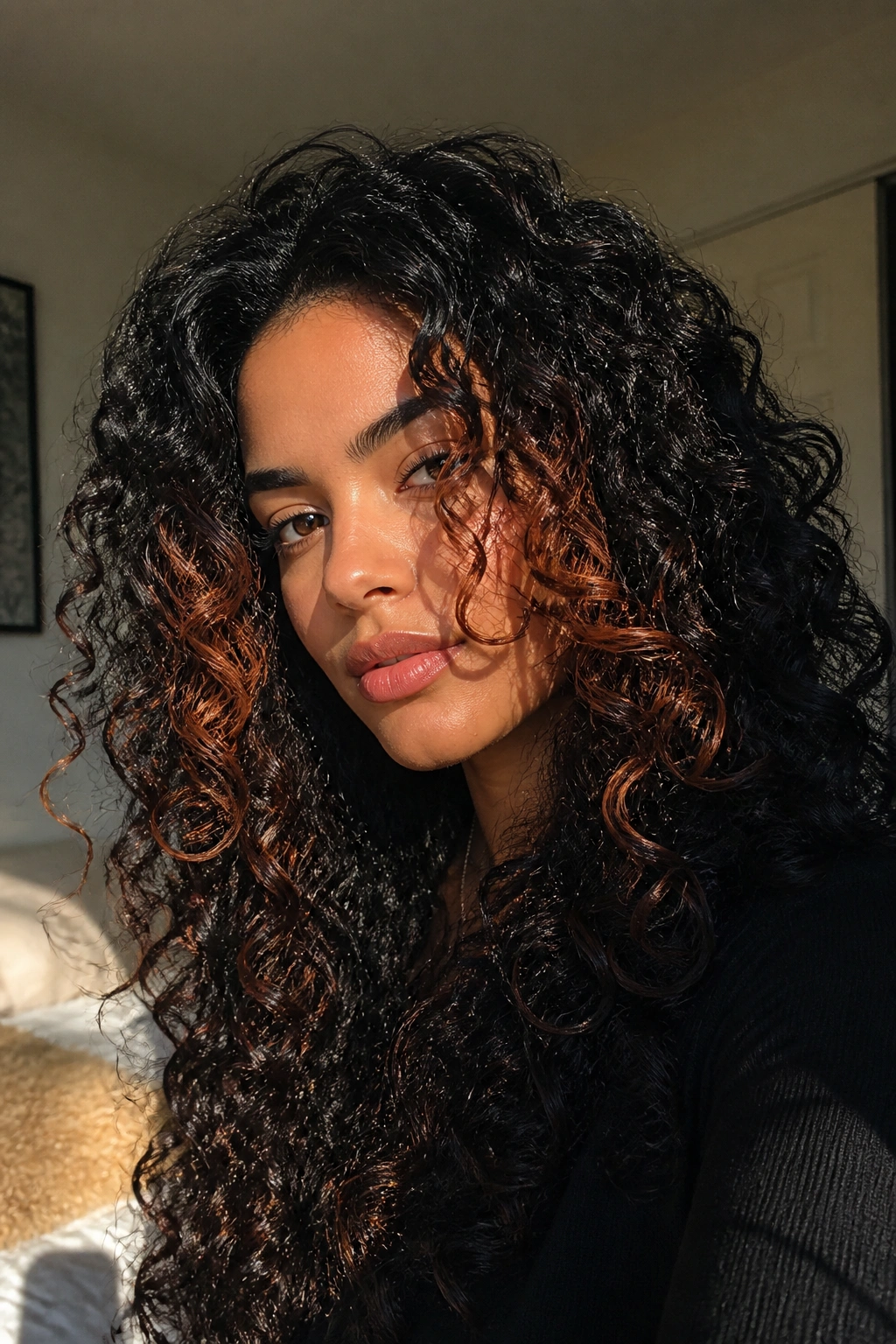
Copper melt on black hair is dramatic in the cleanest way. The darker base holds the contrast, and the copper pieces near the face create a glow that feels expensive instead of flashy.
How much lift you need depends on the exact shade of black or off-black you’re working with. On some hair, a deep copper can sit comfortably with minimal lift. On others, you need more lightness to keep the tone from looking muddy. That’s why a strand test helps so much here.
The melt part matters. If the copper is blended from dark roots into warmer mids, the frame looks softer and the curls stay visible. A hard copper block can be striking, but a melt gives you movement, and curls need movement.
22. Beige Blonde Ribboning for Gray Blending
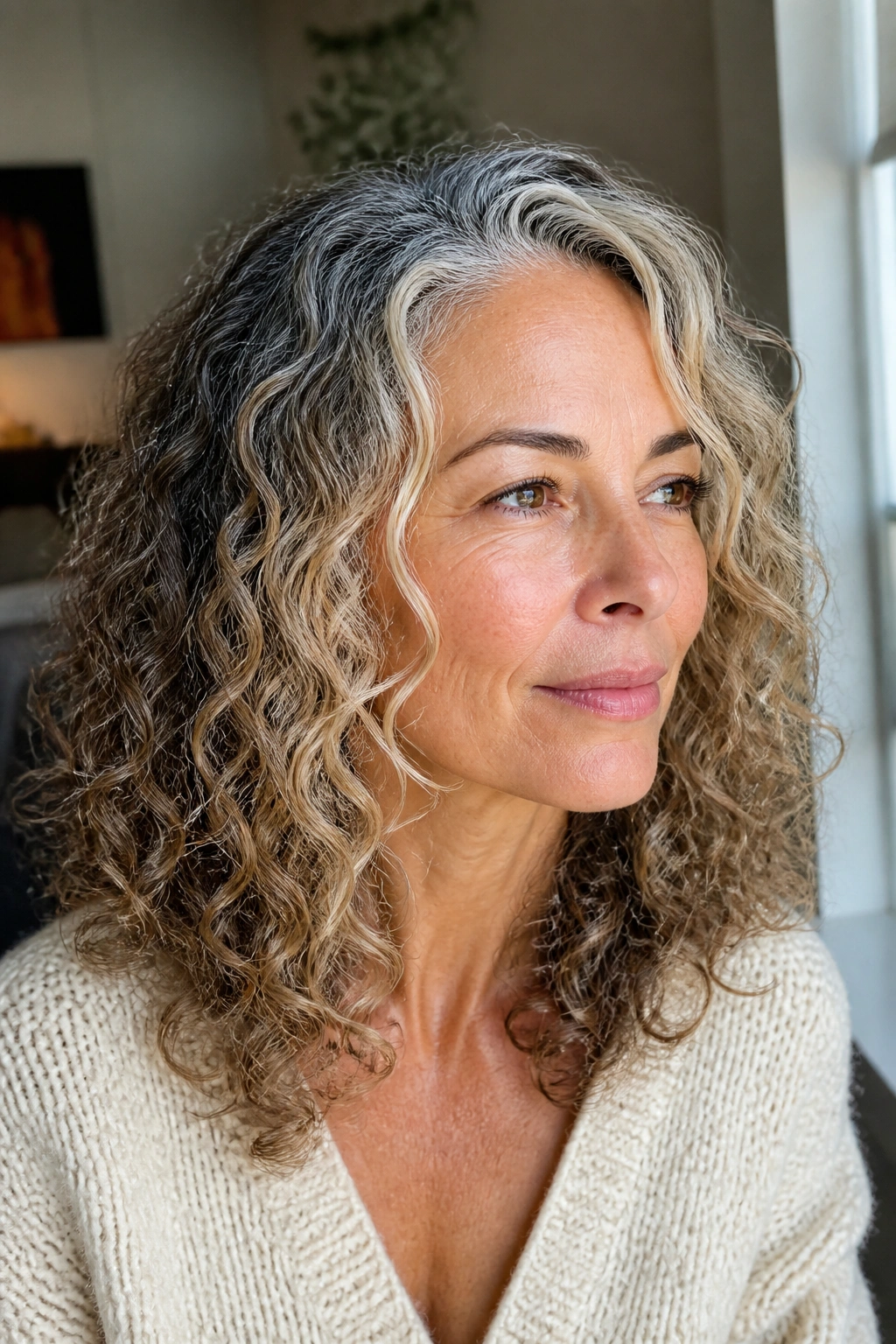
Gray blending around the face is where beige blonde shines. It doesn’t try to hide every silver strand. It just softens the contrast so the curls and grays sit together instead of fighting each other.
What Makes This One Useful
The face frame can be woven through the natural gray at the temples and front, then balanced with beige ribbons that echo the same tone. That gives the front section a lighter feel without looking dyed in a heavy way.
This is especially good if your gray pattern is mixed, with some darker strands still hanging on around the sides. Beige blonde evens the whole front out and keeps the curl pattern readable. It’s a calm, polished option for people who want refinement more than drama.
23. Butter Blonde Crescent Around a Curly Bob
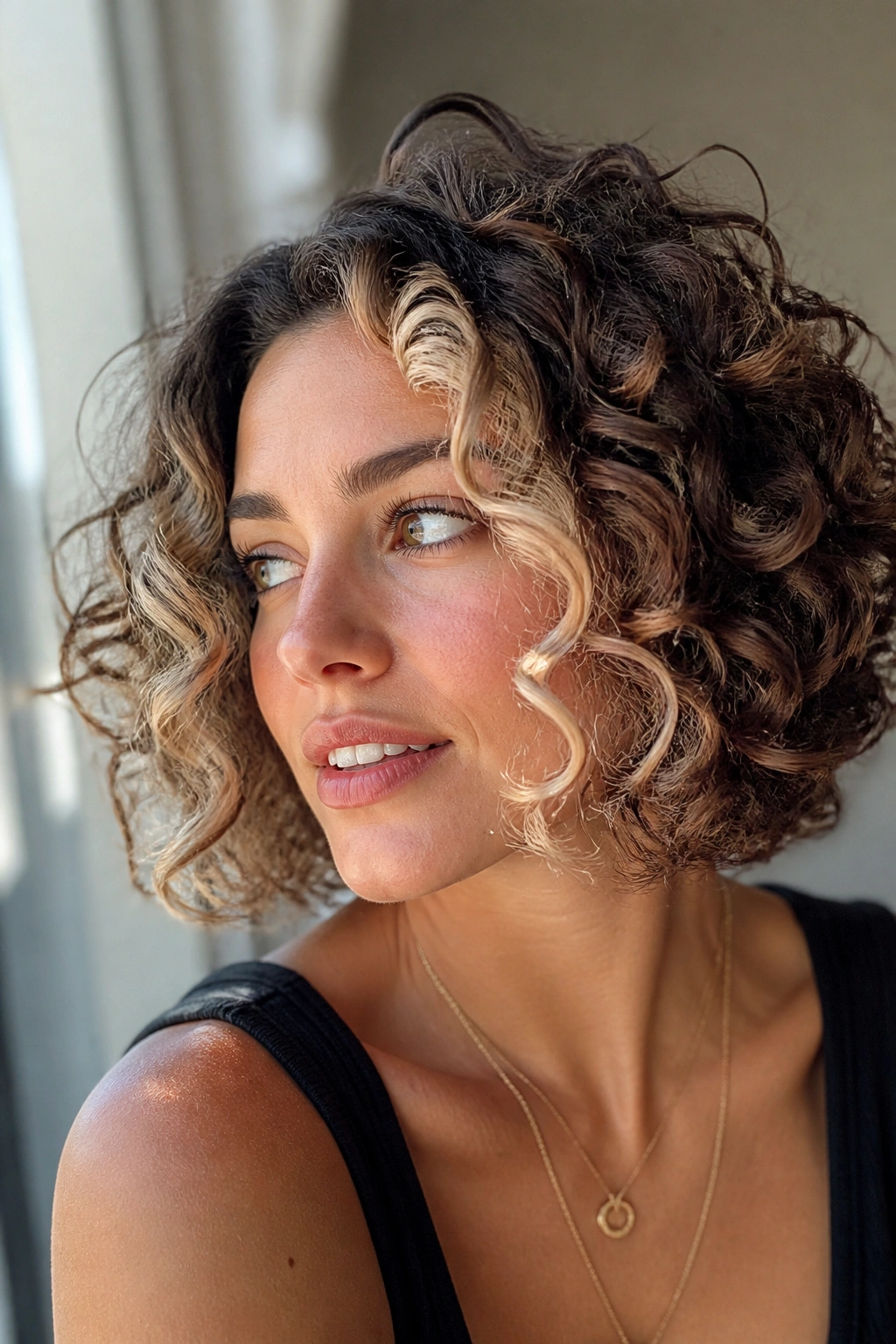
A curly bob can eat color if the placement is wrong. Butter blonde avoids that by sitting as a soft crescent around the face instead of a full bright curtain.
The buttery tone keeps the front warm and creamy, which matters on bobs because there’s less length to diffuse the color. Too much brightness can make the haircut look boxy. Butter blonde softens the edge and still gives the face definition.
How It Reads in Motion
When the bob swings, the crescent pieces move with it. That means you see color, then curl, then color again. It’s a clean effect, and it works especially well if the bob is cut just below the jaw, where the front curls can bounce and show off the highlight.
24. Burgundy Face Frame for Dark Curls
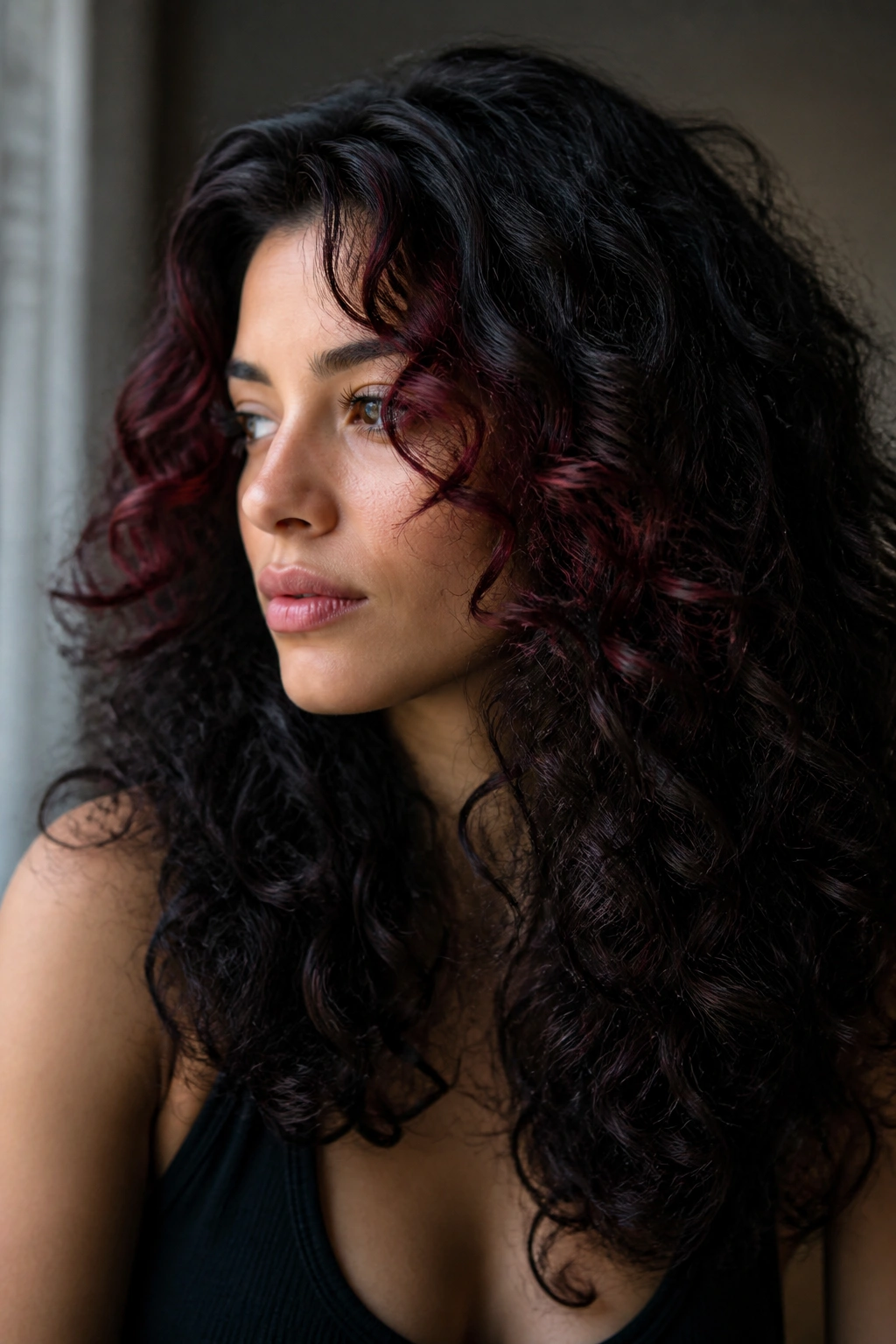
Burgundy on dark curls is moody in the best possible way. It isn’t the loud red people often imagine. It’s deeper, wine-like, and a little shadowy around the edges, which makes it a good fit for rich brunette and black bases.
The thing that makes burgundy work is tone control. Too much red and the color looks flat. Too much purple and the warmth disappears. A balanced burgundy sits right in the middle and gives the face frame a plush look that curls handle well.
This is one of the better choices if you want something different but not neon. It has depth, it grows out gracefully, and it flatters darker eyes in a way that feels almost unfair.
25. Honeyed Ends With Lighter Cheekbone Pieces
Honeyed ends plus cheekbone pieces give you a little of everything: brightness near the face, warmth through the lengths, and a soft finish that keeps the curls from looking chopped up.
The reason this works is simple. The face frame gets the eye first, but the lighter ends pull that brightness downward so the color doesn’t stop abruptly. That’s useful on curls because the pattern naturally stacks and can hide the transition point if the color is too localized.
This option is a good middle road for someone who wants a brighter look but doesn’t want a strict money piece. It feels more natural than a heavy front panel and more intentional than random highlighting.
26. Soft Walnut Highlights for Short Curls
Short curls love walnut tones because they add depth without crowding the haircut. On cropped shapes, the front pieces need to support the cut, not compete with it, and walnut does that quietly.
The color sits just a touch lighter than a deep brunette base, so it reads as shape rather than streak. That makes it especially useful on pixies, curly crops, or longer tops with sides that taper in. If the face frame is too bright on a short cut, it can overpower the whole look. Walnut keeps things balanced.
There’s also a nice practical side here: walnut shades tend to grow out softly. You can go longer between color appointments, and the haircut still looks intentional.
27. Bold Violet Front Panels for Natural Curly Texture
Violet front panels are for the person who wants the curl pattern to feel like part of the color story, not just the canvas for it. On natural curls, violet brings out shine in a way that brown tones never can.
What to Expect
You’ll need pre-lightened sections for the violet to read cleanly. On darker hair, that usually means a careful lift before the color goes on. If you skip that step, the violet can look muddy, and curly hair is not kind to muddy color.
This is a better choice for people who like visible fashion color and can live with tone refreshes. The front panels should be placed where the curls frame the eyes and cheeks, because that’s where the contrast has the most impact. It is bold. Very bold. And fun.
28. Apricot Face Frame on Redheads
Apricot on red hair sounds obvious, but it can be tricky if the tone is too close to the base. The best apricot frame adds a lift that still looks natural enough to belong there.
Think of it as a lighter, softer cousin to copper. It works especially well on curly redheads who want the front to pop without making the rest of the hair feel flat. A few apricot ribbons around the face can brighten freckles, eyes, and skin in one move.
Where It Wins
- Works best when the base red is medium, not ultra-dark
- Needs a gloss to keep the tone fresh
- Looks good with shaggy layers or curtain bangs
The charm here is restraint. It’s still red. It just has more glow.
29. Ash Brown Ribbon Highlights for Cooler Brunettes
Ash brown ribbon highlights are the answer for cooler brunettes who do not want warmth creeping into the front of the hair. They give dimension, but in a soft, smoky way that keeps the whole look grounded.
The key is avoiding orange at the lift stage. If the hair pulls warm underneath, ash tones can go muddy fast. That’s why a careful toner matters more here than with warmer colors. Once the tone is right, the result is chic in a very low-key way.
This is one of the best choices for people who wear black, charcoal, slate, or silver clothing a lot. The hair fits that palette without looking severe. It’s quiet, yes, but not plain.
30. Vanilla Cream Front Pieces for High Contrast
Vanilla cream front pieces sit in the pale end of the blonde family, but they stay softer than icy platinum. On curly hair, that softness matters because the curls already create enough texture. You do not need the color to shout too.
Compared with platinum, vanilla cream gives you a warmer, more wearable bright front. It reflects light well, and it tends to play nicer with skin tones that look washed out by cooler blonde. The curl pattern also helps it read creamy rather than flat.
If you want a high-contrast frame and still want some softness at the hairline, this is the one I’d point to first. It has lift without the hard edge.
31. Dimensional Balayage With a Brighter Taper Near the Jaw
A brighter taper near the jaw changes the whole face-framing game. Instead of keeping the same level of brightness from root to end, the color starts softer up top and gets lighter where the curls sit beside the jawline.
That matters because the jaw is where curly hair can feel heavy. A little extra light there opens the shape, and a layered balayage lets the front curls move without exposing a line of demarcation. The look is flattering on round, oval, and heart-shaped faces because it draws the eye downward in a clean way.
What to Tell Your Colorist
Ask for a tapered brightness pattern, not uniform highlights. Uniform can look stiff. Tapered feels more natural and gives the curls depth as they stack.
32. Curly Wolf Cut With Light Fringe Pieces
A curly wolf cut needs face-framing highlights that match its attitude. Light fringe pieces do that better than a heavy money piece because the cut already has layers, lift, and a little chaos built in.
The best color placement follows the fringe and the shortest face layers, not the longest pieces. That keeps the front bright where the eye lands first and lets the rest of the cut stay deeper. If you brighten everything, the wolf cut loses the sharpness that makes it interesting.
This look works beautifully on people who like texture over polish. It’s a little wild, but the good kind. The color just needs to keep up with the haircut instead of fighting it.
33. Delicate Face-Framing Foils for Tight Coils
Delicate foils are the right move when the curl pattern is tight and you want definition without a chunky front panel. The pieces are thin, placed close enough to the face to matter, but light enough to keep the coil structure intact.
The Science Behind the Look
Tight coils contract a lot, so placement has to account for shrinkage. If you place the light too high, it can vanish into the hair. If you go too wide, the front can look stripey. Delicate foils hit the middle ground and create a little sparkle around the face.
This approach is especially good when you want the color to reveal itself as the hair moves. You see it from the front, then again at the temple, then again when the coils spring back. That’s the charm.
34. Golden Mink Highlights for Dark Mocha Curls
Golden mink is a nice choice when you want warmth, but not the usual caramel or honey everyone reaches for. It has a brown-gold softness that suits dark mocha curls and gives the face a lifted look without a loud contrast line.
The color sits deeper than blonde and lighter than espresso, which makes it a solid bridge shade. If your curls already have a rich chocolate base, golden mink adds dimension in a way that feels expensive and believable. The front pieces brighten the face, and the rest of the hair keeps its depth.
I like this one for people who want color that ages well between appointments. It doesn’t demand a dramatic refresh schedule to keep looking decent.
35. Soft Mushroom-to-Beige Gradient for Grow-Out Ease
A mushroom-to-beige gradient is the quietest way to handle face-framing highlights on curly hair, and honestly, it’s one of the smartest. The color starts cool and earthy near the base, then softens into beige where the curls fall closest to the face.
That fade gives you brightness without a hard stripe. It also means the grow-out stays forgiving, because the transition between the shades is already built into the look. On curly hair, that matters more than people think. The texture will always exaggerate any harsh line, so a gradient gives you insurance.
This is the one for someone who wants polish, softness, and fewer touch-up headaches. It won’t turn heads from across the room, but it will look good on day one and on the awkward in-between weeks too.
Final Thoughts
The best face framing highlights for curly hair do one job especially well: they make the curl pattern look intentional instead of accidental. When the tone fits the base and the placement follows the way your curls fall, the front of the hair opens up without losing shape.
If you are choosing between two shades, I’d usually lean softer first. You can always go brighter on the next appointment, but it is harder to back out of a front piece that’s too strong for your curl pattern. Curly hair has a way of making color look bigger than you expect.
The smartest move is usually a consultation with your hair in its natural state — dry, not stretched, not brushed into submission. That is when the real frame shows up, and that is the shape the color needs to follow.
