



Gray hair is not the problem. The wrong contrast is.
That’s why the best hair highlights ideas for mature women are rarely the loudest ones in the salon book. The nicest results usually look soft at the root, brighter where the eye wants lift, and gentle around the face instead of striped through the whole head. Done well, highlights can make hair look fuller, bring color back to tired skin, and take the edge off regrowth so you are not living for the next appointment.
There’s also a practical side people do not talk about enough. Hair often gets finer with age, and fine hair does not need aggressive lightening to look lively. It needs placement. It needs tone. It needs enough contrast to wake up the hair, but not so much that every grow-out line screams for attention six weeks later.
So the smartest choices usually live in that middle space: bright but not brassy, dimensional but not chunky, flattering without trying too hard. That sweet spot is where hair starts looking expensive, even when the cut is simple. And that is exactly where these ideas live.
1. Soft Champagne Babylights Along the Part Line
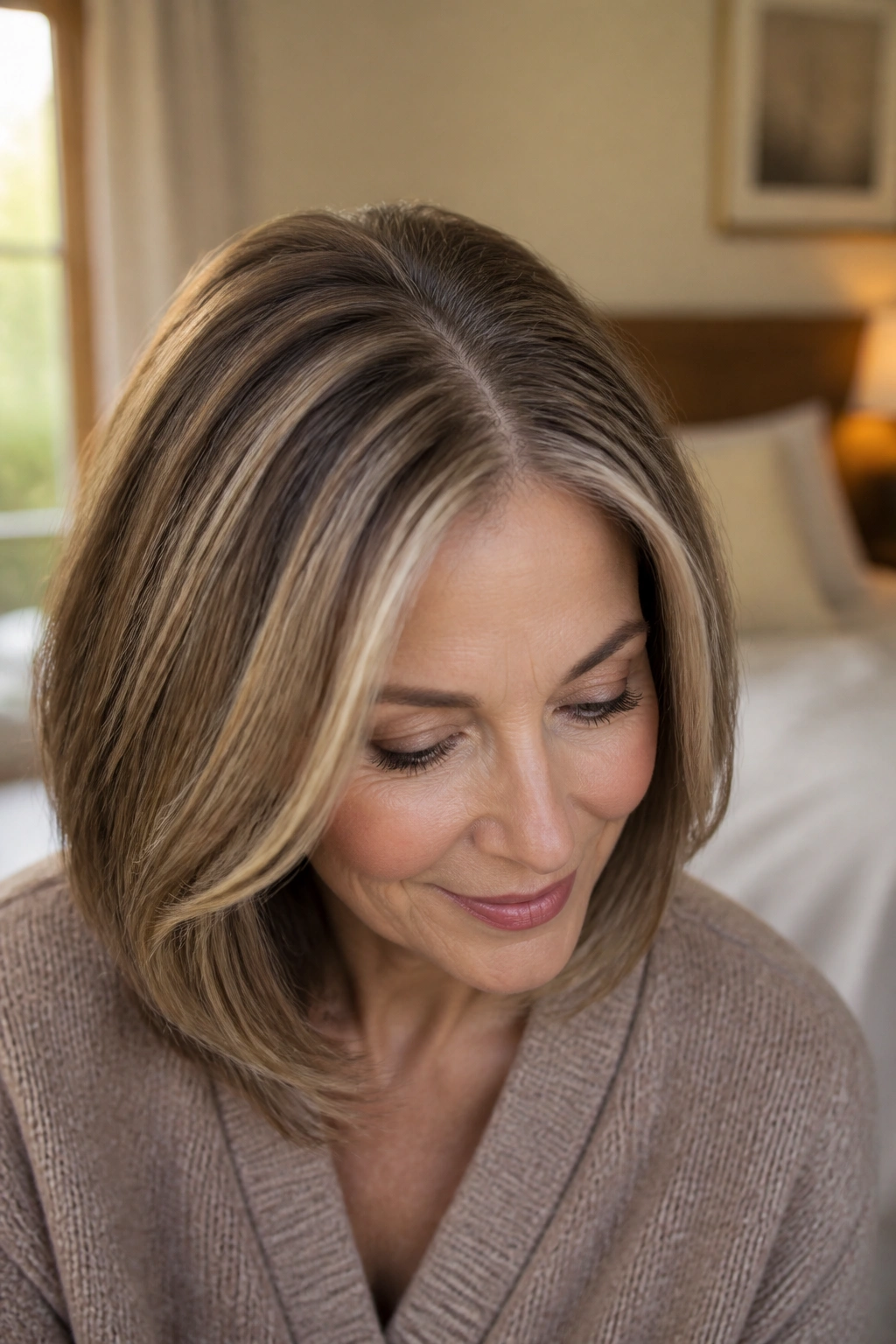
Champagne babylights are one of my favorite options when you want brightness without a hard edge. The color sits between blonde and beige, so it gives hair a lifted, airy look without turning it icy or flat. On mature women, that matters. Harsh platinum can pull the eye straight to texture changes; champagne tends to blur them.
Ask for very fine slices around the part, crown, and front hairline. Babylights are thinner than traditional highlights, which is why they look so natural as they grow. If your hair is starting to lose density, this placement also helps the top layer look a little fuller. Little threads of light. That’s the effect.
Best on medium brown, dark blonde, and silver-flecked hair that needs a little polish. Keep the toner soft and beige rather than yellow-gold if you want the color to stay elegant, not brassy.
2. Silver-Blend Ribbons That Make Gray Look Intentional
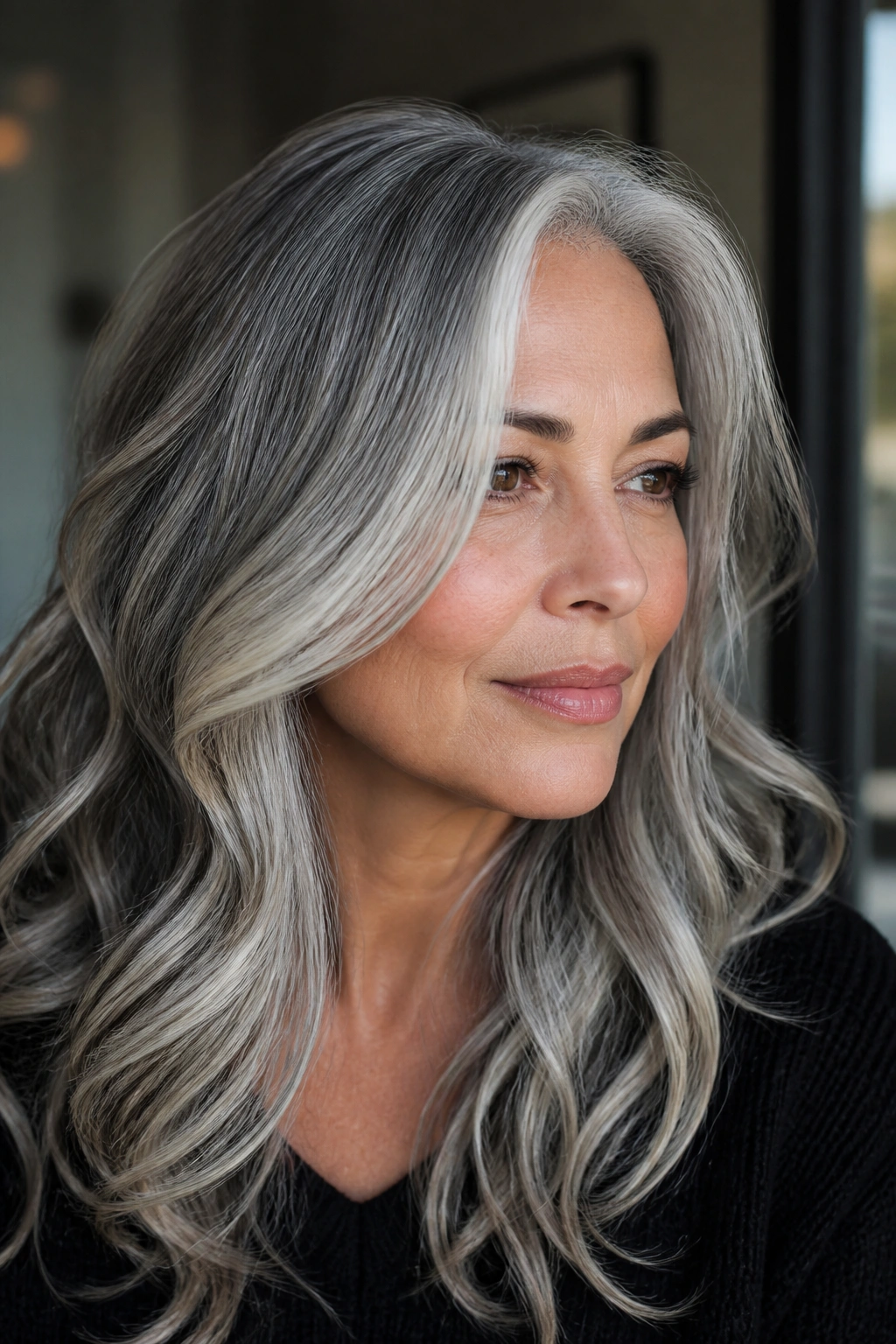
Why fight gray when you can fold it into the color story? Silver-blend ribbons are built for women who want their natural gray to look deliberate instead of accidental. The right streaks sit close to the silver already in the hair, which means the grow-out looks calm instead of messy.
The key is contrast control. Too dark next to gray and the lines feel sharp. Too light and the gray gets lost in a washed-out haze. A good colorist will weave in cool pearl, smoke, or soft silver ribbons through the mids and ends, then leave enough natural gray at the root to keep the result believable.
What Makes It Work
- The highlights echo your natural silver rather than hide it.
- The blend usually needs less root touch-up than full-color blonding.
- A short cut, bob, or layered shoulder-length style shows it best.
- A blue or purple shampoo once a week helps keep the tone clean.
This is the kind of color that looks best when it is not trying too hard. Which, frankly, is half the appeal.
3. Face-Framing Bright Pieces That Lift the Cheekbones
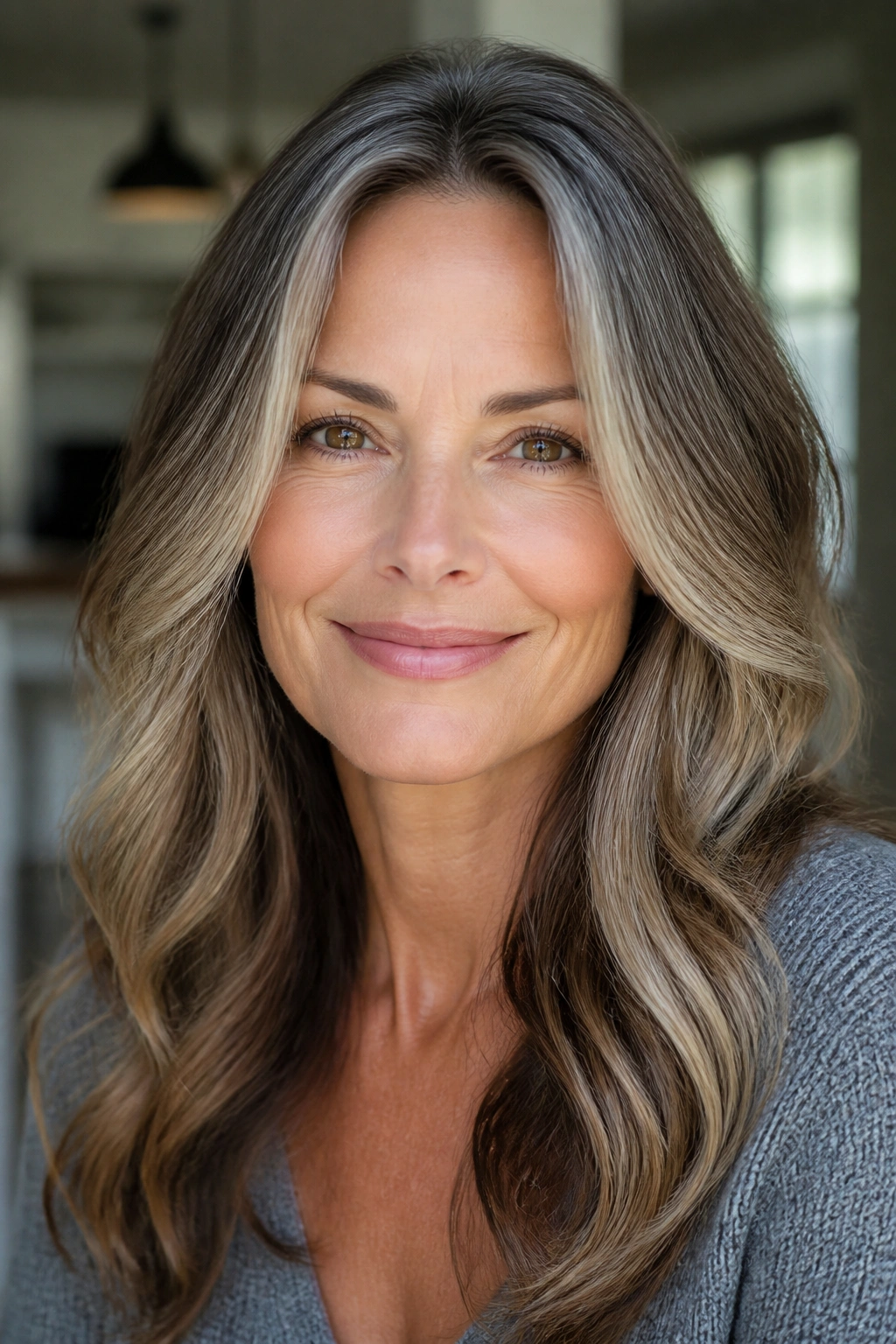
A few bright strands around the face can do more than a full head of highlights, and that’s not a small thing. Face-framing pieces pull light forward, which is useful if the hairline has softened or if the complexion needs a little wake-up. The effect is immediate but not shouty.
Think of this as strategic brightness. The pieces should start near the cheekbone or just below the eyes, then melt into the rest of the color so they do not look like two disconnected streaks. Money piece highlights can be too loud on mature hair if they are sliced too thick, so I prefer a softer version: blended, tapered, and only a few shades lighter than the base.
If you wear glasses, this placement can be especially nice because it opens up the face instead of competing with frames. And if you keep the rest of your hair low-key, these front strands do all the work.
4. Caramel Balayage for Brunettes Who Want Warmth
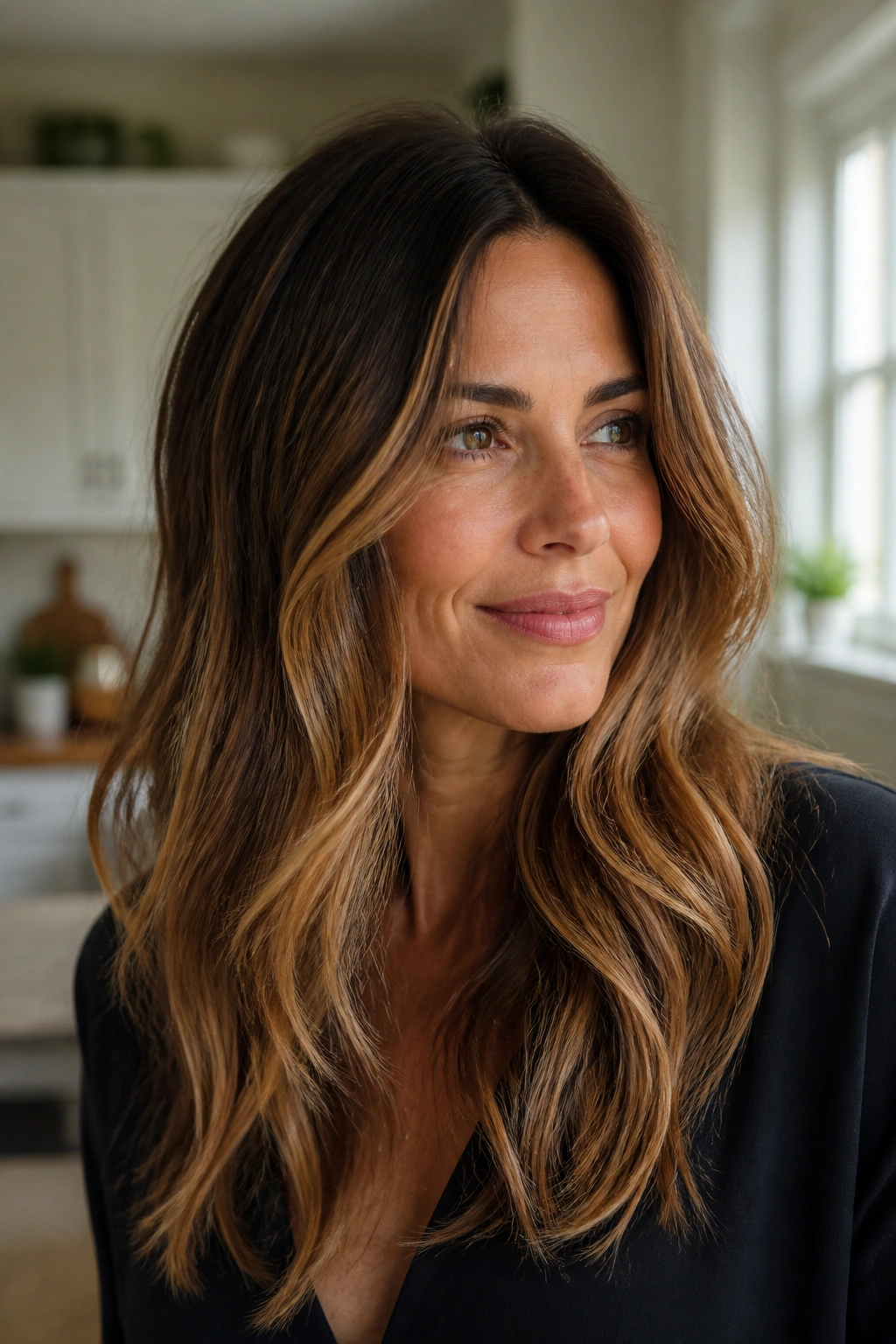
Caramel balayage is the easy answer for brunettes who feel a little drained but do not want to go blonde. It gives dark hair a warm glow, almost like light caught in the mid-lengths on a good day. Done right, it keeps the base rich and the ends soft.
Balayage is painted by hand, so the highlights do not start at the scalp in a rigid line. That makes it kinder to grow-out, which is one reason older clients often like it. There is less obvious maintenance, and the tone can be kept warm, golden, or slightly toffee depending on skin color.
This works especially well on layered cuts because the color lands on the movement of the hair. Ask for caramel, maple, or light chestnut ribbons rather than orange-brown. Orange is where things go sideways. Warmth is lovely; brass is not.
5. Beige Blonde Ribbons That Keep Things Soft
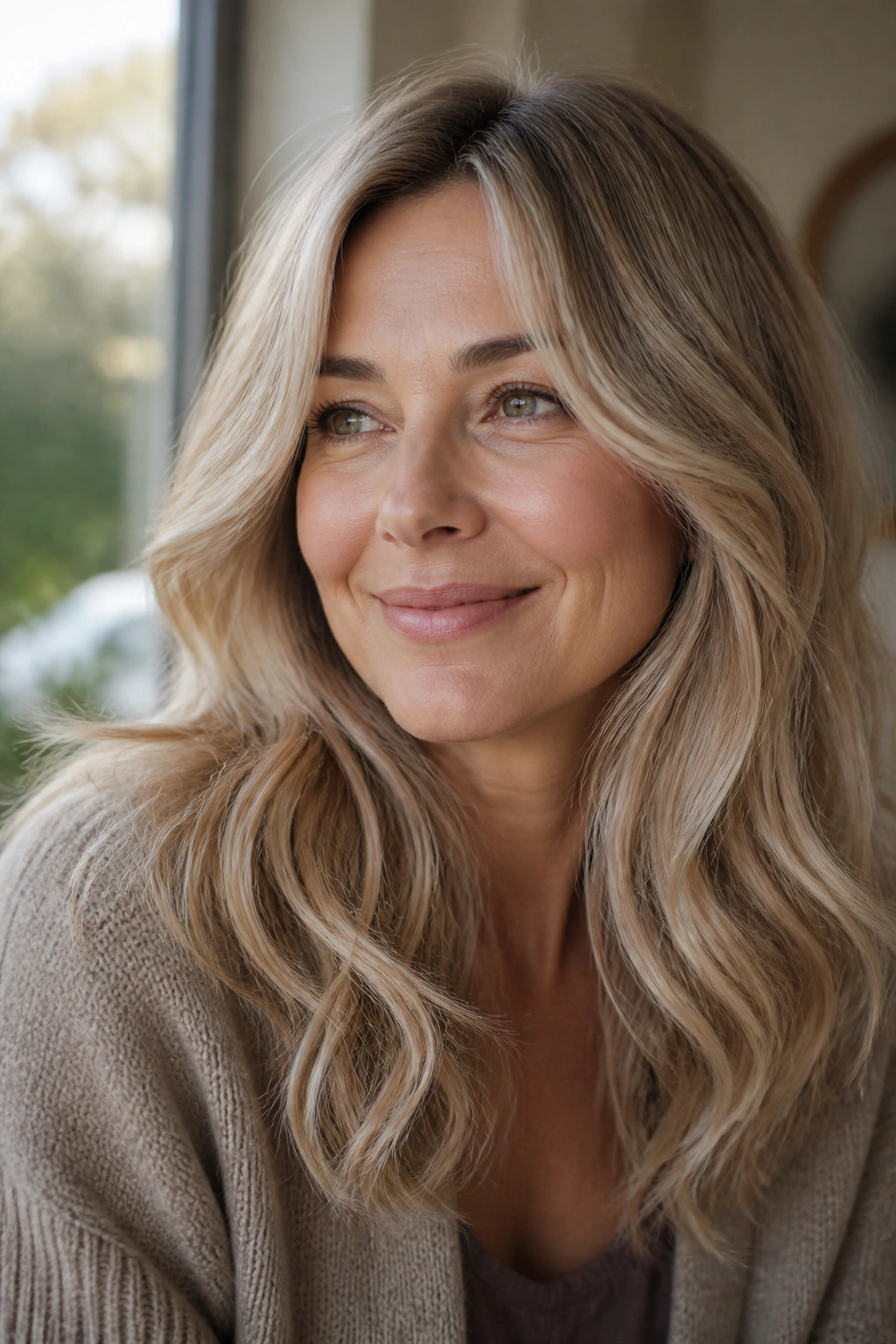
Beige blonde sits in a very useful place. It is lighter than brown, quieter than gold, and a lot less icy than white blonde. For mature women who want brightness but hate the way stark blonde can make hair look dry, beige is a much friendlier lane.
The real strength here is balance. Beige blonde gives the illusion of sunlight without flattening the rest of the hair. On naturally darker blondes and light brunettes, it can look almost effortless. On cooler skin, it softens the face. On warmer skin, it keeps the whole look from turning too yellow.
A colorist may place the lighter pieces through the mid-lengths and ends, then leave the root a touch deeper so the color has depth. That small shadow keeps the style from looking like one flat pale sheet. Flat blonde ages hair faster than most people think. Beige avoids that trap.
6. Mushroom Brown With Ash Lowlights
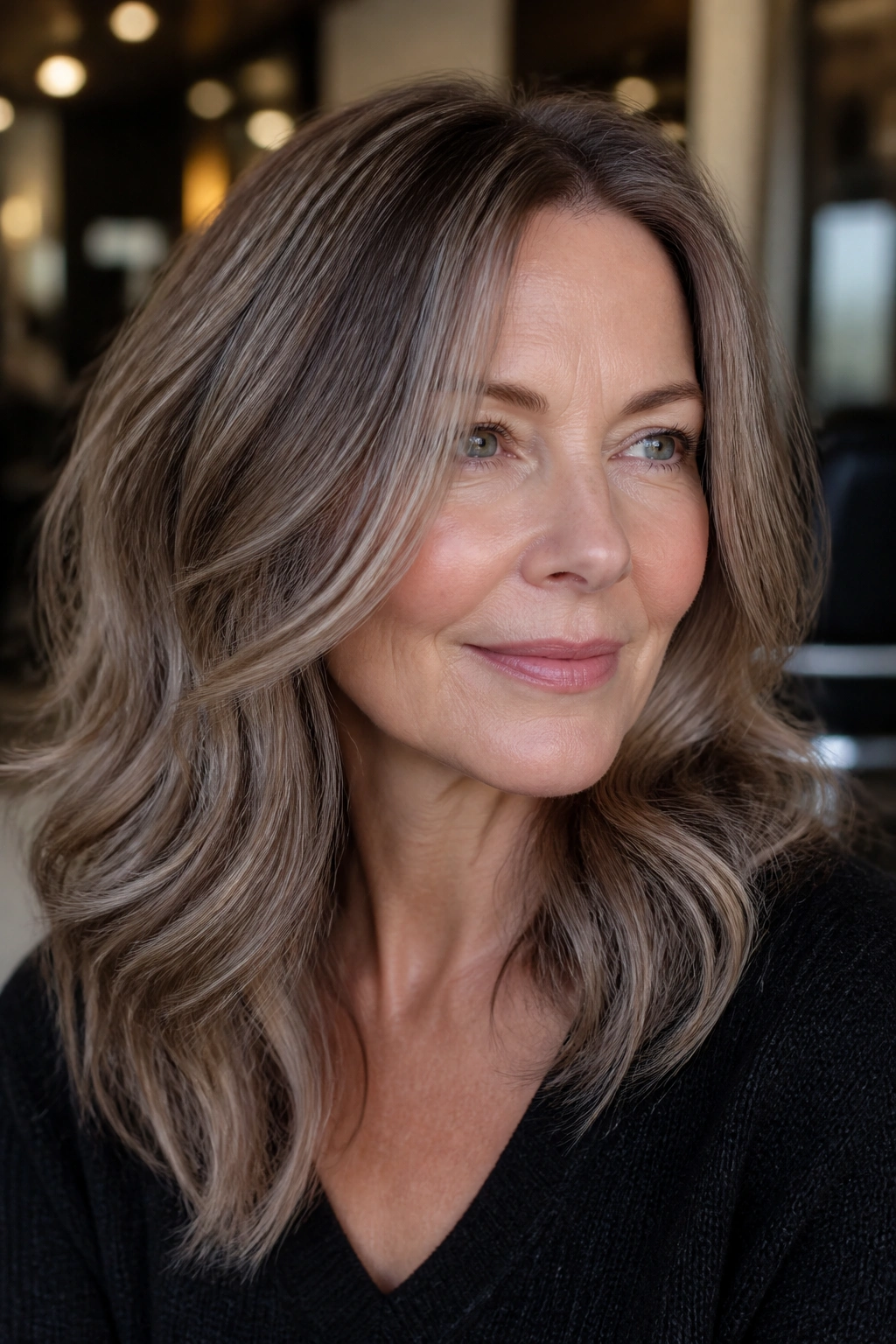
Mushroom brown is for women who like a cooler, quieter palette. It has a taupe base with ash and beige mixed in, which makes it look expensive in a low-key way. Add ash lowlights and the hair gets depth instead of that one-note brown that can look flat under indoor light.
This is a good match for women with naturally medium brown hair and some gray starting to come in. The cool tones help the silver blend rather than fight it. The result feels modern, but not trendy in a way that will age badly in six months. Good color should not need a defense speech.
Best For
- Medium to fair skin with cool or neutral undertones
- Shoulder-length cuts, bobs, and layered lobs
- Hair that has gone a little dull and needs depth, not brightness
- Women who prefer a polished, understated finish
If you hate warmth in your hair, this one is worth a serious look. It can be a little unforgiving if your skin runs very golden, though, so placement and toner matter.
7. Copper Glazes With Fine Gold Threads
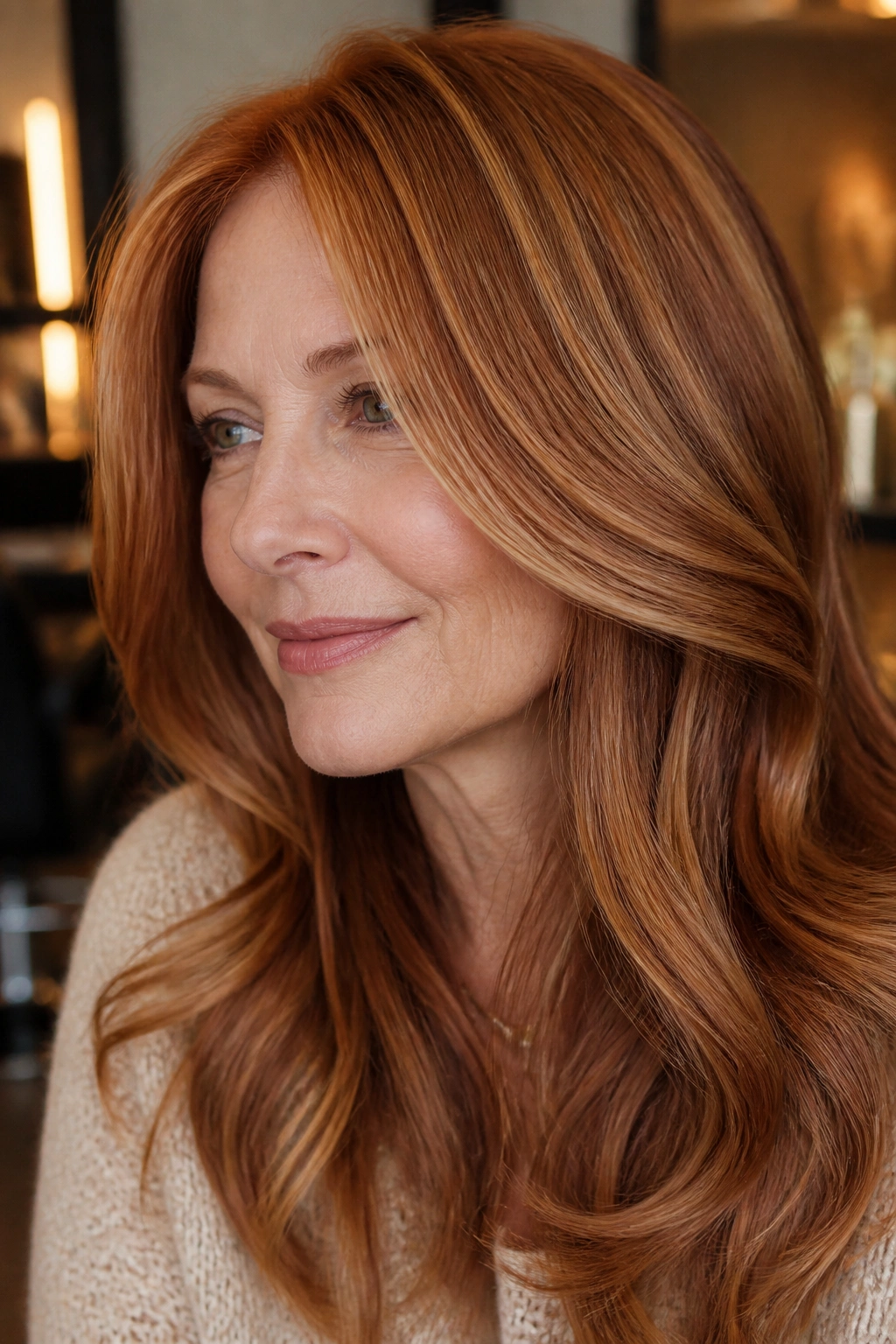
Copper is one of those shades that can look flat-out gorgeous on mature women when it’s handled with restraint. Not neon. Not fire engine. Just rich copper with a little gold threading through the top layers so the color moves instead of sitting there like paint.
I like this idea on women whose skin has some warmth or whose eyes already carry green, hazel, or amber notes. Copper wakes up the complexion fast. It also works well with shorter styles, where the shimmer is easier to see and the shape stays clean.
The trick is keeping the highlights very fine. A whole head of copper streaks can look busy; a few gold threads through a copper base look alive. Ask for gloss, not raw intensity. That keeps the finish soft and shiny rather than dry and flat. Copper without shine is a bad compromise.
8. Salt-and-Pepper Blending That Lets the Gray Grow In Gracefully
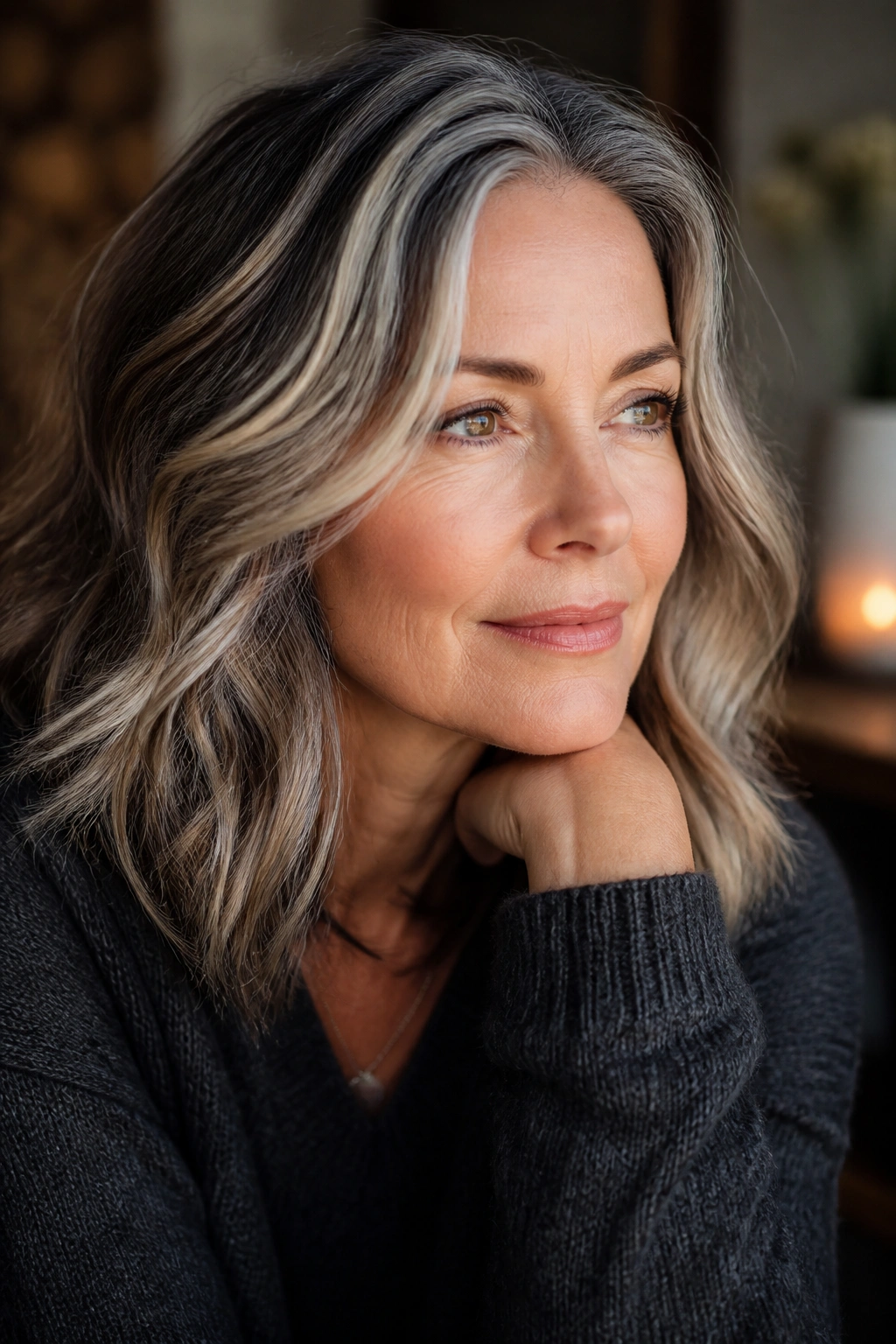
If you are somewhere between dark and silver, salt-and-pepper blending is often the least fussy option and the smartest one. Instead of fighting the gray, it works with it. Dark lowlights, smoky blonde ribbons, and a soft natural root make the whole head look intentional, not patched together.
This is especially useful if you are tired of scheduling color every few weeks just to hide regrowth. Blending lets the roots show in a way that feels designed. The grow-out is calmer, and you can stretch the time between appointments without looking neglected. That alone is worth something.
What to Ask For
- Fine lowlights around the crown to reduce stark contrast
- A gloss that cools brass and keeps silver clean
- Some natural root left untouched near the part
- Soft light pieces through the ends to keep the hair from looking heavy
The effect is not dramatic from across the room. Up close, though, it looks thoughtful. And that matters.
9. Ribbon Highlights for Curly Hair
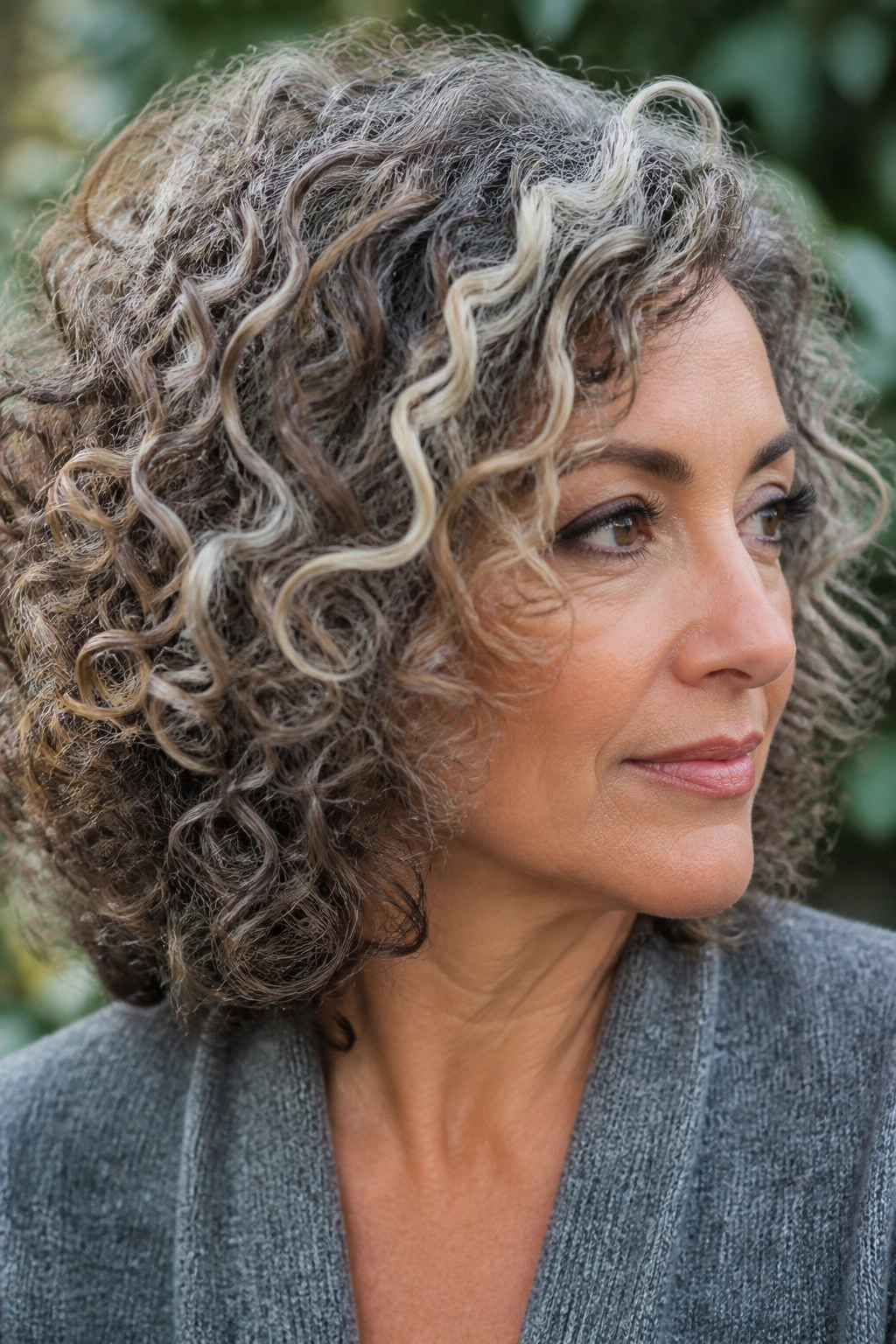
Curly hair needs a different hand. Thick stripes can make curls look chopped up, while ribbon highlights slip through the curl pattern and show movement without breaking it apart. That is the whole game here: let the light travel with the curl, not against it.
Placement matters more than color. Highlights should follow the shape of the coils and waves so the style still looks full at every angle. On mature women, this is useful because curls can already lose some bounce and definition over time. Thin, flowing ribbons help restore the sense of motion.
A good curl highlight job often uses several shades in the same family. That keeps the hair from looking too painted. Ask for color placement while your hair is worn in its natural curl pattern, not blown out straight. That part gets skipped a lot, and it makes a huge difference.
10. Root-Shadow Blonde With Bright Ends
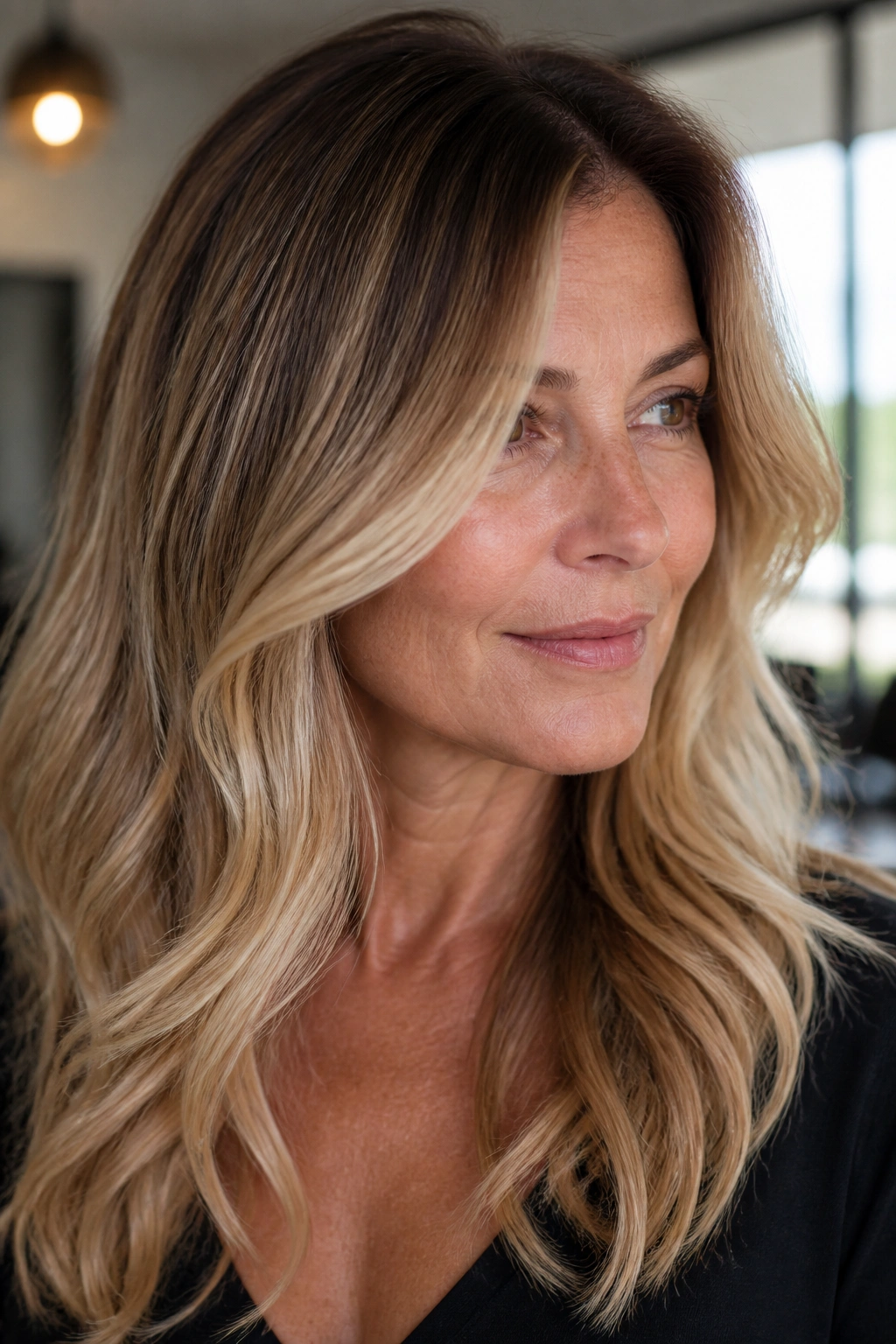
Root-shadow blonde is a relief if you like light hair but do not want to babysit your roots. The darker root melts into lighter mids and ends, so the color grows out with a softer line. On mature women, that root shadow can also make the hair look denser near the scalp.
The bright ends keep the look fresh. Without them, root-shadow blonde can drift too muddy or too dark. The best version keeps the root only one or two levels deeper than the rest of the hair, then opens up around the lengths with cream, pearl, or soft gold blonde. Nothing stripey. Nothing overdone.
This idea suits women who like an easy blow-dry and do not want to schedule constant touch-ups. It also works if you have a lot of gray at the temples but not much elsewhere. The shadow draws the eye away from the regrowth line and toward the shape of the cut.
11. Mocha and Toffee Dimension for Dark Hair
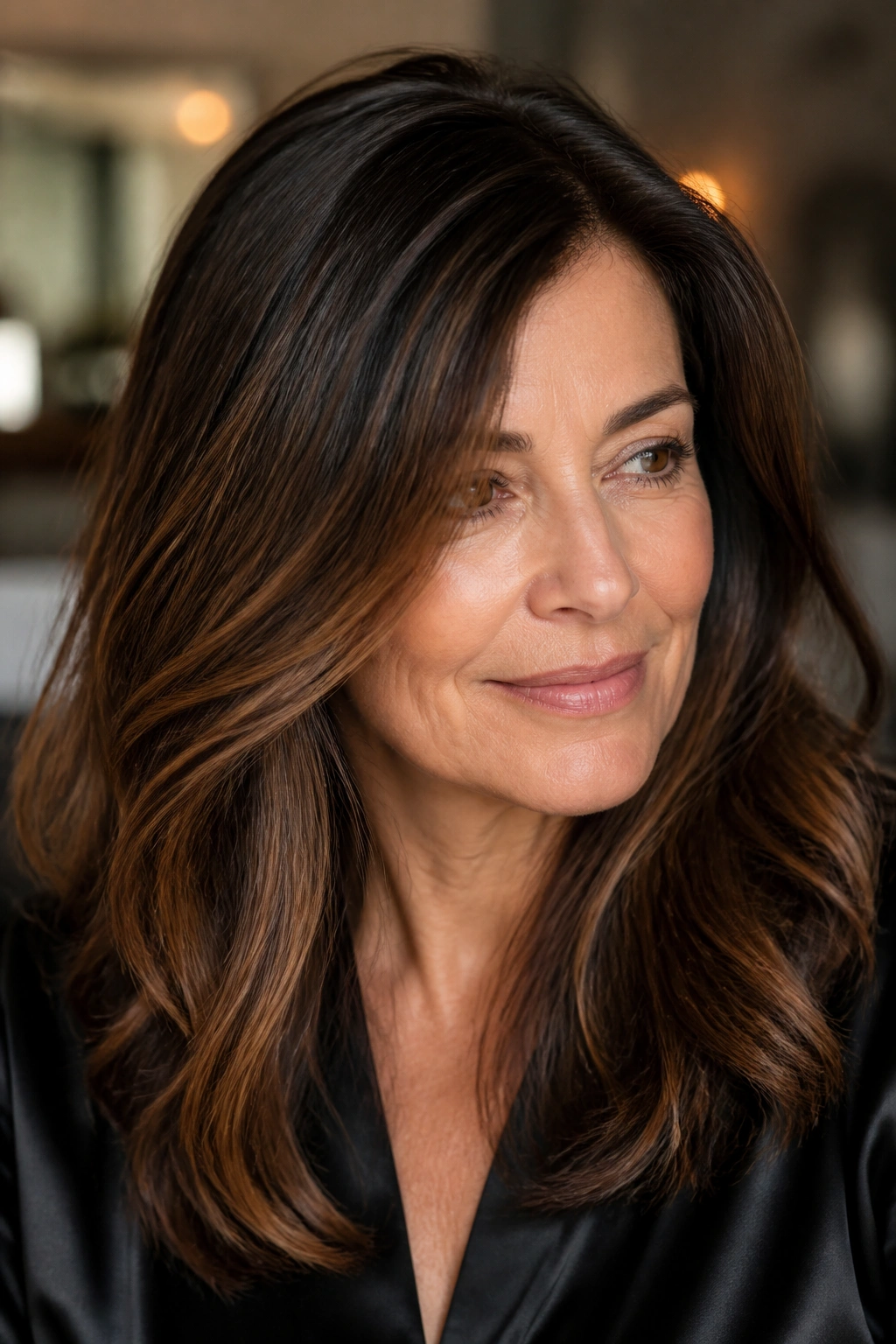
Mocha and toffee is one of the prettiest combinations for dark hair because it keeps the base rich while adding movement you can actually see. On brown hair that has started to look flat or a little too solid, a few toffee ribbons can do more than a whole batch of lighter blonde streaks.
The best part is how forgiving this is. You do not need a huge lift to get the effect. A level or two lighter is often enough, especially when the pieces are woven through the mid-lengths and not dumped on the surface. That keeps the contrast soft and makes the color easier to grow out.
If you wear your hair straight, the dimension reads as shine. If you wear it wavy, the lighter pieces show the bend in the hair. Either way, the look stays grown-up and easy to maintain. This is not a loud color. That is exactly why it ages well.
12. Peekaboo Highlights Beneath the Crown
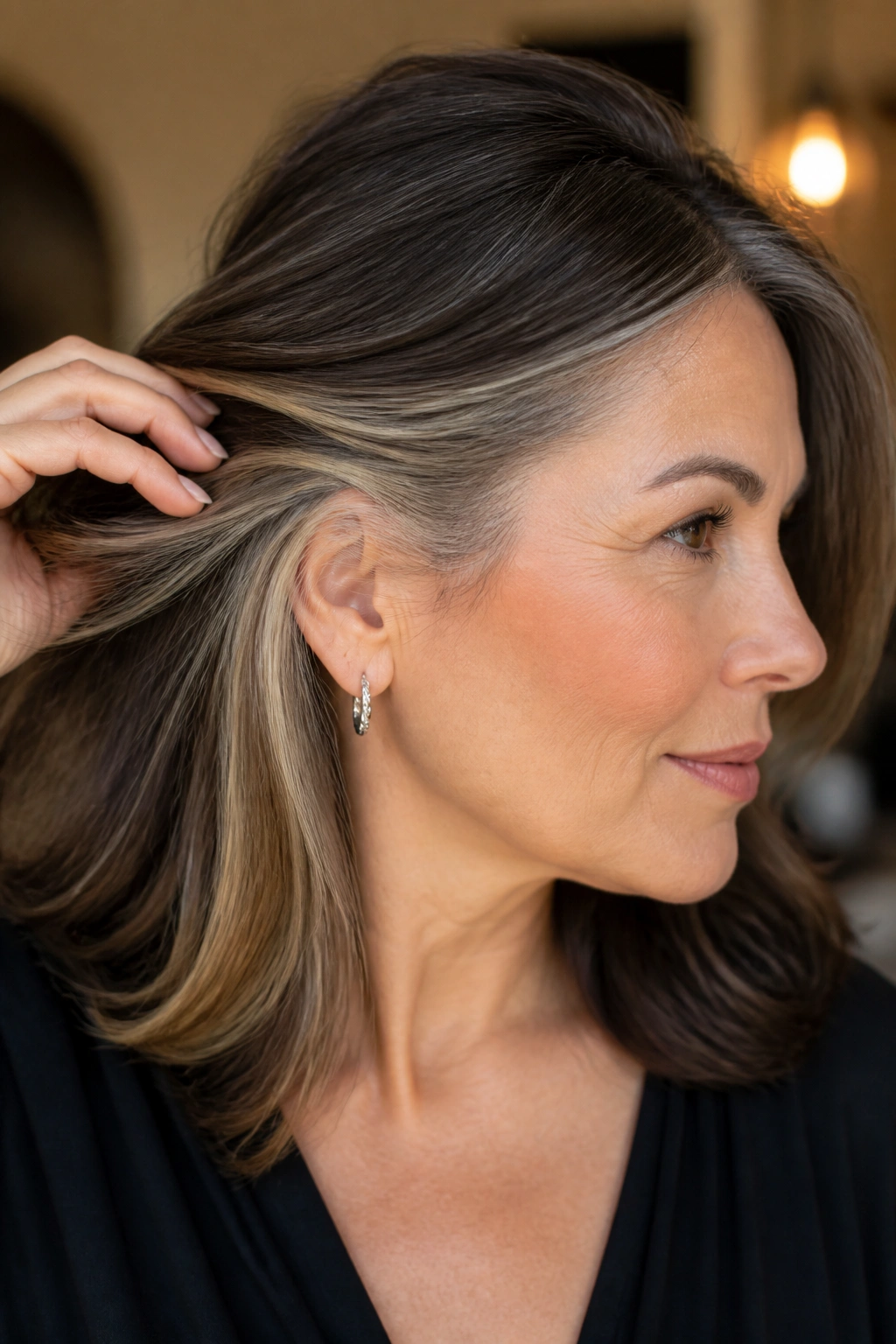
Peekaboo highlights are underrated. Most of the brightness hides underneath the top layer, so the color shows when the hair moves, tucks behind the ear, or catches light at the side. That makes them a smart choice for mature women who want fun without a full bright makeover.
The hidden placement also protects the top layer, which is usually the most fragile and most visible part of the hair. A few lighter pieces under the crown can create the illusion of thickness when the hair is parted or swept back. It’s subtle, but subtle can be powerful.
They are especially good if you want color with less upkeep, since the regrowth is not staring at you every morning. And if you have short to medium-length hair, the movement can be lovely. Keep the shade close to your base for a soft reveal, or go a shade brighter if you want more contrast.
13. Icy White Streaks for Clean Contrast
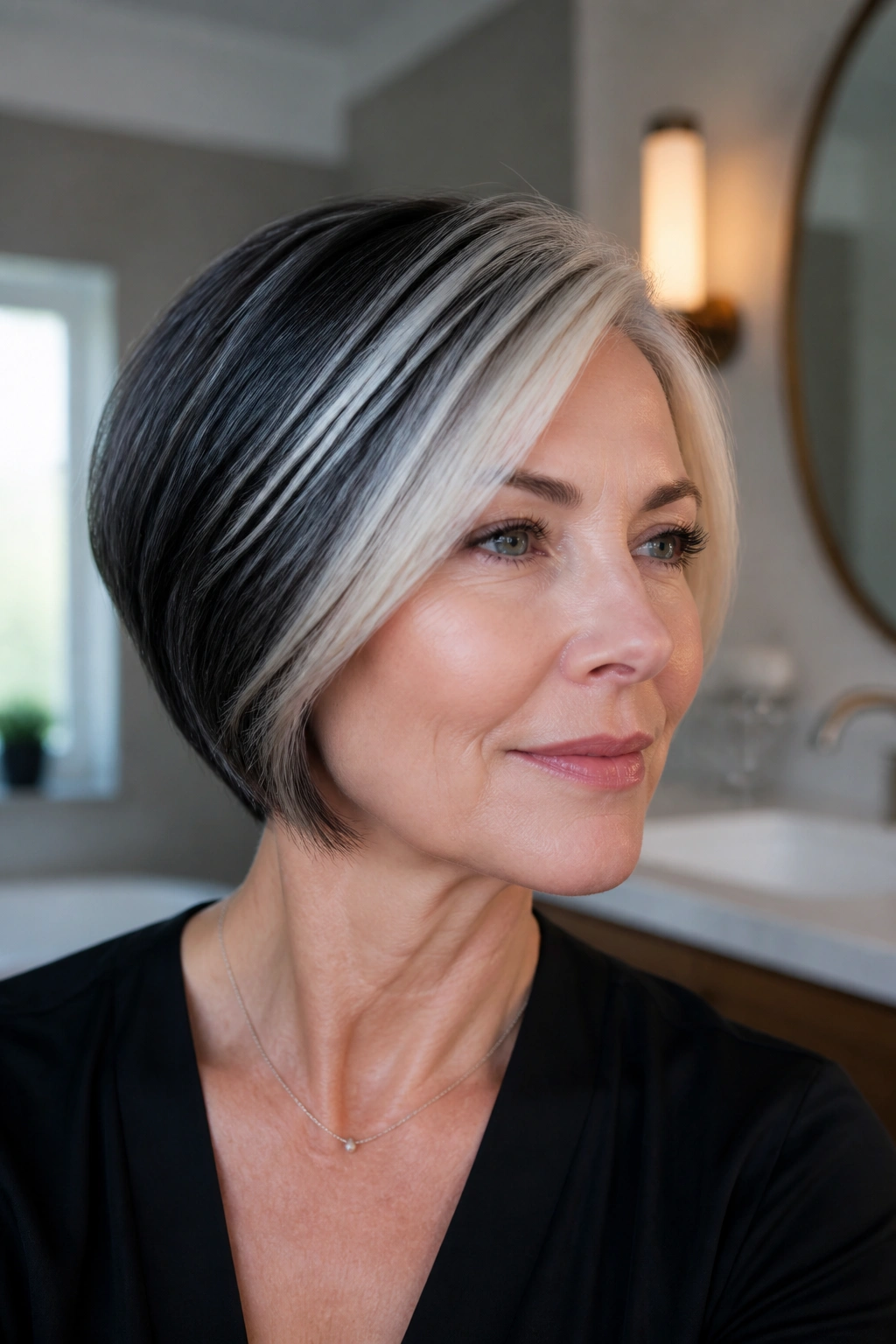
Some women do want contrast. Fair enough. Icy white streaks can look striking on the right cut, especially when the haircut is sharp and the hair has enough health to hold a bright tone. On a sleek bob or a short layered crop, the effect can be crisp and stylish.
The catch is upkeep. Icy shades need toner love and they show dryness faster than warmer colors. They also expose every uneven cuticle on hair that has been through a lot of heat or chemical work, so this is not the color to choose if your hair is already fragile and thirsty.
A Few Things That Help
- Use a sulfate-free shampoo if your hair gets dry fast
- Deep-condition once a week
- Ask for narrow placement, not big white slabs
- Keep the base cool so the contrast does not look yellow by accident
When the cut is strong and the condition is decent, icy streaks can look elegant in a sharp, almost graphic way. Just know what you are signing up for. Bright hair asks for attention.
14. Honey Lights on Warm Brunettes
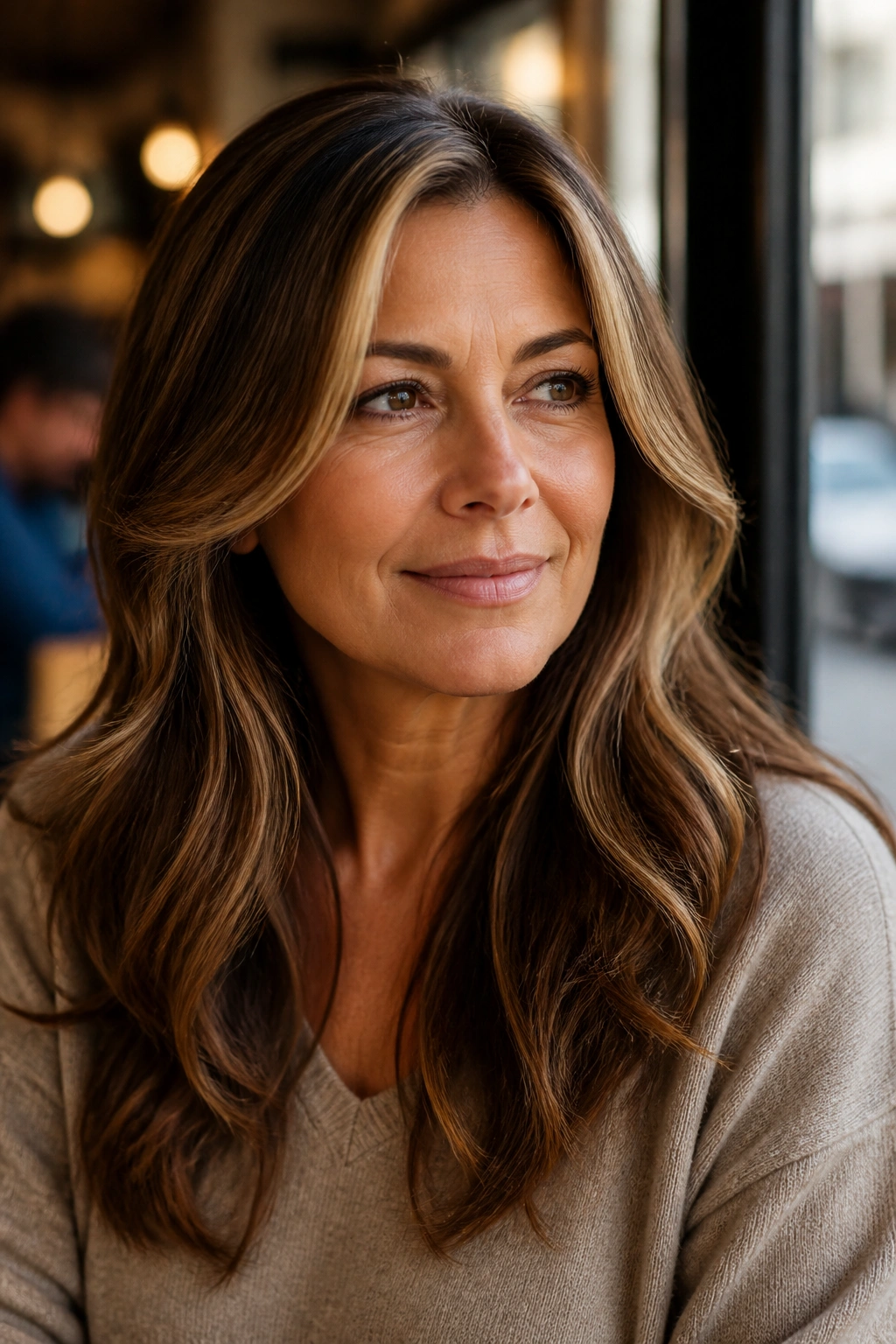
Honey highlights are warm, golden, and easy to wear on brown hair that needs life without a radical change. They add the kind of brightness that makes skin look more awake, especially if your undertones lean golden, olive, or peach.
What I like about honey is that it does not scream for attention. It softens darker hair in a way that still feels natural. If your natural color is chestnut, cocoa, or medium brown, honey pieces through the face frame and upper layers can keep the whole look from going dull. That’s often the real problem. Not age. Dullness.
A few well-placed strands around the temples and cheekbones can be enough. The shade should sit between gold and beige so it doesn’t turn brassy in a hurry. If your hair tends to pull orange, ask for a toner with a soft beige base rather than strong gold.
15. Ash Blonde Foils for Cooler Complexions
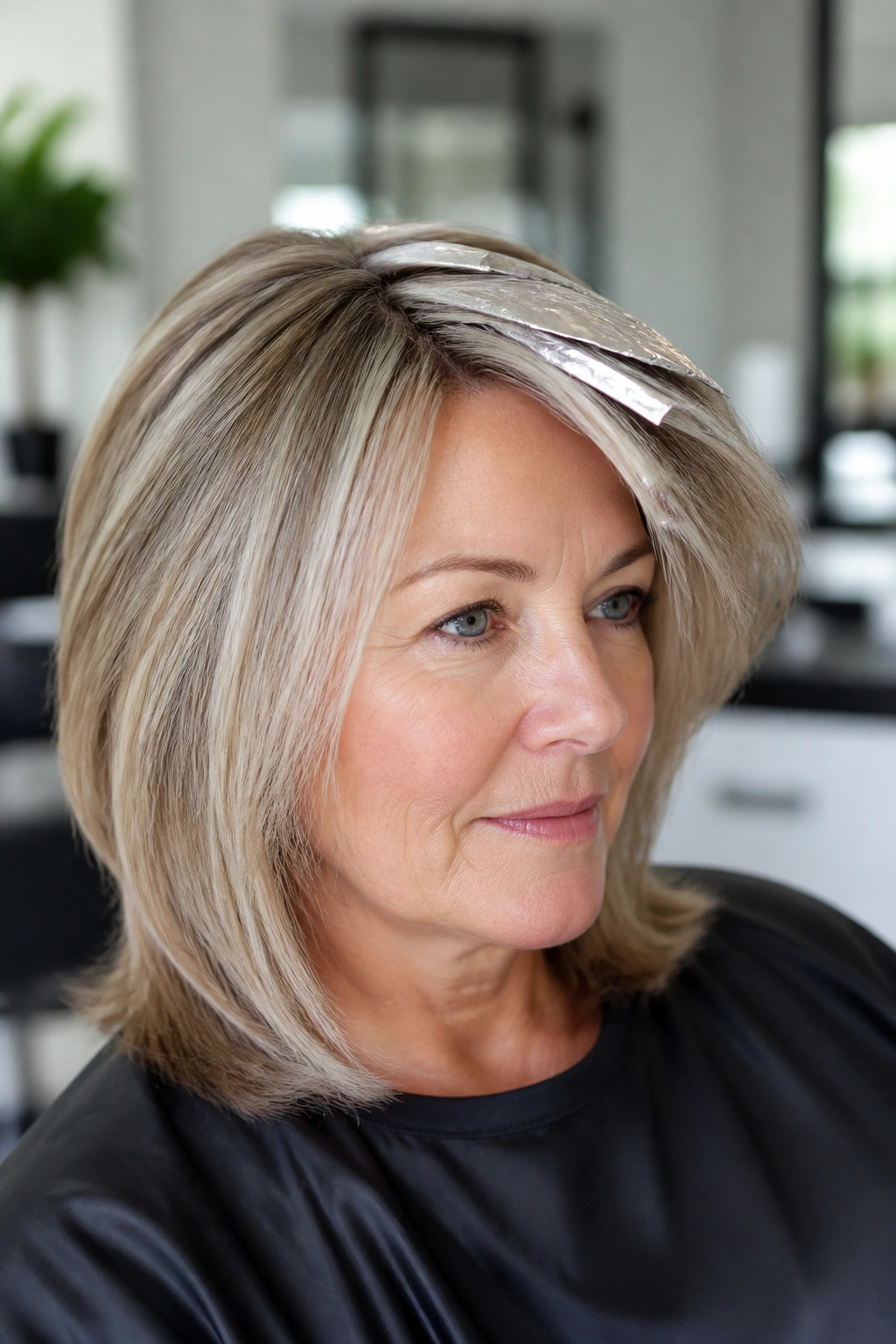
Ash blonde is not for everyone, and that is exactly why it works so well when it is right. On cooler skin, it can make the complexion look cleaner and the eyes look sharper. On mature hair, it also helps blend silvery tones instead of making them look yellow.
Foils give you more control than painted highlights. A colorist can place the ash blonde more precisely, which is useful if you want the front brighter and the back softer. That control matters when you are trying to manage gray around the hairline or soften a dark base that feels too heavy.
The downside is that ash can go flat if the cut is heavy. So it tends to look best with layers, movement, or a cut that shows off the contrast. If your hair already runs very cool, this can be a lovely match. If your skin is very warm, though, ash can look a little stern.
16. Cinnamon and Auburn Accents
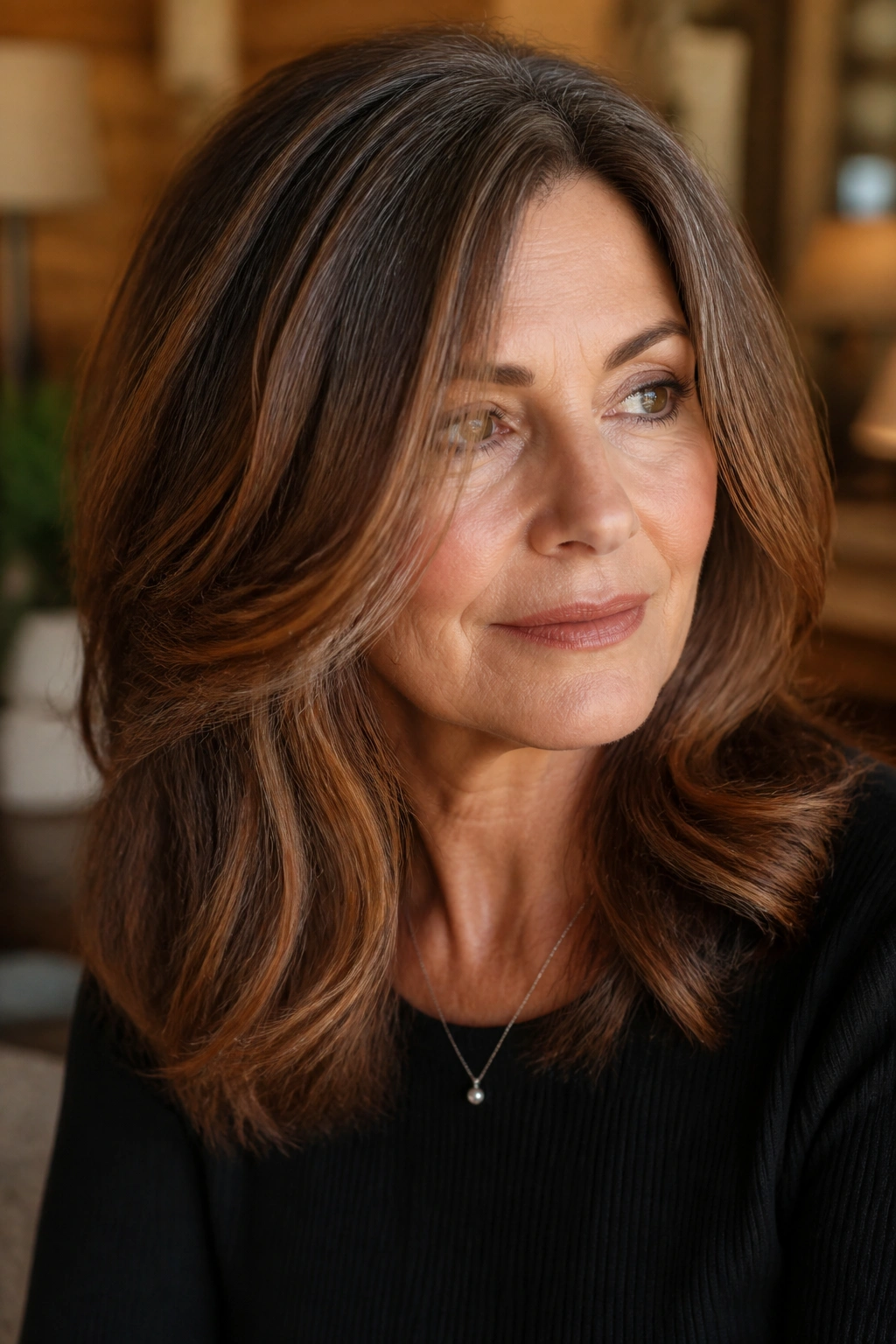
Cinnamon and auburn accents bring warmth without going full red. They are especially nice on brunette hair that needs a richer tone and on women whose skin has a bit of warmth or rose in it. The color lands somewhere between brown and red, which gives hair a fuller, more dimensional look.
These accents are usually best in small doses. A few auburn pieces around the face or through the mid-lengths can warm the whole head, while too many can tip the color into heaviness. You want glow, not a chestnut helmet.
How It Tends to Read
- On straight hair: a glossy, polished warmth
- On wavy hair: visible depth and movement
- On curly hair: a richer, softer halo
- On layered cuts: more separation between sections
This is a good choice if you have been using too much ash or beige and the hair feels a bit drained. Warmth can put the light back in.
17. Chunky Front Panels With a Modern Edge
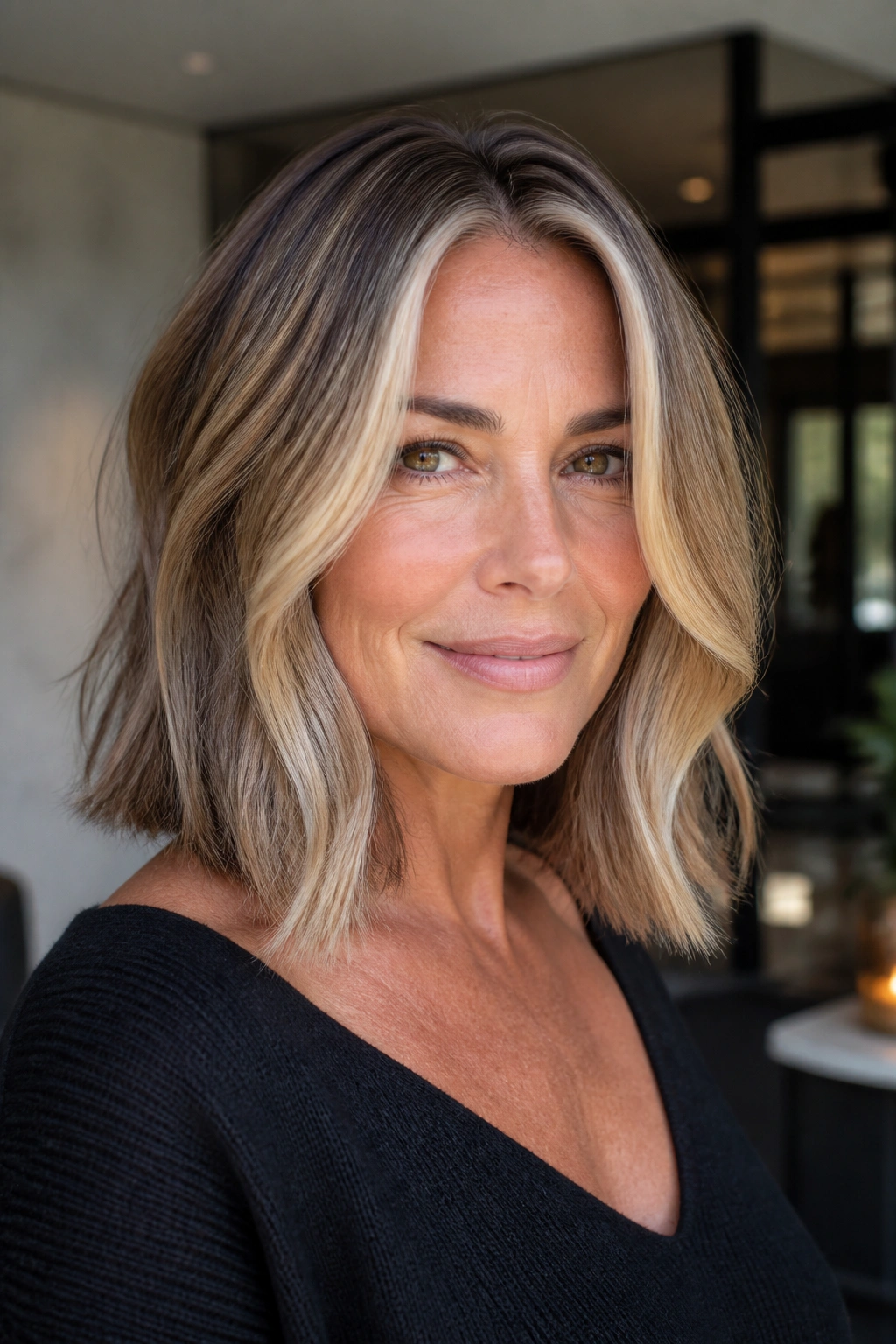
Chunky highlights are not the enemy, but they need better editing than they used to. A few larger front panels can frame the face and give a modern edge to a bob, lob, or short shag. On mature women, the trick is keeping the panels soft enough that they do not look dated.
I would skip the high-contrast stripe look unless the haircut is strong and the overall style leans fashion-forward. What works better is a controlled panel or two near the front, blended into thinner pieces behind them. That gives shape without turning the head into a zebra crossing.
This idea is nice if you like your hair to read as styled. It is less subtle than babylights and less low-maintenance than balayage, so it suits women who want a visible design choice. The color can be blonde, caramel, silver, or even rose-beige if the rest of the palette stays calm.
18. Micro-Highlights That Give Fine Hair More Life
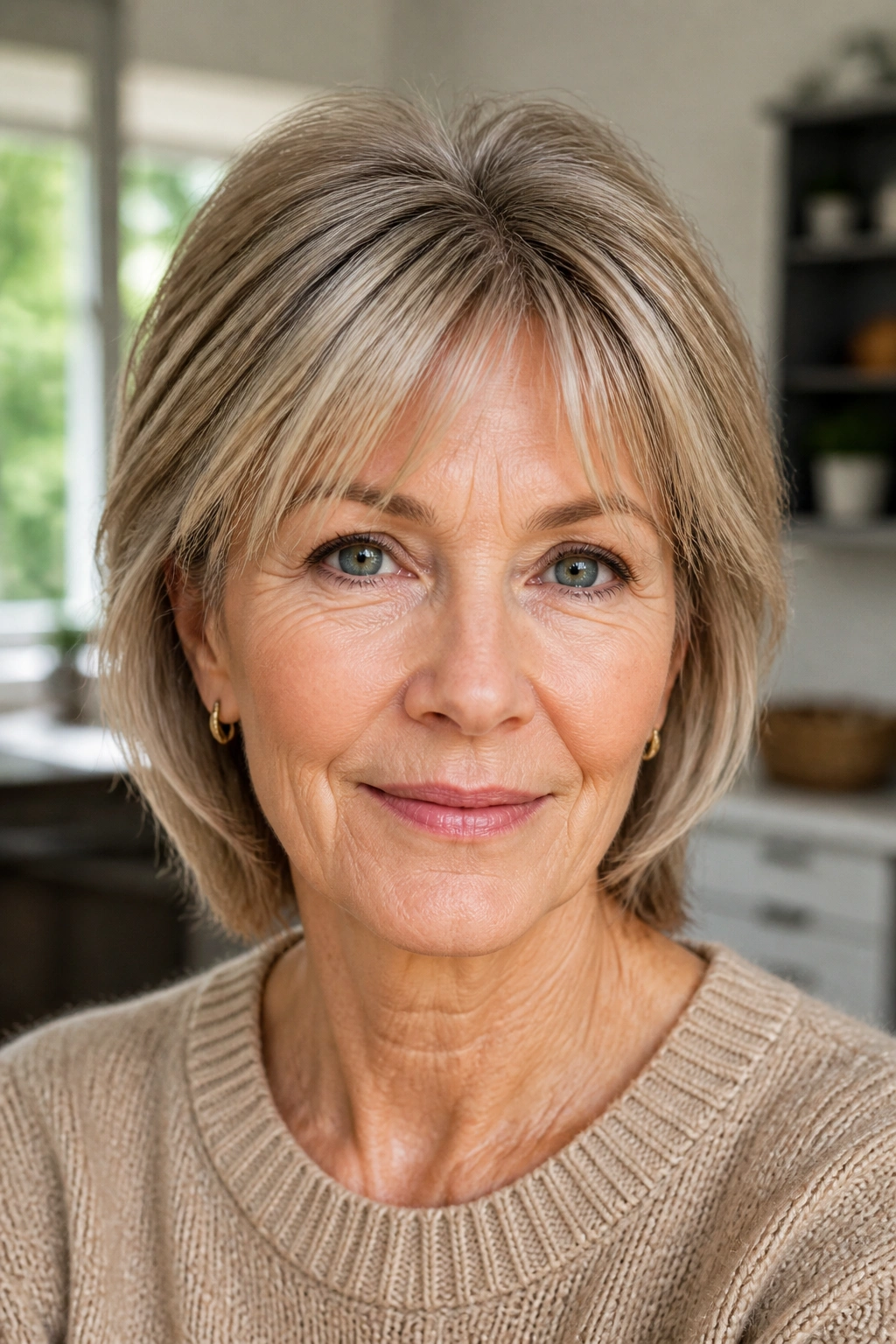
Fine hair can be tricky. Thick highlights often make it look stringy because the contrast is too obvious between the light and dark pieces. Micro-highlights solve that by using tiny sections that create shimmer instead of hard stripes.
The result is one of the best ways to make fine hair look fuller. The eye sees depth first, not the individual strands. That is a big difference. On mature women with softer density at the crown, micro-highlights can make the top layer feel a little more lifted without needing a heavier cut.
You will usually get the best result with several very thin shades rather than one dramatic blonde. Think of it as texture through color. The goal is optical fullness, not obvious streaks. If the strands are fine enough, the whole head reads as richer and more alive.
19. Lived-In Bronde for Easy Dimension
Bronde — that middle place between brown and blonde — is popular for a reason, and no, it is not because the name sounds clever. It works because it gives the softness of brown and the lightness of blonde without forcing either one to win. That balance is useful on mature hair.
A lived-in bronde usually means darker roots, soft beige or caramel mids, and lighter ends that are not too pale. The grow-out is forgiving, the tone stays wearable, and the color can be adjusted warmer or cooler depending on your base. It is one of the easiest shades to live with.
I especially like it on shoulder-length cuts where the different tones can move together. If your hair is starting to feel one-note, bronde often fixes that without a drastic shift. It gives the eye places to land.
20. Silver-Champagne Blending for Natural Gray
Silver-champagne blending is what happens when you stop treating gray like a problem and start letting it behave like a color. The champagne pieces keep things soft, while the silver threads make the natural gray look shiny instead of drab.
This can be a lovely option for women with a lot of white at the temples and darker hair through the back. The transition between the two becomes smoother, so the grow-out line does not look blunt. If you are trying to move away from full coverage color, this is one of the nicest bridges.
Why It Feels Modern
- The finish is bright but not cold
- The silver is woven in, not painted on top
- The champagne adds warmth so the gray does not go flat
- It suits bob lengths, layered shags, and shoulder cuts especially well
I like this more than trying to disguise gray with overly warm blonde. The gray is there anyway. Might as well make it look good.
21. Sandy Beige Highlights for a Layered Bob
A layered bob and sandy beige highlights are a good pair because the cut gives the color something to do. Sandy beige sits between gold and ash, so it flatters a wide range of skin tones and avoids the chalky look that some pale blondes create on mature faces.
The highlights can be placed through the upper layers and around the perimeter to keep the bob moving. That little bit of brightness near the ends keeps the shape from looking heavy, which is a common issue with shorter cuts as hair gets finer.
If you wear your bob tucked behind the ears or with a side part, sandy beige highlights will show up as soft light rather than obvious streaks. That’s the appeal. Clean, calm, and easy on the eyes.
22. Strawberry Blonde Hints for Fair, Warm Skin
Strawberry blonde can be beautiful on mature women when it is kept soft and translucent. The color sits between blonde and copper, so it gives warmth without the density of a true red. On fair, warm skin, it can make the face look brighter in a way that feels fresh rather than flashy.
I would not go heavy here. Small strawberry hints through the front, ends, or top layers are enough to change the mood of the hair. If the base is already blonde, a strawberry gloss can add just enough warmth to keep the color from turning beige and sleepy.
This shade tends to look best in daylight, where the little copper notes show through. It can be a little high-maintenance if you want the red to stay vivid, so many women use it more as a tone than a hard color commitment. That makes sense to me.
23. Chestnut Lowlights With Light Veils
Chestnut lowlights are the quiet fixer for hair that has gone too light or too flat. They add depth back into the mids and underlayers, which gives the whole head a better shape. Pair them with a few light veils on top and the hair starts looking layered again, not just colored.
This is especially good for women with thick hair, because thick hair can swallow brightness if every strand is pushed the same way. Chestnut lowlights give the eye a place to rest, and the lighter veils stop the result from getting dark or heavy. That balance matters.
It also helps when gray is scattered unevenly. Lowlights can tuck into the areas that feel too bright or too see-through, making the whole head read as richer. Honestly, this is one of the more underused ideas on the list.
24. Sun-Kissed Balayage for Longer Hair
Long hair can take a lot of highlight patterns, but sun-kissed balayage stays one of the easiest to wear. The light pieces usually start lower on the shaft, so the hair keeps depth at the root and gets brighter as it falls. On mature women, that helps preserve softness near the face.
The beauty of this style is movement. When the hair swings, the lighter ends show off the layers without needing a harsh stripe at the top. If your hair is past the shoulders, this placement keeps the length from looking heavy or drab.
Ask for a gentle lift, not a bright blonde finish. A few levels of lightness are enough. Too much contrast can make long hair look thinner at the ends, and that is the last thing most people want. A softer fade is usually better than a dramatic one.
25. Pearl Blonde Around the Temples
Pearl blonde is a lovely choice when you want something bright, clean, and a little luminous around the face. Placing it near the temples can soften gray there while giving the eyes a brighter frame. It’s a small move with a big effect.
Pearl tones sit cooler than champagne but softer than pure ash. That middle ground makes them easier to wear on women who want lightness without yellow. I like this most on short to medium hair where the temple area shows clearly and the cut does not hide the color.
If you are nervous about going too light, keep the pearl blonde in fine slices and let the rest of the hair stay deeper. That way the bright pieces act like accents, not a full-color takeover. Small changes near the face often matter more than a whole head of lightness.
26. Red-Violet Ribbons for Brown Hair
Red-violet ribbons are for women who want color with a little personality. They are deeper and moodier than copper, less expected than caramel, and they can make brown hair look richer without turning obvious from across the room. On mature women, that restraint is what makes them wearable.
This shade family is especially useful if your brown hair has started to look dull under indoor light. The violet note adds depth; the red note gives warmth. Together, they create a reflective finish that reads as polished rather than loud. Keep the ribbons narrow and placed through the mids so they do not overwhelm the base.
A gloss between salon visits can keep the tone from fading muddy. And if your hair is already very porous, ask for a softer violet-red rather than a strong burgundy. That keeps the look more elegant and less patchy as it fades.
27. Golden Highlights on Pixies and Short Crops
Short hair can absolutely carry highlights, and sometimes better than long hair because the cut itself has more shape. Golden highlights on a pixie or short crop can bring out texture, show off the layers, and stop short hair from looking too dark and severe.
The trick is placement. A few golden pieces near the top, crown, and fringe are usually enough. You do not need a lot of light to make a short cut pop. In fact, too much can make the style look fuzzy. Small doses are cleaner.
This is a good option if you like easy styling. A little mousse, a quick blow-dry, and the color does half the work. For women with fine hair, the brightness can also make the crown appear less flat. That’s a useful trick, not a gimmick.
28. Smoky Brunette With Cool Beige Ends
Smoky brunette is what I recommend when someone wants darker hair with softness instead of shine that feels too red or too warm. The ends drift into cool beige, which keeps the style from looking like a block of brown. It’s subtle, but subtle is often the point.
This color is especially kind to mature hair that has some gray but does not want full blending. The smoky base reduces harsh contrast, while the beige ends keep the length from disappearing. On wavy or layered hair, the effect is even better because the tones separate naturally.
It can be a little flat if the haircut is one-length and heavy. So this works best with some movement. If you want understated, modern hair that still feels feminine, this shade combination is hard to beat.
29. Multi-Tonal Foils for Thick Hair
Thick hair needs a different strategy. One color can look like a blanket, and a blanket is not what you want. Multi-tonal foils break up the mass with several shades at once — maybe a darker lowlight, a medium caramel, and a brighter beige piece all living together.
That layering keeps thick hair from swallowing the highlights. It also helps the cut move. When each section catches light a little differently, the hair looks lighter without being stripped of body. Mature women with thick hair often have the opposite problem of fine-haired women: too much bulk, not too little.
Good Signs to Ask For
- Three or four shades in the same color family
- Foils placed through the interior, not just the surface
- A gloss that ties the tones together
- Softer brightness near the face and crown
This is one of the more technical-looking options, but it pays off because the color has depth from every angle. Flat hair hates being thick. Multi-tonal foils fix that.
30. Glossed Copper With Delicate Highlights
Glossed copper with delicate highlights is my pick for women who want warmth, shine, and a little life without going full redhead. The gloss keeps the copper smooth and reflective, while the highlights stop the base from looking too solid. It feels rich, not busy.
The delicate highlights should be just a shade or two lighter than the copper base. That way they create shimmer instead of stripes. On mature skin, copper can be one of the most flattering choices because it brings warmth back to the face, especially if the complexion has gone a little cooler with age.
This is also a nice choice if your hair is medium density and you want the surface to look polished. Copper shows every dry spot, so conditioning matters. A good gloss routine keeps the color silky and the highlights from looking fried. Honestly, shine is half the haircut here.
Final Thoughts
The best highlights for mature women are rarely the loudest ones. They usually work because they respect the hair you actually have: the gray that is growing in, the density that may be changing, the texture that may be a little drier than it used to be. That’s where placement matters more than trend.
If you are stuck between two choices, start with contrast level, not color name. Soft beige, champagne, honey, silver-blend, caramel — those are all tools. The real question is whether you want the hair to disappear into the background or step forward a little.
And if you only make one change, make it near the face. Temple pieces, a soft frame, a brighter crown line, or a few fine ribbons can change the whole mood of a cut without turning your routine upside down. That’s often enough.
