



Short haircuts are honest. They show the head shape, the cowlicks, the neck, the whole deal.
That sounds unforgiving, but it is also the reason a great short cut looks sharp even when the styling takes five minutes. A blunt bob can make fine hair look fuller at the ends. A cropped pixie can take weight off thick hair so it stops puffing out at the sides. The cut does half the work before you touch a brush.
The catch is that short hair leaves less room for vague planning. If the line sits too low, the shape can feel heavy. If the layers are too soft, the style can collapse by noon. A good short haircut has to earn its keep from every angle — front, side, and back.
The 30 cuts below cover the shapes I keep coming back to: clean, soft, shaggy, curled, piecey, and sleek. Some need a round brush. Some need a little paste and your fingers. Pick the one that fits your hair’s habits, not the one that only behaves in a photo.
1. French Bob With Tucked Ends
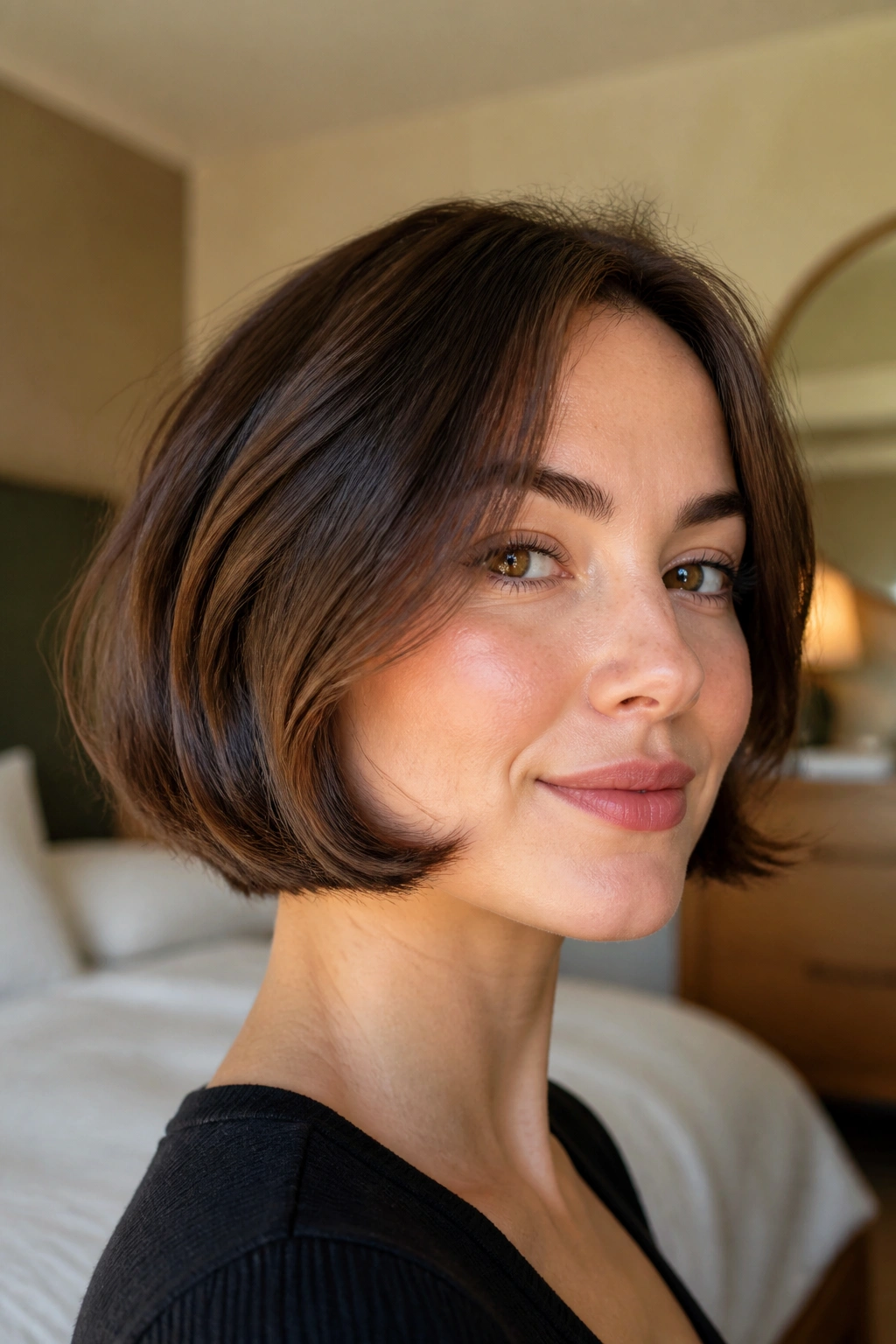
The French bob with tucked ends is the cut I reach for when someone wants short hair that still feels relaxed. It lands around the jaw, sometimes a touch shorter, and the ends curve inward instead of flipping out. That slight bend changes everything. It makes the whole shape feel softer, which is handy if your face already has strong lines.
Why It Works
A good French bob does not need to be frozen into place. It looks best with a little movement at the cheeks and a clean edge at the nape. That balance is why it flatters straight hair so well, but loose waves can wear it too.
- Ask for the length to sit right at or just below the jawline.
- Keep the perimeter blunt, then soften only the last half-inch of the ends.
- Style with a 1-inch round brush or a flat iron bend, not tight curls.
- A light cream on the mid-lengths keeps the finish smooth without making it flat.
Best tip: keep the front pieces a hair longer than the back. That tiny difference makes the cut look intentional instead of boxy.
2. Blunt Chin-Length Bob
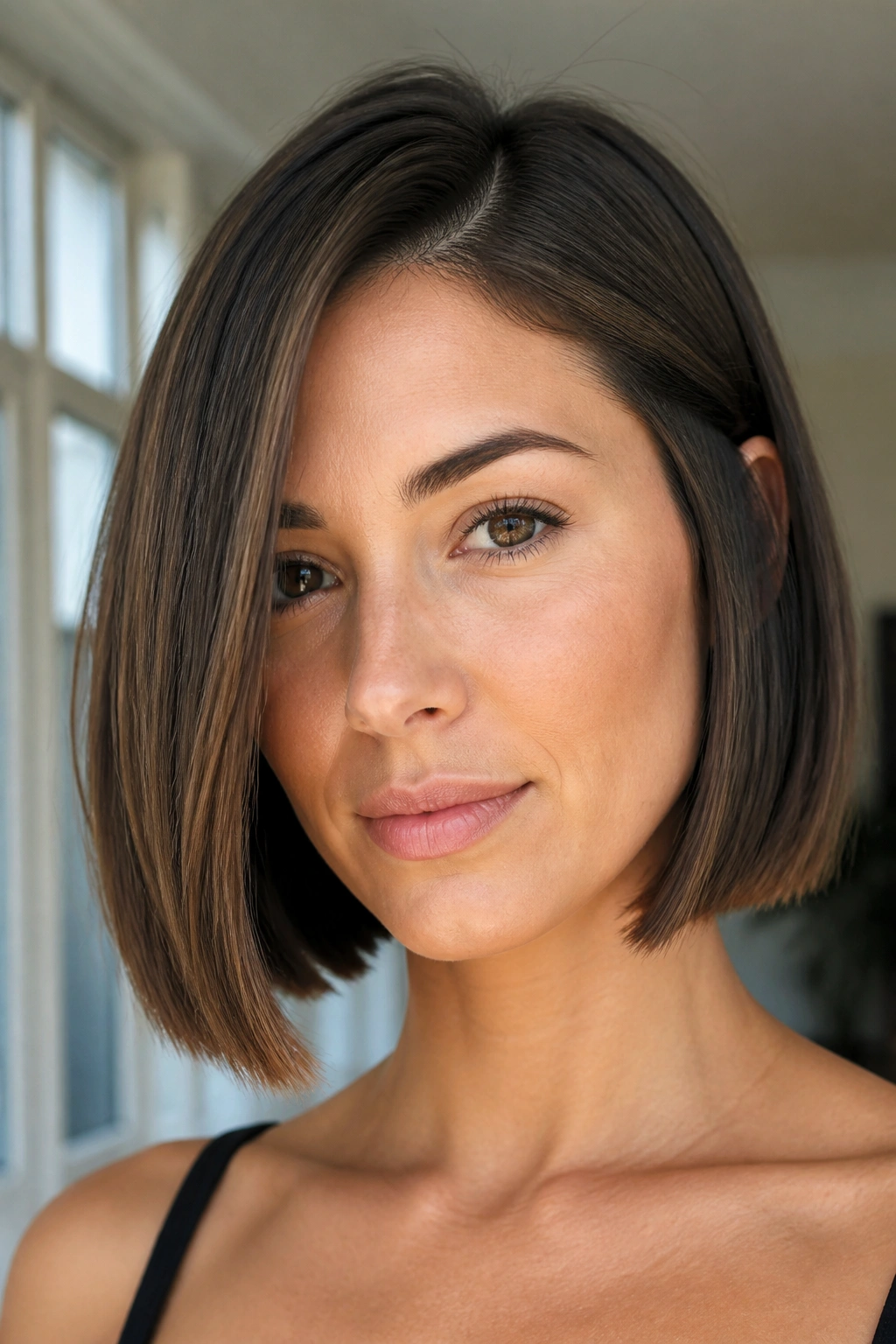
A blunt chin-length bob is one of those cuts that looks simple until you watch what it does to the face. The straight line makes fine hair feel fuller, and it gives thick hair a neat edge that does not need a lot of fuss.
It suits people who are tired of layers that disappear the second they step outside. There is nowhere for this cut to hide. The line has to be clean, especially around the chin and just under the ears. If your hair bends weirdly at the ends, a little smoothing serum and a paddle brush usually help more than another round of layering.
I like this cut best when the part is slightly off-center. Dead-center can feel severe on some faces. A small shift softens the whole thing and keeps it from looking like a helmet.
3. Layered Pixie Cut
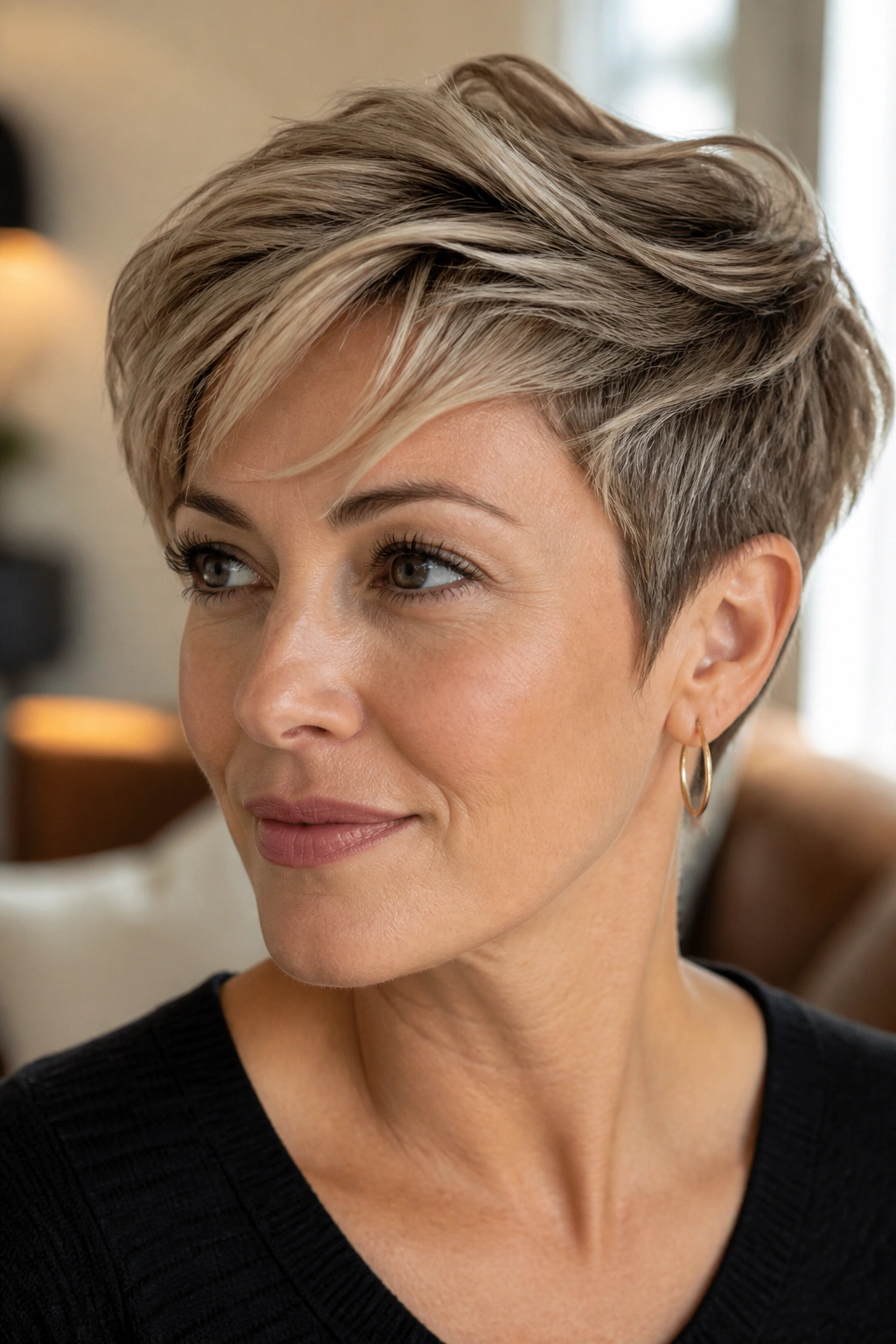
Can a pixie still feel soft? Absolutely. A layered pixie cut proves it.
The trick is keeping the top long enough to move — usually about 2 to 3 inches — while tapering the sides and nape so the shape hugs the head. That gives you lift at the crown without the bulky shelf that some pixies get when the layers are too short and too choppy.
How to Ask for It
- Keep the top pieces long enough to sweep across the forehead.
- Ask for short, clean sides with texture only where the hair needs movement.
- Leave a little length around the ears if you want a gentler outline.
- Use a matte paste or lightweight wax, not heavy cream.
The cut works especially well if your hair is fine and tends to lie flat. A quick finger-dry with a little root lift spray can make the top look fuller in under 10 minutes. And yes, the right pixie should still look good when it is slightly messy. That is the point.
4. Soft Curly Crop
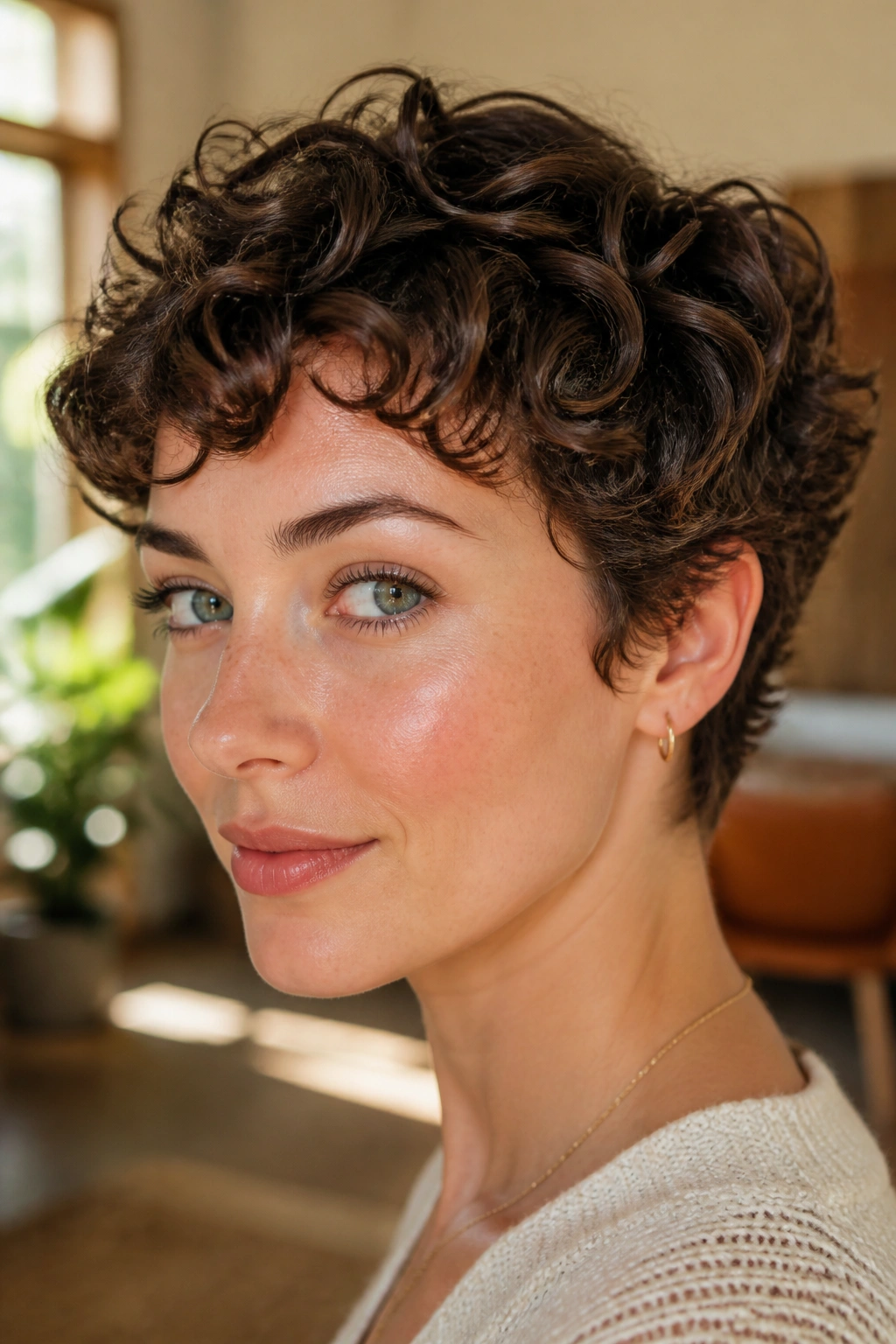
Picture curls sitting close to the head instead of ballooning outward. That is the whole charm of a soft curly crop.
The shape matters more than the length here. A good curl crop should follow the curl pattern, not fight it. If the hair is cut too blunt, the bottom can puff out like a triangle. A better crop uses curl-by-curl shaping and keeps some length around the crown so the silhouette stays round, not wide.
What Helps Most
- Cut curls dry or nearly dry so the stylist can see the real spring.
- Ask for rounded layers, not harsh thinning.
- Use a cream or mousse that gives hold without crunch.
- Diffuse on low heat and stop when the curls are still a little damp.
This is one of those styles that looks casual but takes a thoughtful cut. I trust it on hair that has a natural bend and enough density to hold shape. It also grows out well, which is a nice bonus when you do not want a trim every few weeks.
5. Bixie Cut
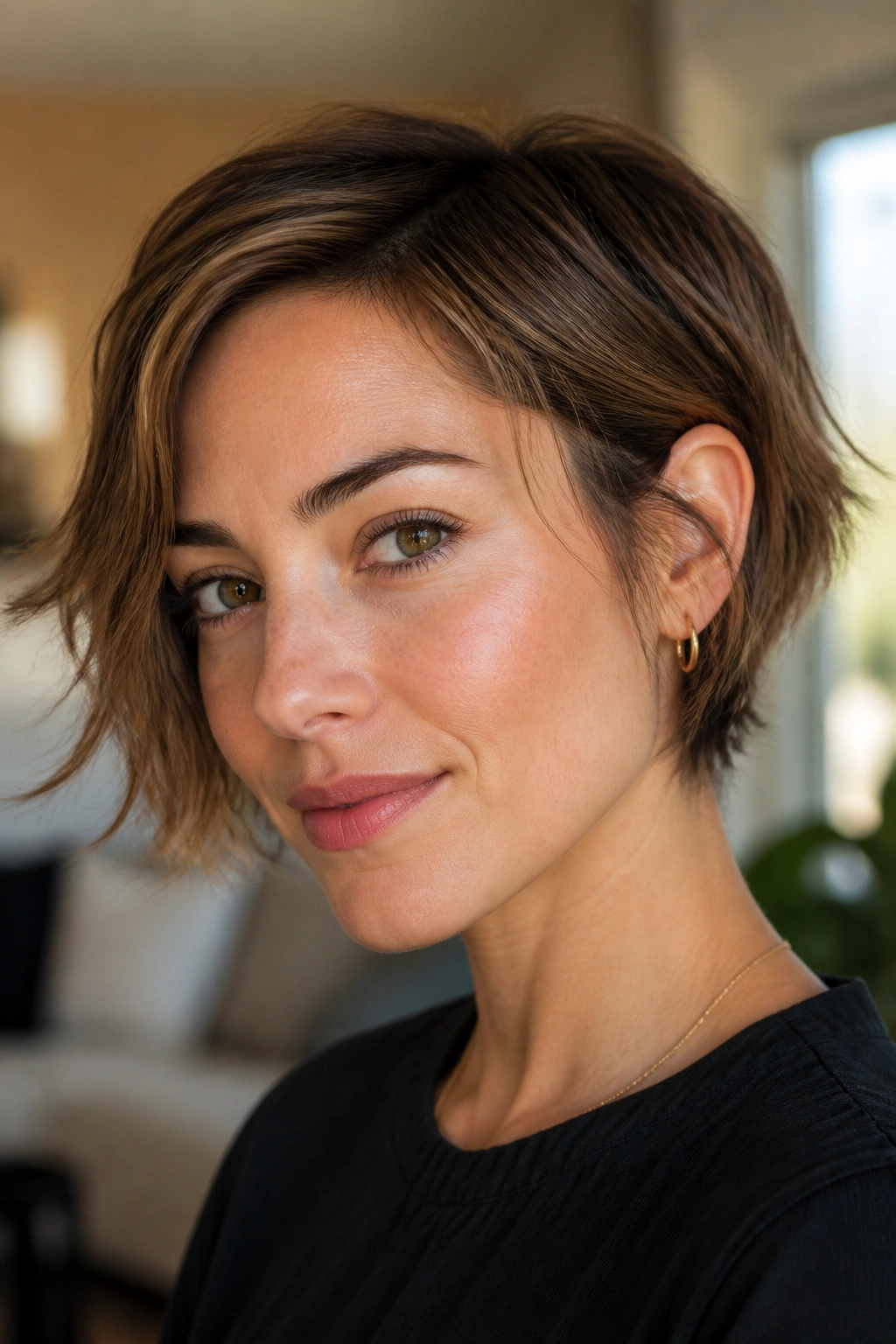
The bixie is what happens when a bob and a pixie stop arguing and make something useful together. It sits between the cheekbone and the jaw, with a little more length than a pixie and a lot more texture than a classic bob.
That in-between feeling is the reason people like it. You get the shape of short hair without the sharp commitment of a full crop. The neckline stays neat, but the front still has enough length to tuck behind the ear or sweep forward when you want softness. It is one of the easiest cuts to wear when you are growing out something shorter.
I like bixies on hair that has some natural movement. Straight hair can wear it too, but it needs a bit of lift at the roots and a blunt-ish edge so it does not go limp. Ask for choppy interior layers and keep the ends light, not wispy. Too much razoring turns the whole thing fuzzy.
6. Side-Parted Micro Bob
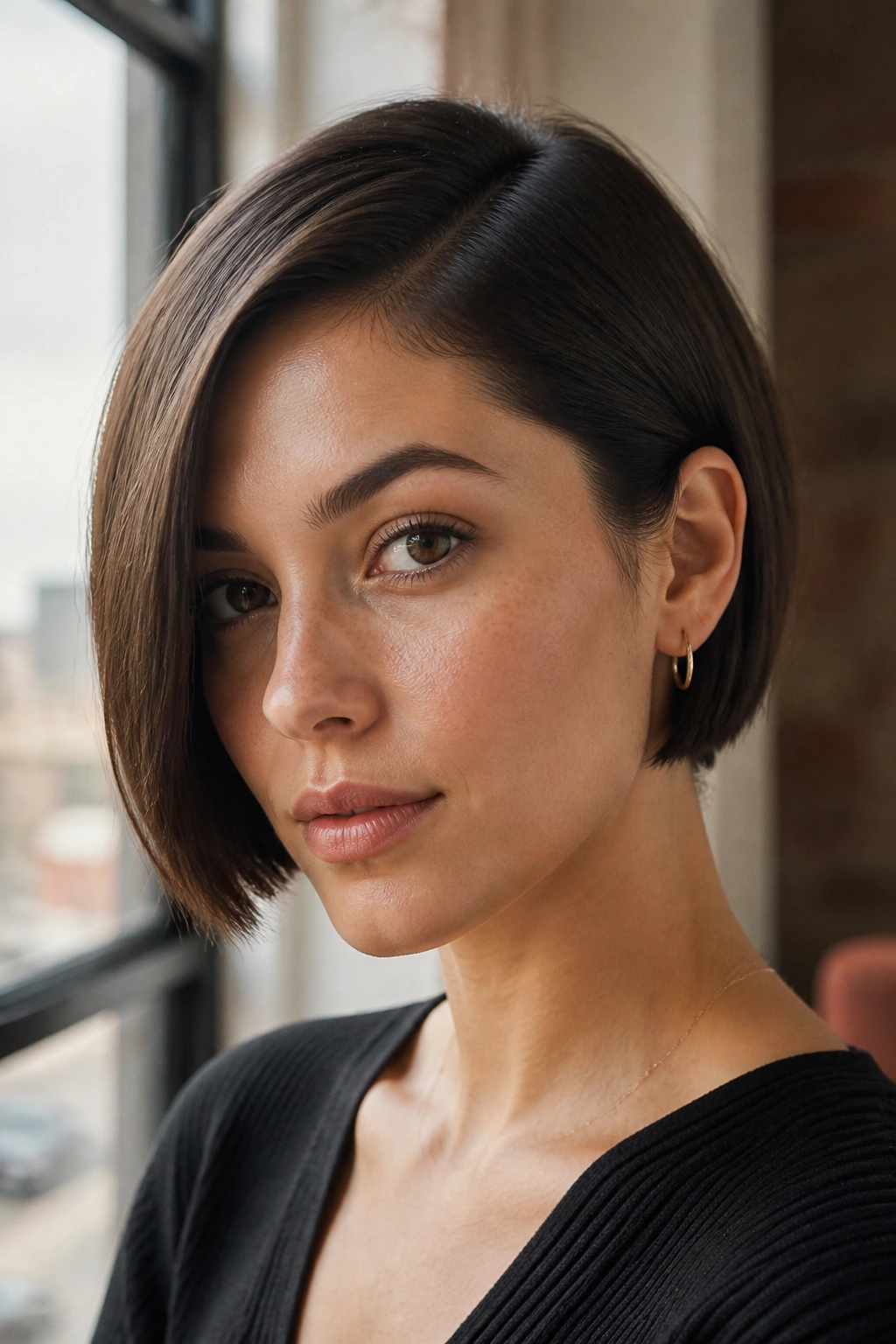
Unlike a center-part bob, a side-parted micro bob uses asymmetry to add height. That one shift can make a short cut feel more open around the face and less rigid through the crown.
It is a good choice if your hair falls flat at the top or if you want the illusion of a little more lift without piling on products. The side part gives one side a bit more volume, which helps balance rounder faces and soft jawlines. Keep the length around the top of the jaw, not much lower, so the shape stays crisp.
The cut works best when the ends are blunt and the part is deep enough to matter. A half-inch part change is not enough. Go farther over, then tuck one side behind the ear and let the other side frame the cheek. That small tension gives the style its personality.
7. Shaggy Wolf Cut
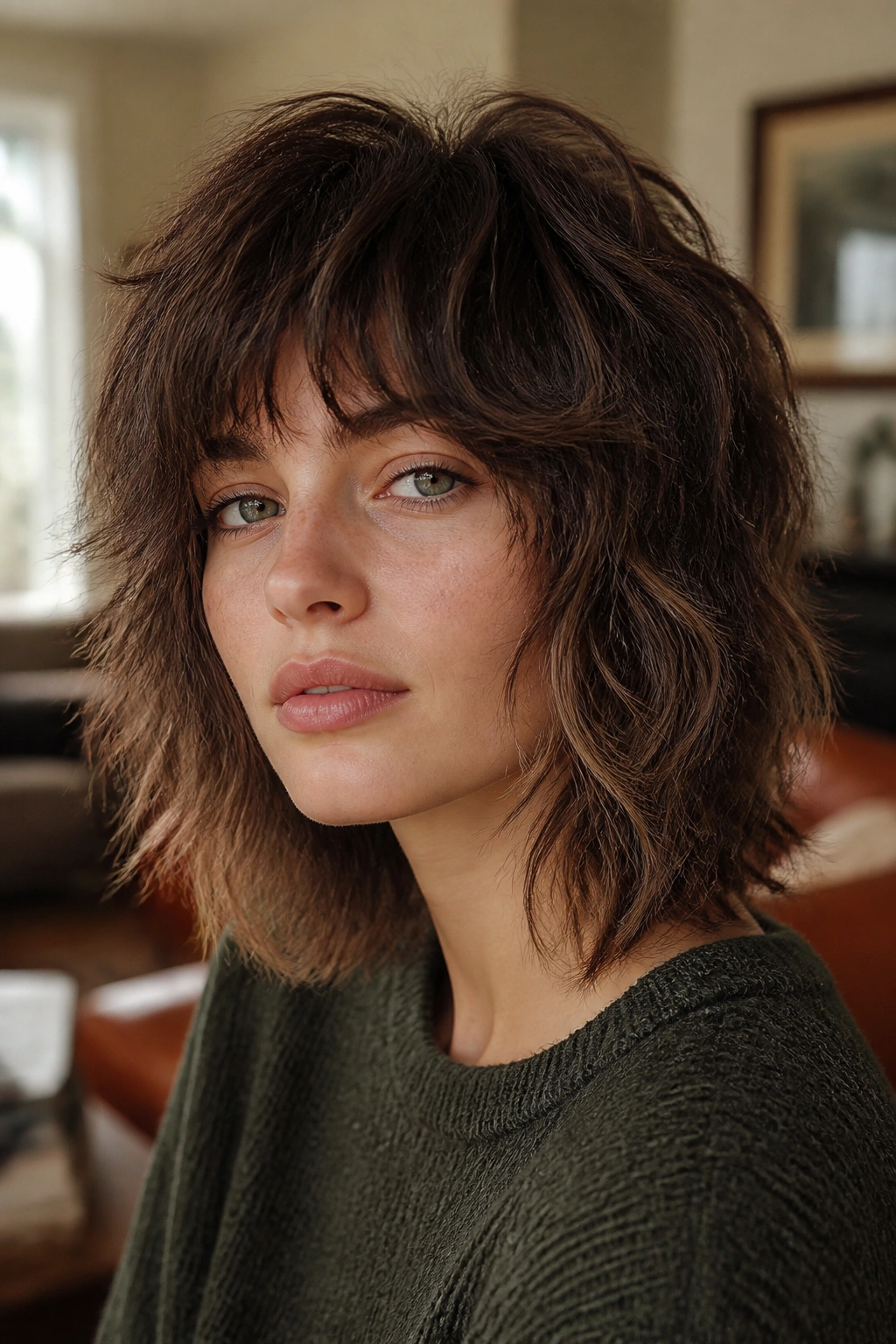
A shaggy wolf cut is not shy, and that is exactly why it works on thick or wavy hair. The layers are heavier at the crown and lighter through the ends, so the shape has movement without turning into a mushroom.
Where It Helps Most
If your hair grows out in all directions, this cut can turn that into texture instead of chaos. The shorter layers near the top create lift, while the longer pieces around the nape keep the finish from looking too choppy. It is a strong choice for people who like a lived-in look and do not want to blow-dry every morning.
- Ask for soft layers around the crown and a more tapered back.
- Keep some length in front so the face-framing pieces do real work.
- A diffuser or rough-dry with mousse is usually enough.
- Avoid over-thinning the ends; that makes the cut frizz faster.
The wolf cut has a bit of attitude. If that is your thing, good. If not, choose something cleaner.
8. Ear-Length Crop
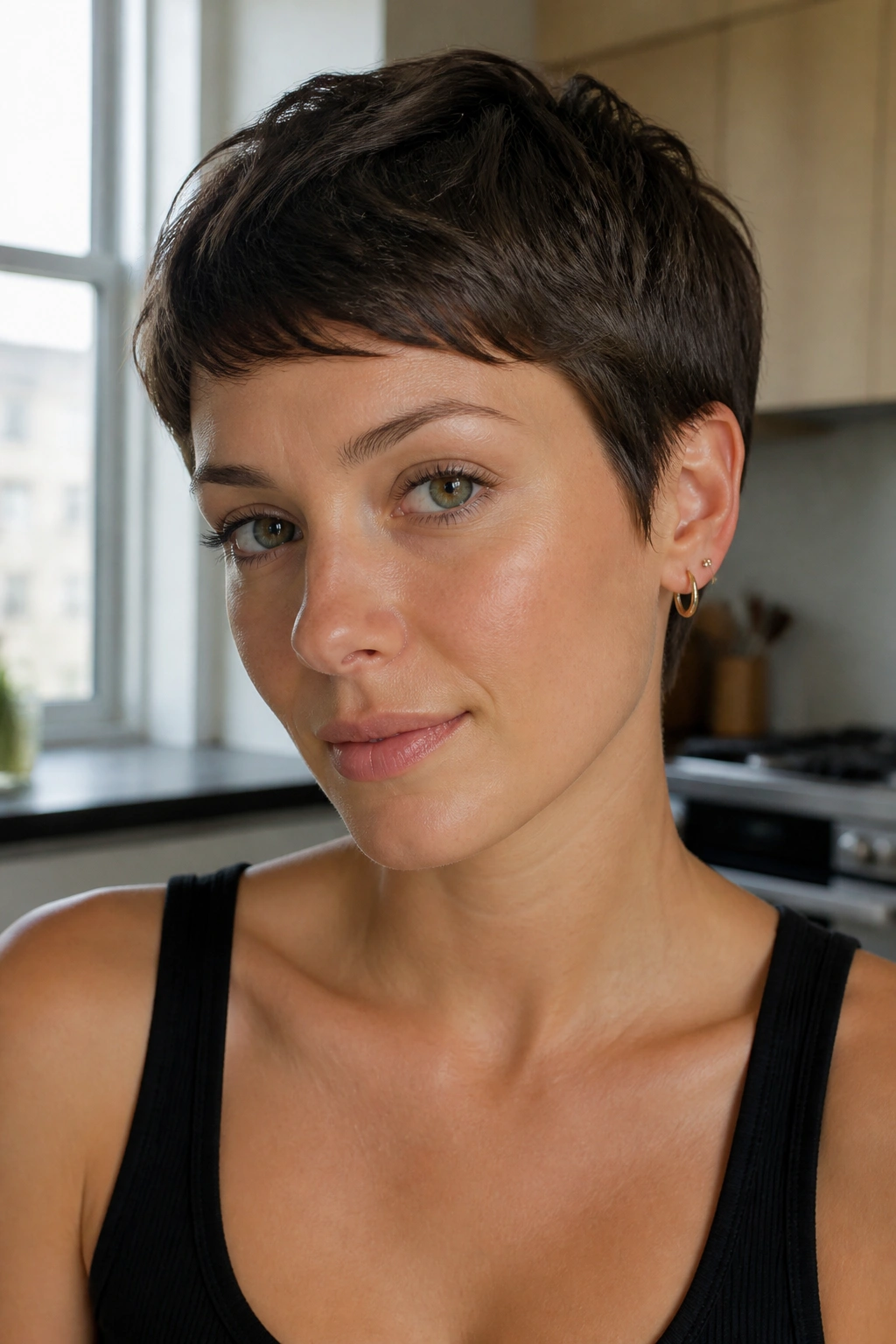
Ear-length hair changes the whole feel of the face. There is no place to hide, and that is the appeal.
This cut works when you want the eyes, brows, and cheekbones to carry the look. It shows earrings nicely, but more than that, it creates a neat little frame around the face without needing much styling. The shape is usually compact, almost tailored, with the sides hugging the head and the top kept just long enough to break the outline.
I like it on people with strong features or a sharp jaw. It can also make very fine hair look denser because the shape is so close to the head. A little styling wax at the fingertips is usually enough. Too much product makes the cut look greasy, and that defeats the whole point.
9. Feathered Pixie Bob
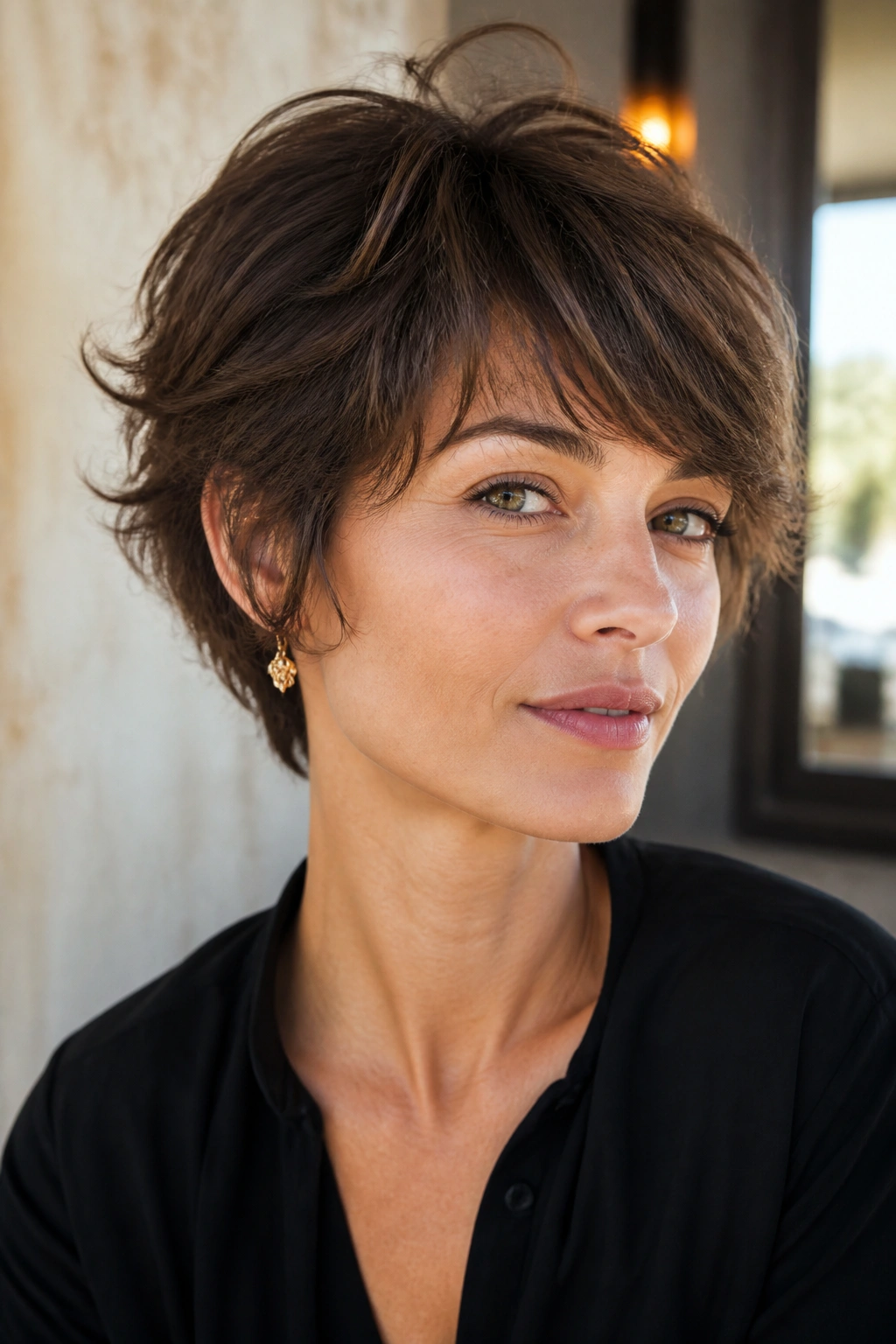
What makes a feathered pixie bob different from a regular short bob? The ends are softened into fine, airy layers instead of being cut into one hard line. That gives the haircut movement around the temples and cheeks, which matters if you do not want the hair sitting like a block.
This shape sits well on medium-density hair and on anyone who likes a bit of texture near the face. It is especially useful when the crown wants volume but the sides need to stay slim. A stylist can slide-cut the top sections so the hair lifts without looking shredded.
How to Wear It
- Blow-dry with a small round brush for bend, not curl.
- Use a lightweight mousse at the roots.
- Keep the fringe piecey, not heavy.
- Trim every 5 to 7 weeks so the feathered shape does not blur.
It feels polished, but not stiff. That balance is the reason I keep seeing it work.
10. Sleek Center-Part Bob
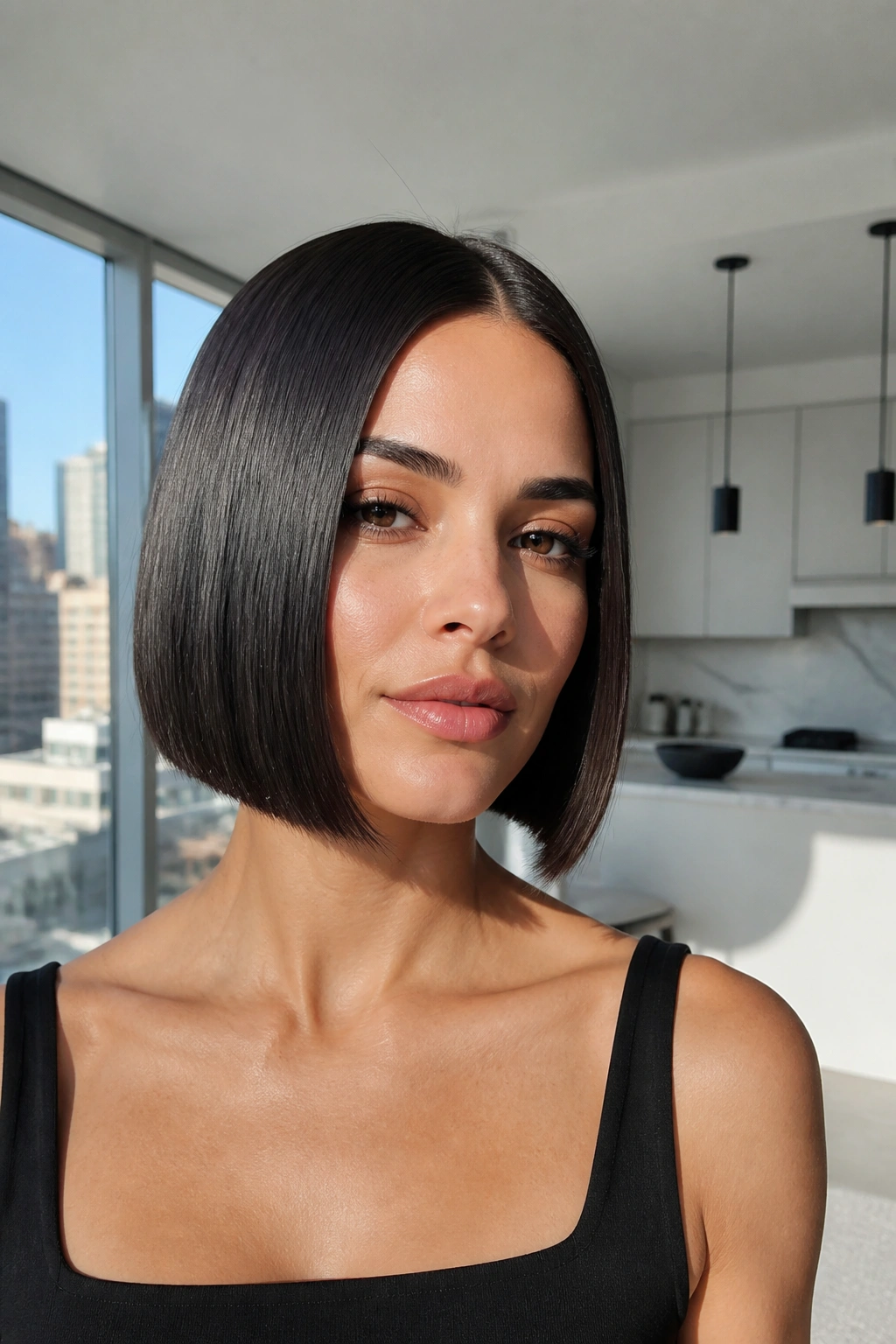
A sleek center-part bob is for the person who likes a clean line and is willing to maintain it. No fluff. No tricks. Just sharp symmetry.
The middle part opens the face evenly, which can look gorgeous on straight hair and on faces with balanced features. The cut usually lands between the chin and collarbone, but for short hair it reads best when it stays closer to the jaw. That length keeps the shape taut instead of dragging down the neck.
The key is shine. A heat protectant, a flat iron with smooth passes, and a tiny amount of serum on the ends will do more than any amount of layering. If your hair bends at weird angles, dry it fully first. Half-dried hair is where sleek bobs go to misbehave.
11. Textured Crop With Fringe
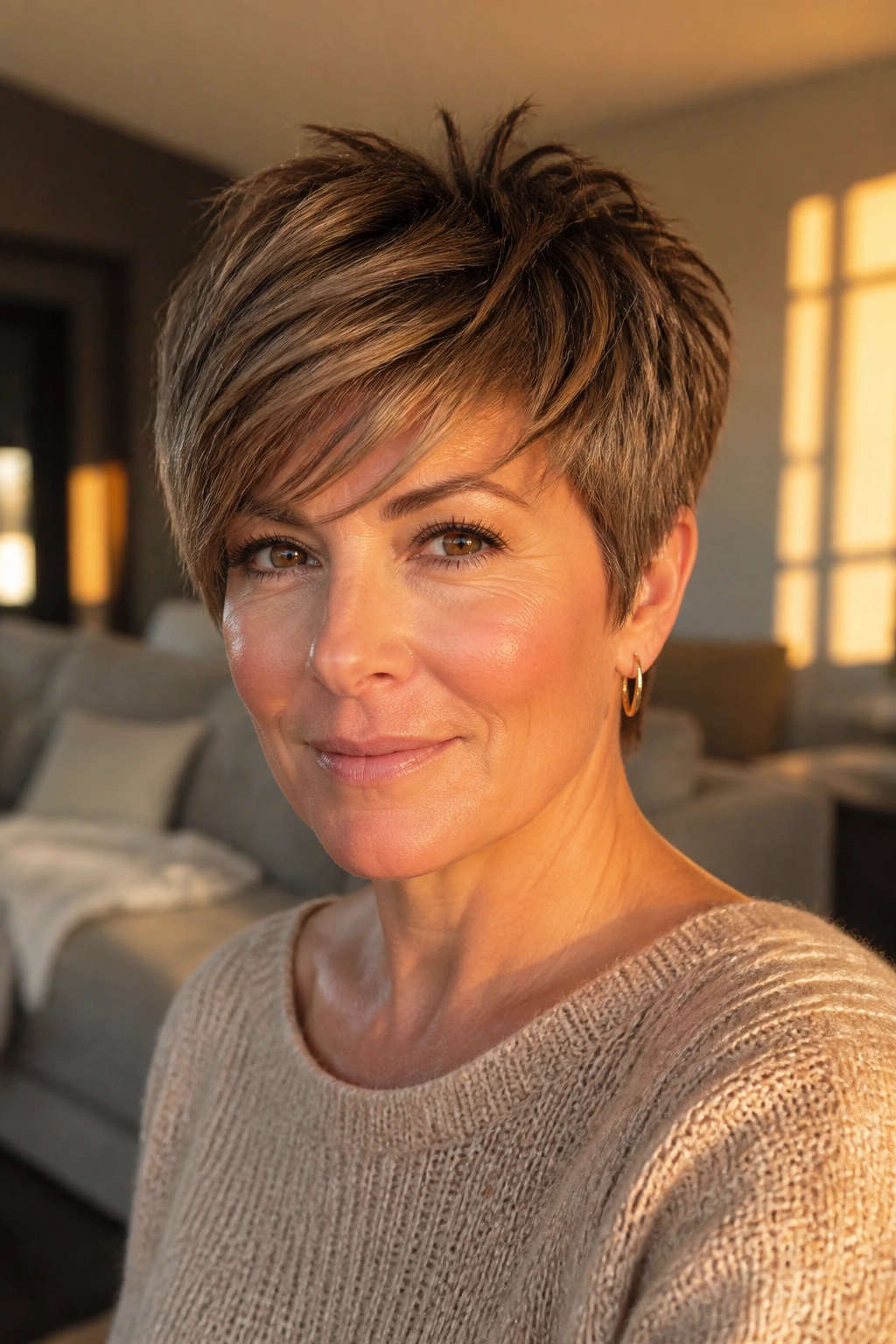
A textured crop with fringe is the short cut for people who want movement up front and none of the fuss in the back. The fringe can be soft, straight, broken up, or slightly side-swept. What matters is that it breaks the forehead line without swallowing the face.
This one is especially good if your hair is fine and you want a style that looks fuller after a quick blow-dry. A little texture in the crown and a short fringe keep the shape from going flat. The trick is not to overdo the thinning. Too much razoring can make the fringe look see-through.
Use a paste or dry texture spray, then twist a few front pieces with your fingers. That makes the cut look lived-in without turning it messy. It is a small thing, but it changes the mood fast.
12. Asymmetrical Bob
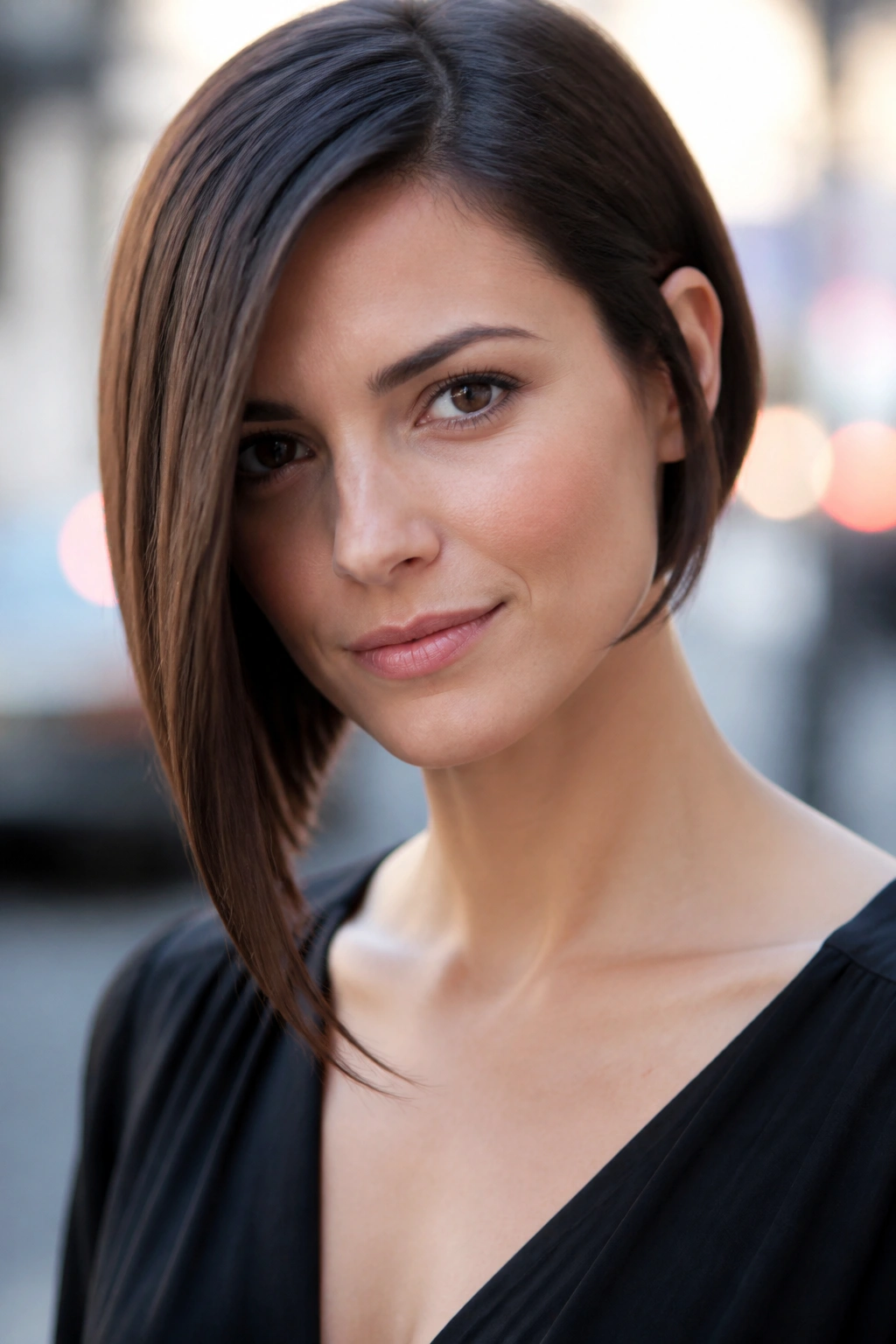
An asymmetrical bob does not whisper. One side sits a little longer, often by 1 to 2 inches, and that diagonal line pulls the eye downward in a way a straight bob cannot.
It is a smart cut if you want short hair with some edge but do not want to go all the way into a dramatic undercut or a razor-cut shag. The longer side softens the jaw, while the shorter side keeps the neck visible. That push and pull gives the haircut shape, even when you do almost nothing to it.
I like this cut on straight or lightly wavy hair, where the line can stay clear. If the hair is very curly, the angle can disappear unless the stylist builds it carefully. A little smoothing cream and a side tuck make the shape read even better.
13. Boxy Bob With Sharp Edges
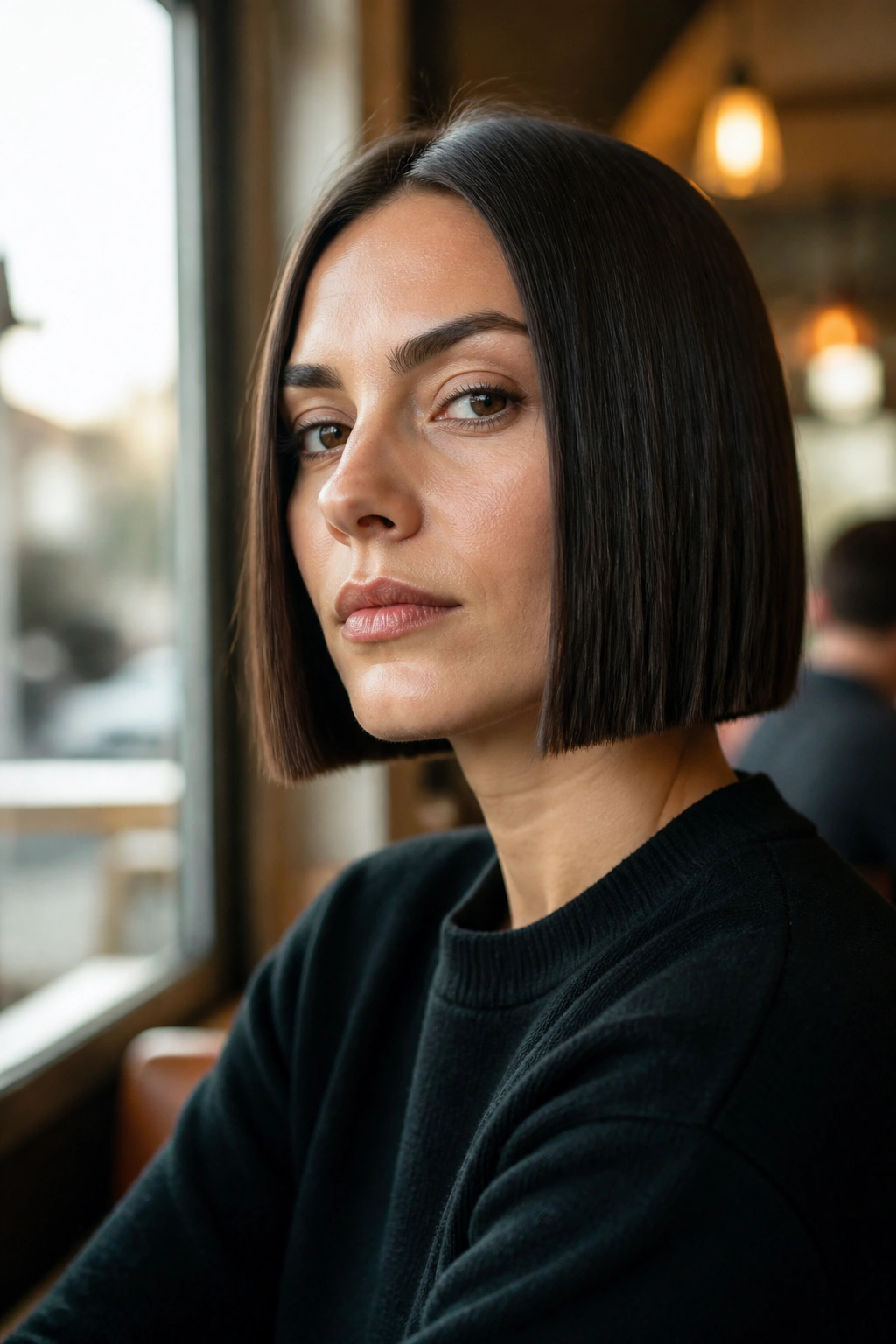
A boxy bob is all perimeter. That is the deal.
Unlike softer bobs that rely on movement, this one depends on a clean square shape around the chin or just below it. It gives thick hair a place to sit, which is useful when layers only make it expand. The end result feels bold, but not fussy. In fact, it often looks best when the styling is minimal.
This cut is strong on hair that naturally falls straight or only bends a little at the ends. The corners at the jaw need to stay crisp, so ask the stylist not to over-layer the bottom. If the hair is very dense, a little internal removal near the back can keep the cut from feeling like a block.
A center part makes it look formal. A side part gives it more life. Either way, the edge is the point.
14. Tousled Jaw-Length Bob

Think of the kind of bob that looks like you slept on it, but in a good way. That is the tousled jaw-length bob.
This cut sits right around the jaw and uses a little uneven texture to keep the surface from looking too neat. It works especially well on hair with a natural wave, because the wave can break up the outline without losing the shape. The best versions still have a visible perimeter; they just do not look carved.
- A sea-salt mist or light mousse gives the hair grip.
- Rough-dry about 80 percent of the way, then stop touching it.
- Scrunch the ends only if the wave pattern needs help.
- Keep the length close to the jaw so the shape does not drift into a longer bob.
The style has an easy charm, but the cut has to be deliberate. If the layers are random, it looks unplanned. If they are placed well, it looks like the hair behaves on purpose.
15. Curly Bob With Rounded Shape
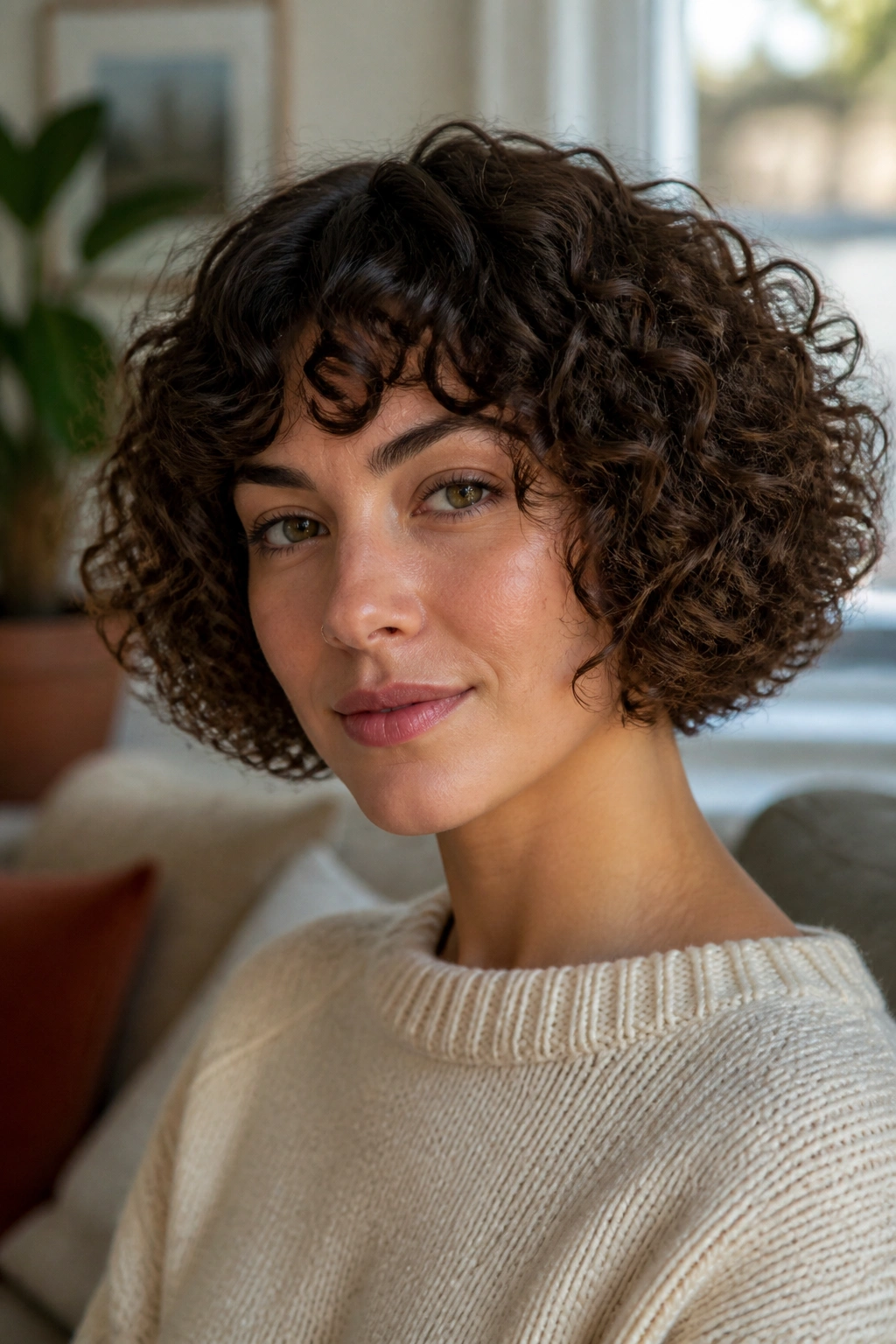
Why do some curly bobs look lovely while others balloon out at the sides? The shape, mostly. A rounded curly bob follows the curl pattern and keeps the widest point near the cheekbones instead of letting the bulk sit at the jaw.
That rounded outline makes curls look fuller without turning them into a triangle. The length usually lands between the chin and neck, but the real work comes from how the stylist handles the layers. Curly hair needs space, yet too many short layers can make the top spring up too high.
How to Shape the Curl
- Cut it dry or nearly dry.
- Leave enough length at the crown to avoid a puffed cap.
- Use curl cream through damp hair, then diffuse on low.
- Trim the ends before they split, because curls show damage fast.
This is one of the most flattering short haircuts for curls when the goal is softness, not drama. It looks shaped, not forced.
16. Undercut Pixie
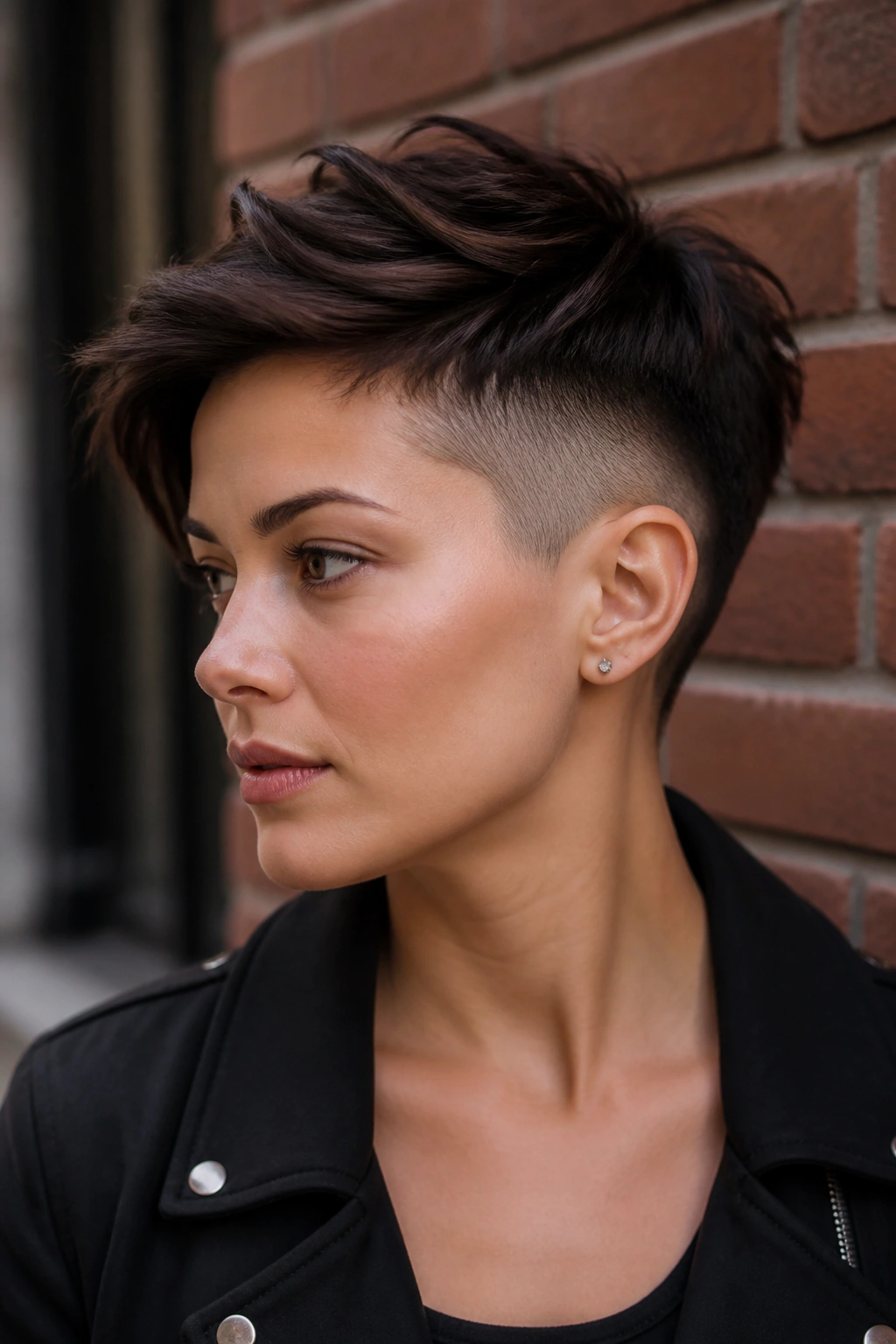
An undercut pixie is the answer when thick hair has too much bulk and not enough willingness to sit down. The hidden undercut removes weight at the sides or nape, while the top stays long enough to style.
That contrast makes the haircut feel lighter the second it is cut. The top can be swept forward, spiked a little, or left soft and piecey. The undercut itself does not need to be obvious unless you want it to be. Sometimes the best part is the silence — the bulk disappears, but the cut still looks clean from the outside.
I would choose this on hair that grows out fast and puffs around the ears. It is also good if you sweat at the nape or wear glasses and do not want hair fighting the arms. Keep the maintenance honest, though. The undercut loses its edge fast once the regrowth starts to show.
17. Rounded Bob With Volume
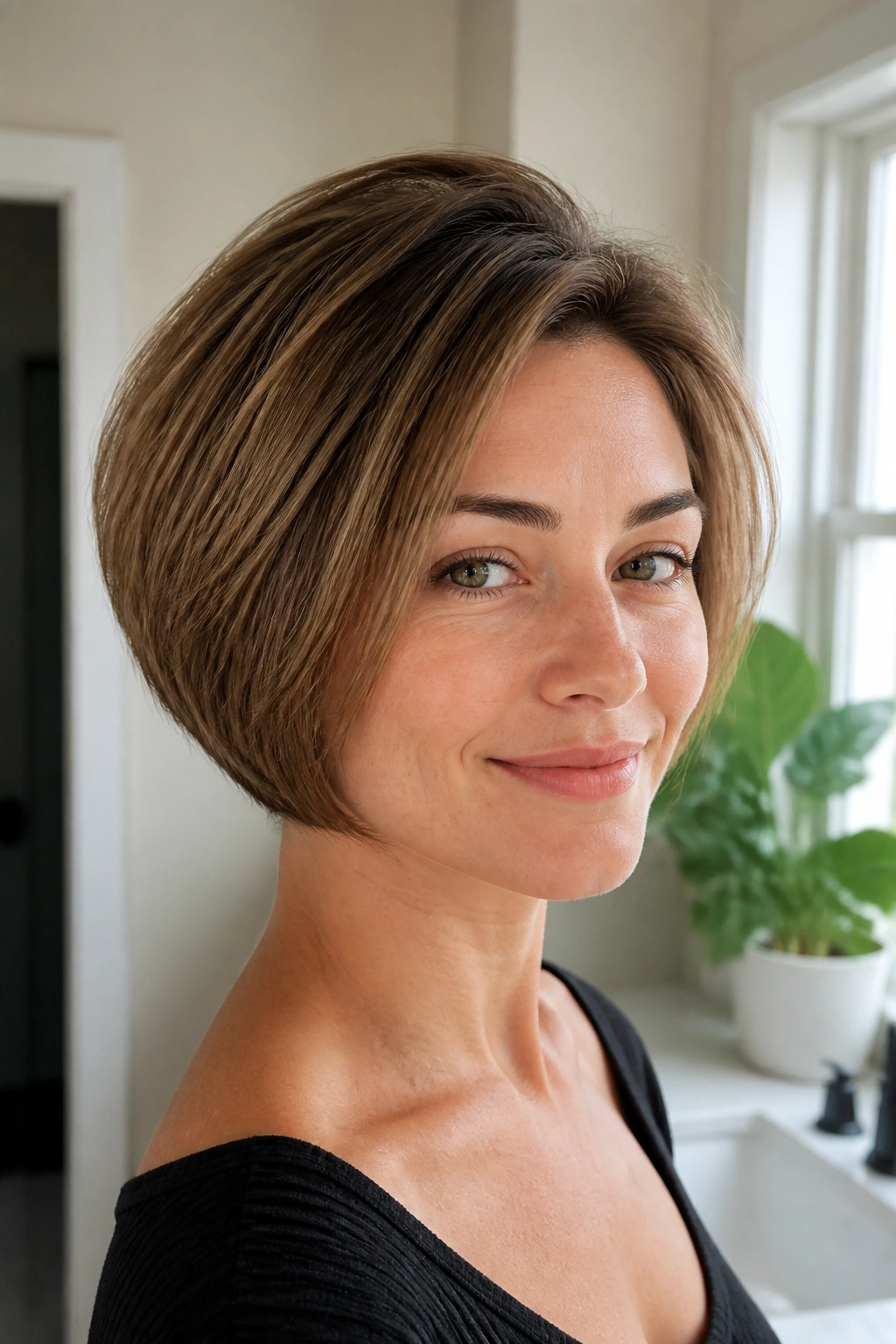
A rounded bob with volume sits close to the head, then lifts through the crown and curves back in near the jaw. That curve is what keeps it from looking flat. It also gives fine hair a little more presence without needing huge layers.
The shape works best when the blow-dry is careful. Use a medium round brush, lift the roots at the crown, then direct the ends under just enough to suggest a curve. You do not want the ends curled under like a school uniform bob; you want a soft arc that catches the light and follows the face.
This cut suits people who like a tidy finish but do not want the severity of a box bob. It feels polished in motion, especially when the back is slightly shorter than the front. That tiny graduation helps the volume sit where it matters.
18. Chin-Grazing Cut With Curtain Bangs
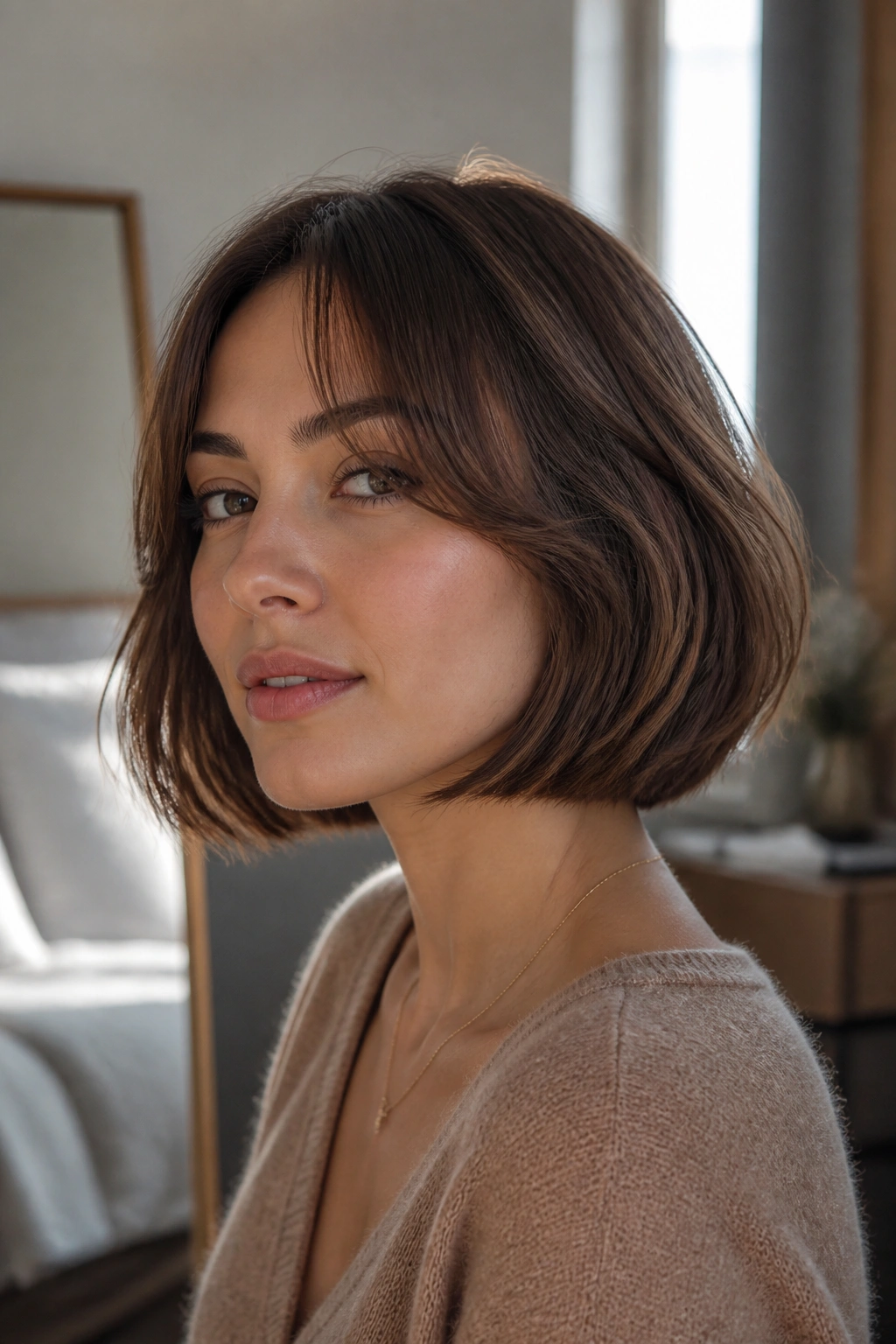
A chin-grazing cut with curtain bangs gives you short hair without putting all the focus at the same line. The bangs split in the middle or just off-center, which opens the face and keeps the forehead from feeling boxed in.
I like this cut on longer faces and on anyone who wants cheekbone emphasis. The bangs should start around eyebrow level and soften as they move down toward the jaw. If they are cut too short, they can fight the rest of the haircut. If they are too long, they just become side pieces and lose the point.
This is a good style for people who want to tuck hair behind the ears during the day and still have a little movement around the face at night. A round brush or a quick bend with a blow-dryer nozzle is enough. Keep the ends light, not puffy.
19. Tapered Nape Cut
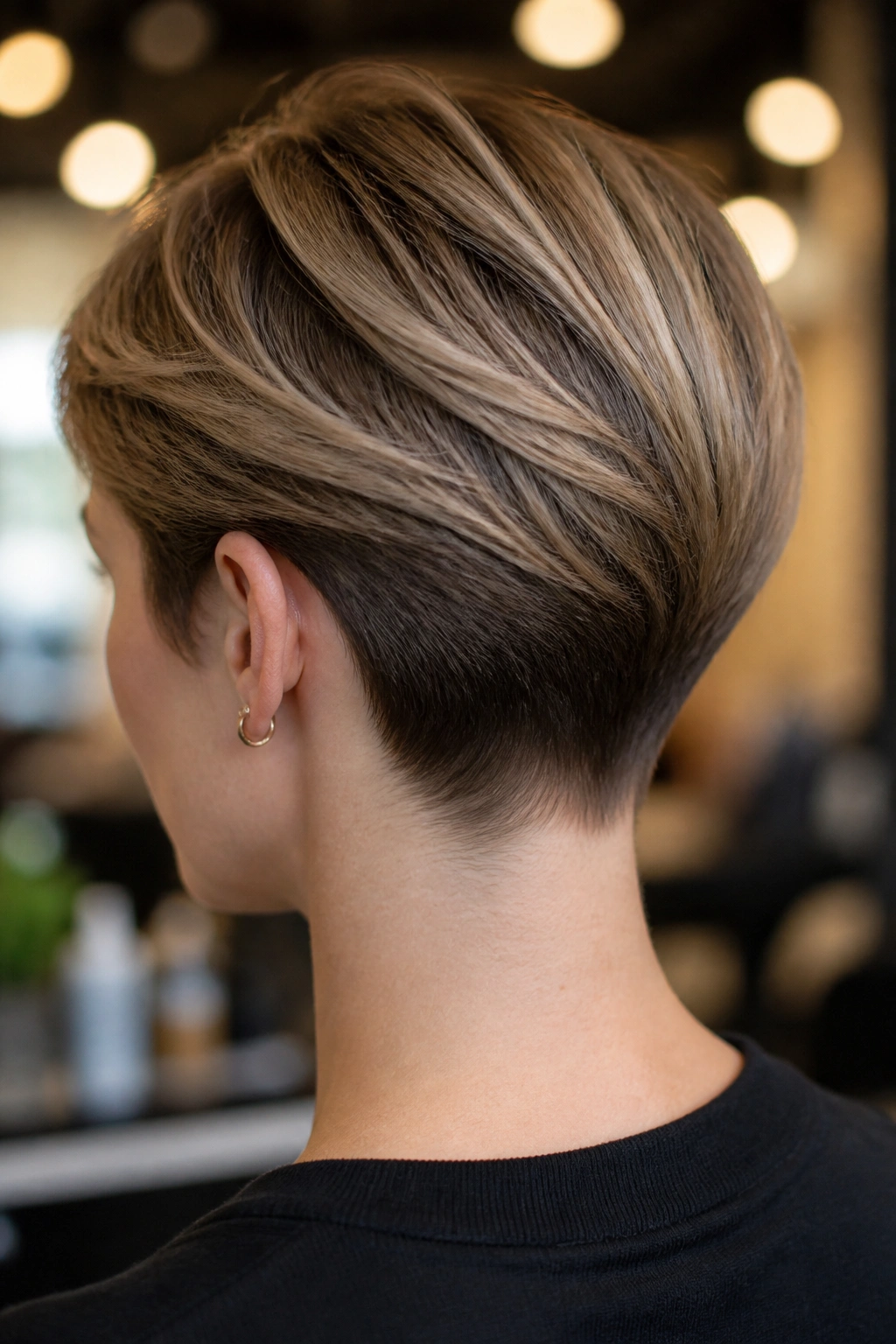
A tapered nape cut is all about the back of the head. The hair gets shorter and cleaner at the nape, then gradually builds longer as it moves upward. That taper makes the neckline look neat and gives the top room to move.
What to Ask For
- Keep the nape close to the head with a soft fade or a precise taper.
- Leave enough length on top to add texture or sweep to one side.
- Ask for point-cutting at the transition so the line does not look abrupt.
- Trim every 4 to 6 weeks if you want the neckline sharp.
It is a good cut for anyone who hates hair brushing the collar or sticking out under jackets. It also wears well with a slight side sweep, because the clean nape gives the front more room to look intentional. There is no need to overstyle it. The cut already does the hard part.
20. Wet-Look Crop
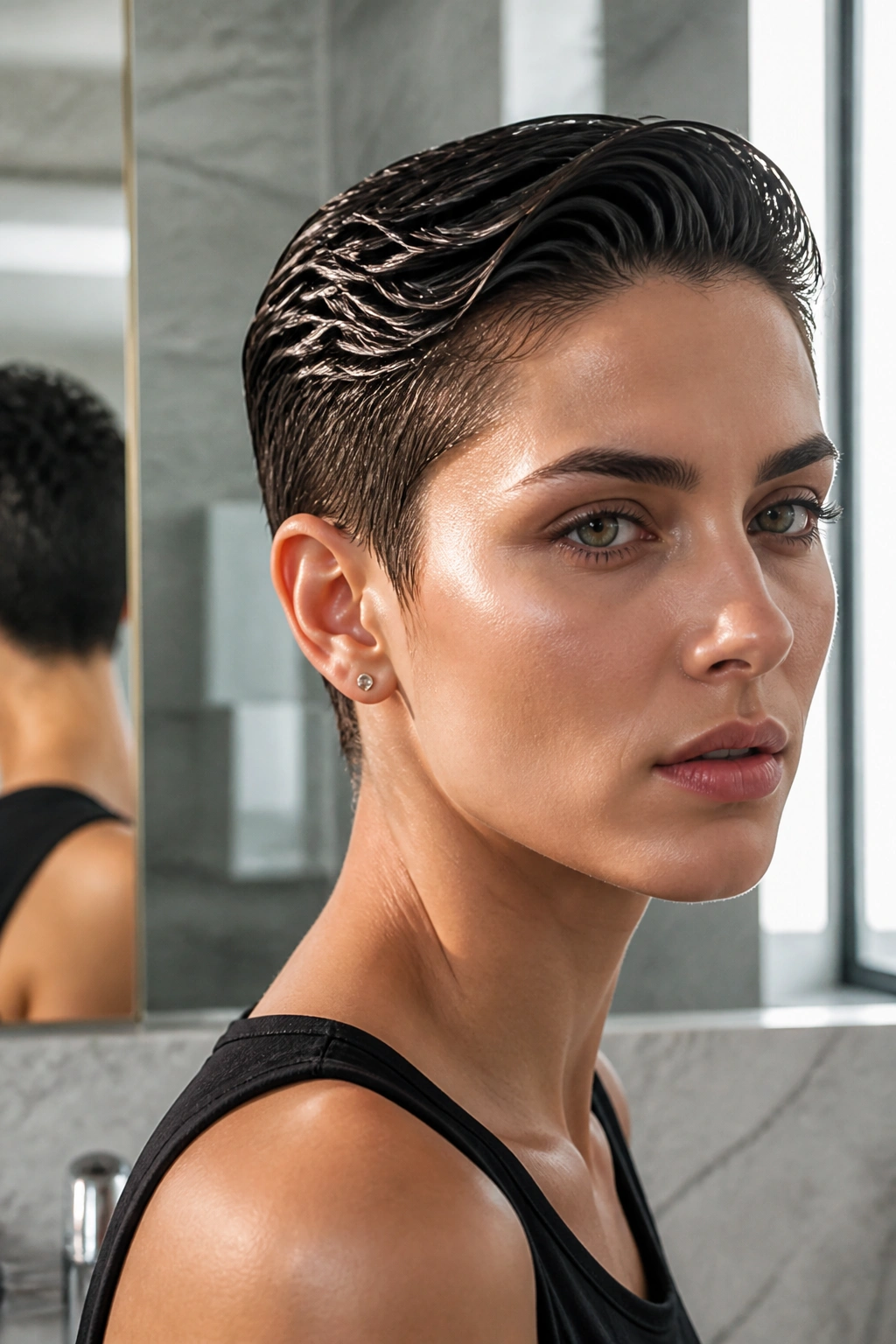
Can a short haircut look polished with almost no movement? Yes, if it is built for a wet look.
This cut thrives on shine and close control. It works on very short lengths where the hair can be pushed back, combed to the side, or shaped into a smooth ridge with gel. The point is not to look actually wet all day. The point is to look sleek, deliberate, and a little sculptural for the hour or two you want it.
Use a strong-hold gel on damp hair, then comb it into the direction you want. A fine-tooth comb gives the cleanest finish. If the hair dries too fast before you finish shaping it, mist it lightly with water and keep going. This style is not for people who hate product. It is for people who like a neat, glossy finish and do not mind a more editorial feel.
21. Wavy Jawline Bob

A wavy jawline bob sits in that sweet spot where the wave hits the cheek and the ends brush the jaw. It is one of the easiest cuts to wear if your hair already has some bend, because the wave carries the shape for you.
The key is not making the wave too perfect. A few bends are enough. If every piece is curled the same way, the bob can look overdone. Let some strands fall straighter, especially near the back. That unevenness keeps the cut from getting stiff.
A light texture spray and a medium curling iron can help, but you do not need to curl all the way to the ends. Leave the last inch straight so the finish feels loose. It is a good cut for someone who wants movement without the upkeep of a full shag.
22. Cropped Mullet

The cropped mullet is not for everyone, and that is part of the charm. Shorter around the front and sides, longer through the back, it gives shape without pretending to be conventional.
What makes it work is proportion. The front has to stay short enough to look deliberate, but the back needs enough length to create that soft tail. If the transition is too subtle, it just looks like a bad grow-out. If it is too sharp, the cut becomes costume-y. The sweet spot is somewhere in the middle, with texture through the crown and a bit of looseness at the nape.
I like this on wavy or straight hair that can hold a piecey finish. A small amount of paste, worked through dry hair, gives the style definition without collapsing the shape. It is one of the few cuts here that can look cooler when it is slightly imperfect.
23. Razored Bob
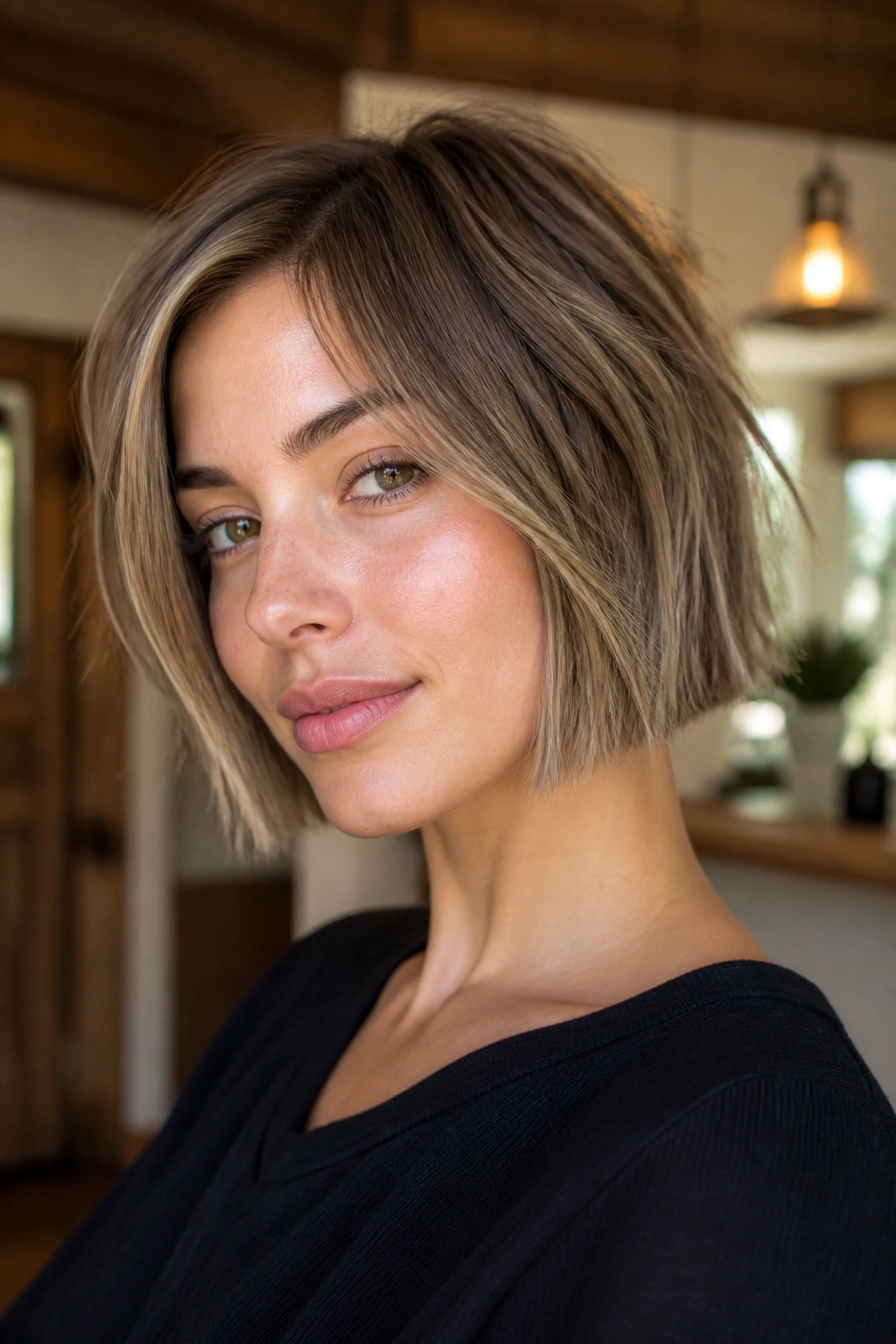
A razored bob can feel airy where a blunt bob feels dense. That difference matters if your hair is thick but you still want a short outline that moves.
The razor removes weight from the ends and breaks up the line, so the bob falls with a softer edge. It can be a smart move on coarse hair that wants to expand, though it is not the best fit for fragile or frizzy hair that already looks rough at the ends. In the wrong hands, a razor can make the perimeter fuzzy fast.
When it works, it is excellent. The hair swings instead of sitting, and the cut looks light even when the hair itself is full. A smoothing cream helps keep the finish under control. I would not ask for this if you want a severe, glossy line. I would ask for it if you want motion and a little looseness around the jaw.
24. Side-Swept Pixie
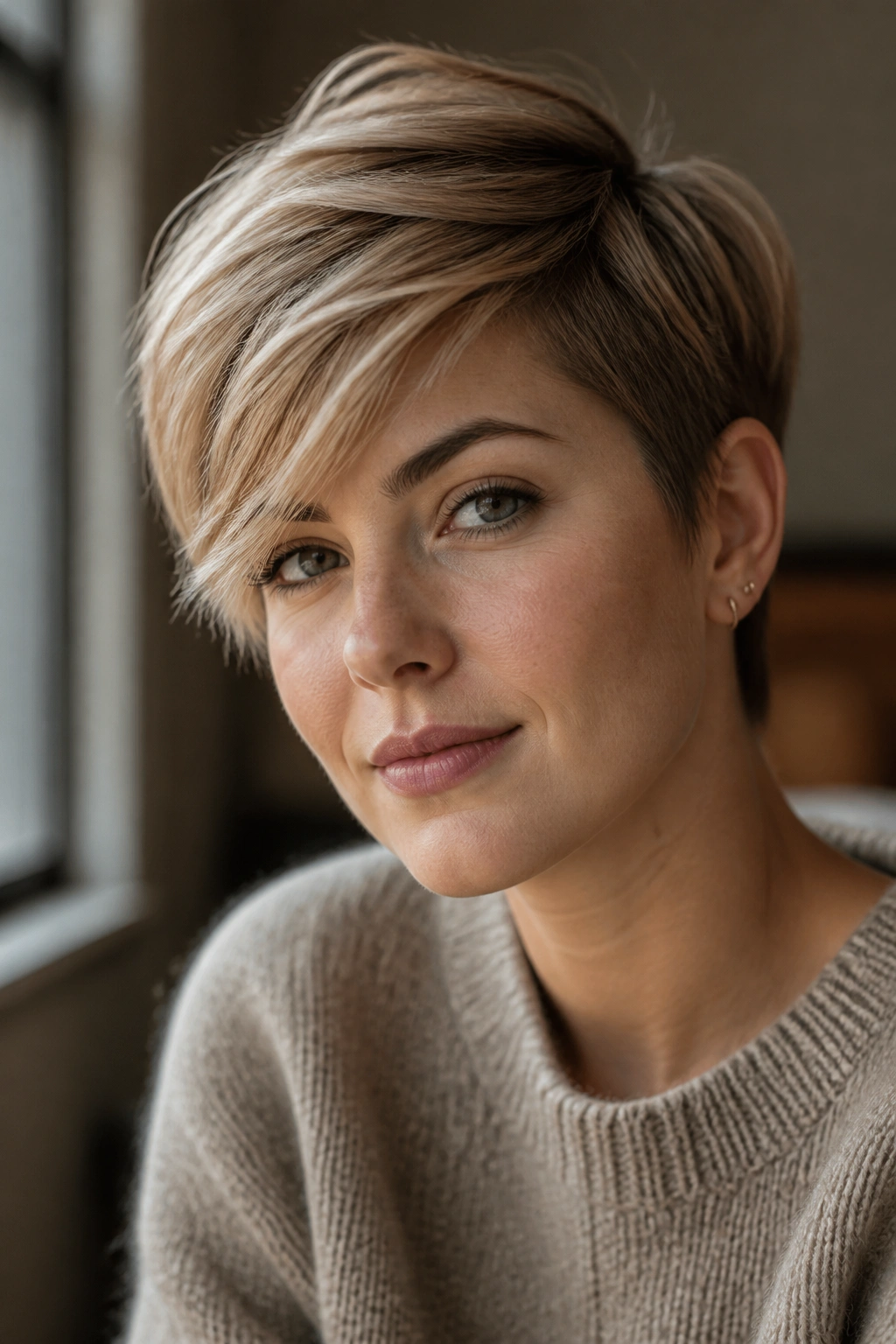
A side-swept pixie is the softer cousin of the super-short crop. The top stays longer, then falls across the forehead or toward one side, which breaks up the shortness and keeps the face from feeling too exposed.
It is a useful option if you like short hair but still want some hair touching the cheek or brow. That small sweep can be flattering on strong foreheads, square faces, or anyone who wants a little asymmetry. The sides should stay neat, though. If the sides get too bulky, the style loses its shape and starts to look grown out.
The easiest way to style it is with a little root spray and a quick finger-dry. Then push the front where you want it and let it cool there. That cooling step matters more than people think. Hair remembers the direction while it sets.
25. Airy Layered Bob
An airy layered bob is what happens when the cut removes weight without stealing the shape. That is harder to do than it sounds. The layers need to be placed inside the bob, not hacked across the outside, or the whole thing starts to look thin.
This cut is a favorite for thick hair that needs breathing room. The top can stay full, while the interior layers stop the ends from stacking up. It also suits people who want movement near the face without giving up the bob silhouette. You still see the outline. You just do not feel trapped by it.
Why It Feels Light
- The weight comes out from inside the shape, not the perimeter.
- The front pieces can stay longer to frame the cheekbones.
- A round brush at the crown gives lift without frizz.
- It grows out better than a heavily chopped bob.
It is one of those cuts that looks better after a little air-drying than after too much fuss.
26. Pageboy Bob
Want something clean but not severe? A pageboy bob answers that very neatly.
The pageboy usually has a smooth curve under the ends and a little fullness around the head, sometimes with bangs and sometimes without. It has a retro feel, but in the right length it can look fresh and tidy rather than costume-like. The curve is the important part. If the ends kick out or get too blunt, the whole mood changes.
It works especially well on straight hair that can hold a line. A blow-dry with a round brush, then a bit of smoothing cream on the ends, keeps the shape consistent. If you want more softness, ask for a little longer length around the front so the curve does not feel too hard. It is a strong choice for someone who likes order.
27. Close-Cropped Cut
A close-cropped cut is the shortest style on this list, and it is also one of the most freeing. The hair stays close to the head, with just enough length on top to create texture or direction.
This cut puts the focus on the face, the neck, the ears, the brows. There is no long fringe to hide behind, which is exactly why some people love it. It is also a blessing for people who are tired of blow-drying. A little styling cream, a quick pass with the fingers, and you are done.
The maintenance is real, though. A close crop needs regular trims because every millimeter changes the outline. If you like a neat silhouette and very little morning work, the trade-off is worth it. If you want flexibility, keep a bit more length on top so you can shift the shape from smooth to piecey.
28. Graduated Bob
A graduated bob builds volume where the back of the head needs it most. The nape sits shorter, then the length stacks upward and forward, which gives the cut its lift and clean profile.
This shape is especially useful for fine hair that tends to go limp at the crown. The stacked back creates the illusion of fullness without making the sides too wide. It also gives the neck a neat, tidy line, which I always think looks more expensive than it sounds. The front can stay a little longer to keep the style from feeling too strict.
Why Stylists Like It
The angle gives structure. The stack gives body. The front balances the whole thing. That is why the graduated bob has lasted so long — it solves a real problem without needing a lot of decoration.
A round brush and a root spray are usually enough. If the hair is too flat, a quick blast at the roots makes the stack pop again.
29. Piecey Crop With Long Top
A piecey crop with a long top is the haircut for someone who likes to play with shape day to day. The sides stay short, but the top keeps enough length — often 3 to 4 inches — to sweep, spike, or separate into little pieces.
That flexibility makes the cut feel different depending on how you style it. Push the top forward and it reads soft. Brush it back and it gets sharper. Work a tiny bit of paste through the ends and it becomes deliberately messy, not sloppy. The sides should stay tighter so the long top has something to contrast against.
I like this on hair that has some natural texture, because the pieces hold better when the strands are not too silky. It is a good cut if you want short hair but do not want one fixed look every single day. Small change. Big payoff.
30. Grown-Out Pixie
A grown-out pixie is the least fussy way to wear short hair. It keeps the spirit of a pixie but softens the edges, letting the top and front reach a little farther so the cut never feels severe.
That makes it a smart option if you like short hair but do not want the constant sharpness of a fresh crop. The shape usually has a little fringe, some movement around the ears, and a neck that stays open without being shaved too close. It also grows into a bob more gracefully than many shorter cuts, which matters if you hate the awkward middle stage.
- Ask for the sides to stay neat, not bare.
- Keep the top long enough to tuck or sweep.
- Use a light cream for control and a wax only on the ends.
- Trim the back before it starts mulleting out.
It is easy to wear, which sounds boring until you live with it. Then it feels like a relief.
Final Take
Short hair works when the shape does real work. A good cut should do one of two things: sharpen what you already have, or soften what feels too hard. If it does neither, it is probably just short for the sake of being short.
I always pay more attention to the neckline and the side profile than people expect. That is where a short cut earns its money. The front may sell the haircut, but the back and sides keep you from regretting it every morning.
Pick the outline that matches your texture, your styling patience, and the way your hair falls after a wash. That is the part most people skip, and it is also the part that makes the difference between a cute idea and a haircut you actually enjoy living in.
