



The short haircuts women ask for most often share one trait: they make a clear shape fast. A blunt bob lands at the jaw and looks finished even when you barely style it. A pixie opens up the face and puts the neck back on display. A shaggy crop can make thick hair feel lighter in a way long layers rarely do.
Hair grows out into truth.
That’s the part people forget. A short cut can look gorgeous on day one and turn annoying by week three if the weight sits in the wrong place, the fringe was cut too heavy, or the nape was left too boxy. The difference is often tiny — half an inch here, a softer corner there, a little more length around the ears if you wear glasses or tuck your hair back half the time.
I like short cuts that do something useful. Some soften fine hair. Some take the bulk out of thick hair. Some let natural wave do most of the work, which is the only reason busy mornings don’t become a wrestling match with a round brush. The best short haircut isn’t the trendiest one on a phone screen; it’s the one that still looks like you after you’ve slept on it.
So it helps to know which shape you’re asking for before the scissors come out. Some women want a clean bob that lands at the chin. Others want a crop with enough fringe to hide a forehead on days they don’t feel like fussing. A few want something sharper, a little more cheeky, and a little less polite. All of that is fair.
1. Blunt Chin-Length Bob
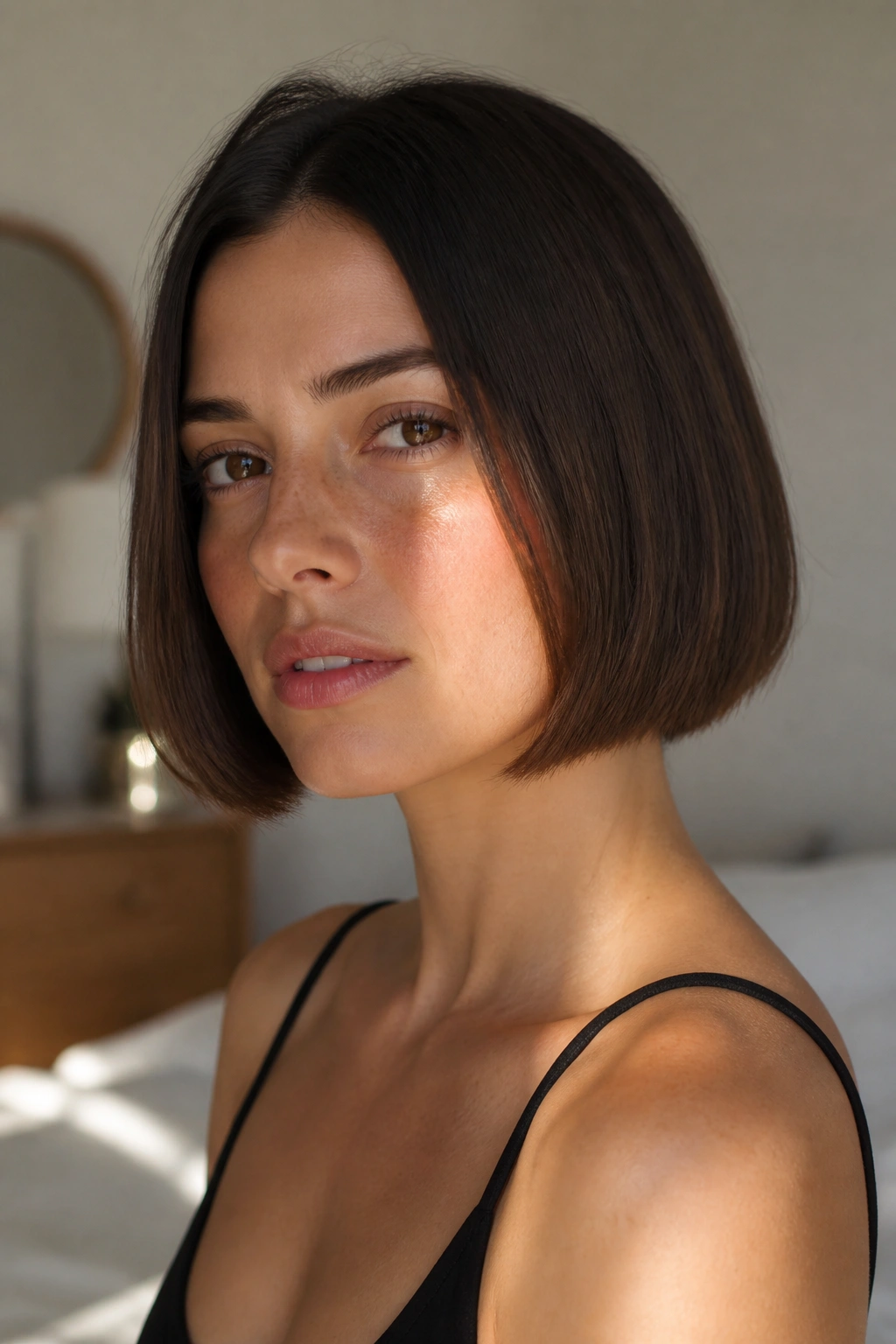
A blunt chin-length bob is the haircut I reach for when someone wants short hair without losing polish. The line sits right at the jaw or just below it, and that clean edge makes fine hair look fuller than it really is. It also gives thick hair a tidy shape, which is more useful than it sounds.
What to tell your stylist
Ask for the perimeter to stay blunt and the front to land at the chin. If your jaw is square, a tiny bit of length in front softens the line. If your hair flips at the ends, a slight bevel at the bottom helps keep it from kicking out in odd directions.
- Keep the ends one solid line.
- Leave the crown heavy enough to avoid a puffy triangle.
- Trim every 6 to 8 weeks if you want the shape to stay crisp.
My blunt opinion: too many layers ruin this cut. The whole point is the edge.
2. French Bob
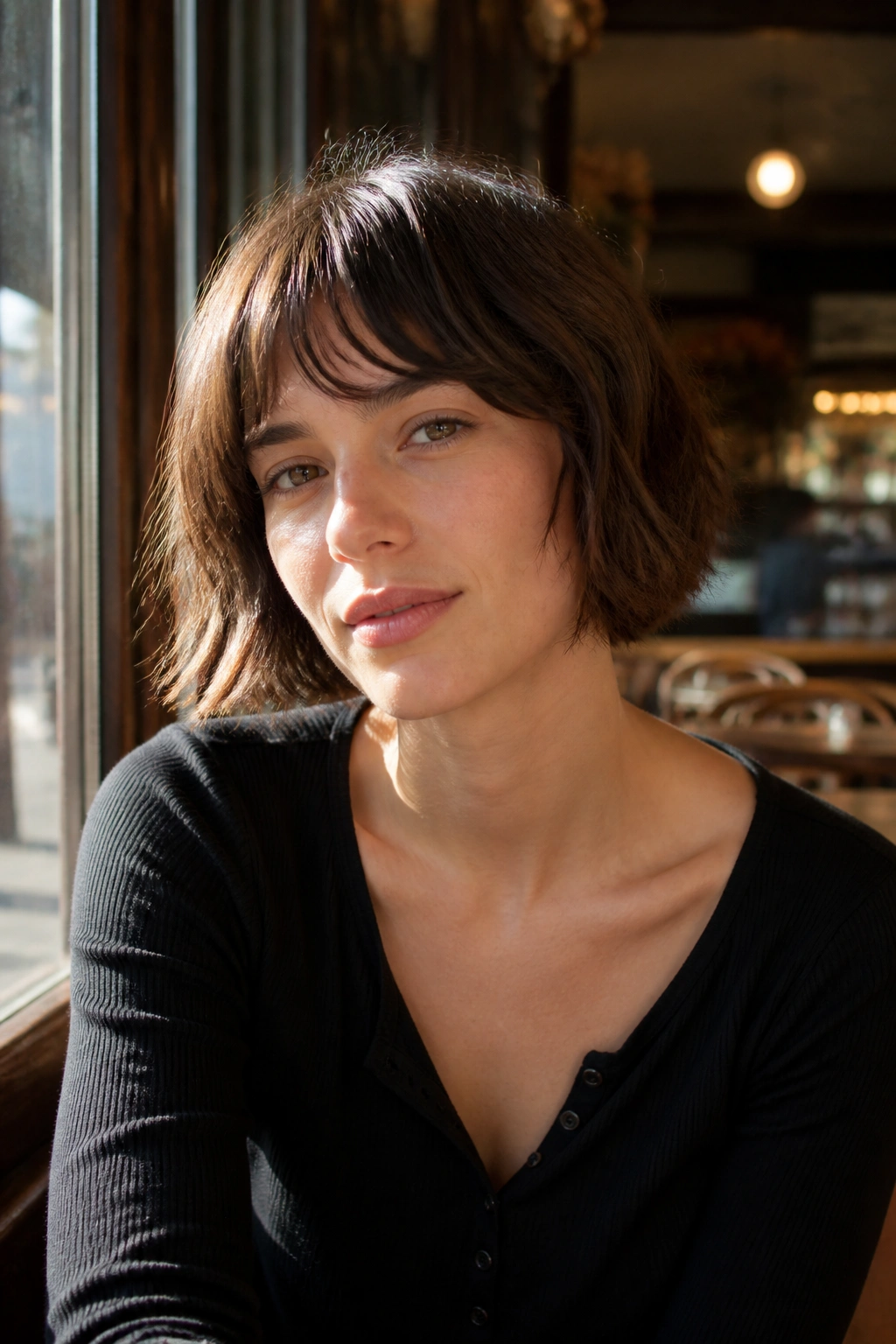
Why does the French bob keep showing up in salon chairs? Because it has that easy, slightly undone shape people keep trying to fake with styling cream. It usually sits at cheekbone or lip level, with a soft fringe or a little bend around the face. The cut looks light even when the hair itself is dense.
It’s a smart choice if you like air-drying. A little wave looks better here than poker-straight perfection, and a bit of natural bend makes the fringe feel lived in rather than stiff. That matters. A French bob can look chic in under five minutes, but it can also look fussy if you overwork it with too much brush tension.
How to wear it
Use a light cream on damp hair, then twist the front pieces away from the face with your fingers. Let it dry on its own, or rough-dry the roots and leave the ends alone. The trick is not chasing symmetry. This cut looks best when it moves.
3. Classic Pixie Cut
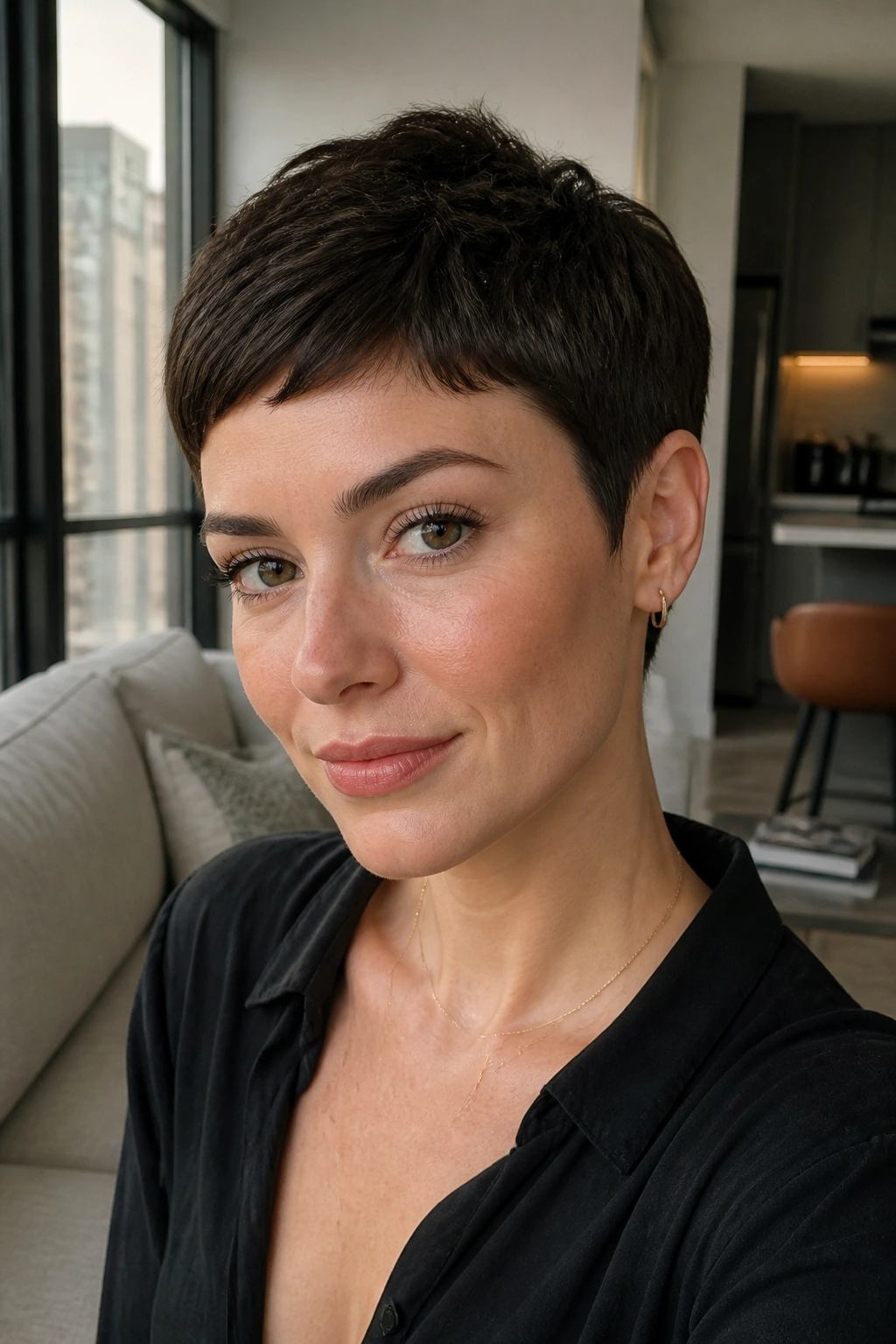
A classic pixie cut is what happens when you want the least amount of hair with the most amount of shape. Short around the ears, cropped at the nape, a little longer on top — that’s the bones of it. Done well, it shows off cheekbones and eyes in a way longer cuts sometimes hide.
People sometimes think a pixie means no styling. Nope. It means less styling. You still need a little paste or cream to keep the top from lying flat, and you still need regular trims if you want the outline clean. The payoff is real, though. It dries fast. It tucks neatly under hats. It feels cool on the neck.
- Ask to keep the top around 2 to 3 inches.
- Keep the sides tighter, not shaved unless you want that look.
- Use a pea-sized amount of matte paste for piecey texture.
If you hate hair falling into your face, this cut is a relief.
4. Bixie Cut
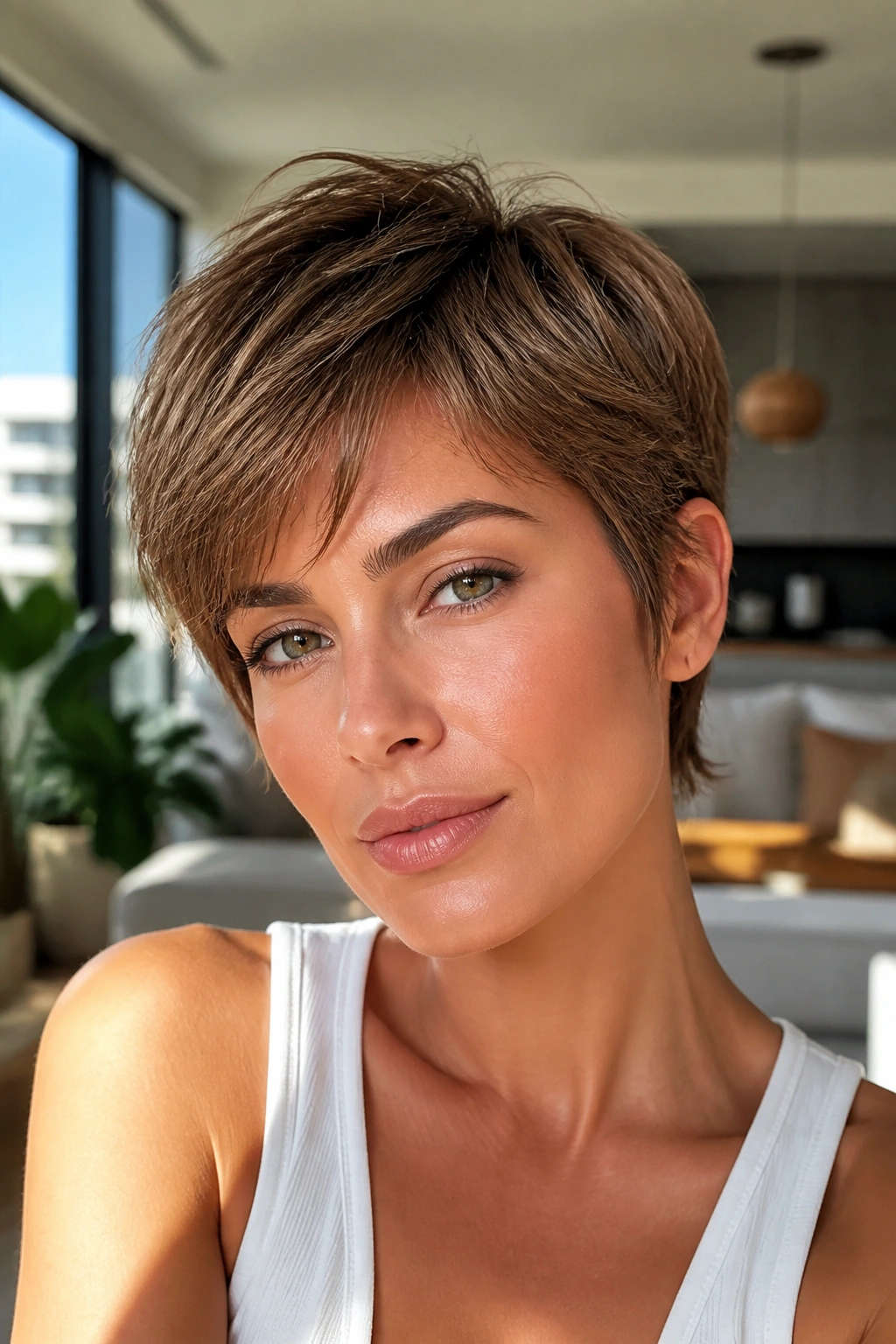
The bixie cut sits between a bob and a pixie, and that in-between length is exactly why so many women ask for it. It keeps more softness than a true crop but loses the bulk of a longer bob. Think of it as a short cut with room to move.
Why it works
The crown usually stays a little longer, while the nape and sides are trimmed close enough to lift the whole shape. That keeps the cut from feeling helmet-like. It also gives you some styling freedom — you can tuck it, ruffle it, or smooth it down when you want a cleaner look.
If you’re nervous about going really short, this is a sensible step. Not timid. Sensible. A bixie gives you a quick path to short hair without making your face feel suddenly exposed.
A small tip: ask for soft layering around the temples. That one detail keeps the cut from looking boxy.
5. Textured Crop
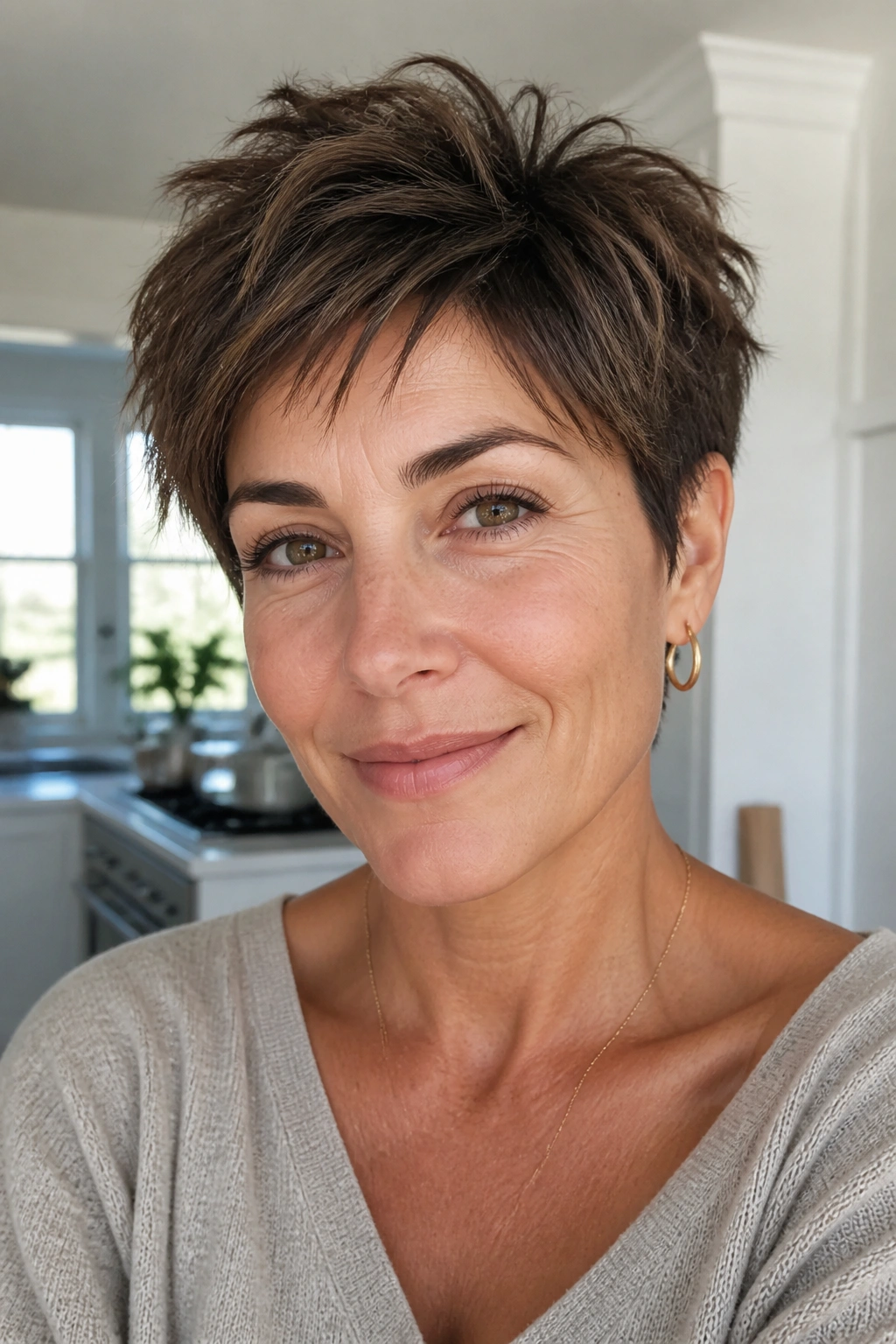
Unlike a blunt bob, a textured crop is built to break up weight. That’s why it works so well on thick hair and why people with straight hair often ask for it when their style starts feeling heavy. The ends are point-cut or chipped into, not left as one hard line. You get movement instead of a wall.
The texture matters more than length here. A crop can sit close to the head and still feel airy if the stylist removes bulk in the right spots. I like it best when the top has some lift and the sides don’t cling too tightly to the scalp. Too much thinning, though, and the shape can go fuzzy fast.
It’s a good pick if you want a cut that dries fast and does not need a brush every morning. A little paste, a little finger work, done.
6. Asymmetrical Bob
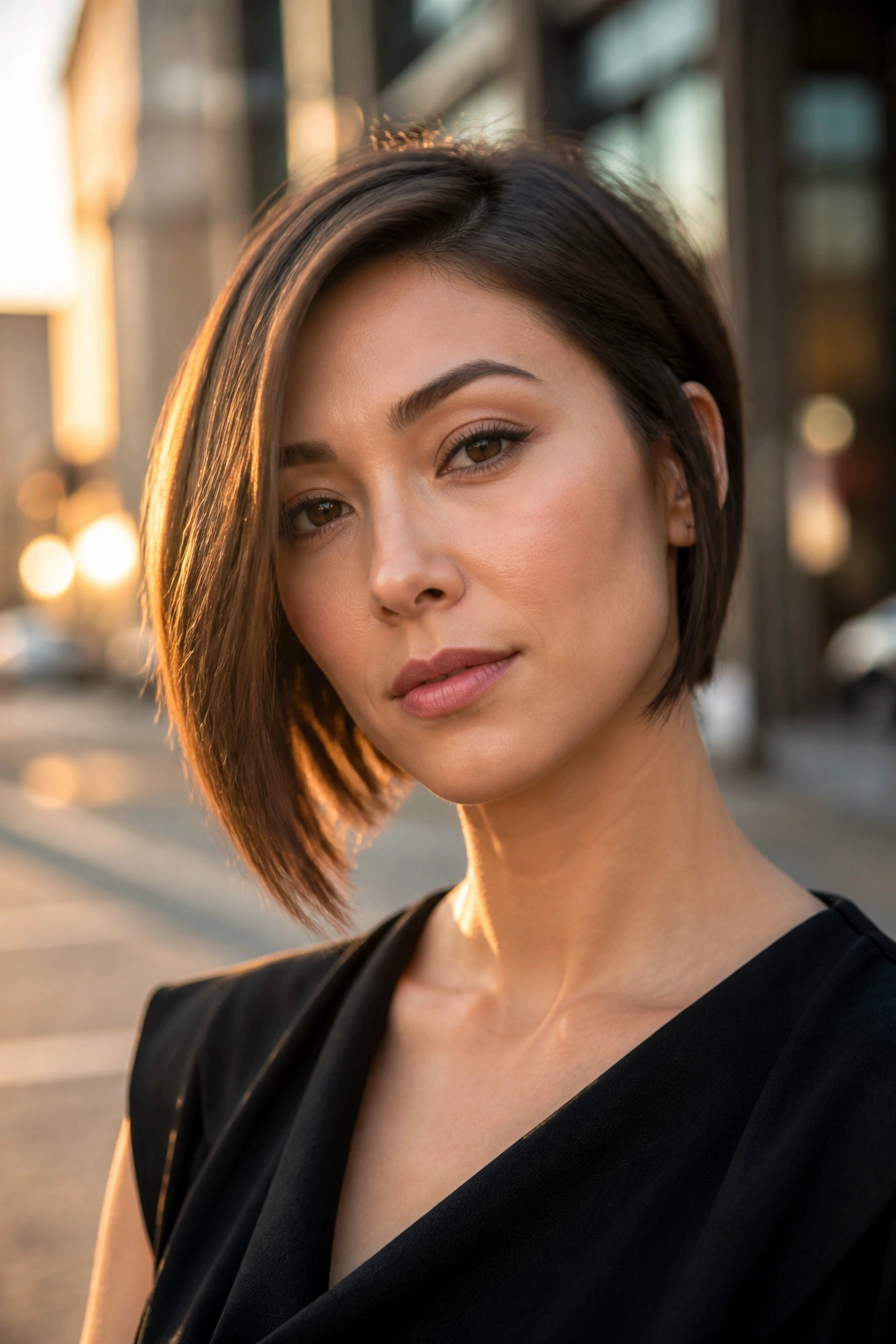
An asymmetrical bob leans longer on one side, and that off-balance line gives it energy right away. It’s a strong choice if you want short hair that doesn’t look too neat. The asymmetry creates a diagonal line across the face, which can sharpen soft features and stretch the look of rounder cheeks.
I’ve always liked this cut on straight or lightly wavy hair. The angle reads best when the hair falls cleanly, not when every strand is fighting for its own agenda. If your hair is very curly, the line can disappear unless the cut is shaped with the curl pattern in mind.
One side can be only an inch longer than the other and still make the cut feel intentional. That small difference does the work.
7. Jaw-Length Curly Bob
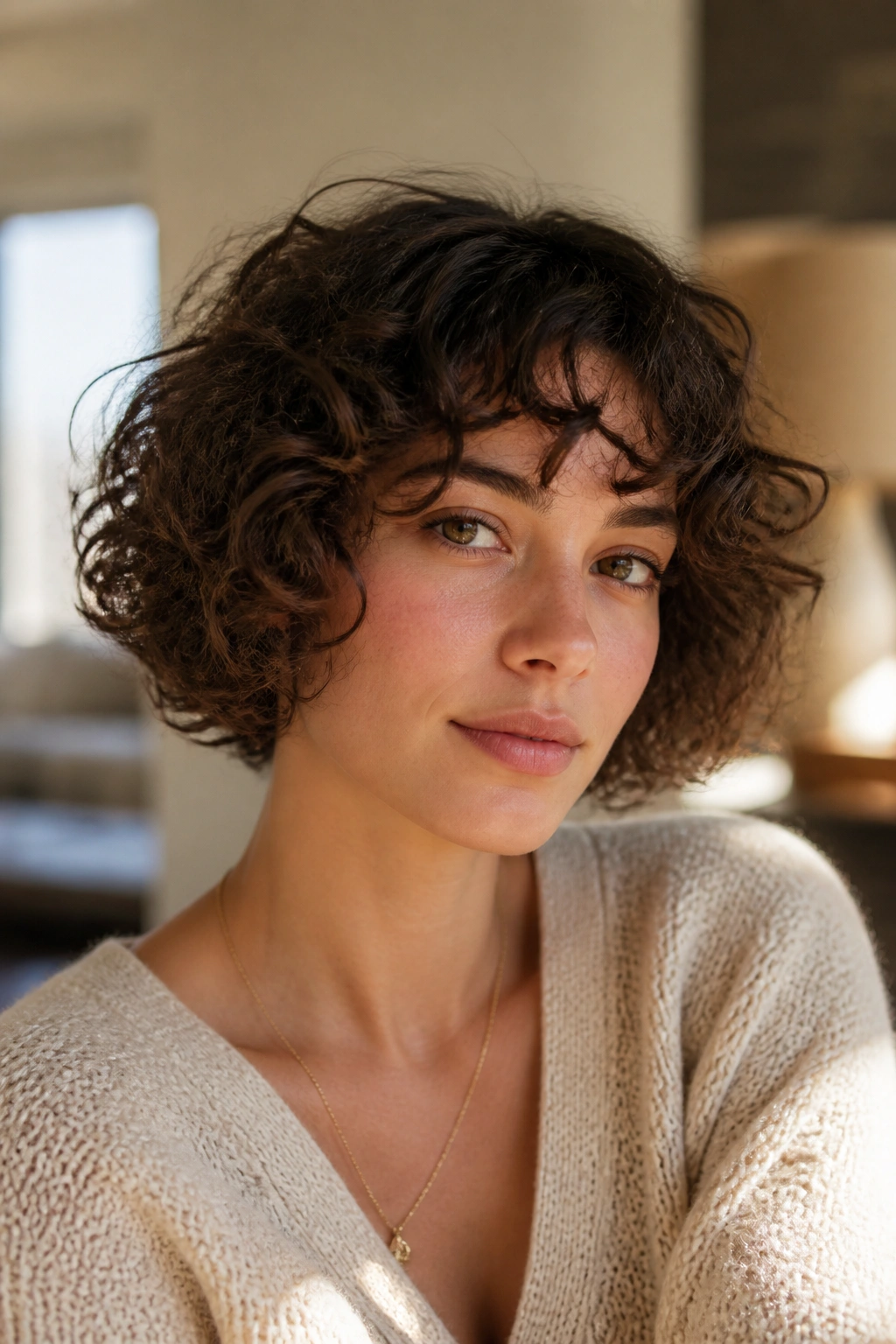
A jaw-length curly bob is one of the smartest short haircuts women with curls keep coming back to. It gives the curls room to spring without swallowing the face. The length sits around the jaw so the curl pattern can build shape instead of stacking into a triangle.
The important part is balance. Curly hair does not need a blunt chop at the bottom and a prayer. It usually needs internal layers, careful shaping, and enough length left in the perimeter so the curls don’t bounce up too high. Many stylists prefer to work with curls dry or mostly dry so they can see the real shape, and that makes sense.
A diffuser helps, but only if you keep it gentle. Low heat, low speed, and a light hold gel or cream. Anything heavier turns the curl into a helmet. Nobody wants that.
8. Soft Undercut Pixie
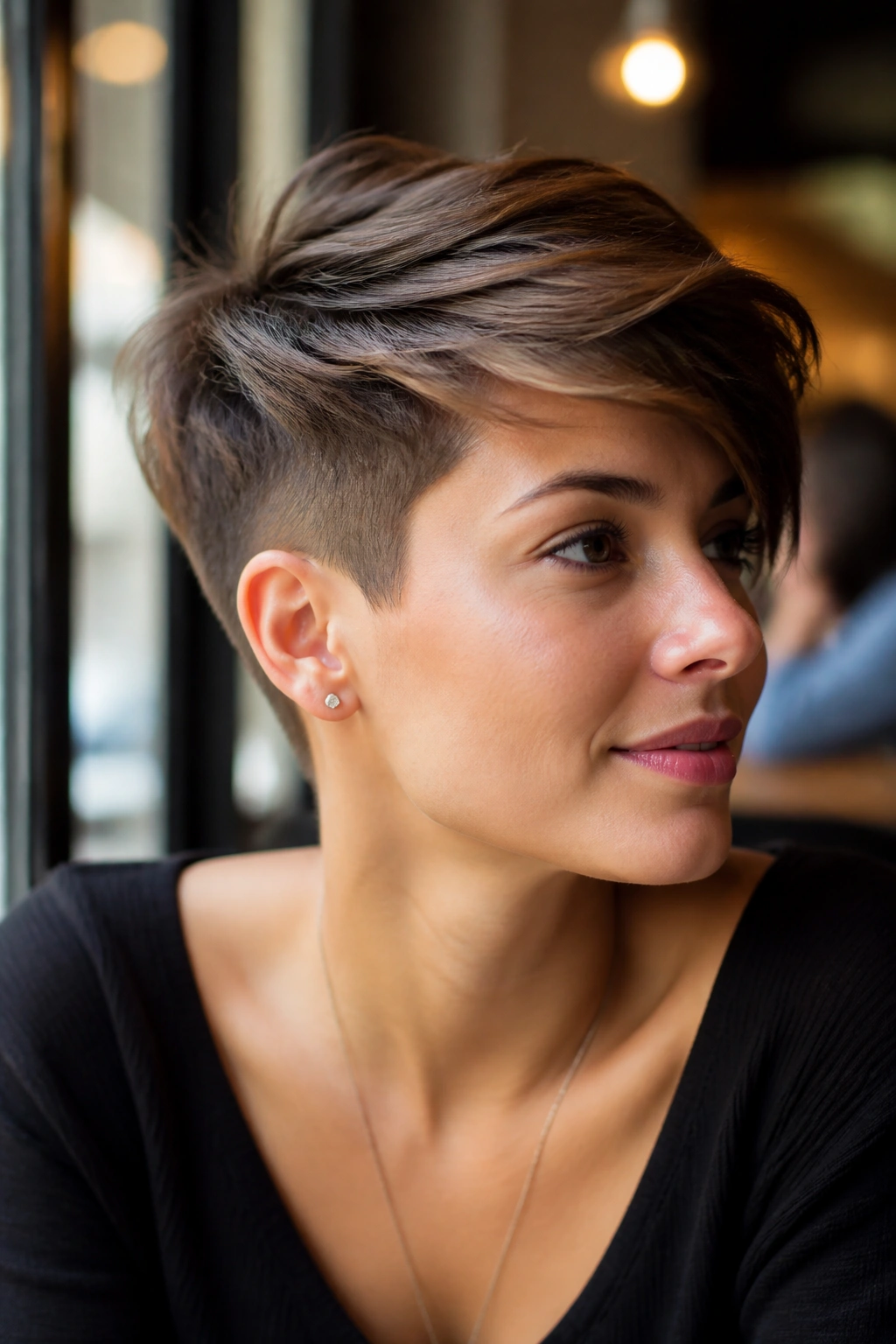
What makes a soft undercut pixie so useful? It removes weight where the hair tends to puff up — usually at the nape or behind the ears — without turning the whole cut into a shaved statement. That hidden undercut can make thick hair easier to handle in a way blunt cutting never quite manages.
How to ask for it
Tell your stylist you want the bulk removed underneath while the top stays soft and movable. If you wear your hair tucked, ask for the side pieces to keep enough length to sit flat. If you wear glasses, this matters even more. A tiny bit of extra length around the ears prevents the frame from fighting the cut.
- Keep the top long enough to sweep forward or over.
- Ask for the undercut to be hidden, not obvious.
- Use a small dab of styling cream to keep the top smooth.
This cut is neat without looking severe. That’s the sweet spot.
9. Micro Bob
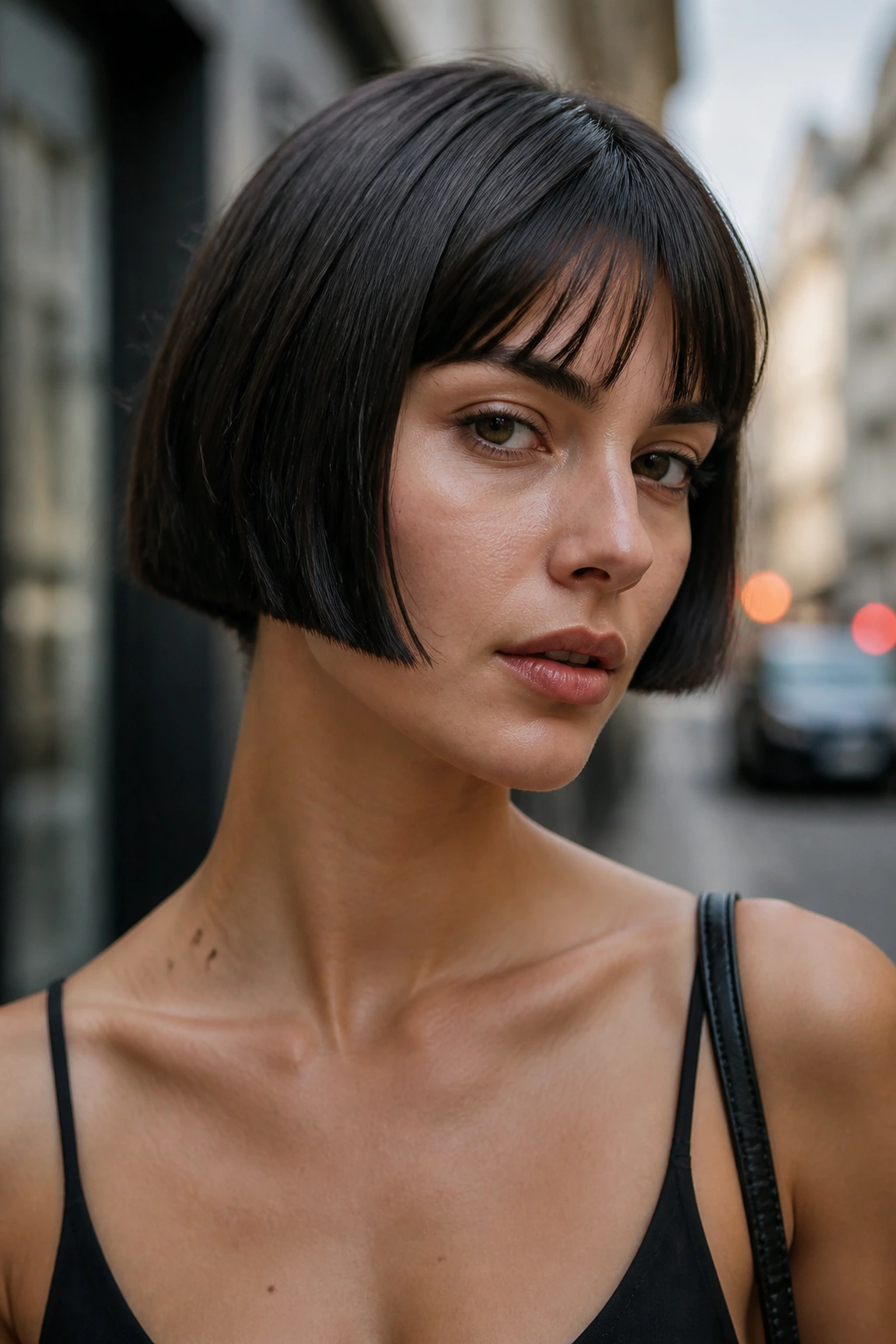
A micro bob is for the person who wants short hair with a sharp little attitude. It usually lands at the cheekbone or just below the ear, and the line is so clean it can almost feel graphic. On the right face, it looks excellent. On the wrong cut, it can look like a box.
This one is best when the ends stay blunt and the hair is straight or only softly wavy. A slight bend can be charming. A lot of bend can make it puff. I’d keep styling simple: a smoothing cream, a paddle brush, and a quick pass with a flat iron only where needed.
- Best for fine to medium hair.
- Needs trims every 4 to 6 weeks if you want the shape to stay tight.
- Works well with a side part or a center part, depending on your face.
It is a tiny cut with a big opinion.
10. Side-Swept Pixie
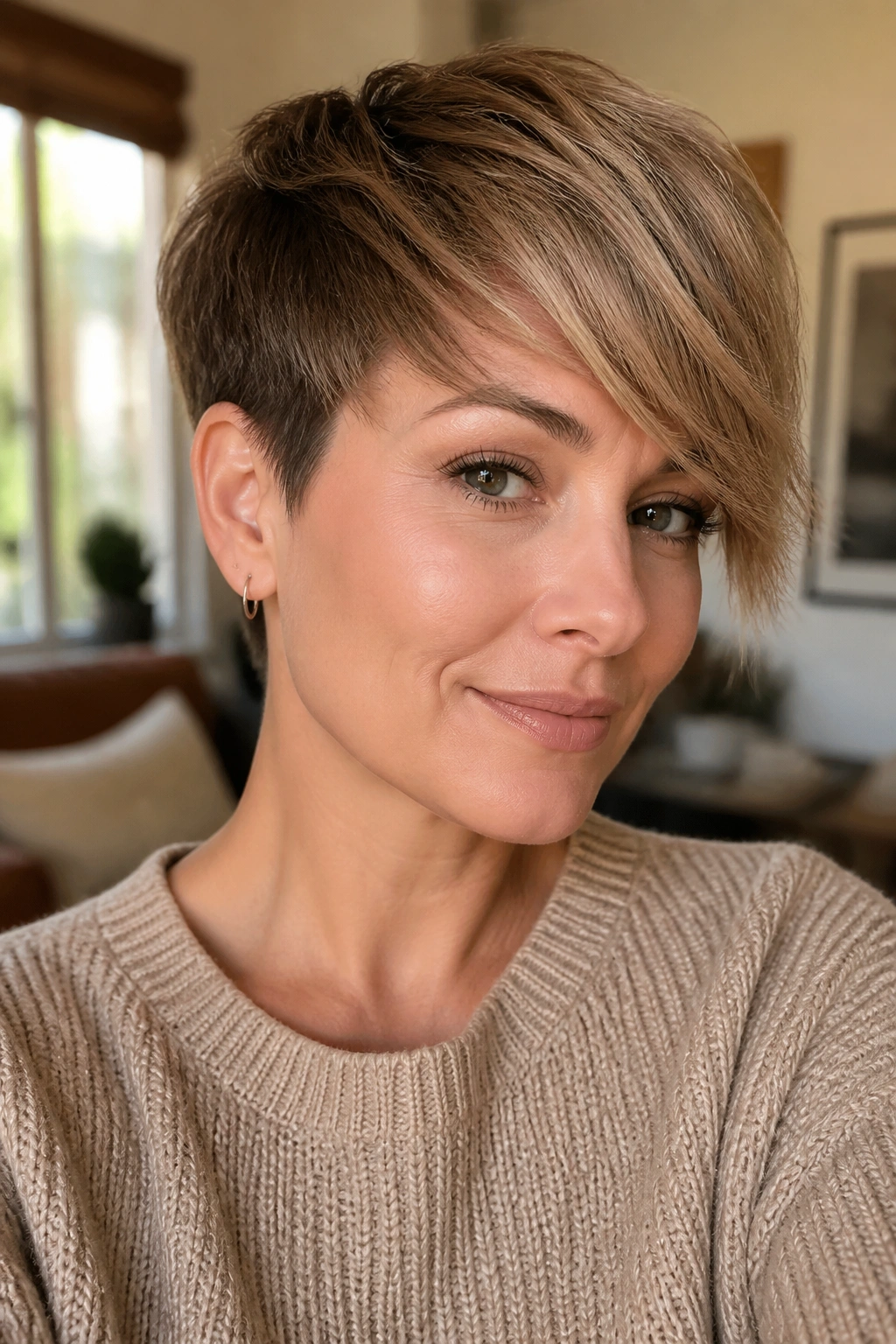
A side-swept pixie gives you the shortness of a crop but keeps one long, soft fringe across the forehead. That fringe changes everything. It softens the face, helps with forehead coverage, and makes the cut easier to grow out than a super short all-over pixie.
What makes it different
The top stays longer on one side, often with a gentle sweep instead of a hard part. The back can be tapered close, which keeps the neckline tidy, while the front carries the personality. That’s why this cut works so well for women who want short hair but still like the feel of hair touching the face.
Use a blow-dryer and a small round brush if you want polish. Or skip the brush and work in a little styling cream with your fingers for a looser finish. Both work. The mood changes fast with this cut.
11. Shaggy Bob
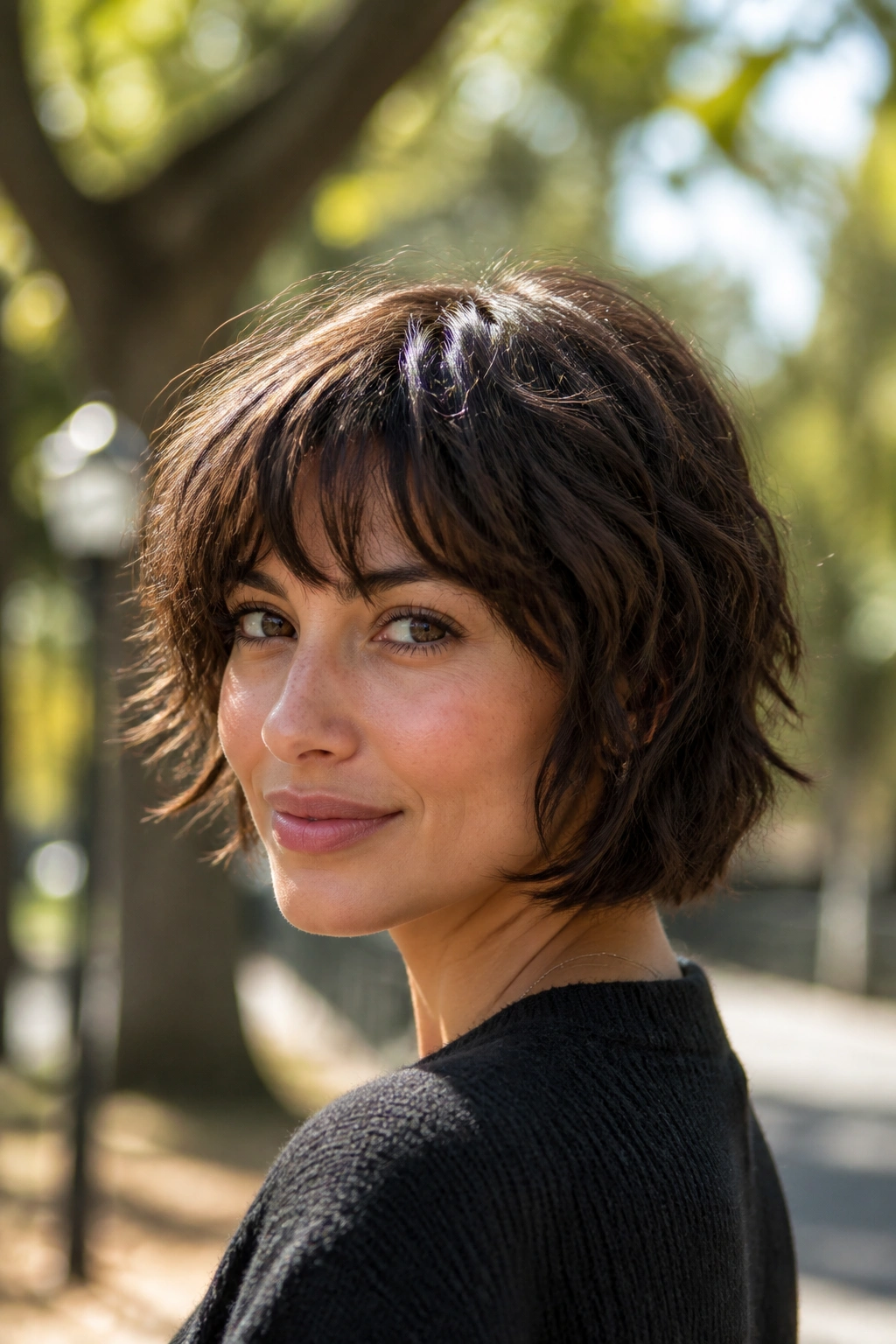
A shaggy bob is what you ask for when you want movement more than shine. Unlike a blunt bob, this one has more layers through the ends and sometimes a little lift at the crown. It feels relaxed, which is a nice word for “I don’t want to fight my hair every morning.”
It suits wavy hair beautifully because the cut gives the wave somewhere to go. Straight hair can wear it too, but it usually needs a texture spray or a bit of heat to avoid falling flat. The key is not over-layering the whole head. Too many short pieces and the shape turns fuzzy. You want separation, not chaos.
This cut is a good answer if your hair has been sitting heavy at shoulder length and you want a refresh without going all the way into pixie territory.
12. Tapered Nape Bob
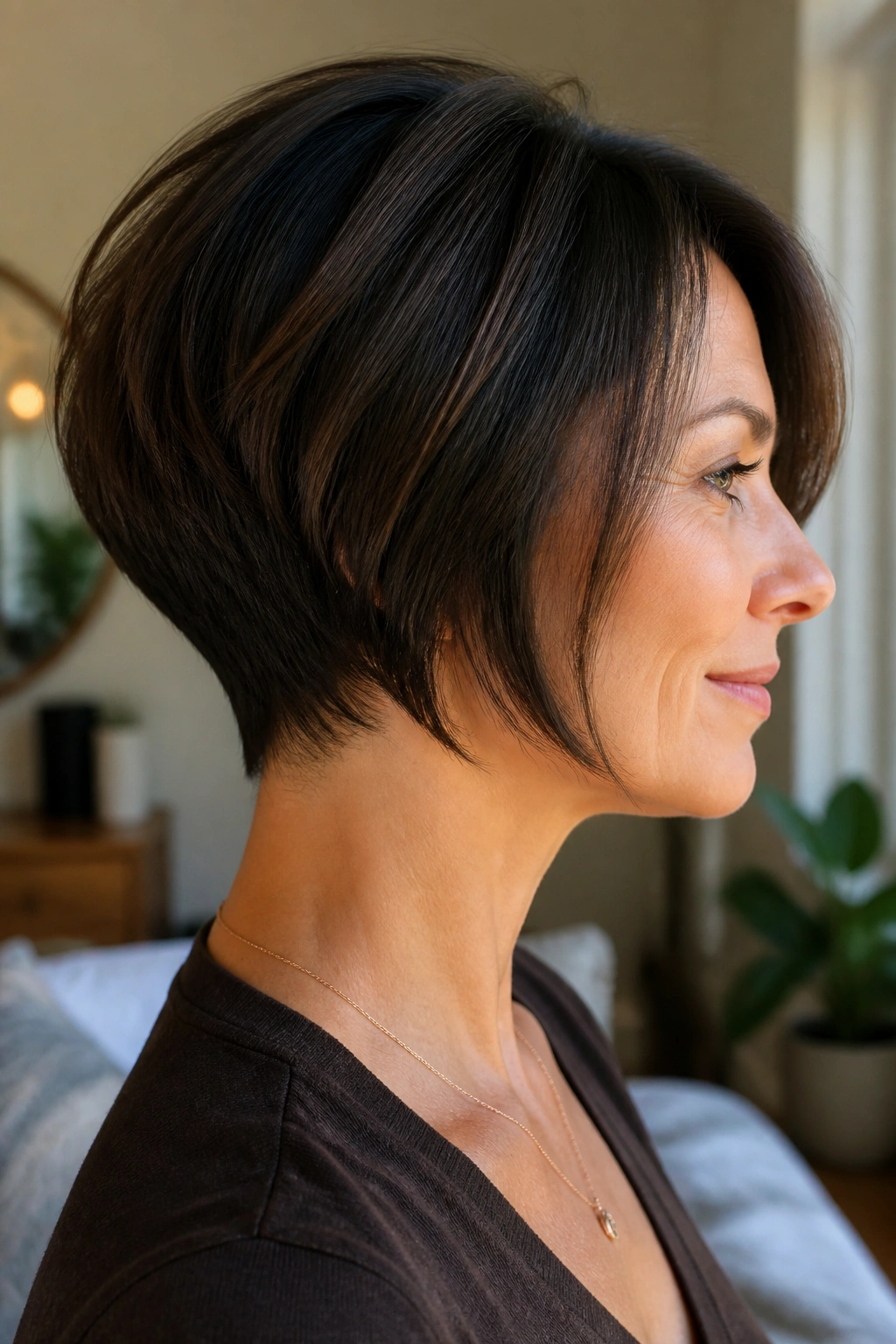
A tapered nape bob is the quiet achiever in this group. The back hugs the neck a little closer, and the nape is cleaned up so the whole shape sits neatly against the head. The front usually stays fuller, which keeps the cut from feeling too severe.
I like this one on people who wear collared shirts, earrings, or glasses. It keeps the neckline clear and gives the face enough frame to feel balanced. There’s also a practical perk: it grows out cleanly if the taper is done well. Poorly cut, though, it can mushroom at the back. That’s the risk.
It’s a cut that rewards precision more than drama. If you like tidy lines and low daily effort, it’s worth a serious look.
13. Long Pixie
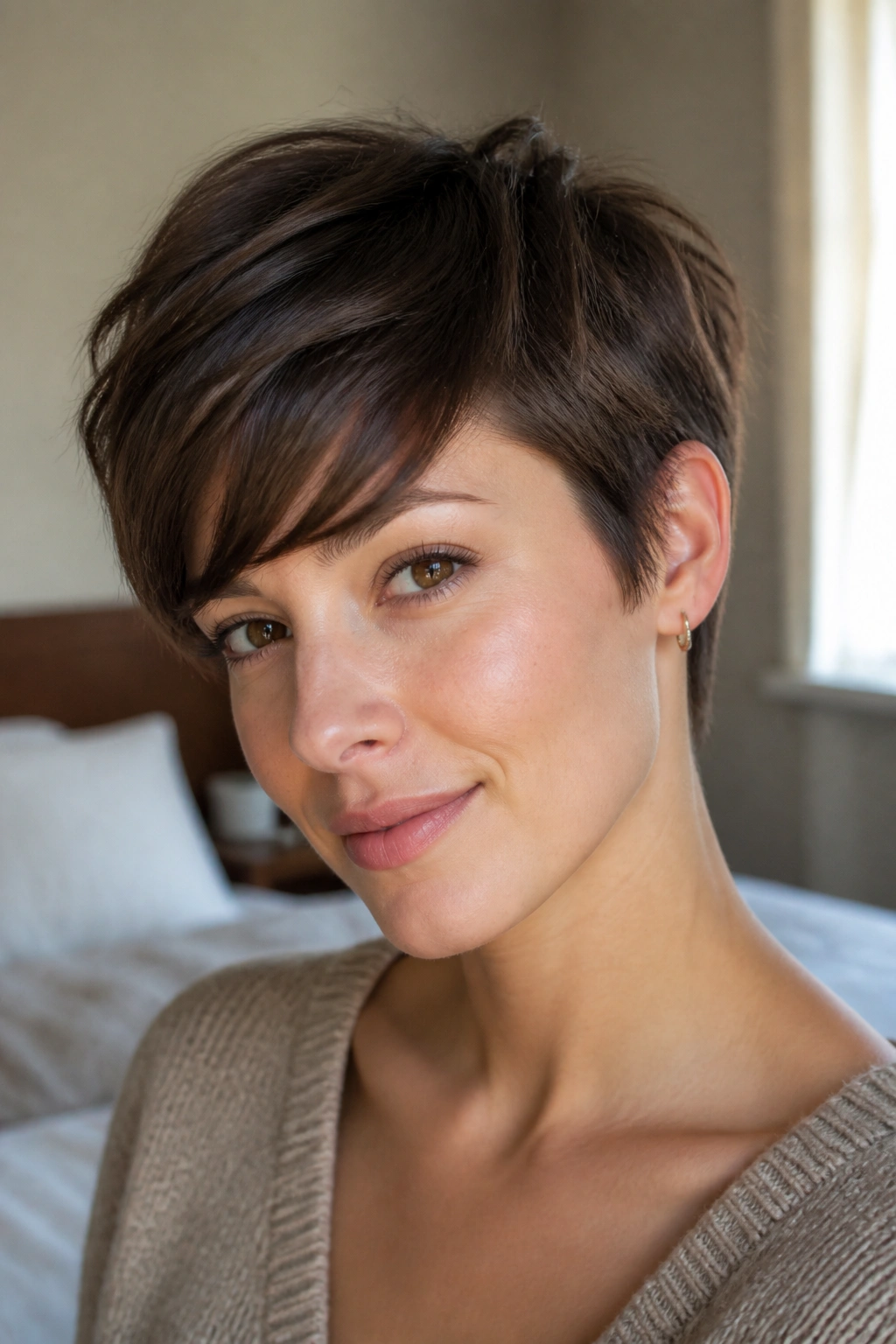
If a classic pixie feels too short, the long pixie is the softer landing. The top stays longer, the sides are trimmed but not stripped away, and the front has enough length to sweep, tuck, or spike a little depending on your mood. It gives you pixie energy without the full exposure.
This is the cut I recommend to women who want to get rid of weight but are not ready for a close crop. It also works well if your hairline is uneven or your cowlicks are stubborn. That extra length gives the stylist more room to work with the growth pattern instead of fighting it.
A long pixie can look polished with a little smoothing cream, or rough and piecey with matte wax. That flexibility makes it easy to live with.
14. Rounded Crop
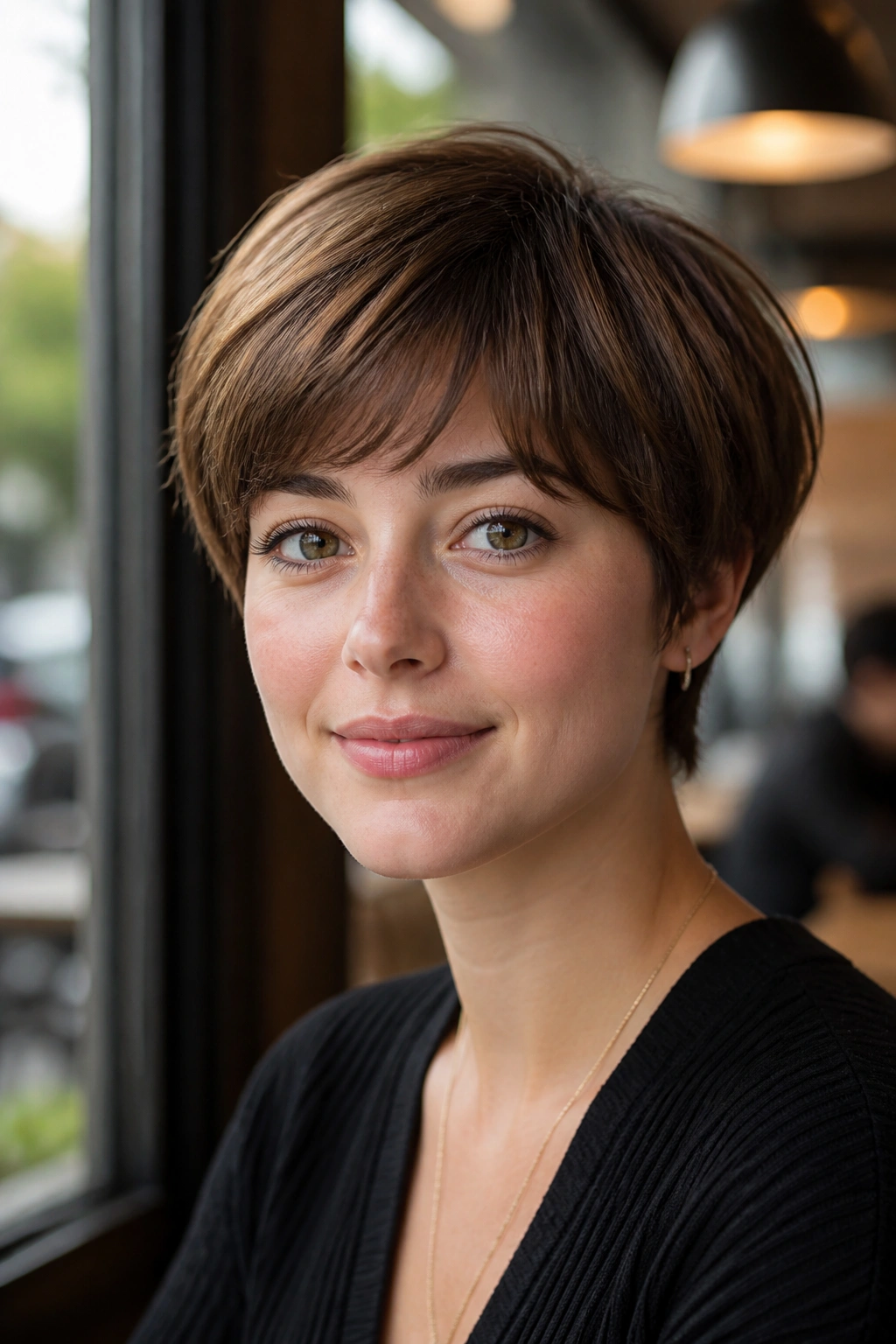
Why do some short haircuts feel soft right away, while others look severe? The rounded crop is the answer on the softer side. Its silhouette curves gently around the head, which makes the cut feel neat but not hard. It’s a strong choice for fine hair because the rounded shape can build the illusion of density.
How to style it
A small round brush helps the top sit smoothly, but I would keep the roots from being too flat. A little lift near the crown prevents the shape from clinging too much to the scalp. If your hair has some wave, letting the ends bend naturally is better than forcing every strand into place.
This cut is also a nice match for oval and heart-shaped faces. The curve around the sides keeps the look balanced without stealing focus from the eyes.
15. Italian Bob
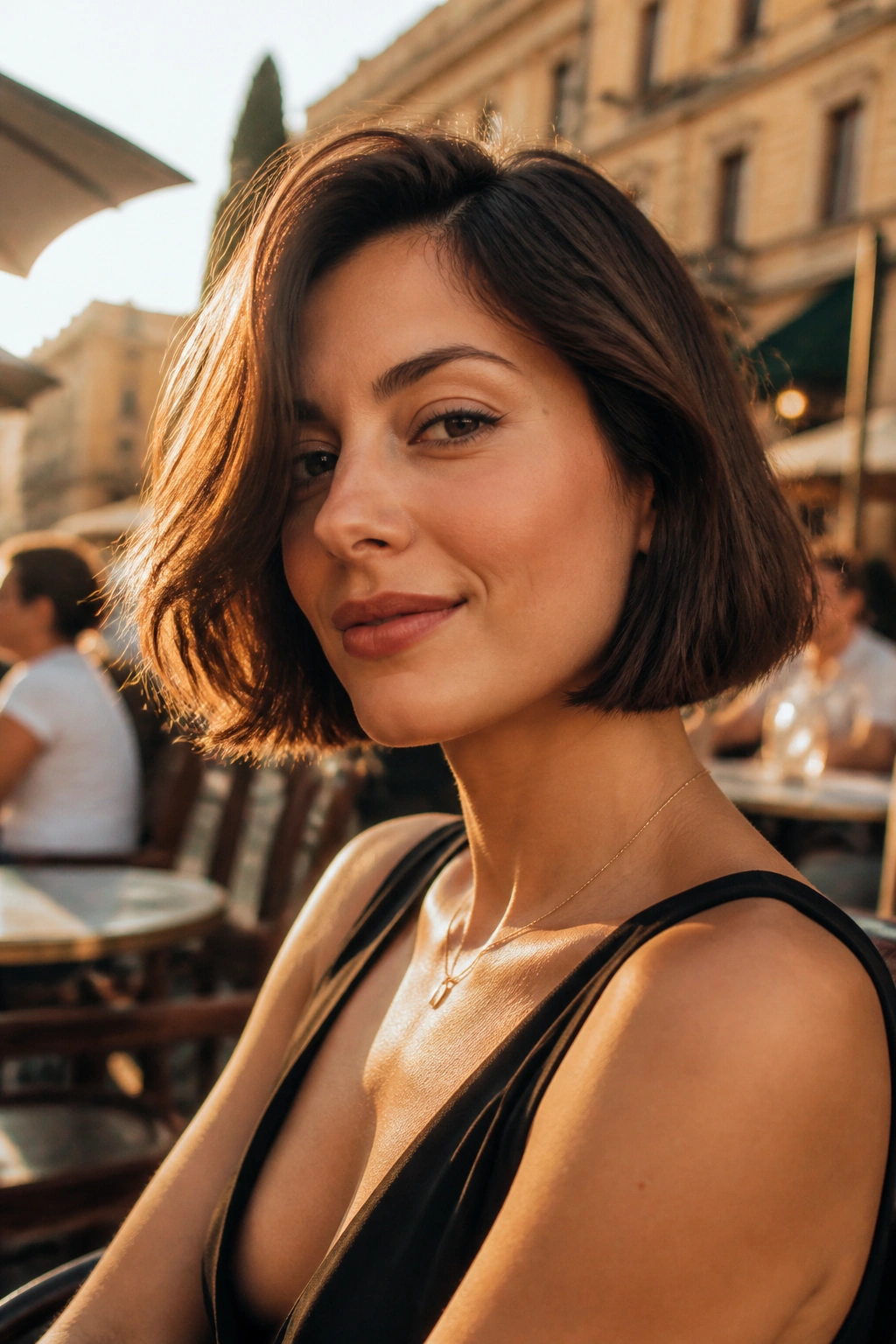
A Italian bob is a fuller, airier bob that sits around the jaw and has more swing than a strict blunt cut. It usually keeps a little more weight in the ends, which gives the shape bounce. That extra body is the whole point. The cut feels rich, not clipped.
This style works especially well if your hair is thick or naturally straight. The hair needs some density to carry the shape. On very fine hair, the look can collapse unless the cut is adjusted carefully. I like it with a deep side part or a loose center part, depending on how much face opening you want.
- Ask for fullness through the ends.
- Use a 1 to 1.5-inch round brush when blow-drying.
- Keep the blowout smooth at the roots and soft at the ends.
It’s a bob with a little more presence. That’s the appeal.
16. Mini Wolf Cut
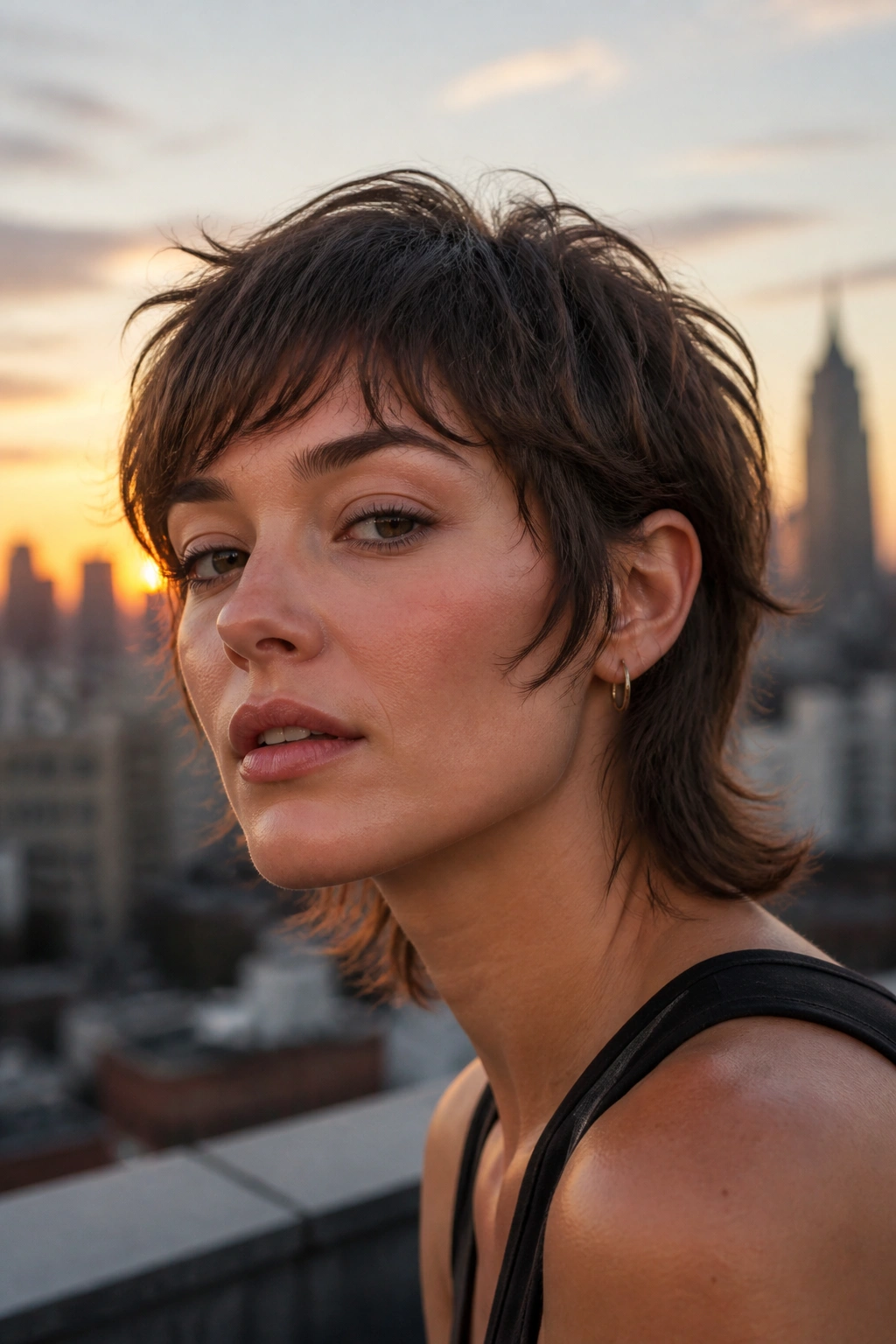
What do you get when a pixie and a shag stop arguing? The mini wolf cut. It takes the rougher texture of a wolf cut and trims it down so it works on shorter hair. You still get layers, fringe, and a little wildness at the crown and nape, but the result is wearable, not costume-y.
Why it feels different
The shortest pieces usually sit around the temples and crown, while the back keeps a slightly longer tail of shape. That gives the cut movement when you shake it out. It also means you can wear it messy on purpose, which is half the fun. If your hair is wavy, this cut wakes up fast. If it’s straight, you’ll need a texturizing spray and a bit of finger work.
This is not the haircut for someone who wants polished every day. It is for someone who wants edge without losing softness.
17. Feathered Pixie-Bob
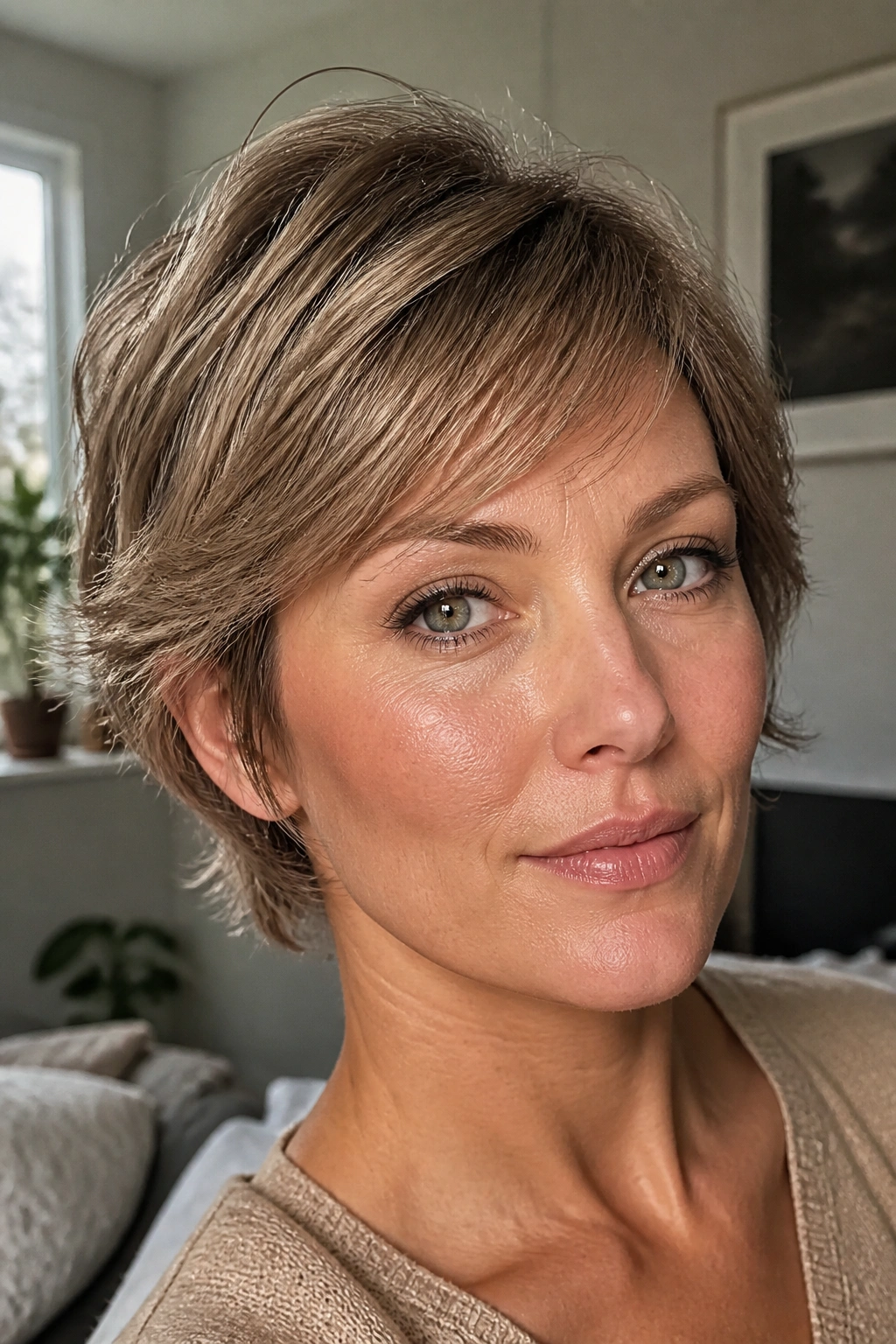
A feathered pixie-bob is what happens when you want the softness of a bob and the ease of a pixie in one cut. The ends are light and wispy, not heavy, and the shape usually leaves enough length around the ears to keep it from feeling too bare. It is gentler than a classic pixie and less boxed in than a bob.
I like this cut on fine hair because feathering can stop the ends from hanging like one flat sheet. It also works on thicker hair if the stylist removes weight carefully. The mistake to avoid is over-thinning. That can make the cut look tired fast.
It suits people who want short hair but still like a little movement around the face and neckline. Not fussy. Just soft.
18. Curly Pixie
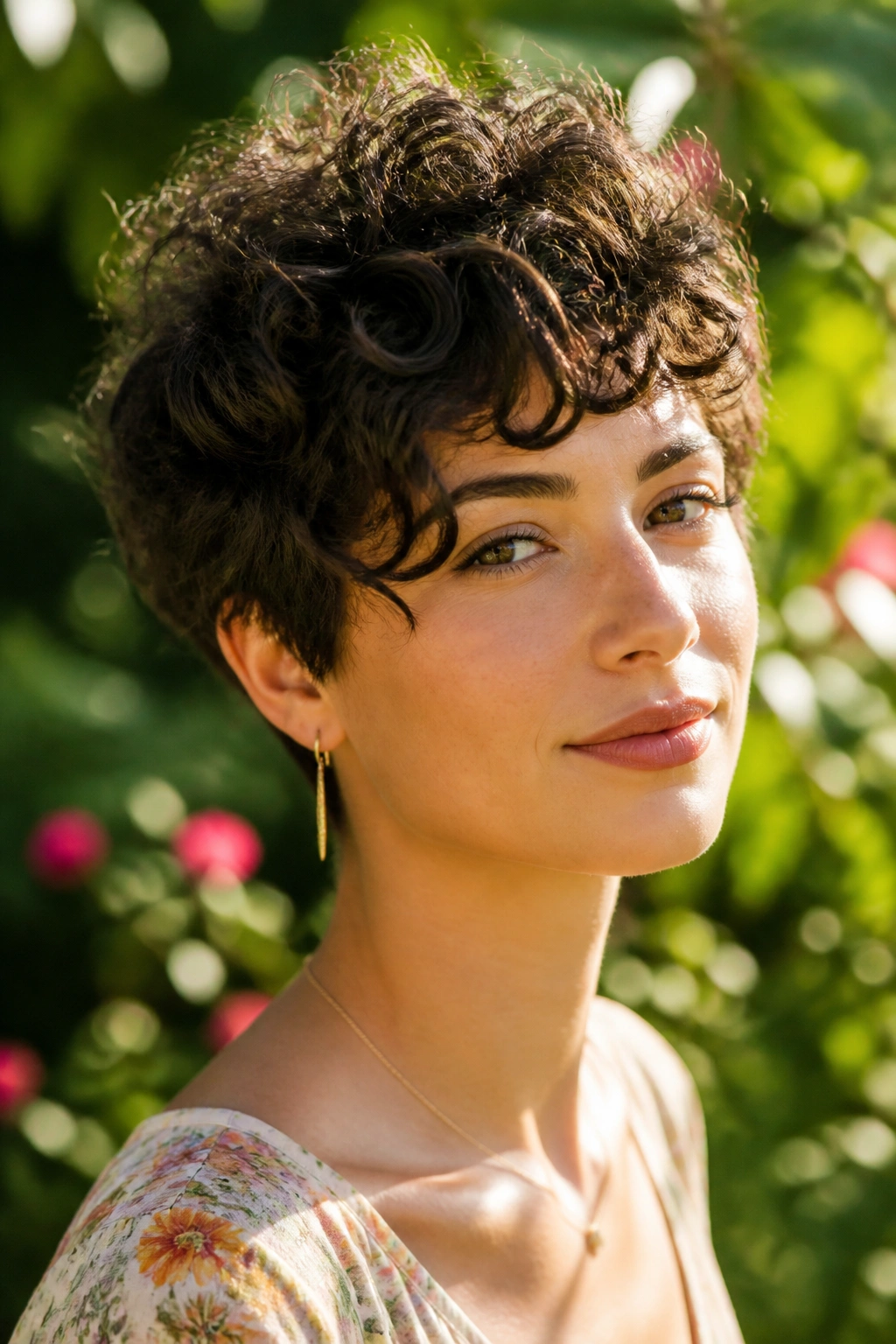
A curly pixie is a smart way to keep curls short without flattening the shape of the head. The sides and back stay close, while the curls on top have enough room to lift and form a real silhouette. It can look playful, polished, or both.
The trick is to respect the curl pattern. A good curly pixie should be cut so the curls stack where you want volume and settle where you want control. That often means shaping around the crown and keeping the front pieces a little longer than the rest. A dry or mostly dry cut can help a stylist see exactly what each curl wants to do.
Use a light gel or mousse and let the curls set before you touch them. Touching them too early breaks the clumps and makes the whole thing frizzy. That part matters.
19. A-Line Bob
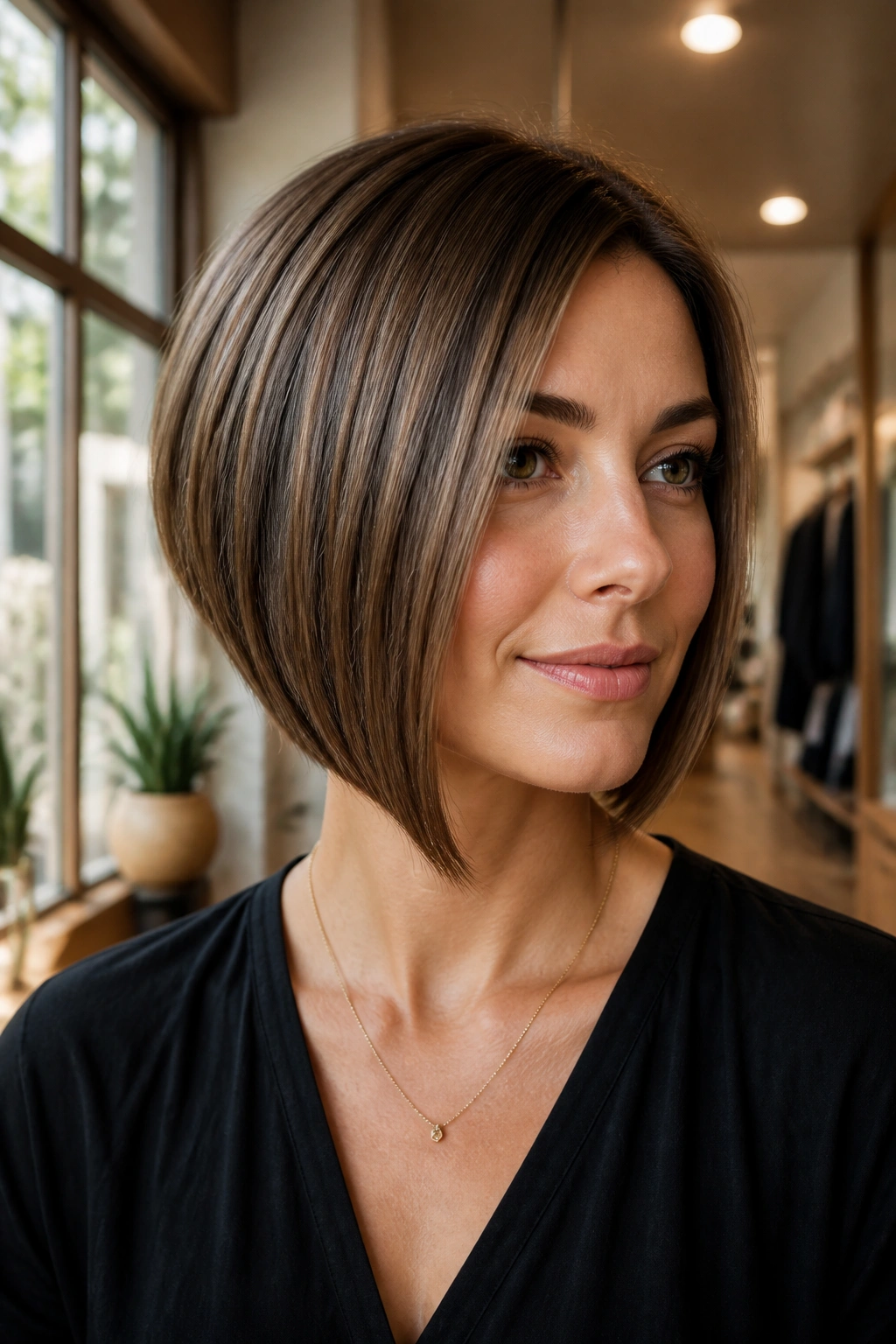
An A-line bob is shorter in the back and longer in the front, and that angle gives it a clean, modern edge. The front pieces can graze the jaw or even the collarbone, while the back sits higher at the nape. That difference creates shape fast.
I like this cut on women who want their face framed a little more aggressively. It draws the eye forward, which can sharpen softer features and slim the look of fuller cheeks. It also works well for fine hair because the angled line gives the illusion of density at the front.
If you want the cut to read clearly, keep the front longer than the back by a noticeable but not extreme amount. Too subtle and the point gets lost. Too steep and it can look old-school in a bad way.
20. Mixie Cut
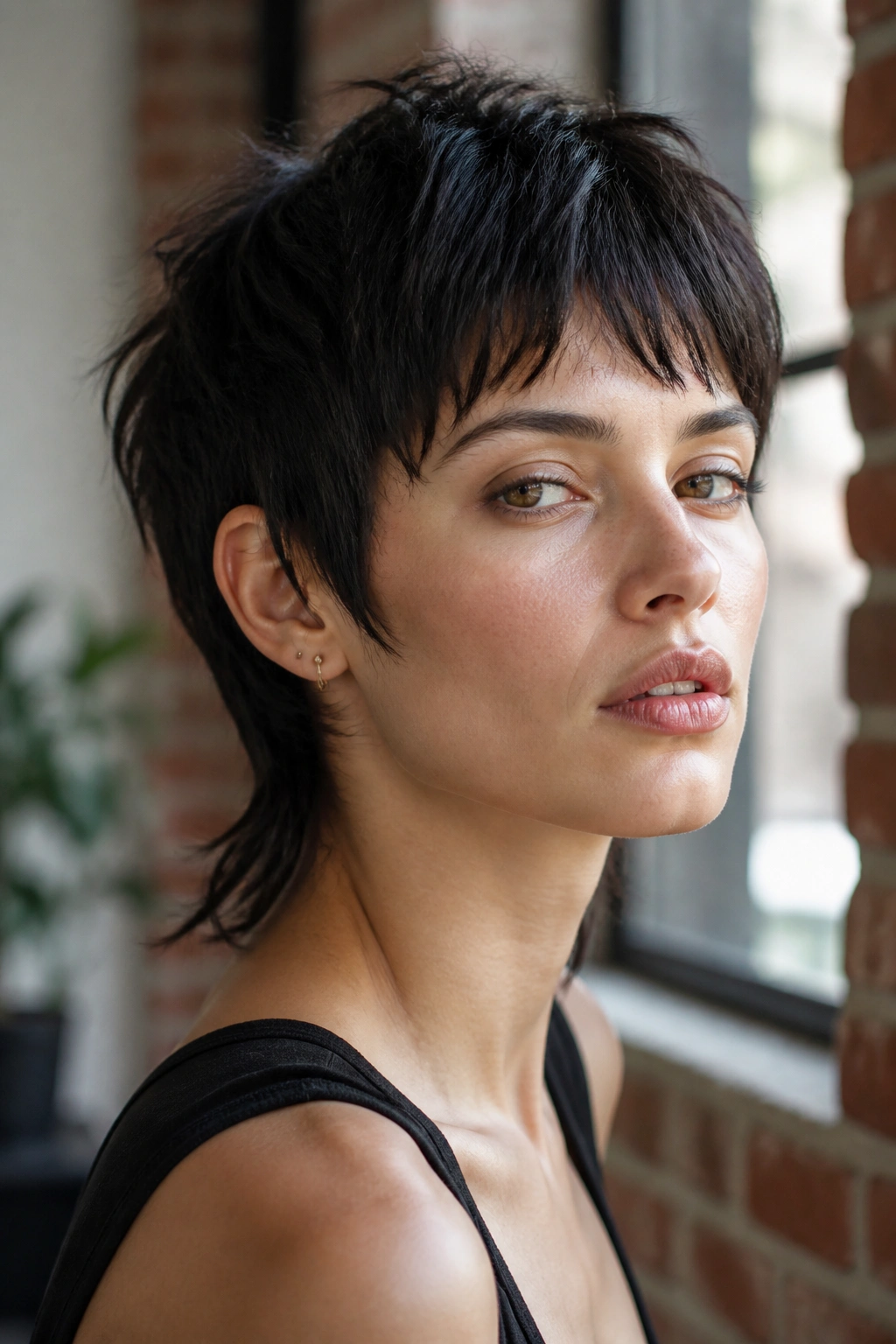
A mixie cut is a pixie and a mullet hanging out in the same haircut. The front and sides stay shorter, while the back leaves more length and the fringe can fall loose or piecey. It sounds rebellious, and it can be. It can also be surprisingly wearable if the layers are controlled.
How to wear it
The best versions keep the nape soft and the crown lightly textured, not chopped to bits. That gives the cut movement without making it look ragged. A little styling cream or pomade helps define the layers, especially around the temples and fringe. If you want more edge, tuck one side behind the ear and leave the back loose.
This cut suits people who like hair with personality. Not everyone does. That is fine. The mixie has a point of view.
21. Graduated Bob
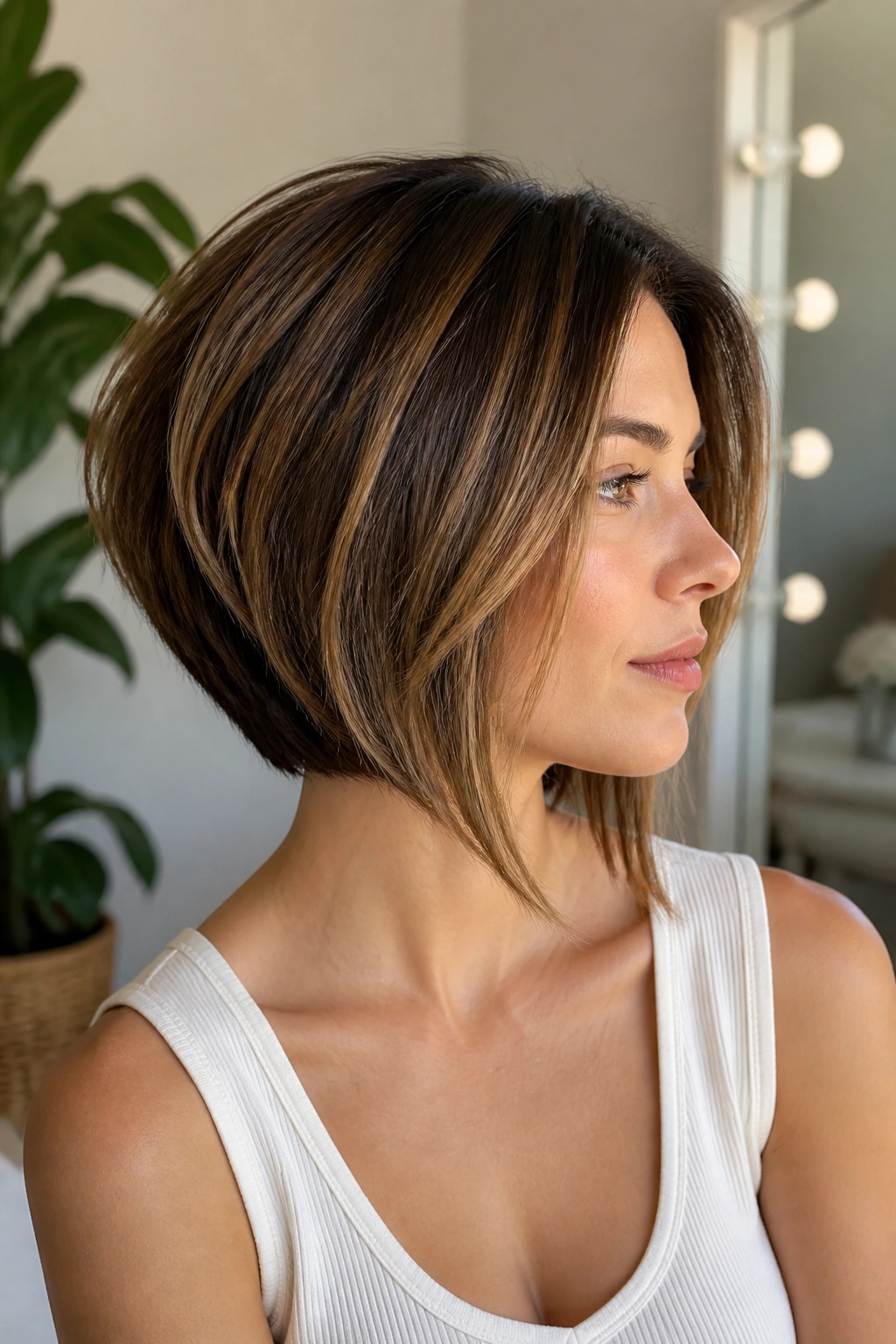
A graduated bob builds volume at the back through stacked layers, then tapers forward into a smoother line. It’s a good answer if you want a bob that has body without looking flat against the head. The back does the heavy lifting here.
This cut especially helps straight hair that tends to hang limp. The stacked back gives lift without needing a lot of product or teasing. It can also be useful on thick hair if the stacking is controlled, because it removes some weight while keeping the outline clean.
- Ask for a gradual stack, not a sharp shelf.
- Keep the front pieces long enough to soften the angle.
- Blow-dry with a round brush at the crown for lift.
When it’s cut well, the shape almost styles itself.
22. Piecey Crop with Fringe
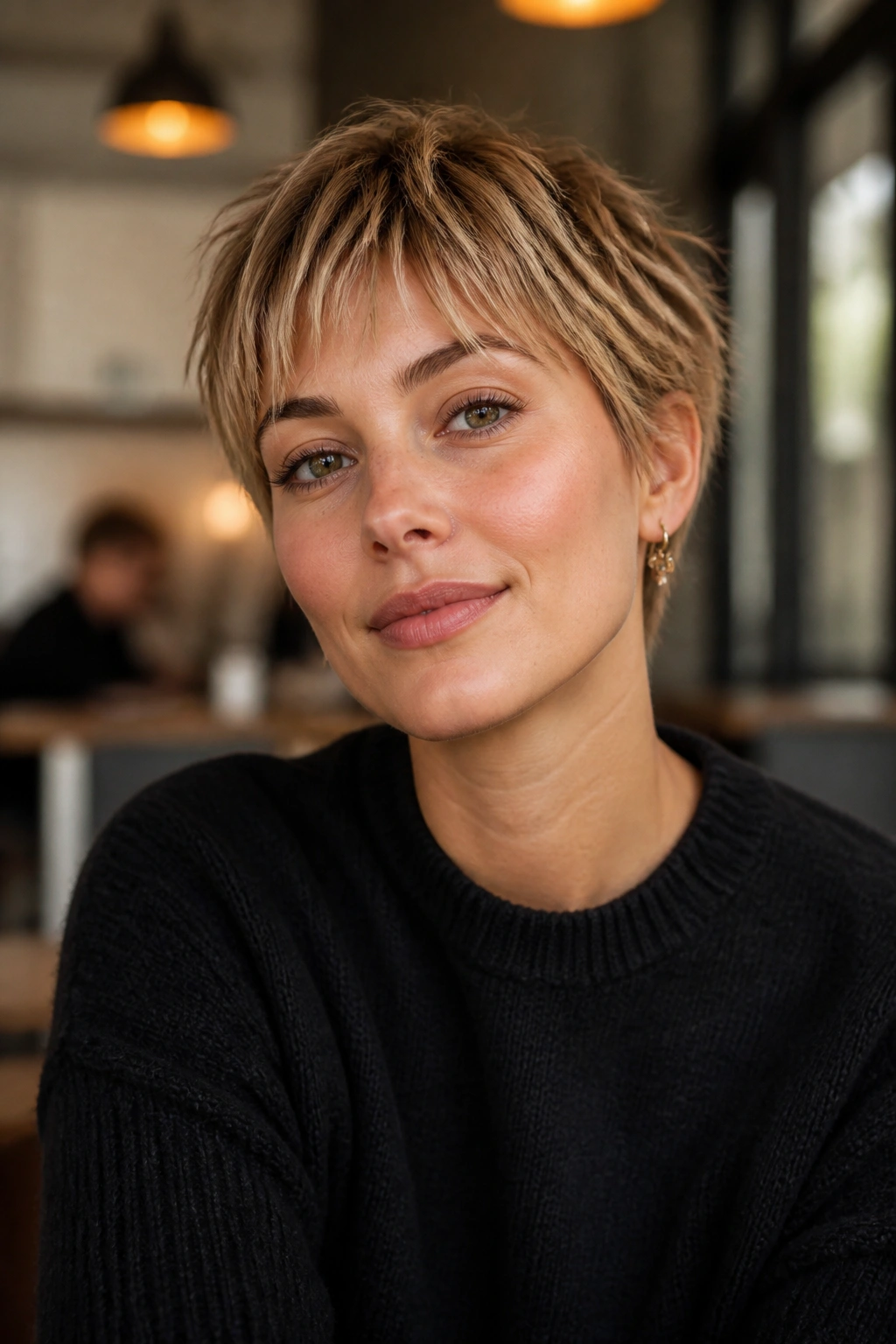
A piecey crop with fringe is a short cut for women who want softness around the forehead and a little separation through the ends. The pieces are intentionally broken up so the hair doesn’t fall as one solid block. That gives the cut a lighter feel, even when the hair is dense.
What to watch for
The fringe should look light, not thick like a curtain that landed too low. The rest of the crop can be built with short internal layers so the shape moves when you run your fingers through it. A matte paste works well here because it keeps the pieces defined without making them shiny and stiff.
- Best for straight to wavy hair.
- Easy to style with fingers, not a brush.
- Needs a trim before the fringe starts poking into your eyes.
This is one of those cuts that looks casual but still needs precision underneath. That’s the trick.
23. Buzzed Pixie
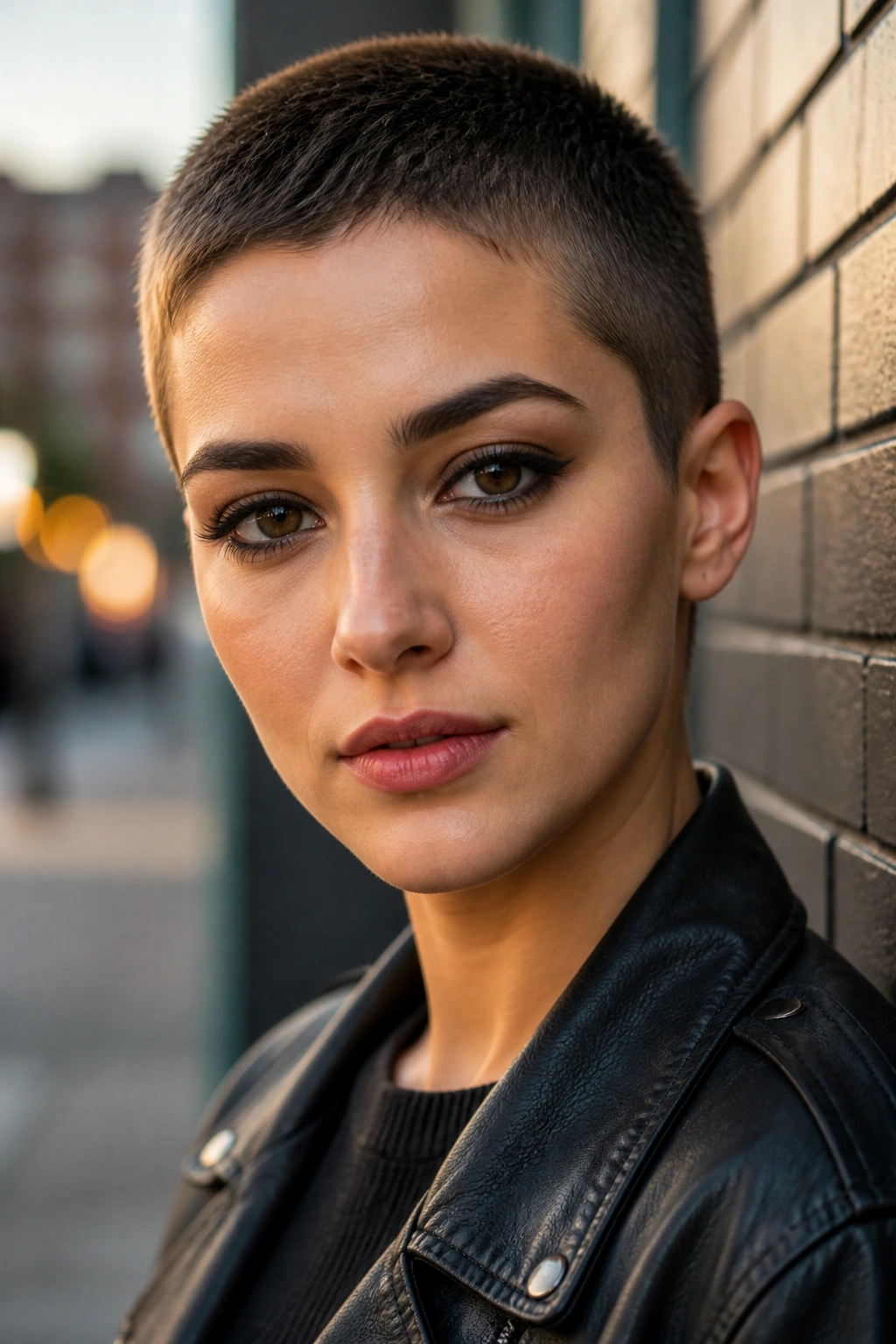
A buzzed pixie is not a timid haircut, and that’s exactly why some women ask for it. The hair is clipped very close with clippers on the sides and back, then left a touch longer on top if you want a little shape. It puts the face front and center. No hiding.
Unlike a soft pixie, this cut has almost no styling time attached to it. That’s the appeal. A dab of cream or a swipe of oil can keep the scalp from looking dry, but there’s no blow-dryer routine required. It also grows out in a clean way if you keep the sides tidy.
Best on strong brows, confident jawlines, or anyone who wants to stop negotiating with their hair every morning. A clipper guard of 1, 2, or 3 changes the whole mood, so that detail matters more than people think.
24. Short Shag
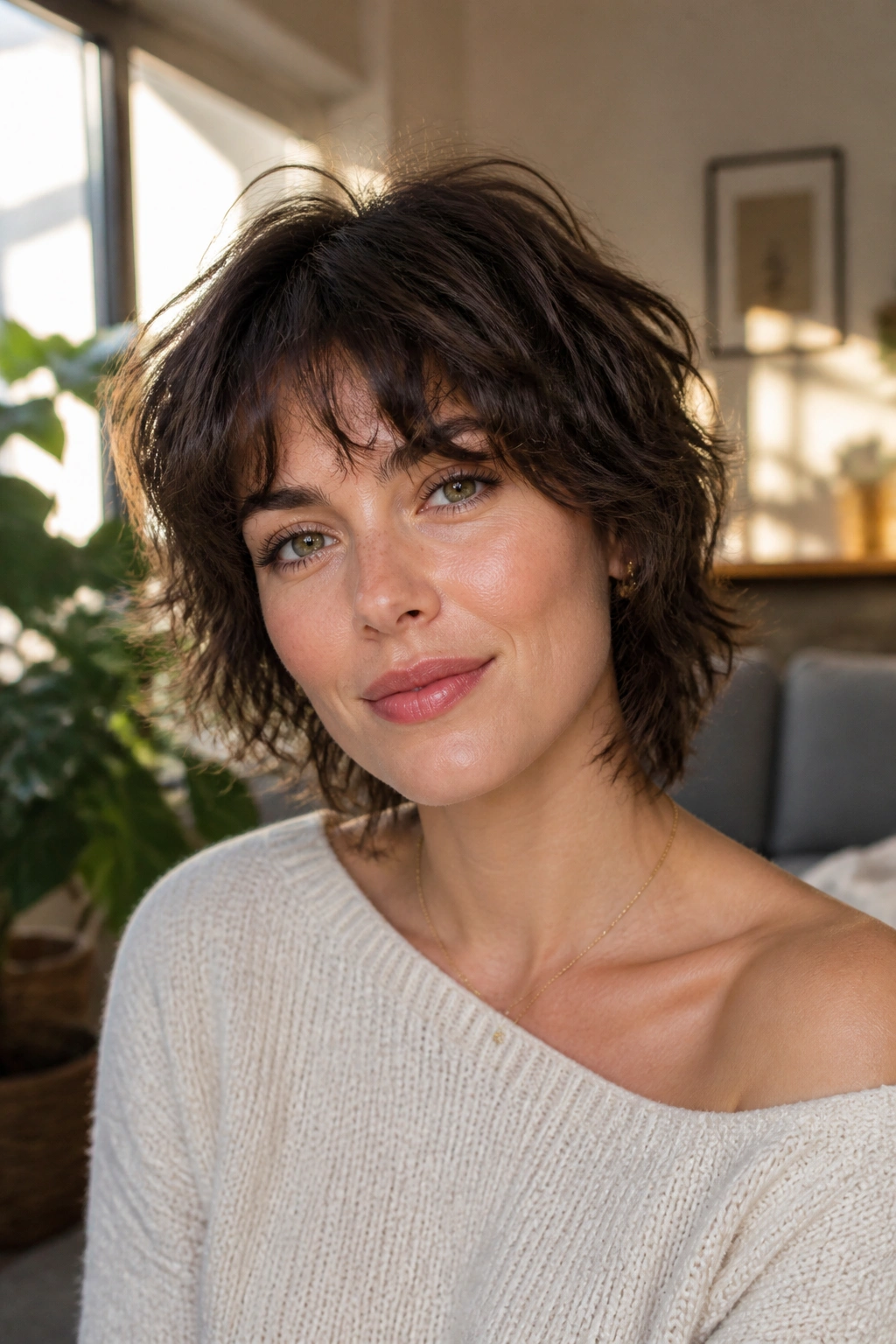
A short shag is the haircut for people who want movement without the stiffness of a bob. The layers are built to shake and separate, and the fringe often sits soft around the eyes or brows. It can feel a little rock-and-roll, but it doesn’t have to look wild.
I like this cut on hair that already has some bend. A little wave gives the layers a place to fall. If your hair is straight, you can still wear it, but you’ll probably need texture spray or a quick bend with a flat iron to keep it from lying too flat. The cut should never feel over-thinned. That’s where shags go bad.
It’s an easy one to air-dry on most days, then rough up at the roots with your fingers. That’s enough.
25. Soft Crop with Long Fringe
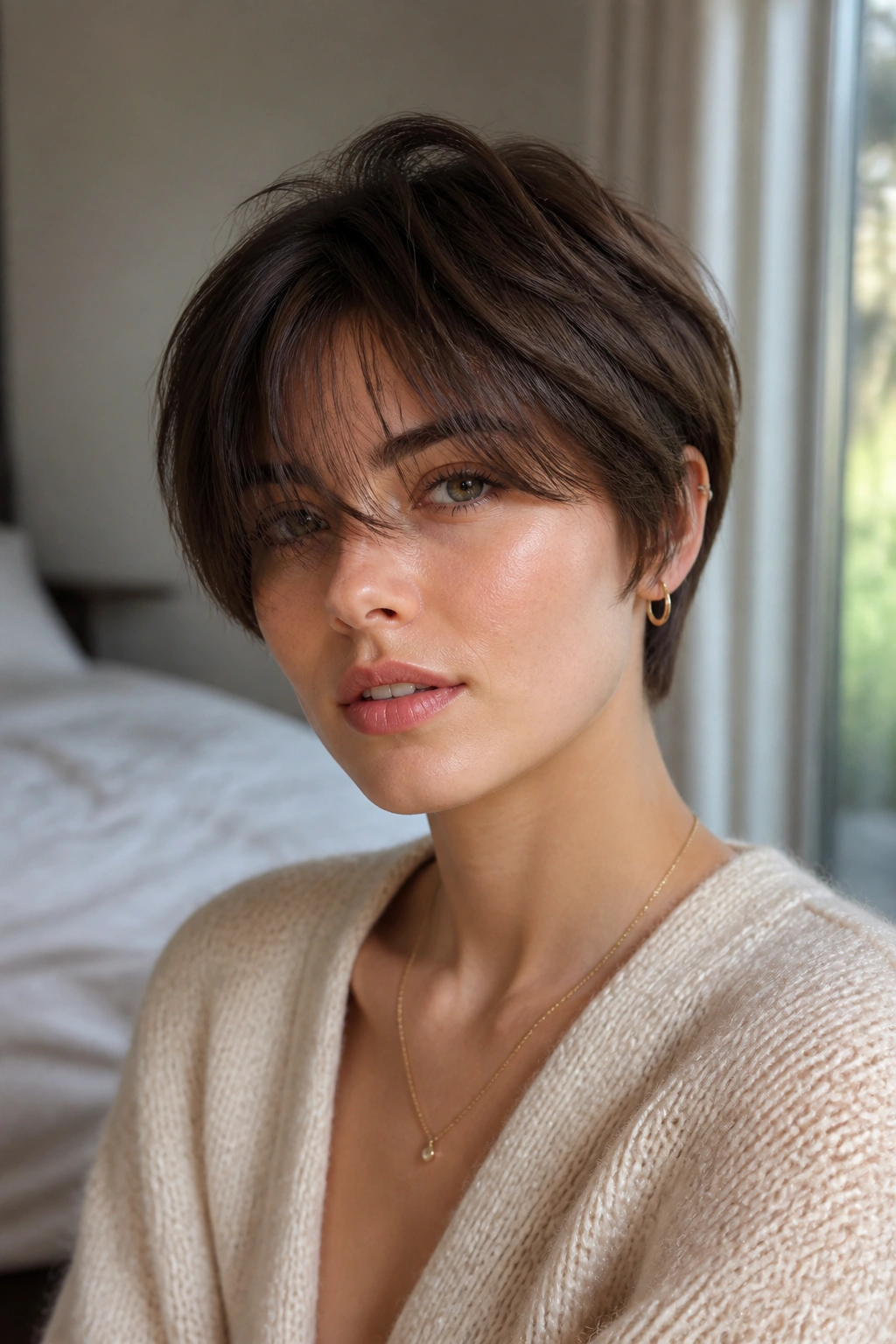
The soft crop with long fringe is the short haircut women ask for when they want less length but still want a bit of hair to play with around the face. It sits somewhere between a pixie and a crop, and the fringe gives it a gentler read than a very short cut. The shape is clean, but not harsh.
I like this one because it gives you options. You can sweep the fringe to one side, wear it forward, or tuck it back when you want the face fully open. The crop itself should stay close enough to the head to feel light, while the fringe keeps the whole look from feeling stripped down. That balance is the whole trick.
Bring photos of two things to the salon: the fringe length you want and the nape shape you want. Those details change the cut more than people expect. Get them right, and the style will look calm instead of accidental. Hair should do that sometimes — make life easier, not louder.
