



An undercut can change a haircut faster than almost anything else. In undercut hairstyles for women, the difference between sleek and severe is often only a few centimeters of placement, a clipper guard, and whether the shave sits at the nape, the temple, or one full side. That’s why some people walk out thrilled and others go home and pin their hair up for a week.
The cut is practical too. Thick hair loses weight, curls stop ballooning at the back, and a bob suddenly moves instead of sitting like a helmet. But the wrong placement can fight your cowlicks, expose a patch you did not mean to show, or grow out in a blunt shelf. Not cute.
What I like about this haircut family is how many moods it can hit. Soft and hidden. Sharp and graphic. Clean enough for a tailored blazer, wild enough for a concert tee. The same basic idea turns into a dozen different looks once you change the shape, the height, and the way you style the top.
Here are 17 that actually make sense in real life, not just on a mood board.
1. The Classic Nape Undercut Bob
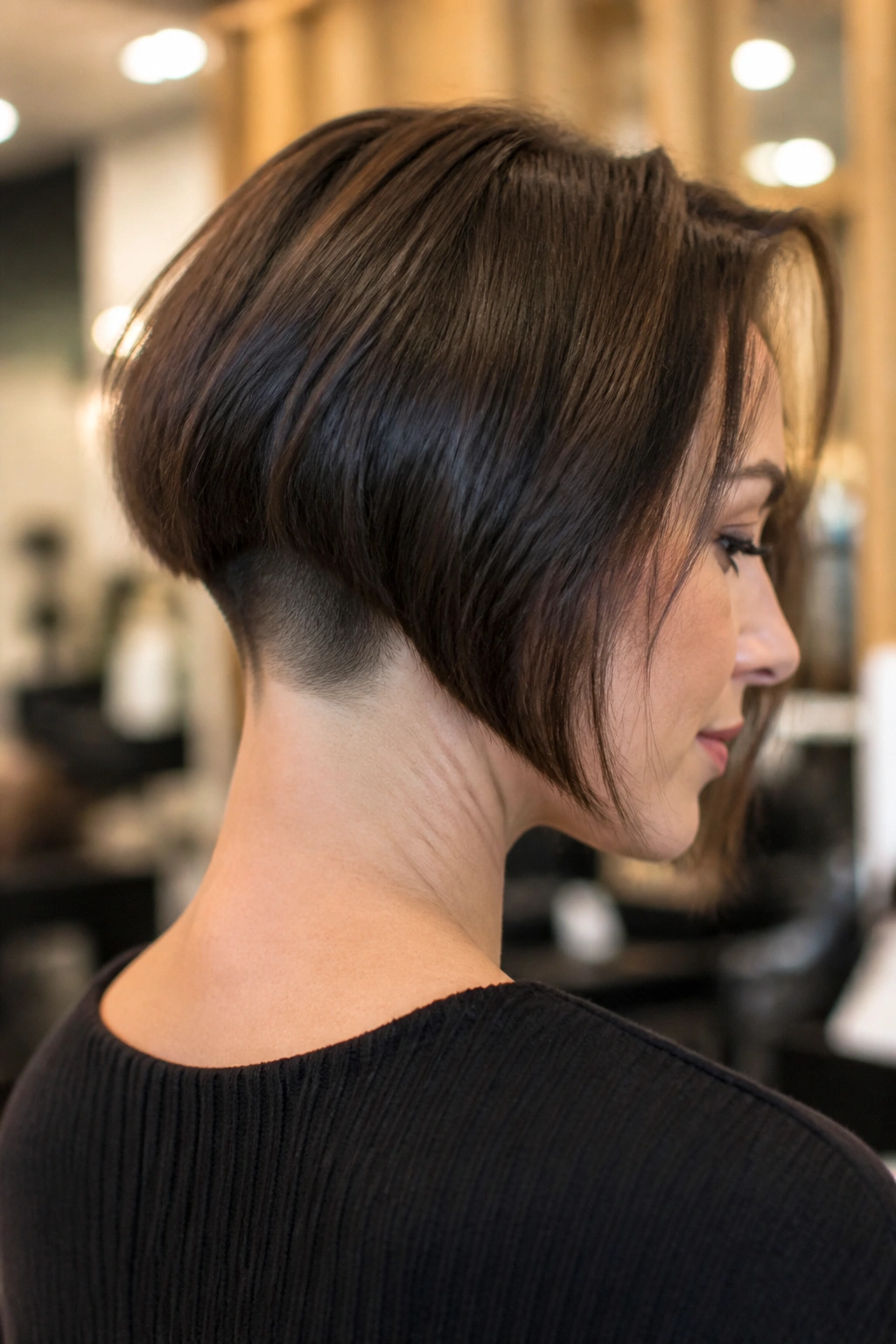
This is the undercut I keep coming back to. It solves the bob problem no one likes to admit: too much hair at the back can make a neat cut feel bulky, hot, and oddly stiff.
A classic nape undercut bob keeps the top looking full while quietly removing weight below the occipital bone. That means the bob sits flatter against the head, swings cleaner at the jawline, and dries faster. Ask for a shaved or closely clipped strip at the nape that starts just under the back ridge of the head and stays narrow enough to hide under the top layer.
What to ask for at the salon
- A nape undercut about 1 to 2 inches high
- A clipper guard in the #1 to #3 range, depending on how visible you want it
- Soft blending at the corners so it doesn’t look like a shelf
- Enough coverage above the cut to tuck it away when hair is down
The payoff is a bob that feels lighter without losing its shape. That matters if your hair is dense, straight, or slightly wavy and prone to puffing out at the back.
My one rule: keep the undercut lower than you think you need on the first appointment. You can always go higher next time; you can’t undo a strip that sits too close to the crown.
2. The Side Undercut Pixie
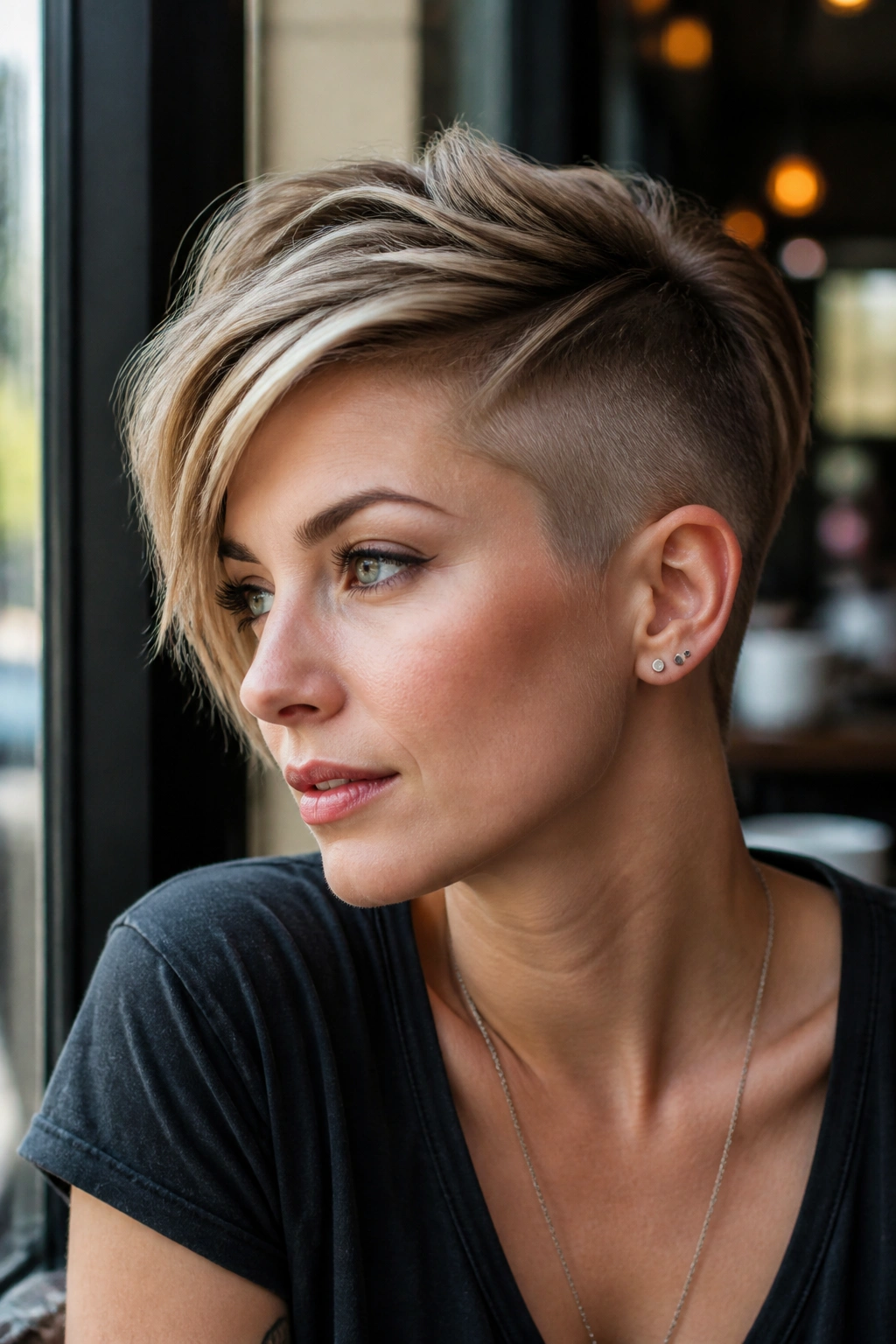
Why does a pixie sometimes feel too sweet, too tidy, almost dainty in a way you didn’t ask for? A side undercut fixes that in one move.
The beauty of this version is the contrast. One side stays longer and a little piecey, while the other side is clipped tight enough to show the head shape. On short hair, that asymmetry does a lot of work. It gives the cut a sharper line, and it keeps the overall style from collapsing into a flat little cap.
How to style it
With a side undercut pixie, the top usually needs only a pea-sized amount of paste or pomade. Work it through damp hair, then use your fingers to push the longer pieces toward the shaved side or sweep them forward across the forehead. A little root lift at the crown helps, but don’t go overboard. The point is texture, not helmet hair.
This style is especially good if your hair is fine and tends to lie flat. The shaved side creates the illusion of density where you want it, because the remaining hair has more room to stand up. It also grows out in a forgiving way, which is handy if you hate frequent salon trips.
If you want something bold but wearable, this is one of the smartest places to start.
3. The Hidden Undercut with Long Layers
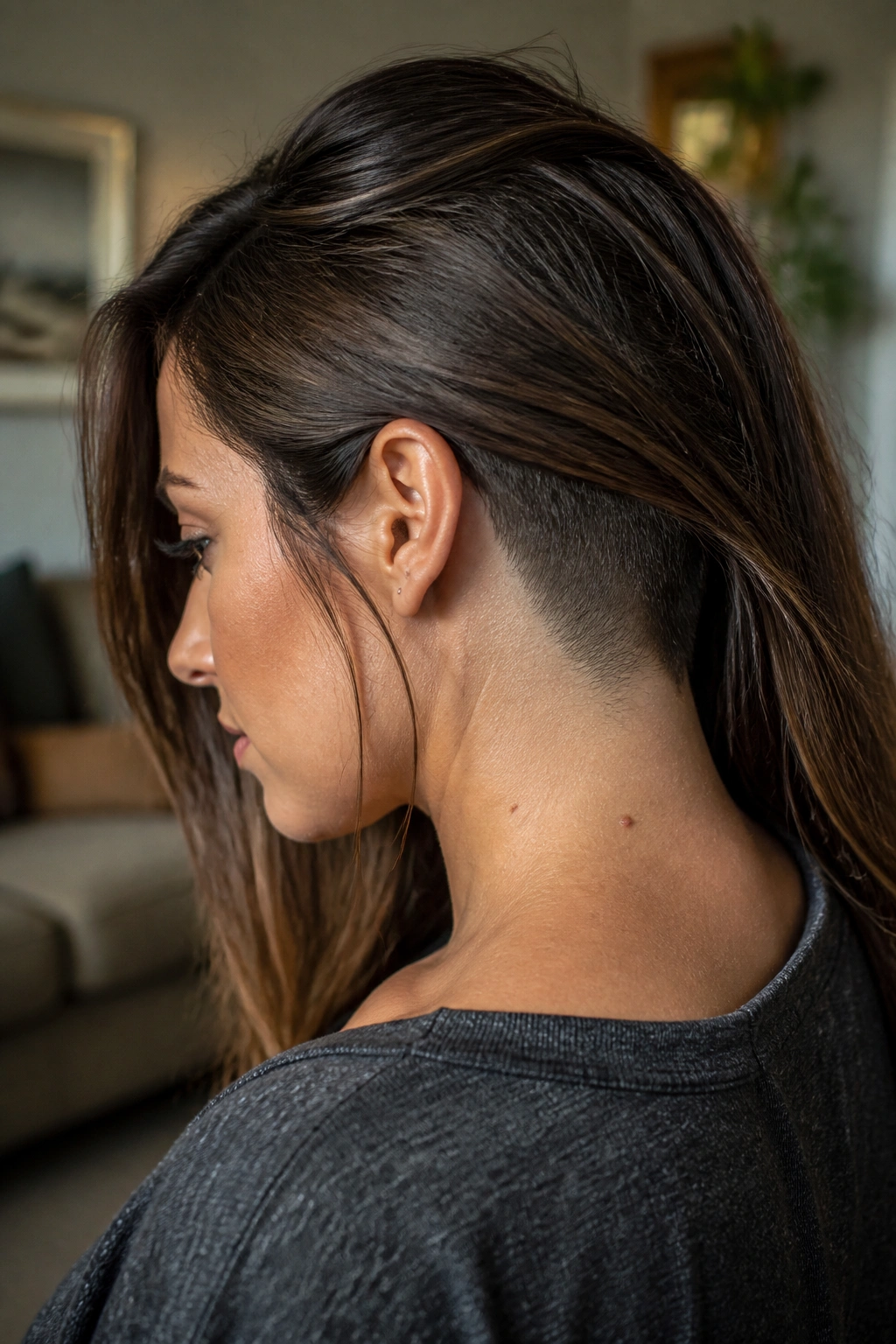
Picture this: hair down, soft layers, nothing dramatic showing. Then you pull it into a knot or a half-up twist and there it is — a clean shaved panel hiding underneath. That’s the whole appeal of the hidden undercut.
It’s a very good choice if you want the comfort of less bulk without advertising the shave every time you leave the house. Long layers drape over the cut, so the silhouette stays soft. The real benefit shows up when you brush, style, or tie your hair back. Suddenly the neck feels cooler, the ponytail sits flatter, and the weight distribution makes a difference you can actually feel.
This version works best on thick hair, especially hair that gathers into a heavy triangle at the nape. It also gives curly hair a nicer shape when worn up, because the underside doesn’t balloon out and fight the rest of the style.
- Great if you wear buns, clips, or ponytails often
- Easy to hide during grow-out
- Works well with layers cut below the shoulders
- Best kept narrow unless you want the reveal to be obvious
The hidden undercut is one of those cuts that sounds subtle until you live with it. Then you wonder why you waited.
4. The Curly Undercut Shag
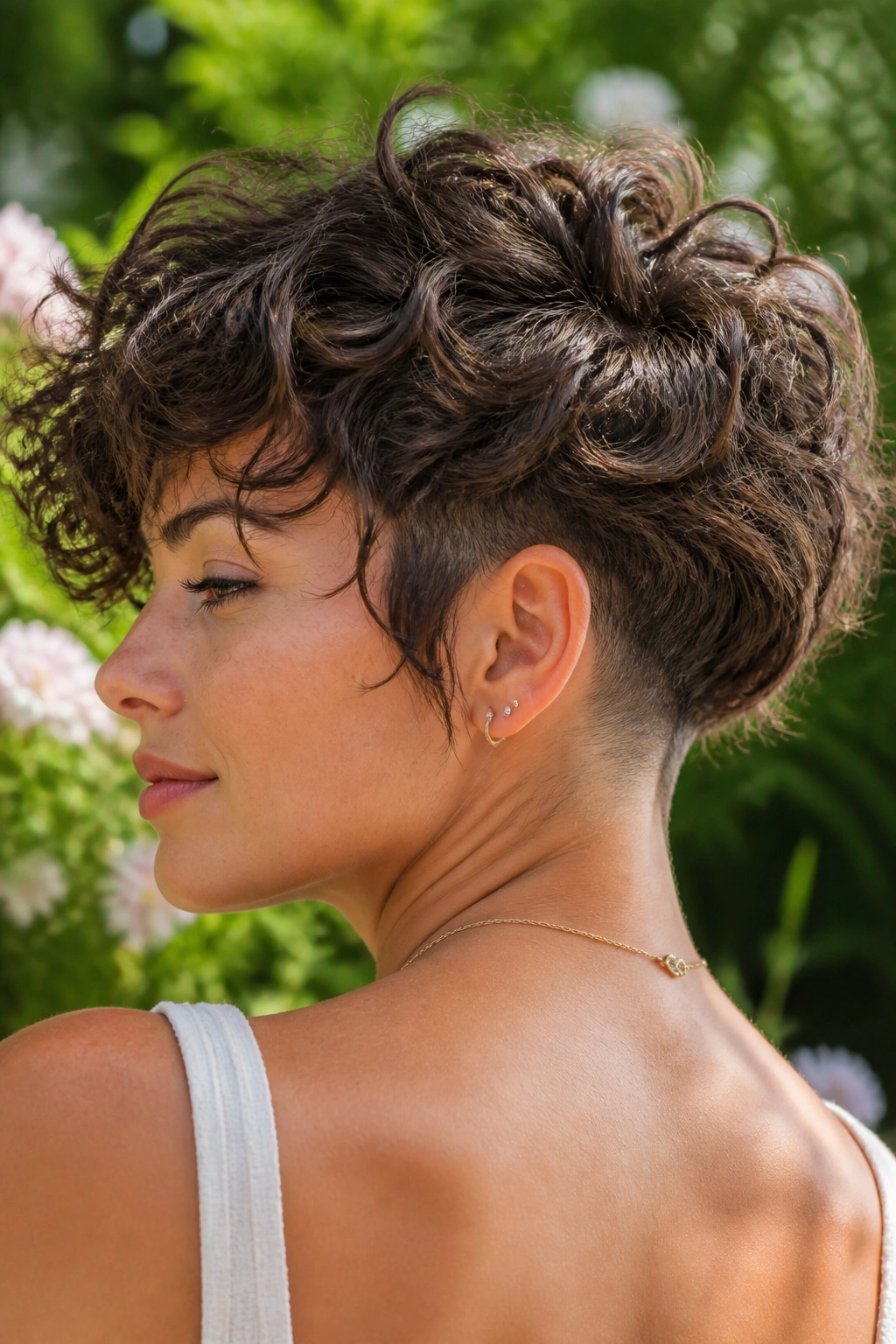
Curly hair and undercuts are a strong pair, but only when the shape is thought through. A curly undercut shag takes away the bulk that usually sits at the bottom of a curly cut and lets the rest of the layers spring up instead of spreading out.
That matters because curls do not behave like straight hair. They stack, they puff, and they change mood depending on humidity and length. A shaved nape or a clipped section under the crown can stop the whole shape from turning into a wide triangle. The shaggy layers on top keep it soft, not helmet-like.
I like this cut on 3A to 3C curls, though looser waves can wear it too. The trick is to leave enough length on top for the curl pattern to do its thing. If the top is cut too short, the shape can get choppy in a bad way. If it’s left too long, the undercut gets swallowed and the haircut loses its point.
Use a curl cream with a light hold gel and scrunch from ends to roots. Air-drying gives the softest result, but a diffuser works if you need faster drying. The nape stays neater, the curls at the crown get the room they want, and the whole cut looks more awake.
5. The Half-Shaved Side Part Lob

A lob with one shaved side is the compromise haircut for people who like edge but still want enough hair to tuck behind an ear or throw into a low knot. Unlike a full side shave, it keeps the profile polished from most angles. That’s the whole point.
The side part gives the cut structure, and the undercut gives it attitude. You end up with a line that feels intentional rather than random. On straight hair, the difference can be striking because the long side falls like a curtain while the short side reveals the head shape. On wavy hair, the effect gets a little softer and more lived-in.
This cut suits people who want a visible undercut without going too far into punk territory. It also works well if your face is round or heart-shaped, because the longer side creates a vertical line that draws the eye down. If your hair is thick, ask for the shaved panel to stay close to the temple and just above the ear. Too high, and the lob loses balance.
A slick side tuck looks sharp. A loose wave looks cooler. I’d choose the first for work, the second for everything else.
6. The Braided Undercut

Can a braid and an undercut live in the same haircut? Absolutely, and the contrast is half the fun.
The braid keeps the top looking styled, even romantic, while the undercut underneath stops the whole look from becoming too heavy. That’s especially useful if your hair is thick or long enough to feel hot when pinned back. A Dutch braid, fishtail braid, or even two slim cornrows can reveal the clipped area in a way that feels deliberate, not accidental.
What makes it work
The braid should sit far enough away from the shave to show the difference. If it hugs the scalp too tightly over the entire head, the undercut disappears. If it’s too loose, the shape loses definition. I prefer a braid that starts near the hairline and travels back toward the crown, leaving the shaved nape or side visible beneath it.
This is one of the best cuts for people who like to switch between soft and sharp. Wear it down most days. Braid it when you want the undercut to show. Simple.
A little texturizing spray helps the braid hold without slipping, and a small amount of styling cream keeps the exposed ends from frizzing. If you like hair that can do two jobs at once, this one earns its place.
7. The Faux Hawk Undercut
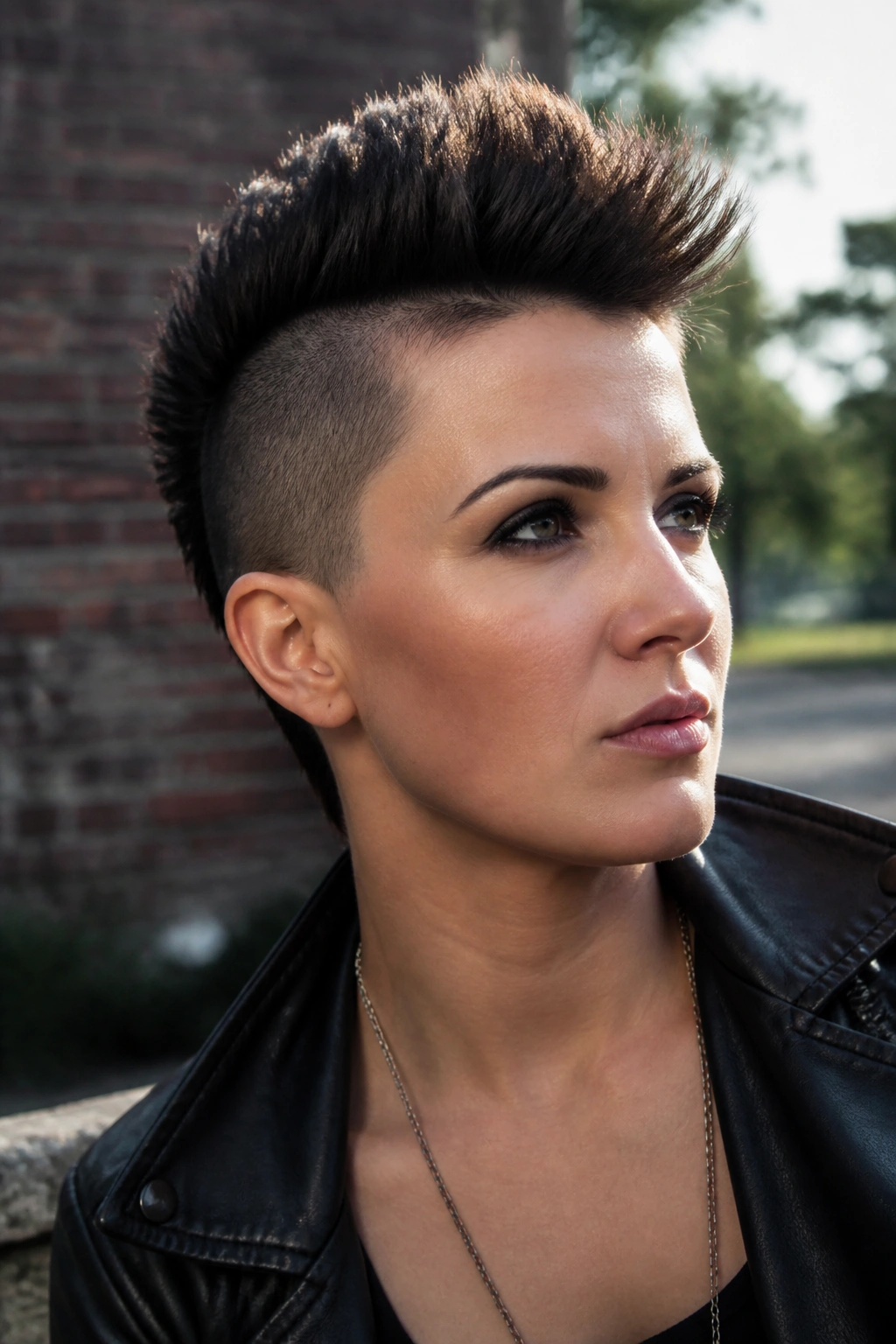
If you want height, movement, and a little bit of drama, the faux hawk undercut does not whisper. It speaks up.
The reason it works is simple: the shaved sides remove bulk, so the center section can stand taller without being drowned out. That gives the style its shape. It reads stronger than a pixie and sharper than a spiky crop, but it can still look polished if you keep the top controlled instead of messy.
A blow dryer matters here. Use one with a nozzle attachment and direct the hair upward from the roots, then back slightly through the middle. A matte clay or paste gives lift without that shiny, crunchy finish that makes short hair look dated fast. If your hair is fine, root spray at the crown helps the top stay off the scalp. If it’s thick, use less product than you think. Too much weighs the shape down.
This style is surprisingly versatile. Wear it smooth with a side part, or push it center for a bolder line. I like it on people who want their haircut to look intentional from the first second, because this cut is all about structure. Soft and subtle it is not. And that’s the charm.
8. The Asymmetrical Crop
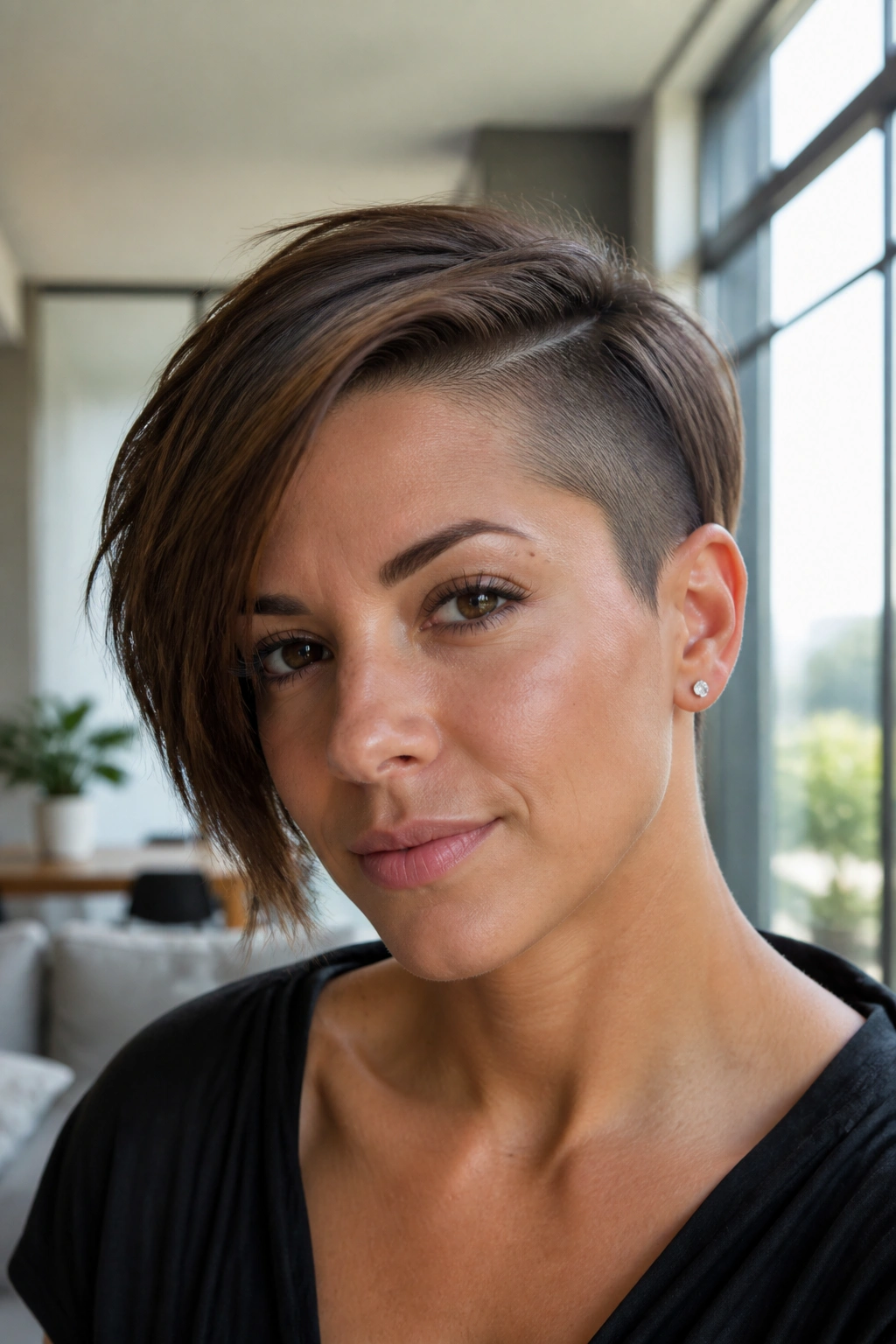
A short asymmetric cut with an undercut is the kind of haircut that makes a face look edited in a good way. One side drops lower, the other side sits tighter, and the eye has nowhere to hide.
There’s a reason this shape looks stronger than a standard crop. The uneven line creates motion before you even touch the hair. You can pair it with a long fringe that sweeps across the forehead or a sharp side fringe that lands just above the cheekbone. Either way, the undercut underneath keeps the bottom from getting crowded.
Why the shape matters
The asymmetry draws attention to the jaw and cheekbones. That makes it a smart pick if you want more definition around the lower half of the face. It also works nicely on straight or slightly wavy hair, because those textures show the cut line cleanly. Curlier hair can wear it too, but the longer side needs enough length to show the angle.
Ask your stylist to keep one side close to the scalp and the other side softened, not bulky. That balance is where the haircut gets interesting. Too much contrast can feel harsh; too little and the point disappears.
This is one of those cuts that looks expensive when it’s trimmed properly. A quick fringe trim every few weeks keeps the line from sagging.
9. The Temple Undercut
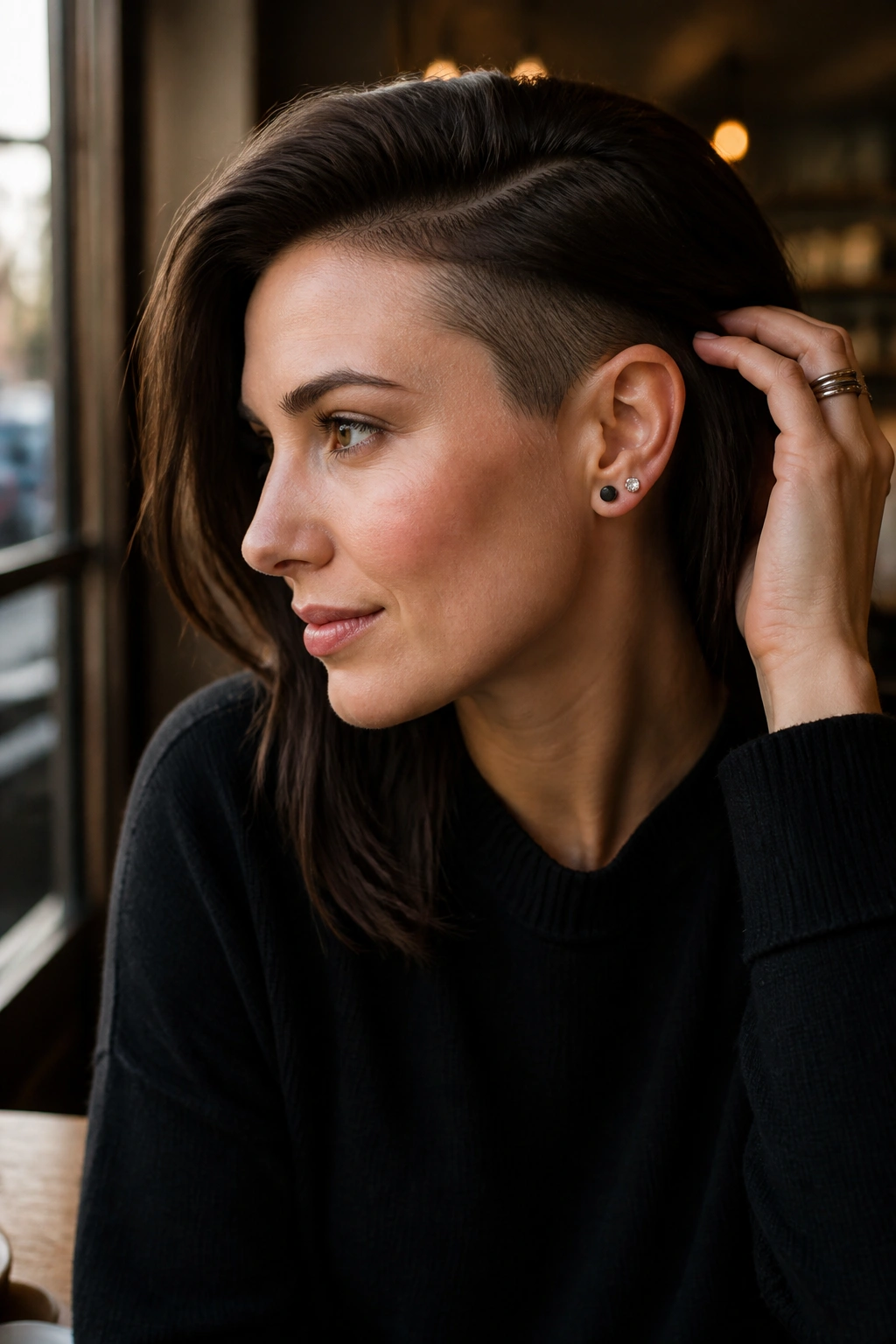
Not everyone wants a full shave, and honestly, that’s reasonable. A temple undercut gives you a smaller hit of contrast without sacrificing much length.
This is the clean strip that sits near the temples and sideburn area. It peeks out when hair is tucked back, then disappears when the top falls loose. That makes it a solid low-commitment option if you’re curious about undercuts but not ready for a larger cut. It’s also a favorite of people who wear glasses, because the shape can frame the arms of the frames in a neat way instead of fighting them.
The style is especially useful on thick hair that feels puffy around the ears. Removing a small section there keeps the silhouette lighter. You’ll notice the difference when you tuck your hair behind your ears or put it into a low ponytail — suddenly the whole side of the head sits flatter.
It looks best when the line is clean and narrow. A fuzzy temple shave tends to look accidental. A precise one feels deliberate. Keep it simple, keep it neat, and let the rest of the haircut do the talking.
10. The Pompadour Undercut
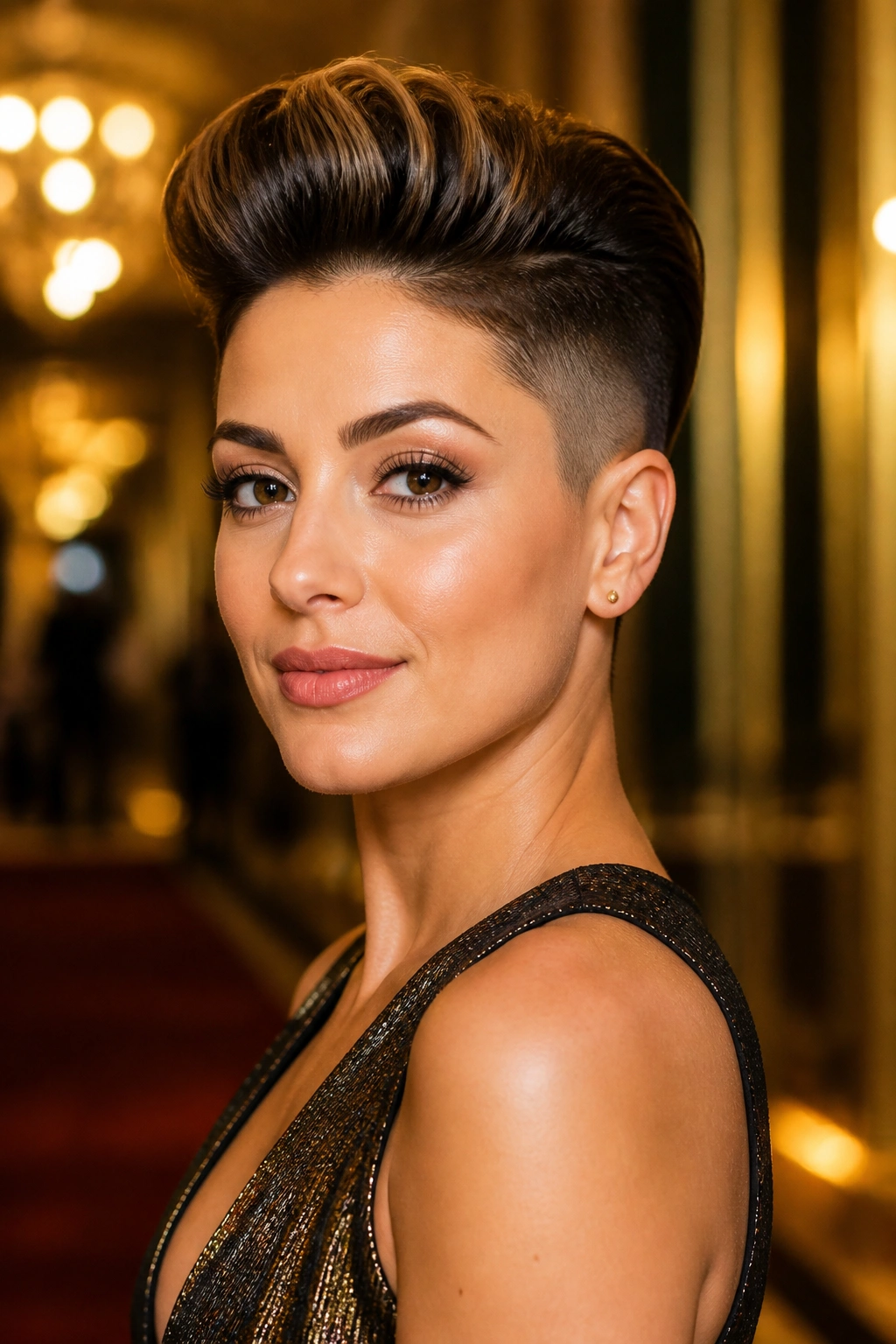
Unlike the faux hawk, the pompadour undercut is all about sweep and polish. The height sits at the front, not in a spiky center line, which gives it a smoother and more dressed-up feel.
The sides stay clipped short, sometimes faded tight into the nape and temple area, while the top gets enough length to roll back in a soft wave. That front volume does two things at once: it adds shape, and it makes the face look slightly longer. If you like short hair that still feels glam, this is a strong move.
What to use
- Volumizing mousse at the roots
- A round brush for lifting the front
- A light hold hairspray to keep the sweep in place
- A tiny bit of pomade on the ends if they fray
This cut works especially well on straight or slightly wavy hair, because those textures hold the smooth shape without fighting it. Curly hair can do it too, but the styling takes more effort and a stronger blow-dry.
I’m fond of this one for evenings and dressier settings. It has presence. Not a loud kind of presence, either — more like the haircut equivalent of a sharp jacket with good shoulders.
11. The Braided Crown with a Nape Cut

What happens when you want softness on top and a surprise underneath? You get the braided crown with a nape cut.
The braid acts like a frame. It lifts the hair away from the face and lets the undercut show in the back, where it has a little swagger without taking over the whole look. This is a nice choice if you want a style that can move between casual and special-occasion hair without feeling fussy. It also keeps the neck cool, which sounds small until you’ve worn heavy hair up for a full day.
A halo braid, double braid, or braided twist all work here. The key is to leave enough space below the braid so the clipped nape is visible. If the braid sits too low, it hides the whole point. If it sits too high, the haircut starts to look disconnected in a bad way.
Best use cases
- Medium-length hair that can braid cleanly
- Thick hair that feels heavy at the neck
- Hair that’s worn up 3 or 4 days a week
- Anyone who wants a hidden edge
This is a prettier undercut than people expect. A little polish at the braid line changes everything.
12. The Mohawk-Inspired Undercut
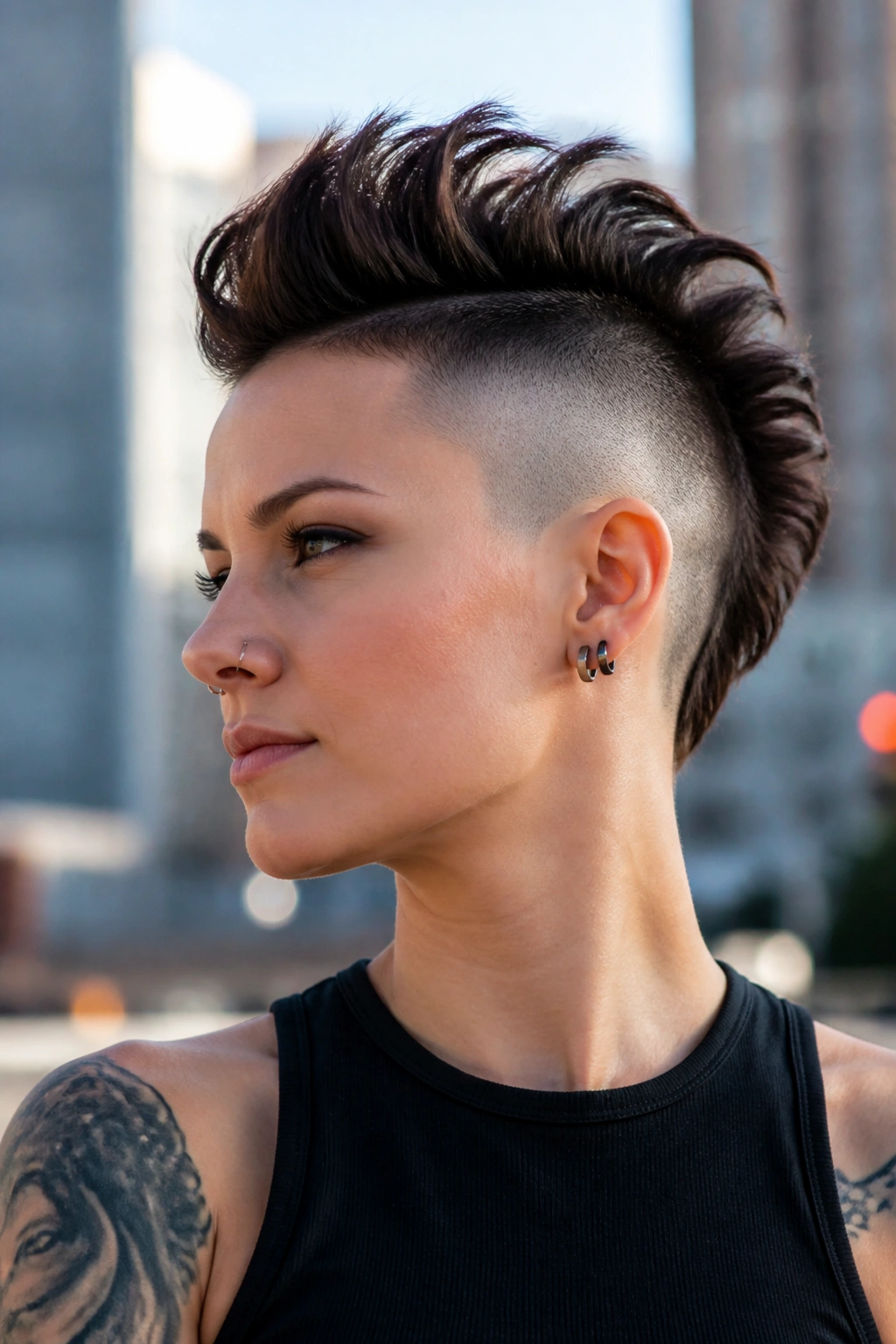
This is the one for people who like shape more than softness. A mohawk-inspired undercut keeps the sides tight and lets the center strip stand up, arc back, or fall forward in a controlled ridge.
The cut does not have to scream punk to work. In a softer version, the central section stays short but not spiky, and the sides are clipped close enough to show the outline without turning the whole thing severe. That makes it a lot more wearable than people think. The shape is bold; the finish can still be neat.
It’s especially useful on thick, curly, or coily hair because those textures naturally build height. A good stylist will adjust the width of the center strip so it matches your head shape. Too narrow, and it can look pinched. Too wide, and the mohawk effect fades into an ordinary crop.
This haircut does ask for maintenance. The sides show regrowth quickly, and the line loses its clarity if you let it go too long. Still, when it’s fresh, it’s one of the strongest silhouettes in the whole undercut family. Clean, direct, and a little bit fearless.
13. The Bowl Cut with a Hidden Undercut
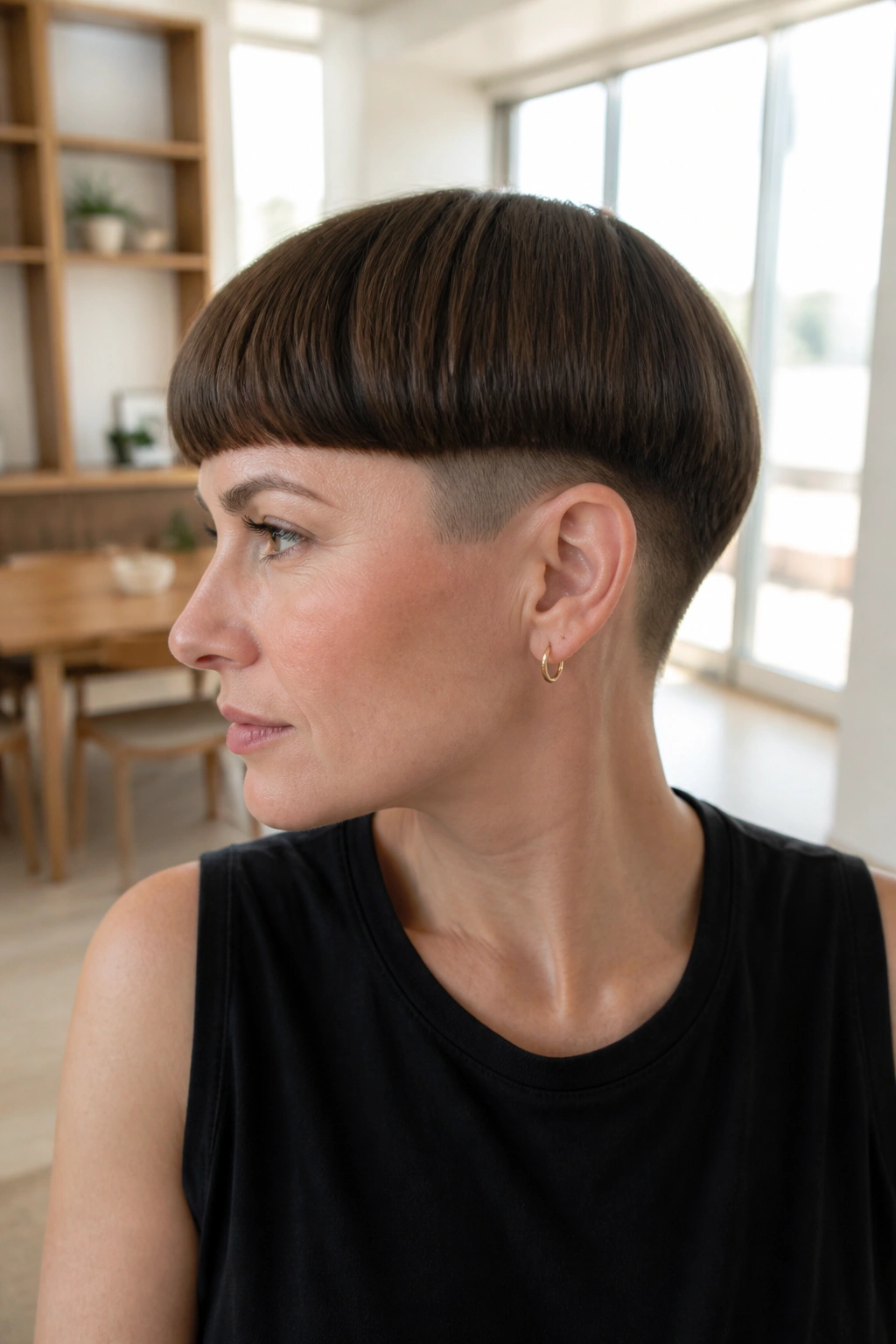
People hear “bowl cut” and think of something blunt in a bad way. That misses the point completely when an undercut is involved.
A hidden shave takes weight out from underneath the perimeter, so the top line can stay crisp without becoming bulky. That means the shape can look architectural instead of puffy. The cut lands best when the outer line is smooth around the head and the underside is trimmed closely enough that the bowl sits properly, not like a helmet.
Where the secret lives
The undercut usually sits low at the nape or around the lower sides, tucked under the visible shape. From the front, you still get the strong outline around the brow and cheek. From the back, the haircut feels lighter and much easier to live with.
This version is good for straight hair that naturally holds a crisp edge, but it can work on wave too if the top has enough weight. The biggest mistake is leaving too much bulk under the shape. Then the bowl ends up looking thick in the wrong places.
I like this cut on people who enjoy a little fashion in their haircut. It has personality. It also grows out in a more forgiving way than a traditional blunt bowl because the hidden undercut softens the bottom as it lengthens.
14. The Soft Bangs and Nape Undercut

A fringe can take an undercut from edgy to quietly pretty in one appointment. Soft bangs, especially curtain bangs or bottleneck bangs, mellow the line and keep the haircut from feeling too hard.
The nape stays shaved or closely clipped, but the top and front remain airy. That creates a nice contrast: movement around the face, cleanliness at the neck. I think that pairing works especially well if you want your haircut to feel feminine without becoming precious. The bangs soften the eye line. The undercut keeps the back from getting too warm or bulky.
This combination also plays nicely with ponytails and half-up styles. The front pieces fall around the face, the nape stays neat, and the haircut looks deliberate even when you’ve barely styled it. If you have fine hair, the bangs can add the illusion of more density. If your hair is dense, the shaved nape removes the part that often makes you overheat and over-style.
Ask for the bangs to blend into the side layers instead of sitting like a separate piece. That tiny detail matters. Otherwise the cut can feel split in two, and nobody wants that.
15. The Color-Sliced Undercut
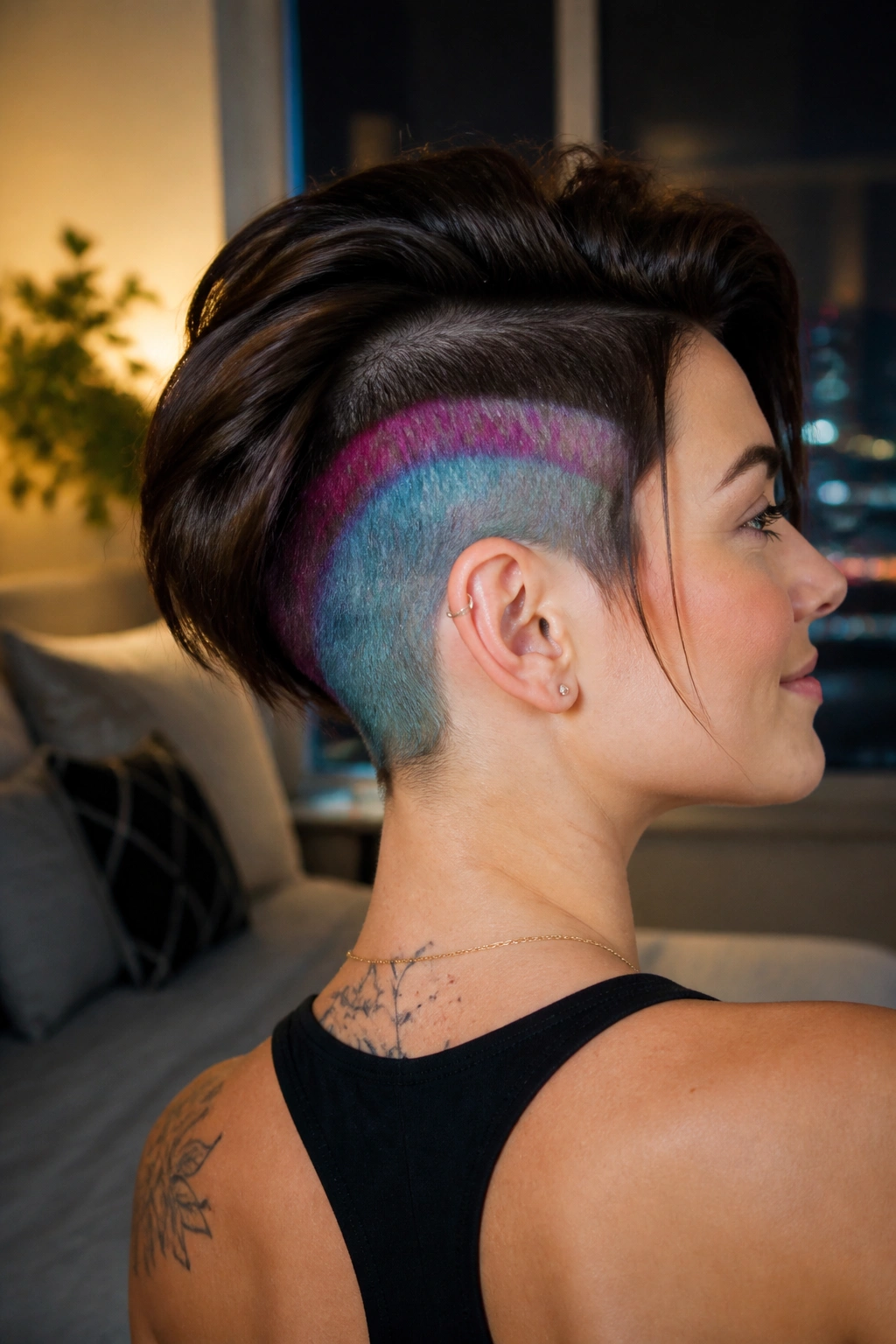
A shaved section becomes much more visible once you put color on it. That’s the whole appeal here, and it’s a good one.
Unlike a plain undercut, a color-sliced version gives you a reveal. The shaved area can hold a vivid dye, a pale blonde panel, or even a subtle tonal shade that only shows when the hair is tucked up. It turns the hidden part of the cut into something playful. A little surprise. Nothing forced.
Color ideas that make sense
- A soft blonde panel under dark hair for contrast
- A copper or auburn slice for warm brunettes
- A deep plum or blue-black for a low-key effect
- A bright color block if you want the undercut to show on purpose
The important thing is placement. Color on a tiny shave can look lost if the panel is too narrow or the top layer is too thick. Ask for the shade to sit where it will peek out naturally — at the nape, under a side part, or behind the ear.
I’m a fan of this option when someone wants the haircut to feel personal. Not copied. The color and the cut should speak to each other; otherwise the effect looks pasted on. A clean undercut with the right slice of color feels sharper than a louder haircut with no shape.
16. The Modern Undercut Mullet
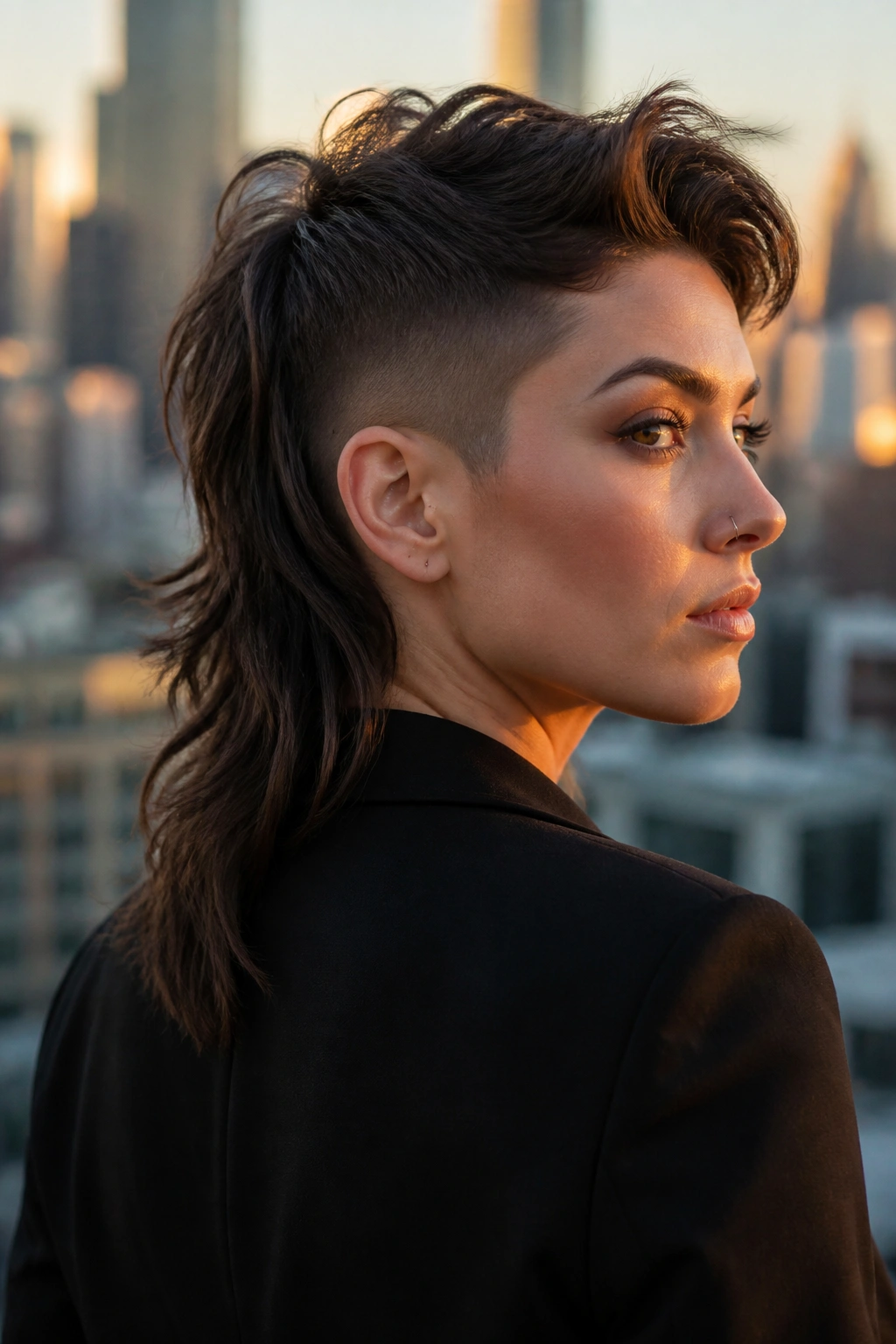
Can a mullet look chic? Yes, if the shape is clean and the layers are done on purpose.
The modern undercut mullet keeps the sides tight, the crown controlled, and the back a little longer so the haircut has movement without turning shaggy in a bad way. The undercut is doing the quiet work underneath, keeping the bulk from spreading out. That’s what makes this version feel current rather than costume-like.
This cut loves texture. Wavy and curly hair can make the back look airy and cool. Straight hair can wear it too, but it needs more styling so the shape does not fall flat. I’d avoid leaving the top too heavy; that’s how you end up with a mullet that looks accidental. The best version has clear shape at the temples, a soft drop at the neck, and enough length in the back to show a little attitude.
A lightweight mousse or texture spray keeps the layers separated. If you want the haircut to feel more polished, blow-dry the crown forward and then lift it slightly at the roots. If you want it looser, scrunch and go. Either way, the undercut keeps the outline from getting bulky.
This one has personality. That’s the point.
17. The Low-Commitment Nape Undercut

If you’re undercut-curious but nervous about the grow-out, start here. A low nape undercut is the gentlest entry point and, honestly, the one I’d recommend to people who wear their hair down most of the time.
The cut stays below the main hairline, tucked into the neck area where it’s hidden by the rest of the hair. When the hair is down, it disappears. When you pull it up, you get a clean reveal and a lighter feel at the back. It’s tidy, practical, and easy to explain if someone asks for a trim. No drama.
This is also the easiest undercut to live with during grow-out. It blends into the surrounding hair more gracefully than a high side shave, and you can trim it on a longer schedule if the outline is soft enough. That makes it useful for people with changing schedules, changing jobs, or just changing minds.
The best undercut hairstyle is the one that fits your daily habits. If you wear low buns, choose a nape cut. If you like short hair with a sharp edge, go side or temple. If you want a hidden detail that shows up only when you want it to, keep it low and narrow. That tiny bit of planning saves a lot of regret later.
