



Short haircuts around the ears for women are one of those styles that look simple from a distance and a little more exacting up close. The ear line is tiny real estate, but it changes everything: where the eye lands, how much neck shows, whether the cut feels soft or строг? no, not formal—whether it feels airy or tight, polished or a little cheeky.
If you’ve ever tucked your hair behind your ears and liked the effect more than the haircut itself, that’s the whole story. The best short haircuts around the ears for women don’t fight that moment. They build around it, leaving just enough length to soften the face while keeping the silhouette clean. Some skim the earlobe. Some sit just above it. Some open the ears on purpose so earrings, glasses, and jawline all get a say.
Texture matters here. So does density. A blunt line around the ears on fine hair looks sleek; the same line on thick hair can feel too heavy unless a stylist removes weight in the right places. Curly hair brings another set of rules. It can spring upward and shrink the apparent length by an inch or two, which is why a “short around the ears” cut often needs to be planned a little longer than the photo suggests.
The styles below cover the range I see working again and again: soft, sharp, edgy, grown-out, and easy to wear. Some are best for straight hair. Some handle waves or curls beautifully. A few are ideal if you want to spend two minutes styling in the morning and move on with your life. Good cuts should earn that kind of loyalty.
1. The Rounded Ear-Length Bob

A rounded ear-length bob is the kind of cut that looks tidy without looking stiff. The shape hugs the head a little closer than a long bob, then curves softly around the ears instead of stopping in a hard line. That curve matters. It keeps the cut from reading helmet-like, which is the quickest way to ruin this shape.
Why the Curve Makes It Work
The roundness softens the cheek area and keeps the cut from squaring off the face. It also gives you a little movement near the temple and jaw, which helps if your hair is straight and prone to looking flat. Ask for the perimeter to sit around the ear or just below the lobe, then have the ends lightly beveled so they don’t feel blunt and bulky.
A 1.25-inch round brush and a quick blow-dry at the roots are usually enough. You do not need a fancy styling routine here. A small amount of smoothing cream through the mid-lengths, then a bend under at the ends, keeps the shape neat.
- Best on straight to slightly wavy hair
- Works well with side parts or soft center parts
- Needs a trim about every 6 to 8 weeks
- Looks especially good with tucked-behind-the-ear styling
Pro tip: ask your stylist not to over-thin the ends. Once the weight disappears, the curve loses its shape and the bob starts flaring out in awkward places.
2. The Soft Pixie Cut With Sideburns
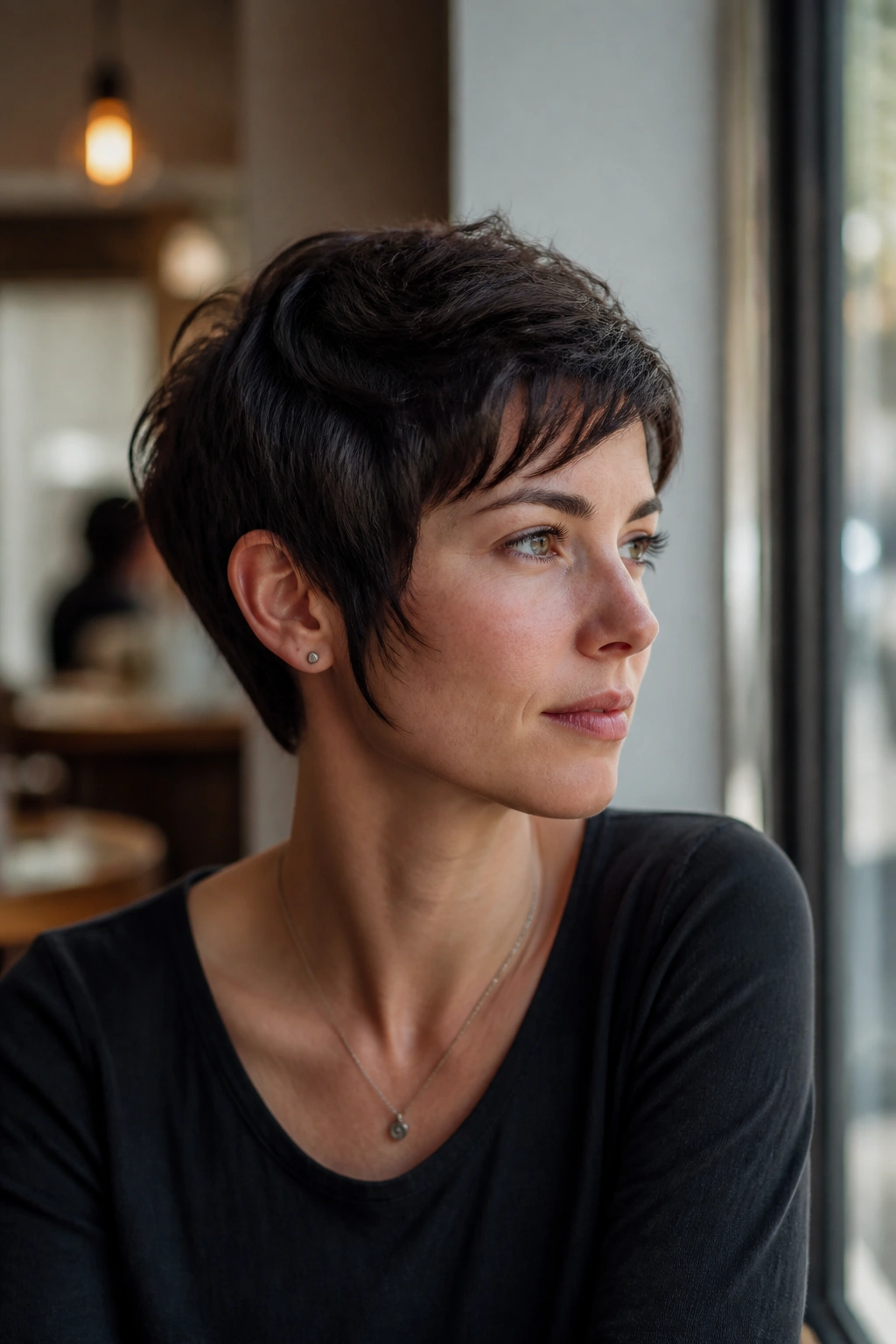
Some pixies go too hard. This one doesn’t. The soft pixie with sideburns keeps the hair close around the ears, but leaves a little length in front of the ear and along the cheek so the cut has a gentler edge. It feels modern, but not severe.
Sideburns are the secret. Even a slim, wispy sideburn makes the haircut feel deliberate instead of clipped off. That small strip of hair also gives you a useful little frame if you wear glasses or want to soften a strong jaw.
What to Ask Your Stylist For
You want short, tapered sides with a touch of length around the ears, plus texture on top so the crown can be pushed forward, parted, or lifted slightly. A razor can help on thick hair, but scissor work is often cleaner if your hair is fine and easily frayed.
The styling part is easy. Rub a pea-sized amount of styling paste between your palms and press it through dry hair. Then use your fingers to create separation near the fringe and at the temples. Done. No round brush, no drama.
And if you like a little romance in a short cut, this one has it. The sideburns keep it from feeling too cropped.
3. The Tapered Crop With a Clean Nape

A tapered crop is the haircut I recommend when someone wants short hair but refuses to look too “done.” The sides narrow neatly as they move around the ears, and the nape is cut close so the neck looks longer and cleaner. It’s practical. It’s also quietly sharp.
Thick hair usually loves this shape because the taper removes bulk where it matters most. Instead of building a mushroom shape around the ears, the cut gets lighter as it drops down. That helps the top keep its lift without the sides puffing out like a bell.
The Best Version Is Not the Harshest One
A good tapered crop should still have some softness at the hairline. I don’t love the over-clipped version unless someone wants that very graphic look. For most women, a scissor taper around the ear and a clipped or neatly faded nape is the sweet spot.
- Great for thick, coarse, or stubborn hair
- Pairs well with a side-swept fringe
- Needs a clean-up trim every 4 to 6 weeks
- Easy to air-dry if your hair has a natural bend
Use a matte paste or light clay if you want separation on top. If you want a smoother finish, a dab of serum on the ends will keep the taper from looking dry.
4. The French Bob That Kisses the Cheekbone
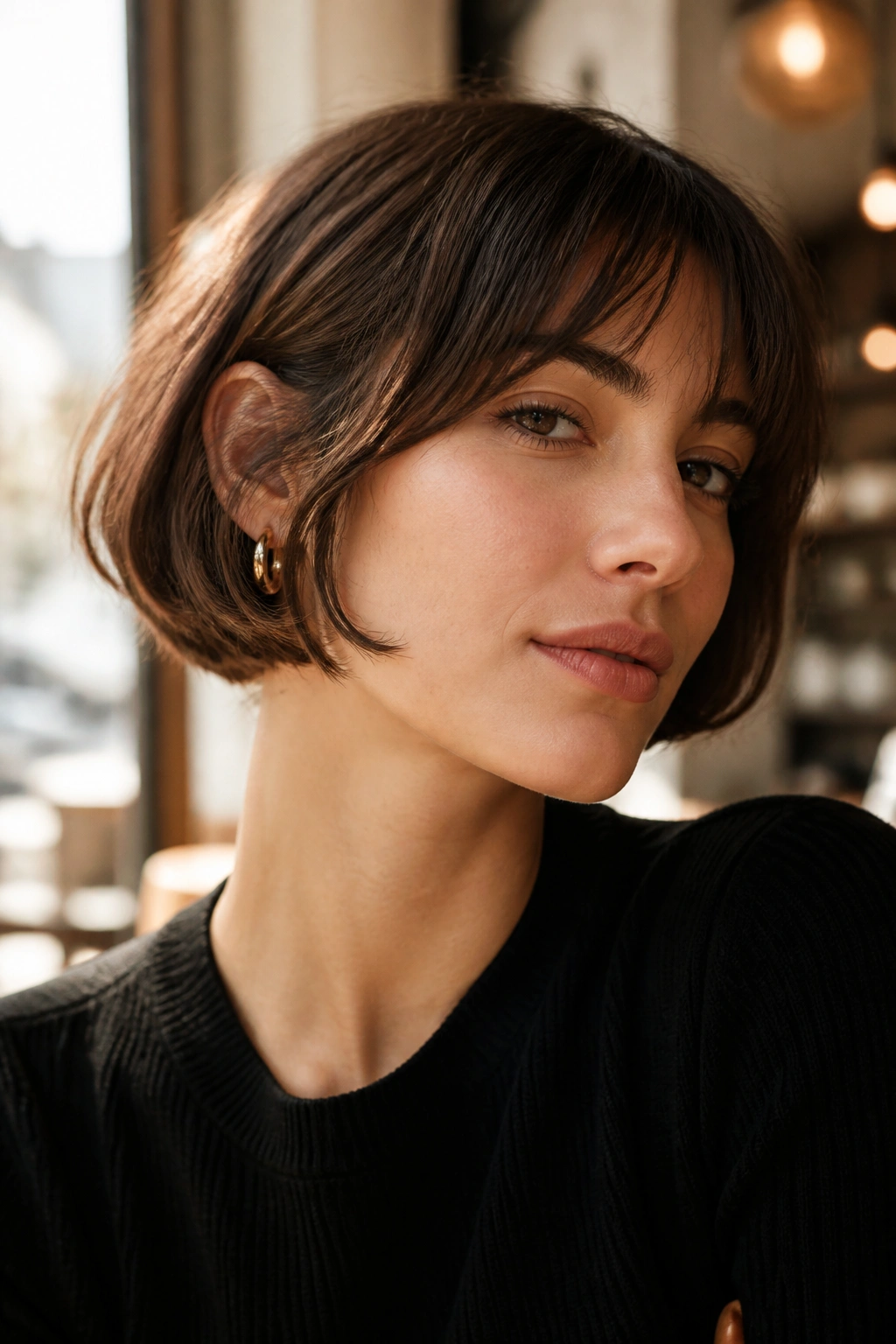
Why does the French bob keep showing up in good haircut conversations? Because it understands proportion. The line lands around the ears or just below them, the fringe sits somewhere near the brows, and the whole thing feels compact in the best possible way.
This cut looks especially good when it barely brushes the cheekbone. That little bit of movement near the face gives it a lived-in feel, which is the whole appeal. Too perfect, and it turns fussy. Too long, and it loses the crispness that makes it flattering.
How to Wear It Without Overstyling
A French bob loves a rough blow-dry, not a salon-perfect finish. Use a lightweight mousse at the roots, let the hair dry about 80 percent of the way, then finish with your fingers or a soft brush. If your hair is naturally wavy, even better. A bend at the ends keeps it from feeling too severe.
The fringe matters more than people think. A brow-skimming bang or a broken, piecey fringe keeps the ear-level shape from looking boxy. If you wear glasses, this is one of the easiest cuts to make work because the frame and fringe can balance each other.
This is not the cut for someone who wants zero maintenance. But if you like a short style with personality, it’s hard to beat.
5. The Bixie Cut With a Feathered Ear Line
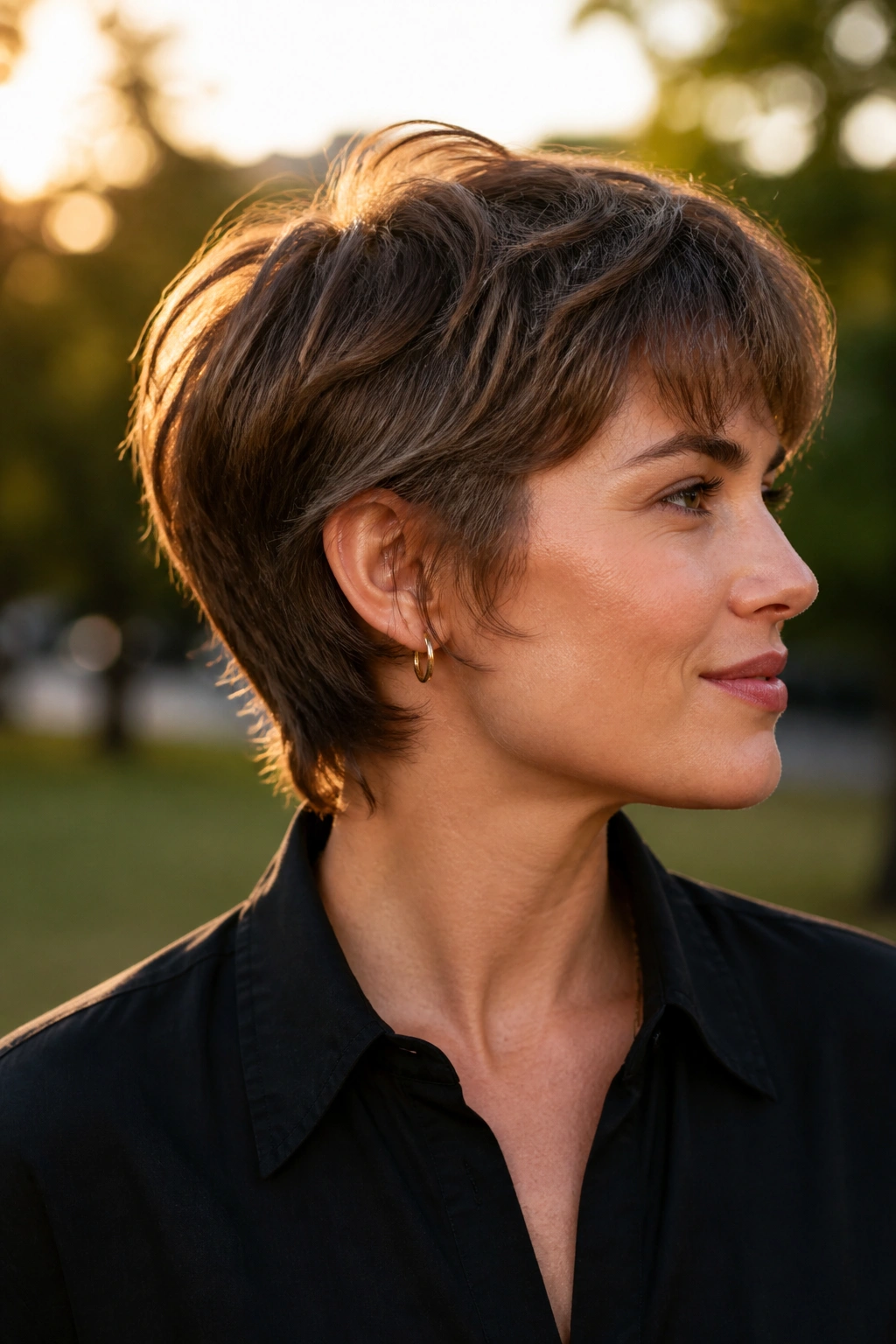
The bixie lives between a bob and a pixie, which sounds vague until you see it on a real head. Around the ears, that in-between length is the whole charm. It gives you enough hair to tuck, flip, or sweep, but not so much that the shape gets heavy.
Feathering around the ear line softens the cut and keeps it from looking choppy in a bad way. The shorter pieces melt into the longer top layers, and the result feels airy instead of chopped up. On fine hair, that feathering can create the illusion of more movement. On thicker hair, it stops the sides from bulking out.
When This Cut Makes Sense
If you’re growing out a pixie and hate the awkward stage, the bixie is a strong landing point. It also works if you want a bob shape but don’t want the commitment of a full perimeter. The ear area stays neat, the crown gets a little height, and the whole cut moves nicely when you turn your head.
A texturizing spray is usually enough. Spray near the roots, twist a few sections with your fingers, and let the ends do a little of their own thing. You do not need to fight the softness.
Best for: women who want a short cut with movement, not a hard line. That distinction matters more than people admit.
6. The Asymmetrical Ear-Skimming Bob

One side a little longer. The other side tighter around the ear. That’s the whole trick, and it works because the eye loves a small imbalance when it feels intentional. An asymmetrical bob can make a round face look longer, or take a soft face and give it a sharper edge.
This is one of the few short cuts around the ears that can read glamorous without being fussy. The longer side can graze the jaw, while the shorter side opens up one ear and gives the cut a bit of swing. If you wear statement earrings, this shape gives them room to show up.
Where It Gets Tricky
The asymmetry has to be subtle enough to feel wearable. If one side is dramatically longer than the other, the cut starts to look like a style choice you have to explain. A small difference—say, half an inch to an inch—often looks better in everyday life.
A deep side part helps. So does a clean edge near the shorter side. If your hair is poker-straight, ask for a bit of internal texture so the cut doesn’t fall like a ruler. If it’s wavy, the movement will do some of the work for you.
A one-line verdict: this is the cut for women who like polish with a little attitude.
7. The Textured Crop With Choppy Layers
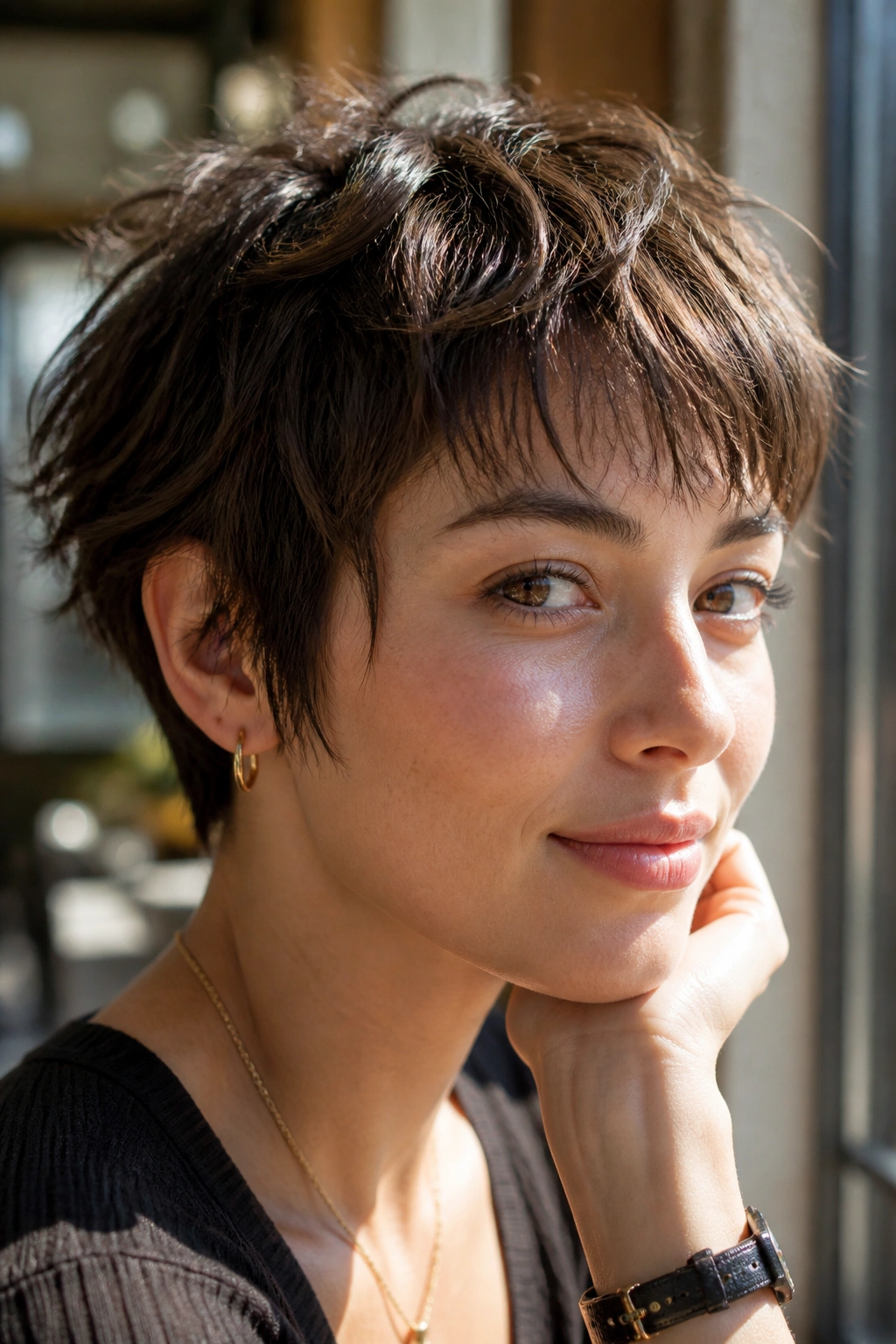
Choppy layers can save a short haircut from looking too neat. Around the ears, they break up the outline and create little shifts of light and shadow, which matters more than people think. A textured crop is not about perfection. It’s about shape that still moves when you toss your head.
The ear area should be cut with purpose, not just hacked short. Good point-cutting around the temple and sideburn region keeps the crop soft enough to grow out cleanly. That is the difference between a stylish short cut and one that looks like it was rushed in a chair.
How I’d Style It
Work a small amount of paste through dry hair, then pinch random sections so the layers separate. Keep the crown a touch fuller than the sides. If the whole cut is chopped evenly, it can lose focus fast.
- Best on thick or medium-density hair
- Good match for straight or slightly wavy textures
- Can be worn messy or controlled
- Benefits from a trim every 5 to 7 weeks
I like this cut on women who don’t want a “sweet” look. It has edge, but not the kind that feels costume-y. And if your hair grows fast around the ears, the texture helps the grow-out look intentional for longer.
8. The Curly Ear-Length Shag
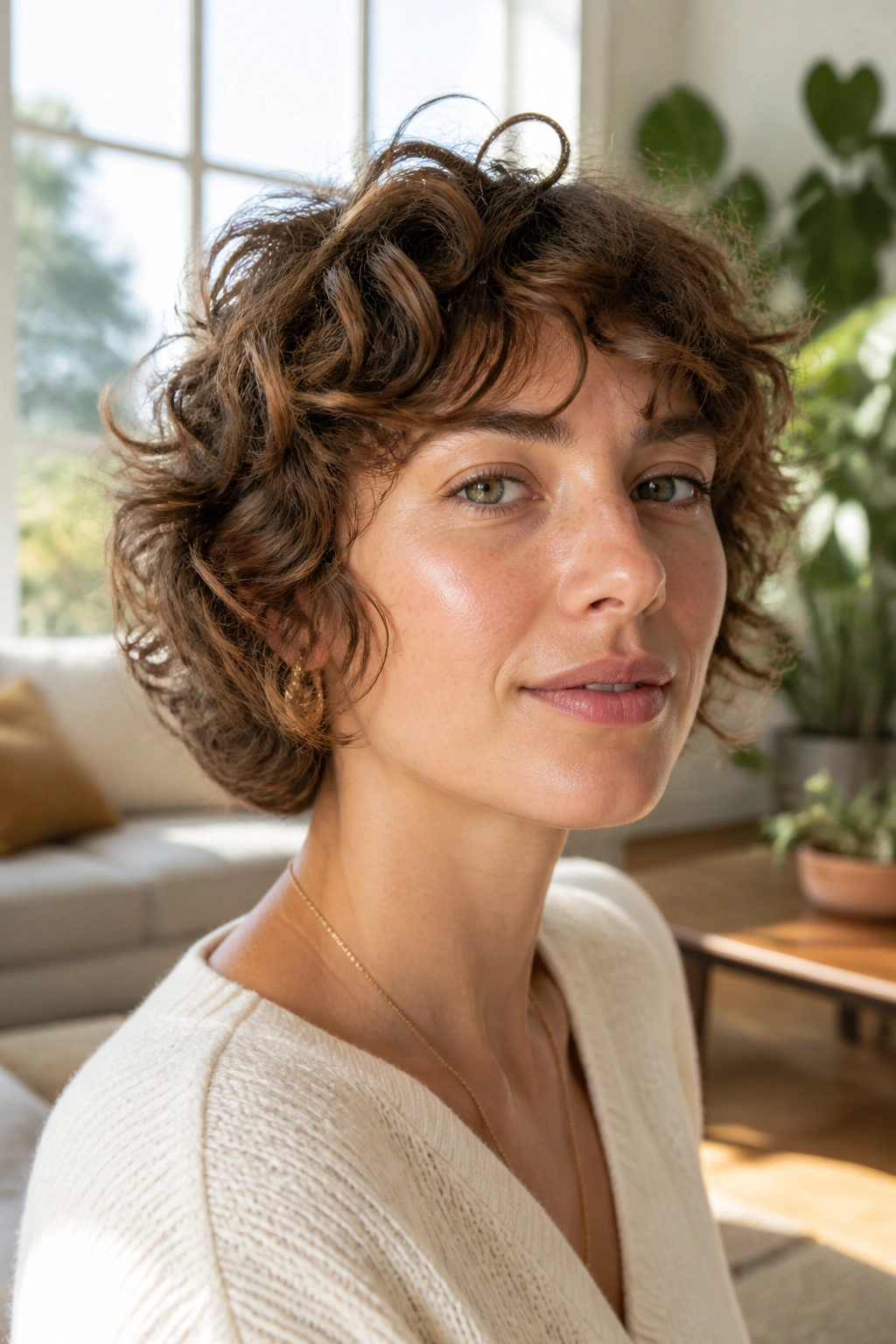
Curly hair and the ear line can be tricky, because curls do their own math. A cut that lands at the ear when wet may bounce up an inch or two once it dries. That’s why a curly ear-length shag needs more thought than a straight one. The layers should support the curl pattern, not fight it.
The shag shape gives curls room to stack without building a triangle. Around the ears, it keeps the cut light and open, which helps the face rather than burying it. A little fringe or face-framing curl near the cheek can make the whole shape feel balanced.
How to Make It Behave
Ask for curl-by-curl shaping if your hair is dense or uneven. That sounds fancy, but it simply means the stylist cuts based on how your curls actually fall instead of pretending every strand lies flat. It makes a huge difference near the ears, where bulk tends to collect.
Use curl cream on damp hair, then scrunch in a gel if your curls need hold. Diffuse on low heat, or let it air-dry if you have the patience. Don’t rake your fingers through it once it starts drying. That’s how the shape gets frizzy and puffy.
This one’s for people who want short hair with personality and a little softness around the face. It does not reward over-control.
9. The Slicked-Back Micro Bob

A micro bob is short enough to feel sharp, but not so short that it turns into a pixie. When it’s styled slicked back, the ears become part of the shape instead of something the cut tries to hide. That can look beautifully clean on straight hair and surprisingly elegant on textured hair too.
The trick is keeping the length just long enough to tuck behind the ears without flipping out. If the perimeter sits too high, the style can feel severe. If it drops too low, it stops being a micro bob and becomes a different animal entirely.
When to Wear It
This is one of those cuts that shines in the evening, or any time you want a face-opening style that looks deliberate. A wet-look gel gives it that glossy finish, but you can also comb it back with a light cream for a softer version. The hairline around the ears should stay neat, not sticky.
A side part can soften the shape, but a center part makes it feel bolder. Either way, the ear area should be clean enough that the silhouette reads instantly.
It’s not the most forgiving cut for cowlicks. If your hair pushes hard at the temples, you may need a stronger styling product than you expected. Still, when it works, it really works.
10. The Undercut Pixie With Long Top
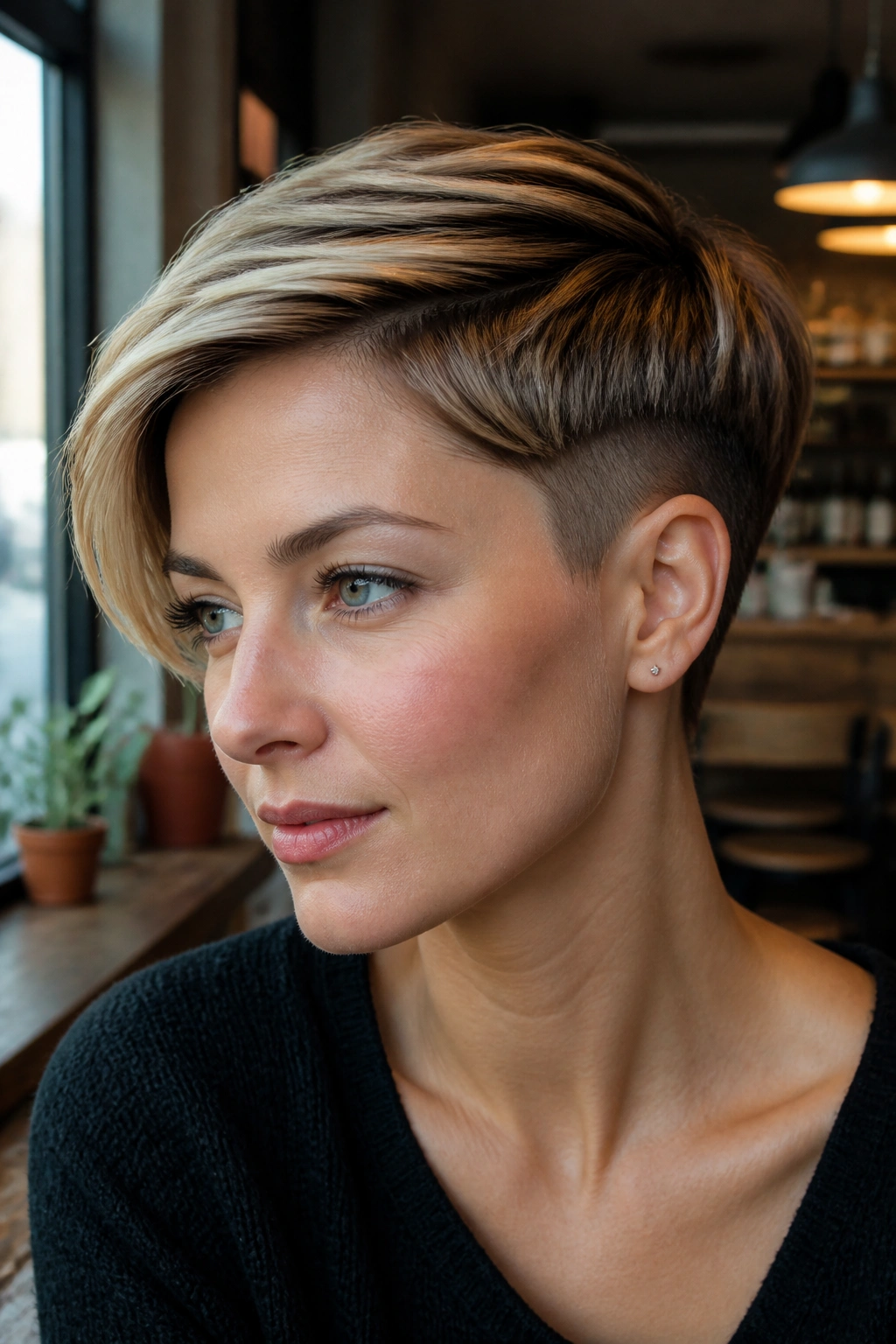
This one has range. The undercut around the ears takes out a serious amount of bulk, while the top stays long enough to sweep, spike, or tuck to one side. If you have thick hair and are tired of it expanding outward by noon, this cut can feel like a relief.
The undercut doesn’t have to be extreme. Sometimes the best version is just a narrow shaved strip or a closely clipped band around the lower sides and behind the ears. That keeps the silhouette neat without showing too much scalp unless you want it to.
What Makes It Practical
The long top gives you options. Wear it forward for a more polished look, push it up for height, or let it fall to one side. The contrast between the short sides and the longer crown makes the ears feel framed rather than hidden.
- Good for thick, heavy, or coarse hair
- Useful if you want less bulk around the head
- Needs regular edge clean-ups
- Can look soft or edgy depending on styling
A little mousse at the roots and a blow-dry with your fingers is usually enough. If you prefer a smoother finish, use a flat brush just over the top section and leave the sides close. The style is low-maintenance once the cut is in the right hands.
11. The Blunt Ear-Hugging Bob
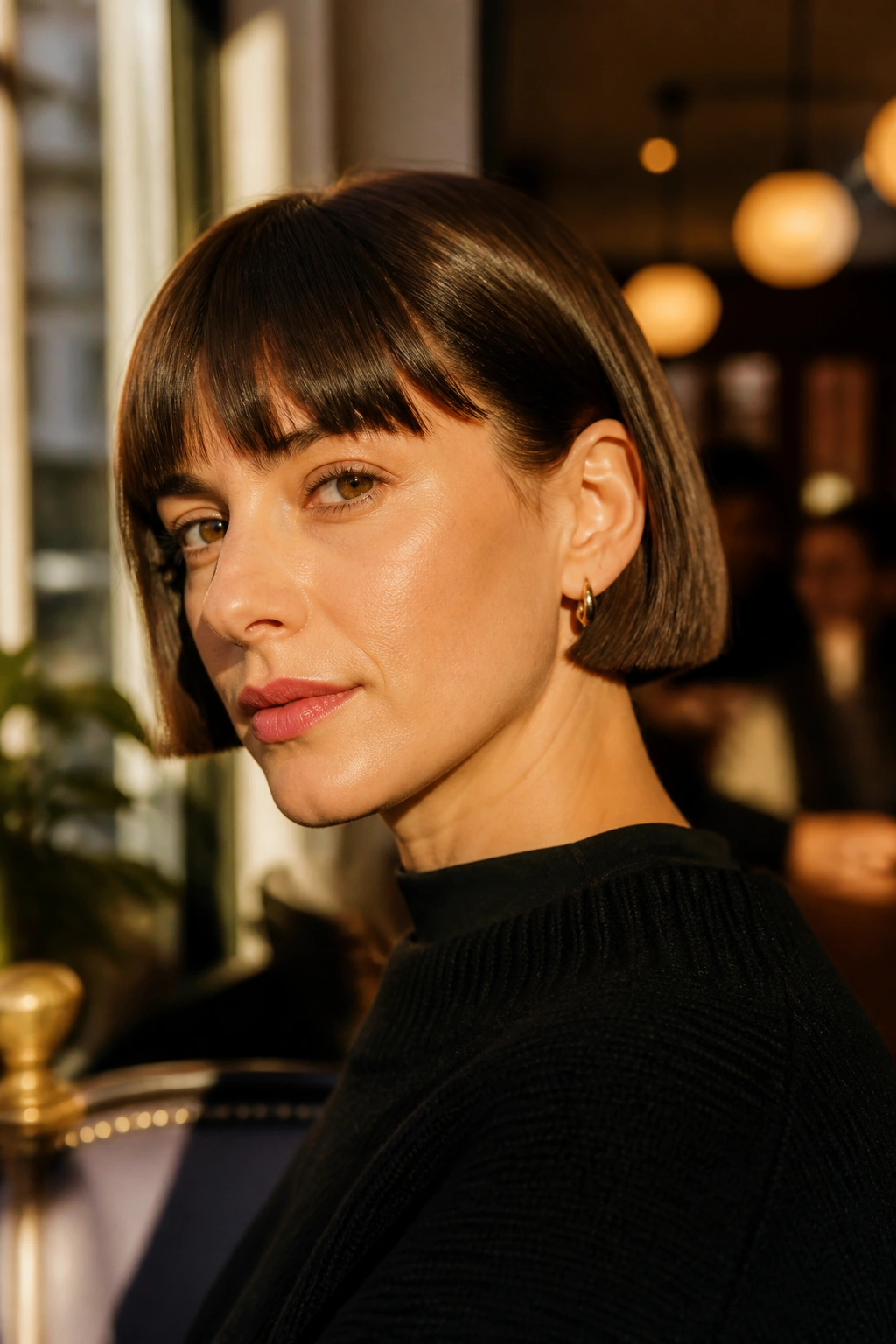
A blunt bob around the ears is a bold little thing. No feathering. No soft edges. Just a straight perimeter that lands right where it should and stays there. That shape can look expensive in the plainest sense of the word: clean, precise, and hard to ignore.
The cut is best when the line is exact. A crooked blunt bob around the ears is painfully obvious because the eye goes straight to the edge. On the right head, though, it makes the jaw look crisp and the neckline look longer.
Who Should Think About It
Fine to medium hair usually takes to this cut well because the blunt edge gives the illusion of thickness. If your hair is extremely dense, your stylist may need to remove weight inside the shape so the sides don’t balloon out. That part matters. A blunt perimeter should look solid, not bulky.
- Works well with straight hair
- Needs regular trims to keep the edge sharp
- Looks good behind the ears or tucked on one side
- Pairs nicely with a middle part or a clean side part
I like this cut with minimal styling. A blow-dry and a touch of shine spray are enough. If you fuss too much, you can flatten the bluntness that makes it interesting in the first place.
12. The Layered Tuck-Behind-Ears Cut

Some women don’t want hair that lives on the ears all day. They want a cut that looks even better once it’s tucked back. That’s where a layered tuck-behind-ears cut earns its keep. The length usually sits between the ear and jaw, with layers that fall neatly once you slide them behind the ears.
The layers need to be placed with restraint. Too many short pieces near the front and the tuck looks messy. Too few, and the shape falls flat against the head. The sweet spot is a face frame that bends softly backward, so the tucked look feels natural rather than accidental.
Why This Cut Stays Useful
It plays nicely with earrings, glasses, and windy weather. Honestly, that matters more than people admit. A lot of “cute” short cuts fall apart the minute you leave the bathroom mirror. This one keeps its shape through the day because the tuck is part of the design.
A light blow-dry at the roots helps the layers swing away from the face before you tuck them back. If your hair is fine, a spray of volumizing mist at the crown can keep the top from collapsing. If it’s thick, a smoother cream on the ends can stop the tuck from looking bulky.
This is a strong choice if you want flexibility without committing to a super-short crop.
13. The Wavy Chin-to-Ear Crop

Not every short haircut around the ears has to be ultra-short at every point. A wavy chin-to-ear crop gives you a little more length at the front, then shortens neatly around the ears and nape. That shape is useful because it lets the wave show off a bit before the cut tightens up.
The result feels softer than a blunt bob and less fussy than a long pixie. The waves break the line, which keeps the ear area from looking too severe. On a good day, it looks like you didn’t try very hard. On a bad day, it still looks like you meant it.
Best Styling Rhythm
Use a sea-salt spray or a lightweight wave cream on damp hair, then scrunch and let it dry with as little interference as possible. If you blow-dry, use a diffuser or a soft hand so you don’t stretch the wave out of the shape. The cut depends on that bit of bend.
This is a sweet spot for women who want enough length to tuck behind the ears but still want the neck to feel open. The front softness also makes it easier to wear with glasses, which can be a dealbreaker for some cuts.
And yes, it grows out nicely. That never hurts.
14. The Side-Part Ear-Length Crop for Fine Hair

Fine hair needs a little strategy near the ears. A side-part ear-length crop gives the roots a lift before the hair even hits the side of the face, and that matters because flat hair around the ears can make the whole cut look limp. The side part gives the style a little push in the right direction.
A small amount of layering near the crown helps, but the perimeter should still stay full enough to look intentional. If the ends are thinned too much, the cut can look wispy in a way that doesn’t flatter fine strands. I’d rather see slightly more weight than too little. Every time.
The Styling Difference
Blow-dry the front section away from the part first, then let it settle back. That tiny habit adds lift where you need it. A root spray or mousse can help, but use a light hand. Fine hair gets greasy fast if you drown it in product.
A side-part crop around the ears also gives you more room to show the face shape. It can soften a wider forehead, lengthen a round face, or keep a short cut from feeling too centered and flat. If your hair has a soft wave, the side part will probably make the cut even better.
This is one of the easiest short styles to live with day to day. It looks polished without asking for much.
15. The Grown-Out Pixie With Soft Ear Pieces
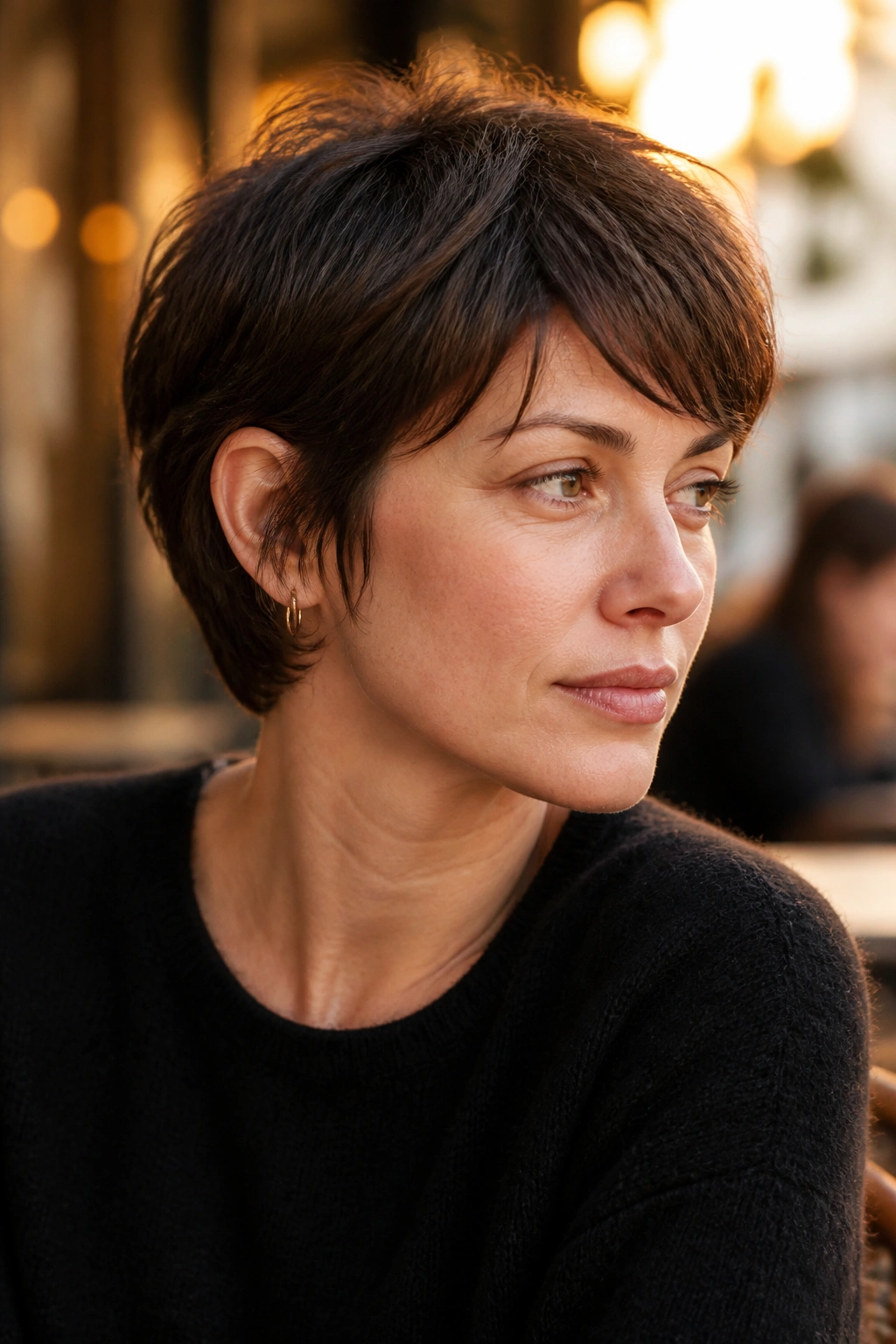
If you want the lowest-drama option in the whole group, this is it. A grown-out pixie with soft ear pieces keeps the sides short enough to feel light, but leaves a little extra length around the ears so the cut doesn’t look harsh while it’s growing. That in-between stage can actually be the best version of the haircut.
The soft pieces around the ears do a lot of quiet work. They blur the edge of the haircut, frame the cheekbones, and make the style look less “fresh from the chair” and more lived-in. That matters if you don’t want to visit the salon every few weeks just to keep the shape from turning blunt.
Why It Wins for Real Life
This cut is forgiving. It handles busy mornings, awkward grow-out, and the occasional missed trim better than most short styles. You can tuck the pieces behind the ears, leave them loose, or sweep them forward if the mood changes. That flexibility is rare, honestly.
A little styling cream through the ends is enough for most hair types. If your hair is thick, ask for some internal weight removal so the sides don’t puff out. If it’s fine, keep the layers soft and avoid over-texturizing, because that only makes the hair look thinner.
Choose this one if you want short hair around the ears that still feels feminine, easy, and a bit relaxed. It doesn’t shout. It just works.
