



Thick curly hair is generous hair. It gives you shape, movement, and a built-in fullness that people with finer texture spend ages chasing.
That same fullness can be a headache. A style that looks neat on paper can balloon at the crown, sag at the nape, or turn boxy at the ends once the curls dry and shrink.
Hairstyles for thick curly hair work when they respect the hair’s actual habits: shrinkage, density, weight, and the fact that one bobby pin is rarely enough. I love styles that let the curl pattern stay visible while shifting the weight to a smarter place.
Some looks need a strong gel and a diffuser. Some need a claw clip, a satin scrunchie, or a few well-placed braids. The good ones do not fight the curls — they give them a job.
1. Rounded Layered Afro
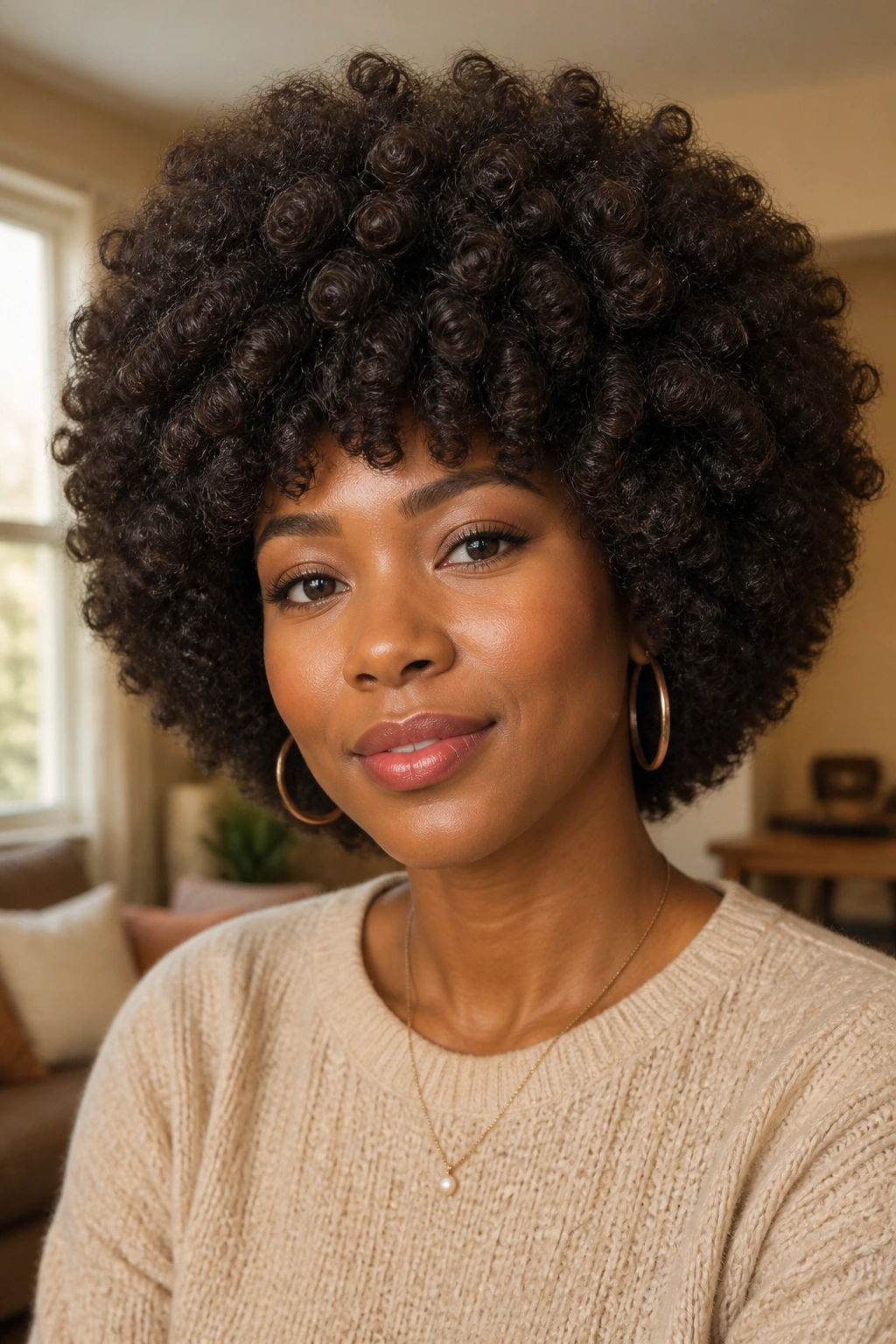
A rounded layered afro is the style I reach for when thick curls need shape, not discipline. It keeps the silhouette soft and full, but removes enough internal weight that the ends do not sit like a shelf.
Why the Shape Works
When the crown and sides are layered with intention, the curl pattern stacks into a dome instead of a triangle. That matters on dense hair, where bulk at the sides can swallow the face and make the whole cut feel wider than it is.
- Ask for internal layers starting around cheekbone or chin level.
- Keep the perimeter rounded, not blunt or boxy.
- Diffuse in sections until the roots feel dry and the curl clumps are set.
- Lift the roots with a pick only after the hair is fully dry.
Pro tip: Tell the stylist you want to keep fullness at the top while taking weight out of the middle. That sentence saves a lot of bad haircuts.
This shape works especially well if your curls shrink a few inches as they dry. It gives the hair room to expand without looking uncontrolled, and that is the whole game with thick curly hair.
2. Curly Shag with Bangs

A curly shag is the easiest haircut-based style for thick curly hair if you want movement without losing volume. The layers do the heavy lifting, and the bangs keep the shape from feeling too long or too heavy around the face.
The best part is that a shag does not ask the curls to lie down. It wants them to bounce, stack, and sit a little messy. That is the point. If your hair tends to sit flat at the crown and explode at the ends, the shag fixes the balance by taking weight out of the places that drag.
I like this style with longer, curly bangs that graze the eyebrows or sit just below them when dry. Short bangs can spring up fast, especially on tight curls, and then you spend your life trying to tame them. Keep the product light near the fringe, and use your fingers instead of a brush so the curl clumps stay intact.
This cut also buys you flexibility on low-effort days. Scrunch in mousse, diffuse for ten minutes, and let the rest air-dry. It still looks styled. That is the charm.
3. Shoulder-Length Curly Lob

Why does a shoulder-length lob work so well on dense curls? Because it lands in the sweet spot where the hair still has swing, but not enough length to drag the curl pattern flat.
A lob keeps thick curly hair from becoming a heavy curtain. It gives you enough length for a ponytail or a clip-up style, but it does not let the ends pile up and overwhelm the jawline. That balance matters more than people admit. Long curls can be gorgeous, sure, but once the length starts to pull, the shape gets harder to read.
How to Style It
Start with a clean middle or side part, then apply leave-in conditioner and gel in 2-inch sections. Scrunch gently, then diffuse with your head tilted to one side so the roots dry with lift instead of sticking to the scalp. If the ends look stringy, stop fussing and let them settle. Too much touching breaks the curl clumps.
This cut is a good pick if you want something neat enough for work but relaxed enough for weekends. It sits well in both directions, which is rare.
4. Long Layers with Face-Framing Pieces

If your curls hang heavy enough to pull your whole face down, long layers are the escape hatch. They take weight out of the lower half of the hair while keeping the length you actually want to wear.
What matters here is placement. A few carefully cut pieces around the cheekbones can make thick curly hair look lighter without thinning it into frizz. That is the mistake I see often: people ask for “volume removal” and end up with random, choppy ends that puff in every direction. Real face-framing should look deliberate, even when the curls are loose.
- Ask for dry cutting if your stylist is comfortable with it.
- Keep the shortest face-framing piece around the cheekbone or lip line.
- Skip aggressive razor thinning if your hair frizzes easily.
- Let the longest layers fall below the shoulders so the shape still feels substantial.
The payoff is simple. The hair moves more, sits better under a jacket or scarf, and stops feeling like one giant block. That alone changes how thick curly hair behaves day to day.
5. Wash-and-Go with a Side Part

A good wash-and-go should look lived in, not staged. On thick curly hair, that means product control matters more than product quantity.
The side part does a lot of work here. It breaks up the bulk at the crown and gives the style a direction, which keeps the curls from spreading evenly in every direction and forming that wide, puffy outline nobody asked for. I like this look when the hair is freshly washed, because the curls are easier to set into clumps before they start drying in their own mood.
Use a leave-in conditioner, a curl cream, and a firm-hold gel in that order, then rake the product through in sections no wider than 2 inches. Scrunch the ends, smooth the top, and leave the roots alone once they are placed. If you keep touching them, the part disappears and the whole thing turns vague.
A diffuser helps, but don’t chase every last drop of moisture. Stop when the hair is about 80% dry, then let the rest air-dry. That final bit of patience keeps the curl pattern crisp instead of fuzzy.
6. High Puff
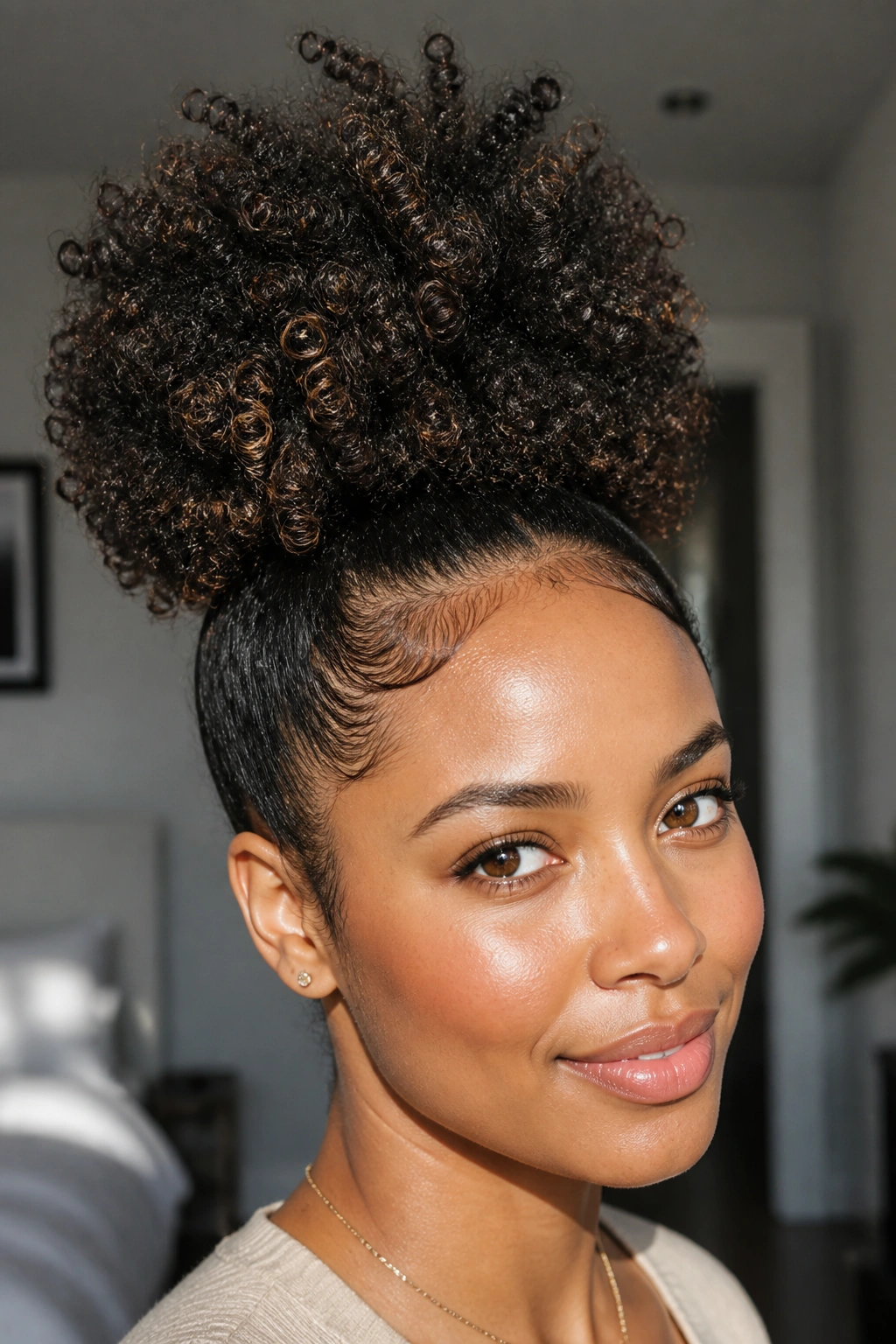
Unlike a low ponytail, a high puff lets shrinkage do half the work. That is why it looks so natural on thick curly hair.
The style sits at the crown, where the hair already wants to lift. You gather the curls with a wide elastic, smooth the sides just enough to keep the shape neat, and leave the rest free so the puff can expand. No need to overthink it. The hair does the drama for you.
A high puff is especially good when your curls are dense at the roots and a little less full through the ends. It pulls visual weight upward, which makes the face look open and the neck look longer. I like it on second-day hair, when the curls have settled a bit but still have enough spring to look full.
If your hair is long enough to tug at the band, twist the length once before wrapping it. That reduces sagging. Keep the tie snug, not punishing. Thick hair can handle tension, but your edges usually cannot.
7. Pineapple Updo

The pineapple is the style I save for nights when I want my curls up, off my neck, and still recognizable in the morning. It is also one of the few styles that works just as well for sleep as it does for a casual daytime look.
Why It Works Overnight and Out
The high placement keeps the curls from getting crushed under your head, which matters when you have thick hair and a lot of surface area. It also protects the ends, which are usually the first place to get frayed by friction. If you want next-day curls that need less refresh work, this is the style that earns its keep.
- Use a silk or satin scrunchie instead of a tight elastic.
- Gather the hair loosely at the crown, not on top of the head like a slick ponytail.
- Leave the front curls soft so the style does not look scraped back.
- For very heavy hair, split the pineapple into two loose sections and stack them.
My rule: if the pineapple gives you a headache, it is too tight.
During the day, the style can look playful and full. At night, it keeps the shape. That is a solid deal.
8. Half-Up, Half-Down
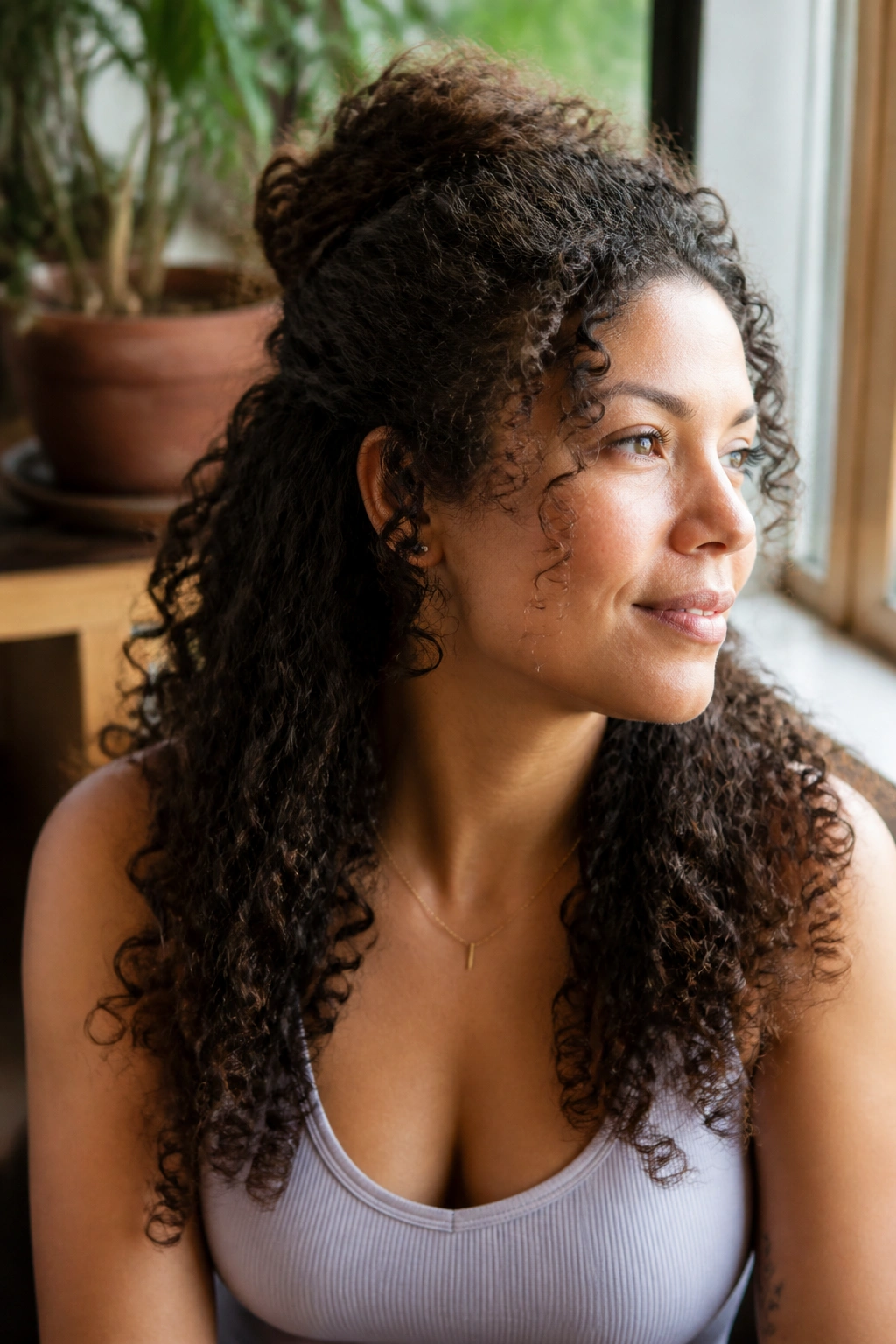
Half-up, half-down is the most forgiving style in the whole lineup. It removes hair from the face, but it does not ask you to commit to a full updo or flatten the length into submission.
The top section can be twisted, clipped, tied, or pinned, and the bottom section keeps all the volume that makes thick curly hair worth showing off. That contrast is why the style looks good on so many people. The top half creates control; the lower half keeps the shape alive.
I like this style when the crown feels too big for a full ponytail but the ends still look too good to hide. A small claw clip at the back can keep it casual. A twist secured with pins gives it a more polished feel. If you want something with a little extra personality, braid the top section before pinning it back.
What matters most is balance. Keep the lifted section neat enough to frame the face, but do not try to compress the curls into a tiny knot. Thick hair rarely rewards that kind of force.
9. Curly Ponytail

Why does a curly ponytail work so well on thick hair? Because the weight of the ponytail becomes part of the look instead of a problem to hide.
The trick is placement. A high ponytail gives bounce and a little attitude. A mid ponytail reads cleaner and keeps the style from looking too severe. A low ponytail can be the most polished option, but it needs a little crown lift or it may sit flat against the head and let the length do all the talking.
How to Place It So It Does Not Sag
Use a bungee cord or two stacked elastics if your hair is dense enough to pull against a single tie. That keeps the ponytail from drooping by noon. Smooth only the top layer; leave the underside loose enough to keep the curls full. If you pull every strand tight, the ponytail can look smaller than it should.
A curly ponytail is also a good place to show off definition at the ends. If the hair is dry and fluffy, mist lightly with water and re-scrunch before gathering it. That tiny reset makes a bigger difference than most people expect.
10. Claw Clip French Twist

Some mornings need a style that takes thirty seconds and does not argue with your curls. The claw clip French twist is exactly that.
Thick curly hair actually helps this style, because the density gives the twist enough body to stay in place. You gather the hair at the back, twist upward, and tuck the ends into a large clip. The result is soft, slightly loose, and far more secure than the tiny clips people keep trying on heavy curls and then blaming the hairstyle when it falls out.
- Choose a clip that is at least 4 to 5 inches long for dense hair.
- Twist the hair loosely first, then tighten only where the clip sits.
- Leave a few curls free at the nape if your hair is very full.
- If the clip slides, rough up the roots with dry shampoo or texturizing spray.
The style works for errands, work, and dinner without needing a full restyle later. It is practical. That is enough.
11. Braided Crown

Braided crowns look formal, but on thick curly hair they are mostly a traffic-control job. They keep the front and sides in order while letting the rest of the curls stay visible.
The texture of dense curls helps here. The braid does not need to be tiny or perfect; in fact, a slightly chunky crown braid often looks better because it matches the scale of the hair. If your curls are loose enough, a Dutch braid along each side can meet at the back like a halo. If your texture is tighter, a rope twist or two-strand crown can be easier to manage and still give the same frame around the face.
A small amount of water and leave-in can help with grip, but do not soak the hair. Wet curls get slippery, and then the braid starts slipping apart before you finish pinning it. I prefer to braid the hair when it is just damp, then secure the ends underneath with crossed pins.
This style is a good one for events, but it does not need to feel precious. The loose curls at the back keep it from reading too rigid.
12. Two-Strand Twist-Out
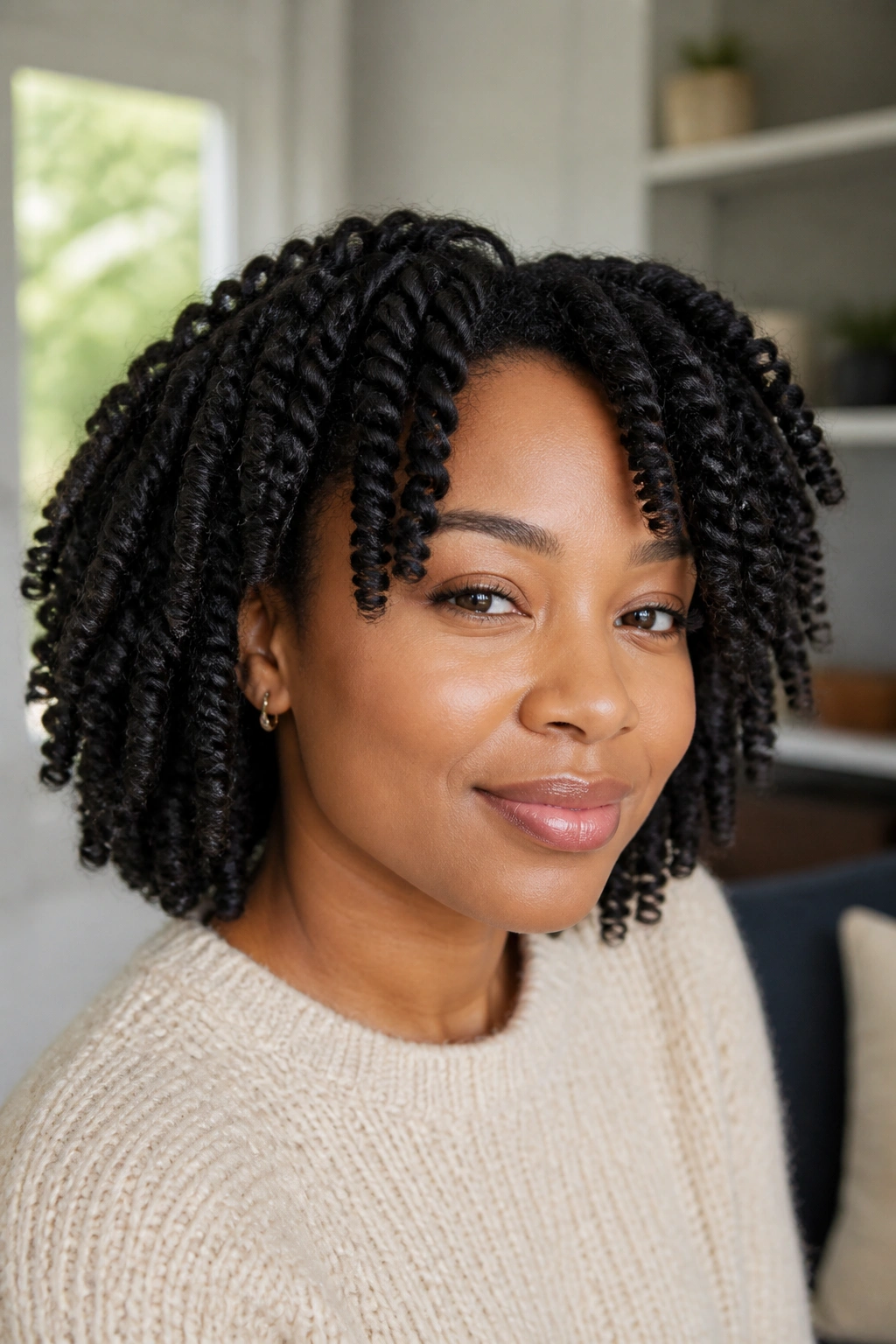
Unlike a braid-out, a twist-out gives chunkier definition and a little less frizz at the ends. On thick curly hair, that usually means better shape and easier separation.
The style begins with damp hair divided into ½-inch to 1-inch sections, depending on how much volume you want. Smaller twists give more definition and take longer. Larger twists dry faster and leave you with a bigger, looser result. That tradeoff is real, and it matters more than people think because thick hair can stay damp for ages if the sections are too large and too wet.
What Makes It Different
Twist-outs work well when the curls are stretched but not straightened. You can twist on washed hair, let it dry fully, and unravel with a little oil on your fingertips so the strands do not frizz apart. The finished style has movement, but it still looks organized.
This is the style I would pick if you want control without losing width. It looks intentional on day one and still has enough shape on day two to skip a full reset.
13. Bantu Knot Set

Bantu knots solve a very specific thick-curly problem: you want a style that holds hair in place and leaves you a second style once you take it down. That is a nice deal.
A Bantu knot set can be worn as a sculptural look, then unraveled into defined curls once the hair is dry. On dense hair, the knots need to be big enough to dry without sitting wet in the middle. Tiny knots can look cute at first and then stay damp forever, which is not a trade I enjoy.
Why I Like It on Dense Curls
- Use 8 to 12 knots for shoulder-length thick hair; more if the hair is very long.
- Keep each section smooth before wrapping so the knot sits flat.
- Let the knots dry fully before touching them.
- Separate the curls only after the hair feels cool and dry to the core.
Small warning: if you rush the drying stage, the shape collapses fast.
The style is one of the few that gives you a set-and-release payoff. Put in the time once, and you get two looks out of it.
14. Space Buns
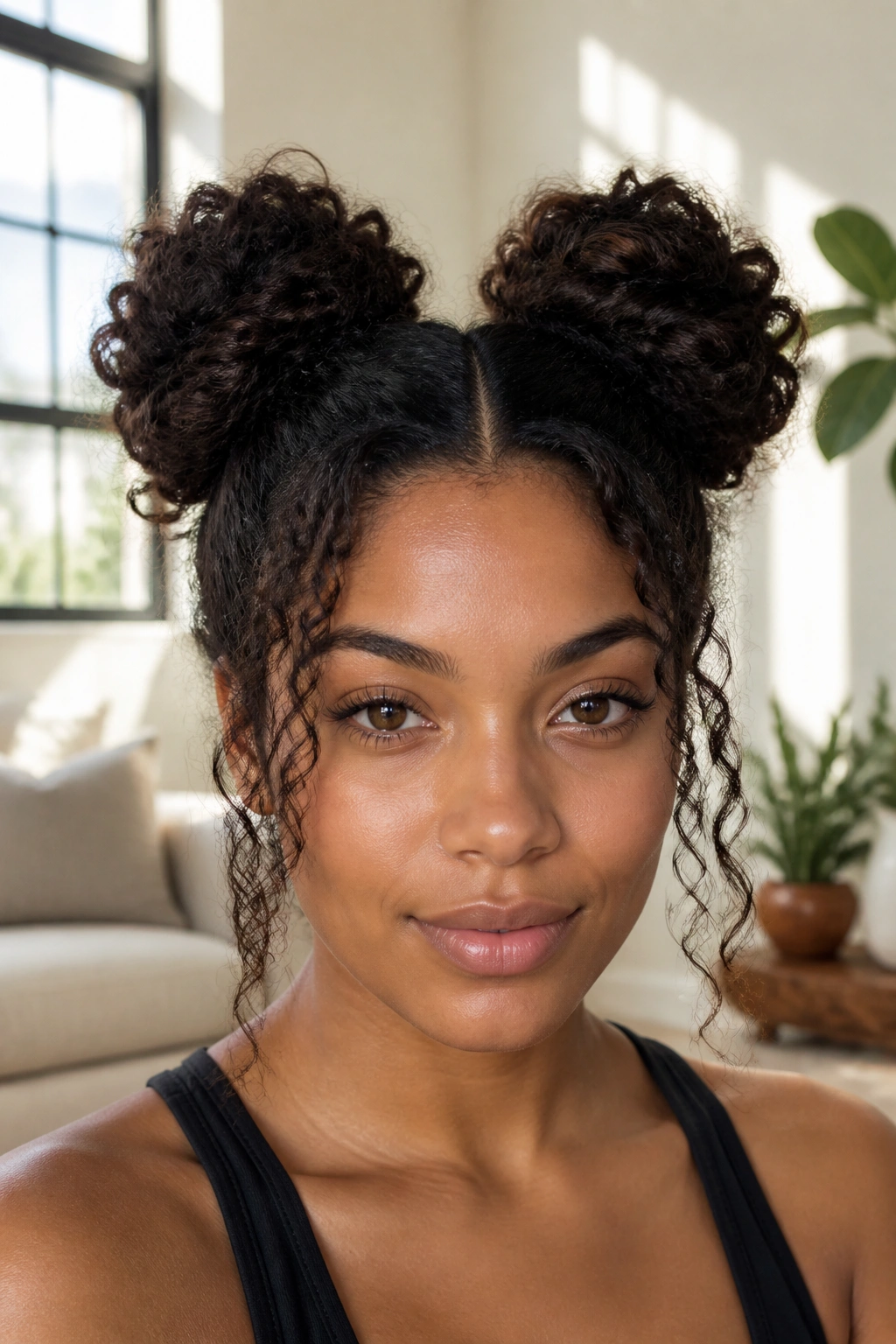
A space bun style is one of the rare looks that gets better when the hair is thick. Thin hair can make the buns look wispy. Dense curls give them actual shape.
The setup is simple: split the hair down the middle, gather each side high on the head, and twist or wrap each section into a bun. The curls do not need to be flattened into tiny discs. Bigger, softer buns look more natural on thick curly hair, and they hold their outline better as the day goes on.
What I like most is the attitude of the style. It can be neat, messy, athletic, playful, or a little bit of all four. If your curls are long, leave a few pieces out around the face. If they are shorter, let the bun sit higher and looser so it does not pull at the scalp. A strong hold spray around the hairline helps, but only a little. Too much and the style turns stiff, which defeats the point.
Space buns are not subtle. That is fine.
15. Curly Bun with Tendrils
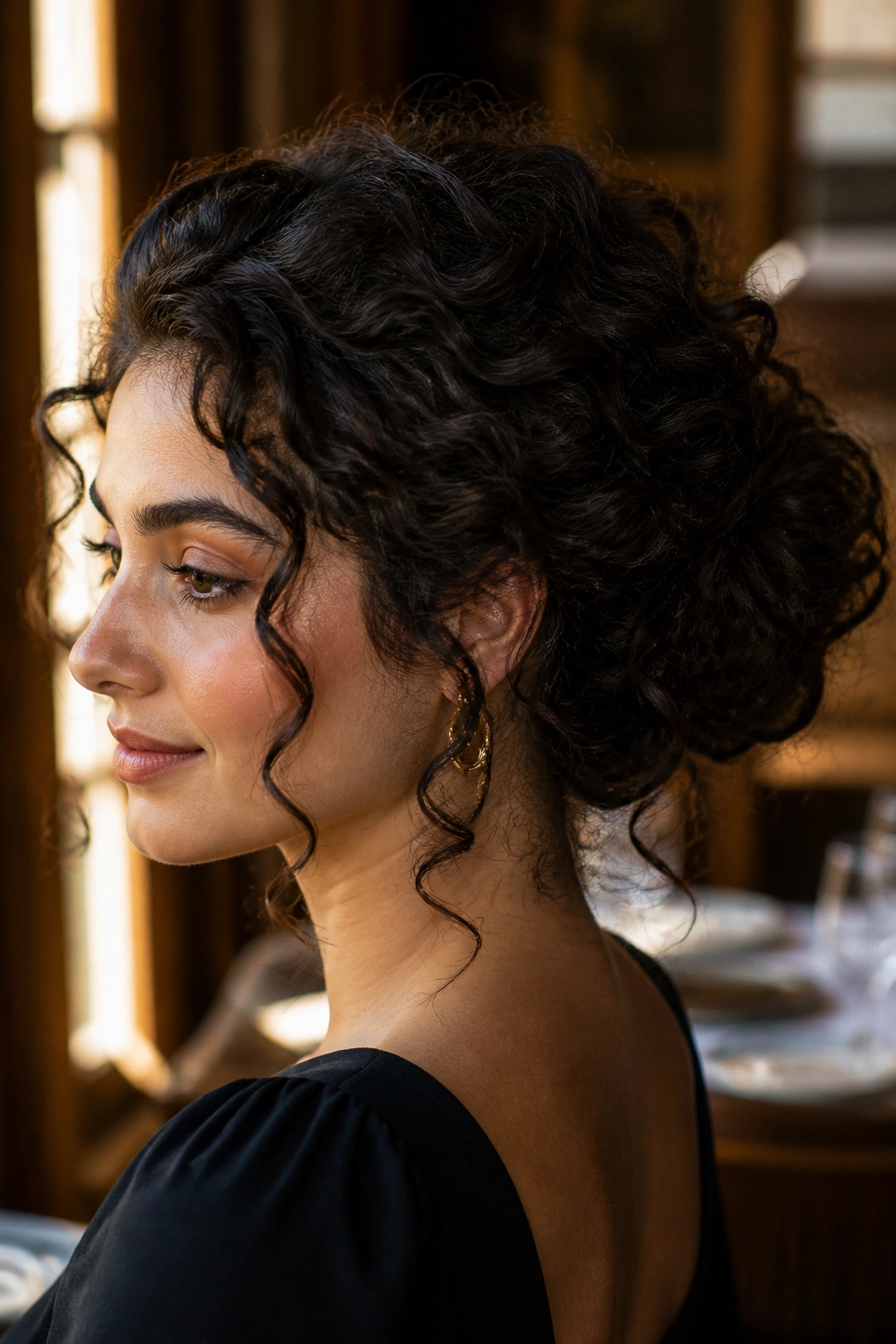
Why does a loose curly bun look better on thick curls than a tight one? Because thick hair already has enough body to make the bun feel full, and the tendrils stop it from looking severe.
A low or mid bun works especially well here. You gather the curls, twist them into a bun, and leave a few pieces around the temples and jawline. Those tendrils do a lot of work. They soften the outline, break up the bulk, and keep the style from reading like a plain office knot.
How to Keep the Bun from Flattening
Start with hair that is not too freshly washed. Day-two curls usually hold their shape better. Use pins in a crossed pattern instead of one giant elastic, because pins let the bun sit wider and looser. If the bun feels too compact, tug gently at the outer loops until the shape opens up a bit.
This style is a good fit for dinners, weddings, or any day when you want the curls up but still visible. It feels polished without looking sealed in place.
16. Side-Swept Curly Bob
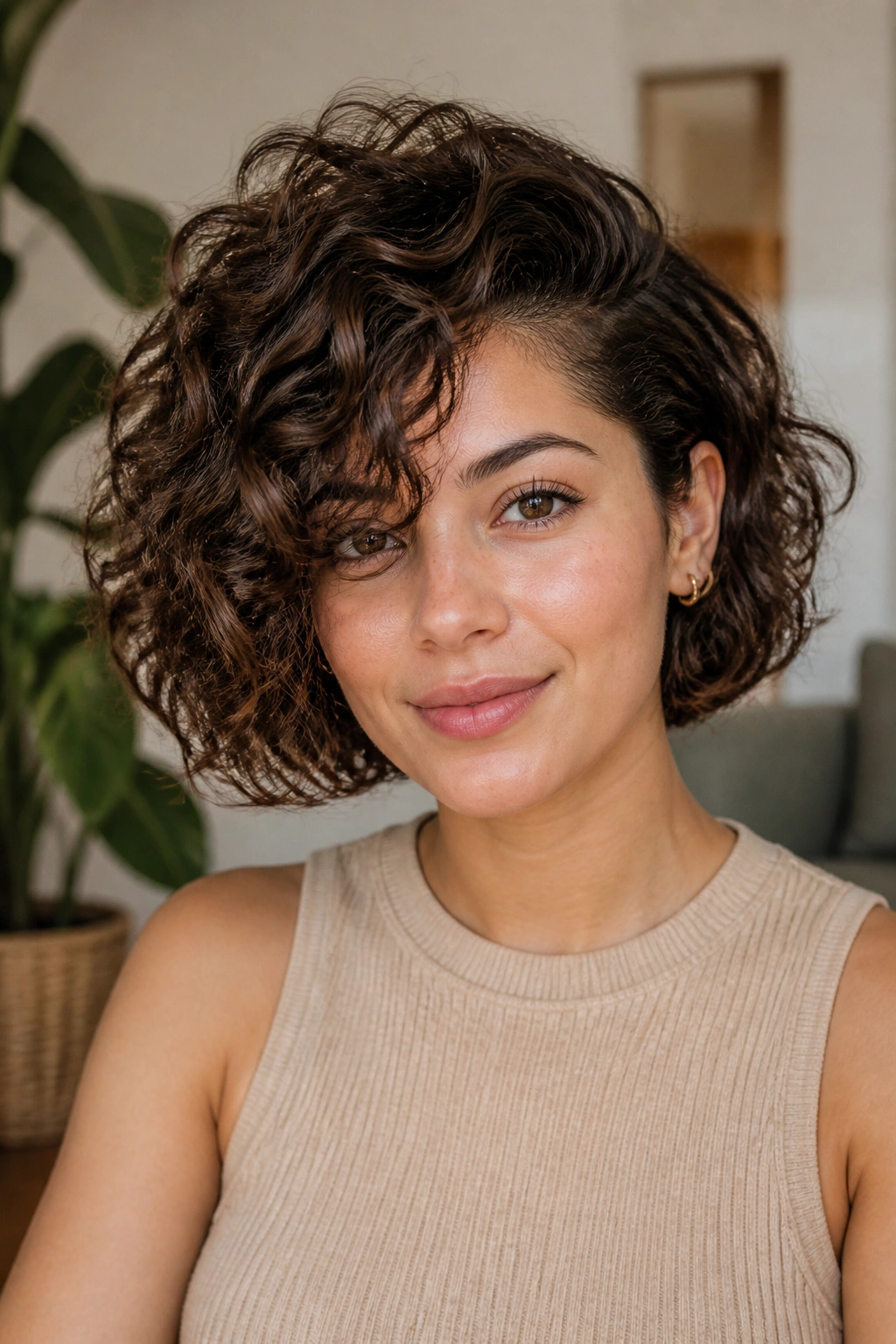
A side-swept bob is where thick curls start to look controlled without losing their personality. The side part shifts the weight, and the shorter length keeps the hair from building into a blunt block around the chin.
This style works best when the bob lands somewhere between the jaw and the collarbone. Too short, and the curls can puff outward with nowhere to fall. Too long, and you are back in heavy-hair territory. A side sweep keeps one side open and one side fuller, which makes the cut feel deliberate instead of symmetrical in a stiff way.
- Keep the shortest layer near the cheekbone to frame the face.
- Tuck one side behind the ear and pin it if the hair keeps falling forward.
- Diffuse away from the part so the roots lift instead of collapsing.
- Use a curl cream with enough slip to keep the ends soft.
The thing I like about this bob is how much shape it gives with very little effort once the cut is right. The cut does the talking.
17. Feed-In Braid Accents with Curls

Feed-in braid accents are a smart middle ground when you want some structure without turning the whole head into a braided style. A few slim braids at the front, sides, or along the part give thick curly hair a cleaner frame while leaving the rest of the texture loose.
This works well because the braids control the areas that usually get frizzy first: the hairline, temples, and top crown. You can keep them tiny and neat, or make them a little wider if you want the style to feel bolder. Either way, the curls behind them still get to do the main work.
I like two to four braids for this look. More than that, and the style starts to eat into the natural volume that makes thick curls so good in the first place. Leave the rest of the hair in a wash-and-go, a twist-out, or a stretched curly style. The contrast between the sleek braid and the open curl pattern is what gives the look its shape.
It is one of those styles that reads polished without taking away the texture. That is harder to pull off than it sounds.
18. Headband Tuck

Unlike a full updo, the headband tuck keeps most of the length visible and uses the band as a frame. Thick curly hair makes this style work better because the tucked sections have enough body to fill the shape instead of disappearing.
The trick is choosing a headband with enough stretch and width to hold the curls without digging in. I prefer something around 1.5 to 2 inches wide. Thin bands can get lost in dense hair, and too-tight ones create a squeezed look across the forehead. You place the band over the hairline, tuck the front and side pieces up and over it, then let the back fall naturally or pin it into a loose roll.
This style is excellent for second- or third-day curls when the crown needs help but the ends still look good. It also works when you want your face open without pulling all the hair back into a ponytail. If your hair is very layered, leave a few curls free near the ears. That keeps the tuck from looking too neat.
The headband tuck is low effort and surprisingly useful. Some days that is enough.
19. Mohawk Puff / Faux Hawk

A faux hawk is a strong style for thick curly hair because the density gives the center section actual lift. You are not trying to create volume out of nowhere. You are just directing it.
Why the Center Strip Matters
The sides are smoothed, pinned, or braided close to the head, while the middle stays high and full. That contrast is what makes the shape read as a mohawk without needing a hard, shaved look. If your hair is thick and springy, the center section can stand up on its own with a little gel and a few pins.
- Part the hair from forehead to nape to create a central strip.
- Pin or flat-twist the sides flat against the head.
- Keep the center section loose and fluffy, not packed down.
- Use a lightweight gel near the sides and a little edge control only where needed.
My preference: leave the top a little taller than you think you should. Thick curls settle.
This style is dramatic in a way that still feels wearable. It works for events, nights out, and those days when you want the hair to have some edge without spending an hour on it.
20. Sleek Curly Middle Part with Defined Volume

Sleek does not have to mean flat, and thick curly hair proves it. A middle part with controlled roots and full lengths can look clean without losing the body that makes curls worth styling in the first place.
The trick is to smooth the top section only. Use a light gel or styling cream at the roots, then keep the mids and ends soft enough to hold curl shape. A wide-tooth comb or a Denman-style brush can draw the part straight while the hair is still damp, and a few clips at the roots help it dry in place. The lengths should stay full. That contrast — neat at the scalp, open through the curl — is what keeps the style from looking helmet-like.
I like this style when you want order without giving up movement. It works for interviews, dinners, photos, or any day when your curls need to look considered but not overworked.
If the roots puff back up the second they dry, do not fight every strand. Smooth the part once, clip it, and leave it alone. Thick curly hair usually looks better when it is guided, not bullied.
