



A wedding hairstyle has a hard job.
It has to survive hugs, humidity, a few tears, a glass of champagne, and a photographer who somehow always wants one more angle of the left side of your face. Pretty is not enough. A good wedding hairstyle needs structure, balance, and a finish that still looks like hair after six hours of being touched, pinned, and danced in.
That’s why the smartest bridal looks usually do one of two things: they either stay tucked and sculpted, or they use loose texture in a controlled way. Loose does not mean sloppy. Soft does not mean weak. The difference is in the shape, the prep, and the way the style sits against the neckline, veil, earrings, and dress fabric.
Hair trials matter for a reason. So does the weather, the length of your hair, and whether your stylist has to work around thick curls, fine strands, or a bob that refuses to behave. A wedding hairstyle should flatter the dress, but it also has to flatter the person wearing it, which sounds obvious until you see how many bridal styles ignore the face and only chase the photo.
Some looks will read formal and polished. Others feel relaxed, romantic, or modern with a little edge. The right choice is the one that still looks like you after the first hour of celebration. And that’s where the good stuff begins.
1. Sleek Low Chignon with a Clean Center Part
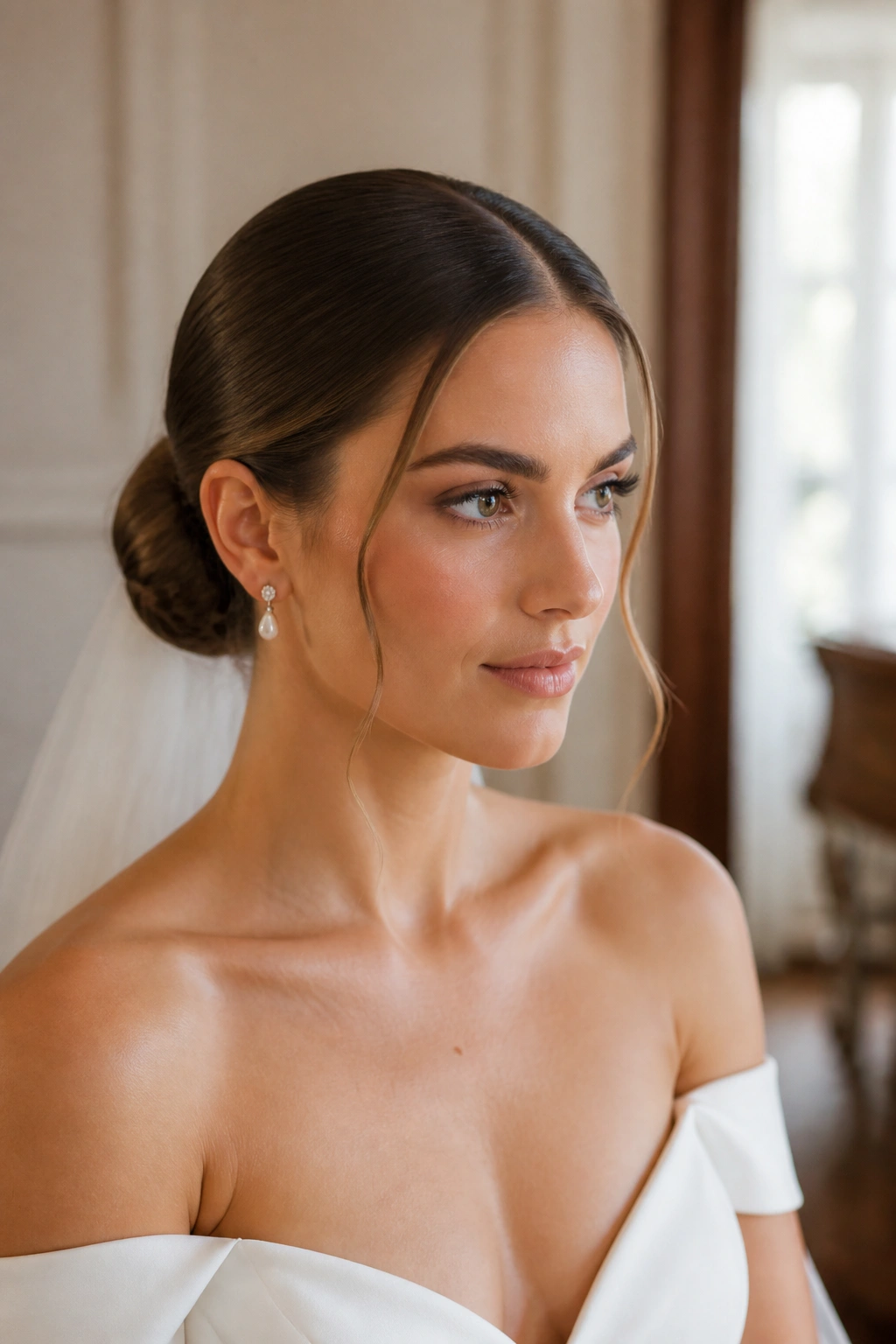
A low chignon is the kind of wedding hairstyle that looks calm even when the room is not. The hair sits close to the nape, the center part keeps things neat, and the whole shape reads refined without trying too hard.
Why this one works
The trick is in the balance. A sleek chignon gives the face room to breathe, which matters if the dress has a high neckline, a strong collar, or a veil that needs a stable anchor point. It also keeps the profile smooth in photos, and that profile shot tends to show up more often than people expect.
- Best with satin, crepe, or silk gowns
- Holds a veil comb well
- Works on medium to long hair
- Needs shine serum, not heavy oil
- Looks especially sharp with drop earrings
Pro tip: keep the bun low and tight, but leave the front just soft enough that it does not look painted on. Too much gel, and the style can feel stiff fast.
2. Soft Hollywood Waves with a Deep Side Part
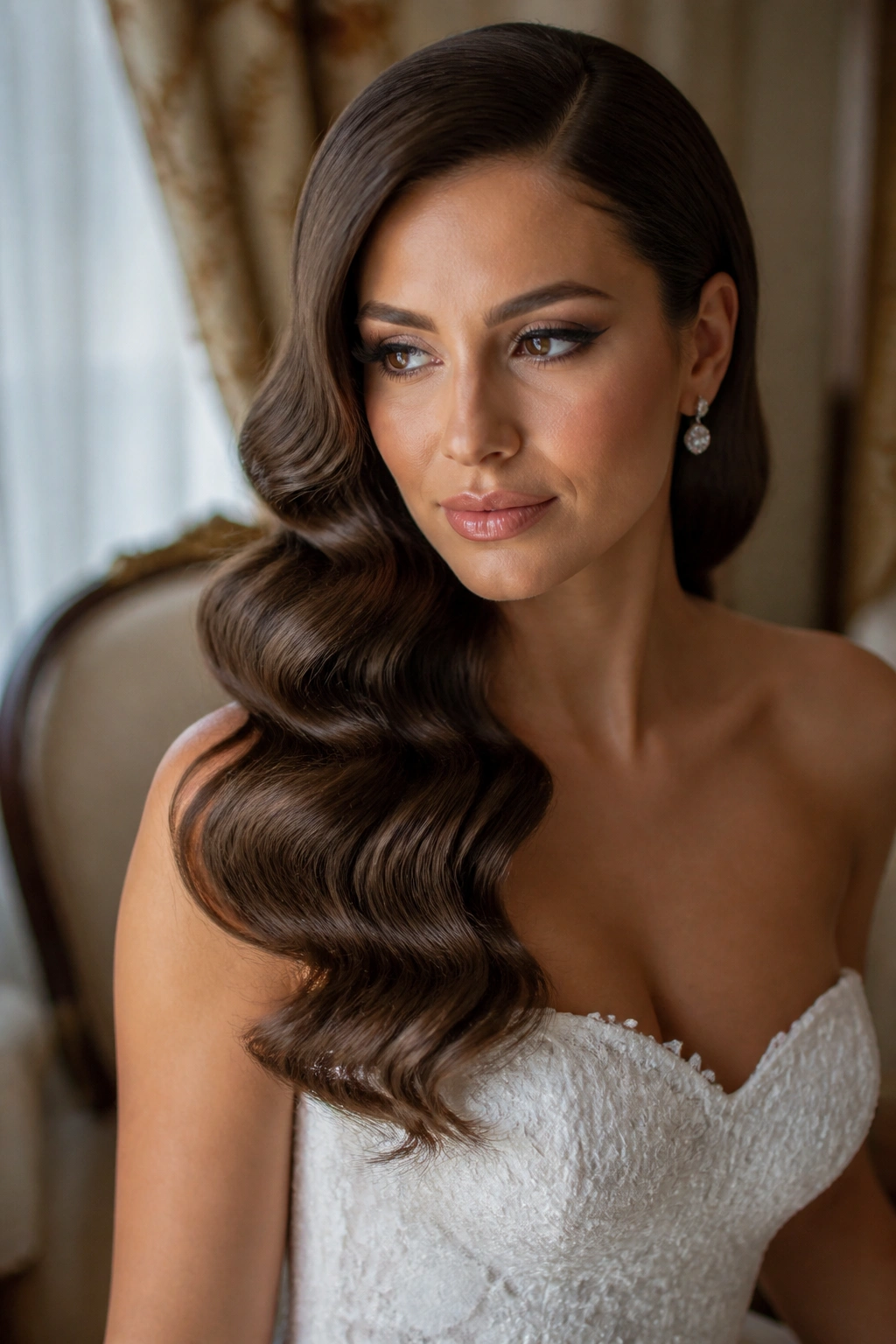
If you want glamour without a full updo, this is the safe bet. Hollywood waves have that smooth, brushed finish that feels old-school in the best way, and a deep side part gives the whole style a little drama before you even add earrings.
The secret is in the wave pattern. These are not beachy bends. They are smoother, more joined together, and better suited to structured gowns or a dress with a dramatic shoulder. A good wave falls in one clean shape, then curves again at the chest or collarbone. That little rhythm matters.
Wear this style when you want hair down but still controlled. It photographs well from the front and side, and it has enough movement that it never feels frozen. I like it most on medium-to-thick hair, especially when the ends are tucked under with a big barrel curling iron rather than left frizzy.
Pair it with a glossy lipstick and one strong accessory. More than that, and the look can start fighting itself.
3. Braided Crown Updo with a Halo Shape
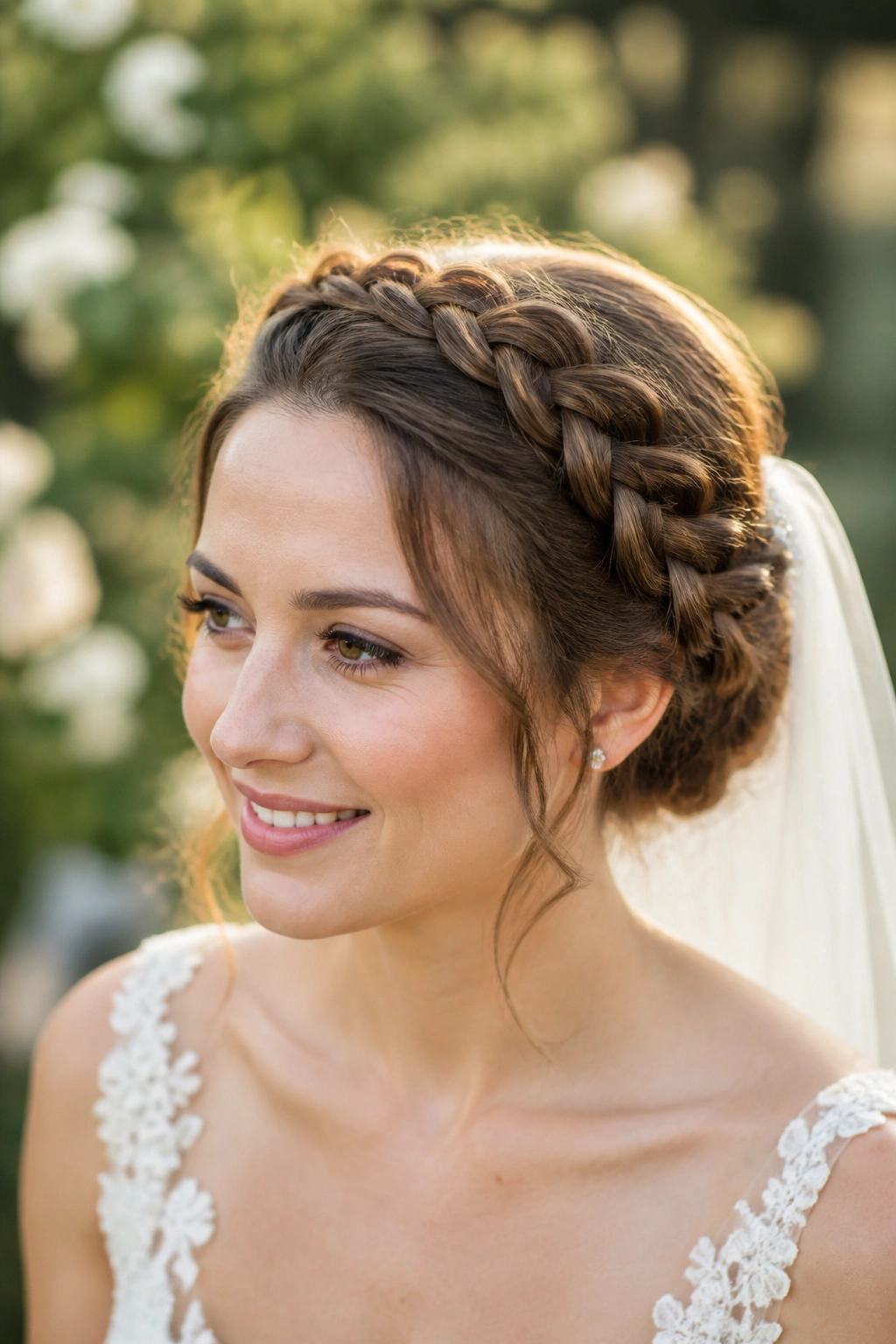
Why do braided crown styles keep showing up at weddings? Because they solve a lot of problems at once. They keep hair off the neck, stay put better than loose curls, and give you room for a veil, flowers, or a comb without piling everything onto one spot.
The halo shape is the real draw. It frames the face in a gentle circle, which softens sharp features and gives longer faces a little width. If your dress is simple, the braid adds texture. If your dress is ornate, the braid keeps the hair from competing with it.
How to wear it
Ask for a braid that starts a little loose at the temples and gets tighter as it wraps around the head. That keeps the style from looking too severe. A few face-framing tendrils help, but they should be deliberate, not accidental.
If your hair is fine, a texture spray at the roots gives the braid something to grab. If your hair is thick, the main job is control. Either way, this style loves pins, and lots of them.
4. Textured French Twist That Feels Soft, Not Frozen

I have a soft spot for a French twist that doesn’t look like it was ironed flat. The old version had a polished, almost shell-like finish. This one has a little lift at the crown and a softer roll through the back, which makes it feel easier on the eyes.
Picture a bride stepping out of a car, smoothing one shoulder of her dress, and turning slightly before walking in. A textured French twist gives that kind of entrance. It looks intentional from every angle and keeps the neckline open, which is useful if the dress has lace detail or a dramatic back.
- Strong shape at the nape
- A little volume at the crown
- Best with medium to long hair
- Pins hidden into the roll, not just across it
- A flexible hold spray beats crunchy lacquer
The part people miss is the crown. Lift there makes the whole thing feel modern. Without it, the twist can look flat and older than it needs to.
5. Full Polished Bun for a Formal Gown
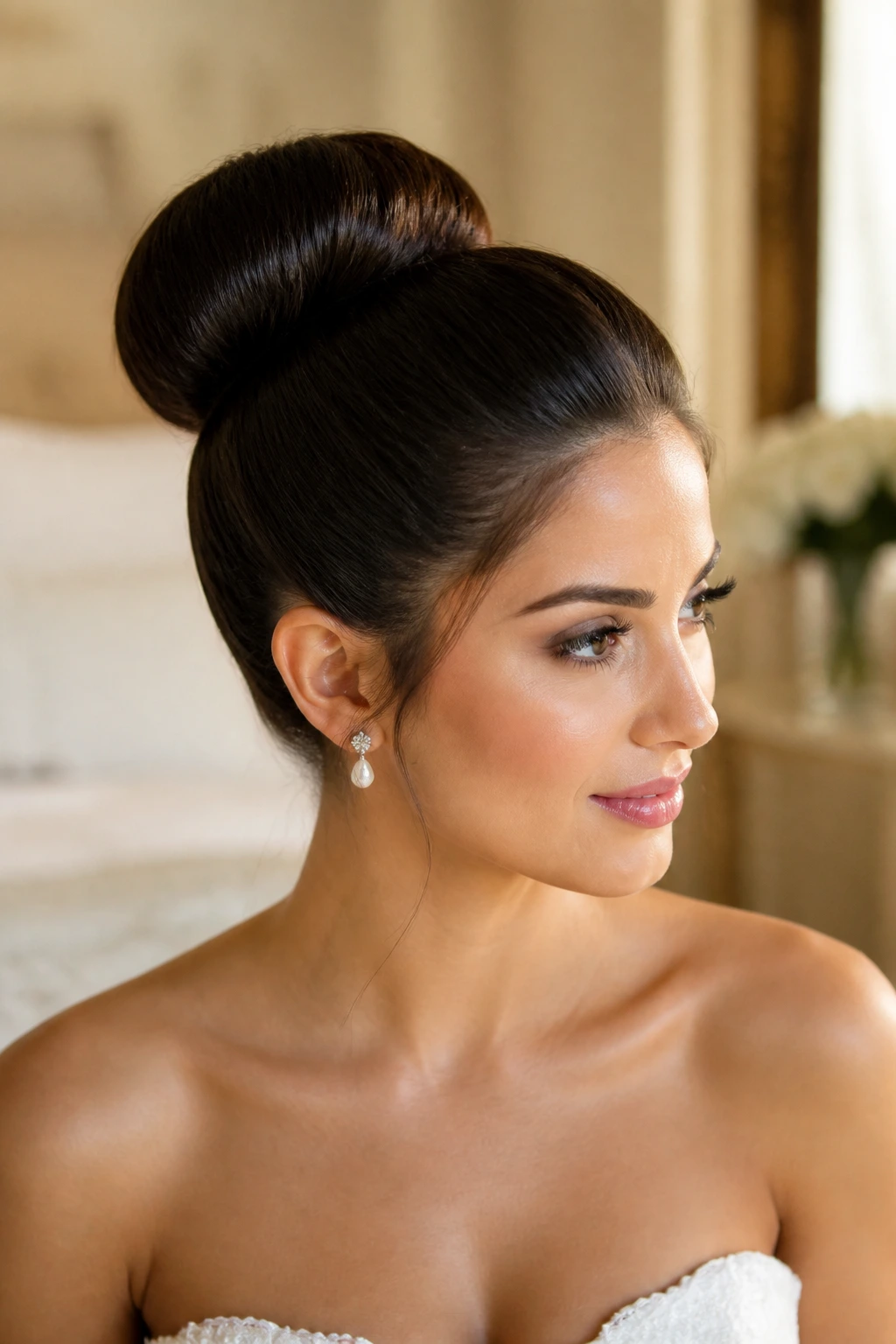
A high-shine bun can look severe in the wrong hands. In the right hands, it looks expensive without being loud. That’s the appeal.
This style lifts the face, clears the shoulders, and gives a formal gown room to speak. It’s especially good when the dress already has volume at the skirt or detail at the bodice. The bun sits high enough to feel deliberate, but not so high that it starts reading like a ballet recital. Placement matters more than people think.
I prefer a bun that is smooth on the outside but not helmet-like. The surface can still have a little texture, especially around the hairline. That keeps the style from looking too hard. If the bride has statement earrings, this is one of the few styles that really lets them do their job.
A few tiny pins tucked around the base often do more than one heavy cage of spray. Less shell, more shape.
6. Half-Up Half-Down with Loose Curls
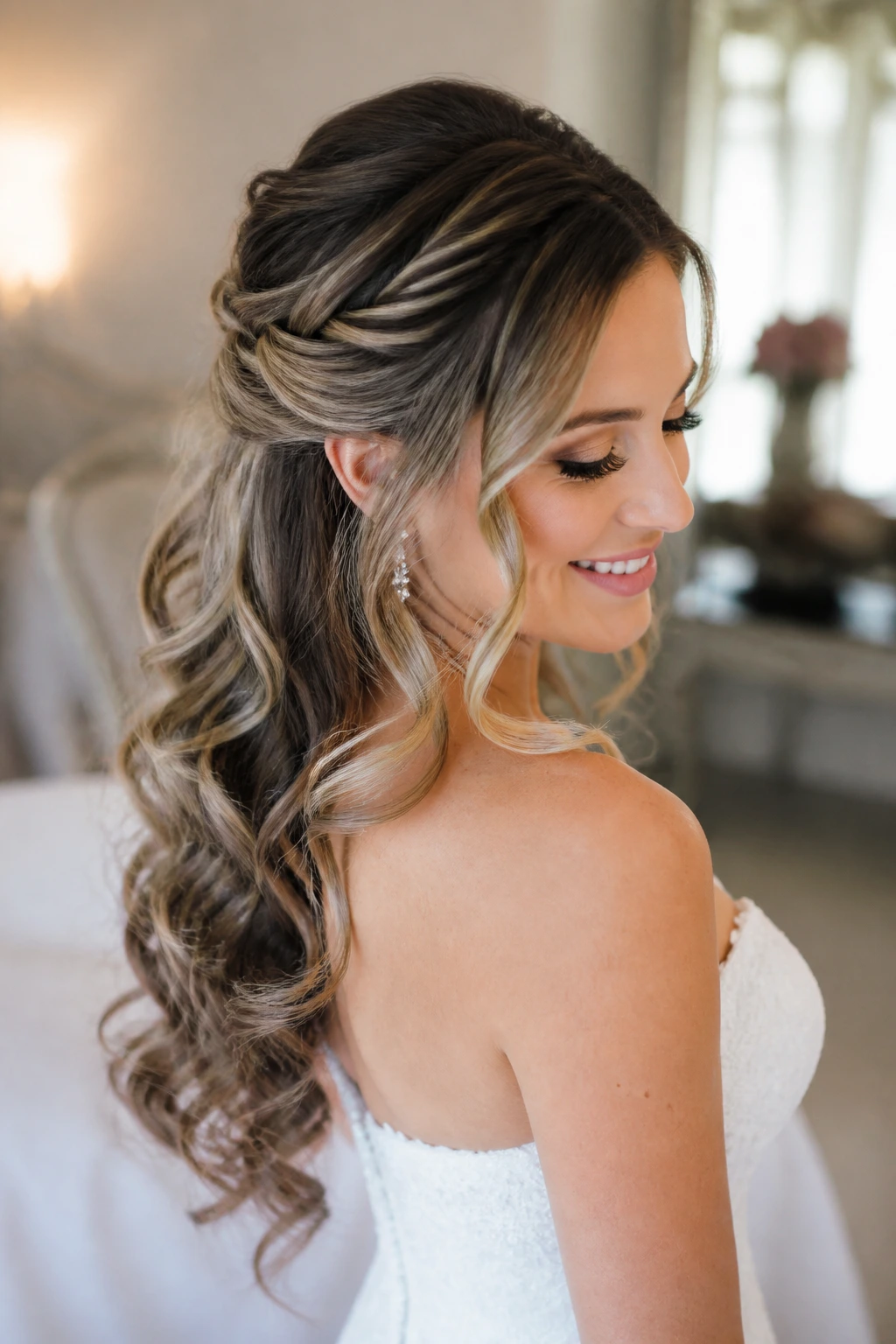
What makes a half-up style such a smart wedding choice? It gives you the romance of loose hair and the stability of an updo in the spots that matter most. The top stays secure, the ends move, and the face gets a lift without losing length.
This is the style for brides who want to wear hair down but hate the idea of it falling into their lipstick. The top section can be twisted, braided, or pinned back with a comb. Below that, the curls stay soft and layered, which makes the look feel airy rather than heavy.
How to use it
Choose this style if your dress has detail on the back but you still want some movement when you turn. It works well with veils that clip higher on the crown, and it can handle floral pins better than very loose waves.
If your hair is fine, curl with a smaller barrel and let the curls cool fully before brushing them apart. If your hair is thick, focus on control at the crown first. That’s where the style either looks tidy or starts to slip.
7. Classic Ballet Bun with Face-Framing Pieces

A ballet bun sounds strict, but it does not have to feel stern. The point is the clean shape. Everything gets pulled back, wrapped neatly, and pinned so the bun sits like a finished line at the back of the head.
Why it looks so good on camera
The shape is simple, which is exactly why it works with dramatic dresses. A strong neckline, open shoulders, or bold makeup all look more balanced when the hair is tucked away. A tiny bit of softness near the temples keeps the style from feeling school-uniform plain.
- Best for satin, mikado, and minimalist gowns
- Shows off earrings and collarbones
- Works well with cathedral veils
- Needs a smooth base and a firm pin set
- Face-framing pieces should stay narrow and intentional
If you want this style to feel bridal rather than athletic, the bun should be a little fuller than a rehearsal bun. A touch of padding or a wrapped hair donut can help. Clean. Compact. Done.
8. Boho Fishtail Braid with Loose Ends

A fishtail braid can go wrong fast if it’s too neat. Then it looks formal in a stiff, school project kind of way. Loosen it, rough it up a little, and the whole style changes.
This version feels right for outdoor ceremonies, relaxed venues, and dresses that already have movement in the fabric. The braid brings texture, while the soft ends keep it from looking overworked. It also does something practical: it keeps long hair under control without pinning every strand into submission.
A fishtail braid has a nice visual trick to it. Up close, it looks detailed and handmade. From a distance, it reads as one long, woven line that moves down the back or over one shoulder. That makes it a good choice for brides who want something that shows in photos but does not steal attention from the dress.
Add a few tiny flowers or a narrow ribbon if the gown is simple. Skip the extras if the lace already has enough to say.
9. Side-Swept Waves with a Deep Part
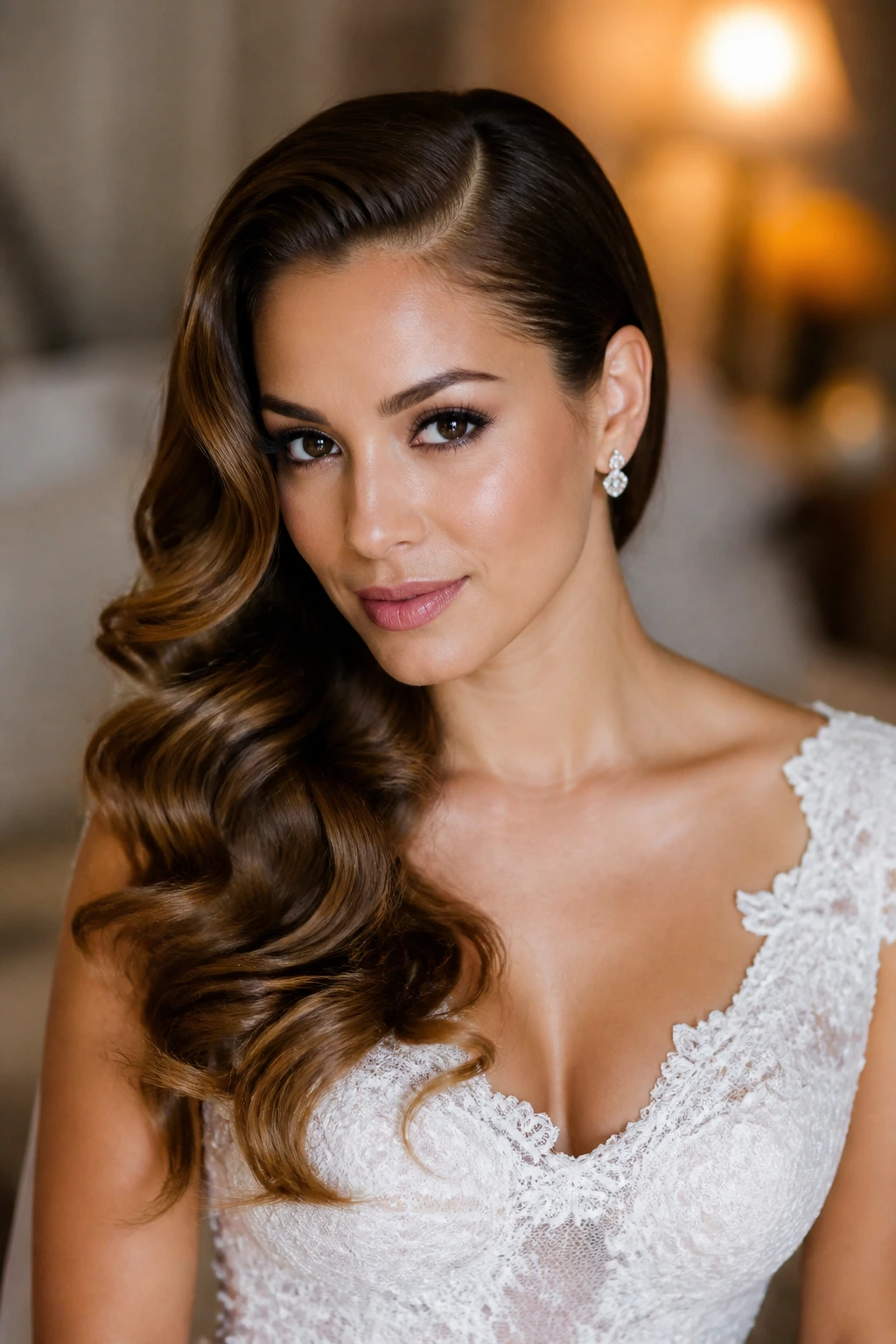
Side-swept waves are a little dramatic, a little old Hollywood, and very good at drawing attention to the face. They work especially well when one shoulder of the dress is bare or detailed, because the hair follows the line instead of fighting it.
The shape matters more than the curl itself. One side sits fuller, the other side stays flatter and pinned behind the ear or at the nape. That asymmetry creates movement without chaos. It also gives the photographer more angles to work with, which sounds fussy until you see the pictures.
What makes it different
A side sweep is not just hair brushed over. The root lift at the crown is what gives it shape, and the tucked side needs enough grip to stay there through the ceremony. I like this style most when the waves are polished, not frizzy, and the ends are brushed into one soft line.
It’s a strong choice for brides who want drama but do not want a full updo. Strong enough for a formal room, relaxed enough for a dinner outdoors. That’s a rare mix.
10. Twisted Low Bun with Floral Pins
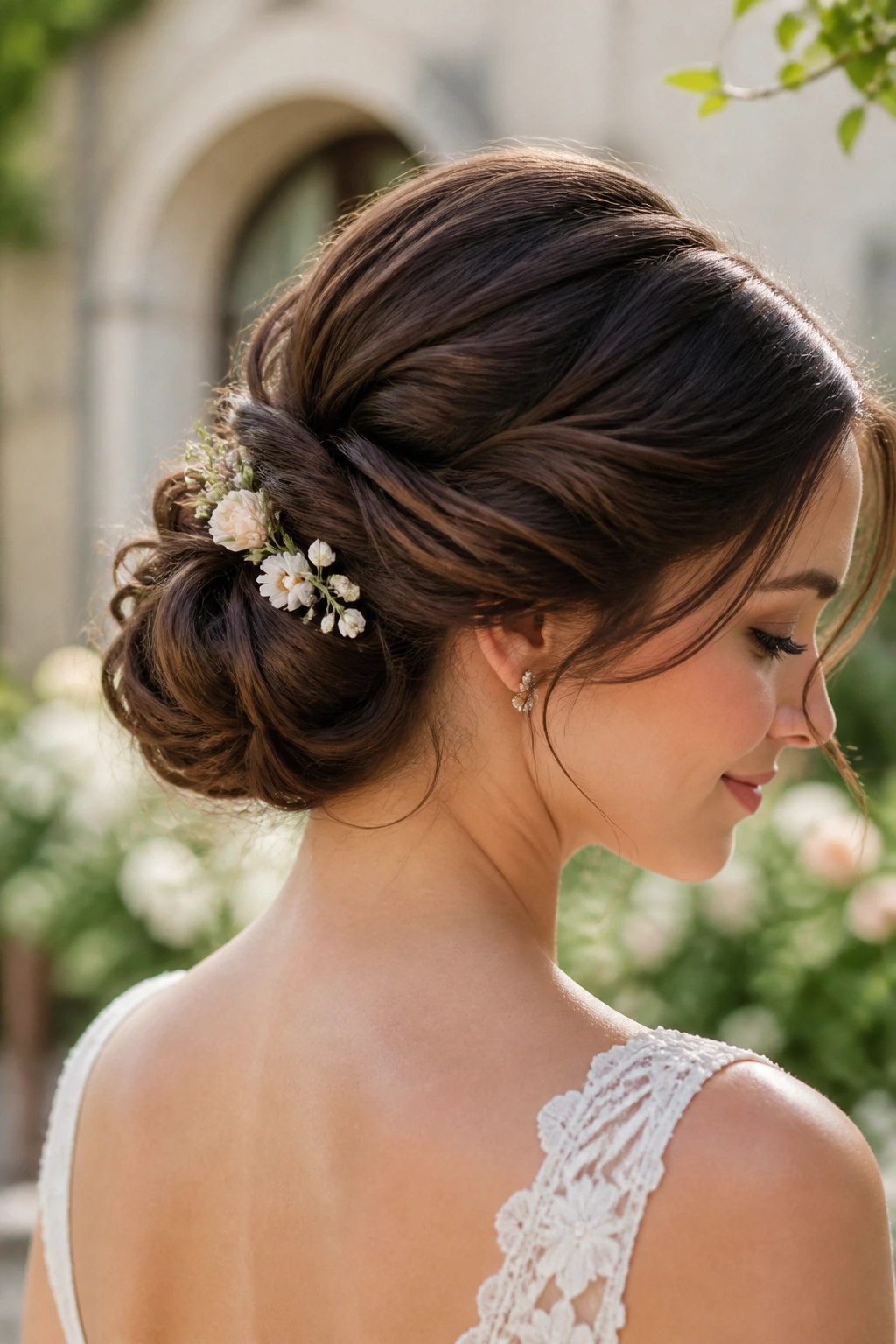
A twisted low bun feels more romantic than a plain roll because the twists catch light in different directions. That tiny detail changes everything. The style looks handcrafted, which suits weddings far better than a bun that feels too slick.
This one works especially well with flowers, but not the giant bouquet-in-the-hair look people sometimes overdo. A few small pins near the bun base or tucked into one side are enough. The goal is to echo the bouquet, not copy it.
- Good for garden, chapel, or courtyard weddings
- Keeps the neck open for warm settings
- Helps balance a detailed bodice
- Looks better with soft texture than with a glassy finish
- Works on shoulder-length hair if the stylist adds padding
The bun itself should sit low and a little off-center, not dead center. That slight shift makes the style feel more alive.
11. Glossy Straight Hair with a Center Part
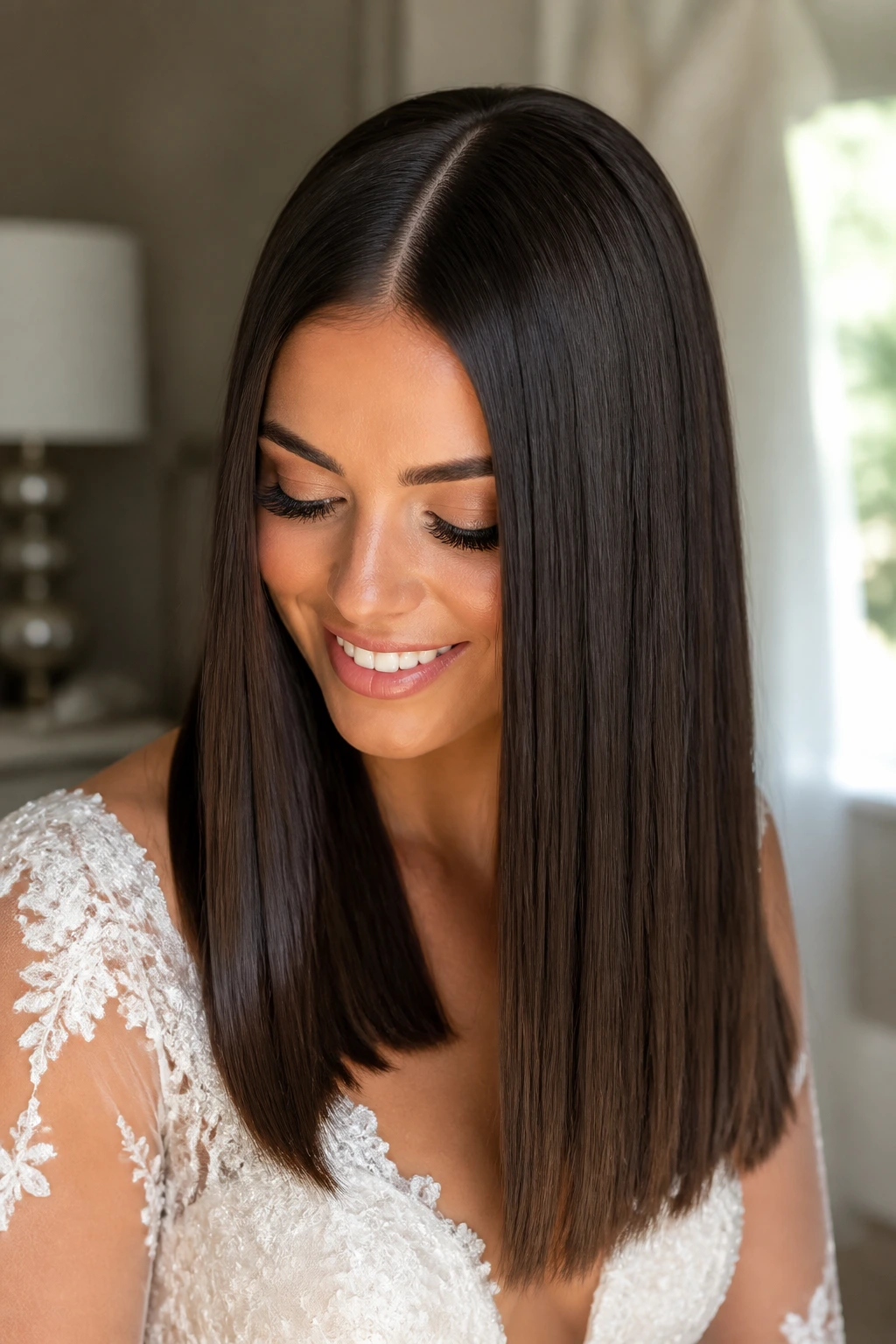
Straight wedding hair gets dismissed too quickly. People act as if curls are automatically more bridal, and I do not buy that. A crisp center part with polished straight lengths can look cleaner, sharper, and more memorable than another round of soft waves.
The key is health. The hair has to look smooth from roots to ends, not flat in a way that exposes every snag. A shine cream and careful blow-dry matter here. So does the cut. Blunt ends can make the style feel intentional, while choppy layers can fray out at the bottom if they are not handled well.
This look is especially good when the dress is detailed or the jewelry is doing a lot of work. It gives the eye a place to rest. It also suits modern venues, city weddings, and brides who want the dress, not the hair, to lead the room.
Add a tucked-behind-the-ear moment on one side and leave the rest clean. Sharp. Simple. Strong.
12. Messy Romantic Updo with Soft Ends
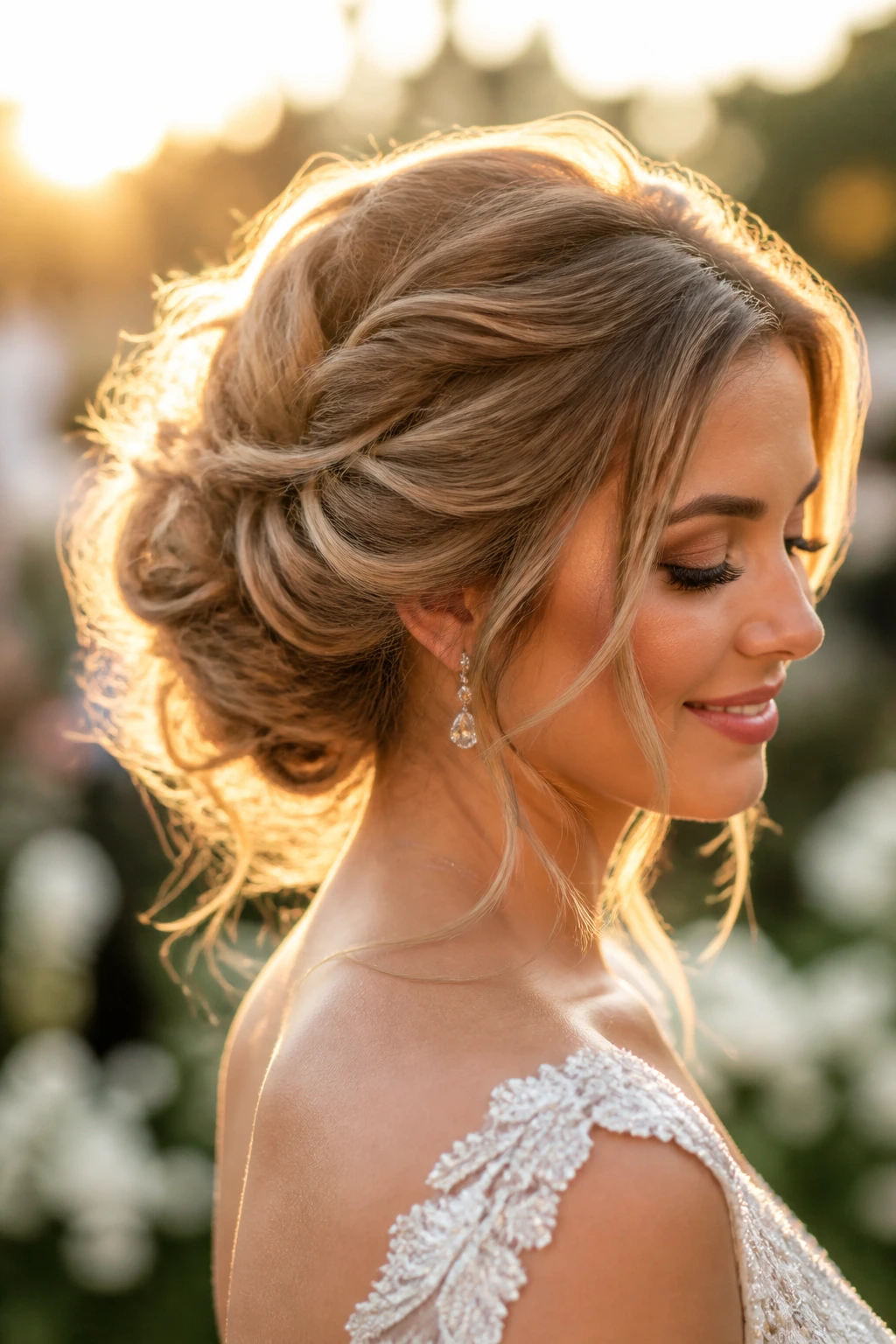
A messy updo can look lazy if it is done badly. When it is done well, it looks like the bride spent the whole afternoon outside in perfect light, which is a much better outcome.
The difference is control. You want lift at the crown, pinned sections that still show their shape, and a few loose ends that are placed on purpose. Not random. Never random. A good stylist will build the updo in layers so it has texture from the inside, not just puff on the surface.
How to get the most from it
Wear this when the dress feels soft, draped, lace-heavy, or a little dreamy. It balances beautifully with off-the-shoulder shapes and gowns with movement in the fabric. Too much structure in the dress can make the looseness feel out of place.
The best messy updos leave the face open but not bare. A little softness around the temples or nape keeps it from becoming severe. And yes, the pins should be hidden. If the hardware shows, the spell breaks fast.
13. Bubble Ponytail for a Modern Bridal Look
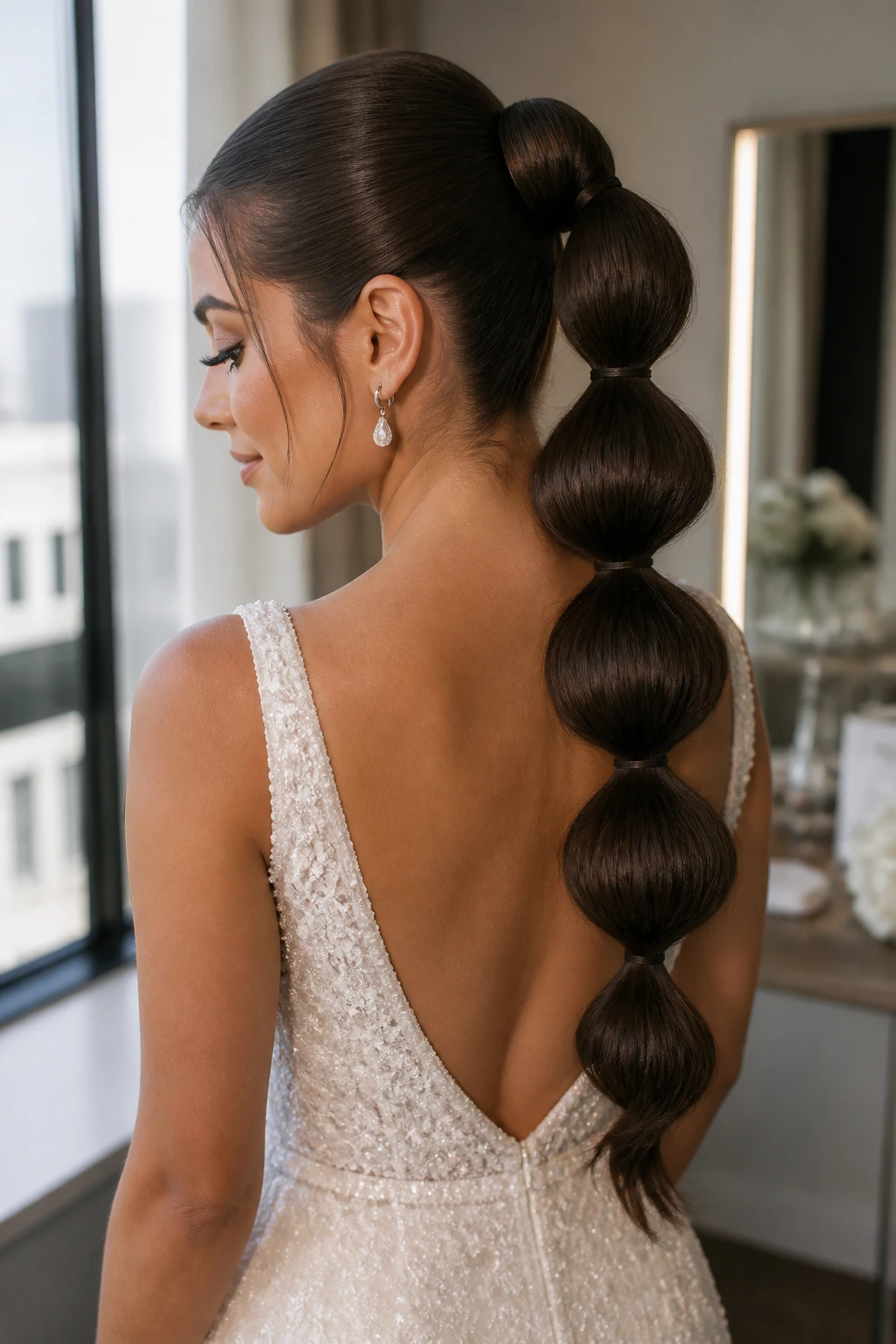
A bubble ponytail is not shy. That’s the whole point. It gives you clean lines at the top and sculpted volume through the length, which makes it feel fresh without drifting into costume territory.
Why it works for weddings
The bubbles create rhythm down the back, and that makes the style interesting even from a distance. A veil can sit above it or skip entirely. Either way, the ponytail keeps the face lifted and the shoulders visible, which is especially nice if the dress has a low back or a crisp square neckline.
- Best with sleek hair at the crown
- Needs elastic ties matched to hair color
- Looks stronger on medium to long lengths
- Works with jeweled bands between bubbles
- Can feel playful or formal depending on finish
What I like most is the contrast. The top is smooth and disciplined; the lower section has shape and movement. That tension keeps the style from getting too sweet. It feels a little sharper, a little cooler, and honestly a lot more fun than another loose curl pattern.
14. Waterfall Braid with Long Loose Hair
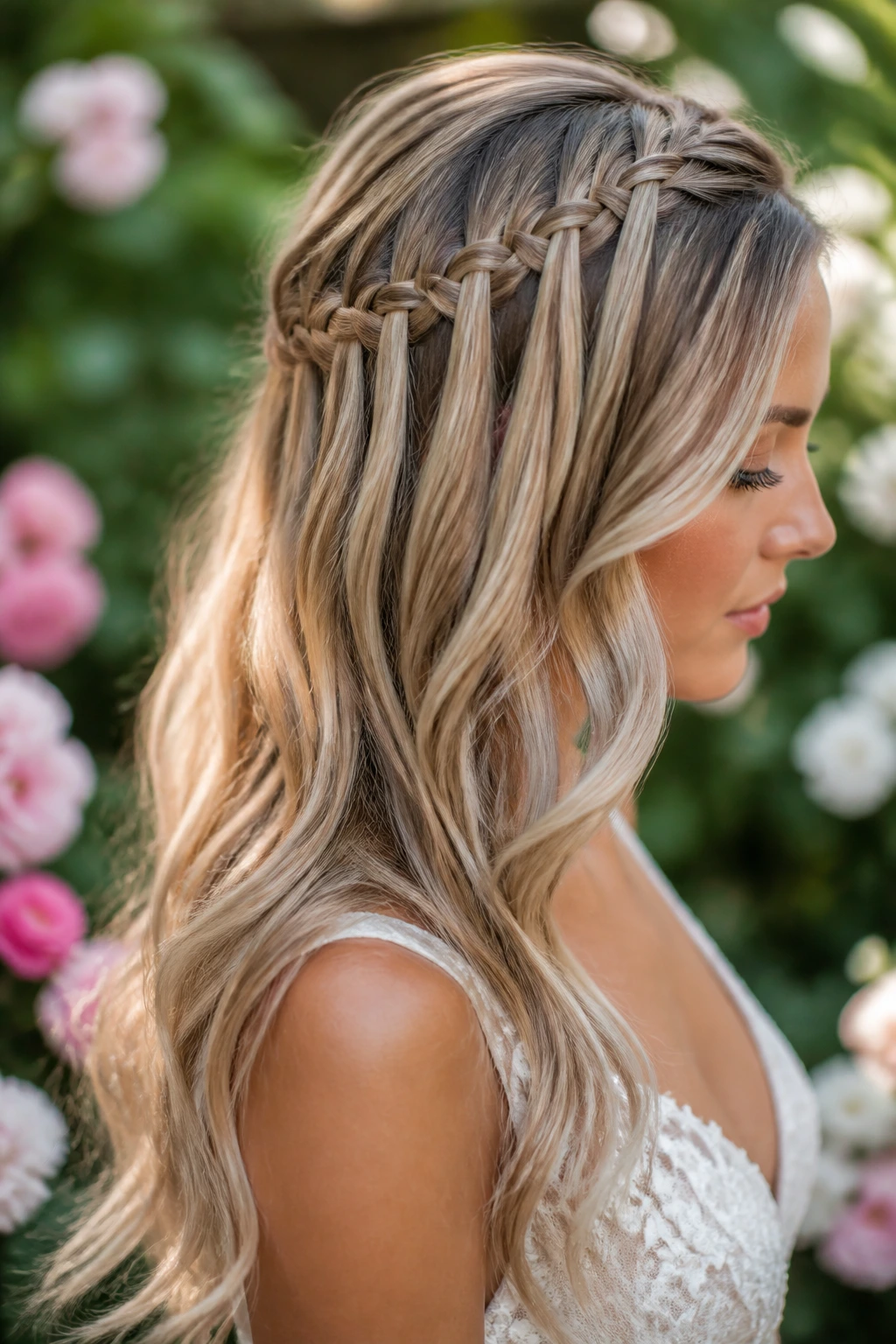
A waterfall braid is one of those styles that looks complicated even when the actual idea is simple. Pieces drop through the braid like little ribbons, while the rest of the hair stays loose and soft.
This makes it a strong pick for brides who want visible detail without pinning everything back. It shows well in photos, especially from the side and back, and it plays nicely with long hair because the braid can travel across the head without swallowing the length. If the hair is fine, the braid helps give the crown some grip. If the hair is thick, it keeps the top from puffing out.
The best version does not try to overdo the texture. Let the braid be crisp enough to read, then keep the hanging lengths smooth or softly waved. Too much volume and the look turns fuzzy. Too little and the braid disappears.
I like this style most for garden settings, but it can handle a formal room too if the finish is polished.
15. Minimalist Knot at the Nape
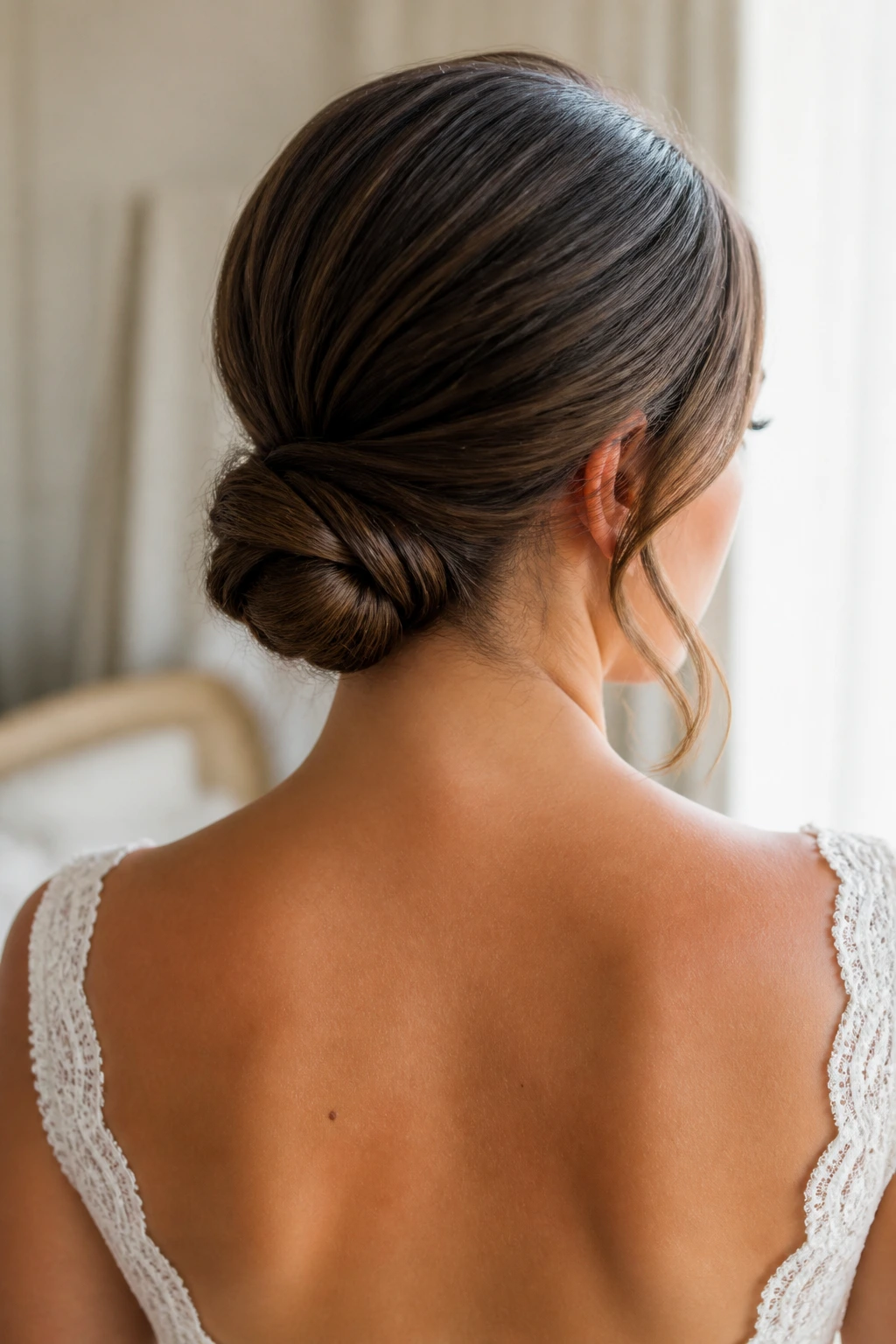
Could there be a quieter bridal hairstyle than a low knot? Probably not. And that’s exactly why it works.
A minimalist knot says restraint. It lets the dress, makeup, and jewelry lead without making the hair invisible. The shape sits close to the neck, which keeps the profile neat and the back of the gown unobstructed. That matters with open-back dresses, especially ones with detail that deserves a clean frame.
How to wear it
The knot should feel deliberate, not like a rushed twist before dinner. Keep the base smooth, the bun compact, and the finish polished enough that flyaways stay under control. A tiny side part can soften the look if a center part feels too severe.
This style is best for brides who hate fuss. It does not ask for sparkle or flowers or a lot of decoration. It just does its job, and it does it well. If you want elegance without anything extra, this is one of the strongest options.
16. Side Bun with a Deep Part
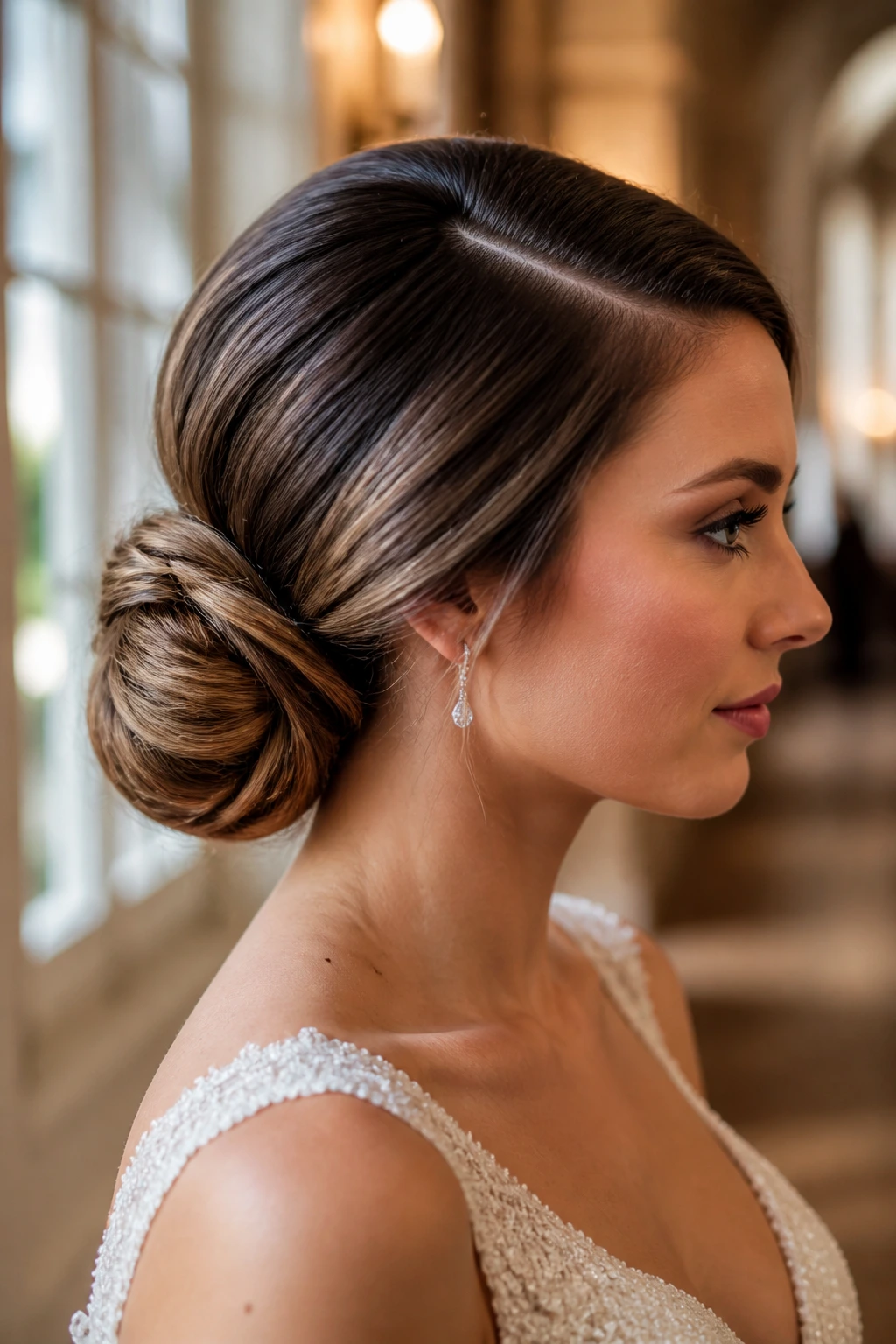
A side bun adds instant softness because it breaks the symmetry of the face. The deep part gives the roots a little lift, and the bun sits low enough to keep the shape grounded.
This style is useful when the dress has a single shoulder detail, an asymmetrical neckline, or one side that needs visual balance. The bun can be tucked just behind the ear line or placed a little lower toward the jaw, depending on how formal you want it to feel. Placement changes the mood more than people expect.
- Side buns suit oval and heart-shaped faces especially well
- They give one earring a little more room to shine
- A soft twist at the temple keeps the part from looking too severe
- Best with medium-hold spray and pinning underneath
- Works better when the bun has shape, not just a tight coil
The deep part also helps if the hair tends to fall flat. It gives the crown a lift before the bun even starts. Small detail. Big difference.
17. Curly Natural Texture Halo
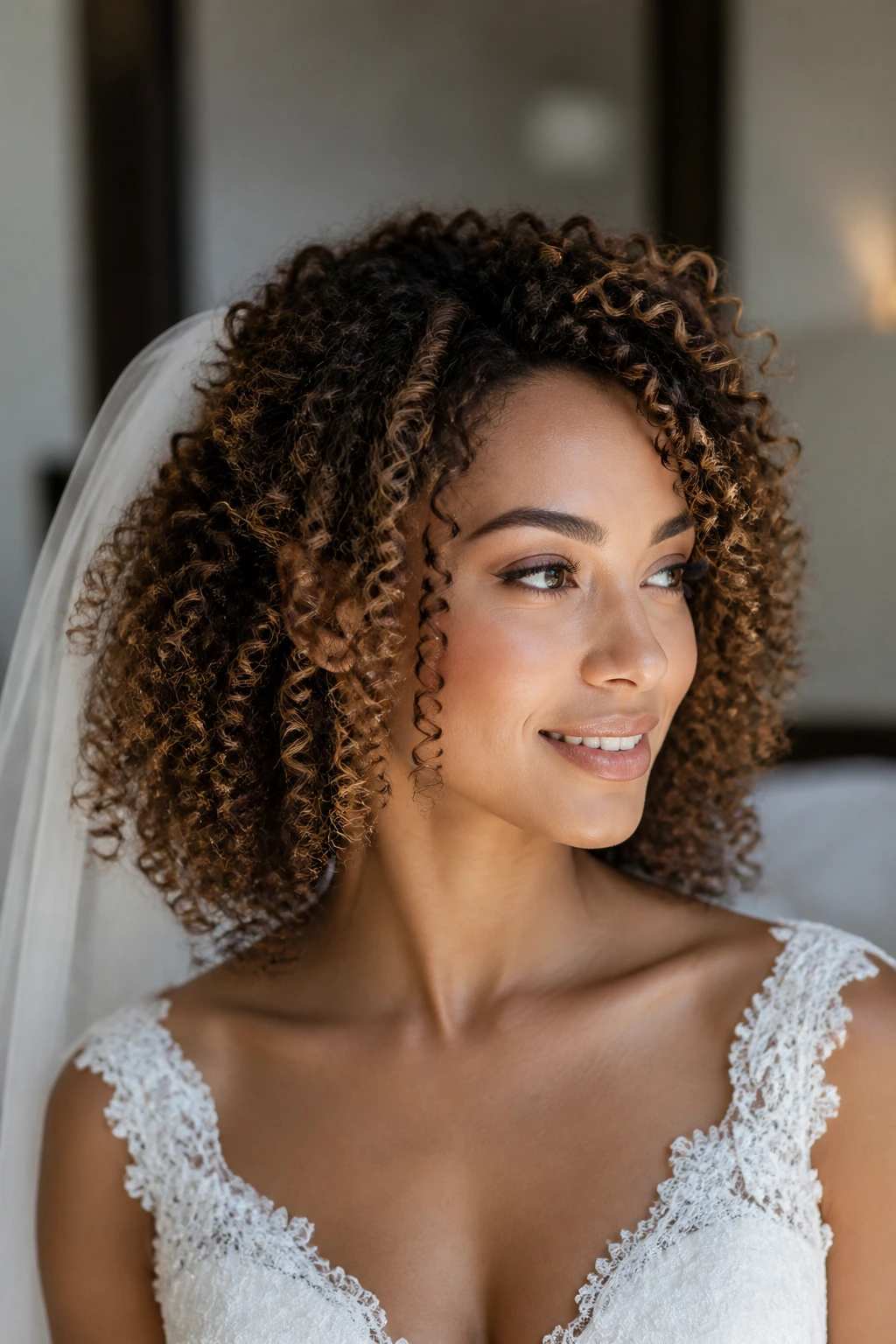
Brides with natural curls do not need to iron them into someone else’s idea of formal. That’s an old habit, and a bad one. A halo-style curly look can be one of the most beautiful wedding hairstyles precisely because it keeps the texture intact.
The shape matters, though. The curls should be defined, moisturized, and arranged so they sit around the face and shoulders with purpose. A little lift at the roots, especially at the crown, keeps the style from collapsing inward. A few well-placed pins can shape the silhouette without flattening the curl pattern.
This is the kind of style that looks alive in motion. When the bride turns her head or laughs, the curls still hold their shape. That is a big deal. Tight control is not the goal here. Defined texture with a clean outline is the real win.
If you wear a veil, let it sit above the halo or remove it after the ceremony. The curls deserve room.
18. Crown Volume Blowout with Soft Ends

A crown-volume blowout gives that lifted, expensive-looking softness people chase for weddings without forcing the hair into a strict shape. The roots rise, the mid-lengths curve, and the ends stay light enough to move.
Unlike a curled updo, this look keeps the hair mostly down, which makes it feel breezier and less formal. It works especially well for brides who want to keep their length visible but still need more shape than plain straight hair gives. The volume at the crown also helps balance heavier skirts and wider necklines.
What to watch for
The blowout only works if the roots have grip. Flat roots kill the style fast. A round brush, careful sectioning, and a little mousse near the crown make the difference between “done” and “why does this look limp?”
This style suits daytime ceremonies, open-air settings, and brides who want a soft, polished finish without lots of pinning. It does need touch-ups. That’s the tradeoff. Still, when the hair moves well and the ends stay clean, the result feels easy in a very specific, very polished way.
19. Rope-Braid Bun with a Smooth Base

A rope-braid bun is a smart choice when you want texture but do not want a loose, fussy style. The twisted sections give the bun a braided feel without the bulk of a full plait.
Why it stands out
The rope twist creates little ridges that catch light differently from a smooth bun. That gives the style depth without needing decoration to save it. It also stays tidy longer than many loose updos, which is worth something when the day runs long and the dancing starts early.
- Good for medium and long hair
- Keeps the bun compact and secure
- Looks sharp with a center or side part
- Pairs well with pearl pins or a narrow comb
- Needs pins placed under the twist, not on top of it
This style feels a little more modern than a traditional bun and a little less casual than a boho knot. That middle ground is useful. It gives brides a formal shape that still has movement, and movement is what keeps bridal hair from looking stiff in photos.
20. Long Mermaid Waves with a Glossy Finish
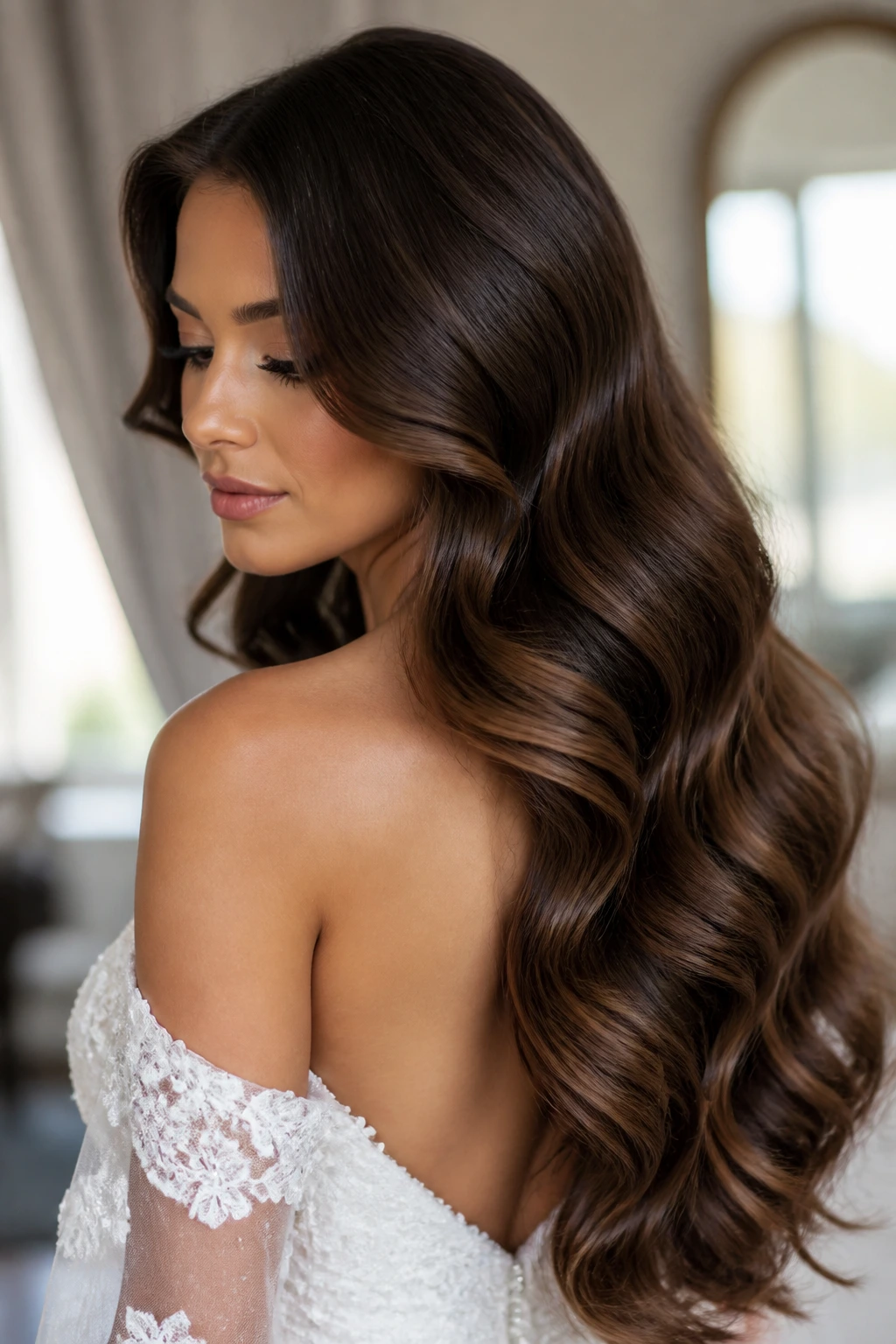
Long mermaid waves live or die on shine. If the hair is dull or frizzy, the whole look falls apart. If the finish is smooth and the waves are deep enough to read from across the room, it becomes one of the most dramatic wedding hairstyles without needing any extra structure.
The key is to keep the waves large and soft, not tiny and busy. Long hair can handle more movement, but it also gets heavy fast. That means the curl pattern should be loose enough to fall naturally and strong enough to last through the ceremony. A good stylist will set the shape, brush it out, and then lock it in without wrecking the shine.
This works best when the bride wants the hair to feel romantic and a little bit glamorous. It does not suit every dress. Very detailed gowns can fight with all that length. But with simpler fabric, a low-back dress, or a gown that needs movement, it looks rich and full.
If you wear extensions, make sure the blend is seamless at the ends. Nothing ruins the illusion faster than a visible join.
21. French Braid into a Low Bun
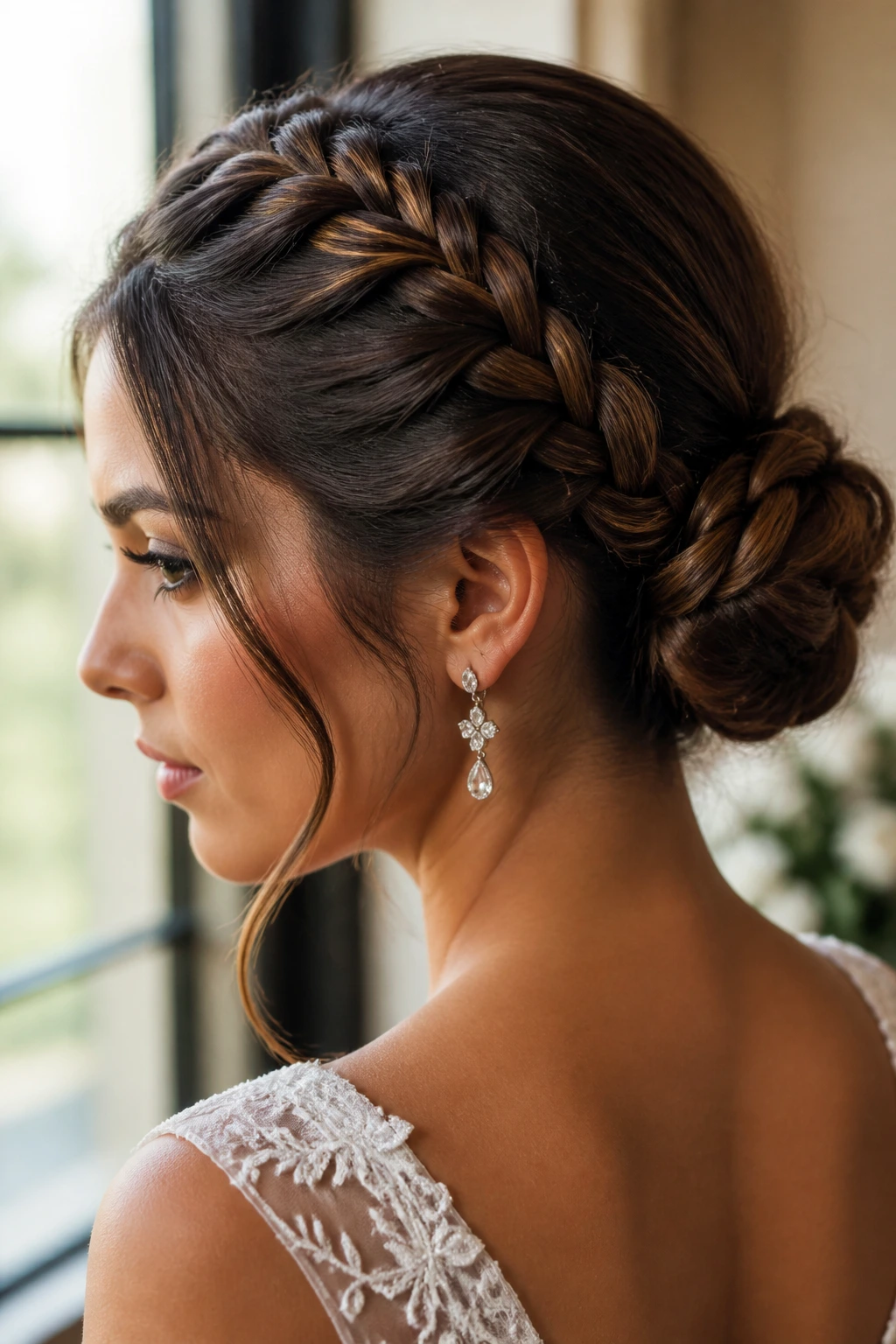
Why is this such a useful wedding style? Because it is both pretty and practical. The French braid keeps the top controlled, the bun anchors the bottom, and the whole look stays neat even when the day gets long.
The braid gives the style a built-in spine. That matters when hair is thick, slippery, or stubborn. Instead of fighting the texture, the braid uses it. Then the bun collects the length at the nape and keeps the silhouette compact. It is one of those styles that looks more elaborate than it is, which is a nice bonus.
How to use it
Choose this when you want something that feels secure under a veil, especially if you need the veil to stay put through a long ceremony or outdoor photos. It also works nicely with a dress that has a strong back detail, because the braid creates a clean vertical line before the bun takes over.
It is not the most delicate wedding hairstyle on this list. Good. It doesn’t need to be. It needs to hold.
22. Sleek Ponytail with a Wrapped Base
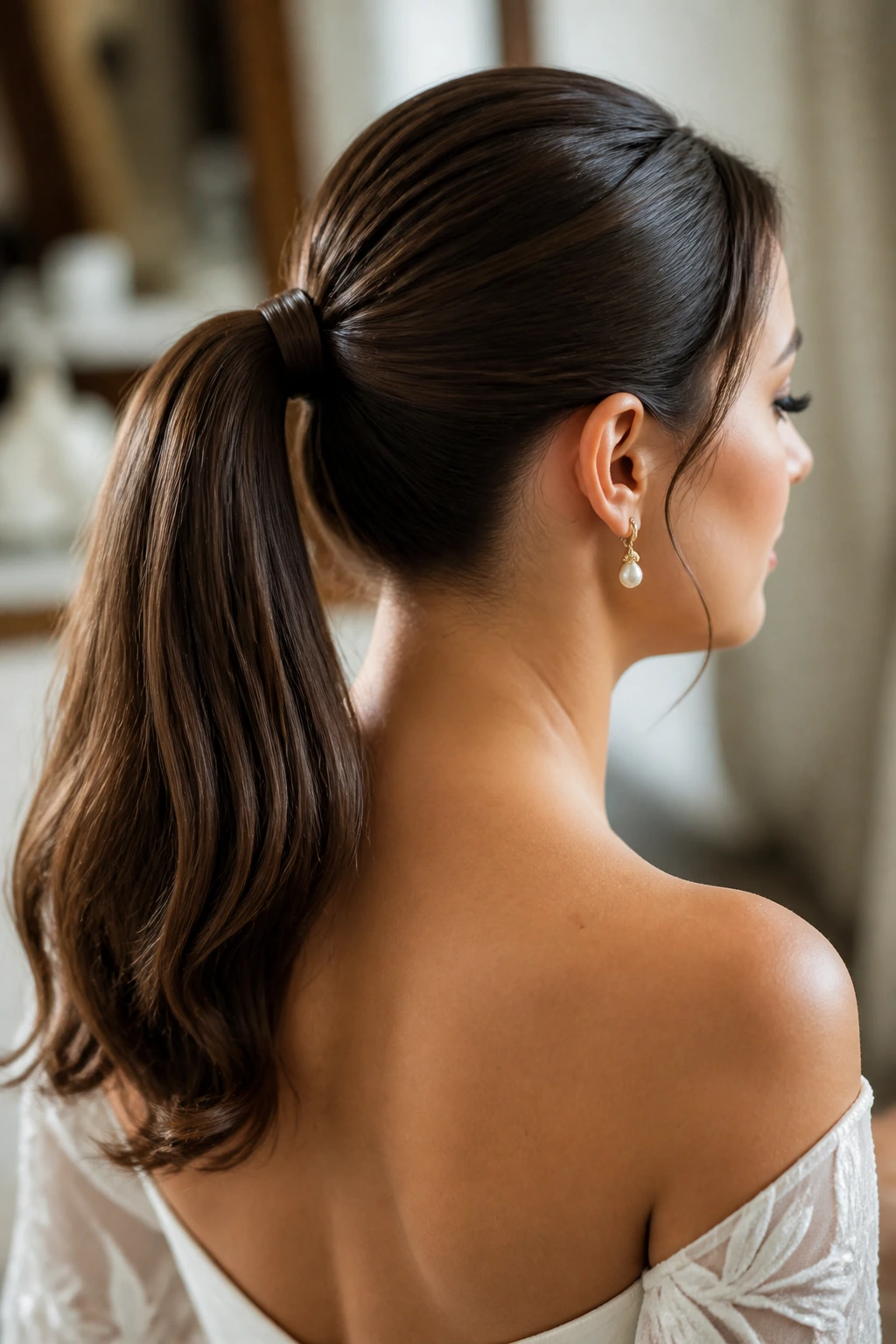
A wrapped ponytail can look downright sharp at a wedding. The base is hidden with a strand of hair or a slim accessory, the lengths stay smooth, and the whole thing feels modern without losing elegance.
This style is a favorite of mine for dresses with clean lines. It does not fight a sharp neckline or a tailored gown. It also keeps the face open, which is useful if the makeup is more dramatic or the earrings are doing serious work. The ponytail itself can sit mid-height or low, depending on how formal the room feels.
A polished ponytail needs a frizz-free crown and a tail that is brushed enough to move as one unit. If the ends are too fluffy, the style loses the crisp line that makes it work. If the base is too tight, it can pull in a way that shows immediately in photos. There is a sweet spot, and it is not hard to find once the right tension is set.
For a bridal version, I like this with one narrow accessory tucked into the wrap. Nothing bulky. Just enough.
23. Vintage Finger Waves with a Sculpted Finish
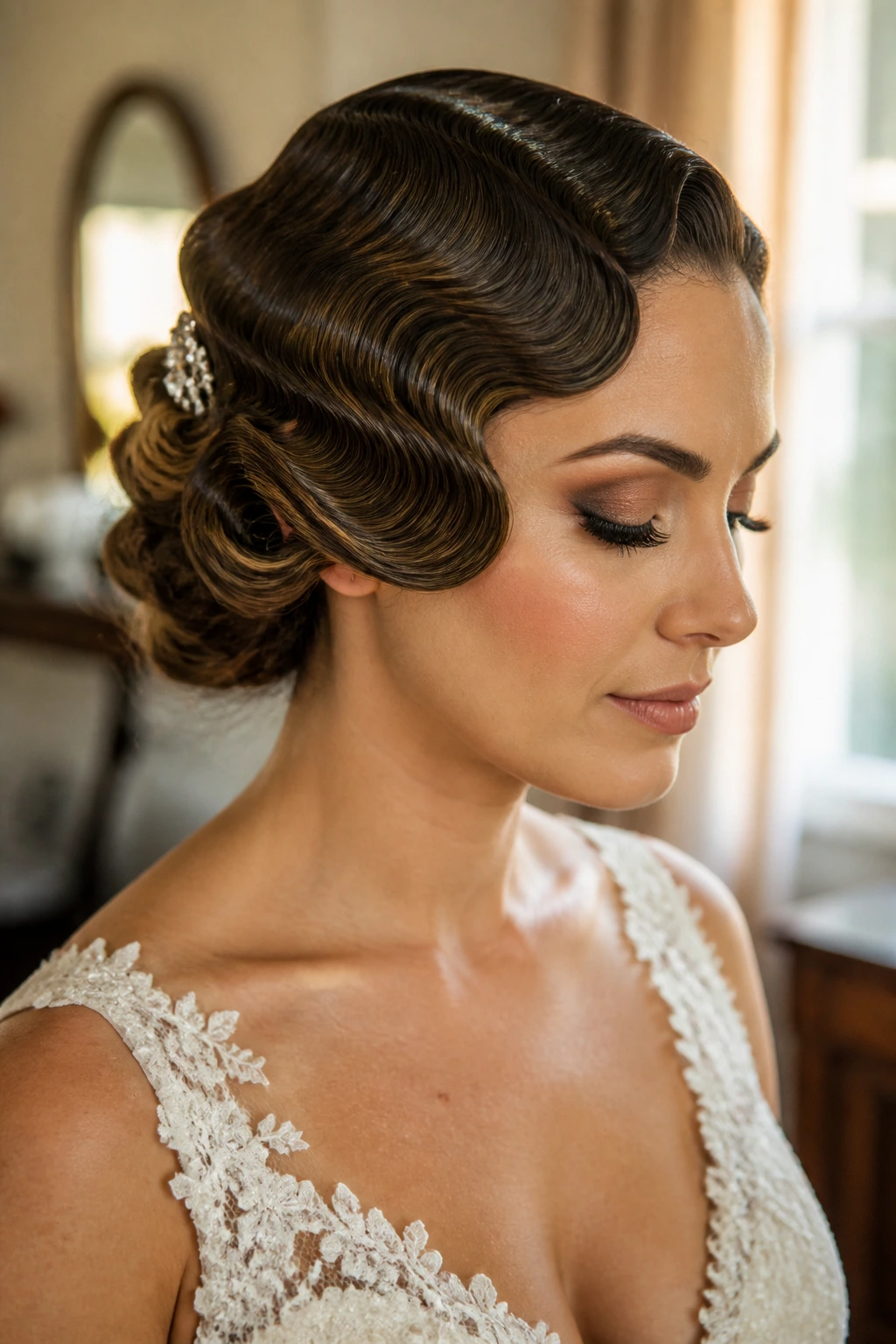
Finger waves are not for everyone, and that is part of the charm. They have a distinct, vintage shape that feels artful and a little theatrical, which makes them excellent for brides who want the hair to say something specific.
The waves sit close to the head and move in soft S-shaped ridges. On short hair, they can look incredibly elegant. On medium lengths, they create a clear period feel. The style loves shine, controlled edges, and a face that can carry a stronger hair shape. If the makeup is soft and the dress is simple, finger waves become the focal point in a good way.
This is not a rushed style. It takes patience and a steady hand. That should tell you something. Brides who choose it usually want more than a generic updo. They want a look with a little history in it.
It pairs especially well with beaded gowns, satin fabric, or simple jewelry. Anything too busy can crowd it out.
24. Twisted Half-Up Style with Pearls
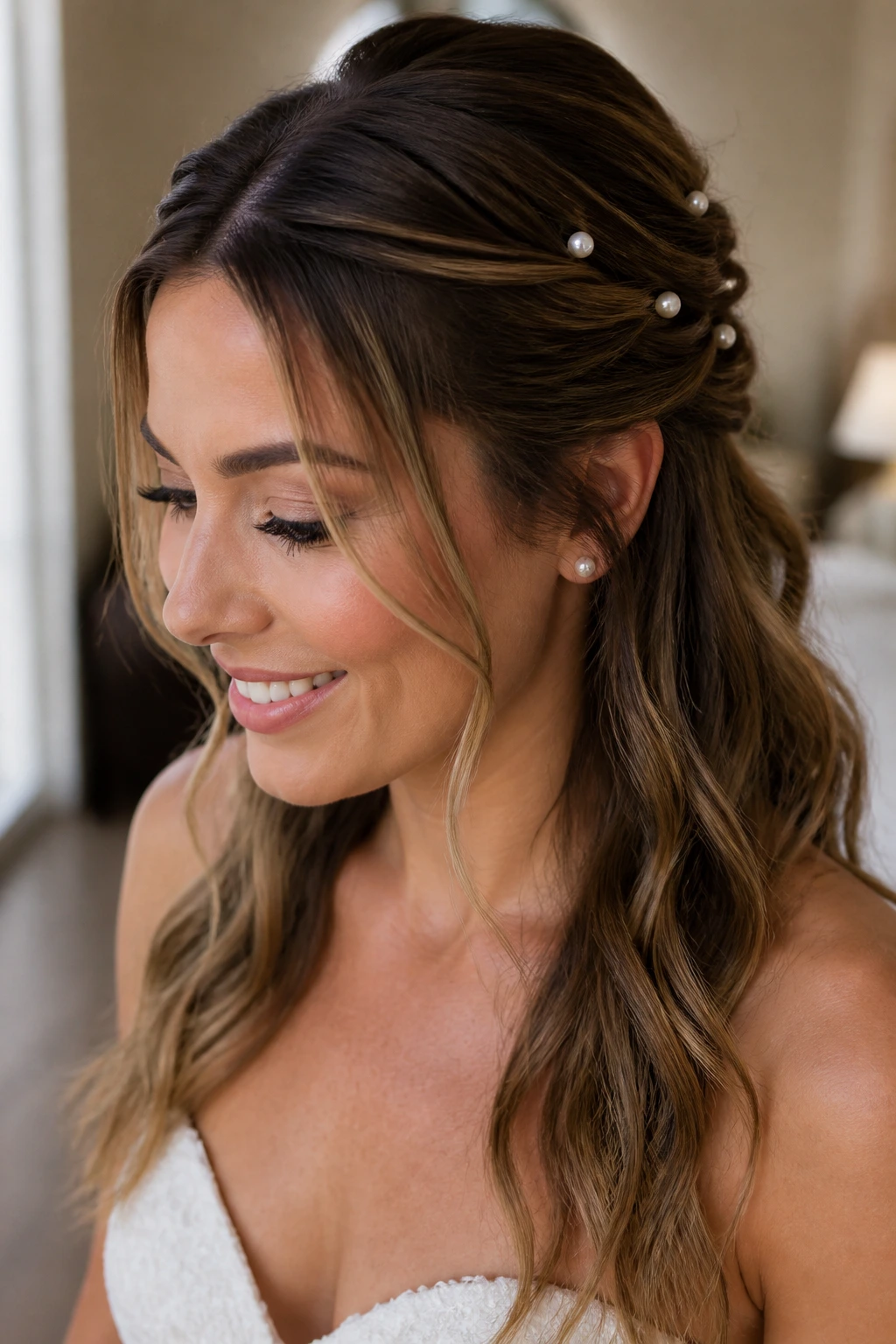
A twisted half-up style gives you the softness of loose hair and a little structure where the crown needs it most. Add pearls, and the whole thing turns into something bridal without slipping into costume.
The twist helps keep the front off the face, which is useful if the dress has detail around the shoulders or if the hair keeps falling forward during the trial. Pearls work best when they are tucked into the twist at spaced intervals, not clustered all over the head. Too many and the style starts to feel busy. A few are enough.
- Best for medium to long hair
- Works well with soft waves or smooth blowouts
- Keeps the top polished and the ends flowing
- Good choice when a full updo feels too formal
- Looks best with matched pearl sizes, not random ones
This is one of those styles that reads classic now and still won’t feel silly in pictures later. That matters more than people admit.
25. Milkmaid Braids with a Soft Center Part
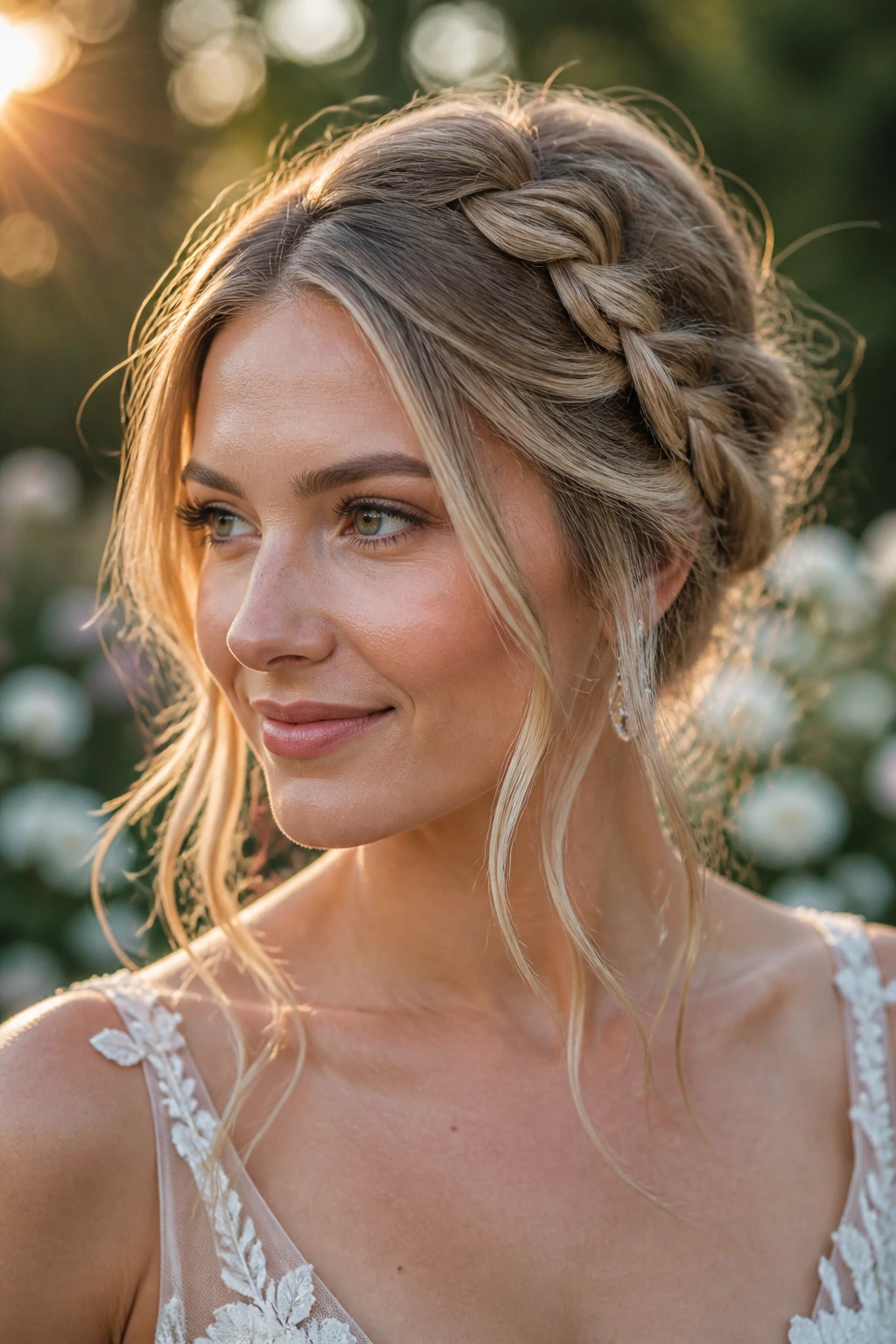
Milkmaid braids carry a certain softness that can make a wedding look feel almost storybook, but only if they are kept loose enough. Tight braids can feel costume-like fast. A gentler version, with a little width and texture, lands in a much better place.
Why I like this version
The braids frame the face and leave the neck open, which is useful with dresses that have texture around the bodice. They also hold better than loose twists, so if the day is long or the ceremony is outdoors, they’re not going anywhere.
A soft center part keeps the style grounded. Pull too hard and it starts to feel severe. Loosen the braid edges just enough that they look full but not overstuffed. That balance keeps the style romantic instead of juvenile.
This one suits brides who want a touch of whimsy without giving up structure. It is a gentle style, but not a weak one. Big difference.
26. Soft Pixie with a Sparkly Hairpiece
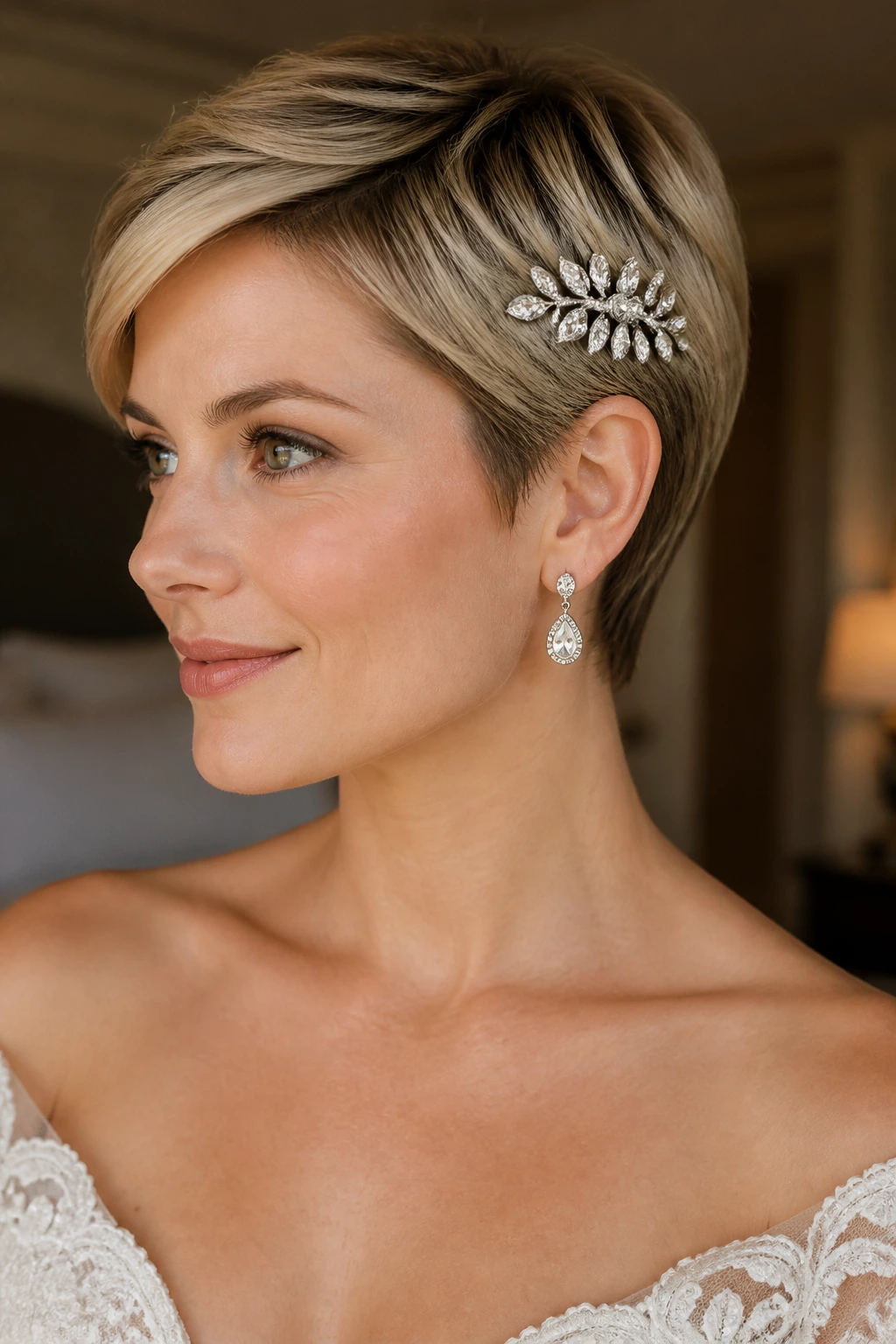
Short hair deserves better wedding advice than “just add curls.” A soft pixie can look polished, cool, and incredibly intentional when the cut is shaped well and the accessory is chosen with some restraint.
The style starts with the haircut itself. The edges need to be clean, the top needs enough length to move, and the sides should be controlled so the whole shape feels finished. Then comes the piece — a crystal clip, a slim comb, a tiny comb of pearls, whatever suits the dress. One piece is usually enough. More than that can crowd the face.
This is a strong option for brides who want to look like themselves, not a version of themselves built out of bobby pins. It also photographs beautifully from the front because the eyes, cheekbones, and earrings stay visible.
No heavy sprays. No stiff helmet finish. Short hair looks best when it still feels like hair.
27. Chin-Length Bob with Tucked Ends
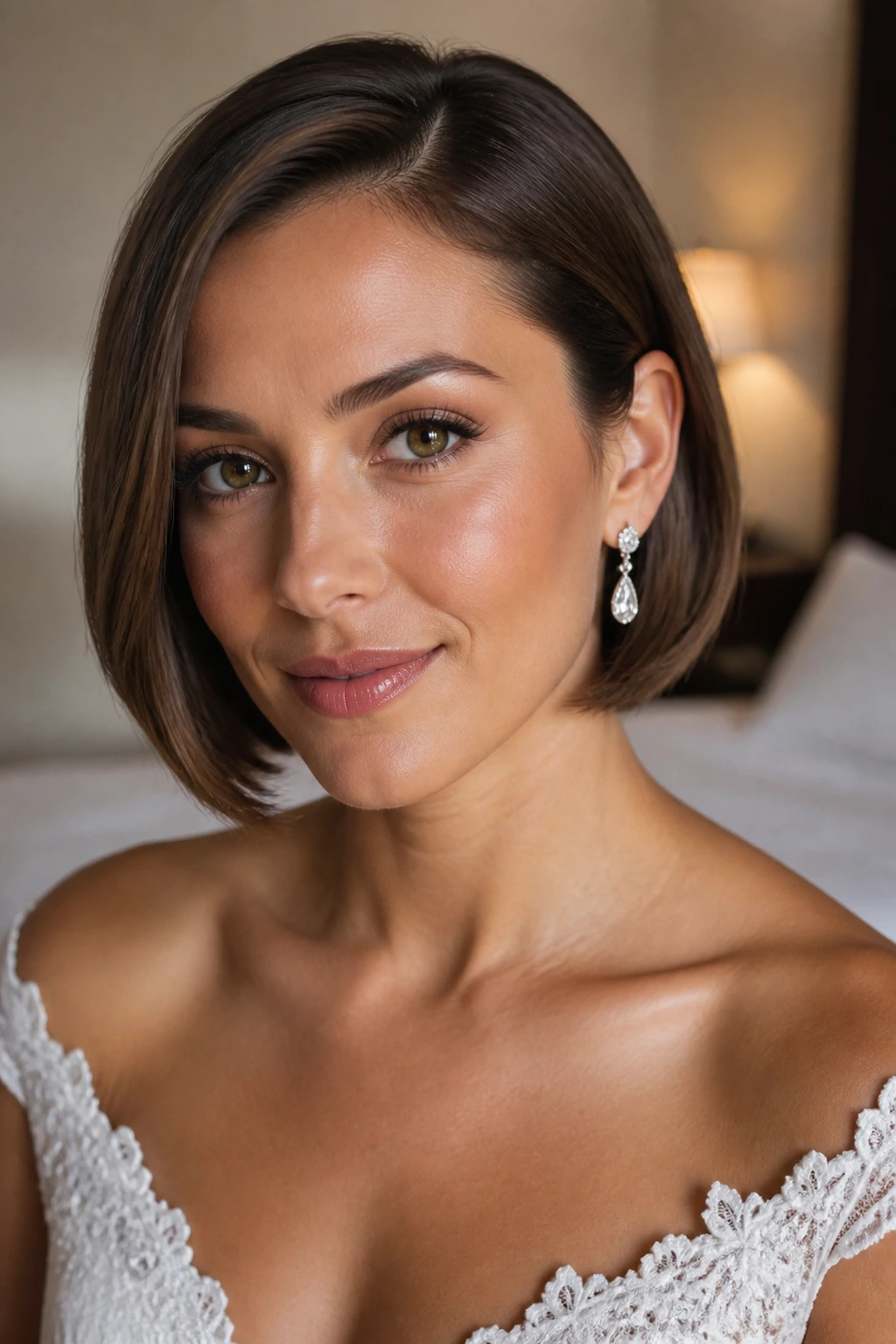
A wedding bob is often underrated because people assume short hair has fewer options. It doesn’t. It has different options. A chin-length bob with tucked ends can look sleek, modern, and very deliberate.
The beauty of this style is in the line. The ends can be curved slightly under for a neat finish, or tucked behind one ear on one side for asymmetry. A side part can soften the face, while a center part makes everything feel more graphic. Either way, the haircut does the work.
What matters here is control around the jawline. If the ends flip out randomly, the look loses its polish. A round brush or flat iron can solve that in a few minutes. For brides wearing bold earrings or a dramatic neckline, a bob is a gift. It gets out of the way and still looks styled.
If a veil is part of the plan, use a very secure comb or place it low enough that the bob still reads clearly underneath.
28. Gilded Accessory Hair with a Simple Base
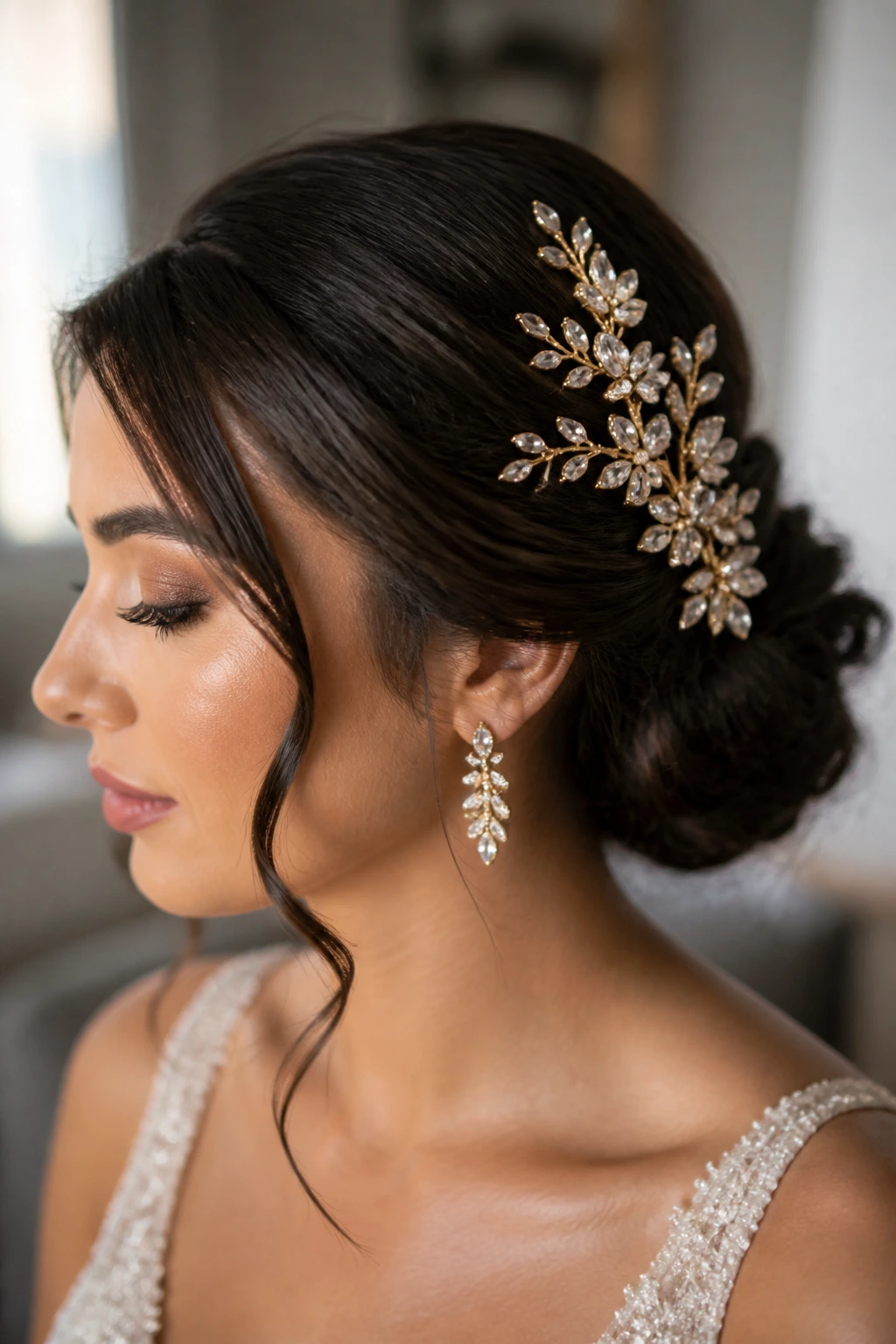
Some wedding hairstyles are really accessory styles wearing a hairstyle underneath them. That is not a complaint. Sometimes the accessory is the point.
A gilded comb, a crystal vine, or a sculpted headband can turn a plain bun or soft wave into something far more memorable. The key is to keep the base simple. If the hair already has a lot of movement, the accessory should be narrow. If the hair is smooth and minimal, the piece can be larger and more visible.
What makes it different
This style is about balance. The accessory should feel like part of the shape, not a sticker placed on top. A side comb works well with a low bun or swept-back waves. A headband can sit over a bob or a short cut. A vine can trace the curve of a half-up style and tie the whole thing together.
It’s best for brides who have found a piece they love and want it to matter. Fair enough. Sometimes the hair just needs to make room for the pretty thing.
29. Veil-Friendly Low Tucked Roll
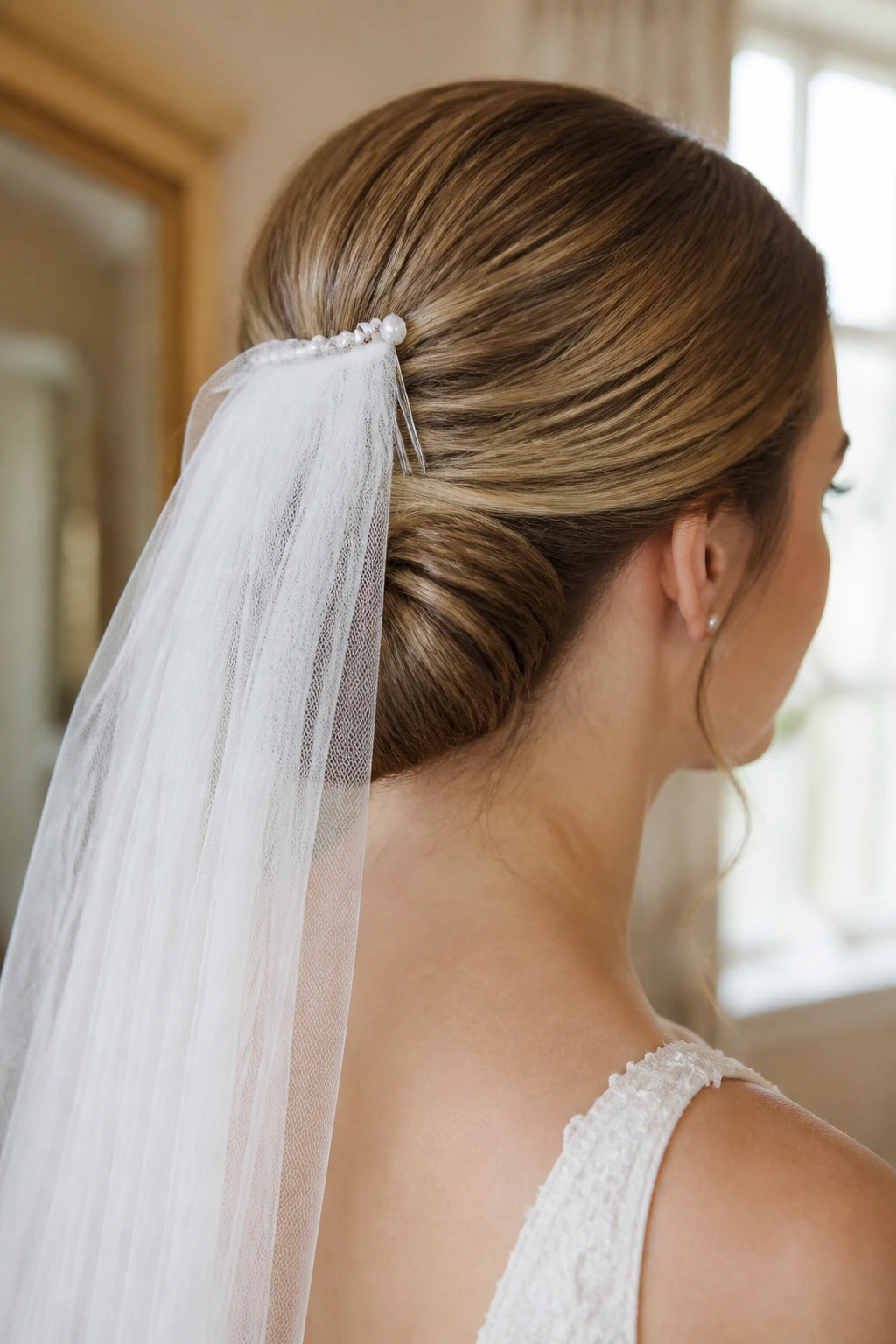
A low tucked roll is one of the most dependable veil styles because it gives the comb a stable place to sit and keeps the hair compact beneath it. It’s also a nice choice if you want the veil to be the main feature during the ceremony and the hair to take over quietly afterward.
The shape usually starts with smooth sections drawn back from the face, then rolled or tucked under at the nape so the back looks neat from every angle. That tucked line matters. It keeps the veil from pulling loose and stops the style from puffing out in awkward places.
This is the kind of style I’d choose for a formal church setting or a dress with a detailed train. It feels respectful of the whole look. Not boring. Just disciplined.
If you remove the veil later, the roll still stands on its own. That’s the part people forget to test in the trial.
30. Grand Cathedral Updo with Soft Height
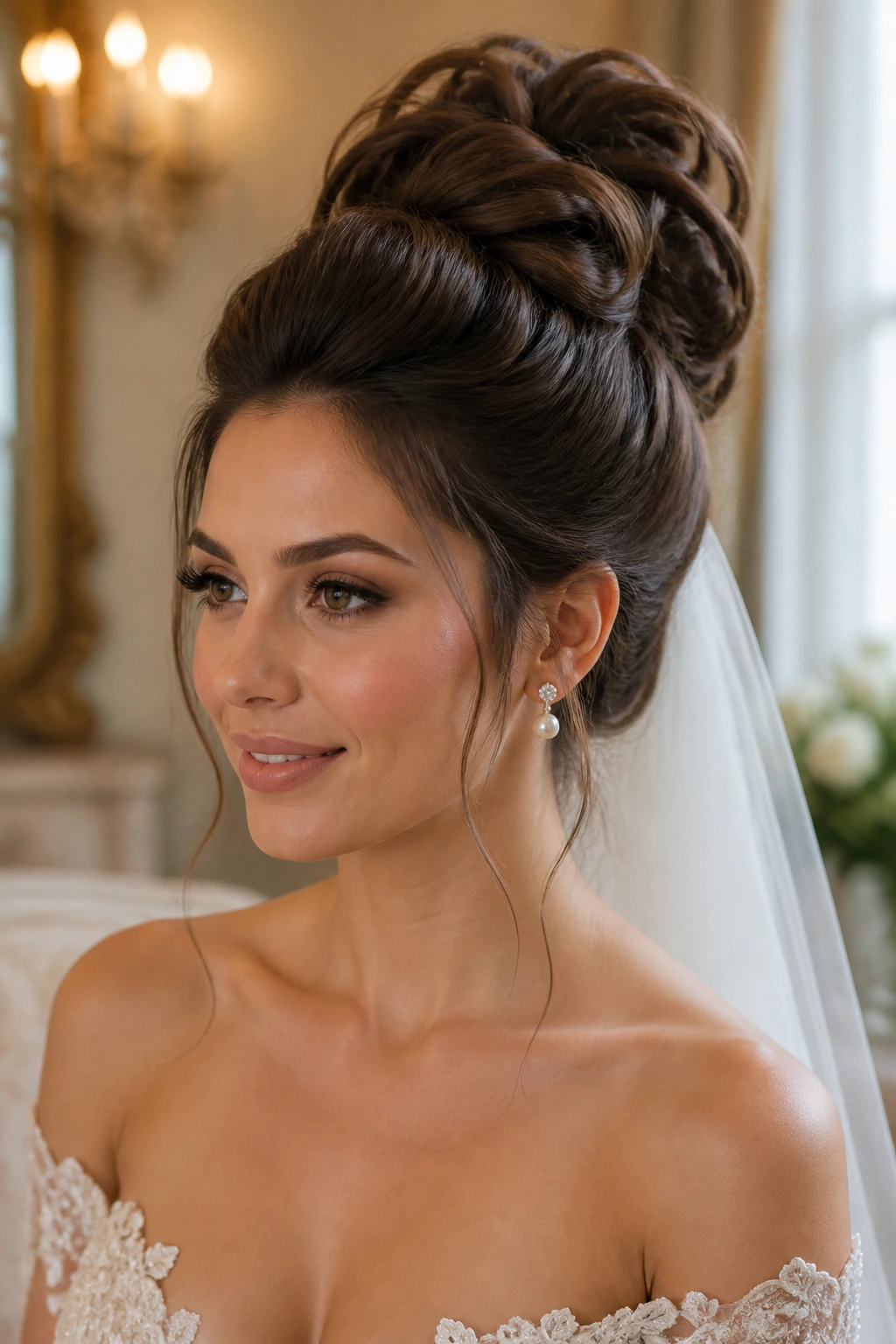
A grand cathedral updo has one job: to make the bride look tall, sculpted, and completely finished from a distance. It is the most formal look on this list, and it needs commitment. The hair has to be shaped, pinned, and balanced so the height feels elegant instead of stiff.
The style usually includes lift at the crown, a defined back shape, and enough detail that the profile looks interesting from every seat in the room. It works best with gowns that have presence — long trains, structured bodices, dramatic sleeves, the whole package. If the dress is already minimal, this updo can still work, but the balance has to be watched closely.
I like this style when the bride wants the room to feel a little more ceremonial. It has gravity. That sounds lofty, but it’s true. The hair is doing part of the storytelling here, not just decorating the head.
Keep the finish polished, leave a little softness near the hairline, and do not overload it with extras. The shape is enough.
Final Thoughts
The best wedding hairstyles are not the ones that shout the loudest. They are the ones that keep their shape, flatter the dress, and still feel like the bride after an hour of photos and a full dance floor.
If you are torn between two looks, choose the one that fits the neckline and the way you actually wear hair on a normal day. That instinct is usually smarter than chasing a style that only looks good from one angle. A strong trial, a few honest photos, and a little attention to hold will tell you more than a hundred saved images ever will.
And if the first version feels off, that does not mean the idea is wrong. It usually means the placement, part, or finish needs adjusting. Tiny changes matter a lot here.
